EP3321832A1 - Distribution de lecture d'attributs à partir d'un jeton d'identification - Google Patents
Distribution de lecture d'attributs à partir d'un jeton d'identification Download PDFInfo
- Publication number
- EP3321832A1 EP3321832A1 EP17200668.6A EP17200668A EP3321832A1 EP 3321832 A1 EP3321832 A1 EP 3321832A1 EP 17200668 A EP17200668 A EP 17200668A EP 3321832 A1 EP3321832 A1 EP 3321832A1
- Authority
- EP
- European Patent Office
- Prior art keywords
- computer system
- token
- attribute
- apv
- protected
- Prior art date
- Legal status (The legal status is an assumption and is not a legal conclusion. Google has not performed a legal analysis and makes no representation as to the accuracy of the status listed.)
- Granted
Links
Images


Classifications
-
- G—PHYSICS
- G06—COMPUTING OR CALCULATING; COUNTING
- G06F—ELECTRIC DIGITAL DATA PROCESSING
- G06F21/00—Security arrangements for protecting computers, components thereof, programs or data against unauthorised activity
- G06F21/30—Authentication, i.e. establishing the identity or authorisation of security principals
- G06F21/31—User authentication
-
- G—PHYSICS
- G06—COMPUTING OR CALCULATING; COUNTING
- G06F—ELECTRIC DIGITAL DATA PROCESSING
- G06F21/00—Security arrangements for protecting computers, components thereof, programs or data against unauthorised activity
- G06F21/30—Authentication, i.e. establishing the identity or authorisation of security principals
- G06F21/31—User authentication
- G06F21/33—User authentication using certificates
-
- H—ELECTRICITY
- H04—ELECTRIC COMMUNICATION TECHNIQUE
- H04L—TRANSMISSION OF DIGITAL INFORMATION, e.g. TELEGRAPHIC COMMUNICATION
- H04L63/00—Network architectures or network communication protocols for network security
- H04L63/08—Network architectures or network communication protocols for network security for authentication of entities
- H04L63/0823—Network architectures or network communication protocols for network security for authentication of entities using certificates
Definitions
- the invention relates to a method for reading attributes from an ID token, an ID token and a computer system.
- Microsoft Windows CardSpace is a client-based digital identity system designed to allow Internet users to communicate their digital identity to online services.
- the disadvantage here is, inter alia, that the user can manipulate his digital identity.
- OPENID is a server-based system.
- a so-called identity server stores a database with the digital identities of the registered users.
- One disadvantage of this is, inter alia, inadequate data protection, since the digital identities of the users are stored centrally and the user behavior can be recorded.
- DE 10 2008 000 067 Al For example, there is known a method of reading at least one attribute from an ID token from which the present invention proceeds as the closest prior art. Further developments of this method are in the patent applications DE 10 2008 040 416 . DE 10 2008 042 262 . DE 10 2009 026 953 . DE 10 2009 027 723 . DE 10 2009 027 681 and DE 10 2010 028133 disclosed.
- the invention is based on the object to provide an improved method for reading attributes from an ID token a corresponding ID token, a corresponding attribute provider directory computer system, a corresponding attribute provider computer system, a corresponding user Computer system and computer system.
- An "ID token” is understood here in particular as a portable electronic device which has at least one protected electronic data memory for storing the attributes and a communication interface for reading out the attributes.
- the memory area is protected in order to prevent the attribute stored in the memory area from being altered in an unauthorized manner or read out without the required authorization. In other words, the memory area can only be accessed if an access authorization required for this purpose is given.
- the ID token can be a USB stick or a document, in particular a value or security document.
- a "document” is understood to mean paper-based and / or plastic-based documents, such as electronic identity documents, in particular passports, identity cards, visas and driving licenses, vehicle registration documents, vehicle documents, company identity cards, health cards or other ID documents as well as chip cards, means of payment, in particular banknotes , Bank cards and credit cards, bills of lading or other credentials, in which a data memory for storing the at least one attribute is integrated.
- the ID token can be a hardware token or a soft token if it is cryptographically bound to a hardware token, that is, for example, to a so-called secure element.
- ID provider module is understood here to mean a program logic module which is designed to read attributes from the ID token of a user and to write an attribute specification in the ID token.
- the ID provider module can be designed, for example, as a software component but also as a computer system.
- the ID provider module can be designed, for example, as an ID provider computer system which is preferably operated in a so-called trust center in order to create the highest possible level of security.
- the ID provider module and the service computer system belong to the same IT infrastructure, eg, to the same intranet of a company.
- an ID provider module has specific credentials, eg certificates or cryptographic keys or the like, which allow the ID provider module to access certain selected memory areas of an ID token.
- An “attribute provider computer system” or “AP computer system” is here understood to mean a computer system which is designed to provide attributes on applications.
- the provision can be made attribute-class-specific and / or specific for a specific user of an ID token.
- an attribute provider computer system is adapted to read an attribute specification from the ID token of a user and to write attributes in the ID token.
- an "attribute provider directory computer system” or “APV computer system” is understood to mean a computer system that is configured to identify, for particular classes of attributes, one or more attribute provider computer systems that are capable of Fully or at least partially provide attributes of these classes. According to some embodiments, in addition to the identity of the attribute provider computer systems themselves, other information such as e.g. a contact address, performance data, historical availability data relating to the respective attribute provider computer systems are identified and communicated to the requesting system.
- the attribute classes can be (arbitrarily) predefined groups of attributes.
- the classes can be disjoint or overlapping. Examples of different attribute classes are: address data of a user; medical data of a user; Bank details of a user; Information that provides information about the creditworthiness of a user; and other.
- An “attribute” is understood in particular to mean data relating to the user of the ID token or the ID token itself, in particular personalization data, such as personal data of the user, a period of validity or the issuer of the ID token or payment information, such as credit card information or other data for an electronic payment system.
- attribute specification is meant a description of those attributes, for example, provided by a service computer system for rendering a service needed.
- the attributes may be identified via field names of data fields in which the respective attribute values are stored, and / or via a semantic network, ie, a convention of how attributes are referred to across systems.
- a “service computer system” is understood here to mean a computer system which has a network interface for connection to the network, so that an internet browser or another application program can be used to access web pages stored or generated by the service computer system.
- the service computer system may be an Internet server for providing an e-commerce or e-government application, in particular an online shop or a government server.
- a "user computer system” is understood here as a computer system to which the user has access. This may be, for example, a personal computer (PC), a tablet PC or a mobile device, in particular a smartphone, with a conventional Internet browser, such as Microsoft Internet Explorer, Safari, Google Chrome, Firefox or any other application for access to act on the service computer system.
- the user computer system has an interface for connection to the network, wherein the network may be a private or public network, in particular the Internet. Depending on the embodiment, this connection can also be made via a mobile network.
- a "reader” is understood here as an electronic device which allows read access and also write access to the ID token, in particular a so-called chip card terminal.
- the reader may form an integral part of the user computer system or be implemented as a separate component, for example as a peripheral device of the user computer system.
- the reader may be a so-called class 1, 2 or 3 chip card reader.
- nonvolatile electronic memory is understood here to mean a memory for storing data, in particular attributes, which is also known as Non-volatile memory (NVM) is called.
- NVM Non-volatile memory
- this may be an EEPROM, for example a flash EEPROM, referred to as flash for short.
- a "protected memory area” is understood here as meaning an area of an electronic memory to which access, that is to say a read access or a write access, is only made possible by a processor coupled to the memory if a condition required for this purpose is fulfilled. This may be, for example, a cryptographic condition, in particular a successful authentication and / or a successful authorization check.
- a "processor” is here understood to mean a logic circuit which serves to execute program instructions.
- the logic circuit may be implemented on one or more discrete components, in particular on a chip.
- a “certificate” here means a digital certificate, which is also referred to as a public-key certificate.
- a certificate is structured data that serves to associate a public key of an asymmetric cryptosystem with an identity, such as a person or device.
- certificates based on zero-knowledge cryptosystems are also possible.
- the certificate may conform to the standard X.509 or another standard.
- the certificate is a Card Verifiable Certificate (CVC).
- the certificate may specify for which attribute or attributes of the user stored in the protected memory area of the ID token the ID provider module or the attribute provider computer system is authorized to perform the read access. Furthermore, the respective write permissions for attribute specifications or attributes can also be defined in a certificate. Such a certificate is also called an authorization certificate.
- the authorization certificate can be designed as a CVC certificate (card verifiable certificate).
- a “secure”, “protected” or “secure””communicationchannel” is here understood as a communication channel that is cryptographically secured, to prevent spying and / or manipulation of the transmission, for which purpose a so-called secure messaging method can be used.
- a protected communication channel may be between an ID token, e.g. a chip, and a remote computer (e.g., service computer system, attribute provider system) or local computer (e.g., user computer system), e.g. by means of a PACE protocol.
- Protected connections between computer systems may e.g. using SSL / TLS.
- a "local" communication channel is here understood as a communication channel which is established between the ID token and the user computer system via the reading device, wherein in particular the connection between the ID token and the reading device can be contact-based or contactless, the latter in particular according to an NFC or RFID standard.
- end-to-end encryption is meant here an encryption of transmitted data across all transmission stations.
- the data to be transmitted is encrypted on the sender side and decrypted again at the receiver. Stations can not decrypt the transmitted content.
- attributes provided by a variety of attribute provider computer systems may be stored in the ID token in a secure and confidential manner. Since the attribute sets are not stored by the individual AP computer systems directly but in the token via the APV computer system, it is not necessary to make special authorization certificates or other trust anchors between the ID token and the individual AP computer systems yes, none of the AP computer systems writes directly to the token. Rather, the attributes are written over a secure transmission channel established between the ID token and the APV computer system. Nevertheless, the authenticity of the partial attribute specifications can be determined by the individual AP computer systems.
- ID tokens which themselves do not have means for controlling complex channel switching processes
- the service and the individual AP computer systems receive no knowledge of each other and all data exchange takes place via the id token (and thus possibly under the control of the token or of the user).
- This aspect is particularly advantageous, since thus the individual attribute providers can not experience and can not log which services a user uses. For example, this can prevent multiple credit requests from being logged with various banking service providers for which personal data of the user is provided to the banking service providers and leading to a downgrading of the creditworthiness of the user.
- an attribute provider for example, from the nature and frequency of use of health care providers can draw conclusions about the health of a patient.
- the ID provider module after successful mutual authentication of ID provider module and ID token, the ID provider module initializes the establishment of a first protected communication channel between the ID provider module and the ID token.
- the attribute specification is written via the first protected communication channel.
- the APV computer system Upon successful mutual authentication of the APV computer system and ID tokens, the APV computer system initializes the establishment of a second secure communication channel between the APV computer system and the ID token by the APV computer system.
- the partial attribute specifications are read via the second protected communication channel.
- the second protected communication channel is maintained during the provision of the attributes by the AP computer systems. All partial attribute sets are written using the second protected communication channel already established and already used for reading the partial attribute specifications.
- Data transmitted over the first or second protected communication channel is protected from access by the user computer system.
- the sensitive personal attributes are effectively protected from malware that may be installed on the user's computer system.
- the construction of the first protected communication channel comprises establishing or reactivating a local protected communication channel between the user computer system and the ID token.
- the structure further comprises performing mutual authentication of the user computer system and ID token to establish the first protected communication channel, wherein authentication data is communicated over the local protected communication channel.
- the ID token is free of software or hardware-based program logic, which is designed to set up new or activate existing communication channels to the user computer system, the ID provider module and / or depending on the content of the protected memory area. or the APV computer system.
- the user computer system in response to receiving the termination signal (SAPV), sends a toggle command from the user computer system to the ID token to cause the ID token to activate the first protected communication channel.
- the ID provider module reads the written sub-attribute sets from the protected storage area over the activated protected first protected communication channel.
- the method further comprises establishing a local protected communication channel for transmitting authentication data over the local protected communication channel in the course of mutual authentication of the ID token and the ID provider computer system.
- the APV computer system After writing the attribute specification in the protected memory area, the APV computer system sends a toggle command from the APV computer system to the ID token over the first protected communication channel, the toggle command causing the ID token to re-enable a local protected communication channel ,
- the user computer system in response to receiving the termination signal, sends a toggle command over the activated local communication channel to the ID token.
- the switchover command causes the ID token to activate the first protected communication channel.
- the ID provider module then reads the written attribute sets from the protected storage area over the activated protected first protected communication channel.
- termination signals and / or switching commands can be advantageous because the method can be carried out on ID tokens, which do not even have a complex control logic for the coordination of individual communication channels for data exchange with multiple communication partners.
- the APV computer system after writing all attribute sets in the protected memory area, deletes the partial attribute specifications from the ID token or individually deletes the individual partial attribute specifications whose respective attribute sets have already been stored in the ID token.
- the APV computer system or the service computer system performs an analysis of the attribute specification to determine the partial attribute specifications.
- the sub-attribute specifications make class specific Sub-attribute specifications, each of which specifies only attributes of a particular class.
- Each of the AP computer systems is configured to provide attributes of one or more particular classes.
- the APV computer system is configured to selectively send each of the class-specific sub-attribute specifications to the AP computer system configured to provide attributes of the corresponding attribute class.
- the partial attribute specifications are sent in signed form to the identified AP computer systems.
- Each of the identified AP computer systems having received one of the signed partial attribute specifications checks the digital signature of the respective received partial attribute specification with the public signature verification key PubK TOKEN .
- PubK TOKEN The determination of the attributes specified in the sub-attribute specification by the AP computer systems takes place only if the signature check reveals that the digital signature is valid.
- the signature creation by the ID token may be coupled thereto to generate a signature confirmation request that is displayed to the user and that the user must confirm, such as by entering a PIN.
- the ID token creates the signature only after it has been approved by the user.
- the release preferably takes place individually for each service request and associated attribute specification or partial attribute specification. This ensures that a "fraudulent" APV computer system can not autonomously generate a (sub) attribute specification and retrieve sensitive user data without its consent.
- the digital signature of the partial attribute specifications is a pseudonymous signature.
- the public signature check key PubK TOKEN is designed to check the pseudonymous signatures generated by a large number of ID tokens and is stored so that it is accessible to each of the identified AP computer systems and / or to the APV computer system.
- the public signature verification key (for checking a pseudonymous or non-pseudonymous signature) may be stored in a publicly accessible via a network accessible and automatically queried directory for signature verification key.
- the pseudonymous signature can be generated according to the technical guideline TR-03110-2 of the BSI, section 3.1.6.
- the use of a pseudonymous signature may be advantageous as it prevents individual AP computer systems from associating a request for providing attributes (in the form of a received sub-attribute specification) with a particular ID token and thus a particular user. It prevents a profile of attribute requests for a specific ID token or user from being created by an AP computer system.
- high protection of personal data is achieved, both in terms of what services a user uses (connectivity) and in terms of the user data transmitted to the service.
- the ID token generates an asymmetric cryptographic key pair.
- the key pair comprises a private decryption key, also referred to below as “PrivK DEC”, and a public encryption key, hereinafter referred to as "PubK ENC ".
- the private decryption key PrivK DEC is stored so that it is not accessible to either the AP computer systems, the user computer system or the APV computer system.
- the ID token signs the public encryption key PubK ENC with its private signing key PrivK Token . This can be beneficial because the AP computer systems can verify against this signature or trust that the PubKENC encryption key actually comes from an ID token.
- the ID token passes the public encryption key PubK ENC to the identified AP computer systems. This can preferably be done via the APV computer system.
- the public encryption key along with the respective partial attribute specifications, may be forwarded to the AP computer system identified for the particular attribute specification.
- each of the identified AP computer systems checks the signature of the public encryption key PubK ENC by means of the public signature verification key PubK TOKEN of the ID token and encrypts the attribute set determined by this using the public encryption key PubK ENC .
- each of the AP computer systems performs identification and provision of the attributes only when the signature of the public signature check key (PubK TOKEN ) is valid.
- the APV computer system receives the identified attribute sets in encrypted form from the identified AP computer systems and writes them in encrypted form to the protected memory of the ID token.
- the ID token decrypts the encrypted attribute sets by means of the private decryption key PrivK DEC and re-stores the attribute sets in unencrypted form in the protected memory area of the ID token.
- the encrypted form of the attribute sets can be deleted from the token.
- encryption preserves the confidentiality of the attributes transmitted to the id token via the APV computer system prior to the submitting APV computer system.
- the APV computer system is aware of the type of requested personal data of a user, but not on the personal data itself. It does not have the secret key to decrypt the transferred attribute sets.
- the asymmetric cryptographic key pair including the private decryption key PrivK DEC and the public encryption key PubK ENC is temporarily generated.
- the life of the key pair is limited to the time to completion of the requested service or the lifetime of the second communication channel.
- the ID token may also be configured, according to embodiments, to autonomously clear the encryption and decryption keys as soon as the second protected communication channel SM [CA] # 2 (and thus the security context) has been terminated or is being scheduled.
- the ID token further generates a prompt message to the user for entering a signature PIN for enabling a signature function of the ID token for generating a digital signature of the partial attribute specifications.
- the ID token creates signatures via attribute specifications only if the user has consented to this signature through a PIN entry.
- the reader or the user computer system requests the user to enter a signature PIN for enabling a signature function of the ID token for generating a digital signature of a particular partial attribute specification or (preferably) all partial attribute specifications.
- the request for PIN entry (“signature confirmation request") is sent by the APV computer system (preferably for all partial attribute specifications) to the user computer system, which is coupled to corresponding input means.
- the entered PIN itself is transmitted from the user CS to the APV computer system and from there via the protected communication channel SM [CA] # 2 to the ID token.
- the APV computer system communicates via the SM [CA] # 2 not only signature requests with the ID token, but also the commands for reading out the attribute specifications, if necessary for transmitting the PIN, for reading out the signatures, as well as for writing the attributes.
- the AP computer systems Since it is not the AP computer systems but the APV computer system that sends the PIN entry request, the AP computer systems do not need to reveal the address (and identity) of the ID token.
- Embodiments without a PIN entry in particular if they implement a pseudonymous signature without PIN entry, have the advantage of the guaranteed anonymity of the user or his token.
- the authentication of the ID provider module with respect to the ID token is performed by means of an authorization certificate of the ID provider module in which read rights of the ID provider module for reading the attribute sets from the ID token are specified.
- the ID token performs a read authorization of the ID provider module for the read access of the ID provider module using the authorization certificate.
- the authorization certificate specifies write permissions of the ID provider module for writing the attribute specification and / or the partial attribute specifications in the ID token.
- the ID token checks the write authorization of the ID provider module using the authorization certificate in response to an ID-provider module write access attempt.
- the authentication of the APV computer system with respect to the ID token is performed using an authorization certificate of the APV computer system.
- the authorization certificate specifies read rights to read the partial attribute specifications. Additionally or alternatively, write permissions of the APV computer system for writing the attribute sets in the ID token are specified in the authentication certificate.
- the ID token verifies the write permission of the APV computer system using the authorization certificate before the ID token authorizes the APV computer system to write the attribute sets. Additionally or alternatively, the ID token verifies the read authorization of the APV computer system using the authorization certificate before the ID token allows the APV computer system to read the partial attribute specifications.
- the protected memory area of the ID token contains a plurality of subareas. Each subsection is specifically associated with an attribute class.
- the ID token allows a read and / or write access of the APV computer system to one of the subregions only if the APV computer system authorization certificate includes evidence of read and / or write authorization for that subarea.
- the entitlement certificate of the APV computer system grants the APV computer system permission to write an attribute set and / or to read a partial attribute specification only with respect to the subarea to which the attribute class that the APV computer system is designed to provide is assigned.
- the division of the protected storage area into several sub-areas and a separate management and control of appropriate access rights may be advantageous because the personal data stored in the id token are thereby better protected against unauthorized access.
- each identified attribute class may be assigned an area, also called "sector", on the protected memory area of the ID token.
- the authorization certificate may selectively enable the APV computer system to write attributes of a particular attribute class entitle to a particular attribute class specific sector of the memory area of the ID token, whereas the attributes of another class are stored in another sector which the APV computer system can not access.
- the APV has permission to read partial attribute specifications of multiple classes and / or to write attribute sets of several different classes.
- the APV computer system authorization certificate does not entitle the APV computer system to read the attribute sets or to write attribute specifications in the protected memory area of the ID token.
- the ID token may be, for example, a value or security document, e.g. an identification document, ie an ID document, in particular an electronic identity card, passport, driving license, company identity card or a means of payment, such as a banknote, a credit card or other credentials, such as an entrance ticket, a bill of lading or a visa, in particular a chip card, in particular with RFID and / or NFC interface.
- an identification document ie an ID document
- an electronic identity card passport, driving license, company identity card or a means of payment
- a banknote e.g. an electronic identity card, passport, driving license, company identity card or a means of payment, such as a banknote, a credit card or other credentials, such as an entrance ticket, a bill of lading or a visa, in particular a chip card, in particular with RFID and / or NFC interface.
- the ID token is adapted, in the case of a successful mutual authentication of the ID provider module and the ID token, a first protected communication channel with end-to-end encryption between the ID token and the ID provider module via to build the network.
- the ID token is further configured to establish a second protected communication channel with end-to-end encryption between the ID token and the APV computer system over the network in the event of a successful mutual authentication of the APV computer system and the ID token ,
- a single private signing key is stored in the protected memory area of the ID token for signature of all partial attribute specifications for the plurality of AP computer systems.
- Each of the AP computer systems has access to a public signature verification key, which forms an asymmetric cryptographic key pair with this private signing key.
- the signature verification key may e.g. stored in a public key directory so that it can be retrieved from the AP computer systems via the Internet.
- the public signature verification key is designed to check the validity of a digital signature generated by the private signing key.
- the digital signature of the partial attribute specifications is a pseudonymous signature.
- the public signature verification key PubK TOKEN is designed to check the pseudonymous signatures generated by a plurality of ID tokens.
- the public signature check key is stored to be accessible to multiple AP computer systems that provide the attribute sets through the APV computer system and / or to the APV computer system.
- the asymmetric cryptographic key pair including the private decryption key and the public encryption key is generated temporarily, wherein preferably the lifetime of the key pair is limited to the time to perform the requested service or limited to the lifetime of the second communication channel.
- the address of the ID token includes a URL that allows access to the ID token over the network by means of a reader coupled to the user computer system, the URL including the address of the ID token.
- the ID token or its volatile memory is configured to erase the attribute specification and / or the partial attribute specifications from the volatile electronic memory when the ID token is removed from the range of the reader. This can increase data security. A new protocol flow should be started in this case if the token is removed from the range of the reader before providing all requested attributes. This avoids that the ID token is in an undefined state, for example, if the token is removed from the range of the reader after storing the second attribute specification.
- the identification and inclusion of multiple AP computer systems can also increase the reliability, for example, if one of the attribute provider systems for technical or other reasons is currently not available, but the attributes of another Attribute provider computer system can be obtained.
- Simultaneously requesting attributes from multiple attribute provider computer systems simultaneously has the advantage that the speed of the attribute determination can be increased, in particular if the respectively requested attribute sets are disjoint.
- a sequential, iterative request for attributes on multiple AP computer systems until all attributes of a particular class or all attributes specified in the attribute specification have been determined and returned to the APV computer system may be advantageous in that they are included
- a wide variety of attributes can be provided to a variety of attribute provider computer systems. This also serves the purpose of data protection, since it is now possible for individual attribute providers to know only a very small section of a person's attributes.
- ID tokens such as smartcards
- smartcards are also passive elements that are unable to control communication with several other communication partners.
- no other communication participant should have access to all attributes and attribute specifications, so that the problem arises as to how another communication participant can take control.
- the user computer system for example, has no insight into the transmitted attribute specifications or the attributes transmitted, which makes it difficult to control the communication by, for example, the user computer system.
- the service computer system, the APV computer system, and the user computer system communicate with one another to allow coordinated data flow between a plurality of communication participants without the user computer system gaining insight into the transmitted attribute specifications or attributes.
- the steps outlined above have the advantage of allowing the service computer system to store the attributes it requires in the form of an attribute specification on the ID token and thereafter handing over control to other components, in particular the user computer system and the APV computer system.
- a complex coordination of the data exchange through middleware components and the APV computer system is made possible without these components being given more insight into the attribute specifications or attributes than is absolutely necessary.
- This increases data security.
- the APV computer system knows one or more AP computer systems that can provide the attributes specified in the attribute specification specified by the service computer system.
- the APV computer system itself preferably does not manage attributes.
- the transmission of attributes or attribute specifications via the protected communication channel increases data security.
- the user computer system thus has no possibility of accessing the transmitted attributes or attribute specifications.
- data transmitted over the first and second protected communication channels is protected from access by the user computer system.
- the protection can e.g. based on encryption of the transmitted data, e.g. on an end-to-end encryption.
- the construction of the first protected communication channel comprises the establishment of a local protected communication channel between the user computer system and ID tokens; the structure of the local protected communication channel may e.g. via a Diffie-Hellmann key exchange. Further, the construction of the first protected communication channel comprises performing the mutual authentication of the user computer system and the ID token, and transmitting authentication data via the local protected communication channel.
- the local protected data communication channel thus enables in particular the secure transmission of authentication data of the user, for example a PIN, to the ID token.
- the user computer system in response to the receipt of the termination signal, sends a switchover command "SC [CA] # 1" from the user computer system to the ID token to cause the ID token, the first protected communication channel "SM Enable [CA] # 1 ".
- the switching command For example, you can specify the channel to which you want to switch to.
- the ID provider module reads the written attribute sets from the protected storage area over the activated protected first communication channel.
- the user computer system exercises control over the data transfer without having to analyze even the attributes transmitted to determine whether all attributes required by the service have already been successfully determined and transferred to the ID token. This "knowledge" is rather communicated via the termination signal.
- the APV computer system after writing the attribute specification in the protected memory area, sends a switchover command "(SC [PACE])" to the ID token via the first protected communication channel, wherein the switchover command “SC [PACE]” assigns the ID token caused the local protected communication channel "SM [PACE]” to be activated.
- the user computer system sends another switchover command “SC [CA] # 1" via the activated local communication channel to the ID token.
- the further switching command "SC [CA] # 1" causes the ID token to activate the first protected communication channel "SM [CA] # 1".
- the ID provider module then reads out the written attribute sets from the protected storage area via the activated protected first communication channel "SM [CA] # 1".
- ID tokens only support one active channel.
- activation of one of several communication channels eg, in response to a switching signal, may include deactivating all other channels.
- Deactivation here means that a deactivated channel can be reactivated with less computational effort than would be required, for example, for setting up a channel de novo.
- the APV computer system after writing all of the obtained attribute set to the protected memory area, sends a switchover command "SC [PACE]" to the ID token via the second protected communication channel.
- the switchover command "SC [PACE]” causes the ID token to activate the local protected communication channel "SM [PACE]".
- the ID token can also automatically after each successful write access of the APV computer system for the individual attribute sets the local channel SM [PACE] reactivate, that is from the inactive to the active state.
- the activated local protected communication channel between ID token and user computer system is used to transmit authentication data.
- the use of switching commands to reactivate already established communication channels allows a rapid and resource-saving (re-) activation of the local communication channel so that it can be exchanged between the APV computer system and the ID token via this sensitive authentication data.
- the ID token stores the cryptographic keys used to construct each of the protected channels.
- the ID token is configured to activate and deactivate each of the once established protected communication channels in response to a switching command "SC [PACE]", “SC [CA] # 1", “SC [CA] # 2".
- Activation of a communication channel involves the reuse of the stored cryptographic key of the communication channel to be activated, which can speed up the process considerably and reduce the burden on the ID token by generating cryptographic keys and establishing protected communication channels, for example by performing cryptographic protocols time-consuming and computationally expensive.
- the APV computer system analyzes the attribute specification and / or parts of that attribute specification ("partial attribute specifications") to determine all classes of attributes to which at least one of the attributes specified in the first attribute specification belongs. Further, the APV computer system determines the first, second, and each other of the AP computer systems of a plurality of AP computer systems other than those AP computer systems that are configured to provide user-related attributes of one of the determined attribute classes.
- multiple AP computer systems may also be identified by the APV computer system for a particular class.
- a bank AP computer system of a first bank only provides information about the reliable servicing of current loans at that first bank, while a bank AP computer system of a second bank can only give information about the reliable servicing of current loans at that second bank;
- the attributes of a class may be health data and a first AP computer system provides patient data acquired by a cardiologist while a second AP computer system provides patient data collected by a general practitioner ,
- the APV computer system causes all identified AP computer systems of the same class (e.g., health data) to provide as many as possible attributes specified in the partial attribute specification created for health data and send them back to the APV computer system.
- the address of the ID token includes a URL that allows access to the ID token over the network by means of a reader coupled to the user computer system.
- the URL contains the address of the ID token, eg an IP address of the user computer system and a port number through which the reader is connected to the user computer system so that the ID token in the reader is uniquely identifiable and addressable.
- the APV computer system may use the URL in a request in which, for example, the trigger signal is sent to the APV computer system to authenticate against the ID token specified in the URL, and after successful authentication, the individual partial attribute specifications and to write the attribute sets determined and provided by the AP computer systems over the protected second communication channel to the ID token.
- the transmission of the attribute specifications to the respective AP computer systems may e.g. parallel, which increases the speed of the process.
- the storage of the respectively determined attribute sets by the APV computer system may be performed sequentially in the order of provision by the individual AP computer systems or collected after receipt of all attribute sets.
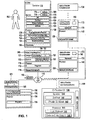
- the FIG. 1 1 shows a user computer system 100 of a user 102.
- the user computer system 100 may be a personal computer, a portable computer such as a laptop or palmtop computer, a personal digital assistant, a mobile telecommunications device, in particular Smart Phone, or the like act.
- the user computer system 100 has a reader 101 with an interface 104 for communicating with an ID token 106 having a corresponding interface 108.
- the user computer system 100 has at least one processor 110 for executing program instructions 112 and a network interface 114 for communicating over a network 116.
- the network may be a computer network, such as the Internet.
- the ID token 106 has an electronic memory 118 with protected memory areas 120, 122, and 124.
- the protected memory area 120 serves to store a reference value needed for authenticating the user 102 to the ID token 106.
- This reference value is, for example, an identifier, in particular a so-called personal identification number (PIN), or reference data for a biometric feature of the user 102, which can be used for the authentication of the user against the ID token 106.
- PIN personal identification number
- the protected area 122 serves e.g. for storing a private key and the protected memory area 124 is used e.g. for storing attributes, such as the user 102, such as, for example, their name, place of residence, date of birth, gender, and / or attributes concerning the ID token itself, such as the institution that created the ID token or issued, the validity period of the ID token, an identifier of the ID token, such as a passport number or a credit card number.
- the user's address data 176 may belong to a different attribute class and be provided by a different AP computer system than the attributes specifying the ID token or attributes 179 specifying, for example, health data.
- the electronic memory 118 may further include a memory area 126 for storing a certificate.
- the certificate includes a public key associated with the private key stored in the protected storage area 122.
- the certificate may have been created according to a public key infrastructure (PKI) standard, for example according to the X.509 standard.
- PKI public key infrastructure
- the certificate does not necessarily have to be stored in the electronic memory 118 of the ID token 106.
- the certificate can also be stored in a public directory server.
- the ID token 106 has a processor 128.
- the processor 128 is for executing program instructions 130, 132, and 134.
- the program instructions 130 are for user authentication, i. for authenticating the user 102 to the ID token.
- the user 102 enters his PIN for his authentication, for example in the user computer system 100.
- Execution of the program instructions 130 then accesses the protected memory area 120 in order to assign the entered PIN with the reference value of the PIN stored there to compare. In the event that the entered PIN matches the reference value of the PIN, the user 102 is considered authenticated.
- a biometric feature of the user 102 is captured.
- the ID token 106 has a fingerprint sensor or a fingerprint sensor is connected to the user's computer system 100.
- the biometric data acquired by the user 102 is compared to the biometric reference data stored in the protected memory area 120 by executing the program instructions 130 in this embodiment. If the biometric data acquired by the user 102 sufficiently matches the biometric reference data, the user 102 is considered authenticated.
- the program instructions 134 are used to execute the ID token 106 steps of a cryptographic protocol for authentication of an ID provider module 136 against the ID token 106.
- the cryptographic protocol may be a challenge-response protocol based on a act symmetric key or an asymmetric key pair.
- the cryptographic protocol implements an Extended Access Control method as specified for machine-readable travel documents (MRTD) by the International Aviation Authority (ICAO).
- MRTD machine-readable travel documents
- ICAO International Aviation Authority
- the ID provider module 136 authenticates against the ID token and thereby has its read permission to read in the protected one Memory area 124 stored attributes already present on the ID token and / or provided by one or more of the AP computer systems 172, 173, 174.
- the authentication may also be mutually exclusive, ie the ID token 106 must then also authenticate itself to the ID provider module 136 according to the same or another cryptographic protocol.
- the program instructions 132 are used for the end-to-end encryption of data transmitted between the ID token 106 and the ID provider module 136, but at least the attributes read from the protected memory area 124 by the ID provider module 136.
- a symmetric key may be used, which is agreed, for example, during the execution of the cryptographic protocol between the ID token 106 and the ID provider module 136.
- the user computer system 100 with its interface 104 can not communicate directly with the interface 108, but via a reader 104 connected to the interface 104 for the ID token 106. Via this reading device, for example a so-called class 2 chip card Terminal, the PIN can also be entered.
- the ID provider module 136 has a network interface 138 for communication over the network 116.
- the ID provider module 136 further has a memory 140 in which a private key 142 of the ID provider module 136 and the corresponding certificate 144 is stored.
- this certificate may be, for example, a certificate according to a PKI standard, such as X.509.
- the ID provider module 136 further has at least one processor 145 for executing program instructions 146 and 148.
- the steps of the cryptographic protocol concerning the ID provider module 136 are executed.
- the cryptographic protocol is implemented by executing the program instructions 134 by the processor 128 of the ID token 106 and by executing the program instructions 146 by the processor 145 of the ID provider module 136.
- the program instructions 148 are used to implement the end-to-end encryption on the part of the ID provider module 136, for example based on the symmetric key, which is used when executing the cryptographic protocol between the ID token 106 and the ID provider.
- Module 136 has been agreed.
- any method known per se for agreeing the symmetric key for the end-to-end encryption such as, for example, a Diffie-Hellman key exchange, can be used.
- the ID provider module 136 is preferably located in a particularly protected environment, in particular in a so-called trust center, so that the ID provider module 136 in combination with the necessity of authenticating the user 102 with respect to the ID token 106 Trust anchor for the authenticity of the read from the ID token 106 attributes.
- a service computer system 150 may be configured to receive an order or order for a service or product, particularly an online service.
- the user 102 may open an account online with a bank via the network 116, or may use other financial or banking services.
- the service computer system 150 may also be embodied as an online store, such that the user 102 may, for example, purchase a mobile phone or the like online.
- the service computer system 150 can also be designed for the delivery of digital content, for example for the download of music and / or video data or as a government server for an eGovernment application.
- the service computer system 150 has for this purpose a network interface 152 for connection to the network 116. Further, the service computer system 150 has at least one processor 154 for executing program instructions 156. By executing the program instructions 156, for example, dynamic HTML pages are generated the user 102 can enter his order or his order.
- the service computer system 150 must review attributes of the user 102 and / or its ID token 106 based on one or more predetermined criteria. Just if this check is passed, the order or order of the user 102 is received and / or executed.
- the user 102 For example, to open a bank account or purchase a mobile phone with a related contract, it is required that the user 102 reveal his identity to the service computer system 150 and that this identity be verified. In the prior art, for example, the user 102 has to present his identity card for this purpose. This process is replaced by the reading of the digital identity of the user 102 from its ID token 106.
- the APV computer system 199 can have the same structure as or include the ID provider module or can be operatively coupled to it (for example, to carry out mutual authentication with the ID token and to set up an end-to-end encrypted channel) and additional functionality for sending attribute specifications to multiple AP computer systems, receiving attribute sets from these AP computer systems, and writing the received attribute sets into the ID token.
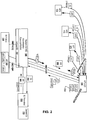
- FIG. 2 shows an embodiment of a distributed system, which substantially the already in FIG. 1 described components and computer systems.
- the protected by end-to-end encryption channels between the ID token and the respective communication partners are shown by dashed lines.
- the user 102 first builds an Internet session via the network 116 to the service computer system 150 using his user computer system 100.
- a service request 103 is transmitted from the user computer system 100 to the service computer system 150 at step 202, thus the user 102 requests to provide a service of the service computer system 150.
- the service computer system 150 responds to this service request 103 by transmitting an attribute specification 105 (via a network or within a single computer system) to the ID provider module.
- the attribute specification 105 (“attribute request”) is also referred to below as "AR”.
- the reception of the AR by the ID provider module initiates the mutual authentication of ID provider module and ID token in step 204 and the establishment of a first protected communication channel SM [CA] # 1 between ID provider module and ID Tokens in step 206.
- the first secure communication channel becomes the active data communication channel of the ID token.
- the ID provider module 136 writes the attribute specification 105 specifying those attributes to be fulfilled for the service requested with the service request 103 to the protected memory 183 of the ID token.
- the attribute specification 105 is transmitted via the first protected communication channel SM [CA] # 1.
- the ID provider module along with the first attribute specification or after transmission of the first attribute specification, transmits a toggle signal SC [CA] PACE to the ID token to cause it to step in step 212 to the local channel SM [FIG. PACE] switch.
- SC [CA] PACE toggle signal SC [CA] PACE
- the local channel which provides a secure communication link between the user's computer system and the ID token via the reader, allows other computer systems, e.g. the APV computer system 199 to initiate mutual authentication with the ID token (step 218) and to establish an end-to-end encryption between that other computer system and the ID token via the user computer system.
- the user computer system may receive data from the other computer systems via the network 116 and forward it to the ID token via the protected local communication channel.
- the user computer system receives a signal from the service computer system, the ID provider module, or the ID token (eg, in the form of an identifier at step 214 of FIG Service CS sent message) that the attribute specification was stored in the ID token.
- the ID token eg, in the form of an identifier at step 214 of FIG Service CS sent message
- the user computer system then sends the address of the ID token 106 # and a trigger signal T1 to the APV computer system.
- the address 106 # may e.g. an IP address of the user computer system and a port number, via which the ID token can be addressed via the reader include.
- the trigger signal T1 includes the information that the attribute specification has been successfully stored in the ID token.
- the trigger signal and the address can be sent together or sequentially.
- the token address can be part of the trigger signal.
- the APV computer system and the ID token perform a mutual authentication in step 218 (at the initiative of the APV computer system). This can be done via the network and the user computer system to which the ID token is indeed connected via the active local communication channel.
- the address # 106 of the ID token for example a URL with port information, is used.
- step 220 following mutual successful authentication, the establishment of a second protected communication channel SM [PACE] between the APV computer system and the ID token follows.
- the second secure communication channel SM [CA] # 2 becomes the active data communication channel of the ID token.
- either the ID provider module already writing the attribute specification or the APV computer system can analyze the AR and split it into several partial attribute specifications or the partial attribute specifications in addition to the AR originally specified by the service in the token.
- the different partial attribute specifications AR1, AR2, ..., ARn contain specifications of different attribute classes, e.g. "Address-related attributes”, “Financial attributes”, “Health-related attributes”, “Driving license-related attributes”, etc.
- step 222 the APV computer system 199 reads out the partial attribute specifications AR1-ARn from the ID token over the second protected communication channel.
- step 224 the APV computer system sends a toggle signal SC [PACE] to the ID token, which causes the ID token to reactivate the protected local communication channel SM [PACE].
- the APV computer system analyzes the partial attribute specifications AR1-ARn and determines a plurality of AP computer systems that are capable of providing the attributes specified in the respective partial attribute specifications AR1-ARn. For example, the APV computer system may identify the AP computer systems 172, 173 and 174, each of which may provide attributes of a different attribute class. The APV computer system now sends these sub-specifications AR1-ARn over the network to the corresponding AP computer systems 172, 173, 174. Thus, the AP computer system 172 does not experience the entirety of the requested attributes, but receives only a portion of the requested attributes, which in usually no conclusions on the requesting service permits.
- the transmission of the partial attribute specifications is encrypted, for example via the Internet using the HTTPS protocol. When transmitting the partial attribute specifications, preferably no data that provides information about the identity of the ID token or the user is transmitted to the AP computer systems.
- the AP computer system AP1 172 determines the attributes specified therein in step 228.
- the attributes are read from a database 175 operatively coupled to the AP1 computer system.
- the AP computer system 172 determines the set of attributes specified in the partial attribute specification AR1, it sends the attribute set back to the APV computer system via the network in step 230.
- the attribute set is sent over an encrypted connection, for example via an HTTPS connection.
- all other identified and requested AP computer systems 173, 174 also send their respectively determined attribute sets back to the APV computer system.
- the APV computer system After the APV computer system has received an attribute set from all requested AP computer systems, and optionally after each individual attribute set has been received, the APV computer system writes the received attribute sets in step 232 in the protected memory area of the ID token.
- the writing can be done so that attribute sets of a particular class are written to a class-specific sector of the memory.
- the APV computer system must prove its authorization to write to the protected storage area or individual sectors by means of an authorization certificate.
- the APV computer system may delete the associated attribute specification from the ID token.
- the APV computer system After all attribute sets received in response to the dispatch of the partial attribute specifications, the APV computer system sends a termination signal SAPV to the user computer system 100 in step 234, which then sends a switch signal SC [CA] # 1 to the user at step 236 Id token sends.
- the user computer system Upon receiving the termination signal, the user computer system notifies the service computer system in step 238 that the attributes requested by the service are now available and stored in the token.
- the APV computer system can read the data being transmitted over the protected channels and thus can not determine if and when those in the partial attribute specifications AR1-ARn specified attributes have been successfully determined and stored in the ID token, the termination signal allows coordination of the data exchange.
- the ID token includes a clock that determines if a predefined maximum amount of time has elapsed between writing the attribute specification and receiving all of the associated attribute sets (and possibly clearing the corresponding attribute specifications). The ID token prevents any write access if the maximum time is exceeded.
- the user computer system In response to receiving the termination signal SAPV, the user computer system thus sends a "second" message to the service computer system in step 238 to notify the service computer system that all are relevant to the service and in the first Attribute specification 105 specified attributes have been successfully determined and are now in the ID token.
- This allows the ID provider module of the service computer system, via the reactivated first data communication channel, to read all the attributes stored on the ID token and specified in the first attribute specification and to make them available to the service.
- the service may now parse the attributes and provide the service to the user 102 depending on the result of that analysis.
- the service computer system receives the attributes from the ID provider module 136 over a network, e.g. the Internet, esp.
- a network e.g. the Internet, esp.
- the module 136 is designed as an independent ID provider computer system.
- the attributes may also be communicated to the service or program modules associated with the service of the service computer system via a system bus of a service computer system, e.g. if the ID provider module is an integral part of the service computer system.
- the user computer system 100 may prompt the user 102 to authenticate to the ID token 106.
- the user 102 enters his PIN via the reader 101 or a keyboard of the user computer system 100, for example.
- a local secure communication channel SM [PACE] is set up between the user computer system 100, that is to say its reader 101, and the ID token 106, for example using a Diffie-Hellman key exchange, in particular according to the Federal Office for Security in Information Processing (BSI) specified PACE protocol.
- the ID provider module 136 establishes a secure communication channel SM [CA] # 1 over the network 116, through which the ID provider module 136 authenticates to the ID token 106, under Use of the certificate 144.
- a mutual authentication of the IT token 106 and the respective authentication partner takes place using certificates, that is, a so-called CA and a TA take place.
- a session key is agreed with the established protected communication channel is constructed with end-to-end encryption between the ID token 106 and the authentication partner via the user computer system 100 and the network 116, wherein the local protected communication channel SM [PACE] in some embodiments in addition to protected data communication channel SM [CA] 1 or SM [CA] 2 remains.
- the service provider's ID provider module may be an integral component of the service computer system or an external component that is interoperable with the service CS.
- the APV computer system also uses an ID provider module (which may be embodied as an internal or external component of the APV computer system) for communicating with the ID token.
- the service computer system and the APV computer system each use their own ID provider modules to ensure the privacy of the exchanged attributes.
- the communication between the user computer system 100 and the ID token 106 is preferably via the local communication channel SM [PACE].
- the communication between the ID token and the ID provider module 136 is via a first protected communication channel SM [CA] # 1.
- the communication between the ID token and the APV computer system 199 is via a second protected communication channel SM [CA] # 2.
- the communication between the APV computer system and each one of the AP computer systems 172, 173, 174 is in each case via a network, e.g. the Internet, preferably encrypted, e.g. using HTTPS.
- An inactive communication channel is a channel for which a session and a secure, for example, encrypted connection is maintained, although this channel is not currently used for data transmission.
- An active channel is a channel currently used for data transmission.
- the communication channel can be reactivated very quickly and resource-conserving by means of a switching command without the need to negotiate new session keys.
- the user computer system activates and deactivates the first secure channel to the ID provider module from the receipt of switching signals. This speeds up the process by eliminating the need to negotiate new session keys to establish the first secure communication channel between the IT token and the ID provider module, which can be particularly beneficial given the limited processing power of many ID tokens.
- the APV computer system is configured to first make a signature request to the ID over the protected communication channel SM [CA] # 2 for all generated partial attribute specifications (ie, the second AR1, third AR2, fourth AR3, etc. attribute specification) Token sends.
- the signature request may be submitted to the ID token along with the partial attribute specification.
- the ID token signs (optional: after an explicit confirmation of the signature by the user eg by a PIN entry) each of the partial attribute specifications.
- the APV computer system receives the signed partial attribute specifications AR1 sign , AR2 sign , AR3 sign , ..., or just the respective generated signature from the ID token, and passes the signed partial attribute specifications respectively to that of the AP computer systems which is designed to provide the relevant partial attribute specification.
- Each of the AP computer systems thus receives "its" partial attribute specification from the APV computer system in a form signed by the ID token and, before it determines the attributes specified therein, checks the validity of the signature, eg by means of a public signature verification key of the ID Token is assigned.
- the token may already be configured by the user to automatically automatically sign attribute specifications provided by a particular APV computer system or affecting a particular attribute class.
- This method is advantageous because the individual AP computer systems can check whether the attributes have been legitimately requested (ie with the user's knowledge and will) even before they establish a communication connection with the ID token or provide the corresponding attributes. This reduces the consumption of computing capacity by the AP computer systems and speeds up the process. It is also advantageous for data protection that signature invalidation does not result in read or write access to the protected memory of the ID token.
- the computer system that generates the signature request (ie, preferably the APV computer system or an AP computer system 172, 173, 174 - which then needs to be notified of the address of the user computer system by the APV computer system) generates a signature confirmation request and sends this signature confirmation request to the user computer system 100.
- the signature confirmation request is a request to the user 102 of the user computer system, also assigned the ID token, to approve the signing of an attribute specification by the ID token.
- the signature confirmation request may include an indication of the attributes requested by the service and specified in a partial attribute specification that is displayed to the user via the display of the user computer system.
- a signature confirmation request allows the user to explicitly grant permission to the ID token to sign a partial attribute specification in response to a signature request.
- the permission may e.g. be obtained that the user computer system prompts the user to enter a PIN in order to authenticate with this against the ID token as the owner of the ID token. If the user grants the permission to sign an attribute specification, signs the ID token the attribute specification for which the signature confirmation of the user 102 is present.
- the ID token generates the signature each time by executing program instructions 135 by the processor 128 of the ID token 106 forming a generator for generating digital signatures, using, for example, the private signature key 122 of the ID token.
- the signature authorization request can be configured as a request for a signature PIN from the user 102.
- the PIN entry may be made, for example, via a user interface, such as a keyboard of the user computer system 100 or the reader 101.
- the ID token 106 checks whether the identifier entered by the user 102 matches the reference value for the signature PIN (SPIN) stored in the memory 118 stored in the protected memory area 121.
- SPIN signature PIN
- the ID token 106 sends the signed second attribute specification or only the signature thereof to the AP1 computer system 172.
- the AP1 computer system 172 checks the validity of the signature and determines the attributes specified therein only if the check shows that the signature is valid.
- the further AP computer systems 173, 174, 1722 can also obtain and check a signature of the respectively read attribute specifications and, if necessary, in the case of the validity of the signature, determine the attributes specified in the respectively obtained attribute specification.
- the APV computer system 199 may be analogous to the ID provider module 136 or may include an ID provider module, that is, it has a network interface 138, a processor 145 for executing program instructions 146, 148, and a memory 140 in which a certificate and a private key are stored.
- the certificate is preferably an authorization certificate in each of which an authorization for write access to the ID token 106 or individual sectors is specified.
- the APV computer system 199 preferably has only rights to read the partial attribute specifications from the ID token, but has no right to store an attribute specification itself in the ID token or to read already stored attributes (especially of other sectors).
- the user computer system 100 also has neither read nor write permissions to the attribute specifications and attributes of the ID token.
- FIG. 4 shows a schematic representation of a method according to embodiment of the invention.
- the user computer system 100 sends a service request 103 from a user 102 via a network 116 to a service computer system 150 that is coupled to an ID provider module 136.
- a service computer system 150 that is coupled to an ID provider module 136.
- the user enters a URL in an Internet browser of his user computer system in order to set up a so-called Internet session with the service computer system.
- the service computer system may be, for example, an online shop or other e-commerce portal, or a government server providing an e-government application.
- the user's service request may be the transmission of a user's purchase decision, which the user inputs, for example, by clicking on a virtual control on the service computer system's web page, such as "buy” or "buy now” Service request for example as http request or https request can be transmitted via the Internet session to the service computer system.
- An eGovernment application may analogously be the service request for the transmission of a request of the user of an official procedure, such as the issuing of a registration certificate, the registration of a motor vehicle or the notification of a change of residence or the like.
- the service computer system requires attributes of the user and, depending on the application, also attributes of the ID token itself for providing the service requested with the service request. These may be specified by the service computer system in a first attribute specification 105 ("AR").
- AR first attribute specification
- the attribute specification may include the attributes name, date of birth, address of the user, account number of the user, creditworthiness of the user and validity period of the ID token.
- the attributes according to this first attribute specification thus require the service computer system to provide the service to the user.
- the service computer system 150 sends the attribute specification 105 to the ID provider module 136.
- the attribute specification specifies those attributes that the service computer system needs to provide the requested service.
- the transmission can take place via the network.
- the ID provider module is an integral part of the service computer system so that the sending of the first attribute specification occurs, for example, via an internal data bus or a LAN connection.
- the user 102 authenticates himself to the ID token.
- the user enters a secret identifier, such as the so-called Personal Identification Number (PIN).
- PIN Personal Identification Number
- this can be done directly by input to the ID token, by input to the reader or by input to the user computer system.
- the authentication of the user with respect to the ID token by means of a "remote verification", which here any method is understood in which the identifier to be checked is not entered directly into the ID tokens to compare with the identifier stored there, but in which the verification is done by means of a protocol involving the reader and the ID token, in which the identifier entered into the reader is not attached to the ID token must be transferred.
- Such protocols are well known in the art, such as Strong Password Only Authentication Key Exchange (SPEKE), Diffie-Hellman Encrypted Key Exchange (DH-EKE), Bellovin-Merritt Protocol or Password Authenticated Connection Establishment (PACE).
- SPEKE Strong Password Only Authentication Key Exchange
- DH-EKE Diffie-Hellman Encrypted Key Exchange
- PACE Password Authenticated Connection Establishment
- SPEKE Strong Password Only Authentication Key Exchange
- DH-EKE Diffie-Hellman Encrypted Key Exchange
- PACE Password Authenticated Connection Establishment
- the PACE protocol is known from Technical Guideline TR-03110 of the Federal Office for Security in Information Technology, which is particularly suitable for elliptic curve cryptography, cf. DE 102007000587 A1 and DE 102013202001 A1 .
- the user computer system also authenticates to the ID token, in step (2) also a local secure communication channel SM [PACE], that is a so-called secure messaging channel, between the ID token and the user Computer system can be constructed, for example, by a session key according to a Diffie-Hellman protocol between the ID token and the user computer system is agreed.
- the local communication channel is thus now the active communication channel.
- the ID provider module and the ID token mutually authenticate each other in steps (3) and (4).
- the ID provider module authenticates over the ID token over the network 116, and preferably also grants its read or write permission by, for example, transmitting its entitlement certificate over the network to the ID token.
- the ID token also authenticates to the ID provider module, that is, both the so-called terminal authentication (TA) of the ID provider module against the ID token in step (3) and the chip authentication (CA ) of the ID token, that is, the chip included in the ID token with the processor, opposite the ID provider module in step (4).
- the TA and the CA can be performed in accordance with BSI TR-03110.
- a first secure communication channel SM [CA] # 1 can be set up according to a secure messaging method in that at the TA and / or the CA, a session key is provided between the ID token and the ID provider. module is agreed for an end-to-end encryption, wherein the local protected communication channel remains.
- the ID provider module can read-access the ID token to retrieve the attributes required by the service. If the required attributes can not be read, or by default, the ID provider module writes in step 6, the attribute specification AR 105 in a protected memory area of the ID token. When the AR is stored in the non-volatile memory of the ID token, an attribute specification stored from previous protocol sessions can be replaced.
- the ID provider module then generates a first switchover command SC [PACE].
- the first switch command is sent from the ID provider module to the ID token over the first protected communication channel.
- the switching command causes switching from the first protected communication channel SM [CA] # 1 to the local protected communication channel SM [PACE] in step (7).
- the service computer system After the service computer system successfully stores the attribute specification in the ID token via the ID provider module, it also generates a "first message" containing the information that an attribute specification is stored in the ID token whose attributes are not read from the token and that needs to be worked on. The first message is transmitted from the service computer system to the user computer system.
- step (8) in response to receiving the first message, the user computer system sends a trigger signal T1 with the address of the token to an APV computer system 199.
- the first trigger signal does not contain any information regarding the attributes requested by the service and thus does not include the Attribute specification still parts of it. Thus, the confidentiality of the requested attributes and also the type of requested service is guaranteed if the trigger signal should be intercepted by unauthorized third parties.
- the trigger signal T1 includes an address # 106 of the ID token 106, for example, a URL in combination with a port number that allows the first attribute provider computer system to contact the ID token and initiate mutual authentication ,
- This causes the APV computer system to perform a TA and a CA with the ID token in steps (9) and (10) as previously described, and after successful mutual authentication establish a second protected communication channel SM [CA] # 2 in step (11).
- a second secure communication channel SM [CA] # 2 can be established with end-to-end encryption between the ID token and the APV computer system, with the first protected communication channel being disabled.
- the APV computer system reads portions of the attribute specification AR, ie, the partial attribute specifications AR1, AR2, ..., ARn, from the ID token over the second protected channel, analyzes them, and identifies multiple AP computer systems 172, 173, 174 capable of providing the attributes specified in the specification AR. For example, address data from AP computer system 172, credit-worth information may be provided by AP computer system 173.
- the APV computer system forwards each of the partial attribute specifications to one of the determined AP computer systems and causes the respective AP computer systems to specify the attributes specified in the partial attribute specifications to be determined and sent back to the APV computer system in the form of an attribute set.
- the APV computer system sends only the partial attribute specification but not the ID token ID # 106 to the individual AP computer systems.
- Mutual authentication of the ID token and the corresponding AP computer system is omitted.
- the partial attribute specifications may be sent to the respective AP computer systems in signed form as previously described.
- the APV computer system When the APV computer system has received a corresponding set of attributes from all AP1 APn computer systems to which a partial attribute specification has been sent, the APV computer system writes the attribute sets over the still active communication channel SM [CA] # 2 into the protected memory area of the token and in step 14 deletes the partial attribute specifications associated with the already written attribute sets.
- step 15 the APV computer system sends a termination signal SAPV to the user computer system, which in turn sends a switchover command to reactivate the first communication channel to the ID token and a "second" Send message to the service computer system.
- the second message implies that the attributes are now available and can be read from the token.
- step (15) in response to the switching command, the ID token re-activates the first protected communication channel SM [CA] # 1, thereby allowing the ID provider module of the service computer system to retrieve the attributes from the token in step (16) read.
- the switching to the protected first communication channel SM [CA] # 1 may be e.g. such that the ID token "automatically falls back" to the local secure channel SM [PACE] after the write access of the APV computer system, i.e., after a successful write access, automatically re-enables the local secure channel.
- the user computer system upon receipt of a termination signal SAPV, switches from the channel of the most recent AP computer system (or local secure communication channel) to the secure first communication channel SM [CA] # 1 by sending a switchover command UK via the local communication channel SM [ PACE] to the ID token, causing the ID token to switch to the first secure communication channel.
- the ID token is therefore passive in the switching operations and configured for automatic switching ("fallback") to the local channel as described above.
- step (17) the service computer system may send another switchover command to the ID token to reactivate the local channel.
- step (18) the service computer system provides the requested service if the read attributes are valid.
Landscapes
- Engineering & Computer Science (AREA)
- Computer Security & Cryptography (AREA)
- Theoretical Computer Science (AREA)
- Computer Hardware Design (AREA)
- General Engineering & Computer Science (AREA)
- Software Systems (AREA)
- Physics & Mathematics (AREA)
- General Physics & Mathematics (AREA)
- Computing Systems (AREA)
- Computer Networks & Wireless Communication (AREA)
- Signal Processing (AREA)
- Storage Device Security (AREA)
Applications Claiming Priority (1)
| Application Number | Priority Date | Filing Date | Title |
|---|---|---|---|
| DE102016222170.1A DE102016222170A1 (de) | 2016-11-11 | 2016-11-11 | Verfahren zum Lesen von Attributen aus einem ID-Token |
Publications (2)
| Publication Number | Publication Date |
|---|---|
| EP3321832A1 true EP3321832A1 (fr) | 2018-05-16 |
| EP3321832B1 EP3321832B1 (fr) | 2020-08-05 |
Family
ID=60293831
Family Applications (1)
| Application Number | Title | Priority Date | Filing Date |
|---|---|---|---|
| EP17200668.6A Active EP3321832B1 (fr) | 2016-11-11 | 2017-11-08 | Distribution de lecture d'attributs à partir d'un jeton d'identification |
Country Status (2)
| Country | Link |
|---|---|
| EP (1) | EP3321832B1 (fr) |
| DE (1) | DE102016222170A1 (fr) |
Cited By (2)
| Publication number | Priority date | Publication date | Assignee | Title |
|---|---|---|---|---|
| CN112333176A (zh) * | 2020-03-11 | 2021-02-05 | 合肥达朴汇联科技有限公司 | 基于数据接收方的数据传送方法、系统、设备及存储介质 |
| CN112561006A (zh) * | 2020-12-04 | 2021-03-26 | 中国联合网络通信集团有限公司 | 电子车牌管理方法、射频识别读写器、节点、设备及介质 |
Families Citing this family (3)
| Publication number | Priority date | Publication date | Assignee | Title |
|---|---|---|---|---|
| DE102021124640A1 (de) | 2021-09-23 | 2023-03-23 | 3medi GmbH | Verfahren zum digitalen Austauschen von Informationen |
| DE102023133692B4 (de) | 2023-12-01 | 2025-06-18 | service health erx GmbH | Virtuelles Chipkartenterminal |
| EP4727060A1 (fr) * | 2024-10-09 | 2026-04-15 | dormakaba Schweiz AG | Jeton numérique configuré pour être utilisé dans un système de gestion de bâtiment et procédés d'utilisation du jeton numérique |
Citations (14)
| Publication number | Priority date | Publication date | Assignee | Title |
|---|---|---|---|---|
| US5241599A (en) | 1991-10-02 | 1993-08-31 | At&T Bell Laboratories | Cryptographic protocol for secure communications |
| US6792533B2 (en) | 1996-04-17 | 2004-09-14 | Phoenix Technologies Ltd. | Cryptographic methods for remote authentication |
| US7139917B2 (en) | 2000-06-05 | 2006-11-21 | Phoenix Technologies Ltd. | Systems, methods and software for remote password authentication using multiple servers |
| US20070294431A1 (en) | 2004-10-29 | 2007-12-20 | The Go Daddy Group, Inc. | Digital identity validation |
| DE102007000587A1 (de) | 2007-10-29 | 2009-04-30 | Bundesdruckerei Gmbh | Verfahren zum Freischalten einer Chipkartenfunktion mittels Fernüberprüfung |
| DE102008000067A1 (de) | 2008-01-16 | 2009-07-23 | Bundesdruckerei Gmbh | Verfahren zum Lesen von Attributen aus einem ID-Token |
| DE102008040416A1 (de) | 2008-07-15 | 2010-01-21 | Bundesdruckerei Gmbh | Verfahren zum Lesen von Attributen aus einem ID-Token |
| DE102008042262A1 (de) | 2008-09-22 | 2010-04-08 | Bundesdruckerei Gmbh | Verfahren zur Speicherung von Daten, Computerprogrammprodukt, ID-Token und Computersystem |
| DE102009026953A1 (de) | 2009-06-16 | 2010-12-23 | Bundesdruckerei Gmbh | Verfahren zum Einbuchen eines Mobilfunkgeräts in ein Mobilfunknetz |
| DE102009027681A1 (de) | 2009-07-14 | 2011-01-20 | Bundesdruckerei Gmbh | Verfahren und Lesen von Attributen aus einem ID-Token |
| DE102009027723A1 (de) | 2009-07-15 | 2011-01-27 | Bundesdruckerei Gmbh | Verfahren zum Lesen von Attributen aus einem ID-Token |
| DE102010028133A1 (de) | 2010-04-22 | 2011-10-27 | Bundesdruckerei Gmbh | Verfahren zum Lesen eines Attributs aus einem ID-Token |
| DE102011082101A1 (de) | 2011-09-02 | 2013-03-07 | Bundesdruckerei Gmbh | Verfahren zur Erzeugung eines Soft-Tokens, Computerprogrammprodukt und Dienst-Computersystem |
| DE102013202001A1 (de) | 2013-02-07 | 2014-08-07 | Bundesdruckerei Gmbh | Verfahren zum Versehen eines mobilen Endgeräts mit einem Authentisierungszertifikat |
-
2016
- 2016-11-11 DE DE102016222170.1A patent/DE102016222170A1/de not_active Withdrawn
-
2017
- 2017-11-08 EP EP17200668.6A patent/EP3321832B1/fr active Active
Patent Citations (14)
| Publication number | Priority date | Publication date | Assignee | Title |
|---|---|---|---|---|
| US5241599A (en) | 1991-10-02 | 1993-08-31 | At&T Bell Laboratories | Cryptographic protocol for secure communications |
| US6792533B2 (en) | 1996-04-17 | 2004-09-14 | Phoenix Technologies Ltd. | Cryptographic methods for remote authentication |
| US7139917B2 (en) | 2000-06-05 | 2006-11-21 | Phoenix Technologies Ltd. | Systems, methods and software for remote password authentication using multiple servers |
| US20070294431A1 (en) | 2004-10-29 | 2007-12-20 | The Go Daddy Group, Inc. | Digital identity validation |
| DE102007000587A1 (de) | 2007-10-29 | 2009-04-30 | Bundesdruckerei Gmbh | Verfahren zum Freischalten einer Chipkartenfunktion mittels Fernüberprüfung |
| DE102008000067A1 (de) | 2008-01-16 | 2009-07-23 | Bundesdruckerei Gmbh | Verfahren zum Lesen von Attributen aus einem ID-Token |
| DE102008040416A1 (de) | 2008-07-15 | 2010-01-21 | Bundesdruckerei Gmbh | Verfahren zum Lesen von Attributen aus einem ID-Token |
| DE102008042262A1 (de) | 2008-09-22 | 2010-04-08 | Bundesdruckerei Gmbh | Verfahren zur Speicherung von Daten, Computerprogrammprodukt, ID-Token und Computersystem |
| DE102009026953A1 (de) | 2009-06-16 | 2010-12-23 | Bundesdruckerei Gmbh | Verfahren zum Einbuchen eines Mobilfunkgeräts in ein Mobilfunknetz |
| DE102009027681A1 (de) | 2009-07-14 | 2011-01-20 | Bundesdruckerei Gmbh | Verfahren und Lesen von Attributen aus einem ID-Token |
| DE102009027723A1 (de) | 2009-07-15 | 2011-01-27 | Bundesdruckerei Gmbh | Verfahren zum Lesen von Attributen aus einem ID-Token |
| DE102010028133A1 (de) | 2010-04-22 | 2011-10-27 | Bundesdruckerei Gmbh | Verfahren zum Lesen eines Attributs aus einem ID-Token |
| DE102011082101A1 (de) | 2011-09-02 | 2013-03-07 | Bundesdruckerei Gmbh | Verfahren zur Erzeugung eines Soft-Tokens, Computerprogrammprodukt und Dienst-Computersystem |
| DE102013202001A1 (de) | 2013-02-07 | 2014-08-07 | Bundesdruckerei Gmbh | Verfahren zum Versehen eines mobilen Endgeräts mit einem Authentisierungszertifikat |
Non-Patent Citations (3)
| Title |
|---|
| "Advanced Security Mechanisms for Machine Readable Travel Documents and eIDAS Token - Part 2", 16 December 2014 (2014-12-16), XP055257174, Retrieved from the Internet <URL:https://www.bsi.bund.de/SharedDocs/Downloads/DE/BSI/Publikationen/TechnischeRichtlinien/TR03130/TR-03130_TR-eID-Server> [retrieved on 20160310] * |
| "Advanced Security Mechanisms for Machine Readable Travel Documents and eIDAS Token -", 6 February 2015 (2015-02-06), XP055250604, Retrieved from the Internet <URL:https://www.bsi.bund.de/SharedDocs/Downloads/EN/BSI/Publications/TechGuidelines/TR03110/BSI_TR-03110_Part-4_V2-2.pdf?__blob=publicationFile&v=1> [retrieved on 20160216] * |
| "Technical Guideline eID-Server", 15 January 2014 (2014-01-15), XP055256439, Retrieved from the Internet <URL:https://www.bsi.bund.de/SharedDocs/Downloads/DE/BSI/Publikationen/TechnischeRichtlinien/TR03130/TR-03130_TR-eID-Server_Part1.pdf?__blob=publicationFile> * |
Cited By (3)
| Publication number | Priority date | Publication date | Assignee | Title |
|---|---|---|---|---|
| CN112333176A (zh) * | 2020-03-11 | 2021-02-05 | 合肥达朴汇联科技有限公司 | 基于数据接收方的数据传送方法、系统、设备及存储介质 |
| CN112561006A (zh) * | 2020-12-04 | 2021-03-26 | 中国联合网络通信集团有限公司 | 电子车牌管理方法、射频识别读写器、节点、设备及介质 |
| CN112561006B (zh) * | 2020-12-04 | 2023-08-29 | 中国联合网络通信集团有限公司 | 电子车牌管理方法、射频识别读写器、节点、设备及介质 |
Also Published As
| Publication number | Publication date |
|---|---|
| DE102016222170A1 (de) | 2018-05-17 |
| EP3321832B1 (fr) | 2020-08-05 |
Similar Documents
| Publication | Publication Date | Title |
|---|---|---|
| EP2245573B1 (fr) | Procédé pour lire des attributs d'un jeton d'identification | |
| EP2304642B1 (fr) | Procédé pour lire les attributs depuis un jeton id | |
| EP2454704B1 (fr) | Methode pour lir des attributes de un jeton d'identite | |
| EP3699791B1 (fr) | Contrôle d'accès comprenant un appareil radio mobile | |
| DE102010028133A1 (de) | Verfahren zum Lesen eines Attributs aus einem ID-Token | |
| EP3245607B1 (fr) | Procédé de lecture d'attributs à partir d'un jeton d'identité | |
| EP2338255A2 (fr) | Métode, produit logiciel et système d'authentification d'un utilisateur d'un réseau de télécommunication | |
| EP3321832B1 (fr) | Distribution de lecture d'attributs à partir d'un jeton d'identification | |
| EP4128695B1 (fr) | Mécanisme d'authentification personnalisé et pour un serveur spécifique | |
| EP2620892B1 (fr) | Procédé de création d'un pseudonyme à l'aide d'un jeton d'ID | |
| EP2631837B1 (fr) | Procédé de création d'un pseudonyme à l'aide d'un jeton d'ID | |
| EP3206151B1 (fr) | Procédé et système d'authentification d'un appareil de télécommunication mobile sur un système informatique de service et appareil de télécommunication mobile | |
| EP3244331B1 (fr) | Procédé de lecture d'attributs à partir d'un jeton d'identification | |
| EP3244332B1 (fr) | Procédé de lecture d'attributs à partir d'un jeton d'identification | |
| EP3298526B1 (fr) | Procédé de lecture d'attributs à partir d'un jeton d'identification | |
| EP2397960B1 (fr) | Procédé de lecture d'attributs d'un jeton d'identification sur une carte à puce de télécommunications et un système d'ordinateur-serveur | |
| EP4468652B1 (fr) | Service de signature à distance utilisant un service de messagerie instantanée | |
| EP3323072B1 (fr) | Procédé pour lire des attributs dans un jeton id, jeton id, système informatique de fournisseur d'attribut et système informatique | |
| DE102015017060A1 (de) | Verfahren zum Lesen von Attributen aus einem ID-Token | |
| DE102015017061A1 (de) | Verfahren zum Lesen von Attributen aus einem ID-Token |
Legal Events
| Date | Code | Title | Description |
|---|---|---|---|
| PUAI | Public reference made under article 153(3) epc to a published international application that has entered the european phase |
Free format text: ORIGINAL CODE: 0009012 |
|
| STAA | Information on the status of an ep patent application or granted ep patent |
Free format text: STATUS: THE APPLICATION HAS BEEN PUBLISHED |
|
| AK | Designated contracting states |
Kind code of ref document: A1 Designated state(s): AL AT BE BG CH CY CZ DE DK EE ES FI FR GB GR HR HU IE IS IT LI LT LU LV MC MK MT NL NO PL PT RO RS SE SI SK SM TR |
|
| AX | Request for extension of the european patent |
Extension state: BA ME |
|
| STAA | Information on the status of an ep patent application or granted ep patent |
Free format text: STATUS: REQUEST FOR EXAMINATION WAS MADE |
|
| 17P | Request for examination filed |
Effective date: 20181116 |
|
| RBV | Designated contracting states (corrected) |
Designated state(s): AL AT BE BG CH CY CZ DE DK EE ES FI FR GB GR HR HU IE IS IT LI LT LU LV MC MK MT NL NO PL PT RO RS SE SI SK SM TR |
|
| GRAP | Despatch of communication of intention to grant a patent |
Free format text: ORIGINAL CODE: EPIDOSNIGR1 |
|
| STAA | Information on the status of an ep patent application or granted ep patent |
Free format text: STATUS: GRANT OF PATENT IS INTENDED |
|
| INTG | Intention to grant announced |
Effective date: 20200304 |
|
| GRAS | Grant fee paid |
Free format text: ORIGINAL CODE: EPIDOSNIGR3 |
|
| GRAA | (expected) grant |
Free format text: ORIGINAL CODE: 0009210 |
|
| STAA | Information on the status of an ep patent application or granted ep patent |
Free format text: STATUS: THE PATENT HAS BEEN GRANTED |
|
| AK | Designated contracting states |
Kind code of ref document: B1 Designated state(s): AL AT BE BG CH CY CZ DE DK EE ES FI FR GB GR HR HU IE IS IT LI LT LU LV MC MK MT NL NO PL PT RO RS SE SI SK SM TR |
|
| REG | Reference to a national code |
Ref country code: GB Ref legal event code: FG4D Free format text: NOT ENGLISH |
|
| REG | Reference to a national code |
Ref country code: CH Ref legal event code: EP |
|
| REG | Reference to a national code |
Ref country code: AT Ref legal event code: REF Ref document number: 1299699 Country of ref document: AT Kind code of ref document: T Effective date: 20200815 |
|
| REG | Reference to a national code |
Ref country code: DE Ref legal event code: R096 Ref document number: 502017006537 Country of ref document: DE |
|
| REG | Reference to a national code |
Ref country code: IE Ref legal event code: FG4D Free format text: LANGUAGE OF EP DOCUMENT: GERMAN |
|
| REG | Reference to a national code |
Ref country code: LT Ref legal event code: MG4D |
|
| REG | Reference to a national code |
Ref country code: NL Ref legal event code: MP Effective date: 20200805 |
|
| PG25 | Lapsed in a contracting state [announced via postgrant information from national office to epo] |
Ref country code: PT Free format text: LAPSE BECAUSE OF FAILURE TO SUBMIT A TRANSLATION OF THE DESCRIPTION OR TO PAY THE FEE WITHIN THE PRESCRIBED TIME-LIMIT Effective date: 20201207 Ref country code: GR Free format text: LAPSE BECAUSE OF FAILURE TO SUBMIT A TRANSLATION OF THE DESCRIPTION OR TO PAY THE FEE WITHIN THE PRESCRIBED TIME-LIMIT Effective date: 20201106 Ref country code: ES Free format text: LAPSE BECAUSE OF FAILURE TO SUBMIT A TRANSLATION OF THE DESCRIPTION OR TO PAY THE FEE WITHIN THE PRESCRIBED TIME-LIMIT Effective date: 20200805 Ref country code: BG Free format text: LAPSE BECAUSE OF FAILURE TO SUBMIT A TRANSLATION OF THE DESCRIPTION OR TO PAY THE FEE WITHIN THE PRESCRIBED TIME-LIMIT Effective date: 20201105 Ref country code: NO Free format text: LAPSE BECAUSE OF FAILURE TO SUBMIT A TRANSLATION OF THE DESCRIPTION OR TO PAY THE FEE WITHIN THE PRESCRIBED TIME-LIMIT Effective date: 20201105 Ref country code: LT Free format text: LAPSE BECAUSE OF FAILURE TO SUBMIT A TRANSLATION OF THE DESCRIPTION OR TO PAY THE FEE WITHIN THE PRESCRIBED TIME-LIMIT Effective date: 20200805 Ref country code: FI Free format text: LAPSE BECAUSE OF FAILURE TO SUBMIT A TRANSLATION OF THE DESCRIPTION OR TO PAY THE FEE WITHIN THE PRESCRIBED TIME-LIMIT Effective date: 20200805 Ref country code: SE Free format text: LAPSE BECAUSE OF FAILURE TO SUBMIT A TRANSLATION OF THE DESCRIPTION OR TO PAY THE FEE WITHIN THE PRESCRIBED TIME-LIMIT Effective date: 20200805 Ref country code: HR Free format text: LAPSE BECAUSE OF FAILURE TO SUBMIT A TRANSLATION OF THE DESCRIPTION OR TO PAY THE FEE WITHIN THE PRESCRIBED TIME-LIMIT Effective date: 20200805 |
|
| PG25 | Lapsed in a contracting state [announced via postgrant information from national office to epo] |
Ref country code: LV Free format text: LAPSE BECAUSE OF FAILURE TO SUBMIT A TRANSLATION OF THE DESCRIPTION OR TO PAY THE FEE WITHIN THE PRESCRIBED TIME-LIMIT Effective date: 20200805 Ref country code: PL Free format text: LAPSE BECAUSE OF FAILURE TO SUBMIT A TRANSLATION OF THE DESCRIPTION OR TO PAY THE FEE WITHIN THE PRESCRIBED TIME-LIMIT Effective date: 20200805 Ref country code: RS Free format text: LAPSE BECAUSE OF FAILURE TO SUBMIT A TRANSLATION OF THE DESCRIPTION OR TO PAY THE FEE WITHIN THE PRESCRIBED TIME-LIMIT Effective date: 20200805 Ref country code: NL Free format text: LAPSE BECAUSE OF FAILURE TO SUBMIT A TRANSLATION OF THE DESCRIPTION OR TO PAY THE FEE WITHIN THE PRESCRIBED TIME-LIMIT Effective date: 20200805 Ref country code: IS Free format text: LAPSE BECAUSE OF FAILURE TO SUBMIT A TRANSLATION OF THE DESCRIPTION OR TO PAY THE FEE WITHIN THE PRESCRIBED TIME-LIMIT Effective date: 20201205 |
|
| PG25 | Lapsed in a contracting state [announced via postgrant information from national office to epo] |
Ref country code: RO Free format text: LAPSE BECAUSE OF FAILURE TO SUBMIT A TRANSLATION OF THE DESCRIPTION OR TO PAY THE FEE WITHIN THE PRESCRIBED TIME-LIMIT Effective date: 20200805 Ref country code: DK Free format text: LAPSE BECAUSE OF FAILURE TO SUBMIT A TRANSLATION OF THE DESCRIPTION OR TO PAY THE FEE WITHIN THE PRESCRIBED TIME-LIMIT Effective date: 20200805 Ref country code: CZ Free format text: LAPSE BECAUSE OF FAILURE TO SUBMIT A TRANSLATION OF THE DESCRIPTION OR TO PAY THE FEE WITHIN THE PRESCRIBED TIME-LIMIT Effective date: 20200805 Ref country code: EE Free format text: LAPSE BECAUSE OF FAILURE TO SUBMIT A TRANSLATION OF THE DESCRIPTION OR TO PAY THE FEE WITHIN THE PRESCRIBED TIME-LIMIT Effective date: 20200805 Ref country code: SM Free format text: LAPSE BECAUSE OF FAILURE TO SUBMIT A TRANSLATION OF THE DESCRIPTION OR TO PAY THE FEE WITHIN THE PRESCRIBED TIME-LIMIT Effective date: 20200805 |
|
| REG | Reference to a national code |
Ref country code: DE Ref legal event code: R097 Ref document number: 502017006537 Country of ref document: DE |
|
| PG25 | Lapsed in a contracting state [announced via postgrant information from national office to epo] |
Ref country code: AL Free format text: LAPSE BECAUSE OF FAILURE TO SUBMIT A TRANSLATION OF THE DESCRIPTION OR TO PAY THE FEE WITHIN THE PRESCRIBED TIME-LIMIT Effective date: 20200805 |
|
| PLBE | No opposition filed within time limit |
Free format text: ORIGINAL CODE: 0009261 |
|
| STAA | Information on the status of an ep patent application or granted ep patent |
Free format text: STATUS: NO OPPOSITION FILED WITHIN TIME LIMIT |
|
| PG25 | Lapsed in a contracting state [announced via postgrant information from national office to epo] |
Ref country code: MC Free format text: LAPSE BECAUSE OF FAILURE TO SUBMIT A TRANSLATION OF THE DESCRIPTION OR TO PAY THE FEE WITHIN THE PRESCRIBED TIME-LIMIT Effective date: 20200805 Ref country code: SK Free format text: LAPSE BECAUSE OF FAILURE TO SUBMIT A TRANSLATION OF THE DESCRIPTION OR TO PAY THE FEE WITHIN THE PRESCRIBED TIME-LIMIT Effective date: 20200805 |
|
| REG | Reference to a national code |
Ref country code: CH Ref legal event code: PL |
|
| 26N | No opposition filed |
Effective date: 20210507 |
|
| PG25 | Lapsed in a contracting state [announced via postgrant information from national office to epo] |
Ref country code: IT Free format text: LAPSE BECAUSE OF FAILURE TO SUBMIT A TRANSLATION OF THE DESCRIPTION OR TO PAY THE FEE WITHIN THE PRESCRIBED TIME-LIMIT Effective date: 20200805 Ref country code: LU Free format text: LAPSE BECAUSE OF NON-PAYMENT OF DUE FEES Effective date: 20201108 |
|
| REG | Reference to a national code |
Ref country code: BE Ref legal event code: MM Effective date: 20201130 |
|
| PG25 | Lapsed in a contracting state [announced via postgrant information from national office to epo] |
Ref country code: CH Free format text: LAPSE BECAUSE OF NON-PAYMENT OF DUE FEES Effective date: 20201130 Ref country code: SI Free format text: LAPSE BECAUSE OF FAILURE TO SUBMIT A TRANSLATION OF THE DESCRIPTION OR TO PAY THE FEE WITHIN THE PRESCRIBED TIME-LIMIT Effective date: 20200805 Ref country code: LI Free format text: LAPSE BECAUSE OF NON-PAYMENT OF DUE FEES Effective date: 20201130 |
|
| PG25 | Lapsed in a contracting state [announced via postgrant information from national office to epo] |
Ref country code: IE Free format text: LAPSE BECAUSE OF NON-PAYMENT OF DUE FEES Effective date: 20201108 |
|
| PG25 | Lapsed in a contracting state [announced via postgrant information from national office to epo] |
Ref country code: TR Free format text: LAPSE BECAUSE OF FAILURE TO SUBMIT A TRANSLATION OF THE DESCRIPTION OR TO PAY THE FEE WITHIN THE PRESCRIBED TIME-LIMIT Effective date: 20200805 Ref country code: MT Free format text: LAPSE BECAUSE OF FAILURE TO SUBMIT A TRANSLATION OF THE DESCRIPTION OR TO PAY THE FEE WITHIN THE PRESCRIBED TIME-LIMIT Effective date: 20200805 Ref country code: CY Free format text: LAPSE BECAUSE OF FAILURE TO SUBMIT A TRANSLATION OF THE DESCRIPTION OR TO PAY THE FEE WITHIN THE PRESCRIBED TIME-LIMIT Effective date: 20200805 |
|
| PG25 | Lapsed in a contracting state [announced via postgrant information from national office to epo] |
Ref country code: MK Free format text: LAPSE BECAUSE OF FAILURE TO SUBMIT A TRANSLATION OF THE DESCRIPTION OR TO PAY THE FEE WITHIN THE PRESCRIBED TIME-LIMIT Effective date: 20200805 |
|
| PG25 | Lapsed in a contracting state [announced via postgrant information from national office to epo] |
Ref country code: BE Free format text: LAPSE BECAUSE OF NON-PAYMENT OF DUE FEES Effective date: 20201130 |
|
| P01 | Opt-out of the competence of the unified patent court (upc) registered |
Effective date: 20230526 |
|
| REG | Reference to a national code |
Ref country code: AT Ref legal event code: MM01 Ref document number: 1299699 Country of ref document: AT Kind code of ref document: T Effective date: 20221108 |
|
| PG25 | Lapsed in a contracting state [announced via postgrant information from national office to epo] |
Ref country code: AT Free format text: LAPSE BECAUSE OF NON-PAYMENT OF DUE FEES Effective date: 20221108 |
|
| PGFP | Annual fee paid to national office [announced via postgrant information from national office to epo] |
Ref country code: DE Payment date: 20251118 Year of fee payment: 9 |
|
| PGFP | Annual fee paid to national office [announced via postgrant information from national office to epo] |
Ref country code: GB Payment date: 20251120 Year of fee payment: 9 |
|
| PGFP | Annual fee paid to national office [announced via postgrant information from national office to epo] |
Ref country code: FR Payment date: 20251120 Year of fee payment: 9 |