EP3322459B1 - System und verfahren zum entfernen von fett aus gesammeltem blut - Google Patents
System und verfahren zum entfernen von fett aus gesammeltem blut Download PDFInfo
- Publication number
- EP3322459B1 EP3322459B1 EP16825091.8A EP16825091A EP3322459B1 EP 3322459 B1 EP3322459 B1 EP 3322459B1 EP 16825091 A EP16825091 A EP 16825091A EP 3322459 B1 EP3322459 B1 EP 3322459B1
- Authority
- EP
- European Patent Office
- Prior art keywords
- blood
- centrifuge bowl
- bowl
- volume
- centrifuge
- Prior art date
- Legal status (The legal status is an assumption and is not a legal conclusion. Google has not performed a legal analysis and makes no representation as to the accuracy of the status listed.)
- Active
Links
Images





Classifications
-
- A—HUMAN NECESSITIES
- A61—MEDICAL OR VETERINARY SCIENCE; HYGIENE
- A61M—DEVICES FOR INTRODUCING MEDIA INTO, OR ONTO, THE BODY; DEVICES FOR TRANSDUCING BODY MEDIA OR FOR TAKING MEDIA FROM THE BODY; DEVICES FOR PRODUCING OR ENDING SLEEP OR STUPOR
- A61M1/00—Suction or pumping devices for medical purposes; Devices for carrying-off, for treatment of, or for carrying-over, body-liquids; Drainage systems
- A61M1/36—Other treatment of blood in a by-pass of the natural circulatory system, e.g. temperature adaptation, irradiation ; Extra-corporeal blood circuits
- A61M1/3692—Washing or rinsing blood or blood constituents
-
- A—HUMAN NECESSITIES
- A61—MEDICAL OR VETERINARY SCIENCE; HYGIENE
- A61M—DEVICES FOR INTRODUCING MEDIA INTO, OR ONTO, THE BODY; DEVICES FOR TRANSDUCING BODY MEDIA OR FOR TAKING MEDIA FROM THE BODY; DEVICES FOR PRODUCING OR ENDING SLEEP OR STUPOR
- A61M1/00—Suction or pumping devices for medical purposes; Devices for carrying-off, for treatment of, or for carrying-over, body-liquids; Drainage systems
- A61M1/02—Blood transfusion apparatus
- A61M1/0209—Multiple bag systems for separating or storing blood components
-
- A—HUMAN NECESSITIES
- A61—MEDICAL OR VETERINARY SCIENCE; HYGIENE
- A61M—DEVICES FOR INTRODUCING MEDIA INTO, OR ONTO, THE BODY; DEVICES FOR TRANSDUCING BODY MEDIA OR FOR TAKING MEDIA FROM THE BODY; DEVICES FOR PRODUCING OR ENDING SLEEP OR STUPOR
- A61M1/00—Suction or pumping devices for medical purposes; Devices for carrying-off, for treatment of, or for carrying-over, body-liquids; Drainage systems
- A61M1/02—Blood transfusion apparatus
- A61M1/0281—Apparatus for treatment of blood or blood constituents prior to transfusion, e.g. washing, filtering or thawing
-
- A—HUMAN NECESSITIES
- A61—MEDICAL OR VETERINARY SCIENCE; HYGIENE
- A61M—DEVICES FOR INTRODUCING MEDIA INTO, OR ONTO, THE BODY; DEVICES FOR TRANSDUCING BODY MEDIA OR FOR TAKING MEDIA FROM THE BODY; DEVICES FOR PRODUCING OR ENDING SLEEP OR STUPOR
- A61M1/00—Suction or pumping devices for medical purposes; Devices for carrying-off, for treatment of, or for carrying-over, body-liquids; Drainage systems
- A61M1/36—Other treatment of blood in a by-pass of the natural circulatory system, e.g. temperature adaptation, irradiation ; Extra-corporeal blood circuits
- A61M1/3693—Other treatment of blood in a by-pass of the natural circulatory system, e.g. temperature adaptation, irradiation ; Extra-corporeal blood circuits using separation based on different densities of components, e.g. centrifuging
-
- A—HUMAN NECESSITIES
- A61—MEDICAL OR VETERINARY SCIENCE; HYGIENE
- A61M—DEVICES FOR INTRODUCING MEDIA INTO, OR ONTO, THE BODY; DEVICES FOR TRANSDUCING BODY MEDIA OR FOR TAKING MEDIA FROM THE BODY; DEVICES FOR PRODUCING OR ENDING SLEEP OR STUPOR
- A61M1/00—Suction or pumping devices for medical purposes; Devices for carrying-off, for treatment of, or for carrying-over, body-liquids; Drainage systems
- A61M1/36—Other treatment of blood in a by-pass of the natural circulatory system, e.g. temperature adaptation, irradiation ; Extra-corporeal blood circuits
- A61M1/38—Removing constituents from donor blood and storing or returning remainder to body, e.g. for transfusion
-
- A—HUMAN NECESSITIES
- A61—MEDICAL OR VETERINARY SCIENCE; HYGIENE
- A61M—DEVICES FOR INTRODUCING MEDIA INTO, OR ONTO, THE BODY; DEVICES FOR TRANSDUCING BODY MEDIA OR FOR TAKING MEDIA FROM THE BODY; DEVICES FOR PRODUCING OR ENDING SLEEP OR STUPOR
- A61M2202/00—Special media to be introduced, removed or treated
- A61M2202/0021—Special media to be introduced, removed or treated removed from and reintroduced into the body, e.g. after treatment
-
- A—HUMAN NECESSITIES
- A61—MEDICAL OR VETERINARY SCIENCE; HYGIENE
- A61M—DEVICES FOR INTRODUCING MEDIA INTO, OR ONTO, THE BODY; DEVICES FOR TRANSDUCING BODY MEDIA OR FOR TAKING MEDIA FROM THE BODY; DEVICES FOR PRODUCING OR ENDING SLEEP OR STUPOR
- A61M2202/00—Special media to be introduced, removed or treated
- A61M2202/0085—Special media to be introduced, removed or treated product washed out
-
- A—HUMAN NECESSITIES
- A61—MEDICAL OR VETERINARY SCIENCE; HYGIENE
- A61M—DEVICES FOR INTRODUCING MEDIA INTO, OR ONTO, THE BODY; DEVICES FOR TRANSDUCING BODY MEDIA OR FOR TAKING MEDIA FROM THE BODY; DEVICES FOR PRODUCING OR ENDING SLEEP OR STUPOR
- A61M2202/00—Special media to be introduced, removed or treated
- A61M2202/0092—Special media to be introduced, removed or treated starting product created by centrifuging
-
- A—HUMAN NECESSITIES
- A61—MEDICAL OR VETERINARY SCIENCE; HYGIENE
- A61M—DEVICES FOR INTRODUCING MEDIA INTO, OR ONTO, THE BODY; DEVICES FOR TRANSDUCING BODY MEDIA OR FOR TAKING MEDIA FROM THE BODY; DEVICES FOR PRODUCING OR ENDING SLEEP OR STUPOR
- A61M2202/00—Special media to be introduced, removed or treated
- A61M2202/04—Liquids
- A61M2202/0413—Blood
-
- A—HUMAN NECESSITIES
- A61—MEDICAL OR VETERINARY SCIENCE; HYGIENE
- A61M—DEVICES FOR INTRODUCING MEDIA INTO, OR ONTO, THE BODY; DEVICES FOR TRANSDUCING BODY MEDIA OR FOR TAKING MEDIA FROM THE BODY; DEVICES FOR PRODUCING OR ENDING SLEEP OR STUPOR
- A61M2202/00—Special media to be introduced, removed or treated
- A61M2202/08—Lipoids
Definitions
- the present invention relates to the collection of shed blood, and more particularly to washing fat from shed blood.
- Prior-art systems for salvaging blood from surgical sites and wound drains often employ disposable units that include a reservoir for collecting the blood.
- the collected blood may then be re-infused into the patient.
- the collected blood is not washed prior to being re-infused into the patient. Rather, the prior art systems merely pass the collected blood through a micro-aggregate blood filter to remove aggregates from the blood.
- WO89/01792 describes a method and apparatus for concentrating red blood cells and washing said cells to remove supernatant.
- the blood is centrifuged in a core-less integral centrifuge bowl at a predetermined speed to pack the more dense red cells leaving a toroidal layer of less dense supernatant.
- US 5 478 479 discloses a method of washing salvaged blood which includes separating higher density blood components from lower density blood components within a rotating centrifuge bowl.
- US 5 053 121 relates to a system and method for cleaning contaminants from shed blood to enable reinfusion of a cell concentrate in the patient. The shed blood led into the first rotary membrane stage is filtered.
- a method for removing fat from salvaged whole blood includes transferring salvaged/shed blood from a reservoir to a blood component separation device (e.g., to fill the blood component separation device). The method may then separate the salvaged/shed blood into a plurality of blood components, transfer a volume of the unwashed blood components from the blood component separation device back to/toward the reservoir, and re-centrifuge the blood components remaining within the blood component separation device. After re-centrifuging, the method may (1) transfer additional salvaged/shed blood from the reservoir to the blood component separation device to refill the blood component separation device, and (2) wash the components within the separation device.
- the method may introduce wash solution into the blood component separation device, which, in turn, displaces a volume of fat from the blood component separation device into a waste container. After washing, the method may empty the washed blood components within the blood component separation device to a product container. At least a portion of the volume of unwashed blood components transferred back to the reservoir may remain within a reservoir line fluidly connecting the reservoir and the blood component separation device. The additional salvaged blood may include the volume of unwashed blood components transferred back toward the reservoir.
- the method may also, prior to emptying the washed blood components to the product container, transfer a volume of washed blood components from the blood component separation device to the product container.
- the method may then re-centrifuge the washed blood components remaining within the blood component separation device, and return the volume of washed blood components from the product container to the blood component separation device (e.g., to refill the blood component separation device).
- the method may introduce additional wash solution into the blood component separation device.
- the additional wash solution may displace a second volume of fat from the blood component separation device and into a waste container.
- the blood component separation device may be a 70 mL centrifuge bowl, and the volume of unwashed blood component transferred to the reservoir may be between 20 and 30 mL. Additionally or alternatively, the volume of additional salvaged/shed blood transferred to the separation device may be equivalent to the volume of unwashed blood component transferred to the reservoir. In some embodiments, the volume of washed blood components transferred to the product container may be between 20 and 30 mL, and introducing additional wash solution into the blood component separation device may include introducing 50ml of wash solution.
- the blood component separation device may be a 125 mL centrifuge bowl.
- the volume of unwashed blood component transferred to the reservoir may be between 20 and 30 mL.
- the volume of additional salvaged/shed blood transferred to the separation device may be equivalent to the volume of unwashed blood component transferred to the reservoir.
- the volume of washed blood components transferred to the product container may be between 80 and 100 mL, and introducing additional wash solution into the blood component separation device may include introducing 100 ml of wash solution.
- the blood component separation device may be a 225 mL centrifuge bowl, and the volume of unwashed blood component transferred to the reservoir may be between 20 and 30 mL.
- the volume of additional salvaged/shed blood transferred to the separation device may be equivalent to the volume of unwashed blood component transferred to the reservoir.
- the volume of washed blood components transferred to the product container may be between 160 and 180 mL, and introducing additional wash solution into the blood component separation device may include introducing 100 ml of wash solution.
- the method may also include (1) monitoring the separation of salvaged/shed blood within the blood component separation device to detect when the blood component separation device is full, and (2) stopping the blood component separation device when the blood component separation device is full and prior to transferring the volume of unwashed blood components from the separation device to the reservoir.
- the volume of unwashed blood components transferred to the reservoir may include red blood cells. Additionally or alternatively, re-centrifuging the blood components within the separation device may cause fat within the blood component separation device to pass through a red blood cell product within the blood component separation device and toward an outlet of the blood component separation device.
- Also described is a method for removing fat from salvaged salvaged/shed blood which includes transferring salvaged/shed blood from a reservoir to a blood component separation device (e.g., filling the blood component separation device), and separating the salvaged/shed blood into a plurality of blood components.
- the method may then wash the blood components by introducing wash solution into the blood component separation device.
- the wash solution may displace a volume of unwanted components from the blood component separation device into a waste container.
- the method may then transfer a volume of washed blood components from the blood component separation device to a product container, re-centrifuge the washed blood components remaining within the blood component separation device, and return the volume of washed blood components from the product container to the blood component separation device (e.g., to refill the blood component separation device).
- the method may also introduce additional wash solution into the blood component separation device to displace a volume of fat from the blood component separation device into a waste container.
- the method may then empty the washed blood components within the blood component separation device to a product container.
- the method may stop the blood component separation device prior transferring the volume of washed blood components to the product container.
- the blood component separation device may be a 70 mL centrifuge bowl, a 125 mL centrifuge bowl, or a 225 mL centrifuge bowl.
- the volume of washed blood components transferred to the product container may be between 20 and 30 mL, and introducing the additional wash solution into the blood component separation device may include introducing 50 mL of wash solution for 70 mL bowl, and 100 ml of wash solution for 125 and 225 mL bowls.
- the volume of washed blood components transferred to the product container may be between 20 and 30 mL, 80 and 100 mL, or between 160 and 180 mL.
- a system for washing fat from salvaged blood includes a reservoir configured to collect salvaged blood from a patient, and a rotatable centrifuge bowl fluidly connected to the reservoir and configured to separate the salvaged blood into a plurality of blood components.
- the system also has (1) a product container fluidly connected to the rotatable centrifuge bowl and configured to collect a washed blood component, (2) a waste container fluidly connected to an outlet of the rotatable centrifuge bowl and configured to collect a waste product from the centrifuge bowl, and (3) a pump configured to control the flow of fluid through the system.
- the system further includes a controller configured to control the operation of the pump and centrifuge bowl.
- the controller controls the pump/system such that (1) the pump transfers a first volume of unwashed blood components from the centrifuge bowl back to the reservoir, (2) the centrifuge bowl re-centrifuges the blood components remaining within the centrifuge bowl, (3) the pump refills the centrifuge bowl with salvaged/shed blood from the reservoir, and (4) the pump introduces wash solution into the centrifuge bowl.
- the wash solution displaces a volume of fat from the centrifuge bowl into the waste container.
- the controller may be further configured to empty the washed blood components within the centrifuge bowl to the product container. Additionally or alternatively, the controller may be configured to control the pump and centrifuge bowl to (1) transfer a volume of washed blood components from the blood component separation device to the product container, (2) re-centrifuge the washed blood components remaining within the blood component separation device, (3) return the volume of washed blood components from the product container to the blood component separation device (e.g., to refill the blood component separation device), and/or (4) control the pump to introduce additional wash solution into the centrifuge bowl. The additional wash solution may displace a second volume of fat from the centrifuge bowl into the waste container.
- the centrifuge bowl may be a 70 mL centrifuge bowl, a 125 mL centrifuge bowl, or a 225 mL centrifuge bowl.
- the system may also include an optical sensor configured to monitor the separation of salvaged/shed blood within the centrifuge bowl and detect when the centrifuge bowl is full.
- the first volume of unwashed blood components may include red blood cells.
- a method for removing fat from salvaged blood which includes transferring salvaged blood from a reservoir to a blood component separation device (e.g., to fill the blood component separation device).
- the method may then separate the salvaged blood into a plurality of blood components, transfer a volume of unwashed blood components from the blood component separation device back to a reservoir line fluidly connecting the reservoir and the blood component separation device, and re-centrifuge the blood components remaining within the blood component separation device.
- the method may (1) return the volume of unwashed blood components from the reservoir line to the blood component separation device to refill the blood component separation device, and (2) introduce wash solution into the blood component separation device.
- the wash solution may displace a volume of fat from the blood component separation device into a waste container.
- the method may then empty the washed blood components within the blood component separation device to a product container.
- the method may also transfer, prior to emptying the washed blood components to the product container, a volume of washed blood components from the blood component separation device to the product container.
- the method may then re-centrifuge the washed blood components remaining within the blood component separation device, and return the volume of washed blood components from the product container to the blood component separation device to refill the blood component separation device.
- the method may introduce additional wash solution into the blood component separation device to displace a second volume of fat from the blood component separation device into a waste container.
- the blood component separation device may be a 70 mL centrifuge bowl, and the volume of unwashed blood component transferred to the reservoir line may be between 20 and 30 mL. Additionally or alternatively, the volume of washed blood components transferred to the product container may be between 20 and 30 mL, and/or introducing additional wash solution into the blood component separation device may include introducing 50 ml of wash solution.
- the blood component separation device may be a 125 mL centrifuge bowl, and the volume of unwashed blood component transferred to the reservoir line may be between 20 and 30 mL.
- the volume of washed blood components transferred to the product container may be between 80 and 100 mL, and introducing additional wash solution into the blood component separation device may include introducing 100 ml of wash solution.
- the blood component separation device may be a 225 mL centrifuge bowl, and the volume of unwashed blood component transferred to the reservoir line may be between 20 and 30 mL.
- the volume of washed blood components transferred to the product container may be between 160 and 180 mL, and introducing additional wash solution into the blood component separation device may include introducing 100 ml of wash solution.
- the method may also include (1) monitoring the separation of salvaged blood within the blood component separation device to detect when the blood component separation device is full, and (2) stopping the blood component separation device when the blood component separation device is full and prior to transferring the volume of unwashed blood components to the reservoir line.
- the volume of unwashed blood components transferred to the reservoir line may include red blood cells and/or red blood cells suspended in plasma. Re-centrifuging the blood components remaining within the blood component separation device may cause fat within the blood component separation device to pass through a red blood cell product within the blood component separation device and toward an outlet of the blood component separation device.
- the method may stop the blood component separation device prior to transferring the volume of unwashed blood components to the reservoir line.
- Fig. 1 shows a cell washing apparatus 10 in accordance with some embodiments of the present invention.
- the washing apparatus 10 includes a suction line 26 for suctioning blood lost from a wound site 12a (or surgical site) of a patient 12.
- the suction line 26 is in fluid communication with a salvage reservoir 16 via a port 16a (e.g., an inlet port).
- a bag 14, containing anticoagulant, is in fluid communication with the suction line 26 via a feed line 28.
- a vacuum source 19 is coupled to a port 16b (e.g., a vacuum port) of the reservoir 16 via a vacuum line 21.
- the vacuum source 19 provides a vacuum within the suction line 26 so that the suction line 26 can suction blood from the wound/surgical site 12a into the reservoir 16.
- a reservoir level sensor 17 senses the level of fluid within the reservoir 16.
- the reservoir 16 is in fluid communication with a centrifuge bowl 20 via line 30, valve V 1 , and the inlet port PT 1 .
- the centrifuge 20 separates and washes salvaged blood received from the reservoir 16, and is rotated by a motor 23.
- An optical sensor 20a directed towards/aimed at the bowl 20 senses the level of hematocrit within the centrifuge bowl 20 by directing a beam of light into the centrifuge bowl 20 which is reflected back to the sensor 20a by a core 72 within the bowl 20 ( FIG. 2 ). If the beam of light is not reflected back to the sensor 20a, the centrifuge bowl 20 is considered full of red blood cells (the bowl hematocrit is approximately 45%-55%).
- a waste container 22 for collecting waste washed from the salvaged blood is fluidly coupled to the centrifuge bowl 20 via the outlet port PT 2 , and an effluent line 36.
- the effluent line 36 passes through an optical line sensor 7 which senses the turbidity of the fluid flowing through the effluent line 36.
- the optical line sensor 7 may also control the speed of the pump P, the number of wash stages and the volume of wash solution employed for washing blood components.
- the system 10 may have a bag 18 containing a wash solution.
- the wash fluid container 18 may be fluidly coupled to the centrifuge bowl 20 via a wash line 34, the valve V 2 , the line 30, and the inlet port PT 1 .
- the line sensor 7 may have difficulty distinguishing fat from red blood cells (e.g., the fat removed during the fat removal/wash procedure can look like red blood cells to the sensor 7). Therefore, in some embodiments, the calibration and sensitivity of the line sensor 7 may be adjusted (e.g., the sensitivity may be decreased) so that the sensor 7 may more easily distinguish fat cells from red blood cells.
- the system 10 also includes a collection bag 24 that, in turn, is fluidly connected to the centrifuge bowl 20 via the inlet port PT 1 , line 30, valve V 3 and line 32.
- the system 10 has a line 38 connected to an outlet of the collection bag 24. This line 38 allows fluid collected in the collection bag 24 to be transferred into a secondary reinfusion bag (not shown) in which air is removed for pressurized reinfusion into the patient 12 via a phlebotomy needle.
- the fluid collected in the collection bag 24 may be gravity fed into the patient 12 via a phlebotomy needle and line 38.
- Valves V 1 , V 2 and V 3 are remotely operated to control the directional flow of fluids pumped by the pump P within the apparatus 10.
- the pump P may be a peristaltic pump for pumping fluids into and out of centrifuge bowl 20.
- a clamp C can be included for clamping effluent line 36.
- the reservoir 16 may include a level sensor 17 that senses the level of salvaged blood within reservoir 16. Once a predetermined amount of salvaged blood is stored/has been collected within the reservoir 16, the level sensor 17 (or a controller) activates the pump P which begins what is to be referred to as the fill mode ( Fig.
- valve V 1 and inlet port PT 1 by pumping salvaged blood into the centrifuge bowl 20 from the reservoir 16 via line 30, valve V 1 and inlet port PT 1 , with valve V 1 open and valves V 2 and V 3 closed.
- the rate of the pump P is controlled by the optical line sensor 7 and/or the controller.
- the blood enters the separation chamber 76 of the centrifuge bowl 20 ( FIG. 2 ) at the bottom of centrifuge bowl 20 via a feed/inlet tube 80 ( Figs 6A-6I ) and a radial passageway 74.
- the separation chamber 76 is defined by the outer wall 70 and the core 72 of the centrifuge bowl 20.
- the radial passageway 74 is defined by the bottom 72a of the core 72 and the bottom wall 70a of the centrifuge bowl 20.
- the centrifuge bowl 20 is preferably rotated at speeds ranging from about 4,800 to 5,650 revolutions per minute.
- centrifugal forces separate the blood into higher density components (mainly red blood cells (RBCs) 64), intermediate density components (mainly white blood cells 62 and platelets 68), and lower density components (mainly plasma 66).
- the RBCs 64 are forced to the outer wall 70 of the centrifuge bowl 20 while the plasma 66 remains nearer to the core 72 of the centrifuge bowl 20.
- a “buffy coat” 61 is formed between the plasma 66 and the RBCs 64.
- the "buffy coat” 61 is made up of an inner layer of platelets 68 and an outer layer of white blood cells (WBCs) 62.
- the RBC layer 64 moves in radially, resulting in its boundary rising upwards.
- the optical sensor 20a is positioned relative to the centrifuge bowl 20 such that when the separation chamber 76 is filled (e.g., to approximately 50% hematocrit), the upwardly rising RBC layer scatters the beam of light generated by the optical sensor 20a. As a result, the optical sensor 20a does not receive a reflected beam of light from the core 72 and the optical sensor 20a determines that the centrifuge bowl 20 is full. Once the optical sensor 20a determines that the separation chamber 76 is full (e.g., to approximately 50% hematocrit), the pump P stops pumping and the filling of the centrifuge bowl 20 is terminated.
- the blood/fluid salvaged from the patient 12 may include fat.
- the fat which is unable to pass through the layer of red blood cells, will become trapped at the base of the bowl 20 and behind the layer of red blood cells.
- typical washing procedures are unable to remove the fat.
- various embodiments can perform a "fat wash" to remove the fat from the blood and the centrifuge bowl 20.
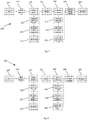
- FIG 5 is a flowchart depicting a method 100 for washing fat from the collected shed blood.
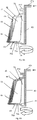
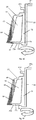
- Figures 6A-6I schematically show the bowl 20 (e.g., a 125 mL centrifuge bowl) and its contents at the various stages of the method.
- a controller will activate the pump P and begin to fill the bowl 20 by pumping salvaged blood into the bowl 20 (Step 105).
- the controller and the optical sensor 20a will monitor the bowl 12 and the contents until the sensor 20a detects the presence of red blood cells (Step 110), indicating that the bowl 20 is full ( Fig. 6B ).
- the method 100/controller stops the rotation of the bowl 20 (Step 115) and transfers a portion of the fluid within the bowl 20 back toward the reservoir 16 (Step 120) ( Figs. 6C and 6D ) via the feed/inlet tube 80 and tube 30 (see Fig. 1 and 3 ).
- the inlet/feed tube 80 extends from the inlet port PT1 to the bottom of the bowl 20. Therefore, the fluid transferred from the bowl 20 back toward the reservoir 16 will be drawn from the bottom of the bowl 20.
- the fat 69 will collect at the top of the fluid contained within the core 72 of the bowl 20 (e.g., within the space 73 within the core 72) and the red blood cells may re-suspend within the plasma. Therefore, the fluid that is removed during this "fluid split" is mainly red blood cells and plasma (e.g., red blood cells re-suspended within plasma) ( Fig. 6D ).
- a volume should be selected that prevents the fat from being removed from the bowl 20 (e.g., such that the fat remains within the bowl 20 as shown in Figure 6D ).
- the system may remove 20-30 mL of fluid (e.g., 25 mL) from the bowl 20 during the first fluid split.
- the volume removed during the first fluid split may not return all the way back to the reservoir 16 and, some or all of the volume may remain in the reservoir line 30.
- the method100/controller may restart the centrifuge 20 and re-centrifuge the blood/fluid remaining in the bowl 20, for example, at 5650 RPM (Step 125) ( Fig. 6E ).
- the method 100 creates an air pocket within the bowl 20 and temporarily reduces the red blood cell packing within the bowl 20. This air pocket and reduction in RBC packing allows the fat to pass through the red blood cell product within the bowl 20 (e.g., as the blood is re-centrifuged) ( Fig. 6F ).
- the fat 69 is located above the red blood cells 64 and the plasma 66 in the separation chamber 76 and creates a white band above the red blood cells 64 and the plasma 66.
- the method 100 may refill the bowl 20 with fluid from the reservoir line 30 and/or reservoir 16 (Step 130; Figure 6G ).
- the controller may energize the pump P and transfer 25 mL (e.g., the same volume removed during the fluid split discussed above) from the reservoir 16 and/or the line 30 to the bowl 20 via line 30.
- the volume returned to the bowl 20 may include the re-suspended red blood cells that were previously removed.
- the method may then wash the blood within the bowl 12 to remove the fat (Step 135; Fig. 6H ).
- a predetermined amount of wash solution 65 may be pumped from the wash solution bag 18 into the centrifuge bowl 20 by the pump P and via the wash line 34, valve V 2 , line 30 and inlet port PT1 (with valves V 1 and V 3 closed and valve V 2 open).
- the wash solution 65 e.g. 0.9% saline solution
- the separation chamber 76 e.g., via passageway 74
- the wash solution 65 will flow through the separated blood components and wash the fat (and other elements such as plasma, free Hgb, cellular debris, anticoagulant, etc.) from the separated blood components.
- the wash solution displaces the fat (and other undesirable elements and, perhaps, plasma and wash solution) into the waste container 22 via the outlet port PT 2 and effluent line 36.
- additional fat 69 may begin to separate from fluid within the bowl and collect behind the red blood cells 64.
- the wash step may continue until the optical sensor 7 determines that the fluid exiting the bowl 20 (e.g., via the effluent line 37) is clean (e.g., 95% of fHGB, heparin, potassium, albumin, etc. have been washed out) and/or the predetermined volume of wash fluid has entered/circulated through the bowl 20.
- the controller will stop the pump P and close valve V 2 , terminating the flow of wash solution into the centrifuge bowl 20.
- the controller may stop the rotation of the centrifuge bowl 20, and reverse the pump P to pump the washed blood components remaining in the centrifuge bowl 20 into the collection bag 24 via line 30, valve V 3 and line 32 (with valves V 1 and V 2 closed and valve V 3 open).
- the collected blood components can then be stored for later use or reinfused into patient 12.
- the method 100 may perform a second fat wash. For example, as noted above, during the re-fill and wash cycles (Steps 130 and 135), additional fat 69 may begin to separate from the red blood cells 64 and plasma 66 and collect behind/below the red blood cells ( Fig. 6H ). In such cases, the method 100/controller may once again stop the bowl (Step 140), causing the remaining fat within the bowl 20 to gather within the core 72 of the bowl 20 (e.g., in a manner similar to that discussed above and shown in Figure 6B ).
- the method 100/controller may then empty a portion of the fluid (e.g., the washed components) within the bowl 20 (Step 145; Fig. 4 and Fig. 6I ) into the product container/collection container 24 by reversing the pump P and drawing the fluid (e.g. washed blood components) through the inlet/feed tube 80 and out the inlet PT1.
- a portion of the fluid e.g., the washed components
- the volume of washed components that is removed during this step may vary based on the application, bowl size, whether additional washing/fat removal is required, etc.
- the method 100/controller may remove a larger volume than what was removed in the step 120 (e.g., the method 100/controller may remove 2/3 of the volume of fluid within the bowl).
- the method 100/controller may remove approximately the same volume as that removed during step 120 (e.g., between 20-30 mL).
- the volume removed during the second fluid split may not reach the product container 34 and, some or all of the volume may remain in the line 32.
- Step 145 because the fat is collected within the core 73 (e.g., within space 73) and on top of the other components in the bowl 20, the fluid removed during Step 145 will not include fat (e.g., it will be red blood cells, plasma, etc.).
- the method 100/controller may, once again, restart the bowl 20 and re-centrifuge the fluid/components remaining within the bowl 20 (e.g., for 40-60 seconds, preferably for 50 seconds at 5650 RPM) (Step 150). This, in turn, causes the fat to pass through the red blood cell product (e.g., because of the air volume and reduction in packing discussed above). The method 100/controller may then re-energize the pump P and return the washed blood components that were previously transferred to the product container/collection container 24 back to the bowl 20 to re-fill the bowl 20 (Step 155).
- the system/method 100 may perform a second wash (Step 160) to remove the additional fat from the bowl 20.
- the pump P transfers wash solution from the wash solution bag 18 into the centrifuge bowl 20 via the wash line 34, valve V 2 , line 30 and inlet port PT1.
- the wash solution e.g. 0.9% saline solution
- the separation chamber 76 e.g., via passageway 74
- the wash solution will flow through the separated blood components and wash the additional fat (and other remaining undesirable elements such as free Hgb, cellular debris, anticoagulant, etc.) from the separated blood components.
- the additional fat washed from the separated blood components is, once again, displaced into the waste container 22 by the incoming wash solution via outlet port PT 2 and effluent line 36.
- the second wash step is complete, and the controller will stop the pump P and close valve V 2 , terminating the flow of wash solution into centrifuge bowl 20.
- the system/controller will then reverse the pump P to pump the washed blood components remaining in centrifuge bowl 20 into the collection bag 24 via line 30, valve V 3 and line 32 (with valves V 1 and V 2 closed and valve V 3 open).
- the washed components can be stored for later use or re-infused into the patient 12.
- the first fat wash step typically removes a large majority (e.g., 80-85%) of the fat contained within the bowl 20. Therefore, in some embodiments, the second fat wash step (Step 160) need not be a full wash step.
- the second fat wash may be a reduced wash step and may only circulate approximately 50-100 mL of wash solution, whereas the first fat wash step may circulate approximately 500-1000 mL of wash solution through the bowl 20.
- FIGS 7 and 8 are flowcharts depicting methods 200/300 for washing fat from 125 mL and 225 mL bowls 20, respectively. As shown in Figures 7 and 8 , the steps of the fat washing method are nearly identical for the various bowl sizes. However, during the second fluid split (just prior to the second wash; Step 160), the fluid emptied from the bowl 20 (Steps 245 and 345) and subsequently returned to the bowl 20 (Steps 255 and 355) from the product container/collection container 24, as well as the volume of wash solution used during the second wash may be dependent upon the bowl size.
- the method 200/controller can empty and return between 80 and 100 mL of fluid (e.g., 90 mL), and the second fat wash may use 100 mL of wash solution (e.g., as compared to 50 mL for the 70 mL bowl).
- the method 300/controller may empty and return between 160 and 175 mL of fluid (e.g., 168 mL), and the second fat wash may use 100 mL of wash solution.
- the second fluid split may be skipped in some embodiments, for example, depending upon the amount of fat collected in the reservoir 16 and/or contained within the bowl 20, or if the user/technician did not see/collect fat during the first fat wash.
- the user/technician may skip the first fluid split (e.g., the fluid split prior to the wash step, step 135) and only perform the second fluid split (e.g., the fluid split after the wash step, step 135).
- the user/technician may decide to skip the fat reduction steps at various points during the salvage/wash process.
- the user/technician may decide to skip the fat reduction steps just prior to step 120 (e.g., to skip the first fluid split), just prior to step 145/245/345 (e.g., to skip the second fluid split), and/or at step 155/255/355 to skip the second wash step (Step 160).
- the user may manually turn off the first and/or second fluid split prior to the start of the procedure (e.g., prior to connecting the reservoir 16 to the system and/or activating the pump P to fill the bowl 20).
- the user may manually shut off the first and/or second fluid split by entering the system settings on the blood processing device and selecting which fluid split to perform and/or which to skip. By skipping one or both of the fluid splits, the cycle time would decrease, but the amount of fat that is removed during the wash step may decrease.
- the methods described above are able to remove/wash the fat from the salvaged/collected blood without damaging the individual blood components.
- centrifuging whole blood and/or red blood cells at very high speeds can damage the red blood cells contained within the centrifuge device (e.g., the bowl 20).
- the methods are able to avoid damaging the red blood cells (and other blood components) within the bowl 20 by keeping the centrifuge speeds relatively low and in-line with typical blood processing procedures.
- Various embodiments of the present invention can be used in any number of blood processing procedures and may be used to wash fat from whole blood.
- some embodiments may be used to wash fat from whole blood drawn and/or collected from a donor during apheresis procedures (e.g., plasmapheresis), red blood cell and/or platelet collection procedures, and/or whole blood washing procedures, etc.
- some embodiments of the present invention may be used in conjunction with a filtration device (e.g., in addition to or instead of the centrifuge bowl).
Landscapes
- Health & Medical Sciences (AREA)
- Heart & Thoracic Surgery (AREA)
- Vascular Medicine (AREA)
- Engineering & Computer Science (AREA)
- Anesthesiology (AREA)
- Biomedical Technology (AREA)
- Hematology (AREA)
- Life Sciences & Earth Sciences (AREA)
- Animal Behavior & Ethology (AREA)
- General Health & Medical Sciences (AREA)
- Public Health (AREA)
- Veterinary Medicine (AREA)
- Cardiology (AREA)
- External Artificial Organs (AREA)
- Centrifugal Separators (AREA)
Claims (11)
- System (10) zum Waschen von Fett aus zurückgewonnenem Blut, wobei das System Folgendes umfasst:ein Reservoir (16), das dafür konfiguriert ist, zurückgewonnenes Blut von einem Patienten (12) zu sammeln,eine drehbare Zentrifugentrommel (20), die fluidmäßig mit dem Reservoir (16) verbunden und dafür konfiguriert ist, das zurückgewonnene Blut in eine Vielzahl von Blutbestandteilen zu trennen,einen Produktbehälter (24), der fluidmäßig mit der drehbaren Zentrifugentrommel (20) verbunden und dafür konfiguriert ist, einen gewaschenen Blutbestandteil zu sammeln,einen Abfallbehälter (22), der fluidmäßig mit einem Auslass der drehbaren Zentrifugentrommel (20) verbunden und dafür konfiguriert ist, ein Abfallprodukt aus der Zentrifugentrommel (20) zu sammeln,eine Pumpe (P), die dafür konfiguriert ist, den Fluidstrom durch das System (10) zu steuern, undeine Steuerung, die dafür konfiguriert ist, den Betrieb der Pumpe und der Zentrifugentrommel (20) zu steuern, um ein erstes Volumen von ungewaschenen Blutbestandteilen aus der Zentrifugentrommel (20) zurück zu dem Reservoir (16) hin weiterzuleiten, die Blutbestandteile, die innerhalb der Zentrifugentrommel (20) verbleiben, erneut zu zentrifugieren, die Zentrifugentrommel (20) mit zurückgewonnenem Blut aus dem Reservoir (16) aufzufüllen und Waschlösung in die Zentrifugentrommel (20) einzuleiten, wobei die Waschlösung ein Volumen von Fett aus der Zentrifugentrommel (20) in den Abfallbehälter (22) verdrängt.
- System (10) nach Anspruch 1, wobei die Steuerung ferner dafür konfiguriert ist, die gewaschenen Blutbestandteile innerhalb der Zentrifugentrommel (20) zu dem Produktbehälter (24) zu entleeren.
- System (10) nach Anspruch 1, wobei die Steuerung dafür konfiguriert ist, die Pumpe und die Zentrifugentrommel (20) zu steuern, um ein Volumen von gewaschenen Blutbestandteilen aus der Zentrifugentrommel (20) zu dem Produktbehälter (24) weiterzuleiten, die gewaschenen Blutbestandteile, die innerhalb der Zentrifugentrommel (20) verbleiben, erneut zu zentrifugieren und das Volumen von gewaschenen Blutbestandteilen aus dem Produktbehälter (24) zu der Zentrifugentrommel (20) zurückzuführen, wodurch die Zentrifugentrommel (20) aufgefüllt wird.
- System (10) nach Anspruch 3, wobei die Steuerung ferner dafür konfiguriert ist, die Pumpe zu steuern, um zusätzliche Waschlösung in die Zentrifugentrommel (20) einzuleiten, wobei die zusätzliche Waschlösung ein zweites Volumen von Fett aus der Zentrifugentrommel (20) in den Abfallbehälter (22) verdrängt.
- System (10) nach Anspruch 1, wobei die Zentrifugentrommel (20) mindestens eine ist, die ausgewählt ist aus der Gruppe, die aus einer Zentrifugentrommel von 70 ml, einer Zentrifugentrommel von 125 ml und einer Zentrifugentrommel von 225 ml besteht.
- System (10) nach Anspruch 1, das ferner einen optischen Sensor (20a) umfasst, der dafür konfiguriert ist, die Abscheidung von zurückgewonnenem Blut innerhalb der Zentrifugentrommel (20) zu überwachen und zu erkennen, wenn die Zentrifugentrommel (20) voll ist.
- System (10) nach Anspruch 6, wobei die Steuerung dafür konfiguriert ist, die Drehung der Zentrifugentrommel (20), wenn die Zentrifugentrommel voll ist, und vor dem Weiterleiten des Volumens von ungewaschenen Blutbestandteilen aus der Abscheidungsvorrichtung zu dem Reservoir, anzuhalten.
- System (10) nach Anspruch 1, wobei das erste Volumen von ungewaschenen Blutbestandteilen rote Blutkörperchen enthält.
- System (10) nach Anspruch 1, wobei das erste Volumen von ungewaschenen Blutbestandteilen zwischen 20 und 30 ml beträgt.
- System (10) nach Anspruch 3, wobei das Volumen von gewaschenen Blutbestandteilen, die zu dem Produktbehälter (24) weitergeleitet werden, zwischen 20 und 30 ml beträgt.
- System (10) nach Anspruch 4, wobei das Volumen von zusätzlicher Waschlösung 50 ml beträgt und die Zentrifugentrommel eine Trommel von 70 ml ist oder das Volumen von zusätzlicher Waschlösung 100 ml beträgt und die Zentrifugentrommel eine Trommel von 125 oder 225 ml ist.
Applications Claiming Priority (2)
| Application Number | Priority Date | Filing Date | Title |
|---|---|---|---|
| US201562191823P | 2015-07-13 | 2015-07-13 | |
| PCT/US2016/042038 WO2017011527A1 (en) | 2015-07-13 | 2016-07-13 | System and method for removing fat from salvaged blood |
Publications (3)
| Publication Number | Publication Date |
|---|---|
| EP3322459A1 EP3322459A1 (de) | 2018-05-23 |
| EP3322459A4 EP3322459A4 (de) | 2019-03-13 |
| EP3322459B1 true EP3322459B1 (de) | 2020-06-17 |
Family
ID=57758196
Family Applications (1)
| Application Number | Title | Priority Date | Filing Date |
|---|---|---|---|
| EP16825091.8A Active EP3322459B1 (de) | 2015-07-13 | 2016-07-13 | System und verfahren zum entfernen von fett aus gesammeltem blut |
Country Status (5)
| Country | Link |
|---|---|
| US (1) | US10668207B2 (de) |
| EP (1) | EP3322459B1 (de) |
| JP (2) | JP6912391B2 (de) |
| CN (1) | CN107735120B (de) |
| WO (1) | WO2017011527A1 (de) |
Families Citing this family (7)
| Publication number | Priority date | Publication date | Assignee | Title |
|---|---|---|---|---|
| US11878312B2 (en) * | 2011-11-21 | 2024-01-23 | Pneumatic Scale Corporation | Centrifuge system for separating cells in suspension |
| US12350686B2 (en) * | 2011-11-21 | 2025-07-08 | Pneumatic Scale Corporation | Centrifuge system for separating cells in suspension |
| MX2020011898A (es) * | 2018-06-08 | 2021-01-15 | Pneumatic Scale Corp | Sistema de centrifugacion para separar celulas en suspension. |
| CN111686326B (zh) | 2019-03-12 | 2024-04-26 | 泰尔茂株式会社 | 治疗方法、分离方法及过滤器组装体 |
| JP2020151465A (ja) * | 2019-03-12 | 2020-09-24 | テルモ株式会社 | 治療方法、分離方法およびフィルター組立体 |
| US11957998B2 (en) * | 2019-06-06 | 2024-04-16 | Pneumatic Scale Corporation | Centrifuge system for separating cells in suspension |
| US20240277915A1 (en) * | 2021-06-16 | 2024-08-22 | The Methodist Hospital System | Closed-loop adipose transplant systems and kits, controllers, and methods related thereto |
Family Cites Families (29)
| Publication number | Priority date | Publication date | Assignee | Title |
|---|---|---|---|---|
| US4151844A (en) | 1977-11-11 | 1979-05-01 | Baxter Travenol Laboratories, Inc. | Method and apparatus for separating whole blood into its components and for automatically collecting one component |
| US4482342A (en) | 1982-06-17 | 1984-11-13 | Haemonetics Corporation | Blood processing system for cell washing |
| US4668214A (en) * | 1986-06-09 | 1987-05-26 | Electromedics, Inc. | Method of washing red blood cells |
| US4943273A (en) | 1986-07-22 | 1990-07-24 | Haemonetics Corporation | Disposable centrifuge bowl for blood processing |
| EP0277994B1 (de) * | 1986-08-11 | 1991-09-04 | BAXTER INTERNATIONAL INC. (a Delaware corporation) | Waschsystem von blutzellen und verfahren |
| US5076911A (en) | 1987-01-30 | 1991-12-31 | Baxter International Inc. | Centrifugation chamber having an interface detection surface |
| US4806252A (en) | 1987-01-30 | 1989-02-21 | Baxter International Inc. | Plasma collection set and method |
| US4834890A (en) | 1987-01-30 | 1989-05-30 | Baxter International Inc. | Centrifugation pheresis system |
| US4828716A (en) | 1987-04-03 | 1989-05-09 | Andronic Devices, Ltd. | Apparatus and method for separating phases of blood |
| WO1989001792A1 (en) | 1987-08-28 | 1989-03-09 | Haemonetics Corporation | Method and apparatus for cell washing |
| US5141486B1 (en) | 1990-11-05 | 1996-01-30 | Cobe Lab | Washing cells |
| US5273517A (en) * | 1991-07-09 | 1993-12-28 | Haemonetics Corporation | Blood processing method and apparatus with disposable cassette |
| US5385539A (en) | 1992-06-30 | 1995-01-31 | Advanced Haemotechnologies | Apparatus for monitoring hematocrit levels of blood |
| US5344570A (en) | 1993-01-14 | 1994-09-06 | James E. McLachlan | Method and apparatus for removing solids from a liquid |
| USRE37584E1 (en) * | 1993-07-30 | 2002-03-19 | Aruba International Pty Ltd | Solvent extraction methods for delipidating plasma |
| US5478479A (en) * | 1994-05-20 | 1995-12-26 | Haemonetics Corporation | Two-stage cell wash process controlled by optical sensor |
| US5964724A (en) * | 1996-01-31 | 1999-10-12 | Medtronic Electromedics, Inc. | Apparatus and method for blood separation |
| US6582386B2 (en) * | 2001-03-06 | 2003-06-24 | Baxter International Inc. | Multi-purpose, automated blood and fluid processing systems and methods |
| US7479123B2 (en) * | 2002-03-04 | 2009-01-20 | Therakos, Inc. | Method for collecting a desired blood component and performing a photopheresis treatment |
| EP1648999A4 (de) * | 2003-06-25 | 2006-09-06 | Macropore Biosurgery Inc | Systeme und verfahren zur trennung und anreicherung regenerativer zellen aus gewebe |
| US20060147895A1 (en) * | 2004-10-22 | 2006-07-06 | Cryofacets, Inc. | System, chamber, and method for fractionation, elutriation, and decontamination of fluids containing cellular components |
| KR100767448B1 (ko) * | 2006-06-30 | 2007-10-17 | 메디칸(주) | 원심분리기 및 원심분리방법 |
| US8506825B2 (en) * | 2006-11-27 | 2013-08-13 | Sorin Group Italia S.R.L. | Method and apparatus for controlling the flow rate of washing solution during the washing step in a blood centrifugation bowl |
| US8628489B2 (en) * | 2008-04-14 | 2014-01-14 | Haemonetics Corporation | Three-line apheresis system and method |
| US8834402B2 (en) * | 2009-03-12 | 2014-09-16 | Haemonetics Corporation | System and method for the re-anticoagulation of platelet rich plasma |
| WO2012154572A1 (en) * | 2011-05-06 | 2012-11-15 | Haemonetics Corporation | System and method for automated separation of whole blood |
| US9095798B2 (en) * | 2011-08-19 | 2015-08-04 | Microaire Surgical Instruments, Llc | Centrifuge separation method and apparatus using a medium density fluid |
| CN104203302B (zh) * | 2012-03-27 | 2016-06-22 | 泰尔茂株式会社 | 血液成分分离装置 |
| US10039876B2 (en) | 2014-04-30 | 2018-08-07 | Sorin Group Italia S.R.L. | System for removing undesirable elements from blood using a first wash step and a second wash step |
-
2016
- 2016-07-13 EP EP16825091.8A patent/EP3322459B1/de active Active
- 2016-07-13 JP JP2017563310A patent/JP6912391B2/ja active Active
- 2016-07-13 WO PCT/US2016/042038 patent/WO2017011527A1/en not_active Ceased
- 2016-07-13 CN CN201680038102.XA patent/CN107735120B/zh active Active
- 2016-07-13 US US15/577,005 patent/US10668207B2/en active Active
-
2021
- 2021-05-21 JP JP2021085979A patent/JP7315618B2/ja active Active
Non-Patent Citations (1)
| Title |
|---|
| None * |
Also Published As
| Publication number | Publication date |
|---|---|
| WO2017011527A1 (en) | 2017-01-19 |
| CN107735120A (zh) | 2018-02-23 |
| JP2018526046A (ja) | 2018-09-13 |
| JP6912391B2 (ja) | 2021-08-04 |
| EP3322459A4 (de) | 2019-03-13 |
| US20180154065A1 (en) | 2018-06-07 |
| JP2021120029A (ja) | 2021-08-19 |
| EP3322459A1 (de) | 2018-05-23 |
| JP7315618B2 (ja) | 2023-07-26 |
| US10668207B2 (en) | 2020-06-02 |
| CN107735120B (zh) | 2021-06-15 |
Similar Documents
| Publication | Publication Date | Title |
|---|---|---|
| US10668207B2 (en) | System and method for removing fat from salvaged blood | |
| JP3577444B2 (ja) | 血液処理遠心分離ボウルおよび全血から血漿分画を収集する方法 | |
| CN103501853B (zh) | 用于自动化分离全血的系统和方法 | |
| EP0925116B1 (de) | Zentrifugenrotor zur autologen blutgewinnung | |
| JP4076587B2 (ja) | 希釈された単核細胞を収集するシステムおよび方法 | |
| JP4056882B2 (ja) | 血液処理装置のためのコア | |
| EP2515966B1 (de) | Verfahren und vorrichtung zur entnahme von gefilterten blutbestandteilen, im besonderen erythrozyten | |
| US10980933B2 (en) | System and method for platelet removal during mononuclear cell collection | |
| US20140047986A1 (en) | Systems and methods for blood recovery from absorbent surgical materials | |
| JPH09276396A (ja) | 血液処理用遠心分離器ボウル | |
| EP3799898B1 (de) | Verfahren zur plasmareinigung vor einer mononuklearen zellentnahme | |
| US20150314060A1 (en) | Fat removal from blood | |
| US20160279315A1 (en) | Device for separating blood into its components as well as a method for doing so and use of such a device | |
| US11666926B2 (en) | Collection of mononuclear cells upon mid-procedure termination | |
| JP2015536719A (ja) | 全血の連続分離のためのシステム及び方法 | |
| JP2005110748A (ja) | 血液成分採取装置 | |
| HK1248621A1 (en) | System and method for removing fat from salvaged blood | |
| HK1248621B (zh) | 用於从回收的血液中清除脂肪的系统和方法 | |
| US12390573B2 (en) | System and methods for automatic dilution of whole blood to increase plasma clarity | |
| CN114286695A (zh) | 用于处理出血性流体以进行自体输血的系统和方法 | |
| HK1193056A (en) | System and method for automated separation of whole blood |
Legal Events
| Date | Code | Title | Description |
|---|---|---|---|
| STAA | Information on the status of an ep patent application or granted ep patent |
Free format text: STATUS: THE INTERNATIONAL PUBLICATION HAS BEEN MADE |
|
| PUAI | Public reference made under article 153(3) epc to a published international application that has entered the european phase |
Free format text: ORIGINAL CODE: 0009012 |
|
| STAA | Information on the status of an ep patent application or granted ep patent |
Free format text: STATUS: REQUEST FOR EXAMINATION WAS MADE |
|
| 17P | Request for examination filed |
Effective date: 20171213 |
|
| AK | Designated contracting states |
Kind code of ref document: A1 Designated state(s): AL AT BE BG CH CY CZ DE DK EE ES FI FR GB GR HR HU IE IS IT LI LT LU LV MC MK MT NL NO PL PT RO RS SE SI SK SM TR |
|
| AX | Request for extension of the european patent |
Extension state: BA ME |
|
| DAV | Request for validation of the european patent (deleted) | ||
| DAX | Request for extension of the european patent (deleted) | ||
| A4 | Supplementary search report drawn up and despatched |
Effective date: 20190211 |
|
| RIC1 | Information provided on ipc code assigned before grant |
Ipc: B04B 1/14 20060101ALI20190205BHEP Ipc: C02F 1/40 20060101ALI20190205BHEP Ipc: B01D 3/30 20060101ALI20190205BHEP Ipc: A61M 1/38 20060101ALI20190205BHEP Ipc: A61M 1/36 20060101AFI20190205BHEP Ipc: A61M 1/02 20060101ALI20190205BHEP Ipc: B01D 11/04 20060101ALI20190205BHEP |
|
| GRAP | Despatch of communication of intention to grant a patent |
Free format text: ORIGINAL CODE: EPIDOSNIGR1 |
|
| STAA | Information on the status of an ep patent application or granted ep patent |
Free format text: STATUS: GRANT OF PATENT IS INTENDED |
|
| RIC1 | Information provided on ipc code assigned before grant |
Ipc: B04B 1/14 20060101ALI20191113BHEP Ipc: B01D 11/04 20060101ALI20191113BHEP Ipc: A61M 1/02 20060101ALI20191113BHEP Ipc: C02F 1/40 20060101ALI20191113BHEP Ipc: B01D 3/30 20060101ALI20191113BHEP Ipc: A61M 1/36 20060101AFI20191113BHEP Ipc: A61M 1/38 20060101ALI20191113BHEP |
|
| INTG | Intention to grant announced |
Effective date: 20191129 |
|
| GRAS | Grant fee paid |
Free format text: ORIGINAL CODE: EPIDOSNIGR3 |
|
| GRAJ | Information related to disapproval of communication of intention to grant by the applicant or resumption of examination proceedings by the epo deleted |
Free format text: ORIGINAL CODE: EPIDOSDIGR1 |
|
| GRAL | Information related to payment of fee for publishing/printing deleted |
Free format text: ORIGINAL CODE: EPIDOSDIGR3 |
|
| STAA | Information on the status of an ep patent application or granted ep patent |
Free format text: STATUS: REQUEST FOR EXAMINATION WAS MADE |
|
| GRAR | Information related to intention to grant a patent recorded |
Free format text: ORIGINAL CODE: EPIDOSNIGR71 |
|
| STAA | Information on the status of an ep patent application or granted ep patent |
Free format text: STATUS: GRANT OF PATENT IS INTENDED |
|
| INTC | Intention to grant announced (deleted) | ||
| GRAA | (expected) grant |
Free format text: ORIGINAL CODE: 0009210 |
|
| STAA | Information on the status of an ep patent application or granted ep patent |
Free format text: STATUS: THE PATENT HAS BEEN GRANTED |
|
| INTG | Intention to grant announced |
Effective date: 20200507 |
|
| AK | Designated contracting states |
Kind code of ref document: B1 Designated state(s): AL AT BE BG CH CY CZ DE DK EE ES FI FR GB GR HR HU IE IS IT LI LT LU LV MC MK MT NL NO PL PT RO RS SE SI SK SM TR |
|
| REG | Reference to a national code |
Ref country code: GB Ref legal event code: FG4D |
|
| REG | Reference to a national code |
Ref country code: CH Ref legal event code: EP |
|
| REG | Reference to a national code |
Ref country code: IE Ref legal event code: FG4D |
|
| REG | Reference to a national code |
Ref country code: DE Ref legal event code: R096 Ref document number: 602016038420 Country of ref document: DE |
|
| REG | Reference to a national code |
Ref country code: AT Ref legal event code: REF Ref document number: 1280546 Country of ref document: AT Kind code of ref document: T Effective date: 20200715 |
|
| PG25 | Lapsed in a contracting state [announced via postgrant information from national office to epo] |
Ref country code: LT Free format text: LAPSE BECAUSE OF FAILURE TO SUBMIT A TRANSLATION OF THE DESCRIPTION OR TO PAY THE FEE WITHIN THE PRESCRIBED TIME-LIMIT Effective date: 20200617 Ref country code: NO Free format text: LAPSE BECAUSE OF FAILURE TO SUBMIT A TRANSLATION OF THE DESCRIPTION OR TO PAY THE FEE WITHIN THE PRESCRIBED TIME-LIMIT Effective date: 20200917 Ref country code: FI Free format text: LAPSE BECAUSE OF FAILURE TO SUBMIT A TRANSLATION OF THE DESCRIPTION OR TO PAY THE FEE WITHIN THE PRESCRIBED TIME-LIMIT Effective date: 20200617 Ref country code: SE Free format text: LAPSE BECAUSE OF FAILURE TO SUBMIT A TRANSLATION OF THE DESCRIPTION OR TO PAY THE FEE WITHIN THE PRESCRIBED TIME-LIMIT Effective date: 20200617 Ref country code: GR Free format text: LAPSE BECAUSE OF FAILURE TO SUBMIT A TRANSLATION OF THE DESCRIPTION OR TO PAY THE FEE WITHIN THE PRESCRIBED TIME-LIMIT Effective date: 20200918 |
|
| REG | Reference to a national code |
Ref country code: LT Ref legal event code: MG4D |
|
| REG | Reference to a national code |
Ref country code: NL Ref legal event code: MP Effective date: 20200617 |
|
| PG25 | Lapsed in a contracting state [announced via postgrant information from national office to epo] |
Ref country code: RS Free format text: LAPSE BECAUSE OF FAILURE TO SUBMIT A TRANSLATION OF THE DESCRIPTION OR TO PAY THE FEE WITHIN THE PRESCRIBED TIME-LIMIT Effective date: 20200617 Ref country code: HR Free format text: LAPSE BECAUSE OF FAILURE TO SUBMIT A TRANSLATION OF THE DESCRIPTION OR TO PAY THE FEE WITHIN THE PRESCRIBED TIME-LIMIT Effective date: 20200617 Ref country code: LV Free format text: LAPSE BECAUSE OF FAILURE TO SUBMIT A TRANSLATION OF THE DESCRIPTION OR TO PAY THE FEE WITHIN THE PRESCRIBED TIME-LIMIT Effective date: 20200617 Ref country code: BG Free format text: LAPSE BECAUSE OF FAILURE TO SUBMIT A TRANSLATION OF THE DESCRIPTION OR TO PAY THE FEE WITHIN THE PRESCRIBED TIME-LIMIT Effective date: 20200917 |
|
| REG | Reference to a national code |
Ref country code: AT Ref legal event code: MK05 Ref document number: 1280546 Country of ref document: AT Kind code of ref document: T Effective date: 20200617 |
|
| PG25 | Lapsed in a contracting state [announced via postgrant information from national office to epo] |
Ref country code: AL Free format text: LAPSE BECAUSE OF FAILURE TO SUBMIT A TRANSLATION OF THE DESCRIPTION OR TO PAY THE FEE WITHIN THE PRESCRIBED TIME-LIMIT Effective date: 20200617 Ref country code: NL Free format text: LAPSE BECAUSE OF FAILURE TO SUBMIT A TRANSLATION OF THE DESCRIPTION OR TO PAY THE FEE WITHIN THE PRESCRIBED TIME-LIMIT Effective date: 20200617 |
|
| PG25 | Lapsed in a contracting state [announced via postgrant information from national office to epo] |
Ref country code: ES Free format text: LAPSE BECAUSE OF FAILURE TO SUBMIT A TRANSLATION OF THE DESCRIPTION OR TO PAY THE FEE WITHIN THE PRESCRIBED TIME-LIMIT Effective date: 20200617 Ref country code: CZ Free format text: LAPSE BECAUSE OF FAILURE TO SUBMIT A TRANSLATION OF THE DESCRIPTION OR TO PAY THE FEE WITHIN THE PRESCRIBED TIME-LIMIT Effective date: 20200617 Ref country code: PT Free format text: LAPSE BECAUSE OF FAILURE TO SUBMIT A TRANSLATION OF THE DESCRIPTION OR TO PAY THE FEE WITHIN THE PRESCRIBED TIME-LIMIT Effective date: 20201019 Ref country code: EE Free format text: LAPSE BECAUSE OF FAILURE TO SUBMIT A TRANSLATION OF THE DESCRIPTION OR TO PAY THE FEE WITHIN THE PRESCRIBED TIME-LIMIT Effective date: 20200617 Ref country code: SM Free format text: LAPSE BECAUSE OF FAILURE TO SUBMIT A TRANSLATION OF THE DESCRIPTION OR TO PAY THE FEE WITHIN THE PRESCRIBED TIME-LIMIT Effective date: 20200617 Ref country code: RO Free format text: LAPSE BECAUSE OF FAILURE TO SUBMIT A TRANSLATION OF THE DESCRIPTION OR TO PAY THE FEE WITHIN THE PRESCRIBED TIME-LIMIT Effective date: 20200617 Ref country code: AT Free format text: LAPSE BECAUSE OF FAILURE TO SUBMIT A TRANSLATION OF THE DESCRIPTION OR TO PAY THE FEE WITHIN THE PRESCRIBED TIME-LIMIT Effective date: 20200617 |
|
| PG25 | Lapsed in a contracting state [announced via postgrant information from national office to epo] |
Ref country code: PL Free format text: LAPSE BECAUSE OF FAILURE TO SUBMIT A TRANSLATION OF THE DESCRIPTION OR TO PAY THE FEE WITHIN THE PRESCRIBED TIME-LIMIT Effective date: 20200617 Ref country code: SK Free format text: LAPSE BECAUSE OF FAILURE TO SUBMIT A TRANSLATION OF THE DESCRIPTION OR TO PAY THE FEE WITHIN THE PRESCRIBED TIME-LIMIT Effective date: 20200617 Ref country code: IS Free format text: LAPSE BECAUSE OF FAILURE TO SUBMIT A TRANSLATION OF THE DESCRIPTION OR TO PAY THE FEE WITHIN THE PRESCRIBED TIME-LIMIT Effective date: 20201017 |
|
| REG | Reference to a national code |
Ref country code: CH Ref legal event code: PL |
|
| REG | Reference to a national code |
Ref country code: DE Ref legal event code: R097 Ref document number: 602016038420 Country of ref document: DE |
|
| PG25 | Lapsed in a contracting state [announced via postgrant information from national office to epo] |
Ref country code: MC Free format text: LAPSE BECAUSE OF FAILURE TO SUBMIT A TRANSLATION OF THE DESCRIPTION OR TO PAY THE FEE WITHIN THE PRESCRIBED TIME-LIMIT Effective date: 20200617 |
|
| PLBE | No opposition filed within time limit |
Free format text: ORIGINAL CODE: 0009261 |
|
| STAA | Information on the status of an ep patent application or granted ep patent |
Free format text: STATUS: NO OPPOSITION FILED WITHIN TIME LIMIT |
|
| REG | Reference to a national code |
Ref country code: BE Ref legal event code: MM Effective date: 20200731 |
|
| PG25 | Lapsed in a contracting state [announced via postgrant information from national office to epo] |
Ref country code: DK Free format text: LAPSE BECAUSE OF FAILURE TO SUBMIT A TRANSLATION OF THE DESCRIPTION OR TO PAY THE FEE WITHIN THE PRESCRIBED TIME-LIMIT Effective date: 20200617 Ref country code: CH Free format text: LAPSE BECAUSE OF NON-PAYMENT OF DUE FEES Effective date: 20200731 Ref country code: LI Free format text: LAPSE BECAUSE OF NON-PAYMENT OF DUE FEES Effective date: 20200731 Ref country code: LU Free format text: LAPSE BECAUSE OF NON-PAYMENT OF DUE FEES Effective date: 20200713 |
|
| 26N | No opposition filed |
Effective date: 20210318 |
|
| PG25 | Lapsed in a contracting state [announced via postgrant information from national office to epo] |
Ref country code: SI Free format text: LAPSE BECAUSE OF FAILURE TO SUBMIT A TRANSLATION OF THE DESCRIPTION OR TO PAY THE FEE WITHIN THE PRESCRIBED TIME-LIMIT Effective date: 20200617 Ref country code: BE Free format text: LAPSE BECAUSE OF NON-PAYMENT OF DUE FEES Effective date: 20200731 |
|
| PG25 | Lapsed in a contracting state [announced via postgrant information from national office to epo] |
Ref country code: IE Free format text: LAPSE BECAUSE OF NON-PAYMENT OF DUE FEES Effective date: 20200713 |
|
| PG25 | Lapsed in a contracting state [announced via postgrant information from national office to epo] |
Ref country code: TR Free format text: LAPSE BECAUSE OF FAILURE TO SUBMIT A TRANSLATION OF THE DESCRIPTION OR TO PAY THE FEE WITHIN THE PRESCRIBED TIME-LIMIT Effective date: 20200617 Ref country code: MT Free format text: LAPSE BECAUSE OF FAILURE TO SUBMIT A TRANSLATION OF THE DESCRIPTION OR TO PAY THE FEE WITHIN THE PRESCRIBED TIME-LIMIT Effective date: 20200617 Ref country code: CY Free format text: LAPSE BECAUSE OF FAILURE TO SUBMIT A TRANSLATION OF THE DESCRIPTION OR TO PAY THE FEE WITHIN THE PRESCRIBED TIME-LIMIT Effective date: 20200617 |
|
| PG25 | Lapsed in a contracting state [announced via postgrant information from national office to epo] |
Ref country code: MK Free format text: LAPSE BECAUSE OF FAILURE TO SUBMIT A TRANSLATION OF THE DESCRIPTION OR TO PAY THE FEE WITHIN THE PRESCRIBED TIME-LIMIT Effective date: 20200617 |
|
| P01 | Opt-out of the competence of the unified patent court (upc) registered |
Effective date: 20230524 |
|
| PGFP | Annual fee paid to national office [announced via postgrant information from national office to epo] |
Ref country code: DE Payment date: 20250729 Year of fee payment: 10 |
|
| PGFP | Annual fee paid to national office [announced via postgrant information from national office to epo] |
Ref country code: IT Payment date: 20250721 Year of fee payment: 10 |
|
| PGFP | Annual fee paid to national office [announced via postgrant information from national office to epo] |
Ref country code: GB Payment date: 20250728 Year of fee payment: 10 |
|
| PGFP | Annual fee paid to national office [announced via postgrant information from national office to epo] |
Ref country code: FR Payment date: 20250725 Year of fee payment: 10 |