EP3325959B1 - Herstellung von fluorhaltigen verbindungen mit hilfe einer elektrochemischen messkette - Google Patents
Herstellung von fluorhaltigen verbindungen mit hilfe einer elektrochemischen messkette Download PDFInfo
- Publication number
- EP3325959B1 EP3325959B1 EP16744693.9A EP16744693A EP3325959B1 EP 3325959 B1 EP3325959 B1 EP 3325959B1 EP 16744693 A EP16744693 A EP 16744693A EP 3325959 B1 EP3325959 B1 EP 3325959B1
- Authority
- EP
- European Patent Office
- Prior art keywords
- alf
- reaction
- process according
- measuring chain
- electrochemical measuring
- Prior art date
- Legal status (The legal status is an assumption and is not a legal conclusion. Google has not performed a legal analysis and makes no representation as to the accuracy of the status listed.)
- Active
Links
Images
Classifications
-
- G—PHYSICS
- G01—MEASURING; TESTING
- G01N—INVESTIGATING OR ANALYSING MATERIALS BY DETERMINING THEIR CHEMICAL OR PHYSICAL PROPERTIES
- G01N27/00—Investigating or analysing materials by the use of electric, electrochemical, or magnetic means
- G01N27/26—Investigating or analysing materials by the use of electric, electrochemical, or magnetic means by investigating electrochemical variables; by using electrolysis or electrophoresis
-
- B—PERFORMING OPERATIONS; TRANSPORTING
- B23—MACHINE TOOLS; METAL-WORKING NOT OTHERWISE PROVIDED FOR
- B23K—SOLDERING OR UNSOLDERING; WELDING; CLADDING OR PLATING BY SOLDERING OR WELDING; CUTTING BY APPLYING HEAT LOCALLY, e.g. FLAME CUTTING; WORKING BY LASER BEAM
- B23K35/00—Rods, electrodes, materials, or media, for use in soldering, welding, or cutting
- B23K35/02—Rods, electrodes, materials, or media, for use in soldering, welding, or cutting characterised by mechanical features, e.g. shape
- B23K35/0222—Rods, electrodes, materials, or media, for use in soldering, welding, or cutting characterised by mechanical features, e.g. shape for use in soldering or brazing
-
- B—PERFORMING OPERATIONS; TRANSPORTING
- B23—MACHINE TOOLS; METAL-WORKING NOT OTHERWISE PROVIDED FOR
- B23K—SOLDERING OR UNSOLDERING; WELDING; CLADDING OR PLATING BY SOLDERING OR WELDING; CUTTING BY APPLYING HEAT LOCALLY, e.g. FLAME CUTTING; WORKING BY LASER BEAM
- B23K35/00—Rods, electrodes, materials, or media, for use in soldering, welding, or cutting
- B23K35/22—Rods, electrodes, materials, or media, for use in soldering, welding, or cutting characterised by the composition or nature of the material
- B23K35/36—Selection of non-metallic compositions, e.g. coatings or fluxes; Selection of soldering or welding materials, conjoint with selection of non-metallic compositions, both selections being of interest
-
- B—PERFORMING OPERATIONS; TRANSPORTING
- B23—MACHINE TOOLS; METAL-WORKING NOT OTHERWISE PROVIDED FOR
- B23K—SOLDERING OR UNSOLDERING; WELDING; CLADDING OR PLATING BY SOLDERING OR WELDING; CUTTING BY APPLYING HEAT LOCALLY, e.g. FLAME CUTTING; WORKING BY LASER BEAM
- B23K35/00—Rods, electrodes, materials, or media, for use in soldering, welding, or cutting
- B23K35/22—Rods, electrodes, materials, or media, for use in soldering, welding, or cutting characterised by the composition or nature of the material
- B23K35/36—Selection of non-metallic compositions, e.g. coatings or fluxes; Selection of soldering or welding materials, conjoint with selection of non-metallic compositions, both selections being of interest
- B23K35/3601—Selection of non-metallic compositions, e.g. coatings or fluxes; Selection of soldering or welding materials, conjoint with selection of non-metallic compositions, both selections being of interest with inorganic compounds as principal constituents
-
- B—PERFORMING OPERATIONS; TRANSPORTING
- B23—MACHINE TOOLS; METAL-WORKING NOT OTHERWISE PROVIDED FOR
- B23K—SOLDERING OR UNSOLDERING; WELDING; CLADDING OR PLATING BY SOLDERING OR WELDING; CUTTING BY APPLYING HEAT LOCALLY, e.g. FLAME CUTTING; WORKING BY LASER BEAM
- B23K35/00—Rods, electrodes, materials, or media, for use in soldering, welding, or cutting
- B23K35/22—Rods, electrodes, materials, or media, for use in soldering, welding, or cutting characterised by the composition or nature of the material
- B23K35/36—Selection of non-metallic compositions, e.g. coatings or fluxes; Selection of soldering or welding materials, conjoint with selection of non-metallic compositions, both selections being of interest
- B23K35/3601—Selection of non-metallic compositions, e.g. coatings or fluxes; Selection of soldering or welding materials, conjoint with selection of non-metallic compositions, both selections being of interest with inorganic compounds as principal constituents
- B23K35/3603—Halide salts
-
- B—PERFORMING OPERATIONS; TRANSPORTING
- B23—MACHINE TOOLS; METAL-WORKING NOT OTHERWISE PROVIDED FOR
- B23K—SOLDERING OR UNSOLDERING; WELDING; CLADDING OR PLATING BY SOLDERING OR WELDING; CUTTING BY APPLYING HEAT LOCALLY, e.g. FLAME CUTTING; WORKING BY LASER BEAM
- B23K35/00—Rods, electrodes, materials, or media, for use in soldering, welding, or cutting
- B23K35/22—Rods, electrodes, materials, or media, for use in soldering, welding, or cutting characterised by the composition or nature of the material
- B23K35/36—Selection of non-metallic compositions, e.g. coatings or fluxes; Selection of soldering or welding materials, conjoint with selection of non-metallic compositions, both selections being of interest
- B23K35/3601—Selection of non-metallic compositions, e.g. coatings or fluxes; Selection of soldering or welding materials, conjoint with selection of non-metallic compositions, both selections being of interest with inorganic compounds as principal constituents
- B23K35/3603—Halide salts
- B23K35/3605—Fluorides
-
- C—CHEMISTRY; METALLURGY
- C01—INORGANIC CHEMISTRY
- C01C—AMMONIA; CYANOGEN; COMPOUNDS THEREOF
- C01C1/00—Ammonia; Compounds thereof
- C01C1/16—Halides of ammonium
- C01C1/162—Ammonium fluoride
-
- C—CHEMISTRY; METALLURGY
- C01—INORGANIC CHEMISTRY
- C01F—COMPOUNDS OF THE METALS BERYLLIUM, MAGNESIUM, ALUMINIUM, CALCIUM, STRONTIUM, BARIUM, RADIUM, THORIUM, OR OF THE RARE-EARTH METALS
- C01F7/00—Compounds of aluminium
- C01F7/48—Halides, with or without other cations besides aluminium
- C01F7/50—Fluorides
-
- C—CHEMISTRY; METALLURGY
- C01—INORGANIC CHEMISTRY
- C01F—COMPOUNDS OF THE METALS BERYLLIUM, MAGNESIUM, ALUMINIUM, CALCIUM, STRONTIUM, BARIUM, RADIUM, THORIUM, OR OF THE RARE-EARTH METALS
- C01F7/00—Compounds of aluminium
- C01F7/48—Halides, with or without other cations besides aluminium
- C01F7/50—Fluorides
- C01F7/54—Double compounds containing both aluminium and alkali metals or alkaline-earth metals
-
- G—PHYSICS
- G01—MEASURING; TESTING
- G01N—INVESTIGATING OR ANALYSING MATERIALS BY DETERMINING THEIR CHEMICAL OR PHYSICAL PROPERTIES
- G01N27/00—Investigating or analysing materials by the use of electric, electrochemical, or magnetic means
- G01N27/26—Investigating or analysing materials by the use of electric, electrochemical, or magnetic means by investigating electrochemical variables; by using electrolysis or electrophoresis
- G01N27/28—Electrolytic cell components
- G01N27/30—Electrodes, e.g. test electrodes; Half-cells
-
- G—PHYSICS
- G01—MEASURING; TESTING
- G01N—INVESTIGATING OR ANALYSING MATERIALS BY DETERMINING THEIR CHEMICAL OR PHYSICAL PROPERTIES
- G01N27/00—Investigating or analysing materials by the use of electric, electrochemical, or magnetic means
- G01N27/26—Investigating or analysing materials by the use of electric, electrochemical, or magnetic means by investigating electrochemical variables; by using electrolysis or electrophoresis
- G01N27/28—Electrolytic cell components
- G01N27/30—Electrodes, e.g. test electrodes; Half-cells
- G01N27/301—Reference electrodes
-
- G—PHYSICS
- G01—MEASURING; TESTING
- G01N—INVESTIGATING OR ANALYSING MATERIALS BY DETERMINING THEIR CHEMICAL OR PHYSICAL PROPERTIES
- G01N27/00—Investigating or analysing materials by the use of electric, electrochemical, or magnetic means
- G01N27/26—Investigating or analysing materials by the use of electric, electrochemical, or magnetic means by investigating electrochemical variables; by using electrolysis or electrophoresis
- G01N27/28—Electrolytic cell components
- G01N27/30—Electrodes, e.g. test electrodes; Half-cells
- G01N27/302—Electrodes, e.g. test electrodes; Half-cells pH sensitive, e.g. quinhydron, antimony or hydrogen electrodes
-
- G—PHYSICS
- G01—MEASURING; TESTING
- G01N—INVESTIGATING OR ANALYSING MATERIALS BY DETERMINING THEIR CHEMICAL OR PHYSICAL PROPERTIES
- G01N27/00—Investigating or analysing materials by the use of electric, electrochemical, or magnetic means
- G01N27/26—Investigating or analysing materials by the use of electric, electrochemical, or magnetic means by investigating electrochemical variables; by using electrolysis or electrophoresis
- G01N27/416—Systems
- G01N27/4166—Systems measuring a particular property of an electrolyte
- G01N27/4167—Systems measuring a particular property of an electrolyte pH
Definitions
- the present invention relates to processes for the preparation of fluorine-containing compounds by means of precipitation reactions from solutions containing fluoride ions, wherein the pH value is determined by means of an electrochemical measuring chain.
- glass electrodes for pH measurement are also not practical because they are unsuitable for use in media containing fluoride ions.
- US 3649473 describes a method for determining the hydrogen content of high-temperature liquids using hydrogen gas diffusion electrodes.
- the object of the present invention is to provide improved processes for the preparation of fluorine-containing compounds by means of precipitation reactions from solutions containing fluoride ions.
- the pH value can be monitored more precisely during the precipitation reaction.
- the processes according to the invention lead to a higher yield of the respective product, to improved product purity, to improved process reproducibility, and/or to a reduction in the amount of at least one of the reactants used.
- the processes according to the invention lead to advantageous physicochemical properties of the respective product, for example with regard to particle size, filterability, melting point, and/or storage stability.
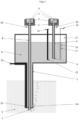
- a first aspect of the present invention relates to a process for producing a fluorine-containing compound by a precipitation reaction, wherein the fluorine-containing compound is precipitated from a reaction medium and during the course of the precipitation reaction the pH of the reaction medium is determined with the aid of an electrochemical measuring chain, wherein the electrochemical measuring chain is an electrochemical measuring chain containing a hydrogen diffusion electrode as indicator electrode and at least one reference electrode, and the electrodes form a structural unit with a housing with an outlet, wherein the housing comprises a reference electrolyte in contact with the reference electrode and a closed gas space above the reference electrolyte and an electrolytic connection between the reference electrolyte and a measuring medium is established via the outlet.
- fluorine-containing compound refers to a chemical compound that contains at least one fluorine atom. This can be a covalently, coordinately, or ionically bonded fluorine atom. Examples of ionically bonded fluorine atoms would be the fluorine atoms of a fluoride salt, a fluorozudie, or a fluoroaluminate.
- a mixture of the chemical formula K 1-3 AlF 4-6 is particularly preferred, which is used as a flux and is manufactured under the name NOCOLOK ® by Solvay Fluor GmbH.
- aqueous 5% to 60% hydrofluoric acid (HF), preferably 20% to 30% hydrofluoric acid (HF) is reacted with aluminum hydroxide, and the resulting aqueous solution containing fluoroaluminic acid is then treated with an aqueous solution of KOH, resulting in precipitation of the desired product K 1-3 AlF 4-6 .
- the pH value is monitored using the electrochemical measuring chain, and the amount of KOH solution added can be adjusted so that the resulting product exhibits reproducibly advantageous properties.
- the housing 1 advantageously comprises a temperature sensor 15 each with a connection 16, one sensor being in contact with the measuring medium and one sensor with the reference electrolyte.
- a temperature sensor 15 each with a connection 16
- all relevant components indicator electrode, reference electrode
- the housing advantageously includes a heat exchanger that can regulate the temperature of the reference electrolyte 11 and/or the housing 1.
- the heat exchanger is a heating coil, a cooling system (e.g., a Peltier element), or a combined cooling/heating coil immersed in the reference electrolyte 11.
- the reference electrolyte is preferably an aqueous solution of at least one metal salt.
- aqueous solutions of halogen metal salts of the first or second main group of the Periodic Table such as an aqueous KCl or CsCl solution.
- the housing 1 advantageously comprises one or more fill level indicators that indicate the amount of reference electrolyte 11 contained.
- the fill level indicator can be, among other things, purely optical in the form of a viewing window, photo-optical in nature, mechanical in nature, acoustic in nature, or electronic in nature, for example by measuring the resistance. This allows the fill level of reference electrolyte 11 to be regulated manually or automatically depending on the level indicator reading, thus preventing the at least one reference electrode from drying out.
- the pH is continuously monitored using the electrochemical measuring chain, and the addition of potassium hydroxide solution is terminated when a pH of 4.0 is reached.
- the resulting product is filtered, and the filter-moist residue is dried in a flash dryer at 570 °C.
- the described process leads to advantageous filterability of the suspension as well as higher yield and purity of the resulting product. Furthermore, the process leads to savings in hydrofluoric acid and potassium hydroxide solution, since the additions of hydrofluoric acid and potassium hydroxide solution can be stopped precisely and there is neither an underrun nor an overrun of production.
- the reference electrolyte consisting of an aqueous KCl solution, a potassium hydroxide solution containing 15 wt. % KOH, which was obtained by dissolving 550 kg of KOH, is added to the resulting reaction mixture.
- a suspension of precipitating potassium salts of complex aluminum fluorides forms.
- the pH is continuously monitored using the electrochemical measuring chain, and the addition of potassium hydroxide solution is stopped when a pH of 4.5 is reached.
- the resulting product is filtered, and the filter-moist residue is dried in a flash dryer at 570 °C.
- the described process leads to advantageous filterability of the suspension as well as higher yield and purity of the resulting product. Furthermore, the process leads to savings in hydrofluoric acid and potassium hydroxide solution, as the additions of hydrofluoric acid and potassium hydroxide solution can be stopped precisely and there is neither an underrun nor an overrun of the production. The use of a bypass also results in a significantly smaller design of the electrochemical measuring chain according to Figure 1 .
Landscapes
- Chemical & Material Sciences (AREA)
- Life Sciences & Earth Sciences (AREA)
- Health & Medical Sciences (AREA)
- Inorganic Chemistry (AREA)
- Organic Chemistry (AREA)
- Mechanical Engineering (AREA)
- Engineering & Computer Science (AREA)
- Electrochemistry (AREA)
- Biochemistry (AREA)
- General Health & Medical Sciences (AREA)
- General Physics & Mathematics (AREA)
- Immunology (AREA)
- Pathology (AREA)
- Analytical Chemistry (AREA)
- Physics & Mathematics (AREA)
- Chemical Kinetics & Catalysis (AREA)
- Molecular Biology (AREA)
- Geology (AREA)
- Investigating Or Analyzing Non-Biological Materials By The Use Of Chemical Means (AREA)
- Electrolytic Production Of Non-Metals, Compounds, Apparatuses Therefor (AREA)
Description
- Die vorliegende Erfindung betrifft Verfahren zur Herstellung von fluorhaltigen Verbindungen mittels Fällungsreaktionen aus Fluoridionen enthaltenden Lösungen wobei der pH-Wert mit Hilfe einer elektrochemischen Messkette bestimmt wird.
- Chemische Fällungsreaktionen zur Herstellung von fluorhaltigen Verbindungen werden in großem Maße industriell eingesetzt. Häufig wird dabei der pH-Wert im Laufe der Fällungsreaktion überwacht und mit Hilfe des pH-Wertes beispielsweise über die weitere Zugabe eines Eduktes entschieden.
- Bisher wird diese Überwachung meist mit Hilfe eines pH-Papiers und visueller Kontrolle desselben vorgenommen. Nachteilig bei diesem Verfahren ist, dass es nicht kontinuierlich erfolgen kann und dass das Messergebnis vom Farbeindruck des Betrachters, den Lichteinflüssen sowie dem Zeitpunkt des Ablesens abhängen kann.
- Die Verwendung von Glaselektroden zur pH-Messung ist ebenfalls nicht praktikabel, da diese für den Einsatz in Fluoridionen enthaltenden Medien ungeeignet sind.
-
US 3649473 beschreibt ein Verfahren zur Bestimmung des Wasserstoffgehalts bei Hochtemperatur-Flüssigkeiten unter der Verwendung von Wasserstoffgasdiffusionselektroden. - Aufgabe der vorliegenden Erfindung ist die Bereitstellung von verbesserten Verfahren zur Herstellung von fluorhaltigen Verbindungen mittels Fällungsreaktionen aus Fluoridionen enthaltenden Lösungen. Vorteilhaft kann dabei der pH-Wert während der Fällungsreaktion genauer überwacht werden. Des Weiteren führen die erfindungsgemäßen Verfahren zu einer höheren Ausbeute des jeweiligen Produkts, zu einer verbesserten Reinheit des Produkts, zu einer verbesserten Reproduzierbarkeit der Verfahren und/oder zu einer Einsparung der eingesetzten Menge mindestens eines der Edukte. Des Weiteren führen die erfindungsgemäßen Verfahren zu vorteilhaften physikochemischen Eigenschaften des jeweiligen Produkts, beispielsweise hinsichtlich der Korngröße, der Filtrierbarkeit, des Schmelzpunkts und/oder der Lagerbeständigkeit.
- Diese und andere Aufgaben wurden durch die vorliegende Erfindung gelöst.
- Entsprechend betrifft ein erster Gegenstand der vorliegenden Erfindung ein Verfahren zur Herstellung einer fluorhaltigen Verbindung durch eine Fällungsreaktion wobei die fluorhaltige Verbindung aus einem Reaktionsmedium gefällt wird und dass man während des Verlaufs der Fällungsreaktion den pH-Wert des Reaktionsmediums mit Hilfe einer elektrochemischen Messkette bestimmt, wobei die elektrochemische Messkette eine elektrochemische Messkette enthaltend eine Wasserstoffdiffusionselektrode als Indikatorelektrode und mindestens eine Referenzelektrode ist, und die Elektroden eine konstruktive Einheit mit einem Gehäuse mit einem Auslauf bilden, wobei das Gehäuse eine mit der Referenzelektrode in Kontakt stehenden Referenzelektrolyten und einen abgeschlossenen Gasraum oberhalb des Referenzenelektrolyten umfasst und über den Auslauf eine elektrolytische Verbindung zwischen dem Referenzelektrolyten und einem Messmedium hergestellt wird.
- Der Ausdruck "fluorhaltige Verbindung" steht dabei für eine chemische Verbindung, die mindestens ein Fluoratom enthält. Dabei kann es sich um ein kovalent, ein koordinativ oder um ein ionisch gebundenes Fluoratom handeln. Beispiele für ein ionisch gebundenes Fluoratom wären die Fluoratome etwa eines Fluoridsalzes, eines Fluorzinkats oder eines Fluoraluminats
- Bevorzugt wird die fluorhaltige Verbindung aus der Gruppe bestehend aus mindestens einem Alkalimetallfluorid, einem Alkalihydrogenfluorid, einem Erdalkalimetallfluorid, einem Erdalkalihydrogenfluorid, einem Übergangsmetallfluorid, einem Fluorid eines Elements der dritten Hauptgruppe, einem Ammoniumfluorid, einem Alkalimetallfluoroaluminat, einem Erdalkalimetallfluoroaluminat, deren Hydrate, deren HF-Addukte sowie deren Mischungen ausgewählt. Mehr bevorzugt wird die fluorhaltige Verbindung aus der Gruppe bestehend aus KAlF4, K2AlF5, K3AlF6, CsAlF4, Cs2AlF5, Cs3AlF6, LiAlF4, Li2AlF5, Li3AlF6, NaAlF4, Na2AlF5, Na3AlF6, KBF4, BaF2, KHF2, NH4F, NH4F2, deren Hydrate, deren HF-Addukte sowie deren Mischungen, besonders bevorzugt aus der Gruppe bestehend aus KAlF4, K2AlF5, K3AlF6, deren Hydrate sowie Mischungen enthaltend KAlF4, K2AlF5, K3AlF6 und/oder deren Hydrate ausgewählt.
- Speziell bevorzugt ist eine Mischung der chemischen Summenformel K1-3AlF4-6, die als Flussmittel Verwendung findet und unter dem Namen NOCOLOK® von der Solvay Fluor GmbH hergestellt wird. In dieser speziellen Ausführungsform wird wässrige 5%ige bis 60%ige Flusssäure (HF), bevorzugt 20%ige bis 30%ige Flusssäure (HF) mit Aluminiumhydroxid zur Reaktion gebracht und die entstandene wässrige, Fluoraluminiumsäure enthaltende Lösung anschließend mit einer wässrigen Lösung von KOH versetzt, wobei es zu einer Fällung des gewünschten Produktes K1-3AlF4-6 kommt. Während der Zugabe der KOH-Lösung wird der pH-Wert mittels der elektrochemischen Messkette überprüft und die Zugabe der KOH-Lösung kann bezüglich der zugesetzten Menge so eingestellt werden, dass das entstehende Produkt reproduzierbar vorteilshafte Eigenschaften aufweist.
- Entsprechend der vorstehend genannten speziellen Ausführungsform lassen sich auch die ebenfalls als Flussmittel und/oder als Produkte zum Flammlöten verwendbaren Produkte Cs1-3AlF4-6, durch Zugabe einer entsprechenden CsOH-Lösung; Na1-3AlF4-6, durch Zugabe einer entsprechenden NaOH-Lösung; und Li1-3AlF4-6, durch Zugabe einer entsprechenden LiOH-Lösung, herstellen. Wiederum wird während der Zugabe der Hydroxidlösung der pH-Wert mittels der elektrochemischen Messkette überprüft und die Zugabe so eingestellt, dass das entstehende Produkt reproduzierbar vorteilshafte Eigenschaften aufweist.
- In einer weiteren speziellen Ausführungsform wird eine wässrige Lösung respektive Suspension von ZnO und HF hergestellt und anschließend unter pH-Kontrolle mit einer elektrochemischen Messkette mit einer wässrigen KOH-Lösung versetzt. Alternativ wird eine ZnO-Suspension vorgelegt und mit einer wässrigen KF-Lösung versetzt. Wiederum wird während der Zugabe der jeweils zweiten Lösung der pH-Wert mittels der elektrochemischen Messkette überprüft und die Zugabe so eingestellt, dass das entstehende Produkt KZnF3 reproduzierbar vorteilshafte Eigenschaften aufweist.
- In einer weiteren speziellen Ausführungsform wird eine wässrige Lösung respektive Suspension von BaCO3 mit Flusssäure umgesetzt zu BaF2, wobei der pH-Wert der Reaktionslösung mittels der elektrochemischen Messkette überprüft wird.
- In einer weiteren speziellen Ausführungsform wird eine wässrige Ammoniak-Lösung mit Flusssäure umgesetzt zu NH4F·HF, wobei der pH-Wert der Reaktionslösung mittels der elektrochemischen Messkette überprüft wird.
- Der Ausdruck "Fällungsreaktion" steht dabei für eine chemische Reaktion, in dessen Verlauf sich die gewünschte chemische Verbindung bildet und zumindest teilweise entweder kontinuierlich im Verlauf der chemischen Reaktion aus dem Reaktionsmedium als Feststoff ausfällt oder im Anschluss an die chemische Reaktion, vorzugsweise ausgelöst durch eine weitere chemische und/oder physikochemische Manipulation, ausgefällt.
- Die Fällungsreaktionen können beispielsweise in einem Temperaturbereich von -50 °C bis 250 °C durchgeführt werden. Bevorzugt werden sie von 0 bis 100 °C durchgeführt, besonders bevorzugt in einem Bereich von 10 bis 90 °C, speziell in einem Bereich von 80 bis 90 °C, bei Raumtemperatur, oder bei der Umgebungstemperatur.
- Bevorzugt enthält das Reaktionsmedium zu Beginn der Fällungsreaktion Fluoridionen und man gibt während der Fällungsreaktion Hydroxydionen zum Reaktionsmedium. Ebenso bevorzugt enthält das Reaktionsmedium zu Beginn der Fällungsreaktion Hydroxydionen und man gibt während der Fällungsreaktion Fluoridionen zum Reaktionsmedium.
- Der pH-Wert des Reaktionsmediums wird im Laufe der Fällungsreaktion mindestens einmal bestimmt. Bevorzugt wird der pH-Wert kontinuierlich mit Hilfe einer elektrochemischen Messkette überwacht. Ebenso bevorzugt wird der pH-Wert nach jeder erfolgten Zugabe eines Reaktionspartners und/oder diskontinuierlich zu gegebenen Zeitpunkten bestimmt.
- Bevorzugt wird die Zugabe weiterer Mengen der Reaktionspartner während des Verlaufs der Fällungsreaktion durch den mit Hilfe der elektrochemischen Messkette bestimmten pH-Wert geregelt, das heißt, das Verfahren wird in einem sogenannten "closed loop"-Prozess gefahren. Dabei wird die weitere Zugabe mindestens eines Reaktionspartners automatisch durch den pH-Wert des Reaktionsmediums geregelt. Alternativ kann die Zugabe manuell in Abhängigkeit vom ermittelten pH-Wert erfolgen.
- Der Ausdruck "Reaktionspartner" steht dabei für den oder die Reaktanten, die zur Reaktionslösung gegeben werden. Die Zugabe des Reaktionspartners kann dabei in Reinform geschehen, bevorzugt wird der Reaktionspartner als Lösung zugegeben, besonders bevorzugt in wässriger Lösung. Dabei kann es sich um eine einzelne chemische Verbindung handeln. Alternativ ist mit dem Ausdruck "Reaktionspartner" eine Mischung von mindestens zwei chemischen Verbindungen gemeint.
- Ebenso bevorzugt wird die weitere Zugabe des Reaktionspartners beendet, sobald der durch die elektrochemische Messkette bestimmte pH-Wert einen Wert von 2.5 bis 7, bevorzugt 3.0 bis 5.0, mehr bevorzugt 3.5 bis 4.5, erreicht.
- Durch die genaue Überwachung des pH-Wertes des Reaktionsmediums im Laufe der Fällungsreaktion können die hergestellten chemischen Verbindungen reproduktiv in neuen Qualitäten mit genau eingestellten chemischen und physikochemischen Eigenschaften hergestellt werden.
- Die verwendete elektrochemische Messkette besteht im Allgemeinen aus zwei Elektroden, die vorzugsweise in einem Gehäuse baulich vereint sind.
DE 10 2011 113 941 A1 beschreibt eine elektrochemische Messkette, die prinzipiell für Messungen in fluoridhaltigen Lösungen geeignet ist. Problematisch ist allerdings, dass durch das Diaphragma 14 inDE 10 2011 113 941 A1 Reaktionsmedium teilweise in den vom Elektrodengehäuse 1 umfassten Bereich eindringen kann. Dabei kann es zu einer chemischen Reaktion zwischen Komponenten des Elektrolyten, der mit der Gasdiffusionselektrode 8 in Kontakt steht, und Komponenten aus dem Reaktionsmedium kommen. Die Produkte dieser chemischen Reaktion können dann zu einer Verstopfung des Diaphragmas 14 führen. Des Weiteren kann durch das Eindringen des Reaktionsmediums der Messwert verfälscht werden. Entsprechend verwendet die vorliegende Erfindung eine elektrochemische Messkette enthaltend mindestens eine Wasserstoffgasdiffusionselektrode 7 als Indikatorelektrode und mindestens eine Referenzelektrode 8, wobei diese Elektroden eine konstruktive Einheit in einem Gehäuse 1 mit einem Auslauf 14 bilden und wobei das Gehäuse 1 einen mit der Referenzelektrode 8 in Kontakt stehenden Referenzelektrolyten 11 und einen abgeschlossenen Gasraum 19 oberhalb des Referenzelektrolyten 11 umfasst, und wobei über den Auslauf 14 eine elektrolytische Verbindung zwischen dem Referenzelektrolyten und einem Messmedium 9 hergestellt wird. - Durch den abgeschlossenen Gasraum 19 oberhalb des Referenzelektrolyten wird sichergestellt, dass kontinuierlich eine bestimmte Menge des Referenzelektrolyten 11 durch den Auslauf 14 austritt und so das Eindringen von Messmedium 9 durch den Auslauf 14 verhindert wird. Mindestens die Probleme wie oben für die Messkette aus
DE 10 2011 113 941 A1 beschrieben werden damit gelöst und eine erhöhte Messgenauigkeit erreicht. Darüber hinaus wird erreicht, dass der Austritt an Referenzelektrolyt 11 durch den Auslauf 14 beispielsweise über den das in den Gasraum 19 gegebene Gasvolumen, das in der galvanischen Zelle 3 in der hermetisch abgeschlossenen Kammer 2 erzeugt wird und genau kontrolliert werden kann, so dass eine Kontamination des Messmedium 9, also beispielsweise des Reaktionsmediums des erfindungsgemäßen Verfahrens, genau bestimmt werden kann und somit minimiert werden kann. - Ein weiterer Vorteil der in der Erfindung genutzten elektrochemischen Messkette besteht darin, dass sie zur Messung des pH-Wertes in nicht-wässrigen Medien, beispielsweise in organischen Lösemitteln, sowie in flüssigen oder halbflüssigen Medien, wie sie in der Lebensmittelindustrie Verwendung finden, eingesetzt werden kann.
- Das Gehäuse 1 besteht vorteilhafterweise aus einem Material, dass inert gegenüber den meisten Chemikalien ist. Vorteilhaft sind Kunststoffe wie PTFE, Teflon®, PP, FEP, PFA, PEEK, PE, und PMMA. Der abgeschlossene Gasraum 19 befindet sich über dem Referenzelektrolyten 11 innerhalb des Gehäuses 1. Der Begriff "abgeschlossen" bedeutet dabei, dass sich im Gasraum vorteilhaft ein bestimmter Druck, beispielsweise ein gegenüber dem Umgebungsdruck leicht erhöhter Druck, einstellen kann. Dennoch kann der Teil des Gehäuses 1, der den Gasraum 19 abschließt, selbstverständlich Öffnungen enthalten, die allerdings während des Messvorgangs verschlossen sind, wodurch der Gasraum wiederum abgeschlossen ist. Beispielsweise kann das Gehäuse 1 Öffnungen für eine Zufuhr von Referenzelektrolyt, für eine Füllstandsanzeige und/oder - kontrolle, für ein Überdruckventil oder für Messinstrumente im Gehäuse 1 haben. Die Wasserstoffgasdiffusionselektrode 7 steht im Kontakt mit dem Messmedium und dient als Indikatorelektrode. Sie wird über mindestens eine Wasserstoff entwickelnde Zelle 3, beispielsweise nach
DE 3532335 , die sich in Kammer 2 befinden, durch Gasaustrittsöffnung 5 und eine dünne Bohrung 6 mit Wasserstoff versorgt. Damit die mindestens eine Wasserstoff entwickelnde Zelle 3 kontrolliert arbeiten kann, wird diese über mindestens einen Widerstand 4 entladen. Die abgeschlossene Kammer 2 verhindert dabei, dass Luftsauerstoff zutritt, bzw. Wasserstoff unkontrolliert entweicht. Alternativ kann beispielsweise über einen Massenflussregler eine kontrollierte Menge Wasserstoff in die Kammer 2 eingespeist werden. Das sich an der Elektrode 7 einstellende Potential wird beispielsweise über einen Palladiumdraht zum Kontakt 10 weitergeleitet. Die gemessene Potentialdifferenz (in mV) dient zur Umrechnung in einen pH Wert. Die elektrochemische Messkette kann vorteilhaft in Systemen verwendet werden, in denen die Fluorid Konzentration mehr als 1 Gew.%, mehr als 5 Gew.%, mehr als 10 Gew.% oder gar mehr als 20 Gew.%, wie beispielsweise 50 Gew.%, beträgt. Die elektrochemische Messkette zeichnet sich insbesondere auch dadurch aus, dass sie auch bei einer Fluorid Konzentration, die mehr als 1 Gew.%, mehr als 5 Gew.%, mehr als 10 Gew.% oder gar mehr als 20 Gew.%, wie beispielsweise 50 Gew.%, beträgt, verlässliche Messergebnisse liefert. Verlässliche Messergebnisse können insbesondere bei oben genannten Fluoridkonzentrationen und hohen Temperaturen, wie etwa größer oder gleich 40°C, größer oder gleich 50°C, größer oder gleich 60°C oder sogar größer oder gleich 70°C erzielt werden, ohne dass die Messkette nennenswert angegriffen wird. Unter diesen Bedingungen können bekannte elektrochemische Messketten nicht operieren, insbesondere nicht als Messkette zur Überwachung des pH Wertes innerhalb eines chemischen Prozesses unter industriellen Bedingungen. Wird die Messkette bei chemischen Fällungsreaktionen zur Herstellung von fluorhaltigen Verbindungen eingesetzt, werden diese bevorzugt bei Temperaturen von 0 bis 100 °C durchgeführt, besonders bevorzugt in einem Bereich von 10 bis 90 °C, speziell in einem Bereich von 80 bis 90 °C, bei Raumtemperatur, oder bei der Umgebungstemperatur. - Die elektrochemische Messkette umfasst weiterhin mindestens eine Referenzelektrode 8, die mit dem Referenzelektrolyten 11 in Kontakt steht. Das sich an der Elektrode 8 einstellende Potential wird beispielsweise über einen Palladiumdraht zum Kontakt 13 weitergeleitet. Alternativ umfasst die elektrochemische Messkette zwei oder weitere Referenzelektroden. Bevorzugt ist mindestens eine Referenzelektrode eine Wasserstoffgasdiffusionselektrode 8 mit dem Kontakt 13 oder eine Ag/AgCl-Elektrode umfassend einen Ag-Draht 18 und eine AgCl-Schicht 17 mit dem Kontakt 12. Besonders bevorzugt ist eine Wasserstoffgasdiffusionselektrode 8. Ebenfalls bevorzugt umfasst die elektrochemische Messkette jeweils eine Wasserstoffgasdiffusionselektrode und eine Ag/AgCl-Elektrode, die beide mit dem Referenzelektrolyten 11 in Kontakt stehen. Gemäß Erfindung wird über den Auslauf 14 eine elektrolytische Verbindung zwischen dem Referenzelektrolyten 11 und dem Messmedium 9 hergestellt. Dabei kann es sich bei dem Auslauf 14 um ein oder mehrere Diaphragmen, einen oder mehrere Ringspalte oder ein oder mehrere Löcher handeln.
- Weiterhin vorteilhaft umfasst das Gehäuse 1 jeweils einen Temperatursensor 15 mit jeweils einem Anschluss 16, wobei ein Sensor mit dem Messmedium und ein Sensor mit dem Referenzelektrolyten in Kontakt steht. Damit eine Auswertung der Messungen der elektrochemischen Messkette nach dem Nernst'schen Gesetz möglich ist, sollten möglichst alle relevanten Bauteile (Indikatorelektrode, Referenzelektrode) möglichst wenig unterschiedliche und vor allem bekannte Temperaturen aufweisen. Ist dies nicht der Fall, können erhebliche Abweichungen zwischen der gemessenen Spannung in Millivolt und dem daraus errechneten pH-Wert erfolgen. Entsprechend umfasst das Gehäuse vorteilhaft einen Wärmeüberträger, der die Temperatur des Referenzelektrolyten 11 und/oder des Gehäuses 1 regulieren kann. Im einfachsten Falle handelt es sich bei dem Wärmeüberträger um eine Heizspirale, eine Kühlung (z.B. Peltier-Element) oder eine kombinierte Kühl/Heizspirale, die in den Referenzelektrolyten 11 taucht.
- Der Referenzelektrolyt ist bevorzugt eine wässrige Lösung mindestens eines Metallsalzes. Besonders bevorzugt sind wässrige Lösungen von Halogenmetallsalzen der ersten oder zweiten Hauptgruppe des Periodensystems, wie beispielsweise eine wässrige KCl oder CsCl Lösung.
- Weiterhin vorteilhaft umfasst das Gehäuse 1 einen oder mehrere Füllstandsanzeiger, die die enthaltende Menge an Referenzelektrolyten 11 anzeigen. Der Füllstandsanzeiger kann dabei unter anderem rein optischer Natur in Form eines Sichtfensters, fotooptischer Natur, mechanischer Natur, akustischer Natur oder elektronischer Natur beispielsweise durch Messung des Widerstands sein. Dadurch kann die Füllmenge an Referenzelektrolyten 11 manuell oder automatisch in Abhängigkeit vom Ergebnis des Füllstandsanzeigers geregelt werden, so dass ein Trockenfallen der mindestens einen Referenzelektrode verhindert wird.
-
- 1 (stabförmiges) Gehäuse
- 2 abgeschlossene Kammer
- 3 galvanische Zelle
- 4 Widerstand
- 5 Gasaustrittsöffnung
- 6 dünne Bohrung
- 7 Wasserstoffgasdiffusionselektrode als Indikatorelektrode
- 8 Wasserstoffgasdiffusionselektrode als Referenzelektrode
- 9 Messmedium
- 10 Kontakt
- 11 Referenzelektrolyt
- 12 Kontakt Ag/AgCl Elektrode
- 13 Kontakt Wasserstoffgasdiffusionselektrode
- 14 Auslauföffnung
- 15 Temperatursensoren
- 16 elektrische Anschlüsse
- 17 AgCl-Schicht auf Ag/AgCl-Referenzelektrode
- 18 Ag-Draht der Ag/AgCl-Referenzelektrode
- 19 abgeschlossener Gasraum oberhalb 11
- 614 kg Fluorwasserstoff in Form einer 20 Gew.-% Fluorwasserstoff enthaltenden Flusssäure und 550 kg Aluminiumhydroxid (Reinheitsgrad 99 %) werden zur Bildung von Fluoraluminiumsäure in einem gerührten Reaktor ausgestattet mit der elektrochemischen Messkette nach
Abbildung 1 zur Umsetzung gebracht. Bei einer Temperatur von 80 °C im Reaktor sowie einer Temperatur von 50°C im Referenzelektrolyten 11, der Referenzelektrolyt 11bestehend aus einer wässrigen KCl Lösung, wird in die erhaltene Reaktionsmischung eine 15 Gew.-% KOH enthaltende Kalilauge eingegeben, die durch Auflösung von 550 kg KOH erhalten wurde. Es bildet sich eine Suspension von ausfallenden Kaliumsalzen von komplexen Aluminiumfluoriden. Während der Zugabe an Kalilauge wird der pH-Wert kontinuierlich mit Hilfe der elektrochemischen Messkette überwacht und die Zugabe an Kalilauge wird beim Erreichen eines pH Wertes von 4.0 beendet. Das entstandene Produkt wird filtriert und der filterfeuchte Rückstand in einem Stromtrockner bei 570 °C getrocknet. Das beschriebene Verfahren führt dabei zu einer vorteilhaften Filtrierbarkeit der Suspension sowie höherer Ausbeute und Reinheit des entstehenden Produkts. Des Weiteren führt das Verfahren zu einer Einsparung an Flusssäure und Kalilauge, da die Zugaben an Flusssäure und Kalilauge punktgenau beendet werden können und es weder zu einem Unterfahren noch zu einem Überfahren der Produktion kommt. - 614 kg Fluorwasserstoff in Form einer 50 Gew.-% Fluorwasserstoff enthaltenden Flusssäure und 550 kg Aluminiumhydroxid (Reinheitsgrad 99 %) werden zur Bildung von Fluoraluminiumsäure in einem gerührten Reaktor zur Umsetzung gebracht. Der gerührte Reaktor ist ausgestattet mit einem Bypass, der mit einer elektrochemischen Messkette nach
Abbildung 1 ausgerüstet ist und durch den mittels einer Pumpe das Reaktionsgemisch aus dem gerührten Reaktor entnommen und nach Vermessen mittels der besagten elektrochemischen Messkette nachAbbildung 1 wieder in den gerührten Reaktor entlassen wird. Bei einer Temperatur von 80 °C im Bypass sowie im gerührten Reaktor sowie einer Temperatur von 50°C im Referenzelektrolyten 11, der Referenzelektrolyt bestehend aus einer wässrigen KCl Lösung, wird in die erhaltene Reaktionsmischung eine 15 Gew.-% KOH enthaltende Kalilauge eingegeben, die durch Auflösung von 550 kg KOH erhalten wurde. Es bildet sich eine Suspension von ausfallenden Kaliumsalzen von komplexen Aluminiumfluoriden. Während der Zugabe an Kalilauge wird der pH-Wert kontinuierlich mit Hilfe der elektrochemischen Messkette überwacht und die Zugabe an Kalilauge wird beim Erreichen eines pH Wertes von 4.5 beendet. Das entstandene Produkt wird filtriert und der filterfeuchte Rückstand in einem Stromtrockner bei 570 °C getrocknet. Das beschriebene Verfahren führt dabei zu einer vorteilhaften Filtrierbarkeit der Suspension sowie höherer Ausbeute und Reinheit des entstehenden Produkts. Des Weiteren führt das Verfahren zu einer Einsparung an Flusssäure und Kalilauge, da die Zugaben an Flusssäure und Kalilauge punktgenau beendet werden können und es weder zu einem Unterfahren noch zu einem Überfahren der Produktion kommt. Die Verwendung eines Bypass führt überdies zu einer deutlich kleineren Bauform der elektrochemischen Messkette nachAbbildung 1 .
Claims (12)
- Ein Verfahren zur Herstellung einer fluorhaltigen Verbindung
durch eine Fällungsreaktion dadurch charakterisiert, dass die fluorhaltige Verbindung aus einem Reaktionsmedium gefällt wird und dass man während des Verlaufs der Fällungsreaktion den pH-Wert des Reaktionsmediums mit Hilfe einer elektrochemischen Messkette bestimmt, wobei die elektrochemische Messkette eine elektrochemische Messkette enthaltend eine Wasserstoffgasdiffusionselektrode 7 als Indikatorelektrode und mindestens eine Referenzelektrode ist, wobei die Elektroden eine konstruktive Einheit mit einem Gehäuse 1 mit einem Auslauf 14 bilden, wobei das Gehäuse 1 einen mit der Referenzelektrode in Kontakt stehenden Referenzelektrolyten 11 und einen abgeschlossenen Gasraum 19 oberhalb des Referenzelektrolyten 11 umfasst und wobei über den Auslauf 14 eine elektrolytische Verbindung zwischen dem Referenzelektrolyten und einem Messmedium 9 hergestellt wird. - Das Verfahren nach Anspruch 1 wobei die fluorhaltige
Verbindung ausgewählt wird aus der Gruppe bestehend aus mindestens einem Alkalimetallfluorid, einem Alkalihydrogenfluorid, einem Erdalkalimetallfluorid, einem Erdalkalihydrogenfluorid, einem Übergangsmetallfluorid, einem Fluorid eines Elements der dritten Hauptgruppe, einem Ammoniumfluorid, einem Alkalimetallfluoroaluminat, einem Erdalkalimetallfluoroaluminat, deren Hydrate, deren HF-Addukte sowie deren Mischungen. - Das Verfahren nach Anspruch 1 oder 2 wobei die fluorhaltige
Verbindung ausgewählt wird aus der Gruppe bestehend aus KAlF4, K2AlFs, K3AlF6, CsAlF4, CS2AlF5, Cs3AlF6, LiAlF4, Li2AlF5, Li3AlF6, NaAlF4, Na2AlF5, Na3AlF6, KBF4, BaF2, KHF2, NH4F, NH4F2, deren Hydrate, deren HF-Addukte sowie deren Mischungen, bevorzugt aus der Gruppe bestehend aus KAlF4, K2AlF5, K3AlF6, deren Hydrate sowie Mischungen enthaltend KAlF4, K2AlF5, K3AlF6 und/oder deren Hydrate. - Das Verfahren nach einem der Ansprüche 1 bis 3 wobei das
Reaktionsmedium zu Beginn der Fällungsreaktion Fluoridionen enthält und man während der Fällungsreaktion Hydroxydionen zum Reaktionsmedium gibt. - Das Verfahren nach einem der Ansprüche 1 bis 3 wobei das
Reaktionsmedium zu Beginn der Fällungsreaktion Hydroxydionen enthält und man während der Fällungsreaktion Fluoridionen zum Reaktionsmedium gibt. - Das Verfahren nach einem der Ansprüche 1 bis 4 wobei die
fluorhaltige Verbindung ausgewählt wird aus der Gruppe bestehend aus KAlF4, K2AlF5, K3AlF6, deren Hydrate sowie Mischungen enthaltend KAlF4, K2AlF5, K3AlF6 und/oder deren Hydrate, das Reaktionsmedium zu Beginn der Fällungsreaktion Fluoraluminiumsäure enthält und die Fällungsreaktion durch Zugabe einer wässrigen Kaliumhydroxid-Lösung zum Reaktionsmedium bewirkt wird. - Das Verfahren nach einem der Ansprüche 1 bis 6 wobei die
Zugabe des Reaktionspartners beendet wird sobald der durch die elektrochemische Messkette bestimmte pH-Wert im Reaktionsmedium einen Wert von 2.5 bis 7, bevorzugt 3.0 bis 5.0, mehr bevorzugt 3.5 bis 4.5, erreicht. - Das Verfahren nach einem der Ansprüche 1 bis 7 wobei die
Zugabe des Reaktionspartners während des Verlaufs der Fällungsreaktion durch den mit Hilfe der elektrochemischen Messkette bestimmten pH-Wert im Reaktionsmedium geregelt wird. - Verfahren nach einem der Ansprüche 1 bis 8, wobei mindestens eine Referenzelektrode der elektrochemischen Messkette eine Wasserstoffgasdiffusionselektrode 8 oder ein Ag/AgCl-Elektrode 17 umfasst, bevorzugt eine Wasserstoffgasdiffusionselektrode 8.
- Verfahren nach einem der Ansprüche 1 bis 9, wobei das Gehäuse 1 der elektrochemischen Messkette einen Temperatursensor 15, der mit dem Referenzelektrolyten 11 in Kontakt steht, und einen Temperatursensor 15, der mit dem Messmedium 9 in Kontakt steht umfasst.
- Verfahren nach einem der Ansprüche 1 bis 10, wobei die elektrochemische Messkette eine Wasserstoffgasdiffusions-Referenzelektrode 8 und eine Ag/AgCl-Referenzelektrode 8 umfasst.
- Verfahren nach einem der Ansprüche 1 bis 11, wobei die Temperatur des Referenzelektrolyten der elektrochemischen Messkette mittels eines Wärmeüberträgers geregelt werden kann.
Applications Claiming Priority (2)
| Application Number | Priority Date | Filing Date | Title |
|---|---|---|---|
| EP15177757 | 2015-07-21 | ||
| PCT/EP2016/067412 WO2017013207A2 (de) | 2015-07-21 | 2016-07-21 | Herstellung von fluorhaltigen verbindungen mit hilfe einer elektrochemischen messkette |
Publications (2)
| Publication Number | Publication Date |
|---|---|
| EP3325959A2 EP3325959A2 (de) | 2018-05-30 |
| EP3325959B1 true EP3325959B1 (de) | 2025-03-26 |
Family
ID=53879309
Family Applications (1)
| Application Number | Title | Priority Date | Filing Date |
|---|---|---|---|
| EP16744693.9A Active EP3325959B1 (de) | 2015-07-21 | 2016-07-21 | Herstellung von fluorhaltigen verbindungen mit hilfe einer elektrochemischen messkette |
Country Status (6)
| Country | Link |
|---|---|
| US (1) | US20190016604A1 (de) |
| EP (1) | EP3325959B1 (de) |
| JP (2) | JP7123790B2 (de) |
| KR (1) | KR20180035212A (de) |
| CN (2) | CN107923870A (de) |
| WO (1) | WO2017013207A2 (de) |
Families Citing this family (3)
| Publication number | Priority date | Publication date | Assignee | Title |
|---|---|---|---|---|
| JP7651305B2 (ja) * | 2021-01-26 | 2025-03-26 | 本田技研工業株式会社 | フッ化物イオン二次電池用負極及びこれを備えるフッ化物イオン二次電池 |
| EP4435425A1 (de) * | 2023-03-22 | 2024-09-25 | Hach Lange GmbH | Anordnung zur messung elektrochemischer prozesse |
| WO2025248910A1 (ja) * | 2024-05-27 | 2025-12-04 | パナソニックIpマネジメント株式会社 | 複フッ化物粒子製造装置及び製造方法 |
Family Cites Families (15)
| Publication number | Priority date | Publication date | Assignee | Title |
|---|---|---|---|---|
| US3649473A (en) * | 1969-12-08 | 1972-03-14 | Atomic Energy Commission | Determination of hydrogen in a high temperature fluid and apparatus therefor |
| SE437015B (sv) * | 1982-01-07 | 1985-02-04 | Boliden Ab | Forfarande for utvinning av anvendbara produkter fran avfallsprodukter herrorande fran framstellning av aluminiumfluorid |
| FR2587021A1 (fr) * | 1985-09-06 | 1987-03-13 | Pechiney Aluminium | Procede de recuperation de l'aluminate de sodium contenu dans les boues rouges |
| CH680311A5 (en) * | 1990-05-30 | 1992-07-31 | Hamilton Bonaduz Ag | Reference electrode for potentiometric cell - has pore providing electrolyte bleed at sample contact surface |
| DE4112784C1 (de) * | 1991-04-19 | 1992-06-04 | August Prof. Dr. 6233 Kelkheim De Winsel | |
| US5407555A (en) * | 1991-04-19 | 1995-04-18 | Winsel; August | Hydrogen rod electrode with integrated hydrogen source |
| DE19520812A1 (de) * | 1995-06-07 | 1996-12-12 | Solvay Fluor & Derivate | Verfahren zur Herstellung eines Lötflußmittels |
| DE19845758A1 (de) | 1998-10-05 | 2000-04-13 | Riedel De Haen Gmbh | Verfahren zur Herstellung komplexer Fluoroaluminate |
| DE10036039B4 (de) * | 2000-07-25 | 2016-02-25 | Mettler-Toledo Ag | Messsonde für potentiometrische Messungen, Verfahren zur Überwachung des Altrungszustandes der Messonde und ihre Verwendung |
| DE10053979B4 (de) * | 2000-10-31 | 2005-06-23 | Schott Instruments Gmbh | Elektrochemische Messkette |
| DE102008055082A1 (de) * | 2008-12-22 | 2010-07-01 | Endress + Hauser Conducta Gesellschaft für Mess- und Regeltechnik mbH + Co. KG | Referenzelektrode |
| DE102008055084A1 (de) * | 2008-12-22 | 2010-06-24 | Endress + Hauser Conducta Gesellschaft für Mess- und Regeltechnik mbH + Co. KG | Ionenselektive Elektrode |
| EP2753923B8 (de) * | 2011-09-06 | 2017-12-20 | pHase2 Microtechnologies Inc. | Messvorrichtung mit einer sensoranordnung |
| DE102011113941B4 (de) | 2011-09-10 | 2015-02-05 | Gaskatel Gmbh | Elektrochemische Messkette |
| WO2013087106A1 (de) * | 2011-12-15 | 2013-06-20 | Mettler-Toledo Ag | Referenzelektrode |
-
2016
- 2016-07-21 EP EP16744693.9A patent/EP3325959B1/de active Active
- 2016-07-21 CN CN201680043046.9A patent/CN107923870A/zh active Pending
- 2016-07-21 KR KR1020187003584A patent/KR20180035212A/ko not_active Ceased
- 2016-07-21 US US15/745,231 patent/US20190016604A1/en not_active Abandoned
- 2016-07-21 WO PCT/EP2016/067412 patent/WO2017013207A2/de not_active Ceased
- 2016-07-21 JP JP2018502259A patent/JP7123790B2/ja active Active
- 2016-07-21 CN CN202310350700.2A patent/CN116395725A/zh active Pending
-
2021
- 2021-09-27 JP JP2021156738A patent/JP2022023851A/ja active Pending
Also Published As
| Publication number | Publication date |
|---|---|
| WO2017013207A3 (de) | 2017-03-30 |
| JP2018521949A (ja) | 2018-08-09 |
| WO2017013207A2 (de) | 2017-01-26 |
| EP3325959A2 (de) | 2018-05-30 |
| CN107923870A (zh) | 2018-04-17 |
| KR20180035212A (ko) | 2018-04-05 |
| CN116395725A (zh) | 2023-07-07 |
| US20190016604A1 (en) | 2019-01-17 |
| JP2022023851A (ja) | 2022-02-08 |
| JP7123790B2 (ja) | 2022-08-23 |
Similar Documents
| Publication | Publication Date | Title |
|---|---|---|
| DE19713090B4 (de) | Verfahren und Apparatur zum Ätzen von Silicium-Materialien | |
| CH498393A (de) | Elektrode zum Nachweis von Fluoridionen und zur Bestimmung der Fluoridionenaktivität in einer Lösung | |
| UA95634C2 (uk) | Селективна до іону літію мембрана, спосіб виготовлення мембрани, електрод, селективний до іону літію, пристрій для вимірювання концентрації іону літію в рідині та спосіб визначення концентрації іону літію в рідині | |
| WO2017013207A2 (de) | Herstellung von fluorhaltigen verbindungen mit hilfe einer elektrochemischen messkette | |
| Pogue et al. | Solution thermodynamics of first-row transition elements. 1. Apparent molal volumes of aqueous nickel dichloride nickel diperchlorate cupric chloride and cupric perchlorate from 15 to 55. degree. C | |
| DE3913037A1 (de) | Verfahren zur herstellung von alkalimetallfluoralkylsulfonaten hoher reinheit | |
| DE2926172C2 (de) | Verfahren zur Messung von Aktivitäten mit festen Ionenleitern | |
| DE2334686C3 (de) | Verfahren zur Kontrolle bzw. zur Steuerung des Chloratgehaltes und des Wasserstoff-Iongehaltes bei der Herstellung von Chlordioxyd | |
| US5344779A (en) | Method for production of standard oxide sample for X-ray fluorescence spectrometry | |
| Fischer et al. | Preparation, Properties and Reactions of Bismuth Pentafluoride1 | |
| DE3309471A1 (de) | Elektrochemisches messsystem fuer chlor | |
| McElroy et al. | The Anodic Oxidation of Higher Members of the Aluminum Family in Liquid Ammonia1 | |
| JP3196181B2 (ja) | Orp電極を利用した反応終点管理法 | |
| El Hosary et al. | A chronopotentiometric study of the stability of oxide ion in molten nitrates | |
| DE102017103173A1 (de) | Bezugselektrode | |
| Bennett et al. | The Anodic Oxidation of Aluminum in Liquid Ammonia1 | |
| EP0043941B1 (de) | Verfahren zur Überwachung von Reinstwasser auf Fremdionengehalt mit Hilfe einer Leitfähigkeitsmessung | |
| Aravamudan et al. | A new method for the titrimetric determination of perchlorate | |
| DE1929156A1 (de) | Calciumverbindungen | |
| Baumann | Thermodynamic parameters of thorium-fluoride complexes from measurements with the fluoride-selective electrode at 5, 25, and 45° C | |
| EP4196779A1 (de) | Elektrochemischer gassensor und elektrolyt für einen elektrochemischen gassensor | |
| DE1007526B (de) | Verfahren und Vorrichtung zum Nachweis explosibler Gasgemische | |
| Ricci et al. | The Ternary Systems KClO3—K2SO4—H2O and NaClO3—Na2SO4—H2O1 | |
| DE3855999T2 (de) | Ozondetektion | |
| EP1615023A1 (de) | Aufbewahrungs-Lösung für pH-Glaselektrode |
Legal Events
| Date | Code | Title | Description |
|---|---|---|---|
| STAA | Information on the status of an ep patent application or granted ep patent |
Free format text: STATUS: THE INTERNATIONAL PUBLICATION HAS BEEN MADE |
|
| PUAI | Public reference made under article 153(3) epc to a published international application that has entered the european phase |
Free format text: ORIGINAL CODE: 0009012 |
|
| STAA | Information on the status of an ep patent application or granted ep patent |
Free format text: STATUS: REQUEST FOR EXAMINATION WAS MADE |
|
| 17P | Request for examination filed |
Effective date: 20180221 |
|
| AK | Designated contracting states |
Kind code of ref document: A2 Designated state(s): AL AT BE BG CH CY CZ DE DK EE ES FI FR GB GR HR HU IE IS IT LI LT LU LV MC MK MT NL NO PL PT RO RS SE SI SK SM TR |
|
| AX | Request for extension of the european patent |
Extension state: BA ME |
|
| DAV | Request for validation of the european patent (deleted) | ||
| DAX | Request for extension of the european patent (deleted) | ||
| STAA | Information on the status of an ep patent application or granted ep patent |
Free format text: STATUS: EXAMINATION IS IN PROGRESS |
|
| 17Q | First examination report despatched |
Effective date: 20181128 |
|
| GRAP | Despatch of communication of intention to grant a patent |
Free format text: ORIGINAL CODE: EPIDOSNIGR1 |
|
| STAA | Information on the status of an ep patent application or granted ep patent |
Free format text: STATUS: GRANT OF PATENT IS INTENDED |
|
| INTG | Intention to grant announced |
Effective date: 20241021 |
|
| RIC1 | Information provided on ipc code assigned before grant |
Ipc: C01F 7/54 20060101ALI20241011BHEP Ipc: C01C 1/16 20060101ALI20241011BHEP Ipc: B23K 35/36 20060101ALI20241011BHEP Ipc: B23K 35/02 20060101ALI20241011BHEP Ipc: G01N 27/30 20060101ALI20241011BHEP Ipc: G01N 27/416 20060101AFI20241011BHEP |
|
| GRAS | Grant fee paid |
Free format text: ORIGINAL CODE: EPIDOSNIGR3 |
|
| GRAA | (expected) grant |
Free format text: ORIGINAL CODE: 0009210 |
|
| STAA | Information on the status of an ep patent application or granted ep patent |
Free format text: STATUS: THE PATENT HAS BEEN GRANTED |
|
| AK | Designated contracting states |
Kind code of ref document: B1 Designated state(s): AL AT BE BG CH CY CZ DE DK EE ES FI FR GB GR HR HU IE IS IT LI LT LU LV MC MK MT NL NO PL PT RO RS SE SI SK SM TR |
|
| REG | Reference to a national code |
Ref country code: GB Ref legal event code: FG4D Free format text: NOT ENGLISH |
|
| REG | Reference to a national code |
Ref country code: CH Ref legal event code: EP |
|
| REG | Reference to a national code |
Ref country code: DE Ref legal event code: R096 Ref document number: 502016016926 Country of ref document: DE |
|
| REG | Reference to a national code |
Ref country code: IE Ref legal event code: FG4D Free format text: LANGUAGE OF EP DOCUMENT: GERMAN |
|
| PG25 | Lapsed in a contracting state [announced via postgrant information from national office to epo] |
Ref country code: RS Free format text: LAPSE BECAUSE OF FAILURE TO SUBMIT A TRANSLATION OF THE DESCRIPTION OR TO PAY THE FEE WITHIN THE PRESCRIBED TIME-LIMIT Effective date: 20250626 |
|
| PG25 | Lapsed in a contracting state [announced via postgrant information from national office to epo] |
Ref country code: FI Free format text: LAPSE BECAUSE OF FAILURE TO SUBMIT A TRANSLATION OF THE DESCRIPTION OR TO PAY THE FEE WITHIN THE PRESCRIBED TIME-LIMIT Effective date: 20250326 |
|
| REG | Reference to a national code |
Ref country code: LT Ref legal event code: MG9D |
|
| PG25 | Lapsed in a contracting state [announced via postgrant information from national office to epo] |
Ref country code: NO Free format text: LAPSE BECAUSE OF FAILURE TO SUBMIT A TRANSLATION OF THE DESCRIPTION OR TO PAY THE FEE WITHIN THE PRESCRIBED TIME-LIMIT Effective date: 20250626 |
|
| PG25 | Lapsed in a contracting state [announced via postgrant information from national office to epo] |
Ref country code: HR Free format text: LAPSE BECAUSE OF FAILURE TO SUBMIT A TRANSLATION OF THE DESCRIPTION OR TO PAY THE FEE WITHIN THE PRESCRIBED TIME-LIMIT Effective date: 20250326 |
|
| PG25 | Lapsed in a contracting state [announced via postgrant information from national office to epo] |
Ref country code: LV Free format text: LAPSE BECAUSE OF FAILURE TO SUBMIT A TRANSLATION OF THE DESCRIPTION OR TO PAY THE FEE WITHIN THE PRESCRIBED TIME-LIMIT Effective date: 20250326 |
|
| PG25 | Lapsed in a contracting state [announced via postgrant information from national office to epo] |
Ref country code: GR Free format text: LAPSE BECAUSE OF FAILURE TO SUBMIT A TRANSLATION OF THE DESCRIPTION OR TO PAY THE FEE WITHIN THE PRESCRIBED TIME-LIMIT Effective date: 20250627 Ref country code: BG Free format text: LAPSE BECAUSE OF FAILURE TO SUBMIT A TRANSLATION OF THE DESCRIPTION OR TO PAY THE FEE WITHIN THE PRESCRIBED TIME-LIMIT Effective date: 20250326 |
|
| REG | Reference to a national code |
Ref country code: NL Ref legal event code: MP Effective date: 20250326 |
|
| PG25 | Lapsed in a contracting state [announced via postgrant information from national office to epo] |
Ref country code: NL Free format text: LAPSE BECAUSE OF FAILURE TO SUBMIT A TRANSLATION OF THE DESCRIPTION OR TO PAY THE FEE WITHIN THE PRESCRIBED TIME-LIMIT Effective date: 20250326 |
|
| PG25 | Lapsed in a contracting state [announced via postgrant information from national office to epo] |
Ref country code: SE Free format text: LAPSE BECAUSE OF FAILURE TO SUBMIT A TRANSLATION OF THE DESCRIPTION OR TO PAY THE FEE WITHIN THE PRESCRIBED TIME-LIMIT Effective date: 20250326 |
|
| PG25 | Lapsed in a contracting state [announced via postgrant information from national office to epo] |
Ref country code: SM Free format text: LAPSE BECAUSE OF FAILURE TO SUBMIT A TRANSLATION OF THE DESCRIPTION OR TO PAY THE FEE WITHIN THE PRESCRIBED TIME-LIMIT Effective date: 20250326 |
|
| PG25 | Lapsed in a contracting state [announced via postgrant information from national office to epo] |
Ref country code: ES Free format text: LAPSE BECAUSE OF FAILURE TO SUBMIT A TRANSLATION OF THE DESCRIPTION OR TO PAY THE FEE WITHIN THE PRESCRIBED TIME-LIMIT Effective date: 20250326 Ref country code: PT Free format text: LAPSE BECAUSE OF FAILURE TO SUBMIT A TRANSLATION OF THE DESCRIPTION OR TO PAY THE FEE WITHIN THE PRESCRIBED TIME-LIMIT Effective date: 20250728 |
|
| PGFP | Annual fee paid to national office [announced via postgrant information from national office to epo] |
Ref country code: DE Payment date: 20250725 Year of fee payment: 10 |
|
| PG25 | Lapsed in a contracting state [announced via postgrant information from national office to epo] |
Ref country code: IT Free format text: LAPSE BECAUSE OF FAILURE TO SUBMIT A TRANSLATION OF THE DESCRIPTION OR TO PAY THE FEE WITHIN THE PRESCRIBED TIME-LIMIT Effective date: 20250326 Ref country code: PL Free format text: LAPSE BECAUSE OF FAILURE TO SUBMIT A TRANSLATION OF THE DESCRIPTION OR TO PAY THE FEE WITHIN THE PRESCRIBED TIME-LIMIT Effective date: 20250326 |
|
| PG25 | Lapsed in a contracting state [announced via postgrant information from national office to epo] |
Ref country code: EE Free format text: LAPSE BECAUSE OF FAILURE TO SUBMIT A TRANSLATION OF THE DESCRIPTION OR TO PAY THE FEE WITHIN THE PRESCRIBED TIME-LIMIT Effective date: 20250326 |
|
| PG25 | Lapsed in a contracting state [announced via postgrant information from national office to epo] |
Ref country code: RO Free format text: LAPSE BECAUSE OF FAILURE TO SUBMIT A TRANSLATION OF THE DESCRIPTION OR TO PAY THE FEE WITHIN THE PRESCRIBED TIME-LIMIT Effective date: 20250326 |
|
| PG25 | Lapsed in a contracting state [announced via postgrant information from national office to epo] |
Ref country code: SK Free format text: LAPSE BECAUSE OF FAILURE TO SUBMIT A TRANSLATION OF THE DESCRIPTION OR TO PAY THE FEE WITHIN THE PRESCRIBED TIME-LIMIT Effective date: 20250326 |
|
| PG25 | Lapsed in a contracting state [announced via postgrant information from national office to epo] |
Ref country code: IS Free format text: LAPSE BECAUSE OF FAILURE TO SUBMIT A TRANSLATION OF THE DESCRIPTION OR TO PAY THE FEE WITHIN THE PRESCRIBED TIME-LIMIT Effective date: 20250726 |
|
| REG | Reference to a national code |
Ref country code: DE Ref legal event code: R097 Ref document number: 502016016926 Country of ref document: DE |
|
| PG25 | Lapsed in a contracting state [announced via postgrant information from national office to epo] |
Ref country code: DK Free format text: LAPSE BECAUSE OF FAILURE TO SUBMIT A TRANSLATION OF THE DESCRIPTION OR TO PAY THE FEE WITHIN THE PRESCRIBED TIME-LIMIT Effective date: 20250326 |
|
| PG25 | Lapsed in a contracting state [announced via postgrant information from national office to epo] |
Ref country code: CZ Free format text: LAPSE BECAUSE OF FAILURE TO SUBMIT A TRANSLATION OF THE DESCRIPTION OR TO PAY THE FEE WITHIN THE PRESCRIBED TIME-LIMIT Effective date: 20250326 |
|
| PLBE | No opposition filed within time limit |
Free format text: ORIGINAL CODE: 0009261 |
|
| STAA | Information on the status of an ep patent application or granted ep patent |
Free format text: STATUS: NO OPPOSITION FILED WITHIN TIME LIMIT |
|
| REG | Reference to a national code |
Ref country code: CH Ref legal event code: L10 Free format text: ST27 STATUS EVENT CODE: U-0-0-L10-L00 (AS PROVIDED BY THE NATIONAL OFFICE) Effective date: 20260211 |
|
| REG | Reference to a national code |
Ref country code: CH Ref legal event code: H13 Free format text: ST27 STATUS EVENT CODE: U-0-0-H10-H13 (AS PROVIDED BY THE NATIONAL OFFICE) Effective date: 20260224 |
|
| 26N | No opposition filed |
Effective date: 20260105 |
|
| PG25 | Lapsed in a contracting state [announced via postgrant information from national office to epo] |
Ref country code: LU Free format text: LAPSE BECAUSE OF NON-PAYMENT OF DUE FEES Effective date: 20250721 |
|
| GBPC | Gb: european patent ceased through non-payment of renewal fee |
Effective date: 20250721 |
|
| REG | Reference to a national code |
Ref country code: BE Ref legal event code: MM Effective date: 20250731 |
|
| PG25 | Lapsed in a contracting state [announced via postgrant information from national office to epo] |
Ref country code: GB Free format text: LAPSE BECAUSE OF NON-PAYMENT OF DUE FEES Effective date: 20250721 |
|
| PG25 | Lapsed in a contracting state [announced via postgrant information from national office to epo] |
Ref country code: BE Free format text: LAPSE BECAUSE OF NON-PAYMENT OF DUE FEES Effective date: 20250731 |
|
| PG25 | Lapsed in a contracting state [announced via postgrant information from national office to epo] |
Ref country code: FR Free format text: LAPSE BECAUSE OF NON-PAYMENT OF DUE FEES Effective date: 20250731 |
|
| PG25 | Lapsed in a contracting state [announced via postgrant information from national office to epo] |
Ref country code: CH Free format text: LAPSE BECAUSE OF NON-PAYMENT OF DUE FEES Effective date: 20250731 |