EP3333175A2 - Formes polymorphes d'un oxystérol et leurs procédés de fabrication - Google Patents
Formes polymorphes d'un oxystérol et leurs procédés de fabrication Download PDFInfo
- Publication number
- EP3333175A2 EP3333175A2 EP17200797.3A EP17200797A EP3333175A2 EP 3333175 A2 EP3333175 A2 EP 3333175A2 EP 17200797 A EP17200797 A EP 17200797A EP 3333175 A2 EP3333175 A2 EP 3333175A2
- Authority
- EP
- European Patent Office
- Prior art keywords
- oxy133
- polymorph
- polymorph form
- water
- solvent
- Prior art date
- Legal status (The legal status is an assumption and is not a legal conclusion. Google has not performed a legal analysis and makes no representation as to the accuracy of the status listed.)
- Withdrawn
Links
Images






































Classifications
-
- C—CHEMISTRY; METALLURGY
- C07—ORGANIC CHEMISTRY
- C07J—STEROIDS
- C07J9/00—Normal steroids containing carbon, hydrogen, halogen or oxygen substituted in position 17 beta by a chain of more than two carbon atoms, e.g. cholane, cholestane, coprostane
-
- A—HUMAN NECESSITIES
- A61—MEDICAL OR VETERINARY SCIENCE; HYGIENE
- A61P—SPECIFIC THERAPEUTIC ACTIVITY OF CHEMICAL COMPOUNDS OR MEDICINAL PREPARATIONS
- A61P19/00—Drugs for skeletal disorders
- A61P19/08—Drugs for skeletal disorders for bone diseases, e.g. rachitism, Paget's disease
-
- A—HUMAN NECESSITIES
- A61—MEDICAL OR VETERINARY SCIENCE; HYGIENE
- A61P—SPECIFIC THERAPEUTIC ACTIVITY OF CHEMICAL COMPOUNDS OR MEDICINAL PREPARATIONS
- A61P19/00—Drugs for skeletal disorders
- A61P19/08—Drugs for skeletal disorders for bone diseases, e.g. rachitism, Paget's disease
- A61P19/10—Drugs for skeletal disorders for bone diseases, e.g. rachitism, Paget's disease for osteoporosis
-
- A—HUMAN NECESSITIES
- A61—MEDICAL OR VETERINARY SCIENCE; HYGIENE
- A61P—SPECIFIC THERAPEUTIC ACTIVITY OF CHEMICAL COMPOUNDS OR MEDICINAL PREPARATIONS
- A61P29/00—Non-central analgesic, antipyretic or antiinflammatory agents, e.g. antirheumatic agents; Non-steroidal antiinflammatory drugs [NSAID]
-
- A—HUMAN NECESSITIES
- A61—MEDICAL OR VETERINARY SCIENCE; HYGIENE
- A61P—SPECIFIC THERAPEUTIC ACTIVITY OF CHEMICAL COMPOUNDS OR MEDICINAL PREPARATIONS
- A61P9/00—Drugs for disorders of the cardiovascular system
- A61P9/10—Drugs for disorders of the cardiovascular system for treating ischaemic or atherosclerotic diseases, e.g. antianginal drugs, coronary vasodilators, drugs for myocardial infarction, retinopathy, cerebrovascula insufficiency, renal arteriosclerosis
-
- C—CHEMISTRY; METALLURGY
- C07—ORGANIC CHEMISTRY
- C07J—STEROIDS
- C07J17/00—Normal steroids containing carbon, hydrogen, halogen or oxygen, having an oxygen-containing hetero ring not condensed with the cyclopenta(a)hydrophenanthrene skeleton
-
- C—CHEMISTRY; METALLURGY
- C07—ORGANIC CHEMISTRY
- C07B—GENERAL METHODS OF ORGANIC CHEMISTRY; APPARATUS THEREFOR
- C07B2200/00—Indexing scheme relating to specific properties of organic compounds
- C07B2200/13—Crystalline forms, e.g. polymorphs
-
- C—CHEMISTRY; METALLURGY
- C07—ORGANIC CHEMISTRY
- C07J—STEROIDS
- C07J51/00—Normal steroids with unmodified cyclopenta(a)hydrophenanthrene skeleton not provided for in groups C07J1/00 - C07J43/00
-
- C—CHEMISTRY; METALLURGY
- C07—ORGANIC CHEMISTRY
- C07J—STEROIDS
- C07J7/00—Normal steroids containing carbon, hydrogen, halogen or oxygen substituted in position 17 beta by a chain of two carbon atoms
- C07J7/0005—Normal steroids containing carbon, hydrogen, halogen or oxygen substituted in position 17 beta by a chain of two carbon atoms not substituted in position 21
- C07J7/001—Normal steroids containing carbon, hydrogen, halogen or oxygen substituted in position 17 beta by a chain of two carbon atoms not substituted in position 21 substituted in position 20 by a keto group
- C07J7/0015—Normal steroids containing carbon, hydrogen, halogen or oxygen substituted in position 17 beta by a chain of two carbon atoms not substituted in position 21 substituted in position 20 by a keto group not substituted in position 17 alfa
- C07J7/002—Normal steroids containing carbon, hydrogen, halogen or oxygen substituted in position 17 beta by a chain of two carbon atoms not substituted in position 21 substituted in position 20 by a keto group not substituted in position 17 alfa not substituted in position 16
Definitions
- a solvent useful for dissolving OXY133 comprises, consists essentially of, or consists of, isopropanol, tetrahydrofuran, tetrahydrofuran/acetone or acetone and the anti-solvent comprises, consists essentially of, or consists of water.
- the slurrying step occurs at a stirring temperature from about 0°C to about 20°C.
- OXY133 polymorph Form A is formed when the solvent is isopropanol, the anti-solvent is water in a ratio of 1:2 v/v at a temperature from about 0°C to about 20°C.
- OXY133 polymorph Form A can be obtained when the solvent for dissolving the OXY133 slurry is tetrahydrofuran, the anti-solvent is water in a ratio of 1:2 v/v at a temperature from about 10°C to about 35°C.
- the water content of OXY133 monohydrate comprises, consists essentially of, or consists of, a range from about 3.25% to about 4.1% by weight.
- OXY133 monohydrate obtained by the methods of this disclosure has a yield of from about 85% to about 94% by weight of OXY133.
- OXY133 monohydrate or OXY133 polymorph Form A obtained by the methods of this disclosure includes drying at about 20°C, which can be accomplished in a vacuum or a freeze dryer.
- compositions which includes OXY133 polymorph Form A or OXY133 monohydrate.
- pharmaceutical composition includes OXY133 polymorph Form A or OXY133 monohydrate and pharmaceutically acceptable excipients.
- the OXY133 polymorph is polymorph Form D that produces an X-ray powder diffraction pattern comprising, consisting essentially of, or consisting of one or more of the following reflections: 15.3, 15.7 and 17.7 ⁇ 0.2 degree 2 ⁇ .
- the X-ray powder diffraction pattern of polymorph Form D further comprises, consists essentially of, or consists of one or more of the following reflections: 11.9, 13.2 and 18.0 ⁇ 0.2 degree 2 ⁇ .
- the OXY133 polymorph is polymorph Form I that produces an X-ray powder diffraction pattern comprising, consisting essentially of, or consisting of one or more of the following reflections: 13.19, 13.42 and 14.98 ⁇ 0.2 degree 2 ⁇ .
- the X-ray powder diffraction pattern of polymorph Form I further comprises, consists essentially of, or consists of one or more of the following reflections: 5.91, 11.92 and 17.97 ⁇ 0.2 degree 2 ⁇ .
- an alkanolamine includes one, two, three or more alkanolamines.
- crystalline means having a regularly repeating arrangement of molecules or external face planes.
- crystalline composition refers to a solid chemical compound or mixture of compounds that provides a characteristic pattern of peaks when analyzed by x-ray powder diffraction; this includes, but is not limited to, polymorphs, solvates, hydrates, co-crystals, or desolvated solvates.
- bioactive agent as used herein is generally meant to refer to any substance that alters the physiology of a patient.
- bioactive agent may be used interchangeably herein with the terms “therapeutic agent,” “therapeutically effective amount,” and “active pharmaceutical ingredient”, “API” or “drug”.
- OXY133 is an example of a bioactive agent.
- Bioactive or pharmaceutical compositions are sometimes referred to herein as “pharmaceutical compositions” or “bioactive compositions” of the current disclosure.
- administration of OXY133 is used herein in the context of administration of this compound to a subject (e.g., contacting the subject with the compound, injecting the compound, administering the compound in a drug depot, etc.).
- alkyl refers to a saturated or unsaturated, branched, straight-chain or cyclic monovalent hydrocarbon radical derived by the removal of one hydrogen atom from a single carbon atom of a parent alkane, alkene or alkyne.
- Typical alkyl groups include, but are not limited to, methyl; ethyls such as ethanyl, ethenyl, ethynyl; propyls such as propan-1-yl, propan-2-yl, cyclopropan-1-yl, prop-1-en-1-yl, prop-1-en-2-yl, prop-2-en-1-yl, cycloprop-1-en-1-yl; cycloprop-2-en-1-yl, prop-1-yn-1-yl, prop-2-yn-1-yl, etc.; butyls such as butan-1-yl, butan-2-yl, 2-methyl-propan-1-yl, 2-methyl-propan-2-yl, cyclobutan-1-yl, but-1-en-1-yl, but-1-en-2-yl, 2-methyl-prop-1-en-1-yl, but-2-en-2-yl, buta-1,3-die
- alkenyl and/or “alkynyl” is used, as defined below.
- the alkyl groups are (C1-C40) alkyl. In some embodiments, the alkyl groups are (C1-C6) alkyl.
- alkanyl refers to a saturated branched, straight-chain or cyclic alkyl radical derived by the removal of one hydrogen atom from a single carbon atom of a parent alkane.
- Typical alkanyl groups include, but are not limited to, methanyl; ethenyl; propanyls such as propan-1-yl, propan-2-yl(isopropyl), cyclopropan-1-yl, etc.; butyanyls such as butan-1-yl, butan-2-yl (sec-butyl), 2-methyl-propan-1-yl (isobutyl), 2-methyl-propan-2-yl (t-butyl), cyclobutan-1-yl, etc.; and the like.
- the alkanyl groups are (C1-C40) alkanyl.
- the alkanyl groups are (C1-C6) alkanyl.
- alkenyl refers to an unsaturated branched, straight-chain or cyclic alkyl radical having at least one carbon-carbon double bond derived by the removal of one hydrogen atom from a single carbon atom of a parent alkene.
- the radical may be in either the cis or trans conformation about the double bond(s).
- alkenyl groups include, but are not limited to, ethenyl; propenyls such as prop-1-en-1-yl, prop-1-en-2-yl, prop-2-en-1-yl, prop-2-en-2-yl, cycloprop-1-en-1-yl; cycloprop-2-en-1-yl; butenyls such as but-1-en-1-yl, but-1-en-2-yl, 2-methyl-prop-1-en-1-yl, but-2-en-1-yl, but-2-en-1-yl, but-2-en-2-yl, buta-1,3-dien-1-yl, buta-1,3-dien-2-yl, cyclobut-1-en-1-yl, cyclobut-1-en-3-yl, cyclobuta-1,3-dien-1-yl, etc.; and the like.
- the alkenyl group is (C2-C40) alkenyl.
- the alkenyl group is (
- alkynyl refers to an unsaturated branched, straight-chain or cyclic alkyl radical having at least one carbon-carbon triple bond derived by the removal of one hydrogen atom from a single carbon atom of a parent alkyne.
- Typical alkynyl groups include, but are not limited to, ethynyl; propynyls such as prop-1-yn-1-yl, prop-2-yn-1-yl, etc.; butynyls such as but-1-yn-1-yl, but-3-yn-1-yl, etc.; and the like.
- the alkynyl group is (C2-C40) alkynyl.
- the alkynyl group is (C2-C6) alkynyl.
- alkyldiyl refers to a saturated or unsaturated, branched, straight-chain or cyclic divalent hydrocarbon radical derived by the removal of one hydrogen atom from each of two different carbon atoms of a parent alkane, alkene or alkyne, or by the removal of two hydrogen atoms from a single carbon atom of a parent alkane, alkene or alkyne.
- the two monovalent radical centers or each valency of the divalent radical center can form bonds with the same or different atoms.
- Typical alkyldiyls include, but are not limited to methandiyl; ethyldiyls such as ethan-1,1-diyl, ethan-1,2-diyl, ethen-1,1-diyl, ethen-1,2-diyl; propyldiyls such as propan-1,1-diyl, propan-1,2-diyl, propan-2,2-diyl, propan-1,3-diyl, cyclopropan-1,1-diyl, cyclopropan-1,2-diyl, prop-1-en-1,1-diyl, prop-1-en-1,2-diyl, prop-2-en-1,2-diyl, prop-1-en-1,3-diyl cycloprop-1-en-1,2-diyl, cycloprop-2-en-1,2-diyl, cycloprop-1-en-1,2-diy
- alkanyldiyl alkenyldiyl and/or alkynyldiyl
- alkyldiyl group is (C1-C40) alkyldiyl. In some embodiments, the alkyldiyl group is (C1-C6) alkyldiyl.
- saturated acyclic alkanyldiyl radicals in which the radical centers are at the terminal carbons e.g., methandiyl (methano); ethan-1,2-diyl(ethano); propan-1,3-diyl(propano); butan-1,4-diyl(butano); and the like (also referred to as alkylenos, defined infra).
- alkyleno refers to a straight-chain alkyldiyl radical having two terminal monovalent radical centers derived by the removal of one hydrogen atom from each of the two terminal carbon atoms of straight-chain parent alkane, alkene or alkyne.
- Typical alkyleno groups include, but are not limited to, methano; ethylenos such as ethano, etheno, ethyno; propylenos such as propano, prop[1]eno, propa[1,2]dieno, prop[1]yno, etc.; butylenos such as butano, but[1]eno, but[2]eno, buta[1,3]dieno, but[1]yno, but[2]yno, but[1,3]diyno, etc.; and the like. Where specific levels of saturation are intended, the nomenclature alkano, alkeno and/or alkyno is used.
- the alkyleno group is (C1-C40) alkyleno. In some embodiments, the alkyleno group is (C1-C6) alkyleno.
- heteroalkyl refers to alkyl, alkanyl, alkenyl, alkynyl, alkyldiyl and alkyleno radicals, respectively, in which one or more of the carbon atoms are each independently replaced with the same or different heteroatomic groups.
- aryl refers to a monovalent aromatic hydrocarbon radical derived by the removal of one hydrogen atom from a single carbon atom of a parent aromatic ring system.
- Typical aryl groups include, but are not limited to, radicals derived from aceanthrylene, acenaphthylene, acephenanthrylene, anthracene, azulene, benzene, chrysene, coronene, fluoranthene, fluorene, hexacene, hexaphene, hexylene, as-indacene, s-indacene, indane, indene, naphthalene, octacene, octaphene, octalene, ovalene, penta-2,4-diene, pentacene, pentalene, pentaphene, perylene, phenalene, phenanthrene, picene,
- aryldiyl refers to a divalent aromatic hydrocarbon radical derived by the removal of one hydrogen atom from each of two different carbon atoms of a parent aromatic ring system or by the removal of two hydrogen atoms from a single carbon atom of a parent aromatic ring system.
- the two monovalent radical centers or each valency of the divalent center can form bonds with the same or different atom(s).
- Typical aryldiyl groups include, but are not limited to, divalent radicals derived from aceanthrylene, acenaphthylene, acephenanthrylene, anthracene, azulene, benzene, chrysene, coronene, fluoranthene, fluorine, hexacene, hexaphene, hexylene, as-indacene, s-indacene, indane, indene, naphthalene, octacene, octaphene, octalene, ovalene, penta-2,4-diene, pentacene, pentalene, pentaphene, perylene, phenalene, phenanthrene, picene, pleiadene, pyrene, pyranthrene, rubicene, triphenylene, trinaphthalene, and the like.
- the aryldiyl group is (C5-C14) aryldiyl or (C5-C10) aryldiyl.
- some preferred aryldiyl groups are divalent radicals derived from benzene and naphthalene, especially phena-1,4-diyl, naphtha-2,6-diyl and naphtha-2,7-diyl.
- arydeno refers to a divalent bridge radical having two adjacent monovalent radical centers derived by the removal of one hydrogen atom from each of two adjacent carbon atoms of a parent aromatic ring system. Attaching an aryleno bridge radical, e.g. benzeno, to a parent aromatic ring system, e.g. benzene, results in a fused aromatic ring system, e.g. naphthalene. The bridge is assumed to have the maximum number of non-cumulative double bonds consistent with its attachment to the resultant fused ring system.
- R 1 and R 2 are each hydrogen, the resultant compound is benzene.
- R 1 taken together with R 2 is C6 aryleno (benzeno)
- the resultant compound is naphthalene.
- R 1 taken together with R 2 is C10 aryleno (naphthaleno)
- the resultant compound is anthracene or phenanthrene.
- Typical aryleno groups include, but are not limited to, aceanthryleno, acenaphthyleno, acephenanthtyleno, anthraceno, azuleno, benzeno (benzo), chryseno, coroneno, fluorantheno, fluoreno, hexaceno, hexapheno, hexyleno, as-indaceno, s-indaceno, indeno, naphthalene (naphtho), octaceno, octapheno, octaleno, ovaleno, penta-2,4-dieno, pentaceno, pentaleno, pentapheno, peryleno, phenaleno, phenanthreno, piceno, pleiadeno, pyreno, pyranthreno, rubiceno, triphenyleno, tri
- the involved bridging carbon atoms are denoted in brackets, e.g., [1,2]benzeno ([1,2]benzo), [1,2]naphthaleno, [2,3]naphthaleno, etc.
- [1,2]benzeno [1,2]benzo
- [1,2]naphthaleno [2,3]naphthaleno
- the resultant compound is anthracene.
- R 1 taken together with R 2 is [1,2]naphthaleno
- the resultant compound is phenanthrene.
- the aryleno group is (C5-C14), or (C5-C10).
- arylaryl refers to a monovalent hydrocarbon radical derived by the removal of one hydrogen atom from a single carbon atom of a ring system in which two or more identical or non-identical parent aromatic ring systems are joined directly together by a single bond, where the number of such direct ring junctions is one less than the number of parent aromatic ring systems involved.
- Typical arylaryl groups include, but are not limited to, biphenyl, triphenyl, phenyl-naphthyl, binaphthyl, biphenyl-naphthyl, and the like.
- arylaryl is an arylaryl group in which each aromatic ring comprises from 5 to 14 carbons, e.g., biphenyl, triphenyl, binaphthyl, phenylnaphthyl, etc.
- each parent aromatic ring system of an arylaryl group is independently a (C5-C14) aromatic or a (C1-C10) aromatic.
- Some arylaryl groups in which all of the parent aromatic ring systems are identical include, e.g., biphenyl, triphenyl, binaphthyl, trinaphthyl, etc.
- biaryl refers to an arylaryl radical having two identical parent aromatic systems joined directly together by a single bond.
- Typical biaryl groups include, but are not limited to, biphenyl, binaphthyl, bianthracyl, and the like.
- the aromatic ring systems are (C5-C14) aromatic rings or (C5-C10) aromatic rings.
- the biaryl group is biphenyl.
- arylalkyl refers to an acyclic alkyl radical in which one of the hydrogen atoms bonded to a carbon atom, typically a terminal or sp2 carbon atom, is replaced with an aryl radical.
- Typical arylalkyl groups include, but are not limited to, benzyl, 2-phenylethan-1-yl, 2-phenylethen-1-yl, naphthylmethyl, 2-naphthylethan-1-yl, 2-naphthylethen-1-yl, naphthobenzyl, 2-naphthophenylethan-1-yl and the like.
- arylalkyl group is (C6-C40) arylalkyl, e.g., the alkanyl, alkenyl or alkynyl moiety of the arylalkyl group is (C1-C26) and the aryl moiety is (C5-C14).
- the arylalkyl group is (C6-C13), e.g., the alkanyl, alkenyl or alkynyl moiety of the arylalkyl group is (C1-C3) and the aryl moiety is (C5-C10).
- heteroaryl refers to a monovalent heteroaromatic radical derived by the removal of one hydrogen atom from a single atom of a parent heteroaromatic ring system.
- Typical heteroaryl groups include, but are not limited to, radicals derived from acridine, arsindole, carbazole, ⁇ -carboline, chromane, chromene, cinnoline, furan, imidazole, indazole, indole, indoline, indolizine, isobenzofuran, isochromene, isoindole, isoindo line, isoquinoline, isothiazole, isoxazole, naphthyridine, oxadiazole, oxazole, perimidine, phenanthridine, phenanthroline, phenazine, phthalazine, pteridine, purine, pyran, pyrazine, pyrazo
- the heteroaryl group is a 5-14 membered heteroaryl, or a 5-10 membered heteroaryl.
- Some heteroaryl radicals are those derived from parent heteroaromatic ring systems in which any ring heteroatoms are nitrogens, such as imidazole, indole, indazole, isoindole, naphthyridine, pteridine, isoquinoline, phthalazine, purine, pyrazole, pyrazine, pyridazine, pyridine, pyrrole, quinazoline, quinoline, etc.
- heteroaryldiyl refers to a divalent heteroaromatic radical derived by the removal of one hydrogen atom from each of two different atoms of a parent heteroaromatic ring system or by the removal of two hydrogen atoms from a single atom of a parent heteroaromatic ring system.
- the two monovalent radical centers or each valency of the single divalent center can form bonds with the same or different atom(s).
- Typical heteroaryldiyl groups include, but are not limited to, divalent radicals derived from acridine, arsindole, carbazole, ⁇ -carboline, chromane, chromene, cinnoline, furan, imidazole, indazole, indole, indoline, indolizine, isobenzofuran, isochromene, isoindole, isoindoline, isoquinoline, isothiazole, isoxazole, naphthyridine, oxadiazole, oxazole, perimidine, phenanthridine, phenanthroline, phenazine, phthalazine, pteridine, purine, pyran, pyrazine, pyrazole, pyridazine, pyridine, pyrimidine, pyrrole, pyrrolizine, quinazoline, quinoline, quinolizine, qui
- the heteroaryldiyl group is 5-14 membered heteroaryldiyl or a 5-10 membered heteroaryldiyl.
- Some heteroaryldiyl groups are divalent radicals derived from parent heteroaromatic ring systems in which any ring heteroatoms are nitrogens, such as imidazole, indole, indazole, isoindole, naphthyridine, pteridine, isoquinoline, phthalazine, purine, pyrazole, pyrazine, pyridazine, pyridine, pyrrole, quinazoline, quinoline, etc.
- heteroaryleno refers to a divalent bridge radical having two adjacent monovalent radical centers derived by the removal of one hydrogen atom from each of two adjacent atoms of a parent heteroaromatic ring system. Attaching a heteroaryleno bridge radical, e.g. pyridino, to a parent aromatic ring system, e.g. benzene, results in a fused heteroaromatic ring system, e.g., quinoline. The bridge is assumed to have the maximum number of non-cumulative double bonds consistent with its attachment to the resultant fused ring system.
- the ring atoms of the heteroaryleno bridge replace the bridging ring atoms of the structure.
- R 1 when taken alone is hydrogen, or when taken together with R 2 is 5-14 membered heteroaryleno; and R 2 , when taken alone is hydrogen, or when taken together with R 1 is 5-14 membered heteroaryleno.
- R 1 and R 2 are each hydrogen, the resultant compound is benzene.
- R1 taken together with R 2 is a 6-membered heteroaryleno pyridino, the resultant compound is isoquinoline, quinoline or quinolizine.
- R 1 taken together with R 2 is a 10-membered heteroaryleno (e.g., isoquinoline)
- the resultant compound is, e.g., acridine or phenanthridine.
- Typical heteroaryleno groups include, but are not limited to, acridino, carbazolo, ⁇ -carbolino, chromeno, cinnolino, furan, imidazolo, indazoleno, indoleno, indolizino, isobenzofurano, isochromeno, isoindoleno, isoquinolino, isothiazoleno, isoxazoleno, naphthyridino, oxadiazoleno, oxazoleno, perimidino, phenanthridino, phenanthrolino, phenazino, phthalazino, pteridino, purino, pyrano, pyrazino, pyrazoleno, pyridazino, pyridino, pyrimidino, pyrroleno, pyrrolizino, quinazolino, quinolino, quino
- the heteroaryleno group is 5-14 membered heteroaryleno or 5-10 membered heteroaryleno.
- Some heteroaryleno radicals are those derived from parent heteroaromatic ring systems in which any ring heteroatoms are nitrogens, such as imidazolo, indolo, indazolo, isoindolo, naphthyridino, pteridino, isoquinolino, phthalazino, purino, pyrazolo, pyrazino, pyridazino, pyndmo, pyrrolo, quinazolino, quinolino, etc.
- heteroaryl-heteroaryl refers to a monovalent heteroaromatic radical derived by the removal of one hydrogen atom from a single atom of a ring system in which two or more identical or non-identical parent heteroaromatic ring systems are joined directly together by a single bond, where the number of such direct ring junctions is one less than the number of parent heteroaromatic ring systems involved.
- Typical heteroaryl-heteroaryl groups include, but are not limited to, bipyridyl, tripyridyl, pyridylpurinyl, bipurinyl, etc.
- each parent heteroaromatic ring system refers to the number of atoms comprising each parent heteroaromatic ring systems.
- 5-14 membered heteroaryl-heteroaryl is a heteroaryl-heteroaryl group in which each parent heteroaromatic ring system comprises from 5 to 14 atoms, e.g., bipyridyl, tripyridyl, etc.
- each parent heteroaromatic ring system is independently a 5-14 membered heteroaromatic, or a 5-10 membered heteroaromatic.
- heteroaryl-heteroaryl radicals are those in which each heteroaryl group is derived from parent heteroaromatic ring systems in which any ring heteroatoms are nitrogens, such as imidazole, indole, indazole, isoindole, naphthyridine, pteridine, isoquinoline, phthalazine, purine, pyrazole, pyrazine, pyridazine, pyridine, pyrrole, quinazoline, quinoline, etc.
- biheteroaryl refers to a heteroaryl-heteroaryl radical having two identical parent heteroaromatic ring systems joined directly together by a single bond.
- Typical biheteroaryl groups include, but are not limited to, bipyridyl, bipurinyl, biquinolinyl, and the like.
- the heteroaromatic ring systems are 5-14 membered heteroaromatic rings or 5-10 membered heteroaromatic rings.
- biheteroaryl radicals are those in which the heteroaryl groups are derived from a parent heteroaromatic ring system in which any ring heteroatoms are nitrogens, such as biimidazolyl, biindolyl, biindazolyl, biisoindolyl, binaphthyridinyl, bipteridinyl, biisoquinolinyl, biphthalazinyl, bipurinyl, bipyrazolyl, bipyrazinyl, bipyridazinyl, bipyridinyl, bipyrrolyl, biquinazolinyl, biquinolinyl, etc.
- heteroarylalkyl refers to an acyclic alkyl radical in which one of the hydrogen atoms bonded to a carbon atom, typically a terminal or sp2 carbon atom, is replaced with a heteroaryl radical. Where specific alkyl moieties are intended, the nomenclature heteroarylalkanyl, heteroarylakenyl and/or heterorylalkynyl is used.
- the heteroarylalkyl group is a 6-20 membered heteroarylalkyl, e.g., the alkanyl, alkenyl or alkynyl moiety of the heteroarylalkyl is 1-6 membered and the heteroaryl moiety is a 5-14-membered heteroaryl.
- the heteroarylalkyl is a 6-13 membered heteroarylalkyl, e.g., the alkanyl, alkenyl or alkynyl moiety is 1-3 membered and the heteroaryl moiety is a 5-10 membered heteroaryl.
- substituted refers to a radical in which one or more hydrogen atoms are each independently replaced with the same or different substituent(s).
- solvate refers to an aggregate that comprises one or more molecules of a compound of the disclosure with one or more molecules of solvent.
- solvents that form solvates include, but are not limited to, water, isopropanol, ethanol, methanol, DMSO, ethyl acetate, acetic acid, and ethanolamine.
- hydrate refers to the aggregate or complex where the solvent molecule is water.
- the solvent may be inorganic solvents such as for example water in which case the solvate may be a hydrate.
- the solvent may be an organic solvent, such as ethanol.
- the compounds of the present disclosure may exist as a hydrate, including a monohydrate, dihydrate, hemihydrate, sesquihydrate, trihydrate, tetrahydrate or the like, as well as the corresponding solvated forms.
- the compound of the disclosure may be true solvates, while in other cases, the compound of the disclosure may merely retain adventitious water or be a mixture of water plus some adventitious solvent.
- pharmaceutically acceptable excipient includes any and all solvents, dispersion media, coatings, antibacterial and antifungal agents, isotonic and absorption delaying agents and the like.
- the use of such media and agents for pharmaceutical active substances is known in the art, such as in Remington: The Science and Practice of Pharmacy, 20th ed.; Gennaro, A. R., Ed.; Lippincott Williams & Wilkins: Philadelphia, Pa., 2000 . Except insofar as any conventional media or agent is incompatible with the active ingredient, its use in the therapeutic compositions is contemplated. Supplementary active ingredients can also be incorporated into the compositions.
- solution refers to a mixture containing at least one solvent and at least one compound that is at least partially dissolved in the solvent.
- solvent means a substance, typically a liquid, that is capable of completely or partially dissolving another substance, typically a solid.
- Solvents useful in this disclosure include, but are not limited to, water, acetone, methanol, tetrahydrofuran (THF), isopropanol (IPA) or mixtures thereof.
- oxysterol as used herein is meant to encompass one or more forms of oxidized cholesterol.
- the oxysterols described herein are either independently or collectively active to bone growth in a patient, as described in WO 2013169399 A1 , which is hereby incorporated by reference in its entirety.
- the oxysterol, sterol or diol can be in a pharmaceutically acceptable salt.
- Some examples of potentially pharmaceutically acceptable salts include those salt-forming acids and bases that do not substantially increase the toxicity of a compound, such as, salts of alkali metals such as magnesium, potassium and ammonium, salts of mineral acids such as hydrochloride, hydriodic, hydrobromic, phosphoric, metaphosphoric, nitric and sulfuric acids, as well as salts of organic acids such as tartaric, acetic, citric, malic, benzoic, glycollic, gluconic, gulonic, succinic, arylsulfonic, e.g., p-toluenesulfonic acids, or the like.
- Pharmaceutically acceptable salts of oxysterol, sterol or diol include salts prepared from pharmaceutically acceptable non-toxic bases or acids including inorganic or organic bases, inorganic or organic acids and fatty acids. Salts derived from inorganic bases include aluminum, ammonium, calcium, copper, ferric, ferrous, lithium, magnesium, manganic salts, manganous, potassium, sodium, zinc, and the like.
- Salts derived from pharmaceutically acceptable organic non-toxic bases include salts of primary, secondary, and tertiary amines, substituted amines including naturally occurring substituted amines, cyclic amines, and basic ion exchange resins, such as arginine, betaine, caffeine, choline, N,N'-dibenzylethylenediamine, diethylamine, 2-diethylaminoethanol, 2-dimethylaminoethanol, ethanolamine, ethylenediamine, N-ethylmorpholine, N-ethylpiperidine, glucamine, glucosamine, histidine, hydrabamine, isopropylamine, lysine, methylglucamine, morpholine, piperazine, piperidine, polyamine resins, procaine, purines, theobromine, triethylamine, trimethyl amine, tripropylamine, tromethamine, and the like.
- basic ion exchange resins such as
- salts may be prepared from pharmaceutically acceptable non-toxic acids, including inorganic and organic acids.
- acids include acetic, benzenesulfonic, benzoic, camphorsulfonic, citric, ethanesulfonic, formic, fumaric, gluconic, glutamic, hydrobromic, hydrochloric, isethionic, lactic, maleic, malic, mandelic, methanesulfonic, malonic, mucic, nitric, pamoic, pantothenic, phosphoric, propionic, succinic, sulfuric, tartaric, p-toluenesulfonic acid, trifluoroacetic acid, and the like.
- Fatty acid salts may also be used, e.g., fatty acid salts having greater than 2 carbons, greater than 8 carbons or greater than 16 carbons, such as butyric, caproic, caprylic, capric, lauric, mystiric, palmitic, stearic, arachidic or the like.
- the oxysterol, sterol, or diol in order to reduce the solubility of the oxysterol, sterol, or diol to assist in obtaining a controlled release depot effect, is utilized as the free base or utilized in a salt which has relatively lower solubility.
- the present application can utilize an insoluble salt such as a fatty acid salt.
- Representative fatty acid salts include salts of oleic acid, linoleic acid, or fatty acid salts with between 8 to 20 carbons solubility, such as for example, palmeate or stearate.
- an OXY133 product includes OXY133, as well as its polymorphs Forms A, B, C, D, E, F, G, H and I, and solvates or hydrates of OXY133, such as hydrates and those formed with organic solvents.
- impurity is used herein to refer to an impurity of OXY133 or OXY133 monohydrate including diastereomer D1, diastereomer D2 or other OXY133 monohydrate impurity, for example C 27 H 46 O 2 diol used to synthesize OXY133 monohydrate or any combinations thereof.
- a “therapeutically effective amount” or “effective amount” is such that when administered, the oxysterol (e.g., OXY133), sterol, diol, results in alteration of the biological activity, such as, for example, enhancing bone growth, etc.
- the dosage administered to a patient can be as single or multiple doses depending upon a variety of factors, including the drug's administered pharmacokinetic properties, the route of administration, patient conditions and characteristics (sex, age, body weight, health, size, etc.), and extent of symptoms, concurrent treatments, frequency of treatment and the effect desired.
- the formulation is designed for immediate release.
- the formulation is designed for sustained release.
- the formulation comprises one or more immediate release surfaces and one or more sustained release surfaces.
- a “depot” includes but is not limited to capsules, microspheres, microparticles, microcapsules, microfiber particles, nanospheres, nanoparticles, coating, matrices, wafers, pills, pellets, emulsions, liposomes, micelles, gels, or other pharmaceutical delivery compositions or a combination thereof.
- Suitable materials for the depot are pharmaceutically acceptable biodegradable and/or any bioabsorbable materials that are FDA approved or GRAS materials. These materials can be polymeric or non-polymeric, as well as synthetic or naturally occurring, or a combination thereof.
- implantable refers to a biocompatible device (e.g., drug depot) retaining potential for successful placement within a mammal.
- implantable device and expressions of the like import as utilized herein refers to an object implantable through surgery, injection, or other suitable means whose primary function is achieved either through its physical presence or mechanical properties.
- “Localized” delivery includes delivery where one or more drugs are deposited within a tissue, for example, a bone cavity, or in close proximity (within about 0.1 cm, or within about 10 cm, for example) thereto.
- the drug dose delivered locally from the drug depot may be, for example, 10%, 20%, 30%, 40%, 50%, 60%, 70%, 80%, 90%, 95%, 99%, 99.9% or 99.999% less than the oral dosage or injectable dose.
- mammal refers to organisms from the taxonomy class "mammalian,” including but not limited to humans, other primates such as chimpanzees, apes, orangutans and monkeys, rats, mice, cats, dogs, cows, horses, etc.
- the oxysterol can be "osteogenic,” where it can enhance or accelerate the ingrowth of new bone tissue by one or more mechanisms such as osteogenesis, osteoconduction and/or osteoinduction.
- slurry or "re-slurry” refers to a crystallization technique wherein a product is dissolved in a solvent in which it has moderate to strong solubility. Subsequently, while stirring, an anti-solvent in which the product has poor solubility is slowly added until the product crystallizes out.
- compositions and methods for preparing OXY133 have been described in International Application No. PCT/2015/064526 filed on December 8, 2015 , the contents of which is incorporated herein by reference in its entirety.
- New compositions and methods are provided to efficiently and safely make oxysterols including OXY133 and polymorphs of OXY133. Methods and compositions that can efficiently and safely generate OXY133, OXY133 polymorphs and that can be incorporated into pharmaceutical compositions including the same are also provided.
- any of the solid forms of OXY133 polymorphs described herein can be a component of a composition comprising OXY133.
- these compositions comprise, consist essentially of, or consist of at least one of the solid forms of OXY133 polymorphs.
- the composition can comprise only one polymorphic form of OXY133 form A, B, C, D, E, F, G, H, or form I.
- the composition can comprise a plurality of polymorphic forms of OXY133 including forms A, B, C, D, E, F, G, H, and/or form I.
- the present disclosure includes an osteogenic oxysterol (e.g., OXY133), sterol, or diol and its ability to promote osteogenic differentiation in vitro.
- OXY133 is a particularly effective osteogenic agent.
- OXY133 is useful in treating conditions that would benefit from localized stimulation of bone formation, such as, for example, spinal fusion, fracture repair, bone regenerative/tissue applications, augmentation of bone density in the jaw for dental implants, osteoporosis or the like.
- One particular advantage of OXY133 is that it provides greater ease of synthesis and improved time to fusion when compared to other osteogenic oxysterols.
- OXY133 is a small molecule that can serve as an anabolic therapeutic agent for bone growth, as well as a useful agent for treatment of a variety of other conditions.
- OXY133 having the formula: or a pharmaceutically acceptable salt, solvate or hydrate thereof.
- the OXY133 may be used as a bioactive or pharmaceutical composition comprising OXY133 or a pharmaceutically acceptable salt, solvate or hydrate thereof and a pharmaceutically acceptable carrier.
- the subject can be administered the bioactive composition or pharmaceutical composition at a therapeutically effective dose in an effective dosage form at a selected interval to, e.g., increase bone mass, ameliorate symptoms of osteoporosis, reduce, eliminate, prevent or treat atherosclerotic lesions, or the like.
- the subject can be administered the bioactive composition or pharmaceutical composition at a therapeutically effective dose in an effective dosage form at a selected interval to ameliorate the symptoms of osteoporosis.
- a composition comprising OXY133 may include mesenchymal stem cells to induce osteoblastic differentiation of the cells at a targeted surgical area.
- the dosage of OXY133, sterol, or diol is from approximately 10 pg/day to approximately 80 mg/day. Additional dosages of OXY133, sterol, or diol include from approximately 2.4 ng/day to approximately 50 mg/day; approximately 50 ng/day to approximately 2.5 mg/day; approximately 250 ng/day to approximately 250 mcg/day; approximately 250 ng/day to approximately 50 mcg/day; approximately 250 ng/day to approximately 25 mcg/day; approximately 250 ng/day to approximately 1 mcg/day; approximately 300 ng/day to approximately 750 ng/day or approximately 0.50 mcg/day to 500 ng/day. In various embodiments, the dose may be about 0.01 to approximately 10 mcg/day or approximately 1 ng/day to about 120 mcg/day.
- the alkylation reaction is carried out in a polar organic solvent, such as tetrahydrofuran.
- a polar organic solvent such as tetrahydrofuran.
- the reaction may be carried out in a variety of polar organic solvents.
- the reaction may be carried out in diethyl ether, ethyl ether, dimethyl ether or the like.
- the organometallic reagent may have the following formula: R-Mg-X, where Mg comprises magnesium, X comprises chlorine, bromine, fluorine, iodine, or astatine and R comprises an alkyl, a heteroalkyl, an alkanyl, a heteroalkanyl, an alkenyl, a heteroalkenyl, an alkynyl, a heteroalkanyl, an alkyldiyl, a heteroalkyldiyl, an alkyleno, a heteroalkyleno, an aryl, an aryldiyl, an arydeno, an arylaryl, a biaryl, an arylalkyl, a heteroaryl, a heteroaryldiyl, a heteroaryleno, a heteroaryl-heteroaryl, a biheteroaryl, a heteroarylalkyl or combinations thereof.
- Mg comprises magnesium
- X comprises chlorine, bromine
- the R substituent comprises a (C1-C20) alkyl or heteroalkyl, a (C 2 -C 20 ) aryl or heteroaryl, a (C 6 -C 26 ) arylalkyl or heteroalkyl and a (C 5 -C 20 ) arylalkyl or heteroaryl-heteroalkyl, a (C 4 -C 10 ) alkyldiyl or heteroalkyldiyl, or a (C 4 -C 10 ) alkyleno or heteroalkyleno.
- the R substituent comprises a (C 1 -C 20 ) alkyl or heteroalkyl, a (C 2 -C 20 ) aryl or heteroaryl, a (C 6 -C 26 ) arylalkyl or heteroalkyl and a (C 5 -C 20 ) arylalkyl or heteroaryl-heteroalkyl, a (C 4 -C 10 ) alkyldiyl or heteroalkyldiyl, or a (C 4 -C 10 ) alkyleno or heteroalkyleno.
- the alkylation step and the purification step take place in the same reaction vessel.
- the diol is quenched with aqueous ammonium chloride or acetic acid to reduce the amount of anions present and neutralize the reaction and separated from the resulting organic layer.
- the separated residue is recovered by evaporation and purified by silica gel column chromatography.
- the current disclosure provides a method for the preparation of an OXY133, as shown below.
- Previous methods of synthesis for OXY133 produce diastereomeric mixtures of OXY133 intermediates which require purification methods to separate.
- the disclosed method is stereoselective and produces a high yield of the specific isomeric forms of OXY133.
- the formula of OXY133 is shown below.
- OXY133 has the IUPAC designation (3 S ,5 S ,6 S ,8 R ,9 S ,10 R ,13 S ,14 S ,17 S )-17-(( S )-2-hydroxyoctan-2-yl)-10,13-dimethylhexadecahydro-1 H -cyclopenta[ a ]phenanthrene-3,6-diol.
- OXY133 has previously been synthesized through a complex process not suitable for scale-up as shown below:
- crude and unpurified OXY133 is produced through a hydroboration and oxidation reaction of the intermediary diol having formula 2 in reaction Scheme 4.
- the crude OXY133 can be separated from the reaction mixture prior to purification.
- an organic solvent such as dichloromethane is added to the crude OXY133 reaction mixture and the resulting organic layer is separated. Once separated, the crude OXY133 exists as a semi-solid viscous mass.
- the crude OXY133 may be dissolved by any suitable means (e.g., dichloromethane, etc.) and placed into a silica gel column with an organic solvent, such as methanol-ethyl acetate, to solvate the crude OXY133.
- the crude OXY133 may be crystallized or recrystallized.
- purified OXY133 is formed by recrystallizing the crude OXY133 in a 3:1 mixture of acetone/water, as shown below:
- the reaction mixture containing the crude OXY133 may be solidified by mixing with heptanes.
- the product may subsequently be filtered and suspended in methylene chloride.
- the crude OXY133 may be filtered from the suspension and crystallized with the use of acetone and water or other organic or inorganic solvents (e.g., diethyl ether, dichloromethane, ethyl acetate, acetone, n,n-dimethylformamide, acetonitrile, dimethyl sulfoxide, ammonia, t-butanol, n-propanol, ethanol, methanol, acetic acid or a combination thereof).
- organic or inorganic solvents e.g., diethyl ether, dichloromethane, ethyl acetate, acetone, n,n-dimethylformamide, acetonitrile, dimethyl sulfoxide, ammonia, t-butanol,
- Form F was also shown to be somewhat stable in acetone/water system as it would not convert to any other polymorph forms when stirred at about 20°C or about 5°C. Due to the low solubility of OXY133 in acetone, we also investigated other solvent compositions with higher solubility of OXY133.
- Additional useful solvent systems for dissolving OXY133 included acetone/tetrahydrofuran (THF), methanol/acetone, isopropanol (IPA) and tetrahydrofuran. All of these solvent systems were found to dissolve the OXY133 anhydrous Form B, however, the presence of acetone in the mixtures significantly decreased the solubility of OXY133. Due to the tendency of OXY133 to convert to several other crystal forms while at temperatures elevated above 30°C, it is important to have sufficient solubility at temperatures as low as 0°C to keep all materials in solution. In addition, to maximize recovery, the solvent system would ideally allow for the use of a reasonable amount of solvent, for example, less than or equal to 10 volumes.
- OXY133 polymorph Form A was successfully obtained by dissolving Form B in isopropanol or tetrahydrofuran followed by a slow precipitation with water following the reaction scheme 8 below:
- OXY133 polymorph Form A While both solvent systems resulted in OXY133 polymorph Form A, the tetrahydrofuran/water system appeared to precipitate OXY133 from solution as an oil upon addition of water to the solution. This oil appeared to convert to a solid after completion of the water addition and stirring for one (1) hour. Accordingly, the isopropanol/water system did not appear to precipitate OXY133 Form A as an oil before solidifying.
- the effects of temperature on the crystal form of OXY133 were investigated in the isopropanol/water system.
- the optimal working range for the precipitation was found to be about 0°C to about 10°C, where the target was 5°C.
- Precipitating OXY133 from IPA with water at temperatures of about 15°C and about 20°C also provided OXY133 polymorph Form A.
- precipitation with water at about 30°C produced what may be a mixture of Form A and a small amount of an additional unknown form as illustrated in FIG. 4 .
- precipitation at -10°C from isopropanol/water yielded a new polymorph form, OXY133 polymorph Form H or Form H.
- the use of isopropanol as the solvent in which Form B was dissolved had several advantages over acetone.
- the first advantage was being able to keep OXY133 in solution at much lower temperatures, for example about 0°C, avoiding the problem of forming different, stable crystal structures at higher temperatures of greater or equal to 30°C. It also allows for the conversion to Form A from input forms other than Form B, namely solvates or hemihydrates. Further, the cycle time of the dissolution/precipitation process was short, for example, from about 4 to about 6 hours as opposed to the process of re-slurrying OXY133 in acetone/water for about 48 hours.
- the many crystalline forms obtained by subjecting a slurry of OXY133 to different conditions of re-slurrying, recrystallizing from different solvent systems at different temperatures may be identified by many analytical methods, for example, XRPD, HPLC-CAD, DSC-TGA and others known in the art.
- the OXY133 polymorphs may be characterized, at least in part, by X-ray Powder Diffraction (XRPD).
- XRPD X-ray Powder Diffraction
- crystalline solids produce a distinctive diffraction pattern of peaks, represented in what is referred to as a diffractogram.
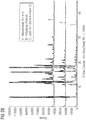
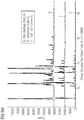
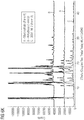
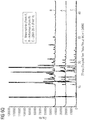
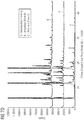
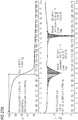
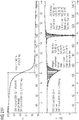
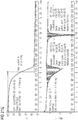
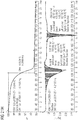
- FIGS. 2-13B XRPD spectral data relating to the many OXY133 polymorphs are depicted in FIGS. 2-13B .
- FIGS. 2A to 2E are XRPDs of OXY133 polymorph Forms A and B.
- FIG. 3 is a graphic illustration of XRPDs of OXY133 polymorph Forms A, B, C, D, E, F, G, H and I.
- FIG. 4 is an XRPD of OXY133 polymorph Form A and unknown formed when OXY133 is crystallized from an isopropanol/water solvent/anti-solvent system in a ratio of 1:2 v/v at 30°C.
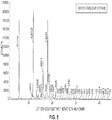
- FIG. 5 is an XRPD of OXY133 polymorph Form B or anhydrous OXY133.
- Table 4 lists data taken from the XRPD of FIG. 5 .
- OXY133 Form B can have one or more reflections of different relative intensities at index numbers 0, 1, 2, 3, 4, 5, 6, 7, 8, 9, 10, 11, 12, 13, 14, 15, 16, 17, 18, 19, 20, 21, 22, 23, 24, 25, 26, 27, 28, 29, 30, 31, 32, 33, 34, 35 and 36.
- Table 4 XRPD Data for OXY133 Polymorph Form B, as illustrated in FIG. 5 Index No. Angle (2-Theta) d Value (Angstrom) Net Intensity (Counts) Gross Intensity (Counts) Rel.
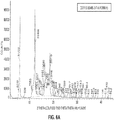
- OXY133 Form A can have one or more reflections of different relative intensities at index numbers 0, 1, 2, 3, 4, 5, 6, 7, 8, 9, 10, 11, 12, 13, 14, 15, 16, 17, 18, 19, 20, 21, 22, 23, 24, 25, 26, 27, 28, 29, 30, 31, 32, 33, 34, 35, 36, 37, 38, 39, 40, 41, 42, 43, 44, 45, 46, 47 and 48.
- Table 5 XRPD Data for OXY133 Polymorph Form A, as illustrated in FIG. 6A Index No. Angle (2-Theta) d Value (Angstrom) Net Intensity (Counts) Gross Intensity (Counts) Rel.
- FIGS. 6B-6I are XRPDs of polymorph Form A obtained by re-slurrying from an acetone/water solvent/anti-solvent medium in a ratio of 1:1 v/v at precipitating temperatures of 20°C, 50°C, 0°C, 35°C, 10°C, 25°C, respectively.
- FIGS. 6J and 6K are XRPDs of polymorph Form A obtained by crystallization from a THF/acetone/water solvent system at temperatures of 35°C.
- FIGS. 6L and 6M are XRPDs of polymorph Form A by re-slurrying from a THF/water solvent system in a ratio of 1:2 v/v at precipitating temperatures of 20°C and 35°C, respectively.
- 6N-6V are XRPDs of polymorph Form A obtained by crystallization from IPA/water solvent system in a ratio of 1:2 or 1:1 v/v at temperatures of 0°C, 5°C, 10°C and 20°C, respectively, as also listed in more detail in Table 15 below.
- the conversion to polymorph Form A is from a hemihydrate of OXY133.
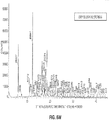
- FIG. 6W is an XRPD of polymorph A obtained by re-slurrying from an acetone/water solvent/anti-solvent medium in a ratio of 1:1 v/v at a precipitating temperature of 20°C.
- FIG. 6W is an XRPD of a solid OXY133 Form A. Table 6, below lists data taken from the XRPD of FIG. 6W .
- OXY133 Form A can have one or more reflections of different relative intensities at index numbers 0, 1, 2, 3, 4, 5, 6, 7, 8, 9, 10, 11, 12, 13, 14, 15, 16, 17, 18, 19, 20, 21, 22, 23, 24, 25, 26, 27, 28, 29, 30, 31, 32, 33, 34, 35, 36, 37, 38, 39, 40, 41, 42, 43, 44, 45, 46, 47, 48, 49, 50, 51, 52, 53, 54, 55, 56, 57, 58, 59, 60 and 61.
- Table 6 XRPD Data for OXY133 Polymorph Form A as illustrated in FIG. 6W Index No. Angle (2-Theta) d Value (Angstrom) Net Intensity (Counts) Gross Intensity (Counts) Rel.
- FIG. 6X is an XRPD of solid polymorph A obtained by crystallization from an isopropyl alcohol/water solvent/anti-solvent medium in a ratio of 1:1 v/v at a precipitating temperature of 20°C.
- FIG. 6W is an XRPD of a solid OXY133 Form A. Table 7, below lists data taken from the XRPD of FIG. 6X .
- OXY133 polymorph Form A can have one or more reflections of different relative intensities at index numbers 0, 1, 2, 3, 4, 5, 6, 7, 8, 9, 10, 11, 12, 13, 14, 15, 16, 17, 18, 19, 20, 21, 22, 23, 24, 25, 26, 27, 28, 29, 30, 31, 32, 33, 34, 35, 36, 37, 38, 39, 40, 41, 42, 43, 44, 45, 46, 47, 48, 49, 50, 51, 52, 53, 54, 55, 56, 57, 58, 59, 60, 61, 62, 63, 64, 65, 66, 67, 68, 69 and 70.
- FIGS. 7A , 7B , 7C , 7D , 7E , 7F , 7G , 7H , 7I , 7J , 7K , 7L , 7M , 7N , 7O , and 7P are XRPDs of OXY133 polymorph Form C.
- these figures are XRPDs of polymorph Form C obtained by re-slurrying from an acetone/water solvent system, where the acetone is the solvent and the water is the anti-solvent, in a ratio of 1:1 v/v.
- the precipitating temperatures at which these XRPDs were obtained are listed in more detail in Table 15 below and include 10°C, 20°C, 30°C, 40°C, 50°C, 60°C and 70°C, respectively.
- FIG. 26 is an XRPD of solid polymorph Form C obtained by crystallization from an acetone/water solvent/anti-solvent medium in a ratio of 1:1 v/v at a precipitating temperature of 70°C. Table 8, below lists data taken from the XRPD of FIG. 26 .
- OXY133 Form C can have one or more reflections of different relative intensities at index numbers 0, 1, 2, 3, 4, 5, 6, 7, 8, 9, 10, 11, 12, 13, 14, 15, 16, 17, 18, 19, 20, 21, 22, 23, 24, 25, 26, 27, 28, 29, 30, 31, 32, 33, 34, 35, 36, 37, 38, 39, 40, 41, 42, 43, 44, 45, 46, 47, 48, 49, 50, 51, 52, 53, 54, 55, 56, 57, 58, 59, 60, and 61.
- Table 8 XRPD Data for OXY133 Polymorph Form C as illustrated in FIG. 26 Index No. Angle (2-Theta) d Value (Angstrom) Net Intensity (Counts) Gross Intensity (Counts) Rel.
- FIGS. 8A and 8B are XRPDs of OXY133 polymorph Form D obtained by re-slurrying from a methanol/water system at a precipitating temperature of 20°C and 70°C, respectively.
- FIG. 27 is an XRPD of solid polymorph Form D obtained by crystallization from a methanol/water system in a ratio of 1:1 methanol/water v/v at a temperature of 70°C. Table 9, below lists data taken from the XRPD of FIG. 27 .
- OXY133 Form D can have one or more reflections of different relative intensities at index numbers 0, 1, 2, 3, 4, 5, 6, 7, 8, 9, 10, 11, 12, 13, 14, 15, 16, 17, 18, 19, 20, 21, 22, 23, 24, 25, 26, 27, 28, 29, 30, 31, 32, 33, 34, 35, 36, 37, 38, 39, 40, 41, 42, 43, 44, 45, 46, 47, 48, 49, 50, 51, and 52.
- FIGS. 9A and 9B are XRPDs of OXY133 polymorph Form E obtained from a slurry of OXY133 polymorph Form B in water at temperatures of 20°C and 70°C, respectively.
- FIG. 28 is an XRPD of solid polymorph Form E obtained by crystallization of OXY133 polymorph Form B from water at a temperature of 70°C.
- OXY133 polymorph Form E can have one or more reflections of different relative intensities at index numbers 0, 1, 2, 3, 4, 5, 6, 7, 8, 9, 10, 11, 12, 13, 14, 15, 16, 17, 18, 19, 20, 21, 22, 23, 24, 25, 26, 27, 28, 29, 30, 31, 32, 33, 34, 35, 36, 37 and 38.
- FIGS. 10A , 10B , and 10C are XRPDs of OXY133 polymorph Form F obtained by a dissolution in acetone/water followed by precipitation at temperatures of 5°C and 15°C, respectively.
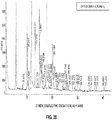
- FIG. 29 is an XRPD of solid polymorph form F obtained by acetone recrystallization with water after cooling. Table 11, below lists data taken from the XRPD of FIG. 29 .
- OXY133 polymorph Form F can have one or more reflections of different relative intensities at index numbers 0, 1, 2, 3, 4, 5, 6, 7, 8, 9, 10, 11, 12, 13, 14, 15, 16, 17, 18, 19, 20, 21, 22, 23, 24, 25, 26, 27, 28, 29, 30, 31, 32, 33, 34, 35, 36, 37, 38, 39, 40, 41, 42, 43, 44, 45, 46, 47, 48, 49, 50, 51, 52, 53, 54, 55, 56, 57, 58, 59, 60, 61, 62, 63, 64, 65, 66, 67, 68, and 69.
- FIG. 11 is an XRPD of OXY133 polymorph Form G obtained by crystallization from IPA/water solvent system in a ratio of 1:2 v/v at a temperature of 40°C.
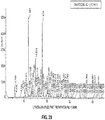
- FIG. 30 is an XRPD of solid polymorph Form G obtained by IPA/water solvent system in a ratio of 1:2 v/v at a temperature of 40°C. Table 12, below lists data taken from the XRPD of FIG. 30 .
- OXY133 Form G can have one or more reflections of different relative intensities at index numbers 0, 1, 2, 3, 4, 5, 6, 7, 8, 9, 10, 11, 12, 13, 14, 15, 16, 17, 18, 19, 20, 21, 22, 23, 24, 25, 26, 27, 28, 29, 30, 31, 32, 33, 34, 35, 36, 37, 38, 39, 40, 41, 42, 43, 44, 45, 46, 47, 48, 49, 50, 51, 52, 53, 54, 55, and 56.
- FIG. 12 is an XRPD of OXY133 polymorph Form H obtained by crystallization from IPA/water solvent system in a ratio of 1:2 v/v at a temperature of -10°C.
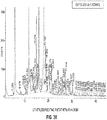
- FIG. 31 is an XRPD of solid polymorph Form H obtained by crystallization from IPA/water solvent system in a ratio of 1:2 v/v at a temperature of - 10°C.
- Table 13, below lists data taken from the XRPD of FIG. 31 .
- OXY133 polymorph Form H can have one or more reflections of different relative intensities at index numbers 0, 1, 2, 3, 4, 5, 6, 7, 8, 9, 10, 11, 12, 13, 14, 15, 16, 17, 18, 19, 20, 21, 22, 23, 24, 25, 26, 27, 28, 29, 30, 31, 32, 33, and 34.
- Table 13 XRPD Data for OXY133 Polymorph Form H as illustrated in FIG. 31 Index No. Angle (2-Theta) d Value (Angstrom) Net Intensity (Counts) Gross Intensity (Counts) Rel. Intensity (%) 0 6.016 14.6791 370 1366 2.20% 1 7.471 11.82347 939 2168 5.60% 2 7.869 11.22605 5683 6970 33.80% 3 8.726 10.1252 234 1626 1.40% 4 9.18 9.62563 2392 3829 14.20% 5 9.916 8.913 10104 11601 60.10% 6 10.872 8.13087 592 2139 3.50% 7 11.996 7.3717 204 1851 1.20% 8 12.32 7.17876 305 2002 1.80% 9 13.805 6.40942 496 2404 3.00% 10 14.756 5.99864 3324 5343 19.80% 11 15.002 5.90075 14585 16627 86.80% 12 15.862 5.58261 5789 7898
- FIGS. 13A and 13B are XRPDs of OXY133 polymorph Form I formed by re-slurrying from a methanol/acetone/water solvent system or by recrystallization from acetone at 20°C, respectively.
- FIG. 32 is an XRPD of solid polymorph Form I obtained by acetone recrystallization at 20°C. Table 14, below lists data taken from the XRPD of FIG. 32 .
- OXY133 polymorph Form I can have one or more reflections of different relative intensities at index numbers 0, 1, 2, 3, 4, 5, 6, 7, 8, 9, 10, 11, 12, 13, 14, 15, 16, 17, 18, 19, 20, 21, 22, 23, 24, 25, 26, 27, 28, 29, 30, 31, 32, 33, 34, 35, 36, 37, 38, 39, 40, 41, 42, 43, 44, 45, 46, 47, 48, 49, 50, 51, 52, 53, 54, 55, 56, 57, 58, 59, 60, 61, 62, 63, 64, 65, 66, 67, 68, 69, 70, 71, 72, 73, 74, 75, 76, and 77.
- the equipment utilized to collect the XRPD patterns depicted in FIGS. 2A-13B was a Bruker D8 Advance diffractometer using Cu radiation (40kV, 25mA) with a divergence slit of 0.3° (0.6mm), wherein variable slits must be operated in fixed mode.
- the axial Soller slits, primary and secondary were each set at 2.5°.
- the anti-scatter slit was set at 0.3° (0.6mm).
- the secondary monochromator anti-scatter slit was set at 1 mm and the detector slit at 0.1 mm. If a secondary monochromator is not used, then a suitable ⁇ filter must be used, namely a Ni filter for Cu radiation.
- the linear detector LYNXEYE was set at 3° detector opening with the angle scanned from 2 to 45° 2 ⁇ .
- Table 15 is a list of OXY133 polymorphs Forms A, B, C, D, E, F, G, H and I identified by a high performance liquid chromatography (HPLC) followed by charged aerosol detector (CAD) method. Table 15 also lists the starting products, the solvent system including solvent and anti-solvent, the temperature at which a polymorph was formed, the water content of the polymorph as determined by the Karl-Fisher (KF) method of water determination, and where available, the yield and purity of the resulting polymorph.
- HPLC high performance liquid chromatography
- CAD charged aerosol detector
- HPLC-CAD data summarized in Tables 15 and 16 above was collected on a HPLC Agilent 1100 instrument equipped with a Waters XBridge phenyl, 4.6mm by 150 mm, 3.5 ⁇ m column, at a column temperature of 40 ⁇ 2 °C, the mobile phases, MPA and MPB were 100% water and methanol (MeOH), respectively, and the flow rate was 1.0 mL/min.
- the CAD equipment utilized for the experimental work of this disclosure was Dionex Corona ultra RS, wherein the unit settings included a range of 100 pA, offset of 0, and no filter.
- the CAD's nebulizer temperature was 35 ⁇ 5 °C and the gas pressure about 35 psi.
- the HPLC's sample tray was kept at ambient temperature, the injection volume was 5 ⁇ l, the needle wash used was the method diluent, the run time 35 minutes and the retention time for OXY133 approximately 13.1 minutes.
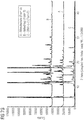
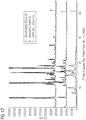
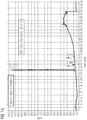
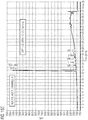
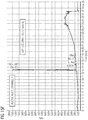
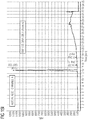
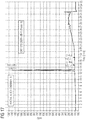
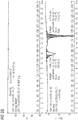
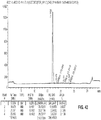
- HPLC-CAD single injection results are illustrated in FIGS. 14-19 .
- the data collected from these single injection results and associated with each signal is summarized in Table 17.
- HPLC-CAD data identifying OXY133 polymorph B is found at FIG. 14 .
- HPLC-CAD data identifying OXY133 polymorph A is illustrated in FIGS. 15A , 15B , 15C , 15D , 15E , 15F , 15G , 15H and 15I .
- HPLC-CAD data identifying OXY133 polymorphs H and I is depicted in FIGS. 16 and 17 .
- FIGS. 18 and 19 illustrate HPLC-CAD data for OXY133 samples of polymorph Form B (2891-12-4) and polymorph Form A (2891-15-1).
- FIGS. 33 and 34 are XRPDs of polymorph Form B and polymorph Form A, respectively.
- Table 17 Signal ADC1 A, ADC1 Channel A Figure/Polymorph Form RT (min) Peak Height Area Area Percent Resolution S/N Tailing Compound Name FIG. 14 13.12 977.8 12035.04 96.88 NA 0.9 OXY133 Form B 14.81 26.1 292.059 2.351 5.9 1.2 Imp-1 17.31 10.1 95.554 0.769 14.1 0.8 Imp-2 FIG. 15A 12.96 1004.9 12862.927 96.79 NA 0.9 OXY133 Form A 14.64 27.4 323.718 2.436 5.9 0.8 Imp-1 17.12 9.9 102.861 0.774 12.0 0.9 Imp-2 FIG.
- DSC Differential scanning calorimetry
- TGA thermo-gravimetric analysis
- FIG. 20 is a DSC-TGA thermogram of OXY133 polymorph Form B
- FIGS. 21A , 21B , 21C , 21D , 21E , 21F , 21G , 21H , and 21I are DSC-TGA thermograms of OXY133 polymorph Form A
- FIG. 22 is a DSC-TGA thermogram of OXY133 polymorph Form C
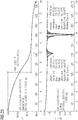
- FIG. 23 is a DSC-TGA thermogram of OXY133 polymorph Form G
- FIG. 24 is a DSC-TGA thermogram of OXY133 polymorph Form H
- FIG. 25 is a DSC-TGA thermogram of OXY133 polymorph Form A and unknown.
- a method for preparing an OXY133 polymorph including subjecting a slurry of anhydrous OXY133 to conditions sufficient to convert anhydrous OXY133 to the OXY133 polymorph selected from polymorph Form A, polymorph Form B, polymorph Form C, polymorph Form D, polymorph Form E, polymorph Form F, polymorph Form G, polymorph Form H, polymorph Form I or a mixture thereof, wherein OXY133 is prepared by reacting a diol having the formula: with borane, hydrogen peroxide and tetrahydrofuran to form the oxysterol or a pharmaceutically acceptable salt, hydrate or solvate thereof having the formula: wherein R1 and R2 comprise a hexyl group and the diol comprises (3S,8S,9S,10R,13R,14S,17R)-10,13-dimethyl-17-[(S)-2-hydroxyoctan-yl]-2,3,4,7,8,9,11,12
- n -hexylmagnesium chloride 8.25 mL n -hexylmagnesium chloride (2 M, 16.5 mmol) was added to a solution of pregnenolone acetate in tetrahydrofuran under vigorous electromagnetic stirring and ice bath cooling.
- the pregnenolone acetate solution contained 1.79g of compound 1, pregnenolone acetate, (5 mmol) in 4.5 mL tetrahydrofuran. The addition took place over 2 minutes. After addition was completed, the mixture was stirred at room temperature for 3.5 hours, at which point the mixture had turned to a gel. The gel was then digested with a mixture of saturated aqueous NH 4 Cl and MTBE (methyl tertiary-butyl ether).
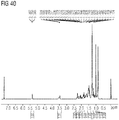
- the 1 H NMR data of the diol in CDCl 3 at 400 MHz illustrated the following: ⁇ : 0.8-1.9 (40H), 1.98 (m, 1H), 2.09 (m, 1H), 2.23 (m, 1H), 2.29 (m, 1H), 3.52 (m, 1H), 5.35 (m, 1H) in FIG. 6 .
- the 13 C NMR data of the diol in CDCl 3 at 100 MHz illustrated the following: d: 13.6, 14.1, 19.4, 20.9, 22.4, 22.6, 23.8, 24.2, 26.4, 30.0, 31.3, 31.6, 31.8, 31.9, 36.5, 37.3, 40.1, 42.3, 42.6, 44.0, 50.1, 56.9, 57.6, 71.7, 75.2, 121.6, 140.8.
- the diol created has an IUPAC name of (3S,8S,9S,10R,13R,14S,17R)-10,13-dimethyl-17-[(S)-2-hydroxyoctan-yl]-2,3,4,7,8,9,11,12,14,15,16,17-dodecahydro-1H-cyclopenta[a]phenanthren-3-ol.
- compound 2 of reaction scheme A above can be prepared from pregnenolone shown below in B utilizing the same procedure as utilized for the conversion of compound 1 to compound 2. In this procedure 10 g of pregnenolone was converted to 7.05 g of compound 2, which accounted for a 55% yield.
- the diol created has an IUPAC name of (3S,8S,9S,10R,13R,14S,17R)-10,13-dimethyl-17-[(S)-2-hydroxyoctan-yl]-2,3,4,7,8,9,11,12,14,15,16,17-dodecahydro-1H-cyclopenta[a]phenanthren-3-ol.
- the crude hexyl diol product (800 grams) was dissolved in 8 liters of tetrahydrofuran, charged to a reactor, and was cooled to -5°C. 6300 mL of borane-tetrahydrofuran complex (1 M, 6.3 moles, 4.5 equivalents) in tetrahydrofuran was charged at a rate which maintained the internal reaction temperature below 1°C. Once the addition was complete, the reaction mixture was stirred at 0°C for 1.5 hours then allowed to warm to room temperature overnight. The reaction is shown below.
- the reaction mixture was quenched by addition of a mixture of 10% sodium hydroxide (4750 mL) and 30% hydrogen peroxide (1375 mL). The quench was extremely exothermic and required several hours to complete. The internal temperature was maintained below 10°C. After the addition of the quench volume was complete, the mixture was held cold for 1.5 hours then allowed to warm to room temperature overnight. 8 liters of dichloromethane was then added. The organic layer was isolated and washed with 7 liters of fresh water, and was concentrated under reduced pressure. The product was isolated as a viscous, oily mass which solidified upon standing.
- the product was dissolved in 4 liters of dichloromethane and was placed onto a silica gel column prepared in dichloromethane.
- the column was eluted first with 25% ethyl acetate to elute the 7-methyl-7-tridecyl alcohol by-product. Subsequently, the column was eluted with 10% methanol-ethyl acetate to solvate the OXY133.
- the collected fractions were combined and concentrated under reduced pressure to a waxy solid.
- the compound was dissolved in acetone-water mixture (3:1) and concentrated under reduced pressure to remove residual solvents.
- the resulting crude OXY133 was utilized in the next step.
- the viscous product recovered from the hydroboration/oxidation can be solidified by stirring with heptanes, and the product isolated by filtration.
- the isolated product is suspended in methylene chloride (7.3 mL methylene chloride/g solid). The product was isolated by filtration and used as-is in the next step.
- OXY133 was recrystallized by dissolving 630 grams of crude OXY133 into 1500ml of a 3:1 acetone/water mixture at reflux, then cooling to room temperature. The crystalline solid was recovered by vacuum filtration and dried to afford 336 g, which was a 28% overall yield from compound 1.
- the OXY133 produced was monohydrous, and has an IUPAC name of (3 S ,5 S ,6 S ,8 R ,9S,10 R ,13 S ,14 S ,17 S )-17-(( S )-2-hydroxyoctan-2-yl)-10,13-dimethylhexadecahydro-1 H -cyclopenta[ a ]phenanthrene-3,6-diol, monohydrate.
- the 1 H NMR data of OXY133 in CDCl 3 at 400 MHz illustrated the following: ⁇ : 0.66 (m, 1H), 0.85 (m, 10 H), 1.23 (m, 18 H), 1.47 (m, 9 H), 1.68 (m, 4 H), 1.81 (m, 1H), 1.99 (m, 1H), 2.06 (m, 1H), 2.18 (m, 1H), 3.42 (m, 1H), 3.58 (m, 1H).
- the 13 C NMR data of OXY133 in CDCl 3 at 400 MHz illustrated the following: d: 13.7, 14.0, 14.3, 21.2, 22.5, 22.8, 23.9, 24.4, 26.6, 30.1, 31.1, 32.1, 32.5, 33.9, 36.5, 37.5, 40.4, 41.7, 43.1, 44.3, 51.9, 53.9, 56.5, 57.9, 69.6, 71.3, 75.4.
- the infrared spectroscopy data of OXY133 showed peaks at 3342 cm -1 , 2929 cm -1 , 2872 cm -1 , 2849 cm -1 .
- the turbo spray mass spectrometry data of the OXY133 showed peaks at 438.4 m/z [M+NH 4 ]+, 420.4 m/z (M-H 2 O+NH 4 ]+, 403.4 m/z [M-H 2 O+H]+, 385.4 m/z [M-2H 2 O+H]+.
- the mixture was cooled to 0°C and quenched by the slow addition of a mixture of 10% NaOH (190 mL) and 30% H 2 O 2 (55 mL). Once the quench was complete, the mixture was extracted with MTBE (800 mL total) resulting in an emulsion. Brine was added and the layers were separated. The organic phase was concentrated under reduced pressure to a clear, viscous oil. The oil was further purified utilizing the plug column method previously described.
- anhydrous OXY133 was added to 10 mL isopropanol in a 100 mL polyblock reactor. The mixture was heated to 30°C and then stirred at 30°C for 45 minutes until the solids were dissolved completely. Acceptable heating temperatures ranged from 25°C to 35°C. A polish filtration step can be added after dissolving the anhydrous OXY133. The mixture of anhydrous OXY133 and isopropanol was then cooled to 5°C. 20 mL of water was then added to the cooled mixture over 120 minutes at 5°C, resulting in the formation of a precipitate approximately one third of the way through the addition of water.
- the water addition can also be done in temperature ranges from about 0°C to about 20°C with no significant effect on the crystal structure.
- the resulting mixture of OXY133, isopropanol and water was then stirred at 5°C for 18 hours. However, it is recommended that the resulting mixture could be mixed for at least 2 hours at 5°C after the water addition was complete to ensure that all solids were precipitated from the solution.
- a white solid was collected by rapidly filtering the mixture and then washing the solid with 2.0 mL of an isopropanol: water mixture in a ratio of 1:2 v/v. The filtered and washed solids were then dried in a vacuum oven at 20°C. Acceptable temperatures for drying can range from about 20°C to about 30°C.
Landscapes
- Health & Medical Sciences (AREA)
- Chemical & Material Sciences (AREA)
- Organic Chemistry (AREA)
- General Health & Medical Sciences (AREA)
- Physical Education & Sports Medicine (AREA)
- Veterinary Medicine (AREA)
- Life Sciences & Earth Sciences (AREA)
- Engineering & Computer Science (AREA)
- Chemical Kinetics & Catalysis (AREA)
- General Chemical & Material Sciences (AREA)
- Medicinal Chemistry (AREA)
- Nuclear Medicine, Radiotherapy & Molecular Imaging (AREA)
- Rheumatology (AREA)
- Pharmacology & Pharmacy (AREA)
- Bioinformatics & Cheminformatics (AREA)
- Animal Behavior & Ethology (AREA)
- Public Health (AREA)
- Orthopedic Medicine & Surgery (AREA)
- Urology & Nephrology (AREA)
- Heart & Thoracic Surgery (AREA)
- Pain & Pain Management (AREA)
- Vascular Medicine (AREA)
- Cardiology (AREA)
- Pharmaceuticals Containing Other Organic And Inorganic Compounds (AREA)
- Steroid Compounds (AREA)
Applications Claiming Priority (1)
| Application Number | Priority Date | Filing Date | Title |
|---|---|---|---|
| US15/374,610 US11384114B2 (en) | 2016-12-09 | 2016-12-09 | Polymorphic forms of an oxysterol and methods of making them |
Publications (2)
| Publication Number | Publication Date |
|---|---|
| EP3333175A2 true EP3333175A2 (fr) | 2018-06-13 |
| EP3333175A3 EP3333175A3 (fr) | 2018-09-26 |
Family
ID=60480141
Family Applications (1)
| Application Number | Title | Priority Date | Filing Date |
|---|---|---|---|
| EP17200797.3A Withdrawn EP3333175A3 (fr) | 2016-12-09 | 2017-11-09 | Formes polymorphes d'un oxystérol et leurs procédés de fabrication |
Country Status (6)
| Country | Link |
|---|---|
| US (1) | US11384114B2 (fr) |
| EP (1) | EP3333175A3 (fr) |
| JP (1) | JP2018135316A (fr) |
| KR (1) | KR20180066856A (fr) |
| CN (1) | CN108218941A (fr) |
| AU (2) | AU2017272215B2 (fr) |
Cited By (2)
| Publication number | Priority date | Publication date | Assignee | Title |
|---|---|---|---|---|
| EP3436039A4 (fr) * | 2016-03-28 | 2019-11-27 | Warsaw Orthopedic, Inc. | Formes polymorphes d'un oxystérol et procédés de fabrication de ces dernières |
| US11384114B2 (en) | 2016-12-09 | 2022-07-12 | Warsaw Orthopedic, Inc. | Polymorphic forms of an oxysterol and methods of making them |
Families Citing this family (2)
| Publication number | Priority date | Publication date | Assignee | Title |
|---|---|---|---|---|
| US9637514B1 (en) * | 2015-10-26 | 2017-05-02 | MAX BioPharma, Inc. | Oxysterols and hedgehog signaling |
| US10434106B2 (en) * | 2017-05-19 | 2019-10-08 | Warsaw Orthopedic, Inc. | Oxysterol-statin compounds for bone growth |
Citations (2)
| Publication number | Priority date | Publication date | Assignee | Title |
|---|---|---|---|---|
| WO2013169399A1 (fr) | 2012-05-07 | 2013-11-14 | The Regents Of The University Of California | Oxy133, un analogue de l'oxystérol, induisant l'ostéo-genèse et la signalisation hedgehog et inhibant l'adipogenèse |
| WO2015064526A1 (fr) | 2013-10-28 | 2015-05-07 | 京セラ株式会社 | Dispositif portable et procédé de commande de position |
Family Cites Families (50)
| Publication number | Priority date | Publication date | Assignee | Title |
|---|---|---|---|---|
| US4877864A (en) | 1987-03-26 | 1989-10-31 | Genetics Institute, Inc. | Osteoinductive factors |
| GB2215209B (en) | 1988-03-14 | 1992-08-26 | Osmed Inc | Method and apparatus for biodegradable, osteogenic, bone graft substitute device |
| US6371992B1 (en) | 1997-12-19 | 2002-04-16 | The Regents Of The University Of California | Acellular matrix grafts: preparation and use |
| US5899939A (en) | 1998-01-21 | 1999-05-04 | Osteotech, Inc. | Bone-derived implant for load-supporting applications |
| EP1248869A2 (fr) * | 2000-01-07 | 2002-10-16 | Transform Pharmaceuticals, Inc. | Formation, identification et analyse a productivites elevees de formes solides diverses |
| US9387094B2 (en) | 2000-07-19 | 2016-07-12 | Warsaw Orthopedic, Inc. | Osteoimplant and method of making same |
| EP1556057A4 (fr) | 2002-08-29 | 2009-07-15 | Univ California | Agents et procedes pour stimuler la formation osseuse |
| WO2004110308A2 (fr) | 2003-06-11 | 2004-12-23 | Osteotech, Inc. | Osteo-implants et leurs procedes de production |
| KR20060052792A (ko) | 2003-07-09 | 2006-05-19 | 포비스 메디-테크 인코포레이티드 | 신규 화합물 및 스테롤 및/또는 스탄올 및 콜레스테롤생합성 억제제를 포함하는 조성물 및 다양한 질병 및증상을 치료 또는 예방하기 위한 이들의 용도 |
| WO2005020928A2 (fr) | 2003-08-29 | 2005-03-10 | The Regents Of The University Of California | Agents et procedes permettant d'ameliorer la formation osseuse a l'aide d'oxysterols combines a des proteines morphogeniques osseuses |
| WO2006110490A2 (fr) | 2005-04-07 | 2006-10-19 | The Regents Of The University Of California | Agents et procedes d'inhibition d'oxysterols osteogeniques du stress oxydatif sur la differenciation cellulaire osteogenique |
| JP2009512422A (ja) | 2005-09-02 | 2009-03-26 | ザ リージェンツ オブ ザ ユニヴァーシティー オブ カリフォルニア | 骨形成及び抗脂肪細胞形成オキシステロール類 |
| CA2643732C (fr) | 2006-02-27 | 2012-08-21 | The Regents Of The University Of California | Composes oxysterols et voie |
| US20070248575A1 (en) | 2006-04-19 | 2007-10-25 | Jerome Connor | Bone graft composition |
| US20110276147A1 (en) | 2006-07-20 | 2011-11-10 | Nuvasive, Inc. | Bone Graft Substitutes and Methods Thereof |
| EP2111225A4 (fr) * | 2006-12-19 | 2010-02-10 | Univ California | Inhibition de l'expression de ppar gamma par des oxystérols ostéogènes spécifiques |
| US8114428B2 (en) | 2007-03-08 | 2012-02-14 | Sbf Synthetic Bone Factory Gmbh | Methods for manufacturing a composition for treating bone and/or cartilage defects |
| WO2008115469A2 (fr) | 2007-03-16 | 2008-09-25 | The Regents Of The University Of California | Rôle de la signalisation par hérisson dans l'athérosclérose et les maladies cardiovasculaires |
| CN101951915A (zh) | 2007-12-03 | 2011-01-19 | 加利福尼亚大学董事会 | 用于刺猬蛋白信号、骨诱导、抗脂肪形成和wnt信号的激活的氧固醇 |
| CN104357381A (zh) | 2008-10-31 | 2015-02-18 | 辛西斯有限责任公司 | 用于活化干细胞的方法和装置 |
| US9707318B2 (en) | 2009-10-29 | 2017-07-18 | Shaker A. Mousa | Compositions of novel bone patch in bone and vascular regeneration |
| US8475824B2 (en) | 2010-01-26 | 2013-07-02 | Warsaw Orthopedic, Inc. | Resorbable matrix having elongated particles |
| US8758791B2 (en) | 2010-01-26 | 2014-06-24 | Warsaw Orthopedic, Inc. | Highly compression resistant matrix with porous skeleton |
| WO2012024584A2 (fr) | 2010-08-20 | 2012-02-23 | Fate Therapeutics, Inc. | Composés oxystérol |
| WO2012024581A2 (fr) | 2010-08-20 | 2012-02-23 | Fate Therapeutics, Inc. | Composés oxystérol |
| US9107983B2 (en) | 2010-10-27 | 2015-08-18 | Warsaw Orthopedic, Inc. | Osteoconductive matrices comprising statins |
| US8877221B2 (en) | 2010-10-27 | 2014-11-04 | Warsaw Orthopedic, Inc. | Osteoconductive matrices comprising calcium phosphate particles and statins and methods of using the same |
| US20120265167A1 (en) | 2010-12-21 | 2012-10-18 | Simonson Rush E | Biocompatible material for orthopedic uses |
| US9717779B2 (en) | 2011-01-31 | 2017-08-01 | Warsaw Orthopedic, Inc. | Implantable matrix having optimum ligand concentrations |
| CN103476440B (zh) | 2011-02-25 | 2016-10-19 | 新特斯有限责任公司 | 促进成骨的植入物以及诱导骨生长的方法 |
| EP2529764A1 (fr) | 2011-05-31 | 2012-12-05 | Curasan AG | Matériau composite biodégradable |
| US8900617B2 (en) | 2011-07-21 | 2014-12-02 | Warsaw Orthopedic, Inc. | Bio-Remodable Bone Augmentation device and method |
| WO2013043529A1 (fr) | 2011-09-19 | 2013-03-28 | Emory University | Activation de la voie de la protéine morphogénétique osseuse, compositions pour ossification et méthodes associées |
| DE102011119909A1 (de) | 2011-12-01 | 2013-06-06 | Antonis Alexakis | Regenerations Hilfe für Knochendefekte |
| JP6208683B2 (ja) | 2011-12-23 | 2017-10-04 | セラペディクス,インク. | 移植可能な骨修復材料 |
| EP2806907B1 (fr) | 2012-01-24 | 2018-11-21 | LifeCell Corporation | Matrices tissulaires allongées |
| EP2847205A4 (fr) * | 2012-05-07 | 2016-01-20 | Univ California | Nouvel analogue de l'oxystérol, l'oxy149, pour l'ostéo-induction, la signalisation hedgehog et l'inhibition de l'adipogenèse |
| US9679244B2 (en) * | 2012-05-30 | 2017-06-13 | Taiheiyo Cement Corporation | Method for predicting quality or manufacturing condition of cement |
| WO2014093836A1 (fr) | 2012-12-13 | 2014-06-19 | University Of Georgia Research Foundation, Inc. | Composition induisant l'ossification et ses procédés d'utilisation |
| JP2016517888A (ja) | 2013-05-02 | 2016-06-20 | ザ リージェンツ オブ ザ ユニバーシティ オブ カリフォルニア | 骨選択的骨形成のオキシステロール骨標的薬剤 |
| JP2016527006A (ja) | 2013-07-19 | 2016-09-08 | ケイマン ケミカル カンパニー, インコーポレーテッド | 骨成長を促進するための方法、システム、及び組成物 |
| ITMI20131300A1 (it) | 2013-08-01 | 2015-02-02 | Nobil Bio Ricerche Srl | Composizione per il riempimento di difetti ossei e parodontali |
| WO2015168636A1 (fr) | 2014-05-02 | 2015-11-05 | The Regents Of The University Of California | Analogues de bisphosphonates d'oxystérol ostéogéniques ciblant spécifiquement l'os |
| US9657052B2 (en) | 2014-12-09 | 2017-05-23 | Warsaw Orthopedic, Inc. | Compounds and methods of making sterols using diols |
| US10632230B2 (en) * | 2015-07-10 | 2020-04-28 | Warsaw Orthopedic, Inc. | Implants having a high drug load of an oxysterol and methods of use |
| US9878070B2 (en) | 2015-06-17 | 2018-01-30 | Warsaw Orthopedic, Inc. | Malleable implants including an oxysterol and methods of use |
| CN108884123A (zh) | 2016-01-12 | 2018-11-23 | 台北医学大学 | 抑制癌症及病毒的化合物 |
| US20170275330A1 (en) * | 2016-03-28 | 2017-09-28 | Warsaw Orthopedic, Inc. | Polymorphic forms of an oxysterol and methods of making them |
| US9987290B2 (en) * | 2016-03-28 | 2018-06-05 | Warsaw Orthopedic, Inc. | Methods for the separation and detection of an oxysterol |
| US11384114B2 (en) | 2016-12-09 | 2022-07-12 | Warsaw Orthopedic, Inc. | Polymorphic forms of an oxysterol and methods of making them |
-
2016
- 2016-12-09 US US15/374,610 patent/US11384114B2/en active Active
-
2017
- 2017-11-09 EP EP17200797.3A patent/EP3333175A3/fr not_active Withdrawn
- 2017-12-04 KR KR1020170165358A patent/KR20180066856A/ko not_active Withdrawn
- 2017-12-06 AU AU2017272215A patent/AU2017272215B2/en not_active Ceased
- 2017-12-07 JP JP2017235259A patent/JP2018135316A/ja active Pending
- 2017-12-08 CN CN201711293638.9A patent/CN108218941A/zh active Pending
-
2021
- 2021-09-14 AU AU2021232674A patent/AU2021232674A1/en not_active Abandoned
Patent Citations (2)
| Publication number | Priority date | Publication date | Assignee | Title |
|---|---|---|---|---|
| WO2013169399A1 (fr) | 2012-05-07 | 2013-11-14 | The Regents Of The University Of California | Oxy133, un analogue de l'oxystérol, induisant l'ostéo-genèse et la signalisation hedgehog et inhibant l'adipogenèse |
| WO2015064526A1 (fr) | 2013-10-28 | 2015-05-07 | 京セラ株式会社 | Dispositif portable et procédé de commande de position |
Non-Patent Citations (2)
| Title |
|---|
| GENNARO, A. R.,: "Remington: The Science and Practice of Pharmacy, 20th ed.,", 2000, LIPPINCOTT WILLIAMS & WILKINS |
| VOLLHART, KP; SCHORE, NE: "Organic Chemistry: Structure and Function, Fifth Ed.,", 2007, CUSTOM PUBLISHING COMPANY |
Cited By (2)
| Publication number | Priority date | Publication date | Assignee | Title |
|---|---|---|---|---|
| EP3436039A4 (fr) * | 2016-03-28 | 2019-11-27 | Warsaw Orthopedic, Inc. | Formes polymorphes d'un oxystérol et procédés de fabrication de ces dernières |
| US11384114B2 (en) | 2016-12-09 | 2022-07-12 | Warsaw Orthopedic, Inc. | Polymorphic forms of an oxysterol and methods of making them |
Also Published As
| Publication number | Publication date |
|---|---|
| AU2017272215A1 (en) | 2018-06-28 |
| US11384114B2 (en) | 2022-07-12 |
| KR20180066856A (ko) | 2018-06-19 |
| AU2021232674A1 (en) | 2021-10-14 |
| JP2018135316A (ja) | 2018-08-30 |
| AU2017272215B2 (en) | 2021-06-17 |
| CN108218941A (zh) | 2018-06-29 |
| EP3333175A3 (fr) | 2018-09-26 |
| US20180162900A1 (en) | 2018-06-14 |
Similar Documents
| Publication | Publication Date | Title |
|---|---|---|
| US10975115B2 (en) | Compounds and methods of making sterols using diols | |
| AU2017241541B2 (en) | Polymorphic forms of an oxysterol and methods of making them | |
| AU2021232674A1 (en) | Polymorphic forms of an oxysterol and methods of making them | |
| US11234991B2 (en) | Methods for the separation and detection of an oxysterol | |
| AU2018203248B2 (en) | Oxysterol-statin compounds for bone growth |
Legal Events
| Date | Code | Title | Description |
|---|---|---|---|
| PUAI | Public reference made under article 153(3) epc to a published international application that has entered the european phase |
Free format text: ORIGINAL CODE: 0009012 |
|
| STAA | Information on the status of an ep patent application or granted ep patent |
Free format text: STATUS: THE APPLICATION HAS BEEN PUBLISHED |
|
| AK | Designated contracting states |
Kind code of ref document: A2 Designated state(s): AL AT BE BG CH CY CZ DE DK EE ES FI FR GB GR HR HU IE IS IT LI LT LU LV MC MK MT NL NO PL PT RO RS SE SI SK SM TR |
|
| AX | Request for extension of the european patent |
Extension state: BA ME |
|
| PUAL | Search report despatched |
Free format text: ORIGINAL CODE: 0009013 |
|
| AK | Designated contracting states |
Kind code of ref document: A3 Designated state(s): AL AT BE BG CH CY CZ DE DK EE ES FI FR GB GR HR HU IE IS IT LI LT LU LV MC MK MT NL NO PL PT RO RS SE SI SK SM TR |
|
| AX | Request for extension of the european patent |
Extension state: BA ME |
|
| RIC1 | Information provided on ipc code assigned before grant |
Ipc: C07J 51/00 20060101ALN20180820BHEP Ipc: C07J 9/00 20060101AFI20180820BHEP Ipc: C07J 7/00 20060101ALN20180820BHEP Ipc: C07J 17/00 20060101ALN20180820BHEP |
|
| STAA | Information on the status of an ep patent application or granted ep patent |
Free format text: STATUS: REQUEST FOR EXAMINATION WAS MADE |
|
| 17P | Request for examination filed |
Effective date: 20190325 |
|
| RBV | Designated contracting states (corrected) |
Designated state(s): AL AT BE BG CH CY CZ DE DK EE ES FI FR GB GR HR HU IE IS IT LI LT LU LV MC MK MT NL NO PL PT RO RS SE SI SK SM TR |
|
| STAA | Information on the status of an ep patent application or granted ep patent |
Free format text: STATUS: EXAMINATION IS IN PROGRESS |
|
| 17Q | First examination report despatched |
Effective date: 20191007 |
|
| STAA | Information on the status of an ep patent application or granted ep patent |
Free format text: STATUS: THE APPLICATION IS DEEMED TO BE WITHDRAWN |
|
| 18D | Application deemed to be withdrawn |
Effective date: 20220601 |