EP3335687A1 - Ausbrennbares dentales modelliermaterial - Google Patents
Ausbrennbares dentales modelliermaterial Download PDFInfo
- Publication number
- EP3335687A1 EP3335687A1 EP16204527.2A EP16204527A EP3335687A1 EP 3335687 A1 EP3335687 A1 EP 3335687A1 EP 16204527 A EP16204527 A EP 16204527A EP 3335687 A1 EP3335687 A1 EP 3335687A1
- Authority
- EP
- European Patent Office
- Prior art keywords
- weight
- mol
- bis
- udma
- tegdma
- Prior art date
- Legal status (The legal status is an assumption and is not a legal conclusion. Google has not performed a legal analysis and makes no representation as to the accuracy of the status listed.)
- Granted
Links
Images




Classifications
-
- C—CHEMISTRY; METALLURGY
- C08—ORGANIC MACROMOLECULAR COMPOUNDS; THEIR PREPARATION OR CHEMICAL WORKING-UP; COMPOSITIONS BASED THEREON
- C08L—COMPOSITIONS OF MACROMOLECULAR COMPOUNDS
- C08L33/00—Compositions of homopolymers or copolymers of compounds having one or more unsaturated aliphatic radicals, each having only one carbon-to-carbon double bond, and only one being terminated by only one carboxyl radical, or of salts, anhydrides, esters, amides, imides or nitriles thereof; Compositions of derivatives of such polymers
- C08L33/04—Homopolymers or copolymers of esters
-
- A—HUMAN NECESSITIES
- A61—MEDICAL OR VETERINARY SCIENCE; HYGIENE
- A61K—PREPARATIONS FOR MEDICAL, DENTAL OR TOILETRY PURPOSES
- A61K6/00—Preparations for dentistry
- A61K6/60—Preparations for dentistry comprising organic or organo-metallic additives
-
- A—HUMAN NECESSITIES
- A61—MEDICAL OR VETERINARY SCIENCE; HYGIENE
- A61K—PREPARATIONS FOR MEDICAL, DENTAL OR TOILETRY PURPOSES
- A61K6/00—Preparations for dentistry
- A61K6/80—Preparations for artificial teeth, for filling teeth or for capping teeth
- A61K6/884—Preparations for artificial teeth, for filling teeth or for capping teeth comprising natural or synthetic resins
- A61K6/887—Compounds obtained by reactions only involving carbon-to-carbon unsaturated bonds
-
- C—CHEMISTRY; METALLURGY
- C08—ORGANIC MACROMOLECULAR COMPOUNDS; THEIR PREPARATION OR CHEMICAL WORKING-UP; COMPOSITIONS BASED THEREON
- C08K—Use of inorganic or non-macromolecular organic substances as compounding ingredients
- C08K5/00—Use of organic ingredients
- C08K5/04—Oxygen-containing compounds
- C08K5/06—Ethers; Acetals; Ketals; Ortho-esters
-
- C—CHEMISTRY; METALLURGY
- C08—ORGANIC MACROMOLECULAR COMPOUNDS; THEIR PREPARATION OR CHEMICAL WORKING-UP; COMPOSITIONS BASED THEREON
- C08K—Use of inorganic or non-macromolecular organic substances as compounding ingredients
- C08K5/00—Use of organic ingredients
- C08K5/04—Oxygen-containing compounds
- C08K5/07—Aldehydes; Ketones
- C08K5/08—Quinones
-
- C—CHEMISTRY; METALLURGY
- C08—ORGANIC MACROMOLECULAR COMPOUNDS; THEIR PREPARATION OR CHEMICAL WORKING-UP; COMPOSITIONS BASED THEREON
- C08K—Use of inorganic or non-macromolecular organic substances as compounding ingredients
- C08K5/00—Use of organic ingredients
- C08K5/04—Oxygen-containing compounds
- C08K5/10—Esters; Ether-esters
- C08K5/101—Esters; Ether-esters of monocarboxylic acids
-
- C—CHEMISTRY; METALLURGY
- C08—ORGANIC MACROMOLECULAR COMPOUNDS; THEIR PREPARATION OR CHEMICAL WORKING-UP; COMPOSITIONS BASED THEREON
- C08K—Use of inorganic or non-macromolecular organic substances as compounding ingredients
- C08K5/00—Use of organic ingredients
- C08K5/56—Organo-metallic compounds, i.e. organic compounds containing a metal-to-carbon bond
Definitions
- the present invention relates to materials which are particularly suitable for the production of dental models for Ausmelzvon. Melting processes are used for the production of molded parts requiring high accuracy, and in particular for the production of dental restorations, such as inlays, onlays, veneers, crowns, bridges and frameworks.
- a wax model (wax-up) is formed, embedded in an embedding compound and heated in an oven after its setting.
- the wax melts and flows out of the mold.
- the mold is heated further, whereby residues burn on wax.
- a negative of the wax model is obtained, in which subsequently an alloy or a ceramic material is cast.
- the cast object is then again the positive, which exactly resembles the wax model.
- the production of the wax model can be done in different ways.
- manual modeling the dental technician builds up a model of the dental restoration with a special dental wax layer by layer on a plaster model.
- the waxes soften when heated and, after melting, usually flow out of the investment without cracking. This process is still the gold standard in terms of cast and press quality.
- the wax model is milled out of wax discs or blocks using CAD-CAM techniques.
- the waxes used here require a compromise between machinability and burnout.
- the commercially available products today usually meet both requirements sufficiently Good. These waxes soften when heated and flow out of the investment after melting without causing any cracks.
- Wax models are relatively sensitive, so that increasingly alternative materials are used for the production of models.
- plastic discs and blocks as well as plastic wax hybrid discs are used.
- curable resins are used as an alternative to waxes, which can be cured cold by mixing two components, thermally or preferably by light. These materials contain relatively large amounts of non-meltable thermosets.
- CAD data computer-aided design data
- SLS stereolithography
- FDM fused deposition modeling
- IJP ink-jet printing
- MJM fused deposition modeling
- SFF Solid Freeform Fabrication
- LOM Laminated Object Manufacturing
- LPF Laser Powder Forming
- a disadvantage of the materials used as an alternative to waxes is their melting behavior. Pure waxes soften when heated, then melt and then flow out of the mold. Therefore, they do not exert any great forces on the embedding material during the thermally induced expansion.
- the alternative materials do not show this melting behavior. They expand thermally during setting / curing of the investment and the associated increase in temperature and the subsequent heating, but do not flow out of the mold but are mainly removed by thermal decomposition of it. During expansion, they therefore exert pressure on the embedding material, which leads to tensions and, in particular in the case of large-volume dental restorations, to cracks in the negative mold, which result in pressing and casting flags and, in the case of larger cracks, also incorrect pressing or defective casting.
- the invention has for its object to provide materials for modeling dental prostheses available that do not have the disadvantages mentioned above. They are intended to allow the production of models, in particular by stereolithographic processes that take place after setting the investment without cracking, so that faultless molds and restorations are obtained.
- compositions which comprise (a) at least one free-radically polymerizable monomer, (b) at least one initiator for the free-radical polymerization and (c) at least one inert component.
- Component (c) is an organic compound.
- compositions of the invention are characterized by having as inert component (c) one or more phthalates, polyethylene glycols (PEG), polypropylene glycols (PPG), PEG-PPG co-polymers, glycerine derivatives, i. in particular ethoxylated or propoxylated glycerol, ethylenediamine tetrakispropoxylates and / or ethylenediaminetetrakisethoxylates.
- the propoxylated compounds are preferred over the ethoxylated compounds because, at higher molecular weights, ethoxylates tend to solidify and then require higher processing temperatures.
- Component (c) may be solid at room temperature, as long as it does not precipitate from the monomer used or from the monomer mixture at the processing temperature. However, preference is given to substances which are pasty at room temperature and, in particular, liquid.
- the consistency of component (c) can be adjusted, for example, by the proportion of PPG groups, for example by mixing propoxylated and ethoxylated compounds or by increasing the proportion of PPG groups within the molecule, for example in the case of PEG-PPG copolymers.
- the proportion of PPG groups is preferably so high that the component is liquid or pasty, more preferably so high that the pour point is less than the processing temperature.
- the pour point refers to DIN 51597 for a liquid product, the temperature at which it just flows when cooled.
- the pour point according to DIN 51583 designates the temperature at which the previously liquid product solidifies.
- the pour point is determined according to DIN 51597 / ISO 3016.
- the component (c) preferably has a molecular weight of 1000 to 10000 g / mol, more preferably 1000 to 5000 g / mol.
- Polyethylene glycols (PEG) preferably have a molecular weight of 1000 to 5000 g / mol, more preferably 1000 to 3000 g / mol, polypropylene glycols (PPG) of 1000 to 4000 g / mol, more preferably 1500 to 3000 g / mol and especially 2000 g / mol, PEG-PPG co-polymers of 1000 to 10000 g / mol, preferably 1500 to 5000 g / mol and in particular 2000 to 4000 g / mol.
- PEG polyethylene glycols
- PPG polypropylene glycols
- the ethylenediaminetetrakis propoxylates and ethoxylates preferably have a molecular weight of 1000 to 10,000 g / mol, more preferably 1000 to 5000 g / mol, with ethylenediaminetetrakispropoxylates and mixtures of ethylenediamine tetrakisethoxylates and propoxylates being preferred over the ethylenediamine tetrakisethoxylates.
- the molecular weight of polymers in all cases is the molecular weight M ⁇ (viscosity average) determined by viscometry.
- Particularly preferred components (c) are polypropylene glycols (PPG), in particular PPG having a molecular weight of 1000 to 4000 g / mol, preferably 1500 to 3000 g / mol, Co-PEG-PPG having a molecular weight of 1000 to 10000 g / mol, preferably 1500 to 5000 g / mol and most especially polypropylene glycol having a molecular weight of about 2000 g / mol.
- PPG polypropylene glycols
- mixtures of the substances mentioned may also contain, in a minor amount, compounds having a molecular weight of less than 1000 g / mol.
- Terminal -OH groups of said compounds may be esterified or etherified, for example with methyl, ethyl, propyl or iso-propyl groups or formate, acetate, propionate or iso-propionate groups.
- Component (c) is liquid or solid under normal conditions (20 ° C, 1013 mbar) and preferably has a pour point of greater than -150 ° C, more preferably greater than -100 ° C, and most preferably greater than -50 ° C.
- Component (c) preferably has a boiling point above 80 ° C, preferably above 120 ° C, more preferably above 150 ° C.
- Components which do not boil under atmospheric pressure without decomposition preferably have a thermal decomposition temperature of above 120 ° C, preferably above 135 ° C, more preferably above 150 ° C. Due to the relatively high boiling or decomposition temperature, it is ensured that component (c) is solid or liquid even under conditions of use and does not evaporate, for example, during printing or during setting of the embedding compound.
- Compounds having a boiling point of not more than 350 ° C. and / or a decomposition temperature of not more than 500 ° C. are preferred.
- Component (c) is chemically inert, ie it does not or not appreciably react with the other components of the material under storage and application conditions.
- the component (c) contains no radically polymerizable groups and therefore does not copolymerize with the monomer (a). It is homogeneously miscible with component (a), and mixtures of (a) and (c) are stable at the processing temperature, ie, no phase separation takes place, in particular component (c) does not precipitate or crystallize during processing.
- the processing of the materials according to the invention ie the production of models, for example by stereolithographic printing, preferably takes place at a temperature of 15 to 35 ° C, preferably 15 to 30 ° C. Preference is given to materials which can be processed and stored at room temperature (20 ° C.), so that the materials do not have to be additionally heated for processing or need not be cooled for storage.
- As component (c) are particularly residue-free combustible compounds into consideration. These are understood to mean substances which, upon combustion, preferably form less than 0.1% by weight of ash. Preference is given to compounds which burn when heated in an oxidizing atmosphere to a temperature of about 850 ° C.
- compositions of the invention comprise as component (a) at least one free-radically polymerizable monomer and as component (b) at least one initiator for the radical polymerization. They are preferably in the form of a homogeneous mixture of the components (a), (b), (c) and optionally present optional constituents. They can be cured thermally, via a two-component initiator system or photochemically, depending on the initiator used. Compositions containing a photoinitiator are preferred.
- a model is understood to mean in particular the desired positive shape for Ausmelz compiler.
- the meltdown process is referred to herein as the meltdown process.
- the material according to the invention is particularly suitable for the production of models for the manufacture of dental restorations.
- the modeling materials of the invention are characterized by a relatively low maximum linear thermal expansion. This is preferably below 1.5%, preferably below 1%, particularly preferably below 0.7%.
- the linear thermal expansion is measured in the temperature range from 30 ° C to 800 ° C, with most materials beginning to decompose before reaching 800 ° C. The decomposition manifests itself in a shrinkage of the measuring bodies.
- the maximum expansion is achieved at a temperature of less than 150 ° C., preferably less than 120 ° C., more preferably less than 100 ° C., and most preferably less than 90 ° C.
- commercially available burn-out SL resins typically have a maximum thermal expansion of 2% or more, which, moreover, is achieved only at relatively high temperatures.
- FIG. 5 shows the thermal expansion behavior of a conventional material.
- Conventional materials thermally expand upon heating and the volume increases continuously. Above a certain temperature, the materials begin to decompose. The decomposition manifests itself in a decrease in volume. The decomposition temperature depends on the material and is above 300 ° C for most organic materials.
- Materials according to the invention initially generally also show a slight expansion upon heating, but they are significantly lower than conventional materials fails ( Fig. 1-4 ).
- the expansion curves drop significantly before reaching the decomposition temperature. Sometimes even at higher temperatures, a slight increase in the curves is observed, but this is relatively small. Overall, the materials according to the invention expand significantly less over the entire temperature range until decomposition than known materials.
- the determination of the thermal expansion is preferably carried out on cylinders with 6 mm diameter and 6 mm height in the temperature range from 30 ° C to 800 ° C at a heating rate of 5 K / min in an air atmosphere.
- the probe is placed on the sample with a contact force of 0.1 N.
- the linear expansion of the cylinders during heating and thermal decomposition is measured.
- the measurement may e.g. with a thermomechanical analyzer (TMA) of the type Q400 from TA Instruments with Macro-Expansion Tool.
- TMA thermomechanical analyzer
- the length of the cylinder at 30 ° C is referred to as the original length, i. 0% extension, assumed.
- the materials according to the invention Due to the thermal expansion behavior of the materials according to the invention, the risk of defects such as cracks or even the destruction of the mold during burnout is at least greatly reduced and usually completely eliminated.
- the materials according to the invention provide in this way crack-free molds with high accuracy and precision.
- the novel materials preferably contain at least one (meth) acrylate and / or (meth) acrylamide as radically polymerizable monomer (a), preferably one or a plurality of mono- or multi-functional (meth) acrylates or a mixture thereof.
- Particularly preferred materials are those which comprise as free-radically polymerizable monomer at least one multifunctional (meth) acrylate or a mixture of monofunctional and polyfunctional (meth) acrylates.
- monofunctional (meth) acrylates are meant compounds having a polyfunctional (meth) acrylate compound having two or more, preferably 2 to 6 radically polymerizable groups. Methacrylates are preferred in all cases over the acrylates.
- 2-Phenoxyethyl (meth) acrylate aliphatic urethane diacrylates
- the properties of the materials before and after curing can be influenced by a specific combination of the monomers.
- Mixtures of monofunctional and difunctional monomers are characterized by a relatively low viscosity and reactivity of the resin mixture, wherein viscosity and reactivity decrease with the content of monofunctional monomers.
- a content of monofunctional monomers ensures a lower rigidity of the models obtained by curing the materials.
- Mixtures of difunctional and trifunctional monomers have a higher reactivity, wherein the reactivity increases with the content of trifunctional monomers.
- the content of trifunctional monomers causes a higher brittleness.
- Reactivity and viscosity of the Resin mixture and the polymerization shrinkage are also determined by the molecular weight of the monomers, with increasing molecular weight of the polymerization shrinkage decreases as the viscosity increases.
- Preferred photoinitiators (b) for the initiation of radical photopolymerization are benzophenone, benzoin and derivatives thereof or ⁇ -diketones or derivatives thereof, such as 9,10-phenanthrenequinone, 1-phenyl-1,2-propanediol, diacetyl or 4,4 ' -Dichlorbenzil.
- camphorquinone (CQ) and 2,2-dimethoxy-2-phenyl-acetophenone and most preferably ⁇ -diketones are used in combination with amines as reducing agents, such as 4- (dimethylamino) -benzoic acid ester (EDMAB), N, N Dimethylaminoethyl methacrylate, N, N-dimethyl-symxylidine or triethanolamine.
- amines such as 4- (dimethylamino) -benzoic acid ester (EDMAB), N, N Dimethylaminoethyl methacrylate, N, N-dimethyl-symxylidine or triethanolamine.
- diethylthioxanthene (DETX, CAS 82799-44-8 ) and isopropylthioxanthone (ITX, CAS 75081-21-9 ), both in each case preferably in combination with ethyl 4- (dimethylamino) benzoate (EMBO, CAS No. 10287-53-3 ).
- Particularly preferred photoinitiators are furthermore Norrish type I photoinitiators, in particular monoacyl or bisacylphosphine oxides, and in particular monoacyltrialkyl or diacyldialkylgermanium compounds, for example benzoyltrimethylgermanium, dibenzoyldiethylgermanium or bis (4-methoxybenzoyl) diethylgermanium (MBDEGe). It is also advantageous to use mixtures of the various photoinitiators, for example bis (4-methoxybenzoyl) diethylgermanium in combination with camphorquinone and 4-dimethylaminobenzoic acid ethyl ester.
- monoacyl or bisacylphosphine oxides in particular monoacyltrialkyl or diacyldialkylgermanium compounds, for example benzoyltrimethylgermanium, dibenzoyldiethylgermanium or bis (4-methoxybenzoyl) diethylgermanium (
- camphorquinone (CAS No. 10373-78-1 ) in combination with ethyl 4- (dimethylamino) benzoate (EMBO, CAS No. 10287-53-3 ) and phenyl naphthalene (2,4,6-trimethylbenzoyl) phosphine oxide (Irgacure 819, CAS 162881-26-7) , Diphenyl (2,4,6-tri ⁇ methyl b enzoyl) ⁇ phenyl-phos ⁇ phinoxid (TPO, CAS No.
- the thermal expansion behavior of the materials can be specifically adjusted so that their maximum thermal expansion is less than 1.5%, preferably less than 1%, more preferably less than 0.7%, and according to Particularly preferred embodiment, the maximum extent at a temperature of below 150 ° C, preferably below 120 ° C, more preferably below 100 ° C and most preferably below 90 ° C is achieved.
- the inert component (c) used according to the invention and in particular the preferred components mentioned are homogeneously miscible with free-radically polymerizable monomers and in particular with acrylates and methacrylates and do not impair the polymerization of these monomers.
- the stereolithographic processing of the compositions according to the invention in the liquid state a high reactivity and short exposure and processing times can be ensured thereby.
- component (a) contains UDMA, TEGDMA or a mixture thereof.
- Particularly preferred are materials in which the component (A) in addition to UDMA and / or TEGDMA at most 20 wt .-%, preferably at most 10 wt .-%, more preferably at most 5 wt .-% and most preferably less than 3 wt .-% or contains no further monomers, wherein the percentages refer to the total mass of component (a).
- UDMA or TEGDMA particularly preferably a mixture of UDMA, TEGDMA and SR339C or of UDMA, TEGDMA and Bis-GMA and in particular a mixture of UDMA and TEGDMA.
- component (c) in each case PPG having a molecular weight of 1000 to 4000 g / mol, preferably from 1500 to 3000 g / mol, most preferably 2000 g / mol is preferred.
- PPG with a molecular weight of 2000 g / mol represents a good compromise.
- a molecular weight of about 3500 g / mol is advantageous.
- the materials according to the invention may advantageously contain further additives.
- materials are preferred which contain at least one colorant and preferably also at least one polymerization inhibitor.
- organic dyes and pigments are preferred, especially azo dyes, carbonyl dyes, cyanine dyes, azomethines and methines, phthalocyanines and dioxazines. Especially preferred are dyes that are soluble in the materials, especially azo dyes. Suitable colorants are also inorganic and especially organic pigments, which can be well dispersed in the materials. Azopigments and nonazopiments are preferred. As dyes, preferably such substances are used burn out without residue. For this reason, organic versus inorganic pigments are preferred. If inorganic pigments are used, their amount is preferably such that their ash content after burnout is less than 0.1% by weight, based on the total weight of the burnable material.
- the materials contain at least one colorant which absorbs in the same wavelength range as the polymerization initiator.
- colorants which have an absorption maximum which corresponds to the wavelength of the light used for curing.
- Colorants prevent the light used for curing from penetrating too deeply into the materials and thus have an advantageous effect on the precision of the components in the printing process, in particular in stereolithographic processes.
- colorants can also be added for aesthetic purposes.
- the polymerization inhibitor (s) serve as a stabilizer for preventing a spontaneous polyreaction.
- the inhibitors or stabilizers improve the storage stability of the materials and also prevent an uncontrolled polyreaction in the stereolithographic tub.
- the inhibitors are preferably added in such an amount that the materials are storage stable over a period of about 2-3 years.
- the inhibitors are particularly preferably used in an amount of 0.001 to 1.0% by weight, very particularly preferably 0.001 to 0.20% by weight, in each case based on the total mass of the material.
- Suitable aerobic inhibitors phenols such as hydroquinone monomethyl ether (MEHQ) or 2,6-di-tert-butyl-4-methylphenol (BHT), which are effectively effective only in the presence of oxygen and preferably in a concentration range of 100-2000 ppmw can be used.
- Suitable anaerobic inhibitors are phenothiazine, 2,2,6,6-tetramethylpiperidine-1-oxyl radical (TEMPO), iodine and copper (I) iodide. These act even in low concentrations of preferably 10-200 ppmw even in the absence of oxygen. Polymerization does not take place until these additives have been consumed. It is advantageous to use a mixture of aerobic and anaerobic inhibitors.
- Aerobic inhibitors are preferably used in an amount of 0.001 to 0.50 wt .-% and anaerobic inhibitors in an amount of 0.001 to 0.02 wt .-%, each based on the total mass of the material.
- Preferred mixtures contain from 0.005 to 0.10% by weight of aerobic inhibitors and from 0.001 to 0.02% by weight of anaerobic inhibitors, also based on the total mass of the material.
- the modeling materials of the invention may also contain particulate filler.
- particulate filler preference is given to organic particles as fillers, in particular fillers which burn ashlessly.
- the filler or fillers preferably have a particle size of less than 25 ⁇ m, preferably less than 10 ⁇ m and particularly preferably less than 5 ⁇ m. Unless otherwise stated, all particle sizes herein are D50 values, ie, 50% by volume of the particles have a diameter smaller than the specified value. Fillers serve primarily to adjust the viscosity, the mechanical and / or the optical properties of the materials.
- the surface of the fillers may be modified, for example to improve the dispersibility of the fillers in the organic matrix.
- surface modification it is preferred to use those compounds which are chemically, i. bound by ionic or covalent bonds to the surface of the fillers.
- the particle surface may be partially or preferably completely covered with the modifier.
- the modifiers used in the invention are monomeric compounds. As surface modifiers, especially linear carboxylic acids such as e.g.
- Formic acid acetic acid, propionic acid, octanoic acid, isobutyric acid, isovaleric acid, pivalic acid, or phosphonic acids, e.g. such as methyl, ethyl, propyl, butyl-hexyl, octyl or phenylphosphonic.
- silanes such as propyltrimethoxysilane, phenyltrimethoxysilane, hexyltrimethoxysilane, octyltrimethoxysilane, trimethylchlorosilane, trimethylbromosilane, trimethylmethoxysilane and hexamethyldisilazane.
- Very particularly preferred surface modifiers are acidic phosphoric acid esters, e.g. Dimethyl, diethyl, dipropyl, dibutyl, dipentyl, dihexyl, dioctyl or di (2-ethylhexyl) phosphate.
- the surface modifiers may also have free-radically polymerizable groups, for example (meth) acrylate groups, which react with component (a) and thus become incorporated into the polymer network.
- Preferred fillers are particulate waxes, in particular carnauba wax, preferably having a particle size of 1 to 10 .mu.m, crosslinked polymethyl methacrylate (PMMA) particles, preferably having a particle size of 500 nm to 10 .mu.m, and polyamide-12 particles, preferably having a particle size of 5 to 10 ⁇ m.
- PMMA polymethyl methacrylate
- fillers are preferably used whose maximum particle size is smaller than the thickness of the stereolithographically produced layers. Preference is given to particles having a maximum size of 25 ⁇ m, preferably not more than 15 ⁇ m.
- filler-free materials are preferred.
- the rheological properties of the materials according to the invention are adapted to the desired application.
- Materials for stereolithographic processing are preferably adjusted so that their viscosity is in the range of 50 mPa.s to 100 Pa.s, preferably 100 mPa.s to 10 Pa.s, more preferably 100 mPa.s to 5 Pa.s.
- the viscosity is determined at the desired processing temperature of the materials with a cone-plate viscometer (shear rate 100 / s).
- the processing temperature is preferably in the range of 10 to 70 ° C, particularly preferably 20 to 30 ° C.
- Materials for manual processing are preferably adjusted to have a pasty consistency.
- liquid monomers and low-viscosity components e.g. also solid monomers and / or viscous or solid components (c) can be used.
- the materials according to the invention may preferably additionally comprise one or more UV absorbers.
- Preferred UV absorbers are 2,2'-methylenebis [6- (2H-benzotriazol-2-yl) -4- (1,1,3,3-tetramethylbutyl) phenol] (CAS No. 103597- 45-1), 2,2 ', 4,4'-tetrahydroxybenzophenone (CAS No. 131-55-5), 2-tert-butyl-6- (5-chloro-2H-benzotriazol-2-yl) - 4-methylphenol (CAS No. 3896-11-5), 2,2'-benzene-1,4-diylbis (4h-3,1-benzoxazin-4-one) (CAS No.
- hindered amine light stabilizers such as bis (1,2,2,6,6-pentamethyl-4-piperidyl) sebacate (CAS No. 41556-26-7) and methyl-1,2,2,6, 6-pentamethyl-4-piperidyl sebacate (CAS No. 82919-37-7), bis (1-octyloxy-2,2,6,6-tetramethyl-4-piperidyl) sebacate (CAS No. 129757-67-1 ), Bis (1,2,6,6,6-pentamethyl-4-piperidyl) - [[3,5-bis (1,1-dimethylethyl) -4-hydroxyphenyl] methyl] butyl malonate (CAS No. 63843-). 89-0).
- the materials according to the invention may contain one or more further additives which are preferably made from thickeners, optical brighteners (for example Lumilux LZ Blue, CAS No. 658084-50-5, or 2,5-bis (5-tert-butyl). butyl benzoxazol-2-yl) thiophene, CAS No. 7128-64-5) and in the case of filler-containing materials are selected from dispersants.
- optical brighteners for example Lumilux LZ Blue, CAS No. 658084-50-5, or 2,5-bis (5-tert-butyl). butyl benzoxazol-2-yl) thiophene, CAS No. 7128-64-5
- filler-containing materials are selected from dispersants.
- the materials according to the invention are particularly suitable for the production of models for casting work of metal or glass-ceramic, in particular for the production of models for dental restoration, such as e.g. Inlays, onlays, veneers, crowns, bridges or frameworks and removable (partial) prostheses.
- the preparation of the model in step (A) is preferably carried out by a stereolithographic process.
- a virtual image of the dental situation is created by the direct or indirect digitization of the tooth to be restored or the teeth to be restored on the computer, then constructed on the basis of this image on the computer a model of dental restoration and this then produced by generative stereolithographic manufacturing.
- the model can be embedded in an investment in step (B) in a conventional manner.
- the materials according to the invention are suitable for use with customary dental investment materials.
- Gypsum-containing investments contain as main constituents gypsum and quartz in the ratio 1: 2 to 1: 4.
- Gypsum serves as a binder.
- a preferred quartz modification is cristobalite.
- Gypsum-free investment materials which contain phosphates as binders are preferred.
- Phosphate-bonded investments contain high-temperature-resistant SiO 2 modifications and a binder.
- the binder used is preferably a mixture of magnesium oxide and ammonium phosphate (NH 4 H 2 PO 4 ). The masses bind with water after mixing.
- the removal of the model from the mold in step (C) is carried out by heating e.g. in an oven to a temperature of preferably 600 ° C to 1000 ° C.
- the heating can be carried out in one or more stages. It is possible, but not essential, to raise the temperature to the desired final temperature in a controlled manner. Subsequently, the mold is heated further, wherein the remaining model material is thermally decomposed.
- the embedded model can be placed directly in an oven, which is on the Melting and / or burnout of the model required temperature is preheated.
- the melting and / or burnout occurs at a temperature of about 850 ° C.
- the temperature cycle proposed by the investment material manufacturer is used.
- the model is completely burned or emptied after just one hour.
- the maximum residence time in the oven can vary depending on the investment and the manufacturer. In most cases, it is sufficient to leave the mold in the oven for 1 to 8 hours at the maximum temperature. The heating process can take several hours (1-12 h).
- a metal alloy is poured or a suitable glass-ceramic material is pressed in step (D).
- Preference is given to using metal alloys suitable for dental purposes or glass ceramic materials suitable for dental purposes.
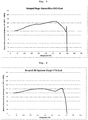
- FIGS. 5 and 6 show the expansion curves of commercially available materials according to the prior art.
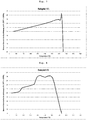
- FIGS. 7 and 8 show the thermal expansion curves of comparative materials containing no inert component (c).
- FIGS. 9 to 11 show dental bridge frameworks made of glass ceramic, which were prepared using the materials according to the invention from Examples 4 (FIG. Fig. 9 ), 5 ( Fig. 10 ) and 8th ( Fig. 11 ) were prepared immediately after devesting.
- the bridge frameworks have no pressing flags.
- FIGS. 12 to 14 show dental glass-ceramic bridge frameworks which were produced using comparison materials without component (c) ( Fig. 12 , Material V1; Fig. 13 , Material V2; Fig. 14 , Material V3).
- the bridge frameworks have clearly visible press flags.
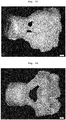
- FIGS. 15 and 16 show dental bridge frameworks made of glass ceramic, which were produced using commercially available materials.
- the bridge frameworks have clearly visible press flags.
- the components listed in Table 1 were mixed homogeneously with each other in the stated amounts. The components were weighed, stirred for 1 hour at about 50 ° C and then at room temperature for about 16h (overnight). In pigment and filler-containing compositions, the pigment or filler was stirred into UDMA, the masses were then homogenized and dispersed three times through a three-roll block with a gap width of 10 microns and then stirred into the remaining, already dissolved organic matrix (at least 1 hour at room temperature). Finally, further additives such as thickeners were optionally added to the paste and stirred again for at least 1 hour.
- stereolithographic cylinders of 6 mm diameter and 6 mm height were produced from the materials described in Tables 1 and 2 with a printer.
- the cylinders were cured in layers and then post-exposed in a post-exposure device at a wavelength of 400 nm with an intensity of 10 mW / cm 2 for 5 minutes.
- the cylinders were then placed in the sample chamber of a thermomechanical analyzer (Q400 type from TA Instruments with Macro-Expansion Tool) and heated to 800 ° C. at a heating rate of 5 K / min.
- the linear thermal expansion of the cylinders during the heating and the thermal decomposition in the temperature range of 30 ° C to 800 ° C in an air atmosphere was measured.
- the contact force of the probe was 0.1 N.
- FIGS. 1 to 4 the expansion curves for the materials of Examples 2, 4, 5 and 6 are shown.
- the thermal expansion remained clearly below 0.7% in all cases over the entire measuring range.
- the maximum linear thermal expansion was achieved in all cases at a temperature below 90 ° C. Thereafter, the length of the cylinders remained below the maximum value. From 300 ° C, the material decomposed thermally and burned out without residue (incineration residue in all cases ⁇ 0.1 wt .-%).
- the decomposition manifests itself in a strong decrease in linear thermal expansion.
- Example 6 shows that the wax particles used as filler have virtually no influence on the expansion.
- Example 8 The expansion curves of the other examples are similar. In Example 8, the maximum thermal expansion of ⁇ 1.5% at 125 ° C is achieved.
- FIG. 5 shows the expansion curve of the material Bego VarseoWax CAD-Cast. The material expands by more than 4%, and the maximum expansion temperature is reached shortly before thermal decomposition, that is, at more than 300 ° C.
- FIG. 6 is the expansion curve of another commercially available stereolithography resin for the Lost-Wax technique (3D Systems Visijet FTX-Cast) shown.
- the material expands by more than 2% and the maximum thermal expansion temperature is above 200 ° C.
- FIGS. 7 and 8 show the expansion curves of the comparative materials V1 and V3.
- Material V1 expanded by more than 6% ( Fig. 7 ), the material V3 by more than 8% ( Fig. 8 ).
- the maximum expansion temperature was only reached shortly before thermal decomposition, that is to say above 300 ° C. or above 200 ° C.
- the maximum thermal expansion of the comparison materials in all cases is greater than that of the materials according to the invention.
- the thermal expansion can be effectively reduced.
- the maximum of the linear thermal expansion lies at significantly higher temperatures, which are determined by the decomposition temperature of the materials.
- Models of a three-unit bridge were fabricated from the materials described in Examples 1 to 9 and with commercially available materials using a 3D printer. For the production of the models the same data set was used in all cases.
- the models were waxed on a muffle base with the matching muffle gauge and provided with press channels.
- the models were then each embedded in a commercially available phosphate-based investment (200 g PressVest Speed, Ivoclar Vivadent AG).
- the fine embedding of the cavities was done with a small brush.
- the Everbettete muffle was allowed to set vibration-free for 35 minutes. Thereafter, the muffles were placed directly in the pre-heating oven preheated to 850 ° C and left there for 1.5 h at 850 ° C to completely remove the models from it.
- the muffles were then removed from the preheating oven, the hot muffles were equipped with a ceramic blank (Ivs. Ivoclar Vivadent AG), placed in the hot pressing oven (Programat EP 5010, Ivoclar Vivadent) and the selected pressing program started.
- the muffles were removed from the oven and placed on a cooling grid in a place protected from drafts for cooling. After cooling to room temperature, the muffles were separated with a separating disk and the pressed objects were emptied. The coarse bedding was carried out with gloss blasting agent at 4 bar pressure, the fine Ausbettung with bright abrasive at 2 bar pressure. The press results were evaluated immediately after the fine-bedding.
- FIGS. 9 to 11 show by way of example bridge frameworks, which were prepared using the materials according to the invention from Examples 4, 5 and 8. The pictures were taken directly after the devesting. There are no press flags visible. The bridges made with the other materials of the present invention were similar, in no case were the press flags.
- FIGS. 12 to 14 show the bridge frameworks obtained using the comparative materials V1 to V3.
- FIG. 15 shows a using the commercial material Bego Varseo Wax CAD-Cast and FIG. 16 a bridge made using the 3D Systems Visijet FTX-Cast product. In all cases, press flags are present, which require a more or less complex reworking of the restorations. Some of the restorations were unusable.
- Comparative material V3 contained wax particles but no component (c). The model expanded during burnout strong, the press results were accordingly poor.
Landscapes
- Health & Medical Sciences (AREA)
- Chemical & Material Sciences (AREA)
- Organic Chemistry (AREA)
- Polymers & Plastics (AREA)
- Medicinal Chemistry (AREA)
- Chemical Kinetics & Catalysis (AREA)
- Oral & Maxillofacial Surgery (AREA)
- Epidemiology (AREA)
- Veterinary Medicine (AREA)
- Public Health (AREA)
- General Health & Medical Sciences (AREA)
- Animal Behavior & Ethology (AREA)
- Life Sciences & Earth Sciences (AREA)
- Plastic & Reconstructive Surgery (AREA)
- Dental Preparations (AREA)
Abstract
Description
- Die vorliegende Erfindung betrifft Materialien, die sich besonders zur Herstellung von dentalen Modellen für Ausschmelzverfahren eignen. Ausschmelzverfahren werden zur Herstellung von Formteilen eingesetzt, die eine hohe Genauigkeit erfordern, und damit insbesondere zur Herstellung von dentalen Restaurationen, wie Inlays, Onlays, Veneers, Kronen, Brücken und Gerüsten.
- Zur Herstellung von Dentalrestaurationen nach dem klassischen Wachsausschmelzverfahren (Lost-Wax Technik) wird ein Wachsmodell (Wax-up) geformt, in eine Einbettmasse eingebettet und nach deren Abbinden in einem Ofen aufgeheizt. Das Wachs schmilzt auf und fließt aus der Gießform. Anschließend wird die Gießform weiter erhitzt, wobei Reste an Wachs verbrennen. Auf diese Weise wird ein Negativ des Wachsmodells erhalten, in das anschließend eine Legierung oder ein Keramikmaterial vergossen wird. Das Gussobjekt ist dann wieder das Positiv, das der Wachsmodellation exakt gleicht.
- Die Herstellung des Wachsmodells kann auf unterschiedliche Weise erfolgen. Bei der manuellen Modellierung wird vom Zahntechniker ein Modell der Zahnrestauration mit einem speziellen Dentalwachs schichtweise auf einem Gipsmodell aufgebaut. Die Wachse erweichen beim Erwärmen und fließen nach dem Schmelzen in der Regel ohne Risse zu verursachen aus der Einbettmasse heraus. Dieses Verfahren ist nach wie vor der Goldstandard hinsichtlich der Qualität von Guss- und Pressobjekten.
- Bei neueren Verfahren wird das Wachsmodell mittels CAD-CAM-Verfahren aus Wachsscheiben oder -blöcken herausgefräst. Die hierbei verwendeten Wachse erfordern einen Kompromiss zwischen Fräsbarkeit und Ausbrennbarkeit. Die heute kommerziell erhältlichen Produkte erfüllen meist beide Anforderungen hinreichend gut. Auch diese Wachse erweichen beim Erwärmen und fließen nach dem Schmelzen ohne Risse zu verursachen aus der Einbettmasse heraus.
- Wachsmodelle sind relativ empfindlich, so dass zunehmend alternative Werkstoffe zur Herstellung von Modellen eingesetzt werden. Bei CAD-CAM Verfahren werden beispielsweise Kunststoffscheiben und -blöcke sowie Kunststoff-Wachs-Hybridscheiben verwendet. Bei der manuellen Modellierung werden als Alternative zu Wachsen härtbare Harze eingesetzt, die sich kalt durch das Mischen von zwei Komponenten, thermisch oder bevorzugt durch Licht härten lassen. Diese Materialien enthalten relativ große Mengen an nicht schmelzbaren Duromeren.
- In jüngerer Zeit werden zur Herstellung von Modellen vermehrt sogenannte generative Verfahren eingesetzt. Hierunter werden Fertigungsverfahren verstanden, bei denen aus computergestützten Konstruktionsdaten (CAD-Daten) dreidimensionale Modelle oder Bauteile hergestellt werden (A. Gebhardt, Vision of Rapid Prototyping, Ber. DGK 83 (2006) 7-12). Dabei handelt es sich um Verfahren, wie z.B. die Stereolithographie (SL), selektives Lasersintern (SLS), 3-D-Printing, Fused Deposition Modelling (FDM), Ink-Jet-Printing (IJP), 3D-Plotting, Multi-Jet Modelling (MJM), Solid Freeform Fabrication (SFF), Laminated Object Manufacturing (LOM), Laser Powder Forming (LPF), mit denen sich Modelle, Bau- oder Formteile auch in Kleinserie kostengünstig herstellen lassen (A. Gebhardt, Generative Fertigungsverfahren, 3. Aufl., Carl Hanser Verlag, München 2007, 77ff.). Bei der Stereolithographie wird ein Formteil auf der Basis von CAD-Daten schichtweise aus einem flüssigen und härtbaren Monomerharz aufgebaut (A. Beil, Fertigung von Mikro-Bauteilen mittels Stereolithographie, Düsseldorf 2002, VDI-Verlag 3 ff.). Generative Verfahren werden häufig unter dem Begriff "Rapid Prototyping" (RP) zusammengefasst.
- Nachteilig an den als Alternative zu Wachsen verwendeten Materialien ist ihr Schmelzverhalten. Reine Wachse erweichen beim Erwärmen zunächst, schmelzen dann und fließen anschließend aus der Form heraus. Sie üben daher bei der thermisch bedingten Ausdehnung keine großen Kräfte auf das Einbettmaterial aus. Die Alternativwerkstoffe zeigen dieses Schmelzverhalten nicht. Sie dehnen sich beim Abbinden/Aushärten der Einbettmasse und dem damit verbundenen Temperaturanstieg sowie beim anschließenden Erhitzen thermisch aus, fließen dabei aber nicht aus der Form heraus sondern werden hauptsächlich durch thermische Zersetzung daraus entfernt. Beim Ausdehnen üben sie daher Druck auf das Einbettmaterial aus, was zu Spannungen und insbesondere bei großvolumigen Dentalrestaurationen zu Rissen in der Negativform führt, die Press- und Gussfahnen und bei größeren Rissen auch Fehlpressungen oder Fehlgüsse zur Folge haben.
- Es ist bekannt, härtbaren Materialien Wachspartikel zuzumischen. Diese sollen beim Abbinden der Einbettmasse oder beim Ausbrennen im Ofen schmelzen und so Raum für das sich ausdehnende Material schaffen. Allerdings kann das geschmolzene Wachs häufig nicht oder nur schlecht entweichen, weil es von dem polymerisierten Material eingeschlossen wird und weil der Diffusionskoeffizient der geschmolzenen Wachsmoleküle durch die Polymermatrix hindurch nur sehr klein ist. Im ungünstigsten Fall wird durch die große Volumenzunahme der Wachse beim Schmelzen die thermische Ausdehnung des Modells sogar erhöht, statt sie zu reduzieren.
- Der Erfindung liegt die Aufgabe zugrunde, Materialien zum Modellieren von Dentalprothesen zur Verfügung zu stellen, die die oben genannten Nachteile nicht aufweisen. Sie sollen die Herstellung von Modellen erlauben, insbesondere durch stereolithographische Verfahren, die sich nach dem Abbinden der Einbettmasse ohne Rissbildung entfernen lassen, so dass fehlerfreie Gießformen und Restaurationen erhalten werden.
- Erfindungsgemäß wird diese Aufgabe durch radikalisch polymerisierbare Zusammensetzungen gelöst, die (a) mindestens ein radikalisch polymerisierbares Monomer, (b) mindestens einen Initiator für die radikalische Polymerisation und (c) mindestens eine inerte Komponente enthalten. Bei der Komponente (c) handelt es sich um eine organische Verbindung.
- Die erfindungsgemäßen Zusammensetzungen sind dadurch gekennzeichnet, dass sie als inerte Komponente (c) ein oder mehrere Phthalate, Polyethylenglykole (PEG), Polypropylenglykole (PPG), PEG-PPG-Co-Polymere, Glycerinderivate, d.h. insbesondere ethoxyliertes oder propoxyliertes Glycerin, Ethylendiamintetrakispropoxylate und/oder Ethylendiamintetrakisethoxylate enthalten. In allen Fällen sind die propoxylierten Verbindungen gegenüber den ethoxylierten Verbindungen bevorzugt, weil Ethoxylate bei höheren Molekulargewichten dazu tendieren, fest zu werden und dann höhere Verarbeitungstemperaturen benötigen.
- Die Komponente (c) kann bei Raumtemperatur fest sein, solange sie bei der Verarbeitungstemperatur nicht aus dem verwendeten Monomer bzw. aus der Monomermischung ausfällt. Bevorzugt sind jedoch Stoffe, die bei Raumtemperatur pastös und insbesondere flüssig sind. Die Konsistenz der Komponente (c) lässt sich beispielsweise durch den Anteil an PPG-Gruppen einstellen, z.B. durch das Mischen von propoxylierten und ethoxylierten Verbindungen oder durch das Erhöhen des Anteils an PPG-Gruppen innerhalb des Moleküls, z.B. bei PEG-PPG-Copolymeren. Der Anteil an PPG-Gruppen ist vorzugsweise so hoch, dass die Komponente flüssig oder pastös ist, besonders bevorzugt so hoch, dass der Pourpoint kleiner als die Verarbeitungstemperatur ist.
- Der Pourpoint bezeichnet nach DIN 51597 für ein flüssiges Produkt die Temperatur, bei der es bei Abkühlung gerade noch fließt. Der Stockpunkt nach DIN 51583 bezeichnet die Temperatur, bei der das zuvor flüssige Produkt erstarrt. Die Bestimmung des Pourpoints erfolgt nach DIN 51597/ISO 3016.
- Die Komponente (c) hat vorzugsweise ein Molekulargewicht von 1000 bis 10000 g/mol, besonders bevorzugt 1000 bis 5000 g/mol. Dabei haben Polyethylenglykole (PEG) vorzugsweise ein Molekulargewicht von 1000 bis 5000 g/mol, besonders bevorzugt 1000 bis 3000 g/mol, Polypropylenglykole (PPG) von 1000 bis 4000 g/mol, besonders bevorzugt 1500 bis 3000 g/mol und insbesondere 2000 g/mol, PEG-PPG-Co-Polymere von 1000 bis 10000 g/mol, vorzugsweise 1500 bis 5000 g/mol und insbesondere 2000 bis 4000 g/mol.
- Die Ethylendiamintetrakis-propoxylate und -ethoxylate haben vorzugsweise ein Molekulargewicht von 1000 bis 10000 g/mol, insbesondere von 1000 bis 5000 g/mol, wobei Ethylendiamintetrakispropoxylate und Mischungen aus Ethylendiamintetrakisethoxylaten und -propoxylaten gegenüber den Ethylendiamintetrakisethoxylaten bevorzugt sind.
- Wenn nicht anders angegeben, handelt es sich hier bei der Molmasse von Polymeren in allen Fällen um die durch Viskosimetrie bestimmte Molmasse Mη (Viskositätsmittel).
- Besonders bevorzugte Komponenten (c) sind Polypropylenglykole (PPG), insbesondere PPG mit einem Molekulargewicht von 1000 bis 4000 g/mol, vorzugsweise 1500 bis 3000 g/mol, Co-PEG-PPG mit einem Molekulargewicht von 1000 bis 10000 g/mol, vorzugsweise 1500 bis 5000 g/mol und ganz besonders Polypropylenglycol mit einem Molekulargewicht von ca. 2000 g/mol.
- Es können vorteilhaft auch Mischungen der genannten Stoffe eingesetzt werden. Neben den genannten Komponenten können diese Mischung in einer untergeordneten Menge auch Verbindungen mit einem Molekulargewicht von weniger als 1000 g/mol enthalten.
- Endständige -OH Gruppen der genannten Verbindungen können verestert oder verethert sein, beispielsweise mit Methyl-, Ethyl-, Propyl- oder iso-Propylgruppen bzw. Formiat-, Acetat-, Propionat- oder iso-Propionatgruppen.
- Die Komponente (c) ist unter Normalbedingungen (20°C, 1013 mbar) flüssig oder fest und hat vorzugsweise einen Pourpoint von mehr als -150°C, besonders bevorzugt von mehr als -100°C und ganz besonders bevorzugt von mehr als -50°C.
- Die Komponente (c) hat vorzugsweise einen Siedepunkt von über 80°C, bevorzugt über 120°C, besonders bevorzugt über 150°C. Komponenten, die unter Normaldruck nicht ohne Zersetzung sieden, haben vorzugsweise einen thermische Zersetzungstemperatur von über 120°C, bevorzugt über 135°C, besonders bevorzugt über 150°C. Durch die relativ hohe Siede- bzw. Zersetzungstemperatur wird sichergestellt, dass die Komponente (c) auch unter Anwendungsbedingungen fest bzw. flüssig ist und beispielsweise beim verdrucken oder beim Abbinden der Einbettmasse nicht verdampft. Verbindungen mit einer Siedetemperatur von maximal 350°C und/oder einer Zersetzungstemperatur von maximal 500°C sind bevorzugt.
- Die Komponente (c) ist chemisch inert, d.h., dass sie unter Lager- und Anwendungsbedingungen nicht oder nicht merklich mit den übrigen Komponenten des Materials reagiert. Insbesondere enthält die Komponente (c) keine radikalisch polymerisierbaren Gruppen und copolymerisiert daher nicht mit dem Monomer (a). Sie ist mit der Komponente (a) homogen mischbar, und Mischungen von (a) und (c) sind bei der Verarbeitungstemperatur stabil, d.h. es findet keine Phasentrennung statt, insbesondere fällt oder kristallisiert die Komponente (c) bei der Verarbeitung nicht aus. Die Verarbeitung der erfindungsgemäßen Werkstoffe, d.h. die Herstellung von Modellen, beispielsweise durch stereolithographisches Verdrucken, erfolgt vorzugsweise bei einer Temperatur von 15 bis 35°C, vorzugsweise 15 bis 30°C. Bevorzugt sind Werkstoffe, die bei Raumtemperatur (20°C) verarbeitet und gelagert werden können, so dass die Materialien zur Verarbeitung nicht zusätzlich erwärmt werden müssen oder zur Lagerung nicht gekühlt werden müssen.
- Als Komponente (c) kommen besonders rückstandsfrei verbrennbare Verbindungen in Betracht. Hierunter werden Stoffe verstanden, die bei der Verbrennung vorzugweise weniger als 0,1 Gew.-% Asche bilden. Bevorzugt sind Verbindungen, die beim Erhitzen in einer oxidierenden Atmosphäre auf eine Temperatur von ca. 850°C verbrennen.
- Die erfindungsgemäßen Zusammensetzungen enthalten als Komponente (a) mindestens ein radikalisch polymerisierbares Monomer und als Komponente (b) mindestens einen Initiator für die radikalische Polymerisation. Sie liegen vorzugswiese in Form einer homogenen Mischung der Komponenten (a), (b), (c) und ggf. vorhandener optionaler Bestandteile vor. Sie können in Abhängigkeit vom verwendeten Initiator thermisch, über ein Zweikomponenten-Initiatorsystem oder photochemisch gehärtet werden. Zusammensetzungen, die einen Photoinitiator enthalten, sind bevorzugt.
- Erfindungsgemäß sind Materialien zur Herstellung von Modellen durch manuelle Modellierung, besonders durch generative Fertigungsverfahren und ganz besonders durch Stereolithographie bevorzugt. Unter einem Modell wird hier insbesondere die gewünschte Positiv-Form für Ausschmelzverfahren verstanden. Anders als bei dem klassischen Wachsausschmelzverfahren wird das Modell nach dem Abbinden der Einbettmasse zwar primär durch Ausbrennen aus der Form entfernt, dennoch wird das Verfahren hierin als Ausschmelzverfahren bezeichnet. Das erfindungsgemäße Material eignet sich besonders zur Herstellung von Modellen zur Anfertigung von Dentalrestaurationen.
- Die erfindungsgemäßen Modelliermaterialien zeichnen sich durch eine relativ geringe maximale lineare thermische Ausdehnung aus. Vorzugsweise liegt diese unter 1,5%, bevorzugt unter 1%, besonders bevorzugt unter 0,7%. Die lineare thermische Ausdehnung wird im Temperaturbereich von 30°C bis 800°C gemessen, wobei die meisten Materialen bereits vor dem Erreichen von 800°C beginnen, sich zu zersetzten. Die Zersetzung äußert sich in einer Schrumpfung der Messkörper.
- Besonders vorteilhat ist, dass die maximalen Ausdehnung bei einer Temperatur von unter 150°C, vorzugsweise unter 120°C, besonders bevorzugt unter 100°C und ganz besonders bevorzugt unter 90°C erreicht wird. Kommerziell erhältliche ausbrennbare SL-Harze weisen demgegenüber typischerweise eine maximale thermische Ausdehnung von 2% oder mehr auf, die zudem erst bei relativ hohen Temperaturen erreicht wird.
-
Figur 5 zeigt das thermische Ausdehnungsverhalten eines herkömmlichen Werkstoffs. Herkömmliche Materialien dehnen sich beim Erwärmen thermisch aus, und das Volumen nimmt kontinuierlich zu. Oberhalb einer bestimmten Temperatur beginnen sich die Materialien zu zersetzen. Die Zersetzung äußert sich in einer Volumenabnahme. Die Zersetzungstemperatur ist materialabhängig und liegt für die meisten organischen Werkstoffe bei über 300°C. - Erfindungsgemäße Materialien zeigen beim Erwärmen zunächst meist ebenfalls eine geringe Ausdehnung, die aber deutlich geringer als bei herkömmlichen Materialien ausfällt (
Fig. 1-4 ). Die Ausdehnungskurven fallen bereits vor dem Erreichen der Zersetzungstemperatur wieder deutlich ab. Teilweise wird zwar bei höheren Temperaturen nochmals ein leichter Anstieg der Kurven beobachtet, dieser fällt aber vergleichsweise gering aus. Insgesamt dehnen sich die erfindungsgemäßen Werkstoffe über den gesamten Temperaturbereich bis zur Zersetzung deutlich weniger aus als bekannte Materialien. - Die Ausdehnungskurven durchlaufen ein Maximum. Dieses Maximum der thermischen Ausdehnung wird hier als maximale lineare thermische Ausdehnung bezeichnet.
- Die Bestimmung der thermischen Ausdehnung erfolgt vorzugsweise an Zylindern mit 6 mm Durchmesser und 6 mm Höhe im Temperaturbereich von 30°C bis 800°C bei einer Heizrate von 5 K/min in einer Luftatmosphäre. Die Messsonde wird mit einer Anpresskraft von 0,1 N auf die Probe aufgelegt. Es wird die lineare Ausdehnung der Zylinder während des Aufheizens und der thermischen Zersetzung gemessen. Die Messung kann z.B. mit einem thermomechanischen Analysator (TMA) des Typs Q400 der Firma TA Instruments mit Macro-Expansion Tool erfolgen. Die Länge des Zylinders bei 30°C wird als Ursprungslänge, d.h. 0% Ausdehnung, angenommen.
- Durch das thermische Ausdehnungsverhalten der erfindungsgemäßen Materialien wird das Risiko von Defekten wie Rissen oder gar der Zerstörung der Form während des Ausbrennens zumindest stark reduziert und meist ganz eliminiert. Die erfindungsgemäßen Materialien ergeben auf diese Weise rissfreie Gießformen mit hoher Genauigkeit und Präzision.
- Die erfindungsgemäßen Materialien enthalten als radikalisch polymerisierbares Monomer (a) vorzugsweise mindestens ein (Meth)acrylat und/oder (Meth)acrylamid, vorzugsweise ein oder mehrere mono- oder multifunktionelle (Meth)acrylate oder eine Mischung davon. Besonders bevorzugt sind Werkstoffe, die als radikalisch polymerisierbares Monomer mindestens ein multifunktionelles (Meth)acrylat oder eine Mischungen von mono- und multifunktionellen (Meth)acrylaten enthalten. Unter monofunktionellen (Meth)acrylaten werden Verbindungen mit einer, unter polyfunktionellen (Meth)acrylaten Verbindungen mit zwei oder mehr, vorzugsweise 2 bis 6 radikalisch polymerisierbaren Gruppen verstanden. Methacrylate sind in allen Fällen gegenüber den Acrylaten bevorzugt.
- Besonders geeignete mono- oder multifunktionelle (Meth)-acrylate sind Methyl-, Ethyl-, 2-Hydroxyethyl-, Butyl-, Benzyl-, Tetrahydrofurfuryl- oder Isobornyl(meth)acrylat, p-Cumyl-phenoxyethylenglycolmethacrylat (CMP-1E), Bisphenol-A-di(meth)acrylat, Bis-G(M)A (ein Additionsprodukt aus (Meth)-acrylsäure und Bisphenol-A-diglycidylether), ethoxy- oder propoxyliertes Bisphenol-A-di(meth)acrylat, wie z.B. Bisphenol-A-di(meth)acrylat mit 3 (SR-348c = Methacrylat; SR-349 = Acrylat, Fa. Sartomer) oder 2 Ethoxygruppen (SR-348L = Methacrylat, Fa. Sartomer), 2,2-Bis[4-(2-(meth)acryloxypropoxy)-phenyl]propan, UD(M)A (ein Additionsprodukt aus 2-Hydroxy-ethyl(meth)acrylat und 2,2,4- oder 2,4,4-Trimethylhexamethylen-1,6-diisocyanat), Di-, Tri-, Tetra-, Penta-, Hexaoder Hepta-ethylenglycoldi(meth)acrylat, Di-, Tri-, Tetra-, Penta-, Hexa- oder Hepta-propylenglycoldi(meth)acrylat, Trimethylolpropantri(meth)acrylat, ethoxyliertes oder propopoxyliertes Trimethylolpropantri(meth)acrylat, z.B. 3-fach propoxyliertes Trimethylolpropantriacrylat (Sartomer SR-492,) und Tripropylenglycoldiacrylat, Pentaerythrittetra(meth)-acrylat, sowie Glycerindi- und -tri(meth)acrylat, 1,4-Butandioldi(meth)acrylat, 1,10-Decandioldi(meth)acrylat (D3MA), 1,12-Dodecandioldi(meth)acrylat oder oligomere Polyether-, Polyester-, Epoxy-, Urethan-(meth)acrylate und Tricyclodecan-dimethanoldi(meth)acrylat.
- Besonders bevorzugt sind mono- und insbesondere di- und trifunktionelle Acrylate und Methacrylate mit einem Molekulargewicht von <1000 g/mol, wie z.B. 2-Phenoxyethyl(meth)acrylat, aliphatische Urethan-diacrylate, Phthalsäure-HEA-Ester (Photomer 4173), Pyromellitsäuredi-di-HEA-Ester (HEA = 2-Hydroxyethylacrylat), Bis-G(M)A (ein Additionsprodukt aus (Meth)acrylsäure und Bisphenol-A-diglycidylether), 2,2-Bis[4-(2-(meth)acryloxypropoxy)phenyl]propan, UD(M)A, Triethylen-glycoldi(meth)acrylat (TEGD(M)A) und 2-Phenoxethyl(meth)-acrylat (Acrylat SR339C Fa Sartomer/ Arkema). Diese Monomere zeichnen sich durch eine hohe Reaktivität, einen hohen Doppelbindungsumsatz, gute mechanische Eigenschaften, einen geringen Polymerisationsschrumpf und eine relativ niedrige Viskosität aus. Ganz besonders bevorzugt sind solche Materialen, die als Komponente (a) UDMA, TEGDMA, Bis-GMA (Additionsprodukt aus Methacrylsäure und Bisphenol-A-diglycidylether) oder 2-Phenoxyethylacrylat (SR339C, Fa. Sartomer/Arkema), eine Mischung von UDMA, TEGDMA und 2-Phenoxythylacrylat oder vorzugsweise UDMA, TEGDMA und Bis-GMA und insbesondere eine Mischung von UDMA und TEGDMA enthalten.
- Die Eigenschaften der Werkstoffe vor und nach der Härtung lassen sich durch eine gezielte Kombinationen der Monomeren beeinflussen. Mischungen aus monofunktionellen und difunktionellen Monomeren zeichnen sich durch eine relativ geringe Viskosität und Reaktivität der Harzmischung aus, wobei Viskosität und Reaktivität mit dem Gehalt an monofunktionellen Monomeren abnehmen. Ein Gehalt an monofunktionellen Monomeren gewährleistet eine geringere Steifigkeit der durch Härtung der Materialien erhaltenen Modelle. Mischungen aus difunktionellen und trifunktionellen Monomeren weisen eine höhere Reaktivität auf, wobei die Reaktivität mit dem Gehalt an trifunktionellen Monomeren zunimmt. Der Gehalt an trifunktionellen Monomeren bewirkt eine höhere Sprödigkeit. Reaktivität und Viskosität der Harzmischung sowie der Polymerisationsschrumpf werden außerdem durch die Molmasse der Monomeren bestimmt, wobei mit zunehmender Molmasse der Polymerisationsschrumpf abnimmt, während die Viskosität ansteigt.
- Bevorzugte Photoinitiatoren (b) zur Initiierung der radikalischen Photopolymerisation sind Benzophenon, Benzoin sowie deren Derivate oder α-Diketone oder deren Derivate, wie 9,10-Phenanthrenchinon, 1-Phenyl-propan-1,2-dion, Diacetyl oder 4,4'-Dichlorbenzil. Besonders bevorzugt werden Campherchinon (CQ) und 2,2-Dimethoxy-2-phenyl-acetophenon und ganz besonders bevorzugt α-Diketone in Kombination mit Aminen als Reduktionsmittel eingesetzt, wie z.B. 4-(Dimethylamino)-benzoesäureester (EDMAB), N,N-Dimethylaminoethylmethacrylat, N,N-Dimethyl-sym.-xylidin oder Triethanolamin. Weiter bevorzugt sind Diethylthioxanthen (DETX, CAS 82799-44-8) und Isopropylthioxanthon (ITX, CAS 75081-21-9), beide jeweils vorzugsweise in Kombination mit Ethyl-4-(dimethylamino)benzoat (EMBO, CAS Nr. 10287-53-3). Ebenso bevorzugt sind [1-/4-Phenylsulfanylbenzoyl)-heptylidenamino]benzoat (Irgacure OXE 01), und [1[9-Ethyl-6-(2-methylbenzoyl)carbazol-3-yl]ethylidenamino]acetat (Irgacure OXE 02).
- Besonders bevorzugte Photoinitiatoren sind weiterhin Norrish-Typ-I-Photoinitiatoren, vor allem Monoacyl- oder Bisacylphosphinoxide, und insbesondere Monoacyltrialkyl- bzw. Diacyldialkylgermanium-Verbindungen, wie z.B. Benzoyltrimethylgermanium, Dibenzoyldiethylgermanium oder Bis(4-methoxy-benzoyl)diethylgermanium (MBDEGe). Dabei lassen sich vorteilhaft auch Mischungen der verschiedenen Photoinitiatoren einsetzen, wie z.B. Bis(4-methoxybenzoyl)diethylgermanium in Kombination mit Campherchinon und 4-Dimethylaminobenzoesäureethylester.
- Ganz besonders bevorzugt sind Campherchinon (CAS Nr. 10373-78-1) in Kombination mit Ethyl-4-(dimethylamino)benzoat (EMBO, CAS Nr. 10287-53-3) sowie Phe-nylbis(2,4,6-trimethyl¬benzoyl)¬phos-phin¬oxid (Irgacure 819, CAS 162881-26-7), Diphenyl (2,4,6-tri¬methylbenzoyl)¬phenyl-phos¬phinoxid (TPO, CAS Nr. 75980-60-8), 2-Benzyl-2-(dimethylamino)-4'-morpho¬lino¬butyro¬phenon (Irgacure 369, CAS Nr. 119313-12-1), 1-Buta¬non-2-(dimethylamino)-2-(4-methylphenyl)methyl-1-4-(4-mor¬pho¬linyl)¬phenyl (Irgacure 379, CAS-Nr. 119344-86-4) und ganz besonders Bis(4-meth¬oxy-benzoyl)di¬ethyl¬ger¬manium (MBDEGe; Ivocerin).
- Erfindungsgemäß wurde überraschend gefunden, dass durch eine Abstimmung der Komponenten das thermische Ausdehnungsverhalten der Materialien gezielt so eingestellt werden kann, dass ihre maximale thermische Ausdehnung unter 1,5%, bevorzugt unter 1%, besonders bevorzugt unter 0,7% liegt, und gemäß einer besonders bevorzugten Ausführungsform die maximale Ausdehnung bei einer Temperatur von unter 150°C, vorzugsweise unter 120 °C, besonders bevorzugt unter 100°C und ganz besonders bevorzugt unter 90°C erreicht wird.
- Es wurde gefunden, dass die erfindungsgemäß verwendete, inerte Komponente (c) und insbesondere die genannten bevorzugten Komponenten mit radikalisch polymerisierbaren Monomeren und insbesondere mit Acrylaten und Methacrylaten homogen mischbar sind und die Polymerisation dieser Monomere nicht beeinträchtigen. Bei der stereolithographischen Verarbeitung der erfindungsgemäßen Zusammensetzungen im flüssigen Zustand können dadurch eine hohe Reaktivität sowie kurze Belichtungs- und Prozesszeiten gewährleistet werden.
- Erfindungsgemäß sind solche Materialen bevorzugt, bei denen die Komponente (a) UDMA, TEGDMA oder eine Mischung davon enthält. Besonders bevorzugt sind Materialen, in denen die Komponente (a) neben UDMA und/oder TEGDMA maximal 20 Gew.-%, vorzugsweise maximal 10 Gew.-%, besonders bevorzugt maximal 5 Gew.-% und ganz besonders bevorzugt weniger als 3 Gew.-% oder keine weiteren Monomere enthält, wobei sich die Prozentangaben auf die Gesamtmasse der Komponente (a) beziehen. Bevorzugt sind insbesondere solche Materialen, die als Komponente (a) UDMA oder TEGDMA, besonders bevorzugt eine Mischung von UDMA, TEGDMA und SR339C oder von UDMA, TEGDMA und Bis-GMA und insbesondere eine Mischung von UDMA und TEGDMA enthalten. Als Komponente (c) ist jeweils PPG mit einem Molgewicht von 1000 bis 4000 g/mol, vorzugsweise von 1500 bis 3000 g/mol, ganz besonders bevorzugt 2000 g/mol bevorzugt.
- Im Fall der erfindungsgemäß bevorzugten Monomere stellt PPG mit einem Molgewicht von 2000 g/mol einen guten Kompromiss dar. Im Fall von PEG-PPG-PEG ist ein Molekulargewicht von ca. 3500 g/mol vorteilhaft. Durch die Verwendung dieser Komponente wird die Temperatur der maximalen thermischen Ausdehnung zu höheren Werten hin verschoben.
- Neben den oben genannten Komponenten können die erfindungsgemäßen Materialien vorteilhaft weitere Additive enthalten. Für stereolithographische Anwendung sind Werkstoffe bevorzugt, die mindestens ein Farbmittel und vorzugsweise auch mindestens einen Polymerisationsinhibitor enthalten.
- Als Farbmittel sind organische Farbstoffe und Pigmente bevorzugt, insbesondere Azofarbstoffe, Carbonylfarbstoffe, Cyaninfarbstoffe, Azomethine und Methine, Phthalocyanine und Dioxazine. Besonders bevorzugt sind Farbstoffe, die in den Materialien löslich sind, insbesondere Azofarbstoffe. Als Farbmittel eignen sich außerdem anorganische und insbesondere organische Pigmente, die sich gut in den Materialien dispergieren lassen. Bevorzugt sind Azopigmente und Nichtazopimente. Als Farbstoffe werden vorzugsweise solche Stoffe eingesetzt, die rückstandsfrei ausbrennen. Aus diesem Grund sind organische gegenüber anorganischen Pigmenten bevorzugt. Falls anorganische Pigmente eingesetzt werden, wird ihre Menge vorzugsweise so bemessen, dass ihr Aschegehalt nach dem Ausbrennen unter 0,1 Gew.-% bezogen auf das Gesamtgewicht des ausbrennbaren Materials liegt.
- Vorzugsweise enthalten die Materialien mindestens einen Farbmittel, das im gleichen Wellenlängenbereich wie der Polymerisationsinitiator absorbiert. Besonders bevorzugt sind Farbmittel, die ein Absorptionsmaximum aufweisen, das der Wellenlänge des zur Härtung eingesetzten Lichts entspricht. Sehr vorteilhaft sind Farbmittel mit einem Absorptionsmaximum im Bereich von 350 bis 550 nm, vorzugsweise 380 bis 480 nm.
- Farbmittel verhindern, dass das zur Härtung eingesetzte Licht zu tief in die Materialien eindringt, und wirken sich so vorteilhaft auf die Präzision der Bauteile im Druckprozess aus, insbesondere bei stereolithographischen Verfahren. Darüber hinaus können Farbmittel auch zu ästhetischen Zwecken zugesetzt werden.
- Der oder die Polymerisationsinhibitoren dienen als Stabilisator zur Verhinderung einer spontanen Polyreaktion. Die Inhibitoren bzw. Stabilisatoren verbessern die Lagerstabilität der Materialien und verhindern darüber hinaus eine unkontrollierte Polyreaktion in der stereolithographischen Wanne. Die Inhibitoren werden vorzugsweise in einer solchen Menge zugesetzt, dass die Materialen über einen Zeitraum von ca. 2-3 Jahre lagerstabil sind. Besonders bevorzugt werden die Inhibitoren in einer Menge von 0,001 bis 1,0 Gew.-%, ganz besonders bevorzugt 0,001 bis 0,20 Gew.-% eingesetzt, jeweils bezogen auf die Gesamtmasse des Materials.
- Bevorzugt sind sogenannte aerobe Inhibitoren Phenole, wie Hydrochinonmonomethylether (MEHQ) oder 2,6-Di-tert.-butyl-4-methyl-phenol (BHT), eingesetzt, die nur in Gegenwart von Sauerstoff effektiv wirksam sind und vorzugsweise in einem Konzentrationsbereich von 100-2000 ppmw verwendet werden. Geeignete anaerobe Inhibitoren sind Phenothiazin, 2,2,6,6-Tetramethyl-piperindin-1-oxyl-Radikal (TEMPO), Iod und Kupfer-(I)-iodid. Diese wirken schon in geringen Konzentrationen von vorzugsweise 10-200 ppmw auch bei Abwesenheit von Sauerstoff. Eine Polymerisation findet erst dann statt, wenn diese Additive verbraucht sind. Dabei ist es von Vorteil, eine Mischung von aeroben und anaeroben Inhibitoren einzusetzen.
- Aerobe Inhibitoren werden vorzugsweise in einer Menge von 0,001 bis 0,50 Gew.-% und anaerobe Inhibitoren in einer Menge von 0,001 bis 0,02 Gew.-% eingesetzt, jeweils bezogen auf die Gesamtmasse des Materials. Bevorzugte Mischungen enthalten 0,005-0,10 Gew.-% an aeroben Inhibitoren und 0,001- bis 0,02 Gew.-% an anaeroben Inhibitoren, ebenfalls bezogen auf die Gesamtmasse des Materials.
- Die erfindungsgemäßen Modelliermaterielaien können außerdem partikulären Füllstoff enthalten. Generell sind als Füllstoffe organische Partikel bevorzugt, insbesondere Füllstoffe, die aschefrei verbrennen. Der oder die Füllstoffe haben vorzugsweise eine Partikelgröße von weniger als 25 µm, bevorzugt weniger als 10 µm und besonders bevorzugt weniger als 5 µm. Bei allen Partikelgrößen hierin handelt es sich, wenn nicht anders angegeben, um D50-Werte, d.h. 50 Vol.-% der Partikel haben einen Durchmesser, der kleiner als der angegebene Wert ist. Füllstoffe dienen primär dazu, die Viskosität, die mechanischen und/oder die optischen Eigenschaften der Werkstoffe einzustellen.
- Die Oberfläche der Füllstoffe kann modifiziert werden, beispielsweise um die Dispergierbarkeit der Füllstoffe in der organischen Matrix zu verbessern. Zur Oberflächenmodifizierung werden vorzugsweise solche Verbindungen eingesetzt, die chemisch, d.h. durch ionische oder kovalente Bindungen an die Oberfläche der Füllstoffe gebunden werden. Bevorzugt sind Verbindungen, die entweder Säuregruppen, vorzugsweise Carbonsäure-, Phosphonsäure-, Hydrogenphosphatgruppen oder saure Phosphorsäureestergruppen, oder Silylgruppen, vorzugsweise Alkoxysilylgruppen enthalten. Die Partikeloberfläche kann teilweise oder vorzugsweise vollständig mit dem Modifizierungsmittel bedeckt sein. Bei den erfindungsgemäß verwendeten Modifizierungsmitteln handelt es sich um monomere Verbindungen. Als Oberflächenmodifizierungsmittel eigen sich besonders lineare Carbonsäuren, wie z.B. Ameisensäure, Essigsäure, Propionsäure, Octansäure, Isobuttersäure, Isovaleriansäure, Pivalinsäure, oder Phosphonsäuren, z.B. wie Methyl-, Ethyl-, Propyl-, Butyl- Hexyl, Octyl- oder Phenylphosphonsäure. Als silylgruppenhaltige Verbindungen sind Silane wie Propyltrimethoxysilan, Phenyltrimethoxysilan, Hexyltrimethoxysilan, Octyltrimethoxysilan, Trimethylchlorsilan, Trimethylbromsilan, Trimethylmethoxysilan und Hexamethyldisilazan bevorzugt. Ganz besonders bevorzugte Oberflächenmodifizierungsmittel sind saure Phosphorsäureester, wie z.B. Dimethyl-, Diethyl-, Dipropyl-, Dibutyl-, Dipentyl-, Dihexyl-, Dioctyl- oder Di (2-ethylhexyl)phosphat. Die Oberflächenmodifizierungsmittel können auch radikalisch polymerisierbare Gruppen, beispielsweise (Meth)acrylatgruppen, aufweisen, die mit der Komponente (a) reagieren und so in das Polymernetzwerk eingebunden werden.
- Bevorzugte Füllstoffe sind partikuläres Wachse, insbesondere Carnaubawachs, vorzugsweise mit eine Partikelgröße von 1 bis 10 µm, vernetzte Polymethylmethacrylat (PMMA)-Partikel, vorzugsweise mit einer Partikelgröße von 500 nm bis 10 µm, sowie Polyamid-12 Partikel, vorzugsweise mit einer Partikelgröße von 5 bis 10 µm. Für die Stereolithographie werden bevorzugt Füllstoffe eingesetzt, deren maximale Partikelgröße kleiner als die Dicke der stereolithographisch erzeugten Schichten ist. Bevorzugt sind Partikel mit einer maximalen Größe von 25 µm, vorzugsweise maximal 15 µm.
- Erfindungsgemäß sind füllstofffreie Materialien bevorzugt.
- Die rheologischen Eigenschaften der erfindungsgemäßen Materialien werden an den gewünschten Anwendungszweck angepasst. Materialen zur stereolithographischen Verarbeitung werden vorzugsweise so eingestellt, dass ihre Viskosität im Bereich von 50 mPa·s bis 100 Pa·s, bevorzugt 100 mPa·s bis 10 Pa·s, besonders bevorzugt 100 mPa·s bis 5 Pa·s liegt. Die Viskosität wird bei der gewünschten Verarbeitungstemperatur der Materialiens mit einem Kegel-Platte-Viskosimeter bestimmt (Scherrate 100/s). Die Verarbeitungstemperatur liegt vorzugsweise im Bereich von 10 bis 70°C, besonders bevorzugt 20 bis 30°C.
- Werkstoffe zur manuellen Verarbeitung werden vorzugsweise so eingestellt, dass sie eine pastenförmige Konsistenz haben.
- Zur Herstellung dünnflüssiger Materialen werden vorzugsweise flüssige Monomere und dünnflüssige Komponenten (c) eingesetzt, während zur Herstellung von Materialien mit hoher Viskosität z.B. auch feste Monomere und/oder dickflüssige oder feste Komponenten (c) verwendet werden können.
- Die erfindungsgemäßen Materialien können außerdem vorzugsweise zusätzlich einen oder mehrere UV-Absorber enthalten. Bevorzugte UV-Absorber) sind 2,2'-Methylenbis[6-(2H-benzotriazol-2-yl)-4-(1,1,3,3-tetramethyl¬butyl)¬phenol] (CAS-Nr. 103597-45-1), 2,2',4,4'-Tetrahydroxybenzophenon (CAS-Nr. 131-55-5), 2-tert-Butyl-6-(5-chloro-2H-benzotriazol-2-yl)-4-methylphenol (CAS-Nr. 3896-11-5), 2,2'-Benzol-1,4-diyl¬bis(4h-3,1-benzoxazin-4-on) (CAS-Nr. 18600-59-4), 2-(4,6-Bis-(2,4-dimethylphenyl)-1,3,5-triazin-2-yl)-5-(octyl¬oxy)-phenol (CAS-Nr. 2725-22-6), 2-(2-Hydroxy-5-methylphenyl)benzotriazol (CAS-Nr. 2440-22-4) und 2-(2H-Benzotriazol-2-yl)-6-dodecyl-4-methyl¬phenol (CAS-Nr. 23328-53-2).
- Ebenso geeignet sind sogenannte Hindered Amine Light Stabilizers wie Bis(1,2,2,6,6-pentamethyl-4-piperidyl)sebacat (CAS-Nr. 41556-26-7) und Methyl-1,2,2,6,6-pentamethyl-4-piperidylsebacat (CAS-Nr. 82919-37-7), Bis(1-octyloxy-2,2,6,6-tetramethyl-4-piperidyl)sebacat (CAS-Nr. 129757-67-1), Bis(1,2, 2,6,6-pentamethyl-4-piperidyl)-[[3,5-bis(1,1-dimethylethyl)-4-hydroxyphenyl]methyl]butylmalonat (CAS-Nr. 63843-89-0).
- Neben den oben genannten Komponenten können die erfindungsgemäßen Materialien ein oder mehrere weitere Additive enthalten, die bevorzugt aus Verdickungsmitteln, optischen Aufhellern (z.B. Lumilux LZ Blue, CAS-Nr. 658084-50-5, oder 2,5-Bis(5-tert-butyl-benzoxazol-2-yl)thiophen, CAS-Nr. 7128-64-5) und im Fall füllstoffhaltiger Materialien aus Dispergiermitteln ausgewählt sind.
- Die erfindungsgemäßen Materialien weisen vorzugsweise folgende Zusammensetzung auf:
- 20 bis 90 Gew.-%, vorzugsweise 42,5 bis 82,5 Gew.-%, besonders bevorzugt 50 bis 79,3 Gew.-% Komponente (a),
- 0,1 bis 5 Gew.-%, vorzugsweise 0,3 bis 2,5 Gew.-%, besonders bevorzugt 0,5 bis 1,5 Gew.-% (Photo-)Initiator (b) und
- 9,9 bis 79,9 Gew.-%, vorzugsweise 15 bis 55 Gew.-%, besonders bevorzugt 20 bis 48,5 Gew.-% inerte Komponente (c).
- Eine ganz besonders bevorzugte Zusammensetzung enthält:
- 54,7 bis 77,7 Gew.-%, vorzugsweise 64 bis 74 Gew.-% Komponente (a), vorzugsweise UDMA, TEGDMA, eine Mischung von UDMA und TEGDMA oder eine Mischung von UDMA, TEGDMA und Bis-GMA,
- 0,5 bis 1,5 Gew.-%, vorzugsweise 0,6 bis 1,2 Gew.-% (Photo-)Initiator (b) und
- 23,8 bis 44,8 Gew.-%, vorzugsweise 24,8 bis 35,4 Gew.-% inerte Komponente (c), vorzugsweise PPG mit einem Molekulargewicht von 1000 bis 4000 g/mol, besonders bevorzugt 1500 bis 3000 g/mol, Co-PEG-PPG mit einem Molekulargewicht von 1000 bis 10000 g/mol, besonders bevorzugt 1500 bis 5000 g/mol, ganz besonders bevorzugt 2000 bis 4000 g/mol und insbesondere Polypropylenglycol mit einem Molekulargewicht von ca. 2000 g/mol.
- Am meisten bevorzugt ist eine Zusammensetzung, die
- 64 bis 74 Gew.-% UDMA, TEGDMA, eine Mischung von UDMA und TEGDMA oder eine Mischung von UDMA, TEGDMA und Bis-GMA als Komponente (a),
- 0,6 bis 1,2 Gew.-% Photoinitiator (b) und
- 24,8 bis 35,4 Gew.-% Polypropylenglycol (PPG) mit einem Molekulargewicht von 1000 bis 4000 g/mol, besonders bevorzugt 1500 bis 3000 g/mol und insbesondere mit einem Molekulargewicht von ca. 2000 g/mol als inerte Komponente (c) enthält.
- Weiterhin enthalten die erfindungsgemäßen Materialien vorzugsweise zusätzlich:
- 0,0001 bis 1 Gew.-%, vorzugsweise 0,0001 bis 0,5 Gew.-%, besonders bevorzugt 0,0001 bis 0,2 Gew.-% Farbmittel; und/oder
- 0,0001 bis 2 Gew.-%, vorzugsweise 0,0001 bis 1 Gew.-%, besonders bevorzugt 0,0001 bis 0,5 Gew.-% UV-Absorber; und/oder
- 0 bis 40 Gew.-%, vorzugsweise 0 bis 30 Gew.-%, besonders bevorzugt 1 bis 20 Gew.-% organischen Füller.
- Außerdem enthalten die Materialien vorzugsweise
- 0 bis 5 Gew.-%, vorzugsweise 0 bis 3 Gew.-%, besonders bevorzugt 0 bis 2 Gew.-% weitere(s) Additiv(e).
- Wenn nicht anders angegeben beziehen sich alle Angaben auf das Gesamtgewicht des Materials. Dabei werden die einzelnen Bestandteile vorzugsweise aus den oben genannten bevorzugten Komponenten ausgewählt.
- Die erfindungsgemäßen Materialien eignen sich besonders zur Herstellung von Modellen für Gussarbeiten aus Metall oder Glaskeramik, insbesondere zur Herstellung von Modellen für Dentalrestauration, wie z.B. Inlays, Onlays, Veneers, Kronen, Brücken oder Gerüsten sowie abnehmbare (Teil-)Prothesen.
- Gegenstand der Erfindung ist weiterhin ein Verfahren zur Herstellung von Dentalrestaurationen bei dem man
- (A) mit einem erfindungsgemäßen Modelliermaterial ein Modell des zu restaurierenden Zahns oder der zu restaurierenden Zähne formt,
- (B) man anschließend das Modell in eine Einbettmasse einbettet,
- (C) man nach dem Abbinden der Einbettmasse das eigebettete Modell in einem Ofen soweit aufheizt, dass das Modelliermaterial vollständig aus der Gießform entfernt wird,
- (D) man in das so hergestellte Gießform eine Legierung oder ein Glaskeramikmaterial gießt oder presst.
- Die Herstellung des Modells in Schritt (A) erfolgt vorzugsweise durch ein stereolithographisches Verfahren. Hierzu wird durch die direkte oder indirekte Digitalisierung des zu restaurierenden Zahns bzw. der zu restaurierenden Zähne am Computer ein virtuelles Abbild der Zahnsituation erstellt, dann anhand dieses Abbilds am Computer ein Modell der Dentalrestauration konstruiert und dieses dann durch generative stereolithographische Fertigung hergestellt.
- Anschließend kann das Modell in Schritt (B) auf herkömmliche Weise in eine Einbettmasse eingebettet werden. Die erfindungsgemäßen Materialien eignen sich zur Verwendung mit üblichen dentalen Einbettmassen. Man unterscheidet gipshaltige und gipsfreie Einbettmassen. Gipshaltige Einbettmassen enthalten als Hauptbestandteile Gips und Quarz im Verhältnis 1:2 bis 1:4. Gips dient als Bindemittel. Eine bevorzugte Quarzmodifikation ist Cristobalit. Bevorzugt sind gipsfreie Einbettmassen, die Phosphate als Bindemittel enthalten. Phosphatgebundene Einbettmassen enthalten hochtemperaturbeständige SiO2-Modifikationen und einen Binder. Als Binder wird vorzugsweise ein Gemisch aus Magnesiumoxid und Ammoniumphosphat (NH4H2PO4) verwandt. Die Massen binden nach dem Anmischen mit Wasser ab.
- Das Entfernen des Modells aus der Gießform in Schritt (C) erfolgt durch Erhitzen z.B. in einem Ofen auf eine Temperatur von vorzugsweise 600°C bis 1000°C. Das Erhitzen kann ein- oder mehrstufig erfolgen. Es ist möglich aber nicht unbedingt erforderlich, die Temperatur kontrolliert auf die gewünschte Endtemperatur anzuheben. Anschließend wird die Gießform weiter erhitzt, wobei das restliche Modellmaterial thermisch zersetzt wird.
- Nach dem Abbinden der Einbettmasse kann das eingebettete Modell direkt in einen Ofen gestellt werden, der auf die zum Ausschmelzen und/oder Ausbrennen des Modells erforderliche Temperatur vorgeheizt ist. Typischerweise erfolgt das Ausschmelzen und/oder Ausbrennen bei einer Temperatur von ca. 850°C. Vorzugsweise wird der vom Einbettmassenhersteller vorgeschlagene Temperaturzyklus verwendet. Oft ist das Modell bereits nach einer Stunde vollständig verbrannt bzw. ausgeflossen. Die maximale Verweildauer im Ofen kann je nach Einbettmasse und Hersteller variieren. In den meisten Fällen ist es ausreichend, die Form für 1 bis 8 Stunden bei der Maximaltemperatur im Ofen zu belassen. Der Aufheizvorgang kann mehrere Stunden (1-12 h) in Anspruch nehmen.
- In die so hergestellte Negativform des ursprünglichen Modells wird in Schritt (D) eine Metalllegierung gegossen oder ein geeignetes Glaskeramikmaterial gepresst. Vorzugsweise werden für dentale Zwecke geeignete Metalllegierungen bzw. für dentale Zwecke geeignete Glaskeramikmaterialien verwendet.
- Die Erfindung wird im Folgenden anhand von Figuren und Ausführungsbeispielen näher erläutert.
-
Figur 1 zeigt die thermische Ausdehnungskurve des erfindungsgemäßen Materials aus Beispiel 2, gemessen an Zylindern mit 6 mm Durchmesser und 6 mm Höhe. Die Messung wurde mit einem Messgerät des Typs Q400 der Firma TA Instruments mit Macro-Expansion Tool durchgeführt. -
Figur 2 zeigt die thermische Ausdehnungskurve des erfindungsgemäßen Materials aus Beispiel 4. -
Figur 3 zeigt die thermische Ausdehnungskurve des erfindungsgemäßen Materials aus Beispiel 5. -
Figur 4 zeigt die thermische Ausdehnungskurve des erfindungsgemäßen Materials aus Beispiel 6. - Die
Figuren 5 und 6 zeigen die Ausdehnungskurven handelsüblicher Werkstoffe gemäß dem Stand der Technik. - Die
Figuren 7 und 8 zeigen die thermischen Ausdehnungskurven von Vergleichsmaterialien, die keine inerte Komponente (c) enthalten. - Die
Figuren 9 bis 11 zeigen dentale Brückengerüste aus Glaskeramik, die unter Verwendung der erfindungsgemäßen Werkstoffe aus den Beispielen 4 (Fig. 9 ), 5 (Fig. 10 ) und8 (Fig. 11 ) hergestellt wurden, direkt nach dem Ausbetten. Die Brückengerüste weisen keine Pressfahnen auf. - Die
Figuren 12 bis 14 zeigen dentale Brückengerüste aus Glaskeramik, die unter Verwendung von Vergleichsmaterialen ohne Komponente (c) hergestellt wurden (Fig. 12 , Material V1;Fig. 13 , Material V2;Fig. 14 , Material V3). Die Brückengerüste weisen deutlich erkennbare Pressfahnen auf. - Die
Figuren 15 und 16 zeigen dentale Brückengerüste aus Glaskeramik, die unter Verwendung von handelsüblichen Werkstoffen hergestellt wurden. Die Brückengerüste weisen deutlich erkennbare Pressfahnen auf. - Die in Tabelle 1 aufgeführten Komponenten wurden in den angegebenen Mengen homogen miteinander gemischt. Die Komponenten wurden eingewogen, 1 Stunde bei ca. 50°C und danach bei Raumtemperatur für ca. 16h (über Nacht) gerührt. Bei pigment- und füllstoffhaltigen Zusammensetzungen wurden das Pigment bzw. der Füllstoff in UDMA eingerührt, die Massen dann dreimal über einen Dreiwalzenbock bei einer Spaltweite von 10 µm homogenisiert und dispergiert und danach in die restliche, bereits gelöste organische Matrix eingerührt (mindestens 1 Stunde bei Raumtemperatur). Schließlich wurden ggf. weitere Additive wie Verdickungsmittel zu der Paste gegeben und nochmal für mindestens 1 Stunde gerührt.
Tabelle 1: Modelliermaterialien für die Stereolithographie Komponente Zusammensetzung [Gew.-%] 1 2 3 4 5 6 7 8 9 Monomer (a) UDMA1) 42 44 49 48,95 49 36,15 34 49 32 TEGDMA2) 27 25 10,04 20 20 20,88 17 20 27 Bis-GMA3) - - - - - - - - 10 Initiator (b) Irgacure 8194) 0,95 - - 0,95 - - - TPO5) - 0,95 0,95 - 0,95 0,92 0,95 0,95 0,95 Inerte Komponente (c) PPG 20006) 30 30 40 30 30 30 - 20 30 PPG 15007) - - - - - - 20 - - PPG 40008) - - - - - - 8 - - PPG 4009) - - - - - - - 10 - Farbstoff Sudan IV10) 0,05 - 0,01 0,05 0,05 0,05 0,05 0,05 0,05 Sudan Black B11) - 0,05 - - - - - - - Weißpigment (TiO2)12) - - - 0,05 - - - - - Weitere Komponenten Wachspartikel13) - - - - - 10 - - - Verdickungsmittel14) - - - - - 2 - - - PMMA-Partikel15) - - - - - - 20 - - 1) Urethandimethacrylate (CAS-Nr. 72869-86-4)
2) Triethylenglycoldimethacrylat (CAS-Nr. 109-16-0)
3) Additionsprodukt aus Methacrylsäure und Bisphenol-A-diglycidylether
4) Phenylbis(2,4,6-trimethylbenzoyl)phosphinoxid (CAS-Nr. 162881-26-7)
5) Diphenyl(2,4,6-trimethylbenzoyl)phosphinoxid (CAS-Nr. 75980-60-8)
6) Poly(propylenglykol) (CAS-Nr. 25322-69-4), MW = 2000 g/mol
7) Poly(propylenglykol) (CAS-Nr. 25322-69-4), MW = 1500 g/mol
8) Poly(propylenglykol) (CAS-Nr. 25322-69-4), MW = 4000 g/mol
9) Poly(propylenglykol) (CAS-Nr. 25322-69-4), MW = 400g/mol
10) CAS-Nr. 85-83-6
11) CAS-Nr. 4197-25-5
12) Titandioxid Weisspigment, Partikelgröße D50 <500 nm
13) MC6015, micronisiertes Carnaubawachs, d = 1-10 µm
14) Lösung eines hochmolekularen, harnstoffmodifizierten, mittelpolaren Polyamids (Byk 430)
15) hochvernetztes PMMA, Chemisnow MX80H3wT (Soken Chemical & Engineering Co., Ltd., Japan), D50 = 800 nm - Analog zu den Beispielen 1 bis 9 wurden die in Tabelle 2 aufgeführten Vergleichsmaterialien hergestellt.
Tabelle 2: Vergleichsmaterialien für die Stereolithographie Komponente Zusammensetzung [Gew.-%] V1* V2* V3* Monomer (a) UDMA1) - 74 40 TEGDMA2) - 25 25 SR348C16) 59 - - SR48017) 40 - - Initiator (b) TPO5) 0,95 0,9 0,95 Inerte Komponente (c) - - - Farbstoff Sudan IV) 0,05 0,1 0,05 Weitere Komponenten Wachspartikel13) - - 34 * Vergleichsmaterial
1-15) siehe Tabelle 1
16) Bisphenol-A-dimethacrylat mit 3 Ethoxygruppen (Fa. Sartomer)
17) Bisphenol-A-dimethacrylat; durchschnittlich 10 fach ethoxyliert - Zur Bestimmung der thermischen Ausdehnung der Werkstoffe wurden aus den in den Tabellen 1 und 2 beschriebenen Materialien mit einem Drucker stereolithographisch Zylinder mit 6 mm Durchmesser und 6 mm Höhe hergestellt. Die Zylinder wurden schichtweise gehärtet und anschließend in einem Nachbelichtungsgerät bei einer Wellenlänge von 400 nm mit einer Intensität von 10 mW/cm2 für 5 Minuten nachbelichtet. Dann wurden die Zylinder in die Probenkammer eines thermomechanischen Analysators (Typs Q400 der Firma TA Instruments mit Macro-Expansion Tool) gestellt und mit einer Heizrate von 5 K/min auf 800°C erhitzt. Es wurde die lineare thermische Ausdehnung der Zylinder während des Aufheizens und der thermischen Zersetzung im Temperaturbereich von 30°C bis 800°C in einer Luftatmosphäre gemessen. Die Anpresskraft der Messsonde betrug 0,1 N.
- In den
Figuren 1 bis 4 sind die Ausdehnungskurven für die Werkstoffe aus den Beispielen 2, 4, 5 und 6 gezeigt. Die thermische Ausdehnung blieb in allen Fällen über den ganzen Messbereich deutlich unter 0,7%. Die maximale lineare thermische Ausdehnung wurde in allen Fällen bei einer Temperatur von unter 90°C erreicht. Danach blieb die Länge der Zylinder unterhalb des Maximalwerts. Ab 300°C zersetzten sich die Materialein thermisch und brannten rückstandslos aus (Glührückstand in allen Fällen < 0,1 Gew.-%). Die Zersetzung äußert sich in einem starken Abfall der linearen thermischen Ausdehnung. - Das Beispiel 6 zeigt, dass die als Füllstoff eingesetzten Wachspartikel praktisch keinen Einfluss auf die Ausdehnung haben.
- Die Ausdehnungskurven der übrigen Beispiele verlaufen ähnlich. In Beispiel 8 wird die maximale thermische Ausdehnung von < 1,5 % bei 125°C erreicht.
- Zum Vergleich wurden die Ausdehnungskurven herkömmlicher, kommerziell erhältlicher Stereolithographie-Werkstoffe für die Lost-Wax Technik ermittelt.
Figur 5 zeigt die Ausdehnungskurve des Materials Bego VarseoWax CAD-Cast. Das Material dehnt sich um mehr als 4% aus, und die Temperatur der maximalen Ausdehnung wird erst kurz vor der thermischen Zersetzung, d.h. bei mehr als 300°C erreicht. - In
Figur 6 ist die Ausdehnungskurve eines weiteren handelsüblichen Stereolithographie-Harzes für die Lost-Wax Technik (3D Systems Visijet FTX-Cast) gezeigt. Das Material dehnt sich um mehr 2% aus, und die Temperatur der maximalen thermischen Ausdehnung liegt über 200°C. - Die
Figuren 7 und 8 zeigen die Ausdehnungskurven der Vergleichsmaterialien V1 und V3. Das Material V1 dehnte sich um mehr als 6% aus (Fig. 7 ), das Material V3 um mehr als 8% (Fig. 8 ). Die Temperatur der maximalen Ausdehnung wurde in beiden Fällen erst kurz vor der thermischen Zersetzung erreicht, d.h. bei über 300°C bzw. über 200°C. - Die Messungen zeigen, dass die maximale thermische Ausdehnung der Vergleichsmaterialien in allen Fällen größer als die der erfindungsgemäßen Materialien ist. Durch die Zugabe der Komponente (c) kann die thermische Ausdehnung wirksam verringert werden. Außerdem liegt bei den Vergleichsmaterialen das Maximum der linearen thermischen Ausdehnung bei deutlich höheren Temperaturen, die durch die Zersetzungstemperatur der Materialien bestimmt werden.
- Mit einem 3D-Drucker wurden aus den in den Beispielen 1 bis 9 beschriebenen Materialien und mit handelsüblichen Werkstoffen Modelle einer dreigliedrigen Brücke gefertigt. Zur Herstellung der Modelle wurde in allen Fällen der gleiche Datensatz verwendet.
- Die Modelle wurden auf einer Muffelbasis mit der passenden Muffellehre aufgewachst und mit Presskanälen versehen. Anschließend wurden die Modelle jeweils in eine handelsübliche Einbettmasse auf Phosphatbasis eingebettet (200 g PressVest Speed; Fa. Ivoclar Vivadent AG). Die Feineinbettung der Kavitäten wurde mit einem kleinen Pinsel vorgenommen. Die Eigebettete Muffel wurde vibrationsfrei für 35 Minuten abbinden gelassen. Danach wurden die Muffeln direkt in den auf 850°C vorgewärmten Vorwärmofen gestellt und dort für 1,5 h bei 850°C belassen, um die Modelle komplett daraus zu entfernen. Anschließend wurden die Muffeln aus dem Vorwärmofen entnommen, die heißen Muffeln mit einem Keramikrohling (IPS e.max Press Rohling, Fa. Ivoclar Vivadent AG) bestückt, in den heißen Pressofen (Programat EP 5010, Fa. Ivoclar Vivadent) gestellt und das gewählte Pressprogramm gestartet.
- Nach dem Ende des Pressvorgangs wurden die Muffeln aus dem Ofen genommen und zum Abkühlen an einem vor Zugluft geschützten Platz auf ein Abkühlgitter gestellt. Nach Abkühlen auf Raumtemperatur wurden die Muffeln mit einer Trennscheibe separiert und die Pressobjekte ausgebettet. Die Grobausbettung erfolgte mit Glanzstrahlmittel bei 4 bar Druck, die die Feinausbettung mit Glanzstrahlmittel bei 2 bar Druck. Die Pressergebnisse wurden direkt nach der Feinausbettung bewertet.
- Die
Figuren 9 bis 11 zeigen beispielhaft Brückengerüste, die unter Verwendung der erfindungsgemäßen Werkstoffe aus den Beispielen 4, 5 und 8 hergestellt wurden. Die Aufnahmen wurden direkt nach dem Ausbetten angefertigt. Es sind keine Pressfahnen sichtbar. Die mit den anderen erfindungsgemäßen Werkstoffen hergestellten Brücken waren ähnlich, in keinem Fall waren Pressfahnen vorhanden. - Im Gegensatz dazu wiesen die unter Verwendung der Vergleichsmaterialein gefertigten Brücken deutlich erkennbare Pressfahnen auf, die auf Risse in der Gießform zurückzuführen sind, die bei der Ausdehnung der Modelliermaterialen entstanden.
- Die
Figuren 12 bis 14 zeigen die unter Verwendung der Vergleichsmaterialen V1 bis V3 erhaltenen Brückengerüste.Figur 15 zeigt eine unter Verwendung des handelsübliche Materials Bego Varseo Wax CAD-Cast undFigur 16 eine unter Verwendung des Produkts 3D Systems Visijet FTX-Cast gefertigte Brücke. In allen Fällen sind Pressfahnen vorhanden, die eine mehr oder weniger aufwendige Nachbearbeitung der Restaurationen erforderlich machen. Zum Teil waren die Restaurationen unbrauchbar. - Selbst die unter Verwendung des Produkts 3D Systems Visijet FTX-Cast erhaltende Brücke wies Pressfahnen auf, obwohl dieses Material mit ca. 2% eine relativ geringe maximale thermische Ausdehnung hat. Im Gegensatz dazu war die mit dem erfindungsgemäßen Material aus Beispiel 8 erhaltene Brücke (
Fig. 11 ; max. Ausdehnung < 1,5%) fehlerfrei. Die maximale thermische Ausdehnung wird im Fall des erfindungsgemäßen Materials bei 125°C erreicht, im Fall des Vergleichsmaterials erst bei über 200°C. - Das Vergleichsmaterial V3 enthielt Wachspartikel aber keine Komponente (c). Das Modell dehnte sich beim Ausbrennen stark aus, die Pressergebnisse waren dementsprechend schlecht.
Claims (16)
- Radikalisch polymerisierbare Zusammensetzung, die(a) mindestens ein radikalisch polymerisierbares Monomer,(b) mindestens einen Initiator für die radikalische Polymerisation und(c) mindestens eine inerte Komponente enthält,
dadurch gekennzeichnet, dass die inerte Komponente (c) aus Phthalaten, Polyethylenglykolen (PEG), Polypropylenglykolen (PPG), PEG-PPG-Co-Polymeren, Glycerinderivaten, ethoxyliertem oder propoxyliertem Glycerin, Ethylendiamintetrakispropoxylaten und Ethylendiamintetrakisethoxylaten ausgewählt ist. - Zusammensetzung nach Anspruch 1, in der die inerte Komponente (c) aus- Polyethylenglykolen (PEG) mit einem Molekulargewicht von 1000 bis 5000 g/mol, besonders bevorzugt 1000 bis 3000 g/mol,- Polypropylenglykolen (PPG) mit einem Molekulargewicht von 1000 bis 4000 g/mol, besonders bevorzugt 1500 bis 3000 g/mol und insbesondere 2000 g/mol,- PEG-PPG-Co-Polymeren mit einem Molekulargewicht von 1000 bis 10000 g/mol, vorzugsweise 1500 bis 5000 g/mol und insbesondere 2000 bis 4000 g/mol,- Ethylendiamintetrakis-propoxylaten und Ethylendiamintetrakis-ethoxylaten mit einem Molekulargewicht von 1000 bis 10000 g/mol, insbesondere von 1000 bis 5000 g/mol ausgewählt ist.
- Zusammensetzung nach Anspruch 1 oder 2, die als Komponente (a) mindestens ein (Meth)acrylat und/oder (Meth)acrylamid, vorzugsweise ein oder mehrere mono- oder multifunktionelle (Meth)acrylate oder eine Mischung davon enthält.
- Zusammensetzung nach Anspruch 3, die als Komponente (a) UDMA, TEGDMA, Bis-GMA (Additionsprodukt aus Methacrylsäure und Bisphenol-A-diglycidylether) oder 2-Phenoxyethylacrylat (SR339C), eine Mischung von UDMA, TEGDMA und 2-Phenoxythylacrylat oder vorzugsweise UDMA, TEGDMA und Bis-GMA und insbesondere eine Mischung von UDMA und TEGDMA enthält.
- Zusammensetzung nach Anspruch 4, die als Komponente (a) UDMA, TEGDMA oder eine Mischung davon und maximal 20 Gew.- %, vorzugsweise maximal 10 Gew.-%, besonders bevorzugt maximal 5 Gew.-% und ganz besonders bevorzugt weniger als 3 Gew.-% oder keine weiteren Monomere enthält, bezogen auf die Gesamtmasse der Komponente (a).
- Zusammensetzung nach einem der Ansprüche 1 bis 5, die als Initiator (b) einen Photoinitiator enthält.
- Zusammensetzung nach Anspruch 6, die als Photoinitiator Benzophenon, Benzoin oder ein Derivat davon, ein α-Diketon oder ein Derivat davon, 9,10-Phenanthrenchinon, 1-Phenyl- propan-1,2-dion, Diacetyl, 4,4'-Dichlorbenzil, Campherchinon (CQ), 2,2-Dimethoxy-2-phenyl-acetophenon, ein α-Diketon in Kombination mit einem Amin als Reduktionsmittel, einen Norrish-Typ-I-Photoinitiator, ein Monoacyl- oder Bisacylphosphinoxid, eine Monoacyltrialkyl- oder Diacyldialkylgermanium-Verbindung, Benzoyltrimethylgermanium, Dibenzoyldiethylgermanium, Bis(4-methoxy- benzoyl)diethylgermanium (MBDEGe), eine Mischung von Bis(4-methoxybenzoyl)diethylgermanium in Kombination mit Campherchinon und 4-Dimethylaminobenzoesäureethylester, Campherchinon (CAS Nr. 10373-78-1) in Kombination mit Ethyl-4-(dimethylamino)benzoat (EMBO, CAS Nr. 10287-53-3), 2,4,6-Trimethylbenzoyldipenylphosphinoxid (TPO, CAS Nr. 75980-60-8), Ethyl(2,4,6-trimethylbenzoyl)phenylphosphinat (TPO-L, CAS Nr. 84434-11-7), Phenylbis(2,4,6-trimethylbenzoyl)phosphinoxid (Irgacure 819, CAS 162881-26-7), Bis(2,6-difluoro-3-(1-hydropyrrol-1-yl)phenyl)titanocen (Irgacure 784, CAS Nr. 125051-32-3), 2-Benzyl-2-(dimethyl- amino)-4'-morpholinobutyrophenon (Irgacure 369, CAS Nr. 119313-12-1), 1-Butanon-2-(dimethylamino)-2-(4-methylphenyl)methyl-1-4-(4-morpholinyl)phenyl (Irgacure 379, CAS-Nr. 119344-86-4) und/oder Bis(4-methoxybenzoyl)diethylgermanium (MBDEGe; K69) enthält.
- Zusammensetzung nach einem der Ansprüche 1 bis 7, die zusätzlich mindestens ein Farbmittel und/oder einen Inhibitor enthält.
- Zusammensetzung nach einem der Ansprüche 1 bis 8, die- 20 bis 90 Gew.-%, vorzugsweise 42,5 bis 82,5 Gew.-%, besonders bevorzugt 50 bis 79,3 Gew.-% Komponente (a),- 0,1 bis 5 Gew.-%, vorzugsweise 0,3 bis 2,5 Gew.-%, besonders bevorzugt 0,5 bis 1,5 Gew.-% (Photo-)-Initiator (b) und- 9,9 bis 79,9 Gew.-%, vorzugsweise 15 bis 55 Gew.-%, besonders bevorzugt 20 bis 48,5 Gew.-% inerte Komponente (c) enthält,
jeweils bezogen auf die Gesamtmasse der Zusammensetzung. - Zusammensetzung nach Anspruch 9, die- 54,7 bis 77,7 Gew.-%, vorzugsweise 64 bis 74 Gew.-% Komponente (a), vorzugsweise UDMA, TEGDMA, eine Mischung von UDMA und TEGDMA oder eine Mischung von UDMA, TEGDMA und Bis-GMA,- 0,5 bis 1,5 Gew.-%, vorzugsweise 0,6 bis 1,2 Gew.-% (Photo-)Initiator (b) und- 23,8 bis 44,8 Gew.-%, vorzugsweise 24,8 bis 35,4 Gew.-% inerte Komponente (c), vorzugsweise PPG mit einem Molekulargewicht von 1000 bis 4000 g/mol, besonders bevorzugt 1500 bis 3000 g/mol, Co-PEG-PPG mit einem Molekulargewicht von 1000 bis 10000 g/mol, besonders bevorzugt 1500 bis 5000 g/mol, ganz besonders bevorzugt 2000 bis 4000 g/mol und insbesondere Polypropylenglycol (PPG) mit einem Molekulargewicht von ca. 2000 g/mol enthält,
jeweils bezogen auf die Gesamtmasse der Zusammensetzung. - Zusammensetzung nach Anspruch 10, die- 64 bis 74 Gew.-% UDMA, TEGDMA, eine Mischung von UDMA und TEGDMA oder eine Mischung von UDMA, TEGDMA und Bis-GMA als Komponente (a),- 0,6 bis 1,2 Gew.-% Photoinitiator (b) und- 24,8 bis 35,4 Gew.-% Polypropylenglycol (PPG) mit einem Molekulargewicht von 1000 bis 4000 g/mol, besonders bevorzugt 1500 bis 3000 g/mol und insbesondere mit einem Molekulargewicht von ca. 2000 g/mol als inerte Komponente (c) enthält,
jeweils bezogen auf die Gesamtmasse der Zusammensetzung. - Zusammensetzung nach einem der Ansprüche 9 bis 11, die zusätzlich- 0,0001 bis 1 Gew.-%, vorzugsweise 0,0001 bis 0,5 Gew.-%, besonders bevorzugt 0,0001 bis 0,2 Gew.-% Farbmittel; und/oder- 0,0001 bis 2 Gew.-%, vorzugsweise 0,0001 bis 1 Gew.-%, besonders bevorzugt 0,0001 bis 0,5 Gew.-% UV-Absorber; und/oder- 0 bis 40 Gew.-%, vorzugsweise 0 bis 30 Gew.-%, besonders bevorzugt 1 bis 20 Gew.-% organischen Füller; und/oder- 0 bis 5 Gew.-%, vorzugsweise 0 bis 3 Gew.-%, besonders bevorzugt 0 bis 2 Gew.-% weitere(s) Additiv(e) enthält,
jeweils bezogen auf die Gesamtmasse der Zusammensetzung. - Zusammensetzung nach einem der Ansprüche 1 bis 12, die eine maximale lineare thermische Ausdehnung unter 1,5%, bevorzugt unter 1% und besonders bevorzugt unter 0,7% aufweist.
- Zusammensetzung nach Anspruch 13, bei der die maximale lineare thermische Ausdehnung bei einer Temperatur von unter 150°C, vorzugsweise unter 120 °C, besonders bevorzugt unter 100°C und ganz besonders bevorzugt unter 90°C erreicht wird.
- Verwendung einer Zusammensetzung gemäß einem der Ansprüche 1 bis 14 zur Herstellung eines Modells einer Dentalrestauration, vorzugsweise durch Stereolithographie.
- Verwendung nach Anspruch 15, bei dem die Dentalrestauration ein Inlay, Onlay, Veneer, eine Krone, Brücke, ein Gerüst oder eine abnehmbare (Teil-)Prothese ist.
Priority Applications (5)
| Application Number | Priority Date | Filing Date | Title |
|---|---|---|---|
| EP16204527.2A EP3335687B1 (de) | 2016-12-15 | 2016-12-15 | Ausbrennbares dentales modelliermaterial |
| US16/467,220 US11021600B2 (en) | 2016-12-15 | 2017-12-07 | Burn-out dental modelling material |
| PCT/EP2017/081802 WO2018108688A1 (de) | 2016-12-15 | 2017-12-07 | Ausbrennbares dentales modelliermaterial |
| CN201780076922.2A CN110072506B (zh) | 2016-12-15 | 2017-12-07 | 燃尽的牙科成型材料 |
| US17/234,937 US11649345B2 (en) | 2016-12-15 | 2021-04-20 | Burn-out dental modelling material |
Applications Claiming Priority (1)
| Application Number | Priority Date | Filing Date | Title |
|---|---|---|---|
| EP16204527.2A EP3335687B1 (de) | 2016-12-15 | 2016-12-15 | Ausbrennbares dentales modelliermaterial |
Publications (2)
| Publication Number | Publication Date |
|---|---|
| EP3335687A1 true EP3335687A1 (de) | 2018-06-20 |
| EP3335687B1 EP3335687B1 (de) | 2020-02-12 |
Family
ID=57570335
Family Applications (1)
| Application Number | Title | Priority Date | Filing Date |
|---|---|---|---|
| EP16204527.2A Active EP3335687B1 (de) | 2016-12-15 | 2016-12-15 | Ausbrennbares dentales modelliermaterial |
Country Status (4)
| Country | Link |
|---|---|
| US (2) | US11021600B2 (de) |
| EP (1) | EP3335687B1 (de) |
| CN (1) | CN110072506B (de) |
| WO (1) | WO2018108688A1 (de) |
Cited By (2)
| Publication number | Priority date | Publication date | Assignee | Title |
|---|---|---|---|---|
| EP3660087A1 (de) * | 2018-11-29 | 2020-06-03 | Ivoclar Vivadent AG | Verfahren und werkstoff zur herstellung von 3d objekten durch energieimpuls-induzierten transferdruck |
| RU2818598C1 (ru) * | 2023-09-15 | 2024-05-03 | Общество с ограниченной ответственностью "Научно-производственное предприятие" "3Д Аддитивные технологии" | Стоматологическая выжигаемая фотополимерная композиция для 3D-печати |
Families Citing this family (2)
| Publication number | Priority date | Publication date | Assignee | Title |
|---|---|---|---|---|
| US11873359B2 (en) * | 2020-01-22 | 2024-01-16 | Mitsui Chemicals, Inc. | Photocurable composition, three-dimensional molded product, and dental product |
| DE102020109280A1 (de) * | 2020-04-02 | 2021-10-07 | Kulzer Gmbh | Lichthärtende Zusammensetzung für die Herstellung dentaler Bauteile mit matten Oberflächen |
Citations (4)
| Publication number | Priority date | Publication date | Assignee | Title |
|---|---|---|---|---|
| US4613560A (en) * | 1984-12-28 | 1986-09-23 | E. I. Du Pont De Nemours And Company | Photosensitive ceramic coating composition |
| DE19900459A1 (de) * | 1999-01-08 | 2000-07-13 | Basf Ag | Polymerdispersion |
| US20100029801A1 (en) * | 2008-07-30 | 2010-02-04 | Ivoclar Vivadent Ag | Light-curing slips for the stereolithographic preparation of dental ceramics |
| US20140183799A1 (en) * | 2010-07-08 | 2014-07-03 | Ivoclar Vivadent Ag | Light-Curing Ceramic Slips For The Stereolithographic Preparation Of High-Strength Ceramics |
Family Cites Families (2)
| Publication number | Priority date | Publication date | Assignee | Title |
|---|---|---|---|---|
| US20040151691A1 (en) * | 2003-01-30 | 2004-08-05 | Oxman Joel D. | Hardenable thermally responsive compositions |
| EP1840152B1 (de) * | 2006-03-31 | 2009-07-08 | Sony Deutschland Gmbh | Verfahren zur Herstellung eines vernetzten Polymer-Gels |
-
2016
- 2016-12-15 EP EP16204527.2A patent/EP3335687B1/de active Active
-
2017
- 2017-12-07 US US16/467,220 patent/US11021600B2/en active Active
- 2017-12-07 WO PCT/EP2017/081802 patent/WO2018108688A1/de not_active Ceased
- 2017-12-07 CN CN201780076922.2A patent/CN110072506B/zh active Active
-
2021
- 2021-04-20 US US17/234,937 patent/US11649345B2/en active Active
Patent Citations (4)
| Publication number | Priority date | Publication date | Assignee | Title |
|---|---|---|---|---|
| US4613560A (en) * | 1984-12-28 | 1986-09-23 | E. I. Du Pont De Nemours And Company | Photosensitive ceramic coating composition |
| DE19900459A1 (de) * | 1999-01-08 | 2000-07-13 | Basf Ag | Polymerdispersion |
| US20100029801A1 (en) * | 2008-07-30 | 2010-02-04 | Ivoclar Vivadent Ag | Light-curing slips for the stereolithographic preparation of dental ceramics |
| US20140183799A1 (en) * | 2010-07-08 | 2014-07-03 | Ivoclar Vivadent Ag | Light-Curing Ceramic Slips For The Stereolithographic Preparation Of High-Strength Ceramics |
Non-Patent Citations (3)
| Title |
|---|
| A. BEIL: "Fertigung von Mikro-Bauteilen mittels Stereolithographie", 2002, VDI-VERLAG, pages: 3 |
| A. GEBHARDT, VISION OF RAPID PROTOTYPING, vol. 83, 2006, pages 7 - 12 |
| A. GEBHARDT: "Generative Fertigungsverfahren", 2007, CARL HANSER VERLAG, pages: 77FF |
Cited By (4)
| Publication number | Priority date | Publication date | Assignee | Title |
|---|---|---|---|---|
| EP3660087A1 (de) * | 2018-11-29 | 2020-06-03 | Ivoclar Vivadent AG | Verfahren und werkstoff zur herstellung von 3d objekten durch energieimpuls-induzierten transferdruck |
| US11623996B2 (en) | 2018-11-29 | 2023-04-11 | Ivoclar Vivadent Ag | Process and material for producing 3D objects by energy-pulse-induced transfer printing |
| US12319820B2 (en) | 2018-11-29 | 2025-06-03 | Ivoclar Vivadent Ag | Process and material for producing 3D objects by energy-pulse-induced transfer printing |
| RU2818598C1 (ru) * | 2023-09-15 | 2024-05-03 | Общество с ограниченной ответственностью "Научно-производственное предприятие" "3Д Аддитивные технологии" | Стоматологическая выжигаемая фотополимерная композиция для 3D-печати |
Also Published As
| Publication number | Publication date |
|---|---|
| WO2018108688A1 (de) | 2018-06-21 |
| CN110072506A (zh) | 2019-07-30 |
| CN110072506B (zh) | 2020-07-14 |
| US11021600B2 (en) | 2021-06-01 |
| US20200079948A1 (en) | 2020-03-12 |
| US20210238403A1 (en) | 2021-08-05 |
| EP3335687B1 (de) | 2020-02-12 |
| US11649345B2 (en) | 2023-05-16 |
Similar Documents
| Publication | Publication Date | Title |
|---|---|---|
| DE102016225208B4 (de) | Ausbrennbares Material auf Polymerbasis für die Lost-Wax Technik | |
| EP2404590B1 (de) | Lichthärtende Keramikschlicker für die stereolithographische Herstellung von hochfesten Keramiken | |
| EP3147707B1 (de) | Keramik- und glaskeramikschlicker für die stereolithography | |
| EP3504017B1 (de) | Gefärbte härtbare zusammensetzung für verfahren zur additiven fertigung, 3-dimensionaler verbundstoffkörper und verwendung davon | |
| DE69922413T2 (de) | Dentale fräsrohlinge | |
| EP2751618A2 (de) | Kompositharz-zusammensetzung und verfahren zur herstellung dentaler bauteile mittels stereolithographie | |
| DE19823530A1 (de) | Dentalharzmaterial und Verfahren zu dessen Herstellung | |
| WO2016026915A1 (de) | Lichthärtende dentalkomposite mit zunehmender opazität | |
| US11649345B2 (en) | Burn-out dental modelling material | |
| EP3654925A2 (de) | Dentales kompositmaterial sowie fräsrohlinge dieses kompositmaterials | |
| DE102021124156A1 (de) | Kunstharzmaterial zum 3D-Drucken von Formen für die Herstellung medizintechnischer Formteile | |
| DE102017123006B4 (de) | Dentales Kompositmaterial sowie Fräsrohlinge dieses Kompositmaterials | |
| DE102017123012A1 (de) | Dentales Kompositmaterial mit abgestimmten Verhältnis von Biegefestigkeit und Elastizitätsmodul sowie Fräsrohlinge dieses Kompositmaterials | |
| EP3363423A1 (de) | Dentaler kompositblock zur herstellung permanenter indirekter restaurationen im cad/cam verfahren | |
| EP3654923A1 (de) | Dentales kompositmaterial sowie fräsrohlinge dieses kompositmaterials | |
| EP4484436A1 (de) | Radikalische polymerisierbare werkstoffe zur herstellung dentaler formkörper mit geringer verfärbung | |
| EP4126545A1 (de) | Lichthärtende zusammensetzung für die herstellung dentaler bauteile mit matten oberflächen | |
| EP4652981A1 (de) | Strahlungshärtende zusammensetzung für die herstellung dentaler bauteile | |
| EP4702947A1 (de) | Verfahren zur herstellung keramischer und glaskeramischer zahnrestaurationen | |
| JP7801745B2 (ja) | 歯科用硬化性組成物 | |
| EP4483860A1 (de) | Radikalisch polymerisierbare werkstoffe zur herstellung dentaler formkörper mit hoher bruchzähigkeit | |
| JP2024159454A (ja) | 歯科用硬化性組成物 | |
| DE102023131266A1 (de) | Strahlungshärtende Zusammensetzung für die Herstellung dentaler Bauteile in einem 3D-Druck-Verfahren |
Legal Events
| Date | Code | Title | Description |
|---|---|---|---|
| PUAI | Public reference made under article 153(3) epc to a published international application that has entered the european phase |
Free format text: ORIGINAL CODE: 0009012 |
|
| STAA | Information on the status of an ep patent application or granted ep patent |
Free format text: STATUS: THE APPLICATION HAS BEEN PUBLISHED |
|
| AK | Designated contracting states |
Kind code of ref document: A1 Designated state(s): AL AT BE BG CH CY CZ DE DK EE ES FI FR GB GR HR HU IE IS IT LI LT LU LV MC MK MT NL NO PL PT RO RS SE SI SK SM TR |
|
| AX | Request for extension of the european patent |
Extension state: BA ME |
|
| STAA | Information on the status of an ep patent application or granted ep patent |
Free format text: STATUS: REQUEST FOR EXAMINATION WAS MADE |
|
| 17P | Request for examination filed |
Effective date: 20181218 |
|
| RBV | Designated contracting states (corrected) |
Designated state(s): AL AT BE BG CH CY CZ DE DK EE ES FI FR GB GR HR HU IE IS IT LI LT LU LV MC MK MT NL NO PL PT RO RS SE SI SK SM TR |
|
| STAA | Information on the status of an ep patent application or granted ep patent |
Free format text: STATUS: EXAMINATION IS IN PROGRESS |
|
| 17Q | First examination report despatched |
Effective date: 20190404 |
|
| GRAP | Despatch of communication of intention to grant a patent |
Free format text: ORIGINAL CODE: EPIDOSNIGR1 |
|
| STAA | Information on the status of an ep patent application or granted ep patent |
Free format text: STATUS: GRANT OF PATENT IS INTENDED |
|
| INTG | Intention to grant announced |
Effective date: 20190923 |
|
| GRAS | Grant fee paid |
Free format text: ORIGINAL CODE: EPIDOSNIGR3 |
|
| GRAA | (expected) grant |
Free format text: ORIGINAL CODE: 0009210 |
|
| STAA | Information on the status of an ep patent application or granted ep patent |
Free format text: STATUS: THE PATENT HAS BEEN GRANTED |
|
| AK | Designated contracting states |
Kind code of ref document: B1 Designated state(s): AL AT BE BG CH CY CZ DE DK EE ES FI FR GB GR HR HU IE IS IT LI LT LU LV MC MK MT NL NO PL PT RO RS SE SI SK SM TR |
|
| REG | Reference to a national code |
Ref country code: GB Ref legal event code: FG4D Free format text: NOT ENGLISH |
|
| REG | Reference to a national code |
Ref country code: CH Ref legal event code: EP |
|
| REG | Reference to a national code |
Ref country code: AT Ref legal event code: REF Ref document number: 1231153 Country of ref document: AT Kind code of ref document: T Effective date: 20200215 |
|
| REG | Reference to a national code |
Ref country code: DE Ref legal event code: R096 Ref document number: 502016008692 Country of ref document: DE |
|
| REG | Reference to a national code |
Ref country code: CH Ref legal event code: NV Representative=s name: KELLER AND PARTNER PATENTANWAELTE AG, CH |
|
| REG | Reference to a national code |
Ref country code: IE Ref legal event code: FG4D Free format text: LANGUAGE OF EP DOCUMENT: GERMAN |
|
| PG25 | Lapsed in a contracting state [announced via postgrant information from national office to epo] |
Ref country code: RS Free format text: LAPSE BECAUSE OF FAILURE TO SUBMIT A TRANSLATION OF THE DESCRIPTION OR TO PAY THE FEE WITHIN THE PRESCRIBED TIME-LIMIT Effective date: 20200212 Ref country code: FI Free format text: LAPSE BECAUSE OF FAILURE TO SUBMIT A TRANSLATION OF THE DESCRIPTION OR TO PAY THE FEE WITHIN THE PRESCRIBED TIME-LIMIT Effective date: 20200212 Ref country code: NO Free format text: LAPSE BECAUSE OF FAILURE TO SUBMIT A TRANSLATION OF THE DESCRIPTION OR TO PAY THE FEE WITHIN THE PRESCRIBED TIME-LIMIT Effective date: 20200512 |
|
| REG | Reference to a national code |
Ref country code: LT Ref legal event code: MG4D |
|
| REG | Reference to a national code |
Ref country code: NL Ref legal event code: MP Effective date: 20200212 |
|
| PG25 | Lapsed in a contracting state [announced via postgrant information from national office to epo] |
Ref country code: BG Free format text: LAPSE BECAUSE OF FAILURE TO SUBMIT A TRANSLATION OF THE DESCRIPTION OR TO PAY THE FEE WITHIN THE PRESCRIBED TIME-LIMIT Effective date: 20200512 Ref country code: IS Free format text: LAPSE BECAUSE OF FAILURE TO SUBMIT A TRANSLATION OF THE DESCRIPTION OR TO PAY THE FEE WITHIN THE PRESCRIBED TIME-LIMIT Effective date: 20200612 Ref country code: GR Free format text: LAPSE BECAUSE OF FAILURE TO SUBMIT A TRANSLATION OF THE DESCRIPTION OR TO PAY THE FEE WITHIN THE PRESCRIBED TIME-LIMIT Effective date: 20200513 Ref country code: LV Free format text: LAPSE BECAUSE OF FAILURE TO SUBMIT A TRANSLATION OF THE DESCRIPTION OR TO PAY THE FEE WITHIN THE PRESCRIBED TIME-LIMIT Effective date: 20200212 Ref country code: SE Free format text: LAPSE BECAUSE OF FAILURE TO SUBMIT A TRANSLATION OF THE DESCRIPTION OR TO PAY THE FEE WITHIN THE PRESCRIBED TIME-LIMIT Effective date: 20200212 Ref country code: HR Free format text: LAPSE BECAUSE OF FAILURE TO SUBMIT A TRANSLATION OF THE DESCRIPTION OR TO PAY THE FEE WITHIN THE PRESCRIBED TIME-LIMIT Effective date: 20200212 |
|
| PG25 | Lapsed in a contracting state [announced via postgrant information from national office to epo] |
Ref country code: NL Free format text: LAPSE BECAUSE OF FAILURE TO SUBMIT A TRANSLATION OF THE DESCRIPTION OR TO PAY THE FEE WITHIN THE PRESCRIBED TIME-LIMIT Effective date: 20200212 |
|
| REG | Reference to a national code |
Ref country code: CH Ref legal event code: PFA Owner name: IVOCLAR VIVADENT AG, LI Free format text: FORMER OWNER: IVOCLAR VIVADENT AG, LI |
|
| PG25 | Lapsed in a contracting state [announced via postgrant information from national office to epo] |
Ref country code: SK Free format text: LAPSE BECAUSE OF FAILURE TO SUBMIT A TRANSLATION OF THE DESCRIPTION OR TO PAY THE FEE WITHIN THE PRESCRIBED TIME-LIMIT Effective date: 20200212 Ref country code: DK Free format text: LAPSE BECAUSE OF FAILURE TO SUBMIT A TRANSLATION OF THE DESCRIPTION OR TO PAY THE FEE WITHIN THE PRESCRIBED TIME-LIMIT Effective date: 20200212 Ref country code: PT Free format text: LAPSE BECAUSE OF FAILURE TO SUBMIT A TRANSLATION OF THE DESCRIPTION OR TO PAY THE FEE WITHIN THE PRESCRIBED TIME-LIMIT Effective date: 20200705 Ref country code: RO Free format text: LAPSE BECAUSE OF FAILURE TO SUBMIT A TRANSLATION OF THE DESCRIPTION OR TO PAY THE FEE WITHIN THE PRESCRIBED TIME-LIMIT Effective date: 20200212 Ref country code: CZ Free format text: LAPSE BECAUSE OF FAILURE TO SUBMIT A TRANSLATION OF THE DESCRIPTION OR TO PAY THE FEE WITHIN THE PRESCRIBED TIME-LIMIT Effective date: 20200212 Ref country code: ES Free format text: LAPSE BECAUSE OF FAILURE TO SUBMIT A TRANSLATION OF THE DESCRIPTION OR TO PAY THE FEE WITHIN THE PRESCRIBED TIME-LIMIT Effective date: 20200212 Ref country code: LT Free format text: LAPSE BECAUSE OF FAILURE TO SUBMIT A TRANSLATION OF THE DESCRIPTION OR TO PAY THE FEE WITHIN THE PRESCRIBED TIME-LIMIT Effective date: 20200212 Ref country code: EE Free format text: LAPSE BECAUSE OF FAILURE TO SUBMIT A TRANSLATION OF THE DESCRIPTION OR TO PAY THE FEE WITHIN THE PRESCRIBED TIME-LIMIT Effective date: 20200212 Ref country code: SM Free format text: LAPSE BECAUSE OF FAILURE TO SUBMIT A TRANSLATION OF THE DESCRIPTION OR TO PAY THE FEE WITHIN THE PRESCRIBED TIME-LIMIT Effective date: 20200212 |
|
| REG | Reference to a national code |
Ref country code: DE Ref legal event code: R097 Ref document number: 502016008692 Country of ref document: DE |
|
| PLBE | No opposition filed within time limit |
Free format text: ORIGINAL CODE: 0009261 |
|
| STAA | Information on the status of an ep patent application or granted ep patent |
Free format text: STATUS: NO OPPOSITION FILED WITHIN TIME LIMIT |
|
| 26N | No opposition filed |
Effective date: 20201113 |
|
| PG25 | Lapsed in a contracting state [announced via postgrant information from national office to epo] |
Ref country code: IT Free format text: LAPSE BECAUSE OF FAILURE TO SUBMIT A TRANSLATION OF THE DESCRIPTION OR TO PAY THE FEE WITHIN THE PRESCRIBED TIME-LIMIT Effective date: 20200212 |
|
| PG25 | Lapsed in a contracting state [announced via postgrant information from national office to epo] |
Ref country code: SI Free format text: LAPSE BECAUSE OF FAILURE TO SUBMIT A TRANSLATION OF THE DESCRIPTION OR TO PAY THE FEE WITHIN THE PRESCRIBED TIME-LIMIT Effective date: 20200212 Ref country code: PL Free format text: LAPSE BECAUSE OF FAILURE TO SUBMIT A TRANSLATION OF THE DESCRIPTION OR TO PAY THE FEE WITHIN THE PRESCRIBED TIME-LIMIT Effective date: 20200212 |
|
| PG25 | Lapsed in a contracting state [announced via postgrant information from national office to epo] |
Ref country code: MC Free format text: LAPSE BECAUSE OF FAILURE TO SUBMIT A TRANSLATION OF THE DESCRIPTION OR TO PAY THE FEE WITHIN THE PRESCRIBED TIME-LIMIT Effective date: 20200212 |
|
| REG | Reference to a national code |
Ref country code: BE Ref legal event code: MM Effective date: 20201231 |
|
| PG25 | Lapsed in a contracting state [announced via postgrant information from national office to epo] |
Ref country code: IE Free format text: LAPSE BECAUSE OF NON-PAYMENT OF DUE FEES Effective date: 20201215 Ref country code: LU Free format text: LAPSE BECAUSE OF NON-PAYMENT OF DUE FEES Effective date: 20201215 |
|
| PG25 | Lapsed in a contracting state [announced via postgrant information from national office to epo] |
Ref country code: TR Free format text: LAPSE BECAUSE OF FAILURE TO SUBMIT A TRANSLATION OF THE DESCRIPTION OR TO PAY THE FEE WITHIN THE PRESCRIBED TIME-LIMIT Effective date: 20200212 Ref country code: MT Free format text: LAPSE BECAUSE OF FAILURE TO SUBMIT A TRANSLATION OF THE DESCRIPTION OR TO PAY THE FEE WITHIN THE PRESCRIBED TIME-LIMIT Effective date: 20200212 Ref country code: CY Free format text: LAPSE BECAUSE OF FAILURE TO SUBMIT A TRANSLATION OF THE DESCRIPTION OR TO PAY THE FEE WITHIN THE PRESCRIBED TIME-LIMIT Effective date: 20200212 |
|
| PG25 | Lapsed in a contracting state [announced via postgrant information from national office to epo] |
Ref country code: MK Free format text: LAPSE BECAUSE OF FAILURE TO SUBMIT A TRANSLATION OF THE DESCRIPTION OR TO PAY THE FEE WITHIN THE PRESCRIBED TIME-LIMIT Effective date: 20200212 Ref country code: AL Free format text: LAPSE BECAUSE OF FAILURE TO SUBMIT A TRANSLATION OF THE DESCRIPTION OR TO PAY THE FEE WITHIN THE PRESCRIBED TIME-LIMIT Effective date: 20200212 |
|
| PG25 | Lapsed in a contracting state [announced via postgrant information from national office to epo] |
Ref country code: BE Free format text: LAPSE BECAUSE OF NON-PAYMENT OF DUE FEES Effective date: 20201231 |
|
| REG | Reference to a national code |
Ref country code: AT Ref legal event code: MM01 Ref document number: 1231153 Country of ref document: AT Kind code of ref document: T Effective date: 20211215 |
|
| PG25 | Lapsed in a contracting state [announced via postgrant information from national office to epo] |
Ref country code: AT Free format text: LAPSE BECAUSE OF NON-PAYMENT OF DUE FEES Effective date: 20211215 |
|
| P01 | Opt-out of the competence of the unified patent court (upc) registered |
Effective date: 20230607 |
|
| PGFP | Annual fee paid to national office [announced via postgrant information from national office to epo] |
Ref country code: DE Payment date: 20251216 Year of fee payment: 10 |
|
| PGFP | Annual fee paid to national office [announced via postgrant information from national office to epo] |
Ref country code: GB Payment date: 20251229 Year of fee payment: 10 |
|
| PGFP | Annual fee paid to national office [announced via postgrant information from national office to epo] |
Ref country code: FR Payment date: 20251229 Year of fee payment: 10 |
|
| REG | Reference to a national code |
Ref country code: CH Ref legal event code: U11 Free format text: ST27 STATUS EVENT CODE: U-0-0-U10-U11 (AS PROVIDED BY THE NATIONAL OFFICE) Effective date: 20260219 |
|
| PGFP | Annual fee paid to national office [announced via postgrant information from national office to epo] |
Ref country code: CH Payment date: 20260219 Year of fee payment: 10 |