EP3339290B1 - Lagerung von 3-methylthiopropionaldehyd und methylmercaptan - Google Patents
Lagerung von 3-methylthiopropionaldehyd und methylmercaptan Download PDFInfo
- Publication number
- EP3339290B1 EP3339290B1 EP17207366.0A EP17207366A EP3339290B1 EP 3339290 B1 EP3339290 B1 EP 3339290B1 EP 17207366 A EP17207366 A EP 17207366A EP 3339290 B1 EP3339290 B1 EP 3339290B1
- Authority
- EP
- European Patent Office
- Prior art keywords
- methylthiopropionaldehyde
- methylthio
- compound
- methyl mercaptan
- composition
- Prior art date
- Legal status (The legal status is an assumption and is not a legal conclusion. Google has not performed a legal analysis and makes no representation as to the accuracy of the status listed.)
- Active
Links
Images


Classifications
-
- C—CHEMISTRY; METALLURGY
- C07—ORGANIC CHEMISTRY
- C07C—ACYCLIC OR CARBOCYCLIC COMPOUNDS
- C07C323/00—Thiols, sulfides, hydropolysulfides or polysulfides substituted by halogen, oxygen or nitrogen atoms, or by sulfur atoms not being part of thio groups
- C07C323/10—Thiols, sulfides, hydropolysulfides or polysulfides substituted by halogen, oxygen or nitrogen atoms, or by sulfur atoms not being part of thio groups containing thio groups and singly-bound oxygen atoms bound to the same carbon skeleton
- C07C323/11—Thiols, sulfides, hydropolysulfides or polysulfides substituted by halogen, oxygen or nitrogen atoms, or by sulfur atoms not being part of thio groups containing thio groups and singly-bound oxygen atoms bound to the same carbon skeleton having the sulfur atoms of the thio groups bound to acyclic carbon atoms of the carbon skeleton
- C07C323/12—Thiols, sulfides, hydropolysulfides or polysulfides substituted by halogen, oxygen or nitrogen atoms, or by sulfur atoms not being part of thio groups containing thio groups and singly-bound oxygen atoms bound to the same carbon skeleton having the sulfur atoms of the thio groups bound to acyclic carbon atoms of the carbon skeleton the carbon skeleton being acyclic and saturated
-
- C—CHEMISTRY; METALLURGY
- C07—ORGANIC CHEMISTRY
- C07C—ACYCLIC OR CARBOCYCLIC COMPOUNDS
- C07C319/00—Preparation of thiols, sulfides, hydropolysulfides or polysulfides
- C07C319/02—Preparation of thiols, sulfides, hydropolysulfides or polysulfides of thiols
- C07C319/12—Preparation of thiols, sulfides, hydropolysulfides or polysulfides of thiols by reactions not involving the formation of mercapto groups
-
- C—CHEMISTRY; METALLURGY
- C07—ORGANIC CHEMISTRY
- C07C—ACYCLIC OR CARBOCYCLIC COMPOUNDS
- C07C319/00—Preparation of thiols, sulfides, hydropolysulfides or polysulfides
- C07C319/14—Preparation of thiols, sulfides, hydropolysulfides or polysulfides of sulfides
-
- C—CHEMISTRY; METALLURGY
- C07—ORGANIC CHEMISTRY
- C07C—ACYCLIC OR CARBOCYCLIC COMPOUNDS
- C07C319/00—Preparation of thiols, sulfides, hydropolysulfides or polysulfides
- C07C319/14—Preparation of thiols, sulfides, hydropolysulfides or polysulfides of sulfides
- C07C319/20—Preparation of thiols, sulfides, hydropolysulfides or polysulfides of sulfides by reactions not involving the formation of sulfide groups
-
- C—CHEMISTRY; METALLURGY
- C07—ORGANIC CHEMISTRY
- C07C—ACYCLIC OR CARBOCYCLIC COMPOUNDS
- C07C319/00—Preparation of thiols, sulfides, hydropolysulfides or polysulfides
- C07C319/26—Separation; Purification; Stabilisation; Use of additives
-
- C—CHEMISTRY; METALLURGY
- C07—ORGANIC CHEMISTRY
- C07C—ACYCLIC OR CARBOCYCLIC COMPOUNDS
- C07C321/00—Thiols, sulfides, hydropolysulfides or polysulfides
- C07C321/02—Thiols having mercapto groups bound to acyclic carbon atoms
- C07C321/04—Thiols having mercapto groups bound to acyclic carbon atoms of an acyclic saturated carbon skeleton
-
- C—CHEMISTRY; METALLURGY
- C07—ORGANIC CHEMISTRY
- C07C—ACYCLIC OR CARBOCYCLIC COMPOUNDS
- C07C323/00—Thiols, sulfides, hydropolysulfides or polysulfides substituted by halogen, oxygen or nitrogen atoms, or by sulfur atoms not being part of thio groups
- C07C323/22—Thiols, sulfides, hydropolysulfides or polysulfides substituted by halogen, oxygen or nitrogen atoms, or by sulfur atoms not being part of thio groups containing thio groups and doubly-bound oxygen atoms bound to the same carbon skeleton
-
- C—CHEMISTRY; METALLURGY
- C07—ORGANIC CHEMISTRY
- C07C—ACYCLIC OR CARBOCYCLIC COMPOUNDS
- C07C47/00—Compounds having —CHO groups
- C07C47/20—Unsaturated compounds having —CHO groups bound to acyclic carbon atoms
- C07C47/21—Unsaturated compounds having —CHO groups bound to acyclic carbon atoms with only carbon-to-carbon double bonds as unsaturation
- C07C47/22—Acryaldehyde; Methacryaldehyde
-
- C—CHEMISTRY; METALLURGY
- C07—ORGANIC CHEMISTRY
- C07B—GENERAL METHODS OF ORGANIC CHEMISTRY; APPARATUS THEREFOR
- C07B2200/00—Indexing scheme relating to specific properties of organic compounds
- C07B2200/07—Optical isomers
Definitions
- the present invention relates to a compound according to the formula (I) with the name 1-(1,3-bis(methylthio)propoxy)-3-(methylthio)propan-1-ol, a composition comprising said compound and a method for preparing the compound according to the general formula (I) from 3-methylthiopropionaldehyde and methyl mercaptan. Furthermore, the present invention also relates to a method for preparing 3-methylthiopropionaldehyde from a compound of the general formula (I) and the use of a compound of the general formula (I) for storage and/or transport of 3-methylthiopropionaldehyde and/or methyl mercaptan.
- 3-Methylthiopropionaldehyde also known by the abbreviation MMP for m ethyl m ercapto p ropionaldehyde or by the name 4-thiapentanal (UN number 2785), is an important intermediate in the production of D,L-methionine and its hydroxy analogue 2-hydroxy-4-methylthiobutyric acid, also known by the abbreviation MHA for m ethionine h ydroxy a nalogue.
- 3-Methylthiopropionaldehyde is typically prepared by reacting methyl mercaptan with acrolein by a Michael addition.
- the patents GB 1618884 A , GB 1173174 A and GB 1166961 A disclose methods for directly preparing 3-methylthiopropionaldehyde by reacting methyl mercaptan with acrolein or by indirectly preparing 3-methylthiopropionaldehyde, in which 3-methylthiopropionaldehyde is firstly reacted with methyl mercaptan and the reaction product thus obtained is reacted directly with acrolein to give 3-methylthiopropionaldehyde.
- This compound is formed from two molecules of 3-methylthiopropionaldehyde and one molecule of methyl mercaptan.
- the aldehyde group in 3-methylthiopropionaldehyde susceptible to oligomerization or polymerization reactions is converted into less reactive thioacetal or hemiacetal groups.
- the formation of high-boiling by-products by oligomerization of 3-methylthiopropionaldehyde is thereby significantly reduced.
- a compound of the general formula (I) a molecule of methyl mercaptan is also incorporated.
- the risk potential linked to methyl mercaptan is reduced.
- the compound of the general formula (I) is therefore suitable both for storage of 3-methylthiopropionaldehyde and for storage of methyl mercaptan.
- the compound of the general formula (I) further enables the high risk potential linked to acrolein to be reduced. Therefore, by reacting one molecule of acrolein with one molecule of the compound of the general formula (I), three molecules of 3-methylthiopropionaldehyde are formed which in turn has a distinctly lower risk potential than acrolein.
- the present invention therefore relates to a compound of the formula (I)
- this compound is in the form of one or more of the stereoisomers 1-(1 R ,3-bis(methylthio)propoxy)-3-(methylthio)propan-1 R -ol,1-(1 R ,3-bis(methylthio)propoxy)-3-(methylthio)propan-1 S -ol,1-(1 S ,3-bis(methylthio)propoxy)-3-(methylthio)propan-1 R -ol,1-(1S,3-bis(methylthio)propoxy)-3-(methylthio)propan-1 S -ol or in the form of a mixture of two or more of these stereoisomers.
- the compound according to the invention is therefore any organic compound according to the invention.
- compositions comprising 3-methylthiopropionaldehyde and methyl mercaptan which additionally comprises also a compound of the formula (I) according to the invention, has a significantly reduced formation of high-boiling by-products than a corresponding composition without the compound according to the invention.
- the reduction of the formation of high-boiling by-products in a composition comprising the compound of the formula (I) compared to a composition without this compound is more pronounced the longer the compositions in question are stored.
- Methyl mercaptan adds readily to the carbon atom of the aldehyde group of 3-methylthiopropionaldehyde to form its hemithioacetal 1,3-bis(methylthio)-1-propanol.
- 1,3-bis(methylthio)-1-propanol By addition of the hydroxyl function of 1,3-bis(methylthio)-1-propanol to the carbon atom of the aldehyde function of a further molecule of 3-methylthiopropionaldehyde, the compound of the formula (I) is then formed.
- the four compounds methyl mercaptan, 3-methylthiopropionaldehyde, 1,3-bis(methylthio)-1-propanol and 1-(1,3-bis(methylthio)propoxy)-3-(methylthio)propan-1-ol are therefore in equilibrium with one another.
- the present invention further relates therefore to a composition
- a composition comprising the compound of the formula (I) according to the invention, 3-methylthiopropionaldehyde, 1,3-bis(methylthio)-1-propanol and/or methyl mercaptan.
- the proportions of the components in the composition according to the invention depend both on the ratio of 3-methylthiopropionaldehyde and methyl mercaptan, which are reacted to give 1-(1,3-bis(methylthio)propoxy)-3-(methylthio)propan-1-ol, and on the temperature and water content.
- a composition according to the invention comprises 56 to 64% by weight 1,3-bis(methylthio)-1-propanol, 24 to 32% by weight 3-methylthiopropionaldehyde, 0 to 1% by weight methyl mercaptan and 9 to 15% by weight 1-(1,3-bis(methylthio)propoxy)-3-(methylthio)propan-1-ol.
- a composition according to the invention comprises 42 to 46% by weight 1,3-bis(methylthio)-1-propanol, 35 to 42% by weight 3-methylthiopropionaldehyde, 0 to 1% by weight methyl mercaptan and 13 to 22% by weight 1-(1,3-bis(methylthio)propoxy)-3-(methylthio)propan-1-ol.
- a composition according to the invention comprises 25 to 36% by weight 1,3-bis(methylthio)-1-propanol, 40 to 50% by weight 3-methylthiopropionaldehyde, 0 to 1% by weight methyl mercaptan and 15 to 34% by weight 1-(1,3-bis(methylthio)propoxy)-3-(methylthio)propan-1-ol.
- a composition according to the invention comprises 23 to 27% by weight 1,3-bis(methylthio)-1-propanol, 56 to 62% by weight 3-methylthiopropionaldehyde, 0 to 0.5% by weight methyl mercaptan and 12 to 21% by weight 1-(1,3-bis(methylthio)propoxy)-3-(methylthio)propan-1-ol.
- the composition according to the invention therefore comprises, at a water content of 3% by weight, 20 to 70% by weight 1,3-bis(methylthio)-1-propanol, 20 to 70% by weight 3-methylthiopropionaldehyde, 0 to 5% by weight methyl mercaptan and 1 to 40% by weight 1-(1,3-bis(methylthio)propoxy)-3-(methylthio)propan-1-ol.
- the compound according to the invention or a composition according to the invention is also suitable for the transport of 3-methylthiopropionaldehyde and/or methyl mercaptan.
- Another subject-matter of the present invention is therefore also the use of the compound according to the invention and/or a composition according to the invention comprising the compound according to the invention for the storage and/or transport of 3-methylthiopropionaldehyde and/or methyl mercaptan.
- the storage or transport is preferably effected at a temperature of not more than 40°C, particularly preferably at a temperature of not more than 25°C, in particular, at a temperature of not more than 15°C.
- the storage or transport may therefore occur over several weeks or even over several months. Over a period of 4, 8 or 14 weeks, a low formation of high-boiling by-products was observed for the compound according to the invention or a composition according to the invention.
- the storage is preferably effected at a temperature of not more than 40°C for a time period of not more than 4 weeks.
- the storage is preferably effected at a temperature of not more than 25°C, in particular at a temperature of not more than 15°C, over a period of 4, 8 or up to 14 weeks.
- the compound according to the invention is obtained by reacting 3-methylthiopropionaldehyde with methyl mercaptan.
- the compounds 3-methylthiopropionaldehyde and methyl mercaptan are brought into contact with each other.
- a mixture comprising 3-methylthiopropionaldehyde is preferably brought into contact with a mixture comprising methyl mercaptan, in order to obtain the compound according to the invention.
- a stream comprising purified or pure 3-methylthiopropionaldehyde, and/or a stream comprising purified or pure methyl mercaptan is used in the reaction to give 1-(1,3-bis(methylthio)propoxy)-3-(methylthio)propan-1-ol.
- the stream or these streams may then contain the respective pure compounds undiluted as pure streams or diluted in an inert solvent.
- the present invention therefore further provides a method for preparing a compound of the formula (I) comprising the step of
- the formation of the compound according to the invention is favoured.
- the molar ratio of 3-methylthiopropionaldehyde to methyl mercaptan in step a) is at least 2:1.
- the molar ratio of 3-methylthiopropionaldehyde to methyl mercaptan in step a) of the method according to the invention is preferably between 2:1 and 4:1.
- step a) of the method according to the invention for preparing a compound of the formula (I) is conducted at a temperature at which a comparatively large amount of methyl mercaptan is still present in the reaction mixture. This is because, with increasing temperature, the content of methyl mercaptan in a composition comprising 3-methylthiopropionaldehyde and methyl mercaptan decreases because of the high vapour pressure of methylmercaptan.
- the amount of methyl mercaptan present in reaction mixtures at a temperature of 70°C is generally sufficient to produce 1-(1,3-bis(methylthio)propoxy)-3-(methylthio)propan-1-ol in large amounts.
- step a) is therefore conducted at a temperature of not more than 70°C.
- Step a) of the method according to the invention for preparing a compound of the formula (I) is preferably conducted at a temperature of not more than 25°C.
- Step a) of the method according to the invention for preparing a compound of the formula (I) is particularly preferably conducted under cooling, preferably at a temperature of not more than 15°C. In this manner it is ensured that as little methyl mercaptan as possible escapes from the reaction solution and a correspondingly large amount of methyl mercaptan is incorporated into the compound 1-(1,3-bis(methylthio)propoxy)-3-(methylthio)propan-1-ol for storage.
- the 3-methylthiopropionaldehyde used to prepare a compound of the formula (I) in step a) of the method according to the invention is preferably prepared by reacting acrolein with methyl mercaptan.
- the compounds acrolein and methyl mercaptan, independently of each other either in pure form or in the form of streams or mixtures comprising acrolein and methyl mercaptan are brought into contact with each other.
- a mixture comprising acrolein is preferably brought into contact with a mixture comprising methyl mercaptan, in order to obtain 3-methylthiopropionaldehyde.
- a stream comprising purified or pure acrolein, and/or a stream comprising purified or pure methyl mercaptan is used in the reaction to give 3-methylthiopropionaldehyde.
- the stream or these streams may then contain the respective pure compounds undiluted as pure streams or diluted in an inert solvent.
- the method according to the invention for preparing a compound of the formula (I) therefore additionally comprises the step upstream of step a) of a') bringing a composition comprising or consisting of acrolein into contact with a composition comprising or consisting of methyl mercaptan, to give a composition comprising 3-methylthiopropionaldehyde.
- the method according to the invention for preparing a compound of the formula (I) therefore additionally comprises the step upstream and/or downstream of step a) of a") bringing a composition comprising the compound of the general formula (I) into contact with acrolein, to give a composition comprising 3-methylpropionaldehyde.
- a nitrogen-containing base has proven to be a suitable catalyst for both the reaction in step a) and for the reaction in step a'), wherein in one or both steps more than one nitrogen-containing base may also be present.
- a nitrogen-containing base has proven to be advantageous as catalyst.
- step a) and/or step a') of the method according to the invention for preparing a compound of the formula (I) are carried out in the presence of at least one nitrogen-containing base as catalyst.
- at least step a') of the method according to the invention for preparing a compound of the formula (I) is carried out in the presence of a nitrogen-containing base as catalyst.
- the nitrogen-containing base is an unsubstituted or substituted N -heterocyclic compound or an amine of the formula NR 1 R 2 R 3 , where R 1 , R 2 and R 3 are either identical or different and are each independently of each other hydrogen, an alkyl residue having one to four carbon atoms or an arylalkyl residue having 7 to 14 carbon atoms, with the proviso that, if one of the residues R 1 , R 2 or R 3 is hydrogen, the two other residues are not hydrogen.
- the nitrogen-containing base used in the method according to the invention is an N -heterocyclic compound, it is preferably pyridine or an alkyl-substituted pyridine such as picoline or lutidine.
- the nitrogen-containing base used in the method according to the invention is an amine of the formula NR 1 R 2 R 3 , it is preferably a tertiary amine, in particular a trimethylamine, triethylamine, tripropylamine, tributylamine, tridecylamine, tridodecylamine or dimethylbenzylamine, wherein dimethylbenzylamine is particularly preferred.
- the method according to the invention for preparing a compound of the formula (I) is carried out such that a composition comprising or consisting of 3-methylthiopropionaldehyde, which has been formed in a step upstream of step a), is added directly and without work-up to step a).
- 3-methylthiopropionaldehyde is prepared by reacting acrolein or a mixture comprising acrolein or a stream comprising acrolein with methyl mercaptan or a mixture comprising methyl mercaptan or a stream comprising methyl mercaptan, which corresponds to step a') of a preferred embodiment of the method according to the invention for preparing a compound of the formula (I).
- step a') of the method according to the invention is carried out in the presence of a nitrogen-containing base as catalyst.
- a nitrogen-containing base as catalyst.
- step a) and a') of the method according to the invention for preparing a compound of the formula (I) are carried out in the presence of at least one nitrogen-containing base as catalyst.
- Steps a) and a') are preferably carried out in the presence of the same base or the same bases.
- step a') of the method according to the invention can be stabilized, which is advantageous for a higher yield of 3-methylthiopropionaldehyde and thus also for a higher yield of 1-(1,3-bis(methylthio)propoxy)-3-(methylthio)propan-1-ol.
- the pH in step a') of the method according to the invention is preferably between 3 and 6.
- the weakly acidic pH is set by the presence of one or more acids in step a').
- step a') of the method according to the invention is carried out preferably in the presence of a nitrogen-containing base as catalyst, additional acid should be present in this step either in excess with respect to the base or the additional acid present should be correspondingly strong in order to set a (weakly) acidic pH in the presence of the base. If the composition comprising or consisting of 3-methylthiopropionaldehyde obtained in step a'), which has been prepared in the presence of an acid, is supplied without work-up to step a), then this step is also carried out in the presence of an acid.
- step a) and/or step a') of the method according to the invention for preparing a compound of the formula (I) are carried out in the presence of at least one acid.
- Step a) and/or step a') of the method according to the invention for preparing a compound of the formula (I) are carried out preferably in the presence of at least one nitrogen-containing base and at least one acid.
- step a) and step a') of the method according to the invention for preparing a compound of the formula (I) are carried out preferably in the presence of at least one acid.
- the acid is preferably a mineral acid, in particular hydrochloric acid, sulphuric acid or phosphoric acid, or an organic acid, in particular formic acid, acetic acid, propionic acid, lactic acid, succinic acid, tartaric acid, citric acid or a mixture of the acids stated above.
- metal cations, and particularly heavy metal cations such as Fe 2+ , favour or even catalyze the formation of high boilers from aldehydes.
- metal cations, particularly heavy metal cations By complexing metal cations, particularly heavy metal cations, the formation of undesirable high boilers is suppressed, which has a positive effect on the product purity and yield both in step a') and in step a) of the method according to the invention.
- the method according to the invention is in principle not subject to any limitations.
- Suitable complexing agents in the context of the present invention are in principle all standard so-called polydentate complexing agents, that is all complexing agents having more than one functional group suitable for complex formation such as a hydroxyl, amino or carboxyl group.
- the complexing agent is an organic acid having more than one carboxyl group, in particular tartaric acid.
- step a) and/or a') of the method according to the invention for preparing a compound of the formula (I) are preferably carried out in the presence of at least one complexing acid.
- a nitrogen-containing base is also preferably present in step a) and/or a') of the method according to the invention for preparing a compound of the formula (I)
- step a) and/or a') of the method according to the invention for preparing a compound of the formula (I) is carried out in the presence of a nitrogen-containing base and a complexing acid.
- the nitrogen-containing base is dimethylbenzylamine and the acid is acetic acid and/or tartaric acid.
- the nitrogen-containing base is dimethylbenzylamine and the acid is a mixture of acetic acid and tartaric acid.
- the compound of the formula (I) according to the invention and the composition comprising this compound according to the invention may be reacted with acrolein to give 3-methylthiopropionaldehyde, which is an important material of value in the synthesis of the essential amino acid methionine.
- acrolein by reacting acrolein with the compound according to the invention or the composition according to the invention comprising this compound, the compound acrolein that is linked to a high risk potential is converted into the compound 3-methylthiopropionaldehyde, which has a significantly lower risk potential.
- the present invention therefore also relates to a method for preparing 3-methylthiopropionaldehyde comprising the step of bringing a composition comprising the compound of the formula (I) into contact with a composition comprising or consisting of acrolein, to obtain 3-methylthiopropionaldehyde.
- the 3-methylthiopropionaldehyde obtained in this manner can be supplied to the generation of materials of value, such as the preparation of the essential amino acid methionine, or to the renewed preparation of the compound of the formula (I).
- a compound of the formula (I) is prepared by bringing a composition or consisting of comprising 3-methylthiopropionaldehyde into contact with a stream comprising or consisting of methyl mercaptan, to give a composition comprising the compound of the formula (I). This corresponds to step a) of the method according to the invention for preparing a compound of the formula (I).
- the method according to the invention for preparing 3-methylthiopropionaldehyde therefore additionally comprises step a) of the method according to the invention for preparing a compound of the formula (I).
- the 3-methylthiopropionaldehyde required for preparing a compound of the formula (I) is therefore prepared preferably by bringing a composition comprising or consisting of acrolein into contact with a composition comprising or consisting of methyl mercaptan to obtain a composition comprising 3-methylthiopropionaldehyde.
- step a" of the method according to the invention for preparing a compound of the formula (I).
- the method according to the invention for preparing 3-methylthiopropionaldehyde therefore additionally comprises step a') or a") of the method according to the invention for preparing a compound of the formula (I).
- the residue determination was carried out in a Kugelrohr evaporator of the GKR-50 type from Büchi.
- the residue determination has a precision of +/- 0.1 wt.-%.
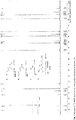
- the figure shows an exemplary 13 C-NMR spectrum (100 MHz, without solvent, tetrachloroethane-D2 capillary) of a composition according to the invention (ratio of amounts of 3-methylthiopropionaldehyde to methyl mercaptan used for preparing compound (I) 2.7:1, mixture comprising 3% by weight water, measured without solvent at temperatures from 10 to 70°C in steps of 10°C), and Table 1 comprises an assignment of the characteristic 13 C-NMR signals of the spectrum of the individual compounds.
- Table 1 Assignment of the characteristic 13 C-NMR signals of the individual compounds.
- compositions comprising 1-(1,3-bis(methylthio)propoxy)-3-(methylthio)propan-1-ol was determined according to the Karl Fischer method by titration using biamperometric indication of the end point.
- titration medium e.g. Hydranal Solvent 5 from Fluka
- titrant e.g. Hydranal Titrant 5 from Fluka
- the precise sample weight was determined by differential weighing.
- gas chromatography in addition to other methods - was used for the determination of 3-methylthiopropionaldehyde, methyl mercaptan and acrolein.
- Methyl mercaptan (Sigma-Aldrich, 98.0% by weight; 10.7 g (Example 1), 10.0 g (Example 2) and 4.88 g (Example 3)) was initially charged in a cooled dropping funnel and added dropwise with stirring to the 3-methylthiopropionaldehyde so that a temperature of 15°C was not substantially exceeded. The resulting product mixture was then stirred for 60 min at room temperature and analyzed by NMR spectroscopy. The maximum content of 1-(1,3-bis(methylthio)propoxy)-3-(methylthio)propan-1-ol was determined at 18.7 mol%, at a ratio of 3-methylthiopropionaldehyde to methyl mercaptan of 2.7:1.
- the methyl mercaptan was added dropwise with stirring to the 3-methylthiopropionaldehyde so that a temperature of 15°C was not substantially exceeded. After completion of the addition of the methyl mercaptan to the 3-methylthiopropionaldehyde, the resulting product mixture was stirred for a further 90 minutes at room temperature. A portion of the product was characterized by Karl Fischer titration, NMR spectroscopy and residue determination by vacuum distillation. A further portion of the product was stored for several weeks at room temperature or at 40°C, and the residue was determined at regular intervals. The results of two test series (the first test series comprises examples 4 to 7 and the second test series comprises examples 8 to 11) thus performed are compiled in the Tables 3a and 3b.
Landscapes
- Chemical & Material Sciences (AREA)
- Organic Chemistry (AREA)
- Chemical Kinetics & Catalysis (AREA)
- Organic Low-Molecular-Weight Compounds And Preparation Thereof (AREA)
Claims (15)
- Verbindung der Formel (I)

- Verbindung gemäß Anspruch 1, wobei die Verbindung- 1-(1R,3-Bis(methylthio)propoxy)-3-(methylthio)-propan-1R-ol, 1-(1R,3-Bis(methylthio)propoxy)-3-(methylthio)-propan-1S-ol,- 1-(1S,3-Bis(methylthio)propoxy)-3-(methylthio)-propan-1R-ol,- 1-(1S,3-Bis(methylthio)propoxy)-3-(methylthio)-propan-1S-oloder eine Mischung von zwei oder mehreren davon ist.
- Zusammensetzung umfassend eine Verbindung gemäß Anspruch 1 oder 2, und zusätzlich 3-Methylthiopropionaldehyd, 1,3-Bis(methylthio)-1-propanol und/oder Methylmercaptan.
- Verwendung einer Verbindung gemäß Anspruch 1 oder 2 oder einer Zusammensetzung gemäß Anspruch 3 zur Lagerung und/oder zum Transport von 3-Methylthiopropionaldehyd und/oder Methylmercaptan.
- Verfahren zur Herstellung einer Verbindung gemäß Anspruch 1 oder 2, umfassend den Schritta)Inkontaktbringen einer Zusammensetzung enthaltend oder bestehend aus 3-Methylthiopropionaldehyd mit einer Zusammensetzung enthaltend oder bestehend aus Methylmercaptan, um eine die Verbindung der allgemeinen Formel (I) enthaltende Zusammensetzung zu ergeben.
- Verfahren gemäß Anspruch 5, wobei das molare Verhältnis von 3-Methylthiopropionaldehyd zu Methylmercaptan in Schritt a) mindestens 2:1 beträgt.
- Verfahren gemäß Anspruch 5 oder 6, wobei der Schritt a) bei einer Temperatur von nicht mehr als ca. 70°C durchgeführt wird.
- Verfahren gemäß einem beliebigen der Ansprüche 5 bis 7, zusätzlich umfassend den dem Schritt a) vorgelagerten Schritt
a')Inkontaktbringen einer Zusammensetzung enthaltend oder bestehend aus Acrolein mit einer Zusammensetzung enthaltend oder bestehend aus Methylmercaptan, um eine 3-Methylthiopropionaldehyd enthaltende Zusammensetzung zu ergeben. - Verfahren gemäß einem beliebigen der Ansprüche 5 bis 7, zusätzlich umfassend den dem Schritt a) vorgelagerten Schritt
a")Inkontaktbringen einer die Verbindung der allgemeinen Formel (I) enthaltenden Zusammensetzung mit Acrolein, um eine 3-Methylthiopropionaldehyd enthaltende Zusammensetzung zu ergeben. - Verfahren gemäß einem beliebigen der Ansprüche 5 bis 9, wobei der Schritt a) und/oder der Schritt a') in Anwesenheit mindestens einer stickstoffhaltigen Base als Katalysator durchgeführt werden.
- Verfahren gemäß Anspruch 10, wobei die stickstoffhaltige Base eine unsubstitutierte oder substituierte N-heterozyklische Verbindung oder ein Amin der Formel NR1R2R3 ist, wobei R1, R2 und R3 entweder identisch oder verschieden sind und unabhängig voneinander Wasserstoff, einen Alkylrest mit ein bis vier Kohlenstoffatomen oder einen Arylalkylrest mit 7 bis 14 Kohlenstoffatomen bedeuten, mit der Maßgabe, dass wenn einer der Reste R1, R2 oder R3 Wasserstoff ist, die beiden anderen Reste nicht Wasserstoff sind.
- Verfahren gemäß einem beliebigen der Ansprüche 5 bis 11, wobei die Schritte a) und/oder a') in Anwesenheit mindestens einer Säure durchgeführt werden.
- Verfahren zur Herstellung von 3-Methylthiopropionaldehyd umfassend den Schritt des Inkontaktbringens einer die Verbindung der Formel (I) enthaltenden Zusammensetzung mit einer Zusammensetzung enthaltend oder bestehend aus Acrolein, um eine 3-Methylthiopropionaldehyd enthaltende Zusammensetzung zu erhalten.
- Verfahren gemäß Anspruch 13, zusätzlich umfassend den Schritt a) gemäß einem beliebigen der Ansprüche 5 bis 12.
- Verfahren gemäß Anspruch 14, zusätzlich umfassend den Schritt a') oder a") gemäß einem beliebigen der Ansprüche 5 bis 12.
Applications Claiming Priority (1)
| Application Number | Priority Date | Filing Date | Title |
|---|---|---|---|
| EP16206225 | 2016-12-22 |
Publications (2)
| Publication Number | Publication Date |
|---|---|
| EP3339290A1 EP3339290A1 (de) | 2018-06-27 |
| EP3339290B1 true EP3339290B1 (de) | 2019-06-19 |
Family
ID=57629385
Family Applications (1)
| Application Number | Title | Priority Date | Filing Date |
|---|---|---|---|
| EP17207366.0A Active EP3339290B1 (de) | 2016-12-22 | 2017-12-14 | Lagerung von 3-methylthiopropionaldehyd und methylmercaptan |
Country Status (6)
| Country | Link |
|---|---|
| US (1) | US10633335B2 (de) |
| EP (1) | EP3339290B1 (de) |
| JP (1) | JP6991057B2 (de) |
| CN (1) | CN108218749B (de) |
| BR (1) | BR102017027766A2 (de) |
| SG (1) | SG10201710613WA (de) |
Families Citing this family (1)
| Publication number | Priority date | Publication date | Assignee | Title |
|---|---|---|---|---|
| EP3656760A1 (de) | 2018-11-21 | 2020-05-27 | Evonik Operations GmbH | Lagerstabile form von 3-methylthiopropionaldehyd |
Family Cites Families (10)
| Publication number | Priority date | Publication date | Assignee | Title |
|---|---|---|---|---|
| NL6705426A (de) | 1966-04-18 | 1967-10-19 | ||
| FR1520328A (fr) * | 1966-04-25 | 1968-04-05 | Sumitomo Chemical Co | Procédé de fabrication du beta-méthylmercaptopropionaldéhyde en deux étapes |
| US3529940A (en) * | 1966-04-25 | 1970-09-22 | Sumitomo Chemical Co | Apparatus for two-stage production of beta-methylmercaptopropionaldehyde |
| ES339752A1 (es) | 1966-04-25 | 1968-08-16 | Sumitomo Chemical Co | Un procedimiento para producir betametilmercaptopropional- dehido. |
| NL6706022A (de) | 1966-04-30 | 1967-10-31 | ||
| US4546205A (en) * | 1982-06-16 | 1985-10-08 | Pennwalt Corporation | Stabilization of aldehydes |
| BR9105694A (pt) * | 1991-12-26 | 1993-06-29 | Rhodia | Composicao estabilizante para aldeidos s-substituidos,processo de estabilizacao dos aldeidos estabilizados |
| DE102010064250A1 (de) | 2010-12-28 | 2012-06-28 | Evonik Degussa Gmbh | Verfahren zur Herstellung von Methylmercaptopropionaldehyd |
| EP2813489A1 (de) * | 2013-06-11 | 2014-12-17 | Evonik Degussa GmbH | Verfahren zur Herstellung von lagerstabilem 3-Methylmercaptopropionaldehyd |
| EP3205643A1 (de) * | 2016-02-15 | 2017-08-16 | Evonik Degussa GmbH | Verfahren zur herstellung von 3-methylthiopropionaldehyd |
-
2017
- 2017-12-14 EP EP17207366.0A patent/EP3339290B1/de active Active
- 2017-12-20 SG SG10201710613WA patent/SG10201710613WA/en unknown
- 2017-12-21 JP JP2017245183A patent/JP6991057B2/ja active Active
- 2017-12-21 US US15/851,362 patent/US10633335B2/en active Active
- 2017-12-21 CN CN201711394541.7A patent/CN108218749B/zh active Active
- 2017-12-21 BR BR102017027766-6A patent/BR102017027766A2/pt not_active IP Right Cessation
Non-Patent Citations (1)
| Title |
|---|
| None * |
Also Published As
| Publication number | Publication date |
|---|---|
| BR102017027766A2 (pt) | 2018-12-04 |
| US20180179155A1 (en) | 2018-06-28 |
| CN108218749A (zh) | 2018-06-29 |
| SG10201710613WA (en) | 2018-07-30 |
| JP2018104415A (ja) | 2018-07-05 |
| US10633335B2 (en) | 2020-04-28 |
| CN108218749B (zh) | 2021-10-08 |
| JP6991057B2 (ja) | 2022-02-15 |
| EP3339290A1 (de) | 2018-06-27 |
Similar Documents
| Publication | Publication Date | Title |
|---|---|---|
| US20120215021A1 (en) | Storage-stable 2-hydroxy-4-(methylthio)butyronitrile | |
| MXPA97009461A (en) | Process for the preparation of 3- (methylene) propanal and 2-hydroxy-4- (methylthy) butanonitr | |
| US5705675A (en) | Processes for the preparation of 3-(methylthio)propanal and 2-hydroxy-4-(methylthio)butanenitrile | |
| WO1996040631A1 (en) | Processes for the preparation of 3-(methylthio)propanal and 2-hydroxy-4-(methylthio)butanenitrile | |
| EP3339290B1 (de) | Lagerung von 3-methylthiopropionaldehyd und methylmercaptan | |
| EP3416942B1 (de) | Verfahren zur herstellung von 3-methylthiopropionaldehyd | |
| US7119233B2 (en) | Method for preparing 3-(methylthio)propanal | |
| EP3674283B1 (de) | Verfahren zur herstellung von alpha,beta-ungesättigtem aldehyd | |
| FR2486069A2 (fr) | Procede pour la preparation de 2-methylene-aldehydes | |
| JP4521277B2 (ja) | 3−メチルチオプロパナールの製造方法 | |
| JP2006515834A5 (de) | ||
| EP3904334A1 (de) | Zusammensetzung zur herstellung eines n-vinyl-carbonsäureamids | |
| JP7463367B2 (ja) | 3-メチルチオプロピオンアルデヒドの貯蔵安定形態 | |
| US6133482A (en) | Method for producing carbonyl compounds | |
| Maslak et al. | Selectivity in near-diffusion-limited reactions. Isotope effects in phosphorylnitrene insertion into C H bonds. | |
| JP5789430B2 (ja) | 2−クロロメチルベンズアルデヒドの製造方法、2−クロロメチルベンズアルデヒド含有組成物及びその保管方法 | |
| KR20080000660A (ko) | 초순수 4-메틸피라졸의 제조 방법 | |
| Horii et al. | The addition of (thioacyloxy) silanes to carbonyl compounds. | |
| EP3789377A1 (de) | Pauson-khand-reaktion ohne kohlenmonoxidgas eines katalytisch kontinuierlichen flusses | |
| Arkhipova et al. | Acid-catalyzed reactions of thiocyanates with camphene | |
| JP2001163852A (ja) | スルフィド化合物含有組成物及びその製造方法 | |
| JPS58164555A (ja) | ヒドロキシアミノ酪酸の製法 |
Legal Events
| Date | Code | Title | Description |
|---|---|---|---|
| PUAI | Public reference made under article 153(3) epc to a published international application that has entered the european phase |
Free format text: ORIGINAL CODE: 0009012 |
|
| STAA | Information on the status of an ep patent application or granted ep patent |
Free format text: STATUS: REQUEST FOR EXAMINATION WAS MADE |
|
| 17P | Request for examination filed |
Effective date: 20171214 |
|
| AK | Designated contracting states |
Kind code of ref document: A1 Designated state(s): AL AT BE BG CH CY CZ DE DK EE ES FI FR GB GR HR HU IE IS IT LI LT LU LV MC MK MT NL NO PL PT RO RS SE SI SK SM TR |
|
| AX | Request for extension of the european patent |
Extension state: BA ME |
|
| GRAP | Despatch of communication of intention to grant a patent |
Free format text: ORIGINAL CODE: EPIDOSNIGR1 |
|
| STAA | Information on the status of an ep patent application or granted ep patent |
Free format text: STATUS: GRANT OF PATENT IS INTENDED |
|
| INTG | Intention to grant announced |
Effective date: 20181024 |
|
| GRAS | Grant fee paid |
Free format text: ORIGINAL CODE: EPIDOSNIGR3 |
|
| GRAA | (expected) grant |
Free format text: ORIGINAL CODE: 0009210 |
|
| STAA | Information on the status of an ep patent application or granted ep patent |
Free format text: STATUS: THE PATENT HAS BEEN GRANTED |
|
| AK | Designated contracting states |
Kind code of ref document: B1 Designated state(s): AL AT BE BG CH CY CZ DE DK EE ES FI FR GB GR HR HU IE IS IT LI LT LU LV MC MK MT NL NO PL PT RO RS SE SI SK SM TR |
|
| REG | Reference to a national code |
Ref country code: GB Ref legal event code: FG4D |
|
| REG | Reference to a national code |
Ref country code: CH Ref legal event code: EP |
|
| REG | Reference to a national code |
Ref country code: IE Ref legal event code: FG4D |
|
| REG | Reference to a national code |
Ref country code: DE Ref legal event code: R096 Ref document number: 602017004682 Country of ref document: DE |
|
| REG | Reference to a national code |
Ref country code: AT Ref legal event code: REF Ref document number: 1145327 Country of ref document: AT Kind code of ref document: T Effective date: 20190715 |
|
| REG | Reference to a national code |
Ref country code: NL Ref legal event code: MP Effective date: 20190619 |
|
| PG25 | Lapsed in a contracting state [announced via postgrant information from national office to epo] |
Ref country code: LT Free format text: LAPSE BECAUSE OF FAILURE TO SUBMIT A TRANSLATION OF THE DESCRIPTION OR TO PAY THE FEE WITHIN THE PRESCRIBED TIME-LIMIT Effective date: 20190619 Ref country code: FI Free format text: LAPSE BECAUSE OF FAILURE TO SUBMIT A TRANSLATION OF THE DESCRIPTION OR TO PAY THE FEE WITHIN THE PRESCRIBED TIME-LIMIT Effective date: 20190619 Ref country code: AL Free format text: LAPSE BECAUSE OF FAILURE TO SUBMIT A TRANSLATION OF THE DESCRIPTION OR TO PAY THE FEE WITHIN THE PRESCRIBED TIME-LIMIT Effective date: 20190619 Ref country code: SE Free format text: LAPSE BECAUSE OF FAILURE TO SUBMIT A TRANSLATION OF THE DESCRIPTION OR TO PAY THE FEE WITHIN THE PRESCRIBED TIME-LIMIT Effective date: 20190619 Ref country code: NO Free format text: LAPSE BECAUSE OF FAILURE TO SUBMIT A TRANSLATION OF THE DESCRIPTION OR TO PAY THE FEE WITHIN THE PRESCRIBED TIME-LIMIT Effective date: 20190919 Ref country code: HR Free format text: LAPSE BECAUSE OF FAILURE TO SUBMIT A TRANSLATION OF THE DESCRIPTION OR TO PAY THE FEE WITHIN THE PRESCRIBED TIME-LIMIT Effective date: 20190619 |
|
| REG | Reference to a national code |
Ref country code: LT Ref legal event code: MG4D |
|
| PG25 | Lapsed in a contracting state [announced via postgrant information from national office to epo] |
Ref country code: BG Free format text: LAPSE BECAUSE OF FAILURE TO SUBMIT A TRANSLATION OF THE DESCRIPTION OR TO PAY THE FEE WITHIN THE PRESCRIBED TIME-LIMIT Effective date: 20190919 Ref country code: LV Free format text: LAPSE BECAUSE OF FAILURE TO SUBMIT A TRANSLATION OF THE DESCRIPTION OR TO PAY THE FEE WITHIN THE PRESCRIBED TIME-LIMIT Effective date: 20190619 Ref country code: GR Free format text: LAPSE BECAUSE OF FAILURE TO SUBMIT A TRANSLATION OF THE DESCRIPTION OR TO PAY THE FEE WITHIN THE PRESCRIBED TIME-LIMIT Effective date: 20190920 Ref country code: RS Free format text: LAPSE BECAUSE OF FAILURE TO SUBMIT A TRANSLATION OF THE DESCRIPTION OR TO PAY THE FEE WITHIN THE PRESCRIBED TIME-LIMIT Effective date: 20190619 |
|
| RAP2 | Party data changed (patent owner data changed or rights of a patent transferred) |
Owner name: EVONIK OPERATIONS GMBH |
|
| REG | Reference to a national code |
Ref country code: DE Ref legal event code: R081 Ref document number: 602017004682 Country of ref document: DE Owner name: EVONIK OPERATIONS GMBH, DE Free format text: FORMER OWNER: EVONIK DEGUSSA GMBH, 45128 ESSEN, DE |
|
| REG | Reference to a national code |
Ref country code: AT Ref legal event code: MK05 Ref document number: 1145327 Country of ref document: AT Kind code of ref document: T Effective date: 20190619 |
|
| PG25 | Lapsed in a contracting state [announced via postgrant information from national office to epo] |
Ref country code: EE Free format text: LAPSE BECAUSE OF FAILURE TO SUBMIT A TRANSLATION OF THE DESCRIPTION OR TO PAY THE FEE WITHIN THE PRESCRIBED TIME-LIMIT Effective date: 20190619 Ref country code: PT Free format text: LAPSE BECAUSE OF FAILURE TO SUBMIT A TRANSLATION OF THE DESCRIPTION OR TO PAY THE FEE WITHIN THE PRESCRIBED TIME-LIMIT Effective date: 20191021 Ref country code: AT Free format text: LAPSE BECAUSE OF FAILURE TO SUBMIT A TRANSLATION OF THE DESCRIPTION OR TO PAY THE FEE WITHIN THE PRESCRIBED TIME-LIMIT Effective date: 20190619 Ref country code: NL Free format text: LAPSE BECAUSE OF FAILURE TO SUBMIT A TRANSLATION OF THE DESCRIPTION OR TO PAY THE FEE WITHIN THE PRESCRIBED TIME-LIMIT Effective date: 20190619 Ref country code: CZ Free format text: LAPSE BECAUSE OF FAILURE TO SUBMIT A TRANSLATION OF THE DESCRIPTION OR TO PAY THE FEE WITHIN THE PRESCRIBED TIME-LIMIT Effective date: 20190619 Ref country code: RO Free format text: LAPSE BECAUSE OF FAILURE TO SUBMIT A TRANSLATION OF THE DESCRIPTION OR TO PAY THE FEE WITHIN THE PRESCRIBED TIME-LIMIT Effective date: 20190619 Ref country code: SK Free format text: LAPSE BECAUSE OF FAILURE TO SUBMIT A TRANSLATION OF THE DESCRIPTION OR TO PAY THE FEE WITHIN THE PRESCRIBED TIME-LIMIT Effective date: 20190619 |
|
| PG25 | Lapsed in a contracting state [announced via postgrant information from national office to epo] |
Ref country code: SM Free format text: LAPSE BECAUSE OF FAILURE TO SUBMIT A TRANSLATION OF THE DESCRIPTION OR TO PAY THE FEE WITHIN THE PRESCRIBED TIME-LIMIT Effective date: 20190619 Ref country code: IT Free format text: LAPSE BECAUSE OF FAILURE TO SUBMIT A TRANSLATION OF THE DESCRIPTION OR TO PAY THE FEE WITHIN THE PRESCRIBED TIME-LIMIT Effective date: 20190619 Ref country code: IS Free format text: LAPSE BECAUSE OF FAILURE TO SUBMIT A TRANSLATION OF THE DESCRIPTION OR TO PAY THE FEE WITHIN THE PRESCRIBED TIME-LIMIT Effective date: 20191019 Ref country code: ES Free format text: LAPSE BECAUSE OF FAILURE TO SUBMIT A TRANSLATION OF THE DESCRIPTION OR TO PAY THE FEE WITHIN THE PRESCRIBED TIME-LIMIT Effective date: 20190619 |
|
| PG25 | Lapsed in a contracting state [announced via postgrant information from national office to epo] |
Ref country code: TR Free format text: LAPSE BECAUSE OF FAILURE TO SUBMIT A TRANSLATION OF THE DESCRIPTION OR TO PAY THE FEE WITHIN THE PRESCRIBED TIME-LIMIT Effective date: 20190619 |
|
| PG25 | Lapsed in a contracting state [announced via postgrant information from national office to epo] |
Ref country code: PL Free format text: LAPSE BECAUSE OF FAILURE TO SUBMIT A TRANSLATION OF THE DESCRIPTION OR TO PAY THE FEE WITHIN THE PRESCRIBED TIME-LIMIT Effective date: 20190619 Ref country code: DK Free format text: LAPSE BECAUSE OF FAILURE TO SUBMIT A TRANSLATION OF THE DESCRIPTION OR TO PAY THE FEE WITHIN THE PRESCRIBED TIME-LIMIT Effective date: 20190619 |
|
| PG25 | Lapsed in a contracting state [announced via postgrant information from national office to epo] |
Ref country code: IS Free format text: LAPSE BECAUSE OF FAILURE TO SUBMIT A TRANSLATION OF THE DESCRIPTION OR TO PAY THE FEE WITHIN THE PRESCRIBED TIME-LIMIT Effective date: 20200224 |
|
| REG | Reference to a national code |
Ref country code: DE Ref legal event code: R097 Ref document number: 602017004682 Country of ref document: DE |
|
| PLBE | No opposition filed within time limit |
Free format text: ORIGINAL CODE: 0009261 |
|
| STAA | Information on the status of an ep patent application or granted ep patent |
Free format text: STATUS: NO OPPOSITION FILED WITHIN TIME LIMIT |
|
| PG2D | Information on lapse in contracting state deleted |
Ref country code: IS |
|
| REG | Reference to a national code |
Ref country code: BE Ref legal event code: HC Owner name: EVONIK OPERATIONS GMBH; DE Free format text: DETAILS ASSIGNMENT: CHANGE OF OWNER(S), CHANGEMENT DE NOM DU PROPRIETAIRE; FORMER OWNER NAME: EVONIK DEGUSSA GMBH Effective date: 20200403 |
|
| 26N | No opposition filed |
Effective date: 20200603 |
|
| PG25 | Lapsed in a contracting state [announced via postgrant information from national office to epo] |
Ref country code: SI Free format text: LAPSE BECAUSE OF FAILURE TO SUBMIT A TRANSLATION OF THE DESCRIPTION OR TO PAY THE FEE WITHIN THE PRESCRIBED TIME-LIMIT Effective date: 20190619 Ref country code: MC Free format text: LAPSE BECAUSE OF FAILURE TO SUBMIT A TRANSLATION OF THE DESCRIPTION OR TO PAY THE FEE WITHIN THE PRESCRIBED TIME-LIMIT Effective date: 20190619 |
|
| PG25 | Lapsed in a contracting state [announced via postgrant information from national office to epo] |
Ref country code: LU Free format text: LAPSE BECAUSE OF NON-PAYMENT OF DUE FEES Effective date: 20191214 Ref country code: IE Free format text: LAPSE BECAUSE OF NON-PAYMENT OF DUE FEES Effective date: 20191214 |
|
| PG25 | Lapsed in a contracting state [announced via postgrant information from national office to epo] |
Ref country code: CY Free format text: LAPSE BECAUSE OF FAILURE TO SUBMIT A TRANSLATION OF THE DESCRIPTION OR TO PAY THE FEE WITHIN THE PRESCRIBED TIME-LIMIT Effective date: 20190619 |
|
| PG25 | Lapsed in a contracting state [announced via postgrant information from national office to epo] |
Ref country code: HU Free format text: LAPSE BECAUSE OF FAILURE TO SUBMIT A TRANSLATION OF THE DESCRIPTION OR TO PAY THE FEE WITHIN THE PRESCRIBED TIME-LIMIT; INVALID AB INITIO Effective date: 20171214 Ref country code: MT Free format text: LAPSE BECAUSE OF FAILURE TO SUBMIT A TRANSLATION OF THE DESCRIPTION OR TO PAY THE FEE WITHIN THE PRESCRIBED TIME-LIMIT Effective date: 20190619 |
|
| REG | Reference to a national code |
Ref country code: CH Ref legal event code: PL |
|
| PG25 | Lapsed in a contracting state [announced via postgrant information from national office to epo] |
Ref country code: LI Free format text: LAPSE BECAUSE OF NON-PAYMENT OF DUE FEES Effective date: 20201231 Ref country code: CH Free format text: LAPSE BECAUSE OF NON-PAYMENT OF DUE FEES Effective date: 20201231 |
|
| PG25 | Lapsed in a contracting state [announced via postgrant information from national office to epo] |
Ref country code: MK Free format text: LAPSE BECAUSE OF FAILURE TO SUBMIT A TRANSLATION OF THE DESCRIPTION OR TO PAY THE FEE WITHIN THE PRESCRIBED TIME-LIMIT Effective date: 20190619 |
|
| GBPC | Gb: european patent ceased through non-payment of renewal fee |
Effective date: 20211214 |
|
| PG25 | Lapsed in a contracting state [announced via postgrant information from national office to epo] |
Ref country code: GB Free format text: LAPSE BECAUSE OF NON-PAYMENT OF DUE FEES Effective date: 20211214 |
|
| P01 | Opt-out of the competence of the unified patent court (upc) registered |
Effective date: 20230524 |
|
| PGFP | Annual fee paid to national office [announced via postgrant information from national office to epo] |
Ref country code: DE Payment date: 20251211 Year of fee payment: 9 |
|
| PGFP | Annual fee paid to national office [announced via postgrant information from national office to epo] |
Ref country code: FR Payment date: 20251229 Year of fee payment: 9 |
|
| PGFP | Annual fee paid to national office [announced via postgrant information from national office to epo] |
Ref country code: BE Payment date: 20251219 Year of fee payment: 9 |