EP3674283B1 - Verfahren zur herstellung von alpha,beta-ungesättigtem aldehyd - Google Patents
Verfahren zur herstellung von alpha,beta-ungesättigtem aldehyd Download PDFInfo
- Publication number
- EP3674283B1 EP3674283B1 EP18887831.8A EP18887831A EP3674283B1 EP 3674283 B1 EP3674283 B1 EP 3674283B1 EP 18887831 A EP18887831 A EP 18887831A EP 3674283 B1 EP3674283 B1 EP 3674283B1
- Authority
- EP
- European Patent Office
- Prior art keywords
- formula
- compound
- mol
- carbon atoms
- unsaturated aldehyde
- Prior art date
- Legal status (The legal status is an assumption and is not a legal conclusion. Google has not performed a legal analysis and makes no representation as to the accuracy of the status listed.)
- Active
Links
Classifications
-
- C—CHEMISTRY; METALLURGY
- C07—ORGANIC CHEMISTRY
- C07C—ACYCLIC OR CARBOCYCLIC COMPOUNDS
- C07C45/00—Preparation of compounds having >C = O groups bound only to carbon or hydrogen atoms; Preparation of chelates of such compounds
- C07C45/61—Preparation of compounds having >C = O groups bound only to carbon or hydrogen atoms; Preparation of chelates of such compounds by reactions not involving the formation of >C = O groups
- C07C45/67—Preparation of compounds having >C = O groups bound only to carbon or hydrogen atoms; Preparation of chelates of such compounds by reactions not involving the formation of >C = O groups by isomerisation; by change of size of the carbon skeleton
- C07C45/68—Preparation of compounds having >C = O groups bound only to carbon or hydrogen atoms; Preparation of chelates of such compounds by reactions not involving the formation of >C = O groups by isomerisation; by change of size of the carbon skeleton by increase in the number of carbon atoms
- C07C45/72—Preparation of compounds having >C = O groups bound only to carbon or hydrogen atoms; Preparation of chelates of such compounds by reactions not involving the formation of >C = O groups by isomerisation; by change of size of the carbon skeleton by increase in the number of carbon atoms by reaction of compounds containing >C = O groups with the same or other compounds containing >C = O groups
- C07C45/74—Preparation of compounds having >C = O groups bound only to carbon or hydrogen atoms; Preparation of chelates of such compounds by reactions not involving the formation of >C = O groups by isomerisation; by change of size of the carbon skeleton by increase in the number of carbon atoms by reaction of compounds containing >C = O groups with the same or other compounds containing >C = O groups combined with dehydration
-
- C—CHEMISTRY; METALLURGY
- C07—ORGANIC CHEMISTRY
- C07C—ACYCLIC OR CARBOCYCLIC COMPOUNDS
- C07C47/00—Compounds having —CHO groups
- C07C47/20—Unsaturated compounds having —CHO groups bound to acyclic carbon atoms
- C07C47/228—Unsaturated compounds having —CHO groups bound to acyclic carbon atoms containing six-membered aromatic rings, e.g. phenylacetaldehyde
- C07C47/232—Unsaturated compounds having —CHO groups bound to acyclic carbon atoms containing six-membered aromatic rings, e.g. phenylacetaldehyde having unsaturation outside the aromatic rings
Definitions
- the present invention relates to a method for preparing an ⁇ , ⁇ -unsaturated aldehyde.
- An aldehyde is a useful compound as, e.g., a material for a chemical reaction, or an intermediate for perfume, medicine, or agricultural chemicals.
- an ⁇ , ⁇ -unsaturated aldehyde having a specific molecular weight is useful in itself as a fragrance material, and further is also used as a raw material for derivatives with different fragrance notes.
- an aldehyde e.g., dehydrogenation or oxidation using alcohol as a raw material
- a cross-aldol condensation reaction between two types of aldehydes is frequently used as a method for preparing an ⁇ , ⁇ -unsaturated aldehyde.
- various studies have been made on the reaction conditions of the cross-aldol condensation reaction.
- Patent Document 1 discloses the continuous production of cinnamaldehyde and dihydrocinnamaldehyde.
- benzaldehyde derivatives are continuously reacted with alkanals in a plant that includes a plurality of reactors in a cascade system.
- Patent Document 2 discloses a method for preparing an a'substituted cinnamaldehyde. This method is performed in a solvent containing glycol.
- Patent Document 3 discloses a method for preparing 2,3-cis-substituted 2-arylpropenals by condensing a 2-arylacetaldehyde with a nonenolizable aldehyde.
- a solvent contains a specific amount of moisture.
- the cross-aldol condensation reaction is known to cause side reactions such as dimerization (self-aldol condensation reaction) and disproportionation (Cannizzaro reaction) between the same type of aldehydes. If the side reactions proceed, it is difficult to isolate the target aldehyde, and the yield is reduced,
- the present invention provides a method for preparing an ⁇ , ⁇ -unsaturated aldehyde, which can prepare a target aldehyde with high selectivity and can also suppress the production of by-products.
- the present inventors found that it was possible to obtain the target aldehyde with high selectivity and to suppress the production of by-products in the cross-aldol condensation reaction by adjusting the total amount of water contained in the materials that were used in the reaction to a specific amount.
- the present invention provides a method for preparing an ⁇ , ⁇ -unsatuirated aldehyde, including a step of reacting a compound of formula (I) with a compound of formula (II) to provide an ⁇ , ⁇ -unsaturated aldehyde of formula (III),
- R 1 represents a hydrogen atom or an alkyl group having 1 to 10 carbon atoms
- the present invention can provide a method for preparing an ⁇ , ⁇ -unsaturated aldehyde, which can prepare a target aldehyde with high selectivity and can also suppress the production of by-products.
- the cross-aldol condensation reaction between the compound of formula (I) and the compound of formula (II) involves the use of a specific amount of water in addition to the alkali metal hydroxide and the alkanol that serve as catalysts.
- R 1 represents a hydrogen atom or an alkyl group having 1 to 10 carbon atoms.
- R 1 is preferably an alkyl group having 1 to 10 carbon atoms.
- the alkyl group having 1 to 10 carbon atoms is preferably an alkyl group having 2 or more carbon atoms, and more preferably an alkyl group having 3 or more carbon atoms.
- the alkyl group having 1 to 10 carbon atoms is preferably an alkyl group having 8 or less carbon atoms, and more preferably an alkyl group having 7 or less carbon atoms.
- the alkyl group having 1 to 10 carbon atoms may be either a straight-chain alkyl group or a branched-chain alkyl group, and is preferably a straight-chain alkyl group.
- Examples of the alkyl group having 1 to 10 carbon atoms include methyl, ethyl, n-propyl, isopropyl, 2-methylpropyl, n-butyl, t-butyl, pentyl, hexyl, heptyl, octyl, nonyl, and decyl.
- Examples of the compound of formula (I) include acetaldehyde, propionaldehyde, butanal, pentanal, hexanal, octanal, nonanal, decanal, and dodecanal.
- the compound of formula (I) is preferably propionaldehyde, butanal, pentanal, hexanal, octanal, nonanal, or decanal, more preferably pentanal, hexanal, octanal, nonanal, or decanal, and even more preferably pentanal, hexanal, octanal, or nonanal,
- R 2 represents a hydrogen atom, an alkyl group having 1 to 6 carbon atoms, or an alkoxy group having 1 to 6 carbon atoms.
- R 2 is preferably a hydrogen atom or an alkyl group having 1 to 6 carbon atoms, and more preferably a hydrogen atom-group.
- the alkyl group having 1 to 6 carbon atoms is preferably an alkyl group having 1 or more carbon atoms.
- the alkyl group having 1 to 6 carbon atoms is preferably an alkyl group having 5 or less carbon atoms, and more preferably an alkyl group having 4 or less carbon atoms.
- Examples of the alkyl group having 1 to 6 carbon atoms include methyl, ethyl, n-propyl, isopropyl, 2-methylpropyl, n-butyl, t-butyl, pentyl, and hexyl.
- the alkoxy group having 1 to 6 carbon atoms is an alkyloxy group having 1 to 6 carbon atoms.
- the alkoxy group having 1 to 6 carbon atoms examples include methoxy, ethoxy, n-propyloxy, isopropyloxy, 2-methylpropyloxy, n-butyloxy, t-butyloxy, pentyloxy, and hexyloxy.
- the alkoxy group having 1 to 6 carbon atoms is preferably an alkoxy group having 1 to 5 carbon atoms, and more preferably an alkoxy group having 1 to 4 carbon atoms.
- R 4 , R 5 , and R 6 are as defined in the formula (II).
- R 4 , R 5 , and R 6 each independently represent a hydrogen atom or an alkyl group having 1 to 3 carbon atoms.
- R 4 , R 5 , and R 6 are preferably hydrogen atoms.
- the alkyl group having 1 to 3 carbon atoms is preferably an alkyl group having 1 to 2 carbon atoms, and more preferably an alkyl group having 1 carbon atom.
- Examples of the alkyl group having 1 to 3 carbon atoms include methyl, ethyl, n-propyl, and isopropyl.
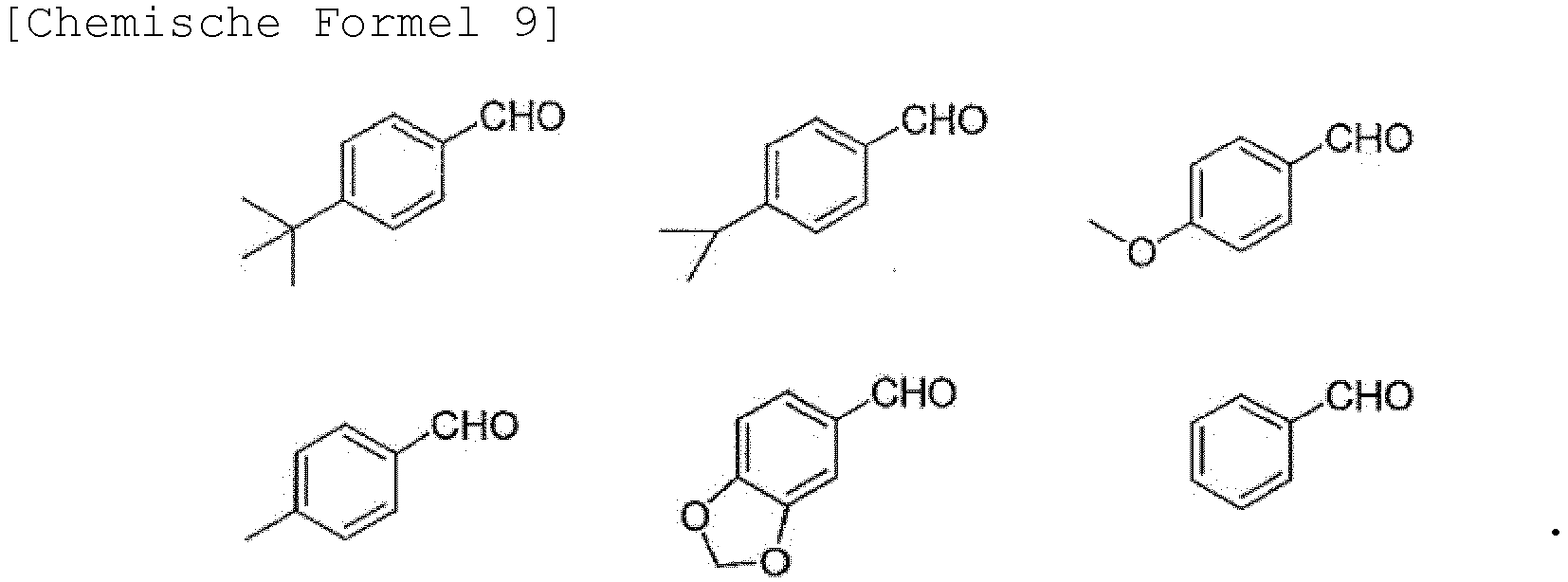
- the compound of formula (II) is preferably, e.g., any of the following compounds.
- the amount of the compound of formula (II) used is preferably 1 equivalent or more, and more preferably 1.5 equivalents or more with respect to the compound of formula (I). Furthermore, the amount of the compound of formula (II) used is preferably 5 equivalents or less, and more preferably 3 equivalents or less with respect to the compound of formula (I).
- the alkali metal hydroxide may be, e.g., lithium hydroxide, sodium hydroxide, or potassium hydroxide. From the viewpoint of reaction efficiency, the alkali metal hydroxide is preferably sodium hydroxide or potassium hydroxide, and more preferably potassium hydroxide.
- the amount of the alkali metal hydroxide is 8 mol% or more and 12 mol% or less with respect to the compound of formula (I).
- the amount of the alkali metal hydroxide is preferably 9 mol% or more and preferably 11 mol% or less with respect to the compound of formula (I). This is because the disproportionation of the compound of formula (II) can be suppressed by reducing the amount of the alkali metal hydroxide, and thus the production of by-products can be suppressed.
- the alkanol having 1 to 4 carbon atoms is an alkyl alcohol having 1 to 4 carbon atoms.
- the alkanol having 1 to 4 carbon atoms include methanol, ethanol, n-propanol, isopropanol, n-butanol, t-butanol, ethylene glycol, propylene glycol, and diethylene glycol.
- the alkanol having 1 to 4 carbon atoms is preferably an alkanol having 1 to 3 carbon atoms, and more preferably an alkanol having 1 to 2 carbon atoms.
- the alkanol having 1 to 4 carbon atoms is preferably ethanol or methanol, and more preferably methanol.
- the amount of the alkanol having 1 to 4 carbon atoms is preferably 300 mol% or more, and more preferably 350 mol% or more with respect to the compound of formula (I). Furthermore, the amount of the alkanol having 1 to 4 carbon atoms is preferably 500 mol% or less, and more preferably 450 mol% or less with respect to the compound of formula (I). The amount of the alkanol having 1 to 4 carbon atoms is preferably 300 mol% to 500 mol%, and more preferably 350 mol% to 450 mol% with respect to the compound of formula (I).
- the total amount of water contained in the materials that are used in the reaction means the total amount of water contained in the alkali metal hydroxide, the alkanol, the compound of formula (I), the compound of formula (II), and other materials used in the reaction
- the total amount of water contained in the materials that are used in the reaction means the sum of the amount of the water added and the amount of water contained in the alkali metal hydroxide, the alkanol, the compound of formula (I), the compound of formula (II), and compounds of other materials used in the reaction.
- the total amount of water contained in the materials that are used in the reaction is 10 mol% or more, preferably 12.5 mol% or more, and more preferably 14 mol% or more with respect to the compound of formula (I).
- the amount of moisture is 50 mol% or less, preferably 30 mol% or less, and more preferably 25 mol% or less with respect to the compound of formula (I).
- the amount of moisture also includes moisture contained in the alkali metal hydroxide, the alkanol, the compound of formula (I), and the compound of formula (II). If the amount of moisture is outside the above specific range, the total amount of water contained in the compound of formula (II) and the compounds of other materials used in the reaction may be adjusted to 10 mol% or more and 50 mol% or less with respect to the compound of formula (I).
- the adjustment process may be performed by adding water to the materials used in the reaction. Alternatively, the adjustment process may be performed by using a material that previously contains water.
- the amount of moisture in the system can be determined in the following manner. Each of the materials is measured by a Karl Fischer volumetric titration method, and then the amounts of moisture thus obtained are added together. Alternatively, the amount of moisture in the system can be determined by measuring a mixture of the materials.
- the effect of containing a predetermined amount of moisture in the materials used in the reaction can be considered as follows. Due to the presence of a predetermined amount of moisture in the materials used in the reaction, the reaction solution changes from a homogeneous phase system to an oil-water two-phase system in the middle of the reaction, so that the reaction rate is relaxed.
- the amount of moisture is 10 mol% or more with respect to the compound of formula (I)
- the reaction activity is appropriate, and thus the disproportionation of the compound of formula (II) can be suppressed. Accordingly, this range is deemed to be preferable.
- the reaction to provide the ⁇ , ⁇ -unsaturated aldehyde of formula (III) proceeds sufficiently before the reaction rate is relaxed, and thus the dimerization of the compound of formula (I) can be suppressed. Accordingly, this range is deemed to be preferable.
- the amount of moisture that falls in the range of 10 mol% to 50 mol% with respect to the compound of formula (I) may be advantageous for the following reasons. Since the reaction to provide the ⁇ , ⁇ -unsaturated aldehyde of formula (III) proceeds rapidly, the dimerization of the compound of formula (I) is suppressed.
- the reaction solution changes to the oil-water two-phase system, which relaxes the reaction rate. Therefore, while the disproportionation of the compound of formula (II) is suppressed, the reaction to provide the ⁇ , ⁇ -unsaturated aldehyde of formula (ill) is completed. Consequently, the ⁇ , ⁇ -unsaturated aldehyde of formula (III) can be prepared with a high yield.
- the step of reacting the compound of formula (I) with the compound of formula (II) to provide the ⁇ , ⁇ -unsaturated aldehyde of formula (III) is performed preferably at 20°C or more, and more preferably at 25°C or more. Furthermore, this step is performed preferably at 50°C or less, and more preferably at 40°C or less.
- the step of reacting the compound of formula (I) with the compound of formula (II) to provide the ⁇ , ⁇ -unsaturated aldehyde of formula (III) may be performed in an atmosphere of inert gas.
- the inert gas is preferably nitrogen or noble gas (elements in Group 18), and more preferably nitrogen.
- the noble gas may be, e.g., argon or helium and is preferably argon.
- the step of reacting the compound of formula (I) with the compound of formula (II) to provide the ⁇ , ⁇ -unsaturated aldehyde of formula (III) may be performed in the following manner, First, a solution in which the alkali metal hydroxide is dissolved in the alkanol is placed in a reaction vessel. Then, the compound of formula (II) is placed in the reaction vessel. Subsequently, the compound of formula (I) is added dropwise to the mixture thus obtained. In such a case, e.g., the compound of formula (I) may be added dropwise to a mixture of the alkanol, the alkali metal hydroxide, and the compound of formula (II).
- the concentration of the compound of formula (I) in the reaction system is kept low by the dropwise addition of the compound of formula (I) to the reaction system, so that the dimerization of the compound of formula (I) can be suppressed.
- the total amount of water contained in the materials that are used in the reaction is adjusted to 10 mol% or more and 50 mol% or less with respect to the compound of formula (I).
- the compound of formula (I) may be dropped for 3 hours or more and 9 hours or less, and preferably for 5 hours or more and 7 hours or less from the viewpoint of reaction efficiency.
- the drop rate may be changed in multiple stages.
- the multiple stages may be two stages. From the viewpoint of reaction efficiency, a relatively large amount of the compound of formula (I) may be added for a predetermined period of time, and then a relatively small amount of the compound of formula (I) may be added for a predetermined period of time.
- the compound of formula (I) may be added dropwise by changing the drop rate in multiple stages.
- the whole amount of addition of the compound of formula (I) may be added during one half (i.e., the first half period) of the drop time, and 15% by mass or more and 45% by mass or less of the whole amount of addition of the compound of formula (I) may be added during the other half (i.e., the second half period) of the drop time.
- the drop rate during one half (i.e., the first half period) of the drop time may remain constant, while the drop rate during the other half (i.e., the second half period) of the drop time may be different from that in the first half period and may remain constant.
- the drop rate during the other half (i.e., the second half period) of the drop time is preferably 0.2 times or more, more preferably 0.3 times or more, and further preferably 0.4 times or more the drop rate during one half (i.e., the first half period) of the drop time.
- the drop rate during the other half (i.e., the second half period) of the drop time is preferably 0.9 times or less, more preferably 0.8 times or less, and further preferably 0.7 times or less the drop rate during one half (i.e., the first half period) of the drop time.
- the step of reacting the compound of formula (I) with the compound of formula (II) to provide the ⁇ , ⁇ -unsaturated aldehyde of formula (III) is performed by placing a solution in which the alkali metal hydroxide is dissolved in the alkanol in a reaction vessel, then placing the compound of formula (II) in the reaction vessel, and adding the compound of formula (I) dropwise to the mixture thus obtained, the discharge portion of the compound of formula (I) may be located above the reaction solution or inside the reaction solution.
- the step of reacting the compound of formula (I) with the compound of formula (II) to provide the ⁇ , ⁇ -unsaturated aldehyde of formula (III) is performed by placing a solution in which the alkali metal hydroxide is dissolved in the alkanol in a reaction vessel, then placing the compound of formula (II) in the reaction vessel, and adding the compound of formula (I) dropwise to the mixture thus obtained, stirring may be continued for a certain time after the completion of the addition of the compound of formula (I) in order to terminate the reaction between the compound of formula (I) and the compound of formula (II).
- the stirring may be performed preferably for 10 minutes or more, and more preferably for 20 minutes or more.
- the stirring may be performed preferably for 60 minutes or less, and more preferably for 45 minutes or less.
- an acid compound may be added to the reaction vessel so that the alkali metal hydroxide is neutralized to stop the reaction, thereby avoiding the production of by-products.
- the acid compound may be, e.g., sulfuric acid, nitric acid, phosphoric acid, formic acid, acetic acid, propionic acid, or a solution thereof.
- % means "% by mass.”
- the concentration of moisture in each of the materials was determined by a volumetric titration method using a Karl Fischer moisture titrator MKV-710 (manufactured by Kyoto Electronics Manufacturing Co., Ltd.).
- the titration solvent was KEMAQUADehydrating Solvent KET (manufactured by Kyoto Electronics Manufacturing Co., Ltd.).
- the titrant was KEMAQUATitrant TR-3 (manufactured by Kyoto Electronics Manufacturing Co., Ltd.),
- methanol (128.2 g, 4.0 mol, 400 mol% with respect to octanal, moisture content: 0.04%, amount of moisture: 0.05 g) and water (2.6 g) were mixed.
- potassium hydroxide (purity: 85%, 6.6 g, 0.10 mol, 10 mol% with respect to octanal, moisture content: 15%, amount of moisture: 0.99 g) was dissolved in the liquid mixture, and a potassium hydroxide-methanol solution (137.1 g) was prepared.
- a thermometer, a mechanical stirrer, a condenser, and a nitrogen line were attached to a 500 mL four-necked separable flask and thus assembled into a reactor.
- the potassium hydroxide-methanol solution (137.1 g) and benzaldehyde (formula (II-1), 180.4 g, 1,70 mol, 170 mol% with respect to octanal, moisture content: 0.05%, amount of moisture: 0.09 g) were added to the reactor.
- a 200 mL flask containing octanal (formula (1-1)) was connected to the reactor via a dropping pump.
- the inside of the reactor was replaced with nitrogen.
- the reactor was placed in a warm bath at 30°C, and stirring (500 rpm) of the contents in the reactor was started. After 5 minutes passed, dropping of octanal into the reactor was started.
- the octanal was drooped into the reactor at 25.6 g/hour for 3 hours, and then at 17.1 g/hour for 3 hours. Thus, it took a total of 6 hours to drop the octanal (128.2 g, 1.0 mol, amount of moisture: 0 g) into the reactor.
- the total amount of water contained in the materials that were used in the reaction was 3.73 g (20,7 mol% with respect to octanal).
- the stirring of the contents in the reactor was continued at 30°C for 0.5 hours after the dropping of the octanal was completed. Then, acetic acid (5.0 g, 0.08 mol, 8.3 mol% with respect to octanal) was added to the reactor to stop the reaction in the reactor, so that the reaction was finished.
- GC gas chromatography
- reaction solution 0.3 mL was sampled, put in a screw bottle, and precisely weighed. Then, 0.1 g of tetradecane was added to the reaction solution and precisely weighed. Moreover, 1 mL of a phosphate buffer and 3 mL of ether were added to the reaction solution and shaken. This liquid was allowed to stand still so that oil was separated from water. The upper layer was analyzed by GC.
- DB-1 column GC column, 100% dimethylpolysiloxane, manufactured byAgilent Technologies Japan, Ltd,
- DB-WAX column GC column, polyethylene glycol, manufactured by Agilent Technologies Japan, Ltd.
- a selectivity of hexyl cinnamic aldehyde (with respect to benzaldehyde), which is a measure of the disproportionation of aldehydes, was calculated by the following formula. A larger value indicates better performance.
- Selectivity of hexyl cinnamic aldehyde with respect to benzaldehyde % mass of hexyl cinnamic aldehyde in product / molecular weight of hexyl cinnamic aldehyde / mass of benzaldehyde introduced ⁇ mass of benzaldehyde in product / molecular weight of benzaldehyde ⁇ 100
- Example 2 was performed in the same manner as Example 1 except that the amount of potassium hydroxide was changed from 10 mol% to 12 mol% with respect to octanal, and the total amount of water contained in the materials that were used in the reaction was changed from 20.7 mol% to 21.4 mol% with respect to octanal. Table 1 shows the results of the evaluation of the product thus obtained.
- Example 3 was performed in the same manner as Example 1 except that the amount of potassium hydroxide was changed from 10 mol% to 8 mol% with respect to octanal, and the total amount of water contained in the materials that were used in the reaction was changed from 20.7 mol% to 19.2 mol% with respect to octanal. Table 1 shows the results of the evaluation of the product thus obtained.
- Comparative Examples 1 to 3 were performed in the same manner as Example 1 except that the amount of potassium hydroxide and the total amount of water contained in the materials that were used in the reaction were changed as shown in Table 1.
- Table 1 shows the results of the evaluation of the products thus obtained.
- the amount of potassium hydroxide (KOH equivalent) represents a mole percent (mol%) with respect to octanal.
- the total amount of water contained in the materials that were used in the reaction which was the sum of the amount of moisture contained in methanol, potassium hydroxide, and benzaldehyde and the amount of moisture added separately to the reactor, represents a mole percent (mol%) with respect to octanal.
- Table 1 shows the reaction conditions and the results in Examples 1 to 3 and Comparative Examples 1 to 3.
- KOH equivalent mol%) Total amount of water contained in materials used in reaction (mol%) Selectivity of hexyl cinnamic aldehyde (with respect to benzaldehyde) (%) Dimer formation rate (%) Comp. Ex. 1 6 18.6 93.7 1.30 Ex. 3 8 19.2 92.5 1.01 Ex. 1 10 20.7 93.8 0.89 Ex. 2 12 21.4 92.3 1.00 Comp. Ex. 2 14 22.8 88.0 0.74 Comp. Ex. 3 17 24.9 87.9 0.67
- Example 4 was performed in the same manner as Example 1 except that the total amount of water contained in the materials that were used in the reaction was changed from 20.7 mol% to 13.5 mol% with respect to octanal. Table 2 shows the results of the evaluation of the product thus obtained.
- Example 5 was performed in the same manner as Example 1 except that the total amount of water contained in the materials that were used in the reaction was changed from 20.7 mol% to 27,7 mol% with respect to octanal. Table 2 shows the results of the evaluation of the product thus obtained.
- Example 6 was performed in the same manner as Example 1 except that the total amount of water contained in the materials that were used in the reaction was changed from 20.7 mol% to 42,0 mol% with respect to octanal. Table 2 shows the results of the evaluation of the product thus obtained.
- Comparative Examples 4 to 9 were performed in the same manner as Example 1 except that the amount of potassium hydroxide and the total amount of water contained in the materials that were used in the reaction were changed as shown in Table 2.
- Table 2 shows the results of the evaluation of the products thus obtained.
- the amount of potassium hydroxide (KOH equivalent) represents a mole percent (mol%) with respect to octanal.
- the total amount of water contained in the materials that were used in the reaction which was the sum of the amount of moisture contained in methanol and potassium hydroxide and the amount of moisture added separately to the reactor, represents a mole percent (mol%) with respect to octanal.
- the preparation method of the present invention can prepare a target aldehyde with high selectivity and also can suppress the production of by-products. Therefore, the ⁇ , ⁇ -unsaturated aldehyde can be prepared with high efficiency and high purity.
- the preparation method of the present invention can be suitably used as a method for preparing an aldehyde that is useful as a fragrance material.
Landscapes
- Chemical & Material Sciences (AREA)
- Organic Chemistry (AREA)
- Chemical Kinetics & Catalysis (AREA)
- Organic Low-Molecular-Weight Compounds And Preparation Thereof (AREA)
- Low-Molecular Organic Synthesis Reactions Using Catalysts (AREA)
Claims (13)
- Verfahren zur Herstellung eines α,β-ungesättigten Aldehyds, umfassend einen Schritt, bei dem eine Verbindung der Formel (I) mit einer Verbindung der Formel (II) umgesetzt wird, um einen α,β-ungesättigten Aldehyd der Formel (III) bereitzustellen,wobei ein Alkalimetallhydroxid und ein Alkanol mit 1 bis 4 Kohlenstoffatomen in dem Schritt verwendet werden,die Menge des Alkalimetallhydroxids 8 Mol% oder mehr und 12 Mol% oder weniger, bezogen auf die Verbindung der Formel (I), beträgt, unddie Gesamtmenge an Wasser, die in den in der Reaktion verwendeten Materialien enthalten ist, 10 Mol% oder mehr und 50 Mol% oder weniger, bezogen auf die Verbindung der Formel (I), beträgt.
 worin R1 ein Wasserstoffatom oder eine Alkylgruppe mit 1 bis 10 Kohlenstoffatomen darstellt,R2 ein Wasserstoffatom, eine Alkylgruppe mit 1 bis 6 Kohlenstoffatomen oder eine Alkoxygruppe mit 1 bis 6 Kohlenstoffatomen darstellt,R3 ein Wasserstoffatom darstellt, oderR2 und R3 zusammen mit den Kohlenstoffatomen, an die R2 und R3 gebunden sind, 1,3-Dioxolan bilden, undR4, R5 und R6 jeweils unabhängig ein Wasserstoffatom oder eine Alkylgruppe mit 1 bis 3 Kohlenstoffatomen darstellen.
 - Verfahren zur Herstellung des α,β-ungesättigten Aldehyds gemäß Anspruch 1, wobei die in dem Schritt verwendete Menge an Verbindung der Formel (II) 1,5 Äquivalente oder mehr, bezogen auf die Verbindung der Formel (I), beträgt.
- Verfahren zur Herstellung des α,β-ungesättigten Aldehyds gemäß Anspruch 1 oder 2, wobei die Gesamtmenge an Wasser, die in den in der Reaktion verwendeten Materialien enthalten ist, 12,5 Mol% oder mehr und 30 Mol% oder weniger, bezogen auf die Verbindung der Formel (I), beträgt.
- Verfahren zur Herstellung des α,β-ungesättigten Aldehyds gemäß mindestens einem der Ansprüche 1 bis 3, worin R1 eine Alkylgruppe mit 3 bis 8 Kohlenstoffatomen darstellt.
- Verfahren zur Herstellung des α,β-ungesättigten Aldehyds gemäß mindestens einem der Ansprüche 1 bis 4, wobei die Verbindung der Formel (II) eine Verbindung ist, die dargestellt wird durch eine der folgenden Formeln
- Verfahren zur Herstellung des α,β-ungesättigten Aldehyds gemäß mindestens einem der Ansprüche 1 bis 5, wobei das Alkalimetallhydroxid Lithiumhydroxid, Natriumhydroxid oder Kaliumhydroxid ist.
- Verfahren zur Herstellung des α,β-ungesättigten Aldehyds gemäß mindestens einem der Ansprüche 1 bis 6, wobei das Alkanol mit 1 bis 4 Kohlenstoffatomen Methanol oder Ethanol ist.
- Verfahren zur Herstellung des α,β-ungesättigten Aldehyds gemäß mindestens einem der Ansprüche 1 bis 7, wobei die Menge an Alkanol mit 1 bis 4 Kohlenstoffatomen 300 Mol% bis 500 Mol%, bezogen auf die Verbindung der Formel (I), beträgt.
- Verfahren zur Herstellung des α,β-ungesättigten Aldehyds gemäß mindestens einem der Ansprüche 1 bis 8, wobei der Schritt die tropfenweise Zugabe der Verbindung der Formel (I) zu einer Mischung aus dem Alkanol, dem Alkalimetallhydroxid und der Verbindung der Formel (II) einschließt.
- Verfahren zur Herstellung des α,β-ungesättigten Aldehyds gemäß Anspruch 9, wobei die Verbindung der Formel (I) tropfenweise bei einer Tropfzeit von 3 Stunden oder mehr und 9 Stunden oder weniger zugegeben wird.
- Verfahren zur Herstellung des α,β-ungesättigten Aldehyds gemäß Anspruch 9 oder 10, wobei die Verbindung der Formel (I) tropfenweise unter Änderung der Tropfrate in mehreren Stufen zugegeben wird.
- Verfahren zur Herstellung des α,β-ungesättigten Aldehyds gemäß mindestens einem der Ansprüche 9 bis 11, wobei die Verbindung der Formel (I) tropfenweise unter Änderung der Tropfrate in zwei Stufen zugegeben wird.
- Verfahren zur Herstellung des α,β-ungesättigten Aldehyds gemäß Anspruch 12, wobei die zwei Stufen eine Stufe, die einer ersten Halbperiode der Tropfzeit entspricht und eine Stufe, die einer zweiten Halbperiode der Tropfzeit entspricht, einschließen, und
die Tropfrate während der zweiten Halbperiode der Tropfzeit das 0,2-fache oder mehr und das 0,9-fache oder weniger der Tropfrate während der ersten Halbperiode der Tropfzeit beträgt.
Applications Claiming Priority (3)
| Application Number | Priority Date | Filing Date | Title |
|---|---|---|---|
| JP2017237934 | 2017-12-12 | ||
| JP2018104435A JP6449507B1 (ja) | 2017-12-12 | 2018-05-31 | α、β−不飽和アルデヒドの製造方法 |
| PCT/JP2018/022404 WO2019116608A1 (ja) | 2017-12-12 | 2018-06-12 | α、β-不飽和アルデヒドの製造方法 |
Publications (3)
| Publication Number | Publication Date |
|---|---|
| EP3674283A1 EP3674283A1 (de) | 2020-07-01 |
| EP3674283A4 EP3674283A4 (de) | 2021-05-19 |
| EP3674283B1 true EP3674283B1 (de) | 2022-07-20 |
Family
ID=64960353
Family Applications (1)
| Application Number | Title | Priority Date | Filing Date |
|---|---|---|---|
| EP18887831.8A Active EP3674283B1 (de) | 2017-12-12 | 2018-06-12 | Verfahren zur herstellung von alpha,beta-ungesättigtem aldehyd |
Country Status (6)
| Country | Link |
|---|---|
| US (1) | US10981853B2 (de) |
| EP (1) | EP3674283B1 (de) |
| JP (1) | JP6449507B1 (de) |
| ES (1) | ES2925214T3 (de) |
| PH (1) | PH12019500227B1 (de) |
| WO (1) | WO2019116608A1 (de) |
Families Citing this family (3)
| Publication number | Priority date | Publication date | Assignee | Title |
|---|---|---|---|---|
| CN116194432B (zh) * | 2020-07-20 | 2025-08-22 | 花王株式会社 | α、β-不饱和醛的制造方法 |
| WO2022019142A1 (ja) * | 2020-07-20 | 2022-01-27 | 花王株式会社 | α、β-不飽和アルデヒドの製造方法 |
| CN117902968B (zh) * | 2023-12-15 | 2026-04-24 | 三峡大学 | α-己基肉桂醛的制备方法 |
Family Cites Families (21)
| Publication number | Priority date | Publication date | Assignee | Title |
|---|---|---|---|---|
| JPS501549B1 (de) | 1970-10-30 | 1975-01-18 | ||
| JPS5143438B2 (de) | 1973-12-25 | 1976-11-22 | ||
| GB8908104D0 (en) * | 1989-04-11 | 1989-05-24 | Unilever Plc | Improvements in and relating to aldol condensation |
| JPH04112846A (ja) | 1990-09-03 | 1992-04-14 | Kao Corp | アルデヒドの製造方法 |
| JPH0734865B2 (ja) | 1991-12-17 | 1995-04-19 | 花王株式会社 | 脱水素反応用触媒及び該触媒の製造法、並びに該触媒を使用するカルボニル化合物の製造法 |
| DE19949672A1 (de) * | 1999-10-14 | 2001-04-19 | Basf Ag | Kontinuierliches Verfahren zur Herstellung von Zimtaldehydderivaten |
| DK1699747T3 (da) | 2003-12-15 | 2008-09-01 | Basf Se | Fremgangsmåde til fremstilling af 2,3-cis-substitueret 2-arylpropenaler |
| CN1950569B (zh) | 2004-05-07 | 2010-05-12 | 花王株式会社 | 抄制成形体及其制造方法、以及发热成形体 |
| JP4781642B2 (ja) | 2004-06-07 | 2011-09-28 | 花王株式会社 | アルデヒドの製造方法 |
| JP4886283B2 (ja) | 2005-12-01 | 2012-02-29 | 花王株式会社 | α,β−不飽和アルデヒド化合物の製造方法 |
| JP5001549B2 (ja) * | 2005-12-06 | 2012-08-15 | 花王株式会社 | α−アルキルシンナムアルデヒド類の製造方法 |
| JP5143438B2 (ja) | 2007-01-31 | 2013-02-13 | 花王株式会社 | 反応デバイス |
| CN100595182C (zh) * | 2008-04-30 | 2010-03-24 | 武汉市合中生化制造有限公司 | 一种α-甲基肉桂醛的制备方法 |
| JP5638375B2 (ja) | 2010-12-15 | 2014-12-10 | 花王株式会社 | アルデヒドの製造方法 |
| JP6042713B2 (ja) | 2012-12-18 | 2016-12-14 | 花王株式会社 | アルデヒドの製造方法 |
| JP2014009167A (ja) | 2012-06-27 | 2014-01-20 | Kao Corp | アルデヒドの製造方法 |
| ES2741129T3 (es) | 2012-06-27 | 2020-02-10 | Kao Corp | Método para producir aldehído |
| CN102719638A (zh) | 2012-07-02 | 2012-10-10 | 南京德邦金属装备工程股份有限公司 | 高强度奥氏体镍铁铬合金封头的制作方法 |
| ES2778035T3 (es) | 2012-12-18 | 2020-08-07 | Kao Corp | Método de producción de aldehído |
| CN103539647B (zh) | 2013-09-29 | 2015-04-15 | 安徽华业香料股份有限公司 | 低含量正辛醛直接用于合成甲位己基桂醛的方法 |
| WO2015098121A1 (en) | 2013-12-26 | 2015-07-02 | Kao Corporation | Method for producing aldehyde |
-
2018
- 2018-05-31 JP JP2018104435A patent/JP6449507B1/ja active Active
- 2018-06-12 EP EP18887831.8A patent/EP3674283B1/de active Active
- 2018-06-12 US US16/771,409 patent/US10981853B2/en active Active
- 2018-06-12 WO PCT/JP2018/022404 patent/WO2019116608A1/ja not_active Ceased
- 2018-06-12 ES ES18887831T patent/ES2925214T3/es active Active
-
2019
- 2019-01-31 PH PH12019500227A patent/PH12019500227B1/en unknown
Also Published As
| Publication number | Publication date |
|---|---|
| ES2925214T3 (es) | 2022-10-14 |
| US20200347003A1 (en) | 2020-11-05 |
| EP3674283A4 (de) | 2021-05-19 |
| PH12019500227B1 (en) | 2021-01-20 |
| WO2019116608A1 (ja) | 2019-06-20 |
| EP3674283A1 (de) | 2020-07-01 |
| PH12019500227A1 (en) | 2019-05-15 |
| JP6449507B1 (ja) | 2019-01-09 |
| US10981853B2 (en) | 2021-04-20 |
| JP2019104718A (ja) | 2019-06-27 |
Similar Documents
| Publication | Publication Date | Title |
|---|---|---|
| EP3674283B1 (de) | Verfahren zur herstellung von alpha,beta-ungesättigtem aldehyd | |
| US8664450B2 (en) | Manufacture of gamma-delta-unsaturated ketones | |
| CN101622238B (zh) | 2-甲基-3-(3,4-亚甲二氧基苯基)丙醛的品质保持方法及其制备方法 | |
| EP2562173B1 (de) | Verfahren zur Herstellung von 2-Methyl-3-(3,4-methylendioxyphenyl)-propanal | |
| JP4886283B2 (ja) | α,β−不飽和アルデヒド化合物の製造方法 | |
| EP2799419A1 (de) | Verfahren zur herstellung von farnesal anhand eines vanadiumkomplexes | |
| JP2000086566A (ja) | 不飽和ケトンの連続的製造法 | |
| AU2018305208B2 (en) | New vanillin and/or ethylvanillin, process for their preparations and use thereof | |
| RU2504540C2 (ru) | Способ получения 2- и 2,3-замещенных хинолинов | |
| RU2346924C1 (ru) | Способ получения гексафторизопропанола | |
| EP2994450B1 (de) | Verfahren zur herstellung von dehydrolinalylacetat (i) | |
| Kondratov et al. | New derivatives of trifluoroacetyl acetaldehyde and trifluoroaldol | |
| RU2240303C1 (ru) | Способ получения альфа-адамантилсодержащих альдегидов | |
| US8563780B2 (en) | Allyl and propargyl ethers | |
| EP3943477B1 (de) | Verfahren zur herstellung von cycloalkanon | |
| US9505699B2 (en) | Process of production of dehydrolinalyl acetate (I) | |
| CN101163679A (zh) | 制备超纯4-甲基吡唑的方法 | |
| JP2023102593A (ja) | 2-置換-1,3-プロパンジオールの製造方法 | |
| EP3580196B1 (de) | Verfahren zur herstellung von pentenoat | |
| EP3943476A1 (de) | Verfahren zur herstellung von alpha-allyliertem cycloalkanon | |
| JP2003300919A (ja) | 1,3−シクロヘキサンジオール化合物の製造方法 | |
| EP4183769A1 (de) | Herstellungsverfahren für a,ss-ungesättigtes aldehyd | |
| WO2022019142A1 (ja) | α、β-不飽和アルデヒドの製造方法 | |
| JPS6021138B2 (ja) | ヨノンまたはイロンの製法 | |
| HUT56052A (en) | Process for producing ketales |
Legal Events
| Date | Code | Title | Description |
|---|---|---|---|
| STAA | Information on the status of an ep patent application or granted ep patent |
Free format text: STATUS: THE INTERNATIONAL PUBLICATION HAS BEEN MADE |
|
| PUAI | Public reference made under article 153(3) epc to a published international application that has entered the european phase |
Free format text: ORIGINAL CODE: 0009012 |
|
| STAA | Information on the status of an ep patent application or granted ep patent |
Free format text: STATUS: REQUEST FOR EXAMINATION WAS MADE |
|
| 17P | Request for examination filed |
Effective date: 20200325 |
|
| AK | Designated contracting states |
Kind code of ref document: A1 Designated state(s): AL AT BE BG CH CY CZ DE DK EE ES FI FR GB GR HR HU IE IS IT LI LT LU LV MC MK MT NL NO PL PT RO RS SE SI SK SM TR |
|
| AX | Request for extension of the european patent |
Extension state: BA ME |
|
| DAV | Request for validation of the european patent (deleted) | ||
| DAX | Request for extension of the european patent (deleted) | ||
| A4 | Supplementary search report drawn up and despatched |
Effective date: 20210420 |
|
| RIC1 | Information provided on ipc code assigned before grant |
Ipc: C07C 45/74 20060101AFI20210414BHEP Ipc: C07C 47/232 20060101ALI20210414BHEP |
|
| GRAP | Despatch of communication of intention to grant a patent |
Free format text: ORIGINAL CODE: EPIDOSNIGR1 |
|
| STAA | Information on the status of an ep patent application or granted ep patent |
Free format text: STATUS: GRANT OF PATENT IS INTENDED |
|
| INTG | Intention to grant announced |
Effective date: 20220323 |
|
| GRAS | Grant fee paid |
Free format text: ORIGINAL CODE: EPIDOSNIGR3 |
|
| GRAA | (expected) grant |
Free format text: ORIGINAL CODE: 0009210 |
|
| STAA | Information on the status of an ep patent application or granted ep patent |
Free format text: STATUS: THE PATENT HAS BEEN GRANTED |
|
| AK | Designated contracting states |
Kind code of ref document: B1 Designated state(s): AL AT BE BG CH CY CZ DE DK EE ES FI FR GB GR HR HU IE IS IT LI LT LU LV MC MK MT NL NO PL PT RO RS SE SI SK SM TR |
|
| REG | Reference to a national code |
Ref country code: CH Ref legal event code: EP |
|
| REG | Reference to a national code |
Ref country code: DE Ref legal event code: R096 Ref document number: 602018038306 Country of ref document: DE |
|
| REG | Reference to a national code |
Ref country code: AT Ref legal event code: REF Ref document number: 1505471 Country of ref document: AT Kind code of ref document: T Effective date: 20220815 |
|
| REG | Reference to a national code |
Ref country code: IE Ref legal event code: FG4D |
|
| REG | Reference to a national code |
Ref country code: ES Ref legal event code: FG2A Ref document number: 2925214 Country of ref document: ES Kind code of ref document: T3 Effective date: 20221014 |
|
| REG | Reference to a national code |
Ref country code: LT Ref legal event code: MG9D |
|
| REG | Reference to a national code |
Ref country code: NL Ref legal event code: MP Effective date: 20220720 |
|
| PG25 | Lapsed in a contracting state [announced via postgrant information from national office to epo] |
Ref country code: SE Free format text: LAPSE BECAUSE OF FAILURE TO SUBMIT A TRANSLATION OF THE DESCRIPTION OR TO PAY THE FEE WITHIN THE PRESCRIBED TIME-LIMIT Effective date: 20220720 Ref country code: RS Free format text: LAPSE BECAUSE OF FAILURE TO SUBMIT A TRANSLATION OF THE DESCRIPTION OR TO PAY THE FEE WITHIN THE PRESCRIBED TIME-LIMIT Effective date: 20220720 Ref country code: PT Free format text: LAPSE BECAUSE OF FAILURE TO SUBMIT A TRANSLATION OF THE DESCRIPTION OR TO PAY THE FEE WITHIN THE PRESCRIBED TIME-LIMIT Effective date: 20221121 Ref country code: NO Free format text: LAPSE BECAUSE OF FAILURE TO SUBMIT A TRANSLATION OF THE DESCRIPTION OR TO PAY THE FEE WITHIN THE PRESCRIBED TIME-LIMIT Effective date: 20221020 Ref country code: NL Free format text: LAPSE BECAUSE OF FAILURE TO SUBMIT A TRANSLATION OF THE DESCRIPTION OR TO PAY THE FEE WITHIN THE PRESCRIBED TIME-LIMIT Effective date: 20220720 Ref country code: LV Free format text: LAPSE BECAUSE OF FAILURE TO SUBMIT A TRANSLATION OF THE DESCRIPTION OR TO PAY THE FEE WITHIN THE PRESCRIBED TIME-LIMIT Effective date: 20220720 Ref country code: LT Free format text: LAPSE BECAUSE OF FAILURE TO SUBMIT A TRANSLATION OF THE DESCRIPTION OR TO PAY THE FEE WITHIN THE PRESCRIBED TIME-LIMIT Effective date: 20220720 Ref country code: FI Free format text: LAPSE BECAUSE OF FAILURE TO SUBMIT A TRANSLATION OF THE DESCRIPTION OR TO PAY THE FEE WITHIN THE PRESCRIBED TIME-LIMIT Effective date: 20220720 |
|
| REG | Reference to a national code |
Ref country code: AT Ref legal event code: MK05 Ref document number: 1505471 Country of ref document: AT Kind code of ref document: T Effective date: 20220720 |
|
| PG25 | Lapsed in a contracting state [announced via postgrant information from national office to epo] |
Ref country code: PL Free format text: LAPSE BECAUSE OF FAILURE TO SUBMIT A TRANSLATION OF THE DESCRIPTION OR TO PAY THE FEE WITHIN THE PRESCRIBED TIME-LIMIT Effective date: 20220720 Ref country code: IS Free format text: LAPSE BECAUSE OF FAILURE TO SUBMIT A TRANSLATION OF THE DESCRIPTION OR TO PAY THE FEE WITHIN THE PRESCRIBED TIME-LIMIT Effective date: 20221120 Ref country code: HR Free format text: LAPSE BECAUSE OF FAILURE TO SUBMIT A TRANSLATION OF THE DESCRIPTION OR TO PAY THE FEE WITHIN THE PRESCRIBED TIME-LIMIT Effective date: 20220720 Ref country code: GR Free format text: LAPSE BECAUSE OF FAILURE TO SUBMIT A TRANSLATION OF THE DESCRIPTION OR TO PAY THE FEE WITHIN THE PRESCRIBED TIME-LIMIT Effective date: 20221021 |
|
| REG | Reference to a national code |
Ref country code: DE Ref legal event code: R097 Ref document number: 602018038306 Country of ref document: DE |
|
| PG25 | Lapsed in a contracting state [announced via postgrant information from national office to epo] |
Ref country code: SM Free format text: LAPSE BECAUSE OF FAILURE TO SUBMIT A TRANSLATION OF THE DESCRIPTION OR TO PAY THE FEE WITHIN THE PRESCRIBED TIME-LIMIT Effective date: 20220720 Ref country code: RO Free format text: LAPSE BECAUSE OF FAILURE TO SUBMIT A TRANSLATION OF THE DESCRIPTION OR TO PAY THE FEE WITHIN THE PRESCRIBED TIME-LIMIT Effective date: 20220720 Ref country code: DK Free format text: LAPSE BECAUSE OF FAILURE TO SUBMIT A TRANSLATION OF THE DESCRIPTION OR TO PAY THE FEE WITHIN THE PRESCRIBED TIME-LIMIT Effective date: 20220720 Ref country code: CZ Free format text: LAPSE BECAUSE OF FAILURE TO SUBMIT A TRANSLATION OF THE DESCRIPTION OR TO PAY THE FEE WITHIN THE PRESCRIBED TIME-LIMIT Effective date: 20220720 Ref country code: AT Free format text: LAPSE BECAUSE OF FAILURE TO SUBMIT A TRANSLATION OF THE DESCRIPTION OR TO PAY THE FEE WITHIN THE PRESCRIBED TIME-LIMIT Effective date: 20220720 |
|
| PLBE | No opposition filed within time limit |
Free format text: ORIGINAL CODE: 0009261 |
|
| STAA | Information on the status of an ep patent application or granted ep patent |
Free format text: STATUS: NO OPPOSITION FILED WITHIN TIME LIMIT |
|
| PG25 | Lapsed in a contracting state [announced via postgrant information from national office to epo] |
Ref country code: SK Free format text: LAPSE BECAUSE OF FAILURE TO SUBMIT A TRANSLATION OF THE DESCRIPTION OR TO PAY THE FEE WITHIN THE PRESCRIBED TIME-LIMIT Effective date: 20220720 Ref country code: EE Free format text: LAPSE BECAUSE OF FAILURE TO SUBMIT A TRANSLATION OF THE DESCRIPTION OR TO PAY THE FEE WITHIN THE PRESCRIBED TIME-LIMIT Effective date: 20220720 |
|
| 26N | No opposition filed |
Effective date: 20230421 |
|
| PG25 | Lapsed in a contracting state [announced via postgrant information from national office to epo] |
Ref country code: AL Free format text: LAPSE BECAUSE OF FAILURE TO SUBMIT A TRANSLATION OF THE DESCRIPTION OR TO PAY THE FEE WITHIN THE PRESCRIBED TIME-LIMIT Effective date: 20220720 |
|
| PG25 | Lapsed in a contracting state [announced via postgrant information from national office to epo] |
Ref country code: SI Free format text: LAPSE BECAUSE OF FAILURE TO SUBMIT A TRANSLATION OF THE DESCRIPTION OR TO PAY THE FEE WITHIN THE PRESCRIBED TIME-LIMIT Effective date: 20220720 |
|
| REG | Reference to a national code |
Ref country code: DE Ref legal event code: R119 Ref document number: 602018038306 Country of ref document: DE |
|
| PG25 | Lapsed in a contracting state [announced via postgrant information from national office to epo] |
Ref country code: MC Free format text: LAPSE BECAUSE OF FAILURE TO SUBMIT A TRANSLATION OF THE DESCRIPTION OR TO PAY THE FEE WITHIN THE PRESCRIBED TIME-LIMIT Effective date: 20220720 |
|
| PG25 | Lapsed in a contracting state [announced via postgrant information from national office to epo] |
Ref country code: MC Free format text: LAPSE BECAUSE OF FAILURE TO SUBMIT A TRANSLATION OF THE DESCRIPTION OR TO PAY THE FEE WITHIN THE PRESCRIBED TIME-LIMIT Effective date: 20220720 |
|
| REG | Reference to a national code |
Ref country code: CH Ref legal event code: PL |
|
| REG | Reference to a national code |
Ref country code: BE Ref legal event code: MM Effective date: 20230630 |
|
| PG25 | Lapsed in a contracting state [announced via postgrant information from national office to epo] |
Ref country code: LU Free format text: LAPSE BECAUSE OF NON-PAYMENT OF DUE FEES Effective date: 20230612 |
|
| REG | Reference to a national code |
Ref country code: IE Ref legal event code: MM4A |
|
| PG25 | Lapsed in a contracting state [announced via postgrant information from national office to epo] |
Ref country code: LU Free format text: LAPSE BECAUSE OF NON-PAYMENT OF DUE FEES Effective date: 20230612 |
|
| PG25 | Lapsed in a contracting state [announced via postgrant information from national office to epo] |
Ref country code: IE Free format text: LAPSE BECAUSE OF NON-PAYMENT OF DUE FEES Effective date: 20230612 |
|
| PG25 | Lapsed in a contracting state [announced via postgrant information from national office to epo] |
Ref country code: IE Free format text: LAPSE BECAUSE OF NON-PAYMENT OF DUE FEES Effective date: 20230612 Ref country code: DE Free format text: LAPSE BECAUSE OF NON-PAYMENT OF DUE FEES Effective date: 20240103 Ref country code: CH Free format text: LAPSE BECAUSE OF NON-PAYMENT OF DUE FEES Effective date: 20230630 |
|
| PG25 | Lapsed in a contracting state [announced via postgrant information from national office to epo] |
Ref country code: IT Free format text: LAPSE BECAUSE OF FAILURE TO SUBMIT A TRANSLATION OF THE DESCRIPTION OR TO PAY THE FEE WITHIN THE PRESCRIBED TIME-LIMIT Effective date: 20220720 Ref country code: FR Free format text: LAPSE BECAUSE OF NON-PAYMENT OF DUE FEES Effective date: 20230630 Ref country code: BE Free format text: LAPSE BECAUSE OF NON-PAYMENT OF DUE FEES Effective date: 20230630 |
|
| PG25 | Lapsed in a contracting state [announced via postgrant information from national office to epo] |
Ref country code: BG Free format text: LAPSE BECAUSE OF FAILURE TO SUBMIT A TRANSLATION OF THE DESCRIPTION OR TO PAY THE FEE WITHIN THE PRESCRIBED TIME-LIMIT Effective date: 20220720 |
|
| PG25 | Lapsed in a contracting state [announced via postgrant information from national office to epo] |
Ref country code: BG Free format text: LAPSE BECAUSE OF FAILURE TO SUBMIT A TRANSLATION OF THE DESCRIPTION OR TO PAY THE FEE WITHIN THE PRESCRIBED TIME-LIMIT Effective date: 20220720 |
|
| PGFP | Annual fee paid to national office [announced via postgrant information from national office to epo] |
Ref country code: GB Payment date: 20250501 Year of fee payment: 8 |
|
| PG25 | Lapsed in a contracting state [announced via postgrant information from national office to epo] |
Ref country code: CY Free format text: LAPSE BECAUSE OF FAILURE TO SUBMIT A TRANSLATION OF THE DESCRIPTION OR TO PAY THE FEE WITHIN THE PRESCRIBED TIME-LIMIT; INVALID AB INITIO Effective date: 20180612 |
|
| PG25 | Lapsed in a contracting state [announced via postgrant information from national office to epo] |
Ref country code: HU Free format text: LAPSE BECAUSE OF FAILURE TO SUBMIT A TRANSLATION OF THE DESCRIPTION OR TO PAY THE FEE WITHIN THE PRESCRIBED TIME-LIMIT; INVALID AB INITIO Effective date: 20180612 |
|
| PGFP | Annual fee paid to national office [announced via postgrant information from national office to epo] |
Ref country code: ES Payment date: 20250701 Year of fee payment: 8 |
|
| PG25 | Lapsed in a contracting state [announced via postgrant information from national office to epo] |
Ref country code: TR Free format text: LAPSE BECAUSE OF FAILURE TO SUBMIT A TRANSLATION OF THE DESCRIPTION OR TO PAY THE FEE WITHIN THE PRESCRIBED TIME-LIMIT Effective date: 20220720 |