EP3340425B1 - System mit einem adapter und einem aufladbaren gerät und aufladeverfahren dafür - Google Patents
System mit einem adapter und einem aufladbaren gerät und aufladeverfahren dafür Download PDFInfo
- Publication number
- EP3340425B1 EP3340425B1 EP17751226.6A EP17751226A EP3340425B1 EP 3340425 B1 EP3340425 B1 EP 3340425B1 EP 17751226 A EP17751226 A EP 17751226A EP 3340425 B1 EP3340425 B1 EP 3340425B1
- Authority
- EP
- European Patent Office
- Prior art keywords
- adapter
- charging
- circuit
- charged
- battery cell
- Prior art date
- Legal status (The legal status is an assumption and is not a legal conclusion. Google has not performed a legal analysis and makes no representation as to the accuracy of the status listed.)
- Active
Links
Images



Classifications
-
- H—ELECTRICITY
- H02—GENERATION; CONVERSION OR DISTRIBUTION OF ELECTRIC POWER
- H02J—ELECTRIC POWER NETWORKS; CIRCUIT ARRANGEMENTS OR SYSTEMS FOR SUPPLYING OR DISTRIBUTING ELECTRIC POWER; SYSTEMS FOR STORING ELECTRIC ENERGY
- H02J7/00—Circuit arrangements for charging or discharging batteries or for supplying loads from batteries
- H02J7/50—Circuit arrangements for charging or discharging batteries or for supplying loads from batteries acting upon multiple batteries simultaneously or sequentially
- H02J7/52—Circuit arrangements for charging or discharging batteries or for supplying loads from batteries acting upon multiple batteries simultaneously or sequentially for charge balancing, e.g. equalisation of charge between batteries
- H02J7/56—Active balancing, e.g. using capacitor-based, inductor-based or DC-DC converters
-
- H—ELECTRICITY
- H01—ELECTRIC ELEMENTS
- H01M—PROCESSES OR MEANS, e.g. BATTERIES, FOR THE DIRECT CONVERSION OF CHEMICAL ENERGY INTO ELECTRICAL ENERGY
- H01M10/00—Secondary cells; Manufacture thereof
- H01M10/42—Methods or arrangements for servicing or maintenance of secondary cells or secondary half-cells
- H01M10/4207—Methods or arrangements for servicing or maintenance of secondary cells or secondary half-cells for several batteries or cells simultaneously or sequentially
-
- H—ELECTRICITY
- H01—ELECTRIC ELEMENTS
- H01M—PROCESSES OR MEANS, e.g. BATTERIES, FOR THE DIRECT CONVERSION OF CHEMICAL ENERGY INTO ELECTRICAL ENERGY
- H01M10/00—Secondary cells; Manufacture thereof
- H01M10/42—Methods or arrangements for servicing or maintenance of secondary cells or secondary half-cells
- H01M10/44—Methods for charging or discharging
- H01M10/441—Methods for charging or discharging for several batteries or cells simultaneously or sequentially
-
- H—ELECTRICITY
- H02—GENERATION; CONVERSION OR DISTRIBUTION OF ELECTRIC POWER
- H02J—ELECTRIC POWER NETWORKS; CIRCUIT ARRANGEMENTS OR SYSTEMS FOR SUPPLYING OR DISTRIBUTING ELECTRIC POWER; SYSTEMS FOR STORING ELECTRIC ENERGY
- H02J7/00—Circuit arrangements for charging or discharging batteries or for supplying loads from batteries
-
- H—ELECTRICITY
- H02—GENERATION; CONVERSION OR DISTRIBUTION OF ELECTRIC POWER
- H02J—ELECTRIC POWER NETWORKS; CIRCUIT ARRANGEMENTS OR SYSTEMS FOR SUPPLYING OR DISTRIBUTING ELECTRIC POWER; SYSTEMS FOR STORING ELECTRIC ENERGY
- H02J7/00—Circuit arrangements for charging or discharging batteries or for supplying loads from batteries
- H02J7/02—Circuit arrangements for charging or discharging batteries or for supplying loads from batteries for charging batteries from AC mains by converters
- H02J7/04—Regulation of charging current or voltage
-
- H—ELECTRICITY
- H02—GENERATION; CONVERSION OR DISTRIBUTION OF ELECTRIC POWER
- H02J—ELECTRIC POWER NETWORKS; CIRCUIT ARRANGEMENTS OR SYSTEMS FOR SUPPLYING OR DISTRIBUTING ELECTRIC POWER; SYSTEMS FOR STORING ELECTRIC ENERGY
- H02J7/00—Circuit arrangements for charging or discharging batteries or for supplying loads from batteries
- H02J7/40—Circuit arrangements for charging or discharging batteries or for supplying loads from batteries characterised by the exchange of charge or discharge related data
- H02J7/44—Circuit arrangements for charging or discharging batteries or for supplying loads from batteries characterised by the exchange of charge or discharge related data between battery management systems and power sources
-
- H—ELECTRICITY
- H02—GENERATION; CONVERSION OR DISTRIBUTION OF ELECTRIC POWER
- H02J—ELECTRIC POWER NETWORKS; CIRCUIT ARRANGEMENTS OR SYSTEMS FOR SUPPLYING OR DISTRIBUTING ELECTRIC POWER; SYSTEMS FOR STORING ELECTRIC ENERGY
- H02J7/00—Circuit arrangements for charging or discharging batteries or for supplying loads from batteries
- H02J7/50—Circuit arrangements for charging or discharging batteries or for supplying loads from batteries acting upon multiple batteries simultaneously or sequentially
-
- H—ELECTRICITY
- H02—GENERATION; CONVERSION OR DISTRIBUTION OF ELECTRIC POWER
- H02J—ELECTRIC POWER NETWORKS; CIRCUIT ARRANGEMENTS OR SYSTEMS FOR SUPPLYING OR DISTRIBUTING ELECTRIC POWER; SYSTEMS FOR STORING ELECTRIC ENERGY
- H02J7/00—Circuit arrangements for charging or discharging batteries or for supplying loads from batteries
- H02J7/50—Circuit arrangements for charging or discharging batteries or for supplying loads from batteries acting upon multiple batteries simultaneously or sequentially
- H02J7/52—Circuit arrangements for charging or discharging batteries or for supplying loads from batteries acting upon multiple batteries simultaneously or sequentially for charge balancing, e.g. equalisation of charge between batteries
-
- H—ELECTRICITY
- H02—GENERATION; CONVERSION OR DISTRIBUTION OF ELECTRIC POWER
- H02J—ELECTRIC POWER NETWORKS; CIRCUIT ARRANGEMENTS OR SYSTEMS FOR SUPPLYING OR DISTRIBUTING ELECTRIC POWER; SYSTEMS FOR STORING ELECTRIC ENERGY
- H02J7/00—Circuit arrangements for charging or discharging batteries or for supplying loads from batteries
- H02J7/50—Circuit arrangements for charging or discharging batteries or for supplying loads from batteries acting upon multiple batteries simultaneously or sequentially
- H02J7/52—Circuit arrangements for charging or discharging batteries or for supplying loads from batteries acting upon multiple batteries simultaneously or sequentially for charge balancing, e.g. equalisation of charge between batteries
- H02J7/54—Passive balancing, e.g. using resistors or parallel MOSFETs
-
- H—ELECTRICITY
- H02—GENERATION; CONVERSION OR DISTRIBUTION OF ELECTRIC POWER
- H02J—ELECTRIC POWER NETWORKS; CIRCUIT ARRANGEMENTS OR SYSTEMS FOR SUPPLYING OR DISTRIBUTING ELECTRIC POWER; SYSTEMS FOR STORING ELECTRIC ENERGY
- H02J7/00—Circuit arrangements for charging or discharging batteries or for supplying loads from batteries
- H02J7/50—Circuit arrangements for charging or discharging batteries or for supplying loads from batteries acting upon multiple batteries simultaneously or sequentially
- H02J7/575—Parallel/serial switching of connection of batteries to charge or load circuit
-
- H—ELECTRICITY
- H02—GENERATION; CONVERSION OR DISTRIBUTION OF ELECTRIC POWER
- H02J—ELECTRIC POWER NETWORKS; CIRCUIT ARRANGEMENTS OR SYSTEMS FOR SUPPLYING OR DISTRIBUTING ELECTRIC POWER; SYSTEMS FOR STORING ELECTRIC ENERGY
- H02J7/00—Circuit arrangements for charging or discharging batteries or for supplying loads from batteries
- H02J7/60—Circuit arrangements for charging or discharging batteries or for supplying loads from batteries including safety or protection arrangements
-
- H—ELECTRICITY
- H02—GENERATION; CONVERSION OR DISTRIBUTION OF ELECTRIC POWER
- H02J—ELECTRIC POWER NETWORKS; CIRCUIT ARRANGEMENTS OR SYSTEMS FOR SUPPLYING OR DISTRIBUTING ELECTRIC POWER; SYSTEMS FOR STORING ELECTRIC ENERGY
- H02J7/00—Circuit arrangements for charging or discharging batteries or for supplying loads from batteries
- H02J7/60—Circuit arrangements for charging or discharging batteries or for supplying loads from batteries including safety or protection arrangements
- H02J7/61—Circuit arrangements for charging or discharging batteries or for supplying loads from batteries including safety or protection arrangements against overcharge
-
- H—ELECTRICITY
- H02—GENERATION; CONVERSION OR DISTRIBUTION OF ELECTRIC POWER
- H02J—ELECTRIC POWER NETWORKS; CIRCUIT ARRANGEMENTS OR SYSTEMS FOR SUPPLYING OR DISTRIBUTING ELECTRIC POWER; SYSTEMS FOR STORING ELECTRIC ENERGY
- H02J7/00—Circuit arrangements for charging or discharging batteries or for supplying loads from batteries
- H02J7/60—Circuit arrangements for charging or discharging batteries or for supplying loads from batteries including safety or protection arrangements
- H02J7/65—Circuit arrangements for charging or discharging batteries or for supplying loads from batteries including safety or protection arrangements against overtemperature
-
- H—ELECTRICITY
- H02—GENERATION; CONVERSION OR DISTRIBUTION OF ELECTRIC POWER
- H02J—ELECTRIC POWER NETWORKS; CIRCUIT ARRANGEMENTS OR SYSTEMS FOR SUPPLYING OR DISTRIBUTING ELECTRIC POWER; SYSTEMS FOR STORING ELECTRIC ENERGY
- H02J7/00—Circuit arrangements for charging or discharging batteries or for supplying loads from batteries
- H02J7/865—Battery or charger load switching, e.g. concurrent charging and load supply
-
- H—ELECTRICITY
- H02—GENERATION; CONVERSION OR DISTRIBUTION OF ELECTRIC POWER
- H02J—ELECTRIC POWER NETWORKS; CIRCUIT ARRANGEMENTS OR SYSTEMS FOR SUPPLYING OR DISTRIBUTING ELECTRIC POWER; SYSTEMS FOR STORING ELECTRIC ENERGY
- H02J7/00—Circuit arrangements for charging or discharging batteries or for supplying loads from batteries
- H02J7/90—Regulation of charging or discharging current or voltage
-
- H—ELECTRICITY
- H02—GENERATION; CONVERSION OR DISTRIBUTION OF ELECTRIC POWER
- H02J—ELECTRIC POWER NETWORKS; CIRCUIT ARRANGEMENTS OR SYSTEMS FOR SUPPLYING OR DISTRIBUTING ELECTRIC POWER; SYSTEMS FOR STORING ELECTRIC ENERGY
- H02J7/00—Circuit arrangements for charging or discharging batteries or for supplying loads from batteries
- H02J7/90—Regulation of charging or discharging current or voltage
- H02J7/933—Regulation of charging or discharging current or voltage the cycle being controlled or terminated in response to electric parameters
-
- H—ELECTRICITY
- H02—GENERATION; CONVERSION OR DISTRIBUTION OF ELECTRIC POWER
- H02J—ELECTRIC POWER NETWORKS; CIRCUIT ARRANGEMENTS OR SYSTEMS FOR SUPPLYING OR DISTRIBUTING ELECTRIC POWER; SYSTEMS FOR STORING ELECTRIC ENERGY
- H02J7/00—Circuit arrangements for charging or discharging batteries or for supplying loads from batteries
- H02J7/90—Regulation of charging or discharging current or voltage
- H02J7/96—Regulation of charging or discharging current or voltage in response to battery voltage
-
- H—ELECTRICITY
- H01—ELECTRIC ELEMENTS
- H01M—PROCESSES OR MEANS, e.g. BATTERIES, FOR THE DIRECT CONVERSION OF CHEMICAL ENERGY INTO ELECTRICAL ENERGY
- H01M10/00—Secondary cells; Manufacture thereof
- H01M10/42—Methods or arrangements for servicing or maintenance of secondary cells or secondary half-cells
- H01M10/425—Structural combination with electronic components, e.g. electronic circuits integrated to the outside of the casing
- H01M2010/4271—Battery management systems including electronic circuits, e.g. control of current or voltage to keep battery in healthy state, cell balancing
-
- H—ELECTRICITY
- H02—GENERATION; CONVERSION OR DISTRIBUTION OF ELECTRIC POWER
- H02J—ELECTRIC POWER NETWORKS; CIRCUIT ARRANGEMENTS OR SYSTEMS FOR SUPPLYING OR DISTRIBUTING ELECTRIC POWER; SYSTEMS FOR STORING ELECTRIC ENERGY
- H02J2207/00—Details of circuit arrangements for charging or discharging batteries or supplying loads from batteries
- H02J2207/40—Details of circuit arrangements for charging or discharging batteries or supplying loads from batteries adapted for charging from various sources, e.g. AC, DC or multivoltage
-
- H—ELECTRICITY
- H02—GENERATION; CONVERSION OR DISTRIBUTION OF ELECTRIC POWER
- H02J—ELECTRIC POWER NETWORKS; CIRCUIT ARRANGEMENTS OR SYSTEMS FOR SUPPLYING OR DISTRIBUTING ELECTRIC POWER; SYSTEMS FOR STORING ELECTRIC ENERGY
- H02J7/00—Circuit arrangements for charging or discharging batteries or for supplying loads from batteries
- H02J7/40—Circuit arrangements for charging or discharging batteries or for supplying loads from batteries characterised by the exchange of charge or discharge related data
- H02J7/42—Circuit arrangements for charging or discharging batteries or for supplying loads from batteries characterised by the exchange of charge or discharge related data with electronic devices having internal batteries, e.g. mobile phones
-
- H—ELECTRICITY
- H02—GENERATION; CONVERSION OR DISTRIBUTION OF ELECTRIC POWER
- H02J—ELECTRIC POWER NETWORKS; CIRCUIT ARRANGEMENTS OR SYSTEMS FOR SUPPLYING OR DISTRIBUTING ELECTRIC POWER; SYSTEMS FOR STORING ELECTRIC ENERGY
- H02J7/00—Circuit arrangements for charging or discharging batteries or for supplying loads from batteries
- H02J7/60—Circuit arrangements for charging or discharging batteries or for supplying loads from batteries including safety or protection arrangements
- H02J7/663—Circuit arrangements for charging or discharging batteries or for supplying loads from batteries including safety or protection arrangements using battery or load disconnect circuits
-
- H—ELECTRICITY
- H02—GENERATION; CONVERSION OR DISTRIBUTION OF ELECTRIC POWER
- H02J—ELECTRIC POWER NETWORKS; CIRCUIT ARRANGEMENTS OR SYSTEMS FOR SUPPLYING OR DISTRIBUTING ELECTRIC POWER; SYSTEMS FOR STORING ELECTRIC ENERGY
- H02J7/00—Circuit arrangements for charging or discharging batteries or for supplying loads from batteries
- H02J7/90—Regulation of charging or discharging current or voltage
- H02J7/94—Regulation of charging or discharging current or voltage in response to battery current
-
- Y—GENERAL TAGGING OF NEW TECHNOLOGICAL DEVELOPMENTS; GENERAL TAGGING OF CROSS-SECTIONAL TECHNOLOGIES SPANNING OVER SEVERAL SECTIONS OF THE IPC; TECHNICAL SUBJECTS COVERED BY FORMER USPC CROSS-REFERENCE ART COLLECTIONS [XRACs] AND DIGESTS
- Y02—TECHNOLOGIES OR APPLICATIONS FOR MITIGATION OR ADAPTATION AGAINST CLIMATE CHANGE
- Y02E—REDUCTION OF GREENHOUSE GAS [GHG] EMISSIONS, RELATED TO ENERGY GENERATION, TRANSMISSION OR DISTRIBUTION
- Y02E60/00—Enabling technologies; Technologies with a potential or indirect contribution to GHG emissions mitigation
- Y02E60/10—Energy storage using batteries
Definitions
- the present disclosure generally relates to a charging technical field, and more particularly, to a device to be charged and a charging method.
- the present invention provides a system comprising an adapter and a device to be charged according to claim 1 and a charging method according to claim 13, which may reduce the heat generated in the device to be charged under the premise of ensuring the charging speed.
- Voltage outputted by the related adapter is basically constant, such as 5V, 9V, 12V or 20V or the like, when the related adapter works in a constant voltage mode.
- the voltage outputted by the related adapter is unsuitable for being directly applied to both ends of a battery. It is required to convert the voltage by a conversion circuit in the device to be charged to obtain a charging voltage and/or charging current expected by the battery in the device to be charged.
- the charging current may be a direct current.
- the conversion circuit is configured to convert the voltage outputted by the related adapter, to meet a requirement of the charging voltage and/or charging current expected by the battery.
- the conversion circuit may be a charging management module, such as a charging integrated circuit (IC) in the device to be charged.
- the conversion circuit may be configured to manage the charging voltage and/or charging current of the battery.
- the conversion circuit may have at least one of a voltage feedback function and a current feedback function, so as to manage the charging voltage and/or charging current of the battery.
- the charging process of the battery may include at least one of a trickle charging stage, a constant current charging stage and a constant voltage charging stage.
- the conversion circuit may utilize a current feedback loop to ensure that a current flowing into the battery in the trickle charging stage meets the charging current (such as a first charging current) expected by the battery.
- the conversion circuit may utilize a current feedback loop to ensure that the current flowing into the battery in the constant current charging stage meets the charging current (such as a second charging current, which may be greater than the first charging current) expected by the battery.
- the conversion circuit may utilize a voltage feedback loop to ensure that a voltage applied to both ends of the battery in the constant voltage charging stage meets the charging voltage expected by the battery.
- the conversion circuit when the voltage outputted by the related adapter is greater than the charging voltage expected by the battery, the conversion circuit may be configured to perform a buck conversion on the voltage outputted by the related adapter to enable a buck-converted charging voltage to meet the requirement of the charging voltage expected by the battery. As another example, when the voltage outputted by the related adapter is less than the charging voltage expected by the battery, the conversion circuit may be configured to perform a boost conversion on the voltage outputted by the related adapter to enable a boost-converted charging voltage to meet the requirement of the charging voltage expected by the battery.
- the related adapter outputs a constant voltage of 5V.
- the conversion circuit for example, a boost circuit
- the conversion circuit may perform a boost conversion on the voltage outputted by the related adapter, such that the charging voltage obtained after the boost conversion meets a requirement of the charging voltage expected by the plurality of battery cells.
- a design space and a space for heat dissipation of the device to be charged are small (for example, the physical size of a mobile device used by a user becomes thinner and thinner, while plenty of electronic elements are densely arranged in the mobile device to improve performance of the mobile device), which not only increases difficulty in designing the conversion circuit, but also results in that it is hard to dissipate the heat gathered in the device to be charged in time, thus further causing an abnormity of the device to be charged.
- the heat gathered on the conversion circuit may cause a thermal interference on electronic elements neighboring the conversion circuit, thus causing abnormal operations of the electronic elements.
- the heat gathered on the conversion circuit may shorten the service life of the conversion circuit and neighboring electronic elements.
- the heat gathered on the conversion circuit may cause a thermal interference on the battery, thus causing abnormal charging and/or abnormal discharging of the battery.
- the heat gathered on the conversion circuit may increase the temperature of the device to be charged, thus affecting user experience during the charging.
- the heat gathered on the conversion circuit may short-circuit the conversion circuit, such that the voltage outputted by the related adapter is directly applied to both ends of the battery, thus causing an over-voltage charging of the battery, which brings safety hazard if the over-voltage charging lasts for a long time, for example, the battery may explode.
- the adapter may obtain status information of the battery.
- the status information of the battery at least includes electric quantity information and/or voltage information of the battery.
- the adapter adjusts the voltage outputted by itself according to the obtained status information of the battery, to meet the requirement of the charging voltage and/or charging current expected by the battery.
- the output voltage after the adjustment may be directly applied to both ends of the battery for charging the battery (hereinafter, "direct charging") .
- the voltage outputted by the adapter may be a voltage with a stable voltage value or a voltage with a pulsed waveform.
- the adapter may have a voltage feedback function and/or a current feedback function, so as to realize a closed-loop feedback control on the charging voltage and/or charging current of the battery.
- the adapter may adjust the voltage outputted by itself according to the obtained status information of the battery as follows.
- the adapter may obtain the status information of the battery in real time, and adjust the voltage outputted by itself according to the status information of the battery obtained in real time, to meet the charging voltage and/or charging current expected by the battery.
- the adapter may adjust the voltage outputted by itself according to the status information of the battery obtained in real time as follows. During the charging process, with the increasing of the charging voltage of the battery, the adapter may obtain status information of the battery at different time points in the charging process, and adjust the voltage outputted by itself in real time according to the status information of the battery at different time points in the charging process, to meet the requirement of the charging voltage and/or charging current expected by the battery. The output voltage after the adjustment of the adapter may be directly applied to both ends of the battery to charge the battery.
- the second charging current when the second charging current is a current with a pulsed waveform, the second charging current being greater than the first charging current means that, a peak value of the current with the pulsed waveform in the constant current charging stage is greater than that of the current with the pulsed waveform in the trickle charging stage, while "constant current" of the constant current charging stage means that, in the constant current charging stage, a peak value or a mean value of the current with the pulsed waveform is basically constant).
- the adapter may utilize a voltage feedback loop to ensure that a voltage (i. e. , a voltage with a pulsed waveform) outputted by the adapter to the device to be charged within the constant voltage charging stage is constant.
- the adapter according to embodiments of the present disclosure is mainly configured to control the constant current charging stage of the battery in the device to be charged.
- the control on the trickle charging stage and the constant voltage charging stage of the battery in the device to be charged can be realized by the adapter according to embodiments of the present disclosure in coordination with an additional charging chip in the device to be charged.
- the charging power received by the battery in the trickle charging stage and the constant voltage charging stage is smaller, such that the conversion loss and heat accumulation of the charging chip in the device to be charged is acceptable.
- the constant current charging stage or the constant current mode involved in embodiments of the present disclosure may refer to a charging stage or a charging mode in which the current outputted by the adapter is controlled. It is unnecessary to keep the current outputted by the adapter completely constant.
- the constant current may refer to that, a peak value or a mean value of the current with the pulsed waveform outputted by the adapter is basically constant, or keeps constant during a certain time period.
- the adapter typically adopts a multi-stage constant current mode for charging in the constant current charging stage.
- the multi-stage constant current charging may include M constant current stages, where M is an integer no less than 2.
- the first charging stage of the multi-stage constant current charging starts with a predetermined charging current.
- M constant current stages in the multi-stage constant current charging are performed in sequence from the first charging stage to the (M-1) th charging stage.
- the peak value or mean value of the current with the pulsed waveform may be decreased.
- the constant current charging is switched from the present constant current stage to the next constant current stage.
- the current change between two adjacent constant current stages may be gradual, or may be in a stepped skip manner.
- the device to be charged may, for example, be a device or a communication device.
- the device or the communication device includes, but is not limited to a device configured to receive/transmit communication signals via a wired connection (for example, public switched telephone network (PSTN), digital subscriber line (DSL) connection, digital cable connection, direct cable connection and/or another data connection/network) and/or via a wireless interface (for example, cellular network, wireless local area network (WLAN), digital TV network such as digital video broadcasting handheld (DVB-H) network, satellite network, an amplitude modulation-frequency modulation (AM-FM) broadcasting transmitter, and/or a wireless interface of another communication device) .
- a wired connection for example, public switched telephone network (PSTN), digital subscriber line (DSL) connection, digital cable connection, direct cable connection and/or another data connection/network
- a wireless interface for example, cellular network, wireless local area network (WLAN), digital TV network such as digital video broadcasting handheld (DVB-H) network, satellite network
- the communication device configured to communicate via the wireless interface may be referred to as "wireless communication device", “wireless device” and/or “mobile device”.
- a mobile device include, but are not limited to a satellite phone or a cell phone, a device combining a cell radio phone and a personal communication system (PCS) having capability of data process, fax, and data communication, a personal digital assistant (PDA) including a radio phone, a pager, Internet/Intranet access, a web browser, a note pad & address book, a calendar and/or a global positioning system (GPS) receiver, and a common laptop and/or handheld receiver, or other electronic devices including a radio phone transceiver.
- PCS personal communication system
- PDA personal digital assistant
- GPS global positioning system
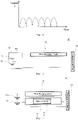
- the charging current when the voltage with the pulsed waveform outputted by the adapter is directly applied to both ends of the battery in the device to be charged to charge the battery, the charging current may be characterized by a pulsed waveform such as a steamed bun waveform. It should be understood that, the charging current may be used to charge the battery intermittently. A period of the charging current may vary with a frequency of an input alternating current (such as a frequency of an alternating current power grid). For example, the frequency corresponding to the period of the charging current may be an integral multiple or a fraction of the frequency of the power grid. Moreover, when the charging current is used to charge the battery intermittently, a current waveform corresponding to the charging current may be formed of one pulse or a set of pulses synchronous to the power grid.
- the battery may receive the pulsed direct current (having a direction unchanged and amplitude varying with time), the alternating current (having a direction and amplitude both varying with time) or the constant direct current (having a direction and amplitude both unchanged) outputted by the adapter.
- the device to be charged typically includes only a single battery cell.
- the single battery cell is charged with large charging current, a serious heating phenomenon occurs on the device to be charged.
- the structure of the battery cell in the device to be charged according to embodiments of the present disclosure is improved by incorporating a plurality of battery cells coupled in series, and a direct charging is performed on the plurality of battery cells.
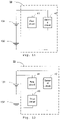
- Fig. 1 is a schematic structure diagram illustrating a device to be charged.
- the device 10 to be charged in Fig. 1 includes a charging interface 11 and a first charging circuit 12.
- the first charging circuit 12 is coupled with the charging interface 11.
- the first charging circuit 12 receives an output voltage and an output current of an adapter via the charging interface 11, and directly applies the output voltage and the output current of the adapter to both ends of the plurality of battery cells 13 coupled in series in the device to be charged so as to perform a direct charging on the plurality of battery cells 13.
- the plurality of battery cells 13 are charged in a direct charging manner via the first charging circuit 12.
- the solution of direct charging can reduce the heat generated in the device to be charged to some extent.
- the output current of the adapter is too large, for example, when the output current of the adapter reaches a value ranging from 5A to 10A, the device to be charged may have a serious heating problem, thus causing a safety hazard.
- the structure of the battery cell in the device to be charged is further improved, i.e. , the plurality of battery cells coupled in series are incorporated.
- the charging current required by the plurality of battery cells is 1/N (N is the number of the plurality of battery cells coupled in series in the device to be charged) of that required by the single battery cell.
- N is the number of the plurality of battery cells coupled in series in the device to be charged
- the charging current may be reduced greatly in embodiments of the present disclosure, thus further reducing the heat generated during the charging process in the device to be charged.
- a charging current of 9A is required to reach a charging rate of 3C.
- two battery cells each of which is 1500mAh may be coupled in series, so as to replace a single battery cell of 3000mAh. In this way, it merely requires a charging current of 4.5A to reach the charging rate of 3C. Compared to a charging current of 9A, the charging current of 4.5A causes obviously less heat.
- the output voltage received by the first charging circuit 12 from the adapter needs to be greater than a total voltage of the plurality of battery cells 13.
- a working voltage of a single battery cell is typically within 3.0V-4.35V.
- the output voltage of the adapter may be greater than or equal to 10V.
- the charging interface 11 may be a universal serial bus (USB) interface, which may be a common USB interface or a micro USB interface, or a Type-C interface.
- the first charging circuit 12 may charge the plurality of battery cells 13 via a power wire in the USB interface.
- the power wire in the USB interface may be a VBus wire and/or a ground wire in the USB interface.
- the plurality of battery cells 13 in embodiments of the present disclosure may include battery cells with the same or similar specification and parameters.
- the battery cells with the same or similar specification are easy to manage.
- the overall performance and service life of the plurality of battery cells 13 can be improved when battery cells with the same or similar specification and parameters are selected.
- the plurality of battery cells 13 coupled in series can realize voltage-dividing on the output voltage of the adapter.
- the device to be charged typically adopts a single battery cell for power supply.
- the plurality of battery cells coupled in series are incorporated, which have a high total voltage unsuitable for being used to supply power for the device to be charged (or elements in the device to be charged, or a chip in the device to be charged) directly.
- one feasible implementation is to adjust the working voltage of the device to be charged (or elements in the device to be charged, or a chip in the device to be charged) to support the power supply of the plurality of battery cells.
- the device to be charged needs to be changed greatly, thus causing a high cost.
- an implementation according to embodiments of the present disclosure is described in detail with reference to Fig. 2 and Fig. 3 , in which the problem of how to supply power using the plurality of battery cells can be solved.
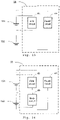
- the device 10 to be charged further includes a step-down circuit 21 and a power supply circuit 22.
- An input end of the step-down circuit 21 is coupled to both ends of the plurality of battery cells 13 respectively.
- the step-down circuit 21 is configured to convert the total voltage of the plurality of battery cells 13 into a first voltage VI, where a ⁇ V1 ⁇ b, a represents the minimum working voltage of the device 10 to be charged (or elements in the device 10 to be charged, or a chip in the device 10 to be charged), and b represents the maximum working voltage of the device 10 to be charged (or elements in the device 10 to be charged, or a chip in the device 10 to be charged).
- the power supply circuit 22 is coupled to an output end of the step-down circuit 21. The power supply circuit 22 supplies power for the device 10 to be charged based on the first voltage.
- the step-down circuit 21 is incorporated on the basis of the example described with regard to Fig. 1 .
- the total voltage of the plurality of battery cells 13 is stepped down by the step-down circuit 21 to obtain a first voltage. Since the first voltage is between the minimum working voltage and the maximum working voltage of the device 10 to be charged, the first voltage can be directly used to supply power for the device to be charged, thus solving the problem of how to supply power using the plurality of battery cells.
- the total voltage of the plurality of battery cells 13 varies with the electric quantity of the plurality of battery cells 13.
- the aforementioned total voltage of the plurality of battery cells 13 may refer to a present total voltage of the plurality of battery cells 13.
- the working voltage of a single battery cell is in a range of 3. 0V-4 .35V.
- the plurality of battery cells include two battery cells and the present voltage of each battery cell is 3.5V, the aforementioned total voltage of the plurality of battery cells 13 is 7V.
- the step-down circuit 21 may step down the total voltage of the plurality of battery cells 13 to any value in the range of 3.0V-4.35V.
- a buck circuit, a charge pump or the like can be used for stepping down voltage.
- the step-down circuit 21 may be a charge pump.
- the charge pump With the charge pump, the total voltage of the plurality of battery cells 13 may be directly stepped down to 1/N of the present total voltage, where N is the number of the plurality of battery cells 13.
- a conventional buck circuit includes a switch transistor, an inductor and other elements. Since the power consumption of the inductor is large, the power consumption is high when the buck circuit is used to buck voltage .
- the charge pump mainly utilizes a switch transistor and a capacitor to buck voltage, and the capacitor does not consume additional energy basically. Thus, the power consumption during the step-down process can be decreased when the charge pump is used.
- the switch transistor in the charge pump controls the charging and discharging of the capacitor in a certain manner, such that the input voltage is stepped down by a certain factor (in embodiments of the present disclosure, the factor is 1/N), and the desired voltage can be obtained.
- the device 10 to be charged further includes a power supply circuit 32.
- An input end of the power supply circuit 32 is coupled to both ends of any one of the plurality of battery cells 13.
- the power supply circuit 32 supplies power for the elements in the device 10 to be charged based on the voltage of a single battery cell 13.
- the voltage after the buck conversion of the step-down circuit may have a pulsed wave, thus affecting the quality of power supply of the device to be charged.
- the power supply voltage is derived from both ends of one of the plurality of battery cells 13 directly to supply power for elements in the device to be charged. Since the voltage outputted by the battery cell is stable relatively, in embodiments of the present disclosure, not only the problem of how to supply power using the plurality of battery cells can be solved but also the quality of power supply of the device to be charged can be guaranteed.
- the device 10 to be charged further includes an equalization circuit 33.
- the equalization circuit 13 is coupled with the plurality of battery cells 13.
- the equalization circuit 13 is configured to equalize voltages of respective battery cells of the plurality of battery cells 13.
- the battery cell that supplies power for the elements in the device to be charged (hereinafter, this battery cell is referred to as a main battery cell, and other battery cells are referred as slave battery cells) consume electric quantity constantly, such that the voltage of the main battery cell and the voltage of the salve battery cell are not equalized (or, the voltage of the main battery cell and the voltage of the slave battery cell are inconsistent) .
- the overall performance of the plurality of battery cells 13 is decreased when the voltages of respective battery cells 13 are not equalized, thus affecting the service life of the plurality of battery cells 13.
- the equalization circuit 33 is introduced, to equalize the voltages of respective cells of the plurality of battery cells 13, thus improving the overall performance of the plurality of battery cells 13 and facilitating the unified management of the plurality of battery cells 13.
- a load may be coupled to both ends of the slave battery cell to consume the electric quantity of the slave battery cell, such that the electric quantity of the slave battery cell may be consistent with the electric quantity of the main battery cell.
- the slave battery cell may be used to charge the main battery cell, until the voltage of the main battery cell is consistent with the voltage of the slave battery cell.
- the plurality of battery cells 13 includes a first battery cell 131 and a second battery cell 132 (see Fig. 15 ).
- the equalization circuit 33 is configured to transfer electric quantity between the first battery cell and the second battery cell in an electromagnetic coupling manner.
- the equalization circuit is configured to equalize the voltages of respective battery cells in the electromagnetic coupling manner, such that the overall performance of the plurality of battery cells 13 is improved and it is convenient to manage the plurality of battery cells 13.
- the first battery cell 131 may be the slave battery cell and the second battery cell 132 may be the main battery cell.
- the first battery cell 131 may transfer electric quantity to the second battery cell 132 via the equalization circuit 33.
- each of the first battery cell 131 and the second battery cell 132 may include one battery cell or may include at least two battery cells, which is not limited herein.
- the first battery cell 131 when each of the first battery cell 131 and the second battery cell 132 includes one battery cell, the first battery cell 131 may be any one of the plurality of battery cells 13, and the second battery cell 132 may be any battery cell other than the first battery cell 131 in the plurality of battery cells 13.
- the equalization circuit 33 may include a first circuit 41 and a second circuit 42.
- the first circuit 41 is coupled with the first battery cell 131
- the second circuit 42 is coupled with the first battery cell 131 and the second battery cell 132 respectively.
- the first circuit 41 is switched on, the first circuit 41 is configured to couple energy outputted by the first battery cell 131 to the second circuit 42 in an electromagnetic coupling manner, such that the second circuit 42 generates a first charging current based on the energy from the first circuit 41, and charges the first battery cell and the second battery cell with the first charging current.
- the first circuit 41 in the equalization circuit 33 couples the energy outputted by the first battery cell 131 to the second circuit 42, and the second circuit 42 generates the first charging current based on the energy from the first circuit 41, and charges the first battery cell 131 and the second battery cell 132 with the first charging current.
- the equalization circuit 33 transfers the energy obtained from the first battery cell 131 to the first battery cell 131 and the second battery cell 132, so as to realize an electric quantity transfer between the first battery cell 131 and the second battery cell 132.
- the equalization circuit 33 further includes a third circuit 43.
- the third circuit 43 is coupled with the second battery cell 132.
- the third circuit 43 is configured to couple energy outputted by the second battery cell 132 to the second circuit 42 in an electromagnetic coupling manner, such that the second circuit 42 generates a second charging current based on the energy from the third circuit 43, and charges the first battery cell 131 and the second battery cell 132 with the second charging current.
- the equalization circuit 33 can also transfer the energy obtained from the second battery cell 132 to the first battery cell 131 and the second battery cell 132, so as to realize the electric quantity transfer between the first battery cell 131 and the second battery cell 132.
- the first circuit 41 and the second circuit 42 may be switched on, and the third circuit 43 may be switched off, such that the energy of the first battery cell 131 is transferred to the first battery cell 131 and the second battery cell 132.
- the first circuit 41 may be switched off, and the second circuit 42 and the third circuit 43 may be switched on, such that the energy of the second battery cell 132 is transferred to the first battery cell 131 and the second battery cell 132. In this way, voltage equalization of respective battery cells can be realized.
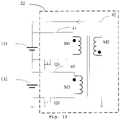
- Fig. 13 is a schematic structure diagram illustrating an equalization circuit according to another embodiment of the present disclosure.
- the equalization circuit 33 includes a fourth circuit 44 and a fifth circuit 45.
- the fourth circuit 44 is coupled with the first battery cell 131 and the second battery cell 132 respectively, and the fifth circuit 45 is coupled with the first battery cell 131.
- the fourth circuit 44 is configured to couple energy outputted by the first battery cell 131 and the second battery cell 132 to the fifth circuit 45 in an electromagnetic coupling manner, such that the fifth circuit 45 generates a second charging current based on the energy from the fourth circuit 44, and charges the first battery cell 131 with the second charging current.
- the fourth circuit 44 in the equalization circuit 33 couples the energy outputted by the first battery cell 131 and the second battery cell 132 to the fifth circuit 45, and the fifth circuit 45 generates the second charging current based on the energy from the fourth circuit 44, and charges the first battery cell 131 with the second charging current.
- the equalization circuit 33 transfers the energy obtained from the first battery cell 131 and the second battery cell 132 to the first battery cell 131, so as to realize an electric quantity transfer between the first battery cell 131 and the second battery cell 132.
- the equalization circuit 33 further includes a sixth circuit 46.
- the sixth circuit 46 is coupled with the second battery cell 132.
- the fourth circuit 44 is configured to couple energy outputted by the first battery cell 131 and the second battery cell 132 to the sixth circuit 46 in an electromagnetic coupling manner, such that the sixth circuit 46 generates a third charging current based on the energy from the fourth circuit 44, and charges the second battery cell 132 with the third charging current.
- the equalization circuit 33 can transfer the energy obtained from the first battery cell 131 and the second battery cell 132 to the second battery cell 132, so as to realize the electric quantity transfer between the first battery cell 131 and the second battery cell 132.
- the fourth circuit 44 and the fifth circuit 45 may be switched on, and the sixth circuit 46 may be switched off, such that the energy of the first battery cell 131 and the second battery cell 132 is transferred to the first battery cell 131.
- the fifth circuit 45 may be switched off, and the fourth circuit 44 and the sixth circuit 46 may be switched on, such that the energy of the first battery cell 131 and the second battery cell 132 is transferred to the second battery cell 132. In this way, voltage equalization of respective battery cells can be realized.
- Fig. 15 is a circuit schematic illustrating an equalization circuit according to an embodiment of the present disclosure.
- the first circuit 41 may include a first inductor M1 and a switch transistor Q1.
- the second circuit 42 may include a second inductor M2 and a rectifier diode.
- the third circuit 43 may include a third inductor M3 and a switch transistor Q2.
- the first inductor M1 and the second inductor M2 are coupled with each other, and the second inductor M2 and the third inductor M3 are coupled with each other.
- the switch transistor Q1 or the switch transistor Q2 may be configured to generate a pulse current.
- the equalization circuit 33 may transfer the electric quantity of the first battery cell 131 to the first battery cell 131 and the second battery cell 132 in an electromagnetic coupling manner.
- the equalization circuit 33 may transfer the electric quantity of the second battery cell 132 to the first battery cell 131 and the second battery cell 132 in an electromagnetic coupling manner.
- Fig. 16 is a circuit schematic illustrating an equalization circuit according to another embodiment of the present disclosure.
- the fourth circuit 44 may include a fourth inductor M4 and a switch transistor Q4.
- the fifth circuit 45 may include a fifth inductor M5 and a switch transistor Q5.
- the sixth circuit 46 may include a sixth inductor M6 and a switch transistor Q6.
- the fourth inductor M4 and the fifth inductor M5 are coupled with each other, and the fourth inductor M4 and the sixth inductor M6 are coupled with each other.
- the switch transistor Q4 is configured to generate a pulse current.
- the switch transistor Q5 is configured to control the fifth circuit 45 to switch on or off and the switch transistor Q6 is configured to control the sixth circuit 46 to switch on or off.
- the equalization circuit 33 may transfer the electric quantity of the first battery cell 131 and the second battery cell 132 to the first battery cell 131 in an electromagnetic coupling manner.
- the equalization circuit 33 may transfer the electric quantity of the first battery cell 131 and the second battery cell 132 to the second battery cell 132 in an electromagnetic coupling manner.
- a lithium precipitation may occur when the adapter charges the battery cell in the device to be charged, thus shortening the service life of the battery cell.
- the adapter may be controlled to output a pulsed direct current (or called as an unidirectional pulsed output current, or called as a current with a pulsed waveform, or called as a steamed bun current). Since the first charging circuit 12 charges the plurality of battery cells 13 in a direct charging manner, the pulsed direct current outputted by the adapter may be directly applied to both ends of the plurality of battery cells 13. As illustrated in Fig. 5 , the magnitude of the pulsed direct current changes periodically. Compared to the constant direct current, the pulsed direct current may reduce the lithium precipitation and improve the service life of the battery cell. In addition, compared to the constant direct current, the pulsed direct current may reduce a probability and intensity of arc discharge of a contact of a charging interface and improve the service life of the charging interface.
- a primary filter circuit and a secondary filter circuit may be removed from the adapter, such that the obtained output current of the adapter is the pulsed direct current.
- the output current of the adapter received by the first charging circuit 12 may be an alternating current (for example, the primary filter circuit, a secondary rectifier circuit and the secondary filter circuit are removed from the adapter, and then the obtained output current of the adapter is the alternating current), which also can reduce the lithium precipitation and improve the service life of the battery cell.
- an alternating current for example, the primary filter circuit, a secondary rectifier circuit and the secondary filter circuit are removed from the adapter, and then the obtained output current of the adapter is the alternating current
- the output voltage and the output current of the adapter received by the first charging circuit 12 via the charging interface 11 may be a voltage and a current outputted by the adapter in a constant current mode (the constant current charging mode or the constant current charging stage) respectively.
- the plurality of battery cells 13 may be encapsulated in one battery 51.
- the battery 51 may include a battery protection plate 52, by means of which over-voltage and over-current protection, electric quantity balance management and electric quantity management or the like may be realized.
- the plurality of battery cells 13 may be encapsulated in a plurality of batteries.
- the device 10 to be charged further includes a second charging circuit 61.
- the second charging circuit 61 may include a step-up circuit 62.
- the step-up circuit 62 has both ends coupled to the charging interface 11 and the plurality of battery cells 13 respectively.
- the step-up circuit 62 may receive the output voltage of the adapter via the charging interface 11, step up the output voltage of the adapter to a second voltage, and apply the second voltage to both ends of the plurality of battery cells 13 to charge the plurality of battery cells 13.
- the output voltage of the adapter received by the second charging circuit 61 is less than the total voltage of the plurality of battery cells 13, and the second voltage is greater than the total voltage of the plurality of battery cells 13.
- the first charging circuit 12 charges the plurality of battery cells 13 in a direct charging manner.
- the direct charging manner it is required that the output voltage of the adapter is greater than the total voltage of the plurality of battery cells 13.
- the present voltage of each battery cell is 4V, it is required that the output voltage of the adapter is at least greater than 8V when the first charging circuit 12 is used to charge the two battery cells.
- an output voltage of a normal adapter is typically 5V, which is unable to charge the plurality of battery cells 13 via the first charging circuit 12.
- the second charging circuit 61 is incorporated in embodiments of the present disclosure, and the second charging circuit 61 includes the step-up circuit 62 which may step up the output voltage of the adapter to the second voltage greater than the total voltage of the plurality of battery cells 13, such that the problem that the normal adapter cannot charge the plurality of battery cells 13 coupled in series is solved.
- the voltage value of the output voltage of the adapter received by the second charging circuit 61 is not limited in embodiments of the present disclosure, as long as the output voltage of the adapter is less than the total voltage of the plurality of battery cells 13, and the plurality of battery cells 13 can be charged after the output voltage of adapter is stepped up by the second charging circuit 61.
- the specific form of the step-up circuit is not limited in embodiments of the present disclosure.
- a boost circuit or a charge pump can be used to boost the voltage.
- the second charging circuit 61 may be designed as a conventional charging circuit, i.e., a conversion circuit (such as a charging IC) is disposed between the charging interface and the battery cell.
- the conversion circuit may perform a constant voltage and constant current control on the charging process of the adapter, and adjust the output voltage of the adapter according to actual situations, for example, boost or buck voltage.
- the voltage boost function of the conversion circuit is used for boosting the output voltage of the adapter to the second voltage greater than the total voltage of the plurality of battery cells 13.
- a switching between the first charging circuit 12 and the second charging circuit 61 may be realized via a switch or a control unit.
- the control unit is disposed inside the device to be charged.
- the control unit may switch between the first charging circuit 12 and the second charging circuit 61 flexibly according to actual requirements, such as according to a type of the adapter.
- the adapter supports a first charging mode and a second charging mode.
- the charging speed at which the adapter charges the device to be charged in the second charging mode is faster than the charging speed at which the adapter charges the device to be charged in the first charging mode.
- the adapter charges the plurality of battery cells 13 via the second charging circuit 61.
- the adapter charges the plurality of battery cells 13 via the first charging circuit 12.
- the adapter working in the second charging mode can fully charge the battery having the same capacity in a shorter time.
- the first charging mode can be a normal charging mode and the second charging mode can be a quick charging mode.
- the adapter Under the normal charging mode, the adapter outputs a relatively small current (typically less than 2.5 A) or charges the battery in the device to be charged with a relatively small power (typically less than 15 W) . In the normal charging mode, it may take several hours to fully charge a larger capacity battery (such as a battery with 3000 mAh) .
- the adapter under the quick charging mode, can output a relatively large current (typically greater than 2.5A, such as 4.5A, 5A or higher) or charges the battery in the device to be charged with a relatively large power (typically greater than or equal to 15W) .
- the charging speed of the adapter in the quick charging mode is faster, and the charging time required for fully charging a battery with the same capacity in the quick charging mode may be significantly shortened.
- the charging interface 11 includes a data wire
- the device to be charged 10 further includes a control unit 71.
- the control unit 71 performs a bidirectional communication with the adapter via the data wire so as to control the output of the adapter in the second charging mode.
- the charging interface is the USB interface
- the data wire may be D+ wire and/or D- wire in the USB interface.
- the content communicated between the control unit 71 and the adapter is not limited in embodiments of the present disclosure, and the control method of the control unit 71 in the second charging mode is also not limited in embodiments of the present disclosure.
- the control unit 71 may communicate with the adapter to obtain the present total voltage or present total electric quantity of the plurality of battery cells 13 in the device to be charged, and adjust the output voltage or output current of the adapter based on the present total voltage or present total electric quantity of the plurality of battery cells 13.
- the content communicated between the control unit 71 and the adapter and the control manner of the control unit 71 on the output of the adapter in the second charging mode will be described in detail in combination with specific embodiments.
- the master-slave relation of the adapter and the device to be charged is not limited in embodiments of the present disclosure.
- any of the adapter and the device to be charged can be configured as the master device initiating the bidirectional communication session, accordingly, the other one can be configured as the slave device making a first response or a first reply to the communication initiated by the master device.
- the identifications of the master device and the slave device can be determined by comparing the electrical levels of the adapter and the device to be charged relative to the ground.
- any of the adapter and the device to be charged can be configured as the master device initiating the bidirectional communication session, accordingly, the other one can be configured as the slave device making a first response or a first reply to the communication initiated by the master device, and the master device is able to make a second response to the first response or the first reply of the slave device, and thus a negotiation about a charging mode can be realized between the master device and the slave device.
- a charging operation between the master device and the slave device is performed after a plurality of negotiations about the charging mode are completed between the master device and the slave device, such that the charging process can be performed safely and reliably after the negotiation.
- the master device is able to make a second response to the first response or the first reply made by the slave device with regard to the communication session in a manner that, the master device is able to receive the first response or the first reply made by the slave device to the communication session and to make a targeted second response to the first response or the first reply.
- the master device when the master device receives the first response or the first reply made by the slave device to the communication session in a predetermined time period, the master device makes the targeted second response to the first response or the first reply of the slave device in a manner that, the master device and the slave device complete one negotiation about the charging mode, and a charging process may be performed between the master device and the salve device in the first charging mode or the second charging mode according to a negotiation result, i.e. , the adapter charges the device to be charged in the first charging mode or the second charging mode according to a negotiation result.
- the master device is able to make a second response to the first response or the first reply made by the slave device to the communication session in a manner that, when the master device does not receive the first response or the first reply made by the slave device to the communication session in the predetermined time period, the master device also makes the targeted second response to the first response or the first reply of the slave device.
- the master device when the master device does not receive the first response or the first reply made by the slave device to the communication session in the predetermined time period, the master device makes the targeted second response to the first response or the first reply of the slave device in a manner that, the master device and the slave device complete one negotiation about the charging mode, the charging process is performed between the master device and the slave device in the first charging mode, i.e., the adapter charges the device to be charged in the first charging mode.
- the device to be charged when the device to be charged is configured as the master device initiating the communication session, after the adapter configured as the slave device makes the first response or the first reply to the communication session initiated by the master device, it is unnecessary for the device to be charged to make the targeted second response to the first response or the first reply of the adapter, i.e., one negotiation about the charging mode is regarded as completed between the adapter and the device to be charged, and the adapter is able to charge the device to be charged in the first charging mode or the second charging mode according to the negotiation result.
- control unit 71 performs the bidirectional communication with the adapter via the data wire to control the output of the adapter in the second charging mode as follows .
- the control unit 71 performs the bidirectional communication with the adapter to negotiate the charging mode between the adapter and the device to be charged.
- the control unit 71 performs the bidirectional communication with the adapter to negotiate the charging mode between the adapter and the device to be charged as follows.
- the control unit 71 receives a first instruction sent by the adapter, in which the first instruction is configured to query the device to be charged whether to operate in the second charging mode.
- the control unit 71 sends a reply instruction of the first instruction to the adapter, in which the reply instruction of the first instruction is configured to indicate whether the device to be charged agrees to operate in the second charging mode.
- the control unit 71 controls the adapter to charge the plurality of battery cells via the first charging circuit 12 when the device to be charged agrees to operate in the second charging mode.
- control unit 71 performs the bidirectional communication with the adapter via the data wire to control the output of the adapter in the second charging mode as follows .
- the control unit 71 performs the bidirectional communication with the adapter to determine a charging voltage outputted by the adapter in the second charging mode for charging the device to be charged.
- the control unit 71 performs the bidirectional communication with the adapter to determine the charging voltage outputted by the adapter in the second charging mode for charging the device to be charged as follows.
- the control unit 71 receives a second instruction sent by the adapter, in which the second instruction is configured to query whether the output voltage of the adapter matches with the current total voltage of the plurality of battery cells 13 of the device to be charged.
- the control unit 71 sends a reply instruction of the second instruction to the adapter, in which the reply instruction of the second instruction is configured to indicate that the output voltage of the adapter matches with the present total voltage of the plurality of battery cells, or is higher or lower than the present total voltage of the plurality of battery cells.
- the second instruction can be configured to query whether the present output voltage of the adapter is suitable for being used as the charging voltage outputted by the adapter in the second charging mode for charging the device to be charged, and the reply instruction of the second instruction can be configured to indicate the present output voltage of the adapter is suitable, high or low.
- the present output voltage of the adapter When the present output voltage of the adapter is suitable for the present total voltage of the plurality of battery cells or the present output voltage of the adapter is suitable for being used as the charging voltage outputted by the adapter in the second charging mode for charging the device to be charged, it indicates that the present output voltage of the adapter is slightly higher than the present total voltage of the plurality of battery cells, and a difference between the output voltage of the adapter and the present total voltage of the plurality of battery cells is within a predetermined range (typically in an order of hundreds of millivolts).
- control unit 71 may perform the bidirectional communication with the adapter via the data wire to control the output of the adapter in the second charging mode as follows.
- the control unit 71 performs the bidirectional communication with the adapter to determine the charging current outputted by the adapter in the second charging mode for charging the device to be charged.
- the control unit 71 performs the bidirectional communication with the adapter to determine the charging current outputted by the adapter in the second charging mode for charging the device to be charged as follows.
- the control unit 71 receives a third instruction sent by the adapter, in which the third instruction is configured to query the maximum charging current presently supported by the device to be charged.
- the control unit 71 sends a reply instruction of the third instruction to the adapter, in which the reply instruction of the third instruction is configured to indicate the maximum charging current presently supported by the device to be charged, such that the adapter determines the charging current outputted by the adapter in the second charging mode for charging the device to be charged based on the maximum charging current presently supported by the device to be charged.
- the control unit 71 can determine the charging current outputted by the adapter in the second charging mode for charging the device to be charged based on the maximum charging current presently supported by the device to be charged in many ways.
- the adapter can determine the maximum charging current presently supported by the device to be charged as the charging current outputted by the adapter in the second charging mode for charging the device to be charged, or can determine the charging current outputted by the adapter in the second charging mode for charging the device to be charged after comprehensively considering the maximum charging current presently supported by the device to be charged and its own current output capability.
- control unit 71 may perform the bidirectional communication with the adapter via the data wire to control the output of the second adapter in the second charging mode as follows. During a charging process using the second charging mode, the control unit 71 performs the bidirectional communication with the adapter to adjust the output current of the adapter.
- control unit 71 performs the bidirectional communication with the adapter to adjust the output current of the adapter as follows.
- the control unit 71 receives a fourth instruction sent by the adapter, in which the fourth instruction is configured to query a present total voltage of the plurality of battery cells.
- the control unit 71 sends a reply instruction of the fourth instruction to the adapter, in which the reply instruction of the fourth instruction is configured to indicate the present total voltage of the plurality of battery cells, such that the adapter adjusts the output current of the adapter according to the present total voltage of the plurality of battery cells.
- control unit 71 is further configured to receive a fifth instruction sent by the adapter.
- the fifth instruction is configured to indicate that the charging interface 11 is in poor contact.
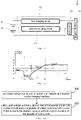
- Fig. 9 the communication procedure between the adapter and the device to be charged (which can be executed by the control unit in the device to be charged) will be described in detail. It should be noted that, examples in Fig. 9 are merely used to help those skilled in the related art to understand the present disclosure. The embodiments shall not be limited to the specific numeric values or specific scenes.
- the communication procedure between the adapter and the device to be charged may include the following five stages.
- the device to be charged may detect a type of the power supply providing device via the data wires D+ and D-.
- the device to be charged may absorb a current greater than a predetermined current threshold 12, such as 1A.
- a predetermined current threshold 12 such as 1A.
- the adapter detects that a current outputted by the adapter is greater than or equal to I2 within a predetermined time period (such as a continuous time period T1), the adapter determines that the device to be charged has completed the recognition of the type of the power supply providing device.
- the adapter initiates a negotiation between the adapter and the device to be charged, and sends an instruction 1 (corresponding to the above-mentioned first instruction) to the device to be charged to query whether the device to be charged agrees that the adapter charges the device to be charged in the second charging mode.
- the adapter When the adapter receives a reply instruction from the device to be charged and the reply instruction indicates that the device to be charged disagrees that the adapter charges the device to be charged in the second charging mode, the adapter detects the output current of the adapter again. When the output current of the adapter is still greater than or equal to I2 within a predetermined continuous time period (such as a continuous time period T1), the adapter sends the instruction 1 again to the device to be charged to query whether device to be charged agrees that the adapter charges the device to be charged in the second charging mode. The adapter repeats the above actions in stage 1, until the device to be charged agrees that the adapter charges the device to be charged in the second charging mode or the output current of the adapter is no longer greater than or equal to I2.
- a predetermined continuous time period such as a continuous time period T1
- the adapter sends an instruction 2 (corresponding to the above-mentioned second instruction) to the device to be charged to query whether the output voltage of the adapter is suitable for the present voltage of the battery (the present total voltage of the plurality of battery cells) in the device to be charged.
- the device to be charged sends a reply instruction of the instruction 2 to the adapter, for indicating that the output voltage of the adapter is higher, lower or suitable for the present voltage of the battery in the device to be charged (the present total voltage of the plurality of battery cells) .
- the adapter adjusts the output voltage of the adapter by one level, and sends the instruction 2 to the device to be charged again to query whether the output voltage of the adapter is suitable for the present voltage of the battery (the present total voltage of the plurality of battery cells) .
- the above actions in stage 2 are repeated, until the device to be charged determines that the output voltage of the adapter is suitable for the present voltage of the battery (the present total voltage of the plurality of battery cells). Then, the communication procedure proceeds to stage 3.
- the adapter sends an instruction 3 (corresponding to the above-mentioned third instruction) to the device to be charged to query the maximum charging current presently supported by the device to be charged.
- the device to be charged sends a reply instruction of the instruction 3 to the adapter for indicating the maximum charging current presently supported by the device to be charged to the adapter, and then the communication procedure proceeds to stage 4.
- the adapter determines the charging current outputted by the adapter in the second charging mode for charging the device to be charged, according to the maximum charging current presently supported by the device to be charged. Then, the communication procedure proceeds to stage 5, i.e., the constant current charging stage.
- the adapter sends an instruction 4 (corresponding to the above-mentioned fourth instruction) to the device to be charged at intervals to query the present voltage of the battery (the present total voltage of the plurality of battery cells) in the device to be charged.
- the device to be charged may send a reply instruction of the instruction 4 to the adapter, to feedback the present voltage of the battery (the present total voltage of the plurality of battery cells).
- the adapter may determine according to the present voltage of the battery (the present total voltage of the plurality of battery cells) whether the charging interface is in poor contact and whether it is necessary to step down the output current of the adapter.
- the adapter determines that the charging interface is in poor contact, the adapter sends an instruction 5 (corresponding to the above-mentioned fifth instruction) to the device to be charged, and the adapter quits the second charging mode and then the communication procedure is reset and proceeds to stage 1 again.
- an instruction 5 corresponding to the above-mentioned fifth instruction
- the reply instruction of the instruction 1 may carry data (or information) of the path impedance of the device to be charged.
- the data of the path impedance of the device to be charged may be used in stage 5 to determine whether the charging interface is in poor contact.
- the time period from when the device to be charged agrees that the adapter charges the device to be charged in the second charging mode to when the adapter adjusts the output voltage of the adapter to a suitable value may be controlled in a certain range. If the time period exceeds a predetermined range, the adapter or the device to be charged may determine that the communication procedure is abnormal, and is reset and proceeds to stage 1.
- the device to be charged may send a reply instruction of the instruction 2 to the adapter, for indicating that the output voltage of the adapter is suitable for the voltage of the battery (the total voltage of the plurality of battery cells) in the device to be charged.
- the adjusting speed of the output current of the adapter may be controlled to be in a certain range, thus avoiding an abnormity occurring in the charging process due to a too fast adjusting speed.
- the adapter in stage 5, can monitor the path impedance of a charging circuit in real time.
- the adapter can monitor the path impedance of the charging circuit according to the output voltage of the adapter, the output current of the adapter and the present voltage of the battery (the present total voltage of the plurality of battery cells) fed back by the device to be charged.
- the path impedance of the charging circuit is greater than a sum of the path impedance of the device to be charged and the impedance of a charging wire, it may be considered that the charging interface is in poor contact, and thus the adapter stops charging the device to be charged in the second charging mode.
- time intervals of communication between the adapter and the device to be charged may be controlled to be in a certain range, thus avoiding abnormity in the communication procedure due to a too short time interval of communication.
- the charging process is stopped and the charging communication procedure is reset, and the charging process proceeds to stage 1 again.
- the communication procedure would not proceed to stage 2.
- the stop of the charging process in this case may be regarded as an unrecoverable stop.
- the charging process is stopped and the charging communication procedure is reset, and the charging process proceeds to stage 1 again.
- the device to be charged agrees that the adapter charges the device to be charged in the second charging mode to recover the charging process.
- the stop of the charging process may be considered as a recoverable stop.
- the handshake communication between the device to be charged and the adapter may be initiated by the device to be charged.
- the device to be charged sends an instruction 1 to query the adapter whether to operate in the second charging mode.
- the adapter starts to charge the battery (the plurality of battery cells) in the device to be charged in the second charging mode.
- stage 5 there may be a constant voltage charging stage.
- the device to be charged may feedback the present voltage of the battery (the present total voltage of the plurality of battery cells) to the adapter.
- the charging process proceeds to the constant voltage charging stage from the constant current charging stage when the present voltage of the battery (the present total voltage of the plurality of battery cells) reaches a voltage threshold for constant voltage charging.
- the charging current steps down gradually. When the current reduces to a certain threshold, it indicates that the battery (the plurality of battery cells) in the device to be charged is fully charged, and thus the charging process is stopped.
- Fig. 10 is a flow chart showing parts of a charging method according to embodiments of the present disclosure.
- the charging method illustrated in Fig. 10 may be applied for charging the device to be charged.
- the device to be charged includes a charging interface.
- an output voltage and an output current of an adapter are received via the charging interface.
- the output voltage and the output current of the adapter are directly applied, via the first charging circuit, to both ends of a plurality of battery cells coupled in series in the device to be charged, so as to perform a direct charging on the plurality of battery cells.
- transferring electric quantity between the first battery cell and the second battery cell in an electromagnetic coupling manner includes: coupling energy outputted by the first battery cell to a second circuit in an electromagnetic coupling manner through a first circuit, ; generating a first charging current according to the energy from the first circuit through the second circuit, , and charging the first battery cell and the second battery cell with the first charging current.
- the first circuit is coupled with the first battery cell
- the second circuit is coupled with the first battery cell and the second battery cell respectively.
- transferring electric quantity between the first battery cell and the second battery cell in an electromagnetic coupling manner as illustrated in Fig. 10 may further includes : coupling energy outputted by the second battery cell to the second circuit in an electromagnetic coupling manner through a third circuit; generating a second charging current according to the energy from the third circuit through the second circuit, and charging the first battery cell and the second battery cell with the second charging current.
- transferring electric quantity between the first battery cell and the second battery cell in an electromagnetic coupling manner as illustrated in Fig. 10 further includes: coupling energy outputted by the first battery cell and the second battery cell to a fifth circuit in an electromagnetic coupling manner through a fourth circuit; generating a second charging current according to the energy from the fourth circuit through the fifth circuit, and charging the first battery cell with the second charging current.
- the fourth circuit is coupled with the first battery cell and the second battery cell respectively, and the fifth circuit is coupled with the first battery cell.
- the charging method of Fig.10 may further include: step-up the output voltage of the adapter to a second voltage; and applying the second voltage to both ends of the plurality of battery cells so as to charge the plurality of battery cells.
- the second voltage is greater than a total voltage of the plurality of battery cells.
- the adapter supports a first charging mode and a second charging mode, in which a charging speed of the adapter in the second charging mode is greater than that of the adapter in the first charging mode and the adapter charges the plurality of battery cells via the second charging circuit in the first charging mode and charges the plurality of battery cells via the first charging circuit in the second charging mode.
- the charging interface includes a data wire.
- the charging method of Fig. 10 further includes: performing a bidirectional communication with the adapter via the data wire to control an output of the adapter in the second charging mode.
- performing the bidirectional communication with the adapter via the data wire to control the output of the adapter in the second charging mode includes: performing the bidirectional communication with the adapter to negotiate about a charging mode between the adapter and the device to be charged.
- performing the bidirectional communication with the adapter to negotiate about the charging mode between the adapter and the device to be charged includes: receiving a first instruction sent by the adapter, in which the first instruction is configured to query the device to be charged whether to operate in the second charging mode; sending a reply instruction of the first instruction to the adapter, in which the reply instruction of the first instruction is configured to indicate whether the device to be charged agrees to operate in the second charging mode; and controlling the adapter to charge the plurality of battery cells via the first charging circuit when the device to be charged agrees to operate in the second charging mode.
- performing the bidirectional communication with the adapter via the data wire to control the output of the adapter in the second charging mode includes : performing the bidirectional communication with the adapter to determine a charging voltage outputted by the adapter in the second charging mode for charging the device to be charged.
- performing the bidirectional communication with the adapter to determine the charging voltage outputted by the adapter in the second charging mode for charging the device to be charged may include: receiving a second instruction sent by the adapter, in which the second instruction is configured to query whether the output voltage of the adapter matches with a present total voltage of the plurality of battery cells; and sending a reply instruction of the second instruction to the adapter, in which the reply instruction of the second instruction is configured to indicate that the output voltage of the adapter matches with the present total voltage of the plurality of battery cells, or is higher or lower than the present total voltage of the plurality of battery cells.
- performing the bidirectional communication with the adapter via the data wire to control the output of the adapter in the second charging mode may include: performing the bidirectional communication with the adapter to determine a charging current outputted by the adapter in the second charging mode for charging the device to be charged.
- performing the bidirectional communication with the adapter to determine the charging current outputted by the adapter in the second charging mode for charging the device to be charged may include: receiving a third instruction sent by the adapter, in which the third instruction is configured to query the maximum charging current presently supported by the device to be charged; and sending a reply instruction of the third instruction to the adapter, in which the reply instruction of the third instruction is configured to indicate the maximum charging current presently supported by the device to be charged, such that the adapter determines the charging current outputted by the adapter in the second charging mode for charging the device to be charged according to the maximum charging current presently supported by the device to be charged.
- performing the bidirectional communication with the adapter via the data wire to control the output of the adapter in the second charging mode may include: performing the bidirectional communication with the adapter to adjust the output current of the adapter, during a charging process in the second charging mode.
- performing the bidirectional communication with the adapter to adjust the output current of the adapter may include: receiving a fourth instruction sent by the adapter, in which the fourth instruction is configured to query a present total voltage of the plurality of battery cells; and sending a reply instruction of the fourth instruction to the adapter, in which the reply instruction of the fourth instruction is configured to indicate the present total voltage of the plurality of battery cells, such that the adapter adjusts the output current of the adapter according to the present total voltage of the plurality of battery cells.
- the disclosed system, device and method may be implemented in other way.
- embodiments of the described device are merely exemplary.
- the partition of units is merely a logical function partitioning. There may be other partitioning ways in practice. For example, several units or components may be integrated into another system, or some features may be ignored or not implemented.
- the coupling between each other or directly coupling or communication connection may be implemented via some interfaces.
- the indirect coupling or communication connection may be implemented in electrical, mechanical or other manners.
- the units illustrated as separate components can be or not be separated physically, and components described as units can be or not be physical units, i.e. , can be located at one place, or can be distributed onto multiple network units. It is possible to select some or all of the units according to actual needs, for realizing the objective of embodiments of the present disclosure.
- each functional unit in the present disclosure may be integrated in one progressing module, or each functional unit exists as an independent unit, or two or more functional units may be integrated in one module.
Landscapes
- Engineering & Computer Science (AREA)
- Power Engineering (AREA)
- Manufacturing & Machinery (AREA)
- Chemical & Material Sciences (AREA)
- Chemical Kinetics & Catalysis (AREA)
- Electrochemistry (AREA)
- General Chemical & Material Sciences (AREA)
- Charge And Discharge Circuits For Batteries Or The Like (AREA)
- Secondary Cells (AREA)
- Crystals, And After-Treatments Of Crystals (AREA)
Claims (13)
- System, umfassend eine zu ladende Einrichtung (10) und einen Adapter, wobei die zu ladende Einrichtung umfasst:mehrere Batteriezellen (13);eine Ladeschnittstelle (11);eine erste Ladeschaltung (12), die mit der Ladeschnittstelle (11) gekoppelt ist, ausgelegt zum Empfangen einer Ausgangsspannung und eines Ausgangsstroms des Adapters über die Ladeschnittstelle (11) und zum direkten Anlegen der Ausgangsspannung und des Ausgangsstroms des Adapters an beide Enden von mehreren in Reihe gekoppelten Batteriezellen (13), um eine Direktladung an den mehreren Batteriezellen (13) durchzuführen;eine Ausgleichsschaltung (33), die mit den mehreren Batteriezellen (13) gekoppelt ist und ausgelegt ist zum Ausgleichen von Spannungen von jeweiligen Batteriezellen (13) der mehreren Batteriezellen (13); undeine zweite Ladeschaltung (61),wobei die mehreren Batteriezellen (13) eine erste Batteriezelle (131) und eine zweite Batteriezelle (132) umfassen, und die Ausgleichsschaltung ausgelegt ist zum Transferieren einer elektrischen Menge zwischen der ersten Batteriezelle (131) undder zweiten Batteriezelle (132) auf elektromagnetische Koppelweise;wobei der Adapter ausgelegt ist zum Unterstützen eines ersten Lademodus und eines zweiten Lademodus, wobei eine Ladegeschwindigkeit des Adapters in dem zweiten Lademodus größer ist als die des Adapters in dem ersten Lademodus, der Adapter ausgelegt ist zum Laden der mehreren Batteriezellen (13) über die zweite Ladeschaltung (61) in dem ersten Lademodus und ausgelegt ist zum Laden der mehreren Batteriezellen (13) über die erste Ladeschaltung (12) in dem zweiten Lademodus; undwobei die Ladeschnittstelle (11) einen Datendraht umfasst, die zu ladende Einrichtung (10) weiter eine Steuereinheit (71) umfasst und die Steuereinheit (71) ausgelegt ist zum Durchführen einer bidirektionalen Kommunikation mit dem Adapter über den Datendraht zum Steuern eines Ausgangs des Adapters in dem zweiten Lademodus, undwobei, wenn die Steuereinheit (71) die bidirektionale Kommunikation mit dem Adapter über den Datendraht zum Steuern des Ausgangs des Adapters in dem zweiten Lademodus durchführt,die Steuereinheit (71) ausgelegt ist zum Durchführen der bidirektionalen Kommunikation mit dem Adapter zum Verhandeln über einen Lademodus zwischen dem Adapter und der zu ladenden Einrichtung (10),die Steuereinheit (71) ausgelegt ist zum Durchführen der bidirektionalen Kommunikation mit dem Adapter zum Bestimmen einer durch den Adapter in dem zweiten Lademodus ausgegebenen Ladespannung zum Laden der zu ladenden Einrichtung (10).
- System nach Anspruch 1, wobei die Ausgleichschaltung eine erste Schaltung (41) und eine zweite Schaltung (42) umfasst, die erste Schaltung (41) mit der ersten Batteriezelle (131) gekoppelt ist und die zweite Schaltung (42) mit der ersten Batteriezelle (131) beziehungsweise der zweiten Batteriezelle (132) gekoppelt ist;
wobei, wenn die erste Schaltung (41) eingeschaltet wird, die erste Schaltung (41) ausgelegt ist zum Koppeln der durch die erste Batteriezelle (131) an die zweite Schaltung (42) ausgegebenen Energie auf elektromagnetische Koppelweise, so dass die zweite Schaltung (42) einen ersten Ladestrom auf Basis der Energie von der ersten Schaltung (41) generiert und die erste Batteriezelle (131) und die zweite Batteriezelle (132) mit dem ersten Ladestrom lädt. - System nach Anspruch 2, wobei die Ausgleichsschaltung weiter eine dritte Schaltung (43) umfasst und die dritte Schaltung (43) mit der zweiten Batteriezelle (132) gekoppelt ist;
wobei, wenn die dritte Schaltung (43) eingeschaltet wird, die dritte Schaltung (43) ausgelegt ist zum Koppeln der durch die zweite Batteriezelle (132) an die zweite Schaltung (42) ausgegebenen Energie auf elektromagnetische Koppelweise, so dass die zweite Schaltung (42) einen zweiten Ladestrom auf Basis der Energie von der dritten Schaltung (43) generiert und die erste Batteriezelle (131) und die zweite Batteriezelle (132) mit dem zweiten Ladestrom lädt. - System nach Anspruch 1, wobei die Ausgleichsschaltung eine vierte Schaltung (44) und eine fünfte Schaltung (45) umfasst, die vierte Schaltung (44) mit der ersten Batteriezelle (131) beziehungsweise der zweiten Batteriezelle (132) gekoppelt ist und die fünfte Schaltung (45) mit der ersten Batteriezelle (131) gekoppelt ist;
wobei, wenn sowohl die vierte Schaltung (44) als auch die fünfte Schaltung (45) eingeschaltet werden, die vierte Schaltung (44) ausgelegt ist zum Koppeln der durch die erste Batteriezelle (131) und die zweite Batteriezelle (132) an die fünfte Schaltung (45) ausgegebene Energie auf elektromagnetische Koppelweise, so dass die fünfte Schaltung (45) einen zweiten Ladestrom auf Basis der Energie von der vierten Schaltung (44) generiert und die erste Batteriezelle (131) mit dem zweiten Ladestrom lädt. - System nach Anspruch 4, wobei die Ausgleichsschaltung weiter eine sechste Schaltung (46) umfasst und die sechste Schaltung (46) an die zweite Batteriezelle (132) gekoppelt ist;
wobei, wenn sowohl die vierte Schaltung (44) als auch die sechste Schaltung (46) eingeschaltet werden, die vierte Schaltung (44) ausgelegt ist zum Koppeln der durch die erste Batteriezelle (131) und die zweite Batteriezelle (132) an die sechste Schaltung (46) ausgegebene Energie auf elektromagnetische Koppelweise, so dass die sechste Schaltung (46) einen dritten Ladestrom auf Basis der Energie von der vierten Schaltung (44) generiert und die zweite Batteriezelle (132) mit dem dritten Ladestrom lädt. - System nach einem der Ansprüche 1-5, weiter umfassend:
eine Stromversorgungsschaltung (22) mit einem mit beiden Enden einer willkürlichen Batteriezelle in den mehreren Batteriezellen (13) gekoppelten Eingangsende und ausgelegt zum Liefern von Strom für Elemente in der zu ladenden Einrichtung (10) auf Basis einer Spannung der willkürlichen Batteriezelle. - System nach einem der Ansprüche 1-6, wobei die zweite Ladeschaltung (61) eine Hochsetzschaltung (62) umfasst, die Hochsetzschaltung (62) mit beiden Enden mit der Ladeschnittstelle (11) beziehungsweise den mehreren Batteriezellen (13) gekoppelt ist und ausgelegt ist zum Empfangen der Ausgangsspannung des Adapters über die Ladeschnittstelle (11) zum Hochsetzen der Ausgangsspannung des Adapters auf eine zweite Spannung und zum Anlegen der zweiten Spannung an die beiden Enden der mehreren Batteriezellen (13), um die mehreren Batteriezellen (13) zu laden, wobei die durch die zweite Ladeschaltung (61) empfangene Ausgangsspannung des Adapters kleiner ist als eine Gesamtspannung der mehreren Batteriezellen (13) und die zweite Spannung größer ist als die Gesamtspannung.
- System nach Anspruch 1, wobei, wenn die Steuereinheit (71) die bidirektionale Kommunikation mit dem Adapter durchführt zum Verhandeln über den Lademodus zwischen dem Adapter und der zu ladenden Einrichtung (10), die Steuereinheit (71) ausgelegt ist zum:Empfangen einer durch den Adapter gesendeten ersten Anweisung, in der die erste Anweisung ausgelegt ist zum Abfragen der zu ladenden Einrichtung (10), ob in dem zweiten Lademodus gearbeitet werden soll;Senden einer Antwortanweisung der ersten Anweisung an den Adapter, in der die Antwortanweisung der ersten Anweisung ausgelegt ist zum Anzeigen, ob die zu ladende Einrichtung (10) zustimmt, in dem zweiten Lademodus zu arbeiten;Steuern des Adapters zum Laden der mehreren Batteriezellen (13) über die erste Ladeschaltung (12), wenn die zu ladende Einrichtung (10) zustimmt, in dem zweiten Lademodus zu arbeiten.
- System nach Anspruch 8, wobei, wenn die Steuereinheit (71) die bidirektionale Kommunikation mit dem Adapter durchführt, um die durch den Adapter in dem zweiten Lademodus zum Laden der zu ladenden Einrichtung (10) ausgegebene Ladespannung zu bestimmen, die Steuereinheit (71) ausgelegt ist zum:Empfangen einer durch den Adapter gesendeten zweiten Anweisung, in der die zweite Anweisung ausgelegt ist zum Abfragen, ob die Ausgangsspannung des Adapters mit der gegenwärtigen Gesamtspannung der mehreren Batteriezellen (13) übereinstimmt;Senden einer Antwortanweisung der zweiten Anweisung an den Adapter, in der die Antwortanweisung der zweiten Anweisung ausgelegt ist zum Anzeigen, dass die Ausgangsspannung des Adapters mit der gegenwärtigen Gesamtspannung der mehreren Batteriezellen (13) übereinstimmt, oderüber oder unter der gegenwärtigen Gesamtspannung der mehreren Batteriezellen (13) liegt.
- System nach einem der Ansprüche 8-9, wobei, wenn die Steuereinheit (71) die bidirektionale Kommunikation mit dem Adapter über den Datendraht durchführt zum Steuern des Ausgangs des Adapters in dem zweiten Lademodus,
die Steuereinheit (71) ausgelegt ist zum Durchführen der bidirektionalen Kommunikation mit dem Adapter, um einen durch den Adapter in dem zweiten Lademodus zum Laden der zu ladenden Einrichtung (10) ausgegebenen Ladestrom zu bestimmen. - System nach Anspruch 10, wobei, wenn die Steuereinheit (71) die bidirektionale Kommunikation mit dem Adapter durchführt, um den durch den Adapter in dem zweiten Lademodus zum Laden der zu ladenden Einrichtung (10) ausgegebenen Ladestrom zu bestimmen, die Steuereinheit (71) ausgelegt ist zum:Empfangen einer durch den Adapter gesendeten dritten Anweisung, in der die dritte Anweisung ausgelegt ist zum Abfragen eines gegenwärtig durch die zu ladende Einrichtung (10) unterstützten maximalen Ladestroms;Senden einer Antwortanweisung der dritten Anweisung an den Adapter, in der die Antwortanweisung der dritten Anweisung ausgelegt ist zum Anzeigen des gegenwärtig durch die zu ladende Einrichtung (10) unterstützten maximalen Ladestroms, so dass der Adapter den durch den Adapter in dem zweiten Lademodus zum Laden der zu ladenden Einrichtung (10) ausgegebenen Ladestrom gemäß dem gegenwärtig durch die zu ladende Einrichtung (10) unterstützten maximalen Ladestrom bestimmt.
- System nach einem der Ansprüche 8-11, wobei, wenn die Steuereinheit (71) die bidirektionale Kommunikation mit dem Adapter über den Datendraht zum Steuern des Ausgangs des Adapters in dem zweiten Lademodus durchführt,die Steuereinheit (71) ausgelegt ist zum Durchführen der bidirektionalen Kommunikation mit dem Adapter zum Verstellen des Ausgangsstroms des Adapters während eines Ladeprozesses in dem zweiten Lademodus, undwobei, wenn die Steuereinheit (71) die bidirektionale Kommunikation mit dem Adapter zum Verstellen des Ausgangsstroms des Adapters durchführt, die Steuereinheit (71) ausgelegt ist zum:Empfangen einer durch den Adapter gesendeten vierten Anweisung, in der die vierte Anweisung ausgelegt ist zum Abfragen einer gegenwärtigen Gesamtspannung der mehreren Batteriezellen (13);Senden einer Antwortanweisung der vierten Anweisung an den Adapter, in der die Antwortanweisung der vierten Anweisung ausgelegt ist zum Anzeigen der gegenwärtigen Gesamtspannung der mehreren Batteriezellen (13), so dass der Adapter den Ausgangsstrom des Adapters gemäß der gegenwärtigen Gesamtspannung der mehreren Batteriezellen (13) verstellt.
- Ladeverfahren, angewendet zum Laden einer durch einen Adapter zu ladenden Einrichtung (10), wobei die zu ladende Einrichtung (10) mehrere Batteriezellen (13), eine erste Ladeschaltung (12), eine zweite Ladeschaltung (61), eine Steuereinheit (71) und eine Ladeschnittstelle (11) einschließlich eines Datendrahts umfasst, und das Ladeverfahren umfasst:Empfangen einer Ausgangsspannung und eines Ausgangsstroms des Adapters über die Ladeschnittstelle (11);direktes Anlegen, über die erste Ladeschaltung, der Ausgangsspannung und des Ausgangsstroms des Adapters an beide Enden von mehreren in Reihe gekoppelten Batteriezellen (13), um eine Direktladung an den mehreren Batteriezellen (13) durchzuführen;Ausgleichen von Spannungen von jeweiligen Batteriezellen (13) der mehreren Batteriezellen (13); undwobei die mehreren Batteriezellen (13) eine erste Batteriezelle (131) und eine zweite Batteriezelle (132) umfassen, und das Ausgleichen von Spannungen von jeweiligen Batteriezellen (13) der mehreren Batteriezellen (13) umfasst:Transferieren einer elektrischen Menge zwischen der ersten Batteriezelle (131) und der zweiten Batteriezelle (132) auf eine elektromagnetische Koppelweise;der Adapter einen ersten Lademodus und einen zweiten Lademodus unterstützt, eine Ladegeschwindigkeit des Adapters in dem zweiten Lademodus größer ist als die des Adapters in dem ersten Lademodus, der Adapter die mehreren Batteriezellen (13) über die zweite Ladeschaltung (61) in dem ersten Lademodus lädt und die mehreren Batteriezellen (13) über die erste Ladeschaltung (12) in dem zweiten Lademodus lädt;Durchführen, durch die Steuereinheit (71), einer bidirektionalen Kommunikation mit dem Adapter über den Datendraht zum Steuern eines Ausgangs des Adapters in dem zweiten Lademodus, undwobei, wenn die Steuereinheit (71) die bidirektionale Kommunikation mit dem Adapter über den Datendraht zum Steuern des Ausgangs des Adapters in dem zweiten Lademodus durchführt,die Steuereinheit (71) die bidirektionale Kommunikation mit dem Adapter durchführt zum Verhandeln über einen Lademodus zwischen dem Adapter und der zu ladenden Einrichtung (10),die Steuereinheit (71) die bidirektionale Kommunikation mit dem Adapter durchführt zum Bestimmen einer durch den Adapter in dem zweiten Lademodus zum Laden der zu ladenden Einrichtung (10) ausgegebenen Ladespannung.
Priority Applications (1)
| Application Number | Priority Date | Filing Date | Title |
|---|---|---|---|
| EP22186937.3A EP4117141A3 (de) | 2016-10-12 | 2017-02-24 | Zu ladende vorrichtung und ladeverfahren |
Applications Claiming Priority (3)
| Application Number | Priority Date | Filing Date | Title |
|---|---|---|---|
| PCT/CN2016/101944 WO2018068243A1 (zh) | 2016-10-12 | 2016-10-12 | 移动终端 |
| PCT/CN2017/073653 WO2018068454A1 (zh) | 2016-10-12 | 2017-02-15 | 待充电设备和充电方法 |
| PCT/CN2017/074825 WO2018068461A1 (zh) | 2016-10-12 | 2017-02-24 | 待充电设备和充电方法 |
Related Child Applications (2)
| Application Number | Title | Priority Date | Filing Date |
|---|---|---|---|
| EP22186937.3A Division-Into EP4117141A3 (de) | 2016-10-12 | 2017-02-24 | Zu ladende vorrichtung und ladeverfahren |
| EP22186937.3A Division EP4117141A3 (de) | 2016-10-12 | 2017-02-24 | Zu ladende vorrichtung und ladeverfahren |
Publications (3)
| Publication Number | Publication Date |
|---|---|
| EP3340425A1 EP3340425A1 (de) | 2018-06-27 |
| EP3340425A4 EP3340425A4 (de) | 2019-09-25 |
| EP3340425B1 true EP3340425B1 (de) | 2022-10-19 |
Family
ID=61024554
Family Applications (8)
| Application Number | Title | Priority Date | Filing Date |
|---|---|---|---|
| EP17793560.8A Active EP3334005B1 (de) | 2016-10-12 | 2017-02-15 | Aufladbare vorrichtung und ladeverfahren |
| EP21159537.6A Pending EP3849045A1 (de) | 2016-10-12 | 2017-02-15 | Aufladbare vorrichtung und ladeverfahren |
| EP21158640.9A Active EP3843237B1 (de) | 2016-10-12 | 2017-02-24 | Aufladbare vorrichtung und aufladeverfahren |
| EP22186937.3A Pending EP4117141A3 (de) | 2016-10-12 | 2017-02-24 | Zu ladende vorrichtung und ladeverfahren |
| EP17793559.0A Active EP3334004B1 (de) | 2016-10-12 | 2017-02-24 | Aufladbare vorrichtung und ladeverfahren |
| EP17751226.6A Active EP3340425B1 (de) | 2016-10-12 | 2017-02-24 | System mit einem adapter und einem aufladbaren gerät und aufladeverfahren dafür |
| EP17859439.6A Active EP3451484B1 (de) | 2016-10-12 | 2017-06-09 | Ladesystem und ein batterieverwaltungsverfahren |
| EP17861114.1A Active EP3451438B1 (de) | 2016-10-12 | 2017-06-09 | Batterieverwaltungsschaltung, zu ladende vorrichtung und leistungssteuerungsverfahren |
Family Applications Before (5)
| Application Number | Title | Priority Date | Filing Date |
|---|---|---|---|
| EP17793560.8A Active EP3334005B1 (de) | 2016-10-12 | 2017-02-15 | Aufladbare vorrichtung und ladeverfahren |
| EP21159537.6A Pending EP3849045A1 (de) | 2016-10-12 | 2017-02-15 | Aufladbare vorrichtung und ladeverfahren |
| EP21158640.9A Active EP3843237B1 (de) | 2016-10-12 | 2017-02-24 | Aufladbare vorrichtung und aufladeverfahren |
| EP22186937.3A Pending EP4117141A3 (de) | 2016-10-12 | 2017-02-24 | Zu ladende vorrichtung und ladeverfahren |
| EP17793559.0A Active EP3334004B1 (de) | 2016-10-12 | 2017-02-24 | Aufladbare vorrichtung und ladeverfahren |
Family Applications After (2)
| Application Number | Title | Priority Date | Filing Date |
|---|---|---|---|
| EP17859439.6A Active EP3451484B1 (de) | 2016-10-12 | 2017-06-09 | Ladesystem und ein batterieverwaltungsverfahren |
| EP17861114.1A Active EP3451438B1 (de) | 2016-10-12 | 2017-06-09 | Batterieverwaltungsschaltung, zu ladende vorrichtung und leistungssteuerungsverfahren |
Country Status (14)
| Country | Link |
|---|---|
| US (7) | US10727679B2 (de) |
| EP (8) | EP3334005B1 (de) |
| JP (10) | JP6886966B2 (de) |
| KR (6) | KR102255189B1 (de) |
| CN (11) | CN209488195U (de) |
| AU (1) | AU2017297856B2 (de) |
| ES (2) | ES2873773T3 (de) |
| HK (1) | HK1254751A1 (de) |
| IL (1) | IL258933B2 (de) |
| MY (1) | MY195768A (de) |
| SG (1) | SG11201801125YA (de) |
| TW (4) | TWI631793B (de) |
| WO (6) | WO2018068243A1 (de) |
| ZA (1) | ZA201800934B (de) |
Families Citing this family (85)
| Publication number | Priority date | Publication date | Assignee | Title |
|---|---|---|---|---|
| JP5545970B2 (ja) * | 2009-03-26 | 2014-07-09 | 株式会社半導体エネルギー研究所 | 発光装置及びその作製方法 |
| ES2712066T3 (es) * | 2016-01-05 | 2019-05-09 | Guangdong Oppo Mobile Telecommunications Corp Ltd | Método de carga rápida, terminal móvil y adaptador |
| CN209488195U (zh) | 2016-10-12 | 2019-10-11 | Oppo广东移动通信有限公司 | 移动终端 |
| CN107947252B (zh) * | 2016-10-12 | 2020-09-22 | Oppo广东移动通信有限公司 | 终端和设备 |
| WO2018134827A1 (en) * | 2017-01-23 | 2018-07-26 | B.G. Negev Technologies And Applications Ltd., At Ben-Gurion University | System for balancing a series of cells |
| EP3462564A4 (de) * | 2017-04-07 | 2019-05-08 | Guangdong Oppo Mobile Telecommunications Corp., Ltd. | Drahtloses ladesystem, vorrichtung und verfahren sowie aufzuladende vorrichtung |
| CN109417308B (zh) | 2017-04-07 | 2023-06-20 | Oppo广东移动通信有限公司 | 无线充电系统、装置、方法及待充电设备 |
| CN109478791A (zh) | 2017-04-13 | 2019-03-15 | Oppo广东移动通信有限公司 | 待充电设备和充电方法 |
| CN107204493B (zh) * | 2017-04-28 | 2020-09-29 | 宁德时代新能源科技股份有限公司 | 电池充电方法、装置和设备 |
| CN108769088B (zh) * | 2018-03-14 | 2021-01-08 | 维沃移动通信有限公司 | 一种通信方法及通信装置 |
| CN108448673B (zh) * | 2018-03-29 | 2020-08-18 | 维沃移动通信有限公司 | 一种充电方法、移动终端和充电器 |
| KR102411250B1 (ko) * | 2018-05-15 | 2022-06-22 | 광동 오포 모바일 텔레커뮤니케이션즈 코포레이션 리미티드 | 충전대상 기기, 무선 충전 방법 및 시스템 |
| CN108767919B (zh) * | 2018-05-25 | 2021-05-28 | 维沃移动通信有限公司 | 一种充电装置、终端设备及充电方法 |
| JP7185692B2 (ja) * | 2018-05-31 | 2022-12-07 | オッポ広東移動通信有限公司 | 充電方法及び充電装置 |
| CN110677041B (zh) * | 2018-07-03 | 2022-03-18 | 株式会社村田制作所 | 直流变换器的控制方法和控制装置 |
| DE102018214612A1 (de) * | 2018-08-29 | 2020-03-05 | Robert Bosch Gmbh | Verfahren zum Erkennen von Kontaktierungsfehlern in einem Akkupack und System zum Durchführen des Verfahrens |
| CN108973758A (zh) * | 2018-08-31 | 2018-12-11 | 金华安靠电源科技有限公司 | 一种电动汽车充电系统的充电识别方法及电动汽车充电电路 |
| US11342764B2 (en) * | 2018-11-28 | 2022-05-24 | Shenzhen Innokin Technology Co., Ltd. | Low voltage charging control and protection circuit for electronic cigarette and method of charging the electronic cigarette using the circuit |
| TWI681286B (zh) * | 2018-11-29 | 2020-01-01 | 群光電能科技股份有限公司 | 電源供應裝置 |
| US11018512B2 (en) * | 2018-12-06 | 2021-05-25 | Hitachi Automotive Systems Americas, Inc. | Energy storage device charge balancing |
| CN109510272B (zh) * | 2018-12-07 | 2022-04-29 | 青岛海信移动通信技术股份有限公司 | 一种充电控制方法及充电电路 |
| KR102405321B1 (ko) * | 2018-12-21 | 2022-06-02 | 광동 오포 모바일 텔레커뮤니케이션즈 코포레이션 리미티드 | 복수의 셀을 충전하는 방법, 장치 및 전자 기기 |
| EP3902086A4 (de) * | 2018-12-21 | 2022-01-12 | Guangdong Oppo Mobile Telecommunications Corp., Ltd. | Aufladesteuerungsvorrichtung und -verfahren sowie elektronische vorrichtung |
| EP3706282B1 (de) * | 2018-12-21 | 2023-04-05 | Guangdong Oppo Mobile Telecommunications Corp., Ltd. | Zu ladende vorrichtung und ladesteuerungsverfahren |
| KR102509907B1 (ko) * | 2019-01-11 | 2023-03-15 | 광동 오포 모바일 텔레커뮤니케이션즈 코포레이션 리미티드 | 충전 장치, 충전 방법 및 충전 대기 설비 |
| US11221663B2 (en) * | 2019-02-07 | 2022-01-11 | Datalogic Ip Tech S.R.L. | Removal prediction of a data reader from a charging base unit |
| KR102800822B1 (ko) * | 2019-02-14 | 2025-04-29 | 삼성전자주식회사 | 배터리를 충전하는 방법 및 그 방법을 적용한 전자 장치 |
| CN111613762B (zh) * | 2019-02-22 | 2022-06-10 | Oppo广东移动通信有限公司 | 电池组、电子设备和充放电控制方法 |
| WO2020191550A1 (zh) | 2019-03-22 | 2020-10-01 | Oppo广东移动通信有限公司 | 充放电控制方法及待充电设备 |
| WO2020228026A1 (zh) * | 2019-05-16 | 2020-11-19 | Oppo广东移动通信有限公司 | 供电电路、充放电电路与智能终端 |
| US12278508B2 (en) * | 2019-06-17 | 2025-04-15 | Renesas Electronics America Inc. | Single inductor multiple output charger for multiple battery applications |
| CN114072980A (zh) * | 2019-08-05 | 2022-02-18 | Oppo广东移动通信有限公司 | 待充电设备 |
| CN110445213B (zh) * | 2019-08-13 | 2022-05-17 | 深圳市道通智能航空技术股份有限公司 | 一种充电管理系统、方法、装置和存储介质 |
| CN110635186B (zh) * | 2019-08-29 | 2021-06-01 | 华为技术有限公司 | 一种充电方法及电子设备 |
| CN110838742A (zh) * | 2019-10-25 | 2020-02-25 | 深圳市道通智能航空技术有限公司 | 充电装置、充电系统和充电方法 |
| CN110729790B (zh) * | 2019-10-28 | 2023-03-21 | Oppo广东移动通信有限公司 | 充电方法、装置、计算机设备与存储介质 |
| US11545841B2 (en) * | 2019-11-18 | 2023-01-03 | Semiconductor Components Industries, Llc | Methods and apparatus for autonomous balancing and communication in a battery system |
| KR102857396B1 (ko) | 2019-11-29 | 2025-09-11 | 삼성전자 주식회사 | 직렬로 연결되는 다수 개의 배터리를 관리하기 위한 전자 장치 및 그의 동작 방법 |
| CN112994126B (zh) * | 2019-12-13 | 2025-06-03 | 北京小米移动软件有限公司 | 充电电路、电子设备、充电方法和装置 |
| US11498446B2 (en) * | 2020-01-06 | 2022-11-15 | Ford Global Technologies, Llc | Plug-in charge current management for battery model-based online learning |
| CN111327097B (zh) * | 2020-03-09 | 2023-08-08 | Oppo广东移动通信有限公司 | 充电电路及电子设备 |
| US11733747B2 (en) * | 2020-05-07 | 2023-08-22 | Google Llc | Multi-battery support for wearables |
| US11509144B2 (en) | 2020-06-02 | 2022-11-22 | Inventus Power, Inc. | Large-format battery management system with in-rush current protection for master-slave battery packs |
| WO2021243550A1 (en) | 2020-06-02 | 2021-12-09 | Inventus Power, Inc. | Large-format battery management system |
| US11489343B2 (en) | 2020-06-02 | 2022-11-01 | Inventus Power, Inc. | Hardware short circuit protection in a large battery pack |
| US12301031B1 (en) | 2020-06-02 | 2025-05-13 | Inventus Power, Inc. | Large-format battery management systems with gateway PCBA |
| US11552479B2 (en) | 2020-06-02 | 2023-01-10 | Inventus Power, Inc. | Battery charge balancing circuit for series connections |
| US11594892B2 (en) | 2020-06-02 | 2023-02-28 | Inventus Power, Inc. | Battery pack with series or parallel identification signal |
| US11588334B2 (en) | 2020-06-02 | 2023-02-21 | Inventus Power, Inc. | Broadcast of discharge current based on state-of-health imbalance between battery packs |
| US11476677B2 (en) | 2020-06-02 | 2022-10-18 | Inventus Power, Inc. | Battery pack charge cell balancing |
| US12224603B2 (en) | 2020-06-02 | 2025-02-11 | Inventus Power, Inc. | Mode-based disabling of communication bus of a battery management system |
| US11245268B1 (en) | 2020-07-24 | 2022-02-08 | Inventus Power, Inc. | Mode-based disabling of communiction bus of a battery management system |
| CN113937837B (zh) * | 2020-07-14 | 2024-07-19 | Oppo广东移动通信有限公司 | 充电电路及电子设备 |
| CN111817387B (zh) * | 2020-07-14 | 2024-06-11 | Oppo广东移动通信有限公司 | 充电电路及其控制方法、电子设备 |
| CN111817388B (zh) * | 2020-07-14 | 2024-06-11 | Oppo广东移动通信有限公司 | 充电电路及电子设备 |
| CN111864843A (zh) * | 2020-07-27 | 2020-10-30 | Oppo广东移动通信有限公司 | 双电池充电装置和移动终端 |
| KR102869898B1 (ko) | 2020-09-01 | 2025-10-14 | 삼성전자주식회사 | 배터리 상태 추정 방법 및 장치 |
| US11646597B2 (en) * | 2020-09-08 | 2023-05-09 | Southwest Research Institute | Fast charging for lithium-ion batteries using pulse width modulated charging and cooling |
| CN112202220B (zh) * | 2020-09-28 | 2023-06-13 | Oppo广东移动通信有限公司 | 供电控制方法和供电控制电路、电子设备、可读存储介质 |
| CN112319296B (zh) * | 2020-10-13 | 2022-08-30 | 武汉蔚来能源有限公司 | 充电保护方法、系统及充电电池 |
| CN112350397A (zh) * | 2020-10-21 | 2021-02-09 | 成都芯源系统有限公司 | 电池充电电路以及用于该电路的充电方法 |
| KR20220057368A (ko) * | 2020-10-29 | 2022-05-09 | 주식회사 엘지에너지솔루션 | 배터리 관리 장치 및 방법, 배터리 관리 시스템 |
| CN114094647B (zh) * | 2020-12-29 | 2022-11-11 | 荣耀终端有限公司 | 一种电芯的连接状态切换方法、电源系统和电子设备 |
| KR20220100332A (ko) * | 2021-01-08 | 2022-07-15 | 주식회사 엘지에너지솔루션 | 배터리 장치 및 전압 공급 방법 |
| US12483043B2 (en) * | 2021-01-13 | 2025-11-25 | Renesas Electronics America Inc. | Bi-directional active battery cell balancer and method for bi-directional cell balancing |
| CN112910036B (zh) * | 2021-01-21 | 2022-08-09 | 重庆新源创实业有限公司 | 一种充电控制方法、装置和系统 |
| CN114844135B (zh) * | 2021-02-02 | 2025-12-12 | 北京小米移动软件有限公司 | 一种充电方法、装置、终端及存储介质 |
| US12078682B2 (en) | 2021-03-03 | 2024-09-03 | Samsung Electronics Co., Ltd. | Method and apparatus for estimating state of battery |
| US11904727B2 (en) * | 2021-03-03 | 2024-02-20 | Ford Global Technologies, Llc | Battery thermal management via current control |
| US11846679B2 (en) * | 2021-05-04 | 2023-12-19 | International Business Machines Corporation | Battery control using non-linear rate-of-change failure threshold(s) |
| CN116670967A (zh) * | 2021-05-27 | 2023-08-29 | 华为技术有限公司 | 一种充放电电路及终端设备 |
| CN113675915B (zh) * | 2021-08-09 | 2025-07-08 | Oppo广东移动通信有限公司 | 充电控制方法、控制装置、电子设备及存储介质 |
| CN113725960A (zh) * | 2021-08-17 | 2021-11-30 | 珠海市魅族科技有限公司 | 一种充放电控制架构及其充放电控制方法、终端设备 |
| JP7682585B2 (ja) * | 2021-08-26 | 2025-05-26 | 株式会社今仙電機製作所 | アクティブバランサー |
| KR102464670B1 (ko) * | 2021-09-06 | 2022-11-09 | 울산대학교 산학협력단 | 배터리 셀의 균등화 충전장치 및 방법 |
| KR102885238B1 (ko) | 2021-09-08 | 2025-11-12 | 삼성전자주식회사 | 배터리 상태를 추정하는 전자 장치 및 그 동작 방법 |
| CN113765196A (zh) * | 2021-10-08 | 2021-12-07 | 上海南芯半导体科技有限公司 | 一种适用于串联电池组合的充放电实现方法 |
| TWI838654B (zh) * | 2021-10-19 | 2024-04-11 | 廣達電腦股份有限公司 | 智能電池裝置及其快速充電的方法 |
| EP4178068B1 (de) * | 2021-10-29 | 2024-04-17 | Nanjing Chervon Industry Co., Ltd. | Ladevorrichtung |
| WO2023146128A1 (ko) * | 2022-01-25 | 2023-08-03 | 삼성전자 주식회사 | 발열을 억제하기 위한 전자 장치 |
| WO2023141838A1 (zh) * | 2022-01-26 | 2023-08-03 | 宁德时代新能源科技股份有限公司 | 电池管理方法和电池管理装置 |
| CN115037011A (zh) * | 2022-04-19 | 2022-09-09 | 伏达半导体(合肥)有限公司 | 双电池充电装置、方法及其控制器 |
| CN115065123A (zh) * | 2022-06-29 | 2022-09-16 | 维沃移动通信有限公司 | 双电池串联电路、电路控制方法和电子设备 |
| CN115425711B (zh) * | 2022-09-09 | 2024-10-01 | Oppo广东移动通信有限公司 | 充电电流的获取方法、装置、终端设备及存储介质 |
| CN116914878B (zh) * | 2023-02-23 | 2024-08-23 | 荣耀终端有限公司 | 一种电子设备及充电方法 |
Citations (4)
| Publication number | Priority date | Publication date | Assignee | Title |
|---|---|---|---|---|
| US6040684A (en) * | 1997-06-30 | 2000-03-21 | Compaq Computer Corporation | Lithium ion fast pulse charger |
| WO2003088447A1 (en) * | 2002-04-05 | 2003-10-23 | Powergenix Systems, Inc. | Fast pulse battery charger |
| WO2016043099A1 (ja) * | 2014-09-18 | 2016-03-24 | Ntn株式会社 | 充電装置 |
| US20160111898A1 (en) * | 2014-10-17 | 2016-04-21 | Dongguan Amperex Technology Limited | Fast charging method for battery |
Family Cites Families (167)
| Publication number | Priority date | Publication date | Assignee | Title |
|---|---|---|---|---|
| GB2242793B (en) * | 1990-04-05 | 1994-08-10 | Technophone Ltd | Battery charging apparatus |
| JPH0773413B2 (ja) * | 1990-07-31 | 1995-08-02 | 三洋電機株式会社 | 外部バッテリ用アダプタ及びバッテリシステム |
| EP0484745B1 (de) * | 1990-11-07 | 1999-01-07 | Kabushiki Kaisha Toshiba | Gerät zur Rechnerstromversorgungssteuerung |
| US5444867A (en) * | 1991-01-11 | 1995-08-22 | Kabushiki Kaisha Toshiba | Adapter unit for adaptively supplying a portable radio telephone with power |
| JPH0624357U (ja) | 1992-08-20 | 1994-03-29 | 株式会社アイチコーポレーション | 電源装置 |
| JP2601974B2 (ja) * | 1992-09-16 | 1997-04-23 | インターナショナル・ビジネス・マシーンズ・コーポレイション | 電子機器用電源装置及び電子機器システム |
| JP3421373B2 (ja) * | 1992-11-26 | 2003-06-30 | 三洋電機株式会社 | アタッチメント及び充電装置並びに電源装置 |
| JP3185502B2 (ja) | 1993-11-22 | 2001-07-11 | 松下電器産業株式会社 | コードレス電話装置 |
| GB2284127B (en) | 1993-11-22 | 1998-08-12 | Matsushita Electric Industrial Co Ltd | Cordless telephone system |
| US5532524A (en) * | 1994-05-11 | 1996-07-02 | Apple Computer, Inc. | Distributed power regulation in a portable computer to optimize heat dissipation and maximize battery run-time for various power modes |
| JP3620118B2 (ja) | 1995-10-24 | 2005-02-16 | 松下電器産業株式会社 | 定電流・定電圧充電装置 |
| US6008620A (en) * | 1996-04-05 | 1999-12-28 | Sony Corporation | Battery charging device, method for charging battery pack and battery pack |
| WO1998028672A2 (en) * | 1996-12-13 | 1998-07-02 | Digital Scientific, Inc. | Apparatus and method for improving the efficient utilization of a power source |
| US5877564A (en) * | 1997-02-18 | 1999-03-02 | Nokia Mobile Phones Limited | Mobile station voltage supply using level shift of base band operating voltages |
| US6835491B2 (en) | 1998-04-02 | 2004-12-28 | The Board Of Trustees Of The University Of Illinois | Battery having a built-in controller |
| US6326767B1 (en) | 1999-03-30 | 2001-12-04 | Shoot The Moon Products Ii, Llc | Rechargeable battery pack charging system with redundant safety systems |
| JP2000333377A (ja) * | 1999-05-21 | 2000-11-30 | Sony Computer Entertainment Inc | エンタテインメントシステムおよび充電システム |
| US6841971B1 (en) | 2002-05-29 | 2005-01-11 | Alpha Technologies, Inc. | Charge balancing systems and methods |
| US7076375B2 (en) * | 2002-06-27 | 2006-07-11 | Spx Corporation | Apparatus and method for incorporating the use of a processing device into a battery charger and tester |
| US7378818B2 (en) * | 2002-11-25 | 2008-05-27 | Tiax Llc | Bidirectional power converter for balancing state of charge among series connected electrical energy storage units |
| US6873134B2 (en) * | 2003-07-21 | 2005-03-29 | The Boeing Company | Autonomous battery cell balancing system with integrated voltage monitoring |
| US20050077875A1 (en) * | 2003-10-14 | 2005-04-14 | Bohley Thomas K. | Battery cell balancing circuit |
| KR20050106745A (ko) | 2004-05-06 | 2005-11-11 | 삼성전자주식회사 | 휴대용 프린터의 전원 공급 장치 |
| DE102004031216A1 (de) | 2004-06-28 | 2006-01-19 | Siemens Ag | Vorrichtung und Verfahren zum Ladungsausgleich in Reihe geschalteter Energiespeicher |
| JP2006166615A (ja) * | 2004-12-08 | 2006-06-22 | Fuji Heavy Ind Ltd | 蓄電デバイスの電圧均等化制御システム |
| JP2006353010A (ja) * | 2005-06-16 | 2006-12-28 | Renesas Technology Corp | 2次バッテリパックおよびその製造方法 |
| US20070139012A1 (en) * | 2005-11-01 | 2007-06-21 | Aerovironment, Inc. | Motive power dual battery pack |
| JP2007336664A (ja) | 2006-06-14 | 2007-12-27 | Mitsumi Electric Co Ltd | 2次電池充電回路 |
| CN101150327A (zh) | 2006-09-22 | 2008-03-26 | 鸿富锦精密工业(深圳)有限公司 | 便携式设备借电系统及便携式设备 |
| KR101380748B1 (ko) | 2006-10-10 | 2014-04-02 | 삼성전자 주식회사 | 사용자 선택에 따라 배터리 충전모드를 변경하는컴퓨터시스템 및 그 제어방법 |
| JP2008182809A (ja) * | 2007-01-24 | 2008-08-07 | Matsushita Electric Ind Co Ltd | 電池回路、電池パック、及び電池システム |
| US7598706B2 (en) * | 2007-01-26 | 2009-10-06 | General Electric Company | Cell balancing battery pack and method of balancing the cells of a battery |
| CN101022179A (zh) * | 2007-03-15 | 2007-08-22 | 淮阴工学院 | 蓄电池快速充电方法 |
| US8098048B2 (en) | 2007-06-15 | 2012-01-17 | The Gillette Company | Battery charger with integrated cell balancing |
| JP4805223B2 (ja) | 2007-07-27 | 2011-11-02 | レノボ・シンガポール・プライベート・リミテッド | 充電システムおよび充電方法 |
| CN101442209A (zh) * | 2007-11-22 | 2009-05-27 | 威海科益达电子有限公司 | 大容量锂离子电池串联组合保护均衡模块 |
| JP2009159726A (ja) | 2007-12-26 | 2009-07-16 | Honda Motor Co Ltd | 放電制御装置 |
| CN101557118B (zh) | 2008-04-09 | 2012-05-30 | 鹏智科技(深圳)有限公司 | 二次电池的充电控制电路 |
| TWI377758B (en) * | 2008-06-20 | 2012-11-21 | Green Solution Tech Co Ltd | The battery charging controller and battery module thereof |
| CN201298737Y (zh) * | 2008-09-23 | 2009-08-26 | 何远强 | 一种电池均衡装置 |
| CN101409455B (zh) | 2008-11-19 | 2011-10-26 | 华为终端有限公司 | 一种电池系统的电压平衡装置及电压平衡方法 |
| JP4691171B2 (ja) | 2009-03-11 | 2011-06-01 | 本田技研工業株式会社 | 充放電装置 |
| US8129952B2 (en) * | 2009-04-16 | 2012-03-06 | Valence Technology, Inc. | Battery systems and operational methods |
| JP4966998B2 (ja) | 2009-06-18 | 2012-07-04 | パナソニック株式会社 | 充電制御回路、電池パック、及び充電システム |
| CN101986502A (zh) | 2009-07-28 | 2011-03-16 | 深圳富泰宏精密工业有限公司 | 手机电池充电电路 |
| JP2011055308A (ja) | 2009-09-02 | 2011-03-17 | Ricoh Co Ltd | 撮像装置 |
| US8405362B2 (en) | 2009-12-04 | 2013-03-26 | Linear Technology Corporation | Method and system for minimum output-voltage battery charger |
| KR101097262B1 (ko) | 2009-12-28 | 2011-12-21 | 삼성에스디아이 주식회사 | 배터리 팩, 이의 충전방법 |
| KR101211756B1 (ko) | 2010-02-11 | 2012-12-12 | 삼성에스디아이 주식회사 | 배터리 팩 |
| EP2367258B1 (de) * | 2010-03-16 | 2018-06-27 | CTEK Sweden AB | Kombiniertes Batterielade- und Batterieausgleichsgerät |
| US20110140662A1 (en) | 2010-03-31 | 2011-06-16 | Guoxing Li | Balancing system for a battery pack |
| TWI414125B (zh) | 2010-04-14 | 2013-11-01 | 新普科技股份有限公司 | 充電裝置及充電方法 |
| US9054385B2 (en) | 2010-07-26 | 2015-06-09 | Energyor Technologies, Inc | Passive power management and battery charging for a hybrid fuel cell / battery system |
| US9331499B2 (en) * | 2010-08-18 | 2016-05-03 | Volterra Semiconductor LLC | System, method, module, and energy exchanger for optimizing output of series-connected photovoltaic and electrochemical devices |
| CN102377203B (zh) * | 2010-08-26 | 2015-11-25 | 联想(北京)有限公司 | 一种电子设备及其充电控制方法 |
| JP5937011B2 (ja) * | 2010-10-19 | 2016-06-22 | 三洋電機株式会社 | 電源装置及びこれを用いた車両並びに蓄電装置 |
| TWM402554U (en) * | 2010-11-10 | 2011-04-21 | Richtek Technology Corp | Charger circuit |
| US8810207B2 (en) | 2010-11-17 | 2014-08-19 | Texas Instruments Incorporated | Communication systems and methods for transmitting communications between a charge system and an AC adapter |
| KR20120059247A (ko) * | 2010-11-30 | 2012-06-08 | 현대자동차주식회사 | 배터리 팩의 셀 밸런싱 제어장치 및 방법 |
| CN102545278A (zh) * | 2010-12-14 | 2012-07-04 | 西安众智惠泽光电科技有限公司 | 蓄电池组均衡充电系统 |
| CN102064702B (zh) * | 2010-12-31 | 2013-09-11 | 刘闯 | 双向隔离式的串联谐振dc/dc变换器 |
| TWI412205B (zh) | 2011-01-28 | 2013-10-11 | 康舒科技股份有限公司 | Battery pack potential balance circuit |
| CN102651563B (zh) * | 2011-02-25 | 2014-06-18 | 香港理工大学 | 电池能量平衡电路 |
| TW201246751A (en) * | 2011-05-12 | 2012-11-16 | Lite On Clean Energy Technology Corp | A battery system and a battery equalizer |
| JP2012249410A (ja) | 2011-05-27 | 2012-12-13 | Sharp Corp | 電気自動車充電用の充電器及び充電装置 |
| EP2538519B1 (de) * | 2011-06-15 | 2022-12-07 | Analog Devices International Unlimited Company | Stapelbarer bidirektionaler Mehrzellen-Batterieausgleicher |
| JP5830971B2 (ja) * | 2011-06-30 | 2015-12-09 | ソニー株式会社 | 電池モニタ回路、蓄電装置、電動車両および電力システム |
| US8947048B2 (en) * | 2011-07-29 | 2015-02-03 | Infineon Technologies Ag | Power supply system with charge balancing |
| US9487095B2 (en) * | 2011-08-26 | 2016-11-08 | Honda Motor Co., Ltd. | Charging and discharging device |
| JP5789846B2 (ja) * | 2011-09-05 | 2015-10-07 | 三洋電機株式会社 | 車両用の電源装置とこの電源装置を備える車両 |
| US9225179B2 (en) * | 2011-10-12 | 2015-12-29 | Texas Instruments Incorporated | Capacitor-based active balancing for batteries and other power supplies |
| CN103094939A (zh) | 2011-11-01 | 2013-05-08 | 宏碁股份有限公司 | 电池管理电路 |
| TW201325014A (zh) | 2011-12-02 | 2013-06-16 | Emerald Battery Technologies Co Ltd | 隔離式電池平衡裝置 |
| KR101585117B1 (ko) * | 2011-12-08 | 2016-01-21 | 가부시키가이샤 에네르기 오요 기쥬츠켄큐쇼 | 급속충전용 전원 시스템 |
| US8837170B2 (en) * | 2011-12-13 | 2014-09-16 | Busek Company | Passive resonant bidirectional converter with galvanic barrier |
| CN103248077B (zh) * | 2012-02-08 | 2016-05-18 | 东莞赛微微电子有限公司 | 电池均衡电路 |
| CN103247821A (zh) * | 2012-02-10 | 2013-08-14 | 联想(北京)有限公司 | 一种电池及其充电、放电方法 |
| JP5737207B2 (ja) | 2012-02-15 | 2015-06-17 | 三菱自動車工業株式会社 | 電圧バランス制御装置 |
| CN103311562B (zh) | 2012-03-12 | 2015-06-03 | 联想(北京)有限公司 | 一种充电电池及其充电控制方法和放电控制方法 |
| JP5773920B2 (ja) * | 2012-03-19 | 2015-09-02 | ルネサスエレクトロニクス株式会社 | 充電装置 |
| CN102655346B (zh) * | 2012-04-25 | 2016-04-20 | 浙江大学 | 具有自动平衡能力的智能电池模块及电池组 |
| US20140042815A1 (en) * | 2012-06-10 | 2014-02-13 | The Regents of the University of Colorado, A Body Corporate | Balancing, filtering and/or controlling series-connected cells |
| US9711962B2 (en) * | 2012-07-09 | 2017-07-18 | Davide Andrea | System and method for isolated DC to DC converter |
| US10346567B2 (en) | 2012-07-13 | 2019-07-09 | Fu-Sheng Tsai | Method and apparatus for performing battery cell control with aid of virtual battery mechanism |
| TWI501507B (zh) | 2012-07-13 | 2015-09-21 | 蔡富生 | 藉助於虛擬電池機制來進行電池單元控制之方法與裝置 |
| CN103181054B (zh) * | 2012-08-07 | 2015-11-25 | 华为终端有限公司 | 用于供电的装置、方法和用户设备 |
| JP2014087200A (ja) | 2012-10-25 | 2014-05-12 | Nec Personal Computers Ltd | 充電装置、充電方法、プログラム、及び情報処理装置 |
| CN103001297B (zh) * | 2012-12-31 | 2014-12-10 | 中南大学 | 一种串联电容器组谐振式电压均衡充电方法及其系统 |
| CN103107575B (zh) | 2013-01-18 | 2015-07-29 | 华为终端有限公司 | 充电方法、移动设备、充电设备与充电系统 |
| JP5811292B2 (ja) | 2013-01-21 | 2015-11-11 | 株式会社村田製作所 | 電力伝送システム |
| JP2014158346A (ja) * | 2013-02-15 | 2014-08-28 | Omron Automotive Electronics Co Ltd | 組電池の電圧監視装置 |
| JP6028625B2 (ja) * | 2013-02-28 | 2016-11-16 | ミツミ電機株式会社 | 充放電制御回路及び充放電制御方法 |
| TWI482391B (zh) * | 2013-04-02 | 2015-04-21 | 緯創資通股份有限公司 | 用於一電子裝置之充電電路及其相關充電方法 |
| CN103219769B (zh) | 2013-04-17 | 2015-12-02 | 广东欧珀移动通信有限公司 | 电池充电方法、电池充电系统及移动终端 |
| KR101470735B1 (ko) * | 2013-05-15 | 2014-12-08 | 주식회사 엘지씨엔에스 | 직렬 연결된 다수의 2차 전지 충방전을 위한 능동 벨런스회로와 알고리즘을 구비한 2차 전지 충방전 제어장치 및 방법 |
| JP6127290B2 (ja) | 2013-05-28 | 2017-05-17 | 国立研究開発法人宇宙航空研究開発機構 | コンバータと多段倍電圧整流回路を併用した均等化機能付充放電器 |
| CN103269108B (zh) * | 2013-06-04 | 2015-04-29 | 奇瑞汽车股份有限公司 | 一种电池电量均衡电路 |
| CN103326552B (zh) * | 2013-06-28 | 2016-03-30 | 成都多林电器有限责任公司 | 超大功率igbt感应加热设备的电流均衡系统及全桥逆变单元 |
| CN103441542B (zh) * | 2013-08-13 | 2015-02-11 | 天津谷泰科技有限公司 | 一种锂电池分布式充电均衡电路及其控制方法 |
| JP2015065795A (ja) * | 2013-09-26 | 2015-04-09 | ソニー株式会社 | 蓄電装置、蓄電制御装置および蓄電制御方法 |
| JP6112222B2 (ja) * | 2013-11-13 | 2017-04-12 | 株式会社村田製作所 | 周波数特性測定方法 |
| JP6301637B2 (ja) * | 2013-11-20 | 2018-03-28 | Necプラットフォームズ株式会社 | 電子機器及び充電方法 |
| EP2879266A1 (de) * | 2013-11-28 | 2015-06-03 | Dialog Semiconductor GmbH | Leistungsverwaltungsverfahren für eine wiederaufladbare Stapelzellen-Energiespeichereinrichtung und wiederaufladbare Stapelzellen-Energiespeichereinrichtung |
| CN203674762U (zh) | 2014-01-09 | 2014-06-25 | 成都芯源系统有限公司 | 移动电源电路 |
| KR20150085642A (ko) | 2014-01-16 | 2015-07-24 | 삼성전자주식회사 | 전원 공급 장치, 이를 포함하는 전자 장치 및 전원 공급 방법 |
| CN108134432B (zh) * | 2014-01-28 | 2021-01-15 | Oppo广东移动通信有限公司 | 电子设备充电控制装置及方法 |
| CN103762690B (zh) * | 2014-01-28 | 2016-08-24 | 广东欧珀移动通信有限公司 | 充电系统 |
| CN203747451U (zh) | 2014-01-28 | 2014-07-30 | 广东欧珀移动通信有限公司 | 电池充电装置 |
| CN106787026B (zh) * | 2014-01-28 | 2019-05-10 | Oppo广东移动通信有限公司 | 充电模式切换电路和方法 |
| CN106532884B (zh) * | 2014-01-28 | 2019-07-19 | Oppo广东移动通信有限公司 | 电池充电装置及方法 |
| CN106385094B (zh) * | 2014-01-28 | 2019-02-12 | Oppo广东移动通信有限公司 | 快速充电控制方法和系统 |
| CN103762702B (zh) | 2014-01-28 | 2015-12-16 | 广东欧珀移动通信有限公司 | 电子设备充电装置及其电源适配器 |
| TWI492482B (zh) | 2014-02-27 | 2015-07-11 | Hycon Technology Corp | 用於準確量測電池容量的主僕式電池管理系統 |
| JP2015180179A (ja) * | 2014-02-27 | 2015-10-08 | 日立工機株式会社 | 充電装置 |
| TWI536706B (zh) | 2014-03-11 | 2016-06-01 | 登騰電子股份有限公司 | 智慧型電源轉接器及其供電控制方法 |
| WO2015147503A1 (en) * | 2014-03-28 | 2015-10-01 | Samsung Electronics Co., Ltd. | Method for charging battery and electronic device |
| TW201539935A (zh) | 2014-04-03 | 2015-10-16 | 恆耀能源股份有限公司 | 行動電源 |
| US20150295426A1 (en) * | 2014-04-11 | 2015-10-15 | Kabushiki Kaisha Toshiba | Battery and electronic device |
| CN203813491U (zh) | 2014-04-29 | 2014-09-03 | 深圳市前海富达科技有限公司 | 一种充电转接装置 |
| US9800075B2 (en) * | 2014-06-04 | 2017-10-24 | Societe Bic | Smart charging cable and method for operating a portable electronic device |
| CN104065147B (zh) * | 2014-06-27 | 2017-06-06 | 宇龙计算机通信科技(深圳)有限公司 | 一种充电适配器、终端、充电控制方法 |
| CN104124734B (zh) * | 2014-07-22 | 2016-09-14 | 深圳市富满电子集团股份有限公司 | 一种充电系统及充电方法 |
| CN104167780B (zh) | 2014-07-30 | 2016-06-08 | 广州益维电动汽车有限公司 | 一种连续可控隔离式有源主动均衡充电模块及其充电系统 |
| CN105471001A (zh) * | 2014-08-19 | 2016-04-06 | 中兴通讯股份有限公司 | 一种使用多电芯电池的移动终端及其充放电电路 |
| US9997933B2 (en) * | 2014-09-03 | 2018-06-12 | Mophie, Inc. | Systems and methods for battery charging and management |
| JP6428107B2 (ja) * | 2014-09-29 | 2018-11-28 | 株式会社村田製作所 | 蓄電装置、電子機器、電動車両および電力システム |
| KR101712244B1 (ko) * | 2014-10-08 | 2017-03-13 | 주식회사 엘지화학 | 엘씨 공진을 이용한 배터리 셀 밸런싱 시스템 및 방법 |
| TWI640145B (zh) | 2014-10-13 | 2018-11-01 | 力智電子股份有限公司 | 轉接器、可攜式電子裝置與其充電控制方法 |
| CN204243803U (zh) | 2014-10-14 | 2015-04-01 | 深圳市坤兴科技有限公司 | 一种多功能移动电源 |
| KR101898185B1 (ko) * | 2014-11-11 | 2018-09-12 | 광동 오포 모바일 텔레커뮤니케이션즈 코포레이션 리미티드 | 전원 어댑터, 단말기 및 충전 시스템 |
| CA2951176C (en) * | 2014-11-11 | 2018-09-25 | Guangdong Oppo Mobile Telecommunications Corp., Ltd. | Power adapter and terminal |
| US20170244265A1 (en) * | 2014-11-11 | 2017-08-24 | Guangdong Oppo Mobile Telecommunications Corp., Ltd. | Communication method, power adaptor and terminal |
| EP3923443A1 (de) * | 2014-11-11 | 2021-12-15 | Guangdong Oppo Mobile Telecommunications Corp., Ltd. | Kommunikationsverfahren, netzadapter und endgerät |
| TWI524626B (zh) * | 2014-12-05 | 2016-03-01 | 利佳興業股份有限公司 | 模組化雙向推挽式電池平衡監控系統 |
| JPWO2016098631A1 (ja) | 2014-12-15 | 2017-09-21 | 日本電気株式会社 | 電池パック、電子機器、セルバランス装置、セルバランス方法、およびプログラム |
| US9929582B2 (en) * | 2014-12-23 | 2018-03-27 | Intel Corporation | Adaptive charge current for a battery |
| CN105762884B (zh) * | 2014-12-24 | 2020-01-17 | Oppo广东移动通信有限公司 | 用于为电子设备充电的方法和电子设备 |
| JP6222744B2 (ja) | 2015-01-16 | 2017-11-01 | オムロンオートモーティブエレクトロニクス株式会社 | 電源制御装置 |
| CN204481505U (zh) | 2015-01-30 | 2015-07-15 | 深圳众思康科技有限公司 | 多节锂电池串联快速充电装置 |
| US9678528B2 (en) | 2015-02-15 | 2017-06-13 | Skyworks, Solutions Inc. | Voltage supply system with boost converter and charge pump |
| CN104659885B (zh) | 2015-03-23 | 2017-01-04 | 阳光电源股份有限公司 | 一种蓄电池组均衡系统和均衡控制方法 |
| CN204668976U (zh) * | 2015-03-26 | 2015-09-23 | 深圳市力可普尔电子有限公司 | 移动电源及充电系统 |
| CN106160038B (zh) | 2015-03-31 | 2018-11-09 | 鸿富锦精密工业(武汉)有限公司 | 充电电路 |
| EP3142217A4 (de) | 2015-06-01 | 2018-05-30 | Guangdong Oppo Mobile Telecommunications Corp., Ltd | Ladekreislauf und mobiles endgerät |
| CN105917546B (zh) | 2015-06-01 | 2018-02-02 | 广东欧珀移动通信有限公司 | 充电电路和移动终端 |
| CN104917271A (zh) | 2015-06-19 | 2015-09-16 | 李�昊 | 一种适配器 |
| CN105071451A (zh) * | 2015-07-14 | 2015-11-18 | 合肥华信电动科技发展有限公司 | 一种电池管理系统 |
| CN105098900B (zh) * | 2015-08-05 | 2018-05-29 | 青岛海信移动通信技术股份有限公司 | 移动终端、可直充电源适配器及充电方法 |
| CN105140985B (zh) * | 2015-08-05 | 2017-08-25 | 青岛海信移动通信技术股份有限公司 | 移动终端、可直充电源适配器及充电方法 |
| CN104967201B (zh) | 2015-08-05 | 2018-10-02 | 青岛海信移动通信技术股份有限公司 | 快速充电方法、移动终端及可直充电源适配器 |
| CN104993565B (zh) * | 2015-08-05 | 2017-12-05 | 青岛海信移动通信技术股份有限公司 | 可直充电源适配器 |
| CN104993182B (zh) * | 2015-08-05 | 2018-01-09 | 青岛海信移动通信技术股份有限公司 | 一种移动终端、可直充电源适配器及充电方法 |
| CN105048602B (zh) * | 2015-08-31 | 2017-12-05 | 矽力杰半导体技术(杭州)有限公司 | 电池平衡电路及电池装置 |
| CN105162206B (zh) * | 2015-09-30 | 2018-03-23 | 环旭电子股份有限公司 | 充电电池的充电控制方法 |
| TWM518824U (zh) | 2015-10-14 | 2016-03-11 | Reduce Carbon Energy Develop Co Ltd | 主動式平衡充電裝置 |
| CN105375597A (zh) * | 2015-12-08 | 2016-03-02 | 重庆瑞升康博电气有限公司 | 无人机智能充电机 |
| CN105471033B (zh) * | 2015-12-21 | 2018-06-26 | 南京信息职业技术学院 | 基于充电曲线的智能充电方法及智能充电系统 |
| US20170201101A1 (en) * | 2016-01-12 | 2017-07-13 | Richtek Technology Corporation | Mobile device charger for charging mobile device and related adaptive charging voltage generator |
| JP6615873B2 (ja) | 2016-02-05 | 2019-12-04 | オッポ広東移動通信有限公司 | 充電方法、アダプター及び移動端末 |
| CN105720645A (zh) * | 2016-04-11 | 2016-06-29 | 浙江德景电子科技有限公司 | 一种充电方法、装置和充电器 |
| CN106021155B (zh) | 2016-05-25 | 2018-12-21 | 深圳市昂宇电子有限公司 | 一种可实现影音视频输出的usb供电口 |
| CN105896670A (zh) * | 2016-05-25 | 2016-08-24 | 乐视控股(北京)有限公司 | 一种充电装置及移动终端 |
| CN105958581B (zh) * | 2016-05-31 | 2024-01-09 | 零度智控(北京)智能科技有限公司 | 充电方法、充电装置以及无人机 |
| EP3276784B1 (de) * | 2016-07-26 | 2020-06-17 | Guangdong Oppo Mobile Telecommunications Corp., Ltd. | Ladesystem, ladeverfahren und stromadapter |
| CN106230083B (zh) | 2016-08-22 | 2018-12-04 | 维沃移动通信有限公司 | 充电器充电电路、移动终端充电电路、充电器及移动终端 |
| CN106208260B (zh) | 2016-08-31 | 2018-12-04 | 维沃移动通信有限公司 | 一种充电电路、数据线以及充电接口 |
| CN209488195U (zh) * | 2016-10-12 | 2019-10-11 | Oppo广东移动通信有限公司 | 移动终端 |
-
2016
- 2016-10-12 CN CN201690001726.XU patent/CN209488195U/zh active Active
- 2016-10-12 WO PCT/CN2016/101944 patent/WO2018068243A1/zh not_active Ceased
-
2017
- 2017-02-15 AU AU2017297856A patent/AU2017297856B2/en active Active
- 2017-02-15 EP EP17793560.8A patent/EP3334005B1/de active Active
- 2017-02-15 HK HK18113794.1A patent/HK1254751A1/zh unknown
- 2017-02-15 ES ES17793560T patent/ES2873773T3/es active Active
- 2017-02-15 CN CN201780001422.2A patent/CN108604808A/zh active Pending
- 2017-02-15 KR KR1020187004656A patent/KR102255189B1/ko active Active
- 2017-02-15 SG SG11201801125YA patent/SG11201801125YA/en unknown
- 2017-02-15 MY MYPI2018700222A patent/MY195768A/en unknown
- 2017-02-15 US US15/555,399 patent/US10727679B2/en active Active
- 2017-02-15 WO PCT/CN2017/073653 patent/WO2018068454A1/zh not_active Ceased
- 2017-02-15 CN CN202111136156.9A patent/CN113872285A/zh active Pending
- 2017-02-15 KR KR1020217014756A patent/KR102387258B1/ko active Active
- 2017-02-15 JP JP2018507539A patent/JP6886966B2/ja active Active
- 2017-02-15 EP EP21159537.6A patent/EP3849045A1/de active Pending
- 2017-02-24 ES ES17793559T patent/ES2868000T3/es active Active
- 2017-02-24 CN CN201780001361.XA patent/CN108604807B/zh active Active
- 2017-02-24 WO PCT/CN2017/074822 patent/WO2018068460A1/zh not_active Ceased
- 2017-02-24 JP JP2018514886A patent/JP6605719B2/ja active Active
- 2017-02-24 JP JP2017557166A patent/JP6518989B2/ja active Active
- 2017-02-24 KR KR1020177031391A patent/KR102189156B1/ko active Active
- 2017-02-24 US US15/556,025 patent/US10826303B2/en active Active
- 2017-02-24 EP EP21158640.9A patent/EP3843237B1/de active Active
- 2017-02-24 CN CN202010921607.9A patent/CN112152282B/zh active Active
- 2017-02-24 CN CN202110007785.5A patent/CN112838634B/zh active Active
- 2017-02-24 EP EP22186937.3A patent/EP4117141A3/de active Pending
- 2017-02-24 KR KR1020187006367A patent/KR102213689B1/ko active Active
- 2017-02-24 EP EP17793559.0A patent/EP3334004B1/de active Active
- 2017-02-24 WO PCT/CN2017/074825 patent/WO2018068461A1/zh not_active Ceased
- 2017-02-24 US US15/565,512 patent/US10536006B2/en active Active
- 2017-02-24 CN CN201780001071.5A patent/CN107996014B/zh active Active
- 2017-02-24 EP EP17751226.6A patent/EP3340425B1/de active Active
- 2017-06-09 CN CN201780034386.XA patent/CN109417208B/zh active Active
- 2017-06-09 WO PCT/CN2017/087829 patent/WO2018068523A1/zh not_active Ceased
- 2017-06-09 CN CN201780032618.8A patent/CN109417298A/zh active Pending
- 2017-06-09 JP JP2019518290A patent/JP2019537409A/ja active Pending
- 2017-06-09 JP JP2019503560A patent/JP6696044B2/ja active Active
- 2017-06-09 EP EP17859439.6A patent/EP3451484B1/de active Active
- 2017-06-09 EP EP17861114.1A patent/EP3451438B1/de active Active
- 2017-06-09 CN CN202110394294.0A patent/CN113131570B/zh active Active
- 2017-06-09 KR KR1020197013084A patent/KR102221498B1/ko active Active
- 2017-06-09 KR KR1020197001193A patent/KR102290478B1/ko active Active
- 2017-06-09 WO PCT/CN2017/087828 patent/WO2018068522A1/zh not_active Ceased
- 2017-07-19 TW TW106124046A patent/TWI631793B/zh active
- 2017-07-20 TW TW106124338A patent/TWI657637B/zh active
- 2017-07-20 TW TW106124383A patent/TWI625912B/zh active
- 2017-07-20 TW TW106124422A patent/TWI657644B/zh active
- 2017-10-09 CN CN201710937914.4A patent/CN107749648B/zh active Active
-
2018
- 2018-02-12 ZA ZA2018/00934A patent/ZA201800934B/en unknown
- 2018-04-25 IL IL258933A patent/IL258933B2/en unknown
- 2018-11-30 US US16/206,117 patent/US11322949B2/en active Active
- 2018-12-04 US US16/209,946 patent/US20190115769A1/en not_active Abandoned
-
2019
- 2019-03-28 JP JP2019062905A patent/JP6864022B2/ja active Active
- 2019-06-17 JP JP2019112263A patent/JP6761077B2/ja active Active
- 2019-06-26 JP JP2019118903A patent/JP6752943B2/ja active Active
- 2019-12-03 US US16/701,264 patent/US10916951B2/en active Active
-
2021
- 2021-04-01 JP JP2021062991A patent/JP2021106495A/ja active Pending
- 2021-05-19 JP JP2021084849A patent/JP2021153384A/ja active Pending
-
2022
- 2022-04-01 US US17/711,820 patent/US11670947B2/en active Active
Patent Citations (4)
| Publication number | Priority date | Publication date | Assignee | Title |
|---|---|---|---|---|
| US6040684A (en) * | 1997-06-30 | 2000-03-21 | Compaq Computer Corporation | Lithium ion fast pulse charger |
| WO2003088447A1 (en) * | 2002-04-05 | 2003-10-23 | Powergenix Systems, Inc. | Fast pulse battery charger |
| WO2016043099A1 (ja) * | 2014-09-18 | 2016-03-24 | Ntn株式会社 | 充電装置 |
| US20160111898A1 (en) * | 2014-10-17 | 2016-04-21 | Dongguan Amperex Technology Limited | Fast charging method for battery |
Also Published As
Similar Documents
| Publication | Publication Date | Title |
|---|---|---|
| US10916951B2 (en) | Device to be charged and charging method | |
| US10541541B2 (en) | Equalization circuit, device to be charged and charging control method | |
| US10581264B2 (en) | Adapter and charging control method | |
| US11631985B2 (en) | Device to be charged with multiple charging channels, charging method, and charging control circuit with multiple charging channels |
Legal Events
| Date | Code | Title | Description |
|---|---|---|---|
| STAA | Information on the status of an ep patent application or granted ep patent |
Free format text: STATUS: UNKNOWN |
|
| STAA | Information on the status of an ep patent application or granted ep patent |
Free format text: STATUS: THE INTERNATIONAL PUBLICATION HAS BEEN MADE |
|
| PUAI | Public reference made under article 153(3) epc to a published international application that has entered the european phase |
Free format text: ORIGINAL CODE: 0009012 |
|
| STAA | Information on the status of an ep patent application or granted ep patent |
Free format text: STATUS: REQUEST FOR EXAMINATION WAS MADE |
|
| 17P | Request for examination filed |
Effective date: 20170822 |
|
| AK | Designated contracting states |
Kind code of ref document: A1 Designated state(s): AL AT BE BG CH CY CZ DE DK EE ES FI FR GB GR HR HU IE IS IT LI LT LU LV MC MK MT NL NO PL PT RO RS SE SI SK SM TR |
|
| AX | Request for extension of the european patent |
Extension state: BA ME |
|
| A4 | Supplementary search report drawn up and despatched |
Effective date: 20190827 |
|
| RIC1 | Information provided on ipc code assigned before grant |
Ipc: H02J 7/00 20060101AFI20190821BHEP Ipc: H02J 7/04 20060101ALI20190821BHEP |
|
| RAP1 | Party data changed (applicant data changed or rights of an application transferred) |
Owner name: GUANGDONG OPPO MOBILE TELECOMMUNICATIONS CORP., LT |
|
| DAV | Request for validation of the european patent (deleted) | ||
| DAX | Request for extension of the european patent (deleted) | ||
| STAA | Information on the status of an ep patent application or granted ep patent |
Free format text: STATUS: EXAMINATION IS IN PROGRESS |
|
| 17Q | First examination report despatched |
Effective date: 20200428 |
|
| GRAP | Despatch of communication of intention to grant a patent |
Free format text: ORIGINAL CODE: EPIDOSNIGR1 |
|
| STAA | Information on the status of an ep patent application or granted ep patent |
Free format text: STATUS: GRANT OF PATENT IS INTENDED |
|
| INTG | Intention to grant announced |
Effective date: 20220315 |
|
| GRAJ | Information related to disapproval of communication of intention to grant by the applicant or resumption of examination proceedings by the epo deleted |
Free format text: ORIGINAL CODE: EPIDOSDIGR1 |
|
| STAA | Information on the status of an ep patent application or granted ep patent |
Free format text: STATUS: EXAMINATION IS IN PROGRESS |
|
| GRAP | Despatch of communication of intention to grant a patent |
Free format text: ORIGINAL CODE: EPIDOSNIGR1 |
|
| STAA | Information on the status of an ep patent application or granted ep patent |
Free format text: STATUS: GRANT OF PATENT IS INTENDED |
|
| INTC | Intention to grant announced (deleted) | ||
| GRAS | Grant fee paid |
Free format text: ORIGINAL CODE: EPIDOSNIGR3 |
|
| INTG | Intention to grant announced |
Effective date: 20220817 |
|
| GRAA | (expected) grant |
Free format text: ORIGINAL CODE: 0009210 |
|
| STAA | Information on the status of an ep patent application or granted ep patent |
Free format text: STATUS: THE PATENT HAS BEEN GRANTED |
|
| AK | Designated contracting states |
Kind code of ref document: B1 Designated state(s): AL AT BE BG CH CY CZ DE DK EE ES FI FR GB GR HR HU IE IS IT LI LT LU LV MC MK MT NL NO PL PT RO RS SE SI SK SM TR |
|
| REG | Reference to a national code |
Ref country code: GB Ref legal event code: FG4D |
|
| REG | Reference to a national code |
Ref country code: CH Ref legal event code: EP |
|
| REG | Reference to a national code |
Ref country code: IE Ref legal event code: FG4D |
|
| REG | Reference to a national code |
Ref country code: DE Ref legal event code: R096 Ref document number: 602017062779 Country of ref document: DE |
|
| REG | Reference to a national code |
Ref country code: AT Ref legal event code: REF Ref document number: 1526172 Country of ref document: AT Kind code of ref document: T Effective date: 20221115 |
|
| REG | Reference to a national code |
Ref country code: LT Ref legal event code: MG9D |
|
| REG | Reference to a national code |
Ref country code: NL Ref legal event code: MP Effective date: 20221019 |
|
| REG | Reference to a national code |
Ref country code: AT Ref legal event code: MK05 Ref document number: 1526172 Country of ref document: AT Kind code of ref document: T Effective date: 20221019 |
|
| PG25 | Lapsed in a contracting state [announced via postgrant information from national office to epo] |
Ref country code: NL Free format text: LAPSE BECAUSE OF FAILURE TO SUBMIT A TRANSLATION OF THE DESCRIPTION OR TO PAY THE FEE WITHIN THE PRESCRIBED TIME-LIMIT Effective date: 20221019 |
|
| PG25 | Lapsed in a contracting state [announced via postgrant information from national office to epo] |
Ref country code: SE Free format text: LAPSE BECAUSE OF FAILURE TO SUBMIT A TRANSLATION OF THE DESCRIPTION OR TO PAY THE FEE WITHIN THE PRESCRIBED TIME-LIMIT Effective date: 20221019 Ref country code: PT Free format text: LAPSE BECAUSE OF FAILURE TO SUBMIT A TRANSLATION OF THE DESCRIPTION OR TO PAY THE FEE WITHIN THE PRESCRIBED TIME-LIMIT Effective date: 20230220 Ref country code: NO Free format text: LAPSE BECAUSE OF FAILURE TO SUBMIT A TRANSLATION OF THE DESCRIPTION OR TO PAY THE FEE WITHIN THE PRESCRIBED TIME-LIMIT Effective date: 20230119 Ref country code: LT Free format text: LAPSE BECAUSE OF FAILURE TO SUBMIT A TRANSLATION OF THE DESCRIPTION OR TO PAY THE FEE WITHIN THE PRESCRIBED TIME-LIMIT Effective date: 20221019 Ref country code: FI Free format text: LAPSE BECAUSE OF FAILURE TO SUBMIT A TRANSLATION OF THE DESCRIPTION OR TO PAY THE FEE WITHIN THE PRESCRIBED TIME-LIMIT Effective date: 20221019 Ref country code: ES Free format text: LAPSE BECAUSE OF FAILURE TO SUBMIT A TRANSLATION OF THE DESCRIPTION OR TO PAY THE FEE WITHIN THE PRESCRIBED TIME-LIMIT Effective date: 20221019 Ref country code: AT Free format text: LAPSE BECAUSE OF FAILURE TO SUBMIT A TRANSLATION OF THE DESCRIPTION OR TO PAY THE FEE WITHIN THE PRESCRIBED TIME-LIMIT Effective date: 20221019 |
|
| PG25 | Lapsed in a contracting state [announced via postgrant information from national office to epo] |
Ref country code: RS Free format text: LAPSE BECAUSE OF FAILURE TO SUBMIT A TRANSLATION OF THE DESCRIPTION OR TO PAY THE FEE WITHIN THE PRESCRIBED TIME-LIMIT Effective date: 20221019 Ref country code: PL Free format text: LAPSE BECAUSE OF FAILURE TO SUBMIT A TRANSLATION OF THE DESCRIPTION OR TO PAY THE FEE WITHIN THE PRESCRIBED TIME-LIMIT Effective date: 20221019 Ref country code: LV Free format text: LAPSE BECAUSE OF FAILURE TO SUBMIT A TRANSLATION OF THE DESCRIPTION OR TO PAY THE FEE WITHIN THE PRESCRIBED TIME-LIMIT Effective date: 20221019 Ref country code: IS Free format text: LAPSE BECAUSE OF FAILURE TO SUBMIT A TRANSLATION OF THE DESCRIPTION OR TO PAY THE FEE WITHIN THE PRESCRIBED TIME-LIMIT Effective date: 20230219 Ref country code: HR Free format text: LAPSE BECAUSE OF FAILURE TO SUBMIT A TRANSLATION OF THE DESCRIPTION OR TO PAY THE FEE WITHIN THE PRESCRIBED TIME-LIMIT Effective date: 20221019 Ref country code: GR Free format text: LAPSE BECAUSE OF FAILURE TO SUBMIT A TRANSLATION OF THE DESCRIPTION OR TO PAY THE FEE WITHIN THE PRESCRIBED TIME-LIMIT Effective date: 20230120 |
|
| P01 | Opt-out of the competence of the unified patent court (upc) registered |
Effective date: 20230412 |
|
| REG | Reference to a national code |
Ref country code: DE Ref legal event code: R097 Ref document number: 602017062779 Country of ref document: DE |
|
| PG25 | Lapsed in a contracting state [announced via postgrant information from national office to epo] |
Ref country code: SM Free format text: LAPSE BECAUSE OF FAILURE TO SUBMIT A TRANSLATION OF THE DESCRIPTION OR TO PAY THE FEE WITHIN THE PRESCRIBED TIME-LIMIT Effective date: 20221019 Ref country code: RO Free format text: LAPSE BECAUSE OF FAILURE TO SUBMIT A TRANSLATION OF THE DESCRIPTION OR TO PAY THE FEE WITHIN THE PRESCRIBED TIME-LIMIT Effective date: 20221019 Ref country code: EE Free format text: LAPSE BECAUSE OF FAILURE TO SUBMIT A TRANSLATION OF THE DESCRIPTION OR TO PAY THE FEE WITHIN THE PRESCRIBED TIME-LIMIT Effective date: 20221019 Ref country code: DK Free format text: LAPSE BECAUSE OF FAILURE TO SUBMIT A TRANSLATION OF THE DESCRIPTION OR TO PAY THE FEE WITHIN THE PRESCRIBED TIME-LIMIT Effective date: 20221019 Ref country code: CZ Free format text: LAPSE BECAUSE OF FAILURE TO SUBMIT A TRANSLATION OF THE DESCRIPTION OR TO PAY THE FEE WITHIN THE PRESCRIBED TIME-LIMIT Effective date: 20221019 |
|
| PLBE | No opposition filed within time limit |
Free format text: ORIGINAL CODE: 0009261 |
|
| STAA | Information on the status of an ep patent application or granted ep patent |
Free format text: STATUS: NO OPPOSITION FILED WITHIN TIME LIMIT |
|
| PG25 | Lapsed in a contracting state [announced via postgrant information from national office to epo] |
Ref country code: SK Free format text: LAPSE BECAUSE OF FAILURE TO SUBMIT A TRANSLATION OF THE DESCRIPTION OR TO PAY THE FEE WITHIN THE PRESCRIBED TIME-LIMIT Effective date: 20221019 Ref country code: AL Free format text: LAPSE BECAUSE OF FAILURE TO SUBMIT A TRANSLATION OF THE DESCRIPTION OR TO PAY THE FEE WITHIN THE PRESCRIBED TIME-LIMIT Effective date: 20221019 |
|
| 26N | No opposition filed |
Effective date: 20230720 |
|
| PG25 | Lapsed in a contracting state [announced via postgrant information from national office to epo] |
Ref country code: MC Free format text: LAPSE BECAUSE OF FAILURE TO SUBMIT A TRANSLATION OF THE DESCRIPTION OR TO PAY THE FEE WITHIN THE PRESCRIBED TIME-LIMIT Effective date: 20221019 |
|
| REG | Reference to a national code |
Ref country code: CH Ref legal event code: PL |
|
| REG | Reference to a national code |
Ref country code: BE Ref legal event code: MM Effective date: 20230228 |
|
| PG25 | Lapsed in a contracting state [announced via postgrant information from national office to epo] |
Ref country code: LU Free format text: LAPSE BECAUSE OF NON-PAYMENT OF DUE FEES Effective date: 20230224 Ref country code: LI Free format text: LAPSE BECAUSE OF NON-PAYMENT OF DUE FEES Effective date: 20230228 Ref country code: CH Free format text: LAPSE BECAUSE OF NON-PAYMENT OF DUE FEES Effective date: 20230228 |
|
| PG25 | Lapsed in a contracting state [announced via postgrant information from national office to epo] |
Ref country code: SI Free format text: LAPSE BECAUSE OF FAILURE TO SUBMIT A TRANSLATION OF THE DESCRIPTION OR TO PAY THE FEE WITHIN THE PRESCRIBED TIME-LIMIT Effective date: 20221019 |
|
| REG | Reference to a national code |
Ref country code: IE Ref legal event code: MM4A |
|
| PG25 | Lapsed in a contracting state [announced via postgrant information from national office to epo] |
Ref country code: IE Free format text: LAPSE BECAUSE OF NON-PAYMENT OF DUE FEES Effective date: 20230224 |
|
| PG25 | Lapsed in a contracting state [announced via postgrant information from national office to epo] |
Ref country code: BE Free format text: LAPSE BECAUSE OF NON-PAYMENT OF DUE FEES Effective date: 20230228 |
|
| PG25 | Lapsed in a contracting state [announced via postgrant information from national office to epo] |
Ref country code: IT Free format text: LAPSE BECAUSE OF FAILURE TO SUBMIT A TRANSLATION OF THE DESCRIPTION OR TO PAY THE FEE WITHIN THE PRESCRIBED TIME-LIMIT Effective date: 20221019 |
|
| PG25 | Lapsed in a contracting state [announced via postgrant information from national office to epo] |
Ref country code: BG Free format text: LAPSE BECAUSE OF FAILURE TO SUBMIT A TRANSLATION OF THE DESCRIPTION OR TO PAY THE FEE WITHIN THE PRESCRIBED TIME-LIMIT Effective date: 20221019 |
|
| PG25 | Lapsed in a contracting state [announced via postgrant information from national office to epo] |
Ref country code: BG Free format text: LAPSE BECAUSE OF FAILURE TO SUBMIT A TRANSLATION OF THE DESCRIPTION OR TO PAY THE FEE WITHIN THE PRESCRIBED TIME-LIMIT Effective date: 20221019 |
|
| PG25 | Lapsed in a contracting state [announced via postgrant information from national office to epo] |
Ref country code: CY Free format text: LAPSE BECAUSE OF FAILURE TO SUBMIT A TRANSLATION OF THE DESCRIPTION OR TO PAY THE FEE WITHIN THE PRESCRIBED TIME-LIMIT; INVALID AB INITIO Effective date: 20170224 |
|
| PG25 | Lapsed in a contracting state [announced via postgrant information from national office to epo] |
Ref country code: HU Free format text: LAPSE BECAUSE OF FAILURE TO SUBMIT A TRANSLATION OF THE DESCRIPTION OR TO PAY THE FEE WITHIN THE PRESCRIBED TIME-LIMIT; INVALID AB INITIO Effective date: 20170224 |
|
| PG25 | Lapsed in a contracting state [announced via postgrant information from national office to epo] |
Ref country code: TR Free format text: LAPSE BECAUSE OF FAILURE TO SUBMIT A TRANSLATION OF THE DESCRIPTION OR TO PAY THE FEE WITHIN THE PRESCRIBED TIME-LIMIT Effective date: 20221019 |
|
| PGFP | Annual fee paid to national office [announced via postgrant information from national office to epo] |
Ref country code: FR Payment date: 20251231 Year of fee payment: 10 |
|
| PGFP | Annual fee paid to national office [announced via postgrant information from national office to epo] |
Ref country code: GB Payment date: 20260106 Year of fee payment: 10 |
|
| PGFP | Annual fee paid to national office [announced via postgrant information from national office to epo] |
Ref country code: DE Payment date: 20260102 Year of fee payment: 10 |