EP3346661A1 - Procédé et dispositif de détection de trajet - Google Patents
Procédé et dispositif de détection de trajet Download PDFInfo
- Publication number
- EP3346661A1 EP3346661A1 EP16848079.6A EP16848079A EP3346661A1 EP 3346661 A1 EP3346661 A1 EP 3346661A1 EP 16848079 A EP16848079 A EP 16848079A EP 3346661 A1 EP3346661 A1 EP 3346661A1
- Authority
- EP
- European Patent Office
- Prior art keywords
- vxlan
- vtep
- source
- destination
- probe
- Prior art date
- Legal status (The legal status is an assumption and is not a legal conclusion. Google has not performed a legal analysis and makes no representation as to the accuracy of the status listed.)
- Granted
Links
Images





Classifications
-
- H—ELECTRICITY
- H04—ELECTRIC COMMUNICATION TECHNIQUE
- H04L—TRANSMISSION OF DIGITAL INFORMATION, e.g. TELEGRAPHIC COMMUNICATION
- H04L12/00—Data switching networks
- H04L12/28—Data switching networks characterised by path configuration, e.g. LAN [Local Area Networks] or WAN [Wide Area Networks]
- H04L12/46—Interconnection of networks
- H04L12/4633—Interconnection of networks using encapsulation techniques, e.g. tunneling
-
- H—ELECTRICITY
- H04—ELECTRIC COMMUNICATION TECHNIQUE
- H04L—TRANSMISSION OF DIGITAL INFORMATION, e.g. TELEGRAPHIC COMMUNICATION
- H04L12/00—Data switching networks
- H04L12/28—Data switching networks characterised by path configuration, e.g. LAN [Local Area Networks] or WAN [Wide Area Networks]
- H04L12/46—Interconnection of networks
- H04L12/4641—Virtual LANs, VLANs, e.g. virtual private networks [VPN]
-
- H—ELECTRICITY
- H04—ELECTRIC COMMUNICATION TECHNIQUE
- H04L—TRANSMISSION OF DIGITAL INFORMATION, e.g. TELEGRAPHIC COMMUNICATION
- H04L43/00—Arrangements for monitoring or testing data switching networks
- H04L43/10—Active monitoring, e.g. heartbeat, ping or trace-route
-
- H—ELECTRICITY
- H04—ELECTRIC COMMUNICATION TECHNIQUE
- H04L—TRANSMISSION OF DIGITAL INFORMATION, e.g. TELEGRAPHIC COMMUNICATION
- H04L43/00—Arrangements for monitoring or testing data switching networks
- H04L43/12—Network monitoring probes
-
- H—ELECTRICITY
- H04—ELECTRIC COMMUNICATION TECHNIQUE
- H04L—TRANSMISSION OF DIGITAL INFORMATION, e.g. TELEGRAPHIC COMMUNICATION
- H04L45/00—Routing or path finding of packets in data switching networks
- H04L45/16—Multipoint routing
-
- H—ELECTRICITY
- H04—ELECTRIC COMMUNICATION TECHNIQUE
- H04L—TRANSMISSION OF DIGITAL INFORMATION, e.g. TELEGRAPHIC COMMUNICATION
- H04L45/00—Routing or path finding of packets in data switching networks
- H04L45/24—Multipath
-
- H—ELECTRICITY
- H04—ELECTRIC COMMUNICATION TECHNIQUE
- H04L—TRANSMISSION OF DIGITAL INFORMATION, e.g. TELEGRAPHIC COMMUNICATION
- H04L45/00—Routing or path finding of packets in data switching networks
- H04L45/28—Routing or path finding of packets in data switching networks using route fault recovery
-
- H—ELECTRICITY
- H04—ELECTRIC COMMUNICATION TECHNIQUE
- H04L—TRANSMISSION OF DIGITAL INFORMATION, e.g. TELEGRAPHIC COMMUNICATION
- H04L45/00—Routing or path finding of packets in data switching networks
- H04L45/58—Association of routers
- H04L45/586—Association of routers of virtual routers
-
- H—ELECTRICITY
- H04—ELECTRIC COMMUNICATION TECHNIQUE
- H04L—TRANSMISSION OF DIGITAL INFORMATION, e.g. TELEGRAPHIC COMMUNICATION
- H04L69/00—Network arrangements, protocols or services independent of the application payload and not provided for in the other groups of this subclass
- H04L69/16—Implementation or adaptation of Internet protocol [IP], of transmission control protocol [TCP] or of user datagram protocol [UDP]
- H04L69/164—Adaptation or special uses of UDP protocol
-
- H—ELECTRICITY
- H04—ELECTRIC COMMUNICATION TECHNIQUE
- H04L—TRANSMISSION OF DIGITAL INFORMATION, e.g. TELEGRAPHIC COMMUNICATION
- H04L2212/00—Encapsulation of packets
-
- H—ELECTRICITY
- H04—ELECTRIC COMMUNICATION TECHNIQUE
- H04L—TRANSMISSION OF DIGITAL INFORMATION, e.g. TELEGRAPHIC COMMUNICATION
- H04L41/00—Arrangements for maintenance, administration or management of data switching networks, e.g. of packet switching networks
- H04L41/06—Management of faults, events, alarms or notifications
-
- H—ELECTRICITY
- H04—ELECTRIC COMMUNICATION TECHNIQUE
- H04L—TRANSMISSION OF DIGITAL INFORMATION, e.g. TELEGRAPHIC COMMUNICATION
- H04L45/00—Routing or path finding of packets in data switching networks
- H04L45/26—Route discovery packet
-
- H—ELECTRICITY
- H04—ELECTRIC COMMUNICATION TECHNIQUE
- H04L—TRANSMISSION OF DIGITAL INFORMATION, e.g. TELEGRAPHIC COMMUNICATION
- H04L47/00—Traffic control in data switching networks
- H04L47/70—Admission control; Resource allocation
- H04L47/82—Miscellaneous aspects
- H04L47/825—Involving tunnels, e.g. MPLS
Definitions
- Embodiments of the present invention relate to the Virtual eXtensible Local Area Network (English: Virtual eXtensible Local Area Network, VXLAN for short) technologies, and in particular, to a path detection method and apparatus.
- VXLAN Virtual eXtensible Local Area Network
- VXLAN is a technology used to encapsulate a Layer 2 packet by using a Layer 3 protocol.
- a principle of the VXLAN is as follows: A packet sent by a virtual machine is encapsulated into a User Datagram Protocol (English: User Datagram Protocol, UDP for short) packet, the UDP packet is encapsulated by using an Internet Protocol (English: Internet Protocol Address, IP address for short) address or a media access control (English: media access control, MAC for short) address of a physical network as an outer header, the encapsulated UDP packet is transmitted over the Internet, the encapsulated UDP packet is decapsulated by a destination node, and the decapsulated packet is sent to a target virtual machine.
- UDP User Datagram Protocol
- IP address Internet Protocol Address
- MAC media access control
- FIG. 1 is a schematic structural diagram of VXLAN networking in the prior art.
- a VXLAN may be divided into three layers: an access layer, a convergence layer, and a core layer.
- An access node 4 at the access layer is a user-side access device directly connected to a virtual machine server 5, and the virtual machine server 5 accesses the VXLAN network by using the access node 4.
- a convergence node 3 at the convergence layer is an intermediate node in a VXLAN link and used to forward data.
- a core node 2 at the core layer is connected to a wide area network (English: wide area network, WAN for short) 6.
- a controller 7 is connected to each device in the VXLAN, and the controller 7 may deliver data to the device, and may query data information from the device, so as to control the entire network.
- the core node at the core layer is connected to all convergence nodes.
- the convergence node is connected to all local access nodes.
- a dynamic routing protocol is configured between the core node and the convergence node and between the convergence node and the access node. Data communication is performed between nodes by using multiple equivalent paths.
- VXLAN Tunnel End Point VXLAN Tunnel End Point, VTEP for short
- the VTEP is used to encapsulate and decapsulate a VXLAN packet.
- Both the access node and the convergence node in the VXLAN may be used as VTEPs. There may be multiple equivalent paths between every two VTEPs.
- Embodiments of the present invention provide a path detection method and apparatus, so as to find a faulty path in a timely manner and perform corresponding processing to avoid impact caused by long-time existence of the faulty path.
- an embodiment of the present invention provides a path detection method, including:
- the detecting, according to the VXLAN advertisement packet, whether a fault occurs in a path of the multiple equivalent paths between the source VTEP and the destination VTEP includes: determining, according to an Internet Protocol IP address of the source VTEP, an IP address of the destination VTEP, a Layer 4 port number of the source VTEP, a Layer 4 port number of the destination VTEP, a protocol type between the source VTEP and the destination VTEP, a time to live TTL, and an ingress port, an egress port, and a system identifier of a device that sends each VXLAN advertisement packet, whether a fault occurs in a path of the multiple equivalent paths, where the IP address of the source VTEP, the IP address of the destination VTEP, the Layer 4 port number of the source VTEP, the Layer 4 port number of the destination VTEP, the protocol type between the source VTEP and the destination VTEP, the TTL, and the ingress port
- the generating M VXLAN probe packets according to a source UDP port number, a destination UDP port number, and a probe identifier includes:
- the generating M VXLAN probe packets according to a source UDP port number, a destination UDP port number, and a probe identifier includes:
- the probe identifier is set in a reserved field of a VXLAN header of each VXLAN probe packet.
- an embodiment of the present invention provides a path detection method, including:
- the probe identifier is set in a reserved field of a VXLAN header of the VXLAN advertisement packet; and the VXLAN advertisement packet further includes an ingress port, an egress port, and a system identifier of a device that sends the VXLAN advertisement packet.
- an embodiment of the present invention provides a path detection apparatus, including:
- the detection component is specifically configured to determine, according to an Internet Protocol IP address of the source VTEP, an IP address of the destination VTEP, a Layer 4 port number of the source VTEP, a Layer 4 port number of the destination VTEP, a protocol type between the source VTEP and the destination VTEP, a time to live TTL, and an ingress port, an egress port, and a system identifier of a device that sends each VXLAN advertisement packet, whether a fault occurs in a path of the multiple equivalent paths, where the IP address of the source VTEP, the IP address of the destination VTEP, the Layer 4 port number of the source VTEP, the Layer 4 port number of the destination VTEP, the protocol type between the source VTEP and the destination VTEP, the TTL, and the ingress port, the egress port, and the system identifier of the device that sends each VXLAN advertisement packet are carried in the VXLAN advertisement packet.
- the generation component is specifically configured to: obtain M consecutive source UDP port numbers from a preset source UDP port number range; and generate the M VXLAN probe packets according to the M consecutive source UDP port numbers, the destination UDP port number, and the probe identifier.
- the generation component is specifically configured to: perform a hash operation on each of N consecutive source UDP port numbers and the IP address of the source VTEP, the IP address of the destination VTEP, the Layer 4 port number of the destination VTEP, and the protocol type between the source VTEP and the destination VTEP, to obtain hash values, where N is a maximum value of the source UDP port numbers, and N is a positive integer greater than or equal to 2; group the N consecutive source UDP port numbers into M first sets according to the hash values, where hash values corresponding to all source UDP port numbers in each of the first sets are equal, and M is less than or equal to N; obtain a source UDP port number from each of the first sets to form a second set; and generate the M VXLAN probe packets according to each source UDP port number in the second set, the destination UDP port number, and the probe identifier.
- the probe identifier is set in a reserved field of a VXLAN header of the VXLAN probe packet.
- an embodiment of the present invention provides a path detection apparatus, including:
- the probe identifier is set in a reserved field of a VXLAN header of the VXLAN advertisement packet; and the VXLAN advertisement packet further includes an ingress port, an egress port, and a system identifier of a device that sends the VXLAN advertisement packet.
- the controller when there are multiple equivalent paths between the source VXLAN tunnel endpoint VTEP and the destination VTEP, the controller generates the M VXLAN probe packets according to the source UDP port number, the destination UDP port number, and the probe identifier; sends the M VXLAN probe packets to the source VTEP, so that the source VTEP forwards the M VXLAN probe packets to the destination VTEP; receives the VXLAN advertisement packets reported by the source VTEP, the destination VTEP, and intermediate nodes in N equivalent paths according to the M VXLAN probe packets; and detects, according to the VXLAN advertisement packet, whether a fault occurs in paths between the source VTEP and the destination VTEP.
- the controller constructs a VXLAN probe packet, and determines, according to the VXLAN advertisement packets reported by the source VTEP, the intermediate nodes, and the destination VTEP, paths that exist between the source VTEP and the destination VTEP, so as to determine all paths in an entire VXLAN and detect all the paths.
- a faulty path can be found in a timely manner, and corresponding processing can be performed to avoid impact caused by long-time existence of the faulty path.
- the methods provided in the embodiments of the present invention are intended to resolve a prior-art technical problem that a faulty path in a VXLAN cannot be learned in a timely manner when the path fails, and therefore it is difficult to maintain the VXLAN.
- FIG. 2 is a schematic diagram of an application scenario of a path detection method according to an embodiment of the present invention.
- a controller 11 a source VTEP 12, a destination VTEP 13, an intermediate node 14, an intermediate node 15, an intermediate node 16, an intermediate node 17, a user-side device 18 connected to the source VTEP 12, and a user-side device 19 connected to the destination VTEP 13 are included.
- the controller 11 sends a VXLAN probe packet to the source VTEP 12, and the VXLAN probe packet is forwarded to the destination VTEP 13 by using multiple equivalent paths. Each equivalent path is a VXLAN tunnel.
- the controller 11 may receive information reported by the source VTEP 12, the destination VTEP 13, and the intermediate nodes. It should be noted that only some VXLAN tunnels between two VTEPs in a VXLAN are shown in this embodiment, and more VTEPs and VXLAN tunnels may be included in an actual case.
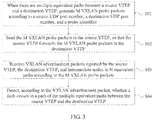
- FIG. 3 is a flowchart of a path detection method according to Embodiment 1 of the present invention.
- This embodiment relates to a specific procedure in which a controller in a VXLAN sends a VXLAN probe packet to a source VTEP, receives VXLAN advertisement packets reported by the source VTEP, a destination VTEP, and an intermediate node in an equivalent path between VTEPs, and detects, according to the VXLAN advertisement packet, whether a fault occurs in a VXLAN tunnel.
- the method in this embodiment includes the following steps.
- Step 101 When there are multiple equivalent paths between a source VTEP and a destination VTEP, generate M VXLAN probe packets according to a source UDP port number, a destination UDP port number, and a probe identifier.
- M is greater than or equal to 2.
- the source UDP port number is a source port number used for UDP encapsulation
- the destination UDP port number is a destination port number used for UDP encapsulation
- the probe identifier may be a specific flag value used for marking the packet as a VXLAN probe packet.
- M source UDP port numbers and one fixed destination UDP port number may be determined at the same time, to generate the M VXLAN probe packets. For example, source UDP port numbers of two VXLAN probe packets between the source VTEP and the destination VTEP are 100 and 101, but destination UDP port numbers of the two VXLAN probe packets both are 0x12b5.
- the VXLAN probe packet may be a VXLAN-format packet.
- Fields of the VXLAN probe packet may be set according to a format of a VXLAN advertisement packet in the prior art.
- the probe identifier may be set in a reserved field of a VXLAN header .
- the source UDP port number, the destination UDP port number, a source virtual local area network (English: Virtual Local Area Network, VLAN for short) trunking protocol (English: VLAN Trunking Protocol, VTP for short) address, a destination VTP address, a user payload, and the like of the VXLAN probe packet may be added according to the format of the VXLAN packet in the prior art, and details are not described herein.
- Step 102 Send the M VXLAN probe packets to the source VTEP, so that the source VTEP forwards the M VXLAN probe packets to the destination VTEP.
- the controller after generating a VXLAN probe packet, the controller sends the VXLAN probe packet to the source VTEP, and the source VTEP sends the VXLAN probe packet to other intermediate nodes.
- the VXLAN probe packet is finally forwarded to the destination VTEP by using multiple equivalent VXLAN tunnels.
- Step 103 Receive VXLAN advertisement packets reported by the source VTEP, the destination VTEP, and intermediate nodes in N equivalent paths according to the M VXLAN probe packets.
- N is greater than or equal to 2.
- the source VTEP, all intermediate nodes that receive the VXLAN probe packet, and the destination VTEP need to report a VXLAN advertisement packet to the controller.
- the VXLAN advertisement packet carries data information of a reporting node.
- the VXLAN advertisement packet carries information such as an ingress port number, an egress port number, an IP address, and a device name of the intermediate node.
- Step 104 Detect, according to the VXLAN advertisement packet, whether a fault occurs in a path of the multiple equivalent paths between the source VTEP and the destination VTEP.
- the controller determines, according to the VXLAN advertisement packets reported by the source VTEP, the intermediate nodes, and the destination VTEP, equivalent paths that exist between the source VTEP and the destination VTEP, so as to determine all paths in the entire VXLAN and detect all the paths periodically. If a path is found faulty, the controller determines that a fault occurs on the path, and sends alarm information to user equipment to inform a user that the path is faulty.
- the controller when there are multiple equivalent paths between the source VXLAN tunnel endpoint VTEP and the destination VTEP, the controller generates the M VXLAN probe packets according to the source UDP port number, the destination UDP port number, and the probe identifier; sends the M VXLAN probe packets to the source VTEP, so that the source VTEP forwards the M VXLAN probe packets to the destination VTEP; receives the VXLAN advertisement packets reported by the source VTEP, the destination VTEP, and the intermediate nodes in the N equivalent paths according to the M VXLAN probe packets; and detects, according to the VXLAN advertisement packet, whether a fault occurs in paths between the source VTEP and the destination VTEP.
- the controller constructs a VXLAN probe packet, and determines, according to the VXLAN advertisement packets reported by the source VTEP, the intermediate nodes, and the destination VTEP, the paths that exist between the source VTEP and the destination VTEP, so as to determine all the paths in the entire VXLAN and detect all the paths. If a path is found faulty, the controller sends alarm information to the user equipment to inform the user that the path is faulty, so that the faulty path can be maintained in a timely manner.
- FIG. 4 is a flowchart of a path detection method according to Embodiment 2 of the present invention.
- This embodiment is a specific implementation of the method shown in FIG. 3 , and relates to a specific procedure in which multiple consecutive source UDP port numbers are selected to construct VXLAN probe packets, and after a VXLAN advertisement packet is received, whether a fault occurs in paths between a source VTEP and a destination VTEP is detected according to the VXLAN advertisement packet.
- the method includes the following steps.
- Step 201 Obtain M consecutive source UDP port numbers from a preset source UDP port number range.
- the M consecutive source UDP port numbers may be selected from the preset source UDP port number range. For example, 50 consecutive source UDP port numbers are selected from a range [100, 200], so as to construct 50 VXLAN probe packets with the consecutive source UDP port numbers.
- Step 202 Generate M VXLAN probe packets according to the M source UDP port numbers, a destination UDP port number, and a probe identifier.
- the probe identifier is set in a reserved field of a VXLAN header of each VXLAN probe packet.
- the VXLAN probe packet may be in a VXLAN format.
- a source UDP port number 100, a destination port number 4789, and a time to live (English: time to live, TTL for short) 255 are selected, and a 16-bit flag value, that is, a probe identifier, is filled into a reserved field of a VXLAN header of the VXLAN probe packet, and a data field of the VXLAN header is valid data between VTEPs.
- a 16-bit flag value that is, a probe identifier
- Table 1 shows a packet format of the VXLAN probe packet
- Table 2 shows a format of the VXLAN header.
- the VXLAN probe packet is divided into a header and a data payload.
- the source UDP port number is set in an outer UDP SP field
- the destination UDP port number is set in a destination port number field.
- the VXLAN header includes two reserved fields: Reserved1 and Reserved2, and the probe identifier may be added to the reserved field Reserved2.
- Step 203 Send the M VXLAN probe packets to a source VTEP, so that the source VTEP forwards the M VXLAN probe packets to a destination VTEP.
- Step 204 Receive VXLAN advertisement packets reported by the source VTEP, the destination VTEP, and intermediate nodes in multiple equivalent paths according to the M VXLAN probe packets.
- Step 205 Determine, according to an IP address of the source VTEP, an IP address of the destination VTEP, a Layer 4 port number of the source VTEP, a Layer 4 port number of the destination VTEP, a protocol type between the source VTEP and the destination VTEP, a TTL, and an ingress port, an egress port, and a system identifier of a device that sends each VXLAN advertisement packet, whether a fault occurs in a path of the multiple equivalent paths, where the IP address of the source VTEP, the IP address of the destination VTEP, the Layer 4 port number of the source VTEP, the Layer 4 port number of the destination VTEP, the protocol type between the source VTEP and the destination VTEP, the TTL, and the ingress port, the egress port, and the system identifier of the device that sends each VXLAN advertisement packet are carried in the VXLAN advertisement packet.
- a controller when receiving a VXLAN advertisement packet, parses the VXLAN advertisement packet to obtain 5-tuple information of the VXLAN advertisement packet.
- the 5-tuple information includes the IP address of the source VTEP, the IP address of the destination VTEP, the Layer 4 port number of the source VTEP, the Layer 4 port number of the destination VTEP, and the protocol type between the source VTEP and the destination VTEP.
- VXLAN advertisement packets are classified according to 5-tuple information of the packets. If the 5-tuple information of the VXLAN advertisement packets is the same, the source VTEP, intermediate nodes, and the destination VTEP that report the VXLAN advertisement packets form a path.
- the controller determines a forwarding order for the intermediate nodes in the path according to the TTL and the ingress port, the egress port, and the system identifier of the device that sends the VXLAN advertisement packet, so as to obtain a complete path and ultimately obtain all paths between the source VTEP and the destination VTEP, where the TTL and the ingress port, the egress port, and the system identifier of the device that sends the VXLAN advertisement packet are carried in the VXLAN advertisement packet.
- the controller may detect, according to a preset time cycle, whether a path is faulty. If the path is faulty, the controller determines that a fault occurs in the path, and sends alarm information to user equipment.
- the alarm information includes alarm prompt information and data information of an intermediate node in a faulty path.
- the data information includes information such as an ingress port number, an egress port number, an IP address, and a system identifier that are of the intermediate node in the faulty path.
- the controller obtains the M consecutive source UDP port numbers from the preset source UDP port number range; generates the M VXLAN probe packets; forwards the M VXLAN probe packets to the destination VTEP by using the source VTEP; receives the VXLAN advertisement packets reported by the source VTEP, the destination VTEP, and intermediate nodes in N equivalent paths according to the M VXLAN probe packets; and determines, according to the IP address of the source VTEP, the IP address of the destination VTEP, the Layer 4 port number of the source VTEP, the Layer 4 port number of the destination VTEP, the protocol type between the source VTEP and the destination VTEP, the TTL, and the ingress port, the egress port, and the system identifier of the device that sends each VXLAN advertisement packet, whether a fault occurs in a path of the equivalent paths, where the IP address of the source VTEP, the IP address of the destination VTEP, the Layer 4 port number of the source
- the method in this embodiment is applicable to a VXLAN scenario in which a network device is not complicated.
- the controller sends the M VXLAN probe packets with the consecutive source UDP port numbers, and determines each path according to the VXLAN advertisement packets reported by the source VTEP, the intermediate nodes, and the destination VTEP.
- the controller sends alarm information to the user equipment to inform a user that the path is faulty, so that the faulty path can be maintained in a timely manner.
- FIG. 5 is a flowchart of a path detection method according to Embodiment 3 of the present invention.
- This embodiment relates to a specific procedure in which different source UDP port numbers are selected by using a hash algorithm, to construct VXLAN probe packets.
- the step of "generating M VXLAN probe packets according to a source UDP port number, a destination UDP port number, and a probe identifier" includes the following steps.
- Step 301 Perform a hash operation on each of N consecutive source UDP port numbers and an IP address of a source VTEP, an IP address of a destination VTEP, a Layer 4 port number of the destination VTEP, and a protocol type between the source VTEP and the destination VTEP, to obtain hash values.
- N is a maximum value of the source UDP port numbers, and N is a positive integer greater than or equal to 2.
- the source UDP port number generally ranges from 1 to 65535, and therefore, the maximum value of the source UDP port numbers is generally 65535.
- Step 302 Group the N consecutive source UDP port numbers into M first sets according to the hash values.
- Hash values corresponding to all source UDP port numbers in each of the first sets are equal, and M is less than or equal to N.
- Step 303 Obtain a source UDP port number from each of the first sets to form a second set.
- Step 304 Generate M VXLAN probe packets according to each source UDP port number in the second set, a destination UDP port number, and a probe identifier.
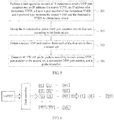
- FIG. 6 is a schematic diagram of selecting a source UDP port number by using a hash algorithm according to an embodiment of the present invention.
- the technical solution of this embodiment is described in detail below by using FIG. 6 as an example.
- an IP address of a source VTEP, an IP address of a destination VTEP, a Layer 4 port number of the destination VTEP, and a protocol type between the source VTEP and the destination VTEP are collectively called four-tuple information.
- a hash operation is performed on each of source UDP port numbers 1 to 65535 and the four-tuple information (not shown in the diagram), to obtain a hash value corresponding to each source UDP port number.
- Source UDP port numbers having a same hash value are grouped into a set, to form M first sets, and one source UDP port number is selected arbitrarily from each of the first sets to form a second set.
- ⁇ 1 , 3 , ..., M1 ⁇ , ⁇ 10, 15 ..., M2 ⁇ , ⁇ 50, 55 ..., M3 ⁇ , and the like are the first sets, and ⁇ 3, 20, ..., 555 ⁇ is the second set.
- a destination UDP port number is set to 0x12b5, and M VXLAN probe packets are constructed according to each source UDP port number in the second set, the destination UDP port number 0x12b5, and a probe identifier.
- a format of the VXLAN probe packet is the same as the packet formats shown in Table 1 and Table 2, and is not described herein again.
- the hash operation is performed on each of the N consecutive source UDP port numbers and the IP address of the source VTEP, the IP address of the destination VTEP, the Layer 4 port number of the destination VTEP, and the protocol type between the source VTEP and the destination VTEP, to obtain the hash value corresponding to each source UDP port number; the N consecutive source UDP port numbers are grouped into the M first sets according to the hash values, and the source UDP port number is obtained from each of the first sets to form the second set; and the M VXLAN probe packets are generated according to each source UDP port number in the second set, the destination UDP port number, and the probe identifier.
- VXLAN probe packets are generated by selecting some source UDP port numbers by using the hash algorithm, so that a quantity of to-be-sent VXLAN probe packets can be greatly reduced, and workload of a controller and intermediate nodes in a path can be reduced.
- FIG. 7 is a flowchart of a path detection method according to Embodiment 4 of the present invention.
- This embodiment relates to a specific procedure in which a receive-side device receives a VXLAN probe packet, parses the VXLAN probe packet, and sends a VXLAN advertisement packet to a controller according to an obtained probe identifier.
- This embodiment may be executed by a source VTEP, a destination VTEP, or an intermediate node. As shown in FIG. 7 , the method includes the following steps.
- Step 401 Receive a VXLAN probe packet.
- the VXLAN probe packet includes a source UDP port number, a destination UDP port number, and a probe identifier.
- the VXLAN probe packet is a VXLAN-format packet that is constructed by a controller and that is used to detect a path in a VXLAN.
- a format of the VXLAN probe packet is shown in Table 1 and Table 2, and is not described herein again.
- Step 402 Parse the VXLAN probe packet to obtain a probe identifier.
- the probe identifier may be a specific flag value, and the probe identifier may be set in a reserved field of a VXLAN header of the VXLAN probe packet.
- Step 403 Send a VXLAN advertisement packet to a controller according to the probe identifier.
- the VXLAN advertisement packet carries the probe identifier.
- a source IP address, a destination IP address, a source UDP port number, a destination UDP port, a protocol type, and a time to live TTL in the VXLAN advertisement packet are the same as those in the VXLAN probe packet, and a MAC address and a destination MAC address in the VXLAN advertisement packet are different from those in the VXLAN probe packet.
- the source VTEP, the destination VTEP, or the intermediate node when receiving the VXLAN probe packet carrying the probe identifier, the source VTEP, the destination VTEP, or the intermediate node reports the VXLAN advertisement packet to the controller.
- the source VTEP, the destination VTEP, or the intermediate node receives the VXLAN probe packet, parses the VXLAN probe packet to obtain the probe identifier, and sends the VXLAN advertisement packet to the controller according to the probe identifier, so that the controller can detect, according to the VXLAN advertisement packet, whether a fault occurs in a path of multiple equivalent paths between the source VTEP and the destination VTEP. If a path is faulty, the controller can inform a user that the path is faulty, so that the faulty path can be maintained in a timely manner.
- the probe identifier is set in a reserved field of a VXLAN header of the VXLAN advertisement packet; and the VXLAN advertisement packet further includes an ingress port, an egress port, and a system identifier of a device that sends the VXLAN advertisement packet.
- the probe identifier is set in the reserved field of the VXLAN header of the VXLAN advertisement packet, and no additional field is required, so that bandwidth is reduced.
- the VXLAN advertisement packet further includes the ingress port, the egress port, and the system identifier of the device that sends the VXLAN advertisement packet, so that the controller can obtain equivalent paths between VTEPs according to the ingress port, the egress port, and the system identifier of the device.
- FIG. 8 is a schematic structural diagram of a path detection apparatus according to Embodiment 5 of the present invention.
- the apparatus includes a generation component 21, a sending component 22, a receiving component 23, and a detection component 24.
- the generation component 21 is configured to: when there are multiple equivalent paths between a source VTEP and a destination VTEP, generate M VXLAN probe packets according to a source User Datagram Protocol UDP port number, a destination UDP port number, and a probe identifier, where M is greater than or equal to 2.
- the sending component 22 is configured to send the M VXLAN probe packets to the source VTEP, so that the source VTEP forwards the M VXLAN probe packets to the destination VTEP.
- the receiving component 23 is configured to receive VXLAN advertisement packets reported by the source VTEP, the destination VTEP, and intermediate nodes in the multiple equivalent paths according to the M VXLAN probe packets.
- the detection component 24 is configured to detect, according to the VXLAN advertisement packet, whether a fault occurs in the equivalent path between the source VTEP and the destination VTEP.
- the apparatus in this embodiment may be configured to execute the technical solution of the method embodiment shown in FIG. 3 .
- An implementation principle and a technical effect of the apparatus are similar to those in the method embodiment, and are not described herein again.
- the detection component 24 is specifically configured to determine, according to an Internet Protocol IP address of the source VTEP, an IP address of the destination VTEP, a Layer 4 port number of the source VTEP, a Layer 4 port number of the destination VTEP, a protocol type between the source VTEP and the destination VTEP, a time to live TTL, and an ingress port, an egress port, and a system identifier of a device that sends each VXLAN advertisement packet, whether a fault occurs in a path of the multiple equivalent paths, where the IP address of the source VTEP, the IP address of the destination VTEP, the Layer 4 port number of the source VTEP, the Layer 4 port number of the destination VTEP, the protocol type between the source VTEP and the destination VTEP, the TTL, and the ingress port, the egress port, and the system identifier of the device that sends each VXLAN advertisement packet are carried in the VXLAN advertisement packet.
- the generation component 21 is specifically configured to: obtain M consecutive source UDP port numbers from a preset source UDP port number range; and generate the M VXLAN probe packets according to the M consecutive source UDP port numbers, the destination UDP port number, and the probe identifier.
- the probe identifier is set in a reserved field of a VXLAN header of the VXLAN probe packet.
- the apparatus in this embodiment may be configured to execute the technical solution of the method embodiment shown in FIG. 4 .
- An implementation principle and a technical effect of the apparatus are similar to those in the method embodiment, and are not described herein again.
- the generation component 21 is specifically configured to: perform a hash operation on each of N consecutive source UDP port numbers and the IP address of the source VTEP, the IP address of the destination VTEP, the Layer 4 port number of the destination VTEP, and the protocol type between the source VTEP and the destination VTEP, to obtain hash values, where N is a maximum value of the source UDP port numbers, and N is a positive integer greater than or equal to 2; group the N consecutive source UDP port numbers into M first sets according to the hash values, where hash values corresponding to all source UDP port numbers in each of the first sets are equal, and M is less than or equal to N; obtain a source UDP port number from each of the first sets to form a second set; and generate the M VXLAN probe packets according to each source UDP port number in the second set, the destination UDP port number, and the probe identifier.
- the apparatus in this embodiment may be configured to execute the technical solution of the method embodiment shown in FIG.
- FIG. 9 is a schematic structural diagram of a path detection apparatus according to Embodiment 6 of the present invention.
- the apparatus includes a receiving component 31, a parsing component 32, and a sending component 33.
- the receiving component 31 is configured to receive a VXLAN probe packet, where the VXLAN probe packet includes a source User Datagram Protocol UDP port number, a destination UDP port number, and a probe identifier.
- the parsing component 32 is configured to parse the VXLAN probe packet to obtain the probe identifier.
- the sending component 33 is configured to send a VXLAN advertisement packet to a controller according to the probe identifier, where the VXLAN advertisement packet carries the probe identifier; and a source IP address, a destination IP address, a source UDP port number, a destination UDP port, a protocol type, and a time to live TTL in the VXLAN advertisement packet are the same as those in the VXLAN probe packet, and a source media access control MAC address and a destination MAC address in the VXLAN advertisement packet are different from those in the VXLAN probe packet.
- the apparatus in this embodiment may be configured to execute the technical solution of the method embodiment shown in FIG. 7 .
- An implementation principle and a technical effect of the apparatus are similar to those in the method embodiment, and are not described herein again.
- the probe identifier is set in a reserved field of a VXLAN header of the VXLAN advertisement packet; and the VXLAN advertisement packet further includes an ingress port, an egress port, and a system identifier of a device that sends the VXLAN advertisement packet.
- FIG. 10 is a schematic structural diagram of a controller according to Embodiment 7 of the present invention.
- the controller includes a processor 41, a transmitter 42, and a receiver 43.
- the processor 41 is configured to: when there are multiple equivalent paths between a source VTEP and a destination VTEP, generate M virtual extensible local area network VXLAN probe packets according to a source User Datagram Protocol UDP port number, a destination UDP port number, and a probe identifier, where M is greater than or equal to 2.
- the transmitter 42 is configured to send the M VXLAN probe packets to the source VTEP, so that the source VTEP forwards the M VXLAN probe packets to the destination VTEP.
- the receiver 43 is configured to receive VXLAN advertisement packets reported by the source VTEP, the destination VTEP, and intermediate nodes in the multiple equivalent paths according to the M VXLAN probe packets.
- the processor 41 is further configured to detect, according to the VXLAN advertisement packet, whether a fault occurs in a path of the multiple equivalent paths between the source VTEP and the destination VTEP.
- the apparatus in this embodiment may be configured to execute the technical solution of the method embodiment shown in FIG. 3 .
- An implementation principle and a technical effect of the apparatus are similar to those in the method embodiment, and are not described herein again.
- the processor 41 detects, according to the VXLAN advertisement packet, whether a fault occurs in a path of the multiple equivalent paths between the source VTEP and the destination VTEP includes: the processor 41 determines, according to an Internet Protocol IP address of the source VTEP, an IP address of the destination VTEP, a Layer 4 port number of the source VTEP, a Layer 4 port number of the destination VTEP, a protocol type between the source VTEP and the destination VTEP, a time to live TTL, and an ingress port, an egress port, and a system identifier of a device that sends each VXLAN advertisement packet, whether a fault occurs in a path of the multiple equivalent paths, where the IP address of the source VTEP, the IP address of the destination VTEP, the Layer 4 port number of the source VTEP, the Layer 4 port number of the destination VTEP, the protocol type between the source VTEP and the destination VTEP, the TTL, and the ingress port, the egress port, and the system
- the processor 41 generates M VXLAN probe packets according to a source UDP port number, a destination UDP port number, and a probe identifier includes: the processor 41 obtains M consecutive source UDP port numbers from a preset source UDP port number range; and generates the M VXLAN probe packets according to the M consecutive source UDP port numbers, the destination UDP port number, and the probe identifier.
- the probe identifier is set in a reserved field of a VXLAN header of each VXLAN probe packet.
- the apparatus in this embodiment may be configured to execute the technical solution of the method embodiment shown in FIG. 4 .
- An implementation principle and a technical effect of the apparatus are similar to those in the method embodiment, and are not described herein again.
- the processor 41 generates M VXLAN probe packets according to a source UDP port number, a destination UDP port number, and a probe identifier includes: the processor 41 performs a hash operation on each of N consecutive source UDP port numbers and the IP address of the source VTEP, the IP address of the destination VTEP, the Layer 4 port number of the destination VTEP, and the protocol type between the source VTEP and the destination VTEP, to obtain hash values, where N is a maximum value of the source UDP port numbers, and N is a positive integer greater than or equal to 2; groups the N consecutive source UDP port numbers into M first sets according to the hash values, where hash values corresponding to all source UDP port numbers in each of the first sets are equal, and M is less than or equal to N; obtains a source UDP port number from each of the first sets to form a second set; and generates the M VXLAN probe packets according to each source UDP port number in the second set, the destination UDP port number, and the probe
- the apparatus in this embodiment may be configured to execute the technical solution of the method embodiment shown in FIG. 5 .
- An implementation principle and a technical effect of the apparatus are similar to those in the method embodiment, and are not described herein again.
- FIG. 11 is a schematic structural diagram of a device according to Embodiment 8 of the present invention.
- the device includes a receiver 51, a processor 52, and a transmitter 53.
- the receiver 51 is configured to receive a VXLAN probe packet, where the VXLAN probe packet includes a source User Datagram Protocol UDP port number, a destination UDP port number, and a probe identifier.
- the processor 52 is configured to parse the VXLAN probe packet to obtain the probe identifier.
- the transmitter 53 is configured to send a VXLAN advertisement packet to a controller according to the probe identifier, where the VXLAN advertisement packet carries the probe identifier; and a source IP address, a destination IP address, a source UDP port number, a destination UDP port, a protocol type, and a time to live TTL in the VXLAN advertisement packet are the same as those in the VXLAN probe packet, and a source media access control MAC address and a destination MAC address in the VXLAN advertisement packet are different from those in the VXLAN probe packet.
- the apparatus in this embodiment may be configured to execute the technical solution of the method embodiment shown in FIG. 7 .
- An implementation principle and a technical effect of the apparatus are similar to those in the method embodiment, and are not described herein again.
- the probe identifier is set in a reserved field of a VXLAN header of the VXLAN advertisement packet; and the VXLAN advertisement packet further includes an ingress port, an egress port, and a system identifier of a device that sends the VXLAN advertisement packet.
- the program may be stored in a computer-readable storage medium.
- the foregoing storage medium includes: any medium that can store program code, such as a read-only memory (English: read-only memory, ROM for short), a random access memory (English: random access memory, RAM for short), a magnetic disk, or an optical disc.
Landscapes
- Engineering & Computer Science (AREA)
- Computer Networks & Wireless Communication (AREA)
- Signal Processing (AREA)
- Computer Security & Cryptography (AREA)
- Health & Medical Sciences (AREA)
- Cardiology (AREA)
- General Health & Medical Sciences (AREA)
- Data Exchanges In Wide-Area Networks (AREA)
Applications Claiming Priority (2)
| Application Number | Priority Date | Filing Date | Title |
|---|---|---|---|
| CN201510621265.8A CN106559325B (zh) | 2015-09-25 | 2015-09-25 | 路径检测方法和装置 |
| PCT/CN2016/099347 WO2017050198A1 (fr) | 2015-09-25 | 2016-09-19 | Procédé et dispositif de détection de trajet |
Publications (3)
| Publication Number | Publication Date |
|---|---|
| EP3346661A1 true EP3346661A1 (fr) | 2018-07-11 |
| EP3346661A4 EP3346661A4 (fr) | 2018-09-05 |
| EP3346661B1 EP3346661B1 (fr) | 2021-04-28 |
Family
ID=58385603
Family Applications (1)
| Application Number | Title | Priority Date | Filing Date |
|---|---|---|---|
| EP16848079.6A Active EP3346661B1 (fr) | 2015-09-25 | 2016-09-19 | Procédé et dispositif de détection de trajet |
Country Status (6)
| Country | Link |
|---|---|
| US (1) | US10659253B2 (fr) |
| EP (1) | EP3346661B1 (fr) |
| JP (1) | JP6604434B2 (fr) |
| CN (1) | CN106559325B (fr) |
| ES (1) | ES2875783T3 (fr) |
| WO (1) | WO2017050198A1 (fr) |
Cited By (3)
| Publication number | Priority date | Publication date | Assignee | Title |
|---|---|---|---|---|
| CN114760216A (zh) * | 2022-04-12 | 2022-07-15 | 国家计算机网络与信息安全管理中心 | 一种扫描探测事件确定方法、装置及电子设备 |
| WO2023009939A1 (fr) * | 2021-07-30 | 2023-02-02 | Cisco Technology, Inc. | Systèmes et procédés pour déterminer des chemins problématiques entre des points d'intérêt dans un environnement à nuages multiples |
| EP4135290A1 (fr) * | 2021-08-13 | 2023-02-15 | Siemens Aktiengesellschaft | Procédé de transmission des données pour le diagnostic de réseau entre les sous-réseaux connectés indirectement et appareil de communication de couplage |
Families Citing this family (19)
| Publication number | Priority date | Publication date | Assignee | Title |
|---|---|---|---|---|
| US11128489B2 (en) * | 2017-07-18 | 2021-09-21 | Nicira, Inc. | Maintaining data-plane connectivity between hosts |
| JP6801409B2 (ja) * | 2016-12-02 | 2020-12-16 | 富士通株式会社 | 経路探索システム、経路探索方法及び経路探索プログラム |
| CN108737206B (zh) * | 2017-04-24 | 2021-11-12 | 中兴通讯股份有限公司 | 网络通道的选路方法、装置及其计算机设备 |
| CN109005116B (zh) * | 2017-06-07 | 2020-07-24 | 华为技术有限公司 | 一种报文转发方法及装置 |
| CN107547342B (zh) * | 2017-06-27 | 2020-09-08 | 新华三技术有限公司 | 基于vxlan隧道的报文广播方法和装置 |
| CN107360096B (zh) * | 2017-08-14 | 2020-08-25 | 北京青云科技股份有限公司 | 一种vxlan报文的转发方法及系统 |
| CN108667709B (zh) * | 2018-05-18 | 2020-12-29 | 新华三技术有限公司 | 一种报文转发方法及装置 |
| CN109617717A (zh) * | 2018-11-30 | 2019-04-12 | 锐捷网络股份有限公司 | IPSec SA的检测方法及装置 |
| CN110061898B (zh) * | 2019-04-28 | 2021-07-23 | 新华三技术有限公司 | 一种报文转发方法及装置 |
| CN111614540B (zh) * | 2020-06-04 | 2022-04-08 | 北京百度网讯科技有限公司 | 用于传递信息的方法及装置 |
| US11652722B2 (en) * | 2020-06-19 | 2023-05-16 | Apple Inc. | High frequency probing for network bandwidth estimation using video data in real-time video conference |
| CN112187584B (zh) * | 2020-09-30 | 2023-07-21 | 腾讯科技(深圳)有限公司 | 路径故障探测方法、系统、服务器及存储介质 |
| CN112184225B (zh) * | 2020-09-30 | 2024-03-01 | 江苏赞奇科技股份有限公司 | 一种基于区块链的云渲染资源兑换方法 |
| CN114389967A (zh) * | 2020-10-19 | 2022-04-22 | 南京中兴新软件有限责任公司 | 链路检测方法、装置、设备和存储介质 |
| CN113259162B (zh) * | 2021-05-08 | 2022-09-16 | 中国工商银行股份有限公司 | 网络故障确定方法及装置、电子设备和存储介质 |
| CN113630312B (zh) * | 2021-08-17 | 2023-12-22 | 迈普通信技术股份有限公司 | 路径探测方法、装置、网络设备及计算机可读存储介质 |
| CN114760225B (zh) * | 2022-03-31 | 2024-10-11 | 深信服科技股份有限公司 | 一种故障诊断方法、系统和存储介质 |
| CN115150308B (zh) * | 2022-07-19 | 2023-10-10 | 天翼云科技有限公司 | 一种流量统计方法和装置 |
| CN118900247A (zh) * | 2024-08-27 | 2024-11-05 | 腾讯科技(深圳)有限公司 | 报文传输方法、装置、电子设备及介质 |
Family Cites Families (17)
| Publication number | Priority date | Publication date | Assignee | Title |
|---|---|---|---|---|
| CN101325584B (zh) * | 2007-06-15 | 2012-08-29 | 华为技术有限公司 | 路由跟踪方法、mpls网络系统及其入口节点 |
| CN101800679B (zh) * | 2010-03-10 | 2012-07-11 | 华为技术有限公司 | 一种报文丢包检测方法及系统 |
| EP2611075B1 (fr) | 2011-04-21 | 2018-01-24 | Huawei Technologies Co., Ltd. | Procédé et système de détection d'incidents |
| US8948054B2 (en) * | 2011-12-30 | 2015-02-03 | Cisco Technology, Inc. | System and method for discovering multipoint endpoints in a network environment |
| WO2013115177A1 (fr) * | 2012-01-30 | 2013-08-08 | 日本電気株式会社 | Système de réseau et procédé de gestion de topologie |
| US9203738B2 (en) * | 2013-05-21 | 2015-12-01 | Cisco Technology, Inc. | Optimal forwarding for trill fine-grained labeling and VXLAN interworking |
| US9571362B2 (en) * | 2013-05-24 | 2017-02-14 | Alcatel Lucent | System and method for detecting a virtual extensible local area network (VXLAN) segment data path failure |
| JP6156737B2 (ja) * | 2013-08-19 | 2017-07-05 | APRESIA Systems株式会社 | ネットワーク中継システムおよびスイッチ装置 |
| US9374294B1 (en) * | 2013-11-05 | 2016-06-21 | Cisco Technology, Inc. | On-demand learning in overlay networks |
| EP2966815A4 (fr) * | 2014-05-29 | 2016-04-13 | Huawei Tech Co Ltd | Procédé de transfert de paquets, et passerelle vxlan |
| US9509527B2 (en) * | 2014-06-30 | 2016-11-29 | Arista Networks, Inc. | Method and system for VXLAN encapsulation offload |
| CN104270282B (zh) * | 2014-09-11 | 2019-03-12 | 浙江宇视科技有限公司 | 一种ip网络端到端测试方法和装置 |
| US10171559B2 (en) * | 2014-11-21 | 2019-01-01 | Cisco Technology, Inc. | VxLAN security implemented using VxLAN membership information at VTEPs |
| US10003552B2 (en) * | 2015-01-05 | 2018-06-19 | Brocade Communications Systems, Llc. | Distributed bidirectional forwarding detection protocol (D-BFD) for cluster of interconnected switches |
| US9596099B2 (en) * | 2015-05-06 | 2017-03-14 | Cisco Technology, Inc. | Scalable network virtualization with aggregate endpoints |
| US9979711B2 (en) * | 2015-06-26 | 2018-05-22 | Cisco Technology, Inc. | Authentication for VLAN tunnel endpoint (VTEP) |
| US10171303B2 (en) * | 2015-09-16 | 2019-01-01 | Avago Technologies International Sales Pte. Limited | IP-based interconnection of switches with a logical chassis |
-
2015
- 2015-09-25 CN CN201510621265.8A patent/CN106559325B/zh active Active
-
2016
- 2016-09-19 WO PCT/CN2016/099347 patent/WO2017050198A1/fr not_active Ceased
- 2016-09-19 JP JP2018515523A patent/JP6604434B2/ja active Active
- 2016-09-19 EP EP16848079.6A patent/EP3346661B1/fr active Active
- 2016-09-19 ES ES16848079T patent/ES2875783T3/es active Active
-
2018
- 2018-03-23 US US15/934,229 patent/US10659253B2/en active Active
Cited By (6)
| Publication number | Priority date | Publication date | Assignee | Title |
|---|---|---|---|---|
| WO2023009939A1 (fr) * | 2021-07-30 | 2023-02-02 | Cisco Technology, Inc. | Systèmes et procédés pour déterminer des chemins problématiques entre des points d'intérêt dans un environnement à nuages multiples |
| US11929917B2 (en) | 2021-07-30 | 2024-03-12 | Cisco Technology, Inc. | Systems and methods for determining problematic paths between interest points in a multi-cloud environment |
| US12316529B2 (en) | 2021-07-30 | 2025-05-27 | Cisco Technology, Inc. | Systems and methods for determining problematic paths between interest points in a multi-cloud environment |
| EP4135290A1 (fr) * | 2021-08-13 | 2023-02-15 | Siemens Aktiengesellschaft | Procédé de transmission des données pour le diagnostic de réseau entre les sous-réseaux connectés indirectement et appareil de communication de couplage |
| CN114760216A (zh) * | 2022-04-12 | 2022-07-15 | 国家计算机网络与信息安全管理中心 | 一种扫描探测事件确定方法、装置及电子设备 |
| CN114760216B (zh) * | 2022-04-12 | 2023-12-05 | 国家计算机网络与信息安全管理中心 | 一种扫描探测事件确定方法、装置及电子设备 |
Also Published As
| Publication number | Publication date |
|---|---|
| JP6604434B2 (ja) | 2019-11-13 |
| CN106559325A (zh) | 2017-04-05 |
| EP3346661B1 (fr) | 2021-04-28 |
| ES2875783T3 (es) | 2021-11-11 |
| CN106559325B (zh) | 2020-06-09 |
| US20180212798A1 (en) | 2018-07-26 |
| US10659253B2 (en) | 2020-05-19 |
| WO2017050198A1 (fr) | 2017-03-30 |
| JP2018528716A (ja) | 2018-09-27 |
| EP3346661A4 (fr) | 2018-09-05 |
Similar Documents
| Publication | Publication Date | Title |
|---|---|---|
| US10659253B2 (en) | Path detection method and apparatus | |
| US11979322B2 (en) | Method and apparatus for providing service for traffic flow | |
| US11882041B2 (en) | Congestion notification packet indicating specific packet flow experiencing congestion to facilitate individual packet flow based transmission rate control | |
| US11831526B2 (en) | Service chain fault detection method and apparatus | |
| US12015554B2 (en) | Service routing packet processing method and apparatus, and network system | |
| US10587492B2 (en) | Method and apparatus for tracing paths in service function chains | |
| EP3399699B1 (fr) | Procédé et dispositif de détection de liaison, et équipement de réseau et contrôleur | |
| CN104601467B (zh) | 一种发送报文的方法和装置 | |
| US10361954B2 (en) | Method and apparatus for processing modified packet | |
| US20160330167A1 (en) | Arp Implementation Method, Switch Device, and Control Device | |
| US10911354B2 (en) | Packet processing method and system, and device | |
| CN114765589A (zh) | 网络测试方法、装置及存储介质 | |
| CN114079622B (zh) | 丢包网口确定方法、装置及存储介质 |
Legal Events
| Date | Code | Title | Description |
|---|---|---|---|
| STAA | Information on the status of an ep patent application or granted ep patent |
Free format text: STATUS: THE INTERNATIONAL PUBLICATION HAS BEEN MADE |
|
| PUAI | Public reference made under article 153(3) epc to a published international application that has entered the european phase |
Free format text: ORIGINAL CODE: 0009012 |
|
| STAA | Information on the status of an ep patent application or granted ep patent |
Free format text: STATUS: REQUEST FOR EXAMINATION WAS MADE |
|
| 17P | Request for examination filed |
Effective date: 20180405 |
|
| AK | Designated contracting states |
Kind code of ref document: A1 Designated state(s): AL AT BE BG CH CY CZ DE DK EE ES FI FR GB GR HR HU IE IS IT LI LT LU LV MC MK MT NL NO PL PT RO RS SE SI SK SM TR |
|
| AX | Request for extension of the european patent |
Extension state: BA ME |
|
| A4 | Supplementary search report drawn up and despatched |
Effective date: 20180803 |
|
| RIC1 | Information provided on ipc code assigned before grant |
Ipc: H04L 12/707 20130101ALI20180730BHEP Ipc: H04L 29/06 20060101AFI20180730BHEP Ipc: H04L 12/761 20130101ALI20180730BHEP Ipc: H04L 12/721 20130101ALN20180730BHEP Ipc: H04L 12/46 20060101ALI20180730BHEP Ipc: H04L 12/26 20060101ALI20180730BHEP Ipc: H04L 12/24 20060101ALN20180730BHEP |
|
| DAV | Request for validation of the european patent (deleted) | ||
| DAX | Request for extension of the european patent (deleted) | ||
| STAA | Information on the status of an ep patent application or granted ep patent |
Free format text: STATUS: EXAMINATION IS IN PROGRESS |
|
| 17Q | First examination report despatched |
Effective date: 20190726 |
|
| RIC1 | Information provided on ipc code assigned before grant |
Ipc: H04L 12/761 20130101ALI20201020BHEP Ipc: H04L 12/46 20060101ALI20201020BHEP Ipc: H04L 12/707 20130101ALI20201020BHEP Ipc: H04L 12/24 20060101ALN20201020BHEP Ipc: H04L 12/26 20060101ALI20201020BHEP Ipc: H04L 12/721 20130101ALN20201020BHEP Ipc: H04L 29/06 20060101AFI20201020BHEP |
|
| GRAP | Despatch of communication of intention to grant a patent |
Free format text: ORIGINAL CODE: EPIDOSNIGR1 |
|
| STAA | Information on the status of an ep patent application or granted ep patent |
Free format text: STATUS: GRANT OF PATENT IS INTENDED |
|
| RIC1 | Information provided on ipc code assigned before grant |
Ipc: H04L 12/24 20060101ALN20201030BHEP Ipc: H04L 29/06 20060101AFI20201030BHEP Ipc: H04L 12/26 20060101ALI20201030BHEP Ipc: H04L 12/707 20130101ALI20201030BHEP Ipc: H04L 12/761 20130101ALI20201030BHEP Ipc: H04L 12/721 20130101ALN20201030BHEP Ipc: H04L 12/46 20060101ALI20201030BHEP |
|
| RIC1 | Information provided on ipc code assigned before grant |
Ipc: H04L 12/46 20060101ALI20201112BHEP Ipc: H04L 12/761 20130101ALI20201112BHEP Ipc: H04L 29/06 20060101AFI20201112BHEP Ipc: H04L 12/26 20060101ALI20201112BHEP Ipc: H04L 12/24 20060101ALN20201112BHEP Ipc: H04L 12/707 20130101ALI20201112BHEP Ipc: H04L 12/721 20130101ALN20201112BHEP |
|
| RIC1 | Information provided on ipc code assigned before grant |
Ipc: H04L 12/24 20060101ALN20201120BHEP Ipc: H04L 12/721 20130101ALN20201120BHEP Ipc: H04L 12/761 20130101ALI20201120BHEP Ipc: H04L 12/46 20060101ALI20201120BHEP Ipc: H04L 29/06 20060101AFI20201120BHEP Ipc: H04L 12/26 20060101ALI20201120BHEP Ipc: H04L 12/707 20130101ALI20201120BHEP |
|
| INTG | Intention to grant announced |
Effective date: 20201208 |
|
| GRAS | Grant fee paid |
Free format text: ORIGINAL CODE: EPIDOSNIGR3 |
|
| GRAA | (expected) grant |
Free format text: ORIGINAL CODE: 0009210 |
|
| STAA | Information on the status of an ep patent application or granted ep patent |
Free format text: STATUS: THE PATENT HAS BEEN GRANTED |
|
| AK | Designated contracting states |
Kind code of ref document: B1 Designated state(s): AL AT BE BG CH CY CZ DE DK EE ES FI FR GB GR HR HU IE IS IT LI LT LU LV MC MK MT NL NO PL PT RO RS SE SI SK SM TR |
|
| REG | Reference to a national code |
Ref country code: GB Ref legal event code: FG4D |
|
| REG | Reference to a national code |
Ref country code: CH Ref legal event code: EP |
|
| REG | Reference to a national code |
Ref country code: AT Ref legal event code: REF Ref document number: 1388424 Country of ref document: AT Kind code of ref document: T Effective date: 20210515 |
|
| REG | Reference to a national code |
Ref country code: DE Ref legal event code: R096 Ref document number: 602016057079 Country of ref document: DE |
|
| REG | Reference to a national code |
Ref country code: IE Ref legal event code: FG4D |
|
| REG | Reference to a national code |
Ref country code: NL Ref legal event code: FP |
|
| REG | Reference to a national code |
Ref country code: LT Ref legal event code: MG9D |
|
| REG | Reference to a national code |
Ref country code: AT Ref legal event code: MK05 Ref document number: 1388424 Country of ref document: AT Kind code of ref document: T Effective date: 20210428 |
|
| PG25 | Lapsed in a contracting state [announced via postgrant information from national office to epo] |
Ref country code: AT Free format text: LAPSE BECAUSE OF FAILURE TO SUBMIT A TRANSLATION OF THE DESCRIPTION OR TO PAY THE FEE WITHIN THE PRESCRIBED TIME-LIMIT Effective date: 20210428 Ref country code: BG Free format text: LAPSE BECAUSE OF FAILURE TO SUBMIT A TRANSLATION OF THE DESCRIPTION OR TO PAY THE FEE WITHIN THE PRESCRIBED TIME-LIMIT Effective date: 20210728 Ref country code: HR Free format text: LAPSE BECAUSE OF FAILURE TO SUBMIT A TRANSLATION OF THE DESCRIPTION OR TO PAY THE FEE WITHIN THE PRESCRIBED TIME-LIMIT Effective date: 20210428 Ref country code: FI Free format text: LAPSE BECAUSE OF FAILURE TO SUBMIT A TRANSLATION OF THE DESCRIPTION OR TO PAY THE FEE WITHIN THE PRESCRIBED TIME-LIMIT Effective date: 20210428 Ref country code: LT Free format text: LAPSE BECAUSE OF FAILURE TO SUBMIT A TRANSLATION OF THE DESCRIPTION OR TO PAY THE FEE WITHIN THE PRESCRIBED TIME-LIMIT Effective date: 20210428 |
|
| REG | Reference to a national code |
Ref country code: ES Ref legal event code: FG2A Ref document number: 2875783 Country of ref document: ES Kind code of ref document: T3 Effective date: 20211111 |
|
| REG | Reference to a national code |
Ref country code: DE Ref legal event code: R079 Ref document number: 602016057079 Country of ref document: DE Free format text: PREVIOUS MAIN CLASS: H04L0029060000 Ipc: H04L0065000000 |
|
| PG25 | Lapsed in a contracting state [announced via postgrant information from national office to epo] |
Ref country code: PT Free format text: LAPSE BECAUSE OF FAILURE TO SUBMIT A TRANSLATION OF THE DESCRIPTION OR TO PAY THE FEE WITHIN THE PRESCRIBED TIME-LIMIT Effective date: 20210830 Ref country code: PL Free format text: LAPSE BECAUSE OF FAILURE TO SUBMIT A TRANSLATION OF THE DESCRIPTION OR TO PAY THE FEE WITHIN THE PRESCRIBED TIME-LIMIT Effective date: 20210428 Ref country code: NO Free format text: LAPSE BECAUSE OF FAILURE TO SUBMIT A TRANSLATION OF THE DESCRIPTION OR TO PAY THE FEE WITHIN THE PRESCRIBED TIME-LIMIT Effective date: 20210728 Ref country code: SE Free format text: LAPSE BECAUSE OF FAILURE TO SUBMIT A TRANSLATION OF THE DESCRIPTION OR TO PAY THE FEE WITHIN THE PRESCRIBED TIME-LIMIT Effective date: 20210428 Ref country code: RS Free format text: LAPSE BECAUSE OF FAILURE TO SUBMIT A TRANSLATION OF THE DESCRIPTION OR TO PAY THE FEE WITHIN THE PRESCRIBED TIME-LIMIT Effective date: 20210428 Ref country code: IS Free format text: LAPSE BECAUSE OF FAILURE TO SUBMIT A TRANSLATION OF THE DESCRIPTION OR TO PAY THE FEE WITHIN THE PRESCRIBED TIME-LIMIT Effective date: 20210828 Ref country code: GR Free format text: LAPSE BECAUSE OF FAILURE TO SUBMIT A TRANSLATION OF THE DESCRIPTION OR TO PAY THE FEE WITHIN THE PRESCRIBED TIME-LIMIT Effective date: 20210729 Ref country code: LV Free format text: LAPSE BECAUSE OF FAILURE TO SUBMIT A TRANSLATION OF THE DESCRIPTION OR TO PAY THE FEE WITHIN THE PRESCRIBED TIME-LIMIT Effective date: 20210428 |
|
| PG25 | Lapsed in a contracting state [announced via postgrant information from national office to epo] |
Ref country code: DK Free format text: LAPSE BECAUSE OF FAILURE TO SUBMIT A TRANSLATION OF THE DESCRIPTION OR TO PAY THE FEE WITHIN THE PRESCRIBED TIME-LIMIT Effective date: 20210428 Ref country code: EE Free format text: LAPSE BECAUSE OF FAILURE TO SUBMIT A TRANSLATION OF THE DESCRIPTION OR TO PAY THE FEE WITHIN THE PRESCRIBED TIME-LIMIT Effective date: 20210428 Ref country code: CZ Free format text: LAPSE BECAUSE OF FAILURE TO SUBMIT A TRANSLATION OF THE DESCRIPTION OR TO PAY THE FEE WITHIN THE PRESCRIBED TIME-LIMIT Effective date: 20210428 Ref country code: RO Free format text: LAPSE BECAUSE OF FAILURE TO SUBMIT A TRANSLATION OF THE DESCRIPTION OR TO PAY THE FEE WITHIN THE PRESCRIBED TIME-LIMIT Effective date: 20210428 Ref country code: SK Free format text: LAPSE BECAUSE OF FAILURE TO SUBMIT A TRANSLATION OF THE DESCRIPTION OR TO PAY THE FEE WITHIN THE PRESCRIBED TIME-LIMIT Effective date: 20210428 Ref country code: SM Free format text: LAPSE BECAUSE OF FAILURE TO SUBMIT A TRANSLATION OF THE DESCRIPTION OR TO PAY THE FEE WITHIN THE PRESCRIBED TIME-LIMIT Effective date: 20210428 |
|
| REG | Reference to a national code |
Ref country code: DE Ref legal event code: R097 Ref document number: 602016057079 Country of ref document: DE |
|
| PLBE | No opposition filed within time limit |
Free format text: ORIGINAL CODE: 0009261 |
|
| STAA | Information on the status of an ep patent application or granted ep patent |
Free format text: STATUS: NO OPPOSITION FILED WITHIN TIME LIMIT |
|
| 26N | No opposition filed |
Effective date: 20220131 |
|
| REG | Reference to a national code |
Ref country code: CH Ref legal event code: PL |
|
| REG | Reference to a national code |
Ref country code: BE Ref legal event code: MM Effective date: 20210930 |
|
| PG25 | Lapsed in a contracting state [announced via postgrant information from national office to epo] |
Ref country code: IS Free format text: LAPSE BECAUSE OF FAILURE TO SUBMIT A TRANSLATION OF THE DESCRIPTION OR TO PAY THE FEE WITHIN THE PRESCRIBED TIME-LIMIT Effective date: 20210828 Ref country code: MC Free format text: LAPSE BECAUSE OF FAILURE TO SUBMIT A TRANSLATION OF THE DESCRIPTION OR TO PAY THE FEE WITHIN THE PRESCRIBED TIME-LIMIT Effective date: 20210428 Ref country code: AL Free format text: LAPSE BECAUSE OF FAILURE TO SUBMIT A TRANSLATION OF THE DESCRIPTION OR TO PAY THE FEE WITHIN THE PRESCRIBED TIME-LIMIT Effective date: 20210428 |
|
| PG25 | Lapsed in a contracting state [announced via postgrant information from national office to epo] |
Ref country code: LU Free format text: LAPSE BECAUSE OF NON-PAYMENT OF DUE FEES Effective date: 20210919 Ref country code: IE Free format text: LAPSE BECAUSE OF NON-PAYMENT OF DUE FEES Effective date: 20210919 Ref country code: BE Free format text: LAPSE BECAUSE OF NON-PAYMENT OF DUE FEES Effective date: 20210930 |
|
| PG25 | Lapsed in a contracting state [announced via postgrant information from national office to epo] |
Ref country code: LI Free format text: LAPSE BECAUSE OF NON-PAYMENT OF DUE FEES Effective date: 20210930 Ref country code: CH Free format text: LAPSE BECAUSE OF NON-PAYMENT OF DUE FEES Effective date: 20210930 |
|
| PG25 | Lapsed in a contracting state [announced via postgrant information from national office to epo] |
Ref country code: HU Free format text: LAPSE BECAUSE OF FAILURE TO SUBMIT A TRANSLATION OF THE DESCRIPTION OR TO PAY THE FEE WITHIN THE PRESCRIBED TIME-LIMIT; INVALID AB INITIO Effective date: 20160919 |
|
| PG25 | Lapsed in a contracting state [announced via postgrant information from national office to epo] |
Ref country code: CY Free format text: LAPSE BECAUSE OF FAILURE TO SUBMIT A TRANSLATION OF THE DESCRIPTION OR TO PAY THE FEE WITHIN THE PRESCRIBED TIME-LIMIT Effective date: 20210428 |
|
| PG25 | Lapsed in a contracting state [announced via postgrant information from national office to epo] |
Ref country code: MK Free format text: LAPSE BECAUSE OF FAILURE TO SUBMIT A TRANSLATION OF THE DESCRIPTION OR TO PAY THE FEE WITHIN THE PRESCRIBED TIME-LIMIT Effective date: 20210428 |
|
| PG25 | Lapsed in a contracting state [announced via postgrant information from national office to epo] |
Ref country code: TR Free format text: LAPSE BECAUSE OF FAILURE TO SUBMIT A TRANSLATION OF THE DESCRIPTION OR TO PAY THE FEE WITHIN THE PRESCRIBED TIME-LIMIT Effective date: 20210428 |
|
| PG25 | Lapsed in a contracting state [announced via postgrant information from national office to epo] |
Ref country code: MT Free format text: LAPSE BECAUSE OF FAILURE TO SUBMIT A TRANSLATION OF THE DESCRIPTION OR TO PAY THE FEE WITHIN THE PRESCRIBED TIME-LIMIT Effective date: 20210428 |
|
| PGFP | Annual fee paid to national office [announced via postgrant information from national office to epo] |
Ref country code: NL Payment date: 20250814 Year of fee payment: 10 |
|
| PGFP | Annual fee paid to national office [announced via postgrant information from national office to epo] |
Ref country code: DE Payment date: 20250730 Year of fee payment: 10 |
|
| PGFP | Annual fee paid to national office [announced via postgrant information from national office to epo] |
Ref country code: IT Payment date: 20250825 Year of fee payment: 10 |
|
| PGFP | Annual fee paid to national office [announced via postgrant information from national office to epo] |
Ref country code: GB Payment date: 20250731 Year of fee payment: 10 |
|
| PGFP | Annual fee paid to national office [announced via postgrant information from national office to epo] |
Ref country code: FR Payment date: 20250808 Year of fee payment: 10 |
|
| PGFP | Annual fee paid to national office [announced via postgrant information from national office to epo] |
Ref country code: ES Payment date: 20251015 Year of fee payment: 10 |