EP3347778B1 - Dispositif et procédé de traitement de récipients avec des dispositifs de traitement interrogateurs - Google Patents
Dispositif et procédé de traitement de récipients avec des dispositifs de traitement interrogateurs Download PDFInfo
- Publication number
- EP3347778B1 EP3347778B1 EP16770900.5A EP16770900A EP3347778B1 EP 3347778 B1 EP3347778 B1 EP 3347778B1 EP 16770900 A EP16770900 A EP 16770900A EP 3347778 B1 EP3347778 B1 EP 3347778B1
- Authority
- EP
- European Patent Office
- Prior art keywords
- parameters
- devices
- containers
- processing
- control device
- Prior art date
- Legal status (The legal status is an assumption and is not a legal conclusion. Google has not performed a legal analysis and makes no representation as to the accuracy of the status listed.)
- Active
Links
Images
Classifications
-
- G—PHYSICS
- G05—CONTROLLING; REGULATING
- G05B—CONTROL OR REGULATING SYSTEMS IN GENERAL; FUNCTIONAL ELEMENTS OF SUCH SYSTEMS; MONITORING OR TESTING ARRANGEMENTS FOR SUCH SYSTEMS OR ELEMENTS
- G05B19/00—Program-control systems
- G05B19/02—Program-control systems electric
- G05B19/18—Numerical control [NC], i.e. automatically operating machines, in particular machine tools, e.g. in a manufacturing environment, so as to execute positioning, movement or co-ordinated operations by means of program data in numerical form
- G05B19/408—Numerical control [NC], i.e. automatically operating machines, in particular machine tools, e.g. in a manufacturing environment, so as to execute positioning, movement or co-ordinated operations by means of program data in numerical form characterised by data handling or data format, e.g. reading, buffering or conversion of data
- G05B19/4083—Adapting program, configuration
-
- B—PERFORMING OPERATIONS; TRANSPORTING
- B29—WORKING OF PLASTICS; WORKING OF SUBSTANCES IN A PLASTIC STATE IN GENERAL
- B29C—SHAPING OR JOINING OF PLASTICS; SHAPING OF MATERIAL IN A PLASTIC STATE, NOT OTHERWISE PROVIDED FOR; AFTER-TREATMENT OF THE SHAPED PRODUCTS, e.g. REPAIRING
- B29C49/00—Blow-moulding, i.e. blowing a preform or parison to a desired shape within a mould; Apparatus therefor
- B29C49/42—Component parts, details or accessories; Auxiliary operations
- B29C49/78—Measuring, controlling or regulating
-
- B—PERFORMING OPERATIONS; TRANSPORTING
- B65—CONVEYING; PACKING; STORING; HANDLING THIN OR FILAMENTARY MATERIAL
- B65C—LABELLING OR TAGGING MACHINES, APPARATUS, OR PROCESSES
- B65C9/00—Details of labelling machines or apparatus
- B65C9/40—Controls; Safety devices
-
- B—PERFORMING OPERATIONS; TRANSPORTING
- B67—OPENING, CLOSING OR CLEANING BOTTLES, JARS OR SIMILAR CONTAINERS; LIQUID HANDLING
- B67C—CLEANING, FILLING WITH LIQUIDS OR SEMILIQUIDS, OR EMPTYING, OF BOTTLES, JARS, CANS, CASKS, BARRELS, OR SIMILAR CONTAINERS, NOT OTHERWISE PROVIDED FOR; FUNNELS
- B67C3/00—Bottling liquids or semiliquids; Filling jars or cans with liquids or semiliquids using bottling or like apparatus; Filling casks or barrels with liquids or semiliquids
- B67C3/007—Applications of control, warning or safety devices in filling machinery
-
- B—PERFORMING OPERATIONS; TRANSPORTING
- B67—OPENING, CLOSING OR CLEANING BOTTLES, JARS OR SIMILAR CONTAINERS; LIQUID HANDLING
- B67C—CLEANING, FILLING WITH LIQUIDS OR SEMILIQUIDS, OR EMPTYING, OF BOTTLES, JARS, CANS, CASKS, BARRELS, OR SIMILAR CONTAINERS, NOT OTHERWISE PROVIDED FOR; FUNNELS
- B67C3/00—Bottling liquids or semiliquids; Filling jars or cans with liquids or semiliquids using bottling or like apparatus; Filling casks or barrels with liquids or semiliquids
- B67C3/02—Bottling liquids or semiliquids; Filling jars or cans with liquids or semiliquids using bottling or like apparatus
- B67C3/22—Details
- B67C2003/227—Additional apparatus related to blow-moulding of the containers, e.g. a complete production line forming filled containers from preforms
-
- G—PHYSICS
- G05—CONTROLLING; REGULATING
- G05B—CONTROL OR REGULATING SYSTEMS IN GENERAL; FUNCTIONAL ELEMENTS OF SUCH SYSTEMS; MONITORING OR TESTING ARRANGEMENTS FOR SUCH SYSTEMS OR ELEMENTS
- G05B2219/00—Program-control systems
- G05B2219/30—Nc systems
- G05B2219/31—From computer integrated manufacturing till monitoring
- G05B2219/31103—Configure parameters of controlled devices
-
- G—PHYSICS
- G05—CONTROLLING; REGULATING
- G05B—CONTROL OR REGULATING SYSTEMS IN GENERAL; FUNCTIONAL ELEMENTS OF SUCH SYSTEMS; MONITORING OR TESTING ARRANGEMENTS FOR SUCH SYSTEMS OR ELEMENTS
- G05B2219/00—Program-control systems
- G05B2219/30—Nc systems
- G05B2219/31—From computer integrated manufacturing till monitoring
- G05B2219/31206—Exchange of parameters, data, programs between two station, station and central or host or remote
-
- G—PHYSICS
- G05—CONTROLLING; REGULATING
- G05B—CONTROL OR REGULATING SYSTEMS IN GENERAL; FUNCTIONAL ELEMENTS OF SUCH SYSTEMS; MONITORING OR TESTING ARRANGEMENTS FOR SUCH SYSTEMS OR ELEMENTS
- G05B2219/00—Program-control systems
- G05B2219/30—Nc systems
- G05B2219/45—Nc applications
- G05B2219/45244—Injection molding
-
- G—PHYSICS
- G06—COMPUTING OR CALCULATING; COUNTING
- G06F—ELECTRIC DIGITAL DATA PROCESSING
- G06F16/00—Information retrieval; Database structures therefor; File system structures therefor
- G06F16/20—Information retrieval; Database structures therefor; File system structures therefor of structured data, e.g. relational data
- G06F16/24—Querying
- G06F16/245—Query processing
Definitions
- the present invention relates to a device and a method for treating containers.
- Numerous devices of this type are known from the prior art, for example filling machines, labeling machines, blow molding machines and the like.
- systems are also known from the prior art which have a large number of different machines, for example a block from a blow molding machine, a downstream filler and a labeling machine.
- the present invention particularly relates to such systems.
- the present invention is therefore based on the object of providing a machine which facilitates such parameterization.
- containers are treated by means of a first treatment device in a first predetermined way, and transported by means of a transport device to a second treatment device and treated by this second treatment device in a second predetermined manner.
- These treatment devices are each controlled by at least one control device, with parameters being used for the control which are characteristic of the containers and / or the treatment of the containers.
- default parameters are output to at least one and preferably to a plurality of the control devices, and these output default parameters are compared with parameters required by at least one treatment device and it is checked whether the parameters required by the at least one treatment device can be derived at least from the default parameters and preferably in these are included.
- a method is therefore proposed which makes it possible that the complete parameter sets no longer necessarily have to be entered for all machines. So certain parameters are entered via a main control device. These parameters are also passed on to the individual control devices of the treatment devices. As will be explained in more detail below, the parameters are preferably container parameters or working parameters.
- control device which outputs the default parameters is referred to as the main control device or as the master control device.
- the control device (s) which accept the default parameters or to which the default parameters are output will be referred to below as sequential control devices. These control devices are preferably used to control the individual treatment devices.
- the main control device can also serve to control a specific treatment device, such as a filling machine, but it would be It is also conceivable that the main control device is a higher-level system control device and is not specifically assigned to a specific treatment device.
- the sequential control devices or the main control device check whether these default parameters for the respective treatment device are complete, i. H. whether a complete parameterization of the respective treatment facility can be carried out on the basis of the default parameters.
- control devices can communicate with one another and, if necessary, agree on new parameter inputs.
- parameters are transmitted and in particular parameters relevant to the operation of the individual treatment devices are transmitted.
- the main control device communicates with all further (sequential) control devices and / or outputs data to them, but it would also (alternatively or additionally) be possible that the sequential control devices also communicate with one another.
- the corresponding sequential control device transmits a specific request about still to the initiating machine (in particular to the main control device) nonexistent information.
- a filling facility has sent the above information to the blow molding machine.
- the blow molding machine replies that the data has been received and also asks that the operator should, for example, specify a preform temperature and a container height.
- the main control device forwards this question to the user and the user enters the appropriate input. Again, the answer is preferred, ie the newly entered data is distributed to all other machines. In this way, it is possible for individual machines to have all the data made available without having to request the data themselves and, in particular, without the user having to enter it for the specific machine.
- the system in a further method, it would also be possible for the system to have several treatment devices and for each individual one to send a corresponding request to the main control device. On the basis of the request, this can determine which data still needs to be entered. If, for example, the container height is requested from two machines, it is sufficient to specify this parameter once.
- the default parameters are entered by a user. This can be done, for example, via an input means such as a keyboard or a touchscreen.
- the main control device or master control device communicates with the sequence control devices. It would also be possible for the sequence control devices to be able to communicate with one another.
- the master control is understood to mean in particular that control device via which the parameters are specified. This can for example be the control device of one of the treatment devices, such as the control device of a filling device or a blow molding machine.
- a machine start is prevented if not all of the parameters required by the individual treatment devices have been entered.
- each individual sequential control device can, for example, compare the data already available to it with the required data.
- at least one parameter is determined by measurement. For example, it would be possible for the user to hand over a (sample) container to a measuring device and to determine this parameter determined using this (sample) container. However, it would also be possible for markings such as color codes, QR codes or RFID tags to be read in to input the parameters.
- required parameters which cannot be derived from the default parameters are requested.
- such required parameters are requested by a sequential control device.
- the sequence control device can determine that not all of the parameters required for its operation are available here, and it can in turn request these missing parameters from the main control device.
- the parameters still required are output to the user via a display device such as a display. It would also be possible for the parameters already entered to be output to the user at the same time, so that the user can carry out a quick comparison and, in particular, determine which parameters still have to be entered.
- the sequential control device inquires whether old parameters or previous parameters can be used. It is conceivable, for example, that not all parameters are changed in the event of a type changeover, for example if a changeover is made from one container of a certain height to another container with the same height. In this case it would also be possible for the user or the main control device to specify the information that known parameters can be accessed. It would also be possible for the sequential control device to submit proposals for parameters to be selected, for example if it can be determined from the default parameters that one of three possible containers is to be manufactured. In this case, the missing parameters can be used for the possible future container and / or the user can be given a selection for possible parameters.
- sequence control device itself to determine missing parameters. For example, it would be possible for a certain System is always operated with, for example, three different types of container. If a brand change is now initiated and some parameters have already been entered by the user, the sequential control system can already determine from the parameter set that has not yet been completely entered which type is to be switched to. In this case, the sequence control device can add the missing parameters, since these are still known from previous treatments. In such a case, the sequence control device can also preferably output suggestions for the missing parameters, which the user only has to confirm. The sequence control device and / or the main control device therefore preferably determines missing parameters themselves from the default parameters, in particular on the basis of previously used and / or already stored data or parameters.
- a variety to be changed is identified on the basis of the default parameters. This identification can also take place in particular if the default parameters are not complete, i.e. does not contain all of the parameters required by the respective control device.
- the default parameters are preferably stored in a memory device of the sequence control device.
- the sequence control device for example the storage device of the sequence control device, also preferably stores which parameters are required for the operation of the treatment device controlled by this sequence control device.
- the method proposed here is preferably used in the event of a brand changeover, i. H. especially if a company needs to switch from a certain type of container and / or drink to another type of container and / or drink.
- requested parameters are output to several and preferably to all treatment devices or their control devices. In this way, as mentioned above, a complete set of all required parameters can be achieved or made available very quickly.
- the default parameters for performing a treatment change and in particular a brand change are output.
- a brand change is particularly a switch to other containers, other beverages or other equipment, for example labels or closures.
- a change in treatment can be, for example, a change in which individual treatment units may be operated in a different working mode or replaced by other treatment units. For example, it is possible to switch from the manufacture of containers that require sterilization to the manufacture of containers that do not require this sterilization. Such a change in treatment can also take place by replacing a specific unit with another unit.
- a change in treatment or type is not understood to mean when a merely defective component is replaced by another (intact) component.
- a change in treatment or variety is understood to mean, in particular, a change that necessarily requires the change of at least one parameter.
- an indication is output from which it follows that a brand change is imminent or, in general, an indication which is characteristic of a brand change.
- a message can be output to the machine that a brand change is to be carried out or is being carried out within a certain period of time, for example in 20 minutes.
- At least one parameter is a parameter characteristic of the container to be treated and this parameter is preferably selected from a group of parameters which include a container size (or container height), a container diameter, a container volume, a container material, a wall thickness Contains container and the like.
- these are parameters which are characteristic of the container to be produced, but possibly also parameters which are characteristic of the plastic preforms from which the containers are formed.
- At least one parameter for the treatment of the container is characteristic and this parameter is preferably selected from a group of parameters which include an operating speed of the machine, a heating temperature of plastic preforms, a temperature for a label glue, a Includes expansion pressure for plastic preforms and the like. These parameters are therefore not parameters specific to the container, but rather parameters characteristic of the treatment process, for example a stretch blow molding process for the plastic preforms.
- the preset parameters advantageously contain parameters characteristic of the container or containers as well as parameters characteristic of the treatment of the containers.
- At least one sequential control device queries the required parameters from the main control device.
- the sequential control device requests the required parameters directly from the user, who then possibly enters these parameters on the sequential control devices or directly on the relevant treatment devices.
- At least one treatment device is selected from a group of treatment devices which include heating devices for heating plastic preforms, sterilization devices for sterilizing plastic preforms and / or plastic containers (in particular plastic bottles), forming devices for forming plastic preforms into plastic containers, filling devices for filling containers , Closing devices for closing containers, labeling devices for labeling containers, printing devices for printing containers, container digital printing machines, machines for inspecting containers, packaging machines, palletizing machines, cleaning machines for cleaning containers and the like.
- heating devices for heating plastic preforms sterilization devices for sterilizing plastic preforms and / or plastic containers (in particular plastic bottles), forming devices for forming plastic preforms into plastic containers, filling devices for filling containers , Closing devices for closing containers, labeling devices for labeling containers, printing devices for printing containers, container digital printing machines, machines for inspecting containers, packaging machines, palletizing machines, cleaning machines for cleaning containers and the like.
- At least two of the treatment devices mentioned are blocked with one another, ie essentially permanently synchronized with one another with regard to their operating and / or treatment speed.
- the method described here is particularly suitable for such blocked systems, since in the case of blocked systems or machines, very detailed communication must take place anyway between the individual control devices of the treatment devices.
- Several machines or treatment devices of the system are preferably blocked with one another.
- the present invention is further directed to a device for treating containers. This device has a first treatment device which treats the containers in a first predetermined manner.
- the device also has a second treatment device which treats the containers in a second predetermined manner.
- a transport device is also provided which transports the containers from the first treatment device to the second treatment device.
- the two treatment devices are each controlled by control devices and the control devices control the respective treatment devices using parameters which are characteristic of the containers and / or the treatment of the containers.
- the device preferably has a main control device which outputs default parameters to at least one sequential control device, which is used to control at least one treatment device, and the device furthermore has at least one checking device which is suitable and intended to check whether all of these are used Sequence control device-controlled treatment devices required parameters can be derived at least from the default parameters and / or were specified directly by them.
- the checking device preferably has a memory device in which it is stored which parameters are required for the operation of the respective treatment device. Furthermore, the checking device preferably has a comparison device which compares the default parameters with the required parameters. At least one sequence control device preferably has a storage device in which parameters of previous treatment processes on the containers are stored.
- the sequence control devices preferably have an inquiry device which can send inquiries to the main control device, in particular can send inquiries from which it can be seen which parameters still have to be entered.
- the device has a display device which is suitable and intended to output data which are characteristic of such queries from the sequence control devices.
- the main control device controls at least one treatment device.
- the main control device is thus preferably intended to control a treatment device, such as a filling device or a blow molding device.
- a treatment device such as a filling device or a blow molding device.
- the main control device it would also be possible for the main control device to be a higher-level machine control device.
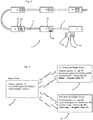
- Figure 1 shows a schematic representation of a device 1 according to the invention for treating containers.
- This device 1 here has a multiplicity of treatment devices 2, 6, 8, 12, 14, 16.
- the containers 10 are successively conveyed by these treatment devices and treated there in different ways.
- the treatment device 2 can be a heating device or an oven that heats plastic preforms.
- the plastic preforms heated in this way can then be sterilized in a further treatment device 6, for example. It is possible here for this sterilization device 6 to sterilize an inner wall of the plastic preforms, for example by means of electromagnetic radiation or electrons.
- This second treatment device is followed by a further treatment device 8, which can be, for example, a deformation device for deforming the plastic preforms into plastic containers.
- a further treatment device 8 can be followed by a filling device 12 which fills the plastic containers with a liquid and in particular a drink.
- the reference numeral 14 can represent a closing device which closes the plastic preforms.
- a large number of plastic containers can also be combined with a treatment device 16 to form packs.
- the reference numeral 4 denotes a transport device which is used to transport the containers, in particular from a treatment device to an adjoining treatment device.
- These transport devices 4 can preferably be designed as transport stars which convey the plastic preforms or containers 10.
- These transport device (s) can also each have control devices which parameters are transferred, for example parameters for a support ring cross-section of the containers or for a height of the containers or also parameters for an operating speed of the device 1.
- the individual treatment devices each have sequential control devices 62, 82, 122, 142, 162. These sequential control devices are in communication with a main control device 20 (which in the example shown here also serves to control the heating device).
- a main control device 20 which in the example shown here also serves to control the heating device.
- the user can use an input device 42, for example, changed data required for a brand change, e.g. Enter parameters.
- the reference numeral 44 relates to a display device, for example a display, via which information can be output to the user, for example a request for parameters still to be entered.
- each of the sequential control devices 62, 82... Can request missing data from the main control device 20. The user can then enter the missing data and these can in turn be output to all sequence control devices 62, 82... Or all machines.
- the individual sequential control devices 62, 82 ... each have checking devices 84 (only one shown) which check whether the Default parameters are complete.
- the reference numeral 66 denotes a communication device by means of which the sequence control device 6 can communicate with a communication device 26 of the main control device 20, in particular bidirectionally.
- Figure 2 shows a schematic representation to illustrate the invention.
- data ie parameters, such as a bottle size, an operating speed and a diameter of the containers are entered via the main control device 20.
- These data are communicated here to two further sequential control devices 62 and 82 as specification parameters V. This communication can take place wirelessly or via a cable connection.
- the respective sequence control devices 62 and 82 determine the data or parameters P1, P2,... Pn required for their operation.
- the operating speed (P2) can also be required by the sequence control device 62 for the operation, as can the diameter (P3) of the container.
- the sequential control device 62 or the treatment device 6 to which this sequential control device 62 is assigned still requires information about the height of the container (P4). As a result, the sequence control device 62 again requests the altitude from the main control device 20.
- the sequence control device 82 can still lack information about a temperature of the label glue. This request can also be made to the main control device. It is possible here for the main control device 20 to collect all missing data and to issue the instruction to the user to supplement this data. When this data has been supplemented, all sequence control devices can be supplied with this data.
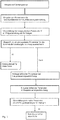
- Figure 3 shows a flow chart for a method according to the invention.
- the user enters an indication of a brand change.
- parameters for new containers are entered in the main control device. These parameters are preferably communicated or transmitted to all sequence control devices of the further treatment devices as default parameters V.
- the individual sequence control devices check whether the parameters entered for the specific treatment facility is sufficient. If this is the case, the respective treatment facility is ready for operation for the new variety.
- missing parameters are requested from the main control device in particular.
- the parameter sets entered are compared with the required parameter sets.
- the sequence control device it would also be possible for the sequence control device to determine the missing parameters itself, for example on the basis of previously used data sets.
- missing parameters are entered into the main control device and these missing parameters are in turn transmitted to at least one and preferably all sequential control devices. All treatment facilities are now ready for operation for the new variety.
Landscapes
- Engineering & Computer Science (AREA)
- Manufacturing & Machinery (AREA)
- Human Computer Interaction (AREA)
- Physics & Mathematics (AREA)
- General Physics & Mathematics (AREA)
- Automation & Control Theory (AREA)
- Mechanical Engineering (AREA)
- Filling Of Jars Or Cans And Processes For Cleaning And Sealing Jars (AREA)
- Blow-Moulding Or Thermoforming Of Plastics Or The Like (AREA)
Claims (8)
- Procédé de traitement de contenants (10), dans lequel les contenants (10) sont traités d'une première manière prédéterminée au moyen d'un premier dispositif de traitement (2) et sont transportés vers un deuxième dispositif de traitement (6) au moyen d'un dispositif de transport (4) et sont traités d'une deuxième manière prédéterminée au moyen du deuxième dispositif de traitement (6) et dans lequel les dispositifs de traitement (2, 6) sont chacun commandés par des dispositifs de commande (20, 62, 82, 122, 142, 162), dans lequel des paramètres qui sont caractéristiques des contenants (10) et/ou du traitement des contenants (10) sont utilisés pour la commande,
caractérisé en ce que
les paramètres par défaut (V) sont transmis à au moins un et de préférence une pluralité des dispositifs de commande (62, 82, 122, 142, 162) et ces paramètres par défaut (V) transmis sont comparés aux paramètres (P1, P2, P3 ... Pn) requis par au moins un dispositif de traitement et il est vérifié si les paramètres requis par l'au moins un dispositif de traitement (6, 8, 12, 14, 16) peuvent être dérivés au moins des paramètres par défaut (V), dans lequel les paramètres requis (P2) qui ne peuvent pas être dérivés des paramètres par défaut sont demandés et les paramètres demandés sont transmis à plusieurs et de préférence tous les dispositifs de traitement (6, 8, 12, 14, 16). - Procédé selon la revendication 1,
caractérisé en ce que
les paramètres par défaut (V) sont transmis pour effectuer un changement de traitement et en particulier un changement de sorte. - Procédé selon au moins l'une des revendications précédentes,
caractérisé en ce que
au moins un paramètre est un paramètre caractéristique du contenant à traiter et ce paramètre est de préférence choisi dans un groupe de paramètres comprenant une hauteur de contenant, un diamètre de contenant, un volume de contenant, un matériau de contenant et une épaisseur de paroi du contenant. - Procédé selon au moins l'une des revendications précédentes,
caractérisé en ce que
au moins un paramètre est caractéristique du traitement du contenant et est de préférence choisi dans un groupe de paramètres comprenant une vitesse de travail de la machine, une température de chauffage de préformes en plastique, une température pour une colle d'étiquette, une pression, une température et similaires. - Procédé selon au moins l'une des revendications précédentes,
caractérisé en ce que
au moins un dispositif de commande séquentielle (62, 82, 122, 142, 162) interroge les paramètres requis à partir du dispositif de commande principal (20). - Procédé selon au moins l'une des revendications précédentes,
caractérisé en ce que
au moins un dispositif de traitement est sélectionné dans un groupe de dispositifs de traitement comprenant des dispositifs de chauffage pour chauffer des préformes en plastique, des dispositifs de stérilisation pour stériliser des préformes en plastique et/ou des contenants en plastique, des dispositifs de formage pour former des préformes en plastique en des contenants en plastique, des dispositifs de remplissage pour remplir des contenants, des dispositifs de fermeture pour fermer des contenants, des dispositifs d'étiquetage pour étiqueter des contenants, des dispositifs d'impression pour l'impression sur des contenants et similaires. - Dispositif (1) de traitement de contenants (10), avec un premier dispositif de traitement (2) qui traite les contenants (10) d'une première manière prédéterminée, avec un deuxième dispositif de traitement (6) qui traite les contenants (10) d'une deuxième manière prédéterminée, et avec un dispositif de transport (4) qui transporte les contenants (10) du premier dispositif de traitement (2) au deuxième dispositif de traitement (6), dans lequel les deux dispositifs de traitement (2, 6) sont chacun commandés par des dispositifs de commande (20, 62, 82) et les dispositifs de commande commandent les dispositifs de traitement (2, 6) à l'aide de paramètres caractéristiques des contenants (10) et/ou du traitement des contenants (10),
caractérisé en ce que
le dispositif présente un dispositif de commande principal (20) qui transmet des paramètres par défaut à au moins un dispositif de commande séquentielle (62) qui est utilisé pour commander au moins un dispositif de traitement (6) et le dispositif présente au moins un dispositif de contrôle (84) adapté et destiné à vérifier si tous les paramètres (P1, P2 ... Pn) requis par le dispositif de traitement commandé par le dispositif de contrôle séquentiel (62) peuvent être dérivés au moins des paramètres par défaut (V), dans lequel les paramètres requis (P2) qui ne peuvent pas être dérivés des paramètres par défaut sont demandés et les paramètres demandés sont transmis vers plusieurs et de préférence tous les dispositifs de traitement (6, 8, 12, 14, 16). - Dispositif (1) selon la revendication 7,
caractérisé en ce que
le dispositif de commande principal (20) commande au moins un dispositif de traitement (2).
Applications Claiming Priority (2)
| Application Number | Priority Date | Filing Date | Title |
|---|---|---|---|
| DE102015114947.8A DE102015114947A1 (de) | 2015-09-07 | 2015-09-07 | Vorrichtung und Verfahren zum Behandeln von Behältnissen mit rückfragenden Behandlungseinrichtungen |
| PCT/EP2016/071117 WO2017042234A1 (fr) | 2015-09-07 | 2016-09-07 | Dispositif et procédé de traitement de récipients avec des dispositifs de traitement interrogateurs |
Publications (2)
| Publication Number | Publication Date |
|---|---|
| EP3347778A1 EP3347778A1 (fr) | 2018-07-18 |
| EP3347778B1 true EP3347778B1 (fr) | 2020-12-16 |
Family
ID=57003481
Family Applications (1)
| Application Number | Title | Priority Date | Filing Date |
|---|---|---|---|
| EP16770900.5A Active EP3347778B1 (fr) | 2015-09-07 | 2016-09-07 | Dispositif et procédé de traitement de récipients avec des dispositifs de traitement interrogateurs |
Country Status (5)
| Country | Link |
|---|---|
| US (1) | US10795339B2 (fr) |
| EP (1) | EP3347778B1 (fr) |
| CN (1) | CN108292129B (fr) |
| DE (1) | DE102015114947A1 (fr) |
| WO (1) | WO2017042234A1 (fr) |
Families Citing this family (5)
| Publication number | Priority date | Publication date | Assignee | Title |
|---|---|---|---|---|
| FR3053907B1 (fr) | 2016-12-23 | 2018-08-17 | Sidel Participations | Procede de reglage initial d'une machine de formage d'une installation de production de recipients |
| DE102017126240A1 (de) * | 2017-11-09 | 2019-05-09 | Krones Ag | Verfahren und Vorrichtung zum Behandeln von Kunststoffbehältnissen mit geschwindigkeitsregelbarer Blasmaschine |
| DE102018251784A1 (de) | 2018-12-28 | 2020-07-02 | Krones Ag | Behälterbehandlungsanlage zum Behandeln von Behältern |
| DE102022122942A1 (de) * | 2022-09-09 | 2024-03-14 | Khs Gmbh | Etikettierstation für eine Etikettiermaschine zum Etikettieren von Behältern |
| WO2026050177A1 (fr) * | 2024-08-30 | 2026-03-05 | Jbt Marel Corporation | Système et procédé de gestion de remplissage de boisson |
Family Cites Families (12)
| Publication number | Priority date | Publication date | Assignee | Title |
|---|---|---|---|---|
| US6620352B1 (en) * | 2000-07-27 | 2003-09-16 | Ball Corporation | Automated material distribution control for stretch blow molded articles |
| JP2003037051A (ja) | 2001-07-25 | 2003-02-07 | Canon Inc | 露光装置及びその制御方法、並びに半導体デバイスの製造方法 |
| DE10317065A1 (de) * | 2002-12-16 | 2004-07-22 | Koenig & Bauer Ag | Verfahren und Vorrichtung zur Steuerung und Verfahren zum Konfigurieren einer Anlage |
| DE10338692A1 (de) * | 2003-08-22 | 2005-04-07 | Siemens Ag | Verfahren zur Parametrierung von Automatisierungseinrichtungen sowie Automatisierungseinrichtung |
| US7222326B2 (en) * | 2004-04-15 | 2007-05-22 | International Business Machines Corporation | Automatic process and design method, system and program product |
| DE102006006176B4 (de) * | 2006-02-10 | 2007-11-22 | Illig Maschinenbau Gmbh & Co. Kg | Verfahren zum Optimieren der Taktzeit einer Thermoformmaschine zum Tiefziehen von Teilen aus einer erwärmten thermoplastischen Folienbahn |
| US7957824B2 (en) * | 2007-03-02 | 2011-06-07 | Align Technology, Inc. | Method and system for providing automated high scale fabrication of custom items |
| DE102008021527B4 (de) * | 2008-04-30 | 2023-06-29 | Krones Aktiengesellschaft | Anlage und Verfahren zur Herstellung von Behältern |
| DE102010033171A1 (de) * | 2010-08-03 | 2012-02-09 | Krones Aktiengesellschaft | Verfahren und Vorrichtung zum Betreiben einer Anlage zum Behandeln von Behältnissen mit übergeordneter Parameteranwahl |
| DE102011084135A1 (de) * | 2011-10-07 | 2013-04-11 | Krones Aktiengesellschaft | Verfahren und Vorrichtung zum Betreiben einer Anlage zum Behandeln von Behältnissen mit Einstellwert-Korrektur beim Anfahren der Anlage |
| DE102013218020A1 (de) * | 2013-09-10 | 2015-03-12 | Krones Ag | Verfahren zur geführten Umstellung einer Behandlungsmaschine |
| DE102014103159A1 (de) | 2014-03-10 | 2015-09-24 | Krones Ag | Vorrichtung und Verfahren zum Umformen von Kunststoffvorformlingen zu Kunststoffbehältnissen mit automatischer Wechseleinrichtung für Garniturenteile |
-
2015
- 2015-09-07 DE DE102015114947.8A patent/DE102015114947A1/de not_active Withdrawn
-
2016
- 2016-09-07 WO PCT/EP2016/071117 patent/WO2017042234A1/fr not_active Ceased
- 2016-09-07 CN CN201680051682.6A patent/CN108292129B/zh active Active
- 2016-09-07 US US15/757,670 patent/US10795339B2/en active Active
- 2016-09-07 EP EP16770900.5A patent/EP3347778B1/fr active Active
Non-Patent Citations (1)
| Title |
|---|
| None * |
Also Published As
| Publication number | Publication date |
|---|---|
| US10795339B2 (en) | 2020-10-06 |
| DE102015114947A1 (de) | 2017-03-09 |
| EP3347778A1 (fr) | 2018-07-18 |
| CN108292129B (zh) | 2021-05-18 |
| CN108292129A (zh) | 2018-07-17 |
| WO2017042234A1 (fr) | 2017-03-16 |
| US20190025796A1 (en) | 2019-01-24 |
Similar Documents
| Publication | Publication Date | Title |
|---|---|---|
| EP3347778B1 (fr) | Dispositif et procédé de traitement de récipients avec des dispositifs de traitement interrogateurs | |
| EP2601107B1 (fr) | Procédé et dispositif d'exploitation d'une installation de manipulation de récipients avec sélection des paramètres de niveau supérieur | |
| EP2415677B2 (fr) | Procédé et dispositif de fonctionnement d'une installation pour le traitement des récipients avec sélection de paramètres commandée | |
| EP2346775B1 (fr) | Dispositif et procédé de fabrication de contenants en matière plastique | |
| EP3420418B1 (fr) | Procédé de fonctionnement d'une installation de traitement de récipient avec élaboration d'une recette pour la commande | |
| EP4204203B1 (fr) | Système et méthode pour faire fonctionner un système de traitement de récipients | |
| EP2392516B1 (fr) | Installation de traitement de récipient et procédé de sécurisation de la qualité pour des récipients fabriqués à l'aide d'une installation de traitement de récipient | |
| EP4219120B1 (fr) | Dispositif et procédé de chauffage d'ébauches en plastique au moyen d'une détection de température à résolution spatiale | |
| EP2388126A2 (fr) | Souffleuse dotée d'une stérilisation d'alimentation | |
| EP3044644B1 (fr) | Procédé de conversion guidée d'une machine de traitement | |
| EP4335622A1 (fr) | Procédé et dispositif de traitement de récipients avec identification de récipients déviés | |
| EP2360100A1 (fr) | Procédé de fabrication prêt à l'envoi d'articles cosmétiques individuels et dispositif | |
| EP2932336B1 (fr) | Procédé permettant de déterminer une utilisation efficace des ressources d'une installation destinée à fabriquer des contenants pour boisson | |
| EP2604412B1 (fr) | Dispositif et procédé de déformation d'ébauches en plastique en conteneurs en plastique avec identification de pièces échangeables | |
| WO2017121565A1 (fr) | Installation de traitement de contenants | |
| EP4494842A1 (fr) | Installation de traitement de récipients et procédé de fabrication et de traitement d'une préforme | |
| EP4582368A1 (fr) | Installation de remplissage avec dispositif de commande central | |
| DE102023105602A1 (de) | Behälterbehandlungsanlage | |
| EP4566795A1 (fr) | Procédé et dispositif de fabrication de récipients en matière plastique | |
| EP4527588A1 (fr) | Dispositif et procédé de traitement de récipients de boissons | |
| DE102024103708A1 (de) | Behälterbehandlungsanlage sowie Verfahren zum Betrieb | |
| DE102024112652A1 (de) | Verfahren zum Erfassen des Betriebsverhaltens einer Behälterbehandlungsanlage | |
| EP4308466A1 (fr) | Procédé et installation de traitement de récipients réutilisables avec suivi | |
| DE29606786U1 (de) | Einrichtung zur Überwachung und Steuerung des Materialflusses in einem Krankenhaus |
Legal Events
| Date | Code | Title | Description |
|---|---|---|---|
| STAA | Information on the status of an ep patent application or granted ep patent |
Free format text: STATUS: THE INTERNATIONAL PUBLICATION HAS BEEN MADE |
|
| PUAI | Public reference made under article 153(3) epc to a published international application that has entered the european phase |
Free format text: ORIGINAL CODE: 0009012 |
|
| STAA | Information on the status of an ep patent application or granted ep patent |
Free format text: STATUS: REQUEST FOR EXAMINATION WAS MADE |
|
| 17P | Request for examination filed |
Effective date: 20180409 |
|
| AK | Designated contracting states |
Kind code of ref document: A1 Designated state(s): AL AT BE BG CH CY CZ DE DK EE ES FI FR GB GR HR HU IE IS IT LI LT LU LV MC MK MT NL NO PL PT RO RS SE SI SK SM TR |
|
| AX | Request for extension of the european patent |
Extension state: BA ME |
|
| DAV | Request for validation of the european patent (deleted) | ||
| DAX | Request for extension of the european patent (deleted) | ||
| GRAP | Despatch of communication of intention to grant a patent |
Free format text: ORIGINAL CODE: EPIDOSNIGR1 |
|
| STAA | Information on the status of an ep patent application or granted ep patent |
Free format text: STATUS: GRANT OF PATENT IS INTENDED |
|
| RIC1 | Information provided on ipc code assigned before grant |
Ipc: G05B 19/408 20060101AFI20200605BHEP |
|
| INTG | Intention to grant announced |
Effective date: 20200703 |
|
| GRAS | Grant fee paid |
Free format text: ORIGINAL CODE: EPIDOSNIGR3 |
|
| GRAA | (expected) grant |
Free format text: ORIGINAL CODE: 0009210 |
|
| STAA | Information on the status of an ep patent application or granted ep patent |
Free format text: STATUS: THE PATENT HAS BEEN GRANTED |
|
| AK | Designated contracting states |
Kind code of ref document: B1 Designated state(s): AL AT BE BG CH CY CZ DE DK EE ES FI FR GB GR HR HU IE IS IT LI LT LU LV MC MK MT NL NO PL PT RO RS SE SI SK SM TR |
|
| REG | Reference to a national code |
Ref country code: GB Ref legal event code: FG4D Free format text: NOT ENGLISH |
|
| REG | Reference to a national code |
Ref country code: IE Ref legal event code: FG4D Free format text: LANGUAGE OF EP DOCUMENT: GERMAN |
|
| REG | Reference to a national code |
Ref country code: DE Ref legal event code: R096 Ref document number: 502016011994 Country of ref document: DE |
|
| REG | Reference to a national code |
Ref country code: AT Ref legal event code: REF Ref document number: 1346162 Country of ref document: AT Kind code of ref document: T Effective date: 20210115 |
|
| PG25 | Lapsed in a contracting state [announced via postgrant information from national office to epo] |
Ref country code: FI Free format text: LAPSE BECAUSE OF FAILURE TO SUBMIT A TRANSLATION OF THE DESCRIPTION OR TO PAY THE FEE WITHIN THE PRESCRIBED TIME-LIMIT Effective date: 20201216 Ref country code: GR Free format text: LAPSE BECAUSE OF FAILURE TO SUBMIT A TRANSLATION OF THE DESCRIPTION OR TO PAY THE FEE WITHIN THE PRESCRIBED TIME-LIMIT Effective date: 20210317 Ref country code: NO Free format text: LAPSE BECAUSE OF FAILURE TO SUBMIT A TRANSLATION OF THE DESCRIPTION OR TO PAY THE FEE WITHIN THE PRESCRIBED TIME-LIMIT Effective date: 20210316 Ref country code: RS Free format text: LAPSE BECAUSE OF FAILURE TO SUBMIT A TRANSLATION OF THE DESCRIPTION OR TO PAY THE FEE WITHIN THE PRESCRIBED TIME-LIMIT Effective date: 20201216 |
|
| REG | Reference to a national code |
Ref country code: NL Ref legal event code: MP Effective date: 20201216 |
|
| PG25 | Lapsed in a contracting state [announced via postgrant information from national office to epo] |
Ref country code: LV Free format text: LAPSE BECAUSE OF FAILURE TO SUBMIT A TRANSLATION OF THE DESCRIPTION OR TO PAY THE FEE WITHIN THE PRESCRIBED TIME-LIMIT Effective date: 20201216 Ref country code: BG Free format text: LAPSE BECAUSE OF FAILURE TO SUBMIT A TRANSLATION OF THE DESCRIPTION OR TO PAY THE FEE WITHIN THE PRESCRIBED TIME-LIMIT Effective date: 20210316 Ref country code: SE Free format text: LAPSE BECAUSE OF FAILURE TO SUBMIT A TRANSLATION OF THE DESCRIPTION OR TO PAY THE FEE WITHIN THE PRESCRIBED TIME-LIMIT Effective date: 20201216 |
|
| PG25 | Lapsed in a contracting state [announced via postgrant information from national office to epo] |
Ref country code: NL Free format text: LAPSE BECAUSE OF FAILURE TO SUBMIT A TRANSLATION OF THE DESCRIPTION OR TO PAY THE FEE WITHIN THE PRESCRIBED TIME-LIMIT Effective date: 20201216 Ref country code: HR Free format text: LAPSE BECAUSE OF FAILURE TO SUBMIT A TRANSLATION OF THE DESCRIPTION OR TO PAY THE FEE WITHIN THE PRESCRIBED TIME-LIMIT Effective date: 20201216 |
|
| REG | Reference to a national code |
Ref country code: LT Ref legal event code: MG9D |
|
| PG25 | Lapsed in a contracting state [announced via postgrant information from national office to epo] |
Ref country code: CZ Free format text: LAPSE BECAUSE OF FAILURE TO SUBMIT A TRANSLATION OF THE DESCRIPTION OR TO PAY THE FEE WITHIN THE PRESCRIBED TIME-LIMIT Effective date: 20201216 Ref country code: EE Free format text: LAPSE BECAUSE OF FAILURE TO SUBMIT A TRANSLATION OF THE DESCRIPTION OR TO PAY THE FEE WITHIN THE PRESCRIBED TIME-LIMIT Effective date: 20201216 Ref country code: LT Free format text: LAPSE BECAUSE OF FAILURE TO SUBMIT A TRANSLATION OF THE DESCRIPTION OR TO PAY THE FEE WITHIN THE PRESCRIBED TIME-LIMIT Effective date: 20201216 Ref country code: SM Free format text: LAPSE BECAUSE OF FAILURE TO SUBMIT A TRANSLATION OF THE DESCRIPTION OR TO PAY THE FEE WITHIN THE PRESCRIBED TIME-LIMIT Effective date: 20201216 Ref country code: SK Free format text: LAPSE BECAUSE OF FAILURE TO SUBMIT A TRANSLATION OF THE DESCRIPTION OR TO PAY THE FEE WITHIN THE PRESCRIBED TIME-LIMIT Effective date: 20201216 Ref country code: PT Free format text: LAPSE BECAUSE OF FAILURE TO SUBMIT A TRANSLATION OF THE DESCRIPTION OR TO PAY THE FEE WITHIN THE PRESCRIBED TIME-LIMIT Effective date: 20210416 Ref country code: RO Free format text: LAPSE BECAUSE OF FAILURE TO SUBMIT A TRANSLATION OF THE DESCRIPTION OR TO PAY THE FEE WITHIN THE PRESCRIBED TIME-LIMIT Effective date: 20201216 |
|
| PG25 | Lapsed in a contracting state [announced via postgrant information from national office to epo] |
Ref country code: PL Free format text: LAPSE BECAUSE OF FAILURE TO SUBMIT A TRANSLATION OF THE DESCRIPTION OR TO PAY THE FEE WITHIN THE PRESCRIBED TIME-LIMIT Effective date: 20201216 |
|
| REG | Reference to a national code |
Ref country code: DE Ref legal event code: R097 Ref document number: 502016011994 Country of ref document: DE |
|
| PG25 | Lapsed in a contracting state [announced via postgrant information from national office to epo] |
Ref country code: IS Free format text: LAPSE BECAUSE OF FAILURE TO SUBMIT A TRANSLATION OF THE DESCRIPTION OR TO PAY THE FEE WITHIN THE PRESCRIBED TIME-LIMIT Effective date: 20210416 |
|
| PLBE | No opposition filed within time limit |
Free format text: ORIGINAL CODE: 0009261 |
|
| STAA | Information on the status of an ep patent application or granted ep patent |
Free format text: STATUS: NO OPPOSITION FILED WITHIN TIME LIMIT |
|
| PG25 | Lapsed in a contracting state [announced via postgrant information from national office to epo] |
Ref country code: AL Free format text: LAPSE BECAUSE OF FAILURE TO SUBMIT A TRANSLATION OF THE DESCRIPTION OR TO PAY THE FEE WITHIN THE PRESCRIBED TIME-LIMIT Effective date: 20201216 |
|
| 26N | No opposition filed |
Effective date: 20210917 |
|
| PG25 | Lapsed in a contracting state [announced via postgrant information from national office to epo] |
Ref country code: DK Free format text: LAPSE BECAUSE OF FAILURE TO SUBMIT A TRANSLATION OF THE DESCRIPTION OR TO PAY THE FEE WITHIN THE PRESCRIBED TIME-LIMIT Effective date: 20201216 |
|
| PG25 | Lapsed in a contracting state [announced via postgrant information from national office to epo] |
Ref country code: ES Free format text: LAPSE BECAUSE OF FAILURE TO SUBMIT A TRANSLATION OF THE DESCRIPTION OR TO PAY THE FEE WITHIN THE PRESCRIBED TIME-LIMIT Effective date: 20201216 |
|
| PG25 | Lapsed in a contracting state [announced via postgrant information from national office to epo] |
Ref country code: SI Free format text: LAPSE BECAUSE OF FAILURE TO SUBMIT A TRANSLATION OF THE DESCRIPTION OR TO PAY THE FEE WITHIN THE PRESCRIBED TIME-LIMIT Effective date: 20201216 |
|
| REG | Reference to a national code |
Ref country code: CH Ref legal event code: PL |
|
| REG | Reference to a national code |
Ref country code: BE Ref legal event code: MM Effective date: 20210930 |
|
| GBPC | Gb: european patent ceased through non-payment of renewal fee |
Effective date: 20210907 |
|
| PG25 | Lapsed in a contracting state [announced via postgrant information from national office to epo] |
Ref country code: IS Free format text: LAPSE BECAUSE OF FAILURE TO SUBMIT A TRANSLATION OF THE DESCRIPTION OR TO PAY THE FEE WITHIN THE PRESCRIBED TIME-LIMIT Effective date: 20210416 Ref country code: MC Free format text: LAPSE BECAUSE OF FAILURE TO SUBMIT A TRANSLATION OF THE DESCRIPTION OR TO PAY THE FEE WITHIN THE PRESCRIBED TIME-LIMIT Effective date: 20201216 |
|
| PG25 | Lapsed in a contracting state [announced via postgrant information from national office to epo] |
Ref country code: LU Free format text: LAPSE BECAUSE OF NON-PAYMENT OF DUE FEES Effective date: 20210907 Ref country code: IE Free format text: LAPSE BECAUSE OF NON-PAYMENT OF DUE FEES Effective date: 20210907 Ref country code: GB Free format text: LAPSE BECAUSE OF NON-PAYMENT OF DUE FEES Effective date: 20210907 Ref country code: BE Free format text: LAPSE BECAUSE OF NON-PAYMENT OF DUE FEES Effective date: 20210930 |
|
| PG25 | Lapsed in a contracting state [announced via postgrant information from national office to epo] |
Ref country code: LI Free format text: LAPSE BECAUSE OF NON-PAYMENT OF DUE FEES Effective date: 20210930 Ref country code: CH Free format text: LAPSE BECAUSE OF NON-PAYMENT OF DUE FEES Effective date: 20210930 |
|
| REG | Reference to a national code |
Ref country code: AT Ref legal event code: MM01 Ref document number: 1346162 Country of ref document: AT Kind code of ref document: T Effective date: 20210907 |
|
| PG25 | Lapsed in a contracting state [announced via postgrant information from national office to epo] |
Ref country code: AT Free format text: LAPSE BECAUSE OF NON-PAYMENT OF DUE FEES Effective date: 20210907 |
|
| PG25 | Lapsed in a contracting state [announced via postgrant information from national office to epo] |
Ref country code: HU Free format text: LAPSE BECAUSE OF FAILURE TO SUBMIT A TRANSLATION OF THE DESCRIPTION OR TO PAY THE FEE WITHIN THE PRESCRIBED TIME-LIMIT; INVALID AB INITIO Effective date: 20160907 |
|
| PG25 | Lapsed in a contracting state [announced via postgrant information from national office to epo] |
Ref country code: CY Free format text: LAPSE BECAUSE OF FAILURE TO SUBMIT A TRANSLATION OF THE DESCRIPTION OR TO PAY THE FEE WITHIN THE PRESCRIBED TIME-LIMIT Effective date: 20201216 |
|
| PG25 | Lapsed in a contracting state [announced via postgrant information from national office to epo] |
Ref country code: MK Free format text: LAPSE BECAUSE OF FAILURE TO SUBMIT A TRANSLATION OF THE DESCRIPTION OR TO PAY THE FEE WITHIN THE PRESCRIBED TIME-LIMIT Effective date: 20201216 |
|
| PG25 | Lapsed in a contracting state [announced via postgrant information from national office to epo] |
Ref country code: TR Free format text: LAPSE BECAUSE OF FAILURE TO SUBMIT A TRANSLATION OF THE DESCRIPTION OR TO PAY THE FEE WITHIN THE PRESCRIBED TIME-LIMIT Effective date: 20201216 |
|
| PG25 | Lapsed in a contracting state [announced via postgrant information from national office to epo] |
Ref country code: MT Free format text: LAPSE BECAUSE OF FAILURE TO SUBMIT A TRANSLATION OF THE DESCRIPTION OR TO PAY THE FEE WITHIN THE PRESCRIBED TIME-LIMIT Effective date: 20201216 |
|
| PGFP | Annual fee paid to national office [announced via postgrant information from national office to epo] |
Ref country code: DE Payment date: 20250730 Year of fee payment: 10 |
|
| PGFP | Annual fee paid to national office [announced via postgrant information from national office to epo] |
Ref country code: IT Payment date: 20250825 Year of fee payment: 10 |
|
| PGFP | Annual fee paid to national office [announced via postgrant information from national office to epo] |
Ref country code: FR Payment date: 20250808 Year of fee payment: 10 |