EP3351523B1 - Composé et dispositif électroluminescent organique contenant le composé - Google Patents
Composé et dispositif électroluminescent organique contenant le composé Download PDFInfo
- Publication number
- EP3351523B1 EP3351523B1 EP16846814.8A EP16846814A EP3351523B1 EP 3351523 B1 EP3351523 B1 EP 3351523B1 EP 16846814 A EP16846814 A EP 16846814A EP 3351523 B1 EP3351523 B1 EP 3351523B1
- Authority
- EP
- European Patent Office
- Prior art keywords
- group
- substituted
- unsubstituted
- compound
- experimental example
- Prior art date
- Legal status (The legal status is an assumption and is not a legal conclusion. Google has not performed a legal analysis and makes no representation as to the accuracy of the status listed.)
- Active
Links
- 0 CC1=*C(*=*)=CC1C(C=*1C)=*CC1=[*+] Chemical compound CC1=*C(*=*)=CC1C(C=*1C)=*CC1=[*+] 0.000 description 60
- XSIGSZDNCSKJLV-UHFFFAOYSA-N CC(C)(C)c1cccc(c2ccc3)c1[s]c2c3N(c(cccc1)c1C#N)I Chemical compound CC(C)(C)c1cccc(c2ccc3)c1[s]c2c3N(c(cccc1)c1C#N)I XSIGSZDNCSKJLV-UHFFFAOYSA-N 0.000 description 1
- FLNKTCXMYFKBOZ-UHFFFAOYSA-N CC(C)(C)c1cccc(c2ccc3)c1[s]c2c3N(c1ccccc1OC(F)(F)F)I Chemical compound CC(C)(C)c1cccc(c2ccc3)c1[s]c2c3N(c1ccccc1OC(F)(F)F)I FLNKTCXMYFKBOZ-UHFFFAOYSA-N 0.000 description 1
- NZWIYCMDPPBSHA-UHFFFAOYSA-N CC(C)(C)c1cccc-2c1COc1c(C3C(Cc4ccccc4C(F)(F)F)C3)cccc-21 Chemical compound CC(C)(C)c1cccc-2c1COc1c(C3C(Cc4ccccc4C(F)(F)F)C3)cccc-21 NZWIYCMDPPBSHA-UHFFFAOYSA-N 0.000 description 1
- XPQXULYPDDVBBO-UHFFFAOYSA-N CC(C)(C)c1ccccc1N(c1c2[s]c(c(F)ccc3)c3c2ccc1)I Chemical compound CC(C)(C)c1ccccc1N(c1c2[s]c(c(F)ccc3)c3c2ccc1)I XPQXULYPDDVBBO-UHFFFAOYSA-N 0.000 description 1
- IURRWSPDHJHEBE-UHFFFAOYSA-N CC(C)c(cccc1)c1N(c1c2[s]c(c(C(F)(F)F)ccc3)c3c2ccc1)I Chemical compound CC(C)c(cccc1)c1N(c1c2[s]c(c(C(F)(F)F)ccc3)c3c2ccc1)I IURRWSPDHJHEBE-UHFFFAOYSA-N 0.000 description 1
- HXABRJLMDUJHAH-UHFFFAOYSA-N CC(c(cccc1c2ccc3)c1[s]c2c3F)[IH]Cc1c(C)cccc1 Chemical compound CC(c(cccc1c2ccc3)c1[s]c2c3F)[IH]Cc1c(C)cccc1 HXABRJLMDUJHAH-UHFFFAOYSA-N 0.000 description 1
- DVXCIRLHCUKNET-UHFFFAOYSA-N CC1(C(C(F)(F)F)=CC=CC1c1ccc2)Sc1c2N(c1c(C)cccc1)I Chemical compound CC1(C(C(F)(F)F)=CC=CC1c1ccc2)Sc1c2N(c1c(C)cccc1)I DVXCIRLHCUKNET-UHFFFAOYSA-N 0.000 description 1
- PDHKXFPJPWAQAD-UHFFFAOYSA-N CC1=CCC#Cc(c2c3c(N(c4ccccc4C#N)I)ccc2)c1[o]3=C Chemical compound CC1=CCC#Cc(c2c3c(N(c4ccccc4C#N)I)ccc2)c1[o]3=C PDHKXFPJPWAQAD-UHFFFAOYSA-N 0.000 description 1
- LSYAPZGYHVADPB-UHFFFAOYSA-N CCc(cccc1)c1N(c1c2[s]c(c(F)ccc3)c3c2ccc1)I Chemical compound CCc(cccc1)c1N(c1c2[s]c(c(F)ccc3)c3c2ccc1)I LSYAPZGYHVADPB-UHFFFAOYSA-N 0.000 description 1
- VMSGBZNZUPMOAH-UHFFFAOYSA-N CN(c1c2[s]c(c(C3CCCCC3)ccc3)c3c2ccc1)c(cccc1)c1[SiH-](C)(C)C Chemical compound CN(c1c2[s]c(c(C3CCCCC3)ccc3)c3c2ccc1)c(cccc1)c1[SiH-](C)(C)C VMSGBZNZUPMOAH-UHFFFAOYSA-N 0.000 description 1
- SSIOPLVRUPBGPG-UHFFFAOYSA-N CN(c1c2cccc1)c(cccc1)c1S2(=O)=O Chemical compound CN(c1c2cccc1)c(cccc1)c1S2(=O)=O SSIOPLVRUPBGPG-UHFFFAOYSA-N 0.000 description 1
- WLPFDRJABUJGAS-UHFFFAOYSA-O C[IH]1=NC(c2ccccc2)=[NH+]C(c(cc2)ccc2-c2ccccc2)=N1 Chemical compound C[IH]1=NC(c2ccccc2)=[NH+]C(c(cc2)ccc2-c2ccccc2)=N1 WLPFDRJABUJGAS-UHFFFAOYSA-O 0.000 description 1
- HQBYYIVMUPBIHI-UHFFFAOYSA-N C[Si](C)(C)C1C=CC=CC1CC(c1c2[s]c(c(C(F)(F)F)ccc3)c3c2ccc1)=[IH] Chemical compound C[Si](C)(C)C1C=CC=CC1CC(c1c2[s]c(c(C(F)(F)F)ccc3)c3c2ccc1)=[IH] HQBYYIVMUPBIHI-UHFFFAOYSA-N 0.000 description 1
- SJWUFRHTWRAWCU-UHFFFAOYSA-N Cc(cc1)cc(c2c3ccc4c2cccc4)c1[n]3-c1ccccc1 Chemical compound Cc(cc1)cc(c2c3ccc4c2cccc4)c1[n]3-c1ccccc1 SJWUFRHTWRAWCU-UHFFFAOYSA-N 0.000 description 1
- DIHIHWKMQICKDQ-UHFFFAOYSA-N Cc(cc1)ccc1-c1nc2ccccc2c2nc(cccc3)c3[n]12 Chemical compound Cc(cc1)ccc1-c1nc2ccccc2c2nc(cccc3)c3[n]12 DIHIHWKMQICKDQ-UHFFFAOYSA-N 0.000 description 1
- BXRHICUCVMVHMM-UHFFFAOYSA-N Cc1cccc(-c2nc(cccc3)c3c3nc(cccc4)c4[n]23)c1 Chemical compound Cc1cccc(-c2nc(cccc3)c3c3nc(cccc4)c4[n]23)c1 BXRHICUCVMVHMM-UHFFFAOYSA-N 0.000 description 1
- WEQKPSPPVLSQLJ-UHFFFAOYSA-N Cc1ccccc1N(C)c(cccc1c2ccc3)c1[s]c2c3C#N Chemical compound Cc1ccccc1N(C)c(cccc1c2ccc3)c1[s]c2c3C#N WEQKPSPPVLSQLJ-UHFFFAOYSA-N 0.000 description 1
- NQIDXSKSTZTFTA-UHFFFAOYSA-N Cc1nc(cccc2)c2c2nc3ccccc3[n]12 Chemical compound Cc1nc(cccc2)c2c2nc3ccccc3[n]12 NQIDXSKSTZTFTA-UHFFFAOYSA-N 0.000 description 1
- QMPPCFFLSXNQQV-UHFFFAOYSA-N FC(c(cccc1)c1N(c1c2[s]c(c(F)ccc3)c3c2ccc1)I)(F)F Chemical compound FC(c(cccc1)c1N(c1c2[s]c(c(F)ccc3)c3c2ccc1)I)(F)F QMPPCFFLSXNQQV-UHFFFAOYSA-N 0.000 description 1
- UOBARKKEIPGSAR-UHFFFAOYSA-N FC1C=CC=CC1N(c1c2[s]c(c(F)ccc3)c3c2ccc1)I Chemical compound FC1C=CC=CC1N(c1c2[s]c(c(F)ccc3)c3c2ccc1)I UOBARKKEIPGSAR-UHFFFAOYSA-N 0.000 description 1
- DEQYPMFAIDQYTC-HNNXBMFYSA-N Fc(cccc1)c1C(c1c2[s]c(c([C@H]3C=CCCC3)ccc3)c3c2c(C2)c2c1)=[IH] Chemical compound Fc(cccc1)c1C(c1c2[s]c(c([C@H]3C=CCCC3)ccc3)c3c2c(C2)c2c1)=[IH] DEQYPMFAIDQYTC-HNNXBMFYSA-N 0.000 description 1
- XKFAXLWDHOWSCZ-UHFFFAOYSA-N N#Cc1cccc(c2ccc3)c1[s]c2c3C(Cc(cccc1)c1F)=[IH] Chemical compound N#Cc1cccc(c2ccc3)c1[s]c2c3C(Cc(cccc1)c1F)=[IH] XKFAXLWDHOWSCZ-UHFFFAOYSA-N 0.000 description 1
- NHVVYQVEMDEEEW-UHFFFAOYSA-N O=C(N1CCCC1)I Chemical compound O=C(N1CCCC1)I NHVVYQVEMDEEEW-UHFFFAOYSA-N 0.000 description 1
- WXAIEIRYBSKHDP-UHFFFAOYSA-N c(cc1)ccc1-c(cc1)ccc1N(c(cc1)ccc1-c1ccccc1)c(cc1)ccc1-c(cc1)ccc1N(c(cc1)ccc1-c1ccccc1)c(cc1)ccc1-c1ccccc1 Chemical compound c(cc1)ccc1-c(cc1)ccc1N(c(cc1)ccc1-c1ccccc1)c(cc1)ccc1-c(cc1)ccc1N(c(cc1)ccc1-c1ccccc1)c(cc1)ccc1-c1ccccc1 WXAIEIRYBSKHDP-UHFFFAOYSA-N 0.000 description 1
Images

Classifications
-
- C—CHEMISTRY; METALLURGY
- C09—DYES; PAINTS; POLISHES; NATURAL RESINS; ADHESIVES; COMPOSITIONS NOT OTHERWISE PROVIDED FOR; APPLICATIONS OF MATERIALS NOT OTHERWISE PROVIDED FOR
- C09K—MATERIALS FOR MISCELLANEOUS APPLICATIONS, NOT PROVIDED FOR ELSEWHERE
- C09K11/00—Luminescent materials, e.g. electroluminescent or chemiluminescent
- C09K11/06—Luminescent materials, e.g. electroluminescent or chemiluminescent containing organic luminescent materials
-
- C—CHEMISTRY; METALLURGY
- C07—ORGANIC CHEMISTRY
- C07C—ACYCLIC OR CARBOCYCLIC COMPOUNDS
- C07C13/00—Cyclic hydrocarbons containing rings other than, or in addition to, six-membered aromatic rings
- C07C13/28—Polycyclic hydrocarbons or acyclic hydrocarbon derivatives thereof
- C07C13/32—Polycyclic hydrocarbons or acyclic hydrocarbon derivatives thereof with condensed rings
- C07C13/72—Spiro hydrocarbons
-
- C—CHEMISTRY; METALLURGY
- C07—ORGANIC CHEMISTRY
- C07C—ACYCLIC OR CARBOCYCLIC COMPOUNDS
- C07C13/00—Cyclic hydrocarbons containing rings other than, or in addition to, six-membered aromatic rings
- C07C13/28—Polycyclic hydrocarbons or acyclic hydrocarbon derivatives thereof
- C07C13/32—Polycyclic hydrocarbons or acyclic hydrocarbon derivatives thereof with condensed rings
- C07C13/54—Polycyclic hydrocarbons or acyclic hydrocarbon derivatives thereof with condensed rings with three condensed rings
- C07C13/547—Polycyclic hydrocarbons or acyclic hydrocarbon derivatives thereof with condensed rings with three condensed rings at least one ring not being six-membered, the other rings being at the most six-membered
- C07C13/567—Polycyclic hydrocarbons or acyclic hydrocarbon derivatives thereof with condensed rings with three condensed rings at least one ring not being six-membered, the other rings being at the most six-membered with a fluorene or hydrogenated fluorene ring system
-
- C—CHEMISTRY; METALLURGY
- C07—ORGANIC CHEMISTRY
- C07C—ACYCLIC OR CARBOCYCLIC COMPOUNDS
- C07C211/00—Compounds containing amino groups bound to a carbon skeleton
- C07C211/43—Compounds containing amino groups bound to a carbon skeleton having amino groups bound to carbon atoms of six-membered aromatic rings of the carbon skeleton
- C07C211/54—Compounds containing amino groups bound to a carbon skeleton having amino groups bound to carbon atoms of six-membered aromatic rings of the carbon skeleton having amino groups bound to two or three six-membered aromatic rings
-
- C—CHEMISTRY; METALLURGY
- C07—ORGANIC CHEMISTRY
- C07C—ACYCLIC OR CARBOCYCLIC COMPOUNDS
- C07C211/00—Compounds containing amino groups bound to a carbon skeleton
- C07C211/43—Compounds containing amino groups bound to a carbon skeleton having amino groups bound to carbon atoms of six-membered aromatic rings of the carbon skeleton
- C07C211/57—Compounds containing amino groups bound to a carbon skeleton having amino groups bound to carbon atoms of six-membered aromatic rings of the carbon skeleton having amino groups bound to carbon atoms of six-membered aromatic rings being part of condensed ring systems of the carbon skeleton
- C07C211/61—Compounds containing amino groups bound to a carbon skeleton having amino groups bound to carbon atoms of six-membered aromatic rings of the carbon skeleton having amino groups bound to carbon atoms of six-membered aromatic rings being part of condensed ring systems of the carbon skeleton with at least one of the condensed ring systems formed by three or more rings
-
- C—CHEMISTRY; METALLURGY
- C07—ORGANIC CHEMISTRY
- C07C—ACYCLIC OR CARBOCYCLIC COMPOUNDS
- C07C25/00—Compounds containing at least one halogen atom bound to a six-membered aromatic ring
- C07C25/18—Polycyclic aromatic halogenated hydrocarbons
- C07C25/22—Polycyclic aromatic halogenated hydrocarbons with condensed rings
-
- C—CHEMISTRY; METALLURGY
- C07—ORGANIC CHEMISTRY
- C07C—ACYCLIC OR CARBOCYCLIC COMPOUNDS
- C07C255/00—Carboxylic acid nitriles
- C07C255/49—Carboxylic acid nitriles having cyano groups bound to carbon atoms of six-membered aromatic rings of a carbon skeleton
- C07C255/50—Carboxylic acid nitriles having cyano groups bound to carbon atoms of six-membered aromatic rings of a carbon skeleton to carbon atoms of non-condensed six-membered aromatic rings
-
- C—CHEMISTRY; METALLURGY
- C07—ORGANIC CHEMISTRY
- C07C—ACYCLIC OR CARBOCYCLIC COMPOUNDS
- C07C255/00—Carboxylic acid nitriles
- C07C255/49—Carboxylic acid nitriles having cyano groups bound to carbon atoms of six-membered aromatic rings of a carbon skeleton
- C07C255/58—Carboxylic acid nitriles having cyano groups bound to carbon atoms of six-membered aromatic rings of a carbon skeleton containing cyano groups and singly-bound nitrogen atoms, not being further bound to other hetero atoms, bound to the carbon skeleton
-
- C—CHEMISTRY; METALLURGY
- C07—ORGANIC CHEMISTRY
- C07D—HETEROCYCLIC COMPOUNDS
- C07D209/00—Heterocyclic compounds containing five-membered rings, condensed with other rings, with one nitrogen atom as the only ring hetero atom
- C07D209/56—Ring systems containing three or more rings
- C07D209/80—[b, c]- or [b, d]-condensed
- C07D209/82—Carbazoles; Hydrogenated carbazoles
- C07D209/86—Carbazoles; Hydrogenated carbazoles with only hydrogen atoms, hydrocarbon or substituted hydrocarbon radicals, directly attached to carbon atoms of the ring system
-
- C—CHEMISTRY; METALLURGY
- C07—ORGANIC CHEMISTRY
- C07D—HETEROCYCLIC COMPOUNDS
- C07D213/00—Heterocyclic compounds containing six-membered rings, not condensed with other rings, with one nitrogen atom as the only ring hetero atom and three or more double bonds between ring members or between ring members and non-ring members
- C07D213/02—Heterocyclic compounds containing six-membered rings, not condensed with other rings, with one nitrogen atom as the only ring hetero atom and three or more double bonds between ring members or between ring members and non-ring members having three double bonds between ring members or between ring members and non-ring members
- C07D213/04—Heterocyclic compounds containing six-membered rings, not condensed with other rings, with one nitrogen atom as the only ring hetero atom and three or more double bonds between ring members or between ring members and non-ring members having three double bonds between ring members or between ring members and non-ring members having no bond between the ring nitrogen atom and a non-ring member or having only hydrogen or carbon atoms directly attached to the ring nitrogen atom
- C07D213/06—Heterocyclic compounds containing six-membered rings, not condensed with other rings, with one nitrogen atom as the only ring hetero atom and three or more double bonds between ring members or between ring members and non-ring members having three double bonds between ring members or between ring members and non-ring members having no bond between the ring nitrogen atom and a non-ring member or having only hydrogen or carbon atoms directly attached to the ring nitrogen atom containing only hydrogen and carbon atoms in addition to the ring nitrogen atom
- C07D213/16—Heterocyclic compounds containing six-membered rings, not condensed with other rings, with one nitrogen atom as the only ring hetero atom and three or more double bonds between ring members or between ring members and non-ring members having three double bonds between ring members or between ring members and non-ring members having no bond between the ring nitrogen atom and a non-ring member or having only hydrogen or carbon atoms directly attached to the ring nitrogen atom containing only hydrogen and carbon atoms in addition to the ring nitrogen atom containing only one pyridine ring
-
- C—CHEMISTRY; METALLURGY
- C07—ORGANIC CHEMISTRY
- C07D—HETEROCYCLIC COMPOUNDS
- C07D235/00—Heterocyclic compounds containing 1,3-diazole or hydrogenated 1,3-diazole rings, condensed with other rings
- C07D235/02—Heterocyclic compounds containing 1,3-diazole or hydrogenated 1,3-diazole rings, condensed with other rings condensed with carbocyclic rings or ring systems
- C07D235/04—Benzimidazoles; Hydrogenated benzimidazoles
- C07D235/18—Benzimidazoles; Hydrogenated benzimidazoles with aryl radicals directly attached in position 2
-
- C—CHEMISTRY; METALLURGY
- C07—ORGANIC CHEMISTRY
- C07D—HETEROCYCLIC COMPOUNDS
- C07D239/00—Heterocyclic compounds containing 1,3-diazine or hydrogenated 1,3-diazine rings
- C07D239/02—Heterocyclic compounds containing 1,3-diazine or hydrogenated 1,3-diazine rings not condensed with other rings
- C07D239/24—Heterocyclic compounds containing 1,3-diazine or hydrogenated 1,3-diazine rings not condensed with other rings having three or more double bonds between ring members or between ring members and non-ring members
- C07D239/26—Heterocyclic compounds containing 1,3-diazine or hydrogenated 1,3-diazine rings not condensed with other rings having three or more double bonds between ring members or between ring members and non-ring members with only hydrogen atoms, hydrocarbon or substituted hydrocarbon radicals, directly attached to ring carbon atoms
-
- C—CHEMISTRY; METALLURGY
- C07—ORGANIC CHEMISTRY
- C07D—HETEROCYCLIC COMPOUNDS
- C07D239/00—Heterocyclic compounds containing 1,3-diazine or hydrogenated 1,3-diazine rings
- C07D239/70—Heterocyclic compounds containing 1,3-diazine or hydrogenated 1,3-diazine rings condensed with carbocyclic rings or ring systems
- C07D239/72—Quinazolines; Hydrogenated quinazolines
- C07D239/74—Quinazolines; Hydrogenated quinazolines with only hydrogen atoms, hydrocarbon or substituted hydrocarbon radicals, attached to ring carbon atoms of the hetero ring
-
- C—CHEMISTRY; METALLURGY
- C07—ORGANIC CHEMISTRY
- C07D—HETEROCYCLIC COMPOUNDS
- C07D251/00—Heterocyclic compounds containing 1,3,5-triazine rings
- C07D251/02—Heterocyclic compounds containing 1,3,5-triazine rings not condensed with other rings
- C07D251/12—Heterocyclic compounds containing 1,3,5-triazine rings not condensed with other rings having three double bonds between ring members or between ring members and non-ring members
- C07D251/14—Heterocyclic compounds containing 1,3,5-triazine rings not condensed with other rings having three double bonds between ring members or between ring members and non-ring members with hydrogen or carbon atoms directly attached to at least one ring carbon atom
- C07D251/24—Heterocyclic compounds containing 1,3,5-triazine rings not condensed with other rings having three double bonds between ring members or between ring members and non-ring members with hydrogen or carbon atoms directly attached to at least one ring carbon atom to three ring carbon atoms
-
- C—CHEMISTRY; METALLURGY
- C07—ORGANIC CHEMISTRY
- C07D—HETEROCYCLIC COMPOUNDS
- C07D307/00—Heterocyclic compounds containing five-membered rings having one oxygen atom as the only ring hetero atom
- C07D307/77—Heterocyclic compounds containing five-membered rings having one oxygen atom as the only ring hetero atom ortho- or peri-condensed with carbocyclic rings or ring systems
- C07D307/91—Dibenzofurans; Hydrogenated dibenzofurans
-
- C—CHEMISTRY; METALLURGY
- C07—ORGANIC CHEMISTRY
- C07D—HETEROCYCLIC COMPOUNDS
- C07D333/00—Heterocyclic compounds containing five-membered rings having one sulfur atom as the only ring hetero atom
- C07D333/50—Heterocyclic compounds containing five-membered rings having one sulfur atom as the only ring hetero atom condensed with carbocyclic rings or ring systems
- C07D333/76—Dibenzothiophenes
-
- C—CHEMISTRY; METALLURGY
- C07—ORGANIC CHEMISTRY
- C07D—HETEROCYCLIC COMPOUNDS
- C07D405/00—Heterocyclic compounds containing both one or more hetero rings having oxygen atoms as the only ring hetero atoms, and one or more rings having nitrogen as the only ring hetero atom
- C07D405/02—Heterocyclic compounds containing both one or more hetero rings having oxygen atoms as the only ring hetero atoms, and one or more rings having nitrogen as the only ring hetero atom containing two hetero rings
- C07D405/04—Heterocyclic compounds containing both one or more hetero rings having oxygen atoms as the only ring hetero atoms, and one or more rings having nitrogen as the only ring hetero atom containing two hetero rings directly linked by a ring-member-to-ring-member bond
-
- C—CHEMISTRY; METALLURGY
- C07—ORGANIC CHEMISTRY
- C07F—ACYCLIC, CARBOCYCLIC OR HETEROCYCLIC COMPOUNDS CONTAINING ELEMENTS OTHER THAN CARBON, HYDROGEN, HALOGEN, OXYGEN, NITROGEN, SULFUR, SELENIUM OR TELLURIUM
- C07F5/00—Compounds containing elements of Groups 3 or 13 of the Periodic Table
- C07F5/02—Boron compounds
- C07F5/025—Boronic and borinic acid compounds
-
- C—CHEMISTRY; METALLURGY
- C07—ORGANIC CHEMISTRY
- C07F—ACYCLIC, CARBOCYCLIC OR HETEROCYCLIC COMPOUNDS CONTAINING ELEMENTS OTHER THAN CARBON, HYDROGEN, HALOGEN, OXYGEN, NITROGEN, SULFUR, SELENIUM OR TELLURIUM
- C07F7/00—Compounds containing elements of Groups 4 or 14 of the Periodic Table
- C07F7/02—Silicon compounds
- C07F7/08—Compounds having one or more C—Si linkages
- C07F7/0803—Compounds with Si-C or Si-Si linkages
- C07F7/081—Compounds with Si-C or Si-Si linkages comprising at least one atom selected from the elements N, O, halogen, S, Se or Te
-
- C—CHEMISTRY; METALLURGY
- C07—ORGANIC CHEMISTRY
- C07F—ACYCLIC, CARBOCYCLIC OR HETEROCYCLIC COMPOUNDS CONTAINING ELEMENTS OTHER THAN CARBON, HYDROGEN, HALOGEN, OXYGEN, NITROGEN, SULFUR, SELENIUM OR TELLURIUM
- C07F7/00—Compounds containing elements of Groups 4 or 14 of the Periodic Table
- C07F7/02—Silicon compounds
- C07F7/08—Compounds having one or more C—Si linkages
- C07F7/0803—Compounds with Si-C or Si-Si linkages
- C07F7/081—Compounds with Si-C or Si-Si linkages comprising at least one atom selected from the elements N, O, halogen, S, Se or Te
- C07F7/0812—Compounds with Si-C or Si-Si linkages comprising at least one atom selected from the elements N, O, halogen, S, Se or Te comprising a heterocyclic ring
-
- C—CHEMISTRY; METALLURGY
- C07—ORGANIC CHEMISTRY
- C07F—ACYCLIC, CARBOCYCLIC OR HETEROCYCLIC COMPOUNDS CONTAINING ELEMENTS OTHER THAN CARBON, HYDROGEN, HALOGEN, OXYGEN, NITROGEN, SULFUR, SELENIUM OR TELLURIUM
- C07F9/00—Compounds containing elements of Groups 5 or 15 of the Periodic Table
- C07F9/02—Phosphorus compounds
- C07F9/28—Phosphorus compounds with one or more P—C bonds
- C07F9/50—Organo-phosphines
- C07F9/53—Organo-phosphine oxides; Organo-phosphine thioxides
- C07F9/5325—Aromatic phosphine oxides or thioxides (P-C aromatic linkage)
-
- H—ELECTRICITY
- H10—SEMICONDUCTOR DEVICES; ELECTRIC SOLID-STATE DEVICES NOT OTHERWISE PROVIDED FOR
- H10K—ORGANIC ELECTRIC SOLID-STATE DEVICES
- H10K50/00—Organic light-emitting devices
-
- H—ELECTRICITY
- H10—SEMICONDUCTOR DEVICES; ELECTRIC SOLID-STATE DEVICES NOT OTHERWISE PROVIDED FOR
- H10K—ORGANIC ELECTRIC SOLID-STATE DEVICES
- H10K50/00—Organic light-emitting devices
- H10K50/10—OLEDs or polymer light-emitting diodes [PLED]
- H10K50/14—Carrier transporting layers
- H10K50/15—Hole transporting layers
- H10K50/156—Hole transporting layers comprising a multilayered structure
-
- H—ELECTRICITY
- H10—SEMICONDUCTOR DEVICES; ELECTRIC SOLID-STATE DEVICES NOT OTHERWISE PROVIDED FOR
- H10K—ORGANIC ELECTRIC SOLID-STATE DEVICES
- H10K50/00—Organic light-emitting devices
- H10K50/10—OLEDs or polymer light-emitting diodes [PLED]
- H10K50/14—Carrier transporting layers
- H10K50/16—Electron transporting layers
- H10K50/166—Electron transporting layers comprising a multilayered structure
-
- H—ELECTRICITY
- H10—SEMICONDUCTOR DEVICES; ELECTRIC SOLID-STATE DEVICES NOT OTHERWISE PROVIDED FOR
- H10K—ORGANIC ELECTRIC SOLID-STATE DEVICES
- H10K85/00—Organic materials used in the body or electrodes of devices covered by this subclass
- H10K85/40—Organosilicon compounds, e.g. TIPS pentacene
-
- H—ELECTRICITY
- H10—SEMICONDUCTOR DEVICES; ELECTRIC SOLID-STATE DEVICES NOT OTHERWISE PROVIDED FOR
- H10K—ORGANIC ELECTRIC SOLID-STATE DEVICES
- H10K85/00—Organic materials used in the body or electrodes of devices covered by this subclass
- H10K85/60—Organic compounds having low molecular weight
- H10K85/615—Polycyclic condensed aromatic hydrocarbons, e.g. anthracene
-
- H—ELECTRICITY
- H10—SEMICONDUCTOR DEVICES; ELECTRIC SOLID-STATE DEVICES NOT OTHERWISE PROVIDED FOR
- H10K—ORGANIC ELECTRIC SOLID-STATE DEVICES
- H10K85/00—Organic materials used in the body or electrodes of devices covered by this subclass
- H10K85/60—Organic compounds having low molecular weight
- H10K85/615—Polycyclic condensed aromatic hydrocarbons, e.g. anthracene
- H10K85/625—Polycyclic condensed aromatic hydrocarbons, e.g. anthracene containing at least one aromatic ring having 7 or more carbon atoms, e.g. azulene
-
- H—ELECTRICITY
- H10—SEMICONDUCTOR DEVICES; ELECTRIC SOLID-STATE DEVICES NOT OTHERWISE PROVIDED FOR
- H10K—ORGANIC ELECTRIC SOLID-STATE DEVICES
- H10K85/00—Organic materials used in the body or electrodes of devices covered by this subclass
- H10K85/60—Organic compounds having low molecular weight
- H10K85/615—Polycyclic condensed aromatic hydrocarbons, e.g. anthracene
- H10K85/626—Polycyclic condensed aromatic hydrocarbons, e.g. anthracene containing more than one polycyclic condensed aromatic rings, e.g. bis-anthracene
-
- H—ELECTRICITY
- H10—SEMICONDUCTOR DEVICES; ELECTRIC SOLID-STATE DEVICES NOT OTHERWISE PROVIDED FOR
- H10K—ORGANIC ELECTRIC SOLID-STATE DEVICES
- H10K85/00—Organic materials used in the body or electrodes of devices covered by this subclass
- H10K85/60—Organic compounds having low molecular weight
- H10K85/631—Amine compounds having at least two aryl rest on at least one amine-nitrogen atom, e.g. triphenylamine
-
- H—ELECTRICITY
- H10—SEMICONDUCTOR DEVICES; ELECTRIC SOLID-STATE DEVICES NOT OTHERWISE PROVIDED FOR
- H10K—ORGANIC ELECTRIC SOLID-STATE DEVICES
- H10K85/00—Organic materials used in the body or electrodes of devices covered by this subclass
- H10K85/60—Organic compounds having low molecular weight
- H10K85/631—Amine compounds having at least two aryl rest on at least one amine-nitrogen atom, e.g. triphenylamine
- H10K85/633—Amine compounds having at least two aryl rest on at least one amine-nitrogen atom, e.g. triphenylamine comprising polycyclic condensed aromatic hydrocarbons as substituents on the nitrogen atom
-
- H—ELECTRICITY
- H10—SEMICONDUCTOR DEVICES; ELECTRIC SOLID-STATE DEVICES NOT OTHERWISE PROVIDED FOR
- H10K—ORGANIC ELECTRIC SOLID-STATE DEVICES
- H10K85/00—Organic materials used in the body or electrodes of devices covered by this subclass
- H10K85/60—Organic compounds having low molecular weight
- H10K85/631—Amine compounds having at least two aryl rest on at least one amine-nitrogen atom, e.g. triphenylamine
- H10K85/636—Amine compounds having at least two aryl rest on at least one amine-nitrogen atom, e.g. triphenylamine comprising heteroaromatic hydrocarbons as substituents on the nitrogen atom
-
- H—ELECTRICITY
- H10—SEMICONDUCTOR DEVICES; ELECTRIC SOLID-STATE DEVICES NOT OTHERWISE PROVIDED FOR
- H10K—ORGANIC ELECTRIC SOLID-STATE DEVICES
- H10K85/00—Organic materials used in the body or electrodes of devices covered by this subclass
- H10K85/60—Organic compounds having low molecular weight
- H10K85/649—Aromatic compounds comprising a hetero atom
- H10K85/654—Aromatic compounds comprising a hetero atom comprising only nitrogen as heteroatom
-
- H—ELECTRICITY
- H10—SEMICONDUCTOR DEVICES; ELECTRIC SOLID-STATE DEVICES NOT OTHERWISE PROVIDED FOR
- H10K—ORGANIC ELECTRIC SOLID-STATE DEVICES
- H10K85/00—Organic materials used in the body or electrodes of devices covered by this subclass
- H10K85/60—Organic compounds having low molecular weight
- H10K85/649—Aromatic compounds comprising a hetero atom
- H10K85/657—Polycyclic condensed heteroaromatic hydrocarbons
- H10K85/6572—Polycyclic condensed heteroaromatic hydrocarbons comprising only nitrogen in the heteroaromatic polycondensed ring system, e.g. phenanthroline or carbazole
-
- H—ELECTRICITY
- H10—SEMICONDUCTOR DEVICES; ELECTRIC SOLID-STATE DEVICES NOT OTHERWISE PROVIDED FOR
- H10K—ORGANIC ELECTRIC SOLID-STATE DEVICES
- H10K85/00—Organic materials used in the body or electrodes of devices covered by this subclass
- H10K85/60—Organic compounds having low molecular weight
- H10K85/649—Aromatic compounds comprising a hetero atom
- H10K85/657—Polycyclic condensed heteroaromatic hydrocarbons
- H10K85/6574—Polycyclic condensed heteroaromatic hydrocarbons comprising only oxygen in the heteroaromatic polycondensed ring system, e.g. cumarine dyes
-
- H—ELECTRICITY
- H10—SEMICONDUCTOR DEVICES; ELECTRIC SOLID-STATE DEVICES NOT OTHERWISE PROVIDED FOR
- H10K—ORGANIC ELECTRIC SOLID-STATE DEVICES
- H10K85/00—Organic materials used in the body or electrodes of devices covered by this subclass
- H10K85/60—Organic compounds having low molecular weight
- H10K85/649—Aromatic compounds comprising a hetero atom
- H10K85/657—Polycyclic condensed heteroaromatic hydrocarbons
- H10K85/6576—Polycyclic condensed heteroaromatic hydrocarbons comprising only sulfur in the heteroaromatic polycondensed ring system, e.g. benzothiophene
-
- C—CHEMISTRY; METALLURGY
- C07—ORGANIC CHEMISTRY
- C07C—ACYCLIC OR CARBOCYCLIC COMPOUNDS
- C07C2603/00—Systems containing at least three condensed rings
- C07C2603/02—Ortho- or ortho- and peri-condensed systems
- C07C2603/04—Ortho- or ortho- and peri-condensed systems containing three rings
- C07C2603/06—Ortho- or ortho- and peri-condensed systems containing three rings containing at least one ring with less than six ring members
- C07C2603/10—Ortho- or ortho- and peri-condensed systems containing three rings containing at least one ring with less than six ring members containing five-membered rings
- C07C2603/12—Ortho- or ortho- and peri-condensed systems containing three rings containing at least one ring with less than six ring members containing five-membered rings only one five-membered ring
- C07C2603/18—Fluorenes; Hydrogenated fluorenes
-
- C—CHEMISTRY; METALLURGY
- C07—ORGANIC CHEMISTRY
- C07C—ACYCLIC OR CARBOCYCLIC COMPOUNDS
- C07C2603/00—Systems containing at least three condensed rings
- C07C2603/93—Spiro compounds
- C07C2603/94—Spiro compounds containing "free" spiro atoms
-
- C—CHEMISTRY; METALLURGY
- C09—DYES; PAINTS; POLISHES; NATURAL RESINS; ADHESIVES; COMPOSITIONS NOT OTHERWISE PROVIDED FOR; APPLICATIONS OF MATERIALS NOT OTHERWISE PROVIDED FOR
- C09K—MATERIALS FOR MISCELLANEOUS APPLICATIONS, NOT PROVIDED FOR ELSEWHERE
- C09K2211/00—Chemical nature of organic luminescent or tenebrescent compounds
- C09K2211/10—Non-macromolecular compounds
- C09K2211/1003—Carbocyclic compounds
-
- C—CHEMISTRY; METALLURGY
- C09—DYES; PAINTS; POLISHES; NATURAL RESINS; ADHESIVES; COMPOSITIONS NOT OTHERWISE PROVIDED FOR; APPLICATIONS OF MATERIALS NOT OTHERWISE PROVIDED FOR
- C09K—MATERIALS FOR MISCELLANEOUS APPLICATIONS, NOT PROVIDED FOR ELSEWHERE
- C09K2211/00—Chemical nature of organic luminescent or tenebrescent compounds
- C09K2211/10—Non-macromolecular compounds
- C09K2211/1003—Carbocyclic compounds
- C09K2211/1011—Condensed systems
-
- H—ELECTRICITY
- H10—SEMICONDUCTOR DEVICES; ELECTRIC SOLID-STATE DEVICES NOT OTHERWISE PROVIDED FOR
- H10K—ORGANIC ELECTRIC SOLID-STATE DEVICES
- H10K50/00—Organic light-emitting devices
- H10K50/10—OLEDs or polymer light-emitting diodes [PLED]
- H10K50/11—OLEDs or polymer light-emitting diodes [PLED] characterised by the electroluminescent [EL] layers
Definitions
- the present specification relates to a novel compound and an organic light emitting device including the same.
- an organic light emitting phenomenon refers to a phenomenon in which electric energy is converted into light energy by using an organic material.
- An organic light emitting device using the organic light emitting phenomenon usually has a structure including a positive electrode, a negative electrode, and an organic material layer interposed therebetween.
- the organic material layer may have a multi-layered structure composed of different materials in order to improve the efficiency and stability of an organic light emitting device in many cases, and for example, may be composed of a hole injection layer, a hole transport layer, a light emitting layer, an electron transport layer, an electron injection layer, and the like.
- the organic light emitting device In the structure of the organic light emitting device, if a voltage is applied between two electrodes, holes are injected from a positive electrode into the organic material layer and electrons are injected from a negative electrode into the organic material layer, and when the injected holes and electrons meet each other, an exciton is formed, and light is emitted when the exciton falls down again to a ground state.
- KR 10-2011-0070251 A relates to a compound for use in an organic light emitting device, the compound comprising an indenofluorene structure.
- US 2011/0198989 A1 relates to a compound comprising a basic skeleton not having a rotatable bond, and a light emitting device comprising the compound.
- WO 2014/057873 A1 relates to a phosphine oxide derivative having a fluoranthene backbone, and an organic light emitting device containing the compound.
- the present specification provides a novel compound and an organic light emitting device including the same.
- An aspect of the invention is a compound represented by the following Chemical Formula 1: wherein, in Chemical Formula 1,
- the invention provides an organic light emitting device including: a first electrode; a second electrode provided to face the first electrode; and one or more organic material layers provided between the first electrode and the second electrode, in which one or more layers of the organic material layers include a compound represented by Chemical Formula 1 above.
- An organic light emitting device including the compound according to the present specification has excellent thermal stability and may improve efficiency, low driving voltage and/or lifetime characteristics.
- substitution means that a hydrogen atom bonded to a carbon atom of a compound is changed into another substituent, and a position to be substituted is not limited as long as the position is a position at which the hydrogen atom is substituted, that is, a position at which the substituent may be substituted, and when two or more are substituted, the two or more substituents may be the same as or different from each other.
- substituted or unsubstituted means being substituted with one or two or more substituents selected from the group consisting of deuterium; a halogen group; a nitrile group; a nitro group; an imide group; an amide group; a carbonyl group; an ester group; a hydroxy group; a substituted or unsubstituted alkyl group; a substituted or unsubstituted cycloalkyl group; a substituted or unsubstituted alkoxy group; a substituted or unsubstituted aryloxy group; a substituted or unsubstituted alkylthioxy group; a substituted or unsubstituted arylthioxy group; a substituted or unsubstituted alkylsulfoxy group; a substituted or unsubstituted arylsulfoxy group; a substituted or unsubstituted alkenyl group;
- the substituent in which two or more substituents are linked may be a biphenyl group. That is, the biphenyl group may also be an aryl group, and may be interpreted as a substituent to which two phenyl groups are linked.
- halogen group means a moiety bonded to another substituent or a binding portion.
- the halogen group may be fluorine, chlorine, bromine, or iodine.
- the number of carbon atoms of an imide group is not particularly limited, but is preferably 1 to 30.
- the imide group may have any of the following structures, but is not limited thereto.
- the nitrogen of the amide group may be substituted with hydrogen, a straight-chained, branch-chained, or cyclic alkyl group having 1 to 30 carbon atoms.
- the amide group may have any of the following structural formulae, but is not limited thereto.
- the number of carbon atoms of a carbonyl group is not particularly limited, but is preferably 1 to 30.
- the carbonyl group may have any of the following structures, but is not limited thereto.
- the oxygen of the ester group may be substituted with a straight-chained, branch-chained, or cyclic alkyl group having 1 to 25 carbon atoms, or an aryl group having 6 to 30 carbon atoms.
- the ester group may have any of the following structural formulae, but is not limited thereto.
- the alkyl group may be straight-chained or branch-chained, and the number of carbon atoms thereof is not particularly limited, but is preferably 1 to 30.
- Specific examples thereof include methyl, ethyl, propyl, n-propyl, isopropyl, butyl, n-butyl, isobutyl, tert-butyl, sec-butyl, 1-methyl-butyl, 1-ethylbutyl, pentyl, n-pentyl, isopentyl, neopentyl, tert-pentyl, hexyl, n-hexyl, 1-methylpentyl, 2-methylpentyl, 4-methyl-2-pentyl, 3,3-dimethylbutyl, 2-ethylbutyl, heptyl, n-heptyl, 1-methylhexyl, cyclopentylmethyl, cyclohexylmethyl, o
- the cycloalkyl group is not particularly limited, but a cycloalkyl group having 3 to 30 carbon atoms is preferred, and specific examples thereof include cyclopropyl, cyclobutyl, cyclopentyl, 3-methylcyclopentyl, 2,3-dimethylcyclopentyl, cyclohexyl, 3-methylcyclohexyl, 4-methylcyclohexyl, 2,3-dimethylcyclohexyl, 3,4,5-trimethylcyclohexyl, 4-tert-butylcyclohexyl, cycloheptyl, cyclooctyl, and the like, but are not limited thereto.
- the alkoxy group may be straight-chained, branch-chained, or cyclic.
- the number of carbon atoms of the alkoxy group is not particularly limited, but is preferably 1 to 30. Specific examples thereof include methoxy, ethoxy, n-propoxy, isopropoxy, i-propyloxy, n-butoxy, isobutoxy, tert-butoxy, sec-butoxy, n-pentyloxy, neopentyloxy, isopentyloxy, n-hexyloxy, 3,3-dimethylbutyloxy, 2-ethylbutyloxy, n-octyloxy, n-nonyloxy, n-decyloxy, benzyloxy, p-methylbenzyloxy, and the like, but are not limited thereto.
- the amine group may be selected from the group consisting of -NH 2 ; an alkylamine group; an N-alkylarylamine group; an arylamine group; an N-arylheteroarylamine group; an N-alkylheteroarylamine group; and a heteroarylamine group, and the number of carbon atoms thereof is not particularly limited, but is preferably 1 to 30.
- the amine group include a methylamine group, a dimethylamine group, an ethylamine group, a diethylamine group, a phenylamine group, a naphthylamine group, a biphenylamine group, an anthracenylamine group, a 9-methyl-anthracenylamine group, a diphenylamine group, an N-phenylnaphthylamine group, a ditolylamine group, an N-phenyltolylamine group, a triphenylamine group, and the like, but are not limited thereto.
- the N-alkylarylamine group means an amine group in which an alkyl group and an aryl group are substituted with N of the amine group.
- the N-arylheteroarylamine group means an amine group in which an aryl group and a heteroaryl group are substituted with N of the amine group.
- the N-alkylheteroarylamine group means an amine group in which an alkyl group and a heteroarylamine group are substituted with N of the amine group.
- the alkyl group in the alkylamine group, the N-arylalkylamine group, the alkylthioxy group, the alkylsulfoxy group, and the N-alkylheteroarylamine group is the same as the above-described examples of the alkyl group.
- examples of the alkylthioxy group include a methylthioxy group, an ethylthioxy group, a tert-butylthioxy group, a hexylthioxy group, an octylthioxy group, and the like
- examples of the alkylsulfoxy group include mesyl, an ethylsulfoxy group, a propylsulfoxy group, a butylsulfoxy group, and the like, but are not limited thereto.
- the alkenyl group may be straight-chained or branch-chained, and the number of carbon atoms thereof is not particularly limited, but is preferably 2 to 30.
- Specific examples thereof include vinyl, 1-propenyl, isopropenyl, 1-butenyl, 2-butenyl, 3-butenyl, 1-pentenyl, 2-pentenyl, 3-pentenyl, 3-methyl-1-butenyl, 1,3-butadienyl, allyl, 1-phenylvinyl-1-yl, 2-phenylvinyl-1-yl, 2,2-diphenylvinyl-1-yl, 2-phenyl-2-(naphthyl-1-yl)vinyl-1-yl, 2,2-bis(diphenyl-1-yl)vinyl-1-yl, a stilbenyl group, a styrenyl group, and the like, but are not limited thereto.
- a silyl group examples include a trimethylsilyl group, a triethylsilyl group, a t-butyldimethylsilyl group, a vinyldimethylsilyl group, a propyldimethylsilyl group, a triphenylsilyl group, a diphenylsilyl group, a phenylsilyl group, and the like, but are not limited thereto.
- the boron group may be -BR 100 R 101 , and R 100 and R 101 are the same as or different from each other, and may be each independently selected from the group consisting of hydrogen; deuterium; halogen; a nitrile group; a substituted or unsubstituted monocyclic or polycyclic cycloalkyl group having 3 to 30 carbon atoms; a substituted or unsubstituted straight-chained or branch-chained alkyl group having 1 to 30 carbon atoms; a substituted or unsubstituted monocyclic or polycyclic aryl group having 6 to 30 carbon atoms; and a substituted or unsubstituted monocyclic or polycyclic heteroaryl group having 2 to 30 carbon atoms.
- phosphine oxide group examples include a diphenylphosphine oxide group, dinaphthylphosphine oxide, and the like, but are not limited thereto.
- an aryl group is not particularly limited, but has preferably 6 to 30 carbon atoms, and the aryl group may be monocyclic or polycyclic.
- the aryl group is a monocyclic aryl group
- the number of carbon atoms thereof is not particularly limited, but is preferably 6 to 30.
- Specific examples of the monocyclic aryl group include a phenyl group, a biphenyl group, a terphenyl group, and the like, but are not limited thereto.
- the aryl group is a polycyclic aryl group
- the number of carbon atoms thereof is not particularly limited, but is preferably 10 to 30.
- Specific examples of the polycyclic aryl group include a naphthyl group, an anthracenyl group, a phenanthryl group, a triphenyl group, a pyrenyl group, a perylenyl group, a chrysenyl group, a fluorenyl group, and the like, but are not limited thereto.
- the fluorenyl group may be substituted, and adjacent substituents may combine with each other to form a ring.
- the fluorenyl group when the fluorenyl group is substituted, the fluorenyl group may be and the like. However, the fluorenyl group is not limited thereto.
- the "adjacent" group may mean a substituent substituted with an atom directly linked to an atom in which the corresponding substituent is substituted, a substituent disposed sterically closest to the corresponding substituent, or another substituent substituted with an atom in which the corresponding substituent is substituted.
- two substituents substituted at the ortho position in a benzene ring and two substituents substituted with the same carbon in an aliphatic ring may be interpreted as groups which are "adjacent" to each other.
- the aryl group in the aryloxy group, the arylthioxy group, the arylsulfoxy group, the N-arylalkylamine group, the N-arylheteroarylamine group, and the arylphosphine group is the same as the above-described examples of the aryl group.
- examples of the aryloxy group include a phenoxy group, a p-tolyloxy group, an m-tolyloxy group, a 3,5-dimethyl-phenoxy group, a 2,4,6-trimethylphenoxy group, a p-tert-butylphenoxy group, a 3-biphenyloxy group, a 4-biphenyloxy group, a 1-naphthyloxy group, a 2-naphthyloxy group, a 4-methyl-1-naphthyloxy group, a 5-methyl-2-naphthyloxy group, a 1-anthryloxy group, a 2-anthryloxy group, a 9-anthryloxy group, a 1-phenanthryloxy group, a 3-phenanthryloxy group, a 9-phenanthryloxy group, and the like
- examples of the arylthioxy group include a phenylthioxy group, a 2-methylphenylthioxy group, a 2-
- examples of an arylamine group include a substituted or unsubstituted monoarylamine group, a substituted or unsubstituted diarylamine group, or a substituted or unsubstituted triarylamine group.
- the aryl group in the arylamine group may be a monocyclic aryl group or a polycyclic aryl group.
- the arylamine group including two or more aryl groups may include a monocyclic aryl group, a polycyclic aryl group, or both a monocyclic aryl group and a polycyclic aryl group.
- the aryl group in the arylamine group may be selected from the above-described examples of the aryl group.
- the heteroaryl group includes one or more of an atom other than carbon, that is, a heteroatom, and specifically, the heteroatom may include one or more atoms selected from the group consisting of O, N, Se, and S, and the like.
- the number of carbon atoms thereof is not particularly limited, but is preferably 2 to 30, and the heteroaryl group may be monocyclic or polycyclic.
- heterocyclic group examples include a thiophene group, a furanyl group, a pyrrole group, an imidazolyl group, a thiazolyl group, an oxazolyl group, an oxadiazolyl group, a pyridyl group, a bipyridyl group, a pyrimidyl group, a triazinyl group, a triazolyl group, an acridyl group, a pyridazinyl group, a pyrazinyl group, a qinolinyl group, a quinazolinyl group, a quinoxalinyl group, a phthalazinyl group, a pyridopyrimidyl group, a pyridopyrazinyl group, a pyrazinopyrazinyl group, an isoquinolinyl group, an indolyl group, a carbazolyl group,
- examples of a heteroarylamine group include a substituted or unsubstituted monoheteroarylamine group, a substituted or unsubstituted diheteroarylamine group, or a substituted or unsubstituted triheteroarylamine group.
- the heteroarylamine group including two or more heteroaryl groups may include a monocyclic heteroaryl group, a polycyclic heteroaryl group, or both a monocyclic heteroaryl group and a polycyclic heteroaryl group.
- the heteroaryl group in the heteroarylamine group may be selected from the above-described examples of the heteroaryl group.
- examples of the N-arylheteroarylamine group and the N-alkylheteroarylamine group are the same as the above-described examples of the heteroaryl group.
- the arylene group means that there are two bonding positions in an aryl group, that is, a divalent group.
- a divalent group The above-described description on the aryl group may be applied, except that the arylene groups are each a divalent group.
- the heteroarylene group means that there are two bonding positions in a heteroaryl group, that is, a divalent group.
- a heteroaryl group that is, a divalent group.
- the "ring” means a substituted or unsubstituted hydrocarbon ring; or a substituted or unsubstituted hetero ring.
- a hydrocarbon ring may be an aromatic ring, an aliphatic ring, or a fused ring of the aromatic ring and the aliphatic ring, and may be selected from the examples of the cycloalkyl group or the aryl group, except for the hydrocarbon ring which is not monovalent.
- an aromatic ring may be monocyclic or polycyclic, and may be selected from the examples of the aryl group, except for the aromatic ring which is not monovalent.
- a hetero ring includes one or more of an atom other than carbon, that is, a heteroatom, and specifically, the heteroatom may include one or more atoms selected from the group consisting of O, N, Se, and S, and the like.
- the hetero ring may be monocyclic or polycyclic, may be an aromatic ring, an aliphatic ring, or a fused ring of the aromatic ring and the aliphatic ring, and may be selected from the examples of the heteroaryl group, except for the hetero ring which is not monovalent.
- A is a substituted or unsubstituted fluoranthene ring, or a substituted or unsubstituted triphenylene ring.
- A is represented by the following Chemical Formula A-1 or A-2.
- A1 and A2; A2 and A3; A4 and A5; A5 and A6; A7 and A8; A8 and A9; A9 and A10; A11 and A12; A12 and A13; A13 and A14; A15 and A16; A16 and A17; A17 and A18; A19 and A20; A20 and A21; or A21 and A22 in A1 to A22 are moieties directly bonded to Chemical Formula 1, and the others are the same as or different from each other, and are each independently hydrogen; deuterium; a nitrile group; a nitro group; a hydroxy group; a carbonyl group; an ester group; an imide group; an amide group; a substituted or unsubstituted alkyl group; a substituted or unsubstituted cycloalkyl group; a substituted or unsubstituted alkoxy group; a substituted or unsubstituted aryloxy group
- Chemical Formula 1 is represented by the following Chemical Formula 1-1 or 1-2.
- R1 to R12 are the same as those in Chemical Formula 1, and A1, A4 to A11, and A14 to A22 are the same as or different from each other, and are each independently hydrogen; deuterium; a nitrile group; a nitro group; a hydroxy group; a carbonyl group; an ester group; an imide group; an amide group; a substituted or unsubstituted alkyl group; a substituted or unsubstituted cycloalkyl group; a substituted or unsubstituted alkoxy group; a substituted or unsubstituted aryloxy group; a substituted or unsubstituted alkylthioxy group; a substituted or unsubstituted arylthioxy group; a substituted or unsubstituted alkylsulfoxy group; a substituted or unsubstituted arylsulfoxy group; a substituted or unsubstituted or un
- Chemical Formula 1 is represented by the following Chemical Formula 1-3 or 1-4.
- R1 to R12 are the same as or different from each other, and are each independently selected from the group consisting of a substituted or unsubstituted phenyl group; a substituted or unsubstituted biphenyl group; a substituted or unsubstituted phenanthrenyl group; a substituted or unsubstituted naphthyl group; a substituted or unsubstituted terphenyl group; a substituted or unsubstituted fluorenyl group; a substituted or unsubstituted anthracenyl group; a substituted or unsubstituted chrysenyl group; a substituted or unsubstituted quaterphenyl group; a substituted or unsubstituted spirobifluorenyl group; a substituted or unsubstituted pyrenyl group; a substituted or unsubstituted
- X1 to X12 is a moiety bonded to Chemical Formula 1, and the others are the same as or different from each other, and are each independently hydrogen; a substituted or unsubstituted alkyl group; a substituted or unsubstituted aryl group; or a substituted or unsubstituted heteroaryl group, or adjacent groups are linked to each other to form a substituted or unsubstituted ring.
- one of X1 to X12 is a moiety bonded to Chemical Formula 1, and the others are hydrogen.
- X11 and X12 are linked to each other to form a substituted or unsubstituted monocyclic or polycyclic hydrocarbon ring having 6 to 20 carbon atoms.
- X11 and X12 are linked to each other to form a substituted or unsubstituted monocyclic or polycyclic hydrocarbon ring having 6 to 10 carbon atoms.
- X11 and X12 are linked to each other to form a substituted or unsubstituted benzene ring.
- X11 and X12 are linked to each other to form a benzene ring.
- R1 to R12 are the same as or different from each other, and are each independently selected from the group consisting of hydrogen; a phenyl group; a biphenyl group; a phenanthrenyl group; a naphthyl group; a terphenyl group; a fluorenyl group; an anthracenyl group; a chrysenyl group; a quaterphenyl group; a spirobifluorenyl group; a pyrenyl group; a triphenylenyl group; a perylenyl group; a triazinyl group; a pyrimidyl group; a pyridyl group; a quinolinyl group; a quinazolinyl group; a benzoquinolinyl group; a phenanthrolinyl group; a quinoxalinyl group; a dibenzo
- R1 to R12 are the same as or different from each other, and are each independently represented by hydrogen; or any one of the following structural formulae [R-1] to [R-5], and at least one of R1 to R12 has a substituent other than hydrogen.
- Chemical Formula 1 is represented by any one of the following compounds.
- the compound represented by Chemical Formula 1 may be prepared by the following General Formulae 1 to 4, but is not limited thereto.
- An exemplary embodiment of the present specification provides an organic light emitting device including: a first electrode; a second electrode provided to face the first electrode; and one or more organic material layers provided between the first electrode and the second electrode, in which one or more layers of the organic material layers include the compound represented by Chemical Formula 1.
- the organic material layer of the organic light emitting device of the present specification may also be composed of a single-layered structure, but may be composed of a multi-layered structure in which two or more organic material layers are stacked.
- the organic light emitting device of the present invention may have a structure including a hole injection layer, a hole transport layer, an electron blocking layer, a light emitting layer, a hole blocking layer, an electron transport layer, an electron injection layer, and the like as organic material layers.
- the structure of the organic light emitting device is not limited thereto, and may include a fewer number of organic layers.
- the structure of the organic light emitting device of the present specification may have a structure as illustrated in FIGS. 1 and 2 , but is not limited thereto.
- FIG. 1 exemplifies the structure of an organic light emitting device 10 in which a first electrode 30, a light emitting layer 40, and a second electrode 50 are sequentially stacked on a substrate 20.
- FIG. 1 is an exemplified structure of the organic light emitting device according to an exemplary embodiment of the present specification, and may further include other organic material layers.
- FIG. 2 exemplifies the structure of an organic light emitting device in which a first electrode 30, a hole injection layer 60, a hole transport layer 70, a light emitting layer 40, an electron transport layer 80, an electron injection layer 90, and a second electrode 50 are sequentially stacked on a substrate 20.
- FIG. 2 is an exemplified structure according to exemplary embodiments of the present specification, and may further include other organic material layers.
- the organic material layer includes a hole injection layer or a hole transport layer
- the hole injection layer or the hole transport layer includes the compound represented by Chemical Formula 1.
- the organic material layer includes an electron blocking layer
- the electron blocking layer includes the compound represented by Chemical Formula 1.
- the organic material layer includes a light emitting layer, and the light emitting layer includes the compound represented by Chemical Formula 1.
- the organic material layer includes a light emitting layer
- the light emitting layer includes the compound represented by Chemical Formula 1 as a host of the light emitting layer.
- the organic material layer includes a light emitting layer
- the light emitting layer includes the compound represented by Chemical Formula 1 as a phosphorescent host or a fluorescent host of the light emitting layer.
- the organic material layer includes the compound represented by Chemical Formula 1 as a host of the light emitting layer, and includes another organic compound, a metal or a metal compound as a dopant.
- the organic material layer includes a light emitting layer, and the light emitting layer includes the compound represented by Chemical Formula 1 as a dopant of the light emitting layer.
- the organic material layer includes an electron transport layer, an electron injection layer, or a layer which transports and injects electrons simultaneously, and the electron transport layer, the electron injection layer, or the layer which transports and injects electrons simultaneously includes the compound.
- the organic material layer further includes a hole injection layer or a hole transport layer, which includes a compound including an arylamino group, a carbazole group, or a benzocarbazole group, in addition to the organic material layer including the compound represented by Chemical Formula 1.
- the organic material layer includes a light emitting layer, and the light emitting layer includes a compound represented by the following Chemical Formula 1-A.
- n1 is an integer of 1 or more
- Ar7 is a substituted or unsubstituted monovalent or more benzofluorene group; a substituted or unsubstituted monovalent or more fluoranthene group; a substituted or unsubstituted monovalent or more pyrene group; or a substituted or unsubstituted monovalent or more chrysene group
- L4 is a direct bond
- Ar8 and Ar9 are the same as or different from each other, and are each independently a substituted or unsubstituted aryl group; a substituted or unsubstituted silyl group; a substituted or unsubstituted germanium group; a substituted or unsubstituted alkyl group; a substituted or unsubstituted arylalkyl group; or a
- the organic material layer includes a light emitting layer, and the light emitting layer includes the compound represented by Chemical Formula 1-A as a dopant of the light emitting layer.
- L4 is a direct bond.
- n1 is 2.
- Ar7 is a divalent pyrene group which is unsubstituted or substituted with deuterium, a methyl group, an ethyl group, or a tert-butyl group.
- Ar8 and Ar9 are the same as or different from each other, and are each independently a substituted or unsubstituted aryl group having 6 to 30 carbon atoms.
- Ar8 and Ar9 are the same as or different from each other, and are each independently an aryl group which is unsubstituted or substituted with a germanium group substituted with an alkyl group.
- Ar8 and Ar9 are the same as or different from each other, and are each independently an aryl group which is unsubstituted or substituted with a trimethylgermanium group.
- Ar8 and Ar9 are the same as or different from each other, and are each independently a substituted or unsubstituted phenyl group.
- Ar8 and Ar9 are a phenyl group which is unsubstituted or substituted with a trimethylgermanium group.
- Chemical Formula 1-A is represented by the following compound.
- the organic material layer includes a light emitting layer, and the light emitting layer includes a compound represented by the following Chemical Formula 2-A.
- G11 is a 1-naphthyl group, a 2-naphthyl group, a 1-anthryl group, a 2-anthryl group, a 1-phenanthryl group, a 2-phenanthryl group, a 3-phenanthryl group, a 4-phenanthryl group, a 9-phenanthryl group, a 1-naphthacenyl group, a 2-naphthacenyl group, a 9-naphthacenyl group, a 1-pyrenyl group, a 2-pyrenyl group, a 4-pyrenyl group, a 3-methyl-2-naphthyl group, a 4-methyl-1-naphthyl group, or the following Chemical Formula G12 is a phenyl group, a 1-naphtyl group, a 2-naphtyl group, a 1-anthryl group, a 2-anthryl group, a 9-
- the organic material layer includes a light emitting layer
- the light emitting layer includes the compound represented by Chemical Formula 2-A as a host of the light emitting layer.
- G11 is a 1-naphthyl group.
- G12 is a 2-naphthyl group.
- G13 and G14 are hydrogen.
- Chemical Formula 2-A is represented by the following compound.
- the organic light emitting device of the present specification may be manufactured by the materials and methods known in the art, except that one or more layers of the organic material layers include the compound of the present specification, that is, the compound represented by Chemical Formula 1.
- the organic material layers may be formed of the same material or different materials.
- the organic light emitting device of the present specification may be manufactured by sequentially stacking a first electrode, an organic material layer, and a second electrode on a substrate.
- the organic light emitting device may be manufactured by depositing a metal or a metal oxide having conductivity, or an alloy thereof on a substrate to form a first electrode, forming an organic material layer including a hole injection layer, a hole transport layer, a light emitting layer, and an electron transport layer thereon, and then depositing a material, which may be used as a second electrode, thereon, by using a physical vapor deposition (PVD) method such as sputtering or e-beam evaporation.
- PVD physical vapor deposition
- an organic light emitting device may be made by sequentially depositing a negative electrode material, an organic material layer, and a first electrode material on a substrate.
- the compound represented by Chemical Formula 1 may be formed as an organic material layer by not only a vacuum deposition method, but also a solution application method when an organic light emitting device is manufactured.
- the solution application method means spin coating, dip coating, doctor blading, inkjet printing, screen printing, a spray method, roll coating, and the like, but is not limited thereto.
- an organic light emitting device may also be made by sequentially depositing a negative electrode material, an organic material layer, and a positive electrode material on a substrate (International Publication No. 2003/012890 ).
- the manufacturing method is not limited thereto.
- the first electrode is a positive electrode
- the second electrode is a negative electrode
- the first electrode is a negative electrode
- the second electrode is a positive electrode
- the positive electrode material a material having a large work function is usually preferred so as to smoothly inject holes into an organic material layer.
- the positive electrode material which may be used in the present invention include: a metal, such as vanadium, chromium, copper, zinc, and gold, or alloys thereof; a metal oxide, such as zinc oxide, indium oxide, indium tin oxide (ITO), and indium zinc oxide (IZO); a combination of metal and oxide, such as ZnO:Al or SnO 2 :Sb; an electrically conductive polymer, such as poly(3-methylthiophene), poly[3,4-(ethylene-1,2-dioxy)thiophene] (PEDOT), polypyrrole, and polyaniline, and the like, but are not limited thereto.
- a metal such as vanadium, chromium, copper, zinc, and gold, or alloys thereof
- a metal oxide such as zinc oxide, indium oxide, indium tin oxide (ITO), and indium zinc oxide (IZO
- the negative electrode material a material having a small work function is usually preferred so as to smoothly inject electrons into an organic material layer.
- the negative electrode material include: a metal, such as magnesium, calcium, sodium, potassium, titanium, indium, yttrium, lithium, gadolinium, aluminum, silver, tin, and lead, or alloys thereof; a multi-layered structural material, such as LiF/Al or LiO 2 /Al, and the like, but are not limited thereto.
- the hole injection layer is a layer which injects holes from an electrode
- a hole injection material is preferably a compound which has a capability of transporting holes and thus has an effect of injecting holes at a positive electrode and an excellent effect of injecting holes into a light emitting layer or a light emitting material, prevents excitons produced from the light emitting layer from moving to an electron injection layer or an electron injection material, and is also excellent in the ability to form a thin film. It is preferred that the highest occupied molecular orbital (HOMO) of the hole injection material is between the work function of the positive electrode material and the HOMO of a peripheral organic material layer.
- HOMO highest occupied molecular orbital
- the hole injection material examples include metal porphyrin, oligothiophene, an arylamine-based organic material, a hexanitrile hexaazatriphenylene-based organic material, a quinacridone-based organic material, a perylene-based organic material, anthraquinone, a polyaniline and polythiophene-based electrically conductive polymer, and the like, but are not limited thereto.
- the hole transport layer is a layer which receives holes from a hole injection layer and transports the holes to a light emitting layer
- the hole transport material is suitably a material which may receive holes from a positive electrode or a hole injection layer to transfer the holes to a light emitting layer, and has a large mobility for the holes.
- Specific examples thereof include an arylamine-based organic material, an electrically conductive polymer, a block copolymer in which a conjugate portion and a non-conjugate portion are present together, and the like, but are not limited thereto.
- the electron blocking layer is a layer which may improve the lifetime and efficiency of the device by preventing holes injected from a hole injection layer from passing through a light emitting layer and entering an electron injection layer, and may be formed at an appropriate portion between the light emitting layer and the electron injection layer using publicly-known materials, if necessary.
- the light emitting material for the light emitting layer is a material which may receive holes and electrons from a hole transport layer and an electron transport layer, respectively, and combine the holes and the electrons to emit light in a visible ray region, and is preferably a material having good quantum efficiency to fluorescence or phosphorescence.
- an 8-hydroxy-quinoline aluminum complex Alq 3
- a carbazole-based compound a dimerized styryl compound; BAlq; a 10-hydroxybenzoquinoline-metal compound; a benzoxazole, benzothiazole and benzimidazole-based compound; a poly(p-phenylenevinylene) (PPV)-based polymer; a spiro compound; polyfluorene, lubrene, and the like, but are not limited thereto.
- PSV poly(p-phenylenevinylene)
- the light emitting layer may include a host material and a dopant material.
- the host material include a fused aromatic ring derivative, or a hetero ring-containing compound, and the like.
- the fused aromatic ring derivative include an anthracene derivative, a pyrene derivative, a naphthalene derivative, a pentacene derivative, a phenanthrene compound, a fluoranthene compound, and the like
- examples of the hetero ring-containing compound include a carbazole derivative, a dibenzofuran derivative, a ladder-type furan compound, a pyrimidine derivative, and the like, but the examples thereof are not limited thereto.
- the dopant material examples include an aromatic amine derivative, a styrylamine compound, a boron complex, a fluoranthene compound, a metal complex, and the like.
- the aromatic amine derivative is a fused aromatic ring derivative having a substituted or unsubstituted arylamino group, and examples thereof include a pyrene, an anthracene, a chrysene, a periflanthene, and the like, which have an arylamino group
- the styrylamine compound is a compound in which a substituted or unsubstituted arylamine is substituted with at least one arylvinyl group, and one or two or more substituents selected from the group consisting of an aryl group, a silyl group, an alkyl group, a cycloalkyl group, and an arylamino group are substituted or unsubstituted.
- examples thereof include styrylamine, styryldiamine, styryltriamine, styryltetramine, and the like, but are not limited thereto.
- examples of the metal complex include an iridium complex, a platinum complex, and the like, but are not limited thereto.
- the electron transport layer is a layer which receives electrons from an electron injection layer and transports the electrons to a light emitting layer
- an electron transport material for the electron transport layer is suitably a material which may inject electrons well from a negative electrode and transfer the electrons to a light emitting layer, and has large mobility for the electrons.
- Specific examples thereof include: an Al complex of 8-hydroxyquinoline; a complex including Alq 3 ; an organic radical compound; a hydroxyflavone-metal complex, and the like, but are not limited thereto.
- the electron transport layer may be used with any desired cathode material, as used according to the related art.
- cathode material are a typical material which has a low work function, followed by an aluminum layer or a silver layer.
- specific examples thereof include cesium, barium, calcium, ytterbium, and samarium, in each case followed by an aluminum layer or a silver layer.
- the electron injection layer is a layer which injects electrons from an electrode, and is preferably a compound which has a capability of transporting electrons, has an effect of injecting electrons from a negative electrode and an excellent effect of injecting electrons into a light emitting layer or a light emitting material, prevents excitons produced from the light emitting layer from moving to a hole injection layer, and is also excellent in the ability to form a thin film.
- fluorenone anthraquinodimethane, diphenoquinone, thiopyran dioxide, oxazole, oxadiazole, triazole, imidazole, perylenetetracarboxylic acid, fluorenylidene methane, anthrone, and the like, and derivatives thereof, a metal complex compound, a nitrogen-containing 5-membered ring derivative, and the like, but are not limited thereto.
- Examples of the metal complex compound include 8-hydroxyquinolinato lithium, bis(8-hydroxyquinolinato) zinc, bis(8-hydroxyquinolinato) copper, bis(8-hydroxyquinolinato) manganese, tris(8-hydroxyquinolinato) aluminum, tris(2-methyl-8-hydroxyquinolinato) aluminum, tris(8-hydroxyquinolinato) gallium, bis(10-hydroxybenzo[h]quinolinato) beryllium, bis(10-hydroxybenzo[h]quinolinato) zinc, bis(2-methyl-8-quinolinato) chlorogallium, bis(2-methyl-8-quinolinato) (o-cresolato) gallium, bis(2-methyl-8-quinolinato) (1-naphtholato) aluminum, bis(2-methyl-8-quinolinato) (2-naphtholato) gallium, and the like, but are not limited thereto.
- the hole blocking layer is a layer which blocks holes from reaching a positive electrode, and may be generally formed under the same conditions as those of the hole injection layer. Specific examples thereof include an oxadiazole derivative or a triazole derivative, a phenanthroline derivative, BCP, an aluminum complex, and the like, but are not limited thereto.
- the organic light emitting device may be a top emission type, a bottom emission type, or a dual emission type according to the material to be used.
- the compound represented by Chemical Formula 1 may be included in an organic solar cell or an organic transistor in addition to the organic light emitting device.
- the present specification will be described in detail with reference to Examples in order to specifically explain the present specification.
- the Examples according to the present specification may be modified in various forms, and it is not interpreted that the scope of the present specification is limited to the Examples described below in detail.
- the Examples of the present specification are provided to more completely explain the present specification to a person with ordinary skill in the art.
- a glass substrate thinly coated with indium tin oxide (ITO) to have a thickness of 1,000 ⁇ was put into distilled water in which a detergent was dissolved, and ultrasonically washed.
- ITO indium tin oxide
- a product manufactured by Fischer Co. was used as the detergent
- distilled water twice filtered using a filter manufactured by Millipore Co. was used as the distilled water.
- ultrasonic washing was conducted twice repeatedly using distilled water for 10 minutes.
- ultrasonic washing was conducted using isopropyl alcohol, acetone, and methanol solvents, and drying was conducted, and then the substrate was transferred to a plasma cleaner.
- the substrate was cleaned using oxygen plasma for 5 minutes, and then transferred to a vacuum evaporator.
- Hexanitrile hexaazatriphenylene (HAT) of the following Chemical Formula was thermally vacuum deposited to have a thickness of 500 ⁇ on the transparent ITO electrode, which was thus prepared, thereby forming a hole injection layer.
- NPB N-(1-naphthyl)-N-phenylamino]biphenyl
- the following Compound 1-2 was vacuum deposited to have a film thickness of 100 ⁇ on the hole transport layer, thereby forming an electron blocking layer.
- the following BH and BD were vacuum deposited at a weight ratio of 25:1 to have a film thickness of 300 ⁇ on the electron blocking layer, thereby forming a light emitting layer.
- Compound ET1 and Compound LiQ were vacuum deposited at a weight ratio of 1:1 on the light emitting layer, thereby forming an electron injection and transport layer having a thickness of 300 ⁇ .
- Lithium fluoride (LiF) and aluminum were sequentially deposited to have a thickness of 12 ⁇ and 2,000 ⁇ , respectively, on the electron injection and transport layer, thereby forming a negative electrode.
- the deposition rate of the organic material was maintained at 0.4 to 0.7 ⁇ /sec
- the deposition rates of lithium fluoride and aluminum of the negative electrode were maintained at 0.3 ⁇ /sec and at 2 ⁇ /sec, respectively
- the degree of vacuum during the deposition was maintained at 2.7 ⁇ 10 -5 to 6.7 ⁇ 10 -5 Pa (2 x 10 -7 to 5 x 10 -7 torr), thereby manufacturing an organic light emitting device.
- An organic light emitting device was manufactured in the same manner as in Experimental Example 1-1, except that Compound 1-3 was used instead of Compound 1-2 in Experimental Example 1-1.
- An organic light emitting device was manufactured in the same manner as in Experimental Example 1-1, except that Compound 1-4 was used instead of Compound 1-2 in Experimental Example 1-1.
- An organic light emitting device was manufactured in the same manner as in Experimental Example 1-1, except that Compound 1-5 was used instead of Compound 1-2 in Experimental Example 1-1.
- An organic light emitting device was manufactured in the same manner as in Experimental Example 1-1, except that Compound 1-6 was used instead of Compound 1-2 in Experimental Example 1-1.
- An organic light emitting device was manufactured in the same manner as in Experimental Example 1-1, except that Compound 1-7 was used instead of Compound 1-2 in Experimental Example 1-1.
- An organic light emitting device was manufactured in the same manner as in Experimental Example 1-1, except that Compound 1-8 was used instead of Compound 1-2 in Experimental Example 1-1.
- An organic light emitting device was manufactured in the same manner as in Experimental Example 1-1, except that Compound 1-9 was used instead of Compound 1-2 in Experimental Example 1-1.
- An organic light emitting device was manufactured in the same manner as in Experimental Example 1-1, except that Compound 1-19 was used instead of Compound 1-2 in Experimental Example 1-1.
- An organic light emitting device was manufactured in the same manner as in Experimental Example 1-1, except that Compound 1-20 was used instead of Compound 1-2 in Experimental Example 1-1.
- An organic light emitting device was manufactured in the same manner as in Experimental Example 1-1, except that Compound 1-21 was used instead of Compound 1-2 in Experimental Example 1-1.
- An organic light emitting device was manufactured in the same manner as in Experimental Example 1-1, except that Compound 1-22 was used instead of Compound 1-2 in Experimental Example 1-1.
- An organic light emitting device was manufactured in the same manner as in Experimental Example 1-1, except that Compound 1-23 was used instead of Compound 1-2 in Experimental Example 1-1.
- An organic light emitting device was manufactured in the same manner as in Experimental Example 1-1, except that Compound 1-24 was used instead of Compound 1-2 in Experimental Example 1-1.
- An organic light emitting device was manufactured in the same manner as in Experimental Example 1-1, except that Compound 1-25 was used instead of Compound 1-2 in Experimental Example 1-1.
- An organic light emitting device was manufactured in the same manner as in Experimental Example 1-1, except that Compound 1-26 was used instead of Compound 1-2 in Experimental Example 1-1.
- An organic light emitting device was manufactured in the same manner as in Experimental Example 1-1, except that Compound 1-36 was used instead of Compound 1-2 in Experimental Example 1-1.
- An organic light emitting device was manufactured in the same manner as in Experimental Example 1-1, except that Compound 1-37 was used instead of Compound 1-2 in Experimental Example 1-1.
- An organic light emitting device was manufactured in the same manner as in Experimental Example 1-1, except that Compound 1-38 was used instead of Compound 1-2 in Experimental Example 1-1.
- An organic light emitting device was manufactured in the same manner as in Experimental Example 1-1, except that Compound 1-39 was used instead of Compound 1-2 in Experimental Example 1-1.
- An organic light emitting device was manufactured in the same manner as in Experimental Example 1-1, except that Compound 1-40 was used instead of Compound 1-2 in Experimental Example 1-1.
- An organic light emitting device was manufactured in the same manner as in Experimental Example 1-1, except that Compound 1-41 was used instead of Compound 1-2 in Experimental Example 1-1.
- An organic light emitting device was manufactured in the same manner as in Experimental Example 1-1, except that Compound 1-42 was used instead of Compound 1-2 in Experimental Example 1-1.
- An organic light emitting device was manufactured in the same manner as in Experimental Example 1-1, except that Compound 1-43 was used instead of Compound 1-2 in Experimental Example 1-1.
- An organic light emitting device was manufactured in the same manner as in Experimental Example 1-1, except that Compound 1-53 was used instead of Compound 1-2 in Experimental Example 1-1.
- An organic light emitting device was manufactured in the same manner as in Experimental Example 1-1, except that Compound 1-54 was used instead of Compound 1-2 in Experimental Example 1-1.
- An organic light emitting device was manufactured in the same manner as in Experimental Example 1-1, except that Compound 1-55 was used instead of Compound 1-2 in Experimental Example 1-1.
- An organic light emitting device was manufactured in the same manner as in Experimental Example 1-1, except that Compound 1-56 was used instead of Compound 1-2 in Experimental Example 1-1.
- An organic light emitting device was manufactured in the same manner as in Experimental Example 1-1, except that Compound 1-57 was used instead of Compound 1-2 in Experimental Example 1-1.
- An organic light emitting device was manufactured in the same manner as in Experimental Example 1-1, except that Compound 1-58 was used instead of Compound 1-2 in Experimental Example 1-1.
- An organic light emitting device was manufactured in the same manner as in Experimental Example 1-1, except that Compound 1-59 was used instead of Compound 1-2 in Experimental Example 1-1.
- An organic light emitting device was manufactured in the same manner as in Experimental Example 1-1, except that Compound 1-60 was used instead of Compound 1-2 in Experimental Example 1-1.
- An organic light emitting device was manufactured in the same manner as in Experimental Example 1-1, except that Compound 2-2 was used instead of Compound 1-2 in Experimental Example 1-1.
- An organic light emitting device was manufactured in the same manner as in Experimental Example 1-1, except that Compound 2-3 was used instead of Compound 1-2 in Experimental Example 1-1.
- An organic light emitting device was manufactured in the same manner as in Experimental Example 1-1, except that Compound 2-4 was used instead of Compound 1-2 in Experimental Example 1-1.
- An organic light emitting device was manufactured in the same manner as in Experimental Example 1-1, except that Compound 2-5 was used instead of Compound 1-2 in Experimental Example 1-1.
- An organic light emitting device was manufactured in the same manner as in Experimental Example 1-1, except that Compound 2-6 was used instead of Compound 1-2 in Experimental Example 1-1.
- An organic light emitting device was manufactured in the same manner as in Experimental Example 1-1, except that Compound 2-7 was used instead of Compound 1-2 in Experimental Example 1-1.
- An organic light emitting device was manufactured in the same manner as in Experimental Example 1-1, except that Compound 2-8 was used instead of Compound 1-2 in Experimental Example 1-1.
- An organic light emitting device was manufactured in the same manner as in Experimental Example 1-1, except that Compound 2-9 was used instead of Compound 1-2 in Experimental Example 1-1.
- An organic light emitting device was manufactured in the same manner as in Experimental Example 1-1, except that Compound 2-19 was used instead of Compound 1-2 in Experimental Example 1-1.
- An organic light emitting device was manufactured in the same manner as in Experimental Example 1-1, except that Compound 2-20 was used instead of Compound 1-2 in Experimental Example 1-1.
- An organic light emitting device was manufactured in the same manner as in Experimental Example 1-1, except that Compound 2-21 was used instead of Compound 1-2 in Experimental Example 1-1.
- An organic light emitting device was manufactured in the same manner as in Experimental Example 1-1, except that Compound 2-22 was used instead of Compound 1-2 in Experimental Example 1-1.
- An organic light emitting device was manufactured in the same manner as in Experimental Example 1-1, except that Compound 2-23 was used instead of Compound 1-2 in Experimental Example 1-1.
- An organic light emitting device was manufactured in the same manner as in Experimental Example 1-1, except that Compound 2-24 was used instead of Compound 1-2 in Experimental Example 1-1.
- An organic light emitting device was manufactured in the same manner as in Experimental Example 1-1, except that Compound 2-25 was used instead of Compound 1-2 in Experimental Example 1-1.
- An organic light emitting device was manufactured in the same manner as in Experimental Example 1-1, except that Compound 2-26 was used instead of Compound 1-2 in Experimental Example 1-1.
- An organic light emitting device was manufactured in the same manner as in Experimental Example 1-1, except that Compound 2-36 was used instead of Compound 1-2 in Experimental Example 1-1.
- An organic light emitting device was manufactured in the same manner as in Experimental Example 1-1, except that Compound 2-37 was used instead of Compound 1-2 in Experimental Example 1-1.
- An organic light emitting device was manufactured in the same manner as in Experimental Example 1-1, except that Compound 2-38 was used instead of Compound 1-2 in Experimental Example 1-1.
- An organic light emitting device was manufactured in the same manner as in Experimental Example 1-1, except that Compound 2-39 was used instead of Compound 1-2 in Experimental Example 1-1.
- An organic light emitting device was manufactured in the same manner as in Experimental Example 1-1, except that Compound 2-40 was used instead of Compound 1-2 in Experimental Example 1-1.
- An organic light emitting device was manufactured in the same manner as in Experimental Example 1-1, except that Compound 2-41 was used instead of Compound 1-2 in Experimental Example 1-1.
- An organic light emitting device was manufactured in the same manner as in Experimental Example 1-1, except that Compound 2-42 was used instead of Compound 1-2 in Experimental Example 1-1.
- An organic light emitting device was manufactured in the same manner as in Experimental Example 1-1, except that Compound 2-43 was used instead of Compound 1-2 in Experimental Example 1-1.
- An organic light emitting device was manufactured in the same manner as in Experimental Example 1-1, except that Compound 2-53 was used instead of Compound 1-2 in Experimental Example 1-1.
- An organic light emitting device was manufactured in the same manner as in Experimental Example 1-1, except that Compound 2-54 was used instead of Compound 1-2 in Experimental Example 1-1.
- An organic light emitting device was manufactured in the same manner as in Experimental Example 1-1, except that Compound 2-55 was used instead of Compound 1-2 in Experimental Example 1-1.
- An organic light emitting device was manufactured in the same manner as in Experimental Example 1-1, except that Compound 2-56 was used instead of Compound 1-2 in Experimental Example 1-1.
- An organic light emitting device was manufactured in the same manner as in Experimental Example 1-1, except that Compound 2-57 was used instead of Compound 1-2 in Experimental Example 1-1.
- An organic light emitting device was manufactured in the same manner as in Experimental Example 1-1, except that Compound 2-58 was used instead of Compound 1-2 in Experimental Example 1-1.
- An organic light emitting device was manufactured in the same manner as in Experimental Example 1-1, except that Compound 2-59 was used instead of Compound 1-2 in Experimental Example 1-1.
- An organic light emitting device was manufactured in the same manner as in Experimental Example 1-1, except that Compound 2-60 was used instead of Compound 1-2 in Experimental Example 1-1.
- An organic light emitting device was manufactured in the same manner as in Experimental Example 1-1, except that EB 1 (TCTA) was used instead of Compound 1-2 in Experimental Example 1-1.
- An organic light emitting device was manufactured in the same manner as in Experimental Example 1-1, except that EB 2 was used instead of Compound 1-2 in Experimental Example 1-1.
- An organic light emitting device was manufactured in the same manner as in Experimental Example 1-1, except that EB 3 was used instead of Compound 1-2 in Experimental Example 1-1.
- An organic light emitting device was manufactured in the same manner as in Experimental Example 1-1, except that EB 4 was used instead of Compound 1-2 in Experimental Example 1-1.
- the compound of Chemical Formula 1 according to the present specification has excellent electron blocking capability, and thus exhibits low voltage and high efficiency characteristics, and may be applied to an organic light emitting device.
- the compound of Chemical Formula 1 according to the present specification has excellent electron transport capability, and thus exhibits low voltage and high efficiency characteristics, and may be applied to an organic light emitting device.
- the compounds prepared in the Preparation Examples were subjected to high-purity sublimation purification by a typically known method, and then green organic light emitting devices were manufactured by the following method.
- a glass substrate thinly coated with indium tin oxide (ITO) to have a thickness of 1,000 ⁇ was put into distilled water in which a detergent was dissolved, and ultrasonically washed.
- ITO indium tin oxide
- a product manufactured by Fischer Co. was used as the detergent
- distilled water twice filtered using a filter manufactured by Millipore Co. was used as the distilled water.
- ultrasonic washing was conducted twice repeatedly using distilled water for 10 minutes.
- ultrasonic washing was conducted using isopropyl alcohol, acetone, and methanol solvents, and drying was conducted, and then the substrate was transferred to a plasma cleaner.
- the substrate was cleaned using oxygen plasma for 5 minutes, and then transferred to a vacuum evaporator.
- An organic EL device was manufactured by configuring the light emitting device in the order of m-MTDATA (60 nm)/TCTA (80 nm)/Compound 1-10 + 10 % Ir(ppy) 3 (300 nm)/BCP (10 nm)/Alq 3 (30 nm)/LiF (1 nm)/Al (200 nm) on the thus prepared ITO transparent electrode by using Compound 1-10 as a host.
- m-MTDATA, TCTA, Ir(ppy) 3 , and BCP are as follows.
- An organic light emitting device was manufactured in the same manner as in Experimental Example 3-1, except that Compound 1-11 was used instead of Compound 1-10 in Experimental Example 3-1.
- An organic light emitting device was manufactured in the same manner as in Experimental Example 3-1, except that Compound 1-12 was used instead of Compound 1-10 in Experimental Example 3-1.
- An organic light emitting device was manufactured in the same manner as in Experimental Example 3-1, except that Compound 1-13 was used instead of Compound 1-10 in Experimental Example 3-1.
- An organic light emitting device was manufactured in the same manner as in Experimental Example 3-1, except that Compound 1-14 was used instead of Compound 1-10 in Experimental Example 3-1.
- An organic light emitting device was manufactured in the same manner as in Experimental Example 3-1, except that Compound 1-27 was used instead of Compound 1-10 in Experimental Example 3-1.
- An organic light emitting device was manufactured in the same manner as in Experimental Example 3-1, except that Compound 1-28 was used instead of Compound 1-10 in Experimental Example 3-1.
- An organic light emitting device was manufactured in the same manner as in Experimental Example 3-1, except that Compound 1-29 was used instead of Compound 1-10 in Experimental Example 3-1.
- An organic light emitting device was manufactured in the same manner as in Experimental Example 3-1, except that Compound 1-30 was used instead of Compound 1-10 in Experimental Example 3-1.
- An organic light emitting device was manufactured in the same manner as in Experimental Example 3-1, except that Compound 1-31 was used instead of Compound 1-10 in Experimental Example 3-1.
- An organic light emitting device was manufactured in the same manner as in Experimental Example 3-1, except that Compound 1-44 was used instead of Compound 1-10 in Experimental Example 3-1.
- An organic light emitting device was manufactured in the same manner as in Experimental Example 3-1, except that Compound 1-45 was used instead of Compound 1-10 in Experimental Example 3-1.
- An organic light emitting device was manufactured in the same manner as in Experimental Example 3-1, except that Compound 1-46 was used instead of Compound 1-10 in Experimental Example 3-1.
- An organic light emitting device was manufactured in the same manner as in Experimental Example 3-1, except that Compound 1-47 was used instead of Compound 1-10 in Experimental Example 3-1.
- An organic light emitting device was manufactured in the same manner as in Experimental Example 3-1, except that Compound 1-48 was used instead of Compound 1-10 in Experimental Example 3-1.
- An organic light emitting device was manufactured in the same manner as in Experimental Example 3-1, except that Compound 1-61 was used instead of Compound 1-10 in Experimental Example 3-1.
- An organic light emitting device was manufactured in the same manner as in Experimental Example 3-1, except that Compound 1-62 was used instead of Compound 1-10 in Experimental Example 3-1.
- An organic light emitting device was manufactured in the same manner as in Experimental Example 3-1, except that Compound 1-63 was used instead of Compound 1-10 in Experimental Example 3-1.
- An organic light emitting device was manufactured in the same manner as in Experimental Example 3-1, except that Compound 1-64 was used instead of Compound 1-10 in Experimental Example 3-1.
- An organic light emitting device was manufactured in the same manner as in Experimental Example 3-1, except that Compound 1-65 was used instead of Compound 1-10 in Experimental Example 3-1.
- An organic light emitting device was manufactured in the same manner as in Experimental Example 3-1, except that Compound 2-10 was used instead of Compound 1-10 in Experimental Example 3-1.
- An organic light emitting device was manufactured in the same manner as in Experimental Example 3-1, except that Compound 2-11 was used instead of Compound 1-10 in Experimental Example 3-1.
- An organic light emitting device was manufactured in the same manner as in Experimental Example 3-1, except that Compound 2-12 was used instead of Compound 1-10 in Experimental Example 3-1.
- An organic light emitting device was manufactured in the same manner as in Experimental Example 3-1, except that Compound 2-13 was used instead of Compound 1-10 in Experimental Example 3-1.
- An organic light emitting device was manufactured in the same manner as in Experimental Example 3-1, except that Compound 2-14 was used instead of Compound 1-10 in Experimental Example 3-1.
- An organic light emitting device was manufactured in the same manner as in Experimental Example 3-1, except that Compound 2-27 was used instead of Compound 1-10 in Experimental Example 3-1.
- An organic light emitting device was manufactured in the same manner as in Experimental Example 3-1, except that Compound 2-28 was used instead of Compound 1-10 in Experimental Example 3-1.
- An organic light emitting device was manufactured in the same manner as in Experimental Example 3-1, except that Compound 2-29 was used instead of Compound 1-10 in Experimental Example 3-1.
- An organic light emitting device was manufactured in the same manner as in Experimental Example 3-1, except that Compound 2-30 was used instead of Compound 1-10 in Experimental Example 3-1.
- An organic light emitting device was manufactured in the same manner as in Experimental Example 3-1, except that Compound 2-31 was used instead of Compound 1-10 in Experimental Example 3-1.
- An organic light emitting device was manufactured in the same manner as in Experimental Example 3-1, except that Compound 2-44 was used instead of Compound 1-10 in Experimental Example 3-1.
- An organic light emitting device was manufactured in the same manner as in Experimental Example 3-1, except that Compound 2-45 was used instead of Compound 1-10 in Experimental Example 3-1.
- An organic light emitting device was manufactured in the same manner as in Experimental Example 3-1, except that Compound 2-46 was used instead of Compound 1-10 in Experimental Example 3-1.
- An organic light emitting device was manufactured in the same manner as in Experimental Example 3-1, except that Compound 2-47 was used instead of Compound 1-10 in Experimental Example 3-1.
- An organic light emitting device was manufactured in the same manner as in Experimental Example 3-1, except that Compound 2-48 was used instead of Compound 1-10 in Experimental Example 3-1.
- An organic light emitting device was manufactured in the same manner as in Experimental Example 3-1, except that Compound 2-61 was used instead of Compound 1-10 in Experimental Example 3-1.
- An organic light emitting device was manufactured in the same manner as in Experimental Example 3-1, except that Compound 2-62 was used instead of Compound 1-10 in Experimental Example 3-1.
- An organic light emitting device was manufactured in the same manner as in Experimental Example 3-1, except that Compound 2-63 was used instead of Compound 1-10 in Experimental Example 3-1.
- An organic light emitting device was manufactured in the same manner as in Experimental Example 3-1, except that Compound 2-64 was used instead of Compound 1-10 in Experimental Example 3-1.
- An organic light emitting device was manufactured in the same manner as in Experimental Example 3-1, except that Compound 2-65 was used instead of Compound 1-10 in Experimental Example 3-1.
- the compounds prepared in the Preparation Examples were subjected to high-purity sublimation purification by a typically known method, and then red organic light emitting devices were manufactured by the following method.
- ITO glass was patterned and then washed, such that the light emitting area of the ITO glass became 2 mm ⁇ 2 mm.
- the substrate was mounted on a vacuum chamber, and then the base pressure was allowed to be 1.3 ⁇ 10 -4 Pa (1 ⁇ 10 -6 torr), and then for the organic material, DNTPD (700 ⁇ ), ⁇ -NPB (300 ⁇ ), and Compound 1-14 were used as hosts (90 wt%) on the ITO, the following (piq) 2 Ir(acac) (10 wt%) was co-deposited as a dopant, films were formed in the order of Alq 3 (350 ⁇ ), LiF (5 ⁇ ), and Al (1,000 ⁇ ), and measurements were made at 0.4 mA.
- An organic light emitting device was manufactured in the same manner as in Experimental Example 4-1, except that Compound 1-10 was used instead of Compound 1-14 in Experimental Example 4-1.
- An organic light emitting device was manufactured in the same manner as in Experimental Example 4-1, except that Compound 1-27 was used instead of Compound 1-14 in Experimental Example 4-1.
- An organic light emitting device was manufactured in the same manner as in Experimental Example 4-1, except that Compound 1-31 was used instead of Compound 1-14 in Experimental Example 4-1.
- An organic light emitting device was manufactured in the same manner as in Experimental Example 4-1, except that Compound 1-44 was used instead of Compound 1-14 in Experimental Example 4-1.
- An organic light emitting device was manufactured in the same manner as in Experimental Example 4-1, except that Compound 1-48 was used instead of Compound 1-14 in Experimental Example 4-1.
- An organic light emitting device was manufactured in the same manner as in Experimental Example 4-1, except that Compound 1-61 was used instead of Compound 1-14 in Experimental Example 4-1.
- An organic light emitting device was manufactured in the same manner as in Experimental Example 4-1, except that Compound 1-65 was used instead of Compound 1-14 in Experimental Example 4-1.
- An organic light emitting device was manufactured in the same manner as in Experimental Example 4-1, except that the following RH 1 (CBP) was used instead of Compound 1-14 in Experimental Example 4-1.
- CBP RH 1
- T95 means the time taken for the luminance to be reduced to 95% of the initial luminance (5,000 nit).
- a glass substrate thinly coated with indium tin oxide (ITO) to have a thickness of 1,000 ⁇ was put into distilled water in which a detergent was dissolved, and ultrasonically washed.
- ITO indium tin oxide
- a product manufactured by Fischer Co. was used as the detergent
- distilled water twice filtered using a filter manufactured by Millipore Co. was used as the distilled water.
- ultrasonic washing was conducted twice repeatedly using distilled water for 10 minutes.
- ultrasonic washing was conducted using isopropyl alcohol, acetone, and methanol solvents, and drying was conducted, and then the substrate was transferred to a plasma cleaner.
- the substrate was cleaned using oxygen plasma for 5 minutes, and then transferred to a vacuum evaporator.
- Hexanitrile hexaazatriphenylene (HAT) of the following Chemical Formula was thermally vacuum deposited to have a thickness of 500 ⁇ on the transparent ITO electrode, which was thus prepared, thereby forming a hole injection layer.
- the following BH and the following Compound 1-69 as the BD(Blue dopant) were vacuum deposited at a weight ratio of 25:1 to have a film thickness of 300 ⁇ on the electron blocking layer, thereby forming a light emitting layer.
- Compound ET1 and Compound LiQ were vacuum deposited at a weight ratio of 1:1 on the light emitting layer, thereby forming an electron injection and transport layer having a thickness of 300 ⁇ .
- Lithium fluoride (LiF) and aluminum were sequentially deposited to have a thickness of 12 ⁇ and 2,000 ⁇ , respectively, on the electron injection and transport layer, thereby forming a negative electrode.
- the deposition rate of the organic material was maintained at 0.4 to 0.7 ⁇ /sec
- the deposition rates of lithium fluoride and aluminum of the negative electrode were maintained at 0.3 ⁇ /sec and at 2 ⁇ /sec, respectively
- the degree of vacuum during the deposition was maintained at 2.7 x 10 -5 to 6.7 x 10 -5 Pa (2 x 10 -7 to 5 x 10 -6 torr), thereby manufacturing an organic light emitting device.
- An organic light emitting device was manufactured in the same manner as in Experimental Example 5-1, except that Compound 1-70 was used instead of Compound 1-69 in Experimental Example 5-1.
- An organic light emitting device was manufactured in the same manner as in Experimental Example 5-1, except that Compound 1-71 was used instead of Compound 1-69 in Experimental Example 5-1.
- An organic light emitting device was manufactured in the same manner as in Experimental Example 5-1, except that Compound 1-72 was used instead of Compound 1-69 in Experimental Example 5-1.
- An organic light emitting device was manufactured in the same manner as in Experimental Example 5-1, except that Compound 2-69 was used instead of Compound 1-69 in Experimental Example 5-1.
- An organic light emitting device was manufactured in the same manner as in Experimental Example 5-1, except that Compound 2-70 was used instead of Compound 1-69 in Experimental Example 5-1.
- An organic light emitting device was manufactured in the same manner as in Experimental Example 5-1, except that the following compound BD 1 was used instead of Compound 1-69 in Experimental Example 5-1.
- An organic light emitting device was manufactured in the same manner as in Experimental Example 5-1, except that BD 2 was used instead of Compound 1-69 in Experimental Example 5-1.
- An organic light emitting device was manufactured in the same manner as in Experimental Example 5-1, except that BD 3 was used instead of Compound 1-69 in Experimental Example 5-1.
- T90 means the time taken for the luminance to be reduced to 90% of the initial luminance (5,000 nit).
Landscapes
- Chemical & Material Sciences (AREA)
- Organic Chemistry (AREA)
- Engineering & Computer Science (AREA)
- Materials Engineering (AREA)
- Physics & Mathematics (AREA)
- Spectroscopy & Molecular Physics (AREA)
- Biochemistry (AREA)
- Molecular Biology (AREA)
- General Health & Medical Sciences (AREA)
- Life Sciences & Earth Sciences (AREA)
- Health & Medical Sciences (AREA)
- Optics & Photonics (AREA)
- Electroluminescent Light Sources (AREA)
- Heterocyclic Carbon Compounds Containing A Hetero Ring Having Nitrogen And Oxygen As The Only Ring Hetero Atoms (AREA)
- Plural Heterocyclic Compounds (AREA)
- Indole Compounds (AREA)
- Organic Low-Molecular-Weight Compounds And Preparation Thereof (AREA)
- Furan Compounds (AREA)
- Pyridine Compounds (AREA)
Claims (15)
- Composé représenté par la Formule chimique 1 suivante :
 A est un cycle aromatique tétracyclique substitué ou non substitué ;R1 à R12 sont identiques ou différents les uns des autres, et sont chacun indépendamment sélectionnés à partir du groupe constitué par l'hydrogène, un groupe diarylamine substitué ou non substitué, un groupe amine dihétéroaryle substitué ou non substitué, un groupe silyle substitué ou non substitué, un groupe oxyde de phosphine substitué ou non substitué, un groupe aryle monocyclique ou polycyclique substitué ou non substitué présentant de 6 à 30 atomes de carbone, et un groupe hétéroaryle monocyclique ou polycyclique substitué ou non substitué présentant de 2 à 30 atomes de carbone ;au moins un de R1 à R12 est autre chose que de l'hydrogène ; etle terme « substitué » signifie substitué par un ou deux substituants ou plus sélectionnés à partir du groupe constitué par le deutérium, un groupe halogène, un groupe nitrile, un groupe nitro, un groupe imide, un groupe amide, un groupe carbonyle, un groupe ester, un groupe hydroxy, un groupe alkyle substitué ou non substitué, un groupe cycloalkyle substitué ou non substitué, un groupe alcoxy substitué ou non substitué, un groupe aryloxy substitué ou non substitué, un groupe alkylthioxy substitué ou non substitué, un groupe arylthioxy substitué ou non substitué, un groupe alkylsulfoxy substitué ou non substitué, un groupe arylsulfoxy substitué ou non substitué, un groupe alcényle substitué ou non substitué, un groupe silyle substitué ou non substitué, un groupe bore substitué ou non substitué, un groupe amine substitué ou non substitué, un groupe arylphosphine substitué ou non substitué, un groupe oxyde de phosphine substitué ou non substitué, un groupe aryle substitué ou non substitué, et un groupe hétérocyclique substitué ou non substitué, ou substitué par un substituant dans lequel deux ou plus parmi lesdits substituants sont liés.
 - Composé selon la revendication 1, dans lequel A est un cycle fluoranthène substitué ou non substitué, ou un cycle triphénylène substitué ou non substitué.
- Composé selon la revendication 1, dans lequel A est représenté par la Formule chimique A-1 ou A-2 suivante :


A1 et A2, A2 et A3, A4 et A5, A5 et A6, A7 et A8, A8 et A9, A9 et A10, A11 et A12, A12 et A13, A13 et A14, A15 et A16, A16 et A17, A17 et A18, A19 et A20, A20 et A21, ou A21 et A22 sont des fractions directement liées à la Formule chimique 1, et les autres sont identiques ou différents les uns des autres, et sont chacun indépendamment de l'hydrogène, du deutérium, un groupe nitrile, un groupe nitro, un groupe hydroxy, un groupe carbonyle, un groupe ester, un groupe imide, un groupe amide, un groupe alkyle substitué ou non substitué, un groupe cycloalkyle substitué ou non substitué, un groupe alcoxy substitué ou non substitué, un groupe aryloxy substitué ou non substitué, un groupe alkylthioxy substitué ou non substitué, un groupe arylthioxy substitué ou non substitué, un groupe alkylsulfoxy substitué ou non substitué, un groupe arylsulfoxy substitué ou non substitué, un groupe alcényle substitué ou non substitué, un groupe silyle substitué ou non substitué, un groupe bore substitué ou non substitué, un groupe amine substitué ou non substitué, un groupe arylphosphine substitué ou non substitué, un groupe oxyde de phosphine substitué ou non substitué, un groupe aryle substitué ou non substitué, ou un groupe hétéroaryle substitué ou non substitué, dans lequel le terme « substitué » est tel que défini dans la revendication 1. - Composé selon la revendication 1, dans lequel la Formule chimique 1 est représentée par la Formule chimique 1-1 ou 1-2 suivante :

 les définitions de R1 à R12 sont identiques à celles dans la revendication 1; etA1, A4 à A11, et A14 à A22 sont identiques ou différents les uns des autres, et sont chacun indépendamment de l'hydrogène, du deutérium ; un groupe nitrile, un groupe nitro, un groupe hydroxy, un groupe carbonyle, un groupe ester, un groupe imide, un groupe amide, un groupe alkyle substitué ou non substitué, un groupe cycloalkyle substitué ou non substitué, un groupe alcoxy substitué ou non substitué, un groupe aryloxy substitué ou non substitué, un groupe alkylthioxy substitué ou non substitué, un groupe arylthioxy substitué ou non substitué, un groupe alkylsulfoxy substitué ou non substitué, un groupe arylsulfoxy substitué ou non substitué, un groupe alcényle substitué ou non substitué, un groupe silyle substitué ou non substitué, un groupe bore substitué ou non substitué, un groupe amine substitué ou non substitué, un groupe arylphosphine substitué ou non substitué, un groupe oxyde de phosphine substitué ou non substitué, un groupe aryle substitué ou non substitué, ou un groupe hétéroaryle substitué ou non substitué, dans lequel le terme « substitué » est tel que défini dans la revendication 1.
 - Composé selon la revendication 1, dans lequel la Formule chimique 1 est représentée par la Formule chimique 1-3 ou 1-4 suivante :


- Composé selon la revendication 1, dans lequel R1 à R12 sont identiques ou différents les uns des autres, et sont chacun indépendamment sélectionnés à partir du groupe constitué par l'hydrogène, un groupe phényle substitué ou non substitué, un groupe biphényle substitué ou non substitué, un groupe phénanthrényle substitué ou non substitué, un groupe naphtyle substitué ou non substitué, un groupe terphényle substitué ou non substitué, un groupe fluorényle substitué ou non substitué, un groupe anthracényle substitué ou non substitué, un groupe chrysényle substitué ou non substitué, un groupe quaterphényle substitué ou non substitué, un groupe spirobifluorényle substitué ou non substitué, un groupe pyrényle substitué ou non substitué, un groupe triphénylényle substitué ou non substitué, un groupe pérylényle substitué ou non substitué, un groupe triazinyle substitué ou non substitué, un groupe pyrimidyle substitué ou non substitué, un groupe pyridyle substitué ou non substitué, un groupe quinolinyle substitué ou non substitué, un groupe quinazolinyle substitué ou non substitué, un groupe benzoquinolinyle substitué ou non substitué, un groupe phénanthrolinyle substitué ou non substitué, un groupe quinoxalinyle substitué ou non substitué, un groupe dibenzofuranyle substitué ou non substitué, un groupe dibenzothiophène substitué ou non substitué, un groupe benzonaphtofuranyle substitué ou non substitué, un groupe benzonaphtothiophène substitué ou non substitué, un groupe oxyde de diméthylphosphine substitué ou non substitué, un groupe oxyde de diphénylphosphine substitué ou non substitué, un groupe oxyde de dinaphtylphosphine substitué ou non substitué, un groupe benzoxazolyle substitué ou non substitué, un groupe benzothiazolyle substitué ou non substitué, un groupe benzimidazolyle substitué ou non substitué, un groupe triphénylsilyle substitué ou non substitué, un groupe phénothiazinyle substitué ou non substitué, un groupe phénoxazinyle substitué ou non substitué, un groupe thiophène substitué ou non substitué, un groupe diphénylamine substitué ou non substitué ; un groupe N-phénylnaphtylamine substitué ou non substitué, un groupe N-phénylbiphénylamine substitué ou non substitué, un groupe N-phénylphénanthrénylamine substitué ou non substitué, un groupe N-biphénylnaphtylamine substitué ou non substitué, un groupe dibiphénylamine substitué ou non substitué, un groupe N-biphénylphénanthrénylamine substitué ou non substitué, un groupe dinaphtylamine substitué ou non substitué, un groupe N-quaterphénylfluorénylamine substitué ou non substitué, un groupe N-terphénylfluorénylamine substitué ou non substitué, un groupe N-biphénylterphénylamine substitué ou non substitué, un groupe N-biphénylfluorénylamine substitué ou non substitué, un groupe N-phénylfluorénylamine substitué ou non substitué, un groupe N-naphtylfluorénylamine substitué ou non substitué, un groupe N-phénanthrénylfluorénylamine substitué ou non substitué, un groupe difluorénylamine substitué ou non substitué, un groupe N-phénylterphénylamine substitué ou non substitué, un groupe N-phénylcarbazolylamine substitué ou non substitué, un groupe N-biphénylcarbazolylamine substitué ou non substitué, un groupe N-phénylbenzocarbazolylamine substitué ou non substitué, un groupe N-biphénylbenzocarbazolylamine substitué ou non substitué, un groupe N-phényldibenzofuranylamine substitué ou non substitué, un groupe N-phényldibenzothiophèneamine substitué ou non substitué, un groupe N-fluorénylcarbazolylamine substitué ou non substitué, un groupe benzocarbazolyle substitué ou non substitué, un groupe dibenzocarbazolyle substitué ou non substitué, un groupe carbazolyle substitué ou non substitué,
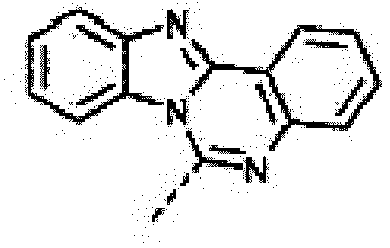

au moins un de R1 à R12 est autre chose que de l'hydrogène ; et
- - - - est une fraction liée à la Formule chimique 1 ;
dans lequel le terme « substitué » est tel que défini dans la revendication 1. - Composé selon la revendication 1, dans lequel R1 à R12 sont identiques ou différents les uns des autres, et sont chacun indépendamment de l'hydrogène ou l'une quelconque des formules structurelles [R-1] à [R-5] suivantes, à condition qu'au moins un de R1 à R12 soit autre chose que de l'hydrogène :


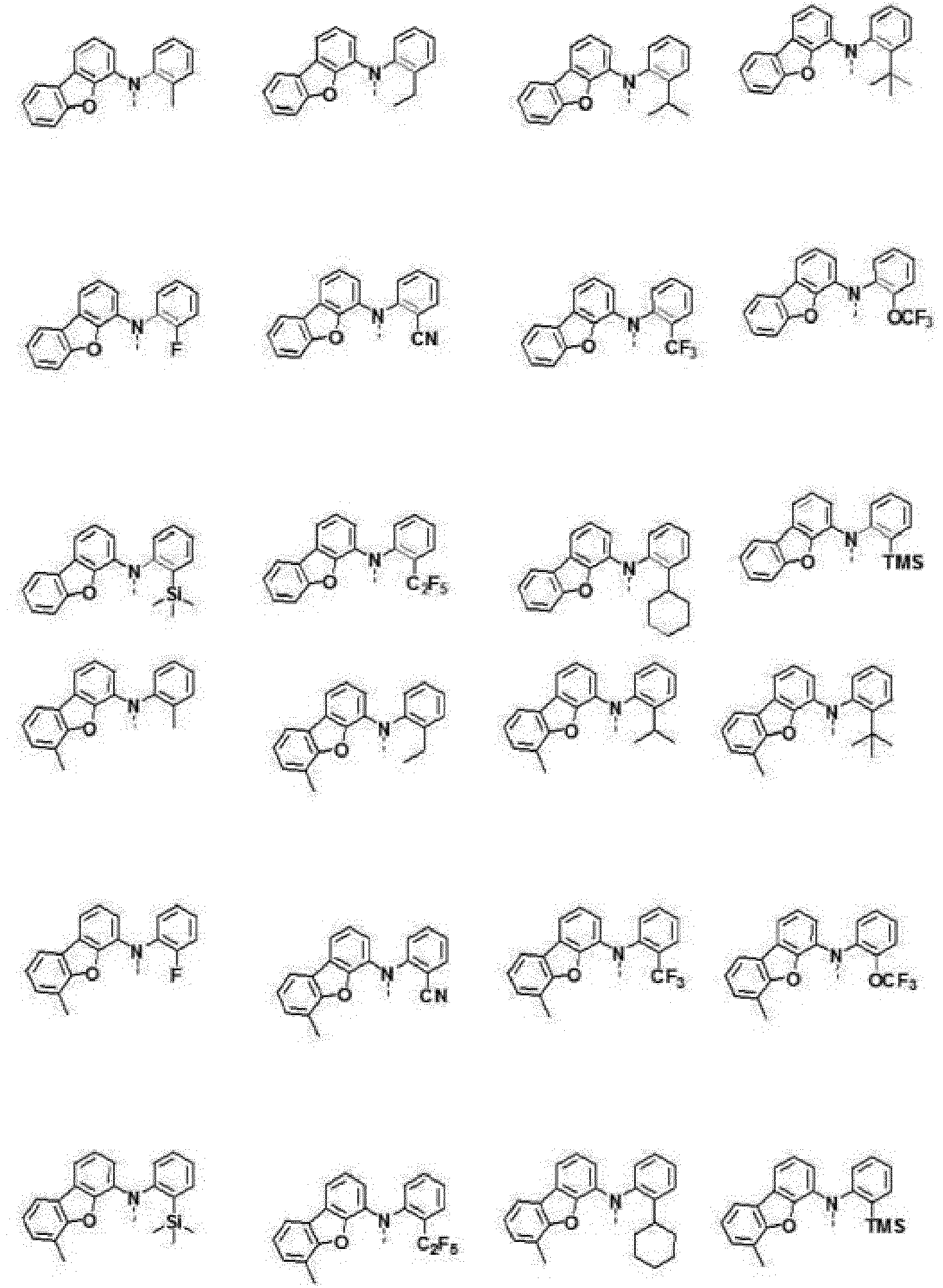


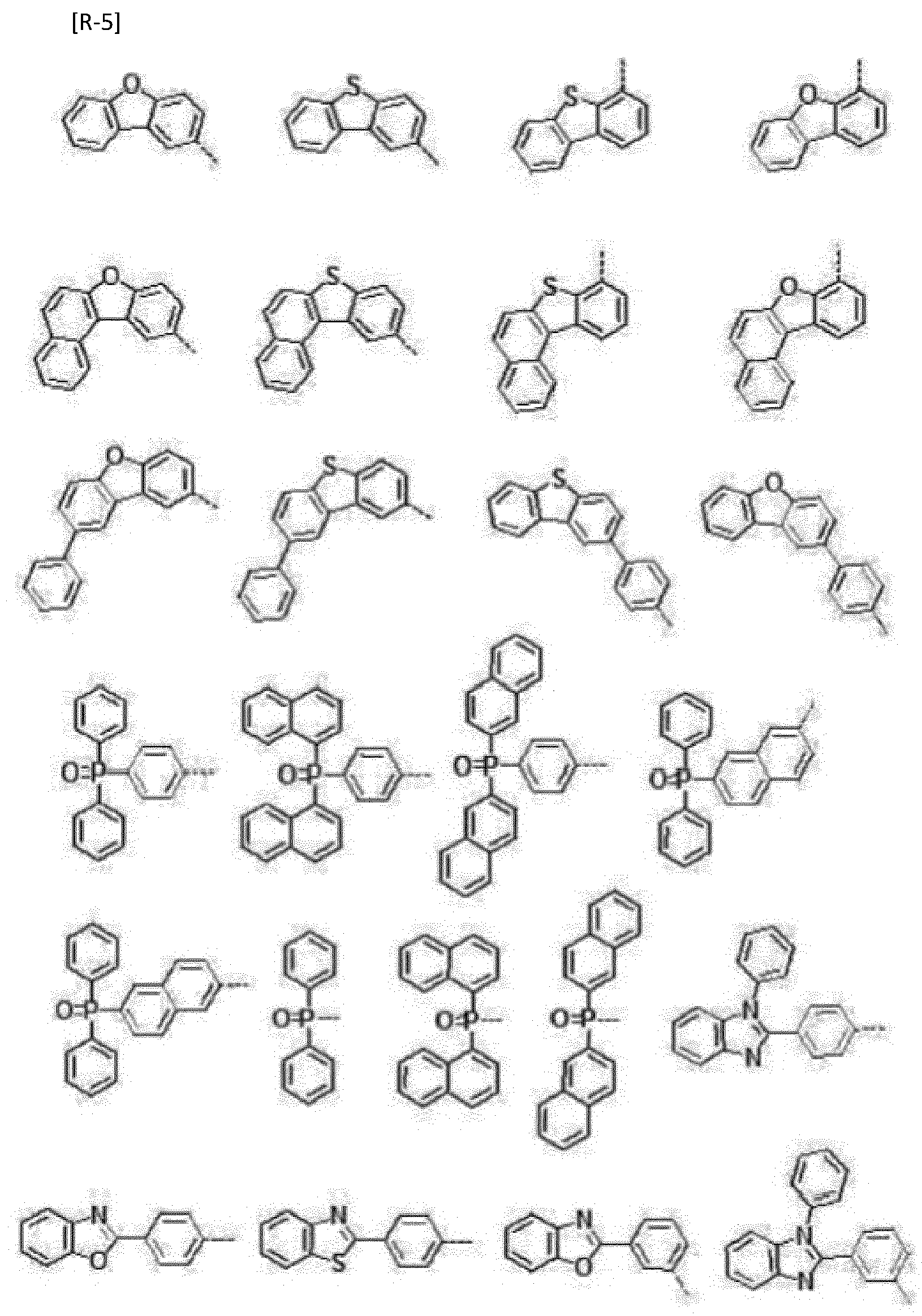


- Composé selon la revendication 1, dans lequel le composé est l'un quelconque parmi les suivants :














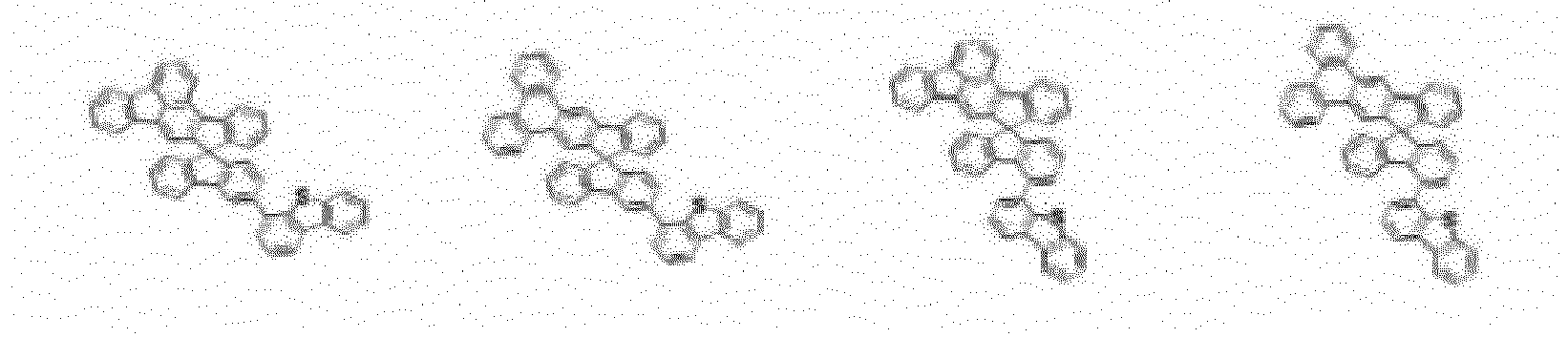


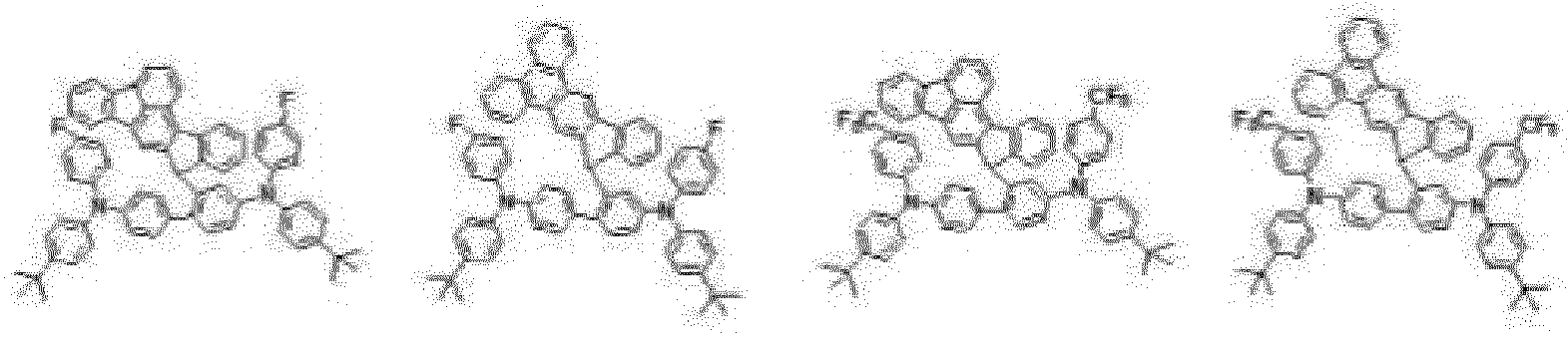





- Dispositif électroluminescent organique comprenant :une première électrode ;une seconde électrode fournie pour faire face à la première électrode ; etune ou plusieurs couches de matériau organique fournies entre la première électrode et la seconde électrode,dans lequel une ou plusieurs couches des couches de matériau organique comprennent le composé selon l'une quelconque des revendications 1 à 8.
- Dispositif électroluminescent organique selon la revendication 9, dans lequel les une ou plusieurs couches de matériau organique comprennent une couche d'injection de trou ou une couche de transport de trou, et la couche d'injection de trou ou la couche de transport de trou comprend le composé.
- Dispositif électroluminescent organique selon la revendication 9, dans lequel les une ou plusieurs couches de matériau organique comprennent une couche de blocage d'électrons, et la couche de blocage d'électrons comprend le composé.
- Dispositif électroluminescent organique selon la revendication 9, dans lequel les une ou plusieurs couches de matériau organique comprennent une couche électroluminescente, et la couche électroluminescente comprend le composé.
- Dispositif électroluminescent organique selon la revendication 9, dans lequel les une ou plusieurs couches de matériau organique comprennent une couche de transport d'électrons, une couche d'injection d'électrons, ou une couche qui transporte et injecte des électrons simultanément, et la couche de transport d'électrons, la couche d'injection d'électrons ou la couche qui transporte et injecte des électrons simultanément comprend le composé.
- Dispositif électroluminescent organique selon la revendication 9, dans lequel les une ou plusieurs couches de matériau organique comprennent une couche électroluminescente, et la couche électroluminescente comprend un composé représenté par la Formule chimique 1-A suivante :
 n1 est un nombre entier de 1 ou plus ;Ar7 est un groupe benzofluorène monovalent ou plus substitué ou non substitué, un groupe fluoranthène monovalent ou plus substitué ou non substitué, un groupe pyrène monovalent ou plus substitué ou non substitué, ou un groupe chrysène monovalent ou plus substitué ou non substitué ;L4 est une liaison direction, un groupe arylène substitué ou non substitué, ou un groupe hétéroarylène substitué ou non substitué ;Ar8 et Ar9 sont identiques ou différents l'un de l'autre, et sont chacun indépendamment un groupe aryle substitué ou non substitué, un groupe silyle substitué ou non substitué, un groupe germanium substitué ou non substitué, un groupe alkyle substitué ou non substitué, un groupe arylalkyle substitué ou non substitué, ou un groupe hétéroaryle substitué ou non substitué, ou facultativement se combinent l'un à l'autre pour former un cycle substitué ou non substitué ;lorsque n1 est 2 ou plus, deux structures ou plus dans la parenthèse sont identiques ou différentes les unes des autres ; etle terme « substituant » est tel que défini dans la revendication 1.
 - Dispositif électroluminescent organique selon la revendication 9, dans lequel les une ou plusieurs couches de matériau organique comprennent une couche électroluminescente, et la couche électroluminescente comprend un composé représenté par la Formule chimique 2-A suivante :
 G11 est un groupe 1-naphtyle, un groupe 2-naphtyle, un groupe 1-anthryle, un groupe 2-anthryle, un groupe 1-phénanthryle, un groupe 2-phénanthryle, un groupe 3-phénanthryle, un groupe 4-phénanthryle, un groupe 9-phénanthryle, un groupe 1-naphtacényle, un groupe 2-naphtacényle, un groupe 9-naphtacényle, un groupe 1-pyrényle, un groupe 2-pyrényle, un groupe 4-pyrényle, un groupe 3-méthyl-2-naphtyle, un groupe 4-méthyl-1-naphtyle, ou la Formule chimique.
 G12 est un groupe phényle, un groupe 1-naphtyle, un groupe 2-naphtyle, un groupe 1-anthryle, un groupe 2-anthryle, un groupe 9-anthryle, un groupe 1-phénanthryle, un groupe 2-phénanthryle, un groupe 3-phénanthryle, un groupe 4-phénanthryle, un groupe 9-phénanthryle, un groupe 1-naphtacényle, un groupe 2-naphtacényle, un groupe 9-naphtacényle, un groupe 1-pyrényle, un groupe 2-pyrényle, un groupe 4-pyrényle, un groupe 2-biphénylyle, un groupe 3-biphénylyle, un groupe 4-biphénylyle, un groupe p-terphényl-4-yle, un groupe p-terphényl-3-yle, un groupe p-terphényl-2-yle, un groupe m-terphényl-4-yl, un groupe m-terphényl-3-yle, un groupe m-terphényl-2-yle, un groupe o-tolyle, un groupe m-tolyle, un groupe p-tolyle, un groupe p-t-butylphényle, un groupe p-(2-phénylpropyl)phényle, un groupe 3-méthyl-2-naphtyle, un groupe 4-méthyle-1-napthyle, un groupe 4-méthyl-1-anthryle, un groupe 4'-méthylbiphénylyle, un groupe 4"-t-butyl-p-terphényl-4-yle, ou un groupe 3-fluoranthényle ;G13 et G14 sont identiques ou différents l'un de l'autre, et sont chacun indépendamment de l'hydrogène, un groupe alkyle substitué ou non substitué, un groupe alcoxy substitué ou non substitué, un groupe aryle substitué ou non substitué, ou un groupe hétéroaryle substitué ou non substitué ;g12 est un nombre entier compris entre 1 et 5 ;g13 et g14 sont chacun un nombre entier compris entre 1 et 4 ;lorsque g12 à g14 sont chacun 2 ou plus, deux structures ou plus dans la parenthèse sont identiques ou différentes les unes des autres ; etle terme « substitué » est tel que défini dans la revendication 1.
Applications Claiming Priority (3)
| Application Number | Priority Date | Filing Date | Title |
|---|---|---|---|
| KR20150131230 | 2015-09-16 | ||
| KR1020160107194A KR101934470B1 (ko) | 2015-09-16 | 2016-08-23 | 화합물 및 이를 포함하는 유기 발광 소자 |
| PCT/KR2016/010163 WO2017047993A1 (fr) | 2015-09-16 | 2016-09-09 | Composé et dispositif électroluminescent organique contenant le composé |
Publications (3)
| Publication Number | Publication Date |
|---|---|
| EP3351523A1 EP3351523A1 (fr) | 2018-07-25 |
| EP3351523A4 EP3351523A4 (fr) | 2019-04-03 |
| EP3351523B1 true EP3351523B1 (fr) | 2020-11-04 |
Family
ID=58500659
Family Applications (1)
| Application Number | Title | Priority Date | Filing Date |
|---|---|---|---|
| EP16846814.8A Active EP3351523B1 (fr) | 2015-09-16 | 2016-09-09 | Composé et dispositif électroluminescent organique contenant le composé |
Country Status (6)
| Country | Link |
|---|---|
| US (1) | US10651411B2 (fr) |
| EP (1) | EP3351523B1 (fr) |
| JP (1) | JP6493774B2 (fr) |
| KR (1) | KR101934470B1 (fr) |
| CN (1) | CN107406351B (fr) |
| TW (1) | TWI627152B (fr) |
Families Citing this family (13)
| Publication number | Priority date | Publication date | Assignee | Title |
|---|---|---|---|---|
| EP3464244B1 (fr) * | 2016-06-03 | 2021-11-17 | Merck Patent GmbH | Matériaux pour dispositifs électroluminescents organiques |
| KR20170141987A (ko) * | 2016-06-16 | 2017-12-27 | 에스에프씨 주식회사 | 유기발광 화합물 및 이를 포함하는 유기전계발광소자 |
| CN107394051B (zh) * | 2017-08-14 | 2019-12-27 | 上海天马有机发光显示技术有限公司 | 一种发光器件及显示装置 |
| CN109970660B (zh) * | 2017-12-21 | 2022-04-05 | 广州华睿光电材料有限公司 | 含稠杂环的螺芴类有机化合物及其应用 |
| US10428269B2 (en) * | 2017-12-27 | 2019-10-01 | Feng-wen Yen | Indenotriphenylene derivative and organic electroluminescence device using the same |
| CN110734381B (zh) * | 2018-07-18 | 2023-01-13 | 江苏三月科技股份有限公司 | 一种以三芳胺为核心的化合物及其制备方法和应用 |
| CN108976134A (zh) * | 2018-09-28 | 2018-12-11 | 石家庄诚志永华显示材料有限公司 | 螺芴类化合物、包含该螺芴类化合物的材料和有机电致发光器件 |
| JP7351713B2 (ja) * | 2018-11-30 | 2023-09-27 | 関東化学株式会社 | 2-置換フルオレン系化合物、該化合物を含有する正孔輸送材料および該化合物を正孔輸送層に含む有機電子デバイス |
| CN113402462A (zh) * | 2020-03-16 | 2021-09-17 | 中国石油化工股份有限公司 | 稠环化合物及制备方法和应用及共主体材料、发光组合物、发光器件、照明设备和显示设备 |
| KR102831995B1 (ko) * | 2020-10-30 | 2025-07-08 | 주식회사 엘지화학 | 신규한 화합물, 이를 포함하는 코팅 조성물, 이를 이용한 유기 발광 소자 및 이의 제조방법 |
| JP7665314B2 (ja) | 2020-11-02 | 2025-04-21 | キヤノン株式会社 | 有機化合物及び有機発光素子 |
| CN114437023B (zh) * | 2022-02-16 | 2023-06-23 | 宁波卢米蓝新材料有限公司 | 一种有机电致发光化合物及其应用 |
| CN115304575B (zh) * | 2022-08-05 | 2023-11-07 | 武汉天马微电子有限公司 | 一种有机化合物和有机电致发光装置 |
Family Cites Families (17)
| Publication number | Priority date | Publication date | Assignee | Title |
|---|---|---|---|---|
| JP2004535099A (ja) | 2001-04-20 | 2004-11-18 | コーニンクレッカ フィリップス エレクトロニクス エヌ ヴィ | 画像を改善する画像処理装置及び方法、並びにこの画像処理装置を有する画像表示装置 |
| DE10135513B4 (de) | 2001-07-20 | 2005-02-24 | Novaled Gmbh | Lichtemittierendes Bauelement mit organischen Schichten |
| US20060141287A1 (en) | 2004-08-19 | 2006-06-29 | Eastman Kodak Company | OLEDs with improved operational lifetime |
| TW200920813A (en) * | 2007-07-07 | 2009-05-16 | Idemitsu Kosan Co | Organic electroluminescence device |
| KR101130102B1 (ko) * | 2009-12-18 | 2012-03-28 | 덕산하이메탈(주) | 인데노플루오렌 구조에 이중결합을 포함하는 화합물 및 이를 이용한 유기전자소자, 그 단말 |
| JP2011162525A (ja) * | 2010-02-15 | 2011-08-25 | Canon Inc | 新規有機化合物およびそれを有する有機発光素子 |
| DE102010013068A1 (de) * | 2010-03-26 | 2011-09-29 | Merck Patent Gmbh | Verbindungen für elektronische Vorrichtungen |
| JP5565201B2 (ja) | 2010-08-20 | 2014-08-06 | 東洋インキScホールディングス株式会社 | スピロ化合物、および有機エレクトロルミネッセンス素子用材料 |
| JP5751992B2 (ja) | 2011-08-30 | 2015-07-22 | キヤノン株式会社 | 新規有機化合物及びそれを用いた有機発光素子 |
| KR101497134B1 (ko) * | 2011-12-29 | 2015-03-02 | 제일모직 주식회사 | 유기광전자소자용 화합물, 이를 포함하는 유기발광소자 및 상기 유기발광소자를 포함하는 표시장치 |
| KR101896008B1 (ko) * | 2012-06-01 | 2018-09-06 | 덕산네오룩스 주식회사 | 벤조플루오렌을 포함하는 유기전기소자용 화합물, 이를 이용한 유기전기소자 및 그 전자 장치 |
| WO2014057873A1 (fr) * | 2012-10-10 | 2014-04-17 | 東レ株式会社 | Dérivé d'oxyde de phosphine et élément photoémetteur qui le contient |
| KR20150010016A (ko) * | 2013-07-17 | 2015-01-28 | 롬엔드하스전자재료코리아유한회사 | 유기 전계 발광 소자 |
| KR102278600B1 (ko) * | 2014-03-06 | 2021-07-19 | 삼성디스플레이 주식회사 | 화합물 및 이를 포함한 유기 발광 소자 |
| KR101493482B1 (ko) | 2014-08-29 | 2015-02-16 | 덕산네오룩스 주식회사 | 유기전기소자용 화합물, 이를 이용한 유기전기소자 및 그 전자 장치 |
| US20160211456A1 (en) * | 2015-01-19 | 2016-07-21 | Luminescence Technology Corp. | PHENANTHRO[9,10-b]TETRAPHENYLENE DERIVATIVE AND USE THEREOF |
| KR101520955B1 (ko) | 2015-02-10 | 2015-06-05 | 덕산네오룩스 주식회사 | 유기전기소자용 신규 화합물, 이를 이용한 유기전기소자 및 그 전자장치 |
-
2016
- 2016-08-23 KR KR1020160107194A patent/KR101934470B1/ko active Active
- 2016-09-09 CN CN201680015878.XA patent/CN107406351B/zh active Active
- 2016-09-09 US US15/568,116 patent/US10651411B2/en active Active
- 2016-09-09 JP JP2017544005A patent/JP6493774B2/ja active Active
- 2016-09-09 EP EP16846814.8A patent/EP3351523B1/fr active Active
- 2016-09-12 TW TW105129535A patent/TWI627152B/zh active
Non-Patent Citations (1)
| Title |
|---|
| None * |
Also Published As
| Publication number | Publication date |
|---|---|
| EP3351523A4 (fr) | 2019-04-03 |
| KR20170033231A (ko) | 2017-03-24 |
| US10651411B2 (en) | 2020-05-12 |
| TW201720786A (zh) | 2017-06-16 |
| CN107406351A (zh) | 2017-11-28 |
| JP2018511572A (ja) | 2018-04-26 |
| JP6493774B2 (ja) | 2019-04-03 |
| CN107406351B (zh) | 2021-06-08 |
| EP3351523A1 (fr) | 2018-07-25 |
| US20180145272A1 (en) | 2018-05-24 |
| TWI627152B (zh) | 2018-06-21 |
| KR101934470B1 (ko) | 2019-03-25 |
Similar Documents
| Publication | Publication Date | Title |
|---|---|---|
| EP3351523B1 (fr) | Composé et dispositif électroluminescent organique contenant le composé | |
| EP3357912B1 (fr) | Utilisation de composé spiro et élément électroluminescent organique le comprenant | |
| EP3378864B1 (fr) | Composé spiro et élément électroluminescent organique comprenant ledit composé | |
| EP3378853B1 (fr) | Composé hétérocyclique et élément électroluminescent organique comprenant ledit composé | |
| EP3339293B1 (fr) | Composé et dispositif optoélectronique organique le comprenant | |
| EP3388438B1 (fr) | Composé à structure spiro et dispositif électronique organique comprenant ledit composé | |
| EP3378865B1 (fr) | Composé spiro et élément électroluminescent organique comprenant ledit composé | |
| EP3305764B1 (fr) | Composé organique à double ponts spiro et élément électronique organique comprenant celui-ci | |
| EP3330249B1 (fr) | Composé à base d'amine et dispositif électroluminescent organique contenant ce composé | |
| EP3305775B1 (fr) | Composé et élément électronique organique le comprenant | |
| EP3321246B1 (fr) | Composé double spiro et élément électroluminescent organique comprenant ledit composé | |
| EP3351531A1 (fr) | Composé hétérocyclique et dispositif électroluminescent organique contenant ce composé | |
| KR101898334B1 (ko) | 화합물 및 이를 포함하는 유기 전자 소자 |
Legal Events
| Date | Code | Title | Description |
|---|---|---|---|
| STAA | Information on the status of an ep patent application or granted ep patent |
Free format text: STATUS: THE INTERNATIONAL PUBLICATION HAS BEEN MADE |
|
| PUAI | Public reference made under article 153(3) epc to a published international application that has entered the european phase |
Free format text: ORIGINAL CODE: 0009012 |
|
| STAA | Information on the status of an ep patent application or granted ep patent |
Free format text: STATUS: REQUEST FOR EXAMINATION WAS MADE |
|
| 17P | Request for examination filed |
Effective date: 20170911 |
|
| AK | Designated contracting states |
Kind code of ref document: A1 Designated state(s): AL AT BE BG CH CY CZ DE DK EE ES FI FR GB GR HR HU IE IS IT LI LT LU LV MC MK MT NL NO PL PT RO RS SE SI SK SM TR |
|
| AX | Request for extension of the european patent |
Extension state: BA ME |
|
| DAV | Request for validation of the european patent (deleted) | ||
| DAX | Request for extension of the european patent (deleted) | ||
| A4 | Supplementary search report drawn up and despatched |
Effective date: 20190306 |
|
| RIC1 | Information provided on ipc code assigned before grant |
Ipc: C07D 235/18 20060101ALI20190227BHEP Ipc: C07C 13/72 20060101AFI20190227BHEP Ipc: C07D 251/24 20060101ALI20190227BHEP Ipc: C07D 239/74 20060101ALI20190227BHEP Ipc: C07C 255/58 20060101ALI20190227BHEP Ipc: C07C 211/61 20060101ALI20190227BHEP Ipc: C07D 239/26 20060101ALI20190227BHEP Ipc: C07D 277/66 20060101ALI20190227BHEP Ipc: C07F 7/08 20060101ALI20190227BHEP Ipc: C07C 25/22 20060101ALI20190227BHEP Ipc: C07F 5/02 20060101ALI20190227BHEP Ipc: C07D 213/16 20060101ALI20190227BHEP Ipc: C07C 211/54 20060101ALI20190227BHEP Ipc: C07D 307/91 20060101ALI20190227BHEP Ipc: C07D 263/57 20060101ALI20190227BHEP Ipc: H01L 51/50 20060101ALI20190227BHEP Ipc: C07F 9/53 20060101ALI20190227BHEP Ipc: C07D 209/86 20060101ALI20190227BHEP Ipc: C07D 405/04 20060101ALI20190227BHEP Ipc: C09K 11/06 20060101ALI20190227BHEP Ipc: C07D 333/76 20060101ALI20190227BHEP |
|
| STAA | Information on the status of an ep patent application or granted ep patent |
Free format text: STATUS: EXAMINATION IS IN PROGRESS |
|
| 17Q | First examination report despatched |
Effective date: 20191118 |
|
| GRAP | Despatch of communication of intention to grant a patent |
Free format text: ORIGINAL CODE: EPIDOSNIGR1 |
|
| STAA | Information on the status of an ep patent application or granted ep patent |
Free format text: STATUS: GRANT OF PATENT IS INTENDED |
|
| INTG | Intention to grant announced |
Effective date: 20200619 |
|
| GRAS | Grant fee paid |
Free format text: ORIGINAL CODE: EPIDOSNIGR3 |
|
| GRAA | (expected) grant |
Free format text: ORIGINAL CODE: 0009210 |
|
| STAA | Information on the status of an ep patent application or granted ep patent |
Free format text: STATUS: THE PATENT HAS BEEN GRANTED |
|
| AK | Designated contracting states |
Kind code of ref document: B1 Designated state(s): AL AT BE BG CH CY CZ DE DK EE ES FI FR GB GR HR HU IE IS IT LI LT LU LV MC MK MT NL NO PL PT RO RS SE SI SK SM TR |
|
| REG | Reference to a national code |
Ref country code: GB Ref legal event code: FG4D |
|
| REG | Reference to a national code |
Ref country code: CH Ref legal event code: EP |
|
| REG | Reference to a national code |
Ref country code: AT Ref legal event code: REF Ref document number: 1330630 Country of ref document: AT Kind code of ref document: T Effective date: 20201115 |
|
| REG | Reference to a national code |
Ref country code: IE Ref legal event code: FG4D |
|
| REG | Reference to a national code |
Ref country code: DE Ref legal event code: R096 Ref document number: 602016047407 Country of ref document: DE |
|
| REG | Reference to a national code |
Ref country code: NL Ref legal event code: MP Effective date: 20201104 |
|
| REG | Reference to a national code |
Ref country code: AT Ref legal event code: MK05 Ref document number: 1330630 Country of ref document: AT Kind code of ref document: T Effective date: 20201104 |
|
| PG25 | Lapsed in a contracting state [announced via postgrant information from national office to epo] |
Ref country code: NO Free format text: LAPSE BECAUSE OF FAILURE TO SUBMIT A TRANSLATION OF THE DESCRIPTION OR TO PAY THE FEE WITHIN THE PRESCRIBED TIME-LIMIT Effective date: 20210204 Ref country code: RS Free format text: LAPSE BECAUSE OF FAILURE TO SUBMIT A TRANSLATION OF THE DESCRIPTION OR TO PAY THE FEE WITHIN THE PRESCRIBED TIME-LIMIT Effective date: 20201104 Ref country code: PT Free format text: LAPSE BECAUSE OF FAILURE TO SUBMIT A TRANSLATION OF THE DESCRIPTION OR TO PAY THE FEE WITHIN THE PRESCRIBED TIME-LIMIT Effective date: 20210304 Ref country code: GR Free format text: LAPSE BECAUSE OF FAILURE TO SUBMIT A TRANSLATION OF THE DESCRIPTION OR TO PAY THE FEE WITHIN THE PRESCRIBED TIME-LIMIT Effective date: 20210205 Ref country code: FI Free format text: LAPSE BECAUSE OF FAILURE TO SUBMIT A TRANSLATION OF THE DESCRIPTION OR TO PAY THE FEE WITHIN THE PRESCRIBED TIME-LIMIT Effective date: 20201104 |
|
| PG25 | Lapsed in a contracting state [announced via postgrant information from national office to epo] |
Ref country code: SE Free format text: LAPSE BECAUSE OF FAILURE TO SUBMIT A TRANSLATION OF THE DESCRIPTION OR TO PAY THE FEE WITHIN THE PRESCRIBED TIME-LIMIT Effective date: 20201104 Ref country code: LV Free format text: LAPSE BECAUSE OF FAILURE TO SUBMIT A TRANSLATION OF THE DESCRIPTION OR TO PAY THE FEE WITHIN THE PRESCRIBED TIME-LIMIT Effective date: 20201104 Ref country code: PL Free format text: LAPSE BECAUSE OF FAILURE TO SUBMIT A TRANSLATION OF THE DESCRIPTION OR TO PAY THE FEE WITHIN THE PRESCRIBED TIME-LIMIT Effective date: 20201104 Ref country code: IS Free format text: LAPSE BECAUSE OF FAILURE TO SUBMIT A TRANSLATION OF THE DESCRIPTION OR TO PAY THE FEE WITHIN THE PRESCRIBED TIME-LIMIT Effective date: 20210304 Ref country code: BG Free format text: LAPSE BECAUSE OF FAILURE TO SUBMIT A TRANSLATION OF THE DESCRIPTION OR TO PAY THE FEE WITHIN THE PRESCRIBED TIME-LIMIT Effective date: 20210204 Ref country code: ES Free format text: LAPSE BECAUSE OF FAILURE TO SUBMIT A TRANSLATION OF THE DESCRIPTION OR TO PAY THE FEE WITHIN THE PRESCRIBED TIME-LIMIT Effective date: 20201104 Ref country code: AT Free format text: LAPSE BECAUSE OF FAILURE TO SUBMIT A TRANSLATION OF THE DESCRIPTION OR TO PAY THE FEE WITHIN THE PRESCRIBED TIME-LIMIT Effective date: 20201104 |
|
| REG | Reference to a national code |
Ref country code: LT Ref legal event code: MG9D |
|
| PG25 | Lapsed in a contracting state [announced via postgrant information from national office to epo] |
Ref country code: HR Free format text: LAPSE BECAUSE OF FAILURE TO SUBMIT A TRANSLATION OF THE DESCRIPTION OR TO PAY THE FEE WITHIN THE PRESCRIBED TIME-LIMIT Effective date: 20201104 |
|
| PG25 | Lapsed in a contracting state [announced via postgrant information from national office to epo] |
Ref country code: SK Free format text: LAPSE BECAUSE OF FAILURE TO SUBMIT A TRANSLATION OF THE DESCRIPTION OR TO PAY THE FEE WITHIN THE PRESCRIBED TIME-LIMIT Effective date: 20201104 Ref country code: RO Free format text: LAPSE BECAUSE OF FAILURE TO SUBMIT A TRANSLATION OF THE DESCRIPTION OR TO PAY THE FEE WITHIN THE PRESCRIBED TIME-LIMIT Effective date: 20201104 Ref country code: EE Free format text: LAPSE BECAUSE OF FAILURE TO SUBMIT A TRANSLATION OF THE DESCRIPTION OR TO PAY THE FEE WITHIN THE PRESCRIBED TIME-LIMIT Effective date: 20201104 Ref country code: CZ Free format text: LAPSE BECAUSE OF FAILURE TO SUBMIT A TRANSLATION OF THE DESCRIPTION OR TO PAY THE FEE WITHIN THE PRESCRIBED TIME-LIMIT Effective date: 20201104 Ref country code: SM Free format text: LAPSE BECAUSE OF FAILURE TO SUBMIT A TRANSLATION OF THE DESCRIPTION OR TO PAY THE FEE WITHIN THE PRESCRIBED TIME-LIMIT Effective date: 20201104 Ref country code: LT Free format text: LAPSE BECAUSE OF FAILURE TO SUBMIT A TRANSLATION OF THE DESCRIPTION OR TO PAY THE FEE WITHIN THE PRESCRIBED TIME-LIMIT Effective date: 20201104 |
|
| REG | Reference to a national code |
Ref country code: DE Ref legal event code: R097 Ref document number: 602016047407 Country of ref document: DE |
|
| PG25 | Lapsed in a contracting state [announced via postgrant information from national office to epo] |
Ref country code: DK Free format text: LAPSE BECAUSE OF FAILURE TO SUBMIT A TRANSLATION OF THE DESCRIPTION OR TO PAY THE FEE WITHIN THE PRESCRIBED TIME-LIMIT Effective date: 20201104 |
|
| PLBE | No opposition filed within time limit |
Free format text: ORIGINAL CODE: 0009261 |
|
| STAA | Information on the status of an ep patent application or granted ep patent |
Free format text: STATUS: NO OPPOSITION FILED WITHIN TIME LIMIT |
|
| 26N | No opposition filed |
Effective date: 20210805 |
|
| PG25 | Lapsed in a contracting state [announced via postgrant information from national office to epo] |
Ref country code: IT Free format text: LAPSE BECAUSE OF FAILURE TO SUBMIT A TRANSLATION OF THE DESCRIPTION OR TO PAY THE FEE WITHIN THE PRESCRIBED TIME-LIMIT Effective date: 20201104 Ref country code: AL Free format text: LAPSE BECAUSE OF FAILURE TO SUBMIT A TRANSLATION OF THE DESCRIPTION OR TO PAY THE FEE WITHIN THE PRESCRIBED TIME-LIMIT Effective date: 20201104 Ref country code: NL Free format text: LAPSE BECAUSE OF FAILURE TO SUBMIT A TRANSLATION OF THE DESCRIPTION OR TO PAY THE FEE WITHIN THE PRESCRIBED TIME-LIMIT Effective date: 20201104 |
|
| PG25 | Lapsed in a contracting state [announced via postgrant information from national office to epo] |
Ref country code: SI Free format text: LAPSE BECAUSE OF FAILURE TO SUBMIT A TRANSLATION OF THE DESCRIPTION OR TO PAY THE FEE WITHIN THE PRESCRIBED TIME-LIMIT Effective date: 20201104 |
|
| REG | Reference to a national code |
Ref country code: CH Ref legal event code: PL |
|
| REG | Reference to a national code |
Ref country code: BE Ref legal event code: MM Effective date: 20210930 |
|
| PG25 | Lapsed in a contracting state [announced via postgrant information from national office to epo] |
Ref country code: IS Free format text: LAPSE BECAUSE OF FAILURE TO SUBMIT A TRANSLATION OF THE DESCRIPTION OR TO PAY THE FEE WITHIN THE PRESCRIBED TIME-LIMIT Effective date: 20210304 Ref country code: MC Free format text: LAPSE BECAUSE OF FAILURE TO SUBMIT A TRANSLATION OF THE DESCRIPTION OR TO PAY THE FEE WITHIN THE PRESCRIBED TIME-LIMIT Effective date: 20201104 |
|
| PG25 | Lapsed in a contracting state [announced via postgrant information from national office to epo] |
Ref country code: LU Free format text: LAPSE BECAUSE OF NON-PAYMENT OF DUE FEES Effective date: 20210909 Ref country code: IE Free format text: LAPSE BECAUSE OF NON-PAYMENT OF DUE FEES Effective date: 20210909 Ref country code: BE Free format text: LAPSE BECAUSE OF NON-PAYMENT OF DUE FEES Effective date: 20210930 |
|
| PG25 | Lapsed in a contracting state [announced via postgrant information from national office to epo] |
Ref country code: LI Free format text: LAPSE BECAUSE OF NON-PAYMENT OF DUE FEES Effective date: 20210930 Ref country code: CH Free format text: LAPSE BECAUSE OF NON-PAYMENT OF DUE FEES Effective date: 20210930 |
|
| PG25 | Lapsed in a contracting state [announced via postgrant information from national office to epo] |
Ref country code: HU Free format text: LAPSE BECAUSE OF FAILURE TO SUBMIT A TRANSLATION OF THE DESCRIPTION OR TO PAY THE FEE WITHIN THE PRESCRIBED TIME-LIMIT; INVALID AB INITIO Effective date: 20160909 |
|
| PG25 | Lapsed in a contracting state [announced via postgrant information from national office to epo] |
Ref country code: CY Free format text: LAPSE BECAUSE OF FAILURE TO SUBMIT A TRANSLATION OF THE DESCRIPTION OR TO PAY THE FEE WITHIN THE PRESCRIBED TIME-LIMIT Effective date: 20201104 |
|
| PG25 | Lapsed in a contracting state [announced via postgrant information from national office to epo] |
Ref country code: MK Free format text: LAPSE BECAUSE OF FAILURE TO SUBMIT A TRANSLATION OF THE DESCRIPTION OR TO PAY THE FEE WITHIN THE PRESCRIBED TIME-LIMIT Effective date: 20201104 |
|
| PG25 | Lapsed in a contracting state [announced via postgrant information from national office to epo] |
Ref country code: MT Free format text: LAPSE BECAUSE OF FAILURE TO SUBMIT A TRANSLATION OF THE DESCRIPTION OR TO PAY THE FEE WITHIN THE PRESCRIBED TIME-LIMIT Effective date: 20201104 |
|
| PGFP | Annual fee paid to national office [announced via postgrant information from national office to epo] |
Ref country code: DE Payment date: 20250820 Year of fee payment: 10 |
|
| PGFP | Annual fee paid to national office [announced via postgrant information from national office to epo] |
Ref country code: GB Payment date: 20250820 Year of fee payment: 10 |
|
| PGFP | Annual fee paid to national office [announced via postgrant information from national office to epo] |
Ref country code: FR Payment date: 20250821 Year of fee payment: 10 |
|
| PG25 | Lapsed in a contracting state [announced via postgrant information from national office to epo] |
Ref country code: TR Free format text: LAPSE BECAUSE OF FAILURE TO SUBMIT A TRANSLATION OF THE DESCRIPTION OR TO PAY THE FEE WITHIN THE PRESCRIBED TIME-LIMIT Effective date: 20201104 |