EP3352845B1 - Appareil pour améliorer la sensibilité d'un nerf sensoriel - Google Patents
Appareil pour améliorer la sensibilité d'un nerf sensoriel Download PDFInfo
- Publication number
- EP3352845B1 EP3352845B1 EP16775868.9A EP16775868A EP3352845B1 EP 3352845 B1 EP3352845 B1 EP 3352845B1 EP 16775868 A EP16775868 A EP 16775868A EP 3352845 B1 EP3352845 B1 EP 3352845B1
- Authority
- EP
- European Patent Office
- Prior art keywords
- electrical stimulation
- stimulation pulses
- subject
- sets
- body portion
- Prior art date
- Legal status (The legal status is an assumption and is not a legal conclusion. Google has not performed a legal analysis and makes no representation as to the accuracy of the status listed.)
- Active
Links
Images



Classifications
-
- A—HUMAN NECESSITIES
- A61—MEDICAL OR VETERINARY SCIENCE; HYGIENE
- A61N—ELECTROTHERAPY; MAGNETOTHERAPY; RADIATION THERAPY; ULTRASOUND THERAPY
- A61N1/00—Electrotherapy; Circuits therefor
- A61N1/18—Applying electric currents by contact electrodes
- A61N1/32—Applying electric currents by contact electrodes alternating or intermittent currents
- A61N1/36—Applying electric currents by contact electrodes alternating or intermittent currents for stimulation
- A61N1/36014—External stimulators, e.g. with patch electrodes
-
- A—HUMAN NECESSITIES
- A61—MEDICAL OR VETERINARY SCIENCE; HYGIENE
- A61N—ELECTROTHERAPY; MAGNETOTHERAPY; RADIATION THERAPY; ULTRASOUND THERAPY
- A61N1/00—Electrotherapy; Circuits therefor
- A61N1/02—Details
- A61N1/04—Electrodes
- A61N1/0404—Electrodes for external use
- A61N1/0472—Structure-related aspects
- A61N1/0484—Garment electrodes worn by the patient
-
- A—HUMAN NECESSITIES
- A61—MEDICAL OR VETERINARY SCIENCE; HYGIENE
- A61N—ELECTROTHERAPY; MAGNETOTHERAPY; RADIATION THERAPY; ULTRASOUND THERAPY
- A61N1/00—Electrotherapy; Circuits therefor
- A61N1/18—Applying electric currents by contact electrodes
- A61N1/32—Applying electric currents by contact electrodes alternating or intermittent currents
- A61N1/36—Applying electric currents by contact electrodes alternating or intermittent currents for stimulation
- A61N1/36014—External stimulators, e.g. with patch electrodes
- A61N1/3603—Control systems
-
- A—HUMAN NECESSITIES
- A61—MEDICAL OR VETERINARY SCIENCE; HYGIENE
- A61N—ELECTROTHERAPY; MAGNETOTHERAPY; RADIATION THERAPY; ULTRASOUND THERAPY
- A61N1/00—Electrotherapy; Circuits therefor
- A61N1/18—Applying electric currents by contact electrodes
- A61N1/32—Applying electric currents by contact electrodes alternating or intermittent currents
- A61N1/36—Applying electric currents by contact electrodes alternating or intermittent currents for stimulation
- A61N1/3605—Implantable neurostimulators for stimulating central or peripheral nerve system
- A61N1/36128—Control systems
-
- A—HUMAN NECESSITIES
- A61—MEDICAL OR VETERINARY SCIENCE; HYGIENE
- A61N—ELECTROTHERAPY; MAGNETOTHERAPY; RADIATION THERAPY; ULTRASOUND THERAPY
- A61N1/00—Electrotherapy; Circuits therefor
- A61N1/18—Applying electric currents by contact electrodes
- A61N1/32—Applying electric currents by contact electrodes alternating or intermittent currents
- A61N1/36—Applying electric currents by contact electrodes alternating or intermittent currents for stimulation
- A61N1/3605—Implantable neurostimulators for stimulating central or peripheral nerve system
- A61N1/36128—Control systems
- A61N1/36132—Control systems using patient feedback
-
- A—HUMAN NECESSITIES
- A61—MEDICAL OR VETERINARY SCIENCE; HYGIENE
- A61N—ELECTROTHERAPY; MAGNETOTHERAPY; RADIATION THERAPY; ULTRASOUND THERAPY
- A61N1/00—Electrotherapy; Circuits therefor
- A61N1/18—Applying electric currents by contact electrodes
- A61N1/32—Applying electric currents by contact electrodes alternating or intermittent currents
- A61N1/36—Applying electric currents by contact electrodes alternating or intermittent currents for stimulation
- A61N1/3605—Implantable neurostimulators for stimulating central or peripheral nerve system
- A61N1/3606—Implantable neurostimulators for stimulating central or peripheral nerve system adapted for a particular treatment
- A61N1/36071—Pain
-
- A—HUMAN NECESSITIES
- A61—MEDICAL OR VETERINARY SCIENCE; HYGIENE
- A61N—ELECTROTHERAPY; MAGNETOTHERAPY; RADIATION THERAPY; ULTRASOUND THERAPY
- A61N1/00—Electrotherapy; Circuits therefor
- A61N1/18—Applying electric currents by contact electrodes
- A61N1/32—Applying electric currents by contact electrodes alternating or intermittent currents
- A61N1/36—Applying electric currents by contact electrodes alternating or intermittent currents for stimulation
- A61N1/3605—Implantable neurostimulators for stimulating central or peripheral nerve system
- A61N1/3606—Implantable neurostimulators for stimulating central or peripheral nerve system adapted for a particular treatment
- A61N1/36103—Neuro-rehabilitation; Repair or reorganisation of neural tissue, e.g. after stroke
-
- A—HUMAN NECESSITIES
- A61—MEDICAL OR VETERINARY SCIENCE; HYGIENE
- A61N—ELECTROTHERAPY; MAGNETOTHERAPY; RADIATION THERAPY; ULTRASOUND THERAPY
- A61N1/00—Electrotherapy; Circuits therefor
- A61N1/18—Applying electric currents by contact electrodes
- A61N1/32—Applying electric currents by contact electrodes alternating or intermittent currents
- A61N1/36—Applying electric currents by contact electrodes alternating or intermittent currents for stimulation
- A61N1/372—Arrangements in connection with the implantation of stimulators
- A61N1/37211—Means for communicating with stimulators
- A61N1/37235—Aspects of the external programmer
- A61N1/37247—User interfaces, e.g. input or presentation means
Definitions
- Some applications of the present invention generally relate to a medical apparatus.
- some applications of the present invention relate to an apparatus for improving sensory nerve sensitivity.
- Peripheral sensory neuropathy is a relatively common debilitating complication of diabetes and other diseases. As described in an article entitled " Peripheral Neuropathy” (published by National Institutes of Health, Department of Health and Human Services, NIH Publication No. 15-4853, Dec. 2014 ), an estimated 20 million people in the USA alone suffer from peripheral neuropathy. The condition develops as a result of damage to the peripheral nervous system, and symptoms can range from numbness or tingling, to pricking sensations, muscle weakness, pain, and more. Peripheral nerves send sensory information to the brain and spinal cord, and also carry signals from the brain and spinal cord to the muscles to generate movement. Damage to the peripheral nervous system interferes with these vital connections. Peripheral neuropathy distorts and sometimes interrupts messages between the brain and spinal cord and the rest of the body.
- Peripheral neuropathies can be presented in a variety of forms and follow different patterns. Symptoms may be experienced over a period of days, weeks, or years. They can be acute or chronic. In chronic forms, symptoms begin subtly and progress slowly. Some people may have periods of relief followed by relapse. Others may reach a plateau stage where symptoms stay the same for many months or years. Many chronic neuropathies worsen over time.
- diabetic neuropathy one of the most common forms of peripheral neuropathy, nerve damage occurs in an ascending pattern.
- the first nerve fibers to deteriorate and lose functionality are the ones that travel the farthest from the brain and the spinal cord; numbness is felt in both feet, followed by a gradual regression up both legs.
- Peripheral sensory neuropathy in the feet has the secondary impact of disabling movements associated with the feet, such as walking.
- the reason is that, in order to properly control the movements through messages carried by the motor nerves, the brain needs sensory feedback, which is sent by the sensory nerves. Without the feedback, movements become very difficult to make, or even impossible.
- Electrical nerve stimulation is a treatment method based on delivering series of electrical stimuli to nerves.
- Various forms of electrical nerve stimulation have been used, among other things, as means of pain treatment, muscle relaxation and more.
- US Patent Application Publication US2014364920 discloses such an electrical nerve stimulation system.
- Neuroplasticity is the ability of the brain to modify its neural connections such as to adapt to challenges in the environment.
- scientists have shown that the brain possesses the ability to modify neural connections to better cope with new circumstances.
- the adult brain continually generates new nerve cells; a process known as neurogenesis.
- Neuroplasticity is involved in the development and adaptation of sensory functions. The brain is able to adapt, in response to sensory inputs.
- an apparatus to increase the sensitivity of sensory nerves of a portion of a subject's body.
- treatment is applied to an extremity (e.g., a hand or a foot), and/or a limb (e.g., an arm or a leg) of a subject suffering from peripheral sensory neuropathy.
- an extremity e.g., a hand or a foot
- a limb e.g., an arm or a leg
- application of the apparatus and methods described herein generates a neuroplastic response by the patient's brain.
- the location in the brain that interprets sensory inputs from the treated body portion generates new neural networks, such that its interpretative ability improves over time.
- the above-described neuroplastic response of the brain to the treatment compensates at least partially for the degradation of the sensory cells. In this manner, the time period over which the subject has practical sensory capability is at least partially extended, in spite of the progress of the disease.
- sets of electrical stimulation pulses are applied to a plurality of locations upon a surface of the body portion (e.g., the extremity, or the limb) that is being treated.
- a plurality of electrodes are disposed upon a wearable garment that is worn by the subject, and the sets of electrical stimulation pulses are applied via the electrodes.
- the wearable garment may include a sock, a glove, a cuff, and/or a patch).
- Respective inputs are received from the subject, each of the inputs corresponding to a respective one of the sets of electrical stimulation pulses, and being indicative of a location at which the subject sensed the set of electrical stimulation pulse as having been applied.
- the user may provide the inputs to a computer processor via a user interface, which may include user interface components of a personal computer, a smartphone, and/or a tablet device.
- a user interface which may include user interface components of a personal computer, a smartphone, and/or a tablet device.
- parameters of the sets of electrical stimulation pulses that are applied to respective locations upon the surface of the body portion are modulated.
- the parameters of the sets of pulses that are applied at respective locations are modulated such that, over the course of a treatment session, the stimulation that is provided at respective locations moves dynamically toward the sensitivity threshold of the subject.
- the strength of the stimulation at the location is iteratively reduced, e.g., by reducing the temporal width of the set of electrical stimulation pulses, the frequency of the electrical stimulation pulses, and/or the current intensity of the set of electrical stimulation pulses.
- the strength of the stimulation that is applied to the location is iteratively increased, until an input is received from the subject that is indicative of the subject having correctly sensed a given set of electrical stimulation pulses as having been applied at the location.
- the strength of the stimulation that is applied to the location is iteratively increased, until an input is received from the subject that is indicative of the subject having correctly sensed a given set of electrical stimulation pulses as having been applied at the location.
- the strength of the stimulation that is applied to a location increases and decreases (e.g., by increasing and decreasing, in an alternating manner), as the strength of the stimulation that is applied to the location converges toward the subject's sensitivity threshold.
- outputs are generated to the subject (e.g., via the user interface), in order to elicit a neuroplastic response.
- outputs may be generated that are indicative of whether the subject correctly sensed locations at which respective sets of the electrical stimulation pulse were applied.
- an output may be generated that is indicative of levels of sensitivity of respective locations upon the surface of the body portion, during the previous treatment session.
- outputs are generated upon a graphical representation of the portion of the body that is being treated. For example, a graphical image of a foot or a hand may be displayed with indications of levels of sensitivity of respective locations upon the surface of the foot or the hand displayed upon the image.
- the following steps are applied in an iterative manner.
- Sets of electrical stimulation pulses are applied simultaneously to the surface of the body portion, via a given pair of electrodes, the electrodes being separated from each other by a given distance.
- the computer processor receives an input from the subject that is indicative of whether the subject sensed the sets of electrical stimulation pulses as coming from a single location, or more than one location.
- the computer processor designates another pair of electrodes via which to simultaneously apply sets of electrical stimulation pulses to the surface of the body portion, the other pair of electrodes being separated from each other by a distance that is different from the given distance.
- Sets of electrical stimulation pulses are then applied to the surface of the body portion, via the other pair of electrodes.
- the distance between the selected electrode pairs is modulated such that, over the course of a treatment session, the stimulation that is provided at respective regions of the surface of the body portion moves dynamically toward the two-point sensitivity threshold of the subject at the respective regions.
- a pair of electrodes that are closer to one another are chosen as the next pair of electrodes
- a pair of electrodes that are farther apart from one another are chosen as the next pair of electrodes.
- the distance between electrodes, via which simultaneous stimulation is applied increases and decreases (e.g., by increasing and decreasing, in an alternating manner), as the distance between electrodes via which simultaneous stimulation is applied converges toward the subject's two-point sensitivity threshold.
- apparatus for increasing sensitivity of sensory nerves of a portion of a body of a subject including:
- the computer processor is configured to:
- the computer processor is configured:
- the computer processor in response to the inputs from the subject, is configured to generate outputs to the subject, via the user interface, that are indicative of whether the subject correctly sensed locations at which respective sets of the electrical stimulation pulse were applied.
- the computer processor is configured to dynamically modulate parameters of the sets of electrical stimulation pulses that are applied to respective locations upon the surface of the body portion, while continuing to apply sets of electrical stimulation pulses to the plurality of locations upon the surface of the body portion.
- the computer processor in response to inputs from the subject over a course of a treatment session, is configured to generate an output, via the user interface, that is indicative of levels of sensitivity of respective locations upon the surface of the body portion.
- the computer processor is configured to modulate parameters of the sets of electrical stimulation pulses that are applied to respective locations upon the surface of the body portion by modulating parameters of the sets of pulses that are applied at the respective locations, over a course of a treatment session, such that stimulation that is provided at the respective locations moves dynamically toward a sensitivity threshold of the subject.
- the computer processor is configured to modulate parameters of the sets of electrical stimulation pulses that are applied to respective locations upon the surface of the body portion by, during the treatment session, both increasing and decreasing a strength of stimulation that is provided at a given location, as the strength of the stimulation that is applied to the given location converges toward the subject's sensitivity threshold at the given location.
- the computer processor is configured to modulate parameters of the sets of electrical stimulation pulses that are applied to respective locations upon the surface of the body portion by:
- the computer processor is configured to modulate parameters of further sets of electrical stimulation pulses that are applied to the location by, iteratively, reducing the selected at least one parameter of sets of electrical stimulation pulses that are applied to the location, in response to receiving inputs from the subject that are indicative of the subject having correctly sensed the location at which the sets of electrical stimulation pulses were applied.
- the computer processor is configured to modulate parameters of the sets of electrical stimulation pulses that are applied to respective locations upon the surface of the body portion by:
- the computer processor is configured to modulate parameters of further sets of electrical stimulation pulses that are applied to the location by, iteratively, increasing the selected at least one parameter of further sets of electrical stimulation pulses that are applied to the location at which the set of electrical stimulation pulses was applied, until an input is received from the subject that is indicative of the subject having correctly sensed a given set of electrical stimulation pulses as having been applied at the location.
- the computer processor is configured to modulate parameters of the sets of electrical stimulation pulses that are applied to respective locations upon the surface of the body portion by:
- the computer processor is configured to modulate parameters of the sets of further sets of electrical stimulation pulses that are applied to respective locations upon the surface of the body portion by, iteratively, increasing the selected at least one parameter of sets of electrical stimulation pulses that are applied to the given location, until an input is received from the subject that is indicative of the subject having correctly sensed a given set of electrical stimulation pulses as having been applied at the given location.
- the user interface includes user interface components of one or more devices selected from the group consisting of: a personal computer, a smartphone, and a tablet device.
- the at least one computer processor includes a computer processor of the selected one or more devices.
- the apparatus further includes a wearable garment configured to be worn by the subject, and the plurality of electrodes are disposed upon the wearable garment and are configured to be placed at the respective locations upon the surface of the body portion by the subject wearing the garment.
- the garment is selected from the group consisting of: a glove, a sock, a patch, and a cuff.
- a method including: increasing sensitivity of sensory nerves of a portion of a body of a subject, by:
- applying the sets of electrical stimulation pulses to the plurality of locations upon a surface of the body portion may comprise applying, to at least some of the plurality of locations, sets of electrical stimulation pulses that are configured to generate muscle movement within the body portion, and receiving the inputs from the subject may comprise receiving at least some inputs from the subject that are indicative of locations at which the subject sensed the muscle movement.
- the method may further comprise detecting surface electromyography signals from the respective locations upon the surface of the body portion, wherein modulating parameters of the sets of electrical stimulation pulses that are applied to respective locations upon the surface of the body portion comprises modulating parameters of the sets of electrical stimulation pulses that are applied to respective locations upon the surface of the body portion in response to the inputs from the subject and the detected surface electromyography signals.
- the subject may include a subject suffering from a loss of sensitivity in the body portion resulting from peripheral sensory neuropathy, and wherein increasing the sensitivity of the sensory nerves of the subject's body portion comprises at least partially restoring sensitivity to the body portion.
- the method may further comprise, in response to the inputs from the subject, generating outputs to the subject that are indicative of whether the subject correctly sensed locations at which respective sets of the electrical stimulation pulse were applied.
- modulating parameters of the sets of electrical stimulation pulses that are applied to respective locations upon the surface of the body portion may comprise dynamically modulating parameters of the sets of electrical stimulation pulses that are applied to respective locations upon the surface of the body portion, while continuing to apply sets of electrical stimulation pulses to the plurality of locations upon the surface of the body portion.
- the method may further comprise, in response to inputs from the subject over a course of a treatment session, generating an output that is indicative of levels of sensitivity of respective locations upon the surface of the body portion.
- modulating parameters of the sets of electrical stimulation pulses that are applied to respective locations upon the surface of the body portion may comprise modulating parameters of the sets of pulses that are applied at the respective locations, over a course of a treatment session, such that stimulation that is provided at the respective locations moves dynamically toward a sensitivity threshold of the subject.
- modulating parameters of the sets of electrical stimulation pulses that are applied to respective locations upon the surface of the body portion may comprise, during the treatment session, both increasing and decreasing a strength of stimulation that is provided at a given location, as the strength of the stimulation that is applied to the given location converges toward the subject's sensitivity threshold at the given location.
- modulating parameters of the sets of electrical stimulation pulses that are applied to respective locations upon the surface of the body portion may comprise:
- modulating parameters of the sets of electrical stimulation pulses that are applied to respective locations upon the surface of the body portion may comprise, iteratively, reducing the selected at least one parameter of further sets of electrical stimulation pulses that are applied to the location, in response to receiving inputs from the subject that are indicative of the subject having correctly sensed the location at which the sets of electrical stimulation pulses were applied.
- modulating parameters of the sets of electrical stimulation pulses that are applied to respective locations upon the surface of the body portion may comprise:
- modulating parameters of the sets of electrical stimulation pulses that are applied to respective locations upon the surface of the body portion may comprise, iteratively, increasing the selected at least one parameter of further sets of electrical stimulation pulses that are applied to the location at which the set of electrical stimulation pulses was applied, until an input is received from the subject that is indicative of the subject having correctly sensed a given set of electrical stimulation pulses as having been applied at the location.
- modulating parameters of the sets of electrical stimulation pulses that are applied to respective locations upon the surface of the body portion may comprise:
- modulating parameters of the sets of electrical stimulation pulses that are applied to respective locations upon the surface of the body portion may comprise, iteratively, increasing the selected at least one parameter of sets of electrical stimulation pulses that are applied to the given location, until an input is received from the subject that is indicative of the subject having correctly sensed a given set of electrical stimulation pulses as having been applied at the given location.
- a method including: increasing sensitivity of sensory nerves of a portion of a body of a subject, by, iteratively:
- designating another set of two locations upon the surface of the body portion at which to simultaneously apply sets of electrical stimulation pulses may comprise, in response to the subject having correctly sensed the sets of electrical stimulation pulses as having been applied to more than one location, designating another set of two locations upon the surface of the body portion at which to simultaneously apply sets of electrical stimulation pulses, the two locations being separated from each other by a distance that is less than the given distance.
- designating another set of two locations upon the surface of the body portion at which to simultaneously apply sets of electrical stimulation pulses may comprise, in response to the subject having sensed the sets of electrical stimulation pulses as having been applied to a single location, designating another set of two locations upon the surface of the body portion at which to simultaneously apply sets of electrical stimulation pulses, the two locations being separated from each other by a distance that is greater than the given distance.
- the subject may include a subject suffering from a loss of sensitivity in the body portion resulting from peripheral sensory neuropathy, and wherein increasing the sensitivity of the sensory nerves of the subject's body portion comprises at least partially restoring sensitivity to the body portion.
- the method may further comprise, in response to the input from the subject, generating an output to the subject that is indicative of whether the subject correctly sensed the sets of electrical stimulation pulses as having been applied to more than one location.
- the method may further comprise, in response to inputs from the subject over a course of treatment session, generating an output that is indicative of levels of two-point sensitivity of respective locations upon the surface of the body portion.
- designating another set of two locations upon the surface of the body portion at which to simultaneously apply sets of electrical stimulation pulses may comprise, over a course of a treatment session, at respective regions of the surface of the body portion, modulating distances between locations via which set of electrical stimulation pulses are simultaneously applied, such that the distances move dynamically toward a two-point sensitivity threshold of the subject at the respective regions.
- designating another set of two locations upon the surface of the body portion at which to simultaneously apply sets of electrical stimulation pulses may comprise, over the course of the treatment session, within a given region of the surface of the body portion, both increasing and decreasing a distance between locations at which sets of electrical stimulation pulses are simultaneously applied, as the distance converges toward the subject's two-point sensitivity threshold at the region.
- apparatus for increasing sensitivity of sensory nerves of a portion of a body of a subject including:
- the computer processor is configured to designate the other pair of electrodes by, in response to the subject having correctly sensed the sets of electrical stimulation pulses as having been applied to more than one location, designating another pair of electrodes, the other pair of electrodes being separated from each other by a distance that is less than the given distance.
- the computer processor is configured to designate the other pair of electrodes by, in response to the subject having sensed the sets of electrical stimulation pulses as having been applied to a single location, designating another pair of electrodes, the other pair of electrodes being separated from each other by a distance that is greater than the given distance.
- the computer processor in response to the input from the subject, is configured to generate an output, via the user interface, that is indicative of whether the subject correctly sensed the sets of electrical stimulation pulses as having been applied to more than one location.
- the computer processor in response to inputs from the subject over a course of a treatment session, is configured to generate an output, via the user interface, that is indicative of levels of sensitivity of respective locations upon the surface of the body portion.
- the computer processor is configured to designate the other pair of electrodes by, at respective regions of the surface of the body portion, designating electrodes via which to simultaneously apply sets of electrical stimulation pulses, such that, over a course of a treatment session, the distances between the electrodes move dynamically toward a two-point sensitivity threshold of the subject at the respective regions.
- the computer processor is configured to designate the other pair of electrodes by, within a given region of the surface of the body portion, designating electrodes via which to simultaneously apply sets of electrical stimulation pulses, such that, over the course of the treatment session, distances between the electrodes both increase and decrease, as the distances between the electrodes that are designated converge toward the subject's two-point sensitivity threshold at the region.
- the apparatus further includes a wearable garment configured to be worn by the subject, the plurality of electrodes are disposed upon the wearable garment and are configured to be placed at the respective locations upon the surface of the body portion by the subject wearing the garment.
- the garment is selected from the group consisting of: a glove, a sock, a patch, and a cuff.
- the user interface includes user interface components of one or more devices selected from the group consisting of: a personal computer, a smartphone, and a tablet device.
- the at least one computer processor includes a computer processor of the selected one or more devices.
- FIG. 1 is a schematic illustration of a garment 20 having electrodes 22 disposed thereon, a computer processor 24 and a user interface 26, in accordance with some applications of the present invention.
- garment 20 is a sock.
- the scope of the present invention includes any garment that can be worn by a subject, including but not limited to, a glove, a cuff, and a wearable patch.
- a treatment is applied to an extremity (e.g., a hand or a foot), and/or a limb (e.g., an arm or a leg) of a subject suffering from peripheral sensory neuropathy.
- an extremity e.g., a hand or a foot
- a limb e.g., an arm or a leg
- Garment 20 is typically a garment that is suitable for being placed upon the extremity and/or the limb that is being treated.
- a sock is typically used for treating a foot
- a glove is typically used for treating a hand
- a cuff or a patch is typically used for treating an arm or a leg.
- Garment 20 is typically sized such as to fit the subject.
- user interface 26 includes user interface components of one or more devices, such as a smartphone 30, a tablet device 32, and/or a personal computer 34.
- computer processor 24 is the computer processor of the device.
- an electronic module 38 is couplable to the garment and contains circuitry that is configured to communicate with the electrodes.
- the electronic module performs some of the computer processor functionalities that are described herein.
- the electronic module is used to facilitate communication between a computer processor of an external device (such as smartphone 30, tablet device 32, and/or personal computer 34) and the electrodes, typically using known protocols, such as Wifi, Bluetooth ® , ZigBee ® , or any near field communication (NFC) protocol.
- the electronic module can be removed from the garment, for example, to replace the battery, to clean the garment, etc.
- the electronic module includes an accessible button 40, which allows the user to turn the electrode-supporting garment on and off.
- an array of electrodes 22 is disposed upon the garment.
- electrodes 22 are configured as stimulating electrodes, as described in further detail hereinbelow.
- the array may include more than 10 and/or less than 40 (e.g., 10-40) stimulating electrodes.
- the stimulating electrodes are configured to be paired with one another.
- at least some of the electrodes act as sensing electrodes.
- some of the electrodes may be configured to perform surface electromyography sensing, as described in further detail hereinbelow.
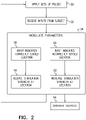
- Fig. 2 is a flowchart showing steps of a method that is performed during a treatment session (i.e., a training session), in accordance with some applications of the present invention.
- the subject uses the device a few times a week (e.g., 3-7 times a week), with each treatment session typically lasting between 10 minutes and one hour (e.g., approximately 20 minutes).
- the user typically turns on each electrode-supporting garment 20, e.g., via button 40, and activates user interface 26, typically, by opening a program or application that is run on the computer processor (e.g., a program or application that is run on smartphone 30, tablet device 32, and/or personal computer 34).
- a program or application that is run on smartphone 30, tablet device 32, and/or personal computer 34.
- the program or application connects electronically with the electrode-supporting garment (e.g., using a communication protocol as described hereinabove), with the program or application being the "master” and the electrode-supporting garment(s) being the "slave(s).”
- a graphical representation of the portion of the body that is being treated is displayed upon the user interface, as described in further detail hereinbelow with reference to Fig. 5 .
- a graphical image of a foot or a hand may be displayed.
- outputs are displayed upon the graphical representation of the portion of the subject's body that is being treated, as described in further detail hereinbelow.
- a first step 50 of the training method computer processor 24 applies sets of electrical stimulation pulses to a plurality of locations upon a surface of the body portion (e.g., the extremity or the limb) that is being treated.
- the sets of electrical stimulation pulses are applied via electrodes 22, which are disposed on garment 20.
- a second step 52 respective inputs are received from the subject, each of the inputs corresponding to a respective one of the sets of electrical stimulation pulses, and being indicative of a location at which the subject sensed the set of electrical stimulation pulse as having been applied.
- the user provides the inputs to computer processor 24 via user interface 26.
- a graphical representation of the portion of the body that is being treated is displayed upon the user interface.
- the user indicates the location at which he/she sensed a given set of electrical stimulation pulses as having been applied, by indicating the location upon the displayed graphical representation of the body portion.
- a third step 54 in response to the inputs from the subject, parameters of the sets of electrical stimulation pulses that are applied to respective locations upon the surface of the body portion are modulated.
- the parameters of the sets of pulses that are applied at respective locations are modulated such that, over the course of a treatment session, the stimulation that is provided at respective locations moves dynamically toward the sensitivity threshold of the subject.
- the strength of the stimulation at the location is iteratively reduced, e.g., by reducing the temporal width of the set of electrical stimulation pulses, the frequency of the electrical stimulation pulses, and/or the current intensity of the set of electrical stimulation pulses (sub-step 58).
- the strength of the stimulation that is applied to the location is iteratively increased (sub-step 62), until an input is received from the subject that is indicative of the subject having correctly sensed a given set of stimulation pulses as having been applied at the location.
- the strength of the stimulation that is applied to the location is iteratively increased (sub-step 62), until an input is received from the subject that is indicative of the subject having correctly sensed a given set of electrical stimulation pulses as having been applied at the location.
- the strength of the stimulation that is applied to a location increases and decreases (e.g., by increasing and decreasing, in an alternating manner), as the strength of the stimulation that is applied to the location converges toward the subject's sensitivity threshold.
- the sets of electrical stimulation pulses that are applied at at least some locations are configured to generate muscle movement within the body portion.
- the inputs that are received from the subject are indicative of locations at which the subject sensed the muscle movement.
- a fourth step 64 outputs are generated to the subject (e.g., via user interface 26), in order to elicit a neuroplastic response.
- outputs may be generated that are indicative of whether the subject correctly sensed locations at which respective sets of the electrical stimulation pulses were applied.
- outputs are generated upon a graphical representation of the portion of the body that is being treated, e.g., as described hereinbelow with reference to Fig. 5 .
- Fig. 3 is a schematic illustration of a flowchart showing steps of another method that is performed in accordance with some applications of the present invention.
- the preliminary steps of this method e.g., switching on the electrode-supporting garment, and an application or program on the user interface
- the following steps are typically then performed in an iterative manner.
- a first step 70 the computer processor applies sets of electrical stimulation pulses simultaneously to the surface of the body portion, via a given pair of electrodes, the electrodes being separated from each other by a given distance.
- the computer processor receives one or more inputs from the subject that is indicative of whether the subject sensed the sets of electrical stimulation pulses as coming from a single location, or more than one location.
- a third step 74 in response to the input from the subject, the computer processor designates another pair of electrodes via which to simultaneously apply sets of electrical stimulation pulses to the surface of the body portion, the other pair of electrodes being separated from each other by a distance that is different from the given distance.
- Sets of electrical stimulation pulses are then applied to the surface of the body portion, via the other pair of electrodes.
- the distance between the selected electrode pairs is modulated such that, over the course of a treatment session, the stimulation that is provided at respective regions of the surface of the body portion moves dynamically toward the two-point sensitivity threshold of the subject at the respective regions.
- a pair of electrodes that are closer to one another are chosen as the next pair of electrodes
- a pair of electrodes that are farther apart from one another are chosen as the next pair of electrodes.
- the distance between electrodes, via which simultaneous stimulation is applied increases and decreases (e.g., by increasing and decreasing, in an alternating manner), as the distance between electrodes via which simultaneous stimulation is applied converges toward the subject's two-point sensitivity threshold.
- a fourth step 76 outputs are generated to the subject (e.g., via user interface 26), in order to elicit a neuroplastic response.
- outputs may be generated that are indicative of whether the subject correctly sensed whether electrical stimulation pulses were being applied at one or two locations, at a given region of the surface of the body portion.
- outputs are generated upon a graphical representation of the portion of the body that is being treated, e.g., as described hereinbelow with reference to Fig. 5 .
- electrodes 22 act as sensing electrodes.
- some of the electrodes may be configured to perform surface electromyography sensing.
- surface electromyography data are provided to the computer processor, and the computer processor modulates parameters of the electrical stimulation pulses that are applied at respective locations in response to the surface electromyography data.
- the computer processor may modulate parameters of the electrical stimulation pulses that are applied at respective locations in response to the surface electromyography data, in addition to the inputs from the subject.
- the computer processor may modulate parameters of the electrical stimulation pulses that are applied at respective locations in response to the surface electromyography data, instead of modulating the parameters of the electrical stimulation pulses in response to the inputs from the subject.
- a treatment session (e.g., a session in which the steps described with reference to Fig. 2 is performed, and/or a session in which the steps described with reference to Fig. 3 is performed) is complete after a pre-defined number of pulses (e.g., between 100 and 500 pulses) has been applied to each location.
- a pre-defined number of pulses e.g., between 100 and 500 pulses
- an output is generated that is indicative of levels of sensitivity of respective locations upon the surface of the body portion.
- outputs are generated upon a graphical representation of the portion of the body that is being treated, e.g., as described hereinbelow with reference to Fig. 5 .
- the program or application that is run by the computer processor gradually learns the specific sensory performance of the subject, and locations or regions at which the subject has lower sensitivity (e.g., lower two-point sensitivity) are stimulated more frequently and/or with higher intensity than locations or regions at which the subject has greater sensitivity. From one session to the next, the application or program continues to learn the specific performance of the subject, such that it gradually adapts and fine-tunes the distribution of the pulses across the different locations, as well as the pulse intensity of at each location, based upon the subject's performance. Typically, as the sensory performance of the subject improves, the level of "difficulty" of the application gets greater (by applying less intense stimulations), and vice versa.
- Figs. 4A and 4B are schematic illustrations of arrays of electrodes 22, in accordance with some applications of the present invention.
- the electrodes are disposed upon garment 20.
- at least some of electrodes 22 are configured as stimulating electrodes.
- the array may include more than 10 and/or less than 40 (e.g., 10-40) stimulating electrodes.
- the stimulating electrodes are configured to be paired with one another into pairs 80, as shown in Fig. 4B .
- electrode pairs are dynamically configurable from electrodes in an array such as the array shown in Fig. 4A .
- at least some of the electrodes act as sensing electrodes.
- some of the electrodes may be configured to perform surface electromyography sensing, as described in further detail hereinbelow.
- the electrodes are configured for placement on the subject's foot, and, as such, are typically disposed upon a sock.
- the scope of the present invention includes placing the electrodes on any portion of the subject's body, and using any garment that can be worn by a subject, including but not limited to, a glove, a cuff, and a wearable patch.
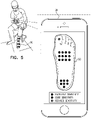
- Fig. 5 is a schematic illustration of an example of an output that is generated by computer processor 24 on user interface 26, in accordance with some applications of the present invention.
- a graphical representation 90 of the portion of the body that is being treated is displayed upon the user interface.
- a graphical image of a foot may be displayed, as shown in Fig. 5 .
- a graphical representation of a hand, an arm, a leg, and/or another body portion may be displayed.
- outputs are displayed upon the graphical representation of the portion of the subject's body that is being treated. For example, during the treatment session, outputs may be displayed to the subject that are indicative of the subject's current performance. For some applications, at the end of a treatment session, in response to inputs from the subject over the treatment session, an output is generated that is indicative of levels of sensitivity of respective locations upon the surface of the body portion, as shown in Fig. 5 . For some applications, over a plurality of treatment sessions, the application or program records and analyzes the sensory performance of the subject, and it generates personalized sensory maps for each treated body portion. These maps typically present the up to date levels of sensitivity for each location upon the body portion, as well as incremental changes for any selected treatment period.
- the treatments described herein are performed in a recurrent manner.
- the computer processor via the application or program that is run on the processor) monitors treatments, and, for example, may remind the subject if a given location or body portion has not been treated for a given period of time.
- usage and/or diagnostic information is shared with a physician and/or an insurance company for the purposes of additional monitoring, insurance, etc.
- a computer-usable or computer-readable medium e.g., a non-transitory computer-readable medium
- a computer-usable or computer readable medium can be any apparatus that can comprise, store, communicate, propagate, or transport the program for use by or in connection with the instruction execution system, apparatus, or device.
- the medium can be an electronic, magnetic, optical, electromagnetic, infrared, or semiconductor system (or apparatus or device) or a propagation medium.
- the computer-usable or computer readable medium is a non-transitory computer-usable or computer readable medium.
- Examples of a computer-readable medium include a semiconductor or solid state memory, magnetic tape, a removable computer diskette, a random access memory (RAM), a read-only memory (ROM), a rigid magnetic disk and an optical disk.
- Current examples of optical disks include compact disk-read only memory (CD-ROM), compact disk-read/write (CD-R/W) and DVD.
- cloud storage, and/or storage in a remote server is used.
- a data processing system suitable for storing and/or executing program code will include at least one processor (e.g., computer processor 24) coupled directly or indirectly to memory elements through a system bus.
- the memory elements can include local memory employed during actual execution of the program code, bulk storage, and cache memories which provide temporary storage of at least some program code in order to reduce the number of times code must be retrieved from bulk storage during execution.
- the system can read the inventive instructions on the program storage devices and follow these instructions to execute the methodology of the embodiments of the invention.
- Network adapters may be coupled to the processor to enable the processor to become coupled to other processors or remote printers or storage devices through intervening private or public networks.
- Modems, cable modem and Ethernet cards are just a few of the currently available types of network adapters.
- Computer program code for carrying out operations of the present invention may be written in any combination of one or more programming languages, including an object oriented programming language such as Java, Smalltalk, C++ or the like and conventional procedural programming languages, such as the C programming language or similar programming languages.
- object oriented programming language such as Java, Smalltalk, C++ or the like
- conventional procedural programming languages such as the C programming language or similar programming languages.
- blocks of the flowchart shown in Figs. 2 and 3 can be implemented by computer program instructions.
- These computer program instructions may be provided to a processor of a general purpose computer, special purpose computer, or other programmable data processing apparatus to produce a machine, such that the instructions, which execute via the processor of the computer (e.g., computer processor 24) or other programmable data processing apparatus, create means for implementing the functions/acts specified in the flowcharts and/or algorithms described in the present application.
- These computer program instructions may also be stored in a computer-readable medium (e.g., a non-transitory computer-readable medium) that can direct a computer or other programmable data processing apparatus to function in a particular manner, such that the instructions stored in the computer-readable medium produce an article of manufacture including instruction means which implement the function/act specified in the flowchart blocks and algorithms.
- the computer program instructions may also be loaded onto a computer or other programmable data processing apparatus to cause a series of operational steps to be performed on the computer or other programmable apparatus to produce a computer implemented process such that the instructions which execute on the computer or other programmable apparatus provide processes for implementing the functions/acts specified in the flowcharts and/or algorithms described in the present application.
- Computer processor 24 and the other computer processors described herein are typically hardware devices programmed with computer program instructions to produce a special purpose computer.
- the computer processor when programmed to perform the algorithms described with reference to Figs. 2 and 3 , the computer processor typically acts as a special purpose sensitivity-training computer processor.
- the operations described herein that are performed by computer processors transform the physical state of a memory, which is a real physical article, to have a different magnetic polarity, electrical charge, or the like depending on the technology of the memory that is used.
Landscapes
- Health & Medical Sciences (AREA)
- Life Sciences & Earth Sciences (AREA)
- Engineering & Computer Science (AREA)
- Animal Behavior & Ethology (AREA)
- Veterinary Medicine (AREA)
- Biomedical Technology (AREA)
- Nuclear Medicine, Radiotherapy & Molecular Imaging (AREA)
- Radiology & Medical Imaging (AREA)
- Public Health (AREA)
- General Health & Medical Sciences (AREA)
- Neurology (AREA)
- Neurosurgery (AREA)
- Biophysics (AREA)
- Heart & Thoracic Surgery (AREA)
- Rehabilitation Therapy (AREA)
- Electrotherapy Devices (AREA)
- Physiology (AREA)
Claims (17)
- Appareil permettant d'augmenter la sensibilité des nerfs sensoriels d'une partie d'un corps d'un sujet, l'appareil comprenant :une pluralité d'électrodes (22) conçue pour être placée au niveau d'emplacements respectifs sur une surface de la partie corporelle ;une interface utilisateur (26) ; etau moins un processeur informatique (24) configuré pour :appliquer des ensembles d'impulsions de stimulation électrique aux emplacements respectifs sur la surface de la partie corporelle, par l'intermédiaire des électrodes (22),recevoir des entrées respectives provenant du sujet, par l'intermédiaire de l'interface utilisateur (26), chacune des entrées correspondant à l'un respectif des ensembles d'impulsions de stimulation électrique et indiquant un emplacement au niveau duquel le sujet a détecté que l'ensemble d'impulsion de stimulation électrique a été appliqué, eten réponse aux entrées provenant du sujet, moduler des paramètres des ensembles d'impulsions de stimulation électrique qui sont appliqués à des emplacements respectifs sur la surface de la partie corporelle.
- Appareil selon la revendication 1, ledit processeur informatique (24) étant configuré pour :appliquer les ensembles d'impulsions de stimulation électrique à la pluralité d'emplacements sur la surface de la partie corporelle par l'application à au moins une partie de la pluralité d'emplacements, d'ensembles d'impulsions de stimulation électrique qui sont configurés pour générer un mouvement musculaire au sein de la partie corporelle, etrecevoir les entrées provenant du sujet par la réception d'au moins certaines entrées provenant du sujet qui indiquent des emplacements au niveau desquels le sujet a détecté le mouvement musculaire.
- Appareil selon la revendication 1, ledit processeur informatique (24) étant configuré :pour recevoir des signaux d'électromyographie de surface en provenance des emplacements respectifs sur la surface de la partie corporelle, etpour moduler des paramètres des ensembles d'impulsions de stimulation électrique qui sont appliqués aux emplacements respectifs sur la surface de la partie corporelle par la modulation de paramètres des ensembles d'impulsions de stimulation électrique qui sont appliqués à des emplacements respectifs sur la surface de la partie corporelle en réponse aux entrées provenant du sujet et aux signaux d'électromyographie de surface détectés.
- Appareil selon la revendication 1, en réponse aux entrées provenant du sujet, ledit processeur informatique (24) étant configuré pour générer des sorties vers le sujet, par l'intermédiaire de l'interface utilisateur (26), qui indiquent si le sujet a correctement détecté les emplacements au niveau desquels des ensembles respectifs de l'impulsion de stimulation électrique ont été appliqués.
- Appareil selon la revendication 1, ledit processeur informatique (24) étant configuré pour moduler de manière dynamique des paramètres des ensembles d'impulsions de stimulation électrique qui sont appliqués à des emplacements respectifs sur la surface de la partie corporelle, tout en continuant à appliquer des ensembles d'impulsions de stimulation électrique à la pluralité d'emplacements sur la surface de la partie corporelle.
- Appareil selon la revendication 1, en réponse aux entrées provenant du sujet au cours d'une séance de traitement, ledit processeur informatique (24) étant configuré pour générer une sortie, par l'intermédiaire de l'interface utilisateur (26), qui indique des niveaux de sensibilité des emplacements respectifs sur la surface de la partie corporelle.
- Appareil selon l'une quelconque des revendications 1 à 5, ledit processeur informatique (24) étant configuré pour moduler des paramètres des ensembles d'impulsions de stimulation électrique qui sont appliqués à des emplacements respectifs sur la surface de la partie corporelle par la modulation de paramètres des ensembles d'impulsions qui sont appliqués aux emplacements respectifs, au cours d'une séance de traitement, de sorte que la stimulation qui est fournie au niveau des emplacements respectifs se déplace de manière dynamique vers un seuil de sensibilité du sujet.
- Appareil selon la revendication 7, ledit processeur informatique (24) étant configuré pour moduler des paramètres des ensembles d'impulsions de stimulation électrique qui sont appliqués à des emplacements respectifs sur la surface de la partie corporelle par, pendant la séance de traitement, aussi bien l'augmentation que la diminution d'une intensité de stimulation qui est fournie au niveau d'un emplacement donné, alors que l'intensité de la stimulation qui est appliquée à l'emplacement donné converge vers le seuil de sensibilité du sujet au niveau de l'emplacement donné.
- Appareil selon l'une quelconque des revendications 1 à 6, ledit processeur informatique (24) étant configuré pour moduler des paramètres des ensembles d'impulsions de stimulation électrique qui sont appliqués à des emplacements respectifs sur la surface de la partie corporelle par :en réponse à la réception d'une entrée provenant du sujet qui indique que le sujet a correctement détecté un emplacement au niveau duquel un ensemble donné d'impulsions de stimulation électrique a été appliqué,la réduction d'au moins un paramètre d'un autre ensemble d'impulsions de stimulation électrique qui est appliqué à l'emplacement, ledit au moins un paramètre étant choisi dans le groupe constitué par : une largeur temporelle de l'ensemble d'impulsions de stimulation électrique, une fréquence des impulsions de stimulation électrique et une intensité de courant des impulsions de stimulation électrique.
- Appareil selon la revendication 9, ledit processeur informatique (24) étant configuré pour moduler des paramètres d'autres ensembles d'impulsions de stimulation électrique qui sont appliqués à l'emplacement par la réduction, de manière itérative, dudit au moins un paramètre choisi d'ensembles d'impulsions de stimulation électrique qui sont appliqués à l'emplacement, en réponse à la réception d'entrées provenant du sujet qui indiquent que le sujet a correctement détecté l'emplacement au niveau duquel les ensembles d'impulsions de stimulation électrique ont été appliqués.
- Appareil selon l'une quelconque des revendications 1 à 6, ledit processeur informatique (24) étant configuré pour moduler des paramètres des ensembles d'impulsions de stimulation électrique qui sont appliqués à des emplacements respectifs sur la surface de la partie corporelle par :en réponse à la réception d'une entrée provenant du sujet qui indique que le sujet a détecté qu'un ensemble donné d'impulsions de stimulation électrique a été appliqué au niveau d'un emplacement qui est différent de l'emplacement au niveau duquel l'ensemble d'impulsions de stimulation électrique a été appliqué,l'augmentation d'au moins un paramètre d'un autre ensemble d'impulsions de stimulation électrique qui est appliqué à l'emplacement au niveau duquel l'ensemble d'impulsions de stimulation électrique a été appliqué, ledit au moins un paramètre étant choisi dans le groupe constitué par : une largeur temporelle de l'ensemble d'impulsions de stimulation électrique, une fréquence des impulsions de stimulation électrique et une intensité de courant des impulsions de stimulation électrique.
- Appareil selon la revendication 11, ledit processeur informatique (24) étant configuré pour moduler des paramètres d'autres ensembles d'impulsions de stimulation électrique qui sont appliqués à l'emplacement par l'augmentation, de manière itérative, dudit au moins un paramètre choisi d'autres ensembles d'impulsions de stimulation électrique qui sont appliqués à l'emplacement au niveau duquel l'ensemble d'impulsions de stimulation électrique a été appliqué, jusqu'à ce qu'une entrée soit reçue en provenance du sujet qui indique que le sujet a correctement détecté qu'un ensemble donné d'impulsions de stimulation électrique a été appliqué au niveau de l'emplacement.
- Appareil selon l'une quelconque des revendications 1 à 6, ledit processeur informatique (24) étant configuré pour moduler des paramètres des ensembles d'impulsions de stimulation électrique qui sont appliqués à des emplacements respectifs sur la surface de la partie corporelle par :en réponse à la réception d'une entrée provenant du sujet qui indique que le sujet n'a pas détecté que des impulsions de stimulation électrique ont été appliquées au niveau d'un emplacement donné,l'augmentation d'au moins un paramètre d'un autre ensemble d'impulsions de stimulation électrique qui est appliqué à l'emplacement donné, ledit au moins un paramètre étant choisi dans le groupe constitué par : une largeur temporelle de l'ensemble d'impulsions de stimulation électrique, une fréquence des impulsions de stimulation électrique, et une intensité de courant des impulsions de stimulation électrique.
- Appareil selon la revendication 13, ledit processeur informatique (24) étant configuré pour moduler des paramètres des ensembles d'autres ensembles d'impulsions de stimulation électrique qui sont appliqués à des emplacements respectifs sur la surface de la partie corporelle par l'augmentation, de manière itérative, dudit au moins un paramètre choisi d'ensembles d'impulsions de stimulation électrique qui sont appliqués à l'emplacement donné, jusqu'à ce qu'une entrée soit reçue en provenance du sujet qui indique que le sujet a correctement détecté qu'un ensemble donné d'impulsions de stimulation électrique a été appliqué au niveau de l'emplacement donné.
- Appareil selon l'une quelconque des revendications 1 à 6, comprenant en outre un vêtement portable (20) conçu pour être porté par le sujet, ladite pluralité d'électrodes (22) étant disposée sur le vêtement portable (20) et étant configurée pour être placée au niveau des emplacements respectifs sur la surface de la partie corporelle par le sujet portant le vêtement (20).
- Appareil selon la revendication 15, ledit vêtement (20) étant choisi dans le groupe constitué par : un gant, une chaussette, un patch et un bracelet.
- Appareil selon la revendication 1,ladite interface utilisateur (26) étant configurée pour afficher une représentation graphique (90) de la partie corporelle, etledit processeur informatique (24) étant configuré pour recevoir chacune des entrées indiquant l'emplacement au niveau duquel le sujet a détecté que l'ensemble d'impulsion de stimulation électrique a été appliqué par la réception d'une indication en provenance du sujet de l'emplacement sur la représentation graphique affichée (90) de la partie corporelle.
Applications Claiming Priority (2)
| Application Number | Priority Date | Filing Date | Title |
|---|---|---|---|
| US201562221146P | 2015-09-21 | 2015-09-21 | |
| PCT/IL2016/051043 WO2017051412A1 (fr) | 2015-09-21 | 2016-09-21 | Appareil et procédés pour améliorer la sensibilité d'un nerf sensoriel |
Publications (2)
| Publication Number | Publication Date |
|---|---|
| EP3352845A1 EP3352845A1 (fr) | 2018-08-01 |
| EP3352845B1 true EP3352845B1 (fr) | 2022-08-17 |
Family
ID=57068162
Family Applications (1)
| Application Number | Title | Priority Date | Filing Date |
|---|---|---|---|
| EP16775868.9A Active EP3352845B1 (fr) | 2015-09-21 | 2016-09-21 | Appareil pour améliorer la sensibilité d'un nerf sensoriel |
Country Status (3)
| Country | Link |
|---|---|
| US (4) | US10926090B2 (fr) |
| EP (1) | EP3352845B1 (fr) |
| WO (1) | WO2017051412A1 (fr) |
Families Citing this family (30)
| Publication number | Priority date | Publication date | Assignee | Title |
|---|---|---|---|---|
| US9833614B1 (en) | 2012-06-22 | 2017-12-05 | Nevro Corp. | Autonomic nervous system control via high frequency spinal cord modulation, and associated systems and methods |
| US12453853B2 (en) | 2013-01-21 | 2025-10-28 | Cala Health, Inc. | Multi-modal stimulation for treating tremor |
| EP3498332B1 (fr) | 2013-01-21 | 2021-07-14 | Cala Health, Inc. | Dispositifs de contrôle de tremblements |
| AU2015271774B2 (en) | 2014-06-02 | 2020-04-16 | Cala Health, Inc. | Systems and methods for peripheral nerve stimulation to treat tremor |
| PL3244965T3 (pl) | 2015-01-13 | 2023-07-24 | Theranica Bio-Electronics Ltd. | Leczenie bólów głowy za pomocą stymulacji elektrycznej |
| CN119565022A (zh) | 2015-06-10 | 2025-03-07 | 卡拉健康公司 | 用于外周神经刺激以利用可拆卸治疗和监测单元治疗震颤的系统和方法 |
| US10695575B1 (en) | 2016-05-10 | 2020-06-30 | Btl Medical Technologies S.R.O. | Aesthetic method of biological structure treatment by magnetic field |
| US20180001107A1 (en) | 2016-07-01 | 2018-01-04 | Btl Holdings Limited | Aesthetic method of biological structure treatment by magnetic field |
| WO2017023864A1 (fr) | 2015-07-31 | 2017-02-09 | Cala Health, Inc. | Systèmes, dispositifs et procédé permettant le traitement de l'arthrose |
| US10926090B2 (en) | 2015-09-21 | 2021-02-23 | Theranica Bio-Electronics Ltd. | Methods for improving sensory nerve sensitivity |
| EP3352843B1 (fr) | 2015-09-23 | 2021-06-23 | Cala Health, Inc. | Dispositif pour la stimulation des nerfs périphériques dans le doigt pour traiter des tremblements dans la main |
| WO2017132067A2 (fr) | 2016-01-21 | 2017-08-03 | Cala Health, Inc. | Systèmes, procédés et dispositifs de neuromodulation périphérique pour le traitement de maladies associées à une hyperactivitévésicale |
| US11464993B2 (en) | 2016-05-03 | 2022-10-11 | Btl Healthcare Technologies A.S. | Device including RF source of energy and vacuum system |
| CN109803717B (zh) | 2016-08-25 | 2024-01-09 | 卡拉健康公司 | 通过周围神经刺激治疗心脏机能障碍的系统和方法 |
| US11357980B2 (en) | 2016-09-29 | 2022-06-14 | Theranica Bio-Electronics Ltd. | Apparatus for applying an electrical signal to a subject |
| US20180272132A1 (en) | 2017-01-19 | 2018-09-27 | Nevro Corp. | High frequency stimulation for treating sensory and/or motor deficits in patients with spinal cord injuries and/or peripheral polyneuropathy, and associated systems and methods |
| EP3606604A4 (fr) | 2017-04-03 | 2020-12-16 | Cala Health, Inc. | Systèmes, procédés et dispositifs de neuromodulation périphérique pour le traitement de maladies associées à une hyperactivitévésicale |
| JP7270554B2 (ja) | 2017-05-21 | 2023-05-10 | セラニカ バイオ-エレクトロニクス リミティド | 疼痛緩和療法を提供するための装置 |
| CN111818965B (zh) | 2018-01-11 | 2024-09-24 | 瑟拉尼卡生物电子有限公司 | 电极贴片 |
| US11857778B2 (en) | 2018-01-17 | 2024-01-02 | Cala Health, Inc. | Systems and methods for treating inflammatory bowel disease through peripheral nerve stimulation |
| CN112218678A (zh) | 2018-03-29 | 2021-01-12 | 内弗洛公司 | 治疗血糖异常(包括2型糖尿病)和/或降低hba1c水平的治疗性调控以及相关系统和方法 |
| US20220143391A1 (en) * | 2018-08-31 | 2022-05-12 | Avation Medical, Inc. | System, method, and apparatus for applying transcutaneous electrical stimulation |
| US12558146B2 (en) | 2019-04-11 | 2026-02-24 | Btl Medical Solutions A.S. | Methods and devices for aesthetic treatment of biological structures by radiofrequency and magnetic energy |
| US12251560B1 (en) | 2019-08-13 | 2025-03-18 | Cala Health, Inc. | Connection quality determination for wearable neurostimulation systems |
| US11890468B1 (en) | 2019-10-03 | 2024-02-06 | Cala Health, Inc. | Neurostimulation systems with event pattern detection and classification |
| BR112022022112A2 (pt) | 2020-05-04 | 2022-12-13 | Btl Healthcare Technologies As | Dispositivo para tratamento não assistido do paciente |
| US11878167B2 (en) | 2020-05-04 | 2024-01-23 | Btl Healthcare Technologies A.S. | Device and method for unattended treatment of a patient |
| AU2023299284A1 (en) | 2022-07-01 | 2025-01-16 | Nevro Corp. | Neurostimulation for treating sensory deficits, and associated systems and methods |
| WO2026053203A1 (fr) | 2024-09-03 | 2026-03-12 | Theranica Bio-Electronics Ltd. | Connecteurs d'électrode à plaque |
| US20260097225A1 (en) | 2024-10-08 | 2026-04-09 | Btl Medical Solutions A.S. | Devices and methods for application of a magnetic field to the nervous system |
Family Cites Families (45)
| Publication number | Priority date | Publication date | Assignee | Title |
|---|---|---|---|---|
| CA2221414C (fr) | 1996-03-18 | 2006-05-02 | 688726 Alberta Ltd. | Dispositif d'electrotherapie |
| US7555346B1 (en) | 1999-01-07 | 2009-06-30 | Boston Scientific Neuromodulation Corporation | Implantable pulse generator having current steering means |
| JP4288009B2 (ja) | 1999-03-24 | 2009-07-01 | ロイド アール. サベルスキ, | 痛みの軽減及び/又は筋肉の再訓練を行うための装置及び方法 |
| US6273863B1 (en) | 1999-10-26 | 2001-08-14 | Andante Medical Devices, Ltd. | Adaptive weight bearing monitoring system for rehabilitation of injuries to the lower extremities |
| WO2001036051A2 (fr) | 1999-11-12 | 2001-05-25 | Andante Medical Devices Ltd. | Systeme d'amelioration d'apprentissage moteur permettant une reeducation optimale de troubles neurologiques et de blessures orthopediques |
| US20020138116A1 (en) | 2001-03-21 | 2002-09-26 | Bertolucci Lawrence E. | Method of relieving migraines or headaches |
| JP2003339885A (ja) | 2002-05-31 | 2003-12-02 | Fes:Kk | 頭皮賦活用電気刺激装置 |
| US7998092B2 (en) | 2002-07-11 | 2011-08-16 | Andante Medical Devices, Ltd. | Force sensor system for use in monitoring weight bearing |
| JP2004283316A (ja) | 2003-03-20 | 2004-10-14 | Funao Kurosawa | 医療用コンテンツ提供プログラム |
| US8086318B2 (en) | 2004-02-12 | 2011-12-27 | Ndi Medical, Llc | Portable assemblies, systems, and methods for providing functional or therapeutic neurostimulation |
| US20050234525A1 (en) | 2004-04-14 | 2005-10-20 | Phillips David B | Electric stimulation for treating neuropathy using asymmetric biphasic signals |
| US7483751B2 (en) * | 2004-06-08 | 2009-01-27 | Second Sight Medical Products, Inc. | Automatic fitting for a visual prosthesis |
| US7711432B2 (en) | 2004-07-26 | 2010-05-04 | Advanced Neuromodulation Systems, Inc. | Stimulation system and method for treating a neurological disorder |
| US7771371B2 (en) | 2004-08-11 | 2010-08-10 | Andante Medical Devices Ltd | Sports shoe with sensing and control |
| JP4840926B2 (ja) | 2004-08-27 | 2011-12-21 | 学校法人 久留米大学 | バーチャル映像を利用した筋肉電気刺激システム |
| AU2005282379B8 (en) | 2004-09-08 | 2012-04-05 | Spinal Modulation Inc. | Neurostimulation methods and systems |
| US7231256B2 (en) | 2005-03-11 | 2007-06-12 | Medtronic, Inc. | Neurostimulation site screening |
| US20080167580A1 (en) | 2005-04-05 | 2008-07-10 | Andante Medical Devices Ltd. | Rehabilitation System |
| US20070129771A1 (en) * | 2005-04-20 | 2007-06-07 | Kurtz Ronald L | Device, method and stimulus unit for testing neuromuscular function |
| US7942818B2 (en) | 2006-02-01 | 2011-05-17 | University Of Florida Research Foundation, Inc. | Obstetric analgesia system |
| US8306624B2 (en) | 2006-04-28 | 2012-11-06 | Medtronic, Inc. | Patient-individualized efficacy rating |
| US7556038B2 (en) | 2006-08-11 | 2009-07-07 | Ric Investments, Llc | Systems and methods for controlling breathing rate |
| US9757554B2 (en) | 2007-08-23 | 2017-09-12 | Bioness Inc. | System for transmitting electrical current to a bodily tissue |
| US8170683B2 (en) | 2007-12-14 | 2012-05-01 | Ethicon, Inc. | Dermatome stimulation devices and methods |
| US8386032B2 (en) | 2008-01-07 | 2013-02-26 | Empi Inc. | Systems and methods for therapeutic electrical stimulation |
| US8295925B2 (en) | 2008-05-29 | 2012-10-23 | Waverx, Inc. | Methods and devices for treating neuropathy and loss of protective sensation |
| US8660651B2 (en) | 2008-06-30 | 2014-02-25 | Accelerated Care Plus Corp. | Electrical stimulation method for treatment of peripheral neuropathy |
| JP5041345B2 (ja) | 2008-09-05 | 2012-10-03 | 株式会社テクノリンク | 生体刺激装置 |
| US9254383B2 (en) | 2009-03-20 | 2016-02-09 | ElectroCore, LLC | Devices and methods for monitoring non-invasive vagus nerve stimulation |
| US8774925B2 (en) | 2009-06-11 | 2014-07-08 | David Yarnitsky | Pain modulation systems and methods |
| AU2010313487A1 (en) | 2009-10-26 | 2012-05-24 | Emkinetics, Inc. | Method and apparatus for electromagnetic stimulation of nerve, muscle, and body tissues |
| CA2848370C (fr) * | 2011-09-22 | 2020-01-14 | Djo, Llc | Dispositifs et systemes pour traiter la douleur par stimulation electrique |
| CN107376115A (zh) | 2011-11-15 | 2017-11-24 | 神经系统检测公司 | 用于使用经皮电神经刺激减轻疼痛的设备和方法 |
| US8972016B2 (en) | 2012-01-13 | 2015-03-03 | Modular Therapeutx, Llc | Portable TENS apparatus and method of use thereof |
| WO2013116013A1 (fr) | 2012-02-02 | 2013-08-08 | The United States Government, As Represented By The Department Of Veterans Affairs | Dispositif de stimulation de surface intégré pour la prise en charge de la douleur et le traitement des plaies |
| US20130236867A1 (en) | 2012-03-09 | 2013-09-12 | Andante Medical Device Inc. | Brain re-training system for ambulatory and/or functional performance therapy |
| US9630013B2 (en) | 2013-03-01 | 2017-04-25 | Empi, Inc. | Systems and methods for wireless control of noninvasive electrotherapy |
| US8880173B2 (en) | 2013-03-12 | 2014-11-04 | Ethicon Endo-Surgery, Inc. | Device for providing transdermal electrical stimulation at an adjustable position on a head |
| AU2014274966B2 (en) * | 2013-06-06 | 2018-01-18 | Boston Scientific Neuromodulation Corporation | System for delivering modulated sub-threshold therapy |
| US20140371814A1 (en) | 2013-06-14 | 2014-12-18 | Disruptive Innovations Unlimited, Llc | Stimulation device and method of use thereof |
| WO2015042365A1 (fr) * | 2013-09-20 | 2015-03-26 | Dana-Farber Cancer Institute, Inc. | Systèmes, procédés et appareil d'électro-stimulation pour traiter une douleur |
| US10791924B2 (en) | 2014-08-10 | 2020-10-06 | Autonomix Medical, Inc. | ANS assessment systems, kits, and methods |
| PL3244965T3 (pl) | 2015-01-13 | 2023-07-24 | Theranica Bio-Electronics Ltd. | Leczenie bólów głowy za pomocą stymulacji elektrycznej |
| JP6606270B2 (ja) | 2015-03-30 | 2019-11-13 | セファリー テクノロジー エスペエルエル | 三叉神経の経皮的電気刺激のためのデバイス |
| US10926090B2 (en) | 2015-09-21 | 2021-02-23 | Theranica Bio-Electronics Ltd. | Methods for improving sensory nerve sensitivity |
-
2016
- 2016-09-21 US US15/761,614 patent/US10926090B2/en active Active
- 2016-09-21 WO PCT/IL2016/051043 patent/WO2017051412A1/fr not_active Ceased
- 2016-09-21 EP EP16775868.9A patent/EP3352845B1/fr active Active
-
2021
- 2021-01-25 US US17/157,230 patent/US11844946B2/en active Active
-
2023
- 2023-11-10 US US18/388,659 patent/US12303690B2/en active Active
-
2025
- 2025-05-15 US US19/209,092 patent/US20250269183A1/en active Pending
Also Published As
| Publication number | Publication date |
|---|---|
| US10926090B2 (en) | 2021-02-23 |
| US20210244950A1 (en) | 2021-08-12 |
| US12303690B2 (en) | 2025-05-20 |
| US20250269183A1 (en) | 2025-08-28 |
| WO2017051412A1 (fr) | 2017-03-30 |
| US20240075294A1 (en) | 2024-03-07 |
| EP3352845A1 (fr) | 2018-08-01 |
| US20180345020A1 (en) | 2018-12-06 |
| US11844946B2 (en) | 2023-12-19 |
Similar Documents
| Publication | Publication Date | Title |
|---|---|---|
| US12303690B2 (en) | Apparatus and methods for improving sensory nerve sensitivity | |
| Valle et al. | Comparison of linear frequency and amplitude modulation for intraneural sensory feedback in bidirectional hand prostheses | |
| CN110337265B (zh) | 用于改善外周神经功能的方法和装置 | |
| EP3463550B1 (fr) | Appareil et méthode de stimulation du nerf | |
| Raspopovic et al. | Restoring natural sensory feedback in real-time bidirectional hand prostheses | |
| Risso et al. | Optimal integration of intraneural somatosensory feedback with visual information: a single-case study | |
| US20200345578A1 (en) | High-resolution, selective and self-optimizing haptic and electrotactile display and methods of use | |
| US11779761B2 (en) | Non-invasive nerve stimulation | |
| US20250161676A1 (en) | Methods for applying an electrical signal to a subject | |
| US11642516B2 (en) | Neuronal signal system for behavior modification | |
| WO2020174051A1 (fr) | Système de communication neuronale | |
| US20160279024A1 (en) | Neural stimulation method and system with audio output | |
| WO2016179240A1 (fr) | Modulation de l'activité des ondes cérébrales à l'aide de la stimulation non invasive des voies sensorielles | |
| CA3100748A1 (fr) | Dispositif de neurostimulation electrique implantee et systeme a utiliser pour offrir un soulagement adaptatif de la douleur chronique | |
| CA2981044A1 (fr) | Procede et systeme de stimulation auditive | |
| US20230338736A1 (en) | Diagnosis or treatment via vestibular and cochlear measures | |
| JP2021514774A (ja) | 非侵襲的な神経刺激 | |
| US20240136050A1 (en) | Customizable neuromodulation device treatment journey | |
| CN106650288A (zh) | 一种温控充电的远程医疗系统参数配置系统 | |
| US12502537B2 (en) | Vestibular clinical support system functionality | |
| US20200297992A1 (en) | Primary Dysmenorrhea Pain Reduction | |
| US20240226560A9 (en) | Goal setting and tracking for neuromodulation treatment | |
| Isaacson et al. | A rapid algorithm prototyping tool for bi-directional neural interfaces |
Legal Events
| Date | Code | Title | Description |
|---|---|---|---|
| STAA | Information on the status of an ep patent application or granted ep patent |
Free format text: STATUS: THE INTERNATIONAL PUBLICATION HAS BEEN MADE |
|
| PUAI | Public reference made under article 153(3) epc to a published international application that has entered the european phase |
Free format text: ORIGINAL CODE: 0009012 |
|
| STAA | Information on the status of an ep patent application or granted ep patent |
Free format text: STATUS: REQUEST FOR EXAMINATION WAS MADE |
|
| 17P | Request for examination filed |
Effective date: 20180412 |
|
| AK | Designated contracting states |
Kind code of ref document: A1 Designated state(s): AL AT BE BG CH CY CZ DE DK EE ES FI FR GB GR HR HU IE IS IT LI LT LU LV MC MK MT NL NO PL PT RO RS SE SI SK SM TR |
|
| AX | Request for extension of the european patent |
Extension state: BA ME |
|
| DAV | Request for validation of the european patent (deleted) | ||
| DAX | Request for extension of the european patent (deleted) | ||
| RIC1 | Information provided on ipc code assigned before grant |
Ipc: A61N 1/04 20060101ALI20220201BHEP Ipc: A61N 1/36 20060101AFI20220201BHEP |
|
| GRAP | Despatch of communication of intention to grant a patent |
Free format text: ORIGINAL CODE: EPIDOSNIGR1 |
|
| STAA | Information on the status of an ep patent application or granted ep patent |
Free format text: STATUS: GRANT OF PATENT IS INTENDED |
|
| INTG | Intention to grant announced |
Effective date: 20220318 |
|
| RAP3 | Party data changed (applicant data changed or rights of an application transferred) |
Owner name: THERANICA BIO-ELECTRONICS LTD. |
|
| GRAS | Grant fee paid |
Free format text: ORIGINAL CODE: EPIDOSNIGR3 |
|
| GRAA | (expected) grant |
Free format text: ORIGINAL CODE: 0009210 |
|
| STAA | Information on the status of an ep patent application or granted ep patent |
Free format text: STATUS: THE PATENT HAS BEEN GRANTED |
|
| AK | Designated contracting states |
Kind code of ref document: B1 Designated state(s): AL AT BE BG CH CY CZ DE DK EE ES FI FR GB GR HR HU IE IS IT LI LT LU LV MC MK MT NL NO PL PT RO RS SE SI SK SM TR |
|
| REG | Reference to a national code |
Ref country code: CH Ref legal event code: EP |
|
| REG | Reference to a national code |
Ref country code: DE Ref legal event code: R096 Ref document number: 602016074361 Country of ref document: DE |
|
| REG | Reference to a national code |
Ref country code: IE Ref legal event code: FG4D |
|
| REG | Reference to a national code |
Ref country code: AT Ref legal event code: REF Ref document number: 1511766 Country of ref document: AT Kind code of ref document: T Effective date: 20220915 |
|
| REG | Reference to a national code |
Ref country code: NL Ref legal event code: MP Effective date: 20220817 |
|
| REG | Reference to a national code |
Ref country code: LT Ref legal event code: MG9D |
|
| PG25 | Lapsed in a contracting state [announced via postgrant information from national office to epo] |
Ref country code: SE Free format text: LAPSE BECAUSE OF FAILURE TO SUBMIT A TRANSLATION OF THE DESCRIPTION OR TO PAY THE FEE WITHIN THE PRESCRIBED TIME-LIMIT Effective date: 20220817 Ref country code: RS Free format text: LAPSE BECAUSE OF FAILURE TO SUBMIT A TRANSLATION OF THE DESCRIPTION OR TO PAY THE FEE WITHIN THE PRESCRIBED TIME-LIMIT Effective date: 20220817 Ref country code: PT Free format text: LAPSE BECAUSE OF FAILURE TO SUBMIT A TRANSLATION OF THE DESCRIPTION OR TO PAY THE FEE WITHIN THE PRESCRIBED TIME-LIMIT Effective date: 20221219 Ref country code: NO Free format text: LAPSE BECAUSE OF FAILURE TO SUBMIT A TRANSLATION OF THE DESCRIPTION OR TO PAY THE FEE WITHIN THE PRESCRIBED TIME-LIMIT Effective date: 20221117 Ref country code: NL Free format text: LAPSE BECAUSE OF FAILURE TO SUBMIT A TRANSLATION OF THE DESCRIPTION OR TO PAY THE FEE WITHIN THE PRESCRIBED TIME-LIMIT Effective date: 20220817 Ref country code: LV Free format text: LAPSE BECAUSE OF FAILURE TO SUBMIT A TRANSLATION OF THE DESCRIPTION OR TO PAY THE FEE WITHIN THE PRESCRIBED TIME-LIMIT Effective date: 20220817 Ref country code: LT Free format text: LAPSE BECAUSE OF FAILURE TO SUBMIT A TRANSLATION OF THE DESCRIPTION OR TO PAY THE FEE WITHIN THE PRESCRIBED TIME-LIMIT Effective date: 20220817 Ref country code: FI Free format text: LAPSE BECAUSE OF FAILURE TO SUBMIT A TRANSLATION OF THE DESCRIPTION OR TO PAY THE FEE WITHIN THE PRESCRIBED TIME-LIMIT Effective date: 20220817 |
|
| REG | Reference to a national code |
Ref country code: AT Ref legal event code: MK05 Ref document number: 1511766 Country of ref document: AT Kind code of ref document: T Effective date: 20220817 |
|
| PG25 | Lapsed in a contracting state [announced via postgrant information from national office to epo] |
Ref country code: PL Free format text: LAPSE BECAUSE OF FAILURE TO SUBMIT A TRANSLATION OF THE DESCRIPTION OR TO PAY THE FEE WITHIN THE PRESCRIBED TIME-LIMIT Effective date: 20220817 Ref country code: IS Free format text: LAPSE BECAUSE OF FAILURE TO SUBMIT A TRANSLATION OF THE DESCRIPTION OR TO PAY THE FEE WITHIN THE PRESCRIBED TIME-LIMIT Effective date: 20221217 Ref country code: HR Free format text: LAPSE BECAUSE OF FAILURE TO SUBMIT A TRANSLATION OF THE DESCRIPTION OR TO PAY THE FEE WITHIN THE PRESCRIBED TIME-LIMIT Effective date: 20220817 Ref country code: GR Free format text: LAPSE BECAUSE OF FAILURE TO SUBMIT A TRANSLATION OF THE DESCRIPTION OR TO PAY THE FEE WITHIN THE PRESCRIBED TIME-LIMIT Effective date: 20221118 |
|
| PG25 | Lapsed in a contracting state [announced via postgrant information from national office to epo] |
Ref country code: SM Free format text: LAPSE BECAUSE OF FAILURE TO SUBMIT A TRANSLATION OF THE DESCRIPTION OR TO PAY THE FEE WITHIN THE PRESCRIBED TIME-LIMIT Effective date: 20220817 Ref country code: RO Free format text: LAPSE BECAUSE OF FAILURE TO SUBMIT A TRANSLATION OF THE DESCRIPTION OR TO PAY THE FEE WITHIN THE PRESCRIBED TIME-LIMIT Effective date: 20220817 Ref country code: ES Free format text: LAPSE BECAUSE OF FAILURE TO SUBMIT A TRANSLATION OF THE DESCRIPTION OR TO PAY THE FEE WITHIN THE PRESCRIBED TIME-LIMIT Effective date: 20220817 Ref country code: DK Free format text: LAPSE BECAUSE OF FAILURE TO SUBMIT A TRANSLATION OF THE DESCRIPTION OR TO PAY THE FEE WITHIN THE PRESCRIBED TIME-LIMIT Effective date: 20220817 Ref country code: CZ Free format text: LAPSE BECAUSE OF FAILURE TO SUBMIT A TRANSLATION OF THE DESCRIPTION OR TO PAY THE FEE WITHIN THE PRESCRIBED TIME-LIMIT Effective date: 20220817 Ref country code: AT Free format text: LAPSE BECAUSE OF FAILURE TO SUBMIT A TRANSLATION OF THE DESCRIPTION OR TO PAY THE FEE WITHIN THE PRESCRIBED TIME-LIMIT Effective date: 20220817 |
|
| REG | Reference to a national code |
Ref country code: CH Ref legal event code: PL |
|
| REG | Reference to a national code |
Ref country code: DE Ref legal event code: R097 Ref document number: 602016074361 Country of ref document: DE |
|
| REG | Reference to a national code |
Ref country code: BE Ref legal event code: MM Effective date: 20220930 |
|
| PG25 | Lapsed in a contracting state [announced via postgrant information from national office to epo] |
Ref country code: SK Free format text: LAPSE BECAUSE OF FAILURE TO SUBMIT A TRANSLATION OF THE DESCRIPTION OR TO PAY THE FEE WITHIN THE PRESCRIBED TIME-LIMIT Effective date: 20220817 Ref country code: MC Free format text: LAPSE BECAUSE OF FAILURE TO SUBMIT A TRANSLATION OF THE DESCRIPTION OR TO PAY THE FEE WITHIN THE PRESCRIBED TIME-LIMIT Effective date: 20220817 Ref country code: EE Free format text: LAPSE BECAUSE OF FAILURE TO SUBMIT A TRANSLATION OF THE DESCRIPTION OR TO PAY THE FEE WITHIN THE PRESCRIBED TIME-LIMIT Effective date: 20220817 |
|
| P01 | Opt-out of the competence of the unified patent court (upc) registered |
Effective date: 20230503 |
|
| PLBE | No opposition filed within time limit |
Free format text: ORIGINAL CODE: 0009261 |
|
| STAA | Information on the status of an ep patent application or granted ep patent |
Free format text: STATUS: NO OPPOSITION FILED WITHIN TIME LIMIT |
|
| PG25 | Lapsed in a contracting state [announced via postgrant information from national office to epo] |
Ref country code: LU Free format text: LAPSE BECAUSE OF NON-PAYMENT OF DUE FEES Effective date: 20220921 Ref country code: AL Free format text: LAPSE BECAUSE OF FAILURE TO SUBMIT A TRANSLATION OF THE DESCRIPTION OR TO PAY THE FEE WITHIN THE PRESCRIBED TIME-LIMIT Effective date: 20220817 |
|
| 26N | No opposition filed |
Effective date: 20230519 |
|
| PG25 | Lapsed in a contracting state [announced via postgrant information from national office to epo] |
Ref country code: LI Free format text: LAPSE BECAUSE OF NON-PAYMENT OF DUE FEES Effective date: 20220930 Ref country code: IE Free format text: LAPSE BECAUSE OF NON-PAYMENT OF DUE FEES Effective date: 20220921 Ref country code: CH Free format text: LAPSE BECAUSE OF NON-PAYMENT OF DUE FEES Effective date: 20220930 |
|
| PG25 | Lapsed in a contracting state [announced via postgrant information from national office to epo] |
Ref country code: SI Free format text: LAPSE BECAUSE OF FAILURE TO SUBMIT A TRANSLATION OF THE DESCRIPTION OR TO PAY THE FEE WITHIN THE PRESCRIBED TIME-LIMIT Effective date: 20220817 |
|
| PG25 | Lapsed in a contracting state [announced via postgrant information from national office to epo] |
Ref country code: BE Free format text: LAPSE BECAUSE OF NON-PAYMENT OF DUE FEES Effective date: 20220930 |
|
| PG25 | Lapsed in a contracting state [announced via postgrant information from national office to epo] |
Ref country code: HU Free format text: LAPSE BECAUSE OF FAILURE TO SUBMIT A TRANSLATION OF THE DESCRIPTION OR TO PAY THE FEE WITHIN THE PRESCRIBED TIME-LIMIT; INVALID AB INITIO Effective date: 20160921 |
|
| PG25 | Lapsed in a contracting state [announced via postgrant information from national office to epo] |
Ref country code: CY Free format text: LAPSE BECAUSE OF FAILURE TO SUBMIT A TRANSLATION OF THE DESCRIPTION OR TO PAY THE FEE WITHIN THE PRESCRIBED TIME-LIMIT Effective date: 20220817 |
|
| PG25 | Lapsed in a contracting state [announced via postgrant information from national office to epo] |
Ref country code: MK Free format text: LAPSE BECAUSE OF FAILURE TO SUBMIT A TRANSLATION OF THE DESCRIPTION OR TO PAY THE FEE WITHIN THE PRESCRIBED TIME-LIMIT Effective date: 20220817 Ref country code: IT Free format text: LAPSE BECAUSE OF FAILURE TO SUBMIT A TRANSLATION OF THE DESCRIPTION OR TO PAY THE FEE WITHIN THE PRESCRIBED TIME-LIMIT Effective date: 20220817 |
|
| PG25 | Lapsed in a contracting state [announced via postgrant information from national office to epo] |
Ref country code: BG Free format text: LAPSE BECAUSE OF FAILURE TO SUBMIT A TRANSLATION OF THE DESCRIPTION OR TO PAY THE FEE WITHIN THE PRESCRIBED TIME-LIMIT Effective date: 20220817 |
|
| PG25 | Lapsed in a contracting state [announced via postgrant information from national office to epo] |
Ref country code: MT Free format text: LAPSE BECAUSE OF FAILURE TO SUBMIT A TRANSLATION OF THE DESCRIPTION OR TO PAY THE FEE WITHIN THE PRESCRIBED TIME-LIMIT Effective date: 20220817 |
|
| PG25 | Lapsed in a contracting state [announced via postgrant information from national office to epo] |
Ref country code: TR Free format text: LAPSE BECAUSE OF FAILURE TO SUBMIT A TRANSLATION OF THE DESCRIPTION OR TO PAY THE FEE WITHIN THE PRESCRIBED TIME-LIMIT Effective date: 20220817 |
|
| PGFP | Annual fee paid to national office [announced via postgrant information from national office to epo] |
Ref country code: DE Payment date: 20251010 Year of fee payment: 10 |
|
| PGFP | Annual fee paid to national office [announced via postgrant information from national office to epo] |
Ref country code: GB Payment date: 20251010 Year of fee payment: 10 |
|
| PGFP | Annual fee paid to national office [announced via postgrant information from national office to epo] |
Ref country code: FR Payment date: 20251010 Year of fee payment: 10 |