EP3352986B1 - Verfahren zur herstellung eines laminierten holzbauteils und daraus hergestelltes laminiertes holzbauteil - Google Patents
Verfahren zur herstellung eines laminierten holzbauteils und daraus hergestelltes laminiertes holzbauteil Download PDFInfo
- Publication number
- EP3352986B1 EP3352986B1 EP16848237.0A EP16848237A EP3352986B1 EP 3352986 B1 EP3352986 B1 EP 3352986B1 EP 16848237 A EP16848237 A EP 16848237A EP 3352986 B1 EP3352986 B1 EP 3352986B1
- Authority
- EP
- European Patent Office
- Prior art keywords
- wood
- lamellae
- component
- face
- section
- Prior art date
- Legal status (The legal status is an assumption and is not a legal conclusion. Google has not performed a legal analysis and makes no representation as to the accuracy of the status listed.)
- Active
Links
Images




Classifications
-
- B—PERFORMING OPERATIONS; TRANSPORTING
- B32—LAYERED PRODUCTS
- B32B—LAYERED PRODUCTS, i.e. PRODUCTS BUILT-UP OF STRATA OF FLAT OR NON-FLAT, e.g. CELLULAR OR HONEYCOMB, FORM
- B32B21/00—Layered products comprising a layer of wood, e.g. wood board, veneer, wood particle board
- B32B21/13—Layered products comprising a layer of wood, e.g. wood board, veneer, wood particle board all layers being exclusively wood
-
- B—PERFORMING OPERATIONS; TRANSPORTING
- B27—WORKING OR PRESERVING WOOD OR SIMILAR MATERIAL; NAILING OR STAPLING MACHINES IN GENERAL
- B27B—SAWS FOR WOOD OR SIMILAR MATERIAL; COMPONENTS OR ACCESSORIES THEREFOR
- B27B1/00—Methods for subdividing trunks or logs essentially involving sawing
- B27B1/005—Methods for subdividing trunks or logs essentially involving sawing including the step of dividing the log into sector-shaped segments
-
- B—PERFORMING OPERATIONS; TRANSPORTING
- B27—WORKING OR PRESERVING WOOD OR SIMILAR MATERIAL; NAILING OR STAPLING MACHINES IN GENERAL
- B27M—WORKING OF WOOD NOT PROVIDED FOR IN SUBCLASSES B27B - B27L; MANUFACTURE OF SPECIFIC WOODEN ARTICLES
- B27M3/00—Manufacture or reconditioning of specific semi-finished or finished articles
- B27M3/0013—Manufacture or reconditioning of specific semi-finished or finished articles of composite or compound articles
- B27M3/0026—Manufacture or reconditioning of specific semi-finished or finished articles of composite or compound articles characterised by oblong elements connected laterally
- B27M3/0053—Manufacture or reconditioning of specific semi-finished or finished articles of composite or compound articles characterised by oblong elements connected laterally using glue
-
- B—PERFORMING OPERATIONS; TRANSPORTING
- B27—WORKING OR PRESERVING WOOD OR SIMILAR MATERIAL; NAILING OR STAPLING MACHINES IN GENERAL
- B27M—WORKING OF WOOD NOT PROVIDED FOR IN SUBCLASSES B27B - B27L; MANUFACTURE OF SPECIFIC WOODEN ARTICLES
- B27M3/00—Manufacture or reconditioning of specific semi-finished or finished articles
- B27M3/0013—Manufacture or reconditioning of specific semi-finished or finished articles of composite or compound articles
- B27M3/006—Manufacture or reconditioning of specific semi-finished or finished articles of composite or compound articles characterised by oblong elements connected both laterally and at their ends
-
- B—PERFORMING OPERATIONS; TRANSPORTING
- B32—LAYERED PRODUCTS
- B32B—LAYERED PRODUCTS, i.e. PRODUCTS BUILT-UP OF STRATA OF FLAT OR NON-FLAT, e.g. CELLULAR OR HONEYCOMB, FORM
- B32B21/00—Layered products comprising a layer of wood, e.g. wood board, veneer, wood particle board
- B32B21/02—Layered products comprising a layer of wood, e.g. wood board, veneer, wood particle board the layer being formed of fibres, chips, or particles, e.g. MDF, HDF, OSB, chipboard, particle board, hardboard
-
- B—PERFORMING OPERATIONS; TRANSPORTING
- B32—LAYERED PRODUCTS
- B32B—LAYERED PRODUCTS, i.e. PRODUCTS BUILT-UP OF STRATA OF FLAT OR NON-FLAT, e.g. CELLULAR OR HONEYCOMB, FORM
- B32B21/00—Layered products comprising a layer of wood, e.g. wood board, veneer, wood particle board
- B32B21/04—Layered products comprising a layer of wood, e.g. wood board, veneer, wood particle board comprising wood as the main or only constituent of a layer, which is next to another layer of the same or of a different material
-
- B—PERFORMING OPERATIONS; TRANSPORTING
- B32—LAYERED PRODUCTS
- B32B—LAYERED PRODUCTS, i.e. PRODUCTS BUILT-UP OF STRATA OF FLAT OR NON-FLAT, e.g. CELLULAR OR HONEYCOMB, FORM
- B32B3/00—Layered products comprising a layer with external or internal discontinuities or unevennesses, or a layer of non-planar shape; Layered products comprising a layer having particular features of form
- B32B3/26—Layered products comprising a layer with external or internal discontinuities or unevennesses, or a layer of non-planar shape; Layered products comprising a layer having particular features of form characterised by a particular shape of the outline of the cross-section of a continuous layer; characterised by a layer with cavities or internal voids ; characterised by an apertured layer
-
- B—PERFORMING OPERATIONS; TRANSPORTING
- B32—LAYERED PRODUCTS
- B32B—LAYERED PRODUCTS, i.e. PRODUCTS BUILT-UP OF STRATA OF FLAT OR NON-FLAT, e.g. CELLULAR OR HONEYCOMB, FORM
- B32B7/00—Layered products characterised by the relation between layers; Layered products characterised by the relative orientation of features between layers, or by the relative values of a measurable parameter between layers, i.e. products comprising layers having different physical, chemical or physicochemical properties; Layered products characterised by the interconnection of layers
- B32B7/04—Interconnection of layers
- B32B7/12—Interconnection of layers using interposed adhesives or interposed materials with bonding properties
-
- E—FIXED CONSTRUCTIONS
- E06—DOORS, WINDOWS, SHUTTERS, OR ROLLER BLINDS IN GENERAL; LADDERS
- E06B—FIXED OR MOVABLE CLOSURES FOR OPENINGS IN BUILDINGS, VEHICLES, FENCES OR LIKE ENCLOSURES IN GENERAL, e.g. DOORS, WINDOWS, BLINDS, GATES
- E06B3/00—Window sashes, door leaves, or like elements for closing wall or like openings; Layout of fixed or moving closures, e.g. windows in wall or like openings; Features of rigidly-mounted outer frames relating to the mounting of wing frames
- E06B3/04—Wing frames not characterised by the manner of movement
- E06B3/06—Single frames
- E06B3/08—Constructions depending on the use of specified materials
- E06B3/10—Constructions depending on the use of specified materials of wood
-
- B—PERFORMING OPERATIONS; TRANSPORTING
- B32—LAYERED PRODUCTS
- B32B—LAYERED PRODUCTS, i.e. PRODUCTS BUILT-UP OF STRATA OF FLAT OR NON-FLAT, e.g. CELLULAR OR HONEYCOMB, FORM
- B32B2250/00—Layers arrangement
- B32B2250/40—Symmetrical or sandwich layers, e.g. ABA, ABCBA, ABCCBA
-
- B—PERFORMING OPERATIONS; TRANSPORTING
- B32—LAYERED PRODUCTS
- B32B—LAYERED PRODUCTS, i.e. PRODUCTS BUILT-UP OF STRATA OF FLAT OR NON-FLAT, e.g. CELLULAR OR HONEYCOMB, FORM
- B32B2250/00—Layers arrangement
- B32B2250/44—Number of layers variable across the laminate
-
- B—PERFORMING OPERATIONS; TRANSPORTING
- B32—LAYERED PRODUCTS
- B32B—LAYERED PRODUCTS, i.e. PRODUCTS BUILT-UP OF STRATA OF FLAT OR NON-FLAT, e.g. CELLULAR OR HONEYCOMB, FORM
- B32B2307/00—Properties of the layers or laminate
- B32B2307/50—Properties of the layers or laminate having particular mechanical properties
-
- B—PERFORMING OPERATIONS; TRANSPORTING
- B32—LAYERED PRODUCTS
- B32B—LAYERED PRODUCTS, i.e. PRODUCTS BUILT-UP OF STRATA OF FLAT OR NON-FLAT, e.g. CELLULAR OR HONEYCOMB, FORM
- B32B2307/00—Properties of the layers or laminate
- B32B2307/50—Properties of the layers or laminate having particular mechanical properties
- B32B2307/58—Cuttability
-
- B—PERFORMING OPERATIONS; TRANSPORTING
- B32—LAYERED PRODUCTS
- B32B—LAYERED PRODUCTS, i.e. PRODUCTS BUILT-UP OF STRATA OF FLAT OR NON-FLAT, e.g. CELLULAR OR HONEYCOMB, FORM
- B32B2307/00—Properties of the layers or laminate
- B32B2307/70—Other properties
- B32B2307/718—Weight, e.g. weight per square meter
-
- B—PERFORMING OPERATIONS; TRANSPORTING
- B32—LAYERED PRODUCTS
- B32B—LAYERED PRODUCTS, i.e. PRODUCTS BUILT-UP OF STRATA OF FLAT OR NON-FLAT, e.g. CELLULAR OR HONEYCOMB, FORM
- B32B2307/00—Properties of the layers or laminate
- B32B2307/70—Other properties
- B32B2307/72—Density
-
- B—PERFORMING OPERATIONS; TRANSPORTING
- B32—LAYERED PRODUCTS
- B32B—LAYERED PRODUCTS, i.e. PRODUCTS BUILT-UP OF STRATA OF FLAT OR NON-FLAT, e.g. CELLULAR OR HONEYCOMB, FORM
- B32B2307/00—Properties of the layers or laminate
- B32B2307/70—Other properties
- B32B2307/732—Dimensional properties
-
- B—PERFORMING OPERATIONS; TRANSPORTING
- B32—LAYERED PRODUCTS
- B32B—LAYERED PRODUCTS, i.e. PRODUCTS BUILT-UP OF STRATA OF FLAT OR NON-FLAT, e.g. CELLULAR OR HONEYCOMB, FORM
- B32B2419/00—Buildings or parts thereof
-
- B—PERFORMING OPERATIONS; TRANSPORTING
- B32—LAYERED PRODUCTS
- B32B—LAYERED PRODUCTS, i.e. PRODUCTS BUILT-UP OF STRATA OF FLAT OR NON-FLAT, e.g. CELLULAR OR HONEYCOMB, FORM
- B32B2479/00—Furniture
Definitions
- the invention relates to a laminated wood component according to the preamble of claim 1.
- a laminated wood component is known from EP1 125 701 A1 .
- wood components 150 have for a long time been formed from intermediate products in terms of strips, which are formed by lamination of planks 101, 102, 103, 104 of wood.
- the planks are typically laminated such that year rings in the outer planks are substantially parallel to the surface, which provides a plain appearance.
- planks 101, 102, 103, 104 of wood are traditionally formed from a log according to a pattern such as the one disclosed in Fig. 1 of US5816015 . That is, the plank is sawn along its length direction along a plurality of planes which all extend along the length direction of the log and which are either parallel with, or perpendicular to, each other.
- Such a laminated wood component can be formed with optimal orientation of wood ring orientation and with optimum use of the wood raw material: whether maximum strength or insulation properties are to be prioritized.
- an intersection between the joint plane and one of the longitudinally extending faces may be spaced from both intersections between that longitudinally extending face and other ones of the longitudinally extending faces along at least 50 % of a length of the wood component, preferably along at least 75 % or at least 99 % of the length of the wood component.
- the joint plane may present an angle to the longitudinally extending face, which is greater than 5°, preferably greater than 10° or 15°.
- the wood lamellae may be glued together along the joint plane by means of a glue that is suitable for wet gluing, such as a polyurethane based glue.
- the wood component may be formed from two or more, but less than six, preferably less than five or less than four, wood lamellae, which are joined in the same manner along respective joint planes.
- Adjacent joint planes may be non-parallel.
- the wood component presents a pair of adjacent outwardly exposed longitudinally extending faces, positive surface normals of which crossing each other, preferably at an angle of more than 20°, more than 30°, more than 45°, more than 75° or about 90°.
- Such a wood component may typically be provided by a profiling operation, such as a milling cutting operation.
- a positive surface normal is defined as a surface normal which extends outwardly of the surface, away from the body delimited by the surface.
- the joint plane may be formed by surfaces which were formed by the same cut of the log.
- the component may be formed of at least 90 % wood lamellae which are not joined in an end-to-end manner to other wood lamellae.
- none of the lamellae are joined in an end-to-end manner, as this is typically performed in a dry gluing operation whereas the lamellae are preferably, but not necessarily, glued together in a wet gluing operation.
- At least one of the lamellae making up the component may be formed at a portion of the log presenting a density minimum. That is, the component may have been formed at a portion of the log selected such that a density minimum is achieved.
- the density minimum may be identified as a maximum radial width of early-wood type year rings.
- the middle lamella may present a substantially trapezoidal cross section.
- the longitudinally extending face may present a longitudinal edge and the joint plane may intersect at the longitudinally extending face along a line that is non-parallel with the longitudinal edge.
- the wood component may further comprise at least one face lamella, which presents a rectangular cross section.
- a face lamella By adding a face lamella, it is possible to more precisely control the appearance of the component. For example, at least some portions of a window frame or a door frame that are to provide surfaces having positive surface normals that are parallel with a positive surface normal of the inner or outer wall surface of the wall in which the frame is arranged may be provided by forming of the face lamella.
- the face lamella may be formed from a single piece of wood.
- a major surface of the face lamella may present an angle greater than 45° to a joint plane intersecting the major surface, preferably greater than 60° or greater than 70°.
- the wood lamellae, from which the wood component is made may be selected from a group consisting of softwood, i.e. gymnosperm tree species, having a density of more than 400 kg/m 3 , and hardwood, i.e. angiosperm tree species, having a density of more than 400 kg/m 3 .
- a frame for a window or door comprising a frame portion that is formed of a wood component as described above and that positioned to face perpendicular to surface of a wall in which the window or door frame is arranged.
- a method of forming the laminated wood component comprises
- the intermediate wood product may be formed also by said second cutting plane, wherein the second cutting plane is positioned such that the middle lamella is formed at a portion of the trapezoidal cross section that is closer to a pith of the log than to a bark side of the log.
- the intermediate wood product may be formed by a pair of first cutting planes, which are positioned such that the intermediate wood product will comprise parts of only two adjacent lamellae.
- the method may further comprise identifying a portion of the billet wherein a wood density is at a minimum as seen in a thickness direction of the billet, and aligning a cutting pattern for cutting the intermediate wood product based on said minimum.
- Providing the billet comprises cutting a log along a principal fiber direction of the log, into a plurality of wood lamellae, such that the wood lamellae are formed as radial sections of the log, forming the wood lamellae to provide each wood lamella with a trapezoidal cross section, whereby the wood lamellae present a respective planar major base surface that is formed at a radially outer part of the log and a respective planar minor base surface that is formed at a radially inner part of the log, arranging the lamellae as at least one layer in which planar major base surfaces of immediately adjacent lamellae face opposite directions, whereby the major base surfaces of immediately adjacent wood lamellae taper in opposite directions.
- base surfaces of each pair of adjacent lamellae would taper towards opposite directions parallel with the principal fiber direction.
- the method may comprise wet gluing together the lamellae side surface to side surface.
- Such wet gluing may be made without the cut surface, i.e. the side surfaces, being subjected to any further surface processing other than cleaning and removal of free water from the cut surface.
- the forming of the lamellae may comprise a first forming step, in which the major base surfaces are formed along the outermost part of the log, preferably along a direction which is substantially parallel with the outermost surface of the log.
- the method may further comprise laminating a face lamella, which presents a rectangular cross section, to a surface of the intermediate wood product that presents an angle of more than 45°, preferably more than 60° or more than 70°, to a joint plane along which a pair of trapezoidal lamellae are joined.
- the method may further comprise forming an exposed face by cutting into said face lamella.
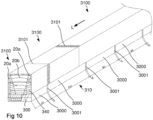
- the method may further comprise arranging at least two face lamella pieces on said surface of the intermediate wood product, wherein a joint between end portions of said face lamella pieces is offset in a longitudinal direction of the component from a joint between said at least two intermediate wood products.
- the method may further comprise arranging at least two face lamella pieces on said surface of the intermediate wood product, such that said adjacent end portions of face lamella pieces are spaced from each other.
- providing the billet may comprise wet gluing the wood lamellae to each other side surface to side surface, wherein said wet gluing comprises gluing at a moisture content of the wood lamellae of at least 25 % by weight of dry mass, preferably at least 30 % by weight of dry mass.
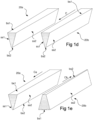
- Fig. 1c schematically illustrates processing of one of the radial sections 2"a, 2"b into a lamella 20a, 20b.
- the lamella 20a, 20b is subjected to forming of base surfaces bs1, bs2, to form a lamella 20a, 20b, which will present a trapezoidal cross section.
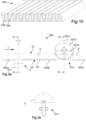
- the tools 31, 32 may be any type of tool capable of forming a planar surface, including but not limited to milling cutters, circular saw blades or band saw blades.
Landscapes
- Life Sciences & Earth Sciences (AREA)
- Engineering & Computer Science (AREA)
- Wood Science & Technology (AREA)
- Forests & Forestry (AREA)
- Manufacturing & Machinery (AREA)
- Civil Engineering (AREA)
- Structural Engineering (AREA)
- Mechanical Engineering (AREA)
Claims (28)
- Schichtholzkomponente (250) zur Verwendung z. B. als Türrahmen oder Fensterrahmen,wobei die Holzkomponente ein Paar von benachbarten, nach außen exponierten, sich längs erstreckenden Flächen (F2, F3; F4, F5) mit einer jeweiligen positiven Flächennormale, die sich von der Fläche nach außen, weg von dem durch die Fläche begrenzten Körper, erstreckt, aufweist, wobei sich die jeweiligen Flächennormalen, vorzugsweise in einem Winkel von mehr als 20°, mehr als 30°, mehr als 45°, mehr als 75° oder etwa 90°, kreuzen, wobei die Komponente Folgendes aufweist:einen Querschnitt und eine Längsrichtung (C), die senkrecht zu dem Querschnitt verläuft, undeine Hauptfaserrichtung, die im Wesentlichen senkrecht zu dem Querschnitt verläuft,wobei der Querschnitt entlang der Längsrichtung im Wesentlichen konstant ist,wobei das Schichtholzprodukt aus mindestens zwei benachbarten Holzlamellen (20a, 20b) gebildet ist, die entlang einer Verbindungsebene (JP1, JP2) verbunden sind,wobei die Holzkomponente mindestens zwei sich längs erstreckende Flächen (F1, F2, F3, F4, F5, F6) aufweist, die senkrecht zu dem Querschnitt sind, und die gehobelt und/oder profiliert sind, wobeidie Verbindungsebene (JP1, JP2) Folgendes aufweist:
einen ersten Winkel (A1) von 70°-89°, vorzugsweise 80°-89°, gegenüber dem Querschnitt, dadurch gekennzeichnet, dass der Verbindungswinkel Folgendes aufweist:einen zweiten Winkel (A2) gegenüber einer ersten sich längs erstreckenden Fläche (F2, F4, F6), die senkrecht zu dem Querschnitt ist, wobei der zweite Winkel (A2) mehr als 0° und weniger als 90°, vorzugsweise 1°-30°, 60°-89° oder 45°-89° beträgt, undeinen dritten Winkel (A3) in Bezug auf eine zweite sich längs erstreckende Fläche (F1, F3, F5), die senkrecht zu dem Querschnitt und zu der ersten sich längs erstreckenden Fläche (F2, F4, F6) ist, wobei der dritte Winkel im Bereich von 1°-20° oder 5°-15° liegt. - Holzkomponente nach Anspruch 1, wobei ein Kreuzungspunkt zwischen der Verbindungsebene (JP1, JP2) und einer der sich längs erstreckenden Flächen von beiden Kreuzungspunkten zwischen dieser sich längs erstreckenden Fläche und anderen der sich längs erstreckenden Flächen entlang mindestens 50 % einer Länge der Holzkomponente, vorzugsweise entlang mindestens 75 % oder mindestens 99 % der Länge der Holzkomponente, beabstandet ist.
- Holzkomponente nach einem der vorhergehenden Ansprüche, wobei die Holzlamellen (20a, 20b) entlang der Verbindungsebene (JP1, JP2) mittels eines zur Nassverleimung geeigneten Leims, beispielsweise ein Leim auf Polyurethanbasis, miteinander verleimt sind.
- Holzkomponente nach einem der vorhergehenden Ansprüche, wobei mindestens eine der sich längs erstreckenden Flächen mindestens zwei Abschnitte umfasst, die parallel und in einer Richtung normal zu der Fläche voneinander getrennt sind.
- Holzkomponente nach einem der vorhergehenden Ansprüche, wobei, an der Verbindungsebene (JP1, JP2), ein Biegeradius eines Jahresrings von einer der Holzlamellen parallel, +/- weniger als 10°, vorzugsweise weniger als +/-5° oder weniger als +/-1°, und entgegengesetzt zu einem Biegeradius eines Jahresrings der anderen der Holzlamellen, an der gleichen Position entlang der Verbindungsebene (JP1, JP2), ist.
- Holzkomponente nach einem der vorhergehenden Ansprüche, wobei die Komponente eine mittlere Lamelle (20b) umfasst, die zwischen einem Paar von äußeren Lamellen (20a) angeordnet ist, wobei die mittlere Lamelle aus einem Abschnitt eines Stamms gebildet ist, der näher an dem Mark liegt als die Lamellen am äußeren Rand.
- Holzkomponente nach einem der vorhergehenden Ansprüche, wobei die Holzlamellen (20a, 20b) entlang einer Verbindungsebene (JP1, JP2), die senkrecht zu dem Querschnitt verläuft, miteinander verleimt sind.
- Holzkomponente nach einem der vorhergehenden Ansprüche, die ferner mindestens eine Stirnlamelle umfasst, die einen rechteckigen Querschnitt aufweist.
- Holzkomponente nach Anspruch 8, wobei die Stirnlamelle aus einem einzigen Holzstück gebildet ist.
- Holzkomponente nach Anspruch 8 oder 9, wobei mindestens zwei exponierte Flächen der Holzkomponente in der Stirnlamelle ausgebildet sind, wobei die mindestens zwei exponierten Flächen derart ausgebildet sind, dass sich positive Flächennormalen davon, vorzugsweise in einem Winkel von mehr als 20°, mehr als 30°, mehr als 45° oder mehr als 80°, kreuzen.
- Holzkomponente nach einem der Ansprüche 8-10, wobei eine Hauptfläche der Stirnlamelle einen Winkel von mehr als 45°, vorzugsweise mehr als 60° oder mehr als 70°, gegenüber einer die Hauptfläche kreuzenden Verbindungsebene aufweist.
- Holzkomponente nach einem der Ansprüche 8-11, wobei sich, im Querschnitt betrachtet, die Jahresringe der Stirnlamelle in einem Winkel von mehr als 45°, vorzugsweise mehr als 55°, zu den Hauptflächen der Stirnlamelle erstrecken.
- Holzkomponente nach einem der vorhergehenden Ansprüche, wobei die Holzlamellen ausgewählt sind aus einer Gruppe bestehend ausWeichholz, d. h. Gymnospermenhölzer, mit einer Dichte von mehr als 400 kg/m3, undHartholz, d. h. Angiospermenhölzer, mit einer Dichte von mehr als 400 kg/m3.
- Holzkomponente nach einem der vorhergehenden Ansprüche, wobei die Holzkomponente entlang ihrer Faserrichtung eine Länge aufweist, die mindestens 200 % einer Länge entlang einer größten Länge ihres Querschnitts, vorzugsweise 300 % oder 500 %, beträgt.
- Rahmen für ein Fenster oder eine Tür, der einen Rahmenabschnitt umfasst, der aus einer Holzkomponente nach einem der vorhergehenden Ansprüche gebildet ist, und der so positioniert ist, dass er senkrecht zu einer Fläche einer Wand weist, in der der Fenster- oder Türrahmen angeordnet ist.
- Verfahren zur Herstellung einer Schichtholzkomponente nach einem der Ansprüche 1-15, umfassend:a) Bereitstellen eines Rohlings, der aus einer Vielzahl von länglichen Holzlamellen gebildet ist, wobeidie Lamellen entlang einer Hauptfaserrichtung eines Stamms ausgebildet sind,jede der Lamellen einen im Wesentlichen trapezförmigen Querschnitt aufweist, undHolzlamellen eine jeweilige planare Hauptgrundfläche, die an einem radial äußeren Teil des Stamms ausgebildet ist, und eine jeweilige planare Nebengrundfläche, die an einem radial inneren Teil des Stamms ausgebildet ist, aufweisen, wobei die Lamellen als mindestens eine Schicht angeordnet sind, in der planare Hauptgrundflächen von unmittelbar benachbarten Lamellen in entgegengesetzte Richtungen weisen,b) Schneiden des Rohlings entlang mindestens einer Ebene, die senkrecht zu dem trapezförmigen Querschnitt ist, wodurch ein Schichtholz-Zwischenprodukt gebildet wird, undc) Herstellen der Schichtholzkomponente durch Profilschneiden oder Hobeln entlang mindestens einer Ebene, die senkrecht zu dem trapezförmigen Querschnitt ist, sodass die Schichtholzkomponente Teile von mindestens zwei benachbarten Lamellen umfasst,wobei die Holzkomponente ein Paar von benachbarten, nach außen exponierten, sich längs erstreckenden Flächen (F2, F3; F4, F5) mit einer jeweiligen positiven Flächennormale, die sich von der Fläche nach außen, weg von dem durch die Fläche begrenzten Körper, erstreckt, aufweist, wobei die jeweiligen positiven Flächennormalen einander kreuzen, vorzugsweise in einem Winkel von mehr als 20°, mehr als 30°, mehr als 45°, mehr als 75° oder etwa 90°.
- Verfahren nach Anspruch 16, wobei das Schneiden ein Schneiden des Rohlings entlang mindestens einer ersten Schnittebene, die im Wesentlichen senkrecht zu den Grundflächen ist, und ein Schneiden des Rohlings entlang mindestens einer zweiten Schnittebene, die im Wesentlichen parallel zu den Grundflächen ist, umfasst, wobei sich beide der Schnittebenen im Wesentlichen senkrecht zu dem trapezförmigen Querschnitt erstrecken.
- Verfahren nach Anspruch 16 oder 17, wobei das Holzzwischenprodukt durch ein Paar von ersten Schnittebenen gebildet wird, die so positioniert sind, dass das Holzzwischenprodukt Teile von mindestens drei Lamellen, einschließlich einer mittleren Lamelle, die zwischen zwei äußeren Lamellen angeordnet ist, umfasst.
- Verfahren nach Anspruch 18, wobei das Holzzwischenprodukt auch durch die zweite Schnittebene gebildet wird, wobei die zweite Schnittebene so positioniert ist, dass die mittlere Lamelle an einem Abschnitt des trapezförmigen Querschnitts gebildet ist, der näher zu einem Mark des Stamms als zu einer Rindenseite des Stamms ist.
- Verfahren nach Anspruch 16 oder 17, wobei das Holzzwischenprodukt durch ein Paar von ersten Schnittebenen gebildet wird, die so positioniert sind, dass das Holzzwischenprodukt Teile von lediglich zwei benachbarten Lamellen umfasst.
- Verfahren nach Anspruch 19 oder 20, wobei die zweite Schnittebene so positioniert ist, dass das Holzzwischenprodukt an einem Abschnitt des Stamms gebildet wird, der mehr als 20 % eines Stammradius entfernt von einem Mark des Stamms und weniger als 80 % des Stammradius entfernt von dem Mark liegt.
- Verfahren nach einem der Ansprüche 16-21, das, vor der Herstellung des Schichtholzprodukts, ferner ein Verbinden von mindestens zwei Holzzwischenprodukten in einer durchgängigen Weise umfasst.
- Verfahren nach einem der Ansprüche 16-22, das ferner ein Identifizieren eines Abschnitts des Rohlings, in dem eine Holzdichte, in Dickenrichtung des Rohlings betrachtet, ein Minimum aufweist, und ein Ausrichten eines Schnittmusters zum Schneiden des Holzzwischenprodukts basierend auf dem Minimum umfasst.
- Verfahren nach einem der Ansprüche 16-23, das ferner ein Auflaminieren einer Stirnlamelle (300), die einen rechteckigen Querschnitt aufweist, auf eine Fläche des Holzzwischenprodukts, die einen Winkel von mehr als 45°, vorzugsweise mehr als 60° oder mehr als 70°, gegenüber einer Verbindungsebene aufweist, entlang der ein Paar von trapezförmigen Lamellen verbunden sind, umfasst.
- Verfahren nach Anspruch 24, das ferner ein Ausbilden einer exponierten Fläche durch Schneiden in die Stirnlamelle umfasst.
- Verfahren nach Anspruch 24 oder 25 in Verbindung mit Anspruch 19, das ferner ein Anordnen von mindestens zwei Stirnlamellenstücken (3000) auf der Fläche des Holzzwischenprodukts umfasst, wobei eine Verbindung zwischen Endabschnitten der Stirnlamellenstücke (3000) in einer Längsrichtung (L) der Komponente gegenüber einer Verbindung zwischen den mindestens zwei Holzzwischenprodukten versetzt ist.
- Verfahren nach einem der Ansprüche 24-26, das ferner ein Anordnen von mindestens zwei Stirnlamellenstücken (3000) auf der Fläche des Holzzwischenprodukts derart, dass die benachbarten Endabschnitte von Stirnlamellenstücken (3000) voneinander beabstandet sind, umfasst.
- Verfahren nach einem der Ansprüche 16-27, wobei das Bereitstellen des Rohlings ein Nassverleimen der Holzlamellen Seitenfläche an Seitenfläche miteinander umfasst, wobei das Nassverleimen ein Verleimen bei einem Feuchtigkeitsgehalt der Holzlamellen von mindestens 25 Gew.-% der Trockenmasse, vorzugsweise mindestens 30 Gew.-% der Trockenmasse, umfasst.
Applications Claiming Priority (3)
| Application Number | Priority Date | Filing Date | Title |
|---|---|---|---|
| SE1551209 | 2015-09-21 | ||
| SE1650148 | 2016-02-08 | ||
| PCT/IB2016/055622 WO2017051321A1 (en) | 2015-09-21 | 2016-09-21 | Method of forming a laminated wood component, and laminated wood component thus formed |
Publications (4)
| Publication Number | Publication Date |
|---|---|
| EP3352986A1 EP3352986A1 (de) | 2018-08-01 |
| EP3352986A4 EP3352986A4 (de) | 2019-05-08 |
| EP3352986C0 EP3352986C0 (de) | 2024-07-03 |
| EP3352986B1 true EP3352986B1 (de) | 2024-07-03 |
Family
ID=58386255
Family Applications (1)
| Application Number | Title | Priority Date | Filing Date |
|---|---|---|---|
| EP16848237.0A Active EP3352986B1 (de) | 2015-09-21 | 2016-09-21 | Verfahren zur herstellung eines laminierten holzbauteils und daraus hergestelltes laminiertes holzbauteil |
Country Status (3)
| Country | Link |
|---|---|
| EP (1) | EP3352986B1 (de) |
| PL (1) | PL3352986T3 (de) |
| WO (1) | WO2017051321A1 (de) |
Cited By (1)
| Publication number | Priority date | Publication date | Assignee | Title |
|---|---|---|---|---|
| EP4188657A1 (de) * | 2020-08-03 | 2023-06-07 | Xaver Haas | Verfahren zum herstellen von konstruktionsbauholz aus schwachholz und konstruktionsbauholz |
Families Citing this family (5)
| Publication number | Priority date | Publication date | Assignee | Title |
|---|---|---|---|---|
| PL71361Y1 (pl) * | 2018-02-16 | 2020-04-30 | Timber Tech Spolka Z Ograniczona Odpowiedzialnoscia | Belka o prostokątnym przekroju stanowiąca półfabrykat drewniany wielorodzajowy |
| PL71362Y1 (pl) * | 2018-02-16 | 2020-04-30 | Timber Tech Spolka Z Ograniczona Odpowiedzialnoscia | Belka o prostokątnym przekroju stanowiąca półfabrykat drewniany wielorodzajowy |
| PL71363Y1 (pl) * | 2018-02-16 | 2020-04-30 | Timber Tech Spolka Z Ograniczona Odpowiedzialnoscia | Belka o prostokątnym przekroju stanowiąca półfabrykat drewniany wielorodzajowy |
| IT201900001981A1 (de) * | 2019-02-12 | 2019-02-12 | ||
| CN114851325A (zh) * | 2022-04-19 | 2022-08-05 | 柳州市悟新木工机械有限公司 | 六角形集成木方生产方法 |
Citations (2)
| Publication number | Priority date | Publication date | Assignee | Title |
|---|---|---|---|---|
| GB1176127A (en) * | 1967-01-24 | 1970-01-01 | Herbert Szigat Trading As Herb | Electrical Burglar Alarm Systems |
| EP1125701A1 (de) * | 2000-02-15 | 2001-08-22 | Ensio Kuisma | Holzverbundelement und Methode zu dessen Herstellung |
Family Cites Families (11)
| Publication number | Priority date | Publication date | Assignee | Title |
|---|---|---|---|---|
| US2544935A (en) * | 1945-03-17 | 1951-03-13 | Orner Otto Harald | Method of producing boards |
| US3961654A (en) * | 1973-02-20 | 1976-06-08 | Earl Dean Hasenwinkle | Log cutting and rejoining process |
| US3989078A (en) * | 1976-01-07 | 1976-11-02 | Weyerhaeuser Company | Log cutting and rejoining process |
| US4111247A (en) * | 1977-01-13 | 1978-09-05 | Weyerhaeuser Company | Log cutting and rejoining process for lumber manufacture |
| US4122878A (en) * | 1977-12-14 | 1978-10-31 | Baltek Corporation | Technique for converting balsa logs into panels |
| US4476663A (en) * | 1983-08-15 | 1984-10-16 | Bikales Victor W | Structure with composite members |
| WO1989004747A1 (en) * | 1987-11-27 | 1989-06-01 | Andrew Karl Knorr | Method of sawing timber and timber products formed thereby |
| US5985398A (en) * | 1994-12-27 | 1999-11-16 | Manufacture De Lambton Ltee | Stairtread made of a combination of higher quality wood and lower quality material |
| DE19613237C2 (de) * | 1996-04-02 | 1999-06-02 | Kirst Ralph Dipl Ing Fh | Balken und Verfahren zu dessen Herstellung |
| US6533005B2 (en) * | 2000-02-02 | 2003-03-18 | David A. Hill | Method of making a hybrid wood product |
| SE541538C2 (en) * | 2015-06-18 | 2019-10-29 | Stora Enso Oyj | Method of producing a laminated wood product, and laminated wood products |
-
2016
- 2016-09-21 WO PCT/IB2016/055622 patent/WO2017051321A1/en not_active Ceased
- 2016-09-21 EP EP16848237.0A patent/EP3352986B1/de active Active
- 2016-09-21 PL PL16848237.0T patent/PL3352986T3/pl unknown
Patent Citations (2)
| Publication number | Priority date | Publication date | Assignee | Title |
|---|---|---|---|---|
| GB1176127A (en) * | 1967-01-24 | 1970-01-01 | Herbert Szigat Trading As Herb | Electrical Burglar Alarm Systems |
| EP1125701A1 (de) * | 2000-02-15 | 2001-08-22 | Ensio Kuisma | Holzverbundelement und Methode zu dessen Herstellung |
Cited By (1)
| Publication number | Priority date | Publication date | Assignee | Title |
|---|---|---|---|---|
| EP4188657A1 (de) * | 2020-08-03 | 2023-06-07 | Xaver Haas | Verfahren zum herstellen von konstruktionsbauholz aus schwachholz und konstruktionsbauholz |
Also Published As
| Publication number | Publication date |
|---|---|
| WO2017051321A1 (en) | 2017-03-30 |
| PL3352986T3 (pl) | 2024-11-18 |
| EP3352986A1 (de) | 2018-08-01 |
| EP3352986A4 (de) | 2019-05-08 |
| EP3352986C0 (de) | 2024-07-03 |
Similar Documents
| Publication | Publication Date | Title |
|---|---|---|
| EP3352986B1 (de) | Verfahren zur herstellung eines laminierten holzbauteils und daraus hergestelltes laminiertes holzbauteil | |
| EP3310541B1 (de) | Verfahren zur herstellung eines laminierten holzerzeugnisses und laminierte holzprodukte | |
| DE69805611T2 (de) | Verfahren zur herstellung von verbundplatten und formkörpern aus schichtholzbauteilen | |
| EP1080857A2 (de) | Holzverbundelement und Holzsägeverfahren | |
| CN105171855B (zh) | 一种新型实木板材及其加工方法 | |
| CN110087842A (zh) | 制作层压木制品的方法 | |
| CA2957254C (en) | A gluelam structural member and a method of producing such a gluelam structural member | |
| EP3368254B1 (de) | Verfahren zur herstellung eines holzprodukts | |
| US4372357A (en) | Machine for profiling wood panel to simulate lap siding | |
| EP1125701A1 (de) | Holzverbundelement und Methode zu dessen Herstellung | |
| EP3259103B1 (de) | Verfahren und vorrichtung zur herstellung von holzlamellen | |
| NZ737785B2 (en) | Method of producing a laminated wood product, and laminated wood products | |
| EA011657B1 (ru) | Композитный конструкционный элемент | |
| NZ728649B2 (en) | A gluelam structural member and a method of producing such a gluelam structural member |
Legal Events
| Date | Code | Title | Description |
|---|---|---|---|
| STAA | Information on the status of an ep patent application or granted ep patent |
Free format text: STATUS: THE INTERNATIONAL PUBLICATION HAS BEEN MADE |
|
| PUAI | Public reference made under article 153(3) epc to a published international application that has entered the european phase |
Free format text: ORIGINAL CODE: 0009012 |
|
| STAA | Information on the status of an ep patent application or granted ep patent |
Free format text: STATUS: REQUEST FOR EXAMINATION WAS MADE |
|
| 17P | Request for examination filed |
Effective date: 20180423 |
|
| AK | Designated contracting states |
Kind code of ref document: A1 Designated state(s): AL AT BE BG CH CY CZ DE DK EE ES FI FR GB GR HR HU IE IS IT LI LT LU LV MC MK MT NL NO PL PT RO RS SE SI SK SM TR |
|
| AX | Request for extension of the european patent |
Extension state: BA ME |
|
| RIN1 | Information on inventor provided before grant (corrected) |
Inventor name: HIRMKE, MARKUS Inventor name: SAUER, PHILIPP |
|
| DAV | Request for validation of the european patent (deleted) | ||
| DAX | Request for extension of the european patent (deleted) | ||
| A4 | Supplementary search report drawn up and despatched |
Effective date: 20190405 |
|
| RIC1 | Information provided on ipc code assigned before grant |
Ipc: B32B 21/04 20060101ALI20190401BHEP Ipc: B27M 3/00 20060101AFI20190401BHEP Ipc: B27B 1/00 20060101ALI20190401BHEP Ipc: E06B 3/10 20060101ALI20190401BHEP Ipc: E06B 1/04 20060101ALI20190401BHEP Ipc: B27M 3/08 20060101ALI20190401BHEP Ipc: B32B 21/13 20060101ALI20190401BHEP Ipc: B27G 11/00 20060101ALI20190401BHEP |
|
| STAA | Information on the status of an ep patent application or granted ep patent |
Free format text: STATUS: EXAMINATION IS IN PROGRESS |
|
| 17Q | First examination report despatched |
Effective date: 20200113 |
|
| GRAP | Despatch of communication of intention to grant a patent |
Free format text: ORIGINAL CODE: EPIDOSNIGR1 |
|
| STAA | Information on the status of an ep patent application or granted ep patent |
Free format text: STATUS: GRANT OF PATENT IS INTENDED |
|
| INTG | Intention to grant announced |
Effective date: 20240213 |
|
| GRAS | Grant fee paid |
Free format text: ORIGINAL CODE: EPIDOSNIGR3 |
|
| GRAA | (expected) grant |
Free format text: ORIGINAL CODE: 0009210 |
|
| STAA | Information on the status of an ep patent application or granted ep patent |
Free format text: STATUS: THE PATENT HAS BEEN GRANTED |
|
| AK | Designated contracting states |
Kind code of ref document: B1 Designated state(s): AL AT BE BG CH CY CZ DE DK EE ES FI FR GB GR HR HU IE IS IT LI LT LU LV MC MK MT NL NO PL PT RO RS SE SI SK SM TR |
|
| REG | Reference to a national code |
Ref country code: CH Ref legal event code: EP |
|
| REG | Reference to a national code |
Ref country code: DE Ref legal event code: R096 Ref document number: 602016088257 Country of ref document: DE |
|
| U01 | Request for unitary effect filed |
Effective date: 20240703 |
|
| U07 | Unitary effect registered |
Designated state(s): AT BE BG DE DK EE FI FR IT LT LU LV MT NL PT SE SI Effective date: 20240711 |
|
| U20 | Renewal fee for the european patent with unitary effect paid |
Year of fee payment: 9 Effective date: 20241011 |
|
| PG25 | Lapsed in a contracting state [announced via postgrant information from national office to epo] |
Ref country code: NO Free format text: LAPSE BECAUSE OF FAILURE TO SUBMIT A TRANSLATION OF THE DESCRIPTION OR TO PAY THE FEE WITHIN THE PRESCRIBED TIME-LIMIT Effective date: 20241003 |
|
| PG25 | Lapsed in a contracting state [announced via postgrant information from national office to epo] |
Ref country code: GR Free format text: LAPSE BECAUSE OF FAILURE TO SUBMIT A TRANSLATION OF THE DESCRIPTION OR TO PAY THE FEE WITHIN THE PRESCRIBED TIME-LIMIT Effective date: 20241004 |
|
| PG25 | Lapsed in a contracting state [announced via postgrant information from national office to epo] |
Ref country code: IS Free format text: LAPSE BECAUSE OF FAILURE TO SUBMIT A TRANSLATION OF THE DESCRIPTION OR TO PAY THE FEE WITHIN THE PRESCRIBED TIME-LIMIT Effective date: 20241103 |
|
| PG25 | Lapsed in a contracting state [announced via postgrant information from national office to epo] |
Ref country code: HR Free format text: LAPSE BECAUSE OF FAILURE TO SUBMIT A TRANSLATION OF THE DESCRIPTION OR TO PAY THE FEE WITHIN THE PRESCRIBED TIME-LIMIT Effective date: 20240703 |
|
| PG25 | Lapsed in a contracting state [announced via postgrant information from national office to epo] |
Ref country code: RS Free format text: LAPSE BECAUSE OF FAILURE TO SUBMIT A TRANSLATION OF THE DESCRIPTION OR TO PAY THE FEE WITHIN THE PRESCRIBED TIME-LIMIT Effective date: 20241003 Ref country code: ES Free format text: LAPSE BECAUSE OF FAILURE TO SUBMIT A TRANSLATION OF THE DESCRIPTION OR TO PAY THE FEE WITHIN THE PRESCRIBED TIME-LIMIT Effective date: 20240703 |
|
| PG25 | Lapsed in a contracting state [announced via postgrant information from national office to epo] |
Ref country code: RS Free format text: LAPSE BECAUSE OF FAILURE TO SUBMIT A TRANSLATION OF THE DESCRIPTION OR TO PAY THE FEE WITHIN THE PRESCRIBED TIME-LIMIT Effective date: 20241003 Ref country code: NO Free format text: LAPSE BECAUSE OF FAILURE TO SUBMIT A TRANSLATION OF THE DESCRIPTION OR TO PAY THE FEE WITHIN THE PRESCRIBED TIME-LIMIT Effective date: 20241003 Ref country code: IS Free format text: LAPSE BECAUSE OF FAILURE TO SUBMIT A TRANSLATION OF THE DESCRIPTION OR TO PAY THE FEE WITHIN THE PRESCRIBED TIME-LIMIT Effective date: 20241103 Ref country code: HR Free format text: LAPSE BECAUSE OF FAILURE TO SUBMIT A TRANSLATION OF THE DESCRIPTION OR TO PAY THE FEE WITHIN THE PRESCRIBED TIME-LIMIT Effective date: 20240703 Ref country code: GR Free format text: LAPSE BECAUSE OF FAILURE TO SUBMIT A TRANSLATION OF THE DESCRIPTION OR TO PAY THE FEE WITHIN THE PRESCRIBED TIME-LIMIT Effective date: 20241004 Ref country code: ES Free format text: LAPSE BECAUSE OF FAILURE TO SUBMIT A TRANSLATION OF THE DESCRIPTION OR TO PAY THE FEE WITHIN THE PRESCRIBED TIME-LIMIT Effective date: 20240703 |
|
| PG25 | Lapsed in a contracting state [announced via postgrant information from national office to epo] |
Ref country code: SM Free format text: LAPSE BECAUSE OF FAILURE TO SUBMIT A TRANSLATION OF THE DESCRIPTION OR TO PAY THE FEE WITHIN THE PRESCRIBED TIME-LIMIT Effective date: 20240703 |
|
| PG25 | Lapsed in a contracting state [announced via postgrant information from national office to epo] |
Ref country code: MC Free format text: LAPSE BECAUSE OF FAILURE TO SUBMIT A TRANSLATION OF THE DESCRIPTION OR TO PAY THE FEE WITHIN THE PRESCRIBED TIME-LIMIT Effective date: 20240703 |
|
| PG25 | Lapsed in a contracting state [announced via postgrant information from national office to epo] |
Ref country code: SK Free format text: LAPSE BECAUSE OF FAILURE TO SUBMIT A TRANSLATION OF THE DESCRIPTION OR TO PAY THE FEE WITHIN THE PRESCRIBED TIME-LIMIT Effective date: 20240703 |
|
| REG | Reference to a national code |
Ref country code: CH Ref legal event code: PL |
|
| PLBE | No opposition filed within time limit |
Free format text: ORIGINAL CODE: 0009261 |
|
| STAA | Information on the status of an ep patent application or granted ep patent |
Free format text: STATUS: NO OPPOSITION FILED WITHIN TIME LIMIT |
|
| 26N | No opposition filed |
Effective date: 20250404 |
|
| GBPC | Gb: european patent ceased through non-payment of renewal fee |
Effective date: 20241003 |
|
| PG25 | Lapsed in a contracting state [announced via postgrant information from national office to epo] |
Ref country code: GB Free format text: LAPSE BECAUSE OF NON-PAYMENT OF DUE FEES Effective date: 20241003 |
|
| PG25 | Lapsed in a contracting state [announced via postgrant information from national office to epo] |
Ref country code: CH Free format text: LAPSE BECAUSE OF NON-PAYMENT OF DUE FEES Effective date: 20240930 |
|
| PG25 | Lapsed in a contracting state [announced via postgrant information from national office to epo] |
Ref country code: IE Free format text: LAPSE BECAUSE OF NON-PAYMENT OF DUE FEES Effective date: 20240921 |
|
| PGFP | Annual fee paid to national office [announced via postgrant information from national office to epo] |
Ref country code: PL Payment date: 20250826 Year of fee payment: 10 |
|
| PGFP | Annual fee paid to national office [announced via postgrant information from national office to epo] |
Ref country code: CZ Payment date: 20250828 Year of fee payment: 10 |
|
| U20 | Renewal fee for the european patent with unitary effect paid |
Year of fee payment: 10 Effective date: 20250930 |
|
| PG25 | Lapsed in a contracting state [announced via postgrant information from national office to epo] |
Ref country code: RO Free format text: LAPSE BECAUSE OF FAILURE TO SUBMIT A TRANSLATION OF THE DESCRIPTION OR TO PAY THE FEE WITHIN THE PRESCRIBED TIME-LIMIT Effective date: 20240703 |
|
| PG25 | Lapsed in a contracting state [announced via postgrant information from national office to epo] |
Ref country code: CY Free format text: LAPSE BECAUSE OF FAILURE TO SUBMIT A TRANSLATION OF THE DESCRIPTION OR TO PAY THE FEE WITHIN THE PRESCRIBED TIME-LIMIT; INVALID AB INITIO Effective date: 20160921 |
|
| PG25 | Lapsed in a contracting state [announced via postgrant information from national office to epo] |
Ref country code: HU Free format text: LAPSE BECAUSE OF FAILURE TO SUBMIT A TRANSLATION OF THE DESCRIPTION OR TO PAY THE FEE WITHIN THE PRESCRIBED TIME-LIMIT; INVALID AB INITIO Effective date: 20160921 |