EP3352986B1 - Procédé de formation d'un composant de bois stratifié, et composant de bois stratifié ainsi formé - Google Patents
Procédé de formation d'un composant de bois stratifié, et composant de bois stratifié ainsi formé Download PDFInfo
- Publication number
- EP3352986B1 EP3352986B1 EP16848237.0A EP16848237A EP3352986B1 EP 3352986 B1 EP3352986 B1 EP 3352986B1 EP 16848237 A EP16848237 A EP 16848237A EP 3352986 B1 EP3352986 B1 EP 3352986B1
- Authority
- EP
- European Patent Office
- Prior art keywords
- wood
- lamellae
- component
- face
- section
- Prior art date
- Legal status (The legal status is an assumption and is not a legal conclusion. Google has not performed a legal analysis and makes no representation as to the accuracy of the status listed.)
- Active
Links
Images



Classifications
-
- B—PERFORMING OPERATIONS; TRANSPORTING
- B32—LAYERED PRODUCTS
- B32B—LAYERED PRODUCTS, i.e. PRODUCTS BUILT-UP OF STRATA OF FLAT OR NON-FLAT, e.g. CELLULAR OR HONEYCOMB, FORM
- B32B21/00—Layered products comprising a layer of wood, e.g. wood board, veneer, wood particle board
- B32B21/13—Layered products comprising a layer of wood, e.g. wood board, veneer, wood particle board all layers being exclusively wood
-
- B—PERFORMING OPERATIONS; TRANSPORTING
- B27—WORKING OR PRESERVING WOOD OR SIMILAR MATERIAL; NAILING OR STAPLING MACHINES IN GENERAL
- B27B—SAWS FOR WOOD OR SIMILAR MATERIAL; COMPONENTS OR ACCESSORIES THEREFOR
- B27B1/00—Methods for subdividing trunks or logs essentially involving sawing
- B27B1/005—Methods for subdividing trunks or logs essentially involving sawing including the step of dividing the log into sector-shaped segments
-
- B—PERFORMING OPERATIONS; TRANSPORTING
- B27—WORKING OR PRESERVING WOOD OR SIMILAR MATERIAL; NAILING OR STAPLING MACHINES IN GENERAL
- B27M—WORKING OF WOOD NOT PROVIDED FOR IN SUBCLASSES B27B - B27L; MANUFACTURE OF SPECIFIC WOODEN ARTICLES
- B27M3/00—Manufacture or reconditioning of specific semi-finished or finished articles
- B27M3/0013—Manufacture or reconditioning of specific semi-finished or finished articles of composite or compound articles
- B27M3/0026—Manufacture or reconditioning of specific semi-finished or finished articles of composite or compound articles characterised by oblong elements connected laterally
- B27M3/0053—Manufacture or reconditioning of specific semi-finished or finished articles of composite or compound articles characterised by oblong elements connected laterally using glue
-
- B—PERFORMING OPERATIONS; TRANSPORTING
- B27—WORKING OR PRESERVING WOOD OR SIMILAR MATERIAL; NAILING OR STAPLING MACHINES IN GENERAL
- B27M—WORKING OF WOOD NOT PROVIDED FOR IN SUBCLASSES B27B - B27L; MANUFACTURE OF SPECIFIC WOODEN ARTICLES
- B27M3/00—Manufacture or reconditioning of specific semi-finished or finished articles
- B27M3/0013—Manufacture or reconditioning of specific semi-finished or finished articles of composite or compound articles
- B27M3/006—Manufacture or reconditioning of specific semi-finished or finished articles of composite or compound articles characterised by oblong elements connected both laterally and at their ends
-
- B—PERFORMING OPERATIONS; TRANSPORTING
- B32—LAYERED PRODUCTS
- B32B—LAYERED PRODUCTS, i.e. PRODUCTS BUILT-UP OF STRATA OF FLAT OR NON-FLAT, e.g. CELLULAR OR HONEYCOMB, FORM
- B32B21/00—Layered products comprising a layer of wood, e.g. wood board, veneer, wood particle board
- B32B21/02—Layered products comprising a layer of wood, e.g. wood board, veneer, wood particle board the layer being formed of fibres, chips, or particles, e.g. MDF, HDF, OSB, chipboard, particle board, hardboard
-
- B—PERFORMING OPERATIONS; TRANSPORTING
- B32—LAYERED PRODUCTS
- B32B—LAYERED PRODUCTS, i.e. PRODUCTS BUILT-UP OF STRATA OF FLAT OR NON-FLAT, e.g. CELLULAR OR HONEYCOMB, FORM
- B32B21/00—Layered products comprising a layer of wood, e.g. wood board, veneer, wood particle board
- B32B21/04—Layered products comprising a layer of wood, e.g. wood board, veneer, wood particle board comprising wood as the main or only constituent of a layer, which is next to another layer of the same or of a different material
-
- B—PERFORMING OPERATIONS; TRANSPORTING
- B32—LAYERED PRODUCTS
- B32B—LAYERED PRODUCTS, i.e. PRODUCTS BUILT-UP OF STRATA OF FLAT OR NON-FLAT, e.g. CELLULAR OR HONEYCOMB, FORM
- B32B3/00—Layered products comprising a layer with external or internal discontinuities or unevennesses, or a layer of non-planar shape; Layered products comprising a layer having particular features of form
- B32B3/26—Layered products comprising a layer with external or internal discontinuities or unevennesses, or a layer of non-planar shape; Layered products comprising a layer having particular features of form characterised by a particular shape of the outline of the cross-section of a continuous layer; characterised by a layer with cavities or internal voids ; characterised by an apertured layer
-
- B—PERFORMING OPERATIONS; TRANSPORTING
- B32—LAYERED PRODUCTS
- B32B—LAYERED PRODUCTS, i.e. PRODUCTS BUILT-UP OF STRATA OF FLAT OR NON-FLAT, e.g. CELLULAR OR HONEYCOMB, FORM
- B32B7/00—Layered products characterised by the relation between layers; Layered products characterised by the relative orientation of features between layers, or by the relative values of a measurable parameter between layers, i.e. products comprising layers having different physical, chemical or physicochemical properties; Layered products characterised by the interconnection of layers
- B32B7/04—Interconnection of layers
- B32B7/12—Interconnection of layers using interposed adhesives or interposed materials with bonding properties
-
- E—FIXED CONSTRUCTIONS
- E06—DOORS, WINDOWS, SHUTTERS, OR ROLLER BLINDS IN GENERAL; LADDERS
- E06B—FIXED OR MOVABLE CLOSURES FOR OPENINGS IN BUILDINGS, VEHICLES, FENCES OR LIKE ENCLOSURES IN GENERAL, e.g. DOORS, WINDOWS, BLINDS, GATES
- E06B3/00—Window sashes, door leaves, or like elements for closing wall or like openings; Layout of fixed or moving closures, e.g. windows in wall or like openings; Features of rigidly-mounted outer frames relating to the mounting of wing frames
- E06B3/04—Wing frames not characterised by the manner of movement
- E06B3/06—Single frames
- E06B3/08—Constructions depending on the use of specified materials
- E06B3/10—Constructions depending on the use of specified materials of wood
-
- B—PERFORMING OPERATIONS; TRANSPORTING
- B32—LAYERED PRODUCTS
- B32B—LAYERED PRODUCTS, i.e. PRODUCTS BUILT-UP OF STRATA OF FLAT OR NON-FLAT, e.g. CELLULAR OR HONEYCOMB, FORM
- B32B2250/00—Layers arrangement
- B32B2250/40—Symmetrical or sandwich layers, e.g. ABA, ABCBA, ABCCBA
-
- B—PERFORMING OPERATIONS; TRANSPORTING
- B32—LAYERED PRODUCTS
- B32B—LAYERED PRODUCTS, i.e. PRODUCTS BUILT-UP OF STRATA OF FLAT OR NON-FLAT, e.g. CELLULAR OR HONEYCOMB, FORM
- B32B2250/00—Layers arrangement
- B32B2250/44—Number of layers variable across the laminate
-
- B—PERFORMING OPERATIONS; TRANSPORTING
- B32—LAYERED PRODUCTS
- B32B—LAYERED PRODUCTS, i.e. PRODUCTS BUILT-UP OF STRATA OF FLAT OR NON-FLAT, e.g. CELLULAR OR HONEYCOMB, FORM
- B32B2307/00—Properties of the layers or laminate
- B32B2307/50—Properties of the layers or laminate having particular mechanical properties
-
- B—PERFORMING OPERATIONS; TRANSPORTING
- B32—LAYERED PRODUCTS
- B32B—LAYERED PRODUCTS, i.e. PRODUCTS BUILT-UP OF STRATA OF FLAT OR NON-FLAT, e.g. CELLULAR OR HONEYCOMB, FORM
- B32B2307/00—Properties of the layers or laminate
- B32B2307/50—Properties of the layers or laminate having particular mechanical properties
- B32B2307/58—Cuttability
-
- B—PERFORMING OPERATIONS; TRANSPORTING
- B32—LAYERED PRODUCTS
- B32B—LAYERED PRODUCTS, i.e. PRODUCTS BUILT-UP OF STRATA OF FLAT OR NON-FLAT, e.g. CELLULAR OR HONEYCOMB, FORM
- B32B2307/00—Properties of the layers or laminate
- B32B2307/70—Other properties
- B32B2307/718—Weight, e.g. weight per square meter
-
- B—PERFORMING OPERATIONS; TRANSPORTING
- B32—LAYERED PRODUCTS
- B32B—LAYERED PRODUCTS, i.e. PRODUCTS BUILT-UP OF STRATA OF FLAT OR NON-FLAT, e.g. CELLULAR OR HONEYCOMB, FORM
- B32B2307/00—Properties of the layers or laminate
- B32B2307/70—Other properties
- B32B2307/72—Density
-
- B—PERFORMING OPERATIONS; TRANSPORTING
- B32—LAYERED PRODUCTS
- B32B—LAYERED PRODUCTS, i.e. PRODUCTS BUILT-UP OF STRATA OF FLAT OR NON-FLAT, e.g. CELLULAR OR HONEYCOMB, FORM
- B32B2307/00—Properties of the layers or laminate
- B32B2307/70—Other properties
- B32B2307/732—Dimensional properties
-
- B—PERFORMING OPERATIONS; TRANSPORTING
- B32—LAYERED PRODUCTS
- B32B—LAYERED PRODUCTS, i.e. PRODUCTS BUILT-UP OF STRATA OF FLAT OR NON-FLAT, e.g. CELLULAR OR HONEYCOMB, FORM
- B32B2419/00—Buildings or parts thereof
-
- B—PERFORMING OPERATIONS; TRANSPORTING
- B32—LAYERED PRODUCTS
- B32B—LAYERED PRODUCTS, i.e. PRODUCTS BUILT-UP OF STRATA OF FLAT OR NON-FLAT, e.g. CELLULAR OR HONEYCOMB, FORM
- B32B2479/00—Furniture
Definitions
- the invention relates to a laminated wood component according to the preamble of claim 1.
- a laminated wood component is known from EP1 125 701 A1 .
- wood components 150 have for a long time been formed from intermediate products in terms of strips, which are formed by lamination of planks 101, 102, 103, 104 of wood.
- the planks are typically laminated such that year rings in the outer planks are substantially parallel to the surface, which provides a plain appearance.
- planks 101, 102, 103, 104 of wood are traditionally formed from a log according to a pattern such as the one disclosed in Fig. 1 of US5816015 . That is, the plank is sawn along its length direction along a plurality of planes which all extend along the length direction of the log and which are either parallel with, or perpendicular to, each other.
- Such a laminated wood component can be formed with optimal orientation of wood ring orientation and with optimum use of the wood raw material: whether maximum strength or insulation properties are to be prioritized.
- an intersection between the joint plane and one of the longitudinally extending faces may be spaced from both intersections between that longitudinally extending face and other ones of the longitudinally extending faces along at least 50 % of a length of the wood component, preferably along at least 75 % or at least 99 % of the length of the wood component.
- the joint plane may present an angle to the longitudinally extending face, which is greater than 5°, preferably greater than 10° or 15°.
- the wood lamellae may be glued together along the joint plane by means of a glue that is suitable for wet gluing, such as a polyurethane based glue.
- the wood component may be formed from two or more, but less than six, preferably less than five or less than four, wood lamellae, which are joined in the same manner along respective joint planes.
- Adjacent joint planes may be non-parallel.
- the wood component presents a pair of adjacent outwardly exposed longitudinally extending faces, positive surface normals of which crossing each other, preferably at an angle of more than 20°, more than 30°, more than 45°, more than 75° or about 90°.
- Such a wood component may typically be provided by a profiling operation, such as a milling cutting operation.
- a positive surface normal is defined as a surface normal which extends outwardly of the surface, away from the body delimited by the surface.
- the joint plane may be formed by surfaces which were formed by the same cut of the log.
- the component may be formed of at least 90 % wood lamellae which are not joined in an end-to-end manner to other wood lamellae.
- none of the lamellae are joined in an end-to-end manner, as this is typically performed in a dry gluing operation whereas the lamellae are preferably, but not necessarily, glued together in a wet gluing operation.
- At least one of the lamellae making up the component may be formed at a portion of the log presenting a density minimum. That is, the component may have been formed at a portion of the log selected such that a density minimum is achieved.
- the density minimum may be identified as a maximum radial width of early-wood type year rings.
- the middle lamella may present a substantially trapezoidal cross section.
- the longitudinally extending face may present a longitudinal edge and the joint plane may intersect at the longitudinally extending face along a line that is non-parallel with the longitudinal edge.
- the wood component may further comprise at least one face lamella, which presents a rectangular cross section.
- a face lamella By adding a face lamella, it is possible to more precisely control the appearance of the component. For example, at least some portions of a window frame or a door frame that are to provide surfaces having positive surface normals that are parallel with a positive surface normal of the inner or outer wall surface of the wall in which the frame is arranged may be provided by forming of the face lamella.
- the face lamella may be formed from a single piece of wood.
- a major surface of the face lamella may present an angle greater than 45° to a joint plane intersecting the major surface, preferably greater than 60° or greater than 70°.
- the wood lamellae, from which the wood component is made may be selected from a group consisting of softwood, i.e. gymnosperm tree species, having a density of more than 400 kg/m 3 , and hardwood, i.e. angiosperm tree species, having a density of more than 400 kg/m 3 .
- a frame for a window or door comprising a frame portion that is formed of a wood component as described above and that positioned to face perpendicular to surface of a wall in which the window or door frame is arranged.
- a method of forming the laminated wood component comprises
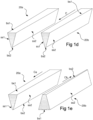
- the intermediate wood product may be formed also by said second cutting plane, wherein the second cutting plane is positioned such that the middle lamella is formed at a portion of the trapezoidal cross section that is closer to a pith of the log than to a bark side of the log.
- the intermediate wood product may be formed by a pair of first cutting planes, which are positioned such that the intermediate wood product will comprise parts of only two adjacent lamellae.
- the method may further comprise identifying a portion of the billet wherein a wood density is at a minimum as seen in a thickness direction of the billet, and aligning a cutting pattern for cutting the intermediate wood product based on said minimum.
- Providing the billet comprises cutting a log along a principal fiber direction of the log, into a plurality of wood lamellae, such that the wood lamellae are formed as radial sections of the log, forming the wood lamellae to provide each wood lamella with a trapezoidal cross section, whereby the wood lamellae present a respective planar major base surface that is formed at a radially outer part of the log and a respective planar minor base surface that is formed at a radially inner part of the log, arranging the lamellae as at least one layer in which planar major base surfaces of immediately adjacent lamellae face opposite directions, whereby the major base surfaces of immediately adjacent wood lamellae taper in opposite directions.
- base surfaces of each pair of adjacent lamellae would taper towards opposite directions parallel with the principal fiber direction.
- the method may comprise wet gluing together the lamellae side surface to side surface.
- Such wet gluing may be made without the cut surface, i.e. the side surfaces, being subjected to any further surface processing other than cleaning and removal of free water from the cut surface.
- the forming of the lamellae may comprise a first forming step, in which the major base surfaces are formed along the outermost part of the log, preferably along a direction which is substantially parallel with the outermost surface of the log.
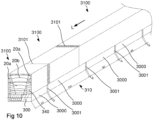
- the method may further comprise laminating a face lamella, which presents a rectangular cross section, to a surface of the intermediate wood product that presents an angle of more than 45°, preferably more than 60° or more than 70°, to a joint plane along which a pair of trapezoidal lamellae are joined.
- the method may further comprise forming an exposed face by cutting into said face lamella.
- the method may further comprise arranging at least two face lamella pieces on said surface of the intermediate wood product, wherein a joint between end portions of said face lamella pieces is offset in a longitudinal direction of the component from a joint between said at least two intermediate wood products.
- the method may further comprise arranging at least two face lamella pieces on said surface of the intermediate wood product, such that said adjacent end portions of face lamella pieces are spaced from each other.
- providing the billet may comprise wet gluing the wood lamellae to each other side surface to side surface, wherein said wet gluing comprises gluing at a moisture content of the wood lamellae of at least 25 % by weight of dry mass, preferably at least 30 % by weight of dry mass.
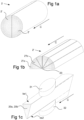
- Fig. 1c schematically illustrates processing of one of the radial sections 2"a, 2"b into a lamella 20a, 20b.
- the lamella 20a, 20b is subjected to forming of base surfaces bs1, bs2, to form a lamella 20a, 20b, which will present a trapezoidal cross section.
- the tools 31, 32 may be any type of tool capable of forming a planar surface, including but not limited to milling cutters, circular saw blades or band saw blades.
Landscapes
- Life Sciences & Earth Sciences (AREA)
- Engineering & Computer Science (AREA)
- Wood Science & Technology (AREA)
- Forests & Forestry (AREA)
- Manufacturing & Machinery (AREA)
- Mechanical Engineering (AREA)
- Civil Engineering (AREA)
- Structural Engineering (AREA)
Claims (28)
- Composant en bois stratifié (250) destiné à être utilisé, par exemple, en tant que cadre de porte ou cadre de fenêtre,
dans lequel le composant en bois présente une paire de faces en extension longitudinale (F2, F3 ; F4, F5) adjacentes exposées vers l'extérieur, ayant une normale à la surface positive respective en extension vers l'extérieur à partir de la surface, en éloignement du corps délimité par la surface, dans lequel les normales à la surface respectives se croisent, de préférence selon un angle de plus de 20°, plus de 30°, plus de 45°, plus de 75° ou d'environ 90°, °, le composant présentant :une section transversale et une direction longitudinale (C), perpendiculaire à la section transversale, etune direction de fibre principale, qui est sensiblement perpendiculaire à la section transversale,dans lequel la section transversale est sensiblement constante le long de la direction longitudinale,dans lequel le produit en bois stratifié est formé d'au moins deux lamelles de bois (20a, 20b) adjacentes, qui sont jointes le long d'un plan de jonction (JP1, JP2),dans lequel le composant en bois présente au moins deux faces en extension longitudinale (F1, F2, F3, F4, F5, F6), qui sont perpendiculaires à la section transversale, et qui sont aplanies et/ou profilées, dans lequelle plan de jonction (JP1, JP2) présente :
un premier angle (A1) de 70° à 89°, de préférence de 80° à 89° par rapport à la section transversale, caractérisé en ce que l'angle de jonction présente :un deuxième angle (A2) par rapport à une première face en extension longitudinale (F2, F4, F6), qui est perpendiculaire à la section transversale, ledit deuxième angle (A2) étant supérieur à 0° et inférieur à 90°, de préférence de 1° à 30°, de 60° à 89° ou de 45° à 89°, etun troisième angle (A3) par rapport à une deuxième face en extension longitudinale (F1, F3, F5) qui est perpendiculaire à la section transversale et à la première face en extension longitudinale (F2, F4, F6), ledit troisième angle étant dans la plage de 1° à 20° ou de 5° à 15°. - Composant en bois selon la revendication 1, dans lequel une intersection entre le plan de jonction (JP1, JP2) et l'une des faces en extension longitudinale est espacée des deux intersections entre cette face en extension longitudinale et d'autres parmi les faces en extension longitudinale le long d'au moins 50 % d'une longueur du composant en bois, de préférence le long d'au moins 75 % ou d'au moins 99 % de la longueur du composant en bois.
- Composant en bois selon l'une quelconque des revendications précédentes, dans lequel les lamelles de bois (20a, 20b) sont collées ensemble le long du plan de jonction (JP1, JP2) au moyen d'une colle qui est appropriée pour un collage humide, telle qu'une colle à base de polyuréthane.
- Composant en bois selon l'une quelconque des revendications précédentes, dans lequel au moins l'une des faces en extension longitudinale comprend au moins deux portions, qui sont parallèles et séparées dans une direction normale à la face.
- Composant en bois selon l'une quelconque des revendications précédentes, dans lequel, au niveau du plan de jonction (JP1, JP2), un rayon de courbure d'un cerne annuel de l'une des lamelles de bois est parallèle à +/- moins de 10°, de préférence moins de +/- 5° ou moins de +/- 1°, et dirigé de manière opposée à un rayon de courbure d'un cerne annuel de l'autre des lamelles de bois, pris le long du plan de jonction (JP1, JP2).
- Composant en bois selon l'une quelconque des revendications précédentes, dans lequel le composant comprend une lamelle médiane (20b) intercalée entre une paire de lamelles externes (20a), dans lequel la lamelle médiane est formée à partir d'une portion d'une bille qui est plus proche du cœur que les lamelles marginales externes.
- Composant en bois selon l'une quelconque des revendications précédentes, dans lequel les lamelles de bois (20a, 20b) sont collées ensemble le long d'un plan de jonction (JP1, JP2) qui est perpendiculaire à la section transversale.
- Composant en bois selon l'une quelconque des revendications précédentes, comprenant en outre au moins une lamelle faciale, qui présente une section transversale rectangulaire.
- Composant en bois selon la revendication 8, dans lequel la lamelle faciale est formée à partir d'une seule pièce de bois.
- Composant en bois selon la revendication 8 ou 9, dans lequel au moins deux faces exposées du composant en bois sont formées dans la lamelle faciale, lesdites au moins deux faces exposées étant formées de telle sorte que leurs normales à la surface positives se croisent l'une l'autre, de préférence selon un angle de plus de 20°, plus de 30°, plus de 45° ou plus de 80°.
- Composant en bois selon l'une quelconque des revendications 8 à 10, dans lequel une surface majeure de la lamelle faciale présente un angle supérieur à 45° par rapport à un plan de jonction en intersection avec la surface majeure, de préférence supérieur à 60° ou supérieur à 70°.
- Composant en bois selon l'une quelconque des revendications 8 à 11, dans lequel, vus en section transversale, les cernes annuels de la lamelle faciale s'étendent selon un angle de plus de 45°, de préférence de plus de 55°, par rapport aux surfaces majeures de la lamelle faciale.
- Composant en bois selon l'une quelconque des revendications précédentes, dans lequel les lamelles de bois sont choisies dans un groupe constitué parles résineux, c'est-à-dire les espèces d'arbres gymnospermes, ayant une masse volumique de plus de 400 kg/m3, etles feuillus, c'est-à-dire les espèces d'arbres angiospermes, ayant une masse volumique de plus de 400 kg/m3.
- Composant en bois selon l'une quelconque des revendications précédentes, dans lequel le composant en bois présente une longueur le long de sa direction de fibres, qui est d'au moins 200 % d'une longueur le long d'une longueur la plus grande de sa section transversale, de préférence 300 % ou 500 %.
- Cadre pour une fenêtre ou une porte comprenant une portion cadre qui est formée d'un composant en bois selon l'une quelconque des revendications précédentes et qui est positionnée pour faire face perpendiculairement à la surface d'un mur dans lequel le cadre de fenêtre ou de porte est agencé.
- Procédé de formation d'un composant en bois stratifié selon l'une quelconque des revendications 1 à 15, comprenant :a) la fourniture d'un billon, formé d'une pluralité de lamelles de bois allongées, dans lequelles lamelles sont formées le long d'une direction de fibres principale d'une bille,chacune des lamelles présente une section transversale sensiblement trapézoïdale, etdes lamelles de bois présentent une surface de base majeure plane respective qui est formée au niveau d'une partie radialement externe de la bille et une surface de base mineure plane respective qui est formée au niveau d'une partie radialement interne de la bille, l'agencement des lamelles sous la forme d'au moins une couche dans laquelle des surfaces de base majeures planes de lamelles immédiatement adjacentes font face à des directions opposées,b) la coupe du billon le long d'au moins un plan qui est perpendiculaire à la section transversale trapézoïdale, moyennant quoi un produit en bois stratifié intermédiaire est formé, etc) la formation du composant en bois stratifié par ébauchage ou rabotage le long d'au moins un plan qui est perpendiculaire à la section transversale trapézoïdale, de telle sorte que le composant en bois stratifié comprend des parties d'au moins deux lamelles adjacentes, dans lequel le composant en bois présente une paire de faces en extension longitudinale (F2, F3 ; F4, F5) adjacentes exposées vers l'extérieur, ayant une normale à la surface positive respective en extension vers l'extérieur à partir de la surface, en éloignement du corps délimité par la surface, dans lequel les normales à la surface respectives se croisent l'une l'autre, de préférence selon un angle de plus de 20°, plus de 30°, plus de 45°, plus de 75° ou d'environ 90°.
- Procédé selon la revendication 16, dans lequel la coupe du billon comprend la coupe du billon le long d'au moins un premier plan de coupe qui est sensiblement perpendiculaire aux surfaces de base et la coupe du billon le long d'au moins un deuxième plan de coupe qui est sensiblement parallèle aux surfaces de base, les deux desdits plans de coupe s'étendant sensiblement perpendiculairement à la section transversale trapézoïdale.
- Procédé selon la revendication 16 ou 17, dans lequel le produit en bois intermédiaire est formé par une paire de premiers plans de coupe, qui sont positionnés de telle sorte que le produit en bois intermédiaire comprend des parties d'au moins trois lamelles, comportant une lamelle médiane qui est intercalée entre deux lamelles externes.
- Procédé selon la revendication 18, dans lequel le produit en bois intermédiaire est formé également par ledit deuxième plan de coupe, dans lequel le deuxième plan de coupe est positionné de telle sorte que la lamelle médiane est formée au niveau d'une portion de la section transversale trapézoïdale qui est plus proche d'un cœur de la bille que d'un côté d'écorce de la bille.
- Procédé selon la revendication 16 ou 17, dans lequel le produit en bois intermédiaire est formé par une paire de premiers plans de coupe, qui sont positionnés de telle sorte que le produit en bois intermédiaire comprend des parties de seulement deux lamelles adjacentes.
- Procédé selon la revendication 19 ou 20, dans lequel le deuxième plan de coupe est positionné de telle sorte que le produit en bois intermédiaire est formé au niveau d'une portion de la bille qui est éloignée d'un cœur de la bille de plus de 20 % d'un rayon de bille et éloignée d'un cœur de la bille de moins de 80 % du rayon de bille.
- Procédé selon l'une quelconque des revendications 16 à 21, comprenant en outre la jonction d'au moins deux produits en bois intermédiaires d'une manière bout à bout avant ladite formation du produit en bois stratifié.
- Procédé selon l'une quelconque des revendications 16 à 22, comprenant en outre l'identification d'une portion du billon dans lequel une masse volumique de bois est à un minimum, vue dans une direction d'épaisseur du billon, et l'alignement d'un motif de coupe pour couper le produit en bois intermédiaire sur la base dudit minimum.
- Procédé selon l'une quelconque des revendications 16 à 23, comprenant en outre la stratification d'une lamelle faciale (300), qui présente une section transversale rectangulaire, sur une surface du produit en bois intermédiaire qui présente un angle de plus de 45°, de préférence plus de 60° ou plus de 70°, par rapport à un plan de jonction le long duquel une paire de lamelles trapézoïdales sont jointes.
- Procédé selon la revendication 24, comprenant en outre la formation d'une face exposée par coupe dans ladite lamelle faciale.
- Procédé selon la revendication 24 ou 25 conjointement avec la revendication 19, comprenant en outre l'agencement d'au moins deux pièces de lamelle faciale (3000) sur ladite surface du produit en bois intermédiaire, dans lequel une jonction des portions d'extrémité desdites pièces de lamelle faciale (3000) est décalée dans une direction longitudinale (L) du composant par rapport à une jonction entre lesdits au moins deux produits en bois intermédiaires.
- Procédé selon l'une quelconque des revendications 24 à 26, comprenant en outre l'agencement d'au moins deux pièces de lamelle faciale (3000) sur ladite surface du produit en bois intermédiaire, de telle sorte que lesdites portions d'extrémité adjacentes de pièces de lamelle faciale (3000) sont espacées l'une de l'autre.
- Procédé selon l'une quelconque des revendications 16 à 27, dans lequel la fourniture du billon comprend le collage humide des lamelles de bois l'une à l'autre par leurs surfaces latérales, dans lequel ledit collage humide comprend le collage à une teneur en humidité des lamelles de bois d'au moins 25 % en poids de masse sèche, de préférence d'au moins 30 % en poids de masse sèche.
Applications Claiming Priority (3)
| Application Number | Priority Date | Filing Date | Title |
|---|---|---|---|
| SE1551209 | 2015-09-21 | ||
| SE1650148 | 2016-02-08 | ||
| PCT/IB2016/055622 WO2017051321A1 (fr) | 2015-09-21 | 2016-09-21 | Procédé de formation d'un composant de bois stratifié, et composant de bois stratifié ainsi formé |
Publications (4)
| Publication Number | Publication Date |
|---|---|
| EP3352986A1 EP3352986A1 (fr) | 2018-08-01 |
| EP3352986A4 EP3352986A4 (fr) | 2019-05-08 |
| EP3352986B1 true EP3352986B1 (fr) | 2024-07-03 |
| EP3352986C0 EP3352986C0 (fr) | 2024-07-03 |
Family
ID=58386255
Family Applications (1)
| Application Number | Title | Priority Date | Filing Date |
|---|---|---|---|
| EP16848237.0A Active EP3352986B1 (fr) | 2015-09-21 | 2016-09-21 | Procédé de formation d'un composant de bois stratifié, et composant de bois stratifié ainsi formé |
Country Status (3)
| Country | Link |
|---|---|
| EP (1) | EP3352986B1 (fr) |
| PL (1) | PL3352986T3 (fr) |
| WO (1) | WO2017051321A1 (fr) |
Cited By (1)
| Publication number | Priority date | Publication date | Assignee | Title |
|---|---|---|---|---|
| EP4188657A1 (fr) * | 2020-08-03 | 2023-06-07 | Xaver Haas | Procédé de fabrication de bois de construction à partir de menu bois et de bois de construction |
Families Citing this family (5)
| Publication number | Priority date | Publication date | Assignee | Title |
|---|---|---|---|---|
| PL71361Y1 (pl) * | 2018-02-16 | 2020-04-30 | Timber Tech Spolka Z Ograniczona Odpowiedzialnoscia | Belka o prostokątnym przekroju stanowiąca półfabrykat drewniany wielorodzajowy |
| PL71362Y1 (pl) * | 2018-02-16 | 2020-04-30 | Timber Tech Spolka Z Ograniczona Odpowiedzialnoscia | Belka o prostokątnym przekroju stanowiąca półfabrykat drewniany wielorodzajowy |
| PL71363Y1 (pl) * | 2018-02-16 | 2020-04-30 | Timber Tech Spolka Z Ograniczona Odpowiedzialnoscia | Belka o prostokątnym przekroju stanowiąca półfabrykat drewniany wielorodzajowy |
| IT201900001981A1 (fr) * | 2019-02-12 | 2019-02-12 | ||
| CN114851325A (zh) * | 2022-04-19 | 2022-08-05 | 柳州市悟新木工机械有限公司 | 六角形集成木方生产方法 |
Citations (2)
| Publication number | Priority date | Publication date | Assignee | Title |
|---|---|---|---|---|
| GB1176127A (en) * | 1967-01-24 | 1970-01-01 | Herbert Szigat Trading As Herb | Electrical Burglar Alarm Systems |
| EP1125701A1 (fr) * | 2000-02-15 | 2001-08-22 | Ensio Kuisma | Bois lamellé collé et méthode de fabrication |
Family Cites Families (11)
| Publication number | Priority date | Publication date | Assignee | Title |
|---|---|---|---|---|
| US2544935A (en) * | 1945-03-17 | 1951-03-13 | Orner Otto Harald | Method of producing boards |
| US3961654A (en) * | 1973-02-20 | 1976-06-08 | Earl Dean Hasenwinkle | Log cutting and rejoining process |
| US3989078A (en) * | 1976-01-07 | 1976-11-02 | Weyerhaeuser Company | Log cutting and rejoining process |
| US4111247A (en) * | 1977-01-13 | 1978-09-05 | Weyerhaeuser Company | Log cutting and rejoining process for lumber manufacture |
| US4122878A (en) * | 1977-12-14 | 1978-10-31 | Baltek Corporation | Technique for converting balsa logs into panels |
| US4476663A (en) * | 1983-08-15 | 1984-10-16 | Bikales Victor W | Structure with composite members |
| WO1989004747A1 (fr) * | 1987-11-27 | 1989-06-01 | Andrew Karl Knorr | Procede de sciage de bois et produits de bois ainsi realises |
| US5985398A (en) * | 1994-12-27 | 1999-11-16 | Manufacture De Lambton Ltee | Stairtread made of a combination of higher quality wood and lower quality material |
| DE19613237C2 (de) * | 1996-04-02 | 1999-06-02 | Kirst Ralph Dipl Ing Fh | Balken und Verfahren zu dessen Herstellung |
| US6533005B2 (en) * | 2000-02-02 | 2003-03-18 | David A. Hill | Method of making a hybrid wood product |
| SE541538C2 (en) * | 2015-06-18 | 2019-10-29 | Stora Enso Oyj | Method of producing a laminated wood product, and laminated wood products |
-
2016
- 2016-09-21 EP EP16848237.0A patent/EP3352986B1/fr active Active
- 2016-09-21 WO PCT/IB2016/055622 patent/WO2017051321A1/fr not_active Ceased
- 2016-09-21 PL PL16848237.0T patent/PL3352986T3/pl unknown
Patent Citations (2)
| Publication number | Priority date | Publication date | Assignee | Title |
|---|---|---|---|---|
| GB1176127A (en) * | 1967-01-24 | 1970-01-01 | Herbert Szigat Trading As Herb | Electrical Burglar Alarm Systems |
| EP1125701A1 (fr) * | 2000-02-15 | 2001-08-22 | Ensio Kuisma | Bois lamellé collé et méthode de fabrication |
Cited By (2)
| Publication number | Priority date | Publication date | Assignee | Title |
|---|---|---|---|---|
| EP4188657A1 (fr) * | 2020-08-03 | 2023-06-07 | Xaver Haas | Procédé de fabrication de bois de construction à partir de menu bois et de bois de construction |
| EP4188657B1 (fr) * | 2020-08-03 | 2026-06-17 | Xaver Haas | Procédé de fabrication de bois de construction à partir de menu bois |
Also Published As
| Publication number | Publication date |
|---|---|
| PL3352986T3 (pl) | 2024-11-18 |
| EP3352986A1 (fr) | 2018-08-01 |
| EP3352986A4 (fr) | 2019-05-08 |
| EP3352986C0 (fr) | 2024-07-03 |
| WO2017051321A1 (fr) | 2017-03-30 |
Similar Documents
| Publication | Publication Date | Title |
|---|---|---|
| WO2017051321A1 (fr) | Procédé de formation d'un composant de bois stratifié, et composant de bois stratifié ainsi formé | |
| EP3310541B1 (fr) | Procédé de production d'un produit en bois stratifié, et produits en bois stratifiés | |
| DE69805611T2 (de) | Verfahren zur herstellung von verbundplatten und formkörpern aus schichtholzbauteilen | |
| EP1080857A2 (fr) | Bois lamellé collé et procédé de sciage de bois | |
| CN105171855B (zh) | 一种新型实木板材及其加工方法 | |
| CN110087842A (zh) | 制作层压木制品的方法 | |
| US3989078A (en) | Log cutting and rejoining process | |
| CA2957254C (fr) | Element structurel de lamelle-colle, et procede de production d'un tel element structurel de lamelle-colle | |
| EP3368254B1 (fr) | Procédé de fabrication d'un produit de bois | |
| US4372357A (en) | Machine for profiling wood panel to simulate lap siding | |
| CA2988513C (fr) | Procede de production d'un produit en bois stratifie, et produits en bois stratifies | |
| EP1125701A1 (fr) | Bois lamellé collé et méthode de fabrication | |
| EP3259103B1 (fr) | Procédé et dispositif de production de lamelles en bois | |
| NZ737785B2 (en) | Method of producing a laminated wood product, and laminated wood products | |
| NZ728649B2 (en) | A gluelam structural member and a method of producing such a gluelam structural member |
Legal Events
| Date | Code | Title | Description |
|---|---|---|---|
| STAA | Information on the status of an ep patent application or granted ep patent |
Free format text: STATUS: THE INTERNATIONAL PUBLICATION HAS BEEN MADE |
|
| PUAI | Public reference made under article 153(3) epc to a published international application that has entered the european phase |
Free format text: ORIGINAL CODE: 0009012 |
|
| STAA | Information on the status of an ep patent application or granted ep patent |
Free format text: STATUS: REQUEST FOR EXAMINATION WAS MADE |
|
| 17P | Request for examination filed |
Effective date: 20180423 |
|
| AK | Designated contracting states |
Kind code of ref document: A1 Designated state(s): AL AT BE BG CH CY CZ DE DK EE ES FI FR GB GR HR HU IE IS IT LI LT LU LV MC MK MT NL NO PL PT RO RS SE SI SK SM TR |
|
| AX | Request for extension of the european patent |
Extension state: BA ME |
|
| RIN1 | Information on inventor provided before grant (corrected) |
Inventor name: HIRMKE, MARKUS Inventor name: SAUER, PHILIPP |
|
| DAV | Request for validation of the european patent (deleted) | ||
| DAX | Request for extension of the european patent (deleted) | ||
| A4 | Supplementary search report drawn up and despatched |
Effective date: 20190405 |
|
| RIC1 | Information provided on ipc code assigned before grant |
Ipc: B32B 21/04 20060101ALI20190401BHEP Ipc: B27M 3/00 20060101AFI20190401BHEP Ipc: B27B 1/00 20060101ALI20190401BHEP Ipc: E06B 3/10 20060101ALI20190401BHEP Ipc: E06B 1/04 20060101ALI20190401BHEP Ipc: B27M 3/08 20060101ALI20190401BHEP Ipc: B32B 21/13 20060101ALI20190401BHEP Ipc: B27G 11/00 20060101ALI20190401BHEP |
|
| STAA | Information on the status of an ep patent application or granted ep patent |
Free format text: STATUS: EXAMINATION IS IN PROGRESS |
|
| 17Q | First examination report despatched |
Effective date: 20200113 |
|
| GRAP | Despatch of communication of intention to grant a patent |
Free format text: ORIGINAL CODE: EPIDOSNIGR1 |
|
| STAA | Information on the status of an ep patent application or granted ep patent |
Free format text: STATUS: GRANT OF PATENT IS INTENDED |
|
| INTG | Intention to grant announced |
Effective date: 20240213 |
|
| GRAS | Grant fee paid |
Free format text: ORIGINAL CODE: EPIDOSNIGR3 |
|
| GRAA | (expected) grant |
Free format text: ORIGINAL CODE: 0009210 |
|
| STAA | Information on the status of an ep patent application or granted ep patent |
Free format text: STATUS: THE PATENT HAS BEEN GRANTED |
|
| AK | Designated contracting states |
Kind code of ref document: B1 Designated state(s): AL AT BE BG CH CY CZ DE DK EE ES FI FR GB GR HR HU IE IS IT LI LT LU LV MC MK MT NL NO PL PT RO RS SE SI SK SM TR |
|
| REG | Reference to a national code |
Ref country code: CH Ref legal event code: EP |
|
| REG | Reference to a national code |
Ref country code: DE Ref legal event code: R096 Ref document number: 602016088257 Country of ref document: DE |
|
| U01 | Request for unitary effect filed |
Effective date: 20240703 |
|
| U07 | Unitary effect registered |
Designated state(s): AT BE BG DE DK EE FI FR IT LT LU LV MT NL PT SE SI Effective date: 20240711 |
|
| U20 | Renewal fee for the european patent with unitary effect paid |
Year of fee payment: 9 Effective date: 20241011 |
|
| PG25 | Lapsed in a contracting state [announced via postgrant information from national office to epo] |
Ref country code: NO Free format text: LAPSE BECAUSE OF FAILURE TO SUBMIT A TRANSLATION OF THE DESCRIPTION OR TO PAY THE FEE WITHIN THE PRESCRIBED TIME-LIMIT Effective date: 20241003 |
|
| PG25 | Lapsed in a contracting state [announced via postgrant information from national office to epo] |
Ref country code: GR Free format text: LAPSE BECAUSE OF FAILURE TO SUBMIT A TRANSLATION OF THE DESCRIPTION OR TO PAY THE FEE WITHIN THE PRESCRIBED TIME-LIMIT Effective date: 20241004 |
|
| PG25 | Lapsed in a contracting state [announced via postgrant information from national office to epo] |
Ref country code: IS Free format text: LAPSE BECAUSE OF FAILURE TO SUBMIT A TRANSLATION OF THE DESCRIPTION OR TO PAY THE FEE WITHIN THE PRESCRIBED TIME-LIMIT Effective date: 20241103 |
|
| PG25 | Lapsed in a contracting state [announced via postgrant information from national office to epo] |
Ref country code: HR Free format text: LAPSE BECAUSE OF FAILURE TO SUBMIT A TRANSLATION OF THE DESCRIPTION OR TO PAY THE FEE WITHIN THE PRESCRIBED TIME-LIMIT Effective date: 20240703 |
|
| PG25 | Lapsed in a contracting state [announced via postgrant information from national office to epo] |
Ref country code: RS Free format text: LAPSE BECAUSE OF FAILURE TO SUBMIT A TRANSLATION OF THE DESCRIPTION OR TO PAY THE FEE WITHIN THE PRESCRIBED TIME-LIMIT Effective date: 20241003 Ref country code: ES Free format text: LAPSE BECAUSE OF FAILURE TO SUBMIT A TRANSLATION OF THE DESCRIPTION OR TO PAY THE FEE WITHIN THE PRESCRIBED TIME-LIMIT Effective date: 20240703 |
|
| PG25 | Lapsed in a contracting state [announced via postgrant information from national office to epo] |
Ref country code: RS Free format text: LAPSE BECAUSE OF FAILURE TO SUBMIT A TRANSLATION OF THE DESCRIPTION OR TO PAY THE FEE WITHIN THE PRESCRIBED TIME-LIMIT Effective date: 20241003 Ref country code: NO Free format text: LAPSE BECAUSE OF FAILURE TO SUBMIT A TRANSLATION OF THE DESCRIPTION OR TO PAY THE FEE WITHIN THE PRESCRIBED TIME-LIMIT Effective date: 20241003 Ref country code: IS Free format text: LAPSE BECAUSE OF FAILURE TO SUBMIT A TRANSLATION OF THE DESCRIPTION OR TO PAY THE FEE WITHIN THE PRESCRIBED TIME-LIMIT Effective date: 20241103 Ref country code: HR Free format text: LAPSE BECAUSE OF FAILURE TO SUBMIT A TRANSLATION OF THE DESCRIPTION OR TO PAY THE FEE WITHIN THE PRESCRIBED TIME-LIMIT Effective date: 20240703 Ref country code: GR Free format text: LAPSE BECAUSE OF FAILURE TO SUBMIT A TRANSLATION OF THE DESCRIPTION OR TO PAY THE FEE WITHIN THE PRESCRIBED TIME-LIMIT Effective date: 20241004 Ref country code: ES Free format text: LAPSE BECAUSE OF FAILURE TO SUBMIT A TRANSLATION OF THE DESCRIPTION OR TO PAY THE FEE WITHIN THE PRESCRIBED TIME-LIMIT Effective date: 20240703 |
|
| PG25 | Lapsed in a contracting state [announced via postgrant information from national office to epo] |
Ref country code: SM Free format text: LAPSE BECAUSE OF FAILURE TO SUBMIT A TRANSLATION OF THE DESCRIPTION OR TO PAY THE FEE WITHIN THE PRESCRIBED TIME-LIMIT Effective date: 20240703 |
|
| PG25 | Lapsed in a contracting state [announced via postgrant information from national office to epo] |
Ref country code: MC Free format text: LAPSE BECAUSE OF FAILURE TO SUBMIT A TRANSLATION OF THE DESCRIPTION OR TO PAY THE FEE WITHIN THE PRESCRIBED TIME-LIMIT Effective date: 20240703 |
|
| PG25 | Lapsed in a contracting state [announced via postgrant information from national office to epo] |
Ref country code: SK Free format text: LAPSE BECAUSE OF FAILURE TO SUBMIT A TRANSLATION OF THE DESCRIPTION OR TO PAY THE FEE WITHIN THE PRESCRIBED TIME-LIMIT Effective date: 20240703 |
|
| REG | Reference to a national code |
Ref country code: CH Ref legal event code: PL |
|
| PLBE | No opposition filed within time limit |
Free format text: ORIGINAL CODE: 0009261 |
|
| STAA | Information on the status of an ep patent application or granted ep patent |
Free format text: STATUS: NO OPPOSITION FILED WITHIN TIME LIMIT |
|
| 26N | No opposition filed |
Effective date: 20250404 |
|
| GBPC | Gb: european patent ceased through non-payment of renewal fee |
Effective date: 20241003 |
|
| PG25 | Lapsed in a contracting state [announced via postgrant information from national office to epo] |
Ref country code: GB Free format text: LAPSE BECAUSE OF NON-PAYMENT OF DUE FEES Effective date: 20241003 |
|
| PG25 | Lapsed in a contracting state [announced via postgrant information from national office to epo] |
Ref country code: CH Free format text: LAPSE BECAUSE OF NON-PAYMENT OF DUE FEES Effective date: 20240930 |
|
| PG25 | Lapsed in a contracting state [announced via postgrant information from national office to epo] |
Ref country code: IE Free format text: LAPSE BECAUSE OF NON-PAYMENT OF DUE FEES Effective date: 20240921 |
|
| PGFP | Annual fee paid to national office [announced via postgrant information from national office to epo] |
Ref country code: PL Payment date: 20250826 Year of fee payment: 10 |
|
| PGFP | Annual fee paid to national office [announced via postgrant information from national office to epo] |
Ref country code: CZ Payment date: 20250828 Year of fee payment: 10 |
|
| U20 | Renewal fee for the european patent with unitary effect paid |
Year of fee payment: 10 Effective date: 20250930 |
|
| PG25 | Lapsed in a contracting state [announced via postgrant information from national office to epo] |
Ref country code: RO Free format text: LAPSE BECAUSE OF FAILURE TO SUBMIT A TRANSLATION OF THE DESCRIPTION OR TO PAY THE FEE WITHIN THE PRESCRIBED TIME-LIMIT Effective date: 20240703 |
|
| PG25 | Lapsed in a contracting state [announced via postgrant information from national office to epo] |
Ref country code: CY Free format text: LAPSE BECAUSE OF FAILURE TO SUBMIT A TRANSLATION OF THE DESCRIPTION OR TO PAY THE FEE WITHIN THE PRESCRIBED TIME-LIMIT; INVALID AB INITIO Effective date: 20160921 |
|
| PG25 | Lapsed in a contracting state [announced via postgrant information from national office to epo] |
Ref country code: HU Free format text: LAPSE BECAUSE OF FAILURE TO SUBMIT A TRANSLATION OF THE DESCRIPTION OR TO PAY THE FEE WITHIN THE PRESCRIBED TIME-LIMIT; INVALID AB INITIO Effective date: 20160921 |
|
| PG25 | Lapsed in a contracting state [announced via postgrant information from national office to epo] |
Ref country code: TR Free format text: LAPSE BECAUSE OF FAILURE TO SUBMIT A TRANSLATION OF THE DESCRIPTION OR TO PAY THE FEE WITHIN THE PRESCRIBED TIME-LIMIT Effective date: 20240703 |