EP3356112B1 - Threaded mold decoupling system - Google Patents
Threaded mold decoupling system Download PDFInfo
- Publication number
- EP3356112B1 EP3356112B1 EP16852591.3A EP16852591A EP3356112B1 EP 3356112 B1 EP3356112 B1 EP 3356112B1 EP 16852591 A EP16852591 A EP 16852591A EP 3356112 B1 EP3356112 B1 EP 3356112B1
- Authority
- EP
- European Patent Office
- Prior art keywords
- unscrewing
- elevator
- assembly
- threaded
- driving
- Prior art date
- Legal status (The legal status is an assumption and is not a legal conclusion. Google has not performed a legal analysis and makes no representation as to the accuracy of the status listed.)
- Active
Links
Images





Classifications
-
- B—PERFORMING OPERATIONS; TRANSPORTING
- B29—WORKING OF PLASTICS; WORKING OF SUBSTANCES IN A PLASTIC STATE IN GENERAL
- B29C—SHAPING OR JOINING OF PLASTICS; SHAPING OF MATERIAL IN A PLASTIC STATE, NOT OTHERWISE PROVIDED FOR; AFTER-TREATMENT OF THE SHAPED PRODUCTS, e.g. REPAIRING
- B29C45/00—Injection moulding, i.e. forcing the required volume of moulding material through a nozzle into a closed mould; Apparatus therefor
- B29C45/17—Component parts, details or accessories; Auxiliary operations
- B29C45/26—Moulds
- B29C45/2618—Moulds having screw-threaded mould walls
- B29C45/262—Moulds having screw-threaded mould walls provided with unscrewing drive means
-
- B—PERFORMING OPERATIONS; TRANSPORTING
- B29—WORKING OF PLASTICS; WORKING OF SUBSTANCES IN A PLASTIC STATE IN GENERAL
- B29C—SHAPING OR JOINING OF PLASTICS; SHAPING OF MATERIAL IN A PLASTIC STATE, NOT OTHERWISE PROVIDED FOR; AFTER-TREATMENT OF THE SHAPED PRODUCTS, e.g. REPAIRING
- B29C33/00—Moulds or cores; Details thereof or accessories therefor
- B29C33/44—Moulds or cores; Details thereof or accessories therefor with means for, or specially constructed to facilitate, the removal of articles, e.g. of undercut articles
- B29C33/442—Moulds or cores; Details thereof or accessories therefor with means for, or specially constructed to facilitate, the removal of articles, e.g. of undercut articles with mechanical ejector or drive means therefor
- B29C33/444—Moulds or cores; Details thereof or accessories therefor with means for, or specially constructed to facilitate, the removal of articles, e.g. of undercut articles with mechanical ejector or drive means therefor for stripping articles from a mould core, e.g. using stripper plates
- B29C33/446—Moulds or cores; Details thereof or accessories therefor with means for, or specially constructed to facilitate, the removal of articles, e.g. of undercut articles with mechanical ejector or drive means therefor for stripping articles from a mould core, e.g. using stripper plates and using a rotating movement to unscrew articles
-
- B—PERFORMING OPERATIONS; TRANSPORTING
- B29—WORKING OF PLASTICS; WORKING OF SUBSTANCES IN A PLASTIC STATE IN GENERAL
- B29C—SHAPING OR JOINING OF PLASTICS; SHAPING OF MATERIAL IN A PLASTIC STATE, NOT OTHERWISE PROVIDED FOR; AFTER-TREATMENT OF THE SHAPED PRODUCTS, e.g. REPAIRING
- B29C43/00—Compression moulding, i.e. applying external pressure to flow the moulding material; Apparatus therefor
- B29C43/32—Component parts, details or accessories; Auxiliary operations
- B29C43/50—Removing moulded articles
-
- B—PERFORMING OPERATIONS; TRANSPORTING
- B29—WORKING OF PLASTICS; WORKING OF SUBSTANCES IN A PLASTIC STATE IN GENERAL
- B29C—SHAPING OR JOINING OF PLASTICS; SHAPING OF MATERIAL IN A PLASTIC STATE, NOT OTHERWISE PROVIDED FOR; AFTER-TREATMENT OF THE SHAPED PRODUCTS, e.g. REPAIRING
- B29C45/00—Injection moulding, i.e. forcing the required volume of moulding material through a nozzle into a closed mould; Apparatus therefor
- B29C45/17—Component parts, details or accessories; Auxiliary operations
- B29C45/26—Moulds
- B29C45/2681—Moulds with rotatable mould parts
-
- B—PERFORMING OPERATIONS; TRANSPORTING
- B29—WORKING OF PLASTICS; WORKING OF SUBSTANCES IN A PLASTIC STATE IN GENERAL
- B29C—SHAPING OR JOINING OF PLASTICS; SHAPING OF MATERIAL IN A PLASTIC STATE, NOT OTHERWISE PROVIDED FOR; AFTER-TREATMENT OF THE SHAPED PRODUCTS, e.g. REPAIRING
- B29C45/00—Injection moulding, i.e. forcing the required volume of moulding material through a nozzle into a closed mould; Apparatus therefor
- B29C45/17—Component parts, details or accessories; Auxiliary operations
- B29C45/40—Removing or ejecting moulded articles
- B29C45/4005—Ejector constructions; Ejector operating mechanisms
-
- B—PERFORMING OPERATIONS; TRANSPORTING
- B29—WORKING OF PLASTICS; WORKING OF SUBSTANCES IN A PLASTIC STATE IN GENERAL
- B29C—SHAPING OR JOINING OF PLASTICS; SHAPING OF MATERIAL IN A PLASTIC STATE, NOT OTHERWISE PROVIDED FOR; AFTER-TREATMENT OF THE SHAPED PRODUCTS, e.g. REPAIRING
- B29C45/00—Injection moulding, i.e. forcing the required volume of moulding material through a nozzle into a closed mould; Apparatus therefor
- B29C45/17—Component parts, details or accessories; Auxiliary operations
- B29C45/40—Removing or ejecting moulded articles
- B29C45/4005—Ejector constructions; Ejector operating mechanisms
- B29C2045/4042—Ejector constructions; Ejector operating mechanisms driven by rack and pinion means
-
- B—PERFORMING OPERATIONS; TRANSPORTING
- B29—WORKING OF PLASTICS; WORKING OF SUBSTANCES IN A PLASTIC STATE IN GENERAL
- B29C—SHAPING OR JOINING OF PLASTICS; SHAPING OF MATERIAL IN A PLASTIC STATE, NOT OTHERWISE PROVIDED FOR; AFTER-TREATMENT OF THE SHAPED PRODUCTS, e.g. REPAIRING
- B29C45/00—Injection moulding, i.e. forcing the required volume of moulding material through a nozzle into a closed mould; Apparatus therefor
- B29C45/17—Component parts, details or accessories; Auxiliary operations
- B29C45/40—Removing or ejecting moulded articles
- B29C2045/4078—Removing or ejecting moulded articles using stripping means
-
- B—PERFORMING OPERATIONS; TRANSPORTING
- B29—WORKING OF PLASTICS; WORKING OF SUBSTANCES IN A PLASTIC STATE IN GENERAL
- B29L—INDEXING SCHEME ASSOCIATED WITH SUBCLASS B29C, RELATING TO PARTICULAR ARTICLES
- B29L2031/00—Other particular articles
- B29L2031/56—Stoppers or lids for bottles, jars, or the like, e.g. closures
- B29L2031/565—Stoppers or lids for bottles, jars, or the like, e.g. closures for containers
Definitions
- the present invention relates to a threaded mold decoupling system.
- injection molds are utilized to manufacture a variety of molded articles.
- certain injection molds are used to produce threaded molded articles, such as threaded plastic covers for bottles or other containers. These injection molds utilize threaded cores to form the threads in the molded articles.
- a variety of mechanisms can be utilized to remove the threaded molded articles from the corresponding threaded cores.
- the removal mechanism utilized can depend upon the design of the molded articles.
- the removal mechanism can push the threaded molded article from the threaded core, such as by using a conventional stripper ring.
- the removal mechanism can unscrew the threaded molded article from the corresponding threaded core to minimize damage to the threads.
- the removal mechanism can be configured as a hydraulically operated rack and stripper plate. Actuation of the hydraulically operated rack can rotate the threaded cores of the injection mold relative to the molded articles in order to decouple the threads of the cores from the corresponding threads of the molded articles.
- US 6238202B1 relates to an unscrewing apparatus for ejecting threaded plastic closures.
- US 20060131787A1 relates to a mechanism in the injection molding process for forming threaded molded parts and for assemblies that are more easily maintained, repaired and replaced at reduced associated costs.
- Conventional molded article removal mechanisms can suffer from a variety of deficiencies.
- threaded cores are typically actuated by a hydraulically operated rack.
- standard clearances and manufacturing tolerances permit small variations in gear tooth size and pitch between the conventional rack and the gearing mechanism associated with the threaded cores.
- Such variations cause the interacting surfaces of the meshing mechanisms to exhibit small gaps or spaces between their respective meshing teeth.
- These spaces can allow a limited amount of slack or backlash to enter into the system during operation of the rack and threaded core mechanisms.
- the gears of the rack and core mechanisms are prone to wear and can require constant lubrication. Accordingly, conventional unscrewing mechanisms can be expensive to maintain.
- rack and pinion systems on conventional stack molds typically can open and close once every five seconds. Such operation can limit the quantity of threaded molded articles that a conventional injection mold can produce per cycle.
- the threaded mold decoupling system as utilized with an injection mold, includes a driving assembly having a motor assembly, such as a servo motor or a hydraulic motor, which is coupled to a driver element or gear.
- the driving assembly also includes a set of idler elements or gears and a driving element or gear rotatably mounted to a mounting plate.
- the threaded mold decoupling system further includes an elevator assembly having a first elevator element or helical ramp cam follower connected to the driving element and a second elevator element or helical elevator cam follower connected to a fixed plate opposing the mounting plate.
- the motor assembly drives the idler elements which, in turn, rotate the driving element.
- Rotation of the driving element causes a set of decoupling or unscrewing assemblies to rotate and decouple threaded molded articles from corresponding threaded cores.
- rotation of the driving elements rotates a helical surface of the first elevator element relative to a helical surface of the fixed second elevator element to linearly translate the unscrewing assemblies relative to the fixed plate as they decouple the threaded molded articles from corresponding threaded core.
- an ejection mechanism such as a preloaded spring mechanism (e.g., a Bellville disc spring mechanism), can advance a stripper plate forward to eject the threaded molded articles from the corresponding threaded cores.
- a preloaded spring mechanism e.g., a Bellville disc spring mechanism
- an ejection mechanism such as a pneumatic ejection assist system can eject the molded plastic components from the molds.
- the first and second elevator elements are configured to provide substantially continuous cam action to the threaded mold decoupling system.
- rotation of the driving element in a first direction causes the first elevator element to rotate in the first direction relative to the second elevator element.
- This rotation linearly translates the unscrewing assemblies relative to the fixed plate.
- rotation of the driving element in a second direction e.g., a counterclockwise direction
- the substantially continuous cam action provides a relatively faster cycle time relative to conventional mechanisms, as it is not necessary to reset the elevator elements during the cycle.
- helical ramp cam follower and helical elevator cam follower provides a relative increase in the speed at which the molded articles can be decoupled from the threaded cores which, in turn, increases the relative quantity of threaded molded articles that an associated injection mold can produce.
- a threaded mold decoupling system includes at least one unscrewing assembly rotatably coupled to a mounting plate and disposed in proximity to a threaded core of an injection mold, an elevator assembly having a first elevator element rotatably coupled to the mounting plate and a second elevator element connected to a fixed plate, the fixed plate opposing the mounting plate, and a driving assembly disposed in operative communication with the at least one unscrewing assembly and with the first elevator element of the elevator assembly.
- the driving assembly is configured to actuate the at least one unscrewing assembly to rotate a molded article about a longitudinal axis of the threaded core and actuate the first elevator element relative to the second elevator element to linearly translate the mounting plate relative to the fixed plate and to translate the molded article along the longitudinal axis of the threaded core.
- an ejection system in one arrangement, includes a fixed plate, a mounting plate opposing the fixed plate and configured to translate relative to the fixed plate, and a threaded mold decoupling system.
- the threaded mold decoupling system includes at least one unscrewing assembly rotatably coupled to a mounting plate, the at least one unscrewing assembly disposed in proximity to a threaded core of an injection mold, an elevator assembly having a first elevator element rotatably coupled to the mounting plate and a second elevator element connected to a fixed plate, the fixed plate opposing the mounting plate, and a driving assembly disposed in operative communication with the at least one unscrewing assembly and with the first elevator element of the elevator assembly.
- the driving assembly is configured to actuate the at least one unscrewing assembly to rotate a molded article about a longitudinal axis of the threaded core and actuate the first elevator element relative to the second elevator element to linearly translate the mounting plate relative to the fixed plate and to translate the molded article along the longitudinal axis of the threaded core.
- a threaded mold decoupling system as utilized with an injection mold, includes a driving assembly having a motor assembly, such as a servo motor or a hydraulic motor, which is coupled to a driver element or gear.
- the driving assembly also includes a set of idler elements or gears and a driving element or gear rotatably mounted to a mounting plate.
- the threaded mold decoupling system further includes an elevator assembly having a first elevator element or helical ramp cam follower connected to the driving element and a second elevator element or helical elevator cam follower connected to a fixed plate opposing the mounting plate.
- the motor assembly drives the idler elements which, in turn, rotate the driving element.
- Rotation of the driving element causes a set of decoupling or unscrewing assemblies to rotate and decouple threaded molded articles from corresponding threaded cores.
- rotation of the driving elements rotates a helical surface of the first elevator element relative to a helical surface of the fixed second elevator element to linearly translate the unscrewing assemblies relative to the fixed plate as they decouple the threaded molded articles from corresponding threaded core.
- the substantially continuous cam action of the first and second elevator elements provides a relatively faster cycle time relative to conventional mechanisms, as it is not necessary to reset the cams during the cycle.
- the ejection system 10 includes a fixed plate 200 and a mounting plate 104 which opposes the fixed plate 200.
- the fixed plate 200 can be secured in an operating area to limit movement during operation.
- the mounting plate 104 is configured to translate along direction 300 relative to the fixed plate 200.
- the ejection system can include longitudinal supports 101 which allow the mounting plate to translate longitudinally along direction 300 relative to the fixed plate 200 while limiting lateral translation.
- the system 10 further includes a threaded mold decoupling system 15 disposed in operative communication with the mounting plate 104 and the fixed plate 200.
- the threaded mold decoupling system 15 includes a set of decoupling or unscrewing assemblies 20, an elevator assembly 40, and a driving assembly 30 disposed in operational communication with the unscrewing assemblies 20 and elevator assembly 40.
- the ejection system 10 can be configured with any number of threaded mold decoupling systems 15.
- the ejection system 10 can include a first threaded mold decoupling system 15-1 and a second threaded mold decoupling system 15-2.
- each threaded core 130 is configured to form threads into a portion of the material.
- the resulting threaded molded article is threadably mated to the threaded core 130.
- the driving assembly 30 is configured to rotationally and linearly position the unscrewing assembly 20 relative to the corresponding set of threaded cores 130 to decouple threaded molded articles from the corresponding threaded cores 130 following a molding procedure.
- interaction between the driving assembly 30 and both the unscrewing assembly 20 and the corresponding elevator assembly 40 can disengage the threaded molded article from the corresponding threaded core 130, as described in detail below.
- Fig. 2 taken in combination with Fig. 1 , illustrates an example arrangement of the driving assembly 30.
- the driving assembly 30 is disposed in operative communication with the set of unscrewing assemblies 20 and at least a portion of the elevator assembly 40 and is configured to actuate the set of unscrewing assemblies 20 and at least a portion of the elevator assembly 40 during operation, as will be described below.
- the driving assembly 30 includes a driver element 106, a set of idler elements 108, and a driving element 112 which are rotatably coupled, in a single plane, to the mounting plate 104.
- the mounting plate 104 is configured to support, and to allow relative rotation of, each of the driver element 106, set of idler elements 108, and driving element 112 during operation.
- the driver element 106, set of idler elements 108, and the driving element 112 can be configured in a variety of ways, in one arrangement, the elements 108, 108, 112 are configured as gears such that the driver element 106 is configured to mesh with the set of idler elements 108, and the set of idler elements 108 are configured to mesh with the driving element 112.
- the driver element 106 is connected to a motor assembly 115, such as a servo motor and gearbox, and includes a set of peripheral teeth 107 which mesh with corresponding peripheral teeth 109 of the set of idler elements 108.
- the set of idler elements 108 are configured to dispose the motor assembly 115 and the associated driver element 106 at lateral distance d from the driving element 112 in order to minimize interference between the motor assembly 115 and the driving element 112 during operation. While the set of idler elements 108 can include any number of idler elements, in one arrangement, the set of idler elements 108 includes a first idler element 108-1 and a second idler element 108-2.
- Rotation of the driving element 112 is configured to actuate the unscrewing assemblies 20 and operate the elevator assembly 40 to disengage threaded molded articles from the corresponding threaded cores 130 following a molding procedure.
- the set of unscrewing assemblies 20 includes a plurality of individual unscrewing assemblies 110 are disposed about an outer circumference of the driving element 112.
- the set of unscrewing assemblies 20 includes twelve unscrewing assemblies 110 disposed about the circumference of the driving element 112 and in operative communication with the driving element 112.
- each unscrewing assembly 110 includes a base 123 and an unscrewing element 126.
- the base 123 is connected to the mounting plate 104 and the unscrewing element 126 is rotatably connected to the base 123.
- the unscrewing element 126 surrounds the threaded core 130 of an injection mold and is disposed in operative communication with the driving element 112.
- the unscrewing element 126 carries a set of teeth 122 disposed peripherally about a circumference of the unscrewing assembly 110 and bearing elements 124.
- the teeth 122 of the unscrewing element 126 are configured to mesh with a set of teeth 120 disposed peripherally about a circumference of the driving element 112.
- the unscrewing assembly 110 is configured to engage a portion threaded mold article to allow removal of the threaded mold article from the threaded core 130 following a molding procedure.
- the unscrewing element 126 includes a set of ratcheting teeth 128 configured to engage a portion of the threaded molded article, such as a base or bottom skirt of a threaded molded article.
- rotation of the driving element 112 rotates the unscrewing element 126 of each unscrewing assembly 110 to decouple or loosen a threaded molded article from a corresponding threaded core 130.
- rotation of the driver element 106 in a counterclockwise direction causes the driving element 112 to rotate in a clockwise direction 117 via idler elements 108-1, 108-2.
- Such rotation of the driving element 112 causes the unscrewing element 126 of each unscrewing assembly 110 to rotate in a counterclockwise direction 119.
- the ratcheting teeth 128 rotate the threaded molded article counterclockwise about a longitudinal axis 121 relative to threaded core 130. Rotation of the threaded molded article relative to the threaded core 130 disengages the threads of the threaded molded article from corresponding threads 132 of the threaded core 130.
- the driving assembly 30 is also configured to operate the elevator assembly 40 to disengage threaded molded articles from the corresponding threaded cores 130.
- the elevator assembly 40 includes a first elevator element 114, also termed a helical ramp cam follower, and a second elevator element 140, also termed a helical elevator cam follower.
- interaction between the first elevator element 114 and the second elevator element 140 is configured to cause translation of a threaded molded article from the threaded core 130 along a longitudinal direction 300.
- the first elevator element 114 includes a first or top portion 116 and a second or bottom portion 120 opposing the first portion 116.
- the top portion 116 of the first elevator element 114 is rotatably connected to the mounting plate 104 via driving element 112.
- the first portion 116 of the first elevator element 114 can be secured to a planar face of the driving element 112 such that the second portion 120 extends toward the fixed plate 200 of the ejection system 10.
- the first portion 116 of the first elevator element 114 can be secured to the driving element 112 such that the second portion 120 of the first elevator element 114 extends through an opening defined by the driving element 112 toward the fixed plate 200. Accordingly, with such connection, rotation of the driving element 112 in a clockwise direction 117 also causes the first elevator element 114 to rotate in a clockwise direction.
- the second portion 120 of the first elevator element 114 is configured to engage a first portion 144 of the second elevator element 140.
- the second portion 120 of the first elevator element 114 defines a substantially helically-shaped interface 129.
- the substantially helically-shaped interface 129 of the second portion 120 defines an angle of inclination 133 that increases about the circumference of first elevator element 114 from a first radial location 125 to a second radial location 127.
- a meeting location or interface between the first and second radial locations 125, 127 defines a vertical face 122 of the first elevator element 114.
- the second elevator element 140 includes the first or top portion 144 and a second or bottom portion 146 opposing the first portion 144.
- the second or bottom portion 146 of the second elevator element 140 is connected to the fixed plate 200. Accordingly, in use, rotation of the driving element 112 will not cause substantial motion or rotation of the second elevator element 140.
- the first portion 144 of the second elevator element 140 defines a substantially helically-shaped interface 142.
- the interface 142 of the first portion 144 defines an angle of inclination 149 that increases about the circumference of the second elevator element 140 from a first radial location 145 to a second radial location 147.
- a meeting location between the first and second radial locations 145, 147 defines a vertical face 148 of the second elevator element 140.
- the vertical face 122 of the first elevator element 114 abuts the vertical face 148 of the second elevator element 140. Accordingly, the substantially thickest portion 127 of the helically-shaped interface 129 of the first elevator element 114 opposes the substantially thinnest portion 145 of the helically-shaped interface 142 of the second elevator element 140. With such positioning, the mounting plate 104 and the fixed plate 200 are disposed in a closed or first position as illustrated in Fig. 1 .
- Rotation of the driving element 112 in a clockwise direction 117 causing the first elevator element 114 to rotate relative to the second elevator element 140 causes the helically-shaped interface 129 of the first elevator element 114 to rotate relative to the helically-shaped interface 142 of the second elevator element 140.
- Such rotation move the substantially thickest portion 127 of the interface 129 of the first elevator element 114 towards the substantially thickest portion 147 of the interface 142 of the second elevator element 140.
- This causes the mounting plate 104, including the unscrewing assembly 110, to translate along direction 300 relative to the fixed plate 200 between the first position, as indicated in Fig. 1 , and a second or open position, as indicated by the gap 302 between the mounting plate 104 and the fixed plate 200 in Fig. 10 .
- Linear translation of the unscrewing assemblies 110 provides linear translation of molded threaded articles relative to the threaded cores 130 of the injection mold 5.
- the first and second elevator elements 114, 140 are configured to provide substantially continuous cam action to the threaded mold decoupling system 15.
- the substantially continuous cam action provides a relatively faster cycle time relative to conventional mechanisms, as it is not necessary to reset the elevator elements 114, 140 during the cycle.
- use of the first and second elevator elements 114, 140 provides a relative increase in the speed at which the molded articles can be decoupled from the threaded cores 130 which, in turn, increases the relative quantity of threaded molded articles that an associated injection mold 5 can produce.
- each unscrewing assembly 110 With respect to the operation of the driving assembly 30, the rotation of the driving element 112 causes the unscrewing core 126 of each unscrewing assembly 110 to rotate in a counterclockwise direction to disengage threaded molded articles from their corresponding threaded cores 130. Further, rotation of the driving element 112 also causes linear translation 300 of each unscrewing assembly 110, including the translation of the unscrewing core 126 of each unscrewing assembly 110, relative to the threaded core 130. Accordingly, by providing substantially simultaneous rotational and linear motion to the unscrewing core 126 of each decoupling assembly 110, each unscrewing assembly 110 provides decoupling of a threaded molded article from a corresponding threaded core 130.
- an ejection mechanism such as a preloaded spring mechanism (e.g., a Bellville disc spring mechanism), can advance the stripper plate forward to eject the threaded molded articles from the corresponding threaded cores 130.
- the preloaded spring mechanism such as a Bellville disc spring mechanism, is configured to provide a preset clearance on a taper shutoff between the decoupling assemblies and the corresponding threaded core 130.
- an ejection mechanism such as a pneumatic ejection assist system can eject the molded plastic components from the injection mold 5.
- the driving assembly 30 is configured to rewind the first elevator element 114 and unscrewing assemblies 110 back to a starting position.
- rotation of the driver element 106 by the motor assembly in a clockwise direction causes the driving element 112 to rotate in a counterclockwise direction via idler elements 108-1, 108-2.
- Such rotation of the driving element 112 causes the unscrewing element 126 of each unscrewing assembly 110 to rotate in a clockwise direction to reset the ratcheting teeth 128 to a first or starting position.
- rotation of the driving element 112 in the counterclockwise direction causes the first elevator element 114 to rotate in a counterclockwise direction relative to the second elevator element 140.
- Such rotation translates the substantially thickest portion 127 of the interface 129 of the first elevator element 114 from a location in opposition with the substantially thickest portion 147 of the interface 142 of the second elevator element 140 to a location in opposition with the substantially thinnest portion 145 of the interface 142 of the second elevator element 140.
- the vertical face 122 of the first elevator element 114 abuts the vertical face 148 of the second elevator element 140.
- such relative positioning of the first and second elevator elements 114, 140 causes the mounting plate 104 to translate along direction 304 relative to the fixed plate 200 between the second position, as indicated in Fig. 10 , and a first position, as indicated in Fig. 1 .
- the set of unscrewing assemblies 20 includes a plurality of individual unscrewing assemblies 110 that are disposed about an outer circumference of the driving element 112.
- the set of unscrewing assemblies 20 includes twelve unscrewing assemblies 110 disposed about the circumference of the driving element 112 and in operative communication with the driving element 112.
- the driving element 112 is configured to rotate the unscrewing element 126 of each unscrewing assembly 110 to disengage a threaded molded article from a corresponding treaded core 130.
- Such an arrangement is by way of example only. In one arrangement, as illustrated in Fig.
- the set of unscrewing assemblies 20 defines subsets of unscrewing assemblies 350 where each subset of unscrewing assemblies includes a hub element 400 disposed in operative communication with the plurality of unscrewing assemblies and one unscrewing assembly 110 of the subset of unscrewing assemblies 350 being disposed in operative communication with a driving element 112.
- the first subset of unscrewing assemblies 350-1 includes first, second, third, and fourth unscrewing assemblies 110-1 through 110-4 disposed in operative communication with hub element 400-1.
- the hub element 400-1 can be a gear having teeth configured to mesh with the teeth 122 of each unscrewing assembly 110-1 through 110-4.
- the first subset of unscrewing assemblies 350-1 further includes an unscrewing assembly, in this case unscrewing assembly 110-1, disposed in operative communication with the driving element 112, such as via a meshing of the teeth 122 of the unscrewing assembly 110-1 with the teeth 120 of the driving element 112.
- the driving element 112 rotates clockwise via rotation of the driver element 106 and idler element 108
- the driving element 112 rotates the first unscrewing assembly 110-1 in a counterclockwise direction.
- Rotation of the first unscrewing assembly 110-1 in turn, rotates the hub element 400-1 in a clockwise direction.
- the hub element 400-1 transfers this rotational movement to the unscrewing element 126 of each of the second, third, and fourth unscrewing assemblies 110-2, 110-3, 110-4 to decouple or loosen a respective threaded molded article from a corresponding threaded core 130.
Landscapes
- Engineering & Computer Science (AREA)
- Mechanical Engineering (AREA)
- Manufacturing & Machinery (AREA)
- Moulds For Moulding Plastics Or The Like (AREA)
Description
- The present invention relates to a threaded mold decoupling system.
- Conventional injection molds are utilized to manufacture a variety of molded articles. For example, certain injection molds are used to produce threaded molded articles, such as threaded plastic covers for bottles or other containers. These injection molds utilize threaded cores to form the threads in the molded articles.
- At the end of a molding cycle, a variety of mechanisms can be utilized to remove the threaded molded articles from the corresponding threaded cores. The removal mechanism utilized, however, can depend upon the design of the molded articles.
- For example, if the plastic material of the threaded molded article is substantially flexible or resilient, the removal mechanism can push the threaded molded article from the threaded core, such as by using a conventional stripper ring. Alternately, if the plastic material is not sufficiently flexible, the removal mechanism can unscrew the threaded molded article from the corresponding threaded core to minimize damage to the threads. For example, the removal mechanism can be configured as a hydraulically operated rack and stripper plate. Actuation of the hydraulically operated rack can rotate the threaded cores of the injection mold relative to the molded articles in order to decouple the threads of the cores from the corresponding threads of the molded articles. The mechanically actuated, mechanically timed stripper plate then ejects each threaded molded article from the corresponding threaded core.
US 6238202B1 relates to an unscrewing apparatus for ejecting threaded plastic closures.US 20060131787A1 relates to a mechanism in the injection molding process for forming threaded molded parts and for assemblies that are more easily maintained, repaired and replaced at reduced associated costs. - Conventional molded article removal mechanisms can suffer from a variety of deficiencies. For example, as provided above, with conventional injection molds, threaded cores are typically actuated by a hydraulically operated rack. However, standard clearances and manufacturing tolerances permit small variations in gear tooth size and pitch between the conventional rack and the gearing mechanism associated with the threaded cores. Such variations cause the interacting surfaces of the meshing mechanisms to exhibit small gaps or spaces between their respective meshing teeth. These spaces can allow a limited amount of slack or backlash to enter into the system during operation of the rack and threaded core mechanisms. With the presence of the backlash, the gears of the rack and core mechanisms are prone to wear and can require constant lubrication. Accordingly, conventional unscrewing mechanisms can be expensive to maintain.
- Additionally, the configuration of conventional rack and threaded core mechanisms limits the speed at which the molded articles can be unscrewed from the threaded cores. For example, rack and pinion systems on conventional stack molds typically can open and close once every five seconds. Such operation can limit the quantity of threaded molded articles that a conventional injection mold can produce per cycle.
- By contrast to conventional injection mold removal mechanisms, embodiments of the present innovation relate to a threaded mold decoupling system. In one arrangement, the threaded mold decoupling system, as utilized with an injection mold, includes a driving assembly having a motor assembly, such as a servo motor or a hydraulic motor, which is coupled to a driver element or gear. The driving assembly also includes a set of idler elements or gears and a driving element or gear rotatably mounted to a mounting plate. The threaded mold decoupling system further includes an elevator assembly having a first elevator element or helical ramp cam follower connected to the driving element and a second elevator element or helical elevator cam follower connected to a fixed plate opposing the mounting plate.
- During operation of the threaded mold decoupling system, the motor assembly drives the idler elements which, in turn, rotate the driving element. Rotation of the driving element causes a set of decoupling or unscrewing assemblies to rotate and decouple threaded molded articles from corresponding threaded cores. Further, rotation of the driving elements rotates a helical surface of the first elevator element relative to a helical surface of the fixed second elevator element to linearly translate the unscrewing assemblies relative to the fixed plate as they decouple the threaded molded articles from corresponding threaded core. At the end of the decoupling process, as the mold opens, an ejection mechanism such as a preloaded spring mechanism (e.g., a Bellville disc spring mechanism), can advance a stripper plate forward to eject the threaded molded articles from the corresponding threaded cores. Alternately, an ejection mechanism such as a pneumatic ejection assist system can eject the molded plastic components from the molds.
- The first and second elevator elements are configured to provide substantially continuous cam action to the threaded mold decoupling system. For example, during operation, rotation of the driving element in a first direction (e.g., a clockwise direction) causes the first elevator element to rotate in the first direction relative to the second elevator element. This rotation linearly translates the unscrewing assemblies relative to the fixed plate. Further, following ejection of the molded plastic components, rotation of the driving element in a second direction (e.g., a counterclockwise direction) causes the first elevator elements to rotate in a second direction relative to the second elevator element to rewind the first elevator elements to a starting position. The substantially continuous cam action provides a relatively faster cycle time relative to conventional mechanisms, as it is not necessary to reset the elevator elements during the cycle. Further, use of the helical ramp cam follower and helical elevator cam follower provides a relative increase in the speed at which the molded articles can be decoupled from the threaded cores which, in turn, increases the relative quantity of threaded molded articles that an associated injection mold can produce.
- In one arrangement, a threaded mold decoupling system includes at least one unscrewing assembly rotatably coupled to a mounting plate and disposed in proximity to a threaded core of an injection mold, an elevator assembly having a first elevator element rotatably coupled to the mounting plate and a second elevator element connected to a fixed plate, the fixed plate opposing the mounting plate, and a driving assembly disposed in operative communication with the at least one unscrewing assembly and with the first elevator element of the elevator assembly. The driving assembly is configured to actuate the at least one unscrewing assembly to rotate a molded article about a longitudinal axis of the threaded core and actuate the first elevator element relative to the second elevator element to linearly translate the mounting plate relative to the fixed plate and to translate the molded article along the longitudinal axis of the threaded core.
- In one arrangement, an ejection system, includes a fixed plate, a mounting plate opposing the fixed plate and configured to translate relative to the fixed plate, and a threaded mold decoupling system. The threaded mold decoupling system includes at least one unscrewing assembly rotatably coupled to a mounting plate, the at least one unscrewing assembly disposed in proximity to a threaded core of an injection mold, an elevator assembly having a first elevator element rotatably coupled to the mounting plate and a second elevator element connected to a fixed plate, the fixed plate opposing the mounting plate, and a driving assembly disposed in operative communication with the at least one unscrewing assembly and with the first elevator element of the elevator assembly. The driving assembly is configured to actuate the at least one unscrewing assembly to rotate a molded article about a longitudinal axis of the threaded core and actuate the first elevator element relative to the second elevator element to linearly translate the mounting plate relative to the fixed plate and to translate the molded article along the longitudinal axis of the threaded core.
- The foregoing and other objects, features and advantages will be apparent from the following description of particular embodiments of the innovation, as illustrated in the accompanying drawings in which like reference characters refer to the same parts throughout the different views. The drawings are not necessarily to scale, emphasis instead being placed upon illustrating the principles of various embodiments of the innovation.
-
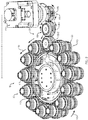
Fig. 1 illustrates a front perspective view of an ejection system disposed in a first position, according to one arrangement. -
Fig. 2 illustrates a top perspective view of a threaded mold decoupling system ofFig. 1 , according to one arrangement -
Fig. 3 illustrates a bottom perspective view of a driving assembly ofFig 2 , according to one arrangement. -
Fig. 4 illustrates a side perspective view of an unscrewing assembly, according to one arrangement. -
Fig. 5 illustrates an exploded view of an elevator assembly, according to one arrangement. -
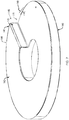
Fig. 6 illustrates a bottom perspective view of a first elevator element ofFig. 5 , according to one arrangement. -
Fig. 7 illustrates a top perspective view of a second elevator element ofFig. 5 , according to one arrangement. -
Fig. 8 illustrates a collapsed view of the elevator assembly ofFig. 5 , according to one arrangement. -
Fig. 9 illustrates a bottom perspective view of the driving assembly ofFig. 2 , according to one arrangement. -
Fig. 10 illustrates a side view of the ejection system ofFig. 1 disposed in a second position, according to one arrangement. -
Fig. 11 illustrates an arrangement of a set of unscrewing elements relative to a driving element, according to one arrangement. - A threaded mold decoupling system, as utilized with an injection mold, includes a driving assembly having a motor assembly, such as a servo motor or a hydraulic motor, which is coupled to a driver element or gear. The driving assembly also includes a set of idler elements or gears and a driving element or gear rotatably mounted to a mounting plate. The threaded mold decoupling system further includes an elevator assembly having a first elevator element or helical ramp cam follower connected to the driving element and a second elevator element or helical elevator cam follower connected to a fixed plate opposing the mounting plate.
- During operation of the threaded mold decoupling system, the motor assembly drives the idler elements which, in turn, rotate the driving element. Rotation of the driving element causes a set of decoupling or unscrewing assemblies to rotate and decouple threaded molded articles from corresponding threaded cores. Further, rotation of the driving elements rotates a helical surface of the first elevator element relative to a helical surface of the fixed second elevator element to linearly translate the unscrewing assemblies relative to the fixed plate as they decouple the threaded molded articles from corresponding threaded core. The substantially continuous cam action of the first and second elevator elements provides a relatively faster cycle time relative to conventional mechanisms, as it is not necessary to reset the cams during the cycle.
- An example of an
ejection system 10 is illustrated inFig. 1 . In one arrangement, theejection system 10 includes a fixedplate 200 and a mountingplate 104 which opposes the fixedplate 200. As indicated, the fixedplate 200 can be secured in an operating area to limit movement during operation. The mountingplate 104 is configured to translate alongdirection 300 relative to the fixedplate 200. For example, the ejection system can includelongitudinal supports 101 which allow the mounting plate to translate longitudinally alongdirection 300 relative to the fixedplate 200 while limiting lateral translation. - The
system 10 further includes a threadedmold decoupling system 15 disposed in operative communication with the mountingplate 104 and the fixedplate 200. The threadedmold decoupling system 15 includes a set of decoupling or unscrewingassemblies 20, anelevator assembly 40, and a drivingassembly 30 disposed in operational communication with theunscrewing assemblies 20 andelevator assembly 40. As indicated inFig. 1 , theejection system 10 can be configured with any number of threadedmold decoupling systems 15. For example, as shown, theejection system 10 can include a first threaded mold decoupling system 15-1 and a second threaded mold decoupling system 15-2. - With additional reference to
Fig. 10 , during operation of an injection mold 5 which utilizes theejection system 10, as an injector introduces plastic material into the cavities of the injection mold, each threadedcore 130 is configured to form threads into a portion of the material. At the end of the molding process, the resulting threaded molded article is threadably mated to the threadedcore 130. The drivingassembly 30 is configured to rotationally and linearly position the unscrewingassembly 20 relative to the corresponding set of threadedcores 130 to decouple threaded molded articles from the corresponding threadedcores 130 following a molding procedure. For example, interaction between the drivingassembly 30 and both the unscrewingassembly 20 and thecorresponding elevator assembly 40 can disengage the threaded molded article from the corresponding threadedcore 130, as described in detail below. -
Fig. 2 , taken in combination withFig. 1 , illustrates an example arrangement of the drivingassembly 30. The drivingassembly 30 is disposed in operative communication with the set of unscrewingassemblies 20 and at least a portion of theelevator assembly 40 and is configured to actuate the set of unscrewingassemblies 20 and at least a portion of theelevator assembly 40 during operation, as will be described below. - For example, as shown in
Figs. 1 and2 , the drivingassembly 30 includes adriver element 106, a set ofidler elements 108, and a drivingelement 112 which are rotatably coupled, in a single plane, to the mountingplate 104. For example, the mountingplate 104 is configured to support, and to allow relative rotation of, each of thedriver element 106, set ofidler elements 108, and drivingelement 112 during operation. While thedriver element 106, set ofidler elements 108, and the drivingelement 112 can be configured in a variety of ways, in one arrangement, theelements driver element 106 is configured to mesh with the set ofidler elements 108, and the set ofidler elements 108 are configured to mesh with the drivingelement 112. - The
driver element 106 is connected to amotor assembly 115, such as a servo motor and gearbox, and includes a set ofperipheral teeth 107 which mesh with correspondingperipheral teeth 109 of the set ofidler elements 108. The set ofidler elements 108 are configured to dispose themotor assembly 115 and the associateddriver element 106 at lateral distance d from the drivingelement 112 in order to minimize interference between themotor assembly 115 and the drivingelement 112 during operation. While the set ofidler elements 108 can include any number of idler elements, in one arrangement, the set ofidler elements 108 includes a first idler element 108-1 and a second idler element 108-2. - Rotation of the driving
element 112 is configured to actuate theunscrewing assemblies 20 and operate theelevator assembly 40 to disengage threaded molded articles from the corresponding threadedcores 130 following a molding procedure. - For example, with reference to both
Figs. 2 and4 , the set of unscrewingassemblies 20 includes a plurality ofindividual unscrewing assemblies 110 are disposed about an outer circumference of the drivingelement 112. In the arrangement illustrated, the set of unscrewingassemblies 20 includes twelveunscrewing assemblies 110 disposed about the circumference of the drivingelement 112 and in operative communication with the drivingelement 112. - As indicated in
Fig. 4 , each unscrewingassembly 110 includes abase 123 and anunscrewing element 126. In one arrangement, thebase 123 is connected to the mountingplate 104 and the unscrewingelement 126 is rotatably connected to thebase 123. The unscrewingelement 126 surrounds the threadedcore 130 of an injection mold and is disposed in operative communication with the drivingelement 112. For example, the unscrewingelement 126 carries a set ofteeth 122 disposed peripherally about a circumference of the unscrewingassembly 110 and bearingelements 124. With reference toFig. 3 , theteeth 122 of the unscrewingelement 126 are configured to mesh with a set ofteeth 120 disposed peripherally about a circumference of the drivingelement 112. - Returning to
Fig. 4 , the unscrewingassembly 110 is configured to engage a portion threaded mold article to allow removal of the threaded mold article from the threadedcore 130 following a molding procedure. For example, the unscrewingelement 126 includes a set of ratchetingteeth 128 configured to engage a portion of the threaded molded article, such as a base or bottom skirt of a threaded molded article. - In use, rotation of the driving
element 112 rotates the unscrewingelement 126 of each unscrewingassembly 110 to decouple or loosen a threaded molded article from a corresponding threadedcore 130. For example, with particular reference toFig. 2 , rotation of thedriver element 106 in a counterclockwise direction causes the drivingelement 112 to rotate in aclockwise direction 117 via idler elements 108-1, 108-2. Such rotation of the drivingelement 112 causes the unscrewingelement 126 of each unscrewingassembly 110 to rotate in acounterclockwise direction 119. With such rotation of each unscrewingelement 126, as indicated inFig. 4 , the ratchetingteeth 128 rotate the threaded molded article counterclockwise about alongitudinal axis 121 relative to threadedcore 130. Rotation of the threaded molded article relative to the threadedcore 130 disengages the threads of the threaded molded article from correspondingthreads 132 of the threadedcore 130. - As indicated above, the driving
assembly 30 is also configured to operate theelevator assembly 40 to disengage threaded molded articles from the corresponding threadedcores 130. In one arrangement, and with reference toFigs. 3 and5-9 , theelevator assembly 40 includes afirst elevator element 114, also termed a helical ramp cam follower, and asecond elevator element 140, also termed a helical elevator cam follower. As will be described below, interaction between thefirst elevator element 114 and thesecond elevator element 140 is configured to cause translation of a threaded molded article from the threadedcore 130 along alongitudinal direction 300. - As shown in
Figs. 5 and6 , thefirst elevator element 114 includes a first ortop portion 116 and a second orbottom portion 120 opposing thefirst portion 116. With reference toFigs. 2 and3 , thetop portion 116 of thefirst elevator element 114 is rotatably connected to the mountingplate 104 via drivingelement 112. For example, thefirst portion 116 of thefirst elevator element 114 can be secured to a planar face of the drivingelement 112 such that thesecond portion 120 extends toward the fixedplate 200 of theejection system 10. Alternately, thefirst portion 116 of thefirst elevator element 114 can be secured to the drivingelement 112 such that thesecond portion 120 of thefirst elevator element 114 extends through an opening defined by the drivingelement 112 toward the fixedplate 200. Accordingly, with such connection, rotation of the drivingelement 112 in aclockwise direction 117 also causes thefirst elevator element 114 to rotate in a clockwise direction. - With continued reference to
Figs. 5 and6 , thesecond portion 120 of thefirst elevator element 114 is configured to engage afirst portion 144 of thesecond elevator element 140. For example, with particular reference toFig. 6 , thesecond portion 120 of thefirst elevator element 114 defines a substantially helically-shapedinterface 129. As illustrated, the substantially helically-shapedinterface 129 of thesecond portion 120 defines an angle ofinclination 133 that increases about the circumference offirst elevator element 114 from a firstradial location 125 to a secondradial location 127. A meeting location or interface between the first and secondradial locations vertical face 122 of thefirst elevator element 114. - As shown in
Figs. 5 and7 , thesecond elevator element 140 includes the first ortop portion 144 and a second orbottom portion 146 opposing thefirst portion 144. With reference toFigs. 2 and3 , the second orbottom portion 146 of thesecond elevator element 140 is connected to the fixedplate 200. Accordingly, in use, rotation of the drivingelement 112 will not cause substantial motion or rotation of thesecond elevator element 140. - With particular reference to
Fig. 7 , thefirst portion 144 of thesecond elevator element 140 defines a substantially helically-shapedinterface 142. For example, theinterface 142 of thefirst portion 144 defines an angle ofinclination 149 that increases about the circumference of thesecond elevator element 140 from a firstradial location 145 to a secondradial location 147. A meeting location between the first and secondradial locations vertical face 148 of thesecond elevator element 140. - In use, at the start of operation as indicated in
Figs. 5 and8 , thevertical face 122 of thefirst elevator element 114 abuts thevertical face 148 of thesecond elevator element 140. Accordingly, the substantiallythickest portion 127 of the helically-shapedinterface 129 of thefirst elevator element 114 opposes the substantiallythinnest portion 145 of the helically-shapedinterface 142 of thesecond elevator element 140. With such positioning, the mountingplate 104 and the fixedplate 200 are disposed in a closed or first position as illustrated inFig. 1 . - Rotation of the driving
element 112 in aclockwise direction 117 causing thefirst elevator element 114 to rotate relative to thesecond elevator element 140 causes the helically-shapedinterface 129 of thefirst elevator element 114 to rotate relative to the helically-shapedinterface 142 of thesecond elevator element 140. Such rotation move the substantiallythickest portion 127 of theinterface 129 of thefirst elevator element 114 towards the substantiallythickest portion 147 of theinterface 142 of thesecond elevator element 140. This, in turn, causes the mountingplate 104, including the unscrewingassembly 110, to translate alongdirection 300 relative to the fixedplate 200 between the first position, as indicated inFig. 1 , and a second or open position, as indicated by thegap 302 between the mountingplate 104 and the fixedplate 200 inFig. 10 . Linear translation of the unscrewingassemblies 110 provides linear translation of molded threaded articles relative to the threadedcores 130 of the injection mold 5. - As described above, the first and
second elevator elements mold decoupling system 15. The substantially continuous cam action provides a relatively faster cycle time relative to conventional mechanisms, as it is not necessary to reset theelevator elements second elevator elements cores 130 which, in turn, increases the relative quantity of threaded molded articles that an associated injection mold 5 can produce. - With respect to the operation of the driving
assembly 30, the rotation of the drivingelement 112 causes theunscrewing core 126 of each unscrewingassembly 110 to rotate in a counterclockwise direction to disengage threaded molded articles from their corresponding threadedcores 130. Further, rotation of the drivingelement 112 also causeslinear translation 300 of each unscrewingassembly 110, including the translation of the unscrewingcore 126 of each unscrewingassembly 110, relative to the threadedcore 130. Accordingly, by providing substantially simultaneous rotational and linear motion to the unscrewingcore 126 of eachdecoupling assembly 110, each unscrewingassembly 110 provides decoupling of a threaded molded article from a corresponding threadedcore 130. - In one arrangement, at the end of the decoupling process, as the injection mold opens, an ejection mechanism such as a preloaded spring mechanism (e.g., a Bellville disc spring mechanism), can advance the stripper plate forward to eject the threaded molded articles from the corresponding threaded
cores 130. The preloaded spring mechanism, such as a Bellville disc spring mechanism, is configured to provide a preset clearance on a taper shutoff between the decoupling assemblies and the corresponding threadedcore 130. Alternately, an ejection mechanism such as a pneumatic ejection assist system can eject the molded plastic components from the injection mold 5. - Following ejection of the molded plastic components, the driving
assembly 30 is configured to rewind thefirst elevator element 114 and unscrewingassemblies 110 back to a starting position. - For example, with reference to
Fig. 2 , rotation of thedriver element 106 by the motor assembly in a clockwise direction (i.e., a second direction relative to the first, counterclockwise direction described above) causes the drivingelement 112 to rotate in a counterclockwise direction via idler elements 108-1, 108-2. Such rotation of the drivingelement 112 causes the unscrewingelement 126 of each unscrewingassembly 110 to rotate in a clockwise direction to reset the ratchetingteeth 128 to a first or starting position. - Also, rotation of the driving
element 112 in the counterclockwise direction causes thefirst elevator element 114 to rotate in a counterclockwise direction relative to thesecond elevator element 140. Such rotation translates the substantiallythickest portion 127 of theinterface 129 of thefirst elevator element 114 from a location in opposition with the substantiallythickest portion 147 of theinterface 142 of thesecond elevator element 140 to a location in opposition with the substantiallythinnest portion 145 of theinterface 142 of thesecond elevator element 140. With such positioning, thevertical face 122 of thefirst elevator element 114 abuts thevertical face 148 of thesecond elevator element 140. Additionally, such relative positioning of the first andsecond elevator elements plate 104 to translate alongdirection 304 relative to the fixedplate 200 between the second position, as indicated inFig. 10 , and a first position, as indicated inFig. 1 . - In the arrangement indicated above, the set of unscrewing
assemblies 20 includes a plurality ofindividual unscrewing assemblies 110 that are disposed about an outer circumference of the drivingelement 112. For example, in the arrangement illustrated inFig 2 , the set of unscrewingassemblies 20 includes twelveunscrewing assemblies 110 disposed about the circumference of the drivingelement 112 and in operative communication with the drivingelement 112. In use, the drivingelement 112 is configured to rotate the unscrewingelement 126 of each unscrewingassembly 110 to disengage a threaded molded article from a correspondingtreaded core 130. Such an arrangement is by way of example only. In one arrangement, as illustrated inFig. 11 , the set of unscrewingassemblies 20 defines subsets of unscrewingassemblies 350 where each subset of unscrewing assemblies includes ahub element 400 disposed in operative communication with the plurality of unscrewing assemblies and one unscrewingassembly 110 of the subset of unscrewingassemblies 350 being disposed in operative communication with a drivingelement 112. - Taking the first subset of unscrewing assemblies 350-1 as an example, the first subset of unscrewing assemblies 350-1 includes first, second, third, and fourth unscrewing assemblies 110-1 through 110-4 disposed in operative communication with hub element 400-1. For example, the hub element 400-1 can be a gear having teeth configured to mesh with the
teeth 122 of each unscrewing assembly 110-1 through 110-4. The first subset of unscrewing assemblies 350-1 further includes an unscrewing assembly, in this case unscrewing assembly 110-1, disposed in operative communication with the drivingelement 112, such as via a meshing of theteeth 122 of the unscrewing assembly 110-1 with theteeth 120 of the drivingelement 112. - In use, and with continued reference to the first subset of unscrewing assemblies 350-1, as the driving
element 112 rotates clockwise via rotation of thedriver element 106 andidler element 108, the drivingelement 112 rotates the first unscrewing assembly 110-1 in a counterclockwise direction. Rotation of the first unscrewing assembly 110-1, in turn, rotates the hub element 400-1 in a clockwise direction. The hub element 400-1 transfers this rotational movement to the unscrewingelement 126 of each of the second, third, and fourth unscrewing assemblies 110-2, 110-3, 110-4 to decouple or loosen a respective threaded molded article from a corresponding threadedcore 130. - While various embodiments of the innovation have been particularly shown and described, it will be understood by those skilled in the art that various changes in form and details may be made therein without departing from the scope of the innovation as defined by the appended claims.
Claims (10)
- A threaded mold decoupling system (15), comprising:at least one unscrewing assembly (110) configured to be rotatably coupled to a mounting plate (104), the at least one unscrewing assembly (110) disposed in proximity to a threaded core (130) of an injection mold (5);an elevator assembly (40) having a first elevator element (114) configured to be rotatably coupled to the mounting plate (104) and a second elevator element (140) configured to be connected to a fixed plate (200), the fixed plate (200) opposing the mounting plate (104); anda driving assembly (30) disposed in operative communication with the at least one unscrewing assembly (110) and with the first elevator element (114) of the elevator assembly (40), the driving assembly (30) configured to:actuate the at least one unscrewing assembly (110) to rotate a molded article about a longitudinal axis of the threaded core (130), andactuate the first elevator element (114) relative to the second elevator element (140) to linearly translate the mounting plate (104) relative to the fixed plate (200) and to translate the molded article along the longitudinal axis of the threaded core (130).
- The threaded mold decoupling system (15) of claim 1, wherein the driving assembly (30) comprises a driving element (112) rotatably connected to the mounting plate (104).
- The threaded mold decoupling system (15) of claim 2, wherein the at least one unscrewing assembly (110) comprises:a base (123) connected to the mounting plate (104); andan unscrewing element (126) rotatably connected to the base (123), the unscrewing element (126) disposed in operative communication with driving element (112), disposed about the threaded core (130) of the injection mold (5), and configured to engage a portion of the molded article.
- The threaded mold decoupling system (15) of claim 3, wherein the at least one unscrewing assembly (110) comprises a plurality of unscrewing assemblies (110), each unscrewing assembly (110) of the plurality of unscrewing assemblies (110) disposed about an outer circumference of the driving element (112) and each unscrewing assembly (110) of the plurality of unscrewing assemblies disposed in operative communication with the driving element (112).
- The threaded mold decoupling system (15) of claim 3, wherein the at least one unscrewing assembly (110) comprises a plurality of unscrewing assemblies (110) and a hub element (400) disposed in operative communication with the plurality of unscrewing assemblies (110), one unscrewing assembly (110) of the plurality of unscrewing assemblies (110) being disposed in operative communication with the driving element (112).
- The threaded mold decoupling system (15) of claim 2, wherein the first elevator element (114) is connected to the driving element (112) and is rotatably connected to the mounting plate (104) via the driving element (112).
- The threaded mold decoupling system (15) of claim 6, wherein the first elevator element (114) comprises a substantially helically-shaped interface (129) defining:an angle of inclination (133) that increases about the circumference of the first elevator element (114) from a first radial location (125) to a second radial location (127); anda vertical face (122) disposed between the first radial location (125) and the second radial location (127).
- The threaded mold decoupling system (15) of claim 7, wherein the second elevator element (140) comprises a substantially helically-shaped interface (142) defining:an angle of inclination (149) that increases about the circumference of the second elevator element (140) from a first radial location (145) to a second radial location (147); anda vertical face (148) disposed between the first radial location (145) and the second radial location (147).
- The threaded mold decoupling system (15) of claim 1, wherein the driving element (112) is configured to rotate first elevator element (114) relative to second elevator element (140) to dispose the mounting plate (104) between a first position relative to the fixed plate (200) and a second position relative to the fixed plate (200).
- An ejection system (10), comprising:the fixed plate (200);the mounting plate (104) opposing the fixed plate (200) and configured to translate relative to the fixed plate (200); anda threaded mold decoupling system (15) according to any of claims 1-9.
Applications Claiming Priority (2)
| Application Number | Priority Date | Filing Date | Title |
|---|---|---|---|
| US201562235956P | 2015-10-01 | 2015-10-01 | |
| PCT/US2016/054435 WO2017059065A1 (en) | 2015-10-01 | 2016-09-29 | Threaded mold decoupling system |
Publications (3)
| Publication Number | Publication Date |
|---|---|
| EP3356112A1 EP3356112A1 (en) | 2018-08-08 |
| EP3356112A4 EP3356112A4 (en) | 2018-10-31 |
| EP3356112B1 true EP3356112B1 (en) | 2020-11-11 |
Family
ID=58427837
Family Applications (1)
| Application Number | Title | Priority Date | Filing Date |
|---|---|---|---|
| EP16852591.3A Active EP3356112B1 (en) | 2015-10-01 | 2016-09-29 | Threaded mold decoupling system |
Country Status (3)
| Country | Link |
|---|---|
| US (2) | US10213945B2 (en) |
| EP (1) | EP3356112B1 (en) |
| WO (1) | WO2017059065A1 (en) |
Families Citing this family (4)
| Publication number | Priority date | Publication date | Assignee | Title |
|---|---|---|---|---|
| CN108000817B (en) * | 2017-11-30 | 2019-07-30 | 重庆鑫际激光科技有限公司 | Rotary components demoulding mould |
| CN110216847A (en) * | 2018-03-04 | 2019-09-10 | 高勇勇 | A kind of center worm drive type gear Leave out thread mechanism |
| CN110281372B (en) * | 2019-07-08 | 2024-08-20 | 江苏信息职业技术学院 | Mould transferring and taking mechanism |
| US20210060838A1 (en) * | 2019-09-03 | 2021-03-04 | Nypromold, Inc. | Threaded mold decoupling assembly |
Family Cites Families (10)
| Publication number | Priority date | Publication date | Assignee | Title |
|---|---|---|---|---|
| US5061168A (en) | 1990-07-09 | 1991-10-29 | Fox Alton L | Modular unscrewing mold apparatus |
| US5565223A (en) * | 1993-09-27 | 1996-10-15 | Husky Injection Molding Systems Ltd. | Apparatus for forming molded article |
| JP3312525B2 (en) * | 1995-03-20 | 2002-08-12 | 三菱マテリアル株式会社 | Mold device for forming inner screw cap |
| US6241931B1 (en) * | 1998-06-01 | 2001-06-05 | Top Grade Machining Ltd. | Threaded lid injection mold release |
| US6238202B1 (en) * | 1999-02-26 | 2001-05-29 | Unique Mould Makers Limited | Apparatus for ejecting threaded injection molded parts |
| JP2001121588A (en) * | 1999-10-27 | 2001-05-08 | Toshiba Mach Co Ltd | Ejector device for injection molding machine |
| US6599115B2 (en) * | 2001-05-07 | 2003-07-29 | Precise Technology, Inc. | Mold unscrewing mechanism for making threaded articles |
| US7157037B2 (en) * | 2004-12-20 | 2007-01-02 | Creating Mold Solutions, Inc. | Apparatus for making threaded articles in a plastic injection molding process |
| SG195617A1 (en) * | 2009-11-30 | 2013-12-30 | Husky Injection Molding | Molding apparatus |
| DE102011010442B4 (en) * | 2011-02-04 | 2014-09-25 | Thomas Meister | Gewindekernausschraubvorrichtung |
-
2016
- 2016-09-29 EP EP16852591.3A patent/EP3356112B1/en active Active
- 2016-09-29 WO PCT/US2016/054435 patent/WO2017059065A1/en not_active Ceased
-
2018
- 2018-03-28 US US15/938,913 patent/US10213945B2/en active Active
-
2019
- 2019-02-19 US US16/279,729 patent/US10647041B2/en active Active
Non-Patent Citations (1)
| Title |
|---|
| None * |
Also Published As
| Publication number | Publication date |
|---|---|
| US20180215087A1 (en) | 2018-08-02 |
| WO2017059065A1 (en) | 2017-04-06 |
| US10647041B2 (en) | 2020-05-12 |
| US10213945B2 (en) | 2019-02-26 |
| EP3356112A4 (en) | 2018-10-31 |
| US20190176381A1 (en) | 2019-06-13 |
| EP3356112A1 (en) | 2018-08-08 |
Similar Documents
| Publication | Publication Date | Title |
|---|---|---|
| US10647041B2 (en) | Threaded mold decoupling system | |
| EP2930075B1 (en) | Electronic parking brake actuator | |
| CA2194614C (en) | Apparatus for forming threaded moulded articles | |
| CN103921443A (en) | Three-dimensional (3D) printing method and 3D printing system | |
| US10654205B2 (en) | Injection molding apparatus, method, and system | |
| JP5394335B2 (en) | Intermediate mold plate for injection molding machine | |
| US6156265A (en) | Powder compacting apparatus and method of forming helical gear wheel using said powder compacting apparatus | |
| CN103950143A (en) | Multi-station injection molding mold | |
| KR101010406B1 (en) | Molding device for lead ring injection of lipstick container | |
| US10857712B2 (en) | Tandem mold for creating injection-molded parts from synthetic material | |
| CN111002533A (en) | Method for ensuring consistency of thread starting point of product with positioning thread | |
| CN106182647B (en) | Die with single screw controlled multi-cavity de-threading mechanism | |
| RU2423232C2 (en) | Cap compression moulding machine | |
| CN217169487U (en) | Die suitable for demoulding internal and external double-layer screw teeth | |
| EP3789177A1 (en) | Threaded mold decoupling assembly | |
| JP2005329662A (en) | Threading device | |
| CN216329743U (en) | Mold core mechanism and product injection mold with helical teeth and screw teeth | |
| JP2004050523A (en) | Injection-molding die | |
| CN213108007U (en) | Injection mold capable of realizing rapid and efficient demolding | |
| CN216423272U (en) | A special injection mold for mechanical shell parts | |
| CN106113413B (en) | Utilize the molding mold of the double-deck oblique teeth demoulding mechanism | |
| CN108357058B (en) | Injection molding is from drawing of patterns mould with cambered surface | |
| CN212666566U (en) | Injection mold of toothpaste lid | |
| CN106273284A (en) | A kind of with the mould of ejecting mechanism after helical blade moulding molding | |
| CN212219127U (en) | Fan-shaped helical gear axle core mechanism |
Legal Events
| Date | Code | Title | Description |
|---|---|---|---|
| STAA | Information on the status of an ep patent application or granted ep patent |
Free format text: STATUS: THE INTERNATIONAL PUBLICATION HAS BEEN MADE |
|
| PUAI | Public reference made under article 153(3) epc to a published international application that has entered the european phase |
Free format text: ORIGINAL CODE: 0009012 |
|
| STAA | Information on the status of an ep patent application or granted ep patent |
Free format text: STATUS: REQUEST FOR EXAMINATION WAS MADE |
|
| 17P | Request for examination filed |
Effective date: 20180329 |
|
| AK | Designated contracting states |
Kind code of ref document: A1 Designated state(s): AL AT BE BG CH CY CZ DE DK EE ES FI FR GB GR HR HU IE IS IT LI LT LU LV MC MK MT NL NO PL PT RO RS SE SI SK SM TR |
|
| AX | Request for extension of the european patent |
Extension state: BA ME |
|
| A4 | Supplementary search report drawn up and despatched |
Effective date: 20181001 |
|
| RIC1 | Information provided on ipc code assigned before grant |
Ipc: B29C 45/32 20060101ALI20180925BHEP Ipc: B29C 33/00 20060101ALI20180925BHEP Ipc: B29C 45/40 20060101ALI20180925BHEP Ipc: B29C 33/44 20060101ALI20180925BHEP Ipc: B29C 45/26 20060101AFI20180925BHEP Ipc: B29L 31/56 20060101ALI20180925BHEP Ipc: B29C 43/50 20060101ALI20180925BHEP |
|
| DAV | Request for validation of the european patent (deleted) | ||
| DAX | Request for extension of the european patent (deleted) | ||
| GRAP | Despatch of communication of intention to grant a patent |
Free format text: ORIGINAL CODE: EPIDOSNIGR1 |
|
| STAA | Information on the status of an ep patent application or granted ep patent |
Free format text: STATUS: GRANT OF PATENT IS INTENDED |
|
| INTG | Intention to grant announced |
Effective date: 20200609 |
|
| GRAS | Grant fee paid |
Free format text: ORIGINAL CODE: EPIDOSNIGR3 |
|
| GRAA | (expected) grant |
Free format text: ORIGINAL CODE: 0009210 |
|
| STAA | Information on the status of an ep patent application or granted ep patent |
Free format text: STATUS: THE PATENT HAS BEEN GRANTED |
|
| AK | Designated contracting states |
Kind code of ref document: B1 Designated state(s): AL AT BE BG CH CY CZ DE DK EE ES FI FR GB GR HR HU IE IS IT LI LT LU LV MC MK MT NL NO PL PT RO RS SE SI SK SM TR |
|
| REG | Reference to a national code |
Ref country code: GB Ref legal event code: FG4D |
|
| REG | Reference to a national code |
Ref country code: CH Ref legal event code: EP |
|
| REG | Reference to a national code |
Ref country code: AT Ref legal event code: REF Ref document number: 1333023 Country of ref document: AT Kind code of ref document: T Effective date: 20201115 |
|
| REG | Reference to a national code |
Ref country code: DE Ref legal event code: R096 Ref document number: 602016047843 Country of ref document: DE |
|
| REG | Reference to a national code |
Ref country code: IE Ref legal event code: FG4D |
|
| REG | Reference to a national code |
Ref country code: NL Ref legal event code: MP Effective date: 20201111 |
|
| REG | Reference to a national code |
Ref country code: AT Ref legal event code: MK05 Ref document number: 1333023 Country of ref document: AT Kind code of ref document: T Effective date: 20201111 |
|
| PG25 | Lapsed in a contracting state [announced via postgrant information from national office to epo] |
Ref country code: RS Free format text: LAPSE BECAUSE OF FAILURE TO SUBMIT A TRANSLATION OF THE DESCRIPTION OR TO PAY THE FEE WITHIN THE PRESCRIBED TIME-LIMIT Effective date: 20201111 Ref country code: PT Free format text: LAPSE BECAUSE OF FAILURE TO SUBMIT A TRANSLATION OF THE DESCRIPTION OR TO PAY THE FEE WITHIN THE PRESCRIBED TIME-LIMIT Effective date: 20210311 Ref country code: NO Free format text: LAPSE BECAUSE OF FAILURE TO SUBMIT A TRANSLATION OF THE DESCRIPTION OR TO PAY THE FEE WITHIN THE PRESCRIBED TIME-LIMIT Effective date: 20210211 Ref country code: GR Free format text: LAPSE BECAUSE OF FAILURE TO SUBMIT A TRANSLATION OF THE DESCRIPTION OR TO PAY THE FEE WITHIN THE PRESCRIBED TIME-LIMIT Effective date: 20210212 Ref country code: FI Free format text: LAPSE BECAUSE OF FAILURE TO SUBMIT A TRANSLATION OF THE DESCRIPTION OR TO PAY THE FEE WITHIN THE PRESCRIBED TIME-LIMIT Effective date: 20201111 |
|
| PG25 | Lapsed in a contracting state [announced via postgrant information from national office to epo] |
Ref country code: AT Free format text: LAPSE BECAUSE OF FAILURE TO SUBMIT A TRANSLATION OF THE DESCRIPTION OR TO PAY THE FEE WITHIN THE PRESCRIBED TIME-LIMIT Effective date: 20201111 Ref country code: BG Free format text: LAPSE BECAUSE OF FAILURE TO SUBMIT A TRANSLATION OF THE DESCRIPTION OR TO PAY THE FEE WITHIN THE PRESCRIBED TIME-LIMIT Effective date: 20210211 Ref country code: IS Free format text: LAPSE BECAUSE OF FAILURE TO SUBMIT A TRANSLATION OF THE DESCRIPTION OR TO PAY THE FEE WITHIN THE PRESCRIBED TIME-LIMIT Effective date: 20210311 Ref country code: PL Free format text: LAPSE BECAUSE OF FAILURE TO SUBMIT A TRANSLATION OF THE DESCRIPTION OR TO PAY THE FEE WITHIN THE PRESCRIBED TIME-LIMIT Effective date: 20201111 Ref country code: LV Free format text: LAPSE BECAUSE OF FAILURE TO SUBMIT A TRANSLATION OF THE DESCRIPTION OR TO PAY THE FEE WITHIN THE PRESCRIBED TIME-LIMIT Effective date: 20201111 Ref country code: SE Free format text: LAPSE BECAUSE OF FAILURE TO SUBMIT A TRANSLATION OF THE DESCRIPTION OR TO PAY THE FEE WITHIN THE PRESCRIBED TIME-LIMIT Effective date: 20201111 |
|
| REG | Reference to a national code |
Ref country code: LT Ref legal event code: MG9D |
|
| PG25 | Lapsed in a contracting state [announced via postgrant information from national office to epo] |
Ref country code: HR Free format text: LAPSE BECAUSE OF FAILURE TO SUBMIT A TRANSLATION OF THE DESCRIPTION OR TO PAY THE FEE WITHIN THE PRESCRIBED TIME-LIMIT Effective date: 20201111 |
|
| PG25 | Lapsed in a contracting state [announced via postgrant information from national office to epo] |
Ref country code: SK Free format text: LAPSE BECAUSE OF FAILURE TO SUBMIT A TRANSLATION OF THE DESCRIPTION OR TO PAY THE FEE WITHIN THE PRESCRIBED TIME-LIMIT Effective date: 20201111 Ref country code: RO Free format text: LAPSE BECAUSE OF FAILURE TO SUBMIT A TRANSLATION OF THE DESCRIPTION OR TO PAY THE FEE WITHIN THE PRESCRIBED TIME-LIMIT Effective date: 20201111 Ref country code: CZ Free format text: LAPSE BECAUSE OF FAILURE TO SUBMIT A TRANSLATION OF THE DESCRIPTION OR TO PAY THE FEE WITHIN THE PRESCRIBED TIME-LIMIT Effective date: 20201111 Ref country code: EE Free format text: LAPSE BECAUSE OF FAILURE TO SUBMIT A TRANSLATION OF THE DESCRIPTION OR TO PAY THE FEE WITHIN THE PRESCRIBED TIME-LIMIT Effective date: 20201111 Ref country code: LT Free format text: LAPSE BECAUSE OF FAILURE TO SUBMIT A TRANSLATION OF THE DESCRIPTION OR TO PAY THE FEE WITHIN THE PRESCRIBED TIME-LIMIT Effective date: 20201111 Ref country code: SM Free format text: LAPSE BECAUSE OF FAILURE TO SUBMIT A TRANSLATION OF THE DESCRIPTION OR TO PAY THE FEE WITHIN THE PRESCRIBED TIME-LIMIT Effective date: 20201111 |
|
| REG | Reference to a national code |
Ref country code: DE Ref legal event code: R097 Ref document number: 602016047843 Country of ref document: DE |
|
| PG25 | Lapsed in a contracting state [announced via postgrant information from national office to epo] |
Ref country code: DK Free format text: LAPSE BECAUSE OF FAILURE TO SUBMIT A TRANSLATION OF THE DESCRIPTION OR TO PAY THE FEE WITHIN THE PRESCRIBED TIME-LIMIT Effective date: 20201111 |
|
| PLBE | No opposition filed within time limit |
Free format text: ORIGINAL CODE: 0009261 |
|
| STAA | Information on the status of an ep patent application or granted ep patent |
Free format text: STATUS: NO OPPOSITION FILED WITHIN TIME LIMIT |
|
| 26N | No opposition filed |
Effective date: 20210812 |
|
| PG25 | Lapsed in a contracting state [announced via postgrant information from national office to epo] |
Ref country code: IT Free format text: LAPSE BECAUSE OF FAILURE TO SUBMIT A TRANSLATION OF THE DESCRIPTION OR TO PAY THE FEE WITHIN THE PRESCRIBED TIME-LIMIT Effective date: 20201111 Ref country code: AL Free format text: LAPSE BECAUSE OF FAILURE TO SUBMIT A TRANSLATION OF THE DESCRIPTION OR TO PAY THE FEE WITHIN THE PRESCRIBED TIME-LIMIT Effective date: 20201111 Ref country code: NL Free format text: LAPSE BECAUSE OF FAILURE TO SUBMIT A TRANSLATION OF THE DESCRIPTION OR TO PAY THE FEE WITHIN THE PRESCRIBED TIME-LIMIT Effective date: 20201111 |
|
| PG25 | Lapsed in a contracting state [announced via postgrant information from national office to epo] |
Ref country code: SI Free format text: LAPSE BECAUSE OF FAILURE TO SUBMIT A TRANSLATION OF THE DESCRIPTION OR TO PAY THE FEE WITHIN THE PRESCRIBED TIME-LIMIT Effective date: 20201111 |
|
| PG25 | Lapsed in a contracting state [announced via postgrant information from national office to epo] |
Ref country code: ES Free format text: LAPSE BECAUSE OF FAILURE TO SUBMIT A TRANSLATION OF THE DESCRIPTION OR TO PAY THE FEE WITHIN THE PRESCRIBED TIME-LIMIT Effective date: 20201111 |
|
| REG | Reference to a national code |
Ref country code: CH Ref legal event code: PL |
|
| REG | Reference to a national code |
Ref country code: BE Ref legal event code: MM Effective date: 20210930 |
|
| GBPC | Gb: european patent ceased through non-payment of renewal fee |
Effective date: 20210929 |
|
| PG25 | Lapsed in a contracting state [announced via postgrant information from national office to epo] |
Ref country code: IS Free format text: LAPSE BECAUSE OF FAILURE TO SUBMIT A TRANSLATION OF THE DESCRIPTION OR TO PAY THE FEE WITHIN THE PRESCRIBED TIME-LIMIT Effective date: 20210311 Ref country code: MC Free format text: LAPSE BECAUSE OF FAILURE TO SUBMIT A TRANSLATION OF THE DESCRIPTION OR TO PAY THE FEE WITHIN THE PRESCRIBED TIME-LIMIT Effective date: 20201111 |
|
| PG25 | Lapsed in a contracting state [announced via postgrant information from national office to epo] |
Ref country code: LU Free format text: LAPSE BECAUSE OF NON-PAYMENT OF DUE FEES Effective date: 20210929 Ref country code: IE Free format text: LAPSE BECAUSE OF NON-PAYMENT OF DUE FEES Effective date: 20210929 Ref country code: GB Free format text: LAPSE BECAUSE OF NON-PAYMENT OF DUE FEES Effective date: 20210929 Ref country code: FR Free format text: LAPSE BECAUSE OF NON-PAYMENT OF DUE FEES Effective date: 20210930 Ref country code: BE Free format text: LAPSE BECAUSE OF NON-PAYMENT OF DUE FEES Effective date: 20210930 |
|
| PG25 | Lapsed in a contracting state [announced via postgrant information from national office to epo] |
Ref country code: LI Free format text: LAPSE BECAUSE OF NON-PAYMENT OF DUE FEES Effective date: 20210930 Ref country code: CH Free format text: LAPSE BECAUSE OF NON-PAYMENT OF DUE FEES Effective date: 20210930 |
|
| PG25 | Lapsed in a contracting state [announced via postgrant information from national office to epo] |
Ref country code: CY Free format text: LAPSE BECAUSE OF FAILURE TO SUBMIT A TRANSLATION OF THE DESCRIPTION OR TO PAY THE FEE WITHIN THE PRESCRIBED TIME-LIMIT Effective date: 20201111 |
|
| P01 | Opt-out of the competence of the unified patent court (upc) registered |
Effective date: 20230525 |
|
| PG25 | Lapsed in a contracting state [announced via postgrant information from national office to epo] |
Ref country code: HU Free format text: LAPSE BECAUSE OF FAILURE TO SUBMIT A TRANSLATION OF THE DESCRIPTION OR TO PAY THE FEE WITHIN THE PRESCRIBED TIME-LIMIT; INVALID AB INITIO Effective date: 20160929 |
|
| PG25 | Lapsed in a contracting state [announced via postgrant information from national office to epo] |
Ref country code: MK Free format text: LAPSE BECAUSE OF FAILURE TO SUBMIT A TRANSLATION OF THE DESCRIPTION OR TO PAY THE FEE WITHIN THE PRESCRIBED TIME-LIMIT Effective date: 20201111 |
|
| PG25 | Lapsed in a contracting state [announced via postgrant information from national office to epo] |
Ref country code: TR Free format text: LAPSE BECAUSE OF FAILURE TO SUBMIT A TRANSLATION OF THE DESCRIPTION OR TO PAY THE FEE WITHIN THE PRESCRIBED TIME-LIMIT Effective date: 20201111 |
|
| PG25 | Lapsed in a contracting state [announced via postgrant information from national office to epo] |
Ref country code: MT Free format text: LAPSE BECAUSE OF FAILURE TO SUBMIT A TRANSLATION OF THE DESCRIPTION OR TO PAY THE FEE WITHIN THE PRESCRIBED TIME-LIMIT Effective date: 20201111 |
|
| PGFP | Annual fee paid to national office [announced via postgrant information from national office to epo] |
Ref country code: DE Payment date: 20250919 Year of fee payment: 10 |