EP3357514B1 - Lipidderivat mit über zyklischem benzyliden-acetal-linker gebundenen hydrophilen polymer - Google Patents
Lipidderivat mit über zyklischem benzyliden-acetal-linker gebundenen hydrophilen polymer Download PDFInfo
- Publication number
- EP3357514B1 EP3357514B1 EP16851783.7A EP16851783A EP3357514B1 EP 3357514 B1 EP3357514 B1 EP 3357514B1 EP 16851783 A EP16851783 A EP 16851783A EP 3357514 B1 EP3357514 B1 EP 3357514B1
- Authority
- EP
- European Patent Office
- Prior art keywords
- group
- formula
- carbon atoms
- bond
- substituent
- Prior art date
- Legal status (The legal status is an assumption and is not a legal conclusion. Google has not performed a legal analysis and makes no representation as to the accuracy of the status listed.)
- Active
Links
- 0 CN(C(C=C1*)=O)C1=O Chemical compound CN(C(C=C1*)=O)C1=O 0.000 description 5
- FZKLGTIIZCYUOM-UHFFFAOYSA-N CC1OC(c(cc2)cc(F)c2OC)OC1 Chemical compound CC1OC(c(cc2)cc(F)c2OC)OC1 FZKLGTIIZCYUOM-UHFFFAOYSA-N 0.000 description 1
- DTACWEXJFYOAKS-UHFFFAOYSA-N CC1OC(c(cc2)ccc2OC)OC1 Chemical compound CC1OC(c(cc2)ccc2OC)OC1 DTACWEXJFYOAKS-UHFFFAOYSA-N 0.000 description 1
Images


Classifications
-
- C—CHEMISTRY; METALLURGY
- C07—ORGANIC CHEMISTRY
- C07D—HETEROCYCLIC COMPOUNDS
- C07D209/00—Heterocyclic compounds containing five-membered rings, condensed with other rings, with one nitrogen atom as the only ring hetero atom
- C07D209/02—Heterocyclic compounds containing five-membered rings, condensed with other rings, with one nitrogen atom as the only ring hetero atom condensed with one carbocyclic ring
- C07D209/44—Iso-indoles; Hydrogenated iso-indoles
- C07D209/48—Iso-indoles; Hydrogenated iso-indoles with oxygen atoms in positions 1 and 3, e.g. phthalimide
-
- C—CHEMISTRY; METALLURGY
- C08—ORGANIC MACROMOLECULAR COMPOUNDS; THEIR PREPARATION OR CHEMICAL WORKING-UP; COMPOSITIONS BASED THEREON
- C08G—MACROMOLECULAR COMPOUNDS OBTAINED OTHERWISE THAN BY REACTIONS ONLY INVOLVING UNSATURATED CARBON-TO-CARBON BONDS
- C08G65/00—Macromolecular compounds obtained by reactions forming an ether link in the main chain of the macromolecule
- C08G65/02—Macromolecular compounds obtained by reactions forming an ether link in the main chain of the macromolecule from cyclic ethers by opening of the heterocyclic ring
- C08G65/32—Polymers modified by chemical after-treatment
- C08G65/329—Polymers modified by chemical after-treatment with organic compounds
- C08G65/331—Polymers modified by chemical after-treatment with organic compounds containing oxygen
-
- A—HUMAN NECESSITIES
- A61—MEDICAL OR VETERINARY SCIENCE; HYGIENE
- A61K—PREPARATIONS FOR MEDICAL, DENTAL OR TOILETRY PURPOSES
- A61K47/00—Medicinal preparations characterised by the non-active ingredients used, e.g. carriers or inert additives; Targeting or modifying agents chemically bound to the active ingredient
- A61K47/30—Macromolecular organic or inorganic compounds, e.g. inorganic polyphosphates
- A61K47/34—Macromolecular compounds obtained otherwise than by reactions only involving carbon-to-carbon unsaturated bonds, e.g. polyesters, polyamino acids, polysiloxanes, polyphosphazines, copolymers of polyalkylene glycol or poloxamers
-
- A—HUMAN NECESSITIES
- A61—MEDICAL OR VETERINARY SCIENCE; HYGIENE
- A61K—PREPARATIONS FOR MEDICAL, DENTAL OR TOILETRY PURPOSES
- A61K47/00—Medicinal preparations characterised by the non-active ingredients used, e.g. carriers or inert additives; Targeting or modifying agents chemically bound to the active ingredient
- A61K47/50—Medicinal preparations characterised by the non-active ingredients used, e.g. carriers or inert additives; Targeting or modifying agents chemically bound to the active ingredient the non-active ingredient being chemically bound to the active ingredient, e.g. polymer-drug conjugates
- A61K47/69—Medicinal preparations characterised by the non-active ingredients used, e.g. carriers or inert additives; Targeting or modifying agents chemically bound to the active ingredient the non-active ingredient being chemically bound to the active ingredient, e.g. polymer-drug conjugates the conjugate being characterised by physical or galenical forms, e.g. emulsion, particle, inclusion complex, stent or kit
- A61K47/6905—Medicinal preparations characterised by the non-active ingredients used, e.g. carriers or inert additives; Targeting or modifying agents chemically bound to the active ingredient the non-active ingredient being chemically bound to the active ingredient, e.g. polymer-drug conjugates the conjugate being characterised by physical or galenical forms, e.g. emulsion, particle, inclusion complex, stent or kit the form being a colloid or an emulsion
- A61K47/6907—Medicinal preparations characterised by the non-active ingredients used, e.g. carriers or inert additives; Targeting or modifying agents chemically bound to the active ingredient the non-active ingredient being chemically bound to the active ingredient, e.g. polymer-drug conjugates the conjugate being characterised by physical or galenical forms, e.g. emulsion, particle, inclusion complex, stent or kit the form being a colloid or an emulsion the form being a microemulsion, nanoemulsion or micelle
-
- A—HUMAN NECESSITIES
- A61—MEDICAL OR VETERINARY SCIENCE; HYGIENE
- A61K—PREPARATIONS FOR MEDICAL, DENTAL OR TOILETRY PURPOSES
- A61K47/00—Medicinal preparations characterised by the non-active ingredients used, e.g. carriers or inert additives; Targeting or modifying agents chemically bound to the active ingredient
- A61K47/50—Medicinal preparations characterised by the non-active ingredients used, e.g. carriers or inert additives; Targeting or modifying agents chemically bound to the active ingredient the non-active ingredient being chemically bound to the active ingredient, e.g. polymer-drug conjugates
- A61K47/69—Medicinal preparations characterised by the non-active ingredients used, e.g. carriers or inert additives; Targeting or modifying agents chemically bound to the active ingredient the non-active ingredient being chemically bound to the active ingredient, e.g. polymer-drug conjugates the conjugate being characterised by physical or galenical forms, e.g. emulsion, particle, inclusion complex, stent or kit
- A61K47/6905—Medicinal preparations characterised by the non-active ingredients used, e.g. carriers or inert additives; Targeting or modifying agents chemically bound to the active ingredient the non-active ingredient being chemically bound to the active ingredient, e.g. polymer-drug conjugates the conjugate being characterised by physical or galenical forms, e.g. emulsion, particle, inclusion complex, stent or kit the form being a colloid or an emulsion
- A61K47/6911—Medicinal preparations characterised by the non-active ingredients used, e.g. carriers or inert additives; Targeting or modifying agents chemically bound to the active ingredient the non-active ingredient being chemically bound to the active ingredient, e.g. polymer-drug conjugates the conjugate being characterised by physical or galenical forms, e.g. emulsion, particle, inclusion complex, stent or kit the form being a colloid or an emulsion the form being a liposome
- A61K47/6915—Medicinal preparations characterised by the non-active ingredients used, e.g. carriers or inert additives; Targeting or modifying agents chemically bound to the active ingredient the non-active ingredient being chemically bound to the active ingredient, e.g. polymer-drug conjugates the conjugate being characterised by physical or galenical forms, e.g. emulsion, particle, inclusion complex, stent or kit the form being a colloid or an emulsion the form being a liposome the form being a liposome with polymerisable or polymerized bilayer-forming substances, e.g. polymersomes
-
- A—HUMAN NECESSITIES
- A61—MEDICAL OR VETERINARY SCIENCE; HYGIENE
- A61K—PREPARATIONS FOR MEDICAL, DENTAL OR TOILETRY PURPOSES
- A61K9/00—Medicinal preparations characterised by special physical form
- A61K9/10—Dispersions; Emulsions
- A61K9/107—Emulsions ; Emulsion preconcentrates; Micelles
-
- A—HUMAN NECESSITIES
- A61—MEDICAL OR VETERINARY SCIENCE; HYGIENE
- A61K—PREPARATIONS FOR MEDICAL, DENTAL OR TOILETRY PURPOSES
- A61K9/00—Medicinal preparations characterised by special physical form
- A61K9/10—Dispersions; Emulsions
- A61K9/127—Synthetic bilayered vehicles, e.g. liposomes or liposomes with cholesterol as the only non-phosphatidyl surfactant
-
- C—CHEMISTRY; METALLURGY
- C07—ORGANIC CHEMISTRY
- C07D—HETEROCYCLIC COMPOUNDS
- C07D317/00—Heterocyclic compounds containing five-membered rings having two oxygen atoms as the only ring hetero atoms
- C07D317/08—Heterocyclic compounds containing five-membered rings having two oxygen atoms as the only ring hetero atoms having the hetero atoms in positions 1 and 3
- C07D317/10—Heterocyclic compounds containing five-membered rings having two oxygen atoms as the only ring hetero atoms having the hetero atoms in positions 1 and 3 not condensed with other rings
- C07D317/14—Heterocyclic compounds containing five-membered rings having two oxygen atoms as the only ring hetero atoms having the hetero atoms in positions 1 and 3 not condensed with other rings with substituted hydrocarbon radicals attached to ring carbon atoms
- C07D317/18—Radicals substituted by singly bound oxygen or sulfur atoms
- C07D317/20—Free hydroxyl or mercaptan
-
- C—CHEMISTRY; METALLURGY
- C07—ORGANIC CHEMISTRY
- C07D—HETEROCYCLIC COMPOUNDS
- C07D317/00—Heterocyclic compounds containing five-membered rings having two oxygen atoms as the only ring hetero atoms
- C07D317/08—Heterocyclic compounds containing five-membered rings having two oxygen atoms as the only ring hetero atoms having the hetero atoms in positions 1 and 3
- C07D317/10—Heterocyclic compounds containing five-membered rings having two oxygen atoms as the only ring hetero atoms having the hetero atoms in positions 1 and 3 not condensed with other rings
- C07D317/14—Heterocyclic compounds containing five-membered rings having two oxygen atoms as the only ring hetero atoms having the hetero atoms in positions 1 and 3 not condensed with other rings with substituted hydrocarbon radicals attached to ring carbon atoms
- C07D317/18—Radicals substituted by singly bound oxygen or sulfur atoms
- C07D317/22—Radicals substituted by singly bound oxygen or sulfur atoms etherified
-
- C—CHEMISTRY; METALLURGY
- C07—ORGANIC CHEMISTRY
- C07D—HETEROCYCLIC COMPOUNDS
- C07D317/00—Heterocyclic compounds containing five-membered rings having two oxygen atoms as the only ring hetero atoms
- C07D317/08—Heterocyclic compounds containing five-membered rings having two oxygen atoms as the only ring hetero atoms having the hetero atoms in positions 1 and 3
- C07D317/10—Heterocyclic compounds containing five-membered rings having two oxygen atoms as the only ring hetero atoms having the hetero atoms in positions 1 and 3 not condensed with other rings
- C07D317/14—Heterocyclic compounds containing five-membered rings having two oxygen atoms as the only ring hetero atoms having the hetero atoms in positions 1 and 3 not condensed with other rings with substituted hydrocarbon radicals attached to ring carbon atoms
- C07D317/18—Radicals substituted by singly bound oxygen or sulfur atoms
- C07D317/24—Radicals substituted by singly bound oxygen or sulfur atoms esterified
-
- C—CHEMISTRY; METALLURGY
- C07—ORGANIC CHEMISTRY
- C07D—HETEROCYCLIC COMPOUNDS
- C07D317/00—Heterocyclic compounds containing five-membered rings having two oxygen atoms as the only ring hetero atoms
- C07D317/08—Heterocyclic compounds containing five-membered rings having two oxygen atoms as the only ring hetero atoms having the hetero atoms in positions 1 and 3
- C07D317/10—Heterocyclic compounds containing five-membered rings having two oxygen atoms as the only ring hetero atoms having the hetero atoms in positions 1 and 3 not condensed with other rings
- C07D317/14—Heterocyclic compounds containing five-membered rings having two oxygen atoms as the only ring hetero atoms having the hetero atoms in positions 1 and 3 not condensed with other rings with substituted hydrocarbon radicals attached to ring carbon atoms
- C07D317/28—Radicals substituted by nitrogen atoms
-
- C—CHEMISTRY; METALLURGY
- C07—ORGANIC CHEMISTRY
- C07D—HETEROCYCLIC COMPOUNDS
- C07D405/00—Heterocyclic compounds containing both one or more hetero rings having oxygen atoms as the only ring hetero atoms, and one or more rings having nitrogen as the only ring hetero atom
- C07D405/02—Heterocyclic compounds containing both one or more hetero rings having oxygen atoms as the only ring hetero atoms, and one or more rings having nitrogen as the only ring hetero atom containing two hetero rings
- C07D405/06—Heterocyclic compounds containing both one or more hetero rings having oxygen atoms as the only ring hetero atoms, and one or more rings having nitrogen as the only ring hetero atom containing two hetero rings linked by a carbon chain containing only aliphatic carbon atoms
-
- C—CHEMISTRY; METALLURGY
- C07—ORGANIC CHEMISTRY
- C07D—HETEROCYCLIC COMPOUNDS
- C07D405/00—Heterocyclic compounds containing both one or more hetero rings having oxygen atoms as the only ring hetero atoms, and one or more rings having nitrogen as the only ring hetero atom
- C07D405/02—Heterocyclic compounds containing both one or more hetero rings having oxygen atoms as the only ring hetero atoms, and one or more rings having nitrogen as the only ring hetero atom containing two hetero rings
- C07D405/12—Heterocyclic compounds containing both one or more hetero rings having oxygen atoms as the only ring hetero atoms, and one or more rings having nitrogen as the only ring hetero atom containing two hetero rings linked by a chain containing hetero atoms as chain links
-
- C—CHEMISTRY; METALLURGY
- C07—ORGANIC CHEMISTRY
- C07F—ACYCLIC, CARBOCYCLIC OR HETEROCYCLIC COMPOUNDS CONTAINING ELEMENTS OTHER THAN CARBON, HYDROGEN, HALOGEN, OXYGEN, NITROGEN, SULFUR, SELENIUM OR TELLURIUM
- C07F9/00—Compounds containing elements of Groups 5 or 15 of the Periodic Table
- C07F9/02—Phosphorus compounds
- C07F9/547—Heterocyclic compounds, e.g. containing phosphorus as a ring hetero atom
- C07F9/655—Heterocyclic compounds, e.g. containing phosphorus as a ring hetero atom having oxygen atoms, with or without sulfur, selenium, or tellurium atoms, as the only ring hetero atoms
- C07F9/65515—Heterocyclic compounds, e.g. containing phosphorus as a ring hetero atom having oxygen atoms, with or without sulfur, selenium, or tellurium atoms, as the only ring hetero atoms the oxygen atom being part of a five-membered ring
-
- C—CHEMISTRY; METALLURGY
- C08—ORGANIC MACROMOLECULAR COMPOUNDS; THEIR PREPARATION OR CHEMICAL WORKING-UP; COMPOSITIONS BASED THEREON
- C08G—MACROMOLECULAR COMPOUNDS OBTAINED OTHERWISE THAN BY REACTIONS ONLY INVOLVING UNSATURATED CARBON-TO-CARBON BONDS
- C08G65/00—Macromolecular compounds obtained by reactions forming an ether link in the main chain of the macromolecule
- C08G65/02—Macromolecular compounds obtained by reactions forming an ether link in the main chain of the macromolecule from cyclic ethers by opening of the heterocyclic ring
- C08G65/32—Polymers modified by chemical after-treatment
- C08G65/329—Polymers modified by chemical after-treatment with organic compounds
- C08G65/333—Polymers modified by chemical after-treatment with organic compounds containing nitrogen
- C08G65/33344—Polymers modified by chemical after-treatment with organic compounds containing nitrogen containing carbamate group
-
- C—CHEMISTRY; METALLURGY
- C08—ORGANIC MACROMOLECULAR COMPOUNDS; THEIR PREPARATION OR CHEMICAL WORKING-UP; COMPOSITIONS BASED THEREON
- C08G—MACROMOLECULAR COMPOUNDS OBTAINED OTHERWISE THAN BY REACTIONS ONLY INVOLVING UNSATURATED CARBON-TO-CARBON BONDS
- C08G65/00—Macromolecular compounds obtained by reactions forming an ether link in the main chain of the macromolecule
- C08G65/02—Macromolecular compounds obtained by reactions forming an ether link in the main chain of the macromolecule from cyclic ethers by opening of the heterocyclic ring
- C08G65/32—Polymers modified by chemical after-treatment
- C08G65/329—Polymers modified by chemical after-treatment with organic compounds
- C08G65/333—Polymers modified by chemical after-treatment with organic compounds containing nitrogen
- C08G65/33396—Polymers modified by chemical after-treatment with organic compounds containing nitrogen having oxygen in addition to nitrogen
-
- C—CHEMISTRY; METALLURGY
- C08—ORGANIC MACROMOLECULAR COMPOUNDS; THEIR PREPARATION OR CHEMICAL WORKING-UP; COMPOSITIONS BASED THEREON
- C08G—MACROMOLECULAR COMPOUNDS OBTAINED OTHERWISE THAN BY REACTIONS ONLY INVOLVING UNSATURATED CARBON-TO-CARBON BONDS
- C08G65/00—Macromolecular compounds obtained by reactions forming an ether link in the main chain of the macromolecule
- C08G65/02—Macromolecular compounds obtained by reactions forming an ether link in the main chain of the macromolecule from cyclic ethers by opening of the heterocyclic ring
- C08G65/32—Polymers modified by chemical after-treatment
- C08G65/329—Polymers modified by chemical after-treatment with organic compounds
- C08G65/335—Polymers modified by chemical after-treatment with organic compounds containing phosphorus
- C08G65/3356—Polymers modified by chemical after-treatment with organic compounds containing phosphorus having nitrogen in addition to phosphorus
-
- C—CHEMISTRY; METALLURGY
- C08—ORGANIC MACROMOLECULAR COMPOUNDS; THEIR PREPARATION OR CHEMICAL WORKING-UP; COMPOSITIONS BASED THEREON
- C08G—MACROMOLECULAR COMPOUNDS OBTAINED OTHERWISE THAN BY REACTIONS ONLY INVOLVING UNSATURATED CARBON-TO-CARBON BONDS
- C08G2650/00—Macromolecular compounds obtained by reactions forming an ether link in the main chain of the macromolecule
- C08G2650/28—Macromolecular compounds obtained by reactions forming an ether link in the main chain of the macromolecule characterised by the polymer type
- C08G2650/58—Ethylene oxide or propylene oxide copolymers, e.g. pluronics
Definitions
- the present invention relates to a lipid derivative in which a hydrophilic polymer is bound through an acid-hydrolyzable acetal linker and which is used in surface modification of a carrier composed of a lipid membrane structure, for example, a liposome, a micelle, a vesicle or a lipid particle.
- a functional nucleic acid for example, siRNA, mRNA or antisense
- a protein exhibiting a physiological activity or a drug, for example, an anticancer drug
- the use of carrier has been investigated for the purpose of suppressing degradation due to an enzyme or the like in the living body or delivering the drug tissue-selectively.
- the functional nucleic acid or anticancer drug expresses the activity first after being incorporated into a cell
- the use of carrier is essential also in order to enhance the incorporation ability into the cell.
- a lipid membrane structure for example, a liposome, a micelle, a vesicle or a lipid fine particle, composed of a phospholipid, a cationic lipid or the like is particularly actively used.
- the lipid membrane structure Since the lipid membrane structure is recognized as a foreign matter by the living body, it is trapped by a reticuloendothelial system and discharged rapidly from blood.
- a technique for modifying a surface of the lipid membrane structure with a lipid derivative having bound a hydrophilic polymer of low antigenicity can prolong circulation time of the lipid membrane structure in blood.
- vascular permeability increases on the periphery of tumor tissue in comparison with a normal tissue, it is effective that the lipid membrane structure can be effectively integrated on the periphery of the tumor tissue by extending the circulation time in blood.
- a hydration layer formed by the hydrophilic polymer decreases the interaction with a cell membrane to inhibit in vivo/intracellular kinetics, for example, incorporation into the cell or endosomal escape.
- an approach to overcome by detaching the hydrophilic polymer from the lipid membrane structure in an appropriate timing has been made.
- Most of the strategies utilize an environmental change in each tissue of the living body, for example, reductive environment or the presence of absence of a specific enzyme, as a trigger of the detachment of hydrophilic polymer, and one of them is a technique of utilizing a change in pH.
- Non-Patent Document 1 a hydrazone linker is introduced between polyethylene glycol and a phospholipid. Moreover, although an attempt has been made to control the hydrolysis rate by controlling a number of carbon atoms of a spacer between the hydrazone linker and the phospholipid, a hydrolysis rate under an acid condition (pH 5.5) is constant regardless of the number of carbon atoms of a spacer and it is not possible to precisely control the hydrolysis rate.
- Non-Patent Document 2 kinetics study of the hydrolysis of hydrazone is described and it is shown that in the hydrolysis of hydrazone, the influence of differences in the substituents present on the neighboring benzene ring on the hydrolysis rate is small. Therefore, there is a possibility that the hydrazone is not the best choice for the purpose of controlling the hydrolysis rate.
- lipid derivatives each having an acid-hydrolyzable linker introduced into the structure for the purpose of detaching the hydrophilic polymer chain under the acidic environment in the living body
- lipid derivative in which a hydrophilic polymer is bound through an acid-hydrolyzable linker which is able to precisely control the hydrolysis rate at an arbitrary pH.
- Patent Document 1 WO2010/057150 A1
- the deviation of pH at each tissue of the living body is very small and, for example, although the periphery of a tumor tissue is an acidic environment in comparison with pH 7.4 in normal tissue, the pH thereof is weakly acidic of approximately from 6.4 to 6.9. Further, an endosomal interior is also week acidic of pH from 5.5 to 6.0. The endosomal interior is gradually acidified to approach pH 4.5 to 5.0 which is the pH of a lysosome. Since an endosome is finally fused with a lysosome, it is required that the drug or the like incorporated into the endosome should escape from the endosome at around pH 5.5 in order to avoid degradation thereof due to an enzyme in the lysosome.
- An object of the present invention is to provide a lipid derivative in which a hydrophilic polymer is bound through an acetal linker, and which can accurately control a hydrolysis rate at the pH of the weakly acidic environment in the living body to detach the hydrophilic polymer from a lipid membrane structure.
- the inventors have developed a lipid derivative in which a hydrophilic polymer is bound through a cyclic benzylidene acetal linker, and which can accurately control a hydrolysis rate at the pH of the weakly acidic environment in the living body.
- the feature of the invention resides in that a hydrophilic polymer and a lipid are bound through a cyclic benzylidene acetal linker having substituent(s).
- substituent(s) By appropriately selecting the kind and position of the substituent (s) on the benzene ring of the cyclic benzylidene acetal linker, the degrees of electron density and steric hindrance around the acetal group which affect the hydrolysis rate of the acetal linker can be adjusted.
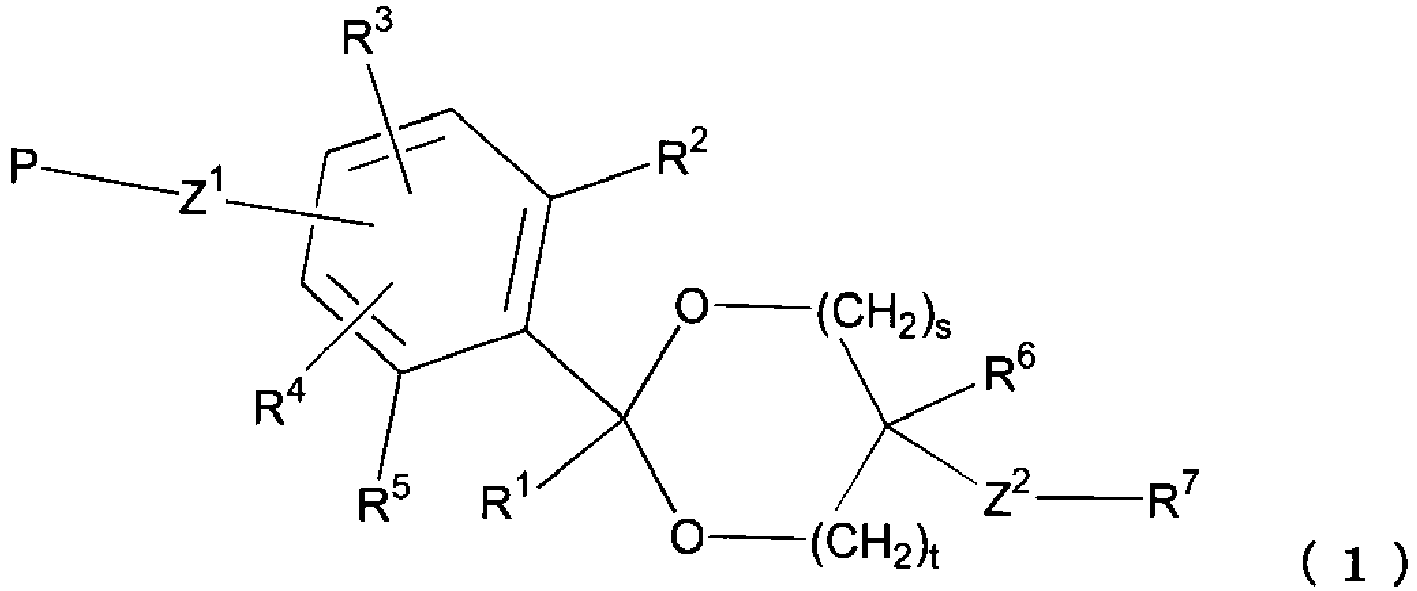
- the invention relates to a lipid derivative in which a hydrophilic polymer is bound through a cyclic benzylidene acetal linker represented by formula (1).
- formula (1) the meaning of R 1 to R 7 , P, s, t, Z 1 and Z 2 is as defined in the claims.
- the hydrolysis rate of the cyclic benzylidene acetal linker can be controlled according to the pH of a weakly acidic environment in the living body and it is possible to selectively detach the hydrophilic polymer from the lipid membrane structure containing the lipid derivative as a constituting component at the pH of the target tissue.
- acetal as used in the specification means both of an acetal structure derived from an aldehyde and an acetal structure derived from a ketone, that is, a ketal structure.
- cyclic acetal as used in the invention means both of a 1,3-dioxolane structure of a 5-membered ring which is s is 1 and t is 0 in formula (1) and a 1,3-dioxane structure of a 6-membered ring which is s is 1 and t is 1 or s is 2 and t is 0 in formula (1)
- Each of R 1 and R 6 in formula (1) of the invention is a hydrogen atom or a hydrocarbon group, a number of carbon atoms of the hydrocarbon group is 10 or less, and specific examples of the hydrocarbon group include a methyl group, an ethyl group, a propyl group, an isopropyl group, a tert-butyl group, a phenyl group and a benzyl group.
- a preferred embodiment of R 1 or R 6 is a hydrogen atom or a methyl group, and a hydrogen atom is more preferred.
- the benzene ring in formula (1) of the invention may have a plurality of substituents.
- substituents By appropriately selecting the kind, the position and the degree of electron-donating property and electron-withdrawing property of the substituents on the benzene ring, it is possible to adjust the degrees of electron density and steric hindrance around the acetal group which affects the hydrolysis rate of the cyclic acetal linker. This makes it possible to impart a desired hydrolysis rate to the cyclic acetal linker.
- the substituent on the benzene ring in formula (1) is described using the "substituent constant ( ⁇ )" which means the substituent constant in the Hammett's rule which quantifies the effect of the substituent on the reaction rate or equilibrium of benzene derivative.
- the Hammett's rule is applied only to a para-substituted or meta-substituted benzene derivative and cannot be applied to an ortho-substituted benzene derivative which is affected by steric hindrance. Therefore, in the case of ortho-substituted benzene derivative, the substituent constant means the substituent constant in the Taft's equation which extends the Hammett's rule described above.
- Equation (2) the Hammett's rule is represented by equation (2) shown below.
- log k / k 0 ⁇ (in the equation, k is a rate constant or equilibrium constant in an arbitrary reaction of a para-substituted or meta-substituted benzene derivative, k 0 is a rate constant or equilibrium constant in the case where the benzene derivative does not have a substituent, that is, the substituent is a hydrogen atom, ⁇ is a reaction constant, and ⁇ is a substituent constant.)
- the reaction constant ( ⁇ ) in equation (2) described above is a constant which is determined depending on reaction conditions, for example, the kind of reaction, temperature or solvent, and can be calculated from the slope of Hammett plots.
- the substituent constant ( ⁇ ) in equation (2) described above is a constant which is determined only depending on the kind and position of the substituent, regardless of the kind of reaction. In the case where no substituent is present, that is, the substituent is a hydrogen atom, the constant is "0".
- the term "electron-withdrawing” as used in the specification means the case where ⁇ is a positive value, and the term “electron-donating” means the case where ⁇ is a negative value.
- the Hammett's rule is applied only to para-substituted or meta-substituted benzene derivative and cannot be applied to the case of ortho-substituted benzene derivative which is affected by steric hindrance. Therefore, it is the Taft's equation that the effect of such steric hindrance is introduced as a factor of the position, that is, a position constant (Es) of the substituent, to extend the Hammett's rule so that it can also be applied to the case of the ortho-substituted benzene derivative.
- the Taft's equation is represented by equation (3) shown below.
- log k / k 0 ⁇ + Es (wherein k is a rate constant or equilibrium constant in an arbitrary reaction of para-substituted or meta-substituted benzene derivative, k 0 is a rate constant or equilibrium constant in the case where the benzene derivative does not have a substituent, that is, the substituent is a hydrogen atom, ⁇ * is a reaction constant, ⁇ * is a substituent constant, and Es is a position constant of the substituent.
- reaction constant ( ⁇ ) of para-substituted or meta-substituted benzene derivative and the reaction constant ( ⁇ *) of ortho-substituted benzene derivative are approximately equal, it is defined in the specification that ⁇ and ⁇ * are the same. Further, since the substituent constant ( ⁇ *) in the ortho position is similar to the substituent constant in the para position as described, for example, in “ Charton, M. Can. J. Chem. 1960, 38, 2493-2499 ", to the substituent constant in the ortho position in the specification is applied a corresponding substituent constant in the para position.
- the substituent constant ( ⁇ ) in the para position or the meta position is described in " Hansch, C.; Leo, A.; Taft, R. W. Chem. Rev. 1991, 91, 165-195 ", and with respect to a substituent in which the substituent constant ( ⁇ ) is unknown the constant can be measured and determined by the method described in " Hammett, L. P. Chem. Rev. 1935, 17(1), 125-136 ".
- the position constant (Es) is described in “ Unger, S. H.; Hansch, C. Prog. Phys. Org. Chem. 1976, 12, 91-118 ".
- Es as used in the specification, a hydrogen atom is defined as "0".
- Z 1 is bound to the benzene ring of the cyclic benzylidene acetal and P-Z 1 is also a substituent of the benzene ring.
- the substituent constant of P-Z 1 can be determined by separately measuring the composition and polymerization degree of P and combination thereof with Z 1 , but, since the substituent constant of P-Z 1 is substantially affected largely by the structure in the vicinity of the binding portion to the benzene ring, the effect of the other portions is so small as to be ignored. Therefore, it is possible to use a known substituent constant of a structure similar to the structure in the vicinity of the binding portion to the benzene ring in place of separately measuring the substituent constant as to P-Z 1 .
- the substituent constant of P-Z 1 in the specification can be substituted with a substituent constant of a structure in which atom(s) bound to the third atom counted from the atom bound to the benzene ring of the backbone atoms of the main chain of P-Z 1 , excepting the second atom are substituted with hydrogen atom(s).
- the substituent constant of P-Z 1 can be substituted with a substituent constant of a structure in which the atom is substituted with a methyl group in place of a hydrogen atom.
- hydrolysis half-life (t 1/2 ) in a buffer at pH 5.5 and 37°C is preferably in the range from 5 minutes to 1 month, more preferably in the range from 5 minutes to 24 hours.
- t 1/2 hydrolysis half-life in a buffer at pH 5.5 and 37°C
- the substituent which can be used in the invention is a substituent which does not inhibit the reactions in the synthesis process of the lipid derivative.
- the substituent may be any of electron-withdrawing substituent and electron-donating substituent as far as it satisfies the condition described above, and the substituents may be used individually or in combination.
- the electron-withdrawing substituent is selected from the group consisting of an acyl group having from 2 to 5 carbon atoms, an alkoxycarbonyl group having from 2 to 5 carbon atoms, a carbamoyl group having from 2 to 5 carbon atoms, an acyloxy group having from 2 to 5 carbon atoms, an acylamino group having from 2 to 5 carbon atoms, an alkoxycarbonylamino group having from 2 to 5 carbon atoms, a fluorine atom, a chlorine atom, a bromine atom, an iodine atom, an alkylsulfanyl group having from 1 to 4 carbon atoms, an alkylsulfonyl group having from 1 to 4 carbon atoms, an arylsulfonyl group having from 6
- the electron-donating substituent is selected from the group consisting of an alkyl group having from 1 to 4 carbon atoms and a ureido group having from 1 to 4 carbon atoms and, when in the para position or ortho position, an alkoxy group having from 1 to 4 carbon atoms, an aryl group having from 6 to 10 carbon atom and an aryloxy group having from 6 to 10 carbon atoms, and preferred examples thereof include a methyl group, an ethyl group, a propyl group, an isopropyl group, a tert-butyl group and a ureido group.
- Preferred examples of the substituent which is an electron-withdrawing group in the meta position and an electron-donating group in the para position or ortho position include a methoxy group, an ethoxy group, a propoxy group, an isopropoxy group, a tert-butoxy group, a phenyl group and a phenoxy group.
- formula (1) includes a 1,3-dioxolane structure and at least one of R 2 and R 5 is a substituent other than a hydrogen atom
- the ranges of ⁇ in a buffer at pH 5.5 and 37°C at 5 minutes ⁇ t 1/2 ⁇ 24 hours and 5 minutes ⁇ t 1/2 ⁇ 1 month are calculated by using Taft's equation (3), respectively.
- formula (1) includes a 1,3-dioxolane structure and R 2 and R 5 are hydrogen atoms
- R 2 and R 5 are hydrogen atoms
- a preferred embodiment which satisfies -0.70 ⁇ ⁇ ⁇ 0.21 at the time of 5 minutes ⁇ t 1/2 ⁇ 24 hours is described below.
- the substituents shown herein means R 3 and R 4 and the structure used in place of P-Z 1 according to the definition described above.
- one of the para-positions in formula (1) is a methoxy group or an ethoxy group and at least one of the meta-positions is a methyl group, an ethyl group or a propyl group.
- the para position is an ethoxy group and both of the meta-positions are methyl groups.
- the para position in formula (1) is a methoxy group, an ethoxy group or an acetamide group. More preferably, the para position is an ethoxy group.
- the para position in formula (1) is a methoxy group, an ethoxy group or an acetamide group and at least one of the meta-positions is a fluorine atom, a chlorine atom, a bromine atom or an iodine atom. More preferably, the para position is an ethoxy group and one of the meta-positions is a fluorine atom.
- formula (1) includes a 1,3-dioxolane structure and at least one of R 2 and R 5 is a substituent other than a hydrogen atom
- R 2 and R 5 is a substituent other than a hydrogen atom
- a preferred embodiment which satisfies -2.11 ⁇ ⁇ ⁇ 0.04 at the time of 5 minutes ⁇ t 1/2 ⁇ 24 hours is described below.
- the substituents shown herein means R 3 and R 4 and the structure used in place of P-Z 1 according to the definition described above.
- the para position is an ethoxy group.
- both of R 2 and R 5 in formula (1) are methoxy groups
- the para position is an ethoxy group.
- the meta position is an ethoxy group or the para position is an acetamide group.
- the para position is an ethoxy group.
- one of R 2 and R 5 in formula (1) is a fluorine and the other is a hydrogen atom
- the para position is an ethoxy group or a ureido group.
- formula (1) includes a 1, 3-dioxane structure and R 2 and R 5 are hydrogen atoms
- t 1/2 of the hydrophilic polymer derivative is represented by 5 minutes ⁇ t 1/2 ⁇ 24 hours.
- the ranges of ⁇ at 5 minutes ⁇ t 1/2 ⁇ 1 month is calculated, it is found to be -0.41 ⁇ ⁇ ⁇ 0.41.
- formula (1) includes a 1,3-dioxane structure and at least one of R 2 and R 5 is a substituent other than a hydrogen atom
- the ranges of ⁇ in a buffer at pH 5.5 and 37°C at 5 minutes ⁇ t 1/2 ⁇ 24 hours and 5 minutes ⁇ t 1/2 ⁇ 1 month are calculated by using Taft's equation (3), respectively.
- the kind and position of the substituent (s) suitable for imparting the desired hydrolyzability to the hydrophilic polymer derivative having a cyclic benzylidene acetal linker of the invention can be reasonably set by performing the calculation described above using equation (2) and equation (3).
- Z 1 in formula (1) of the invention is a divalent spacer between the benzene ring of the cyclic benzylidene acetal group and the hydrophilic polymer
- Z 2 is a divalent spacer between the lipid and the cyclic benzylidene acetal group.
- These are independently an ether bond, an ester bond, a carbonate bond, an urethane bond, an amide bond, a secondary amino group, an alkylene group containing any of these bonds and group, a single bond or an alkylene group.
- the number of carbon atoms of the alkylene group is from 1 to 24.
- preferred examples of the alkylene group include structures such as (z1).
- Preferred examples of the alkylene group having an ether bond include structures such as (z2) or (z3).
- Preferred examples of the alkylene group having an ester bond include structures such as (z4).
- Preferred examples of the alkylene group having a carbonate bond include structures such as (z5).
- Preferred examples of the alkylene group having an urethane bond include structures such as (z6).
- Preferred examples of the alkylene group having an amide bond include structures such as (z7).
- Preferred examples of the alkylene group having a secondary amino group include structures such as (z8).
- p and q are each independently an integer of 1 to 12.
- a number of the structural units described above is 2 or less.
- P in formula (1) of the invention is a hydrophilic polymer selected from the group consisting of polyalkylene glycol, polyoxazoline, polycarbonate, polyurethane, polyvinyl alcohol, polyacrylate, polymethacrylate, polyacrylamide, polyvinylpyrrolidone, polylactic acid, polyglycolic acid, polyamino acid and copolymers derived from the polymers described above, and P is preferably polyalkylene glycol, and more preferably polyethylene glycol.
- polyethylene glycol as used in the specification means both of polyethylene glycol having a molecular weight distribution obtained by polymerization of ethylene oxide and a monodispersed polyethylene glycol obtained by binding of an oligoethylene glycol having a single molecular weight by a coupling reaction.
- P in formula (1) is a linear or branched polyethylene glycol.
- P in formula (1) is represented by formula (p1), formula (p2), formula (p3), formula (p4), formula (p5) or formula (p6).
- n is the number of repeating units per polyethylene glycol chain, and in the polyethylene glycol having a molecular weight distribution, it is defined that n is calculated by various theoretical calculations based on an average molecular weight of the compound.
- the range of n is from 3 to 1,000, preferably from 10 to 500, more preferably from 20 to 300, and most preferably from 40 to 150. Further, in formula (p2) and formula (p6), the range of n is from 3 to 500, preferably from 5 to 250, more preferably from 10 to 150, and most preferably from 20 to 80. Moreover, in formula (p3), formula (p4) and formula (p5), the range of n is from 3 to 400, preferably from 5 to 200, more preferably from 10 to 100, and most preferably from 20 to 80.
- m is a number of the methylene groups. Specifically, m is from 1 to 6, preferably from 3 to 5, and more preferably 4.
- X is a hydrocarbon group having from 1 to 7 carbon atoms or a chemically reactive functional group represented by formula (x1).
- Y-Z 3 - (x1) is a hydrocarbon group having from 1 to 7 carbon atoms or a chemically reactive functional group represented by formula (x1).
- hydrocarbon group having from 1 to 7 carbon atoms include a methyl group, an ethyl group, a propyl group, an isopropyl group, a butyl group, a tert-butyl group, a pentyl group, an isopentyl group, a hexyl group, a heptyl group, a phenyl group, a tolyl group and a benzyl group.
- the hydrocarbon group having from 1 to 7 carbon atoms is preferably a hydrocarbon group having from 1 to 3 carbon atoms, more preferably a methyl group or an ethyl group, and still more preferably a methyl group.
- Y is a chemically reactive functional group
- Z 3 is a divalent spacer between the functional group Y and the polyethylene glycol chain.
- the polyethylene glycol derivative can provide a lipid membrane structure having a target-directing property, for example, by binding a target-directing molecule to Y.
- Y is an active ester group of formula (a) shown below, an active carbonate group of formula (b) shown below, an aldehyde group, an isocyanate group, an isothiocyanate group, an epoxy group, a maleimide group, a vinyl sulfone group, an acryl group, a sulfonyloxy group, a carboxy group, a thiol group, a dithiopyridyl group, an ⁇ -haloacetyl group, an alkynyl group, an allyl group, a vinyl group, an amino group, an oxyamino group, a hydrazide group or an azide group.
- the functional group capable of forming a covalent bond upon a reaction with an amino group of the biofunctional molecule is an active ester group, an active carbonate group, an aldehyde group, an isocyanate group, an isothiocyanate group, an epoxy group, a maleimide group, a vinyl sulfone group, an acryl group, a sulfonyloxy group or a carboxy group
- the functional group capable of forming a covalent bond upon a reaction with a thiol group of the biofunctional molecule is an active ester group, an active carbonate group, an aldehyde group, an isocyanate group, an isothiocyanate group, an epoxy group, a maleimide group, a vinyl sulfone group, an acryl group, a sulfonyloxy group, a carboxy group, a thiol group, a dithiopyridyl group, an ⁇ -haloacetyl group, an al
- Y is a group represented by group (I), group (II), group (III), group (IV) or group (V) .
- R 10 is a hydrogen atom or a sulfo group, specific examples of the sulfo group include sodium sulfonate and potassium sulfonate, and R 10 is preferably a hydrogen atom.
- R 11 and R 14 are each a hydrogen atom or a hydrocarbon group having from 1 to 5 carbon atoms, and specific examples of the hydrocarbon group include a methyl group, an ethyl group, a propyl group, an isopropyl group, a butyl group, a tert-butyl group and a pentyl group.
- R 12 is a hydrocarbon group having from 1 to 10 carbon atoms which may contain a halogen atom, specific examples of the hydrocarbon group include a methyl group, an ethyl group, a propyl group, an isopropyl group, a butyl group, a tert-butyl group, a pentyl group, an isopentyl group, a hexyl group, a benzyl group, a 4-methylphenyl group, a trifluoromethyl group, a 2,2,2-trifluoroethyl group, a 4- (trifluoromethoxy) phenyl group, a vinyl group, a chloroethyl group, a bromoethyl group and an iodoethyl group, and R 12 is preferably a methyl group, a vinyl group, a 4-methylphenyl group or a 2,2,2-trifluoroethyl group.
- R 13 is a hal
- Z 3 is an ether bond, an ester bond, a carbonate bond, an urethane bond, an amide bond, a secondary amino group, an alkylene group containing any of these bonds and group, a single bond or an alkylene group.
- the number of carbon atoms of the alkylene group is from 1 to 24.
- preferred examples of the alkylene group include structures such as (z1).
- Preferred examples of the alkylene group having an ether bond include structures such as (z2) or (z3).
- Preferred examples of the alkylene group having an ester bond include structures such as (z4).
- Preferred examples of the alkylene group having a carbonate bond include structures such as (z5).
- Preferred examples of the alkylene group having an urethane bond include structures such as (z6).
- Preferred examples of the alkylene group having an amide bond include structures such as (z7).
- Preferred examples of the alkylene group having a secondary amino group include structures such as (z8).
- p and q are each independently an integer of 1 to 12.
- p and q are preferably large, and when it is intended to be bound in a hydrophilic environment, p and q are preferably small.
- Z 3 is an ether bond, an ester bond, a carbonate bond, an urethane bond, an amide bond, a secondary amino group or an alkylene group containing any of these bonds and group and a plurality of identical structural units are bound, a number of the structural units described above is 2 or less.
- R 7 in formula (1) of the invention is represented by formula (A) or formula (B).
- R 8 and R 9 are each independently a hydrocarbon group having from 8 to 24 carbon atoms or an acyl group having from 8 to 24 carbon atoms.
- the hydrocarbon group having from 8 to 24 carbon atoms may be linear or branched and may contain an unsaturated bond.
- hydrocarbon group examples include an octyl group, a nonyl group, a decyl group, an undecyl group, a dodecyl group, a tridecyl group, a tetradecyl group, a pentadecyl group, a hexadecyl group, a heptadecyl group, an octadecyl group, a nonadecyl group, an eicosyl group, a heneicosyl group, a docosyl group, an octenyl group, a nonenyl group, a decenyl group, an undecenyl group, a dodecenyl group, a tridecenyl group, a tetradecenyl group, a pentadecenyl group, a hexadecenyl group, a heptadecenyl group, an
- the hydrocarbon group is preferably an aliphatic hydrocarbon group having from 10 to 20 carbon atoms, for example, a decyl group, a dodecyl group, a tetradecyl group, a hexadecyl group, an octadecyl group, an eicosyl group, a decenyl group, a dodecenyl group, a tetradecenyl group, a hexadecenyl group, an octadecenyl group, an eicosenyl group, a decadienyl group, a dodecadienyl group, a tetradecadienyl group, a hexadecadienyl group, an octadecadienyl group or an eicosadienyl group, and more preferably a hydrocarbon group having from 14 to 20 carbon atoms, for example, a
- the acyl group having from 8 to 24 carbon atoms for R 8 or R 9 may be linear or branched and may contain an unsaturated bond.
- Specific examples of the acyl group include an octanoyl group, a nonanoyl group, a decanoyl group, an undecanoyl group, a dodecanoyl group, a tridecanoyl group, a tetradecanoyl group, a pentadecanoyl group, a hexadecanoyl group, a heptadecanoyl group, an octadecanoyl group, a nonadecanoyl group, an eicosanoyl group, a heneicosanoyl group, a docosanoyl group, an octaenoyl group, a nonaenoyl group, a decaenoyl group, an undecaenoyl group,
- the acyl group is preferably an acyl group having from 10 to 20 carbon atoms, for example, a decanoyl group, a dodecanoyl group, a tetradecanoyl group, a hexadecanoyl group, an octadecanoyl group, an eicosanoyl group, a decaenoyl group, a dodecaenoyl group, a tetradecaenoyl group, a hexadecaenoyl group, an octadecaenoyl group, an eicosaenoyl group, a decadienoyl group, a dodecadienoyl group, a tetradecadienoyl group, a hexadecadienoyl group, an octadecadienoyl group or an eicosadienoyl group, and more preferably an
- M is a hydrogen atom, an alkali metal or an ammonium group.
- the alkali metal includes, for example, lithium, sodium or potassium, and is preferably sodium or potassium, and more preferably sodium.
- the lipid derivative in which a hydrophilic polymer is bound through a cyclic benzylidene acetal linker of the invention can be synthesized by performing a coupling reaction between a cyclic benzylidene acetal linker compound and a hydrophilic polymer derivative and then performing a coupling reaction between the hydrophilic polymer derivative having the cyclic benzylidene acetal linker and a lipid, or by performing a coupling reaction between a cyclic benzylidene acetal linker compound and a lipid and then performing a coupling reaction between the lipid derivative having the cyclic benzylidene acetal linker and a hydrophilic polymer derivative.
- the bond generated by the coupling reaction is determined by a combination of the functional groups used in the reaction.
- R 1 is a hydrogen atom or a hydrocarbon group
- R 2 , R 3 , R 4 and R 5 are each independently an electron-withdrawing or electron-donating substituent or a hydrogen atom.
- a carbonyl compound of formula (9) having a hydroxy group which is a chemically reactive functional group is allowed to react with a 1,2-diol derivative of formula (10) having a phthalimide group in which an amino group is protected with a phthaloyl group in an aprotic solvent, for example, toluene, benzene, xylene, acetonitrile, ethyl acetate, diethyl ether, tert-butyl methyl ether, tetrahydrofuran, chloroform, dichloromethane, dimethyl sulfoxide, dimethylformamide or dimethylacetamide or with no solvent in the presence of an acid catalyst to obtain a compound of formula (11) shown below having a cyclic benzylidene acetal group.
- an aprotic solvent for example, toluene, benzene, xylene, acetonitrile, ethyl acetate, diethyl ether,
- the resulting compound may be purified by extraction, recrystallization, adsorbent treatment, column chromatography or the like.
- a corresponding acetal derivative of a lower alcohol is preferably an alcohol having from 1 to 5 carbon atoms, and more preferably methanol or ethanol.
- the acid catalyst may be either an organic acid or an inorganic acid and is not particularly limited, and specific examples thereof include p-toluenesulfonic acid, pyridinium p-toluenesulfonate, methanesulfonic acid, 10-camphorsulfonic acid, hydrogen chloride, iodine, ammonium chloride, oxalic acid, boron trifluoride-diethyl ether complex and the like.
- the "protective group” as referred to herein is a component which prevents or blocks a reaction of a specific chemically reactive functional group in a molecule under certain reaction conditions.
- the protective group varies depending on the kind of the chemically reactive functional group to be protected, the conditions to be used and the presence of the other functional group or protective group in the molecule. Specific examples of the protective group can be found in many general books and are described, for example, in “ Wuts, P. G. M. ; Greene, T. W., Protective Groups in Organic Synthesis, 4th ed.; Wiley-Interscience: New York, 2007 ".
- the functional group protected by the protective group can be reproduce the original functional group by deprotection using reaction conditions suitable for each of the protective groups, that is, causing a chemical reaction. Therefore, in the specification, a functional group which is protected by a protective group and is capable of being deprotected by various reactions is included in the "chemically reactive functional group".
- the typical deprotection conditions of the protective group are described in the literature described above.
- a functional group other than the hydroxy group can also be used. Specific examples thereof include a hydroxyalkyl group, an amino group, an aminoalkyl group, a carboxy group and a carboxyalkyl group.
- the functional group described above may be protected by a protective group which is stable in the acidic conditions of the acetalization reaction and can be deprotected under reaction conditions other than catalytic reduction by which the cyclic benzylidene acetal group is decomposed.
- the functional group to be protected when the functional group to be protected is a hydroxy group or a hydroxyalkyl group, for example, a silyl protective group and an acyl protective group are exemplified, and specific examples thereof include a tert-butyldiphenylsilyl group, a tert-butyldimethylsilyl group, a triisopropylsilyl group, an acetyl group and a pivaloyl group.
- the functional group to be protected is an amino group or an aminoalkyl group
- an acyl protective group and a carbamate protective group are exemplified, and specific examples thereof include a trifluoroacetyl group, a 9-fluorenylmethyloxycarbonyl group and a 2- (trimethylsilyl) ethyloxycarbonyl group.
- the functional group to be protected is a carboxy group or a carboxyalkyl group
- an alkyl ester protective group and a silyl ester protective group are exemplified, and specific examples thereof include a methyl group, a 9-fluorenylmethyl group and a tert-butyldimethylsilyl group.
- the kinds and the typical deprotection conditions of the specific protective groups are described in the literature described above, and the reaction conditions suitable for each of the protective groups are selected and the deprotection can be performed before the reaction with the hydrophilic polymer intermediate.
- the chemically reactive functional group excepting the 1,2-diol moiety in the compound of formula (10) a functional group other than the phthalimide group can also be used.
- the chemically reactive functional group is a functional group which is protected by a protective group, it is necessary that the protective group is stable in the acidic conditions of the acetalization reaction and can be deprotected under reaction conditions other than catalytic reduction by which the benzylidene acetal group is decomposed.
- the functional group to be protected when the functional group to be protected is an amino group, for example, an acyl protective group and a carbamate protective group are exemplified, and specific examples thereof include a trifluoroacetyl group, a 9-fluorenylmethyloxycarbonyl group and a 2-(trimethylsilyl)ethyloxycarbonyl group.
- the functional group to be protected is a hydroxy group
- a silyl protective group and an acyl protective group are exemplified, and specific examples thereof include a tert-butyldiphenylsilyl group, a tert-butyldimethylsilyl group, a triisopropylsilyl group, an acetyl group and a pivaloyl group.
- the functional group to be protected is a carboxy group
- an alkyl ester protective group and a silyl ester protective group are exemplified, and specific examples thereof include a methyl group, a 9-fluorenylmethyl group and a tert-butyldimethylsilyl group.
- the functional group to be protected is a sulfanyl group
- a thioether protective group, a thiocarbonate protective group and a disulfide protective group are exemplified, and specific examples thereof include an S-2, 4-dinitrophenyl group, an S-9-fluorenylmethyloxycarbonyl group and an S-tert-butyldisulfide group.
- the typical deprotection conditions of the protective group are described in the literature described above, and the reaction conditions suitable for each of the protective groups are selected.
- the chemically reactive functional group is a functional group which does not inhibit the acetalization reaction even when it is not protected by a protective group, it is not necessary to use a protective group.
- Ethylene oxide is polymerized in an amount of 3 to 1,000 molar equivalents to methanol, which is an initiator, in toluene or with no solvent under alkaline conditions, for example, metallic sodium, metallic potassium, sodium hydride or potassium hydride to obtain polyethylene glycol of formula (12).
- the initiator is preferably an alcohol having a hydrocarbon group having from 1 to 24 carbon atoms, and specifically includes, for example, methanol, ethanol, propanol, isopropanol butanol, tert-butanol, phenol and benzyl alcohol. Since the polyethylene glycol has a hydroxy group which is a chemically reactive functional group, it can also be used as it is in a coupling reaction with a cyclic benzylidene acetal linker compound. CH 3 -(OCH 2 CH 2 ) n -OH ( 12 )
- the polyethylene glycol of formula (12) is allowed to react with methanesulfonyl chloride in an aprotic solvent, for example, toluene, benzene, xylene, acetonitrile, ethyl acetate, diethyl ether, tert-butyl methyl ether, tetrahydrofuran, chloroform, dichloromethane, dimethyl sulfoxide, dimethylformamide or dimethylacetamide or with no solvent in the presence of an organic base, for example, triethylamine, N-methylmorpholine, pyridine or 4-dimethylaminopyridine or an inorganic base, for example, sodium carbonate, sodium hydrogen carbonate, sodium acetate or potassium carbonate to obtain a polyethylene glycol intermediate of formula (13).
- an organic base for example, triethylamine, N-methylmorpholine, pyridine or 4-dimethylaminopyridine or an inorganic base, for example, sodium carbon
- the organic base and inorganic base may not be used.
- the use ratio of the organic base or the inorganic base is not particularly limited, and is preferably equimolar or more to the hydroxyl group of the polyethylene glycol of formula (12).
- the compound obtained may be purified by a purification means, for example, extraction, recrystallization, adsorbent treatment, reprecipitation, column chromatography or supercritical extraction.
- the chemically reactive functional group in the polyethylene glycol intermediate of formula (13) other functional groups can be also used.
- Preferred examples of the chemically reactive functional group are functional groups wherein the bond generated by the coupling reaction of the polyethylene glycol intermediate with the cyclic benzylidene acetal linker compound described above becomes the ether bond, the ester bond, the carbonate bond, the urethane bond, the amide bond, the secondary amino group, the alkylene group containing any of these bonds and group, the single bond or the alkylene group contained in the divalent spacer Z 1 of formula (1), and specifically include, for example, a halogen atom, an active ester, an active carbonate, an aldehyde group, an amino group, a hydroxy group and a carboxy group.
- the benzylidene acetal linker compound of formula (11) and the polyethylene glycol intermediate of formula (13) are subjected to a coupling reaction in an aprotic solvent, for example, toluene, benzene, xylene, acetonitrile, ethyl acetate, diethyl ether, tert-butyl methyl ether, tetrahydrofuran, chloroform, dichloromethane, dimethyl sulfoxide, dimethylformamide or dimethylacetamide or with no solvent in the presence of an organic base, for example, triethylamine, N-methylmorpholine, potassium tert-butoxide or sodium hexamethyldisilazane or an inorganic base, for example, potassium carbonate, potassium hydroxide or sodium hydride to obtain a compound of formula (14).
- an organic base for example, triethylamine, N-methylmorpholine, potassium tert-butoxide or sodium he
- the use ratio of the organic base or the inorganic base is not particularly limited, and is preferably equimolar or more to the chemically reactive functional group of the polyethylene glycol intermediate of formula (13). Also, it is possible to use the organic base as a solvent.
- the compound obtained may be purified by the purification means described above.
- the chemically reactive functional group of the cyclic benzylidene acetal linker compound may be subjected to functional group conversion before the coupling reaction with the polyethylene glycol intermediate.
- the reaction conditions for the coupling reaction are determined depending on the combination of the chemically reactive functional group of the cyclic benzylidene acetal linker compound and the chemically reactive functional group of the polyethylene glycol intermediate and a conventionally known method can be used. However, it is necessary to appropriately select conditions which do not decompose the bonds contained in the cyclic benzylidene acetal group and the divalent spacers Z 1 and Z 2 described above of formula (1).
- the compound of formula (14) is treated by using a basic organic compound, for example, ethylenediamine, methyl hydrazine or methylamine or a basic inorganic compound, for example, hydrazine, hydroxylamine or sodium hydroxide in a protic solvent, for example, water, methanol or ethanol, in an aprotic solvent, for example, acetonitrile, tetrahydrofuran, dimethyl sulfoxide, dimethylformamide or dimethylacetamide or with no solvent to obtain a compound of formula (15) in which the phthalimide group is deprotected and converted into an amino group.
- a basic organic compound for example, ethylenediamine, methyl hydrazine or methylamine or a basic inorganic compound, for example, hydrazine, hydroxylamine or sodium hydroxide
- a protic solvent for example, water, methanol or ethanol
- an aprotic solvent for example, acetonitrile, tetra
- the use ratio of the basic compound is not particularly limited, and is preferably equimolar or more to the chemically reactive functional group of the compound of formula (14). Also, it is possible to use the basic compound as a solvent.
- the compound obtained may be purified by the purification means described above.
- the compound of formula (15) is allowed to react with 1,2-dialkyl-3-(N-succinimidyl carboxy)-glycerol in an aprotic solvent, for example, toluene, benzene, xylene, acetonitrile, ethyl acetate, diethyl ether, tert-butyl methyl ether, tetrahydrofuran, chloroform, dichloromethane, dimethyl sulfoxide, dimethylformamide or dimethylacetamide or with no solvent in the presence of an organic base, for example, triethylamine, N-methylmorpholine, pyridine or 4-dimethylaminopyridine or an inorganic base, for example, sodium carbonate, sodium hydrogen carbonate, sodium acetate or potassium carbonate to obtain a compound of formula (16).
- an organic base for example, triethylamine, N-methylmorpholine, pyridine or 4-dimethylaminopyridine or an inorganic base
- the organic base and inorganic base may not be used.
- the use ratio of the organic base or the inorganic base is not particularly limited, and is preferably equimolar or more to the chemically reactive functional group of the compound of formula (15). Also, it is possible to use the organic base as a solvent.
- the compound obtained may be purified by the purification means described above.
- JNM-ECP400 or JNM-ECA600 produced by JEOL DATUM Ltd. was used.
- a tube of 5 mm ⁇ was used, and tetramethylsilane (TMS) was used as an internal standard substance in the case where a deuterated solvent was CDCl 3 , CD 3 CN or CD 3 OD, or HDO was used as a standard in the case of D 2 O.
- TMS tetramethylsilane
- TOF-MS In the measurement of an average molecular weight by TOF-MS, TOF-MS (Autoflex III produced by Bruker Inc.) was used, dithranol or 2,5-dihydroxybenzoic acid was used as a matrix, and sodium trifluoroacetate was used as a salt. In the analysis, Flex analysis was used, and molecular weight distribution analysis was conducted by Polytools. The number average molecular weight (Mn) obtained was described as the value of average molecular weight.
- a hydrolysis rate was evaluated by 1 H-NMR and calculated according to the calculation equation shown below by taking an integrated value of the hydrogen of the acetal group and an integral value of the hydrogen of the aldehyde group to be formed by hydrolysis as I 1 and I 2 , respectively.
- Hydrolysis rate % I 2 / I 1 + I 2 ⁇ 100
- Triethylamine (199 mg, 1.97 mmol) was added thereto and after stirring for a while, the solvent was distilled off under a reduced pressure. The residue was dissolved in chloroform, the solution was washed in order with an aqueous 20% by weight sodium chloride solution and ion-exchanged water, and the organic layer was dried over anhydrous sodium sulfate. After filtration, the solvent was distilled off under a reduced pressure to obtain a compound of formula (21).
- N,N'-disuccinimidyl carbonate 786 mg, 3.068 mmol
- dichloromethane 5.00 g
- the mixture was stirred at 20°C.
- a solution prepared by dissolving 1,2-dimyristyl glycerol (1.00 g, 2.046 mmol) and triethylamine (414 mg, 4.091 mmol) in dichloromethane (5.00 g) was dropwise added. After stirring for 4 hours, the deposits were filtered, and the filtrate was concentrated.
- Triethylamine (20.2 mg, 0.200 mmol) was added thereto and after stirring for a while, the mixture was washed with an aqueous 10% by weight sodium chloride solution. The organic layer was dried over anhydrous sodium sulfate, and after filtration, the solvent was distilled off under a reduced pressure to obtain a compound of formula (28) .
- a compound of formula (30) was obtained in the same manner as in Example 7.
- a compound of formula (34) was obtained in the same manner as in Examples 1 to 4.
- 1 H-NMR (CDCl 3 , internal standard TMS); ⁇ (ppm): 1.89 (2H, m, -C H 2 CH 2 -phthalimide), 3.19 (1H, m, -OCH 2 C H ⁇ ), 3.50-4.28 (6H, m, -OC H 2 C H ⁇ , -C H 2 CH 2 C H 2 -phthalimide), 7.70-7.86 (4H, m, -phthalimide)
- a compound of formula (35) was obtained in the same manner as in Examples 5 to 8.
- 1 H-NMR (CDCl 3 , internal standard TMS); ⁇ (ppm): 1.89 (2H, m, -C H 2 CH 2 -phthalimide), 3.19 (1H, m, -OCH 2 C H ⁇ ), 3.38 (3H, s, C H 3 O-), 3.52-4.41 (185H, m, -(OC H 2 C H 2 ) n -, -OC H 2 C H ⁇ , -C H 2 CH 2 C H 2 -phthalimide), 5.34 (0.8H, s, >C H -), 5.42 (0.2H, s, >C H -), 6.95-7.25 (3H, m, arom. H), 7.70-7.86 (4H, m, -phthalimide)
- a compound of formula (36) was obtained in the same manner as in Examples 9 to 11.
- a compound of formula (37) was obtained in the same manner as in Examples 12 to 15.
- 1 H-NMR (CDCl 3 , internal standard TMS); ⁇ (ppm): 1.89 (2H, m, -C H 2 CH 2 -OH), 3.19 (1H, m, -OCH 2 C H ⁇ ), 3.38 (3H, s, C H 3 O-), 3.52-4.41 (457H, m, -(OC H 2 C H 2 ) n -, -OC H 2 C H ⁇ , -C H 2 CH 2 C H 2 -OH), 5.61 (0.8H, s, >C H -), 5.68 (0.2H, s, >C H -), 6.78-7.40 (3H, m, arom. H)
- a compound of formula (38) was obtained in the same manner as in Examples 16 and 17.
- a compound of formula (40) was obtained by removing the tert-butyl group using hydrochloric acid from the compound of formula (39) synthesized according to the method described in JP-A-2010-248504 .
- 1 H-NMR (D 2 O, internal standard TMS); ⁇ (ppm): 3.14 (2H, t, -C H 2 NH 2 ), 3.40-4.00 (180H, m, -(OC H 2 C H 2 ) n -) H 2 N-(CH 2 ) 2 -(OCH 2 CH 2 ) n -OH (40) n about 45
- 1,2-Distearyl glycerol was allowed to react with phthalimide in the presence of diisopropyl azodicarboxylate and triphenylphosphine and then treated with ethylenediamine monohydrate to obtain a compound of formula (45).
- the compound of formula (46) was allowed to react in a 1M aqueous potassium carbonate solution at 25°C for 2 hours to perform deprotection of the trifluoroacetyl group, and then allowed to react with 3-maleimidopropionic acid N-succinimidyl in toluene to obtain a compound of formula (47).
Landscapes
- Chemical & Material Sciences (AREA)
- Organic Chemistry (AREA)
- Health & Medical Sciences (AREA)
- Medicinal Chemistry (AREA)
- Life Sciences & Earth Sciences (AREA)
- General Health & Medical Sciences (AREA)
- Veterinary Medicine (AREA)
- Pharmacology & Pharmacy (AREA)
- Epidemiology (AREA)
- Animal Behavior & Ethology (AREA)
- Public Health (AREA)
- General Chemical & Material Sciences (AREA)
- Chemical Kinetics & Catalysis (AREA)
- Polymers & Plastics (AREA)
- Dispersion Chemistry (AREA)
- Engineering & Computer Science (AREA)
- Bioinformatics & Cheminformatics (AREA)
- Proteomics, Peptides & Aminoacids (AREA)
- Inorganic Chemistry (AREA)
- Biochemistry (AREA)
- Molecular Biology (AREA)
- Nanotechnology (AREA)
- Polyethers (AREA)
- Organic Low-Molecular-Weight Compounds And Preparation Thereof (AREA)
- Medicinal Preparation (AREA)
Claims (8)
- Lipidderivat, in dem ein hydrophiles Polymer über einen durch Formel (1) dargestellten cyclischen Benzylidenacetal-Linker gebunden ist:

- Lipidderivat wie in Anspruch 1 beansprucht, worin s 1 ist und t 0 ist, R2 und R5 jeweils ein Wasserstoffatom sind und eine Summe (Σσ) der Substituentenkonstanten (σ) in R3, R4 und P-Z1 -0,70 ≤ Σσ ≤ 0,76 erfüllt, wobei die Substituentenkonstante (σ) die Substituentenkonstante in der Hammett-Regel ist.
- Lipidderivat wie in Anspruch 1 beansprucht, worin s 1 ist und t 0 ist, mindestens eines von R2 und R5 der oben beschriebene Substituent ist und eine Summe (Σσ) der Substituentenkonstanten (σ) in R3, R4 und
P-Z1 -2,11 ≤ Σσ ≤ 0,59 erfüllt, wobei die Substituentenkonstante (σ) die Substituentenkonstante in der Hammett-Regel ist. - Lipidderivat wie in Anspruch 1 beansprucht, worin s 1 ist und t 1 ist oder s 2 ist und t 0 ist, R2 und R5 jeweils ein Wasserstoffatom sind und eine Summe (Σσ) der Substituentenkonstanten (σ) in R3, R4 und
P-Z1 -0,41 ≤ Σσ ≤ 0,41 erfüllt, wobei die Substituentenkonstante (σ) die Substituentenkonstante in der Hammett-Regel ist. - Lipidderivat wie in Anspruch 1 beansprucht, worin s 1 ist und t 0 ist oder s 2 ist und t 0 ist, mindestens eines von R2 und R5 der oben beschriebene Substituent ist und eine Summe (Σσ) der Substituentenkonstanten (σ) in R3, R4 und P-Z1 -1,21 ≤ Σσ ≤ 0,31 erfüllt, wobei die Substituentenkonstante (σ) die Substituentenkonstante in der Hammett-Regel ist.
- Lipidderivat wie in irgendeinem der Ansprüche 1 bis 5 beansprucht, worin Z1 und Z2 jeweils unabhängig eine Etherbindung, eine Esterbindung, eine Carbonatbindung, eine Urethanbindung, eine Amidbindung, eine sekundäre Aminogruppe, eine Alkylengruppe, die 1 bis 24 Kohlenstoffatome aufweist und irgendeine dieser Bindungen und Gruppe enthält, eine Einfachbindung oder eine Alkylengruppe mit 1 bis 24 Kohlenstoffatomen sind, und in einem Fall, in dem mindestens eines von Z1 und Z2 eine Etherbindung, eine Esterbindung, eine Carbonatbindung, eine Urethanbindung, eine Amidbindung, eine sekundäre Aminogruppe oder eine Alkylengruppe, die 1 bis 24 Kohlenstoffatome aufweist und irgendeine dieser Bindungen und Gruppe enthält, und mehrere identische Struktureinheiten verbunden sind, eine Anzahl der Struktureinheiten 2 oder weniger beträgt.
- Lipidderivat wie in irgendeinem der Ansprüche 1 bis 6 beansprucht, worin P Polyethylenglykol ist.
- Lipidderivat wie in irgendeinem der Ansprüche 1 bis 6 beansprucht, worin P durch Formel (p1), Formel (p2), Formel (p3), Formel (p4), Formel (p5) oder Formel (p6) dargestellt ist


in den Formeln (p1) bis (p6) m 1 bis 6 ist, X eine Kohlenwasserstoffgruppe mit 1 bis 7 Kohlenstoffatomen oder eine durch Formel (x1)dargestellte chemisch reaktive funktionelle Gruppe ist
Y-Z3- (x 1)
in der Formel (x1)Y eine aktive Carbonatgruppe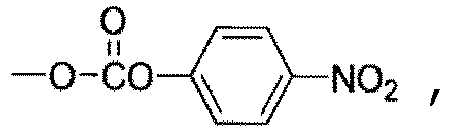
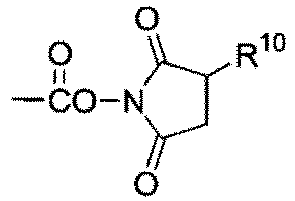
Applications Claiming Priority (2)
| Application Number | Priority Date | Filing Date | Title |
|---|---|---|---|
| JP2015193103 | 2015-09-30 | ||
| PCT/JP2016/078886 WO2017057612A1 (ja) | 2015-09-30 | 2016-09-29 | 環状ベンジリデンアセタールリンカーを介して親水性ポリマーが結合した脂質誘導体 |
Publications (3)
| Publication Number | Publication Date |
|---|---|
| EP3357514A1 EP3357514A1 (de) | 2018-08-08 |
| EP3357514A4 EP3357514A4 (de) | 2019-04-03 |
| EP3357514B1 true EP3357514B1 (de) | 2021-04-14 |
Family
ID=58427721
Family Applications (1)
| Application Number | Title | Priority Date | Filing Date |
|---|---|---|---|
| EP16851783.7A Active EP3357514B1 (de) | 2015-09-30 | 2016-09-29 | Lipidderivat mit über zyklischem benzyliden-acetal-linker gebundenen hydrophilen polymer |
Country Status (4)
| Country | Link |
|---|---|
| US (1) | US10626217B2 (de) |
| EP (1) | EP3357514B1 (de) |
| JP (1) | JP6850417B2 (de) |
| WO (1) | WO2017057612A1 (de) |
Families Citing this family (2)
| Publication number | Priority date | Publication date | Assignee | Title |
|---|---|---|---|---|
| US11905367B2 (en) * | 2018-03-20 | 2024-02-20 | Nof Corporation | Branched monodispersed polyethylene glycol, intermediate and methods for producing same |
| CN109251865B (zh) * | 2018-09-30 | 2021-06-15 | 哈尔滨工业大学 | 一种小球藻细胞表面耗氧保护层的制备方法 |
Family Cites Families (7)
| Publication number | Priority date | Publication date | Assignee | Title |
|---|---|---|---|---|
| US3948946A (en) | 1971-10-26 | 1976-04-06 | Sandoz Ltd., (Sandoz Ag) | Cyclic acetals and mercaptals |
| BE790493A (fr) | 1971-10-26 | 1973-04-24 | Sandoz Sa | Nouveaux composes heterocycliques utilisables comme stabilisants de matieres organiques et leur preparation |
| JP2012509366A (ja) | 2008-11-17 | 2012-04-19 | エンゾン ファーマシューティカルズ,インコーポレーテッド | 核酸送達系のための放出可能ポリマー脂質 |
| AU2012219936B2 (en) | 2011-02-24 | 2017-03-09 | Ktb Tumorforschungsgesellschaft Mbh | Bisphosphonate-prodrugs |
| WO2014157150A1 (ja) | 2013-03-25 | 2014-10-02 | 日油株式会社 | ベンジリデンアセタールリンカーを有する親水性ポリマー誘導体 |
| JP6631827B2 (ja) | 2014-03-31 | 2020-01-15 | 日油株式会社 | 環状ベンジリデンアセタールリンカーを有する親水性ポリマー誘導体 |
| JP6784932B2 (ja) | 2015-03-31 | 2020-11-18 | 日油株式会社 | 生体機能性分子または薬物キャリアの化学修飾用生分解性ポリエチレングリコール誘導体 |
-
2016
- 2016-09-29 EP EP16851783.7A patent/EP3357514B1/de active Active
- 2016-09-29 WO PCT/JP2016/078886 patent/WO2017057612A1/ja not_active Ceased
- 2016-09-29 JP JP2016190528A patent/JP6850417B2/ja active Active
- 2016-09-29 US US15/764,441 patent/US10626217B2/en active Active
Non-Patent Citations (1)
| Title |
|---|
| None * |
Also Published As
| Publication number | Publication date |
|---|---|
| EP3357514A1 (de) | 2018-08-08 |
| WO2017057612A1 (ja) | 2017-04-06 |
| US20180312633A1 (en) | 2018-11-01 |
| JP2017066397A (ja) | 2017-04-06 |
| EP3357514A4 (de) | 2019-04-03 |
| JP6850417B2 (ja) | 2021-03-31 |
| US10626217B2 (en) | 2020-04-21 |
Similar Documents
| Publication | Publication Date | Title |
|---|---|---|
| US11530295B2 (en) | Hydrophilic polymer derivative having cyclic benzylidene acetal linker | |
| US11529423B2 (en) | Biodegradable polyethylene glycol derivative having cyclic benzylidene acetal linker | |
| US10633489B2 (en) | Hydrophilic polymer derivative having benzylidene acetal linker | |
| EP2123304A1 (de) | Verbindungen geeignet als Nanoträger für aktive Substanzen und ihre Verwendungen | |
| EP3524631A1 (de) | Verzweigtes heteroartiges monodispergiertes polyethylenglykol, verfahren zur herstellung davon und konjugate davon | |
| EP3318591A1 (de) | Monodispergiertes heteropolyethylenglykol, zwischenprodukt zur herstellung eines monodispergierten heteropolyethylenglykols, verfahren zur herstellung davon und monodispergiertes heteropolyethylenglykolkonjugat | |
| US9029568B2 (en) | Branched hetero polyfunctional polyoxyalkylene compound and intermediate thereof | |
| EP3357514A1 (de) | Lipidderivat mit über zyklische benzyliden-acetal-linker gebundenen hydrophilen polymeren | |
| US11905367B2 (en) | Branched monodispersed polyethylene glycol, intermediate and methods for producing same | |
| EP3604383B1 (de) | Herstellungsverfahren eines polyoxyethylenderivats mit mehreren hydroxylgruppen am ende | |
| EP4512845A1 (de) | Acetalartiges freisetzbares polyoxyethylenderivat, herstellungsverfahren dafür und acetalartiges freisetzbares polyoxyethylenkonjugat | |
| EP3438155B1 (de) | Biologisch abbaubares hydrogel mit cyclischer benzylidenacetalstruktur |
Legal Events
| Date | Code | Title | Description |
|---|---|---|---|
| STAA | Information on the status of an ep patent application or granted ep patent |
Free format text: STATUS: THE INTERNATIONAL PUBLICATION HAS BEEN MADE |
|
| PUAI | Public reference made under article 153(3) epc to a published international application that has entered the european phase |
Free format text: ORIGINAL CODE: 0009012 |
|
| STAA | Information on the status of an ep patent application or granted ep patent |
Free format text: STATUS: REQUEST FOR EXAMINATION WAS MADE |
|
| 17P | Request for examination filed |
Effective date: 20180329 |
|
| AK | Designated contracting states |
Kind code of ref document: A1 Designated state(s): AL AT BE BG CH CY CZ DE DK EE ES FI FR GB GR HR HU IE IS IT LI LT LU LV MC MK MT NL NO PL PT RO RS SE SI SK SM TR |
|
| AX | Request for extension of the european patent |
Extension state: BA ME |
|
| DAV | Request for validation of the european patent (deleted) | ||
| DAX | Request for extension of the european patent (deleted) | ||
| A4 | Supplementary search report drawn up and despatched |
Effective date: 20190301 |
|
| RIC1 | Information provided on ipc code assigned before grant |
Ipc: C08G 65/329 20060101ALI20190225BHEP Ipc: A61K 47/34 20170101AFI20190225BHEP Ipc: A61K 9/127 20060101ALI20190225BHEP Ipc: C07D 317/20 20060101ALI20190225BHEP |
|
| STAA | Information on the status of an ep patent application or granted ep patent |
Free format text: STATUS: EXAMINATION IS IN PROGRESS |
|
| 17Q | First examination report despatched |
Effective date: 20200312 |
|
| REG | Reference to a national code |
Ref country code: DE Ref legal event code: R079 Ref document number: 602016056237 Country of ref document: DE Free format text: PREVIOUS MAIN CLASS: A61K0047340000 Ipc: C07D0317200000 |
|
| RIC1 | Information provided on ipc code assigned before grant |
Ipc: C07D 317/28 20060101ALI20200805BHEP Ipc: C07D 317/20 20060101AFI20200805BHEP Ipc: C07D 317/22 20060101ALI20200805BHEP Ipc: C07D 319/06 20060101ALI20200805BHEP Ipc: C07D 317/24 20060101ALI20200805BHEP Ipc: A61K 47/34 20170101ALI20200805BHEP Ipc: C07D 405/06 20060101ALI20200805BHEP Ipc: A61K 9/127 20060101ALI20200805BHEP Ipc: C07D 405/12 20060101ALI20200805BHEP Ipc: C08G 65/331 20060101ALI20200805BHEP |
|
| GRAP | Despatch of communication of intention to grant a patent |
Free format text: ORIGINAL CODE: EPIDOSNIGR1 |
|
| STAA | Information on the status of an ep patent application or granted ep patent |
Free format text: STATUS: GRANT OF PATENT IS INTENDED |
|
| INTG | Intention to grant announced |
Effective date: 20200915 |
|
| GRAJ | Information related to disapproval of communication of intention to grant by the applicant or resumption of examination proceedings by the epo deleted |
Free format text: ORIGINAL CODE: EPIDOSDIGR1 |
|
| STAA | Information on the status of an ep patent application or granted ep patent |
Free format text: STATUS: EXAMINATION IS IN PROGRESS |
|
| GRAP | Despatch of communication of intention to grant a patent |
Free format text: ORIGINAL CODE: EPIDOSNIGR1 |
|
| STAA | Information on the status of an ep patent application or granted ep patent |
Free format text: STATUS: GRANT OF PATENT IS INTENDED |
|
| INTC | Intention to grant announced (deleted) | ||
| INTG | Intention to grant announced |
Effective date: 20201222 |
|
| GRAS | Grant fee paid |
Free format text: ORIGINAL CODE: EPIDOSNIGR3 |
|
| GRAA | (expected) grant |
Free format text: ORIGINAL CODE: 0009210 |
|
| STAA | Information on the status of an ep patent application or granted ep patent |
Free format text: STATUS: THE PATENT HAS BEEN GRANTED |
|
| AK | Designated contracting states |
Kind code of ref document: B1 Designated state(s): AL AT BE BG CH CY CZ DE DK EE ES FI FR GB GR HR HU IE IS IT LI LT LU LV MC MK MT NL NO PL PT RO RS SE SI SK SM TR |
|
| REG | Reference to a national code |
Ref country code: GB Ref legal event code: FG4D |
|
| REG | Reference to a national code |
Ref country code: CH Ref legal event code: EP |
|
| REG | Reference to a national code |
Ref country code: CH Ref legal event code: NV Representative=s name: BOVARD AG PATENT- UND MARKENANWAELTE, CH |
|
| REG | Reference to a national code |
Ref country code: DE Ref legal event code: R096 Ref document number: 602016056237 Country of ref document: DE |
|
| REG | Reference to a national code |
Ref country code: IE Ref legal event code: FG4D |
|
| REG | Reference to a national code |
Ref country code: AT Ref legal event code: REF Ref document number: 1382279 Country of ref document: AT Kind code of ref document: T Effective date: 20210515 |
|
| REG | Reference to a national code |
Ref country code: LT Ref legal event code: MG9D |
|
| REG | Reference to a national code |
Ref country code: AT Ref legal event code: MK05 Ref document number: 1382279 Country of ref document: AT Kind code of ref document: T Effective date: 20210414 |
|
| REG | Reference to a national code |
Ref country code: NL Ref legal event code: MP Effective date: 20210414 |
|
| PG25 | Lapsed in a contracting state [announced via postgrant information from national office to epo] |
Ref country code: FI Free format text: LAPSE BECAUSE OF FAILURE TO SUBMIT A TRANSLATION OF THE DESCRIPTION OR TO PAY THE FEE WITHIN THE PRESCRIBED TIME-LIMIT Effective date: 20210414 Ref country code: LT Free format text: LAPSE BECAUSE OF FAILURE TO SUBMIT A TRANSLATION OF THE DESCRIPTION OR TO PAY THE FEE WITHIN THE PRESCRIBED TIME-LIMIT Effective date: 20210414 Ref country code: HR Free format text: LAPSE BECAUSE OF FAILURE TO SUBMIT A TRANSLATION OF THE DESCRIPTION OR TO PAY THE FEE WITHIN THE PRESCRIBED TIME-LIMIT Effective date: 20210414 Ref country code: AT Free format text: LAPSE BECAUSE OF FAILURE TO SUBMIT A TRANSLATION OF THE DESCRIPTION OR TO PAY THE FEE WITHIN THE PRESCRIBED TIME-LIMIT Effective date: 20210414 Ref country code: BG Free format text: LAPSE BECAUSE OF FAILURE TO SUBMIT A TRANSLATION OF THE DESCRIPTION OR TO PAY THE FEE WITHIN THE PRESCRIBED TIME-LIMIT Effective date: 20210714 Ref country code: NL Free format text: LAPSE BECAUSE OF FAILURE TO SUBMIT A TRANSLATION OF THE DESCRIPTION OR TO PAY THE FEE WITHIN THE PRESCRIBED TIME-LIMIT Effective date: 20210414 |
|
| PG25 | Lapsed in a contracting state [announced via postgrant information from national office to epo] |
Ref country code: IS Free format text: LAPSE BECAUSE OF FAILURE TO SUBMIT A TRANSLATION OF THE DESCRIPTION OR TO PAY THE FEE WITHIN THE PRESCRIBED TIME-LIMIT Effective date: 20210814 Ref country code: LV Free format text: LAPSE BECAUSE OF FAILURE TO SUBMIT A TRANSLATION OF THE DESCRIPTION OR TO PAY THE FEE WITHIN THE PRESCRIBED TIME-LIMIT Effective date: 20210414 Ref country code: GR Free format text: LAPSE BECAUSE OF FAILURE TO SUBMIT A TRANSLATION OF THE DESCRIPTION OR TO PAY THE FEE WITHIN THE PRESCRIBED TIME-LIMIT Effective date: 20210715 Ref country code: PL Free format text: LAPSE BECAUSE OF FAILURE TO SUBMIT A TRANSLATION OF THE DESCRIPTION OR TO PAY THE FEE WITHIN THE PRESCRIBED TIME-LIMIT Effective date: 20210414 Ref country code: PT Free format text: LAPSE BECAUSE OF FAILURE TO SUBMIT A TRANSLATION OF THE DESCRIPTION OR TO PAY THE FEE WITHIN THE PRESCRIBED TIME-LIMIT Effective date: 20210816 Ref country code: NO Free format text: LAPSE BECAUSE OF FAILURE TO SUBMIT A TRANSLATION OF THE DESCRIPTION OR TO PAY THE FEE WITHIN THE PRESCRIBED TIME-LIMIT Effective date: 20210714 Ref country code: SE Free format text: LAPSE BECAUSE OF FAILURE TO SUBMIT A TRANSLATION OF THE DESCRIPTION OR TO PAY THE FEE WITHIN THE PRESCRIBED TIME-LIMIT Effective date: 20210414 Ref country code: RS Free format text: LAPSE BECAUSE OF FAILURE TO SUBMIT A TRANSLATION OF THE DESCRIPTION OR TO PAY THE FEE WITHIN THE PRESCRIBED TIME-LIMIT Effective date: 20210414 |
|
| REG | Reference to a national code |
Ref country code: DE Ref legal event code: R097 Ref document number: 602016056237 Country of ref document: DE |
|
| PG25 | Lapsed in a contracting state [announced via postgrant information from national office to epo] |
Ref country code: EE Free format text: LAPSE BECAUSE OF FAILURE TO SUBMIT A TRANSLATION OF THE DESCRIPTION OR TO PAY THE FEE WITHIN THE PRESCRIBED TIME-LIMIT Effective date: 20210414 Ref country code: CZ Free format text: LAPSE BECAUSE OF FAILURE TO SUBMIT A TRANSLATION OF THE DESCRIPTION OR TO PAY THE FEE WITHIN THE PRESCRIBED TIME-LIMIT Effective date: 20210414 Ref country code: DK Free format text: LAPSE BECAUSE OF FAILURE TO SUBMIT A TRANSLATION OF THE DESCRIPTION OR TO PAY THE FEE WITHIN THE PRESCRIBED TIME-LIMIT Effective date: 20210414 Ref country code: ES Free format text: LAPSE BECAUSE OF FAILURE TO SUBMIT A TRANSLATION OF THE DESCRIPTION OR TO PAY THE FEE WITHIN THE PRESCRIBED TIME-LIMIT Effective date: 20210414 Ref country code: RO Free format text: LAPSE BECAUSE OF FAILURE TO SUBMIT A TRANSLATION OF THE DESCRIPTION OR TO PAY THE FEE WITHIN THE PRESCRIBED TIME-LIMIT Effective date: 20210414 Ref country code: SK Free format text: LAPSE BECAUSE OF FAILURE TO SUBMIT A TRANSLATION OF THE DESCRIPTION OR TO PAY THE FEE WITHIN THE PRESCRIBED TIME-LIMIT Effective date: 20210414 Ref country code: SM Free format text: LAPSE BECAUSE OF FAILURE TO SUBMIT A TRANSLATION OF THE DESCRIPTION OR TO PAY THE FEE WITHIN THE PRESCRIBED TIME-LIMIT Effective date: 20210414 |
|
| PLBE | No opposition filed within time limit |
Free format text: ORIGINAL CODE: 0009261 |
|
| STAA | Information on the status of an ep patent application or granted ep patent |
Free format text: STATUS: NO OPPOSITION FILED WITHIN TIME LIMIT |
|
| 26N | No opposition filed |
Effective date: 20220117 |
|
| REG | Reference to a national code |
Ref country code: BE Ref legal event code: MM Effective date: 20210930 |
|
| PG25 | Lapsed in a contracting state [announced via postgrant information from national office to epo] |
Ref country code: IS Free format text: LAPSE BECAUSE OF FAILURE TO SUBMIT A TRANSLATION OF THE DESCRIPTION OR TO PAY THE FEE WITHIN THE PRESCRIBED TIME-LIMIT Effective date: 20210814 Ref country code: MC Free format text: LAPSE BECAUSE OF FAILURE TO SUBMIT A TRANSLATION OF THE DESCRIPTION OR TO PAY THE FEE WITHIN THE PRESCRIBED TIME-LIMIT Effective date: 20210414 Ref country code: AL Free format text: LAPSE BECAUSE OF FAILURE TO SUBMIT A TRANSLATION OF THE DESCRIPTION OR TO PAY THE FEE WITHIN THE PRESCRIBED TIME-LIMIT Effective date: 20210414 |
|
| PG25 | Lapsed in a contracting state [announced via postgrant information from national office to epo] |
Ref country code: LU Free format text: LAPSE BECAUSE OF NON-PAYMENT OF DUE FEES Effective date: 20210929 Ref country code: IT Free format text: LAPSE BECAUSE OF FAILURE TO SUBMIT A TRANSLATION OF THE DESCRIPTION OR TO PAY THE FEE WITHIN THE PRESCRIBED TIME-LIMIT Effective date: 20210414 Ref country code: IE Free format text: LAPSE BECAUSE OF NON-PAYMENT OF DUE FEES Effective date: 20210929 Ref country code: BE Free format text: LAPSE BECAUSE OF NON-PAYMENT OF DUE FEES Effective date: 20210930 |
|
| P01 | Opt-out of the competence of the unified patent court (upc) registered |
Effective date: 20230410 |
|
| PG25 | Lapsed in a contracting state [announced via postgrant information from national office to epo] |
Ref country code: CY Free format text: LAPSE BECAUSE OF FAILURE TO SUBMIT A TRANSLATION OF THE DESCRIPTION OR TO PAY THE FEE WITHIN THE PRESCRIBED TIME-LIMIT Effective date: 20210414 |
|
| PG25 | Lapsed in a contracting state [announced via postgrant information from national office to epo] |
Ref country code: HU Free format text: LAPSE BECAUSE OF FAILURE TO SUBMIT A TRANSLATION OF THE DESCRIPTION OR TO PAY THE FEE WITHIN THE PRESCRIBED TIME-LIMIT; INVALID AB INITIO Effective date: 20160929 |
|
| PG25 | Lapsed in a contracting state [announced via postgrant information from national office to epo] |
Ref country code: MK Free format text: LAPSE BECAUSE OF FAILURE TO SUBMIT A TRANSLATION OF THE DESCRIPTION OR TO PAY THE FEE WITHIN THE PRESCRIBED TIME-LIMIT Effective date: 20210414 |
|
| PG25 | Lapsed in a contracting state [announced via postgrant information from national office to epo] |
Ref country code: MT Free format text: LAPSE BECAUSE OF FAILURE TO SUBMIT A TRANSLATION OF THE DESCRIPTION OR TO PAY THE FEE WITHIN THE PRESCRIBED TIME-LIMIT Effective date: 20210414 |
|
| REG | Reference to a national code |
Ref country code: CH Ref legal event code: U11 Free format text: ST27 STATUS EVENT CODE: U-0-0-U10-U11 (AS PROVIDED BY THE NATIONAL OFFICE) Effective date: 20251001 |
|
| PGFP | Annual fee paid to national office [announced via postgrant information from national office to epo] |
Ref country code: DE Payment date: 20250919 Year of fee payment: 10 |
|
| PGFP | Annual fee paid to national office [announced via postgrant information from national office to epo] |
Ref country code: GB Payment date: 20250919 Year of fee payment: 10 |
|
| PGFP | Annual fee paid to national office [announced via postgrant information from national office to epo] |
Ref country code: FR Payment date: 20250922 Year of fee payment: 10 |
|
| PG25 | Lapsed in a contracting state [announced via postgrant information from national office to epo] |
Ref country code: TR Free format text: LAPSE BECAUSE OF FAILURE TO SUBMIT A TRANSLATION OF THE DESCRIPTION OR TO PAY THE FEE WITHIN THE PRESCRIBED TIME-LIMIT Effective date: 20210414 |
|
| PGFP | Annual fee paid to national office [announced via postgrant information from national office to epo] |
Ref country code: CH Payment date: 20251001 Year of fee payment: 10 |