EP4512845A1 - Acetalartiges freisetzbares polyoxyethylenderivat, herstellungsverfahren dafür und acetalartiges freisetzbares polyoxyethylenkonjugat - Google Patents
Acetalartiges freisetzbares polyoxyethylenderivat, herstellungsverfahren dafür und acetalartiges freisetzbares polyoxyethylenkonjugat Download PDFInfo
- Publication number
- EP4512845A1 EP4512845A1 EP23791904.8A EP23791904A EP4512845A1 EP 4512845 A1 EP4512845 A1 EP 4512845A1 EP 23791904 A EP23791904 A EP 23791904A EP 4512845 A1 EP4512845 A1 EP 4512845A1
- Authority
- EP
- European Patent Office
- Prior art keywords
- group
- formula
- mmol
- acetal
- arom
- Prior art date
- Legal status (The legal status is an assumption and is not a legal conclusion. Google has not performed a legal analysis and makes no representation as to the accuracy of the status listed.)
- Granted
Links
Images




Classifications
-
- A—HUMAN NECESSITIES
- A61—MEDICAL OR VETERINARY SCIENCE; HYGIENE
- A61K—PREPARATIONS FOR MEDICAL, DENTAL OR TOILETRY PURPOSES
- A61K47/00—Medicinal preparations characterised by the non-active ingredients used, e.g. carriers or inert additives; Targeting or modifying agents chemically bound to the active ingredient
- A61K47/50—Medicinal preparations characterised by the non-active ingredients used, e.g. carriers or inert additives; Targeting or modifying agents chemically bound to the active ingredient the non-active ingredient being chemically bound to the active ingredient, e.g. polymer-drug conjugates
- A61K47/51—Medicinal preparations characterised by the non-active ingredients used, e.g. carriers or inert additives; Targeting or modifying agents chemically bound to the active ingredient the non-active ingredient being chemically bound to the active ingredient, e.g. polymer-drug conjugates the non-active ingredient being a modifying agent
- A61K47/56—Medicinal preparations characterised by the non-active ingredients used, e.g. carriers or inert additives; Targeting or modifying agents chemically bound to the active ingredient the non-active ingredient being chemically bound to the active ingredient, e.g. polymer-drug conjugates the non-active ingredient being a modifying agent the modifying agent being an organic macromolecular compound, e.g. an oligomeric, polymeric or dendrimeric molecule
- A61K47/59—Medicinal preparations characterised by the non-active ingredients used, e.g. carriers or inert additives; Targeting or modifying agents chemically bound to the active ingredient the non-active ingredient being chemically bound to the active ingredient, e.g. polymer-drug conjugates the non-active ingredient being a modifying agent the modifying agent being an organic macromolecular compound, e.g. an oligomeric, polymeric or dendrimeric molecule obtained otherwise than by reactions only involving carbon-to-carbon unsaturated bonds, e.g. polyureas or polyurethanes
- A61K47/60—Medicinal preparations characterised by the non-active ingredients used, e.g. carriers or inert additives; Targeting or modifying agents chemically bound to the active ingredient the non-active ingredient being chemically bound to the active ingredient, e.g. polymer-drug conjugates the non-active ingredient being a modifying agent the modifying agent being an organic macromolecular compound, e.g. an oligomeric, polymeric or dendrimeric molecule obtained otherwise than by reactions only involving carbon-to-carbon unsaturated bonds, e.g. polyureas or polyurethanes the organic macromolecular compound being a polyoxyalkylene oligomer, polymer or dendrimer, e.g. PEG, PPG, PEO or polyglycerol
-
- A—HUMAN NECESSITIES
- A61—MEDICAL OR VETERINARY SCIENCE; HYGIENE
- A61K—PREPARATIONS FOR MEDICAL, DENTAL OR TOILETRY PURPOSES
- A61K47/00—Medicinal preparations characterised by the non-active ingredients used, e.g. carriers or inert additives; Targeting or modifying agents chemically bound to the active ingredient
- A61K47/50—Medicinal preparations characterised by the non-active ingredients used, e.g. carriers or inert additives; Targeting or modifying agents chemically bound to the active ingredient the non-active ingredient being chemically bound to the active ingredient, e.g. polymer-drug conjugates
- A61K47/51—Medicinal preparations characterised by the non-active ingredients used, e.g. carriers or inert additives; Targeting or modifying agents chemically bound to the active ingredient the non-active ingredient being chemically bound to the active ingredient, e.g. polymer-drug conjugates the non-active ingredient being a modifying agent
- A61K47/56—Medicinal preparations characterised by the non-active ingredients used, e.g. carriers or inert additives; Targeting or modifying agents chemically bound to the active ingredient the non-active ingredient being chemically bound to the active ingredient, e.g. polymer-drug conjugates the non-active ingredient being a modifying agent the modifying agent being an organic macromolecular compound, e.g. an oligomeric, polymeric or dendrimeric molecule
- A61K47/59—Medicinal preparations characterised by the non-active ingredients used, e.g. carriers or inert additives; Targeting or modifying agents chemically bound to the active ingredient the non-active ingredient being chemically bound to the active ingredient, e.g. polymer-drug conjugates the non-active ingredient being a modifying agent the modifying agent being an organic macromolecular compound, e.g. an oligomeric, polymeric or dendrimeric molecule obtained otherwise than by reactions only involving carbon-to-carbon unsaturated bonds, e.g. polyureas or polyurethanes
-
- C—CHEMISTRY; METALLURGY
- C07—ORGANIC CHEMISTRY
- C07D—HETEROCYCLIC COMPOUNDS
- C07D319/00—Heterocyclic compounds containing six-membered rings having two oxygen atoms as the only ring hetero atoms
- C07D319/04—1,3-Dioxanes; Hydrogenated 1,3-dioxanes
- C07D319/08—1,3-Dioxanes; Hydrogenated 1,3-dioxanes condensed with carbocyclic rings or ring systems
-
- C—CHEMISTRY; METALLURGY
- C07—ORGANIC CHEMISTRY
- C07D—HETEROCYCLIC COMPOUNDS
- C07D319/00—Heterocyclic compounds containing six-membered rings having two oxygen atoms as the only ring hetero atoms
- C07D319/10—1,4-Dioxanes; Hydrogenated 1,4-dioxanes
- C07D319/14—1,4-Dioxanes; Hydrogenated 1,4-dioxanes condensed with carbocyclic rings or ring systems
- C07D319/16—1,4-Dioxanes; Hydrogenated 1,4-dioxanes condensed with carbocyclic rings or ring systems condensed with one six-membered ring
- C07D319/20—1,4-Dioxanes; Hydrogenated 1,4-dioxanes condensed with carbocyclic rings or ring systems condensed with one six-membered ring with substituents attached to the hetero ring
-
- C—CHEMISTRY; METALLURGY
- C08—ORGANIC MACROMOLECULAR COMPOUNDS; THEIR PREPARATION OR CHEMICAL WORKING-UP; COMPOSITIONS BASED THEREON
- C08G—MACROMOLECULAR COMPOUNDS OBTAINED OTHERWISE THAN BY REACTIONS ONLY INVOLVING UNSATURATED CARBON-TO-CARBON BONDS
- C08G65/00—Macromolecular compounds obtained by reactions forming an ether link in the main chain of the macromolecule
- C08G65/02—Macromolecular compounds obtained by reactions forming an ether link in the main chain of the macromolecule from cyclic ethers by opening of the heterocyclic ring
- C08G65/32—Polymers modified by chemical after-treatment
- C08G65/329—Polymers modified by chemical after-treatment with organic compounds
- C08G65/331—Polymers modified by chemical after-treatment with organic compounds containing oxygen
-
- C—CHEMISTRY; METALLURGY
- C08—ORGANIC MACROMOLECULAR COMPOUNDS; THEIR PREPARATION OR CHEMICAL WORKING-UP; COMPOSITIONS BASED THEREON
- C08G—MACROMOLECULAR COMPOUNDS OBTAINED OTHERWISE THAN BY REACTIONS ONLY INVOLVING UNSATURATED CARBON-TO-CARBON BONDS
- C08G65/00—Macromolecular compounds obtained by reactions forming an ether link in the main chain of the macromolecule
- C08G65/02—Macromolecular compounds obtained by reactions forming an ether link in the main chain of the macromolecule from cyclic ethers by opening of the heterocyclic ring
- C08G65/32—Polymers modified by chemical after-treatment
- C08G65/329—Polymers modified by chemical after-treatment with organic compounds
- C08G65/331—Polymers modified by chemical after-treatment with organic compounds containing oxygen
- C08G65/3311—Polymers modified by chemical after-treatment with organic compounds containing oxygen containing a hydroxy group
- C08G65/3314—Polymers modified by chemical after-treatment with organic compounds containing oxygen containing a hydroxy group cyclic
- C08G65/3315—Polymers modified by chemical after-treatment with organic compounds containing oxygen containing a hydroxy group cyclic aromatic
-
- C—CHEMISTRY; METALLURGY
- C08—ORGANIC MACROMOLECULAR COMPOUNDS; THEIR PREPARATION OR CHEMICAL WORKING-UP; COMPOSITIONS BASED THEREON
- C08G—MACROMOLECULAR COMPOUNDS OBTAINED OTHERWISE THAN BY REACTIONS ONLY INVOLVING UNSATURATED CARBON-TO-CARBON BONDS
- C08G65/00—Macromolecular compounds obtained by reactions forming an ether link in the main chain of the macromolecule
- C08G65/02—Macromolecular compounds obtained by reactions forming an ether link in the main chain of the macromolecule from cyclic ethers by opening of the heterocyclic ring
- C08G65/32—Polymers modified by chemical after-treatment
- C08G65/329—Polymers modified by chemical after-treatment with organic compounds
- C08G65/331—Polymers modified by chemical after-treatment with organic compounds containing oxygen
- C08G65/3311—Polymers modified by chemical after-treatment with organic compounds containing oxygen containing a hydroxy group
- C08G65/3314—Polymers modified by chemical after-treatment with organic compounds containing oxygen containing a hydroxy group cyclic
- C08G65/3315—Polymers modified by chemical after-treatment with organic compounds containing oxygen containing a hydroxy group cyclic aromatic
- C08G65/3317—Polymers modified by chemical after-treatment with organic compounds containing oxygen containing a hydroxy group cyclic aromatic phenolic
-
- C—CHEMISTRY; METALLURGY
- C08—ORGANIC MACROMOLECULAR COMPOUNDS; THEIR PREPARATION OR CHEMICAL WORKING-UP; COMPOSITIONS BASED THEREON
- C08G—MACROMOLECULAR COMPOUNDS OBTAINED OTHERWISE THAN BY REACTIONS ONLY INVOLVING UNSATURATED CARBON-TO-CARBON BONDS
- C08G65/00—Macromolecular compounds obtained by reactions forming an ether link in the main chain of the macromolecule
- C08G65/02—Macromolecular compounds obtained by reactions forming an ether link in the main chain of the macromolecule from cyclic ethers by opening of the heterocyclic ring
- C08G65/32—Polymers modified by chemical after-treatment
- C08G65/329—Polymers modified by chemical after-treatment with organic compounds
- C08G65/331—Polymers modified by chemical after-treatment with organic compounds containing oxygen
- C08G65/332—Polymers modified by chemical after-treatment with organic compounds containing oxygen containing carboxyl groups, or halides, or esters thereof
- C08G65/3322—Polymers modified by chemical after-treatment with organic compounds containing oxygen containing carboxyl groups, or halides, or esters thereof acyclic
-
- C—CHEMISTRY; METALLURGY
- C08—ORGANIC MACROMOLECULAR COMPOUNDS; THEIR PREPARATION OR CHEMICAL WORKING-UP; COMPOSITIONS BASED THEREON
- C08G—MACROMOLECULAR COMPOUNDS OBTAINED OTHERWISE THAN BY REACTIONS ONLY INVOLVING UNSATURATED CARBON-TO-CARBON BONDS
- C08G65/00—Macromolecular compounds obtained by reactions forming an ether link in the main chain of the macromolecule
- C08G65/02—Macromolecular compounds obtained by reactions forming an ether link in the main chain of the macromolecule from cyclic ethers by opening of the heterocyclic ring
- C08G65/32—Polymers modified by chemical after-treatment
- C08G65/329—Polymers modified by chemical after-treatment with organic compounds
- C08G65/333—Polymers modified by chemical after-treatment with organic compounds containing nitrogen
-
- C—CHEMISTRY; METALLURGY
- C08—ORGANIC MACROMOLECULAR COMPOUNDS; THEIR PREPARATION OR CHEMICAL WORKING-UP; COMPOSITIONS BASED THEREON
- C08G—MACROMOLECULAR COMPOUNDS OBTAINED OTHERWISE THAN BY REACTIONS ONLY INVOLVING UNSATURATED CARBON-TO-CARBON BONDS
- C08G65/00—Macromolecular compounds obtained by reactions forming an ether link in the main chain of the macromolecule
- C08G65/02—Macromolecular compounds obtained by reactions forming an ether link in the main chain of the macromolecule from cyclic ethers by opening of the heterocyclic ring
- C08G65/32—Polymers modified by chemical after-treatment
- C08G65/329—Polymers modified by chemical after-treatment with organic compounds
- C08G65/333—Polymers modified by chemical after-treatment with organic compounds containing nitrogen
- C08G65/33303—Polymers modified by chemical after-treatment with organic compounds containing nitrogen containing amino group
- C08G65/33306—Polymers modified by chemical after-treatment with organic compounds containing nitrogen containing amino group acyclic
-
- C—CHEMISTRY; METALLURGY
- C08—ORGANIC MACROMOLECULAR COMPOUNDS; THEIR PREPARATION OR CHEMICAL WORKING-UP; COMPOSITIONS BASED THEREON
- C08G—MACROMOLECULAR COMPOUNDS OBTAINED OTHERWISE THAN BY REACTIONS ONLY INVOLVING UNSATURATED CARBON-TO-CARBON BONDS
- C08G65/00—Macromolecular compounds obtained by reactions forming an ether link in the main chain of the macromolecule
- C08G65/02—Macromolecular compounds obtained by reactions forming an ether link in the main chain of the macromolecule from cyclic ethers by opening of the heterocyclic ring
- C08G65/32—Polymers modified by chemical after-treatment
- C08G65/329—Polymers modified by chemical after-treatment with organic compounds
- C08G65/333—Polymers modified by chemical after-treatment with organic compounds containing nitrogen
- C08G65/33331—Polymers modified by chemical after-treatment with organic compounds containing nitrogen containing imide group
- C08G65/33337—Polymers modified by chemical after-treatment with organic compounds containing nitrogen containing imide group cyclic
-
- C—CHEMISTRY; METALLURGY
- C08—ORGANIC MACROMOLECULAR COMPOUNDS; THEIR PREPARATION OR CHEMICAL WORKING-UP; COMPOSITIONS BASED THEREON
- C08G—MACROMOLECULAR COMPOUNDS OBTAINED OTHERWISE THAN BY REACTIONS ONLY INVOLVING UNSATURATED CARBON-TO-CARBON BONDS
- C08G65/00—Macromolecular compounds obtained by reactions forming an ether link in the main chain of the macromolecule
- C08G65/02—Macromolecular compounds obtained by reactions forming an ether link in the main chain of the macromolecule from cyclic ethers by opening of the heterocyclic ring
- C08G65/32—Polymers modified by chemical after-treatment
- C08G65/329—Polymers modified by chemical after-treatment with organic compounds
- C08G65/333—Polymers modified by chemical after-treatment with organic compounds containing nitrogen
- C08G65/33396—Polymers modified by chemical after-treatment with organic compounds containing nitrogen having oxygen in addition to nitrogen
-
- C—CHEMISTRY; METALLURGY
- C08—ORGANIC MACROMOLECULAR COMPOUNDS; THEIR PREPARATION OR CHEMICAL WORKING-UP; COMPOSITIONS BASED THEREON
- C08G—MACROMOLECULAR COMPOUNDS OBTAINED OTHERWISE THAN BY REACTIONS ONLY INVOLVING UNSATURATED CARBON-TO-CARBON BONDS
- C08G65/00—Macromolecular compounds obtained by reactions forming an ether link in the main chain of the macromolecule
- C08G65/02—Macromolecular compounds obtained by reactions forming an ether link in the main chain of the macromolecule from cyclic ethers by opening of the heterocyclic ring
- C08G65/32—Polymers modified by chemical after-treatment
- C08G65/329—Polymers modified by chemical after-treatment with organic compounds
- C08G65/337—Polymers modified by chemical after-treatment with organic compounds containing other elements
-
- C—CHEMISTRY; METALLURGY
- C08—ORGANIC MACROMOLECULAR COMPOUNDS; THEIR PREPARATION OR CHEMICAL WORKING-UP; COMPOSITIONS BASED THEREON
- C08L—COMPOSITIONS OF MACROMOLECULAR COMPOUNDS
- C08L2203/00—Applications
- C08L2203/02—Applications for biomedical use
-
- Y—GENERAL TAGGING OF NEW TECHNOLOGICAL DEVELOPMENTS; GENERAL TAGGING OF CROSS-SECTIONAL TECHNOLOGIES SPANNING OVER SEVERAL SECTIONS OF THE IPC; TECHNICAL SUBJECTS COVERED BY FORMER USPC CROSS-REFERENCE ART COLLECTIONS [XRACs] AND DIGESTS
- Y02—TECHNOLOGIES OR APPLICATIONS FOR MITIGATION OR ADAPTATION AGAINST CLIMATE CHANGE
- Y02P—CLIMATE CHANGE MITIGATION TECHNOLOGIES IN THE PRODUCTION OR PROCESSING OF GOODS
- Y02P20/00—Technologies relating to chemical industry
- Y02P20/50—Improvements relating to the production of bulk chemicals
- Y02P20/55—Design of synthesis routes, e.g. reducing the use of auxiliary or protecting groups
Definitions
- the present invention relates to an acetal-type releasable polyoxyethylene derivative, a production method thereof, and an acetal-type releasable polyoxyethylene conjugate which is a conjugate with a biofunctional molecule.
- biofunctional molecules chemically modified with water-soluble polymers such as PEG may have undesirable effects such as reduced interactions with target endogenous molecules or receptors due to the formation of the hydration layer by the water-soluble polymers or a steric shielding effect of an active site, resulting in a reduction in the inherent pharmacological action of the biofunctional molecule or changes in dynamics in the living body or cells.
- a method is used in which a biofunctional molecule is chemically modified with a water-soluble polymer via a temporary bond, and the temporary bond is cleaved in vivo to release the biofunctional molecule that is not chemically modified, that is, a prodrug conversion method.
- Patent Literatures 1 and 2 report that PEGylated hGH and PEGylated IL-2, which are obtained by modifying a human growth hormone (hGH) and interleukin 2 (IL-2) as biofunctional molecules with PEG via a linker that is enzyme-independent and decomposes at a moderate rate under a physiological condition, that is, a neutral condition, can extend the half-life in blood thereof, and can improve the reduced pharmacological action caused by PEGylation by releasing the biofunctional molecules as the linker decomposes. For this reason, the prodrug conversion technique that can extend the half-life in blood of biofunctional molecules and release the biofunctional molecules at an appropriate rate under a physiological condition in an enzyme-independent manner to exert the pharmacological actions is important.
- hGH human growth hormone
- IL-2 interleukin 2
- Patent Literature 3 reports a compound that enzyme-independently cleaves a temporary bond in a biofunctional molecule that has been chemically modified with PEG, thereby releasing the biofunctional molecule that is not chemically modified.
- Patent Literature 3 specific structures capable of releasing biofunctional molecules in an enzyme-independent manner and under an acidic condition are exemplified.
- a prodrug conversion technique that can release a biofunctional molecule at an appropriate rate and exert a pharmacological action under a physiological condition, that is, a neutral condition of approximately pH 7.4, in an enzyme-independent manner.
- An object of the present invention is to provide a polyoxyethylene derivative having an acetal structure, which is characterized by converting a biofunctional molecule into a prodrug and gradually releasing the biofunctional molecule under a physiological condition, a stable production method thereof, and an acetal-type releasable polyoxyethylene conjugate.
- a polyoxyethylene derivative having an acetal structure which is characterized by converting a biofunctional molecule into a prodrug and gradually hydrolyzing the acetal under a physiological condition to induce benzyl elimination, thereby releasing the biofunctional molecule, a stable production method thereof, and an acetal-type releasable polyoxyethylene conjugate.
- the present invention relates to the following [1] to [6].
- the acetal-type releasable polyoxyethylene derivative of the present invention can improve a pharmacological action of a physiologically functional molecule modified with a polyoxyethylene derivative by converting the biofunctional molecule into a prodrug, gradually hydrolyzes acetal under a physiological condition to induce benzyl elimination, and gradually releasing the biofunctional molecule.
- an acetal structure in a compound of Patent Literature 3 is generally used as a protecting group for a diol or carbonyl group, and it is known that the deprotection thereof is performed under an acidic condition and to be stable under a neutral or basic condition. Therefore, in the compound in Patent Literature 3, there is no suggestion of creating a compound that is hydrolyzed at an appropriate rate under a physiological condition, that is, under a neutral condition, to release a physiologically functional molecule.
- a production method in Patent Literature 3 includes a step of coupling a phenolic hydroxyl group of a low molecular weight compound having an acetal structure with a hydroxy group of PEG under a basic condition, but it has been found that when the production of the acetal-type releasable polyoxyethylene derivative of the present invention is performed through a coupling step similar to that of Patent Literature 3, the acetal structure in the low molecular weight compound becomes unstable, making it difficult to obtain the acetal-type releasable polyoxyethylene derivative of the present invention.
- the present invention is characterized in that, under a physiological condition, acetal undergoes hydrolysis, followed by benzyl elimination, and a biofunctional molecule is gradually released.
- physiological condition refers to a pH of 6.0 to 8.0.
- a release rate of the biofunctional molecule under the physiological condition can be evaluated as a half-life of the acetal in a buffer solution of pH 7.4.
- the half-life of the acetal in a buffer solution of pH 7.4 is preferably 0.5 days to 35 days.
- the "half-life" refers to a time required for the acetal to be hydrolyzed to convert 1/2 equivalent thereof to aldehyde.
- the present inventors have found that a compound in which a polyoxyethylene derivative is introduced via an ether bond to 2-position or 4-position of a phenyl group bonded to acetal can achieve the above-mentioned acetal half-life when applied under a physiological condition.
- the present invention is an acetal-type releasable polyoxyethylene derivative expressed by the following Formula (1), (2), (3) or (4), and cleaved under a physiological condition.
- R 1 , R 2 and E 1 will be described in detail later, and B 1 represents a hydrogen atom or -C(R 1 )(R 2 )OC(O)E 1 , and preferably represents a hydrogen atom.
- E 1 represents a leaving group
- preferred examples of the leaving group include a succinimidyloxy group, a phthalimidyloxy group, a 4-nitrophenoxy group, a 1-imidazolyl group, a pentafluorophenoxy group, a benzotriazol-1-yloxy group, and a 7-azabenzotriazol-1-yloxy group, with the succinimidyloxy group, 4-nitrophenoxy group, 1-imidazolyl group, pentafluorophenoxy group being more preferred, and the succinimidyloxy group and 4-nitrophenoxy group being still more preferred.
- P 1 represents a polyoxyethylene derivative having a dehydroxylated group, specifically a residue obtained by removing a hydroxy group (OH) constituting an ether bond (-O-) from a polyoxyethylene derivative having a hydroxy group (P 1 -OH).
- Polyoxyethylene includes both polyoxyethylene having a molecular weight distribution obtained by polymerization of ethylene oxides, and monodisperse polyoxyethylene obtained by bonded oligooxyethylenes having a single molecular weight by a coupling reaction.
- Preferred examples of P 1 include the following residue depending on the number of W.
- n and 1 both represent an addition mole number of an oxyethylene group expressed by -(OCH 2 CH 2 )-, and each independently represent 3 to 2,000, preferably 20 to 1,500, more preferably 40 to 1,000, and still more preferably 60 to 500, and can be calculated by subtracting a molecular weight derived from molecules other than a polyoxyethylene chain expressed by -(OCH 2 CH 2 ) n - from a number average molecular weight of the polyoxyethylene derivative determined by size exclusion chromatography, mass spectrometry, or the like, and then dividing the result by a molecular weight of 44 derived from the oxyethylene group.
- Z 1 represents a divalent spacer or a single bond connecting the polyoxyethylene group and X 1
- the divalent spacer is not particularly limited as long as it is more stable than the acetal structure, and is preferably an ether bond, an ester bond, a carbonate bond, a urethane bond, an amide bond, a secondary amino group, or an alkylene group containing the above.
- the alkylene group has 1 to 24 carbon atoms, and examples thereof include spacers (z1) to (z8) described in Group (I).
- q1 and q2 each independently represent an integer of 1 to 12.
- Z 1 represents an ether bond, an ester bond, a carbonate bond, a urethane bond, an amide bond, a secondary amino group, or an alkylene group containing the above, and when a plurality of identical structural units are bonded, the number of the structural units is 2 or less.
- X 1 represents a hydrocarbon group having 1 to 24 carbon atoms, an amino group protected by a protecting group, or a group capable of reacting with a biofunctional molecule.
- hydrocarbon group examples include a methyl group, an ethyl group, a propyl group, an isopropyl group, a butyl group, a t-butyl group, a pentyl group, an isopentyl group, a hexyl group, a heptyl group, a 2-ethylhexyl group, an octyl group, a nonyl group, a decyl group, an undecyl group, a dodecyl group, a tridecyl group, a tetradecyl group, a pentadecyl group, a hexadecyl group, a heptadecyl group, an octadecyl group, a nonadecyl group, an eicosyl group, a heneicosyl group, a docosyl group, a toicosyl group, a t
- the protecting group is a component that prevents or inhibits reaction of a particular chemically reactive functional group in a molecule under a certain reaction condition.
- the protecting group varies depending on a type of the chemically reactive functional group to be protected, a condition when being used, and presence of other functional group or protecting group in the molecule. Specific examples of the protecting group can be found in many general textbooks, for example, “ Wuts, P. G. M.; Greene, T. W. Protective Groups in Organic Synthesis, 4th ed.; Wiley-Interscience: New York, 2007 ".
- examples of the amino group protected by a protecting group include an amino group or an azido group protected by an acyl protecting group or a carbamate protecting group, and specific examples of the acyl protecting group or the carbamate protecting group include a trifluoroacetyl group, a 9-fluorenylmethyloxycarbonyl group, and a 2-(trimethylsilyl)ethyloxycarbonyl group.
- Examples of the group capable of reacting with a biofunctional molecule include a formyl group, an epoxy group, a maleimidyl group, a vinylsulfone group, an acryl group, a sulfonyloxy group, a carboxy group, a dithiopyridyl group, an ⁇ -haloacetyl group, an alkynyl group, an allyl group, a vinyl group, and an azido group.
- examples of a functional group capable of reacting with an amino group of a biofunctional molecule to form a covalent bond include a formyl group, an epoxy group, a maleimidyl group, a vinylsulfone group, an acryl group, a sulfonyloxy group, and a carboxy group.
- Examples of a functional group capable of reacting with a thiol group of a biofunctional molecule to form a covalent bond include a formyl group, an epoxy group, a maleimidyl group, a vinylsulfone group, an acryl group, a sulfonyloxy group, a carboxy group, a dithiopyridyl group, an ⁇ -haloacetyl group, an alkynyl group, an allyl group, and a vinyl group.
- a functional group capable of reacting with an alkynyl group of a biofunctional molecule to form a covalent bond may be an azido group.
- a functional group capable of reacting with an azido group of a biofunctional molecule to form a covalent bond may be an alkynyl group or a functional group containing a triple bond.
- the group capable of reacting with a biofunctional molecule is a group expressed by Group (II), Group (III), Group (IV) or Group (V). Note that the symbol "**" represents a bonding point with Z 1 .
- Group (II) functional groups capable of reacting with an amino group of a biofunctional molecule to form a covalent bond
- Group (III) functional groups capable of reacting with a thiol group of a biofunctional molecule to form a covalent bond
- Group (IV) functional groups capable of reacting with an alkynyl group of a biofunctional molecule to form a covalent bond
- Group (V) functional groups capable of reacting with an azido group of a biofunctional molecule to form a covalent bond the following (i) and (j)
- Y 1 and Y 3 each independently represent a hydrogen atom or a hydrocarbon group having 1 to 5 carbon atoms, and specific examples of the hydrocarbon group include a methyl group, an ethyl group, a propyl group, an isopropyl group, a butyl group, a t-butyl group, and a pentyl group.
- Y 2 represents a halogen atom selected from a chlorine atom, a bromine atom, and an iodine atom.
- X 1 , Z 1 , n and l are as defined above.
- R 1 , R 2 , R 3 , R 4 , R 5 and R 11 each independently represent a hydrocarbon group having 1 to 10 carbon atoms or a hydrogen atom, and specific examples of the hydrocarbon group include a methyl group, an ethyl group, a propyl group, an isopropyl group, a t-butyl group, a phenyl group, and a benzyl group, with the hydrogen atom or methyl group being more preferred.
- R 6 , R 7 , R 8 , R 9 and R 10 each independently represent an electron-withdrawing substituent, an electron-donating substituent, or a hydrogen atom.
- the electron-withdrawing substituent include an acyl group having 2 to 5 carbon atoms, an alkoxycarbonyl group having 2 to 5 carbon atoms, a carbamoyl group having 2 to 5 carbon atoms, an acyloxy group having 2 to 5 carbon atoms, an acylamino group having 2 to 5 carbon atoms, an alkoxycarbonylamino group having 2 to 5 carbon atoms, a fluorine atom, a chlorine atom, a bromine atom, an iodine atom, an alkylsulfanyl group having 1 to 4 carbon atoms, an alkylsulfonyl group having 1 to 4 carbon atoms, an arylsulfonyl group having 6 to 10 carbon atoms, a nitro group,
- the electron-donating substituent may be an alkyl group having 1 to 4 carbon atoms, and preferred examples thereof include a methyl group, an ethyl group, a propyl group, an isopropyl group, and a t-butyl group.
- Examples of a substituent which is electron-withdrawing at the meta position of a phenyl group, that is, R 7 or R 8 , and electron-donating at the para position and ortho position, that is, R 6 , R 9 or R 10 include an alkoxy group having 1 to 4 carbon atoms, an aryl group having 6 to 10 carbon atoms, and an aryloxy group having 6 to 10 carbon atoms, and preferred examples thereof include a methoxy group, an ethoxy group, a propoxy group, an isopropoxy group, a t-butoxy group, a phenyl group, and a phenoxy group.
- m represents 0, and R 1 and R 2 represent a hydrogen atom, R 3 , R 4 , R 5 and R 11 represent a hydrogen atom or a methyl group having 1 carbon atom, and R 3 , R 4 and R 5 represent a hydrogen atom, and R 11 represents a methyl group.
- a coupling step of coupling a polyoxyethylene derivative with a hydroxybenzaldehyde derivative to obtain a coupling product expressed by the following Formula (5) or (6); an acetalization step of, after the coupling step, reacting the coupling product expressed by Formula (5) or (6) with a phenol having a hydroxymethyl group at 2-position and having a substituent (-CH CB 1 ) m C(R 1 )(R 2 )-OH (B 1 , m, R 1 , and R 2 are as described above) at 4-position or 6-position under an acidic condition to obtain an acetal structure; and a leaving group structure introduction step of introducing a leaving group structure (-OC(O)E 1 ) to a terminal of the substituent at the 4-position or the 6-position after
- the coupling step of a polyoxyethylene derivative and a hydroxybenzaldehyde derivative is a step of obtaining a coupling product of Formula (5) or (6) via a reaction step expressed by Reaction 1-1 or Reaction 1-2, and a purification step may be performed after the reaction step.
- the polyoxyethylene derivative used in the coupling reaction is a compound expressed by Formula (11), and in Formula (11), detailed definitions of P 1 and w are the same as those above, and E 2 represents a leaving group or a hydrogen atom.
- the leaving group is not particularly limited as long as it is a group that has reactivity in a coupling reaction, and examples thereof include a chloro group, a bromo group, an iodo group, a mesylate group, a tosylate group, and a chloromethanesulfonate group, with the mesylate group or tosylate group being preferred, and the mesylate group being more preferred.
- the hydroxybenzaldehyde derivative is a compound expressed by Formula (12) or (13), in which detailed definitions of R 6 to R 10 are the same as those above.
- Reaction 1-1 or Reaction 1-2 is a coupling reaction of the compound of Formula (11) with a hydroxybenzaldehyde derivative in an aprotic solvent such as toluene, benzene, xylene, acetonitrile, ethyl acetate, diethyl ether, t-butyl methyl ether, tetrahydrofuran, chloroform, dichloromethane, dimethylsulfoxide, dimethylformamide, or dimethylacetamide, or with no solvent, and in the presence an organic base such as triethylamine, N-methylmorpholine, potassium t-butoxide, or sodium hexamethyldisilazide, or an inorganic base such as potassium carbonate, potassium hydroxide, or sodium hydride.
- an aprotic solvent such as toluene, benzene, xylene, acetonitrile, ethyl acetate, diethyl ether,
- Proportions of the hydroxybenzaldehyde derivative, the organic base and the inorganic base used are not particularly limited, but are preferably equimolar or more relative to chemically reactive functional groups of the compound of Formula (11).
- An organic base may also be used as a solvent.
- Reaction 1-1 or Reaction 1-2 is a coupling reaction of Formula (11) with a hydroxybenzaldehyde derivative in the presence of an azo reagent such as diethyl azodicarboxylate or diisopropyl azodicarboxylate and a phosphine such as triphenylphosphine, tri-n-octylphosphine or tributylphosphine, in an organic solvent such as tetrahydrofuran, dioxane or dichloromethane.
- Proportions of the hydroxybenzaldehyde derivative, the azo reagent and the phosphine used are not particularly limited, but are preferably equimolar or more relative to the chemically reactive functional groups of the compound of Formula (11).
- a purification step After the reaction step of Reaction 1-1 and Reaction 1-2, impurities produced as by-products in the reaction, remaining compounds that are not consumed in the reaction, and base catalysts are preferably removed by a purification step, and a purification method is not particularly limited, and purification can be performed by extraction, recrystallization, adsorption treatment, reprecipitation, column chromatography, supercritical extraction, or the like.
- Each of Reactions 2-1 to 2-4 is a step of reacting the coupling product expressed by Formula (5) or Formula (6) with the phenol expressed by Formula (14) or (17) in an aprotic solvent such as toluene, benzene, xylene, acetonitrile, ethyl acetate, diethyl ether, t-butyl methyl ether, tetrahydrofuran, chloroform, dichloromethane, dimethylsulfoxide, dimethylformamide, or dimethylacetamide, or with no solvent and in the presence of an acid catalyst, to obtain an acetal structure expressed by Formula (15), (16), (18), or (19).
- an aprotic solvent such as toluene, benzene, xylene, acetonitrile, ethyl acetate, diethyl ether, t-butyl methyl ether, tetrahydrofuran, chloroform, dichloromethane, dimethylsul
- the acid catalyst may be either an organic acid or an inorganic acid, and is not particularly limited, and specific examples thereof include p-toluenesulfonic acid, pyridinium p-toluenesulfonate, methanesulfonic acid, 10-camphorsulfonic acid, hydrogen chloride, iodine, ammonium chloride, oxalic acid, and boron trifluoride diethyl ether complex.
- a dehydrating agent may be added to a reaction system to remove water molecules generated in the reaction, and a type of the dehydrating agent is not particularly limited as long as it does not interfere with the reaction, and examples of the dehydrating agent include sodium sulfate, magnesium sulfate, alumina, silica gel, and molecular sieves, with the molecular sieves being preferred.
- a purification step After the reaction step of Reactions 2-1 to 2-4, impurities produced as by-products in the reaction, remaining compounds that are not consumed in the reaction, and base catalysts are preferably removed by a purification step, and a purification method is not particularly limited, and purification can be performed by extraction, recrystallization, adsorption treatment, reprecipitation, column chromatography, supercritical extraction, or the like.
- a deprotection step of deprotecting an amino group protected by a protecting group in the coupling product of Formulas (5) and (6) and a step of introducing a group capable of reacting with a biofunctional molecule into the amino group deprotected after the deprotection step may be provided.
- Conditions for the deprotection step of the protecting group and the step of introducing a group capable of reacting with a biofunctional molecule into the deprotected amino group can be found in many general textbooks.
- the deprotection step can be performed, for example, according to " Wuts, P. G. M.; Greene, T. W.
- the leaving group structure introduction step of introducing a leaving group structure in place of a terminal hydroxy group after the acetalization step or the step of introducing a group capable of reacting with a biofunctional molecule into the deprotected amino group is a step of converting a hydroxy group in the polyoxyethylene derivative expressed by Formula (15), (16), (18), or (19) into a succinimidyloxycarbonyloxy group, a phthalimidyloxycarbonyloxy group, a 4-nitrophenoxycarbonyloxy group, a 1-imidazolylcarbonyloxy group, a pentafluorophenoxycarbonyloxy group, a benzotriazol-1-yloxycarbonyloxy group, or a 7-azabenzotriazol-1-yloxycarbonyloxy group, and a purification step may be performed after the reaction step.
- the conversion of the hydroxy group is performed by condensing the polyoxyethylene derivative expressed by Formula (15), (16), (18), or (19) with a reagent for converting into, for example, each leaving group as described in Table 1, in an aprotic solvent such as toluene, benzene, xylene, acetonitrile, ethyl acetate, diethyl ether, t-butyl methyl ether, tetrahydrofuran, chloroform, dichloromethane, dimethyl sulfoxide, dimethylformamide, or dimethylacetamide, or with no solvent and in the presence of an organic base such as triethylamine, N-methylmorpholine, pyridine, or 4-dimethylaminopyridine or an inorganic base such as sodium carbonate, sodium hydrogencarbonate, sodium acetate, or potassium carbonate.
- an aprotic solvent such as toluene, benzene, xylene, acetonitrile,
- Proportions of the reagents and base catalysts described in Table 1 to be used are not particularly limited, and are preferably equimolar or more relative to the hydroxy groups of the polyoxyethylene derivative of Formula (15), (16), (18) or (19).
- the reagents shown in Table 1 may be commercially available products or may be produced using known reactions.
- impurities produced as by-products in the reaction, remaining compounds that are not consumed in the reaction, and base catalysts are preferably removed by a purification step, and a purification method is not particularly limited, and purification can be performed by extraction, recrystallization, adsorption treatment, reprecipitation, column chromatography, supercritical extraction, or the like.
- An acetal-type releasable polyoxyethylene conjugate according to the present invention is obtained by reacting the -OC(O)E 1 group of the acetal-type releasable polyethylene glycol derivative with an amino group contained in a biofunctional molecule, and is expressed by the following Formula (7), (8), (9) or (10).
- B 2 represents a hydrogen atom or -C(R 1 )(R 2 )OC(O)NHD 1 , and preferably represents a hydrogen atom.
- D 1 represents a residue obtained by removing an amino group that constitutes a carbamate bond from amino groups contained in a biofunctional molecule.
- the biofunctional molecule is not particularly limited as long as it is a substance involved in diagnosis, cure, mitigation, treatment or prevention of a disease in humans or other animals.
- Specific examples thereof include proteins, peptides, nucleic acids, cells, and viruses, and preferred examples of proteins or peptides include hormones, cytokines, antibodies, aptamers, and enzymes.
- examples of cytokines include interferon types I, II, and III, which regulate immunity, interleukins, tumor necrosis factors, and receptor antagonists thereof.
- growth factors include erythropoietin as a hematopoietic factor, and granulocyte-colony stimulating factor (GCSF) as a stimulating factor
- blood coagulation factors include factor V, factor VII, factor VIII, factor IX, factor X, and factor XII.
- hormones include calcitonin, insulin and its analogs, exenatide, GLP-1, somatostatin, and human growth hormone.
- antibodies include full-length antibodies, examples of antibody fragments include Fab and svFV, examples of aptamers include DNA aptamers and RNA aptamers, and examples of enzymes include superoxide dismutase and uricase.
- suitable proteins include interferons, interleukins, erythropoietin, GCSF, factor VIII, factor IX, human growth hormone, and antibody fragments, with the human growth hormone, interferon, GCSF, erythropoietin, or antibody fragments (particularly Fab) being more preferred.
- Suitable peptides include insulin, bivalirudin, teriparatide, exenatide, enfuvirtide, degarelix, mifamurtide, nesiritide, goserelin, glatiramer, octreotide, lanreotide, icatibant, zicotinide, pramlintide, romiplostim, calcitonin, oxytocin, leuprorelin, and glucagon, with the insulin, exenatide, and calcitonin (especially salmon calcitonin) being more preferred.
- P 2 represents a polyoxyethylene derivative having a dehydroxylated group, or a conjugate of a polyoxyethylene derivative having a dehydroxylated group and a biofunctional molecule.
- polyoxyethylene derivative having a dehydroxylated group is the same as that for P 1 of the acetal-type releasable polyoxyethylene derivative.
- the conjugate of the polyoxyethylene derivative having a dehydroxylated group and a biofunctional molecule is a group in which X 1 of P 1 of the acetal-type releasable polyoxyethylene derivative is replaced with D 2 , and D 2 is a group formed by the reaction of a group capable of reacting with a biofunctional molecule with a biofunctional molecule.
- D 2 is a group formed by the reaction of a group capable of reacting with a biofunctional molecule with a biofunctional molecule.
- the group capable of reacting with a biofunctional molecule are the same as those for X 1 of the acetal-type releasable polyoxyethylene derivative, and the biofunctional molecule is not particularly limited as long as it is a substance involved in diagnosis, cure, mitigation, treatment or prevention of a disease in humans or other animals. Specific examples thereof include proteins, peptides, nucleic acids, cells, and viruses, and preferred examples of proteins or peptides include hormones, cytokines, antibodies, apt
- Suitable examples of the biofunctional molecule in D 2 include target-directed biofunctional molecules, such as antibodies and aptamers, examples of antibodies include antibody fragments such as Fab, Fab', and F(ab') 2 , and examples of aptamers include a peptide aptamer, an RNA aptamer, and a DNA aptamer.
- Neutral or basic means a pH of 6.5 to 11.0, preferably a pH of 7.0 to 10.5, more preferably a pH of 7.0 to 10.0, and particularly preferably a pH of 7.0 to 9.0.
- a neutral or basic buffer solution is an aqueous solution that has a buffer action that mitigates effects of adding a small amount of acid or base from outside, or changing of concentration by diluting, thereby keeping the pH (hydrogen ion exponent) at a nearly constant neutral or basic level.
- a water-soluble organic solvent may also be added to the buffer solution.
- the water-soluble organic solvent include methanol, ethanol, propanol, isopropanol, tetrahydrofuran, acetone, acetonitrile, dimethyl sulfoxide, N,N-dimethylformamide, triethylamine, pyridine, and hexamethylphosphoric triamide, with the methanol, ethanol, propanol, isopropanol, tetrahydrofuran, acetone, acetonitrile, dimethyl sulfoxide, or N,N-dimethylformamide being preferred, and the acetonitrile, dimethyl sulfoxide, and N,N-dimethylformamide being more preferred.
- Examples of a specific method of the purification step performed after the coupling step include ion exchange chromatography, gel filtration chromatography, hydrophobic interaction chromatography, reverse phase chromatography, and affinity chromatography.
- the unreacted polyoxyethylene derivative, the biofunctional molecule or the by-product can be removed under a neutral or basic condition under which the acetal structure in the acetal-type releasable polyoxyethylene conjugate is not easily hydrolyzed
- the neutral or basic condition refers to a pH of 6.5 to 11.0, preferably a pH of 7.0 to 10.5, more preferably a pH of 7.0 to 10.0, and particularly preferably a pH of 7.0 to 9.0.
- 1 H-NMR was obtained from JNM-ECP400 or JNM-ECA600 manufactured by JEOL Ltd.
- a ⁇ 5 mm tube was used for measurement, and a deuterated solvent was D 2 O or CDCl 3 or d6-DMSO containing tetramethylsilane (TMS) as an internal standard substance.
- TMS tetramethylsilane
- a molecular weight and a purity of the terminal functional group of the obtained acetal-type releasable polyoxyethylene conjugate were calculated by liquid chromatography (GPC and HPLC).
- a system of liquid chromatography used was "HLC-8320GPC EcoSEC" manufactured by Tosoh Corporation for GPC and "Thermo Ultimate 3000” manufactured by Thermo Fisher Scientific for HPLC.
- the residue was dissolved in ethyl acetate (320 g), and hexane (240 g) was added to cause crystallization, followed by suction filtration to obtain crystals. Furthermore, the obtained crystals were dissolved in ethyl acetate (320 g) containing 2,6-di-tert-butyl-p-cresol (64 mg), and then hexane (16 g) was added to repeat the crystallization operation to remove low molecular weight impurities. The crystals were washed with hexane (160 g), filtered, and dried under reduced pressure to obtain the compound of Formula (20).
- N-methylmorpholine (12.1 mg, 0.12 mmol) was added and stirred for a while, and then filtered, and the filtrate was diluted with chloroform (10 g). After repeatedly washing with 20% saline (10 g) of pH 12, an organic layer was dried with anhydrous sodium sulfate and filtered, and the solvent was distilled off under reduced pressure. The residue was dissolved in ethyl acetate (90 g) containing 2,6-di-tert-butyl-p-cresol (18 mg), and crystallization was performed by adding hexane (66 g), followed by suction filtration to obtain crystals.
- the crystals obtained were dissolved in ethyl acetate (90 g) containing 2,6-di-tert-butyl-p-cresol (18 mg), and then hexane (66 g) was added to repeat the crystallization operation to remove low molecular weight impurities, and then the compound of Formula (21) was obtained after drying under reduced pressure.
- the residue was dissolved in ethyl acetate (320 g), and hexane (240 g) was added to cause crystallization, followed by suction filtration to obtain crystals. Furthermore, the obtained crystals were dissolved in ethyl acetate (320 g) containing 2,6-di-tert-butyl-p-cresol (64 mg), and then hexane (160 g) was added to repeat the crystallization operation to remove low molecular weight impurities. The crystals were washed with hexane (160 g), filtered, and dried under reduced pressure to obtain the compound of Formula (23).
- N-methylmorpholine (12.1 mg, 0.12 mmol) was added and stirred for a while, and then filtered, and the filtrate was diluted with chloroform (10 g). After repeatedly washing with 20% saline (10 g) of pH 12, an organic layer was dried with anhydrous sodium sulfate and filtered, and the solvent was distilled off under reduced pressure. The residue was dissolved in ethyl acetate (90 g) containing 2,6-di-tert-butyl-p-cresol (18 mg), and crystallization was performed by adding hexane (66 g), followed by suction filtration to obtain crystals.
- the crystals obtained were dissolved in ethyl acetate (90 g) containing 2,6-di-tert-butyl-p-cresol (18 mg), and then hexane (66 g) was added to repeat the crystallization operation to remove low molecular weight impurities, and then the compound of Formula (24) was obtained after drying under reduced pressure.
- the residue was dissolved in ethyl acetate (320 g), and hexane (240 g) was added to cause crystallization, followed by suction filtration to obtain crystals.
- the obtained crystals were dissolved in ethyl acetate (320 g) containing 2,6-di-tert-butyl-p-cresol (64 mg), and then hexane (160 g) was added to repeat the crystallization operation to remove low molecular weight impurities.
- the crystals were washed with hexane (160 g), filtered, and dried under reduced pressure to obtain the compound of Formula (26).
- N-methylmorpholine (12.1 mg, 0.12 mmol) was added and stirred for a while, and then filtered, and the filtrate was diluted with chloroform (10 g). After repeatedly washing with 20% saline (10 g) of pH 12 to remove some low molecular weight impurities, an organic layer was dried with anhydrous sodium sulfate and filtered, and the solvent was distilled off under reduced pressure. The residue was dissolved in ethyl acetate (90 g) containing 2,6-di-tert-butyl-p-cresol (18 mg), and crystallization was performed by adding hexane (66 g), followed by suction filtration to obtain crystals.
- the crystals obtained were dissolved in ethyl acetate (90 g) containing 2,6-di-tert-butyl-p-cresol (18 mg), and then hexane (66 g) was added to repeat the crystallization operation to remove low molecular weight impurities, and then the compound of Formula (27) was obtained after drying under reduced pressure.
- diisopropyl azodicarboxylate (376 g, 1.75 mmol) was added in three times so that an internal temperature did not exceed 35°C.
- methanol 56 mg, 1.75 mmol was added, and the mixture was stirred for 30 minutes, and then the solvent was distilled off under reduced pressure. The residue was dissolved in ethyl acetate (80 g), and hexane (60 g) was added to cause crystallization, followed by suction filtration to obtain crystals.
- the obtained crystals were dissolved in ethyl acetate (80 g) containing 2,6-di-tert-butyl-p-cresol (16 mg), and then hexane (40 g) was added to repeat the crystallization operation to remove low molecular weight impurities.
- the crystals were washed with hexane (40 g), filtered, and dried under reduced pressure to obtain the compound of Formula (29).
- N-methylmorpholine (12.1 mg, 0.12 mmol) was added and stirred for a while, and then filtered, and the filtrate was diluted with chloroform (20 g). After repeatedly washing with 20% saline (20 g) of pH 12, an organic layer was dried with anhydrous sodium sulfate and filtered, and the solvent was distilled off under reduced pressure. The residue was dissolved in ethyl acetate (90 g) containing 2,6-di-tert-butyl-p-cresol (18 mg), and crystallization was performed by adding hexane (66 g), followed by suction filtration to obtain crystals.
- the crystals obtained were dissolved in ethyl acetate (90 g) containing 2,6-di-tert-butyl-p-cresol (18 mg), and then hexane (66 g) was added to repeat the crystallization operation to remove low molecular weight impurities, and then the compound of Formula (30) was obtained after drying under reduced pressure.
- the residue was dissolved in ethyl acetate (320 g), and hexane (240 g) was added to cause crystallization, followed by suction filtration to obtain crystals. Furthermore, the obtained crystals were dissolved in ethyl acetate (80 g) containing 2,6-di-tert-butyl-p-cresol (64 mg), and then hexane (160 g) was added to repeat the crystallization operation to remove low molecular weight impurities. The crystals obtained after filtration were washed with hexane (160 g), filtered, and then dried under reduced pressure to obtain the compound of Formula (32).
- N-methylmorpholine (48.4 mg, 0.48 mmol) was added and stirred for a while, and then filtered, and the filtrate was diluted with chloroform (10 g). After repeatedly washing with 20% saline (10 g) of pH 12, an organic layer was dried with anhydrous sodium sulfate and filtered, and the solvent was distilled off under reduced pressure. The residue was dissolved in ethyl acetate (360 g) containing 2,6-di-tert-butyl-p-cresol (18 mg), and crystallization was performed by adding hexane (264 g), followed by suction filtration to obtain crystals.
- the crystals obtained were dissolved in ethyl acetate (360 g) containing 2,6-di-tert-butyl-p-cresol (72 mg), and then hexane (264 g) was added to repeat the crystallization operation to remove low molecular weight impurities, and then the compound of Formula (33) was obtained after drying under reduced pressure.
- the residue was dissolved in ethyl acetate (320 g), and hexane (240 g) was added to cause crystallization, followed by suction filtration to obtain crystals. Furthermore, the obtained crystals were dissolved in ethyl acetate (320 g) containing 2,6-di-tert-butyl-p-cresol (64 mg), and then hexane (160 g) was added to repeat the crystallization operation to remove low molecular weight impurities. The crystals were washed with hexane (160 g), filtered, and dried under reduced pressure to obtain the compound of Formula (35).
- N-methylmorpholine (48.4 mg, 0.48 mmol) was added and stirred for a while, and then filtered, and the filtrate was diluted with chloroform (10 g). After repeatedly washing with 20% saline (10 g) of pH 12 to remove some low molecular weight impurities, an organic layer was dried with anhydrous sodium sulfate and filtered, and the solvent was distilled off under reduced pressure. The residue was dissolved in ethyl acetate (360 g) containing 2,6-di-tert-butyl-p-cresol (72 mg), and crystallization was performed by adding hexane (264 g), followed by suction filtration to obtain crystals.
- the crystals obtained were dissolved in ethyl acetate (360 g) containing 2,6-di-tert-butyl-p-cresol (72 mg), and then hexane (264 g) was added to repeat the crystallization operation to remove low molecular weight impurities, and then the compound of Formula (36) was obtained after drying under reduced pressure.
- the residue was dissolved in ethyl acetate (320 g), and hexane (240 g) was added to cause crystallization, followed by suction filtration to obtain crystals. Furthermore, the obtained crystals were dissolved in ethyl acetate (320 g) containing 2,6-di-tert-butyl-p-cresol (64 mg), and then hexane (160 g) was added to repeat the crystallization operation to remove low molecular weight impurities. The crystals were washed with hexane (160 g), filtered, and dried under reduced pressure to obtain the compound of Formula (38).
- N-methylmorpholine (24.2 mg, 0.24 mmol) was added and stirred for a while, and then filtered, and the filtrate was diluted with chloroform (10 g). After repeatedly washing with 20% saline (10 g) of pH 12, an organic layer was dried with anhydrous sodium sulfate and filtered, and the solvent was distilled off under reduced pressure. The residue was dissolved in ethyl acetate (180 g) containing 2,6-di-tert-butyl-p-cresol (36 mg), and crystallization was performed by adding hexane (132 g), followed by suction filtration to obtain crystals.
- the crystals obtained were dissolved in ethyl acetate (180 g) containing 2,6-di-tert-butyl-p-cresol (36 mg), and then hexane (132 g) was added to repeat the crystallization operation to remove low molecular weight impurities, and then the compound of Formula (39) was obtained after drying under reduced pressure.
- the crystals obtained were dissolved in ethyl acetate (90 g) containing 2,6-di-tert-butyl-p-cresol (18 mg), and then hexane (66 g) was added to repeat the crystallization operation to remove low molecular weight impurities, and then the compound of Formula (45) was obtained after drying under reduced pressure.
- the residue was dissolved in ethyl acetate (320 g), and hexane (240 g) was added to cause crystallization, followed by suction filtration to obtain crystals. Furthermore, the obtained crystals were dissolved in ethyl acetate (320 g) containing 2,6-di-tert-butyl-p-cresol (64 mg), and then hexane (160 g) was added to repeat the crystallization operation to remove low molecular weight impurities. The crystals were washed with hexane (160 g), filtered, and dried under reduced pressure to obtain the compound of Formula (47).
- the crystals obtained were dissolved in ethyl acetate (90 g) containing 2,6-di-tert-butyl-p-cresol (18 mg), and then hexane (66 g) was added to repeat the crystallization operation to remove low molecular weight impurities, and then the compound of Formula (48) was obtained after drying under reduced pressure.
- a 20 mg/mL buffer solution of ⁇ -alanine was prepared using 0.1 M sodium phosphate buffer solution (pH 8.5).
- 0.1 M sodium phosphate buffer solution pH 8.5
- the compound of Formula (22) 70 mg, 0.0035 mmol
- the 20 mg/mL buffer solution of ⁇ -alanine 1.5 g
- dissolving salt 500 mg
- extraction was performed using chloroform (3.0 g)
- an organic layer was dried with anhydrous sodium sulfate and then filtered.
- the filtrate was diluted with ethyl acetate (45 g), and then hexane (33 g) was added to cause crystallization, and after filtration, the crystals were dried under reduced pressure to obtain the compound of Formula (50).
- a 20 mg/mL buffer solution of ⁇ -alanine was prepared using 0.1 M sodium phosphate buffer solution (pH 8.5).
- 0.1 M sodium phosphate buffer solution pH 8.5
- the compound of Formula (25) 70 mg, 0.0035 mmol
- the 20 mg/mL buffer solution of ⁇ -alanine 1.5 g
- dissolving salt 500 mg
- extraction was performed using chloroform (3.0 g)
- an organic layer was dried with anhydrous sodium sulfate and then filtered.
- the filtrate was diluted with ethyl acetate (45 g), and then hexane (33 g) was added to cause crystallization, and after filtration, the crystals were dried under reduced pressure to obtain the compound of Formula (51).
- a 20 mg/mL buffer solution of ⁇ -alanine was prepared using 0.1 M sodium phosphate buffer solution (pH 8.5).
- the compound of Formula (28) 14 mg, 0.0072 mmol
- the 20 mg/mL buffer solution of ⁇ -alanine (3.0 g) were added and dissolved, and then reacted at 25°C for 6 hours.
- dissolving salt (750 mg) extraction was performed using chloroform (4.5 g), and an organic layer was dried with anhydrous sodium sulfate and then filtered.
- the filtrate was diluted with ethyl acetate (45 g), and then hexane (33 g) was added to cause crystallization, and after filtration, the crystals were dried under reduced pressure to obtain the compound of Formula (52).
- a 20 mg/mL buffer solution of ⁇ -alanine was prepared using 0.1 M sodium phosphate buffer solution (pH 8.5).
- 0.1 M sodium phosphate buffer solution pH 8.5
- the compound of Formula (44) 143 mg, 0.0072 mmol
- the 20 mg/mL buffer solution of ⁇ -alanine 3.0 g
- dissolving salt 750 mg
- extraction was performed using chloroform (4.5 g)
- an organic layer was dried with anhydrous sodium sulfate and then filtered.
- the filtrate was diluted with ethyl acetate (45 g), and then hexane (33 g) was added to cause crystallization, and after filtration, the crystals were dried under reduced pressure to obtain the compound of Formula (53).
- Fig. 1 shows a ⁇ -alanine adduct amount at a random timing assuming a ⁇ -alanine adduct amount at 0 hour of standing as 100%.
- a half-life (t1/2) was calculated from a formula (in which ln represents a logarithm with the Napier's number as a base, and ⁇ represents a product of an exponent of the Napier's number in an approximation formula of the graph and -1) based on the approximation formula.
- t 1 / 2 In 2 / ⁇
- the half-life (t1/2) calculated above was 3.6 days for the compound of Formula (50), 31.5 days for the compound of Formula (51), 0.55 days for the compound of Formula (52), and 231 days for the compound of Formula (53), which indicates that the compounds according to the present invention expressed by Formulas (50), (51), and (52) have a desired half-life under a physiological condition, as compared with the compound exemplified in Patent Literature 3 expressed by Formula (53), which is in the prior art.
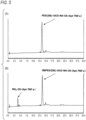
- the reaction solution was filtered, and then subjected to HPLC measurement using a cation exchange column under the following conditions. An eluate was monitored by UV and fractionated to obtain mono PEG RNase A with a purity of 96.1% modified at one site with the compound of Formula (22).
- Fig. 2 shows results of the HPLC measurement of the fractionated mono PEG RNase A.
- N-methylmorpholine (36.4 mg, 0.36 mmol) was added and stirred for a while, and then filtered, and the filtrate was diluted with toluene (33.0 g). After repeatedly washing with 20% saline (30 g) of pH 12, an organic layer was dried with anhydrous sodium sulfate and filtered, and the solvent was distilled off under reduced pressure. The residue was dissolved in toluene containing 2,6-di-tert-butyl-p-cresol, and hexane was added to cause crystallization, followed by suction filtration and drying under reduced pressure to obtain the compound of Formula (55).
- the mixture was diluted with a mixed solvent of ethyl acetate (100 g) containing 2,6-di-tert-butyl-p-cresol (20 mg) and acetonitrile (1.25 g), and crystals were precipitated by adding hexane (50 g), and the crystals were then obtained by suction filtration. The obtained crystals were dried under reduced pressure to obtain the compound of Formula (56).
- the compound expressed by Formula (57) was obtained in the same manner as in Example 14-1, except that 4-hydroxy-3,5-dimethylbenzaldehyde (300 mg, 2.0 mmol) was used instead of 3-methyl-4-hydroxybenzaldehyde.
- the compound expressed by Formula (58) was obtained in the same manner as in Example 14-2, except that the compound expressed by Formula (57) (3.0 g, 0.15 mmol) was used instead of the compound expressed by Formula (54).
- the compound expressed by Formula (59) was obtained in the same manner as in Example 14-3, except that the compound expressed by Formula (58) (500 mg, 0.025 mmol) was used instead of the compound expressed by Formula (55).
- the compound expressed by Formula (60) was obtained in the same manner as in Example 14-1, except that 2-hydroxybenzaldehyde (244 mg, 2.0 mmol) was used instead of 3-methyl-4-hydroxybenzaldehyde.
- the compound expressed by Formula (61) was obtained in the same manner as in Example 14-2, except that the compound expressed by Formula (60) (3.0 g, 0.15 mmol) was used instead of the compound expressed by Formula (54).
- the compound expressed by Formula (62) was obtained in the same manner as in Example 14-3, except that the compound expressed by Formula (61) (500 mg, 0.025 mg) was used instead of the compound expressed by Formula (55).
- the compound expressed by Formula (64) was obtained in the same manner as in Example 14-2, except that the compound expressed by Formula (63) (3.0 g, 0.15 mmol) was used instead of the compound expressed by Formula (54).
- the compound expressed by Formula (65) was obtained in the same manner as in Example 14-3, except that the compound expressed by Formula (64) (500 mg, 0.025 mmol) was used instead of the compound expressed by Formula (55).
- the compound expressed by Formula (66) was obtained in the same manner as in Example 17-1, except that ME-050MS (2.5 g, 0.5 mmol) manufactured by NOF Corporation was used instead of ME-200MS manufactured by NOF Corporation.
- the compound expressed by Formula (67) was obtained in the same manner as in Example 17-2, except that the compound expressed by Formula (66) (0.75 g, 0.15 mmol) was used instead of the compound expressed by Formula (63).
- the compound expressed by Formula (68) was obtained in the same manner as in Example 17-3, except that the compound expressed by Formula (67) (125 mg, 0.025 mmol) was used instead of the compound expressed by Formula (64).
- the compound expressed by Formula (69) was obtained in the same manner as in Example 17-1, except that ME-020MS (1 g, 0.5 mmol) manufactured by NOF Corporation was used instead of ME-200MS manufactured by NOF Corporation.
- the compound expressed by Formula (70) was obtained in the same manner as in Example 17-2, except that the compound expressed by Formula (69) (300 mg, 0.15 mmol) was used instead of the compound expressed by Formula (63).
- the compound expressed by Formula (71) was obtained in the same manner as in Example 17-3, except that the compound expressed by Formula (70) (50 mg, 0.025 mmol) was used instead of the compound expressed by Formula (64).
- the compound expressed by Formula (73) was obtained in the same manner as in Example 14-2, except that the compound expressed by Formula (72) (3.0 g, 0.15 mmol) was used instead of the compound expressed by Formula (54).
- the compound expressed by Formula (74) was obtained in the same manner as in Example 14-3, except that the compound expressed by Formula (73) (500 mg, 0.025 mmol) was used instead of the compound expressed by Formula (55).
- a 20 mg/mL buffer solution of ⁇ -alanine was prepared using 0.1 M sodium phosphate buffer solution (pH 8.5).
- the compound of Formula (56) (74 mg, 0.0037 mmol) was dissolved in the 20 mg/mL buffer solution of ⁇ -alanine (1.5 mL), and then reacted at 25°C for 6 hours.
- the mixture was diluted with 0.1 M sodium phosphate buffer solution (pH 8.5) containing 20 wt% sodium chloride, and extracted with chloroform (3 g).
- An organic layer was dried with anhydrous sodium sulfate and then filtered.
- the filtrate was diluted with ethyl acetate (45 g), and then hexane (33 g) was added to cause crystallization, and after filtration, the crystals were dried under reduced pressure to obtain the compound of Formula (75).
- the compound of Formula (76) was obtained in the same manner as in Example 21, except that the compound of Formula (59) (74 mg, 0.0037 mmol) was used instead of the compound of Formula (56).
- the compound of Formula (77) was obtained in the same manner as in Example 21, except that the compound of Formula (62) (74 mg, 0.0037 mmol) was used instead of the compound of Formula (56).
- the compound of Formula (78) was obtained in the same manner as in Example 21, except that the compound of Formula (65) (74 mg, 0.0037 mmol) was used instead of the compound of Formula (56).
- Fig. 3 shows a ⁇ -alanine adduct amount at a random timing assuming a ⁇ -alanine adduct amount at 0 hour of standing as 100%.
- the half-life (t1/2) calculated from the calculation formula [Math. 1] described in the degradability test based on the approximation formula of the graph was 2.3 days for the compound of Formula (75), 30.1 days for the compound of Formula (76), 23.1 days for the compound of Formula (77), and 1.4 days for the compound of Formula (78), which indicates that the compounds according to the present invention have a desired half-life under a physiological condition, as compared with the compound exemplified in Patent Literature 3 expressed by Formula (53), which is in the prior art.
- SUNBRIHGT MENP-20T (22.5 mg, 1.13 mmol) manufactured by NOF Corporation and a compound NH 2 -C6-(Apt-TNF ⁇ ) (1.8 mg, 141.8 nmol) having a C6 amino linker at 5' terminal of an aptamer represented by SEQ ID NO: 1, which is reported in WO2019203904A1 to have a TNF ⁇ inhibitory activity and to have a reduced TNF ⁇ inhibitory activity upon PEGylation, were dissolved in 125 ⁇ L of 100 mM sodium bicarbonate buffer solution (pH 8.3) and reacted at 40°C for 24 hours under a nitrogen atmosphere.
- NF-kB Reporter with a viable cell concentration of 4 ⁇ 10 5 cells/mL, Luciferase, and HEK293 cells (BPS Bioscience Inc.) were added and cultured for 22 hours. Then, 10 ⁇ L of 5 ⁇ M NH 2 -C6-(Apt-TNF ⁇ ) solution, 500 nM PEG(20k)-OCO-NH-C6-(Apt-TNF ⁇ ) solution or 500 nM 2MPEG(20k)-OCO-NH-C6-(Apt-TNF ⁇ ) solution was added to each independent well. After the addition, 10 ⁇ L of a 50 ng/mL TNF ⁇ solution was added and cultured for 0.5 hours, after which luciferase activity was measured using Bio-Glo Luciferase Assay System (Promega).
- the activity was calculated as a relative value, with the system without TNF ⁇ treatment set as 0% and the system with TNF ⁇ treatment set as 100%.
- results are expressed as a mean value ⁇ standard error, and P values were calculated by Student's t-test, with a two-tailed P value of ⁇ 0.05 defined as statistically significant.
- Fig. 6 shows evaluation results of TNF ⁇ inhibitory activity using PEG(20k)-OCO-NH-C6-(Apt-TNF ⁇ ), 2MPEG(20k)-OCO-NH-C6-(Apt-TNF ⁇ ), and NH 2 -C6-(Apt-TNF ⁇ ).
- FIG. 8 shows an amount of PEG(20k)-OCO-NH-insulin at random timings with the amount of PEG(20k)-OCO-NH-insulin at 0 hour of standing set to 100%, and in Fig. 8 , (B) shows an amount of 2MPEG(20k)-OCO-NH-insulin at random timings with the amount of 2MPEG(20k)-OCO-NH-insulin at 0 hour of standing set to 100%.
- the acetal-type releasable polyoxyethylene derivative of the present invention is capable of gradually releasing a biofunctional molecule through hydrolysis of the acetal structure under a physiological condition, thereby improving the pharmacological action of the biofunctional molecule modified with the polyoxyethylene derivative.
Landscapes
- Chemical & Material Sciences (AREA)
- Health & Medical Sciences (AREA)
- Organic Chemistry (AREA)
- Medicinal Chemistry (AREA)
- General Chemical & Material Sciences (AREA)
- Chemical Kinetics & Catalysis (AREA)
- Polymers & Plastics (AREA)
- Bioinformatics & Cheminformatics (AREA)
- Engineering & Computer Science (AREA)
- Pharmacology & Pharmacy (AREA)
- Epidemiology (AREA)
- Life Sciences & Earth Sciences (AREA)
- Animal Behavior & Ethology (AREA)
- General Health & Medical Sciences (AREA)
- Public Health (AREA)
- Veterinary Medicine (AREA)
- Polyethers (AREA)
- Organic Low-Molecular-Weight Compounds And Preparation Thereof (AREA)
- Medicinal Preparation (AREA)
Applications Claiming Priority (2)
| Application Number | Priority Date | Filing Date | Title |
|---|---|---|---|
| JP2022070669 | 2022-04-22 | ||
| PCT/JP2023/015663 WO2023204256A1 (ja) | 2022-04-22 | 2023-04-19 | アセタール型リリーサブルポリオキシエチレン誘導体、その製造方法及びアセタール型リリーサブルポリオキシエチレン結合体 |
Publications (3)
| Publication Number | Publication Date |
|---|---|
| EP4512845A1 true EP4512845A1 (de) | 2025-02-26 |
| EP4512845A4 EP4512845A4 (de) | 2026-03-18 |
| EP4512845B1 EP4512845B1 (de) | 2026-07-15 |
Family
ID=88419929
Family Applications (1)
| Application Number | Title | Priority Date | Filing Date |
|---|---|---|---|
| EP23791904.8A Active EP4512845B1 (de) | 2022-04-22 | 2023-04-19 | Acetalartiges freisetzbares polyoxyethylenderivat, herstellungsverfahren dafür und acetalartiges freisetzbares polyoxyethylenkonjugat |
Country Status (7)
| Country | Link |
|---|---|
| US (1) | US20250288684A1 (de) |
| EP (1) | EP4512845B1 (de) |
| JP (1) | JP2023160780A (de) |
| KR (1) | KR20250003614A (de) |
| CN (1) | CN119072516A (de) |
| CA (1) | CA3252159A1 (de) |
| WO (1) | WO2023204256A1 (de) |
Families Citing this family (1)
| Publication number | Priority date | Publication date | Assignee | Title |
|---|---|---|---|---|
| KR20260089482A (ko) * | 2023-10-16 | 2026-06-15 | 니치유 가부시키가이샤 | 아미노기를 포함하는 아세탈형 방출 가능 폴리옥시에틸렌 유도체, 그 제조 방법 및 아미노기를 포함하는 아세탈형 방출 가능 폴리옥시에틸렌 결합체 |
Family Cites Families (6)
| Publication number | Priority date | Publication date | Assignee | Title |
|---|---|---|---|---|
| CA3004716C (en) | 2008-04-29 | 2022-04-12 | Ascendis Pharma Endocrinology Division A/S | Pegylated recombinant human growth hormone compounds |
| ES2866674T3 (es) | 2010-11-12 | 2021-10-19 | Nektar Therapeutics | Conjugados de una fracción de IL-2 y un polímero |
| JP6784932B2 (ja) * | 2015-03-31 | 2020-11-18 | 日油株式会社 | 生体機能性分子または薬物キャリアの化学修飾用生分解性ポリエチレングリコール誘導体 |
| JP7022328B2 (ja) | 2017-03-30 | 2022-02-18 | 日油株式会社 | 自壊性アセタールリンカーを有する親水性ポリマー誘導体及びそれを用いた複合体 |
| US11447778B2 (en) | 2018-04-20 | 2022-09-20 | Academia Sinica | TNF-targeting aptamers and uses thereof for treatment or diagnosing TNF-related inflammatory diseases |
| JP7458610B2 (ja) | 2020-10-27 | 2024-04-01 | 株式会社日立製作所 | データベースシステム、及びクエリ実行方法 |
-
2023
- 2023-04-19 EP EP23791904.8A patent/EP4512845B1/de active Active
- 2023-04-19 US US18/859,066 patent/US20250288684A1/en active Pending
- 2023-04-19 WO PCT/JP2023/015663 patent/WO2023204256A1/ja not_active Ceased
- 2023-04-19 KR KR1020247035150A patent/KR20250003614A/ko active Pending
- 2023-04-19 CN CN202380035693.5A patent/CN119072516A/zh active Pending
- 2023-04-19 CA CA3252159A patent/CA3252159A1/en active Pending
- 2023-04-19 JP JP2023068234A patent/JP2023160780A/ja active Pending
Also Published As
| Publication number | Publication date |
|---|---|
| JP2023160780A (ja) | 2023-11-02 |
| EP4512845B1 (de) | 2026-07-15 |
| US20250288684A1 (en) | 2025-09-18 |
| EP4512845A4 (de) | 2026-03-18 |
| WO2023204256A1 (ja) | 2023-10-26 |
| KR20250003614A (ko) | 2025-01-07 |
| CA3252159A1 (en) | 2025-07-07 |
| CN119072516A (zh) | 2024-12-03 |
Similar Documents
| Publication | Publication Date | Title |
|---|---|---|
| US6815530B2 (en) | Substantiallymonodispersed mixtures of polymers having polyethylene glycol moieties | |
| EP2501412B1 (de) | Salzform eines mehrarmigen polymer-wirkstoff-konjugats | |
| EP2692771B1 (de) | Polyoxyethylenderivat mit mehreren hydroxylgruppen am ende | |
| EP3279236B1 (de) | Biologisch abbaubares polyethylenglycolderivat mit cyclischem benzyliden-acetal-linker | |
| AU2002259338A1 (en) | Methods of synthesizing substantially monodispersed mixtures of polymers having polyethylene glycol moieties | |
| EP3130587B1 (de) | Hydrophiles polymerderivat mit cyclischem benzyliden-acetal-linker | |
| JP2014208794A (ja) | ベンジリデンアセタールリンカーを有する親水性ポリマー誘導体 | |
| US20250288684A1 (en) | Acetal-type releasable polyoxyethylene derivative, production method thereof and acetal-type releasable polyoxyethylene conjugate | |
| EP3770143A1 (de) | Verzweigtes monodisperses polyethylenglykol, zwischenprodukt und verfahren zu seiner herstellung | |
| KR20130109010A (ko) | 트리스(2-히드록시페닐)메탄의 유도체, 및 이의 제조 및 용도 | |
| US20250115568A1 (en) | Ketal-type releasable polyoxyethylene derivative, production method thereof and ketal-type releasable polyoxyethylene conjugate | |
| CN122029215A (zh) | 包含氨基的缩醛型可释放聚氧乙烯衍生物、其制备方法和含氨基的缩醛型可释放聚氧乙烯结合体 | |
| JP2017066397A (ja) | 環状ベンジリデンアセタールリンカーを介して親水性ポリマーが結合した脂質誘導体 |
Legal Events
| Date | Code | Title | Description |
|---|---|---|---|
| STAA | Information on the status of an ep patent application or granted ep patent |
Free format text: STATUS: THE INTERNATIONAL PUBLICATION HAS BEEN MADE |
|
| PUAI | Public reference made under article 153(3) epc to a published international application that has entered the european phase |
Free format text: ORIGINAL CODE: 0009012 |
|
| STAA | Information on the status of an ep patent application or granted ep patent |
Free format text: STATUS: REQUEST FOR EXAMINATION WAS MADE |
|
| 17P | Request for examination filed |
Effective date: 20241021 |
|
| AK | Designated contracting states |
Kind code of ref document: A1 Designated state(s): AL AT BE BG CH CY CZ DE DK EE ES FI FR GB GR HR HU IE IS IT LI LT LU LV MC ME MK MT NL NO PL PT RO RS SE SI SK SM TR |
|
| DAV | Request for validation of the european patent (deleted) | ||
| DAX | Request for extension of the european patent (deleted) | ||
| A4 | Supplementary search report drawn up and despatched |
Effective date: 20260218 |
|
| RIC1 | Information provided on ipc code assigned before grant |
Ipc: C08G 65/331 20060101AFI20260212BHEP Ipc: A61K 47/60 20170101ALI20260212BHEP Ipc: C07D 319/08 20060101ALI20260212BHEP Ipc: C08G 65/332 20060101ALI20260212BHEP Ipc: C08G 65/333 20060101ALI20260212BHEP Ipc: C08G 65/337 20060101ALI20260212BHEP |
|
| GRAP | Despatch of communication of intention to grant a patent |
Free format text: ORIGINAL CODE: EPIDOSNIGR1 |
|
| STAA | Information on the status of an ep patent application or granted ep patent |
Free format text: STATUS: GRANT OF PATENT IS INTENDED |
|
| RIC1 | Information provided on ipc code assigned before grant |
Ipc: C08G 65/331 20060101AFI20260319BHEP Ipc: A61K 47/60 20170101ALI20260319BHEP Ipc: C07D 319/08 20060101ALI20260319BHEP Ipc: C08G 65/332 20060101ALI20260319BHEP Ipc: C08G 65/333 20060101ALI20260319BHEP Ipc: C08G 65/337 20060101ALI20260319BHEP |
|
| INTG | Intention to grant announced |
Effective date: 20260330 |
|
| GRAS | Grant fee paid |
Free format text: ORIGINAL CODE: EPIDOSNIGR3 |
|
| GRAA | (expected) grant |
Free format text: ORIGINAL CODE: 0009210 |
|
| STAA | Information on the status of an ep patent application or granted ep patent |
Free format text: STATUS: THE PATENT HAS BEEN GRANTED |
|
| AK | Designated contracting states |
Kind code of ref document: B1 Designated state(s): AL AT BE BG CH CY CZ DE DK EE ES FI FR GB GR HR HU IE IS IT LI LT LU LV MC ME MK MT NL NO PL PT RO RS SE SI SK SM TR |
|
| REG | Reference to a national code |
Ref country code: CH Ref legal event code: F10 Free format text: ST27 STATUS EVENT CODE: U-0-0-F10-F00 (AS PROVIDED BY THE NATIONAL OFFICE) Effective date: 20260715 Ref country code: CH Ref legal event code: R17 Free format text: ST27 STATUS EVENT CODE: U-0-0-R10-R17 (AS PROVIDED BY THE NATIONAL OFFICE) Effective date: 20260715 Ref country code: GB Ref legal event code: FG4D |
|
| REG | Reference to a national code |
Ref country code: DE Ref legal event code: R096 Ref document number: 602023020011 Country of ref document: DE |
|
| REG | Reference to a national code |
Ref country code: IE Ref legal event code: FG4D |