EP3359538B1 - Derivés de 1,4,8-triazaphénanthrène pour le traitement de maladies neurodégénératives - Google Patents
Derivés de 1,4,8-triazaphénanthrène pour le traitement de maladies neurodégénératives Download PDFInfo
- Publication number
- EP3359538B1 EP3359538B1 EP16778417.2A EP16778417A EP3359538B1 EP 3359538 B1 EP3359538 B1 EP 3359538B1 EP 16778417 A EP16778417 A EP 16778417A EP 3359538 B1 EP3359538 B1 EP 3359538B1
- Authority
- EP
- European Patent Office
- Prior art keywords
- alkyl
- quinoxaline
- pyrido
- compound
- alkoxy
- Prior art date
- Legal status (The legal status is an assumption and is not a legal conclusion. Google has not performed a legal analysis and makes no representation as to the accuracy of the status listed.)
- Active
Links
- 208000015122 neurodegenerative disease Diseases 0.000 title claims description 18
- ZIAQCYZPKDIKRM-UHFFFAOYSA-N pyrido[3,2-f]quinoxaline Chemical class C1=CN=C2C3=CC=CN=C3C=CC2=N1 ZIAQCYZPKDIKRM-UHFFFAOYSA-N 0.000 title claims description 13
- 150000001875 compounds Chemical class 0.000 claims description 118
- 125000004169 (C1-C6) alkyl group Chemical group 0.000 claims description 77
- 125000004191 (C1-C6) alkoxy group Chemical group 0.000 claims description 61
- 125000003118 aryl group Chemical group 0.000 claims description 56
- 125000005843 halogen group Chemical group 0.000 claims description 53
- 239000000460 chlorine Substances 0.000 claims description 32
- 239000000203 mixture Substances 0.000 claims description 27
- 238000005859 coupling reaction Methods 0.000 claims description 25
- 229910052801 chlorine Inorganic materials 0.000 claims description 19
- 125000001072 heteroaryl group Chemical group 0.000 claims description 19
- 229910052794 bromium Inorganic materials 0.000 claims description 18
- 125000004435 hydrogen atom Chemical group [H]* 0.000 claims description 18
- 125000004432 carbon atom Chemical group C* 0.000 claims description 17
- 230000008878 coupling Effects 0.000 claims description 17
- 238000010168 coupling process Methods 0.000 claims description 17
- 230000004770 neurodegeneration Effects 0.000 claims description 17
- 125000001997 phenyl group Chemical group [H]C1=C([H])C([H])=C(*)C([H])=C1[H] 0.000 claims description 15
- 150000003839 salts Chemical class 0.000 claims description 15
- 239000012453 solvate Substances 0.000 claims description 15
- -1 propargyl halide Chemical class 0.000 claims description 14
- 125000004076 pyridyl group Chemical group 0.000 claims description 13
- 230000000324 neuroprotective effect Effects 0.000 claims description 12
- 125000005493 quinolyl group Chemical group 0.000 claims description 12
- 229920006395 saturated elastomer Polymers 0.000 claims description 12
- 239000008194 pharmaceutical composition Substances 0.000 claims description 11
- XLYOFNOQVPJJNP-UHFFFAOYSA-N water Substances O XLYOFNOQVPJJNP-UHFFFAOYSA-N 0.000 claims description 11
- 125000001624 naphthyl group Chemical group 0.000 claims description 10
- CDXFUWMKMWRVLJ-UHFFFAOYSA-N 2,3,8-trimethylpyrido[3,2-f]quinoxaline Chemical compound CC1=C(C)N=C2C3=CC=C(C)N=C3C=CC2=N1 CDXFUWMKMWRVLJ-UHFFFAOYSA-N 0.000 claims description 8
- KXGCASPZOHERBM-UHFFFAOYSA-N 2,3-diphenylpyrido[3,2-f]quinoxaline Chemical compound C1=CC=CC=C1C1=NC2=CC=C(N=CC=C3)C3=C2N=C1C1=CC=CC=C1 KXGCASPZOHERBM-UHFFFAOYSA-N 0.000 claims description 8
- KHROWEZGFMWBNI-UHFFFAOYSA-N CC=1C(=NC=2C=CC3=C(C=2N=1)C=CC=N3)C Chemical compound CC=1C(=NC=2C=CC3=C(C=2N=1)C=CC=N3)C KHROWEZGFMWBNI-UHFFFAOYSA-N 0.000 claims description 8
- ZAMOUSCENKQFHK-UHFFFAOYSA-N Chlorine atom Chemical compound [Cl] ZAMOUSCENKQFHK-UHFFFAOYSA-N 0.000 claims description 8
- PXGOKWXKJXAPGV-UHFFFAOYSA-N Fluorine Chemical compound FF PXGOKWXKJXAPGV-UHFFFAOYSA-N 0.000 claims description 8
- 208000018737 Parkinson disease Diseases 0.000 claims description 8
- 150000001345 alkine derivatives Chemical class 0.000 claims description 8
- GDTBXPJZTBHREO-UHFFFAOYSA-N bromine Chemical compound BrBr GDTBXPJZTBHREO-UHFFFAOYSA-N 0.000 claims description 8
- 230000002265 prevention Effects 0.000 claims description 8
- WKBOTKDWSSQWDR-UHFFFAOYSA-N Bromine atom Chemical compound [Br] WKBOTKDWSSQWDR-UHFFFAOYSA-N 0.000 claims description 7
- 125000003601 C2-C6 alkynyl group Chemical group 0.000 claims description 7
- 229910052731 fluorine Inorganic materials 0.000 claims description 7
- 229910052740 iodine Inorganic materials 0.000 claims description 7
- 238000004519 manufacturing process Methods 0.000 claims description 7
- 125000006239 protecting group Chemical group 0.000 claims description 7
- 125000001567 quinoxalinyl group Chemical group N1=C(C=NC2=CC=CC=C12)* 0.000 claims description 7
- 125000003107 substituted aryl group Chemical group 0.000 claims description 7
- HBAQYPYDRFILMT-UHFFFAOYSA-N 8-[3-(1-cyclopropylpyrazol-4-yl)-1H-pyrazolo[4,3-d]pyrimidin-5-yl]-3-methyl-3,8-diazabicyclo[3.2.1]octan-2-one Chemical class C1(CC1)N1N=CC(=C1)C1=NNC2=C1N=C(N=C2)N1C2C(N(CC1CC2)C)=O HBAQYPYDRFILMT-UHFFFAOYSA-N 0.000 claims description 6
- YOWAEZWWQFSEJD-UHFFFAOYSA-N quinoxalin-2-amine Chemical compound C1=CC=CC2=NC(N)=CN=C21 YOWAEZWWQFSEJD-UHFFFAOYSA-N 0.000 claims description 6
- 208000024827 Alzheimer disease Diseases 0.000 claims description 5
- 239000011737 fluorine Substances 0.000 claims description 5
- 230000000508 neurotrophic effect Effects 0.000 claims description 5
- 229930195734 saturated hydrocarbon Natural products 0.000 claims description 5
- 238000007614 solvation Methods 0.000 claims description 5
- 229930195735 unsaturated hydrocarbon Natural products 0.000 claims description 5
- 206010002026 amyotrophic lateral sclerosis Diseases 0.000 claims description 4
- 238000005899 aromatization reaction Methods 0.000 claims description 4
- 238000007366 cycloisomerization reaction Methods 0.000 claims description 4
- 229910052739 hydrogen Inorganic materials 0.000 claims description 4
- 150000001642 boronic acid derivatives Chemical class 0.000 claims description 3
- 238000010511 deprotection reaction Methods 0.000 claims description 3
- 150000002680 magnesium Chemical class 0.000 claims description 3
- 150000003751 zinc Chemical class 0.000 claims description 3
- KZBUYRJDOAKODT-UHFFFAOYSA-N Chlorine Chemical compound ClCl KZBUYRJDOAKODT-UHFFFAOYSA-N 0.000 claims description 2
- 125000001153 fluoro group Chemical group F* 0.000 claims description 2
- 239000001257 hydrogen Substances 0.000 claims description 2
- 125000002887 hydroxy group Chemical group [H]O* 0.000 claims description 2
- 201000006417 multiple sclerosis Diseases 0.000 claims description 2
- KXCAEQNNTZANTK-UHFFFAOYSA-N stannane Chemical class [SnH4] KXCAEQNNTZANTK-UHFFFAOYSA-N 0.000 claims description 2
- 125000001183 hydrocarbyl group Chemical group 0.000 claims 4
- 229940126601 medicinal product Drugs 0.000 claims 2
- HEDRZPFGACZZDS-MICDWDOJSA-N Trichloro(2H)methane Chemical compound [2H]C(Cl)(Cl)Cl HEDRZPFGACZZDS-MICDWDOJSA-N 0.000 description 52
- 238000005481 NMR spectroscopy Methods 0.000 description 45
- IWYDHOAUDWTVEP-SSDOTTSWSA-N (R)-mandelic acid Chemical compound OC(=O)[C@H](O)C1=CC=CC=C1 IWYDHOAUDWTVEP-SSDOTTSWSA-N 0.000 description 36
- IAZDPXIOMUYVGZ-UHFFFAOYSA-N Dimethylsulphoxide Chemical compound CS(C)=O IAZDPXIOMUYVGZ-UHFFFAOYSA-N 0.000 description 31
- 239000000243 solution Substances 0.000 description 28
- 238000004128 high performance liquid chromatography Methods 0.000 description 26
- XEKOWRVHYACXOJ-UHFFFAOYSA-N Ethyl acetate Chemical compound CCOC(C)=O XEKOWRVHYACXOJ-UHFFFAOYSA-N 0.000 description 23
- KDLHZDBZIXYQEI-UHFFFAOYSA-N Palladium Chemical compound [Pd] KDLHZDBZIXYQEI-UHFFFAOYSA-N 0.000 description 21
- WYURNTSHIVDZCO-UHFFFAOYSA-N Tetrahydrofuran Chemical compound C1CCOC1 WYURNTSHIVDZCO-UHFFFAOYSA-N 0.000 description 20
- WEVYAHXRMPXWCK-UHFFFAOYSA-N Acetonitrile Chemical compound CC#N WEVYAHXRMPXWCK-UHFFFAOYSA-N 0.000 description 18
- 238000000034 method Methods 0.000 description 16
- YMWUJEATGCHHMB-UHFFFAOYSA-N Dichloromethane Chemical compound ClCCl YMWUJEATGCHHMB-UHFFFAOYSA-N 0.000 description 15
- 210000004556 brain Anatomy 0.000 description 14
- 239000012429 reaction media Substances 0.000 description 14
- HEMHJVSKTPXQMS-UHFFFAOYSA-M Sodium hydroxide Chemical compound [OH-].[Na+] HEMHJVSKTPXQMS-UHFFFAOYSA-M 0.000 description 13
- 150000002430 hydrocarbons Chemical group 0.000 description 13
- 210000002569 neuron Anatomy 0.000 description 13
- 239000002904 solvent Substances 0.000 description 13
- VYPSYNLAJGMNEJ-UHFFFAOYSA-N Silicium dioxide Chemical compound O=[Si]=O VYPSYNLAJGMNEJ-UHFFFAOYSA-N 0.000 description 12
- YXFVVABEGXRONW-UHFFFAOYSA-N Toluene Chemical compound CC1=CC=CC=C1 YXFVVABEGXRONW-UHFFFAOYSA-N 0.000 description 12
- 230000008499 blood brain barrier function Effects 0.000 description 12
- VYFYYTLLBUKUHU-UHFFFAOYSA-N dopamine Chemical compound NCCC1=CC=C(O)C(O)=C1 VYFYYTLLBUKUHU-UHFFFAOYSA-N 0.000 description 12
- QTBSBXVTEAMEQO-UHFFFAOYSA-N Acetic acid Chemical compound CC(O)=O QTBSBXVTEAMEQO-UHFFFAOYSA-N 0.000 description 11
- 239000003814 drug Substances 0.000 description 11
- 101150003085 Pdcl gene Proteins 0.000 description 10
- KWYUFKZDYYNOTN-UHFFFAOYSA-M Potassium hydroxide Chemical compound [OH-].[K+] KWYUFKZDYYNOTN-UHFFFAOYSA-M 0.000 description 10
- 238000003786 synthesis reaction Methods 0.000 description 10
- 241000699670 Mus sp. Species 0.000 description 9
- 108091000117 Tyrosine 3-Monooxygenase Proteins 0.000 description 9
- 102000048218 Tyrosine 3-monooxygenases Human genes 0.000 description 9
- 230000015572 biosynthetic process Effects 0.000 description 9
- 239000003054 catalyst Substances 0.000 description 9
- 210000005064 dopaminergic neuron Anatomy 0.000 description 9
- YLQBMQCUIZJEEH-UHFFFAOYSA-N tetrahydrofuran Natural products C=1C=COC=1 YLQBMQCUIZJEEH-UHFFFAOYSA-N 0.000 description 9
- IJGRMHOSHXDMSA-UHFFFAOYSA-N Atomic nitrogen Chemical compound N#N IJGRMHOSHXDMSA-UHFFFAOYSA-N 0.000 description 8
- FAPWRFPIFSIZLT-UHFFFAOYSA-M Sodium chloride Chemical compound [Na+].[Cl-] FAPWRFPIFSIZLT-UHFFFAOYSA-M 0.000 description 8
- 238000004458 analytical method Methods 0.000 description 8
- 239000002585 base Substances 0.000 description 8
- QRMZSPFSDQBLIX-UHFFFAOYSA-N homovanillic acid Chemical compound COC1=CC(CC(O)=O)=CC=C1O QRMZSPFSDQBLIX-UHFFFAOYSA-N 0.000 description 8
- 238000006243 chemical reaction Methods 0.000 description 7
- 201000010099 disease Diseases 0.000 description 7
- 208000037265 diseases, disorders, signs and symptoms Diseases 0.000 description 7
- 230000000694 effects Effects 0.000 description 7
- 238000010992 reflux Methods 0.000 description 7
- 239000007787 solid Substances 0.000 description 7
- 229910021591 Copper(I) chloride Inorganic materials 0.000 description 6
- OKKJLVBELUTLKV-UHFFFAOYSA-N Methanol Chemical compound OC OKKJLVBELUTLKV-UHFFFAOYSA-N 0.000 description 6
- ZMXDDKWLCZADIW-UHFFFAOYSA-N N,N-Dimethylformamide Chemical compound CN(C)C=O ZMXDDKWLCZADIW-UHFFFAOYSA-N 0.000 description 6
- SECXISVLQFMRJM-UHFFFAOYSA-N N-Methylpyrrolidone Chemical compound CN1CCCC1=O SECXISVLQFMRJM-UHFFFAOYSA-N 0.000 description 6
- ZMANZCXQSJIPKH-UHFFFAOYSA-N Triethylamine Chemical compound CCN(CC)CC ZMANZCXQSJIPKH-UHFFFAOYSA-N 0.000 description 6
- 239000002253 acid Substances 0.000 description 6
- 125000004429 atom Chemical group 0.000 description 6
- 229910052799 carbon Inorganic materials 0.000 description 6
- 238000001816 cooling Methods 0.000 description 6
- OXBLHERUFWYNTN-UHFFFAOYSA-M copper(I) chloride Chemical compound [Cu]Cl OXBLHERUFWYNTN-UHFFFAOYSA-M 0.000 description 6
- 229960003638 dopamine Drugs 0.000 description 6
- 229910052763 palladium Inorganic materials 0.000 description 6
- 238000002360 preparation method Methods 0.000 description 6
- 239000000741 silica gel Substances 0.000 description 6
- 229910002027 silica gel Inorganic materials 0.000 description 6
- 239000011734 sodium Substances 0.000 description 6
- FPGGTKZVZWFYPV-UHFFFAOYSA-M tetrabutylammonium fluoride Chemical compound [F-].CCCC[N+](CCCC)(CCCC)CCCC FPGGTKZVZWFYPV-UHFFFAOYSA-M 0.000 description 6
- RYHBNJHYFVUHQT-UHFFFAOYSA-N 1,4-Dioxane Chemical compound C1COCCO1 RYHBNJHYFVUHQT-UHFFFAOYSA-N 0.000 description 5
- PLRACCBDVIHHLZ-UHFFFAOYSA-N 1-methyl-4-phenyl-1,2,3,6-tetrahydropyridine Chemical compound C1N(C)CCC(C=2C=CC=CC=2)=C1 PLRACCBDVIHHLZ-UHFFFAOYSA-N 0.000 description 5
- 239000004480 active ingredient Substances 0.000 description 5
- 210000001218 blood-brain barrier Anatomy 0.000 description 5
- 210000003169 central nervous system Anatomy 0.000 description 5
- 238000001914 filtration Methods 0.000 description 5
- 150000002500 ions Chemical class 0.000 description 5
- 125000002496 methyl group Chemical group [H]C([H])([H])* 0.000 description 5
- 230000003287 optical effect Effects 0.000 description 5
- 239000011541 reaction mixture Substances 0.000 description 5
- 230000004083 survival effect Effects 0.000 description 5
- VMQMZMRVKUZKQL-UHFFFAOYSA-N Cu+ Chemical class [Cu+] VMQMZMRVKUZKQL-UHFFFAOYSA-N 0.000 description 4
- 241001465754 Metazoa Species 0.000 description 4
- PXHVJJICTQNCMI-UHFFFAOYSA-N Nickel Chemical compound [Ni] PXHVJJICTQNCMI-UHFFFAOYSA-N 0.000 description 4
- 244000309464 bull Species 0.000 description 4
- 150000001721 carbon Chemical group 0.000 description 4
- 150000001793 charged compounds Chemical class 0.000 description 4
- ZUOUZKKEUPVFJK-UHFFFAOYSA-N diphenyl Chemical compound C1=CC=CC=C1C1=CC=CC=C1 ZUOUZKKEUPVFJK-UHFFFAOYSA-N 0.000 description 4
- 238000000589 high-performance liquid chromatography-mass spectrometry Methods 0.000 description 4
- 238000001727 in vivo Methods 0.000 description 4
- 210000001259 mesencephalon Anatomy 0.000 description 4
- 229910052757 nitrogen Inorganic materials 0.000 description 4
- 239000012074 organic phase Substances 0.000 description 4
- 230000008569 process Effects 0.000 description 4
- 230000000750 progressive effect Effects 0.000 description 4
- 238000000746 purification Methods 0.000 description 4
- 125000001424 substituent group Chemical group 0.000 description 4
- 238000001195 ultra high performance liquid chromatography Methods 0.000 description 4
- 0 *c1nc2ccc(**C=C3)c3c2nc1* Chemical compound *c1nc2ccc(**C=C3)c3c2nc1* 0.000 description 3
- KZPYGQFFRCFCPP-UHFFFAOYSA-N 1,1'-bis(diphenylphosphino)ferrocene Chemical compound [Fe+2].C1=CC=C[C-]1P(C=1C=CC=CC=1)C1=CC=CC=C1.C1=CC=C[C-]1P(C=1C=CC=CC=1)C1=CC=CC=C1 KZPYGQFFRCFCPP-UHFFFAOYSA-N 0.000 description 3
- CSCPPACGZOOCGX-UHFFFAOYSA-N Acetone Chemical compound CC(C)=O CSCPPACGZOOCGX-UHFFFAOYSA-N 0.000 description 3
- LFQSCWFLJHTTHZ-UHFFFAOYSA-N Ethanol Chemical compound CCO LFQSCWFLJHTTHZ-UHFFFAOYSA-N 0.000 description 3
- 241000282414 Homo sapiens Species 0.000 description 3
- VEXZGXHMUGYJMC-UHFFFAOYSA-N Hydrochloric acid Chemical compound Cl VEXZGXHMUGYJMC-UHFFFAOYSA-N 0.000 description 3
- FXHOOIRPVKKKFG-UHFFFAOYSA-N N,N-Dimethylacetamide Chemical compound CN(C)C(C)=O FXHOOIRPVKKKFG-UHFFFAOYSA-N 0.000 description 3
- GRYLNZFGIOXLOG-UHFFFAOYSA-N Nitric acid Chemical compound O[N+]([O-])=O GRYLNZFGIOXLOG-UHFFFAOYSA-N 0.000 description 3
- NBIIXXVUZAFLBC-UHFFFAOYSA-N Phosphoric acid Chemical compound OP(O)(O)=O NBIIXXVUZAFLBC-UHFFFAOYSA-N 0.000 description 3
- XBDQKXXYIPTUBI-UHFFFAOYSA-N Propionic acid Chemical compound CCC(O)=O XBDQKXXYIPTUBI-UHFFFAOYSA-N 0.000 description 3
- QAOWNCQODCNURD-UHFFFAOYSA-N Sulfuric acid Chemical compound OS(O)(=O)=O QAOWNCQODCNURD-UHFFFAOYSA-N 0.000 description 3
- 239000011575 calcium Substances 0.000 description 3
- 238000004587 chromatography analysis Methods 0.000 description 3
- KRKNYBCHXYNGOX-UHFFFAOYSA-N citric acid Chemical compound OC(=O)CC(O)(C(O)=O)CC(O)=O KRKNYBCHXYNGOX-UHFFFAOYSA-N 0.000 description 3
- GUVUOGQBMYCBQP-UHFFFAOYSA-N dmpu Chemical compound CN1CCCN(C)C1=O GUVUOGQBMYCBQP-UHFFFAOYSA-N 0.000 description 3
- 229940079593 drug Drugs 0.000 description 3
- 238000004401 flow injection analysis Methods 0.000 description 3
- 238000001990 intravenous administration Methods 0.000 description 3
- 210000001577 neostriatum Anatomy 0.000 description 3
- 210000004498 neuroglial cell Anatomy 0.000 description 3
- 150000002828 nitro derivatives Chemical class 0.000 description 3
- 125000004430 oxygen atom Chemical group O* 0.000 description 3
- 238000011084 recovery Methods 0.000 description 3
- 239000000377 silicon dioxide Substances 0.000 description 3
- 239000000725 suspension Substances 0.000 description 3
- QFMZQPDHXULLKC-UHFFFAOYSA-N 1,2-bis(diphenylphosphino)ethane Chemical compound C=1C=CC=CC=1P(C=1C=CC=CC=1)CCP(C=1C=CC=CC=1)C1=CC=CC=C1 QFMZQPDHXULLKC-UHFFFAOYSA-N 0.000 description 2
- LVEYOSJUKRVCCF-UHFFFAOYSA-N 1,3-Bis(diphenylphosphino)propane Substances C=1C=CC=CC=1P(C=1C=CC=CC=1)CCCP(C=1C=CC=CC=1)C1=CC=CC=C1 LVEYOSJUKRVCCF-UHFFFAOYSA-N 0.000 description 2
- HZAXFHJVJLSVMW-UHFFFAOYSA-N 2-Aminoethan-1-ol Chemical compound NCCO HZAXFHJVJLSVMW-UHFFFAOYSA-N 0.000 description 2
- 125000005809 3,4,5-trimethoxyphenyl group Chemical group [H]C1=C(OC([H])([H])[H])C(OC([H])([H])[H])=C(OC([H])([H])[H])C([H])=C1* 0.000 description 2
- 125000004189 3,4-dichlorophenyl group Chemical group [H]C1=C([H])C(Cl)=C(Cl)C([H])=C1* 0.000 description 2
- BCJVBDBJSMFBRW-UHFFFAOYSA-N 4-diphenylphosphanylbutyl(diphenyl)phosphane Chemical compound C=1C=CC=CC=1P(C=1C=CC=CC=1)CCCCP(C=1C=CC=CC=1)C1=CC=CC=C1 BCJVBDBJSMFBRW-UHFFFAOYSA-N 0.000 description 2
- 125000001255 4-fluorophenyl group Chemical group [H]C1=C([H])C(*)=C([H])C([H])=C1F 0.000 description 2
- 125000004172 4-methoxyphenyl group Chemical group [H]C1=C([H])C(OC([H])([H])[H])=C([H])C([H])=C1* 0.000 description 2
- 125000000590 4-methylphenyl group Chemical group [H]C1=C([H])C(=C([H])C([H])=C1*)C([H])([H])[H] 0.000 description 2
- 208000000044 Amnesia Diseases 0.000 description 2
- OYPRJOBELJOOCE-UHFFFAOYSA-N Calcium Chemical compound [Ca] OYPRJOBELJOOCE-UHFFFAOYSA-N 0.000 description 2
- HEDRZPFGACZZDS-UHFFFAOYSA-N Chloroform Chemical compound ClC(Cl)Cl HEDRZPFGACZZDS-UHFFFAOYSA-N 0.000 description 2
- RGHNJXZEOKUKBD-SQOUGZDYSA-N D-gluconic acid Chemical compound OC[C@@H](O)[C@@H](O)[C@H](O)[C@@H](O)C(O)=O RGHNJXZEOKUKBD-SQOUGZDYSA-N 0.000 description 2
- RTZKZFJDLAIYFH-UHFFFAOYSA-N Diethyl ether Chemical compound CCOCC RTZKZFJDLAIYFH-UHFFFAOYSA-N 0.000 description 2
- KRHYYFGTRYWZRS-UHFFFAOYSA-M Fluoride anion Chemical compound [F-] KRHYYFGTRYWZRS-UHFFFAOYSA-M 0.000 description 2
- VZCYOOQTPOCHFL-OWOJBTEDSA-N Fumaric acid Chemical compound OC(=O)\C=C\C(O)=O VZCYOOQTPOCHFL-OWOJBTEDSA-N 0.000 description 2
- AEMRFAOFKBGASW-UHFFFAOYSA-N Glycolic acid Chemical compound OCC(O)=O AEMRFAOFKBGASW-UHFFFAOYSA-N 0.000 description 2
- WHUUTDBJXJRKMK-VKHMYHEASA-N L-glutamic acid Chemical compound OC(=O)[C@@H](N)CCC(O)=O WHUUTDBJXJRKMK-VKHMYHEASA-N 0.000 description 2
- 238000005684 Liebig rearrangement reaction Methods 0.000 description 2
- 241000124008 Mammalia Species 0.000 description 2
- 241000699666 Mus <mouse, genus> Species 0.000 description 2
- MBBZMMPHUWSWHV-BDVNFPICSA-N N-methylglucamine Chemical compound CNC[C@H](O)[C@@H](O)[C@H](O)[C@H](O)CO MBBZMMPHUWSWHV-BDVNFPICSA-N 0.000 description 2
- 238000004617 QSAR study Methods 0.000 description 2
- CDBYLPFSWZWCQE-UHFFFAOYSA-L Sodium Carbonate Chemical compound [Na+].[Na+].[O-]C([O-])=O CDBYLPFSWZWCQE-UHFFFAOYSA-L 0.000 description 2
- DTQVDTLACAAQTR-UHFFFAOYSA-N Trifluoroacetic acid Chemical compound OC(=O)C(F)(F)F DTQVDTLACAAQTR-UHFFFAOYSA-N 0.000 description 2
- 229910001413 alkali metal ion Inorganic materials 0.000 description 2
- 229910052782 aluminium Inorganic materials 0.000 description 2
- WNROFYMDJYEPJX-UHFFFAOYSA-K aluminium hydroxide Chemical compound [OH-].[OH-].[OH-].[Al+3] WNROFYMDJYEPJX-UHFFFAOYSA-K 0.000 description 2
- 210000001130 astrocyte Anatomy 0.000 description 2
- WPYMKLBDIGXBTP-UHFFFAOYSA-N benzoic acid Chemical compound OC(=O)C1=CC=CC=C1 WPYMKLBDIGXBTP-UHFFFAOYSA-N 0.000 description 2
- 239000004305 biphenyl Substances 0.000 description 2
- 235000010290 biphenyl Nutrition 0.000 description 2
- ZADPBFCGQRWHPN-UHFFFAOYSA-N boronic acid Chemical compound OBO ZADPBFCGQRWHPN-UHFFFAOYSA-N 0.000 description 2
- HUCVOHYBFXVBRW-UHFFFAOYSA-M caesium hydroxide Chemical compound [OH-].[Cs+] HUCVOHYBFXVBRW-UHFFFAOYSA-M 0.000 description 2
- 229910052791 calcium Inorganic materials 0.000 description 2
- 239000002775 capsule Substances 0.000 description 2
- 230000003197 catalytic effect Effects 0.000 description 2
- 238000005119 centrifugation Methods 0.000 description 2
- 150000001879 copper Chemical class 0.000 description 2
- 239000010949 copper Substances 0.000 description 2
- 238000009792 diffusion process Methods 0.000 description 2
- 238000010790 dilution Methods 0.000 description 2
- 239000012895 dilution Substances 0.000 description 2
- 239000002270 dispersing agent Substances 0.000 description 2
- ADEBPBSSDYVVLD-UHFFFAOYSA-N donepezil Chemical compound O=C1C=2C=C(OC)C(OC)=CC=2CC1CC(CC1)CCN1CC1=CC=CC=C1 ADEBPBSSDYVVLD-UHFFFAOYSA-N 0.000 description 2
- 238000001035 drying Methods 0.000 description 2
- 125000002534 ethynyl group Chemical group [H]C#C* 0.000 description 2
- 238000000605 extraction Methods 0.000 description 2
- 239000000796 flavoring agent Substances 0.000 description 2
- 235000003599 food sweetener Nutrition 0.000 description 2
- 230000006870 function Effects 0.000 description 2
- ASUTZQLVASHGKV-JDFRZJQESA-N galanthamine Chemical compound O1C(=C23)C(OC)=CC=C2CN(C)CC[C@]23[C@@H]1C[C@@H](O)C=C2 ASUTZQLVASHGKV-JDFRZJQESA-N 0.000 description 2
- 239000008187 granular material Substances 0.000 description 2
- 125000005842 heteroatom Chemical group 0.000 description 2
- 239000007924 injection Substances 0.000 description 2
- 238000002347 injection Methods 0.000 description 2
- 150000007529 inorganic bases Chemical class 0.000 description 2
- 238000007912 intraperitoneal administration Methods 0.000 description 2
- 230000002427 irreversible effect Effects 0.000 description 2
- SUMDYPCJJOFFON-UHFFFAOYSA-N isethionic acid Chemical compound OCCS(O)(=O)=O SUMDYPCJJOFFON-UHFFFAOYSA-N 0.000 description 2
- JVTAAEKCZFNVCJ-UHFFFAOYSA-N lactic acid Chemical compound CC(O)C(O)=O JVTAAEKCZFNVCJ-UHFFFAOYSA-N 0.000 description 2
- 230000008449 language Effects 0.000 description 2
- HQKMJHAJHXVSDF-UHFFFAOYSA-L magnesium stearate Chemical compound [Mg+2].CCCCCCCCCCCCCCCCCC([O-])=O.CCCCCCCCCCCCCCCCCC([O-])=O HQKMJHAJHXVSDF-UHFFFAOYSA-L 0.000 description 2
- 238000004949 mass spectrometry Methods 0.000 description 2
- TXXHDPDFNKHHGW-UHFFFAOYSA-N muconic acid Chemical compound OC(=O)C=CC=CC(O)=O TXXHDPDFNKHHGW-UHFFFAOYSA-N 0.000 description 2
- 238000002552 multiple reaction monitoring Methods 0.000 description 2
- 125000004108 n-butyl group Chemical group [H]C([H])([H])C([H])([H])C([H])([H])C([H])([H])* 0.000 description 2
- 210000000653 nervous system Anatomy 0.000 description 2
- BMGNSKKZFQMGDH-FDGPNNRMSA-L nickel(2+);(z)-4-oxopent-2-en-2-olate Chemical compound [Ni+2].C\C([O-])=C\C(C)=O.C\C([O-])=C\C(C)=O BMGNSKKZFQMGDH-FDGPNNRMSA-L 0.000 description 2
- 229910017604 nitric acid Inorganic materials 0.000 description 2
- 239000012299 nitrogen atmosphere Substances 0.000 description 2
- 150000007530 organic bases Chemical class 0.000 description 2
- 230000008520 organization Effects 0.000 description 2
- 125000003854 p-chlorophenyl group Chemical group [H]C1=C([H])C(*)=C([H])C([H])=C1Cl 0.000 description 2
- 238000007911 parenteral administration Methods 0.000 description 2
- 239000002504 physiological saline solution Substances 0.000 description 2
- BWHMMNNQKKPAPP-UHFFFAOYSA-L potassium carbonate Chemical compound [K+].[K+].[O-]C([O-])=O BWHMMNNQKKPAPP-UHFFFAOYSA-L 0.000 description 2
- 239000000843 powder Substances 0.000 description 2
- 239000002244 precipitate Substances 0.000 description 2
- 238000012545 processing Methods 0.000 description 2
- 239000000047 product Substances 0.000 description 2
- 235000018102 proteins Nutrition 0.000 description 2
- 102000004169 proteins and genes Human genes 0.000 description 2
- 108090000623 proteins and genes Proteins 0.000 description 2
- 238000001953 recrystallisation Methods 0.000 description 2
- YGSDEFSMJLZEOE-UHFFFAOYSA-N salicylic acid Chemical compound OC(=O)C1=CC=CC=C1O YGSDEFSMJLZEOE-UHFFFAOYSA-N 0.000 description 2
- 239000012047 saturated solution Substances 0.000 description 2
- 125000002914 sec-butyl group Chemical group [H]C([H])([H])C([H])([H])C([H])(*)C([H])([H])[H] 0.000 description 2
- KDYFGRWQOYBRFD-UHFFFAOYSA-N succinic acid Chemical compound OC(=O)CCC(O)=O KDYFGRWQOYBRFD-UHFFFAOYSA-N 0.000 description 2
- 239000003765 sweetening agent Substances 0.000 description 2
- 125000000999 tert-butyl group Chemical group [H]C([H])([H])C(*)(C([H])([H])[H])C([H])([H])[H] 0.000 description 2
- JOXIMZWYDAKGHI-UHFFFAOYSA-N toluene-4-sulfonic acid Chemical compound CC1=CC=C(S(O)(=O)=O)C=C1 JOXIMZWYDAKGHI-UHFFFAOYSA-N 0.000 description 2
- VZCYOOQTPOCHFL-UHFFFAOYSA-N trans-butenedioic acid Natural products OC(=O)C=CC(O)=O VZCYOOQTPOCHFL-UHFFFAOYSA-N 0.000 description 2
- 125000000026 trimethylsilyl group Chemical group [H]C([H])([H])[Si]([*])(C([H])([H])[H])C([H])([H])[H] 0.000 description 2
- 239000000080 wetting agent Substances 0.000 description 2
- QBYIENPQHBMVBV-HFEGYEGKSA-N (2R)-2-hydroxy-2-phenylacetic acid Chemical compound O[C@@H](C(O)=O)c1ccccc1.O[C@@H](C(O)=O)c1ccccc1 QBYIENPQHBMVBV-HFEGYEGKSA-N 0.000 description 1
- YONLFQNRGZXBBF-ZIAGYGMSSA-N (2r,3r)-2,3-dibenzoyloxybutanedioic acid Chemical compound O([C@@H](C(=O)O)[C@@H](OC(=O)C=1C=CC=CC=1)C(O)=O)C(=O)C1=CC=CC=C1 YONLFQNRGZXBBF-ZIAGYGMSSA-N 0.000 description 1
- BJEPYKJPYRNKOW-REOHCLBHSA-N (S)-malic acid Chemical compound OC(=O)[C@@H](O)CC(O)=O BJEPYKJPYRNKOW-REOHCLBHSA-N 0.000 description 1
- 125000001637 1-naphthyl group Chemical group [H]C1=C([H])C([H])=C2C(*)=C([H])C([H])=C([H])C2=C1[H] 0.000 description 1
- 238000001644 13C nuclear magnetic resonance spectroscopy Methods 0.000 description 1
- PCZVZFBNBDNNBN-UHFFFAOYSA-N 2,5,7-triphenylpyrazolo[1,5-a]pyrimidine Chemical compound N=1C2=CC(C=3C=CC=CC=3)=NN2C(C=2C=CC=CC=2)=CC=1C1=CC=CC=C1 PCZVZFBNBDNNBN-UHFFFAOYSA-N 0.000 description 1
- UPHOPMSGKZNELG-UHFFFAOYSA-N 2-hydroxynaphthalene-1-carboxylic acid Chemical compound C1=CC=C2C(C(=O)O)=C(O)C=CC2=C1 UPHOPMSGKZNELG-UHFFFAOYSA-N 0.000 description 1
- 125000001622 2-naphthyl group Chemical group [H]C1=C([H])C([H])=C2C([H])=C(*)C([H])=C([H])C2=C1[H] 0.000 description 1
- 125000003762 3,4-dimethoxyphenyl group Chemical group [H]C1=C([H])C(OC([H])([H])[H])=C(OC([H])([H])[H])C([H])=C1* 0.000 description 1
- HPOIPOPJGBKXIR-UHFFFAOYSA-N 3,6-dimethoxy-10-methyl-galantham-1-ene Natural products O1C(C(=CC=2)OC)=C3C=2CN(C)CCC23C1CC(OC)C=C2 HPOIPOPJGBKXIR-UHFFFAOYSA-N 0.000 description 1
- BMYNFMYTOJXKLE-UHFFFAOYSA-N 3-azaniumyl-2-hydroxypropanoate Chemical compound NCC(O)C(O)=O BMYNFMYTOJXKLE-UHFFFAOYSA-N 0.000 description 1
- QSILYWCNPOLKPN-UHFFFAOYSA-N 3-chloro-3-methylbut-1-yne Chemical compound CC(C)(Cl)C#C QSILYWCNPOLKPN-UHFFFAOYSA-N 0.000 description 1
- 125000003349 3-pyridyl group Chemical group N1=C([H])C([*])=C([H])C([H])=C1[H] 0.000 description 1
- ZCYVEMRRCGMTRW-UHFFFAOYSA-N 7553-56-2 Chemical group [I] ZCYVEMRRCGMTRW-UHFFFAOYSA-N 0.000 description 1
- 101710134784 Agnoprotein Proteins 0.000 description 1
- 208000006888 Agnosia Diseases 0.000 description 1
- 241001047040 Agnosia Species 0.000 description 1
- GUBGYTABKSRVRQ-XLOQQCSPSA-N Alpha-Lactose Chemical compound O[C@@H]1[C@@H](O)[C@@H](O)[C@@H](CO)O[C@H]1O[C@@H]1[C@@H](CO)O[C@H](O)[C@H](O)[C@H]1O GUBGYTABKSRVRQ-XLOQQCSPSA-N 0.000 description 1
- 208000031091 Amnestic disease Diseases 0.000 description 1
- 206010003062 Apraxia Diseases 0.000 description 1
- KPYSYYIEGFHWSV-UHFFFAOYSA-N Baclofen Chemical compound OC(=O)CC(CN)C1=CC=C(Cl)C=C1 KPYSYYIEGFHWSV-UHFFFAOYSA-N 0.000 description 1
- 239000005711 Benzoic acid Substances 0.000 description 1
- COVZYZSDYWQREU-UHFFFAOYSA-N Busulfan Chemical compound CS(=O)(=O)OCCCCOS(C)(=O)=O COVZYZSDYWQREU-UHFFFAOYSA-N 0.000 description 1
- GIAJEOFBOYSBAR-UHFFFAOYSA-N C1(=CC=CC=C1)C=1C=NC=2C=CC3=NC=CC=C3C=2N=1 Chemical compound C1(=CC=CC=C1)C=1C=NC=2C=CC3=NC=CC=C3C=2N=1 GIAJEOFBOYSBAR-UHFFFAOYSA-N 0.000 description 1
- KORNTPPJEAJQIU-KJXAQDMKSA-N Cabaser Chemical compound C1=CC([C@H]2C[C@H](CN(CC=C)[C@@H]2C2)C(=O)N(CCCN(C)C)C(=O)NCC)=C3C2=CNC3=C1 KORNTPPJEAJQIU-KJXAQDMKSA-N 0.000 description 1
- BVKZGUZCCUSVTD-UHFFFAOYSA-L Carbonate Chemical compound [O-]C([O-])=O BVKZGUZCCUSVTD-UHFFFAOYSA-L 0.000 description 1
- 229920002134 Carboxymethyl cellulose Polymers 0.000 description 1
- NNWLFPYWXDOLBO-UHFFFAOYSA-N Cc1c(-c(cc2)ccc2Cl)nc(c2cccnc2cc2)c2n1 Chemical compound Cc1c(-c(cc2)ccc2Cl)nc(c2cccnc2cc2)c2n1 NNWLFPYWXDOLBO-UHFFFAOYSA-N 0.000 description 1
- LPCKPBWOSNVCEL-UHFFFAOYSA-N Chlidanthine Natural products O1C(C(=CC=2)O)=C3C=2CN(C)CCC23C1CC(OC)C=C2 LPCKPBWOSNVCEL-UHFFFAOYSA-N 0.000 description 1
- RYGMFSIKBFXOCR-UHFFFAOYSA-N Copper Chemical compound [Cu] RYGMFSIKBFXOCR-UHFFFAOYSA-N 0.000 description 1
- 229910021589 Copper(I) bromide Inorganic materials 0.000 description 1
- IVOMOUWHDPKRLL-KQYNXXCUSA-N Cyclic adenosine monophosphate Chemical compound C([C@H]1O2)OP(O)(=O)O[C@H]1[C@@H](O)[C@@H]2N1C(N=CN=C2N)=C2N=C1 IVOMOUWHDPKRLL-KQYNXXCUSA-N 0.000 description 1
- XDTMQSROBMDMFD-UHFFFAOYSA-N Cyclohexane Chemical compound C1CCCCC1 XDTMQSROBMDMFD-UHFFFAOYSA-N 0.000 description 1
- 102000018832 Cytochromes Human genes 0.000 description 1
- 108010052832 Cytochromes Proteins 0.000 description 1
- RGHNJXZEOKUKBD-UHFFFAOYSA-N D-gluconic acid Natural products OCC(O)C(O)C(O)C(O)C(O)=O RGHNJXZEOKUKBD-UHFFFAOYSA-N 0.000 description 1
- FEWJPZIEWOKRBE-JCYAYHJZSA-N Dextrotartaric acid Chemical compound OC(=O)[C@H](O)[C@@H](O)C(O)=O FEWJPZIEWOKRBE-JCYAYHJZSA-N 0.000 description 1
- XTHFKEDIFFGKHM-UHFFFAOYSA-N Dimethoxyethane Chemical compound COCCOC XTHFKEDIFFGKHM-UHFFFAOYSA-N 0.000 description 1
- 206010015548 Euthanasia Diseases 0.000 description 1
- 101710116650 FAD-dependent monooxygenase Proteins 0.000 description 1
- 108010010803 Gelatin Proteins 0.000 description 1
- WHUUTDBJXJRKMK-UHFFFAOYSA-N Glutamic acid Natural products OC(=O)C(N)CCC(O)=O WHUUTDBJXJRKMK-UHFFFAOYSA-N 0.000 description 1
- 229920000084 Gum arabic Polymers 0.000 description 1
- 238000006716 Hiyama reaction Methods 0.000 description 1
- 241000282412 Homo Species 0.000 description 1
- UFHFLCQGNIYNRP-UHFFFAOYSA-N Hydrogen Chemical compound [H][H] UFHFLCQGNIYNRP-UHFFFAOYSA-N 0.000 description 1
- CPELXLSAUQHCOX-UHFFFAOYSA-N Hydrogen bromide Chemical compound Br CPELXLSAUQHCOX-UHFFFAOYSA-N 0.000 description 1
- DGAQECJNVWCQMB-PUAWFVPOSA-M Ilexoside XXIX Chemical compound C[C@@H]1CC[C@@]2(CC[C@@]3(C(=CC[C@H]4[C@]3(CC[C@@H]5[C@@]4(CC[C@@H](C5(C)C)OS(=O)(=O)[O-])C)C)[C@@H]2[C@]1(C)O)C)C(=O)O[C@H]6[C@@H]([C@H]([C@@H]([C@H](O6)CO)O)O)O.[Na+] DGAQECJNVWCQMB-PUAWFVPOSA-M 0.000 description 1
- 238000005577 Kumada cross-coupling reaction Methods 0.000 description 1
- WTDRDQBEARUVNC-LURJTMIESA-N L-DOPA Chemical compound OC(=O)[C@@H](N)CC1=CC=C(O)C(O)=C1 WTDRDQBEARUVNC-LURJTMIESA-N 0.000 description 1
- WTDRDQBEARUVNC-UHFFFAOYSA-N L-Dopa Natural products OC(=O)C(N)CC1=CC=C(O)C(O)=C1 WTDRDQBEARUVNC-UHFFFAOYSA-N 0.000 description 1
- GUBGYTABKSRVRQ-QKKXKWKRSA-N Lactose Natural products OC[C@H]1O[C@@H](O[C@H]2[C@H](O)[C@@H](O)C(O)O[C@@H]2CO)[C@H](O)[C@@H](O)[C@H]1O GUBGYTABKSRVRQ-QKKXKWKRSA-N 0.000 description 1
- AFVFQIVMOAPDHO-UHFFFAOYSA-N Methanesulfonic acid Chemical compound CS(O)(=O)=O AFVFQIVMOAPDHO-UHFFFAOYSA-N 0.000 description 1
- 229940123685 Monoamine oxidase inhibitor Drugs 0.000 description 1
- 208000019430 Motor disease Diseases 0.000 description 1
- TXXHDPDFNKHHGW-CCAGOZQPSA-N Muconic acid Natural products OC(=O)\C=C/C=C\C(O)=O TXXHDPDFNKHHGW-CCAGOZQPSA-N 0.000 description 1
- 238000006411 Negishi coupling reaction Methods 0.000 description 1
- 101710128228 O-methyltransferase Proteins 0.000 description 1
- 229920002685 Polyoxyl 35CastorOil Polymers 0.000 description 1
- OFOBLEOULBTSOW-UHFFFAOYSA-N Propanedioic acid Natural products OC(=O)CC(O)=O OFOBLEOULBTSOW-UHFFFAOYSA-N 0.000 description 1
- IWYDHOAUDWTVEP-UHFFFAOYSA-N R-2-phenyl-2-hydroxyacetic acid Natural products OC(=O)C(O)C1=CC=CC=C1 IWYDHOAUDWTVEP-UHFFFAOYSA-N 0.000 description 1
- XSVMFMHYUFZWBK-NSHDSACASA-N Rivastigmine Chemical compound CCN(C)C(=O)OC1=CC=CC([C@H](C)N(C)C)=C1 XSVMFMHYUFZWBK-NSHDSACASA-N 0.000 description 1
- 241000978776 Senegalia senegal Species 0.000 description 1
- 238000003477 Sonogashira cross-coupling reaction Methods 0.000 description 1
- 229920002472 Starch Polymers 0.000 description 1
- 238000006619 Stille reaction Methods 0.000 description 1
- 229930006000 Sucrose Natural products 0.000 description 1
- CZMRCDWAGMRECN-UGDNZRGBSA-N Sucrose Chemical compound O[C@H]1[C@H](O)[C@@H](CO)O[C@@]1(CO)O[C@@H]1[C@H](O)[C@@H](O)[C@H](O)[C@@H](CO)O1 CZMRCDWAGMRECN-UGDNZRGBSA-N 0.000 description 1
- NINIDFKCEFEMDL-UHFFFAOYSA-N Sulfur Chemical compound [S] NINIDFKCEFEMDL-UHFFFAOYSA-N 0.000 description 1
- 238000006069 Suzuki reaction reaction Methods 0.000 description 1
- FEWJPZIEWOKRBE-UHFFFAOYSA-N Tartaric acid Natural products [H+].[H+].[O-]C(=O)C(O)C(O)C([O-])=O FEWJPZIEWOKRBE-UHFFFAOYSA-N 0.000 description 1
- 206010044565 Tremor Diseases 0.000 description 1
- GSEJCLTVZPLZKY-UHFFFAOYSA-N Triethanolamine Chemical compound OCCN(CCO)CCO GSEJCLTVZPLZKY-UHFFFAOYSA-N 0.000 description 1
- HWHLPVGTWGOCJO-UHFFFAOYSA-N Trihexyphenidyl Chemical group C1CCCCC1C(C=1C=CC=CC=1)(O)CCN1CCCCC1 HWHLPVGTWGOCJO-UHFFFAOYSA-N 0.000 description 1
- 239000000205 acacia gum Substances 0.000 description 1
- 235000010489 acacia gum Nutrition 0.000 description 1
- CSCPPACGZOOCGX-WFGJKAKNSA-N acetone d6 Chemical compound [2H]C([2H])([2H])C(=O)C([2H])([2H])[2H] CSCPPACGZOOCGX-WFGJKAKNSA-N 0.000 description 1
- 230000002378 acidificating effect Effects 0.000 description 1
- 150000007513 acids Chemical class 0.000 description 1
- 239000000654 additive Substances 0.000 description 1
- 230000000996 additive effect Effects 0.000 description 1
- HSFWRNGVRCDJHI-UHFFFAOYSA-N alpha-acetylene Natural products C#C HSFWRNGVRCDJHI-UHFFFAOYSA-N 0.000 description 1
- BJEPYKJPYRNKOW-UHFFFAOYSA-N alpha-hydroxysuccinic acid Natural products OC(=O)C(O)CC(O)=O BJEPYKJPYRNKOW-UHFFFAOYSA-N 0.000 description 1
- 239000004411 aluminium Substances 0.000 description 1
- XAGFODPZIPBFFR-UHFFFAOYSA-N aluminium Chemical compound [Al] XAGFODPZIPBFFR-UHFFFAOYSA-N 0.000 description 1
- PNEYBMLMFCGWSK-UHFFFAOYSA-N aluminium oxide Inorganic materials [O-2].[O-2].[O-2].[Al+3].[Al+3] PNEYBMLMFCGWSK-UHFFFAOYSA-N 0.000 description 1
- 229910000147 aluminium phosphate Inorganic materials 0.000 description 1
- DKNWSYNQZKUICI-UHFFFAOYSA-N amantadine Chemical compound C1C(C2)CC3CC2CC1(N)C3 DKNWSYNQZKUICI-UHFFFAOYSA-N 0.000 description 1
- 229960003805 amantadine Drugs 0.000 description 1
- 230000006986 amnesia Effects 0.000 description 1
- 238000000540 analysis of variance Methods 0.000 description 1
- 230000002421 anti-septic effect Effects 0.000 description 1
- 229940065524 anticholinergics inhalants for obstructive airway diseases Drugs 0.000 description 1
- 201000007201 aphasia Diseases 0.000 description 1
- 239000008346 aqueous phase Substances 0.000 description 1
- 239000007900 aqueous suspension Substances 0.000 description 1
- 239000012300 argon atmosphere Substances 0.000 description 1
- 125000002029 aromatic hydrocarbon group Chemical group 0.000 description 1
- QVGXLLKOCUKJST-UHFFFAOYSA-N atomic oxygen Chemical compound [O] QVGXLLKOCUKJST-UHFFFAOYSA-N 0.000 description 1
- 229960000794 baclofen Drugs 0.000 description 1
- 230000004888 barrier function Effects 0.000 description 1
- SRSXLGNVWSONIS-UHFFFAOYSA-N benzenesulfonic acid Chemical compound OS(=O)(=O)C1=CC=CC=C1 SRSXLGNVWSONIS-UHFFFAOYSA-N 0.000 description 1
- 229940092714 benzenesulfonic acid Drugs 0.000 description 1
- 235000010233 benzoic acid Nutrition 0.000 description 1
- 230000004071 biological effect Effects 0.000 description 1
- 238000012925 biological evaluation Methods 0.000 description 1
- 239000008280 blood Substances 0.000 description 1
- 210000004369 blood Anatomy 0.000 description 1
- 210000005013 brain tissue Anatomy 0.000 description 1
- 239000012267 brine Substances 0.000 description 1
- 125000001246 bromo group Chemical group Br* 0.000 description 1
- CJGYSWNGNKCJSB-YVLZZHOMSA-N bucladesine Chemical compound C([C@H]1O2)OP(O)(=O)O[C@H]1[C@@H](OC(=O)CCC)[C@@H]2N1C(N=CN=C2NC(=O)CCC)=C2N=C1 CJGYSWNGNKCJSB-YVLZZHOMSA-N 0.000 description 1
- KDYFGRWQOYBRFD-NUQCWPJISA-N butanedioic acid Chemical compound O[14C](=O)CC[14C](O)=O KDYFGRWQOYBRFD-NUQCWPJISA-N 0.000 description 1
- 125000000484 butyl group Chemical group [H]C([*])([H])C([H])([H])C([H])([H])C([H])([H])[H] 0.000 description 1
- WELZXEMKZSYDDG-UHFFFAOYSA-N c1cc(-c2cnc(ccc3ncccc33)c3n2)cnc1 Chemical compound c1cc(-c2cnc(ccc3ncccc33)c3n2)cnc1 WELZXEMKZSYDDG-UHFFFAOYSA-N 0.000 description 1
- NBDOJNUIRIUEFY-UHFFFAOYSA-N c1cc2cc(-c3cnc(ccc4ncccc44)c4n3)cnc2cc1 Chemical compound c1cc2cc(-c3cnc(ccc4ncccc44)c4n3)cnc2cc1 NBDOJNUIRIUEFY-UHFFFAOYSA-N 0.000 description 1
- ZADCNZFSUIWBJQ-UHFFFAOYSA-N c1ccc(cc(cc2)-c3nc4c(cccn5)c5ccc4nc3)c2c1 Chemical compound c1ccc(cc(cc2)-c3nc4c(cccn5)c5ccc4nc3)c2c1 ZADCNZFSUIWBJQ-UHFFFAOYSA-N 0.000 description 1
- 229960004596 cabergoline Drugs 0.000 description 1
- AXCZMVOFGPJBDE-UHFFFAOYSA-L calcium dihydroxide Chemical compound [OH-].[OH-].[Ca+2] AXCZMVOFGPJBDE-UHFFFAOYSA-L 0.000 description 1
- 239000000920 calcium hydroxide Substances 0.000 description 1
- 229910001861 calcium hydroxide Inorganic materials 0.000 description 1
- 238000004364 calculation method Methods 0.000 description 1
- 239000011203 carbon fibre reinforced carbon Substances 0.000 description 1
- 239000001768 carboxy methyl cellulose Substances 0.000 description 1
- 235000010948 carboxy methyl cellulose Nutrition 0.000 description 1
- 239000008112 carboxymethyl-cellulose Substances 0.000 description 1
- 150000003943 catecholamines Chemical class 0.000 description 1
- 230000030833 cell death Effects 0.000 description 1
- 230000002490 cerebral effect Effects 0.000 description 1
- JOQKFRLFXDPXHX-YFUWWQDYSA-N chembl2107294 Chemical compound C/12=CC=CC=C2CSC2=CC=CC=C2C\1=C(C1)/C[C@H]2CC[C@@H]1N2C JOQKFRLFXDPXHX-YFUWWQDYSA-N 0.000 description 1
- 150000005829 chemical entities Chemical class 0.000 description 1
- 239000007810 chemical reaction solvent Substances 0.000 description 1
- 239000000064 cholinergic agonist Substances 0.000 description 1
- 239000000812 cholinergic antagonist Substances 0.000 description 1
- 239000000544 cholinesterase inhibitor Substances 0.000 description 1
- 230000019771 cognition Effects 0.000 description 1
- 230000007278 cognition impairment Effects 0.000 description 1
- 230000003920 cognitive function Effects 0.000 description 1
- 238000004440 column chromatography Methods 0.000 description 1
- 239000012059 conventional drug carrier Substances 0.000 description 1
- 229910052802 copper Inorganic materials 0.000 description 1
- SFJMFSWCBVEHBA-UHFFFAOYSA-M copper(i)-thiophene-2-carboxylate Chemical compound [Cu+].[O-]C(=O)C1=CC=CS1 SFJMFSWCBVEHBA-UHFFFAOYSA-M 0.000 description 1
- 230000034994 death Effects 0.000 description 1
- 230000006735 deficit Effects 0.000 description 1
- 230000007850 degeneration Effects 0.000 description 1
- 230000003111 delayed effect Effects 0.000 description 1
- 238000001514 detection method Methods 0.000 description 1
- ORPJQSFBLBHKPN-UHFFFAOYSA-N dichloromethane;methylsulfinylmethane Chemical compound ClCCl.CS(C)=O ORPJQSFBLBHKPN-UHFFFAOYSA-N 0.000 description 1
- ZBCBWPMODOFKDW-UHFFFAOYSA-N diethanolamine Chemical compound OCCNCCO ZBCBWPMODOFKDW-UHFFFAOYSA-N 0.000 description 1
- 230000004069 differentiation Effects 0.000 description 1
- SBZXBUIDTXKZTM-UHFFFAOYSA-N diglyme Chemical compound COCCOCCOC SBZXBUIDTXKZTM-UHFFFAOYSA-N 0.000 description 1
- 239000003085 diluting agent Substances 0.000 description 1
- 238000004821 distillation Methods 0.000 description 1
- 229960003530 donepezil Drugs 0.000 description 1
- 229940052760 dopamine agonists Drugs 0.000 description 1
- 239000003136 dopamine receptor stimulating agent Substances 0.000 description 1
- 239000003937 drug carrier Substances 0.000 description 1
- 239000003480 eluent Substances 0.000 description 1
- 238000010828 elution Methods 0.000 description 1
- JRURYQJSLYLRLN-BJMVGYQFSA-N entacapone Chemical compound CCN(CC)C(=O)C(\C#N)=C\C1=CC(O)=C(O)C([N+]([O-])=O)=C1 JRURYQJSLYLRLN-BJMVGYQFSA-N 0.000 description 1
- 229960003337 entacapone Drugs 0.000 description 1
- CCIVGXIOQKPBKL-UHFFFAOYSA-M ethanesulfonate Chemical compound CCS([O-])(=O)=O CCIVGXIOQKPBKL-UHFFFAOYSA-M 0.000 description 1
- 125000001495 ethyl group Chemical group [H]C([H])([H])C([H])([H])* 0.000 description 1
- 238000001704 evaporation Methods 0.000 description 1
- 230000008020 evaporation Effects 0.000 description 1
- 238000002474 experimental method Methods 0.000 description 1
- 235000019634 flavors Nutrition 0.000 description 1
- 235000013355 food flavoring agent Nutrition 0.000 description 1
- 239000012634 fragment Substances 0.000 description 1
- 238000013467 fragmentation Methods 0.000 description 1
- 238000006062 fragmentation reaction Methods 0.000 description 1
- 239000001530 fumaric acid Substances 0.000 description 1
- 125000002541 furyl group Chemical group 0.000 description 1
- 230000003371 gabaergic effect Effects 0.000 description 1
- 229960003980 galantamine Drugs 0.000 description 1
- BGLNUNCBNALFOZ-WMLDXEAASA-N galanthamine Natural products COc1ccc2CCCC[C@@]34C=CCC[C@@H]3Oc1c24 BGLNUNCBNALFOZ-WMLDXEAASA-N 0.000 description 1
- ASUTZQLVASHGKV-UHFFFAOYSA-N galanthamine hydrochloride Natural products O1C(=C23)C(OC)=CC=C2CN(C)CCC23C1CC(O)C=C2 ASUTZQLVASHGKV-UHFFFAOYSA-N 0.000 description 1
- 239000008273 gelatin Substances 0.000 description 1
- 229920000159 gelatin Polymers 0.000 description 1
- 235000019322 gelatine Nutrition 0.000 description 1
- 235000011852 gelatine desserts Nutrition 0.000 description 1
- 239000000174 gluconic acid Substances 0.000 description 1
- 235000012208 gluconic acid Nutrition 0.000 description 1
- 230000000848 glutamatergic effect Effects 0.000 description 1
- 239000004220 glutamic acid Substances 0.000 description 1
- 235000013922 glutamic acid Nutrition 0.000 description 1
- 239000007902 hard capsule Substances 0.000 description 1
- 238000010438 heat treatment Methods 0.000 description 1
- 125000004051 hexyl group Chemical group [H]C([H])([H])C([H])([H])C([H])([H])C([H])([H])C([H])([H])C([H])([H])* 0.000 description 1
- 150000004677 hydrates Chemical class 0.000 description 1
- XMBWDFGMSWQBCA-UHFFFAOYSA-N hydrogen iodide Chemical compound I XMBWDFGMSWQBCA-UHFFFAOYSA-N 0.000 description 1
- XLYOFNOQVPJJNP-UHFFFAOYSA-M hydroxide Chemical compound [OH-] XLYOFNOQVPJJNP-UHFFFAOYSA-M 0.000 description 1
- 125000002883 imidazolyl group Chemical group 0.000 description 1
- 238000003364 immunohistochemistry Methods 0.000 description 1
- 230000001771 impaired effect Effects 0.000 description 1
- 238000000338 in vitro Methods 0.000 description 1
- 238000001802 infusion Methods 0.000 description 1
- 239000003112 inhibitor Substances 0.000 description 1
- 230000003993 interaction Effects 0.000 description 1
- 239000000543 intermediate Substances 0.000 description 1
- 238000007917 intracranial administration Methods 0.000 description 1
- 238000007918 intramuscular administration Methods 0.000 description 1
- 238000007913 intrathecal administration Methods 0.000 description 1
- 125000000959 isobutyl group Chemical group [H]C([H])([H])C([H])(C([H])([H])[H])C([H])([H])* 0.000 description 1
- 125000001449 isopropyl group Chemical group [H]C([H])([H])C([H])(*)C([H])([H])[H] 0.000 description 1
- 125000001786 isothiazolyl group Chemical group 0.000 description 1
- 125000000842 isoxazolyl group Chemical group 0.000 description 1
- 239000004310 lactic acid Substances 0.000 description 1
- 235000014655 lactic acid Nutrition 0.000 description 1
- 239000008101 lactose Substances 0.000 description 1
- 238000004895 liquid chromatography mass spectrometry Methods 0.000 description 1
- 231100000863 loss of memory Toxicity 0.000 description 1
- IYVSXSLYJLAZAT-NOLJZWGESA-N lycoramine Natural products CN1CC[C@@]23CC[C@H](O)C[C@@H]2Oc4cccc(C1)c34 IYVSXSLYJLAZAT-NOLJZWGESA-N 0.000 description 1
- 239000011777 magnesium Substances 0.000 description 1
- 235000019359 magnesium stearate Nutrition 0.000 description 1
- VZCYOOQTPOCHFL-UPHRSURJSA-N maleic acid Chemical compound OC(=O)\C=C/C(O)=O VZCYOOQTPOCHFL-UPHRSURJSA-N 0.000 description 1
- 239000011976 maleic acid Substances 0.000 description 1
- 239000001630 malic acid Substances 0.000 description 1
- 235000011090 malic acid Nutrition 0.000 description 1
- 229960002510 mandelic acid Drugs 0.000 description 1
- 238000001819 mass spectrum Methods 0.000 description 1
- 239000000463 material Substances 0.000 description 1
- 238000005259 measurement Methods 0.000 description 1
- 230000007246 mechanism Effects 0.000 description 1
- BUGYDGFZZOZRHP-UHFFFAOYSA-N memantine Chemical compound C1C(C2)CC3(C)CC1(C)CC2(N)C3 BUGYDGFZZOZRHP-UHFFFAOYSA-N 0.000 description 1
- 229960004640 memantine Drugs 0.000 description 1
- 230000015654 memory Effects 0.000 description 1
- 230000004060 metabolic process Effects 0.000 description 1
- 229910021645 metal ion Inorganic materials 0.000 description 1
- 239000003697 methyltransferase inhibitor Substances 0.000 description 1
- 239000003094 microcapsule Substances 0.000 description 1
- 150000007522 mineralic acids Chemical class 0.000 description 1
- 238000002156 mixing Methods 0.000 description 1
- 239000002899 monoamine oxidase inhibitor Substances 0.000 description 1
- 230000036651 mood Effects 0.000 description 1
- 238000010172 mouse model Methods 0.000 description 1
- 125000001280 n-hexyl group Chemical group C(CCCCC)* 0.000 description 1
- KPTRDYONBVUWPD-UHFFFAOYSA-N naphthalen-2-ylboronic acid Chemical compound C1=CC=CC2=CC(B(O)O)=CC=C21 KPTRDYONBVUWPD-UHFFFAOYSA-N 0.000 description 1
- KVBGVZZKJNLNJU-UHFFFAOYSA-N naphthalene-2-sulfonic acid Chemical compound C1=CC=CC2=CC(S(=O)(=O)O)=CC=C21 KVBGVZZKJNLNJU-UHFFFAOYSA-N 0.000 description 1
- 230000001474 neuritogenic effect Effects 0.000 description 1
- 230000004112 neuroprotection Effects 0.000 description 1
- 229910052759 nickel Inorganic materials 0.000 description 1
- 231100000252 nontoxic Toxicity 0.000 description 1
- 230000003000 nontoxic effect Effects 0.000 description 1
- 238000001543 one-way ANOVA Methods 0.000 description 1
- 150000007524 organic acids Chemical class 0.000 description 1
- 235000005985 organic acids Nutrition 0.000 description 1
- 125000001715 oxadiazolyl group Chemical group 0.000 description 1
- QUANRIQJNFHVEU-UHFFFAOYSA-N oxirane;propane-1,2,3-triol Chemical compound C1CO1.OCC(O)CO QUANRIQJNFHVEU-UHFFFAOYSA-N 0.000 description 1
- 239000001301 oxygen Substances 0.000 description 1
- 229910052760 oxygen Inorganic materials 0.000 description 1
- FJKROLUGYXJWQN-UHFFFAOYSA-N papa-hydroxy-benzoic acid Natural products OC(=O)C1=CC=C(O)C=C1 FJKROLUGYXJWQN-UHFFFAOYSA-N 0.000 description 1
- 125000001147 pentyl group Chemical group C(CCCC)* 0.000 description 1
- 230000008447 perception Effects 0.000 description 1
- 229960004851 pergolide Drugs 0.000 description 1
- YEHCICAEULNIGD-MZMPZRCHSA-N pergolide Chemical compound C1=CC([C@H]2C[C@@H](CSC)CN([C@@H]2C2)CCC)=C3C2=CNC3=C1 YEHCICAEULNIGD-MZMPZRCHSA-N 0.000 description 1
- 239000003208 petroleum Substances 0.000 description 1
- 230000000144 pharmacologic effect Effects 0.000 description 1
- RLOWWWKZYUNIDI-UHFFFAOYSA-N phosphinic chloride Chemical compound ClP=O RLOWWWKZYUNIDI-UHFFFAOYSA-N 0.000 description 1
- IUGYQRQAERSCNH-UHFFFAOYSA-N pivalic acid Chemical compound CC(C)(C)C(O)=O IUGYQRQAERSCNH-UHFFFAOYSA-N 0.000 description 1
- 230000036470 plasma concentration Effects 0.000 description 1
- 239000008389 polyethoxylated castor oil Substances 0.000 description 1
- 235000010482 polyoxyethylene sorbitan monooleate Nutrition 0.000 description 1
- 229920000053 polysorbate 80 Polymers 0.000 description 1
- 229910000027 potassium carbonate Inorganic materials 0.000 description 1
- WSHYKIAQCMIPTB-UHFFFAOYSA-M potassium;2-oxo-3-(3-oxo-1-phenylbutyl)chromen-4-olate Chemical compound [K+].[O-]C=1C2=CC=CC=C2OC(=O)C=1C(CC(=O)C)C1=CC=CC=C1 WSHYKIAQCMIPTB-UHFFFAOYSA-M 0.000 description 1
- 229960003089 pramipexole Drugs 0.000 description 1
- FASDKYOPVNHBLU-ZETCQYMHSA-N pramipexole Chemical compound C1[C@@H](NCCC)CCC2=C1SC(N)=N2 FASDKYOPVNHBLU-ZETCQYMHSA-N 0.000 description 1
- 238000001556 precipitation Methods 0.000 description 1
- 239000002243 precursor Substances 0.000 description 1
- 230000003449 preventive effect Effects 0.000 description 1
- 230000002035 prolonged effect Effects 0.000 description 1
- YORCIIVHUBAYBQ-UHFFFAOYSA-N propargyl bromide Chemical compound BrCC#C YORCIIVHUBAYBQ-UHFFFAOYSA-N 0.000 description 1
- 235000019260 propionic acid Nutrition 0.000 description 1
- 125000001436 propyl group Chemical group [H]C([*])([H])C([H])([H])C([H])([H])[H] 0.000 description 1
- 125000002568 propynyl group Chemical group [*]C#CC([H])([H])[H] 0.000 description 1
- 125000003226 pyrazolyl group Chemical group 0.000 description 1
- 125000002098 pyridazinyl group Chemical group 0.000 description 1
- 125000000714 pyrimidinyl group Chemical group 0.000 description 1
- 125000000168 pyrrolyl group Chemical group 0.000 description 1
- 238000011002 quantification Methods 0.000 description 1
- IUVKMZGDUIUOCP-BTNSXGMBSA-N quinbolone Chemical compound O([C@H]1CC[C@H]2[C@H]3[C@@H]([C@]4(C=CC(=O)C=C4CC3)C)CC[C@@]21C)C1=CCCC1 IUVKMZGDUIUOCP-BTNSXGMBSA-N 0.000 description 1
- FFRYUAVNPBUEIC-UHFFFAOYSA-N quinoxalin-2-ol Chemical compound C1=CC=CC2=NC(O)=CN=C21 FFRYUAVNPBUEIC-UHFFFAOYSA-N 0.000 description 1
- RUOKEQAAGRXIBM-GFCCVEGCSA-N rasagiline Chemical compound C1=CC=C2[C@H](NCC#C)CCC2=C1 RUOKEQAAGRXIBM-GFCCVEGCSA-N 0.000 description 1
- 229960000245 rasagiline Drugs 0.000 description 1
- 230000009467 reduction Effects 0.000 description 1
- 229960004136 rivastigmine Drugs 0.000 description 1
- 229960004889 salicylic acid Drugs 0.000 description 1
- 150000003335 secondary amines Chemical class 0.000 description 1
- MEZLKOACVSPNER-GFCCVEGCSA-N selegiline Chemical compound C#CCN(C)[C@H](C)CC1=CC=CC=C1 MEZLKOACVSPNER-GFCCVEGCSA-N 0.000 description 1
- 229960003946 selegiline Drugs 0.000 description 1
- 238000000926 separation method Methods 0.000 description 1
- QRUBYZBWAOOHSV-UHFFFAOYSA-M silver trifluoromethanesulfonate Chemical compound [Ag+].[O-]S(=O)(=O)C(F)(F)F QRUBYZBWAOOHSV-UHFFFAOYSA-M 0.000 description 1
- 229910052708 sodium Inorganic materials 0.000 description 1
- 229910000029 sodium carbonate Inorganic materials 0.000 description 1
- 239000011780 sodium chloride Substances 0.000 description 1
- GGCZERPQGJTIQP-UHFFFAOYSA-N sodium;9,10-dioxoanthracene-2-sulfonic acid Chemical compound [Na+].C1=CC=C2C(=O)C3=CC(S(=O)(=O)O)=CC=C3C(=O)C2=C1 GGCZERPQGJTIQP-UHFFFAOYSA-N 0.000 description 1
- HPALAKNZSZLMCH-UHFFFAOYSA-M sodium;chloride;hydrate Chemical compound O.[Na+].[Cl-] HPALAKNZSZLMCH-UHFFFAOYSA-M 0.000 description 1
- 239000007901 soft capsule Substances 0.000 description 1
- 239000008247 solid mixture Substances 0.000 description 1
- 230000002269 spontaneous effect Effects 0.000 description 1
- 229910000080 stannane Inorganic materials 0.000 description 1
- 239000008107 starch Substances 0.000 description 1
- 235000019698 starch Nutrition 0.000 description 1
- 239000007858 starting material Substances 0.000 description 1
- 238000007920 subcutaneous administration Methods 0.000 description 1
- 239000000126 substance Substances 0.000 description 1
- 210000003523 substantia nigra Anatomy 0.000 description 1
- 239000005720 sucrose Substances 0.000 description 1
- 229910052717 sulfur Inorganic materials 0.000 description 1
- 239000011593 sulfur Substances 0.000 description 1
- 125000004434 sulfur atom Chemical group 0.000 description 1
- 239000006228 supernatant Substances 0.000 description 1
- 239000000375 suspending agent Substances 0.000 description 1
- 208000024891 symptom Diseases 0.000 description 1
- 238000001308 synthesis method Methods 0.000 description 1
- 239000006188 syrup Substances 0.000 description 1
- 235000020357 syrup Nutrition 0.000 description 1
- 239000003826 tablet Substances 0.000 description 1
- 229960001685 tacrine Drugs 0.000 description 1
- YLJREFDVOIBQDA-UHFFFAOYSA-N tacrine Chemical compound C1=CC=C2C(N)=C(CCCC3)C3=NC2=C1 YLJREFDVOIBQDA-UHFFFAOYSA-N 0.000 description 1
- 239000000454 talc Substances 0.000 description 1
- 229910052623 talc Inorganic materials 0.000 description 1
- 235000012222 talc Nutrition 0.000 description 1
- 238000004885 tandem mass spectrometry Methods 0.000 description 1
- 235000002906 tartaric acid Nutrition 0.000 description 1
- 239000011975 tartaric acid Substances 0.000 description 1
- 125000004213 tert-butoxy group Chemical group [H]C([H])([H])C(O*)(C([H])([H])[H])C([H])([H])[H] 0.000 description 1
- 150000003512 tertiary amines Chemical class 0.000 description 1
- 238000012360 testing method Methods 0.000 description 1
- 125000003831 tetrazolyl group Chemical group 0.000 description 1
- 125000001113 thiadiazolyl group Chemical group 0.000 description 1
- 125000000335 thiazolyl group Chemical group 0.000 description 1
- 125000001544 thienyl group Chemical group 0.000 description 1
- 125000001425 triazolyl group Chemical group 0.000 description 1
- 229960001032 trihexyphenidyl Drugs 0.000 description 1
- CWMFRHBXRUITQE-UHFFFAOYSA-N trimethylsilylacetylene Chemical group C[Si](C)(C)C#C CWMFRHBXRUITQE-UHFFFAOYSA-N 0.000 description 1
- LENZDBCJOHFCAS-UHFFFAOYSA-N tris Chemical compound OCC(N)(CO)CO LENZDBCJOHFCAS-UHFFFAOYSA-N 0.000 description 1
- IARSSOVWSJAVSZ-UHFFFAOYSA-N tris(dimethylamino)sulfanium Chemical compound CN(C)[S+](N(C)C)N(C)C IARSSOVWSJAVSZ-UHFFFAOYSA-N 0.000 description 1
- 229960000281 trometamol Drugs 0.000 description 1
- 229960000818 tropatepine Drugs 0.000 description 1
- 230000007306 turnover Effects 0.000 description 1
- 239000003981 vehicle Substances 0.000 description 1
- 230000000007 visual effect Effects 0.000 description 1
Classifications
-
- C—CHEMISTRY; METALLURGY
- C07—ORGANIC CHEMISTRY
- C07D—HETEROCYCLIC COMPOUNDS
- C07D471/00—Heterocyclic compounds containing nitrogen atoms as the only ring hetero atoms in the condensed system, at least one ring being a six-membered ring with one nitrogen atom, not provided for by groups C07D451/00 - C07D463/00
- C07D471/02—Heterocyclic compounds containing nitrogen atoms as the only ring hetero atoms in the condensed system, at least one ring being a six-membered ring with one nitrogen atom, not provided for by groups C07D451/00 - C07D463/00 in which the condensed system contains two hetero rings
- C07D471/04—Ortho-condensed systems
-
- A—HUMAN NECESSITIES
- A61—MEDICAL OR VETERINARY SCIENCE; HYGIENE
- A61P—SPECIFIC THERAPEUTIC ACTIVITY OF CHEMICAL COMPOUNDS OR MEDICINAL PREPARATIONS
- A61P25/00—Drugs for disorders of the nervous system
- A61P25/14—Drugs for disorders of the nervous system for treating abnormal movements, e.g. chorea, dyskinesia
- A61P25/16—Anti-Parkinson drugs
-
- A—HUMAN NECESSITIES
- A61—MEDICAL OR VETERINARY SCIENCE; HYGIENE
- A61P—SPECIFIC THERAPEUTIC ACTIVITY OF CHEMICAL COMPOUNDS OR MEDICINAL PREPARATIONS
- A61P25/00—Drugs for disorders of the nervous system
- A61P25/28—Drugs for disorders of the nervous system for treating neurodegenerative disorders of the central nervous system, e.g. nootropic agents, cognition enhancers, drugs for treating Alzheimer's disease or other forms of dementia
Definitions
- the present invention relates to 1,4,8-triazaphenanthrene derivatives, as well as their methods of preparation, the pharmaceutical compositions comprising them and their use as a medicament, in particular in the treatment of neurodegenerative diseases.
- neurodegenerative diseases such as Alzheimer's disease or Parkinson's disease, due to the increase in life expectancy.
- Alzheimer's disease is a disease of the brain tissue that causes progressive and irreversible loss of cognitive function, and affects approximately 24 million people worldwide.
- the first symptom is the loss of memory of recent events (amnesia), then cognitive deficits extend to the areas of language (aphasia), organization of movements (apraxia), visual recognition (agnosia) and functions executive (such as decision making and planning).
- Parkinson's disease also affects the central nervous system but causes motor disorders of progressive and irreversible course, with in particular deficits in the organization of movements and tremors in the body.
- the inventors of the present invention have already demonstrated the potential of hybrid compounds having an amino-quinoxaline nucleus in the treatment of neurodegenerative diseases ( WO 2012/131080 ).
- the inventors have surprisingly discovered that the 1,4,8-triazaphenanthrene derivatives also possess neuroprotective activity and are capable of crossing the blood-brain barrier.
- the term “pharmaceutically acceptable” is intended to denote what is useful in the preparation of a pharmaceutical composition which is generally safe, non-toxic and neither biologically nor otherwise undesirable and which is acceptable for veterinary use as well as human pharmaceutical.
- Solvates acceptable for the pharmaceutical use of the compounds according to the present invention include conventional solvates such as those formed, during the last step of the process for preparing the compounds according to the invention, with the reaction solvent (s).
- the reaction solvent s
- (C 1 -C 6 ) alkyl group is meant, within the meaning of the present invention, a saturated, linear or branched hydrocarbon chain, comprising 1 to 6, preferably 1 to 4, carbon atoms.
- a saturated, linear or branched hydrocarbon chain comprising 1 to 6, preferably 1 to 4, carbon atoms.
- (C 1 -C 6 ) alkoxy group is meant, within the meaning of the present invention, a (C 1 -C 6 ) alkyl group as defined above, linked to the rest of the molecule via of an oxygen atom.
- a (C 1 -C 6 ) alkyl group as defined above linked to the rest of the molecule via of an oxygen atom.
- methoxy, ethoxy, propoxy, isopropoxy, butoxy or even tert- butoxy groups are examples of methoxy, ethoxy, propoxy, isopropoxy, butoxy or even tert- butoxy groups.
- (C 2 -C 6 ) alkynyl group is meant, within the meaning of the present invention, a hydrocarbon chain, linear or branched, comprising at least one triple bond and comprising 2 to 6 carbon atoms.
- the (C 2 -C 6 ) alkynyl group will advantageously comprise one and only one triple bond.
- aryl group is meant, within the meaning of the present invention, an aromatic hydrocarbon group, preferably comprising from 6 to 10 carbon atoms and comprising one or more contiguous rings. it will advantageously be a phenyl or naphthyl group.
- the aryl group When the aryl group is substituted, it may advantageously be substituted by one or more groups chosen from a halogen atom, (C 1 -C 6 ) alkyl, (C 1 -C 6 ) alkoxy, aryl, N 3 , NO 2 , OH, NH 2 , and -NH - ((C 1 -C 6 ) alkyl); preferably chosen from a halogen atom, (C 1 -C 6 ) alkyl, (C 1 -C 6 ) alkoxy, OH and aryl.
- heteroaryl is meant, within the meaning of the present invention, an aromatic group comprising one or more, in particular 1 or 2, attached hydrocarbon rings, in which one or more carbon atoms, advantageously 1 to 4 and even more advantageously 1 or 2, are each replaced by a heteroatom chosen from sulfur, nitrogen and oxygen atoms and in which each cycle advantageously comprises 5 to 7 links, preferably 5 or 6 links.
- it will be an aromatic group comprising 1 or 2 attached hydrocarbon rings, each ring being 5 or 6 members, in which 1 or 2 carbon atoms are each replaced by a heteroatom chosen from sulfur atoms, d nitrogen and oxygen, preferably chosen from nitrogen and oxygen atoms, such as nitrogen.
- heteroaryl groups are furyl, thienyl, pyrrolyl, isoxazolyl, thiazolyl, isothiazolyl, imidazolyl, pyrazolyl, oxadiazolyl, thiadiazolyl, triazolyl, tetrazolyl, pyridyl, pyridazinyl, pyrimidinyl, pyrazinyl quinoxalyl or indyl. It will especially be a pyridyl, quinoxalyl or quinolyl group, in particular pyridyl or quinolyl.
- the heteroaryl group When the heteroaryl group is substituted, it may advantageously be substituted by one or more groups chosen from a halogen atom, (C 1 -C 6 ) alkyl, (C 1 -C 6 ) alkoxy, aryl, N 3 , NO 2 , OH, NH 2 , and -NH - ((C 1 -C 6 ) alkyl); preferably chosen from a halogen atom, (C 1 -C 6 ) alkyl, (C 1 -C 6 ) alkoxy, OH and aryl.
- groups chosen from a halogen atom, (C 1 -C 6 ) alkyl, (C 1 -C 6 ) alkoxy, aryl, N 3 , NO 2 , OH, NH 2 , and -NH - ((C 1 -C 6 ) alkyl) preferably chosen from a halogen atom, (C 1 -C 6 ) alkyl, (C
- halogen atom is meant, within the meaning of the present invention, the fluorine, chlorine, bromine and iodine atoms, preferably fluorine, chlorine and bromine atoms.
- unsaturated is meant, within the meaning of the present invention, that the hydrocarbon chain can comprise one or more unsaturation (s), advantageously one.
- stereoisomer is meant, within the meaning of the present invention, a geometric isomer or an optical isomer.
- the geometric isomers result from the different position of the substituents on a double bond which can then have a Z or E configuration.
- optical isomers result in particular from the different position in the space of the substituents on a carbon atom comprising 4 different substituents. This carbon atom then constitutes a chiral or asymmetric center.
- Optical isomers include diastereoisomers and enantiomers.
- the optical isomers which are images of each other in a mirror but not superimposable are designated by "enantiomers”.
- the optical isomers which are neither superimposable nor images of one another in a mirror are designated by “diastereoisomers”.
- racemic mixture A mixture containing equal amounts of two individual enantiomeric forms of opposite chirality is referred to as a "racemic mixture".
- chiral group is meant, within the meaning of the present invention, a group which is not superimposable on its image in a mirror.
- Such a chiral group may in particular comprise a chiral carbon atom, that is to say a carbon atom substituted by four different substituents (including hydrogen).
- a compound according to the present invention will thus advantageously be a compound of the following formula (la): or a pharmaceutically acceptable salt and / or solvate thereof, a stereoisomer, or a mixture of stereoisomers in all proportions, in particular a mixture of enantiomers, and in particular a racemic mixture, wherein R 1 and R 2 are as defined above or below.
- R 1 and R 2 each represent, independently of one another, a hydrogen atom; a (C 1 -C 6 ) alkyl group; or an aryl or heteroaryl group optionally substituted, in particular by one or more groups chosen from a halogen atom, (C 1 -C 6 ) alkyl, (C 1 -C 6 ) alkoxy, aryl, N 3 , NO 2 , OH , NH 2 , and -NH - ((C 1 -C 6 ) alkyl); preferably chosen from a halogen atom, (C 1 -C 6 ) alkyl, (C 1 -C 6 ) alkoxy, OH and aryl; especially chosen from (C 1 -C 6 ) alkoxy and OH.
- R 1 and R 2 may each represent, independently of one another, a hydrogen atom; a (C 1 -C 6 ) alkyl group; or a phenyl, naphthyl, pyridyl, quinoxalyl or quinolyl group, in particular phenyl, naphthyl, pyridyl or quinolyl, optionally substituted, in particular by one or more groups chosen from a halogen atom, (C 1 -C 6 ) alkyl, (C 1 -C 6 ) alkoxy, aryl, N 3 , NO 2 , OH, NH 2 , and -NH - ((C 1 -C 6 ) alkyl); preferably chosen from a halogen atom, (C 1 -C 6 ) alkyl, (C 1 -C 6 ) alkoxy, OH and aryl; especially chosen from (C 1 -C 6 ) alkoxy and OH.
- R 1 will represent a hydrogen atom or a (C 1 -C 6 ) alkyl group such as methyl, in particular a hydrogen atom.
- R 2 will represent an aryl or heteroaryl group, preferably aryl, optionally substituted, in particular by one or more groups chosen from a halogen atom, (C 1 -C 6 ) alkyl , (C 1 -C 6 ) alkoxy, aryl, N 3 , NO 2 , OH, NH 2 , and -NH - ((C 1 -C 6 ) alkyl); preferably chosen from a halogen atom, (C 1 -C 6 ) alkyl, (C 1 -C 6 ) alkoxy, OH and aryl; especially chosen from (C 1 -C 6 ) alkoxy and OH.
- R 2 may represent in particular a phenyl, naphthyl, pyridyl, quinoxalyl or quinolyl group, in particular phenyl, naphthyl, pyridyl or quinolyl, preferably phenyl, optionally substituted, in particular by one or more groups chosen from a halogen atom, (C 1 -C 6 ) alkyl, (C 1 -C 6 ) alkoxy, aryl, N 3 , NO 2 , OH, NH 2 , and -NH - ((C 1 -C 6 ) alkyl) ; preferably chosen from a halogen atom, (C 1 -C 6 ) alkyl, (C 1 -C 6 ) alkoxy, OH and aryl; especially chosen from (C 1 -C 6 ) alkoxy and OH.
- R 1 will represent a hydrogen atom or a (C 1 -C 6 ) alkyl group such as methyl, in particular a hydrogen atom
- R 2 will represent a group an aryl group or heteroaryl, preferably aryl, optionally substituted, in particular by one or more groups chosen from a halogen atom, (C 1 -C 6 ) alkyl, (C 1 -C 6 ) alkoxy, aryl, N 3 , NO 2 , OH, NH 2 , and -NH - ((C 1 -C 6 ) alkyl); preferably chosen from a halogen atom, (C 1 -C 6 ) alkyl, (C 1 -C 6 ) alkoxy, OH and aryl; especially chosen from (C 1 -C 6 ) alkoxy and OH.
- R 2 may represent in particular a phenyl, naphthyl, pyridyl, quinoxalyl or quinolyl group, in particular phenyl, naphthyl, pyridyl or quinolyl, preferably phenyl, optionally substituted, in particular by one or more groups chosen from a halogen atom, (C 1 -C 6 ) alkyl, (C 1 -C 6 ) alkoxy, aryl, N 3 , NO 2 , OH, NH 2 , and -NH - ((C 1 -C 6 ) alkyl); preferably chosen from a halogen atom, (C 1 -C 6 ) alkyl, (C 1 -C 6 ) alkoxy, OH and aryl; especially chosen from (C 1 -C 6 ) alkoxy and OH.
- the (C 1 -C 6 ) alkyl group may more particularly be a methyl, n -butyl, s -butyl, t -butyl or n -hexyl group, such as methyl ;
- the (C 2 -C 6 ) alkynyl group may more particularly be an ethynyl group;
- the optionally substituted aryl group may more particularly be a phenyl or naphthyl group, preferably phenyl, optionally substituted, such as a phenyl, 1-naphthyl, 2-naphthyl, m- hydroxyphenyl, m- methoxyphenyl, p- methoxyphenyl, p - chlorophenyl, p -fluorophenyl, p -methylphenyl, 3,4-dimethoxyphenyl, 3,4,5-trimethoxyphenyl, 3,4-
- the compounds of formula (I) can in particular be chosen from the following compounds: Iac Yaf Iaa Iag Iad I am Iae Iah Iai Iaj Iak Ibn Ibl Ibf Ibo Ibp Ibh Ibq Ibj Xbc and their pharmaceutically acceptable salts and / or solvates.
- the present invention also relates to a compound of formula (I) as defined above, for its use as a medicament, in particular as a neurotrophic or neuroprotective medicament, and more particularly for its use in the treatment or prevention neurodegenerative disease.
- the present invention also relates to the use of a compound of formula (I) as defined above for the manufacture of a medicament, in particular of a neurotrophic or neuroprotective medicament, and more particularly for the manufacture of a medicament intended for the treatment or prevention of a neurodegenerative disease.
- the present invention also relates to a method of treatment or prevention of a neurodegenerative disease comprising the administration of an effective amount of a compound of formula (I) as defined above to a patient in need thereof.
- the neurodegenerative disease may more particularly be Alzheimer's disease, Parkinson's disease, multiple sclerosis or amyotrophic lateral sclerosis (ALS) also called Charcot disease, and in particular Parkinson's disease.
- ALS amyotrophic lateral sclerosis
- the present invention also relates to a pharmaceutical composition
- a pharmaceutical composition comprising at least one compound of formula (I) as defined above and a pharmaceutically acceptable vehicle, excluding a solution of pyrido [3,2-f] quinoxaline in water.
- composition is meant, within the meaning of the present invention, a composition having curative or preventive properties with regard to diseases, such as neurodegenerative diseases in the present case, intended to be administered to an animal, in particular a mammal such as man.
- compositions according to the invention can be formulated for parenteral administration (for example subcutaneous, intraperitoneal, intramuscular, intravenous, intracranial, intrathecal, etc.), oral, sublingual, transdermal, local or rectal, intended for mammals , including man.
- parenteral administration for example subcutaneous, intraperitoneal, intramuscular, intravenous, intracranial, intrathecal, etc.
- oral, sublingual, transdermal, local or rectal intended for mammals , including man.
- the dosage varies depending on the treatment and the condition in question.
- the active ingredient in the pharmaceutical compositions of the present invention, can be administered in unit administration forms, in admixture with conventional pharmaceutical carriers, to animals or humans.
- Suitable oral administration unit forms include tablets, capsules, powders, granules and oral solutions or suspensions, and parenteral, especially intraperitoneal, administration forms.
- the main active ingredient is mixed with a pharmaceutical vehicle such as gelatin, starch, lactose, magnesium stearate, talc, gum arabic or the like.
- a pharmaceutical vehicle such as gelatin, starch, lactose, magnesium stearate, talc, gum arabic or the like.
- the tablets can be coated with sucrose or other suitable materials or they can be treated so that they have a prolonged or delayed activity and that they continuously release a predetermined quantity of active principle.
- a preparation in capsules is obtained by mixing the active ingredient with a diluent and by pouring the mixture obtained into soft or hard capsules.
- a preparation in the form of a syrup or elixir may contain the active ingredient together with a sweetener, an antiseptic, as well as a flavoring agent and an appropriate color.
- the water dispersible powders or granules may contain the active ingredient in admixture with dispersing or wetting agents, or suspending agents, as well as with flavor correctors or sweeteners.
- aqueous suspensions, isotonic saline solutions or sterile injectable solutions which contain pharmacologically compatible dispersing agents and / or wetting agents.
- the active principle can also be formulated in the form of microcapsules, optionally with one or more additive supports.
- the compounds of the invention can be used at doses of between 0.01 mg and 1000 mg per day, given in a single dose once a day or administered in several doses throughout the day, for example twice a day. day in equal doses.
- the dose administered per day is advantageously between 5 mg and 500 mg, even more advantageously between 10 mg and 200 mg. It may be necessary to use doses outside these ranges which the skilled person will be able to realize himself.
- the pharmaceutical composition as defined above may further comprise another active principle, useful in particular in the treatment or prevention of neurodegenerative diseases, and advantageously chosen from acetylcholinesterase inhibitors such as donepezil , galanthamine, rivastigmine, memantine and tacrine; monoamine oxidase inhibitors such as selegiline or rasagiline; catecholamine O-methyltransferase inhibitors such as entacapone; glutamatergic inhibitors such as amantadine and baclofen; cholinergic agonists such as sabcomelin; dopamine agonists such as pergolide, cabergoline, ropirinole and pramipexole; analogs or precursors of neuromediators such as L-3,4-dihydroxyphenylalanine; and anticholinergics such as trihexyphenidyl and tropatepine.
- acetylcholinesterase inhibitors such as donepezil , galanthamine,
- the present invention also relates to a pharmaceutical composition according to the invention for its use as a neurotrophic or neuroprotective drug, and more particularly for its use in the treatment or prevention of a neurodegenerative disease, in particular as defined above.
- the present invention also relates to the use of a pharmaceutical composition according to the invention for the manufacture of a neurotrophic or neuroprotective medicament, and more particularly for the manufacture of a medicament intended for the treatment or prevention of a neurodegenerative disease , in particular as defined above.
- the present invention also relates to a method of treatment or prevention of a neurodegenerative disease, in particular as defined above, comprising the administration of an effective amount of a pharmaceutical composition according to the invention to a patient in need thereof.
- aminoquinoxaline of formula (II) are commercially available or can be easily prepared by methods well known to those skilled in the art. Their synthesis is notably described in the previous international applications WO 2010/007179 and WO 2012/131080 . Synthesis methods are also illustrated in the experimental part below.
- This coupling reaction will advantageously be carried out in the presence of a base such as K 2 CO 3 or K 3 PO 4 , and in particular an iodide such as KI, NaI or nBu 4 NI.
- a base such as K 2 CO 3 or K 3 PO 4
- an iodide such as KI, NaI or nBu 4 NI.
- This reaction can advantageously be carried out in a solvent such as dimethylfomamide (DMF), dioxane, NMP (N-methyl pyrrolidinone), DMSO (dimethylsulfoxide), DMPU (1,3-dimethyl-3,4,5, 6-tetrahydro-2 (1H) -pyrimidinone), HMPA (hexamethylphosporamide), DMA (dimethylacetamide) or a mixture of these, and in particular DMF, in particular at a temperature between 50 and 140 ° C., especially about 80 ° C.
- a solvent such as dimethylfomamide (DMF), dioxane, NMP (N-methyl pyrrolidinone), DMSO (dimethylsulfoxide), DMPU (1,3-dimethyl-3,4,5, 6-tetrahydro-2 (1H) -pyrimidinone), HMPA (hexamethylphosporamide), DMA (dimethylacetamide) or a mixture of these, and in particular
- the cycloisomerization reaction will advantageously be carried out in the presence of a catalyst such as a copper (I) derivative (for example CuCl, Cu 2 O, CuOTf, CuPF 6 or CuBF 4 ) or a silver salt (for eg AgNO 3 , Ag 2 CO 3 , AgF, AgPF 6 , AgOTf, AgBF 4 or CF 3 C (O) OAg).
- a catalyst such as a copper (I) derivative (for example CuCl, Cu 2 O, CuOTf, CuPF 6 or CuBF 4 ) or a silver salt (for eg AgNO 3 , Ag 2 CO 3 , AgF, AgPF 6 , AgOTf, AgBF 4 or CF 3 C (O) OAg).
- a catalyst such as a copper (I) derivative (for example CuCl, Cu 2 O, CuOTf, CuPF 6 or CuBF 4 ) or a silver salt (for eg AgNO 3 , Ag 2 CO 3 , AgF, AgPF 6
- This reaction can advantageously be carried out in a solvent such as dimethyl sulfoxide (DMSO), chloroform, toluene, DMF, dioxane, NMP, DMPU, HMPA, DMA or a mixture thereof, and in particular DMSO or toluene, especially at a temperature between 70 and 160 ° C, especially around 120 ° C.
- a solvent such as dimethyl sulfoxide (DMSO), chloroform, toluene, DMF, dioxane, NMP, DMPU, HMPA, DMA or a mixture thereof, and in particular DMSO or toluene, especially at a temperature between 70 and 160 ° C, especially around 120 ° C.
- step (b1) is carried out from a compound of formula (IIIa) to give a derivative of the 1,4,8-triazaphenanthrene type.
- the salification step may be carried out under conditions well known to those skilled in the art, in the presence of an acid or a pharmaceutically acceptable base, in particular as defined above.
- this solvation generally takes place in the last stage of the process, the solvent of the solvated form being in this case the solvent of the reaction medium.
- This coupling can be carried out under the conditions of the Suzuki reaction well known to those skilled in the art.
- This coupling reaction will thus advantageously be carried out in the presence of a palladium catalyst such as Pd (PPh 3 ) 4 , Pd (OAc) 2 , PdCl 2 (dppf) or PdCl 2 (PPh 3 ) 2 , in particular PdCl 2 (PPh 3 ) 2 .
- a palladium catalyst such as Pd (PPh 3 ) 4 , Pd (OAc) 2 , PdCl 2 (dppf) or PdCl 2 (PPh 3 ) 2 , in particular PdCl 2 (PPh 3 ) 2 .
- a base such as K 2 CO 3 , K 3 PO 4 , Na 2 CO 3 , Cs 2 CO 3 , KOH, CsOH or NaOH, in particular K 2 CO 3 .
- This reaction can advantageously be carried out in a solvent chosen from dioxane, water and their mixtures, more particularly in a water / dioxane mixture, in particular at reflux.
- the boronic acid derivative used may more particularly be a boronic acid of formula R 3 -B (OH) 2 .
- This coupling can be carried out under the conditions of the Negishi reaction well known to those skilled in the art.
- This coupling reaction will thus advantageously be carried out in the presence of a palladium catalyst such as Pd (PPh 3 ) 4 .
- a nickel catalyst can also be envisaged.
- This reaction can advantageously be carried out in a solvent such as tetrahydrofuran (THF).
- a solvent such as tetrahydrofuran (THF).
- This coupling can be carried out under the conditions of the Stille reaction well known to those skilled in the art.
- This coupling reaction will thus advantageously be carried out in the presence of a palladium catalyst such as Pd (PPh 3 ) 4 .
- a palladium catalyst such as Pd (PPh 3 ) 4 .
- the addition of copper salts such as CuTC, CuDPP, or CuCl can be used to facilitate the reaction.
- a 1 , A 2 and A 3 will advantageously be identical, and will represent in particular Me or Bu, in particular Bu.
- This coupling can be carried out under the conditions of the Kumada reaction well known to those skilled in the art.
- This coupling reaction will thus advantageously be carried out in the presence of a palladium catalyst such as Pd (PPh 3 ) 4 or PdCl 2 (dppf) or a nickel catalyst such as Ni (acac) 2 , NiCl 2 (dppp) , NiCl 2 (dppe) or NiCl 2 (dppb).
- a palladium catalyst such as Pd (PPh 3 ) 4 or PdCl 2 (dppf)
- a nickel catalyst such as Ni (acac) 2 , NiCl 2 (dppp) , NiCl 2 (dppe) or NiCl 2 (dppb).
- This coupling can be carried out under the conditions of the Hiyama reaction well known to those skilled in the art.
- This coupling reaction will thus advantageously be carried out in the presence of a palladium catalyst such as PdCl 2 , Pd 2 dba 3 , Pd (OAc) 2 , Pd (PPh 3 ) 4 or PdCl 2 (dppf) or a catalyst with nickel such as Ni (acac) 2 , NiCl 2 (dppp), NiCl 2 (dppe), NiCl 2 (dppb), NiBr 2 .diglyme or NiCl 2 .glyme.
- a palladium catalyst such as PdCl 2 , Pd 2 dba 3 , Pd (OAc) 2 , Pd (PPh 3 ) 4 or PdCl 2 (dppf) or a catalyst with nickel such as Ni (acac) 2 , NiCl 2 (dppp), NiCl 2 (dppe), NiCl 2 (dppb), NiBr 2 .diglyme or NiCl 2 .glyme.
- This coupling reaction will also advantageously be carried out in the presence of a source of fluoride such as TBAF (tetra- n- butylammonium fluoride), TASF (tris (dimethylamino) sulfonium difluorotrimethylsilicate) or CsF, or else hydroxide such as NaOH or KOH
- a source of fluoride such as TBAF (tetra- n- butylammonium fluoride), TASF (tris (dimethylamino) sulfonium difluorotrimethylsilicate) or CsF
- hydroxide such as NaOH or KOH
- a 1 , A 2 and A 3 will advantageously be identical, and will represent in particular Me or Et.
- This coupling can be carried out under the conditions of the Sonogashira reaction well known to those skilled in the art.
- This coupling reaction will thus advantageously be carried out in the presence of a palladium catalyst such as Pd (PPh 3 ) 4 or PdCl 2 (PPh 3 ) 2 , in particular PdCl 2 (PPh 3 ) 2 , and a copper salt ( I) such as CuI or CuBr, in particular CuI.
- a palladium catalyst such as Pd (PPh 3 ) 4 or PdCl 2 (PPh 3 ) 2 , in particular PdCl 2 (PPh 3 ) 2
- a copper salt ( I) such as CuI or CuBr, in particular CuI.
- a base such as a tertiary or secondary amine, for example NHEt 2 , NEt 3 or NEt ( i Pr) 2 , in particular NEt 3 .
- This reaction can advantageously be carried out in a solvent chosen from THF (tetrahydrofuran), acetonitrile, ethyl acetate and their mixtures, more particularly in THF, in particular at reflux.
- a solvent chosen from THF (tetrahydrofuran), acetonitrile, ethyl acetate and their mixtures, more particularly in THF, in particular at reflux.
- step (a2) will advantageously be carried out by a reaction from Suzuki or Sonogashira.
- the protecting group for the alkyne function may be a silylated group such as SiA 4 A 5 A 6 where A 4 , A 5 and A 6 each represent, independently of one another, a (C 1 -C 6 ) alkyl group. It may more particularly be a trimethylsilyl group (TMS).
- TMS trimethylsilyl group
- Step (c2) see previous step (c1).
- the compound obtained by one of the two above processes can be separated from the reaction medium by methods well known to those skilled in the art, such as for example by extraction, evaporation of the solvent or also by precipitation and filtration.
- Step 1 To a solution of compound IIbl (343 mg, 1.29 mmol, 1 equiv.) In anhydrous dimethylformamide are added 178 mg of K 2 CO 3 (1.29 mmol, 1 equiv.), 214 mg of KI (1.29 mmol, 1 equiv.) And 0.288 ml of propargyl bromide (1.7 mmol, 2 equiv., 80% in toluene). The reaction medium is then heated at 80 ° C for 24 h. After cooling, the reaction medium is hydrolyzed with a saturated solution of K 2 CO 3 , then extracted 3 times with ethyl acetate.
- Step 2 CuCl (26 mg, 0.183 mmol, 1.1 equiv) is added to a solution of compound IIIbl (50 mg, 0.166 mmol, 1 equiv. In DMSO mL). After 8 h at 120 ° C., the reaction medium is cooled to ambient temperature, then 28% NH 3 (5 ml), CH 2 Cl 2 (10 ml) and H 2 O (10 ml) are added. The aqueous phase is extracted 3 times with CH 2 Cl 2 , then the combined organic phases are washed 2 times with an aqueous NaCl solution dried over MgSO 4 , then concentrated.
- Trimethylsilylacetylene (260 ⁇ L, 1.85 mmol, 4 equiv.), CuI (4.3mg, 0.0232) are added to a solution of the lad chlorinated compound (100 mg, 0.464 mmol, 1equiv.) In THF 5 mL. mmol, 0.05 equiv.), PdCl 2 (PPh 3 ) 2 (6.5 mg, 0.0093mmol, 0.02 equiv) and then triethylamine (3 mL). The reaction mixture is brought to reflux under an argon atmosphere for 48 h, then cooled to room temperature. The reaction mixture is filtered on a silica pad, and eluted with ethyl acetate.
- the compounds according to the invention have been evaluated for their neuroprotective and neurodifferentative (or neuritogenic) properties.
- the compounds according to the invention were tested in a model of degeneration of dopaminergic neurons originating from primary cultures of embryonic ventral mesencephalon according to the protocol described in the article by S. Guerreiro et al. (2008).
- the primary cultures of embryonic ventral midbrain thus obtained are mixed cultures containing approximately 50% of neuronal cells and 50% of glial cells.
- dopaminergic neurons represent 3% of total neurons, the majority of neurons from these cultures being GABAergic.
- glial cells they are mainly represented by astrocytes (> 95% of glial cells).
- the results show a particularly significant activity of the compounds lac, Iae , Iag, Iaj and Iam with a percentage of survival almost equal to 10 ⁇ M to that induced by db-AMPc at 1 mM.
- Compound Iac is a 3-phenyl-1,4,8-triazaphenanthrene. In vitro, it has neuroprotective activity at a concentration of 1 ⁇ M for optimal activity at 10 ⁇ M.
- the physicochemical properties of the compound Iac were compared with the theoretical physicochemical properties expected for an active compound at the central level then the passage of the blood-brain barrier was evaluated.
- the compound Iac has, in terms of physicochemical properties, most of the characteristics necessary for its diffusion through the BBB.
- this type of prediction is limited to the passive diffusion of the molecule and does not take into account possible interactions with the barrier, such as metabolism by the BBB cytochromes, as well as the phenomena of efflux pumps or transport. active. An in vivo study of the BBB passage is therefore essential to confirm this prediction.
- the aim of this study is to verify, by HPLC coupled with mass spectrometry, the presence of the compound Iac in the cerebral parenchyma after subchronic intravenous treatment in mice.
- the study is carried out with CD-1 mice.
- a solution of compound Iac is prepared at 0.5 mg / ml in physiological saline containing 10% of Cremophor EL®. The same dose of this solution is administered to 6 mice intravenously (2 ⁇ L / g).
- mice After 5 min, 3 mice are sacrificed. After 30 min, the other 3 mice are sacrificed.
- Blood is drawn and the plasma is separated by centrifugation.
- the brain is removed after an intracardiac infusion.
- the samples are frozen and stored at -80 ° C before processing.
- Plasma 400 ⁇ L of each plasma sample is mixed with 1 mL of acetonitrile to precipitate the proteins and extract the compound Iac.
- Brain Each brain is ground in 400 ⁇ L of physiological saline. 800 ⁇ L of acetonitrile are added to extract the compound Iac.
- the treated samples are agitated using a vortex for 3 minutes, then placed in a sonicator for 3 minutes also.
- the precipitated proteins and the solid residues are sedimented by centrifugation (15,000 g, 5 minutes at 4 ° C).
- the supernatants are transferred to a microplate to be analyzed by HPLC-MS / MS.
- the samples are analyzed with the method described below, the detection and the quantification, based on the area of the peaks, being carried out by HPLC-MS / MS in MRM mode.
- the solutions of the standard ranges are analyzed in the same series of injections.
- the average volume of plasma of a mouse is evaluated at 1.5 ml.
- an FIA analysis is performed as described below in order to choose the analysis conditions for MS / MS. It is carried out by injecting directly into the mass spectrometer the pure Iac product diluted in a solvent. There is therefore no separation in HPLC since it is a control solution and not a brain extract. A solution of compound Iac is injected in continuous flow into the mass spectrometer, and voltages are adjusted to obtain an optimal intensity for the molecular ion and one or two son ions obtained by fragmentation of the molecular ion.
- a solution of compound Iac is prepared at 1 mg / ml in acetonitrile. This solution is diluted 1/100.
- the analysis is developed with a UHPLC coupled to a Shimadzu LC-MS 8030 triple quadrupole.
- the system is used in FIA mode. 1 ⁇ L of the diluted solution is injected.
- the molecular ion analysis conditions are optimized (source, ionization).
- the m / z ratio of the molecular ion is adjusted.
- the voltages are adjusted (Q1, collision chamber, Q3).
- the best fragment (s) are selected and their m / z ratios adjusted.
- a 10 mM solution of compound Iac in DMSO is diluted to a concentration of the order of ⁇ M to perfect the method of analysis.
- the chromatographic conditions are optimized (solvents, pH, elution mode, flow rate, etc.).
- the chromatograms are recorded by preferably injecting 1 ⁇ L of solution.
- a standard range is produced from 5 dilutions of compound Iac in mouse plasma.
- the plasma samples are processed and extracted as indicated above.
- the samples are prepared in the same way as for the calibration but in this case, the plasma does not contain compound Iac.
- the latter is present in acetonitrile in sufficient quantity to reach a concentration equivalent to 1 ⁇ M in plasma.
- Brain calibration A standard range is produced from 5 dilutions of compound Iac in the brains of mice crushed in 400 ⁇ L of saline solution. The samples in brains are processed and extracted as indicated above.
- the samples are prepared in an identical way to that for the calibration but in this case, the brain does not contain compound Iac.
- the latter is present in acetonitrile in an amount sufficient to arrive at an amount equivalent to 1 nmol per brain:
- Compound I ac is capable of crossing the BBB in vivo after intravenous administration.
- mice were treated with Iac (50 and 100 mg / kg, po, in 1% carboxymethylcellulose and 0.5% tween 80) for 11 consecutive days.
- MPTP (20 mg / kg; intraperitoneally) or saline solution for controls was administered on treatment days 4 to 8. All mice were killed on day 12 following the final administration of the treatment, then the striatum tissue has been dissected for analysis.
- Iac 50 mg / kg and 100 mg / kg increased DA levels in the striatum (64% and 78%, respectively). HVA levels of the striatum were also increased (25%) but only at the highest dose of Iac (100 mg / kg). A reduction in the ratio (DOPAC + HVA) / DA) was observed at the doses of 50 mg / kg (30%) and 100 mg / kg (28%) of Iac. There was no significant effect of Iac treatment on DOPAC levels. At a dose of 2x25 mg / kg / day ( per os ), almost complete survival of the TH + neurons was observed.
Landscapes
- Health & Medical Sciences (AREA)
- Organic Chemistry (AREA)
- Chemical & Material Sciences (AREA)
- Engineering & Computer Science (AREA)
- Bioinformatics & Cheminformatics (AREA)
- Biomedical Technology (AREA)
- Neurology (AREA)
- Neurosurgery (AREA)
- Medicinal Chemistry (AREA)
- Veterinary Medicine (AREA)
- Chemical Kinetics & Catalysis (AREA)
- Nuclear Medicine, Radiotherapy & Molecular Imaging (AREA)
- General Chemical & Material Sciences (AREA)
- Pharmacology & Pharmacy (AREA)
- Life Sciences & Earth Sciences (AREA)
- Animal Behavior & Ethology (AREA)
- General Health & Medical Sciences (AREA)
- Public Health (AREA)
- Psychology (AREA)
- Hospice & Palliative Care (AREA)
- Psychiatry (AREA)
- Pharmaceuticals Containing Other Organic And Inorganic Compounds (AREA)
Description
- La présente invention concerne des dérivés 1,4,8-triazaphénanthrène, ainsi que leurs procédés de préparation, les compositions pharmaceutiques les comprenant et leur utilisation comme médicament, notamment dans le traitement de maladies neurodégénératives.
- De plus en plus de personnes souffrent de maladies neurodégénératives telles que la maladie d'Alzheimer ou la maladie de Parkinson, en raison de l'allongement de l'espérance de vie.
- Une maladie qui affecte le fonctionnement du système nerveux, et en particulier du cerveau, et de façon progressive, est appelée maladie neurodégénérative. Elle peut évoluer plus ou moins rapidement (quelques semaines à plusieurs années), et souvent de façon irréversible. Ainsi, le fonctionnement des cellules nerveuses, en particulier les neurones, se trouve altéré, ce qui peut conduire à leur mort cellulaire. Selon la région du système nerveux atteint par la maladie, différents neurones, et donc différentes fonctions, pourront être affectés comme la motricité, le langage, la mémoire, la perception, l'humeur ou encore la cognition. Parmi les maladies neurodégénératives les plus fréquemment rencontrées, on peut citer en particulier la maladie d'Alzheimer et la maladie de Parkinson.
- La maladie d'Alzheimer est une maladie du tissu cérébral entraînant la perte progressive et irréversible des fonctions cognitives, et touche environ 24 millions de personnes dans le monde entier. Le premier symptôme est la perte du souvenir des événements récents (amnésie), puis les déficits cognitifs s'étendent aux domaines du langage (aphasie), de l'organisation des mouvements (apraxie), de la reconnaissance visuelle (agnosie) et des fonctions exécutives (telles que la prise de décision et la planification).
- La maladie de Parkinson affecte également le système nerveux central mais provoque des troubles moteurs d'évolution progressive et irréversible, avec notamment des déficits de l'organisation des mouvements et des tremblements du corps.
- Aujourd'hui, les médicaments prescrits pour ces deux maladies sont symptomatiques et contribuent à retarder l'évolution de la maladie ; aucun ne permet de guérir la maladie, ni même d'arrêter son évolution, d'où la nécessité de trouver de nouvelles entités chimiques plus actives pour le traitement de ces maladies neurodégénératives.
- Les inventeurs de la présente invention ont déjà mis en évidence le potentiel de composés hybrides possédant un noyau amino-quinoxaline dans le traitement de maladies neurodégénératives (
WO 2012/131080 ). - Les inventeurs ont découvert de manière surprenante que les dérivés 1,4,8-triazaphénanthrènes possédaient également une activité neuroprotectrice et étaient capables de passer la barrière hémato-encéphalique.
- La présente invention a donc pour objet un composé de formule (I) suivante :

-
------ représente une liaison simple ou double, de préférence une liaison double, - X1 représente :
- ▪ NR1a lorsque
------ représente une liaison simple, et - ▪ N lorsque
------ représente une liaison double,
- ▪ NR1a lorsque
- X2 représente :
- ▪ CR2aR2b lorsque
------ représente une liaison simple, et - ▪ CR2c lorsque
------ représente une liaison double,
- ▪ CR2aR2b lorsque
- R1 et R2 représentent chacun, indépendemment l'un de l'autre, un atome d'hydrogène ; un atome d'halogène tel qu'un atome de chlore, brome ou fluor ; une chaîne hydrocarbonée saturée ou insaturée, linéaire ou ramifiée, comportant de 1 à 10, de préférence 1 à 6 atomes de carbone ; un aryle éventuellement substitué ; ou un hétéroaryle éventuellement substitué,
- R1a et R2c représentent chacun, indépendemment l'un de l'autre, un atome d'hydrogène ou un groupe (C1-C6)alkyle, et
- R2a et R2b représentent chacun, indépendemment l'un de l'autre, un groupe (C1-C6)alkyle.
- Le composé de formule (I) pourra se présenter sous la forme d'un ou plusieurs stéréoisomères plus particulièrement lorsque X1 = CR2aR2b avec R2a et R2b représentant deux groupes différents et/ou lorsque au moins un groupe parmi R1, R2, R1a, R2a, R2b et R2c est un groupe chiral.
- Selon un mode de réalisation particulier, le composé de formule (I) n'est pas :
- la pyrido[3,2-f]quinoxaline,
- la 2,3-diméthyl-pyrido[3,2-f]quinoxaline,
- la 2,3,8-triméthyl-pyrido[3,2-f]quinoxaline, et
- la 2,3-diphényl-pyrido[3,2-f]quinoxaline,
- Dans la présente invention, on entend désigner par « pharmaceutiquement acceptable » ce qui est utile dans la préparation d'une composition pharmaceutique qui est généralement sûr, non toxique et ni biologiquement ni autrement non souhaitable et qui est acceptable pour une utilisation vétérinaire de même que pharmaceutique humaine.
- Par « sel pharmaceutiquement acceptable » d'un composé, on entend désigner la présente invention des sels qui sont pharmaceutiquement acceptables, comme défini ici, qui possèdent l'activité pharmacologique souhaitée du composé parent. De tels sels comprennent :
- (1) les sels d'addition d'acide formés avec des acides inorganiques tels que l'acide chlorhydrique, l'acide bromhydrique, l'acide sulfurique, l'acide nitrique, l'acide phosphorique et similaires ; ou formés avec des acides organiques tels que l'acide acétique, l'acide benzènesulfonique, l'acide benzoïque, l'acide camphresulfonique, l'acide citrique, l'acide éthane-sulfonique, l'acide fumarique, l'acide glucoheptonique, l'acide gluconique, l'acide glutamique, l'acide glycolique, l'acide hydroxynaphtoïque, l'acide 2-hydroxyéthanesulfonique, l'acide lactique, l'acide maléique, l'acide malique, l'acide mandélique, l'acide méthanesulfonique, l'acide muconique, l'acide 2-naphtalènesulfonique, l'acide propionique, l'acide salicylique, l'acide succinique, l'acide dibenzoyl-L-tartrique, l'acide tartrique, l'acide p-toluènesulfonique, l'acide triméthylacétique, l'acide trifluoroacétique et similaires ; et
- (2) les sels formés lorsqu'un proton acide présent dans le composé parent soit est remplacé par un ion métallique, par exemple un ion de métal alcalin (Na+, K+ ou Li+ par exemple), un ion de métal alcalino-terreux (comme Ca2+ ou Mg2+) ou un ion d'aluminium ; soit se coordonne avec une base organique ou inorganique. Les bases organiques acceptables comprennent la diéthanolamine, l'éthanolamine, N-méthylglucamine, la triéthanolamine, la trométhamine et similaires. Les bases inorganiques acceptables comprennent l'hydroxyde d'aluminium, l'hydroxyde de calcium, l'hydroxyde de potassium, le carbonate de sodium et l'hydroxyde de sodium.
- Des solvates acceptables pour l'utilisation pharmaceutique des composés selon la présente invention incluent des solvates conventionnels tels que ceux formés, durant la dernière étape du procédé de préparation des composés selon l'invention, avec le(s) solvant(s) de réaction. A titre d'exemple, il peut être fait mention des solvates formés avec l'eau (appelés communément hydrates) ou avec l'éthanol.
- Par groupement « (C1-C6)alkyle », on entend, au sens de la présente invention, une chaîne hydrocarbonée saturée, linéaire ou ramifiée, comportant 1 à 6, de préférence 1 à 4, atomes de carbone. A titre d'exemple, on peut citer les groupes méthyle, éthyle, propyle, isopropyle, butyle, isobutyle, sec-butyle, tert-butyle, pentyle ou encore hexyle.
- Par groupement « (C1-C6)alcoxy », on entend, au sens de la présente invention, un groupe (C1-C6)alkyle tel que défini ci-dessus, lié au reste de la molécule par l'intermédiaire d'un atome d'oxygène. A titre d'exemple, on peut citer les groupes méthoxy, éthoxy, propoxy, isopropoxy, butoxy ou encore tert-butoxy.
- Par groupement « (C2-C6)alcynyle », on entend, au sens de la présente invention, une chaîne hydrocarbonée, linéaire ou ramifiée, comportant au moins une triple liaison et comportant 2 à 6 atomes de carbone. Le groupe (C2-C6)alcynyle comportera avantageusement une et une seule triple liaison. A titre d'exemple, on peut citer les groupes éthynyle ou propynyle.
- Par groupement « aryle », on entend, au sens de la présente invention, un groupement hydrocarboné aromatique, comportant de préférence de 6 à 10 atomes de carbone et comprenant un ou plusieurs cycles accolés. il s'agira avantageusement d'un groupement phényle ou naphtyle.
- Lorsque le groupement aryle est substitué, il pourra avantageusement être substitué par un ou plusieurs groupes choisis parmi un atome d'halogène, (C1-C6)alkyle, (C1-C6)alcoxy, aryle, N3, NO2, OH, NH2, et -NH-((C1-C6)alkyle) ; de préférence choisis parmi un atome d'halogène, (C1-C6)alkyle, (C1-C6)alcoxy, OH et aryle.
- Par « hétéroaryle », on entend, au sens de la présente invention, un groupe aromatique comprenant un ou plusieurs, notamment 1 ou 2, cycles hydrocarbonés accolés, dans lequel un ou plusieurs atomes de carbone, avantageusement 1 à 4 et encore plus avantageusement 1 ou 2, sont chacun remplacés par un hétéroatome choisis parmi les atomes de soufre, d'azote et d'oxygène et dans lequel chaque cycle comprend avantageusement 5 à 7 chaînons, de préférence 5 ou 6 chaînons. Avantageusement, il s'agira d'un groupe aromatique comprenant 1 ou 2 cycles hydrocarbonés accolés, chaque cycle étant de 5 ou 6 chaînons, dans lequel 1 ou 2 atomes de carbone sont chacun remplacés par un hétéroatome choisis parmi les atomes de soufre, d'azote et d'oxygène, de préférence choisis parmi les atomes d'azote et d'oxygène, tel que l'azote.
- Des exemples de groupes hétéroaryle sont les groupes furyle, thiényle, pyrrolyle, isoxazolyle, thiazolyle, isothiazolyle, imidazolyle, pyrazolyle, oxadiazolyle, thiadiazolyle, triazolyle, tétrazolyle, pyridyle, pyridazinyle, pyrimidinyle, pyrazinyle, triazinyle, quinoxalyle ou encore indyle. Il s'agira notamment d'un groupe pyridyle, quinoxalyle ou quinolyle, en particulier pyridyle ou quinolyle.
- Lorsque le groupement hétéroaryle est substitué, il pourra avantageusement être substitué par un ou plusieurs groupes choisis parmi un atome d'halogène, (C1-C6)alkyle, (C1-C6)alcoxy, aryle, N3, NO2, OH, NH2, et -NH-((C1-C6)alkyle) ; de préférence choisis parmi un atome d'halogène, (C1-C6)alkyle, (C1-C6)alcoxy, OH et aryle.
- Par « atome d'halogène », on entend, au sens de la présente invention, les atomes de fluor, de chlore, de brome et d'iode, de préférence de fluor, de chlore et de brome.
- Par « insaturée », on entend, au sens de la présente invention, que la chaîne hydrocarbonée peut comportée une ou plusieurs insaturation(s), avantageusement une.
- Par « insaturation », on entend, au sens de la présente invention, une double ou une triple liaison carbone-carbone (C=C ou C=C).
- Par « stéréoisomère », on entend, au sens de la présente invention, un isomère géométrique ou un isomère optique.
- Les isomères géométriques résultent de la position différente des substituants sur une double liaison qui peut avoir alors une configuration Z ou E.
- Les isomères optiques résultent notamment de la position différente dans l'espace des substituants sur un atome de carbone comprenant 4 substituants différents. Cet atome de carbone constitue alors un centre chiral ou asymétrique. Les isomères optiques comprennent les diastéréoisomères et les énantiomères. Les isomères optiques qui sont des images l'un de l'autre dans un miroir mais non superposables sont désignés par « énantiomères ». Les isomères optiques qui ne sont ni superposables, ni images l'un de l'autre dans un miroir sont désignés par « diastéréoisomères ».
- Un mélange contenant des quantités égales de deux formes énantiomères individuelles de chiralité opposée est désigné par « mélange racémique ».
- Par « groupe chiral », on entend, au sens de la présente invention, un groupe qui n'est pas superposable à son image dans un miroir. Un tel groupe chiral pourra comprendre en particulier un atome de carbone chiral, c'est-à-dire un atome de carbone substitué par quatre substituants (incluant l'hydrogène) différents.
- Selon un mode de réalisation préféré,
------ représente une liaison double. En conséquence, X1 représente N et X2 représente un groupe CR2c dans ce mode de réalisation préféré. R2c représentera avantageusement un atome d'hydrogène. Un composé selon la présente invention sera ainsi avantageusement un composé de formule (la) suivante :
dans laquelle R1 et R2 sont tels que définis ci-dessus ou ci-dessous. - Dans la définition de R1 et R2, le terme « chaîne hydrocarbonée saturée ou insaturée, linéaire ou ramifiée, comportant de 1 à 10, de préférence 1 à 6 atomes de carbone» représentera plus particulièrement :
- une chaîne hydrocarbonée saturée, linéaire ou ramifiée, comportant de 1 à 10, de préférence 1 à 6 atomes de carbone, et plus particulièrement un groupe (C1-C6)alkyle tel que défini ci-dessus, ou
- une chaîne hydrocarbonée insaturée, linéaire ou ramifiée, comportant de 1 à 10, de préférence 1 à 6 atomes de carbone et comportant au moins une triple liaison, et avantageusement comportant une et une seule triple liaison comme insaturation, et plus particulièrement un groupe (C2-C6)alkynyle tel que défini ci-dessus.
- Avantageusement, R1 et R2 représentent chacun, indépendemment l'un de l'autre :
- un atome d'hydrogène,
- un atome d'halogène tel que le chlore, le fluor et le brome,
- une chaîne hydrocarbonée saturée ou insaturée, linéaire ou ramifiée, comportant de 1 à 10, de préférence 1 à 6 atomes de carbone,
- un aryle éventuellement substitué par un ou plusieurs groupes choisis parmi un atome d'halogène, (C1-C6)alkyle, (C1-C6)alcoxy, aryle, N3, NO2, OH, NH2, et -NH-((C1-C6)alkyle) ; de préférence choisis parmi un atome d'halogène, (C1-C6)alkyle, (C1-C6)alcoxy, OH et aryle ; notamment choisis parmi (C1-C6)alcoxy et OH, ou
- un hétéroaryle éventuellement substitué par un ou plusieurs groupes choisis parmi un atome d'halogène, (C1-C6)alkyle, (C1-C6)alcoxy, aryle, N3, NO2, OH, NH2, et -NH-((C1-C6)alkyle) ; de préférence choisis parmi un atome d'halogène, (C1-C6)alkyle, (C1-C6)alcoxy, OH et aryle ; notamment choisis parmi (C1-C6)alcoxy et OH.
- En particulier, R1 et R2 pourront représenter chacun, indépendemment l'un de l'autre :
- un atome d'hydrogène,
- un atome d'halogène tel que le chlore, le fluor et le brome,
- un (C1-C6)alkyle,
- un (C2-C6)alkynyle, comportant avantageusement une et une seule triple liaison,
- un aryle éventuellement substitué par un ou plusieurs groupes choisis parmi un atome d'halogène, (C1-C6)alkyle, (C1-C6)alcoxy, aryle, N3, NO2, OH, NH2, et -NH-((C1-C6)alkyle) ; de préférence choisis parmi un atome d'halogène, (C1-C6)alkyle, (C1-C6)alcoxy, OH et aryle ; notamment choisis parmi (C1-C6)alcoxy et OH, ou
- un hétéroaryle éventuellement substitué par un ou plusieurs groupes choisis parmi un atome d'halogène, (C1-C6)alkyle, (C1-C6)alcoxy, aryle, N3, NO2, OH, NH2, et -NH-((C1-C6)alkyle) ; de préférence choisis parmi un atome d'halogène, (C1-C6)alkyle, (C1-C6)alcoxy, OH et aryle ; notamment choisis parmi (C1-C6)alcoxy et OH.
- De péférence, R1 et R2 représenteront chacun, indépendemment l'un de l'autre :
- un atome d'hydrogène,
- un (C1-C6)alkyle,
- un (C2-C6)alkynyle, comportant avantageusement une et une seule triple liaison,
- un aryle éventuellement substitué par un ou plusieurs groupes choisis parmi un atome d'halogène, (C1-C6)alkyle, (C1-C6)alcoxy, aryle, N3, NO2, OH, NH2, et -NH-((C1-C6)alkyle) ; de préférence choisis parmi un atome d'halogène, (C1-C6)alkyle, (C1-C6)alcoxy, OH et aryle ; notamment choisis parmi (C1-C6)alcoxy et OH, ou
- un hétéroaryle éventuellement substitué par un ou plusieurs groupes choisis parmi un atome d'halogène, (C1-C6)alkyle, (C1-C6)alcoxy, aryle, N3, NO2, OH, NH2, et -NH-((C1-C6)alkyle) ; de préférence choisis parmi un atome d'halogène, (C1-C6)alkyle, (C1-C6)alcoxy, OH et aryle ; notamment choisis parmi (C1-C6)alcoxy et OH.
- Avantageusement, R1 et R2 représentent chacun, indépendemment l'un de l'autre, un atome d'hydrogène ; un groupe (C1-C6)alkyle ; ou un groupe aryle ou hétéroaryle éventuellement substitué, notamment par un ou plusieurs groupes choisis parmi un atome d'halogène, (C1-C6)alkyle, (C1-C6)alcoxy, aryle, N3, NO2, OH, NH2, et -NH-((C1-C6)alkyle) ; de préférence choisis parmi un atome d'halogène, (C1-C6)alkyle, (C1-C6)alcoxy, OH et aryle ; notamment choisis parmi (C1-C6)alcoxy et OH.
- En particulier, R1 et R2 pourront représenter chacun, indépendemment l'un de l'autre, un atome d'hydrogène ; un groupe (C1-C6)alkyle ; ou un groupe phényle, naphtyle, pyridyle, quinoxalyle ou quinolyle, notamment phényle, naphtyle, pyridyle ou quinolyle, éventuellement substitué, notamment par un ou plusieurs groupes choisis parmi un atome d'halogène, (C1-C6)alkyle, (C1-C6)alcoxy, aryle, N3, NO2, OH, NH2, et -NH-((C1-C6)alkyle) ; de préférence choisis parmi un atome d'halogène, (C1-C6)alkyle, (C1-C6)alcoxy, OH et aryle ; notamment choisis parmi (C1-C6)alcoxy et OH.
- Selon un mode de réalisation particulier de l'invention, R1 représentera un atome d'hydrogène ou un groupe (C1-C6)alkyle tel que méthyle, notamment un atome d'hydrogène.
- Selon un autre mode de réalisation particulier de l'invention, R2 représentera un groupe aryle ou hétéroaryle, de préférence aryle, éventuellement substitué, notamment par un ou plusieurs groupes choisis parmi un atome d'halogène, (C1-C6)alkyle, (C1-C6)alcoxy, aryle, N3, NO2, OH, NH2, et -NH-((C1-C6)alkyle) ; de préférence choisis parmi un atome d'halogène, (C1-C6)alkyle, (C1-C6)alcoxy, OH et aryle ; notamment choisis parmi (C1-C6)alcoxy et OH. R2 pourra représenter en particulier un groupe phényle, naphtyle, pyridyle, quinoxalyle ou quinolyle, notamment phényle, naphtyle, pyridyle ou quinolyle, de préférence phényle, éventuellement substitué, notamment par un ou plusieurs groupes choisis parmi un atome d'halogène, (C1-C6)alkyle, (C1-C6)alcoxy, aryle, N3, NO2, OH, NH2, et -NH-((C1-C6)alkyle) ; de préférence choisis parmi un atome d'halogène, (C1-C6)alkyle, (C1-C6)alcoxy, OH et aryle ; notamment choisis parmi (C1-C6)alcoxy et OH.
- Selon un mode de réalisation préféré de l'invention, R1 représentera un atome d'hydrogène ou un groupe (C1-C6)alkyle tel que méthyle, notamment un atome d'hydrogène, et R2 représentera un groupe un groupe aryle ou hétéroaryle, de préférence aryle, éventuellement substitué, notamment par un ou plusieurs groupes choisis parmi un atome d'halogène, (C1-C6)alkyle, (C1-C6)alcoxy, aryle, N3, NO2, OH, NH2, et -NH-((C1-C6)alkyle) ; de préférence choisis parmi un atome d'halogène, (C1-C6)alkyle, (C1-C6)alcoxy, OH et aryle ; notamment choisis parmi (C1-C6)alcoxy et OH. R2 pourra représenter en particulier un groupe phényle, naphtyle, pyridyle, quinoxalyle ou quinolyle, notamment phényle, naphtyle, pyridyle ou quinolyle, de préférence phényle, éventuellement substitué, notamment par un ou plusieurs groupes choisis parmi un atome d'halogène, (C1-C6)alkyle, (C1-C6)alcoxy, aryle, N3, NO2, OH, NH2, et -NH-((C1-C6)alkyle) ; de préférence choisis parmi un atome d'halogène, (C1-C6)alkyle, (C1-C6)alcoxy, OH et aryle ; notamment choisis parmi (C1-C6)alcoxy et OH.
- Dans les définitions de R1 et R2 ci-dessus, le groupe (C1-C6)alkyle pourra être plus particulièrement un groupe méthyle, n-butyle, s-butyle, t-butyle ou n-hexyle, tel que méthyle ; le groupe (C2-C6)alkynyle pourra être plus particulièrement un groupe éthynyle ; le groupe aryle éventuellement substitué pourra être plus particulièrement un groupe phényle ou naphtyle, de préférence phényle, éventuellement substitué, tel qu'un groupe phényle, 1-naphthyle, 2-naphthyle, m-hydroxyphényle, m-méthoxyphényle, p-méthoxyphényle, p-chlorophényle, p-fluorophényle, p-méthylphényle, 3,4-diméthoxyphényle, 3,4,5-triméthoxyphényle, 3,4-dichlorophényle, ou biphényle ; le groupe hétéroaryle éventuellement substitué pourra être plus particulièrement un groupe pyridyle, quinoxalyle ou quinolyle, notamment pyridyle ou quinolyle, éventuelle substitué et notamment non substitué, tel qu'un groupe 3-pyridyle ou 3-quinolyle.
- Les composés de formule (I) pourront notamment être choisis parmi les composés suivants :
Iac 
Iaf 
Iaa 
Iag 
Iad 
Iam 
Iae 
Iah 
Iai 
Iaj 
Iak 
Ibn 
Ibl 
Ibf 
Ibo 
Ibp 
Ibh 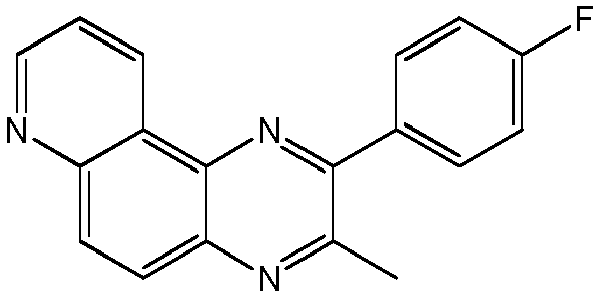
Ibq 
Ibj 
Xbc 
- La présente invention a également pour objet un composé de formule (I) tel que défini ci-dessus, pour son utilisation en tant que médicament, notamment en tant que médicament neurotrophique ou neuroprotecteur, et plus particulièrement pour son utilisation dans le traitement ou la prévention d'une maladie neurodégénérative.
- La présente invention concerne également l'utilisation d'un composé de formule (I) tel que défini ci-dessus pour la fabrication d'un médicament, notamment d'un médicament neurotrophique ou neuroprotecteur, et plus particulièrement pour la fabrication d'un médicament destiné au traitement ou à la prévention d'une maladie neurodégénérative.
- La présente invention concerne également une méthode de traitement ou de prévention d'une maladie neurodégénérative comprenant l'administration d'une quantité efficace d'un composé de formule (I) tel que défini ci-dessus à un patient en ayant besoin.
- La maladie neurodégénérative pourra être plus particulièrement la maladie d'Alzheimer, la maladie de Parkinson, la sclérose en plaques ou la sclérose latérale amyotrophique (SLA) encore appelée maladie de Charcot, et en particulier la maladie de Parkinson.
- La présente invention a également pour objet une composition pharmaceutique comprenant au moins un composé de formule (I) tel que défini ci-dessus et un véhicule pharmaceutiquement acceptable, à l'exclusion d'une solution de pyrido[3,2-f]quinoxaline dans l'eau.
- Par « composition pharmaceutique », on entend, au sens de la présente invention, une composition possédant des propriétés curatives ou préventives à l'égard de maladies, telles les maladies neurodégénératives dans le cas d'espèce, destinée à être administrée à un animal, notamment un mammifère tel que l'homme.
- Les compositions pharmaceutiques selon l'invention peuvent être formulées pour une administration parentérale (par exemple sous-cutanée, intra-péritonéale, intramusculaire, intraveineuse, intracranienne, intrathécale, etc.), orale, sublinguale, transdermique, locale ou rectale, destinée aux mammifères, y compris l'homme. La posologie varie selon le traitement et selon l'affection en cause.
- Dans les compositions pharmaceutiques de la présente invention, l'ingrédient actif peut être administré sous formes unitaires d'administration, en mélange avec des supports pharmaceutiques classiques, aux animaux ou aux êtres humains.
- Les formes unitaires d'administration par voie orale appropriées comprennent les comprimés, les gélules, les poudres, les granules et les solutions ou suspensions orales, et les formes d'administration parentérale, notamment intra-péritonéale.
- Lorsque l'on prépare une composition solide sous forme de comprimés, on mélange l'ingrédient actif principal avec un véhicule pharmaceutique tel que la gélatine, l'amidon, le lactose, le stéarate de magnésium, le talc, la gomme arabique ou analogues. On peut enrober les comprimés de saccharose ou d'autres matières appropriées ou encore on peut les traiter de telle sorte qu'ils aient une activité prolongée ou retardée et qu'ils libèrent d'une façon continue une quantité prédéterminée de principe actif.
- On obtient une préparation en gélules en mélangeant l'ingrédient actif avec un diluant et en versant le mélange obtenu dans des gélules molles ou dures.
- Une préparation sous forme de sirop ou d'élixir peut contenir l'ingrédient actif conjointement avec un édulcorant, un antiseptique, ainsi qu'un agent donnant du goût et un colorant approprié.
- Les poudres ou les granules dispersibles dans l'eau peuvent contenir l'ingrédient actif en mélange avec des agents de dispersion ou des agents mouillants, ou des agents de mise en suspension, de même qu'avec des correcteurs de goût ou des édulcorants.
- Pour une administration parentérale, on utilise des suspensions aqueuses, des solutions salines isotoniques ou des solutions stériles et injectables qui contiennent des agents de dispersion et/ou des agents mouillants pharmacologiquement compatibles.
- Le principe actif peut être formulé également sous forme de microcapsules, éventuellement avec un ou plusieurs supports additifs.
- Les composés de l'invention peuvent être utilisés à des doses comprises entre 0,01 mg et 1000 mg par jour, donnés en une seule dose une fois par jour ou administrés en plusieurs doses tout au long de la journée, par exemple deux fois par jour en doses égales. La dose administrée par jour est avantageusement comprise entre 5 mg et 500 mg, encore plus avantageusement entre 10 mg et 200 mg. Il peut être nécessaire d'utiliser des doses sortant de ces gammes ce dont l'homme du métier pourra se rendre compte lui-même.
- Selon un mode de réalisation particulier, la composition pharmaceutique telle que définie ci-dessus pourra comprendre en outre un autre principe actif, utile notamment dans le traitement ou la prévention de maladies neurodégénératives, et avantageusement choisi parmi des inhibiteurs d'acétylcholinestérase tels que le donépézil, la galanthamine, la rivastigmine, la mémantine et la tacrine ; des inhibiteurs de monoamines oxydase tels que la sélégiline ou rasagiline ; des inhibiteurs de catécholamines O-méthyltransférase tels que l'entacapone ; des inhibiteurs glutamatergiques tels que l'amantadine et le baclofène ; des agonistes cholinergiques tels que la sabcoméline ; des agonistes dopaminergiques tels que le pergolide, le cabergoline, le ropirinole et le pramipexole ; des analogues ou précurseurs de neuromédiateurs tels que la L-3,4-dihydroxyphénylalanine ; et des anticholinergiques tels que le trihexyphénidyl et la tropatépine.
- La présente invention a également pour objet une composition pharmaceutique selon l'invention pour son utilisation en tant que médicament neurotrophique ou neuroprotecteur, et plus particulièrement pour son utilisation dans le traitement ou la prévention d'une maladie neurodégénérative, notamment telle que définie précédemment.
- La présente invention concerne également l'utilisation d'une composition pharmaceutique selon l'invention pour la fabrication d'un médicament neurotrophique ou neuroprotecteur, et plus particulièrement pour la fabrication d'un médicament destiné au traitement ou à la prévention d'une maladie neurodégénérative, notamment telle que définie précédemment.
- La présente invention concerne également une méthode de traitement ou de prévention d'une maladie neurodégénérative, notamment telle que définie précédemment, comprenant l'administration d'une quantité efficace d'une composition pharmaceutique selon l'invention à un patient en ayant besoin.
- La présente invention a également pour objet un premier procédé de préparation d'un composé de formule (I) tel que défini ci-dessus comprenant les étapes successives suivantes :
- (a1) couplage entre une amino-quinoxaline de formule (II) suivante :

avec un halogénure propargylique de formule CH≡C-CHR2cHal ou CH≡C-CR2aR2bHal dans laquelle R2a, R2b et R2c sont tels que définis précédemment et Hal représente un atome d'halogène tel que Cl, Br ou I, notamment Br ou Cl, pour donner un composé de formule (IIIa) ou (IIIb) suivante :
- (bl) cycloisomérisation du composé de formule (IIIa) ou (IIIb) obtenu à l'étape précédente et aromatisation lorsque
------ représente une liaison double pour donner un composé de formule (I), et - (c1) éventuellement salification et/ou solvatation du composé de formule (I) obtenu à l'étape précédente pour donner un sel et/ou solvate pharmaceutiquement acceptable du composé de formule (I).
- Les produits de départ utilisés pour cette étape (aminoquinoxaline de formule (II)) sont disponibles dans le commerce ou peuvent être facilement préparés par des méthodes bien connues de l'homme du métier. Leur synthèse est notamment décrite dans les précédentes demandes internationales
WO 2010/007179 etWO 2012/131080 . Des procédés de synthèse sont également illustrés dans la partie expérimentale ci-après. - Cette réaction de couplage sera avantageusement réalisée en présence d'une base telle que K2CO3 ou K3PO4, et notamment un iodure tel que KI, NaI ou nBu4NI.
- Cette réaction peut être avantageusement réalisée dans un solvant tel que le diméthylfomamide (DMF), le dioxane, la NMP (N-méthyl pyrrolidinone), le DMSO (diméthylsulfoxyde), la DMPU (1,3-diméthyl-3,4,5,6-tétrahydro-2(1H)-pyrimidinone), l'HMPA (hexaméthylphosporamide), le DMA (diméthylacétamide) ou un mélange de ceux-ci, et en particulier le DMF, notamment à une température comprise entre 50 et 140°C, notamment d'environ 80°C.
- La réaction de cycloisomérisation sera avantageusement réalisée en présence d'un catalyseur tel qu'un dérivé de cuivre (I) (par ex. CuCl, Cu2O, CuOTf, CuPF6 ou CuBF4) ou encore un sel d'argent (par ex. AgNO3, Ag2CO3, AgF, AgPF6, AgOTf, AgBF4 ou CF3C(O)OAg). Le catalyseur sera plus particulièrement CuCl.
- Cette réaction peut être avantageusement réalisée dans un solvant tel que le diméthylsulfoxyde (DMSO), le chloroforme, le toluène, le DMF, le dioxane, la NMP, la DMPU, l'HMPA, le DMA ou un mélange de ceux-ci, et en particulier le DMSO ou le toluène, notamment à une température comprise entre 70 et 160°C, notamment d'environ 120°C.
- Cette réaction de cycloisomérisation s'accompagne spontanément d'une aromatisation du système tricyclique lorsque l'étape (bl) est effectuée à partir d'un composé de formule (IIIa) pour donner un dérivé de type 1,4,8-triazaphénanthrène.
- L'étape de salification pourra être réalisée dans des conditions bien connues de l'homme du métier, en présence d'un acide ou d'une base pharmaceutiquement acceptable, notamment tel(le) que défini(e) précédemment.
- Lorsque le composé se trouve sous une forme solvatée, cette solvatation a généralement lieu dans la dernière étape du procédé, le solvant de la forme solvatée étant dans ce cas le solvant du milieu réactionnel.
- La présente invention a également pour objet un second procédé de préparation d'un composé de formule (I) ci-dessus pour lequel au moins l'un de R1 et R2 représente une chaîne hydrocarbonée saturée ou insaturée, linéaire ou ramifiée, comportant de 1 à 10 atomes de carbone ; un aryle éventuellement substitué ; ou un hétéroaryle éventuellement substitué comprenant les étapes successives suivantes :
- (a2) couplage d'un composé de formule (I) selon l'invention pour lequel au moins l'un de R1 et R2 représente un atome d'halogène, tel que Cl, Br ou I, notamment Cl, avec un dérivé d'acide boronique de formule R3-B(R4)2 ou R3-BF3 -K+ pour lequel R3 représente une chaîne hydrocarbonée saturée ou insaturée, linéaire ou ramifiée, comportant de 1 à 10 atomes de carbone ; un aryle éventuellement substitué ; ou un hétéroaryle éventuellement substitué, et R4 représente un groupe (C1-C6)alkyle, OH ou (C1-C6)alcoxy,
ou avec un dérivé zincique de formule R3-Zn-Hal pour lequel R3 est tel que défini ci-dessus et Hal représente un atome d'halogène tel que Cl, Br ou I, notamment Cl, ou avec un dérivé stannane de formule R3-SnA1A2A3 pour lequel R3 est tel que défini ci-dessus et A1, A2 et A3, identiques ou différents, représentent chacun un groupe (C1-C6)alkyle,
ou avec un dérivé magnésien de formule R3-Mg-Hal pour lequel R3 est tel que défini ci-dessus et Hal représente un atome d'halogène tel que Cl, Br ou I, notamment Br,
ou avec un dérivé silicié de formule R3-SiMe2OH, R3-SiF3 ou R3-Si(OA1)(OA2)(OA3) pour lequel R3, A1, A2 et A3 sont tels que définis ci-dessus, ou avec un alcyne de formule R'-C=CH pour lequel R' représente un groupe protecteur ou une chaîne hydrocarbonée saturée ou insaturée, linéaire ou ramifiée, comportant de 1 à 8 atomes de carbone, - (b2) lorsque l'étape (a2) a été réalisée avec un alcyne de formule R'-C=CH pour lequel R' représente un groupe protecteur, déprotection du groupe protecteur de la fonction alcyne, et
- (c2) éventuellement salification et/ou solvatation du composé de formule (I) obtenu à l'étape précédente pour donner un sel et/ou solvate pharmaceutiquement acceptable du composé de formule (I).
- Ce couplage pourra être réalisé dans les conditions de la réaction de Suzuki bien connues de l'homme du métier.
- Cette réaction de couplage sera ainsi avantageusement réalisée en présence d'un catalyseur au palladium tel que Pd(PPh3)4, Pd(OAc)2, PdCl2(dppf) ou PdCl2(PPh3)2, notamment PdCl2(PPh3)2.
- Elle pourra être réalisée en présence d'une base telle que K2CO3, K3PO4, Na2CO3, Cs2CO3, KOH, CsOH ou NaOH, notamment K2CO3.
- Cette réaction peut être avantageusement réalisée dans un solvant choisi parmi le dioxane, l'eau et leurs mélanges, plus particulièrement dans un mélange eau/dioxane, notamment au reflux.
- Le dérivé d'acide boronique utilisé pourra être plus particulièrement un acide boronique de formule R3-B(OH)2.
- Ce couplage pourra être réalisé dans les conditions de la réaction de Negishi bien connues de l'homme du métier.
- Cette réaction de couplage sera ainsi avantageusement réalisée en présence d'un catalyseur au palladium tel que Pd(PPh3)4. Un catalyseur au nickel peut aussi être envisagé.
- Cette réaction peut être avantageusement réalisée dans un solvant tel que le tétrahydrofurane (THF).
- Ce couplage pourra être réalisé dans les conditions de la réaction de Stille bien connues de l'homme du métier.
- Cette réaction de couplage sera ainsi avantageusement réalisée en présence d'un catalyseur au palladium tel que Pd(PPh3)4. L'ajout de sels de cuivre tel que CuTC, CuDPP, ou CuCl pourra être utilisé pour faciliter la réaction.
- A1, A2 et A3 seront avantageusement identiques, et représenteront notamment Me ou Bu, notamment Bu.
- Ce couplage pourra être réalisé dans les conditions de la réaction de Kumada bien connues de l'homme du métier.
- Cette réaction de couplage sera ainsi avantageusement réalisée en présence d'un catalyseur au palladium tel que Pd(PPh3)4 ou PdCl2(dppf) ou d'un catalyseur au nickel tel que Ni(acac)2, NiCl2(dppp), NiCl2(dppe) ou NiCl2(dppb).
- Ce couplage pourra être réalisé dans les conditions de la réaction de Hiyama bien connues de l'homme du métier.
- Cette réaction de couplage sera ainsi avantageusement réalisée en présence d'un catalyseur au palladium tel que PdCl2, Pd2dba3, Pd(OAc)2, Pd(PPh3)4 ou PdCl2(dppf) ou d'un catalyseur au nickel tel que Ni(acac)2, NiCl2(dppp), NiCl2(dppe), NiCl2(dppb), NiBr2.diglyme ou NiCl2.glyme.
- Cette réaction de couplage sera également avantageusement réalisée en présence d'une source de fluorure tel que TBAF (fluorure de tétra-n-butylammonium), TASF (difluorotriméthylsilicate de tris(diméthylamino)sulfonium) ou CsF, ou bien d'hydroxyde tel que NaOH ou KOH
- A1, A2 et A3 seront avantageusement identiques, et représenteront notamment Me ou Et.
- Ce couplage pourra être réalisé dans les conditions de la réaction de Sonogashira bien connues de l'homme du métier.
- Cette réaction de couplage sera ainsi avantageusement réalisée en présence d'un catalyseur au palladium tel que Pd(PPh3)4 ou PdCl2(PPh3)2, notamment PdCl2(PPh3)2, et d'un sel de cuivre (I) tel que CuI ou CuBr, notamment CuI.
- Elle pourra être réalisée en présence d'une base telle qu'une amine tertiaire ou secondaire, par exemple NHEt2, NEt3 ou NEt(iPr)2, notamment NEt3.
- Cette réaction peut être avantageusement réalisée dans un solvant choisi parmi le THF (tétrahydrofurane), l'acétonitrile, l'acétate d'éthyle et leurs mélanges, plus particulièrement dans du THF, notamment au reflux.
- Le couplage de l'étape (a2) sera avantageusement réalisée par une réaction de Suzuki ou de Sonogashira.
- Le groupe protecteur de la fonction alcyne pourra être un groupemnt silylé tel que SiA4A5A6 où A4, A5 et A6 représentent chacun, indépendamment les uns des autres, un groupe (C1-C6)alkyle. Il pourra s'agir plus particulièrement d'un groupe triméthylsilyle (TMS).
- Il peut être déprotégé dans des conditions bien connues de l'homme du métier, et notamment en présence d'une base telle K2CO3 dans le methanol comme solvant ou bien en présence d'une source de fluorure tel que TBAF dans le THF comme solvant. Une telle déprotection pourra être réalisée à température ambiante ou en chauffant à une température pouvant aller jusqu'au reflux du solvant.
- Un composé de formule (I) avec au moins l'un de R1 et R2 représentant un groupe -C=CH est ainsi obtenu.
- Le composé obtenu par l'un des deux procédés ci-dessus pourra être séparé du milieu réactionnel par des méthodes bien connues de l'homme du métier, comme par exemple par extraction, évaporation du solvant ou encore par précipitation et filtration.
- Il pourra également être purifié si nécessaire par des techniques bien connues de l'homme du métier, comme par recristallisation si le composé est cristallin, par distillation, par chromatographie sur colonne sur gel de silice ou alumine ou encore par chromatographie liquide haute performance (HPLC).
- La présente invention sera mieux comprise à la lumière des exemples non limitatifs qui suivent.
- Les abréviations suivantes ont été utilisées dans cette partie.
- AMP
- : Adénosine 3',5'-monophosphate
- dbc-AMP
- : Dibutyryl adénosine 3',5'-monophosphate cyclique
- BHE
- : Barrière hémato-encéphalique
- DCM
- : Dichlorométhane
- DMSO
- : Diméthylsulfoxyde
- équiv.
- : Equivalent
- ESI
- : Ionisation par électrospray
- HPLC
- : Chromatographie Liquide Haute Performance
- HPLC-
- : Chromatographie Liquide Haute Performance couplée à deux
- MS/MS
- spectrométries de masse
- IR
- : Infrarouge
- MRM
- : Multiple Reaction Monitoring
- MS
- : Spectre de masse
- RMN
- : Résonance Magnétique Nucléaire
- THF
- : Tétrahydrofurane
- UHPLC
- : Chromatographie Liquide Ultra Haute Performance
- UV
- : Ultraviolet
- Les composés selon l'invention ont été nommés sous la forme Ixy (lorsque
------ représente une liaison simple et R2c = H) ou Xxy (lorsque------ représente une liaison double et R2a = R2b = Me) où : - le premier suffixe x correspond à R2,
- le second suffixe y correspond à R1,
- La même nomenclature a été utilisée pour les intermédiaires de synthèse de formule (II) ou (IIIa) (avec R2c = H) sous la forme IIxy et IIIxy respectivement.
- La synthèse des aminoquinoxalines de formule (II) utilisées dans les exemples est soit décrite ci-dessous, soit décrite dans
WO 2010/007179 ouWO 2012/131080 . - Etape 1 : A une solution de composé IIbl (343 mg, 1,29 mmol, 1 equiv.) dans le diméthyformamide anhydre sont ajoutés 178 mg de K2CO3 (1,29 mmol, 1 equiv.), 214 mg de KI (1,29 mmol, 1 equiv.) et 0,288 ml de bromure de propargyle (1,7 mmol, 2 equiv., 80% dans le toluène). Le milieu réactionnel est ensuite chauffé à 80°C pendant 24 h. Après refroidissement, le milieu réactionnel est hydrolysé par une solution saturée de K2CO3, puis extrait 3 fois avec de l'acétate d'éthyle. Les phases organiques sont rassemblées, lavées avec une solution saturée de NaCl, séchées sur Na2SO4, filtrées puis concentrées sous pression réduite. Une purification par chromatographie sur gel de silice dans un mélange cyclohexane : acétate d'éthyle en proportions 7:3 puis 6:4 a permis d'obtenir le composé IIIbl (71%, 280,0 mg) ainsi que le composé disubstitué (14%, 64,1 mg). RMN 1H (400 MHz, CDCl3) δ ppm : 2.24 (t, J = 2.4 Hz, 1H), 2.70 (s, 3H), 3.86 (s, 3H), 4.03 (d, J = 2.4 Hz, 2H), 4.44 (brs, 1H, NH), 7.02 (d, J = 8.7 Hz, 2H), 7.09 (dd, J = 8.7, 2.5 Hz, 1H), 7.12 (d, J = 2.5 Hz, 1H), 7.60 (dd, J = 8.7 Hz, 2H), 7.81 (d, J = 8.7 Hz, 1H). RMN 13C (100 MHz, CDCl3) δ ppm : 23.9, 33.4, 55.3, 71.8, 80.0, 105.3, 113.8 (2C), 121.4, 128.9, 130.4 (2C), 131.9, 136.1, 142.9, 147.2, 148.1, 154.4, 160.0. MS (ESI) m/z : 304.3 ([M+H]+, 100). Masse haute résolution (ESI): m/z calculé pour [M+H]+ C19H18N3O : 304.1450 ; m/z mesuré : 304.1458. Pureté (HPLC/UV λ à 260 nm) : 100 %. Etape 2 : A une solution du composé IIIbl (50 mg, 0.166 mmol, 1 equiv.) dans le DMSO mL) est additionné du CuCl (26 mg, 0.183 mmol, 1.1 equiv). Après 8 h à 120°C, le milieu réactionnel est refroidi à température ambiante, puis est additionné NH3 à 28% (5mL), de CH2Cl2 (10 mL) et H2O (10 mL). La phase aqueuse est extraite 3 fois au CH2Cl2, puis phases organiques rassemblés sont lavés 2 fois avec une solution aqueuse de NaCl séchés sur MgSO4, puis concentrés. Après purification sur silice (85:15 / DCM:AcOEt), le produit Ibl est obtenu (30,2 mg, 62%). RMN 1H (400 MHz, CDCl3) δ ppm : 2.87 (s, 3H), 3.90 (s, 3H), 7.07 (d, J = 8.8 Hz, 2H), 7.59 (dd, J = 8.0, 4.1 Hz, 1H), 7.75 (d, J = 8.8 Hz, 2H), 8.12 (d, J = 9.3 Hz, 1H), 8.23 (d, J = 9.3 Hz, 1H), 9.03 (brs, 1H), 9.45 (dd, J = 8.0 et 0.8 Hz, 1H). RMN 13C (100 MHz, CDCl3) δ ppm : 24.4, 55.4, 113.9 (2C), 122.0 (br), 126.4 (br), 129.8, 130.8 (2C), 131.2, 132.1, 132.5, 138.2, 139.7, 148.9 (br), 151.2 (br), 152.4, 152.8, 160.4. MS (ESI) m/z : 302.2 ([M+H]+, 100). Masse haute résolution (ESI) : m/z calculé pour [M+H]+ C19H16N3O : 302.1293 ; m/z mesuré : 302.1296. Pureté (HPLC/UV λ à 260 nm) : 100 %.
- Les composés suivant ont également été synthétisés selon cette procédure :
- Iaa : RMN 1H (300 MHz, CDCl3) δ 9.47 (ddd, J = 8.3, 1.8, 0.5 Hz, 1H), 9.09 (dd, J = 4.4, 1.8 Hz, 1H), 8.96 (d, J = 2.0 Hz, 1H), 8.94 (d, J = 2.0 Hz, 1H), 8.30 (dd, J = 9.3, 0.5 Hz, 1H), 8.20 (d, J = 9.3 Hz, 1H), 7.68 (dd, J = 8.3, 4.4 Hz, 1H).
- Ibn : Rendement: 61% (30.5 mg).RMN 1H (300 MHz, CDCl3) δ 9.47 (d, J = 7.9 Hz, 1H), 9.04 (d, J = 4.4 Hz, 1H), 8.25 (d, J = 9.3 Hz, 1H), 8.15 (d, J = 9.3 Hz, 1H), 7.68 (d, J = 7.2 Hz, 2H), 7.60 (dd, J = 8.3, 4.4 Hz, 1H), 7.36 (d, J = 7.6 Hz, 2H), 2.87 (s, 3H), 2.47 (s, 3H).
13C NMR (75 MHz, CDCl3) δ 153.31, 152.55, 151.32, 148.88, 139.88, 139.13, 138.21, 136.06, 132.55, 132.24, 129.84, 129.28 (2C), 129.14 (2C), 126.41, 121.98, 24.23, 21.35. MS (ESI) m/z: 286.2 ([M+H]+, 100). Masse haute résolution (ESI) : m/z calculé pour [M+H]+ C19H16N3 : 286.1344; m/z mesuré : 286.1344. Pureté (HPLC/UV λ at 260 nm): 100%. - Ibf : Rendement: 51% (25.2 mg). RMN 1H (300 MHz, CDCl3) δ 9.41 (d, J = 8.3 Hz, 1H), 9.00 (brs, 1H), 8.20 (d, J = 9.2 Hz, 1H), 8.10 (d, J = 9.2 Hz, 1H), 7.52 (dd, J = 7.9, 3.8 Hz, 1H), 6.91 (s, 2H), 3.89 (s, 9H), 2.82 (s, 3H). RMN 13C (75 MHz, CDCl3) δ 153.23, 153.11, 152.47, 151.42 (br), 148.90 (br), 140.06, 138.87, 138.02, 134.27, 132.54 (2C), 129.80, 126.29(br), 122.06, 106.67 (2C), 60.96, 56.31 (2C), 24.27. MS (ESI) m/z: 362.2 ([M+H]+, 100). Masse haute résolution (ESI): m/z calculé pour [M+H]+ C21H20N3O3 : 362.1505; m/z mesuré : 362.1503. Pureté (HPLC/UV λ at 260 nm): 100%.
- Ibo : Rendement: 64% (30.4 mg). RMN 1H (300 MHz, CDCl3) δ 9.47 (d, J = 8.2 Hz, 1H), 9.09 (s, 1H), 8.29 (d, J = 8.8 Hz, 1H), 8.18 (d, J = 7.8 Hz, 1H), 7.75 (d, J = 8.5 Hz, 2H), 7.66 (brs, 1H), 7.55 (d, J = 8.5 Hz, 2H), 2.87 (s, 3H). RMN 13C (100 MHz, CDCl3) δ 152.29, 152.05, 151.78 - 149.58 (br), 149.59 - 148.60 (br), 140.28, 138.33, 137.35, 135.39, 132.85, 132.48, 130.76 (2C), 128.75 (2C), 123.16 - 121.57 (br), 24.15. MS (ESI) m/z: 306.1, ([M+H]+, 100), 308.1 ([M+H]+, 40). Masse haute résolution (ESI) : m/z calculé pour [M+H]+ C18H13ClN3 : 306.0798; m/z mesuré : 306.0800. Pureté (HPLC/UV λ at 260 nm): 100%.
- Ibp : Rendement: 50% (196.0 mg). RMN 1H (400 MHz, CDCl3) δ 9.46 (dd, J = 8.2, 1.2 Hz, 1H), 9.08 (s, 1H), 8.30 (d, J = 9.3 Hz, 1H), 8.17 (d, J = 9.3 Hz, 1H), 7.91 (d, J = 1.2 Hz, 1H), 7.68 - 7.60 (m, 3H), 2.88 (s, 3H). RMN 13C (101 MHz, CDCl3) δ 152.09, 151.69, 150.71, 149.01, 140.53, 138.80, 133.60, 133.16, 132.94, 132.53, 131.44, 130.45, 129.78, 128.56, 126.29, 122.30, 24.09. MS (ESI) m/z : 242.1 ([M+H]+, 100) et 344.1 ([M+H]+, 50). Masse haute résolution (ESI) : m/z calculé pour [M+H]+ C18H12Cl2N3 : 340.0408; m/z mesuré : 340.0405. Purity (HPLC/UV λ at 264 nm): 94%.
- Ibh : Rendement: 52% (19.0 mg). RMN 1H (300 MHz, CDCl3) δ 9.46 (d, J = 8.3 Hz, 1H), 9.06 (s, 1H), 8.27 (d, J = 9.3 Hz, 1H), 8.16 (d, J = 9.3 Hz, 1H), 7.78 (ddd, J = 8.7, 5.3 Hz, 2H), 7.63 (dd, J = 8.1, 4.2 Hz, 1H), 7.26 (t, J = 8.6 Hz, 2H), 2.87 (s, 3H). RMN 13C (75 MHz, CDCl3) δ 163.28 (d, J = 249.5 Hz), 152.32, 152.18, 151.49, 148.91, 140.10, 138.20, 134.93 (d, J = 3.3 Hz, 2C), 132.60, 132.50, 131.32 (d, J = 8.2 Hz, 2C), 129.80, 126.31, 122.11, 115.55 (d, J = 21.7 Hz), 24.21. MS (ESI) m/z: 290.2 ([M+H]+, 100). Masse haute résolution (ESI): m/z calculé pour [M+H]+ C18H13N3F : 290.1094; m/z mesuré : 290.1094. Pureté (HPLC/UV λ at 260 nm): 100%.
- Ibq : Rendement: 63% (34.5 mg). RMN 1H (400 MHz, CDCl3) δ 9.52 (dd, J = 8.2, 1.6 Hz, 1H), 9.07 (dd, J = 4.4, 1.6 Hz, 1H), 8.29 (d, J = 9.3 Hz, 1H), 8.19 (d, J = 9.3 Hz, 1H), 7.89 (d, J = 8.5 Hz), 7.80 (d, J = 8.5, 2H), 7.70 (dd, J = 8.5, 1.2 Hz, 2H), 7.64 (dd, J = 8.2, 4.4 Hz, 1H), 7.50 (t, J = 7.5 Hz, 2H), 7.41 (tt, J = 7.5, 1.2 Hz, 1H), 2.94(s, 3H). RMN 13C (101 MHz, CDCl3) δ 152.93, 152.57, 151.46, 148.97, 142.01, 140.40, 140.11, 138.33, 137.79, 132.60, 132.53, 129.88 (3C), 128.92 (2C), 127.75, 127.20 (4C), 126.45, 122.09, 77.00, 24.30. MS (ESI) m/z: 348.2 ([M+H]+, 100). Masse haute résolution (ESI): m/z calculé pour [M+H]+ C24H17N3 : 340.0408; m/z mesuré : 340.0405. Pureté (HPLC/UV λ at 260 nm): 100%.
- Ibj : Rendement: 61% (30.1 mg). RMN 1H (400 MHz, CDCl3) δ 9.57 (d, J = 6.7 Hz, 1H), 9.42 - 8.68 (brs, 1H), 8.35 (brs, 1H), 8.25 (s, 1H), 8.24 (brs, 1H), 8.04 (d, J = 8.4 Hz, 1H), 7.98 (dd, J = 6.4 and 5.0 Hz, 1H), 7.96 (dd, J = 6.4 and 5.0 Hz, 1H),, 7.91 (dd, J = 8.5, 1.6 Hz, 1H), 7.74 (m, 1H), 7.63 - 7.55 (m, 2H), 2.95 (s, 3H). RMN 13C (101 MHz, CDCl3) δ 153.35, 152.81, 140.17, 136.34, 133.40, 133.04, 129.82, 129.08, 128.50, 128.24, 127.81, 127.02, 126.72, 126.66, 24.32. MS (ESI) m/z: 322.2 ([M+H]+, 100). Masse haute résolution (ESI) : m/z calculé pour [M+H]+ C24H18N3 : 348.1501; m/z mesuré : 348.1499. Pureté (HPLC/UV λ at 260 nm): 100%.
-

- Etape 1 : A une solution de 2-quinoxalinol (20,0 g, 0,137 mol, 1 equiv.) commerciale dans l'acide acétique (200 mL) placé à 0°C, est ajoutée goutte à goutte une solution d'acide nitrique à 70 % (17,4 mL, 0,274 mol, 2 equiv.) diluée dans 20 mL d'acide acétique. Le milieu réactionnel est ensuite laissé remonter à température ambiante. Après 3 h à température ambiante, la couleur du milieu réactionnel passe de marron à jaune-orangé. précipité est récupéré par filtration et lavé à l'eau. Le solide de couleur jaune-orangé est séché sous vide pendant 48 h pour donner 17,57 g de composé V (67%). RMN 1H MHz, Acetone-d6) δ ppm 9.14 (s, 2H), 8.93 (d, J = 2.5 Hz, 1H), 8.61 (dd, J = 9.1, 2.5 Hz, 1H), 8.35 (d, J = 9.1 Hz, 1H).
- Etape 2 : A une solution du composé V (17,570 g, 91,50 mmol, 1 equiv.) dans 80 mL de POCl3 sont ajoutées 30 gouttes de diméthylformamide. Le milieu réactionnel est ensuite placé pendant 3 h à reflux. La couleur du milieu réactionnel devient noire. Après refroidissement le milieu réactionnel est versé lentement dans un bécher de 500 mL rempli de glace pilée. Le précipité est récupéré par filtration et lavé à l'eau. Le solide obtenu est séché sous vide pendant 48 h pour donner le composé VI sous forme d'un solide gris (17,02 g, 88%). RMN 1H (300 MHz, CDCl3) δ ppm : 8.30 (d, J = 9.3 Hz, 1H), 8.56 (dd, J = 9.3 et 2.2 Hz, 1H), 8.92 (d, J = 2.5 Hz, 1H), 8.93 (s, 1H). RMN 13C (75 MHz, CDCl3) δ ppm : 123.7, 124.8, 131.1, 141.1, 143.2, 148.0, 148.7, 149.8.
- Etape 3 : A une suspension de composé nitré VI (14,36 g, 68,5 mmol, 1 equiv.) dans l'AcOEt (300 mL) est ajouté SnCl2.2H2O (45,5g, 239,9 mmol, 3,5 equiv.), puis le mélange réactionnel est mis à reflux pendant 2h. Après refroidissement, NaOH 50% (6 equiv., 480 mmol) est aditionné lentement à 0°C et le milieu réactionnel est filtré sur un pad de gel de silice, puis on élue avec de l'acétone à chaud. Après concentration, le résidu est purifié par recristallisation avec CHCl3 / Ether de petrole pour fournir le composé IIad sous forme d'un solide jaune (9,65g, 78%). RMN 1H (300 MHz, CDCl3) δ ppm : 4.30 (brs, 2H), 7.03 (d, J = 1.7 Hz, 1H), 7.15 (dd, J = 8.8, 1.7 Hz, 1H), 7.85 (d, J = 8.8 Hz, 1H), 8.47 (s, 1H). RMN 13C (75 MHz, CDCl3) δ ppm : 107.2, 121.7, 130.3, 135.98, 140.3, 144.2, 147.7, 149.1. Masse haute résolution (ESI) : m/z calculé pour [M+H]+ C8H7N3Cl : 180.0329 ; m/z mesuré : 180.0326.
- Etape 4 : Le composé IIIad a été préparé à partir du composé IIad selon la procédure décrite à l'exemple 1.
- Etape 5 : Le composé lad a été préparé à partir du composé IIIad selon la procédure décrite à l'exemple 1. RMN 1H (300 MHz, CDCl3) δ 9.40 (ddd, J = 8.3, 1.7, 0.6 Hz, 1H), 9.12 (dd, J = 4.4, 1.7 Hz, 1H), 8.91 (s, 1H), 8.31 (dd, J = 9.3, 0.6 Hz, 1H), 8.20 (d, J = 9.3 Hz, 1H), 7.69 (dd, J = 8.3, 4.4 Hz, 1H). RMN 13C (75 MHz, CDCl3) δ 152.52, 149.36, 147.42, 144.95, 140.28, 140.13, 133.10, 132.92, 129.73, 125.43, 122.53. IR : 3049, 1493, 1207,1146, 900, 841.
- Une suspension du composé chloré lad (100 mg, 0,464 mmol, lequiv.), de K2CO3 (16,8 mg, 1,186 mmol, 2,6 equiv.), d'acide 2-naphtyl-boronique (102 mg, 0,593mmol, 1,3 equiv.) et de PdCl2(PPh3)2 (10 mg, 0,0139 mmol, 0,03 equiv.) dans un mélange dioxane / H2O (4 mL/1 mL) est chauffé à reflux pendant 1h. Après refroidissement le milieu réactionnel est extrait trois fois avec de l'acétate d'éthyle, lavé une fois avec une solution de 10% de K2CO3. Après séchage sur MgSO4, filtration et concentration, le résidu est purifié sur colonne de silice (eluant CH2Cl2 : AcOEt, 77 : 33) pour donner le composé Iaj sous forme d'un solide jaune pale (121 mg, 85%). RMN 1H (300 MHz, CDCl3) δ ppm : 7.58 (dd, J = 3.5, 6.6 Hz, 1H), 7.60 (dd, J = 3.5, 6.6 Hz, 1H), 7.73 (dd, J = 8.2, 4.3 Hz, 1H), 7.94 (m, 1H), 8.05 (t, J = 4.3 Hz, 1H), 8.07 (d, J = 8.2 Hz, 1H), 8.26 (d, J = 9.4 Hz, 1H), 8.30 (d, J = 9.4 Hz, 1H), 8.50 (dd, J = 9.6, 1.6 Hz, 1H), 8.76 (brs, 1H), 9.13 (dd, J = 4.5, 1.6 Hz, 1H), 9.60 (s, 1H), 9.70 (dd, J = 8.2, 1.7 Hz, 1H). RMN 13C (75 MHz, CDCl3) δ ppm: 122.2, 124.4, 126.6, 126.8, 127.4, 127.8, 128.9, 129.1, 130.3, 132.9, 133.4, 133.9, 134.2, 140.0, 140.7, 143.1, 149.5, 150.7, 151.97, 152.0. IR : 1728, 1701, 1539, 1499, 1380 1287, 1237, 1210, 1090, 1016, 845, 825, 791, 751, 732. Masse haute résolution (ESI) : m/z calculé pour [M+H]+C21H14N3 : 308.1188 ; m/z mesuré : 308.1188.
- Les composés suivant ont également été synthétisés selon cette procédure :
- Iac : RMN 1H (400 MHz, CDCl3) δ 9.66 (d, J = 8.3 Hz, 1H), 9.46 (s, 1H), 9.15 (brs, 1H), 8.33 (dd, J = 8.3 et 1.5 Hz, 2H), 8.26 (t, J = 8.5 Hz, 2H), 7.72 (brm, 1H), 7.61 (m, 3H). RMN 13C (100 MHz, CDCl3) δ 122.3 (br), 126.8 (br), 127.5 (2C), 129.2 (2C), 130.2, 130.3, 132.4, 132.8, 136.5, 140.1, 140.7, 142.9, 149.7 (br), 150.7, 151.9 (br). Masse haute résolution (ESI) : m/z calculé pour [M+H]+ C17H12N3 : 258.1031 ; m/z mesuré : 258.1028.
- Iae : RMN 1H (300 MHz, DMSO) δ 9.80 (brs, 1H, OH), 9.65 (s, 1H), 9.56 (dd, J = 8.3, 1.7 Hz, 1H), 9.14 (dd, J = 4.3, 1.7 Hz, 1H), 8.26 (s, 2H), 7.93-7.87 (m, 2H), 7.88 (dd, J = 8.4, 4.4 Hz, 1H), 7.44 (t, J = 8.2 Hz, 1H), 7.01 (ddd, J = 8.2, 2, 1 Hz 1H).
RMN 13C (75 MHz, DMSO) δ 158.14, 152.20, 150.10, 148.75, 143.50, 140.15, 138.90, 137.17, 132.07, 131.99, 130.26, 130.03, 125.76, 122.78, 118.26, 117.67, 114.04, 39.52. Masse haute résolution (ESI) : m/z calculé pour [M+H]+ C17H12N3O : 274.0980 ; m/z mesuré : 274.0978. - Iaf : RMN 1H (300 MHz, CDCl3) δ 9.59 (ddd, J = 8.3, 1.7, 0.5 Hz, 1H), 9.39 (s, 1H), 9.12 (dd, J = 4.4, 1.7 Hz, 1H), 8.29 (dd, J = 9.4, 0.5 Hz, 1H), 8.23 (d, J = 9.4 Hz, 1H), 7.71 (dd, J = 8.3, 4.4 Hz, 1H), 7.55 (s, 2H), 4.06 (s, 6H), 3.97 (s, 2H). RMN 13C (75 MHz, CDCl3) δ 154.11, 152.12, 150.63, 149.67, 142.97, 140.79, 140.66, 139.96, 132.91, 132.47, 132.16, 130.44, 126.63, 122.31, 105.11, 61.22, 56.62. IR 3000-2837, 1588, 1494, 1343, 1235, 1127, 853. Masse haute résolution (ESI) : m/z calculé pour [M+H]+ C20H18N3 : 348.1348; m/z mesuré : 348.1353.
- Iah : RMN 1H (300 MHz, CDCl3) δ 9.58 (ddd, J = 8.3, 1.7, 0.6 Hz, 1H), 9.38 (s, 1H), 9.10 (dd, J = 4.4, 1.7 Hz, 1H), 8.31 (dd, J = 9.0, 5.4 Hz, 2H), 8.27 (dd, J = 9.3, 0.6 Hz, 2H), 8.20 (d, J = 9.3 Hz, 2H), 7.68 (dd, J = 8.3, 4.4 Hz, 1H), 7.28 (t, J = 8.5 Hz, 2H). RMN 13C (75 MHz, CDCl3) δ 164.35 (d, J= 251.1 Hz), 152.00, 149.58 (d, J = 14.0 Hz), 142.49, 140.64, 139.84, 132.74, 132.48, 130.19, 129.40 (d, J = 8.5 Hz), 126.47, 122.18, 116.30 (d, J = 21.7 Hz). RMN 19F (188 MHz, CDCl3) δ 110.66 (tt, J = 8.5, 5.4 Hz). Masse haute résolution (ESI) : m/z calculé pour [M+H]+ C17H11N3F : 276.0937 ; m/z mesuré : 276.0937.
- Iam : RMN 1H (300 MHz, DMSO) δ 10.01 (d, J = 1.9 Hz, 1H), 9.95 (s, 1H), 9.71 (dd, J = 8.3, 1.5 Hz, 1H), 9.49 (d, J = 2.0 Hz, 1H), 9.17 (dd, J = 4.2, 1.5 Hz, 1H), 8.31 (s, 2H), 8.21 (d, J = 7.4 Hz, 1H), 8.15 (d, J = 8.3 Hz, 1H), 7.94 - 7.85 (m, 2H), 7.74 (ddd, J = 7.9, 6.9, 0.9 Hz, 1H). RMN 13C (75 MHz, DMSO) δ 152.40, 149.21, 148.80, 148.27, 148.09, 143.86, 140.47, 139.10, 135.05, 132.57(2C), 130.97, 130.05, 129.08, 128.88, 128.67, 127.49, 127.33, 125.76, 122.94, 39.52. IR : 3048,1572, 1498, 1300, 1090, 1066, 904, 847, 790, 753. Masse haute résolution (ESI) : m/z calculé pour [M+H]+ C20H13N4 : 309.1140 ; m/z mesuré : 309.1140.
- Iai : RMN 1H (300 MHz, CDCl3) δ 9.57 (ddd, J = 8.3, 1.7, 0.6 Hz, 1H), 9.29 (s, 1H), 9.12 (dd, J = 4.4, 1.8 Hz, 1H), 8.37 (dd, J = 9.3, 0.5 Hz, 1H), 8.34 (m, 1H), 8.31(dd, J = 9.3Hz, 1H), 8.05 (brd, J = 8.2 Hz, 1H), 8.00 (dd, J = 6.9, 2.5 Hz, 1H), 7.86 (dd, J = 7.1, 1.2 Hz, 1H), 7.72 - 7.63 (m, 2H), 7.63 - 7.51 (m, 2H). RMN 13C (75 MHz, CDCl3) δ 153.32, 152.00, 149.43, 146.47, 140.46, 139.92, 134.98, 134.12, 132.97, 132.79, 131.21, 130.32, 130.27, 128.86, 128.69, 127.17, 126.61, 126.36, 125.41, 125.13, 122.32. IR 3000-2800, 1755, 1586, 1574, 1495, 1377, 1317, 1303, 1088, 1055, 899, 844, 795, 775, 732. Masse haute résolution (ESI) : m/z calculé pour [M+H]+ C21H14N3 : 308.1188; m/z mesuré : 308.1187.
- Iag : RMN 1H (300 MHz, CDCl3) δ 9.61 (ddd, J = 8.3, 1.7, 0.6 Hz, 1H), 9.55 (d, J = 1.7 Hz, 1H), 9.46 (s, 1H), 9.13 (dd, J = 4.4, 1.8 Hz, 1H), 8.80 (dd, J = 4.7, 1.2 Hz, 1H), 8.61 (ddd, J = 8.0, 2.2, 1.7 Hz, 1H), 8.32 (dd, J = 9.3, 0.5 Hz, 1H), 8.25 (d, J = 9.3 Hz, 1H), 7.72 (dd, J = 8.3, 4.4 Hz, 1H), 7.54 (ddd, J = 8.0, 4.9, 0.7 Hz, 1H). RMN 13C (75 MHz, CDCl3) δ 152.21, 151.12, 149.52, 148.76, 148.38, 142.45, 141.28, 140.12, 134.67, 133.17, 132.78, 132.26, 130.18, 126.43, 123.90, 122.40. IR : 3040, 1614, 1589, 1496, 1477, 1391, 1304, 1289, 1095, 1075, 845, 790, 702. Masse haute résolution (ESI) : m/z calculé pour [M+H]+C16H11N4 : 259.0984; m/z mesuré : 259.0984.
- A une solution du composé chloré lad (100 mg, 0,464 mmol, 1equiv.) dans le THF 5 mL, est additionné du trimethylsilylacétylène (260µL, 1,85 mmol, 4 equiv.), du CuI (4,3mg, 0,0232 mmol, 0,05 equiv.), du PdCl2(PPh3)2 (6,5 mg, 0,0093mmol, 0,02 equiv) puis de la triéthylamine (3 mL). Le mélange réactionnel est porté à reflux sous atmosphère d'argon pendant 48 h, puis refroidit à température ambiante. Le mélange réactionnel est filtré sur pad de silice, et élué à l'acétate d'éthyle. Après concentration, le résidu est repris dans le méthanol (10 mL), du carbonate de potassium est ajouté (500 mg) et le mélange est porté 10 min à reflux. Après refroidissement le mélange réactionnel est dilué avec de l'eau (20 mL), extrait à l'AcOEt trois fois (30 mL) et lavé avec de la saumure deux fois (30 ml). Après séchage sur MgSO4 et filtration, le mélange réactionnel est purifié sur gel de silice pour donner un solide brun correspondant au composé Iak (48 mg, 50%). RMN 1H (300 MHz, CDCl3) δ ppm : 3.50 (s, 1H), 7.70 (dd, J = 8.3, 4.3 Hz, 1H), 8.20 (d, J = 9.4 Hz, 1H), 8.32 (d, J = 9.4 Hz, 1H), 9.04 (s, 1H), 9.11 (dd, J = 4.4, 1.7 Hz, 1H), 9.50 (dd, J = = 8.2, 1.7 Hz, 1H). RMN 13C (75 MHz, CDCl3) δ ppm : 81.0, 81.6, 122.6, 125.9, 130.1, 133.0, 133.9, 137.4, 140.2, 140.8, 147.7, 149.3, 152.3.
-
- Etape 1 : A une solution de composé IIbc (500.0 mg, 2.13 mmol, 1 equiv.) dans un mélange THF/eau (10.5 / 1 mL) en présence de 10 mg de CuCl2 (quantité catalytique) et 10 mg de cuivre (quantité catalytique) sous atmosphère inerte d'azote sont ajoutés 0,41 mL de triéthylamine (2,98 mmol, 1,4 equiv.) et 0,34 mL de 3-chloro-3-méthyl-1-butyne (2.98 mmol, 1.4 equiv.). Le milieu réactionnel est agité à température ambiante pendant 12 h, hydrolysé par 15 mL d'une solution saturée de K2CO3, puis extrait 3 fois au DCM. Les phases organiques sont rassemblées, lavées par une solution saturée de NaCl, séchées sur Na2SO4 puis concentrées sous préssion réduite. Une purification par chromatographie sur gel de silice dans un mélange DCM : acétate d'éthyle en proportions 85 : 15 a permis d'obtenir le composé N-alkylé correspondant (9bc). Rendement : 65 % (414.0 mg). RMN 1H (400 MHz, CDCl3) δ ppm : 1.68 (s, 6H), 2.40 (s, 1H), 2.66 (s, 3H), 4.32 (brs, 1H, NH), 7.16 (dd, J = 9.0, 2.5 Hz, 1H), 7.41-7.50 (m, 3H), 7.56 (d, J = 2.5 Hz, 1H), 7.61 (d, J = 8.3 Hz, 2H), 7.81 (d, J = 9.0 Hz, 1H). RMN 13C (100 MHz, CDCl3) δ ppm : 23.6, 30.0 (2C), 47.8, 71.2, 86.4, 108.0, 123.2, 128.4 (2C), 128.5, 128.6, 128.8 (2C), 136.1, 139.6, 142.6, 145.8, 147.8, 154.6. MS (ESI) m/z : 302,3 ([M+H]+, 100). Masse haute résolution (ESI) : m/z calculé pour [M+H]+ C20H20N3 : 302.1657 ; m/z mesuré : 302.1656. Pureté (HPLC/UV λ à 254 nm) : 95 %.
- Etape 2 : Une solution de composé 9bc (300,0 mg, 1,00 mmol, 1 equiv.) en présence de mg de CuCl dans le toluène (5 mL) est mise au reflux sous atmosphère inerte d'azote pendant 1 h. Après refroidissement, le milieu réactionnel est hydrolysé par 10 mL d'une solution saturée de K2CO3 puis extrait au DCM. Les phases organiques rassemblées, sont lavées par une solution saturée de NaCl, séchées sur Na2SO4, puis évaporées sous pression réduite. Une purification par chromatographie sur gel de silice dans un mélange DCM : AcOEt en proportions 10 : 0 jusque 8 : 2 a permis d'obtenir le composé Xbc. Rendement 64 % (191.0 mg). RMN 1H (400 MHz, CDCl3) δ ppm : 1.38 (s, 6H), 2.69 (s, 3H), 4.07 (brs, NH, 1H), 5.52 (d, J = 9.8 Hz, 1H), 6.93 (d, J = 8.8 Hz, 1H), 7.42 (d, J = 9.8 Hz, 1H), 7.45-7.52 (m, 3H), 7.65 (d, J = 8.8 Hz, 1H), 7.70 (dd, J = 8.0, 1.5 Hz, 2H). RMN 13C (100 MHz, CDCl3) δ ppm : 23.8, 31.4 (2C), 52.6, 111.7, 118.8, 119.9, 128.0, 128.2 (2C), 128.6, 128.7, 129.2 (2C), 135.7, 138.3, 139.9, 143.0, 147.0, 153.7. MS (ESI) m/z : 302.3 ([M+H]+, 100).
- Les composés selon l'invention ont été évalués pour leurs propriétés neuroprotectrices et neurodifférentiatrices (ou neuritogéniques).
- Les composés selon l'invention ont été testés dans un modèle de dégénérescence des neurones dopaminergiques issus de cultures primaires de mésencéphale ventral embryonnaire selon le protocole décrit dans l'article de S. Guerreiro et al. (2008). Les cultures primaires de mésencéphale ventral embryonnaire ainsi obtenues sont des cultures mixtes contenant environ 50 % de cellules neuronales et 50 % de cellules gliales. Parmi cellules neuronales, les neurones dopaminergiques représentent 3% des neurones totaux, majorité des neurones issus de ces cultures étant GABAergiques. Concernant les cellules gliales, elles sont principalement représentées par des astrocytes (> de 95 % des cellules gliales). Ces cultures sont caractérisées par la mort spontanée, progressive et sélective des neurones dopaminergiques en conséquence d'un mécanisme impliquant des astrocytes immatures et une dyshoméostasie calcique (E. Rousseau et al. (2013), D. Toulorge et al. (2011)). L'effet neuroprotecteur des composés selon l'invention a été évalué par comptage des neurones dopaminergiques (TH+) marqués par immunohistochimie de la tyrosine hydroxylase (TH) après 10 jours de culture (DIV 10). L'observation à DIV 10 est directement liée au fait que, d'après la littérature, une grande diminution du nombre de neurons TH+ est observé après 10 jours de cultures en l'absence de traitement neuroprotecteur.
- Les résultats obtenus sont présentés dans le tableau 1 ci-dessous.
Tableau 1. Activité neuroprotectrice de composés selon l'invention sur la survie des neurones dopaminergiques issus de mésencéphale ventral embryonnaire. Composés % relatif par rapport au contrôle ± erreur standard Neurones TH+a 100 nM Neurones TH+a 1 µM Neurones TH+a 10 µM Contrôle 26,0 ± 0,5 db-AMPcb 100,0 ± 1,4 Iac 46,6 ± 2,8 64,7 ± 2,9* 91,0 ± 3,7* Iaa 25,7 ± 1,6 26,2 ± 1,7 30,6 ± 2,3 Iad 27,4 ± 1,6 26,5 ± 1,6 33,8 ± 1,8 Iae 24,7 ± 1,6 47,7 ± 2,6* 99,3 ± 4,4* Iaf 27,7 ± 1,6 46,8 ± 2,3* 70,8 ± 3,5* Iag 31,4 ± 1,7 48,3 ± 2,4* 96,6 ± 4,5* Iam 27,6 ± 2,0 46,7 ± 2,7* 97,3 ± 3,6* Iah 24,4 ± 1,4 32,8 ± 1,8 42,8 ± 2,2* Iaj 28,9 ± 1,8 42,8 ± 2,1* 94,9 ± 3,5* Iak 38,2 ± 2,1* 40,7 ± 2,6* 7,0 ± 1,3* Ibj 58,1 ± 2,8 59,2 ± 2,2 67,3 ± 2,5* aNombre de neurones TH+ par puits exprimé en pourcentage par rapport aux cultures traitées avec le db-AMPc à 1 mM. L'écart standard à la moyenne est obtenu sur trois expériences indépendantes pour les composés actifs dont les conditions sont répliquées trois fois.
bdb-AMPc utilisé à une concentration de 1 mM.
Analyses statistiques : *P<0,05, vs contrôle, analyse de variance à un facteur (one-way ANOVA) suivi d'une analyse post hoc de Dunnett. - Les résultats montrent une activité particulièrement importante des composés lac, Iae, Iag, Iaj et Iam avec un pourcentage de survie quasiment égal à 10µM à celui induit par la db-AMPc à 1 mM.
- Le composé Iac est une 3-phényl-1,4,8-triazaphénanthrène. In vitro, il possède une activité neuroprotectrice à une concentration de 1µM pour une activité optimal à 10µM.
- Les propriétés physicochimiques du composé Iac ont été comparées aux propriétés physicochimiques théoriques attendues pour un composé actif au niveau central puis le passage de la barrière hémato-encéphalique a été évalué.
- Une comparaison des propriétés physico-chimiques de Iac avec celles des composés actifs sur le SNC est présenté dansle tableau 2 ci-dessous.
Tableau 2. Comparaison des propriétés physico-chimiques de Iac avec celles des composés actifs sur le SNC. Propriétés physicochimiques Médicaments du SNCa Composé Iac Activité < nM 1 µM Sélectivité Élevée Inconnue Poids moléculaire < 450 g.mol-1 257 g.mol-1 logP < 5 2,4b Donneur de liaisons H < 3 0 Accepteur de liaisons H < 7 3 Liaisons rotatives < 8 1 pKa 7,5-10,5 (éviter les acides) indéterminé Aire polaire de surface (PSA) < 60-70 A° 39 A°c Solubilité aqueuse > 60 µg.mL-1 < 10 µg.mL-1 aVoir Pajouhesh et Lenz (2005).
bLes prédictions des logP ont été réalisées avec l'application en ligne gratuite ALOGP Computational Chemistry Laboratory, http://www.vcclab.org, 2005.
cValeur calculée à l'aide de molinspiration (www.molinspiration.com) - Le composé Iac possède, en termes de propriétés physicochimiques, la plupart des caractéristiques nécessaires à sa diffusion à travers la BHE. Cependant ce type de prédiction est limité à la diffusion passive de la molécule et ne prend pas en compte d'éventuelles interactions avec la barrière, telles que la métabolisation par les cytochromes de la BHE, ainsi que les phénomènes de pompes à efflux ou de transport actif. Une étude in vivo de passage de la BHE est donc indispensable pour confirmer cette prédiction.
- Le but de cette étude est de vérifier par HPLC couplée à une spectrométrie de masse, la présence du composé Iac dans le parenchyme cérébral après un traitement sub-chronique par voie intraveineuse chez la souris.
- L'étude est réalisée avec des souris CD-1.
- Une solution du composé Iac est préparée à 0,5 mg/mL dans du sérum physiologique contenant 10% de Cremophor EL®. Une même dose de cette solution est administrée à 6 souris par voie intraveineuse (2 µL/g).
- Après 5 min, 3 souris sont sacrifiées. Après 30 min, les 3 autres souris sont sacrifiées.
- Le sang est prélevé et le plasma est séparé par centrifugation. Le cerveau est prélevé après perfusion intracardiaque. Les échantillons sont congelés et conservés à -80°C avant traitement.
- Plasma : 400 µL de chaque échantillon de plasma sont mélangés avec 1 mL d'acétonitrile pour précipiter les protéines et extraire le composé Iac.
- Cerveau : Chaque cerveau est broyé dans 400 µL de sérum physiologique. 800 µL d'acétonitrile sont ajoutés pour extraire le composé Iac.
- Les échantillons traités sont agités à l'aide d'un vortex pendant 3 minutes, puis placés dans un sonicateur pendant 3 minutes également. Les protéines précipitées et les résidus solides sont sédimentées par centrifugation (15 000g, 5 minutes à 4°C). Les surnageants sont transférés dans une microplaque pour être analysés par HPLC-MS/MS.
- Les échantillons sont analysés avec la méthode décrite ci-dessous, la détection et la quantification, basées sur l'aire des pics, étant réalisées par HPLC-MS/MS en mode MRM. Les solutions des gammes étalons sont analysées dans la même série d'injections.
- Pour le calcul du log [cerveau]/[plasma] permettant de déterminer le passage de la barrière hématoencéphalique, le volume de plasma moyen d'une souris est évalué à 1,5 mL.
- Au préalable, une analyse FIA est réalisée comme décrit ci-dessous afin de choisir les conditions d'analyses pour la MS/MS. Elle est réalisée en injectant directement dans le spectromètre de masse le produit Iac pur dilué dans un solvant. Il n'y a donc pas de séparation en HPLC puisqu'il s'agit d'une solution témoin et non d'un extrait de cerveau. Une solution du composé Iac est injectée en flux continu dans le spectromètre masse, et tensions sont ajustées pour obtenir une intensité optimale pour l'ion moléculaire et un ou deux ions fils obtenus par fragmentation de l'ion moléculaire.
- Une solution du composé Iac est préparée à 1 mg/mL dans l'acétonitrile. Cette solution est diluée au 1/100.
- La mise au point de l'analyse est réalisée avec une UHPLC couplée à un triple quadripôle Shimadzu LC-MS 8030. Le système est utilisé en mode FIA. 1 µL de la solution diluée est injectée.
- Les conditions d'analyse de l'ion moléculaire sont optimisées (source, ionisation). Le rapport m/z de l'ion moléculaire est ajusté. Les tensions sont ajustées (Q1, chambre de collision, Q3). Le ou les meilleurs fragments sont sélectionnés et leurs rapports m/z ajusté.
- Une solution du composé Iac à 10 mM dans le DMSO est diluée à une concentration de l'ordre du µM pour mettre au point la méthode d'analyse.
- Les conditions chromatographiques sont optimisées (solvants, pH, mode d'élution, débit, etc.). Les chromatogrammes sont enregistrés en injectant de préférence 1 µL de solution.
- Une gamme étalon est réalisée à partir de 5 dilutions du composé Iac dans du plasma de souris. Les échantillons dans le plasma sont traités et extraits comme indiqué précédemment.
- La concentration considérée est de 1 µM (n = 2).
- Les échantillons sont préparés de manière identique à celle pour l'étalonnage mais dans ce cas, le plasma ne contient pas de composé Iac. Ce dernier est présent dans l'acétonitrile en quantité suffisante pour arriver à une concentration équivalente à 1 µM dans du plasma. Étalonnage pour dosage dans le cerveau :
Une gamme étalon est réalisée à partir de 5 dilutions du composé Iac dans des cerveaux de souris broyés dans 400 µL de solution saline. Les échantillons dans des cerveaux sont traités et extraits comme indiqué précédemment. - La quantité considérée est de 1 nmol (n = 2).
- Les échantillons sont préparés de manière identique à celle pour l'étalonnage mais dans ce cas, le cerveau ne contient pas de composé Iac. Ce dernier est présent dans l'acétonitrile en quantité suffisante pour arriver à une quantité équivalente à 1 nmol par cerveau :
Une fois les étapes d'étalonnage et de recouvrement effectuées, les échantillons prélevés sur les animaux traités, puis traités et extraits comme indiqué précédemment, sont analysés. - Les résultats obtenus sont présentés dans le tableau ci-dessous.
Délais pour l'euthanasie après injection IV de 1 mg/kg de Iac Concentration plasmatique (nmol/mL) Quantité (nmol/cerveau) Log [cerveau]/[plasma] 5 min 2,47 ± 0,24 5,19 ± 0,25 0,15 ± 0,05 30 min 0,32 ± 0,05 0,50 ± 0,07 0,02 ± 0,10 - Le composé Iac est capable de traverser in vivo la BHE après administration intraveineuse. Ces résultats confirment les prédictions QSARs.
- Les effets neuroprotecteurs potentiels de Iac ont été évalués en mesurant les niveaux de dopamine du striatum et le renouvellement de la dopamine dans le modèle de souris de la maladie de Parkinson traitées à la MPTP (1-méthyl-4-phényl-1,2,3,6-tétrahydropyridine), ainsi qu'en évaluant la quantité de neurones dopaminergiques sauvés dans la substancia nigra. Les souris ont été traitées avec Iac (50 et 100 mg/kg, p.o., dans 1% carboxymethylcellulose et 0.5% de tween 80) pendant 11 jours consécutifs. MPTP (20 mg/kg; voie intrapéritonéale) ou une solution saline pour les controles a été administré aux jours de traitement 4 à 8. Toutes les souris ont été tuées le jour 12 suivant l'administration finale du traitement, puis le tissu du striatum a été disséqué pour analyse. L'effet du traitement à la MPTP sur la déplétion de la dopamine du striatum a été analysé par chromatographie en phase liquide haute pression (HPLC) en combinaison avec une électrochimique pour la mesure des niveaux de dopamine monoamine (DA), d'acide 3,4-dihydroxyphénylacétique (DOPAC) et d'acide homovanillique (HVA).
- Iac (50 mg/kg et 100 mg/kg) a augmenté les niveaux de DA du striatum (64% et 78%, respectivement). Les niveaux de HVA du striatum ont également été augmenté (25%) mais seulement à la dose la plus élevée de Iac (100 mg/kg). Une diminution du rapport (DOPAC + HVA) / DA) a été observée aux doses de 50 mg/kg (30%) et 100 mg/kg (28%) de Iac. Il n'y a pas eu d'effet significatif du traitement par Iac sur les niveaux de DOPAC. A la dose de 2x25 mg/kg/j (per os), il a été observé la survie presque totale des neurones TH+. En effet, dans le groupe des souris traitées par MPTP/Iac, la survie a été mesurée à 93 ± 4% par rapport aux contrôles. A une dose plus élevée (2x50 mg/kg/j), Iac est un peu moins actif puisque la survie des neurones dopaminergiques est de 81 ± 4% par rapport aux contrôles.
- Ces données suggèrent que le traitement à Iac permet de neutraliser une partie de la perte de dopamine et d'atténuer l'augmentation du renouvellement de la dopamine, et de sauvegarder les neurones dopaminergiques de la substance noire.
-
- S. Guerreiro, et al. (2008) : « Paraxanthine, the primary metabolite of caffeine, provides protection against dopaminergic cell death via stimulation of ryanodine receptor channels » Mol. Pharmacol. 2008, 74 (4), 980e989.
- Mourlevat et al. (2003) : « Prévention of Dopaminergic Neuronal Death by Cyclic AMP in Mixed Neuronal/Glial Mesencephalic Cultures Requires the Repression of Presumptive Astrocytes » Molecular Pharmacology 2003, 64:578-586.
- Pajouhesh et Lenz (2005) : « Médicinal Chemical Properties of Successful Central Nervous System Drugs » NeuroRx. 2005, 2: 541-553.
- E. Rousseau, et al. (2013) : « The iron-binding protein lactoferrin protects vulnérable dopamine neurons from degeneration by preserving mitochondrial calcium homeostasis » Mol. Pharmacol. 2013, 84, 888e898. D. Toulorge, et al. (2011) : « Neuroprotection of midbrain dopamine neurons by nicotine is gated by cytoplasmic Ca2+ » FASEB J. 2011, 25, 2563e2573.
-
WO 2010/007179 -
WO 2012/131080
Claims (14)
- Composé de formule (I) suivante :

dans laquelle :------- représente une liaison simple ou double, de préférence une liaison double,- X1 représente :▪ NR1a lorsque------ représente une liaison simple, et▪ N lorsque------ représente une liaison double,- X2 représente :▪ CR2aR2b lorsque------ représente une liaison simple, et▪ CR2c lorsque------ représente une liaison double,- R1 et R2 représentent chacun, indépendemment l'un de l'autre, un atome d'hydrogène ; un atome d'halogène tel qu'un atome de chlore, brome ou fluor ; une chaîne hydrocarbonée saturée ou insaturée, linéaire ou ramifiée, comportant de 1 à 10, de préférence 1 à 6 atomes de carbone ; un aryle éventuellement substitué ; ou un hétéroaryle éventuellement substitué,- R1a et R2c représentent chacun, indépendemment l'un de l'autre, un atome d'hydrogène ou un groupe (C1-C6)alkyle, et- R2a et R2b représentent chacun, indépendemment l'un de l'autre, un groupe (C1-C6)alkyle,à l'exclusion :• de la pyrido[3,2-f]quinoxaline,• de la 2,3-diméthyl-pyrido[3,2-f]quinoxaline,• de la 2,3,8-triméthyl-pyrido[3,2-f]quinoxaline, et• de la 2,3-diphényl-pyrido[3,2-f]quinoxaline. - Composé selon la revendication 1, caractérisé en ce qu'il s'agit d'un composé de formule (Ia) suivante :

dans laquelle R1 et R2 sont tels que définis à la revendication 1. - Composé selon l'une quelconque des revendications 1 et 2, caractérisé en ce que R1 et R2 représentent chacun, indépendemment l'un de l'autre :- un atome d'hydrogène,- un atome d'halogène tel que le chlore, le fluor et le brome,- un (C1-C6)alkyle,- un (C2-C6)alkynyle, comportant avantageusement une et une seule triple liaison,- un aryle éventuellement substitué par un ou plusieurs groupes choisis parmi un atome d'halogène, (C1-C6)alkyle, (C1-C6)alcoxy, aryle, N3, NO2, OH, NH2, et -NH-((C1-C6)alkyle) ; de préférence choisis parmi un atome d'halogène, (C1-C6)alkyle, (C1-C6)alcoxy, OH et aryle ; notamment choisis parmi (C1-C6)alcoxy et OH, ou- un hétéroaryle éventuellement substitué par un ou plusieurs groupes choisis parmi un atome d'halogène, (C1-C6)alkyle, (C1-C6)alcoxy, aryle, N3, NO2, OH, NH2, et -NH-((C1-C6)alkyle) ; de préférence choisis parmi un atome d'halogène, (C1-C6)alkyle, (C1-C6)alcoxy, OH et aryle ; notamment choisis parmi (C1-C6)alcoxy et OH.
- Composé selon l'une quelconque des revendications 1 à 3, caractérisé en ce que R1 et R2 représentent chacun, indépendemment l'un de l'autre, un atome d'hydrogène ; un groupe (C1-C6)alkyle ; ou un groupe aryle ou hétéroaryle éventuellement substitué par un ou plusieurs groupes choisis parmi un atome d'halogène, (C1-C6)alkyle, (C1-C6)alcoxy, aryle, N3, NO2, OH, NH2, et -NH-((C1-C6)alkyle) ; de préférence choisis parmi un atome d'halogène, (C1-C6)alkyle, (C1-C6)alcoxy, OH et aryle ; notamment choisis parmi (C1-C6)alcoxy et OH.
- Composé selon l'une quelconque des revendications 1 à 4, caractérisé en ce que R1 et R2 représentent chacun chacun, indépendemment l'un de l'autre, un atome d'hydrogène ; un groupe (C1-C6)alkyle ; ou un groupe phényle, naphtyle, pyridyle, quinoxalyle ou quinolyle éventuellement substitué par un ou plusieurs groupes choisis parmi un atome d'halogène, (C1-C6)alkyle, (C1-C6)alcoxy, aryle, N3, NO2, OH, NH2, et -NH-((C1-C6)alkyle); de préférence choisis parmi un atome d'halogène, (C1-C6)alkyle, (C1-C6)alcoxy, OH et aryle ; notamment choisis parmi (C1-C6)alcoxy et OH.
- Composé selon l'une quelconque des revendications 1 à 4, caractérisé en ce que R1 représente un hydrogène ou un groupe (C1-C6)alkyle et R2 représente un groupe aryle ou hétéroaryle, de préférence aryle, éventuellement substitué par un ou plusieurs groupes choisis parmi un atome d'halogène, (C1-C6)alkyle, (C1-C6)alcoxy, aryle, N3, NO2, OH, NH2, et -NH-((C1-C6)alkyle) ; de préférence choisis parmi un atome d'halogène, (C1-C6)alkyle, (C1-C6)alcoxy, OH et aryle ; notamment choisis parmi (C1-C6)alcoxy et OH.
- Composé selon la revendication 6, caractérisé en ce que R2 représente un groupe phényle, naphtyle, pyridyle, quinoxalyle ou quinolyle, de préférence phényle, éventuellement substitué par un ou plusieurs groupes choisis parmi un atome d'halogène, (C1-C6)alkyle, (C1-C6)alcoxy, aryle, N3, NO2, OH, NH2, et -NH-((C1-C6)alkyle) ; de préférence choisis parmi un atome d'halogène, (C1-C6)alkyle, (C1-C6)alcoxy, OH et aryle ; notamment choisis parmi (C1-C6)alcoxy et OH.
- Composé selon la revendication 1, caractérisé en ce qu'il est choisi parmi les composés suivants :
Iac 
Iaf 
Iad 
Iag 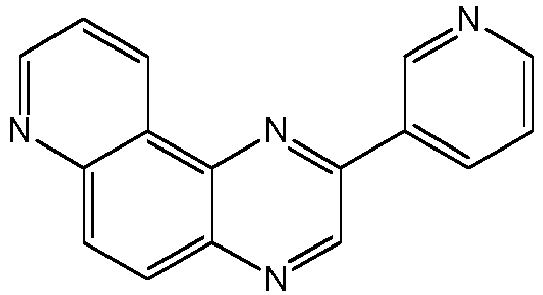
Iae 
Iam 
Iai 
Iah 
Iak 
Iaj 
Ibl 
Ibn 
Ibo 
Ibf 
Ibh 
Ibp 
Ibj 
Ibq 
Xbc 
- Composé selon l'une quelconque des revendications 1 à 8 ou pyrido[3,2-f]quinoxaline, 2,3 -diméthyl-pyrido [3,2-f]quinoxaline, 2,3,8 -triméthyl-pyrido [3,2-f]quinoxaline ou 2,3-diphényl-pyrido[3,2-f]quinoxaline, pour son utilisation en tant que médicament, notamment en tant que médicament neurotrophique ou neuroprotecteur.
- Composé selon l'une quelconque des revendications 1 à 8 ou pyrido[3,2-f]quinoxaline, 2,3-diméthyl-pyrido[3,2-f]quinoxaline, 2,3,8-triméthyl-pyrido[3,2-f]quinoxaline ou 2,3-diphényl-pyrido[3,2-f]quinoxaline, pour son utilisation dans le traitement ou la prévention d'une maladie neurodégénérative.
- Composé pour son utilisation selon la revendication 10, caractérisé en ce que la maladie neurodégénérative est la maladie d'Alzheimer, la maladie de Parkinson, la sclérose en plaques ou la sclérose latérale amyotrophique, et en particulier la maladie de Parkinson.
- Composition pharmaceutique comprenant au moins un composé choisi parmi les composés de formule (I) selon l'une quelconque des revendications 1 à 8, la pyrido[3,2-f]quinoxaline, la 2,3-diméthyl-pyrido[3,2-f]quinoxaline, la 2,3,8-triméthyl-pyrido[3,2-f]quinoxaline et la 2,3-diphényl-pyrido[3,2-f]quinoxaline ; et un véhicule pharmaceutiquement acceptable,
à l'exclusion d'une solution de pyrido[3,2-f]quinoxaline dans l'eau. - Procédé de préparation d'un composé de formule (I) selon la revendication 1, de la pyrido[3,2-f]quinoxaline, de la 2,3-diméthyl-pyrido[3,2-f]quinoxaline, de la 2,3,8-triméthyl-pyrido[3,2-f]quinoxaline ou de la 2,3-diphényl-pyrido[3,2-f]quinoxaline, comprenant les étapes successives suivantes :(a1) couplage entre une amino-quinoxaline de formule (II) suivante :

avec un halogénure propargylique de formule CH≡C-CHR2CHal ou CH≡C-CR2aR2bHal dans laquelle R2a, R2b et R2c sont tels que définis à la revendication 1 et Hal représente un atome d'halogène tel que Cl, Br ou I, pour donner un composé de formule (IIIa) ou (IIIb) suivante : (b1) cycloisomérisation du composé de formule (IIIa) ou (IIIb) obtenu à l'étape précédente et aromatisation lorsque
------ représente une liaison double pour donner un composé de formule (I), et(c1) éventuellement salification et/ou solvatation du composé de formule (I) obtenu à l'étape précédente pour donner un sel et/ou solvate pharmaceutiquement acceptable du composé de formule (I). - Procédé de préparation d'un composé de formule (I) selon la revendication 1 pour lequel au moins l'un de R1 et R2 représente une chaîne hydrocarbonée saturée ou insaturée, linéaire ou ramifiée, comportant de 1 à 10 atomes de carbone ; un aryle éventuellement substitué ; ou un hétéroaryle éventuellement substitué ; de la 2,3-diméthyl-pyrido[3,2-f]quinoxaline, de la 2,3,8-triméthyl-pyrido[3,2-f]quinoxaline ou de la 2,3-diphényl-pyrido[3,2-f]quinoxaline, comprenant les étapes successives suivantes :(a2) couplage d'un composé de formule (I) selon la revendication 1 pour lequel au moins l'un de R1 et R2 représente un atome d'halogène, tel que Cl, Br ou I,
avec un dérivé d'acide boronique de formule R3-B(R4)2 ou R3-BF3 -K+ pour lequel R3 représente une chaîne hydrocarbonée saturée ou insaturée, linéaire ou ramifiée, comportant de 1 à 10 atomes de carbone ; un aryle éventuellement substitué ; ou un hétéroaryle éventuellement substitué, et R4 représente un groupe (C1-C6)alkyle, OH ou (C1-C6)alcoxy,
ou avec un dérivé zincique de formule R3-Zn-Hal pour lequel R3 est tel que défini ci-dessus et Hal représente un atome d'halogène tel que Cl, Br ou I,
ou avec un dérivé stannane de formule R3-SnA1A2A3 pour lequel R3 est tel que défini ci-dessus et A1, A2 et A3, identiques ou différents, représentent chacun un groupe (C1-C6)alkyle,
ou avec un dérivé magnésien de formule R3-Mg-Hal pour lequel R3 et Hal sont tels que définis ci-dessus,
ou avec un derivé silicié de formule R3-SiMe2OH, R3-SiF3 ou R3-Si(OA1)(OA2)(OA3) pour lequel R3, A1, A2 et A3 sont tels que définis ci-dessus, ou avec un alcyne de formule R'-C≡CH pour lequel R' représente un groupe protecteur ou une chaîne hydrocarbonée saturée ou insaturée, linéaire ou ramifiée, comportant de 1 à 8 atomes de carbone,(b2) lorsque l'étape (a2) a été réalisée avec un alcyne de formule R'-C=CH pour lequel R' représente un groupe protecteur, déprotection du groupe protecteur de la fonction alcyne, et(c2) éventuellement salification et/ou solvatation du composé de formule (I) obtenu à l'étape précédente pour donner un sel et/ou solvate pharmaceutiquement acceptable du composé de formule (I).
Applications Claiming Priority (2)
| Application Number | Priority Date | Filing Date | Title |
|---|---|---|---|
| FR1559639A FR3042191B1 (fr) | 2015-10-09 | 2015-10-09 | Derives 1,4,8-triazaphenanthrene pour le traitement de maladies neurodegeneratives |
| PCT/EP2016/074235 WO2017060530A1 (fr) | 2015-10-09 | 2016-10-10 | Derives 1,4,8-triazaphenanthrene pour le traitement de maladies neurodegeneratives |
Publications (3)
| Publication Number | Publication Date |
|---|---|
| EP3359538A1 EP3359538A1 (fr) | 2018-08-15 |
| EP3359538B1 true EP3359538B1 (fr) | 2020-03-25 |
| EP3359538B9 EP3359538B9 (fr) | 2021-06-16 |
Family
ID=54848751
Family Applications (1)
| Application Number | Title | Priority Date | Filing Date |
|---|---|---|---|
| EP16778417.2A Active EP3359538B9 (fr) | 2015-10-09 | 2016-10-10 | Derivés de 1,4,8-triazaphénanthrène pour le traitement de maladies neurodégénératives |
Country Status (4)
| Country | Link |
|---|---|
| US (1) | US10550115B2 (fr) |
| EP (1) | EP3359538B9 (fr) |
| FR (1) | FR3042191B1 (fr) |
| WO (1) | WO2017060530A1 (fr) |
Family Cites Families (2)
| Publication number | Priority date | Publication date | Assignee | Title |
|---|---|---|---|---|
| FR2933977B1 (fr) | 2008-07-18 | 2013-04-26 | Centre Nat Rech Scient | Derives heterocycliques utiles dans le traitement des maladies neurodegeneratives |
| FR2973373A1 (fr) * | 2011-03-30 | 2012-10-05 | Centre Nat Rech Scient | Derives amino-quinoxalines pour le traitement de maladies neurodegeneratives |
-
2015
- 2015-10-09 FR FR1559639A patent/FR3042191B1/fr not_active Expired - Fee Related
-
2016
- 2016-10-10 EP EP16778417.2A patent/EP3359538B9/fr active Active
- 2016-10-10 US US15/767,053 patent/US10550115B2/en not_active Expired - Fee Related
- 2016-10-10 WO PCT/EP2016/074235 patent/WO2017060530A1/fr not_active Ceased
Non-Patent Citations (1)
| Title |
|---|
| None * |
Also Published As
| Publication number | Publication date |
|---|---|
| FR3042191B1 (fr) | 2020-01-17 |
| EP3359538B9 (fr) | 2021-06-16 |
| FR3042191A1 (fr) | 2017-04-14 |
| US20190071438A1 (en) | 2019-03-07 |
| US10550115B2 (en) | 2020-02-04 |
| EP3359538A1 (fr) | 2018-08-15 |
| WO2017060530A1 (fr) | 2017-04-13 |
Similar Documents
| Publication | Publication Date | Title |
|---|---|---|
| US20060009480A1 (en) | Sinomenine and sinomenine compounds, synthesis and use | |
| EP0611766A1 (fr) | Dérivés de 2-amido-thiazoles polysubstitués, procédé de préparation, composition pharmaceutique et utilisation de ces dérivés pour la préparation d'un médicament | |
| EP1976818A2 (fr) | Derives de chalcone a activite antimitotique | |
| EP2300424B1 (fr) | Utilisation de derives d'indole comme activateurs de nurr-1, pour le traitement de la maladie de parkinson | |
| EP2691377B1 (fr) | Dérivés amino-quinoxalines pour le traitement de maladies neurodégénératives | |
| CA1228359A (fr) | Procede de preparation de nouveaux derives de la quinoleine | |
| EP2094675B1 (fr) | Sel de 3-benzyl-2-méthyl-2,3,3a,4,5,6,7,7a-octahydrobenzo[d]isoxazol-4-one | |
| CN106831799A (zh) | 羟基苯乙烯吡啶曼尼希碱类化合物、其制备方法和用途 | |
| EP3359538B1 (fr) | Derivés de 1,4,8-triazaphénanthrène pour le traitement de maladies neurodégénératives | |
| FR2999575A1 (fr) | 3,5-diaryl-azaindoles comme inhibiteurs de la proteine dyrk1a pour le traitement des deficiences cognitives liees au syndrome de down et a la maladie d'alzheimer | |
| CA2557942C (fr) | Derives de carbamate de 2h- ou 3h-benzo[e]indazol-1-yle, leur preparation et leur application en therapeutique | |
| EP0427605B1 (fr) | Nouveaux dérivés de la morpholine, leur procédé de préparation et les compositions pharmaceutiques les renfermant | |
| TWI466887B (zh) | 經取代的黃嘌呤衍生物 | |
| WO2019029613A1 (fr) | Composé de quinoléine deutéré, procédé de préparation correspondant et utilisation associée | |
| CA1202631A (fr) | Derives de la quinidine, procede de preparation et application en therapeutique | |
| EP0042348A1 (fr) | Dérivés de l'olivacine et leur application thérapeutique | |
| FR3067711A1 (fr) | Inhibiteurs de la catechol-o-methyl-transferase (comt) | |
| WO2002094840A2 (fr) | Derives tricycliques de dihydroquinoleines, leur procede de preparation et les compositions pharmaceutiques qui les contiennent | |
| BE874322R (fr) | Nouveaux composes heterocycliques, leur preparation et leur application comme medicaments | |
| CN108203439A (zh) | 苯乙烯吡啶类化合物、其制备方法和用途 | |
| JP3001975B2 (ja) | 結晶性チアガビン塩酸塩−水和物、その製造方法および用途 | |
| FR2539739A1 (fr) | Nouveaux derives de la naphtyl pyridazine actifs sur le systeme nerveux central, procede de preparation de ces derives et medicaments en contenant | |
| FR2800071A1 (fr) | Tetrahydropyridines, procede pour leur preparation et compositions pharmaceutiques les contenant |
Legal Events
| Date | Code | Title | Description |
|---|---|---|---|
| STAA | Information on the status of an ep patent application or granted ep patent |
Free format text: STATUS: THE INTERNATIONAL PUBLICATION HAS BEEN MADE |
|
| PUAI | Public reference made under article 153(3) epc to a published international application that has entered the european phase |
Free format text: ORIGINAL CODE: 0009012 |
|
| STAA | Information on the status of an ep patent application or granted ep patent |
Free format text: STATUS: REQUEST FOR EXAMINATION WAS MADE |
|
| 17P | Request for examination filed |
Effective date: 20180504 |
|
| AK | Designated contracting states |
Kind code of ref document: A1 Designated state(s): AL AT BE BG CH CY CZ DE DK EE ES FI FR GB GR HR HU IE IS IT LI LT LU LV MC MK MT NL NO PL PT RO RS SE SI SK SM TR |
|
| AX | Request for extension of the european patent |
Extension state: BA ME |
|
| DAV | Request for validation of the european patent (deleted) | ||
| DAX | Request for extension of the european patent (deleted) | ||
| STAA | Information on the status of an ep patent application or granted ep patent |
Free format text: STATUS: EXAMINATION IS IN PROGRESS |
|
| 17Q | First examination report despatched |
Effective date: 20190416 |
|
| GRAP | Despatch of communication of intention to grant a patent |
Free format text: ORIGINAL CODE: EPIDOSNIGR1 |
|
| STAA | Information on the status of an ep patent application or granted ep patent |
Free format text: STATUS: GRANT OF PATENT IS INTENDED |
|
| INTG | Intention to grant announced |
Effective date: 20191002 |
|
| GRAS | Grant fee paid |
Free format text: ORIGINAL CODE: EPIDOSNIGR3 |
|
| GRAA | (expected) grant |
Free format text: ORIGINAL CODE: 0009210 |
|
| STAA | Information on the status of an ep patent application or granted ep patent |
Free format text: STATUS: THE PATENT HAS BEEN GRANTED |
|
| RAP1 | Party data changed (applicant data changed or rights of an application transferred) |
Owner name: UNIVERSITE PARIS-SACLAY Owner name: INSTITUT NATIONAL DE LA SANTE ET DE LA RECHERCHE MEDICALE (INSERM) Owner name: ASSISTANCE PUBLIQUE - HOPITAUX DE PARIS Owner name: CENTRE NATIONAL DE LA RECHERCHE SCIENTIFIQUE (CNRS) Owner name: SORBONNE UNIVERSITE Owner name: INSTITUT DU CERVEAU ET DE LA MOELLE EPINIERE |
|
| AK | Designated contracting states |
Kind code of ref document: B1 Designated state(s): AL AT BE BG CH CY CZ DE DK EE ES FI FR GB GR HR HU IE IS IT LI LT LU LV MC MK MT NL NO PL PT RO RS SE SI SK SM TR |
|
| REG | Reference to a national code |
Ref country code: GB Ref legal event code: FG4D Free format text: NOT ENGLISH |
|
| REG | Reference to a national code |
Ref country code: AT Ref legal event code: REF Ref document number: 1248417 Country of ref document: AT Kind code of ref document: T Effective date: 20200415 Ref country code: IE Ref legal event code: FG4D Free format text: LANGUAGE OF EP DOCUMENT: FRENCH |
|
| REG | Reference to a national code |
Ref country code: DE Ref legal event code: R096 Ref document number: 602016032607 Country of ref document: DE |
|
| REG | Reference to a national code |
Ref country code: CH Ref legal event code: NV Representative=s name: MICHELI AND CIE SA, CH |
|
| PG25 | Lapsed in a contracting state [announced via postgrant information from national office to epo] |
Ref country code: FI Free format text: LAPSE BECAUSE OF FAILURE TO SUBMIT A TRANSLATION OF THE DESCRIPTION OR TO PAY THE FEE WITHIN THE PRESCRIBED TIME-LIMIT Effective date: 20200325 Ref country code: NO Free format text: LAPSE BECAUSE OF FAILURE TO SUBMIT A TRANSLATION OF THE DESCRIPTION OR TO PAY THE FEE WITHIN THE PRESCRIBED TIME-LIMIT Effective date: 20200625 Ref country code: RS Free format text: LAPSE BECAUSE OF FAILURE TO SUBMIT A TRANSLATION OF THE DESCRIPTION OR TO PAY THE FEE WITHIN THE PRESCRIBED TIME-LIMIT Effective date: 20200325 |
|
| PG25 | Lapsed in a contracting state [announced via postgrant information from national office to epo] |
Ref country code: GR Free format text: LAPSE BECAUSE OF FAILURE TO SUBMIT A TRANSLATION OF THE DESCRIPTION OR TO PAY THE FEE WITHIN THE PRESCRIBED TIME-LIMIT Effective date: 20200626 Ref country code: HR Free format text: LAPSE BECAUSE OF FAILURE TO SUBMIT A TRANSLATION OF THE DESCRIPTION OR TO PAY THE FEE WITHIN THE PRESCRIBED TIME-LIMIT Effective date: 20200325 Ref country code: LV Free format text: LAPSE BECAUSE OF FAILURE TO SUBMIT A TRANSLATION OF THE DESCRIPTION OR TO PAY THE FEE WITHIN THE PRESCRIBED TIME-LIMIT Effective date: 20200325 Ref country code: SE Free format text: LAPSE BECAUSE OF FAILURE TO SUBMIT A TRANSLATION OF THE DESCRIPTION OR TO PAY THE FEE WITHIN THE PRESCRIBED TIME-LIMIT Effective date: 20200325 Ref country code: BG Free format text: LAPSE BECAUSE OF FAILURE TO SUBMIT A TRANSLATION OF THE DESCRIPTION OR TO PAY THE FEE WITHIN THE PRESCRIBED TIME-LIMIT Effective date: 20200625 |
|
| REG | Reference to a national code |
Ref country code: NL Ref legal event code: MP Effective date: 20200325 |
|
| REG | Reference to a national code |
Ref country code: LT Ref legal event code: MG4D |
|
| PG25 | Lapsed in a contracting state [announced via postgrant information from national office to epo] |
Ref country code: NL Free format text: LAPSE BECAUSE OF FAILURE TO SUBMIT A TRANSLATION OF THE DESCRIPTION OR TO PAY THE FEE WITHIN THE PRESCRIBED TIME-LIMIT Effective date: 20200325 |
|
| PG25 | Lapsed in a contracting state [announced via postgrant information from national office to epo] |
Ref country code: PT Free format text: LAPSE BECAUSE OF FAILURE TO SUBMIT A TRANSLATION OF THE DESCRIPTION OR TO PAY THE FEE WITHIN THE PRESCRIBED TIME-LIMIT Effective date: 20200818 Ref country code: RO Free format text: LAPSE BECAUSE OF FAILURE TO SUBMIT A TRANSLATION OF THE DESCRIPTION OR TO PAY THE FEE WITHIN THE PRESCRIBED TIME-LIMIT Effective date: 20200325 Ref country code: CZ Free format text: LAPSE BECAUSE OF FAILURE TO SUBMIT A TRANSLATION OF THE DESCRIPTION OR TO PAY THE FEE WITHIN THE PRESCRIBED TIME-LIMIT Effective date: 20200325 Ref country code: SM Free format text: LAPSE BECAUSE OF FAILURE TO SUBMIT A TRANSLATION OF THE DESCRIPTION OR TO PAY THE FEE WITHIN THE PRESCRIBED TIME-LIMIT Effective date: 20200325 Ref country code: LT Free format text: LAPSE BECAUSE OF FAILURE TO SUBMIT A TRANSLATION OF THE DESCRIPTION OR TO PAY THE FEE WITHIN THE PRESCRIBED TIME-LIMIT Effective date: 20200325 Ref country code: EE Free format text: LAPSE BECAUSE OF FAILURE TO SUBMIT A TRANSLATION OF THE DESCRIPTION OR TO PAY THE FEE WITHIN THE PRESCRIBED TIME-LIMIT Effective date: 20200325 Ref country code: SK Free format text: LAPSE BECAUSE OF FAILURE TO SUBMIT A TRANSLATION OF THE DESCRIPTION OR TO PAY THE FEE WITHIN THE PRESCRIBED TIME-LIMIT Effective date: 20200325 Ref country code: IS Free format text: LAPSE BECAUSE OF FAILURE TO SUBMIT A TRANSLATION OF THE DESCRIPTION OR TO PAY THE FEE WITHIN THE PRESCRIBED TIME-LIMIT Effective date: 20200725 |
|
| REG | Reference to a national code |
Ref country code: AT Ref legal event code: MK05 Ref document number: 1248417 Country of ref document: AT Kind code of ref document: T Effective date: 20200325 |
|
| REG | Reference to a national code |
Ref country code: DE Ref legal event code: R097 Ref document number: 602016032607 Country of ref document: DE |
|
| PG25 | Lapsed in a contracting state [announced via postgrant information from national office to epo] |
Ref country code: AT Free format text: LAPSE BECAUSE OF FAILURE TO SUBMIT A TRANSLATION OF THE DESCRIPTION OR TO PAY THE FEE WITHIN THE PRESCRIBED TIME-LIMIT Effective date: 20200325 Ref country code: ES Free format text: LAPSE BECAUSE OF FAILURE TO SUBMIT A TRANSLATION OF THE DESCRIPTION OR TO PAY THE FEE WITHIN THE PRESCRIBED TIME-LIMIT Effective date: 20200325 Ref country code: IT Free format text: LAPSE BECAUSE OF FAILURE TO SUBMIT A TRANSLATION OF THE DESCRIPTION OR TO PAY THE FEE WITHIN THE PRESCRIBED TIME-LIMIT Effective date: 20200325 Ref country code: DK Free format text: LAPSE BECAUSE OF FAILURE TO SUBMIT A TRANSLATION OF THE DESCRIPTION OR TO PAY THE FEE WITHIN THE PRESCRIBED TIME-LIMIT Effective date: 20200325 |
|
| PLBE | No opposition filed within time limit |
Free format text: ORIGINAL CODE: 0009261 |
|
| STAA | Information on the status of an ep patent application or granted ep patent |
Free format text: STATUS: NO OPPOSITION FILED WITHIN TIME LIMIT |
|
| PG25 | Lapsed in a contracting state [announced via postgrant information from national office to epo] |
Ref country code: PL Free format text: LAPSE BECAUSE OF FAILURE TO SUBMIT A TRANSLATION OF THE DESCRIPTION OR TO PAY THE FEE WITHIN THE PRESCRIBED TIME-LIMIT Effective date: 20200325 |
|
| 26N | No opposition filed |
Effective date: 20210112 |
|
| PG25 | Lapsed in a contracting state [announced via postgrant information from national office to epo] |
Ref country code: SI Free format text: LAPSE BECAUSE OF FAILURE TO SUBMIT A TRANSLATION OF THE DESCRIPTION OR TO PAY THE FEE WITHIN THE PRESCRIBED TIME-LIMIT Effective date: 20200325 |
|
| REG | Reference to a national code |
Ref country code: CH Ref legal event code: PK Free format text: RECTIFICATION B9 |
|
| PG25 | Lapsed in a contracting state [announced via postgrant information from national office to epo] |
Ref country code: LU Free format text: LAPSE BECAUSE OF NON-PAYMENT OF DUE FEES Effective date: 20201010 Ref country code: MC Free format text: LAPSE BECAUSE OF FAILURE TO SUBMIT A TRANSLATION OF THE DESCRIPTION OR TO PAY THE FEE WITHIN THE PRESCRIBED TIME-LIMIT Effective date: 20200325 |
|
| PG25 | Lapsed in a contracting state [announced via postgrant information from national office to epo] |
Ref country code: IE Free format text: LAPSE BECAUSE OF NON-PAYMENT OF DUE FEES Effective date: 20201010 |
|
| PGFP | Annual fee paid to national office [announced via postgrant information from national office to epo] |
Ref country code: FR Payment date: 20210909 Year of fee payment: 6 |
|
| PGFP | Annual fee paid to national office [announced via postgrant information from national office to epo] |
Ref country code: DE Payment date: 20211008 Year of fee payment: 6 Ref country code: GB Payment date: 20211020 Year of fee payment: 6 |
|
| PGFP | Annual fee paid to national office [announced via postgrant information from national office to epo] |
Ref country code: CH Payment date: 20211029 Year of fee payment: 6 Ref country code: BE Payment date: 20211029 Year of fee payment: 6 |
|
| REG | Reference to a national code |
Ref country code: DE Ref legal event code: R081 Ref document number: 602016032607 Country of ref document: DE Owner name: UNIVERSITE PARIS-SACLAY, FR Free format text: FORMER OWNERS: ASSISTANCE PUBLIQUE - HOPITAUX DE PARIS, PARIS, FR; CENTRE NATIONAL DE LA RECHERCHE SCIENTIFIQUE (CNRS), PARIS, FR; INSTITUT DU CERVEAU ET DE LA MOELLE EPINIERE, PARIS, FR; INSTITUT NATIONAL DE LA SANTE ET DE LA RECHERCHE MEDICALE (INSERM), PARIS, FR; SORBONNE UNIVERSITE, PARIS, FR; UNIVERSITE PARIS-SACLAY, SAINT-AUBIN, FR Ref country code: DE Ref legal event code: R081 Ref document number: 602016032607 Country of ref document: DE Owner name: SORBONNE UNIVERSITE, FR Free format text: FORMER OWNERS: ASSISTANCE PUBLIQUE - HOPITAUX DE PARIS, PARIS, FR; CENTRE NATIONAL DE LA RECHERCHE SCIENTIFIQUE (CNRS), PARIS, FR; INSTITUT DU CERVEAU ET DE LA MOELLE EPINIERE, PARIS, FR; INSTITUT NATIONAL DE LA SANTE ET DE LA RECHERCHE MEDICALE (INSERM), PARIS, FR; SORBONNE UNIVERSITE, PARIS, FR; UNIVERSITE PARIS-SACLAY, SAINT-AUBIN, FR Ref country code: DE Ref legal event code: R081 Ref document number: 602016032607 Country of ref document: DE Owner name: INSTITUT NATIONAL DE LA SANTE ET DE LA RECHERC, FR Free format text: FORMER OWNERS: ASSISTANCE PUBLIQUE - HOPITAUX DE PARIS, PARIS, FR; CENTRE NATIONAL DE LA RECHERCHE SCIENTIFIQUE (CNRS), PARIS, FR; INSTITUT DU CERVEAU ET DE LA MOELLE EPINIERE, PARIS, FR; INSTITUT NATIONAL DE LA SANTE ET DE LA RECHERCHE MEDICALE (INSERM), PARIS, FR; SORBONNE UNIVERSITE, PARIS, FR; UNIVERSITE PARIS-SACLAY, SAINT-AUBIN, FR Ref country code: DE Ref legal event code: R081 Ref document number: 602016032607 Country of ref document: DE Owner name: INSTITUT DU CERVEAU ET DE LA MOELLE EPINIERE, FR Free format text: FORMER OWNERS: ASSISTANCE PUBLIQUE - HOPITAUX DE PARIS, PARIS, FR; CENTRE NATIONAL DE LA RECHERCHE SCIENTIFIQUE (CNRS), PARIS, FR; INSTITUT DU CERVEAU ET DE LA MOELLE EPINIERE, PARIS, FR; INSTITUT NATIONAL DE LA SANTE ET DE LA RECHERCHE MEDICALE (INSERM), PARIS, FR; SORBONNE UNIVERSITE, PARIS, FR; UNIVERSITE PARIS-SACLAY, SAINT-AUBIN, FR Ref country code: DE Ref legal event code: R081 Ref document number: 602016032607 Country of ref document: DE Owner name: CENTRE NATIONAL DE LA RECHERCHE SCIENTIFIQUE (, FR Free format text: FORMER OWNERS: ASSISTANCE PUBLIQUE - HOPITAUX DE PARIS, PARIS, FR; CENTRE NATIONAL DE LA RECHERCHE SCIENTIFIQUE (CNRS), PARIS, FR; INSTITUT DU CERVEAU ET DE LA MOELLE EPINIERE, PARIS, FR; INSTITUT NATIONAL DE LA SANTE ET DE LA RECHERCHE MEDICALE (INSERM), PARIS, FR; SORBONNE UNIVERSITE, PARIS, FR; UNIVERSITE PARIS-SACLAY, SAINT-AUBIN, FR Ref country code: DE Ref legal event code: R081 Ref document number: 602016032607 Country of ref document: DE Owner name: ASSISTANCE PUBLIQUE - HOPITAUX DE PARIS, FR Free format text: FORMER OWNERS: ASSISTANCE PUBLIQUE - HOPITAUX DE PARIS, PARIS, FR; CENTRE NATIONAL DE LA RECHERCHE SCIENTIFIQUE (CNRS), PARIS, FR; INSTITUT DU CERVEAU ET DE LA MOELLE EPINIERE, PARIS, FR; INSTITUT NATIONAL DE LA SANTE ET DE LA RECHERCHE MEDICALE (INSERM), PARIS, FR; SORBONNE UNIVERSITE, PARIS, FR; UNIVERSITE PARIS-SACLAY, SAINT-AUBIN, FR |
|
| PG25 | Lapsed in a contracting state [announced via postgrant information from national office to epo] |
Ref country code: TR Free format text: LAPSE BECAUSE OF FAILURE TO SUBMIT A TRANSLATION OF THE DESCRIPTION OR TO PAY THE FEE WITHIN THE PRESCRIBED TIME-LIMIT Effective date: 20200325 Ref country code: MT Free format text: LAPSE BECAUSE OF FAILURE TO SUBMIT A TRANSLATION OF THE DESCRIPTION OR TO PAY THE FEE WITHIN THE PRESCRIBED TIME-LIMIT Effective date: 20200325 Ref country code: CY Free format text: LAPSE BECAUSE OF FAILURE TO SUBMIT A TRANSLATION OF THE DESCRIPTION OR TO PAY THE FEE WITHIN THE PRESCRIBED TIME-LIMIT Effective date: 20200325 |
|
| PG25 | Lapsed in a contracting state [announced via postgrant information from national office to epo] |
Ref country code: MK Free format text: LAPSE BECAUSE OF FAILURE TO SUBMIT A TRANSLATION OF THE DESCRIPTION OR TO PAY THE FEE WITHIN THE PRESCRIBED TIME-LIMIT Effective date: 20200325 Ref country code: AL Free format text: LAPSE BECAUSE OF FAILURE TO SUBMIT A TRANSLATION OF THE DESCRIPTION OR TO PAY THE FEE WITHIN THE PRESCRIBED TIME-LIMIT Effective date: 20200325 |
|
| REG | Reference to a national code |
Ref country code: DE Ref legal event code: R119 Ref document number: 602016032607 Country of ref document: DE |
|
| REG | Reference to a national code |
Ref country code: CH Ref legal event code: PL |
|
| REG | Reference to a national code |
Ref country code: BE Ref legal event code: MM Effective date: 20221031 |
|
| GBPC | Gb: european patent ceased through non-payment of renewal fee |
Effective date: 20221010 |
|
| PG25 | Lapsed in a contracting state [announced via postgrant information from national office to epo] |
Ref country code: LI Free format text: LAPSE BECAUSE OF NON-PAYMENT OF DUE FEES Effective date: 20221031 Ref country code: FR Free format text: LAPSE BECAUSE OF NON-PAYMENT OF DUE FEES Effective date: 20221031 Ref country code: DE Free format text: LAPSE BECAUSE OF NON-PAYMENT OF DUE FEES Effective date: 20230503 Ref country code: CH Free format text: LAPSE BECAUSE OF NON-PAYMENT OF DUE FEES Effective date: 20221031 |
|
| PG25 | Lapsed in a contracting state [announced via postgrant information from national office to epo] |
Ref country code: BE Free format text: LAPSE BECAUSE OF NON-PAYMENT OF DUE FEES Effective date: 20221031 |
|
| PG25 | Lapsed in a contracting state [announced via postgrant information from national office to epo] |
Ref country code: GB Free format text: LAPSE BECAUSE OF NON-PAYMENT OF DUE FEES Effective date: 20221010 |