EP3359542B1 - Dérivés de composés de spiro[3h-indole-3,2´-pyrrolidine]-2(1h)-one et dérivés utilisés comme inhibiteurs de mdm2-p53 - Google Patents
Dérivés de composés de spiro[3h-indole-3,2´-pyrrolidine]-2(1h)-one et dérivés utilisés comme inhibiteurs de mdm2-p53 Download PDFInfo
- Publication number
- EP3359542B1 EP3359542B1 EP16778038.6A EP16778038A EP3359542B1 EP 3359542 B1 EP3359542 B1 EP 3359542B1 EP 16778038 A EP16778038 A EP 16778038A EP 3359542 B1 EP3359542 B1 EP 3359542B1
- Authority
- EP
- European Patent Office
- Prior art keywords
- alkyl
- intermediates
- carcinoma
- formula
- cancer
- Prior art date
- Legal status (The legal status is an assumption and is not a legal conclusion. Google has not performed a legal analysis and makes no representation as to the accuracy of the status listed.)
- Active
Links
- 0 Cc1cc(*)c(*)c(C)c1 Chemical compound Cc1cc(*)c(*)c(C)c1 0.000 description 21
- BIZXECKINUMOOI-OWOJBTEDSA-N NCCNC(/C=C/c1cc(Cl)c[s]1)=O Chemical compound NCCNC(/C=C/c1cc(Cl)c[s]1)=O BIZXECKINUMOOI-OWOJBTEDSA-N 0.000 description 2
- GLUUGHFHXGJENI-UHFFFAOYSA-N C1NCCNC1 Chemical compound C1NCCNC1 GLUUGHFHXGJENI-UHFFFAOYSA-N 0.000 description 1
- LPAGFVYQRIESJQ-UHFFFAOYSA-N C1c2ccccc2NC1 Chemical compound C1c2ccccc2NC1 LPAGFVYQRIESJQ-UHFFFAOYSA-N 0.000 description 1
- ZPPUEXDJYROAGG-IVOUEUIOSA-N CC(C(/C(/C=C1)=C(/C[C@@H]2N(CC3CC3)[C@@]3(c(c(N4)c5)ccc5Cl)C4=O)\N[C@H]2[C@@H]3c2cccc(Cl)c2F)=N)=C1C(OC)=O Chemical compound CC(C(/C(/C=C1)=C(/C[C@@H]2N(CC3CC3)[C@@]3(c(c(N4)c5)ccc5Cl)C4=O)\N[C@H]2[C@@H]3c2cccc(Cl)c2F)=N)=C1C(OC)=O ZPPUEXDJYROAGG-IVOUEUIOSA-N 0.000 description 1
- CTRXMPATPXUPSP-UHFFFAOYSA-N CC(C(C(CC(C)=C(C1)C(OC)=O)C1[N+]([O-])=O)O)(C(CC1c2cccc(Cl)c2F)N(CC2CC2)C1(C(CCC1Cl)C1N1)C1O)N=O Chemical compound CC(C(C(CC(C)=C(C1)C(OC)=O)C1[N+]([O-])=O)O)(C(CC1c2cccc(Cl)c2F)N(CC2CC2)C1(C(CCC1Cl)C1N1)C1O)N=O CTRXMPATPXUPSP-UHFFFAOYSA-N 0.000 description 1
- AFBFYNGHBRNSLO-LIHQSLCGSA-N CC(C)(C)CN([C@@H]1[C@H]([C@@H]2c(cccc3Cl)c3F)c3nc4cc(C(OC)=O)ccc4[n]3CC1)[C@@]2(c(c(N1)c2)ccc2Cl)C1=O Chemical compound CC(C)(C)CN([C@@H]1[C@H]([C@@H]2c(cccc3Cl)c3F)c3nc4cc(C(OC)=O)ccc4[n]3CC1)[C@@]2(c(c(N1)c2)ccc2Cl)C1=O AFBFYNGHBRNSLO-LIHQSLCGSA-N 0.000 description 1
- YFROLNWSHDOLPZ-UHFFFAOYSA-N CC(C)(C)OC(NCC#Cc(ccc(C(OC)=O)c1C)c1NC(C)=O)=O Chemical compound CC(C)(C)OC(NCC#Cc(ccc(C(OC)=O)c1C)c1NC(C)=O)=O YFROLNWSHDOLPZ-UHFFFAOYSA-N 0.000 description 1
- AOCSUUGBCMTKJH-UHFFFAOYSA-N CC(C)(C)OC(NCCN)=O Chemical compound CC(C)(C)OC(NCCN)=O AOCSUUGBCMTKJH-UHFFFAOYSA-N 0.000 description 1
- AWGFTIPPPZJLBM-OFAQMXQXSA-N CC(C)(C)OC([C@H](CCNC(/C=C/c1cccc(Cl)c1F)=O)NC(OC(C)(C)C)=O)=O Chemical compound CC(C)(C)OC([C@H](CCNC(/C=C/c1cccc(Cl)c1F)=O)NC(OC(C)(C)C)=O)=O AWGFTIPPPZJLBM-OFAQMXQXSA-N 0.000 description 1
- DEUVTWNOCCPOEG-ACIRYHQQSA-N CC(C)=CCN([C@@H]1[C@H]([C@@H]2c(cccc3Cl)c3F)c3nc4cc(C(O)=O)ccc4[n]3CC1)[C@@]2(c(ccc(Cl)c1)c1N1)C1=O Chemical compound CC(C)=CCN([C@@H]1[C@H]([C@@H]2c(cccc3Cl)c3F)c3nc4cc(C(O)=O)ccc4[n]3CC1)[C@@]2(c(ccc(Cl)c1)c1N1)C1=O DEUVTWNOCCPOEG-ACIRYHQQSA-N 0.000 description 1
- VFMSQEAPNJPDPS-UUZIFAJNSA-N CC(C)CCN([C@@H]1[C@H]([C@@H]2c(cccc3Cl)c3F)c3nc4cc(C(OC)=O)ccc4[n]3CC1)[C@@]2(c(c(N1)c2)ccc2Cl)C1=O Chemical compound CC(C)CCN([C@@H]1[C@H]([C@@H]2c(cccc3Cl)c3F)c3nc4cc(C(OC)=O)ccc4[n]3CC1)[C@@]2(c(c(N1)c2)ccc2Cl)C1=O VFMSQEAPNJPDPS-UUZIFAJNSA-N 0.000 description 1
- APHSHFUUBFISQH-VPTLXOHFSA-N CC(C)CN(C(C1)[C@H]([C@@H]2c(cccc3Cl)c3F)N/C1=C(/C=CC(C(O)=O)=C1)\C1=N)[C@H]2C(Nc1cc(Cl)ccc1)=O Chemical compound CC(C)CN(C(C1)[C@H]([C@@H]2c(cccc3Cl)c3F)N/C1=C(/C=CC(C(O)=O)=C1)\C1=N)[C@H]2C(Nc1cc(Cl)ccc1)=O APHSHFUUBFISQH-VPTLXOHFSA-N 0.000 description 1
- XRAGEEXETHYZKB-TXLQIISKSA-N CC(C)CN(C(C1)[C@H]([C@@H]2c3cccc(Cl)c3F)N/C1=C(/C=CC(C(O)=O)=C1)\C1=N)[C@@]2(c(c(N1)c2)ccc2Cl)C1=O Chemical compound CC(C)CN(C(C1)[C@H]([C@@H]2c3cccc(Cl)c3F)N/C1=C(/C=CC(C(O)=O)=C1)\C1=N)[C@@]2(c(c(N1)c2)ccc2Cl)C1=O XRAGEEXETHYZKB-TXLQIISKSA-N 0.000 description 1
- BCFFEVZCSKXMMG-ACIRYHQQSA-N CC(C)CN([C@@H]1[C@H]([C@@H]2c(cccc3Cl)c3F)c3nc(cc(cc4)C(NC)=O)c4[n]3CC1)[C@@]2(c(c(N1)c2)ccc2Cl)C1=O Chemical compound CC(C)CN([C@@H]1[C@H]([C@@H]2c(cccc3Cl)c3F)c3nc(cc(cc4)C(NC)=O)c4[n]3CC1)[C@@]2(c(c(N1)c2)ccc2Cl)C1=O BCFFEVZCSKXMMG-ACIRYHQQSA-N 0.000 description 1
- XCJQOPPPDICORO-ZCKJWGIYSA-N CC1([C@@H]2C(CC=C3)C(F)=C3Br)c3nc(cc(cc4)C(OC)=O)c4[n]3C[C@@H]1N(CC1CC1)[C@@]2(c(c(N1)c2)ccc2Cl)C1=O Chemical compound CC1([C@@H]2C(CC=C3)C(F)=C3Br)c3nc(cc(cc4)C(OC)=O)c4[n]3C[C@@H]1N(CC1CC1)[C@@]2(c(c(N1)c2)ccc2Cl)C1=O XCJQOPPPDICORO-ZCKJWGIYSA-N 0.000 description 1
- GSAWSIPQNZLADU-QQCSSPGTSA-N CCN(C([C@H]([C@@H]1c2cccc(Cl)c2F)N2)O/C2=C(\C=CC(C(O)=O)=C2)/C2=N)[C@@]1(c(c(N1)c2)ccc2Cl)C1=O Chemical compound CCN(C([C@H]([C@@H]1c2cccc(Cl)c2F)N2)O/C2=C(\C=CC(C(O)=O)=C2)/C2=N)[C@@]1(c(c(N1)c2)ccc2Cl)C1=O GSAWSIPQNZLADU-QQCSSPGTSA-N 0.000 description 1
- NITZFNAXCKBHNG-QSSZAHPUSA-N CCN([C@@H](C)[C@H]([C@@H]1c(cccc2Cl)c2F)C(Nc(c([N+]([O-])=O)c2)cc(C)c2C(OC)=O)=O)[C@@]1(c(c(N1)c2)ccc2Cl)C1=O Chemical compound CCN([C@@H](C)[C@H]([C@@H]1c(cccc2Cl)c2F)C(Nc(c([N+]([O-])=O)c2)cc(C)c2C(OC)=O)=O)[C@@]1(c(c(N1)c2)ccc2Cl)C1=O NITZFNAXCKBHNG-QSSZAHPUSA-N 0.000 description 1
- OAUMFIPSFIUFJM-SEFVAWMVSA-N CCOc1cccc(CN([C@@H](C[n](cnc2c3)c2ccc3C(N)=O)[C@@H](C)[C@@H]2c(cccc3Cl)c3F)[C@@]2(c(c(N2)c3)ccc3Cl)C2=O)c1 Chemical compound CCOc1cccc(CN([C@@H](C[n](cnc2c3)c2ccc3C(N)=O)[C@@H](C)[C@@H]2c(cccc3Cl)c3F)[C@@]2(c(c(N2)c3)ccc3Cl)C2=O)c1 OAUMFIPSFIUFJM-SEFVAWMVSA-N 0.000 description 1
- CJMUQGAFZPIZGQ-GHFJTSGJSA-N CN(CC1)CCN1C(c(cc1)cc2c1[n](CC[C@@H]([C@@H]1[C@@H]3c(cccc4Cl)c4F)N(CC4CC4)[C@@]3(c(c(N3)c4)ccc4Cl)C3=O)c1n2)=O Chemical compound CN(CC1)CCN1C(c(cc1)cc2c1[n](CC[C@@H]([C@@H]1[C@@H]3c(cccc4Cl)c4F)N(CC4CC4)[C@@]3(c(c(N3)c4)ccc4Cl)C3=O)c1n2)=O CJMUQGAFZPIZGQ-GHFJTSGJSA-N 0.000 description 1
- QATWCVDCRQGZJK-WOSRLPQWSA-N CNC([C@@H]([C@@H]1c2cc(Cl)c[s]2)ON[C@@]1(c(c(N1)c2)ccc2Cl)C1=O)=O Chemical compound CNC([C@@H]([C@@H]1c2cc(Cl)c[s]2)ON[C@@]1(c(c(N1)c2)ccc2Cl)C1=O)=O QATWCVDCRQGZJK-WOSRLPQWSA-N 0.000 description 1
- ZDWKZVDMLYTYSI-CNMSENAISA-N COC(c(c(OC)c1)cc(N)c1C(C[C@@H]([C@H]([C@@H]1c2cccc(Cl)c2F)[N+]([O-])=O)N[C@@]1(c(ccc(Cl)c1)c1N1)C1=O)=O)=O Chemical compound COC(c(c(OC)c1)cc(N)c1C(C[C@@H]([C@H]([C@@H]1c2cccc(Cl)c2F)[N+]([O-])=O)N[C@@]1(c(ccc(Cl)c1)c1N1)C1=O)=O)=O ZDWKZVDMLYTYSI-CNMSENAISA-N 0.000 description 1
- NMSYHWWTEZGGRK-VLDXSALASA-N COC(c(cc1N(CC[C@@H]([C@@H]2[C@@H]3c(cccc4Cl)c4F)N(CC4CC4)[C@@]3(c(c(N3)c4)ccc4Cl)C3=O)C2=O)ccc1[N+]([O-])=O)=O Chemical compound COC(c(cc1N(CC[C@@H]([C@@H]2[C@@H]3c(cccc4Cl)c4F)N(CC4CC4)[C@@]3(c(c(N3)c4)ccc4Cl)C3=O)C2=O)ccc1[N+]([O-])=O)=O NMSYHWWTEZGGRK-VLDXSALASA-N 0.000 description 1
- BKHSBNHONNHIFM-PTCCMZDBSA-N COC(c(cc1[N+]([O-])=O)ccc1N(CC[C@@H]([C@@H]1[C@@H]([C@]2(c(c(N3)c4)ccc4Cl)C3=O)c(cccc3Cl)c3F)N2C=O)C1=O)=O Chemical compound COC(c(cc1[N+]([O-])=O)ccc1N(CC[C@@H]([C@@H]1[C@@H]([C@]2(c(c(N3)c4)ccc4Cl)C3=O)c(cccc3Cl)c3F)N2C=O)C1=O)=O BKHSBNHONNHIFM-PTCCMZDBSA-N 0.000 description 1
- KXNXVKQYUGBIQY-SNLMXCSBSA-N COC(c(cc1[N+]([O-])=O)ccc1N(C[C@H]([C@H]1[C@H]2c3cccc(Cl)c3F)N(CC3CC3)[C@]2(c(c(N2)c3)ccc3Cl)C2=O)C1O)=O Chemical compound COC(c(cc1[N+]([O-])=O)ccc1N(C[C@H]([C@H]1[C@H]2c3cccc(Cl)c3F)N(CC3CC3)[C@]2(c(c(N2)c3)ccc3Cl)C2=O)C1O)=O KXNXVKQYUGBIQY-SNLMXCSBSA-N 0.000 description 1
- OBONMKUSEMDXEY-XGBRHKLLSA-N COC(c(cc1[N+]([O-])=O)ccc1N(C[IH][C@@H]([C@@H]1[C@@H]([C@]2(c(ccc(Cl)c3)c3N3)C3=O)c(cccc3Cl)c3F)N2C=O)C1=O)=O Chemical compound COC(c(cc1[N+]([O-])=O)ccc1N(C[IH][C@@H]([C@@H]1[C@@H]([C@]2(c(ccc(Cl)c3)c3N3)C3=O)c(cccc3Cl)c3F)N2C=O)C1=O)=O OBONMKUSEMDXEY-XGBRHKLLSA-N 0.000 description 1
- BWSOHWCMJCJGQO-CNMSENAISA-N COC(c1cc2n[n]([C@H]([C@H](C3)N[C@@]4(c(c(N5)c6)ccc6Cl)C5=O)[C@@H]4c4cccc(Cl)c4F)c3c2cc1OC)=O Chemical compound COC(c1cc2n[n]([C@H]([C@H](C3)N[C@@]4(c(c(N5)c6)ccc6Cl)C5=O)[C@@H]4c4cccc(Cl)c4F)c3c2cc1OC)=O BWSOHWCMJCJGQO-CNMSENAISA-N 0.000 description 1
- RXCDYNXHRKSBNG-FJYWJKNNSA-N COC(c1cc2nc([C@H](C(C3)N(CC4CC4)[C@@]4(c(c(N5)c6)ccc6Cl)C5=O)[C@@H]4c4cccc(Cl)c4F)c3[n]2cc1)=O Chemical compound COC(c1cc2nc([C@H](C(C3)N(CC4CC4)[C@@]4(c(c(N5)c6)ccc6Cl)C5=O)[C@@H]4c4cccc(Cl)c4F)c3[n]2cc1)=O RXCDYNXHRKSBNG-FJYWJKNNSA-N 0.000 description 1
- GILICDITWZLQJQ-SOFGYWHQSA-N COC(c1ccc2[n](CCN)c(/C=C/c(cccc3Cl)c3F)nc2c1)=O Chemical compound COC(c1ccc2[n](CCN)c(/C=C/c(cccc3Cl)c3F)nc2c1)=O GILICDITWZLQJQ-SOFGYWHQSA-N 0.000 description 1
- RLPCXRDBZKPADK-TVHSXNCYSA-N COC(c1ccc2[n](CC[C@@H]([C@@H]3[C@@H](Cc(ccc(Cl)c4)c4N4)c(cccc5Cl)c5F)N(CC5CC5)CC4=O)c3nc2c1)=O Chemical compound COC(c1ccc2[n](CC[C@@H]([C@@H]3[C@@H](Cc(ccc(Cl)c4)c4N4)c(cccc5Cl)c5F)N(CC5CC5)CC4=O)c3nc2c1)=O RLPCXRDBZKPADK-TVHSXNCYSA-N 0.000 description 1
- YNPJDOBSPWIOMJ-XUNMHDEASA-N COC(c1ccc2[n](CC[C@@H]([C@@H]3[C@@H]4C(CC=C5)C(F)=C5Cl)N(CC5CC5)[C@@]4(c(c(N4)c5)ccc5Cl)C4=O)c3nc2c1)=O Chemical compound COC(c1ccc2[n](CC[C@@H]([C@@H]3[C@@H]4C(CC=C5)C(F)=C5Cl)N(CC5CC5)[C@@]4(c(c(N4)c5)ccc5Cl)C4=O)c3nc2c1)=O YNPJDOBSPWIOMJ-XUNMHDEASA-N 0.000 description 1
- KNFSTYKQEYRWLN-IKOUWSNPSA-N COC(c1ccc2[n](CC[C@@H]([C@@H]3[C@@H]4c(cccc5Cl)c5F)N[C@@]4(c(c(N4)c5)ccc5Cl)C4=O)c3nc2c1)=O Chemical compound COC(c1ccc2[n](CC[C@@H]([C@@H]3[C@@H]4c(cccc5Cl)c5F)N[C@@]4(c(c(N4)c5)ccc5Cl)C4=O)c3nc2c1)=O KNFSTYKQEYRWLN-IKOUWSNPSA-N 0.000 description 1
- BUXLVBXQIVKZNF-VPTLXOHFSA-N COCCN(C(C1)[C@H]([C@@H]2c3cccc(Cl)c3F)N/C1=C(/C=CC(C(OC)=O)=C1)\C1=N)[C@H]2C(Nc1cc(Cl)ccc1)=O Chemical compound COCCN(C(C1)[C@H]([C@@H]2c3cccc(Cl)c3F)N/C1=C(/C=CC(C(OC)=O)=C1)\C1=N)[C@H]2C(Nc1cc(Cl)ccc1)=O BUXLVBXQIVKZNF-VPTLXOHFSA-N 0.000 description 1
- RNBCVIFWKQCSKW-UHFFFAOYSA-N COc(c(N)c(cc1)C(CCN)=O)c1C(O)=O Chemical compound COc(c(N)c(cc1)C(CCN)=O)c1C(O)=O RNBCVIFWKQCSKW-UHFFFAOYSA-N 0.000 description 1
- ZUVXXIWNYNMNEZ-KWLOAINESA-N C[C@H]([C@H](C[n](cnc1c2)c1ccc2C(O)=O)N(CC1CC1)[C@@]1(c(ccc(Cl)c2)c2N2)C2=O)[C@@H]1c(cccc1Br)c1F Chemical compound C[C@H]([C@H](C[n](cnc1c2)c1ccc2C(O)=O)N(CC1CC1)[C@@]1(c(ccc(Cl)c2)c2N2)C2=O)[C@@H]1c(cccc1Br)c1F ZUVXXIWNYNMNEZ-KWLOAINESA-N 0.000 description 1
- PURWEVWLBZEIPE-ZIIYKKPRSA-N Cc(c(C(OC)=O)c1)c[n]2c1nc([C@H]1[C@@H]3c4cccc(Cl)c4F)c2C[C@@H]1N[C@@]3(c(c(N1)c2)ccc2Cl)C1=O Chemical compound Cc(c(C(OC)=O)c1)c[n]2c1nc([C@H]1[C@@H]3c4cccc(Cl)c4F)c2C[C@@H]1N[C@@]3(c(c(N1)c2)ccc2Cl)C1=O PURWEVWLBZEIPE-ZIIYKKPRSA-N 0.000 description 1
- PYZCAGLZKYNQQG-XISXYPHFSA-N Cc(c(N)c(C(C[C@@H]1N(CC2CC2)c(ccc(Cl)c2)c2N2)N[C@H]1[C@H](c1cccc(Cl)c1F)C2=O)cc1)c1C(OC)=O Chemical compound Cc(c(N)c(C(C[C@@H]1N(CC2CC2)c(ccc(Cl)c2)c2N2)N[C@H]1[C@H](c1cccc(Cl)c1F)C2=O)cc1)c1C(OC)=O PYZCAGLZKYNQQG-XISXYPHFSA-N 0.000 description 1
- KQMIEGSOCDBOCR-CFPLYKRDSA-N Cc(c1nc([C@@H]([C@@H]2c3ccnc(Cl)c3F)[C@H](C3=C)N[C@@]2(c(c(N2)c4)ccc4Cl)C2=O)c3[n]1cc1)c1C(OC)=O Chemical compound Cc(c1nc([C@@H]([C@@H]2c3ccnc(Cl)c3F)[C@H](C3=C)N[C@@]2(c(c(N2)c4)ccc4Cl)C2=O)c3[n]1cc1)c1C(OC)=O KQMIEGSOCDBOCR-CFPLYKRDSA-N 0.000 description 1
- QCJKNQUFMUSSLE-KNGJEBJPSA-N Cc(cc(cc1N(CC[C@@H]([C@@H]2[C@@H]3c(cccc4Cl)c4F)N(CC4CC4)[C@@]3(c(ccc(Cl)c3)c3N3)C3=O)C2=O)C(OC)=O)c1[N+]([O-])=O Chemical compound Cc(cc(cc1N(CC[C@@H]([C@@H]2[C@@H]3c(cccc4Cl)c4F)N(CC4CC4)[C@@]3(c(ccc(Cl)c3)c3N3)C3=O)C2=O)C(OC)=O)c1[N+]([O-])=O QCJKNQUFMUSSLE-KNGJEBJPSA-N 0.000 description 1
- LJDZNWVLHYILAF-KJIOCBSESA-N Cc1c(C=C)c([C@@H]2[C@](c(c(N3)c4)ccc4Cl)(C3=O)N(CC3CC3)[C@@H](C3)[C@H]2NC3c(ccc(C(OC)=O)c2)c2N)ccc1 Chemical compound Cc1c(C=C)c([C@@H]2[C@](c(c(N3)c4)ccc4Cl)(C3=O)N(CC3CC3)[C@@H](C3)[C@H]2NC3c(ccc(C(OC)=O)c2)c2N)ccc1 LJDZNWVLHYILAF-KJIOCBSESA-N 0.000 description 1
- NMVZTWLNUOTCTN-QRGHLMKCSA-N Cc1cccc(/C=C/C(NCC[C@@H](C(O)=O)N)=O)c1F Chemical compound Cc1cccc(/C=C/C(NCC[C@@H](C(O)=O)N)=O)c1F NMVZTWLNUOTCTN-QRGHLMKCSA-N 0.000 description 1
- SQIWPSOLZRQTJS-NSCUHMNNSA-N Cc1nccc(/C=C/C=O)c1F Chemical compound Cc1nccc(/C=C/C=O)c1F SQIWPSOLZRQTJS-NSCUHMNNSA-N 0.000 description 1
- NZQIJRDYZYIKJK-UUZIFAJNSA-N NCCNC(c(cc1)cc2c1[n](CC[C@@H]([C@@H]1[C@@H]3c(cccc4Cl)c4F)N(CC4CC4)[C@@]3(c(c(N3)c4)ccc4Cl)C3=O)c1n2)=O Chemical compound NCCNC(c(cc1)cc2c1[n](CC[C@@H]([C@@H]1[C@@H]3c(cccc4Cl)c4F)N(CC4CC4)[C@@]3(c(c(N3)c4)ccc4Cl)C3=O)c1n2)=O NZQIJRDYZYIKJK-UUZIFAJNSA-N 0.000 description 1
- JSHQYIJKZVUJGY-YRIIQKNPSA-N Nc1ccc2[n](CC[C@@H]([C@@H]3[C@@H]4c(cccc5Cl)c5F)N(CC5CC5)[C@@]4(c(c(N4)c5)ccc5Cl)C4=O)c3nc2c1 Chemical compound Nc1ccc2[n](CC[C@@H]([C@@H]3[C@@H]4c(cccc5Cl)c5F)N(CC5CC5)[C@@]4(c(c(N4)c5)ccc5Cl)C4=O)c3nc2c1 JSHQYIJKZVUJGY-YRIIQKNPSA-N 0.000 description 1
- HSZYBEHYGJNEJA-IEUGYZJKSA-N O=C(C1[C@H]2c(cccc3Cl)c3F)NC[C@H]1N[C@@]2(c(c(N1)c2)ccc2Cl)C1=O Chemical compound O=C(C1[C@H]2c(cccc3Cl)c3F)NC[C@H]1N[C@@]2(c(c(N1)c2)ccc2Cl)C1=O HSZYBEHYGJNEJA-IEUGYZJKSA-N 0.000 description 1
- YVDLGPRXEFLICY-KEAXFYSCSA-N O=C([C@@H]1[C@H]2c([s]3)ccc3Cl)NC[C@H]1N[C@@]2(c(c(N1)c2)ccc2Cl)C1=O Chemical compound O=C([C@@H]1[C@H]2c([s]3)ccc3Cl)NC[C@H]1N[C@@]2(c(c(N1)c2)ccc2Cl)C1=O YVDLGPRXEFLICY-KEAXFYSCSA-N 0.000 description 1
- XRIWNBLZRCOSJY-MIALQEHNSA-N O=C([C@H]1[C@@H]2c([s]3)ccc3Cl)N[IH][C@@H]1N(CC1CC1)[C@@]2(c(c(N1)c2)ccc2Cl)C1=O Chemical compound O=C([C@H]1[C@@H]2c([s]3)ccc3Cl)N[IH][C@@H]1N(CC1CC1)[C@@]2(c(c(N1)c2)ccc2Cl)C1=O XRIWNBLZRCOSJY-MIALQEHNSA-N 0.000 description 1
- QVXHSMIPZJTRID-XZBIERFOSA-N O=C([C@H]1[C@@H]2c3cc(Cl)c[s]3)NC[C@@H]1N[C@@]2(c(ccc(Cl)c1)c1N1)C1=O Chemical compound O=C([C@H]1[C@@H]2c3cc(Cl)c[s]3)NC[C@@H]1N[C@@]2(c(ccc(Cl)c1)c1N1)C1=O QVXHSMIPZJTRID-XZBIERFOSA-N 0.000 description 1
- CKILDVGNICTJSV-HKRZWTHNSA-N O=C(c(cc1)cc2c1[n](CC[C@@H]([C@@H]1[C@@H]3c(cccc4Cl)c4F)N(CC4CC4)[C@@]3(c(c(N3)c4)ccc4Cl)C3=O)c1n2)NC1CC1 Chemical compound O=C(c(cc1)cc2c1[n](CC[C@@H]([C@@H]1[C@@H]3c(cccc4Cl)c4F)N(CC4CC4)[C@@]3(c(c(N3)c4)ccc4Cl)C3=O)c1n2)NC1CC1 CKILDVGNICTJSV-HKRZWTHNSA-N 0.000 description 1
- RVXLBLSGEPQBIO-UHFFFAOYSA-N O=C(c(ccc(Cl)c1)c1N1)C1=O Chemical compound O=C(c(ccc(Cl)c1)c1N1)C1=O RVXLBLSGEPQBIO-UHFFFAOYSA-N 0.000 description 1
- AAYGWYQEYZBJKG-XYIJYTLJSA-N O=C1Nc2cc(Cl)ccc2[C@]1([C@H]1c(cccc2Cl)c2F)N(CC2CC2)[C@@H]2[C@H]1c1nc3cc(N4CCCCC4)ccc3[n]1CC2 Chemical compound O=C1Nc2cc(Cl)ccc2[C@]1([C@H]1c(cccc2Cl)c2F)N(CC2CC2)[C@@H]2[C@H]1c1nc3cc(N4CCCCC4)ccc3[n]1CC2 AAYGWYQEYZBJKG-XYIJYTLJSA-N 0.000 description 1
- JAJLBEPFLSSSPD-NCLAMWEWSA-N O=C1Nc2cc(I)ccc2[C@]1([C@H]1c(cccc2Cl)c2F)N[C@@H](CCN2)[C@H]1C2=O Chemical compound O=C1Nc2cc(I)ccc2[C@]1([C@H]1c(cccc2Cl)c2F)N[C@@H](CCN2)[C@H]1C2=O JAJLBEPFLSSSPD-NCLAMWEWSA-N 0.000 description 1
- BUGOPWGPQGYYGR-UHFFFAOYSA-N O=S1(CCCCC1)=O Chemical compound O=S1(CCCCC1)=O BUGOPWGPQGYYGR-UHFFFAOYSA-N 0.000 description 1
- NDOVLWQBFFJETK-UHFFFAOYSA-N O=S1(CCNCC1)=O Chemical compound O=S1(CCNCC1)=O NDOVLWQBFFJETK-UHFFFAOYSA-N 0.000 description 1
- BITDJSNZRJVSCJ-UHFFFAOYSA-N O=S1(Cc2ccccc2CC1)=O Chemical compound O=S1(Cc2ccccc2CC1)=O BITDJSNZRJVSCJ-UHFFFAOYSA-N 0.000 description 1
- NNLBRYQGMOYARS-UHFFFAOYSA-N O=S1CCCCC1 Chemical compound O=S1CCCCC1 NNLBRYQGMOYARS-UHFFFAOYSA-N 0.000 description 1
- YHIIJNLSGULWAA-UHFFFAOYSA-N O=S1CCNCC1 Chemical compound O=S1CCNCC1 YHIIJNLSGULWAA-UHFFFAOYSA-N 0.000 description 1
- BGMUWHOUQGIQSF-UHFFFAOYSA-N O=S1Cc2cc(N3Cc4ccccc4C3)ccc2C1 Chemical compound O=S1Cc2cc(N3Cc4ccccc4C3)ccc2C1 BGMUWHOUQGIQSF-UHFFFAOYSA-N 0.000 description 1
- SMZITCXBTNAPAM-UHFFFAOYSA-N O=S1Cc2ccccc2CC1 Chemical compound O=S1Cc2ccccc2CC1 SMZITCXBTNAPAM-UHFFFAOYSA-N 0.000 description 1
- MINHTHUYQGLXOM-OWOJBTEDSA-N OC(/C=C/c(ccnc1Cl)c1F)=O Chemical compound OC(/C=C/c(ccnc1Cl)c1F)=O MINHTHUYQGLXOM-OWOJBTEDSA-N 0.000 description 1
- YEVDJWVEYDOQQC-OWOJBTEDSA-N OC(/C=C/c1cc(Cl)c[s]1)=O Chemical compound OC(/C=C/c1cc(Cl)c[s]1)=O YEVDJWVEYDOQQC-OWOJBTEDSA-N 0.000 description 1
- CTOJEFCFWPGXRQ-OVDFTCDZSA-N OCc(cc1)cc2c1[n](CC[C@@H]([C@@H]1[C@@H]3c(cccc4Cl)c4F)N(CC4CC4)[C@@]3(c(c(N3)c4)ccc4Cl)C3=O)c1n2 Chemical compound OCc(cc1)cc2c1[n](CC[C@@H]([C@@H]1[C@@H]3c(cccc4Cl)c4F)N(CC4CC4)[C@@]3(c(c(N3)c4)ccc4Cl)C3=O)c1n2 CTOJEFCFWPGXRQ-OVDFTCDZSA-N 0.000 description 1
- ZIORBMJYVXRMGW-LFNVBFKESA-N [O-][N+](c(cc1)cc([N+]([O-])=O)c1N(CC[C@@H]([C@@H]1[C@@H]2c(cccc3Cl)c3F)N(CC3CC3)[C@@]2(c(c(N2)c3)ccc3Cl)C2=O)C1=O)=O Chemical compound [O-][N+](c(cc1)cc([N+]([O-])=O)c1N(CC[C@@H]([C@@H]1[C@@H]2c(cccc3Cl)c3F)N(CC3CC3)[C@@]2(c(c(N2)c3)ccc3Cl)C2=O)C1=O)=O ZIORBMJYVXRMGW-LFNVBFKESA-N 0.000 description 1
Classifications
-
- C—CHEMISTRY; METALLURGY
- C07—ORGANIC CHEMISTRY
- C07D—HETEROCYCLIC COMPOUNDS
- C07D487/00—Heterocyclic compounds containing nitrogen atoms as the only ring hetero atoms in the condensed system, not provided for by groups C07D451/00 - C07D477/00
- C07D487/22—Heterocyclic compounds containing nitrogen atoms as the only ring hetero atoms in the condensed system, not provided for by groups C07D451/00 - C07D477/00 in which the condensed system contains four or more hetero rings
-
- A—HUMAN NECESSITIES
- A61—MEDICAL OR VETERINARY SCIENCE; HYGIENE
- A61K—PREPARATIONS FOR MEDICAL, DENTAL OR TOILETRY PURPOSES
- A61K31/00—Medicinal preparations containing organic active ingredients
- A61K31/33—Heterocyclic compounds
- A61K31/395—Heterocyclic compounds having nitrogen as a ring hetero atom, e.g. guanethidine or rifamycins
- A61K31/41—Heterocyclic compounds having nitrogen as a ring hetero atom, e.g. guanethidine or rifamycins having five-membered rings with two or more ring hetero atoms, at least one of which being nitrogen, e.g. tetrazole
- A61K31/415—1,2-Diazoles
- A61K31/4162—1,2-Diazoles condensed with heterocyclic ring systems
-
- A—HUMAN NECESSITIES
- A61—MEDICAL OR VETERINARY SCIENCE; HYGIENE
- A61K—PREPARATIONS FOR MEDICAL, DENTAL OR TOILETRY PURPOSES
- A61K31/00—Medicinal preparations containing organic active ingredients
- A61K31/33—Heterocyclic compounds
- A61K31/395—Heterocyclic compounds having nitrogen as a ring hetero atom, e.g. guanethidine or rifamycins
- A61K31/435—Heterocyclic compounds having nitrogen as a ring hetero atom, e.g. guanethidine or rifamycins having six-membered rings with one nitrogen as the only ring hetero atom
- A61K31/4353—Heterocyclic compounds having nitrogen as a ring hetero atom, e.g. guanethidine or rifamycins having six-membered rings with one nitrogen as the only ring hetero atom ortho- or peri-condensed with heterocyclic ring systems
- A61K31/437—Heterocyclic compounds having nitrogen as a ring hetero atom, e.g. guanethidine or rifamycins having six-membered rings with one nitrogen as the only ring hetero atom ortho- or peri-condensed with heterocyclic ring systems the heterocyclic ring system containing a five-membered ring having nitrogen as a ring hetero atom, e.g. indolizine, beta-carboline
-
- A—HUMAN NECESSITIES
- A61—MEDICAL OR VETERINARY SCIENCE; HYGIENE
- A61K—PREPARATIONS FOR MEDICAL, DENTAL OR TOILETRY PURPOSES
- A61K31/00—Medicinal preparations containing organic active ingredients
- A61K31/33—Heterocyclic compounds
- A61K31/395—Heterocyclic compounds having nitrogen as a ring hetero atom, e.g. guanethidine or rifamycins
- A61K31/435—Heterocyclic compounds having nitrogen as a ring hetero atom, e.g. guanethidine or rifamycins having six-membered rings with one nitrogen as the only ring hetero atom
- A61K31/438—The ring being spiro-condensed with carbocyclic or heterocyclic ring systems
-
- A—HUMAN NECESSITIES
- A61—MEDICAL OR VETERINARY SCIENCE; HYGIENE
- A61K—PREPARATIONS FOR MEDICAL, DENTAL OR TOILETRY PURPOSES
- A61K31/00—Medicinal preparations containing organic active ingredients
- A61K31/33—Heterocyclic compounds
- A61K31/395—Heterocyclic compounds having nitrogen as a ring hetero atom, e.g. guanethidine or rifamycins
- A61K31/435—Heterocyclic compounds having nitrogen as a ring hetero atom, e.g. guanethidine or rifamycins having six-membered rings with one nitrogen as the only ring hetero atom
- A61K31/44—Non condensed pyridines; Hydrogenated derivatives thereof
- A61K31/445—Non condensed piperidines, e.g. piperocaine
- A61K31/4523—Non condensed piperidines, e.g. piperocaine containing further heterocyclic ring systems
- A61K31/4545—Non condensed piperidines, e.g. piperocaine containing further heterocyclic ring systems containing a six-membered ring with nitrogen as a ring hetero atom, e.g. pipamperone, anabasine
-
- A—HUMAN NECESSITIES
- A61—MEDICAL OR VETERINARY SCIENCE; HYGIENE
- A61K—PREPARATIONS FOR MEDICAL, DENTAL OR TOILETRY PURPOSES
- A61K31/00—Medicinal preparations containing organic active ingredients
- A61K31/33—Heterocyclic compounds
- A61K31/395—Heterocyclic compounds having nitrogen as a ring hetero atom, e.g. guanethidine or rifamycins
- A61K31/535—Heterocyclic compounds having nitrogen as a ring hetero atom, e.g. guanethidine or rifamycins having six-membered rings with at least one nitrogen and one oxygen as the ring hetero atoms, e.g. 1,2-oxazines
- A61K31/5375—1,4-Oxazines, e.g. morpholine
- A61K31/5377—1,4-Oxazines, e.g. morpholine not condensed and containing further heterocyclic rings, e.g. timolol
-
- A—HUMAN NECESSITIES
- A61—MEDICAL OR VETERINARY SCIENCE; HYGIENE
- A61K—PREPARATIONS FOR MEDICAL, DENTAL OR TOILETRY PURPOSES
- A61K45/00—Medicinal preparations containing active ingredients not provided for in groups A61K31/00 - A61K41/00
- A61K45/06—Mixtures of active ingredients without chemical characterisation, e.g. antiphlogistics and cardiaca
-
- A—HUMAN NECESSITIES
- A61—MEDICAL OR VETERINARY SCIENCE; HYGIENE
- A61P—SPECIFIC THERAPEUTIC ACTIVITY OF CHEMICAL COMPOUNDS OR MEDICINAL PREPARATIONS
- A61P1/00—Drugs for disorders of the alimentary tract or the digestive system
-
- A—HUMAN NECESSITIES
- A61—MEDICAL OR VETERINARY SCIENCE; HYGIENE
- A61P—SPECIFIC THERAPEUTIC ACTIVITY OF CHEMICAL COMPOUNDS OR MEDICINAL PREPARATIONS
- A61P13/00—Drugs for disorders of the urinary system
- A61P13/12—Drugs for disorders of the urinary system of the kidneys
-
- A—HUMAN NECESSITIES
- A61—MEDICAL OR VETERINARY SCIENCE; HYGIENE
- A61P—SPECIFIC THERAPEUTIC ACTIVITY OF CHEMICAL COMPOUNDS OR MEDICINAL PREPARATIONS
- A61P15/00—Drugs for genital or sexual disorders; Contraceptives
-
- A—HUMAN NECESSITIES
- A61—MEDICAL OR VETERINARY SCIENCE; HYGIENE
- A61P—SPECIFIC THERAPEUTIC ACTIVITY OF CHEMICAL COMPOUNDS OR MEDICINAL PREPARATIONS
- A61P17/00—Drugs for dermatological disorders
-
- A—HUMAN NECESSITIES
- A61—MEDICAL OR VETERINARY SCIENCE; HYGIENE
- A61P—SPECIFIC THERAPEUTIC ACTIVITY OF CHEMICAL COMPOUNDS OR MEDICINAL PREPARATIONS
- A61P17/00—Drugs for dermatological disorders
- A61P17/06—Antipsoriatics
-
- A—HUMAN NECESSITIES
- A61—MEDICAL OR VETERINARY SCIENCE; HYGIENE
- A61P—SPECIFIC THERAPEUTIC ACTIVITY OF CHEMICAL COMPOUNDS OR MEDICINAL PREPARATIONS
- A61P19/00—Drugs for skeletal disorders
- A61P19/02—Drugs for skeletal disorders for joint disorders, e.g. arthritis, arthrosis
-
- A—HUMAN NECESSITIES
- A61—MEDICAL OR VETERINARY SCIENCE; HYGIENE
- A61P—SPECIFIC THERAPEUTIC ACTIVITY OF CHEMICAL COMPOUNDS OR MEDICINAL PREPARATIONS
- A61P19/00—Drugs for skeletal disorders
- A61P19/08—Drugs for skeletal disorders for bone diseases, e.g. rachitism, Paget's disease
-
- A—HUMAN NECESSITIES
- A61—MEDICAL OR VETERINARY SCIENCE; HYGIENE
- A61P—SPECIFIC THERAPEUTIC ACTIVITY OF CHEMICAL COMPOUNDS OR MEDICINAL PREPARATIONS
- A61P25/00—Drugs for disorders of the nervous system
- A61P25/28—Drugs for disorders of the nervous system for treating neurodegenerative disorders of the central nervous system, e.g. nootropic agents, cognition enhancers, drugs for treating Alzheimer's disease or other forms of dementia
-
- A—HUMAN NECESSITIES
- A61—MEDICAL OR VETERINARY SCIENCE; HYGIENE
- A61P—SPECIFIC THERAPEUTIC ACTIVITY OF CHEMICAL COMPOUNDS OR MEDICINAL PREPARATIONS
- A61P29/00—Non-central analgesic, antipyretic or antiinflammatory agents, e.g. antirheumatic agents; Non-steroidal antiinflammatory drugs [NSAID]
-
- A—HUMAN NECESSITIES
- A61—MEDICAL OR VETERINARY SCIENCE; HYGIENE
- A61P—SPECIFIC THERAPEUTIC ACTIVITY OF CHEMICAL COMPOUNDS OR MEDICINAL PREPARATIONS
- A61P31/00—Antiinfectives, i.e. antibiotics, antiseptics, chemotherapeutics
-
- A—HUMAN NECESSITIES
- A61—MEDICAL OR VETERINARY SCIENCE; HYGIENE
- A61P—SPECIFIC THERAPEUTIC ACTIVITY OF CHEMICAL COMPOUNDS OR MEDICINAL PREPARATIONS
- A61P31/00—Antiinfectives, i.e. antibiotics, antiseptics, chemotherapeutics
- A61P31/04—Antibacterial agents
-
- A—HUMAN NECESSITIES
- A61—MEDICAL OR VETERINARY SCIENCE; HYGIENE
- A61P—SPECIFIC THERAPEUTIC ACTIVITY OF CHEMICAL COMPOUNDS OR MEDICINAL PREPARATIONS
- A61P31/00—Antiinfectives, i.e. antibiotics, antiseptics, chemotherapeutics
- A61P31/10—Antimycotics
-
- A—HUMAN NECESSITIES
- A61—MEDICAL OR VETERINARY SCIENCE; HYGIENE
- A61P—SPECIFIC THERAPEUTIC ACTIVITY OF CHEMICAL COMPOUNDS OR MEDICINAL PREPARATIONS
- A61P33/00—Antiparasitic agents
-
- A—HUMAN NECESSITIES
- A61—MEDICAL OR VETERINARY SCIENCE; HYGIENE
- A61P—SPECIFIC THERAPEUTIC ACTIVITY OF CHEMICAL COMPOUNDS OR MEDICINAL PREPARATIONS
- A61P35/00—Antineoplastic agents
-
- A—HUMAN NECESSITIES
- A61—MEDICAL OR VETERINARY SCIENCE; HYGIENE
- A61P—SPECIFIC THERAPEUTIC ACTIVITY OF CHEMICAL COMPOUNDS OR MEDICINAL PREPARATIONS
- A61P35/00—Antineoplastic agents
- A61P35/02—Antineoplastic agents specific for leukemia
-
- A—HUMAN NECESSITIES
- A61—MEDICAL OR VETERINARY SCIENCE; HYGIENE
- A61P—SPECIFIC THERAPEUTIC ACTIVITY OF CHEMICAL COMPOUNDS OR MEDICINAL PREPARATIONS
- A61P37/00—Drugs for immunological or allergic disorders
-
- A—HUMAN NECESSITIES
- A61—MEDICAL OR VETERINARY SCIENCE; HYGIENE
- A61P—SPECIFIC THERAPEUTIC ACTIVITY OF CHEMICAL COMPOUNDS OR MEDICINAL PREPARATIONS
- A61P37/00—Drugs for immunological or allergic disorders
- A61P37/02—Immunomodulators
- A61P37/06—Immunosuppressants, e.g. drugs for graft rejection
-
- A—HUMAN NECESSITIES
- A61—MEDICAL OR VETERINARY SCIENCE; HYGIENE
- A61P—SPECIFIC THERAPEUTIC ACTIVITY OF CHEMICAL COMPOUNDS OR MEDICINAL PREPARATIONS
- A61P39/00—General protective or antinoxious agents
-
- A—HUMAN NECESSITIES
- A61—MEDICAL OR VETERINARY SCIENCE; HYGIENE
- A61P—SPECIFIC THERAPEUTIC ACTIVITY OF CHEMICAL COMPOUNDS OR MEDICINAL PREPARATIONS
- A61P43/00—Drugs for specific purposes, not provided for in groups A61P1/00-A61P41/00
-
- C—CHEMISTRY; METALLURGY
- C07—ORGANIC CHEMISTRY
- C07D—HETEROCYCLIC COMPOUNDS
- C07D209/00—Heterocyclic compounds containing five-membered rings, condensed with other rings, with one nitrogen atom as the only ring hetero atom
- C07D209/02—Heterocyclic compounds containing five-membered rings, condensed with other rings, with one nitrogen atom as the only ring hetero atom condensed with one carbocyclic ring
-
- C—CHEMISTRY; METALLURGY
- C07—ORGANIC CHEMISTRY
- C07D—HETEROCYCLIC COMPOUNDS
- C07D471/00—Heterocyclic compounds containing nitrogen atoms as the only ring hetero atoms in the condensed system, at least one ring being a six-membered ring with one nitrogen atom, not provided for by groups C07D451/00 - C07D463/00
- C07D471/22—Heterocyclic compounds containing nitrogen atoms as the only ring hetero atoms in the condensed system, at least one ring being a six-membered ring with one nitrogen atom, not provided for by groups C07D451/00 - C07D463/00 in which the condensed systems contains four or more hetero rings
Definitions
- the present invention relates to new spiro[3 H -indole-3,2'-pyrrolidin]-2(1 H )-one compounds and derivatives of formula (I) wherein the groups R 1 to R 4 , R 7 , A, D, E, F, V, W, X, Y, n, r and q have the meanings given in the claims and specification, their use as inhibitors of MDM2-p53 interaction, pharmaceutical compositions which contain compounds of this kind, their use as medicaments, especially as agents for treatment and/or prevention of oncological diseases, and synthetic intermediates.
- the tumor suppressor protein p53 is a sequence specific transcription factor and plays a central role in the regulation of several cellular processes, including cell cycle and growth arrest, apoptosis, DNA repair, senescence, angiogenesis, and innate immunity.
- the Mouse Double Minute 2 (MDM2) protein (or its human homolog also known as HDM2) acts to down-regulate p53 activity in an auto-regulatory manner, and under normal cellular conditions (absence of stress), the MDM2 protein serves to maintain p53 activity at low levels.
- MDM2 directly inhibits the transactivation function of p53, exports p53 out of the nucleus, and promotes proteasome-mediated degradation of p53 through its E3 ubiquitin ligase activity.
- MDM2/p53 Deregulation of the MDM2/p53 balance by overexpression of MDM2 or by p53 mutation or loss leads to malignant transformation of normal cells.
- p53 is known to play a key role in practically all types of human cancers, and the mutation or loss of the p53 gene can be identified in more than 50 % of all human cancers worldwide.
- Analysis of 28 different types of human cancers in nearly 4,000 human tumor samples showed that MDM2 is amplified in 7 % of human cancers and that MDM2 overexpression by amplification and p53 mutations are largely mutually exclusive ( Momand et al., Nucleic Acid Res (1998) 26:3453-3459 ).
- MDM2 is the primary cellular inhibitor of p53 activity, and overexpression of MDM2 was found in many human tumors. Since MDM2 inhibits p53 through a direct protein-protein interaction, blocking this interaction using small molecules was pursued in several academic and industrial pharmaceutical laboratories in the last decade.
- a variety of non-peptide, drug-like small molecule as e.g. imidazole compounds (e.g. Nutlins or RG7112), benzodiazepinedione compounds, spirooxindole compounds (e.g.
- RG7112 showed cytotoxic activity with lower median IC 50 values for p53 wild-type vs. p53 mutant cell lines ( Carol et al., Pediatric Blood and Cancer (2013) 60(4):633-641 ).
- RG-7112 induced tumor growth inhibition in solid tumor xenograft models and was particularly efficacious in in acute lymphoblastic leukemia (ALL) xenograft models with mixed-lineage leukemia (MLL) rearrangement, ( Carol et al., Pediatric Blood and Cancer (2013) 60(4):633-641 ). Additionally, the antiproliferative and proapoptotic activity of RG7112 has been observed in human acute myeloid leukemia (AML) and human prostate tumor xenograft models harboring p53 wild-type ( Tovar et al, Cancer Res (2013) 73 (8): 2587 - 2597 ).
- ALL acute lymphoblastic leukemia
- MDL mixed-lineage leukemia
- small molecule inhibitors of the MDM2 protein interactions offer an important approach towards cancer therapy, either as a single agent, or in combination with a broad variety of anti-tumor therapies and thus, there is the need for further MDM2 inhibitors which can be useful in the treatment of cancer.
- WO 2007/104664 disclosespiro oxindole compounds as inhibitors of MDM2-p53 interaction: WO 2007/104664 ; WO 2007/104714 ; WO 2008/141917 ; WO 2008/141975 ; WO 2009/077357 ; WO 2009/080488 ; WO 2010/084097 ; WO 2010/121995 ; WO 2011/067185 ; WO 2011/101297 ; WO 2011/134925 ; WO 2012/038307 ; WO 2012/022707 ; WO 2012/116989 ; WO 2006/091646 ; WO 2008/036168 ; WO 2011/060049 ; WO 2012/065022 ; WO 2012/155066 ; WO 2010/028862 ; WO 2011/153509 , WO 2012/121361 , WO 2015/155332 , WO 2016/001376 and WO 2016/026937 .
- the aim of the present invention is to provide new compounds which can be used for the prevention and/or treatment of a disease and/or condition characterised by excessive or abnormal cell proliferation, especially a disease and/or condition wherein the inhibition of the interaction between MDM2 and p53 is of therapeutic benefit.
- the compounds according to the invention are characterised by a powerful inhibitory effect on the interaction between MDM2 and p53 and in turn a high in vitro efficacy against tumour cells, e.g. osteosarcoma, ALL etc., which is mediated through the inhibition of the interaction between MDM2 and p53 and is the prerequisite for a corresponding efficacy in in vivo models and future patients.
- tumour cells e.g. osteosarcoma, ALL etc.
- the compounds show good PK properties and selectivity against p53 mutant cell lines.
- they have good metabolic stability which is a pivotal requirement for an active pharmaceutical ingredient to reach its place of action and allow for a long-lasting efficacy.
- the compounds have good chemical stability, i.e.
- compounds of formula (I) wherein the groups R 1 to R 4 , R 7 , A, D, E, F, V, W, X, Y, n, r and q have the meanings given in the appended claims act as inhibitors of the interaction of specific proteins which are involved in controlling cell proliferation.
- the compounds according to the invention may be used for example for the treatment of diseases connected with this protein-protein interaction and characterised by excessive or abnormal cell proliferation
- the present disclosure therefore relates to a compound of formula (I) wherein
- a compound of formula (Ia) or a salt therof in one aspect there is disclosed a compound of formula (Ia) or a salt therof. In one aspect the disclosure relates to a compound of formula (Ib) or a salt therof.
- the invention relates to a compound of formula (Ic) or a salt therof.
- the disclosure relates to a compound of formula (Ia * ) or a salt therof.
- the disclosure relates to a compound of formula (Ib*) or a salt therof.
- the disclosure relates to a compound of formula (Ic*) or a salt therof.
- compounds (Ia*), (Ib*) and (Ic*) each are a subset of compounds (Ia), (Ib) and (Ic), respectively, and that whenever (Ia), (Ib) or (Ic) is used this also includes compound(s) (Ia*), (Ib*) and (Ic*), respectively, unless stated otherwise.
- the disclosure relates to a compound of formula (I), (Ia), (Ib), (Ic), (Ia*), (Ib*) or (Ic*), wherein R 1 is a group, optionally substituted by one or more, identical or different R b1 and/or R c1 , selected from among C 1-6 alkyl, C 2-6 alkenyl, C 2-6 alkynyl, C 1-6 haloalkyl, C 3-7 cycloalkyl, C 4-7 cycloalkenyl, C 6-10 aryl, 5-10 membered heteroaryl and 3-10 membered heterocyclyl;
- the invention relates to a compound of formula (I), (Ia), (Ib), (Ic), (Ia*), (Ib*) or (Ic*) , wherein R 1 is a group, optionally substituted by one or more, identical or different R b1 and/or R c1 , selected from among C 1-6 alkyl, C 2-6 alkenyl, C 1-6 haloalkyl and C 3-7 cycloalkyl;
- the disclosure relates to a compound of formula (I), (Ia), (Ib), (Ic), (Ia*), (Ib*) or (Ic*) , wherein R 1 is a group, optionally substituted by one or more, identical or different R b1 and/or R c1 , selected from among C 1-6 alkyl, C 2-6 alkenyl, C 1-6 haloalkyl and C 3-7 cycloalkyl;
- the disclosure relates to a compound of formula (I), (Ia), (Ib), (Ic), (Ia*), (Ib*) or (Ic*) , wherein R 1 is a group, optionally substituted by one or more, identical or different R b1 and/or R c1 , selected from among C 1-6 alkyl, C 2-6 alkenyl and C 1-6 haloalkyl;
- the disclosure relates to a compound of formula (I), (Ia), (Ib), (Ic), (Ia*), (Ib*) or (Ic*) , wherein R 1 is a group, optionally substituted by one or more, identical or different R b1 and/or R c1 , selected from among C 1-6 alkyl, C 2-6 alkenyl and C 1-6 haloalkyl;
- the disclosure relates to a compound of formula (I), (Ia), (Ib), (Ic), (Ia*), (Ib*) or (Ic*) , wherein R 1 is selected from among C 1-6 alkyl, C 3-7 cycloalkyl-C 1-6 alkyl and C 2-6 alkenyl; or a salt thereof.
- the disclosure relates to a compound of formula (I), (Ia), (Ib), (Ic), (Ia*), (Ib*) or (Ic*) , wherein R 1 is C 3-7 cycloalkyl-C 1-6 alkyl; or a salt thereof.
- the disclosure relates to a compound of formula (I), (Ia), (Ib), (Ic), (Ia*), (Ib*) or (Ic*) , wherein R 1 is cyclopropylmethyl; or a salt thereof.
- the disclosure relates to a compound of formula (I), (Ia), (Ib), (Ic), (Ia*), (Ib*) or (Ic*) , wherein R 2 and R 3 , each independently, is selected from among hydrogen, C 6-10 aryl, 5-10 membered heteroaryl and 3-10 membered heterocyclyl, wherein said C 6-10 aryl, 5-10 membered heteroaryl and 3-10 membered heterocyclyl is optionally substituted by one or more, identical or different R b2 and/or R c2 ;
- the disclosure relates to a compound of formula (I), (Ia), (Ib), (Ic), (Ia*), (Ib*) or (Ic*) , wherein one of R 2 and R 3 is hydrogen and the other is selected from among phenyl and 5-6 membered heteroaryl, wherein said phenyl and 5-6 membered heteroaryl is optionally substituted by one or more, identical or different R b2 and/or R c2 ;
- the disclosure relates to a compound of formula (I), (Ia), (Ib), (Ic), (Ia*), (Ib*) or (Ic*) , wherein one of R 2 and R 3 is hydrogen and the other is selected from among phenyl and 5-6 membered heteroaryl, wherein said phenyl and 5-6 membered heteroaryl is optionally substituted by one or more, identical or different substituents selected from among -OC 1-6 alkyl, halogen, C 1-6 alkyl and C 1-6 haloalkyl; or a salt thereof.
- the disclosure relates to a compound of formula (I), (Ia), (Ib), (Ic), (Ia*), (Ib*) or (Ic*) , wherein one of R 2 and R 3 is hydrogen and the other is selected from among phenyl, thienyl and pyridyl, wherein said phenyl, thienyl and pyridyl is optionally substituted by one or more, identical or different substituents selected from among -OC 1-6 alkyl, halogen, C 1-6 alkyl and C 1-6 haloalkyl; or a salt thereof.
- the disclosure relates to a compound of formula (I), (Ia), (Ib), (Ic), (Ia*), (Ib*) or (Ic*) , wherein one of R 2 and R 3 is hydrogen and the other is selected from among 3-chloro phenyl, 3-chloro-2-fluoro phenyl and 3-bromo 2-fluoro phenyl; or a salt thereof.
- the disclosure relates to a compound of formula (I), (Ia), (Ib), (Ic), (Ia*), (Ib*) or (Ic * ) with structural aspects [B0], [B1], [B2] [B3], [B4] and [B5], wherein R 3 is hydrogen; or a salt thereof.
- the disclosure relates to a compound of formula (I), (Ia), (Ib), (Ic), (Ia*), (Ib*) or (Ic*) with structural aspects [B0], [B1] , [B2] [B3], [B4] and [B5], wherein R 2 is hydrogen; or a salt thereof.
- the disclosure relates to a compound of formula (I), (Ia), (Ib), (Ic), (Ia*), (Ib*) or (Ic*) , wherein
- the disclosure relates to a compound of formula (I), (Ia), (Ib), (Ia * ) or (Ib * ) , wherein
- the disclosure relates to a compound of formula (I), (Ia), (Ib), (Ic), (Ia*) , (Ib * ) or (Ic * ) , wherein
- the disclosure relates to a compound of formula (I), (Ia), (Ib), (Ic), (Ia*), (Ib*) or (Ic*), wherein
- the disclosure relates to a compound of formula (I), (Ia), (Ib), (Ic), (Ia*), (Ib*) or (Ic*) , wherein
- the disclosure relates to a compound of formula (I), (Ia), (Ib), (Ia * ) or (Ib * ) , wherein
- the disclosure relates to a compound of formula (I), (Ia), (Ib), (Ic), (Ia*), (Ib*) or (Ic*) with structural aspects [C0], [C1], [C2], [C3], [C4], [C5] and [C6], wherein r denotes the number 1 or 2; or a salt thereof.
- the disclosure relates to a compound of formula (I), (Ia), (Ib), (Ia * ) or (Ib * ) , wherein
- the disclosure relates to a compound of formula (I), (Ia), (Ib), (Ia * ) or (Ib * ) , wherein
- the disclosure relates to a compound of formula (I), (Ia), (Ib), (Ic), (Ia*), (Ib*) or (Ic*), wherein n denotes the number 1 or 2; or a salt thereof.
- the disclosure relates to a compound of formula (I), (Ia), (Ib), (Ic), (Ia*), (Ib*) or (Ic*), wherein n is 1; or a salt thereof.
- the disclosure relates to a compound of formula (I), (Ia), (Ib), (Ic), (Ia*), (Ib*) or (Ic*), wherein n is 2; or a salt thereof.
- the disclosure relates to a compound of formula (I), (Ia), (Ib), (Ic), (Ia*), (Ib*) or (Ic*), wherein each R 7 independently is halogen or-CN and q is 1 or 2; or a salt thereof.
- the disclosure relates to a compound of formula (I), (Ia), (Ib), (Ic), (Ia*), (Ib*) or (Ic*), wherein each R 7 independently is chlorine or fluorine and q is 1 or 2; or a salt thereof.
- the disclosure relates to a compound of formula (I), (Ia), (Ib), (Ic), (Ia*), (Ib*) or (Ic*), wherein the 6-membered ring comprising W, X and Y together with the q substituents R 7 has a substructure selected from among (i) and (ii) or a salt thereof.
- the disclosure relates to a compound of formula (I), (Ia), (Ib), (Ic), (Ia*), (Ib*) or (Ic*), wherein V is oxygen; or a salt thereof.
- the structural aspects A0 to A8, B0 to B17, C0 to C15, D0 to D3, E0 to E2, F0 and F1, EF0 and EF1, and G0 and G1 relating to different molecular parts of the compounds (I), (Ia), (Ib), (Ic), (Ia*), (Ib*) and (Ic*) according to the disclosure may be permutated with one another as desired in combinations ABCDEFG, so as to obtain preferred compounds (I), (Ia), (Ib), (Ic), (Ia*), (Ib*) and (Ic*) (aspects E and F can be replaced by combination aspect EF ).
- Each combination ABCDEFG represents and defines individual embodiments or generic subsets of compounds according to the invention.
- Preferred embodiments of the disclosure with structure (Ia) are example compounds la-1 to la-57.
- Preferred embodiments of the disclosure with structure (Ib) are example compounds Ib-1 to Ib-254.
- Preferred embodiments of the disclosure with structure (Ic) are example compounds Ic-1 to Ic-38.
- the disclosure also relates to synthetic intermediates of formula B-3 and their salts, which can be used as key intermediates in the synthesis of compounds of formula (Ia) and (Ia*):
- R 2 , R 3 , R 7 , V, W, X, Y, q and n in B-3 correspond to those as given for compound (I), (Ia), (Ib), (Ic), (Ia*), (Ib*) or (Ic*) above, i.e. [BO] for R 2 /R 3 , [DO] for n, [EO] for R 7 /q, [FO] for W/X/Y and [GO] for V.
- R is a carboxyl protecting group, e.g. C 1-6 alkyl or t-Bu.
- Preferred intermediates B-3 are those which lead to preferred compounds (Ia) and (Ia*) according to the invention, i.e. preferred embodiments of B-3 have structural aspects selected from [BO] to [B17] for R 2 /R 3 , [DO] to [D3] for n, [EO] to [E2] for R 7 /q, [FO] and [F1] for W/X/Y, [GO] and [G1] for V and [EF0] and [EF1] for R 7 /q/W/X/Y altogether.
- These structural aspects may be permutated with one another as desired in combinations BDEFGR, so as to obtain preferred intermediates B-3 (aspects E and F can be replaced by combination aspect EF ).
- Each combination BDEFGR represents and defines individual embodiments or generic subsets of intermediates B-3.
- the disclosure also relates to the use of synthetic intermediates of formula B-3 or their salts (and the various embodiments and sub-groups as described and/or defined herein) in the synthesis of compounds (Ia) and (Ia*).
- the disclosure also relates to synthetic intermediates of formula B-4 and their salts, which can be used as key intermediates in the synthesis of compounds of formula (Ia) and (Ia*):
- R 1 , R 2 , R 3 , R 7 , V, W, X, Y, q and n in B-4 correspond to those as given for compound (I), (Ia), (Ib), (Ic), (Ia*), (Ib*) or (Ic*) above, i.e. [AO] for R 1 , [BO] for R 2 /R 3 , [DO] for n, [EO] for R 7 /q, [FO] for W/X/Y and [GO] for V.
- R is a carboxyl protecting group, e.g. C 1-6 alkyl or t-Bu.
- Preferred intermediates B-4 are those which lead to preferred compounds (Ia) and (Ia*) i.e. preferred embodiments of B-4 have structural aspects selected from [AO] to [A8] for R 1 , [BO] to [B17] for R 2 /R 3 , [DO] to [D3] for n, [EO] to [E2] for R 7 /q, [FO] and [F1] for W/X/Y, [GO] and [G1] for V and [EF0] and [EF1] for R 7 /q/W/X/Y altogether.
- Each combination ABDEFGR represents and defines individual embodiments or generic subsets of intermediates B-4.
- the disclosure also relates to the use of synthetic intermediates of formula B-4 or their salts (and the various embodiments and sub-groups as described and/or defined herein) in the synthesis of compounds (Ia) and (Ia*).
- the disclosure also relates to synthetic intermediates of formula B-7 and their salts, which can be used as key intermediates in the synthesis of compounds of formula (Ia) and (Ia*):
- R 1 , R 2 , R 3 , R 7 , V, W, X, Y, q and n in B-7 correspond to those as given for compound (I), (Ia), (Ib), (Ic), (Ia*), (Ib*) or (Ic*) above, i.e. [AO] for R 1 , [BO] for R 2 /R 3 , [DO] for n, [EO] for R 7 /q, [FO] for W/X/Y and [GO] for V.
- Preferred intermediates B-7 are those which lead to preferred compounds (Ia) and (Ia*) i.e. preferred embodiments of B-7 have structural aspects selected from [AO] to [A8] for R 1 , [BO] to [B17] for R 2 /R 3 , [DO] to [D3] for n, [EO] to [E2] for R 7 /q, [FO] and [F1] for W/X/Y, [GO] and [G1] for V and [EF0] and [EF1] for R 7 /q/W/X/Y altogether. These structural aspects may be permutated with one another as desired in combinations ABDEFG, so as to obtain preferred intermediates B-7 (aspects E and F can be replaced by combination aspect EF ). Each combination ABDEFG represents and defines individual embodiments or generic subsets of intermediates B-7.
- the disclosure also relates to the use of synthetic intermediates of formula B-7 or their salts (and the various embodiments and sub-groups as described and/or defined herein) in the synthesis of compounds (Ia) and (Ia*).
- the disclosure also relates to synthetic intermediates of formula B-6 and their salts, which can be used as key intermediates in the synthesis of compounds of formula (Ia) and (Ia*):
- R 2 , R 3 , R 7 , V, W, X, Y, q and n in B-6 correspond to those as given for compound (I), (Ia), (Ib), (Ic), (Ia*), (Ib*) or (Ic*) above, i.e. [BO] for R 2 /R 3 , [DO] for n, [EO] for R 7 /q, [FO] for W/X/Y and [GO] for V.
- Preferred intermediates B-6 are those which lead to preferred compounds (Ia) and (Ia*) according to the invention, i.e . preferred embodiments of B-6 have structural aspects selected from [BO] to [B17] for R 2 /R 3 , [D0] to [D3] for n, [E0] to [E2] for R 7 /q, [FO] and [F1] for W/X/Y, [GO] and [G1] for V and [EF0] and [EF1] for R 7 /q/W/X/Y altogether. These structural aspects may be permutated with one another as desired in combinations BDEFG, so as to obtain preferred intermediates B-6 (aspects E and F can be replaced by combination aspect EF ). Each combination BDEFG represents and defines individual embodiments or generic subsets of intermediates B-6.
- the disclosure also relates to the use of synthetic intermediates of formula B-6 or their salts (and the various embodiments and sub-groups as described and/or defined herein) in the synthesis of compounds (Ia) and (Ia*).
- the disclosure also relates to synthetic intermediates of formula B-8 and their salts, which can be used as key intermediates in the synthesis of compounds of formula (Ia) and (Ia*):
- R 1 , R 2 , R 3 , R 7 , V, W, X, Y, q and n in B-8 correspond to those as given for compound (I), (Ia), (Ib), (Ic), (Ia*), (Ib*) or (Ic*) above, i.e. [AO] for R 1 , [BO] for R 2 /R 3 , [DO] for n, [EO] for R 7 /q, [FO] for W/X/Y and [GO] for V.
- Preferred intermediates B-8 are those which lead to preferred compounds (Ia) and (Ia*) according to the invention, i.e . preferred embodiments of B-8 have structural aspects selected from [A0] to [A8] for R 1 , [B0] to [B17] for R 2 /R 3 , [D0] to [D3] for n, [E0] to [E2] for R 7 /q, [F0] and [F1] for W/X/Y, [G0] and [G1] for V and [EF0] and [EF1] for R 7 /q/W/X/Y altogether.
- the disclosure also relates to the use of synthetic intermediates of formula B-8 or their salts (and the various embodiments and sub-groups as described and/or defined herein) in the synthesis of compounds (Ia) and (Ia*).
- the disclosure also relates to synthetic intermediates of formula B-10 and their salts, which can be used as key intermediates in the synthesis of compounds of formula (Ia) and (Ia*):
- R 1 , R 2 , R 3 , R 4 , R 7 , A, V, W, X, Y, r, q and n in B-10 correspond to those as given for compound (I), (Ia), (Ib), (Ic), (Ia*), (Ib*) or (Ic*) above, i.e. [A0] for R 1 , [B0] for R 2 /R 3 , [C0] for A/R 4 /r, [D0] for n , [E0] for R 7 /q, [F0] for W/X/Y and [G0] for V.
- Preferred intermediates B-10 are those which lead to preferred compounds (Ia) and (Ia*) i.e. preferred embodiments of B-10 have structural aspects selected from [A0] to [A8] for R 1 , [B0] to [B17] for R 2 /R 3 , [C0] to [C15] for A/R 4 /r, [D0] to [D3] for n, [E0] to [E2] for R 7 /q, [F0] and [F1] for W/X/Y, [G0] and [G1] for V and [EF0] and [EF1] for R 7 /q/W/X/Y altogether.
- Each combination ABCDEFG represents and defines individual embodiments or generic subsets of intermediates B-10.
- the disclosure also relates to the use of synthetic intermediates of formula B-10 or their salts (and the various embodiments and sub-groups as described and/or defined herein) in the synthesis of compounds (Ia) and (Ia*).
- the disclosure also relates to synthetic intermediates of formula B-11 and their salts, which can be used as key intermediates in the synthesis of compounds of formula (Ia) and (Ia*):
- R 1 , R 2 , R 3 , R 4 , R 7 , A, V, W, X, Y, r, q and n in B-11 correspond to those as given for compound (I), (Ia), (Ib), (Ic), (Ia*), (Ib*) or (Ic*) above, i.e. [A0] for R 1 , [B0] for R 2 /R 3 , [C0] for A/R 4 /r, [D0] for n, [E0] for R 7 /q, [F0] for W/X/Y and [G0] for V.
- Preferred intermediates B-11 are those which lead to preferred compounds (Ia) and (Ia*) according to the invention, i.e. preferred embodiments of B-11 have structural aspects selected from [A0] to [A8] for R 1 , [B0] to [B17] for R 2 /R 3 , [C0] to [C15] for A/R 4 /r, [D0] to [D3] for n, [E0] to [E2] for R 7 /q, [F0] and [F1] for W/X/Y, [G0] and [G1] for V and [EF0] and [EF1] for R 7 /q/W/X/Y altogether.
- Each combination ABCDEFG represents and defines individual embodiments or generic subsets of intermediates B-11.
- the disclosure also relates to the use of synthetic intermediates of formula B-11 or their salts (and the various embodiments and sub-groups as described and/or defined herein) in the synthesis of compounds (Ia) and (Ia*) .
- the disclosure also relates to synthetic intermediates of formula B-12 and their salts, which can be used as key intermediates in the synthesis of compounds of formula (Ia) and (Ia*):
- R 1 , R 2 , R 3 , R 4 , R 7 , A, V, W, X, Y, r, q and n in B-12 correspond to those as given for compound (I) , (Ia), (Ib), (Ic), (Ia*), (Ib*) or (Ic*) above, i.e. [A0] for R 1 , [B0] for R 2 /R 3 , [C0] for A/R 4 /r, [D0] for n, [E0] for R 7 /q, [F0] for W/X/Y and [G0] for V.
- Preferred intermediates B-12 are those which lead to preferred compounds (Ia) and (Ia*) according to the invention, i.e. preferred embodiments of B-12 have structural aspects selected from [A0] to [A8] for R 1 , [B0] to [B17] for R 2 /R 3 , [C0] to [C15] for A/R 4 /r, [D0] to [D3] for n, [E0] to [E2] for R 7 /q, [F0] and [F1] for W/X/Y, [G0] and [G1] for V and [EF0] and [EF1] for R 7 /q/W/X/Y altogether.
- Each combination ABCDEFG represents and defines individual embodiments or generic subsets of intermediates B-12.
- the disclosure also relates to the use of synthetic intermediates of formula B-12 or their salts (and the various embodiments and sub-groups as described and/or defined herein) in the synthesis of compounds (Ia) and (Ia*).
- the disclosure also relates to synthetic intermediates of formula B-16 and their salts, which can be used as key intermediates in the synthesis of compounds of formula (Ia) and (Ia*):
- group R 4 , A and r in B-16 correspond to those as given for compound (I), (Ia), (Ib), (Ic), (Ia*), (Ib*) or (Ic*) above, i.e. [C0] for A/R 4 /r.
- Preferred intermediates B-16 are those which lead to preferred compounds (Ia) and (Ia*) i.e. preferred embodiments of B-16 have structural aspects selected from [CO] to [C15] for A/R 4 /r each defining individual embodiments or generic subsets of intermediates B-16.
- Preferred intermediates B-16 are selected from intermediates B-16a to B-16f (see table 15-2 below), including their salts.
- the disclosure also relates to the use of synthetic intermediates of formula B-16 or their salts (and the various embodiments and sub-groups as described and/or defined herein) in the synthesis of compounds (Ia) and (Ia*).
- the disclosure also relates to a method for synthesizing an intermediate of formula B-16 or a salt thereof, comprising bromination of a compound of formula B-15 or a salt thereof, wherein the reaction is performed in a solvent with a source of electrophilic bromine in the presence of a palladium catalyst and an acidic additive, and R 4 , A and r is as hereinbefore defined.
- the solvent to be chosen can be an organic solvent, preferably chosen from the group consisting of a carboxylic acid, a carboxylic ester, an alkane and an aromatic solvent, or a mixture thereof. More preferably the solvent is chosen from the group consisting of AcOH, nBuOAc, i PrOAc, MCH, nHep, toluene and xylol (or a mixture thereof, e.g. nBuOAc/AcOH (9:1), i PrOAc/AcOH (9:1), toluene/AcOH (9:1)). Most preferred is AcOH.
- the source of electrophilic bromine can, e.g., be selected from the group consisting of NBS, N -bromosaccharine and 1,3-dibromo-5,5-dimethylhydantoine.
- NBS is chosen as source of electrophilic bromine.
- the palladium catalyst to be used can be a Pd(II) catalyst, e.g., a Pd(II) catalyst chosen from the group consisting of Pd(OAc) 2 and Pd(OC(O)CF 3 ) 2 .
- the preferred Pd(II) catalyst is Pd(OAc) 2 .
- the acidic additive is preferentially an aromatic acid, preferably an aromatic sulfonic acid.
- Most preferred acidic additive is TsOH or a hydrate thereof.
- the reaction can be performed at a temperature range of about 70°C to about 100°C, preferably at about 60°C to about 90°C. Most preferably, the temperature range is about 60°C to about 80°C.
- Preferred intermediates B-16 which may be synthesized by this method are selected from any one of intermediates B-16a to B-16f (see table 15-2 below), including their salts.
- the advantage of the bromination step as described herein is its efficiency and high yield due to almost complete control of regiochemistry for the subsequent installation of the linker between substituted ring system A and the isatin (oxindole) scaffold which is also positively influenced by the anilide protecting group, the temperature range applied and the choice of AcOH as reaction solvent.
- the use of NBS is process friendly.
- the disclosure also relates to synthetic intermediates of formula B-17 and their salts, which can be used as key intermediates in the synthesis of compounds of formula (Ia) and (Ia*):
- group R 4 , A and r in B-17 correspond to those as given for compound (I), (Ia), (Ib), (Ic), (Ia*), (Ib*) or (Ic*) above, i.e. [C0] for A/R 4 /r.
- Preferred intermediates B-17 are those which lead to preferred compounds (Ia) and (Ia*) i.e. preferred embodiments of B-17 have structural aspects selected from [CO] to [C15] for A/R 4 /r each defining individual embodiments or generic subsets of intermediates B-17.
- Preferred intermediates B-17 are selected from intermediates B-17a to B-17f (see table 15-3 below), including their salts.
- the disclosure also relates to the use of synthetic intermediates of formula B-17 or their salts (and the various embodiments and sub-groups as described and/or defined herein) in the synthesis of compounds (Ia) and (Ia*).
- the disclosure also relates to a method for synthesizing an intermediate of formula B-17 or a salt thereof, comprising reacting a compound of formula B-16 or a salt thereof, with prop-2-ynyl-carbamic acid tert-butyl ester wherein the reaction is performed in a solvent in the presence of a palladium catalyst, a ligand, a base and, optionally, a copper co-catalyst, and R 4 , A and r is as hereinbefore defined.
- the solvent to be chosen can be an organic solvent, preferably chosen from the group consisting of DMSO, DMF, ACN, THF, dioxane, NMP, i PrOAc, toluene, nBuOH, or a mixture thereof. Most preferred is DMSO.
- the palladium catalyst to be used is a Pd(II) or a Pd(0) catalyst, e.g., a palladium catalyst chosen from the group consisting of Pd(OAc) 2 and Pd 2 (dba) 3 .
- the preferred palladium catalyst is Pd 2 (dba) 3 .
- the ligand to be used in the reaction is preferably an organophosphorous compound, e.g. a ligand selected from the group consisting of [( t Bu) 3 PH]BF 4 , RuPhos and Xphos.
- the preferred ligand to be used is [( t Bu) 3 PH]BF 4 .
- the copper co-catalyst if present, preferably is a copper salt, more preferably a Cu(l) salt, e.g. selected from the group consisting of Cul, CuCI and Cu 2 O.
- the preferred copper co-catalyst is Cul.
- the base to be used is preferably an organic base, more preferably an amine base, e.g. a secondary amine. Most preferred is the use of DIPA.
- the reaction can be performed at a temperature range of about 20°C to about 70°C, preferably at about 20°C to about 40°C. Most preferably, the temperature range is about 20°C to about 30°C.
- Preferred intermediates B-17 which may be synthesized by this method are selected from any one of intermediates B-17a to B-17f (see table 15-3 below), including their salts.
- the disclosure also relates to synthetic intermediates of formula B-18 and their salts, which can be used as key intermediates in the synthesis of compounds of formula (Ia) and (Ia*):
- group R 4 , A and r in B-18 correspond to those as given for compound (I), (Ia), (Ib), (Ic), (Ia*), (Ib*) or (Ic*) above, i.e. [C0] for A/R 4 /r.
- Preferred intermediates B-18 are those which lead to preferred compounds (Ia) and (Ia*) i.e. preferred embodiments of B-18 have structural aspects selected from [CO] to [C15] for A/R 4 /r each defining individual embodiments or generic subsets of intermediates B-18.
- Preferred intermediates B-18 are selected from intermediates B-18a to B-18I (see tables 15-4 and 15-5 below), including their salts.
- the disclosure also relates to the use of synthetic intermediates of formula B-18 or their salts (and the various embodiments and sub-groups as described and/or defined herein) in the synthesis of compounds (Ia) and (Ia*).
- the disclosure also relates to a method for synthesizing an intermediate of formula B-18 or a salt thereof, comprising hydration and deprotectionof a compound of formula B-17 or a salt thereof, wherein the hydration step is performed in the presence of a palladium catalyst in a solvent and the deprotection step is performed in the presence of an acid, and R 4 , A and r is as hereinbefore defined.
- the solvent to be chosen can be an organic solvent, preferably a carboxylic acid. Most preferred is AcOH.
- the palladium catalyst to be used is a Pd(II) catalyst, e.g., a Pd(II) catalyst chosen from the group consisting of Pd(OAc) 2 , PdCl 2 and Pd(OC(O)CF 3 ) 2 .
- the preferred Pd(II) catalyst is Pd(OAc) 2 .
- the acid to be used in the deprotection step is preferably an aqueous inorganic acid, e.g. selected from the group consisting of aqueous HCl, HBr and H 2 SO 4 . Most preferred is aqueous HCl.
- the hydration step can be performed at a temperature range of about 20°C to about 80°C, preferably at a range of about 20°C to about 50°C. Most preferred is a range of about 20°C to about 30°C.
- the deprotection step can be performed at a temperature range of about 20°C to about 80°C.
- Preferred intermediates B-18 which may be synthesized by this method are selected from any one of intermediates B-18a to B-18l (see table 15-4 and 15-5 below) and their salts.
- the disclosure also relates to synthetic intermediates of formula B-19 and their salts, which can be used as key intermediates in the synthesis of compounds of formula (Ia) and (Ia*):
- groups R 4 , R 7 , A, V, W, X, Y, r and q in B-19 correspond to those as given for compound (I), (Ia), (Ib), (Ic), (Ia*), (Ib*) or (Ic*) above, i.e. [C0] for A/R 4 /r, [E0] for R 7 /q, [F0] for W/X/Y and [G0] for V.
- Preferred intermediates B-19 are those which lead to preferred compounds (Ia) and (Ia*) i.e. preferred embodiments of B-19 have structural aspects selected from [C0] to [C15] for A/R 4 /r, [E0] to [E2] for R 7 /q, [F0] and [F1] for W/X/Y, [G0] and [G1] for V and [EF0] and [EF1] for R 7 /q/W/X/Y altogether. These structural aspects may be permutated with one another as desired in combinations CEFG, so as to obtain preferred intermediates B-19 (aspects E and F can be replaced by combination aspect EF ). Each combination CEFG represents and defines individual embodiments or generic subsets of intermediates B-19. Preferred intermediates B-19 are selected from intermediates B-19a to B-19f (see table 15-6 below), including their salts.
- the invention also relates to the use of synthetic intermediates of formula B-19 or their salts (and the various embodiments and sub-groups as described and/or defined herein) in the synthesis of compounds (Ia) and (Ia*).
- the disclosure also relates to a method for synthesizing an intermediate of formula B-19 or a salt thereof, comprising reacting a compound of formula B-18 or a salt thereof, with a compound of formula S-1 or a salt thereof, wherein the reaction is performed in a solvent in the presence of an acid and a base, and R 4 , R 7 , A, V, W, X, Y, r and q is as hereinbefore defined.
- the solvent to be chosen can be an organic solvent, preferably chosen from the group consisting of MeOH, DMF, ACN, NMP and THF, or a mixture thereof. Most preferred is a mixture of MeOH and DMF.
- the acid to be used is preferably an organic acid, more preferably a carboxylic acid. Most preferred is the use of AcOH.
- the base to be used is preferably an organic base, more preferably an amine base, e.g. a tertiary amine.
- the tertiary amine is preferably selected from the group consisting of TEA, DIPEA and N -ethyl-dicyclohexyl amine. Most preferred is the use of TEA.
- the reaction can be performed at a temperature range of about - 10°C to about 50°C, preferably at about 10°C to about 20°C.
- Preferred intermediates B-19 which may be synthesized by this method are selected from any one of intermediates B-19a to B-19l (see table 15-6 below) including their salts.
- the disclosure also relates to synthetic intermediates of formula B-20 and their salts, which can be used as key intermediates in the synthesis of compounds of formula (Ia) and (Ia*):
- R 2 , R 3 , R 4 , R 7 , A, V, W, X, Y, r and q in B-20 correspond to those as given for compound (I), (Ia), (Ib), (Ic), (Ia*), (Ib*) or (Ic*) above, i.e. [B0] for R 2 /R 3 , [C0] for A/R 4 /r, [E0] for R 7 /q, [F0] for W/X/Y and [G0] for V.
- Preferred intermediates B-20 are those which lead to preferred compounds (Ia) and (Ia*) i.e. preferred embodiments of B-20 have structural aspects selected from [B0] to [B17] for R 2 /R 3 , [C0] to [C15] for A/R 4 /r , [E0] to [E2] for R 7 /q, [F0] and [F1] for W/X/Y, [G0] and [G1] for V and [EF0] and [EF1] for R 7 /q/W/X/Y altogether. These structural aspects may be permutated with one another as desired in combinations BCEFG, so as to obtain preferred intermediates B-20 (aspects E and F can be replaced by combination aspect EF). Each combination BCEFG represents and defines individual embodiments or generic subsets of intermediates B-20. Preferred intermediates B-20 are selected from intermediates B-20a to B-20f (see table 15-7 below), including their salts.
- the disclosure also relates to the use of synthetic intermediates of formula B-20 or their salts (and the various embodiments and sub-groups as described and/or defined herein) in the synthesis of compounds (Ia) and (Ia*).
- the disclosure also relates to a method for synthesizing an intermediate of formula B-20 or a salt thereof, comprising reacting a compound of formula B-2 or a salt thereof, with a compound of formula B-19 or a salt thereof, wherein the reaction is performed in a solvent in the presence of a base, and R 2 , R 3 , R 4 , R 7 , A, V, W, X, Y, r and q is as hereinbefore defined. (STEP E)
- the solvent to be chosen is an organic solvent or a mixture of an organic solvent and water.
- the organic solvent is selected from the group consisting of MeTHF, dioxane, DCM, ACN, toluene, 2-methyl-2-butanol and i PrOH, or a mixture thereof, or a mixture of the organic solvent(s) with water. Most preferred is a mixture of toluene and water.
- the base to be used is preferably an organic base, more preferably an amine base.
- the amine base is preferably selected from the group consisting of N -methylpyrrolidine, N-ethylpyrrolidine, N -methylpiperidine, 1-(2-hydroxyethyl)-pyrrolidine, 3-quinuclidinol and DABCO. Most preferred is the use of N -methylpyrrolidine.
- the reaction can be performed at a temperature range of about 35°C to about 110°C, preferably at about 40°C to about 85°C.
- Preferred intermediates B-20 which may be synthesized by this method are selected from any one of intermediates B-20a to B-20f (see table 15-7 below) including their salts.
- the disclosure also relates to a method for chiral separation of a mixture comprising both enantiomers of an intermediate of formula B-20 comprising precipitating a salt of one enantiomer formed with a chiral acid.
- the chiral acid to be used is, e.g., preferably selected from among (+)-Di-O,O'-dibenzoyl-D-tartaric acid, (-)-Di-O,O'-dibenzoyl-L-tartaric acid, (+)-Di-O,O'- p -toluoyl-D-tartaric acid, (-)-Di-O,O'-p-toluoyl-L-tartaric acid, (1 S )-(+)-camphor-10-sulfonic acid, (1 R )-(-)-camphor-10-sulfonic acid, (R)-(-)-mandelic acid, (S)-(+)-mandelic acid, L-pyroglutamic acid, D-pyroglutamic acid L-(+)-tartaric acid and D-(-)-tartaric acid.
- the salt of the enantiomer is precipitated from a solution or suspension of compounds B-20 in an appropriate solvent, preferably ACN.
- an appropriate solvent preferably ACN.
- the salt precipitates selectively, i.e. one enantiomer precipitates as a salt of the chiral acid whereas the other enantiomer remains/is substantially dissolved under the conditions applied.
- the free enantiomer can be recovered from the salt by ion exchange.
- the method described hereinbefore can also be applied for the enrichment of one enantiomer in relation to the other if complete separation can not be achieved or the steps can be repeated several times to achieve complete separation.
- Separation means that the respective enantiomer/salt is obtained in a form that is substantially free of the other enantiomer.
- the chiral acid is used in sub-stoichiometric amounts in relation to the enantiomer being separated, i.e. preferably in a range of 0.5 - 0.9 eq. (about 0.6 eq. being most preferred).
- the total concentration of racemate in the solution/suspension before separation is preferably in a range of 50 - 150 g/L, about 100 g/L being most preferred.
- Preferred chiral intermediates B-20 which may be separated from their enantiomer by this method are selected from any one of intermediates B-20g to B-20l (see table 15-7 below) including their salts.
- the disclosure also relates to synthetic intermediates of formula B-21 and their salts, which can be used as key intermediates in the synthesis of compounds of formula (Ia) and (Ia*):
- R 2 , R 3 , R 4 , R 7 , A, V, W, X, Y, r and q in B-21 correspond to those as given for compound (I), (Ia), (Ib), (Ic), (Ia*), (Ib*) or (Ic*) above, i.e. [B0] for R 2 /R 3 , [C0] for A/R 4 /r, [E0] for R 7 /q, [F0] for W/X/Y and [G0] for V.
- Preferred intermediates B-21 are those which lead to preferred compounds (Ia) and (Ia*) i.e. preferred embodiments of B-21 have structural aspects selected from [B0] to [B17] for R 2 /R 3 , [C0] to [C15] for A/R 4 /r, [E0] to [E2] for R 7 /q, [F0] and [F1] for W/X/Y, [G0] and [G1] for V and [EF0] and [EF1] for R 7 /q/W/X/Y altogether. These structural aspects may be permutated with one another as desired in combinations BCEFG, so as to obtain preferred intermediates B-21 (aspects E and F can be replaced by combination aspect EF ). Each combination BCEFG represents and defines individual embodiments or generic subsets of intermediates B-21. Preferred intermediates B-21 are selected from intermediates B-21a to B-21f (see table 15-8 below), including their salts.
- the disclosure also relates to the use of synthetic intermediates of formula B-21 or their salts (and the various embodiments and sub-groups as described and/or defined herein) in the synthesis of compounds (Ia) and (Ia*).
- the disclosure also relates to a method for synthesizing an intermediate of formula B-21 or a salt thereof, comprising hydrogenating a compound of formula B-20, or a salt thereof, wherein the reaction is performed in a solvent in the presence of a Pt catalyst, and R 2 , R 3 , R 4 , R 7 , A, V, W, X, Y, r and q is as hereinbefore defined.
- the solvent to be chosen can be an organic solvent.
- the organic solvent is selected from the group consisting of MeTHF, THF, MeOH, nBuOAc and i PrOAc, or a mixture thereof. Most preferred is MeTHF.
- the Pt catalyst to be used is Pt/C.
- the reaction can be performed at a temperature range of about 20°C to about 100°C, preferably at about 20°C to about 30°C.
- the H 2 -pressure applied for hydrogenation is preferably in the range of about 20 bar to about 70 bar. Most preferred the H 2 -pressure is in the range of about 60 bar to about 70 bar
- Preferred intermediates B-21 which may be synthesized by this method are selected from any one of intermediates B-21a to B-21f (see table 15-8 below) including their salts.
- the disclosure also relates to synthetic intermediates of formula B-22 and their salts, which can be used as key intermediates in the synthesis of compounds of formula (Ia) and (Ia*):
- R 2 , R 3 , R 4 , R 7 , A, V, W, X, Y, r and q in B-22 correspond to those as given for compound (I), (Ia), (Ib), (Ic), (Ia*), (Ib*) or (Ic*) above, i.e. [B0] for R 2 /R 3 , [C0] for A/R 4 /r, [E0] for R 7 /q, [F0] for W/X/Y and [G0] for V.
- Preferred intermediates B-22 are those which lead to preferred compounds (Ia) and (Ia*) i.e. preferred embodiments of B-22 have structural aspects selected from [B0] to [B17] for R 2 /R 3 , [C0] to [C15] for A/R 4 /r, [E0] to [E2] for R 7 /q, [F0] and [F1] for W/X/Y, [G0] and [G1] for V and [EF0] and [EF1] for R 7 /q/W/X/Y altogether. These structural aspects may be permutated with one another as desired in combinations BCEFG, so as to obtain preferred intermediates B-22 (aspects E and F can be replaced by combination aspect EF ). Each combination BCEFG represents and defines individual embodiments or generic subsets of intermediates B-22. Preferred intermediates B-22 are selected from intermediates B-22a to B-22f (see table 15-8 below), including their salts.
- the disclosure also relates to the use of synthetic intermediates of formula B-22 or their salts (and the various embodiments and sub-groups as described and/or defined herein) in the synthesis of compounds (Ia) and (Ia*).
- the disclosure also relates to a method for synthesizing an intermediate of formula B-22 or a salt thereof, comprising hydrogenating a compound of formula B-21, or a salt thereof, wherein
- reaction is performed in a solvent in the presence of a Pt catalyst and a V catalyst, and R 2 , R 3 , R 4 , R 7 , A, V, W, X, Y, r and q is as hereinbefore defined.
- the solvent to be chosen can be an organic solvent.
- the organic solvent is selected from the group consisting of MeTHF, THF, MeOH, nBuOAc and i PrOAc, or a mixture thereof. Most preferred is MeTHF.
- the Pt catalyst to be used is Pt/C.
- the V catalyst to be used is a V(IV) catalyst.
- Most preferred is VO(acac) 2 .
- the reaction can be performed at a temperature range of about 20°C to about 60°C, preferably at about 20°C to about 30°C.
- the H 2 -pressure applied for hydrogenation is preferably in the range of about 3 to about 70 bar. Most preferred the H 2 -pressure is in the range of about 60 bar to about 70 bar.
- Preferred intermediates B-22 which may be synthesized by this method are selected from any one of intermediates B-22a to B-22f (see table 15-8 below) including their salts.
- the disclosure also relates to a method for chiral separation of a mixture comprising both enantiomers of an intermediate of formula B-22 comprising precipitating a salt of one enantiomer formed with a chiral acid.
- the chiral acid to be used is, e.g., preferably selected from among (+)-Di-O,O'-dibenzoyl-D-tartaric acid, (-)-Di-O,O'-dibenzoyl-L-tartaric acid, (+)-Di-O,O'- p -toluoyl-D-tartaric acid, (-)-Di-O,O'-p-toluoyl-L-tartaric acid, (1 S )-(+)-camphor-10-sulfonic acid, (1 R )-(-)-camphor-10-sulfonic acid, (R)-(-)-mandelic acid, (S)-(+)-mandelic acid, L-pyroglutamic acid, D-pyroglutamic acid, L-(+)-tartaric acid, D-(-)-tartaric acid, L-(+)-lactic acid and L-(+)-lactic acid.
- the salt of the enantiomer is precipitated from a solution or suspension of compounds B-22 in an appropriate solvent, preferably ACN.
- the salt precipitates selectively, i.e. one enantiomer precipitates as a salt of the chiral acid whereas the other enantiomer remains/is substantially dissolved under the conditions applied.
- the free enantiomer can be recovered from the salt by ion exchange.
- the method described hereinbefore can also be applied for the enrichment of one enantiomer in relation to the other if complete separation can not be achieved or the steps can be repeated several times to achieve complete separation.
- Separation means that the respective enantiomer/salt is obtained in a form that is substantially free of the other enantiomer.
- the chiral acid is used in sub-stoichiometric amounts in relation to the enantiomer being separated, i.e. preferably in a range of 0.5 - 1 eq. (1 eq. being most preferred).
- the total concentration of racemate in the solution/suspension before separation is preferably in a range of 50 - 150 g/L, about 100 g/L being most preferred.
- Preferred chiral intermediates B-22 which may be separated from their enantiomer by this method are selected from any one of intermediates B-22a to B-22f (see table 15-7 below) including their salts.
- the disclosure also relates to synthetic intermediates of formula B-23 and their salts, which can be used as key intermediates in the synthesis of compounds of formula (Ia) and (Ia*):
- R 2 , R 3 , R 4 , R 7 , A, V, W, X, Y, r and q in B-23 correspond to those as given for compound (I), (Ia), (Ib), (Ic), (Ia*), (Ib*) or (Ic*) above, i.e. [B0] for R 2 /R 3 , [C0] for A/R 4 /r, [E0] for R 7 /q, [F0] for W/X/Y and [G0] for V.
- Preferred intermediates B-23 are those which lead to preferred compounds (Ia) and (Ia*) according to the invention, i.e. preferred embodiments of B-23 have structural aspects selected from [B0] to [B17] for R 2 /R 3 , [C0] to [C15] for A/R 4 /r, [E0] to [E2] for R 7 /q, [F0] and [F1] for W/X/Y, [G0] and [G1] for V and [EF0] and [EF1] for R 7 /q/W/X/Y altogether.
- Each combination BCEFG represents and defines individual embodiments or generic subsets of intermediates B-23.
- Preferred intermediates B-23 are selected from intermediates B-23a to B-23f (see table 15-9 below), including their salts.
- the disclosure also relates to the use of synthetic intermediates of formula B-23 or their salts (and the various embodiments and sub-groups as described and/or defined herein) in the synthesis of compounds (Ia) and (Ia*).
- the disclosure also relates to a method for synthesizing an intermediate of formula B-23 or a salt thereof, comprising oxidation of a compound of formula B-22, or a salt thereof, wherein the reaction is performed in a solvent in the presence of a catalyst and an oxidizing agent, and R 2 , R 3 , R 4 , R 7 , A, V, W, X, Y, r and q is as hereinbefore defined.
- the solvent to be chosen is an organic solvent or a mixture of an organic solvent and water.
- the organic solvent is selected from the group consisting of DCM and toluene, or a mixture thereof, or a mixture of the organic solvent(s) with water. Most preferred is a mixture of DCM and water.
- the catalyst to be used can be a Mo-, V- or W-catalyst.
- the catalyst is selected from the group consisting of (NH 4 ) 2 MoO 4 , Na 2 MoO 4 , VO(acac) 2 , MoO 2 (acac) 2 , Na 2 WO 4 *2H 2 O. Most preferred is Na 2 WO 4 *2H 2 O.
- H 2 O 2 is preferably used, in particular H 2 O 2 in water.
- the reaction can be performed at a temperature range of about 0°C to about 50°C, preferably at about 35°C to about 40°C.
- Preferred intermediates B-23 which may be synthesized by this method are selected from any one of intermediates B-23a to B-23f (see table 15-9 below) including their salts.
- Synthetic steps B-20 ⁇ B-21, B-21 ⁇ B-22 and B-22 ⁇ B-23 can also be performed with racemic intermediate B-20, B-21 and B-22, respectively (if chiral separation of B-20 is not performed). Racemic B-21, B-22 and B-23 and the corresponding reaction steps with the racemic intermediates are also part of the disclosure.
- the disclosure also relates to a method for synthesizing an intermediate of formula B-18 comprising STEP A as hereinbefore described (VARIANT 1).
- the invention also relates to a method for synthesizing an intermediate of formula B-18 comprising STEP A and STEP B as hereinbefore described (VARIANT 2).
- the invention also relates to a method for synthesizing an intermediate of formula B-18 comprising STEP A and STEP B and STEP C as hereinbefore described (VARIANT 3). Syntheses according to VARIANTS 1 to 3 are advantageous over alternative approaches that may be considered and allow for an improved overall synthetic efficiency and througput, lower costs and reduced solvents and waste.
- the disclosure also relates to a method for synthesizing an intermediate of formula B-20 comprising STEP D as hereinbefore described (VARIANT 4).
- the invention also relates to a method for synthesizing an intermediate of formula B-20 comprising STEP D and STEP E as hereinbefore described (VARIANT 5).
- the disclosure also relates to a method for synthesizing an intermediate of formula B-20 comprising STEP A and STEP B and STEP C and STEP D and STEP E as hereinbefore described (VARIANT 6).
- the disclosure also relates to a method for synthesizing a compound of formula ( Ia ) and ( Ia *) comprising a variant selected from VARIANT 1 to 6. All STEPS as referred to hereinbefore include all embodiments/conditions of how the STEPS can be performed as disclosed hereinbefore.
- the disclosure also relates to synthetic intermediates of formula A-12 and their salts, which can be used as key intermediates in the synthesis of compounds of formula ( Ib ) and ( Ib *):
- R 2 , R 3 , R 7 , V, W, X, Y, n and q in A-12 correspond to those as given for compound (I), (Ia) , (Ib) , (Ic) , (Ia*), (Ib *) or (Ic *) above, i.e. [BO] for R 2 /R 3 , [DO] for n, [E0] for R 7 /q, [FO] for W/X/Y and [GO] for V.
- Preferred intermediates A-12 are those which lead to preferred compounds ( Ib ) and (Ib *) i.e. preferred embodiments of A-12 have structural aspects selected from [BO] to [B17] for R 2 /R 3 , [DO] to [D3] for n, [EO] to [E2] for R 7 /q, [FO] and [F1] for W/X/Y, [GO] and [G1] for V and [EFO] and [EF1] for R 7 /q/W/X/Y altogether. These structural aspects may be permutated with one another as desired in combinations BDEFG, so as to obtain preferred intermediates A-12 (aspects E and F can be replaced by combination aspect EF). Each combination BDEFG represents and defines individual embodiments or generic subsets of intermediates A-12.
- the disclosure invention also relates to the use of synthetic intermediates of formula A-12 or their salts (and the various embodiments and sub-groups as described and/or defined herein) in the synthesis of compounds ( Ib ) and ( Ib* ).
- the disclosure also relates to synthetic intermediates of formula A-13 and their salts, which can be used as key intermediates in the synthesis of compounds of formula ( Ib ) and ( Ib *):
- R 2 , R 3 , R 4 , R 7 , A, V, W, X, Y, n, q and r in A-13 correspond to those as given for compound (I), (Ia) , (Ib) , (Ic) , (Ia*), (Ib *) or (Ic *) above, i.e. [BO] for R 2 /R 3 , [CO] for A/R 4 /r, [DO] for n, [EO] for R 7 /q, [FO] for W/X/Y and [GO] for V.
- Preferred intermediates A-13 are those which lead to preferred compounds ( Ib ) and (Ib *) i.e. preferred embodiments of A-13 have structural aspects selected from [BO] to [B17] for R 2 /R 3 , [CO] to [C15] for A/R 4 /r, [DO] to [D3] for n, [EO] to [E2] for R 7 /q, [FO] and [F1] for W/X/Y, [GO] and [G1] for V and [EFO] and [EF1] for R 7 /q/W/X/Y altogether.
- Each combination BCDEFG represents and defines individual embodiments or generic subsets of intermediates A-13.
- the disclosure also relates to the use of synthetic intermediates of formula A-13 or their salts (and the various embodiments and sub-groups as described and/or defined herein) in the synthesis of compounds ( Ib ) and ( Ib* ).
- the disclosure also relates to synthetic intermediates of formula A-14 and their salts, which can be used as key intermediates in the synthesis of compounds of formula ( Ib ) and ( Ib *):
- R 2 , R 3 , R 4 , R 7 , A, V, W, X, Y, n, q and r in A-15 correspond to those as given for compound (I), (Ia) , (Ib) , (Ic) , (Ia*), (Ib *) or (Ic *) above, i.e. [BO] for R 2 /R 3 , [CO] for A/R 4 /r, [DO] for n, [EO] for R 7 /q, [FO] for W/X/Y and [GO] for V.
- Preferred intermediates A-14 are those which lead to preferred compounds ( Ib ) and (Ib *) i.e. preferred embodiments of A-14 have structural aspects selected from [BO] to [B17] for R 2 /R 3 , [CO] to [C15] for A/R 4 /r, [DO] to [D3] for n, [EO] to [E2] for R 7 /q, [FO] and [F1] for W/X/Y, [GO] and [G1] for V and [EFO] and [EF1] for R 7 /q/W/X/Y altogether.
- Each combination BCDEFG represents and defines individual embodiments or generic subsets of intermediates A-14.
- the disclosure also relates to the use of synthetic intermediates of formula A-14 or their salts (and the various embodiments and sub-groups as described and/or defined herein) in the synthesis of compounds ( Ib ) and ( Ib* ).
- the disclosure also relates to synthetic intermediates of formula A-15 and their salts, which can be used as key intermediates in the synthesis of compounds of formula ( Ib ) and ( Ib *):
- R 2 , R 3 , R 4 , R 7 , A, V, W, X, Y, n, q and r in A-15 correspond to those as given for compound (I), (Ia) , (Ib) , (Ic) , (Ia*), (Ib *) or (Ic *) above, i.e. [BO] for R 2 /R 3 , [CO] for A/R 4 /r, [DO] for n, [EO] for R 7 /q, [FO] for W/X/Y and [GO] for V.
- Preferred intermediates A-15 are those which lead to preferred compounds ( Ib ) and (Ib *) i.e. preferred embodiments of A-15 have structural aspects selected from [BO] to [B17] for R 2 /R 3 , [CO] to [C15] for A/R 4 /r, [DO] to [D3] for n, [EO] to [E2] for R 7 /q, [FO] and [F1] for W/X/Y, [GO] and [G1] for V and [EFO] and [EF1] for R 7 /q/W/X/Y altogether.
- Each combination BCDEFG represents and defines individual embodiments or generic subsets of intermediates A-15.
- the disclosure also relates to the use of synthetic intermediates of formula A-15 or their salts (and the various embodiments and sub-groups as described and/or defined herein) in the synthesis of compounds ( Ib ) and ( Ib* ).
- the disclosure also relates to synthetic intermediates of formula A-17 and their salts, which can be used as key intermediates in the synthesis of compounds of formula ( Ib ) and ( Ib *):
- R 2 , R 3 , R 4 , A and r in A-17 correspond to those as given for compound (I), (Ia) , (Ib) , (Ic) , (Ia*), (Ib *) or (Ic *) above, i.e. [BO] for R 2 /R 3 and [CO] for A/R 4 /r.
- Preferred intermediates A-17 are those which lead to preferred compounds ( Ib ) and (Ib *) i.e. preferred embodiments of A-17 have structural aspects selected from [BO] to [B17] for R 2 /R 3 and [CO] to [C15] for A/R 4 /r. These structural aspects may be permutated with one another as desired in combinations BC, so as to obtain preferred intermediates A-17.
- Each combination BC represents and defines individual embodiments or generic subsets of intermediates A-17.
- the disclosure also relates to the use of synthetic intermediates of formula A-17 or their salts (and the various embodiments and sub-groups as described and/or defined herein) in the synthesis of compounds ( Ib ) and ( Ib* ).
- the disclosure also relates to synthetic intermediates of formula A-18 and their salts, which can be used as key intermediates in the synthesis of compounds of formula ( Ib ) and ( Ib *):
- R 2 , R 3 , R 4 , A and r in A-18 correspond to those as given for compound (I), (Ia) , (Ib) , (Ic) , (Ia*), (Ib *) or ( Ic* ) above, i.e. [BO] for R 2 /R 3 and [CO] for A/R 4 /r.
- Preferred intermediates A-18 are those which lead to preferred compounds ( Ib ) and (Ib *) according to the disclosure i.e. preferred embodiments of A-18 have structural aspects selected from [BO] to [B17] for R 2 /R 3 and [CO] to [C15] for A/R 4 /r. These structural aspects may be permutated with one another as desired in combinations BC, so as to obtain preferred intermediates A-18.
- Each combination BC represents and defines individual embodiments or generic subsets of intermediates A-18.
- the disclosure also relates to the use of synthetic intermediates of formula A-18 or their salts (and the various embodiments and sub-groups as described and/or defined herein) in the synthesis of compounds ( Ib ) and ( Ib* ).
- the disclosure also relates to synthetic intermediates of formula A-20 and their salts, which can be used as key intermediates in the synthesis of compounds of formula ( Ib ) and ( Ib *):
- R 2 , R 3 , R 4 , A, n and r in A-20 correspond to those as given for compound (I), (Ia) , (Ib) , (Ic) , (Ia*), (Ib *) or (Ic *) above, i.e. [BO] for R 2 /R 3 , [CO] for A/R 4 /r and [DO] for n.
- Preferred intermediates A-20 are those which lead to preferred compounds ( Ib ) and (Ib *) according to the disclosure i.e .
- preferred embodiments of A-20 have structural aspects selected from [BO] to [B17] for R 2 /R 3 , [CO] to [C15] for A/R 4 /r and [DO] to [D3] for n. These structural aspects may be permutated with one another as desired in combinations BCD, so as to obtain preferred intermediates A-20.
- Each combination BCD represents and defines individual embodiments or generic subsets of intermediates A-20.
- the disclosure also relates to the use of synthetic intermediates of formula A-20 or their salts (and the various embodiments and sub-groups as described and/or defined herein) in the synthesis of compounds ( Ib ) and ( Ib* ).
- the disclosure also relates to synthetic intermediates of formula A-21 and their salts, which can be used as key intermediates in the synthesis of compounds of formula ( Ib ) and ( Ib *):
- R 2 , R 3 , R 4 , A, n and r in A-21 correspond to those as given for compound (I), (Ia) , (Ib) , (Ic) , (Ia*), (Ib *) or (Ic *) above, i.e. [BO] for R 2 /R 3 , [CO] for A/R 4 /r and [DO] for n.
- Preferred intermediates A-21 are those which lead to preferred compounds ( Ib ) and (Ib *) i.e. preferred embodiments of A-21 have structural aspects selected from [BO] to [B17] for R 2 /R 3 , [CO] to [C15] for A/R 4 /r and [DO] to [D3] for n. These structural aspects may be permutated with one another as desired in combinations BCD, so as to obtain preferred intermediates A-21. Each combination BCD represents and defines individual embodiments or generic subsets of intermediates A-21.
- the disclosure also relates to the use of synthetic intermediates of formula A-21 or their salts (and the various embodiments and sub-groups as described and/or defined herein) in the synthesis of compounds ( Ib ) and ( Ib* ).
- the present disclosure further relates to hydrates, solvates, polymorphs, metabolites, derivatives, isomers and prodrugs of a compound of formula (I), (Ia) , (Ib) , (Ic) , (Ia*), (Ib *) or ( Ic* ).
- the present disclosure further relates to a pharmaceutically acceptable salt of a compound of formula ( I ), (Ia) , (Ib) , (Ic) , (Ia*), (Ib *) or ( Ic* ).
- the present disclosure further relates to a co-crystal, preferably a pharmaceutically acceptable co-crystal, of a compound of formula (I), (Ia) , (Ib) , (Ic) , (Ia*), (Ib *) or ( Ic* ).
- compounds (I), (Ia) , (Ib) , (Ic) , (Ia*), (Ib *) or ( Ic* ) are in amorphous form.
- the present disclosure further relates to a pharmaceutically acceptable salt of a compound of formula (I), (Ia) , (Ib) , (Ic) , (Ia*), (Ib *) or ( Ic* ) with inorganic or organic acids or bases.
- the indication of the number of members in groups that contain one or more heteroatom(s) relates to the total number of atoms of all the ring members or chain members or the total of all the ring and chain members.
- the indication of the number of carbon atoms in groups that consist of a combination of carbon chain and carbon ring structure relates to the total number of carbon atoms of all the carbon ring and carbon chain members.
- a ring structure has at least three members.
- aryl-C 1-6 alkyl means an aryl group which is bound to a C 1-6 alkyl group, the latter of which is bound to the core or to the group to which the substituent is attached.
- Alkyl denotes monovalent, saturated hydrocarbon chains, which may be present in both straight-chain (unbranched) and branched form. If an alkyl is substituted, the substitution may take place independently of one another, by mono- or polysubstitution in each case, on all the hydrogen-carrying carbon atoms.
- C 1-5 alkyl includes for example H 3 C-, H 3 C-CH 2 -, H 3 C-CH 2 -CH 2 -, H 3 C-CH(CH 3 )-, H 3 C-CH 2 -CH 2 -CH 2 -, H 3 C-CH 2 -CH(CH 3 )-, H 3 C-CH(CH 3 )-CH 2 -, H 3 C-C(CH 3 ) 2 -, H 3 C-CH 2 -CH 2 -CH 2 -CH 2 -, H 3 C-CH 2 -CH 2 -CH(CH 3 )-, H 3 C-CH 2 -CH(CH 3 )-CH 2 -, H 3 C-CH(CH 3 )-CH 2 -, H 3 C-CH(CH 3 )-CH 2 -, H 3 C-CH(CH 3 )-CH 2 -, H 3 C-CH 2 -C(CH 3 ) 2 -, H 3 C-C(CH 3 ) 2 -CH 2
- alkyl are methyl (Me; -CH 3 ), ethyl (Et; -CH 2 CH 3 ), 1-propyl (n-propyl; n-Pr; -CH 2 CH 2 CH 3 ), 2-propyl ( i -Pr; iso -propyl; -CH(CH 3 ) 2 ), 1-butyl (n-butyl; n-Bu; -CH 2 CH 2 CH 2 CH 3 ), 2-methyl-1-propyl ( iso -butyl; i -Bu; -CH 2 CH(CH 3 ) 2 ), 2-butyl (sec-butyl; sec-Bu; -CH(CH 3 )CH 2 CH 3 ), 2-methyl-2-propyl (tert-butyl; t -Bu; -C(CH 3 ) 3 ), 1-pentyl (n-pentyl; -CH 2 CH 2 CH 2 CH 3 ), 2-pentyl (-CH(CH(CH) 2
- alkyl also applies if alkyl is a part of another (combined) group such as for example C x- y alkylamino or C x-y alkyl oxy.
- alkylene can also be derived from alkyl.
- Alkylene is bivalent, unlike alkyl, and requires two binding partners. Formally, the second valency is produced by removing a hydrogen atom in an alkyl.
- Corresponding groups are for example -CH 3 and -CH 2 -, -CH 2 CH 3 and -CH 2 CH 2 - or >CHCH 3 etc.
- C 1-4 alkylene includes for example -(CH 2 )-, -(CH 2 -CH 2 )-, -(CH(CH 3 ))-, -(CH 2 -CH 2 -CH 2 )-, -(C(CH 3 ) 2 )-, -(CH(CH 2 CH 3 ))-, -(CH(CH 3 )-CH 2 )-, -(CH 2 -CH(CH 3 ))-, -(CH 2 -CH 2 -CH 2 -CH 2 )-, -(CH 2 -CH 2 -CH(CH 3 ))-, -(CH(CH 3 )-CH 2 -CH 2 )-, -(CH 2 -CH(CH 3 )-CH 2 -CH 2 )-, -(CH 2 -CH(CH 3 )-CH 2 )-, -(CH 2 -CH(CH 3 )-CH 2 )-, -(CH 2 -CH(
- alkylene examples include methylene, ethylene, propylene, 1-methylethylene, butylene, 1-methylpropylene, 1,1-dimethylethylene, 1,2-dimethylethylene, pentylene, 1,1-dimethylpropylene, 2,2-dimethylpropylene, 1,2-dimethylpropylene, 1,3-dimethylpropylene, hexylene etc.
- propylene includes 1-methylethylene and butylene includes 1-methylpropylene, 2-methylpropylene, 1,1-dimethylethylene and 1,2-dimethylethylene.
- alkylene also applies if alkylene is part of another (combined) group such as for example in HO-C x-y a lkylene amino or H 2 N-C x-y alkylene oxy.
- alkenyl consists of at least two carbon atoms, wherein at least two adjacent carbon atoms are joined together by a C-C double bond and a carbon atom can only be part of one C-C double bond. If in an alkyl as hereinbefore defined having at least two carbon atoms, two hydrogen atoms on adjacent carbon atoms are formally removed and the free valencies are saturated to form a second bond, the corresponding alkenyl is formed.
- alkenyl examples include vinyl (ethenyl), prop-1-enyl, allyl (prop-2-enyl), isopropenyl, but-1-enyl, but-2-enyl, but-3-enyl, 2-methyl-prop-2-enyl, 2-methyl-prop-1-enyl, 1-methyl-prop-2-enyl, 1-methyl-prop-1-enyl, 1-methylidenepropyl, pent-1-enyl, pent-2-enyl, pent-3-enyl, pent-4-enyl, 3-methyl-but-3-enyl, 3-methyl-but-2-enyl, 3-methyl-but-1-enyl, hex-1-enyl, hex-2-enyl, hex-3-enyl, hex-4-enyl, hex-5-enyl, 2,3-dimethyl-but-3-enyl, 2,3-dimethyl-but-2-enyl, 2-methylidene-3-methylbuty
- propenyl includes prop-1-enyl and prop-2-enyl
- butenyl includes but-1-enyl, but-2-enyl, but-3-enyl, 1-methyl-prop-1-enyl, 1-methyl-prop-2-enyl etc.
- Alkenyl may optionally be present in the cis or trans or E or Z orientation with regard to the double bond(s).
- alkenyl also applies when alkenyl is part of another (combined) group such as for example in C x-y alkenyl amino or C x-y alkenyl oxy.
- alkenylene consists of at least two carbon atoms, wherein at least two adjacent carbon atoms are joined together by a C-C double bond and a carbon atom can only be part of one C-C double bond. If in an alkylene as hereinbefore defined having at least two carbon atoms, two hydrogen atoms at adjacent carbon atoms are formally removed and the free valencies are saturated to form a second bond, the corresponding alkenylene is formed.
- alkenylene examples include ethenylene, propenylene, 1-methylethenylene, butenylene, 1-methylpropenylene, 1,1-dimethylethenylene, 1,2-dimethylethenylene, pentenylene, 1,1-dimethylpropenylene, 2,2-dimethylpropenylene, 1,2-dimethylpropenylene, 1,3-dimethylpropenylene, hexenylene etc.
- propenylene includes 1-methylethenylene and butenylene includes 1-methylpropenylene, 2-methylpropenylene, 1,1-dimethylethenylene and 1,2-dimethylethenylene.
- Alkenylene may optionally be present in the cis or trans or E or Z orientation with regard to the double bond(s).
- alkenylene also applies when alkenylene is a part of another (combined) group as for example in HO-C x-y alkenylene amino or H 2 N-C x-y alkenylene oxy.
- alkynyl consists of at least two carbon atoms, wherein at least two adjacent carbon atoms are joined together by a C-C triple bond. If in an alkyl as hereinbefore defined having at least two carbon atoms, two hydrogen atoms in each case at adjacent carbon atoms are formally removed and the free valencies are saturated to form two further bonds, the corresponding alkynyl is formed.
- alkynyl examples include ethynyl, prop-1-ynyl, prop-2-ynyl, but-1-ynyl, but-2-ynyl, but-3-ynyl, 1-methyl-prop-2-ynyl, pent-1-ynyl, pent-2-ynyl, pent-3-ynyl, pent-4-ynyl, 3-methyl-but-1-ynyl, hex-1-ynyl, hex-2-ynyl, hex-3-ynyl, hex-4-ynyl, hex-5-ynyl etc.
- propynyl includes prop-1-ynyl and prop-2-ynyl
- butynyl includes but-1-ynyl, but-2-ynyl, but-3-ynyl, 1-methyl-prop-1-ynyl,1-methyl-prop-2-ynyl, etc.
- hydrocarbon chain carries both at least one double bond and also at least one triple bond, by definition it belongs to the alkynyl subgroup.
- alkynyl also applies if alkynyl is part of another (combined) group, as for example in C x-y alkynyl amino or C x-y alkynyl oxy.
- alkynylene consists of at least two carbon atoms, wherein at least two adjacent carbon atoms are joined together by a C-C triple bond. If in an alkylene as hereinbefore defined having at least two carbon atoms, two hydrogen atoms in each case at adjacent carbon atoms are formally removed and the free valencies are saturated to form two further bonds, the corresponding alkynylene is formed.
- alkynylene examples include ethynylene, propynylene, 1-methylethynylene, butynylene, 1-methylpropynylene, 1,1-dimethylethynylene, 1,2-dimethylethynylene, pentynylene, 1,1-dimethylpropynylene, 2,2-dimethylpropynylene, 1,2-dimethylpropynylene, 1,3-dimethylpropynylene, hexynylene etc.
- propynylene includes 1-methylethynylene and butynylene includes 1-methylpropynylene, 2-methylpropynylene, 1,1-dimethylethynylene and 1,2-dimethylethynylene.
- alkynylene also applies if alkynylene is part of another (combined) group, as for example in HO-C x-y alkynylene amino or H 2 N-C x-y alkynylene oxy.
- heteroatoms oxygen, nitrogen and sulphur atoms.
- Haloalkyl (haloalkenyl, haloalkynyl) is derived from the previously defined alkyl (alkenyl, alkynyl) by replacing one or more hydrogen atoms of the hydrocarbon chain independently of one another by halogen atoms, which may be identical or different. If a haloalkyl (haloalkenyl, haloalkynyl) is to be further substituted, the substitutions may take place independently of one another, in the form of mono- or polysubstitutions in each case, on all the hydrogen-carrying carbon atoms.
- haloalkyl haloalkenyl, haloalkynyl
- haloalkyl haloalkenyl, haloalkynyl
- -CCl CH 2
- -CBr CH 2 , -C ⁇ C-CF 3 , -CHFCH 2 CH 3 , -CHFCH 2 CF 3 etc.
- haloalkyl haloalkenyl, haloalkynyl
- haloalkynylene haloalkenylene, haloalkynylene
- Haloalkylene haloalkenylene, haloalkynylene
- haloalkenyl, haloalkynyl is bivalent and requires two binding partners.
- the second valency is formed by removing a hydrogen atom from a haloalkyl (haloalkenyl, haloalkynyl).
- Corresponding groups are for example -CH 2 F and -CHF-, -CHFCH 2 F and -CHFCHF- or >CFCH 2 F etc.
- Halogen relates to fluorine, chlorine, bromine and/or iodine atoms.
- Cycloalkyl is made up of the subgroups monocyclic hydrocarbon rings, bicyclic hydrocarbon rings and spiro-hydrocarbon rings. The systems are saturated. In bicyclic hydrocarbon rings two rings are joined together so that they have at least two carbon atoms together. In spiro-hydrocarbon rings one carbon atom (spiroatom) belongs to two rings together.
- a cycloalkyl is to be substituted, the substitutions may take place independently of one another, in the form of mono- or polysubstitutions in each case, on all the hydrogen-carrying carbon atoms. Cycloalkyl itself may be linked as a substituent to the molecule via every suitable position of the ring system.
- cycloalkyl examples include cyclopropyl, cyclobutyl, cyclopentyl, cyclohexyl, cycloheptyl, bicyclo[2.2.0]hexyl, bicyclo[3.2.0]heptyl, bicyclo[3.2.1]octyl, bicyclo[2.2.2]octyl, bicyclo[4.3.0]nonyl (octahydroindenyl), bicyclo[4.4.0]decyl (decahydronaphthyl), bicyclo[2.2.1]heptyl (norbornyl), bicyclo[4.1.0]heptyl (norcaranyl), bicyclo[3.1.1]heptyl (pinanyl), spiro[2.5]octyl, spiro[3.3]heptyl etc.
- cycloalkyl also applies if cycloalkyl is part of another (combined) group as for example in C x-y cycloalkyl amino, C x-y cycloalkyl oxy or C x-y cycloalkyl alkyl.
- cycloalkylene can thus be derived from the previously defined cycloalkyl.
- Cycloalkylene unlike cycloalkyl, is bivalent and requires two binding partners. Formally, the second valency is obtained by removing a hydrogen atom from a cycloalkyl.
- Corresponding groups are for example: cyclohexyl and (cyclohexylene).
- cycloalkylene also applies if cycloalkylene is part of another (combined) group as for example in HO-C x-y cycloalkylene amino or H 2 N-C x-y cycloalkylene oxy .
- Cycloalkenyl is also made up of the subgroups monocyclic hydrocarbon rings, bicyclic hydrocarbon rings and spiro-hydrocarbon rings. However, the systems are unsaturated, i.e. there is at least one C-C double bond but no aromatic system. If in a cycloalkyl as hereinbefore defined two hydrogen atoms at adjacent cyclic carbon atoms are formally removed and the free valencies are saturated to form a second bond, the corresponding cycloalkenyl is obtained.
- a cycloalkenyl is to be substituted, the substitutions may take place independently of one another, in the form of mono- or polysubstitutions in each case, on all the hydrogen-carrying carbon atoms. Cycloalkenyl itself may be linked as a substituent to the molecule via every suitable position of the ring system.
- cycloalkenyl examples include cycloprop-1-enyl, cycloprop-2-enyl, cyclobut-1-enyl, cyclobut-2-enyl, cyclopent-1-enyl, cyclopent-2-enyl, cyclopent-3-enyl, cyclohex-1-enyl, cyclohex-2-enyl, cyclohex-3-enyl, cyclohept-1-enyl, cyclohept-2-enyl, cyclohept-3-enyl, cyclohept-4-enyl, cyclobuta-1,3-dienyl, cyclopenta-1,4-dienyl, cyclopenta-1,3-dienyl, cyclopenta-2,4-dienyl, cyclohexa-1,3-dienyl, cyclohexa-1,5-dienyl, cyclohexa-2,4-dien
- cycloalkenyl also applies when cycloalkenyl is part of another (combined) group as for example in C x-y cycloalkenyl amino, C x-y cycloalkenyl oxy or C x-y cycloalkenyl alkyl.
- cycloalkenylene can thus be derived from the previously defined cycloalkenyl.
- Cycloalkenylene unlike cycloalkenyl, is bivalent and requires two binding partners. Formally, the second valency is obtained by removing a hydrogen atom from a cycloalkenyl.
- Corresponding groups are for example: cyclopentenyl and (cyclopentenylene) etc.
- cycloalkenylene also applies if cycloalkenylene is part of another (combined) group as for example in HO-C x-y cycloalkenylene amino or H 2 N-C x-y cycloalkenylene oxy.
- Aryl denotes mono-, bi- or tricyclic carbocycles with at least one aromatic carbocycle. Preferably, it denotes a monocyclic group with six carbon atoms (phenyl) or a bicyclic group with nine or ten carbon atoms (two six-membered rings or one six-membered ring with a five-membered ring), wherein the second ring may also be aromatic or, however, may also be partially saturated.
- substitutions may take place independently of one another, in the form of mono- or polysubstitutions in each case, on all the hydrogen-carrying carbon atoms.
- Aryl itself may be linked as a substituent to the molecule via every suitable position of the ring system.
- aryl examples include phenyl, naphthyl, indanyl (2,3-dihydroindenyl), indenyl, anthracenyl, phenanthrenyl, tetrahydronaphthyl (1,2,3,4-tetrahydronaphthyl, tetralinyl), dihydronaphthyl (1,2- dihydronaphthyl), fluorenyl etc.
- aryl also applies if aryl is part of another (combined) group as for example in aryl amino, aryl oxy or aryl alkyl.
- arylene can also be derived from the previously defined aryl.
- Arylene unlike aryl, is bivalent and requires two binding partners. Formally, the second valency is formed by removing a hydrogen atom from an aryl.
- Corresponding groups are for example:
- arylene also applies if arylene is part of another (combined) group as for example in HO- arylene amino or H 2 N- arylene oxy.
- Heteroatoms may optionally be present in all the possible oxidation stages (sulphur ⁇ sulphoxide -SO-, sulphone -SO 2 -; nitrogen ⁇ N-oxide).
- oxidation stages sulphur ⁇ sulphoxide -SO-, sulphone -SO 2 -; nitrogen ⁇ N-oxide.
- heterocyclyl there is no heteroaromatic ring, i.e. no heteroatom is part of an aromatic system.
- heterocyclyl is made up of the subgroups monocyclic heterorings, bicyclic heterorings, tricyclic heterorings and spiro-heterorings, which may be present in saturated or unsaturated form.
- unsaturated is meant that there is at least one double bond in the ring system in question, but no heteroaromatic system is formed.
- bicyclic heterorings two rings are linked together so that they have at least two (hetero)atoms in common.
- spiro-heterorings one carbon atom (spiroatom) belongs to two rings together.
- heterocyclyl If a heterocyclyl is substituted, the substitutions may take place independently of one another, in the form of mono- or polysubstitutions in each case, on all the hydrogen-carrying carbon and/or nitrogen atoms. Heterocyclyl itself may be linked as a substituent to the molecule via every suitable position of the ring system.
- heterocyclyl examples include tetrahydrofuryl, pyrrolidinyl, pyrrolinyl, imidazolidinyl, thiazolidinyl, imidazolinyl, pyrazolidinyl, pyrazolinyl, piperidinyl, piperazinyl, oxiranyl, aziridinyl, azetidinyl, 1,4-dioxanyl, azepanyl, diazepanyl, morpholinyl, thiomorpholinyl, homomorpholinyl, homopiperidinyl, homopiperazinyl, homothiomorpholinyl, thiomorpholinyl- S -oxide, thiomorpholinyl- S,S -dioxide, 1,3-dioxolanyl, tetrahydropyranyl, tetrahydrothiopyranyl, [1,4]-oxazepanyl, tetrahydro
- heterocyclyls are 4 to 8 membered, monocyclic and have one or two heteroatoms independently selected from oxygen, nitrogen and sulfur
- Preferred heterocyclyls are: piperazinyl, piperidinyl, morpholinyl, pyrrolidinyl, azetidinyl, tetrahydropyranyl, tetrahydrofuranyl.
- heterocyclyl also applies if heterocyclyl is part of another (combined) group as for example in heterocyclylamino, heterocyclyloxy or
- heterocyclylene is also derived from the previously defined heterocyclyl.
- Heterocyclylene unlike heterocyclyl, is bivalent and requires two binding partners. Formally, the second valency is obtained by removing a hydrogen atom from a heterocyclyl.
- Corresponding groups are for example:
- heterocyclylene also applies if heterocyclylene is part of another (combined) group as for example in HO- heterocyclylene amino or H 2 N- heterocyclylene oxy.
- Heteroaryl denotes monocyclic heteroaromatic rings or polycyclic rings with at least one heteroaromatic ring, which compared with the corresponding aryl or cycloalkyl (cycloalkenyl) contain, instead of one or more carbon atoms, one or more identical or different heteroatoms, selected independently of one another from among nitrogen, sulphur and oxygen, wherein the resulting group must be chemically stable.
- the prerequisite for the presence of heteroaryl is a heteroatom and a heteroaromatic system. If a heteroaryl is to be substituted, the substitutions may take place independently of one another, in the form of mono- or polysubstitutions in each case, on all the hydrogen-carrying carbon and/or nitrogen atoms.
- Heteroaryl itself may be linked as a substituent to the molecule via every suitable position of the ring system, both carbon and nitrogen.
- heteroaryl examples include furyl, thienyl, pyrrolyl, oxazolyl, thiazolyl, isoxazolyl, isothiazolyl, pyrazolyl, imidazolyl, triazolyl, tetrazolyl, oxadiazolyl, thiadiazolyl, pyridyl, pyrimidyl, pyridazinyl, pyrazinyl, triazinyl, pyridyl- N -oxide, pyrrolyl- N -oxide, pyrimidinyl- N- oxide, pyridazinyl- N -oxide, pyrazinyl- N -oxide, imidazolyl- N -oxide, isoxazolyl- N -oxide, oxazolyl- N -oxide, thiazolyl- N -oxide, oxadiazolyl- N -oxide, thiadia
- heteroaryls are 5-6 membered monocyclic or 9-10 membered bicyclic, each with 1 to 4 heteroatoms independently selected from oxygen, nitrogen and sulfur.
- heteroaryl also applies if heteroaryl is part of another (combined) group as for example in heteroaryl amino, heteroaryloxy or heteroarylalkyl.
- heteroarylene is also derived from the previously defined heteroaryl.
- Heteroarylene unlike heteroaryl, is bivalent and requires two binding partners. Formally, the second valency is obtained by removing a hydrogen atom from a heteroaryl.
- Corresponding groups are for example: pyrrolyl and etc.
- heteroarylene also applies if heteroarylene is part of another (combined) group as for example in HO- heteroarylene amino or H 2 N- heteroarylene oxy.
- substituted By substituted is meant that a hydrogen atom which is bound directly to the atom under consideration, is replaced by another atom or another group of atoms (substituent). Depending on the starting conditions (number of hydrogen atoms) mono- or polysubstitution may take place on one atom. Substitution with a particular substituent is only possible if the permitted valencies of the substituent and of the atom that is to be substituted correspond to one another and the substitution leads to a stable compound ( i.e. to a compound which is not converted spontaneously, e.g. by rearrangement, cyclisation or elimination).
- Stereochemistry/solvates/hydrates Unless specifically indicated, throughout the specification and appended claims, a given chemical formula or name shall encompass tautomers and all stereo, optical and geometrical isomers (e.g. enantiomers, diastereomers, E / Z isomers, etc .) and racemates thereof as well as mixtures in different proportions of the separate enantiomers, mixtures of diastereomers, or mixtures of any of the foregoing forms where such isomers and enantiomers exist, as well as salts, including pharmaceutically acceptable salts thereof and solvates thereof such as for instance hydrates including solvates of the free compounds or solvates of a salt of the compound.
- a given chemical formula or name shall encompass tautomers and all stereo, optical and geometrical isomers (e.g. enantiomers, diastereomers, E / Z isomers, etc .) and racemates thereof as well as mixtures in different proportions of the separate enantiomers, mixtures of
- salts The phrase "pharmaceutically acceptable” is employed herein to refer to those compounds, materials, compositions, and/or dosage forms which are, within the scope of sound medical judgement, suitable for use in contact with the tissues of human beings and animals without excessive toxicity, irritation, allergic response, or other problem or complication, and commensurate with a reasonable benefit/risk ratio.
- pharmaceutically acceptable salts refers to derivatives of the disclosed compounds wherein the parent compound is modified by making acid or base salts thereof.
- pharmaceutically acceptable salts include, but are not limited to, mineral or organic acid salts of basic residues such as amines; alkali or organic salts of acidic residues such as carboxylic acids; and the like.
- such salts include salts from ammonia, L-arginine, betaine, benethamine, benzathine, calcium hydroxide, choline, deanol, diethanolamine (2,2'-iminobis(ethanol)), diethylamine, 2-(diethylamino)-ethanol, 2-(dimethylamino)-ethanol, 2-aminoethanol, ethylenediamine, N -ethyl-glucamine, hydrabamine, 1 H -imidazole, lysine (L-lysine), proline (L-proline), magnesium hydroxide, 4-(2-hydroxyethyl)-morpholine, morpholine, piperazine, potassium hydroxide, 1-(2-hydroxyethyl)-pyrrolidine, 1-(2-hydroxyethyl)-pyrrolidone, sodium hydroxide, triethanolamine (2,2',2"-nitrilotris(ethanol), tromethamine, zinc hydroxide, acetic acid
- the salts include acetates, ascorbates, benzenesulfonates, benzoates, besylates, bicarbonates, bitartrates, bromides/hydrobromides, Ca-edetates/edetates, camsylates, carbonates, camphorsulfonate, chlorides/hydrochlorides, chlorotheophyllinate, citrates, edisylates, ethane disulfonates, estolates esylates, fumarates, gluceptates, gluconates, glucuronate, glutamates, glycolates, glycollylarsnilates, hexylresorcinates, hippurate, hydrabamines, hydroxymaleates, hydroxynaphthoates, iodides, isethionates, isothionates, lactates, lactobionates, laurylsulfates, malates, maleates, mandelates
- salts can be formed with cations from metals like aluminium, calcium, lithium, magnesium, potassium, sodium, zinc and the like (also see Pharmaceutical salts, Berge, S.M. et al., J. Pharm. Sci., (1977), 66, 1-19 ).
- the pharmaceutically acceptable salts of the present invention can be synthesized from the parent compound which contains a basic or acidic moiety by conventional chemical methods. Generally, such salts can be prepared by reacting the free acid or base form of these compounds with a sufficient amount of the appropriate base or acid in water or in an organic diluent like ether, ethyl acetate, ethanol, isopropanol, or acetonitrile, or a mixture thereof.
- Salts of other acids than those mentioned above which for example are useful for purifying or isolating the compounds of the present invention e.g. trifluoro acetate salts
- Salts of other acids than those mentioned above which for example are useful for purifying or isolating the compounds of the present invention also comprise a part of the invention.
- the present invention also includes the co-crystals of any compound according to the invention, i.e. those crystalline forms composed of at least two components (one being the compound according to the invention, the other being co-crystal formers) forming a unique crystalline structure without, in contrast to the crystalline salts, proton transfer from one component to the other.
- co-crystal formers are acids and bases as listed above for salts/salt formers.
- the letter A has the function of a ring designation in order to make it easier, for example, to indicate the attachment of the ring in question to other rings.
- Groups or substituents are frequently selected from among a number of alternative groups/substituents with a corresponding group designation (e.g . R a , R b etc). If such a group is used repeatedly to define a compound according to the invention in different parts of the molecule, it is pointed out that the various uses are to be regarded as totally independent of one another.
- a therapeutically effective amount for the purposes of this invention is meant a quantity of substance that is capable of obviating symptoms of illness or of preventing or alleviating these symptoms, or which prolong the survival of a treated patient.
- the compounds according to the invention are named in accordance with CAS rules using the software Autonom (Beilstein). If a compound is to be represented both by a structural formula and by its nomenclature, in the event of a conflict the structural formula is decisive.
- Microwave reactions are carried out in an initiator/reactor made by Biotage or in an Explorer made by CEM or in Synthos 3000 or Monowave 3000 made by Anton Paar in sealed containers (preferably 2, 5 or 20 mL), preferably with stirring.
- the thin layer chromatography is carried out on ready-made silica gel 60 TLC plates on glass (with fluorescence indicator F-254) made by Merck.
- the preparative high pressure chromatography (RP HPLC) of the example compounds according to the invention is carried out on Agilent or Gilson systems with columns made by Waters (names: SunFireTM Prep C18, OBDTM 10 ⁇ m, 50 x 150 mm or SunFireTM Prep C18 OBDTM 5 ⁇ m, 30 x 50 mm or XBridgeTM Prep C18, OBDTM 10 ⁇ m, 50 x 150 mm or XBridgeTM Prep C18, OBDTM 5 ⁇ m, 30 x 150 mm or XBridgeTM Prep C18, OBDTM 5 ⁇ m, 30 x 50 mm) and YMC (names: Actus-Triart Prep C18, 5 ⁇ m, 30 x 50 mm).
- Waters names: SunFireTM Prep C18, OBDTM 10 ⁇ m, 50 x 150 mm or SunFireTM Prep C18 OBDTM 5 ⁇ m, 30 x 50 mm or XBridgeTM Prep
- the supercritical fluid chromatography (SFC) of the intermediates and example compounds according to the invention is carried out on a JASCO SFC-system with the following colums: Chiralcel OJ (250 x 20 mm, 5 ⁇ m), Chiralpak AD (250 x 20 mm, 5 ⁇ m), Chiralpak AS (250 x 20 mm, 5 ⁇ m), Chiralpak IC (250 x 20 mm, 5 ⁇ m), Chiralpak IA (250 x 20 mm, 5 ⁇ m), Chiralcel OJ (250 x 20 mm, 5 ⁇ m), Chiralcel OD (250 x 20 mm, 5 ⁇ m), Phenomenex Lux C2 (250 x 20 mm, 5 ⁇ m).
- SFC supercritical fluid chromatography
- the analytical HPLC (reaction control) of intermediate and final compounds is carried out using columns made by Waters (names: XBridgeTM C18, 2.5 ⁇ m, 2.1 x 20 mm or XBridgeTM C18, 2.5 ⁇ m, 2.1 x 30 mm or Aquity UPLC BEH C18, 1.7 ⁇ m, 2.1 x 50mm) and YMC (names: Triart C18, 3.0 ⁇ m, 2.0 x 30 mm) and Phenomenex (names: Luna C18, 5.0 ⁇ m, 2.0 x 30 mm).
- the analytical equipment is also equipped with a mass detector in each case.
- the compounds according to the invention are prepared by the methods of synthesis described hereinafter in which the substituents of the general formulae have the meanings given hereinbefore. These methods are intended as an illustration of the invention without restricting its subject matter and the scope of the compounds claimed to these examples. Where the preparation of starting compounds is not described, they are commercially obtainable or may be prepared analogously to known prior art compounds or methods described herein. Substances described in the literature are prepared according to the published methods of synthesis.
- Novel compounds of structure ( Ia ) can be prepared stepwise starting with a synthesis route depicted in scheme 1 from isatin derivatives S-1 via a decarboxylative 1,3 dipolar cycloaddition with an amino acid B-1 (method A) or B-5 (method D) and a nitro ethene B-2 to build up spiro systems B-3 and B-6 as a racemic mixture potentially along with other regio- and/or diastereoisomers of B-3 and B-6.
- the enantiomers of B-3 and B-6 can be separated at this stage by chiral SFC or alternatively the racemic mixture can be separated at any later stage of the synthesis.
- B-3 and B-6 can be reacted with aldehydes or ketones in a reductive amination reaction to give B-4 (method B) and B-7 (method E).
- B-4 method B
- B-7 method E
- an alkylation, addition, acylation or sulfonylation reaction can be performed with B-3 and B-6 to obtain intermediates B-4 and B-7.
- Intermediate B-4 can be reduced with DIBAL or another reducing reagent and will then also yield intermediates B-7 (method C).
- intermediate B-7 is oxidized, e.g. with DESS-MARTIN periodinan, IBX or an alternative oxidizing reagent, to the corresponding carbonyl compound B-8 (method F, scheme 2) which can be further reacted with nucleophiles, especially organometallic reagents like GRIGNARD or organo-zinc reagents (obtainable from B-9 via a metal-halogen exchange reaction) to intermediate B-10 as a mixture of two diastereomers (method G).
- the diastereoisomers of intermediates B-10 are not separated and used as mixtures for further reactions.
- Intermediates B-10 can be oxidized to the ketone intermediates B-11 by using DESS-MARTIN periodinan, IBX or other oxidation methods (method H).
- Compounds ( Ia ) which are initially obtained from B-12 or B-13 can be derivatized in optional derivatization steps not explicitly depicted in the schemes in all residues, especially in R 4 , if they carry functional groups, that can be further modified such as e.g. halogen atoms, amino and hydroxy groups (including cyclic amines), carboxylic acid or ester functions, nitrils etc. to further compounds ( Ia ) by well-established organic chemical transformations such as metal-catalyzed cross coupling reactions, acylation, amidation, addition, reduction or (reductive) alkylation or cleavage of protecting groups. These additional steps are not depicted in the general schemes.
- compounds ( Ia ) can also be prepared with the following reaction sequence: Starting from anilines or amino heteroaryls B-14 the amino function can be acetylated with acetic anhydride or other standard acetylation methods to give intermediates B-15. Intermediates B-15 are brominated with NBS, TsOH and Pd(OAc) 2 to yield bromo intermediates B-16. SONOGASHIRA coupling with Boc-prop-2-ynyl-amine under Pd and Cu catalysis gives intermediates B-17 which can by hydratized in acidic conditions under Pd(OAc) 2 catalysis followed by global deprotection under acidic conditions (HCl) to yield amines B-18. Modifications of intermediates thus obtained, e.g.
- Structure A defines the racemic mixture of compounds with structure B and C, i.e. structure A encompasses two structures (compounds B and C), whereas structures B and C, respectively, are enantiopure and only define one specific compound.
- formulae ( Ia ) and (Ia*) with a set of specific definitions for groups R 1 to R 4 , R 7 , V, W, X, Y, n, r and q represent the racemic mixture of two enantiomers ( ⁇ (Ia); structure A above is one specific example of such a racemic mixture) or a single enantiomer ( ⁇ (Ia*); structure B above is one specific enantiomer), unless there are additional stereocenters present in one or more of the substituents.
- 6-Chloroisatin S-1a (31.5 g, 174 mmol), 1-(3-chloro-2-fluoro-phenyl)-2-nitroethene B-2a (35 g, 174 mmol) and L-homoserine B-5a (20.7 g, 174 mmol) are refluxed in MeOH for 4 h.
- the reaction mixture is concentrated in vacuo and purified by crystallization or chromatography if necessary.
- 6-Chloroisatin S-1a (5 g, 27,0 mmol), 1-(3-chloro-2-fluoro-phenyl)-2-nitroethene B-2a (5.5 g, 27.0 mmol) and amino acid B-1a (4.4 g, 27.0 mmol) are refluxed in MeOH for 4 h.
- the reaction mixture is concentrated in vacuo and purified by crystallization or chromatography if necessary.
- overoxidized compounds B-13 (table 12) are available in an analogous manner starting from different intermediates B-12 and can be reduced to additional compounds (la) (table 13).
- Table 12 # structure t ret [min] [M+H] + HPLC method B-13a 0.96 621 C B-13b 0.89 565 C B-13c 0.94 611 C B-13d 0.95 635 E B-13e 0.95 635 E
- Table 13 # structure t ret [min] [M+H] + HPLC method Ia-20 1.66 605 A Ia-21 1.54 565 A Ia-22 1.46 595 A Ia-23 1.01 619 E Ia-24 1.01 619 E
- reaction sequence B-20 ⁇ B-21 ⁇ B-22 is also possible with racemic B-20 (if there is no chiral separation of B-20 ).
- chiral separation can also be performed on the stage of B-22 by a crystallization with chiral acids like e.g .
- Novel compounds of structure (Ib) can be prepared stepwise by a synthesis route starting from protected amino acids A-1 (scheme 3).
- Acrylic acids which are not directly available can be obtained e.g. by WITTIG reaction (D-1, D-2, not depicted in scheme 3).
- Treatment of intermediates A-3 under acidic conditions, preferentially with trifluoro acetic acid forms free unsaturated amino acid derivatives A-4 (method B).
- a decarboxylative 1,3-dipolar cycloaddition of A-4 and isatin derivatives S-1 yields cycloadducts A-5 as a mixture of diastereo isomers and builds up the spiro system (method C).
- the diastereomers can be separated, e.g. by HPLC or SFC.
- the obtainable racemic mixture can be resolved by chiral SFC separation or at any later stage in the synthesis.
- all other means known for separation of enantiomers can be applied here or after any later synthetic step herein described, e.g . crystallisation, chiral resolution, chiral HPLC etc. (see also Enantiomers, racemates, and resolutions, Jean Jacques, Andre Collet, Samuel H Wilen John Wiley and Sons, NY, 1981 ).
- cycloadduct A-5 can be prepared by a 1,3-dipolar cycloaddition of amine A-8 and isatin derivatives S-1 as a mixture of diastereo isomers (method E).
- Intermediates A-8 can be prepared in one pot from amines A-6 by an acylation reaction using acrylic acid derivatives A-2 and subsequent cleavage of the Boc-protecting group by addition of HCl (method D).
- Intermediates A-5 can be reacted with aldehydes or ketones in a reductive amination reaction to give intermediates A-9 (introduction of R 1 , method F).
- an alkylation, addition, acylation or sulfonylation reaction can be performed with A-5 to additional intermediates of formula A-9.
- a reductive cyclization of intermediates A-11 by treatment with iron powder in acetic acid, or alternative reducing agents gives compounds (Ib).
- Compounds (Ib) which are initially obtained can be derivatized in optional derivatization steps not explicitly depicted in the schemes in all residues, especially in R 4 , if they carry functional groups, that can be further modified such as e.g. halogen atoms, amino and hydroxy groups (including cyclic amines), carboxylic acid or ester functions, nitrils etc. to further compounds (Ia) by well-established organic chemical transformations such as metal-catalyzed cross coupling reactions, acylation, amidation, addition, reduction or (reductive) alkylation or cleavage of protecting groups. These additional steps are not depicted in the general schemes.
- novel compounds of structure (Ib) can be prepared stepwise by a synthesis route starting from intermediates A-5 (scheme 4).
- Intermediates A-5 are treated with acetic anhydride in formic acid to generate intermediates A-12 (method I).
- Method I Subjecting intermediates A-12 to metal-catalyzed cross coupling reactions (e.g . BUCHWALD amidation) with substituted nitro (hetero)aryl halides A-10 gives intermediates A-13 (method G).
- Deformylation mediated by hydrochloric acid in MeOH gives intermediates A-15 (method J).
- novel compounds of structure (Ib) can be prepared stepwise by a synthesis route starting from diamino (hetero)aryls A-16 (scheme 5).
- an acylation reaction using acrylic acid derivatives A-2 yields compounds of structure A-17 (method M).
- Acrylic acids which are not directly available can be obtained e.g . by WITTIG reaction (D-1, D-2, not depicted in scheme 5).
- Treatment of intermediates A-17 with hydrochloric acid gives condensed imidazole (e.g . benzimidazole) intermediates A-18 (method N).
- Structure A defines the racemic mixture of compounds with structure B and C, i.e. structure A encompasses two structures (compounds B and C), whereas structures B and C, respectively, are enantiopure and only define one specific compound.
- formulae (Ib) and (Ib*) with a set of specific definitions for groups R 1 to R 4 , R 7 , V, W, X, Y, n, r and q represent the racemic mixture of two enantiomers ( ⁇ (Ib) ; structure A above is one specific example of such a racemic mixture) or a single enantiomer ( ⁇ (Ib * ) ; structure B above is one specific enantiomer), unless there are additional stereocenters present in one or more of the substituents.
- 3-Chloro-2-fluoro cinnamic acid A-2b (10.3 g, 50.67 mmol) is suspended in anhydrous DMF (300 mL) at 0 °C and DIPEA (19.5 mL, 120.65 mmol) and HATU (20.39 g, 53.09 mmol) are added to the reaction mixture. The reaction mixture is stirred at 0 °C for 30 min. A solution of ( S )-4-amino-2- tert -butoxycarbonylamino-butyric acid tert-butyl ester hydrochloride A-1a (15.0 g, 48.26 mmol) in DMF (100 mL) is added dropwise over a period of 15 min.
- the reaction vessel is sealed with Teflon caps and irradiated for 30 min at a final temperature of 100 °C. After cooling to rt, the crude mixture is filtered over a pad of Celite ⁇ and solvents are removed under reduced pressure. The crude reaction mixture is purified by reversed phase HPLC which gives diastereomers A-5a and A-5c.
- A-5a 120 mg, 0.29 mmol
- isobutyraldehyde 62 mL, 0.86 mmol
- AcOH 5 mL
- sodium triacetoxyborohydride 0.30 g, 1.43 mmol
- the reaction mixture is stirred at rt for 30 min and another portion of sodium triacetoxyborohydride (0.30 g, 1.43 mmol) is added and stirring is conitued for additional 30 min before deionized water is added.
- EtOAc is added and the phases are separated. After washing with water, the organic phase is dried with MgSO 4 and the solvents are removed under reduced pressure. If needed the product is purified using reversed phase HPLC resulting in purified A-9a.
- A-11a (533 mg, 0.8 mmol) is dissolved in acetic acid (10 mL) and iron powder (469 mg, 8.4 mmol) is added. The suspension is heated to 130 °C overnight. After addition of EtOAc and saturated aqueous Na 2 CO 3 solution, the phases are separated and the organic phase is dried by the addition of MgSO 4 . Removal of the solvents yields crude Ib-1, which is of sufficient purity for the further derivatisation or purified by reversed phase column chromatography.
- Ib-32 0.84 620 G Ib-33 0.84 620 G Ib-34 0.84 591 G Ib-35 0.84 591 G Ib-36 0.84 591 G Ib-37 0.89 591 E Ib-38 0.89 591 E Ib-39 0.90 619 G Ib-40 0.87 605 G Ib-41 0.87 605 G Ib-42 0.83 579 G Ib-43 0.83 579 G Ib-44 0.92 659 G Ib-45 0.92 659 G Ib-46 0.90 659 G Ib-47 0.90 659 G Ib-48 0.97 689 G Ib-49 1.60 671 A Ib-50 1.60 671 A Ib-51 0.87 637 G Ib-52 0.87 637 G Ib-53 0.84 579 G Ib-54 0.84 579 G Ib-55 0.85 579 G Ib-56 0.85 579 G Ib-57 1.40 625 A Ib-58 1.40 625 A Ib-59 1.33 604 A Ib-60 1.
- Intermediate A-13 can be synthesized from intermediate A-12 in analogy to the synthesis of intermediate A-11 from intermediate A-9 (method G, see above).
- Table 26 # structure t ret [min] [M+H] + HPLC method A-13a 0.70 627 G A-13b 0.70 627 G A-13c 0.70 613 G A-13d 0.70 613 G
- Intermediate A-14 can be synthesized from intermediate A-13 in analogy to the synthesis of compounds (Ib) according to the invention from intermediate A-11 (method H, see above).
- Table 27 # structure t ret [min] [M+H] + HPLC method A-14a 0.65 579 G A-14b 0.65 579 G A-14c 0.66 565 G A-14d 0.66 565 G
- A-14a (840 mg, 1.45 mmol) is dissolved in MeOH (2 mL) and conc. HCl (37 %, 500 ⁇ L) is added. The reaction mixture is heated to 100 °C for 30 min. The reaction is quenched by the addition of sat. aq. NaHCO 3 and subsequently extracted with EtOAc. Phases are separated and the organic phase is dried with MgSO 4 . The solvents are removed under reduced pressure. Reverses phase column chromatography gives pure A-15a.
- 3-Chloro-2-fluoro cinnamic acid A-2b (3.0 g, 14.81 mmol) is suspended in anhydrous DMF (25 mL) at 0 °C and DIPEA (3.6 mL, 22.21 mmol) and HATU (5.6 g, 14.73 mmol) are added to the reaction mixture.
- the reaction mixture is stirred at 0 °C for 30 min.
- a solution of 3,4-diamino-benzoic acid methyl ester A-16a (2.95 g, 17.77 mmol) in DMF (5 mL) is added dropwise over a period of 15 min. The reaction mixture is stirred for additional 3 h and aq.
- A-15a (0.030 g, 0.054 mmol) and 3-methyl-butyraldehyde (0.14 mg, 0.163 mmol) are dissolved in acetic acid (1 mL) and sodium triacetoxyborohydride (0.06 g, 0.272 mmol) is added.
- the reaction mixture is allowed to stir at ambient temperature for 1 h before it is quenched by the careful addition of sat. aq. NaHCO 3 solution at 0 °C.
- Deionized water and EtOAc are added and the phases are separated. After washing with sat. aq. NaHCO 3 and water, the organic phase is dried with MgSO 4 and the solvent is removed under reduced pressure. Reversed phase column chromatography gives pure Ib-64.
- Ib-107 (52 mg, 0.09 mmol) is dissolved in anhydrous DMF (1 mL) and HATU (40 mg, 0.11 mmol) is added at rt. After addition of DIPEA (44.7 ⁇ L, 0.26 mmol) the reaction mixture is allowed to stir at rt for 15 min. Methyl amine (2 M in THF, 52.6 ⁇ L, 0.11 mmol) is added and the reaction is allowed to stir for additional 30 min. The crude reaction mixture is submitted to reversed phase column chromatography yielding pure Ib-209.
- Ib-3 (30 mg, 0.05 mmol) is dissolved in anhydrous toluene (1 mL) and a solution of Red-Al® (60 % in toluene, 48 ⁇ L) is added. The reaction mixture is heated to 90 °C for 16 h. After that period of time, additional Red-Al® (24 ⁇ L) is added and heating is continued for 1 h. The reaction is quenched by the addition of water and extracted with EtOAc. The organic layer is dried with MgSO 4 and solvents are removed under reduced pressure.
- Glutyraldehyde (25 % in water, 20 ⁇ L, 0.055 mmol) is dissolved in DMF (600 ⁇ L) and Ib-247 (10 mg, 0.018 mmol) is added as a solution in DMF (400 ⁇ L).
- the reaction mixture is treated with AcOH (5.1 ⁇ L, 0.05 mmol) and stirred at rt for 15 min. After that period of time, sodium triacetoxyborohydride (11.3 mg, 0.05 mmol) is added in one portion and the reaction mixture is allowed to stir at ambient temperature for 2 h.
- the reaction is quenched by the addition of water, filtered through syringe filter and purified by reversed phase column chromatography to give Ib-249.
- Ib-247 (12 mg, 0.021 mmol) is added to a mixture of hypophosphorous acid (50 % in water, 300 ⁇ L, 2.7 mmol), sulfuric acid (15 ⁇ L, 0.26 mmol), and copper(II)sulfate (3.75 mg, 0.023 mmol).
- the reaction mixture is stirred at rt for 5 min before sodium nitrite (6 mg, 0.085 mmol) and a couple of drops of water are added.
- the reaction is allowed to stir for 5 min. After quenching by the addition of diluted NaOH and extraction with EtOAc, phases are separated and the organic phase is dried with MgSO 4 . Solvents are removed under reduced pressure and reversed phase column chromatography yields pure Ib-253.
- Novel compounds of structure (Ic) can be prepared stepwise with a synthesis route depicted in scheme 6 starting from (hetero)aryl amines C-1 via a copper-catalyzed three-component coupling reaction with protected alkynylamines C-2 (e.g . bis- or mono-Boc protected) and an ⁇ , ⁇ -unsaturated aldehyde C-3 to build up imidazo ring systems ( e.g . imidazopyrimidyl) C-4 ( Angew. Chem. Int. Ed. 2010, 49, 2743 ).
- the protecting group(s) on C-4 can be removed by an appropriate method.
- intermediate C-5 can be obtained from intermediates C-5 and isatin derivatives S-1 via a 1,3-dipolar cycloaddition to build up spiro systems as a racemic mixture potentially along with other regio- and/or diastereoisomers of C-6.
- the enantiomers of C-6 can be separated at this stage by chiral SFC or alternatively the racemic mixture can be separated at any later stage of the synthesis.
- all other means known for separation of enantiomers can be applied here or after any later synthetic step herein described, e.g . crystallisation, chiral resolution, chiral HPLC etc. (see also Enantiomers, racemates, and resolutions, Jean Jacques, Andre Collet, Samuel H Wilen John Wiley and Sons, NY, 1981 ).
- C-6 can be reacted with aldehydes or ketones in a reductive amination reaction to yield compounds (Ic).
- an alkylation, addition, acylation or sulfonylation reaction can be performed with C-6 to obtain additional compounds (Ic).
- Compounds (Ic) which are initially obtained from C-6 can be derivatized in optional derivatization steps not explicitly depicted in the schemes in all residues, especially in R 4 , if they carry functional groups, that can be further modified such as e.g. halogen atoms, amino and hydroxy groups (including cyclic amines), carboxylic acid or ester functions, nitrils etc. to further compounds (Ic) by well-established organic chemical transformations such as metal-catalyzed cross coupling reactions, acylation, amidation, addition, reduction or (reductive) alkylation or cleavage of protecting groups. These additional steps are not depicted in the general schemes.
- Structure A defines the racemic mixture of compounds with structure B and C, i.e. structure A encompasses two structures (compounds B and C), whereas structures B and C, respectively, are enantiopure and only define one specific compound.
- formulae (Ic) and (Ic*) with a set of specific definitions for groups R 1 to R 7 , A, V, W, X, Y, n, r and q represent the racemic mixture of two enantiomers ( ⁇ (Ic); structure A above is one specific example of such a racemic mixture) or a single enantiomer ( ⁇ (Ic*); structure B above is one specific enantiomer), unless there are additional stereocenters present in one or more of the substituents.
- This assay is used to determine whether the compounds inhibit the p53-MDM2 interaction and thus restore p53 function.
- Each plate contains negative controls where biotinylated p53-peptide and GST-MDM2 are left out and replaced by assay buffer. Negative control values are entered as low basis value when using the software GraphPad Prism for calculations. Furthermore, a positive control (5 % DMSO instead of test compound; with protein/peptide mix) is pipetted. Determination of IC 50 values are carried out using GraphPad Prism 3.03 software (or updates thereof).
- Table 49 shows the IC 50 values of example compounds determined using the above assay.
- SJSA-1 cells (Osteosarcoma, wild-type p53, ATCC CRL-2098TM) are seeded in duplicates at day 1 in flat bottom 96 well microtiter plates (white Packard View Plate 96 well Cat. No. 6005181) in 90 ⁇ L RPMI medium, 10 % fetal calf serum (FCS, from e.g. JRH Biosciences #12103-500M, Lot.: 3N0207) at a density of 2500 cells/well. Any other luminescence compatible plate format is possible.
- p53 mutant SKOV-3 cells (ovarian adenocarcinoma, ATCC HTB-77TM) are seeded in duplicates in flat bottom 96 well microtiter plates in 90 ⁇ L McCoy medium, 10 % FCS at a density of 3000 cells/well.
- test compounds covering a concentration range between app. 0.6 and 50000 nM are added to the cells.
- Cells are incubated for three days in a humidified, CO 2 -controlled incubator at 37 °C.
- wildtype p53 RS4-11 cells acute lymphoblastic leukemia, ATCC CRL-1873TM:
- cancer cell lines from diverse tissue origins are sensitive to compounds (I), (Ia), (Ib), (Ic), (Ia*), (Ib*) and (Ic*).
- Examples include NCI-H460 (lung), Molp-8 (myeloma) and MV4-11 (AML).
- Such diseases include for example: viral infections (e.g. HIV and Kaposi's sarcoma); inflammatory and autoimmune diseases (e.g. colitis, arthritis, Alzheimer's disease, glomerulonephritis and wound healing); bacterial, fungal and/or parasitic infections; leukaemias, lymphomas and solid tumours ( e.g. carcinomas and sarcomas), skin diseases ( e.g . psoriasis); diseases based on hyperplasia which are characterised by an increase in the number of cells (e.g . fibroblasts, hepatocytes, bones and bone marrow cells, cartilage or smooth muscle cells or epithelial cells (e.g.
- endometrial hyperplasia bone diseases and cardiovascular diseases (e.g. restenosis and hypertrophy). They are also suitable for protecting proliferating cells (e.g. hair, intestinal, blood and progenitor cells) from DNA damage caused by radiation, UV treatment and/or cytostatic treatment.
- proliferating cells e.g. hair, intestinal, blood and progenitor cells
- brain tumours such as for example acoustic neurinoma, astrocytomas such as pilocytic astrocytomas, fibrillary astrocytoma, protoplasmic astrocytoma, gemistocytary astrocytoma, anaplastic astrocytoma and glioblastoma, glioma, brain lymphomas, brain metastases, hypophyseal tumour such as prolactinoma, HGH (human growth hormone) producing tumour and ACTH producing tumour (adrenocorticotropic hormone), craniopharyngiomas, medulloblastomas, meningeomas and oligodendrogliomas; nerve tumours (neoplasms) such as for example tumours of the vegetative nervous system such as neuroblastoma sympathicum, ganglioneuroma, paraganglioma (pheoch),
- throat cancer or carcinomas of the pharynx such as for example nasopharynx carcinomas, oropharynx carcinomas and hypopharynx carcinomas; retinoblastoma, vaginal cancer or vaginal carcinoma, mesothelioma,; plate epithelial carcinomas, adenocarcinomas, in situ carcinomas, malignant melanomas and sarcomas; thyroid carcinomas such as for example papillary, follicular and medullary thyroid carcinoma, as well as anaplastic carcinomas; spinalioma, epidormoid carcinoma and plate epithelial carcinoma of the skin; thymomas, cancer of the urethra, cervical cancer, adenoid cystic carcinoma (AdCC), adrenocortical carcinoma and cancer of the vulva.
- pharynx such as for example nasopharynx carcinomas, oropharynx carcinomas and hypopharynx carcinomas
- the proliferative diseases/cancers to be treated have functional p53 and/or p53 wild-type status.
- Functional p53 means that p53 is able to bind to DNA and activate transcription of target genes.
- the new compounds may be used for the prevention, short-term or long-term treatment of the above-mentioned diseases, optionally also in combination with radiotherapy or other "state-of-the-art" compounds, such as e.g. cytostatic or cytotoxic substances, cell proliferation inhibitors, anti-angiogenic substances, steroids or antibodies.
- radiotherapy or other "state-of-the-art” compounds, such as e.g. cytostatic or cytotoxic substances, cell proliferation inhibitors, anti-angiogenic substances, steroids or antibodies.
- the compounds of formula formula (I), (Ia), (Ib), (Ic), (Ia*), (Ib*) or (Ic*) may be used on their own or in combination with other active substances according to the invention, optionally also in combination with other pharmacologically active substances.
- Therapeutic agents which may be administered in combination with the compounds according to the invention, include, without being restricted thereto, hormones, hormone analogues and antihormones (e.g. tamoxifen, toremifene, raloxifene, fulvestrant, megestrol acetate, flutamide, nilutamide, bicalutamide, aminoglutethimide, cyproterone acetate, finasteride, buserelin acetate, fludrocortisone, fluoxymesterone, medroxyprogesterone, octreotide), aromatase inhibitors (e.g.
- growth factors such as for example "platelet derived growth factor (PDGF)", “fibroblast growth factor (FGF)”, “vascular endothelial growth factor (VEGF)”, “epidermal growth factor (EGF)”, “insuline-like growth factors (IGF)”, “human epidermal growth factor (HER, e.g.
- PDGF platelet derived growth factor
- FGF fibroblast growth factor
- VEGF vascular endothelial growth factor
- EGF epidermal growth factor
- IGF insulin-like growth factors
- HER human epidermal growth factor
- HGF hepatocyte growth factor
- inhibitors are for example "growth factor” antibodies, “growth factor receptor” antibodies and tyrosine kinase inhibitors, such as for example cetuximab, gefitinib, imatinib, lapatinib, bosutinib and trastuzumab); antimetabolites (e.g.
- antifolates such as methotrexate, raltitrexed, pyrimidine analogues such as 5-fluorouracil (5-FU), capecitabine and gemcitabine, purine and adenosine analogues such as mercaptopurine, thioguanine, cladribine and pentostatin, cytarabine (ara C), fludarabine); antitumour antibiotics (e.g.
- anthracyclins such as doxorubicin, doxil (pegylated liposomal doxorubicin hydrochloride, myocet (non-pegylated liposomal doxorubicin), daunorubicin, epirubicin and idarubicin, mitomycin-C, bleomycin, dactinomycin, plicamycin, streptozocin); platinum derivatives (e.g. cisplatin, oxaliplatin, carboplatin); alkylation agents (e.g.
- topoisomerase inhibitors e.g. epipodophyllotoxins such as for example etoposide and etopophos, teniposide, amsacrin, topotecan, irinotecan, mitoxantrone
- serine/threonine kinase inhibitors e.g.
- pimasertib ERK inhibitors
- FLT3 inhibitors e.g. quizartinib
- BRD4 inhibitors IGF-1R inhibitors, TRAILR2 agonists
- Bcl-xL inhibitors Bcl-2 inhibitors (e.g. venetoclax)
- Bcl-2/Bcl-xL inhibitors ErbB receptor inhibitors
- BCR-ABL inhibitors ABL inhibitors
- Src inhibitors rapamycin analogs
- everolimus temsirolimus, ridaforolimus, sirolimus
- androgen synthesis inhibitors e.g. abiraterone, TAK-700
- androgen receptor inhibitors e.g.
- immunotherapy e.g. sipuleucel-T
- DNMT inhibitors e.g. SGI 110, temozolomide, vosaroxin
- HDAC inhibitors e.g. vorinostat, entinostat, pracinostat, panobinostat
- ANG1/2 inhibitors e.g. trebananib
- CYP17 inhibitors e.g. galeterone
- radiopharmaceuticals e.g. radium-223, alpharadin
- immunotherapeutic agents e.g.
- poxvirus-based vaccine ipilimumab, immune checkpoint inhibitors
- various chemotherapeutic agents such as amifostin, anagrelid, clodronat, filgrastin, interferon, interferon alpha, leucovorin, rituximab, procarbazine, levamisole, mesna, mitotane, pamidronate and porfimer.
- ipilimumab CP-461, crizotinib, CV-247, cyanomorpholinodoxorubicin, cytarabine, D 24851, dasatinib, decitabine, deoxorubicin, deoxyrubicin, deoxycoformycin, depsipeptide, desoxyepothilone B, dexamethasone, dexrazoxanet, diethylstilbestrol, diflomotecan, didox, DMDC, dolastatin 10, doranidazole, DS-7423, DS-3032, E7010, E-6201, edatrexat, edotreotide, efaproxiral, eflornithine, EGFR inhibitors, EKB-569, EKB-509, enzastaurin, elesclomol, elsamitrucin, epothilone B, epratuzumab, EPZ-00
- pembrolizumab pembrolizumab, nivolumab, pidilizumab, MEDI-4736/durvalumab, RG-7446/atezolizumab), PD-616, PEG-paclitaxel, albumin-stabilized paclitaxel, PEP-005, PF-05197281, PF-05212384, PF-04691502, PF-3758309, PHA-665752, PHT-427, P-04, PKC412, P54, PI-88, pelitinib, pemetrexed, pentrix, perifosine, perillylalcohol, pertuzumab, pevonedistat, PI3K inhibitors, PI3K/mTOR inhibitors, PG-TXL, PG2, PLX-4032/RO-5185426 (vemurafenib), PLX-3603/RO-5212054, PT-100, PWT-33597,
- immunotherapeutic agents e.g. checkpoint inhibitors including anti-PD-1 and anti-PD-L1 agents (such as e.g. pembrolizumab, nivolumab, pidilizumab, MEDI-4736/durvalumab and RG-7446/atezolizumab) and anti-LAG3 agents.
- immunotherapeutic agents e.g. checkpoint inhibitors including anti-PD-1 and anti-PD-L1 agents (such as e.g. pembrolizumab, n
- pembrolizumab nivolumab, pidilizumab, MEDI-4736/durvalumab and RG-7446/atezolizumab).
- Another aspect of the invention are methods of treatment and medical uses including the use of a compound (I) of the invention in combination with an anti-LAG3 agent.
- Another aspect of the invention are methods of treatment and medical uses including the use of a compound (I) of the invention in combination with an anti-PD-1 agent and an anti-LAG3 agent.
- Suitable preparations include for example tablets, pills, capsules, suppositories, lozenges, troches, solutions - particularly solutions for injection (s.c., i.v., i.m.) and infusion (injectables) - elixirs, syrups, sachets, emulsions, inhalatives or dispersible powders.
- the content of the pharmaceutically active compound(s) should be in the range from 0.1 to 90 wt.-%, preferably 0.5 to 50 wt.-% of the composition as a whole, i.e. in amounts which are sufficient to achieve the dosage range specified below.
- the doses specified may, if necessary, be given several times a day.
- Suitable tablets may be obtained, for example, by mixing the active substance(s) with known excipients, for example inert diluents such as calcium carbonate, calcium phosphate or lactose, disintegrants such as corn starch or alginic acid, binders such as starch or gelatine, lubricants such as magnesium stearate or talc, agents for delaying release, such as carboxymethyl cellulose, cellulose acetate phthalate, or polyvinyl acetate, carriers, adjuvants, surfactants.
- excipients for example inert diluents such as calcium carbonate, calcium phosphate or lactose, disintegrants such as corn starch or alginic acid, binders such as starch or gelatine, lubricants such as magnesium stearate or talc, agents for delaying release, such as carboxymethyl cellulose, cellulose acetate phthalate, or polyvinyl acetate, carriers, adjuvants, sur
- Coated tablets may be prepared accordingly by coating cores produced analogously to the tablets with substances normally used for tablet coatings, for example collidone or shellac, gum arabic, talc, titanium dioxide or sugar.
- the core may also consist of a number of layers.
- the tablet coating may consist of a number of layers to achieve delayed release, possibly using the excipients mentioned above for the tablets.
- Syrups or elixirs containing the active substances or combinations thereof according to the invention may additionally contain a sweetener such as saccharine, cyclamate, glycerol or sugar and a flavour enhancer, e.g. a flavouring such as vanillin or orange extract. They may also contain suspension adjuvants or thickeners such as sodium carboxymethyl cellulose, wetting agents such as, for example, condensation products of fatty alcohols with ethylene oxide, or preservatives such as p-hydroxybenzoates.
- a sweetener such as saccharine, cyclamate, glycerol or sugar
- a flavour enhancer e.g. a flavouring such as vanillin or orange extract.
- suspension adjuvants or thickeners such as sodium carboxymethyl cellulose, wetting agents such as, for example, condensation products of fatty alcohols with ethylene oxide, or preservatives such as p-hydroxybenzoates.
- Solutions for injection and infusion are prepared in the usual way, e.g. with the addition of isotonic agents, preservatives such as p-hydroxybenzoates, or stabilisers such as alkali metal salts of ethylenediamine tetraacetic acid, optionally using emulsifiers and/or dispersants, whilst if water is used as the diluent, for example, organic solvents may optionally be used as solvating agents or dissolving aids, and transferred into injection vials or ampoules or infusion bottles.
- isotonic agents e.g. with the addition of isotonic agents, preservatives such as p-hydroxybenzoates, or stabilisers such as alkali metal salts of ethylenediamine tetraacetic acid, optionally using emulsifiers and/or dispersants, whilst if water is used as the diluent, for example, organic solvents may optionally be used as solvating agents or dissolving aid
- Capsules containing one or more active substances or combinations of active substances may for example be prepared by mixing the active substances with inert carriers such as lactose or sorbitol and packing them into gelatine capsules.
- Suitable suppositories may be made for example by mixing with carriers provided for this purpose such as neutral fats or polyethyleneglycol or the derivatives thereof.
- Excipients which may be used include, for example, water, pharmaceutically acceptable organic solvents such as paraffins (e.g. petroleum fractions), vegetable oils (e.g. groundnut or sesame oil), mono- or polyfunctional alcohols (e.g. ethanol or glycerol), carriers such as e.g. natural mineral powders ( e.g. kaolins, clays, talc, chalk), synthetic mineral powders ( e.g. highly dispersed silicic acid and silicates), sugars ( e.g. cane sugar, lactose and glucose), emulsifiers (e.g.
- pharmaceutically acceptable organic solvents such as paraffins (e.g. petroleum fractions), vegetable oils (e.g. groundnut or sesame oil), mono- or polyfunctional alcohols (e.g. ethanol or glycerol), carriers such as e.g. natural mineral powders ( e.g. kaolins, clays, talc, chalk), synthetic mineral powders ( e.
- lignin e.g. lignin, spent sulphite liquors, methylcellulose, starch and polyvinylpyrrolidone
- lubricants e.g. magnesium stearate, talc, stearic acid and sodium lauryl sulphate.
- the preparations are administered by the usual methods, preferably by oral or transdermal route, most preferably by oral route.
- the tablets may of course contain, apart from the above-mentioned carriers, additives such as sodium citrate, calcium carbonate and dicalcium phosphate together with various additives such as starch, preferably potato starch, gelatine and the like.
- lubricants such as magnesium stearate, sodium lauryl sulphate and talc may be used at the same time for the tabletting process.
- the active substances may be combined with various flavour enhancers or colourings in addition to the excipients mentioned above.
- solutions of the active substances with suitable liquid carriers may be used.
- the dosage range of the compounds of formula (I), (Ia), (Ib), (Ic), (Ia*), (Ib*) or (Ic*) applicable per day is usually from 1 mg to 2000 mg, preferably from 50 to 1000 mg, more preferably from 100 to 500 mg.
- the dosage for intravenous use is from 1 mg to 1000 mg per hour, preferably between 5 mg and 500 mg per hour.
- the active substance, lactose and cellulose are mixed together.
- the mixture is screened, then either moistened with water, kneaded, wet-granulated and dried or dry-granulated or directely final blend with the magnesium stearate and compressed to tablets of suitable shape and size.
- additional lactose or cellulose and magnesium stearate is added and the mixture is compressed to produce tablets of suitable shape and size.
- the active substance is dissolved in water at its own pH or optionally at pH 5.5 to 6.5 and sodium chloride is added to make it isotonic.
- the solution obtained is filtered free from pyrogens and the filtrate is transferred under aseptic conditions into ampoules which are then sterilised and sealed by fusion.
- the ampoules contain 5 mg, 25 mg and 50 mg of active substance.
Landscapes
- Health & Medical Sciences (AREA)
- Chemical & Material Sciences (AREA)
- Organic Chemistry (AREA)
- Veterinary Medicine (AREA)
- General Health & Medical Sciences (AREA)
- Medicinal Chemistry (AREA)
- Pharmacology & Pharmacy (AREA)
- Life Sciences & Earth Sciences (AREA)
- Animal Behavior & Ethology (AREA)
- Public Health (AREA)
- General Chemical & Material Sciences (AREA)
- Nuclear Medicine, Radiotherapy & Molecular Imaging (AREA)
- Chemical Kinetics & Catalysis (AREA)
- Epidemiology (AREA)
- Engineering & Computer Science (AREA)
- Bioinformatics & Cheminformatics (AREA)
- Immunology (AREA)
- Oncology (AREA)
- Rheumatology (AREA)
- Communicable Diseases (AREA)
- Pain & Pain Management (AREA)
- Physical Education & Sports Medicine (AREA)
- Neurosurgery (AREA)
- Dermatology (AREA)
- Neurology (AREA)
- Orthopedic Medicine & Surgery (AREA)
- Biomedical Technology (AREA)
- Transplantation (AREA)
- Toxicology (AREA)
- Hospice & Palliative Care (AREA)
- Hematology (AREA)
- Urology & Nephrology (AREA)
- Psychiatry (AREA)
- Tropical Medicine & Parasitology (AREA)
- Endocrinology (AREA)
- Reproductive Health (AREA)
- Pharmaceuticals Containing Other Organic And Inorganic Compounds (AREA)
- Nitrogen Condensed Heterocyclic Rings (AREA)
- Medicines That Contain Protein Lipid Enzymes And Other Medicines (AREA)
- Nitrogen And Oxygen Or Sulfur-Condensed Heterocyclic Ring Systems (AREA)
Claims (36)
- Composé de formule (I)
 R1 est un groupe, éventuellement substitué par un ou plusieurs Rb1 et/ou Rc1 identiques ou différents, sélectionnés parmi C1-6alkyle, C2-6alcényle, C2-6alcynyle, C1-6halogénoalkyle, C3-7cycloalkyle, C4-7cycloalcényle, C6-10aryle, hétéroaryle à 5 à 10 chaînons et hétérocyclyle à 3 à 10 chaînons ;chaque Rb1 est indépendamment sélectionné parmi-ORc1, -NRc1Rc1, halogène, -CN, -C(O)Rc1, -C(O)ORc1,-C(O)NRc1Rc1, S(O)2Rc1, -S(O)2NRc1Rc1, -NHC(O)Rc1, -N(C1-4alkyl)C(O)Rc1 et le substituant bivalent =O, tandis que =O ne peut être un substituant que dans des systèmes de cycle non aromatiques ;chaque Rc1 indépendamment les uns des autres désigne hydrogène ou un groupe éventuellement substitué par un ou plusieurs Rd1 et/ou Re1 identiques ou différents, sélectionnés parmi C1-6alkyle, C2-6alcényle, C2-6alcynyle, C1-6halogénoalkyle, C3-7cycloalkyle, C4-7cycloalcényle, C6-10aryle, hétéroaryle à 5 à 10 chaînons et hétérocyclyle à 3 à 10 chaînons ;chaque Rd1 est indépendamment sélectionné parmi-ORe1, -NRe1Re1, halogène, -CN, -C(O)Re1, -C(O)ORe1,-C(O)NRe1Re1, -S(O)2Rc1, -S(O)2NRe1Re1, -NHC(O)Re1, -N(C1-4alkyl)C(O)Re1 et le substituant bivalent =O, tandis que =O ne peut être un substituant que dans des systèmes de cycle non aromatiques ;chaque Re1 indépendamment les uns des autres désigne hydrogène ou un groupe éventuellement substitué par un ou plusieurs Rf1 et/ou Rg1 identiques ou différents, sélectionnés parmi C1-6alkyle, C2-6alcényle, C2-6alcynyle, C1-6halogénoalkyle, C3-7cycloalkyle, C4-7cycloalcényle, C6-10aryle, hétéroaryle à 5 à 10 chaînons et hétérocyclyle à 3 à 10 chaînons ;chaque Rf1 est indépendamment sélectionné parmi-ORg1, -NRg1Rg1, halogène, -CN, -C(O)Rg1, -C(O)ORg1,-C(O)NRg1Rg1, -S(O)2Rg1, -S(O)2NRg1Rg1, -NHC(O)Rg1, -N(C1-4alkyl)C(O)Rg1 et le substituant bivalent =O, tandis que =O ne peut être un substituant que dans des systèmes de cycle non aromatiques ;chaque Rg1 est indépendamment sélectionné parmi hydrogène, C1-6alkyle, C2-6alcényle, C2-6alcynyle, C1-6halogénoalkyle, C3-7cycloalkyle, C4-7cycloalcényle, C6-10aryle, hétéroaryle à 5 à 10 chaînons et hétérocyclyle à 3 à 10 chaînons ;l'un de R2 et R3 est hydrogène et l'autre est sélectionné parmi phényle et hétéroaryle à 5 à 6 chaînons, dans lequel ledit phényle ou ledit hétéroaryle à 5 à 6 chaînons est éventuellement substitué par un ou plusieurs Rb2 et/ou Rc2 identiques ou différents ;chaque Rb2 est indépendamment sélectionné parmi-ORc2, -NRc2Rc2, halogène, -CN, -C(O)Rc2, -C(O)ORc2,-C(O)NRc2Rc2, -S(O)2Rc2, -S(O)2NRc2Rc2, -NHC(O)Rc2 et -N(alkyl en C1 à 4) C(O)Rc2 ;chaque Rc2 indépendamment les uns des autres désigne hydrogène ou un groupe sélectionné parmi C1-6alkyle, C2-6alcényle, C2-6alcynyle, C1-6halogénoalkyle, C3-7cycloalkyle, C4-7cycloalcényle, phényle, hétéroaryle à 5 à 10 chaînons et hétérocyclyle à 3 à 10 chaînons ;A est sélectionné parmi phényle et hétéroaryle à 5 à 6 chaînons si F est carbone ou A est hétéroaryle contenant de l'azote à 5 à 6 chaînons si F est azote ;chaque R4 est indépendamment sélectionné parmi Ra4 et Rb4 ;Chaque Ra4 indépendamment les uns des autres est un groupe éventuellement substitué par un ou plusieurs Rb4 et/ou Rc4 identiques ou différents, sélectionnés parmi C1-6alkyle, C2-6alcényle, C2-6alcynyle, C1-6halogénoalkyle, C3-7cycloalkyle, C4-7cycloalcényle, C6-10aryle, hétéroaryle à 5 à 10 chaînons et hétérocyclyle à 3 à 10 chaînons ;chaque Rb4 est indépendamment sélectionné parmi - ORc4, -NRc4Rc4, halogène, -CN, -C(O)Rc4, -C(O)ORc4, - C(O)NRc4Rc4, -C(O)NRc4ORc4, -S(O)2Rc4, -S(O)2NRc4Rc4, - NHSO2Rc4, -N(alkyl en C1 à 4)SO2Rc4, -NHC(O)Rc4 et -N(alkyl en C1 à 4) C(O)Rc4 ;chaque Rc4 indépendamment les uns des autres désigne hydrogène ou un groupe éventuellement substitué par un ou plusieurs Rd4 et/ou Re4 identiques ou différents, sélectionnés parmi C1-6alkyle, C2-6alcényle, C2-6alcynyle, C1-6halogénoalkyle, C3-7cycloalkyle, C4-7cycloalcényle, C6-10aryle, hétéroaryle à 5 à 10 chaînons et hétérocyclyle à 3 à 10 chaînons ;chaque Rd4 est indépendamment sélectionné parmi - ORe4, -NRe4Re4, halogène, -CN, -C(O)Re4, -C(O)ORe4, - C(O)NRe4Re4, -C(O)NRe4ORe4, -S(O)2Re4, -S(O)2NRe4Re4, - NHC(O)Re4 et -N(C1-4alkyl)C(O)Re4 ;chaque Re4 indépendamment les uns des autres désigne hydrogène ou un groupe éventuellement substitué par un ou plusieurs Rf4 et/ou Rg4 identiques ou différents, sélectionnés parmi C1-6alkyle, C2-6alcényle, C2-6alcynyle, C1-6halogénoalkyle, C3-7cycloalkyle, C4-7cycloalcényle, C6-10aryle, hétéroaryle à 5 à 10 chaînons et hétérocyclyle à 3 à 10 chaînons ;chaque Rf4 est indépendamment sélectionné parmi-ORg4, -NRg4Rg4, halogène, -CN, -C(O)Rg4, -C(O)ORg4,-C(O)NRg4Rg4, -C(O)NRg4ORg4, -S(O)2Rg4, -S(O)2NRg4Rg4,-NHC(O)Rg4 et -N(C1-4alkyl)C(O)Rg4 ;chaque Rg4 est indépendamment sélectionné parmi hydrogène, C1-6alkyle, C2-6alcényle, C2-6alcynyle, C1-6halogénoalkyle, C3-7cycloalkyle, C4-7cycloalcényle, C6-10aryle, hétéroaryle à 5 à 10 chaînons et hétérocyclyle à 3 à 10 chaînons ;r désigne le nombre 0, 1, 2 ou 3 ;n désigne le nombre 1 ou 2 ;chaque R7 est indépendamment sélectionné parmi halogène, C1-4alkyle, -CN, C1-4halogénoalkyle, -OC1-4alkyle et -OC1-4halogénoalkyle ;q désigne le nombre 0, 1, 2 ou 3W, X et Y sont -CH= à condition que l'hydrogène dans chaque -CH= puisse être remplacé par un substituant R7 s'il est présent ;V est oxygène ou soufre ;D est azote, E est carbone et F est carbone ; ouD est carbone, E est azote et F est carbone ; ouD est carbone, E est carbone et F est azote ;ou sel de celui-ci.
- Composé selon la revendication 1 de formule (Ia) ou (Ib) ou (Ic)

- Composé selon la revendication 2 de formule (Ia*) ou (Ib*) ou (Ic*)

- Composé selon l'une quelconque des revendications précédentes, dans lequelR1 est un groupe éventuellement substitué par un ou plusieurs Rb1 et/ou Rc1 identiques ou différents, sélectionnés parmi C1-6alkyle, C2-6alcényle, C2-6alcynyle, C1-6halogénoalkyle, C3-7cycloalkyle, C4-7cycloalcényle, C6-10aryle, hétéroaryle à 5 à 10 chaînons et hétérocyclyle à 3 à 10 chaînons ;chaque Rb1 est indépendamment sélectionné parmi-ORc1,
-NRc1Rc1, halogène, -CN, -C(O)Rc1, -C(O)ORc1, -C(O)NRc1Rc1, S(O)2Rc1, -S(O)2NRc1Rc1, -NHC(O)Rc1 et -N(C1-4alkyl) C(O)Rc1 ;chaque Rc1 indépendamment les uns des autres désigne hydrogène ou un groupe éventuellement substitué par un ou plusieurs Rd1 et/ou Re1 identiques ou différents, sélectionnés parmi C1-6alkyle, C2-6alcényle, C2-6alcynyle, C1-6halogénoalkyle, C3-7cycloalkyle, C4-7cycloalcényle, C6-10aryle, hétéroaryle à 5 à 10 chaînons et hétérocyclyle à 3 à 10 chaînons ;chaque Rd1 est indépendamment sélectionné parmi-ORe1, -NRe1Re1, halogène, -CN, -C(O)Re1, -C(O)ORe1,-C(O)NRe1Re1, -S(O)2Rc1, -S(O)2NRe1Re1, -NHC(O)Re1 et -N(C1-4alkyl) C(O)Re1 ;chaque Re1 indépendamment les uns des autres désigne hydrogène ou un groupe éventuellement substitué par un ou plusieurs Rf1 et/ou Rg1 identiques ou différents, sélectionnés parmi C1-6alkyle, C2-6alcényle, C2-6alcynyle, C1-6halogénoalkyle, C3-7cycloalkyle, C4-7cycloalcényle, C6-10aryle, hétéroaryle à 5 à 10 chaînons et hétérocyclyle à 3 à 10 chaînons ;chaque Rf1 est indépendamment sélectionné parmi-ORg1, -NRg1Rg1, halogène, -CN, -C(O)Rg1, -C(O)ORg1,-C(O)NRg1Rg1, -S(O)2Rg1, -S(O)2NRg1Rg1, -NHC(O)Rg1 et -N(C1-4alkyl) C(O)Rg1 ;chaque Rg1 est indépendamment sélectionné parmi hydrogène, C1-6alkyle, C2-6alcényle, C2-6alcynyle, C1-6halogénoalkyle, C3-7cycloalkyle, C4-7cycloalcényle, C6-10aryle, hétéroaryle à 5 à 10 chaînons et hétérocyclyle à 3 à 10 chaînons ;ou sel de celui-ci. - Composé selon la revendication 1, dans lequel
l'un de R2 et R3 est hydrogène et l'autre est sélectionné parmi phényle et hétéroaryle à 5 à 6 chaînons, dans lequel ledit phényle et l'hétéroaryle à 5 à 6 chaînons est éventuellement substitué par un ou plusieurs, substituants identiques ou différents sélectionnés parmi -OC1-6alkyle, halogène, C1-6alkyle et C1-6halogénoalkyle ;
ou sel de celui-ci. - Composé selon l'une quelconque des revendications précédentes, dans lequel
R3 est hydrogène ;
ou sel de celui-ci. - Composé selon l'une quelconque des revendications précédentes, dans lequelA est sélectionné parmi phényle et hétéroaryle à 5 à 6 chaînons si F est carbone ou A est hétéroaryle contenant de l'azote à 5 à 6 chaînons si F est azote ;chaque R4 est indépendamment sélectionné parmi Ra4 et Rb4 ;chaque Ra4 indépendamment les uns des autres est un groupe éventuellement substitué par un ou plusieurs Rb4 et/ou Rc4 identiques ou différents, sélectionnés parmi C1-6alkyle, C2-6alcényle, C2-6alcynyle, C1-6halogénoalkyle, C3-7cycloalkyle, C4-7cycloalcényle, C6-10aryle, hétéroaryle à 5 à 10 chaînons et hétérocyclyle à 3 à 10 chaînons ;chaque Rb4 est indépendamment sélectionné parmi-ORc4, -NRc4Rc4, halogène, -CN, -C(O)Rc4, -C(O)ORc4,-C(O)NRc4Rc4, -C(O)NRc4ORc4, -S(O)2Rc4, -S(O)2NRc4Rc4,-NHSO2Rc4, -N(C1-4alkyl) SO2Rc4, -NHC(O)Rc4 et -N(C1-4alkyl) C(O)Rc4 ;chaque Rc4 indépendamment les uns des autres est sélectionné parmi hydrogène, C1-6alkyle, C2-6alcényle, C2-6alcynyle, C1-6halogénoalkyle, C3-7cycloalkyle, C4-7cycloalcényle, C6-10aryle, hétéroaryle à 5 à 10 chaînons et hétérocyclyle à 3 à 10 chaînons ;r désigne le nombre 0, 1, 2 ou 3 ;ou un sel de celui-ci.
- Composé selon l'une quelconque des revendications précédentes, dans lequelA ensemble avec le r des substituants R4 est
 R8 est sélectionné parmi hydrogène, C1-6alkyle, -OC1-6alkyle, halogène, -CN, -C(O)OH, -C(O)OC1-6alkyle,-C(O)NH2, -C(O)NHC1-6alkyle, -C(O)N(C1-6alkyle) et -S(O)2C1-6alkyle ;R9 est sélectionné parmi hydrogène, C1-6alkyle, -OC1-6alkyle, halogène, -CN, -C(O)OH, -C(O)OC1-6alkyle,-C(O)NH2, -C(O)NHC1-6alkyle, -C(O)N(C1-6alkyle) et -S(O)2C1-6alkyle ;R10 est sélectionné parmi hydrogène, C1-6alkyle,-OC1-6alkyle, halogène, -CN, -C(O)OH, -C(O)OC1-6alkyle,-C(O)NH2, -C(O)NHC1-6alkyle, -C(O)N(C1-6alkyle) et -S(O)2C1-6alkyle ;à condition qu'au moins l'un de R8 à R10 mais pas tous de R8 à R10 est/sont hydrogène ;ou sel de celui-ci.
- composé selon l'une quelconque des revendications précédentes, dans lequel chaque R7 est indépendamment halogène ou -CN et q vaut 1 ou 2 ;
ou sel de celui-ci. - Composé selon l'une quelconque des revendications précédentes sélectionné parmi
Ia-25 
Ia-27 
Ia-28 
Ia-29 
Ia-30 
Ia-32 
Ia-33 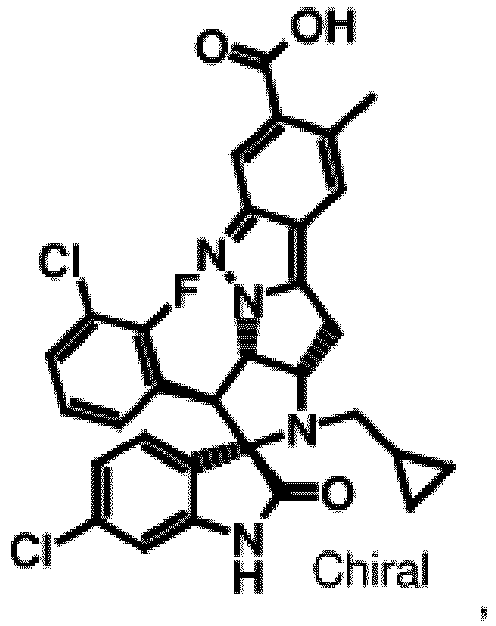
Ia-34 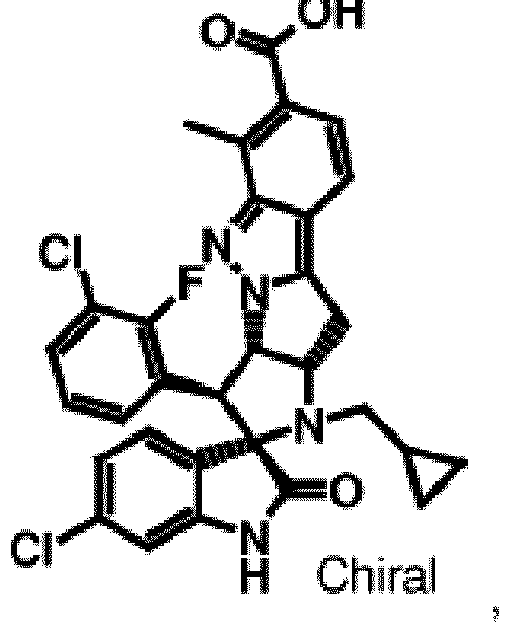
Ia-35 
Ia-36 
Ia-38 
Ia-40 
, Ia-50 
Ia-55 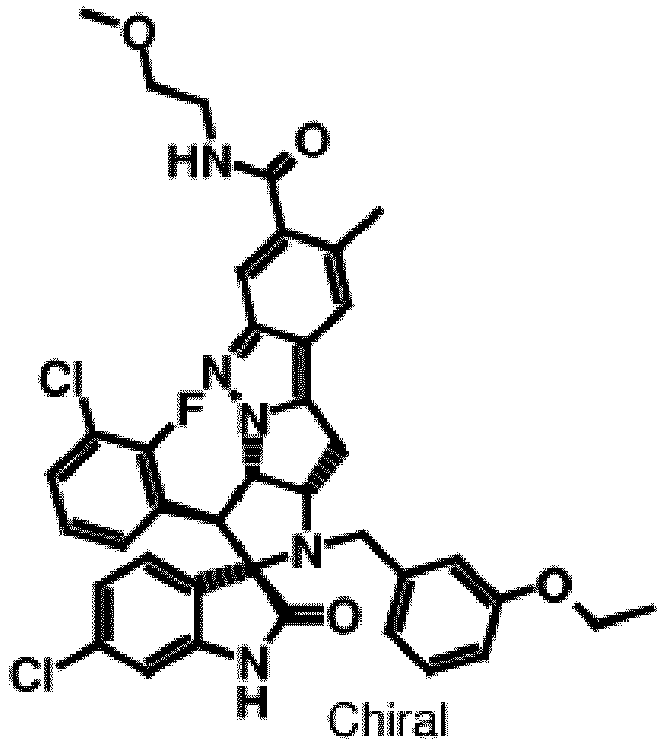
Ia-56 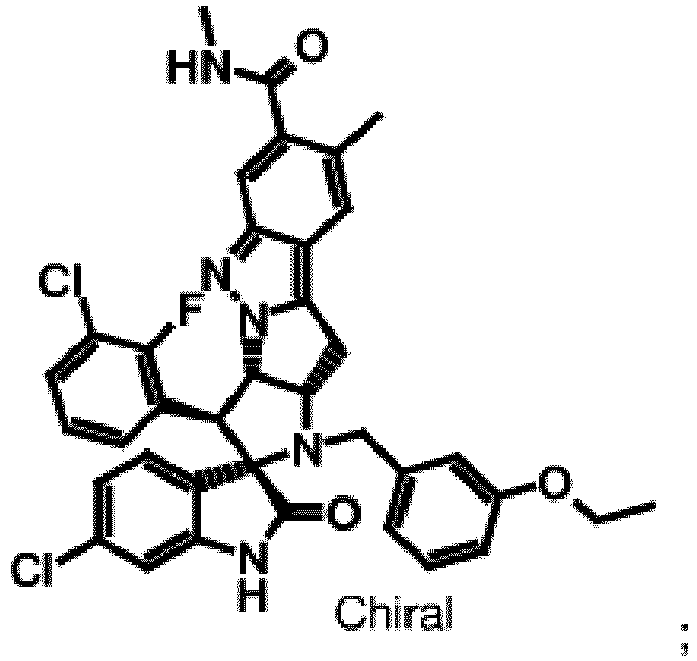
- Composé selon la revendication 10 de formule
Ia-25 
- Composé selon la revendication 10 de formule
Ia-27 
- Composé selon la revendication 10 de formule
Ia-28 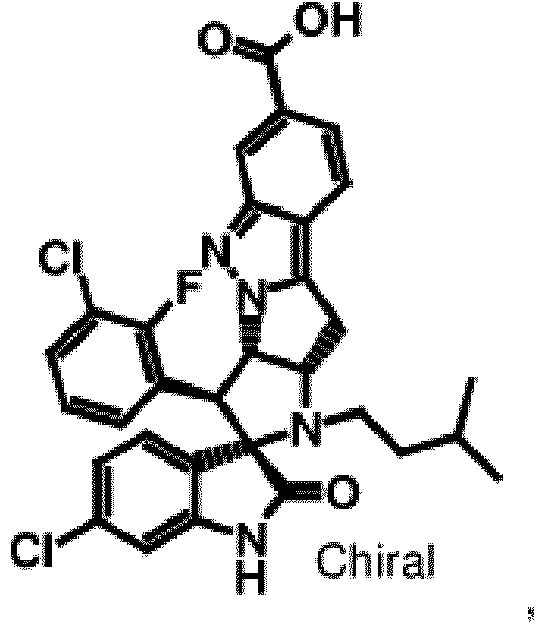
- Composé selon la revendication 10 de formule
Ia-29 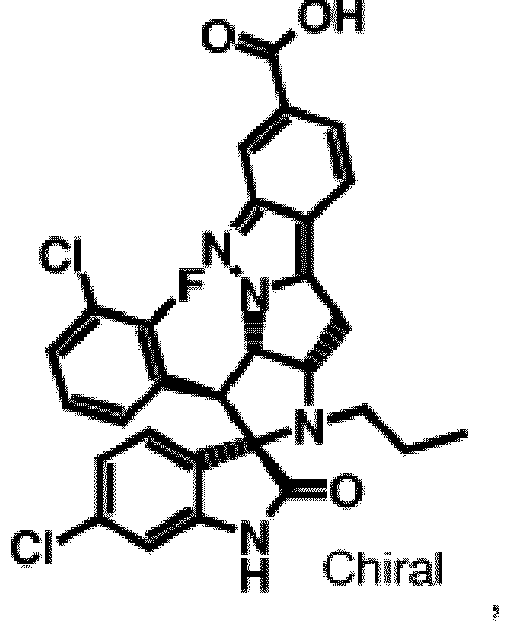
- Composé selon la revendication 10 de formule
Ia-30 
- Composé selon la revendication 10 de formule
Ia-32 
- Composé selon la revendication 10 de formule
Ia-33 
- Composé selon la revendication 10 de formule
Ia-34 
- Composé selon la revendication 10 de formule
Ia-35 
- Composé selon la revendication 10 de formule
Ia-36 
- Composé selon la revendication 10 de formule
Ia-38 
- Composé selon la revendication 10 de formule
Ia-40 
- Composé selon la revendication 10 de formule
Ia-50 
- Composé selon la revendication 10 de formule
Ia-55 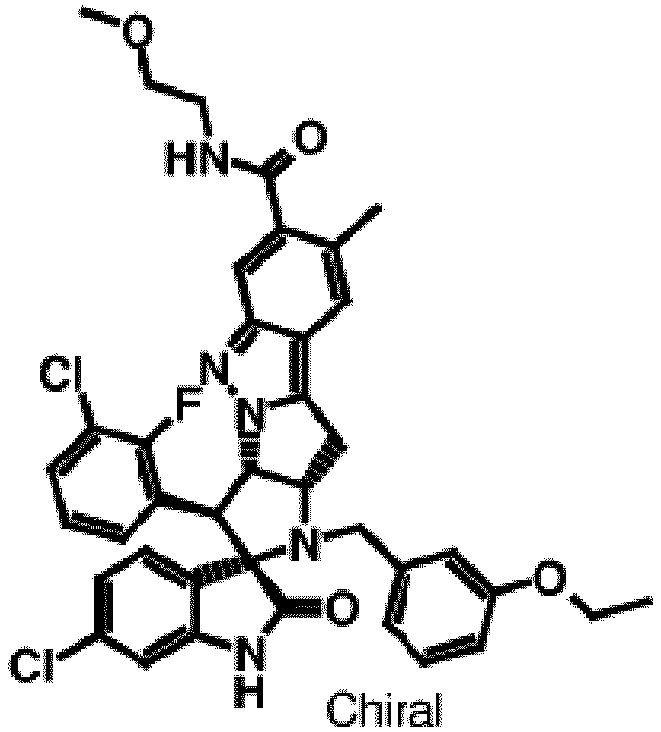
- Composé selon la revendication 10 de formule
Ia-56 
- Sel pharmaceutiquement acceptable de l'un quelconque des composés selon l'une quelconque des revendications 11 à 25.
- Composé selon l'une quelconque des revendications 1 à 25, ou sel pharmaceutiquement acceptable de celui-ci, pour son utilisation comme médicament.
- Composé selon l'une quelconque des revendications 1 à 25, ou sel pharmaceutiquement acceptable de celui-ci, pour son utilisation dans le traitement et/ou la prévention d'une maladie et/ou affection sélectionnée parmi
les infections virales (par exemple, VIH et sarcome de Kaposi) ; maladies inflammatoires et auto-immunes (par exemple, colite, arthrite, maladie d'Alzheimer, glomérulonéphrite et cicatrisation de plaies) ; infections bactériennes, fongiques et/ou parasitaires ; leucémies, lymphomes et tumeurs solides (par exemple, carcinomes et sarcomes), maladies de la peau (par exemple, psoriasis) ; maladies basées sur une hyperplasie qui sont caractérisées par une augmentation du nombre de cellules (par exemple, fibroblastes, hépatocytes, os et cellules de moelle osseuse, cellules de cartilage ou de muscle lisse ou cellules épithéliales (par exemple, hyperplasie de l'endomètre) ; maladies osseuses et maladies cardiovasculaires (par exemple, resténose et hypertrophie), ils conviennent également pour protéger les cellules proliférantes (par exemple, cellules des cheveux, intestinales, du sang et progénitrices) d'un dommage de l'ADN causé par un rayonnement, un traitement aux UV et/ou un traitement cytostatique ; tumeurs du cerveau telles que par exemple neurinome de l'acoustique, astrocytomes tels qu'astrocytomes pilocytiques, astrocytome fibrillaire, astrocytome protoplasmique, astrocytome gémistocytique, astrocytome anaplasique et glioblastome, gliome, lymphomes du cerveau, métastases du cerveau, tumeur hypophysaire telle que prolactinome, tumeur produisant de l'HGH (hormone de croissance humaine) et tumeur produisant de l'ACTH (corticotrophine), craniopharyngiomes, médulloblastomes, méningiomes et oligodendrogliomes ; tumeurs des nerfs (néoplasmes) telles que par exemple tumeurs du système nerveux vétégatif telles que neuroblastome sympathique, ganglionévrome, paragangliome (phéochromocytome, chromaffinome) et tumeur du glomus-carotidien, tumeurs sur le système nerveux périphérique telles que névrome d'amputation, neurofibrome, neurinome (neurilemmome, schwannome) et schwannome malin, ainsi que les tumeurs du système nerveux central telles que les tumeurs du cerveau et de la moelle épinière ; cancer de l'intestin tel que par exemple carcinome du rectum, carcinome du colon, carcinome colorectal, carcinome anal, carcinome du gros intestin, tumeurs de l'intestin grêle et duodénum ; tumeurs des paupières telles que basaliome ou épithélioma basocellulaire ; cancer du pancréas ou carcinome du pancréas ; cancer de la vessie ou carcinome de la vessie et autres cancers urothéliaux ; cancer des poumons (carcinome bronchique) tel que par exemple carcinomes bronchiques à petites cellules (carcinomes à petites cellules) et carcinomes bronchiques non à petites cellules (NSCLC) tels que carcinomes épithéliaux à plaques, adénocarcinomes et carcinomes bronchiques à grandes cellules ; cancer du sein tel que par exemple carcinome mammaire tel que carcinome canalaire infiltrant, carcinome mucineux, carcinome invasif lobulaire, carcinome tubuleux, carcinome adénokystique et carcinome papillaire, cancer du sein positif au récepteur hormonal (cancer du sein positif au récepteur des œstrogènes, cancer du sein positif au récepteur de la progestérone), cancer du sein positif à Her2, cancer du sein triple négatif ; lymphomes non Hodgkiniens (NHL) tels que par exemple lymphome de Burkitt, lymphomes non Hodgkiniens (NHL) à la limite de la malignité et mycosis fongoïde ; cancer de l'utérus ou carcinome de l'endomètre ou carcinome du corps de l'utérus ; syndrome CUP (cancer primitif inconnu) ; cancer de l'ovaire ou carcinome de l'ovaire tel que cancer mucineux, de l'endomètre ou séreux ; cancer de la vésicule biliaire ; cancer du canal cholédoque tel que par exemple tumeur de Klatskin ; cancer des testicules tel que par exemple seminomes et non-seminomes ; lymphome (lymphosarcome) tel que par exemple lymphome malin, maladie d'Hodgkin, lymphomes non Hodgkiniens (NHL) tel que leucémie lymphatique chronique, réticuloendothéliose leucémique, immunocytome, plasmocytome, myélome multiple (MM), immunoblastome, lymphome de Burkitt, mycosis fongoïde de la zone T, lymphoblastome anaplasique à grandes cellules et lymphoblastome ; cancer du larynx tel que par exemple tumeurs des cordes vocales, tumeurs du larynx supraglottique, glottique et sous-glottique ; cancer des os tel que par exemple ostéochondrome, chondrome, chondroblastome, fibrome chondromyxoïde, ostéome, ostéome osteoïde, ostéoblastome, granulome éosinophile, tumeur à cellules géantes, chondrosarcome, ostéosarcome, sarcome d'Ewing, réticulo-sarcome, sarcome des tissus mous, liposarcome, plasmocytome, dysplasie fibreuse, kystes intraosseux juvéniles et kystes anévrysmaux des os ; tumeurs de la tête et du cou telles que par exemple tumeurs des lèvres, de la langue, du plancher de la bouche, de la cavité orale, des gencives, du palais, des glandes salivaires, de la gorge, de la cavité nasale, des sinus paranasaux, du larynx et de l'oreille moyenne ; cancer du foie tel que par exemple carcinome des cellules du foie ou carcinome hépatocellulaire (HCC) ; leucémies, telles que par exemple leucémies aigues telles que leucémie lymphatique/lymphoblastique aigue (ALL), leucémie myéloïde aigue (AML) ; leucémies chroniques telles que leucémie lymphatique chronique (CLL), leucémie myéloïde chronique (CML) ; syndromes myélodysplasiques (MDS) ; cancer de l'estomac ou carcinome gastrique tel que par exemple adénocarcinome papillaire, tubulaire et colloïde, carcinome à cellule en anneau de chevalière, carcinome adénosquameux, carcinome à petites cellules et épithélioma indifférencié ; mélanomes tels que par exemple mélanomes superficiels extensifs, nodulaires, lentigo-malin et malin des extrémités ; cancer rénal tel que par exemple carcinome des cellules rénales ou hypernéphrome ou tumeur de Grawitz ; cancer de l'œsophage ou carcinome de l'œsophage ; cancer pénien ; cancer de la prostate (par exemple, cancer de la prostate résistant à la castration) ; cancer de la gorge ou carcinomes du pharynx tel que par exemple carcinomes du nasopharynx, carcinomes de l'oropharynx et carcinomes de l'hypopharynx ; rétinoblastome, cancer vaginal ou carcinome vaginal, mésothéliome ; carcinomes épithéliaux à plaque, adénocarcinomes, carcinomes in situ, mélanomes et sarcomes malins ; carcinomes de la thyroïde tels que par exemple carcinome de la thyroïde papillaire, folliculaire et médullaire, ainsi que carcinomes anaplasiques ; spinaliome, carcinome épidormoïde et carcinome épithélial à plaques de la peau ; thymomes, cancer de l'urètre, cancer du col de l'utérus, carcinome adénoïde kystique (AdCC), carcinome corticosurrénal et cancer de la vulve. - Composé pour son utilisation selon la revendication 28 dans le traitement et/ou la prévention d'un cancer des poumons sélectionné dans le groupe consistant en les carcinomes bronchiques à petites cellules et carcinomes bronchiques non à petites cellules (NSCLC) telles que les carcinomes épithéliaux à plaques, adénocarcinomes et carcinomes bronchiques à grandes cellules.
- Composé pour son utilisation selon la revendication 28, dans le traitement et/ou la prévention d'une maladie ou affection sélectionnée dans le groupe consistant en un sarcome des tissus mous et un liposarcome.
- Composé pour son utilisation selon la revendication 28, dans le traitement et/ou la prévention d'une tumeur du cerveau sélectionnée dans le groupe consistant en neurinome de l'acoustique, astrocytomes, glioblastome, gliome, lymphomes du cerveau, métastases du cerveau, tumeur hypophysaire telle que prolactinome, tumeur produisant de l'HGH et tumeur produisant de l'ACTH, craniopharyngiomes, médulloblastomes, méningiomes et oligodendrogliomes.
- Composé selon l'une quelconque des revendications 1 à 25, ou sel pharmaceutiquement acceptable de celui-ci, pour son utilisation dans le traitement et/ou la prévention d'un cancer, d'infections, d'inflammations ou de maladies auto-immunes.
- Composé, ou sel pharmaceutiquement acceptable de celui-ci, pour son utilisation selon la revendication 28 dans le traitement du cancer.
- Composition pharmaceutique comprenant au moins un composé selon l'une quelconque des revendications 1 à 25, ou un sel pharmaceutiquement acceptable de celui-ci, et un support pharmaceutiquement acceptable.
- Préparation pharmaceutique comprenant un composé selon l'une quelconque des revendications 1 à 25, ou un sel pharmaceutiquement acceptable de celui-ci, et au moins une autre substance active cytostatique et/ou cytotoxique.
- Composé selon l'une quelconque des revendications 1 à 25, ou sel pharmaceutiquement acceptable de celui-ci, pour son utilisation dans le traitement et/ou la prévention du cancer, d'infections, d'inflammations ou de maladies auto-immunes, dans lequel ledit composé est administré avant, après ou conjointement avec au moins une autre substance active cytostatique ou cytotoxique.
Priority Applications (4)
| Application Number | Priority Date | Filing Date | Title |
|---|---|---|---|
| SI201631182T SI3359542T1 (sl) | 2015-10-09 | 2016-10-07 | Spojine in derivati spiro(3H-indol-3,2'-pirolidin)-2(1H)-ona kot MDM2-P53 inhibitorji |
| RS20210700A RS61936B1 (sr) | 2015-10-09 | 2016-10-07 | Spiro[3h-indol-3,2´-pirolidin]-2(1h)-on jedinjenja i derivati kao mdm2-p53 inhibitori |
| HRP20210960TT HRP20210960T1 (hr) | 2015-10-09 | 2016-10-07 | Spojevi i derivati spiro[3h-indol-3,2’-pirolidin]-2(1h)-ona kao inhibitori mdm2-p53 |
| PL16778038T PL3359542T3 (pl) | 2015-10-09 | 2016-10-07 | Związki i pochodne spiro[3h-indolo-3,2’-pirolidyno]-2(1h)-onowe jako inhibitory mdm2-p53 |
Applications Claiming Priority (2)
| Application Number | Priority Date | Filing Date | Title |
|---|---|---|---|
| EP15189210 | 2015-10-09 | ||
| PCT/EP2016/074008 WO2017060431A1 (fr) | 2015-10-09 | 2016-10-07 | Composés de spiro[3h-indole-3,2'-pyrrolidin]-2(1h)-one et leurs dérivés à titre d'inhibiteurs de mdm2-p53 |
Publications (2)
| Publication Number | Publication Date |
|---|---|
| EP3359542A1 EP3359542A1 (fr) | 2018-08-15 |
| EP3359542B1 true EP3359542B1 (fr) | 2021-03-17 |
Family
ID=54292702
Family Applications (1)
| Application Number | Title | Priority Date | Filing Date |
|---|---|---|---|
| EP16778038.6A Active EP3359542B1 (fr) | 2015-10-09 | 2016-10-07 | Dérivés de composés de spiro[3h-indole-3,2´-pyrrolidine]-2(1h)-one et dérivés utilisés comme inhibiteurs de mdm2-p53 |
Country Status (31)
| Country | Link |
|---|---|
| US (4) | US10144739B2 (fr) |
| EP (1) | EP3359542B1 (fr) |
| JP (1) | JP6602470B2 (fr) |
| KR (2) | KR20240158360A (fr) |
| CN (5) | CN119569741A (fr) |
| AR (1) | AR106314A1 (fr) |
| AU (1) | AU2016333721B2 (fr) |
| BR (1) | BR112018007155B1 (fr) |
| CL (1) | CL2018000666A1 (fr) |
| CO (1) | CO2018003565A2 (fr) |
| CY (1) | CY1124284T1 (fr) |
| DK (1) | DK3359542T3 (fr) |
| EA (1) | EA036013B1 (fr) |
| ES (1) | ES2873895T3 (fr) |
| HR (1) | HRP20210960T1 (fr) |
| HU (1) | HUE054985T2 (fr) |
| IL (1) | IL258073B (fr) |
| LT (1) | LT3359542T (fr) |
| MA (1) | MA50065B1 (fr) |
| MX (1) | MX377009B (fr) |
| MY (1) | MY199688A (fr) |
| PE (1) | PE20181205A1 (fr) |
| PH (1) | PH12018500763A1 (fr) |
| PL (1) | PL3359542T3 (fr) |
| PT (1) | PT3359542T (fr) |
| RS (1) | RS61936B1 (fr) |
| SA (1) | SA518391307B1 (fr) |
| SI (1) | SI3359542T1 (fr) |
| TW (1) | TWI737635B (fr) |
| UA (1) | UA123905C2 (fr) |
| WO (1) | WO2017060431A1 (fr) |
Families Citing this family (33)
| Publication number | Priority date | Publication date | Assignee | Title |
|---|---|---|---|---|
| JP6577958B2 (ja) | 2014-04-11 | 2019-09-18 | ベーリンガー インゲルハイム インターナショナル ゲゼルシャフト ミット ベシュレンクテル ハフツング | スピロ[3H−インドール−3,2’−ピロリジン]−2(1H)−オン誘導体およびMDM2−p53阻害剤としてのそれらの使用 |
| WO2016001376A1 (fr) | 2014-07-03 | 2016-01-07 | Boehringer Ingelheim International Gmbh | Nouveaux composés et dérivés spiro [3h-indole-3,2'-pyrrolidine]-2(1h)-one en tant qu'inhibiteurs de mdm2-p53 |
| JP6591532B2 (ja) | 2014-08-21 | 2019-10-16 | ベーリンガー インゲルハイム インターナショナル ゲゼルシャフト ミット ベシュレンクテル ハフツング | MDM2−p53阻害剤としての新しいスピロ[3H−インドール−3,2’−ピロリジン]−2(1H)−オン化合物および誘導体 |
| HUE054985T2 (hu) * | 2015-10-09 | 2021-11-29 | Boehringer Ingelheim Int | Spiro[3H-indol-3,2'-pirrolidin]-2(1H)-on vegyületek és számrazékok, mint MDM2-P53 inhibitorok |
| TWI794171B (zh) | 2016-05-11 | 2023-03-01 | 美商滬亞生物國際有限公司 | Hdac抑制劑與pd-l1抑制劑之組合治療 |
| TWI808055B (zh) | 2016-05-11 | 2023-07-11 | 美商滬亞生物國際有限公司 | Hdac 抑制劑與 pd-1 抑制劑之組合治療 |
| MX2019011945A (es) * | 2017-04-05 | 2019-11-28 | Boehringer Ingelheim Int | Terapia de combinacion contra cancer. |
| EA202091583A1 (ru) * | 2017-12-29 | 2020-10-08 | Ган Энд Ли Фармасьютикалз | Соединения, которые могут применяться в качестве ингибитора опухоли, способ их получения и их применение |
| EP3511334A1 (fr) * | 2018-01-16 | 2019-07-17 | Adamed sp. z o.o. | Composés de 1,2,3',5'-tetrahydro-2'h-spiro[indole-3,1'-pyrrolo[3,4-c]pyrrole] -2,3'-dione comme agents thérapeutiques activant le tp53 |
| US12480163B2 (en) * | 2018-07-18 | 2025-11-25 | Dana-Farber Cancer Institute, Inc. | Compositions and methods for identification assessment, prevention, and treatment of Ewing sarcoma using TP53 dependency biomarkers and modulators |
| US10590147B1 (en) | 2019-09-10 | 2020-03-17 | King Saud University | Spirooxindole-pyrrolothiazole heterocyclic hybrids |
| EP4054585A1 (fr) * | 2019-11-05 | 2022-09-14 | Abbvie Inc. | Schémas posologiques destinés à être utilisés dans le traitement de la myélofibrose et de troubles liés à mpn par le navitoclax |
| CN116034106B (zh) | 2020-06-02 | 2025-11-04 | 勃林格殷格翰国际有限公司 | 用于治疗癌症的环状2-氨基-3-氰基噻吩及衍生物 |
| EP4178955A1 (fr) | 2020-07-11 | 2023-05-17 | Pfizer Inc. | Dérivés d'hétéroaryl cétone antiviraux |
| US11351149B2 (en) | 2020-09-03 | 2022-06-07 | Pfizer Inc. | Nitrile-containing antiviral compounds |
| CN112047951A (zh) * | 2020-10-16 | 2020-12-08 | 吉林大学 | 手性螺[吡咯-2,2’-呋喃]化合物及其制备方法 |
| TW202309022A (zh) | 2021-04-13 | 2023-03-01 | 美商努法倫特公司 | 用於治療具egfr突變之癌症之胺基取代雜環 |
| WO2023016977A1 (fr) | 2021-08-09 | 2023-02-16 | Boehringer Ingelheim International Gmbh | Composition orale comprenant un antagoniste de mdm2 pour la thérapie anticancéreuse |
| CR20240233A (es) | 2021-12-01 | 2024-07-17 | Univ Vanderbilt | Tiofenos 2-amino-3-ciano anulados y derivados para el tratamiento del cáncer |
| EP4441050A1 (fr) | 2021-12-01 | 2024-10-09 | Boehringer Ingelheim International GmbH | 2-amino-3-cyano thiophènes annelés et leurs dérivés pour le traitement du cancer |
| EP4441051A1 (fr) | 2021-12-01 | 2024-10-09 | Boehringer Ingelheim International GmbH | Composés de dégradation de kras comprenant des 2-amino-3-cyano thiophènes annelés |
| TW202337432A (zh) | 2021-12-01 | 2023-10-01 | 德商百靈佳殷格翰國際股份有限公司 | 用於治療癌症之環狀2-胺基-3-氰基噻吩及衍生物 |
| TW202340208A (zh) | 2021-12-01 | 2023-10-16 | 德商百靈佳殷格翰國際股份有限公司 | 用於治療癌症之環狀2-胺基-3-氰基噻吩及衍生物 |
| US20240217985A1 (en) * | 2022-12-22 | 2024-07-04 | Boehringer Ingelheim International Gmbh | CRYSTALLINE FORM OF AN MDM2-p53 INHIBITOR AND PHARMACEUTICAL COMPOSITIONS |
| TW202438039A (zh) | 2022-12-23 | 2024-10-01 | 德商百靈佳殷格翰國際股份有限公司 | 用於製造mdm2-p53拮抗劑之新方法 |
| WO2024238404A2 (fr) * | 2023-05-12 | 2024-11-21 | Pmv Pharmaceuticals, Inc. | Polythérapie pour le traitement du cancer |
| US20250019385A1 (en) | 2023-05-30 | 2025-01-16 | Boehringer Ingelheim International Gmbh | Spirocyclic annulated 2-amino-3-cyano thiophenes and derivatives for the treatment of cancer |
| JP2026520494A (ja) | 2023-05-31 | 2026-06-23 | ベーリンガー インゲルハイム インターナショナル ゲゼルシャフト ミット ベシュレンクテル ハフツング | がん処置の応答性を予測するためのバイオマーカーとしてのサバイビン |
| EP4776361A1 (fr) | 2024-11-08 | 2026-07-15 | LG Energy Solution, Ltd. | Unité de mesure de tension, montage de pressage d'élément de batterie la comprenant, et dispositif de charge et de décharge comprenant un montage de pressage d'élément de batterie |
| WO2026114918A1 (fr) | 2024-11-27 | 2026-06-04 | Boehringer Ingelheim International Gmbh | Dérivés de 2-amino-3-cyano thiophène annelés spirocycliques utilisés en tant qu'inhibiteurs de kras pour le traitement du cancer |
| WO2026114957A1 (fr) | 2024-11-27 | 2026-06-04 | Boehringer Ingelheim International Gmbh | Dérivés de thiophène 2-amino-3-cyano spirocycliques annelés en tant que dégradeurs de kras pour le traitement du cancer |
| US20260146049A1 (en) | 2024-11-27 | 2026-05-28 | Boehringer Ingelheim International Gmbh | Spirocyclic annulated 2-amino-3-cyano thiophenes and derivatives for the treatment of cancer |
| US20260146050A1 (en) | 2024-11-27 | 2026-05-28 | Boehringer Ingelheim International Gmbh | Kras degrading compounds comprising spirocyclic annulated 2 amino-3-cyano thiophenes |
Family Cites Families (46)
| Publication number | Priority date | Publication date | Assignee | Title |
|---|---|---|---|---|
| US3361759A (en) | 1963-10-07 | 1968-01-02 | Upjohn Co | 3-(2-pyrrolidinyl)-indoles and method of preparation |
| US4219560A (en) | 1978-04-17 | 1980-08-26 | Sandoz, Inc. | Piperidine and pyrrolidine alcohols |
| US5574044A (en) | 1994-10-27 | 1996-11-12 | Merck & Co., Inc. | Muscarine antagonists |
| WO1999012904A1 (fr) | 1997-09-08 | 1999-03-18 | Arqule, Inc. | Composes de spiro[pyrrolidine-2,3'-oxindole] et procedes d'utilisation |
| CA2371618A1 (fr) | 1999-04-28 | 2000-11-09 | Yuji Ishihara | Composes d'amides cycliques, leurs procedes de preparation et d'utilisation |
| AU2006216780B8 (en) | 2005-02-22 | 2010-04-22 | The Regents Of The University Of Michigan | Small molecule inhibitors of MDM2 and uses thereof |
| JP2006234861A (ja) | 2005-02-22 | 2006-09-07 | Fujinon Sano Kk | 光学ガラスの製造方法,偏光変換素子の製造方法及び偏光変換素子 |
| US20090111805A1 (en) | 2005-02-24 | 2009-04-30 | Pfizer Inc. | Bicyclic heteroaromatic derivatives useful as anticancer agents |
| DE602007011902D1 (de) | 2006-03-13 | 2011-02-24 | Hoffmann La Roche | Spiroindolinon-derivate |
| US20070213341A1 (en) | 2006-03-13 | 2007-09-13 | Li Chen | Spiroindolinone derivatives |
| WO2008005268A1 (fr) | 2006-06-30 | 2008-01-10 | Schering Corporation | Pipéridines substituées qui augmentent l'activité p53 et leurs utilisations |
| CA2661354C (fr) | 2006-08-30 | 2012-12-18 | The Regents Of The University Of Michigan | Nouvelles petites molecules inhibitrices de mdm2 et leurs utilisations |
| BRPI0810082A2 (pt) | 2007-03-29 | 2014-10-21 | Novartis Ag | 3-imidazolil-indóis para o tratamento de doenças proliferativas |
| US7553833B2 (en) | 2007-05-17 | 2009-06-30 | Hoffmann-La Roche Inc. | 3,3-spiroindolinone derivatives |
| US7834179B2 (en) | 2007-05-23 | 2010-11-16 | Hoffmann-La Roche Inc. | Spiroindolinone derivatives |
| US7977358B2 (en) | 2007-07-26 | 2011-07-12 | Hoffmann-La Roche Inc. | Pyrazol derivatives |
| US8134001B2 (en) | 2007-12-14 | 2012-03-13 | Hoffmann-La Roche Inc. | Spiroindolinone derivatives |
| US7776875B2 (en) | 2007-12-19 | 2010-08-17 | Hoffman-La Roche Inc. | Spiroindolinone derivatives |
| AR073578A1 (es) | 2008-09-15 | 2010-11-17 | Priaxon Ag | Pirrolidin-2-onas |
| US20100190814A1 (en) | 2009-01-26 | 2010-07-29 | Li Chen | Spiroindolinone derivative prodrugs |
| US8076482B2 (en) | 2009-04-23 | 2011-12-13 | Hoffmann-La Roche Inc. | 3,3′-spiroindolinone derivatives |
| CN104876938A (zh) * | 2009-11-12 | 2015-09-02 | 密歇根大学董事会 | 螺-吲哚酮mdm2拮抗剂 |
| US8088815B2 (en) | 2009-12-02 | 2012-01-03 | Hoffman-La Roche Inc. | Spiroindolinone pyrrolidines |
| US8288431B2 (en) | 2010-02-17 | 2012-10-16 | Hoffmann-La Roche Inc. | Substituted spiroindolinones |
| US8217044B2 (en) | 2010-04-28 | 2012-07-10 | Hoffmann-La Roche Inc. | Spiroindolinone pyrrolidines |
| JO2998B1 (ar) | 2010-06-04 | 2016-09-05 | Amgen Inc | مشتقات بيبيريدينون كمثبطات mdm2 لعلاج السرطان |
| US20120046306A1 (en) | 2010-08-18 | 2012-02-23 | David Joseph Bartkovitz | Substituted Heteroaryl Spiropyrrolidine MDM2 Antagonists |
| US20120071499A1 (en) | 2010-09-20 | 2012-03-22 | Xin-Jie Chu | Substituted Spiro[3H-Indole-3,6'(5'H)-[1H]Pyrrolo[1,2c]Imidazole-1',2(1H,2'H)-diones |
| PE20140408A1 (es) | 2010-11-12 | 2014-04-10 | Univ Michigan | Derivados espiro-oxindol como antagonistas de mdm2 |
| US20130053410A1 (en) | 2011-03-03 | 2013-02-28 | David Joseph Bartkovitz | Substituted heteroaryl 2',3',7',7a'-tetrahydrospiro[pyrrole-3,6'-pyrrolo[1,2-c]imidazole]-1',2(1h,5'h)-dione |
| TR201807311T4 (tr) | 2011-03-10 | 2018-06-21 | Daiichi Sankyo Co Ltd | Dispiropirolidin derivesi. |
| JO3363B1 (ar) | 2011-04-13 | 2019-03-13 | Epizyme Inc | مركبات بنزين مستبدلة بأريل أو أريل غير متجانس |
| MX346375B (es) | 2011-05-11 | 2017-03-16 | Univ Michigan Regents | Antagonistas de espiro-oxindol de mdm2. |
| CN102443004A (zh) | 2011-11-01 | 2012-05-09 | 南京工业大学 | 有机发光材料6,7,14,15-四氢-5,13-二取代苯并[1,2-c:4,5-c’]二吖啶类化合物、合成方法及应用 |
| CN103910746B (zh) * | 2014-02-28 | 2016-08-03 | 中山大学 | 一类海洋真菌来源的Berkeleyones化合物及其制备方法和应用 |
| JP6577958B2 (ja) | 2014-04-11 | 2019-09-18 | ベーリンガー インゲルハイム インターナショナル ゲゼルシャフト ミット ベシュレンクテル ハフツング | スピロ[3H−インドール−3,2’−ピロリジン]−2(1H)−オン誘導体およびMDM2−p53阻害剤としてのそれらの使用 |
| AU2015247646B2 (en) | 2014-04-17 | 2019-06-06 | The Regents Of The University Of Michigan | MDM2 inhibitors and therapeutic methods using the same |
| WO2016001376A1 (fr) | 2014-07-03 | 2016-01-07 | Boehringer Ingelheim International Gmbh | Nouveaux composés et dérivés spiro [3h-indole-3,2'-pyrrolidine]-2(1h)-one en tant qu'inhibiteurs de mdm2-p53 |
| CN105829318B (zh) | 2014-08-18 | 2018-10-02 | 哈德森生物医药有限公司 | 作为mdm2抑制剂的螺吡咯烷 |
| NO2721710T3 (fr) | 2014-08-21 | 2018-03-31 | ||
| JP6591532B2 (ja) | 2014-08-21 | 2019-10-16 | ベーリンガー インゲルハイム インターナショナル ゲゼルシャフト ミット ベシュレンクテル ハフツング | MDM2−p53阻害剤としての新しいスピロ[3H−インドール−3,2’−ピロリジン]−2(1H)−オン化合物および誘導体 |
| PL3359541T3 (pl) | 2015-10-09 | 2021-01-11 | AbbVie Overseas S.à r.l. | N-SULFONYLOWANE PIRAZOLO[3,4-b]PIRYDYNO-6-KARBOKSAMIDY I SPOSÓB ZASTOSOWANIA |
| HUE054985T2 (hu) | 2015-10-09 | 2021-11-29 | Boehringer Ingelheim Int | Spiro[3H-indol-3,2'-pirrolidin]-2(1H)-on vegyületek és számrazékok, mint MDM2-P53 inhibitorok |
| CN108137484B (zh) | 2015-10-09 | 2021-02-12 | 西北大学 | 作为用于治疗癫痫、成瘾和肝细胞癌的gaba氨基转移酶灭活剂的化合物 |
| JP2018017594A (ja) * | 2016-07-27 | 2018-02-01 | セイコーエプソン株式会社 | 動力伝達装置、ロボットおよびプリンター |
| CN106967049B (zh) | 2017-03-22 | 2018-06-26 | 杭州师范大学 | 一种白藜芦醇系列荧光标记分子及其合成方法 |
-
2016
- 2016-10-07 HU HUE16778038A patent/HUE054985T2/hu unknown
- 2016-10-07 MA MA50065A patent/MA50065B1/fr unknown
- 2016-10-07 HR HRP20210960TT patent/HRP20210960T1/hr unknown
- 2016-10-07 LT LTEP16778038.6T patent/LT3359542T/lt unknown
- 2016-10-07 CN CN202411509572.2A patent/CN119569741A/zh active Pending
- 2016-10-07 CN CN202110322485.6A patent/CN113214270A/zh active Pending
- 2016-10-07 RS RS20210700A patent/RS61936B1/sr unknown
- 2016-10-07 JP JP2018517748A patent/JP6602470B2/ja active Active
- 2016-10-07 WO PCT/EP2016/074008 patent/WO2017060431A1/fr not_active Ceased
- 2016-10-07 AU AU2016333721A patent/AU2016333721B2/en active Active
- 2016-10-07 US US15/287,958 patent/US10144739B2/en active Active
- 2016-10-07 CN CN202411509563.3A patent/CN119569739A/zh active Pending
- 2016-10-07 DK DK16778038.6T patent/DK3359542T3/da active
- 2016-10-07 CN CN201680058768.1A patent/CN108137590B/zh active Active
- 2016-10-07 UA UAA201804904A patent/UA123905C2/uk unknown
- 2016-10-07 PE PE2018000507A patent/PE20181205A1/es unknown
- 2016-10-07 TW TW105132652A patent/TWI737635B/zh active
- 2016-10-07 KR KR1020247035113A patent/KR20240158360A/ko active Pending
- 2016-10-07 PL PL16778038T patent/PL3359542T3/pl unknown
- 2016-10-07 EA EA201890888A patent/EA036013B1/ru not_active IP Right Cessation
- 2016-10-07 MY MYPI2018000492A patent/MY199688A/en unknown
- 2016-10-07 CN CN202411509567.1A patent/CN119569740A/zh active Pending
- 2016-10-07 PT PT167780386T patent/PT3359542T/pt unknown
- 2016-10-07 ES ES16778038T patent/ES2873895T3/es active Active
- 2016-10-07 AR ARP160103098A patent/AR106314A1/es active IP Right Grant
- 2016-10-07 EP EP16778038.6A patent/EP3359542B1/fr active Active
- 2016-10-07 BR BR112018007155-2A patent/BR112018007155B1/pt active IP Right Grant
- 2016-10-07 SI SI201631182T patent/SI3359542T1/sl unknown
- 2016-10-07 KR KR1020187013102A patent/KR102722493B1/ko active Active
- 2016-10-07 MX MX2018004207A patent/MX377009B/es active IP Right Grant
-
2018
- 2018-03-13 CL CL2018000666A patent/CL2018000666A1/es unknown
- 2018-03-13 IL IL258073A patent/IL258073B/en active IP Right Grant
- 2018-04-04 CO CONC2018/0003565A patent/CO2018003565A2/es unknown
- 2018-04-06 PH PH12018500763A patent/PH12018500763A1/en unknown
- 2018-04-09 SA SA518391307A patent/SA518391307B1/ar unknown
- 2018-06-08 US US16/003,232 patent/US10717742B2/en active Active
-
2020
- 2020-04-09 US US16/844,473 patent/US10882866B1/en not_active Ceased
-
2021
- 2021-06-14 CY CY20211100524T patent/CY1124284T1/el unknown
-
2023
- 2023-01-04 US US18/093,145 patent/USRE50594E1/en active Active
Non-Patent Citations (1)
| Title |
|---|
| None * |
Also Published As
Similar Documents
| Publication | Publication Date | Title |
|---|---|---|
| USRE50594E1 (en) | Spiro[3H-indole-3,2′-pyrrolidin]-2(1H)-one compounds and derivatives as MDM2-P53 inhibitors | |
| US12312363B2 (en) | Spiro[3H-indole-3,2′-pyrrolidin]-2(1H)-one compounds and derivatives as MDM2-p53 inhibitors | |
| EP3129380B1 (fr) | Dérivés spiro[3h-indole-3,2'-pyrrolidin]-2(1h)-one et leur utilisation en tant qu'inhibiteurs de mdm2-p53 | |
| CA3000063C (fr) | Composes de spiro[3h-indole-3,2'-pyrrolidin]-2(1h)-one et leurs derives a titre d'inhibiteurs de mdm2-p53 | |
| HK1252365B (en) | Spiro[3h-indole-3,2’-pyrrolidin]-2(1h)-one compounds and derivatives as mdm2-p53 inhibitors | |
| BR102016023429A2 (pt) | Novos compostos de espiro[3h-indol-3,2?- pirrolidin]-2(1h)-ona e derivados como inibidores de mdm2-p53 |
Legal Events
| Date | Code | Title | Description |
|---|---|---|---|
| STAA | Information on the status of an ep patent application or granted ep patent |
Free format text: STATUS: THE INTERNATIONAL PUBLICATION HAS BEEN MADE |
|
| PUAI | Public reference made under article 153(3) epc to a published international application that has entered the european phase |
Free format text: ORIGINAL CODE: 0009012 |
|
| STAA | Information on the status of an ep patent application or granted ep patent |
Free format text: STATUS: REQUEST FOR EXAMINATION WAS MADE |
|
| 17P | Request for examination filed |
Effective date: 20180509 |
|
| AK | Designated contracting states |
Kind code of ref document: A1 Designated state(s): AL AT BE BG CH CY CZ DE DK EE ES FI FR GB GR HR HU IE IS IT LI LT LU LV MC MK MT NL NO PL PT RO RS SE SI SK SM TR |
|
| AX | Request for extension of the european patent |
Extension state: BA ME |
|
| REG | Reference to a national code |
Ref country code: HK Ref legal event code: DE Ref document number: 1252365 Country of ref document: HK |
|
| GRAP | Despatch of communication of intention to grant a patent |
Free format text: ORIGINAL CODE: EPIDOSNIGR1 |
|
| STAA | Information on the status of an ep patent application or granted ep patent |
Free format text: STATUS: GRANT OF PATENT IS INTENDED |
|
| INTG | Intention to grant announced |
Effective date: 20200721 |
|
| GRAJ | Information related to disapproval of communication of intention to grant by the applicant or resumption of examination proceedings by the epo deleted |
Free format text: ORIGINAL CODE: EPIDOSDIGR1 |
|
| STAA | Information on the status of an ep patent application or granted ep patent |
Free format text: STATUS: REQUEST FOR EXAMINATION WAS MADE |
|
| INTC | Intention to grant announced (deleted) | ||
| GRAP | Despatch of communication of intention to grant a patent |
Free format text: ORIGINAL CODE: EPIDOSNIGR1 |
|
| STAA | Information on the status of an ep patent application or granted ep patent |
Free format text: STATUS: GRANT OF PATENT IS INTENDED |
|
| INTG | Intention to grant announced |
Effective date: 20201006 |
|
| GRAS | Grant fee paid |
Free format text: ORIGINAL CODE: EPIDOSNIGR3 |
|
| GRAA | (expected) grant |
Free format text: ORIGINAL CODE: 0009210 |
|
| STAA | Information on the status of an ep patent application or granted ep patent |
Free format text: STATUS: THE PATENT HAS BEEN GRANTED |
|
| AK | Designated contracting states |
Kind code of ref document: B1 Designated state(s): AL AT BE BG CH CY CZ DE DK EE ES FI FR GB GR HR HU IE IS IT LI LT LU LV MC MK MT NL NO PL PT RO RS SE SI SK SM TR |
|
| AX | Request for extension of the european patent |
Extension state: BA ME |
|
| REG | Reference to a national code |
Ref country code: GB Ref legal event code: FG4D |
|
| REG | Reference to a national code |
Ref country code: CH Ref legal event code: EP |
|
| REG | Reference to a national code |
Ref country code: DE Ref legal event code: R096 Ref document number: 602016054455 Country of ref document: DE |
|
| REG | Reference to a national code |
Ref country code: IE Ref legal event code: FG4D |
|
| REG | Reference to a national code |
Ref country code: AT Ref legal event code: REF Ref document number: 1372144 Country of ref document: AT Kind code of ref document: T Effective date: 20210415 |
|
| REG | Reference to a national code |
Ref country code: FI Ref legal event code: FGE |
|
| REG | Reference to a national code |
Ref country code: PT Ref legal event code: SC4A Ref document number: 3359542 Country of ref document: PT Date of ref document: 20210525 Kind code of ref document: T Free format text: AVAILABILITY OF NATIONAL TRANSLATION Effective date: 20210517 |
|
| REG | Reference to a national code |
Ref country code: NL Ref legal event code: FP |
|
| REG | Reference to a national code |
Ref country code: DK Ref legal event code: T3 Effective date: 20210527 |
|
| REG | Reference to a national code |
Ref country code: RO Ref legal event code: EPE Ref country code: HR Ref legal event code: TUEP Ref document number: P20210960T Country of ref document: HR |
|
| REG | Reference to a national code |
Ref country code: SE Ref legal event code: TRGR |
|
| REG | Reference to a national code |
Ref country code: MA Ref legal event code: VAGR Ref document number: 50065 Country of ref document: MA Kind code of ref document: B1 |
|
| REG | Reference to a national code |
Ref country code: GR Ref legal event code: EP Ref document number: 20210401504 Country of ref document: GR Effective date: 20210709 |
|
| REG | Reference to a national code |
Ref country code: NO Ref legal event code: T2 Effective date: 20210317 |
|
| REG | Reference to a national code |
Ref country code: SK Ref legal event code: T3 Ref document number: E 37416 Country of ref document: SK |
|
| REG | Reference to a national code |
Ref country code: EE Ref legal event code: FG4A Ref document number: E020998 Country of ref document: EE Effective date: 20210603 |
|
| REG | Reference to a national code |
Ref country code: HR Ref legal event code: T1PR Ref document number: P20210960 Country of ref document: HR |
|
| REG | Reference to a national code |
Ref country code: HR Ref legal event code: ODRP Ref document number: P20210960 Country of ref document: HR Payment date: 20210924 Year of fee payment: 6 |
|
| PG25 | Lapsed in a contracting state [announced via postgrant information from national office to epo] |
Ref country code: SM Free format text: LAPSE BECAUSE OF FAILURE TO SUBMIT A TRANSLATION OF THE DESCRIPTION OR TO PAY THE FEE WITHIN THE PRESCRIBED TIME-LIMIT Effective date: 20210317 |
|
| REG | Reference to a national code |
Ref country code: AT Ref legal event code: UEP Ref document number: 1372144 Country of ref document: AT Kind code of ref document: T Effective date: 20210317 |
|
| REG | Reference to a national code |
Ref country code: HU Ref legal event code: AG4A Ref document number: E054985 Country of ref document: HU |
|
| VS25 | Lapsed in a validation state [announced via postgrant information from nat. office to epo] |
Ref country code: MD Free format text: LAPSE BECAUSE OF FAILURE TO SUBMIT A TRANSLATION OF THE DESCRIPTION OR TO PAY THE FEE WITHIN THE PRESCRIBED TIME-LIMIT Effective date: 20210317 |
|
| REG | Reference to a national code |
Ref country code: DE Ref legal event code: R097 Ref document number: 602016054455 Country of ref document: DE |
|
| PLBE | No opposition filed within time limit |
Free format text: ORIGINAL CODE: 0009261 |
|
| STAA | Information on the status of an ep patent application or granted ep patent |
Free format text: STATUS: NO OPPOSITION FILED WITHIN TIME LIMIT |
|
| 26N | No opposition filed |
Effective date: 20211220 |
|
| REG | Reference to a national code |
Ref country code: HR Ref legal event code: ODRP Ref document number: P20210960 Country of ref document: HR Payment date: 20221004 Year of fee payment: 7 |
|
| P01 | Opt-out of the competence of the unified patent court (upc) registered |
Effective date: 20230509 |
|
| REG | Reference to a national code |
Ref country code: HR Ref legal event code: ODRP Ref document number: P20210960 Country of ref document: HR Payment date: 20230928 Year of fee payment: 8 |
|
| REG | Reference to a national code |
Ref country code: HR Ref legal event code: ODRP Ref document number: P20210960 Country of ref document: HR Payment date: 20240926 Year of fee payment: 9 |
|
| PGFP | Annual fee paid to national office [announced via postgrant information from national office to epo] |
Ref country code: PT Payment date: 20250925 Year of fee payment: 10 |
|
| PGFP | Annual fee paid to national office [announced via postgrant information from national office to epo] |
Ref country code: TR Payment date: 20250930 Year of fee payment: 10 Ref country code: PL Payment date: 20250925 Year of fee payment: 10 |
|
| PGFP | Annual fee paid to national office [announced via postgrant information from national office to epo] |
Ref country code: HR Payment date: 20250925 Year of fee payment: 10 |
|
| PGFP | Annual fee paid to national office [announced via postgrant information from national office to epo] |
Ref country code: MT Payment date: 20250923 Year of fee payment: 10 |
|
| PGFP | Annual fee paid to national office [announced via postgrant information from national office to epo] |
Ref country code: RS Payment date: 20250925 Year of fee payment: 10 |
|
| REG | Reference to a national code |
Ref country code: HR Ref legal event code: ODRP Ref document number: P20210960 Country of ref document: HR Payment date: 20250925 Year of fee payment: 10 |
|
| VSFP | Annual fee paid to validation state [announced via postgrant information from national office to epo] |
Ref country code: MA Payment date: 20231009 Year of fee payment: 8 |
|
| PGFP | Annual fee paid to national office [announced via postgrant information from national office to epo] |
Ref country code: SK Payment date: 20250926 Year of fee payment: 10 |
|
| VSFP | Annual fee paid to validation state [announced via postgrant information from national office to epo] |
Ref country code: MA Payment date: 20221003 Year of fee payment: 7 Ref country code: MA Payment date: 20210521 Year of fee payment: 6 |
|
| PGFP | Annual fee paid to national office [announced via postgrant information from national office to epo] |
Ref country code: SI Payment date: 20250925 Year of fee payment: 10 |
|
| REG | Reference to a national code |
Ref country code: CH Ref legal event code: U11 Free format text: ST27 STATUS EVENT CODE: U-0-0-U10-U11 (AS PROVIDED BY THE NATIONAL OFFICE) Effective date: 20251101 |
|
| PGFP | Annual fee paid to national office [announced via postgrant information from national office to epo] |
Ref country code: MK Payment date: 20250922 Year of fee payment: 10 |
|
| PGFP | Annual fee paid to national office [announced via postgrant information from national office to epo] |
Ref country code: HU Payment date: 20251027 Year of fee payment: 10 |
|
| PGFP | Annual fee paid to national office [announced via postgrant information from national office to epo] |
Ref country code: LU Payment date: 20251022 Year of fee payment: 10 Ref country code: NL Payment date: 20251021 Year of fee payment: 10 |
|
| VSFP | Annual fee paid to validation state [announced via postgrant information from national office to epo] |
Ref country code: MA Payment date: 20240923 Year of fee payment: 9 Ref country code: MA Payment date: 20251008 Year of fee payment: 10 |
|
| PGFP | Annual fee paid to national office [announced via postgrant information from national office to epo] |
Ref country code: DE Payment date: 20251021 Year of fee payment: 10 Ref country code: IS Payment date: 20251013 Year of fee payment: 10 |
|
| PGFP | Annual fee paid to national office [announced via postgrant information from national office to epo] |
Ref country code: LT Payment date: 20250929 Year of fee payment: 10 Ref country code: GB Payment date: 20251022 Year of fee payment: 10 |
|
| PGFP | Annual fee paid to national office [announced via postgrant information from national office to epo] |
Ref country code: MC Payment date: 20251023 Year of fee payment: 10 Ref country code: NO Payment date: 20251024 Year of fee payment: 10 |
|
| PGFP | Annual fee paid to national office [announced via postgrant information from national office to epo] |
Ref country code: AT Payment date: 20251022 Year of fee payment: 10 |
|
| PGFP | Annual fee paid to national office [announced via postgrant information from national office to epo] |
Ref country code: FI Payment date: 20251028 Year of fee payment: 10 Ref country code: DK Payment date: 20251027 Year of fee payment: 10 Ref country code: IT Payment date: 20251024 Year of fee payment: 10 |
|
| PGFP | Annual fee paid to national office [announced via postgrant information from national office to epo] |
Ref country code: FR Payment date: 20251030 Year of fee payment: 10 |
|
| PGFP | Annual fee paid to national office [announced via postgrant information from national office to epo] |
Ref country code: GR Payment date: 20251022 Year of fee payment: 10 Ref country code: BE Payment date: 20251021 Year of fee payment: 10 Ref country code: AL Payment date: 20251006 Year of fee payment: 10 |
|
| PGFP | Annual fee paid to national office [announced via postgrant information from national office to epo] |
Ref country code: SE Payment date: 20251021 Year of fee payment: 10 Ref country code: CH Payment date: 20251101 Year of fee payment: 10 |
|
| PGFP | Annual fee paid to national office [announced via postgrant information from national office to epo] |
Ref country code: IE Payment date: 20251024 Year of fee payment: 10 Ref country code: CZ Payment date: 20250930 Year of fee payment: 10 Ref country code: CY Payment date: 20250923 Year of fee payment: 10 |
|
| PGFP | Annual fee paid to national office [announced via postgrant information from national office to epo] |
Ref country code: LV Payment date: 20251015 Year of fee payment: 10 |
|
| PGFP | Annual fee paid to national office [announced via postgrant information from national office to epo] |
Ref country code: BG Payment date: 20251023 Year of fee payment: 10 |
|
| PGFP | Annual fee paid to national office [announced via postgrant information from national office to epo] |
Ref country code: EE Payment date: 20251106 Year of fee payment: 10 |
|
| PGFP | Annual fee paid to national office [announced via postgrant information from national office to epo] |
Ref country code: RO Payment date: 20251001 Year of fee payment: 10 |
|
| PGFP | Annual fee paid to national office [announced via postgrant information from national office to epo] |
Ref country code: ES Payment date: 20251216 Year of fee payment: 10 |