EP3375784A1 - Dérivés d'aza-dihydro-acridone - Google Patents
Dérivés d'aza-dihydro-acridone Download PDFInfo
- Publication number
- EP3375784A1 EP3375784A1 EP17382129.9A EP17382129A EP3375784A1 EP 3375784 A1 EP3375784 A1 EP 3375784A1 EP 17382129 A EP17382129 A EP 17382129A EP 3375784 A1 EP3375784 A1 EP 3375784A1
- Authority
- EP
- European Patent Office
- Prior art keywords
- compound
- alkyl
- pharmaceutically acceptable
- acceptable salt
- formula
- Prior art date
- Legal status (The legal status is an assumption and is not a legal conclusion. Google has not performed a legal analysis and makes no representation as to the accuracy of the status listed.)
- Withdrawn
Links
- 0 *C1c2ccccc2N(*)C2C1CN(Cc1ccccc1)CC2 Chemical compound *C1c2ccccc2N(*)C2C1CN(Cc1ccccc1)CC2 0.000 description 1
Images
Classifications
-
- C—CHEMISTRY; METALLURGY
- C07—ORGANIC CHEMISTRY
- C07D—HETEROCYCLIC COMPOUNDS
- C07D471/00—Heterocyclic compounds containing nitrogen atoms as the only ring hetero atoms in the condensed system, at least one ring being a six-membered ring with one nitrogen atom, not provided for by groups C07D451/00 - C07D463/00
- C07D471/02—Heterocyclic compounds containing nitrogen atoms as the only ring hetero atoms in the condensed system, at least one ring being a six-membered ring with one nitrogen atom, not provided for by groups C07D451/00 - C07D463/00 in which the condensed system contains two hetero rings
- C07D471/04—Ortho-condensed systems
-
- A—HUMAN NECESSITIES
- A61—MEDICAL OR VETERINARY SCIENCE; HYGIENE
- A61P—SPECIFIC THERAPEUTIC ACTIVITY OF CHEMICAL COMPOUNDS OR MEDICINAL PREPARATIONS
- A61P37/00—Drugs for immunological or allergic disorders
Definitions
- the present invention relates to aza-dihydro-acridone derivatives of formula I useful for the treatment and/or prevention of an autoimmune disease, a mast-cell mediated allergy, a rejection of an allotransplant or a xenotransplant of an organ or a tissue, a lymphoma or a T-cell leukaemia, through the inhibition of T cells.
- the invention relates to processes for the preparation thereof, and to pharmaceutical compositions that comprise these compounds.
- T cells are directly involved in the pathogenesis of autoimmune diseases (ADs), allergies, and diseases associated with abnormal performance of the immune system.
- T cells require three signals for their activation to take place, signal 1, derived from the T cell antigen receptors (TCR); signal 2, derived from co-stimulatory receptors, e.g. CD28 upon binding to its ligands on the antigen-presenting cells (APC); and signal 3, a signal derived from cytokine receptors responsible for T cell proliferation and differentiation.
- the mechanism of action of the currently-used immunosuppressant drugs based on the inhibition of the activation of signals 2 or 3, and include drugs such as belatacept and basiliximab, reslizumab, etc., respectively.
- TCR major histocompatibility complex
- pMHC major histocompatibility complex
- the TCR is formed by 6 subunits, 2 of which, namely TCR ⁇ and TCR ⁇ , are responsible for the recognition of the antigen peptide associated MHC; whereas the other 4 subunits (i.e. CD3y, CD3 ⁇ , CD3 ⁇ and CD3 ⁇ ) are responsible for the transmission of signals to the T cell cytoplasm.
- TCR src-family tyrosine kinases
- Lck and Fyn src-family tyrosine kinases
- TAM immunoreceptor tyrosine-based activation motifs
- ZAP70 and Syk anchor sites for the Syk-family tyrosine kinases
- PRS proline-rich sequence
- TCR-Nck interaction takes place between the PRS portion of CD3 ⁇ and the amino-terminal SH3.1 domain of Nck. Therefore, Nck is necessary for the activation of T lymphocytes in response to stimulation of the TCR.
- the compounds of the present invention surprisingly act blocking the TCR-Nck interaction, and consequently the abnormal proliferation of T cells.
- JPS5714590 discloses aza-dihydro-acridone derivatives. This document further states that said compounds can be used for their analgesic, anti-inflammatory, and antihistamine properties. However, this document does not provide any effective data supporting said properties. JP S5714590 would be a non-enabling disclosure due to the lack of supporting data.
- a first aspect of the present invention relates to a compound of formula I: or a pharmaceutically acceptable salt thereof, wherein:
- the invention relates to the compound of formula I, or a pharmaceutical acceptable salt thereof, as previously defined, wherein R 3 represents -H, -C 1-4 alkyl or C 1-4 alkyl-Cy.
- the invention relates to a compound of formula I, or a pharmaceutically acceptable salt thereof, as previously defined, selected from a compound of formula Ia: wherein,
- the invention relates to a compound of formula Ia, or a pharmaceutically acceptable salt thereof, as previously defined, wherein R 3 represents -H, C 1-4 alkyl or C 1-4 alkyl-Cy.
- the invention relates to a compound of formula I, or a pharmaceutically acceptable salt thereof, as previously defined, selected from a compound of formula Ib: wherein:
- the invention relates to a compound of formula Ib, or a pharmaceutically acceptable salt thereof, as previously defined, wherein R 3 represents -H, -C 1-4 alkyl or -C 1-4 alkyl-Cy.
- the invention relates to a compound of formula I, Ia or Ib, or a pharmaceutically acceptable salt thereof, as previously defined, wherein one R' 1 represents -H, and the other R' 1 represents -H, -CN, halogen, -OC 1-4 alkyl or C 1-4 alkyl.
- the invention relates to a compound of formula I, Ia or Ib, or a pharmaceutically acceptable salt thereof, as previously defined, wherein both R' 1 represent -H, halogen, -OC 1-4 alkyl or C 1-4 alkyl.
- the invention relates to a compound of formula I, Ia or Ib, or a pharmaceutically acceptable salt thereof, as previously defined, wherein one R 1 represents -H, and the other R 1 represents -H, -CN, halogen, -OC 1-4 alkyl or C 1-4 alkyl
- the invention relates to a compound of formula I, Ia or Ib, or a pharmaceutically acceptable salt thereof, as previously defined, wherein both R 1 represent -H, halogen, -OC 1-4 alkyl or C 1-4 alkyl
- the invention relates to a compound of formula I, Ia or Ib, or a pharmaceutically acceptable salt thereof, as previously defined, wherein R 2 represents -OH.
- the invention relates to a compound of formula I, Ia or Ib, or a pharmaceutically acceptable salt thereof, as previously defined, wherein R 3 represents -H, methyl, ethyl, isopropyl or -CH 2 -phenyl.
- the invention relates to a compound of formula I, or a pharmaceutically acceptable salt thereof, as previously defined, selected from: and
- Another aspect of the present invention relates to a pharmaceutical composition that comprises a compound of formula I, Ia or Ib, or a pharmaceutically acceptable salt thereof, as previously defied, and one or more pharmaceutically acceptable excipients.
- Another aspect of the present invention relates to a compound of formula I, Ia or Ib, or a pharmaceutically acceptable salt thereof, or a pharmaceutical composition, as previously defined, for use as a medicament.
- the invention relates to a compound of formula I, Ia or Ib, or a pharmaceutically acceptable salt thereof, or a pharmaceutical composition, for use as a medicament, as previously defined, for the treatment and/or prevention of a disease associated with an abnormal activation of T cells.
- the invention relates to a compound of formula I, Ia or Ib, or a pharmaceutically acceptable salt thereof, or a pharmaceutical composition, for use as previously defined, wherein the disease associated with an abnormal activation of T cells is selected from the group consisting of: an autoimmune disease, a mast-cell mediated allergy, a rejection of an allotransplant or a xenotransplant of an organ or a tissue, a lymphoma or a T-cell leukaemia.
- the invention relates to a compound of formula I Ia or Ib, or a pharmaceutically acceptable salt thereof, or a pharmaceutical composition, for use as previously defined, wherein the autoimmune disease is selected from the group consisting of: rheumatoid arthritis, vitiligo, autoimmune hepatitis myasthenia gravis, ankylosing spondylitis, inflammatory bowel disease, Chron's disease, ulcerative colitis, psoriatic arthritis, transplant rejection, psoriasis, type I diabetes, multiple sclerosis, systemic lupus erythematosus, asthma and atopic dermatitis.
- the autoimmune disease is selected from the group consisting of: rheumatoid arthritis, vitiligo, autoimmune hepatitis myasthenia gravis, ankylosing spondylitis, inflammatory bowel disease, Chron's disease, ulcerative colitis, psoriatic arthritis, transplant rejection, psoriasis, type
- the invention relates to the use of a compound of formula I, Ia or Ib, or a pharmaceutically acceptable salt thereof, or a pharmaceutical composition, as defined above, for the preparation or manufacture of a medicament.
- the invention relates to the use of a compound of formula I, Ia or Ib, or a pharmaceutically acceptable salt thereof, or a pharmaceutical composition, for the preparation or manufacture of a medicament for the treatment and/or prevention of a disease associated with an abnormal activation of T cells.
- the invention relates to a method for the treatment and/or prevention of a disease associated with abnormal activation of T cells comprising administering a compound of formula I, Ia or Ib, or a pharmaceutically acceptable salt thereof, or a pharmaceutical composition, as defined above.
- Another aspect of the present invention relates to a process for preparing a compound of formula I, I a or Ib, as previously described, which comprises making 1,2,3,4-tetrahydro-2-benzo[b][1,6]naphthyridin-10(5 H )-one derivatives react with corresponding substituted benzyl halides under basic conditions.
- C 1-4 alkyl as a group or a part of a group, means a linear- or branched-chain alkyl group containing between 1 and 4 C atoms, and includes the methyl, ethyl, propyl, isopropyl, butyl, isobutyl, sec- butyl and tert -butyl groups, wherein the C 1-4 alkyl may be substituted or not. If substituents are present, said substituents may be identical or different, and may be located at any available position.
- treatment refers to the elimination, reduction or decrease of the cause or the effects of a disease.
- these terms include, without being limited thereto, alleviating, reducing or eliminating one or more symptoms of the disease; reducing the grade of the disease, stabilising (i.e. not worsening) the state of the disease, delaying or slowing the progression of the disease, alleviating or improving the state of the disease, and remission (whether total or partial).
- prevention refers to the administration of a compound or a pharmaceutical composition according to the invention to a subject who has not been diagnosed as possibly having the disease at the time of the administration. Prevention also includes avoiding the reappearance of the disease in a subject who has previously suffered said disease. The prevention may be complete or partial.
- subject or “individual” or “animal” or “patient” includes any subject, particularly a mammalian subject, for whom therapy is desired. Mammalian subjects include humans, domestic animals, farm animals, and zoo or pet animals. In a particular embodiment of the invention, the subject is a mammal. In a more particular embodiment of the invention, the subject is a human, preferably a human of any race and sex.
- the invention relates to the compounds of formula I, Ia or Ib, or a pharmaceutically active salt thereof, as previously described, that produce inhibition of T cells proliferation in a T cells inhibition assay such as the one described in the activity example.
- the compounds of the present invention contain one or more basic nitrogens and, therefore, may form salts by reacting with acids, both organic and inorganic.
- said salts include, without limitation: salts of inorganic acids, such as hydrochloric acid, hydrobromic acid, hydriodic acid, nitric acid, perchloric acid, sulfuric acid or phosphoric acid; and salts of organic acids, such as methanesulfonic acid, trifluoromethanesulfonic acid, ethanesulfonic acid, benzenesulfonic acid, p -toluenesulfonic acid, fumaric acid, oxalic acid, acetic acid, maleic acid, ascorbic acid, citric acid, lactic acid, tartaric acid, malonic acid, glycolic acid, succinic acid and propionic acid, amongst others.
- Some compounds of the present invention may contain one or more acidic protons and, therefore, may also form salts by reacting with bases.
- said salts include, without limitation: salts of inorganic cations, such as sodium, potassium, calcium, magnesium, lithium, aluminium, zinc, etc.; and salts formed with pharmaceutically acceptable amines, such as ammonia, alkylamines, hydroxyalkylamines, lysine, arginine, N -methylglucamine, procaine and similar ones.
- salts there are no limitations as to the types of salts that may be used, provided that they are pharmaceutically acceptable to be used for therapeutic purposes.
- Pharmaceutically acceptable salts are understood to mean those salts which, according to medical criteria, are adequate to be used in contact with human beings' or other mammals' tissues without causing undue toxicity, irritation, allergic responses or similar effects.
- Pharmaceutically acceptable salts are widely known to a person skilled in the art.
- the salts of a compound of formula I, Ia or Ib may be obtained during the final isolation and purification of the compounds of the invention or be prepared by treating a compound of formula I, Ia or Ib with a sufficient quantity of the desired acid or base to produce the salt in a conventional manner.
- the salts of compounds of formula I, Ia or Ib may, in turn, be converted into other salts of compounds of formula I, Ia or Ib, respectively, by means of ion-exchange using an ion-exchange resin.
- the compounds of formula I, Ia or Ib and the salts thereof may differ in terms of certain physical properties, but, for purposes of the invention, are equivalent. All the salts of compounds of formula I, Ia or Ib are included within the scope of the invention.
- the compounds of the present invention may form complexes with solvents with which they are made to react or from which they are precipitated or crystallised. These complexes are known as solvates.
- solvate refers to a complex of variable stoichiometry formed by a solute (a compound of formula I, Ia or Ib, or a salt thereof) and a solvent.
- solvents include, without limitation, pharmaceutically acceptable solvents such as water, ethanol and similar ones.
- a complex formed by water is known as a hydrate.
- Solvates of the compounds of the invention (or the salts thereof), including hydrates, are included within the scope of the invention.
- the compounds of formula I, Ia or Ib may exist in different physical forms, i.e. in amorphous form and in crystalline forms. Moreover, the compounds of the present invention may be capable of crystallising in more than one form, a characteristic known as polymorphism. Polymorphs may differ in terms of some physical properties, which are widely known to persons skilled in the art, such as, for example, X-ray diffractograms, melting points or solubility. All the physical forms of the compounds of formula I, Ia or Ib, including all the polymorphic forms thereof (“polymorphs”), are included within the scope of the present invention.
- Some compounds of the present invention may exist in the form of several diastereoisomers and/or several optical isomers.
- Diastereoisomers may be separated by means of conventional techniques, such as fractional chromatography or crystallisation.
- Optical isomers may be resolved by means of conventional optical resolution techniques, to produce optically pure isomers. This resolution may be performed on chiral synthesis intermediate compounds or on the products of formula I, Ia or Ib.
- the optically pure isomers may also be individually obtained using enantiospecifc syntheses.
- the present invention includes both individual isomers and mixtures thereof (for example, racemic mixtures or mixtures of diastereoisomers), whether obtained by means of synthesis or by physical mixing.
- the present invention also relates to a pharmaceutical composition that comprises a compound of the invention (or a pharmaceutically acceptable salt or solvate thereof) and one or more pharmaceutically acceptable excipients.
- the excipients must be "acceptable” in the sense of being compatible of remaining ingredients of the composition and not be harmful for those taking said composition.
- the compounds of the present invention may be administered in the form of any pharmaceutical formulation, the nature whereof, as is well known, will be dependent on the nature of the active principle and its administration route.
- any administration route may be used, for example, oral, parenteral, nasal, ocular, rectal, and topical.
- Solid compositions for oral administration include tablets, granules and capsules.
- the manufacturing method will be based on simple mixing, dry granulation or wet granulation of the active principle with excipients.
- excipients may be, for example, diluents such as lactose, microcrystalline cellulose, mannitol or calcium hydrogen phosphate; binding agents such as, for example, starch, gelatine or polyvinylpyrrolidone; disaggregating agents such as sodium carboxymethyl starch or sodium croscarmellose; and lubricating agents such as, for example, magnesium stearate, stearic acid or talc.
- the tablets may further be coated with adequate excipients by means of known techniques, in order to delay the disaggregation and absorption thereof in the gastrointestinal tract, and thus achieve a sustained action over a longer period of time, or simply improve their organoleptic properties or their stability.
- the active principle may also be incorporated by coating inert pellets using natural or synthetic filmogenic polymers. It is also possible to manufacture soft gelatine capsules, wherein the active principle is mixed with water or with an oily medium, such as, for example, coconut oil, liquid paraffin or olive oil.
- Powders and granules may be obtained in order to prepare oral suspensions by adding water, mixing the active principle with dispersing or wetting agents, suspending agents and preservatives.
- Other excipients may also be added, for example, sweetening, flavouring and colouring agents.
- Liquid forms for oral administration may include emulsions, solutions, suspensions, syrups and elixirs that contain commonly used inert diluents, such as distilled water, ethanol, sorbitol, glycerol, polyethylene glycols (macrogols) and propylene glycol. Said compositions may also contain adjuvants, such as wetting, suspending, sweetening and flavouring agents, preservatives and pH regulators.
- inert diluents such as distilled water, ethanol, sorbitol, glycerol, polyethylene glycols (macrogols) and propylene glycol.
- Said compositions may also contain adjuvants, such as wetting, suspending, sweetening and flavouring agents, preservatives and pH regulators.
- injectable preparations for parenteral administration, comprise sterile solutions, suspensions or emulsions, in an aqueous or non-aqueous solvent, such as propylene glycol, polyethylene glycol or vegetable oils.
- aqueous or non-aqueous solvent such as propylene glycol, polyethylene glycol or vegetable oils.
- These compositions may also contain adjuvants, such as wetting, emulsifying and dispersing agents, and preservatives. They may be sterilised by means of any commonly known method or prepared as sterile solid compositions that are subsequently dissolved in water or any other sterile injectable medium immediately prior to use. It is also possible to start from sterile raw materials and keep them under these conditions during the entire manufacturing process.
- the active principle may be preferably formulated as suppositories on oily bases, such as, for example, vegetable oils or semi-synthetic solid glycerides, or on hydrophilic bases, such as polyethylene glycols (macrogols).
- oily bases such as, for example, vegetable oils or semi-synthetic solid glycerides
- hydrophilic bases such as polyethylene glycols (macrogols).
- the compounds of the invention may also be formulated for topical application, for the treatment of pathologies that affect areas or organs that are accessible by said route, such as the eyes, the skin and the intestinal tract.
- These formulations include creams, lotions, gels, powders, solutions and patches wherein the compound is dispersed or dissolved in adequate excipients.
- the compound may be formulated in the form of an aerosol, wherefrom it is conveniently released using adequate propellants.
- the appropriate dosage as well as the dosing frequency of the compound of the invention, or salt thereof, within the pharmaceutical composition will depend on the nature of disease to be treated or prevented, the severity and the course of the disease, the subject's age, gender, general condition and weight, whether the composition is administered for preventive or therapeutic purposes, among other factors.
- the amount of the compound of the invention, or salt thereof, or the pharmaceutical composition is suitably administered to the subject at one time or over a series of treatments.
- an appropriate dosage level will generally be about 0.01 to 1,000 mg per kg patient body weight per day which can be administered in single or multiple doses.
- the dosage level will be about 0.1 to about 500 mg/kg per day; more preferably about 0.25 to about 250 mg/kg per day; more preferably about 0.5 to about 100 mg/kg per day.
- a suitable dosage level may be about 0.01 to 250 mg/kg per day, about 0.05 to 100 mg/kg per day, or about 0.1 to 50 mg/kg per day.
- the composition is preferably provided in the form of tablets, containing from about 1.0 to about 1,000 mg of active compound, particularly at least about 1.0, at least about 5.0, at least about 10.0, at least about 15.0, at least about 20.0, at least about 25.0, at least about 50.0, at least about 75.0, at least about 100.0, at least about 150.0, at least about 200.0, at least about 250.0, at least about 300.0, at least about 400.0, at least about 500.0, at least about 600.0, at least about 750.0, at least about 800.0, at least about 900.0, at least about 1000.0 mg.
- the compound, salt thereof, or pharmaceutical composition may be administered on a regime of 1 to 4 times per day, preferably one or twice per day.
- the invention also relates to all possible combinations of the above aspects and particular embodiments.
- the starting reagents, solvents and products were acquired from commercial sources.
- concentration refers to vacuum evaporation using a Büchi rotary evaporator.
- the reaction products were purified by means of silica gel flash chromatography (40-63 microns) using the specified solvent system.
- the spectroscopic data were measured using a Varian Mercury 400 spectrometer.
- the melting points were measured using a Büchi 535 instrument.
- the HPLC-MS was performed using a Gilson instrument equipped with a Gilson 321 piston pump, a Gilson 864 vacuum degasser, a Gilson 189 injection module, a Gilson 1/1000 splitter, a Gilson 307 pump, a Gilson 170 detector, and a ThermoQuest Finnigan AQA detector.
- the organic layer was separated and aqueous layer was re-extracted in toluene (3 ⁇ 100 ml).
- Combined organic extract was dried over anhydrous Na 2 SO 4 and concentrated to result in crude mixture, which was purified by FCC (SiO 2 : EtOAc/Hexane mixtures) to afford compound 2 (24.8 g, 60% yield) as yellow oil ( Khartulyari et al., Eur. J. Org. Chem., 2007, 2, 317-324 ).
- Step 2 Aniline (3.56 g, 0.038 mol) was added to a solution of compound 2 (10.0 g, 0.038 mol) and glacial acetic acid (20 ml) in toluene (100 ml) and whole reaction mixture was heated under N 2 atmosphere at 130°C for 3 h (Note: Dean-Stark's apparatus connected). Reaction mixture was cooled to r.t. and concentrated on rotavapor to result in crude compound, which was purified by column chromatography (Al 2 O 3 active basic, Hexanes) to afford compound 3 (6.4 g, 50% yield) as pale yellow liquid ( Coscia et al., J. Am. Chem. Soc., 1959, 81, 3098-3100 ).
- Step 3 A solution of compound 3 (4.4 g, 0.013 mol) and diphenyl ether (30 ml) was heated to 245°C for 10-15 min (Note: Dean-Stark's apparatus connected). Reaction mixture was gradually allowed to attain r.t. and diluted with hexane (220 ml). The resulting solid was triturated with Et 2 O:acetone (90 ml:10 ml) and vacuum filtered to afford compound 4 (1.2 g, 32% yield) as pale yellow solid ( Del et al., J. Het. Chem., 1998, 35, 915-922 ).
- Step 4 10% Pd/C (45 mg, 15% w/w), 20% Pd(OH) 2 (45 mg, 15% w/w) and ammonium formate (978 mg, 15.45 mmol) were added to a solution of compound 4 (300 mg, 1.03 mmol) in ethanol (5 ml), and entire reaction was heated to 50°C. After 30 min, reaction mixture was cooled to r.t.; filtered over celite and washed with ethanol (10 ml). The filtrate was concentrated on rotavapor to afford crude compound 5 (150 mg) as off-white solid which was taken to next step without further purification ( Li et al., Syn. Comm., 2006. 36, 925-928 ).
- Step 5 3-Methylbenzyl bromide (110 mg, 0.61 mmol) was added to a solution of compound 15 (150 mg, 0.75 mmol) and DIPEA (N,N-Diisopropylethylamine) (145 mg, 1.125 mmol) in acetonitrile (10 ml), and reaction mixture was stirred at r.t. for 10 min. Reaction mixture was evaporated; diluted with water (40 ml) and extracted with CH 2 Cl 2 (2 ⁇ 25 ml). Combined organic extract was dried over anhydrous Na 2 SO 4 and concentrated on rotavapor to result in crude compound which was purified by prep. HPLC to afford compound AX-418 (85 mg, 37% yield) as off-white solid.
- DIPEA N,N-Diisopropylethylamine
- the purified cells (NWT; Nylon Wood T cells) were labelled with carboxyfluorescein succinimidyl ester (CFSE) in order to analyse the cell division capacity.
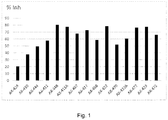
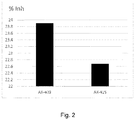
- the labelled cells were pre-incubated for 1 hour in the absence or presence of each of the above compounds at a concentration of 0.1 and 1.0 nM.
- the TCR/CD3 complex was stimulated using immobilised OKT3 (10 ⁇ g/mL) on flat-bottom P96 plates from Costar.
- the cells were cultured in triplicate at a density of 0.2 x 10 5 in 200 ⁇ l of full medium, and the proliferation was evaluated by means of flow cytometry after 5-7 days, by quantifying the fluorescence of the CFSE. As the cells divided, they diluted the amount of label incorporated into the daughter cells, which indicates the degree of cells proliferation.
- the inhibitory capacity of the tested compounds at a concentration of 0.1 and 1.0 nM is shown in Fig. 1 and 2 , respectively.
Landscapes
- Chemical & Material Sciences (AREA)
- Organic Chemistry (AREA)
- Health & Medical Sciences (AREA)
- Engineering & Computer Science (AREA)
- Bioinformatics & Cheminformatics (AREA)
- Immunology (AREA)
- Chemical Kinetics & Catalysis (AREA)
- General Chemical & Material Sciences (AREA)
- Medicinal Chemistry (AREA)
- Nuclear Medicine, Radiotherapy & Molecular Imaging (AREA)
- Pharmacology & Pharmacy (AREA)
- Life Sciences & Earth Sciences (AREA)
- Animal Behavior & Ethology (AREA)
- General Health & Medical Sciences (AREA)
- Public Health (AREA)
- Veterinary Medicine (AREA)
- Pharmaceuticals Containing Other Organic And Inorganic Compounds (AREA)
Priority Applications (4)
| Application Number | Priority Date | Filing Date | Title |
|---|---|---|---|
| EP17382129.9A EP3375784A1 (fr) | 2017-03-14 | 2017-03-14 | Dérivés d'aza-dihydro-acridone |
| PCT/US2018/022320 WO2018170048A1 (fr) | 2017-03-14 | 2018-03-14 | Dérivés d'aza-dihydro-acridone |
| US16/493,826 US11434239B2 (en) | 2017-03-14 | 2018-03-14 | Aza-dihydro-acridone derivatives |
| EP18768186.1A EP3595659A4 (fr) | 2017-03-14 | 2018-03-14 | Dérivés d'aza-dihydro-acridone |
Applications Claiming Priority (1)
| Application Number | Priority Date | Filing Date | Title |
|---|---|---|---|
| EP17382129.9A EP3375784A1 (fr) | 2017-03-14 | 2017-03-14 | Dérivés d'aza-dihydro-acridone |
Publications (1)
| Publication Number | Publication Date |
|---|---|
| EP3375784A1 true EP3375784A1 (fr) | 2018-09-19 |
Family
ID=58398125
Family Applications (2)
| Application Number | Title | Priority Date | Filing Date |
|---|---|---|---|
| EP17382129.9A Withdrawn EP3375784A1 (fr) | 2017-03-14 | 2017-03-14 | Dérivés d'aza-dihydro-acridone |
| EP18768186.1A Withdrawn EP3595659A4 (fr) | 2017-03-14 | 2018-03-14 | Dérivés d'aza-dihydro-acridone |
Family Applications After (1)
| Application Number | Title | Priority Date | Filing Date |
|---|---|---|---|
| EP18768186.1A Withdrawn EP3595659A4 (fr) | 2017-03-14 | 2018-03-14 | Dérivés d'aza-dihydro-acridone |
Country Status (3)
| Country | Link |
|---|---|
| US (1) | US11434239B2 (fr) |
| EP (2) | EP3375784A1 (fr) |
| WO (1) | WO2018170048A1 (fr) |
Families Citing this family (1)
| Publication number | Priority date | Publication date | Assignee | Title |
|---|---|---|---|---|
| EP3375784A1 (fr) | 2017-03-14 | 2018-09-19 | Artax Biopharma Inc. | Dérivés d'aza-dihydro-acridone |
Citations (5)
| Publication number | Priority date | Publication date | Assignee | Title |
|---|---|---|---|---|
| JPS5714590A (en) * | 1980-07-02 | 1982-01-25 | Kanto Ishi Pharma Co Ltd | 2-benzyl-5-alkyl-tetrahydro-benzo(b)-1,6-naphthyridin-10-one derivative and its preparation |
| US4547507A (en) * | 1982-07-14 | 1985-10-15 | Roussel Uclaf | Benzothiopyranopyridinones |
| WO2006088949A1 (fr) * | 2005-02-14 | 2006-08-24 | Miikana Therapeutics, Inc. | Composes heterocycliques fusionnes utiles comme inhibiteurs de l'histone deacetylase |
| WO2009015179A1 (fr) * | 2007-07-23 | 2009-01-29 | Syndax Pharmaceuticals, Inc. | Composés novateurs et procédés d'utilisation de ceux-ci |
| JP5714590B2 (ja) | 2009-09-16 | 2015-05-07 | オーチス エレベータ カンパニーOtis Elevator Company | 複数のサブシステムを有するエレベータ制御システムのリモートアクセス |
Family Cites Families (28)
| Publication number | Priority date | Publication date | Assignee | Title |
|---|---|---|---|---|
| CA2295309A1 (fr) | 1997-06-30 | 1999-01-07 | Nippon Kayaku Kabushiki Kaisha | Nouveaux derives de naphthyridine ou leurs sels |
| EA006227B1 (ru) | 1999-12-10 | 2005-10-27 | Пфайзер Продактс Инк. | СОЕДИНЕНИЯ ПИРРОЛО[2,3-d]ПИРИМИДИНА |
| PE20020354A1 (es) | 2000-09-01 | 2002-06-12 | Novartis Ag | Compuestos de hidroxamato como inhibidores de histona-desacetilasa (hda) |
| US7071189B2 (en) | 2001-04-27 | 2006-07-04 | Zenyaku Kogyo Kabushiki Kaisha | Heterocyclic compound and antitumor agent containing the same as active ingredient |
| TWI329105B (en) | 2002-02-01 | 2010-08-21 | Rigel Pharmaceuticals Inc | 2,4-pyrimidinediamine compounds and their uses |
| WO2004019973A1 (fr) | 2002-08-14 | 2004-03-11 | Atugen Ag | Nouvelle mise en application de la proteine kinase n beta |
| JP2006523237A (ja) | 2003-04-03 | 2006-10-12 | セマフォア ファーマシューティカルズ, インコーポレイテッド | Pi−3キナーゼインヒビタープロドラッグ |
| US7425553B2 (en) | 2003-05-30 | 2008-09-16 | Gemin X Pharmaceuticals Canada Inc. | Triheterocyclic compounds, compositions, and methods for treating cancer or viral diseases |
| CA2531069A1 (fr) | 2003-07-03 | 2005-01-27 | The Trustees Of The University Of Pennsylvania | Inhibition de l'expression d'une syk kinase |
| GB0326029D0 (en) | 2003-11-07 | 2003-12-10 | Astrazeneca Ab | Chemical compounds |
| EP1761540B1 (fr) | 2004-05-13 | 2016-09-28 | Icos Corporation | Quinazolinones utilisees en tant qu'inhibiteurs de la phosphatidylinositol 3-kinase delta humaine |
| JP4801096B2 (ja) | 2005-01-19 | 2011-10-26 | ライジェル ファーマシューティカルズ, インコーポレイテッド | 2,4−ピリミジンジアミン化合物のプロドラッグおよびそれらの使用 |
| EP2757099B1 (fr) | 2005-05-12 | 2017-08-23 | AbbVie Bahamas Limited | Promoteurs d'apoptose |
| GB0510390D0 (en) | 2005-05-20 | 2005-06-29 | Novartis Ag | Organic compounds |
| US7402325B2 (en) | 2005-07-28 | 2008-07-22 | Phoenix Biotechnology, Inc. | Supercritical carbon dioxide extract of pharmacologically active components from Nerium oleander |
| AU2006302179C1 (en) | 2005-10-07 | 2013-06-20 | Exelixis, Inc. | N- (3-amino-quinoxalin-2-yl) -sulfonamide derivatives and their use as phosphatidylinositol 3-kinase inhibitors |
| US7528143B2 (en) | 2005-11-01 | 2009-05-05 | Targegen, Inc. | Bi-aryl meta-pyrimidine inhibitors of kinases |
| CN103214484B (zh) | 2005-12-13 | 2016-07-06 | 因塞特控股公司 | 作为两面神激酶抑制剂的杂芳基取代的吡咯并[2,3-b]吡啶和吡咯并[2,3-b]嘧啶 |
| JO2660B1 (en) | 2006-01-20 | 2012-06-17 | نوفارتيس ايه جي | Pi-3 inhibitors and methods of use |
| RU2439074C2 (ru) | 2006-04-26 | 2012-01-10 | Ф. Хоффманн-Ля Рош Аг | ПРОИЗВОДНОЕ ТИЕНО[3,2-d]ПИРИМИДИНА В КАЧЕСТВЕ ИНГИБИТОРА ФОСФАТИДИЛИНОЗИТОЛ-3-КИНАЗЫ (РI3К) |
| PL2526933T3 (pl) | 2006-09-22 | 2015-08-31 | Pharmacyclics Llc | Inhibitory kinazy tyrozynowej Brutona |
| US8486941B2 (en) | 2007-03-12 | 2013-07-16 | Ym Biosciences Australia Pty Ltd | Phenyl amino pyrimidine compounds and uses thereof |
| US8394794B2 (en) | 2007-03-23 | 2013-03-12 | Regents Of The University Of Minnesota | Therapeutic compounds |
| PE20090717A1 (es) | 2007-05-18 | 2009-07-18 | Smithkline Beecham Corp | Derivados de quinolina como inhibidores de la pi3 quinasa |
| TWI444382B (zh) | 2008-03-11 | 2014-07-11 | Incyte Corp | 作為jak抑制劑之氮雜環丁烷及環丁烷衍生物 |
| US8338439B2 (en) | 2008-06-27 | 2012-12-25 | Celgene Avilomics Research, Inc. | 2,4-disubstituted pyrimidines useful as kinase inhibitors |
| GB201320506D0 (en) | 2013-11-26 | 2014-01-01 | Uni I Oslo | Cyclic amino compounds for the use in the treatment of cardiac disorders |
| EP3375784A1 (fr) | 2017-03-14 | 2018-09-19 | Artax Biopharma Inc. | Dérivés d'aza-dihydro-acridone |
-
2017
- 2017-03-14 EP EP17382129.9A patent/EP3375784A1/fr not_active Withdrawn
-
2018
- 2018-03-14 WO PCT/US2018/022320 patent/WO2018170048A1/fr not_active Ceased
- 2018-03-14 EP EP18768186.1A patent/EP3595659A4/fr not_active Withdrawn
- 2018-03-14 US US16/493,826 patent/US11434239B2/en active Active
Patent Citations (5)
| Publication number | Priority date | Publication date | Assignee | Title |
|---|---|---|---|---|
| JPS5714590A (en) * | 1980-07-02 | 1982-01-25 | Kanto Ishi Pharma Co Ltd | 2-benzyl-5-alkyl-tetrahydro-benzo(b)-1,6-naphthyridin-10-one derivative and its preparation |
| US4547507A (en) * | 1982-07-14 | 1985-10-15 | Roussel Uclaf | Benzothiopyranopyridinones |
| WO2006088949A1 (fr) * | 2005-02-14 | 2006-08-24 | Miikana Therapeutics, Inc. | Composes heterocycliques fusionnes utiles comme inhibiteurs de l'histone deacetylase |
| WO2009015179A1 (fr) * | 2007-07-23 | 2009-01-29 | Syndax Pharmaceuticals, Inc. | Composés novateurs et procédés d'utilisation de ceux-ci |
| JP5714590B2 (ja) | 2009-09-16 | 2015-05-07 | オーチス エレベータ カンパニーOtis Elevator Company | 複数のサブシステムを有するエレベータ制御システムのリモートアクセス |
Non-Patent Citations (5)
| Title |
|---|
| COSCIA ET AL., J. AM. CHEM. SOC., vol. 81, 1959, pages 3098 - 3100 |
| DEL ET AL., J. HET. CHEM., vol. 35, 1998, pages 915 - 922 |
| KHARTULYARI ET AL., EUR. J. ORG. CHEM., vol. 2, 2007, pages 317 - 324 |
| LI ET AL., SYN. COMM., vol. 36, 2006, pages 925 - 928 |
| MASATOSHI YAMATO ET AL: "Reaction of Spiro[piperidine-4, 2'-(1', 2', 3', 4'-tetrahydroquinazolin)]-4'-ones with Acid Anhydrides", CHEMICAL AND PHARMACEUTICAL BULLETIN, PHARMACEUTICAL SOCIETY OF JAPAN, JP, vol. 28, no. 9, 1 January 1980 (1980-01-01), pages 2623 - 2628, XP002754981, ISSN: 0009-2363, [retrieved on 20080331], DOI: 10.1248/CPB.28.2623 10.1248/CPB.28.2623 * |
Also Published As
| Publication number | Publication date |
|---|---|
| EP3595659A4 (fr) | 2020-10-07 |
| EP3595659A1 (fr) | 2020-01-22 |
| US11434239B2 (en) | 2022-09-06 |
| WO2018170048A1 (fr) | 2018-09-20 |
| US20200079768A1 (en) | 2020-03-12 |
Similar Documents
| Publication | Publication Date | Title |
|---|---|---|
| EP0923581B1 (fr) | Beta-carbolines substituees en position 4 utilisees comme immunomodulateurs | |
| TWI837169B (zh) | 甲狀腺素受體β促效劑化合物 | |
| KR101800595B1 (ko) | 자가면역 및 염증성 장애의 치료에 유용한, s1p1 수용체 효능제로서의 치환된 트리시클릭 산 유도체 | |
| JPH08109169A (ja) | 非ペプチドタキキニン受容体拮抗物質 | |
| WO2018196677A1 (fr) | Dérivé de fluoroallylamine et son utilisation | |
| AU582982B2 (en) | Hydroxy and aminothiazolyl-benzodiazinone compounds, cardiotonic compositions including the same,and their uses | |
| TW202327604A (zh) | Nlrp3發炎小體抑制劑及其應用 | |
| TW201329050A (zh) | Trpv1拮抗劑 | |
| KR100507250B1 (ko) | 벤조티아디아졸 및 유도체 | |
| KR20130046436A (ko) | 안드로겐 수용체 길항제, 항암제로서 사이클릭 n,n''-다이아릴티오우레아 및 n,n''-다이아릴우레아, 이의 제조방법 및 이의 용도 | |
| US20030220393A1 (en) | Substituted phthalides, a process for their preparations and pharmaceutical compositions containing them | |
| AU2017379024B2 (en) | Condensed ring group azacyclobutyl triazole derivative, preparation method therefor and use thereof in medicine | |
| JP2002532503A (ja) | プロテインキナーゼ阻害剤としての4,5−ピラジノオキシンドール | |
| JP2008526815A (ja) | 低コンダクタンスのカルシウム依存性カリウムチャネルのモジュレーターとしての新規2−アミノベンゾイミダゾール誘導体及びそれらの使用 | |
| WO1997033873A1 (fr) | Therapie de traitement ou de prevention de la cystite interstitielle | |
| KR20180085814A (ko) | 치환된 5,6-디히드로-6-페닐벤조[f]이소퀴놀린-2-아민의 제조 방법 | |
| CA2570046A1 (fr) | Derives triazole substitues utilises en tant qu'antagonistes de l'oxytocine | |
| JP6838045B2 (ja) | 化合物 | |
| US10106518B2 (en) | Chromene derivatives as inhibitors of TCR-Nck interaction | |
| EP3375778A1 (fr) | Dérivés d'aryl-pipéridine | |
| CA3226225A1 (fr) | Composes et methodes therapeutiques | |
| JPH08507303A (ja) | 非競合的nmda受容体アンタゴニストとしての2h−1,2,4−ベンゾチアジアジン3(4h)−オン1,1ジオキシド誘導体の使用 | |
| RU2685501C1 (ru) | Амидсодержащие производные 2-оксиндола, способ их получения и применения | |
| CN118684628A (zh) | 取代二氢茚基咪唑类化合物及其制备方法和用途 | |
| JP2001525398A (ja) | 選択的β3アドレナリン作動性アゴニスト |
Legal Events
| Date | Code | Title | Description |
|---|---|---|---|
| PUAI | Public reference made under article 153(3) epc to a published international application that has entered the european phase |
Free format text: ORIGINAL CODE: 0009012 |
|
| AK | Designated contracting states |
Kind code of ref document: A1 Designated state(s): AL AT BE BG CH CY CZ DE DK EE ES FI FR GB GR HR HU IE IS IT LI LT LU LV MC MK MT NL NO PL PT RO RS SE SI SK SM TR |
|
| AX | Request for extension of the european patent |
Extension state: BA ME |
|
| STAA | Information on the status of an ep patent application or granted ep patent |
Free format text: STATUS: THE APPLICATION IS DEEMED TO BE WITHDRAWN |
|
| 18D | Application deemed to be withdrawn |
Effective date: 20190320 |