EP3375833A1 - Procédé de collage, structure collée et kit de collage - Google Patents
Procédé de collage, structure collée et kit de collage Download PDFInfo
- Publication number
- EP3375833A1 EP3375833A1 EP16864069.6A EP16864069A EP3375833A1 EP 3375833 A1 EP3375833 A1 EP 3375833A1 EP 16864069 A EP16864069 A EP 16864069A EP 3375833 A1 EP3375833 A1 EP 3375833A1
- Authority
- EP
- European Patent Office
- Prior art keywords
- stickable
- curable adhesive
- adhesive layer
- curing agent
- adherend
- Prior art date
- Legal status (The legal status is an assumption and is not a legal conclusion. Google has not performed a legal analysis and makes no representation as to the accuracy of the status listed.)
- Granted
Links
Images
Classifications
-
- C—CHEMISTRY; METALLURGY
- C09—DYES; PAINTS; POLISHES; NATURAL RESINS; ADHESIVES; COMPOSITIONS NOT OTHERWISE PROVIDED FOR; APPLICATIONS OF MATERIALS NOT OTHERWISE PROVIDED FOR
- C09J—ADHESIVES; NON-MECHANICAL ASPECTS OF ADHESIVE PROCESSES IN GENERAL; ADHESIVE PROCESSES NOT PROVIDED FOR ELSEWHERE; USE OF MATERIALS AS ADHESIVES
- C09J5/00—Adhesive processes in general; Adhesive processes not provided for elsewhere, e.g. relating to primers
- C09J5/04—Adhesive processes in general; Adhesive processes not provided for elsewhere, e.g. relating to primers involving separate application of adhesive ingredients to the different surfaces to be joined
-
- C—CHEMISTRY; METALLURGY
- C09—DYES; PAINTS; POLISHES; NATURAL RESINS; ADHESIVES; COMPOSITIONS NOT OTHERWISE PROVIDED FOR; APPLICATIONS OF MATERIALS NOT OTHERWISE PROVIDED FOR
- C09J—ADHESIVES; NON-MECHANICAL ASPECTS OF ADHESIVE PROCESSES IN GENERAL; ADHESIVE PROCESSES NOT PROVIDED FOR ELSEWHERE; USE OF MATERIALS AS ADHESIVES
- C09J163/00—Adhesives based on epoxy resins; Adhesives based on derivatives of epoxy resins
-
- C—CHEMISTRY; METALLURGY
- C09—DYES; PAINTS; POLISHES; NATURAL RESINS; ADHESIVES; COMPOSITIONS NOT OTHERWISE PROVIDED FOR; APPLICATIONS OF MATERIALS NOT OTHERWISE PROVIDED FOR
- C09J—ADHESIVES; NON-MECHANICAL ASPECTS OF ADHESIVE PROCESSES IN GENERAL; ADHESIVE PROCESSES NOT PROVIDED FOR ELSEWHERE; USE OF MATERIALS AS ADHESIVES
- C09J7/00—Adhesives in the form of films or foils
- C09J7/10—Adhesives in the form of films or foils without carriers
-
- C—CHEMISTRY; METALLURGY
- C09—DYES; PAINTS; POLISHES; NATURAL RESINS; ADHESIVES; COMPOSITIONS NOT OTHERWISE PROVIDED FOR; APPLICATIONS OF MATERIALS NOT OTHERWISE PROVIDED FOR
- C09J—ADHESIVES; NON-MECHANICAL ASPECTS OF ADHESIVE PROCESSES IN GENERAL; ADHESIVE PROCESSES NOT PROVIDED FOR ELSEWHERE; USE OF MATERIALS AS ADHESIVES
- C09J7/00—Adhesives in the form of films or foils
- C09J7/30—Adhesives in the form of films or foils characterised by the adhesive composition
-
- C—CHEMISTRY; METALLURGY
- C09—DYES; PAINTS; POLISHES; NATURAL RESINS; ADHESIVES; COMPOSITIONS NOT OTHERWISE PROVIDED FOR; APPLICATIONS OF MATERIALS NOT OTHERWISE PROVIDED FOR
- C09J—ADHESIVES; NON-MECHANICAL ASPECTS OF ADHESIVE PROCESSES IN GENERAL; ADHESIVE PROCESSES NOT PROVIDED FOR ELSEWHERE; USE OF MATERIALS AS ADHESIVES
- C09J7/00—Adhesives in the form of films or foils
- C09J7/40—Adhesives in the form of films or foils characterised by release liners
- C09J7/403—Adhesives in the form of films or foils characterised by release liners characterised by the structure of the release feature
-
- C—CHEMISTRY; METALLURGY
- C09—DYES; PAINTS; POLISHES; NATURAL RESINS; ADHESIVES; COMPOSITIONS NOT OTHERWISE PROVIDED FOR; APPLICATIONS OF MATERIALS NOT OTHERWISE PROVIDED FOR
- C09J—ADHESIVES; NON-MECHANICAL ASPECTS OF ADHESIVE PROCESSES IN GENERAL; ADHESIVE PROCESSES NOT PROVIDED FOR ELSEWHERE; USE OF MATERIALS AS ADHESIVES
- C09J7/00—Adhesives in the form of films or foils
- C09J7/40—Adhesives in the form of films or foils characterised by release liners
- C09J7/405—Adhesives in the form of films or foils characterised by release liners characterised by the substrate of the release liner
-
- C—CHEMISTRY; METALLURGY
- C09—DYES; PAINTS; POLISHES; NATURAL RESINS; ADHESIVES; COMPOSITIONS NOT OTHERWISE PROVIDED FOR; APPLICATIONS OF MATERIALS NOT OTHERWISE PROVIDED FOR
- C09J—ADHESIVES; NON-MECHANICAL ASPECTS OF ADHESIVE PROCESSES IN GENERAL; ADHESIVE PROCESSES NOT PROVIDED FOR ELSEWHERE; USE OF MATERIALS AS ADHESIVES
- C09J11/00—Features of adhesives not provided for in group C09J9/00, e.g. additives
- C09J11/02—Non-macromolecular additives
- C09J11/06—Non-macromolecular additives organic
-
- C—CHEMISTRY; METALLURGY
- C09—DYES; PAINTS; POLISHES; NATURAL RESINS; ADHESIVES; COMPOSITIONS NOT OTHERWISE PROVIDED FOR; APPLICATIONS OF MATERIALS NOT OTHERWISE PROVIDED FOR
- C09J—ADHESIVES; NON-MECHANICAL ASPECTS OF ADHESIVE PROCESSES IN GENERAL; ADHESIVE PROCESSES NOT PROVIDED FOR ELSEWHERE; USE OF MATERIALS AS ADHESIVES
- C09J2463/00—Presence of epoxy resin
Definitions
- the present invention relates to an adhesion method, an adhesion-structure, and an adhesion kit.
- the present invention relates to an adhesion method, an adhesion-structure in which the adhesion method is used, and an adhesion kit used for the adhesion method.
- a method for using a 2-component adhesive is a known adhesion method, in which two components of a main component (A component) and a curing agent (B component) are mixed and used (for example, see Patent Document 1 below).
- the main component and the curing agent are weighed individually immediately before use, and they are mixed to prepare a mixture liquid.
- the mixture liquid is applied on a resin plate to form a coating, and the resin plate is bonded to another resin plate with the coating interposed therebetween.
- the main component reacts with the curing agent, and the main component is cured, thereby allowing the two resin plates to adhere strongly.
- Patent Document 1 Japanese Unexamined Patent Publication No. 2000-336333
- An object of the present invention is to provide an adhesion method, by which a first adherend can be adhered to the second adherend easily and strongly; an adhesion-structure in which the first adherend is adhered to a second adherend by the adhesion method; and an adhesion kit used for the adhesion method.
- the present invention includes an adhesion method including a step (1), disposing a stickable-curable adhesive layer on a first adherend, a step (2), disposing a curing agent layer on a second adherend, the curing agent layer being able to cure the stickable-curable adhesive layer by contacting and reacting with the stickable-curable adhesive layer, and a step (3), bringing the stickable-curable adhesive layer into contact with the curing agent layer so that they are sandwiched by the first adherend and the second adherend.
- step (1) the stickable-curable adhesive layer is disposed on the first adherend
- step (2) the curing agent layer is disposed on the second adherend
- step (3) the stickable-curable adhesive layer is brought into contact with the curing agent layer so that they are sandwiched by the first adherend and the second adherend, and therefore the first adherend can be adhered to the second adherend easily and strongly without weighing the main component and the curing agent individually and mixing them like the adhesion method in Patent Document 1.
- the present invention [2] includes the adhesion method of [1] above, wherein the stickable-curable adhesive layer has a peel adhesion of 1.0N/20 mm or more, when the stickable-curable adhesive layer is bonded to an aluminum plate and peeled off from the aluminum plate at 90 degrees and a speed of 300 mm/min.
- the stickable-curable adhesive layer has a peel adhesion of the above-described lower limit or more, and therefore the stickable-curable adhesive layer has excellent pressure-sensitive adhesion.
- the present invention [3] includes the adhesion method of the above-described [1] or [2], wherein a cured layer is formed by reaction between the stickable-curable adhesive layer and the curing agent layer, the cured layer has a lap-shear adhesion of 1.0MPa or more, and the lap-shear adhesion is measured by the following test:
- the stickable-curable adhesive layer is sandwiched by two polyethylene terephthalate films that were subjected to release treatment, and left at room temperature for one day. Thereafter, one of the polyethylene terephthalate films is peeled off from the stickable-curable adhesive layer, and the peeled stickable-curable adhesive layer is disposed on a first slate plate, and thereafter, the other of the polyethylene terephthalate films is peeled off from the stickable-curable adhesive layer. Separately, the curing agent layer is disposed on a second slate plate.
- the stickable-curable adhesive layer is brought into contact with the curing agent layer so that they are sandwiched by the first slate plate and the second slate plate, and allowed to stand for 24 hours to form a cured layer, and thereafter, the first slate plate and the second slate plate are pulled in the shear direction at a speed of 5 mm/min, and the strength at the time when the two slate plates peeled off is defined as lap-shear adhesion.
- the cured layer has a lap-shear adhesion of the above-described lower limit or more, and therefore the first adherend can be adhered to the second adherend even more strongly.
- the present invention [4] includes the adhesion method of any one the above-described [1] to [3], wherein the curing agent layer contains 10 mass% or more of the curing agent.
- the curing agent layer contains the curing agent of the above-described lower limit or more, and therefore the first adherend can be adhered to the second adherend even more strongly.
- the present invention [5] includes the adhesion method of any one of the above-described [1] to [4], wherein the stickable-curable adhesive layer contains epoxy resin as a main component.
- the stickable-curable adhesive layer contains epoxy resin as the main component, and therefore the first adherend can be adhered to the second adherend strongly.
- the present invention [6] includes the adhesion method of any one of the above-described [1] to [5], wherein in step (3), the stickable-curable adhesive layer is cured at normal temperature.
- step (3) the stickable-curable adhesive layer is cured at normal temperature, and therefore heating for curing the stickable-curable adhesive layer is unnecessary, and the first adherend can be adhered to the second adherend even more easily.
- the present invention [7] includes an adhesion kit including a stickable-curable adhesive layer, and a curing agent layer, wherein the curing agent layer is capable of curing the stickable-curable adhesive layer by contacting and reacting with the stickable-curable adhesive layer.
- the adhesion kit by bringing the stickable-curable adhesive layer into contact with the curing agent layer so that they are sandwiched by the first adherend and the second adherend, the first adherend can be adhered to the second adherend easily and strongly.
- the present invention [8] includes an adhesion-structure including a first adherend, a second adherend disposed to face the first adherend, and a cured layer sandwiched by the first adherend and the second adherend, wherein the cured layer is made by reaction between the stickable-curable adhesive layer and the curing agent layer.
- the first adherend is strongly adhered to the second adherend by the cured layer.
- the first adherend can be adhered to the second adherend strongly with an easy method of bringing the stickable-curable adhesive layer into contact with the curing agent layer.
- the first adherend can be adhered to the second adherend easily and strongly.
- the adhesion-structure of the present invention includes the cured layer formed by reaction of the stickable-curable adhesive layer and the curing agent layer disposed to be sandwiched by the first adherend and the second adherend, and therefore the first adherend can be strongly adhered to the second adherend.
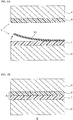
- FIG. 1A and FIG. 1B An embodiment of the adhesion method of the present invention is described with reference to FIG. 1A and FIG. 1B .
- the adhesion method includes a step (1)(ref: FIG. 1A ) in which the stickable-curable adhesive layer 1 is disposed on the first adherend 2, a step (2)(ref: FIG. 1A ) in which the curing agent layer 3 is disposed on the second adherend 4, the curing agent layer 3 capable of curing the stickable-curable adhesive layer 1 by making contact and reacting with the stickable-curable adhesive layer 1, and a step (3)(ref: FIG. 1B ) in which the stickable-curable adhesive layer 1 is brought into contact with the curing agent layer 3 so that they are sandwiched by the first adherend 2 and the second adherend 4.
- step (1) as shown in FIG. 1A , the stickable-curable adhesive layer 1 is disposed on the first adherend 2.
- the stickable-curable adhesive layer 1 is a layer (sheet) that is cured by making contact and reacting with the curing agent layer 3; extends in a surface direction (direction perpendicular to thickness direction); and has a substantially flat plate shape having flat top surface and bottom surface.
- the stickable-curable adhesive layer 1 is formed on the surface of a release film 10.
- the stickable-curable adhesive composition is prepared.
- the stickable-curable adhesive composition is not particularly limited as long as it is a main component of the two-component adhesive and it can form a layer, and examples thereof include a silicone compound; polyol compounds such as polypropylene glycol; urethane resin; and epoxy resin.
- the stickable-curable adhesive composition preferably contains epoxy resin as the main component.
- the first adherend 2 can be allowed to adhere to the second adherend 4 easily and strongly.
- the epoxy resin examples include bisphenol epoxy resin such as bisphenol A epoxy resin, bisphenol F epoxy resin, bisphenol S epoxy resin, and hydrogenated bisphenol A epoxy resin; naphthalene epoxy resin; biphenyl epoxy resin; dicyclo epoxy resin; alicyclic epoxy resin; triglycidylisocyanurate epoxy resin; hydantoin epoxy resin; glycidyl ether epoxy resin; and glycidylamino epoxy resin.
- bisphenol epoxy resin such as bisphenol A epoxy resin, bisphenol F epoxy resin, bisphenol S epoxy resin, and hydrogenated bisphenol A epoxy resin
- naphthalene epoxy resin biphenyl epoxy resin
- dicyclo epoxy resin alicyclic epoxy resin
- triglycidylisocyanurate epoxy resin hydantoin epoxy resin
- glycidyl ether epoxy resin glycidylamino epoxy resin.
- epoxy resin preferably, bisphenol epoxy resin, more preferably bisphenol A epoxy resin is used.
- the epoxy resin can be used singly, or can be used in combination of two or more.
- the epoxy resin can be any of liquid, semi-solid, or solid under normal temperature, but preferably, a semi-solid epoxy resin is used singly, or a liquid epoxy resin and a solid epoxy resin are used in combination.
- a layered and tacky stickable-curable adhesive layer 1 can be formed from the stickable-curable adhesive composition reliably in this manner.
- the liquid epoxy resin under normal temperature is, specifically, is liquid at 25°C.
- the liquid epoxy resin has a viscosity of, under 25°C, for example, 30Pa ⁇ s or more, preferably 80Pa ⁇ s or more, and for example, 500Pa ⁇ s or less, preferably 300Pa ⁇ s or less.
- the epoxy resin that is solid under normal temperature is solid, specifically under 25°C.
- the solid epoxy resin has a softening point of, for example, 70°C or more, preferably 75°C or more.
- the blending ratio of the liquid epoxy resin relative to the solid epoxy resin is, for example, 1.0 or more, preferably 1.5 or more, and for example, 4.0 or less, preferably 3.0 or less.
- the blending ratio of the liquid epoxy resin relative to the solid epoxy resin is the above-described lower limit or more, the viscosity of the stickable-curable adhesive composition can be reduced to prevent coating unevenness, and homogenous stickable-curable adhesive layer 1 can be produced.
- the blending ratio of the liquid epoxy resin relative to the solid epoxy resin is the above-described upper limit or less, tacky and layered stickable-curable adhesive layer can be produced.
- the blending ratio of the epoxy resin is set in the stickable-curable adhesive composition so that the epoxy resin is the main component, specifically, relative to the stickable-curable adhesive composition, for example, 80 mass% or more, preferably 90 mass% or more, and for example, 100 mass% or less.
- the stickable-curable adhesive composition consists of epoxy resin. That is, 100 mass% of the epoxy resin is blended relative to the stickable-curable adhesive composition.
- an acrylic polymer can be blended to the stickable-curable adhesive composition.
- the cohesive force of the stickable-curable adhesive composition can be improved in this manner.
- the acrylic polymer can be produced by allowing a monomer component containing (meth)acrylate to react.
- Examples of the (meth)acrylate include alkylmethacrylate and/or alkylacrylate, and to be specific, alkyl (meth)acrylate having 1 to 20 carbon atoms including methyl (meth)acrylate, ethyl (meth)acrylate, propyl (meth)acrylate, isopropyl (meth)acrylate, butyl (meth)acrylate, isobutyl (meth)acrylate, s-butyl (meth)acrylate, t-butyl (meth)acrylate, n-butyl (meth)acrylate, pentyl (meth)acrylate, isopentyl (meth)acrylate, hexyl (meth)acrylate, heptyl (meth)acrylate, octyl (meth)acrylate, 2-ethylhexyl (meth)acrylate, isooctyl (meth)acrylate, nonyl (meth)acrylate, is
- alkyl (meth)acrylate having 2 to 14 carbon atoms preferably, alkyl (meth)acrylate having 4 to 9 carbon atoms are used.
- (Meth)acrylate can be used singly, or can be used in combination of two or more.
- the (meth)acrylate is blended in an amount of, relative to the monomer component, for example, 70 mass% or more, preferably 80 mass% or more, and for example, 99 mass% or less, preferably 98 mass% or less.
- the monomer component can further contain a copolymerizable monomer that is copolymerizable with (meth)acrylate.
- Examples of the copolymerizable monomer include carboxyl group-containing monomer including (meth) acrylic acid, itaconic acid, maleic acid, crotonic acid, and maleic anhydride, and acid anhydride thereof; hydroxyl group-containing (meth)acrylate such as 2-hydroxyethyl (meth)acrylate and 3-hydroxypropyl (meth)acrylate; amide group-containing monomer including (meth) acrylamide, N,N-dimethyl (meth) acrylamide, N-methylol (meth) acrylamide, N-methoxymethyl (meth) acrylamide, and N-butoxymethyl (meth) acrylamide; vinyl esters such as vinyl acetate; aromatic vinyl compounds such as styrene and vinyltoluene; (meth) acrylonitrile; N-(meth) acryloylmorpholine; and N-vinyl-2-pyrrolidone.
- carboxyl group-containing monomer including (meth) acrylic acid
- copolymerizable monomer preferably, carboxyl group-containing monomer, hydroxyl group-containing (meth)acrylate, more preferably (meth) acrylic acid, and 2-hydroxyethyl (meth)acrylate are used.
- copolymerizable monomers can be used singly, or can be used in combination of two or more.
- the carboxyl group-containing monomer and the hydroxyl group-containing (meth)acrylate are used in combination, more preferably, (meth) acrylic acid and 2-hydroxyethyl (meth)acrylate are used in combination.
- the blending ratio of the copolymerizable monomer relative to 100 parts by mass of the (meth)acrylate is, for example, 0.1 parts by mass or more, preferably 0.3 parts by mass or more, and for example, 15 parts by mass or less, preferably 10 parts by mass or less.
- (meth)acrylate is blended with, as necessary, the copolymerizable monomer to prepare a monomer component, and the monomer component is subjected to a known polymerization method, such as, for example, solution polymerization, bulk polymerization, emulsion polymerization, and various radical polymerization.
- a known polymerization method such as, for example, solution polymerization, bulk polymerization, emulsion polymerization, and various radical polymerization.
- solution polymerization preferably, solution polymerization is used.
- the monomer component and the polymerization initiator is blended with a solvent to prepare a monomer solution, and thereafter, the monomer solution is heated.
- the solvent examples include organic solvent.
- the organic solvent include aromatic solvents such as toluene, benzene, and xylene; ether solvents such as ethyl acetate; ketone solvents such as acetone and methyl ethyl ketone; ester solvents such as ethyl acetate; amide solvents such as N,N-dimethylformamide.
- the solvent can be used singly, or two or more solvents can be used in combination, and preferably an aromatic solvent and an ether solvent can be used in combination.
- the blending ratio of the solvent relative to 100 parts by mass of the monomer component is, for example, 10 parts by mass or more, preferably 50 parts by mass or more, and for example, 1000 parts by mass or less, preferably 500 parts by mass or less.
- polymerization initiator examples include peroxide polymerization initiator and azo polymerization initiator.
- peroxide polymerization initiator examples include organic peroxides such as peroxycarbonate, ketoneperoxide, peroxyketal, hydroperoxide, dialkylperoxide, diacylperoxide, and peroxyester.
- azo polymerization initiator examples include azo compounds such as 2,2'-azobisisobutyronitrile, 2,2'-azobis(2-methylbutyronitrile), 2,2'-azobis(2,4-dimethylvaleronitrile), and 2,2'-azobis dimethyl isobutyrate.
- azo polymerization initiators are used.
- the blending ratio of the polymerization initiator relative to 100 parts by mass of the monomer component is, for example, 0.01 parts by mass or more, preferably 0.05 parts by mass or more, and for example, 5 parts by mass or less, preferably 3 parts by mass or less.
- the heating temperature is, for example, 50°C or more, and 80°C or less, and the heating time is, for example, 1 hour or more, and 24 hours or less.
- the monomer component is polymerized, and an acrylic polymer solution containing acrylic polymer is produced.
- the acrylic polymer solution is blended with epoxy resin so that the acrylic polymer is, for example, 20 parts by mass or more, preferably 30 parts by mass or more, and for example, 90 parts by mass or less, preferably 80 parts by mass or less relative to 100 parts by mass of the stickable-curable adhesive composition.
- the acrylic polymer is blended in an amount of, relative to 100 parts by mass of the epoxy resin, for example, 50 parts by mass or more, preferably 150 parts by mass or more, more preferably 200 parts by mass or more, and for example, 300 parts by mass or less, preferably 250 parts by mass or less.
- the blending ratio of the acrylic polymer is the above-described lower limit or more, cohesive force, and furthermore, pressure-sensitive adhesion of the stickable-curable adhesive composition can be improved, and peel adhesion of the stickable-curable adhesive layer 1 can be improved.
- the blending ratio of the acrylic polymer is the above-described upper limit or less, curing can be achieved.
- a trace amount of a curing agent can also be blended.
- the blending ratio of the curing agent is adjusted so as to achieve improvement in peel adhesion of the stickable-curable adhesive layer 1, and to achieve slight curing (not completely cured) of the stickable-curable adhesive composition.
- the blending ratio of the curing agent relative to 100 parts by mass of the epoxy resin is, to be specific, 0.05 parts by mass or more, preferably 0.15 parts by mass or more, and for example, 5 parts by mass or less, preferably 3 parts by mass or less.
- the curing agent is blended in an amount relative to 100 parts by mass of the epoxy resin of, to be specific, 0.05 parts by mass or more, preferably 0.15 parts by mass or more, and for example, 5 parts by mass or less, preferably 3 parts by mass or less.
- the curing agent is an amine compound to be described later, relative to 100 parts by mass of the epoxy resin, the curing agent is blended in an amount of, for example, 30 parts by mass or less, preferably 15 parts by mass or less, more preferably 10 parts by mass or less.
- the blending ratio of the curing agent is the above-described lower limit or more, peel adhesion of the stickable-curable adhesive layer 1 can be improved.
- the blending ratio of the curing agent is the above-described upper limit or less, complete curing of the stickable-curable adhesive layer 1 can be suppressed, reduction in reactivity between the stickable-curable adhesive layer 1 and the curing agent layer 3 can be suppressed, and the cured layer 5 to be described later can be formed reliably.
- epoxy resin is blended with, as necessary, an acrylic polymer (acrylic polymer solution) and/or a curing agent, and as necessary, the mixture is diluted with a solvent to prepare a varnish.
- an acrylic polymer acrylic polymer solution
- a curing agent a curing agent
- the solvent is not limited as long as it can dissolve the stickable-curable adhesive composition, and for example, the above-described solvents can be used.
- the solvent preferably, ketone solvent is used.
- the varnish has a stickable-curable adhesive composition concentration of, for example, 20 mass% or more, preferably 40 mass% or more, and for example, 80 mass% or less, preferably 70 mass% or less.
- a cross-linking agent can be blended when the stickable-curable adhesive composition is prepared.
- cross-linking agent examples include an isocyanate cross-linking agent, an aziridine cross-linking agent, an epoxy cross-linking agent, and a metal chelate cross-linking agent, and preferably, an isocyanate cross-linking agent is used.
- isocyanate cross-linking agent examples include aromatic diisocyanates such as tolylene diisocyanate and xylenediisocyanate; alicyclic diisocyanates such as isophoronediisocyanate; aliphatic diisocyanates such as hexamethylene diisocyanate; and modified product of these isocyanates (to be specific, tolylene diisocyanate adduct of trimethylolpropane, etc).
- modified products of isocyanate are used.
- the cross-linking agent is blended in an amount of, relative to 100 parts by mass of the acrylic polymer, for example, 1 part by mass or more, preferably 5 parts by mass or more, and for example, 20 parts by mass or less, preferably 15 parts by mass or less.
- the stickable-curable adhesive composition is prepared in this manner.
- the stickable-curable adhesive composition is applied on the surface of the release film 10, and thereafter, dried.
- the release film 10 is, for example, a substantially rectangular flat-plate-shaped release sheet, and is formed into a shape having a flat top face and a flat bottom face.
- the release film 10 is formed into a film from resin materials such as vinyl polymers including polyolefins (to be specific, polyethylene, polypropylene) and ethylene-vinyl acetate copolymer (EVA); polyesters including polyethylene terephthalate and polycarbonate; and fluorine resin including polytetrafluoroethylene.
- resin materials such as vinyl polymers including polyolefins (to be specific, polyethylene, polypropylene) and ethylene-vinyl acetate copolymer (EVA); polyesters including polyethylene terephthalate and polycarbonate; and fluorine resin including polytetrafluoroethylene.
- the release film 10 also can be formed from metal materials such as iron, aluminum, and stainless steel.
- polyester film more preferably, polyethylene terephthalate film is used.
- the surface of the release film 10 can be subjected to, as necessary, treatment for release.
- the release film 10 has a thickness of, for example, 10 ⁇ m or more, and 1000 ⁇ m or less.
- Examples of the application method include doctor blade method, roll method, screen method, and gravure method.
- the heating conditions are as follows: the heating temperature is, for example, 70°C or more, and 130°C or less.
- the heating time is, for example, 1 minute or more and 5 minutes or less.
- the acrylic polymer is crosslinked by the cross-linking agent with further heating after the above-described heating.
- the temperature in the further heating is, 30°C or more, and 60°C or less, and the time is, for example, 1 hour or more, preferably 1 day or more.
- the heating temperature is 70°C or more, and 160°C or less, and the heating time is, 5 minutes or more, and 5 hours or less. This allows for the entire curing agent to react with a portion of epoxy resin.
- the stickable-curable adhesive layer 1 can be formed on the surface on the release film 10 from the stickable-curable adhesive composition.
- the stickable-curable adhesive layer 1 has a thickness of, for example, 1 ⁇ m or more, preferably 5 ⁇ m or more, more preferably 10 ⁇ m or more, and for example, 1000 ⁇ m or less, preferably 500 ⁇ m or less, more preferably 100 ⁇ m or less.
- another release film (not shown) can be disposed on (allowed to contact with) the surface of the stickable-curable adhesive layer 1 (surface opposite to the contact surface where it makes contact with the release film 10).
- the stickable-curable adhesive layer 1 can be sandwiched by two release films.
- the stickable-curable adhesive layer 1 has pressure-sensitive adhesiveness (pressure-sensitive adhesion or initial adhesive strength).
- the stickable-curable adhesive layer 1 has a peel adhesion to an aluminum plate of, for example, 1.0N/20 mm or more, preferably 2.4N/20 mm or more, and more preferably 3.0N/20 mm or more, and for example, 10N/20 mm or less.
- the stickable-curable adhesive layer 1 has a peel adhesion to the aluminum plate of the above-described lower limit or more, the stickable-curable adhesive layer 1 has excellent pressure-sensitive adhesiveness.
- the peel adhesion of the stickable-curable adhesive layer 1 is determined by bonding the stickable-curable adhesive layer 1 to the aluminum plate, and thereafter, the stickable-curable adhesive layer 1 is peeled off from the aluminum plate at 90 degrees and at a speed of 300 mm/min.
- peeling time is, for example, 1 hour or more, preferably 5 hours or more, and for example, 24 hours or less.
- the stickable-curable adhesive layer 1 has excellent pressure-sensitive adhesiveness.
- the stickable-curable adhesive layer 1 is transferred to the surface of the first adherend 2 from the release film 10.
- the stickable-curable adhesive layer 1 is allowed to contact the first adherend 2, and then as shown with the arrow in FIG. 1A , the release film 10 is peeled off from the stickable-curable adhesive layer 1.
- the release film 10 can also be peeled off from the stickable-curable adhesive layer 1 after step (2), immediately before the step (3).
- the stickable-curable adhesive layer 1 When the stickable-curable adhesive layer 1 is sandwiched by the two release films, for example, first, one release film is peeled off. Then, the exposed face of the stickable-curable adhesive layer 1 is allowed to contact the first adherend 2, and then, as shown with the arrow in FIG. 1A , the release film 10 is peeled off from the stickable-curable adhesive layer 1.
- the first adherend 2 is not particularly limited, and examples thereof include metal, glass, plastic, slate, mortar, concrete, rubber, woods, leather, fabric, and paper.
- first adherend 2 preferably slate, mortar, or concrete is used.
- the stickable-curable adhesive layer 1 is disposed on the first adherend 2.
- the curing agent layer 3 is a layer (sheet) that is capable of curing the stickable-curable adhesive layer 1 by contacting and reacting with the stickable-curable adhesive layer 1, that extends in the surface direction (direction perpendicular to thickness direction), and has a substantially flat plate shape having a flat top surface and bottom surface.
- step (2) as shown in FIG. 1A , the curing agent layer 3 is disposed on the second adherend 4.
- the curing agent component is prepared.
- the curing agent component contains a curing agent.
- the curing agent is not particularly limited as long as it is a curing agent that is capable of forming a layer and is for a two-component adhesive.
- the stickable-curable adhesive composition is a silicone compound
- examples thereof include a silicone compound.
- the stickable-curable adhesive composition is a polyol compound
- isocyanate is used.
- it is urethane resin
- urethane resin curing agent is used.
- epoxy resin for example, epoxy resin curing agents such as an imidazole compound and an amine compound are used,
- imidazole compound examples include methyl imidazole, 2-ethyl-4-methyl imidazole, 1-isobutyl-2-methyl imidazole, 1-benzyl-2-methyl imidazole, 2-ethyl-4-methyl imidazole, ethylimidazole, isopropyl imidazole, 2,4-dimethyl imidazole, phenylimidazole, undecylimidazole, heptadecylimidazole, 2-phenyl-4-methyl imidazole, 2-phenyl-4,5-dihydroxymethyl imidazole, and 2-phenyl-4-methyl-5-hydroxymethyl imidazole, and preferably, 1-isobutyl-2-methyl imidazole, 1-benzyl-2-methyl imidazole, and 2-ethyl-4-methyl imidazole are used, more preferably, 1-isobutyl-2-methyl imidazole, 1-benzyl-2-methyl imidazole, further more preferably,
- amine compound examples include ethylene diamine, propylene diamine, diethylene triamine, triethylenetetramine, their amine adducts, metaphenylenediamine, diaminodiphenylmethane, and diaminodiphenyl sulfone.
- an imidazole compound is used.
- the curing agent can be used singly, or can be used in combination of two or more.
- the curing agent is blended in an amount of, relative to the curing agent component, for example, 10 mass% or more, preferably 30 mass% or more, more preferably 50 mass% or more, even more preferably 80 mass% or more, particularly preferably 90 mass% or more, and for example, 100 mass% or less.
- the blending ratio of the curing agent is the above-described lower limit or more, the stickable-curable adhesive layer 1 with excellent adhesion can be achieved.
- the curing agent component consists of the curing agent, that is, the percentage of the curing agent is, relative to the curing agent component, 100 mass%.
- the above-described epoxy resin can be blended.
- the blending ratio of the epoxy resin relative to 100 parts by mass of the curing agent is, 30 parts by mass or more, preferably 40 parts by mass or more, and for example, 70 parts by mass or less, preferably 60 parts by mass or less.
- step (2) reaction of substantially the entire curing agent with the epoxy resin can be prevented in the curing agent layer 3, and in step (3), reduction in reactivity of the (curing agent of) curing agent layer 3 with the (epoxy resin of) stickable-curable adhesive layer 1 can be prevented.
- the curing agent component is blended with, as necessary, epoxy resin to prepare varnish.
- the curing agent When the curing agent is solid, as necessary, the curing agent can be dissolved with a solvent to prepare varnish.
- the varnish has a curing agent component concentration of, for example, 10 mass% or more, preferably 20 mass% or more, and for example, 90 mass% or less, preferably 50 mass% or less.
- the curing agent component is prepared in this manner.
- the curing agent component is applied on the second adherend 4.
- the varnish of the curing agent component is applied on the second adherend 4.
- the second adherend 4 is not particularly limited, and the above-described adherend can be used.
- the application method can be, for example, the above-described methods.
- excess varnish of the curing agent component on the surface of the second adherend 4 is removed.
- excess varnish of the curing agent component on the surface of the second adherend 4 is wiped off.
- the varnish is dried to remove the solvent.
- the curing agent layer 3 is formed on the surface of the second adherend 4, and the curing agent layer 3 is disposed on the second adherend 4.
- the curing agent layer 3 has a thickness of, for example, 1 ⁇ m or more, preferably 5 ⁇ m or more, more preferably 10 ⁇ m or more, and for example, 1000 ⁇ m or less, preferably 800 ⁇ m or less, more preferably 500 ⁇ m or less.
- an adhesion kit 7 including the stickable-curable adhesive layer 1 disposed on the first adherend 2 and the curing agent layer 3 disposed on the second adherend 4 is prepared.
- step (3) as shown in FIG. 1B , the stickable-curable adhesive layer 1 is allowed to contact the curing agent layer 3 so that they are sandwiched by the first adherend 2 and the second adherend 4.
- first adherend 2 and the second adherend 4 are placed on top of the other so that the stickable-curable adhesive layer 1 and the curing agent layer 3 are contacting each other.
- the reaction temperature is, for example, normal temperature.
- the stickable-curable adhesive layer 1 and the curing agent layer 3 can be heated, and the heating temperature is, for example, 50°C or more, preferably 70°C or more, and for example, 130°C or less, preferably 110°C or less.
- the reaction temperature is, preferably normal temperature.
- the normal temperature is, the temperature without the above-described heating (for example, heating at 50°C or more) for allowing the stickable-curable adhesive layer 1 and the curing agent layer 3 to react, and for example, less than 50°C, preferably 40°C or less, and for example, 10°C or more, preferably 20°C or more.
- reaction temperature is normal temperature, heating for causing the reaction between the stickable-curable adhesive layer 1 and the curing agent layer 3 is not necessary, and the first adherend 2 can be adhered to the second adherend 4 even more simply.
- the reaction time is, for example, 1 hour or more, preferably 12 hours or more, and for example, 96 hours or less, preferably 48 hours or less.
- the stickable-curable adhesive layer 1 is cured in this manner to be a cured layer 5.
- the stickable-curable adhesive layer 1 is cured at normal temperature.
- a boundary is formed between the stickable-curable adhesive layer 1 and the curing agent layer 3, but the cured layer 5 is a layer formed by integration of and reaction between the stickable-curable adhesive layer 1 and the curing agent layer 3, and the above-described boundary is not present.
- the cured layer 5 allows the first adherend 2 and the second adherend 4 to adhere to each other.
- the cured layer 5 has a lap-shear adhesion of, for example, 0.1MPa or more, preferably 0.4MPa or more, more preferably 0.6MPa or more, further preferably 0.7MPa or more, particularly preferably 1.0MPa or more, most preferably 2.3MPa or more, furthermore, 2.5MPa or more, furthermore, 3.5MPa or more.
- the stickable-curable adhesive layer has excellent adhesion, and is capable of reliably allowing the first adherend 2 and the second adherend 4 to adhere to each other.
- the lap-shear adhesion of the cured layer 5 is measured by the following method.
- the stickable-curable adhesive layer 1 is sandwiched by two polyethylene terephthalate films that were subjected to release treatment, and they are allowed to stand at room temperature for one day. Thereafter, one polyethylene terephthalate film is peeled off from the stickable-curable adhesive layer 1, and the peeled stickable-curable adhesive layer 1 is disposed on the first slate plate, and thereafter, the other polyethylene terephthalate film is peeled off from the stickable-curable adhesive layer 1.
- the curing agent layer 3 is disposed on the second slate plate.
- the stickable-curable adhesive layer 1 and the curing agent layer 3 are allowed to contact each other so that they are sandwiched by the first slate plate and the second slate plate, and they are allowed to stand for 24 hours to form a cured layer 5. Thereafter, the first slate plate and the second slate plate are pulled in the sear direction at a speed of 5 mm/min. The strength at which the two slate plates are peeled off is determined as a lap-shear adhesion.
- An adhesion-structure 6 is produced in this manner.
- the adhesion-structure 6 includes the first adherend 2, and the second adherend 4 disposed to face the first adherend 2, and the cured layer 5 sandwiched by these.
- the first adherend and the second adherend are strongly adhered to each other by the cured layer 5.
- step (1) the stickable-curable adhesive layer 1 is disposed on the first adherend 2
- step (2) the curing agent layer 3 is disposed on the second adherend 4, as shown in FIG. 1B
- step (3) the stickable-curable adhesive layer 1 is allowed to contact the curing agent layer 3 so that they are sandwiched by the first adherend 1 and the second adherend 4. Therefore, the first adherend 2 and the second adherend 4 are allowed to adhere to each other easily and strongly.
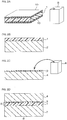
- the stickable-curable adhesive layer 1 sandwiched by two release films 10 is prepared by the above-described method.
- the varnish of the curing agent component is prepared, and as shown in FIG. 2A , the varnish of the curing agent component is stored in the vessel 8.
- the stickable-curable adhesive layer 1 and the curing agent component are prepared.
- the stickable-curable adhesive layer 1 and the curing agent component are transported to a place of use.
- one release film 10 is released, and then, as shown in FIG. 2B , the stickable-curable adhesive layer 1 is transferred to the first adherend 2 from the other release film 10.
- the varnish of the curing agent component is applied to the second adherend 4.
- the curing agent component is taken out from the vessel 8, and the varnish of the curing agent component is applied on the second adherend 4 by, for example, spray or brush. Then, the varnish of the curing agent component penetrates into the upper end portion of the second adherend 4. Thereafter, as necessary, the excess curing agent component remained on the surface of the second adherend 4 is wiped off.
- the curing agent layer 3 composed of the curing agent component is formed on the upper end portion of the second adherend 4.
- the curing agent layer 3 (not shown) is formed by the curing agent component present on the surface of the second adherend 4 and the curing agent component penetrated into the upper end portion of the second adherend 4.
- the first adherend 2 and the second adherend 4 are placed, one on top of the other so that the stickable-curable adhesive layer 1 and the curing agent layer 3 make contact with each other.
- the stickable-curable adhesive layer 1 has excellent pressure-sensitive adhesion (initial adhesion).
- the adhesion method when lap-shear adhesion of the cured layer 5 is the above-described lower limit or more, the first adherend 2 and the second adherend 4 can be allowed to adhere to each other even more strongly.
- the first adherend 2 and the second adherend 4 can be allowed to adhere to each other even more strongly.
- the first adherend 2 and the second adherend 4 can be allowed to adhere to each other strongly.
- step (3) when the stickable-curable adhesive layer 1 is cured at normal temperature, heating for curing the stickable-curable adhesive layer 1 is unnecessary, and the first adherend 2 and the second adherend 4 can be allowed to adhere to each other even more simply.
- the adhesion kit 7 by allowing the stickable-curable adhesive layer 1 and the curing agent layer 3 to contact each other so that they are sandwiched by the first adherend 2 and the second adherend 4, the first adherend 2 and the second adherend 4 can be allowed to adhere to each other easily and strongly.
- the first adherend 2 and the second adherend 4 are allowed to adhere to each other by the cured layer 5.
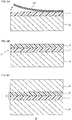
- the stickable-curable adhesive layer 1 and the curing agent layer 3 are disposed on the first adherend 2 and the second adherend 4, respectively, but in Modified Example, as shown in FIG. 3B , the stickable-curable adhesive layer 1 and the curing agent layer 3 are disposed sequentially on the surface of the first adherend 2.
- the curing agent layer 3 is disposed on the surface of the stickable-curable adhesive layer 1.
- the varnish of the curing agent component is applied on the surface of the stickable-curable adhesive layer 1.
- the varnish of the curing agent component is applied on the surface of the release sheet (not shown), and as necessary, dried. In this manner, the curing agent layer 3 is formed on the surface of the release sheet. Thereafter, the curing agent layer 3 is transferred on the surface of the stickable-curable adhesive layer 1 from the release sheet.
- the second adherend 4 is disposed on the surface of the curing agent layer 3.
- the stickable-curable adhesive layer 1 and the curing agent layer 3 are sandwiched by the first adherend 2 and the second adherend 4.
- the cured layer 5 is formed, and this produces the adhesion-structure 6 in which the first adherend 2 and the second adherend 4 are adhered to each other.
- the stickable-curable adhesive layer 1 and the curing agent layer 3 are disposed on the surface of the first adherend 2 sequentially, but for example, although not shown, the curing agent layer 3 and the stickable-curable adhesive layer 1 can be disposed on the surface of the first adherend 2 sequentially.
- the adhesion kit 7 includes the stickable-curable adhesive layer 1 disposed (supported) on the first adherend 2 and the curing agent layer 3 disposed (supported) on the second adherend 4, but it is not limited thereto. That is, in the adhesion kit 7, the support for the stickable-curable adhesive layer 1 and the curing agent layer 3 is not particularly limited.
- the stickable-curable adhesive layer 1 and the curing agent layer 3 both formed into layers will suffice, and for example, the stickable-curable adhesive layer 1 and/or curing agent layer 3 can be formed (supported) on the surface of the release film (not shown).
- a plurality of stickable-curable adhesive layers 1 can be laminated to configure a multilayered stickable-curable adhesive layer 1.
- a plurality of the curing agent layers 3 can be laminated to configure a multilayered curing agent layer 3.
- liquid bisphenol A epoxy resin (trade name "jER 828", manufactured by Mitsubishi Chemical Corporation.) and 30 parts of solid bisphenol A epoxy resin (trade name “jER 1256", manufactured by Mitsubishi Chemical Corporation.) were mixed, and methyl ethyl ketone was added to dilute the mixture so that the concentration (liquid bisphenol A epoxy resin and solid bisphenol A epoxy resin concentration) was 60%, thereby preparing varnish.
- the varnish was applied on the surface of the polyethylene terephthalate film (trade name "Diafoil MRF#38", manufactured by Mitsubishi Plastics, Inc.) treated for release so that its thickness after drying was 20 ⁇ m, and it was heated at 100°C for 1 minute, thereby producing a stickable-curable adhesive layer. Thereafter, the stickable-curable adhesive layer was allowed to contact another polyethylene terephthalate film so that the stickable-curable adhesive layer was sandwiched by two polyethylene terephthalate films.
- the stickable-curable adhesive layer and the curing agent layer were prepared in the same manner as in Example 1, except that the blending formulation was changed in accordance with Table 1.
- an adhesive tape was prepared.
- the stickable-curable adhesive layer of Preparation Examples 1 to 8 and Comparative Preparation Examples 1 to 4 was evaluated with the following criteria. Those molded into a sheet were evaluated as GOOD, and those could not be molded into a sheet were evaluated as BAD.
- the stickable-curable adhesive layer was allowed to stand at room temperature for one day.
- a polyethylene terephthalate film (trade name "Lumirror 25S10", manufactured by PANAC Corporation) having a thickness of 25 ⁇ m was disposed on the exposed stickable-curable adhesive layer. Then, it was cut to a width of 20 mm, the other polyethylene terephthalate film was released, and the exposed stickable-curable adhesive layer was disposed on an aluminum plate having a thickness of 2 mm. After bonding, a 2-kg roller was applied one round (back and forth) to compression bond.
- peel adhesion was measured using a tensile and compression testing machine (device name "TG-1kN", manufactured by Minebea Co., Ltd.) at a peeling angle of 90° and a peeling speed of 300 mm/min.
- Comparative Preparation Example 2 an adhesive tape was used and subjected to the above-described peeling test.
- the stickable-curable adhesive layer of Preparation Examples 1 to 8 and Comparative Preparation Examples 3 and 4 was allowed to stand at room temperature for one day.
- one polyethylene terephthalate film of the stickable-curable adhesive layer was peeled off, and another polyethylene terephthalate film (trade name "Lumirror 25S10", manufactured by PANAC) having a thickness of 25 ⁇ m was disposed on the exposed stickable-curable adhesive layer. Then, it was cut into a size of a width of 20 mm ⁇ a length of 50 mm, and the other polyethylene terephthalate film (trade name "Diafoil MRF#38", manufactured by Mitsubishi Plastics, Inc.) was peeled off, and the exposed stickable-curable adhesive layer was disposed on a concrete plate (nonflammable board (Mitsubishi flexible board N, thickness 5 mm)).
- a concrete plate nonflammable board (Mitsubishi flexible board N, thickness 5 mm)
- Comparative Preparation Example 2 an adhesive tape was used, and was subjected to the above-described constant load test.
- the stickable-curable adhesive layer of Preparation Example 1 was allowed to stand at room temperature for one day.
- Two stickable-curable adhesive layers were placed on top of the other to form a two layered stickable-curable adhesive layer having a thickness of 40 ⁇ m.
- the stickable-curable adhesive layer was cut into a size of width 30 mm ⁇ length 10 mm, and thereafter, one polyethylene terephthalate film was peeled off, and a distal end of a slate plate (JIS A 5430) having a width of 30 mm ⁇ length of 130 mm ⁇ a thickness of 3 mm was disposed on the exposed stickable-curable adhesive layer. Then, the other polyethylene terephthalate film was peeled off.
- a curing agent component was applied on the distal end (width 30 mm ⁇ length 10 mm) of the other slate plate, and then excess liquid on the surface was wiped off, thereby forming a curing agent layer on the surface of the other slate plate. Thereafter, the two slate plates were bonded together so that the stickable-curable adhesive layer and the curing agent layer make contact with each other, and then two slate plates were fixed with a clip, and it was allowed to stand for 24 hours.
- Lap-shear adhesion was measured in the same manner as in Example 1, except that the stickable-curable adhesive layer and the curing agent layer were changed in accordance with Table 1.
- Two components were mixed in accordance with the usage method of the adhesive, and the mixture was applied on a distal end of one slate plate so that its width was 30 mm and length was 10 mm, and the distal end of the one slate plate was bonded to the distal end of the other slate plate, and it was fixed with a clip, and allowed to stand for 24 hours.
- a double-sided tape was cut into a size of a width of 30 mm and a length of 10 mm, and bonded to a distal end of one slate plate.
- the distal end of the slate plate was bonded to a distal end of the other slate plate, and it was fixed with a clip, and allowed to stand for 24 hours.
- Lap-shear adhesion was measured in the same manner as in Example 1, except that the stickable-curable adhesive layers were placed on top of the other to form a stickable-curable adhesive layer having a thickness of 40 ⁇ m.
- Lap-shear adhesion was measured in the same manner as in Example 1, except that instead of allowing the two slate plates fixed with the clip to stand for 24 hours, it was heated at 150°C for 20 minutes.
- the acrylic polymer was prepared by the following procedures.
- a four-neck flask equipped with a stirring blade, a thermometer, a nitrogen gas inlet tube, and a condenser was charged with 100 parts of n-butylacrylate, 0.1 parts of 2-hydroxyethylacrylate, 3 parts of acrylic acid, 0.1 parts of 2,2'-azobisisobutyronitrile as a polymerization initiator, 100 parts of ethyl acetate, and 100 parts of toluene, and nitrogen gas was introduced while gently stirring the mixture, thereby conducting nitrogen replacement for 1 hour. Thereafter, polymerization reaction was performed for 15 hours while keeping the liquid temperature in the flask at around 55°C, thereby preparing an acrylic polymer solution having a weight-average molecular weight of 60 million.
- the adhesion method of the present invention is used for production of an adhesion-structure.
Landscapes
- Chemical & Material Sciences (AREA)
- Organic Chemistry (AREA)
- Adhesives Or Adhesive Processes (AREA)
- Laminated Bodies (AREA)
- Adhesive Tapes (AREA)
Applications Claiming Priority (2)
| Application Number | Priority Date | Filing Date | Title |
|---|---|---|---|
| JP2015219748A JP2017088723A (ja) | 2015-11-09 | 2015-11-09 | 接着方法、接着構造体、および、接着キット |
| PCT/JP2016/082327 WO2017082106A1 (fr) | 2015-11-09 | 2016-10-31 | Procédé de collage, structure collée et kit de collage |
Publications (3)
| Publication Number | Publication Date |
|---|---|
| EP3375833A1 true EP3375833A1 (fr) | 2018-09-19 |
| EP3375833A4 EP3375833A4 (fr) | 2019-05-29 |
| EP3375833B1 EP3375833B1 (fr) | 2024-04-03 |
Family
ID=58695206
Family Applications (1)
| Application Number | Title | Priority Date | Filing Date |
|---|---|---|---|
| EP16864069.6A Active EP3375833B1 (fr) | 2015-11-09 | 2016-10-31 | Procédé de collage, structure collée et kit de collage |
Country Status (7)
| Country | Link |
|---|---|
| US (2) | US11174415B2 (fr) |
| EP (1) | EP3375833B1 (fr) |
| JP (1) | JP2017088723A (fr) |
| KR (2) | KR102942394B1 (fr) |
| CN (1) | CN108350323A (fr) |
| TW (1) | TWI752924B (fr) |
| WO (1) | WO2017082106A1 (fr) |
Cited By (1)
| Publication number | Priority date | Publication date | Assignee | Title |
|---|---|---|---|---|
| EP3404076A4 (fr) * | 2016-01-15 | 2020-01-01 | Nitto Denko Corporation | Feuille adhésive durcissable |
Families Citing this family (9)
| Publication number | Priority date | Publication date | Assignee | Title |
|---|---|---|---|---|
| JP6957950B2 (ja) * | 2017-04-12 | 2021-11-02 | 大日本印刷株式会社 | 接着剤セットおよび物品の製造方法 |
| JP6984157B2 (ja) * | 2017-04-12 | 2021-12-17 | 大日本印刷株式会社 | 物品の製造方法および重ね貼り装置 |
| JP7111485B2 (ja) * | 2018-03-27 | 2022-08-02 | 日東電工株式会社 | 接着構造体の製造方法 |
| JP7256642B2 (ja) * | 2019-01-07 | 2023-04-12 | 日東電工株式会社 | 粘接着シート |
| EP3999573A1 (fr) * | 2019-07-15 | 2022-05-25 | Dow Global Technologies LLC | Adhésif de stratification sans isocyanate |
| JPWO2022107849A1 (fr) * | 2020-11-20 | 2022-05-27 | ||
| JPWO2023054211A1 (fr) * | 2021-09-29 | 2023-04-06 | ||
| WO2024106384A1 (fr) * | 2022-11-18 | 2024-05-23 | 日東電工株式会社 | Procédé de fabrication d'une feuille adhésive |
| JP2024176983A (ja) * | 2023-06-09 | 2024-12-19 | デクセリアルズ株式会社 | 接着フィルムの製造方法及び接着フィルム、並びに、構造体の製造方法及び構造体 |
Family Cites Families (18)
| Publication number | Priority date | Publication date | Assignee | Title |
|---|---|---|---|---|
| US3396836A (en) * | 1967-06-19 | 1968-08-13 | Cutler Mail Chute Company Inc | Holder for glue components |
| US3533877A (en) * | 1968-04-12 | 1970-10-13 | Cutler Mail Chute Co Inc | Method of applying glue components |
| JPS5825706B2 (ja) | 1975-05-08 | 1983-05-28 | 日東電工株式会社 | セツチヤクホウホウ |
| JPS5867775A (ja) * | 1981-10-17 | 1983-04-22 | Takashi Fukuzawa | 硬化しうる感圧接着剤 |
| JPS6474283A (en) * | 1987-09-14 | 1989-03-20 | Nitto Denko Corp | Thermosetting corrosion-preventive tape |
| US4906695A (en) * | 1988-07-08 | 1990-03-06 | Dow Corning Corporation | Pressure-sensitive adhesives containing an alkoxy-functional silicon compound |
| JP3099730B2 (ja) * | 1995-08-09 | 2000-10-16 | 日東紡績株式会社 | 一方向性強化繊維複合基材 |
| JPH11302602A (ja) | 1998-04-23 | 1999-11-02 | Toagosei Co Ltd | シアノアクリレート系接着剤組成物 |
| JP3562386B2 (ja) | 1999-05-28 | 2004-09-08 | 株式会社スリーボンド | エポキシ系2液型接着剤 |
| JP2003055632A (ja) * | 2001-08-21 | 2003-02-26 | Lintec Corp | 粘接着テープ |
| JP5315547B2 (ja) * | 2007-05-30 | 2013-10-16 | 国立大学法人 香川大学 | 接着方法並びにそれを用いて作製したバイオケミカルチップ及び光学部品 |
| JP5365003B2 (ja) * | 2008-01-11 | 2013-12-11 | 横浜ゴム株式会社 | ハネムーン型接着剤組成物、実装基板の接着方法および実装基板組み立て体 |
| KR101141493B1 (ko) * | 2008-03-14 | 2012-05-03 | 스미토모 베이클라이트 가부시키가이샤 | 반도체소자 접착필름 형성용 수지 바니시, 반도체소자 접착필름, 및 반도체장치 |
| JP2012167174A (ja) | 2011-02-14 | 2012-09-06 | Lintec Corp | 接着剤組成物、接着シートおよび半導体装置の製造方法 |
| DE102011089565A1 (de) * | 2011-12-22 | 2013-06-27 | Tesa Se | Liner zum Schutz von Klebemassen |
| JP5644896B2 (ja) * | 2012-07-04 | 2014-12-24 | 大日本印刷株式会社 | 粘接着層及び粘接着シート |
| DE102013213726A1 (de) * | 2013-07-12 | 2015-01-15 | Tesa Se | Verfahren zum Ummanteln von langgestrecktem Gut wie insbesondere Leitungen oder Kabelsätzen |
| JP6191801B1 (ja) * | 2015-10-07 | 2017-09-06 | 大日本印刷株式会社 | 接着シートセットおよび物品の製造方法 |
-
2015
- 2015-11-09 JP JP2015219748A patent/JP2017088723A/ja active Pending
-
2016
- 2016-10-31 EP EP16864069.6A patent/EP3375833B1/fr active Active
- 2016-10-31 CN CN201680065318.5A patent/CN108350323A/zh active Pending
- 2016-10-31 US US15/773,586 patent/US11174415B2/en active Active
- 2016-10-31 KR KR1020247001549A patent/KR102942394B1/ko active Active
- 2016-10-31 KR KR1020187010842A patent/KR102630882B1/ko active Active
- 2016-10-31 WO PCT/JP2016/082327 patent/WO2017082106A1/fr not_active Ceased
- 2016-11-08 TW TW105136212A patent/TWI752924B/zh active
-
2021
- 2021-09-14 US US17/474,253 patent/US11649379B2/en active Active
Cited By (2)
| Publication number | Priority date | Publication date | Assignee | Title |
|---|---|---|---|---|
| EP3404076A4 (fr) * | 2016-01-15 | 2020-01-01 | Nitto Denko Corporation | Feuille adhésive durcissable |
| US11274231B2 (en) | 2016-01-15 | 2022-03-15 | Nitto Denko Corporation | Stickable-curable adhesive sheet |
Also Published As
| Publication number | Publication date |
|---|---|
| WO2017082106A1 (fr) | 2017-05-18 |
| KR20180081714A (ko) | 2018-07-17 |
| EP3375833B1 (fr) | 2024-04-03 |
| US20180327635A1 (en) | 2018-11-15 |
| KR20240014583A (ko) | 2024-02-01 |
| TWI752924B (zh) | 2022-01-21 |
| CN108350323A (zh) | 2018-07-31 |
| US20210403759A1 (en) | 2021-12-30 |
| JP2017088723A (ja) | 2017-05-25 |
| KR102942394B1 (ko) | 2026-03-20 |
| KR102630882B1 (ko) | 2024-01-29 |
| US11649379B2 (en) | 2023-05-16 |
| US11174415B2 (en) | 2021-11-16 |
| TW201728714A (zh) | 2017-08-16 |
| EP3375833A4 (fr) | 2019-05-29 |
Similar Documents
| Publication | Publication Date | Title |
|---|---|---|
| US11649379B2 (en) | Adhesion method, adhesion-structure, and adhesion kit | |
| JP7175622B2 (ja) | アクリル系粘着剤組成物および粘着シート | |
| US11274231B2 (en) | Stickable-curable adhesive sheet | |
| EP4495200A1 (fr) | Feuille adhésive facilement démontée, stratifié, corps assemblé, procédé de production de corps assemblé, et procédé de démontage de corps assemblé | |
| JP7063690B2 (ja) | 粘着シート | |
| JP7125259B2 (ja) | 粘着シート | |
| CN116333613A (zh) | 光学粘合片 | |
| KR20230135083A (ko) | 폴더블 디바이스용 광학 점착 시트 | |
| KR20230137906A (ko) | 폴더블 디바이스용 광학 점착 시트 | |
| KR20240027606A (ko) | 커버 필름 구비 광학 필름 | |
| JP2014105262A (ja) | 両面粘着テープ | |
| JP7111485B2 (ja) | 接着構造体の製造方法 | |
| JP7008748B2 (ja) | 接着方法 | |
| CN116333612A (zh) | 光学粘合片 | |
| CN116333609A (zh) | 光学粘合片 | |
| KR102607273B1 (ko) | 점착 시트 | |
| KR20250099397A (ko) | 점착 시트 제조 방법 | |
| CN116042128A (zh) | 带剥离衬垫的光学粘合片 | |
| TW202006099A (zh) | 黏著劑組合物及黏著片材 | |
| JP2019070101A (ja) | アクリル系粘着剤組成物および粘着シート |
Legal Events
| Date | Code | Title | Description |
|---|---|---|---|
| STAA | Information on the status of an ep patent application or granted ep patent |
Free format text: STATUS: THE INTERNATIONAL PUBLICATION HAS BEEN MADE |
|
| PUAI | Public reference made under article 153(3) epc to a published international application that has entered the european phase |
Free format text: ORIGINAL CODE: 0009012 |
|
| STAA | Information on the status of an ep patent application or granted ep patent |
Free format text: STATUS: REQUEST FOR EXAMINATION WAS MADE |
|
| 17P | Request for examination filed |
Effective date: 20180503 |
|
| AK | Designated contracting states |
Kind code of ref document: A1 Designated state(s): AL AT BE BG CH CY CZ DE DK EE ES FI FR GB GR HR HU IE IS IT LI LT LU LV MC MK MT NL NO PL PT RO RS SE SI SK SM TR |
|
| AX | Request for extension of the european patent |
Extension state: BA ME |
|
| DAV | Request for validation of the european patent (deleted) | ||
| DAX | Request for extension of the european patent (deleted) | ||
| A4 | Supplementary search report drawn up and despatched |
Effective date: 20190430 |
|
| RIC1 | Information provided on ipc code assigned before grant |
Ipc: C09J 11/06 20060101ALI20190424BHEP Ipc: C09J 163/00 20060101ALI20190424BHEP Ipc: C09J 5/04 20060101AFI20190424BHEP Ipc: C09J 7/00 20180101ALI20190424BHEP Ipc: C09J 7/30 20180101ALI20190424BHEP |
|
| STAA | Information on the status of an ep patent application or granted ep patent |
Free format text: STATUS: EXAMINATION IS IN PROGRESS |
|
| 17Q | First examination report despatched |
Effective date: 20220214 |
|
| GRAP | Despatch of communication of intention to grant a patent |
Free format text: ORIGINAL CODE: EPIDOSNIGR1 |
|
| STAA | Information on the status of an ep patent application or granted ep patent |
Free format text: STATUS: GRANT OF PATENT IS INTENDED |
|
| INTG | Intention to grant announced |
Effective date: 20231107 |
|
| RIN1 | Information on inventor provided before grant (corrected) |
Inventor name: AKAZAWA, KOJI Inventor name: OKADA, KENICHI Inventor name: YOSHIDA, AKIKO |
|
| GRAS | Grant fee paid |
Free format text: ORIGINAL CODE: EPIDOSNIGR3 |
|
| GRAA | (expected) grant |
Free format text: ORIGINAL CODE: 0009210 |
|
| STAA | Information on the status of an ep patent application or granted ep patent |
Free format text: STATUS: THE PATENT HAS BEEN GRANTED |
|
| RAP3 | Party data changed (applicant data changed or rights of an application transferred) |
Owner name: NITTO DENKO CORPORATION |
|
| AK | Designated contracting states |
Kind code of ref document: B1 Designated state(s): AL AT BE BG CH CY CZ DE DK EE ES FI FR GB GR HR HU IE IS IT LI LT LU LV MC MK MT NL NO PL PT RO RS SE SI SK SM TR |
|
| REG | Reference to a national code |
Ref country code: GB Ref legal event code: FG4D |
|
| P01 | Opt-out of the competence of the unified patent court (upc) registered |
Effective date: 20240304 |
|
| REG | Reference to a national code |
Ref country code: CH Ref legal event code: EP |
|
| REG | Reference to a national code |
Ref country code: DE Ref legal event code: R096 Ref document number: 602016086737 Country of ref document: DE |
|
| REG | Reference to a national code |
Ref country code: IE Ref legal event code: FG4D |
|
| REG | Reference to a national code |
Ref country code: LT Ref legal event code: MG9D |
|
| REG | Reference to a national code |
Ref country code: NL Ref legal event code: MP Effective date: 20240403 |
|
| REG | Reference to a national code |
Ref country code: AT Ref legal event code: MK05 Ref document number: 1672320 Country of ref document: AT Kind code of ref document: T Effective date: 20240403 |
|
| PG25 | Lapsed in a contracting state [announced via postgrant information from national office to epo] |
Ref country code: NL Free format text: LAPSE BECAUSE OF FAILURE TO SUBMIT A TRANSLATION OF THE DESCRIPTION OR TO PAY THE FEE WITHIN THE PRESCRIBED TIME-LIMIT Effective date: 20240403 |
|
| PG25 | Lapsed in a contracting state [announced via postgrant information from national office to epo] |
Ref country code: NL Free format text: LAPSE BECAUSE OF FAILURE TO SUBMIT A TRANSLATION OF THE DESCRIPTION OR TO PAY THE FEE WITHIN THE PRESCRIBED TIME-LIMIT Effective date: 20240403 |
|
| PG25 | Lapsed in a contracting state [announced via postgrant information from national office to epo] |
Ref country code: IS Free format text: LAPSE BECAUSE OF FAILURE TO SUBMIT A TRANSLATION OF THE DESCRIPTION OR TO PAY THE FEE WITHIN THE PRESCRIBED TIME-LIMIT Effective date: 20240803 |
|
| PG25 | Lapsed in a contracting state [announced via postgrant information from national office to epo] |
Ref country code: BG Free format text: LAPSE BECAUSE OF FAILURE TO SUBMIT A TRANSLATION OF THE DESCRIPTION OR TO PAY THE FEE WITHIN THE PRESCRIBED TIME-LIMIT Effective date: 20240403 |
|
| PG25 | Lapsed in a contracting state [announced via postgrant information from national office to epo] |
Ref country code: FI Free format text: LAPSE BECAUSE OF FAILURE TO SUBMIT A TRANSLATION OF THE DESCRIPTION OR TO PAY THE FEE WITHIN THE PRESCRIBED TIME-LIMIT Effective date: 20240403 Ref country code: HR Free format text: LAPSE BECAUSE OF FAILURE TO SUBMIT A TRANSLATION OF THE DESCRIPTION OR TO PAY THE FEE WITHIN THE PRESCRIBED TIME-LIMIT Effective date: 20240403 |
|
| PG25 | Lapsed in a contracting state [announced via postgrant information from national office to epo] |
Ref country code: GR Free format text: LAPSE BECAUSE OF FAILURE TO SUBMIT A TRANSLATION OF THE DESCRIPTION OR TO PAY THE FEE WITHIN THE PRESCRIBED TIME-LIMIT Effective date: 20240704 |
|
| PG25 | Lapsed in a contracting state [announced via postgrant information from national office to epo] |
Ref country code: PT Free format text: LAPSE BECAUSE OF FAILURE TO SUBMIT A TRANSLATION OF THE DESCRIPTION OR TO PAY THE FEE WITHIN THE PRESCRIBED TIME-LIMIT Effective date: 20240805 |
|
| PG25 | Lapsed in a contracting state [announced via postgrant information from national office to epo] |
Ref country code: ES Free format text: LAPSE BECAUSE OF FAILURE TO SUBMIT A TRANSLATION OF THE DESCRIPTION OR TO PAY THE FEE WITHIN THE PRESCRIBED TIME-LIMIT Effective date: 20240403 |
|
| PG25 | Lapsed in a contracting state [announced via postgrant information from national office to epo] |
Ref country code: CZ Free format text: LAPSE BECAUSE OF FAILURE TO SUBMIT A TRANSLATION OF THE DESCRIPTION OR TO PAY THE FEE WITHIN THE PRESCRIBED TIME-LIMIT Effective date: 20240403 |
|
| PG25 | Lapsed in a contracting state [announced via postgrant information from national office to epo] |
Ref country code: AT Free format text: LAPSE BECAUSE OF FAILURE TO SUBMIT A TRANSLATION OF THE DESCRIPTION OR TO PAY THE FEE WITHIN THE PRESCRIBED TIME-LIMIT Effective date: 20240403 |
|
| PG25 | Lapsed in a contracting state [announced via postgrant information from national office to epo] |
Ref country code: PL Free format text: LAPSE BECAUSE OF FAILURE TO SUBMIT A TRANSLATION OF THE DESCRIPTION OR TO PAY THE FEE WITHIN THE PRESCRIBED TIME-LIMIT Effective date: 20240403 |
|
| PG25 | Lapsed in a contracting state [announced via postgrant information from national office to epo] |
Ref country code: LV Free format text: LAPSE BECAUSE OF FAILURE TO SUBMIT A TRANSLATION OF THE DESCRIPTION OR TO PAY THE FEE WITHIN THE PRESCRIBED TIME-LIMIT Effective date: 20240403 |
|
| PG25 | Lapsed in a contracting state [announced via postgrant information from national office to epo] |
Ref country code: PT Free format text: LAPSE BECAUSE OF FAILURE TO SUBMIT A TRANSLATION OF THE DESCRIPTION OR TO PAY THE FEE WITHIN THE PRESCRIBED TIME-LIMIT Effective date: 20240805 Ref country code: PL Free format text: LAPSE BECAUSE OF FAILURE TO SUBMIT A TRANSLATION OF THE DESCRIPTION OR TO PAY THE FEE WITHIN THE PRESCRIBED TIME-LIMIT Effective date: 20240403 Ref country code: NO Free format text: LAPSE BECAUSE OF FAILURE TO SUBMIT A TRANSLATION OF THE DESCRIPTION OR TO PAY THE FEE WITHIN THE PRESCRIBED TIME-LIMIT Effective date: 20240703 Ref country code: LV Free format text: LAPSE BECAUSE OF FAILURE TO SUBMIT A TRANSLATION OF THE DESCRIPTION OR TO PAY THE FEE WITHIN THE PRESCRIBED TIME-LIMIT Effective date: 20240403 Ref country code: IS Free format text: LAPSE BECAUSE OF FAILURE TO SUBMIT A TRANSLATION OF THE DESCRIPTION OR TO PAY THE FEE WITHIN THE PRESCRIBED TIME-LIMIT Effective date: 20240803 Ref country code: HR Free format text: LAPSE BECAUSE OF FAILURE TO SUBMIT A TRANSLATION OF THE DESCRIPTION OR TO PAY THE FEE WITHIN THE PRESCRIBED TIME-LIMIT Effective date: 20240403 Ref country code: GR Free format text: LAPSE BECAUSE OF FAILURE TO SUBMIT A TRANSLATION OF THE DESCRIPTION OR TO PAY THE FEE WITHIN THE PRESCRIBED TIME-LIMIT Effective date: 20240704 Ref country code: FI Free format text: LAPSE BECAUSE OF FAILURE TO SUBMIT A TRANSLATION OF THE DESCRIPTION OR TO PAY THE FEE WITHIN THE PRESCRIBED TIME-LIMIT Effective date: 20240403 Ref country code: ES Free format text: LAPSE BECAUSE OF FAILURE TO SUBMIT A TRANSLATION OF THE DESCRIPTION OR TO PAY THE FEE WITHIN THE PRESCRIBED TIME-LIMIT Effective date: 20240403 Ref country code: CZ Free format text: LAPSE BECAUSE OF FAILURE TO SUBMIT A TRANSLATION OF THE DESCRIPTION OR TO PAY THE FEE WITHIN THE PRESCRIBED TIME-LIMIT Effective date: 20240403 Ref country code: BG Free format text: LAPSE BECAUSE OF FAILURE TO SUBMIT A TRANSLATION OF THE DESCRIPTION OR TO PAY THE FEE WITHIN THE PRESCRIBED TIME-LIMIT Effective date: 20240403 Ref country code: AT Free format text: LAPSE BECAUSE OF FAILURE TO SUBMIT A TRANSLATION OF THE DESCRIPTION OR TO PAY THE FEE WITHIN THE PRESCRIBED TIME-LIMIT Effective date: 20240403 Ref country code: RS Free format text: LAPSE BECAUSE OF FAILURE TO SUBMIT A TRANSLATION OF THE DESCRIPTION OR TO PAY THE FEE WITHIN THE PRESCRIBED TIME-LIMIT Effective date: 20240703 |
|
| REG | Reference to a national code |
Ref country code: DE Ref legal event code: R097 Ref document number: 602016086737 Country of ref document: DE |
|
| PG25 | Lapsed in a contracting state [announced via postgrant information from national office to epo] |
Ref country code: DK Free format text: LAPSE BECAUSE OF FAILURE TO SUBMIT A TRANSLATION OF THE DESCRIPTION OR TO PAY THE FEE WITHIN THE PRESCRIBED TIME-LIMIT Effective date: 20240403 |
|
| PG25 | Lapsed in a contracting state [announced via postgrant information from national office to epo] |
Ref country code: EE Free format text: LAPSE BECAUSE OF FAILURE TO SUBMIT A TRANSLATION OF THE DESCRIPTION OR TO PAY THE FEE WITHIN THE PRESCRIBED TIME-LIMIT Effective date: 20240403 |
|
| PG25 | Lapsed in a contracting state [announced via postgrant information from national office to epo] |
Ref country code: SK Free format text: LAPSE BECAUSE OF FAILURE TO SUBMIT A TRANSLATION OF THE DESCRIPTION OR TO PAY THE FEE WITHIN THE PRESCRIBED TIME-LIMIT Effective date: 20240403 Ref country code: RO Free format text: LAPSE BECAUSE OF FAILURE TO SUBMIT A TRANSLATION OF THE DESCRIPTION OR TO PAY THE FEE WITHIN THE PRESCRIBED TIME-LIMIT Effective date: 20240403 |
|
| PG25 | Lapsed in a contracting state [announced via postgrant information from national office to epo] |
Ref country code: SM Free format text: LAPSE BECAUSE OF FAILURE TO SUBMIT A TRANSLATION OF THE DESCRIPTION OR TO PAY THE FEE WITHIN THE PRESCRIBED TIME-LIMIT Effective date: 20240403 |
|
| PG25 | Lapsed in a contracting state [announced via postgrant information from national office to epo] |
Ref country code: SM Free format text: LAPSE BECAUSE OF FAILURE TO SUBMIT A TRANSLATION OF THE DESCRIPTION OR TO PAY THE FEE WITHIN THE PRESCRIBED TIME-LIMIT Effective date: 20240403 Ref country code: SK Free format text: LAPSE BECAUSE OF FAILURE TO SUBMIT A TRANSLATION OF THE DESCRIPTION OR TO PAY THE FEE WITHIN THE PRESCRIBED TIME-LIMIT Effective date: 20240403 Ref country code: RO Free format text: LAPSE BECAUSE OF FAILURE TO SUBMIT A TRANSLATION OF THE DESCRIPTION OR TO PAY THE FEE WITHIN THE PRESCRIBED TIME-LIMIT Effective date: 20240403 Ref country code: EE Free format text: LAPSE BECAUSE OF FAILURE TO SUBMIT A TRANSLATION OF THE DESCRIPTION OR TO PAY THE FEE WITHIN THE PRESCRIBED TIME-LIMIT Effective date: 20240403 Ref country code: DK Free format text: LAPSE BECAUSE OF FAILURE TO SUBMIT A TRANSLATION OF THE DESCRIPTION OR TO PAY THE FEE WITHIN THE PRESCRIBED TIME-LIMIT Effective date: 20240403 |
|
| PLBE | No opposition filed within time limit |
Free format text: ORIGINAL CODE: 0009261 |
|
| STAA | Information on the status of an ep patent application or granted ep patent |
Free format text: STATUS: NO OPPOSITION FILED WITHIN TIME LIMIT |
|
| 26N | No opposition filed |
Effective date: 20250106 |
|
| PG25 | Lapsed in a contracting state [announced via postgrant information from national office to epo] |
Ref country code: SI Free format text: LAPSE BECAUSE OF FAILURE TO SUBMIT A TRANSLATION OF THE DESCRIPTION OR TO PAY THE FEE WITHIN THE PRESCRIBED TIME-LIMIT Effective date: 20240403 |
|
| REG | Reference to a national code |
Ref country code: CH Ref legal event code: PL |
|
| GBPC | Gb: european patent ceased through non-payment of renewal fee |
Effective date: 20241031 |
|
| PG25 | Lapsed in a contracting state [announced via postgrant information from national office to epo] |
Ref country code: MC Free format text: LAPSE BECAUSE OF FAILURE TO SUBMIT A TRANSLATION OF THE DESCRIPTION OR TO PAY THE FEE WITHIN THE PRESCRIBED TIME-LIMIT Effective date: 20240403 |
|
| PG25 | Lapsed in a contracting state [announced via postgrant information from national office to epo] |
Ref country code: GB Free format text: LAPSE BECAUSE OF NON-PAYMENT OF DUE FEES Effective date: 20241031 |
|
| PG25 | Lapsed in a contracting state [announced via postgrant information from national office to epo] |
Ref country code: LU Free format text: LAPSE BECAUSE OF NON-PAYMENT OF DUE FEES Effective date: 20241031 Ref country code: BE Free format text: LAPSE BECAUSE OF NON-PAYMENT OF DUE FEES Effective date: 20241031 |
|
| PG25 | Lapsed in a contracting state [announced via postgrant information from national office to epo] |
Ref country code: FR Free format text: LAPSE BECAUSE OF NON-PAYMENT OF DUE FEES Effective date: 20241031 |
|
| PG25 | Lapsed in a contracting state [announced via postgrant information from national office to epo] |
Ref country code: CH Free format text: LAPSE BECAUSE OF NON-PAYMENT OF DUE FEES Effective date: 20241031 |
|
| REG | Reference to a national code |
Ref country code: BE Ref legal event code: MM Effective date: 20241031 |
|
| PG25 | Lapsed in a contracting state [announced via postgrant information from national office to epo] |
Ref country code: SE Free format text: LAPSE BECAUSE OF FAILURE TO SUBMIT A TRANSLATION OF THE DESCRIPTION OR TO PAY THE FEE WITHIN THE PRESCRIBED TIME-LIMIT Effective date: 20240403 |
|
| PG25 | Lapsed in a contracting state [announced via postgrant information from national office to epo] |
Ref country code: IE Free format text: LAPSE BECAUSE OF NON-PAYMENT OF DUE FEES Effective date: 20241031 |
|
| PGFP | Annual fee paid to national office [announced via postgrant information from national office to epo] |
Ref country code: DE Payment date: 20250902 Year of fee payment: 10 |
|
| PG25 | Lapsed in a contracting state [announced via postgrant information from national office to epo] |
Ref country code: IT Free format text: LAPSE BECAUSE OF FAILURE TO SUBMIT A TRANSLATION OF THE DESCRIPTION OR TO PAY THE FEE WITHIN THE PRESCRIBED TIME-LIMIT Effective date: 20240403 |
|
| PG25 | Lapsed in a contracting state [announced via postgrant information from national office to epo] |
Ref country code: HU Free format text: LAPSE BECAUSE OF FAILURE TO SUBMIT A TRANSLATION OF THE DESCRIPTION OR TO PAY THE FEE WITHIN THE PRESCRIBED TIME-LIMIT; INVALID AB INITIO Effective date: 20161031 |
|
| PG25 | Lapsed in a contracting state [announced via postgrant information from national office to epo] |
Ref country code: CY Free format text: LAPSE BECAUSE OF FAILURE TO SUBMIT A TRANSLATION OF THE DESCRIPTION OR TO PAY THE FEE WITHIN THE PRESCRIBED TIME-LIMIT; INVALID AB INITIO Effective date: 20161031 |