EP3378504B1 - Dispositif médical absorbable implanté en alliage à base de fer et son procédé de préparation - Google Patents
Dispositif médical absorbable implanté en alliage à base de fer et son procédé de préparation Download PDFInfo
- Publication number
- EP3378504B1 EP3378504B1 EP16865495.2A EP16865495A EP3378504B1 EP 3378504 B1 EP3378504 B1 EP 3378504B1 EP 16865495 A EP16865495 A EP 16865495A EP 3378504 B1 EP3378504 B1 EP 3378504B1
- Authority
- EP
- European Patent Office
- Prior art keywords
- based alloy
- iron
- alkaline
- sodium
- potassium
- Prior art date
- Legal status (The legal status is an assumption and is not a legal conclusion. Google has not performed a legal analysis and makes no representation as to the accuracy of the status listed.)
- Active
Links
Images
Classifications
-
- A—HUMAN NECESSITIES
- A61—MEDICAL OR VETERINARY SCIENCE; HYGIENE
- A61L—METHODS OR APPARATUS FOR STERILISING MATERIALS OR OBJECTS IN GENERAL; DISINFECTION, STERILISATION OR DEODORISATION OF AIR; CHEMICAL ASPECTS OF BANDAGES, DRESSINGS, ABSORBENT PADS OR SURGICAL ARTICLES; MATERIALS FOR BANDAGES, DRESSINGS, ABSORBENT PADS OR SURGICAL ARTICLES
- A61L31/00—Materials for other surgical articles, e.g. stents, stent-grafts, shunts, surgical drapes, guide wires, materials for adhesion prevention, occluding devices, surgical gloves, tissue fixation devices
- A61L31/02—Inorganic materials
- A61L31/022—Metals or alloys
-
- A—HUMAN NECESSITIES
- A61—MEDICAL OR VETERINARY SCIENCE; HYGIENE
- A61F—FILTERS IMPLANTABLE INTO BLOOD VESSELS; PROSTHESES; DEVICES PROVIDING PATENCY TO, OR PREVENTING COLLAPSING OF, TUBULAR STRUCTURES OF THE BODY, e.g. STENTS; ORTHOPAEDIC, NURSING OR CONTRACEPTIVE DEVICES; FOMENTATION; TREATMENT OR PROTECTION OF EYES OR EARS; BANDAGES, DRESSINGS OR ABSORBENT PADS; FIRST-AID KITS
- A61F2/00—Filters implantable into blood vessels; Prostheses, i.e. artificial substitutes or replacements for parts of the body; Appliances for connecting them with the body; Devices providing patency to, or preventing collapsing of, tubular structures of the body, e.g. stents
- A61F2/82—Devices providing patency to, or preventing collapsing of, tubular structures of the body, e.g. stents
-
- A—HUMAN NECESSITIES
- A61—MEDICAL OR VETERINARY SCIENCE; HYGIENE
- A61L—METHODS OR APPARATUS FOR STERILISING MATERIALS OR OBJECTS IN GENERAL; DISINFECTION, STERILISATION OR DEODORISATION OF AIR; CHEMICAL ASPECTS OF BANDAGES, DRESSINGS, ABSORBENT PADS OR SURGICAL ARTICLES; MATERIALS FOR BANDAGES, DRESSINGS, ABSORBENT PADS OR SURGICAL ARTICLES
- A61L27/00—Materials for grafts or prostheses or for coating grafts or prostheses
- A61L27/02—Inorganic materials
- A61L27/04—Metals or alloys
-
- A—HUMAN NECESSITIES
- A61—MEDICAL OR VETERINARY SCIENCE; HYGIENE
- A61L—METHODS OR APPARATUS FOR STERILISING MATERIALS OR OBJECTS IN GENERAL; DISINFECTION, STERILISATION OR DEODORISATION OF AIR; CHEMICAL ASPECTS OF BANDAGES, DRESSINGS, ABSORBENT PADS OR SURGICAL ARTICLES; MATERIALS FOR BANDAGES, DRESSINGS, ABSORBENT PADS OR SURGICAL ARTICLES
- A61L27/00—Materials for grafts or prostheses or for coating grafts or prostheses
- A61L27/02—Inorganic materials
- A61L27/04—Metals or alloys
- A61L27/042—Iron or iron alloys
-
- A—HUMAN NECESSITIES
- A61—MEDICAL OR VETERINARY SCIENCE; HYGIENE
- A61L—METHODS OR APPARATUS FOR STERILISING MATERIALS OR OBJECTS IN GENERAL; DISINFECTION, STERILISATION OR DEODORISATION OF AIR; CHEMICAL ASPECTS OF BANDAGES, DRESSINGS, ABSORBENT PADS OR SURGICAL ARTICLES; MATERIALS FOR BANDAGES, DRESSINGS, ABSORBENT PADS OR SURGICAL ARTICLES
- A61L27/00—Materials for grafts or prostheses or for coating grafts or prostheses
- A61L27/28—Materials for coating prostheses
- A61L27/34—Macromolecular materials
-
- A—HUMAN NECESSITIES
- A61—MEDICAL OR VETERINARY SCIENCE; HYGIENE
- A61L—METHODS OR APPARATUS FOR STERILISING MATERIALS OR OBJECTS IN GENERAL; DISINFECTION, STERILISATION OR DEODORISATION OF AIR; CHEMICAL ASPECTS OF BANDAGES, DRESSINGS, ABSORBENT PADS OR SURGICAL ARTICLES; MATERIALS FOR BANDAGES, DRESSINGS, ABSORBENT PADS OR SURGICAL ARTICLES
- A61L27/00—Materials for grafts or prostheses or for coating grafts or prostheses
- A61L27/50—Materials characterised by their function or physical properties, e.g. injectable or lubricating compositions, shape-memory materials, surface modified materials
- A61L27/505—Stabilizers
-
- A—HUMAN NECESSITIES
- A61—MEDICAL OR VETERINARY SCIENCE; HYGIENE
- A61L—METHODS OR APPARATUS FOR STERILISING MATERIALS OR OBJECTS IN GENERAL; DISINFECTION, STERILISATION OR DEODORISATION OF AIR; CHEMICAL ASPECTS OF BANDAGES, DRESSINGS, ABSORBENT PADS OR SURGICAL ARTICLES; MATERIALS FOR BANDAGES, DRESSINGS, ABSORBENT PADS OR SURGICAL ARTICLES
- A61L27/00—Materials for grafts or prostheses or for coating grafts or prostheses
- A61L27/50—Materials characterised by their function or physical properties, e.g. injectable or lubricating compositions, shape-memory materials, surface modified materials
- A61L27/54—Biologically active materials, e.g. therapeutic substances
-
- A—HUMAN NECESSITIES
- A61—MEDICAL OR VETERINARY SCIENCE; HYGIENE
- A61L—METHODS OR APPARATUS FOR STERILISING MATERIALS OR OBJECTS IN GENERAL; DISINFECTION, STERILISATION OR DEODORISATION OF AIR; CHEMICAL ASPECTS OF BANDAGES, DRESSINGS, ABSORBENT PADS OR SURGICAL ARTICLES; MATERIALS FOR BANDAGES, DRESSINGS, ABSORBENT PADS OR SURGICAL ARTICLES
- A61L27/00—Materials for grafts or prostheses or for coating grafts or prostheses
- A61L27/50—Materials characterised by their function or physical properties, e.g. injectable or lubricating compositions, shape-memory materials, surface modified materials
- A61L27/58—Materials at least partially resorbable by the body
-
- A—HUMAN NECESSITIES
- A61—MEDICAL OR VETERINARY SCIENCE; HYGIENE
- A61L—METHODS OR APPARATUS FOR STERILISING MATERIALS OR OBJECTS IN GENERAL; DISINFECTION, STERILISATION OR DEODORISATION OF AIR; CHEMICAL ASPECTS OF BANDAGES, DRESSINGS, ABSORBENT PADS OR SURGICAL ARTICLES; MATERIALS FOR BANDAGES, DRESSINGS, ABSORBENT PADS OR SURGICAL ARTICLES
- A61L31/00—Materials for other surgical articles, e.g. stents, stent-grafts, shunts, surgical drapes, guide wires, materials for adhesion prevention, occluding devices, surgical gloves, tissue fixation devices
- A61L31/08—Materials for coatings
- A61L31/10—Macromolecular materials
-
- A—HUMAN NECESSITIES
- A61—MEDICAL OR VETERINARY SCIENCE; HYGIENE
- A61L—METHODS OR APPARATUS FOR STERILISING MATERIALS OR OBJECTS IN GENERAL; DISINFECTION, STERILISATION OR DEODORISATION OF AIR; CHEMICAL ASPECTS OF BANDAGES, DRESSINGS, ABSORBENT PADS OR SURGICAL ARTICLES; MATERIALS FOR BANDAGES, DRESSINGS, ABSORBENT PADS OR SURGICAL ARTICLES
- A61L31/00—Materials for other surgical articles, e.g. stents, stent-grafts, shunts, surgical drapes, guide wires, materials for adhesion prevention, occluding devices, surgical gloves, tissue fixation devices
- A61L31/14—Materials characterised by their function or physical properties, e.g. injectable or lubricating compositions, shape-memory materials, surface modified materials
- A61L31/143—Stabilizers
-
- A—HUMAN NECESSITIES
- A61—MEDICAL OR VETERINARY SCIENCE; HYGIENE
- A61L—METHODS OR APPARATUS FOR STERILISING MATERIALS OR OBJECTS IN GENERAL; DISINFECTION, STERILISATION OR DEODORISATION OF AIR; CHEMICAL ASPECTS OF BANDAGES, DRESSINGS, ABSORBENT PADS OR SURGICAL ARTICLES; MATERIALS FOR BANDAGES, DRESSINGS, ABSORBENT PADS OR SURGICAL ARTICLES
- A61L31/00—Materials for other surgical articles, e.g. stents, stent-grafts, shunts, surgical drapes, guide wires, materials for adhesion prevention, occluding devices, surgical gloves, tissue fixation devices
- A61L31/14—Materials characterised by their function or physical properties, e.g. injectable or lubricating compositions, shape-memory materials, surface modified materials
- A61L31/148—Materials at least partially resorbable by the body
-
- A—HUMAN NECESSITIES
- A61—MEDICAL OR VETERINARY SCIENCE; HYGIENE
- A61L—METHODS OR APPARATUS FOR STERILISING MATERIALS OR OBJECTS IN GENERAL; DISINFECTION, STERILISATION OR DEODORISATION OF AIR; CHEMICAL ASPECTS OF BANDAGES, DRESSINGS, ABSORBENT PADS OR SURGICAL ARTICLES; MATERIALS FOR BANDAGES, DRESSINGS, ABSORBENT PADS OR SURGICAL ARTICLES
- A61L31/00—Materials for other surgical articles, e.g. stents, stent-grafts, shunts, surgical drapes, guide wires, materials for adhesion prevention, occluding devices, surgical gloves, tissue fixation devices
- A61L31/14—Materials characterised by their function or physical properties, e.g. injectable or lubricating compositions, shape-memory materials, surface modified materials
- A61L31/16—Biologically active materials, e.g. therapeutic substances
-
- A—HUMAN NECESSITIES
- A61—MEDICAL OR VETERINARY SCIENCE; HYGIENE
- A61F—FILTERS IMPLANTABLE INTO BLOOD VESSELS; PROSTHESES; DEVICES PROVIDING PATENCY TO, OR PREVENTING COLLAPSING OF, TUBULAR STRUCTURES OF THE BODY, e.g. STENTS; ORTHOPAEDIC, NURSING OR CONTRACEPTIVE DEVICES; FOMENTATION; TREATMENT OR PROTECTION OF EYES OR EARS; BANDAGES, DRESSINGS OR ABSORBENT PADS; FIRST-AID KITS
- A61F2210/00—Particular material properties of prostheses classified in groups A61F2/00 - A61F2/26 or A61F2/82 or A61F9/00 or A61F11/00 or subgroups thereof
- A61F2210/0004—Particular material properties of prostheses classified in groups A61F2/00 - A61F2/26 or A61F2/82 or A61F9/00 or A61F11/00 or subgroups thereof bioabsorbable
-
- A—HUMAN NECESSITIES
- A61—MEDICAL OR VETERINARY SCIENCE; HYGIENE
- A61F—FILTERS IMPLANTABLE INTO BLOOD VESSELS; PROSTHESES; DEVICES PROVIDING PATENCY TO, OR PREVENTING COLLAPSING OF, TUBULAR STRUCTURES OF THE BODY, e.g. STENTS; ORTHOPAEDIC, NURSING OR CONTRACEPTIVE DEVICES; FOMENTATION; TREATMENT OR PROTECTION OF EYES OR EARS; BANDAGES, DRESSINGS OR ABSORBENT PADS; FIRST-AID KITS
- A61F2210/00—Particular material properties of prostheses classified in groups A61F2/00 - A61F2/26 or A61F2/82 or A61F9/00 or A61F11/00 or subgroups thereof
- A61F2210/0076—Particular material properties of prostheses classified in groups A61F2/00 - A61F2/26 or A61F2/82 or A61F9/00 or A61F11/00 or subgroups thereof multilayered, e.g. laminated structures
-
- A—HUMAN NECESSITIES
- A61—MEDICAL OR VETERINARY SCIENCE; HYGIENE
- A61F—FILTERS IMPLANTABLE INTO BLOOD VESSELS; PROSTHESES; DEVICES PROVIDING PATENCY TO, OR PREVENTING COLLAPSING OF, TUBULAR STRUCTURES OF THE BODY, e.g. STENTS; ORTHOPAEDIC, NURSING OR CONTRACEPTIVE DEVICES; FOMENTATION; TREATMENT OR PROTECTION OF EYES OR EARS; BANDAGES, DRESSINGS OR ABSORBENT PADS; FIRST-AID KITS
- A61F2250/00—Special features of prostheses classified in groups A61F2/00 - A61F2/26 or A61F2/82 or A61F9/00 or A61F11/00 or subgroups thereof
- A61F2250/0058—Additional features; Implant or prostheses properties not otherwise provided for
- A61F2250/0067—Means for introducing or releasing pharmaceutical products into the body
-
- A—HUMAN NECESSITIES
- A61—MEDICAL OR VETERINARY SCIENCE; HYGIENE
- A61L—METHODS OR APPARATUS FOR STERILISING MATERIALS OR OBJECTS IN GENERAL; DISINFECTION, STERILISATION OR DEODORISATION OF AIR; CHEMICAL ASPECTS OF BANDAGES, DRESSINGS, ABSORBENT PADS OR SURGICAL ARTICLES; MATERIALS FOR BANDAGES, DRESSINGS, ABSORBENT PADS OR SURGICAL ARTICLES
- A61L2400/00—Materials characterised by their function or physical properties
- A61L2400/02—Treatment of implants to prevent calcification or mineralisation in vivo
-
- A—HUMAN NECESSITIES
- A61—MEDICAL OR VETERINARY SCIENCE; HYGIENE
- A61L—METHODS OR APPARATUS FOR STERILISING MATERIALS OR OBJECTS IN GENERAL; DISINFECTION, STERILISATION OR DEODORISATION OF AIR; CHEMICAL ASPECTS OF BANDAGES, DRESSINGS, ABSORBENT PADS OR SURGICAL ARTICLES; MATERIALS FOR BANDAGES, DRESSINGS, ABSORBENT PADS OR SURGICAL ARTICLES
- A61L2400/00—Materials characterised by their function or physical properties
- A61L2400/18—Modification of implant surfaces in order to improve biocompatibility, cell growth, fixation of biomolecules, e.g. plasma treatment
Definitions
- the present application relates to the field of medical devices, and more particularly relates to an absorbable iron-based alloy implantable medical device.
- the most frequently applied materials for an absorbable implantable medical device substrate include polymers, a magnesium-based alloy and an iron-based alloy, and the most frequently applied polymer is polylactic acid, which can be completely degraded and absorbed, with degradation products of carbon dioxide and water, but its mechanical property is poor.
- the size of the polymer-based device should be larger than the metal-based device so that the polymer-based device has the same mechanical property as the metal-based device, which limits application of the polymer-based device.
- the magnesium-based alloy and the iron-based alloy have advantages of convenience in processing and molding and high mechanical strength.
- magnesium-based alloy corrodes too quickly in a human body and the accompanying corrosion may produce hydrogen, it is necessary to enlarge the size of a magnesium-based alloy device to obtain the mechanical property in the early stage of implantation, and in this way, the application of the magnesium-based alloy device is limited as well.
- Nurizzati Mohd Daud et al "Degradation and in-vitro cell material interaction studies on hydroxyapatite-coated biodegradable porous iron for hard tissue scaffolds", Journal of Orthopaedic Translation, vol 2, no. 4, 1 October 2014, pp 177-184 discloses porous iron scaffolds coated with a composite of hydroxyapatite and poly(epsilon-caprolactone).
- WO 2014/165652 A1 discloses a coated medical implant including an initially charged substrate.
- a polyelectrolyte multilayer coating comprises a first layer comprising a first polymer deposited on the charged substrate and a second polymer layer of opposite charge deposited on the first layer. Further layers of alternating charge follow.
- CN104587534A discloses an absorbable iron-based stent comprising a substrate with a degradable polyester coating, wherein the degradable polyester has a weight average molecular weight of between 2 and 100 million and the polydispersity coefficient of the polyester is between 1.2 and 30.
- CN101411892A discloses a method for preparing a hydroxyapatite/ polylactic acid composite coating on the surface of a magnesium alloy substrate.
- the absorbable implantable medical device fulfills its expected use, after a diseased portion is cured and has recovered to its normal shape and function (cured), so as to not cause a new biological compatibility problem, it is desirable for the device to completely corroded or degraded, and absorbed by an organ, as quickly as possible.
- the recovery period is generally considered as 1 to 6 months, and within this period of time, the device is required to keep a structural integrality and have a sufficient mechanical property.
- the iron-based alloy has a good biological compatibility, but due to the slow corrosion of the iron-based alloy in the body, an iron-based alloy device would require a long time to be completely corroded after the diseased portion is cured; and therefore, it is necessary to accelerate corrosion to shorten the corrosion cycle of the iron-based alloy device.
- the corrosion speed of the iron-based alloy, and whether the iron-based alloy is finally completely corroded or not are determined according to the amount of the degradable polyester coating and the type and the nature of degradable polyester.
- the type and the nature of the degradable polyester have been selected and the amount of the degradable polyester is sufficient to completely corrode an iron-based alloy substrate have been determined, excessively high corrosion speed or local severe corrosion of the iron-based alloy would affect the structural integrality and the mechanical property of the iron-based alloy device in the early stage of implantation (1 to 6 months, namely the above-mentioned recovery period), therefore it is difficult for the device to meet the requirements for clinical application during the early stage of implantation.
- a degradation product of the degradable polyester coating is acidic, and there are small molecular residues with a higher degradation speed in degradable polyester (for example, the standard monomer residue amount of the polylactic acid is less than 2 %), that will result in faster corrosion of the iron-based substrate during the early stage of implantation; for example, after the device is implantable into a coronary artery for about 1 to 7 days, excessively fast corrosion and accumulation of the corrosion products cause incomplete endothelialization of the inner surface of the device, which increases the risk of acute thrombosis and subacute thrombosis; and (2) the heterogeneity of degradable polyester degradation easily leads to non-uniform corrosion of the iron-based alloy substrate, and local fast corrosion possibly results in breakage, so that the iron-based alloy substrate is unable to meet the requirements of structural integrity and a requisite mechanical property during the early stage.
- the corrosion cycle of the iron-based alloy device would be prolonged. Therefore, for an iron-based alloy device that includes the degradable polyester, under the conditions that the type and the nature of the degradable polyester and the amount ratio of the degradable polyester to the iron-based alloy have been determined, it is necessary to seek a way to reduce the early corrosion speed of the iron-based substrate in the acidic environment formed by the degradable polyester to guarantee the mechanical property of the device during the early stage of implantation.
- the object of the present application is to provide an absorbable iron-based alloy implantable medical device as defined in the claims.
- a manufacturing method thereof is also disclosed. After being implanted into a body, at least part of the device is corroded slowly or is not totally corroded within 1 to 6 months, and can meet the clinical requirement on a mechanical property of the device during the early stage of implantation within this period of time.
- an absorbable iron-based alloy implantable medical device is provided as defined in claim 1.
- the device includes an iron-based alloy substrate and a degradable polymer disposed on the surface of the iron-based alloy substrate, and further including an alkaline protector disposed on the surface of the iron-based alloy substrate.
- the alkaline protector may cover the entire surface of the iron-based alloy substrate, and the degradable polymer covers at least part of the surface of the alkaline protector.
- the alkaline protector may cover part of the surface of the iron-based alloy substrate, and the degradable polymer covers at least part of the surface of the alkaline protector and/or covers at least part of the surface of a region of the iron-based alloy substrate, which is not covered by the alkaline protector.
- the alkaline protector includes at least one alkaline substance.
- the alkaline substance is selected from the group consisting of sodium hydroxide, potassium hydroxide, magnesium hydroxide, zinc hydroxide, magnesium oxide, zinc oxide, sodium carbonate, sodium bicarbonate, potassium carbonate, potassium bicarbonate, calcium carbonate, sodium phosphate, sodium hydrogen phosphate, potassium phosphate, potassium hydrogen phosphate, calcium phosphate, calcium hydrogen phosphate, sodium pyrophosphate, trisodium monohydrogen diphosphate, potassium pyrophosphate, tripotassium monohydrogen diphosphate, calcium pyrophosphate, calcium hydrogen diphosphate, sodium polyphosphate, potassium polyphosphate, calcium polyphosphate, ammonium polyphosphate, hydroxyapatite, carbonated hydroxyapatite, sodium borate, potassium borate, calcium borate, sodium oxalate, potassium oxalate, calcium oxalate, trisodium
- the alkaline protector includes at least one alkaline substance.
- the alkaline substance includes weak acid and strong alkali salt which is selected from the group consisting of sodium carbonate, sodium bicarbonate, potassium carbonate, potassium bicarbonate, sodium phosphate, sodium hydrogen phosphate, potassium phosphate, potassium hydrogen phosphate, calcium phosphate, calcium hydrogen phosphate, sodium pyrophosphate, trisodium monohydrogen diphosphate, potassium pyrophosphate, tripotassium monohydrogen diphosphate, sodium polyphosphate, potassium polyphosphate, calcium polyphosphate, ammonium polyphosphate, sodium borate, potassium borate, calcium borate, sodium oxalate, potassium oxalate, calcium oxalate, trisodium citrate, sodium dihydrogen citrate, tripotassium citrate, potassium dihydrogen citrate, calcium citrate, calcium hydrogen citrate, sodium tartrate, potassium tartrate, calcium tartrate, ethylene di
- the alkaline protector further includes a slow release assisted substance for prolonging the release time of the alkaline substance.
- the slow release assisted substance includes a thickener; the thickener is mixed with the at least one alkaline substance to form a mixture; and the volume percentage of the alkaline substance in the mixture is greater than or equal to 20 percent but less than 100 percent; or the slow release assisted substance includes a hydrophobic substance which covers the surface of the alkaline substance to form a hydrophobic layer.
- the alkaline protector further includes an adhesive.
- the volume percentage of the adhesive is less than or equal to 80 percent.
- a degradable polymer layer with neutral degradation products is further disposed between the iron-based alloy substrate and the alkaline protector.
- the iron-based alloy substrate is an iron-based alloy with a carbon content less than or equal to 2.11 wt. %.
- an active drug component is mixed into the degradable polymer.
- the active drug is selected from the group consisting of taxol, sirolimus and its derivative, cilostazol, heparin, dexamethasone, calcium gluconate, chlortrimeton and cortisone.
- the degradable polymer is selected from degradable polyester and/or degradable polyanhydride.
- the degradable polyester is selected from the group consisting of polylactic acid, polyglycolic acid, poly(lactic acid-glycolic acid), polycaprolactone, polyhydroxyalkanoate, polyacrylate, poly(ethylene succinate), poly( ⁇ -hydroxybutyrate) and polyethylene glycol adipate, or is selected from the group consisting of a physical blend of at least two of the polylactic acid, the polyglycolic acid, the poly(ethylene succinate), the poly( ⁇ -hydroxybutyrate), the polycaprolactone, the polyethylene glycol adipate, a polylactic acid-glycollic acid copolymer and a polyhydroxybutyrate-pentanoate copolymer, or is selected from the group consisting of copolymers formed by copolymerizing at least two of monomers forming the polylactic acid,
- the degradable polyanhydride is selected from the group consisting of poly1,3-bis(p-carboxyphenoxy)propane-sebacic acid, poly(erucic acid dimer-sebacic acid) or poly(fumaric acid-sebacic acid), or the degradable polymer is a copolymer formed by copolymerizing at least two of monomers forming the degradable polyester and the degradable polyanhydride.
- the absorbable iron-based alloy implantable medical device includes the alkaline protector.
- the alkaline protector may neutralize acidic products produced by degradation of the polymer; and on the other hand, the alkaline protector may be used as a spacer configured to isolate the iron-based alloy substrate from a human body environment and isolate the iron-based alloy substrate from a micro acidic environment formed by the degradation of the polymer at the beginning of implantation to relieve early corrosion of the iron-based alloy substrate, so that the device may maintain its mechanical property in the initial stage of implantation.
- the exposed iron-based alloy substrate can still be quickly corroded in the micro acidic environment formed by the degradation of the degradable polymer layer, thereby meeting a requirement of a degradation period of the device.
- An absorbable iron-based alloy implantable medical device including a lumen stent, a gynecological implant, an andrological implant, a respiratory implant or an orthopedic implant.
- a lumen stent is taken as an example. Specific implementation modes of the present application are described in detail with reference to the drawings.
- the absorbable iron-based alloy implantable medical device (hereinafter referred to as the device) of the present application includes an iron-based alloy substrate (hereinafter referred to as the substrate), an alkaline protector disposed on the surface of the substrate, and a degradable polymer coating disposed on the surface of the substrate and/or the surface of the alkaline protector.
- the main idea of the present application is that by the additional arrangement of the alkaline protector on the surface of the iron-based alloy substrate, the alkaline protector is configured to isolate the substrate, and a neutralizing reaction occurs between the alkaline protector and an acidic substance produced by the degradable polymer, thereby slowing down early corrosion of the iron-based alloy substrate to ensure that the absorbable iron-based alloy implantable device has a sufficient mechanical property in the early stage and the corrosion cycle of the iron-based alloy substrate is not prolonged.
- the alkaline protector may slow down the corrosion of the iron-based alloy substrate during the early stage of implantation.
- the iron-based alloy substrate is corroded slowly, and its mechanical property is rarely reduced, so that with a properly decreased design size, the absorbable iron-based alloy implantable medical device of the present application may also guarantee a mechanical property requirement in the early stage of implantation. Therefore, compared with the prior art, the absorbable iron-based alloy implantable medical device of the present application has a decreased design size, which correspondingly decreases the amount of iron-based alloy and reduces corrosion products of the iron-based alloy.
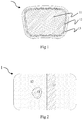
- an absorbable iron-based alloy implantable medical device 1 of the present application includes an iron-based alloy substrate 11, an alkaline protector 12 disposed on the iron-based alloy substrate 11, and a degradable polymer coating 13 disposed on the iron-based alloy substrate 11 and the alkaline protector 12.
- the alkaline protector 12 may directly cover the surface of the iron-based alloy substrate 11, or they are isolated from each other.
- a middle layer may be disposed between the iron-based alloy substrate 11 and the alkaline protector 12 to increase an adhesive force of the alkaline protector 12.
- the absorbable iron-based alloy implantable medical device 1 may be an absorbable lumen stent 1 (hereinafter referred to as the stent 1).
- the stent 1 may be a blood vessel stent, such as a coronary artery stent or a peripheral stent, which has a radial compression state or a radial expansion state.
- the stent 1 in the radial compression state is disposed in a delivery device and is delivered to a diseased portion of a lumen through the delivery device, and after being released, it is expanded to the radial expansion state through balloon dilatation to cling to a lumen wall, and is fixed in the lumen through a radial supporting force.
- the substrate 11 may be pure iron or an iron-based alloy with a carbon content less than or equal to 2.11wt.%, such as a product obtained by carburizing and/or nitriding the pure iron.
- the degradable polymer layer at least includes one degradable polymer which produces an acidic degradation product, such as carboxylic acid, after being degraded and may be selected from degradable polyester and/or degradable polyanhydride.
- the degradable polyester is selected from the group consisting of polylactic acid, polyglycolic acid, poly(ethylene succinate), poly( ⁇ -hydroxybutyrate), polycaprolactone, polyethylene glycol adipate, a polylactic acid-glycollic acid copolymer and a polyhydroxybutyrate-pentanoate copolymer, or is selected from the group consisting of a physical blend of at least two of the polylactic acid, the polyglycolic acid, the poly(ethylene succinate), the poly( ⁇ -hydroxybutyrate), the polycaprolactone, the polyethylene glycol adipate, the polylactic acid-glycollic acid copolymer and the polyhydroxybutyrate-pentanoate copolymer, or is selected from the group consisting of a
- the polyanhydride is selected from the group consisting of poly1,3-bis(p-carboxyphenoxy)propane-sebacic acid, poly(erucic acid dimer-sebacic acid) or poly(fumaric acid-sebacic acid);
- the degradable polyester is selected from the group consisting of the polylactic acid, the polyglycolic acid, the poly(ethylene succinate), the poly( ⁇ -hydroxybutyrate), the polycaprolactone, the polyethylene glycol adipate, the polylactic acid-glycollic acid copolymer and the polyhydroxybutyrate-pentanoate copolymer; or the degradable polymer includes a blend of the above degradable polyester and the above degradable polyanhydride, or is a degradable copolymer formed by copolymerizing monomers of the above degradable polyester and the above degradable polyanhydride.
- an active drug component may be further mixed into the degradable polymer layer.
- An active drug may be a drug for inhibiting vascular proliferation, such as taxol, sirolimus and its derivative, or an antiplatelet drug such as cilostazol, or an antithrombotic drug such as heparin, or an anti-inflammatory reaction drug such as dexamethasone, or an anti-allergen drug such as calcium gluconate, chlortrimeton and cortisone, or a mixture of at least two of the above drugs.
- the alkaline protector 12 covers the entire surface of the iron-based alloy substrate 11, and the degradable polymer layer 13 covers at least part of the surface of the alkaline protector 12. In the example as shown in Figure 1 , the degradable polymer layer 13 may further directly cover the entire surface of the alkaline protector 12.
- the alkaline protector 12 covers part of the surface of the iron-based alloy substrate 11 to expose part of the surface of the iron-based alloy substrate 11.
- Figure 1 and Figure 2 are only used as examples, but not intended to limit the present application.
- the alkaline protector and the degradable polymer may cover the matrix in a staggered manner, but the degradable polymer does not cover the alkaline protector, and no further details are described here.
- the absorbable lumen stent 1 further includes the alkaline protector 12 disposed between the substrate 11 and the degradable polymer layer 13.
- alkaline protector 12 may include a single alkaline substance, or include a mixture of various single alkaline substances.
- the alkaline protector 12 includes a mixture of an alkaline substance and an adhesive. The volume percentage of the alkaline substance in the mixture is greater than or equal to 20 percent but less than 100 percent, that is to say, the volume percentage of the adhesive is less than or equal to 80 percent.
- the adhesive is a degradable adhesive or a water-soluble adhesive, and is at least one of cellulose, lignin, starch, chitin, polyethylene glycol, polyvinyl alcohol, cyclodextrin and water-soluble inorganic salt.
- the alkaline protector 12 may also include a mixture of the alkaline substance and a thickener.
- the volume percentage of the alkaline substance in the mixture is greater than or equal to 20 percent but less than 100 percent
- the adhesive may be one or more of gelatin, polyvinylpyrrolidone (PVP) and carboxyl methyl cellulose (CMC).
- the alkaline protector 12 may also include a mixture of the alkaline substance, the thickener and the adhesive.
- the volume percentage of the alkaline substance in the mixture is greater than or equal to 20 percent but less than 100 percent, the adhesive provides a better connection between the alkaline substance and the substrate, and the thickener achieves a slow release effect on the alkaline substance, thereby prolonging the non-corrosion time of the substrate.
- the alkaline substance included in the alkaline protector 12 may react with hydrogen ions (H ⁇ +>), including, but not limited to, sodium hydroxide, potassium hydroxide, magnesium hydroxide, zinc hydroxide, magnesium oxide, zinc oxide, sodium carbonate, sodium bicarbonate, potassium carbonate, potassium bicarbonate, calcium carbonate, sodium phosphate, sodium hydrogen phosphate, potassium phosphate, potassium hydrogen phosphate, calcium phosphate, calcium hydrogen phosphate, sodium pyrophosphate, trisodium monohydrogen diphosphate, potassium pyrophosphate, tripotassium monohydrogen diphosphate, calcium pyrophosphate, calcium hydrogen diphosphate, sodium polyphosphate, potassium polyphosphate, calcium polyphosphate, ammonium polyphosphate, hydroxyapatite, carbonated hydroxyapatite, sodium borate, potassium borate, calcium borate, sodium oxalate, potassium oxalate, calcium oxalate, trisodium citrate, sodium dihydrogen citrate, tripotassium cit
- Weak acid and strong alkali salt in the alkaline substance may achieve a buffer effect in acid-alkali neutralization reaction between the alkaline substance and an acidic environment, making a pH value of the reaction process change slowly.
- the weak acid and strong alkali salt reacts with the hydrogen ions to produce weak acid.
- the weak acid and weak acid salt form a buffer solution which may offset or relieve the influence of extra acid or alkali on the pH value of the solution to a certain extent, thereby keeping the pH value of the solution relatively stable.
- the buffer substance may keep the pH value of the region near the degradable polymer (for example the polylactic acid) from experiencing minimal change to a certain extent, and even maintain the pH value near the degradable polymer in a neutral state, so that early degradation of the degradable polymer is slowed down.
- the degradable polymer for example the polylactic acid
- the weak acid and strong alkali salt may be at least one of sodium carbonate, sodium bicarbonate, potassium carbonate, potassium bicarbonate, sodium phosphate, sodium hydrogen phosphate, potassium phosphate, potassium hydrogen phosphate, calcium phosphate, calcium hydrogen phosphate, sodium pyrophosphate, trisodium monohydrogen diphosphate, potassium pyrophosphate, tripotassium monohydrogen diphosphate, sodium polyphosphate, potassium polyphosphate, calcium polyphosphate, ammonium polyphosphate, sodium borate, potassium borate, calcium borate, sodium oxalate, potassium oxalate, calcium oxalate, trisodium citrate, sodium dihydrogen citrate, tripotassium citrate, potassium dihydrogen citrate, calcium citrate, calcium hydrogen citrate, sodium tartrate, potassium tartrate, calcium tartrate, ethylene diamine tetraacetic acid tetrasodium and ethylene diamine tetraacetic acid tetrapotassium. Therefore, the weak acid and strong al
- the above-mentioned alkaline substance itself (for example, the weak acid and strong alkali salt) is adopted to achieve the buffer effect in the acid-alkali neutralization reaction between the alkaline substance and the acidic environment formed by the degradable polymer; and in addition, the alkaline protector further includes a slow release assisted substance for prolonging the release time of the alkaline substance, such as the above-mentioned thickener.
- the thickener increases the viscosity of the alkaline protector, thus achieving a slow release effect on the alkaline substance to prolong the non-corrosion time of the substrate; or, a hydrophobic layer may be disposed on the surface of the alkaline substance, and it isolates the alkaline substance to prolong the release time of the alkaline substance.
- the hydrophobic layer may cover the alkaline protector via spray coating, dip coating, brush coating, 3D printing, electrostatic spinning or embedding, and it may reduce contact between the alkaline protector and water (physiological fluid) within a certain time period, thereby prolonging the retention time of the alkaline protector and prolonging the non-corrosion time of the substrate.
- the hydrophobic layer includes at least one hydrophobic substance used as the slow release assisted substance which at least includes a hydrophobic group, and the hydrophobic group may be an oily substance and/or an anionic surfactant.
- the oily substance may be higher fatty acid glyceride, lipoid, higher alkanol, higher fatty acid and its salt, an organic acid esterified compound, polysiloxane, fat-soluble vitamin, a silane coupling agent, a solid or semisolid alkane or its mixture, a linear alkyl compound and an amino acid.
- the higher fatty acid glyceride is selected from monoglyceride, diglyceride or triglyceride; the lipoid is preferably lecithin; the higher alkanol is selected from octacosanol and triacontanol; the higher fatty acid and its salt are selected from lauric acid, palmitic acid, stearic acid, magnesium stearate and octadecylamine; the organic acid esterified compound is selected from citrate, laurate and sucrose laurate; the polysiloxane is preferably silicone oil; the fat-soluble vitamin is selected from beta-carotenoid, vitamin E and vitamin A; the solid or semisolid alkane is selected from paraffin, microcrystalline wax and Vaseline; the linear alkyl compound is selected from sodium dodecyl sulfonate, sodium dodecyl sulfate, dodecyl dimethyl benzyl ammonium chloride and hexadecyl
- the anionic surfactant layer includes a hydrophilic group and a hydrophobic tail chain, and the hydrophilic group is connected with the alkaline protector in a chemical adsorption manner.
- the hydrophilic group is a polar hydrophilic group, such as a carboxy group, a sulfuric acid group or a sulfonic acid group.
- the hydrophobic tailchain is a non-polar hydrophobic tail chain, including a hydrocarbon chain which includes at least 8 carbon atoms.
- the anionic surfactant may include a single hydrophilic group and a single hydrophobic tail chain, and it also may be an anionic Gemini surfactant formed by a dimer or an oligomer including the single hydrophilic group and the single hydrophobic tail chain.
- the anionic surfactant may be sodium dodecyl sulfate, sodium dodecyl sulfonate or sodium dodecyl benzene sulfonate.
- the implantable medical device according to the present application is implantable into a human body, for example, the absorbable lumen stent is implantable into a blood vessel, carboxylic acid produced by the degradation of the degradable polymer is distributed near the implantable device, and if a drug is loaded, it is released in the degradation process.
- the alkaline protector plays a spacer role for isolating the substrate covered thereby from an implantation environment to avoid contact between an acidic product of the degradable polymer and the iron alloy substrate, and on the other hand, hydroxide ions may be ionized from the alkaline substance of the alkaline protector or the alkaline substance may react with the hydrogen ions in a physiological environment, thereby generating a neutralization reaction with the acidic product to protect the iron substrate from not being corroded or being corroded slowly.
- All cations (such as Na ⁇ +>, K ⁇ +>, Mg ⁇ 2+>, Zn ⁇ 2+> and Ga ⁇ 2+>) and anions (such as CO3 ⁇ 2-> and PO4 ⁇ 3->) which are left in the neutralization reaction are substances existing in the human body, so that no biocompatibility risk is caused.
- the iron alloy substrate With continuous consumption of the alkaline protector, the iron alloy substrate is exposed gradually, and the micro acidic environment which is not completely neutralized would accelerate corrosion of the iron-based alloy substrate.
- the iron alloy substrate is basically not corroded within a time period from the early stage of implantation of the device to complete consumption of the alkaline protector.
- the device Compared with a device which does not include the alkaline protector, the device has the advantage that, due to the existence of the alkaline protector, the iron-based alloy substrate starts corrosion later or the early corrosion of the substrate is slowed down; after the alkaline protector is completely consumed, the iron-based alloy substrate may be quickly corroded in the acidic environment formed by the degradable polymer, thereby meeting the time requirement of the device for the whole corrosion cycle.
- the early corrosion-delayed iron-based alloy substrate has little impact on the supporting force of the device in the early stage of implantation, which guarantees the mechanical property of the device and properly decreases the size of the iron-based alloy substrate, thus reducing the quantity of metal corrosion products and facilitating absorption and clearing of the corrosion products.
- the surface of the iron-based alloy substrate may be roughened, or a degradable polymer middle layer may be disposed between the iron-based alloy substrate and the alkaline protector.
- the degradation product of the degradable polymer is neutral, and the degradable polymer may be selected from at least one of cellulose, lignin, starch, chitin and polyethylene glycol.
- a manufacturing method of an absorbable iron-based alloy implantable medical device of the present application includes the steps of: the surface of an iron-based alloy substrate is covered with an alkaline protector, and the iron-based alloy substrate and/or the alkaline protector is covered with a degradable polymer.
- the step that the surface of the iron-based alloy substrate is covered with the alkaline protector includes: the surface of the iron-based alloy substrate is coated with a solution/suspension of the alkaline substance via spray coating, dip coating, brush coating, 3D printing, electrostatic spinning and embedding and the like, and the surface is dried, thereby forming the alkaline protector on the surface of the iron-based alloy substrate.
- the volume percentage of an alkaline substance in the formed alkaline protector is 20 to 100 percent.
- the alkaline substance includes, but not limited to, sodium hydroxide, potassium hydroxide, magnesium hydroxide, zinc hydroxide, magnesium oxide, zinc oxide, sodium carbonate, sodium bicarbonate, potassium carbonate, potassium bicarbonate, calcium carbonate, sodium phosphate, sodium hydrogen phosphate, potassium phosphate, potassium hydrogen phosphate, calcium phosphate, calcium hydrogen phosphate, sodium pyrophosphate, trisodium monohydrogen diphosphate, potassium pyrophosphate, tripotassium monohydrogen diphosphate, calcium pyrophosphate, calcium hydrogen diphosphate, sodium polyphosphate, potassium polyphosphate, calcium polyphosphate, ammonium polyphosphate, hydroxyapatite, carbonated hydroxyapatite, sodium borate, potassium borate, calcium borate, sodium oxalate, potassium oxalate, calcium oxalate, trisodium citrate, sodium dihydrogen citrate, tripotassium citrate, potassium dihydrogen citrate, calcium citrate, calcium hydrogen citrate, sodium tart
- the degradable polymer and a drug may be first dissolved in an organic solvent (such as ethyl acetate and chloroform) to form a mixed solution, and then the whole surface or part of the surface of the alkaline protector-containing iron-based alloy substrate is coated with the mixed solution and is dried to form a film via spray coating, dip coating, brush coating and electrostatic spinning and the like, with spray coating being preferred.
- an organic solvent such as ethyl acetate and chloroform
- the method of coverage of the degradable polymer is only used as an example, and any proper method familiar to a person skilled in the art may be adopted to cover the surface of the iron-based alloy substrate and/or the surface of the alkaline protector with the degradable polymer.
- the degradable polymer may be degradable polyester and/or degradable polyanhydride.
- the degradable polyester is selected from the group consisting of polylactic acid, polyglycolic acid, poly(ethylene succinate), poly( ⁇ -hydroxybutyrate), polycaprolactone, polyethylene glycol adipate, a polylactic acid-glycollic acid copolymer and a polyhydroxybutyrate-pentanoate copolymer, or is selected from the group consisting of a physical blend of at least two of the polylactic acid, the polyglycolic acid, the poly(ethylene succinate), the poly( ⁇ -hydroxybutyrate), the polycaprolactone, the polyethylene glycol adipate, the polylactic acid-glycollic acid copolymer and the polyhydroxybutyrate-pentanoate copolymer, or is secleted from the group consisting of a copolymer formed by copolymerizing at least two of monomers forming the polylactic acid, the polyglycolic acid, the poly(ethylene succinate), the poly( ⁇ -hydroxybutyrate), the polycaprolactone,
- the polyanhydride is selected from poly1,3-bis(p-carboxyphenoxy)propane-sebacic acid, poly(erucic acid dimer-sebacic acid) or poly(fumaric acid-sebacic acid).
- the degradable polyester is selected from the group consisting of polylactic acid, polyglycolic acid, poly(ethylene succinate), poly( ⁇ -hydroxybutyrate), polycaprolactone, polyethylene glycol adipate, a polylactic acid-glycollic acid copolymer and a polyhydroxybutyrate-pentanoate copolymer; or the degradable polymer includes a blend of the above degradable polyester and the above degradable polyanhydride, or is a degradable copolymer formed by copolymerizing monomers of the above degradable polyester and the above degradable polyanhydride.
- the diastolic pressure (low pressure) and the systolic pressure (high pressure) of a coronary vessel of a normal person are 60 to 120 mmHg, but the systolic pressure of a hypertension patient is up to 175 mmHg, namely 23.3 kPa.
- the systolic pressure of the vessel is 400 mmHg, namely 55 kPa.
- a psychological stress state, a cold stimulation, a strenuous exercise, coronary atherosclerosis and a local stimulation to the coronary artery due to coronary angiogram as well as one-time heavy smoking or drinking may all induce coronary artery spasm.
- the stent in order to provide an effective support for the coronary vessel, should at least bear the systolic pressure of 23.3 kPa in case of pulsation of the coronary vessel, and should be equipped to bear the systolic pressure of 55 kPa in case of vasospasm.
- the design target of the iron-based alloy stent provided by each embodiment as follows is to meet the following clinical requirements: from the date of implantation, within preset time (for example within 1 month, 2 months, 3 months or other time lengths shorter than 3 months), the iron-based alloy substrate is nearly not corroded; after being implantable, the iron-based alloy stent may provide effective support for 3 months; after 3 months of implantation, the radial supporting strength is higher than or equal to 55 kPa; and the corrosion cycle is longer than 6 months but shorter than or equal to 24 months.
- the definition of the stent of the specification 30008 in each embodiment is as follows: after the stent is expanded under the action of a nominal expansion pressure of 8 atm, the nominal diameter is 3 mm, and the nominal length is 8 mm.
- a normal fluctuation of the performance of a stent product within a designed allowable range, individual differences between the animals, an insufficient density of designed sampling points, and a system error unavoidably introduced by the test methods may lead to fluctuations of monitored non-corrosion time points, radial strength data and complete corrosion time points of the stent within a certain range in an actual test.
- an absorbable iron-based stent is taken as an example for description.
- the absorbable iron-based stent should maintain its effective radial support (the supporting force is higher than 55 Pa) within a 3-month vascular repair period, and would be corroded as quickly as possible after a vascular function is recovered. It is required that the degradation period is generally 6 to 24 months.
- the iron-based alloy substrate is manufactured by nitriding pure iron, with its initial radial strength of 145 kPa and mass of 4.5 to 5 mg.
- Sodium hydroxide is fully dissolved in an ethanol solution to obtain a saturated ethanol solution of sodium hydroxide which is used as an alkaline solution for manufacturing an alkaline protector.
- the surfaces of multiple iron-based alloy substrates are coated with the saturated ethanol solution of the sodium hydroxide via spraying coating to make a sodium hydroxide coating cover the whole surface of each iron-based alloy substate. After spray coating, the iron-based alloy substrates are dried and weighed, and at this time, the sodium hydroxide coating is about 6 ⁇ m in thickness.
- the surfaces of the dried alkaline coatings are coated with a poly-dl-lactic acid-ethyl acetate solution with a molecular weight of 200,000 via spray coating, thus covering the surfaces of the sodium hydroxide coatings, and then are dried, thus obtaining polymer coatings which are about 8 ⁇ m in thickness. Therefore, multiple absorbable iron-based stents are manufactured.
- the absorbable iron-based stents manufactured in this embodiment are implantable into an abdominal aorta of a rabbit; after 3 months, one stent is taken out, and observation finds that the surface of the stent is corroded to a certain extent, and its radial supporting force is measured as 80 kPa; and after the stents are implantable for 12 months, observation finds that the residual absorbable iron-based stents are completely corroded.
- the alkaline protectors are disposed between the iron-based alloy substrates and degradable polymer layers of the stents in the embodiment to isolate the iron-based alloy substrates from a tissue environment of a human body and isolate the iron-based alloy substrates from an acidic environment produced in a degradation process of degradable polymers, thereby avoiding early corrosion of the iron-based alloy substrates; therefore, after the stents are implantable for 3 months, their radial supporting forces are reduced from the original 145 kPa to 80 kPa, which meet a radial supporting force requirement during the early stage of implantation of the stents; and after the alkaline protectors are consumed through acid-alkali neutralization, the substrates may be quickly corroded in the acidic environment produced by the degradable polymers, thereby realizing a 12-month degradation period and meeting a corrosion recycle requirement.
- Embodiment I What is different from Embodiment I is that sodium hydroxide coatings of the multiple manufactured absorbable iron-based alloy stents are about 20 ⁇ m in thickness, and polylactic acid coatings are about 12 ⁇ m in thickness. After being implantable for 3 months, one stent is taken out, and its radial supporting force is measured as 100 kPa. After the stents are implantable for 9 months, observation finds that the residual absorbable iron-based stents are completely degraded.
- Embodiment I It can be known from comparison with Embodiment I that using the same iron-based alloy substrates, by increasing the thicknesses of alkaline protector and the thicknesses of degradable polymer layers simultaneously, the radial supporting forces of the stents implantable for 3 months are slightly higher than those in Embodiment I.
- the stents according to this embodiment meet requirements on both the radial supporting force during the early stage of implantation and the corrosion cycle.
- Embodiment II What is different from Embodiment II is that polylactic acid coatings of manufactured absorbable iron-based alloy stents are about 8 ⁇ m in thickness. After being implantable for 3 months, one stent is taken out, and its radial supporting force is measured as 120 kPa. After the stents are implantable for 24 months, observation finds that the residual absorbable iron-based stents are completely degraded. It can be known from comparison with Embodiment II that using the same iron-based alloy substrates and the same alkaline protectors, by decreasing the thicknesses of degradable polymer layers, the radial supporting forces of the stents implantable for 3 months may be slightly increased, but their corrosion cycles are correspondingly prolonged. The stents according to this embodiment meet requirements on both the radial supporting force during the early stage of implantation and the corrosion cycle.
- Embodiment III The same iron-based alloy substrates in Embodiment III are adopted, and nano magnesia powder and polyethylene glycol are ultrasonically dispersed in an ethanol solution to obtain a mixed suspension; and part of the surfaces of the iron-based alloy substrates are coated with the suspension via spray coating to form alkaline protectors which are 20 ⁇ m in thickness, and the volume percentage of the magnesia is 60 percent.
- the alkaline protectors After the alkaline protectors are dried, their surfaces are coated with a poly-dl-lactic acid-ethyl acetate solution with a molecular weight of 200,000 by spray coating; and polylactic acid coatings, which are about 8 ⁇ m in thickness, completely cover the surfaces of magnesia coatings, and after the polylactic acid coatings are dried, absorbable iron-based alloy stents are manufactured.
- the absorbable iron-based alloy stents are implantable into an abdominal aorta of a rabbit; after 3 months, one stent is taken out, and its radial supporting force is measured as 80 kPa; and after the stents are implantable for 12 months, observation finds that the stents are completely corroded.
- the stents according to this embodiment meet requirements on both the radial supporting force during the early stage of implantation and the corrosion cycle.
- Contrast I provides a nitriding iron-based bare stent (which does not include a degradable polymer and an alkaline protector) of a specification 30008, with its original radial strength of 145 kPa and mass of 4.5 to 5 mg.
- Such stents are implantable into an abdominal aorta of a rabbit; after 3 months, one stent is taken out, and a mass loss test shows that it is slightly corroded, and its radial supporting strength is measured as 140 kPa, which meets a 3-month mechanical property requirement during the early stage of implantation. Then after being implantable for 24 months, another stent is taken out, and the mass loss test shows that it is not completely corroded, which indicates that the corrosion cycle of the nitriding iron stent without the degradable polymer layer is too long.
- Contrast II provides an absorbable iron-based stent, and its manufacturing method is as follows: the surface of a nitriding iron stent, which has the original radial strength of 145 kPa and the mass of 4.5 to 5 mg and is of the specification 30008, is coated with a poly-dl-lactic acid-ethyl acetate solution with a molecular weight of 200,000 by spray coating, and the solution completely covers the whole surface of the stent; and after the surface is dried, the absorbable iron-based alloy stent with a poly-dl-lactic acid coating which is about 12 ⁇ m in thickness is manufactured.
- Such stents are implantable into an abdominal aorta of a rabbit; after 2 months, one stent is taken out, and observation finds that the struts of the stent are severely corroded and most of the struts are broken; then after 3 months, another stent is taken out, its radial supporting strength is measured as 55 kPa; and after the stents are implantable for 6 months, observation finds that they are completely corroded, which indicates that the corrosion is too fast, and the stents may not meet an early mechanical property requirement.
- Contrast III provides an absorbable iron-based stent, and its manufacturing method is as follows: the surface of a nitriding iron stent, which has the original radial strength of 175 kPa and the mass of 5.5 to 6 mg and is of the specification 30008, is coated with a poly-dl-lactic acid-ethyl acetate solution with a molecular weight of 200,000 by spray coating, and the solution completely covers the whole surface of the stent; and after the surface is dried, the absorbable iron-based alloy stent with a poly-dl-lactic acid coating which is about 8 ⁇ m in thickness is manufactured.
- Such stents are implantable into an abdominal aorta of a rabbit; after 1 month, one stent is taken out and observation finds that the struts of the stent are corroded to a certain extent; then after 3 months, another stent is taken out, and its radial supporting strength is measured as 80 kPa, which meets a 3-month mechanical property requirement in the early stage of implantation; and after the stents are implantable for 12 months, observation finds that they are completely corroded.
- Comparison of Contrast III with Embodiment II shows that under a condition of identical degradable polymer layers, although the corrosion cycle is equivalent to that of Embodiment II, the initial radial strength of the substrate is increased from 145 kPa to 175 kPa, and correspondingly, the mass of the substrate is increased from 4.5 to 5 mg to 5.5 to 6 mg, thereby correspondingly increasing the amount of metals implantable into a human body and the amount of degradation products, and increasing a biological risk of implantation.
- Embodiment II of the present application by disposing the alkaline protector between the iron-based alloy substrate and the degradable polymer, and reasonable regulation of the content and the thickness of an alkaline substance in the alkaline protector, the early corrosion of the iron-based alloy substrate can be delayed or inhibited, so that after being implantable for 3 months, the device may still keep the effective radial supporting force and also meet the requirement on the corrosion cycle.
- the alkaline protector by disposing the alkaline protector on the iron-based alloy substrate of the absorbable iron-based alloy implantable medical device, on one hand, the acidic product produced by the degradation of the polymer may be neutralized; and on the other hand, the alkaline protector may be used as a spacer configured to isolate the iron-based alloy substrate from an implantation environment and isolate the iron-based alloy substrate from a micro acidic environment formed by the degradation of the polymer at the beginning of implantation to relieve and even inhibit the early corrosion of the iron-based alloy substrate, so that the device may meets the mechanical property requirement during the initial stage of implantation. With consumption of the alkaline protector by neutralization, the exposed iron-based alloy substrate still may be quickly corroded in the micro acidic environment formed by the degradation of the degradable polymer layer, thereby meeting the requirement on the corrosion cycle of the stent.
Landscapes
- Health & Medical Sciences (AREA)
- Life Sciences & Earth Sciences (AREA)
- General Health & Medical Sciences (AREA)
- Veterinary Medicine (AREA)
- Public Health (AREA)
- Animal Behavior & Ethology (AREA)
- Epidemiology (AREA)
- Chemical & Material Sciences (AREA)
- Heart & Thoracic Surgery (AREA)
- Vascular Medicine (AREA)
- Surgery (AREA)
- Medicinal Chemistry (AREA)
- Transplantation (AREA)
- Oral & Maxillofacial Surgery (AREA)
- Dermatology (AREA)
- Biomedical Technology (AREA)
- Engineering & Computer Science (AREA)
- Inorganic Chemistry (AREA)
- Molecular Biology (AREA)
- Cardiology (AREA)
- Materials For Medical Uses (AREA)
Claims (9)
- Dispositif médical implantable absorbable en alliage à base de fer, présentant un substrat (11) en alliage à base de fer comprenant un polymère dégradable (13) et un agent protecteur alcalin (12) tous deux agencés sur la surface du substrat (11) en alliage à base de fer, l'agent protecteur alcalin (12) recouvrant une partie de la surface du substrat (11) en alliage à base de fer, et le polymère dégradable (13) recouvrant au moins une partie de la surface de l'agent protecteur alcalin (12) et/ou au moins une partie de la surface d'une région non recouverte par l'agent protecteur alcalin (12),
caractérisé en ce que l'agent protecteur alcalin (12) est un mélange d'une substance alcaline et d'un adhésif prévu pour une meilleure liaison entre la substance alcaline et le substrat (11), et le pourcentage volumique de l'adhésif dans le mélange est inférieur ou égal à 80 pour cent, et
l'adhésif étant de la cellulose et/ou de la lignine et/ou de l'amidon et/ou de la chitine et/ou du polyéthylène glycol et/ou de l'alcool polyvinylique et/ou de la cyclodextrine et/ou un sel inorganique soluble dans l'eau. - Dispositif médical implantable absorbable en alliage à base de fer selon la revendication 1, l'agent protecteur alcalin (12) recouvrant toute la surface du substrat (11) en alliage à base de fer, et le polymère dégradable (13) recouvrant au moins une partie de la surface de l'agent protecteur alcalin (12).
- Dispositif médical implantable absorbable en alliage à base de fer selon la revendication 1, l'agent protecteur alcalin (12) comprenant au moins une substance alcaline ; et la substance alcaline étant choisie dans le groupe constitué d'hydroxyde de sodium, d'hydroxyde de potassium, d'hydroxyde de magnésium, d'hydroxyde de zinc, d'oxyde de magnésium, d'oxyde de zinc, de carbonate de sodium, de bicarbonate de sodium, de carbonate de potassium, de bicarbonate de potassium, de carbonate de calcium, de phosphate de sodium, d'hydrogénophosphate de sodium, de phosphate de potassium, d'hydrogénophosphate de potassium, de phosphate de calcium, d'hydrogénophosphate de calcium, de pyrophosphate de sodium, de monohydrogénodiphosphate trisodique, de pyrophosphate de potassium, de monohydrogénodiphosphate tripotassique, de pyrophosphate de calcium, d'hydrogénodiphosphate de calcium, de polyphosphate de sodium, de polyphosphate de potassium, de polyphosphate de calcium, de polyphosphate d'ammonium, d'hydroxyapatite, d'hydroxyapatite carbonée, de borate de sodium, de borate de potassium, de borate de calcium, d'oxalate de sodium, d'oxalate de potassium, d'oxalate de calcium, de citrate trisodique, de dihydrogénocitrate de sodium, de citrate tripotassique, de dihydrogénocitrate de potassium, de citrate de calcium, d'hydrogénocitrate de calcium, de tartrate de sodium, de tartrate de potassium, de tartrate de calcium, de tétrasodium d'acide éthylènediaminetétraacétique, de tétrapotassium d'acide éthylènediaminetétraacétique, de calcium d'acide éthylènediaminetétraacétique, d'éthanolate de sodium, d'éthanolate de potassium, d'éthanolate de calcium, d'urée et d'hexamine.
- Dispositif médical implantable absorbable en alliage à base de fer selon la revendication 1, l'agent protecteur alcalin (12) comprenant au moins une substance alcaline ; et la substance alcaline comprenant un acide faible et un sel alcalin fort qui est choisi dans le groupe constitué de carbonate de sodium, de bicarbonate de sodium, de carbonate de potassium, de bicarbonate de potassium, de phosphate de sodium, d'hydrogénophosphate de sodium, de phosphate de potassium, d'hydrogénophosphate de potassium, de phosphate de calcium, d'hydrogénophosphate de calcium, de pyrophosphate de sodium, de monohydrogénodiphosphate trisodique, de pyrophosphate de potassium, de monohydrogénodiphosphate tripotassique, de polyphosphate de sodium, de polyphosphate de potassium, de polyphosphate de calcium, de polyphosphate d'ammonium, de borate de sodium, de borate de potassium, de borate de calcium, d'oxalate de sodium, d'oxalate de potassium, d'oxalate de calcium, de citrate trisodique, de dihydrogénocitrate de sodium, de citrate tripotassique, de dihydrogénocitrate de potassium, de citrate de calcium, d'hydrogénocitrate de calcium, de tartrate de sodium, de tartrate de potassium, de tartrate de calcium, de tétrasodium d'acide éthylènediaminetétraacétique et de tétrapotassium d'acide éthylènediaminetétraacétique.
- Dispositif médical implantable absorbable en alliage à base de fer selon la revendication 3 ou 4, l'agent protecteur alcalin (12) comprenant en outre une substance à libération lente pour prolonger le temps de libération de la substance alcaline, la substance à libération lente comprenant un agent épaississant qui est mélangé avec ladite au moins une substance alcaline de manière à former un mélange ; et le pourcentage volumique de la substance alcaline dans le mélange étant supérieur ou égal à 20 pour cent mais inférieur à 100 pour cent.
- Dispositif médical implantable absorbable en alliage à base de fer selon la revendication 1, une couche médiane polymère dégradable qui se dégrade de manière à former des produits de dégradation neutres étant en outre agencée entre le substrat (11) en alliage à base de fer et l'agent protecteur alcalin (12).
- Dispositif médical implantable absorbable en alliage à base de fer selon la revendication 1, le substrat (11) en alliage à base de fer étant un alliage à base de fer présentant une teneur en carbone inférieure ou égale à 2,11 % en poids.
- Dispositif médical implantable absorbable en alliage à base de fer selon la revendication 1, un composant de médicament actif étant mélangé au polymère dégradable (13), et le médicament actif étant choisi dans le groupe constitué de taxol, de sirolimus et d'un dérivé de celui-ci, de cilostazole, d'héparine, de dexaméthasone, de gluconate de calcium, de chlor-trimétone et de cortisone.
- Dispositif médical implantable absorbable en alliage à base de fer selon la revendication 1, le polymère dégradable (13) étant choisi parmi le polyester dégradable et/ou le polyanhydride dégradable ; le polyester dégradable étant choisi dans le groupe constitué d'acide polylactique, d'acide polyglycolique, d'(acide polylactique- acide glycolique), de polycaprolactone, de polyhydroxyalcanoate, de polyacrylate, de poly(succinate d'éthylène), de poly(β-hydroxybutyrate) et d'adipate de polyéthylène glycol, ou étant choisi dans le groupe constitué d'un mélange physique d'au moins deux des éléments suivants : l'acide polylactique, l'acide polyglycolique, le poly(succinate d'éthylène), le poly(β-hydroxybutyrate), la polycaprolactone, l'adipate de polyéthylène glycol, d'un copolymère acide polylactique-acide glycolique et d'un copolymère polyhydroxybutyrate-pentanoate, ou étant choisi dans le groupe constitué de copolymères réalisés par la copolymérisation d'au moins deux monomères formant l'acide polylactique, l'acide polyglycolique, le poly(succinate d'éthylène), le poly(β-hydroxybutyrate), la polycaprolactone, l'adipate de polyéthylène glycol, le copolymère acide polylactique-acide glycolique et le copolymère polyhydroxybutyrate-pentanoate ; et le polyanhydride dégradable étant choisi dans le groupe constitué d'acide poly1,3-bis(p-carboxyphénoxy)propane sébacique, de poly(acide érucique-dimère-acide sébacique) ou de poly(acide fumarique-acide sébacique), ou le polymère dégradable (13) étant un copolymère réalisé par la copolymérisation d'au moins deux monomères formant le polyester dégradable et le polyanhydride dégradable.
Applications Claiming Priority (2)
| Application Number | Priority Date | Filing Date | Title |
|---|---|---|---|
| CN201510799593.7A CN106693043B (zh) | 2015-11-18 | 2015-11-18 | 可吸收铁基合金植入医疗器械及其制备方法 |
| PCT/CN2016/085187 WO2017084314A1 (fr) | 2015-11-18 | 2016-06-08 | Dispositif médical absorbable implanté en alliage à base de fer et son procédé de préparation |
Publications (3)
| Publication Number | Publication Date |
|---|---|
| EP3378504A1 EP3378504A1 (fr) | 2018-09-26 |
| EP3378504A4 EP3378504A4 (fr) | 2019-07-24 |
| EP3378504B1 true EP3378504B1 (fr) | 2020-09-23 |
Family
ID=58717275
Family Applications (1)
| Application Number | Title | Priority Date | Filing Date |
|---|---|---|---|
| EP16865495.2A Active EP3378504B1 (fr) | 2015-11-18 | 2016-06-08 | Dispositif médical absorbable implanté en alliage à base de fer et son procédé de préparation |
Country Status (4)
| Country | Link |
|---|---|
| US (1) | US12324871B2 (fr) |
| EP (1) | EP3378504B1 (fr) |
| CN (1) | CN106693043B (fr) |
| WO (1) | WO2017084314A1 (fr) |
Families Citing this family (14)
| Publication number | Priority date | Publication date | Assignee | Title |
|---|---|---|---|---|
| CN106474545B (zh) * | 2015-08-28 | 2020-04-10 | 元心科技(深圳)有限公司 | 可吸收铁基合金植入医疗器械 |
| CN106806938B (zh) * | 2015-11-27 | 2020-04-14 | 先健科技(深圳)有限公司 | 可吸收铁基合金植入医疗器械 |
| CN108261559B (zh) * | 2016-12-30 | 2021-07-30 | 元心科技(深圳)有限公司 | 可吸收铁基器械 |
| CN119034017A (zh) * | 2016-12-30 | 2024-11-29 | 元心科技(深圳)有限公司 | 可吸收铁基器械 |
| CN109419570B (zh) * | 2017-08-30 | 2024-05-24 | 先健科技(深圳)有限公司 | 覆膜支架及其制备方法 |
| CN109589456B (zh) * | 2017-09-30 | 2024-03-19 | 元心科技(深圳)有限公司 | 植入式器械 |
| CN109966562B (zh) * | 2017-12-27 | 2021-12-17 | 元心科技(深圳)有限公司 | 可吸收金属支架 |
| CN108744028B (zh) * | 2018-08-01 | 2021-04-27 | 温州医科大学 | 抗菌抗炎多孔金属支架及其制备方法和应用 |
| CN109925534B (zh) * | 2019-01-11 | 2020-07-07 | 中南大学 | 一种同步提高铁基植入物降解速率和生物活性的方法 |
| CN113082290B (zh) * | 2019-12-23 | 2022-09-16 | 北京科技大学天津学院 | 一种具有生物活性和抗菌性能的氧化锌涂层-羟基磷灰石涂层、制备方法及用途 |
| JP7675189B2 (ja) * | 2020-12-28 | 2025-05-12 | 元心科技(深▲せん▼)有限公司 | 整形外科内固定インプラント医療機器 |
| CN113470872B (zh) * | 2021-06-25 | 2022-11-15 | 广西桂潮电缆投资有限公司 | 一种矿山用防腐电缆 |
| TWI871862B (zh) * | 2023-12-19 | 2025-02-01 | 台鋼學校財團法人台鋼科技大學 | 生物源性羥基磷灰石生醫複合材料之製造方法 |
| WO2025140440A1 (fr) * | 2023-12-29 | 2025-07-03 | 元心科技(深圳)有限公司 | Revêtement pour instrument médical |
Family Cites Families (25)
| Publication number | Priority date | Publication date | Assignee | Title |
|---|---|---|---|---|
| US5605696A (en) * | 1995-03-30 | 1997-02-25 | Advanced Cardiovascular Systems, Inc. | Drug loaded polymeric material and method of manufacture |
| IT1288038B1 (it) * | 1996-04-30 | 1998-09-10 | Flametal S P A | Procedimento per la preparazione di rivestimenti di idrossiapatite |
| SE0201599D0 (sv) * | 2002-03-21 | 2002-05-30 | Skyepharma Ab | Microparticles |
| US20050100578A1 (en) * | 2003-11-06 | 2005-05-12 | Schmid Steven R. | Bone and tissue scaffolding and method for producing same |
| WO2005044142A2 (fr) * | 2003-11-10 | 2005-05-19 | Angiotech International Ag | Dispositifs intravasculaires et agents d'induction de fibrose |
| BRPI0610519A2 (pt) * | 2005-04-05 | 2010-06-22 | Elixir Medical Corp | estrutura degradável, e, implante degradável |
| AU2014200856A1 (en) * | 2005-04-05 | 2014-03-13 | Elixir Medical Corporation | Degradable implantable medical devices |
| JP2010502362A (ja) * | 2006-09-06 | 2010-01-28 | ボストン サイエンティフィック リミテッド | 巨大分子を送達するためのナノ構造コーティングを有する医療器具 |
| US7981150B2 (en) * | 2006-11-09 | 2011-07-19 | Boston Scientific Scimed, Inc. | Endoprosthesis with coatings |
| CA2675633A1 (fr) * | 2007-01-26 | 2008-07-31 | Boston Scientific Limited | Endoprotheses medicales implantables |
| CN101411892B (zh) * | 2007-10-19 | 2013-01-16 | 中国科学院金属研究所 | 镁合金表面羟基磷灰石/聚乳酸复合生物涂层的制备方法 |
| US8267992B2 (en) * | 2009-03-02 | 2012-09-18 | Boston Scientific Scimed, Inc. | Self-buffering medical implants |
| CN101560686B (zh) | 2009-04-28 | 2010-09-15 | 先健科技(深圳)有限公司 | 人体可吸收镁合金材料处理方法及镁合金复合层 |
| EP2384725B1 (fr) * | 2010-05-06 | 2018-07-04 | Biotronik AG | Implant biocorrodable, dans lequel une corrosion peut être déclenchée et accélérée une fois l'implantation effectuée par un stimulus externe |
| KR101677204B1 (ko) * | 2010-07-16 | 2016-11-17 | 아아프 임플란타테 아게 | Mg 스크류 상의 아파타이트 코팅 |
| EP2613817B1 (fr) * | 2010-09-07 | 2016-03-02 | Boston Scientific Scimed, Inc. | Endoprothèses conteint une alliage de magnesium biodégradable |
| EP2744531B1 (fr) | 2011-08-15 | 2015-10-21 | MeKo Laserstrahl-Materialbearbeitungen e.K. | Alliage de magnésium et endoprothèses résorbables contenant cet alliage |
| US8834902B2 (en) * | 2012-03-09 | 2014-09-16 | Q3 Medical Devices Limited | Biodegradable supporting device |
| US9333099B2 (en) * | 2012-03-30 | 2016-05-10 | Abbott Cardiovascular Systems Inc. | Magnesium alloy implants with controlled degradation |
| US11149166B2 (en) | 2013-04-03 | 2021-10-19 | University of Pittsburgh—of the Commonwealth System of Higher Education | PEM layer-by-layer systems for coating substrates to improve bioactivity and biomolecule delivery |
| CN103418035B (zh) * | 2013-07-19 | 2015-07-08 | 上海交通大学 | 可调控镁合金血管支架降解速率的表面涂层的制备方法 |
| KR20220000993A (ko) * | 2013-09-25 | 2022-01-04 | 닛뽕 케미파 가부시키가이샤 | 골·연부에 발생하는 거세포성 종양, 연골육종 또는 골육종의 예방, 치료 또는 전이 예방을 위한 약제, 동맥색전술용 국소 주입제 및 인공골 |
| CN104587534A (zh) * | 2013-10-31 | 2015-05-06 | 先健科技(深圳)有限公司 | 可吸收铁基合金支架 |
| CN104491935A (zh) * | 2014-12-30 | 2015-04-08 | 马艳荣 | 一种生物可降解聚合物涂层载药镁合金洗脱支架 |
| CN104857570B (zh) * | 2015-05-05 | 2017-03-29 | 乐普(北京)医疗器械股份有限公司 | 一种可降解锌基合金支架及其制备方法 |
-
2015
- 2015-11-18 CN CN201510799593.7A patent/CN106693043B/zh active Active
-
2016
- 2016-06-08 US US15/776,514 patent/US12324871B2/en active Active
- 2016-06-08 EP EP16865495.2A patent/EP3378504B1/fr active Active
- 2016-06-08 WO PCT/CN2016/085187 patent/WO2017084314A1/fr not_active Ceased
Non-Patent Citations (1)
| Title |
|---|
| None * |
Also Published As
| Publication number | Publication date |
|---|---|
| US12324871B2 (en) | 2025-06-10 |
| CN106693043B (zh) | 2020-06-16 |
| EP3378504A1 (fr) | 2018-09-26 |
| EP3378504A4 (fr) | 2019-07-24 |
| US20180326128A1 (en) | 2018-11-15 |
| WO2017084314A1 (fr) | 2017-05-26 |
| CN106693043A (zh) | 2017-05-24 |
Similar Documents
| Publication | Publication Date | Title |
|---|---|---|
| EP3378504B1 (fr) | Dispositif médical absorbable implanté en alliage à base de fer et son procédé de préparation | |
| EP3400970B1 (fr) | Implant de dispositif médical en alliage à base de fer absorbable | |
| EP2560576B1 (fr) | Endoprothèses et autres dispositifs ayant un revêtement de matrice extracellulaire | |
| US20080051872A1 (en) | Biocorrodible metallic implant having a coating or cavity filling made of a peg/plga copolymer | |
| US8110088B2 (en) | Implant and method for manufacturing same | |
| EP1438084B1 (fr) | Revetement de stent contenant des inhibiteurs de reductase hmg-coa | |
| US8603569B2 (en) | Implant and method for producing a degradation-inhibiting layer on the surface of an implant body | |
| US20090270979A1 (en) | Biodegradable metallic stent | |
| CN106474545B (zh) | 可吸收铁基合金植入医疗器械 | |
| US20100023116A1 (en) | Biocorrodible implant with a coating containing a drug eluting polymer matrix | |
| US10857267B2 (en) | Absorbable iron-based alloy implantable medical device | |
| ES2926865T3 (es) | Endoprótesis de elución de fármaco con una capa de liberación biodegradable fijada con un recubrimiento de imprimación electroinjertado | |
| US8486434B2 (en) | Medical implant containing an antioxidative substance | |
| US20100145432A1 (en) | Implant and method for producing the same | |
| KR101806373B1 (ko) | 비대칭적 pei/plga 이중 코팅을 통해 부식저항성 및 혈관재협착 억제효과를 갖는 마그네슘 스텐트 및 이의 제조방법 | |
| CN111358603A (zh) | 一种药物洗脱器械及其制造方法 | |
| US20140228968A1 (en) | Biocorrodible implant with anti-corrosion coating | |
| US20110034990A1 (en) | Biocorrodible implant with active coating | |
| HK1190647B (en) | Drug eluting stent with a biodegradable release layer attached with an electro-grafted primer coating | |
| HK1190647A (en) | Drug eluting stent with a biodegradable release layer attached with an electro-grafted primer coating |
Legal Events
| Date | Code | Title | Description |
|---|---|---|---|
| STAA | Information on the status of an ep patent application or granted ep patent |
Free format text: STATUS: THE INTERNATIONAL PUBLICATION HAS BEEN MADE |
|
| PUAI | Public reference made under article 153(3) epc to a published international application that has entered the european phase |
Free format text: ORIGINAL CODE: 0009012 |
|
| STAA | Information on the status of an ep patent application or granted ep patent |
Free format text: STATUS: REQUEST FOR EXAMINATION WAS MADE |
|
| 17P | Request for examination filed |
Effective date: 20180530 |
|
| AK | Designated contracting states |
Kind code of ref document: A1 Designated state(s): AL AT BE BG CH CY CZ DE DK EE ES FI FR GB GR HR HU IE IS IT LI LT LU LV MC MK MT NL NO PL PT RO RS SE SI SK SM TR |
|
| AX | Request for extension of the european patent |
Extension state: BA ME |
|
| DAV | Request for validation of the european patent (deleted) | ||
| DAX | Request for extension of the european patent (deleted) | ||
| A4 | Supplementary search report drawn up and despatched |
Effective date: 20190621 |
|
| RIC1 | Information provided on ipc code assigned before grant |
Ipc: A61L 27/04 20060101AFI20190614BHEP |
|
| GRAP | Despatch of communication of intention to grant a patent |
Free format text: ORIGINAL CODE: EPIDOSNIGR1 |
|
| STAA | Information on the status of an ep patent application or granted ep patent |
Free format text: STATUS: GRANT OF PATENT IS INTENDED |
|
| INTG | Intention to grant announced |
Effective date: 20200421 |
|
| GRAS | Grant fee paid |
Free format text: ORIGINAL CODE: EPIDOSNIGR3 |
|
| GRAA | (expected) grant |
Free format text: ORIGINAL CODE: 0009210 |
|
| STAA | Information on the status of an ep patent application or granted ep patent |
Free format text: STATUS: THE PATENT HAS BEEN GRANTED |
|
| AK | Designated contracting states |
Kind code of ref document: B1 Designated state(s): AL AT BE BG CH CY CZ DE DK EE ES FI FR GB GR HR HU IE IS IT LI LT LU LV MC MK MT NL NO PL PT RO RS SE SI SK SM TR |
|
| REG | Reference to a national code |
Ref country code: GB Ref legal event code: FG4D |
|
| REG | Reference to a national code |
Ref country code: CH Ref legal event code: EP |
|
| REG | Reference to a national code |
Ref country code: IE Ref legal event code: FG4D |
|
| REG | Reference to a national code |
Ref country code: DE Ref legal event code: R096 Ref document number: 602016044729 Country of ref document: DE Ref country code: AT Ref legal event code: REF Ref document number: 1315727 Country of ref document: AT Kind code of ref document: T Effective date: 20201015 |
|
| PG25 | Lapsed in a contracting state [announced via postgrant information from national office to epo] |
Ref country code: BG Free format text: LAPSE BECAUSE OF FAILURE TO SUBMIT A TRANSLATION OF THE DESCRIPTION OR TO PAY THE FEE WITHIN THE PRESCRIBED TIME-LIMIT Effective date: 20201223 Ref country code: SE Free format text: LAPSE BECAUSE OF FAILURE TO SUBMIT A TRANSLATION OF THE DESCRIPTION OR TO PAY THE FEE WITHIN THE PRESCRIBED TIME-LIMIT Effective date: 20200923 Ref country code: GR Free format text: LAPSE BECAUSE OF FAILURE TO SUBMIT A TRANSLATION OF THE DESCRIPTION OR TO PAY THE FEE WITHIN THE PRESCRIBED TIME-LIMIT Effective date: 20201224 Ref country code: HR Free format text: LAPSE BECAUSE OF FAILURE TO SUBMIT A TRANSLATION OF THE DESCRIPTION OR TO PAY THE FEE WITHIN THE PRESCRIBED TIME-LIMIT Effective date: 20200923 Ref country code: NO Free format text: LAPSE BECAUSE OF FAILURE TO SUBMIT A TRANSLATION OF THE DESCRIPTION OR TO PAY THE FEE WITHIN THE PRESCRIBED TIME-LIMIT Effective date: 20201223 Ref country code: FI Free format text: LAPSE BECAUSE OF FAILURE TO SUBMIT A TRANSLATION OF THE DESCRIPTION OR TO PAY THE FEE WITHIN THE PRESCRIBED TIME-LIMIT Effective date: 20200923 |
|
| REG | Reference to a national code |
Ref country code: AT Ref legal event code: MK05 Ref document number: 1315727 Country of ref document: AT Kind code of ref document: T Effective date: 20200923 |
|
| PG25 | Lapsed in a contracting state [announced via postgrant information from national office to epo] |
Ref country code: RS Free format text: LAPSE BECAUSE OF FAILURE TO SUBMIT A TRANSLATION OF THE DESCRIPTION OR TO PAY THE FEE WITHIN THE PRESCRIBED TIME-LIMIT Effective date: 20200923 Ref country code: LV Free format text: LAPSE BECAUSE OF FAILURE TO SUBMIT A TRANSLATION OF THE DESCRIPTION OR TO PAY THE FEE WITHIN THE PRESCRIBED TIME-LIMIT Effective date: 20200923 |
|
| REG | Reference to a national code |
Ref country code: NL Ref legal event code: MP Effective date: 20200923 |
|
| REG | Reference to a national code |
Ref country code: LT Ref legal event code: MG4D |
|
| RAP2 | Party data changed (patent owner data changed or rights of a patent transferred) |
Owner name: BIOTYX MEDICAL (SHENZHEN) CO., LTD. |
|
| PG25 | Lapsed in a contracting state [announced via postgrant information from national office to epo] |
Ref country code: SM Free format text: LAPSE BECAUSE OF FAILURE TO SUBMIT A TRANSLATION OF THE DESCRIPTION OR TO PAY THE FEE WITHIN THE PRESCRIBED TIME-LIMIT Effective date: 20200923 Ref country code: EE Free format text: LAPSE BECAUSE OF FAILURE TO SUBMIT A TRANSLATION OF THE DESCRIPTION OR TO PAY THE FEE WITHIN THE PRESCRIBED TIME-LIMIT Effective date: 20200923 Ref country code: RO Free format text: LAPSE BECAUSE OF FAILURE TO SUBMIT A TRANSLATION OF THE DESCRIPTION OR TO PAY THE FEE WITHIN THE PRESCRIBED TIME-LIMIT Effective date: 20200923 Ref country code: PT Free format text: LAPSE BECAUSE OF FAILURE TO SUBMIT A TRANSLATION OF THE DESCRIPTION OR TO PAY THE FEE WITHIN THE PRESCRIBED TIME-LIMIT Effective date: 20210125 Ref country code: CZ Free format text: LAPSE BECAUSE OF FAILURE TO SUBMIT A TRANSLATION OF THE DESCRIPTION OR TO PAY THE FEE WITHIN THE PRESCRIBED TIME-LIMIT Effective date: 20200923 Ref country code: LT Free format text: LAPSE BECAUSE OF FAILURE TO SUBMIT A TRANSLATION OF THE DESCRIPTION OR TO PAY THE FEE WITHIN THE PRESCRIBED TIME-LIMIT Effective date: 20200923 |
|
| REG | Reference to a national code |
Ref country code: DE Ref legal event code: R082 Ref document number: 602016044729 Country of ref document: DE Representative=s name: PRINZ & PARTNER MBB PATENTANWAELTE RECHTSANWAE, DE Ref country code: DE Ref legal event code: R081 Ref document number: 602016044729 Country of ref document: DE Owner name: BIOTYX MEDICAL (SHENZHEN) CO., LTD., SHENZHEN, CN Free format text: FORMER OWNER: LIFETECH SCIENTIFIC (SHENZHEN) CO., LTD., SHENZHEN, GUANGDONG, CN |
|
| PG25 | Lapsed in a contracting state [announced via postgrant information from national office to epo] |
Ref country code: AT Free format text: LAPSE BECAUSE OF FAILURE TO SUBMIT A TRANSLATION OF THE DESCRIPTION OR TO PAY THE FEE WITHIN THE PRESCRIBED TIME-LIMIT Effective date: 20200923 Ref country code: AL Free format text: LAPSE BECAUSE OF FAILURE TO SUBMIT A TRANSLATION OF THE DESCRIPTION OR TO PAY THE FEE WITHIN THE PRESCRIBED TIME-LIMIT Effective date: 20200923 Ref country code: ES Free format text: LAPSE BECAUSE OF FAILURE TO SUBMIT A TRANSLATION OF THE DESCRIPTION OR TO PAY THE FEE WITHIN THE PRESCRIBED TIME-LIMIT Effective date: 20200923 Ref country code: PL Free format text: LAPSE BECAUSE OF FAILURE TO SUBMIT A TRANSLATION OF THE DESCRIPTION OR TO PAY THE FEE WITHIN THE PRESCRIBED TIME-LIMIT Effective date: 20200923 Ref country code: IS Free format text: LAPSE BECAUSE OF FAILURE TO SUBMIT A TRANSLATION OF THE DESCRIPTION OR TO PAY THE FEE WITHIN THE PRESCRIBED TIME-LIMIT Effective date: 20210123 |
|
| REG | Reference to a national code |
Ref country code: DE Ref legal event code: R097 Ref document number: 602016044729 Country of ref document: DE |
|
| PG25 | Lapsed in a contracting state [announced via postgrant information from national office to epo] |
Ref country code: SK Free format text: LAPSE BECAUSE OF FAILURE TO SUBMIT A TRANSLATION OF THE DESCRIPTION OR TO PAY THE FEE WITHIN THE PRESCRIBED TIME-LIMIT Effective date: 20200923 |
|
| PLBE | No opposition filed within time limit |
Free format text: ORIGINAL CODE: 0009261 |
|
| STAA | Information on the status of an ep patent application or granted ep patent |
Free format text: STATUS: NO OPPOSITION FILED WITHIN TIME LIMIT |
|
| PG25 | Lapsed in a contracting state [announced via postgrant information from national office to epo] |
Ref country code: DK Free format text: LAPSE BECAUSE OF FAILURE TO SUBMIT A TRANSLATION OF THE DESCRIPTION OR TO PAY THE FEE WITHIN THE PRESCRIBED TIME-LIMIT Effective date: 20200923 Ref country code: SI Free format text: LAPSE BECAUSE OF FAILURE TO SUBMIT A TRANSLATION OF THE DESCRIPTION OR TO PAY THE FEE WITHIN THE PRESCRIBED TIME-LIMIT Effective date: 20200923 |
|
| 26N | No opposition filed |
Effective date: 20210624 |
|
| PG25 | Lapsed in a contracting state [announced via postgrant information from national office to epo] |
Ref country code: IT Free format text: LAPSE BECAUSE OF FAILURE TO SUBMIT A TRANSLATION OF THE DESCRIPTION OR TO PAY THE FEE WITHIN THE PRESCRIBED TIME-LIMIT Effective date: 20200923 |
|
| PG25 | Lapsed in a contracting state [announced via postgrant information from national office to epo] |
Ref country code: MC Free format text: LAPSE BECAUSE OF FAILURE TO SUBMIT A TRANSLATION OF THE DESCRIPTION OR TO PAY THE FEE WITHIN THE PRESCRIBED TIME-LIMIT Effective date: 20200923 |
|
| REG | Reference to a national code |
Ref country code: CH Ref legal event code: PL |
|
| GBPC | Gb: european patent ceased through non-payment of renewal fee |
Effective date: 20210608 |
|
| REG | Reference to a national code |
Ref country code: BE Ref legal event code: MM Effective date: 20210630 |
|
| PG25 | Lapsed in a contracting state [announced via postgrant information from national office to epo] |
Ref country code: LU Free format text: LAPSE BECAUSE OF NON-PAYMENT OF DUE FEES Effective date: 20210608 |
|
| PG25 | Lapsed in a contracting state [announced via postgrant information from national office to epo] |
Ref country code: LI Free format text: LAPSE BECAUSE OF NON-PAYMENT OF DUE FEES Effective date: 20210630 Ref country code: IE Free format text: LAPSE BECAUSE OF NON-PAYMENT OF DUE FEES Effective date: 20210608 Ref country code: GB Free format text: LAPSE BECAUSE OF NON-PAYMENT OF DUE FEES Effective date: 20210608 Ref country code: CH Free format text: LAPSE BECAUSE OF NON-PAYMENT OF DUE FEES Effective date: 20210630 |
|
| PG25 | Lapsed in a contracting state [announced via postgrant information from national office to epo] |
Ref country code: FR Free format text: LAPSE BECAUSE OF NON-PAYMENT OF DUE FEES Effective date: 20210630 |
|
| PG25 | Lapsed in a contracting state [announced via postgrant information from national office to epo] |
Ref country code: BE Free format text: LAPSE BECAUSE OF NON-PAYMENT OF DUE FEES Effective date: 20210630 |
|
| P01 | Opt-out of the competence of the unified patent court (upc) registered |
Effective date: 20230515 |
|
| PG25 | Lapsed in a contracting state [announced via postgrant information from national office to epo] |
Ref country code: NL Free format text: LAPSE BECAUSE OF NON-PAYMENT OF DUE FEES Effective date: 20200923 Ref country code: CY Free format text: LAPSE BECAUSE OF FAILURE TO SUBMIT A TRANSLATION OF THE DESCRIPTION OR TO PAY THE FEE WITHIN THE PRESCRIBED TIME-LIMIT Effective date: 20200923 |
|
| PG25 | Lapsed in a contracting state [announced via postgrant information from national office to epo] |
Ref country code: HU Free format text: LAPSE BECAUSE OF FAILURE TO SUBMIT A TRANSLATION OF THE DESCRIPTION OR TO PAY THE FEE WITHIN THE PRESCRIBED TIME-LIMIT; INVALID AB INITIO Effective date: 20160608 |
|
| PG25 | Lapsed in a contracting state [announced via postgrant information from national office to epo] |
Ref country code: MK Free format text: LAPSE BECAUSE OF FAILURE TO SUBMIT A TRANSLATION OF THE DESCRIPTION OR TO PAY THE FEE WITHIN THE PRESCRIBED TIME-LIMIT Effective date: 20200923 |
|
| PG25 | Lapsed in a contracting state [announced via postgrant information from national office to epo] |
Ref country code: TR Free format text: LAPSE BECAUSE OF FAILURE TO SUBMIT A TRANSLATION OF THE DESCRIPTION OR TO PAY THE FEE WITHIN THE PRESCRIBED TIME-LIMIT Effective date: 20200923 |
|
| PG25 | Lapsed in a contracting state [announced via postgrant information from national office to epo] |
Ref country code: MT Free format text: LAPSE BECAUSE OF FAILURE TO SUBMIT A TRANSLATION OF THE DESCRIPTION OR TO PAY THE FEE WITHIN THE PRESCRIBED TIME-LIMIT Effective date: 20200923 |
|
| PGFP | Annual fee paid to national office [announced via postgrant information from national office to epo] |
Ref country code: DE Payment date: 20250618 Year of fee payment: 10 |