EP3384676B1 - Ferngesteuertes medienstudio - Google Patents
Ferngesteuertes medienstudio Download PDFInfo
- Publication number
- EP3384676B1 EP3384676B1 EP16822801.3A EP16822801A EP3384676B1 EP 3384676 B1 EP3384676 B1 EP 3384676B1 EP 16822801 A EP16822801 A EP 16822801A EP 3384676 B1 EP3384676 B1 EP 3384676B1
- Authority
- EP
- European Patent Office
- Prior art keywords
- media
- item
- items
- operator console
- multiview
- Prior art date
- Legal status (The legal status is an assumption and is not a legal conclusion. Google has not performed a legal analysis and makes no representation as to the accuracy of the status listed.)
- Active
Links
Images


Classifications
-
- H—ELECTRICITY
- H04—ELECTRIC COMMUNICATION TECHNIQUE
- H04N—PICTORIAL COMMUNICATION, e.g. TELEVISION
- H04N21/00—Selective content distribution, e.g. interactive television or video on demand [VOD]
- H04N21/20—Servers specifically adapted for the distribution of content, e.g. VOD servers; Operations thereof
- H04N21/23—Processing of content or additional data; Elementary server operations; Server middleware
- H04N21/234—Processing of video elementary streams, e.g. splicing of video streams or manipulating encoded video stream scene graphs
-
- H—ELECTRICITY
- H04—ELECTRIC COMMUNICATION TECHNIQUE
- H04N—PICTORIAL COMMUNICATION, e.g. TELEVISION
- H04N21/00—Selective content distribution, e.g. interactive television or video on demand [VOD]
- H04N21/20—Servers specifically adapted for the distribution of content, e.g. VOD servers; Operations thereof
- H04N21/21—Server components or server architectures
- H04N21/218—Source of audio or video content, e.g. local disk arrays
- H04N21/21805—Source of audio or video content, e.g. local disk arrays enabling multiple viewpoints, e.g. using a plurality of cameras
-
- H—ELECTRICITY
- H04—ELECTRIC COMMUNICATION TECHNIQUE
- H04N—PICTORIAL COMMUNICATION, e.g. TELEVISION
- H04N21/00—Selective content distribution, e.g. interactive television or video on demand [VOD]
- H04N21/20—Servers specifically adapted for the distribution of content, e.g. VOD servers; Operations thereof
- H04N21/23—Processing of content or additional data; Elementary server operations; Server middleware
- H04N21/236—Assembling of a multiplex stream, e.g. transport stream, by combining a video stream with other content or additional data, e.g. inserting a URL [Uniform Resource Locator] into a video stream, multiplexing software data into a video stream; Remultiplexing of multiplex streams; Insertion of stuffing bits into the multiplex stream, e.g. to obtain a constant bit-rate; Assembling of a packetised elementary stream
- H04N21/2365—Multiplexing of several video streams
-
- H—ELECTRICITY
- H04—ELECTRIC COMMUNICATION TECHNIQUE
- H04N—PICTORIAL COMMUNICATION, e.g. TELEVISION
- H04N21/00—Selective content distribution, e.g. interactive television or video on demand [VOD]
- H04N21/40—Client devices specifically adapted for the reception of or interaction with content, e.g. set-top-box [STB]; Operations thereof
- H04N21/41—Structure of client; Structure of client peripherals
- H04N21/414—Specialised client platforms, e.g. receiver in car or embedded in a mobile appliance
- H04N21/41407—Specialised client platforms, e.g. receiver in car or embedded in a mobile appliance embedded in a portable device, e.g. video client on a mobile phone, PDA, laptop
-
- H—ELECTRICITY
- H04—ELECTRIC COMMUNICATION TECHNIQUE
- H04N—PICTORIAL COMMUNICATION, e.g. TELEVISION
- H04N21/00—Selective content distribution, e.g. interactive television or video on demand [VOD]
- H04N21/40—Client devices specifically adapted for the reception of or interaction with content, e.g. set-top-box [STB]; Operations thereof
- H04N21/41—Structure of client; Structure of client peripherals
- H04N21/422—Input-only peripherals, i.e. input devices connected to specially adapted client devices, e.g. global positioning system [GPS]
- H04N21/42204—User interfaces specially adapted for controlling a client device through a remote control device; Remote control devices therefor
-
- H—ELECTRICITY
- H04—ELECTRIC COMMUNICATION TECHNIQUE
- H04N—PICTORIAL COMMUNICATION, e.g. TELEVISION
- H04N21/00—Selective content distribution, e.g. interactive television or video on demand [VOD]
- H04N21/40—Client devices specifically adapted for the reception of or interaction with content, e.g. set-top-box [STB]; Operations thereof
- H04N21/41—Structure of client; Structure of client peripherals
- H04N21/422—Input-only peripherals, i.e. input devices connected to specially adapted client devices, e.g. global positioning system [GPS]
- H04N21/4223—Cameras
-
- H—ELECTRICITY
- H04—ELECTRIC COMMUNICATION TECHNIQUE
- H04N—PICTORIAL COMMUNICATION, e.g. TELEVISION
- H04N21/00—Selective content distribution, e.g. interactive television or video on demand [VOD]
- H04N21/40—Client devices specifically adapted for the reception of or interaction with content, e.g. set-top-box [STB]; Operations thereof
- H04N21/41—Structure of client; Structure of client peripherals
- H04N21/422—Input-only peripherals, i.e. input devices connected to specially adapted client devices, e.g. global positioning system [GPS]
- H04N21/4227—Providing Remote input by a user located remotely from the client device, e.g. at work
-
- H—ELECTRICITY
- H04—ELECTRIC COMMUNICATION TECHNIQUE
- H04N—PICTORIAL COMMUNICATION, e.g. TELEVISION
- H04N21/00—Selective content distribution, e.g. interactive television or video on demand [VOD]
- H04N21/40—Client devices specifically adapted for the reception of or interaction with content, e.g. set-top-box [STB]; Operations thereof
- H04N21/43—Processing of content or additional data, e.g. demultiplexing additional data from a digital video stream; Elementary client operations, e.g. monitoring of home network or synchronising decoder's clock; Client middleware
- H04N21/431—Generation of visual interfaces for content selection or interaction; Content or additional data rendering
- H04N21/4312—Generation of visual interfaces for content selection or interaction; Content or additional data rendering involving specific graphical features, e.g. screen layout, special fonts or colors, blinking icons, highlights or animations
- H04N21/4316—Generation of visual interfaces for content selection or interaction; Content or additional data rendering involving specific graphical features, e.g. screen layout, special fonts or colors, blinking icons, highlights or animations for displaying supplemental content in a region of the screen, e.g. an advertisement in a separate window
-
- H—ELECTRICITY
- H04—ELECTRIC COMMUNICATION TECHNIQUE
- H04N—PICTORIAL COMMUNICATION, e.g. TELEVISION
- H04N21/00—Selective content distribution, e.g. interactive television or video on demand [VOD]
- H04N21/40—Client devices specifically adapted for the reception of or interaction with content, e.g. set-top-box [STB]; Operations thereof
- H04N21/43—Processing of content or additional data, e.g. demultiplexing additional data from a digital video stream; Elementary client operations, e.g. monitoring of home network or synchronising decoder's clock; Client middleware
- H04N21/438—Interfacing the downstream path of the transmission network originating from a server, e.g. retrieving encoded video stream packets from an IP network
- H04N21/4383—Accessing a communication channel
-
- H—ELECTRICITY
- H04—ELECTRIC COMMUNICATION TECHNIQUE
- H04N—PICTORIAL COMMUNICATION, e.g. TELEVISION
- H04N21/00—Selective content distribution, e.g. interactive television or video on demand [VOD]
- H04N21/40—Client devices specifically adapted for the reception of or interaction with content, e.g. set-top-box [STB]; Operations thereof
- H04N21/43—Processing of content or additional data, e.g. demultiplexing additional data from a digital video stream; Elementary client operations, e.g. monitoring of home network or synchronising decoder's clock; Client middleware
- H04N21/442—Monitoring of processes or resources, e.g. detecting the failure of a recording device, monitoring the downstream bandwidth, the number of times a movie has been viewed, the storage space available from the internal hard disk
- H04N21/44213—Monitoring of end-user related data
- H04N21/44218—Detecting physical presence or behaviour of the user, e.g. using sensors to detect if the user is leaving the room or changes his face expression during a TV programme
-
- H—ELECTRICITY
- H04—ELECTRIC COMMUNICATION TECHNIQUE
- H04N—PICTORIAL COMMUNICATION, e.g. TELEVISION
- H04N21/00—Selective content distribution, e.g. interactive television or video on demand [VOD]
- H04N21/40—Client devices specifically adapted for the reception of or interaction with content, e.g. set-top-box [STB]; Operations thereof
- H04N21/45—Management operations performed by the client for facilitating the reception of or the interaction with the content or administrating data related to the end-user or to the client device itself, e.g. learning user preferences for recommending movies, resolving scheduling conflicts
- H04N21/462—Content or additional data management e.g. creating a master electronic programme guide from data received from the Internet and a Head-end or controlling the complexity of a video stream by scaling the resolution or bit-rate based on the client capabilities
- H04N21/4622—Retrieving content or additional data from different sources, e.g. from a broadcast channel and the Internet
-
- H—ELECTRICITY
- H04—ELECTRIC COMMUNICATION TECHNIQUE
- H04N—PICTORIAL COMMUNICATION, e.g. TELEVISION
- H04N21/00—Selective content distribution, e.g. interactive television or video on demand [VOD]
- H04N21/40—Client devices specifically adapted for the reception of or interaction with content, e.g. set-top-box [STB]; Operations thereof
- H04N21/45—Management operations performed by the client for facilitating the reception of or the interaction with the content or administrating data related to the end-user or to the client device itself, e.g. learning user preferences for recommending movies, resolving scheduling conflicts
- H04N21/466—Learning process for intelligent management, e.g. learning user preferences for recommending movies
- H04N21/4667—Processing of monitored end-user data, e.g. trend analysis based on the log file of viewer selections
-
- H—ELECTRICITY
- H04—ELECTRIC COMMUNICATION TECHNIQUE
- H04N—PICTORIAL COMMUNICATION, e.g. TELEVISION
- H04N21/00—Selective content distribution, e.g. interactive television or video on demand [VOD]
- H04N21/40—Client devices specifically adapted for the reception of or interaction with content, e.g. set-top-box [STB]; Operations thereof
- H04N21/47—End-user applications
- H04N21/472—End-user interface for requesting content, additional data or services; End-user interface for interacting with content, e.g. for content reservation or setting reminders, for requesting event notification, for manipulating displayed content
- H04N21/47205—End-user interface for requesting content, additional data or services; End-user interface for interacting with content, e.g. for content reservation or setting reminders, for requesting event notification, for manipulating displayed content for manipulating displayed content, e.g. interacting with MPEG-4 objects, editing locally
-
- H—ELECTRICITY
- H04—ELECTRIC COMMUNICATION TECHNIQUE
- H04N—PICTORIAL COMMUNICATION, e.g. TELEVISION
- H04N21/00—Selective content distribution, e.g. interactive television or video on demand [VOD]
- H04N21/40—Client devices specifically adapted for the reception of or interaction with content, e.g. set-top-box [STB]; Operations thereof
- H04N21/47—End-user applications
- H04N21/478—Supplemental services, e.g. displaying phone caller identification, shopping application
- H04N21/4781—Games
-
- H—ELECTRICITY
- H04—ELECTRIC COMMUNICATION TECHNIQUE
- H04N—PICTORIAL COMMUNICATION, e.g. TELEVISION
- H04N21/00—Selective content distribution, e.g. interactive television or video on demand [VOD]
- H04N21/40—Client devices specifically adapted for the reception of or interaction with content, e.g. set-top-box [STB]; Operations thereof
- H04N21/47—End-user applications
- H04N21/482—End-user interface for programme selection
-
- H—ELECTRICITY
- H04—ELECTRIC COMMUNICATION TECHNIQUE
- H04N—PICTORIAL COMMUNICATION, e.g. TELEVISION
- H04N21/00—Selective content distribution, e.g. interactive television or video on demand [VOD]
- H04N21/60—Network structure or processes for video distribution between server and client or between remote clients; Control signalling between clients, server and network components; Transmission of management data between server and client, e.g. sending from server to client commands for recording incoming content stream; Communication details between server and client
- H04N21/63—Control signaling related to video distribution between client, server and network components; Network processes for video distribution between server and clients or between remote clients, e.g. transmitting basic layer and enhancement layers over different transmission paths, setting up a peer-to-peer communication via Internet between remote STB's; Communication protocols; Addressing
- H04N21/643—Communication protocols
- H04N21/64322—IP
-
- H—ELECTRICITY
- H04—ELECTRIC COMMUNICATION TECHNIQUE
- H04N—PICTORIAL COMMUNICATION, e.g. TELEVISION
- H04N21/00—Selective content distribution, e.g. interactive television or video on demand [VOD]
- H04N21/80—Generation or processing of content or additional data by content creator independently of the distribution process; Content per se
- H04N21/81—Monomedia components thereof
- H04N21/8166—Monomedia components thereof involving executable data, e.g. software
- H04N21/8173—End-user applications, e.g. Web browser, game
Definitions
- streamed media data such as video data has increased rapidly. Videos are used for instructional purposes, to record and view sports events, to share personal and family events, to sell real estate, etc.
- Security cameras, traffic cams, etc. provide streams of media data, which may be collected and monitored at a single location. Drones equipped with video cameras provide yet another platform for the generation and streaming of videos. Users may wish to mix data from multiple input data streams into a single output data stream to view immediately or to store for later viewing.
- US2014/0109144 discloses systems and methods are described for aggregating media content from multiple sources for viewing on a local display or for place-shifting to a remote display.
- the aggregation system responds to instructions received from a remote device via the digital network to provide the video output incorporating the media content received from any of the media sources to the locally-connected display.
- EP2043236 discloses a system and method for mixing video streams in a collaborative mobile environment.
- method for mobile video mixing includes receiving a plurality of video streams at a mobile device corresponding to one or more cameras capturing an event.
- US2015/0135234 discloses an audio-video processing method, including receiving multiple video streams from distinct sources and preparing multiple distinct composited video streams from the multiple video streams.
- US 2014/137162 A1 discloses a system comprising multiple cameras feeding video streams to a video board.
- a user interface is provided on the video board showing a mosaic of all the video streams received from the cameras. The user can select one video stream using the user interface and said video stream is then output for transmission.
- a media processing system including a media studio allows the user to bring the studio along to live events.
- the user may preview multiple media input items, generate a media output item based on the multiple media input items, share the media output item, and store the media output item for future viewing, all via a remote operator console.
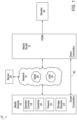
- a media processing system including a media studio 12, is operable to receive media input data from one or more media devices 16.
- the media input data may be received via one or more wired and wireless networks 14 and one or more wired or wireless direct connections.
- Receiving media data may include receiving media data sent from a media device 16, e.g., a camera 20, or retrieving data, e.g., from a storage device 23.
- the media studio 12 is further operable to be controlled by and receive media input data from an operator console 18, which may be remote to the media studio 12.
- the media studio 12 is further operable to generate media output data and provide the media output data to media devices 16, e.g., a viewer 22.
- the system 10 allows a user to produce media output data at a location where the recording (or a portion of the recording) is taking place. Controlling the media studio 12 via a remote operator console 18 provides the user the freedom to move about the recording location while maintaining oversight and control over the production process.
- the media processing system 10 includes a media studio 12, and one or more media devices 16.
- the one or more media devices 16 include the operator console 18, and may further include one or more cameras 20, one or more viewers 22 and one or more media storage devices 23.
- the media devices 16 may be remote or local to the media studio 12 and may be coupled to the media studio 12 via at least one of a network 14 and a direct wired or wireless connection.
- a server 28 may also be communicatively coupled to the media studio 12 and the media devices 16 via the networks 14.
- the media processing system 10 may include a computer or television monitor 30 communicatively coupled to the media studio 12.
- the media studio 12 is operable to receive multiple media input items, and to combine them into a multiview media item for viewing via the operator console 18.
- the media input items are sometimes referred to herein as individual media items.
- the multiview media item is an aggregated media content item that includes one or more of the media input items, arranged to be displayed substantially simultaneously on a user display, such as a touch screen.
- the media input items may be arranged such that they appear side-by-side, in rows, in a picture-in-picture format, etc. within the user display.
- the multiview media item may include, for example, a graphical user interface which is displayed on the user display and accepts user inputs.
- the media studio 12 may compress the multiview media item prior to providing it to one of the media devices 16 such as the operator console 18 and/or the storage devices 23.
- the media input items may be visual and/or audio data such as videos captured by a video camera, sounds captured by a microphone, scenes from a security camera, etc.
- the media input items may be, e.g., streamed data or static data such as single digital photographs.
- the media studio 12 is further operable to receive commands from the operator console 18, and to generate a media output item according to the received commands.
- the media output item may include data from one or more of the media input items.
- the media studio 12 may receive four media input items.
- the media studio 12 may generate a multiview media item including each of the four media input items, and transmit the multiview media item to the operator console 18.
- a user of the operator console 18 may select, via a user interface, one of the four views in the multiview media item to be included in the media output item.
- the media studio 12 may generate the media output item that includes the selected media input item.
- the media output item may be transmitted via a network 14 to be shared with viewers or stored in a storage device 23.
- the media studio 12 may perform various media processing functions.
- the media processing functions may be performed based on commands received from the operator console.
- a nonlimiting list of processing functions that may be performed by the media studio 12 includes scaling, mixing, morphing, compositing, adding overlays, etc.
- the media studio may perform functions such as object tracking, image stabilization, etc. The operation of the media studio 12 will be discussed in greater detail below.
- the network 14 represents one or more mechanisms for delivering media content between the media studio 12 and the media devices 16.
- the network 14 may be one or more of various wired or wireless communication mechanisms, including any desired combination of wired (e.g., cable and fiber) and/or wireless (e.g., cellular, wireless, satellite, microwave, and radio frequency) communication mechanisms and any desired network topology (or topologies when multiple communication mechanisms are utilized).
- Exemplary communication networks include wireless communication networks, local area networks (LAN) 24 such as a WiFi network or Ethernet, and/or wide area networks (WAN) 26, such as the Internet, etc.
- one or more wired or wireless direct connections 82 may be used to connect the media studio 12 to the media devices 16.
- Direct connections 82 may include e.g., Bluetooth, Universal Serial Bus (USB), high-definition multimedia interfaces (HDMI), custom serial interfaces, etc.
- HDMI high-definition multimedia interfaces
- HDMI is a well-known, proprietary audio/video interface for transferring uncompressed video data and compressed or uncompressed digital audio data from an HDMI-compliant source device such as the media device 16 to a digital media processing device such as the media studio 12 or to the compatible computer monitor, e.g., the monitor 30.
- the server 28 may be communicatively coupled to the media studio 12 and the media devices 16 via the network 14.
- the server 28 may include a communications circuit for communications via the network 14, and may further include memory and one or more processors configured to perform programs, i.e., sets of computer-executable instructions, stored in the memory.
- the server 28 may, e.g., receive media output items and store the media output items for future use.
- Media content such as the media input items, media output items, and/or multiview media items, is generally delivered via the network 14 in a digital format, e.g., as compressed audio and/or video data, and may include media data and metadata.
- MPEG refers to a set of standards generally promulgated by the International Standards Organization/International Electrical Commission Moving Picture Experts Group (MPEG).
- H.264 refers to a standard promulgated by the International Telecommunications Union (ITU).
- media content may be provided in a format such as the MPEG-1, MPEG-2, or the H.264/MPEG-4 Advanced Video Coding standards (AVC) (H.264 and MPEG-4 at present being consistent), HEVC/H.265, or according to some other standard or standards.
- AVC H.264/MPEG-4 Advanced Video Coding standards
- media content could be audio data formatted according to standards such as MPEG-2 Audio Layer III (MP3), Advanced Audio Coding (AAC), etc.
- MP3 MPEG-2 Audio Layer III
- AAC Advanced Audio Coding
- the foregoing standards generally provide for including metadata.
- Media devices 16 include the operator console 18, and may include one or more cameras 20, one or more viewers 22 and one or more storage devices 23.
- the operator console 18 may be used to control the operation of the media studio 12, and in some cases, may also perform the function of a media input device 16 such as a camera 20, as described below.
- the camera 20 may collect and transmit the media data, e.g., via the network 14, or via the direct connection 82, to the media studio 12.
- the collected media data may be, e.g., full high-definition (Full HD) data, providing an image resolution of 1920 by 1080 pixels. Data formats with other resolutions may also be used.
- the viewer 22 may be used to display media output data received from the media studio 12, and may include a display such as a liquid crystal display (LCD) or plasma display.
- the media data may be received, for example, via the network 14 or via the direct connection 82.
- Examples of the viewer 22 include mobile devices such as mobile phones, tablets, and laptops and may further include devices such as digital televisions.
- the viewer 18 may receive, e.g., Full HD data, providing an image resolution of 1920 by 1080 pixels. Data formats with other resolutions may also be used.
- the storage device 23 may store media data and provide an interface to allow the media studio 12 to access the data via the network 14 or via the direct connection 82.
- the media storage device may include one or more types of data storage such as read only memory (ROM), random access memory (RAM), flash memory, electrically programmable memory (EPROM), electrically programmable and erasable memory (EEPROM), embedded MultiMediaCard (eMMC), secure digital (SD) card, a hard drive, etc.
- the media storage device 23 may include a processor, programmed, for example, to receive commands from the media studio 12. The processor may be further programmed, based on the commands, to retrieve media data items from data storage, and send the media data items to the media studio 12.
- Communications between the storage device 23 and the media studio 12 may be performed via the network 14. Additionally or alternatively, communications may be performed via the direct connection 82.
- the storage device 23 may be connected to the media studio 12 via a Universal Serial Bus (USB) port, or other wired or wireless interface.
- USB Universal Serial Bus
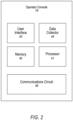
- the operator console 18 may be used to control the operation of the media studio 12. As shown in Figure 2 , the operator console 18 may include a memory 40 and a processor 41, the memory 40 storing program code, i.e., computer-executable instructions, executable by the processor 41.
- the processor 41 may be communicatively coupled to a user interface 42, a data collector 44, and a communications circuit 46.
- the user interface 42 is communicatively coupled to the processor 41 and may include one or more input devices such as a microphone, buttons, a touchscreen display, a mouse, a keyboard, a gesture-recognition device, switches, etc., for receiving input from the user.
- the user interface 42 may further include one or more output devices such as a display, lamps, speakers, etc. for communicating information to the user. All or a portion of the user interface 42 may be physically separate from the operator console 18.
- the operator console 18 may be a tablet computer which projects its output to another screen, (e.g., air-play), while the operator continues to control the media studio 12 from the tablet computer.
- the data collector 44 may be, for example, a digital camera as is known that may collect media data.
- the media data may include visual data such a still photographs and video recordings and may further include audio data such as a sound recording or soundtrack.
- the data collector 44 may, e.g., output the media data to the processor 41.
- the communications circuit 46 is communicatively coupled to the processor 41, and is configured to communicate with the media studio 12 via, e.g., the network 14 and/or the direct connections 82.
- the communications circuit 46 may include a radio frequency (RF) transceiver for WiFi communications (typically 2.4GHz or 5GHz bands).
- the RF transceiver may communicate, for example, directly with a RF receiver included in the media studio 12. Additionally or alternatively, the communications circuit 46 may include, e.g., an Ethernet interface, a Universal Serial Bus (USB) interface, a Bluetooth transceiver, a high-definition multimedia interface (HDMI), etc.
- RF radio frequency
- the communications circuit 46 may include, e.g., an Ethernet interface, a Universal Serial Bus (USB) interface, a Bluetooth transceiver, a high-definition multimedia interface (HDMI), etc.
- USB Universal Serial Bus
- HDMI high-definition multimedia interface
- the communications circuit 46 may communicate with the media studio 12 indirectly.
- the communications circuit 46 may communicate with hotspot, i.e., a communications circuit including a router and client providing a connection to a wide area network (WAN) 26 such as the Internet.
- the media studio 12 may receive the communications via the WAN 26.
- WAN wide area network
- the processor 41 is communicatively coupled to each of the user interface 42, the data collector 44, and the communications circuits 46.
- the processor 41 is programmed to control the operation of the media studio 12 based on inputs received from a user via the user interface 42. More specifically, the processor 41 is programmed to receive a media content item, also called an aggregated media item, e.g., a multiview media item including one or more views from one or more cameras 20, and to display the multiview media item via the user interface 42. The processor 41 is further programmed to receive input from the user via the user interface 42. For example, the user may view the multiview media item, and select one of the views to be included in a media output item generated by the media studio. The processor 41 may send a command to the media studio 12 to include the selected view in the media output item.
- a media content item also called an aggregated media item, e.g., a multiview media item including one or more views from one or more cameras 20, and to display the multiview media item via the user interface 42.
- the processor 41 is further programmed to receive input from the user via the user interface 42. For example, the user may view the multiview media
- commands from the operator console 18 may include instructions to perform functions such as scaling, mixing, morphing, compositing, adding overlays, etc. Further, commands from the operator console 18 may include instructions to perform functions such as object tracking, image stabilization, etc.
- the media studio 12 includes an internal memory 50 and a processor 52, the memory storing program code, i.e., computer-executable instructions, executable by the processor 52.
- the processor 52 is communicatively coupled to a user interface 54, a network interface 56, and an auxiliary interface 58.
- the internal memory 50 may be, e.g., read only memory (ROM), random access memory (RAM), flash memory, electrically programmable memory (EPROM), electrically programmable and erasable memory (EEPROM), embedded MultiMediaCard (eMMC), a hard drive, etc., and may be used to store programs executable by the processor 52, as well as to store, for example, data representing inputs from the user, instructions received from the operator console 18, media data received from the remote media device 16, media metadata, etc.
- ROM read only memory
- RAM random access memory
- EPROM electrically programmable memory
- EEPROM electrically programmable and erasable memory
- eMMC embedded MultiMediaCard
- hard drive etc.
- the user interface 54 is communicatively coupled to the computer 52, and may include one or more output devices such as a display, lamps, speakers, etc. for communicating information to the user.
- the user interface 54 may further include one or more input devices such as buttons, a microphone, a touch screen display, a mouse, a keyboard, a gesture-recognition device, switches, etc., for receiving input from the user.
- the network interface 56 includes one or more interfaces to the network 14.
- the network interface 56 may include a hotspot, such as is known, for WiFi communications.
- the hotspot may include a router.
- the router may include a radio frequency (RF) transceiver for WiFi communications (typically 2.4GHz or 5GHz bands) and may be operable to receive multiple transmissions substantially simultaneously.
- the router may connect media devices 16 with the processor 52 of the media studio 12.
- RF radio frequency
- the network interface 56 may include an Internet client.
- the Internet client is a mechanism for connecting to and communicating with the Internet, via, e.g., satellite communications or a cable network.
- the Internet client may include a transceiver and antenna for satellite communications, e.g., in the Ka band (18.3-30 GHz).
- the internet client may receive, via the network 14, Internet protocol (IP) communications from, e.g., media devices 16.
- IP Internet protocol
- the network interface 56 may further include hardware, software, and firmware that support communications with, e.g., portable and mobile devices in the cellular frequency bands, and that may operate, for example, according to the 4G LTE protocols as defined by the 3GPP standards body, or another suitable wireless communications protocol.
- the router and the Internet client may be used in combination to provide Internet access for media devices 16.
- the auxiliary interface 58 may include one or more wired or wireless interface circuits that may be used, for example, to connect to one or more media devices 16.
- the media devices 16 may include, e.g., one or more storage devices 23.
- the auxiliary interface 58 may include a universal serial bus (USB) interface circuit to communicate with external USB devices, for example a memory stick or memory back-up device.
- USB universal serial bus
- the auxiliary interface 58 may include a MicroSD interface, as is known, to store data on and retrieve data from a MicroSD data card.
- the auxiliary interface 58 may include, e.g., a Bluetooth interface for wireless connection to a media device 16.
- the media studio 12 may include a high-definition media interface (HDMI) for connecting to a media device 16, such as a camera 20.
- HDMI high-definition media interface
- the media studio 12 processor 52 is generally programmed to receive one or more media input items from one or more media devices 16.
- the media studio 12 processor 52 may, in some cases, generate a multiview media item.
- the multiview media item may include, for example, a picture-in-picture (PIP) display, wherein two or more of the media input items are displayed simultaneously, e.g., side-by-side, within the multiview media item.
- PIP picture-in-picture
- the media studio 12 may transmit the multiview media item via the network 14 to one or more of the media devices 16, such as the operator console 18 or the storage devices 23.
- the media studio 12 processor 52 is further programmed to receive commands from the operator console 18. Based on the commands, the media studio 12 may generate a media output item. The media studio 12 may select data from one or more of the media input items to include in the media output item. The media studio 12 may further, based on commands received from the operator console 18, perform various media processing functions such as scaling, mixing, morphing compositing, adding overlays, tracking of specific people or objects, smart tagging etc. related to the generation of the media output item.
- the media studio 12 may perform media processing functions based on predetermined rules for generating the media output item. Examples of rules are discussed below.
- the media studio 12 processor 52 may output the media output item e.g., to viewers 22, to the operator console 18, and/or to other display devices. Additionally or alternatively, the media studio 12 may output the media output item, e.g., to a server 28, or to storage devices 23, where the media output item may be stored for future use. Exemplary implementations for the media studio 12 are described below.
- a first exemplary implementation is shown in Figure 4 .
- the media studio 12 receives first, second, and third media input items 80a, 80b, 80c, respectively, from first, second, and third cameras 20a, 20b, 20c. Additionally, the media studio 12 receives a fourth media input item 80d from the operator console 18.
- Each of the first, second, third, and fourth media input items 80a, 80b, 80c, 80d may be, for example, Full High Definition (Full-HD) and may include a picture resolution of 1920 by 1080 pixels. Data formats with other resolutions may also be used.
- Full High Definition Full High Definition
- the media studio 12 may receive a fifth media input item 83 via high-definition multimedia interface (HDMI).
- HDMI is a wired interface which may be used to transfer the fifth media input item 83 from, for example, a camera 20 to the media studio 12.
- the fifth media input item 83 received via the HDMI may be uncompressed data.
- An input multiplexer (mux) 70 may be a portion of the processor 52 and/or a separate electronic circuit, and may be implemented as hardware, firmware, software, or a combination of any or all of hardware, firmware, or software.
- the input mux 70 is communicatively coupled to the network interface 56, first, second, third, and fourth decoders 72a, 72b, 72c, 72d, third encoder 78c, and the auxiliary interface 58.
- the input mux 70 receives the first, second, third, and fourth media input items 80a, 80b, 80c, 80d (collectively media input items 80) from the network interface, and may additionally receive the fifth media input item 83.
- the input mux 70 is programmed to route the media input items 80 and additional media input item 83, e.g., to the decoders 72, or the encoder 78c for further processing.
- the input mux 70 may route the first, second, third, and fourth media input items 80a, 80b, 80c, 80d respectively to decoders 72a, 72b, 72c, 72d.
- the input mux 70 may further route the media input item 83, received via HDMI, to the third encoder 78c.
- any of the input media items 80, 83 may be routed to any of the decoders 72.
- the routing may be indirect.
- the media input item 83 may, as discussed above, be received as uncompressed media data. In order for this data to be in a similar or same format to the other media input items 80, the media input item 83 may be compressed. Following compression, for example according to H.264/MPEG-4 AVC, the media input item 83 may also be routed to one of the decoders 72.
- the decoders 72 generally decompress media input items, i.e., receive compressed media input items and generate, based on the received media input items, decompressed media input items. In order to compensate for variation in latency between multiple media input items, the decoders 72 may be programmed to time synchronize the media input items during decompression.
- the decoders 72 may be included in the processor 52 and/or may be one or more separate electronic circuits, and may be implemented as hardware, firmware, software, or a combination of any or all of hardware, firmware, or software.
- the first decoder 72a may receive the media input item 80a from the input mux 70 compressed according to the standard H.264/MPEG4 AVC.
- the decoder 72a may decompress the media input item 80a and generate the decompressed media input item 80a' in Full-HD and may further provide the decompressed media input item 80a' to a video processor 74 and the PIP generator 76.
- each of the second, third, and fourth decoders 72b, 72c, 72d may receive, respectively, second, third, and fourth media input items 80b, 80c, 80d as compressed data, e.g., according to the standard H.264/MPEG4 AVC, and generate respective decompressed media input items 80b', 80c', 80d'.
- Each of the decompressed media input items 80a', 80b', 80c', 80d' may be provided to the video processor 74 and the PIP generator 76.
- the decompressed media input items 80a', 80b', 80c', 80d' may be referred to collectively as decompressed media input items 80' herein.
- the decoders 72 may decompress media input items compressed according to a variety of compression standards.
- a nonlimiting of example compression standards includes H.264/MPEG4, MPEG2, MPEG1, Advanced Audio Coding (AAC), etc.
- Other compression standards, including future compression standards, may be used.
- the encoders 78 generally compress media input items, i.e., receive uncompressed media input items, e.g., in Full-HD, and generate, based on the received media input items, compressed media input items.
- the compression may be, e.g., according to the standard H.264/MEG4 AVC. Other compression standards may be used.
- the encoders 78 may be included in the processor 52 and/or may be one or more separate electronic circuits, and the encoders 78 may be implemented as hardware, firmware, software, or a combination of any or all of hardware, firmware, or software.
- the media studio 12 may further include one or more transcoders (not shown).
- the transcoders may be included in the processor 52 and may perform, e.g., digital-to-digital conversion of one encoding to another, such as for video files (e.g., MPEG2, MPEG4) and audio files (e.g., MP3, WAV).
- video files e.g., MPEG2, MPEG4
- audio files e.g., MP3, WAV
- a first encoder 78a may receive a media output item 84a from the video processor 74.
- the media output item 84a may be decompressed.
- the first encoder 78a may generate a media output item 84a'.
- the media output item 84a' may be compressed according to, e.g., H.264/MPEG4 AVC.
- the first encoder 78a may output the compressed media output item 84a', for example, via the network 14 to one or more viewers 22.
- the compressed media output item 84a' may be generated according to a Standard Quality (SQ) format.
- the standard quality format may include a relatively low resolution or bit rate to accommodate, e.g., viewers 22 that are compatible with the low resolution or bit rate.
- the first encoder 78a may, via an auxiliary interface 58, store the compressed media output item 84a' to the storage devices 23.
- a second encoder 78b may receive a media output item 84b from the video processor 74.
- the media output item 84b may be generated according to a High Quality (HQ) format.
- the high quality format may include, e.g., Full-high definition (HD) with a higher resolution and bit rate in comparison to the standard quality format.
- the media output item 84b, as output from the video processor 74, may be decompressed.
- the second encoder 78b may generate the media output item 84b'.
- the media output item 84b' may be compressed according to, e.g., H.264/MPEG4 AVC.
- the second encoder 78b may output the compressed media output item 84b', for example, via the network 14 to one or more viewers 22.
- the compressed media output item 84b' may be generated, e.g., in Full high-definition (HD) and may be output to viewers 22 configured to accommodate Full-HD. Further, the compressed media output item 84b' may be stored, for example in a storage device 23 for future use.
- HD Full high-definition
- the fourth encoder 78d may receive a multiview media item 86 from the PIP Generator 76 which may be uncompressed and formatted, e.g., in Full-HD.
- the fourth encoder 78b may generate the multiview media item 86' compressed according to H.264/MPEG4 AVC.
- the fourth encoder 78d may output the compressed multiview media item 86', via the network 14, to the operator console 18.
- the third encoder 78c may receive the media input item 83 in an uncompressed format, and output the media input item 83' compressed according to H.264/MPEG4 AVC to the storage device 23 via the auxiliary interface 58.
- the media studio 12 includes a video processor 74 which generates first, second, and third media output items 84a, 84b, 84c.
- the video processor 74 may be programmed, e.g., to process high-definition media data.
- the video processor 74 may be included in the processor 52 and/or may be one or more separate electronic circuits, and may be implemented as hardware, firmware, software, or a combination of any or all of hardware, firmware, or software.
- the video processor 74 is programmable to receive commands from the operator console 18 and perform video processing functions such as switching, mixing, compositing, scaling, morphing, etc. based on the commands.
- the video processor 74 may further be programmable to perform video processing functions based on one or more predetermined rules, described below.
- the first, second, and third media output items 84a, 84b, 84c may include data from one or more of the decompressed media input items 80a', 80b', 80c', 80d', 83.
- the video processor 74 may generate the first, second, and third media output items 84a, 84b, 84c to include one of the decompressed media input items 80', e.g., the decompressed media input item 80b'.
- the video processor 74 may switch to generating the first, second, and third media output items 84a, 84b, 84c to include a different one of the decompressed media input items 80', e.g., the media input item 80d'.
- the video processor 74 may perform more complex video processing functions such as superimposing a first media input item 80, e.g., 80a', on a background from a second media input item, e.g., 80b', displaying two decompressed media input items 80' side-by-side, fading from one decompressed media input 80' to a second decompressed media input item 80', displaying video from a first decompressed media input item 80' together with audio from a second decompressed media input item 80', etc.
- the video processor 74 may be programmed to perform video processing functions according to predetermined rules.
- rules that may be used in relation to generating the media output item include:
- the video processor 74 may switch sequentially between each of four different media input items 80', with each of the four media input items 80' being displayed for a predetermined time period, e.g., 3 seconds.
- a predetermined time period e.g. 3 seconds.
- the video processor 74 may identify one of the media input items 80' with a highest amount of motion, or an amount of motion greater than a predetermined motion threshold, for display in the media output item.
- the video processor 74 may identify, e.g., one or more media input items 80' with a signal strength above a predetermined signal strength threshold, and display the identified one or more input items 80' sequentially.
- a person or object may be identified, for example, by a command from the operator console 18.
- the video processor 74 may, based on the identified person or object, select one of the media input items 80' which includes the identified person or object. According to an example voice or noise level selection rule, the video processor 74 may select a media input item associated, e.g., with a highest voice or noise level.
- the video processor 74 may further be programmed to perform media processing operations based on downloaded applications.
- the applications may be event specific. For example, an application may be specific for baseball games.
- a first camera 20 may be used to capture the pitcher, a second camera 20 to capture the batter, and third and fourth cameras 20 may be used manually by operators to track play in the field.
- the rule may, based on, e.g., current game conditions, select between the various media input items.
- the video processor 74 may further be programmed to accept commands from the operator console 18 to override the selection of the rule.
- the media studio 12 further includes a picture-in-picture (PIP) generator 76.
- PIP picture-in-picture
- the PIP generator 76 may be included in the processor 52 and/or may be one or more separate electronic circuits, and may be implemented as hardware, firmware, software, or a combination of any or all of hardware, firmware, or software.
- the PIP generator 76 is programmable to receive one or more decompressed media input items 80', 83 and to combine them into a multiview media item 86.
- the multiview media item 86 may include, for example, four media input items 80', arranged in two rows of two images each.
- the PIP generator 76 may output the multiview media item 86 to, e.g., the fourth encoder 78d for compression.
- the fourth encoder 78d may generate a compressed version of the multiview media item 86', which may be transmitted, e.g., via the network 14 to the operator console 18.
- the media studio 12 may receive, via the network 14, four media input items 80, compressed, e.g., according to the standard H.264/MPEG4 AVC.
- the four compressed media input items 80 may be passed, via the input mux 70, to four decoders 72, respectively, where the media input items 80 are decompressed, resulting in four HD media input items 80'.
- the four HD media input items 80' may be provided to the PIP generator 76 and the video processor 74.
- the PIP generator may generate a high-definition multiview media item 86 that includes all four media input items 80', arranged such that the may be viewed simultaneously.
- the high definition media item 86 may be compressed, e.g., according to the standard H.264/MPEG4 AVC by the second encoder 78, generating a compressed multiview media item 86'.
- the compressed multiview media item 86' may be transmitted via the network 14 to the operator console 18.
- a user of the operator console 18 may view the multiview media item 86' on the user interface 42 ( Figure 2 ) of the operator console 18.
- the user may, e.g., select one of the four media input items 80' to be output by the media studio 12.
- the user interface 42 may include a touchscreen display, and the user may tap the image to be displayed on the touchscreen display.
- the user may additionally select one or more other operations such as scaling, mixing, morphing, providing overlays, etc., in generating the media output item.
- the operator console 18 may send one or more commands to the media studio 12 indicating operations to be performed in preparing the output media item.
- the video processor 74 may be programmed, upon receiving the one or more commands from the operator console 18, to include the selected media input item 80' in the first, second and third media output items 84a, 84b, 84c, and to perform any additional media processing indicated by the commands.
- the video processor 74 may output the first media output item 84a to the first encoder 78a for compression, e.g., according to the standard H.264/MPEG4.
- the encoder 78a may output the compressed version of the media output item 84a', for example, via the network 14 to one or more viewers 22.
- a second, e.g. high-definition media output item 84b may be output to the encoder 78b.
- the encoder 78b may output a compressed media output item 84b in high-definition format for high-definition viewing.
- a third version of the media output item 84c may be output via an HDMI to, e.g., the monitor 30.
- the media studio 12 may store the media output item 84b', and one or more of the media input items 80, 83 in the storage device 23, via the auxiliary interface 58.
- a second exemplary implementation is shown in Figure 5 .
- the first, second, and third media input items 80a, 80b, 80c are provided to the operator console 18 directly, for example, via one or more wired or wireless connections, instead of indirectly via the PIP generator 76.
- the media input items 80a, 80b, 80c may be provided as low resolution stream inputs.
- the second exemplary implementation operates in a like manner to the first exemplary implementation.
- the video processor 74 receives the media input items 80', 83 via the input mux 70 and decoders 72 as described above.
- the video processor 74 may further receive commands from the operator console 18 providing instructions for the generation of the first and third media output items 84a, 84c.
- the first media output item 84a may be, e.g., encoded to generate compressed media output item 84a' which may be transmitted to one or more viewers 22.
- the second media output item may be, for example, transmitted to the monitor 30.
- one or more of the media input items 80', 83, and/or the media output item 84a' may be stored to storage devices 23.
- the media studio 12 may be programmed to receive, e.g., first, second, and third media input items 80a, 80b, 80c, and directly output first, second, and third media output items 80a", 80b", 80c".
- the first, second, and third media output items 80a", 80b", 80c" may be representations respectively of media input items 80a, 80b, 80c, following decompression via the first, second, and third decoders 72a, 72b, 72c and recompression via the first, third, and fourth encoders 78a, 78c, 78d.
- Each of the first, second, and third media input items 80a", 80b", 80c" may be, e.g., transmitted via the network 14 to storage in a remote server, such as the server 28 ( Figure 1 ). In this manner, the first, second, and third media input items 80a", 80b", 80c" may be available for further processing at a later time.
- one or more of the media input items 80 may be stored data that is retrieved from a storage device 23, or received, for example, from the server 28. Further, any of the media input items 80, 83 may be included in the media output item 84. For example, the media input item 83 may additionally or alternatively be included in the media output item 84 in any of the first and second implementations, or one of the media output items of the third implementation. Still further, any or all of the media input items 80, 83 and the media output item 84 may be stored in the storage device 23. The media input items 80, 83 may be stored as compressed data or as decompressed data.
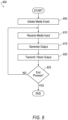
- Figure 7 is a diagram of an exemplary process 700 to generate a media output item 84 based on one or more media input items 80, 83 under control of the remote operator console 18.
- the process 700 may be carried out according to computer-executable instructions, e.g., in the media studio 12.
- the process 700 starts in a block 705.
- the media studio 12 recognizes a trigger event for initiating the process 700.
- the media studio 12 may receive an input from a user via the user interface 54. Additionally or alternatively, the media studio 12 may receive an input from the user via the operator console 18. Still further, the media studio 12 may receive an input, e.g., from the remote server 28 indicating that the user would like to initiate generation of one or more media output items.
- the process 700 continues in a block 710.
- the media studio 12 processor 52 receives one or more media input items 80. As described above, the media studio 12 processor 52 may receive media input items from cameras 20, the operator console 18, and/or from storage devices 23. The media studio 12 processor 52 may receive the media input items via the network 14 or via the direct connection 82.
- the direct connection 82 may include a high-definition multimedia interface (HDMI).
- HDMI high-definition multimedia interface
- the media studio 12 processor 52 generates a multiview media item 86 for the operator console 18.
- the picture-in-picture (PIP) generator 76 ( Figure 4 ) may receive one or more decompressed media input items 80', 83.
- the PIP generator 76 may generate the multiview media item 86 to include one or more of the media input items 80', 83 displayed simultaneously.
- the multiview media item 86 may arrange four media input items 80, 83 to be viewed simultaneously in a single display.
- the process 700 continues in a block 720.
- the media studio 12 processor 52 transmits the multiview media item 86 to the operator console 18.
- the multiview media item 86 may, e.g., be compressed by the encoder 12, and transmitted via the network 14 as compressed media data.
- the operator console 18 processor 41 may receive and display the multiview media item 86 on the user interface 42.
- the process 700 continues in a block 725.
- the media studio 12 processor 52 receives commands from the operator console 18 processor 41.
- the user may select, via the user interface 42, one of the media input items 80', 83 for generation of the media output item 84.
- the user may further select one or more processing functions such as scaling, mixing, morphing, overlaying graphics, etc. for generation of the media output item 84.
- the operator console 18 processor 41 may transmit one or more commands based on the input from the user, which may be received by the media studio 12 processor 52.
- the process 700 continues in a block 730.
- the media studio 12 processor 52 generates the media output item 84 based on the command received from the operator console 18 processor 41.
- the media studio 12 processor 52 may receive the command to include the media input item 80c from the third camera 20c in the media output item.
- the media studio 12 may further receive one or more commands to perform other media processing operations.
- the video processor 74 may generate a media output item 84 that includes the media input item 80c from the third camera 20c processed according to the selected media processing operations.
- the process 700 continues in a block 735.
- the media studio 12 processor 52 transmits the media output item 84.
- the media output item may be transmitted via the network 14 to one or more viewers 22. Additionally or alternatively, the media output item 84 may be transmitted via the network 14 to a remote server 28 for storage. Still further, the media output item 84 may be stored via the auxiliary interface 58 in one or more storage devices 23.
- the process continues in a block 740.
- the media studio 12 processor 52 determines whether an event has occurred to trigger an end of the process 700.
- the media studio 12 may receive an input from the user interface 42 or from the operator console 18 processor 41 indicating that the process should end.
- the media studio 12 may determine that no new data and/or no new commands have been received for a predetermined time, e.g., 30 seconds, and may determine that the process 700 should end.
- the media studio 12 processor 52 may receive an input from the user interface 54 or from the operator console 18 processor 41 indicating that the media studio 12 should generate the media output item according to a predetermined rule. In this case, the media studio 12 processor 52 may end the process 700 and initiate the process 800, described below. If no trigger event is detected, the process 700 may continue in the block 710.
- Figure 8 is a diagram of an exemplary process 800 for generating a media output item 84 based on one or more media input items 80, 83 based on a predetermined rule.
- the process 800 may be carried out according to computer-executable instructions, e.g., in the media studio 12.
- the process 800 starts in a block 805, and, as described below, may in some cases be initiated subsequent to block 740 of the process 700.
- the media studio 12 processor 52 recognizes a trigger event for initiating the process 800.
- the media studio 12 processor 52 may receive an input from a user via the user interface 54. Additionally or alternatively, the media studio 12 processor 52 may receive an input from the user from the operator console 18 processor 41. Still further, the media studio 12 may receive an input, e.g., from the remote server 28 indicating that the user would like to initiate generation of one or more media output items 84 according to a predetermined rule.
- the input may be received from the user interface 54 or from the operator console 18 processor 41, as described above with reference to the block 740 of process 700. Alternatively, the input may be received, e.g., upon turning on the media studio 12.
- the process 800 continues in a block 810.
- the media studio 12 processor 52 receives one or more media input items. As described above, the media studio 12 processor 52 may receive media input items 80 from cameras 20 and/or from the operator console 18 via the network 14. Additionally or alternatively, the media studio 12 processor 52 may receive a media input item 83 via the direct connection 82 such as a high definition multimedia interface (HDMI).
- HDMI high definition multimedia interface
- the media studio 12 processor 52 generates a media output item 84 from one or more of the media input items 80, 83 according to a predetermined rule.
- the predetermined rule may specify that the media studio 12 processor 52 should sequentially switch each of the available media input items 80, 83, at a first predetermined time period, to the media output item 84.
- the media studio 12 processor 52 may switch, every three seconds, from one media input item 80, 83 to a next media input item 80, 83, and continue to loop through the media input items 80, 83.
- Other predetermined rules may be used, as described above.
- the process 800 continues in a block 820.
- the media studio 12 processor 52 transmits the media output item 84.
- the media output item 84 may be transmitted via the network 14 to one or more viewers 22. Additionally or alternatively, the media output item 84 may be transmitted via the network 14 to a remote server 28 for storage. Still further, the media output item 84 may be stored via the auxiliary interface 58 in one or more storage devices 23. The process continues in a block 825.
- the media studio 12 processor 52 determines whether an event has occurred to trigger an end of the process 800. For example, the media studio 12 processor 52 may receive an input from the user interface 42 or from the operator console 18 indicating that the process should end. Alternatively, the media studio 12 processor 52 may determine that a timeout has occurred, i.e., that the rule is intended to run for second predetermined time period, e.g., 30 minutes, and the second predetermined time period has been reached. Still further, the media studio 12 processor 52 may receive an input indicating that the user of the operator console 18 would like to manually control the generation of the media output item 84 via the operator console 18. In this case, the process 800 may end, and the media studio may (re)initiate the process 700, starting in the block 705. If no trigger event is detected, the process 800 may continue in the block 810.
- the adverb "substantially" means that a shape, structure, measurement, quantity, time, etc. may deviate from an exact described geometry, distance, measurement, quantity, time, etc., because of imperfections in materials, machining, manufacturing, etc.
- exemplary is used herein in the sense of signifying an example, e.g., a reference to an "exemplary widget” should be read as simply referring to an example of a widget.
- Networked devices such as those discussed herein generally each include instructions executable by one or more networked devices such as those identified above, and for carrying out blocks or steps of processes described above.
- process blocks discussed above may be embodied as computer-executable instructions.
- Computer-executable instructions may be compiled or interpreted from computer programs created using a variety of programming languages and/or technologies, including, without limitation, and either alone or in combination, Java TM , C, C++, Visual Basic, Java Script, Perl, HTML, etc.
- a processor e.g., a microprocessor
- receives instructions e.g., from a memory, a computer-readable medium, etc., and executes these instructions, thereby performing one or more processes, including one or more of the processes described herein.
- Such instructions and other data may be stored and transmitted using a variety of computer-readable media.
- a file in a networked device is generally a collection of data stored on a computer readable medium, such as a storage medium, a random access memory, etc.
- a computer-readable medium includes any medium that participates in providing data (e.g., instructions), which may be read by a computer. Such a medium may take many forms, including, but not limited to, non-volatile media, volatile media, etc.
- Non-volatile media include, for example, optical or magnetic disks and other persistent memory.
- Volatile media include dynamic random access memory (DRAM), which typically constitutes a main memory.
- DRAM dynamic random access memory
- Computer-readable media include, for example, a floppy disk, a flexible disk, hard disk, magnetic tape, any other magnetic medium, a CD-ROM, DVD, any other optical medium, punch cards, paper tape, any other physical medium with rules of holes, a RAM, a PROM, an EPROM, a FLASH-EEPROM, any other memory chip or cartridge, or any other medium from which a computer can read.
Landscapes
- Engineering & Computer Science (AREA)
- Multimedia (AREA)
- Signal Processing (AREA)
- Databases & Information Systems (AREA)
- Human Computer Interaction (AREA)
- General Engineering & Computer Science (AREA)
- Health & Medical Sciences (AREA)
- General Health & Medical Sciences (AREA)
- Social Psychology (AREA)
- Software Systems (AREA)
- Computer Networks & Wireless Communication (AREA)
- Business, Economics & Management (AREA)
- Marketing (AREA)
- Two-Way Televisions, Distribution Of Moving Picture Or The Like (AREA)
Claims (13)
- System (10), das eine Computervorrichtung (12) und eine oder mehrere Medieneingabevorrichtungen (16, 18) aufweist, wobei die eine oder mehreren Medieneingabevorrichtungen eine Bedienerkonsole (18) aufweisen, die von der Computervorrichtung (12) fern ist, wobei die Bedienerkonsole (18) zum Erfassen von AV-Medienelementen und zum Steuern der Computervorrichtung (12) konfiguriert ist und wobei die Computervorrichtung (12) einen Prozessor (52) und einen Speicher (50) aufweist, wobei der Speicher (50) Anweisungen speichert, die durch den Prozessor (52) ausführbar sind, so dass der Prozessor (52) programmiert ist zum:Dekomprimieren einer Mehrzahl von einzelnen AV-Medienelementen (80) unter Verwendung von mindestens einer Mehrzahl von Decodern (72) zum Erzeugen einer Mehrzahl von dekomprimierten AV-Medieneingabeelementen (80'), wobei jedes der Mehrzahl von einzelnen AV-Medienelementen (80) von der bzw. den jeweiligen einen oder mehreren Medieneingabevorrichtungen empfangen wird, wobei mindestens eines der Mehrzahl von einzelnen AV-Medienelementen (80) von der von der Rechenvorrichtung fernen Bedienerkonsole (18) empfangen wird;Verarbeiten der Mehrzahl von dekomprimierten AV-Medieneingabeelementen (80') zum Erzeugen eines ersten AV-Medienausgabeelements (84), das Daten von einem oder mehreren der Mehrzahl von dekomprimierten Medieneingabeelementen beinhaltet;Ausgeben des ersten AV-Medienausgabeelements (84) an eine oder mehrere ferne Vorrichtungen zum Betrachten und/oder Speichern des ersten AV-Medienausgabeelements;Erzeugen eines Multiview-Medienelements (86), das mehrere der dekomprimierten AV-Medieneingabeelemente (80') beinhaltet, wobei das Multiview-Medienelement (86) das eine oder die mehreren einzelnen Medienelemente (80') für eine gemeinsame Anzeige kombiniert;Senden des Multiview-Medienelements (86) an die von der Computervorrichtung ferne Bedienerkonsole (18);Empfangen eines oder mehrerer Befehle von der Bedienerkonsole (18), wobei der eine oder die mehreren Befehle mindestens eines der Mehrzahl der in dem Multiview-Medienelement (86) aufgenommenen AV-Medieneingabeelemente identifizieren, das in ein zweites AV-Medienausgabeelement (84) aufzunehmen ist; undErzeugen des zweiten AV-Medienausgabeelements (84) zumindest teilweise auf Basis des identifizierten mindestens einen der mehreren Medieneingabeelemente; undAusgeben des zweiten AV-Medienausgabeelements (84) an eine oder mehrere ferne Vorrichtungen zum Betrachten und/oder Speichern des zweiten AV-Medienausgabeelements.
- System nach Anspruch 1, wobei der Prozessor ferner programmiert ist zum: Komprimieren des Multiview-Medienelements (86) vor Senden des Multiview-Medienelements (86) an die Bedienerkonsole (18).
- System nach einem der Ansprüche 1 bis 2, wobei die zwei oder mehr in das Multiview-Medienelement (86) aufgenommenen einzelnen AV-Medienelemente (80) im Wesentlichen gleichzeitig empfangen werden.
- System nach einem der Ansprüche 1 bis 3, wobei der Prozessor ferner programmiert ist zum:
Anweisen der Mehrzahl von Decodern zum Erzeugen der Mehrzahl von dekomprimierten AV-Medieneingabeelementen durch zeitliches Synchronisieren der Mehrzahl von einzelnen AV-Medienelementen, um Latenzschwankungen untereinander auszugleichen. - System nach Anspruch 1, wobei die Rechenvorrichtung ferner eine Hotspot-Schnittstelle aufweist, wobei mindestens eines der Mehrzahl von einzelnen Eingabe-AV-Medienelementen und des einen oder der mehreren Befehle von der Bedienerkonsole über die Hotspot-Schnittstelle empfangen wird.
- System nach Anspruch 1, wobei die Rechenvorrichtung ferner eine Internetprotokollschnittstelle enthält, wobei mindestens eine der Mehrzahl von einzelnen Eingabe-AV-Medienelementen über die Internetprotokollschnittstelle empfangen wird.
- System nach Anspruch 1, wobei die Rechenvorrichtung ferner eine Internetprotokollschnittstelle beinhaltet, wobei der eine oder die mehreren Befehle von der Bedienerkonsole über die Internetprotokollschnittstelle empfangen werden.
- System nach Anspruch 1, wobei die Rechenvorrichtung ferner ein High Definition Multimedia Interface aufweist, wobei mindestens eine der Mehrzahl von einzelnen AV-Medienelementen über das High Definition Multimedia Interface empfangen wird.
- System nach einem der Ansprüche 1 bis 8, wobei die Bedienerkonsole (18) eine Benutzeroberfläche, einen Prozessor (74) und einen Speicher (23) beinhaltet, wobei der Speicher (23) der Bedienerkonsole Anweisungen speichert, die durch den Prozessor (74) der Bedienerkonsole (18) ausführbar sind, so dass der Prozessor (74) der Bedienerkonsole (18) programmiert ist zum:Empfangen des Multiview-Medienelements (86);Anzeigen des Multiview-Medienelements (86) auf der Benutzeroberfläche;Empfangen einer Eingabe von dem Benutzer über die Benutzeroberfläche (42) der Bedienerkonsole (18);Erzeugen des einen oder der mehreren Befehle für die Rechenvorrichtung zumindest teilweise auf Basis der Eingabe; undÜbertragen des einen oder der mehreren Befehle an die Rechenvorrichtung.
- Verfahren, das Folgendes aufweist:Empfangen, durch eine Rechenvorrichtung, einer Mehrzahl von einzelnen AV-Medienelementen von (einer) jeweiligen einen oder mehreren Medieneingabevorrichtungen, die eine Bedienerkonsole (18) beinhalten, die von der Rechenvorrichtung fern ist, wobei die Bedienerkonsole zum Erfassen von AV-Medienelementen und zum Steuern der Computervorrichtung (12) konfiguriert ist, wobei mindestens eines der Mehrzahl von einzelnen Medienelementen (80) von der von der Rechenvorrichtung fernen Bedienerkonsole (18) empfangen wird;Dekomprimieren der Mehrzahl von einzelnen AV-Medienelementen (80) unter Verwendung von mindestens einer Mehrzahl von Decodern (72) zum Erzeugen einer Mehrzahl von dekomprimierten AV-Medieneingabeelementen (80'),Verarbeiten der Mehrzahl von dekomprimierten AV-Medieneingabeelementen (80') zum Erzeugen eines ersten AV-Medienausgabeelements (84), das Daten von einem oder mehreren der Mehrzahl von dekomprimierten Medieneingabeelementen beinhaltet;Ausgeben des ersten AV-Medienausgabeelements (84) an eine oder mehrere ferne Vorrichtungen zum Betrachten und/oder Speichern des ersten AV-Medienausgabeelements;Erzeugen eines Multiview-Medienelements (86), das mehrere der dekomprimierten AV-Medieneingabeelemente beinhaltet, wobei das Multiview-Medienelement ein oder mehrere einzelne Medienelemente für eine gemeinsame Anzeige kombiniert;Senden des Multiview-Medienelements (86) an die von der Computervorrichtung ferne Bedienerkonsole;Empfangen eines oder mehrerer Befehle von der Bedienerkonsole (18), wobei der eine oder die mehreren Befehle mindestens eines der Mehrzahl der in dem Multiview-Medienelement (86) aufgenommenen AV-Medieneingabeelemente identifizieren, das in ein zweites AV-Medienausgabeelement (84) aufzunehmen ist; undErzeugen des zweiten AV-Medienausgabeelements (84) zumindest teilweise auf Basis des identifizierten mindestens einen der mehreren Medieneingabeelemente; undAusgeben des zweiten AV-Medienausgabeelements an eine oder mehrere ferne Vorrichtungen zum Betrachten und/oder Speichern des zweiten AV-Medienausgabeelements.
- Verfahren nach Anspruch 10, das Folgendes aufweist: Komprimieren des Multiview-Medienelements (86) vor Senden des Multiview-Medienelements (86) an die Bedienerkonsole (18).
- Verfahren nach einem der Ansprüche 10 und 11, wobei die zwei oder mehr in das Multiview-Medienelement (86) aufgenommenen einzelnen AV-Medienelemente im Wesentlichen gleichzeitig empfangen werden.
- Verfahren nach einem der Ansprüche 10 bis 12, das das Anweisen der Mehrzahl von Decodern zum Erzeugen der Mehrzahl von dekomprimierten AV-Medieneingabeelementen durch zeitliches Synchronisieren der Mehrzahl von einzelnen AV-Medienelementen, um Latenzschwankungen untereinander auszugleichen, aufweist.
Applications Claiming Priority (2)
| Application Number | Priority Date | Filing Date | Title |
|---|---|---|---|
| US201562263085P | 2015-12-04 | 2015-12-04 | |
| PCT/US2016/064776 WO2017096268A1 (en) | 2015-12-04 | 2016-12-02 | Remote-controlled media studio |
Publications (2)
| Publication Number | Publication Date |
|---|---|
| EP3384676A1 EP3384676A1 (de) | 2018-10-10 |
| EP3384676B1 true EP3384676B1 (de) | 2025-05-14 |
Family
ID=57750574
Family Applications (1)
| Application Number | Title | Priority Date | Filing Date |
|---|---|---|---|
| EP16822801.3A Active EP3384676B1 (de) | 2015-12-04 | 2016-12-02 | Ferngesteuertes medienstudio |
Country Status (5)
| Country | Link |
|---|---|
| US (2) | US10715838B2 (de) |
| EP (1) | EP3384676B1 (de) |
| JP (1) | JP2019501584A (de) |
| CA (1) | CA3007360C (de) |
| WO (1) | WO2017096268A1 (de) |
Families Citing this family (1)
| Publication number | Priority date | Publication date | Assignee | Title |
|---|---|---|---|---|
| EP3384676B1 (de) | 2015-12-04 | 2025-05-14 | Sling Media L.L.C. | Ferngesteuertes medienstudio |
Citations (3)
| Publication number | Priority date | Publication date | Assignee | Title |
|---|---|---|---|---|
| JPH08163526A (ja) * | 1994-11-30 | 1996-06-21 | Canon Inc | 映像選択装置 |
| US20020196327A1 (en) * | 2001-06-14 | 2002-12-26 | Yong Rui | Automated video production system and method using expert video production rules for online publishing of lectures |
| EP2498485A2 (de) * | 2011-03-07 | 2012-09-12 | Ricoh Company, Ltd. | Automatisierte Auswahl und Schaltung angezeigter Informationen |
Family Cites Families (48)
| Publication number | Priority date | Publication date | Assignee | Title |
|---|---|---|---|---|
| JPS6132683A (ja) | 1984-07-25 | 1986-02-15 | Nippon Telegr & Teleph Corp <Ntt> | 多地点間テレビ会議方式 |
| JPH04291891A (ja) | 1991-03-20 | 1992-10-15 | Fujitsu Ltd | 多地点テレビ会議システム |
| JPH0715708A (ja) | 1993-06-22 | 1995-01-17 | Mitsubishi Electric Corp | 画像伝送システム |
| JPH07221843A (ja) | 1994-02-07 | 1995-08-18 | Kyocera Corp | テレビ会議システム |
| JPH07250313A (ja) | 1994-03-11 | 1995-09-26 | Canon Inc | 多地点テレビ会議端末 |
| JPH08210472A (ja) | 1995-02-02 | 1996-08-20 | Toyota Motor Corp | 終減速装置の潤滑機構 |
| JPH08242413A (ja) | 1995-03-06 | 1996-09-17 | Toshiba Corp | 多画面テレビジョン受信機 |
| JPH08317366A (ja) | 1995-05-22 | 1996-11-29 | Nec Eng Ltd | 多地点テレビ会議システム |
| JPH1092541A (ja) | 1996-09-13 | 1998-04-10 | Furukawa Electric Co Ltd:The | 回転コネクタ |
| JPH10290410A (ja) | 1997-04-11 | 1998-10-27 | Sony Corp | テレビジョン受像機およびチャンネル表示方法 |
| JPH1164046A (ja) | 1997-08-22 | 1999-03-05 | Ando Electric Co Ltd | 信号記録再生装置 |
| JP2000069457A (ja) | 1998-08-25 | 2000-03-03 | Fujitsu General Ltd | カメラ監視システム |
| US8266657B2 (en) | 2001-03-15 | 2012-09-11 | Sling Media Inc. | Method for effectively implementing a multi-room television system |
| JP2002290953A (ja) | 2001-03-28 | 2002-10-04 | Hitachi Ltd | マルチキャスト映像配信システム |
| US7499077B2 (en) * | 2001-06-04 | 2009-03-03 | Sharp Laboratories Of America, Inc. | Summarization of football video content |
| JP2003143546A (ja) | 2001-06-04 | 2003-05-16 | Sharp Corp | フットボールビデオ処理方法 |
| JP2003234848A (ja) | 2002-02-07 | 2003-08-22 | Nippon Joho Tsushin Consulting Kk | 携帯電話機、及び携帯電話機を利用した遠隔監視システム、及び遠隔監視方法 |
| JP2003348569A (ja) * | 2002-05-28 | 2003-12-05 | Toshiba Lighting & Technology Corp | 監視カメラシステム |
| US20050253966A1 (en) | 2002-07-01 | 2005-11-17 | Koninklijke Philips Electronics N.V. | System for processing video signals |
| JP2004165804A (ja) | 2002-11-11 | 2004-06-10 | Fuji Photo Film Co Ltd | カメラ監視システム |
| JP2004336569A (ja) | 2003-05-09 | 2004-11-25 | Ntt Docomo Inc | 移動体監視システム、及び移動体監視方法 |
| JP2005094509A (ja) | 2003-09-18 | 2005-04-07 | Hitachi Maxell Ltd | Tv会議システム及びtv会議の実行方法 |
| JP2005229241A (ja) | 2004-02-12 | 2005-08-25 | Media File Sha:Kk | 映像処理装置 |
| JP2005303711A (ja) | 2004-04-13 | 2005-10-27 | Mitsubishi Electric Corp | 映像コンテンツ録画配信システム、サーバ装置、携帯電話、及び映像コンテンツ録画配信方法 |
| JP2005341325A (ja) | 2004-05-28 | 2005-12-08 | Nippon Telegr & Teleph Corp <Ntt> | 多地点テレビ会議システム,多地点テレビ会議制御方法,サーバ装置,多地点テレビ会議制御プログラムおよびそのプログラム記録媒体 |
| US7647614B2 (en) | 2004-06-07 | 2010-01-12 | Sling Media, Inc. | Fast-start streaming and buffering of streaming content for personal media player |
| WO2006116659A2 (en) | 2005-04-28 | 2006-11-02 | Apple Computer, Inc. | Video processing in a multi-participant video conference |
| EP2054816A4 (de) | 2006-08-21 | 2013-06-26 | Sling Media Inc | Erfassung und gemeinsame nutzung von medieninhalten sowie verwaltung gemeinsam genutzter medieninhalte |
| US9571902B2 (en) * | 2006-12-13 | 2017-02-14 | Quickplay Media Inc. | Time synchronizing of distinct video and data feeds that are delivered in a single mobile IP data network compatible stream |
| JP2008227844A (ja) | 2007-03-12 | 2008-09-25 | Mitsubishi Electric Corp | 画像監視装置 |
| US8522300B2 (en) * | 2007-09-21 | 2013-08-27 | Verizon Patent And Licensing Inc. | Highlight management for fantasy gaming |
| US8060609B2 (en) | 2008-01-04 | 2011-11-15 | Sling Media Inc. | Systems and methods for determining attributes of media items accessed via a personal media broadcaster |
| JP2009267999A (ja) | 2008-04-28 | 2009-11-12 | Pasuteru Lab:Kk | ライブ配信システム、動画撮影システム、及び動画配信方法 |
| US8340654B2 (en) | 2009-05-26 | 2012-12-25 | Lextech Labs Llc | Apparatus and method for video display and control for portable device |
| US20110035466A1 (en) | 2009-08-10 | 2011-02-10 | Sling Media Pvt Ltd | Home media aggregator system and method |
| JP5708168B2 (ja) | 2010-06-16 | 2015-04-30 | 株式会社リコー | 伝送端末、伝送システム、伝送方法、及び伝送端末用プログラム |
| EP2403236B1 (de) * | 2010-06-29 | 2013-12-11 | Stockholms Universitet Holding AB | Mobiles Videomischsystem |
| US20130129304A1 (en) | 2011-11-22 | 2013-05-23 | Roy Feinson | Variable 3-d surround video playback with virtual panning and smooth transition |
| JP2013132828A (ja) | 2011-12-26 | 2013-07-08 | Mimaki Engineering Co Ltd | 転写用フィルム |
| US20130198629A1 (en) | 2012-01-28 | 2013-08-01 | Microsoft Corporation | Techniques for making a media stream the primary focus of an online meeting |
| JPWO2013132828A1 (ja) * | 2012-03-05 | 2015-07-30 | パナソニックIpマネジメント株式会社 | 通信システムおよび中継装置 |
| JP5942258B2 (ja) | 2012-06-12 | 2016-06-29 | パナソニックIpマネジメント株式会社 | 映像表示システム、映像合成再符号化装置、映像表示装置、映像表示方法、及び映像合成再符号化プログラム |
| EP2720470B1 (de) | 2012-10-12 | 2018-01-17 | Sling Media, Inc. | Aggregierte Steuerung und Präsentation von Medieninhalt aus mehreren Quellen |
| AU2013341383B2 (en) | 2012-11-12 | 2017-08-24 | The Roger B. And Ann K. Mcnamee Trust U/T/A/D | Systems and methods for communicating a live event to users using the internet |
| US20140269930A1 (en) * | 2013-03-14 | 2014-09-18 | Comcast Cable Communications, Llc | Efficient compositing of multiple video transmissions into a single session |
| WO2015073924A1 (en) * | 2013-11-14 | 2015-05-21 | Smiletime, Inc. | Social multi-camera interactive live engagement system |
| US9699514B2 (en) * | 2015-12-02 | 2017-07-04 | Echostar Technologies L.L.C. | Apparatus, systems and methods for media mosaic management |
| EP3384676B1 (de) | 2015-12-04 | 2025-05-14 | Sling Media L.L.C. | Ferngesteuertes medienstudio |
-
2016
- 2016-12-02 EP EP16822801.3A patent/EP3384676B1/de active Active
- 2016-12-02 US US15/367,655 patent/US10715838B2/en active Active
- 2016-12-02 CA CA3007360A patent/CA3007360C/en active Active
- 2016-12-02 JP JP2018528972A patent/JP2019501584A/ja active Pending
- 2016-12-02 WO PCT/US2016/064776 patent/WO2017096268A1/en not_active Ceased
-
2020
- 2020-06-03 US US16/891,911 patent/US11153613B2/en active Active
Patent Citations (3)
| Publication number | Priority date | Publication date | Assignee | Title |
|---|---|---|---|---|
| JPH08163526A (ja) * | 1994-11-30 | 1996-06-21 | Canon Inc | 映像選択装置 |
| US20020196327A1 (en) * | 2001-06-14 | 2002-12-26 | Yong Rui | Automated video production system and method using expert video production rules for online publishing of lectures |
| EP2498485A2 (de) * | 2011-03-07 | 2012-09-12 | Ricoh Company, Ltd. | Automatisierte Auswahl und Schaltung angezeigter Informationen |
Also Published As
| Publication number | Publication date |
|---|---|
| US11153613B2 (en) | 2021-10-19 |
| WO2017096268A1 (en) | 2017-06-08 |
| EP3384676A1 (de) | 2018-10-10 |
| US10715838B2 (en) | 2020-07-14 |
| JP2019501584A (ja) | 2019-01-17 |
| US20170164012A1 (en) | 2017-06-08 |
| CA3007360C (en) | 2021-12-07 |
| CA3007360A1 (en) | 2017-06-08 |
| US20200296432A1 (en) | 2020-09-17 |
Similar Documents
| Publication | Publication Date | Title |
|---|---|---|
| US10574933B2 (en) | System and method for converting live action alpha-numeric text to re-rendered and embedded pixel information for video overlay | |
| US10848790B2 (en) | Processing of multiple media streams | |
| US10791382B2 (en) | Electronic device and method for sharing streaming video | |
| US10715800B2 (en) | Image processing apparatus and image processing method | |
| CN110741648A (zh) | 用于多频道画像的传输系统及其控制方法、多频道画像的播放方法及其装置 | |
| CN114830674B (zh) | 发送装置和接收装置 | |
| US11153613B2 (en) | Remote-controlled media studio | |
| KR101280443B1 (ko) | 영역 영상을 처리하는 장치 및 그 제어방법 | |
| EP2312859A2 (de) | Verfahren und System zur Kommunikation dreidimensionaler Videos über eine drahtlose Kommunikationsverbindung | |
| US12328462B2 (en) | Media session management | |
| CA3057957C (en) | Media session management | |
| KR102269520B1 (ko) | 무선 av 시스템에서 세컨드 장치를 이용한 연속 시청 기능을 제공하는 장치 및 방법 | |
| KR20230068852A (ko) | 세로 모드 스트리밍 방법, 및 이동형 세로 모드 스트리밍 시스템 | |
| JP2016065958A (ja) | 表示制御システム、表示制御装置、及びプログラム | |
| CN118525521A (zh) | 用于实现高保真放大的交互式视频播放技术 | |
| JP2013150039A (ja) | 情報処理装置、および情報処理方法 | |
| KR20150051044A (ko) | 화면분할을 통한 멀티앵글영상서비스 제공 방법 및 장치 |
Legal Events
| Date | Code | Title | Description |
|---|---|---|---|
| STAA | Information on the status of an ep patent application or granted ep patent |
Free format text: STATUS: UNKNOWN |
|
| STAA | Information on the status of an ep patent application or granted ep patent |
Free format text: STATUS: THE INTERNATIONAL PUBLICATION HAS BEEN MADE |
|
| PUAI | Public reference made under article 153(3) epc to a published international application that has entered the european phase |
Free format text: ORIGINAL CODE: 0009012 |
|
| STAA | Information on the status of an ep patent application or granted ep patent |
Free format text: STATUS: REQUEST FOR EXAMINATION WAS MADE |
|
| 17P | Request for examination filed |
Effective date: 20180628 |
|
| AK | Designated contracting states |
Kind code of ref document: A1 Designated state(s): AL AT BE BG CH CY CZ DE DK EE ES FI FR GB GR HR HU IE IS IT LI LT LU LV MC MK MT NL NO PL PT RO RS SE SI SK SM TR |
|
| AX | Request for extension of the european patent |
Extension state: BA ME |
|
| DAV | Request for validation of the european patent (deleted) | ||
| DAX | Request for extension of the european patent (deleted) | ||
| RAP1 | Party data changed (applicant data changed or rights of an application transferred) |
Owner name: SLING MEDIA PVT LTD Owner name: SLING MEDIA L.L.C. |
|
| STAA | Information on the status of an ep patent application or granted ep patent |
Free format text: STATUS: EXAMINATION IS IN PROGRESS |
|
| 17Q | First examination report despatched |
Effective date: 20210219 |
|
| RAP3 | Party data changed (applicant data changed or rights of an application transferred) |
Owner name: DISH NETWORK TECHNOLOGIES INDIA PRIVATE LIMITED Owner name: SLING MEDIA L.L.C. |
|
| P01 | Opt-out of the competence of the unified patent court (upc) registered |
Effective date: 20230522 |
|
| GRAP | Despatch of communication of intention to grant a patent |
Free format text: ORIGINAL CODE: EPIDOSNIGR1 |
|
| STAA | Information on the status of an ep patent application or granted ep patent |
Free format text: STATUS: GRANT OF PATENT IS INTENDED |
|
| INTG | Intention to grant announced |
Effective date: 20241205 |
|
| GRAS | Grant fee paid |
Free format text: ORIGINAL CODE: EPIDOSNIGR3 |
|
| GRAA | (expected) grant |
Free format text: ORIGINAL CODE: 0009210 |
|
| STAA | Information on the status of an ep patent application or granted ep patent |
Free format text: STATUS: THE PATENT HAS BEEN GRANTED |
|
| AK | Designated contracting states |
Kind code of ref document: B1 Designated state(s): AL AT BE BG CH CY CZ DE DK EE ES FI FR GB GR HR HU IE IS IT LI LT LU LV MC MK MT NL NO PL PT RO RS SE SI SK SM TR |
|
| REG | Reference to a national code |
Ref country code: GB Ref legal event code: FG4D |
|
| REG | Reference to a national code |
Ref country code: CH Ref legal event code: EP |
|
| REG | Reference to a national code |
Ref country code: IE Ref legal event code: FG4D |
|
| REG | Reference to a national code |
Ref country code: DE Ref legal event code: R096 Ref document number: 602016092250 Country of ref document: DE |
|
| REG | Reference to a national code |
Ref country code: NL Ref legal event code: MP Effective date: 20250514 |
|
| PG25 | Lapsed in a contracting state [announced via postgrant information from national office to epo] |
Ref country code: FI Free format text: LAPSE BECAUSE OF FAILURE TO SUBMIT A TRANSLATION OF THE DESCRIPTION OR TO PAY THE FEE WITHIN THE PRESCRIBED TIME-LIMIT Effective date: 20250514 Ref country code: PT Free format text: LAPSE BECAUSE OF FAILURE TO SUBMIT A TRANSLATION OF THE DESCRIPTION OR TO PAY THE FEE WITHIN THE PRESCRIBED TIME-LIMIT Effective date: 20250915 Ref country code: ES Free format text: LAPSE BECAUSE OF FAILURE TO SUBMIT A TRANSLATION OF THE DESCRIPTION OR TO PAY THE FEE WITHIN THE PRESCRIBED TIME-LIMIT Effective date: 20250514 |
|
| REG | Reference to a national code |
Ref country code: LT Ref legal event code: MG9D |
|
| PG25 | Lapsed in a contracting state [announced via postgrant information from national office to epo] |
Ref country code: NO Free format text: LAPSE BECAUSE OF FAILURE TO SUBMIT A TRANSLATION OF THE DESCRIPTION OR TO PAY THE FEE WITHIN THE PRESCRIBED TIME-LIMIT Effective date: 20250814 Ref country code: GR Free format text: LAPSE BECAUSE OF FAILURE TO SUBMIT A TRANSLATION OF THE DESCRIPTION OR TO PAY THE FEE WITHIN THE PRESCRIBED TIME-LIMIT Effective date: 20250815 |
|
| PG25 | Lapsed in a contracting state [announced via postgrant information from national office to epo] |
Ref country code: NL Free format text: LAPSE BECAUSE OF FAILURE TO SUBMIT A TRANSLATION OF THE DESCRIPTION OR TO PAY THE FEE WITHIN THE PRESCRIBED TIME-LIMIT Effective date: 20250514 Ref country code: PL Free format text: LAPSE BECAUSE OF FAILURE TO SUBMIT A TRANSLATION OF THE DESCRIPTION OR TO PAY THE FEE WITHIN THE PRESCRIBED TIME-LIMIT Effective date: 20250514 |
|
| REG | Reference to a national code |
Ref country code: AT Ref legal event code: MK05 Ref document number: 1795812 Country of ref document: AT Kind code of ref document: T Effective date: 20250514 |
|
| PG25 | Lapsed in a contracting state [announced via postgrant information from national office to epo] |
Ref country code: BG Free format text: LAPSE BECAUSE OF FAILURE TO SUBMIT A TRANSLATION OF THE DESCRIPTION OR TO PAY THE FEE WITHIN THE PRESCRIBED TIME-LIMIT Effective date: 20250514 |
|
| PG25 | Lapsed in a contracting state [announced via postgrant information from national office to epo] |
Ref country code: HR Free format text: LAPSE BECAUSE OF FAILURE TO SUBMIT A TRANSLATION OF THE DESCRIPTION OR TO PAY THE FEE WITHIN THE PRESCRIBED TIME-LIMIT Effective date: 20250514 |
|
| PG25 | Lapsed in a contracting state [announced via postgrant information from national office to epo] |
Ref country code: AT Free format text: LAPSE BECAUSE OF FAILURE TO SUBMIT A TRANSLATION OF THE DESCRIPTION OR TO PAY THE FEE WITHIN THE PRESCRIBED TIME-LIMIT Effective date: 20250514 |
|
| PG25 | Lapsed in a contracting state [announced via postgrant information from national office to epo] |
Ref country code: RS Free format text: LAPSE BECAUSE OF FAILURE TO SUBMIT A TRANSLATION OF THE DESCRIPTION OR TO PAY THE FEE WITHIN THE PRESCRIBED TIME-LIMIT Effective date: 20250814 |
|
| PG25 | Lapsed in a contracting state [announced via postgrant information from national office to epo] |
Ref country code: IS Free format text: LAPSE BECAUSE OF FAILURE TO SUBMIT A TRANSLATION OF THE DESCRIPTION OR TO PAY THE FEE WITHIN THE PRESCRIBED TIME-LIMIT Effective date: 20250914 |
|
| PG25 | Lapsed in a contracting state [announced via postgrant information from national office to epo] |
Ref country code: LV Free format text: LAPSE BECAUSE OF FAILURE TO SUBMIT A TRANSLATION OF THE DESCRIPTION OR TO PAY THE FEE WITHIN THE PRESCRIBED TIME-LIMIT Effective date: 20250514 |
|
| PGFP | Annual fee paid to national office [announced via postgrant information from national office to epo] |
Ref country code: GB Payment date: 20251114 Year of fee payment: 10 |
|
| PG25 | Lapsed in a contracting state [announced via postgrant information from national office to epo] |
Ref country code: SM Free format text: LAPSE BECAUSE OF FAILURE TO SUBMIT A TRANSLATION OF THE DESCRIPTION OR TO PAY THE FEE WITHIN THE PRESCRIBED TIME-LIMIT Effective date: 20250514 Ref country code: DK Free format text: LAPSE BECAUSE OF FAILURE TO SUBMIT A TRANSLATION OF THE DESCRIPTION OR TO PAY THE FEE WITHIN THE PRESCRIBED TIME-LIMIT Effective date: 20250514 |
|
| PGFP | Annual fee paid to national office [announced via postgrant information from national office to epo] |
Ref country code: FR Payment date: 20251223 Year of fee payment: 10 |
|
| PG25 | Lapsed in a contracting state [announced via postgrant information from national office to epo] |
Ref country code: CZ Free format text: LAPSE BECAUSE OF FAILURE TO SUBMIT A TRANSLATION OF THE DESCRIPTION OR TO PAY THE FEE WITHIN THE PRESCRIBED TIME-LIMIT Effective date: 20250514 |
|
| PG25 | Lapsed in a contracting state [announced via postgrant information from national office to epo] |
Ref country code: EE Free format text: LAPSE BECAUSE OF FAILURE TO SUBMIT A TRANSLATION OF THE DESCRIPTION OR TO PAY THE FEE WITHIN THE PRESCRIBED TIME-LIMIT Effective date: 20250514 |
|
| PG25 | Lapsed in a contracting state [announced via postgrant information from national office to epo] |
Ref country code: SK Free format text: LAPSE BECAUSE OF FAILURE TO SUBMIT A TRANSLATION OF THE DESCRIPTION OR TO PAY THE FEE WITHIN THE PRESCRIBED TIME-LIMIT Effective date: 20250514 Ref country code: RO Free format text: LAPSE BECAUSE OF FAILURE TO SUBMIT A TRANSLATION OF THE DESCRIPTION OR TO PAY THE FEE WITHIN THE PRESCRIBED TIME-LIMIT Effective date: 20250514 |
|
| PG25 | Lapsed in a contracting state [announced via postgrant information from national office to epo] |
Ref country code: IT Free format text: LAPSE BECAUSE OF FAILURE TO SUBMIT A TRANSLATION OF THE DESCRIPTION OR TO PAY THE FEE WITHIN THE PRESCRIBED TIME-LIMIT Effective date: 20250514 |
|
| REG | Reference to a national code |
Ref country code: DE Ref legal event code: R097 Ref document number: 602016092250 Country of ref document: DE |
|
| PLBE | No opposition filed within time limit |
Free format text: ORIGINAL CODE: 0009261 |
|
| STAA | Information on the status of an ep patent application or granted ep patent |
Free format text: STATUS: NO OPPOSITION FILED WITHIN TIME LIMIT |
|
| REG | Reference to a national code |
Ref country code: CH Ref legal event code: L10 Free format text: ST27 STATUS EVENT CODE: U-0-0-L10-L00 (AS PROVIDED BY THE NATIONAL OFFICE) Effective date: 20260325 |
|
| PGFP | Annual fee paid to national office [announced via postgrant information from national office to epo] |
Ref country code: DE Payment date: 20251229 Year of fee payment: 10 |
|
| 26N | No opposition filed |
Effective date: 20260217 |