EP3389791B1 - Agent oxydatif pour colorer ou éclaircir avec moindre dégradation les fibres kératiniques - Google Patents
Agent oxydatif pour colorer ou éclaircir avec moindre dégradation les fibres kératiniques Download PDFInfo
- Publication number
- EP3389791B1 EP3389791B1 EP16809043.9A EP16809043A EP3389791B1 EP 3389791 B1 EP3389791 B1 EP 3389791B1 EP 16809043 A EP16809043 A EP 16809043A EP 3389791 B1 EP3389791 B1 EP 3389791B1
- Authority
- EP
- European Patent Office
- Prior art keywords
- group
- groups
- acid
- formula
- treatment agent
- Prior art date
- Legal status (The legal status is an assumption and is not a legal conclusion. Google has not performed a legal analysis and makes no representation as to the accuracy of the status listed.)
- Active
Links
- 0 *C(C(CSS(*)(=O)=O)N*)=O Chemical compound *C(C(CSS(*)(=O)=O)N*)=O 0.000 description 7
- DLGCQBHUNILHTR-UHFFFAOYSA-N CC(C)(C)ON=C Chemical compound CC(C)(C)ON=C DLGCQBHUNILHTR-UHFFFAOYSA-N 0.000 description 1
Classifications
-
- A—HUMAN NECESSITIES
- A61—MEDICAL OR VETERINARY SCIENCE; HYGIENE
- A61K—PREPARATIONS FOR MEDICAL, DENTAL OR TOILETRY PURPOSES
- A61K8/00—Cosmetics or similar toiletry preparations
- A61K8/02—Cosmetics or similar toiletry preparations characterised by special physical form
- A61K8/0216—Solid or semisolid forms
-
- A—HUMAN NECESSITIES
- A61—MEDICAL OR VETERINARY SCIENCE; HYGIENE
- A61K—PREPARATIONS FOR MEDICAL, DENTAL OR TOILETRY PURPOSES
- A61K8/00—Cosmetics or similar toiletry preparations
- A61K8/18—Cosmetics or similar toiletry preparations characterised by the composition
- A61K8/19—Cosmetics or similar toiletry preparations characterised by the composition containing inorganic ingredients
- A61K8/22—Peroxides; Oxygen; Ozone
-
- A—HUMAN NECESSITIES
- A61—MEDICAL OR VETERINARY SCIENCE; HYGIENE
- A61K—PREPARATIONS FOR MEDICAL, DENTAL OR TOILETRY PURPOSES
- A61K8/00—Cosmetics or similar toiletry preparations
- A61K8/18—Cosmetics or similar toiletry preparations characterised by the composition
- A61K8/30—Cosmetics or similar toiletry preparations characterised by the composition containing organic compounds
- A61K8/33—Cosmetics or similar toiletry preparations characterised by the composition containing organic compounds containing oxygen
- A61K8/36—Carboxylic acids; Salts or anhydrides thereof
- A61K8/362—Polycarboxylic acids
-
- A—HUMAN NECESSITIES
- A61—MEDICAL OR VETERINARY SCIENCE; HYGIENE
- A61K—PREPARATIONS FOR MEDICAL, DENTAL OR TOILETRY PURPOSES
- A61K8/00—Cosmetics or similar toiletry preparations
- A61K8/18—Cosmetics or similar toiletry preparations characterised by the composition
- A61K8/30—Cosmetics or similar toiletry preparations characterised by the composition containing organic compounds
- A61K8/40—Cosmetics or similar toiletry preparations characterised by the composition containing organic compounds containing nitrogen
- A61K8/42—Amides
-
- A—HUMAN NECESSITIES
- A61—MEDICAL OR VETERINARY SCIENCE; HYGIENE
- A61K—PREPARATIONS FOR MEDICAL, DENTAL OR TOILETRY PURPOSES
- A61K8/00—Cosmetics or similar toiletry preparations
- A61K8/18—Cosmetics or similar toiletry preparations characterised by the composition
- A61K8/30—Cosmetics or similar toiletry preparations characterised by the composition containing organic compounds
- A61K8/40—Cosmetics or similar toiletry preparations characterised by the composition containing organic compounds containing nitrogen
- A61K8/43—Guanidines
-
- A—HUMAN NECESSITIES
- A61—MEDICAL OR VETERINARY SCIENCE; HYGIENE
- A61K—PREPARATIONS FOR MEDICAL, DENTAL OR TOILETRY PURPOSES
- A61K8/00—Cosmetics or similar toiletry preparations
- A61K8/18—Cosmetics or similar toiletry preparations characterised by the composition
- A61K8/30—Cosmetics or similar toiletry preparations characterised by the composition containing organic compounds
- A61K8/40—Cosmetics or similar toiletry preparations characterised by the composition containing organic compounds containing nitrogen
- A61K8/44—Aminocarboxylic acids or derivatives thereof, e.g. aminocarboxylic acids containing sulfur; Salts; Esters or N-acylated derivatives thereof
-
- A—HUMAN NECESSITIES
- A61—MEDICAL OR VETERINARY SCIENCE; HYGIENE
- A61K—PREPARATIONS FOR MEDICAL, DENTAL OR TOILETRY PURPOSES
- A61K8/00—Cosmetics or similar toiletry preparations
- A61K8/18—Cosmetics or similar toiletry preparations characterised by the composition
- A61K8/30—Cosmetics or similar toiletry preparations characterised by the composition containing organic compounds
- A61K8/40—Cosmetics or similar toiletry preparations characterised by the composition containing organic compounds containing nitrogen
- A61K8/44—Aminocarboxylic acids or derivatives thereof, e.g. aminocarboxylic acids containing sulfur; Salts; Esters or N-acylated derivatives thereof
- A61K8/442—Aminocarboxylic acids or derivatives thereof, e.g. aminocarboxylic acids containing sulfur; Salts; Esters or N-acylated derivatives thereof substituted by amido group(s)
-
- A—HUMAN NECESSITIES
- A61—MEDICAL OR VETERINARY SCIENCE; HYGIENE
- A61K—PREPARATIONS FOR MEDICAL, DENTAL OR TOILETRY PURPOSES
- A61K8/00—Cosmetics or similar toiletry preparations
- A61K8/18—Cosmetics or similar toiletry preparations characterised by the composition
- A61K8/30—Cosmetics or similar toiletry preparations characterised by the composition containing organic compounds
- A61K8/46—Cosmetics or similar toiletry preparations characterised by the composition containing organic compounds containing sulfur
- A61K8/466—Cosmetics or similar toiletry preparations characterised by the composition containing organic compounds containing sulfur containing sulfonic acid derivatives; Salts
-
- A—HUMAN NECESSITIES
- A61—MEDICAL OR VETERINARY SCIENCE; HYGIENE
- A61Q—SPECIFIC USE OF COSMETICS OR SIMILAR TOILETRY PREPARATIONS
- A61Q5/00—Preparations for care of the hair
- A61Q5/10—Preparations for permanently dyeing the hair
-
- A—HUMAN NECESSITIES
- A61—MEDICAL OR VETERINARY SCIENCE; HYGIENE
- A61K—PREPARATIONS FOR MEDICAL, DENTAL OR TOILETRY PURPOSES
- A61K2800/00—Properties of cosmetic compositions or active ingredients thereof or formulation aids used therein and process related aspects
- A61K2800/40—Chemical, physico-chemical or functional or structural properties of particular ingredients
- A61K2800/42—Colour properties
- A61K2800/43—Pigments; Dyes
- A61K2800/432—Direct dyes
- A61K2800/4324—Direct dyes in preparations for permanently dyeing the hair
-
- A—HUMAN NECESSITIES
- A61—MEDICAL OR VETERINARY SCIENCE; HYGIENE
- A61K—PREPARATIONS FOR MEDICAL, DENTAL OR TOILETRY PURPOSES
- A61K2800/00—Properties of cosmetic compositions or active ingredients thereof or formulation aids used therein and process related aspects
- A61K2800/80—Process related aspects concerning the preparation of the cosmetic composition or the storage or application thereof
- A61K2800/88—Two- or multipart kits
- A61K2800/882—Mixing prior to application
Definitions
- the present invention relates to a hair-friendly oxidizing agent for oxidative hair coloring or bleaching and a gentle method for oxidative hair coloring or bleaching, in which keratin fibers are protected from oxidative influences or oxidative hair damage is repaired.
- the natural hydrophobicity of the keratinic fiber is reduced because the coloring or lightening agents first have to make the hair penetrable in order to be effective.
- the water-repellent effect is, on the one hand, a natural protection of the hair, on the other hand, parameters desired by the consumer such as shine, suppleness, grip and "falling" of the hair are closely linked to it.
- pretreatment agents are on the market which are intended to protect the hair from the aggressive influence.
- these often weigh down the hair or impair the success of the subsequent lightening or coloring of the hair; in particular the fastness to washing of the dyeing can be impaired by the pretreatment agent.
- Numerous post-treatment agents are also known which attempt to repair the hair damage caused by the oxidative dye treatment.
- all of these processes require a multi-stage application process, either an application of a further hair treatment agent before or after dyeing. This is often perceived by the consumer as annoying, since the oxidative dye treatment itself, even with several work steps and an exposure time of up to 60 minutes, is very complex.
- the object of the present invention was to provide a means and a method for oxidative hair coloring with a hair-protecting treatment which overcomes the disadvantages mentioned without adversely affecting the color result of the oxidative dye treatment.
- a coloring agent and a method should be provided in which the hair is not weighed down and the least possible damage to the hair occurs.
- the hair protection achieved should be as little time-consuming as possible and should be carried out together with the dyeing step if possible.
- dicarboxylic acids such as maleic acid or succinic acid in hair care are state of the art. These are widely used in shampoos and especially in conditioners in order to develop care effects there. So the patent application discloses WO 2005 / 115314A1 a process for restructuring keratin fibers, in which the keratin fibers are brought into contact with cystine and with at least one dicarboxylic acid having 2 to 10 carbon atoms, preferred dicarboxylic acids being selected from oxalic acid, malonic acid, succinic acid, glutaric acid, adipic acid, pimelic acid, azelaic acid, maleic acid, Fumaric acid and sorbic acid and succinic acid is particularly preferred.
- the patent application DE 10051774 A1 describes the use of short-chain carboxylic acids with a molecular weight below 750 g / mol in cosmetic compositions as an active ingredient for restructuring keratin fibers.
- the patent application EP1174112A discloses hair treatment compositions which, in addition to an organic acid, contain an organic solvent, a cationic surfactant and a higher alcohol as further compulsory constituents and are used to repair pores in hair.
- the Mintel database under entry numbers 529647, 2061070, 743114, 1431193 and 406342, discloses oxidative hair dye or bleaching agent kits comprising an aqueous hydrogen peroxide preparation containing maleic acid. None of these hydrogen peroxide preparations contain an amino acid.
- oxidative treatment agents which, in addition to typical constituents, such as hydrogen peroxide and water, contain at least one dicarboxylic acid with 2 to 10 carbon atoms and at least one amino acid, preferably at least one amino acid of the formula (VI), lead to significantly improved hair protection in the perform oxidative hair treatment without affecting the results of the oxidative dyeing or bleaching treatment.
- the content of at least one dicarboxylic acid with 2 to 10 carbon atoms in combination with at least one amino acid, preferably at least one amino acid of the formula (VI) protects the hair from damage caused by the high level during dyeing and / or lightening pH of the agent and is protected by the oxidizing agent. This could be ascertained, among other things, from the fact that less hair breakage occurred during the subsequent combing and the hair lost less elasticity, as can be demonstrated by tension-stretch measurements, than after the application of dyes and bleaching agents not according to the invention.
- Keratin fibers, keratin fibers or keratin fibers are preferably human hair, fur, wool and feathers.
- Dicarboxylic acids with 2 to 10 carbon atoms which are preferred according to the invention are selected from maleic acid, fumaric acid, succinic acid, malic acid, oxalic acid, malonic acid, adipic acid, pimelic acid, suberic acid, azelaic acid, sebacic acid, D-tartaric acid, L-tartaric acid, meso-tartaric acid, graphenic acid, alpha-succinic acid , beta-ketoglutaric acid and mixtures of these acids.
- Maleic acid, fumaric acid, malic acid and succinic acid and mixtures of these acids are particularly preferred according to the invention.
- Succinic acid is extremely preferred according to the invention.
- the dicarboxylic acids mentioned make a significant contribution to the reduced hair damage caused by the treatment agents according to the invention.
- the at least one dicarboxylic acid having 2 to 10 carbon atoms can be present as an undissociated acid, partially dissociated or fully dissociated.
- the counterion is selected from physiologically compatible cations, such as, in particular, the alkali metal, alkaline earth metal and zinc ions as well as ammonium ions, alkylammonium, alkanolammonium and glucammonium ions, especially those Mono, di and trimethyl, ethyl and hydroxyethyl ammonium ions.
- Sodium, potassium, magnesium, ammonium and monoethanolammonium ions are extraordinarily preferred as counterions for the partially or completely dissociated dicarboxylic acids having 2 to 10 carbon atoms.
- neutralized dicarboxylic acids having 2 to 10 carbon atoms can also be used with amino acids with an alkaline reaction, such as, for example, arginine, lysine, ornithine and histidine.
- the sodium, potassium, ammonium, monoethanolammonium, lysine and arginine salts and mixtures thereof are preferred salts of dicarboxylic acids with 2 to 10 carbon atoms.
- Preferred treatment agents according to the invention contain the at least one dicarboxylic acid having 2 to 10 carbon atoms or one or more salts thereof in a total amount of 0.2 to 4% by weight, preferably 0.33 to 3% by weight, particularly preferably 0.5 to 2% by weight, each converted to the undissociated acid and based on the weight of the treatment agent.
- the above quantitative data refer to the respective dicarboxylic acid in undissociated form in order not to falsify the quantitative data by different molecular weights of the salts.
- a weight of 15% by weight disodium succinate hexahydrate would give a concentration of succinic acid of the equivalent of 6.55% by weight.
- the reduced hair damage effect of the treatment agents according to the invention is essentially due to the at least one aforementioned dicarboxylic acid in interaction with at least one amino acid.
- the treatment agents according to the invention therefore contain at least one amino acid as a further mandatory component.
- Preferred amino acids are selected from arginine, lysine, histidine, asparagine, glutamine, cysteine, methionine, tryptophan, serine, alanine, aspartic acid, glutamic acid, glycine, isoleucine, leucine, phenylalanine, proline, threonine, tyrosine and valine and mixtures of these amino acids.
- oxidative treatment agents preferred according to the invention contain at least one amino acid in a total amount of 0.05 to 3% by weight, preferably 0.1 to 2% by weight, particularly preferably 0.2 to 1.2% by weight, in each case converted on the undissociated acid and based on the weight of the oxidative treatment agent.
- oxidative treatment agents preferred according to the invention contain at least one amino acid selected from arginine, lysine, histidine, asparagine, glutamine, cysteine, methionine, tryptophan, serine, alanine, aspartic acid, glutamic acid, glycine, isoleucine, leucine, phenylalanine, proline, threonine, tyrosine and Valine and mixtures of these amino acids, in a total amount of 0.05 to 3% by weight, preferably 0.1 to 2% by weight, particularly preferably 0.2 to 1.2% by weight, in each case converted to the undissociated Acid and based on the weight of the oxidative treatment agent.
- amino acid selected from arginine, lysine, histidine, asparagine, glutamine, cysteine, methionine, tryptophan, serine, alanine, aspartic acid, glutamic acid, glycine, isoleucine, leucine,
- a particularly greatly reduced hair damage effect of the treatment agents according to the invention is essentially due to the aforementioned dicarboxylic acids in interaction with at least one selected amino acid of the formula (VI).
- Preferred amino acids of formula (VI) are selected from arginine, lysine, histidine, asparagine, glutamine, cysteine, methionine, tryptophan and mixtures thereof.
- Particularly preferred oxidative treatment agents contain mixtures of arginine and lysine or at least one salt of these amino acids.
- Preferred oxidative treatment agents according to the invention contain the at least one amino acid of the formula (VI) or one or more salts thereof in a total amount of 0.05 to 3% by weight, preferably 0.1 to 2% by weight, particularly preferably 0.2 up to 1.2 wt .-%, each converted to the undissociated acid and based on the weight of the treatment agent.
- Further particularly preferred treatment agents according to the invention contain mixtures of arginine and lysine or at least one salt of these amino acids in a total amount of 0.05 to 3% by weight, preferably 0.1 to 2% by weight, particularly preferably 0.2 to 1, 2% by weight, each converted to the undissociated acid and based on the weight of the treatment agent.
- Oxidative treatment agents preferred according to the invention are characterized in that they contain 0.5 to 13% by weight, more preferably 1 to 7% by weight, particularly preferably 2 to 6% by weight and very particularly preferably 3 to 4.5% by weight.
- % Hydrogen peroxide (calculated as 100% H 2 O 2 ), each based on the total weight of the oxidative treatment agent according to the invention.
- Bleaching agents or particularly strongly lightening colorants can also contain strongly oxidizing peroxide compounds, such as potassium, sodium and / or ammonium persulfate and / or sodium percarbonate.
- strongly oxidizing peroxide compounds such as potassium, sodium and / or ammonium persulfate and / or sodium percarbonate.
- the oxidative treatment agents according to the invention contain water, preferably in an amount of 20 to 95% by weight, preferably 30 to 90% by weight, particularly preferably 40 to 85% by weight, extremely preferably 50 to 80% by weight , each based on the total weight of the oxidative treatment agent according to the invention.
- Oxidative treatment agents according to the invention have a pH in the range from 2.5 to 6.5, preferably in the range from 3 to 5.5, particularly preferably in the range from 3.5 to 5.0, measured in each case at 20.degree ,
- a chelating agent is understood to mean a compound which forms chelates in aqueous solution with calcium ions or magnesium ions.
- chelates are understood as meaning cyclic compounds in which metal ions, furthermore groups with lonely electron pairs or with electron gaps and furthermore hydrogen are involved in the ring formation.
- Chelating agents preferred according to the invention have a molar mass of 100 g / mol to 600 g / mol.
- Further chelating agents preferred according to the invention are selected from pyridine-2,6-dicarboxylic acid (dipicolinic acid), 1-hydroxyethane-1,1-diphosphonic acid (HEDP, etidronic acid) and their sodium, potassium and ammonium salts, disodium pyrophosphate, beta-alaninediacetic acid, ethylenediaminetetraacetic acid ( EDTA) and its sodium, potassium and ammonium salts, aminotrimethylenephosphonic acid, diethylenetriaminepentamethylenephosphonic acid, Dinatriumazacycloheptandiphosphonat, Dinatriumhydroxyethylaminobismethylphosphonat, Dinatriumhydroxyethyliminodiacetat, hydroxyethylethylenediaminetriacetic acid (HEDTA), and their sodium or potassium salts, pentapotassium triphosphate, pen
- Chelating agents which are particularly preferred according to the invention are selected from pyridine-2,6-dicarboxylic acid (dipicolinic acid), 1-hydroxyethane-1,1-diphosphonic acid (HEDP, etidronic acid) and their sodium, potassium and ammonium salts, disodium pyrophosphate, ethylenediaminetetraacetic acid (EDTA) and the like Potassium and ammonium salts, pentasodium diethylenetriaminepentaacetate (pentasodium pentetate), tetrasodium pyrophosphate, trisodium ethylenediamine disuccinate (trisodium EDDS) and mixtures of these chelating agents.
- pyridine-2,6-dicarboxylic acid dipicolinic acid
- HEDP 1-hydroxyethane-1,1-diphosphonic acid
- EDTA ethylenediaminetetraacetic acid
- EDDS trisodium ethylenediamine disuccinate
- Oxidative treatment agents which are particularly preferred according to the invention contain at least one chelating agent in a total amount of 0.01-2.5% by weight, preferably in a total amount of 0.1-1.5% by weight, particularly preferably in a total amount of 0, 2 - 0.6 wt .-%, each based on the weight of the oxidative treatment agent.
- the radical R1 can either represent a hydrogen atom or a structural element of the formula (IV)
- the structural element of the formula (IV) is further characterized by the repetition index x, where x is an integer from 1 to 100.
- the repetition index x indicates how many structural elements of the formula (IV) are contained in the compound of the formula (III).
- X is preferably an integer from 1 to 50, more preferably x is an integer from 1 to 20, and very particularly preferably x is an integer from 1 to 10.
- the compound of the formula (III) contains 10 structural elements of the formula (IV).
- radical R2 in each of the structural elements of the formula (IV) can be chosen independently of the preceding structural element of the formula (IV). If the compounds of the formula (III) contain, for example, 10 structural units of the formula (IV), these 10 structural units can be the same or else different.
- the radical R2 represents a hydrogen atom, a methyl group, an isopropyl group, a 2-methyl-propyl group, a 1-methyl-propyl group, a benzyl group, a 4-hydroxybenzyl group, a hydroxymethyl group, a 1-hydroxethyl group, a 4-aminobutyl group, one 3-carbamimidamidopropyl group, a 2-carboxyethyl group, a carboxymethyl group, a 2-carbamoylethyl group, a carbamoylmethyl group, a sulfanylmethyl group, a 2- (methylsulfanyl) ethyl group, a 1H-imidazole -4-ylmethyl group, a 1H-indol-3-ylmethyl group or for a (sulfosulfanyl) methyl group.
- the structural element of the formula (IV) is thus an amino acid which is linked peptically via its amino and / or its acid function within the compound of the formula (III). If the amino acid is cysteine, it can also be in the form of a Bunte salt.
- radical R2 represents a hydrogen atom
- the structural element of the formula (IV) is based on the amino acid glycine.
- radical R2 represents a methyl group
- the structural element of the formula (IV) is based on the amino acid alanine.
- radical R2 stands for an isopropyl group (ie a group (H 3 C) 2 CH-)
- the structural element of the formula (IV) is based on the amino acid valine.
- radical R2 is for a 2-methylpropyl group (ie a group (H 3 C) 2 CH-CH 2 -), the structural element of the formula (IV) is based on the amino acid leucine.
- radical R2 stands for a 1-methyl-propyl group (i.e. a group H3C-CH2-CH (CH3) -)
- the structural element of the formula (IV) is based on the amino acid isoleucine.
- radical R2 represents a benzyl group (ie a group C 6 H 5 -CH 2 -)
- the structural element of the formula (IV) is based on the amino acid phenylalanine.
- radical R2 represents a 4-hydroxybenzyl group (ie a group 4-OH-C 6 H 5 -CH 2 -), the structural element of the formula (IV) is based on the amino acid tyrosine.
- radical R2 stands for a hydroxymethyl group (i.e. a group HO-CH2-)
- structural element of the formula (IV) is based on the amino acid serine.
- radical R2 represents a 1-hydroxyethyl group (ie a group H3C-CH (OH) -)
- structural element of the formula (IV) is based on the amino acid threonine.
- radical R2 represents a 4-aminobutyl group (i.e. a group H2N-CH2-CH2-CH2-CH2-), the structural element of the formula (IV) is based on the amino acid lysine.
- radical R2 represents a 3-carbamimidamidopropyl group (ie a group H 2 NC (NH) -NH-CH 2 -CH 2 -CH 2 -), the structural element of the formula (IV) is based on the amino acid arginine.
- radical R2 represents a 2-carboxyethyl group (i.e. a group HOOC-CH2-CH2-)
- structural element of the formula (IV) is based on the amino acid glutamic acid.
- radical R2 represents a carboxymethyl group (i.e. a group HOOC-CH2-)
- structural element of the formula (IV) is based on the amino acid aspartic acid.
- radical R2 represents a 2-carbamoylethyl group (i.e. a group H2N-C (O) -CH2-CH2-), the structural element of the formula (IV) is based on the amino acid glutamine.
- radical R2 represents a carbamoylmethyl group (i.e. a group H2N-C (O) -CH2-)
- the structural element of the formula (IV) is based on the amino acid asparagine.
- radical R2 stands for a sulfanylmethyl group (i.e. a group HS-CH2-)
- the structural element of the formula (IV) is based on the amino acid cysteine.
- radical R2 represents a 2- (methylsulfanyl) ethyl group (i.e. a group H3C-S-CH2-CH2-), the structural element of the formula (IV) is based on the amino acid methionine.
- radical R2 represents a 1H-imidazol-4-ylmethyl group
- structural element of the formula (IV) is based on the amino acid histidine.
- radical R2 represents a 1H-indol-3-ylmethyl group
- structural element of the formula (IV) is based on the amino acid tryptophan.
- radical R2 can also represent a (sulfosulfanyl) methyl group, this is a Bunte salt structure of the formula HO-S (O 2 ) -S-CH 2 -.
- the Bunte salt structure of the formula HO-S (O 2 ) -S-CH 2 - can also be present in its deprotonated form.
- M1 is the grouping -OM2 or a structural element of the formula (V)
- the structural element of the formula (V) is characterized by the repetition index y, where y stands for an integer from 1 to 100.
- the repetition index y indicates how many structural elements of the formula (V) are contained in the compound of the formula (III).
- y is an integer from 1 to 50, more preferably y is an integer from 1 to 20, and most preferably y is an integer from 1 to 10.
- the compound of the formula (III) contains 10 structural elements of the formula (V).
- radical R3 in each of the structural elements of the formula (V) can be selected independently of the preceding structural element of the formula (V). If the compounds of the formula (III) contain, for example, 10 structural units of the formula (V), these 10 structural units can be the same or else different.
- the radical R3 stands for a hydrogen atom, a methyl group, an isopropyl group, a 2-methyl-propyl group, a 1-methyl-propyl group, a benzyl group, a 4-hydroxybenzyl group, a hydroxymethyl group, a 1-hydroxyethyl group, a 4-aminobutyl group, one 3-carbamimidamidopropyl group, a 2-carboxyethyl group, a carboxymethyl group, a 2-carbamoylethyl group, a carbamoylmethyl group, a sulfanylmethyl group, a 2- (methylsulfanyl) ethyl group, a 1H-imidazole -4-ylmethyl group, a 1H-indol-3-ylmethyl group or a (sulfosulfanyl) methyl group.
- the structural element of the formula (V) is therefore also an amino acid which is linked peptically via its amino and / or its acid function within the compound of the formula (III). If the amino acid is cysteine, it can also be in the form of a Bunte salt.
- radical R3 stands for a hydrogen atom
- structural element of the formula (V) is based on the amino acid glycine.
- the structural element of the formula (V) is based on the amino acid alanine.
- radical R3 is an isopropyl group (ie a group (H 3 C) 2 CH-)
- the structural element of the formula (V) is based on the amino acid valine.
- the structural element of the formula (V) is based on the amino acid leucine.
- radical R3 stands for a 1-methyl-propyl group (i.e. a group H3C-CH2-CH (CH3) -)
- the structural element of the formula (V) is based on the amino acid isoleucine.
- radical R3 stands for a benzyl group (ie a group C 6 H 5 -CH 2 -)
- the structural element of the formula (V) is based on the amino acid phenylalanine.
- radical R3 stands for a 4-hydroxybenzyl group (ie a group 4OH-C 6 H 5 -CH 2 -)
- structural element of the formula (V) is based on the amino acid tyrosine.
- radical R3 stands for a hydroxymethyl group (i.e. a group HO-CH2-)
- structural element of the formula (V) is based on the amino acid serine.
- radical R3 stands for a 1-hydroxyethyl group (i.e. a group H3C-CH (OH) -)
- structural element of the formula (V) is based on the amino acid threonine.
- radical R3 stands for a 4-aminobutyl group (i.e. a group H2N-CH2-CH2-CH2-CH2-), the structural element of the formula (V) is based on the amino acid lysine.
- radical R3 stands for a 3-carbamimidamidopropyl group (ie a group H 2 NC (NH) -NH-CH 2 -CH 2 -CH 2 -), the structural element of the formula (V) is based on the amino acid arginine. If the radical R3 stands for a 2-carboxyethyl group (ie a group HOOC-CH2-CH2-), the structural element of the formula (V) is based on the amino acid glutamic acid.
- radical R3 stands for a carboxymethyl group (i.e. a group HOOC-CH2-)
- the structural element of the formula (V) is based on the amino acid aspartic acid.
- radical R3 stands for a 2-carbamoylethyl group (i.e. a group H2N-C (O) -CH2-CH2-), the structural element of the formula (V) is based on the amino acid glutamine.
- radical R3 stands for a carbamoylmethyl group (i.e. a group H2N-C (O) -CH2-)
- structural element of the formula (V) is based on the amino acid asparagine.
- radical R3 stands for a sulfanylmethyl group (i.e. a group HS-CH2-)
- the structural element of the formula (V) is based on the amino acid cysteine.
- radical R3 stands for a 2- (methylsulfanyl) ethyl group (i.e. a group H3C-S-CH2-CH2-), the structural element of the formula (V) is based on the amino acid methionine.
- radical R3 stands for a 1H-imidazol-4-ylmethyl group
- structural element of the formula (V) is based on the amino acid histidine.
- radical R3 stands for a 1H-indol-3-ylmethyl group
- structural element of the formula (V) is based on the amino acid tryptophan.
- radical R3 can also stand for a (sulfosulfanyl) methyl group, this is a Bunte salt structure of the formula HO-S (O 2 ) -S-CH 2 -.
- the Bunte salt structure of the formula HO-S (O 2 ) -S-CH 2 - can also be present in its deprotonated form.
- the radical M2 stands for a hydrogen atom, an equivalent of a mono- or polyvalent cation or an ammonium ion (NH 4 ) + .
- the preferred equivalents of a mono- or polyvalent cation are, in particular, the cations of sodium and potassium (Na + or K + ) or also magnesium or calcium (1/2 Mg 2+ or 1 ⁇ 2 Ca 2+ ).
- the grouping -OM2 is the grouping -OH. If M2 stands for a sodium cation, then the grouping -OM2 is the grouping -ONa. If M2 stands for a potassium cation, the group -OM2 is the group -OK. If M2 stands for an ammonium ion, the group -OM2 is the group -O (NH 4 ).
- the group -OM2 is always adjacent to a carbonyl group.
- M2 is H, K, Na or ammonium
- the compound of formula (III) is therefore either in the form of an acid in its protonated form or else the sodium, potassium or ammonium salt of this acid.
- the compounds of formula (III) according to the invention are either the colored salt of the amino acid cysteine, the colored salts of oligopeptides or the colored salts of peptides.
- the compound of the formula (III) is the Bunte salt of the amino acid cysteine.
- the compound of formula (III) is the compound of formula (purple) where M2 is again defined as previously described.
- the compound of the formula (purple) is in the form of its free acid, it is 2-amino-3- (sulfosulfanyl) propanoic acid. This substance is commercially available.
- the treatment agent according to the invention can also contain several compounds of the formula (III) as a mixture of different oligopeptides. These oligopeptides are defined by their average molecular weight.
- the average molecular weight M w of the at least one oligopeptide of the formula (III) can be determined, for example, by gel permeation chromatography (GPC) with polystyrene as the internal standard in accordance with DIN 55672-3, version 8/2007.
- the molecular weight of the compound of the formula (III) used according to the invention can vary. It is particularly preferred according to the invention if the compound of the formula (III) is an oligopeptide which has a molecular weight M w of 200 to 2,000 Da, preferably from 250 to 1,500 Da, preferably from 300 to 1,200 Da, in particular from 400 up to 800 Da.
- oligopeptide in the context of the present invention is understood to mean condensation products of amino acids which have the above-mentioned molecular weights.
- an oxidative according to the invention is Treatment agent characterized in that it contains at least one compound of formula (III) which has a molecular weight M w of 200 to 2,000 Da (Dalton), preferably from 250 to 1,500 Da, preferably from 300 to 1,200 Da, in particular from 400 to 800 Da having.
- oligomers are used in the treatment agent according to the invention, these mixtures can be defined by their average molecular weight.
- a preferred treatment agent according to the invention is characterized in that it contains at least one mixture of compounds of the formula (III) which have an average molecular weight M w of 200 to 2,000 Da, preferably from 250 to 1,500 Da, preferably from 300 to 1,200 Da , in particular from 400 to 800 Da.
- the protective or repair effect which the compounds of the formula (III) have also depends on the repeat indices x and y. As described above, it is very particularly preferred if x is an integer from 1 to 10 and y is an integer from 1 to 10.
- the proportion of Bunte salt units which are contained in the compound of the formula (III) also has a decisive influence on the effectiveness of the protective action or "repair action" of the compounds.
- the compound of the formula (III) has at least two, preferably at least three, Bunte salt units.
- an oxidative treatment agent according to the invention is characterized in that it contains one or more compounds of the formula (III) listed above in a total amount of from 0.001 to 2.5% by weight, more preferably from 0.01 to 1, 0 wt .-% and particularly preferably from 0.02 to 0.1 wt .-%, each based on the weight of the treatment agent according to the invention.
- Particularly preferred fatty acid amides of the formula (AMID-I) are those in which R 1 is selected from alkoxylated alkyl groups of the formula wherein n is an integer in the range from 1 to 10, preferably in the range from 1 to 4 and R 4 is selected from a saturated linear C4-C22 alkyl group, R 2 is hydrogen and R 3 is selected is from a saturated linear C1-C22 alkyl group which is substituted by a hydroxyl group.
- fatty acid amides of the formula (AMID-I) are those in which R 1 is selected from alkoxylated alkyl groups of the formula wherein n is 1 and R 4 is selected from a saturated linear C11-C16 alkyl group, R 2 is hydrogen and R 3 is selected from a beta-hydroxyethyl group.
- R 1 is selected from alkoxylated alkyl groups of the formula wherein n is 1 and R 4 is selected from a saturated linear C11-C16 alkyl group
- R 2 is hydrogen
- R 3 is selected from a beta-hydroxyethyl group.
- Such a particularly preferred fatty acid amide according to the invention is, for example, trideceth-2 carboxamide MEA.
- fatty acid amides of the formula (AMID-I) are those in which R 1 is selected from a saturated linear C11-C21 alkyl group, R 2 is hydrogen and R 3 is selected from a saturated linear C1-C22 alkyl group which is substituted with an amine group, a C1-C3 alkylamine group or a di (C1-C3) alkylamine group.
- fatty acid amides of the formula (AMID-I) are those in which R 1 is selected from a saturated linear C11-C21 alkyl group, R 2 is hydrogen and R 3 is selected from a gamma-dimethylamine-n-propyl group ,
- Such fatty acid amides which are particularly preferred according to the invention are, for example, stearamidopropyldimethylamine and behenamidopropyldimethylamine.
- fatty acid amides of the formula (AMID-I) are those in which R 1 is selected from a saturated linear C11-C21 alkyl group, R 2 is hydrogen and R 3 is selected from a saturated linear C1-C3 alkyl group which is substituted in the omega position with a 4,5-dihydroimidazolium group, the latter being substituted in the 2 position with a C8-C22 alkyl group and in the 1 position with a methyl group.
- fatty acid amides of the formula (AMID-I) are those in which R 1 is selected from a saturated linear C11-C21 alkyl group, R 2 is hydrogen and R 3 is selected from an ethyl group which is in the omega position with a 4,5-Dihydroimidazoliumgrupppe is substituted, the latter being substituted in the 2-position with a C8-C22 alkyl group and in the 1-position with a methyl group.
- Such fatty acid amides which are particularly preferred according to the invention are, for example, 1- (docosanamidoethyl) -2-heneicosyl-1-methyl-4,5-dihydroimidazolium methyl sulfate, which bears the INCI name "Quaternium-91”, and 1- (cocoylamidoethyl) -2-cocoyl -1-methyl-4,5-dihydroimidazolium methyl sulfate, which carries the INCI name "Quaternium-87” and the CAS number 92201-88-2 Has.
- Oxidative treatment agents which are particularly preferred according to the invention contain, based on their weight, in a total amount of 0.1 to 10% by weight, particularly preferably 0.2 to 5% by weight, extremely preferably 0.4-2% by weight , at least one of the fatty acid amides of the formula (AMID-I), including at least one compound which is selected from trideceth-2 carboxamides MEA, stearamidopropyldimethylamine, behenamidopropyldimethylamine, quaternium-87 and quaternium-91.
- AMID-I fatty acid amides of the formula (AMID-I)
- the oxidative treatment agents according to the invention can be applied directly and without adding any further composition to the keratin fibers to be treated, in particular to human hair. This type of application is particularly suitable for achieving a slight lightening or bleaching of the keratin fibers and / or for longer preserving the lightening effect of a previous bleaching.
- the oxidative treatment agent according to the invention must be adjusted to a pH in the range 6 from 6.5 to 12 (measured at 20 ° C.) by adding an alkalizing agent. Since alkaline hydrogen peroxide solutions are not stable in storage, the alkalizing agent is only added shortly before application to the keratin fibers.
- composition (B) can be solid, in particular powdery, but also liquid (0 to 500 mPas at 20 ° C), medium viscosity (> 400 to 4000 mPas at 20 ° C) or cream or pasty (> 4000 to 4,000,000 mPas at 20 ° C). If the composition (B) is in powder form, it is preferred according to the invention that it contains at least one persulfate salt and / or at least one percarbonate salt.
- the alkalizing agent-containing composition (B) can be both anhydrous and water-containing. If the mixture of oxidative treatment agent according to the invention and alkalizing agent-containing composition (B) is intended for lightening or bleaching keratin fibers, in particular human hair, the composition (B) usually contains no oxidation dye precursors. However, it is possible that it contains certain substantive dyes that compensate for an undesirable red or orange tinge in the melanin degradation products. This technology is for example in WO2002074270A1 or in EP 2306963A1 disclosed.
- compositions (B) suitable for combination with the oxidative treatment agent according to the invention contain at least one alkalizing agent selected from ammonium hydroxide, monoethanolamine and sodium silicates and mixtures thereof.
- the composition (B), which is mixed with the oxidative treatment agent according to the invention to form the ready-to-use coloring or lightening agent must have a pH in the range from 6.5 to 11.0, preferably 8 up to 10.5, particularly preferably 8.5 to 10, each measured at 20 ° C. Furthermore, it is important for the coloring or lightening result that the ready-to-use coloring or lightening agent, which is obtained by mixing the oxidative treatment agent according to the invention with the composition (B), has a pH in the range from 6.5 to 11.0, preferably 8 to 10.5, particularly preferably 8.5 to 9.5, each measured at 20 ° C. At these pH values, the outer keratin fiber layer opens optimally for the absorption of the oxidation dye precursors and / or the oxidative effect of the hydrogen peroxide and possibly other peroxide compounds unfolds optimally.
- Ammonia is preferably used in the form of its aqueous solution.
- Corresponding aqueous ammonia solutions can be 10 to 35 percent solutions (calculated in% by weight, 100 g aqueous ammonia solution accordingly contain 10 to 35 g ammonia).
- Ammonia is preferably used in the form of a 20 to 30% by weight solution, particularly preferably in the form of a 25% by weight solution.
- the composition (B) used according to the invention is characterized in that it contains ammonium hydroxide in an amount of from 0.20 to 18.0% by weight, preferably from 1.0 to 15% by weight, more preferably from 2.0 to 12.0 wt .-% and particularly preferably from 3.0 to 9 wt .-% - based on the weight of the composition (B) used according to the invention.
- compositions (B) used according to the invention contain monoethanolamine.
- monoethanolamine is in a total amount of 0.2-9.0% by weight, preferably from 1.0-7% by weight, more preferably from 2.0 to 6.0 % By weight and particularly preferably from 3.0 to 5.5% by weight, based on the weight of the composition (B) used according to the invention.
- Sodium silicates for the purposes of the present invention are chemical compounds which are composed of sodium oxide and silicon dioxide and which can occur in different molar ratios (monosilicate, metasilicate and polysilicate).
- An example of a sodium silicate is the sodium salt of orthosilicic acid with the empirical formula Na 4 SiO 4 , which is also referred to as sodium orthosilicate.
- suitable sodium silicates are disodium metasilicate or sodium metasilicate with the formula Na 2 SiO 3 , disodium disilicate with the formula Na 2 Si 2 O 5 or disodium trisilicate with the formula Na 2 Si 3 O 7 .
- Silicates in amorphous form can be produced by melting silicon dioxide and alkali oxide in molar ratios between 1: 1 and 4: 1.
- the solids obtained in this way are dissolved at about 150 ° C. and a steam pressure of 5 bar in order to obtain a solution of the sodium silicates in water; these corresponding solutions are alkali water glasses.
- Alkali water glasses are glass-like (amorphous) sodium silicates solidified from a melt or their aqueous solutions. This is also called soda water glass. Sodium water glasses are also included in the definition of sodium silicates within this invention.
- the molar composition in water glasses is usually 2 to 4 mol SiO 2 per 1 mol alkali oxide (Na 2 O).
- sodium silicate which is in the form of its aqueous solution, an Na 2 O content of 7.5 to 8.8% by weight and an SiO2 content of 25.0 to 28.5% by weight. % owns and that CAS-No. 1344-09-5 (Chemical Abstracts Number).
- compositions (B) preferably used according to the invention contain at least one sodium silicate in a total amount of 0.1 to 9% by weight, preferably 0.2 to 8% by weight, particularly preferably 1 to 7.5% by weight, in each case based on the weight of the composition (B) used according to the invention.
- alkalizing agents such as potassium hydroxide (KOH) and sodium hydroxide (NaOH), can also be present, usually in a total amount of 0.05 to 1.5% by weight, preferably 0.1 to 0.6% by weight, in each case based on the weight of the composition (B) used according to the invention.
- KOH potassium hydroxide
- NaOH sodium hydroxide
- the composition (B) contains at least one oxidation dye precursor to form the dyes.
- Oxidation dye precursors include developer type and coupler type oxidation dye precursors.
- Particularly suitable oxidation dye precursors of the developer type are selected from at least one compound from the group p-phenylenediamine, p-toluenediamine, 2- (2-hydroxyethyl) -p-phenylenediamine, 2- (1,2-dihydroxyethyl) -p-phenylenediamine , N, N-bis- (2-hydroxyethyl) -p-phenylenediamine, 2-methoxymethyl-p-phenylenediamine, N- (4-amino-3-methylphenyl) -N- [3- (1H-imidazol-1-yl ) propyl] amine, N, N'-bis (2-hydroxyethyl) -N, N'-bis (4-aminophenyl) -1,3-diamino-propan-2-ol, bis- (2-hydroxy- 5-aminophenyl)
- Particularly suitable oxidation dye precursors of the coupler type are selected from the group 3-aminophenol, 5-amino-2-methylphenol, 3-amino-2-chloro-6-methylphenol, 2-hydroxy-4-aminophenoxyethanol, 5-amino-4- chloro-2-methylphenol, 5- (2-hydroxyethyl) amino-2-methylphenol, 2,4-dichloro-3-aminophenol, 2-aminophenol, 3-phenylenediamine, 2- (2,4-diaminophenoxy) ethanol, 1 , 3-bis (2,4-diaminophenoxy) propane, 1-methoxy-2-amino-4- (2-hydroxyethylamino) benzene, 1,3-bis (2,4-diaminophenyl) propane, 2,6-bis (2'-hydroxyethylamino) -1-methylbenzene, 2 - ( ⁇ 3 - [(2-hydroxyethyl) amino] -4-methoxy-5-methylphenyl ⁇ amino) ethanol
- compositions (B) used according to the invention contain one or more oxidation dye precursors in a total amount of 0.01 to 30.0% by weight, preferably 0.1 to 15% by weight, more preferably 0.6 to 3.1% by weight and very particularly preferably from 1.2 to 2.2% by weight, based on the weight of the composition (B) used according to the invention.
- the oxidative treatment agents according to the invention or the compositions (B) used according to the invention additionally contain at least one further direct dye.
- Direct dyes can be divided into anionic, cationic and nonionic direct dyes.
- the substantive dyes are preferably selected from the nitrophenylenediamines, the nitroaminophenols, the azo dyes, the anthraquinones, the triarylmethane dyes or the indophenols and their physiologically tolerable salts.
- the substantive dyes are each preferably present in a total amount of 0.001 to 2% by weight, based on the weight of the composition (B) used according to the invention or based on the weight of the oxidative treatment agent according to the invention.
- Direct dyes are used in oxidative dyes to shade the achieved shade, in oxidative bleaching agents to compensate for undesirable red tones that can arise when the hair's own melanin is broken down.
- Preferred anionic direct dyes are those with the international names or trade names Acid Yellow 1, Yellow 10, Acid Yellow 23, Acid Yellow 36, Acid Orange 7, Acid Red 33, Acid Red 52, Pigment Red 57: 1, Acid Blue 7, Acid Green 50, Acid Violet 43, Acid Black 1, Acid Black 52, Bromphenol Blue and Tetrabromphenol Blue known compounds.
- Preferred cationic substantive dyes are cationic triphenylmethane dyes, such as, for example, Basic Blue 7, Basic Blue 26, Basic Violet 2 and Basic Violet 14, aromatic systems which are substituted with a quaternary nitrogen group, such as, for example, Basic Yellow 57, Basic Red 76, Basic Blue 99 , Basic Brown 16 and Basic Brown 17, cationic anthraquinone dyes such as HC Blue 16 (Bluequat B) and direct dyes which contain a heterocycle which has at least one quaternary nitrogen atom, in particular Basic Yellow 87, Basic Orange 31 and Basic Red 51. Die Cationic direct dyes sold under the Arianor trademark are also preferred cationic direct dyes according to the invention.
- Nonionic nitro and quinone dyes and neutral azo dyes are particularly suitable as nonionic direct dyes.
- Preferred nonionic direct dyes are those with the international names or trade names HC Yellow 2, HC Yellow 4, HC Yellow 5, HC Yellow 6, HC Yellow 12, HC Orange 1, Disperse Orange 3, HC Red 1, HC Red 3, HC Red 7, HC Red 10, HC Red 11, HC Red 13, HC Red BN, HC Blue 2, HC Blue 11, HC Blue 12, Disperse Blue 3, HC Violet 1, Disperse Violet 1, Disperse Violet 4, Disperse Black 9 known compounds, as well as 1,4-diamino-2-nitrobenzene, 2-amino-4-nitrophenol, 1,4-bis (2-hydroxyethyl) amino-2-nitrobenzene, 3-nitro-4- (2-hydroxyethyl ) aminophenol, 2- (2-hydroxyethyl) amino-4,6-dinitrophenol, 4 - [(2-hydroxyethyl) amino] -3-nitro-1-methylbenzene, 1-a
- Oxidative treatment agents preferred according to the invention and / or compositions (B) preferably used according to the invention contain at least one permanently cationic polymer B as a further optional ingredient.
- the permanently cationic polymer preferably also contains at least one permanently anionically charged monomer type, the cationic monomers being present in a molar excess to the anionic monomers, so that the at least one second polymer according to the invention has a net cationic charge ,
- Such preferred polymers according to the invention are also referred to as amphoteric or zwitterionic polymers.
- Permanent cationic polymers which are extraordinarily preferred according to the invention are selected from 2- [2-hydroxy-3- (trimethylammonio) propoxy] ethyl cellulose ether chloride, amphoteric copolymers with cationic net charge, which consist of acrylamidopropyltrimethylammonium chloride and acrylic acid in a molar ratio of 60:40 to 95: 5, preferably 75 : 25 to 90:10 to each other, and terpolymers consist of acrylic acid, diallyldimethylammonium chloride and acrylamide, and mixtures of two and three of these polymers.
- Particularly preferred polymer B mixtures contain 2- [2-hydroxy-3- (trimethylammonio) propoxy] ethyl cellulose ether chloride and at least one amphoteric copolymer with a net cationic charge, which consists of acrylamidopropyltrimethylammonium chloride and acrylic acid in a molar ratio of 60:40 to 95: 5, preferably 75 : 25 to 90:10 to each other.
- polymer B mixtures contain 2- [2-hydroxy-3- (trimethylammonio) propoxy] ethyl cellulose ether chloride, at least one amphoteric copolymer with a net cationic charge, which consists of acrylamidopropyltrimethylammonium chloride and acrylic acid in a molar ratio of 60:40 to 95: 5, preferably of 75:25 to 90:10 to each other, and at least one terpolymer of acrylic acid, diallyldimethylammonium chloride and acrylamide.
- amphoteric copolymer with a net cationic charge which consists of acrylamidopropyltrimethylammonium chloride and acrylic acid in a molar ratio of 60:40 to 95: 5, preferably of 75:25 to 90:10 to each other, and at least one terpolymer of acrylic acid, diallyldimethylammonium chloride and acrylamide.
- Permanent-cationic polymers B which are also extremely preferred according to the invention, are selected from polyquaternium-10, amphoteric copolymers with a net cationic charge, which consist of acrylamidopropyltrimethylammonium chloride and acrylic acid in a molar ratio of from 60:40 to 95: 5, preferably from 75:25 to 90:10 to one another , and Polyquaternium-39, and mixtures of two and three of these polymers.
- polymer B mixtures contain polyquaternium-10 and at least one amphoteric copolymer with a net cationic charge, which consists of acrylamidopropyltrimethylammonium chloride and acrylic acid in a molar ratio of 60:40 to 95: 5, preferably 75:25 to 90:10, to one another.
- polymer B mixtures contain polyquaternium-10 and at least one amphoteric copolymer with a net cationic charge, which consists of acrylamidopropyltrimethylammonium chloride and acrylic acid in a molar ratio of 60:40 to 95: 5, preferably 75:25 to 90:10 to one another, and Polyquaternium-39th
- Preferred oxidative treatment agents according to the invention contain the at least one permanently cationic polymer B in a total amount of 0.05 to 1.5% by weight, preferably 0.1 to 1.0% by weight, particularly preferably 0.2 to 0.8 % By weight, in each case based on the weight of the oxidative treatment agent according to the invention.
- compositions (B) used according to the invention contain the at least one permanently cationic polymer B in a total amount of 0.05 to 1.5% by weight, preferably 0.1 to 1.0% by weight, particularly preferably 0.2 to 0.8% by weight, based in each case on the weight of the composition (B) used according to the invention.
- oxidative treatment agents preferred according to the invention and / or compositions (B) preferably used according to the invention contain 2- [2-hydroxy-3- (trimethylammonio) propoxy] ethyl cellulose ether chloride and at least one amphoteric copolymer with a net cationic charge, which consists of acrylamidopropyltrimethylammonium chloride and acrylic acid in a molar ratio of 60 : 40 to 95: 5, preferably from 75:25 to 90:10 to one another, particularly in a total amount of 0.05 to 1.5% by weight, preferably 0.1 to 1.0% by weight preferably 0.2 to 0.8% by weight, in each case based on the weight of the oxidative treatment agent according to the invention or the weight of the composition (B) used according to the invention.
- oxidative treatment agents preferred according to the invention and / or compositions (B) preferably used according to the invention contain 2- [2-hydroxy-3- (trimethylammonio) propoxy] ethyl cellulose ether chloride, at least one amphoteric copolymer with a net cationic charge, which consists of acrylamidopropyltrimethylammonium chloride and acrylic acid in a molar ratio of 60: 40 to 95: 5, preferably from 75:25 to 90:10 to one another, and at least one terpolymer of acrylic acid, diallyldimethylammonium chloride and acrylamide, in a total amount of 0.05 to 1.5% by weight, preferably 0.1 up to 1.0% by weight, particularly preferably 0.2 to 0.8% by weight, in each case based on the weight of the oxidative treatment agent according to the invention or the weight of the composition (B) used according to the invention.
- 2- [2-hydroxy-3- (trimethylammonio) propoxy] ethyl cellulose ether chloride
- oxidative treatment agents and / or compositions (B) preferably used according to the invention contain polyquaternium-10 and at least one amphoteric copolymer with a net cationic charge which consists of acrylamidopropyltrimethylammonium chloride and acrylic acid in a molar ratio of 60:40 to 95: 5, preferably from 75:25 to 90:10 to one another, consists in a total amount of 0.05 to 1.5% by weight, preferably 0.1 to 1.0% by weight, particularly preferably 0.2 to 0.8% by weight, in each case based on the weight of the oxidative treatment agent according to the invention or the weight of the composition (B) used according to the invention.
- oxidative treatment agents and / or compositions (B) preferably used according to the invention contain polyquaternium-10 and at least one amphoteric copolymer with a net cationic charge which consists of acrylamidopropyltrimethylammonium chloride and acrylic acid in a molar ratio of 60:40 to 95: 5, preferably from 75:25 to 90:10 to each other, and polyquaternium-39 in a total amount of 0.05 to 1.5 wt .-%, preferably 0.1 to 1.0 wt .-%, particularly preferably 0.2 to 0.8 wt .-%, each based on the weight of the oxidative treatment agent according to the invention or the weight of the composition (B) used according to the invention.
- the process according to the invention for oxidative dyeing and / or lightening of keratin fibers, in particular human hair can optionally be followed by further hair treatment steps, for example the application of a conditioner, a hair styling agent, for example a smoothing agent or a waving agent, another hair dye, for example for dyeing or bleaching of highlights, rinsing steps and drying steps, for example rubbing dry or pressing dry with a towel, blow-drying or drying with a drying hood.
- a conditioner for example a smoothing agent or a waving agent
- another hair dye for example for dyeing or bleaching of highlights
- rinsing steps and drying steps for example rubbing dry or pressing dry with a towel, blow-drying or drying with a drying hood.
- the weight ratio of oxidative treatment agent according to the invention contains the water, hydrogen peroxide and the hair-protecting combination of at least one dicarboxylic acid having 2 to 10 carbon atoms and at least one amino acid, preferably at least one amino acid of the formula (VI), and one pH in the range from 2.5 to 6.5, preferably in the range from 3 to 5.5, particularly preferably in the range from 3.5 to 5.0, measured in each case at 20 ° C., to the composition (B ), containing at least one alkalizing agent, selected from ammonium hydroxide, monoethanolamine and sodium silicates and mixtures thereof, optionally water and and optionally at least one oxidation dye precursor and / or at least one direct dye, in the range from 10: 1 to 1: 4, preferably 5: 1 to 1: 3, particularly preferably 4: 1 to 1: 2, extremely preferably 2: 1 to 1: 1.
- oxidative treatment agents according to the invention are intended to illustrate the invention without restricting it thereto.
- Table 1 ⁇ /u> Oxidative treatment agents (developer) for oxidative hair colors and bleaching agents (all quantities in% by weight) ingredient number 1 No. 2 No. 3 No. 4 No.
- the color creams 1 and 2 according to Table 4 correspond to the compositions (B) shown in the description. They were each mixed in a weight ratio of 1: 1 with one of the oxidative treatment agents from Tables 1, 2 or 3, applied immediately afterwards to tresses of human hair and, after an exposure time of 45 minutes, rinsed out with water and a shampoo. The hair was then dried first with a towel and then with a hair dryer.
Landscapes
- Health & Medical Sciences (AREA)
- Life Sciences & Earth Sciences (AREA)
- Animal Behavior & Ethology (AREA)
- General Health & Medical Sciences (AREA)
- Public Health (AREA)
- Veterinary Medicine (AREA)
- Birds (AREA)
- Epidemiology (AREA)
- Emergency Medicine (AREA)
- Chemical & Material Sciences (AREA)
- Inorganic Chemistry (AREA)
- Cosmetics (AREA)
Claims (14)
- Agent de traitement par oxydation pour fibres kératiniques, en particulier pour les cheveux, contenanta) au moins un acide dicarboxylique ayant 2 à 10 atomes de carbone et/ou au moins un sel de cet ou ces acides,b) au moins un acide aminé,c) du peroxyde d'hydrogène, de préférence en une quantité de 0,5 à 13 % en poids, de manière davantage préférée de 1 à 7 % en poids, de manière particulièrement préférée de 2 à 6 % en poids et de manière tout particulièrement préférée de 3 à 4,5 % en poids (calculé en tant que H2O2 à 100 %), dans chaque cas par rapport au poids total de l'agent de traitement par oxydation selon l'invention, etd) de l'eau, de préférence en une quantité de 20 à 95 % en poids, de préférence de 30 à 90 % en poids, de manière particulièrement préférée de 40 à 85 % en poids, de manière préférée entre toutes de 50 à 80 % en poids, dans chaque cas par rapport au poids total de l'agent de traitement par oxydation selon l'invention,dans lequel l'agent de traitement par oxydation a un pH compris dans la plage allant de 2,5 à 6,5, de préférence dans la plage allant de 3 à 5,5, de manière particulièrement préférée dans la plage allant de 3,5 à 5,0, mesuré dans chaque cas à 20 °C.
- Agent de traitement selon la revendication 1, caractérisé en ce que l'au moins un acide aminé est choisi parmi les acides aminés de formule (VI)
 X représente un atome d'hydrogène ou un cation monovalent ou divalent ;n est égal à zéro, 1, 2 ou 3 ;R1 représente un radical choisi parmi un groupe amino, un groupe guanidine, un groupe (1H-imidazol-4-yl), un groupe amide d'acide carboxylique -CONH2, un groupe 1H-indol-3-yl, un groupe thiol -SH et un groupe méthylsulfanyle -SCH3, ou au moins un sel de cet acide aminé.
 - Agent de traitement selon la revendication 1 ou 2, caractérisé en ce que l'au moins un acide dicarboxylique ayant 2 à 10 atomes de carbone est choisi parmi l'acide maléique, l'acide fumarique, l'acide succinique, l'acide malique, l'acide oxalique, l'acide malonique, l'acide adipique, l'acide pimélique, l'acide subérique, l'acide azélaïque, l'acide sébacique, l'acide D-tartrique, l'acide L-tartrique, l'acide méso-tartrique, l'acide racémique, l'acide alpha-cétoglutarique, l'acide bêta-cétoglutarique et des mélanges de ces acides, est choisi de préférence parmi l'acide succinique, l'acide malique, l'acide maléique et l'acide fumarique, est choisi de manière particulièrement préférée parmi l'acide succinique.
- Agent de traitement selon l'une quelconque des revendications 1 à 3, caractérisé en ce que l'au moins un acide dicarboxylique ayant 2 à 10 atomes de carbone est présent en une quantité totale de 0,1 à 5 % en poids, de préférence de 0,2 à 4 % en poids, de manière particulièrement préférée de 0,5 à 2 % en poids, convertis dans chaque cas en acide non dissocié et par rapport au poids de l'agent de traitement.
- Agent de traitement selon l'une des revendications 2 à 4, caractérisé en ce que l'au moins un acide aminé de formule (VI) est choisi parmi l'arginine, la lysine, l'histidine, l'asparagine, la glutamine, la cystéine, la méthionine, le tryptophane et des mélanges de ceux-ci, de manière particulièrement préférée des mélanges d'arginine et de lysine.
- Agent de traitement selon l'une quelconque des revendications 1 à 5, caractérisé en ce que l'au moins un acide aminé est présent en une quantité totale de 0,05 à 3 % en poids, de préférence de 0,1 à 2 % en poids, de manière particulièrement préférée de 0,2 à 1,2 % en poids, convertis dans chaque cas en acide non dissocié et par rapport au poids de l'agent de traitement.
- Agent de traitement selon l'une quelconque des revendications 1 à 6, caractérisé en ce qu'au moins un agent chélatant est présent, de préférence en une quantité totale de 0,01 à 2,5 % en poids, de manière particulièrement préférée en une quantité totale de 0,1 à 1,5 % en poids, de manière préférée entre toutes en une quantité totale de 0,2 à 0,6 % en poids, dans chaque cas par rapport au poids de l'agent de traitement par oxydation.
- Agent de traitement selon l'une quelconque des revendications 1 à 7, caractérisé en ce qu'il contient au moins un composé de formule générale (III),

R1 représente un atome d'hydrogène ou un élément structurel de formule (IV) x représente un nombre entier compris entre 1 et 100,le radical R2 dans chacun des éléments structurels de formule (IV) peut être choisi indépendamment de l'élément structurel précédent de formule (IV),R2 représente un atome d'hydrogène, un groupe méthyle, un groupe isopropyle, un groupe 2-méthylpropyle, un groupe 1-méthylpropyle, un groupe benzyle, un groupe 4-hydroxybenzyle, un groupe hydroxyméthyle, un groupe 1-hydroxyéthyle, un groupe 4-aminobutyle, un groupe 3-carbamimidamidopropyle, un groupe 2-carboxyéthyle, un groupe carboxyméthyle, un groupe 2-carbamoyléthyle, un groupe carbamoylméthyle, un groupe sulfanylméthyle, un groupe 2-(méthylsulfanyl)éthyle, un groupe 1H-imidazol-4-ylméthyle, un groupe 1H-indol-3-ylméthyle ou un groupe (sulfosulfanyl)méthyle, M1 représente le groupement -OM2 ou un élément structurel de formule (V)
 y représente un nombre entier compris entre 1 et 100.le radical R3 dans chacun des éléments structurels de formule (V) peut être choisi indépendamment de l'élément structurel précédent de formule (V),R3 représente un atome d'hydrogène, un groupe méthyle, un groupe isopropyle, un groupe 2-méthylpropyle, un groupe 1-méthylpropyle, un groupe benzyle, un groupe 4-hydroxybenzyle, un groupe hydroxyméthyle, un groupe 1-hydroxyéthyle, un groupe 4-aminobutyle, un groupe 3-carbamimidamidopropyle, un groupe 2-carboxyéthyle, un groupe carboxyméthyle, un groupe 2-carbamoyléthyle, un groupe carbamoylméthyle, un groupe sulfanylméthyle, un groupe 2-(méthylsulfanyl)éthyle, un groupe 1H-imidazol-4-ylméthyle, un groupe 1H-indol-3-ylméthyle ou un groupe (sulfosulfanyl)méthyle, M2 représente un atome d'hydrogène, un équivalent d'un cation mono- ou polyvalent ou un ion ammonium (NH4)+,dans lequel de préférence un ou plusieurs composés de formule (III) susmentionnée sont présents en une quantité totale de 0,001 à 2,5 % en poids, de manière davantage préférée de 0,01 à 1,0 % en poids et de manière particulièrement préférée de 0,02 à 0,1 % en poids, dans chaque cas par rapport au poids de l'agent de traitement.
 - Agent de traitement selon l'une quelconque des revendications 1 à 8, caractérisé en ce qu'au moins un amide d'acide gras répondant à la formule (AMID-I) est présent, de préférence en une quantité totale de 0,1 à 10 % en poids, de manière particulièrement préférée de 0,2 à 5 % en poids, de manière préférée entre toutes de 0,4 et 2 % en poids, dans chaque cas par rapport au poids de l'agent de traitement,
 - R1 est choisi parmi les groupes alkyle en C4 à C22 linéaires et ramifiés, saturés ou insaturés, les groupes alkyle et alcényle étant non substitués ou pouvant être substitués par des atomes d'oxygène, des atomes d'azote, des groupes hydroxyle, des groupes éther, des groupes oxyalkylène, des groupes polyoxyalkylène, des groupes acide carboxylique, des groupes amine, des groupes amide, des groupes contenant de l'halogène, des groupes ester, des groupes siloxane ou des groupes polysiloxane, et parmi des groupes alkyle alcoxylés de formules :
 - R4 et R5, qui peuvent être identiques ou différents, sont choisis parmi les groupes alkyle en C4 à C22 linéaires et ramifiés, saturés ou insaturés,- n est un nombre entier compris dans la plage allant de 1 à 10, de préférence dans la plage allant de 1 à 4 et- m est un nombre entier compris dans la plage allant de 1 à 6 et- R2 et R3, qui peuvent être identiques ou différents, sont chacun choisis indépendamment parmi H ; des groupes alkyle en C1 à C22 linéaires et ramifiés, saturés ou insaturés, les groupes alkyle et alcényle étant non substitués ou étant substitués par des atomes d'oxygène, des atomes d'azote, des groupes hydroxyle, des groupes éther, des groupes oxyalkylène, en particulier des groupes oxyéthylène, des groupes polyoxyalkylène, en particulier des groupes polyoxyéthylène, des groupes acide carboxylique, des groupes amine, des groupes alkylamine, en particulier des groupes alkylamine en C1 à C3, des groupes dialkylamine, en particulier des groupes di-alkylamine(en C1 à C3), des groupes 4,5-dihydroimidazolium substitués et non substitués, des groupes amide, des groupes contenant de l'halogène, des groupes ester, des groupes siloxane ou des groupes polysiloxane.
 - Procédé pour la coloration et/ou l'éclaircissement par oxydation de fibres kératiniques, en particulier des cheveux, dans lequel un agent de traitement selon l'une quelconque des revendications 1 à 9 est appliqué sur les fibres keratiniques, en particulier sur les cheveux, et est ensuite éventuellement rincé après une durée d'action de 0,1 à 60 minutes, de préférence de 1 à 50 minutes, de manière particulièrement préférée de 10 à 45 minutes, de manière préférée entre toutes de 30 à 45 minutes.
- Procédé pour la coloration et/ou l'éclaircissement par oxydation de fibres kératiniques, en particulier des cheveux, comprenant les étapes de procédé suivantes :I. préparer un agent de traitement par oxydation (A), contenanta) au moins un acide dicarboxylique ayant 2 à 10 atomes de carbone et/ou au moins un sel de cet ou ces acides, qui est de préférence choisi parmi l'acide maléique, l'acide fumarique, l'acide succinique, l'acide malique, l'acide oxalique, l'acide malonique, l'acide adipique, l'acide pimélique, l'acide subérique, l'acide azélaïque, l'acide sébacique, l'acide D-tartrique, l'acide L-tartrique, l'acide méso-tartrique, l'acide racémique, l'acide alpha-cétoglutarique, l'acide bêta-cétoglutarique et des mélanges de ces acides, est choisi de manière particulièrement préférée parmi l'acide succinique, l'acide maléique et l'acide fumarique, est choisi de manière préférée entre toutes parmi l'acide succinique, ainsi queb) au moins un acide aminé qui est choisi de préférence parmi les acides aminés de formule (VI)
 X représente un atome d'hydrogène ou un cation monovalent ou divalent ;n est égal à zéro, 1, 2 ou 3 ;R1 représente un radical choisi parmi un groupe amino, un groupe guanidine, un groupe (1H-imidazol-4-yl), un groupe amide d'acide carboxylique -CONH2, un groupe 1H-indol-3-yl, un groupe thiol -SH et un groupe méthylsulfanyle -SCH3, ou au moins un sel de cet acide aminé,c) du peroxyde d'hydrogène,d) de l'eau,e) dans lequel l'agent de traitement par oxydation a un pH compris dans la plage allant de 2,5 à 6,5, de préférence dans la plage allant de 3 à 5,5, de manière particulièrement préférée dans la plage allant de 3,5 à 5,0, mesuré dans chaque cas à 20 °C,f) éventuellement en plus au moins une substance, qui est choisie parmi- des composés de formule générale (III),
R1 représente un atome d'hydrogène ou un élément structurel de formule (IV)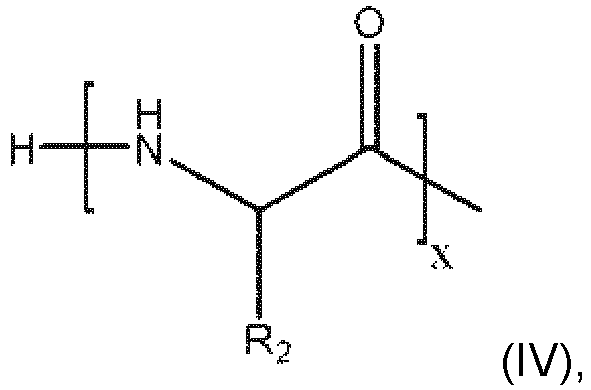 x représente un nombre entier compris entre 1 et 100,le radical R2 dans chacun des éléments structurels de formule (IV) peut être choisi indépendamment de l'élément structurel précédent de formule (IV),R2 représente un atome d'hydrogène, un groupe méthyle, un groupe isopropyle, un groupe 2-méthylpropyle, un groupe 1-méthyl-propyle, un groupe benzyle, un groupe 4-hydroxybenzyle, un groupe hydroxyméthyle, un groupe 1-hydroxyéthyle, un groupe 4-aminobutyle, un groupe 3-carbamimidamidopropyle, un groupe 2-carboxyéthyle, un groupe carboxyméthyle, un groupe 2-carbamoyléthyle, un groupe carbamoylméthyle, un groupe sulfanylméthyle, un groupe 2-(méthylsulfanyl)éthyle, un groupe 1H-imidazol-4-ylméthyle, un groupe 1H-indol-3-ylméthyle ou un groupe (sulfosulfanyl)méthyle,M1 représente le groupement -OM2 ou un élément structurel de formule (V)
 y représente un nombre entier compris entre 1 et 100,le radical R3 dans chacun des éléments structurels de formule (V) peut être choisi indépendamment de l'élément structurel précédent de formule (V),R3 représente un atome d'hydrogène, un groupe méthyle, un groupe isopropyle, un groupe 2-méthylpropyle, un groupe 1-méthyl-propyle, un groupe benzyle, un groupe 4-hydroxybenzyle, un groupe hydroxyméthyle, un groupe 1-hydroxyéthyle, un groupe 4-aminobutyle, un groupe 3-carbamimidamidopropyle, un groupe 2-carboxyéthyle, un groupe carboxyméthyle, un groupe 2-carbamoyléthyle, un groupe carbamoylméthyle, un groupe sulfanylméthyle, un groupe 2-(méthylsulfanyl)éthyle, un groupe 1H-imidazol-4-ylméthyle, un groupe 1H-indol-3-ylméthyle ou un groupe (sulfosulfanyl)méthyle,M2 représente un atome d'hydrogène, un équivalent d'un cation mono- ou polyvalent ou un ion ammonium (NH4)+,- au moins un agent chélatant, de préférence en une quantité totale de 0,01 à 2,5 % en poids, de manière particulièrement préférée en une quantité totale de 0,1 à 1,5 % en poids, de manière préférée entre toutes en une quantité totale de 0,2 à 0,6 % en poids, dans chaque cas par rapport au poids de l'agent de traitement par oxydation (A), et- au moins un amide d'acide gras répondant à la formule (AMID-I), de préférence en une quantité totale de 0,1 à 10 % en poids, de manière particulièrement préférée de 0,2 à 5 % en poids, de manière préférée entre toutes de 0,4 et 2 % en poids, dans chaque cas par rapport au poids de l'agent de traitement par oxydation (A),
R1 est choisi parmi les groupes alkyle en C4 à C22 linéaires et ramifiés, saturés ou insaturés, les groupes alkyle et alcényle étant non substitués ou pouvant être substitués par des atomes d'oxygène, des atomes d'azote, des groupes hydroxyle, des groupes éther, des groupes oxyalkylène, des groupes polyoxyalkylène, des groupes acide carboxylique, des groupes amine, des groupes amide, des groupes contenant de l'halogène, des groupes ester, des groupes siloxane ou des groupes polysiloxane, et parmi des groupes alkyle alcoxylés de formules :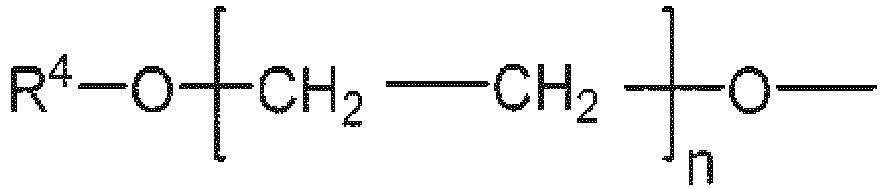
 R4 et R5, qui peuvent être identiques ou différents, sont choisis parmi les groupes alkyle en C4 à C22 linéaires et ramifiés, saturés ou insaturés, n est un nombre entier compris dans la plage allant de 1 à 10, de préférence dans la plage allant de 1 à 4 et m est un nombre entier compris dans la plage allant de 1 à 6, etR2 et R3, qui peuvent être identiques ou différents, sont chacun indépendamment l'un de l'autre choisis parmi H ; des groupes alkyle en C1 à C22 linéaires et ramifiés, saturés ou insaturés, les groupes alkyle et alcényle étant non substitués ou étant substitués avec des atomes d'oxygène, des atomes d'azote, des groupes hydroxyle, des groupes éther, des groupes oxyalkylène, en particulier des groupes oxyéthylène, des groupes polyoxyalkylène, en particulier des groupes polyoxyéthylène, des groupes acide carboxylique, des groupes amine, des groupes alkylamine, en particulier des groupes alkylamine en C1 à C3, des groupes dialkylamine, en particulier des groupes dialkylamine(en C1 à C3), des groupes 4,5-dihydroimidazolium substitués et non substitués, des groupes amide, des groupes contenant de l'halogène, des groupes ester, des groupes siloxane ou des groupes polysiloxane,II. préparer une composition (B), contenantg) au moins un agent d'alcalinisation, choisi parmi l'hydroxyde d'ammonium, la monoéthanolamine et les silicates de sodium ainsi que des mélanges de ceux-ci,h) éventuellement de l'eau eti) éventuellement au moins un précurseur de colorant d'oxydation et/ou au moins un colorant direct,la composition (B) ayant de préférence un pH compris dans une plage allant de 6,5 à 12,0, de préférence de 8 à 11,5, de manière particulièrement préférée de 8,5 à 11,0, mesuré dans chaque cas à 20 °C,III. mélanger les compositions (A) et (B) l'une avec l'autre, le rapport pondéral entre (A) et (B) étant compris de préférence dans la plage allant de 10:1 à 1:4, de manière préférée dans la plage allant de 5:1 à 1:3, de manière particulièrement préférée dans la plage allant de 4:1 à 1:2, de manière préférée entre toutes dans la plage allant de 2:1 à 1:1, et immédiatement aprèsIV. appliquer le mélange de (A) et (B) sur les fibres kératiniques, en particulier sur les cheveux, etV. rincer après une durée d'action de 0,1 à 60 minutes, de préférence de 1 à 50 minutes, de manière particulièrement préférée de 10 à 45 minutes, de manière préférée entre toutes de 30 à 45 minutes,VI. réaliser éventuellement d'autres traitements capillaires tels que le brushing, le conditionnement et/ou le séchage.
 - Procédé selon la revendication 10 ou 11, caractérisé en ce que l'agent de traitement par oxydation (A) contient l'au moins un acide dicarboxylique ayant 2 à 10 atomes de carbone en une quantité totale de 0,1 à 5 % en poids, de préférence de 0,2 à 4 % en poids, de manière particulièrement préférée de 0,5 à 2 % en poids, dans chaque cas converti en acide non dissocié et par rapport au poids de l'agent de traitement (A).
- Procédé selon l'une quelconque des revendications 10 à 12, caractérisé en ce que l'agent de traitement par oxydation (A) contient l'au moins un acide aminé en une quantité totale de 0,05 à 3 % en poids, de préférence de 0,1 à 2 % en poids, de manière particulièrement préférée de 0,2 à 1,2 % en poids, dans chaque cas converti en acide non dissocié et par rapport au poids de l'agent de traitement par oxydation (A).
- Procédé selon l'une quelconque des revendications 11 à 13, caractérisé en ce que la composition (B) est pulvérulente et contient au moins un sel de persulfate et/ou au moins un sel de percarbonate.
Applications Claiming Priority (2)
| Application Number | Priority Date | Filing Date | Title |
|---|---|---|---|
| DE102015225137.3A DE102015225137A1 (de) | 2015-12-14 | 2015-12-14 | Oxidationsmittel zur oxidativen Färbe- und Blondierbehandlung keratinischer Fasern mit reduzierter Schädigung |
| PCT/EP2016/080408 WO2017102582A1 (fr) | 2015-12-14 | 2016-12-09 | Agent oxydant permettant la décoloration et la coloration d'oxydation de fibres kératiniques avec moins de dommages |
Publications (2)
| Publication Number | Publication Date |
|---|---|
| EP3389791A1 EP3389791A1 (fr) | 2018-10-24 |
| EP3389791B1 true EP3389791B1 (fr) | 2020-02-05 |
Family
ID=57530698
Family Applications (1)
| Application Number | Title | Priority Date | Filing Date |
|---|---|---|---|
| EP16809043.9A Active EP3389791B1 (fr) | 2015-12-14 | 2016-12-09 | Agent oxydatif pour colorer ou éclaircir avec moindre dégradation les fibres kératiniques |
Country Status (4)
| Country | Link |
|---|---|
| US (1) | US20170165161A1 (fr) |
| EP (1) | EP3389791B1 (fr) |
| DE (1) | DE102015225137A1 (fr) |
| WO (1) | WO2017102582A1 (fr) |
Families Citing this family (22)
| Publication number | Priority date | Publication date | Assignee | Title |
|---|---|---|---|---|
| JP2018514570A (ja) | 2015-05-01 | 2018-06-07 | ロレアル | 化学処理における活性剤の使用 |
| DE102016209468A1 (de) * | 2016-05-31 | 2017-11-30 | Henkel Ag & Co. Kgaa | Haar schonende Mittel und Verfahren zur oxidativen Haarfärbung oder Blondierung mit ausgewählten Dicarbonsäuren |
| EP3377030B1 (fr) * | 2015-11-20 | 2020-05-06 | Henkel AG & Co. KGaA | Produits et procédés de coloration ou de décoloration d'oxydation ménageant les cheveux |
| EP3380062B1 (fr) | 2015-11-24 | 2021-07-07 | L'oreal | Compositions pour le traitement des cheveux |
| JP6873994B2 (ja) | 2015-11-24 | 2021-05-19 | ロレアル | 毛髪を処置するための組成物 |
| CN108495686A (zh) | 2015-11-24 | 2018-09-04 | 欧莱雅 | 用于处理毛发的组合物 |
| DE102016213441A1 (de) * | 2016-07-22 | 2018-01-25 | Henkel Ag & Co. Kgaa | Haar schonende Mittel und Verfahren zur oxidativen Haarfärbung mit verbesserter Aufhellleistung |
| DE102016215198A1 (de) * | 2016-08-16 | 2018-02-22 | Henkel Ag & Co. Kgaa | Mittel zur verbesserten oxidativen Aufhellung von keratinhaltigen Fasern |
| US11135150B2 (en) | 2016-11-21 | 2021-10-05 | L'oreal | Compositions and methods for improving the quality of chemically treated hair |
| US11433011B2 (en) | 2017-05-24 | 2022-09-06 | L'oreal | Methods for treating chemically relaxed hair |
| DE102017218967A1 (de) * | 2017-10-24 | 2019-04-25 | Henkel Ag & Co. Kgaa | Blondiermittel mit Methionin |
| DE102017218978A1 (de) * | 2017-10-24 | 2019-04-25 | Henkel Ag & Co. Kgaa | "Strukturkräftigende Haarbehandlungsmittel mit gesteigerter Pflegewirkung " |
| DE102017218982A1 (de) * | 2017-10-24 | 2019-04-25 | Henkel Ag & Co. Kgaa | Strukturkräftigender Haarbehandlungsmittel mit gesteigerter Pflegewirkung " |
| DE102017219296A1 (de) * | 2017-10-27 | 2019-05-02 | Henkel Ag & Co. Kgaa | Relaxer mit Methionin |
| DE102017220439A1 (de) | 2017-11-16 | 2019-05-16 | Henkel Ag & Co. Kgaa | Lagerstabiler Entwickler für Oxidationsfärbemittel |
| DE102017222516A1 (de) * | 2017-12-12 | 2019-06-13 | Henkel Ag & Co. Kgaa | Blondiermittel und Verfahren zur schonenden oxidativen Haaraufhellung |
| EP4011355A1 (fr) | 2017-12-29 | 2022-06-15 | L'oreal | Compositions pour modifier la couleur des cheveux |
| US11090249B2 (en) | 2018-10-31 | 2021-08-17 | L'oreal | Hair treatment compositions, methods, and kits for treating hair |
| US11419809B2 (en) | 2019-06-27 | 2022-08-23 | L'oreal | Hair treatment compositions and methods for treating hair |
| JP7374457B2 (ja) * | 2019-08-27 | 2023-11-07 | ホーユー株式会社 | 酸化染毛用又は毛髪脱色・脱染用組成物 |
| TW202131893A (zh) * | 2019-10-31 | 2021-09-01 | 日商花王股份有限公司 | 包含胺基酸之水性氧化性組合物 |
| BR102021006988A2 (pt) | 2021-04-12 | 2022-10-25 | Chemyunion Ltda | Composições capilares, seus processos de produção, usos e métodos de tratamento capilar |
Family Cites Families (11)
| Publication number | Priority date | Publication date | Assignee | Title |
|---|---|---|---|---|
| TWI278328B (en) | 2000-07-21 | 2007-04-11 | Kao Corp | Hair cosmetic composition |
| DE10051774A1 (de) | 2000-10-19 | 2002-04-25 | Henkel Kgaa | Neue Verwendung von kurzkettigen Carbonsäuren |
| RU2308936C2 (ru) | 2001-03-19 | 2007-10-27 | Л`Аван Гард Инк. | Композиция для одновременного осветления и окрашивания волос, содержащая устойчивые к обесцвечиванию кислотные и основные красители |
| JP2002363048A (ja) * | 2001-05-31 | 2002-12-18 | Nicca Chemical Co Ltd | 2剤式染毛・脱色剤組成物用第1剤、2剤式染毛・脱色剤組成物キット、及びそれを用いた毛髪処理方法 |
| DE102004024506A1 (de) | 2004-05-18 | 2005-12-15 | Henkel Kgaa | Verfahren zur Restrukturierung keratinischer Fasern |
| DE102008036957A1 (de) | 2008-08-08 | 2010-02-11 | Henkel Ag & Co. Kgaa | Mattierungsadditiv für Blondierungen |
| EP2202219A1 (fr) * | 2008-12-24 | 2010-06-30 | Kao Corporation, S.A. | Mélange d'amides et compositions cosmétiques comportant ce mélange |
| DE102009029043A1 (de) * | 2009-08-31 | 2011-03-03 | Henkel Ag & Co. Kgaa | Intensive, schonende Färbemittel |
| DE102012209990A1 (de) * | 2012-06-14 | 2013-12-19 | Henkel Ag & Co. Kgaa | Verfahren zur schonenden oxidativen Haarbehandlung |
| CA2918829A1 (fr) * | 2013-08-23 | 2015-02-26 | The Procter & Gamble Company | Procedes et kits de coloration capillaire |
| DE102013217027A1 (de) * | 2013-08-27 | 2015-03-05 | Henkel Ag & Co. Kgaa | Produkte zur oxidativen Farbeveränderung von keratinischen Fasern im Spender |
-
2015
- 2015-12-14 DE DE102015225137.3A patent/DE102015225137A1/de not_active Withdrawn
-
2016
- 2016-12-09 EP EP16809043.9A patent/EP3389791B1/fr active Active
- 2016-12-09 WO PCT/EP2016/080408 patent/WO2017102582A1/fr not_active Ceased
- 2016-12-13 US US15/377,779 patent/US20170165161A1/en not_active Abandoned
Non-Patent Citations (1)
| Title |
|---|
| None * |
Also Published As
| Publication number | Publication date |
|---|---|
| DE102015225137A1 (de) | 2017-06-14 |
| US20170165161A1 (en) | 2017-06-15 |
| EP3389791A1 (fr) | 2018-10-24 |
| WO2017102582A1 (fr) | 2017-06-22 |
Similar Documents
| Publication | Publication Date | Title |
|---|---|---|
| EP3389791B1 (fr) | Agent oxydatif pour colorer ou éclaircir avec moindre dégradation les fibres kératiniques | |
| EP3377030B1 (fr) | Produits et procédés de coloration ou de décoloration d'oxydation ménageant les cheveux | |
| EP3463270B1 (fr) | Produit et procédé de décoloration ou coloration d'oxydation doux pour les cheveux faisant appel à des acides dicarboxyliques sélectionnés | |
| EP2925284B1 (fr) | Brillantine dotée de colorants cationiques, de tensio-actifs et de polymères spéciaux | |
| WO2016005143A1 (fr) | Décoloration améliorée de fibres kératiniques colorées | |
| DE102016200688A1 (de) | Keratinfaserschonende Mittel und Verfahren zur oxidativen Haarfärbung | |
| EP2559456A2 (fr) | Agent de traitement et/ou de coloration des fibres kératiniques, contenant des aminosilicones spécifiques et agents alcalinisants | |
| DE102013215583A1 (de) | Mehrkomponenten-Verpackungseinheit zum oxidativen Färben von keratinischen Fasern mit reduziertem Ammoniak-Geruch | |
| DE102015218077A1 (de) | Haar schonendes Oxidationsfärbe- oder -blondiermittel und schonendes Haarfärbe- oder -blondierverfahren | |
| EP2651515B1 (fr) | Agents pour la modification de couleur et/ou de forme de fibres kératiniques | |
| DE102013226074A1 (de) | Mittel zur Haarfärbung mit intensiver Konditionierung | |
| DE102015222946A1 (de) | Haar schonende Mittel und Verfahren zur oxidativen Haarfärbung oder Blondierung | |
| EP3076939B2 (fr) | Agent de coloration oxydative de cheveux contenant des combinaisons spéciales de développeurs et de coupleurs | |
| WO2025087606A1 (fr) | Agent réticulant de diamine pour amélioration de l'état des cheveux lors de l'utilisation d'agents de traitement capillaire oxydants | |
| WO2019057470A1 (fr) | Décoloration améliorée de fibres kératiniques colorées | |
| DE102023210499A1 (de) | Anorganisch-organischer Diamin-Crosslinker zur Verbesserung der Haarbeschaffenheit bei der Anwendung von oxidativen Haarbehandlungsmitteln | |
| DE102015203825A1 (de) | "Färbemittel für keratinische Fasern enthaltend ein Dipeptid und einen direktziehenden Farbstoff" | |
| WO2015185340A1 (fr) | Colorant oxydant contenant un hydrolysat de kératine cationique | |
| EP3076940B1 (fr) | Agent de coloration oxydative de cheveux contenant des combinaisons spéciales de développeurs et de coupleurs | |
| DE102023211218A1 (de) | Neuartiger Wasserstoffperoxid-haltiger Developer für oxidative Färbe- und Blondiermittel für keratinische Fasern | |
| DE102023209065A1 (de) | Verbesserung der Waschechtheit Level 2 Colorationen durch Versiegelung mit Silanen | |
| EP3076929B1 (fr) | Compositions à coloration des cheveux comprenant des combinaisons speciales des coupleurs et des bases oxidatives | |
| DE102015203002A1 (de) | Färbemittel für keratinische Fasern enthaltend eine Kombination aus drei Farbstoffen | |
| DE102016205616A1 (de) | 4,5-Diaminoimidazole als neue Oxidationsfarbstoffvorprodukte vom Entwicklertyp | |
| DE102014210741A1 (de) | Aufhellmittel mit kationischen Keratinhydrolysaten |
Legal Events
| Date | Code | Title | Description |
|---|---|---|---|
| STAA | Information on the status of an ep patent application or granted ep patent |
Free format text: STATUS: UNKNOWN |
|
| STAA | Information on the status of an ep patent application or granted ep patent |
Free format text: STATUS: THE INTERNATIONAL PUBLICATION HAS BEEN MADE |
|
| PUAI | Public reference made under article 153(3) epc to a published international application that has entered the european phase |
Free format text: ORIGINAL CODE: 0009012 |
|
| STAA | Information on the status of an ep patent application or granted ep patent |
Free format text: STATUS: REQUEST FOR EXAMINATION WAS MADE |
|
| 17P | Request for examination filed |
Effective date: 20180605 |
|
| AK | Designated contracting states |
Kind code of ref document: A1 Designated state(s): AL AT BE BG CH CY CZ DE DK EE ES FI FR GB GR HR HU IE IS IT LI LT LU LV MC MK MT NL NO PL PT RO RS SE SI SK SM TR |
|
| AX | Request for extension of the european patent |
Extension state: BA ME |
|
| DAV | Request for validation of the european patent (deleted) | ||
| DAX | Request for extension of the european patent (deleted) | ||
| RIC1 | Information provided on ipc code assigned before grant |
Ipc: A61K 8/46 20060101ALI20190724BHEP Ipc: A61K 8/22 20060101ALI20190724BHEP Ipc: A61K 8/44 20060101ALI20190724BHEP Ipc: A61Q 5/10 20060101AFI20190724BHEP Ipc: A61K 8/42 20060101ALI20190724BHEP Ipc: A61K 8/362 20060101ALI20190724BHEP |
|
| GRAP | Despatch of communication of intention to grant a patent |
Free format text: ORIGINAL CODE: EPIDOSNIGR1 |
|
| STAA | Information on the status of an ep patent application or granted ep patent |
Free format text: STATUS: GRANT OF PATENT IS INTENDED |
|
| INTG | Intention to grant announced |
Effective date: 20190903 |
|
| GRAS | Grant fee paid |
Free format text: ORIGINAL CODE: EPIDOSNIGR3 |
|
| GRAA | (expected) grant |
Free format text: ORIGINAL CODE: 0009210 |
|
| STAA | Information on the status of an ep patent application or granted ep patent |
Free format text: STATUS: THE PATENT HAS BEEN GRANTED |
|
| AK | Designated contracting states |
Kind code of ref document: B1 Designated state(s): AL AT BE BG CH CY CZ DE DK EE ES FI FR GB GR HR HU IE IS IT LI LT LU LV MC MK MT NL NO PL PT RO RS SE SI SK SM TR |
|
| REG | Reference to a national code |
Ref country code: GB Ref legal event code: FG4D Free format text: NOT ENGLISH |
|
| REG | Reference to a national code |
Ref country code: AT Ref legal event code: REF Ref document number: 1229492 Country of ref document: AT Kind code of ref document: T Effective date: 20200215 |
|
| REG | Reference to a national code |
Ref country code: DE Ref legal event code: R096 Ref document number: 502016008654 Country of ref document: DE |
|
| REG | Reference to a national code |
Ref country code: IE Ref legal event code: FG4D Free format text: LANGUAGE OF EP DOCUMENT: GERMAN |
|
| REG | Reference to a national code |
Ref country code: CH Ref legal event code: EP |
|
| REG | Reference to a national code |
Ref country code: NL Ref legal event code: MP Effective date: 20200205 |
|
| PG25 | Lapsed in a contracting state [announced via postgrant information from national office to epo] |
Ref country code: FI Free format text: LAPSE BECAUSE OF FAILURE TO SUBMIT A TRANSLATION OF THE DESCRIPTION OR TO PAY THE FEE WITHIN THE PRESCRIBED TIME-LIMIT Effective date: 20200205 Ref country code: RS Free format text: LAPSE BECAUSE OF FAILURE TO SUBMIT A TRANSLATION OF THE DESCRIPTION OR TO PAY THE FEE WITHIN THE PRESCRIBED TIME-LIMIT Effective date: 20200205 Ref country code: PT Free format text: LAPSE BECAUSE OF FAILURE TO SUBMIT A TRANSLATION OF THE DESCRIPTION OR TO PAY THE FEE WITHIN THE PRESCRIBED TIME-LIMIT Effective date: 20200628 Ref country code: NO Free format text: LAPSE BECAUSE OF FAILURE TO SUBMIT A TRANSLATION OF THE DESCRIPTION OR TO PAY THE FEE WITHIN THE PRESCRIBED TIME-LIMIT Effective date: 20200505 |
|
| REG | Reference to a national code |
Ref country code: LT Ref legal event code: MG4D |
|
| PG25 | Lapsed in a contracting state [announced via postgrant information from national office to epo] |
Ref country code: BG Free format text: LAPSE BECAUSE OF FAILURE TO SUBMIT A TRANSLATION OF THE DESCRIPTION OR TO PAY THE FEE WITHIN THE PRESCRIBED TIME-LIMIT Effective date: 20200505 Ref country code: LV Free format text: LAPSE BECAUSE OF FAILURE TO SUBMIT A TRANSLATION OF THE DESCRIPTION OR TO PAY THE FEE WITHIN THE PRESCRIBED TIME-LIMIT Effective date: 20200205 Ref country code: SE Free format text: LAPSE BECAUSE OF FAILURE TO SUBMIT A TRANSLATION OF THE DESCRIPTION OR TO PAY THE FEE WITHIN THE PRESCRIBED TIME-LIMIT Effective date: 20200205 Ref country code: HR Free format text: LAPSE BECAUSE OF FAILURE TO SUBMIT A TRANSLATION OF THE DESCRIPTION OR TO PAY THE FEE WITHIN THE PRESCRIBED TIME-LIMIT Effective date: 20200205 Ref country code: GR Free format text: LAPSE BECAUSE OF FAILURE TO SUBMIT A TRANSLATION OF THE DESCRIPTION OR TO PAY THE FEE WITHIN THE PRESCRIBED TIME-LIMIT Effective date: 20200506 Ref country code: IS Free format text: LAPSE BECAUSE OF FAILURE TO SUBMIT A TRANSLATION OF THE DESCRIPTION OR TO PAY THE FEE WITHIN THE PRESCRIBED TIME-LIMIT Effective date: 20200605 |
|
| PG25 | Lapsed in a contracting state [announced via postgrant information from national office to epo] |
Ref country code: NL Free format text: LAPSE BECAUSE OF FAILURE TO SUBMIT A TRANSLATION OF THE DESCRIPTION OR TO PAY THE FEE WITHIN THE PRESCRIBED TIME-LIMIT Effective date: 20200205 |
|
| PG25 | Lapsed in a contracting state [announced via postgrant information from national office to epo] |
Ref country code: SK Free format text: LAPSE BECAUSE OF FAILURE TO SUBMIT A TRANSLATION OF THE DESCRIPTION OR TO PAY THE FEE WITHIN THE PRESCRIBED TIME-LIMIT Effective date: 20200205 Ref country code: RO Free format text: LAPSE BECAUSE OF FAILURE TO SUBMIT A TRANSLATION OF THE DESCRIPTION OR TO PAY THE FEE WITHIN THE PRESCRIBED TIME-LIMIT Effective date: 20200205 Ref country code: CZ Free format text: LAPSE BECAUSE OF FAILURE TO SUBMIT A TRANSLATION OF THE DESCRIPTION OR TO PAY THE FEE WITHIN THE PRESCRIBED TIME-LIMIT Effective date: 20200205 Ref country code: LT Free format text: LAPSE BECAUSE OF FAILURE TO SUBMIT A TRANSLATION OF THE DESCRIPTION OR TO PAY THE FEE WITHIN THE PRESCRIBED TIME-LIMIT Effective date: 20200205 Ref country code: SM Free format text: LAPSE BECAUSE OF FAILURE TO SUBMIT A TRANSLATION OF THE DESCRIPTION OR TO PAY THE FEE WITHIN THE PRESCRIBED TIME-LIMIT Effective date: 20200205 Ref country code: EE Free format text: LAPSE BECAUSE OF FAILURE TO SUBMIT A TRANSLATION OF THE DESCRIPTION OR TO PAY THE FEE WITHIN THE PRESCRIBED TIME-LIMIT Effective date: 20200205 Ref country code: DK Free format text: LAPSE BECAUSE OF FAILURE TO SUBMIT A TRANSLATION OF THE DESCRIPTION OR TO PAY THE FEE WITHIN THE PRESCRIBED TIME-LIMIT Effective date: 20200205 Ref country code: ES Free format text: LAPSE BECAUSE OF FAILURE TO SUBMIT A TRANSLATION OF THE DESCRIPTION OR TO PAY THE FEE WITHIN THE PRESCRIBED TIME-LIMIT Effective date: 20200205 |
|
| REG | Reference to a national code |
Ref country code: DE Ref legal event code: R097 Ref document number: 502016008654 Country of ref document: DE |
|
| PLBE | No opposition filed within time limit |
Free format text: ORIGINAL CODE: 0009261 |
|
| STAA | Information on the status of an ep patent application or granted ep patent |
Free format text: STATUS: NO OPPOSITION FILED WITHIN TIME LIMIT |
|
| 26N | No opposition filed |
Effective date: 20201106 |
|
| PG25 | Lapsed in a contracting state [announced via postgrant information from national office to epo] |
Ref country code: IT Free format text: LAPSE BECAUSE OF FAILURE TO SUBMIT A TRANSLATION OF THE DESCRIPTION OR TO PAY THE FEE WITHIN THE PRESCRIBED TIME-LIMIT Effective date: 20200205 |
|
| REG | Reference to a national code |
Ref country code: DE Ref legal event code: R084 Ref document number: 502016008654 Country of ref document: DE |
|
| PG25 | Lapsed in a contracting state [announced via postgrant information from national office to epo] |
Ref country code: PL Free format text: LAPSE BECAUSE OF FAILURE TO SUBMIT A TRANSLATION OF THE DESCRIPTION OR TO PAY THE FEE WITHIN THE PRESCRIBED TIME-LIMIT Effective date: 20200205 Ref country code: SI Free format text: LAPSE BECAUSE OF FAILURE TO SUBMIT A TRANSLATION OF THE DESCRIPTION OR TO PAY THE FEE WITHIN THE PRESCRIBED TIME-LIMIT Effective date: 20200205 |
|
| REG | Reference to a national code |
Ref country code: CH Ref legal event code: PL |
|
| PG25 | Lapsed in a contracting state [announced via postgrant information from national office to epo] |
Ref country code: MC Free format text: LAPSE BECAUSE OF FAILURE TO SUBMIT A TRANSLATION OF THE DESCRIPTION OR TO PAY THE FEE WITHIN THE PRESCRIBED TIME-LIMIT Effective date: 20200205 |
|
| REG | Reference to a national code |
Ref country code: BE Ref legal event code: MM Effective date: 20201231 |
|
| PG25 | Lapsed in a contracting state [announced via postgrant information from national office to epo] |
Ref country code: LU Free format text: LAPSE BECAUSE OF NON-PAYMENT OF DUE FEES Effective date: 20201209 Ref country code: IE Free format text: LAPSE BECAUSE OF NON-PAYMENT OF DUE FEES Effective date: 20201209 |
|
| PG25 | Lapsed in a contracting state [announced via postgrant information from national office to epo] |
Ref country code: CH Free format text: LAPSE BECAUSE OF NON-PAYMENT OF DUE FEES Effective date: 20201231 Ref country code: LI Free format text: LAPSE BECAUSE OF NON-PAYMENT OF DUE FEES Effective date: 20201231 |
|
| PG25 | Lapsed in a contracting state [announced via postgrant information from national office to epo] |
Ref country code: TR Free format text: LAPSE BECAUSE OF FAILURE TO SUBMIT A TRANSLATION OF THE DESCRIPTION OR TO PAY THE FEE WITHIN THE PRESCRIBED TIME-LIMIT Effective date: 20200205 Ref country code: MT Free format text: LAPSE BECAUSE OF FAILURE TO SUBMIT A TRANSLATION OF THE DESCRIPTION OR TO PAY THE FEE WITHIN THE PRESCRIBED TIME-LIMIT Effective date: 20200205 Ref country code: CY Free format text: LAPSE BECAUSE OF FAILURE TO SUBMIT A TRANSLATION OF THE DESCRIPTION OR TO PAY THE FEE WITHIN THE PRESCRIBED TIME-LIMIT Effective date: 20200205 |
|
| PG25 | Lapsed in a contracting state [announced via postgrant information from national office to epo] |
Ref country code: MK Free format text: LAPSE BECAUSE OF FAILURE TO SUBMIT A TRANSLATION OF THE DESCRIPTION OR TO PAY THE FEE WITHIN THE PRESCRIBED TIME-LIMIT Effective date: 20200205 Ref country code: AL Free format text: LAPSE BECAUSE OF FAILURE TO SUBMIT A TRANSLATION OF THE DESCRIPTION OR TO PAY THE FEE WITHIN THE PRESCRIBED TIME-LIMIT Effective date: 20200205 |
|
| PG25 | Lapsed in a contracting state [announced via postgrant information from national office to epo] |
Ref country code: BE Free format text: LAPSE BECAUSE OF NON-PAYMENT OF DUE FEES Effective date: 20201231 |
|
| REG | Reference to a national code |
Ref country code: AT Ref legal event code: MM01 Ref document number: 1229492 Country of ref document: AT Kind code of ref document: T Effective date: 20211209 |
|
| PG25 | Lapsed in a contracting state [announced via postgrant information from national office to epo] |
Ref country code: AT Free format text: LAPSE BECAUSE OF NON-PAYMENT OF DUE FEES Effective date: 20211209 |
|
| P01 | Opt-out of the competence of the unified patent court (upc) registered |
Effective date: 20230530 |
|
| PGFP | Annual fee paid to national office [announced via postgrant information from national office to epo] |
Ref country code: DE Payment date: 20251211 Year of fee payment: 10 |
|
| PGFP | Annual fee paid to national office [announced via postgrant information from national office to epo] |
Ref country code: GB Payment date: 20251219 Year of fee payment: 10 |
|
| PGFP | Annual fee paid to national office [announced via postgrant information from national office to epo] |
Ref country code: FR Payment date: 20251229 Year of fee payment: 10 |