EP3394018B1 - Verfahren zur herstellung von 2,3,3,3-tetrafluorpropen und rückgewinnung von 1,1,1,2,2-pentafluropropan ohne verunreinigungen - Google Patents
Verfahren zur herstellung von 2,3,3,3-tetrafluorpropen und rückgewinnung von 1,1,1,2,2-pentafluropropan ohne verunreinigungen Download PDFInfo
- Publication number
- EP3394018B1 EP3394018B1 EP16822130.7A EP16822130A EP3394018B1 EP 3394018 B1 EP3394018 B1 EP 3394018B1 EP 16822130 A EP16822130 A EP 16822130A EP 3394018 B1 EP3394018 B1 EP 3394018B1
- Authority
- EP
- European Patent Office
- Prior art keywords
- tetrafluoro
- propene
- trans
- pentafluoropropane
- cis
- Prior art date
- Legal status (The legal status is an assumption and is not a legal conclusion. Google has not performed a legal analysis and makes no representation as to the accuracy of the status listed.)
- Active
Links
Images


Classifications
-
- C—CHEMISTRY; METALLURGY
- C07—ORGANIC CHEMISTRY
- C07C—ACYCLIC OR CARBOCYCLIC COMPOUNDS
- C07C21/00—Acyclic unsaturated compounds containing halogen atoms
- C07C21/02—Acyclic unsaturated compounds containing halogen atoms containing carbon-to-carbon double bonds
- C07C21/18—Acyclic unsaturated compounds containing halogen atoms containing carbon-to-carbon double bonds containing fluorine
-
- C—CHEMISTRY; METALLURGY
- C07—ORGANIC CHEMISTRY
- C07C—ACYCLIC OR CARBOCYCLIC COMPOUNDS
- C07C17/00—Preparation of halogenated hydrocarbons
- C07C17/38—Separation; Purification; Stabilisation; Use of additives
- C07C17/383—Separation; Purification; Stabilisation; Use of additives by distillation
-
- C—CHEMISTRY; METALLURGY
- C07—ORGANIC CHEMISTRY
- C07C—ACYCLIC OR CARBOCYCLIC COMPOUNDS
- C07C17/00—Preparation of halogenated hydrocarbons
- C07C17/38—Separation; Purification; Stabilisation; Use of additives
- C07C17/383—Separation; Purification; Stabilisation; Use of additives by distillation
- C07C17/386—Separation; Purification; Stabilisation; Use of additives by distillation with auxiliary compounds
-
- C—CHEMISTRY; METALLURGY
- C07—ORGANIC CHEMISTRY
- C07C—ACYCLIC OR CARBOCYCLIC COMPOUNDS
- C07C19/00—Acyclic saturated compounds containing halogen atoms
- C07C19/08—Acyclic saturated compounds containing halogen atoms containing fluorine
-
- C—CHEMISTRY; METALLURGY
- C09—DYES; PAINTS; POLISHES; NATURAL RESINS; ADHESIVES; COMPOSITIONS NOT OTHERWISE PROVIDED FOR; APPLICATIONS OF MATERIALS NOT OTHERWISE PROVIDED FOR
- C09K—MATERIALS FOR MISCELLANEOUS APPLICATIONS, NOT PROVIDED FOR ELSEWHERE
- C09K2205/00—Aspects relating to compounds used in compression type refrigeration systems
- C09K2205/10—Components
- C09K2205/12—Hydrocarbons
- C09K2205/126—Unsaturated fluorinated hydrocarbons
-
- C—CHEMISTRY; METALLURGY
- C09—DYES; PAINTS; POLISHES; NATURAL RESINS; ADHESIVES; COMPOSITIONS NOT OTHERWISE PROVIDED FOR; APPLICATIONS OF MATERIALS NOT OTHERWISE PROVIDED FOR
- C09K—MATERIALS FOR MISCELLANEOUS APPLICATIONS, NOT PROVIDED FOR ELSEWHERE
- C09K5/00—Heat-transfer, heat-exchange or heat-storage materials, e.g. refrigerants; Materials for the production of heat or cold by chemical reactions other than by combustion
- C09K5/02—Materials undergoing a change of physical state when used
- C09K5/04—Materials undergoing a change of physical state when used the change of state being from liquid to vapour or vice versa
- C09K5/041—Materials undergoing a change of physical state when used the change of state being from liquid to vapour or vice versa for compression-type refrigeration systems
- C09K5/044—Materials undergoing a change of physical state when used the change of state being from liquid to vapour or vice versa for compression-type refrigeration systems comprising halogenated compounds
- C09K5/045—Materials undergoing a change of physical state when used the change of state being from liquid to vapour or vice versa for compression-type refrigeration systems comprising halogenated compounds containing only fluorine as halogen
-
- Y—GENERAL TAGGING OF NEW TECHNOLOGICAL DEVELOPMENTS; GENERAL TAGGING OF CROSS-SECTIONAL TECHNOLOGIES SPANNING OVER SEVERAL SECTIONS OF THE IPC; TECHNICAL SUBJECTS COVERED BY FORMER USPC CROSS-REFERENCE ART COLLECTIONS [XRACs] AND DIGESTS
- Y02—TECHNOLOGIES OR APPLICATIONS FOR MITIGATION OR ADAPTATION AGAINST CLIMATE CHANGE
- Y02P—CLIMATE CHANGE MITIGATION TECHNOLOGIES IN THE PRODUCTION OR PROCESSING OF GOODS
- Y02P20/00—Technologies relating to chemical industry
- Y02P20/50—Improvements relating to the production of bulk chemicals
- Y02P20/582—Recycling of unreacted starting or intermediate materials
Definitions
- the invention relates to a process for the preparation of 2,3,3,3-tetrafluoro-1-propene and is defined in the claims. More particularly, the invention relates to a process for the preparation of 2,3,3,3-tetrafluoro-1-propene including the purification and recycling of the 1,1,1,2,2-pentafluoropropane also resulting from the reaction .
- Hydrofluorocarbons such as 2,3,3,3-tetrafluoro-1-propene (HFO-1234yf) are compounds known for their properties as coolants and heat transfer fluids, fire extinguishers, propellants, foaming agents, blowing agents, gaseous dielectrics, polymerization medium or monomer, carrier fluids, abrasive agents, drying agents and power generation unit fluids.
- HFOs have been identified as desirable alternatives to HCFCs due to their low ODP (Ozone Depletion Potential) and GWP (Global Warming Potential) values.
- hydrofluoroolefin manufacturing processes involve a dehydrohalogenation reaction and/or a fluorination reaction. This type of reaction is carried out in the gas phase and generates impurities which must therefore be eliminated in order to obtain the desired compound in a degree of purity sufficient for the intended applications.
- EP 0 864 554 a process for the purification of a mixture comprising 1,1,1,3,3-pentafluoropropane (245fa) and 1-chloro-3,3,3-trifluoro-trans-1-propene (1233zd) by distillation in the presence of a solvent having a higher boiling point than 1-chloro-3,3,3-trifluoro-trans-1-propene.
- WO 98/19982 a process for the purification of 1,1-difluoroethane by extractive distillation.
- the process consists of bringing an extractant into contact with a mixture of 1,1-difluoroethane and vinyl chloride.
- the extraction agent is chosen from hydrocarbons, alcohols, chlorocarbons having a boiling point of between 10°C and 120°C.
- WO 2010/123154 describes a process for the purification of 1,1,1,2,2-pentafluoropropane by distillation.
- 2,3,3,3-tetrafluoro-1-propene In a process for the production of 2,3,3,3-tetrafluoro-1-propene, the choice of particular operating conditions makes it possible to favor the presence of certain impurities or of isomers.
- 2,3,3,3-tetrafluoro-1-propene can also be in equilibrium with 1,1,1,2,2-pentafluoropropane (245cb). Isolating and purifying the 1,1,1,2,2-pentafluoropropane (245cb) obtained is therefore of particular interest to promote the production of 2,3,3,3-tetrafluoro-1-propene (1234yf).
- impurities such as 1,3,3,3-tetrafluoro-1-propene (1234ze) can be observed as can that of 1-chloro-3,3,3-trifluoro-1-propene (1233zd ), and 1,1,1,3,3-pentafluoropropane (245fa).
- impurities may arise from side reactions induced by compounds produced intermediately during the production of 2,3,3,3-tetrafluoro-1-propene, and may exhibit physical properties such as separation thereof with 1,1 ,1,2,2-pentafluoropropane (245cb) can be complex.
- the present invention allows, in addition to the production of 2,3,3,3-tetrafluoro-1-propene, the recovery and recycling of 1,1,1,2,2-pentafluoropropane (245cb) produced with excellent purity.
- the 1,1,1,2,2-pentafluoropropane (245cb) thus recovered can be subjected to a dehydrofluorination reaction in the absence or in the presence of hydrofluoric acid to form 2,3,3,3- tetrafluoropropene.
- the 1,1,1,2,2-pentafluoropropane (245cb) thus recovered can be subjected to a fluorination reaction as described below.
- the first composition is an azeotropic or quasi-azeotropic composition comprising 1,1,1,2,2-pentafluoropropane (245cb) and trans-1,3,3,3-tetrafluoro-1-propene ( 1234ze-E) and obtained at a temperature of -30°C to 50°C at a pressure of 0.5 to 10 bar.
- said organic extractant is chosen from the group consisting of ethylamine, isopropylamine, n-propylamine, diethylamine, tetrahydrofuran, ethylacetate, butanone, 3-pentylamine, 2-methoxyethanamine, dioxane, 2-pentanone, n-pentylamine, 1,3-dioxane, 1,2-diaminoethane, 1,2-propanediamine, 2-methoxyethanol, n-butylacetate, 1-ethoxy-2-propanol.
- the 1,1,1,2,2-pentafluoropropane separated in step b) is recovered to be used in a process for the production of 2,3,3,3-tetrafluoropropene.
- said first composition used in step a) is obtained from a composition comprising 2,3,3,3-tetrafluoro-1-propene (1234yf).
- said third stream formed and recovered in step iii′) may contain 2,3,3,3-tetrafluoro-1-propene from composition A or from said first stream obtained in step ii′), advantageously in a small proportion expressed as a percentage by weight based on the total weight of said third stream, preferably in a proportion lower than that of 1,1,1,2,2-pentafluoropropane expressed as a percentage by weight based on the total weight of said third stream.
- said third stream formed and recovered in step iii′) may contain less than 10% by weight, advantageously less than 5% by weight, preferably less than 1% by weight of 2,3,3,3-tetrafluoro -1-propene based on the total weight of said third stream.
- the 2,3,3,3-tetrafluoro-1-propene will be recovered in the stream formed and recovered at the step b) comprising 1,1,1,2,2-pentafluoropropane.
- the invention provides a composition comprising 1,1,1,2,2-pentafluoropropane, trans-1,3,3,3-tetrafluoro-1-propene and an organic extractant selected from group consisting of ethylamine, isopropylamine, n-propylamine, diethylamine, tetrahydrofuran, ethylacetate, butanone, 3-pentylamine, 2-methoxyethanamine, dioxane, 2-pentanone, n-pentylamine, 1,3-dioxane, 1,2-diaminoethane, 1 ,2-propanediamine, 2-methoxyethanol, n-butylacetate, 1-ethoxy-2-propanol.
- an organic extractant selected from group consisting of ethylamine, isopropylamine, n-propylamine, diethylamine, tetrahydrofuran, ethylacetate, butanone, 3-pent
- an azeotropic or quasi-azeotropic composition comprising 50 to 99.99% by weight of 1,1,1,2,2-pentafluoropropane based on the total weight of the composition and 0.01 to 50% by weight of trans-1,3,3,3-tetrafluoro-1-propene based on the total weight of the composition is described.
- an azeotropic or quasi-azeotropic composition comprising 50 to 99.99% by weight of 1,1,1,2,2-pentafluoropropane based on the total weight of the composition, and 0.01 to 50% by weight of at least one of the compounds chosen from the group consisting of 1,1-difluoroethane (152a), 1,1,1,2-tetrafluoroethane (134a), trans-1,3,3,3-tetrafluoro-1-propene (1234ze-E), cis-1,3,3,3-tetrafluoro-1-propene (1234ze-Z), trans-1,2,3,3,3-pentafluoropropene (1225ye-E), cis-1, 2,3,3,3-pentafluoropropene (1225ye-Z), 3,3,3-trifluoropropene (1243zf) based on the total weight of the composition is described.
- an azeotropic or quasi-azeotropic composition comprising 50 to 99.99% by weight of 1,1,1,2,2-pentafluoropropane, less than 50% by weight of trans-1,3,3,3 -tetrafluoro-1-propene based on the total weight of the composition and at least one compound selected from the group consisting of 1,1-difluoroethane (152a), 1,1,1,2-tetrafluoroethane (134a), trans- 1,3,3,3-tetrafluoro-1-propene (1234ze-E), cis-1,3,3,3-tetrafluoro-1-propene (1234ze-Z), trans-1,2,3,3, 3-pentafluoropropene (1225ye-E), cis-1,2,3,3,3-pentafluoropropene (1225ye-Z), 3,3,3-trifluoropropene (1243zf) is described.
- hydrocarbon refers to linear or branched compounds of C 1 -C 20 alkane, C 3 -C 20 cycloalkane, C 5 -C 20 alkene, C 5 -C cycloalkene 20 , C 6 -C 18 arena.
- alkane refers to compounds of formula C n H 2n+2 in which n is between 1 and 20.
- C 1 -C 20 alkane includes, for example, pentane, hexane, heptane, octane, nonane, decane or isomers thereof.
- C 5 -C 20 alkene refers to hydrocarbon compounds comprising one or more carbon-carbon double bonds and comprising from 5 to 20 carbon atoms.
- C 3 -C 20 cycloalkane refers to a saturated hydrocarbon ring comprising from 3 to 20 carbon atoms.
- C 6 -C 18 aryl refers to cyclic and aromatic hydrocarbon compounds comprising from 6 to 18 carbon atoms.
- C 5 -C 20 cycloalkene refers to cyclic hydrocarbon compounds comprising from 5 to 20 carbon atoms and comprising one or more carbon-carbon double bonds.
- alkyl denotes a monovalent radical derived from an alkane, linear or branched, comprising from 1 to 20 carbon atoms.
- cycloalkyl denotes a monovalent radical derived from a cycloalkane comprising from 3 to 20 carbon atoms.
- aryl denotes a monovalent radical resulting from an arene comprising from 6 to 18 carbon atoms.
- alkenyl denotes a monovalent radical of 2 to 20 carbon atoms and at least one carbon-carbon double bond.
- alkynyl denotes a monovalent radical of 2 to 20 carbon atoms and at least one carbon-carbon triple bond.
- halogen refers to a -F, -Cl, -Br or -I group.
- cycloalkenyl refers to a monovalent radical derived from a cycloalkene comprising from 3 to 20 carbon atoms.
- the substituents C 1 -C 20 alkyl, C 2 -C 20 alkenyl, C 2 -C 20 alkynyl, C 3 -C 20 cycloalkyl, C 3 -C 20 cycloalkenyl, C 6 -C 18 aryl can be substituted or not by one or more substituents -OH, halogen, -NR a C(O)R b , -C(O)NR a R b -CN, -NO 2 , -NR a R b , -OR a , -SR a , -CO 2 R a , -OC(O)OR a , -OC(O)R a , -C(O)H, -C(O)R a , wherein R a and R b are independently each other hydrogen, unsubstituted C 1 -C 20 alkyl, unsubstituted C 2 -C 20 alkenyl, unsub
- hydrohalocarbons refers to compounds of formula R a X in which R a is selected from C 1 -C 20 alkyl, C 2 -C 20 alkenyl, C 2 -C 20 alkynyl, C 3 cycloalkyl -C 20 , C 3 -C 20 cycloalkenyl, C 6 -C 18 aryl and X represents a chlorine, fluorine, bromine or iodine atom.
- the substituents C 1 -C 20 alkyl, C 2 -C 20 alkenyl, C 2 -C 20 alkynyl, C 3 -C 20 cycloalkyl, C 3 -C 20 cycloalkenyl, C 6 -C 18 aryl can be substituted or not by one or more substituents -OH, halogen, -NR a C(O)R b , -C(O)NR a R b -CN, -NO 2 , -NR a R b , -OR a , - SR a , -CO 2 R a , -OC(O)OR a , -OC(O)R a , -C(O)H, -C(O)R a , in which R a and R b are such as defined above.
- alcohol refers to hydrocarbons or hydrohalocarbons as defined above in which at least one hydrogen atom is replaced by a hydroxyl group —OH.
- ketone refers to hydrocarbons comprising at least one or more carbonyl functional groups R C -C(O)-R d in which R c and R d are independently of each other a C 1 alkyl -C 20 , C 2 -C 20 alkenyl, C 2 -C 20 alkynyl, C 3 -C 20 cycloalkyl, C 3 -C 20 cycloalkenyl, C 6 -C 18 aryl may or may not be substituted by a or more substituents -OH, halogen, -NR a C(O)R b , -C(O)NR a R b -CN, -NO 2 , -NR a R b , -OR a , -SR a , -CO 2 R a , -OC(O)OR a , -OC(O)OR a , -OC(O)R a , -C(O)H, -
- amine refers to hydrocarbons comprising at least one or more amine functional groups -NR c R d in which R c and R d are as defined above, R c and R d possibly being bonded together to form with the nitrogen atom to which they are attached an aromatic or non-aromatic heterocycle comprising from 4 to 10 members.
- esters refers to compounds of formula R c -C(O)-OR d in which R c and R d are as defined above, R c and R d being able to be linked together to form with the ester group a ring comprising from 4 to 20 carbon atoms.
- ether refers to compounds of formula R c -OR d in which R c and R d are as defined above, R c and R d being able to be linked together to form with the atom of oxygen to which they are attached a heterocycle comprising from 4 to 20 carbon atoms.
- aldehyde refers to compounds comprising at least one or more -C(O)-H functional groups.
- nitrile refers to compounds comprising at least one or more -CN functional groups.
- carbonate refers to compounds of formula R c -OC(O)-OR d in which R c and R d are as defined above.
- thioalkyl relates to compounds of formula R c SR d in which R c and R d are as defined above.
- amide relates to compounds of formula R c C(O)NR e R d in which R c and R d are as defined above, R e having the same definition as R c , R c and R d which can be bonded together to form with the amide group -C(O)N- to which they are attached a cyclic amide comprising from 4 to 10 members, preferably from 4 to 7 members.
- the cyclic amide can also include one or more carbon-carbon double bonds.
- the cyclic amide can also be substituted or not by one or more substituents as defined above.
- heterocycle designates a carbon ring comprising from 4 to 10 members of which at least one of the members is a heteroatom selected from the group consisting of O, S, P and N.
- the heterocycle may comprise one or more carbon-carbon double bonds. carbon or one or more carbon-heteroatom double bond or one or more heteroatom-heteroatom double bond.
- the heterocycle can comprise 1, 2, 3, 4 or 5 heteroatoms such as defined above.
- the heterocycle can comprise 1, 2 or 3 heteroatoms selected from oxygen, nitrogen or sulphur.
- the heterocycle may be a carbon ring comprising from 4 to 6 members of which 1, 2 or 3 members are heteroatoms selected from O or N.
- the heterocycle may or may not be substituted by one or more substituents chosen from -OH , halogen, -NR a C(O)R b , -C(O)NR a R b -CN, -NO 2 , -NR a R b , -OR a , -SR a , -CO 2 R a , - OC(O)OR a , -OC(O)R a , -C(O)H, -C(O)R a in which R a and R b are as defined above.
- azeotropic composition designates a liquid mixture of two or more compounds behaving as a single substance, and which boils at a fixed temperature while keeping a composition in the liquid phase identical to that of the gas phase.
- quadsi-azeotropic composition means a liquid mixture of two or more compounds having a constant boiling point or which tends not to split when subjected to boiling or evaporation.
- organic extractant refers to a compound comprising at least one carbon atom.
- the invention relates to a process for the purification of 1,1,1,2,2-pentafluoropropane (245cb) as defined in the claims.
- the purification process is carried out starting from a first composition comprising 1,1,1,2,2-pentafluoropropane and trans-1,3,3,3-tetrafluoro-1-propene (1234ze-E) and optionally from least one of compounds selected from the group consisting of 1,1-difluoroethane (152a), 1,1,1,2-tetrafluoroethane (134a), cis-1,3,3,3-tetrafluoro-1-propene (1234ze- Z), trans-1,2,3,3,3-pentafluoropropene (1225ye-E), cis-1,2,3,3,3-pentafluoropropene (1225ye-Z), 3,3,3-trifluoropropene (1243zf ).
- 1,1-difluoroethane 152a
- 1,1,1,2-tetrafluoroethane 134a
- cis-1,3,3,3-tetrafluoro-1-propene (1234ze-
- the extractant separated in step c) can be recovered and recycled in step a).
- Said first composition is defined in the claims and may comprise 1,1,1,2,2-pentafluoropropane and at least two, at least three, at least four, at least five, at least six or all of the compounds chosen from the group consisting of 1,1-difluoroethane (152a), 1,1,1,2-tetrafluoroethane (134a), trans-1,3,3,3-tetrafluoro-1-propene (1234ze-E), cis- 1,3,3,3-tetrafluoro-1-propene (1234ze-Z), trans-1,2,3,3,3-pentafluoropropene (1225ye-E), cis-1,2,3,3,3- pentafluoropropene (1225ye-Z), 3,3,3-trifluoropropene (1243zf).
- 1,1-difluoroethane 152a
- 1,1,1,2-tetrafluoroethane 134a
- Said first composition may comprise between 50 and 99.99% by weight of 1,1,1,2,2-pentafluoropropane based on the total weight of the first composition, advantageously between 60 and 99.9% by weight, preferably between 70 and 99.8% and in particular between 75 and 99.5% by weight of 1,1,1,2,2-pentafluoropropane based on the total weight of the first composition.
- said first composition may comprise less than 2000 ppm by weight of 1,1-difluoroethane (152a) based on the total weight of the first composition, advantageously between 1 and 1000 ppm by weight, preferably between 5 and 500 ppm and in particular between 10 and 250 ppm by weight of 1,1-difluoroethane (152a) based on the total weight of the first composition.
- said first composition may comprise less than 2000 ppm by weight of 1,1,1,2-tetrafluoroethane (134a) based on the total weight of the first composition, advantageously between 1 and 1000 ppm by weight, preferably between 5 and 500 ppm and in particular between 10 and 250 ppm by weight of 1,1,1,2-tetrafluoroethane (134a) based on the total weight of the first composition.
- Said first composition may comprise less than 50% by weight of trans-1,3,3,3-tetrafluoro-1-propene (1234ze-E) based on the total weight of the first composition, advantageously between 0.1 and 40% by weight , preferably between 0.2 and 30% and in particular between 0.5 and 25% by weight of trans-1,3,3,3-tetrafluoro-1-propene (1234ze-E) based on the total weight of the first composition.
- said first composition may comprise less than 5000 ppm by weight of cis-1,3,3,3-tetrafluoro-1-propene (1234ze-Z) based on the total weight of the first composition, advantageously between 1 and 2000 ppm by weight, preferably between 5 and 1000 ppm and in particular between 10 and 500 ppm by weight of cis-1,3,3,3-tetrafluoro-1-propene (1234ze-Z) based on the total weight of the first composition.
- said first composition may comprise less than 2000 ppm by weight of trans-1,2,3,3,3-pentafluoropropene (1225ye-E) based on the total weight of the first composition, advantageously between 1 and 1000 ppm by weight, preferably between 5 and 500 ppm and in particular between 10 and 250 ppm by weight of trans-1,2,3,3,3-pentafluoropropene (1225ye-E) based on the total weight of the first composition.
- said first composition may comprise less than 2000 ppm by weight of cis-1,2,3,3,3-pentafluoropropene (1225ye-Z) based on the total weight of the first composition, advantageously between 1 and 1000 ppm by weight, preferably between 5 and 500 ppm and in particular between 10 and 250 ppm by weight of cis-1,2,3,3,3-pentafluoropropene (1225ye-Z) based on the total weight of the first composition.
- said first composition may comprise less than 1% by weight of 3,3,3-trifluoropropene (1243zf) based on the total weight of the first composition, advantageously between 1 and 5000 ppm by weight, preferably between 5 and 2000 ppm and in particular between 10 and 1500 ppm by weight of 3,3,3-trifluoropropene (1243zf) based on the total weight of the first composition.
- an organic extractant which is a solvent selected from the group consisting of hydrohalocarbon, alcohol, ketone, amine, ester, ether, aldehyde, nitrile, carbonate, thioalkyl, amide and heterocycle.
- said organic extractant can be an inert organic solvent selected from the group consisting of alcohol, ketone, amine, ester and heterocycle.
- the heterocycle is a heterocycle comprising 4 to 6 members of which 1, 2 or 3 members are heteroatoms such as O or N.
- the hydrohalocarbons are selected from the group consisting of lodomethane, bromoethane, chlorobromomethane, iodoethane, 2-bromopropane, dichlorobromomethane, 2-chloropropane, 2-iodopropane, bromotrichloromethane, trichloroacetaldehyde, 1,2-dibromopropane, 2-bromobutane, 1, 2-dichloropropane, 1,1,2-trichloroethane, 1,2,3-trichloropropene, 1,2-dibromoethane, 1-bromopropane, 3-bromopropene, 1-bromo-2-chloroethane, 1,2-dichloroethane, 1-iodopropane, 2-bromopentane, 1-bromo-3-methylbutane, tribromomethane, 1-bromobutane, 1-chloro-3-brom
- the alcohols are selected from the group consisting of Methanol, ethanol, 2-propanol, 2,2-dimethyl-1-propanol, 2,2,2-trifluoroethanol, tert-butanol, 2,2,3,3- tetraflouro-1-propanol, 2-chloro-1-propanol, propanol, 2-allyloxyethanol, 2-butanol, 2-aminophenol, 2-methyl-2-butanol, 2-ethyl-1-butanol, isobutanol, 3-pentanol, 1-butanol, 1-methoxy2-propanol, 1-(dimethylamino)-2-propanol, 2-methyl-1-pentanol, 3-methyl-3-pentanol, 2-methoxy1-propanol, 1-ethoxy-2-propanol, 4-methyl-2-pentanol, 2-chloroethanol, 1,2-octanediol, 2-(dimethylamino)
- the ketones are selected from the group consisting of propanone, butanone, 3-pentanone, 2-pentanone, 3,3-dimethyl-2-butanone, 4-methyl-2-pentanone, 2-hexanone, 5-hexen- 2-one, 4-methyl-2-hexanone, 1,1,1-trifluoro-2-propanone.
- the amines are selected from the group consisting of ethylamine, isopropylamine, ethylmethylamine, 2-amino-2-methylpropane, n-propylamine, isopropylmethylamine, diethylamine, 2-butanamine, n-methylpropylamine, 1-butylamine, diisopropylamine, 3- methyl-2-butanamine, 3-pentylamine, n-methylbutylamine, 1-methoxy-2-propanamine, 2-methoxyethanamine, 2-methoxy-1propanamine, n-pentylamine, n-methylhydroxylamine, dipropylamine, 2-ethoxyethanamine, n-methyl- 1,2-ethanediamine, pyridine, 1,2-diaminoethane, 1,2-propanediamine, 2-ethylbutylamine, n-ethylethylenediamine, 2-methylpyridine, 4-methyl-2-hexanamine, hex
- the esters are selected from the group consisting of methylacetate, ethylacetate, n-propylformate, isopropylacetate, tert-butylacetate, ethylpropionate, sec-butylacetate, diethylcarbonate, n-butylacetate, bromoaceticacidmethylester, methylformate, methylhexanoate, isopropylformate.
- the ethers are selected from the group consisting of diethylether, 2-ethoxy-propane, methyl-t-butylether, 2,2-dimethoxypropane, 1-ethoxy-2-methylpropane, 1,2-dimethoxyethane, diethoxymethane, 1- ethoxybutane, 1-methoxy-pentane, 1,2-dimethoxypropane, 1,1-diethoxyethane, trimethoxymethane, 2-chloro-1,1-dimethoxyethane, 2,2-diethoxypropane, 1,1-diethoxypropane, 2-methoxyethanol, methoxycyclohexane, chloromethoxymethane, ethoxyethanol, di-n-butylether, diisopropylether, 1-ethoxy-hexane, 1,1,1-triethoxyethane, 1-methoxy-2-acetoxypropane, dimethoxymethane, ethoxy
- the aldehydes are selected from the group consisting of acetaldehyde, isobutanal, methylglyoxal, 2-methylbutanal, 2,6-dimethyl-5-heptenal, hexanal, ethanedial.
- the nitriles are selected from the group consisting of acetonitrile, propionitrile, butyronitrile, valeronitrile, (methyleneamino)acetonitrile.
- the carbonate is diethyl carbonate.
- the amides include ethanethioamide.
- the thioalkyls are selected from the group consisting of ethanethiol, dimethylsulfide, 2-propanethiol, tert-butylthiol, 3-mercapto-1,2-propanediol, 1-propanethiol, butanethiol, tetrahydrothiophene, 1-pentanethiol, diethylsulfide, 2- butanethiol, 2-methyl-1-propanethiol, 4-methoxy-2-methyl-2-butanethiol.
- the heterocycles are chosen from the group consisting of n-ethyl-morpholine, 1-methylpiperazine, n-methylmorpholine, 2-methylpyrazine, tetrahydrofuran, 1,3,5-trioxane, dioxane, 1,3-dioxane, piperidine, 2,6-dimethylmorpholine.
- Dioxane refers to 1,4-dioxane.
- Said organic extractant described can be ethylamine, bromofluoromethane, 1-bromo-1,2-difluoroethylene, acetaldehyde, 1,1,1-trifluoro-2-propanone, 1,1,1-trifluoro-2-bromoethane, 2 ,2,2-trifluoroethylmethylether, isopropylamine, methylformate, 2-methoxy-1-propene, diethylether, 1,2-epoxypropane, ethanethiol, ethoxy-ethene, ethylmethylamine, dimethylsulfide, 2-chloropropane, bromoethane, dimethoxymethane, iodomethane, 2-amino-2-methylpropane, methylcyclopropylether, n-propylamine, isopropylmethylamine, ethanedial, 2-chloro-2-methylpropane, 2-propanethiol
- the organic extractant to be used can be selected according to the compounds present in said first composition.
- the organic extractant can be selected based on the separation factor and absorbency established for a particular composition.
- the choice of the organic extractant can optionally be based on other commercial or environmental criteria, such as for example the cost of the organic extractant, its availability on the market, its toxic or flammable properties.
- the point boiling point of the organic extractant can be from 0°C to 200°C, advantageously from 10°C to 190°C, preferably from 10°C to 180°C, in particular from 10°C to 150°C, more particularly from 20°C to 150°C, preferably from 50°C to 150°C, even more preferably from 75 to 150°C.
- the separation factor S 1.2 is greater than or equal to 1.2, preferably greater than or equal to 1.4, more preferably greater than or equal to 1.5, in particular greater than or equal to 1.8, plus particularly greater than or equal to 1.9.
- C 2,S 1/( ⁇ 2,s ) in which ⁇ 2,S represents the activity coefficient of said at least one of the compounds consist
- the absorption capacity C 2,S is greater than or equal to 0.40, preferably greater than or equal to 0.60, more preferably greater than or equal to 0.80, in particular greater than or equal to 0.90, more particularly greater than or equal to 1.0, preferably greater than or equal to 1.05.
- said organic extractant may have a separation factor S 1.2 greater than or equal to 1.1, advantageously greater than or equal to 1.2, preferably greater than or equal to 1.4, more preferably greater than or equal to 1.5, in particular greater than or equal to 1.8 and more particularly greater than or equal to 1.9; and a C 2,S absorption capacity greater than 0.20, advantageously greater than or equal to 0.4, preferably greater than or equal to 0.60, more preferably greater than or equal to 0.80, in particular greater than or equal to 0.90, more particularly greater than or equal to 1.0, preferably greater than or equal to 1.05.
- Said first composition can be an azeotropic or quasi-azeotropic composition comprising 1,1,1,2,2-pentafluoropropane (245cb), trans 1,3,3,3-tetrafluoro-1-propene (1234ze-E) and optionally au least one of compounds selected from the group consisting of 1,1-difluoroethane (152a), 1,1,1,2-tetrafluoroethane (134a), cis-1,3,3,3-tetrafluoro-1-propene (1234ze- Z), trans-1,2,3,3,3-pentafluoropropene (1225ye-E), cis-1,2,3,3,3-pentafluoropropene (1225ye-Z), 3,3,3-trifluoropropene (1243zf ).
- 1,1-difluoroethane 152a
- 1,1,1,2-tetrafluoroethane 134a
- Said first composition can be an azeotropic or quasi-azeotropic composition comprising 1,1,1,2,2-pentafluoropropane (245cb), trans-1,3,3,3-tetrafluoro-1-propene (1234ze-E) and optionally at least two, at least three, at least four, at least five, at least six or all of the compounds selected from the group consisting of 1,1-difluoroethane (152a), 1,1,1,2-tetrafluoroethane ( 134a), cis-1,3,3,3-tetrafluoro-1-propene (1234ze-Z), trans-1,2,3,3,3-pentafluoropropene (1225ye-E), cis-1,2,3 ,3,3-pentafluoropropene (1225ye-Z), 3,3,3-trifluoropropene (1243zf).
- the content of each of the compounds in the first azeotropic or quasi-azeotropic composition is as expressed
- said separation factor and said absorption capacity may be calculated for a particular binary pair consisting of 1,1,1,2,2-pentafluoropropane (245cb), trans- 1,3,3,3-tetrafluoro-1-propene (1234ze-E) and one of the compounds selected from the group consisting of 1,1-difluoroethane (152a), 1,1,1,2-tetrafluoroethane (134a), cis-1,3,3,3-tetrafluoro-1-propene (1234ze-Z), trans-1,2,3,3,3-pentafluoropropene (1225ye-E), cis-1,2,3,3, 3-pentafluoropropene (1225ye-Z), 3,3,3-trifluoropropene (1243zf).
- the separation factor and the absorption capacity can be calculated for example for a binary pair 1,1,1,2 ,2-pentafluoropropane (245cb) and trans-1,3,3,3-tetrafluoro-1-propene (1234ze-E).
- the separation factor S 1.2 makes it possible to determine the ability of an organic extractant to separate two or more compounds.
- the C 2,S absorption capacity makes it possible to determine the quantity of solvent to be used to obtain the separation between the compounds considered.
- said organic extractant may have a separation factor S 1.2 greater than or equal to 1.1, advantageously greater than or equal to 1.2, preferably greater than or equal to 1.4, more preferably greater than or equal to 1.5, in particular greater than or equal to 1.8 and more particularly greater than or equal to 1.9; and/or said organic extractant may have a C 2,S absorption capacity greater than or equal to 0.20, advantageously greater than or equal to 0.4, preferably greater than or equal to 0.5, more preferably greater than or equal to 0.8, in particular greater than or equal to 0.9, more particularly greater than or equal to 1.0, preferably greater or equal to 1.05.
- said first composition may be an azeotropic or quasi-azeotropic composition comprising 1,1,1,2,2-pentafluoropropane (245cb) and trans-1,3,3,3-tetrafluoro-1-propene (1234ze-E ).
- the content of each of the compounds in this particular composition is as expressed above with reference to the individual contents of each of the compounds.
- Said azeotropic or quasi-azeotropic composition is obtained at a temperature of -30°C to 50°C.
- Said azeotropic or quasi-azeotropic composition is obtained for a pressure of 0.5 bar to 10 bar.
- Said azeotropic or quasi-azeotropic composition can be obtained for a content by weight of 1,1,1,2,2-pentafluoropropane (245cb) based on the total weight of the azeotropic or quasi-azeotropic composition.
- the second composition may comprise 1,1,1,2,2-pentafluoropropane (245cb), trans-1,3,3,3-tetrafluoro-1-propene (1234ze-E) and said organic extractant.
- a organic extractant having a separation factor S 1.2 greater than or equal to 1.5 and an absorption capacity C 2,S greater than or equal to 0.6 can be used; said organic extractant can thus be ethylamine, acetaldehyde, isopropylamine, methylformate, diethylether, 1,2-epoxypropane, ethylmethylamine, dimethoxymethane, 2-amino-2-methylpropane, methylcyclopropylether, n-propylamine, isopropylmethylamine, 2-ethoxy-propane , methyl-t-butylether, diethylamine, propanone, methylacetate, 4-methoxy-2-methyl-2-butanethiol,
- said organic extractant may have a separation factor S 1.2 greater than or equal to 1.8 and/or an absorption capacity C 2.S greater than or equal to 0.8.
- Said organic extraction agent can thus be Ethylamine, isopropylamine, ethylmethylamine, 2-amino-2-methylpropane, n-propylamine, isopropylmethylamine, diethylamine, propanone, 2-butanamine, n-methylpropylamine, tetrahydrofuran, 1-butylamine, ethylacetate, butanone , 1,2-dimethoxyethane, 3-methyl-2-butanamine, 3-pentylamine, n-methylbutylamine, 1-methoxy-2-propanamine, 2-methoxyethanamine, ethylpropionate, dioxane, 3-pentanone, 2-pentanone, 2-methoxy -1propanamine, trimethoxymethane, n-pentylamine, 3,
- said organic extractant may have a separation factor S 1.2 greater than or equal to 1.9 and/or a C 2.S absorption capacity greater than or equal to 0.9.
- Said organic extraction agent can thus be ethylamine, isopropylamine, ethylmethylamine, 2-amino-2-methylpropane, n-propylamine, isopropylmethylamine, diethylamine, propanone, 2-butanamine, n-methylpropylamine, tetrahydrofuran, 1-butylamine, ethylacetate, butanone , 1,2-dimethoxyethane, 3-methyl-2-butanamine, 3-pentylamine, n-methylbutylamine, 1-methoxy-2-propanamine, 2-methoxyethanamine, ethylpropionate, dioxane, 3-pentanone, 2-pentanone, 2-methoxy -1propanamine, n-pentylamine, 3,3-dimethyl
- said organic extractant is selected from the group consisting of Ethylamine, isopropylamine, n-propylamine, diethylamine, propanone, tetrahydrofuran, ethylacetate, butanone, 3-pentylamine, 2-methoxyethanamine, dioxane, 3-pentanone, 2- pentanone, n-pentylamine, 1,3-dioxane, 1,2-diaminoethane, 1,2-propanediamine, 2-methoxyethanol, n-butylacetate, 1-ethoxy-2-propanol.
- said organic extractant is selected from the group consisting of ethylamine, isopropylamine, n-propylamine, diethylamine, tetrahydrofuran, ethylacetate, butanone, 3-pentylamine, 2-methoxyethanamine, dioxane, 2-pentanone, n-pentylamine, 1,3-dioxane, 1,2-diaminoethane, 1,2-propanediamine, 2-methoxyethanol, n-butylacetate, 1-ethoxy-2-propanol.
- said organic extractant is chosen from the group consisting of ethylamine, isopropylamine, n-propylamine, diethylamine, tetrahydrofuran, ethylacetate, butanone, 3-pentylamine, 2-methoxyethanamine, dioxane, 2-pentanone, n-pentylamine, 1,3-dioxane, 1,2-diaminoethane, 1,2-propanediamine, 1-ethoxy-2-propanol.
- a first composition which is an azeotropic or quasi-azeotropic composition comprising 1,1,1,2,2-pentafluoropropane (245cb) and cis-1,3,3,3-tetrafluoro-1-propene (1234ze-Z ).
- the content of each of the compounds in this particular composition is as expressed above with reference to the individual contents of each of the compounds.
- the second composition may comprise 1,1,1,2,2-pentafluoropropane (245cb), cis-1,3,3,3-tetrafluoro-1-propene (1234ze-Z) and said organic extractant, preferably having a separation factor S 1.2 greater than or equal to 1.1, advantageously greater than or equal to 1.2, preferably greater than or equal to 1.4, more preferably greater than or equal to 1.5, in particular greater than or equal to 1.8 and more particularly greater than or equal to 1.9; and/or said organic extractant may have a C 2,S absorption capacity greater than or equal to 0.20, advantageously greater than or equal to 0.4, preferably greater than or equal to 0.5, more preferably greater or equal to 0.8, in particular greater than or equal to 0.9, more particularly greater than or equal to 1.0, preferably greater than or equal to 1.05.
- Said organic extractant may be as defined above for the first composition comprising 1,1,1,2,2-pentafluoropropane (245cb) and trans-1,3,3,3-t
- a first composition which is an azeotropic or quasi-azeotropic composition comprising 1,1,1,2,2-pentafluoropropane (245cb) and 1,1-difluoroethane (152a).
- the content of each of the compounds in this particular composition is as expressed above with reference to the individual contents of each of the compounds.
- the second composition may comprise 1,1,1,2,2-pentafluoropropane (245cb), 1,1-difluoroethane (152a) and said organic extractant, preferably having a separation factor S 1.2 greater or equal to 1.1, advantageously greater than or equal to 1.2, preferably greater than or equal to 1.4, more preferably greater than or equal to 1.5, in particular greater than or equal to 1.8 and more particularly greater than or equal to equal to 1.9; and/or said organic extractant may have a C 2,S absorption capacity greater than or equal to 0.20, advantageously greater than or equal to 0.4, preferably greater than or equal to 0.5, more preferably greater or equal to 0.8, in particular greater than or equal to 0.9.
- Said organic extractant may be as defined above for the first composition comprising 1,1,1,2,2-pentafluoropropane (245cb) and trans-1,3,3,3-tetrafluoro-1-propene ( 1234ze-E).
- a first composition which is an azeotropic or quasi-azeotropic composition comprising 1,1,1,2,2-pentafluoropropane (245cb) and 1,1,1,2-tetrafluoroethane (134a).
- the content of each of the compounds in this particular composition is as expressed above with reference to the individual contents of each of the compounds.
- the second composition may comprise 1,1,1,2,2-pentafluoropropane (245cb), 1,1,1,2-tetrafluoroethane (134a) and said organic extractant, preferably having a separation factor S 1.2 greater than or equal to 1.1, advantageously greater than or equal to 1.2, preferably greater than or equal to 1.4, more preferably greater than or equal to 1.5, in particular greater than or equal to 1.8 and more particularly greater than or equal to 1.9; and/or said organic extractant may have a C 2,S absorption capacity greater than or equal to 0.20, advantageously greater than or equal to 0.4, preferably greater than or equal to 0.5, more preferably greater or equal to 0.8, in particular greater than or equal to 0.9.
- Said organic extractant may be as defined above for the first composition comprising 1,1,1,2,2-pentafluoropropane (245cb) and trans-1,3,3,3-tetrafluoro-1-propene ( 1234ze-E).
- a first composition which is an azeotropic or quasi-azeotropic composition comprising 1,1,1,2,2-pentafluoropropane (245cb) and trans-1,2,3,3,3-pentafluoropropene (1225ye-E).
- the content of each of the compounds in this particular composition is as expressed above with reference to the individual contents of each of the compounds.
- the second composition may comprise 1,1,1,2,2-pentafluoropropane (245cb), trans-1,2,3,3,3-pentafluoropropene (1225ye-E) and said organic extractant, having preferably a separation factor S 1.2 greater than or equal to 1.1, advantageously greater than or equal to 1.2, preferably greater than or equal to 1.4, more preferably greater than or equal to 1.5, in particular greater than or equal to equal to 1.8 and more particularly greater than or equal to 1.9; and/or said organic extractant may have a C 2,S absorption capacity greater than or equal to 0.20, advantageously greater than or equal to 0.4, preferably greater than or equal to 0.5, more preferably greater or equal to 0.8, in particular greater than or equal to 0.9.
- Said organic extractant may be as defined above for the first composition comprising 1,1,1,2,2-pentafluoropropane (245cb) and trans-1,3,3,3-tetrafluoro-1-propene ( 1234ze-E).
- a first composition which is an azeotropic or quasi-azeotropic composition comprising 1,1,1,2,2-pentafluoropropane (245cb) and cis-1,2,3,3,3-pentafluoropropene (1225ye-Z).
- the content of each of the compounds in this particular composition is as expressed above with reference to the individual contents of each of the compounds.
- the second composition may comprise 1,1,1,2,2-pentafluoropropane (245cb), cis-1,2,3,3,3-pentafluoropropene (1225ye-Z) and said organic extractant, having preferably a separation factor S 1.2 greater than or equal to 1.1, advantageously greater than or equal to 1.2, preferably greater than or equal to 1.4, more preferably greater than or equal to 1.5, in particular greater than or equal to equal to 1.8 and more particularly greater than or equal to 1.9; and/or said organic extractant may have a C 2,S absorption capacity greater than or equal to 0.20, advantageously greater than or equal to 0.4, preferably greater than or equal to 0.5, more preferably greater or equal to 0.8, in particular greater than or equal to 0.9.
- Said organic extractant may be as defined above for the first composition comprising 1,1,1,2,2-pentafluoropropane (245cb) and trans-1,3,3,3-tetrafluoro-1-propene ( 1234ze-E).
- a first composition which is an azeotropic or quasi-azeotropic composition comprising 1,1,1,2,2-pentafluoropropane (245cb) and 3,3,3-trifluoropropene (1243zf).
- the content of each of the compounds in this particular composition is as expressed above with reference to the individual contents of each of the compounds.
- the second composition may comprise 1,1,1,2,2-pentafluoropropane (245cb), 3,3,3-trifluoropropene (1243zf) and said organic extractant, preferably having a separation factor S 1, 2 greater than or equal to 1.1, advantageously greater than or equal to 1.2, preferably greater than or equal to 1.4, more preferably greater than or equal to 1.5, in particular greater than or equal to 1.8 and more particularly greater than or equal to 1.9; and/or said organic extractant may have a C 2,S absorption capacity greater than or equal to 0.20, advantageously greater than or equal to 0.4, preferably greater than or equal to 0.5, more preferably greater or equal to 0.8, in particular greater than or equal to 0.9.
- Said organic extractant may be as defined above for the first composition comprising 1,1,1,2,2-pentafluoropropane (245cb) and trans-1,3,3,3-tetrafluoro-1-propene ( 1234ze-E).
- the stream comprising the 1,1,1,2,2-pentafluoropropane separated in step b) of the present process is recovered to be used in a process for the production of 2,3,3,3 -tetrafluoropropene.
- traces of organic extractant may be present in the stream comprising 1,1,1,2,2-pentafluoropropane.
- the organic extraction agent is selected so as not to alter the performance of the catalyst used in the process for the production of 2,3,3,3-tetrafluoropropene.
- the present process therefore makes it possible to purify 1,1,1,2,2-pentafluoropropane.
- the content of any one of the compounds can be reduced by 50%, advantageously by 75%, preferably by 90%, in particular by 95%, more particularly by 98%.
- the content of at least two, at least three, at least four, at least five or of all of said compounds selected from the group consisting of 1,1-difluoroethane (152a), 1,1,1,2- tetrafluoroethane (134a), trans-1,3,3,3-tetrafluoro-1-propene (1234ze-E), cis-1,3,3,3-tetrafluoro-1-propene (1234ze-Z), trans-1 ,2,3,3,3-pentafluoropropene (1225ye-E), cis-1,2,3,3,3-pentafluoropropene (1225ye-Z), 3,3,3-trifluoropropene (1243zf) can be decreased by 50 %, advantageously 75%, preferably 90%, in particular 95%, more particularly 98%.
- the stream comprising the 1,1,1,2,2-pentafluoropropane obtained in step b) of the present purification process may be free of at least one, at least two, at least three , at least four, at least five or all of the compounds selected from the group consisting of 1,1-difluoroethane (152a), 1,1,1,2-tetrafluoroethane (134a), trans-1 ,3,3,3-tetrafluoro-1-propene (1234ze-E), cis-1,3,3,3-tetrafluoro-1-propene (1234ze-Z), trans-1,2,3,3,3 -pentafluoropropene (1225ye-E), cis-1,2,3,3,3-pentafluoropropene (1225ye-Z), 3,3,3-trifluoropropene (1243zf) when the latter or these are present in said first composition.
- 1,1-difluoroethane 152a
- the stream comprising the 1,1,1,2,2-pentafluoropropane obtained in step b) of the present purification process can be devoid of trans-1,3,3,3-tetrafluoro-1-propene ( 1234ze-E).
- devoid means that the stream comprising 1,1,1,2,2-pentafluoropropane comprising less than 50 ppm, advantageously less than 20 ppm, preferably less than 10 ppm of the compound under consideration based on the total weight of the stream .
- Said impurities having a boiling point lower than the boiling point of 2,3,3,3-tetrafluoro-1-propene can be trifluoromethane (F23), monofluoromethane (F41), difluoromethane (F32), pentafluoroethane (F125), 1,1,1-trifluoroethane (F143a), trifluoropropyne or 1-chloro-pentafluoroethane (F115).
- step A) can be carried out in the presence of hydrofluoric acid.
- the stream comprising 1,1,1,2,2-pentafluoropropane used for carrying out step D) may correspond to said first composition described above in relation to the process for purifying 1,1,1 ,2,2-pentafluoropropane.
- the stream comprising 1,1,1,2,2-pentafluoropropane obtained at the bottom of the distillation column in stage C) and used for the implementation of stage D) can also comprise at least one of the compounds chosen from the group consisting of 1,1-difluoroethane (152a), 1,1,1,2-tetrafluoroethane (134a), trans-1,3,3,3-tetrafluoro-1-propene (1234ze-E), cis- 1,3,3,3-tetrafluoro-1-propene (1234ze-Z), trans-1,2,3,3,3-pentafluoropropene (1225ye-E), cis-1,2,3,3,3- pentafluoropropene (1225ye-Z), 3,3,3-triflu
- the stream recovered in step B) of the process for producing 2,3,3,3-tetrafluoro-1-propene can comprise hydrofluoric acid.
- the stream recovered in stage B) prior to stage C), can undergo a preliminary distillation B1′) to eliminate HF at the bottom of the distillation column.
- the stream recovered in step B) of the process for the production of 2,3,3,3-tetrafluoro-1-propene can also comprise impurities having a boiling point lower than the point of boiling 2,3,3,3-tetrafluoro-1-propene.
- the stream recovered in step B) can undergo a prior distillation B2′), subsequent to step B1′), to remove at the top of the distillation column said impurities having a boiling point below the boiling point of 2,3,3,3-tetrafluoro-1-propene and form a first stream comprising 2,3,3,3-tetrafluoro-1-propene, 1,1,1 ,2,2-pentafluoropropane, and at least one of the compounds selected from the group consisting of 1,1-difluoroethane (152a), 1,1,1,2-tetrafluoroethane (134a), trans-1,3,3,3 -tetrafluoro-1-propene (1234ze-E), cis-1,3,3,3-tetrafluoro-1-propene (1234ze-Z), trans-1,2,3,3,3-pentafluoropropene (1225ye-E ), cis-1,2,3,3,3-pentafluoropropene (1225ye-E
- the stream recovered in step B) of the process for producing 2,3,3,3-tetrafluoro-1-propene can also comprise HCl.
- the hydrochloric acid can be recovered by distillation before or after stage B1′ independently of the other stages of the process.
- step A) is carried out from 1,1,2,3-tetrachloropropene, 2,3,3,3,-tetrachloropropene, 1,1,3,3-tetrachloropropene, 1,3 ,3,3-tetrachloropropene, 1,1,1,2,3-pentachloropropane, 1,1,1,3,3-pentachloropropane, 1,1,2,2,3-pentachloropropane, 1,2 -dichloro-3,3,3-trifluoropropane, 2-chloro-2,3,3,3-tetrafluoropropane, 1,1,1,2,2-pentafluoropropane, 1-chloro-1,3,3, 3-tetrafluoropropane and 1,1,1,3,3-pentafluoropropane, preferably from 1,1,1,2,3-pentachloropropane, 1,1,2,3,tetrachloropropene, from 1,1,1 ,2,2-pentafluoropropane
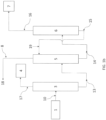
- FIG. 1a represents a simplified diagram of a device implementing a process for the purification of 1,1,1,2,2-pentafluoropropane.
- the mixture comprises, in this particular embodiment, 2,3,3,3-tetrafluoro-1-propene, 1,1,1,2,2-pentafluoropropane, at least one of the compounds selected from the group consisting of 1,1-difluoroethane ( 152a), 1,1,1,2-tetrafluoroethane (134a), trans-1,3,3,3-tetrafluoro-1-propene (1234ze-E), cis-1,3,3,3-tetrafluoro-1 -propene (1234ze-Z), trans-1,2,3,3,3-pentafluoropropene (1225ye-E), cis-1,2,3,3,3-pentafluoropropene (1225ye-Z), 3,3, 3-trifluoropropene (1243zf), and impurities having a lower boiling point than 2,3,3,3-tetrafluoro-1-propene.
- 1,1-difluoroethane 152a
- the mixture is transferred to a distillation column 2 through line 10.
- the impurities having a boiling point lower than that of 2,3,3,3-tetrafluoro-1-propene are recovered at the top of distillation column 2 and conveyed via line 11 to an incinerator or a purification device 7.
- the residue obtained at the bottom of the distillation column and comprising the other constituents of the mixture is conveyed to a second distillation column 3 via line 12.
- the distillation carried out in 3 aims to separate the 2,3,3,3-tetrafluoro-1-propene from the other constituents of the mixture.
- the distillation operating conditions are therefore suitable for this purpose.
- the 2,3,3,3-tetrafluoro-1-propene is recovered at the top of the distillation column and routed through line 17 to a purification device 4 capable of finalizing the purification of 2,3,3,3-tetrafluoropropene, for example a distillation column.
- the mixture recovered at the bottom of distillation column 3 comprising in particular 1,1,1,2,2-pentafluoropropane and at least one of the compounds chosen from the group consisting of 1,1-difluoroethane (152a), 1,1, 1,2-tetrafluoroethane (134a), trans-1,3,3,3-tetrafluoro-1-propene (1234ze-E), cis-1,3,3,3-tetrafluoro-1-propene (1234ze-Z) , trans-1,2,3,3,3-pentafluoropropene (1225ye-E), cis-1,2,3,3,3-pentafluoropropene (1225ye-Z), 3,3,3-trifluoropropene (1243zf).
- 1,1-difluoroethane 152a
- 1,1, 1,2-tetrafluoroethane 134a
- trans-1,3,3,3-tetrafluoro-1-propene (1234ze-E
- 1,1,1,2,2-pentafluoropropane is transferred through line 13 into an extractive distillation device 5 to separate 1,1,1,2,2-pentafluoropropane from at least one of the following compounds 1,1-difluoroethane (152a), 1,1 ,1,2-tetrafluoroethane (134a), trans-1,3,3,3-tetrafluoro-1-propene (1234ze-E), cis-1,3,3,3-tetrafluoro-1-propene (1234ze-Z ), trans-1,2,3,3,3-pentafluoropropene (1225ye-E), cis-1,2,3,3,3-pentafluoropropene (1225ye-Z), 3,3,3-trifluoropropene (1243zf) , in particular to separate it from trans-1,3,3,3-tetrafluoro-1-propene.
- 1,1-difluoroethane 152a
- the extractive distillation device 5 is fed with the organic extractant 19 selected according to the method described in the present application.
- the 1,1,1,2,2-pentafluoropropane is recovered at the top of the extractive distillation device 5 to be routed through line 8 to a device 18 for producing 2,3,3,3-tetrafluoro-1-propene.
- the mixture recovered at the bottom of the extractive distillation device 5 notably comprises the organic extractant 19 and at least one of the following compounds 1,1-difluoroethane (152a), 1,1,1,2-tetrafluoroethane (134a), trans-1,3,3,3-tetrafluoro-1-propene (1234ze-E), cis-1,3,3,3-tetrafluoro-1-propene (1234ze-Z), trans-1,2,3, 3,3-pentafluoropropene (1225ye-E), cis-1,2,3,3,3-pentafluoropropene (1225ye-Z), 3,3,3-trifluoropropene (1243zf), especially trans-1,3, 3,3-tetrafluoro-1-propene.
- 1,1-difluoroethane 152a
- 1,1,1,2-tetrafluoroethane 134a
- trans-1,3,3,3-tetrafluoro-1-propene (1234
- the mixture recovered at the bottom of the extractive distillation device 5 is routed through line 14 to a distillation device 6 aimed at separating the organic extractant from the other compounds present.
- the organic extractant is recovered at the bottom of the distillation device and recycled through line 15 to extractive distillation device 5.
- the compounds recovered at the top of distillation device 6 are routed through line 16 to line 11 for be incinerated or purified in 7.
- the mixture provided in 1 may be free of impurities having a lower boiling point than 2,3,3,3-tetrafluoro-1-propene.
- the mixture is routed through line 10 to distillation column 3 to be treated as explained above in relation to the Fig. 1a .
- Fig. 1b In another particular embodiment illustrated in Fig.
- mixture 1 may comprise 1,1,1,2,2-pentafluoropropane and at least one of the following compounds 1,1-difluoroethane (152a), 1,1,1,2-tetrafluoroethane (134a), trans-1 ,3,3,3-tetrafluoro-1-propene (1234ze-E), cis-1,3,3,3-tetrafluoro-1-propene (1234ze-Z), trans-1,2,3,3,3-pentafluoropropene (1225ye-E), cis-1, 2,3,3,3-pentafluoropropene (1225ye-Z), 3,3,3-trifluoropropene (1243zf).
- the mixture is sent directly to the extractive distillation column 5 to be treated there as explained above in relation to the Fig. 1a .
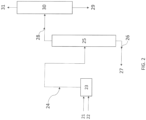
- FIG. 2 schematically illustrates a device implementing a process for the production of 2,3,3,3-tetrafluoropropene.
- the hydrofluoric acid 21 is brought into contact with 1,1,1,2,3-pentachloropropane (240db) 22 in a reactor 23.
- the mixture may also include HCl, HF and impurities that are heavy or have a lower boiling point than 2,3,3,3-tetrafluoro-1-propene.
- the stream obtained at the bottom of the distillation column comprising HF and possibly heavy impurities is routed to the purification device 27 via line 26 for purified HF which will optionally be recycled at 23.
- the other constituents of the mixture are routed via line 28 to a distillation column 30.
- the stream 31 obtained at the top of the distillation column contains HCl and the stream obtained at the bottom of the distillation column is routed to a purification device 29 for purifying 1,1,1,2,2- pentafluoropropane.
- the purification device 29 can be any of the devices illustrated in Fig. 1a-1b .
- the catalyst used in the present process for the production of 2,3,3,3-tetrafluoropropene can for example be based on a metal comprising a transition metal oxide or a derivative or a halide or an oxyhalide of such a metal.
- a metal comprising a transition metal oxide or a derivative or a halide or an oxyhalide of such a metal.
- Mention may be made, for example, of FeCl 3 , chromium oxyfluoride, chromium oxides (optionally subjected to fluorination treatments), chromium fluorides and mixtures thereof.
- Other possible catalysts are catalysts supported on carbon, catalysts based on antimony, catalysts based on aluminum (for example AlF 3 and Al 2 O 3 , alumina oxyfluoride and fluoride of alumina).
- a chromium oxyfluoride a fluoride or an aluminum oxyfluoride, or a supported or unsupported catalyst containing a metal such as Cr, Ni, Fe, Zn, Ti, V, Zr, Mo, Ge, Sn, Pb, Mg, Sb.
- the catalyst is more particularly preferably based on chromium and it is more particularly a mixed catalyst comprising chromium.
- a mixed catalyst comprising chromium and nickel is used.
- the Cr/Ni molar ratio (based on the metallic element) is usually 0.5 to 5, e.g. 0.7 to 2, e.g. about 1.
- the catalyst may contain 0.5 to 20% by weight nickel.
- the metal can be present in metallic form or in the form of a derivative, for example an oxide, halide or oxyhalide. These derivatives are preferably obtained by activation of the catalytic metal.
- the support is preferably made with aluminum, for example alumina, activated alumina or aluminum derivatives, such as aluminum halides and aluminum oxyhalides, for example described in the document US 4,902,838 , or obtained by the activation process described above.
- aluminum for example alumina, activated alumina or aluminum derivatives, such as aluminum halides and aluminum oxyhalides, for example described in the document US 4,902,838 , or obtained by the activation process described above.
- the catalyst may comprise chromium and nickel in an activated or unactivated form, on a support which has been subjected to an activation or not.
- Another preferred embodiment is based on a mixed catalyst containing chromium and at least one element chosen from Mg and Zn.
- the atomic ratio of Mg or Zn/Cr is preferably 0.01 to 5.
- the catalyst Prior to its use, the catalyst is preferably subjected to activation with air, oxygen or chlorine and/or with HF.
- the catalyst is preferably subjected to activation with air or oxygen and HF at a temperature of 100 to 500°C, preferably 250 to 500°C and more particularly 300 to 400 °C.
- the duration of activation is preferably from 1 to 200 h and more particularly from 1 to 50 h.
- This activation can be followed by a final fluorination activation step in the presence of an oxidizing agent, HF and organic compounds.
- the HF / organic compounds molar ratio is preferably from 2 to 40 and the oxidizing agent / organic compounds molar ratio is preferably from 0.04 to 25.
- the temperature of the final activation is preferably from 300 to 400° C and its duration preferably from 6 to 100 h.
- the duration of the reaction step is typically 10 to 8000 hours, preferably 50 to 5000 hours and more particularly preferably 70 to 1000 hours.
- An oxidizing agent preferably oxygen
- oxygen/organic compounds molar ratio can be 0.005 to 2, preferably 0.01 to 1.5.
- the oxygen can be introduced pure or in the form of air or an oxygen/nitrogen mixture. Oxygen can also be replaced by chlorine.
- An azeotropic or quasi-azeotropic composition is disclosed.
- Said composition comprises from 50 to 99.99% by weight of 1,1,1,2,2-pentafluoropropane, less than 50% by weight of trans-1,3,3,3-tetrafluoro-1-propene based on the total weight of the composition.
- said composition also comprises at least one of the compounds selected from the group consisting of 1,1-difluoroethane (152a), 1,1,1,2-tetrafluoroethane (134a), trans-1,3,3,3- tetrafluoro-1-propene (1234ze-E), cis-1,3,3,3-tetrafluoro-1-propene (1234ze-Z), trans-1,2,3,3,3-pentafluoropropene (1225ye-E) , cis-1,2,3,3,3-pentafluoropropene (1225ye-Z), 3,3,3-trifluoropropene (1243zf).
- Said at least one of compounds selected from the group consisting of 1,1-difluoroethane (152a), 1,1,1,2-tetrafluoroethane (134a), trans-1,3,3,3-tetrafluoro-1-propene ( 1234ze-E), cis-1,3,3,3-tetrafluoro-1-propene (1234ze-Z), trans-1,2,3,3,3-pentafluoropropene (1225ye-E), cis-1,2 ,3,3,3-pentafluoropropene (1225ye-Z), 3,3,3-trifluoropropene (1243zf) may be present in the azeotropic composition in the proportions expressed above based on the total weight of the composition.
- Said azeotropic or quasi-azeotropic composition can be obtained at a temperature of -30°C to 50°C.
- Said azeotropic or quasi-azeotropic composition can be obtained for a pressure of 0.5 bar
- An absorption capacity is also calculated for each of the solvents studied and for a binary couple (1,2) considered.
Landscapes
- Chemical & Material Sciences (AREA)
- Organic Chemistry (AREA)
- Organic Low-Molecular-Weight Compounds And Preparation Thereof (AREA)
- Catalysts (AREA)
- Low-Molecular Organic Synthesis Reactions Using Catalysts (AREA)
Claims (6)
- Verfahren zur Reinigung von 1,1,1,2,2-Pentafluorpropan (245cb) ausgehend von einer ersten Zusammensetzung, die 1,1,1,2,2-Pentafluorpropan und trans-1,3,3,3-Tetrafluor-1-propen (1234ze-E) und gegebenenfalls mindestens eine Verbindung aus der Gruppe bestehend aus 1,1-Difluorethan (152a), 1,1,1,2-Tetrafluorethan (134a), cis-1,3,3,3-Tetrafluor-1-propen (1234ze-Z), trans-1,2,3,3,3-Pentafluorpropen (1225ye-E), cis-1,2,3,3,3-Pentafluorpropen (1225ye-Z) und 3,3,3-Trifluorpropen (1243zf) umfasst, wobei das Verfahren folgende Schritte umfasst:a) Inkontaktbringen der ersten Zusammensetzung mit mindestens einem organischen Extraktionsmittel zur Bildung einer zweiten Zusammensetzung;b) Extraktivdestillation der zweiten Zusammensetzung zur Bildung:i) einer dritten Zusammensetzung, die das organische Extraktionsmittel und trans-1,3,3,3-Tetrafluor-1-propen (1234ze-E) und gegebenenfalls die mindestens eine Verbindung aus der Gruppe bestehend aus 1,1-Difluorethan (152a), 1,1,1,2-Tetrafluorethan (134a), cis-1,3,3,3-Tetrafluor-1-propen (1234ze-Z), trans-1,2,3,3,3-Pentafluorpropen (1225ye-E), cis-1,2,3,3,3-Pentafluorpropen (1225ye-Z) und 3,3,3-Trifluorpropen (1243zf) umfasst; undii) eines Stroms, der 1,1,1,2,2-Pentafluorpropan umfasst;c) Gewinnung und Trennung der dritten Zusammensetzung zur Bildung eines Stroms, der das organische Extraktionsmittel umfasst, und eines Stroms, der trans-1,3,3,3-Tetrafluor-1-propen (1234ze-E) und gegebenenfalls die mindestens eine der Verbindungen aus der Gruppe bestehend aus 1,1-Difluorethan (152a), 1,1,1,2-Tetrafluorethan (134a), cis-1,3,3,3-Tetrafluor-1-propen (1234ze-Z), trans-1,2,3,3,3-Pentafluorpropen (1225ye-E), cis-1,2,3,3,3-Pentafluorpropen (1225ye-Z) und 3,3,3-Trifluorpropen (1243zf) umfasst; wobei das in Schritt c) abgetrennte organische Extraktionsmittel vorzugsweise zu Schritt a) zurückgeführt wird; und dadurch gekennzeichnet, dass das organische Extraktionsmittel aus der Gruppe bestehend aus Ethylamin, Bromfluormethan, 1-Brom-1,2-difluorethylen, Acetaldehyd, 1,1,1-Trifluor-2-propanon, 1,1,1-Trifluor-2-bromethan, 2,2,2-Trifluorethylmethylether, Isopropylamin, Methylformiat, 2-Methoxy-1-propen, Diethylether, 1,2-Epoxypropan, Ethanthiol, Ethoxyethen, Ethylmethylamin, Dimethylsulfid, 2-Chlorpropan, Bromethan, Dimethoxymethan, Iodmethan, 2-Amino-2-methylpropan, Methylcyclopropylether, n-Propylamin, Isopropylmethylamin, Ethandial, 2-Chlor-2-methylpropan, 2-Propanthiol, 2-Ethoxypropan, Methyl-t-butylether, Diethylamin, Propanon, Methylacetat, 4-Methoxy-2-methyl-2-butanthiol, 2-Brompropan, Chlormethoxymethan, 2-Butanamin, n-Methylpropylamin, tert-Butylthiol, Isobutanal, Methanol, Tetrahydrofuran, 1-Propanthiol, Chlorbrommethan, Isopropylformiat, Diisopropylether, 3-Brompropen, 1-Brompropan, Methylglyoxal, Iodethan, 2-Ethoxy-2-methylpropan, 2-Brom-2-methylpropan, 2,2,2-Trifluorethanol, 1-Chlor-3-fluorpropan, 1,1,1-Trifluor-2-propanol, 1-Butylamin, Ethylacetat, Ethanol, Butanon, n-Propylformiat, 2-Ethoxybutan, 2-Propanol, Acetonitril, tert-Butanol, 1-Methoxy-2-methylbutan, 2,2-Dimethoxypropan, 2-Chlor-2-methylbutan, 1,2-Dichlorethan, 1-Ethoxy-2-methylpropan, Diisopropylamin, 2-Butanthiol, 1,2-Dimethoxyethan, 3-Methyl-2-butanamin, Diethoxymethan, 2-Methyl-1-propanthiol, Isopropylacetat, 2-Iodpropan, Di-n-propylether, 3-Pentylamin, n-Methylbutylamin, 2-Brombutan, Diethylsulfid, 1-Ethoxybutan, 1-Methoxy-2-propanamin, 2-Methylbutanal, 2-Methoxyethanamin, 2,2-Difluorethanol, 1,2-Dichlorpropan, Propanol, tert-Butylacetat, Propionitril, Trichloracetaldehyd, 2-Allyloxyethanol, Butanthiol, 1-Methoxypentan, Ethylpropionat, 2-Butanol, 1,2-Dimethoxypropan, Isopropylisobutylether, 1-Chlor-4-fluorbutan, 1-Brom-3-fluorpropan, Dioxan, 1-Brombutan, 3-Pentanon, 1,1-Diethoxyethan, 2-Pentanon, 2-Methyl-2-butanol, 1-Iodpropan, 2-Methoxy-1-propanamin, Trimethoxymethan, cis-1,3-Dichlorpropen, n-Pentylamin, 3,3-Dimethyl-2-butanon, 1,3-Dioxan, Piperidin, 1-Brom-2-chlorethan, Isobutanol, 2-Brom-2-methylbutan, Dipropylamin, 2,2,3,3-Tetrafluor-1-propanol, 2-Ethoxyethanamin, Triethylfluorsilan, sec-Butylacetat, trans-1,3-Dichlorpropen, 2,2-Dimethyl-1-propanol, n-Methyl-1,2-ethan-diamin, 2,2-Diethoxypropan, 1,3,5-Trioxan, Pyridin, n-Methylmorpholin, 3-Pentanol, 4-Methyl-2-pentanon, 1,2-Diaminoethan, Isobutyl-tert-butylether, 2-Brompentan, Butyronitril, 1-Butanol, 2,3-Dichlorbutan, sec-Butyl-tert-butylether, 1-Methoxy-2-propanol, 1,2-Propandiamin, 2,6-Dimethyl-5-heptenal, 1-Brom-3-methylbutan, 1,3-Dichlor-trans-2-buten, 1,3-Dichlorpropan, 1-(Dimethylamino)-2-propanol, Tetrahydrothiophen, 3-Methyl-3-pentanol, 1,2-Dibrom-1-fluorethan, 1,1-Diethoxypropan, 1,2,2-Trichlorpropan, 1-Chlor-2-methyl-2-propanol, 2-Methoxyethanol, 4,4,4-Trifluorbutanol, 2-Ethylbutylamin, Diethylcarbonat, n-Butylacetat, 1-Pentanthiol, 2-Chlor-1,1-dimethoxyethan, 2-Hexanon, n-Ethylethylendiamin, 3-Fluorpropanol, 5-Hexen-2-on, 2,3-Dichlor-2-methylbutan, 1,1-Diethoxy-n,n-dimethylmethanamin, 2-Methylpyridin, 1-Brompentan, 2-Methoxy-1-propanol, 1,2-Dichlor-2-buten, 1-Iodbutan, Hexanal, 1-Ethoxy-2-propanol, 1,2-Dibromethan, 4-Methyl-2-pentanol, Bromessigsäuremethylester, 1,1,2-Trichlorpropan, 1,2-Octandiol, 4-Methyl-2-hexanamin, Hexylamin, 2-Chlor-1-propanol, Methoxycyclohexan, 2-(Dimethylamino)ethanol, 1,3-Dichlorbutan, Cyclohexylamin, n-Ethyl-2-dimethylaminoethylamin, Ethoxyethanol, 3-Hexanol, 2-Hexanol, 2-Methylpyrazin, 2-Ethoxy-1-propanol, 1-Pentanol, n-Ethylmorpholin, 1-Methylpiperazin, 1,3-Propandiamin, Di-n-butylether, Valeronitril, (Methylenamino)acetonitril, 1,2-Dibrompropan, 1,2,3-Trichlorpropen, 2-Heptanamin, 2,3-Dimethylbutanol, 1-Ethoxyhexan, 1-Chlor-3-brompropan, n,n-Diethylethylendiamin, 3-Furfural, 2,6-Dimethylpyridin, 4-Methyl-2-hexanon, 1,1,1-Triethoxyethan, 1-Methoxy-2-acetoxypropan, 4-Methylpyridin, n,n'-Diethyl-1,2-ethandiamin, 2,6-Dimethylmorpholin, 2-Ethyl-1-butanol, 2-Methyl-1-pentanol, Methylhexanoat, 2-Propoxyethanol, 1-Propoxy-2-propanol und Dimethylethanolamin ausgewählt wird.
- Verfahren nach Anspruch 1, dadurch gekennzeichnet, dass es sich bei der ersten Zusammensetzung um eine azeotrope oder quasiazeotrope Zusammensetzung handelt, die 1,1,1,2,2-Pentafluorpropan (245cb) und trans-1,3,3,3-Tetrafluor-1-propen (1234ze-E) umfasst und bei einer Temperatur von -30 °C bis 50 °C und bei einem Druck von 0,5 bis 10 bar erhalten wird.
- Verfahren nach einem der vorhergehenden Ansprüche, dadurch gekennzeichnet, dass das organische Extraktionsmittel aus der Gruppe bestehend aus Ethylamin, Isopropylamin, n-Propylamin, Diethylamin, Tetrahydrofuran, Ethylacetat, Butanon, 3-Pentylamin, 2-Methoxyethanamin, Dioxan, 2-Pentanon, n-Pentylamin, 1,3-Dioxan, 1,2-Diaminoethan, 1,2-Propandiamin, 2-Methoxyethanol, n-Butylacetat und 1-Ethoxy-2-propanol ausgewählt wird.
- Verfahren nach einem der vorhergehenden Ansprüche, dadurch gekennzeichnet, dass der in Schritt b) gebildete Strom, der 1,1,1,2,2-Pentafluorpropan umfasst, zur Verwendung bei einem Verfahren zur Herstellung von 2,3,3,3-Tetrafluorpropen zurückgewonnen wird.
- Verfahren zur Herstellung von 2,3,3,3-Tetrafluor-1-propen, das folgende Schritte umfasst:A) Fluorierung einer Verbindung der Formel (I) CX(Y)2-CX(Y)m-CHmXY, in der X und Y unabhängig für ein Wasserstoff-, Fluor- oder Chloratom stehen und m = 0 oder 1, in Gegenwart eines Katalysators und/oder Fluorierung einer Verbindung der Formel (CXnY3-n)CHpX1-pCHmX2-m (II), in der X unabhängig voneinander für Cl, F, I oder Br steht; Y unabhängig voneinander für H, Cl, F, I oder Br steht; n für 1, 2 oder 3 steht und m für 0, 1 oder 2 steht und p für 0 oder 1 steht, in Gegenwart eines Katalysators;B) Rückgewinnung eines Stroms, der 2,3,3,3-Tetrafluor-1-propen, 1,1,1,2,2-Pentafluorpropan und mindestens eine Verbindung aus der Gruppe bestehend aus 1,1-Difluorethan (152a), 1,1,1,2-Tetrafluorethan (134a), trans-1,3,3,3-Tetrafluor-1-propen (1234ze-E), cis-1,3,3,3-Tetrafluor-1-propen (1234ze-Z), trans-1,2,3,3,3-Pentafluorpropen (1225ye-E), cis-1,2,3,3,3-Pentafluorpropen (1225ye-Z) und 3,3,3-Trifluorpropen (1243zf) umfasst;C) Destillation des in Schritt B) gewonnenen Stroms und Rückgewinnung eines Stroms, der 2,3,3,3-Tetrafluor-1-propen umfasst, am Kopf der Destillationssäule und eines Stroms, der 1,1,1,2,2-Pentafluorpropan und mindestens eine Verbindung aus der Gruppe bestehend aus 1,1-Difluorethan (152a), 1,1,1,2-Tetrafluorethan (134a), trans-1,3,3,3-Tetrafluor-1-propen (1234ze-E), cis-1,3,3,3-Tetrafluor-1-propen (1234ze-Z), trans-1,2,3,3,3-Pentafluorpropen (1225ye-E), cis-1,2,3,3,3-Pentafluorpropen (1225ye-Z) und 3,3,3-Trifluorpropen (1243zf) umfasst, am Sumpf der Destillationssäule;D) Durchführung des Verfahrens zur Reinigung von 1,1,1,2,2-Pentafluorpropan nach einem der Ansprüche 1 bis 4 unter Verwendung des in Schritt C) am Sumpf der Destillationssäule gewonnenen Stroms undE) Zurückführung des in Schritt b) des in Schritt D) durchgeführten Reinigungsverfahrens gebildeten und zurückgewonnenen Stroms, der 1,1,1,2,2-Pentafluorpropan umfasst, zu Schritt A) oder Dehydrofluorierung des in Schritt b) des in Schritt D) durchgeführten Verfahrens zur Reinigung von 1,1,1,2,2-Pentafluorpropan gebildeten Stroms, der 1,1,1,2,2-Pentafluorpropan umfasst, in Abwesenheit oder Anwesenheit von Fluorwasserstoffsäure.
- Zusammensetzung, umfassend 1,1,1,2,2-Pentafluorpropan und trans-1,3,3,3-Tetrafluor-1-propen und ein organisches Extraktionsmittel aus der Gruppe bestehend aus Ethylamin, Isopropylamin, n-Propylamin, Diethylamin, Tetrahydrofuran, Ethylacetat, Butanon, 3-Pentylamin, 2-Methoxyethanamin, Dioxan, 2-Pentanon, n-Pentylamin, 1,3-Dioxan, 1,2-Diaminoethan, 1,2-Propandiamin, 2-Methoxyethanol, n-Butylacetat und 1-Ethoxy-2-propanol.
Applications Claiming Priority (2)
| Application Number | Priority Date | Filing Date | Title |
|---|---|---|---|
| FR1563163A FR3046159B1 (fr) | 2015-12-23 | 2015-12-23 | Procede de preparation du 2,3,3,3-tetrafluoropropene et recyclage du 1,1,1,2,2-pentafluoropropane exempt d'impuretes. |
| PCT/EP2016/080943 WO2017108517A1 (fr) | 2015-12-23 | 2016-12-14 | Procede de preparation du 2,3,3,3-tetrafluoropropene et recyclage du 1,1,1,2,2-pentafluoropropane exempt d'impuretes |
Publications (2)
| Publication Number | Publication Date |
|---|---|
| EP3394018A1 EP3394018A1 (de) | 2018-10-31 |
| EP3394018B1 true EP3394018B1 (de) | 2023-06-21 |
Family
ID=55542888
Family Applications (1)
| Application Number | Title | Priority Date | Filing Date |
|---|---|---|---|
| EP16822130.7A Active EP3394018B1 (de) | 2015-12-23 | 2016-12-14 | Verfahren zur herstellung von 2,3,3,3-tetrafluorpropen und rückgewinnung von 1,1,1,2,2-pentafluropropan ohne verunreinigungen |
Country Status (7)
| Country | Link |
|---|---|
| US (1) | US10899690B2 (de) |
| EP (1) | EP3394018B1 (de) |
| JP (1) | JP2019506376A (de) |
| CN (1) | CN108368009A (de) |
| FR (1) | FR3046159B1 (de) |
| MX (1) | MX2018007593A (de) |
| WO (1) | WO2017108517A1 (de) |
Families Citing this family (2)
| Publication number | Priority date | Publication date | Assignee | Title |
|---|---|---|---|---|
| LT4100482T (lt) * | 2020-02-07 | 2024-08-12 | The Chemours Company Fc, Llc | Kompozicijos, apimančios 2,3,3,3 tetrafluorpropeną, ir kompozicijų gamybos bei panaudojimo būdai |
| JP7598043B2 (ja) * | 2023-01-23 | 2024-12-11 | ダイキン工業株式会社 | 精製されたトランス-1,2-ジフルオロエチレン(hfo-1132(e))の製造方法、及びhfo-1132(e)を含有する組成物 |
Family Cites Families (20)
| Publication number | Priority date | Publication date | Assignee | Title |
|---|---|---|---|---|
| DE69513152T2 (de) | 1994-02-07 | 2000-06-21 | E.I. Du Pont De Nemours And Co., Wilmington | Verfahren zur trennung von pentafluorethan aus einer mischung, die halogenierte kohlenwasserstoffe und chlorpentafluorethan enthält |
| US5470442A (en) * | 1994-03-11 | 1995-11-28 | E. I. Du Pont De Nemours And Company | Separating and removing impurities from tetrafluoroethanes by using extractive distillation |
| US5470422A (en) | 1994-11-07 | 1995-11-28 | Gold; Peter | Auto insert molding and method of installation |
| JP3514041B2 (ja) * | 1996-06-27 | 2004-03-31 | ダイキン工業株式会社 | 1,1,1,3,3−ペンタフルオロプロパンの精製方法 |
| US5874657A (en) | 1996-11-01 | 1999-02-23 | E. I. Du Pont De Nemours And Company | Process for the purification of 1,1-difluoroethane |
| EP0864554B1 (de) | 1997-03-11 | 2002-09-18 | Central Glass Company, Limited | Verfahren zur Reinigung von rohem 1,1,1,3,3-Pentafluorpropan |
| JP2001513520A (ja) * | 1997-08-12 | 2001-09-04 | イー・アイ・デュポン・ドウ・ヌムール・アンド・カンパニー | 抽出蒸留によるジフルオロメタンの精製 |
| EP0939071B1 (de) | 1998-02-26 | 2003-07-30 | Central Glass Company, Limited | Verfahren zur Herstellung von fluorierten Propanen |
| AU9379201A (en) | 2000-08-10 | 2002-02-18 | Solvay | Process for obtaining a purified hydrofluoroalkane |
| US7060165B2 (en) | 2002-02-14 | 2006-06-13 | Pcbu Services, Inc. | Processes for purification and production of fluorocarbons |
| ES3036520T3 (en) | 2006-01-03 | 2025-09-19 | Honeywell Int Inc | Method for producing fluorinated organic compounds |
| JP5416587B2 (ja) | 2006-10-03 | 2014-02-12 | メキシケム、アマンコ、ホールディング、ソシエダッド、アノニマ、デ、カピタル、バリアブレ | プロセス |
| CN103483140B (zh) | 2006-10-31 | 2015-09-09 | 纳幕尔杜邦公司 | 氟丙烷、卤代丙烯以及2-氯-3,3,3-三氟-1-丙烯与hf的共沸组合物和1,1,1,2,2-五氟丙烷与hf的共沸组合物的制备方法 |
| ES2483995T3 (es) * | 2008-02-21 | 2014-08-08 | E. I. Du Pont De Nemours And Company | Procesos para la separación de 1,3,3,3-tetrafluoropropeno del fluoruro de hidrógeno por medio de destilación azeotrópica |
| KR101374000B1 (ko) * | 2009-04-23 | 2014-03-12 | 다이킨 고교 가부시키가이샤 | 2,3,3,3-테트라플루오로프로펜의 제조 방법 |
| WO2012011609A1 (en) | 2010-07-23 | 2012-01-26 | Daikin Industries, Ltd. | Purification method of 2,3,3,3-tetrafluoropropene |
| US20140191154A1 (en) * | 2011-08-29 | 2014-07-10 | E I Du Pont De Nemours And Company | Compositions comprising 1,1,1,2,2-pentafluoropropane and a fluoroolefin and uses thereof |
| US9334208B2 (en) * | 2011-12-14 | 2016-05-10 | Arkema France | Process for the preparation of 2,3,3,3 tetrafluoropropene |
| FR3003569B1 (fr) * | 2013-03-20 | 2015-12-25 | Arkema France | Composition comprenant hf et 1,3,3,3-tetrafluoropropene |
| JP6115550B2 (ja) * | 2014-11-17 | 2017-04-19 | ダイキン工業株式会社 | HFC−245cbと(E)−HFO−1234zeとを含有する組成物から両化合物を分離する方法 |
-
2015
- 2015-12-23 FR FR1563163A patent/FR3046159B1/fr active Active
-
2016
- 2016-12-14 US US16/063,775 patent/US10899690B2/en not_active Expired - Fee Related
- 2016-12-14 EP EP16822130.7A patent/EP3394018B1/de active Active
- 2016-12-14 JP JP2018533225A patent/JP2019506376A/ja active Pending
- 2016-12-14 CN CN201680071481.2A patent/CN108368009A/zh active Pending
- 2016-12-14 WO PCT/EP2016/080943 patent/WO2017108517A1/fr not_active Ceased
- 2016-12-14 MX MX2018007593A patent/MX2018007593A/es unknown
Also Published As
| Publication number | Publication date |
|---|---|
| JP2019506376A (ja) | 2019-03-07 |
| US20200165181A1 (en) | 2020-05-28 |
| MX2018007593A (es) | 2018-09-21 |
| CN108368009A (zh) | 2018-08-03 |
| EP3394018A1 (de) | 2018-10-31 |
| FR3046159B1 (fr) | 2019-12-13 |
| WO2017108517A1 (fr) | 2017-06-29 |
| FR3046159A1 (fr) | 2017-06-30 |
| US10899690B2 (en) | 2021-01-26 |
Similar Documents
| Publication | Publication Date | Title |
|---|---|---|
| EP3394019B1 (de) | Verfahren zur herstellung und reinigung von 2,3,3,3-tetrafluorpropen | |
| EP3394015B1 (de) | Verfahren zur herstellung und reinigung von 2,3,3,3-tetrafluor-1-propen | |
| EP3394018B1 (de) | Verfahren zur herstellung von 2,3,3,3-tetrafluorpropen und rückgewinnung von 1,1,1,2,2-pentafluropropan ohne verunreinigungen | |
| WO2018178554A1 (fr) | Procede de production et de purification du 2,3,3,3-tetrafluoropropene. | |
| EP3394017B1 (de) | Verfahren zur herstellung von 2,3,3,3-tetrafluor-1-propen und zum recycling von 2-chlor-3,3,3-trifluorpropen, das frei von verunreinigungen ist | |
| EP3615500B1 (de) | Verfahren zur herstellung und reinigung von 2,3,3,3-tetrafluorpropen | |
| EP3394016B1 (de) | Verfahren zur herstellung und reinigung von 2,3,3,3-tetrafluor-1-propen | |
| EP3394014B1 (de) | Verfahren zur herstellung und reinigung von 2,3,3,3-tetrafluor-1-propen | |
| EP3394013A1 (de) | Verfahren zur herstellung und reinigung von 2,3,3,3-tetrafluor-1-propen | |
| WO2018178555A1 (fr) | Procede de production et de purification du 2,3,3,3-tetrafluoro-1-propene. |
Legal Events
| Date | Code | Title | Description |
|---|---|---|---|
| STAA | Information on the status of an ep patent application or granted ep patent |
Free format text: STATUS: UNKNOWN |
|
| STAA | Information on the status of an ep patent application or granted ep patent |
Free format text: STATUS: THE INTERNATIONAL PUBLICATION HAS BEEN MADE |
|
| PUAI | Public reference made under article 153(3) epc to a published international application that has entered the european phase |
Free format text: ORIGINAL CODE: 0009012 |
|
| STAA | Information on the status of an ep patent application or granted ep patent |
Free format text: STATUS: REQUEST FOR EXAMINATION WAS MADE |
|
| 17P | Request for examination filed |
Effective date: 20180611 |
|
| AK | Designated contracting states |
Kind code of ref document: A1 Designated state(s): AL AT BE BG CH CY CZ DE DK EE ES FI FR GB GR HR HU IE IS IT LI LT LU LV MC MK MT NL NO PL PT RO RS SE SI SK SM TR |
|
| AX | Request for extension of the european patent |
Extension state: BA ME |
|
| DAV | Request for validation of the european patent (deleted) | ||
| DAX | Request for extension of the european patent (deleted) | ||
| STAA | Information on the status of an ep patent application or granted ep patent |
Free format text: STATUS: EXAMINATION IS IN PROGRESS |
|
| 17Q | First examination report despatched |
Effective date: 20200609 |
|
| GRAP | Despatch of communication of intention to grant a patent |
Free format text: ORIGINAL CODE: EPIDOSNIGR1 |
|
| STAA | Information on the status of an ep patent application or granted ep patent |
Free format text: STATUS: GRANT OF PATENT IS INTENDED |
|
| RIC1 | Information provided on ipc code assigned before grant |
Ipc: C07C 17/386 20060101ALI20221215BHEP Ipc: C09K 5/04 20060101ALI20221215BHEP Ipc: C07C 21/18 20060101ALI20221215BHEP Ipc: C07C 19/08 20060101ALI20221215BHEP Ipc: C07C 17/38 20060101ALI20221215BHEP Ipc: C07C 17/25 20060101AFI20221215BHEP |
|
| INTG | Intention to grant announced |
Effective date: 20230117 |
|
| GRAS | Grant fee paid |
Free format text: ORIGINAL CODE: EPIDOSNIGR3 |
|
| GRAA | (expected) grant |
Free format text: ORIGINAL CODE: 0009210 |
|
| STAA | Information on the status of an ep patent application or granted ep patent |
Free format text: STATUS: THE PATENT HAS BEEN GRANTED |
|
| AK | Designated contracting states |
Kind code of ref document: B1 Designated state(s): AL AT BE BG CH CY CZ DE DK EE ES FI FR GB GR HR HU IE IS IT LI LT LU LV MC MK MT NL NO PL PT RO RS SE SI SK SM TR |
|
| REG | Reference to a national code |
Ref country code: CH Ref legal event code: EP |
|
| REG | Reference to a national code |
Ref country code: DE Ref legal event code: R096 Ref document number: 602016080500 Country of ref document: DE |
|
| REG | Reference to a national code |
Ref country code: AT Ref legal event code: REF Ref document number: 1580820 Country of ref document: AT Kind code of ref document: T Effective date: 20230715 |
|
| REG | Reference to a national code |
Ref country code: IE Ref legal event code: FG4D Free format text: LANGUAGE OF EP DOCUMENT: FRENCH |
|
| P01 | Opt-out of the competence of the unified patent court (upc) registered |
Effective date: 20230621 |
|
| REG | Reference to a national code |
Ref country code: LT Ref legal event code: MG9D |
|
| REG | Reference to a national code |
Ref country code: NL Ref legal event code: MP Effective date: 20230621 |
|
| PG25 | Lapsed in a contracting state [announced via postgrant information from national office to epo] |
Ref country code: SE Free format text: LAPSE BECAUSE OF FAILURE TO SUBMIT A TRANSLATION OF THE DESCRIPTION OR TO PAY THE FEE WITHIN THE PRESCRIBED TIME-LIMIT Effective date: 20230621 Ref country code: NO Free format text: LAPSE BECAUSE OF FAILURE TO SUBMIT A TRANSLATION OF THE DESCRIPTION OR TO PAY THE FEE WITHIN THE PRESCRIBED TIME-LIMIT Effective date: 20230921 |
|
| REG | Reference to a national code |
Ref country code: AT Ref legal event code: MK05 Ref document number: 1580820 Country of ref document: AT Kind code of ref document: T Effective date: 20230621 |
|
| PG25 | Lapsed in a contracting state [announced via postgrant information from national office to epo] |
Ref country code: RS Free format text: LAPSE BECAUSE OF FAILURE TO SUBMIT A TRANSLATION OF THE DESCRIPTION OR TO PAY THE FEE WITHIN THE PRESCRIBED TIME-LIMIT Effective date: 20230621 Ref country code: NL Free format text: LAPSE BECAUSE OF FAILURE TO SUBMIT A TRANSLATION OF THE DESCRIPTION OR TO PAY THE FEE WITHIN THE PRESCRIBED TIME-LIMIT Effective date: 20230621 Ref country code: LV Free format text: LAPSE BECAUSE OF FAILURE TO SUBMIT A TRANSLATION OF THE DESCRIPTION OR TO PAY THE FEE WITHIN THE PRESCRIBED TIME-LIMIT Effective date: 20230621 Ref country code: LT Free format text: LAPSE BECAUSE OF FAILURE TO SUBMIT A TRANSLATION OF THE DESCRIPTION OR TO PAY THE FEE WITHIN THE PRESCRIBED TIME-LIMIT Effective date: 20230621 Ref country code: HR Free format text: LAPSE BECAUSE OF FAILURE TO SUBMIT A TRANSLATION OF THE DESCRIPTION OR TO PAY THE FEE WITHIN THE PRESCRIBED TIME-LIMIT Effective date: 20230621 Ref country code: GR Free format text: LAPSE BECAUSE OF FAILURE TO SUBMIT A TRANSLATION OF THE DESCRIPTION OR TO PAY THE FEE WITHIN THE PRESCRIBED TIME-LIMIT Effective date: 20230922 |
|
| PG25 | Lapsed in a contracting state [announced via postgrant information from national office to epo] |
Ref country code: FI Free format text: LAPSE BECAUSE OF FAILURE TO SUBMIT A TRANSLATION OF THE DESCRIPTION OR TO PAY THE FEE WITHIN THE PRESCRIBED TIME-LIMIT Effective date: 20230621 |
|
| PG25 | Lapsed in a contracting state [announced via postgrant information from national office to epo] |
Ref country code: SK Free format text: LAPSE BECAUSE OF FAILURE TO SUBMIT A TRANSLATION OF THE DESCRIPTION OR TO PAY THE FEE WITHIN THE PRESCRIBED TIME-LIMIT Effective date: 20230621 |
|
| PG25 | Lapsed in a contracting state [announced via postgrant information from national office to epo] |
Ref country code: ES Free format text: LAPSE BECAUSE OF FAILURE TO SUBMIT A TRANSLATION OF THE DESCRIPTION OR TO PAY THE FEE WITHIN THE PRESCRIBED TIME-LIMIT Effective date: 20230621 |
|
| PG25 | Lapsed in a contracting state [announced via postgrant information from national office to epo] |
Ref country code: IS Free format text: LAPSE BECAUSE OF FAILURE TO SUBMIT A TRANSLATION OF THE DESCRIPTION OR TO PAY THE FEE WITHIN THE PRESCRIBED TIME-LIMIT Effective date: 20231021 |
|
| PG25 | Lapsed in a contracting state [announced via postgrant information from national office to epo] |
Ref country code: SM Free format text: LAPSE BECAUSE OF FAILURE TO SUBMIT A TRANSLATION OF THE DESCRIPTION OR TO PAY THE FEE WITHIN THE PRESCRIBED TIME-LIMIT Effective date: 20230621 Ref country code: SK Free format text: LAPSE BECAUSE OF FAILURE TO SUBMIT A TRANSLATION OF THE DESCRIPTION OR TO PAY THE FEE WITHIN THE PRESCRIBED TIME-LIMIT Effective date: 20230621 Ref country code: RO Free format text: LAPSE BECAUSE OF FAILURE TO SUBMIT A TRANSLATION OF THE DESCRIPTION OR TO PAY THE FEE WITHIN THE PRESCRIBED TIME-LIMIT Effective date: 20230621 Ref country code: PT Free format text: LAPSE BECAUSE OF FAILURE TO SUBMIT A TRANSLATION OF THE DESCRIPTION OR TO PAY THE FEE WITHIN THE PRESCRIBED TIME-LIMIT Effective date: 20231023 Ref country code: IS Free format text: LAPSE BECAUSE OF FAILURE TO SUBMIT A TRANSLATION OF THE DESCRIPTION OR TO PAY THE FEE WITHIN THE PRESCRIBED TIME-LIMIT Effective date: 20231021 Ref country code: ES Free format text: LAPSE BECAUSE OF FAILURE TO SUBMIT A TRANSLATION OF THE DESCRIPTION OR TO PAY THE FEE WITHIN THE PRESCRIBED TIME-LIMIT Effective date: 20230621 Ref country code: EE Free format text: LAPSE BECAUSE OF FAILURE TO SUBMIT A TRANSLATION OF THE DESCRIPTION OR TO PAY THE FEE WITHIN THE PRESCRIBED TIME-LIMIT Effective date: 20230621 Ref country code: AT Free format text: LAPSE BECAUSE OF FAILURE TO SUBMIT A TRANSLATION OF THE DESCRIPTION OR TO PAY THE FEE WITHIN THE PRESCRIBED TIME-LIMIT Effective date: 20230621 |
|
| PGFP | Annual fee paid to national office [announced via postgrant information from national office to epo] |
Ref country code: FR Payment date: 20231108 Year of fee payment: 8 Ref country code: DE Payment date: 20231031 Year of fee payment: 8 Ref country code: CZ Payment date: 20231116 Year of fee payment: 8 |
|
| PG25 | Lapsed in a contracting state [announced via postgrant information from national office to epo] |
Ref country code: PL Free format text: LAPSE BECAUSE OF FAILURE TO SUBMIT A TRANSLATION OF THE DESCRIPTION OR TO PAY THE FEE WITHIN THE PRESCRIBED TIME-LIMIT Effective date: 20230621 |
|
| REG | Reference to a national code |
Ref country code: DE Ref legal event code: R097 Ref document number: 602016080500 Country of ref document: DE |
|
| PLBE | No opposition filed within time limit |
Free format text: ORIGINAL CODE: 0009261 |
|
| STAA | Information on the status of an ep patent application or granted ep patent |
Free format text: STATUS: NO OPPOSITION FILED WITHIN TIME LIMIT |
|
| PG25 | Lapsed in a contracting state [announced via postgrant information from national office to epo] |
Ref country code: DK Free format text: LAPSE BECAUSE OF FAILURE TO SUBMIT A TRANSLATION OF THE DESCRIPTION OR TO PAY THE FEE WITHIN THE PRESCRIBED TIME-LIMIT Effective date: 20230621 |
|
| PG25 | Lapsed in a contracting state [announced via postgrant information from national office to epo] |
Ref country code: SI Free format text: LAPSE BECAUSE OF FAILURE TO SUBMIT A TRANSLATION OF THE DESCRIPTION OR TO PAY THE FEE WITHIN THE PRESCRIBED TIME-LIMIT Effective date: 20230621 |
|
| 26N | No opposition filed |
Effective date: 20240322 |
|
| PG25 | Lapsed in a contracting state [announced via postgrant information from national office to epo] |
Ref country code: SI Free format text: LAPSE BECAUSE OF FAILURE TO SUBMIT A TRANSLATION OF THE DESCRIPTION OR TO PAY THE FEE WITHIN THE PRESCRIBED TIME-LIMIT Effective date: 20230621 Ref country code: IT Free format text: LAPSE BECAUSE OF FAILURE TO SUBMIT A TRANSLATION OF THE DESCRIPTION OR TO PAY THE FEE WITHIN THE PRESCRIBED TIME-LIMIT Effective date: 20230621 |
|
| REG | Reference to a national code |
Ref country code: CH Ref legal event code: PL |
|
| PG25 | Lapsed in a contracting state [announced via postgrant information from national office to epo] |
Ref country code: LU Free format text: LAPSE BECAUSE OF NON-PAYMENT OF DUE FEES Effective date: 20231214 |
|
| PG25 | Lapsed in a contracting state [announced via postgrant information from national office to epo] |
Ref country code: MC Free format text: LAPSE BECAUSE OF FAILURE TO SUBMIT A TRANSLATION OF THE DESCRIPTION OR TO PAY THE FEE WITHIN THE PRESCRIBED TIME-LIMIT Effective date: 20230621 |
|
| GBPC | Gb: european patent ceased through non-payment of renewal fee |
Effective date: 20231214 |
|
| REG | Reference to a national code |
Ref country code: BE Ref legal event code: MM Effective date: 20231231 |
|
| PG25 | Lapsed in a contracting state [announced via postgrant information from national office to epo] |
Ref country code: MC Free format text: LAPSE BECAUSE OF FAILURE TO SUBMIT A TRANSLATION OF THE DESCRIPTION OR TO PAY THE FEE WITHIN THE PRESCRIBED TIME-LIMIT Effective date: 20230621 Ref country code: LU Free format text: LAPSE BECAUSE OF NON-PAYMENT OF DUE FEES Effective date: 20231214 |
|
| REG | Reference to a national code |
Ref country code: IE Ref legal event code: MM4A |
|
| PG25 | Lapsed in a contracting state [announced via postgrant information from national office to epo] |
Ref country code: IE Free format text: LAPSE BECAUSE OF NON-PAYMENT OF DUE FEES Effective date: 20231214 |
|
| PG25 | Lapsed in a contracting state [announced via postgrant information from national office to epo] |
Ref country code: GB Free format text: LAPSE BECAUSE OF NON-PAYMENT OF DUE FEES Effective date: 20231214 |
|
| PG25 | Lapsed in a contracting state [announced via postgrant information from national office to epo] |
Ref country code: BE Free format text: LAPSE BECAUSE OF NON-PAYMENT OF DUE FEES Effective date: 20231231 |
|
| PG25 | Lapsed in a contracting state [announced via postgrant information from national office to epo] |
Ref country code: CH Free format text: LAPSE BECAUSE OF NON-PAYMENT OF DUE FEES Effective date: 20231231 |
|
| PG25 | Lapsed in a contracting state [announced via postgrant information from national office to epo] |
Ref country code: IE Free format text: LAPSE BECAUSE OF NON-PAYMENT OF DUE FEES Effective date: 20231214 Ref country code: GB Free format text: LAPSE BECAUSE OF NON-PAYMENT OF DUE FEES Effective date: 20231214 Ref country code: CH Free format text: LAPSE BECAUSE OF NON-PAYMENT OF DUE FEES Effective date: 20231231 Ref country code: BE Free format text: LAPSE BECAUSE OF NON-PAYMENT OF DUE FEES Effective date: 20231231 |
|
| PG25 | Lapsed in a contracting state [announced via postgrant information from national office to epo] |
Ref country code: BG Free format text: LAPSE BECAUSE OF FAILURE TO SUBMIT A TRANSLATION OF THE DESCRIPTION OR TO PAY THE FEE WITHIN THE PRESCRIBED TIME-LIMIT Effective date: 20230621 |
|
| PG25 | Lapsed in a contracting state [announced via postgrant information from national office to epo] |
Ref country code: BG Free format text: LAPSE BECAUSE OF FAILURE TO SUBMIT A TRANSLATION OF THE DESCRIPTION OR TO PAY THE FEE WITHIN THE PRESCRIBED TIME-LIMIT Effective date: 20230621 |
|
| REG | Reference to a national code |
Ref country code: DE Ref legal event code: R119 Ref document number: 602016080500 Country of ref document: DE |
|
| PG25 | Lapsed in a contracting state [announced via postgrant information from national office to epo] |
Ref country code: CY Free format text: LAPSE BECAUSE OF FAILURE TO SUBMIT A TRANSLATION OF THE DESCRIPTION OR TO PAY THE FEE WITHIN THE PRESCRIBED TIME-LIMIT; INVALID AB INITIO Effective date: 20161214 |
|
| PG25 | Lapsed in a contracting state [announced via postgrant information from national office to epo] |
Ref country code: CZ Free format text: LAPSE BECAUSE OF NON-PAYMENT OF DUE FEES Effective date: 20241214 |
|
| PG25 | Lapsed in a contracting state [announced via postgrant information from national office to epo] |
Ref country code: HU Free format text: LAPSE BECAUSE OF FAILURE TO SUBMIT A TRANSLATION OF THE DESCRIPTION OR TO PAY THE FEE WITHIN THE PRESCRIBED TIME-LIMIT; INVALID AB INITIO Effective date: 20161214 |
|
| PG25 | Lapsed in a contracting state [announced via postgrant information from national office to epo] |
Ref country code: DE Free format text: LAPSE BECAUSE OF NON-PAYMENT OF DUE FEES Effective date: 20250701 |
|
| PG25 | Lapsed in a contracting state [announced via postgrant information from national office to epo] |
Ref country code: FR Free format text: LAPSE BECAUSE OF NON-PAYMENT OF DUE FEES Effective date: 20241231 |
|
| PG25 | Lapsed in a contracting state [announced via postgrant information from national office to epo] |
Ref country code: TR Free format text: LAPSE BECAUSE OF FAILURE TO SUBMIT A TRANSLATION OF THE DESCRIPTION OR TO PAY THE FEE WITHIN THE PRESCRIBED TIME-LIMIT Effective date: 20230621 |