EP3615500B1 - Verfahren zur herstellung und reinigung von 2,3,3,3-tetrafluorpropen - Google Patents
Verfahren zur herstellung und reinigung von 2,3,3,3-tetrafluorpropen Download PDFInfo
- Publication number
- EP3615500B1 EP3615500B1 EP18725274.7A EP18725274A EP3615500B1 EP 3615500 B1 EP3615500 B1 EP 3615500B1 EP 18725274 A EP18725274 A EP 18725274A EP 3615500 B1 EP3615500 B1 EP 3615500B1
- Authority
- EP
- European Patent Office
- Prior art keywords
- stream
- weight
- propene
- hfo
- chloro
- Prior art date
- Legal status (The legal status is an assumption and is not a legal conclusion. Google has not performed a legal analysis and makes no representation as to the accuracy of the status listed.)
- Active
Links
Images




Classifications
-
- C—CHEMISTRY; METALLURGY
- C07—ORGANIC CHEMISTRY
- C07C—ACYCLIC OR CARBOCYCLIC COMPOUNDS
- C07C17/00—Preparation of halogenated hydrocarbons
- C07C17/25—Preparation of halogenated hydrocarbons by splitting-off hydrogen halides from halogenated hydrocarbons
-
- C—CHEMISTRY; METALLURGY
- C07—ORGANIC CHEMISTRY
- C07C—ACYCLIC OR CARBOCYCLIC COMPOUNDS
- C07C17/00—Preparation of halogenated hydrocarbons
- C07C17/093—Preparation of halogenated hydrocarbons by replacement by halogens
- C07C17/20—Preparation of halogenated hydrocarbons by replacement by halogens of halogen atoms by other halogen atoms
- C07C17/202—Preparation of halogenated hydrocarbons by replacement by halogens of halogen atoms by other halogen atoms two or more compounds being involved in the reaction
- C07C17/206—Preparation of halogenated hydrocarbons by replacement by halogens of halogen atoms by other halogen atoms two or more compounds being involved in the reaction the other compound being HX
-
- C—CHEMISTRY; METALLURGY
- C07—ORGANIC CHEMISTRY
- C07C—ACYCLIC OR CARBOCYCLIC COMPOUNDS
- C07C17/00—Preparation of halogenated hydrocarbons
- C07C17/38—Separation; Purification; Stabilisation; Use of additives
-
- C—CHEMISTRY; METALLURGY
- C07—ORGANIC CHEMISTRY
- C07C—ACYCLIC OR CARBOCYCLIC COMPOUNDS
- C07C17/00—Preparation of halogenated hydrocarbons
- C07C17/38—Separation; Purification; Stabilisation; Use of additives
- C07C17/383—Separation; Purification; Stabilisation; Use of additives by distillation
-
- C—CHEMISTRY; METALLURGY
- C07—ORGANIC CHEMISTRY
- C07C—ACYCLIC OR CARBOCYCLIC COMPOUNDS
- C07C17/00—Preparation of halogenated hydrocarbons
- C07C17/38—Separation; Purification; Stabilisation; Use of additives
- C07C17/383—Separation; Purification; Stabilisation; Use of additives by distillation
- C07C17/386—Separation; Purification; Stabilisation; Use of additives by distillation with auxiliary compounds
Definitions
- the invention relates to a process for the purification of 2,3,3,3-tetrafluoro-1-propene. Further, the invention also relates to a process for the production and purification of 2,3,3,3-tetrafluoro-1-propene.
- Hydrofluorocarbons such as 2,3,3,3-tetrafluoro-1-propene (HFO-1234yf) are compounds known for their properties as refrigerants and heat transfer fluids, fire extinguishers, propellants, foaming agents, blowing agents, gaseous dielectrics, polymerization or monomer medium, carrier fluids, abrasive agents, drying agents and fluids for power generation unit.
- HFOs have been identified as desirable alternatives to HCFCs due to their low ODP (Ozone Depletion Potential) and GWP (Global Warming Potential) values.
- hydrofluoroolefins Most of the processes for manufacturing hydrofluoroolefins involve a fluorination and / or dehydrohalogenation reaction. This type of reaction is carried out in the gas phase and generates impurities which must therefore be removed in order to obtain the desired compound in a sufficient degree of purity for the intended applications.
- HFO-1234yf 2,3,3,3-tetrafluoro-1-propene
- impurities such as 1-chloro-3,3,3-trifluoro-1 -propene (HCFO-1233zd), 1,3,3,3-tetrafluoro-1-propene (HFO-1234ze) and 1,1,1,3,3-pentafluoropropane (HFC-245fa) are observed.
- impurities are isomers of the main compounds intended to be obtained by the process for the production of 2,3,3,3-tetrafluoro-1-propene besides the latter, ie 2-chloro-3,3,3-trifluoro-1- propene (HCFO-1233xf) and 1,1,1,2,2-pentafluoropropane (HFC-245cb).
- EP 0 864 554 a method of purifying a mixture comprising 1,1,1,3,3-pentafluoropropane (HFC-245fa) and 1-chloro-3,3,3-trifluoro-trans-1-propene (HCFO-1233zd) by distillation in the presence of a solvent having a boiling point higher than that of 1-chloro-3,3,3-trifluoro-trans-1-propene.
- HFC-245fa 1,1,1,3,3-pentafluoropropane
- HCFO-1233zd 1-chloro-3,3,3-trifluoro-trans-1-propene
- WO 98/19982 a process for purifying 1,1-difluoroethane by extractive distillation.
- the process involves contacting an extractant with a mixture of 1,1-difluoroethane and vinyl chloride.
- the extractant is chosen from hydrocarbons, alcohols and chlorocarbons having a boiling point between 10 ° C and 120 ° C.
- the selection of the extraction agent can prove to be complex depending on the products to be separated.
- WO 2013/088195 a process for preparing 2,3,3,3-tetrafluoropropene from 1,1,1,2,3-pentachloropropane and / or 1,1,2,2,3-pentachloropropane.
- the choice of particular operating conditions may favor the presence of certain impurities or isomers thereof.
- impurities such as 1,3,3,3-tetrafluoro-1-propene (HFO-1234ze) can be observed just like that of 1-chloro-3,3,3-trifluoro-1-propene (HCFO- 1233zd), and 1,1,1,3,3-pentafluoropropane (HFC-245fa).
- HFO-1234ze 1,3,3,3-tetrafluoro-1-propene
- HCFO- 1233zd 1-chloro-3,3,3-trifluoro-1-propene
- HFC-245fa 1,1,1,3,3-pentafluoropropane
- Compounds generating halogenated propyne type impurities such as trifluoropropyne, chlorotrifluoropropyne or tetrafluoropropyne have also been identified.
- Impurities can arise from side reactions induced by compounds produced intermediately during the production of 2,3,3,3-tetrafluoropropene, and can exhibit physical properties such that their removal can be complex.
- Certain impurities, such as halogenated propynes can promote the formation of coke and result in deactivation of the catalyst. So there is a need to provide a process limiting the presence of impurities such as halogenated propynes and the compounds from which they are derived.
- the present invention allows in particular the production of 2,3,3,3-tetrafluoro-1-propene with improved purity.
- the number of unsaturations corresponds to the number of carbon-carbon double bonds in the compound of formula (II).
- At least 90% of the 1,1,1,2,2-pentafluoropropane and of the trans-1,3,3,3-tetrafluoro-1-propene contained in the stream G1d are recovered in the stream G1d ', advantageously at least 91%, preferably at least 92%, more preferably at least 93%, in particular at least 94%, more particularly at least 95%, preferably at least 96%, preferably at least less 97%, particularly preferably at least 98% of the 1,1,1,2,2-pentafluoropropane and of trans-1,3,3,3-tetrafluoropropene contained in the stream G1d are recovered in the stream G1d ' .
- the stream G1d ' comprises from 60 to 70% by weight of 1,1,1,2,2-pentafluoropropane, from 1% to 5% by weight of trans-1,3,3,3 -tetrafluoropropene and 10 to 15% by weight of 2-chloro-3,3,3-trifluoropropene based on the total weight of the stream G1d ' .
- At least 85% of the cis-1,3,3,3-tetrafluoro-1-propene (HFO-1234zeZ) and of 1,1,1,3,3,3-hexafluoropropane (HFC- 236fa) contained in the stream G1d are recovered in the stream G1d ' , advantageously at least 90%, preferably at least 92%, more preferably at least 93%, in particular at least 95%, more particularly at least 97% of the cis -1,3,3,3-tetrafluoro-1-propene (HFO-1234zeZ) and 1,1,1,3,3,3-hexafluoropropane (HFC-236fa) contained in stream G1d are recovered in stream G1d ' .
- the stream G1d ' comprises from 0.1 to 0.5% by weight of cis-1,3,3,3-tetrafluoro-1-propene (HFO-1234zeZ), from 1.0% to 5.0% by weight of 1,1,1,3,3,3-hexafluoropropane (HFC-236fa), 0.5 to 2.0% by weight of trans-1-chloro-3,3,3- trifluoro-1-propene (HCFO-1233zdE) and 0.1 to 1.0% by weight of 1,1,1,3,3-pentafluoropropane (HFC-245fa) based on the total weight of the stream G1d ' .
- HFO-1234zeZ cis-1,3,3,3-tetrafluoro-1-propene
- HFC-236fa 1,1,1,3,3,3-hexafluoropropane
- HCFO-1233zdE trans-1-chloro-3,3,3- trifluoro-1-propene
- HFC-245fa 1,
- the stream G1d ' also comprises 2-chloro-1,1,1,3,3-pentafluoropropane (HCFC-235da), 1,2-dichloro-3,3,3-trifluoropropene (HCFO- 1223xd), 2-chloro-1,3,3,3-tetrafluoropropene (HCFO-1224xe) in a total content of less than 5% by weight based on the total weight of G1d ', advantageously less than 4% by weight, preferably less than 3% by weight, more preferably less than 2% by weight, in particular less than 1% by weight, more particularly less than 0.5% by weight based on the total weight of G1d ' .
- HCFC-235da 2-chloro-1,1,1,3,3-pentafluoropropane
- HCFO- 1223xd 1,2-dichloro-3,3,3-trifluoropropene
- HCFO-1224xe 2-chloro-1,3,3,3-tetra
- the stream G1d ' is recycled to step a).
- the aqueous hydrofluoric acid solution used in step b3) is at a temperature between 0 and 30 ° C before it is brought into contact with the stream G1c.
- said liquid stream L1 comprises part of the intermediate products B and all or part of the secondary products C, and part of the liquid stream L1 is brought to low temperature, advantageously between -50 ° C and 20 ° C. , to form a first phase L1a comprising a portion of the unreacted HF and a second phase L1b comprising said intermediate products B and said secondary products C ; optionally or not, said stream G1d formed in step b2) is mixed with the liquid stream L1 before the latter is brought to low temperature, advantageously said first phase L1a is recycled to step a); advantageously said second phase L1b is distilled to recover a stream L1c comprising 1,1,1,2,2-pentafluoropropane (HFC-245cb) and trans-1,3,3,3-tetrafluoro-1-propene (HFO-1234zeE) , advantageously at the top of the distillation column, and a stream L1d comprising 2-chloro-3,3,3-trifluoro-1
- the present invention enables the production and purification of 2,3,3,3-tetrafluoropropene (HFO-1234yf).
- a process for the production and purification of 2,3,3,3-tetrafluoropropene (HFO-1234yf) is provided.
- said process comprises step a) of contacting, in the presence of a catalyst, the starting composition with HF under conditions effective to produce a composition A comprising HCl, part of the HF not having reacted, 2,3,3,3-tetrafluoropropene (HFO-1234yf), intermediates B consisting of 2-chloro-3,3,3-trifluoropropene (HCFO-1233xf), 1,1,1,2,2-pentafluoropropane (HFC-245cb), trans-1,3,3,3-tetrafluoro-1-propene (HFO-1234zeE) and C side products consisting of trans-1-chloro-3,3,3-trifluoro-1-propene (HCFO-1233zdE), cis-1-chloro-3,3,3-trifluoro-1-propene (HCFO-1233zdZ), cis-1, 3,3,3-tetrafluoro-1-propene (HFO-1234zeZ), 1,1,1,3,3
- Said secondary products C can also comprise one or more isomers of chloropentafluoropropane (HCFC-235) other than 2-chloro-1,1,1,3,3-pentafluoropropane (HCFC-235da).
- Said side products C can also comprise one or more isomers of dichlorotrifluoropropene (HCFO-1223) other than 1,2-dichloro-3,3,3-trifluoropropene (HCFO-1223xd).
- Said side products C can also comprise one or more isomers of chlorotetrafluoropropene (HCFO-1224) other than 2-chloro-1,3,3,3-tetrafluoropropene (HCFO-1224xe).
- the compounds of formula (II) are selected from the group consisting of hexafluorobutene (HFO-1336), chlorohexafluorobutene (HCFO-1326), heptafluorobutene (HFO-1327), octafluorobutane (HFC-338), dichlorooctafluoropentene (HCFO-1418 ), Chlorononafluoropentene (HCFO-1419), Chlorooctafluoropentene (HCFO-1428), Nonafluoropentene (HFO-1429), Octafluoropentene (HFO-1438), Heptafluoropentene (HFO-1447), Chlorononafluorohexene (HCFOo-1539) Chloronafluorohexene (HCFOo-1539) , decafluorohexene, undecafluorohexene, chlorooctafluorohexadiene (HCFO-25), dich
- Said composition produced in step a) is recovered and purified.
- the purification is carried out by distillation.
- the purification of said composition A carried out in step b) comprises the distillation of said composition A to recover at the top of the distillation column a gaseous stream G1 comprising HCl, part of the unreacted HF and 2, 3,3,3-tetrafluoropropene (HFO-1234yf); and at the bottom of the distillation column, a liquid stream L1 comprising part of the unreacted HF.
- All or part of the intermediate products B and all or part of the secondary products C can be contained in said gas stream G1 and / or in said liquid stream L1 .
- HFC-245cb all or part of the 1,1,1,2,2-pentafluoropropane (HFC-245cb) can be contained in said gas stream G1 . All or part of 1,1,1,2,2-pentafluoropropane (HFC-245cb) can also be contained in said liquid stream L1 .
- trans-1,3,3,3-tetrafluoro-1-propene HFO-1234zeE
- trans-1,3,3,3-tetrafluoro-1-propene HFO-1234zeE
- trans-1,3,3,3-tetrafluoro-1-propene HFO-1234zeE
- liquid stream L1 can also be contained in said liquid stream L1 .
- HCFO-1233xf 2-chloro-3,3,3-trifluoropropene
- HCFO-1233xf can also be contained in said liquid stream L1 .
- HCFO-1233xf 2-chloro-3,3,3-trifluoropropene
- HCFO-1233xf 2-chloro-3,3,3-trifluoropropene
- at least 70%, at least 75%, at least 80%, at least 85 % or at least 90% of the 2-chloro-3,3,3-trifluoropropene (HCFO-1233xf) initially present in composition A is contained in said liquid stream L1 ; the remainder being in said gas stream G1 .
- E-1-chloro-3,3,3-trifluoro-1-propene can be contained in said gas stream G1 .
- All or part of the E-1-chloro-3,3,3-trifluoro-1-propene can also be contained in said liquid stream L1 .
- part of the E-1-chloro-3,3,3-trifluoro-1-propene (HCFO-1233zdE) is contained in said liquid stream L1, advantageously at least 70%, at least 75%, at least 80%, at least 85% or at least 90% of the 1-chloro-3,3,3-trifluoro-1-propene (HCFO-1233zd) initially present in composition A is contained in said liquid stream L1 ; the remainder being in said gas stream G1 .
- HFC-245fa 1,1,1,3,3-pentafluoropropane
- HFC-245fa 1,1,1,3,3-pentafluoropropane
- liquid stream L1 all or part of 1,1,1,3,3-pentafluoropropane (HFC-245fa) can be contained in said gas stream G1 .
- All or part of 1,1,1,3,3-pentafluoropropane (HFC-245fa) can also be contained in said liquid stream L1 .
- part of 1,1,1,3,3-pentafluoropropane (HFC-245fa) is contained in said liquid stream L1 , advantageously at least 70%, at least 75%, at least 80%, at least 85% or at least 90% of the 1,1,1,3,3-pentafluoropropane (HFC-245fa) initially present in composition A is contained in said liquid stream L1 ; the remainder being in said gas stream G1 .
- said liquid stream L1 comprises at least 70% by mole of hydrofluoric acid, advantageously at least 75% by mole of hydrofluoric acid, preferably at least 80% by mole of hydrofluoric acid, more preferably at least 85% by mole of hydrofluoric acid, in particular at least 90% by mole of hydrofluoric acid.
- the recovery of said composition A and its purification makes it possible to form and recover a gas stream G1 comprising HCl, 2,3,3,3-tetrafluoropropene (HFO-1234yf), part of the HF unreacted, part of the intermediate products B and part of the side products C , preferably at the top of the distillation column; and a liquid stream L1 comprising part of the unreacted HF, part of the intermediate products B and part of the side products C , preferably at the bottom of the distillation column.
- a gas stream G1 comprising HCl, 2,3,3,3-tetrafluoropropene (HFO-1234yf), part of the HF unreacted, part of the intermediate products B and part of the side products C , preferably at the top of the distillation column; and a liquid stream L1 comprising part of the unreacted HF, part of the intermediate products B and part of the side products C , preferably at the bottom of the distillation column.
- Step b) of the present process can be carried out by distillation at a pressure of 2 to 8 bara, advantageously 3 to 6 bara, preferably 3.5 to 5.5 bara, in particular at a pressure of 4 bara.
- Step b) of the present process can be carried out by distillation so as to obtain a temperature at the top of the distillation column of -30 ° C to 20 ° C, advantageously of -20 ° C to 10 ° C, preferably of - 15 ° C to 0 ° C.
- Step b) of the present process can be carried out by distillation so as to obtain a temperature at the bottom of the distillation column of 10 ° C to 100 ° C, advantageously from 20 ° C to 90 ° C, preferably from 30 ° C. at 80 ° C, in particular 40 to 70 ° C.
- the temperature at the top of the distillation column in step b1) can be -10 ° C to -70 ° C, preferably -15 ° C to -65 ° C, in particular -20 ° C to -60 ° C, more particularly from -25 ° C to -60 ° C, preferably from -30 ° C to -60 ° C.
- the pressure at the top of the distillation column in step b1) is 2 to 20 bara, advantageously 3 to 15 bara, preferably 4 and 10 bara.
- the temperature at the top of the distillation column in step b2-1) is between 0 ° C and 50 ° C.
- the pressure at the top of the distillation column in step b2-1) is between 3 and 12 bara.
- the 2,3,3,3-tetrafluoropropene content in the G1c stream is greater than 40% by weight, advantageously greater than 45% by weight, preferably greater than 50% by weight, more preferably greater than 55% by weight, in particular greater than 60% by weight, more particularly greater than 65% by weight, preferably greater than 70% by weight based on the total weight of the stream G1c.
- the content of intermediate products B in said stream G1c is between 5 and 40% by weight based on the total weight of said stream G1c , advantageously between 10 and 35% by weight based on the total weight of said stream G1c , preferably between 15 and 30% by weight based on the total weight of said stream G1c .
- the content of trans-1,3,3,3-tetrafluoropropene in said stream G1c is less than 15% by weight based on the total weight of said stream G1c , advantageously less than 12% by weight, preferably less than 10 % by weight, more preferably less than 8% by weight, in particular less than 6% by weight, more particularly less than 5% by weight based on the total weight of said stream G1c .
- the content of 2-chloro-3,3,3-trifluoropropene in said stream G1c is less than 0.5% by weight based on the total weight of said stream G1c , advantageously less than 0.1% by weight, of preferably less than 500 ppm by weight, more preferably less than 250 ppm by weight, in particular less than 100 ppm by weight, more particularly less than 50 ppm by weight based on the total weight of said stream G1c .
- the content of 1,1,1,2,2-pentafluoropropane in said stream G1c is less than 40% by weight based on the total weight of said stream G1c , advantageously less than 35% by weight, preferably less than 30% by weight. % by weight, more preferably less than 25% by weight, in particular less than 22% by weight, more particularly less than 20% by weight based on the total weight of said stream G1c .
- the hydrofluoric acid content in said stream G1c is less than 20% by weight based on the total weight of said stream G1c , advantageously less than 18% by weight, preferably less than 16% by weight, more preferably less than 14 % by weight, in particular less than 12% by weight, more particularly less than 10% by weight based on the total weight of said stream G1c .
- the content of intermediate products B in said stream G1d is between 60 and 90% by weight based on the total weight of said stream G1d, advantageously between 70 and 90% by weight based on the total weight of said stream G1d, preferably between 75 and 85% by weight based on the total weight of said stream G1d .
- the content of trans-1,3,3,3-tetrafluoropropene in said stream G1d is less than 10% by weight based on the total weight of said stream G1d , advantageously less than 9% by weight, preferably less than 8 % by weight, more preferably less than 7% by weight, in particular less than 6% by weight, more particularly less than 5% by weight based on the total weight of said stream G1d .
- the content of 2-chloro-3,3,3-trifluoropropene in said stream G1d is less than 25% by weight based on the total weight of said stream G1d, advantageously less 24% by weight, preferably less than 23% by weight, more preferably less than 22% by weight, in particular less than 21% by weight, more particularly less than 20% by weight based on the total weight of said stream G1d .
- the content of 1,1,1,2,2-pentafluoropropane in said stream G1d is less than 75% by weight based on the total weight of said stream G1d, advantageously less than 74% by weight, preferably less than 73 % by weight, more preferably less than 72% by weight, in particular less than 71% by weight, more particularly less than 70% by weight based on the total weight of said stream G1d .
- the content of hydrofluoric acid in said stream G1d is less than 15% by weight based on the total weight of said stream G1d, advantageously less than 14% by weight, preferably less than 13% by weight, more preferably less than 12 % by weight based on the total weight of said stream G1d .
- the temperature at the top of the distillation column used in step b2-2) is from 0 ° C to 60 ° C, preferably from 10 ° C to 45 ° C.
- the pressure at the top of the distillation column used in step b2-2) is 1 to 10 bara, preferably 2 to 8 bara.
- the stream G1d ' is in liquid form.
- the stream G1d " is in liquid form.
- At least 90% of the 1,1,1,2,2-pentafluoropropane contained in the stream G1d is recovered in the stream G1d ', advantageously at least 91%, preferably at least 92%, more preferably at least 93 %, in particular at least 94%, more particularly at least 95%, preferably at least 96%, preferably preferably at least 97%, particularly preferably at least 98% of 1,1,1,2, 2-pentafluoropropane and trans-1,3,3,3-tetrafluoropropene contained in stream G1d are recovered in stream G1d ' .
- At least 90% of the trans-1,3,3,3-tetrafluoropropene contained in the stream G1d is recovered in the stream G1d ', advantageously at least 91%, preferably at least 92%, more preferably at least 93 %, in particular at least 94%, more particularly at least 95%, preferably at least 96%, preferably preferably at least 97%, particularly preferably at least 98% of trans-1,3,3, 3-tetrafluoropropene contained in stream G1d is recovered in stream G1d ' .
- At least 90% of the 1,1,1,2,2-pentafluoropropane and of trans-1,3,3,3-tetrafluoropropene contained in the stream G1d are recovered in the stream G1d ' , advantageously at least 91% , preferably at least 92%, more preferably at least 93%, in particular at least 94%, more particularly at least 95%, preferably at least 96%, preferably at least 97%, particularly preferably at least 98% of the 1,1,1,2,2-pentafluoropropane and of trans-1,3,3,3-tetrafluoropropene contained in the stream G1d are recovered in the stream G1d ' .
- At least 50% of the 2-chloro-3,3,3-trifluoropropene contained in the stream G1d is recovered in the stream G1d ', advantageously at least 55%, preferably at least 60%, more preferably at least 65 %, in particular at least 70%, more particularly at least 75% of the 2-chloro-3,3,3-trifluoropropene contained in the stream G1d is recovered in the stream G1d ' .
- the stream G1d ' comprises from 60 to 70% by weight of 1,1,1,2,2-pentafluoropropane, from 1% to 5% by weight of trans-1,3,3,3-tetrafluoropropene and 10 15% by weight of 2-chloro-3,3,3-trifluoropropene based on the total weight of the stream G1d ' .
- At least 85% of the cis-1,3,3,3-tetrafluoro-1-propene (HFO-1234zeZ) contained in the stream G1d is recovered in the stream G1d ', advantageously at least 90%, preferably at less 92%, more preferably at least 93%, in particular at least 95%, more particularly at least 97% of the cis-1,3,3,3-tetrafluoro-1-propene (HFO-1234zeZ) contained in the stream G1d is recovered in the current G1d ' .
- At least 85% of the 1,1,1,3,3,3-hexafluoropropane (HFC-236fa) contained in the stream G1d is recovered in the stream G1d ', advantageously at least 90%, preferably at least 92 %, more preferably at least 93%, in particular at least 95%, more particularly at least 97% of the 1,1,1,3,3,3-hexafluoropropane (HFC-236fa) contained in the stream G1d is recovered in the current G1d ' .
- At least 85% of the cis-1,3,3,3-tetrafluoro-1-propene (HFO-1234zeZ) and of 1,1,1,3,3,3-hexafluoropropane (HFC-236fa) contained in the stream G1d are recovered in the stream G1d ', advantageously at least 90%, preferably at least 92%, more preferably at least 93%, in particular at least 95%, more particularly at least 97%, advantageously at least 90%, preferably at least 92%, more preferably at least 93%, in particular at least 95%, more particularly at least 97% of cis-1,3,3,3-tetrafluoro-1-propene (HFO-1234zeZ) and of 1,1,1,3,3,3-hexafluoropropane (HFC-236fa) contained in stream G1d are recovered in stream G1d ' .
- the stream G1d ' comprises from 60 to 70% by weight of 1,1,1,2,2-pentafluoropropane, from 1% to 5% by weight of trans-1,3,3,3-tetrafluoropropene, from 10 to 15% by weight of 2-chloro-3,3,3-trifluoropropene, 0.1 to 0.5% by weight of cis-1,3,3,3-tetrafluoro-1-propene (HFO-1234zeZ ), from 1 to 5% by weight of 1,1,1,3,3,3-hexafluoropropane (HFC-236fa) based on the total weight of the stream G1d ' .
- HFO-1234zeZ cis-1,3,3,3-tetrafluoro-1-propene
- HFC-236fa 1,1,1,3,3,3-hexafluoropropane
- At least 40% of the trans-1-chloro-3,3,3-trifluoropropene (HCFO-1233zdE) contained in the stream G1d is recovered in the stream G1d ', advantageously at least 50%, preferably at least 55 %, more preferably at least 60%, in particular at least 65%, more particularly at least 70% of the trans-1-chloro-3,3,3-trifluoropropene (HCFO-1233zdE) contained in the stream G1d is recovered in the current G1d ' .
- At least 40% of the 1,1,1,3,3-pentafluoropropane (HFC-245fa) contained in the stream G1d is recovered in the stream G1d ', advantageously at least 50%, preferably at least 55%, more preferably at least 60%, in particular at least 65%, more particularly at least 70% of the 1,1,1,3,3-pentafluoropropane (HFC-245fa) contained in the stream G1d is recovered in the stream G1d ' .
- the stream G1d ' comprises from 0.1 to 0.5% by weight of cis-1,3,3,3-tetrafluoro-1-propene (HFO-1234zeZ), from 1.0% to 5.0. % by weight of 1,1,1,3,3,3-hexafluoropropane (HFC-236fa), 0.5 to 2.0% by weight of trans-1-chloro-3,3,3-trifluoro-1- propene (HCFO-1233zdE) and 0.1 to 1.0% by weight of 1,1,1,3,3-pentafluoropropane (HFC-245fa) based on the total weight of the stream G1d ' .
- HFO-1234zeZ cis-1,3,3,3-tetrafluoro-1-propene
- HFC-236fa 1,1,1,3,3,3-hexafluoropropane
- HCFO-1233zdE trans-1-chloro-3,3,3-trifluoro-1- propene
- the stream G1d ' comprises from 60 to 70% by weight of 1,1,1,2,2-pentafluoropropane, from 1.0% to 5.0% by weight of trans-1,3,3,3 -tetrafluoropropene, from 10 to 15% by weight of 2-chloro-3,3,3-trifluoropropene, from 0.1 to 0.5% by weight of cis-1,3,3,3-tetrafluoro-1-propene (HFO-1234zeZ), 1.0 to 5.0 wt% 1,1,1,3,3,3-hexafluoropropane (HFC-236fa), 0.1 to 1.0 wt% 1 , 1,1,3,3-pentafluoropropane (HFC-245fa) and 0.5 to 2.0% by weight of trans-1-chloro-3,3,3-trifluoropropene (HCFO-1233zdE) on a weight basis total current G1d ' .
- HFO-1234zeZ cis-1,3,3,3-te
- the stream G1d ' comprises 10 to 20% by weight of hydrofluoric acid based on the total weight of the stream G1d' .
- the stream G1d ' also comprises 2-chloro-1,1,1,3,3-pentafluoropropane (HCFC-235da), 1,2-dichloro-3,3,3-trifluoropropene (HCFO-1223xd), 2 -chloro-1,3,3,3-tetrafluoropropene (HCFO-1224xe) in a low content.
- HCFC-235da 2-chloro-1,1,1,3,3-pentafluoropropane
- HCFO-1223xd 1,2-dichloro-3,3,3-trifluoropropene
- HCFO-1224xe 2 -chloro-1,3,3,3-tetrafluoropropene
- the content of 2-chloro-1,1,1,3,3-pentafluoropropane (HCFC-235da), 1,2-dichloro-3,3,3-trifluoropropene (HCFO-1223xd), 2-chloro-1,3,3,3-tetrafluoropropene (HCFO-1224xe) in the stream G1d ' is less than 5% by weight based on the total weight of G1d', advantageously less than 4% by weight, preferably less than 3% by weight, more preferably less than 2% by weight, in particular less than 1% by weight, more particularly less than 0.5% by weight based on the total weight of G1d ' .
- said stream G1d ' is devoid of the other side products C as described above.
- the other side products C are cis-1-chloro-3,3,3-trifluoro-1-propene (HCFO-1233zdZ) and one or more compounds of formula (II).
- said stream G1d ' can comprise a very low content of the other secondary products C as described above.
- the content of each of the other side products C is less than 1% by weight based on the total weight of said stream G1d', advantageously less than 0.5% by weight, preferably less 0.1% by weight, more preferably less than 0.05% by weight, in particular less than 0.01% by weight, more particularly less than 0.005% by weight based on the total weight of said stream G1d ' .
- the total content of cis-1-chloro-3,3,3-trifluoro-1-propene (HCFO-1233zdZ), and one or more compounds of formula (II) is lower at 1% by weight based on the total weight of said stream G1d ', advantageously less than 0.5% by weight, preferably less than 0.1% by weight, more preferably less than 0.05% by weight, in particular less 0.01% by weight, more particularly less than 0.005% by weight based on the total weight of said stream G1d ' .
- the stream G1d ' is recycled to step a).
- At least 95% of the cis-1-chloro-3,3,3-trifluoro-1-propene (HCFO-1233zdZ) contained in the stream G1d is recovered in the stream G1d ", advantageously at least 96%, of preferably at least 97%, more preferably at least 98%, in particular at least 99%, more particularly at least 99.5% of the cis-1-chloro-3,3,3-trifluoro-1-propene (1233zdZ) contained in the current G1d is recovered in the current G1d " .
- At least 95% of said one or more compounds of formula (II) contained in stream G1d is recovered in stream G1d ", advantageously at least 96%, preferably at least 97%, more preferably at least 98%, in particular at least 99%, more particularly at least 99.5% of said one or more compounds of formula (II) contained in stream G1d is recovered in stream G1d " .
- At least 80% of the 2-chloro-1,1,1,3,3-pentafluoropropane (HCFC-235da) contained in the stream G1d is recovered in the stream G1d ", advantageously at least 85%, preferably at least 90%, more preferably at least 93%, in particular at least 94%, more particularly at least 95% of 2-chloro-1,1,1,3,3-pentafluoropropane (HCFC-235da ) contained in stream G1d is recovered in stream G1d " .
- from 90% to 98% of the 2-chloro-1,1,1,3,3-pentafluoropropane (HCFC-235da) contained in stream G1d is recovered in current G1d " .
- At least 80% of the 1,2-dichloro-3,3,3-trifluoropropene (HCFO-1223xd) contained in the stream G1d is recovered in the stream G1d ", advantageously at least 85%, preferably at least 90 %, more preferably at least 93%, in particular at least 94%, more particularly at least 95% of the 1,2-dichloro-3,3,3-trifluoropropene (HCFO-1223xd) contained in the stream G1d is recovered in the current G1d " .
- from 90% to 98% of the 1,2-dichloro-3,3,3-trifluoropropene (HCFO-1223xd) contained in the stream G1d is recovered in the stream G1d " .
- At least 80% of the 2-chloro-1,3,3,3-tetrafluoropropene (HCFO-1224xe) contained in the stream G1d is recovered in the stream G1d ", advantageously at least 85%, preferably at least 90 %, more preferably at least 93%, in particular at least 94%, more particularly at least 95% of the 2-chloro-1,3,3,3-tetrafluoropropene (HCFO-1224xe) contained in the stream G1d is recovered in the current G1d " .
- from 90% to 98% of the 2-chloro-1,3,3,3-tetrafluoropropene (HCFO-1224xe) contained in the stream G1d is recovered in the stream G1d " .
- said stream G1d " comprises from 1 to 25% by weight of 2-chloro-1,3,3,3-tetrafluoropropene (HCFO-1224xe), advantageously from 5 to 20% by weight, preferably from 7 to 18 % by weight, in particular 10 to 15% by weight of 2-chloro-1,3,3,3-tetrafluoropropene (HCFO-1224xe) based on the total weight of said stream G1d " .
- HCFO-1224xe 2-chloro-1,3,3,3-tetrafluoropropene
- said stream G1d " comprises from 40 to 85% by weight of 1,2-dichloro-3,3,3-trifluoropropene (HCFO-1223xd), advantageously from 45 to 80% by weight, preferably from 50 to 75 % by weight, in particular 55 to 70% by weight of 1,2-dichloro-3,3,3-trifluoropropene (HCFO-1223xd) based on the total weight of said stream G1d " .
- HCFO-1223xd 1,2-dichloro-3,3,3-trifluoropropene
- said stream G1d " comprises from 1 to 25% by weight of 2-chloro-1,1,1,3,3-pentafluoropropane (HCFC-235da), advantageously from 5 to 20% by weight, preferably 7 to 18% by weight, in particular from 10 to 15% by weight of 2-chloro-1,1,1,3,3-pentafluoropropane (HCFC-235da) based on the total weight of said stream G1d " .
- HCFC-235da 2-chloro-1,1,1,3,3-pentafluoropropane
- said stream G1d " comprises from 0.05 to 10% by weight of cis-1-chloro-3,3,3-trifluoro-1-propene (HCFO-1233zdZ), advantageously from 0.1 to 8% by weight. weight of preferably from 0.5 to 7% by weight, in particular from 1 to 5% by weight of cis-1-chloro-3,3,3-trifluoro-1-propene (HCFO-1233zdZ) based on the total weight of said stream G1d " .
- HCFO-1233zdZ cis-1-chloro-3,3,3-trifluoro-1-propene
- said stream G1d " comprises from 0.1 to 10% by weight of one or more compounds of formula (II), advantageously from 0.25 to 7.5% by weight, preferably from 0.5 to 5% by weight. , in particular from 1 to 5% by weight of one or more compounds of formula (II) based on the total weight of said stream G1d " .
- said stream G1d " can comprise from 1 to 5% by weight of cis-1-chloro-3,3,3-trifluoro-1-propene (HCFO-1233zdZ), from 10% to 15% by weight of 2- chloro-1,1,1,3,3-pentafluoropropane (HCFC-235da), from 55 to 70% by weight of 1,2-dichloro-3,3,3-trifluoropropene (HCFO-1223xd), from 10 to 15 % by weight of 2-chloro-1,3,3,3-tetrafluoropropene (HCFO-1224xe), from 1 to 5% by weight of said one or more compounds of formula (II) on the basis of the total weight of the stream G1d " .
- HCFO-1233zdZ cis-1-chloro-3,3,3-trifluoro-1-propene
- HCFC-235da 2- chloro-1,1,1,3,3-pentafluoropropane
- HCFO-1223xd
- the cis-1,3,3,3-tetrafluoro-1-propene (HFO-1234zeZ) contained in the stream G1d is recovered in the stream G1d ", advantageously at most 10%, preferably at plus 8%, more preferably at most 7%, in particular at most 5%, more particularly at most 3% of the cis-1,3,3,3-tetrafluoro-1-propene (HFO-1234zeZ) contained in the stream G1d is recovered in the current G1d " .
- the 1,1,1,3,3,3-hexafluoropropane (HFC-236fa) contained in the stream G1d is recovered in the stream G1d ", advantageously at most 10%, preferably at most 8 %, more preferably at most 7%, in particular at most 5%, more particularly at most 3% of the 1,1,1,3,3,3-hexafluoropropane (HFC-236fa) contained in the stream G1d is recovered in the current G1d " .
- At most 15% of the cis-1,3,3,3-tetrafluoro-1-propene (HFO-1234zeZ) and of 1,1,1,3,3,3-hexafluoropropane (HFC-236fa) contained in the stream G1d are recovered in the stream G1d ', advantageously at most 10%, preferably at most 8%, more preferably at most 7%, in particular at most 5%, more particularly at most 3% of the cis-1,3 , 3,3-tetrafluoro-1-propene (HFO-1234zeZ) and 1,1,1,3,3,3-hexafluoropropane (HFC-236fa) contained in stream G1d are recovered in stream G1d " .
- the trans-1-chloro-3,3,3-trifluoropropene (HCFO-1233zdE) contained in the stream G1d is recovered in the stream G1d ", advantageously at most 50%, preferably at most 45 %, more preferably at most 40%, in particular at most 35%, more particularly at most 30% of the trans-1-chloro-3,3,3-trifluoropropene (HCFO-1233zdE) contained in the stream G1d is recovered in the current G1d " .
- At most 60% of the 1,1,1,3,3-pentafluoropropane (HFC-245fa) contained in the stream G1d is recovered in the stream G1d " , advantageously at most 50%, preferably at most 45%, more preferably at most 40%, in particular at most 35%, more particularly at most 30% of the 1,1,1,3,3-pentafluoropropane (HFC-245fa) contained in the stream G1d is recovered in the stream G1d " .
- the stream G1d " comprises from 0.01 to 0.05% by weight of cis-1,3,3,3-tetrafluoro-1-propene (HFO-1234zeZ), from 0.05% to 0.5 % by weight of 1,1,1,3,3,3-hexafluoropropane (HFC-236fa), 0.05 to 0.5% by weight of trans-1-chloro-3,3,3-trifluoro-1- propene (HCFO-1233zdE) and 0.05 to 0.5% by weight of 1,1,1,3,3-pentafluoropropane (HFC-245fa) based on the total weight of the stream G1d " .
- HFO-1234zeZ cis-1,3,3,3-tetrafluoro-1-propene
- HFC-236fa 1,1,1,3,3,3-hexafluoropropane
- HCFO-1233zdE trans-1-chloro-3,3,3-trifluoro-1- propene
- the stream G1d " comprises less than 2% by weight of hydrofluoric acid based on the total weight of the stream G1d” , advantageously less than 1% by weight, preferably less than 0.5% by weight, in particular less 0.1% by weight of hydrofluoric acid based on the total weight of the stream G1d " .
- At most 50% of the 2-chloro-3,3,3-trifluoropropene contained in the stream G1d is recovered in the stream G1d " , advantageously at most 45%, preferably at most 40%, more preferably at most 35 %, in particular at most 30%, more particularly at most 25% of the 2-chloro-3,3,3-trifluoropropene contained in the stream G1d is recovered in the stream G1d " .
- the stream G1d " comprises from 1 to 25% by weight of 2-chloro-3,3,3-trifluoropropene based on the total weight of the stream G1d" , advantageously from 5 to 20% by weight, preferably 7 to 18% by weight, in particular 10 to 15% by weight of 2-chloro-3,3,3-trifluoropropene based on the total weight of the stream G1d " .
- the stream G1c formed in step b2-1) can comprise 2,3,3,3-tetrafluoropropene (HFO-1234yf), 1,1,1,2,2-pentafluoropropane (HFC-245cb) and 1 , 3,3,3-tetrafluoro-1-propene (HFO-1234ze).
- the aqueous hydrofluoric acid solution used in step b3) has a concentration greater than 40% by weight.
- the aqueous hydrofluoric acid solution has a concentration greater than 41%, 42%, 43%, 44%, 45%, 46%, 47%, 48%, 49%, 50%, 51%, 52% , 53%, 54%, 55%, 56%, 57%, 58%, 59%, 60%, 61%, 62%, 63%, 64%, 65%, 66%, 67%, 68%, 69 %, 70%, 71%, 72%, 73%, 74%, 75%, 76%, 77%, 78%, 79%, 80%, 81%, 82%, 83%, 84%, 85%, 86%, 87%, 88%, 89%, 90%, 91%, 92%, 93%, 94% or 95% by weight.
- the aqueous hydrofluoric acid solution has a concentration greater than or equal to 50% by weight, or greater than or equal to 60% by weight or greater
- the aqueous hydrofluoric acid solution used in step b3) can be between any one of the values mentioned above.
- the aqueous solution of hydrofluoric acid can be between 45% and 95% by weight, between 50% and 90% by weight, between 55% and 85% by weight, between 60% by weight and 80% by weight or between 65% by weight and 75% by weight.
- the aqueous hydrofluoric acid solution used in step b3) is at a temperature between -20 ° C to 80 ° C before it is brought into contact with the stream G1c , advantageously between -15 ° C and 70 ° C, preferably between -10 ° C and 60 ° C, more preferably between -5 ° C and 50 ° C, in particular between -5 ° C and 40 ° C, more particularly between 0 ° C and 30 ° C.
- the temperature of the aqueous hydrofluoric acid solution used in step b3), before it is brought into contact with the stream G1c may be 0 ° C, 1 ° C, 2 ° C, 3 ° C, 4 ° C, 5 ° C, 6 ° C, 7 ° C, 8 ° C, 9 ° C, 10 ° C, 11 ° C, 12 ° C, 13 ° C, 14 ° C , 15 ° C, 16 ° C, 17 ° C, 18 ° C, 19 ° C, 20 ° C, 21 ° C, 22 ° C, 23 ° C, 24 ° C, 25 ° C, 26 ° C, 27 ° C, 28 ° C, 29 ° C or 30 ° C.
- the implementation of said aqueous solution of hydrofluoric acid at temperatures mentioned above is intended to control the exothermicity occurring when it is brought into contact with the current G1c .
- said two- phase current G1c ' consists of a gas phase comprising 2,3,3,3-tetrafluoropropene (HFO-1234yf), a portion of said part of the intermediate products B and a portion of said part of the products secondary C.
- the gas phase can optionally comprise traces of hydrofluoric acid.
- the content of hydrofluoric acid in said gas phase of said two-phase stream is less than 5% by weight based on the total weight of said gas phase, in particular less than 2% by weight based on the total weight of said gas phase , more particularly less than 1% by weight based on the total weight of said gas phase.
- the liquid phase of said two-phase current comprises hydrofluoric acid.
- the liquid phase of said two-phase stream G1c ' may also comprise less than 5% by weight based on the total weight of said liquid phase of organic compounds selected from the group consisting of 2,3,3,3-tetrafluoropropene (HFO-1234yf), a portion of said part of the intermediate products B and a portion of said part of the side products C; preferably less than 1% by weight, in particular less than 5000 ppm, more particularly less than 1000 ppm, more preferably less than 500 ppm, particularly preferably less than 100 ppm of organic compounds selected from the group consisting of 2, 3,3,3-Tetrafluoropropene (HFO-1234yf), a portion of said part of intermediates B and a portion of said part of by-products C based on the total weight of said liquid phase.
- organic compounds selected from the group consisting of 2,3,3,3-tetrafluoropropene (HFO-1234yf)
- HFO-1234yf 2,3,3,3-tetrafluoro
- the concentration of hydrofluoric acid in said liquid phase of said two-phase current G1c ' is greater than the concentration of said aqueous solution of hydrofluoric acid used in step b3).
- Said liquid phase of said two-phase stream G1c ' may have a hydrofluoric acid concentration greater than 41% by weight based on the total weight of said liquid phase of said two-phase stream G1c' .
- said liquid phase of said two-phase current G1c ' can have a hydrofluoric acid concentration greater than 42%, 43%, 44%, 45%, 46%, 47%, 48%, 49%, 50%, 51%, 52 %, 53%, 54%, 55%, 56%, 57%, 58%, 59%, 60%, 61%, 62%, 63%, 64%, 65%, 66%, 67%, 68%, 69%, 70%, 71%, 72%, 73%, 74%, 75%, 76%, 77%, 78%, 79%, 80%, 81%, 82%, 83%, 84%, 85% , 86%, 87%, 88%, 89%, 90%, 91%, 92%, 93%, 94% or 95% by weight based on the total weight of said liquid phase of said two-phase stream G1c ' .
- said liquid phase of said two-phase current G1c ' can have a hydrofluoric acid concentration of between 45% and 95% by weight, between 50% and 90% by weight, between 55% and 85% by weight, between 60% by weight. weight and 80% by weight or between 65% by weight and 75% by weight while being greater than the concentration of said aqueous hydrofluoric acid solution used in step b3).
- step b4) of the method according to the present invention implements the storage of said two-phase current G1c ' in a buffer tank, said two-phase current G1c' consisting of said liquid phase and of said gas phase such as described above.
- step b5) of the process according to the present invention implements the passage of the gas phase of said two-phase stream G1c ' in an absorption column fed countercurrently with an aqueous stream to form a stream G1c " comprising 2,3,3,3-tetrafluoropropene (HFO-1234yf), a portion of said part of intermediates B and a portion of said part of side products C and a stream G1c ''' comprising hydrofluoric acid .
- HFO-1234yf 2,3,3,3-tetrafluoropropene
- the flow rate of the aqueous stream used in step b5) is determined as a function of the quantity of hydrofluoric acid contained in said stream G1c .
- the ratio between the flow rate of the aqueous stream expressed in kg / h feeding the absorption column in step b5) and the quantity of hydrofluoric acid in said stream G1c expressed in kg / h is between 0.05 and 1.22.
- the ratio between the flow rate of the aqueous stream expressed in kg / h feeding the absorption column in step b5) and the quantity of hydrofluoric acid in said stream G1c expressed in kg / h can be between 0.11 to 1.00, preferably 0.18 to 0.82, more preferably 0.25 to 0.67, in particular 0.33 to 0.54.
- the ratio between the flow rate of the aqueous stream expressed in kg / h feeding the absorption column in step b5) and the quantity of hydrofluoric acid in said stream G1c expressed in kg / h can be 0.25.0 , 26, 0.27, 0.28, 0.29, 0.30, 0.31, 0.32, 0.33, 0.34, 0.35, 0.36, 0.37, 0.38 , 0.39, 0.40, 0.41, 0.42, 0.43, 0.44, 0.45, 0.46, 0.47, 0.48, 0.49, 0.50, 0 , 51, 0.52, 0.53, 0.54, 0.55, 0.56, 0.57, 0.58, 0.59, 0.60, 0.61, 0.62, 0.63 , 0.64, 0.65, 0.66, 0.67, 0.68, 0.69 or 0.70.
- An additional aqueous stream corresponding to the fraction of water vaporized at the top of said absorption column can also feed said column.
- the aqueous stream as described above is different from said additional aqueous stream linked to the fraction of water vaporized at the top of the column and does not include it.
- said absorption column implemented in step b5) comprises at least one absorption stage, advantageously two absorption stages.
- said absorption column implemented in step b5) comprises at least three absorption stages.
- Said absorption column implemented in step b5) can thus comprise two, three, four, five, six, seven, eight, nine, ten, eleven, twelve, thirteen, fourteen or fifteen absorption stages.
- said stream G1c " comprises less than 1000 ppm of hydrofluoric acid by weight based on the total weight of said stream G1c" , preferably less than 900 ppm of hydrofluoric acid, more preferably less than 800 ppm of hydrofluoric acid , in particular less than 700 ppm of hydrofluoric acid, more particularly less than 600 ppm of hydrofluoric acid, preferably less than 500 ppm of hydrofluoric acid, even more preferably less than 400 ppm of hydrofluoric acid, from preferably less than 300 ppm of hydrofluoric acid, particularly preferably less than 200 ppm of hydrofluoric acid, more particularly preferably less than 100 ppm of fluorine acid hydric.
- said stream G1c " can have a hydrofluoric acid content of between 1 and 200 ppm, between 5 and 190 ppm, between 10 and 180 ppm, between 15 and 170 ppm, between 20 and 160 ppm, between 25 and 150 ppm or between 30 and 140 ppm by weight based on the total weight of said stream G1c " .
- Said stream G1c " may have a hydrofluoric acid content of less than 100 ppm, advantageously less than 75 ppm, preferably less than 50 ppm, more preferably less than 30 ppm, in particular less than 15 ppm, more particularly less than 10 ppm in weight based on the total weight of said stream G1c " .
- At least 80% by weight of the hydrofluoric acid optionally present in said gas phase of said two-phase stream G1c ' is absorbed by the first absorption stage of said absorption column, in particular at least 85% by weight of hydrofluoric acid optionally present in said gas phase of said two-phase current G1c ' is absorbed by the first absorption stage of said absorption column, more particularly at least 90% by weight of the hydrofluoric acid optionally present in said gas phase said two-phase current G1c ' is absorbed by the first absorption stage of said absorption column.
- said aqueous stream can be introduced at least at the level of the head of the absorption column.
- the temperature at the top of said absorption column is 20 ° C to 70 ° C, preferably 30 ° C to 50 ° C.
- said stream G1c ''' is in the form of an aqueous solution of hydrofluoric acid.
- said stream G1c ''' is a solution of hydrofluoric acid with a concentration of less than 30% by weight based on the total weight of said stream G1c''' .
- said stream G1c ''' is a solution of hydrofluoric acid with a concentration of less than 25% by weight based on the total weight of said stream G1c''' .
- said stream G1c ''' is a hydrofluoric acid solution with a concentration of between 5 and 25% by weight based on the total weight of said stream G1c''' , more particularly between 10 and 20% by weight on the basis of of the total weight of said current G1c ''' .
- said stream G1c ''' is recycled to step b4). The stream G1c ''' is thus mixed with the liquid phase of said stream G1c' .
- said alkaline aqueous solution may be an aqueous solution of hydroxide of an alkali metal or alkaline earth metal.
- the alkaline aqueous solution can be an aqueous solution of sodium hydroxide, potassium hydroxide, calcium hydroxide or magnesium hydroxide or a mixture thereof.
- said alkaline aqueous solution has a concentration of between 5 and 50% by weight based on the total weight of said alkaline aqueous solution.
- said alkaline aqueous solution has a concentration of at least 5%, at least 6%, at least 7%, at least 8%, at least 9%, at least 10% , at least 11%, at least 12%, at least 13%, at least 14%, at least 15%, at least 16% or at least 17% in weight based on the total weight of said alkaline aqueous solution; and not more than 50%, not more than 48%, not more than 46%, not more than 44%, not more than 42%, not more than 40%, not more than 38%, not more than 36%, not more than 34%, not more than 32%, not more than 30%, not more than 28%, not more than 26%, not more than 24%, d at most 22% by weight based on the total weight of said alkaline aqueous solution.
- Said neutralized stream formed in step b6) preferably comprises 2,3,3,3-tetrafluoropropene (HFO-1234yf), a portion of said part of the intermediates B and a portion of said part of the side products C.
- said neutralized stream formed in step b6) preferably comprises 2,3,3,3-tetrafluoropropene (HFO-1234yf), 1,1,1,2,2-pentafluoropropane (HFC-245cb) and trans-1,3,3,3-tetrafluoro-1-propene (HFO-1234zeE).
- the content of hydrofluoric acid in said neutralized stream is less than the content of hydrofluoric acid in said stream G1c " , before its neutralization.
- Said neutralized stream formed in step b6) can also contain water.
- Said neutralized stream formed in step b6) can thus be dried in step b7) of the present process.
- said neutralized stream formed in step b6) is dried over a molecular sieve.
- said neutralized stream formed in step b6) is dried over a 3A molecular sieve, such as siliporite.
- Step b7) of the present process allows the formation of a neutralized and dried stream G1c "" comprising 2,3,3,3-tetrafluoropropene (HFO-1234yf), a portion of said part of intermediates B and a portion of said part of the secondary products C.
- Said stream G1c "" may optionally be compressed and liquefied at a pressure of at most 8 bara to form a compressed stream in which 2,3,3,3-tetrafluoropropene (HFO-1234yf), a portion of said part of the intermediate products B and a portion of said part of side products C are in liquid form.
- the liquid phase resulting from the mixing of said liquid phase of stream G1c ′ and of stream G1c ′′ ′′ is recycled to step b3).
- the liquid phase resulting from the mixture of said liquid phase of the stream G1c ' and of the stream G1c''' may have a hydrofluoric acid concentration greater than 41% by weight based on the total weight of said liquid phase resulting from the mixture of said liquid phase current G1c ' and current G1c''' .
- said liquid phase resulting from the mixture of said liquid phase of stream G1c ' and stream G1c''' may have a hydrofluoric acid concentration greater than 42%, 43%, 44%, 45%, 46%, 47%, 48%, 49%, 50%, 51%, 52%, 53%, 54%, 55%, 56%, 57%, 58%, 59%, 60%, 61%, 62%, 63%, 64% , 65%, 66%, 67%, 68%, 69%, 70%, 71%, 72%, 73%, 74%, 75%, 76%, 77%, 78%, 79%, 80%, 81 %, 82%, 83%, 84%, 85%, 86%, 87%, 88%, 89%, 90%, 91%, 92%, 93%, 94% or 95% by weight based on the total weight of said liquid phase resulting from the mixture of said liquid phase of stream G1c ' and stream G1c''' .
- said liquid phase resulting from the mixture of said liquid phase of stream G1c ' and stream G1c''' can have a hydrofluoric acid concentration of between 45% and 95% by weight, between 50% and 90% by weight, between 55% and 85% by weight, between 60% by weight and 80% by weight or between 65% by weight and 75% by weight on the basis of the total weight of said liquid phase resulting from the mixing of said liquid phase of the stream G1c ' and current G1c ''' .
- the liquid phase resulting from the mixing of said liquid phase of the stream G1c ' and of the stream G1c'' is distilled to form a stream G2c , preferably at the top of the distillation column.
- said stream G2c comprises hydrofluoric acid containing less than 3000 ppm of water, preferably less than 2000 ppm of water, more preferably less than 1000 ppm of water, in particular less than 500 ppm of water, more particularly less than 200 ppm of water, preferably less than 100 ppm of water, more preferably less than 50 ppm of water based on the total weight of the stream G2c .
- Said stream G2c can also comprise less than 50 ppm of hydrochloric acid, advantageously less than 45 ppm of hydrochloric acid, preferably less than 40 ppm of hydrochloric acid, more preferably less than 35 ppm of hydrochloric acid, in particular less 30 ppm hydrochloric acid, more particularly less than 20 ppm hydrochloric acid based on the total weight of the stream G2c .
- Said stream G2c can also comprise less than 50 ppm of organic compounds, advantageously less than 45 ppm of organic compounds, preferably less than 40 ppm of organic compounds, more preferably less than 35 ppm of organic compounds, in particular less than 30 ppm of organic compounds.
- organic compounds are a compound comprising at least one carbon atom.
- the temperature at the top of the distillation column can be at a temperature of 10 ° C to 60 ° C, preferably 20 ° C to 50 ° C.
- the distillation of said liquid phase resulting from the mixture of said liquid phase of stream G1c ' and stream G1c'' forms a stream G3c , preferably at the bottom of the distillation column, comprising hydrofluoric acid in the form of an aqueous solution with a concentration of less than 50% by weight.
- said stream G3c comprising hydrofluoric acid in the form of an aqueous solution with a concentration of less than 50% by weight, 49% by weight, 48% by weight, 47% by weight, 46% by weight, 45% by weight. weight, 44% by weight, 43% by weight, 42% by weight based on the total weight of said stream G3c .
- said stream G3c comprising hydrofluoric acid in the form of an aqueous solution with a concentration greater than 20% by weight based on the total weight of said stream G3c .
- said stream G3c comprising hydrofluoric acid in the form of an aqueous solution of higher concentration 21% by weight, 22% by weight, 23% by weight, 24% by weight, 25% by weight, 26% by weight. weight, 27% by weight, 28% by weight, 29% by weight, 30% by weight, 31% by weight, 32% by weight, 33% by weight, 34% by weight, 35% by weight based on weight total of said current G3c.
- Said aqueous solution obtained in the stream G3c can be marketed or destroyed by neutralization.
- the method comprises a step c), subsequent to step b5) or to step b7), in which the current G1c " obtained in step b5) or the current G1c”” obtained in step b7) comprises 2,3,3,3-tetrafluoropropene (HFO-1234yf), 1,1,1,2,2-pentafluoropropane (HFC-245cb) and trans-1,3,3,3-tetrafluoro -1-propene (HFO-1234zeE); and said stream G1c "or G1c”” is distilled to form a stream G1e comprising 2,3,3,3-tetrafluoropropene (HFO-1234yf) and a stream G1f comprising 1.1, 1,2,2-pentafluoropropane (HFC-245cb) and trans-1,3,3,3-tetrafluoro-1-propene (HFO-1234zeE).
- HFO-1234yf 2,3,3,3-tetrafluoropropene
- the stream G1f obtained in step c) can be separated by extractive distillation.
- the stream G1i comprising trans-1,3,3,3-tetrafluoro-1-propene (HFO-1234zeE) and said organic extractant is separated by distillation to form a stream G1j comprising said organic extractant. and a current G1K comprising trans-1,3,3,3-tetrafluoro-1-propene (HFO-1234zeE).
- the stream G1j comprising said organic extractant can be recycled to step c1).
- the current G1K comprising trans-1,3,3,3-tetrafluoro-1-propene (HFO-1234zeE) may be either purified or disposed of by incineration.
- said organic extraction agent is a solvent chosen from the group consisting of hydrohalocarbon, alcohol, ketone, amine, ester, ether, aldehyde, nitrile, carbonate, thioalkyl, amide, heterocycle.
- said organic extractant is a solvent selected from the group consisting of alcohol, ketone, amine, ester and heterocycle.
- said organic extractant has a boiling point of between 10 and 150 ° C.
- the saturated vapor pressure is considered for a temperature of 25 ° C.
- said organic extractant may have a separation factor S 1.2 greater than or equal to 1.5 and an absorption capacity C 2, S greater than or equal to 0.6 and be selected from the group consisting of in ethylamine, acetaldehyde, isopropylamine, methylformate, diethylether, 1,2-epoxypropane, ethylmethylamine, dimethoxymethane, 2-amino-2-methylpropane, methylcyclopropylether, n-propylamine, isopropylmethylamine, 2-ethoxy-propane, methyl-t-butylether, diethylamine , propanone, methylacetate, 4-methoxy-2-methyl-2-butanethiol, 2-butanamine, n-methylpropylamine, isobutanal, tetrahydrofuran, isopropylformate, diisopropylether, 2-ethoxy-2-methyl-propane, 1-butylamine
- said organic extractant may have a separation factor S 1.2 greater than or equal to 1.8 and / or an absorption capacity C 2, S greater than or equal to 0.8; and be selected from the group consisting of ethylamine, isopropylamine, ethylmethylamine, 2-amino-2-methylpropane, n-propylamine, isopropylmethylamine, diethylamine, propanone, 2-butanamine, n-methylpropylamine, tetrahydrofuran, 1-butylamine, ethylacetate, butanone, 1,2-dimethoxyethane, 3-methyl-2-butanamine, 3-pentylamine, n-methylbutylamine, 1-methoxy-2-propanamine, 2-methoxyethanamine, ethylpropionate, 1,4-dioxane, 3-pentanone, 2-pentanone, 2-methoxy-1propanamine, trimethoxymethane, n-pent
- said agent organic extraction can have a separation factor S 1.2 greater than or equal to 1.9 and / or an absorption capacity C 2, S greater than or equal to 0.9 and be selected from the group consisting of ethylamine, isopropylamine, ethylmethylamine, 2-amino-2-methylpropane, n-propylamine, isopropylmethylamine, diethylamine, propanone, 2-butanamine, n-methylpropylamine, tetrahydrofuran, 1-butylamine, ethylacetate, butanone, 1,2-dimethoxyethane, 3-methyl- 2-butanamine, 3-pentylamine, n-methylbutylamine, 1-methoxy-2-propanamine, 2-methoxyethanamine, ethylpropionate, 1,4-dioxane, 3-pentanone, 2-pentanone, 2-methoxy-1propanamine, n-pentylamine, 3,3-d
- said organic extractant is chosen from the group consisting of ethylamine, isopropylamine, n-propylamine, diethylamine, propanone, tetrahydrofuran, ethylacetate, butanone, 3-pentylamine, 2-methoxyethanamine, 1,4-dioxane, 3- pentanone, 2-pentanone, n-pentylamine, 1,3-dioxane, 1,2-diaminoethane, 1,2-propanediamine, 2-methoxyethanol, n-butylacetate, 1-ethoxy-2-propanol.
- Said G1h stream comprising 1,1,1,2,2-pentafluoropropane (HFC-245cb) can be recycled to step a) of the present process.
- the stream G1i comprising trans-1,3,3,3-tetrafluoro-1-propene (HFO-1234zeE) and said organic extractant is distilled to separate the organic extractant from the trans.
- -1,3,3,3-tetrafluoro-1-propene (HFO-1234zeE) advantageously said organic extractant thus separated is recycled to step c1).
- Trans-1,3,3,3-tetrafluoro-1-propene (HFO-1234zeE) can be incinerated or purified for later use or for sale.
- Stream G1e can be purified, for example by extractive distillation, to remove any trans-1,3,3,3-tetrafluoro-1-propene (HFO-1234ze-E) present.
- said organic extractant is a solvent selected from the group consisting of hydrocarbon, hydrohalocarbon, alcohol, ketone, amine, ester, ether, aldehyde, nitrile, carbonate, thioalkyl, amide and heterocycle; or said organic extractant is difluorodiethylsilane, triethylfluorosilane or perfluorobutanoic acid; preferably from the group consisting of amine, ether, ketone, ester, alcohol, aldehyde, heterocycle.
- the boiling point of said organic extractant can be between 10 and 150 ° C.
- said organic extractant can be ethylamine, isopropylamine, diethylether, ethoxy-ethene, dimethoxymethane, n-propylamine, methyl-t-butylether, diethylamine, propanone, methylacetate, isobutanal, tetrahydrofuran, isopropylformate, diisopropylether, 2-ethoxy-ether, 2-methyl-propane, ethylacetate, butanone, diethoxymethane, isopropylacetate, 3-pentylamine, 2-methoxyethanamine, tert-butylacetate, 1,4-dioxane, 3-pentanone, 1,1-diethoxyethane, 2-pentanone, trimethoxymethane, n- pentylamine, 1,3-dioxane, 3,3-dimethyl-2-butanone, sec-butylacetate, 4-methyl-2
- the method comprises a step c), subsequent to step b5) or to step b7), in which the current G1c " obtained in step b5) or the current G1c”” obtained in step b7 ) includes 2,3,3,3-tetrafluoropropene (HFO-1234yf), 1,1,1,2,2-pentafluoropropane (HFC-245cb) and trans-1,3,3,3-tetrafluoro-1-propene ( HFO-1234zeE); and said stream G1c " or G1c”” is distilled to form a stream G1e ' comprising 2,3,3,3-tetrafluoropropene (HFO-1234yf) and 1,1,1,2,2-pentafluoropropane ( HFC-245cb) and a stream G1f ' comprising trans-1,3,3,3-tetrafluoro-1-propene (HFO-1234zeE), advantageously the stream G1c " or G1c”” is distilled by
- said organic extractant can be ethylamine, isopropylamine, diethylether, ethylmethylamine, 2-amino-2-methylpropane, n-propylamine, isopropylmethylamine, 2-ethoxy-propane, methyl-t-butylether , diethylamine, propanone, methylacetate, 2-butanamine, n-methylpropylamine, isobutanal, tetrahydrofuran, 1-butylamine, ethylacetate, butanone, n-propylformate, 2,2-dimethoxypropane, 1-ethoxy-2-methylpropane, 1,2-dimethoxyethane , 3-methyl-2-butanamine, diethoxymethane, isopropylacetate, 3-pentylamine, n-methylbutylamine, 1-ethoxybutane, 1-methoxy-2-propanamine, 2-methylbutanal, 2-meth
- the stream G1e ' comprising 2,3,3,3-tetrafluoropropene (HFO-1234yf) and 1,1,1,2,2-pentafluoropropane (HFC-245cb) can be subjected to subsequent purification steps.
- HFO-1234yf 2,3,3,3-tetrafluoropropene
- HFC-245cb 1,1,1,2,2-pentafluoropropane
- 2,3,3,3-tetrafluoropropene can be separated, preferably by distillation of 1,1,1,2,2-pentafluoropropane (HFC-245cb) to form a stream comprising 2,3 , 3,3-tetrafluoropropene (HFO-1234yf) and a stream G1i ' comprising 1,1,1,2,2-pentafluoropropane (HFC-245cb), said stream G1i' being recycled to step a).
- 2,3,3,3-tetrafluoropropene (HFO-1234yf) can still be subjected to subsequent purification steps in order to obtain a sufficient degree of purity for its commercialization. For example, this can be purified, for example by extractive distillation, to remove any trans-1,3,3,3-tetrafluoro-1-propene (HFO-1234ze-E) which may be present.
- the stream G1h ' comprising trans-1,3,3,3-tetrafluoro-1-propene (HFO-1234zeE) and said organic extractant is separated by distillation to form a stream G1j' comprising said agent of. organic extraction and a G1k ' stream comprising trans-1,3,3,3-tetrafluoro-1-propene (HFO-1234zeE).
- the stream G1j ' comprising said organic extractant can be recycled to step c1').
- Stream G1k ' comprising trans-1,3,3,3-tetrafluoro-1-propene (HFO-1234zeE) can either be purified or destroyed by incineration.
- the stream G1c comprises impurities having a boiling point lower than that of 2,3,3,3-tetrafluoro-1-propene, these can be removed by distillation.
- Said impurities having a boiling point lower than that of 2,3,3,3-tetrafluoro-1-propene can be trifluoromethane (HFC-23), monofluoromethane (HFC-41), difluoromethane (HFC-32), pentafluoroethane ( HFC-125), 1,1,1-trifluoroethane (HFC-143a), trifluoropropyne or 1-chloro-pentafluoroethane (CFC-115); and these can be recovered at the top of the distillation column.
- the stream recovered at the bottom of the distillation column can then be used as described above for the stream G1c in step b) and the subsequent steps.
- said liquid stream L1 comprises all or part of the intermediate products B and all or part of the secondary products C ; and all or part of this current L1 is brought to low temperature, advantageously between -50 ° C and 20 ° C, to form a first phase L1a comprising part of the unreacted HF and a second phase L1b comprising said intermediate products B and said secondary products C.
- said liquid stream L1 can comprise a part of the intermediate products B and a part of the secondary products C ; and all or part of this current L1 is brought to low temperature, advantageously between -50 ° C and 20 ° C, to form a first phase L1a comprising part of the unreacted HF and a second phase L1b comprising said intermediate products B and said secondary products C.
- said low temperature is between -50 ° C and 15 ° C, preferably between -40 ° C and 10 ° C, in particular between -30 ° C and 0 ° C. This step can be carried out continuously or discontinuously.
- Said first phase L1a can be recycled to step a).
- said stream G1d formed in step b2) can be mixed with the liquid stream L1 before all or part of the latter is brought to low temperature.
- HFC-245cb All or part of 1,1,1,2,2-pentafluoropropane (HFC-245cb) can also be contained in said liquid stream L1 then in said second phase L1b.
- HFO-1234ze All or part of the 1,3,3,3-tetrafluoro-1-propene (HFO-1234ze) can also be contained in said liquid stream L1 then in said second phase L1b.
- E-1-chloro-3,3,3-trifluoro-1-propene can also be contained in said liquid stream L1 then in said second phase L1b.
- HFC-245fa All or part of 1,1,1,3,3-pentafluoropropane (HFC-245fa) can also be contained in said liquid stream L1 then in said second phase L1b.
- said second phase L1b can comprise 1,1,1,3,3-pentafluoropropane (HFC-245fa), E-1-chloro-3,3,3-trifluoro-1-propene (HCFO-1233zdE), 2 -chloro-3,3,3-trifluoropropene (HCFO-1233xf), 1,3,3,3-tetrafluoro-1-propene (HFO-1234ze) and 1,1,1,2,2-pentafluoropropane (HFC-245cb ).
- HFC-245fa 1,1,1,3,3-pentafluoropropane
- HCFO-1233zdE E-1-chloro-3,3,3-trifluoro-1-propene
- HCFO-1233xf 2 -chloro-3,3,3-trifluoropropene
- HFO-1234ze 1,3,3,3-tetrafluoro-1-propene
- HFC-245cb 1,1,1,2,2-pentafluor
- said second phase L1b is distilled to recover a stream L1c comprising 1,1,1,2,2-pentafluoropropane (HFC-245cb) and 1,3,3,3-tetrafluoro-1-propene ( HFO-1234ze), advantageously at the top of the distillation column, and a stream L1d comprising 2-chloro-3,3,3-trifluoro-1-propene (HCFO-1233xf), E-1-chloro-3,3,3 -trifluoro-1-propene (HCFO-1233zdE) and 1,1,1,3,3-pentafluoropropane (HFC-245fa); advantageously at the bottom of the distillation column.
- HCFO-1233xf 2-chloro-3,3,3-trifluoro-1-propene
- HCFO-1233zdE E-1-chloro-3,3,3 -trifluoro-1-propene
- HFC-245fa 1,1,1,3,3-pentafluoro
- Said stream L1c can be recycled to step a).
- said stream L1c can be purified to separate 1,1,1,2,2-pentafluoropropane (HFC-245cb) and 1,3,3,3-tetrafluoro-1-propene (HFO-1234ze). This can be carried out by extractive distillation as explained above in connection with the separation of the stream G1f.
- said stream L1d can be separated to form a stream comprising 2-chloro-3,3,3-trifluoro-1-propene (HCFO-1233xf) and a stream comprising E-1-chloro-3, 3,3-trifluoro-1-propene (HCFO-1233zdE) and 1,1,1,3,3-pentafluoropropane (HFC-245fa).
- the separation of said stream L1d can be carried out by extractive distillation.
- said stream L1d can be an azeotropic or quasi-azeotropic composition comprising 2-chloro-3,3,3-trifluoro-1-propene (HCFO-1233xf), E-1-chloro-3,3,3-trifluoro -1-propene (HCFO-1233zdE) and 1,1,1,3,3-pentafluoropropane (HFC-245fa).
- HCFO-1233xf 2-chloro-3,3,3-trifluoro-1-propene
- HCFO-1233zdE E-1-chloro-3,3,3-trifluoro -1-propene
- HFC-245fa 1,1,1,3,3-pentafluoropropane
- the stream L1g is then separated by distillation to form a stream L1h comprising said organic extractant and a stream L1i comprising E-1-chloro-3,3,3-trifluoro-1-propene (HCFO-1233zdE) and 1,1,1,3,3-pentafluoropropane (HFC-245fa).
- the stream L1h can be recycled to be brought into contact with a stream L1d to form a composition L1e.
- the stream L1i comprising E-1-chloro-3,3,3-trifluoro-1-propene (HCFO-1233zdE) and 1,1,1,3,3-pentafluoropropane (HFC-245fa) can be either purified or destroyed by incineration.
- said organic extractant can be chosen from the group consisting of ethanedial, propanone, methylacetate, methylglyoxal, ethylacetate, butanone, propionitrile, 1,4-dioxane, trimethoxymethane, 1,3-dioxane , 1,3,5-trioxane, 1,2-diaminoethane, 1-methoxy2-propanol, diethylcarbonate, 2-methoxyl-propanol, 1-methoxy-2-acetoxypropane, dimethylformamide, 3-methoxy-1-butanol, diacetone alcohol, methylacetoacetate, n, n-dimethylpropanamide, dimethylmalonate, diethylsulfoxide, 2- (2-methoxyethoxy) ethanol, trimethylphosphate, diethylmalonate; preferably said organic extractant may be chosen from the group consisting of propanone, methylacetate, methylglyo
- said organic extractant can be chosen from the group consisting of isopropylmethylamine, methyl-t-butylether, diethylamine, propanone, methylacetate, 2-butanamine, n-methylpropylamine, tetrahydrofuran, 1-butylamine , ethylacetate, butanone, n-propylformate, -dimethoxypropane, diisopropylamine, 1,2-dimethoxyethane, 3-methyl-2-butanamine, diethoxymethane, isopropylacetate, 3-pentylamine, n-methylbutylamine, 1-methoxy-2-propanamine, 2-methoxyethanamine, tert-butylacetate, ethylpropionate, 1,2-dimethoxypropane, 1,4-dioxane, 3-pentanone, 1,1-diethoxyethane, 2-pentanone, 2-methoxy-1propan
- said organic extractant brought into contact with stream L1d may be selected from the group consisting of propanone, methylacetate, ethylacetate, butanone, 1,4-dioxane, trimethoxymethane, 1,3-dioxane, 1,2-diaminoethane, 1 -methoxy2-propanol, diethylcarbonate, 2-methoxyl-propanol, 1-methoxy-2-acetoxypropane, dimethylformamide, 3-methoxy-1-butanol, diacetone alcohol, n, n-dimethylpropanamide, diethylsulfoxide, 2- (2-methoxyethoxy) ethanol , trimethylphosphate, diethy
- said organic extractant can be selected from the group consisting of propanone, methylacetate, ethylacetate, butanone, 1,4-dioxane, trimethoxymethane, 1,3-dioxane, 1,2-diaminoethane, 1-methoxy2-propanol , 3-methoxy-1-butanol, diacetone alcohol.
- said stream L1g comprising E-1-chloro-3,3,3-trifluoro-1-propene (HCFO-1233zdE), 1,1,1,3,3-pentafluoropropane (HFC-245fa) and said organic extractant can be distilled to separate on the one hand said organic extractant and on the other hand E-1-chloro-3,3,3-trifluoro-1-propene (HCFO-1233zdE) and 1,1,1,3,3-pentafluoropropane (HFC-245fa).
- said organic extractant can be recycled.
- the L1f stream comprising 2-chloro-3,3,3-trifluoro-1-propene (HCFO-1233xf) is recycled to step a).
- Heavy impurities can contain for example 1,2-dichloro-3,3,3-trifluoropropene (HCFO-1223xd), cis-1-chloro-3,3,3-trifluoropropene, 2-chloro-1,1,1, 3,3-pentafluoropropane, 2-chloro-1,3,3,3-tetrafluoropropene, compounds of formula (I).
- HCFO-1223xd 1,2-dichloro-3,3,3-trifluoropropene
- cis-1-chloro-3,3,3-trifluoropropene 2-chloro-1,1,1, 3,3-pentafluoropropane
- 2-chloro-1,3,3,3-tetrafluoropropene compounds of formula (I).
- the starting composition may comprise 1,1,2,3-tetrachloropropene, 2,3,3,3, -tetrachloropropene, 1,1,1,2,3-pentachloropropane, 1,1,2 , 2,3-pentachloropropane, 1,2-dichloro-3,3,3-trifluoropropane, 2-chloro-2,3,3,3-tetrafluoropropane, 1,1,1,2,2-pentafluoropropane, and 1,1,1,3,3-pentafluoropropane, preferably 1,1,1,2,3-pentachloropropane, 1,1,2,3, tetrachloropropene, 1,1,1,2,2-pentafluoropropane and / or 2-chloro-3,3,3-trifluoro-1-propene, 1,2-dichloro-3,3,3-trifluoropropane; in particular 1,1,1,2,3-pentachloropropane (HCC-240db).
- the catalyst used in the present process for the production of 2,3,3,3-tetrafluoropropene may for example be based on a metal comprising a transition metal oxide or a derivative or a halide or an oxyhalide of such a metal. . Mention may be made, for example, of FeCl 3 , chromium oxyfluoride, chromium oxides (optionally subjected to fluorination treatments), chromium fluorides and their mixtures. Other possible catalysts are catalysts supported on carbon, catalysts based on antimony, catalysts based on aluminum (eg AlF 3 and Al 2 O 3 , aluminum oxyfluoride and aluminum fluoride. alumina).
- a chromium oxyfluoride an aluminum fluoride or oxyfluoride, or a supported or unsupported catalyst containing a metal such as Cr, Ni, Fe, Zn, Ti, V, Zr, Mo, Ge, Sn, Pb, Mg, Sb.
- the catalyst is more particularly preferably based on chromium and it is more particularly a mixed catalyst comprising chromium.
- a mixed catalyst comprising chromium and nickel is used.
- the Cr / Ni molar ratio (based on the metallic element) is generally 0.5 to 5, for example 0.7 to 2, for example about 1.
- the catalyst may contain 0.5 to 20% by weight of nickel.
- the metal can be present in metallic form or in derivative form, for example an oxide, halide or oxyhalide. These derivatives are preferably obtained by activation of the catalytic metal.
- the support is preferably made of aluminum, for example alumina, activated alumina or aluminum derivatives, such as aluminum halides and aluminum oxyhalides, for example described in document US 4,902,838 , or obtained by the activation process described above.
- aluminum for example alumina, activated alumina or aluminum derivatives, such as aluminum halides and aluminum oxyhalides, for example described in document US 4,902,838 , or obtained by the activation process described above.
- the catalyst can comprise chromium and nickel in an activated form or not, on a support which has been subjected to activation or not.
- Another preferred embodiment is based on a mixed catalyst containing chromium and at least one element selected from Mg and Zn.
- the atomic ratio of Mg or Zn / Cr is preferably from 0.01 to 5.
- the catalyst Before its use, the catalyst is preferably subjected to activation with air, oxygen or chlorine and / or with HF.
- the catalyst is preferably subjected to activation with air or oxygen and HF at a temperature of 100 to 500 ° C, preferably 250 to 500 ° C and more particularly 300 to 400. ° C.
- the activation time is preferably from 1 to 200 h and more particularly from 1 to 50 h.
- This activation can be followed by a final fluorination activation step in the presence of an oxidizing agent, HF and organic compounds.
- the HF / organic compound molar ratio is preferably 2 to 40 and the oxidizing agent / organic compound molar ratio is preferably 0.04 to 25.
- the temperature of the final activation is preferably 300 to 400 ° C and its duration preferably from 6 to 100 h.
- the duration of the reaction step is typically 10 to 8000 hours, preferably 50 to 5000 hours and more particularly preferably 70 to 1000 hours.
- An oxidizing agent preferably oxygen
- oxygen can optionally be added during the fluorination reaction.
- the oxygen / organic compound molar ratio can be 0.005 to 2, preferably 0.01 to 1.5.
- the oxygen can be introduced pure or in the form of air or an oxygen / nitrogen mixture. You can also replace oxygen with chlorine.
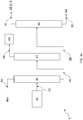
- the Fig. 1 schematically illustrates a device implementing a process for producing 2,3,3,3-tetrafluoropropene according to a particular embodiment of the present invention.
- the hydrofluoric acid 1 is brought into contact with 1,1,1,2,3-pentachloropropane (HCC-240db) 2 in one or more reactors 3.
- HCC-240db 1,1,1,2,3-pentachloropropane
- the mixture A obtained comprises HCl, unreacted HF, 2,3,3,3-tetrafluoropropene (HFO-1234yf), 2-chloro-3,3,3-trifluoropropene (HCFO-1233xf), 1,1,1,2,2-pentafluoropropane (HFC-245cb), trans -1,3,3,3-tetrafluoro-1-propene (HFO-1234zeE), trans-1-chloro-3,3,3-trifluoro-1-propene (HCFO-1233zdE), cis-1-chloro-3 , 3,3-trifluoro-1-propene (HCFO-1233zdZ), cis-1,3,3,3-tetrafluoro-1-propene (HFO-1234zeZ), 1,1,1,3,3-pentafluoropropane (HFC -245fa), 2-chloro-1,1,1,3,3-pentafluoropropane (HCFC-235da), 1,2-d
- the mixture A is recovered at the outlet of the reactor and conveyed to a distillation column 5 via line 4.
- the liquid stream L1 obtained at the bottom of the distillation column 5 is conveyed either partially or totally to the purification device 13 via line 17.
- the gas stream G1 obtained at the top of the distillation column 5 is conveyed to the purification device 7 via line 6.
- a stream comprising 2,3,3,3-tetrafluoro-1-propene is recovered. at 11 via line 8.
- a flow comprising 1,1,1,2,2-pentafluoropropane (HFC-245cb), and optionally trans-1,3,3,3-tetrafluoro-1-propene (HFO-1234zeE) is also obtained and recycled to the reactor 3 via line 10.
- Said stream comprising 1,1,1,2,2-pentafluoropropane (HFC-245cb), and optionally trans-1,3,3,3-tetrafluoro-1- propene (HFO-1234zeE), contained in line 10 can optionally be mixed with the stream L1 coming from line 15 or 17 before being injected into reactor 3.
- a stream comprising trans-1,3,3,3-tetrafluoro-1-propene (HFO-1234zeE) can be recovered at 12 via line 9.
- the Fig. 2 schematically illustrates according to a particular embodiment of the present invention a purification device 13.
- a liquid stream L1 obtained at the bottom of distillation column 5 ( Figure 1 ) is conveyed to the settling tank 22 having a temperature of -25 ° C.
- the stream L1a is extracted and recovered at 23 to be recycled to the reactor 3.
- the stream L1b is conveyed to the distillation column 25 via the line 24.
- the stream L1c is removed. at the top of the distillation column and recovered at 27 via line 26. This can be recovered to be recycled to reactor 3.
- Stream L1d can be routed to distillation column 29 via line 28 to extract at the bottom of column for distilling any heavy impurities present and routing them to an incinerator 32 via line 31.
- 2-chloro-3,3,3-trifluoropropene (HCFO-1233xf), E-1-chloro-3,3,3- trifluoro-1-propene (HCFO-1233zdE) and 1,1,1,3,3-pentafluoropropane (HFC-245fa) recovered at the top of the distillation column 29 are conveyed to a purification device 33 via line 30. From this purification device 33, 2-chloro-3,3,3-trifluoropropene (HCFO-1233xf) can be extracted at 36 via line 34 and be recycled to reactor 3. Purification device 33 can be an extractive distillation .
- E-1-chloro-3,3,3-trifluoro-1-propene (HCFO-1233zdE) and 1,1,1,3,3-pentafluoropropane (HFC-245fa) can be recovered at 37 via line 35 for be incinerated or purified.
- the Fig. 3a schematically illustrates according to a particular embodiment of the present invention a purification device 7.
- the gas stream G1 issuing from the distillation column 5 is conveyed at 41 and then to the distillation column 43 via the line 42.
- the stream G1a is recovered. at the top of the distillation column 43 and treated at 45 via the line 44.
- the device 45 can be a device for purifying the stream G1a.
- the stream G1b recovered at the bottom of the distillation column is conveyed to the distillation column 47 via line 46.
- a stream G1c is recovered at the top of the distillation column to be conveyed to the purification device 49 via line 48.
- a stream G1d is recovered at the bottom of the distillation column 47 to be conveyed to the distillation column 91 via line 90.
- the distillation column 91 makes it possible to form a stream G1d ' recovered at the top of the distillation column and a stream G1d " at the bottom distillation column.
- Stream G1d " can be sent to an incinerator 94 via line 95.
- Stream G1d ' can be sent to line 10 and reactor 3 ( figure 1 ) via line 92.
- Device 49 is detailed in figure 3b .
- This comprises a device 50 which allows the current G1c to be brought into contact with a hydrofluoric acid solution 51 having a concentration varying between 65 and 75% by weight.
- the device 50 may for example be a water scrubber.
- the contacting generates the formation of a two-phase current G1c ' which is conveyed to a storage device 53 via line 52.
- the gas phase of two-phase current G1c' is conveyed via line 54 to absorption column 55 comprising 3 absorption stages 56a, 56b and 56c.
- the absorption column 55 is also supplied with an aqueous stream 57. In this embodiment, the aqueous stream 57 supplies the column.
- absorption 55 at the top of absorption column 55 that is to say above the three absorption stages 56a-56c.
- the aqueous stream 57 can feed the absorption column 55 above each of the absorption stages 56a-56c.
- a gas stream G1c " is extracted at the top of absorption column 55 through line 59 to supply a neutralization device 60.
- an aqueous solution of hydrofluoric acid corresponding to said stream G1c '" is recycled to the storage device 53 via line 58.
- the stream G1c" is neutralized in the neutralization device 60 with an alkaline solution of NaOH at 20%.
- the alkaline solution 66 feeds the neutralization device 60 via the intermediate line 63.
- the neutralized stream is discharged through line 61 to be dried at 62.
- the neutralized and dried stream corresponds to the stream G1c '''' according to the present process. This can optionally be compressed and liquefied at a temperature. pressure of at most 8 bara
- a spent alkaline solution 65 can be extracted from the neutralization device 60 to be either recycled via the lines 64 and 63 or discharged via the line 64 for subsequent treatment.
- liquid resulting from the mixture of the liquid phase of the two-phase stream and of the stream G1c '" stored in the storage device 53 is conveyed to a distillation column 70 via the pump 68 and the pipe 69 to form the stream G2c recovered at the top of the column distillation 71 and the stream G3c recovered at the bottom of the distillation column 72.
- the pump 68 can also be configured to convey the liquid phase resulting from the mixture of the liquid phase of the two-phase stream and the stream G1c '" stored in the storage device. 53 to device 50 via line 67.
- the stream G1c ''' obtained at 62 is sent to an extractive distillation column 80 ( Figure 3c ).
- the organic extractant 89 is mixed with the stream G1c '''' before entering the extractive distillation column 80.
- the stream comprising 2,3,3,3-tetrafluoropropene and 1,1,1,2, 2-pentafluoropropane is recovered at the top of distillation column 80 to be conveyed to distillation column 82 via line 81.
- the stream comprising 2,3,3,3-tetrafluoropropene and 1,1,1,2,2-pentafluoropropane is separated by the distillation column 82 to form a stream 83 comprising 2,3,3,3-tetrafluoropropene at the top of the distillation column and a stream 84 comprising 1,1,1,2,2-pentafluoropropane at the bottom of the distillation column.
- distillation. The stream comprising trans-1,3,3,3-tetrafluoropropene and the organic extracting agent is recovered at the bottom of distillation column 80 to be routed to distillation column 87 via line 86.
- a stream 85 comprising trans -1,3,3,3-tetrafluoropropene is recovered at the top of the distillation column.
- the organic extractant is recovered at the bottom of the distillation column 87 and is recycled to the distillation column 80 via line 88.
Landscapes
- Chemical & Material Sciences (AREA)
- Organic Chemistry (AREA)
- Chemical Kinetics & Catalysis (AREA)
- Organic Low-Molecular-Weight Compounds And Preparation Thereof (AREA)
Claims (11)
- Verfahren zur Herstellung und Reinigung von 2, 3, 3, 3-Tetrafluorpropen (HFO-1234yf), das ausgehend von einer Ausgangszusammensetzung durchgeführt wird, die mindestens eine Verbindung der Formel (I) CH(n+2)(X)m-CHp (X) (n+1)-CX(3+p-m) umfasst, wobei X unabhängig F oder Cl darstellt; n, m und p unabhängig voneinander 0 oder 1 sind, wobei (n+m) = 0 oder 1, (n+p) = 0 oder 1 und (m-p) = 0 oder 1, wobei mindestens ein X Cl ist; wobei das Verfahren die Schritte umfasst:a) In-Kontakt-Bringen, in Gegenwart eines Katalysators, der Ausgangszusammensetzung mit HF unter Bedingungen, die wirksam sind zur Herstellung einer Zusammensetzung A, umfassend HCl, einen nicht umgesetzten Teil der HF, 2,3,3,3-Tetrafluorpropen (HFO-1234yf), Zwischenprodukte B, bestehend aus 2-Chlor-3,3,3-trifluorpropen (HCFO-1233xf), 1,1,1,2,2-Pentafluorpropan (HFC-245cb), trans-1,3,3,3-Tetrafluor-1-propen (HFO-1234zeE), und Nebenprodukte C, bestehend aus trans-1-Chlor-3,3,3-trifluor-l-propen (HCFO-1233zdE), cis-1-Chlor-3,3,3-trifluor-l-propen (HCFO-1233zdZ), cis-1,3,3,3-Tetrafluor-l-propen (HFO-1234zeZ), 1,1,1,3,3-Pentafluorpropan (HFC-245fa), 2-Chlor-1,1,1,3,3-pentafluorpropan (HCFC-235da), 1,2-Dichlor-3,3,3-trifluorpropen (HCFO-1223xd), 2-Chlor-1,3,3,3-tetrafluorpropen (HCFO-1224xe), 1,1,1,3,3,3-Hexafluorpropan (HFC-236fa) und gegebenenfalls einer oder mehreren Verbindungen der Formel (II) CnHxFyClz, worin n = 4, 5 oder 6, x eine ganze Zahl von 0 bis 6 ist, y eine ganze Zahl von 4 bis 12 ist, z eine ganze Zahl von 0 bis 6 ist, wobei 2n = x+y+z, wenn w 1 ist, oder 2n-2 = x+y+z, wenn w 2 ist, oder 2n+2 = x+y+z, wenn w 0 ist, wobei w die Anzahl der Ungesättigtheiten in der betreffenden Verbindung der Formel (II) ist;b) Gewinnung der Zusammensetzung A und deren Reinigung, vorzugsweise Destillation, zur Bildung und Gewinnung eines Gasstroms Gl, umfassend HCl, 2,3,3,3-Tetrafluorpropen (HFO-1234yf), einen nicht umgesetzten Teil der HF, einen Teil der Zwischenprodukte B und einen Teil der Nebenprodukte C; und eines, vorzugsweise flüssigen, Stroms L1, umfassend einen nicht umgesetzten Teil der HF, einen Teil der Zwischenprodukte B und einen Teil der Nebenprodukte C;dadurch gekennzeichnet, dass der Gasstrom Gl durch die folgenden Schritte gereinigt wird:bl) Destillation des Gasstroms Gl zur Gewinnung eines Stroms Gla, umfassend HCl, vorteilhafterweise am Kopf der Destillationskolonne, und eines Stroms G1b, umfassend 2,3,3,3-Tetrafluorpropen (HFO-1234yf), einen nicht umgesetzten Teil der HF, den einen Teil der Zwischenprodukte B und den einen Teil der Nebenprodukte C, vorteilhafterweise im Sumpf der Destillationskolonne;b2-1) Destillation des im Schritt b1) erhaltenen Stroms G1b unter Bedingungen, die wirksam sind zur Bildung eines Gasstroms G1c, umfassend 2,3,3,3-Tetrafluorpropen (HFO-1234yf), einen Anteil des nicht umgesetzten Teils der HF, einen Anteil des Teils der Zwischenprodukte B, vorteilhafterweise am Kopf der Destillationskolonne, und eines Flüssigkeitsstroms G1d, umfassend einen Anteil des Teils der Zwischenprodukte B und den Teil der Nebenprodukte C sowie einen Anteil des nicht umgesetzten Teils der HF, vorteilhafterweise im Sumpf der Destillationskolonne;b2-2) Destillation des im Schritt b2-1) erhaltenen Stroms G1d unter Bedingungen, die wirksam sind zur Bildung eines Stroms G1d', umfassend den Anteil des Teils der Zwischenprodukte B, den Anteil des nicht umgesetzten Teils der HF und einen Anteil des Teils der Nebenprodukte C, umfassend cis-1,3,3,3-Tetrafluor-1-propen (HFO-1234zeZ), 1,1,1,3,3,3-Hexafluorpropan (HFC-236fa) und einen Teil von trans-l-Chlor-3,3,3-trifluor-1-propen (HCFO-1233zdE) und 1,1,1,3,3-Pentafluorpropan (HFC-245fa); und eines Stroms G1d'', umfassend einen Anteil des Teils der Nebenprodukte C, umfassend cis-1-Chlor-3,3,3-trifluor-l-propen (HCFO-1233zdZ), 2-Chlor-1,1,1,3,3-Pentafluorpropan (HCFC-235da), 1,2-Dichlor-3,3,3-trifluorpropen (HCFO-1223xd), 2-Chlor-1,3,3,3-tetrafluorpropen (HCFO-1224xe) und gegebenenfalls eine oder mehrere Verbindungen der Formel (II) CnHxFyClz, worin n = 4, 5 oder 6, x eine ganze Zahl von 0 bis 6 ist, y eine ganze Zahl von 4 bis 12 ist, z eine ganze Zahl von 0 bis 6 ist, wobei 2n = x+y+z, wenn w 1 ist, oder 2n-2 = x+y+z, wenn w 2 ist, oder 2n+2 = x+y+z, wenn w 0 ist, wobei w die Anzahl der Ungesättigtheiten in der betreffenden Verbindung der Formel (II) ist.
- Verfahren nach dem vorhergehenden Anspruch, dadurch gekennzeichnet, dass mindestens 90% des 1,1,1,2,2-Pentafluorpropans und des trans-1,3,3,3-Tetrafluorpropens, die im Strom G1d enthalten sind, im Strom G1d' gewonnen werden, vorteilhafterweise mindestens 91%, vorzugsweise mindestens 92%, stärker bevorzugt mindestens 93%, insbesondere mindestens 94%, spezieller mindestens 95%, bevorzugt mindestens 96%, besonders bevorzugt mindestens 97%, ganz besonders bevorzugt mindestens 98% des 1,1,1,2,2-Pentafluorpropans und des trans-1,3,3,3-Tetrafluorpropens, die im Strom G1d enthalten sind, im Strom G1d' gewonnen werden.
- Verfahren nach einem der vorhergehenden Ansprüche, dadurch gekennzeichnet, dass der Strom G1d' 60 bis 70 Gew.-% 1,1,1,2,2-Pentafluorpropan, 1 bis 5 Gew.-% trans-1,3,3,3-Tetrafluorpropen und 10 bis 15 Gew.-% 2-Chlor-3,3,3-trifluorpropen, bezogen auf das Gesamtgewicht des Stroms Gld', umfasst.
- Verfahren nach einem der vorhergehenden Ansprüche, dadurch gekennzeichnet, dass mindestens 85% des cis-1,3,3,3-Tetrafluor-1-propens (HFO-1234zeZ) und des 1,1,1,3,3,3-Hexafluorpropans (HFC-236fa), die im Strom G1d enthalten sind, im Strom G1d' gewonnen werden, vorteilhafterweise mindestens 90%, vorzugsweise mindestens 92%, stärker bevorzugt mindestens 93%, insbesondere mindestens 95%, spezieller mindestens 97% des cis-1,3,3,3-Tetrafluor-1-propens (HFO-1234zeZ) und des 1,1,1,3,3,3-Hexafluorpropans (HFC-236fa), die im Strom G1d enthalten sind, im Strom G1d' gewonnen werden.
- Verfahren nach einem der vorhergehenden Ansprüche, dadurch gekennzeichnet, dass der Strom G1d' 0,1 bis 0,5 Gew.-% cis-1,3,3,3-Tetrafluor-1-propen (HFO-1234zeZ), 1,0 bis 5,0 Gew.-% 1,1,1,3,3,3-Hexafluorpropan (HFC-236fa), 0,5 bis 2,0 Gew.-% trans-1-Chlor-3,3,3-trifluor-1-propen (HCFO-1233zdE) und 0,1 bis 1,0 Gew.-% 1,1,1,3,3-Pentafluorpropan (HFC-245fa), bezogen auf das Gesamtgewicht des Stroms Gld', umfasst.
- Verfahren nach dem vorhergehenden Anspruch, dadurch gekennzeichnet, dass der Strom G1d' außerdem 2-Chlor-1,1,1,3,3-pentafluorpropan (HCFC-235da), 1,2-Dichlor-3,3,3-trifluorpropen (HCFO-1223xd), 2-Chlor-1,3,3,3-tetrafluorpropen (HCFO-1224xe) in einem Gesamtgehalt von weniger als 5 Gew.-%, bezogen auf das Gesamtgewicht von Gld', vorteilhafterweise weniger als 4 Gew.-%, vorzugsweise weniger als 3 Gew.-%, stärker bevorzugt weniger als 2 Gew.-%, insbesondere weniger als 1 Gew.-%, spezieller weniger als 0,5 Gew.-%, bezogen auf das Gesamtgewicht von G1d', umfasst.
- Verfahren nach einem der vorhergehenden Ansprüche, dadurch gekennzeichnet, dass der Strom G1d' zum Schritt a) rückgeführt wird.
- Verfahren nach einem der vorhergehenden Ansprüche, dadurch gekennzeichnet, dass es außerdem die folgenden Schritte umfasst:b3) In-Kontakt-Bringen des Stroms G1c mit einer wässrigen Flusssäurelösung mit einer Konzentration von mehr als 40% zur Bildung eines Zweiphasenstroms G1c', umfassend 2,3,3,3-Tetrafluorpropen (HFO-1234yf), Flusssäure, einen Anteil des Teils der Zwischenprodukte B und einen Anteil des Teils der Nebenprodukte C,b4) Aufbewahren des Zweiphasenstroms G1c' in einem Pufferspeicher, wobei der zweite Zweiphasenstrom aus einer flüssigen Phase und einer Gasphase besteht,b5) Leiten der Gasphase des Stroms G1c' in eine Absorptionskolonne, die im Gegenstrom mit einem wässrigen Fluss beschickt wird, zur Bildung eines Stroms G1c'', umfassend 2,3,3,3-Tetrafluorpropen (HFO-1234yf), einen Anteil des Teils der Zwischenprodukte B und einen Anteil des Teils der Nebenprodukte C, und eines Stroms G1c''', umfassend HF;und gegebenenfalls die Schritte:b6) Neutralisation des im Schritt b5) erhaltenen Stroms G1c'' mit einer wässrigen alkalischen Lösung zur Bildung eines neutralisierten Stroms undb7) Trocknen des in Schritt b6) erhaltenen neutralisierten Stroms, vorzugsweise auf einem Molekularsieb, zur Bildung eines neutralisierten und getrockneten Stroms G1c''''.
- Verfahren nach dem vorhergehenden Anspruch, dadurch gekennzeichnet, dass die im Schritt b3) verwendete wässrige Flusssäurelösung eine Temperatur zwischen 0 und 30°C hat, bevor sie mit dem Strom G1c in Kontakt gebracht wird.
- Verfahren nach einem der vorhergehenden Ansprüche 8 und 9, dadurch gekennzeichnet, dass das Verfahren einen Schritt c) nach Schritt b5) oder Schritt b7) umfasst, wobei der im Schritt b5) erhaltene Strom G1c'' oder der im Schritt b7) erhaltene Strom G1c'''' 2,3,3,3-Tetrafluorpropen (HFO-1234yf), 1,1,1,2,2-Pentafluorpropan (HFC-245cb) und trans-1,3,3,3-Tetrafluor-1-propen (HFO-1234zeE) umfasst; und der Strom G1c'' oder G1c'''' destilliert wird zur Bildung eines Stroms G1e', umfassend 2,3,3,3-Tetrafluorpropen (HFO-1234yf) und 1,1,1,2,2-Pentafluorpropan (HFC-245cb), und eines Stroms G1h', umfassend trans-1,3,3,3-Tetrafluor-1-propen (HFO-1234zeE);
wobei vorteilhafterweise der Strom G1c'' oder G1c'''' durch extraktive Destillation destilliert wird;
wobei vorzugsweise der Strom G1c'' oder G1c'''' durch extraktive Destillation durch die folgenden Schritte destilliert wird:c1') In-Kontakt-Bringen des Stroms G1c'' oder G1c'''' mit einem organischen Extraktionsmittel zur Bildung eines Stroms G1g' undc2') extraktive Destillation des Stroms G1g' zur Bildung des Flusses Gle', umfassend 2,3,3,3-Tetrafluorpropen (HFO-1234yf) und 1,1,1,2,2-Pentafluorpropan (HFC-245cb), vorteilhafterweise am Kopf der Destillationskolonne, und des Stroms G1h', umfassend trans-1,3,3,3-Tetrafluor-1-propen (HFO-1234zeE) und das organische Extraktionsmittel, vorteilhafterweise im Sumpf der Destillationskolonne. - Verfahren nach einem der vorhergehenden Ansprüche, dadurch gekennzeichnet, dass der flüssige Strom L1 einen Teil der Zwischenprodukte B und alle oder einen Teil der Nebenprodukte C umfasst und ein Teil des flüssigen Stroms L1 auf niedrige Temperatur, vorteilhafterwiese zwischen -50°C und 20°C, gebracht wird, um eine erste Phase L1a, umfassend einen nicht umgesetzten Teil der HF, und eine zweite Phase L1b, umfassend die Zwischenprodukte B und die Nebenprodukte C, zu bilden; wobei gegebenenfalls der im Schritt b2) gebildete Strom G1d mit dem Flüssigkeitsstrom L1 gemischt wird, bevor der letztere auf niedrige Temperatur gebracht wird, wobei vorteilhafterweise die erste Phase L1a zum Schritt a) rückgeführt wird;
wobei vorteilhafterweise die zweite Phase L1b destilliert wird zur Gewinnung eines Stroms L1c, umfassend 1,1,1,2,2-Pentafluorpropan (HFC-245cb) und trans-1,3,3,3-Tetrafluor-1-propen (HFO-1234zeE), vorteilhafterweise am Kopf der Destillationskolonne, und eines Stroms L1d, umfassend 2-Chlor-3,3,3-trifluor-1-propen (HCFO-1233xf), E-1-Chlor-3,3,3-trifluor-1-propen (HCFO-1233zdE) und 1,1,1,3,3-Pentafluorpropan (HFC-245fa), vorteilhafterweise im Sumpf der Destillationskolonne, wobei vorteilhafterweise der Strom L1c zum Schritt a) rückgeführt wird;
wobei vorteilhafterweise der Strom L1d durch extraktive Destillation abgetrennt wird, um einen 2-Chlor-3,3,3-trifluor-1-propen (HCFO-1233xf) umfassenden Fluss und einen E-1-Chlor-3,3,3-trifluor-1-propen (HCFO-1233zdE) und 1,1,1,3,3-Pentafluorpropan (HFC-245fa) umfassenden Strom zu bilden.
Applications Claiming Priority (2)
| Application Number | Priority Date | Filing Date | Title |
|---|---|---|---|
| FR1753744A FR3065726B1 (fr) | 2017-04-28 | 2017-04-28 | Procede de production et de purification du 2,3,3,3-tetrafluoropropene. |
| PCT/FR2018/050995 WO2018197788A1 (fr) | 2017-04-28 | 2018-04-20 | Procede de production et de purification du 2,3,3,3-tetrafluoropropene |
Publications (2)
| Publication Number | Publication Date |
|---|---|
| EP3615500A1 EP3615500A1 (de) | 2020-03-04 |
| EP3615500B1 true EP3615500B1 (de) | 2021-03-24 |
Family
ID=59521029
Family Applications (1)
| Application Number | Title | Priority Date | Filing Date |
|---|---|---|---|
| EP18725274.7A Active EP3615500B1 (de) | 2017-04-28 | 2018-04-20 | Verfahren zur herstellung und reinigung von 2,3,3,3-tetrafluorpropen |
Country Status (6)
| Country | Link |
|---|---|
| US (1) | US10766837B2 (de) |
| EP (1) | EP3615500B1 (de) |
| CN (1) | CN110573480A (de) |
| ES (1) | ES2877625T3 (de) |
| FR (1) | FR3065726B1 (de) |
| WO (1) | WO2018197788A1 (de) |
Families Citing this family (2)
| Publication number | Priority date | Publication date | Assignee | Title |
|---|---|---|---|---|
| CN109384640B (zh) * | 2018-12-30 | 2022-02-15 | 山东华安新材料有限公司 | 一种2,3,3,3-四氟丙烯的制备装置及制备方法 |
| CN113527049B (zh) * | 2020-04-22 | 2024-08-23 | 陕西中蓝化工科技新材料有限公司 | 一种反式/顺式-HFO-1234ze和HFO-1234yf的联产制备工艺 |
Family Cites Families (15)
| Publication number | Priority date | Publication date | Assignee | Title |
|---|---|---|---|---|
| US4902838A (en) | 1988-12-28 | 1990-02-20 | E. I. Du Pont De Nemours And Company | Isomerization of saturated fluorohydrocarbons |
| US5874657A (en) | 1996-11-01 | 1999-02-23 | E. I. Du Pont De Nemours And Company | Process for the purification of 1,1-difluoroethane |
| EP0864554B1 (de) | 1997-03-11 | 2002-09-18 | Central Glass Company, Limited | Verfahren zur Reinigung von rohem 1,1,1,3,3-Pentafluorpropan |
| EP0939071B1 (de) | 1998-02-26 | 2003-07-30 | Central Glass Company, Limited | Verfahren zur Herstellung von fluorierten Propanen |
| US7060165B2 (en) | 2002-02-14 | 2006-06-13 | Pcbu Services, Inc. | Processes for purification and production of fluorocarbons |
| US7476771B2 (en) * | 2005-11-01 | 2009-01-13 | E.I. Du Pont De Nemours + Company | Azeotrope compositions comprising 2,3,3,3-tetrafluoropropene and hydrogen fluoride and uses thereof |
| ES3036520T3 (en) | 2006-01-03 | 2025-09-19 | Honeywell Int Inc | Method for producing fluorinated organic compounds |
| JP5416587B2 (ja) | 2006-10-03 | 2014-02-12 | メキシケム、アマンコ、ホールディング、ソシエダッド、アノニマ、デ、カピタル、バリアブレ | プロセス |
| CN103483140B (zh) | 2006-10-31 | 2015-09-09 | 纳幕尔杜邦公司 | 氟丙烷、卤代丙烯以及2-氯-3,3,3-三氟-1-丙烯与hf的共沸组合物和1,1,1,2,2-五氟丙烷与hf的共沸组合物的制备方法 |
| ES2483995T3 (es) * | 2008-02-21 | 2014-08-08 | E. I. Du Pont De Nemours And Company | Procesos para la separación de 1,3,3,3-tetrafluoropropeno del fluoruro de hidrógeno por medio de destilación azeotrópica |
| FR2929271B1 (fr) | 2008-03-28 | 2010-04-16 | Arkema France | Procede pour la preparation du 1,2,3,3,3-pentafluoropropene- 1 |
| WO2011077193A1 (en) * | 2009-12-23 | 2011-06-30 | Arkema France | Catalytic gas phase fluorination of 243db to 1234yf |
| FR2977584B1 (fr) * | 2011-07-08 | 2014-12-05 | Arkema France | Procede de separation et recuperation du 2,3,3,3-tetrafluoropropene et de l'acide fluorhydrique |
| US9334208B2 (en) * | 2011-12-14 | 2016-05-10 | Arkema France | Process for the preparation of 2,3,3,3 tetrafluoropropene |
| KR20190008221A (ko) * | 2016-04-13 | 2019-01-23 | 아르끄마 프랑스 | 2,3,3,3-테트라플루오로프로펜의 제조 방법 |
-
2017
- 2017-04-28 FR FR1753744A patent/FR3065726B1/fr not_active Expired - Fee Related
-
2018
- 2018-04-20 EP EP18725274.7A patent/EP3615500B1/de active Active
- 2018-04-20 US US16/606,783 patent/US10766837B2/en active Active
- 2018-04-20 WO PCT/FR2018/050995 patent/WO2018197788A1/fr not_active Ceased
- 2018-04-20 CN CN201880027942.5A patent/CN110573480A/zh active Pending
- 2018-04-20 ES ES18725274T patent/ES2877625T3/es active Active
Non-Patent Citations (1)
| Title |
|---|
| None * |
Also Published As
| Publication number | Publication date |
|---|---|
| US20200157024A1 (en) | 2020-05-21 |
| CN110573480A (zh) | 2019-12-13 |
| WO2018197788A1 (fr) | 2018-11-01 |
| ES2877625T3 (es) | 2021-11-17 |
| FR3065726B1 (fr) | 2019-04-19 |
| FR3065726A1 (fr) | 2018-11-02 |
| US10766837B2 (en) | 2020-09-08 |
| EP3615500A1 (de) | 2020-03-04 |
Similar Documents
| Publication | Publication Date | Title |
|---|---|---|
| EP3394019B1 (de) | Verfahren zur herstellung und reinigung von 2,3,3,3-tetrafluorpropen | |
| EP3615500B1 (de) | Verfahren zur herstellung und reinigung von 2,3,3,3-tetrafluorpropen | |
| WO2018178554A1 (fr) | Procede de production et de purification du 2,3,3,3-tetrafluoropropene. | |
| EP3394015B1 (de) | Verfahren zur herstellung und reinigung von 2,3,3,3-tetrafluor-1-propen | |
| EP3394018B1 (de) | Verfahren zur herstellung von 2,3,3,3-tetrafluorpropen und rückgewinnung von 1,1,1,2,2-pentafluropropan ohne verunreinigungen | |
| EP3394017B1 (de) | Verfahren zur herstellung von 2,3,3,3-tetrafluor-1-propen und zum recycling von 2-chlor-3,3,3-trifluorpropen, das frei von verunreinigungen ist | |
| EP3394016B1 (de) | Verfahren zur herstellung und reinigung von 2,3,3,3-tetrafluor-1-propen | |
| US10494320B2 (en) | Method for producing and purifying 2,3,3,3-tetrafluoro-1-propene | |
| WO2018178551A1 (fr) | Procede de production du 2,3,3,3-tetrafluoropropene. | |
| EP3394014B1 (de) | Verfahren zur herstellung und reinigung von 2,3,3,3-tetrafluor-1-propen | |
| FR3064629A1 (fr) | Procede de production et de purification du 2,3,3,3-tetrafluoro-1-propene | |
| WO2018178552A1 (fr) | Procédé de production du 2,3,3,3-tetrafluoropropène |
Legal Events
| Date | Code | Title | Description |
|---|---|---|---|
| STAA | Information on the status of an ep patent application or granted ep patent |
Free format text: STATUS: UNKNOWN |
|
| STAA | Information on the status of an ep patent application or granted ep patent |
Free format text: STATUS: THE INTERNATIONAL PUBLICATION HAS BEEN MADE |
|
| PUAI | Public reference made under article 153(3) epc to a published international application that has entered the european phase |
Free format text: ORIGINAL CODE: 0009012 |
|
| STAA | Information on the status of an ep patent application or granted ep patent |
Free format text: STATUS: REQUEST FOR EXAMINATION WAS MADE |
|
| 17P | Request for examination filed |
Effective date: 20191017 |
|
| AK | Designated contracting states |
Kind code of ref document: A1 Designated state(s): AL AT BE BG CH CY CZ DE DK EE ES FI FR GB GR HR HU IE IS IT LI LT LU LV MC MK MT NL NO PL PT RO RS SE SI SK SM TR |
|
| AX | Request for extension of the european patent |
Extension state: BA ME |
|
| DAV | Request for validation of the european patent (deleted) | ||
| DAX | Request for extension of the european patent (deleted) | ||
| GRAP | Despatch of communication of intention to grant a patent |
Free format text: ORIGINAL CODE: EPIDOSNIGR1 |
|
| STAA | Information on the status of an ep patent application or granted ep patent |
Free format text: STATUS: GRANT OF PATENT IS INTENDED |
|
| RIC1 | Information provided on ipc code assigned before grant |
Ipc: C07C 17/25 20060101ALI20200911BHEP Ipc: C07C 21/18 20060101ALI20200911BHEP Ipc: C07C 17/386 20060101ALI20200911BHEP Ipc: C07C 17/38 20060101ALI20200911BHEP Ipc: C07C 17/20 20060101AFI20200911BHEP Ipc: C07C 17/383 20060101ALI20200911BHEP |
|
| INTG | Intention to grant announced |
Effective date: 20201020 |
|
| GRAS | Grant fee paid |
Free format text: ORIGINAL CODE: EPIDOSNIGR3 |
|
| GRAA | (expected) grant |
Free format text: ORIGINAL CODE: 0009210 |
|
| STAA | Information on the status of an ep patent application or granted ep patent |
Free format text: STATUS: THE PATENT HAS BEEN GRANTED |
|
| AK | Designated contracting states |
Kind code of ref document: B1 Designated state(s): AL AT BE BG CH CY CZ DE DK EE ES FI FR GB GR HR HU IE IS IT LI LT LU LV MC MK MT NL NO PL PT RO RS SE SI SK SM TR |
|
| REG | Reference to a national code |
Ref country code: GB Ref legal event code: FG4D Free format text: NOT ENGLISH |
|
| REG | Reference to a national code |
Ref country code: CH Ref legal event code: EP |
|
| REG | Reference to a national code |
Ref country code: DE Ref legal event code: R096 Ref document number: 602018014406 Country of ref document: DE |
|
| REG | Reference to a national code |
Ref country code: IE Ref legal event code: FG4D Free format text: LANGUAGE OF EP DOCUMENT: FRENCH |
|
| REG | Reference to a national code |
Ref country code: AT Ref legal event code: REF Ref document number: 1374359 Country of ref document: AT Kind code of ref document: T Effective date: 20210415 |
|
| REG | Reference to a national code |
Ref country code: LT Ref legal event code: MG9D |
|
| PG25 | Lapsed in a contracting state [announced via postgrant information from national office to epo] |
Ref country code: NO Free format text: LAPSE BECAUSE OF FAILURE TO SUBMIT A TRANSLATION OF THE DESCRIPTION OR TO PAY THE FEE WITHIN THE PRESCRIBED TIME-LIMIT Effective date: 20210624 Ref country code: BG Free format text: LAPSE BECAUSE OF FAILURE TO SUBMIT A TRANSLATION OF THE DESCRIPTION OR TO PAY THE FEE WITHIN THE PRESCRIBED TIME-LIMIT Effective date: 20210624 Ref country code: FI Free format text: LAPSE BECAUSE OF FAILURE TO SUBMIT A TRANSLATION OF THE DESCRIPTION OR TO PAY THE FEE WITHIN THE PRESCRIBED TIME-LIMIT Effective date: 20210324 Ref country code: GR Free format text: LAPSE BECAUSE OF FAILURE TO SUBMIT A TRANSLATION OF THE DESCRIPTION OR TO PAY THE FEE WITHIN THE PRESCRIBED TIME-LIMIT Effective date: 20210625 Ref country code: HR Free format text: LAPSE BECAUSE OF FAILURE TO SUBMIT A TRANSLATION OF THE DESCRIPTION OR TO PAY THE FEE WITHIN THE PRESCRIBED TIME-LIMIT Effective date: 20210324 |
|
| PG25 | Lapsed in a contracting state [announced via postgrant information from national office to epo] |
Ref country code: SE Free format text: LAPSE BECAUSE OF FAILURE TO SUBMIT A TRANSLATION OF THE DESCRIPTION OR TO PAY THE FEE WITHIN THE PRESCRIBED TIME-LIMIT Effective date: 20210324 Ref country code: RS Free format text: LAPSE BECAUSE OF FAILURE TO SUBMIT A TRANSLATION OF THE DESCRIPTION OR TO PAY THE FEE WITHIN THE PRESCRIBED TIME-LIMIT Effective date: 20210324 Ref country code: LV Free format text: LAPSE BECAUSE OF FAILURE TO SUBMIT A TRANSLATION OF THE DESCRIPTION OR TO PAY THE FEE WITHIN THE PRESCRIBED TIME-LIMIT Effective date: 20210324 |
|
| REG | Reference to a national code |
Ref country code: NL Ref legal event code: MP Effective date: 20210324 |
|
| REG | Reference to a national code |
Ref country code: AT Ref legal event code: MK05 Ref document number: 1374359 Country of ref document: AT Kind code of ref document: T Effective date: 20210324 |
|
| PG25 | Lapsed in a contracting state [announced via postgrant information from national office to epo] |
Ref country code: NL Free format text: LAPSE BECAUSE OF FAILURE TO SUBMIT A TRANSLATION OF THE DESCRIPTION OR TO PAY THE FEE WITHIN THE PRESCRIBED TIME-LIMIT Effective date: 20210324 |
|
| PG25 | Lapsed in a contracting state [announced via postgrant information from national office to epo] |
Ref country code: SM Free format text: LAPSE BECAUSE OF FAILURE TO SUBMIT A TRANSLATION OF THE DESCRIPTION OR TO PAY THE FEE WITHIN THE PRESCRIBED TIME-LIMIT Effective date: 20210324 Ref country code: AT Free format text: LAPSE BECAUSE OF FAILURE TO SUBMIT A TRANSLATION OF THE DESCRIPTION OR TO PAY THE FEE WITHIN THE PRESCRIBED TIME-LIMIT Effective date: 20210324 Ref country code: EE Free format text: LAPSE BECAUSE OF FAILURE TO SUBMIT A TRANSLATION OF THE DESCRIPTION OR TO PAY THE FEE WITHIN THE PRESCRIBED TIME-LIMIT Effective date: 20210324 Ref country code: LT Free format text: LAPSE BECAUSE OF FAILURE TO SUBMIT A TRANSLATION OF THE DESCRIPTION OR TO PAY THE FEE WITHIN THE PRESCRIBED TIME-LIMIT Effective date: 20210324 |
|
| REG | Reference to a national code |
Ref country code: ES Ref legal event code: FG2A Ref document number: 2877625 Country of ref document: ES Kind code of ref document: T3 Effective date: 20211117 |
|
| PG25 | Lapsed in a contracting state [announced via postgrant information from national office to epo] |
Ref country code: PL Free format text: LAPSE BECAUSE OF FAILURE TO SUBMIT A TRANSLATION OF THE DESCRIPTION OR TO PAY THE FEE WITHIN THE PRESCRIBED TIME-LIMIT Effective date: 20210324 Ref country code: SK Free format text: LAPSE BECAUSE OF FAILURE TO SUBMIT A TRANSLATION OF THE DESCRIPTION OR TO PAY THE FEE WITHIN THE PRESCRIBED TIME-LIMIT Effective date: 20210324 Ref country code: PT Free format text: LAPSE BECAUSE OF FAILURE TO SUBMIT A TRANSLATION OF THE DESCRIPTION OR TO PAY THE FEE WITHIN THE PRESCRIBED TIME-LIMIT Effective date: 20210726 Ref country code: RO Free format text: LAPSE BECAUSE OF FAILURE TO SUBMIT A TRANSLATION OF THE DESCRIPTION OR TO PAY THE FEE WITHIN THE PRESCRIBED TIME-LIMIT Effective date: 20210324 Ref country code: IS Free format text: LAPSE BECAUSE OF FAILURE TO SUBMIT A TRANSLATION OF THE DESCRIPTION OR TO PAY THE FEE WITHIN THE PRESCRIBED TIME-LIMIT Effective date: 20210724 |
|
| PG25 | Lapsed in a contracting state [announced via postgrant information from national office to epo] |
Ref country code: LU Free format text: LAPSE BECAUSE OF NON-PAYMENT OF DUE FEES Effective date: 20210420 |
|
| REG | Reference to a national code |
Ref country code: DE Ref legal event code: R097 Ref document number: 602018014406 Country of ref document: DE |
|
| REG | Reference to a national code |
Ref country code: BE Ref legal event code: MM Effective date: 20210430 |
|
| PG25 | Lapsed in a contracting state [announced via postgrant information from national office to epo] |
Ref country code: AL Free format text: LAPSE BECAUSE OF FAILURE TO SUBMIT A TRANSLATION OF THE DESCRIPTION OR TO PAY THE FEE WITHIN THE PRESCRIBED TIME-LIMIT Effective date: 20210324 Ref country code: CH Free format text: LAPSE BECAUSE OF NON-PAYMENT OF DUE FEES Effective date: 20210430 Ref country code: DK Free format text: LAPSE BECAUSE OF FAILURE TO SUBMIT A TRANSLATION OF THE DESCRIPTION OR TO PAY THE FEE WITHIN THE PRESCRIBED TIME-LIMIT Effective date: 20210324 Ref country code: LI Free format text: LAPSE BECAUSE OF NON-PAYMENT OF DUE FEES Effective date: 20210430 Ref country code: MC Free format text: LAPSE BECAUSE OF FAILURE TO SUBMIT A TRANSLATION OF THE DESCRIPTION OR TO PAY THE FEE WITHIN THE PRESCRIBED TIME-LIMIT Effective date: 20210324 |
|
| PLBE | No opposition filed within time limit |
Free format text: ORIGINAL CODE: 0009261 |
|
| STAA | Information on the status of an ep patent application or granted ep patent |
Free format text: STATUS: NO OPPOSITION FILED WITHIN TIME LIMIT |
|
| PG25 | Lapsed in a contracting state [announced via postgrant information from national office to epo] |
Ref country code: SI Free format text: LAPSE BECAUSE OF FAILURE TO SUBMIT A TRANSLATION OF THE DESCRIPTION OR TO PAY THE FEE WITHIN THE PRESCRIBED TIME-LIMIT Effective date: 20210324 |
|
| 26N | No opposition filed |
Effective date: 20220104 |
|
| PG25 | Lapsed in a contracting state [announced via postgrant information from national office to epo] |
Ref country code: IE Free format text: LAPSE BECAUSE OF NON-PAYMENT OF DUE FEES Effective date: 20210420 |
|
| PG25 | Lapsed in a contracting state [announced via postgrant information from national office to epo] |
Ref country code: IS Free format text: LAPSE BECAUSE OF FAILURE TO SUBMIT A TRANSLATION OF THE DESCRIPTION OR TO PAY THE FEE WITHIN THE PRESCRIBED TIME-LIMIT Effective date: 20210724 |
|
| PG25 | Lapsed in a contracting state [announced via postgrant information from national office to epo] |
Ref country code: BE Free format text: LAPSE BECAUSE OF NON-PAYMENT OF DUE FEES Effective date: 20210430 |
|
| PG25 | Lapsed in a contracting state [announced via postgrant information from national office to epo] |
Ref country code: IT Free format text: LAPSE BECAUSE OF FAILURE TO SUBMIT A TRANSLATION OF THE DESCRIPTION OR TO PAY THE FEE WITHIN THE PRESCRIBED TIME-LIMIT Effective date: 20210324 |
|
| PGFP | Annual fee paid to national office [announced via postgrant information from national office to epo] |
Ref country code: GB Payment date: 20230302 Year of fee payment: 6 |
|
| P01 | Opt-out of the competence of the unified patent court (upc) registered |
Effective date: 20230524 |
|
| PG25 | Lapsed in a contracting state [announced via postgrant information from national office to epo] |
Ref country code: CY Free format text: LAPSE BECAUSE OF FAILURE TO SUBMIT A TRANSLATION OF THE DESCRIPTION OR TO PAY THE FEE WITHIN THE PRESCRIBED TIME-LIMIT Effective date: 20210324 |
|
| PG25 | Lapsed in a contracting state [announced via postgrant information from national office to epo] |
Ref country code: HU Free format text: LAPSE BECAUSE OF FAILURE TO SUBMIT A TRANSLATION OF THE DESCRIPTION OR TO PAY THE FEE WITHIN THE PRESCRIBED TIME-LIMIT; INVALID AB INITIO Effective date: 20180420 |
|
| PGFP | Annual fee paid to national office [announced via postgrant information from national office to epo] |
Ref country code: ES Payment date: 20230510 Year of fee payment: 6 |
|
| PG25 | Lapsed in a contracting state [announced via postgrant information from national office to epo] |
Ref country code: MK Free format text: LAPSE BECAUSE OF FAILURE TO SUBMIT A TRANSLATION OF THE DESCRIPTION OR TO PAY THE FEE WITHIN THE PRESCRIBED TIME-LIMIT Effective date: 20210324 |
|
| PG25 | Lapsed in a contracting state [announced via postgrant information from national office to epo] |
Ref country code: TR Free format text: LAPSE BECAUSE OF FAILURE TO SUBMIT A TRANSLATION OF THE DESCRIPTION OR TO PAY THE FEE WITHIN THE PRESCRIBED TIME-LIMIT Effective date: 20210324 |
|
| PG25 | Lapsed in a contracting state [announced via postgrant information from national office to epo] |
Ref country code: MT Free format text: LAPSE BECAUSE OF FAILURE TO SUBMIT A TRANSLATION OF THE DESCRIPTION OR TO PAY THE FEE WITHIN THE PRESCRIBED TIME-LIMIT Effective date: 20210324 |
|
| GBPC | Gb: european patent ceased through non-payment of renewal fee |
Effective date: 20240420 |
|
| PG25 | Lapsed in a contracting state [announced via postgrant information from national office to epo] |
Ref country code: GB Free format text: LAPSE BECAUSE OF NON-PAYMENT OF DUE FEES Effective date: 20240420 |
|
| PG25 | Lapsed in a contracting state [announced via postgrant information from national office to epo] |
Ref country code: GB Free format text: LAPSE BECAUSE OF NON-PAYMENT OF DUE FEES Effective date: 20240420 |
|
| PGFP | Annual fee paid to national office [announced via postgrant information from national office to epo] |
Ref country code: FR Payment date: 20250310 Year of fee payment: 8 |
|
| REG | Reference to a national code |
Ref country code: ES Ref legal event code: FD2A Effective date: 20250529 |
|
| PGFP | Annual fee paid to national office [announced via postgrant information from national office to epo] |
Ref country code: DE Payment date: 20250305 Year of fee payment: 8 |
|
| PG25 | Lapsed in a contracting state [announced via postgrant information from national office to epo] |
Ref country code: ES Free format text: LAPSE BECAUSE OF NON-PAYMENT OF DUE FEES Effective date: 20240421 |
|
| PGFP | Annual fee paid to national office [announced via postgrant information from national office to epo] |
Ref country code: CZ Payment date: 20250331 Year of fee payment: 8 |
|
| REG | Reference to a national code |
Ref country code: DE Ref legal event code: R081 Ref document number: 602018014406 Country of ref document: DE Owner name: ARKEMA FRANCE, FR Free format text: FORMER OWNER: ARKEMA FRANCE, COLOMBES, FR |