EP3404573A1 - Sicheres hardware-element, zugehöriges verarbeitungssystem, integrierte schaltung und vorrichtung - Google Patents
Sicheres hardware-element, zugehöriges verarbeitungssystem, integrierte schaltung und vorrichtung Download PDFInfo
- Publication number
- EP3404573A1 EP3404573A1 EP18171177.1A EP18171177A EP3404573A1 EP 3404573 A1 EP3404573 A1 EP 3404573A1 EP 18171177 A EP18171177 A EP 18171177A EP 3404573 A1 EP3404573 A1 EP 3404573A1
- Authority
- EP
- European Patent Office
- Prior art keywords
- parameter
- address
- memory
- hardware
- check
- Prior art date
- Legal status (The legal status is an assumption and is not a legal conclusion. Google has not performed a legal analysis and makes no representation as to the accuracy of the status listed.)
- Granted
Links
Images





Classifications
-
- G—PHYSICS
- G06—COMPUTING OR CALCULATING; COUNTING
- G06F—ELECTRIC DIGITAL DATA PROCESSING
- G06F9/00—Arrangements for program control, e.g. control units
- G06F9/06—Arrangements for program control, e.g. control units using stored programs, i.e. using an internal store of processing equipment to receive or retain programs
- G06F9/44—Arrangements for executing specific programs
- G06F9/445—Program loading or initiating
-
- G—PHYSICS
- G06—COMPUTING OR CALCULATING; COUNTING
- G06F—ELECTRIC DIGITAL DATA PROCESSING
- G06F21/00—Security arrangements for protecting computers, components thereof, programs or data against unauthorised activity
- G06F21/70—Protecting specific internal or peripheral components, in which the protection of a component leads to protection of the entire computer
- G06F21/82—Protecting input, output or interconnection devices
- G06F21/83—Protecting input, output or interconnection devices input devices, e.g. keyboards, mice or controllers thereof
-
- G—PHYSICS
- G06—COMPUTING OR CALCULATING; COUNTING
- G06F—ELECTRIC DIGITAL DATA PROCESSING
- G06F12/00—Accessing, addressing or allocating within memory systems or architectures
- G06F12/02—Addressing or allocation; Relocation
-
- G—PHYSICS
- G06—COMPUTING OR CALCULATING; COUNTING
- G06F—ELECTRIC DIGITAL DATA PROCESSING
- G06F21/00—Security arrangements for protecting computers, components thereof, programs or data against unauthorised activity
- G06F21/50—Monitoring users, programs or devices to maintain the integrity of platforms, e.g. of processors, firmware or operating systems
- G06F21/57—Certifying or maintaining trusted computer platforms, e.g. secure boots or power-downs, version controls, system software checks, secure updates or assessing vulnerabilities
-
- G—PHYSICS
- G06—COMPUTING OR CALCULATING; COUNTING
- G06F—ELECTRIC DIGITAL DATA PROCESSING
- G06F21/00—Security arrangements for protecting computers, components thereof, programs or data against unauthorised activity
- G06F21/60—Protecting data
- G06F21/64—Protecting data integrity, e.g. using checksums, certificates or signatures
-
- G—PHYSICS
- G06—COMPUTING OR CALCULATING; COUNTING
- G06F—ELECTRIC DIGITAL DATA PROCESSING
- G06F21/00—Security arrangements for protecting computers, components thereof, programs or data against unauthorised activity
- G06F21/70—Protecting specific internal or peripheral components, in which the protection of a component leads to protection of the entire computer
- G06F21/71—Protecting specific internal or peripheral components, in which the protection of a component leads to protection of the entire computer to assure secure computing or processing of information
- G06F21/74—Protecting specific internal or peripheral components, in which the protection of a component leads to protection of the entire computer to assure secure computing or processing of information operating in dual or compartmented mode, i.e. at least one secure mode
-
- G—PHYSICS
- G06—COMPUTING OR CALCULATING; COUNTING
- G06F—ELECTRIC DIGITAL DATA PROCESSING
- G06F9/00—Arrangements for program control, e.g. control units
- G06F9/06—Arrangements for program control, e.g. control units using stored programs, i.e. using an internal store of processing equipment to receive or retain programs
- G06F9/30—Arrangements for executing machine instructions, e.g. instruction decode
- G06F9/38—Concurrent instruction execution, e.g. pipeline or look ahead
- G06F9/3802—Instruction prefetching
- G06F9/3816—Instruction alignment, e.g. cache line crossing
-
- G—PHYSICS
- G09—EDUCATION; CRYPTOGRAPHY; DISPLAY; ADVERTISING; SEALS
- G09C—CIPHERING OR DECIPHERING APPARATUS FOR CRYPTOGRAPHIC OR OTHER PURPOSES INVOLVING THE NEED FOR SECRECY
- G09C1/00—Apparatus or methods whereby a given sequence of signs, e.g. an intelligible text, is transformed into an unintelligible sequence of signs by transposing the signs or groups of signs or by replacing them by others according to a predetermined system
-
- H—ELECTRICITY
- H04—ELECTRIC COMMUNICATION TECHNIQUE
- H04L—TRANSMISSION OF DIGITAL INFORMATION, e.g. TELEGRAPHIC COMMUNICATION
- H04L9/00—Cryptographic mechanisms or cryptographic arrangements for secret or secure communications; Network security protocols
- H04L9/32—Cryptographic mechanisms or cryptographic arrangements for secret or secure communications; Network security protocols including means for verifying the identity or authority of a user of the system or for message authentication, e.g. authorization, entity authentication, data integrity or data verification, non-repudiation, key authentication or verification of credentials
- H04L9/3234—Cryptographic mechanisms or cryptographic arrangements for secret or secure communications; Network security protocols including means for verifying the identity or authority of a user of the system or for message authentication, e.g. authorization, entity authentication, data integrity or data verification, non-repudiation, key authentication or verification of credentials involving additional secure or trusted devices, e.g. TPM, smartcard, USB or software token
-
- H—ELECTRICITY
- H04—ELECTRIC COMMUNICATION TECHNIQUE
- H04W—WIRELESS COMMUNICATION NETWORKS
- H04W12/00—Security arrangements; Authentication; Protecting privacy or anonymity
- H04W12/10—Integrity
- H04W12/106—Packet or message integrity
-
- G—PHYSICS
- G06—COMPUTING OR CALCULATING; COUNTING
- G06F—ELECTRIC DIGITAL DATA PROCESSING
- G06F2212/00—Indexing scheme relating to accessing, addressing or allocation within memory systems or architectures
- G06F2212/72—Details relating to flash memory management
- G06F2212/7209—Validity control, e.g. using flags, time stamps or sequence numbers
-
- H—ELECTRICITY
- H04—ELECTRIC COMMUNICATION TECHNIQUE
- H04L—TRANSMISSION OF DIGITAL INFORMATION, e.g. TELEGRAPHIC COMMUNICATION
- H04L63/00—Network architectures or network communication protocols for network security
- H04L63/08—Network architectures or network communication protocols for network security for authentication of entities
- H04L63/0853—Network architectures or network communication protocols for network security for authentication of entities using an additional device, e.g. smartcard, SIM or a different communication terminal
-
- H—ELECTRICITY
- H04—ELECTRIC COMMUNICATION TECHNIQUE
- H04W—WIRELESS COMMUNICATION NETWORKS
- H04W12/00—Security arrangements; Authentication; Protecting privacy or anonymity
- H04W12/03—Protecting confidentiality, e.g. by encryption
-
- H—ELECTRICITY
- H04—ELECTRIC COMMUNICATION TECHNIQUE
- H04W—WIRELESS COMMUNICATION NETWORKS
- H04W12/00—Security arrangements; Authentication; Protecting privacy or anonymity
- H04W12/40—Security arrangements using identity modules
-
- H—ELECTRICITY
- H04—ELECTRIC COMMUNICATION TECHNIQUE
- H04W—WIRELESS COMMUNICATION NETWORKS
- H04W4/00—Services specially adapted for wireless communication networks; Facilities therefor
- H04W4/30—Services specially adapted for particular environments, situations or purposes
- H04W4/40—Services specially adapted for particular environments, situations or purposes for vehicles, e.g. vehicle-to-pedestrians [V2P]
Definitions
- Embodiments of the present disclosure relate to secure processing systems, such as micro-controllers comprising a hardware secure module.
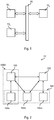
- Figure 1 shows a typical electronic system, such as the electronic system of a vehicle, comprising a plurality of processing systems 10, such as embedded systems or integrated circuits, e.g., a FPGA (Field Programmable Gate Array), DSP (Digital Signal Processor) or a micro-controller (e.g., dedicated to the automotive market).
- processing systems 10 such as embedded systems or integrated circuits, e.g., a FPGA (Field Programmable Gate Array), DSP (Digital Signal Processor) or a micro-controller (e.g., dedicated to the automotive market).
- FPGA Field Programmable Gate Array
- DSP Digital Signal Processor
- micro-controller e.g., dedicated to the automotive market.
- the communication system may include a vehicle control bus, such as a CAN (Controller Area Network) bus, and possibly a multimedia bus, such as a MOST (Media Oriented Systems Transport) bus, connected to vehicle control bus via a gateway.
- vehicle control bus such as a CAN (Controller Area Network) bus
- multimedia bus such as a MOST (Media Oriented Systems Transport) bus
- the processing systems 10 are located at different positions of the vehicle and may include, e.g., an Engine Control Unit (ECU), a Transmission Control Unit (TCU), an Anti-lock Braking System (ABS), a body control modules (BCM), and/or a navigation and/or multimedia audio system.
- ECU Engine Control Unit
- TCU Transmission Control Unit
- ABS Anti-lock Braking System
- BCM body control modules
- this secure element is a dedicated and preferably programmable hardware component (e.g., within an FPGA, DSP or micro-controller) and dedicated to handle and/or supervise security functions.
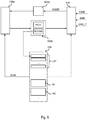
- Figure 2 shows a block diagram of a typical processing system 10 with additional security functions, such as a micro-controller.
- the processing system 10 comprises at least one processing unit 102, such as a microprocessor, usually the Central Processing Unit (CPU), programmed via software instructions.
- a processing unit 102 such as a microprocessor, usually the Central Processing Unit (CPU), programmed via software instructions.
- CPU Central Processing Unit
- the processing system 10 comprises also a secure element, often referred to as HSM (Hardware Security Module).
- HSM Hard Security Module
- the secure element HSM comprises a processing unit 106, such as an additional microprocessor programmed via software or a dedicated hardware module, and has one cryptographic co-processor, containing one or more digital encryption/cipher keys (being unknown to the non-secure element, i.e., the processing unit 102) and which may be used, e.g., to encrypt or decrypt data packets.
- the software developer of a micro-controller can use given security functions, while the encryption key is pre-programmed in the secure element and kept secret.
- the firmware of the micro-processor 102 may be update, without having to include the encryption key(s) in the firmware file.
- the secure element HSM may be configured to use the encryption key together with a symmetric (e.g., Advanced Encryption Standard, AES) or asymmetric encryption algorithm, e.g., in order to encrypt or decrypt data, verify the identity of a sender, e.g., by decrypting a signature field or calculating a hashing function, etc.
- a symmetric e.g., Advanced Encryption Standard, AES
- AES Advanced Encryption Standard
- asymmetric encryption algorithm e.g., in order to encrypt or decrypt data, verify the identity of a sender, e.g., by decrypting a signature field or calculating a hashing function, etc.
- the secure element HSM is in an isolated environment, e.g., in order to block access to the firmware (and thus the encryption keys) of the processing unit 106.
- the processing system 10 may also comprise one or more resources 104, such as:
- each of these resources 104 may be:
- the processing systems 10 comprises a secure element HSM and one or more non-secure elements, e.g., the processing unit 102, wherein the secure element HSM is typically isolated from the non-secure elements. Accordingly, a communication channel 108 between the secure processing unit 106 and the non-secure processing unit 102 is required in order to be able to run, upon request, security services provided by the secure element HSM that might be needed by an application executed by the processing unit 102.
- Such processing systems 10 with dedicated Hardware Security Module are known, e.g. from various TriCoreTM AURIXTM microcontrollers (e.g., TC39x or TC3xx from Infineon) or Power ArchitectureTM microcontrollers (e.g., MPC56xx, MPC57xx from NXP or SPC56x, SPC57x, SPC58x from the present applicant).
- TriCoreTM AURIXTM microcontrollers e.g., TC39x or TC3xx from Infineon
- Power ArchitectureTM microcontrollers e.g., MPC56xx, MPC57xx from NXP or SPC56x, SPC57x, SPC58x from the present applicant.
- one or more of the above objectives is achieved by means of a hardware secure element having the features specifically set forth in the claims that follow.
- Embodiments moreover concern a related processing system, integrated circuit and device.
- various embodiments of the present disclosure relate to a hardware secure element.
- the hardware secure element comprises a processing unit, such as a microprocessor programmed via software instructions.
- the processing unit has associated a receiver circuit for receiving data comprising a command field and a parameter field adapted to contain a plurality of parameters.
- the hardware secure element comprises at least one hardware parameter check module configured to receive at input a parameter to be processed selected from said plurality of parameters, and process this parameter in order to verify whether the parameter has given characteristics.
- the hardware parameter check module has associated one or more look-up tables configured to receive at input the command field and a parameter index identifying the parameter to be processed by the hardware parameter check module, and determine for the command field and the parameter index a configuration data element, wherein the configuration data element comprises configuration information specifying the characteristics to be verified by the hardware parameter check module.
- the one or more look-up tables may be stored in a memory and/or registers and the content of the one or more look-up tables may be programmable by the processing unit of the hardware secure element during a initialization/start-up phase.
- the look-up tables may comprise a first look-up table configured to provide the configuration data element as a function of a preset signal, and a second look-up table configured to determine the preset signal as a function of the command field and the parameter index.
- the hardware parameter check module comprises a zero-value check circuit.
- the configuration data element may comprise configuration information for selectively enabling the zero-value check circuit.
- the zero-value check circuit when enabled, may verify whether the parameter corresponds to a zero value, and generate an error flag when the parameter does not correspond to a zero value.
- the hardware parameter check module may comprises a maximum value check circuit.
- the configuration data element may comprise configuration information for selectively enabling the maximum value check circuit.
- the maximum value check circuit when enabled, may verify whether the parameter is greater than a maximum value, and generate an error flag when the parameter is greater than said maximum value.
- the configuration data element may also comprise this maximum value.
- the hardware parameter check module may comprise an address alignment check circuit.
- the configuration data element may comprise configuration information for selectively enabling the address alignment check circuit.
- the address alignment check circuit when enabled, may verify whether the parameter is a multiple of a given integer number, and generate an error flag when the parameter is not a multiple of this given integer number.
- the configuration data element may comprise configuration information identifying this given integer number.
- the hardware parameter check module may comprise a memory check circuit.
- the configuration data element may comprise configuration information for selectively enabling the memory check circuit.
- the memory check circuit when enabled, may compare the parameter (expected to contain, e.g., a start address) with one or more reference memory addresses in order to verify whether the parameter contains an address belonging to a memory area addressable by the processing unit, and generate an error flag when the comparison indicates that the parameter does not contain an address belonging to a memory area addressable by the processing unit.
- the configuration data element comprises configuration information identifying this one or more reference memory addresses.
- the configuration data element may comprise configuration information identifying the parameter index of this further parameter and configuration information for selectively enabling an end-address verification.
- the memory check circuit when the end-address verification is enabled, may calculate an end-address as a function of the parameter and the further parameter. Next, the memory check circuit may compare also the end-address with one or more reference memory addresses in order to verify whether the end-address belongs to a memory area addressable by the processing unit, and generate an error flag when the comparison indicates that the end-address does not belong to a memory area addressable by the processing unit.
- the calculating of the end-address may also include that the value of the further parameter indicating a quantity of data is converted into a value identifying a number of memory location.
- the various error flags (being indicative of one or more parameter errors) may be provided to a message handler module of the hardware secure element.
- the hardware secure element comprises a microprocessor and a (program) memory, such as a non-volatile memory, having stored a plurality of software routines executable by the microprocessor, wherein each software routine starts at a respective memory start address.
- the software routines may comprise:
- the hardware secure element may also comprise a (software or hardware) message handler module configured to elaborate the command and the error flags generated by the hardware parameter check circuit in order to determine a software routine (among the software routine stored in the memory) to be executed by the microprocessor.
- the hardware message handler module may provide data to the microprocessor indicating the software routine to be executed.
- the hardware secure element may comprise for this purpose a look-up table, which permits to associate a respective software routine to each command.
- the elements of the look-up table contain the memory start addresses of the software routines.
- the hardware secure element may be part of a more complex processing system, such as an embedded system or preferably an integrated circuit, such as a microcontroller.
- the processing system comprises also a transmitter circuit for transmitting data to the receiver circuit of the hardware secure element and a non-secure processing unit.
- the non-secure processing unit may not have direct access to the (program) memory of the hardware secure element, e.g. the non-secure processing unit does not have access to the cipher keys stored in the memory of the hardware secure element.
- the non-secure processing unit may request the execution of security services by transmitting via the transmitter circuit a command to the hardware secure element.
- FIG 3 shows a first embodiment of a processing system 10a configured to transmit data from a non-secure element to a secure element.
- the processing system 10a may be an embedded system or preferably an integrated circuit, such as a micro-controller, comprising one or more non-secure elements and a secure element.
- the non-secure element(s) comprise a processing unit 102a, such as a micro-processor (usually the CPU) programmed via software instructions.
- the secure element comprises a processing unit 106a, such as a second micro-processor or a custom hardware module, wherein the second processing unit 106a is configured to execute security functions being based on at least one encryption key, such as encryption and/or decryption operation.
- HSM Mailbox sub-system In the embodiment considered a transmission system 30, referred to as HSM Mailbox sub-system, is used to transmit data from the non-secure processing unit 102a to the secure processing unit 106a.
- the communication between the non-secure processing unit 102a and the secure processing unit 106a is usually bidirectional. While in the following will be discussed mainly the transmission from the non-secure processing unit 102a to the secure processing unit 106a, a similar communication may also be used for the transmission from the secure processing unit 106a to the non-secure processing unit 102a.
- the non-secure processing unit 102a has associated a transmitter circuit 308 and the secure processing unit 106a has associated a receiver circuit 304.
- the non-secure processing unit 102a may provide data to be transmitted TX and/or optional configuration information CFG TX to the transmitter circuit 308 by storing these data in a register 310.
- the register 310 may be part of the so called Special Function Registers (SFR) of the processing unit 102a, i.e., the register 310 may be addressable via one or more specific addresses in the memory space of the non-secure processing unit 102a.
- SFR Special Function Registers
- one or more information STAT_TX in the register 310 may also be written by the transmitter circuit 308, e.g., in order to provide a feedback to the non-secure processing unit 102a concerning the status of the transmission of the data.
- the receiver circuit 304 may have associated a memory/register 302, in which the receiver circuit 304 may store data RX having been received. Accordingly, the secure processing unit 106a may obtain the data transmitted/received by reading the content of the memory/register 302. Generally, one or more information in the memory/register 302 may also be written by the secure processing unit 106a, e.g., in order to set one or more configuration information CFG_RX to be used by the receiver circuit 304. Generally, the receiver circuit 304 may store also one or more additional information STAT_TX in the memory/register 302, e.g., data concerning the status of the transmission/reception of data. For example, the additional information STAT_TX may be used to determine a transmission error.
- additional information STAT_TX may be used to determine a transmission error.
- the transmitter circuit 308 and the receiver circuit 304 may exchange data via any suitable communication channel 306, e.g. including one or more electric wires.
- the communication may be based on any synchronous or asynchronous communication protocol.
- an asynchronous communication protocol is used, such as the Secure Hardware Extension (SHE) protocol.
- SHE Secure Hardware Extension
- the transmitter circuit 308 is configured to transmit a data packet MSG, referred to as HSM Message, to the receiver circuit 304.
- the data packet MSG comprises frames of 32-bit, which are transmitted through a 32-bit bus, such that one frame at a time can be transmitted.
- the register 310 may also be a FIFO (First-In First-Out) system, thereby permitting that a plurality of consecutive frames can be transmitted in sequence.
- the receiver circuit 304 sends an acknowledge ACK (or negative-acknowledgement) to the transmitter circuit 308, e.g., in order to inform the transmitter circuit 308 that the transmission channel 306 is available.
- the data packet MSG may comprise the following fields:
- Figure 4 shows a first embodiment of the implementation of a secure element HSMa in accordance with the present disclosure.
- the secure element HSMa comprises the processing unit 106a and the receiver circuit 304, which exchange data via the memory/register 302.
- the receiver circuit 304 has associated a buffer 312 in which the received data RX are stored.
- the buffer 312 (which may also be integrated in the receiver circuit 304) comprises the content of the transmitted message MSG, in particular the command CMD and the other optional fields, such as the parameters P.
- the command CMD is provided to a message handler module 316.
- the parameter field P may be provided to a parameter check module 318, which is configured to determine whether the parameters P are valid.
- the message handler module 316 and/or the parameter check module 318 may be integrated in a dedicated hardware module 314, i.e., these modules may be implemented with combinational and/or sequential logic blocks.
- the memory/register 302 comprises various memory areas, each comprising one or more bits.
- a bit sequence 302c in the memory/register 302 may comprise data representing configuration information for the parameter check.
- the parameter check module 318 may use the bit sequence 302c together with the parameters P in order to determine whether the parameters P are valid and possibly signal an error P_ERR to the message handler module 316.
- the non-secure processing unit 102a may send a command CMD to the secure element HSMa, which identifies a service to be executed, and (optionally if needed) several parameters, which characterize how the service should be accomplished.
- the services provided by the secure element HSMa may include one or more encryption/decryption service.
- the service requested may be identified with 1 byte, which identifies the command CMD.
- the command field may identify a decryption or encryption operation and a respective cryptographic key (e.g. selected from a plurality of different encryption algorithms and/or cryptographic keys) to be used to encrypt/decrypt the data.
- a respective cryptographic key e.g. selected from a plurality of different encryption algorithms and/or cryptographic keys
- parameters P e.g. the data to be encrypted/decrypted.
- the parameter field P does not necessarily contain the data to be processed, but the parameters P can contain a pointer to a memory where the data to be processed are located and/or where the processed data should be written to.
- the message handler module 316 is configured to analyze the command field CMD and send an instruction to the processing unit 106a.
- the processing unit 106a is implemented with a microprocessor having associated a memory 108 (typically a non-volatile memory, such as a flash memory or EEPROM) containing the instructions to be executed by the processor 106a (i.e., the firmware).
- the memory/register 302 may comprises a memory area 302a in which the message handler module 316 may store data identifying (directly or indirectly) an instruction address ADDR of the microprocessor 106a, i.e. an address of the memory 108.
- a hardware message handler 312 may analyze the command field CMD and determine the respective function to be executed, e.g. a respective start address of the function.
- the message handler may use a Look-up Table (LUT) for this purpose, wherein with each command CMD is associated a respective start address ADDR. Accordingly, the message handler 316 may determine the respective start address ADDR of the function to be executed and write the address ADDR in the memory area 302a.
- LUT Look-up Table
- the microprocessor 106a may be configured ( e.g., via software instructions) to read the content of the memory area 302a, for example periodically or in response to an interrupt generated by the message handler 316, and perform a jump to the corresponding address ADDR stored therein.
- the memory area 302a may also correspond directly to a general-purpose register of the microprocessor 106a.
- the message handler module 316 is implemented with a software function, i.e., a sequence of instructions executed by the microprocessor 106a, the software function may directly perform a jump operation to the address ADDR.
- the message handler module 316 may be implemented with a sub-routine and the address ADDR may be provided as return value of the sub-routine.
- the memory 108 may also contain one or more error functions, again having associated a respective start-address.
- the message handler module 316 once having determined an error (e.g., an error in the parameters P signaled via the signal P_ERR or a transmission error signaled via the signal STAT_RX), may write the start-address ADDR of a respective error function into the memory area 302a.
- a bit sequence 302b in the memory/register 302 may comprise also data representing configuration information for the message handler module 316, e.g., data identifying the start-addresses of the various functions stored in the memory 108. Accordingly, the message handler module 316 may use the bit sequence 302b together with the command CMD in order to determine a respective start-address ADDR.
- the service is managed by means of the microprocessor 106a, which executes a sequence of instructions stored in the memory 108. Accordingly, given that each service is accomplished by different sub-routine/function consisting in a sequence of instructions located in the memory 108, the (software or hardware) message handler module 316 determines which instruction sequence or software function (hereafter called service handler) has to be executed.
- the (software or hardware) message handler module 316 determines which instruction sequence or software function (hereafter called service handler) has to be executed.
- the message handler module 316 may also take in account that errors can occur. For example, in various embodiments, such errors are again managed by the microprocessor 106a, which executes a respective error handler/function, i.e., a further sequence of instructions stored in the memory 108.
- the respective function parses the command CMD and determines, e.g. via a service handler look-up table (located, for example, in the non-volatile memory 108) the address of the respective service handler.
- a service handler look-up table located, for example, in the non-volatile memory 108 the address of the respective service handler.
- the HSM Mailbox communication system 30 may monitor several conditions in order to determine a correct transmission of the message MSG. For example, the transmitter circuit 308 may determine whether the transmission channel is available at the time the service request is started, the receiver circuit 304 may determine whether the transmitted/received data bits are corrupted ( e.g. by generating the signal STAT RX based on one or more parity bits in the transmitted message MSG), the parameter check module 318 may determine whether the parameters P are correct, etc.
- the secure element HSMa may monitor different error conditions, which may be signaled to the message handler module 316.
- the various error conditions may also be classified. For example, an error may be classified as "hard”, when the error depends on a malfunction of the HW ( e.g. based on the signal STAT_RX indicating that some bits got corrupted during the transfer from the non-secure to the secure element), or "soft", when the error is due to a wrong message created by the non-secure processing unit 304 ( e.g. when the signal P_ERR indicates that the message parameters P are wrong, e.g., because the parameters P are not compatible with the requested service).
- such errors are treated differently, e.g., a hard error may be handled by a first error function and the soft error may be handled by a second error function.
- Figure 5 shows a flow chart of possible software implementation of the message handler 316, i.e. the operations executed by the microprocessor 106a used to retrieve the service handler address and check for possible errors.
- the microprocessor 106a executes a first routine at a step 1002 in order to determine whether the received data RX contain an error (e.g., by analyzing the signals STAT_RX and P_ERR).
- the microprocessor 106a starts at a step 1022 an error handler, e.g. jumps to an address associated with an error handler.
- the microprocessor 106a may also determine the type of error at the step 1022 (e.g. hard or soft) and jump to a respective error handler.
- the microprocessor proceeds to a following verification step 1004 in order to determine whether the command CMD received is associated with the default service handler.
- the microprocessor 106a obtains at a step 1006 the address of the default service handler and executes at a step 1008 the default service handler, e.g., by jumping to the address of the default service handler.
- the microprocessor 106a reads at a step 1010 the value or the command field CMD.
- the microprocessor 106a obtains the address of the service handler associated with the command CMD. For example, in the embodiment considered, the microprocessor 106a obtains at a step 1012 the start address of a Look-up table, adds at a step 1016 the value of the command CMD to the start address of a Look-up table and reads at a step 1018 the service handler address stored at the resulting memory position.
- microprocessor 106a executes at a step 1018 the service handler, e.g., by jumping to the service handler address read at the step 1016.
- the various handlers (error, default and service) prepare a response message. Accordingly, once the various handlers/function have finished, the microprocessor 106a may send at a step 1020 a response to the non-secure processing unit 102a and the procedure terminates at a step 1024. Generally, the step 1020 may also be implemented within the various (error, default, service) functions.
- the above operations when implemented in software, may require a significant amount of software instructions, which can severely impact the latency.
- the steps shown in Figure 5 may be required two times: one time when the secure element HSMa receives the service request and has to look-up the proper handler, and one time when the non-secure element receives the answer.
- SHE Secure Hardware Extension
- FIG. 6 shows a second embodiment of the secure module HSMa, wherein the message handler module 316 has been implemented as a dedicated hardware module. Specifically, in the embodiment considered, the hardware message handler module 316:
- the message handler module 316 uses a lookup table in order to obtain the service handler associated with a given command.
- this lookup-table LUT is stored in the non-volatile memory 108, in which are also stored the instructions executed by the microprocessor 106a, e.g. the (flash or EEPROM) program memory of the microprocessor 106a. Accordingly, each entry in the look-up table LUT contains the start-address of one of a plurality of handlers/functions H1, H2, ... (also stored in the memory 108) to be executed by the microprocessor 106a.
- Figure 7 shows in this regard an embodiment of the data stored in the memory 108.
- the memory 108 contains the look-up table LUT and a plurality of handlers/functions, such as a default command handler DCH, one or more error handlers, such as a hard error handler HEH and a soft error handler SEH, and one or more command handlers CH0, CH1, ....
- handlers/functions such as a default command handler DCH, one or more error handlers, such as a hard error handler HEH and a soft error handler SEH, and one or more command handlers CH0, CH1, ....
- the look-up table LUT starts thus at a given start address A_LUT, and each of the elements of the look-up table LUT contains the start address for a respective of handler/function, i.e. sequence of instructions.
- the look-up table LUT contains in sequence:
- the first command handler address A_CH0 is stored at a given memory address A_SCH and the last command handler address A_CHn is stored at a given memory address A_ECH.
- the various elements in the look-up table LUT may also have a different order. However, it is preferably to store the addresses/elements in the table LUT belonging to the same group of handlers, i.e. default command handler, error handler(s), command handler(s), in sequence.
- each element in the look-up table may indeed be stored in a plurality of consecutive memory locations N LOC.
- each location in the memory 108 may consist in 1 byte, while the processing unit 106a may indeed use addresses having 4 bytes for accessing the memory 108.
- this is usually the case for an 8-bit microprocessor with 32-bit memory space.
- A_DCH A_LUT + OFFSET_DCH ⁇ N_LOC .
- the offset OFFSET_DCH is 0.
- the addresses of the error handlers start at a given memory address: A_LUT + OFFSET_EH ⁇ N_LOC .
- the offset OFFSET _EH is 1.
- the hard error handler address A_HEH is stored at the memory position A(A_HEH):
- a A_HEH A_LUT + OFFSET_EH ⁇ N_LOC and the soft error handler address A_SEH is stored at the memory position A(A_SEH):
- a A_SEH A_LUT + OFFSET_EH + 1 ⁇ N_LOC
- A_SCH A_LUT + OFFSET_CH ⁇ N_LOC .
- each command handler address A_Ch i is stored at a respective memory position A(A_Ch i ):
- a A_CH i A_SCH + i ⁇ N_LOC .
- the look up table is stored together with the handlers in the memory 108, i.e. the memory of the secure element HSMa.
- the message handler module 316 is able to calculate the address of the corresponding table elements of the look-up table LUT as shown in the foregoing.
- the message handler module 316 has to know (implicitly or explicitly) the following information:
- the above information, or equivalent data identifying this information univocally, may be stored in the memory/register 302b containing the configuration information for the message handler module 316.
- the value N LOC may be fixed by hardware and the data A_LUT, A_SCH and A_ECH may be stored in the memory/register 302b.
- the memory/register 302b comprises a first memory area RCHBA, in which is stored the base address of the look-up table LUT, i.e. the start-address A_LUT. Moreover, the memory/register 302b comprises a second memory area RCH, in which is stored the number n of command handler functions.
- RCHBA the base address of the look-up table LUT
- the memory/register 302b comprises a second memory area RCH, in which is stored the number n of command handler functions.
- the register RCHBA provides the start-address A_LUT of the look-up table LUT.
- the content of this register RCHBA (and similarly the register RCH) may be written by the microprocessor 108a during an initialization routine.
- the message handler module 316 can determine the start-address A_SCH by a simple calculation, because the offset OFFSET_CH is fixed, e.g. A_LUT + 3 x N_LOC, wherein the value A_LUT is stored in the register RCHBA, and the value 3 x N_LOC may be fixed at a hardware level within the message handler module 316.
- the message handler module 316 may also determine the end-address A_ECH of the look-up table LUT based on the content of the register RCH, which contains the number n of command handlers.
- the message handler module 316 may determine the respective (default, error or command) handler. Next the message handler module 316 may calculate the start-address of the respective element in the look-up table LUT associated with the handler.
- the message handler module 316 may determine whether an error occurred, e.g. by analyzing the signal ERR. In case an error occurred, the message handler module 316 may set the start address for the element in the look-up table LUT to:
- the message handler module 316 may read the content of the command field CMD and calculate the corresponding start-address for the element in the look-up table LUT.
- the values of the command field CMD are numbered from 0 to n-1.
- the message handler module 316 may determine whether the value of the command field CMD is smaller than the value stored in the register RCH (containing the number n of command handlers).
- the message handler module 316 may calculate the start-address for the element in the look-up table LUT, e.g., based on the following equation: RCHBA + OFFSET_CH ⁇ LOC + CMD ⁇ N_LOC ,
- the OFFSET_CH may correspond to 3.
- the values of the command field CMD may also be offset and, the command CMD may be in the range from OFFSET_CH to (n -1 + OFFSET_CH), thereby avoiding the offset compensation.
- the value stored in the register RCH is also compensated, e.g., by storing the value (n + OFFSET_CH) in the register RCH.
- the message handler module 316 may generate an error or preferably use the default handler. For example, in various embodiments, the message handler module 316 uses as start-address for the element in the look-up table LUT the value stored in the register RCHBA.
- the message handler module 316 may thus read the address stored in the respective memory locations assigned to the element of the look-up table LUT and store the data read in the memory/register 302a.
- the memory 108 may be a dual-port memory permitting contemporaneous access by the microprocessor 106a and the message handler module 316.
- a parallel access to the memory 108 may be implemented usually quite easily, e.g. by storing the look-up table LUT in a different flash page with respect to the handlers/functions H1, H2, etc.
- the message handler module 316 may directly write the start address of the respective element in the look-up table LUT in the memory/register 302a. Accordingly, in this case, the memory/register 302a contains the address of the element in the look-up table LUT (and not the address stored at the corresponding position in the look-up table LUT), and the microprocessor 106a may perform a jump to the respective handler by reading the content of the corresponding memory location in the look-up table LUT.
- This embodiment has the advantage that the message handler module 316 does not have to access the memory 108. According, the memory 108 does not require a second read interface.
- the message handler module 316 may directly determine the start address of the element in the look-up table LUT by combinational operations (requiring usually a single clock cycle).
- the microprocessor 106a may read via software instructions the content of the memory/register 302a. Specifically, in this case the memory/register 302a contains directly the handler address, the microprocessor 106a may perform a jump to the address stored in the memory/register 302a.
- the microprocessor 106a reads first the content of the memory location associated with the address stored in the memory/register 302a, i.e. the element in the look-up table LUT, and then performs a jump to the corresponding address stored therein.
- Figure 8 is a flow chart showing an embodiment of the software instructions to be executed by the microprocessor in order to start the handler. Specifically, after a start step 2000 (which may be activated, e.g., periodically or by an interrupt generated by the message handler 316), the microprocessor 106a reads at a step 2002 the content of the memory/register 302a. Next, the microprocessor 106a reads the handler address from the memory location associated with the address stored in the memory/register 302a ( i.e., the content of the look-up table element) and performs at a step 2004 a jump to this handler address.
- a start step 2000 which may be activated, e.g., periodically or by an interrupt generated by the message handler 316
- the microprocessor 106a reads at a step 2002 the content of the memory/register 302a.
- the microprocessor 106a reads the handler address from the memory location associated with the address stored in the memory/register 302a (i.e.,
- the microprocessor 106a may send at a step 2006 a response to the processing unit 102a and the procedure terminates at a stop step 2008.
- the step 2006 may also be executed within the various handlers.
- Figure 9 shows a possible embodiment of the hardware message handler module 316.
- the module 316 determines in parallel three possible addresses for the look-up table LUT.
- the module 316 determines, based on the command CMD, a first (command) address for the look-up table LUT by means of an adder 3162, a multiplier 3166 and a further adder 3168, basically implementing the following equation, already described in the foregoing: OFFSET_CH + CMD ⁇ N_LOC + RCHBA
- the offset compensation (OFFSET_CH) is purely option. Accordingly, also the adder 3162 is purely optional.
- the module 316 determines, based on an error type ERR_T, a second (error) address for the look-up table LUT by means of a multiplexer 3170 and an adder, substantially implementing the following equations, already described in the foregoing:
- the module 316 determines a third (default) address for the look-up table, corresponding the address stored in the register RCHBA.
- the module 316 comprises moreover a digital comparator 3164 configured to determine whether the value of the command field CMD is smaller than the value stored in the register RCH (CMD ⁇ RCH).
- the three possible addresses are provided to a multiplexer 3174, which is configured to provide at output one of these three possible addresses as a function of the error signal ERR and the signal provided by the comparator 3164.
- the multiplexer 3174 comprises a first switch 3182, which is closed via a logic gate 3178 when the signal provided by the comparator 3164 is high and the signal ERR is low, thereby providing at the multiplexer output the first (command) address when no error occurred and CMD ⁇ RCH.
- the multiplexer 3174 comprises a third switch 3186, which is closed when the signal ERR is high, thereby providing at the multiplexer output the second (error) address when an error occurred.
- the address provided by the multiplexer 3174 is then stored in the memory/register 302a.
- a single clock cycle is sufficient in order to determine the handler address, taking into account different commands and optionally different error types, thereby reducing the latency of the message handling procedure.
- the data packet MSG transmitted by the transmitter circuit 308 and received by the receiver circuit 604 may comprise the following fields:
- the command CMD identifies the service requested, and the parameter field P specifies how the service shall be accomplished. While the message handler module 316 elaborates the command field CMD (and possible error signals), the parameter check module 318 should elaborate the parameter field P in order to determine whether the parameters P are valid.
- Figure 10 shows in this regard an embodiment of the parameter check module 318.
- the various security services supported by the secure element HSMa may support different parameters, i.e. the configuration information to be used for the parameter check may vary as a function of the command CMD.
- the parameters may be mandatory, optional or not even permitted for specific commands CMD.
- the various security services may support also a different number and type of parameters.
- the parameter check configuration memory/register 302a may receive at input the command CMD and information indicating the parameter to be processed, such as a parameter index P_ID, and provide at output the parameter configuration information to be used by the parameter check module 318.
- the memory/register 302a may be configured as a memory or look-up table comprising a plurality of parameter configuration information, wherein the command CMD and the parameter index P ID are used as address.
- the memory/register 302a may also have associate combinational circuits, e.g. in order to map a plurality of different commands and/or parameter indices P_ID to the same address.
- command field CMD could have 1 byte identifying the service requested.
- the command CMD could specify whether an encryption or decryption operation should be performed.
- a plurality of different cipher keys may be supported by using a respected different command value.
- the index of the cipher key to be used may also be provided as a parameter.
- the non-secure processing unit 102a and the secure processing unit 106a may be connected to a shared memory, such as a RAM (Random Access Memory), preferably a dual-port RAM (see, e.g., block 104b in Figure 2 ).
- a shared memory such as a RAM (Random Access Memory), preferably a dual-port RAM (see, e.g., block 104b in Figure 2 ).
- the parameter field P may comprise indeed tree parameters, each having a given number of bit, e.g., 4 bytes (assuming again a 32-bit memory space):
- the secure element HSMa Before executing any service handler, the secure element HSMa should check the correctness of the received parameters. For example, the secure element HSMa, in particular the parameter check module 318, may verify/test whether the source and destination addresses point to real physical memory locations addressable by the processing unit 106a. Moreover, the secure element HSMa may verify/test whether these addresses are aligned to "double-word" locations (again assuming encryption algorithms operation on 32-bit data). The secure element HSMa may also verify/test whether the source end-address and/or destination end-address (both calculated as a function of the respective start-address and the third parameter identifying the quantity of data to be processed) is greater or smaller than the last address of the physical memory.
- the secure element HSMa may support also one or more further services/commands CMD, such as a request to update the cryptographic key associated with a one or more encryption/decryption services. Accordingly, in this case, the secure element HSMa should be able to receive a new cryptographic key and store the new key, e.g., in the (non-volatile) memory of the processing unit 106a.
- the parameter field P e.g., including directly the new key or the memory location at which the new key is stored
- Figure 11 shows a flow-chart of a possible embodiment of the parameter check module 318.
- the parameter check module 318 supports for each parameter the following five test routines:
- the configuration memory/register 302c could provide for each command and parameter index P_ID respective configuration, e.g. in the form of a bit sequence, specifying which of these checks should be activated for a given parameter.
- the configuration information 302c could indicate that the parameter check module 318 should execute the start-address, end-address and address-alignment check.
- the configuration information 302c could indicate that the parameter check module 318 should execute the maximum-value check.
- the module 318 sets at a step 3002 a counter value to the number of received parameters.
- the module 318 verifies at a step 3004 whether the counter value is greater than 0, i.e., whether at least one parameter has still to be processed.
- the module 318 verifies at a step 3006 whether the address-alignment check is enabled. In case the address-alignment check is enabled (output "Y" of the verification step 3006), the module 318 executed at a step 3008 the address-alignment check and verifies at a step 3010 whether the result of the address-alignment check indicates that the parameter contains an error.
- the module 318 verifies at a step 3012 whether the start-address check is enabled. In case the start-address check is enabled (output "Y" of the verification step 3012), the module 318 executed at a step 3014 the start-address check and verifies at a step 3016 whether the result of the start-address check indicates that the parameter contains an error.
- the module 318 verifies at a step 3018 whether the end-address check is enabled. In case the end-address check is enabled (output "Y" of the verification step 3018), the module 318 executed at a step 3020 the end-address check and verifies at a step 3022 whether the result of the end-address check indicates that the parameter contains an error.
- the module 318 verifies at a step 3024 whether the maximum-value check is enabled. In case the maximum-value check is enabled (output "Y" of the verification step 3024), the module 318 executed at a step 3026 the maximum-value check and verifies at a step 3028 whether the result of the maximum-value check indicates that the parameter contains an error.
- the module 318 verifies at a step 3030 whether the zero-value check is enabled. In case the zero-value check is enabled (output "Y" of the verification step 3030), the module 318 executed at a step 3032 the zero-value check and verifies at a step 3034 whether the result of the zero-value check indicates that the parameter contains an error.
- the module 318 reduces at a step 3036 the counter value and returns to the step 3004 for processing the next parameter.
- the module sets at a step 3038 an error flag.
- the module proceeds to a verification step 3040. Specifically, in the embodiment considered, the module 318 verifies whether an error occurred (e.g., whether one of the error flags has been set or whether the signal STAT RX indicates that a transmission error occurred). Specifically, in case no error occurred, the procedure terminates at a stop step 3044. Conversely, in case an error occurred, the parameter check module may start an error routine 3042. For example, as described with respect to the message handler module, this may be done by setting the signal P_ERR, which may be processed by the message handler module 316 in order to determine the service handler.
- the above operations when implemented in software, may require a significant amount of software instructions, which can severely impact the latency.
- the steps shown in Figure 11 may be required two times: one time when the secure element HSMa receives the service request and has to process the parameters, and one time when the non-secure element receives the answer.
- parameter check module 318 In the following will thus be described a hardware implementation of the parameter check module 318. Specifically, in this case one or more of the checks may be performed in parallel, thereby reducing the latency of the processing.
- the transmitted message MSG comprises one command CMD and an optional parameter field P comprising possible optional parameters.
- the number of parameters transmitted may be between zero (no parameter transmitted) and a maximum number of parameters.
- the maximum number of parameters is fixed, e.g. to 8.
- the length of the parameter field P may thus be variable (only the parameters indeed used are transmitted) or fixed ( e.g., the unused bits are set to "0").
- the combination of the current command value CMD and the index P_ID of the currently processed parameter determine the checks to be executed for the current parameter.
- the check of the parameters may be performed sequentially with the same module 318 or (at least partially) in parallel with a plurality of parallel modules 318.
- a single parameter check module 318 may be sufficient in case the message MSG is transmitted with a serial communication protocol.
- the parameter check may be performed already during the reception of the message MSG.
- some of the parameters may influence also the verification of other parameters (e.g. the number of data to be processed influences the end-address)
- it is preferable that the parameters are processed (in parallel or sequentially) once the complete message MSG has been received and stored in the buffer 312. In fact, in this way, possible transmission errors of the message MSG may also be verified first.
- the term "current parameter" refers generally to a currently processed parameter in a sequential and/or parallel processing instant.
- the parameter check module 318 supports one or more of the following parameter checks:
- Figure 12 shows a first embodiment of the configuration memory/register 302c and the parameter check module 318.
- the parameter check module 318 comprise four sub-circuits:
- the configuration memory/register 302c comprises a look-up table comprising a plurality of configuration data elements CDE, wherein each configuration data element CDE comprises data for selectively enabling/disabling each of the sub-circuits of the parameter check module 318, such as:
- each of the flags may be implemented with a single bit.
- each configuration data element CDE may also comprise further configuration data, such as the maximum value to be used by the maximum value check circuit MAXC and/or the type of address alignment (e.g., word or double-word) to be verified by the address alignment check circuit AAC.
- a respective configuration data element CDE is associated univocally with each combination of command CMD and parameter index P_ID.
- the memory/register 302c would have to contain up to 2 (8+3) configuration data elements CDE.
- the elements may also be less, e.g. because the commands supported may be less (see also the description of the message handler module and the default handler).
- configuration data elements CDE are indeed identical for several combinations of commands CMD and parameter indices P_ID, e.g. parameters containing a memory address usually are subject to similar checks.
- Figure 13 shows an alternative embodiment, in which the memory/register 302a has been reorganized.
- the memory/register 302c has been split into two sub-memories/registers 302d and 302e, each comprising a look-up table.
- the memory/register 302e comprises a look-up table of preset configuration data elements, i.e. this look-up table provides the current configuration data element CDE as a function of a preset index PRESET.
- the memory/register 302d comprises a look-up table, wherein with each combination of command CMD and parameter index P_ID is associated a respective preset index PRESET, i.e., this look-up table provides the preset index PRESET for the memory/register 302e as a function of the command CMD and the parameter index P_ID.
- each value of the command field CMD may be associated a preset data element PDE.
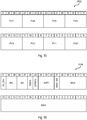
- each preset data element PDE comprises a sequence of preset values PV, one for each possible parameter.
- the preset data element PDE would comprise 8 preset values PV0..PV7.
- the currently selected preset value PV (selected as a function of the command CMD and the parameter index P_ID) is then used as preset signal PRESET to select the configuration data element CDE in the look-up table 302e.
- the look-up table 302e may comprise a given number of configuration data elements CDE0..CDEm, and one of the configuration data elements CDE0..CDEm is selected as a function of the value of the currently selected preset value PV.
- the preset values PV may be encoded with 4 bit.
- each preset data element PDE may consist in 32 bits (4 bit for each of the 8 preset values PV0..PV7).
- Figure 15 shows a possible bit map for each parameter data element PDE.
- the memory/register 302d comprises a corresponding preset data element PDE for each command CMD.
- the memory/register 302d may comprise 256 x 32 bit.
- less than 256 commands may indeed be supported, e.g. 16, 32, 64 or 128, and the remaining command codes may generate an error or be assigned to a default handler (see also the description of the message handler module 316).
- the preset registers 302e contains configuration data elements CDE, which define which checks should be enabled and with which attributes.
- the preset value register 302d comprises preset vales PV ( e.g., organized in preset data elements PDE), which define which configuration data elements CDE should be used.
- the look-up tables 302c, 302d e/o 302e may be implemented with a non-volatile memory (e.g., a flash memory), with a volatile memory (e.g., a RAM) or with registers ( e.g., one or more special function registers of the microprocessor 106a).
- a non-volatile memory e.g., a flash memory
- a volatile memory e.g., a RAM
- registers e.g., one or more special function registers of the microprocessor 106a
- the processing unit 106a may write ( e.g., by means of software instructions) the content of the look-up tables during an initialization phase.
- Figure 16 shows a possible embodiment of the bit mapping of each configuration data element CDE and Figure 17 shows a possible embodiment of the parameter check module 17.
- parameter field P which may include the following three parameters (with the remaining five parameters being unused):
- the parameter check module 318 comprises one or more sub-circuits, such as a zero-value check circuit ZVC, an address alignment check circuit AAC, a maximum value check circuit MAXC and/or a memory check circuit MCC.
- These circuits of the parameter check module 318 receive at input the currently selected parameter P(P_ID), i.e. the parameter at the current parameter index P_ID, and the currently selected configuration data element CDE (selected as a function of the current command CMD and the current parameter index P_ID).
- P(P_ID) the currently selected parameter at the current parameter index P_ID
- the currently selected configuration data element CDE selected as a function of the current command CMD and the current parameter index P_ID
- preset data element PDE comprising the preset data for all parameters of a given command CMD are particularly useful, because no separate memory accesses are required, but the various preset
- the configuration data element CDE comprises configuration data for enabling the various sub-circuits of the parameter check module 318.
- these configuration data may include the flags ZV_EN (zero value check enable flag), MC_EN (memory check enable flag), AA_EN (address alignment check enable flag) and MAX_EN (maximum value check enable flag) described in the foregoing.
- ZV_EN zero value check enable flag
- MC_EN memory check enable flag
- AA_EN address alignment check enable flag
- MAX_EN maximum value check enable flag
- the configuration data element CDE may comprise further configuration data, which may be required by specific sub-modules to perform the respective check.
- the zero-value check circuit ZVC may be enabled when the zero-value check enable flag ZVC_EN has a given logic value (e.g., "1").
- the address alignment check circuit AAC may be enabled when the address alignment check enable flag AA_EN has a given logic value (e.g., "1").
- a single flag AA_EN may be useful in case the address alignment check circuit AAC is configured to support only a single alignment check, e.g. verify whether the value of the current parameter P(P ID) is a multiple of four.
- two bits AA are used, which may instruct the address alignment check circuit AAC to check the following alignments (in case of a 32-bit CPU):
- the value of the field AA indicates implicitly the address alignment check enable flag AA EN and the address alignment check circuit AAC may be enabled when the bits AA have a value different from "00".
- the address alignment check circuit AAC is configured to generate an error flags AA_ERR when the address alignment check fails.
- the address alignment check circuit AAC may verify the least significant bits of the parameter P(P_ID) in order to determine whether the alignment is correct, e.g. :
- the maximum value check circuit MAXC is enabled when the maximum value check enable flag MAX_EN has a given logic value (e.g., "1").
- the configuration data element CDE comprises also a field MAX specifying the maximum value to be used by the maximum value check circuit MAXC, i . e . (when enabled) the maximum value check circuit MAXC is configured to verify whether the value of the parameter being checked P(P_ID) is less than or equal to the value set into the MAX field and generates an error flag MAX_ERR when the check fails, i.e., when the parameter P(P_ID) is greater than the value MAX.
- the value of the maximum value field MAX may already indicate implicitly the maximum value check enable flag MAX_EN, e.g. because if the field MAX has a value different from zero, the maximum value check circuit MAXC should be enabled.
- the memory check circuit MMC should verify whether the address provided by the parameter P(P_ID) and possibly an end-address calculated therefrom belong indeed to a (shared) memory area addressable by the processing unit 106a and generate an error flag MC ERR when the check fails.
- the current parameters may be a (source or destination) start-address.
- the memory check circuit MMC is configured to determine whether the current parameter P(P_ID) belongs to a memory area addressable by the processing unit, e.g. by comparing the current parameter P(P ID) with one or more reference addresses, such as an upper reference address and/or lower reference address.
- the processing unit 106a comprises a plurality of memory interfaces adapted to be connected to a plurality of shared memories, such as a non-volatile memory (e.g., a flash memory), a volatile memory (e.g. a RAM), and/or an external memory, wherein a different memory address range of the processing unit may be assigned to each of these memories.
- a non-volatile memory e.g., a flash memory
- a volatile memory e.g. a RAM
- an external memory e.g. a different memory address range of the processing unit may be assigned to each of these memories.
- one or more of these memories may be a shared memory (e.g., a dual port memory) accessible also by the processing unit 102a.
- the configuration data element may comprise also data identifying whether the address should belong to a particular memory.
- the configuration data element contains two bits MC, which may instruct the memory check circuit MMC to check whether the current parameter P_ID belongs to:
- each of these memories as indicated by the bits MC may be associated a respective upper reference address (and if required lower reference address) to be used by the memory check circuit MMC.
- the respective upper reference address (and if required lower reference address) for a single memory or each memory of the plurality of memories may be hardwired or stored in the configuration register 302c.
- the bits MC may thus indicate implicitly the memory check enable flag MC_EN and the memory check circuit MMC may be enabled when the two bits MC are different from "00".
- the memory check circuit MMC may be configured (via the configuration data element CDE) to perform the same verification also when a parameter contains an (source or destination) end-address.
- the message MSG does not contain explicitly the memory (source or destination) end-address, but contains (in addition to the start addresses) only a parameter identifying the quantity of data to be processed.
- the memory check circuit MCC may thus calculate the (source or destination) end-address within the parameter check circuit 318 as a function of a respective start-address and the quantity of data to be processed.
- the configuration data element comprises two additional fields SZEN and SZPI.
- the field SZPI permits to specify the parameter index P_ID of the parameter expected to contain the size information.
- the flag SZEN permits to enable the end-address calculation and verification. This flag is purely optional, because the end address verification could be activated automatically, e.g., always when the module MC has been activated (via the flag MC_EN) or by determining that the content of the field SZPI is different from the current parameter index P_ID.
- the configuration data element may also contain a field SZRES, indicating the resolution of the size information.
- SZRES the resolution of the size information.
- this field is purely optional, and only a single resolution may be supported, e.g., the quantity information may always be in bytes, words, etc.
- a single flag is used to specify whether the size/quantity information provided by the parameter P(SZPI) refers to a byte number or AES block (comprising 16 bytes) number.
- P(SZPI) refers to a byte number or AES block (comprising 16 bytes) number.
- a plurality of bits could be used, e.g., in order to support also other resolutions, such as double word, etc.
- the memory check circuit MCC may calculate the end-address for the current parameter P(P_ID) expected to provide a start-address and the number of bytes to be processed, which in turn is determined as a function of the content of the parameter P(SZPI) and optionally the resolution information SZRES.
- this calculation of the end-address is schematically shown separate from the memory check circuit MCC.
- the parameter P(SZPI) containing the size information is provided to a multiplier 320 and a multiplexer 322 in order to determine the size information in bytes based on the value of the parameter P(SZPI) and the resolution information SZRES, e.g., implementing the following equations:
- the size SIZE is thus in bytes.
- the resolution of the size SIZE corresponds preferably to the data-width of the memory used ( e.g. byte in the example considered), i.e., the size SIZE corresponds to the number of memory location required to store the quantity of data specified by the parameter P(SZPI).
- the size SIZE and the content of the current parameter P(P_ID) (which should contain a start-address) are provided to an adder 324, which provides thus at output the end-address, i.e., the sum of the start-address and the number of memory location required
- the multiplier 320, the multiplexer 322 and the adder 324 represent an end-address calculation circuit 326, wherein the multiplier 320 and the multiplexer 322 are only required when the parameter P(SZPI) may be provided with a different resolution than the size SIZE.
- the end-address provided by the circuit 326 may then be processed as described with respect to the start-address in order to verify whether the address belongs to a memory area addressable by the processing unit 106a.
- this is schematically shown by a separate memory check circuit MCC2, which uses the same configuration information as the memory check circuit MCC described in the foregoing (in particular with respect to the field MCEN). Accordingly, this circuit MCC2 generate an error flag MC2_ERR when the end-address does not belong to a memory area addressable by the processing unit 106a.
- the circuits MCC and MCC2 may also be slightly different.
- the circuit MCC may only verify whether the start-address P(P_ID) is greater than a lower reference address (selected e.g. based on the content of the field MC) and the circuit MCC2 may only verify whether the end-address P(P_ID) + SIZE is smaller than a upper reference address (selected e.g. based on the content of the field MC).
- the address alignment circuit AAC may also verify whether the end-address provided by the circuit 326 has a correct alignment.
- Figure 17 shows a separate address alignment check circuit AAC2, which uses the same configuration information as the alignment check circuit AAC described in the foregoing (in particular with respect to the field AA). Accordingly, this circuit AAC2 generate an error flag AA2 ERR when the end-address does not have the correct alignment.
- each of the circuits ZVC, AAC, MAXC and MCC (and possibly the circuits AAC2 and MCC2) generate respective error flags.
- These flags may be provided separately to the message handler module and/or the processing unit 106a.
- these flags are combined in order to generate a single flag/signal P_ERR being set when any of the various flags has been set. For example, in case an error is set when the corresponding flag is set to high, an OR gate 328 may be used for this purpose.
- the configuration data element CDE would have 32 bits and could contain the following fields for both the first (source start address) and the second (destination start address) parameter:
- configuration data element CDE could contain the following fields for the third parameter (quantity information):
- the microprocessor 106a may only verify at a step 4002 whether the error flag P_ERR has been set.
- the microprocessor 106a may start an error routine 4004 (essentially corresponding to the routine 3042 shown in Figure 11 ).
- the error routine 4004 may also take into account the specific error flags ZV_ER, AA_ERR, etc.
- the verification of the flag P_ERR may already be implemented in the message handler module 316, which selects the handler to be executed by the microprocessor 106a.
- the message handler module 316 and the parameter check module 318 described in the foregoing may be implemented with a dedicated hardware 314, which is particularly useful in case the processing unit 106a is implemented with a microprocessor programmed via software instructions.
- the hardware message handler module 316 and the hardware parameter check module 318 are used in combination.
- the modules may also be used separately, e.g., the parameter check module 318 may be implemented in hardware and the message handler module 316 may be implemented in software (or vice versa).
- look-up tables described in the foregoing have been implemented with memories and/or registers, one or more of the look-up tables may also be implemented with combinational circuits.
- the use of memories and/or registers has the advantage that the look-up tables may be re-programmed, e.g. by means of the processing unit 106a or a firmware update of the secure element HSMa.
Landscapes
- Engineering & Computer Science (AREA)
- Theoretical Computer Science (AREA)
- Computer Security & Cryptography (AREA)
- Software Systems (AREA)
- Physics & Mathematics (AREA)
- General Engineering & Computer Science (AREA)
- General Physics & Mathematics (AREA)
- Computer Hardware Design (AREA)
- Signal Processing (AREA)
- Computer Networks & Wireless Communication (AREA)
- Mathematical Physics (AREA)
- Health & Medical Sciences (AREA)
- Bioethics (AREA)
- General Health & Medical Sciences (AREA)
- Debugging And Monitoring (AREA)
- Detection And Correction Of Errors (AREA)
- Advance Control (AREA)
- Microcomputers (AREA)
Applications Claiming Priority (1)
| Application Number | Priority Date | Filing Date | Title |
|---|---|---|---|
| IT102017000050153A IT201700050153A1 (it) | 2017-05-09 | 2017-05-09 | Modulo hardware di sicurezza, relativo sistema di elaborazione, circuito integrato e dispositivo |
Publications (2)
| Publication Number | Publication Date |
|---|---|
| EP3404573A1 true EP3404573A1 (de) | 2018-11-21 |
| EP3404573B1 EP3404573B1 (de) | 2021-10-27 |
Family
ID=59812013
Family Applications (1)
| Application Number | Title | Priority Date | Filing Date |
|---|---|---|---|
| EP18171177.1A Active EP3404573B1 (de) | 2017-05-09 | 2018-05-08 | Sicheres hardware-element, zugehöriges verarbeitungssystem, integrierte schaltung und vorrichtung |
Country Status (3)
| Country | Link |
|---|---|
| US (2) | US11093658B2 (de) |
| EP (1) | EP3404573B1 (de) |
| IT (1) | IT201700050153A1 (de) |
Families Citing this family (3)
| Publication number | Priority date | Publication date | Assignee | Title |
|---|---|---|---|---|
| IT201700050153A1 (it) * | 2017-05-09 | 2018-11-09 | St Microelectronics Srl | Modulo hardware di sicurezza, relativo sistema di elaborazione, circuito integrato e dispositivo |
| US11940891B2 (en) * | 2021-07-29 | 2024-03-26 | Texas Instruments Incorporated | Low latency fault and status indicator in serial communication |
| KR20250019878A (ko) | 2023-08-02 | 2025-02-11 | 삼성전자주식회사 | 연산 기능을 구비한 메모리 장치 및 그것의 동작 방법 |
Citations (6)
| Publication number | Priority date | Publication date | Assignee | Title |
|---|---|---|---|---|
| EP0696016A2 (de) * | 1994-08-01 | 1996-02-07 | Fujitsu Limited | Verfahren zum Handhaben der Sicherheit einer Speicherkarte und Speicherkarte |
| WO1997005551A1 (en) * | 1995-07-31 | 1997-02-13 | Verifone, Inc. | Method and apparatus for operating resources under control of a security module or other secure processor |
| US5742843A (en) * | 1994-07-20 | 1998-04-21 | Fujitsu Limited | Control system for access between processing elements in a parallel computer |
| US20080147932A1 (en) * | 2006-10-16 | 2008-06-19 | Hitachi, Ltd. | Storage system and control method thereof |
| EP2500820A1 (de) * | 2011-03-18 | 2012-09-19 | Kabushiki Kaisha Toshiba | IC-Karte, tragbare elektronische Vorrichtung, IC-Kartenausgabevorrichtung und Befehlsausführungsverfahren |
| US8284801B1 (en) * | 2010-01-26 | 2012-10-09 | Xilinx, Inc. | Method and apparatus for controlling an operating mode for an embedded Ethernet media access controller |
Family Cites Families (27)
| Publication number | Priority date | Publication date | Assignee | Title |
|---|---|---|---|---|
| US5742840A (en) * | 1995-08-16 | 1998-04-21 | Microunity Systems Engineering, Inc. | General purpose, multiple precision parallel operation, programmable media processor |
| JP4226816B2 (ja) * | 2001-09-28 | 2009-02-18 | 株式会社東芝 | マイクロプロセッサ |
| US7535913B2 (en) * | 2002-03-06 | 2009-05-19 | Nvidia Corporation | Gigabit ethernet adapter supporting the iSCSI and IPSEC protocols |
| JP2005346770A (ja) * | 2004-05-31 | 2005-12-15 | Toshiba Corp | 光ディスク装置 |
| DE102004047836A1 (de) | 2004-09-29 | 2006-03-30 | Basf Ag | Verfahren zur Herstellung von optisch aktiven 2-Methylalkanolen |
| EP1742152B1 (de) * | 2005-07-07 | 2012-09-12 | Texas Instruments Inc. | Verfahren und System für eine mehrfach nutzbare Speicherzugangsbeschränkung |
| US20070101424A1 (en) * | 2005-07-25 | 2007-05-03 | Nec Laboratories America, Inc. | Apparatus and Method for Improving Security of a Bus Based System Through Communication Architecture Enhancements |
| DE102006001873B4 (de) * | 2006-01-13 | 2009-12-24 | Infineon Technologies Ag | Vorrichtung und Verfahren zum Überprüfen einer Fehlererkennungsfunktionalität einer Speicherschaltung |
| US8213321B2 (en) * | 2007-02-01 | 2012-07-03 | Deere & Company | Controller area network condition monitoring and bus health on in-vehicle communications networks |
| US8625621B2 (en) * | 2008-03-06 | 2014-01-07 | Integrated Device Technology, Inc. | Method to support flexible data transport on serial protocols |
| US9432184B2 (en) * | 2008-09-05 | 2016-08-30 | Vixs Systems Inc. | Provisioning of secure storage for both static and dynamic rules for cryptographic key information |
| US8675871B2 (en) * | 2011-05-31 | 2014-03-18 | International Business Machines Corporation | Protecting a control vector in an optional block of a standard key block |
| US8953789B2 (en) * | 2011-06-01 | 2015-02-10 | International Business Machines Corporation | Combining key control information in common cryptographic architecture services |
| US8473641B2 (en) * | 2011-06-30 | 2013-06-25 | International Business Machines Corporation | Facilitating transport mode input/output operations between a channel subsystem and input/output devices |
| DE102011112174B4 (de) * | 2011-09-01 | 2022-03-31 | Infineon Technologies Ag | Vorrichtung und Verfahren zum Schutz und zur zerstörungsfreien Prüfung sicherheitsrelevanter Register |
| DE102012218363A1 (de) * | 2012-10-09 | 2014-04-10 | Continental Automotive Gmbh | Verfahren zur Steuerung eines getrennten Ablaufs von verknüpften Programmblöcken und Steuergerät |
| WO2014177905A1 (en) * | 2013-04-30 | 2014-11-06 | Freescale Semiconductor, Inc. | Device having a security module |
| DE102013215055B4 (de) * | 2013-07-31 | 2021-01-28 | Infineon Technologies Ag | Schaltungsanordnung, Vorrichtung, Verfahren und Computerprogramm mit modifiziertem Fehlersyndrom zur Fehlererkennung von permanenten Fehlern in Speichern |
| US9256551B2 (en) * | 2013-08-09 | 2016-02-09 | Apple Inc. | Embedded encryption/secure memory management unit for peripheral interface controller |
| US9524222B2 (en) * | 2013-09-16 | 2016-12-20 | GM Global Technology Operations LLC | Method and apparatus for fault detection in a controller area network |
| US9734355B2 (en) * | 2014-04-11 | 2017-08-15 | Rubicon Labs, Inc. | System and method for an efficient authentication and key exchange protocol |
| US9699184B2 (en) * | 2014-09-11 | 2017-07-04 | Infineon Technologies Ag | Method and device for processing data |
| US10063370B2 (en) * | 2014-09-11 | 2018-08-28 | Infineon Technologies Ag | Method and device for checking an identifier |
| JP6420176B2 (ja) * | 2015-02-26 | 2018-11-07 | ルネサスエレクトロニクス株式会社 | 通信システムおよび通信装置 |
| DE102016206630A1 (de) * | 2016-04-20 | 2017-11-09 | Robert Bosch Gmbh | Verfahren und Vorrichtung zur Vermeidung von Manipulation einer Datenübertragung |
| IT201700050153A1 (it) * | 2017-05-09 | 2018-11-09 | St Microelectronics Srl | Modulo hardware di sicurezza, relativo sistema di elaborazione, circuito integrato e dispositivo |
| TWI646783B (zh) * | 2018-04-10 | 2019-01-01 | 大陸商深圳大心電子科技有限公司 | 解碼方法及儲存控制器 |
-
2017
- 2017-05-09 IT IT102017000050153A patent/IT201700050153A1/it unknown
-
2018
- 2018-05-08 EP EP18171177.1A patent/EP3404573B1/de active Active
- 2018-05-09 US US15/975,460 patent/US11093658B2/en active Active
-
2021
- 2021-07-27 US US17/443,497 patent/US11921910B2/en active Active
Patent Citations (6)
| Publication number | Priority date | Publication date | Assignee | Title |
|---|---|---|---|---|
| US5742843A (en) * | 1994-07-20 | 1998-04-21 | Fujitsu Limited | Control system for access between processing elements in a parallel computer |
| EP0696016A2 (de) * | 1994-08-01 | 1996-02-07 | Fujitsu Limited | Verfahren zum Handhaben der Sicherheit einer Speicherkarte und Speicherkarte |
| WO1997005551A1 (en) * | 1995-07-31 | 1997-02-13 | Verifone, Inc. | Method and apparatus for operating resources under control of a security module or other secure processor |
| US20080147932A1 (en) * | 2006-10-16 | 2008-06-19 | Hitachi, Ltd. | Storage system and control method thereof |
| US8284801B1 (en) * | 2010-01-26 | 2012-10-09 | Xilinx, Inc. | Method and apparatus for controlling an operating mode for an embedded Ethernet media access controller |
| EP2500820A1 (de) * | 2011-03-18 | 2012-09-19 | Kabushiki Kaisha Toshiba | IC-Karte, tragbare elektronische Vorrichtung, IC-Kartenausgabevorrichtung und Befehlsausführungsverfahren |
Also Published As
| Publication number | Publication date |
|---|---|
| US20180330127A1 (en) | 2018-11-15 |
| US11921910B2 (en) | 2024-03-05 |
| IT201700050153A1 (it) | 2018-11-09 |
| US11093658B2 (en) | 2021-08-17 |
| US20210357538A1 (en) | 2021-11-18 |
| EP3404573B1 (de) | 2021-10-27 |
Similar Documents
| Publication | Publication Date | Title |
|---|---|---|
| US11321492B2 (en) | Hardware secure element, related processing system, integrated circuit, device and method | |
| US11281807B2 (en) | Processing system, related integrated circuit and method | |
| EP3719636B1 (de) | Verarbeitungssystem, zugehörige integrierte schaltung, vorrichtung und verfahren | |
| US11057194B2 (en) | Processing system, related integrated circuit, device and method | |
| US11921910B2 (en) | Hardware secure element, related processing system, integrated circuit, and device | |
| US10855529B2 (en) | Processing system, related integrated circuit, device and method | |
| US20190278583A1 (en) | Method for updating firmware, terminal and computer readable non-volatile storage medium | |
| US20140310536A1 (en) | Storage device assisted inline encryption and decryption | |
| WO2014105135A1 (en) | Instructions processors, methods, and systems to process secure hash algorithms | |
| US11048525B2 (en) | Processing system, related integrated circuit, device and method | |
| US9798901B2 (en) | Device having a security module | |
| EP3425552B1 (de) | Sicheres hardware-modul, zugehöriges verarbeitungssystem, integrierte schaltung, vorrichtung und verfahren | |
| EP3432190B1 (de) | Verarbeitungssystem und integrierter schaltungschip für passwortverwaltung | |
| EP3425551B1 (de) | Verarbeitungssystem, integrierte schaltung, vorrichtung und verfahren für ein hardware-sicherheitsmodul | |
| EP4485255B1 (de) | System und verfahren zur datenübertragung für eine sichere verarbeitung | |
| US8380137B2 (en) | Circuit, process, and use of a memory for transmitting and/or receiving in a radio network | |
| EP4224321A1 (de) | Verarbeitungssystem, zugehörige integrierte schaltung und verfahren |
Legal Events
| Date | Code | Title | Description |
|---|---|---|---|
| PUAI | Public reference made under article 153(3) epc to a published international application that has entered the european phase |
Free format text: ORIGINAL CODE: 0009012 |
|
| STAA | Information on the status of an ep patent application or granted ep patent |
Free format text: STATUS: THE APPLICATION HAS BEEN PUBLISHED |
|
| AK | Designated contracting states |
Kind code of ref document: A1 Designated state(s): AL AT BE BG CH CY CZ DE DK EE ES FI FR GB GR HR HU IE IS IT LI LT LU LV MC MK MT NL NO PL PT RO RS SE SI SK SM TR |
|
| AX | Request for extension of the european patent |
Extension state: BA ME |
|
| STAA | Information on the status of an ep patent application or granted ep patent |
Free format text: STATUS: REQUEST FOR EXAMINATION WAS MADE |
|
| 17P | Request for examination filed |
Effective date: 20190517 |
|
| RBV | Designated contracting states (corrected) |
Designated state(s): AL AT BE BG CH CY CZ DE DK EE ES FI FR GB GR HR HU IE IS IT LI LT LU LV MC MK MT NL NO PL PT RO RS SE SI SK SM TR |
|
| REG | Reference to a national code |
Ref country code: DE Ref legal event code: R079 Ref document number: 602018025542 Country of ref document: DE Free format text: PREVIOUS MAIN CLASS: G06F0021570000 Ipc: G06F0009445000 |
|
| RIC1 | Information provided on ipc code assigned before grant |
Ipc: H04L 9/32 20060101ALI20210504BHEP Ipc: H04L 29/06 20060101ALI20210504BHEP Ipc: G09C 1/00 20060101ALI20210504BHEP Ipc: G06F 21/74 20130101ALI20210504BHEP Ipc: G06F 21/57 20130101ALI20210504BHEP Ipc: H04W 12/106 20210101ALI20210504BHEP Ipc: G06F 9/445 20180101AFI20210504BHEP |
|
| GRAP | Despatch of communication of intention to grant a patent |
Free format text: ORIGINAL CODE: EPIDOSNIGR1 |
|
| STAA | Information on the status of an ep patent application or granted ep patent |
Free format text: STATUS: GRANT OF PATENT IS INTENDED |
|
| INTG | Intention to grant announced |
Effective date: 20210614 |
|
| GRAS | Grant fee paid |
Free format text: ORIGINAL CODE: EPIDOSNIGR3 |
|
| GRAA | (expected) grant |
Free format text: ORIGINAL CODE: 0009210 |
|
| STAA | Information on the status of an ep patent application or granted ep patent |
Free format text: STATUS: THE PATENT HAS BEEN GRANTED |
|
| AK | Designated contracting states |
Kind code of ref document: B1 Designated state(s): AL AT BE BG CH CY CZ DE DK EE ES FI FR GB GR HR HU IE IS IT LI LT LU LV MC MK MT NL NO PL PT RO RS SE SI SK SM TR |
|
| REG | Reference to a national code |
Ref country code: GB Ref legal event code: FG4D |
|
| REG | Reference to a national code |
Ref country code: CH Ref legal event code: EP |
|
| REG | Reference to a national code |
Ref country code: AT Ref legal event code: REF Ref document number: 1442399 Country of ref document: AT Kind code of ref document: T Effective date: 20211115 |
|
| REG | Reference to a national code |
Ref country code: DE Ref legal event code: R096 Ref document number: 602018025542 Country of ref document: DE |
|
| REG | Reference to a national code |
Ref country code: IE Ref legal event code: FG4D |
|
| REG | Reference to a national code |
Ref country code: LT Ref legal event code: MG9D |
|
| REG | Reference to a national code |
Ref country code: NL Ref legal event code: MP Effective date: 20211027 |
|
| REG | Reference to a national code |
Ref country code: AT Ref legal event code: MK05 Ref document number: 1442399 Country of ref document: AT Kind code of ref document: T Effective date: 20211027 |
|
| PG25 | Lapsed in a contracting state [announced via postgrant information from national office to epo] |
Ref country code: RS Free format text: LAPSE BECAUSE OF FAILURE TO SUBMIT A TRANSLATION OF THE DESCRIPTION OR TO PAY THE FEE WITHIN THE PRESCRIBED TIME-LIMIT Effective date: 20211027 Ref country code: LT Free format text: LAPSE BECAUSE OF FAILURE TO SUBMIT A TRANSLATION OF THE DESCRIPTION OR TO PAY THE FEE WITHIN THE PRESCRIBED TIME-LIMIT Effective date: 20211027 Ref country code: FI Free format text: LAPSE BECAUSE OF FAILURE TO SUBMIT A TRANSLATION OF THE DESCRIPTION OR TO PAY THE FEE WITHIN THE PRESCRIBED TIME-LIMIT Effective date: 20211027 Ref country code: BG Free format text: LAPSE BECAUSE OF FAILURE TO SUBMIT A TRANSLATION OF THE DESCRIPTION OR TO PAY THE FEE WITHIN THE PRESCRIBED TIME-LIMIT Effective date: 20220127 Ref country code: AT Free format text: LAPSE BECAUSE OF FAILURE TO SUBMIT A TRANSLATION OF THE DESCRIPTION OR TO PAY THE FEE WITHIN THE PRESCRIBED TIME-LIMIT Effective date: 20211027 |
|
| PG25 | Lapsed in a contracting state [announced via postgrant information from national office to epo] |
Ref country code: IS Free format text: LAPSE BECAUSE OF FAILURE TO SUBMIT A TRANSLATION OF THE DESCRIPTION OR TO PAY THE FEE WITHIN THE PRESCRIBED TIME-LIMIT Effective date: 20220227 Ref country code: SE Free format text: LAPSE BECAUSE OF FAILURE TO SUBMIT A TRANSLATION OF THE DESCRIPTION OR TO PAY THE FEE WITHIN THE PRESCRIBED TIME-LIMIT Effective date: 20211027 Ref country code: PT Free format text: LAPSE BECAUSE OF FAILURE TO SUBMIT A TRANSLATION OF THE DESCRIPTION OR TO PAY THE FEE WITHIN THE PRESCRIBED TIME-LIMIT Effective date: 20220228 Ref country code: PL Free format text: LAPSE BECAUSE OF FAILURE TO SUBMIT A TRANSLATION OF THE DESCRIPTION OR TO PAY THE FEE WITHIN THE PRESCRIBED TIME-LIMIT Effective date: 20211027 Ref country code: NO Free format text: LAPSE BECAUSE OF FAILURE TO SUBMIT A TRANSLATION OF THE DESCRIPTION OR TO PAY THE FEE WITHIN THE PRESCRIBED TIME-LIMIT Effective date: 20220127 Ref country code: NL Free format text: LAPSE BECAUSE OF FAILURE TO SUBMIT A TRANSLATION OF THE DESCRIPTION OR TO PAY THE FEE WITHIN THE PRESCRIBED TIME-LIMIT Effective date: 20211027 Ref country code: LV Free format text: LAPSE BECAUSE OF FAILURE TO SUBMIT A TRANSLATION OF THE DESCRIPTION OR TO PAY THE FEE WITHIN THE PRESCRIBED TIME-LIMIT Effective date: 20211027 Ref country code: HR Free format text: LAPSE BECAUSE OF FAILURE TO SUBMIT A TRANSLATION OF THE DESCRIPTION OR TO PAY THE FEE WITHIN THE PRESCRIBED TIME-LIMIT Effective date: 20211027 Ref country code: GR Free format text: LAPSE BECAUSE OF FAILURE TO SUBMIT A TRANSLATION OF THE DESCRIPTION OR TO PAY THE FEE WITHIN THE PRESCRIBED TIME-LIMIT Effective date: 20220128 Ref country code: ES Free format text: LAPSE BECAUSE OF FAILURE TO SUBMIT A TRANSLATION OF THE DESCRIPTION OR TO PAY THE FEE WITHIN THE PRESCRIBED TIME-LIMIT Effective date: 20211027 |
|
| REG | Reference to a national code |
Ref country code: DE Ref legal event code: R097 Ref document number: 602018025542 Country of ref document: DE |
|
| PG25 | Lapsed in a contracting state [announced via postgrant information from national office to epo] |
Ref country code: SM Free format text: LAPSE BECAUSE OF FAILURE TO SUBMIT A TRANSLATION OF THE DESCRIPTION OR TO PAY THE FEE WITHIN THE PRESCRIBED TIME-LIMIT Effective date: 20211027 Ref country code: SK Free format text: LAPSE BECAUSE OF FAILURE TO SUBMIT A TRANSLATION OF THE DESCRIPTION OR TO PAY THE FEE WITHIN THE PRESCRIBED TIME-LIMIT Effective date: 20211027 Ref country code: RO Free format text: LAPSE BECAUSE OF FAILURE TO SUBMIT A TRANSLATION OF THE DESCRIPTION OR TO PAY THE FEE WITHIN THE PRESCRIBED TIME-LIMIT Effective date: 20211027 Ref country code: EE Free format text: LAPSE BECAUSE OF FAILURE TO SUBMIT A TRANSLATION OF THE DESCRIPTION OR TO PAY THE FEE WITHIN THE PRESCRIBED TIME-LIMIT Effective date: 20211027 Ref country code: DK Free format text: LAPSE BECAUSE OF FAILURE TO SUBMIT A TRANSLATION OF THE DESCRIPTION OR TO PAY THE FEE WITHIN THE PRESCRIBED TIME-LIMIT Effective date: 20211027 Ref country code: CZ Free format text: LAPSE BECAUSE OF FAILURE TO SUBMIT A TRANSLATION OF THE DESCRIPTION OR TO PAY THE FEE WITHIN THE PRESCRIBED TIME-LIMIT Effective date: 20211027 |
|
| PLBE | No opposition filed within time limit |
Free format text: ORIGINAL CODE: 0009261 |
|
| STAA | Information on the status of an ep patent application or granted ep patent |
Free format text: STATUS: NO OPPOSITION FILED WITHIN TIME LIMIT |
|
| 26N | No opposition filed |
Effective date: 20220728 |
|
| PG25 | Lapsed in a contracting state [announced via postgrant information from national office to epo] |
Ref country code: AL Free format text: LAPSE BECAUSE OF FAILURE TO SUBMIT A TRANSLATION OF THE DESCRIPTION OR TO PAY THE FEE WITHIN THE PRESCRIBED TIME-LIMIT Effective date: 20211027 |
|
| PG25 | Lapsed in a contracting state [announced via postgrant information from national office to epo] |
Ref country code: SI Free format text: LAPSE BECAUSE OF FAILURE TO SUBMIT A TRANSLATION OF THE DESCRIPTION OR TO PAY THE FEE WITHIN THE PRESCRIBED TIME-LIMIT Effective date: 20211027 |
|
| REG | Reference to a national code |
Ref country code: CH Ref legal event code: PL |
|
| REG | Reference to a national code |
Ref country code: BE Ref legal event code: MM Effective date: 20220531 |
|
| GBPC | Gb: european patent ceased through non-payment of renewal fee |
Effective date: 20220508 |
|
| PG25 | Lapsed in a contracting state [announced via postgrant information from national office to epo] |
Ref country code: MC Free format text: LAPSE BECAUSE OF FAILURE TO SUBMIT A TRANSLATION OF THE DESCRIPTION OR TO PAY THE FEE WITHIN THE PRESCRIBED TIME-LIMIT Effective date: 20211027 Ref country code: LU Free format text: LAPSE BECAUSE OF NON-PAYMENT OF DUE FEES Effective date: 20220508 Ref country code: LI Free format text: LAPSE BECAUSE OF NON-PAYMENT OF DUE FEES Effective date: 20220531 Ref country code: CH Free format text: LAPSE BECAUSE OF NON-PAYMENT OF DUE FEES Effective date: 20220531 |
|
| PG25 | Lapsed in a contracting state [announced via postgrant information from national office to epo] |
Ref country code: IE Free format text: LAPSE BECAUSE OF NON-PAYMENT OF DUE FEES Effective date: 20220508 Ref country code: FR Free format text: LAPSE BECAUSE OF NON-PAYMENT OF DUE FEES Effective date: 20220531 |
|
| PG25 | Lapsed in a contracting state [announced via postgrant information from national office to epo] |
Ref country code: IT Free format text: LAPSE BECAUSE OF FAILURE TO SUBMIT A TRANSLATION OF THE DESCRIPTION OR TO PAY THE FEE WITHIN THE PRESCRIBED TIME-LIMIT Effective date: 20211027 Ref country code: GB Free format text: LAPSE BECAUSE OF NON-PAYMENT OF DUE FEES Effective date: 20220508 Ref country code: BE Free format text: LAPSE BECAUSE OF NON-PAYMENT OF DUE FEES Effective date: 20220531 |
|
| PG25 | Lapsed in a contracting state [announced via postgrant information from national office to epo] |
Ref country code: HU Free format text: LAPSE BECAUSE OF FAILURE TO SUBMIT A TRANSLATION OF THE DESCRIPTION OR TO PAY THE FEE WITHIN THE PRESCRIBED TIME-LIMIT; INVALID AB INITIO Effective date: 20180508 |
|
| PG25 | Lapsed in a contracting state [announced via postgrant information from national office to epo] |
Ref country code: MK Free format text: LAPSE BECAUSE OF FAILURE TO SUBMIT A TRANSLATION OF THE DESCRIPTION OR TO PAY THE FEE WITHIN THE PRESCRIBED TIME-LIMIT Effective date: 20211027 Ref country code: CY Free format text: LAPSE BECAUSE OF FAILURE TO SUBMIT A TRANSLATION OF THE DESCRIPTION OR TO PAY THE FEE WITHIN THE PRESCRIBED TIME-LIMIT Effective date: 20211027 |
|
| PG25 | Lapsed in a contracting state [announced via postgrant information from national office to epo] |
Ref country code: TR Free format text: LAPSE BECAUSE OF FAILURE TO SUBMIT A TRANSLATION OF THE DESCRIPTION OR TO PAY THE FEE WITHIN THE PRESCRIBED TIME-LIMIT Effective date: 20211027 |
|
| PG25 | Lapsed in a contracting state [announced via postgrant information from national office to epo] |
Ref country code: MT Free format text: LAPSE BECAUSE OF FAILURE TO SUBMIT A TRANSLATION OF THE DESCRIPTION OR TO PAY THE FEE WITHIN THE PRESCRIBED TIME-LIMIT Effective date: 20211027 |
|
| PGFP | Annual fee paid to national office [announced via postgrant information from national office to epo] |
Ref country code: DE Payment date: 20250423 Year of fee payment: 8 |