EP3404973A1 - Procédé d'envoi de données, procédé de réception de données, équipement utilisateur et station de base - Google Patents
Procédé d'envoi de données, procédé de réception de données, équipement utilisateur et station de base Download PDFInfo
- Publication number
- EP3404973A1 EP3404973A1 EP16888792.5A EP16888792A EP3404973A1 EP 3404973 A1 EP3404973 A1 EP 3404973A1 EP 16888792 A EP16888792 A EP 16888792A EP 3404973 A1 EP3404973 A1 EP 3404973A1
- Authority
- EP
- European Patent Office
- Prior art keywords
- resource
- basic
- indication information
- blocks
- elements
- Prior art date
- Legal status (The legal status is an assumption and is not a legal conclusion. Google has not performed a legal analysis and makes no representation as to the accuracy of the status listed.)
- Granted
Links
Images




Classifications
-
- H—ELECTRICITY
- H04—ELECTRIC COMMUNICATION TECHNIQUE
- H04L—TRANSMISSION OF DIGITAL INFORMATION, e.g. TELEGRAPHIC COMMUNICATION
- H04L5/00—Arrangements affording multiple use of the transmission path
- H04L5/0001—Arrangements for dividing the transmission path
- H04L5/0003—Two-dimensional division
- H04L5/0005—Time-frequency
- H04L5/0007—Time-frequency the frequencies being orthogonal, e.g. OFDM(A) or DMT
-
- H—ELECTRICITY
- H04—ELECTRIC COMMUNICATION TECHNIQUE
- H04W—WIRELESS COMMUNICATION NETWORKS
- H04W72/00—Local resource management
- H04W72/04—Wireless resource allocation
- H04W72/044—Wireless resource allocation based on the type of the allocated resource
- H04W72/0446—Resources in time domain, e.g. slots or frames
-
- H—ELECTRICITY
- H04—ELECTRIC COMMUNICATION TECHNIQUE
- H04W—WIRELESS COMMUNICATION NETWORKS
- H04W72/00—Local resource management
- H04W72/04—Wireless resource allocation
- H04W72/044—Wireless resource allocation based on the type of the allocated resource
- H04W72/0453—Resources in frequency domain, e.g. a carrier in FDMA
-
- H—ELECTRICITY
- H04—ELECTRIC COMMUNICATION TECHNIQUE
- H04W—WIRELESS COMMUNICATION NETWORKS
- H04W72/00—Local resource management
- H04W72/04—Wireless resource allocation
- H04W72/044—Wireless resource allocation based on the type of the allocated resource
- H04W72/0473—Wireless resource allocation based on the type of the allocated resource the resource being transmission power
-
- H—ELECTRICITY
- H04—ELECTRIC COMMUNICATION TECHNIQUE
- H04W—WIRELESS COMMUNICATION NETWORKS
- H04W72/00—Local resource management
- H04W72/12—Wireless traffic scheduling
-
- H—ELECTRICITY
- H04—ELECTRIC COMMUNICATION TECHNIQUE
- H04W—WIRELESS COMMUNICATION NETWORKS
- H04W72/00—Local resource management
- H04W72/12—Wireless traffic scheduling
- H04W72/1263—Mapping of traffic onto schedule, e.g. scheduled allocation or multiplexing of flows
- H04W72/1268—Mapping of traffic onto schedule, e.g. scheduled allocation or multiplexing of flows of uplink data flows
-
- H—ELECTRICITY
- H04—ELECTRIC COMMUNICATION TECHNIQUE
- H04W—WIRELESS COMMUNICATION NETWORKS
- H04W72/00—Local resource management
- H04W72/20—Control channels or signalling for resource management
- H04W72/23—Control channels or signalling for resource management in the downlink direction of a wireless link, i.e. towards a terminal
Definitions
- the present invention relates to the field of communications technologies, and in particular, to a data sending method, a data receiving method, user equipment, and a base station.
- a base station sends a control channel to user equipment (User Equipment, UE for short).
- the control channel may carry scheduling information of a physical uplink shared channel (Physical Uplink Shared Channel, PUSCH for short), and the scheduling information includes control information such as resource allocation information and an modulation and encoding scheme.
- the UE detects the scheduling information carried in the control channel, to receive downlink data or send uplink data.
- the UE When sending data, the UE combines uplink time-frequency-domain physical resources into a physical resource block (Physical Resource Block, PRB for short).
- the physical resource block is used as a physical resource element for scheduling and allocation.
- One PRB includes 12 consecutive subcarriers in frequency domain, and includes seven consecutive orthogonal frequency division multiplexing (Orthogonal Frequency Division Multiplexing, OFDM for short) symbols in time domain, that is, a frequency-domain width is 180 kHz, and a time length is 0.5 ms.
- PRBs in two timeslots in one subframe form one PRB-pair that is referred to as a resource block (Resource Block, RB for short).
- Resource Block Resource Block
- a channel resource for sending a PUSCH by UE is allocated by using two resource allocation manners.
- a first resource allocation manner one RB or a plurality of consecutive RBs in frequency domain is/are allocated to one UE.
- a second resource allocation manner two RB sets that are nonconsecutive in frequency domain are allocated to one UE, and each RB set includes one RB or a plurality of consecutive RBs in frequency domain.
- UE When sending data on an unlicensed spectrum resource, UE needs to meet a limitation imposed by a requirement on a power spectral density for sending data, and a limitation condition is that transmit power of the UE should not exceed 10 dBm or 7 dBm per MHz. If the foregoing two existing resource allocation manners are used, total transmit power of the UE is limited by a quantity of RBs that are allocated to the UE and that are consecutive in frequency domain, and consequently service coverage of a base station is affected.
- Embodiments of the present invention provide a data sending method, a data receiving method, user equipment, and a base station, so as to improve transmit power of UE while meeting a limitation requirement on a power spectral density when the UE sends data on a carrier on an unlicensed spectrum.
- an embodiment of the present invention provides a data sending method, including:
- the M basic resource elements are M preset basic resource elements in the N basic resource elements; or the method further includes:
- the N basic resource elements are divided into P basic resource element groups, and each of the P basic resource element groups includes at least one basic resource element; and the second resource indication information is used to indicate location information of the M basic resource elements in one of the P basic resource element groups.
- the first resource indication information is used to indicate location information of allocated resource blocks in one basic resource element
- the determining, by the UE, a target resource based on the first resource indication information includes: determining, by the UE, allocated resource blocks in each of the M basic resource elements based on the location information that is of the allocated resource blocks in the one basic resource element and that is indicated in the first resource indication information, and combining the allocated resource blocks into the target resource.
- the UE determines the allocated resource blocks in each of the M basic resource elements based on the location information that is of the allocated resource blocks in the one basic resource element and that is indicated in the first resource indication information, and combines the allocated resource blocks into the target resource, where a location of the allocated resource blocks in each of the M basic resource elements is the same as a location indicated by the first resource indication information; or when R basic resource elements in the M basic resource elements include a same quantity of resource blocks, where the quantity is P 1 , and a quantity of resource blocks included in each of remaining M-R basic resource elements is not equal to P 1 , the UE determines allocated resource blocks in each of the R basic resource elements and an allocated resource block in each of the M-R basic resource elements based on the location information that is of the allocated resource blocks in the one basic resource element and that is indicated in the first resource indication information, and combines the allocated resource blocks into the target resource, where a location of the allocated resource blocks in each of the R basic resource elements
- the first resource indication information is used to indicate location information of L basic resource elements in the M basic resource elements, and the determining, by the UE, a target resource based on the first resource indication information includes:
- the first resource indication information is used to indicate location information of L basic resource elements in the M basic resource elements and location information of allocated resource blocks in one of the L basic resource elements, and the determining, by the UE, a target resource based on the first resource indication information includes:
- the UE determines the allocated resource blocks in each of the L basic resource elements based on the location information that is of the allocated resource blocks in the one basic resource element and that is indicated in the first resource indication information, and combines the allocated resource blocks into the target resource, where a location of the allocated resource blocks in each of the L basic resource elements is the same as a location indicated by the first resource indication information; or when G basic resource elements in the L basic resource elements include a same quantity of resource blocks, where the quantity is P 1 , and a quantity of resource blocks included in each of remaining L-G basic resource elements is not equal to P 1 , the UE determines allocated resource blocks in each of the G basic resource elements and an allocated resource block in each of the L-G basic resource elements based on the location information that is of the allocated resource blocks in the one basic resource element and that is indicated in the first resource indication information, and combines the allocated resource blocks into the target resource, where a location of the allocated resource blocks in each of the G basic resource elements
- the UE determines a resource allocation type on the carrier used by the UE to send the uplink data; and if the determined resource allocation type is a first resource-block-based resource allocation type, the UE determines a location of a start resource block and a location of an end resource block in the allocated resource on the carrier based on resource allocation indication information in the uplink scheduling grant, and sends the uplink data on the start resource block, the end resource block, and all resource blocks between the start resource block and the end resource block; and/or if the determined resource allocation type is a second resource-block-based resource allocation type, the UE determines a location of a first start resource block of a start resource block, a location of a first end resource block, a location of a second start resource block, and a location of a second end resource block in the allocated resource on the carrier based on resource allocation indication information in the uplink scheduling grant, and sends the uplink data on the target resource consisting of the first start resource block, the first end resource block, all resource blocks between the
- the determining, by the UE, a resource allocation type on the carrier used by the UE to send the uplink data includes:
- an embodiment of the present invention provides a data receiving method, including:
- the M basic resource elements are M preset basic resource elements in the N basic resource elements; or the method further includes: sending, by the base station, second resource indication information to the UE, where the second resource indication information is used to indicate location information of the M basic resource elements in the N basic resource elements to the UE, so that the UE determines a location of the M basic resource elements based on the second resource indication information.
- the N basic resource elements are divided into P basic resource element groups, and each of the P basic resource element groups includes at least one basic resource element; and the second resource indication information is used to indicate location information of the M basic resource elements in one of the P basic resource element groups.
- the first resource indication information is used to indicate location information of allocated resource blocks in one basic resource element, so that the UE determines allocated resource blocks in each of the M basic resource elements based on the location information that is of the allocated resource blocks in the one basic resource element and that is indicated in the first resource indication information, and combines the allocated resource blocks into the target resource.
- the first resource indication information is used to indicate location information of L basic resource elements in the M basic resource elements, so that the UE determines, based on a location of the L basic resource elements, all resource blocks included in the L basic resource elements, and combines the resource blocks into the target resource.
- the first resource indication information is used to indicate location information of L basic resource elements in the M basic resource elements and location information of allocated resource blocks in one of the L basic resource elements, so that the UE determines a location of the L basic resource elements based on the first resource indication information, determines allocated resource blocks in each of the L basic resource elements based on the location information that is of the allocated resource blocks in the one basic resource element and that is indicated in the first resource indication information, and combines the allocated resource blocks into the target resource.
- the method includes: sending, by the base station, third resource indication information to the UE, where the third resource indication information is used to indicate that a resource allocation type on the carrier is a basic-resource-element-based resource allocation type or a resource-block-based resource allocation type, the resource-block-based resource allocation type includes a first resource-block-based resource allocation type and/or a second resource-block-based resource allocation type, and the third resource indication information is indication information sent by the base station to the UE by using higher layer signaling or is indication information carried in the uplink scheduling grant.
- the third resource indication information is used to indicate that a resource allocation type on the carrier is a basic-resource-element-based resource allocation type or a resource-block-based resource allocation type
- the resource-block-based resource allocation type includes a first resource-block-based resource allocation type and/or a second resource-block-based resource allocation type
- the third resource indication information is indication information sent by the base station to the UE by using higher layer signaling or is indication information carried in the up
- an embodiment of the present invention provides user equipment, including:
- the M basic resource elements are M preset basic resource elements in the N basic resource elements; or the receiving module is further configured to:
- the N basic resource elements are divided into P basic resource element groups, and each of the P basic resource element groups includes at least one basic resource element; and the second resource indication information is used to indicate location information of the M basic resource elements in one of the P basic resource element groups.
- the first resource indication information is used to indicate location information of allocated resource blocks in one basic resource element
- the processing module is specifically configured to: determine allocated resource blocks in each of the M basic resource elements based on the location information that is of the allocated resource blocks in the one basic resource element and that is indicated in the first resource indication information, and combine the allocated resource blocks into the target resource.
- the processing module determines the allocated resource blocks in each of the M basic resource elements based on the location information that is of the allocated resource blocks in the one basic resource element and that is indicated in the first resource indication information, and combines the allocated resource blocks into the target resource, where a location of the allocated resource blocks in each of the M basic resource elements is the same as a location indicated by the first resource indication information; or when R basic resource elements in the M basic resource elements include a same quantity of resource blocks, where the quantity is P 1 , and a quantity of resource blocks included in each of remaining M-R basic resource elements is not equal to P 1 , the processing module determines allocated resource blocks in each of the R basic resource elements and an allocated resource block in each of the M-R basic resource elements based on the location information that is of the allocated resource blocks in the one basic resource element and that is indicated in the first resource indication information, and combines the allocated resource blocks into the target resource, where a location of the allocated resource blocks in each of the R basic resource elements
- the first resource indication information is used to indicate location information of L basic resource elements in the M basic resource elements
- the processing module is specifically configured to:
- the first resource indication information is used to indicate location information of L basic resource elements in the M basic resource elements and location information of allocated resource blocks in one of the L basic resource elements
- the processing module is specifically configured to:
- the processing module determines the allocated resource blocks in each of the L basic resource elements based on the location information that is of the allocated resource blocks in the one basic resource element and that is indicated in the first resource indication information, and combines the allocated resource blocks into the target resource, where a location of the allocated resource blocks in each of the L basic resource elements is the same as a location indicated by the first resource indication information; or when G basic resource elements in the L basic resource elements include a same quantity of resource blocks, where the quantity is P 1 , and a quantity of resource blocks included in each of remaining L-G basic resource elements is not equal to P 1 , the processing module determines allocated resource blocks in each of the G basic resource elements and an allocated resource block in each of the L-G basic resource elements based on the location information that is of the allocated resource blocks in the one basic resource element and that is indicated in the first resource indication information, and combines the allocated resource blocks into the target resource, where a location of the allocated resource blocks in each of the G basic resource elements
- the user equipment includes:
- the determining module is specifically configured to:
- an embodiment of the present invention provides a base station, including:
- the M basic resource elements are M preset basic resource elements in the N basic resource elements; or the sending module is further configured to: send second resource indication information to the UE, where the second resource indication information is used to indicate location information of the M basic resource elements in the N basic resource elements to the UE, so that the UE determines a location of the M basic resource elements based on the second resource indication information.
- the N basic resource elements are divided into P basic resource element groups, and each of the P basic resource element groups includes at least one basic resource element; and the second resource indication information is used to indicate location information of the M basic resource elements in one of the P basic resource element groups.
- the first resource indication information is used to indicate location information of allocated resource blocks in one basic resource element, so that the UE determines allocated resource blocks in each of the M basic resource elements based on the location information that is of the allocated resource blocks in the one basic resource element and that is indicated in the first resource indication information, and combines the allocated resource blocks into the target resource.
- the first resource indication information is used to indicate location information of L basic resource elements in the M basic resource elements, so that the UE determines, based on a location of the L basic resource elements, all resource blocks included in the L basic resource elements, and combines the resource blocks into the target resource.
- the first resource indication information is used to indicate location information of L basic resource elements in the M basic resource elements and location information of allocated resource blocks in one of the L basic resource elements, so that the UE determines a location of the L basic resource elements based on the first resource indication information, determines allocated resource blocks in each of the L basic resource elements based on the location information that is of the allocated resource blocks in the one basic resource element and that is indicated in the first resource indication information, and combines the allocated resource blocks into the target resource.
- the sending module is configured to: send third resource indication information to the UE, where the third resource indication information is used to indicate that a resource allocation type on the carrier is a basic-resource-element-based resource allocation type or a resource-block-based resource allocation type, the resource-block-based resource allocation type includes a first resource-block-based resource allocation type and/or a second resource-block-based resource allocation type, and the third resource indication information is indication information sent by the base station to the UE by using higher layer signaling or is indication information carried in the uplink scheduling grant.
- the third resource indication information is used to indicate that a resource allocation type on the carrier is a basic-resource-element-based resource allocation type or a resource-block-based resource allocation type
- the resource-block-based resource allocation type includes a first resource-block-based resource allocation type and/or a second resource-block-based resource allocation type
- the third resource indication information is indication information sent by the base station to the UE by using higher layer signaling or is indication information carried in the uplink scheduling grant
- an embodiment of the present invention provides user equipment, including:
- the M basic resource elements are M preset basic resource elements in the N basic resource elements; or the receiver is further configured to:
- the N basic resource elements are divided into P basic resource element groups, and each of the P basic resource element groups includes at least one basic resource element; and the second resource indication information is used to indicate location information of the M basic resource elements in one of the P basic resource element groups.
- the first resource indication information is used to indicate location information of allocated resource blocks in one basic resource element
- the processor is specifically configured to: determine allocated resource blocks in each of the M basic resource elements based on the location information that is of the allocated resource blocks in the one basic resource element and that is indicated in the first resource indication information, and combine the allocated resource blocks into the target resource.
- the processor determines the allocated resource blocks in each of the M basic resource elements based on the location information that is of the allocated resource blocks in the one basic resource element and that is indicated in the first resource indication information, and combines the allocated resource blocks into the target resource, where a location of the allocated resource blocks in each of the M basic resource elements is the same as a location indicated by the first resource indication information; or when R basic resource elements in the M basic resource elements include a same quantity of resource blocks, where the quantity is P 1 , and a quantity of resource blocks included in each of remaining M-R basic resource elements is not equal to P 1 , the processor determines allocated resource blocks in each of the R basic resource elements and an allocated resource block in each of the M-R basic resource elements based on the location information that is of the allocated resource blocks in the one basic resource element and that is indicated in the first resource indication information, and combines the allocated resource blocks into the target resource, where a location of the allocated resource blocks in each of the R basic resource elements is the
- the first resource indication information is used to indicate location information of L basic resource elements in the M basic resource elements, and the processor is specifically configured to:
- the first resource indication information is used to indicate location information of L basic resource elements in the M basic resource elements and location information of allocated resource blocks in one of the L basic resource elements, and the processor is specifically configured to:
- the processor determines the allocated resource blocks in each of the L basic resource elements based on the location information that is of the allocated resource blocks in the one basic resource element and that is indicated in the first resource indication information, and combines the allocated resource blocks into the target resource, where a location of the allocated resource blocks in each of the L basic resource elements is the same as a location indicated by the first resource indication information; or when G basic resource elements in the L basic resource elements include a same quantity of resource blocks, where the quantity is P 1 , and a quantity of resource blocks included in each of remaining L-G basic resource elements is not equal to P 1 , the processor determines allocated resource blocks in each of the G basic resource elements and an allocated resource block in each of the L-G basic resource elements based on the location information that is of the allocated resource blocks in the one basic resource element and that is indicated in the first resource indication information, and combines the allocated resource blocks into the target resource, where a location of the allocated resource blocks in each of the G basic resource elements is the
- the processor is configured to:
- processor is specifically configured to:
- an embodiment of the present invention provides a base station, including:
- the M basic resource elements are M preset basic resource elements in the N basic resource elements; or the transmitter is further configured to: send second resource indication information to the UE, where the second resource indication information is used to indicate location information of the M basic resource elements in the N basic resource elements to the UE, so that the UE determines a location of the M basic resource elements based on the second resource indication information.
- the N basic resource elements are divided into P basic resource element groups, and each of the P basic resource element groups includes at least one basic resource element; and the second resource indication information is used to indicate location information of the M basic resource elements in one of the P basic resource element groups.
- the first resource indication information is used to indicate location information of allocated resource blocks in one basic resource element, so that the UE determines allocated resource blocks in each of the M basic resource elements based on the location information that is of the allocated resource blocks in the one basic resource element and that is indicated in the first resource indication information, and combines the allocated resource blocks into the target resource.
- the first resource indication information is used to indicate location information of L basic resource elements in the M basic resource elements, so that the UE determines, based on a location of the L basic resource elements, all resource blocks included in the L basic resource elements, and combines the resource blocks into the target resource.
- the first resource indication information is used to indicate location information of L basic resource elements in the M basic resource elements and location information of allocated resource blocks in one of the L basic resource elements, so that the UE determines a location of the L basic resource elements based on the first resource indication information, determines allocated resource blocks in each of the L basic resource elements based on the location information that is of the allocated resource blocks in the one basic resource element and that is indicated in the first resource indication information, and combines the allocated resource blocks into the target resource.
- the transmitter is configured to: send third resource indication information to the UE, where the third resource indication information is used to indicate that a resource allocation type on the carrier is a basic-resource-element-based resource allocation type or a resource-block-based resource allocation type, and the third resource indication information is indication information sent by the base station to the UE by using higher layer signaling or is indication information carried in the uplink scheduling grant.
- an embodiment of the present invention provides a data sending method, including:
- the Q resource blocks are Q resource blocks whose resource block index values are the largest in the P resource blocks; or the Q resource blocks are Q resource blocks whose resource block index values are the smallest in the P resource blocks.
- an embodiment of the present invention provides a data receiving method, including:
- the Q resource blocks are Q resource blocks whose resource block index values are the largest in the P resource blocks; or the Q resource blocks are Q resource blocks whose resource block index values are the smallest in the P resource blocks.
- an embodiment of the present invention provides user equipment, including:
- the Q resource blocks are Q resource blocks whose resource block index values are the largest in the P resource blocks; or the Q resource blocks are Q resource blocks whose resource block index values are the smallest in the P resource blocks.
- an embodiment of the present invention provides a base station, including:
- the Q resource blocks are Q resource blocks whose resource block index values are the largest in the P resource blocks; or the Q resource blocks are Q resource blocks whose resource block index values are the smallest in the P resource blocks.
- an embodiment of the present invention provides user equipment, including:
- the Q resource blocks are Q resource blocks whose resource block index values are the largest in the P resource blocks; or the Q resource blocks are Q resource blocks whose resource block index values are the smallest in the P resource blocks.
- an embodiment of the present invention provides a base station, including:
- the Q resource blocks are Q resource blocks whose resource block index values are the largest in the P resource blocks; or the Q resource blocks are Q resource blocks whose resource block index values are the smallest in the P resource blocks.
- a resource used by the UE for scheduling data transmission is allocated in the M basic resource elements in the N basic resource elements, and discrete resource blocks in the M basic resource elements are allocated to the UE, so that when maximum transmit power of the UE is limited by a requirement that a power spectral density should not be greater than an upper limit value, allowed maximum transmit power of the UE can be increased, thereby significantly improving service coverage of the base station.
- the technical solutions in the embodiments of the present invention may be applied to various communications systems in a wireless cellular network, such as: a Global System for Mobile Communications (Global System of Mobile communication, GSM for short), a Code Division Multiple Access (Code Division Multiple Access, CDMA for short) system, a Wideband Code Division Multiple Access (Wideband Code Division Multiple Access Wireless, WCDMA for short) system, a General Packet Radio Service (General Packet Radio Service, GPRS for short) system, an LTE system, and a Universal Mobile Telecommunications System (Universal Mobile Telecommunications System, UMTS for short).
- GSM Global System of Mobile communication
- CDMA Code Division Multiple Access
- WCDMA Wideband Code Division Multiple Access Wireless
- GPRS General Packet Radio Service
- Universal Mobile Telecommunications System Universal Mobile Telecommunications System
- the technical solutions in the embodiments of the present invention are mainly applied to an LTE system, and particularly, to a licensed-assisted access (Licensed-Assisted Access, LAA for short) system for sending uplink data on an unlicensed spectrum resource.
- network elements that are used are a base station (also referred to as an access network device) and UE.
- a data sending method and apparatus provided in the embodiments of the present invention are applied to a scenario in which a limitation condition that a power spectral density should not be greater than an upper limit value exists when UE sends data on an unlicensed spectrum resource.
- a target resource allocated to UE to send data is distributed in M basic resource elements in N basic resource elements on an uplink carrier.
- Discrete resource blocks in the M basic resource elements are allocated to the UE, so that when maximum transmit power of the UE is limited by a requirement that a power spectral density should not be greater than an upper limit value, allowed maximum transmit power of the UE can be increased, thereby significantly improving service coverage of a base station.
- a “basic resource element” described in the embodiments of the present invention is a resource element including V RBs (Resource Block), where V is greater than or equal to 1.
- FIG. 1 is a schematic flowchart of Embodiment 1 of a data sending method according to the present invention. As shown in FIG. 1 , the method includes the following steps.
- Abase station sends an uplink scheduling grant to UE, where the uplink scheduling grant includes first resource indication information.
- the UE After receiving the uplink scheduling grant, the UE determines a target resource based on the first resource indication information, where the target resource is allocated resource blocks in M basic resource elements, the M basic resource elements are basic resource elements in N basic resource elements on a carrier, the carrier is a carrier that is indicated by the uplink scheduling grant and that is used by the UE to send uplink data, each basic resource element includes at least one resource block, M and N are natural numbers, and M is not greater than N.
- S103 The UE sends the uplink data on the target resource.
- the base station receives the uplink data sent by the UE on the target resource.
- the base station may configure one or more carriers for the UE to send the uplink data.
- a resource for sending the uplink data by the UE is a resource indicated by information included in the uplink scheduling grant of the base station.
- the uplink scheduling grant may be control information sent by the base station to the UE by using a physical downlink control channel (Physical Downlink Control Channel, PDCCH for short) or an enhanced physical downlink control channel (Enhanced Physical Downlink Control Channel, EPDCCH for short).
- the uplink scheduling grant is indication information for instructing the UE to send data on one of the carriers configured for the UE.
- the carrier that is indicated by the uplink scheduling grant and that is used by the UE to send the uplink data includes N RB UL resource blocks.
- the base station and the UE use a preset rule, to divide the N RB UL resource blocks into the N basic resource elements.
- Each basic resource element includes at least one resource block, and a division principle is to ensure, as much as possible, that each basic resource element includes a same quantity of resource blocks. If it cannot be ensured that each basic resource element includes a same quantity of resource blocks, R basic resource elements may include a same quantity of resource blocks, and a quantity of resource blocks included in remaining N-R basic resource elements is less than the quantity of resource blocks included in the R basic resource elements.
- a quantity of resource blocks included in each of seven basic resource elements is 10, and a quantity of resource blocks included in one basic resource element is 5. That is, both the base station and the UE may determine, by using a preset basic resource element division manner, that the N RB UL resource blocks of the carrier include the N basic resource elements, and may determine a quantity and location of resource blocks included in each of the N basic resource elements.
- the base station determines that the target resource is resource blocks in M basic resource elements in the N basic resource elements (instead of resource blocks in other N-M basic resource elements).
- the UE first determines a location of the M basic resource elements.
- the base station After determining that the target resource allocated to the UE is the resource blocks in the M basic resource elements, the base station determines which resource blocks in the M basic resource elements are the target resource allocated to the UE, and sends, to the UE by using the first resource indication information, location information of the determined resource blocks that are in the M basic resource elements and that are the target resource. The UE determines the target resource by using the first resource indication information.
- the UE After determining the target resource, the UE sends the uplink data on the target resource.
- the base station receives the data sent by the UE on the target resource.
- a resource used by the UE for scheduling data transmission is allocated in the M basic resource elements in the N basic resource elements, and discrete resource blocks in the M basic resource elements are allocated to the UE, so that when maximum transmit power of the UE is limited by a requirement that a power spectral density should not be greater than an upper limit value, allowed maximum transmit power of the UE can be increased, and a coverage characteristic of the base station can be improved.
- the transmit power of the UE needs to be not greater than 10 dBm in any 1 MHz, when a resource of three resource blocks is allocated to the UE to send the uplink data, according to a resource-block-based resource allocation type in the prior art, the transmit power of the UE cannot exceed 10 dBm.
- the foregoing basic-resource-element-based resource allocation manner provided in this embodiment of the present invention is used to evenly distribute the resource of the three RBs on three basic resource elements, and a distance between the three basic resource elements is greater than 1 MHz, the transmit power of the UE may be maximally 16 dBm, so that service coverage of the base station is significantly improved.
- the base station determines that the target resource allocated to the UE to send the uplink data is the resource blocks in the M basic resource elements in the N basic resource elements.
- the following two methods are used as examples of a method for determining a location of the M basic resource elements by the base station and the UE. It should be noted that the two methods are merely examples, and do not limit the protection scope of the present invention.
- the base station and the UE determine the location of the M basic resource elements in the N basic resource elements by using a preset rule.
- the preset rule of the base station and the UE is that the M basic resource elements are all the N basic resource elements.
- the preset rule of the base station and the UE is that in a first-type uplink subframe, the M basic resource elements are all basic resource elements sequentially numbered odd numbers in the N basic resource elements, and in a second-type uplink subframe, the M basic resource elements are all basic resource elements sequentially numbered even numbers in the N basic resource elements.
- the first-type uplink subframe is a subframe numbered an odd number
- the second-type uplink subframe is a subframe numbered an even number. That is, the base station and the UE may separately determine the location of the M basic resource elements in the N basic resource elements by using the preset rule, and the base station does not need to notify the UE of the location information by using explicit signaling.
- the base station sends second resource indication information to the UE, where the second resource indication information is used to indicate location information of the M basic resource elements in the N basic resource elements to the UE.
- the UE receives the second resource indication information, to determine a location of the M basic resource elements in the N basic resource elements.
- the second resource indication information may be sent to the UE before or after the base station sends the uplink scheduling grant to the UE.
- the second resource indication information is indication information included in the uplink scheduling grant sent by the base station to the UE.
- the second resource indication information indicates the location information of the M basic resource elements in the N basic resource elements, there are the following three manners. It should be noted that the three manners are merely examples, and do not limit the protection scope of the present invention.
- the base station notifies the UE of location information of one of the P basic resource element groups by using the second resource indication information, and the M basic resource elements are all basic resource elements included in the one of the P basic resource element groups.
- a length of the second resource indication information is ⁇ log 2 P ⁇ , and is used by the base station to notify the UE of one group, of the P basic resource element groups, in which basic resource elements included are the M basic resource elements.
- a frequency difference between a lowest frequency occupied by the M basic resource elements and a highest frequency occupied by the M basic resource elements satisfies a condition that the frequency difference is not less than a first bandwidth threshold.
- the first bandwidth threshold is 80% of a frequency difference between a lowest frequency occupied by the N basic resource elements and a highest frequency occupied by the N basic resource elements.
- the M basic resource elements are equispaced.
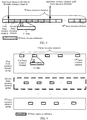
- FIG. 4 is still another schematic diagram of a location of M basic resource elements in N basic resource elements according to Embodiment 1 of the present invention. As shown in FIG. 4 , the second resource indication information is used to indicate that all basic resource elements included in the second basic resource element group are the M basic resource elements.
- the base station After determining that the target resource allocated to the UE is the resource blocks in the M basic resource elements, the base station determines which resource blocks in the M basic resource elements are the target resource allocated to the UE, and sends, to the UE by using the first resource indication information, location information of the determined resource blocks that are in the M basic resource elements and that are the target resource.
- the UE determines the target resource by using the first resource indication information.
- the following three methods are used as examples of indicating the allocated resource blocks in the M basic resource elements by using the first resource indication information. It should be noted that the three methods are merely examples, and do not limit the protection scope of the present invention.
- the first resource indication information sent by the base station to the UE indicates location information of allocated resource blocks in one basic resource element.
- the first resource indication information may indicate that the allocated resource blocks in the one basic resource element are several consecutive resource blocks or several nonconsecutive resource blocks.
- the allocated resource blocks in the one basic resource element are several consecutive resource blocks.
- the allocated resource blocks in the one basic resource element are several resource blocks whose distance is not less than a preset value.
- the allocated resource blocks in the one basic resource element are the l 1 th RB to the l 2 th resource block in P 1 resource blocks, where l 2 > l 1 , l 2 - l 1 > ⁇ , and ⁇ is a preset value.
- FIG. 5 is a schematic diagram of allocated resource blocks in one basic resource element that are indicated by first resource indication information according to an embodiment of the present invention.
- a quantity of resource blocks in the one basic resource element is P 1
- the first resource indication information indicates the second, the third, and the fourth resource blocks in the one basic resource element.
- the UE After receiving the first resource indication information, the UE determines allocated resource blocks in each of the M basic resource elements based on the first resource indication information, and combines the allocated resource blocks into the target resource. Specifically, there are two cases:
- M-1 basic resource elements in the M basic resource elements each includes P 1 resource blocks
- another basic resource element in the M basic resource elements includes two resource blocks, where P 1 > 2.
- the UE determines that each of the M-1 basic resource elements has a same quantity of allocated resource blocks, and the allocated resource blocks are resource blocks determined in each basic resource element based on the location information indicated in the first resource indication information.
- the UE further determines, based on the first resource indication information, that an allocated resource block in the another basic resource element in which a quantity of resource blocks included is not equal to P 1 is a resource block, in the basic resource element, that is corresponding to the location information indicated in the first resource indication information.
- the basic resource element in which the quantity of resource blocks included is not equal to P 1 includes only two resource blocks, and the location information that is of the resource blocks in the one basic resource element and that is indicated in the first resource indication information is the second, the third, and the fourth resource blocks. Therefore, the UE determines that the allocated resource block in the basic resource element is the second resource block in the basic resource element.
- the second resource block indicated in the first resource indication information is a resource block existing in the basic resource element, and the third and the fourth resource blocks indicated in the first resource indication information are resource blocks not existing in the basic resource element.
- the UE combines the determined allocated resource blocks in each of the M-1 basic resource elements and the determined allocated resource blocks in the one basic resource element into the target resource.
- the first resource indication information is used to indicate location information of L basic resource elements in the M basic resource elements.
- the UE determines a location of the L basic resource elements based on the first resource indication information, and the UE determines all resource blocks included in the L basic resource elements, and combines the resource blocks into the target resource. That is, a resource allocated by the base station to the UE is allocated by using a basic resource element as a granularity.
- the base station sends, to the UE by using the first resource indication information, information about basic resource elements in the M basic resource elements that are allocated to the UE. After receiving the first resource indication information, the UE determines all resource blocks included in each of the allocated basic resource elements, and combines the resource blocks into the target resource.
- the first resource indication information may indicate a location of L consecutive basic resource elements in the M basic resource elements that is used by the UE to determine the target resource.
- the first resource indication information may indicate a location of L nonconsecutive basic resource elements in the M basic resource elements that is used by the UE to determine the target resource. This is not limited in the present invention.
- the L basic resource elements may include a same quantity of resource blocks or different quantities of resource blocks.
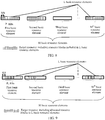
- FIG. 8 is still another schematic diagram of a target resource determined by UE based on first resource indication information in Embodiment 1 of a data sending method according to the present invention. As shown in FIG. 8 , a quantity of resource blocks included in each of M basic resource elements is P 1 , and the UE determines all resource blocks included in L basic resource elements, and combines the resource blocks into the target resource.
- the first resource indication information sent by the base station to the UE is used to indicate location information of L basic resource elements in the M basic resource elements and location information of allocated resource blocks in one of the L basic resource elements.
- the UE determines a location of the L basic resource elements based on the location information of the L basic resource elements that is indicated in the first resource indication information, determines allocated resource blocks in each of the L basic resource elements based on the location information that is of the allocated resource blocks in the one basic resource element and that is indicated in the first resource indication information, and combines the allocated resource blocks into the target resource.
- the first resource indication information may indicate that the allocated resource blocks in the one basic resource element are several consecutive resource blocks or several nonconsecutive resource blocks.
- FIG. 9 is yet another schematic diagram of a target resource determined by UE based on first resource indication information in Embodiment 1 of a data sending method according to the present invention.
- the first resource indication information indicates the second, the third, and the fourth resource blocks in one basic resource element.
- the target resource includes the second, the third, and the fourth resource blocks in each of the L basic resource elements in the M basic resource elements.
- the L basic resource elements may include a same quantity of resource blocks or different quantities of resource blocks.
- a resource used by the UE for scheduling data transmission is allocated in the M basic resource elements in the N basic resource elements, and discrete resource blocks in the M basic resource elements are allocated to the UE, so that when maximum transmit power of the UE is limited by a requirement that a power spectral density should not be greater than an upper limit value, allowed maximum transmit power of the UE can be increased, and service coverage of the base station can be improved.
- some of the foregoing specific implementations of the basic-resource-element-based resource allocation type do not support a resource allocation type of allocating all resources on the carrier to the UE.
- the quantity of resource blocks included in each basic resource element is greater than 1 and M ⁇ N
- the target resource allocated to the UE to send the uplink data is certainly less than all resource blocks on the carrier.
- the limitation that the power spectral density should not be greater than the upper limit value is not imposed on the maximum uplink transmit power of the UE, resource blocks on an uplink carrier cannot be massively or all allocated to the UE by using the basic-resource-element-based resource allocation type, restricting flexibility of resource allocation.
- the base station before allocating the target resource to the UE based on the foregoing resource allocation type method (the basic-resource-element-based resource allocation type), the base station further determines whether a resource allocation type of the UE on the carrier is a basic-resource-element-based resource allocation type or a resource-block-based resource allocation type.
- the resource-block-based resource allocation type includes a first resource-block-based resource allocation type and/or a second resource-block-based resource allocation type.
- the target resource is allocated to the UE by using the foregoing method; if the resource allocation type of the UE on the carrier is a first resource-block-based resource allocation type, the base station notifies the UE of a location of a start resource block and a location of an end resource block in the allocated target resource by using resource allocation indication information in the uplink scheduling grant, and the target resource includes the start resource block, the end resource block, and all resource blocks between the start resource block and the end resource block; and/or, if it is determined that the resource allocation type of the UE on the carrier is a second resource-block-based resource allocation type, the base station notifies the UE of a location of a first start resource block, a location of a first end resource block, a location of a second start resource block, and a location of a second end resource block in the target resource by using resource allocation indication information in the uplink scheduling grant, and
- the base station determines that the resource allocation type of the UE on the carrier is a basic-resource-element-based resource allocation type.
- the base station after determining whether the resource allocation type of the UE on the carrier is a basic-resource-element-based resource allocation type or a resource-block-based resource allocation type, the base station sends the determining result to the UE by using third resource indication information.
- the resource-block-based resource allocation type includes the first resource-block-based resource allocation type and/or the second resource-block-based resource allocation type.
- the third resource indication information may be sent to the UE by using indication information in higher layer signaling or by using information in the uplink scheduling grant.
- the UE before determining the target resource based on the foregoing resource allocation type method and the first resource indication information, the UE also needs to determine whether a resource allocation type on the carrier used by the UE to send the uplink data is a basic-resource-element-based resource allocation type or a resource-block-based resource allocation type.
- the resource-block-based resource allocation type includes a first resource-block-based resource allocation type and/or a second resource-block-based resource allocation type. Specifically, when the carrier is a carrier on an unlicensed spectrum, it may be determined that the resource allocation type on the carrier is a basic-resource-element-based resource allocation type.
- the resource allocation type on the carrier may be determined based on received third resource indication information that is sent by the base station by using information in higher layer signaling or information in the uplink scheduling grant.
- the resource allocation type determined by the UE is a basic-resource-element-based resource allocation type
- the UE determines the target resource based on the first resource indication information, and sends the uplink data on the target resource
- the resource allocation type determined by the UE is a first resource-block-based resource allocation type
- the UE determines a location of a start resource block and a location of an end resource block in the allocated resource on the carrier based on resource allocation indication information in the uplink scheduling grant, and sends the uplink data on the start resource block, the end resource block, and all resource blocks between the start resource block and the end resource block
- the resource allocation type of the UE on the carrier is a second resource-block-based resource allocation type
- the UE determines a location of a first start resource block of a start resource block, a location
- the foregoing basic-resource-element-based resource allocation type is a resource allocation type not supporting allocating all the resources on the carrier to the UE, and the first resource-block-based resource allocation type and the second resource-block-based resource allocation type support allocating all the resources on the carrier to the UE.
- the resource-block-based resource allocation type is used for the target resource allocated to the UE to send the uplink data, so as to support allocating all the resource blocks on the carrier to the UE.
- the basic-resource-element-based resource allocation type is used for the target resource allocated to the UE to send the uplink data, so as to improve a service range of an LAA SCell and improve the flexibility of the resource allocation.
- DFT discrete Fourier Transform
- a quantity of allocated resource blocks that is indicated by the first resource indication information is P
- the UE sends data on the resource of the P resource blocks and performs, on the to-be-sent data, DFT of a length being a value of a quantity of subcarriers occupied by the P resource blocks in frequency domain, implementation complexity of the UE is increased.
- the UE sends the uplink data on the target resource including the P resource blocks.
- the UE determines that the target resource is Q resource blocks in the P resource blocks, and the UE sends the uplink data on the target resource including the Q resource blocks.
- the Q resource blocks are resource blocks determined in the P resource blocks according to a preset rule.
- the Q resource blocks are Q resource blocks whose resource block index values are the largest in the P resource blocks, or the Q resource blocks are Q resource blocks whose resource block index values are the smallest in the P resource blocks.
- the UE sends the data on the resource of the Q resource blocks, and performs, on the to-be-sent data, DFT of a length being a value of a quantity of subcarriers occupied by the Q resource blocks in frequency domain, thereby not increasing the implementation complexity of the UE.
- the UE sends the data on the target resource if DFT of a length being a quantity of subcarriers occupied by 28 resource blocks needs to be performed on the data, implementation complexity is relatively high. In this case, it may be re-determined that resource blocks in three basic resource elements included in the target resource are respectively allocated resource blocks in the three basic resource elements.
- FIG. 10 is a schematic flowchart of Embodiment 2 of a data sending method according to the present invention. As shown in FIG. 10 , the method includes the following steps.
- Abase station sends an uplink scheduling grant to UE, where the uplink scheduling grant includes first resource indication information.
- S202 The UE receives the uplink scheduling grant, and determines a target resource based on the first resource indication information.
- a resource indicated by the first resource indication information includes P resource blocks, the P resource blocks are resource blocks on a carrier, and the carrier is a carrier that is indicated by the uplink scheduling grant and that is used by the UE to send uplink data.
- This manner of determining the target resource is preset by using the base station and the UE.
- S203 The UE sends uplink data on the target resource.
- the base station receives the uplink data sent by the UE on the target resource.
- the Q resource blocks are Q resource blocks whose resource block index values are the largest in the P resource blocks, or the Q resource blocks are Q resource blocks whose resource block index values are the smallest in the P resource blocks.
- the UE sends the data on a resource of the Q resource blocks, and performs, on the to-be-sent data, DFT of a length being a value of a quantity of subcarriers occupied by the Q resource blocks in frequency domain, thereby not increasing implementation complexity of the UE. Otherwise, the UE sends the data on the resource of the P resource blocks. This avoids quite high implementation complexity due to that DFT needs to be performed on the data when the UE sends the data on the target resource.
- FIG. 11 is a schematic structural diagram of Embodiment 1 of user equipment according to the present invention.
- the user equipment includes: a receiving module 11, a processing module 12, and a sending module 13.
- the receiving module 11 is configured to receive an uplink scheduling grant, where the uplink scheduling grant includes first resource indication information.
- the processing module 12 is configured to determine a target resource based on the first resource indication information, where the target resource is allocated resource blocks in M basic resource elements, the M basic resource elements are basic resource elements in N basic resource elements on a carrier, the carrier is a carrier that is indicated by the uplink scheduling grant and that is used by the UE to send uplink data, each basic resource element includes at least one resource block, M and N are natural numbers, and M is not greater than N.
- the sending module 13 is configured to send the uplink data on the target resource.
- the M basic resource elements are M preset basic resource elements in the N basic resource elements.
- the receiving module 11 is further configured to receive second resource indication information, where the second resource indication information is used to indicate location information of the M basic resource elements in the N basic resource elements.
- the processing module 12 is further configured to determine a location of the M basic resource elements based on the second resource indication information.
- the N basic resource elements are divided into P basic resource element groups, and each of the P basic resource element groups includes at least one basic resource element.
- the second resource indication information is used to indicate location information of the M basic resource elements in one of the P basic resource element groups.
- the first resource indication information is used to indicate location information of allocated resource blocks in one basic resource element.
- the processing module 12 is specifically configured to: determine allocated resource blocks in each of the M basic resource elements based on the location information that is of the allocated resource blocks in the one basic resource element and that is indicated in the first resource indication information, and combine the allocated resource blocks into the target resource.
- the processing module 12 determines the allocated resource blocks in each of the M basic resource elements based on the location information that is of the allocated resource blocks in the one basic resource element and that is indicated in the first resource indication information, and combines the allocated resource blocks into the target resource, where a location of the allocated resource blocks in each of the M basic resource elements is the same as a location indicated by the first resource indication information.
- the processing module 12 determines allocated resource blocks in each of the R basic resource elements and an allocated resource block in each of the M-R basic resource elements based on the location information that is of the allocated resource blocks in the one basic resource element and that is indicated in the first resource indication information, and combines the allocated resource blocks into the target resource, where a location of the allocated resource blocks in each of the R basic resource elements is the same as a location indicated by the first resource indication information, and the allocated resource block in each of the M-R basic resource elements is a resource block, in the basic resource element, that is corresponding to the location information indicated in the first resource indication information.
- the first resource indication information is used to indicate location information of L basic resource elements in the M basic resource elements.
- the processing module 12 is specifically configured to: determine a location of the L basic resource elements based on the first resource indication information, determine all resource blocks included in the L basic resource elements, and combine the resource blocks into the target resource.
- the first resource indication information is used to indicate location information of L basic resource elements in the M basic resource elements and location information of allocated resource blocks in one of the L basic resource elements.
- the processing module 12 is specifically configured to: determine a location of the L basic resource elements based on the location information of the L basic resource elements that is indicated in the first resource indication information, determine allocated resource blocks in each of the L basic resource elements based on the location information that is of the allocated resource blocks in the one basic resource element and that is indicated in the first resource indication information, and combine the allocated resource blocks into the target resource.
- the processing module 12 determines the allocated resource blocks in each of the M basic resource elements based on the location information that is of the allocated resource blocks in the one basic resource element and that is indicated in the first resource indication information, and combines the allocated resource blocks into the target resource, where a location of the allocated resource blocks in each of the M basic resource elements is the same as a location indicated by the first resource indication information.
- the processing module 12 determines allocated resource blocks in each of the R basic resource elements and an allocated resource block in each of the M-R basic resource elements based on the location information that is of the allocated resource blocks in the one basic resource element and that is indicated in the first resource indication information, and combines the allocated resource blocks into the target resource, where a location of the allocated resource blocks in each of the R basic resource elements is the same as a location indicated by the first resource indication information, and the allocated resource block in each of the M-R basic resource elements is a resource block, in the basic resource element, that is corresponding to the location information indicated in the first resource indication information.
- the user equipment is configured to perform the foregoing method embodiment shown in FIG. 1 . Implementation principles thereof are similar, and details are not described herein again.
- a resource used by the UE for scheduling data transmission is allocated in the M basic resource elements in the N basic resource elements, and discrete resource blocks in the M basic resource elements are allocated to the UE, so that when maximum transmit power of the UE is limited by a requirement that a power spectral density should not be greater than an upper limit value, allowed maximum transmit power of the UE can be increased, and a coverage characteristic of the base station can be improved.
- the transmit power of the UE needs to be not greater than 10 dBm in any 1 MHz, when a resource of three resource blocks is allocated to the UE to send the uplink data, and if a resource-block-based resource allocation type in the prior art is used, the transmit power of the UE cannot exceed 10 dBm.
- the foregoing basic-resource-element-based resource allocation manner provided in this embodiment of the present invention is used to evenly distribute the resource of the three RBs on three basic resource elements, and a distance between the three basic resource elements is greater than 1 MHz, the transmit power of the UE may be maximally 16 dBm, so that service coverage of the base station is significantly improved.
- FIG. 12 is a schematic structural diagram of Embodiment 2 of user equipment according to the present invention. As shown in FIG. 12 , based on the user equipment shown in FIG. 11 , the user equipment may further include: a determining module 14. The determining module 14 is configured to determine a resource allocation type on the carrier used by the UE to send the uplink data.
- the processing module 12 determines the target resource based on the first resource indication information, and the sending module sends the uplink data on the target resource; if the determined resource allocation type is a resource-block-based resource allocation type, the processing module 12 determines a location of a start resource block and a location of an end resource block in the allocated resource on the carrier based on resource allocation indication information in the uplink scheduling grant, and the sending module sends the uplink data on the start resource block, the end resource block, and all resource blocks between the start resource block and the end resource block; and/or, if the determined resource allocation type is a second resource-block-based resource allocation type, the processing module 12 determines a location of a first start resource block of a start resource block, a location of a first end resource block, a location of a second start resource block, and a location of a second end resource block in the allocated resource on the carrier based on resource allocation indication information in the uplink scheduling grant
- the determining module 14 is specifically configured to determine the resource allocation type on the carrier depending on whether the carrier is a carrier on an unlicensed spectrum; or the receiving module 11 is further configured to receive third resource indication information; and the determining module 14 is specifically configured to determine the resource allocation type on the carrier based on the third resource indication information, where the resource-block-based resource allocation type includes the first resource-block-based resource allocation type and/or the second resource-block-based resource allocation type, and the third resource indication information is indication information received by the UE by using higher layer signaling or is information carried in the uplink scheduling grant.
- the user equipment is configured to perform the foregoing method embodiment shown in FIG. 1 . Implementation principles thereof are similar, and details are not described herein again.
- the resource-block-based resource allocation type is used for the target resource allocated to the UE to send the uplink data, so as to support allocating all resource blocks on the carrier to the UE.
- the basic-resource-element-based resource allocation type is used for the target resource allocated to the UE to send the uplink data, so as to improve a service range of the base station and improve the flexibility of the resource allocation.
- FIG. 13 is a schematic structural diagram of Embodiment 1 of a base station according to the present invention.
- the base station includes: a sending module 21 and a receiving module 22.
- the sending module 21 is configured to send an uplink scheduling grant to UE.
- the uplink scheduling grant includes first resource indication information, so that the UE determines a target resource based on the first resource indication information.
- the target resource is allocated resource blocks in M basic resource elements, the M basic resource elements are basic resource elements in N basic resource elements on a carrier, and the carrier is a carrier that is indicated by the uplink scheduling grant and that is used by the UE to send uplink data.
- Each basic resource element includes at least one resource block, M and N are natural numbers, and M is not greater than N.
- the receiving module 22 is configured to receive the uplink data sent by the UE on the target resource.
- the M basic resource elements are M preset basic resource elements in the N basic resource elements.
- the sending module 21 is configured to send second resource indication information to the UE.
- the second resource indication information is used to indicate location information of the M basic resource elements in the N basic resource elements to the UE, so that the UE determines a location of the M basic resource elements based on the second resource indication information.
- the N basic resource elements are divided into P basic resource element groups, and each of the P basic resource element groups includes at least one basic resource element.
- the second resource indication information is used to indicate location information of the M basic resource elements in one of the P basic resource element groups.
- the first resource indication information is used to indicate location information of allocated resource blocks in one basic resource element, so that the UE determines allocated resource blocks in each of the M basic resource elements based on the location information that is of the allocated resource blocks in the one basic resource element and that is indicated in the first resource indication information, and combines the allocated resource blocks into the target resource.
- the first resource indication information is used to indicate location information of L basic resource elements in the M basic resource elements, so that the UE determines, based on a location of the L basic resource elements, all resource blocks included in the L basic resource elements, and combines the resource blocks into the target resource.
- the first resource indication information is used to indicate location information of L basic resource elements in the M basic resource elements and location information of allocated resource blocks in one of the L basic resource elements, so that the UE determines a location of the L basic resource elements based on the first resource indication information, determines allocated resource blocks in each of the L basic resource elements based on the location information that is of the allocated resource blocks in the one basic resource element and that is indicated in the first resource indication information, and combines the allocated resource blocks into the target resource.
- the sending module 21 is further configured to send third resource indication information to the UE.
- the third resource indication information is used to indicate that a resource allocation type on the carrier is a basic-resource-element-based resource allocation type or a resource-block-based resource allocation type, and the third resource indication information is indication information sent by the base station to the UE by using higher layer signaling or is indication information carried in the uplink scheduling grant.
- the base station is configured to perform the foregoing method embodiment shown in FIG. 1 . Implementation principles thereof are similar, and details are not described herein again.
- the base station allocates a resource used by the UE for scheduling data transmission in the M basic resource elements in the N basic resource elements, and allocates discrete resource blocks in the M basic resource elements to the UE, so that when maximum transmit power of the UE is limited by a requirement that a power spectral density should not be greater than an upper limit value, allowed maximum transmit power of the UE can be increased, and a coverage characteristic of the base station can be improved.
- FIG. 14 is a schematic structural diagram of Embodiment 3 of user equipment according to the present invention.
- the user equipment includes: a receiver 31, a processor 32, and a transmitter 33.
- the receiver 31 is configured to receive an uplink scheduling grant, where the uplink scheduling grant includes first resource indication information.
- the processor 32 is configured to determine a target resource based on the first resource indication information, where the target resource is allocated resource blocks in M basic resource elements, the M basic resource elements are basic resource elements in N basic resource elements on a carrier, the carrier is a carrier that is indicated by the uplink scheduling grant and that is used by the UE to send uplink data, each basic resource element includes at least one resource block, M and N are natural numbers, and M is not greater than N.
- the transmitter 33 is configured to send the uplink data on the target resource.
- the M basic resource elements are M preset basic resource elements in the N basic resource elements.
- the receiver 31 is further configured to receive second resource indication information, where the second resource indication information is used to indicate location information of the M basic resource elements in the N basic resource elements.
- the processor 32 is further configured to determine a location of the M basic resource elements based on the second resource indication information.
- the N basic resource elements are divided into P basic resource element groups, and each of the P basic resource element groups includes at least one basic resource element.
- the second resource indication information is used to indicate location information of the M basic resource elements in one of the P basic resource element groups.
- the first resource indication information is used to indicate location information of allocated resource blocks in one basic resource element.
- the processor 32 is specifically configured to: determine allocated resource blocks in each of the M basic resource elements based on the location information that is of the allocated resource blocks in the one basic resource element and that is indicated in the first resource indication information, and combine the allocated resource blocks into the target resource.
- the processor 32 determines the allocated resource blocks in each of the M basic resource elements based on the location information that is of the allocated resource blocks in the one basic resource element and that is indicated in the first resource indication information, and combines the allocated resource blocks into the target resource, where a location of the allocated resource blocks in each of the M basic resource elements is the same as a location indicated by the first resource indication information.
- R basic resource elements in the M basic resource elements include a same quantity of resource blocks, where the quantity is P 1 , and a quantity of resource blocks included in each of remaining M-R basic resource elements is not equal to P 1
- the processor 32 determines allocated resource blocks in each of the R basic resource elements and an allocated resource block in each of the M-R basic resource elements based on the location information that is of the allocated resource blocks in the one basic resource element and that is indicated in the first resource indication information, and combines the allocated resource blocks into the target resource, where a location of the allocated resource blocks in each of the R basic resource elements is the same as a location indicated by the first resource indication information, and the allocated resource block in each of the M-R basic resource elements is a resource block, in the basic resource element, that is corresponding to the location information indicated in the first resource indication information.
- the first resource indication information is used to indicate location information of L basic resource elements in the M basic resource elements.
- the processor 32 is specifically configured to: determine a location of the L basic resource elements based on the first resource indication information, determine all resource blocks included in the L basic resource elements, and combine the resource blocks into the target resource.
- the first resource indication information is used to indicate location information of L basic resource elements in the M basic resource elements and location information of allocated resource blocks in one of the L basic resource elements.
- the processor 32 is specifically configured to: determine a location of the L basic resource elements based on the location information of the L basic resource elements that is indicated in the first resource indication information, determine allocated resource blocks in each of the L basic resource elements based on the location information that is of the allocated resource blocks in the one basic resource element and that is indicated in the first resource indication information, and combine the allocated resource blocks into the target resource.
- the processor 32 determines the allocated resource blocks in each of the M basic resource elements based on the location information that is of the allocated resource blocks in the one basic resource element and that is indicated in the first resource indication information, and combines the allocated resource blocks into the target resource, where a location of the allocated resource blocks in each of the M basic resource elements is the same as a location indicated by the first resource indication information.
- R basic resource elements in the M basic resource elements include a same quantity of resource blocks, where the quantity is P 1 , and a quantity of resource blocks included in each of remaining M-R basic resource elements is not equal to P 1
- the processor 32 determines allocated resource blocks in each of the R basic resource elements and an allocated resource block in each of the M-R basic resource elements based on the location information that is of the allocated resource blocks in the one basic resource element and that is indicated in the first resource indication information, and combines the allocated resource blocks into the target resource, where a location of the allocated resource blocks in each of the R basic resource elements is the same as a location indicated by the first resource indication information, and the allocated resource block in each of the M-R basic resource elements is a resource block, in the basic resource element, that is corresponding to the location information indicated in the first resource indication information.
- the user equipment is configured to perform the foregoing method embodiment shown in FIG. 1 . Implementation principles thereof are similar, and details are not described herein again.
- a resource used by the UE for scheduling data transmission is allocated in the M basic resource elements in the N basic resource elements, and discrete resource blocks in the M basic resource elements are allocated to the UE, so that when maximum transmit power of the UE is limited by a requirement that a power spectral density should not be greater than an upper limit value, allowed maximum transmit power of the UE can be increased, and a coverage characteristic of the base station can be improved.
- the transmit power of the UE needs to be not greater than 10 dBm in any 1 MHz, when a resource of three resource blocks is allocated to the UE to send the uplink data, and if a resource-block-based resource allocation type in the prior art is used, the transmit power of the UE cannot exceed 10 dBm.
- the foregoing basic-resource-element-based resource allocation manner provided in this embodiment of the present invention is used to evenly distribute the resource of the three RBs on three basic resource elements, and a distance between the three basic resource elements is greater than 1 MHz, the transmit power of the UE may be maximally 16 dBm, so that service coverage of the base station is significantly improved.
- the processor 32 is configured to determine a resource allocation type on the carrier used by the UE to send the uplink data. If the determined resource allocation type is a basic-resource-element-based resource allocation type, the processor 32 determines the target resource based on the first resource indication information, and the sending module sends the uplink data on the target resource.
- the processor 32 determines a location of a start resource block and a location of an end resource block in the allocated resource on the carrier based on resource allocation indication information in the uplink scheduling grant, and the sending module sends the uplink data on the start resource block, the end resource block, and all resource blocks between the start resource block and the end resource block; and/or, if the determined resource allocation type is a second resource-block-based resource allocation type, the processor 32 determines a location of a first start resource block of a start resource block, a location of a first end resource block, a location of a second start resource block, and a location of a second end resource block in the allocated resource on the carrier based on resource allocation indication information in the uplink scheduling grant, and sends the uplink data on the target resource including the first start resource block, the first end resource block, all resource blocks between the first start resource block and the first end resource block, the second start resource block, the second end resource block, and all resource blocks between
- the processor 32 is specifically configured to determine the resource allocation type on the carrier depending on whether the carrier is a carrier on an unlicensed spectrum; or the receiver 31 is further configured to receive third resource indication information, and the processor 32 is specifically configured to determine the resource allocation type on the carrier based on the third resource indication information, where the third resource indication information is indication information received by the UE by using higher layer signaling or is information carried in the uplink scheduling grant.
- the user equipment is configured to perform the foregoing method embodiment shown in FIG. 1 . Implementation principles thereof are similar, and details are not described herein again.
- the resource-block-based resource allocation type is used for the target resource allocated to the UE to send the uplink data, so as to support allocating all resource blocks on the carrier to the UE.
- the basic-resource-element-based resource allocation type is used for the target resource allocated to the UE to send the uplink data, so as to improve a service range of the base station and improve the flexibility of the resource allocation.
- FIG. 15 is a schematic structural diagram of Embodiment 2 of a base station according to the present invention.
- the base station includes: a transmitter 41 and a receiver 42.
- the transmitter 41 is configured to send an uplink scheduling grant to UE.
- the uplink scheduling grant includes first resource indication information, so that the UE determines a target resource based on the first resource indication information.
- the target resource is allocated resource blocks in M basic resource elements, the M basic resource elements are basic resource elements in N basic resource elements on a carrier, and the carrier is a carrier that is indicated by the uplink scheduling grant and that is used by the UE to send uplink data.
- Each basic resource element includes at least one resource block, M and N are natural numbers, and M is not greater than N.
- the receiver 42 is configured to receive the uplink data sent by the UE on the target resource.
- the M basic resource elements are M preset basic resource elements in the N basic resource elements.
- the transmitter 41 is configured to send second resource indication information to the UE.
- the second resource indication information is used to indicate location information of the M basic resource elements in the N basic resource elements to the UE, so that the UE determines a location of the M basic resource elements based on the second resource indication information.
- the N basic resource elements are divided into P basic resource element groups, and each of the P basic resource element groups includes at least one basic resource element.
- the second resource indication information is used to indicate location information of the M basic resource elements in one of the P basic resource element groups.
- the first resource indication information is used to indicate location information of allocated resource blocks in one basic resource element, so that the UE determines allocated resource blocks in each of the M basic resource elements based on the location information that is of the allocated resource blocks in the one basic resource element and that is indicated in the first resource indication information, and combines the allocated resource blocks into the target resource.
- the first resource indication information is used to indicate location information of L basic resource elements in the M basic resource elements, so that the UE determines, based on a location of the L basic resource elements, all resource blocks included in the L basic resource elements, and combines the resource blocks into the target resource.
- the first resource indication information is used to indicate location information of L basic resource elements in the M basic resource elements and location information of allocated resource blocks in one of the L basic resource elements, so that the UE determines a location of the L basic resource elements based on the first resource indication information, determines allocated resource blocks in each of the L basic resource elements based on the location information that is of the allocated resource blocks in the one basic resource element and that is indicated in the first resource indication information, and combines the allocated resource blocks into the target resource.
- the transmitter 41 is configured to send third resource indication information to the UE.
- the third resource indication information is used to indicate that a resource allocation type on the carrier is a basic-resource-element-based resource allocation type or a resource-block-based resource allocation type.
- the resource-block-based resource allocation type includes a first resource-block-based resource allocation type and/or a second resource-block-based resource allocation type.
- the third resource indication information is indication information sent by the base station to the UE by using higher layer signaling or is indication information carried in the uplink scheduling grant.
- the base station is configured to perform the foregoing method embodiment shown in FIG. 1 . Implementation principles thereof are similar, and details are not described herein again.
- the base station allocates a resource used by the UE for scheduling data transmission in the M basic resource elements in the N basic resource elements, and allocates discrete resource blocks in the M basic resource elements to the UE, so that when maximum transmit power of the UE is limited by a requirement that a power spectral density should not be greater than an upper limit value, allowed maximum transmit power of the UE can be increased, and a coverage characteristic of the base station can be improved.
- FIG. 16 is a schematic structural diagram of Embodiment 4 of user equipment according to the present invention.
- the user equipment includes: a receiving module 51, a processing module 52, and a sending module 53.
- the receiving module 51 is configured to receive an uplink scheduling grant, where the uplink scheduling grant includes first resource indication information.
- the processing module 52 is configured to determine a target resource based on the first resource indication information, where a resource indicated by the first resource indication information includes P resource blocks, the P resource blocks are resource blocks on a carrier, and the carrier is a carrier that is indicated by the uplink scheduling grant and that is used by the UE to send uplink data.
- the sending module 53 is configured to send the uplink data on the target resource.
- the Q resource blocks are Q resource blocks whose resource block index values are the largest in the P resource blocks, or the Q resource blocks are Q resource blocks whose resource block index values are the smallest in the P resource blocks.
- the user equipment is configured to perform the foregoing method embodiment shown in FIG. 10 . Implementation principles thereof are similar, and details are not described herein again.
- the sending module sends the data on a resource of the Q resource blocks, and performs, on the to-be-sent data, DFT of a length being a value of a quantity of subcarriers occupied by the Q resource blocks in frequency domain, thereby not increasing implementation complexity of the UE. Otherwise, the UE sends the data on the resource of the P resource blocks. This avoids quite high implementation complexity due to that DFT needs to be performed on the data when the UE sends the data on the target resource.
- FIG. 17 is a schematic structural diagram of Embodiment 3 of a base station according to the present invention.
- the base station includes: a sending module 61 and a receiving module 62.
- the sending module 61 is configured to send an uplink scheduling grant.
- the uplink scheduling grant includes first resource indication information, so that UE determines a target resource based on the first resource indication information.
- a resource indicated by the first resource indication information includes P resource blocks, the P resource blocks are resource blocks on a carrier, and the carrier is a carrier that is indicated by the uplink scheduling grant and that is used by the UE to send uplink data.
- the receiving module 62 is configured to receive the uplink data sent by the UE on the target resource.
- the Q resource blocks are Q resource blocks whose resource block index values are the largest in the P resource blocks, or the Q resource blocks are Q resource blocks whose resource block index values are the smallest in the P resource blocks.
- the base station is configured to perform the foregoing method embodiment shown in FIG. 10 .
- Implementation principles and technical effects thereof are similar, and details are not described herein again.
- FIG. 18 is a schematic structural diagram of Embodiment 5 of user equipment according to the present invention.
- the user equipment includes: a receiver 71, a processor 72, and a transmitter 73.
- the receiver 71 is configured to receive an uplink scheduling grant, where the uplink scheduling grant includes first resource indication information.
- the processor 72 is configured to determine a target resource based on the first resource indication information, where a resource indicated by the first resource indication information includes P resource blocks, the P resource blocks are resource blocks on a carrier, and the carrier is a carrier that is indicated by the uplink scheduling grant and that is used by the UE to send uplink data.
- the transmitter 73 is configured to send the uplink data on the target resource.
- the Q resource blocks are Q resource blocks whose resource block index values are the largest in the P resource blocks, or the Q resource blocks are Q resource blocks whose resource block index values are the smallest in the P resource blocks.
- the user equipment is configured to perform the foregoing method embodiment shown in FIG. 10 . Implementation principles thereof are similar, and details are not described herein again.
- the transmitter sends the data on a resource of the Q resource blocks, and performs, on the to-be-sent data, DFT of a length being a value of a quantity of subcarriers occupied by the Q resource blocks in frequency domain, thereby not increasing implementation complexity of the UE. Otherwise, the UE sends the data on the resource of the P resource blocks. This avoids quite high implementation complexity due to that DFT needs to be performed on the data when the UE sends the data on the target resource.
- FIG. 19 is a schematic structural diagram of Embodiment 3 of a base station according to the present invention.
- the base station includes: a transmitter 81 and a receiver 82.
- the transmitter 81 is configured to send an uplink scheduling grant.
- the uplink scheduling grant includes first resource indication information, so that UE determines a target resource based on the first resource indication information.
- a resource indicated by the first resource indication information includes P resource blocks, the P resource blocks are resource blocks on a carrier, and the carrier is a carrier that is indicated by the uplink scheduling grant and that is used by the UE to send uplink data.
- the receiver 82 is configured to receive the uplink data sent by the UE on the target resource.
- the Q resource blocks are Q resource blocks whose resource block index values are the largest in the P resource blocks, or the Q resource blocks are Q resource blocks whose resource block index values are the smallest in the P resource blocks.
- the base station is configured to perform the foregoing method embodiment shown in FIG. 10 .
- Implementation principles and technical effects thereof are similar, and details are not described herein again.
- each aspect of this application or a possible implementation of each aspect may be specifically implemented as a system, a method, or a computer program product. Therefore, aspects of this application or possible implementations of the aspects may use forms of hardware only embodiments, software only embodiments (including firmware, resident software, and the like), or embodiments with a combination of software and hardware, which are uniformly referred to as "circuit", "module”, or “system” herein.
- the aspects of this application or the possible implementations of the aspects may take a form of a computer program product, where the computer program product refers to computer-readable program code stored in a computer-readable medium.
- the computer-readable medium may be a computer-readable signal medium or a computer-readable storage medium.
- the computer-readable storage medium includes but is not limited to an electronic, magnetic, optical, electromagnetic, infrared, or semi-conductive system, device, or apparatus, or any appropriate combination thereof, such as a random access memory (RAM), a read-only memory (ROM), an erasable programmable read only memory (EPROM or flash memory), an optical fiber, and a compact disc read only memory (CD-ROM).
- a processor in a computer reads computer-readable program code stored in a computer-readable medium, so that the processor can perform a function and an action specified in each step or a combination of steps in a flowchart, and an apparatus is generated to implement a function and an action specified in each block or a combination of blocks in a block diagram.
- the computer-readable program code may be fully executed on a local computer of a user, or partially executed on a local computer of a user, or used as a standalone software package, or partially executed on a local computer of a user and partially executed on a remote computer, or fully executed on a remote computer or a server. It should also be noted that, in some alternative implementation solutions, steps in the flowcharts or functions specified in each block in the block diagrams may not occur in the illustrated order. For example, two consecutive steps or two blocks in the illustration, which are dependent on an involved function, may actually be executed substantially at the same time, or these blocks may sometimes be executed in reverse order.
Landscapes
- Engineering & Computer Science (AREA)
- Signal Processing (AREA)
- Computer Networks & Wireless Communication (AREA)
- Mobile Radio Communication Systems (AREA)
Applications Claiming Priority (1)
| Application Number | Priority Date | Filing Date | Title |
|---|---|---|---|
| PCT/CN2016/073571 WO2017132967A1 (fr) | 2016-02-04 | 2016-02-04 | Procédé d'envoi de données, procédé de réception de données, équipement utilisateur et station de base |
Publications (3)
| Publication Number | Publication Date |
|---|---|
| EP3404973A1 true EP3404973A1 (fr) | 2018-11-21 |
| EP3404973A4 EP3404973A4 (fr) | 2018-12-12 |
| EP3404973B1 EP3404973B1 (fr) | 2021-08-04 |
Family
ID=59499271
Family Applications (1)
| Application Number | Title | Priority Date | Filing Date |
|---|---|---|---|
| EP16888792.5A Active EP3404973B1 (fr) | 2016-02-04 | 2016-02-04 | Procédé d'envoi de données, procédé de réception de données, équipement utilisateur et station de base |
Country Status (6)
| Country | Link |
|---|---|
| US (1) | US11310812B2 (fr) |
| EP (1) | EP3404973B1 (fr) |
| JP (1) | JP6743160B2 (fr) |
| KR (1) | KR102134574B1 (fr) |
| CN (1) | CN108605316B (fr) |
| WO (1) | WO2017132967A1 (fr) |
Cited By (1)
| Publication number | Priority date | Publication date | Assignee | Title |
|---|---|---|---|---|
| EP3836684A4 (fr) * | 2018-08-10 | 2021-10-06 | Huawei Technologies Co., Ltd. | Procédé d'attribution de ressource ainsi que dispositif et appareil associés |
Families Citing this family (12)
| Publication number | Priority date | Publication date | Assignee | Title |
|---|---|---|---|---|
| CN108476117B (zh) | 2016-01-11 | 2021-11-05 | 索尼公司 | 一种发送或接收数据的方法、通信装置、基础设施设备 |
| US11146967B2 (en) * | 2016-08-10 | 2021-10-12 | Sharp Kabushiki Kaisha | Communication system, base station device, terminal device, communication method, and program |
| KR102606781B1 (ko) * | 2016-09-02 | 2023-11-27 | 삼성전자 주식회사 | 무선 통신 시스템에서 효율적인 데이터 송수신 방법 및 장치 |
| US11147074B2 (en) * | 2016-11-25 | 2021-10-12 | Guangdong Oppo Mobile | Data transmission method and apparatus |
| CN108282293B (zh) * | 2017-01-06 | 2021-12-03 | 大唐移动通信设备有限公司 | 一种数据传输方法、终端及基站 |
| CN117202362A (zh) * | 2017-09-28 | 2023-12-08 | 诺基亚技术有限公司 | 指示连续的资源分配 |
| CN113228732B (zh) * | 2018-12-29 | 2023-02-14 | 华为技术有限公司 | 一种数据调度方法和装置 |
| EP4315697A1 (fr) * | 2021-03-23 | 2024-02-07 | Nokia Technologies Oy | Attribution d'éléments de ressources dans un système cellulaire |
| CN115175319A (zh) * | 2021-04-01 | 2022-10-11 | 中兴通讯股份有限公司 | 频域资源确定方法、装置、节点和存储介质 |
| CN117528785A (zh) * | 2022-07-25 | 2024-02-06 | 维沃移动通信有限公司 | 确定方法及终端 |
| CN117998619A (zh) * | 2022-11-06 | 2024-05-07 | 华为技术有限公司 | 一种通信的方法和通信装置 |
| US12495371B2 (en) * | 2022-12-22 | 2025-12-09 | Sharp Kabushiki Kaisha | User equipments, base stations and methods for multicarrier operation |
Family Cites Families (45)
| Publication number | Priority date | Publication date | Assignee | Title |
|---|---|---|---|---|
| KR101319877B1 (ko) * | 2006-11-01 | 2013-10-18 | 엘지전자 주식회사 | 자원 할당 방법 및 자원 할당 정보 전송 방법 |
| CN101272615B (zh) * | 2007-03-22 | 2012-09-05 | 中兴通讯股份有限公司 | 资源分配信令中的资源位置域传输方法及装置 |
| CN101472300A (zh) * | 2007-12-29 | 2009-07-01 | 华为技术有限公司 | 发送和接收调度用户数据的信息的方法、装置和系统 |
| KR101563000B1 (ko) * | 2008-03-17 | 2015-10-26 | 엘지전자 주식회사 | 무선 통신 시스템에서 상향링크 데이터 전송 방법 |
| EP2266358B1 (fr) * | 2008-03-26 | 2012-05-30 | Nokia Corporation | Signalisation d'informations d'état de canal |
| US8379581B2 (en) * | 2008-12-08 | 2013-02-19 | Sharp Kabushiki Kaisha | Systems and methods for uplink power control |
| KR101646791B1 (ko) * | 2009-06-02 | 2016-08-09 | 엘지전자 주식회사 | 무선 통신 시스템에서 자원 매핑 방법 및 장치 |
| TWI426803B (zh) * | 2009-06-10 | 2014-02-11 | Innovative Sonic Corp | 上鏈路傳輸資源分配方法及通訊裝置 |
| EP2478646B1 (fr) * | 2009-09-16 | 2017-08-16 | LG Electronics Inc. | Appareil et procédé de transmission d'informations de commande de liaison montante |
| CN102036387B (zh) * | 2009-09-30 | 2015-04-01 | 中兴通讯股份有限公司 | 无线信道资源分配的指示方法及基站、解码方法及终端 |
| CN101932114B (zh) * | 2009-12-14 | 2014-10-22 | 中兴通讯股份有限公司 | 一种上行调度授权控制信令的发送方法和基站 |
| JP2011142532A (ja) * | 2010-01-08 | 2011-07-21 | Sharp Corp | 無線通信システム、基地局装置、移動局装置、無線通信方法および集積回路 |
| WO2011132946A2 (fr) * | 2010-04-22 | 2011-10-27 | 엘지전자 주식회사 | Procédé permettant d'émettre et de recevoir des signaux entre une station de base et un nœud de relais dans un système de communication sans fil, et appareil associé |
| US20120287885A1 (en) * | 2010-04-28 | 2012-11-15 | Qian Dai | Method and Device for Distributing and Scheduling Wireless Resources in Orthogonal Frequency Division Multiplexing System |
| KR20110122046A (ko) * | 2010-05-03 | 2011-11-09 | 주식회사 팬택 | 무선통신 시스템에서 하향링크 제어정보의 전송장치 및 방법 |
| KR101615985B1 (ko) * | 2010-05-24 | 2016-05-12 | 엘지전자 주식회사 | 불연속적 상향링크 자원 할당을 위한 방법 및 장치 |
| EP2398180A1 (fr) * | 2010-06-21 | 2011-12-21 | Panasonic Corporation | Configuration des espaces de recherche de liaison montante et descendante dans un système de communication mobile OFDM |
| KR20120070443A (ko) * | 2010-12-21 | 2012-06-29 | 한국전자통신연구원 | 사물통신 디바이스의 데이터 전송 방법 및 이를 이용하는 이동통신 시스템 |
| US9681401B2 (en) * | 2011-03-17 | 2017-06-13 | Google Technology Holdings LLC | Enhanced power headroom reporting in wireless communication networks |
| EP2704497B1 (fr) * | 2011-04-27 | 2018-12-19 | Panasonic Intellectual Property Corporation of America | Dispositif d'émission, dispositif de réception, procédé d'émission et procédé de réception |
| KR20130028996A (ko) * | 2011-05-18 | 2013-03-21 | 주식회사 팬택 | 무선통신 시스템에서 자원할당전송방법 및 그 송신장치, 이에 대응하는 수신장치 |
| US20140169316A1 (en) * | 2011-07-27 | 2014-06-19 | Lg Electronics Inc. | Method and apparatus for signal transceiving in wireless communication system |
| TW201320692A (zh) * | 2011-08-10 | 2013-05-16 | Ind Tech Res Inst | 資料傳送方法及使用此方法的基地台及用戶端設備 |
| WO2013046468A1 (fr) * | 2011-09-30 | 2013-04-04 | 富士通株式会社 | Système de communication sans fil, station mobile, station de base et procédé de commande de système de communication sans fil |
| CN103139924B (zh) * | 2011-12-05 | 2016-08-31 | 华为技术有限公司 | 一种调度资源的方法及装置 |
| WO2013086672A1 (fr) * | 2011-12-12 | 2013-06-20 | Renesas Mobile Corporation | Coordination de transmission/réception pour communication aérienne entre des stations de base non coordonnées d'un réseau radio cellulaire à multiplexage par division de fréquence orthogonale |
| CN102546134B (zh) * | 2011-12-29 | 2015-07-22 | 电信科学技术研究院 | 基于增强phich传输反馈信息的方法及装置 |
| CN103220077A (zh) | 2012-01-21 | 2013-07-24 | 华为技术有限公司 | 数据发送和接收方法、基站和用户设备 |
| WO2013162321A2 (fr) * | 2012-04-26 | 2013-10-31 | 엘지전자 주식회사 | Procédé de transmission et de réception de signal, et appareil correspondant |
| US20140023047A1 (en) * | 2012-07-17 | 2014-01-23 | Intel Mobile Communications GmbH | Communication device and method for controlling packet generation |
| GB2504544A (en) * | 2012-08-02 | 2014-02-05 | Nec Corp | Resource allocation signalling within an enhanced Physical Downlink Control Channel (ePDCCH) |
| CN103875279B (zh) * | 2012-09-18 | 2018-04-10 | 华为技术有限公司 | 数据发送、接收方法、用户设备及基站 |
| WO2014126396A1 (fr) * | 2013-02-13 | 2014-08-21 | 엘지전자 주식회사 | Procédé et appareil de réception d'informations de commande en liaison descendante dans une communication sans fil |
| US9374200B2 (en) * | 2013-10-11 | 2016-06-21 | Broadcom Corporation | TTI bundling and collision avoidance |
| CN104349479A (zh) * | 2013-10-31 | 2015-02-11 | 上海朗帛通信技术有限公司 | D2d通信资源分配方法及基站设备和用户设备 |
| CN104754763B (zh) * | 2013-12-30 | 2019-10-22 | 索尼公司 | 用于调整终端到终端资源分配的方法、基站和用户设备 |
| US10667249B2 (en) * | 2014-06-24 | 2020-05-26 | Lg Electronics Inc. | Resource allocation method for communication between transceiving terminals in communication system supporting device to device communication, and apparatus therefor |
| US10153875B2 (en) * | 2014-12-11 | 2018-12-11 | Qualcomm Incorporated | Traffic data allocations in low latency LTE downlink communications |
| WO2016099057A1 (fr) * | 2014-12-16 | 2016-06-23 | 엘지전자 주식회사 | Procédé et dispositif mtc d'émission de dmrs de démodulation de données de liaison montante |
| US11382080B2 (en) * | 2015-01-09 | 2022-07-05 | Apple Inc. | System information signaling for link budget limited wireless devices |
| EP3073693B1 (fr) * | 2015-03-24 | 2020-07-22 | Panasonic Intellectual Property Corporation of America | Adaptation de précodage pdsch dans des bandes non autorisées pour lte |
| KR102262300B1 (ko) * | 2015-06-17 | 2021-06-08 | 삼성전자 주식회사 | 무선 셀룰라 통신 시스템에서 협대역을 이용한 신호 전송을 위한 송수신 방법 및 장치 |
| US10560229B2 (en) * | 2015-06-17 | 2020-02-11 | Apple Inc. | ACK/NACK signals for next generation LTE devices and systems |
| CN108024310B (zh) * | 2016-11-04 | 2020-09-11 | 华为技术有限公司 | 用于传输数据的方法、终端设备和网络设备 |
| MX2020004961A (es) * | 2017-11-15 | 2020-09-25 | Idac Holdings Inc | Métodos para el acceso de enlace ascendente suplementario en sistemas inalámbricos. |
-
2016
- 2016-02-04 EP EP16888792.5A patent/EP3404973B1/fr active Active
- 2016-02-04 WO PCT/CN2016/073571 patent/WO2017132967A1/fr not_active Ceased
- 2016-02-04 CN CN201680080542.1A patent/CN108605316B/zh active Active
- 2016-02-04 JP JP2018541207A patent/JP6743160B2/ja active Active
- 2016-02-04 KR KR1020187025259A patent/KR102134574B1/ko active Active
-
2018
- 2018-08-03 US US16/054,644 patent/US11310812B2/en active Active
Cited By (2)
| Publication number | Priority date | Publication date | Assignee | Title |
|---|---|---|---|---|
| EP3836684A4 (fr) * | 2018-08-10 | 2021-10-06 | Huawei Technologies Co., Ltd. | Procédé d'attribution de ressource ainsi que dispositif et appareil associés |
| US11564220B2 (en) | 2018-08-10 | 2023-01-24 | Huawei Technologies Co., Ltd. | Resource assignment method, related device, and apparatus |
Also Published As
| Publication number | Publication date |
|---|---|
| KR102134574B1 (ko) | 2020-07-16 |
| JP6743160B2 (ja) | 2020-08-19 |
| JP2019510403A (ja) | 2019-04-11 |
| CN108605316B (zh) | 2021-06-22 |
| WO2017132967A1 (fr) | 2017-08-10 |
| EP3404973A4 (fr) | 2018-12-12 |
| CN108605316A (zh) | 2018-09-28 |
| EP3404973B1 (fr) | 2021-08-04 |
| KR20180109998A (ko) | 2018-10-08 |
| US20180343665A1 (en) | 2018-11-29 |
| US11310812B2 (en) | 2022-04-19 |
Similar Documents
| Publication | Publication Date | Title |
|---|---|---|
| US11310812B2 (en) | Data sending method, data receiving method, user equipment, and base station | |
| EP3836468B1 (fr) | Procédé de détermination de ressources de canal de liaison montante, et terminal | |
| KR102643922B1 (ko) | 스케줄링 갭을 결정하기 위한 방법 및 장치 | |
| CN107294897B9 (zh) | 下行信息发送、接收方法及装置 | |
| US11991683B2 (en) | Data transmission method, and apparatus | |
| EP3334228B1 (fr) | Procédé et dispositif d'attribution de ressources | |
| US10736135B2 (en) | Network node, user device and methods thereof | |
| RU2718157C1 (ru) | Способ указания ресурса и связанные устройство и система | |
| KR102213313B1 (ko) | 전기 통신 시스템에 있어서 단말에 리소스를 할당하는 방법 및 송신기 | |
| CN107734665B (zh) | 资源指示、确定方法及装置、网络侧设备及移动通信终端 | |
| EP3429251A1 (fr) | Procédé, dispositif, et système d'indication de ressource en vue d'une attribution | |
| CN110768758A (zh) | 上行信道资源的分配方法及装置、存储介质、基站 | |
| CN102365894A (zh) | 无线基站和移动通信方法 | |
| CN115336343B (zh) | 用于上行链路资源分配的方法及设备 | |
| KR102678039B1 (ko) | 리소스 결정, 정보 송신 방법 및 장치, 기억매체, 프로세서 | |
| CN110351783B (zh) | 未授权频段上的频域资源分配方法、装置及基站 | |
| KR102954703B1 (ko) | 업링크 자원 할당을 위한 방법 및 장치 |
Legal Events
| Date | Code | Title | Description |
|---|---|---|---|
| STAA | Information on the status of an ep patent application or granted ep patent |
Free format text: STATUS: THE INTERNATIONAL PUBLICATION HAS BEEN MADE |
|
| PUAI | Public reference made under article 153(3) epc to a published international application that has entered the european phase |
Free format text: ORIGINAL CODE: 0009012 |
|
| STAA | Information on the status of an ep patent application or granted ep patent |
Free format text: STATUS: REQUEST FOR EXAMINATION WAS MADE |
|
| 17P | Request for examination filed |
Effective date: 20180817 |
|
| AK | Designated contracting states |
Kind code of ref document: A1 Designated state(s): AL AT BE BG CH CY CZ DE DK EE ES FI FR GB GR HR HU IE IS IT LI LT LU LV MC MK MT NL NO PL PT RO RS SE SI SK SM TR |
|
| AX | Request for extension of the european patent |
Extension state: BA ME |
|
| A4 | Supplementary search report drawn up and despatched |
Effective date: 20181114 |
|
| RIC1 | Information provided on ipc code assigned before grant |
Ipc: H04W 72/04 20090101AFI20181108BHEP |
|
| DAV | Request for validation of the european patent (deleted) | ||
| DAX | Request for extension of the european patent (deleted) | ||
| STAA | Information on the status of an ep patent application or granted ep patent |
Free format text: STATUS: EXAMINATION IS IN PROGRESS |
|
| 17Q | First examination report despatched |
Effective date: 20191011 |
|
| GRAP | Despatch of communication of intention to grant a patent |
Free format text: ORIGINAL CODE: EPIDOSNIGR1 |
|
| STAA | Information on the status of an ep patent application or granted ep patent |
Free format text: STATUS: GRANT OF PATENT IS INTENDED |
|
| INTG | Intention to grant announced |
Effective date: 20210302 |
|
| GRAS | Grant fee paid |
Free format text: ORIGINAL CODE: EPIDOSNIGR3 |
|
| GRAA | (expected) grant |
Free format text: ORIGINAL CODE: 0009210 |
|
| STAA | Information on the status of an ep patent application or granted ep patent |
Free format text: STATUS: THE PATENT HAS BEEN GRANTED |
|
| AK | Designated contracting states |
Kind code of ref document: B1 Designated state(s): AL AT BE BG CH CY CZ DE DK EE ES FI FR GB GR HR HU IE IS IT LI LT LU LV MC MK MT NL NO PL PT RO RS SE SI SK SM TR |
|
| REG | Reference to a national code |
Ref country code: GB Ref legal event code: FG4D |
|
| REG | Reference to a national code |
Ref country code: AT Ref legal event code: REF Ref document number: 1418339 Country of ref document: AT Kind code of ref document: T Effective date: 20210815 |
|
| REG | Reference to a national code |
Ref country code: CH Ref legal event code: EP |
|
| REG | Reference to a national code |
Ref country code: DE Ref legal event code: R096 Ref document number: 602016061803 Country of ref document: DE |
|
| REG | Reference to a national code |
Ref country code: IE Ref legal event code: FG4D |
|
| REG | Reference to a national code |
Ref country code: LT Ref legal event code: MG9D |
|
| REG | Reference to a national code |
Ref country code: NL Ref legal event code: MP Effective date: 20210804 |
|
| REG | Reference to a national code |
Ref country code: AT Ref legal event code: MK05 Ref document number: 1418339 Country of ref document: AT Kind code of ref document: T Effective date: 20210804 |
|
| PG25 | Lapsed in a contracting state [announced via postgrant information from national office to epo] |
Ref country code: LT Free format text: LAPSE BECAUSE OF FAILURE TO SUBMIT A TRANSLATION OF THE DESCRIPTION OR TO PAY THE FEE WITHIN THE PRESCRIBED TIME-LIMIT Effective date: 20210804 Ref country code: AT Free format text: LAPSE BECAUSE OF FAILURE TO SUBMIT A TRANSLATION OF THE DESCRIPTION OR TO PAY THE FEE WITHIN THE PRESCRIBED TIME-LIMIT Effective date: 20210804 Ref country code: BG Free format text: LAPSE BECAUSE OF FAILURE TO SUBMIT A TRANSLATION OF THE DESCRIPTION OR TO PAY THE FEE WITHIN THE PRESCRIBED TIME-LIMIT Effective date: 20211104 Ref country code: NO Free format text: LAPSE BECAUSE OF FAILURE TO SUBMIT A TRANSLATION OF THE DESCRIPTION OR TO PAY THE FEE WITHIN THE PRESCRIBED TIME-LIMIT Effective date: 20211104 Ref country code: PT Free format text: LAPSE BECAUSE OF FAILURE TO SUBMIT A TRANSLATION OF THE DESCRIPTION OR TO PAY THE FEE WITHIN THE PRESCRIBED TIME-LIMIT Effective date: 20211206 Ref country code: ES Free format text: LAPSE BECAUSE OF FAILURE TO SUBMIT A TRANSLATION OF THE DESCRIPTION OR TO PAY THE FEE WITHIN THE PRESCRIBED TIME-LIMIT Effective date: 20210804 Ref country code: FI Free format text: LAPSE BECAUSE OF FAILURE TO SUBMIT A TRANSLATION OF THE DESCRIPTION OR TO PAY THE FEE WITHIN THE PRESCRIBED TIME-LIMIT Effective date: 20210804 Ref country code: HR Free format text: LAPSE BECAUSE OF FAILURE TO SUBMIT A TRANSLATION OF THE DESCRIPTION OR TO PAY THE FEE WITHIN THE PRESCRIBED TIME-LIMIT Effective date: 20210804 Ref country code: RS Free format text: LAPSE BECAUSE OF FAILURE TO SUBMIT A TRANSLATION OF THE DESCRIPTION OR TO PAY THE FEE WITHIN THE PRESCRIBED TIME-LIMIT Effective date: 20210804 Ref country code: SE Free format text: LAPSE BECAUSE OF FAILURE TO SUBMIT A TRANSLATION OF THE DESCRIPTION OR TO PAY THE FEE WITHIN THE PRESCRIBED TIME-LIMIT Effective date: 20210804 |
|
| PG25 | Lapsed in a contracting state [announced via postgrant information from national office to epo] |
Ref country code: PL Free format text: LAPSE BECAUSE OF FAILURE TO SUBMIT A TRANSLATION OF THE DESCRIPTION OR TO PAY THE FEE WITHIN THE PRESCRIBED TIME-LIMIT Effective date: 20210804 Ref country code: LV Free format text: LAPSE BECAUSE OF FAILURE TO SUBMIT A TRANSLATION OF THE DESCRIPTION OR TO PAY THE FEE WITHIN THE PRESCRIBED TIME-LIMIT Effective date: 20210804 Ref country code: GR Free format text: LAPSE BECAUSE OF FAILURE TO SUBMIT A TRANSLATION OF THE DESCRIPTION OR TO PAY THE FEE WITHIN THE PRESCRIBED TIME-LIMIT Effective date: 20211105 |
|
| PG25 | Lapsed in a contracting state [announced via postgrant information from national office to epo] |
Ref country code: NL Free format text: LAPSE BECAUSE OF FAILURE TO SUBMIT A TRANSLATION OF THE DESCRIPTION OR TO PAY THE FEE WITHIN THE PRESCRIBED TIME-LIMIT Effective date: 20210804 |
|
| PG25 | Lapsed in a contracting state [announced via postgrant information from national office to epo] |
Ref country code: DK Free format text: LAPSE BECAUSE OF FAILURE TO SUBMIT A TRANSLATION OF THE DESCRIPTION OR TO PAY THE FEE WITHIN THE PRESCRIBED TIME-LIMIT Effective date: 20210804 |
|
| REG | Reference to a national code |
Ref country code: DE Ref legal event code: R097 Ref document number: 602016061803 Country of ref document: DE |
|
| PG25 | Lapsed in a contracting state [announced via postgrant information from national office to epo] |
Ref country code: SM Free format text: LAPSE BECAUSE OF FAILURE TO SUBMIT A TRANSLATION OF THE DESCRIPTION OR TO PAY THE FEE WITHIN THE PRESCRIBED TIME-LIMIT Effective date: 20210804 Ref country code: SK Free format text: LAPSE BECAUSE OF FAILURE TO SUBMIT A TRANSLATION OF THE DESCRIPTION OR TO PAY THE FEE WITHIN THE PRESCRIBED TIME-LIMIT Effective date: 20210804 Ref country code: RO Free format text: LAPSE BECAUSE OF FAILURE TO SUBMIT A TRANSLATION OF THE DESCRIPTION OR TO PAY THE FEE WITHIN THE PRESCRIBED TIME-LIMIT Effective date: 20210804 Ref country code: EE Free format text: LAPSE BECAUSE OF FAILURE TO SUBMIT A TRANSLATION OF THE DESCRIPTION OR TO PAY THE FEE WITHIN THE PRESCRIBED TIME-LIMIT Effective date: 20210804 Ref country code: CZ Free format text: LAPSE BECAUSE OF FAILURE TO SUBMIT A TRANSLATION OF THE DESCRIPTION OR TO PAY THE FEE WITHIN THE PRESCRIBED TIME-LIMIT Effective date: 20210804 Ref country code: AL Free format text: LAPSE BECAUSE OF FAILURE TO SUBMIT A TRANSLATION OF THE DESCRIPTION OR TO PAY THE FEE WITHIN THE PRESCRIBED TIME-LIMIT Effective date: 20210804 |
|
| PLBE | No opposition filed within time limit |
Free format text: ORIGINAL CODE: 0009261 |
|
| STAA | Information on the status of an ep patent application or granted ep patent |
Free format text: STATUS: NO OPPOSITION FILED WITHIN TIME LIMIT |
|
| 26N | No opposition filed |
Effective date: 20220506 |
|
| PG25 | Lapsed in a contracting state [announced via postgrant information from national office to epo] |
Ref country code: IT Free format text: LAPSE BECAUSE OF FAILURE TO SUBMIT A TRANSLATION OF THE DESCRIPTION OR TO PAY THE FEE WITHIN THE PRESCRIBED TIME-LIMIT Effective date: 20210804 |
|
| PG25 | Lapsed in a contracting state [announced via postgrant information from national office to epo] |
Ref country code: SI Free format text: LAPSE BECAUSE OF FAILURE TO SUBMIT A TRANSLATION OF THE DESCRIPTION OR TO PAY THE FEE WITHIN THE PRESCRIBED TIME-LIMIT Effective date: 20210804 |
|
| PG25 | Lapsed in a contracting state [announced via postgrant information from national office to epo] |
Ref country code: MC Free format text: LAPSE BECAUSE OF FAILURE TO SUBMIT A TRANSLATION OF THE DESCRIPTION OR TO PAY THE FEE WITHIN THE PRESCRIBED TIME-LIMIT Effective date: 20210804 |
|
| REG | Reference to a national code |
Ref country code: CH Ref legal event code: PL |
|
| REG | Reference to a national code |
Ref country code: BE Ref legal event code: MM Effective date: 20220228 |
|
| PG25 | Lapsed in a contracting state [announced via postgrant information from national office to epo] |
Ref country code: LU Free format text: LAPSE BECAUSE OF NON-PAYMENT OF DUE FEES Effective date: 20220204 |
|
| PG25 | Lapsed in a contracting state [announced via postgrant information from national office to epo] |
Ref country code: FR Free format text: LAPSE BECAUSE OF NON-PAYMENT OF DUE FEES Effective date: 20220228 |
|
| PG25 | Lapsed in a contracting state [announced via postgrant information from national office to epo] |
Ref country code: LI Free format text: LAPSE BECAUSE OF NON-PAYMENT OF DUE FEES Effective date: 20220228 Ref country code: IE Free format text: LAPSE BECAUSE OF NON-PAYMENT OF DUE FEES Effective date: 20220204 Ref country code: CH Free format text: LAPSE BECAUSE OF NON-PAYMENT OF DUE FEES Effective date: 20220228 |
|
| PG25 | Lapsed in a contracting state [announced via postgrant information from national office to epo] |
Ref country code: BE Free format text: LAPSE BECAUSE OF NON-PAYMENT OF DUE FEES Effective date: 20220228 |
|
| PG25 | Lapsed in a contracting state [announced via postgrant information from national office to epo] |
Ref country code: HU Free format text: LAPSE BECAUSE OF FAILURE TO SUBMIT A TRANSLATION OF THE DESCRIPTION OR TO PAY THE FEE WITHIN THE PRESCRIBED TIME-LIMIT; INVALID AB INITIO Effective date: 20160204 |
|
| PG25 | Lapsed in a contracting state [announced via postgrant information from national office to epo] |
Ref country code: MK Free format text: LAPSE BECAUSE OF FAILURE TO SUBMIT A TRANSLATION OF THE DESCRIPTION OR TO PAY THE FEE WITHIN THE PRESCRIBED TIME-LIMIT Effective date: 20210804 Ref country code: CY Free format text: LAPSE BECAUSE OF FAILURE TO SUBMIT A TRANSLATION OF THE DESCRIPTION OR TO PAY THE FEE WITHIN THE PRESCRIBED TIME-LIMIT Effective date: 20210804 |
|
| REG | Reference to a national code |
Ref country code: GB Ref legal event code: 732E Free format text: REGISTERED BETWEEN 20240530 AND 20240605 |
|
| PG25 | Lapsed in a contracting state [announced via postgrant information from national office to epo] |
Ref country code: TR Free format text: LAPSE BECAUSE OF FAILURE TO SUBMIT A TRANSLATION OF THE DESCRIPTION OR TO PAY THE FEE WITHIN THE PRESCRIBED TIME-LIMIT Effective date: 20210804 |
|
| REG | Reference to a national code |
Ref country code: DE Ref legal event code: R081 Ref document number: 602016061803 Country of ref document: DE Owner name: GODO KAISHA IP BRIDGE 1, JP Free format text: FORMER OWNER: HUAWEI TECHNOLOGIES CO., LTD., SHENZHEN, GUANGDONG, CN |
|
| PG25 | Lapsed in a contracting state [announced via postgrant information from national office to epo] |
Ref country code: MT Free format text: LAPSE BECAUSE OF FAILURE TO SUBMIT A TRANSLATION OF THE DESCRIPTION OR TO PAY THE FEE WITHIN THE PRESCRIBED TIME-LIMIT Effective date: 20210804 |
|
| PGFP | Annual fee paid to national office [announced via postgrant information from national office to epo] |
Ref country code: GB Payment date: 20260219 Year of fee payment: 11 |
|
| PGFP | Annual fee paid to national office [announced via postgrant information from national office to epo] |
Ref country code: DE Payment date: 20260218 Year of fee payment: 11 |