EP3406723A1 - Auf il-15- und il-15r-alpha-sushi-domäne basierende immunzytokine - Google Patents
Auf il-15- und il-15r-alpha-sushi-domäne basierende immunzytokine Download PDFInfo
- Publication number
- EP3406723A1 EP3406723A1 EP18178428.1A EP18178428A EP3406723A1 EP 3406723 A1 EP3406723 A1 EP 3406723A1 EP 18178428 A EP18178428 A EP 18178428A EP 3406723 A1 EP3406723 A1 EP 3406723A1
- Authority
- EP
- European Patent Office
- Prior art keywords
- amino acid
- conjugate
- antibody
- acid sequence
- cells
- Prior art date
- Legal status (The legal status is an assumption and is not a legal conclusion. Google has not performed a legal analysis and makes no representation as to the accuracy of the status listed.)
- Granted
Links
Images




Classifications
-
- C—CHEMISTRY; METALLURGY
- C07—ORGANIC CHEMISTRY
- C07K—PEPTIDES
- C07K14/00—Peptides having more than 20 amino acids; Gastrins; Somatostatins; Melanotropins; Derivatives thereof
- C07K14/435—Peptides having more than 20 amino acids; Gastrins; Somatostatins; Melanotropins; Derivatives thereof from animals; from humans
- C07K14/52—Cytokines; Lymphokines; Interferons
- C07K14/54—Interleukins [IL]
- C07K14/5443—IL-15
-
- A—HUMAN NECESSITIES
- A61—MEDICAL OR VETERINARY SCIENCE; HYGIENE
- A61K—PREPARATIONS FOR MEDICAL, DENTAL OR TOILETRY PURPOSES
- A61K38/00—Medicinal preparations containing peptides
- A61K38/16—Peptides having more than 20 amino acids; Gastrins; Somatostatins; Melanotropins; Derivatives thereof
- A61K38/17—Peptides having more than 20 amino acids; Gastrins; Somatostatins; Melanotropins; Derivatives thereof from animals; from humans
- A61K38/19—Cytokines; Lymphokines; Interferons
- A61K38/20—Interleukins [IL]
- A61K38/2086—IL-13 to IL-16
-
- A—HUMAN NECESSITIES
- A61—MEDICAL OR VETERINARY SCIENCE; HYGIENE
- A61K—PREPARATIONS FOR MEDICAL, DENTAL OR TOILETRY PURPOSES
- A61K39/00—Medicinal preparations containing antigens or antibodies
- A61K39/395—Antibodies; Immunoglobulins; Immune serum, e.g. antilymphocytic serum
- A61K39/39533—Antibodies; Immunoglobulins; Immune serum, e.g. antilymphocytic serum against materials from animals
- A61K39/39558—Antibodies; Immunoglobulins; Immune serum, e.g. antilymphocytic serum against materials from animals against tumor tissues, cells, antigens
-
- A—HUMAN NECESSITIES
- A61—MEDICAL OR VETERINARY SCIENCE; HYGIENE
- A61K—PREPARATIONS FOR MEDICAL, DENTAL OR TOILETRY PURPOSES
- A61K47/00—Medicinal preparations characterised by the non-active ingredients used, e.g. carriers or inert additives; Targeting or modifying agents chemically bound to the active ingredient
- A61K47/50—Medicinal preparations characterised by the non-active ingredients used, e.g. carriers or inert additives; Targeting or modifying agents chemically bound to the active ingredient the non-active ingredient being chemically bound to the active ingredient, e.g. polymer-drug conjugates
- A61K47/51—Medicinal preparations characterised by the non-active ingredients used, e.g. carriers or inert additives; Targeting or modifying agents chemically bound to the active ingredient the non-active ingredient being chemically bound to the active ingredient, e.g. polymer-drug conjugates the non-active ingredient being a modifying agent
- A61K47/68—Medicinal preparations characterised by the non-active ingredients used, e.g. carriers or inert additives; Targeting or modifying agents chemically bound to the active ingredient the non-active ingredient being chemically bound to the active ingredient, e.g. polymer-drug conjugates the non-active ingredient being a modifying agent the modifying agent being an antibody, an immunoglobulin or a fragment thereof, e.g. an Fc-fragment
- A61K47/6801—Drug-antibody or immunoglobulin conjugates defined by the pharmacologically or therapeutically active agent
- A61K47/6803—Drugs conjugated to an antibody or immunoglobulin, e.g. cisplatin-antibody conjugates
-
- A—HUMAN NECESSITIES
- A61—MEDICAL OR VETERINARY SCIENCE; HYGIENE
- A61K—PREPARATIONS FOR MEDICAL, DENTAL OR TOILETRY PURPOSES
- A61K47/00—Medicinal preparations characterised by the non-active ingredients used, e.g. carriers or inert additives; Targeting or modifying agents chemically bound to the active ingredient
- A61K47/50—Medicinal preparations characterised by the non-active ingredients used, e.g. carriers or inert additives; Targeting or modifying agents chemically bound to the active ingredient the non-active ingredient being chemically bound to the active ingredient, e.g. polymer-drug conjugates
- A61K47/51—Medicinal preparations characterised by the non-active ingredients used, e.g. carriers or inert additives; Targeting or modifying agents chemically bound to the active ingredient the non-active ingredient being chemically bound to the active ingredient, e.g. polymer-drug conjugates the non-active ingredient being a modifying agent
- A61K47/68—Medicinal preparations characterised by the non-active ingredients used, e.g. carriers or inert additives; Targeting or modifying agents chemically bound to the active ingredient the non-active ingredient being chemically bound to the active ingredient, e.g. polymer-drug conjugates the non-active ingredient being a modifying agent the modifying agent being an antibody, an immunoglobulin or a fragment thereof, e.g. an Fc-fragment
- A61K47/6835—Medicinal preparations characterised by the non-active ingredients used, e.g. carriers or inert additives; Targeting or modifying agents chemically bound to the active ingredient the non-active ingredient being chemically bound to the active ingredient, e.g. polymer-drug conjugates the non-active ingredient being a modifying agent the modifying agent being an antibody, an immunoglobulin or a fragment thereof, e.g. an Fc-fragment the modifying agent being an antibody or an immunoglobulin bearing at least one antigen-binding site
- A61K47/6851—Medicinal preparations characterised by the non-active ingredients used, e.g. carriers or inert additives; Targeting or modifying agents chemically bound to the active ingredient the non-active ingredient being chemically bound to the active ingredient, e.g. polymer-drug conjugates the non-active ingredient being a modifying agent the modifying agent being an antibody, an immunoglobulin or a fragment thereof, e.g. an Fc-fragment the modifying agent being an antibody or an immunoglobulin bearing at least one antigen-binding site the antibody targeting a determinant of a tumour cell
-
- A—HUMAN NECESSITIES
- A61—MEDICAL OR VETERINARY SCIENCE; HYGIENE
- A61P—SPECIFIC THERAPEUTIC ACTIVITY OF CHEMICAL COMPOUNDS OR MEDICINAL PREPARATIONS
- A61P35/00—Antineoplastic agents
-
- C—CHEMISTRY; METALLURGY
- C07—ORGANIC CHEMISTRY
- C07K—PEPTIDES
- C07K14/00—Peptides having more than 20 amino acids; Gastrins; Somatostatins; Melanotropins; Derivatives thereof
- C07K14/435—Peptides having more than 20 amino acids; Gastrins; Somatostatins; Melanotropins; Derivatives thereof from animals; from humans
- C07K14/705—Receptors; Cell surface antigens; Cell surface determinants
- C07K14/715—Receptors; Cell surface antigens; Cell surface determinants for cytokines; for lymphokines; for interferons
- C07K14/7155—Receptors; Cell surface antigens; Cell surface determinants for cytokines; for lymphokines; for interferons for interleukins [IL]
-
- C—CHEMISTRY; METALLURGY
- C07—ORGANIC CHEMISTRY
- C07K—PEPTIDES
- C07K16/00—Immunoglobulins [IG], e.g. monoclonal or polyclonal antibodies
- C07K16/18—Immunoglobulins [IG], e.g. monoclonal or polyclonal antibodies against material from animals or humans
- C07K16/28—Immunoglobulins [IG], e.g. monoclonal or polyclonal antibodies against material from animals or humans against receptors, cell surface antigens or cell surface determinants
- C07K16/2887—Immunoglobulins [IG], e.g. monoclonal or polyclonal antibodies against material from animals or humans against receptors, cell surface antigens or cell surface determinants against CD20
-
- C—CHEMISTRY; METALLURGY
- C07—ORGANIC CHEMISTRY
- C07K—PEPTIDES
- C07K16/00—Immunoglobulins [IG], e.g. monoclonal or polyclonal antibodies
- C07K16/18—Immunoglobulins [IG], e.g. monoclonal or polyclonal antibodies against material from animals or humans
- C07K16/28—Immunoglobulins [IG], e.g. monoclonal or polyclonal antibodies against material from animals or humans against receptors, cell surface antigens or cell surface determinants
- C07K16/30—Immunoglobulins [IG], e.g. monoclonal or polyclonal antibodies against material from animals or humans against receptors, cell surface antigens or cell surface determinants from tumour cells
- C07K16/3076—Immunoglobulins [IG], e.g. monoclonal or polyclonal antibodies against material from animals or humans against receptors, cell surface antigens or cell surface determinants from tumour cells against structure-related tumour-associated moieties
- C07K16/3084—Immunoglobulins [IG], e.g. monoclonal or polyclonal antibodies against material from animals or humans against receptors, cell surface antigens or cell surface determinants from tumour cells against structure-related tumour-associated moieties against tumour-associated gangliosides
-
- C—CHEMISTRY; METALLURGY
- C07—ORGANIC CHEMISTRY
- C07K—PEPTIDES
- C07K16/00—Immunoglobulins [IG], e.g. monoclonal or polyclonal antibodies
- C07K16/18—Immunoglobulins [IG], e.g. monoclonal or polyclonal antibodies against material from animals or humans
- C07K16/32—Immunoglobulins [IG], e.g. monoclonal or polyclonal antibodies against material from animals or humans against translation products of oncogenes
-
- A—HUMAN NECESSITIES
- A61—MEDICAL OR VETERINARY SCIENCE; HYGIENE
- A61K—PREPARATIONS FOR MEDICAL, DENTAL OR TOILETRY PURPOSES
- A61K39/00—Medicinal preparations containing antigens or antibodies
- A61K2039/505—Medicinal preparations containing antigens or antibodies comprising antibodies
-
- A—HUMAN NECESSITIES
- A61—MEDICAL OR VETERINARY SCIENCE; HYGIENE
- A61K—PREPARATIONS FOR MEDICAL, DENTAL OR TOILETRY PURPOSES
- A61K39/00—Medicinal preparations containing antigens or antibodies
- A61K2039/54—Medicinal preparations containing antigens or antibodies characterised by the route of administration
-
- A—HUMAN NECESSITIES
- A61—MEDICAL OR VETERINARY SCIENCE; HYGIENE
- A61K—PREPARATIONS FOR MEDICAL, DENTAL OR TOILETRY PURPOSES
- A61K38/00—Medicinal preparations containing peptides
-
- C—CHEMISTRY; METALLURGY
- C07—ORGANIC CHEMISTRY
- C07K—PEPTIDES
- C07K2317/00—Immunoglobulins specific features
- C07K2317/20—Immunoglobulins specific features characterized by taxonomic origin
- C07K2317/24—Immunoglobulins specific features characterized by taxonomic origin containing regions, domains or residues from different species, e.g. chimeric, humanized or veneered
-
- C—CHEMISTRY; METALLURGY
- C07—ORGANIC CHEMISTRY
- C07K—PEPTIDES
- C07K2317/00—Immunoglobulins specific features
- C07K2317/50—Immunoglobulins specific features characterized by immunoglobulin fragments
- C07K2317/51—Complete heavy chain or Fd fragment, i.e. VH + CH1
-
- C—CHEMISTRY; METALLURGY
- C07—ORGANIC CHEMISTRY
- C07K—PEPTIDES
- C07K2317/00—Immunoglobulins specific features
- C07K2317/50—Immunoglobulins specific features characterized by immunoglobulin fragments
- C07K2317/515—Complete light chain, i.e. VL + CL
-
- C—CHEMISTRY; METALLURGY
- C07—ORGANIC CHEMISTRY
- C07K—PEPTIDES
- C07K2317/00—Immunoglobulins specific features
- C07K2317/60—Immunoglobulins specific features characterized by non-natural combinations of immunoglobulin fragments
- C07K2317/62—Immunoglobulins specific features characterized by non-natural combinations of immunoglobulin fragments comprising only variable region components
- C07K2317/622—Single chain antibody (scFv)
-
- C—CHEMISTRY; METALLURGY
- C07—ORGANIC CHEMISTRY
- C07K—PEPTIDES
- C07K2319/00—Fusion polypeptide
-
- C—CHEMISTRY; METALLURGY
- C07—ORGANIC CHEMISTRY
- C07K—PEPTIDES
- C07K2319/00—Fusion polypeptide
- C07K2319/31—Fusion polypeptide fusions, other than Fc, for prolonged plasma life, e.g. albumin
-
- C—CHEMISTRY; METALLURGY
- C07—ORGANIC CHEMISTRY
- C07K—PEPTIDES
- C07K2319/00—Fusion polypeptide
- C07K2319/32—Fusion polypeptide fusions with soluble part of a cell surface receptor, "decoy receptors"
-
- C—CHEMISTRY; METALLURGY
- C07—ORGANIC CHEMISTRY
- C07K—PEPTIDES
- C07K2319/00—Fusion polypeptide
- C07K2319/33—Fusion polypeptide fusions for targeting to specific cell types, e.g. tissue specific targeting, targeting of a bacterial subspecies
-
- C—CHEMISTRY; METALLURGY
- C07—ORGANIC CHEMISTRY
- C07K—PEPTIDES
- C07K2319/00—Fusion polypeptide
- C07K2319/70—Fusion polypeptide containing domain for protein-protein interaction
- C07K2319/74—Fusion polypeptide containing domain for protein-protein interaction containing a fusion for binding to a cell surface receptor
Definitions
- the present invention relates to new immunocytokines and to their use as a medicine, in particular for the treatment of cancer.
- Immunotherapy in medicine, refers to an array of treatment strategies based on the concept of modulating the immune system to achieve a prophylactic and/or therapeutic goal.
- Monoclonal antibodies can be developed to target almost any epitope. The property of specific recognition and binding to particular cells/molecules has encouraged the development of Mabs as diagnostic and therapeutic reagents for a variety of disease states. Recombinant DNA techniques have been used to produce chimeric or humanized antibodies to adapt their administration to humans. Currently, several monoclonal antibodies are commercialized and available for the treatment of cancers, infectious diseases, immune diseases etc.. such as RITUXAN®, HERCEPTIN®, AVASTIN®,...
- Monoclonal antibodies are targeted molecules and able to localize within a specific zone (cells, tissues...) such as a tumor tissues. This property has also led to the development of Mabs conjugated to various substances (payloads) in an effort to target specific molecules in the tumor sites called tumoral antigens.
- substances payloads
- Such substances can be toxins, drugs, radionuclides, prodrug compounds... Many of these linkages involve the chemical conjugation of the reactive moiety (payload) with a given preparation of antibody, a process which can be cumbersome and subject to variation ( US 4,671,958 ).
- immunocytokines are of particular interest.
- Said immunocytokines correspond to fusion proteins comprising an antibody and a cytokine. These proteins retain both antigen-binding capacity and cytokine activity.
- the cytokines are a category of signalling proteins and glycoproteins that, like hormones and neurotransmitters, are used extensively in cellular communication. While hormones are secreted by specific organs into the blood, and neurotransmitters are related to neural activity, cytokines are a more diverse class of compounds in terms of origin and purpose. They are produced by a wide variety of hematopoietic and non-hematopoietic cell types and can have effects on both nearby cells or throughout the organism, sometimes strongly depending on the presence of other chemicals.
- the cytokine family consists mainly of smaller, water-soluble proteins and glycoproteins with a mass of between 8 and 30 kDa. Cytokines are critical to the functioning of both innate and adaptive immune responses.
- cytokines are also involved in several developmental processes during embryogenesis.
- interleukin 15 is a cytokine with structural similarity to IL-2 that is secreted by mononuclear phagocytes (and some other cells) following infection by virus(es) or indirect stimulation by cells recognized as non-self or debilitated.
- This cytokine induces cell proliferation of natural killer cells; cells of the innate immune system whose main role is to kill virally infected cells.
- the protein encoded by this gene is a cytokine that regulates T and natural killer cell activation and proliferation.
- immunocytokines on the basis of IL-15 would thus be of particular interest for the combination of the tumor-targeting assets of tumor-specific antibodies with the immunomodulatory effects of interleukin 15.
- IL-2 interleukin-2
- Some examples of these fusion proteins are described in several patent applications ( US 5,645,835 , EP 0,305,967 , WO 86/01533 , EP 0,439,095 , and WO 85/00974 ).
- interleukin 15-based immunocytokine has been produced in HEK-293 cells and is disclosed in International patent application PCT WO 2007/128563 and in KASPAR et al. (Cancer Research, vol.67(10), p:4940-4948, 2007 ).
- interleukin 15-based immunocytokines have a very limited interleukin 15 activity, and that their production is very difficult notably in CHO cells with low yield and many protein contaminants.
- the invention relates to an immunocytokine comprising:
- the invention relates to a nucleic acid encoding for an immunocytokine as described above.
- the present invention provides a vector comprising a nucleic acid as described above.
- the present invention relates to a host cell genetically engineered with the polynucleotide or with the vector described previously.
- the present invention also relates to a method of producing a host cell genetically engineered expressing an immunocytokine according to the invention, said method comprising the steps of: (i) introducing in vitro or ex vivo a nucleic acid or a vector as described above into a host cell, (ii) culturing in vitro or ex vivo the recombinant host cell genetically engineered obtained and (iii), optionally, selecting the cells which express and/or secrete said immunocytokine.
- said host cell genetically engineered is an animal cell, and preferably a CHO cell.
- the present invention provides a pharmaceutical composition
- a pharmaceutical composition comprising the immunocytokine as described above, a nucleic acid encoding thereof, or a nucleic acid vector comprising said nucleic acid, eventually associated with a pharmaceutically acceptable carrier.
- said composition comprises a further therapeutic agent, which is preferably an anticancer agent.
- the present invention relates to a pharmaceutical composition as described previously for treating cancer in a subject.
- the present invention relates to the products containing:
- the present invention relates to a method for treating cancer in a subject comprising the step of administrating to said subject a pharmaceutical composition as described previously.
- the present invention relates to a method for treating cancer comprising the step of simultaneously, separately, or sequentially administrating to a subject in need thereof a therapeutically effective amount of:
- the present invention is based on the discovery by the present inventors that, whereas the production of an immunocytokine comprising interleukin 15 leads to the loss of more than 90% of interleukin 15 activity, the production of RLI-based immunocytokines leads to innovative IL15 immunocytokines presenting a powerful biological activity on ⁇ and ⁇ immune cells that is largely superior to IL-15-based immunocytokines.
- RLI-based immunocytokines with a full IgG monoclonal antibody present improved biological efficacy on ⁇ immune cells as compared to RLI alone or to scFv fragment antibody.
- This surprising gain of activity on ⁇ immune cells could be critical in terms of activation/reactivation of NK cells and T lymphocytes in the immunosuppressive environment.
- an interleukin 15 immunocytokine necessitates the presence of a linker between the immunoglobulin and the interleukin 15 moieties so as to be active; the immunocytokine of the invention present a similar interleukin 15 activity with or without any linker between its respective immunoglobulin and cytokine parts.
- This unnecessary presence of a linker region could represent powerful arguments in terms of fusion protein immunogenicity, limiting the hinge regions generating novel antigenic epitope and immunogenicity and in terms of production yield with limited cleaved forms.
- the immunocytokines of the invention are IL-15 superagonist showing an increased activity (-i.e. 10 to 100 fold) as compared to RLI alone.
- the inventors obtained a good yield of production of the immunocytokine of the invention in CHO cells, and this with a yield of more than 90%. This is surprising since the production in the same cells of interleukin 15 immunocytokine in CHO cells was very difficult.
- the strong activity of the immunocytokine of the invention enables to forecast a realistic therapeutic use for this immunocytokine, which should be administrated by injection at a dose of 2.5-1 mg/kg of subject or less, and even at a dose of 0.1 mg/kg or less.
- the low activity of interleukin 15 immunocytokines such as the one disclosed in International patent application WO 2007/128563 does not enable any realistic therapeutic use (i.e. obtaining a therapeutic effect required a dose of more than 20 ⁇ g immunocytokine with four daily injections in a mouse tumor model suggesting the need of a dose of more than 5 mg/kg immunocytokine for obtaining some therapeutic effect).
- an immunocytokine comprising of:
- immunocytokine refers to a molecule comprising an antibody or fragments thereof directly or indirectly linked by covalence to a cytokine or derivates thereof. Said antibody and said cytokine can be linked by a linker peptide.
- interleukin 15 in its general meaning in the art and refers to a cytokine with structural similarity to IL-2 ( GRABSTEIN et al., Science, vol.264(5161), p:965-968, 1994 ).
- This cytokine is also known as IL-15, IL15 or MGC9721.
- This cytokine and IL-2 share many biological activities and they were found to bind common hematopoietin receptor subunits. Thus, they may compete for the same receptor, negatively regulating each other's activity. It has been established that IL-15 regulates T and natural killer cells activation and proliferation, and that the number of CD8+ memory cells is shown to be controlled by a balance between this cytokine and IL2.
- IL-15 activity can be measured by determining its proliferation induction on kit225 cell line ( HORI et al., Blood, vol.70(4), p:1069-72, 1987 ), as disclosed in the Examples.
- Said IL-15 or derivatives thereof have at least 10% of the activity of human interleukin-15 on the proliferation induction of kit225 cell line, preferably at least 25% and more preferably at least 50%.
- Said interleukin 15 is a mammalian interleukin 15, preferably a primate interleukin 15, and more preferably a human interleukin 15.
- Mammalian interleukin 15 can be simply identified by the skilled person. As an example, one can cite Interleukin 15 from Sus scrofa (Accession number ABF82250), from Rattus norvegicus (Accession number NP_037261), from Mus musculus (Accession number NP_032383), from Bos Taurus (Accession number NP_776515), from Oryctolagus cuniculus (Accession number NP_001075685), from Ovies aries (Accession number NP_001009734), from Felis catus (Accession number NP_001009207), from Macaca fascicularis (Accession number BAA19149), from Homo sapiens (Accession number NP_000576), from Macaca Mulatta (Accession number NP_001038196), from Cavia porcellus (Accession number NP_001166300), or from Chlorocebus sabaeus (Accession number A
- mammalian interleukin 15 refers to the consensus sequence SEQ ID n°1.
- Interleukin 15 can be simply identified by the skilled person. As an example, one can cite Interleukin 15 from Sus scrofa (Accession number ABF82250), from Oryctolagus cuniculus (Accession number NP_001075685), from Macaca fascicularis (Accession number BAA19149), from Homo sapiens (Accession number NP_000576), from Macaca Mulatto (Accession number NP_001038196), or from Chlorocebus sabaeus (Accession number ACI289).
- primary interleukin 15 refers to the consensus sequence SEQ ID n°2.
- Human interleukin 15 can be simply identify by the skilled person and refers to the amino acids sequence SEQ ID n° 3.
- interleukin 15 derivatives refers to an amino acid sequence having a percentage of identity of at least 92.5 % (i.e. corresponding to about 10 amino acids substitutions) with an amino acid sequence selected in the group consisting of SEQ ID n°: 1, SEQ ID n°2 and SEQ ID n°3, preferably of at least 96 % (i.e. corresponding to about 5 amino acids substitutions), and more preferably of at least 98.5% (i.e. corresponding to about 2 amino acids substitutions) or of at least 99% i.e. corresponding to about 1 amino acid substitution).
- Such derivatives can be simply identified by the skilled person in view of its personal knowledge and of the teaching of the present patent application.
- percentage of identity between two amino acids sequences, means the percentage of identical amino-acids, between the two sequences to be compared, obtained with the best alignment of said sequences, this percentage being purely statistical and the differences between these two sequences being randomly spread over the amino acids sequences.
- best alignment or “optimal alignment” means the alignment for which the determined percentage of identity (see below) is the highest. Sequences comparison between two amino acids sequences are usually realized by comparing these sequences that have been previously aligned according to the best alignment; this comparison is realized on segments of comparison in order to identify and compare the local regions of similarity.
- the identity percentage between two sequences of amino acids is determined by comparing these two sequences optimally aligned, the amino acids sequences being able to encompass additions or deletions in respect to the reference sequence in order to get the optimal alignment between these two sequences.
- the percentage of identity is calculated by determining the number of identical position between these two sequences, and dividing this number by the total number of compared positions, and by multiplying the result obtained by 100 to get the percentage of identity between these two sequences.
- the interleukin 15 derivatives are IL-15 agonist or superagonist.
- IL-15 agonist or superagonist One skilled in the art can simply identified an IL-15-agonist or -superagonist.
- IL-15-agonist or -superagonist one can cite the ones disclosed in the International patent application WO 2005/085282 or in ZHU et al. (J. Immunol., vol. 183(6), p:3598-607, 2009 ).
- said IL-15 agonist or superagonist is selected in the group comprising/consisting of L45D, L45E, S51D, L52D, N72D, N72E, N72A, N72S, N72Y and N72P (in reference to sequence of human IL-15, SEQ ID n°3).
- the sushi domain of IL-15R ⁇ has its general meaning in the art and refers to a domain beginning at the first cysteine residue (C1) after the signal peptide of IL-15R ⁇ , and ending at the fourth cysteine residue (C4) after said signal peptide. Said sushi domain corresponding to a portion of the extracellular region of IL-15R ⁇ is necessary for its binding to IL-15 ( WEI et al., J. Immunol., vol.167(1), p:277-282, 2001 ).
- Said sushi domain of IL-15R ⁇ or derivatives thereof has at least 10% of the binding activity of the sushi domain of human IL-15R ⁇ to human interleukin-15, preferably at least 25% and more preferably at least 50%.
- Said binding activity can be simply determined by the method disclosed in WEI et al. (abovementioned, 2001 ).
- Said sushi domain of the IL-15R ⁇ is the sushi domain of a mammalian IL-15R ⁇ , preferably the sushi domain of a primate IL-15R ⁇ and more preferably the sushi domain of the human IL-15R ⁇ .
- the sushi domain of a mammalian IL-15R ⁇ can be simply identified by the skilled person.
- a mammalian IL-15R ⁇ can be simply identified by the skilled person.
- Rattus norvegicus (Accession number XP_002728555), from Mus musculus (Accession number EDL08026), from Bos Taurus (Accession number XP_002692113), from Oryctolagus cuniculus (Accession number XP_002723298), from Macaca fascicularis (Accession number ACI42785), from Macaca nemestrina (Accession number ACI42783), from Homo sapiens (Accession number CAI41081), from Macaca Mulatta (Accession number NP_001166315), Pongo abelii (Accession number XP_002820541), Cercocebus torquatus (Accession number ACI42784), Callithrix jacchus (
- the term "sushi domain of a mammalian IL-15R ⁇ " refers to the consensus sequence SEQ ID n°4.
- the polypeptide comprising the amino acid sequence of the sushi domain of a mammalian IL-15R ⁇ refers to the consensus sequence SEQ ID n°5.
- the sushi domain of a primate IL-15R ⁇ can be simply identified by the skilled person.
- the term "sushi domain of a primate IL-15R ⁇ " refers to the consensus sequence SEQ ID n°6.
- the polypeptide comprising the amino acid sequence of the sushi domain of a primate IL-15R ⁇ refers to the consensus sequence SEQ ID n°7.
- the sushi domain of human IL-15R ⁇ can be simply identified by the skilled person and refers to the amino acids sequence SEQ ID n° 8.
- the polypeptide comprising the amino acid sequence of the sushi domain of human IL-15R ⁇ refers to SEQ ID n° 9.
- the term "derivatives of the sushi domain of the IL-15R ⁇ " refers to an amino acid sequence having a percentage of identity of at least 92 % (i.e. corresponding to about 5 amino acids substitutions) with an amino acid sequence selected in the group consisting of SEQ ID n°: 4, SEQ ID n°5, SEQ ID n°6, SEQ ID n°: 7, SEQ ID n°8, and SEQ ID n°9, preferably of at least 96 % (i.e. corresponding to about 2 amino acids substitutions), and more preferably of at least 98% (i.e. corresponding to about 1 amino acids substitutions).
- Such derivatives comprise the four cysteine residues of the sushi domain of L-15R ⁇ and can be simply identified by the skilled person in view of his/her general knowledge and of the teaching of the present patent application. It will also be understood that natural amino acids may be replaced by chemically modified amino acids. Typically, such chemically modified amino acids enable to increase the polypeptide half life.
- the conjugate comprises (ii) a polypeptide comprising the amino acid sequence of the sushi and hinge domains of IL-15R ⁇ or derivatives thereof.
- the IL-15R ⁇ hinge domain is defined as the amino acid sequence that begins at the first amino residue after the sushi domain and that ends at the last amino acid residue before the first potential site of glycosylation.
- the amino acid sequence of the hinge region consists of the fourteen amino acids which are located after the sushi domain of this IL- 15Ralpha, in a C-terminal position relative to said sushi domain, i.e., said IL- 15Ralpha hinge region begins at the first amino acid after said (C4) cysteine residue, and ends at the fourteenth amino acid (counting in the standard "from N- terminal to C-terminal" orientation).
- Said sushi and hinge domains of IL-15R ⁇ are the sushi and hinge domains of a mammalian IL-15R ⁇ , preferably the sushi and hinge domains of a primate IL-15R ⁇ and more preferably the sushi and hinge domains of the human IL-15R ⁇ .
- the amino acid sequence of the sushi and hinge domains of a mammalian IL-15R ⁇ can be simply identified by the skilled person.
- the term "sushi and hinge domains of a mammalian IL-15R ⁇ " refers to the consensus sequence SEQ ID n°10.
- the amino acid sequence of the sushi and hinge domains of a primate IL-15R ⁇ can be simply identified by the skilled person.
- the term "sushi and hinge domains of a primate IL-15R ⁇ " refers to the consensus sequence SEQ ID n°11.
- the amino acid sequence of the sushi and hinge domains of human IL-15R ⁇ can be simply identified by the skilled person.
- the term "sushi and hinge domains of human IL-15R ⁇ ” refers to the consensus sequence SEQ ID n°12.
- the term "derivatives of the sushi and hinge domains of IL-15R ⁇ " refers to an amino acid sequence having a percentage of identity of at least 93 % (i.e. corresponding to about 5 amino acids substitutions) with an amino acid sequence selected in the group consisting of SEQ ID n°: 10, SEQ ID n°11, and SEQ ID n°12, preferably of at least 97 % (i.e. corresponding to about 2 amino acids substitutions), and more preferably of at least 98% (i.e. corresponding to about 1 amino acids substitution).
- Such derivatives comprise the four cysteine residues of the sushi domain of L-15R ⁇ and can be simply identified by the skilled person in view of its general knowledge and of the teaching of the present patent application. It will also be understood that natural amino acids may be replaced by chemically modified amino acids. Typically, such chemically modified amino acids enable to increase the polypeptide half life.
- Both polypeptides i) and ii) of the conjugate may be linked non-covalently such as in the complex disclosed in Patent US 8,124,084 B2 .
- Said conjugate or complex can be simply obtained by providing a suitable amount of the polypeptide i), providing a suitable amount of the polypeptide ii), admixing both polypeptides under suitable pH and ionic conditions for a duration sufficient to allow complex (i.e. conjugate) formation, and optionally concentrating or purifying said complex.
- the polypeptides of the complex i.e.
- conjugate can be formed, for example, using a peptide synthesizer according to standard methods; by expressing each polypeptide separately in a cell or cell extract, then isolating and purifying the polypeptide.
- the therapeutic polypeptide complex of the invention can be formed by expressing both polypeptides i) and ii) in the same cell or cell extract, then isolating and purifying the complexes, for example, using chromatographic techniques, such as affinity chromatography with antibodies to the lymphokine portion, the lymphokine receptor portion, or to the complex.
- Both polypeptides i) and ii) of the conjugate may be also covalently linked using bifunctional protein coupling agents or in a fusion protein.
- Bifunctional protein coupling agents are well known from the skilled person such as methods using them, and include, as examples, N-succinimidyl (2-pyridyldithio) propionate (SPDP), succinimidyl (N-maleimidomethyl) cyclohexane-1-carboxylate, iminothiolane (IT), bifunctional derivatives of imidoesters (such as dimethyl adipimidate HCL), active esters (such as disuccinimidyl suberate), aldehydes (such as glutaraldehyde), bis-azido compounds (such as bis (p-azidobenzoyl) hexanediamine), bis-diazonium derivatives (such as bis-(p-diazoniumbenzoyl)-ethylenediamine), diisocyanates (such as tolyene 2,6-diisocyanate), and bis-active fluorine compounds (such as 1,5-difluoro-2,4-d
- fusion protein refers to a protein created through the joining of two or more genes which originally coded for separate proteins. It is also known as a chimeric protein. Translation of this fusion gene results in a single polypeptide with functional properties deriving from each of the original proteins.
- Recombinant fusion proteins are created artificially by recombinant DNA technology for use in biological research or therapeutics.
- a recombinant fusion protein is a protein created through genetic engineering of a fusion gene. This typically involves removing the stop codon from a cDNA sequence coding for the first protein, then appending the cDNA sequence of the second protein in frame through ligation or overlap extension PCR. That DNA sequence will then be expressed by a cell as a single protein.
- the protein can be engineered to include the full sequence of both original proteins, or only a portion of either.
- the conjugate is a fusion protein.
- the amino acid sequence of interleukin 15 or derivatives thereof can be in a C-terminal or in an N-terminal position relative to the amino acid sequence of the sushi domain of IL-15R ⁇ or derivatives thereof.
- the amino acid sequence of the interleukin 15 or derivatives thereof is in a C-terminal position relative to the amino acid sequence of the sushi domain of IL-15Ra or derivatives thereof.
- the amino acid sequence of interleukin 15 or derivatives thereof and the amino acid sequence of the sushi domain of IL-15R ⁇ or derivatives thereof may be separated by a first "linker” amino acid sequence.
- Said first "linker” amino acid sequence may be of a length sufficient to ensure that the fusion protein form proper secondary and tertiary structures.
- the length of the first linker amino acid sequence may vary without significantly affecting the biological activity of the fusion protein.
- the first linker amino acid sequence comprises at least one, but less than 30 amino acids e.g., a linker of 2-30 amino acids, preferably of 10-30 amino acids, more preferably of 15-30 amino acids, still more preferably of 15-25 amino acids, most preferably of 18-22 amino acids.
- Preferred linker amino acid sequences are those which allow the conjugate to adopt a proper conformation (i.e., a conformation allowing a proper signal transducing activity through the IL-15Rbeta/gamma signaling pathway).
- the most suitable first linker amino acid sequences (1) will adopt a flexible extended conformation, (2) will not exhibit a propensity for developing ordered secondary structure which could interact with the functional domains of fusion proteins, and (3) will have minimal hydrophobic or charged character which could promote interaction with the functional protein domains.
- the first linker amino acid sequence comprises near neutral amino acids selected in the group comprising Gly (G), Asn (N), Ser (S), Thr (T), Ala (A), Leu (L), and Gln (Q), most preferably in the group comprising Gly (G), Asn (N), and Ser (S).
- linker sequences are described in U.S. Pat. Nos. 5,073,627 and 5,108,910 .
- Illustrative flexible linkers that are more particularly suitable for the present invention include those coded by the sequences of SEQ ID NO: 13 (SGGSGGGGSGGGSGGGGSLQ), SEQ ID n°14 (SGGSGGGGSGGGSGGGGSGG) or SEQ ID n°15 (SGGGSGGGGSGGGGSGGGSLQ).
- antibody refers to an immunoglobulin molecule corresponding to a tetramer comprising four polypeptide chains, two identical heavy (H) chains (about 50-70 kDa when full length) and two identical light (L) chains (about 25 kDa when full length) inter-connected by disulfide bonds.
- Light chains are classified as kappa and lambda.
- Heavy chains are classified as gamma, mu, alpha, delta, or epsilon, and define the antibody's isotype as IgG, IgM, IgA, IgD, and IgE, respectively.
- Each heavy chain is comprised of a N-term heavy chain variable region (abbreviated herein as HCVR) and a heavy chain constant region.
- HCVR N-term heavy chain variable region
- the heavy chain constant region is comprised of three domains (CH1, CH2, and CH3) for IgG, IgD, and IgA; and 4 domains (CH1, CH2, CH3, andCH4) for IgM and IgE.
- Each light chain is comprised of a N-term light chain variable region (abbreviated herein as LCVR) and a light chain constant region.
- the light chain constant region is comprised of one domain, CL.
- the HCVR and LCVR regions can be further subdivided into regions of hypervariability, termed complementarity determining regions (CDRs), interspersed with regions that are more conserved, termed framework regions (FR).
- Each HCVR and LCVR is composed of three CDRs and four FRs, arranged from amino-terminus to carboxy-terminus in the following order: FR1, CDR1, FR2, CDR2, FR3, CDR3, FR4.
- the assignment of amino acids to each domain is in accordance with well-known conventions.
- the functional ability of the antibody to bind a particular antigen depends on the variable regions of each light/heavy chain pair, and is largely determined by the CDRs.
- antibody refers to a monoclonal antibody per se.
- a monoclonal antibody can be a human antibody, chimeric antibody and/or humanized antibody.
- the term antibody refers to an IgG, such as IgG1, IgG2 (IgG2a or IgG2b), IgG3 and IgG4.
- IgG1 IgG1
- IgG2 IgG2a or IgG2b
- IgG3 IgG4
- IgG4a IgG2a
- Chimeric antibody means an antibody that is composed of variables regions from a murine immunoglobulin and of constant regions of a human immunoglobulin. This alteration consists simply of substituting the constant region of a human antibody with the murine constant region, thus resulting in a human/murine chimera which may have sufficiently low immunogenicity to be acceptable for pharmaceutical use. A number of methods for producing such chimeric antibodies have yet been reported, thus forming part of the general knowledge of the skilled artisan (See, e.g., U.S. Pat. No. 5,225,539 ).
- Humanized antibody means an antibody that is composed partially or fully of amino acid sequences derived from a human antibody germline by altering the sequence of an antibody having non-human complementarity determining regions (CDR).
- CDR complementarity determining regions
- a humanized antibody again refers to an antibody comprising a human framework, at least one CDR from a non-human antibody, and in which any constant region present is substantially identical to a human immunoglobulin constant region, i. e., at least about 85 or 90%, preferably at least 95% identical.
- all parts of a humanized antibody, except possibly the CDRs, are substantially identical to corresponding parts of one or more native human immunoglobulin sequences.
- a humanized immunoglobulin would typically not encompass a chimeric mouse variable region/human constant region antibody.
- humanized immunoglobulins may be carried out as follows: when an amino acid falls under the following category, the framework amino acid of a human immunoglobulin to be used (acceptor immunoglobulin) is replaced by a framework amino acid from a CDR-providing non-human immunoglobulin (donor immunoglobulin) : (a) the amino acid in the human framework region of the acceptor immunoglobulin is unusual for human immunoglobulin at that position, whereas the corresponding amino acid in the donor immunoglobulin is typical for human immunoglobulin at that position ; (b) the position of the amino acid is immediately adjacent to one of the CDRs ; or (c) any side chain atom of a framework amino acid is within about 5-6angstroms (center-to-center) of any atom of a CDR amino acid in a three dimensional immunoglobulin model ( QUEEN et al., Proc.
- antibody fragment refers to antibody fragment capable of reacting with the same antigen than its antibody counterpart.
- fragments can be simply identified by the skilled person and comprise, as an example, F ab fragment (e.g., by papain digestion), F ab ' fragment (e.g., by pepsin digestion and partial reduction), F( ab ') 2 fragment (e.g., by pepsin digestion), F acb (e.g., by plasmin digestion), F d (e.g., by pepsin digestion, partial reduction and reaggregation), and also scF v (single chain Fv; e.g., by molecular biology techniques) fragment are encompassed by the invention.
- F ab fragment e.g., by papain digestion
- F ab ' fragment e.g., by pepsin digestion and partial reduction
- F( ab ') 2 fragment e.g., by pepsin digestion
- F acb e.g., by plasmin digestion
- Such fragments can be produced by enzymatic cleavage, synthetic or recombinant techniques, as known in the art and/or as described herein.
- Antibodies can also be produced in a variety of truncated forms using antibody genes in which one or more stop codons have been introduced upstream of the natural stop site.
- a combination gene encoding a F( ab ') 2 heavy chain portion can be designed to include DNA sequences encoding the CH 1 domain and/or hinge region of the heavy chain.
- the various portions of antibodies can be joined together chemically by conventional techniques, or can be prepared as a contiguous protein using genetic engineering techniques.
- said antibody fragment is a scFv fragment.
- said antibody or fragment thereof is directed against an antigen related to tumor neovascularization or to tumor extracellular matrix, or against a tumoral antigen.
- an "antigen related to tumor neovascularization” refers to an antigen which is expressed by the neo-synthetized blood vessels present in the tumor.
- a "antigen related to tumor extracellular matrix” refers to an antigen which is expressed in the extracellular matrix present in the tumor.
- tumoral antigen refers to an antigenic substance produced in tumor cells.
- Many tumoral antigen are well known from the skilled person and one can cite, as non limiting examples, CD-20, CEA, EGFR, GD2, EPCAM, MUC1, PSMA, CD-19, GD3, GM1, CAIX, GD2-O-acetylated or HER2.
- CD-20 is a non-glycosylated phosphoprotein expressed during early pre-B cell development and remains until plasma cell differentiation. Specifically, the CD20 molecule may regulate a step in the activation process which is required for cell cycle initiation and differentiation and is usually expressed at very high levels on neoplastic ("tumor") B cells. CD20, by definition, is present on both "normal” B cells as well as “malignant” B cells. Thus, the CD20 surface antigen has the potential of serving as a candidate for "targeting" of B cell lymphomas.
- CEA carcinomaembryonic antigen glycoprotein
- the ErbB receptors are expressed in various tissues of epithelial, mesenchymal and neuronal origin. Under normal conditions, activation of the ErbB receptors is controlled by the spatial and temporal expression of their ligands, which are members of the EGF family of growth factors. Ligand binding to ErbB receptors induces the formation of receptor homo- and heterodimers and activation of the intrinsic kinase domain, resulting in phosphorylation on specific tyrosine kinase residues within the cytoplasmic tail. These phosphorylated residues serve as docking sites for various proteins, the recruitment of which leads to the activation of intracellular signaling pathways.
- EGFR and HER2 are known to play an essential role in regulating cell proliferation and differentiation. They have a strong tendency to assemble with other HER receptors into homo- and/or heterodimers upon extracellular growth factor binding, which results in various forms of signal transduction pathways activation, leading to either apoptosis, survival, or cell proliferation.
- humanized monoclonal antibody 425 also designated as matuzumab (hMAb 425, U.S. Pat. No. 5,558,864 ; EP 0531 472
- cMAb 225 also designated as cetuximab
- cetuximab ERBITUX®; U.S. Pat. No. 7,060,808
- VECTIBIX® fully human anti-EGFR antibody panitumumab
- cetuximab and panitumumab were demonstrated to inhibit human colorectal tumors in vivo and both received marked approval.
- GD2 is a disialoganglioside expressed on tumors of neuroectoderma origin, including neuroblastoma and melanoma.
- the antibody is directed against CD-20 (e.g. rituximab disclosed in U.S. Pat. No. 5,736,137 ), GD2-O-acetylated (e.g. the one disclosed in International patent application PCT WO 2008/043777 ) or HER2 (e.g. trastuzumab or HERCEPTIN® disclosed in U.S. Pat. No. 5,821,337 ).
- CD-20 e.g. rituximab disclosed in U.S. Pat. No. 5,736,137
- GD2-O-acetylated e.g. the one disclosed in International patent application PCT WO 2008/043777
- HER2 e.g. trastuzumab or HERCEPTIN® disclosed in U.S. Pat. No. 5,821,337 .
- Both conjugate and antibody or fragment thereof may be covalently linked using bifunctional protein coupling agents or in a fusion protein.
- Bifunctional protein coupling agents methods are well known by the skilled person and have been previously disclosed.
- the skilled person can use the method disclosed in TILL et al. (Proc. Natl. Acad. U.S.A., vol.86(6), p:1987-91, 1989 )
- the immunocytokine is a fusion protein.
- the immunocytokine is a complex, preferably a complex comprising a conjugate between the polypeptides i) and ii), wherein the polypeptide i) or ii) is fused to an antibody or fragment thereof.
- polypeptide i), the polypeptide ii), or the conjugate can be in a C-terminal or in an N-terminal position relative to the amino acid sequence of the antibody or fragment thereof.
- the conjugate is a fusion protein and the amino acid sequence of the conjugate is in a C-terminal position relative to the amino acid sequence of the antibody or fragment thereof, most preferably in a C-terminal position relative to the amino acid sequence of at least one of the heavy chain constant region of the antibody or fragment thereof.
- amino acid sequence of the conjugate and the amino acid sequence of the antibody or fragment thereof may be separated or not by a second "linker" amino acid sequence.
- the immunocytokine of the invention is a fusion protein wherein the conjugate and the antibody or fragment thereof are not separated by any linker.
- the inventors have surprisingly established that the immunocytokine of the invention does not necessitate any linker between the immunoglobulin and cytokine parts so as to be active.
- said second "linker" amino acid sequence may be of a length sufficient to ensure that the fusion protein form proper secondary and tertiary structures.
- the length of the first linker amino acid sequence may vary without significantly affecting the biological activity of the fusion protein.
- the first linker amino acid sequence comprises at least one, but less than 30 amino acids e.g., a linker of 2-30 amino acids, preferably of 10-30 amino acids, more preferably of 15-30 amino acids, most preferably of 15-25 amino acids.
- the most suitable second linker amino acid sequences (1) will adopt a flexible extended conformation, (2) will not exhibit a propensity for developing ordered secondary structure which could interact with the functional domains of fusion proteins, and (3) will have minimal hydrophobic or charged characteristics which could promote interaction with the functional protein domains.
- the second linker amino acid sequence comprises near neutral amino acid selected in the group comprising Gly (G), Asn (N), Ser (S), Thr (T), Ala (A), Leu (L), and Gln (Q), most preferably in the group comprising Gly (G), Asn (N), and Ser (S).
- the present invention relates to a nucleic acid encoding for a immunocytokine as described above, preferably an immunocytokine corresponding to a fusion protein.
- Said nucleic acid corresponds to RNA or DNA, preferably to DNA.
- the nucleic acid encoding the immunocytokine of the invention is operatively linked to a gene expression sequence, which directs the expression of the nucleic acid within a prokarotic or an eukaryotic cell, preferably within an eukaryotic cell.
- the "gene expression sequence” is any regulatory nucleotide sequence, such as a promoter sequence or promoter-enhancer combination, which facilitates the efficient transcription and translation of the immunocytokine nucleic acid to which it is operatively linked.
- the gene expression sequence may, for example, be a mammalian or viral promoter, such as a constitutive or inducible promoter.
- Constitutive mammalian promoters include, but are not limited to, the promoters for the following genes: hypoxanthine phosphoribosyl transferase (HPTR), adenosine deaminase, pyruvate kinase, beta.-actin promoter, muscle creatine kinase promoter, human elongation factor promoter and other constitutive promoters.
- HPTR hypoxanthine phosphoribosyl transferase
- adenosine deaminase pyruvate kinase
- beta.-actin promoter beta.-actin promoter
- muscle creatine kinase promoter muscle creatine kinase promoter
- human elongation factor promoter and other constitutive promoters.
- Exemplary viral promoters which function constitutively in eukaryotic cells include, for example, promoters from the simian virus (e.g., SV40), papilloma virus, adenovirus, human immunodeficiency virus (HIV), cytomegalovirus (CMV), Rous sarcoma virus (RSV), hepatitis B virus (HBV), the long terminal repeats (LTR) of Moloney leukemia virus and other retroviruses, and the thymidine kinase promoter of herpes simplex virus.
- simian virus e.g., SV40
- papilloma virus e.g., SV40
- HIV human immunodeficiency virus
- CMV cytomegalovirus
- RSV Rous sarcoma virus
- HBV hepatitis B virus
- LTR long terminal repeats
- Other constitutive promoters are known to those of ordinary skill in the art.
- the promoters useful as gene expression sequences of the invention also include inducible promoters.
- Inducible promoters are expressed in the presence of an inducing agent.
- the metallothione in promoter is induced to promote transcription and translation in the presence of certain metal ions.
- Others inducible promoters are known to those of ordinary skill in the art.
- the gene expression sequence shall include, as necessary, 5' non-transcribing and 5' non-translating sequences involved with the initiation of transcription and translation, respectively, such as a TATA box, capping sequence, CAAT sequence, and the like.
- 5' non-transcribing sequences will include a promoter region which includes a promoter sequence for transcriptional control of the operationally joined nucleic acid.
- the gene expression sequences optionally include enhancer sequences or upstream activator sequences as desired.
- nucleic acid sequence encoding the immunocytokine of the invention and the gene expression sequence are said to be " operationally linked” when they are covalently linked in such a way as to place the expression or transcription and/or translation of the immunocytokine of the invention coding sequence under the influence or control of the gene expression sequence.
- Two DNA sequences are said to be operationally linked if induction of a promoter in the 5' gene expression sequence results in the transcription of the immunocytokine of the invention and if the nature of the linkage between the two DNA sequences does not (1) result in the introduction of a frame-shift mutation, (2) interfere with the ability of the promoter region to direct the transcription of the immunocytokine of the invention, or (3) interfere with the ability of the corresponding RNA transcript to be translated into a protein.
- a gene expression sequence would be operationally linked to a nucleic acid sequence coding for the immunocytokine of the invention if the gene expression sequence were capable of effecting transcription of that nucleic acid sequence such that the resulting transcript is translated into the desired polypeptide.
- said nucleic acid sequence comprises an intron, since pre-mRNA molecules has often been demonstrated to improve production yields of recombinant molecules.
- Any sequences of intron may be sued, and as an example, one can cite tone ones disclosed in ZAGO et al. (Biotechnol. Appl. Biochem., vol.52(Pt 3), p:191-8, 2009 ) and in CAMPOS-DA-PAZ et al. (Mol. Biotechnol, vol.39(2), p:155-8, 2008 ).
- the nucleic acid coding for the immunocytokine of the invention may be delivered in vivo alone or in association with a vector.
- the present invention relates to a vector comprising a nucleic acid as described above.
- a "vector” is any vehicle capable of facilitating the transfer of the nucleic acid coding for the immunocytokine of the invention to the cells.
- the vector transports the nucleic acid to cells with reduced degradation relative to the extent of degradation that would result in the absence of the vector.
- the vectors useful in the invention include, but are not limited to, plasmids, cosmids, phagmids, episomes, artificial chromosomes, viruses, other vehicles derived from viral or bacterial sources that have been manipulated by the insertion or incorporation of the immunocytokine nucleic acid sequences.
- Plasmid vectors are a preferred type of vector and have been extensively described in the art and are well known to those of skill in the art. See e.g., SANBROOK et al., "Molecular Cloning: A Laboratory Manual," Second Edition, Cold Spring Harbor Laboratory Press, 1989 .
- plasmids include pBR322, pUC18, pUC19, pRC/CMV, SV40, and pBlueScript, and other plasmids are well known to those of ordinary skill in the art.
- plasmids may be custom designed using restriction enzymes and ligation reactions to remove and add specific fragments of DNA.
- the nucleic acid vector can include selectable markers that are active both in bacteria and in mammalian cells.
- the present invention relates to a host cell genetically engineered with the nucleic acid or with the vector described previously.
- host cell genetically engineered relates to host cells which have been transduced, transformed or transfected with the nucleic acid or with the vector described previously.
- bacterial cells such as E. coli
- fungal cells such as yeast
- insect cells such as Sf9
- animal cells such as CHO or COS, plant cells, etc.
- selection of an appropriate host is deemed to be within the scope of those skilled in the art from the teachings herein.
- the host cell genetically engineered is an animal cell, and most preferably CHO-S cell (INVITROGEN, cat N° 11619-012).
- CHO cells Chinese hamster ovary (CHO) cells are frequently used in the biopharmaceutical industry for the manufacture of biologics such as recombinant proteins, antibodies, peptibodies, and receptor ligands.
- biologics such as recombinant proteins, antibodies, peptibodies, and receptor ligands.
- CHO cells have an extensive safety track record for biologics production. This is considered to be a well-characterized cell line and, as a result, the safety testing required may be less rigorous in some respects (e.g., retroviral safety) than that required for other cell types. Nevertheless, the production of interleukin 15 is very difficult, especially in this cell.
- the inventors established that the immunocytokines of the invention are well produced in this cell, the obtained immunocytokines having further a very good purity and activity.
- nucleic acid or of the vector described previously into the host cell can be done by methods well known from one of skill in the art such as calcium phosphate transfection, DEAE-Dextran mediated transfection, or electroporation.
- the present invention also relates to a method of producing a host cell genetically engineered expressing an immunocytokine according to the invention, said method comprising the steps of: (i) introducing in vitro or ex vivo a nucleic acid or a vector as described above into a host cell, (ii) culturing in vitro or ex vivo the recombinant host cell genetically engineered obtained and (iii), optionally, selecting the cells which express and/or secrete said immunocytokine.
- Such recombinant host cells can be used for the production of immunocytokine of the invention.
- composition comprising the immunocytokine of the invention
- a further object of the invention relates to a pharmaceutical composition
- a pharmaceutical composition comprising the immunocytokine as described above, a nucleic acid encoding thereof, or a vector comprising said nucleic acid, eventually associated with a pharmaceutically acceptable carrier.
- pharmaceutically acceptable refers to molecular entities and compositions that are physiologically tolerable and do not typically produce allergic or similar undesirable reactions, such as gastric upset, dizziness and the like when administered to a human.
- pharmaceutically acceptable means approvable by a regulatory agency of the Federal or state government or listed in the U.S. Pharmacopeia or other generally recognized pharmacopeia for use in animals, and more particularly in humans.
- carrier refers to a solvent, adjuvant, excipient, or vehicle with which the compound is administered.
- Such pharmaceutical carriers can be sterile liquids, such as water and oils, including those of petroleum, animal, vegetable or synthetic origin, such as peanut oil, soybean oil, mineral oil, sesame oil and the like.
- the pharmaceutical composition comprises an "effective amount" of the immunocytokine of the invention, which effective amount is sufficient to inhibit the growth of cancer cells, preferably sufficient to induce the regression of tumor growth.
- the doses used for the administration can be adapted as a function of various parameters, in particular as a function of the mode of administration used, of the relevant pathology, or alternatively of the desired duration of treatment.
- the form of the pharmaceutical composition, the route of administration, the dosage and the regimen naturally depend on the condition to be treated, the severity of the illness, the age, weight, and sex of the subject, etc.
- the ranges of effective doses provided below are not intended to limit the invention and represent preferred dose ranges. However, the preferred dose can be tailored to the individual subject, as is understood and determinable by one of skill in the art, without undue experimentation.
- the skilled person can plan to use very small doses for treating a subject.
- the immunocytokine of the invention can be can be administered by injection at a dose of 2.5mg/kg or 1 mg/kg of subject or less, preferably at a dose of 0.5 mg/kg or less or 0.25 mg/kg or less and most preferably at a dose of 0.1 mg/kg or less.
- the pharmaceutical compositions of the invention can be formulated for topical, oral, intranasal, intraocular, intravenous, intramuscular or subcutaneous administrations and the like.
- the pharmaceutical composition contains vehicles which are pharmaceutically acceptable for a formulation intended to be injected.
- vehicles which are pharmaceutically acceptable for a formulation intended to be injected.
- These may be in particular isotonic, sterile, saline solutions (monosodium or disodium phosphate, sodium, potassium, calcium or magnesium chloride and the like or mixtures of such salts), or dry, especially freeze-dried compositions which upon addition, depending on the case, of sterilized water or physiological saline, permit the constitution of injectable solutions.
- Suitable pharmaceutical carriers are described in "Remington's Pharmaceutical Sciences" by E.W. Martin.
- the immunocytokine of the invention nucleic acids coding therefore or nucleic acid vectors may be solubilized in a buffer or water or incorporated in emulsions, microemulsions, hydrogels (e.g. PLGA-PEG-PLGA triblock copolymers-based hydrogels), in microspheres, in nanospheres, in microparticles, in nanoparticles (e.g. poly(lactic-co-glycolic acid) microparticles (e.g.
- poly lactic acid PLA
- poly (lactide-co-glycolic acid) PLGA
- polyglutamate microspheres, nanospheres, microparticles or nanoparticles in liposomes, or other galenic formulations.
- the formulation must be sterile and fluid to the extent of acceptable syringability. It must be stable under the conditions of manufacture and storage and must be preserved against the contaminating action of microorganisms, such as bacteria and fungi.
- Solutions of the active compounds as free base or pharmacologically acceptable salts can be prepared in water suitably mixed with a surfactant, such as hydroxypropylcellulose.
- Dispersions can also be prepared in glycerol, liquid polyethylene glycols, mixtures thereof and in oils. Under ordinary conditions of storage and use, these preparations contain a preservative to prevent the growth of microorganisms.
- the immunocytokines according to the invention can be formulated into a composition in a neutral or salt form.
- Pharmaceutically acceptable salts include the acid addition salts (formed with the free amino groups of the protein) which are formed with inorganic acids such as, for example, hydrochloric or phosphoric acids, or such organic acids as acetic, oxalic, tartaric, mandelic, and the like. Salts formed with the free carboxyl groups can also be derived from inorganic bases such as, for example, sodium, potassium, ammonium, calcium, or ferric hydroxides, and such organic bases as isopropylamine, trimethylamine, histidine, procaine and the like.
- the carrier can also be a solvent or a dispersion medium containing, for example, water, ethanol, polyol (for example, glycerol, propylene glycol, and liquid polyethylene glycol, and the like), suitable mixtures thereof, and vegetables oils.
- the immunocytokines of the invention may also be modified, by pegylation as an example, so as to increase its biodisponibility.
- the carrier can also be a vector, such as a virus (e.g. MVA, rAAV, lentivirus, etc.)
- the proper fluidity can be maintained, for example, by the use of a coating, such as lecithin, by the maintenance of the required particle size in the case of dispersion and by the use of surfactants.
- a coating such as lecithin
- surfactants for example, sodium bicarbonate, sodium bicarbonate, sodium bicarbonate, sodium bicarbonate, sodium bicarbonate, sodium bicarbonate, sodium bicarbonate, sodium bicarbonate, sodium bicarbonate, sodium sulfate, sodium sulfate, sodium sulfate, sodium sulfate, sodium sorbic acid, thimerosal, and the like.
- isotonic agents for example, sugars or sodium chloride.
- Prolonged absorption of the injectable compositions can be brought about by the use in the compositions of agents delaying absorption, for example, aluminium monostearate, gelatin, polyols, half-life enhancing covalent and non covalent formulations.
- agents delaying absorption for example, aluminium monostearate, gelatin, polyols, half-life enhancing covalent and non covalent formulations.
- Stabilizers may be added to reduce or prevent such problems.
- Stabilizers include cyclodextrine and derivatives thereof (see U.S. Pat. No.5,730,969 ). Suitable preservatives such as sucrose, mannitol, sorbitol, trehalose, dextran and glycerin can also be added to stabilize the final formulation. A stabilizer selected from ionic and non-ionic surfactants, D-glucose, D-galactose, D-xylose, D-galacturonic acid, trehalose, dextrans, hydroxyethyl starches, and mixtures thereof may be added to the formulation. Addition of alkali metal salt or magnesium chloride may stabilize a peptide.
- the peptide may also be stabilized by contacting it with a saccharide selected from the group consisting of dextran, chondroitin sulphuric acid, starch, glycogen, dextrin, and alginic acid salt.
- a saccharide selected from the group consisting of dextran, chondroitin sulphuric acid, starch, glycogen, dextrin, and alginic acid salt.
- Other sugars that can be added include monosaccharides, disaccharides, sugar alcohols, and mixtures thereof (E.g., glucose, mannose, galactose, fructose, sucrose, maltose, lactose, mannitol, xylitol).
- Polyols may stabilize a peptide, and are water-miscible or water-soluble.
- Suitable polyols may be polyhydroxy alcohols, monosaccharides and disaccharides including mannitol, glycrol, ethylene glycol, propylene glycol, trimethyl glycol, vinyl pyrrolidone, glucose, fructose, arabinose, mannose, maltose, sucrose, and polymers thereof.
- Various excipients may also stabilize peptides, including serum albumin, amino acids, heparin, fatty acids and phospholipids, surfactants, metals, polyols, reducing agents, metal chelating agents, polyvinyl pyrrolidone, hydrolysed gelatin, and ammonium sulfate.
- cytokine therapy does indeed derive from the identification of these novel cytokines but even more fundamentally, the field is greatly benefiting from the ever-expanding amount of preclinical data that convincingly demonstrate synergistic and/or novel biologic effects, which may be achieved through the use of several combinations of cytokines with complementary immune-stimulating capabilities.
- Potential therapeutic active agent combinations with RLI-based immunocytokines includes by example chemotherapeutic agents, antiangiogenic agents, or immunomodulatory agents.
- composition of the invention may comprise a further therapeutic active agent, such as chemotherapeutic agents, antiangiogenic agents, or immunomodulatory agents.
- chemotherapeutic agents it has been demonstrated that their therapeutic effets could be mediated in part by an indirect effect on immune responses, either by inducing an immunogenic cell death, balancing the immunosuppressive environments, debulking the primary large tumor and then facilitating the immune attack or by inducing a transient lymphopenia followed by homeostatic lymphoproliferation.
- chemotherapeutic agent which can be combined with the immunocytokine of the invention, on can cite fludarabine, gemcitabine, capecitabine, methotrexate, taxol, taxotere, mercaptopurine, thioguanine, hydroxyurea, cytarabine, cyclophosphamide, ifosfamide, nitrosoureas, platinum complexes such as cisplatin, carboplatin and oxaliplatin, mitomycin, dacarbazine, procarbizine, etoposide, teniposide, campathecins, bleomycin, doxorubicin, idarubicin, daunorubicin, dactinomycin, plicamycin, mitoxantrone, L-asparaginase, doxorubicin, epimbicm, 5-fluorouracil, taxanes
- antiangiogenic agents it has been demonstrated that they have off-target effects on immune system and then could facilitate the tumor immune responses.
- antiangiogenic agent which can be combined with the immunocytokine of the invention, on can cite drugs targeting the vascular endothelial growth factor receptor (VEGFR) via its tyrosine kinase, such as sorafenib, sunitinib, and pazopanib, or the mammalian target of rapamycin (mTOR), such as temsirolimus and everolimus.
- VEGFR vascular endothelial growth factor receptor
- mTOR mammalian target of rapamycin
- cytokines IL-2, IL-7, IL-15, IL-12, IL18, IL-21, GM-CSF, G-CSF, IFN ⁇ , etc
- chemokines/antiangiogenic cytokines IP10, Mig, SDF-1, RANTES, etc
- TLR agonists TLR agonists
- immunoregulatory antibodies anti-CTLA4, anti-PD1, anti-TGFb, agonist anti-CD40,
- the present invention relates to a pharmaceutical composition as described previously for treating cancer in a subject, preferably of a pharmaceutical composition comprising an immunocytokine as described previously.
- the term "subject” denotes a mammal, such as a rodent, a feline, a canine or a primate, and most preferably a human.
- the present invention relates to products containing:
- the present invention relates to a method for treating cancer in a subject comprising the step of administrating to said subject a pharmaceutical composition as described previously.
- the present invention relates to a method for treating cancer comprising the step of simultaneously, separately, or sequentially administrating to a subject in need thereof of a therapeutically effective amount of:
- treating means reversing, alleviating, inhibiting the progress of, or preventing the disorder or condition to which such term applies, or one or more symptoms of such disorder or condition.
- treating cancer means the inhibition of the growth of cancer cells.
- such treatment also leads to the regression of tumor growth, i.e., the decrease in size of a measurable tumor. Most preferably, such treatment leads to the complete regression of the tumor.
- the expression plasmids encoding for the anti-CD20 chimeric IgG light chains and anti-GD2-O-cetylated chimeric IgG light chains were kindly provided by Dr WATIER (Universite Institut-Rabelais de Tours, France) and Dr BIRKLE (INSERM, liable de France, U892, France) respectively.
- the chimeric IgG heavy chain sequences of each antibody were designed to be fused in 3'term with or without a linker of 22 aminoacid (SEQ ID n°16) to IL15 (SEQ ID n°3, wherein the amino acid at position 93 is K).
- a 40kDa linear PEI was obtained from POLYSCIENCE.
- a 1 mg /mL stock solution was prepared by dissolving the PEI in water with heating, neutralizing by NaOH, and sterilizing by filtration through a 0.22 ⁇ m filter. The solution stock was aliquoted and stored at -20°C.
- Plasmids DNA for transfections were purified using the plasmid purification kits following the manufacturer's protocol (MACHEREY-NAGEL) and sterilizing by filtration through a 0.22 ⁇ m filter.
- CHO-S Routinely maintained CHO-S (INVITROGEN) cells were seeded at a density of 1 x 10 6 cells/mL in PowerCHO2 Medium (LONZA) and cultured overnight at 37 °C in a shaking incubator (100 rpm) with 5% CO 2 . For transfection, cells were then diluted to 2 x 10 6 cells/mL in CD-CHO medium (INVITROGEN). The transfection complexes were prepared in 10% of the culture volume using NaCl 150 mM.
- DNA (2.5 mg/L of culture volume, using a 1:2 ration of plasmid encoding heavy chain to plasmid encoding light chain) were mixed with PEI diluted in NaCl (10 mg/L of final culture volume) and incubated for 10 min at room temperature before adding to the culture.
- Cells were cultured in a shaking incubator (130 rpm) at 37°C for 5 h before doubling the culture volume with PowerCHO2 medium. Supernatant were collected 5 days postransfection.
- CHO-K1 cells ATCC n°CCL-61 were grown in DMEM supplemented with 1-glutamine, 10% FCS and penicillin (100 units/ml)/streptomycin (100 ⁇ g/ml) and transfected with each vector using lipofectamine 2000 reagent (INVITROGEN), as recommended by the manufacturer.
- Clones were selected by limit dilution with medium containing geneticin and hygromycin (0.5 mg/ml) or blasticin and hygromycin (5 ⁇ g/mL and 100 ⁇ g/mL) for the anti-GD2O-aceylated ICK and anti-CD20 ICK, respectively.
- Culture supernatant of each clone was assayed for bifunctional proteins production by ELISA.
- ICK selected clones were amplified in 25% DMEM medium and 75% AIM medium (INVITROGEN). Cells were then maintained in 100% of AIM, and supernatant were collected and replaced every 2 days, for 10 days.
- biotinylated anti-IL 15 antibody BAM 247 (R&D SYSTEM) diluted to 200 ng/mL was added and incubated for 1h30 min at 37°C. The plate was washed 3 times and peroxidase conjugated streptavidin was added dilution 1:1000.
- TMB substrate (INTERCHIM) was used to determine protein levels and plates were read at 450 nm.
- IL-15 (PEPROTECH) was used to generate a standard curve on plate.
- the purity of the ICK c8B6-122-IL15 and c8B6-IL15 was respectively of 70 and 90%.
- the interleukin-15 proliferation activity of the obtained immunocytokines was tested.
- the proliferative responses of Kit 225 and 32Dß cells to ICK were measured by [ 3 H] thymidine incorporation.
- Cells were maintained in culture medium for 3 days, washed twice, and starved in medium without cytokine for 24 h or 4h for Kit 225 and 32Dß, respectively. They were then seeded in multiwell plates at 10 4 cells/well in 100 ⁇ l and cultured for 48 h in medium supplemented with increasing concentration of sample. Human rIL-15 and RLI were used as calibrator. Cells were pulsed for 16 h with 0.5 ⁇ Ci/well of [ 3 H] thymidine, harvested onto glass fiber filters, and cell-associated radioactivity was measured.
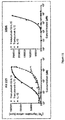
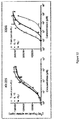
- the figure 1 shows [ 3 H]Thymidine incorporation by Kit 225 and 32Dß cells cultured with increasing concentrations of rIL-15 ( ⁇ ), c8B6-IL15 ( ⁇ ), and c8B6-122-IL15 ( ⁇ ).
- the figure 2 shows [ 3 H]Thymidine incorporation by Kit 225 and 32D ⁇ cells cultured with increasing concentrations of rIL-15 and c2B8-122-IL15 ( ⁇ ).
- ICK coated on targeted cells were revealed with a PE-conjugated goat anti-human IgG mAb (PN IM0550, BECKMAN COULTER), or with a biotinylated mouse anti-IL15 antibody (BAM247, R&D SYSTEM) coupled to PE-streptavidin (SIGMA-ALDRICH).
- Targeted cells (1 ⁇ 10 5 ) were incubated with each ICK for 1 h at 4°C, washed and then incubated with a PE-conjugate for 1h at 4°C. Washed cells were finally analyzed on a FACSCALIBUR (BECTON DICKINSON).
- Figure 3 shows flow cytometry evaluation of the ICK anti-CD20 (c2B8-122-IL15) and anti-GD2O-acetylated (c8B6-IL15 and c8B6-122-IL15) on CD20 expressing Raji cells and GD2O-acetylated expressing IMR32 cells.
- Cells were first incubated with ICK, then with a PE-conjugated goat anti-human IgG mAb for anti-CD20 or with biotinylated anti-IL15 + PE-conjugated streptavidin for anti-CD20 and anti-GD2, respectively. Finally sample were analysed on a FACSCALIBUR.
- ICK were compared on Raji cells to the anti-CD20 Mab Rituximab (MABTHERA, ROCHE).
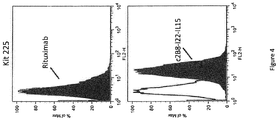
- Figure 4 shows flow cytometry evaluation of the ICK anti-CD20 (c2B8-122-IL15 and anti-GD2O-acetylated (c8B6-IL15 and c8B6-122-IL15) on IL15R expressing Kit 225 cells.
- Cells were first incubated with ICK, then with a PE-conjugated goat anti-human IgG mAb. Finally sample were analysed on a FACSCALIBUR.
- ICK were compared to the anti-CD20 Mab Rituximab (MABTHERA, ROCHE).
- anti-CD20 and anti-GD2-O-cetylated immunocytokines were constructed as previously excepted that the IL15 Homo sapiens sequence was replaced by RL12 sequence (SEQ ID n°17).
- immunocytokines were done as previously disclosed except that these immunocytokines were obtained with good yields and good purity (i.e.. greater than 90%) after only one round of protein A sepharose purification.
- ICK RLI The specific binding of the anti-CD20 and anti-GD2 O-acetylated ICK RLI were was assessed by flow cytometry on tumors cells Raji, WM266.4 and IMR32. The capacity of ICK RLI to bind IL-15 receptor on effector cells were tested on Kit225. ICK RLI coated on targeted cells were revealed cells with a PE-conjugated goat anti-human IgG mAb (PN IM0550 BECKMAN COULTER), or with a biotinylated mouse anti-IL15 antibody (BAM247, R&D SYSTEM) coupled to PE-streptavidin (SIGMA-ALDRICH).
- PE-conjugated goat anti-human IgG mAb PN IM0550 BECKMAN COULTER
- BAM247, R&D SYSTEM biotinylated mouse anti-IL15 antibody
- SIGMA-ALDRICH PE-streptavidin
- Targeted cells (1 ⁇ 10 5 ) were incubated with each ICK for 1 h at 4°C, washed and then incubated with a PE-conjugate for 1h at 4°C. Washed cells were finally analyzed on a FACSCALIBUR (BECTON DICKINSON).
- Figure 5 shows flow cytometry evaluation of the ICK c2B8-RLI, c8B6-RLI and c8B6-122-RLI on CD20 expressing Raji cells and GD2O-acetylated expressing WM266.4 and IMR32 cells.
- Cells were first incubated with ICK RLI, then with a PE-conjugated goat anti-human IgG mAb for anti-CD20 or with biotinylated anti-IL15 + PE-conjugated streptavidin for anti-CD20 and anti-GD2O-acetylated, respectively. Finally, samples were analysed on a FACSCALIBUR.
- ICK RLI were compared on Raji cells to the anti-CD20 Mab Rituximab (MABTHERA, ROCHE).
- Figure 6 shows flow cytometry evaluation of the ICK RLI anti-CD20 (c2B8-RLI) and anti-GD2O-acetylated (c8B6-RLI and c8B6-122-RLI) on IL15R ⁇ expressing Kit 225 cells.
- Cells were first incubated with ICK RLI, then with a PE-conjugated goat anti-human IgG mAb. Finally, sample were analysed on a FACSCALIBUR.
- the results show that the immunocytokines of the invention bind to the IL-15 receptor and also to their respective tumor antigen target.
- the interleukin-15 proliferation activity of the newly obtained immunocytokines was tested.
- the figure 7 shows [ 3 H]Thymidine incorporation by Kit 225 and 32D ⁇ cells cultured with increasing concentrations of RLI ( ⁇ ), rIL-15 ( ⁇ ) c8B6-RLI ( ⁇ ), and c8B6-122-RLI ( ⁇ ).
- the figure 8 shows [ 3 H]Thymidine incorporation by 32D ⁇ cells cultured with increasing concentrations of RLI ( ⁇ ), rIL-15 ( ⁇ ) and c2B8-RLI ( ⁇ ).
- the murine NXS2 neuroblatomas cell line was propagated in DMEM (10% FCS) under standard tissue culture conditions (37°C, 5% CO2).
- the NXS2 NB cell line expressing GD2-O-Ac was developed and characterized by LODE et al. (J. Natl. Cancer Inst., vol.89(21), p: 1586-94, 1997 ).
- mice aged of 8 weeks, were purchased from HARLAN laboratories. Mice were housed at the animal facility of Inserm U892, which is approved by the French Association for Accreditation of Animal Care Laboratories and is maintained in accordance with the regulations and standards of Inserm Institute and the French Department of Agriculture.
- the figure 9 shows the efficacy of c8B6-RL12 on NXS2 liver metastasis.
- c8B6 (12 ⁇ g) or c8B6-RLI (16 ⁇ g) was administered i.p. on days 1, 4, 7, and 11.
- Left: Graph represents mean of each group (n 5); bars, SEM.
- mice which have received ICK remain liver metastasis free.
- ICK can eradicate the development of NXS2 liver metastasis, meaning that RLI conjugation to a monoclonal antibody dramatically enhances its antitumor capabilities.
- the human Raji B cells were cultured in RPMI1640 medium supplemented with 10% fetal calf serum, 2 mM 1-glutamine.
- SCID CB-17 mice were purchased from the CHARLES RIVER Breeding Laboratories. Mice were kept under specific pathogen-free conditions in a separate facility using autoclaved cages of micro-isolator units and fed with irradiated solid food and sterilised water.
- Raji cells were harvested in their log-phase, washed and resuspended at 2.5 ⁇ 10 6 cells/0.1 ml in phosphate-buffered saline (PBS) before being injected intravenously into the mice followed by ip treatment with immunocytokines 3 times a week (begining on day 5) for 3 week after implantation.
- Mice received treatment in equimolar quantity exept for the groups "immunocytokine" and "rituximab + RLI" which received a half dose. The mice were monitored daily for the presence of hind-leg paralysis and in that case sacrificed and scored as dead.
- sequence encoding for the anti-HER2 murine 4D5 IgG light chains, anti-HER2 murine IgG 4D5 heavy chains and anti-HER2 scFv were kindly provided by Dr DONDA (Biochemistry Institute Lausanne, switzerland).
- the anti-HER2Neu IL15- and RLI-immunocytokines were constructed as previously on the basis of the anti HER2Neu light (SEQ ID n°18) and heavy (SEQ ID n°19) chains of the anti-HER2Neu antibody.
- sequence encoding the leader sequence of beta2 microglobulin in frame with sequence encoding chimeric IgG heavy chain sequences were designed to be fused in 3'term with or without a linker of 22 amino-acid (SEQ ID n°16) to IL15 (SEQ ID n°20 and 21 respectively) and to RLI (SEQ ID n°22 and 23 respectively).
- a 40kDa linear PEI was obtained from POLYSCIENCE.
- a 1 mg /mL stock solution was prepared by dissolving the PEI in water with heating, neutralizing by NaOH, and sterilizing by filtration through a 0.22 ⁇ m filter. The solution stock was aliquoted and stored at -20°C.
- Plasmids DNA for transfections were purified using the plasmid purification kits following the manufacturer's protocol (MACHEREY-NAGEL) and sterilizing by filtration through a 0.22 ⁇ m filter.
- HEK293T cells kindly provided by Dr. SCHNEIDER (Biochemistry Institute Lausanne, switzerland) were seeded in T175 cm2 flask in DMEM-Glutamax 10% SVF at 37 °C and 5% CO 2 .
- the day of transfection a complex of DNA plasmid and PEI were prepared in sterile NaCl 150 mM. Plasmid DNA diluted in NaCl (1,25 mg/L of culture volume) were mixed with PEI diluted in NaCl (12,5 mg/L of culture volume) and incubated for 10 min at room temperature before adding to the cell culture.
- the specific binding of the anti-HER2 IgG-ICK or scFv-ICK was assessed by flow cytometry on HER2 positive cells SK-BR-3 using anti-IL15 antibody.
- the capacity of ICK to bind IL-15 receptor on effector cells were tested on Kit225.
- ICK coated on targeted cells were revealed with a FITC-conjugated goat anti-murine IgG mAb (SIGMA-ANDRICH) or with a FITC-conjugated mouse anti-IL15 antibody (R&D SYSTEM).
- Targeted cells (1 ⁇ 10 5 ) were incubated with each ICK for I h at 4°C, washed and then incubated with a FITC-conjugate for 1h at 4°C. Washed cells were finally analyzed on a FACSCALIBUR (BECTON DICKINSON).
- Figure 3 shows flow cytometry evaluation of anti-HER2 (trastuzumab-IL15 and trastuzumab-I22-IL15) on HER2 expressing SKBR3 cells.
- Figure 5 shows flow cytometry evaluation of the ICK Trastuzumab-RLI on HER2 expressing SKBR3 cells.
- Anti-HER2 ICK was compared on SKBR3 cells to the Trastuzumab (Herceptin®, Genentech)
- interleukin-15 proliferation activity of the fusion of IL-15 and Trastuzumab or anti-HER2 scFv fragments was tested on Kit 225 and 32D ⁇ cells by measuring [ 3 H]thymidine incorporation according to the method described previously.
- the figure 11 shows [ 3 H]Thymidine incorporation by Kit 225 and 32D ⁇ cells cultured with increasing concentrations of Trastuzumab-122-IL-15 ( ⁇ ),Trastuzumab-IL-15( ⁇ ), and rIL-15 ( ⁇ ).
- the figure 12 shows [ 3 H]Thymidine incorporation by Kit 225 and 32D ⁇ cells cultured with increasing concentrations of Trastuzumab-RLI ( ⁇ ), RLI ( ⁇ ), and rIL-15 ( ⁇ ).
- the results show that the RLI-derived trastuzumab immunocytokines present a significant gain of biological activity as compared to free IL-15 in the ⁇ context (about 10 to 100 fold increase).
Landscapes
- Health & Medical Sciences (AREA)
- Chemical & Material Sciences (AREA)
- Life Sciences & Earth Sciences (AREA)
- Organic Chemistry (AREA)
- Medicinal Chemistry (AREA)
- Immunology (AREA)
- General Health & Medical Sciences (AREA)
- Proteomics, Peptides & Aminoacids (AREA)
- Molecular Biology (AREA)
- Biophysics (AREA)
- Genetics & Genomics (AREA)
- Biochemistry (AREA)
- Gastroenterology & Hepatology (AREA)
- Zoology (AREA)
- Engineering & Computer Science (AREA)
- Bioinformatics & Cheminformatics (AREA)
- Animal Behavior & Ethology (AREA)
- Veterinary Medicine (AREA)
- Public Health (AREA)
- Pharmacology & Pharmacy (AREA)
- Cell Biology (AREA)
- Toxicology (AREA)
- Epidemiology (AREA)
- Oncology (AREA)
- Nuclear Medicine, Radiotherapy & Molecular Imaging (AREA)
- General Chemical & Material Sciences (AREA)
- Chemical Kinetics & Catalysis (AREA)
- Biomedical Technology (AREA)
- Microbiology (AREA)
- Mycology (AREA)
- Peptides Or Proteins (AREA)
- Medicines That Contain Protein Lipid Enzymes And Other Medicines (AREA)
- Micro-Organisms Or Cultivation Processes Thereof (AREA)
- Medicines Containing Antibodies Or Antigens For Use As Internal Diagnostic Agents (AREA)
- Medicines Containing Material From Animals Or Micro-Organisms (AREA)
- Medicinal Preparation (AREA)
- Pharmaceuticals Containing Other Organic And Inorganic Compounds (AREA)
Applications Claiming Priority (3)
| Application Number | Priority Date | Filing Date | Title |
|---|---|---|---|
| EP11358005A EP2537933A1 (de) | 2011-06-24 | 2011-06-24 | Auf IL-15- und IL-15Ralpha-Sushi-Domäne basierende Immunozytokine |
| PCT/EP2012/002650 WO2012175222A1 (en) | 2011-06-24 | 2012-06-22 | AN IL-15 AND IL-15Rα SUSHI DOMAIN BASED IMMUNOCYTOKINES |
| EP12731303.9A EP2723869B1 (de) | 2011-06-24 | 2012-06-22 | Auf il-15- und il-15r alpha-sushi-domäne basierende immunozytokine |
Related Parent Applications (2)
| Application Number | Title | Priority Date | Filing Date |
|---|---|---|---|
| EP12731303.9A Division EP2723869B1 (de) | 2011-06-24 | 2012-06-22 | Auf il-15- und il-15r alpha-sushi-domäne basierende immunozytokine |
| EP12731303.9A Division-Into EP2723869B1 (de) | 2011-06-24 | 2012-06-22 | Auf il-15- und il-15r alpha-sushi-domäne basierende immunozytokine |
Publications (3)
| Publication Number | Publication Date |
|---|---|
| EP3406723A1 true EP3406723A1 (de) | 2018-11-28 |
| EP3406723B1 EP3406723B1 (de) | 2025-01-08 |
| EP3406723C0 EP3406723C0 (de) | 2025-01-08 |
Family
ID=46456485
Family Applications (3)
| Application Number | Title | Priority Date | Filing Date |
|---|---|---|---|
| EP11358005A Withdrawn EP2537933A1 (de) | 2011-06-24 | 2011-06-24 | Auf IL-15- und IL-15Ralpha-Sushi-Domäne basierende Immunozytokine |
| EP12731303.9A Active EP2723869B1 (de) | 2011-06-24 | 2012-06-22 | Auf il-15- und il-15r alpha-sushi-domäne basierende immunozytokine |
| EP18178428.1A Active EP3406723B1 (de) | 2011-06-24 | 2012-06-22 | Auf il-15- und il-15r-alpha-sushi-domäne basierende konjugate |
Family Applications Before (2)
| Application Number | Title | Priority Date | Filing Date |
|---|---|---|---|
| EP11358005A Withdrawn EP2537933A1 (de) | 2011-06-24 | 2011-06-24 | Auf IL-15- und IL-15Ralpha-Sushi-Domäne basierende Immunozytokine |
| EP12731303.9A Active EP2723869B1 (de) | 2011-06-24 | 2012-06-22 | Auf il-15- und il-15r alpha-sushi-domäne basierende immunozytokine |
Country Status (19)
| Country | Link |
|---|---|
| US (5) | US20150152188A1 (de) |
| EP (3) | EP2537933A1 (de) |
| JP (4) | JP6151687B2 (de) |
| KR (4) | KR101977312B1 (de) |
| CN (3) | CN114805606A (de) |
| AU (3) | AU2012272138B2 (de) |
| BR (1) | BR112013033350B1 (de) |
| CA (1) | CA2840113C (de) |
| DK (1) | DK2723869T3 (de) |
| ES (2) | ES2727806T3 (de) |
| HR (1) | HRP20190799T1 (de) |
| HU (1) | HUE043442T2 (de) |
| MX (2) | MX381939B (de) |
| PL (1) | PL2723869T3 (de) |
| PT (1) | PT2723869T (de) |
| RU (2) | RU2644671C2 (de) |
| SI (1) | SI2723869T1 (de) |
| TR (1) | TR201907397T4 (de) |
| WO (1) | WO2012175222A1 (de) |
Cited By (1)
| Publication number | Priority date | Publication date | Assignee | Title |
|---|---|---|---|---|
| WO2021099576A1 (en) * | 2019-11-21 | 2021-05-27 | INSERM (Institut National de la Santé et de la Recherche Médicale) | Novel immunotherapies targeting pd-1 with anti-pd-1/il-15 immunocytokines |
Families Citing this family (144)
| Publication number | Priority date | Publication date | Assignee | Title |
|---|---|---|---|---|
| US5295910A (en) | 1989-05-22 | 1994-03-22 | Luk Lamellen Und Kupplungsbau Gmbh | Apparatus for damping vibrations |
| ATE516820T1 (de) | 2000-09-29 | 2011-08-15 | Schering Corp | Pegyliertes interleukin 10 |
| PL1899364T5 (pl) | 2005-05-17 | 2024-12-09 | University Of Connecticut | Kompozycje i sposoby immunomodulacji w organizmie |
| EP1777294A1 (de) | 2005-10-20 | 2007-04-25 | Institut National De La Sante Et De La Recherche Medicale (Inserm) | IL-15Ralpha sushi Domäin als selektieve und potente Enhancer von IL-15 Aktion durch IL-15Rbeta/gamma, und Hyperagonist (IL15Ralpha sushi -IL15) Fusionsproteine |
| MX2008007056A (es) | 2005-12-02 | 2008-11-12 | Sinai School Medicine | Virus quimericos que presentan proteinas de superficie no nativas y usos de los mismos. |
| EP1984505B1 (de) | 2006-01-13 | 2019-12-25 | The Government of the U.S.A., as repr. by the Secretary, Dept. of Health & Human Services, the Nat. Inst. of Health | Codonoptimierte il-15- und il-15r-alpha-gene zur expression in säugerzellen |
| NZ597098A (en) | 2006-09-28 | 2013-05-31 | Merck Sharp & Dohme | Use of pegylated il-10 to treat cancer |
| DK2160401T3 (da) | 2007-05-11 | 2014-10-20 | Altor Bioscience Corp | Fusionsmolekyler og il-15-varianter |
| CA2691785C (en) | 2007-06-27 | 2017-01-10 | Marine Polymer Technologies Inc. | Complexes of il-15 and il-15ralpha and uses thereof |
| US11053299B2 (en) | 2010-09-21 | 2021-07-06 | Immunity Bio, Inc. | Superkine |
| EP2619229B1 (de) | 2010-09-21 | 2016-04-06 | Altor BioScience Corporation | Lösliche, multimere il-15- fusionsmoleküle sowie verfahren zu ihrer herstellung und verwendung |
| ES2778053T3 (es) | 2011-01-18 | 2020-08-07 | Bioniz Llc | Composiciones para modular la actividad de la citocina gamma-c |
| WO2015089217A2 (en) | 2013-12-10 | 2015-06-18 | Bionz, Llc | Methods of developing selective peptide antagonists |
| EP2537933A1 (de) | 2011-06-24 | 2012-12-26 | Institut National de la Santé et de la Recherche Médicale (INSERM) | Auf IL-15- und IL-15Ralpha-Sushi-Domäne basierende Immunozytokine |
| KR102222157B1 (ko) | 2013-03-14 | 2021-03-03 | 이칸 스쿨 오브 메디슨 엣 마운트 시나이 | 뉴캐슬병 바이러스 및 이의 용도 |
| CN105209054A (zh) | 2013-04-18 | 2015-12-30 | 阿尔莫生物科技股份有限公司 | 使用白细胞介素-10治疗疾病和病症的方法 |
| KR102539359B1 (ko) * | 2013-04-19 | 2023-06-02 | 싸이튠 파마 | 감소된 혈관 누출 증후군에 대한 사이토카인 유도체 치료 |
| JP2016528879A (ja) | 2013-06-17 | 2016-09-23 | アルモ・バイオサイエンシーズ・インコーポレイテッド | タンパク質の同一性および安定性を評価する方法 |
| SI3030262T1 (sl) * | 2013-08-08 | 2020-03-31 | Cytune Pharma | Kombiniran farmacevtski sestavek |
| CA2919725C (en) * | 2013-08-08 | 2023-04-18 | Cytune Pharma | An il-15 and il-15r.aplha. sushi domain based modulokines |
| US11413332B2 (en) | 2013-11-11 | 2022-08-16 | Armo Biosciences, Inc. | Methods of using interleukin-10 for treating diseases and disorders |
| EP3094351B9 (de) | 2014-01-15 | 2022-04-13 | Kadmon Corporation, LLC | Immunmodulatorische mittel |
| WO2015127501A1 (en) | 2014-02-27 | 2015-09-03 | Viralytics Limited | Combination method for treatment of cancer |
| EP2915569A1 (de) * | 2014-03-03 | 2015-09-09 | Cytune Pharma | Reinigungsverfahren für Il-15/Il-15Ralpha-basierte Konjugate |
| US10293043B2 (en) | 2014-06-02 | 2019-05-21 | Armo Biosciences, Inc. | Methods of lowering serum cholesterol |
| KR102503476B1 (ko) * | 2014-06-30 | 2023-02-24 | 알토 바이오사이언스 코포레이션 | Il-15-베이즈드 분자 및 이의 사용 방법 |
| KR20170068553A (ko) * | 2014-10-14 | 2017-06-19 | 아르모 바이오사이언시스 인코포레이티드 | 인터류킨-15 조성물 및 이의 용도 |
| JP6675394B2 (ja) | 2014-10-22 | 2020-04-01 | アルモ・バイオサイエンシーズ・インコーポレイテッド | 疾患及び障害の治療のためにインターロイキン−10を使用する方法 |
| LT3235830T (lt) * | 2014-12-19 | 2020-12-28 | Jiangsu Hengrui Medicine Co., Ltd. | Interleukino 15 baltymų kompleksas ir jo naudojimas |
| US10618970B2 (en) | 2015-02-03 | 2020-04-14 | Armo Biosciences, Inc. | Method of treating cancer with IL-10 and antibodies that induce ADCC |
| JP6730705B2 (ja) * | 2015-02-12 | 2020-07-29 | 国立大学法人岩手大学 | 哺乳動物細胞に対する外来遺伝子の導入効率の向上剤 |
| US20160361415A1 (en) | 2015-05-28 | 2016-12-15 | Armo Biosciences, Inc. | Methods of Using Interleukin-10 for Treating Diseases and Disorders |
| US12577323B2 (en) | 2015-06-10 | 2026-03-17 | Emory University | Compositions and conjugates comprising an interleukin and polypeptides that specifically bind TGF-beta |
| CN112574316A (zh) | 2015-07-02 | 2021-03-30 | 博际生物医药科技(杭州)有限公司 | 用于肿瘤靶向治疗的白细胞介素-15融合蛋白 |
| JP7053453B2 (ja) | 2015-08-25 | 2022-04-12 | アルモ・バイオサイエンシーズ・インコーポレイテッド | 疾患及び障害を治療するためのインターロイキン10の使用方法 |
| JP6800219B2 (ja) * | 2015-09-16 | 2020-12-16 | アンスティチュ ナショナル ドゥ ラ サンテ エ ドゥ ラ ルシェルシュ メディカル | 特異的なインターロイキン−15(il−15)アンタゴニストポリペプチド並びに炎症疾患及び自己免疫疾患の処置のためのその使用 |
| EP3359168A4 (de) | 2015-10-06 | 2019-08-07 | Regents of the University of Minnesota | Therapeutische verbindungen und verfahren |
| EP3359556B1 (de) | 2015-10-09 | 2021-05-26 | Bioniz, LLC | Modulation der gamma-c-zytokin-aktivität |
| EP3443001B1 (de) | 2016-04-11 | 2025-04-30 | Obsidian Therapeutics, Inc. | Regulierte bioschaltkreissysteme |
| EP3458092A1 (de) | 2016-05-18 | 2019-03-27 | Modernatx, Inc. | Mrna-kombinationstherapie zur behandlung von krebs |
| US11472856B2 (en) | 2016-06-13 | 2022-10-18 | Torque Therapeutics, Inc. | Methods and compositions for promoting immune cell function |
| BR112019007281A2 (pt) | 2016-10-14 | 2019-07-09 | Xencor Inc | proteína heterodimérica, composições de ácido nucleico e de vetor de expressão, vetor de expressão, célula hospedeira, e, métodos para produzir proteína heterodimérica e para tratar câncer em um paciente |
| KR102392142B1 (ko) | 2016-10-21 | 2022-04-28 | 알토 바이오사이언스 코포레이션 | 다량체 il-15 기반 분자 |
| JP2019537600A (ja) * | 2016-11-02 | 2019-12-26 | ナノプロティアジェン, リミテッド | ポリマーナノ粒子 |
| CN108250301A (zh) * | 2016-12-29 | 2018-07-06 | 天津天锐生物科技有限公司 | 一种多靶点嵌合抗原受体 |
| US11629340B2 (en) | 2017-03-03 | 2023-04-18 | Obsidian Therapeutics, Inc. | DHFR tunable protein regulation |
| KR20240142577A (ko) | 2017-04-07 | 2024-09-30 | 바이오니즈 테라퓨틱스, 아이엔씨. | 감마-c-사이토카인 활성의 안정한 조절자 |
| AR111651A1 (es) | 2017-04-28 | 2019-08-07 | Novartis Ag | Conjugados de anticuerpos que comprenden agonistas del receptor de tipo toll y terapias de combinación |
| JOP20190256A1 (ar) | 2017-05-12 | 2019-10-28 | Icahn School Med Mount Sinai | فيروسات داء نيوكاسل واستخداماتها |
| WO2018237173A1 (en) | 2017-06-22 | 2018-12-27 | Novartis Ag | ANTIBODY MOLECULES DIRECTED AGAINST CD73 AND CORRESPONDING USES |
| US20190048072A1 (en) | 2017-06-22 | 2019-02-14 | Novartis Ag | USE OF IL-1beta BINDING ANTIBODIES |
| US11312783B2 (en) | 2017-06-22 | 2022-04-26 | Novartis Ag | Antibody molecules to CD73 and uses thereof |
| US20200223924A1 (en) | 2017-06-27 | 2020-07-16 | Novartis Ag | Dosage regimens for anti-tim-3 antibodies and uses thereof |
| AU2018291497A1 (en) | 2017-06-30 | 2020-01-16 | Xencor, Inc. | Targeted heterodimeric Fc fusion proteins containing IL-15/IL-15Ra and antigen binding domains |
| KR20200031659A (ko) | 2017-07-20 | 2020-03-24 | 노파르티스 아게 | 항-lag-3 항체의 투여 요법 및 그의 용도 |
| KR20210032924A (ko) | 2017-09-05 | 2021-03-25 | 토크 테라퓨틱스, 인코포레이티드 | 치료용 단백질 조성물 및 그의 제조 및 사용 방법 |
| CN111655288A (zh) | 2017-11-16 | 2020-09-11 | 诺华股份有限公司 | 组合疗法 |
| WO2019108900A1 (en) | 2017-11-30 | 2019-06-06 | Novartis Ag | Bcma-targeting chimeric antigen receptor, and uses thereof |
| BR112020010597A2 (pt) * | 2017-12-08 | 2020-10-27 | Fate Therapeutics, Inc. | imunoterapias com o uso de células efetoras derivadas de ipsc intensificadas |
| KR20250048610A (ko) | 2017-12-22 | 2025-04-09 | 페이트 세러퓨틱스, 인코포레이티드 | 향상된 면역 효과기 세포 및 이의 용도 |
| CU24545B1 (es) * | 2017-12-29 | 2021-09-07 | Ct Ingenieria Genetica Biotecnologia | Péptido antagonista de la actividad de la interleucina-15 |
| TW201938196A (zh) * | 2018-01-18 | 2019-10-01 | 美商南特生物科學股份有限公司 | 融合蛋白擴展 |
| WO2019160956A1 (en) | 2018-02-13 | 2019-08-22 | Novartis Ag | Chimeric antigen receptor therapy in combination with il-15r and il15 |
| WO2019165453A1 (en) | 2018-02-26 | 2019-08-29 | Synthorx, Inc. | Il-15 conjugates and uses thereof |
| WO2019166946A1 (en) | 2018-02-28 | 2019-09-06 | Pfizer Inc. | Il-15 variants and uses thereof |
| US20210147547A1 (en) | 2018-04-13 | 2021-05-20 | Novartis Ag | Dosage Regimens For Anti-Pd-L1 Antibodies And Uses Thereof |
| JP7516254B2 (ja) | 2018-04-18 | 2024-07-16 | ゼンコア インコーポレイテッド | Il-15/il-15raヘテロ二量体fc融合タンパク質およびその使用 |
| CA3097593A1 (en) | 2018-04-18 | 2019-10-24 | Xencor, Inc. | Pd-1 targeted heterodimeric fusion proteins containing il-15/il-15ra fc-fusion proteins and pd-1 antigen binding domains and uses thereof |
| JP2021520829A (ja) | 2018-04-18 | 2021-08-26 | ゼンコア インコーポレイテッド | IL−15/IL−15RA Fc融合タンパク質およびTIM−3抗原結合ドメインを含む、TIM−3標的化ヘテロ二量体融合タンパク質 |
| KR20210003813A (ko) | 2018-04-18 | 2021-01-12 | 젠코어 인코포레이티드 | IL-15/IL-15Rα Fc-융합 단백질 및 LAG-3 항원 결합 도메인을 함유하는 LAG-3 표적화 이종이량체 융합 단백질 |
| EP3561053A1 (de) * | 2018-04-26 | 2019-10-30 | Baylor College of Medicine | Immuneffektorzellen und molekulare adapter mit einem antigen-zytokin-komplex zur wirksamen krebsimmuntherapie |
| CN110437339B (zh) * | 2018-05-04 | 2021-08-13 | 免疫靶向有限公司 | 一种以白介素15为活性成分的融合蛋白型药物前体 |
| UY38247A (es) | 2018-05-30 | 2019-12-31 | Novartis Ag | Anticuerpos frente a entpd2, terapias de combinación y métodos de uso de los anticuerpos y las terapias de combinación |
| US20210214459A1 (en) | 2018-05-31 | 2021-07-15 | Novartis Ag | Antibody molecules to cd73 and uses thereof |
| AU2019277029C1 (en) | 2018-06-01 | 2024-01-04 | Novartis Ag | Binding molecules against BCMA and uses thereof |
| AR116109A1 (es) | 2018-07-10 | 2021-03-31 | Novartis Ag | Derivados de 3-(5-amino-1-oxoisoindolin-2-il)piperidina-2,6-diona y usos de los mismos |
| JP2021531306A (ja) | 2018-07-25 | 2021-11-18 | アドバンスド アクセラレーター アプリケーションズ エスエー | 神経内分泌腫瘍の処置の方法 |
| WO2020037215A1 (en) | 2018-08-17 | 2020-02-20 | Icahn School Of Medicine At Mount Sinai | Recombinant newcastle disease viruses and uses thereof for the prevention of rsv disease or human metapneumovirus disease |
| CN120535649A (zh) | 2018-08-30 | 2025-08-26 | 免疫生物公司 | 单链嵌合多肽和其用途 |
| AU2019328575B2 (en) * | 2018-08-30 | 2024-07-11 | Immunitybio, Inc. | Single-chain and multi-chain chimeric polypeptides and uses thereof |
| JP7397874B2 (ja) * | 2018-08-30 | 2023-12-13 | エイチシーダブリュー バイオロジックス インコーポレイテッド | 多鎖キメラポリペプチドおよびその使用 |
| CR20210239A (es) | 2018-10-12 | 2021-12-15 | Xencor Inc | Proteínas de fusión de il-15/il-15ralfa-fc dirigidas a pd-1 y usos de las mismas en terapias combinadas |
| AU2019361096A1 (en) | 2018-10-19 | 2021-06-03 | Regents Of The University Of Minnesota | NK engager molecules and methods of use thereof |
| WO2020128972A1 (en) | 2018-12-20 | 2020-06-25 | Novartis Ag | Dosing regimen and pharmaceutical combination comprising 3-(1-oxoisoindolin-2-yl)piperidine-2,6-dione derivatives |
| CN113438961A (zh) | 2018-12-20 | 2021-09-24 | Xencor股份有限公司 | 含有IL-15/IL-15Rα和NKG2D抗原结合结构域的靶向异二聚体Fc融合蛋白 |
| JP2022514087A (ja) | 2018-12-21 | 2022-02-09 | ノバルティス アーゲー | IL-1β結合抗体の使用 |
| EP3897613A1 (de) | 2018-12-21 | 2021-10-27 | Novartis AG | Verwendung von il-1beta-bindenden antikörpern |
| WO2020128636A1 (en) | 2018-12-21 | 2020-06-25 | Novartis Ag | Use of il-1 beta antibodies in the treatment or prevention of myelodysplastic syndrome |
| WO2020128637A1 (en) | 2018-12-21 | 2020-06-25 | Novartis Ag | Use of il-1 binding antibodies in the treatment of a msi-h cancer |
| WO2020165374A1 (en) | 2019-02-14 | 2020-08-20 | Ose Immunotherapeutics | Bifunctional molecule comprising il-15ra |
| ES3032659T3 (en) | 2019-02-15 | 2025-07-23 | Novartis Ag | 3-(1-oxo-5-(piperidin-4-yl)isoindolin-2-yl)piperidine-2,6-dione derivatives and uses thereof |
| BR112021015672A2 (pt) | 2019-02-15 | 2021-10-05 | Novartis Ag | Derivados de 3-(1-oxoisoindolin-2-il)piperidina-2,6-diona substituída e usos dos mesmos |
| JP2022530677A (ja) | 2019-05-03 | 2022-06-30 | バイオニズ リミテッド ライアビリティー カンパニー | 脱毛症および脱毛症関連障害の治療ための、γcサイトカインのシグナル伝達の効果の調節 |
| JP7762570B2 (ja) | 2019-05-20 | 2025-10-30 | サイチューン ファーマ | 癌又は感染性疾患を処置するためのIL-2/IL-15Rβγアゴニスト投薬レジメン |
| WO2020249757A1 (en) | 2019-06-14 | 2020-12-17 | Philogen S.P.A | Immunoconjugates comprising a single chain diabody and interleukin-15 or interleukin-15 and a sushi domain of interleukin-15 receptor alpha |
| WO2020257639A1 (en) | 2019-06-21 | 2020-12-24 | HCW Biologics, Inc. | Multi-chain chimeric polypeptides and uses thereof |
| AU2020329301A1 (en) * | 2019-08-15 | 2022-02-17 | Igm Biosciences, Inc. | Immunostimulatory multimeric binding molecules |
| PH12022500004A1 (en) | 2019-08-23 | 2023-04-03 | Synthorx Inc | Il-15 conjugates and uses thereof |
| MX2022002747A (es) | 2019-09-10 | 2022-04-06 | Obsidian Therapeutics Inc | Proteinas de fusion de ca2-il15 para regulacion ajustable. |
| JP2022548881A (ja) | 2019-09-18 | 2022-11-22 | ノバルティス アーゲー | Entpd2抗体、組合せ療法並びに抗体及び組合せ療法を使用する方法 |
| RU2753282C2 (ru) * | 2019-09-19 | 2021-08-12 | Закрытое Акционерное Общество "Биокад" | ИММУНОЦИТОКИН, ВКЛЮЧАЮЩИЙ ГЕТЕРОДИМЕРНЫЙ БЕЛКОВЫЙ КОМПЛЕКС НА ОСНОВЕ IL-15/IL-15Rα, И ЕГО ПРИМЕНЕНИЕ |
| TW202128757A (zh) | 2019-10-11 | 2021-08-01 | 美商建南德克公司 | 具有改善之特性的 PD-1 標靶 IL-15/IL-15Rα FC 融合蛋白 |
| CA3158298A1 (en) | 2019-10-21 | 2021-04-29 | Novartis Ag | Combination therapies with venetoclax and tim-3 inhibitors |
| TW202128191A (zh) | 2019-10-21 | 2021-08-01 | 瑞士商諾華公司 | Tim-3抑制劑及其用途 |
| CA3158893A1 (en) * | 2019-10-24 | 2021-04-29 | Minotaur Therapeutics, Inc. | Chimeric cytokine modified antibodies and methods of use thereof |
| CN111690068B (zh) * | 2019-11-13 | 2022-04-19 | 中国科学技术大学 | 一种IL-15/SuIL-15Rα-dFc-γ4复合体蛋白及其构造方法、应用 |
| CN113135996A (zh) * | 2019-12-09 | 2021-07-20 | 启愈生物技术(上海)有限公司 | 一种双特异抗体及其应用 |
| CN115151279B (zh) * | 2019-12-13 | 2026-05-05 | 科优基因公司 | 基于细胞因子的可生物活化药物及其使用方法 |
| KR20220116257A (ko) | 2019-12-20 | 2022-08-22 | 노파르티스 아게 | 골수섬유증 및 골수이형성 증후군을 치료하기 위한, 데시타빈 또는 항 pd-1 항체 스파르탈리주맙을 포함하거나 또는 포함하지 않는, 항 tim-3 항체 mbg453 및 항 tgf-베타 항체 nis793의 조합물 |
| US20230058489A1 (en) | 2020-01-17 | 2023-02-23 | Novartis Ag | Combination comprising a tim-3 inhibitor and a hypomethylating agent for use in treating myelodysplastic syndrome or chronic myelomonocytic leukemia |
| US12187763B2 (en) | 2020-02-11 | 2025-01-07 | Immunitybio, Inc. | Chromatography resin and uses thereof |
| CA3169231A1 (en) | 2020-02-11 | 2021-08-19 | HCW Biologics, Inc. | Methods of treating age-related and inflammatory diseases |
| AU2021220196A1 (en) | 2020-02-11 | 2022-08-04 | HCW Biologics, Inc. | Methods of activating regulatory T cells |
| EP3889183A1 (de) * | 2020-04-01 | 2021-10-06 | Pierre Fabre Medicament | Proteinkomplex mit einem immunzytokin |
| CN115836087A (zh) | 2020-04-29 | 2023-03-21 | Hcw生物科技公司 | 抗cd26蛋白及其用途 |
| US12024545B2 (en) | 2020-06-01 | 2024-07-02 | HCW Biologics, Inc. | Methods of treating aging-related disorders |
| CN115916199A (zh) | 2020-06-23 | 2023-04-04 | 诺华股份有限公司 | 包含3-(1-氧代异吲哚啉-2-基)哌啶-2,6-二酮衍生物的给药方案 |
| US20230271940A1 (en) | 2020-08-03 | 2023-08-31 | Novartis Ag | Heteroaryl substituted 3-(1-oxoisoindolin-2-yl)piperidine-2,6-dione derivatives and uses thereof |
| EP4204020A1 (de) | 2020-08-31 | 2023-07-05 | Advanced Accelerator Applications International S.A. | Verfahren zur behandlung von psma-exprimierenden krebsarten |
| WO2022043557A1 (en) | 2020-08-31 | 2022-03-03 | Advanced Accelerator Applications International Sa | Method of treating psma-expressing cancers |
| KR20230096047A (ko) | 2020-10-26 | 2023-06-29 | 싸이튠 파마 | 비흑색종 피부암 치료용 IL-2/IL-15Rβγ 작용제 |
| JP2023550685A (ja) * | 2020-10-26 | 2023-12-05 | サイチューン ファーマ | 扁平上皮癌を治療するためのIL-2/IL-15Rβγアゴニスト |
| EP4240491A1 (de) | 2020-11-06 | 2023-09-13 | Novartis AG | Cd19-bindende moleküle und verwendungen davon |
| JP7769007B2 (ja) * | 2020-12-23 | 2025-11-12 | イミュノウェイク インコーポレイテッド | イムノサイトカイン及びその使用 |
| TW202304979A (zh) | 2021-04-07 | 2023-02-01 | 瑞士商諾華公司 | 抗TGFβ抗體及其他治療劑用於治療增殖性疾病之用途 |
| JP7642857B2 (ja) * | 2021-04-22 | 2025-03-10 | 広東菲鵬制▲薬▼股▲ふん▼有限公司 | 二重特異性多機能性融合ポリペプチド |
| AR125874A1 (es) | 2021-05-18 | 2023-08-23 | Novartis Ag | Terapias de combinación |
| IL309522B2 (en) | 2021-06-23 | 2025-12-01 | Cytune Pharma | Interleukin 15 variants |
| CA3225815A1 (en) | 2021-08-13 | 2023-02-16 | Cytune Pharma | Il-2/il-15rbetagamma agonist combination with antibody-drug conjugates for treating cancer |
| CN116023503B (zh) * | 2021-10-25 | 2024-05-31 | 上海交通大学 | 一种融合蛋白及其制备方法和用途 |
| JP2024539432A (ja) * | 2021-11-15 | 2024-10-28 | 中国科学院生物物理研究所 | インターロイキン15を有効成分とする融合タンパク質構築物およびその使用 |
| CN119384289A (zh) | 2022-04-13 | 2025-01-28 | 免疫生物公司 | 用于治疗神经炎症性障碍的多链嵌合多肽 |
| WO2023214325A1 (en) | 2022-05-05 | 2023-11-09 | Novartis Ag | Pyrazolopyrimidine derivatives and uses thereof as tet2 inhibitors |
| CN116854821A (zh) * | 2022-08-15 | 2023-10-10 | 海徕科(北京)生物技术有限公司 | IL-15突变体-Fc/IL-15Rα亚基-Fc异源二聚体及其用途 |
| CN115850508A (zh) * | 2022-08-19 | 2023-03-28 | 浙江卫未生物医药科技有限公司 | 一种新型il-15超级激动剂融合蛋白 |
| WO2024215987A1 (en) | 2023-04-14 | 2024-10-17 | Sotio Biotech Inc. | IMMUNE CELLS FOR TREATING CANCER IN COMBINATION WITH IL-15/IL-15Rα CONJUGATES |
| EP4694916A1 (de) | 2023-04-14 | 2026-02-18 | SOTIO Biotech Inc. | Gentechnisch veränderte immunzellen zur behandlung von krebs in kombination mit il-2/il-15-rezeptor agonisten |
| WO2024230591A1 (zh) * | 2023-05-06 | 2024-11-14 | 北京新合睿恩生物医疗科技有限公司 | IL-15融合蛋白及其mRNA序列和应用 |
| EP4709754A1 (de) * | 2023-05-12 | 2026-03-18 | Christian-Albrechts-Universität zu Kiel | Mittel und verfahren zur expansion von nk-zellen |
| GB202315149D0 (en) | 2023-10-03 | 2023-11-15 | Celleron Therapeutics Ltd | Combination therapy |
| WO2025184411A1 (en) | 2024-02-27 | 2025-09-04 | Calidi Biotherapeutics (Nevada), Inc. | Serum-resistant eev viruses and uses thereof |
| WO2025217310A1 (en) * | 2024-04-10 | 2025-10-16 | Prolynx Llc | Pegylated il- 15 receptor alpha cytokines |
| WO2026006679A1 (en) * | 2024-06-28 | 2026-01-02 | The Regents Of The University Of California | Retroviral vectors |
| CN120399098B (zh) * | 2025-07-03 | 2025-09-16 | 上海玄言生物科技有限公司 | 抗cd14抗体-il-15超级激动剂融合蛋白及其制法和应用 |
Citations (28)
| Publication number | Priority date | Publication date | Assignee | Title |
|---|---|---|---|---|
| WO1985000974A1 (en) | 1983-09-01 | 1985-03-14 | Hybritech Incorporated | Antibody compositions of therapeutic agents having an extended serum half-life |
| WO1986001533A1 (en) | 1984-09-03 | 1986-03-13 | Celltech Limited | Production of chimeric antibodies |
| US4671958A (en) | 1982-03-09 | 1987-06-09 | Cytogen Corporation | Antibody conjugates for the delivery of compounds to target sites |
| GB2188638A (en) | 1986-03-27 | 1987-10-07 | Gregory Paul Winter | Chimeric antibodies |
| EP0305967A2 (de) | 1987-09-02 | 1989-03-08 | Ciba-Geigy Ag | Konjugate von Interferon alpha mit Immunglobulinen |
| EP0439095A2 (de) | 1990-01-22 | 1991-07-31 | Bristol-Myers Squibb Company | Therapeutische fusionierte Proteine auf Basis von Antikörpern |
| US5073627A (en) | 1989-08-22 | 1991-12-17 | Immunex Corporation | Fusion proteins comprising GM-CSF and IL-3 |
| US5108910A (en) | 1989-08-22 | 1992-04-28 | Immunex Corporation | DNA sequences encoding fusion proteins comprising GM-CSF and IL-3 |
| EP0531472A1 (de) | 1991-03-06 | 1993-03-17 | MERCK PATENT GmbH | Humanisierte und chimäre monoklonale Antikörper |
| US5225539A (en) | 1986-03-27 | 1993-07-06 | Medical Research Council | Recombinant altered antibodies and methods of making altered antibodies |
| US5585089A (en) | 1988-12-28 | 1996-12-17 | Protein Design Labs, Inc. | Humanized immunoglobulins |
| US5595721A (en) | 1993-09-16 | 1997-01-21 | Coulter Pharmaceutical, Inc. | Radioimmunotherapy of lymphoma using anti-CD20 |
| US5677171A (en) | 1988-01-12 | 1997-10-14 | Genentech, Inc. | Monoclonal antibodies directed to the HER2 receptor |
| US5730969A (en) | 1988-10-05 | 1998-03-24 | Chiron Corporation | Method and compositions for solubilization and stabilization of polypeptides, especially proteins |
| US5736137A (en) | 1992-11-13 | 1998-04-07 | Idec Pharmaceuticals Corporation | Therapeutic application of chimeric and radiolabeled antibodies to human B lymphocyte restricted differentiation antigen for treatment of B cell lymphoma |
| US5821337A (en) | 1991-06-14 | 1998-10-13 | Genentech, Inc. | Immunoglobulin variants |
| US6235883B1 (en) | 1997-05-05 | 2001-05-22 | Abgenix, Inc. | Human monoclonal antibodies to epidermal growth factor receptor |
| WO2004035607A2 (en) | 2002-10-17 | 2004-04-29 | Genmab A/S | Human monoclonal antibodies against cd20 |
| WO2005085282A1 (en) | 2004-02-27 | 2005-09-15 | Inserm (Institut National De La Sante Et De La Recherche Medicale) | Il-15 binding site for il15-ralpha and specific il-15 mutants having agonists/antagonists activity |
| US20060025885A1 (en) | 2004-08-02 | 2006-02-02 | The Form House, Inc. | Apparatus and method for loading data storage devices into carriers |
| US7060808B1 (en) | 1995-06-07 | 2006-06-13 | Imclone Systems Incorporated | Humanized anti-EGF receptor monoclonal antibody |
| WO2007001677A2 (en) * | 2005-05-17 | 2007-01-04 | University Of Connecticut | Compositions and methods for immunomodulation in an organism |
| EP1777294A1 (de) * | 2005-10-20 | 2007-04-25 | Institut National De La Sante Et De La Recherche Medicale (Inserm) | IL-15Ralpha sushi Domäin als selektieve und potente Enhancer von IL-15 Aktion durch IL-15Rbeta/gamma, und Hyperagonist (IL15Ralpha sushi -IL15) Fusionsproteine |
| WO2007128563A1 (en) | 2006-05-08 | 2007-11-15 | Philogen Spa | Antibody-targeted cytokines for therapy |
| WO2008043777A1 (fr) | 2006-10-10 | 2008-04-17 | Universite De Nantes | Utilisation d'anticorps monoclonaux specifiques de la forme o-acetylee du ganglioside gd2 dans le traitement de certains cancers |
| WO2009002562A2 (en) * | 2007-06-27 | 2008-12-31 | Marine Polymer Technologies, Inc. | Complexes of il-15 and il-15ralpha and uses thereof |
| WO2009135031A1 (en) | 2008-04-30 | 2009-11-05 | The United States Of America, As Represented By The Secretary, Department Of Health And Human Servic | Substituted il-15 |
| WO2011070214A2 (es) * | 2009-12-11 | 2011-06-16 | Proyecto De Biomedicina Cima S.L. | Conjugados y composiciones para inmunoterapia y tratamiento anti-tumoral |
Family Cites Families (27)
| Publication number | Priority date | Publication date | Assignee | Title |
|---|---|---|---|---|
| US576A (en) * | 1838-01-20 | Ftjbnace of stoves fob bubning anthracite | ||
| DE69303494T2 (de) | 1992-11-13 | 1997-01-16 | Idec Pharma Corp | Therapeutische verwendung von chimerischen und markierten antikörper gegen menschlichen b lymphozyt beschränkter differenzierung antigen für die behandlung von b-zell-lymphoma |
| PT772624E (pt) | 1994-04-06 | 2001-03-30 | Immunex Corp | Interleucina-15 |
| US6287865B1 (en) | 1995-03-31 | 2001-09-11 | Plant Bioscience Limited | Cf-2 plant pathogen resistance genes |
| EP1156823B1 (de) | 1999-02-12 | 2008-10-29 | The Scripps Research Institute | Methoden zur behandlung von tumoren und metastasen unter verwendung einer anti-angiogenen und immun-therapien |
| US6319796B1 (en) | 1999-08-18 | 2001-11-20 | Vlsi Technology, Inc. | Manufacture of an integrated circuit isolation structure |
| PT1210428E (pt) | 1999-08-23 | 2015-07-21 | Genetics Inst Llc | Pd-1, um recetor para b7-4 e suas utilizações |
| MXPA02001878A (es) | 1999-08-23 | 2003-08-20 | Dana Farber Cancer Inst Inc | Moleculas b7-4 novedosas y usos de las mismas. |
| US6803192B1 (en) | 1999-11-30 | 2004-10-12 | Mayo Foundation For Medical Education And Research | B7-H1, a novel immunoregulatory molecule |
| EP1234031B2 (de) | 1999-11-30 | 2021-11-24 | Mayo Foundation For Medical Education And Research | B7-h1, ein neuartiges immunregulierendes molekül |
| JP5179689B2 (ja) | 2000-02-11 | 2013-04-10 | メルク パテント ゲゼルシャフト ミット ベシュレンクテル ハフツング | 抗体ベース融合タンパク質の循環系内半減期の増強 |
| JP4254051B2 (ja) | 2000-11-15 | 2009-04-15 | 日本精工株式会社 | トロイダル型無段変速機 |
| HUP0303428A2 (hu) | 2001-03-07 | 2004-01-28 | Merck Patent Gmbh. | Expressziós eljárás hibrid izotípusú antitestcsoportot tartalmazó fehérjékhez |
| ATE542137T1 (de) * | 2001-12-04 | 2012-02-15 | Merck Patent Gmbh | Immunocytokine mit modulierter selektivität |
| DE10212442A1 (de) | 2002-03-20 | 2003-10-09 | Michael Hesse | Süßwasseraufbereitungsanlage und Verfahren zur Trinkwassergewinnung |
| US7906118B2 (en) | 2005-04-06 | 2011-03-15 | Ibc Pharmaceuticals, Inc. | Modular method to prepare tetrameric cytokines with improved pharmacokinetics by the dock-and-lock (DNL) technology |
| EP1984505B1 (de) | 2006-01-13 | 2019-12-25 | The Government of the U.S.A., as repr. by the Secretary, Dept. of Health & Human Services, the Nat. Inst. of Health | Codonoptimierte il-15- und il-15r-alpha-gene zur expression in säugerzellen |
| DK2160401T3 (da) | 2007-05-11 | 2014-10-20 | Altor Bioscience Corp | Fusionsmolekyler og il-15-varianter |
| CA2720628A1 (en) | 2007-07-26 | 2009-01-29 | Novagen Holding Corporation | Fusion proteins having mutated immunoglobulin hinge region |
| ES2456296T3 (es) | 2008-03-27 | 2014-04-21 | Zymogenetics, Inc. | Composiciones y procedimientos para inhibir PDGFR beta y VEGF-A |
| CA2774260C (en) | 2009-09-16 | 2018-10-09 | Immunomedics, Inc. | Class i anti-cea antibodies and uses thereof |
| EA201892619A1 (ru) | 2011-04-29 | 2019-04-30 | Роше Гликарт Аг | Иммуноконъюгаты, содержащие мутантные полипептиды интерлейкина-2 |
| EP3626739A1 (de) | 2011-06-24 | 2020-03-25 | Stephen D. Gillies | Leichtkettige immunglobulinfusionsproteine und verfahren zur verwendung davon |
| EP2537933A1 (de) * | 2011-06-24 | 2012-12-26 | Institut National de la Santé et de la Recherche Médicale (INSERM) | Auf IL-15- und IL-15Ralpha-Sushi-Domäne basierende Immunozytokine |
| US9624298B2 (en) | 2011-11-28 | 2017-04-18 | Merck Patent Gmbh | Anti-PD-L1 antibodies and uses thereof |
| WO2014066527A2 (en) | 2012-10-24 | 2014-05-01 | Admune Therapeutics Llc | Il-15r alpha forms, cells expressing il-15r alpha forms, and therapeutic uses of il-15r alpha and il-15/il-15r alpha complexes |
| CA2919725C (en) * | 2013-08-08 | 2023-04-18 | Cytune Pharma | An il-15 and il-15r.aplha. sushi domain based modulokines |
-
2011
- 2011-06-24 EP EP11358005A patent/EP2537933A1/de not_active Withdrawn
-
2012
- 2012-06-22 ES ES12731303T patent/ES2727806T3/es active Active
- 2012-06-22 HU HUE12731303A patent/HUE043442T2/hu unknown
- 2012-06-22 AU AU2012272138A patent/AU2012272138B2/en not_active Ceased
- 2012-06-22 RU RU2014100350A patent/RU2644671C2/ru active
- 2012-06-22 KR KR1020147002150A patent/KR101977312B1/ko active Active
- 2012-06-22 US US14/129,188 patent/US20150152188A1/en not_active Abandoned
- 2012-06-22 PT PT12731303T patent/PT2723869T/pt unknown
- 2012-06-22 MX MX2018003695A patent/MX381939B/es unknown
- 2012-06-22 EP EP12731303.9A patent/EP2723869B1/de active Active
- 2012-06-22 ES ES18178428T patent/ES3009519T3/es active Active
- 2012-06-22 MX MX2013015393A patent/MX354923B/es active IP Right Grant
- 2012-06-22 HR HRP20190799TT patent/HRP20190799T1/hr unknown
- 2012-06-22 TR TR2019/07397T patent/TR201907397T4/tr unknown
- 2012-06-22 KR KR1020197012716A patent/KR20190051080A/ko not_active Withdrawn
- 2012-06-22 EP EP18178428.1A patent/EP3406723B1/de active Active
- 2012-06-22 WO PCT/EP2012/002650 patent/WO2012175222A1/en not_active Ceased
- 2012-06-22 BR BR112013033350-2A patent/BR112013033350B1/pt not_active IP Right Cessation
- 2012-06-22 DK DK12731303.9T patent/DK2723869T3/da active
- 2012-06-22 RU RU2017144606A patent/RU2763298C2/ru active
- 2012-06-22 CN CN202210447617.2A patent/CN114805606A/zh active Pending
- 2012-06-22 CN CN201280037114.2A patent/CN104093841A/zh active Pending
- 2012-06-22 PL PL12731303T patent/PL2723869T3/pl unknown
- 2012-06-22 KR KR1020227036785A patent/KR102890808B1/ko active Active
- 2012-06-22 JP JP2014516229A patent/JP6151687B2/ja active Active
- 2012-06-22 CN CN201810233665.5A patent/CN108341884A/zh active Pending
- 2012-06-22 SI SI201231606T patent/SI2723869T1/sl unknown
- 2012-06-22 CA CA2840113A patent/CA2840113C/en active Active
- 2012-06-22 KR KR1020217003230A patent/KR102658284B1/ko active Active
-
2016
- 2016-07-19 US US15/214,032 patent/US10626155B2/en active Active
-
2017
- 2017-05-25 JP JP2017103466A patent/JP6452175B2/ja active Active
- 2017-10-11 AU AU2017245360A patent/AU2017245360B2/en active Active
-
2018
- 2018-06-19 US US16/012,174 patent/US10899816B2/en active Active
- 2018-12-06 JP JP2018228640A patent/JP6913073B2/ja active Active
-
2019
- 2019-09-30 AU AU2019240556A patent/AU2019240556B2/en active Active
-
2020
- 2020-10-12 US US17/068,628 patent/US11753454B2/en active Active
-
2021
- 2021-02-08 JP JP2021018481A patent/JP7296999B2/ja active Active
-
2023
- 2023-07-14 US US18/352,998 patent/US20240083963A1/en active Pending
Patent Citations (32)
| Publication number | Priority date | Publication date | Assignee | Title |
|---|---|---|---|---|
| US4671958A (en) | 1982-03-09 | 1987-06-09 | Cytogen Corporation | Antibody conjugates for the delivery of compounds to target sites |
| WO1985000974A1 (en) | 1983-09-01 | 1985-03-14 | Hybritech Incorporated | Antibody compositions of therapeutic agents having an extended serum half-life |
| WO1986001533A1 (en) | 1984-09-03 | 1986-03-13 | Celltech Limited | Production of chimeric antibodies |
| US5225539A (en) | 1986-03-27 | 1993-07-06 | Medical Research Council | Recombinant altered antibodies and methods of making altered antibodies |
| GB2188638A (en) | 1986-03-27 | 1987-10-07 | Gregory Paul Winter | Chimeric antibodies |
| EP0305967A2 (de) | 1987-09-02 | 1989-03-08 | Ciba-Geigy Ag | Konjugate von Interferon alpha mit Immunglobulinen |
| US5677171A (en) | 1988-01-12 | 1997-10-14 | Genentech, Inc. | Monoclonal antibodies directed to the HER2 receptor |
| US5730969A (en) | 1988-10-05 | 1998-03-24 | Chiron Corporation | Method and compositions for solubilization and stabilization of polypeptides, especially proteins |
| US5585089A (en) | 1988-12-28 | 1996-12-17 | Protein Design Labs, Inc. | Humanized immunoglobulins |
| US5073627A (en) | 1989-08-22 | 1991-12-17 | Immunex Corporation | Fusion proteins comprising GM-CSF and IL-3 |
| US5108910A (en) | 1989-08-22 | 1992-04-28 | Immunex Corporation | DNA sequences encoding fusion proteins comprising GM-CSF and IL-3 |
| EP0439095A2 (de) | 1990-01-22 | 1991-07-31 | Bristol-Myers Squibb Company | Therapeutische fusionierte Proteine auf Basis von Antikörpern |
| US5645835A (en) | 1990-01-22 | 1997-07-08 | Oncogen | Therapeutic antibody based fusion proteins |
| EP0531472A1 (de) | 1991-03-06 | 1993-03-17 | MERCK PATENT GmbH | Humanisierte und chimäre monoklonale Antikörper |
| US5558864A (en) | 1991-03-06 | 1996-09-24 | Merck Patent Gesellschaft Mit Beschrankter Haftung | Humanized and chimeric anti-epidermal growth factor receptor monoclonal antibodies |
| US5821337A (en) | 1991-06-14 | 1998-10-13 | Genentech, Inc. | Immunoglobulin variants |
| US5736137A (en) | 1992-11-13 | 1998-04-07 | Idec Pharmaceuticals Corporation | Therapeutic application of chimeric and radiolabeled antibodies to human B lymphocyte restricted differentiation antigen for treatment of B cell lymphoma |
| US5595721A (en) | 1993-09-16 | 1997-01-21 | Coulter Pharmaceutical, Inc. | Radioimmunotherapy of lymphoma using anti-CD20 |
| US7060808B1 (en) | 1995-06-07 | 2006-06-13 | Imclone Systems Incorporated | Humanized anti-EGF receptor monoclonal antibody |
| US6235883B1 (en) | 1997-05-05 | 2001-05-22 | Abgenix, Inc. | Human monoclonal antibodies to epidermal growth factor receptor |
| WO2004035607A2 (en) | 2002-10-17 | 2004-04-29 | Genmab A/S | Human monoclonal antibodies against cd20 |
| WO2005085282A1 (en) | 2004-02-27 | 2005-09-15 | Inserm (Institut National De La Sante Et De La Recherche Medicale) | Il-15 binding site for il15-ralpha and specific il-15 mutants having agonists/antagonists activity |
| US20060025885A1 (en) | 2004-08-02 | 2006-02-02 | The Form House, Inc. | Apparatus and method for loading data storage devices into carriers |
| WO2007001677A2 (en) * | 2005-05-17 | 2007-01-04 | University Of Connecticut | Compositions and methods for immunomodulation in an organism |
| US8124084B2 (en) | 2005-05-17 | 2012-02-28 | University Of Connecticut | Compositions and methods for immunomodulation in an organism using IL-15 and soluble IL-15Ra |
| EP1777294A1 (de) * | 2005-10-20 | 2007-04-25 | Institut National De La Sante Et De La Recherche Medicale (Inserm) | IL-15Ralpha sushi Domäin als selektieve und potente Enhancer von IL-15 Aktion durch IL-15Rbeta/gamma, und Hyperagonist (IL15Ralpha sushi -IL15) Fusionsproteine |
| WO2007128563A1 (en) | 2006-05-08 | 2007-11-15 | Philogen Spa | Antibody-targeted cytokines for therapy |
| WO2008043777A1 (fr) | 2006-10-10 | 2008-04-17 | Universite De Nantes | Utilisation d'anticorps monoclonaux specifiques de la forme o-acetylee du ganglioside gd2 dans le traitement de certains cancers |
| EP2076542A1 (de) | 2006-10-10 | 2009-07-08 | Université de Nantes | Verwendung von für die o-acetylierte form von gd2-gangliosid spezifischen monoklonalen antikörpern zur behandlung bestimmter krebsarten |
| WO2009002562A2 (en) * | 2007-06-27 | 2008-12-31 | Marine Polymer Technologies, Inc. | Complexes of il-15 and il-15ralpha and uses thereof |
| WO2009135031A1 (en) | 2008-04-30 | 2009-11-05 | The United States Of America, As Represented By The Secretary, Department Of Health And Human Servic | Substituted il-15 |
| WO2011070214A2 (es) * | 2009-12-11 | 2011-06-16 | Proyecto De Biomedicina Cima S.L. | Conjugados y composiciones para inmunoterapia y tratamiento anti-tumoral |
Non-Patent Citations (32)
| Title |
|---|
| ANNE BESSARD ET AL: "High antitumor activity of RLI, an interleukin-15 (IL-15)-IL-15 receptor alpha fusion protein, in metastatic melanoma and colorectal cancer", MOLECULAR CANCER THERAPEUTICS, AMERICAN ASSOCIATION FOR CANCER RESEARCH, US, vol. 8, no. 9, 1 September 2009 (2009-09-01), pages 2736 - 2745, XP002664481, ISSN: 1535-7163, [retrieved on 20090901], DOI: 10.1158/1535-7163.MCT-09-0275 * |
| AUBRY JACQUES: "MAB 8B6 ANTI-O-ACETYL GD2 GANGLIOSIDE", HYBRIDOMA, LIEBERT, NEW YORK, NY, US, vol. 16, no. 6, 1 January 1997 (1997-01-01), pages 568, XP008078553, ISSN: 0272-457X * |
| BESSARD ANNE ET AL: "High antitumor activity of RLI, an IL15-IL15Ralpha fusion protein, in metastatic melanoma and colorectal cancer", CYTOKINE, vol. 48, no. 1-2, Sp. Iss. SI, October 2009 (2009-10-01), & TRI-SOCIETY ANNUAL CONFERENCE OF THE INTERNATIONAL-CYTOKINE-SOCIETY/I NTERNATIONAL-SOCIETY-OF-INTERFE; LISBON, PORTUGAL; OCTOBER 17 -21, 2009, pages 105, XP002664484, ISSN: 1043-4666 * |
| CAMPOS-DA-PAZ ET AL., MOL. BIOTECHNOL., vol. 39, no. 2, 2008, pages 155 - 8 |
| CERATO ET AL., HYBRIDOMA, vol. 16, no. 4, 1997, pages 307 - 16 |
| DUBOIS SIGRID ET AL: "Preassociation of IL-15 with IL-15R alpha-IgG1-Fc enhances its activity on proliferation of NK and CD8(+)/CD44(high) T cells and its antitumor action", JOURNAL OF IMMUNOLOGY, AMERICAN ASSOCIATION OF IMMUNOLOGISTS, US, vol. 180, no. 4, 1 February 2008 (2008-02-01), pages 2099 - 2106, XP002636845, ISSN: 0022-1767 * |
| EDGAR, ROBERT C., NUCLEIC ACIDS RESEARCH, vol. 32, 2004, pages 1792 |
| ELIZABETH ORTIZ-SÁNCHEZ ET AL: "Antibody cytokine fusion proteins: applications in cancer therapy", EXPERT OPINION ON BIOLOGICAL THERAPY, ASHLEY, LONDON, GB, vol. 8, no. 5, 1 May 2008 (2008-05-01), pages 609 - 632, XP008145785, ISSN: 1471-2598, DOI: 10.1517/14712598.8.5.609 * |
| GRABSTEIN ET AL., SCIENCE, vol. 264, no. 5161, 1994, pages 965 - 968 |
| HORI ET AL., BLOOD, vol. 70, no. 4, 1987, pages 1069 - 72 |
| INVITROGEN, pages 619 - 012 |
| KASPAR ET AL., CANCER RESEARCH, vol. 67, no. 10, 2007, pages 4940 - 4948 |
| KERMER VANESSA ET AL: "An antibody fusion protein for cancer immunotherapy mimicking IL-15 trans-presentation at the tumor site.", MOLECULAR CANCER THERAPEUTICS JUN 2012 LNKD- PUBMED:22491823, vol. 11, no. 6, June 2012 (2012-06-01), pages 1279 - 1288, XP002683666, ISSN: 1538-8514 * |
| LODE ET AL., J. NATL. CANCER INST., vol. 89, no. 21, 1997, pages 1586 - 94 |
| MORTIER ERWAN ET AL: "Soluble interleukin-15 receptor alpha (IL-15R alpha)-sushi as a selective and potent agonist of IL-15 action through IL-15R beta/gamma. Hyperagonist IL-15 x IL-15R alpha fusion proteins", JOURNAL OF BIOLOGICAL CHEMISTRY, THE AMERICAN SOCIETY OF BIOLOGICAL CHEMISTS, INC, US, vol. 281, no. 3, 20 January 2006 (2006-01-20), pages 1612 - 1619, XP002394330, ISSN: 0021-9258, DOI: 10.1074/JBC.M508624200 * |
| NEDDLEMAN; WUNSCH, J. MOL. BIOL., vol. 48, 1970, pages 443 |
| PEARSON; LIPMAN, PROC. NATL. ACD. SCI. USA, vol. 85, 1988, pages 2444 |
| PENICHET MANUEL L ET AL: "Antibody-cytokine fusion proteins for the therapy of cancer", JOURNAL OF IMMUNOLOGICAL METHODS, vol. 248, no. 1-2, 1 February 2001 (2001-02-01), pages 91 - 101, XP002664486, ISSN: 0022-1759 * |
| QUEEN ET AL., PROC. NATL. ACAD SCI. USA, vol. 88, 1991, pages 2869 |
| REFF ET AL., BLOOD, vol. 83, no. 2, 1994, pages 435 - 45 |
| RIECHMANN ET AL., NATURE, vol. 332, 1988, pages 323 - 327 |
| RONCA ROBERTO ET AL: "Delivering cytokines at tumor site: The immunocytokine-conjugated anti-EDB-fibronectin antibody case", IMMUNOBIOLOGY, vol. 214, no. 9-10, Sp. Iss. SI, September 2009 (2009-09-01), pages 800 - 810, XP002664483, ISSN: 0171-2985 * |
| ROUSSELLE ET AL., CANCER RESEARCH, vol. 68, no. 8, 2008, pages 2885 - 94 |
| SAMBROOK: "Molecular Cloning: A Laboratory Manual, Second Edition,", 1989, COLD SPRING HARBOR LABORATORY PRESS |
| SMITH; WATERMAN, AD. APP. MATH., vol. 2, 1981, pages 482 |
| TILL ET AL., PROC. NATL. ACAD. U.S.A., vol. 86, no. 6, 1989, pages 1987 - 91 |
| VANESSA KERMER ET AL: "Antibody fusion proteins for cancer immunotherapy mimicking iL-15 trans presentation at the tumor site", CIMT ABSTRACTBOOK 2010, 26 May 2010 (2010-05-26), pages 1 - 171, XP002683665, Retrieved from the Internet <URL:http://meeting.cimt.eu/cimt-meeting/files/dl/CIMT_Abstractbook_2010.pdf> [retrieved on 20120913] * |
| VINCENT MARIE ET AL: "Development of two IL15 immunocytokines targeting either GD2-or CD20-tumoral bearing cells", CYTOKINE, vol. 56, no. 1, Sp. Iss. SI, 8 September 2011 (2011-09-08), & 9TH JOINT MEETING OF THE INTERNATIONAL-CYTOKINE-SOCIETY/INTERNATIONAL SOCIETY-FOR-INTERFERON-AND-CYT; FLORENCE, ITALY; OCTOBER 09 -12, 2011, pages 102, XP002664482, ISSN: 1096-0023, DOI: 10.1016/j.cyto.2011.07.396 IRN - ISSN 1 * |
| WEI ET AL., J. IMMUNOL., vol. 167, no. 1, 2001, pages 277 - 282 |
| WEI X Q ET AL: "The Sushi domain of soluble IL-15 receptor alpha is essential for binding IL-15 and inhibiting inflammatory and allogenic responses in vitro and in vivo", JOURNAL OF IMMUNOLOGY, AMERICAN ASSOCIATION OF IMMUNOLOGISTS, US, vol. 167, no. 1, 1 July 2001 (2001-07-01), pages 277 - 282, XP002394329, ISSN: 0022-1767 * |
| ZAGO ET AL., BIOTECHNOL. APPL. BIOCHEM., vol. 52, 2009, pages 191 - 8 |
| ZHU ET AL., J. IMMUNOL., vol. 183, no. 6, 2009, pages 3598 - 607 |
Cited By (1)
| Publication number | Priority date | Publication date | Assignee | Title |
|---|---|---|---|---|
| WO2021099576A1 (en) * | 2019-11-21 | 2021-05-27 | INSERM (Institut National de la Santé et de la Recherche Médicale) | Novel immunotherapies targeting pd-1 with anti-pd-1/il-15 immunocytokines |
Also Published As
Similar Documents
| Publication | Publication Date | Title |
|---|---|---|
| US20240083963A1 (en) | Il-15 and il-15r\alpha sushi domain based immunocytokines | |
| CA2919725C (en) | An il-15 and il-15r.aplha. sushi domain based modulokines | |
| HK1259721A1 (en) | Il-15 and il-15ralpha sushi domain based conjugates | |
| HK1259721B (en) | Il-15 and il-15ralpha sushi domain based conjugates | |
| BR122022024858B1 (pt) | Imunocitocina e composição farmacêutica |
Legal Events
| Date | Code | Title | Description |
|---|---|---|---|
| PUAI | Public reference made under article 153(3) epc to a published international application that has entered the european phase |
Free format text: ORIGINAL CODE: 0009012 |
|
| STAA | Information on the status of an ep patent application or granted ep patent |
Free format text: STATUS: THE APPLICATION HAS BEEN PUBLISHED |
|
| AC | Divisional application: reference to earlier application |
Ref document number: 2723869 Country of ref document: EP Kind code of ref document: P |
|
| AK | Designated contracting states |
Kind code of ref document: A1 Designated state(s): AL AT BE BG CH CY CZ DE DK EE ES FI FR GB GR HR HU IE IS IT LI LT LU LV MC MK MT NL NO PL PT RO RS SE SI SK SM TR |
|
| RIN1 | Information on inventor provided before grant (corrected) |
Inventor name: BECHARD, DAVID Inventor name: DE MARTYNOFF, GUY LUC MICHEL Inventor name: JACQUES, YANNICK LAURENT JOSEPH Inventor name: TEPPAZ, GERALDINE Inventor name: ROBERT, BRUNO GILBERT MARC Inventor name: MORISSEAU, SEBASTIEN DANIEL |
|
| RAP1 | Party data changed (applicant data changed or rights of an application transferred) |
Owner name: CYTUNE PHARMA Owner name: INSERM (INSTITUT NATIONAL DE LA SANTE ET DE LA REC |
|
| STAA | Information on the status of an ep patent application or granted ep patent |
Free format text: STATUS: REQUEST FOR EXAMINATION WAS MADE |
|
| 17P | Request for examination filed |
Effective date: 20190524 |
|
| RBV | Designated contracting states (corrected) |
Designated state(s): AL AT BE BG CH CY CZ DE DK EE ES FI FR GB GR HR HU IE IS IT LI LT LU LV MC MK MT NL NO PL PT RO RS SE SI SK SM TR |
|
| REG | Reference to a national code |
Ref country code: HK Ref legal event code: DE Ref document number: 1259721 Country of ref document: HK |
|
| STAA | Information on the status of an ep patent application or granted ep patent |
Free format text: STATUS: EXAMINATION IS IN PROGRESS |
|
| 17Q | First examination report despatched |
Effective date: 20200406 |
|
| RIC1 | Information provided on ipc code assigned before grant |
Ipc: A61K 38/00 20060101ALI20240607BHEP Ipc: A61P 35/00 20060101ALI20240607BHEP Ipc: C07K 16/32 20060101ALI20240607BHEP Ipc: C07K 16/30 20060101ALI20240607BHEP Ipc: C07K 14/54 20060101ALI20240607BHEP Ipc: C07K 14/715 20060101ALI20240607BHEP Ipc: C07K 16/28 20060101ALI20240607BHEP Ipc: A61K 38/20 20060101ALI20240607BHEP Ipc: A61K 38/17 20060101ALI20240607BHEP Ipc: A61K 39/395 20060101ALI20240607BHEP Ipc: C12N 15/62 20060101AFI20240607BHEP |
|
| GRAP | Despatch of communication of intention to grant a patent |
Free format text: ORIGINAL CODE: EPIDOSNIGR1 |
|
| STAA | Information on the status of an ep patent application or granted ep patent |
Free format text: STATUS: GRANT OF PATENT IS INTENDED |
|
| INTG | Intention to grant announced |
Effective date: 20240726 |
|
| GRAS | Grant fee paid |
Free format text: ORIGINAL CODE: EPIDOSNIGR3 |
|
| GRAA | (expected) grant |
Free format text: ORIGINAL CODE: 0009210 |
|
| STAA | Information on the status of an ep patent application or granted ep patent |
Free format text: STATUS: THE PATENT HAS BEEN GRANTED |
|
| RIN1 | Information on inventor provided before grant (corrected) |
Inventor name: BECHARD, DAVID Inventor name: DE MARTYNOFF, GUY LUC MICHEL Inventor name: ROBERT, BRUNO GILBERT MARC Inventor name: JACQUES, YANNICK LAURENT JOSEPH Inventor name: TEPPAZ, GERALDINE Inventor name: MORISSEAU, SEBASTIEN DANIEL |
|
| AC | Divisional application: reference to earlier application |
Ref document number: 2723869 Country of ref document: EP Kind code of ref document: P |
|
| AK | Designated contracting states |
Kind code of ref document: B1 Designated state(s): AL AT BE BG CH CY CZ DE DK EE ES FI FR GB GR HR HU IE IS IT LI LT LU LV MC MK MT NL NO PL PT RO RS SE SI SK SM TR |
|
| REG | Reference to a national code |
Ref country code: GB Ref legal event code: FG4D |
|
| REG | Reference to a national code |
Ref country code: CH Ref legal event code: EP |
|
| REG | Reference to a national code |
Ref country code: DE Ref legal event code: R096 Ref document number: 602012081316 Country of ref document: DE |
|
| REG | Reference to a national code |
Ref country code: IE Ref legal event code: FG4D |
|
| U01 | Request for unitary effect filed |
Effective date: 20250206 |
|
| U07 | Unitary effect registered |
Designated state(s): AT BE BG DE DK EE FI FR IT LT LU LV MT NL PT RO SE SI Effective date: 20250212 |
|
| REG | Reference to a national code |
Ref country code: ES Ref legal event code: FG2A Ref document number: 3009519 Country of ref document: ES Kind code of ref document: T3 Effective date: 20250327 |
|
| PG25 | Lapsed in a contracting state [announced via postgrant information from national office to epo] |
Ref country code: RS Free format text: LAPSE BECAUSE OF FAILURE TO SUBMIT A TRANSLATION OF THE DESCRIPTION OR TO PAY THE FEE WITHIN THE PRESCRIBED TIME-LIMIT Effective date: 20250408 |
|
| PG25 | Lapsed in a contracting state [announced via postgrant information from national office to epo] |
Ref country code: PL Free format text: LAPSE BECAUSE OF FAILURE TO SUBMIT A TRANSLATION OF THE DESCRIPTION OR TO PAY THE FEE WITHIN THE PRESCRIBED TIME-LIMIT Effective date: 20250108 |
|
| PGFP | Annual fee paid to national office [announced via postgrant information from national office to epo] |
Ref country code: GB Payment date: 20250627 Year of fee payment: 14 |
|
| PG25 | Lapsed in a contracting state [announced via postgrant information from national office to epo] |
Ref country code: NO Free format text: LAPSE BECAUSE OF FAILURE TO SUBMIT A TRANSLATION OF THE DESCRIPTION OR TO PAY THE FEE WITHIN THE PRESCRIBED TIME-LIMIT Effective date: 20250408 Ref country code: IS Free format text: LAPSE BECAUSE OF FAILURE TO SUBMIT A TRANSLATION OF THE DESCRIPTION OR TO PAY THE FEE WITHIN THE PRESCRIBED TIME-LIMIT Effective date: 20250508 |
|
| PG25 | Lapsed in a contracting state [announced via postgrant information from national office to epo] |
Ref country code: HR Free format text: LAPSE BECAUSE OF FAILURE TO SUBMIT A TRANSLATION OF THE DESCRIPTION OR TO PAY THE FEE WITHIN THE PRESCRIBED TIME-LIMIT Effective date: 20250108 |
|
| PG25 | Lapsed in a contracting state [announced via postgrant information from national office to epo] |
Ref country code: GR Free format text: LAPSE BECAUSE OF FAILURE TO SUBMIT A TRANSLATION OF THE DESCRIPTION OR TO PAY THE FEE WITHIN THE PRESCRIBED TIME-LIMIT Effective date: 20250409 |
|
| U20 | Renewal fee for the european patent with unitary effect paid |
Year of fee payment: 14 Effective date: 20250628 |
|
| PG25 | Lapsed in a contracting state [announced via postgrant information from national office to epo] |
Ref country code: SM Free format text: LAPSE BECAUSE OF FAILURE TO SUBMIT A TRANSLATION OF THE DESCRIPTION OR TO PAY THE FEE WITHIN THE PRESCRIBED TIME-LIMIT Effective date: 20250108 |
|
| PGFP | Annual fee paid to national office [announced via postgrant information from national office to epo] |
Ref country code: ES Payment date: 20250701 Year of fee payment: 14 |
|
| PGFP | Annual fee paid to national office [announced via postgrant information from national office to epo] |
Ref country code: CH Payment date: 20250701 Year of fee payment: 14 |
|
| PG25 | Lapsed in a contracting state [announced via postgrant information from national office to epo] |
Ref country code: CZ Free format text: LAPSE BECAUSE OF FAILURE TO SUBMIT A TRANSLATION OF THE DESCRIPTION OR TO PAY THE FEE WITHIN THE PRESCRIBED TIME-LIMIT Effective date: 20250108 |
|
| PG25 | Lapsed in a contracting state [announced via postgrant information from national office to epo] |
Ref country code: SK Free format text: LAPSE BECAUSE OF FAILURE TO SUBMIT A TRANSLATION OF THE DESCRIPTION OR TO PAY THE FEE WITHIN THE PRESCRIBED TIME-LIMIT Effective date: 20250108 |
|
| PLBE | No opposition filed within time limit |
Free format text: ORIGINAL CODE: 0009261 |
|
| STAA | Information on the status of an ep patent application or granted ep patent |
Free format text: STATUS: NO OPPOSITION FILED WITHIN TIME LIMIT |
|
| 26N | No opposition filed |
Effective date: 20251009 |
|
| PG25 | Lapsed in a contracting state [announced via postgrant information from national office to epo] |
Ref country code: MC Free format text: LAPSE BECAUSE OF FAILURE TO SUBMIT A TRANSLATION OF THE DESCRIPTION OR TO PAY THE FEE WITHIN THE PRESCRIBED TIME-LIMIT Effective date: 20250108 |
|
| PG25 | Lapsed in a contracting state [announced via postgrant information from national office to epo] |
Ref country code: IE Free format text: LAPSE BECAUSE OF NON-PAYMENT OF DUE FEES Effective date: 20250622 |