EP3407519A1 - Verfahren, vorrichtung und ausrüstung zur verwendung bei der polarisationscodierung - Google Patents
Verfahren, vorrichtung und ausrüstung zur verwendung bei der polarisationscodierung Download PDFInfo
- Publication number
- EP3407519A1 EP3407519A1 EP17838481.4A EP17838481A EP3407519A1 EP 3407519 A1 EP3407519 A1 EP 3407519A1 EP 17838481 A EP17838481 A EP 17838481A EP 3407519 A1 EP3407519 A1 EP 3407519A1
- Authority
- EP
- European Patent Office
- Prior art keywords
- sequence
- mother code
- maximum mother
- code
- bits
- Prior art date
- Legal status (The legal status is an assumption and is not a legal conclusion. Google has not performed a legal analysis and makes no representation as to the accuracy of the status listed.)
- Granted
Links
Images


Classifications
-
- H—ELECTRICITY
- H03—ELECTRONIC CIRCUITRY
- H03M—CODING; DECODING; CODE CONVERSION IN GENERAL
- H03M13/00—Coding, decoding or code conversion, for error detection or error correction; Coding theory basic assumptions; Coding bounds; Error probability evaluation methods; Channel models; Simulation or testing of codes
- H03M13/03—Error detection or forward error correction by redundancy in data representation, i.e. code words containing more digits than the source words
- H03M13/05—Error detection or forward error correction by redundancy in data representation, i.e. code words containing more digits than the source words using block codes, i.e. a predetermined number of check bits joined to a predetermined number of information bits
- H03M13/13—Linear codes
-
- H—ELECTRICITY
- H03—ELECTRONIC CIRCUITRY
- H03M—CODING; DECODING; CODE CONVERSION IN GENERAL
- H03M13/00—Coding, decoding or code conversion, for error detection or error correction; Coding theory basic assumptions; Coding bounds; Error probability evaluation methods; Channel models; Simulation or testing of codes
- H03M13/61—Aspects and characteristics of methods and arrangements for error correction or error detection, not provided for otherwise
- H03M13/618—Shortening and extension of codes
-
- H—ELECTRICITY
- H03—ELECTRONIC CIRCUITRY
- H03M—CODING; DECODING; CODE CONVERSION IN GENERAL
- H03M13/00—Coding, decoding or code conversion, for error detection or error correction; Coding theory basic assumptions; Coding bounds; Error probability evaluation methods; Channel models; Simulation or testing of codes
- H03M13/63—Joint error correction and other techniques
- H03M13/635—Error control coding in combination with rate matching
-
- H—ELECTRICITY
- H03—ELECTRONIC CIRCUITRY
- H03M—CODING; DECODING; CODE CONVERSION IN GENERAL
- H03M13/00—Coding, decoding or code conversion, for error detection or error correction; Coding theory basic assumptions; Coding bounds; Error probability evaluation methods; Channel models; Simulation or testing of codes
- H03M13/65—Purpose and implementation aspects
- H03M13/6502—Reduction of hardware complexity or efficient processing
-
- H—ELECTRICITY
- H03—ELECTRONIC CIRCUITRY
- H03M—CODING; DECODING; CODE CONVERSION IN GENERAL
- H03M13/00—Coding, decoding or code conversion, for error detection or error correction; Coding theory basic assumptions; Coding bounds; Error probability evaluation methods; Channel models; Simulation or testing of codes
- H03M13/65—Purpose and implementation aspects
- H03M13/6577—Representation or format of variables, register sizes or word-lengths and quantization
- H03M13/6588—Compression or short representation of variables
-
- H—ELECTRICITY
- H04—ELECTRIC COMMUNICATION TECHNIQUE
- H04L—TRANSMISSION OF DIGITAL INFORMATION, e.g. TELEGRAPHIC COMMUNICATION
- H04L1/00—Arrangements for detecting or preventing errors in the information received
-
- H—ELECTRICITY
- H04—ELECTRIC COMMUNICATION TECHNIQUE
- H04L—TRANSMISSION OF DIGITAL INFORMATION, e.g. TELEGRAPHIC COMMUNICATION
- H04L1/00—Arrangements for detecting or preventing errors in the information received
- H04L1/004—Arrangements for detecting or preventing errors in the information received by using forward error control
- H04L1/0056—Systems characterized by the type of code used
- H04L1/0057—Block codes
-
- H—ELECTRICITY
- H04—ELECTRIC COMMUNICATION TECHNIQUE
- H04L—TRANSMISSION OF DIGITAL INFORMATION, e.g. TELEGRAPHIC COMMUNICATION
- H04L1/00—Arrangements for detecting or preventing errors in the information received
- H04L1/004—Arrangements for detecting or preventing errors in the information received by using forward error control
- H04L1/0056—Systems characterized by the type of code used
- H04L1/0057—Block codes
- H04L1/0058—Block-coded modulation
-
- H—ELECTRICITY
- H04—ELECTRIC COMMUNICATION TECHNIQUE
- H04L—TRANSMISSION OF DIGITAL INFORMATION, e.g. TELEGRAPHIC COMMUNICATION
- H04L1/00—Arrangements for detecting or preventing errors in the information received
- H04L1/004—Arrangements for detecting or preventing errors in the information received by using forward error control
- H04L1/0056—Systems characterized by the type of code used
- H04L1/0067—Rate matching
-
- H—ELECTRICITY
- H04—ELECTRIC COMMUNICATION TECHNIQUE
- H04L—TRANSMISSION OF DIGITAL INFORMATION, e.g. TELEGRAPHIC COMMUNICATION
- H04L1/00—Arrangements for detecting or preventing errors in the information received
- H04L1/004—Arrangements for detecting or preventing errors in the information received by using forward error control
- H04L1/0056—Systems characterized by the type of code used
- H04L1/0067—Rate matching
- H04L1/0068—Rate matching by puncturing
-
- H—ELECTRICITY
- H04—ELECTRIC COMMUNICATION TECHNIQUE
- H04L—TRANSMISSION OF DIGITAL INFORMATION, e.g. TELEGRAPHIC COMMUNICATION
- H04L1/00—Arrangements for detecting or preventing errors in the information received
- H04L1/004—Arrangements for detecting or preventing errors in the information received by using forward error control
- H04L1/0056—Systems characterized by the type of code used
- H04L1/0067—Rate matching
- H04L1/0068—Rate matching by puncturing
- H04L1/0069—Puncturing patterns
Definitions
- This application relates to the field of channel coding, and more specifically, to a polar coding method, apparatus, and device.
- polar (Polar) codes are a coding scheme that can achieve a Shannon capacity with easy coding and decoding methods.
- a polar code is a linear block code.
- F 2 1 0 1 1
- one portion of bits in u 1 N are used to carry information and are referred to as information bits.
- a set of sequence numbers of the information bits is denoted by A.
- the other portion of bits are set to fixed values that are pre-agreed by a receive end and a transmit end and are referred to as frozen bits.
- u A is a set of the information bits in u 1 N and is a K -length row vector, meaning
- K.
- K represents a quantity of elements in the set; to be specific, K represents a quantity of elements in the set A.
- G N (A) is a sub-matrix obtained by using rows, corresponding to indexes in the set A, in the matrix G N .
- G N (A) is a K ⁇ N matrix.
- a key of polar code coding lies in determining a code length M and the information bit set A.
- the information bit set A cannot be determined through simple calculation. Therefore, in the prior art, the information bit set A is generally determined by offline calculation and storage.
- an encoder and a decoder pre-store a relationship table of correspondences between a plurality of mother code sequences and code lengths and/or bit rates. During polar code coding, a corresponding mother code sequence is selected based on a required bit rate and/or code length.
- This application provides a polar coding method, apparatus, and device, so as to reduce storage overheads of a system.
- this application provides a polar coding method.
- the first sequence is a sequence that is read from the maximum mother code sequence and that is in any code length (with a maximum length N).
- a system needs to store one sequence for each mother code length
- different bit rates correspond to different sequences; therefore, the system needs to store sequences corresponding to all combinations of code lengths and bit rates. With such a storage method, storage overheads of a hardware system are extremely high.
- only the maximum mother code sequence that can be supported by the system is stored (in other words, only one sequence is stored).
- polar code coding a mother code sequence in a required length is read from the maximum mother code sequence, and then rate matching and coding are performed based on a polar code puncturing method.
- a quantity of mother code sequences that need to be stored by the system is less than that in the prior art, so that storage overheads of the system can be reduced.
- the method further includes: determining a second sequence from the maximum mother code sequence based on a code length M of a target polar code, where the second sequence is used as a mother code sequence when coding into the target polar code is performed, the second sequence includes L sequence numbers, and ordering, in the second sequence, of the L sequence numbers is the same as ordering, in the maximum mother code sequence, of the L sequence numbers, where M ⁇ L ⁇ N, and M and L are positive integers.
- the second sequence is meant for a polar code that needs to be obtained (that is, the target polar code).
- a sequence that is used as a mother code sequence when coding into the target polar code is performed and that is read from the maximum mother code sequence is the second sequence.
- L 2 b , b ⁇ n, and b is a positive integer.
- the determining a second sequence from the maximum mother code sequence based on a code length M of a target polar code includes: determining a mother code length L of the target polar code based on the code length M of the target polar code; and obtaining the second sequence by successively reading, from the maximum mother code sequence, sequence numbers that are less than L.
- sequence numbers of the polarized channels start with 0, and therefore a sequence number range of the N polarized channels is from 0 to N-1.
- the foregoing first sequence is in general a sequence read from the maximum mother code sequence.
- the second sequence is a sequence that is read from the maximum mother code sequence and that is used as the mother code of the target polar code when the code length of the target polar code is M.
- the mother code sequence in the required length (that is, the second sequence) is first read from the maximum mother code sequence, and then polar coding is performed on to-be-coded bits by using the second sequence.
- the storing the maximum mother code sequence includes: calculating, based on the length of the maximum mother code sequence and a preset rule, a quantity S of bits that need to be used to represent a sequence number in the maximum mother code sequence; calculating a maximum sequence length Q that is represented by (S-1) bits; determining a sequence obtained by successively sorting sequence numbers that are less than Q and that are in the maximum mother code sequence, as a base sequence; grouping sequence numbers that are greater than or equal to Q and that are in the maximum mother code sequence into N ⁇ Q Q offset sequences, where a quantity of sequence numbers included in each offset sequence is the same as a quantity of sequence numbers included in the base sequence, and an i th sequence number in each offset sequence corresponds to an i th sequence number in the base sequence, where 0 ⁇ i ⁇ Q-1, and i is a nonnegative integer; storing, by using S bits, each sequence number that belongs to the base sequence and that is in the maximum mother code sequence, where the S bits include a first bit and
- the quantity S of bits that need to be used to store the sequence number in the maximum mother code sequence is determined, the quantity S is calculated based on the length N of the maximum mother code sequence and the preset rule.
- N is the length of the maximum mother code sequence
- S is the quantity of bits used to represent each sequence number in the maximum mother code sequence.
- using the compressed storage method provided in the embodiments of this application to store the maximum mother code sequence can reduce the quantity of bits that are used to represent each sequence number in the maximum mother code sequence, so that storage overheads of the system can be further reduced.
- a polarization weight may be used as a parameter for measuring a reliability of a polarized channel. Therefore, in the embodiments of this application, when the reliabilities of the polarized channels are calculated, the foregoing formula may be optionally used to calculate polarization weights of the N polarized channels. A larger polarization weight of a polarized channel represents a higher reliability of the polarized channel.
- the obtaining reliability metrics of N polarized channels includes: obtaining error probabilities of the N polarized channels by using density evolution or Gaussian approximation.
- a lower error probability of a polarized channel represents a higher reliability of the polarized channel.
- the polarized channels are sorted based on the error probabilities, and in an sorted sequence, order of a sequence number of a polarized channel that fails to present the characteristic that the maximum mother code sequence in the embodiments of this application is supposed to have, is adjusted, so as to obtain the maximum mother code sequence in the embodiments of this application.
- the method further includes: using the second sequence as a mother code sequence of the target polar code, and obtaining the target polar code according to a shortening method.
- shortening (English name: Shorten) herein is one of polar code puncturing schemes.
- this application provides a polar coding apparatus, configured to perform the method in any one of the first aspect or the possible implementations of the first aspect.
- the apparatus includes units configured to perform the method in any one of the first aspect or the possible implementations of the first aspect.
- this application provides a polar coding device.
- the device includes: a memory, a processor, and a network interface.
- the memory, the processor, and the network interface may be connected to each other by using a bus system.
- the memory is configured to store an instruction
- the processor is configured to execute the instruction stored in the memory, and when the instruction is executed, the processor performs, by using the network interface, the method in any one of the first aspect or the possible implementations of the first aspect.
- this application provides a computer readable medium, configured to store a computer program.
- the computer program includes an instruction for performing the method in any one of the first aspect or the possible implementations of the first aspect.
- this application provides a chip (or a chip system), including a memory and a processor.
- the memory is configured to store a computer program
- the processor is configured to call the computer program from the memory and run the computer program, to enable a communications device provided with the chip to perform the method in any one of the first aspect or the possible implementations of the first aspect.
- communications device herein may be the apparatus described in any one of the second aspect or the possible implementation of the second aspect.
- this application provides a polar coding method.
- the performing polar coding by using the maximum mother code sequence includes: determining a second sequence from the maximum mother code sequence based on a code length M of a target polar code, where the second sequence is used as a mother code sequence when coding into the target polar code is performed, the second sequence includes L sequence numbers, and ordering, in the second sequence, of the L sequence numbers is the same as ordering, in the maximum mother code sequence, of the L sequence numbers, where M ⁇ L ⁇ N, and M and L are positive integers; and performing polar coding on to-be-coded bits based on the second sequence.
- the system stores only the maximum mother code sequence that can be supported (in other words, one sequence is stored), and during polar code coding, the mother code sequence in the required length is then read from the maximum mother code sequence, so that the storage overheads of the system can be reduced.
- the embodiments of this application may be applied to various communications systems, such as a Global System for Mobile Communications (Global System for Mobile Communications, GSM) system, a Code Division Multiple Access (Code Division Multiple Access, CDMA) system, a Wideband Code Division Multiple Access (Wideband Code Division Multiple Access, WCDMA) system, a General Packet Radio Service (General Packet Radio Service, GPRS) system, a Long Term Evolution (Long Term Evolution, LTE) system, an LTE frequency division duplex (Frequency Division Duplex, FDD) system, an LTE time division duplex (Time Division Duplex, TDD) system, and a Universal Mobile Telecommunications System (Universal Mobile Telecommunications System, UMTS).
- GSM Global System for Mobile Communications
- CDMA Code Division Multiple Access
- WCDMA Wideband Code Division Multiple Access
- GPRS General Packet Radio Service
- LTE Long Term Evolution
- FDD Frequency Division Duplex
- TDD Time Division Duplex
- Universal Mobile Telecommunications System Universal Mobile Telecommunications
- Any information or data coded by a base station or a terminal in the foregoing systems by using a conventional Turbo code or low density parity check code (Low Density Parity Check Code, LDPC) may be coded by using a polar code in the embodiments.
- a conventional Turbo code or low density parity check code Low Density Parity Check Code, LDPC
- the base station may be a device configured to communicate with a terminal device.
- the base station may be a base station (Base Transceiver Station, BTS) in a GSM or CDMA system, or may be a base station (NodeB, NB) in a WCDMA system, or may be an evolved NodeB (Evolved Node B, eNB or eNodeB) in an LTE system.
- BTS Base Transceiver Station
- NodeB NodeB
- eNB evolved NodeB
- the base station may be a relay node, an access point, an in-vehicle device, a wearable device, a network side device on a future 5G network, or the like.
- the base station may alternatively be a terminal that functions as a base station in device-to-device (device-to-device D2D) communication.
- the terminal may communicate with one or more core networks by using a radio access network (Radio Access Network, RAN).
- the terminal may be user equipment (User Equipment, UE), an access terminal, a subscriber unit, a subscriber station, a mobile station, a mobile console, a remote station, a remote terminal, a mobile device, a user terminal, a wireless communications device, a user agent, a user apparatus, or the like.
- the access terminal may be a cellular phone, a cordless phone, a Session Initiation Protocol (Session Initiation Protocol, SIP) phone, a wireless local loop (Wireless Local Loop, WLL) station, a personal digital assistant (Personal Digital Assistant, PDA), a handheld device or computing device having a wireless communications function or another processing device connected to a wireless modem, an in-vehicle device, a wearable device, a terminal device on a future 5G network, or the like.
- SIP Session Initiation Protocol
- WLL Wireless Local Loop
- PDA Personal Digital Assistant
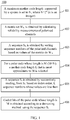
- FIG. 1 is a schematic flowchart of the polar coding method 100 in this embodiment of this application. As shown in FIG. 1 , the method 100 mainly includes steps 101 to 106.
- a maximum mother code length supported by a system is set to N.
- a metric set W N is obtained by calculating reliability metrics of polarized channels.
- a mother code length is consistent with a quantity of the polarized channels.
- the maximum mother code length supported by the system is N, correspondingly, there are N polarized channels.
- a prior-art method such as density evolution, Gaussian approximation, or linear fitting may be used.
- a specific calculation process may be the same as that in the prior art. For brevity, details are not described herein.
- a parameter such as an error probability, a channel capacity, or a polarization weight may be used as a parameter for measuring the reliabilities of the polarized channels, or another parameter that can measure the polarized channels may be used. This is not particularly limited in this embodiment of this application.
- n is a positive integer
- i B n-1 B n-2 ...B 0
- B n-1 B n-2 ...B 0 is a binary representation of i
- B n-1 is the most significant bit
- Bo is the least significant bit
- W i is used to represent a reliability of an i th polarized channel.
- N metrics are obtained by calculating the reliabilities of the polarized channels.
- a metric set (which, for ease of description, is denoted by the set W N in the following description) is obtained.
- a maximum mother code sequence S N is obtained by sorting sequence numbers of the polarized channels based on values of the metrics in W N .
- the N polarized channels are in one-to-one correspondence with the N metrics, and each metric is used to represent a reliability of a corresponding polarized channel.
- the reliabilities of the N polarized channels are sorted based on values of the N metrics in the set W N , and a sorting result is recorded by using the sequence numbers of the polarized channels, to obtain the sequence S N .
- the sequence S N includes N sequence numbers, and ordering of the N sequence numbers indicates ordering of the reliabilities of the N polarized channels.
- step 103 the sorting in step 103 is performed depending on a parameter selected for measuring the reliabilities of the polarized channels in step 102. It can be learned from the description in step 102 that, in step 103, the ordering of the polarized channels may be optionally determined based on the polarization weight, the error probability, the channel capacity, or another parameter that can measure the reliabilities of the polarized channels. This is not limited in this embodiment of this application.
- sequence numbers of the polarized channels may be sorted in ascending order or descending order. This is not particularly limited in this embodiment of this application.
- the maximum mother code sequence is stored in a coding device.
- the coding device may first obtain the maximum mother code sequence, and then perform polar coding by using the maximum mother code sequence. Specifically, the coding device first reads, from the maximum mother code sequence, a mother code sequence in a required length, then determines an information bit index set (which is also referred to as an information bit sequence number set) based on the read mother code sequence, and finally performs polar coding on to-be-coded bits by using the information bit index set.
- an information bit index set which is also referred to as an information bit sequence number set
- M 2 m , where m is a positive integer.
- the length of the polar code is the m th power of 2.
- M 4 or 8.
- a value of the mother code length L of the polar code is M.
- the length of the polar code is not a value of the m th power of 2.
- M 5, 7, 11, or the like.
- the symbol ⁇ ⁇ represents rounding up.
- a sequence S 1 is obtained by successively reading, from the sequence S N based on index order, L sequence numbers that are less than L.
- the sequence S 1 (an example of the first sequence) is a sub-sequence of the sequence S N .
- L the sequence S 1 is the sequence S N .
- step 104 if polar coding needs to be performed to obtain the polar code whose length is M, the mother code length is L.
- step 105 the sequence S 1 that is used as the mother code of the polar code is read from the sequence S N . Specifically, when the sequence S 1 is read, sequence numbers that are less than L need to be successively read based on index order of the sequence S N .
- the following describes, by using an example, how the mother code sequence S 1 of the polar code is read.
- FIG. 2 is a schematic diagram of reading a sequence in any code length from the maximum mother code sequence according to this embodiment of this application.
- N the maximum mother code length supported by the system
- there should be 16 sequence numbers stored in the sequence S N and ordering of the 16 sequence numbers corresponds to ordering of reliabilities of 16 polarized channels.
- a sequence S N obtained by sorting the reliabilities of the 16 polarized channels in ascending order is ⁇ 0, 1, 2, 4, 8, 3, 5, 6, 9, 10, 12, 7, 11, 13, 14, 15 ⁇ .
- L 8.
- a sequence S 1 obtained by successively reading, from the sequence S N , sequence numbers that are less than L (that is, less than 8) is ⁇ 0, 1, 2, 4, 3, 5, 6, 7 ⁇ .
- L 4.
- a sequence S 1 obtained by successively reading, from the sequence S N , sequence numbers that are less than L (that is, less than 4) is ⁇ 0, 1, 2, 3 ⁇ .
- Coded bits of the polar code whose length is M is obtained according to a shortening method using the sequence S 1 .
- the sequence S 1 is used as the mother code sequence, and the polar code whose code length is M (that is, a target polar code) may be obtained according to the shortening (English name: Shorten, one of polar code puncturing schemes) method.
- shortening English name: Shorten, one of polar code puncturing schemes
- the system needs to store only one sequence (that is, the maximum mother code sequence that can be supported by the system).
- the mother code sequence in the required length is read from the maximum mother code sequence based on the mother code length required by the polar code, so that storage overheads of the system can be reduced.
- the sequence #A ⁇ 0 1 2 4 8 16 3 32 5 6 9 64 10 17 12 18 128 33 20 34 7 24 36 65 11 256 66 40 13 19 68 14 129 48 21 72 130 35 22 25 512 132 37 80 26 38 257 67 136 41 28 258 96 69 42 15 144 49 260 70 44 73 131 50 23 1024 264 74 160 513 133 52 81 27 76 514 134 39 272 82 137 56 29 516 259 192 97 138 84 43 30 145 288 98 261 71 520 140 45 88 146 51 262 100 1025 46 265 75 2048 161 528 148 53 320 1026 266 104 77 162 515 135 54 273 83 152 57 1028 268 78 544 164 517 274 193 112 139 85 58 31 1032 518
- the system stores a maximum mother code sequence (assuming that a length is N), and a mother code sequence in any code length (assuming that the code length is M, where M ⁇ N) can be directly read from the maximum mother code sequence.
- any mother code sequence in code length of 16, 32, 64, 128, ..., or32768 can be directly read from the foregoing sequence #A.
- the maximum mother code sequence supported by the system may be stored in a compressed storage mode, to further reduce the storage overheads of the system.
- N 4 a difference between N 4 , N 4 + 1, N 4 + 2, ... ,2 n ⁇ 1 ⁇ 1 and the base sequence
- N 2 a difference between N 2 , N 2 + 1, N 2 + 2, ... , 3 N 4 ⁇ 1 and corresponding locations in the base sequence
- the differences are all integer multiples of a length of the base sequence.
- a base sequence when the maximum mother code sequence supported by the system is stored, a base sequence may be first determined from the maximum mother code sequence, and for sequence numbers of rest polarized channels, an offset difference (in other words, an offset multiplier) of the sequence numbers with respect to those in the base sequence is stored.
- an offset difference in other words, an offset multiplier
- N 2 n , where n is a nonnegative integer.
- the sequence S N includes sequence numbers (indexes from 0 to N-1) of N polarized channels, and ordering of the sequence numbers of the N polarized channels is obtained based on ordering of reliabilities of the polarized channels.
- a quantity S of bits that need to be used to represent a sequence number in the maximum mother code sequence is calculated.
- the symbol ⁇ ⁇ represents rounding up.
- determining the value of S based on this equation is only used as an example.
- a manner how the value of S is determined is not limited. Any manner shall fall with the protection scope of this embodiment of this application, provided that a compressed storage mode is used so that a quantity of bits used when the sequence numbers of the polarized channels are stored is less than a quantity of bits used during direct storage are.
- the sequence number in the maximum mother code sequence is represented by S bits
- one bit in the S bits needs to be reserved as an indication bit used to indicate a type of a sequence number stored at a current location. Therefore, the rest (S-1) bits in the S bits are used to indicate a value of the sequence number.
- sequence number herein means that the sequence number stored at the current location belongs to a base sequence or an offset sequence.
- step 105 for ordering of the sequence numbers in the base sequence, reference may be made to step 105.
- Sequence numbers that are greater than or equal to the sequence number Q and that are in the maximum mother code sequence are grouped into N ⁇ Q Q offset sequences.
- a quantity of sequence numbers included in each offset sequence is the same as a quantity of the sequence numbers included in the base sequence
- ordering of a plurality of sequence numbers in each offset sequence is the same as ordering of the plurality of sequence numbers in the maximum mother code sequence
- Each sequence number in the base sequence is stored by using S bits, where the S bits include a first bit and a plurality of second bits.
- the first bit is used to indicate that the sequence number stored at the current location belongs to the base sequence
- the plurality of second bits are used to indicate a value of the sequence number stored at the current location.
- a sequence number in the offset sequence is stored by using S bits, where the S bits include a third bit and a plurality of fourth bits.
- the third bit is used to indicate that the sequence number stored at the current location belongs to an offset sequence
- the plurality of fourth bits are used to indicate an offset multiplier of the sequence number stored at the current location with respect to a sequence number at a corresponding location in the base sequence.
- An i th sequence number in each offset sequence corresponds to an i th sequence number in the base sequence.
- N 16 (meaning that the maximum mother code length supported by the system is 16) as an example to describe the foregoing compressed storage process.
- sequence numbers of the rest polarized channels are grouped into 3 offset sequences.
- Each offset sequence includes 4 sequence numbers, and the 4 sequence numbers in each offset sequence are in one-to-one correspondence with 4 sequence numbers in the base sequence.
- differences between sequence numbers in the offset sequence and sequence numbers in the base sequence are the same.
- the sequence numbers 4 to 15 are grouped in to 3 offset sequences
- the sequence numbers 4 to 7 belong to an offset sequence 1
- the sequence numbers 8 to 11 belong to an offset sequence 2
- sequence numbers 12 to 15 belong to an offset sequence 3.
- sequence numbers 4 to 7 belong to the offset sequence 1 means that the sequence numbers 4, 5, 6, and 7 belong to a same offset sequence but does not represent ordering of the sequence numbers 4, 5, 6, and 7.
- sequence numbers 4 to 7 belong to the offset sequence 1
- sequence numbers 4, 5, 6, and 7 belong to a same offset sequence but does not represent ordering of the sequence numbers 4, 5, 6, and 7.
- the offset sequence 2 ⁇ 8 9 10 11 ⁇
- the offset sequence 3 ⁇ 12 13 14 15 ⁇ . Therefore, it can be learned that differences between a plurality of sequence numbers that belong to a same offset sequence and sequence numbers at corresponding locations in the base sequence are the same.
- a difference between the offset sequence 1 and the base sequence is 4 (an offset multiplier is 1)
- a difference between the offset sequence 2 and the base sequence is 8 (an offset multiplier is 2)
- a difference between the offset sequence 3 and the base sequence is 12 (an offset multiplier is 3).
- bits that are used to store each sequence number include a first portion and a second portion.
- the first portion is used to indicate whether a sequence number stored at a current location belongs to the base sequence or an offset sequence. If the first portion indicates that the sequence number stored at the current location belongs to the base sequence, the second portion is used to indicate a value of the sequence number stored at the current location. If the first portion indicates that the sequence number stored at the current location belongs to an offset sequence, the second portion is used to indicate an offset multiplier of the sequence number stored at the current location with respect to that in the base sequence.
- FIG. 3 is a storage form of a maximum mother code sequence in a compressed storage mode according to an embodiment of this application.
- each sequence number is stored by using 3 bits.
- the most significant 1 bit of each sequence number is used to indicate whether a sequence number stored at a current location belongs to the base sequence or an offset sequence.
- "0" is used to indicate that the sequence number stored at the current location belongs to the base sequence
- "1" is used to indicate that the sequence number stored at the current location belongs to an offset sequence. Therefore, the first bits of sequence numbers 1, 2, and 3 are 0s, and the first bits of the rest sequence numbers are all Is.
- the rest bits are used to indicate a value of the sequence number stored at the current location.
- the last 2 bits are directly read as a sequence number of a polarized channel.
- the last 2 bits of the sequence numbers 0, 1, 2, and 3 are 00, 01, 10, and 11, respectively.
- the sequence numbers of polarized channels are 0, 1, 2, and 3, respectively.
- the rest bits are used to indicate an offset multiplier of the sequence number stored at the current location with respect to that in the base sequence. Therefore, for a k th sequence number whose most significant bit is 1 and whose offset multiplier is y, the value of the sequence number stored at the current location is the k th sequence number in the base sequence + (the offset multiplier y ⁇ a length of the base sequence).
- the most significant bit is stored as 1 and is used to indicate that the sequence number 5 belongs to an offset sequence.
- the last 2 bits are necessarily stored as 00 and are used to indicate that an offset multiplier of the sequence number (that is, the sequence number 5) stored at the current location with respect to that in the base sequence is 1.
- the most significant bit is stored as 1, and the last 2 bits are stored as 01 and are used to indicate that an offset multiplier is 2.
- FIG. 5 is another storage form of a maximum mother code sequence in a compressed storage mode according to an embodiment of this application.
- ⁇ 0 1 2, ..., 7 ⁇ is selected as a base sequence, and an offset difference of sequence numbers of the rest polarized channels with respect to those in the base sequence is 8; therefore, an offset multiplier is 1.
- a length of a maximum sequence in the base sequence is 8, and therefore 3 bits need to be used for representation.
- the offset multiplier of the sequence numbers of the rest polarized channels with respect to those in the base sequence is 1, and therefore only one bit needs to be used for representation.
- 3 bits are also used when an offset multiplier of sequence numbers 8 to 15 is stored. With one indication bit added, in this case, a quantity of bits used when the maximum mother code sequence is stored is 4.
- the lengths of the base sequences selected in FIG. 5 and FIG. 3 are different.
- the quantity of bits used when the maximum mother code sequence is stored in FIG. 5 and that used in the direct storage mode are both 4, and the quantity of bits is not reduced.
- the length of the base sequence may further be shortened, so as to enlarge a range of the offset multiplier. Therefore, when the length of the base sequence is shortened to 4, the storage form of the maximum mother code sequence shown in FIG. 3 may be obtained.
- the quantity of bits that are used can be minimal. Compared with the prior art, this can further reduce storage overheads of a system on the basis that the storage overheads are reduced by storing only one sequence (that is, the maximum mother code sequence).
- Table 6 shows a result of comparison between storage space occupied by direct storage and that occupied by compressed storage.
- Table 6 Maximum Mother Code Length (N) Direct Storage Compressed Storage Quantity of bits used Quantity of bits used Base sequence range
- Space saved 256 8 5 0 ⁇ 15 37.5% 512 9 6 0 ⁇ 31 33.3% 1024 10 6 0 ⁇ 31 40% 2048 11 7 0 ⁇ 63 36.4% 4096 12 7 0 ⁇ 63 41.7% 8192 13 8 0 ⁇ 127 38.5% 16384 14 8 0 ⁇ 127 42.9% 32768 15 9 0 ⁇ 255 40% 65536 16 9 0 ⁇ 255 43.75% 131072 17 10 0 ⁇ 511 41.2% 262144 18 10 0 ⁇ 511 44.4% 524288 19 11 0 ⁇ 1023 42.1% 1048576 20 11 0 ⁇ 1023 45%
- FIG. 6 is a schematic block diagram of a polar coding apparatus 500 according to an embodiment of this application. As shown in FIG. 6 , the apparatus 500 includes a processing unit 510 and a storage unit 520.
- the processing unit 510 is further configured to sort sequence numbers of the N polarized channels in ascending order or descending order of the metrics, to obtain a maximum mother code sequence.
- the storage unit 520 is configured to store the maximum mother code sequence.
- the apparatus 500 may be a chip or an integrated circuit.
- the apparatus 500 may be provided with a chip (or a chip system).
- the chip includes a memory and a processor.
- the memory is configured to store a computer program
- the processor is configured to execute the computer program stored in the memory.
- the apparatus 500 can perform the polar coding method described in the foregoing embodiments.
- the computer program may also be referred to as computer program code, program code, or the like.
- the apparatus 500 may be an integrated circuit.
- the integrated circuit may include:
- FIG. 7 is a schematic structural diagram of a polar coding device 600 according to an embodiment of this application.
- the device 600 includes a memory 610, a processor 620, and a network interface 630.
- the memory 610, the processor 620, and the network interface 630 may be connected to each other by using a bus system 640.
- the memory 610 is configured to store an instruction
- the processor 620 is configured to execute the instruction stored in the memory 620, to control the network interface 630 to send or receive a signal.
- the processor 620 is further configured to sort sequence numbers of the N polarized channels in ascending order or descending order of the metrics, to obtain a maximum mother code sequence.
- the memory 610 is configured to store the maximum mother code sequence.
- the units in the polar coding device 600 in this embodiment of this application and the foregoing operations or functions are intended to implement corresponding procedures in the method 100. For brevity, details are not repeatedly described herein.
- this embodiment of this application only the maximum mother code sequence that can be supported by a system needs to be stored, and during polar code coding, a mother code sequence in a length required to perform polar coding is read from the maximum mother code sequence, so that storage overheads of the system can be reduced.
- the processor 620 may be a central processing unit (central processing unit, CPU), or may be another general purpose processor, a digital signal processor (Digital Signal Processor, DSP), an application-specific integrated circuit (Application-Specific Integrated Circuit, ASIC), a field programmable gate array (Field Programmable Gate Array, FPGA) or another programmable logic device, a discrete gate or transistor logic device, a discrete hardware component, or the like.
- the general purpose processor may be a microprocessor or the processor may be any normal processor, or the like.
- the memory 610 may include a read-only memory and a random access memory, and provides an instruction and data to the processor 620.
- a part of the memory 610 may further include a non-volatile random access memory.
- the memory 610 may further store device type information.
- the bus system 640 may include a power bus, a control bus, a status signal bus, and the like. However, for clear description, various buses are marked as the bus system 640 in the figure.
- the network interface 630 may be a wired interface, such as a fiber distributed data interface (Fiber Distributed Data Interface, FDDI) or a gigabit Ethernet (Gigabit Ethernet, GE) interface.
- the network interface 630 may alternatively be a wireless interface.
- the steps of the foregoing methods may be implemented by using an integrated logic circuit of hardware in the processor 620, or by using a software instruction.
- the steps of the polar coding method disclosed with reference to the embodiments of this application may be directly performed by a hardware processor, or may be performed by using a combination of hardware in the processor and a software module.
- the software module may be in a random access memory, a flash memory, a read-only memory, a programmable read-only memory or an electrical erasable programmable memory, a register, or another mature storage medium in the art.
- the storage medium is located in the memory 610, and the processor 620 reads information from the memory 610 and implements, in combination with hardware of the processor 620, the steps of the foregoing methods. To avoid repetition, no detailed description is given herein again.
- the disclosed system, apparatus, and method may be implemented in other manners.
- the described apparatus embodiments are merely examples.
- the unit division is merely logical function division and may be other division in actual implementation.
- a plurality of units or components may be combined or integrated into another system, or some features may be ignored or not performed.
- the displayed or discussed mutual couplings or direct couplings or communication connections may be indirect couplings or communication connections through some interfaces, apparatuses, or units, and may be in electronic, mechanical, or other forms.
- the units described as separate parts may or may not be physically separate. Parts displayed as units may or may not be physical units, and may be located in one location or distributed on a plurality of network units. Some or all of the units may be selected depending on actual requirements to achieve the objectives of the solutions of the embodiments.
- the functions When implemented in the form of a software functional unit and sold or used as an independent product, the functions may be stored in a computer readable storage medium. Based on such an understanding, the technical solutions of this application essentially, or the part contributing to the prior art, or some of the technical solutions may be implemented in a form of a software product.
- the computer software product is stored in a storage medium, and includes several instructions for instructing a computer device (which may be a personal computer, a server, a network device, or the like) to perform all or some of the steps of the methods described in the embodiments of this application.
- the foregoing storage medium includes: any medium that can store program code, such as a USB flash drive, a removable hard disk, a read-only memory (Read-Only Memory, ROM), a random access memory (Random Access Memory, RAM), a magnetic disk, or an optical disc.
- program code such as a USB flash drive, a removable hard disk, a read-only memory (Read-Only Memory, ROM), a random access memory (Random Access Memory, RAM), a magnetic disk, or an optical disc.
Landscapes
- Engineering & Computer Science (AREA)
- Physics & Mathematics (AREA)
- Probability & Statistics with Applications (AREA)
- Theoretical Computer Science (AREA)
- Computer Networks & Wireless Communication (AREA)
- Signal Processing (AREA)
- Compression, Expansion, Code Conversion, And Decoders (AREA)
- Error Detection And Correction (AREA)
Priority Applications (2)
| Application Number | Priority Date | Filing Date | Title |
|---|---|---|---|
| EP21177890.7A EP4009530B1 (de) | 2016-08-11 | 2017-07-04 | Polarcodierung basierend auf einer geordneten sequenz für einen polarcode maximaler länge |
| EP25175339.8A EP4618424A3 (de) | 2016-08-11 | 2017-07-04 | Polarcodierungsverfahren, -vorrichtung und -vorrichtung |
Applications Claiming Priority (2)
| Application Number | Priority Date | Filing Date | Title |
|---|---|---|---|
| CN201610664987.6A CN107342842B (zh) | 2016-08-11 | 2016-08-11 | 用于极化编码的方法、装置和设备 |
| PCT/CN2017/091675 WO2018028351A1 (zh) | 2016-08-11 | 2017-07-04 | 用于极化编码的方法、装置和设备 |
Related Child Applications (2)
| Application Number | Title | Priority Date | Filing Date |
|---|---|---|---|
| EP25175339.8A Division EP4618424A3 (de) | 2016-08-11 | 2017-07-04 | Polarcodierungsverfahren, -vorrichtung und -vorrichtung |
| EP21177890.7A Division EP4009530B1 (de) | 2016-08-11 | 2017-07-04 | Polarcodierung basierend auf einer geordneten sequenz für einen polarcode maximaler länge |
Publications (3)
| Publication Number | Publication Date |
|---|---|
| EP3407519A1 true EP3407519A1 (de) | 2018-11-28 |
| EP3407519A4 EP3407519A4 (de) | 2019-04-17 |
| EP3407519B1 EP3407519B1 (de) | 2021-06-09 |
Family
ID=60223063
Family Applications (3)
| Application Number | Title | Priority Date | Filing Date |
|---|---|---|---|
| EP17838481.4A Active EP3407519B1 (de) | 2016-08-11 | 2017-07-04 | Polarcodierung basierend auf einem muttercode mit einer zuverlässigkeitssequenz, welche von der zuverlässigkeitssequenz eines muttercodes maximaler länge abgeleitet wird |
| EP25175339.8A Pending EP4618424A3 (de) | 2016-08-11 | 2017-07-04 | Polarcodierungsverfahren, -vorrichtung und -vorrichtung |
| EP21177890.7A Active EP4009530B1 (de) | 2016-08-11 | 2017-07-04 | Polarcodierung basierend auf einer geordneten sequenz für einen polarcode maximaler länge |
Family Applications After (2)
| Application Number | Title | Priority Date | Filing Date |
|---|---|---|---|
| EP25175339.8A Pending EP4618424A3 (de) | 2016-08-11 | 2017-07-04 | Polarcodierungsverfahren, -vorrichtung und -vorrichtung |
| EP21177890.7A Active EP4009530B1 (de) | 2016-08-11 | 2017-07-04 | Polarcodierung basierend auf einer geordneten sequenz für einen polarcode maximaler länge |
Country Status (12)
| Country | Link |
|---|---|
| US (6) | US10326555B2 (de) |
| EP (3) | EP3407519B1 (de) |
| JP (1) | JP6813663B2 (de) |
| KR (1) | KR102114259B1 (de) |
| CN (6) | CN114884610B (de) |
| AU (1) | AU2017310900C1 (de) |
| BR (2) | BR122019027868B1 (de) |
| CA (1) | CA3033537C (de) |
| ES (1) | ES2884498T3 (de) |
| RU (1) | RU2716739C1 (de) |
| WO (1) | WO2018028351A1 (de) |
| ZA (1) | ZA201900695B (de) |
Cited By (3)
| Publication number | Priority date | Publication date | Assignee | Title |
|---|---|---|---|---|
| WO2020098461A1 (zh) | 2018-11-16 | 2020-05-22 | 华为技术有限公司 | Polar码编码方法及装置 |
| WO2020122749A1 (en) * | 2018-12-13 | 2020-06-18 | Huawei Technologies Co., Ltd. | Apparatus and method for obtaining concatenated code structures and computer program product therefor |
| WO2020122748A1 (en) * | 2018-12-13 | 2020-06-18 | Huawei Technologies Co., Ltd | Apparatus and method for obtaining concatenated code structures and computer program product therefor |
Families Citing this family (26)
| Publication number | Priority date | Publication date | Assignee | Title |
|---|---|---|---|---|
| CN114884610B (zh) | 2016-08-11 | 2024-04-09 | 华为技术有限公司 | 用于极化编码的方法、装置和设备 |
| WO2018119883A1 (en) | 2016-12-29 | 2018-07-05 | Qualcomm Incorporated | Nested structure for polar code construction using density evolution |
| US10383106B2 (en) | 2017-01-04 | 2019-08-13 | Coherent Logix, Incorporated | Scrambling sequence design for embedding UE ID into frozen bits for DCI blind detection |
| CN108282260A (zh) * | 2017-01-06 | 2018-07-13 | 株式会社Ntt都科摩 | 编码方法和编码器 |
| CN108540260B (zh) | 2017-03-02 | 2019-12-24 | 华为技术有限公司 | 用于确定Polar码编解码的方法、装置和可存储介质 |
| CN107342844B (zh) | 2017-03-24 | 2022-09-02 | 华为技术有限公司 | 一种编码方法和装置 |
| CN108736899B (zh) * | 2017-06-19 | 2019-07-12 | 华为技术有限公司 | 一种极化码编译码方法及装置 |
| WO2019099318A1 (en) * | 2017-11-15 | 2019-05-23 | Idac Holdings, Inc. | Urllc transmissions with polar codes |
| WO2019098677A1 (ko) * | 2017-11-16 | 2019-05-23 | 엘지전자 주식회사 | Pbch 전송 방법 및 전송 장치, 및 pbch 수신 방법 및 수신 장치 |
| WO2019095270A1 (en) * | 2017-11-17 | 2019-05-23 | Qualcomm Incorporated | Uplink control information segmentation for polar codes |
| CN108092742B (zh) * | 2017-12-17 | 2019-11-22 | 华中科技大学 | 一种基于极化码的通信方法 |
| CN110034843B (zh) * | 2018-01-12 | 2022-06-14 | 华为技术有限公司 | 信道编码方法和编码装置 |
| CN108304658B (zh) * | 2018-02-02 | 2020-05-19 | 中国计量大学 | 一种基于fpga的极化码编码器硬件实现方法 |
| CN110365445B (zh) * | 2018-03-26 | 2022-02-25 | 中兴通讯股份有限公司 | 一种序列确定方法、装置和编码器 |
| CN108449163B (zh) * | 2018-03-29 | 2021-01-26 | 海南大学 | 一种极化码性能分析方法 |
| CN110505036A (zh) * | 2018-05-17 | 2019-11-26 | 财团法人工业技术研究院 | 传输以极化码编码的数据的方法与使用其的电子装置 |
| CN112438023B (zh) * | 2018-07-20 | 2024-03-29 | 上海诺基亚贝尔股份有限公司 | 极化编码和解码 |
| CN109361495B (zh) | 2018-12-07 | 2020-05-08 | 北京邮电大学 | 一种极化码构造方法、装置、电子设备及可读存储介质 |
| CN111447042B (zh) * | 2019-01-17 | 2021-12-24 | 华为技术有限公司 | 一种极化编译码方法及装置 |
| CN111865487B (zh) * | 2019-04-29 | 2022-07-29 | 华为技术有限公司 | 一种编码方法及通信设备 |
| CN113810059B (zh) * | 2020-06-12 | 2025-09-05 | 华为技术有限公司 | 一种用于卫星通信的极化编码译码方法及装置 |
| TWI744960B (zh) * | 2020-06-22 | 2021-11-01 | 旺宏電子股份有限公司 | 記憶體控制器及記憶體裝置 |
| CN114513212A (zh) * | 2020-11-16 | 2022-05-17 | 华为技术有限公司 | 一种极化编码方法和装置 |
| CN114614943A (zh) * | 2020-12-03 | 2022-06-10 | 华为技术有限公司 | 一种极化码辅助比特的确定方法和装置 |
| CN119030550B (zh) * | 2024-09-05 | 2025-10-17 | 西南石油大学 | 一种低复杂度的极化码构造方法 |
| CN121864253A (zh) * | 2024-10-14 | 2026-04-14 | 华为技术有限公司 | 一种数据传输方法、及其装置和系统 |
Family Cites Families (40)
| Publication number | Priority date | Publication date | Assignee | Title |
|---|---|---|---|---|
| US6105158A (en) * | 1998-04-03 | 2000-08-15 | Lucent Technologies, Inc. | Screening for undetected errors in data transmission systems |
| FI106416B (fi) * | 1999-02-09 | 2001-01-31 | Nokia Mobile Phones Ltd | Menetelmä ja laite dekoodatun symbolisarjan luotettavuuden määrittämiseksi |
| US6848069B1 (en) * | 1999-08-10 | 2005-01-25 | Intel Corporation | Iterative decoding process |
| CN101447851B (zh) * | 2007-11-26 | 2012-01-04 | 清华大学 | 一种准循环低密度奇偶校验码的生成方法 |
| US8442163B2 (en) * | 2009-08-24 | 2013-05-14 | Eric Morgan Dowling | List-viterbi hard iterative decoder for multilevel codes |
| US8677227B2 (en) * | 2010-08-25 | 2014-03-18 | Royal Institution for the Advancement of Learning / McGill University | Method and system for decoding |
| CN102118231B (zh) * | 2011-04-13 | 2013-04-17 | 厦门大学 | 多边类型低密度奇偶校验码的码率自适应编码方法 |
| CN102122966B (zh) * | 2011-04-15 | 2012-11-14 | 北京邮电大学 | 基于信道极化的交错结构重复码的编码器及其编译码方法 |
| US9176927B2 (en) * | 2011-11-08 | 2015-11-03 | The Royal Institution For The Advancement Of Learning/Mcgill University | Methods and systems for decoding polar codes |
| CN102694625B (zh) | 2012-06-15 | 2014-11-12 | 北京邮电大学 | 一种循环冗余校验辅助的极化码译码方法 |
| US9503126B2 (en) * | 2012-07-11 | 2016-11-22 | The Regents Of The University Of California | ECC polar coding and list decoding methods and codecs |
| CN106899311B (zh) * | 2012-09-24 | 2023-11-03 | 华为技术有限公司 | 混合极性码的生成方法和生成装置 |
| CN107659384A (zh) | 2012-11-16 | 2018-02-02 | 华为技术有限公司 | 数据处理的方法和装置 |
| CN103023618B (zh) * | 2013-01-11 | 2015-04-22 | 北京邮电大学 | 一种任意码长的极化编码方法 |
| US9362956B2 (en) * | 2013-01-23 | 2016-06-07 | Samsung Electronics Co., Ltd. | Method and system for encoding and decoding data using concatenated polar codes |
| CN104124979B (zh) * | 2013-04-27 | 2018-04-17 | 华为技术有限公司 | 极性码的译码方法和译码装置 |
| CN103414540A (zh) * | 2013-08-14 | 2013-11-27 | 南京邮电大学 | 一种基于Polar码的退化窃听信道速率兼容方法 |
| USRE49547E1 (en) * | 2013-08-20 | 2023-06-06 | Lg Electronics Inc. | Method for transmitting data by using polar coding in wireless access system |
| RU2679223C2 (ru) | 2013-11-11 | 2019-02-06 | Хуавэй Текнолоджиз Ко., Лтд. | Способ и устройство для полярного кодирования |
| EP3073660B1 (de) * | 2013-11-20 | 2020-06-24 | Huawei Technologies Co., Ltd. | Verfahren und vorrichtung zur verarbeitung von polarcodes |
| BR112016014679B1 (pt) | 2013-12-24 | 2021-11-03 | Huawei Technologies Co., Ltd | Método de decodificação de código polar e aparelho de decodificação |
| CN105453466B (zh) * | 2013-12-30 | 2020-01-21 | 华为技术有限公司 | 极化码的速率匹配方法及装置 |
| US9319073B2 (en) * | 2014-02-11 | 2016-04-19 | Seagate Technology Llc | Mitigation of write errors in multi-level cell flash memory through adaptive error correction code decoding |
| JP6363721B2 (ja) * | 2014-02-21 | 2018-07-25 | 華為技術有限公司Huawei Technologies Co.,Ltd. | ポーラ符号のためのレートマッチング方法および装置 |
| RU2014110139A (ru) * | 2014-03-17 | 2015-09-27 | ЭлЭсАй Корпорейшн | Полярные коды произвольной длины |
| CN103888151B (zh) * | 2014-03-28 | 2017-02-15 | 中山大学 | 一种基于分组马尔可夫叠加编码的多码率码编码方法 |
| RU2669743C1 (ru) | 2014-03-31 | 2018-10-15 | Хуавэй Текнолоджиз Ко., Лтд. | Способ и устройство гибридного автоматического запроса на повторение с полярным кодом и беспроводное устройство связи |
| KR102157667B1 (ko) * | 2014-05-15 | 2020-09-18 | 삼성전자주식회사 | 천공 장치 및 그의 천공 방법 |
| CN106416083B (zh) | 2014-05-30 | 2020-01-21 | 华为技术有限公司 | 一种打孔的极化码的构造方法和装置 |
| US9923665B2 (en) * | 2014-06-06 | 2018-03-20 | Huawei Technologies Co., Ltd. | System and method for forward error correction |
| US10193578B2 (en) * | 2014-07-10 | 2019-01-29 | The Royal Institution For The Advancement Of Learning / Mcgill University | Flexible polar encoders and decoders |
| CN104158550A (zh) * | 2014-08-26 | 2014-11-19 | 重庆邮电大学 | 一种基于深空通信环境的码率兼容原模图ldpc码构造方法 |
| WO2016119105A1 (zh) * | 2015-01-26 | 2016-08-04 | 华为技术有限公司 | 极化Polar码的生成方法和设备 |
| US9742440B2 (en) * | 2015-03-25 | 2017-08-22 | Samsung Electronics Co., Ltd | HARQ rate-compatible polar codes for wireless channels |
| CN105099622B (zh) * | 2015-07-01 | 2018-10-19 | 北京邮电大学 | 极化编码调制中信道可靠度的确定方法及装置 |
| US10461779B2 (en) * | 2015-08-12 | 2019-10-29 | Telefonaktiebolaget Lm Ericsson (Publ) | Rate-compatible polar codes |
| CN105281785B (zh) * | 2015-10-22 | 2018-08-31 | 东南大学 | 一种列表连续消除极化码译码方法、装置 |
| CN105811998B (zh) * | 2016-03-04 | 2019-01-18 | 深圳大学 | 一种基于密度演进的极化码构造方法及极化码编译码系统 |
| CN107666370B (zh) | 2016-07-29 | 2023-09-22 | 华为技术有限公司 | 编码方法和设备 |
| CN114884610B (zh) | 2016-08-11 | 2024-04-09 | 华为技术有限公司 | 用于极化编码的方法、装置和设备 |
-
2016
- 2016-08-11 CN CN202210298050.7A patent/CN114884610B/zh active Active
- 2016-08-11 CN CN201810445308.5A patent/CN108599900B/zh active Active
- 2016-08-11 CN CN202210298094.XA patent/CN114884611A/zh active Pending
- 2016-08-11 CN CN201610664987.6A patent/CN107342842B/zh active Active
- 2016-08-11 CN CN202010304810.1A patent/CN111614361B/zh active Active
- 2016-08-11 CN CN201810445329.7A patent/CN108631945B/zh active Active
-
2017
- 2017-07-04 RU RU2019106507A patent/RU2716739C1/ru active
- 2017-07-04 BR BR122019027868-7A patent/BR122019027868B1/pt active IP Right Grant
- 2017-07-04 AU AU2017310900A patent/AU2017310900C1/en active Active
- 2017-07-04 WO PCT/CN2017/091675 patent/WO2018028351A1/zh not_active Ceased
- 2017-07-04 CA CA3033537A patent/CA3033537C/en active Active
- 2017-07-04 EP EP17838481.4A patent/EP3407519B1/de active Active
- 2017-07-04 KR KR1020197005856A patent/KR102114259B1/ko active Active
- 2017-07-04 EP EP25175339.8A patent/EP4618424A3/de active Pending
- 2017-07-04 EP EP21177890.7A patent/EP4009530B1/de active Active
- 2017-07-04 ES ES17838481T patent/ES2884498T3/es active Active
- 2017-07-04 JP JP2019507175A patent/JP6813663B2/ja active Active
- 2017-07-04 BR BR112019002575-8A patent/BR112019002575A2/pt not_active Application Discontinuation
-
2018
- 2018-08-23 US US16/110,873 patent/US10326555B2/en active Active
-
2019
- 2019-02-01 ZA ZA2019/00695A patent/ZA201900695B/en unknown
- 2019-03-07 US US16/295,151 patent/US10892851B2/en active Active
-
2020
- 2020-12-23 US US17/132,566 patent/US11368249B2/en active Active
-
2022
- 2022-04-26 US US17/729,458 patent/US11870573B2/en active Active
-
2023
- 2023-08-14 US US18/449,536 patent/US12489556B2/en active Active
-
2025
- 2025-11-07 US US19/382,655 patent/US20260067029A1/en active Pending
Cited By (4)
| Publication number | Priority date | Publication date | Assignee | Title |
|---|---|---|---|---|
| WO2020098461A1 (zh) | 2018-11-16 | 2020-05-22 | 华为技术有限公司 | Polar码编码方法及装置 |
| EP3873010A4 (de) * | 2018-11-16 | 2021-12-29 | Huawei Technologies Co., Ltd. | Verfahren und vorrichtung zur polarcode-codierung |
| WO2020122749A1 (en) * | 2018-12-13 | 2020-06-18 | Huawei Technologies Co., Ltd. | Apparatus and method for obtaining concatenated code structures and computer program product therefor |
| WO2020122748A1 (en) * | 2018-12-13 | 2020-06-18 | Huawei Technologies Co., Ltd | Apparatus and method for obtaining concatenated code structures and computer program product therefor |
Also Published As
Similar Documents
| Publication | Publication Date | Title |
|---|---|---|
| US12489556B2 (en) | Polar coding method, apparatus, and device | |
| US10892849B2 (en) | Polar code coding method and apparatus | |
| US11057054B2 (en) | Channel coding method and apparatus in communication system | |
| EP3641172B1 (de) | Informationsverarbeitungsverfahren und kommunikationsvorrichtung | |
| EP3624350A1 (de) | Informationsverarbeitungsverfahren und kommunikationsvorrichtung | |
| CN107733554B (zh) | 极化码的速率匹配方法和装置 | |
| HK1257014B (en) | Polar coding based on mother code having a reliability sequence derived from the reliability sequence of a maximum length mother code |
Legal Events
| Date | Code | Title | Description |
|---|---|---|---|
| STAA | Information on the status of an ep patent application or granted ep patent |
Free format text: STATUS: THE INTERNATIONAL PUBLICATION HAS BEEN MADE |
|
| PUAI | Public reference made under article 153(3) epc to a published international application that has entered the european phase |
Free format text: ORIGINAL CODE: 0009012 |
|
| STAA | Information on the status of an ep patent application or granted ep patent |
Free format text: STATUS: REQUEST FOR EXAMINATION WAS MADE |
|
| 17P | Request for examination filed |
Effective date: 20180824 |
|
| AK | Designated contracting states |
Kind code of ref document: A1 Designated state(s): AL AT BE BG CH CY CZ DE DK EE ES FI FR GB GR HR HU IE IS IT LI LT LU LV MC MK MT NL NO PL PT RO RS SE SI SK SM TR |
|
| AX | Request for extension of the european patent |
Extension state: BA ME |
|
| A4 | Supplementary search report drawn up and despatched |
Effective date: 20190318 |
|
| RIC1 | Information provided on ipc code assigned before grant |
Ipc: H04L 1/00 20060101ALI20190312BHEP Ipc: H03M 13/13 20060101AFI20190312BHEP |
|
| REG | Reference to a national code |
Ref country code: HK Ref legal event code: DE Ref document number: 1257014 Country of ref document: HK |
|
| DAV | Request for validation of the european patent (deleted) | ||
| DAX | Request for extension of the european patent (deleted) | ||
| STAA | Information on the status of an ep patent application or granted ep patent |
Free format text: STATUS: EXAMINATION IS IN PROGRESS |
|
| 17Q | First examination report despatched |
Effective date: 20200810 |
|
| REG | Reference to a national code |
Ref country code: DE Ref legal event code: R079 Ref document number: 602017040146 Country of ref document: DE Free format text: PREVIOUS MAIN CLASS: H04L0001000000 Ipc: H03M0013130000 |
|
| GRAP | Despatch of communication of intention to grant a patent |
Free format text: ORIGINAL CODE: EPIDOSNIGR1 |
|
| STAA | Information on the status of an ep patent application or granted ep patent |
Free format text: STATUS: GRANT OF PATENT IS INTENDED |
|
| RIC1 | Information provided on ipc code assigned before grant |
Ipc: H03M 13/13 20060101AFI20210310BHEP Ipc: H03M 13/00 20060101ALI20210310BHEP Ipc: H04L 1/00 20060101ALI20210310BHEP |
|
| INTG | Intention to grant announced |
Effective date: 20210324 |
|
| GRAS | Grant fee paid |
Free format text: ORIGINAL CODE: EPIDOSNIGR3 |
|
| GRAA | (expected) grant |
Free format text: ORIGINAL CODE: 0009210 |
|
| STAA | Information on the status of an ep patent application or granted ep patent |
Free format text: STATUS: THE PATENT HAS BEEN GRANTED |
|
| AK | Designated contracting states |
Kind code of ref document: B1 Designated state(s): AL AT BE BG CH CY CZ DE DK EE ES FI FR GB GR HR HU IE IS IT LI LT LU LV MC MK MT NL NO PL PT RO RS SE SI SK SM TR |
|
| REG | Reference to a national code |
Ref country code: GB Ref legal event code: FG4D |
|
| REG | Reference to a national code |
Ref country code: CH Ref legal event code: EP Ref country code: AT Ref legal event code: REF Ref document number: 1401324 Country of ref document: AT Kind code of ref document: T Effective date: 20210615 |
|
| REG | Reference to a national code |
Ref country code: DE Ref legal event code: R096 Ref document number: 602017040146 Country of ref document: DE |
|
| REG | Reference to a national code |
Ref country code: IE Ref legal event code: FG4D |
|
| REG | Reference to a national code |
Ref country code: NL Ref legal event code: FP |
|
| REG | Reference to a national code |
Ref country code: LT Ref legal event code: MG9D |
|
| PG25 | Lapsed in a contracting state [announced via postgrant information from national office to epo] |
Ref country code: HR Free format text: LAPSE BECAUSE OF FAILURE TO SUBMIT A TRANSLATION OF THE DESCRIPTION OR TO PAY THE FEE WITHIN THE PRESCRIBED TIME-LIMIT Effective date: 20210609 Ref country code: BG Free format text: LAPSE BECAUSE OF FAILURE TO SUBMIT A TRANSLATION OF THE DESCRIPTION OR TO PAY THE FEE WITHIN THE PRESCRIBED TIME-LIMIT Effective date: 20210909 Ref country code: FI Free format text: LAPSE BECAUSE OF FAILURE TO SUBMIT A TRANSLATION OF THE DESCRIPTION OR TO PAY THE FEE WITHIN THE PRESCRIBED TIME-LIMIT Effective date: 20210609 Ref country code: LT Free format text: LAPSE BECAUSE OF FAILURE TO SUBMIT A TRANSLATION OF THE DESCRIPTION OR TO PAY THE FEE WITHIN THE PRESCRIBED TIME-LIMIT Effective date: 20210609 |
|
| PG25 | Lapsed in a contracting state [announced via postgrant information from national office to epo] |
Ref country code: RS Free format text: LAPSE BECAUSE OF FAILURE TO SUBMIT A TRANSLATION OF THE DESCRIPTION OR TO PAY THE FEE WITHIN THE PRESCRIBED TIME-LIMIT Effective date: 20210609 Ref country code: SE Free format text: LAPSE BECAUSE OF FAILURE TO SUBMIT A TRANSLATION OF THE DESCRIPTION OR TO PAY THE FEE WITHIN THE PRESCRIBED TIME-LIMIT Effective date: 20210609 Ref country code: LV Free format text: LAPSE BECAUSE OF FAILURE TO SUBMIT A TRANSLATION OF THE DESCRIPTION OR TO PAY THE FEE WITHIN THE PRESCRIBED TIME-LIMIT Effective date: 20210609 Ref country code: NO Free format text: LAPSE BECAUSE OF FAILURE TO SUBMIT A TRANSLATION OF THE DESCRIPTION OR TO PAY THE FEE WITHIN THE PRESCRIBED TIME-LIMIT Effective date: 20210909 Ref country code: GR Free format text: LAPSE BECAUSE OF FAILURE TO SUBMIT A TRANSLATION OF THE DESCRIPTION OR TO PAY THE FEE WITHIN THE PRESCRIBED TIME-LIMIT Effective date: 20210910 |
|
| REG | Reference to a national code |
Ref country code: ES Ref legal event code: FG2A Ref document number: 2884498 Country of ref document: ES Kind code of ref document: T3 Effective date: 20211210 |
|
| PG25 | Lapsed in a contracting state [announced via postgrant information from national office to epo] |
Ref country code: SK Free format text: LAPSE BECAUSE OF FAILURE TO SUBMIT A TRANSLATION OF THE DESCRIPTION OR TO PAY THE FEE WITHIN THE PRESCRIBED TIME-LIMIT Effective date: 20210609 Ref country code: SM Free format text: LAPSE BECAUSE OF FAILURE TO SUBMIT A TRANSLATION OF THE DESCRIPTION OR TO PAY THE FEE WITHIN THE PRESCRIBED TIME-LIMIT Effective date: 20210609 Ref country code: EE Free format text: LAPSE BECAUSE OF FAILURE TO SUBMIT A TRANSLATION OF THE DESCRIPTION OR TO PAY THE FEE WITHIN THE PRESCRIBED TIME-LIMIT Effective date: 20210609 Ref country code: CZ Free format text: LAPSE BECAUSE OF FAILURE TO SUBMIT A TRANSLATION OF THE DESCRIPTION OR TO PAY THE FEE WITHIN THE PRESCRIBED TIME-LIMIT Effective date: 20210609 Ref country code: RO Free format text: LAPSE BECAUSE OF FAILURE TO SUBMIT A TRANSLATION OF THE DESCRIPTION OR TO PAY THE FEE WITHIN THE PRESCRIBED TIME-LIMIT Effective date: 20210609 Ref country code: PT Free format text: LAPSE BECAUSE OF FAILURE TO SUBMIT A TRANSLATION OF THE DESCRIPTION OR TO PAY THE FEE WITHIN THE PRESCRIBED TIME-LIMIT Effective date: 20211011 |
|
| PG25 | Lapsed in a contracting state [announced via postgrant information from national office to epo] |
Ref country code: PL Free format text: LAPSE BECAUSE OF FAILURE TO SUBMIT A TRANSLATION OF THE DESCRIPTION OR TO PAY THE FEE WITHIN THE PRESCRIBED TIME-LIMIT Effective date: 20210609 |
|
| REG | Reference to a national code |
Ref country code: CH Ref legal event code: PL |
|
| REG | Reference to a national code |
Ref country code: DE Ref legal event code: R097 Ref document number: 602017040146 Country of ref document: DE |
|
| REG | Reference to a national code |
Ref country code: AT Ref legal event code: UEP Ref document number: 1401324 Country of ref document: AT Kind code of ref document: T Effective date: 20210609 |
|
| PG25 | Lapsed in a contracting state [announced via postgrant information from national office to epo] |
Ref country code: MC Free format text: LAPSE BECAUSE OF FAILURE TO SUBMIT A TRANSLATION OF THE DESCRIPTION OR TO PAY THE FEE WITHIN THE PRESCRIBED TIME-LIMIT Effective date: 20210609 |
|
| REG | Reference to a national code |
Ref country code: BE Ref legal event code: MM Effective date: 20210731 |
|
| PLBE | No opposition filed within time limit |
Free format text: ORIGINAL CODE: 0009261 |
|
| STAA | Information on the status of an ep patent application or granted ep patent |
Free format text: STATUS: NO OPPOSITION FILED WITHIN TIME LIMIT |
|
| PG25 | Lapsed in a contracting state [announced via postgrant information from national office to epo] |
Ref country code: LI Free format text: LAPSE BECAUSE OF NON-PAYMENT OF DUE FEES Effective date: 20210731 Ref country code: DK Free format text: LAPSE BECAUSE OF FAILURE TO SUBMIT A TRANSLATION OF THE DESCRIPTION OR TO PAY THE FEE WITHIN THE PRESCRIBED TIME-LIMIT Effective date: 20210609 Ref country code: CH Free format text: LAPSE BECAUSE OF NON-PAYMENT OF DUE FEES Effective date: 20210731 |
|
| 26N | No opposition filed |
Effective date: 20220310 |
|
| PG25 | Lapsed in a contracting state [announced via postgrant information from national office to epo] |
Ref country code: LU Free format text: LAPSE BECAUSE OF NON-PAYMENT OF DUE FEES Effective date: 20210704 Ref country code: AL Free format text: LAPSE BECAUSE OF FAILURE TO SUBMIT A TRANSLATION OF THE DESCRIPTION OR TO PAY THE FEE WITHIN THE PRESCRIBED TIME-LIMIT Effective date: 20210609 |
|
| PG25 | Lapsed in a contracting state [announced via postgrant information from national office to epo] |
Ref country code: IE Free format text: LAPSE BECAUSE OF NON-PAYMENT OF DUE FEES Effective date: 20210704 Ref country code: BE Free format text: LAPSE BECAUSE OF NON-PAYMENT OF DUE FEES Effective date: 20210731 |
|
| P01 | Opt-out of the competence of the unified patent court (upc) registered |
Effective date: 20230514 |
|
| PG25 | Lapsed in a contracting state [announced via postgrant information from national office to epo] |
Ref country code: CY Free format text: LAPSE BECAUSE OF FAILURE TO SUBMIT A TRANSLATION OF THE DESCRIPTION OR TO PAY THE FEE WITHIN THE PRESCRIBED TIME-LIMIT Effective date: 20210609 |
|
| PG25 | Lapsed in a contracting state [announced via postgrant information from national office to epo] |
Ref country code: HU Free format text: LAPSE BECAUSE OF FAILURE TO SUBMIT A TRANSLATION OF THE DESCRIPTION OR TO PAY THE FEE WITHIN THE PRESCRIBED TIME-LIMIT; INVALID AB INITIO Effective date: 20170704 |
|
| REG | Reference to a national code |
Ref country code: DE Ref legal event code: R039 Ref document number: 602017040146 Country of ref document: DE Ref country code: DE Ref legal event code: R008 Ref document number: 602017040146 Country of ref document: DE |
|
| PG25 | Lapsed in a contracting state [announced via postgrant information from national office to epo] |
Ref country code: MK Free format text: LAPSE BECAUSE OF FAILURE TO SUBMIT A TRANSLATION OF THE DESCRIPTION OR TO PAY THE FEE WITHIN THE PRESCRIBED TIME-LIMIT Effective date: 20210609 |
|
| PG25 | Lapsed in a contracting state [announced via postgrant information from national office to epo] |
Ref country code: MT Free format text: LAPSE BECAUSE OF FAILURE TO SUBMIT A TRANSLATION OF THE DESCRIPTION OR TO PAY THE FEE WITHIN THE PRESCRIBED TIME-LIMIT Effective date: 20210609 |
|
| PGFP | Annual fee paid to national office [announced via postgrant information from national office to epo] |
Ref country code: GB Payment date: 20250529 Year of fee payment: 9 |
|
| PGFP | Annual fee paid to national office [announced via postgrant information from national office to epo] |
Ref country code: NL Payment date: 20250613 Year of fee payment: 9 |
|
| PGFP | Annual fee paid to national office [announced via postgrant information from national office to epo] |
Ref country code: FR Payment date: 20250610 Year of fee payment: 9 |
|
| PGFP | Annual fee paid to national office [announced via postgrant information from national office to epo] |
Ref country code: ES Payment date: 20250807 Year of fee payment: 9 |
|
| PGFP | Annual fee paid to national office [announced via postgrant information from national office to epo] |
Ref country code: DE Payment date: 20250604 Year of fee payment: 9 |
|
| PGFP | Annual fee paid to national office [announced via postgrant information from national office to epo] |
Ref country code: IT Payment date: 20250623 Year of fee payment: 9 |
|
| PGFP | Annual fee paid to national office [announced via postgrant information from national office to epo] |
Ref country code: AT Payment date: 20250625 Year of fee payment: 9 |
|
| PG25 | Lapsed in a contracting state [announced via postgrant information from national office to epo] |
Ref country code: TR Free format text: LAPSE BECAUSE OF FAILURE TO SUBMIT A TRANSLATION OF THE DESCRIPTION OR TO PAY THE FEE WITHIN THE PRESCRIBED TIME-LIMIT Effective date: 20210609 |