EP3407716B9 - Molécules présentant une utilité en tant que pesticides, et intermédiaires, compositions et procédés associés - Google Patents
Molécules présentant une utilité en tant que pesticides, et intermédiaires, compositions et procédés associés Download PDFInfo
- Publication number
- EP3407716B9 EP3407716B9 EP17744693.7A EP17744693A EP3407716B9 EP 3407716 B9 EP3407716 B9 EP 3407716B9 EP 17744693 A EP17744693 A EP 17744693A EP 3407716 B9 EP3407716 B9 EP 3407716B9
- Authority
- EP
- European Patent Office
- Prior art keywords
- methyl
- isolated
- nmr
- mhz
- trifluoromethyl
- Prior art date
- Legal status (The legal status is an assumption and is not a legal conclusion. Google has not performed a legal analysis and makes no representation as to the accuracy of the status listed.)
- Active
Links
- 0 CCCCNC([C@@](C)*(C(c1c2ccc(C(F)=C[C@@](C(F)(F)F)c(cc3Cl)cc(Cl)c3Cl)c1)(F)F)C2=O)=O Chemical compound CCCCNC([C@@](C)*(C(c1c2ccc(C(F)=C[C@@](C(F)(F)F)c(cc3Cl)cc(Cl)c3Cl)c1)(F)F)C2=O)=O 0.000 description 76
- FYDDSMLMMCEKSN-PXNMLYILSA-N C=Cc1cc(/C(/F)=C/C(C(F)(F)F)c(cc2Cl)cc(Cl)c2Cl)ccc1C(O)=O Chemical compound C=Cc1cc(/C(/F)=C/C(C(F)(F)F)c(cc2Cl)cc(Cl)c2Cl)ccc1C(O)=O FYDDSMLMMCEKSN-PXNMLYILSA-N 0.000 description 2
- VTBGZMMWBRZMSB-UHFFFAOYSA-N CC(C(c(cc1Cl)cc(Cl)c1Cl)=O)(F)F Chemical compound CC(C(c(cc1Cl)cc(Cl)c1Cl)=O)(F)F VTBGZMMWBRZMSB-UHFFFAOYSA-N 0.000 description 2
- PBMMWTMYYKQROY-GRSHGNNSSA-N CN(CC(F)(F)F)C(C1(CC1)NC(c(c(C(F)(F)F)c1)ccc1/C(/F)=C/C(C(F)(F)F)c(cc1Cl)ccc1Cl)=O)=O Chemical compound CN(CC(F)(F)F)C(C1(CC1)NC(c(c(C(F)(F)F)c1)ccc1/C(/F)=C/C(C(F)(F)F)c(cc1Cl)ccc1Cl)=O)=O PBMMWTMYYKQROY-GRSHGNNSSA-N 0.000 description 2
- QXJRRLREHKVOBZ-UHFFFAOYSA-N FC(c(c(Cl)cc(C(C(F)(F)F)Br)c1)c1Cl)F Chemical compound FC(c(c(Cl)cc(C(C(F)(F)F)Br)c1)c1Cl)F QXJRRLREHKVOBZ-UHFFFAOYSA-N 0.000 description 2
- ACDJZELWRDYJMG-UKWGHVSLSA-N O=C(CNC(c(cc1)c(cccc2)c2c1/C(/F)=C/C(C(F)(F)F)c(cc1Cl)cc(Cl)c1Cl)=O)NCC(F)(F)F Chemical compound O=C(CNC(c(cc1)c(cccc2)c2c1/C(/F)=C/C(C(F)(F)F)c(cc1Cl)cc(Cl)c1Cl)=O)NCC(F)(F)F ACDJZELWRDYJMG-UKWGHVSLSA-N 0.000 description 2
- ZYYAZZLYBUXFID-UHFFFAOYSA-N C=C(c1ccc(C(O)=O)c(Cl)c1)F Chemical compound C=C(c1ccc(C(O)=O)c(Cl)c1)F ZYYAZZLYBUXFID-UHFFFAOYSA-N 0.000 description 1
- HYTPUCACWODNKE-UWVJOHFNSA-N C=Cc(c(Cl)cc(C(C(F)(F)F)/C=C(/c(cc1)cc(C(F)(F)F)c1C(NCC(NCC(F)(F)F)=O)=O)\F)c1)c1Cl Chemical compound C=Cc(c(Cl)cc(C(C(F)(F)F)/C=C(/c(cc1)cc(C(F)(F)F)c1C(NCC(NCC(F)(F)F)=O)=O)\F)c1)c1Cl HYTPUCACWODNKE-UWVJOHFNSA-N 0.000 description 1
- WDJWDIRENZHFSP-MFOYZWKCSA-N C=Cc1cc(Cl)cc(C(C(F)(F)F)/C=C(/c(cc2)cc(C(F)(F)F)c2C(O)=O)\F)c1 Chemical compound C=Cc1cc(Cl)cc(C(C(F)(F)F)/C=C(/c(cc2)cc(C(F)(F)F)c2C(O)=O)\F)c1 WDJWDIRENZHFSP-MFOYZWKCSA-N 0.000 description 1
- CZIHUTSMGLVGDU-UHFFFAOYSA-N C=Cc1ccc(C(O)=O)c2c1cccc2 Chemical compound C=Cc1ccc(C(O)=O)c2c1cccc2 CZIHUTSMGLVGDU-UHFFFAOYSA-N 0.000 description 1
- WXURDWLKGJITCC-FSUGPYMWSA-N CC(C(/C=C(/C(/C)=C/C(/Cl)=C(\C)/C(NC1(CC1)C(N(C)CC(F)(F)F)=O)=O)\F)c(cc1Cl)cc(Cl)c1Cl)(F)F Chemical compound CC(C(/C=C(/C(/C)=C/C(/Cl)=C(\C)/C(NC1(CC1)C(N(C)CC(F)(F)F)=O)=O)\F)c(cc1Cl)cc(Cl)c1Cl)(F)F WXURDWLKGJITCC-FSUGPYMWSA-N 0.000 description 1
- LIUBQCAQAXKVBY-IDUWFGFVSA-N CC(C(/C=C(/c(cc1)cc(Br)c1C(NCC(NCC(F)(F)F)=O)=O)\F)c(cc1Cl)cc(Cl)c1Cl)(F)F Chemical compound CC(C(/C=C(/c(cc1)cc(Br)c1C(NCC(NCC(F)(F)F)=O)=O)\F)c(cc1Cl)cc(Cl)c1Cl)(F)F LIUBQCAQAXKVBY-IDUWFGFVSA-N 0.000 description 1
- PANQVMGDBWGNIZ-OCKHKDLRSA-N CC(C(/C=C(/c(cc1)cc(C)c1C(NCC(N(C)CC(F)(F)F)=O)=O)\F)c(cc1Cl)cc(Cl)c1Cl)(F)F Chemical compound CC(C(/C=C(/c(cc1)cc(C)c1C(NCC(N(C)CC(F)(F)F)=O)=O)\F)c(cc1Cl)cc(Cl)c1Cl)(F)F PANQVMGDBWGNIZ-OCKHKDLRSA-N 0.000 description 1
- DSAWDEZANXUIDT-GRSHGNNSSA-N CC(C(/C=C(/c1ccc(C(NC2(CC2)C(N(C)CC(F)(F)F)=O)=O)c(Br)c1)\F)c(cc1Cl)cc(Cl)c1Cl)(F)F Chemical compound CC(C(/C=C(/c1ccc(C(NC2(CC2)C(N(C)CC(F)(F)F)=O)=O)c(Br)c1)\F)c(cc1Cl)cc(Cl)c1Cl)(F)F DSAWDEZANXUIDT-GRSHGNNSSA-N 0.000 description 1
- IPNCNGGFWLUZFD-GRSHGNNSSA-N CC(C(/C=C(/c1ccc(C(NC2(CC2)C(NCC(F)(F)F)=O)=O)c(C(F)(F)F)c1)\F)c(cc1Cl)ccc1Cl)(F)F Chemical compound CC(C(/C=C(/c1ccc(C(NC2(CC2)C(NCC(F)(F)F)=O)=O)c(C(F)(F)F)c1)\F)c(cc1Cl)ccc1Cl)(F)F IPNCNGGFWLUZFD-GRSHGNNSSA-N 0.000 description 1
- UTNGSRGICFOSGP-LSCVHKIXSA-N CC(C(/C=C(/c1ccc(C(NCC(NCC(F)(F)F)=O)=O)c(C)c1)\F)c(cc1Cl)cc(Cl)c1Cl)(F)F Chemical compound CC(C(/C=C(/c1ccc(C(NCC(NCC(F)(F)F)=O)=O)c(C)c1)\F)c(cc1Cl)cc(Cl)c1Cl)(F)F UTNGSRGICFOSGP-LSCVHKIXSA-N 0.000 description 1
- BSRZRPBVBRUHRE-IDUWFGFVSA-N CC(C(F)(F)F)NC(CNC(c(cc1)c(C(F)(F)F)cc1/C(/F)=C/C(C(F)(F)F)c(cc1Cl)cc(Cl)c1Cl)=O)=O Chemical compound CC(C(F)(F)F)NC(CNC(c(cc1)c(C(F)(F)F)cc1/C(/F)=C/C(C(F)(F)F)c(cc1Cl)cc(Cl)c1Cl)=O)=O BSRZRPBVBRUHRE-IDUWFGFVSA-N 0.000 description 1
- DIAISXJYFKAXPC-IDUWFGFVSA-N CC(C(F)(F)F)NC(CNC(c(ccc(/C(/F)=C/C(C(F)(F)F)c(cc1Cl)cc(Cl)c1Cl)c1)c1Cl)=O)=O Chemical compound CC(C(F)(F)F)NC(CNC(c(ccc(/C(/F)=C/C(C(F)(F)F)c(cc1Cl)cc(Cl)c1Cl)c1)c1Cl)=O)=O DIAISXJYFKAXPC-IDUWFGFVSA-N 0.000 description 1
- RFQHSZSIAZDTLQ-UHFFFAOYSA-N CC(C(c(cc1Cl)cc(Cl)c1Cl)O)(F)F Chemical compound CC(C(c(cc1Cl)cc(Cl)c1Cl)O)(F)F RFQHSZSIAZDTLQ-UHFFFAOYSA-N 0.000 description 1
- RVYKEMCKMWHWNW-UHFFFAOYSA-N CC(C)(C)OC(NCC(NCC(C)(C)O)=O)=O Chemical compound CC(C)(C)OC(NCC(NCC(C)(C)O)=O)=O RVYKEMCKMWHWNW-UHFFFAOYSA-N 0.000 description 1
- OELOTIQXWHLHFH-UHFFFAOYSA-N CC(C)(C)OC(NCC(NCC(C)=O)=O)O Chemical compound CC(C)(C)OC(NCC(NCC(C)=O)=O)O OELOTIQXWHLHFH-UHFFFAOYSA-N 0.000 description 1
- BHGRCBOCEJOMOQ-UHFFFAOYSA-N CC(C)(CNC(CN)=O)O Chemical compound CC(C)(CNC(CN)=O)O BHGRCBOCEJOMOQ-UHFFFAOYSA-N 0.000 description 1
- HLTBWWJKSUAMDM-JMIUGGIZSA-N CCC(C(/C=C(/c(cc1)cc(C(F)(F)F)c1C(NC1(CNCC(F)(F)F)CC1)=O)\F)c(cc1Cl)cc(Cl)c1Cl)(F)F Chemical compound CCC(C(/C=C(/c(cc1)cc(C(F)(F)F)c1C(NC1(CNCC(F)(F)F)CC1)=O)\F)c(cc1Cl)cc(Cl)c1Cl)(F)F HLTBWWJKSUAMDM-JMIUGGIZSA-N 0.000 description 1
- DTFFVYXGHIUBRO-UHFFFAOYSA-N CCC(C(C)F)F Chemical compound CCC(C(C)F)F DTFFVYXGHIUBRO-UHFFFAOYSA-N 0.000 description 1
- LBDNUOHPFVCVBY-UHFFFAOYSA-N CCC(C(c(cc1Cl)cc(Cl)c1Cl)Br)(F)F Chemical compound CCC(C(c(cc1Cl)cc(Cl)c1Cl)Br)(F)F LBDNUOHPFVCVBY-UHFFFAOYSA-N 0.000 description 1
- CFSHHEIMVJOLDA-UHFFFAOYSA-N CCC(C)(C(C)=C)N Chemical compound CCC(C)(C(C)=C)N CFSHHEIMVJOLDA-UHFFFAOYSA-N 0.000 description 1
- DEFROMWNFGYXFO-RXMQYKEDSA-N CCN(CC(F)(F)F)C([C@@H](C)N)=O Chemical compound CCN(CC(F)(F)F)C([C@@H](C)N)=O DEFROMWNFGYXFO-RXMQYKEDSA-N 0.000 description 1
- OOBGNSNSLOFTPP-ZVHPCQIWSA-N CCN(CC(F)(F)F)C([C@@H](C)NC(c(c(Br)c1)ccc1/C(/F)=C/C(C(F)(F)F)c(cc1Cl)cc(Cl)c1Cl)=O)=O Chemical compound CCN(CC(F)(F)F)C([C@@H](C)NC(c(c(Br)c1)ccc1/C(/F)=C/C(C(F)(F)F)c(cc1Cl)cc(Cl)c1Cl)=O)=O OOBGNSNSLOFTPP-ZVHPCQIWSA-N 0.000 description 1
- QVGFFWYATLGFMC-BGIIRBOOSA-N CCNC([C@@H](C)NC(c(ccc(/C(/F)=C/C(C(F)(F)F)c(cc1Cl)cc(Cl)c1Cl)c1)c1Cl)=O)=O Chemical compound CCNC([C@@H](C)NC(c(ccc(/C(/F)=C/C(C(F)(F)F)c(cc1Cl)cc(Cl)c1Cl)c1)c1Cl)=O)=O QVGFFWYATLGFMC-BGIIRBOOSA-N 0.000 description 1
- ITAKTCCTYOMWOF-CLJJONSTSA-N CC[C@H](C(NCC(F)(F)F)=O)NC(c(cc1)c(C(F)(F)F)cc1/C(/F)=C/C(C(F)(F)F)c(cc1Cl)cc(Cl)c1Cl)=O Chemical compound CC[C@H](C(NCC(F)(F)F)=O)NC(c(cc1)c(C(F)(F)F)cc1/C(/F)=C/C(C(F)(F)F)c(cc1Cl)cc(Cl)c1Cl)=O ITAKTCCTYOMWOF-CLJJONSTSA-N 0.000 description 1
- GZIPHGRBAZCIHL-CLJJONSTSA-N CC[C@H](C(NCC(F)(F)F)=O)NC(c(ccc(/C(/F)=C/C(C(F)(F)F)c(cc1Cl)cc(Cl)c1Cl)c1)c1Cl)=O Chemical compound CC[C@H](C(NCC(F)(F)F)=O)NC(c(ccc(/C(/F)=C/C(C(F)(F)F)c(cc1Cl)cc(Cl)c1Cl)c1)c1Cl)=O GZIPHGRBAZCIHL-CLJJONSTSA-N 0.000 description 1
- MLSZHOLMZFOWIQ-GRSHGNNSSA-N CN(CC(F)(F)F)C(C1(CC1)NC(C(C(C(F)(F)F)=C1)=CC=CC1/C(/F)=C/C(C(F)(F)F)c(cc1Cl)cc(Cl)c1Cl)=O)=O Chemical compound CN(CC(F)(F)F)C(C1(CC1)NC(C(C(C(F)(F)F)=C1)=CC=CC1/C(/F)=C/C(C(F)(F)F)c(cc1Cl)cc(Cl)c1Cl)=O)=O MLSZHOLMZFOWIQ-GRSHGNNSSA-N 0.000 description 1
- DICPHNSDUAXBMP-NVMNQCDNSA-N CN(CC(F)(F)F)C(C1(CC1)NC(c(c(C(F)(F)F)c1)ccc1/C(/F)=C/C(C(F)(F)F)c(cc1Cl)cc(Cl)c1Cl)=O)=O Chemical compound CN(CC(F)(F)F)C(C1(CC1)NC(c(c(C(F)(F)F)c1)ccc1/C(/F)=C/C(C(F)(F)F)c(cc1Cl)cc(Cl)c1Cl)=O)=O DICPHNSDUAXBMP-NVMNQCDNSA-N 0.000 description 1
- PZMIBSADKUSOGF-GRSHGNNSSA-N CN(CC(F)(F)F)C(C1(CC1)NC(c(c(C(F)(F)F)c1)ccc1/C(/F)=C/C(C(F)(F)F)c(cc1Cl)ccc1Br)=O)=O Chemical compound CN(CC(F)(F)F)C(C1(CC1)NC(c(c(C(F)(F)F)c1)ccc1/C(/F)=C/C(C(F)(F)F)c(cc1Cl)ccc1Br)=O)=O PZMIBSADKUSOGF-GRSHGNNSSA-N 0.000 description 1
- GCHADKMAMIUDJO-UUYOSTAYSA-N CN(CC(F)(F)F)C(C1(CC1)NC(c1ccc(/C(/F)=C/C(C(F)(F)F)c(cc2Cl)cc(Cl)c2Cl)c2c1cccc2)=O)=O Chemical compound CN(CC(F)(F)F)C(C1(CC1)NC(c1ccc(/C(/F)=C/C(C(F)(F)F)c(cc2Cl)cc(Cl)c2Cl)c2c1cccc2)=O)=O GCHADKMAMIUDJO-UUYOSTAYSA-N 0.000 description 1
- AOQJFRYVZPZINE-LSCVHKIXSA-N CN(CC(F)(F)F)C(CN(C)C(c(cc1)c(C(F)(F)F)cc1/C(/F)=C/C(C(F)(F)F)c(cc1Cl)cc(Cl)c1Cl)=O)=O Chemical compound CN(CC(F)(F)F)C(CN(C)C(c(cc1)c(C(F)(F)F)cc1/C(/F)=C/C(C(F)(F)F)c(cc1Cl)cc(Cl)c1Cl)=O)=O AOQJFRYVZPZINE-LSCVHKIXSA-N 0.000 description 1
- DPHZJBWPZFBVHE-IDUWFGFVSA-N CN(CC(F)(F)F)C(CNC(c(c(Cl)c1)ccc1/C(/F)=C/C(C(F)(F)F)c(cc1Cl)cc(Cl)c1Cl)=O)=O Chemical compound CN(CC(F)(F)F)C(CNC(c(c(Cl)c1)ccc1/C(/F)=C/C(C(F)(F)F)c(cc1Cl)cc(Cl)c1Cl)=O)=O DPHZJBWPZFBVHE-IDUWFGFVSA-N 0.000 description 1
- GCHYDVSKGDALEF-UHFFFAOYSA-N CNCC(N(C)CC(F)(F)F)=O Chemical compound CNCC(N(C)CC(F)(F)F)=O GCHYDVSKGDALEF-UHFFFAOYSA-N 0.000 description 1
- KFABUELZVMHZJR-UHFFFAOYSA-N COC(c(c(Br)c1)ccc1C(F)=C)=O Chemical compound COC(c(c(Br)c1)ccc1C(F)=C)=O KFABUELZVMHZJR-UHFFFAOYSA-N 0.000 description 1
- PCVVZEWZOSWSHD-ZVHPCQIWSA-N C[C@H](C(N(C)CC(F)(F)F)=O)NC(c(cc1)c(C(F)(F)F)cc1/C(/F)=C/C(C(C)(F)F)c(cc1Cl)cc(Cl)c1Cl)=O Chemical compound C[C@H](C(N(C)CC(F)(F)F)=O)NC(c(cc1)c(C(F)(F)F)cc1/C(/F)=C/C(C(C)(F)F)c(cc1Cl)cc(Cl)c1Cl)=O PCVVZEWZOSWSHD-ZVHPCQIWSA-N 0.000 description 1
- ZXIAEJJENMDRQQ-NWKZTRPYSA-N C[C@H](C(N(C)CC(F)(F)F)=O)NC(c(ccc(/C(/F)=C/C(C(F)(F)F)c(cc1Cl)cc(Cl)c1Cl)c1)c1Cl)=O Chemical compound C[C@H](C(N(C)CC(F)(F)F)=O)NC(c(ccc(/C(/F)=C/C(C(F)(F)F)c(cc1Cl)cc(Cl)c1Cl)c1)c1Cl)=O ZXIAEJJENMDRQQ-NWKZTRPYSA-N 0.000 description 1
- JRCXYECTBJMNDR-SCSAIBSYSA-N C[C@H](C(N(CC(F)(F)F)OC)=O)N Chemical compound C[C@H](C(N(CC(F)(F)F)OC)=O)N JRCXYECTBJMNDR-SCSAIBSYSA-N 0.000 description 1
- RBJJCONSINQHLU-SSDOTTSWSA-N C[C@H](C(NC(C1)CC1(F)F)=O)NC(OC(C)(C)C)=O Chemical compound C[C@H](C(NC(C1)CC1(F)F)=O)NC(OC(C)(C)C)=O RBJJCONSINQHLU-SSDOTTSWSA-N 0.000 description 1
- HIHOBACIIAODOW-XNAXMDTPSA-N C[C@H](C(NCC(F)(F)F)=O)NC(C1(C)C(C(F)(F)F)=CC(/C(/F)=C/C(C(F)(F)F)c(cc2Cl)cc(C(C)=C)c2Cl)=CC1)=O Chemical compound C[C@H](C(NCC(F)(F)F)=O)NC(C1(C)C(C(F)(F)F)=CC(/C(/F)=C/C(C(F)(F)F)c(cc2Cl)cc(C(C)=C)c2Cl)=CC1)=O HIHOBACIIAODOW-XNAXMDTPSA-N 0.000 description 1
- WIHMPDVRKSQPQN-KHVIBITJSA-N C[C@H](C(NCC(F)(F)F)=O)NC(c(c(C(F)(F)F)c1)ccc1/C(/F)=C/C(C(F)(F)F)c(cc1C#CC(C)(C)C)cc(F)c1F)=O Chemical compound C[C@H](C(NCC(F)(F)F)=O)NC(c(c(C(F)(F)F)c1)ccc1/C(/F)=C/C(C(F)(F)F)c(cc1C#CC(C)(C)C)cc(F)c1F)=O WIHMPDVRKSQPQN-KHVIBITJSA-N 0.000 description 1
- JYEMRNUNEFAMBQ-WRMSJDSUSA-N C[C@H](C(NCC(F)(F)F)=O)NC(c(c(C(F)(F)F)c1)ccc1/C(/F)=C/C(C(F)(F)F)c(cc1C(F)F)cc(Cl)c1Cl)=O Chemical compound C[C@H](C(NCC(F)(F)F)=O)NC(c(c(C(F)(F)F)c1)ccc1/C(/F)=C/C(C(F)(F)F)c(cc1C(F)F)cc(Cl)c1Cl)=O JYEMRNUNEFAMBQ-WRMSJDSUSA-N 0.000 description 1
- AAQWYECEQNHKPZ-NWKZTRPYSA-N C[C@H](C(NCC(F)(F)F)=O)NC(c(c(C(F)(F)F)c1)ccc1/C(/F)=C/C(C(F)(F)F)c(cc1Cl)ccc1Cl)=O Chemical compound C[C@H](C(NCC(F)(F)F)=O)NC(c(c(C(F)(F)F)c1)ccc1/C(/F)=C/C(C(F)(F)F)c(cc1Cl)ccc1Cl)=O AAQWYECEQNHKPZ-NWKZTRPYSA-N 0.000 description 1
- MNCQLCUWKQOFHN-NWKZTRPYSA-N C[C@H](C(NCC(F)(F)F)=O)NC(c(c(C(F)(F)F)c1)ccc1/C(/F)=C/C(C(F)(F)F)c(cc1Cl)ccc1F)=O Chemical compound C[C@H](C(NCC(F)(F)F)=O)NC(c(c(C(F)(F)F)c1)ccc1/C(/F)=C/C(C(F)(F)F)c(cc1Cl)ccc1F)=O MNCQLCUWKQOFHN-NWKZTRPYSA-N 0.000 description 1
- YJIBOFHOELQKOB-BIGXZJIISA-N C[C@H](C(NCC(F)(F)F)=O)NC(c(c(C(F)(F)F)c1)ccc1/C(/F)=C/C(C(F)(F)F)c1cc(Cl)cc(C#CC(C)(C)C)c1)=O Chemical compound C[C@H](C(NCC(F)(F)F)=O)NC(c(c(C(F)(F)F)c1)ccc1/C(/F)=C/C(C(F)(F)F)c1cc(Cl)cc(C#CC(C)(C)C)c1)=O YJIBOFHOELQKOB-BIGXZJIISA-N 0.000 description 1
- AGFKSUDDUQMUBN-GIWJZGPBSA-N C[C@H](C(NCC(F)(F)F)=O)NC(c(cc1)c(C(F)(F)F)cc1/C(/F)=C/C(C(F)(F)F)c(cc1Br)cc(F)c1F)=O Chemical compound C[C@H](C(NCC(F)(F)F)=O)NC(c(cc1)c(C(F)(F)F)cc1/C(/F)=C/C(C(F)(F)F)c(cc1Br)cc(F)c1F)=O AGFKSUDDUQMUBN-GIWJZGPBSA-N 0.000 description 1
- YCNNCXBHTCACOJ-MSFDEASGSA-N C[C@H](C(NCC(F)(F)F)=O)NC(c(cc1)c(C(F)(F)F)cc1/C(/F)=C/C(C(F)(F)F)c(cc1Cl)cc(C(C)=C)c1Cl)=O Chemical compound C[C@H](C(NCC(F)(F)F)=O)NC(c(cc1)c(C(F)(F)F)cc1/C(/F)=C/C(C(F)(F)F)c(cc1Cl)cc(C(C)=C)c1Cl)=O YCNNCXBHTCACOJ-MSFDEASGSA-N 0.000 description 1
- WOPIZQYPDGCIJL-QNFHHZLASA-N C[C@H](C(NCC(F)(F)F)=O)NC(c(cc1)c(C(F)(F)F)cc1/C(/F)=C/C(C(F)(F)F)c1cc(Cl)c(C(C)=C)c(Cl)c1)=O Chemical compound C[C@H](C(NCC(F)(F)F)=O)NC(c(cc1)c(C(F)(F)F)cc1/C(/F)=C/C(C(F)(F)F)c1cc(Cl)c(C(C)=C)c(Cl)c1)=O WOPIZQYPDGCIJL-QNFHHZLASA-N 0.000 description 1
- NEOUQLCRWNHZLX-ZESWUEBOSA-N C[C@H](C(NCC(F)(F)F)=O)NC(c(ccc(/C(/F)=C/C(C(C)(F)F)C(/C=C(\C(\Cl)=C(/C)\Cl)/Cl)=C)c1)c1Cl)=O Chemical compound C[C@H](C(NCC(F)(F)F)=O)NC(c(ccc(/C(/F)=C/C(C(C)(F)F)C(/C=C(\C(\Cl)=C(/C)\Cl)/Cl)=C)c1)c1Cl)=O NEOUQLCRWNHZLX-ZESWUEBOSA-N 0.000 description 1
- GLVKNVGHCKZILU-NWKZTRPYSA-N C[C@H](C(NCC(F)(F)F)=O)NC(c(ccc(/C(/F)=C/C(C(C)(F)F)c(cc1Cl)cc(Cl)c1Cl)c1)c1Br)=O Chemical compound C[C@H](C(NCC(F)(F)F)=O)NC(c(ccc(/C(/F)=C/C(C(C)(F)F)c(cc1Cl)cc(Cl)c1Cl)c1)c1Br)=O GLVKNVGHCKZILU-NWKZTRPYSA-N 0.000 description 1
- NXEJXKRMYWUAHR-CLPCETJQSA-N C[C@H](C(NCC(F)(F)F)=O)NC(c(ccc(/C(/F)=C/C(C(F)(F)F)c(cc1Cl)cc(Cl)c1Cl)c1)c1Cl)=O Chemical compound C[C@H](C(NCC(F)(F)F)=O)NC(c(ccc(/C(/F)=C/C(C(F)(F)F)c(cc1Cl)cc(Cl)c1Cl)c1)c1Cl)=O NXEJXKRMYWUAHR-CLPCETJQSA-N 0.000 description 1
- GXEQQAPKILGZLE-RXMQYKEDSA-N C[C@H](C(NCC=C)=O)N Chemical compound C[C@H](C(NCC=C)=O)N GXEQQAPKILGZLE-RXMQYKEDSA-N 0.000 description 1
- PEIRILJIHXQMQS-OKPCHTDLSA-N C[C@H](C(NCC=C)=O)NC(c(c(C)c1)ccc1/C(/F)=C/C(C(F)(F)F)c(cc1Cl)cc(Cl)c1Cl)=O Chemical compound C[C@H](C(NCC=C)=O)NC(c(c(C)c1)ccc1/C(/F)=C/C(C(F)(F)F)c(cc1Cl)cc(Cl)c1Cl)=O PEIRILJIHXQMQS-OKPCHTDLSA-N 0.000 description 1
- XLKFAGXBHAUFNI-ZCFIWIBFSA-N C[C@H](C(NNCC(F)(F)F)=O)NC(OC(C)(C)C)=O Chemical compound C[C@H](C(NNCC(F)(F)F)=O)NC(OC(C)(C)C)=O XLKFAGXBHAUFNI-ZCFIWIBFSA-N 0.000 description 1
- SNYYEXFPWSUGBH-OCKHKDLRSA-N Cc(cc(C(C(F)(F)F)/C=C(/C1=CCC(C(NCC(N(C)CC(F)(F)F)=O)=O)C(C(F)(F)F)=C1)\F)cc1)c1Cl Chemical compound Cc(cc(C(C(F)(F)F)/C=C(/C1=CCC(C(NCC(N(C)CC(F)(F)F)=O)=O)C(C(F)(F)F)=C1)\F)cc1)c1Cl SNYYEXFPWSUGBH-OCKHKDLRSA-N 0.000 description 1
- MGMLLWLYSMTUFF-UHFFFAOYSA-N Cc(cc(C(C(F)(F)F)Br)cc1Cl)c1Cl Chemical compound Cc(cc(C(C(F)(F)F)Br)cc1Cl)c1Cl MGMLLWLYSMTUFF-UHFFFAOYSA-N 0.000 description 1
- NIUYHCXXPULRLG-UHFFFAOYSA-N Cc(cc(C(C(F)(F)F)O)cc1C)c1Cl Chemical compound Cc(cc(C(C(F)(F)F)O)cc1C)c1Cl NIUYHCXXPULRLG-UHFFFAOYSA-N 0.000 description 1
- HDKWFBCPLKNOCK-SFHVURJKSA-N Cc1c(C(NCC(NCC(F)(F)F)=O)=O)[s]c(C(C2)=NO[C@]2(C(F)(F)F)c(cc2Cl)cc(Cl)c2Cl)c1 Chemical compound Cc1c(C(NCC(NCC(F)(F)F)=O)=O)[s]c(C(C2)=NO[C@]2(C(F)(F)F)c(cc2Cl)cc(Cl)c2Cl)c1 HDKWFBCPLKNOCK-SFHVURJKSA-N 0.000 description 1
- PUXMCTHNYTXVQN-OCKHKDLRSA-N Cc1cc(C(C(F)(F)F)/C=C(/c(cc2)cc(C(F)(F)F)c2C(NCC(N(C)CC(F)(F)F)=O)=O)\F)cc(C)c1F Chemical compound Cc1cc(C(C(F)(F)F)/C=C(/c(cc2)cc(C(F)(F)F)c2C(NCC(N(C)CC(F)(F)F)=O)=O)\F)cc(C)c1F PUXMCTHNYTXVQN-OCKHKDLRSA-N 0.000 description 1
- SNIZBEVZFAHSLS-VPIREYFSSA-N Cc1cc(C(C(F)(F)F)/C=C(/c(cc2)cc(C(F)(F)F)c2C(N[C@H](CON2CC(F)(F)F)C2=O)=O)\F)cc(C=O)c1C Chemical compound Cc1cc(C(C(F)(F)F)/C=C(/c(cc2)cc(C(F)(F)F)c2C(N[C@H](CON2CC(F)(F)F)C2=O)=O)\F)cc(C=O)c1C SNIZBEVZFAHSLS-VPIREYFSSA-N 0.000 description 1
- QOCMECQUQYEBIX-UHFFFAOYSA-N Cc1cc(C(C(F)(F)F)O)cc(F)c1F Chemical compound Cc1cc(C(C(F)(F)F)O)cc(F)c1F QOCMECQUQYEBIX-UHFFFAOYSA-N 0.000 description 1
- OMKFURCMEWLGOO-NKVSQWTQSA-N Cc1ccc(C(C(F)(F)F)/C=C(/c2ccc(C(NC(CN(C)CC(F)(F)F)C=O)=O)c(C(F)(F)F)c2)\F)cc1C(F)(F)F Chemical compound Cc1ccc(C(C(F)(F)F)/C=C(/c2ccc(C(NC(CN(C)CC(F)(F)F)C=O)=O)c(C(F)(F)F)c2)\F)cc1C(F)(F)F OMKFURCMEWLGOO-NKVSQWTQSA-N 0.000 description 1
- LUDJIYKLPFMJBY-UHFFFAOYSA-N FC(C(c(cc1Cl)cc(Cl)c1Br)Br)(F)F Chemical compound FC(C(c(cc1Cl)cc(Cl)c1Br)Br)(F)F LUDJIYKLPFMJBY-UHFFFAOYSA-N 0.000 description 1
- ZZIMHARIYWYKEZ-UHFFFAOYSA-N FC(C(c(cc1Cl)cc(F)c1F)Br)(F)F Chemical compound FC(C(c(cc1Cl)cc(F)c1F)Br)(F)F ZZIMHARIYWYKEZ-UHFFFAOYSA-N 0.000 description 1
- LUGPFOLMOIKVBK-UHFFFAOYSA-N FC(C(c1cc(F)cc(Cl)c1)Br)(F)F Chemical compound FC(C(c1cc(F)cc(Cl)c1)Br)(F)F LUGPFOLMOIKVBK-UHFFFAOYSA-N 0.000 description 1
- PWFFADJAVPGYQI-UHFFFAOYSA-N FC(C(c1cc(OC(F)(F)F)cc(Cl)c1)Br)(F)F Chemical compound FC(C(c1cc(OC(F)(F)F)cc(Cl)c1)Br)(F)F PWFFADJAVPGYQI-UHFFFAOYSA-N 0.000 description 1
- OVZICQHZJDXMHT-UHFFFAOYSA-N NC(CCCN1CC(F)(F)F)C1=O Chemical compound NC(CCCN1CC(F)(F)F)C1=O OVZICQHZJDXMHT-UHFFFAOYSA-N 0.000 description 1
- MZYNFFVQPXOCTM-IUXPMGMMSA-N O=C(C1(CC1)NC(c(c(Cl)c1)ccc1/C(/F)=C/C(C(F)(F)F)c(cc1Cl)cc(Cl)c1Cl)=O)OCC(F)(F)F Chemical compound O=C(C1(CC1)NC(c(c(Cl)c1)ccc1/C(/F)=C/C(C(F)(F)F)c(cc1Cl)cc(Cl)c1Cl)=O)OCC(F)(F)F MZYNFFVQPXOCTM-IUXPMGMMSA-N 0.000 description 1
- LTEHMSUHTSYFNY-IDUWFGFVSA-N O=C(CNC(c(c(Br)c1)ccc1/C(/F)=C/C(C(F)(F)F)c(cc1Cl)ccc1Cl)=O)NCC(F)(F)F Chemical compound O=C(CNC(c(c(Br)c1)ccc1/C(/F)=C/C(C(F)(F)F)c(cc1Cl)ccc1Cl)=O)NCC(F)(F)F LTEHMSUHTSYFNY-IDUWFGFVSA-N 0.000 description 1
- FMYJVPHVYILADX-SOFYXZRVSA-N O=C(CNC(c(c(C(F)(F)F)c1)ccc1/C(/F)=C/C(C(F)(F)F)c(cc1Cl)cc(Cl)c1Cl)=O)NCC(F)(F)F Chemical compound O=C(CNC(c(c(C(F)(F)F)c1)ccc1/C(/F)=C/C(C(F)(F)F)c(cc1Cl)cc(Cl)c1Cl)=O)NCC(F)(F)F FMYJVPHVYILADX-SOFYXZRVSA-N 0.000 description 1
- MEPNFVAIOFXNPF-UUASQNMZSA-N O=C(CNC(c(cc1)c(C(F)(F)F)cc1/C(/F)=C/C(C(F)(F)F)c(cc1F)cc(C(F)(F)F)c1Cl)=O)NCC(F)(F)F Chemical compound O=C(CNC(c(cc1)c(C(F)(F)F)cc1/C(/F)=C/C(C(F)(F)F)c(cc1F)cc(C(F)(F)F)c1Cl)=O)NCC(F)(F)F MEPNFVAIOFXNPF-UUASQNMZSA-N 0.000 description 1
- AZFDOIQYUQPWIN-UUASQNMZSA-N O=C(CNC(c(cc1)c(C(F)(F)F)cc1/C(/F)=C/C(C(F)(F)F)c(cc1F)cc(Cl)c1F)=O)NCC(F)(F)F Chemical compound O=C(CNC(c(cc1)c(C(F)(F)F)cc1/C(/F)=C/C(C(F)(F)F)c(cc1F)cc(Cl)c1F)=O)NCC(F)(F)F AZFDOIQYUQPWIN-UUASQNMZSA-N 0.000 description 1
- XHZVNLIGCYLABJ-IDUWFGFVSA-N O=C(CNC(c(cc1)c(C(F)(F)F)cc1/C(/F)=C/C(C(F)(F)F)c1cc(Cl)c(C(F)(F)F)cc1)=O)NCC(F)(F)F Chemical compound O=C(CNC(c(cc1)c(C(F)(F)F)cc1/C(/F)=C/C(C(F)(F)F)c1cc(Cl)c(C(F)(F)F)cc1)=O)NCC(F)(F)F XHZVNLIGCYLABJ-IDUWFGFVSA-N 0.000 description 1
- ARUHQWSFLQWDCQ-IDUWFGFVSA-N O=C(CNC(c(cc1)c(C(F)(F)F)cc1/C(/F)=C/C(C(F)(F)F)c1cc(Cl)cc(Br)c1)=O)NCC(F)(F)F Chemical compound O=C(CNC(c(cc1)c(C(F)(F)F)cc1/C(/F)=C/C(C(F)(F)F)c1cc(Cl)cc(Br)c1)=O)NCC(F)(F)F ARUHQWSFLQWDCQ-IDUWFGFVSA-N 0.000 description 1
- KWRAKTNRQPAWAP-APSNUPSMSA-N O=C(CNC(c(cc1)c(C(F)(F)F)cc1/C(/F)=C/C(C(F)(F)F)c1cc(F)c(C(F)(F)F)cc1)=O)NCC(F)(F)F Chemical compound O=C(CNC(c(cc1)c(C(F)(F)F)cc1/C(/F)=C/C(C(F)(F)F)c1cc(F)c(C(F)(F)F)cc1)=O)NCC(F)(F)F KWRAKTNRQPAWAP-APSNUPSMSA-N 0.000 description 1
- SEEGKMFURHUSLL-IDUWFGFVSA-N O=C(CNC(c(cc1)c(C(F)(F)F)cc1/C(/F)=C/C(C(F)(F)F)c1cc(F)cc(Cl)c1)=O)NCC(F)(F)F Chemical compound O=C(CNC(c(cc1)c(C(F)(F)F)cc1/C(/F)=C/C(C(F)(F)F)c1cc(F)cc(Cl)c1)=O)NCC(F)(F)F SEEGKMFURHUSLL-IDUWFGFVSA-N 0.000 description 1
- FQDHINXGLLWPIX-SOFYXZRVSA-N O=C(c(c(C(F)(F)F)c1)ccc1/C(/F)=C/C(C(F)(F)F)c(cc1Cl)cc(Cl)c1Cl)NCC(NCC(F)(F)F)=S Chemical compound O=C(c(c(C(F)(F)F)c1)ccc1/C(/F)=C/C(C(F)(F)F)c(cc1Cl)cc(Cl)c1Cl)NCC(NCC(F)(F)F)=S FQDHINXGLLWPIX-SOFYXZRVSA-N 0.000 description 1
- UIBDWSPRVQJGKL-IUXPMGMMSA-N O=C(c(cc1)c(C(F)(F)F)cc1/C(/F)=C/C(C(F)(F)F)c(cc1Cl)cc(Cl)c1Cl)NC1(CC1)C(NCC(F)(F)F)=S Chemical compound O=C(c(cc1)c(C(F)(F)F)cc1/C(/F)=C/C(C(F)(F)F)c(cc1Cl)cc(Cl)c1Cl)NC1(CC1)C(NCC(F)(F)F)=S UIBDWSPRVQJGKL-IUXPMGMMSA-N 0.000 description 1
- RITJQKGKMNXFQQ-UHFFFAOYSA-N O=Cc1cc(CC(F)(F)F)cc(Cl)c1 Chemical compound O=Cc1cc(CC(F)(F)F)cc(Cl)c1 RITJQKGKMNXFQQ-UHFFFAOYSA-N 0.000 description 1
- LZGWWJJMNPKFTR-UHFFFAOYSA-N OC(C(F)(F)F)c(cc1)cc(OC(F)(F)F)c1Cl Chemical compound OC(C(F)(F)F)c(cc1)cc(OC(F)(F)F)c1Cl LZGWWJJMNPKFTR-UHFFFAOYSA-N 0.000 description 1
- LLAZDTSEEIWEQU-UHFFFAOYSA-N OC(C(F)(F)F)c(cc1F)cc(Cl)c1F Chemical compound OC(C(F)(F)F)c(cc1F)cc(Cl)c1F LLAZDTSEEIWEQU-UHFFFAOYSA-N 0.000 description 1
- HVCFDCGOCJPVEH-UHFFFAOYSA-N OC(C(F)(F)F)c1cc(Cl)c(C(F)F)c(Cl)c1 Chemical compound OC(C(F)(F)F)c1cc(Cl)c(C(F)F)c(Cl)c1 HVCFDCGOCJPVEH-UHFFFAOYSA-N 0.000 description 1
- JFPQUYVBFYUPIT-UHFFFAOYSA-N OC(C(F)(F)F)c1cc(OC(F)(F)F)cc(Cl)c1 Chemical compound OC(C(F)(F)F)c1cc(OC(F)(F)F)cc(Cl)c1 JFPQUYVBFYUPIT-UHFFFAOYSA-N 0.000 description 1
- MIGQBMMWBKKGMJ-CHHVJCJISA-N OC(c(c(C(F)(F)F)c1)ccc1/C(/F)=C/C(C(F)(F)F)c(cc1Br)ccc1Br)=O Chemical compound OC(c(c(C(F)(F)F)c1)ccc1/C(/F)=C/C(C(F)(F)F)c(cc1Br)ccc1Br)=O MIGQBMMWBKKGMJ-CHHVJCJISA-N 0.000 description 1
- ZDACPCKOJDZAEP-NSIKDUERSA-N OC(c(c(C(F)(F)F)c1)ccc1/C(/F)=C/C(C(F)(F)F)c(cc1Cl)cc(Cl)c1Cl)=O Chemical compound OC(c(c(C(F)(F)F)c1)ccc1/C(/F)=C/C(C(F)(F)F)c(cc1Cl)cc(Cl)c1Cl)=O ZDACPCKOJDZAEP-NSIKDUERSA-N 0.000 description 1
- LUCBBBOPPBPYFT-NSIKDUERSA-N OC(c(c(C(F)(F)F)c1)ccc1/C(/F)=C/C(C(F)(F)F)c(cc1Cl)cc(Cl)c1F)=O Chemical compound OC(c(c(C(F)(F)F)c1)ccc1/C(/F)=C/C(C(F)(F)F)c(cc1Cl)cc(Cl)c1F)=O LUCBBBOPPBPYFT-NSIKDUERSA-N 0.000 description 1
- HSMGWGPHYCBBIG-AUWJEWJLSA-N OC(c(c(C(F)(F)F)c1)ccc1/C(/F)=C/C(C(F)(F)F)c(cc1F)ccc1Cl)=O Chemical compound OC(c(c(C(F)(F)F)c1)ccc1/C(/F)=C/C(C(F)(F)F)c(cc1F)ccc1Cl)=O HSMGWGPHYCBBIG-AUWJEWJLSA-N 0.000 description 1
- NNDPPVVJDPOZCQ-CHHVJCJISA-N OC(c(cc1)c(C(F)(F)F)cc1/C(/F)=C/C(C(F)(F)F)c1cc(Br)c(C(F)(F)F)cc1)=O Chemical compound OC(c(cc1)c(C(F)(F)F)cc1/C(/F)=C/C(C(F)(F)F)c1cc(Br)c(C(F)(F)F)cc1)=O NNDPPVVJDPOZCQ-CHHVJCJISA-N 0.000 description 1
- FTDDEXZSHUPTGW-AUWJEWJLSA-N OC(c(cc1)ccc1/C(/F)=C/C(C(F)(F)F)c(cc1Cl)cc(Cl)c1Cl)=O Chemical compound OC(c(cc1)ccc1/C(/F)=C/C(C(F)(F)F)c(cc1Cl)cc(Cl)c1Cl)=O FTDDEXZSHUPTGW-AUWJEWJLSA-N 0.000 description 1
Classifications
-
- C—CHEMISTRY; METALLURGY
- C07—ORGANIC CHEMISTRY
- C07C—ACYCLIC OR CARBOCYCLIC COMPOUNDS
- C07C63/00—Compounds having carboxyl groups bound to a carbon atoms of six-membered aromatic rings
- C07C63/68—Compounds having carboxyl groups bound to a carbon atoms of six-membered aromatic rings containing halogen
- C07C63/74—Compounds having carboxyl groups bound to a carbon atoms of six-membered aromatic rings containing halogen having unsaturation outside the aromatic rings
-
- A—HUMAN NECESSITIES
- A01—AGRICULTURE; FORESTRY; ANIMAL HUSBANDRY; HUNTING; TRAPPING; FISHING
- A01N—PRESERVATION OF BODIES OF HUMANS OR ANIMALS OR PLANTS OR PARTS THEREOF; BIOCIDES, e.g. AS DISINFECTANTS, AS PESTICIDES OR AS HERBICIDES; PEST REPELLANTS OR ATTRACTANTS; PLANT GROWTH REGULATORS
- A01N37/00—Biocides, pest repellants or attractants, or plant growth regulators containing organic compounds containing a carbon atom having three bonds to hetero atoms with at the most two bonds to halogen, e.g. carboxylic acids
- A01N37/02—Saturated carboxylic acids or thio analogues thereof; Derivatives thereof
-
- A—HUMAN NECESSITIES
- A01—AGRICULTURE; FORESTRY; ANIMAL HUSBANDRY; HUNTING; TRAPPING; FISHING
- A01N—PRESERVATION OF BODIES OF HUMANS OR ANIMALS OR PLANTS OR PARTS THEREOF; BIOCIDES, e.g. AS DISINFECTANTS, AS PESTICIDES OR AS HERBICIDES; PEST REPELLANTS OR ATTRACTANTS; PLANT GROWTH REGULATORS
- A01N37/00—Biocides, pest repellants or attractants, or plant growth regulators containing organic compounds containing a carbon atom having three bonds to hetero atoms with at the most two bonds to halogen, e.g. carboxylic acids
- A01N37/18—Biocides, pest repellants or attractants, or plant growth regulators containing organic compounds containing a carbon atom having three bonds to hetero atoms with at the most two bonds to halogen, e.g. carboxylic acids containing the group —CO—N<, e.g. carboxylic acid amides or imides; Thio analogues thereof
-
- A—HUMAN NECESSITIES
- A01—AGRICULTURE; FORESTRY; ANIMAL HUSBANDRY; HUNTING; TRAPPING; FISHING
- A01N—PRESERVATION OF BODIES OF HUMANS OR ANIMALS OR PLANTS OR PARTS THEREOF; BIOCIDES, e.g. AS DISINFECTANTS, AS PESTICIDES OR AS HERBICIDES; PEST REPELLANTS OR ATTRACTANTS; PLANT GROWTH REGULATORS
- A01N37/00—Biocides, pest repellants or attractants, or plant growth regulators containing organic compounds containing a carbon atom having three bonds to hetero atoms with at the most two bonds to halogen, e.g. carboxylic acids
- A01N37/34—Nitriles
-
- A—HUMAN NECESSITIES
- A01—AGRICULTURE; FORESTRY; ANIMAL HUSBANDRY; HUNTING; TRAPPING; FISHING
- A01N—PRESERVATION OF BODIES OF HUMANS OR ANIMALS OR PLANTS OR PARTS THEREOF; BIOCIDES, e.g. AS DISINFECTANTS, AS PESTICIDES OR AS HERBICIDES; PEST REPELLANTS OR ATTRACTANTS; PLANT GROWTH REGULATORS
- A01N43/00—Biocides, pest repellants or attractants, or plant growth regulators containing heterocyclic compounds
- A01N43/34—Biocides, pest repellants or attractants, or plant growth regulators containing heterocyclic compounds having rings with one nitrogen atom as the only ring hetero atom
- A01N43/36—Biocides, pest repellants or attractants, or plant growth regulators containing heterocyclic compounds having rings with one nitrogen atom as the only ring hetero atom five-membered rings
-
- A—HUMAN NECESSITIES
- A01—AGRICULTURE; FORESTRY; ANIMAL HUSBANDRY; HUNTING; TRAPPING; FISHING
- A01N—PRESERVATION OF BODIES OF HUMANS OR ANIMALS OR PLANTS OR PARTS THEREOF; BIOCIDES, e.g. AS DISINFECTANTS, AS PESTICIDES OR AS HERBICIDES; PEST REPELLANTS OR ATTRACTANTS; PLANT GROWTH REGULATORS
- A01N43/00—Biocides, pest repellants or attractants, or plant growth regulators containing heterocyclic compounds
- A01N43/34—Biocides, pest repellants or attractants, or plant growth regulators containing heterocyclic compounds having rings with one nitrogen atom as the only ring hetero atom
- A01N43/40—Biocides, pest repellants or attractants, or plant growth regulators containing heterocyclic compounds having rings with one nitrogen atom as the only ring hetero atom six-membered rings
-
- A—HUMAN NECESSITIES
- A01—AGRICULTURE; FORESTRY; ANIMAL HUSBANDRY; HUNTING; TRAPPING; FISHING
- A01N—PRESERVATION OF BODIES OF HUMANS OR ANIMALS OR PLANTS OR PARTS THEREOF; BIOCIDES, e.g. AS DISINFECTANTS, AS PESTICIDES OR AS HERBICIDES; PEST REPELLANTS OR ATTRACTANTS; PLANT GROWTH REGULATORS
- A01N43/00—Biocides, pest repellants or attractants, or plant growth regulators containing heterocyclic compounds
- A01N43/72—Biocides, pest repellants or attractants, or plant growth regulators containing heterocyclic compounds having rings with nitrogen atoms and oxygen or sulfur atoms as ring hetero atoms
- A01N43/80—Biocides, pest repellants or attractants, or plant growth regulators containing heterocyclic compounds having rings with nitrogen atoms and oxygen or sulfur atoms as ring hetero atoms five-membered rings with one nitrogen atom and either one oxygen atom or one sulfur atom in positions 1,2
-
- A—HUMAN NECESSITIES
- A01—AGRICULTURE; FORESTRY; ANIMAL HUSBANDRY; HUNTING; TRAPPING; FISHING
- A01N—PRESERVATION OF BODIES OF HUMANS OR ANIMALS OR PLANTS OR PARTS THEREOF; BIOCIDES, e.g. AS DISINFECTANTS, AS PESTICIDES OR AS HERBICIDES; PEST REPELLANTS OR ATTRACTANTS; PLANT GROWTH REGULATORS
- A01N47/00—Biocides, pest repellants or attractants, or plant growth regulators containing organic compounds containing a carbon atom not being member of a ring and having no bond to a carbon or hydrogen atom, e.g. derivatives of carbonic acid
- A01N47/08—Biocides, pest repellants or attractants, or plant growth regulators containing organic compounds containing a carbon atom not being member of a ring and having no bond to a carbon or hydrogen atom, e.g. derivatives of carbonic acid the carbon atom having one or more single bonds to nitrogen atoms
- A01N47/10—Carbamic acid derivatives, i.e. containing the group —O—CO—N<; Thio analogues thereof
- A01N47/24—Carbamic acid derivatives, i.e. containing the group —O—CO—N<; Thio analogues thereof containing the groups, or; Thio analogues thereof
-
- A—HUMAN NECESSITIES
- A01—AGRICULTURE; FORESTRY; ANIMAL HUSBANDRY; HUNTING; TRAPPING; FISHING
- A01N—PRESERVATION OF BODIES OF HUMANS OR ANIMALS OR PLANTS OR PARTS THEREOF; BIOCIDES, e.g. AS DISINFECTANTS, AS PESTICIDES OR AS HERBICIDES; PEST REPELLANTS OR ATTRACTANTS; PLANT GROWTH REGULATORS
- A01N53/00—Biocides, pest repellants or attractants, or plant growth regulators containing cyclopropane carboxylic acids or derivatives thereof
-
- A—HUMAN NECESSITIES
- A61—MEDICAL OR VETERINARY SCIENCE; HYGIENE
- A61P—SPECIFIC THERAPEUTIC ACTIVITY OF CHEMICAL COMPOUNDS OR MEDICINAL PREPARATIONS
- A61P33/00—Antiparasitic agents
- A61P33/14—Ectoparasiticides, e.g. scabicides
-
- C—CHEMISTRY; METALLURGY
- C07—ORGANIC CHEMISTRY
- C07C—ACYCLIC OR CARBOCYCLIC COMPOUNDS
- C07C233/00—Carboxylic acid amides
- C07C233/64—Carboxylic acid amides having carbon atoms of carboxamide groups bound to carbon atoms of six-membered aromatic rings
- C07C233/65—Carboxylic acid amides having carbon atoms of carboxamide groups bound to carbon atoms of six-membered aromatic rings having the nitrogen atoms of the carboxamide groups bound to hydrogen atoms or to carbon atoms of unsubstituted hydrocarbon radicals
-
- C—CHEMISTRY; METALLURGY
- C07—ORGANIC CHEMISTRY
- C07C—ACYCLIC OR CARBOCYCLIC COMPOUNDS
- C07C233/00—Carboxylic acid amides
- C07C233/64—Carboxylic acid amides having carbon atoms of carboxamide groups bound to carbon atoms of six-membered aromatic rings
- C07C233/66—Carboxylic acid amides having carbon atoms of carboxamide groups bound to carbon atoms of six-membered aromatic rings having the nitrogen atom of at least one of the carboxamide groups bound to a carbon atom of a hydrocarbon radical substituted by halogen atoms or by nitro or nitroso groups
-
- C—CHEMISTRY; METALLURGY
- C07—ORGANIC CHEMISTRY
- C07C—ACYCLIC OR CARBOCYCLIC COMPOUNDS
- C07C233/00—Carboxylic acid amides
- C07C233/64—Carboxylic acid amides having carbon atoms of carboxamide groups bound to carbon atoms of six-membered aromatic rings
- C07C233/76—Carboxylic acid amides having carbon atoms of carboxamide groups bound to carbon atoms of six-membered aromatic rings having the nitrogen atom of at least one of the carboxamide groups bound to a carbon atom of a hydrocarbon radical substituted by doubly-bound oxygen atoms
-
- C—CHEMISTRY; METALLURGY
- C07—ORGANIC CHEMISTRY
- C07C—ACYCLIC OR CARBOCYCLIC COMPOUNDS
- C07C233/00—Carboxylic acid amides
- C07C233/64—Carboxylic acid amides having carbon atoms of carboxamide groups bound to carbon atoms of six-membered aromatic rings
- C07C233/81—Carboxylic acid amides having carbon atoms of carboxamide groups bound to carbon atoms of six-membered aromatic rings having the nitrogen atom of at least one of the carboxamide groups bound to a carbon atom of a hydrocarbon radical substituted by carboxyl groups
-
- C—CHEMISTRY; METALLURGY
- C07—ORGANIC CHEMISTRY
- C07C—ACYCLIC OR CARBOCYCLIC COMPOUNDS
- C07C233/00—Carboxylic acid amides
- C07C233/64—Carboxylic acid amides having carbon atoms of carboxamide groups bound to carbon atoms of six-membered aromatic rings
- C07C233/81—Carboxylic acid amides having carbon atoms of carboxamide groups bound to carbon atoms of six-membered aromatic rings having the nitrogen atom of at least one of the carboxamide groups bound to a carbon atom of a hydrocarbon radical substituted by carboxyl groups
- C07C233/82—Carboxylic acid amides having carbon atoms of carboxamide groups bound to carbon atoms of six-membered aromatic rings having the nitrogen atom of at least one of the carboxamide groups bound to a carbon atom of a hydrocarbon radical substituted by carboxyl groups with the substituted hydrocarbon radical bound to the nitrogen atom of the carboxamide group by an acyclic carbon atom
- C07C233/83—Carboxylic acid amides having carbon atoms of carboxamide groups bound to carbon atoms of six-membered aromatic rings having the nitrogen atom of at least one of the carboxamide groups bound to a carbon atom of a hydrocarbon radical substituted by carboxyl groups with the substituted hydrocarbon radical bound to the nitrogen atom of the carboxamide group by an acyclic carbon atom of an acyclic saturated carbon skeleton
-
- C—CHEMISTRY; METALLURGY
- C07—ORGANIC CHEMISTRY
- C07C—ACYCLIC OR CARBOCYCLIC COMPOUNDS
- C07C237/00—Carboxylic acid amides, the carbon skeleton of the acid part being further substituted by amino groups
- C07C237/02—Carboxylic acid amides, the carbon skeleton of the acid part being further substituted by amino groups having the carbon atoms of the carboxamide groups bound to acyclic carbon atoms of the carbon skeleton
- C07C237/22—Carboxylic acid amides, the carbon skeleton of the acid part being further substituted by amino groups having the carbon atoms of the carboxamide groups bound to acyclic carbon atoms of the carbon skeleton having nitrogen atoms of amino groups bound to the carbon skeleton of the acid part, further acylated
-
- C—CHEMISTRY; METALLURGY
- C07—ORGANIC CHEMISTRY
- C07C—ACYCLIC OR CARBOCYCLIC COMPOUNDS
- C07C237/00—Carboxylic acid amides, the carbon skeleton of the acid part being further substituted by amino groups
- C07C237/24—Carboxylic acid amides, the carbon skeleton of the acid part being further substituted by amino groups having the carbon atom of at least one of the carboxamide groups bound to a carbon atom of a ring other than a six-membered aromatic ring of the carbon skeleton
-
- C—CHEMISTRY; METALLURGY
- C07—ORGANIC CHEMISTRY
- C07C—ACYCLIC OR CARBOCYCLIC COMPOUNDS
- C07C243/00—Compounds containing chains of nitrogen atoms singly-bound to each other, e.g. hydrazines, triazanes
- C07C243/24—Hydrazines having nitrogen atoms of hydrazine groups acylated by carboxylic acids
- C07C243/26—Hydrazines having nitrogen atoms of hydrazine groups acylated by carboxylic acids with acylating carboxyl groups bound to hydrogen atoms or to acyclic carbon atoms
- C07C243/34—Hydrazines having nitrogen atoms of hydrazine groups acylated by carboxylic acids with acylating carboxyl groups bound to hydrogen atoms or to acyclic carbon atoms to carbon atoms of a carbon skeleton further substituted by nitrogen atoms
-
- C—CHEMISTRY; METALLURGY
- C07—ORGANIC CHEMISTRY
- C07C—ACYCLIC OR CARBOCYCLIC COMPOUNDS
- C07C255/00—Carboxylic acid nitriles
- C07C255/49—Carboxylic acid nitriles having cyano groups bound to carbon atoms of six-membered aromatic rings of a carbon skeleton
- C07C255/57—Carboxylic acid nitriles having cyano groups bound to carbon atoms of six-membered aromatic rings of a carbon skeleton containing cyano groups and carboxyl groups, other than cyano groups, bound to the carbon skeleton
-
- C—CHEMISTRY; METALLURGY
- C07—ORGANIC CHEMISTRY
- C07C—ACYCLIC OR CARBOCYCLIC COMPOUNDS
- C07C259/00—Compounds containing carboxyl groups, an oxygen atom of a carboxyl group being replaced by a nitrogen atom, this nitrogen atom being further bound to an oxygen atom and not being part of nitro or nitroso groups
- C07C259/04—Compounds containing carboxyl groups, an oxygen atom of a carboxyl group being replaced by a nitrogen atom, this nitrogen atom being further bound to an oxygen atom and not being part of nitro or nitroso groups without replacement of the other oxygen atom of the carboxyl group, e.g. hydroxamic acids
- C07C259/06—Compounds containing carboxyl groups, an oxygen atom of a carboxyl group being replaced by a nitrogen atom, this nitrogen atom being further bound to an oxygen atom and not being part of nitro or nitroso groups without replacement of the other oxygen atom of the carboxyl group, e.g. hydroxamic acids having carbon atoms of hydroxamic groups bound to hydrogen atoms or to acyclic carbon atoms
-
- C—CHEMISTRY; METALLURGY
- C07—ORGANIC CHEMISTRY
- C07C—ACYCLIC OR CARBOCYCLIC COMPOUNDS
- C07C271/00—Derivatives of carbamic acids, i.e. compounds containing any of the groups, the nitrogen atom not being part of nitro or nitroso groups
- C07C271/06—Esters of carbamic acids
- C07C271/08—Esters of carbamic acids having oxygen atoms of carbamate groups bound to acyclic carbon atoms
-
- C—CHEMISTRY; METALLURGY
- C07—ORGANIC CHEMISTRY
- C07C—ACYCLIC OR CARBOCYCLIC COMPOUNDS
- C07C281/00—Derivatives of carbonic acid containing functional groups covered by groups C07C269/00 - C07C279/00 in which at least one nitrogen atom of these functional groups is further bound to another nitrogen atom not being part of a nitro or nitroso group
- C07C281/02—Compounds containing any of the groups, e.g. carbazates
-
- C—CHEMISTRY; METALLURGY
- C07—ORGANIC CHEMISTRY
- C07C—ACYCLIC OR CARBOCYCLIC COMPOUNDS
- C07C327/00—Thiocarboxylic acids
- C07C327/38—Amides of thiocarboxylic acids
- C07C327/40—Amides of thiocarboxylic acids having carbon atoms of thiocarboxamide groups bound to hydrogen atoms or to acyclic carbon atoms
- C07C327/42—Amides of thiocarboxylic acids having carbon atoms of thiocarboxamide groups bound to hydrogen atoms or to acyclic carbon atoms to hydrogen atoms or to carbon atoms of a saturated carbon skeleton
-
- C—CHEMISTRY; METALLURGY
- C07—ORGANIC CHEMISTRY
- C07C—ACYCLIC OR CARBOCYCLIC COMPOUNDS
- C07C327/00—Thiocarboxylic acids
- C07C327/38—Amides of thiocarboxylic acids
- C07C327/46—Amides of thiocarboxylic acids having carbon atoms of thiocarboxamide groups bound to carbon atoms of rings other than six-membered aromatic rings
-
- C—CHEMISTRY; METALLURGY
- C07—ORGANIC CHEMISTRY
- C07C—ACYCLIC OR CARBOCYCLIC COMPOUNDS
- C07C327/00—Thiocarboxylic acids
- C07C327/38—Amides of thiocarboxylic acids
- C07C327/48—Amides of thiocarboxylic acids having carbon atoms of thiocarboxamide groups bound to carbon atoms of six-membered aromatic rings
-
- C—CHEMISTRY; METALLURGY
- C07—ORGANIC CHEMISTRY
- C07C—ACYCLIC OR CARBOCYCLIC COMPOUNDS
- C07C63/00—Compounds having carboxyl groups bound to a carbon atoms of six-membered aromatic rings
- C07C63/04—Monocyclic monocarboxylic acids
- C07C63/06—Benzoic acid
-
- C—CHEMISTRY; METALLURGY
- C07—ORGANIC CHEMISTRY
- C07D—HETEROCYCLIC COMPOUNDS
- C07D207/00—Heterocyclic compounds containing five-membered rings not condensed with other rings, with one nitrogen atom as the only ring hetero atom
- C07D207/02—Heterocyclic compounds containing five-membered rings not condensed with other rings, with one nitrogen atom as the only ring hetero atom with only hydrogen or carbon atoms directly attached to the ring nitrogen atom
- C07D207/18—Heterocyclic compounds containing five-membered rings not condensed with other rings, with one nitrogen atom as the only ring hetero atom with only hydrogen or carbon atoms directly attached to the ring nitrogen atom having one double bond between ring members or between a ring member and a non-ring member
- C07D207/22—Heterocyclic compounds containing five-membered rings not condensed with other rings, with one nitrogen atom as the only ring hetero atom with only hydrogen or carbon atoms directly attached to the ring nitrogen atom having one double bond between ring members or between a ring member and a non-ring member with hetero atoms or with carbon atoms having three bonds to hetero atoms with at the most one bond to halogen, e.g. ester or nitrile radicals, directly attached to ring carbon atoms
- C07D207/24—Oxygen or sulfur atoms
- C07D207/26—2-Pyrrolidones
- C07D207/263—2-Pyrrolidones with only hydrogen atoms or radicals containing only hydrogen and carbon atoms directly attached to other ring carbon atoms
- C07D207/267—2-Pyrrolidones with only hydrogen atoms or radicals containing only hydrogen and carbon atoms directly attached to other ring carbon atoms with only hydrogen atoms or radicals containing only hydrogen and carbon atoms directly attached to the ring nitrogen atom
-
- C—CHEMISTRY; METALLURGY
- C07—ORGANIC CHEMISTRY
- C07D—HETEROCYCLIC COMPOUNDS
- C07D207/00—Heterocyclic compounds containing five-membered rings not condensed with other rings, with one nitrogen atom as the only ring hetero atom
- C07D207/02—Heterocyclic compounds containing five-membered rings not condensed with other rings, with one nitrogen atom as the only ring hetero atom with only hydrogen or carbon atoms directly attached to the ring nitrogen atom
- C07D207/18—Heterocyclic compounds containing five-membered rings not condensed with other rings, with one nitrogen atom as the only ring hetero atom with only hydrogen or carbon atoms directly attached to the ring nitrogen atom having one double bond between ring members or between a ring member and a non-ring member
- C07D207/22—Heterocyclic compounds containing five-membered rings not condensed with other rings, with one nitrogen atom as the only ring hetero atom with only hydrogen or carbon atoms directly attached to the ring nitrogen atom having one double bond between ring members or between a ring member and a non-ring member with hetero atoms or with carbon atoms having three bonds to hetero atoms with at the most one bond to halogen, e.g. ester or nitrile radicals, directly attached to ring carbon atoms
- C07D207/24—Oxygen or sulfur atoms
- C07D207/26—2-Pyrrolidones
- C07D207/273—2-Pyrrolidones with hetero atoms or with carbon atoms having three bonds to hetero atoms with at the most one bond to halogen, e.g. ester or nitrile radicals, directly attached to other ring carbon atoms
-
- C—CHEMISTRY; METALLURGY
- C07—ORGANIC CHEMISTRY
- C07D—HETEROCYCLIC COMPOUNDS
- C07D211/00—Heterocyclic compounds containing hydrogenated pyridine rings, not condensed with other rings
- C07D211/04—Heterocyclic compounds containing hydrogenated pyridine rings, not condensed with other rings with only hydrogen or carbon atoms directly attached to the ring nitrogen atom
- C07D211/06—Heterocyclic compounds containing hydrogenated pyridine rings, not condensed with other rings with only hydrogen or carbon atoms directly attached to the ring nitrogen atom having no double bonds between ring members or between ring members and non-ring members
- C07D211/36—Heterocyclic compounds containing hydrogenated pyridine rings, not condensed with other rings with only hydrogen or carbon atoms directly attached to the ring nitrogen atom having no double bonds between ring members or between ring members and non-ring members with hetero atoms or with carbon atoms having three bonds to hetero atoms with at the most one bond to halogen, e.g. ester or nitrile radicals, directly attached to ring carbon atoms
- C07D211/56—Nitrogen atoms
-
- C—CHEMISTRY; METALLURGY
- C07—ORGANIC CHEMISTRY
- C07D—HETEROCYCLIC COMPOUNDS
- C07D211/00—Heterocyclic compounds containing hydrogenated pyridine rings, not condensed with other rings
- C07D211/04—Heterocyclic compounds containing hydrogenated pyridine rings, not condensed with other rings with only hydrogen or carbon atoms directly attached to the ring nitrogen atom
- C07D211/68—Heterocyclic compounds containing hydrogenated pyridine rings, not condensed with other rings with only hydrogen or carbon atoms directly attached to the ring nitrogen atom having one double bond between ring members or between a ring member and a non-ring member
-
- C—CHEMISTRY; METALLURGY
- C07—ORGANIC CHEMISTRY
- C07D—HETEROCYCLIC COMPOUNDS
- C07D261/00—Heterocyclic compounds containing 1,2-oxazole or hydrogenated 1,2-oxazole rings
- C07D261/02—Heterocyclic compounds containing 1,2-oxazole or hydrogenated 1,2-oxazole rings not condensed with other rings
- C07D261/04—Heterocyclic compounds containing 1,2-oxazole or hydrogenated 1,2-oxazole rings not condensed with other rings having one double bond between ring members or between a ring member and a non-ring member
-
- C—CHEMISTRY; METALLURGY
- C07—ORGANIC CHEMISTRY
- C07D—HETEROCYCLIC COMPOUNDS
- C07D261/00—Heterocyclic compounds containing 1,2-oxazole or hydrogenated 1,2-oxazole rings
- C07D261/02—Heterocyclic compounds containing 1,2-oxazole or hydrogenated 1,2-oxazole rings not condensed with other rings
- C07D261/06—Heterocyclic compounds containing 1,2-oxazole or hydrogenated 1,2-oxazole rings not condensed with other rings having two or more double bonds between ring members or between ring members and non-ring members
- C07D261/10—Heterocyclic compounds containing 1,2-oxazole or hydrogenated 1,2-oxazole rings not condensed with other rings having two or more double bonds between ring members or between ring members and non-ring members with hetero atoms or with carbon atoms having three bonds to hetero atoms with at the most one bond to halogen, e.g. ester or nitrile radicals, directly attached to ring carbon atoms
- C07D261/12—Oxygen atoms
-
- A—HUMAN NECESSITIES
- A01—AGRICULTURE; FORESTRY; ANIMAL HUSBANDRY; HUNTING; TRAPPING; FISHING
- A01N—PRESERVATION OF BODIES OF HUMANS OR ANIMALS OR PLANTS OR PARTS THEREOF; BIOCIDES, e.g. AS DISINFECTANTS, AS PESTICIDES OR AS HERBICIDES; PEST REPELLANTS OR ATTRACTANTS; PLANT GROWTH REGULATORS
- A01N2300/00—Combinations or mixtures of active ingredients covered by classes A01N27/00 - A01N65/48 with other active or formulation relevant ingredients, e.g. specific carrier materials or surfactants, covered by classes A01N25/00 - A01N65/48
-
- C—CHEMISTRY; METALLURGY
- C07—ORGANIC CHEMISTRY
- C07C—ACYCLIC OR CARBOCYCLIC COMPOUNDS
- C07C2601/00—Systems containing only non-condensed rings
- C07C2601/02—Systems containing only non-condensed rings with a three-membered ring
-
- C—CHEMISTRY; METALLURGY
- C07—ORGANIC CHEMISTRY
- C07C—ACYCLIC OR CARBOCYCLIC COMPOUNDS
- C07C2601/00—Systems containing only non-condensed rings
- C07C2601/04—Systems containing only non-condensed rings with a four-membered ring
Definitions
- This disclosure relates to the field of molecules having pesticidal utility against pests in Phyla Arthropoda, Mollusca, and Nematoda, processes to produce such molecules, intermediates used in such processes, pesticidal compositions containing such molecules, and processes of using such pesticidal compositions against such pests.
- These pesticidal compositions may be used, for example, as acaricides, insecticides, miticides, molluscicides, and nematicides.
- Plant parasitic nematodes are among the most widespread pests, and are frequently one of the most insidious and costly. It has been estimated that losses attributable to nematodes are from about 9% in developed countries to about 15% in undeveloped countries. However, in the United States of America a survey of 35 States on various crops indicated nematode-derived losses of up to 25% (Nicol et al.).
- gastropods are pests of less economic importance than other arthropods or nematodes, but in certain places they may reduce yields substantially, severely affecting the quality of harvested products, as well as, transmitting human, animal, and plant diseases. While only a few dozen species of gastropods are serious regional pests, a handful of species are important pests on a worldwide scale. In particular, gastropods affect a wide variety of agricultural and horticultural crops, such as, arable, scenic, and fiber crops; vegetables; bush and tree fruits; herbs; and ornamentals (Speiser).
- Active ingredient means a material having activity useful in controlling pests, and/or that is useful in helping other materials have better activity in controlling pests
- examples of such materials include, but are not limited to, acaricides, algicides, avicides, bactericides, fungicides, herbicides, insecticides, molluscicides, nematicides, rodenticides, virucides, antifeedants, bird repellents, chemosterilants, herbicide safeners, insect attractants, insect repellents, mammal repellents, mating disrupters, plant activators, plant growth regulators, and synergists. Specific examples of such materials include, but are not limited to, the materials listed in active ingredient group alpha.
- AIGA active ingredient group alpha
- MATERIAL means collectively the following materials: (1) (3-ethoxypropyl)mercury bromide, 1,2-dibromoethane, 1,2-dichloroethane, 1,2-dichloropropane, 1,3-dichloropropene, 1-MCP, 1-methylcyclopropene, 1-naphthol, 2-(octylthio)ethanol, 2,3,3-TPA, 2,3,5-tri-iodobenzoic acid, 2,3,6-TBA, 2,4,5-T, 2,4,5-TB, 2,4,5-TP, 2,4-D, 2,4-DB, 2,4-DEB, 2,4-DEP, 2,4-DES, 2,4-DP, 2,4-MCPA, 2,4-MCPB, 2iP, 2-methoxyethylmercury chloride, 2-phenylphenol, 3,4-DA, 3,4-DB, 3,4-DP, 3,6-dichloropicolinic acid, 4-amin
- each of the above is an active ingredient, and two or more are active ingredients.
- active ingredients two or more are active ingredients.
- COMPENDIUM OF PESTICIDE COMMON NAMES located at Alanwood.net
- various editions including the on-line edition, of "THE PESTICIDE MANUAL” located at bcpcdata.com.
- alkenyl means an acyclic, unsaturated (at least one carbon-carbon double bond), branched or unbranched, substituent consisting of carbon and hydrogen, for example, vinyl, allyl, butenyl, pentenyl, and hexenyl.
- alkenyloxy means an alkenyl further consisting of a carbon-oxygen single bond, for example, allyloxy, butenyloxy, pentenyloxy, hexenyloxy.
- alkoxy means an alkyl further consisting of a carbon-oxygen single bond, for example, methoxy, ethoxy, propoxy, isopropoxy, butoxy, isobutoxy, and tert-butoxy.
- alkyl means an acyclic, saturated, branched or unbranched, substituent consisting of carbon and hydrogen, for example, methyl, ethyl, propyl, isopropyl, butyl, and tert-butyl.
- alkynyl means an acyclic, unsaturated (at least one carbon-carbon triple bond), branched or unbranched, substituent consisting of carbon and hydrogen, for example, ethynyl, propargyl, butynyl, and pentynyl.
- alkynyloxy means an alkynyl further consisting of a carbon-oxygen single bond, for example, pentynyloxy, hexynyloxy, heptynyloxy, and octynyloxy.
- aryl means a cyclic, aromatic substituent consisting of hydrogen and carbon, for example, phenyl, naphthyl, and biphenyl.
- biopesticide means a microbial biological pest control agent which, in general, is applied in a similar manner to chemical pesticides. Commonly they are bacterial, but there are also examples of fungal control agents, including Trichoderma spp. and Ampelomyces quisqualis.
- biopesticide example is Bacillus thuringiensis, a bacterial disease of Lepidoptera, Coleoptera, and Diptera.
- Biopesticides include products based on:
- entomopathogenic organisms include, but are not limited to, baculoviruses, protozoa, and Microsporidia.
- biopesticides are considered to be active ingredients.
- cycloalkenyl means a monocyclic or polycyclic, unsaturated (at least one carbon-carbon double bond) substituent consisting of carbon and hydrogen, for example, cyclobutenyl, cyclopentenyl, cyclohexenyl, norbornenyl, bicyclo[2.2.2]octenyl, tetrahydronaphthyl, hexahydronaphthyl, and octahydronaphthyl.
- cycloalkenyloxy means a cycloalkenyl further consisting of a carbon-oxygen single bond, for example, cyclobutenyloxy, cyclopentenyloxy, norbornenyloxy, and bicyclo[2.2.2]octenyloxy.
- cycloalkyl means a monocyclic or polycyclic, saturated substituent consisting of carbon and hydrogen, for example, cyclopropyl, cyclobutyl, cyclopentyl, norbornyl, bicyclo[2.2.2]octyl, and decahydronaphthyl.
- cycloalkoxy means a cycloalkyl further consisting of a carbon-oxygen single bond, for example, cyclopropyloxy, cyclobutyloxy, cyclopentyloxy, norbornyloxy, and bicyclo[2.2.2]octyloxy.
- halo means fluoro, chloro, bromo, and iodo.
- haloalkoxy means an alkoxy further consisting of, from one to the maximum possible number of identical or different, halos, for example, fluoromethoxy, trifluoromethoxy, 2,2-difluoropropoxy, chloromethoxy, trichloromethoxy, 1,1,2,2-tetrafluoroethoxy, and pentafluoroethoxy.
- haloalkyl means an alkyl further consisting of, from one to the maximum possible number of, identical or different, halos, for example, fluoromethyl, trifluoromethyl, 2,2-difluoropropyl, chloromethyl, trichloromethyl, and 1,1,2,2-tetrafluoroethyl.
- heterocyclyl means a cyclic substituent that may be aromatic, fully saturated, or partially or fully unsaturated, where the cyclic structure contains at least one carbon and at least one heteroatom, where said heteroatom is nitrogen, sulfur, or oxygen. Examples are:
- locus means a habitat, breeding ground, plant, seed, soil, material, or environment, in which a pest is growing, may grow, or may traverse, for example, a locus may be: where crops, trees, fruits, cereals, fodder species, vines, turf, and/or ornamental plants are growing; where domesticated animals are residing; the interior or exterior surfaces of buildings (such as places where grains are stored); the materials of construction used in buildings (such as impregnated wood); and the soil around buildings.
- MoA Material means a material having a mode of action (“ MoA ”) as indicated in IRAC MoA Classification v. 7.3, located at irac-online.org., which describes:
- MoA material group alpha means collectively the following materials, abamectin, acephate, acequinocyl, acetamiprid, acrinathrin, alanycarb, aldicarb, allethrin, alpha- cypermethrin, aluminium phosphide, amitraz, azamethiphos, azinphos-ethyl, azinphos-methyl, azocyclotin, bendiocarb, benfuracarb, bensultap, beta -cyfluthrin, beta -cypermethrin, bifenthrin, bioallethrin, bioallethrin S-cyclopentenyl isomer, bioresmethrin, bistrifluron, borax, buprofezin, butocarboxim, butoxycarboxim, cadusafos, calcium phosphide, carb
- pest means an organism that is detrimental to humans, or human concerns (such as, crops, food, livestock, etc.), where said organism is from Phyla Arthropoda, Mollusca, or Nematoda
- particular examples are ants, aphids, beetles, bristletails, cockroaches, crickets, earwigs, fleas, flies, grasshoppers, leafhoppers, lice (including sea lice), locusts, mites, moths, nematodes, scales, symphylans, termites, thrips, ticks, wasps, and whiteflies
- additional examples are pests in:
- pest populations, activity, or both are desirably reduced more than fifty percent, preferably more than 90 percent, and most preferably more than 99 percent.
- a pesticidally effective amount for agricultural purposes, is from about 0.0001 grams per hectare to about 5000 grams per hectare, preferably from about 0.0001 grams per hectare to about 500 grams per hectare, and it is even more preferably from about 0.0001 grams per hectare to about 50 grams per hectare.
- R 1 , R 3 , R 4 , R 5 , R 6 , R 9 , R 11 , R 12 , R 13 , R 14 R 15 , R 16 , and R 17 are H.
- This embodiment may be used in combination with the other embodiments of R 2 , R 7 , R 10 , Q 1 , L, Q 2 , and X .
- R 2 is F, Cl, Br, or CH 3 .
- This embodiment may be used in combination with the other embodiments of R 1 , R 3 , R 4 , R 5 , R 6 , R 7 , R 9 , R 10 , R 11 , R 12 , Q 1 , R 13 , R 14 , R 15 , L , Q 2 , X , R 16 , and R 17 .
- This embodiment may be used in combination with the other embodiments of R 1 , R 2 , R 4 , R 5 , R 6 , R 7 , R 9 , R 10 , R 11 , R 12 , Q 1 , R 13 , R 14 , R 15 , L , Q 2 , X, R 16 , and R 17 .
- R 4 is Cl, Br, or CH 3 .
- This embodiment may be used in combination with the other embodiments of R 1 , R 2 , R 3 , R 5 , R 6 , R 7 , R 9 , R 10 , R 11 , R 12 , Q 1 , R 13 , R 14 , R 15 , L, Q 2 , X , R 16 , and R 17 .
- R 2 , R 3 , and R 4 are Cl. This embodiment may be used in combination with the other embodiments of R 1 , R 5 , R 6 , R 7 , R 9 , R 10 , R 11 , R 12 , Q 1 , R 13 , R 14 , R 15 , L, Q 2 , X , R 16 , and R 17 .
- R 7 is (C 1 -C 6 )haloalkyl. This embodiment may be used in combination with the other embodiments of R 1 , R 2 , R 3 , R 4 , R 5 , R 6 , R 9 , R 10 , R 11 , R 12 , Q 1 , R 13 , R 14 , R 15 , L, Q 2 , X, R 16 , and R 17 .
- R 7 is CF 3 , CF 2 CH 3 , or CF 2 CH 2 CH 3 .
- This embodiment may be used in combination with the other embodiments of R 1 , R 2 , R 3 , R 4 , R 5 , R 6 , R 9 , R 10 , R 11 , R 12 , Q 1 , R 13 , R 14 , R 15 , L, Q 2 , X, R 16 , and R 17 .
- R 10 is Cl, Br, I, CH 3 , or CF 3 .
- This embodiment may be used in combination with the other embodiments of R 1 , R 2 , R 3 , R 4 , R 5 , R 6 , R 9 , R 11 , R 12 , Q 1 , R 15 , R 14 , R 15 , L, Q 2 , X, R 16 , and R 17 .
- Q 1 and Q 2 are O. This embodiment may be used in combination with the other embodiments of R 1 , R 2 , R 3 , R 4 , R 5 , R 6 , R 7 , R 9 , R 10 , R 11 , R 12 , R 13 , R 14 , R 15 , L, X, R 16 , and R 17 .
- R 13 , R 14 , and R 15 are CH 3 or CH 2 CH 3 .
- This embodiment may be used in combination with the other embodiments of R 1 , R 2 , R 3 , R 4 , R 5 , R 6 , R 7 , R 9 , R 10 , R 11 , R 12 , Q 1 , L, Q 2 , X, R 16 , and R 17 .
- R 14 and R 15 together form a 2-membered saturated, hydrocarbyl link.
- This embodiment may be used in combination with the other embodiments of R 1 , R 2 , R 3 , R 4 , R 5 , R 6 , R 7 R 9 , R 10 , R 11 , R 12 , Q 1 , R 13 , L, Q 2 , X, R 16 , and R 17 .
- L is a bond.
- This embodiment may be used in combination with the other embodiments of R 1 , R 2 , R 3 , R 4 , R 5 , R 6 , R 7 , R 9 , R 10 , R 11 , R 12 , Q 1 , R 13 , R 14 , R 15 , Q 2 , X , R 16 , and R 17 .
- X is R 17 .
- This embodiment may be used in combination with the other embodiments of R 1 , R 2 , R 3 , R 4 , R 5 , R 6 , R 7 , R 9 , R 10 , R 11 , R 12 , Q 1 , R 13 , R 14 , R 15 , L, and Q 2 .
- X is N R 16 R 17 .
- This embodiment may be used in combination with the other embodiments of R 1 , R 2 , R 3 , R 4 , R 5 , R 6 , R 7 , R 9 , R 10 , R 11 , R 12 , Q 1 , R 15 , R 14 , R 15 , L, and Q 2 .
- This embodiment may be used in combination with the other embodiments of R 1 , R 2 , R 3 , R 4 , R 5 , R 6 , R 7 , R 9 , R 10 , R 11 , R 12 , Q 1 , R 15 , R 14 , R 15 , L, Q 2 , X, and R 17 .
- R 14 and R 16 together form a 2- to 4-membered saturated link that is either (1) a hydrocarbyl link or (2) a heterohydrocarbyl link that contains one or more oxygen atoms.
- This embodiment may be used in combination with the other embodiments of R 1 , R 2 , R 3 , R 4 , R 5 , R 6 , R 7 , R 9 , R 10 , R 11 , R 12 , Q 1 , R 13 , R 15 , L, Q 2 , X, and R 17 .
- This embodiment may be used in combination with the other embodiments of R 1 , R 2 , R 3 , R 4 , R 5 , R 6 , R 7 , R 9 , R 10 , R 11 , R 12 , Q 1 , R 13 , R 14 , R 15 , L, Q 2 , X, and R 16 .
- Ketones 1-1 may be prepared by treating bromobenzenes with a lithium base such as n- butyllithium in a polar, aprotic solvent preferably diethyl ether at temperatures from about -78 °C to about 0 °C followed by treatment with esters R 7 C(O)O(C 1 -C 4 )alkyl, wherein R 7 is as previously disclosed, such as ethyl 2,2-difluoropropanoate (not shown).
- a lithium base such as n- butyllithium in a polar, aprotic solvent preferably diethyl ether at temperatures from about -78 °C to about 0 °C
- esters R 7 C(O)O(C 1 -C 4 )alkyl wherein R 7 is as previously disclosed, such as ethyl 2,2-difluoropropanoate (not shown).
- ketones 1-1 wherein R 1 , R 2 , R 3 , R 4 , R 5 , and R 7 are as previously disclosed, with a reducing agent such as sodium borohydride, in the presence of a base, such as aqueous sodium hydroxide, in a polar, protic solvent preferably methanol at about -10 °C to about 10 °C may provide benzyl alcohols 1-3 (Scheme 1, step a ).
- a reducing agent such as sodium borohydride
- a base such as aqueous sodium hydroxide
- a polar, protic solvent preferably methanol at about -10 °C to about 10 °C
- aldehydes 1-2 wherein R 6 is H and R 1 , R 2 , R 3 , R 4 , and R 5 are as previously disclosed, may be allowed to react with trifluorotrimethylsilane in the presence of a catalytic amount of tetrabutylammonium fluoride in a polar, aprotic solvent preferably tetrahydrofuran (Scheme 1, step b ) to provide benzyl alcohols 1-3, wherein R 7 is CF 3 .
- Scheme 1, step b tetrahydrofuran
- benzyl alcohols 1-3 may be converted into benzyl halides 1-4, wherein E is Br, Cl, or I, and R 1 , R 2 , R 3 , R 4 , R 5 , R 6 , and R 7 are as previously disclosed, by treatment with a halogenating reagent, such as N -bromosuccinimide, and triethylphosphite in a solvent that does not react with the reagents preferably dichloromethane at about 40 °C to provide benzyl halides 1-4, E is Br (Scheme 1, step c ).
- a halogenating reagent such as N -bromosuccinimide
- benzyl alcohols 1-3 may be converted into benzyl halides 1-4, where E is Br by treatment with a sulfonyl chloride such as methanesulfonyl chloride in the presence of a base such as triethylamine and subsequent treatment of the resultant sulfonate with a transition metal bromide such as iron(III) bromide.
- a sulfonyl chloride such as methanesulfonyl chloride in the presence of a base such as triethylamine
- a transition metal bromide such as iron(III) bromide
- chlorinating reagents such as thionyl chloride in the presence of a base such as pyridine in a hydrocarbon solvent such as toluene at about 110 °C may provide benzyl halides 1-4, where E is Cl (Scheme 1, step c).
- Halobenzoic acids 2-1 wherein R 9 , R 10 , R 11 , and R 12 are as previously disclosed may be converted to halobenzoic acid esters 2-2, wherein R 9 , R 10 , R 11 , and R 12 are as previously disclosed.
- Halobenzoic acids 2-1 may be treated with an acid, such as sulfuric acid, in the presence of a (C 1 -C 8 )alcohol such as ethanol, to provide halobenzoic acid ethyl esters 2-2 (Scheme 2, step a ).
- Fluorinated vinylbenzoic acid esters 2-3 may be accessed via reaction of 2-2 with a fluorinated vinyl silane in the presence of a palladium catalyst such as tetrakis(triphenylphospine)palladium(0), a copper additive such as copper(I) iodide, and a fluoride source, such as cesium fluoride in a polar, aprotic solvent preferably 1,3-dimethyl-2-imidazolidinone at temperatures ranging from about ambient temperature to about 45 °C, to provide fluorinated vinyl benzoic acid esters 2-3 (Scheme 2, step b ).
- a palladium catalyst such as tetrakis(triphenylphospine)palladium(0)
- a copper additive such as copper(I) iodide
- a fluoride source such as cesium fluoride in a polar, aprotic solvent preferably 1,3-dimethyl-2-imidazolidinone at temperatures ranging
- Fluorinated vinyl benzoic acid esters 2-3 may be treated with a metal hydroxide source such as lithium hydroxide in a mixed solvent system comprising a polar, aprotic solvent preferably tetrahydrofuran and polar, protic solvents preferably methanol and water at about ambient temperature to provide fluorinated vinyl benzoic acids 2-4 (Scheme 2, step c).
- a metal hydroxide source such as lithium hydroxide in a mixed solvent system comprising a polar, aprotic solvent preferably tetrahydrofuran and polar, protic solvents preferably methanol and water at about ambient temperature to provide fluorinated vinyl benzoic acids 2-4 (Scheme 2, step c).
- halobenzoic acids 2-1 may be directly treated with a vinyl borane source such as vinyltrifluoroborate or 3-hydroxy-2,3-dimethylbutan-2-yl hydrogen vinylboronate in the presence of a palladium catalyst such as 1,1'-bis(diphenylphosphino)ferrocene palladium(II) dichloride, and a base such as potassium carbonate, in a polar, aprotic solvent preferably dimethylsulfoxide at temperatures ranging from about 80 °C to about 140 °C, to provide vinyl benzoic acids 3-1, wherein R 9 , R 10 , R 11 , and R 12 are as previously disclosed (Scheme 3, step a ).
- a vinyl borane source such as vinyltrifluoroborate or 3-hydroxy-2,3-dimethylbutan-2-yl hydrogen vinylboronate
- a palladium catalyst such as 1,1'-bis(diphenylphosphino)ferrocene palladium(II) dich
- Vinyl benzoic acids 3-1 may be treated with bromine source such as N- bromosuccinimide, and a fluorine source such as triethylamine trihydrofluoride, in a polar, aprotic solvent preferably dichloromethane at about 0 °C, to provide bromofluoroalkyl benzoic acids 3-2, wherein R 9 , R 10 , R 11 , and R 12 are as previously disclosed (Scheme 3, step b ).
- bromine source such as N- bromosuccinimide
- a fluorine source such as triethylamine trihydrofluoride
- Bromofluoroalkyl benzoic acids 3-2 may be treated with a base such as potassium tert-butoxide, in a polar, protic solvent preferably methanol, at temperatures ranging from about 0 °C to about ambient temperature, to provide fluorinated vinyl benzoic acids 2-4 (Scheme 3, step c).
- a base such as potassium tert-butoxide
- a polar, protic solvent preferably methanol
- Benzyl halides 1-4 and fluorinated vinylbenzoic acids 2-4 may be treated with a copper(I) source such as copper(I) chloride or copper(I) bromide and a pyridine ligand such as 2,2-bipyridyl in a polar, aprotic solvent preferably N -methyl-2-pyrrolidone, at a temperature between about 100 °C to about 180 °C to provide fluorinated phenyl allylbenzoic acids 4-1, wherein R 1 , R 2 , R 3 , R 4 , R 5 , R 6 , R 7 R 9 , R 10 , R 11 , and R 12 are as previously disclosed (Scheme 4, step a ).
- a copper(I) source such as copper(I) chloride or copper(I) bromide
- a pyridine ligand such as 2,2-bipyridyl in a polar, aprotic solvent preferably N -methyl-2-pyrroli
- Fluorinated phenyl allylbenzoic amides 5-3 wherein Q 1 is O and R 1 , R 2 , R 3 , R 4 , R 5 , R 6 , R 7 , R 9 , R 10 , R 11 , R 12 , R 13 , R 14 , R 15 , L, Q 2 , and X are as previously disclosed may be prepared by treatment with amines or amine salts 5-2, wherein R 13 , R 14 , R 15 , L, Q 2 , and X are as previously disclosed, and activated carboxylic acids 5-1, wherein A is an activating group, and R 1 , R 2 , R 3 , R 4 , R 5 , R 6 , R 7 , R 9 , R 10 , R 11 , and R 12 are as previously disclosed, with a base such as triethylamine, diisopropylethylamine, or 4-methylmorpholine in a polar, aprotic solvent such as dichlorome
- Activated carboxylic acids 5-1 may be an acid halide such as an acid chloride, an acid bromide, or an acid fluoride; a carboxylic ester such as a para-nitrophenyl ester, a pentafluorophenyl ester, an ethyl (hydroxyiminio)cyanoacetate ester, a methyl ester, an ethyl ester, a benzyl ester, an N -hydroxysuccinimidyl ester, a hydroxybenzotriazol-1-yl ester, or a hydroxypyridyltriazol-1-yl ester; an O -acylisourea; an acid anhydride; or a thioester.
- an acid halide such as an acid chloride, an acid bromide, or an acid fluoride
- a carboxylic ester such as a para-nitrophenyl ester, a pentafluorophenyl ester, an
- Acid chlorides may be prepared from the corresponding carboxylic acids by treatment with a dehydrating, chlorinating reagent such as oxalyl chloride or thionyl chloride.
- Activated carboxylic acids 5-1 may be prepared from carboxylic acids in situ with a uronium salt such as 1-[bis(dimethylamino)methylene]-1 H -1,2,3-triazolo[4,5- b ]pyridinium 3-oxid hexafluorophosphate (HATU), O- (benzotriazol-1-yO-, N , N , N' , N' -tetramethyluronium hexafluorophosphate (HBTU), or (1-cyano-2-ethoxy-2-oxoethylidenaminooxy)dimethylamino-morpholino-carbenium hexafluorophosphate (COMU).
- a uronium salt such as 1-[bis(dimethylamino)m
- Activated carboxylic acids 5-1 may also be prepared from carboxylic acids in situ with a phosphonium salt such as benzotriazol-1-yl-oxytripyrrolidinophosphonium hexafluorophosphate (PyBop).
- Activated carboxylic acids 5-1 may also be prepared from carboxylic acids in situ with a coupling reagent such as 1-(3-dimethylamino propyl)-3-ethylcarbodiimide, or dicyclohexylcarbodiimide in the presence of a triazole such as hydroxybenzotriazole-monohydrate (HOBt) or 1-hydroxy-7-azabenzotriazole (HOAt).
- a coupling reagent such as 1-(3-dimethylamino propyl)-3-ethylcarbodiimide, or dicyclohexylcarbodiimide in the presence of a triazole such as hydroxybenzotriazole-monohydrate (HO
- O -Acylisoureas may be prepared with a dehydrating carbodimide such as 1-(3-dimethylamino propyl)-3-ethylcarbodiimide or dicyclohexylcarbodiimide.
- Activated carboxylic acids 5-1 may also be prepared from carboxylic acids in situ with a coupling reagent such as 2-chloro-1,3-dimethylimidazolidinium hexafluorophosphate (CIP) in the presence of a triazole such as 1-hydroxy-7-azabenzotriazole (HOAt).
- a coupling reagent such as 2-chloro-1,3-dimethylimidazolidinium hexafluorophosphate (CIP) in the presence of a triazole such as 1-hydroxy-7-azabenzotriazole (HOAt).
- Amines or amine salts 5-2 may be generated in situ from the corresponding N - tert -butoxycarbonyl amines by treatment with an acid such as hydrogen chloride.
- the amine salts 5-2 may be neutralized in the presence of a base such as sodium bicarbonate or triethylamine prior to reaction with activated carboxylic acids 5-1 or in situ during reaction with activated carboxylic acids 5-1 to provide fluorinated phenyl allylbenzoic amides 5-3.
- Fluorinated phenyl allylbenzoic amides 6-1 wherein R 1 , R 2 , R 3 , R 4 , R 5 , R 6 , R 7 , R 9 , R 10 , R 11 , R 12 , R 13 , R 14 , R 15 , Q 1 , L, Q 2 , and X are as previously disclosed may be exposed to ultraviolet irradiation in deuterated or non-deuterated polar, aprotic solvents such as acetone to provide ( E )-fluorinated phenyl allylbenzoic amides 6-2, wherein R 1 , R 2 , R 3 , R 4 , R 5 , R 6 , R 7 , R 9 , R 10 , R 11 , R 12 , R 13 , R 14 , R 15 , Q 1 , L, Q 2 , and X are as previously disclosed (Scheme 6, step a ).
- Activated carboxylic acids 5-1 may be treated with amino acids 7-1, wherein R 13 is H, L is a bond, and R 14 and R 15 are as previously disclosed, and a base such as triethylamine, diisopropylethylamine, or 4-methylmorpholine (Scheme 7, step 7 a ), followed by treatment with a dehydration reagent such as trifluoroacetic anhydride, in a polar, aprotic solvent such as dichloromethane, tetrahydrofuran, 1,2-dichloroethane, N , N -dimethylformamide, or any combination thereof, at temperatures between about 0 °C and about 120 °C, to provide azlactone 7-2, wherein L is a bond, and R 1 , R 2 , R 3 , R 4 , R 5 , R 6 , R 7 , R 9 , R 10 , R 11 , R 12 , R 14 , and R 15 are as previously disclosed (S
- Azlactone 7-2 may be treated with a nucleophile 7-3, wherein X is as previously disclosed, and a base such as triethylamine, diisopropylethylamine, or 4-methylmorpholine, in a polar, aprotic solvent such as dichloromethane, at temperatures between about 0 °C and about 120 °C, to give fluorinated phenyl allylbenzoic amides 7-4, wherein R 13 is H, L is a bond, Q 1 and Q 2 are O, and R 1 , R 2 , R 3 , R 4 , R 5 , R 6 , R 7 , R 9 , R 1 0 , R 11 , R 12 , R 13 , R 14 , R 15 , and X are as previously disclosed (Scheme 7, step c ).
- a nucleophile 7-3 wherein X is as previously disclosed, and a base such as triethylamine, diisopropylethylamine
- activated carboxylic acids 5-1 may be treated with amino acids 8-1, wherein R 13 is H, and L, R 14 , and R 15 are as previously disclosed, and a base such as triethylamine, diisopropylethylamine, or 4-methylmorpholine (Scheme 8, step a ), followed with a thionating agent such as Lawesson's reagent to provide thioamide 8-2, wherein Q 1 is S, R 13 is H, and R 1 , R 2 , R 3 , R 4 , R 5 , R 6 , R 7 , R 9 , R 10 , R 11 , R 12 , R 14 , R 15 , L, and Q 2 are as previously disclosed (Scheme 8, step b ).
- a base such as triethylamine, diisopropylethylamine, or 4-methylmorpholine
- a thionating agent such as Lawesson's reagent to provide thioamide 8-2, wherein
- Thioamide 8-2 may be treated with a nucleophile 7-3, wherein X is as previously disclosed, and a base such as triethylamine, diisopropylethylamine, or 4-methylmorpholine, in a polar, aprotic solvent such as dichloromethane, at temperatures between about 0 °C and about 120 °C, to give fluorinated phenyl allylbenzoic amides 8-3, wherein Q 1 is S, R 13 is H, and R 1 , R 2 , R 3 , R 4 , R 5 , R 6 , R 7 , R 9 , R 10 , R 11 , R 12 , R 13 , R 14 , R 15 , L, Q 2 , and X are as previously disclosed (Scheme 8, step c).
- a nucleophile 7-3 wherein X is as previously disclosed, and a base such as triethylamine, diisopropylethylamine, or 4-methylmorpho
- Amino acids 8-1 may be treated with di- tert -butyl dicarbonate and a base, such as triethylamine, in a polar, aprotic solvent preferably dichloromethane, at temperatures between about 0 °C and about 120 °C, to give carbamate acids 9-2, wherein R 13 is H and L, R 14 , and R 15 are as previously disclosed (Scheme 9, step a ).
- a base such as triethylamine
- Activated carbamate acids 9-2 may be treated with a nucleophile 7-3 and a base such as triethylamine, diisopropylethylamine, or 4-methylmorpholine, in a polar, aprotic solvent preferably dichloromethane, at temperatures between about 0 °C and about 120 °C, to give carbamates 9-3 (Scheme 9, step b ).
- a nucleophile 7-3 such as triethylamine, diisopropylethylamine, or 4-methylmorpholine
- Activated carbamate acids 9-2 may be a carbamate ester prepared in situ with a coupling reagent such as 1-(3-dimethylamino propyl)-3-ethylcarbodiimide, or dicyclohexylcarbodiimide in the presence of a triazole such as hydroxybenzotriazole-monohydrate (HOBt) or 1-hydroxy-7-azabenzotriazole (HOAt).
- O-Acylisoureas may be prepared with a dehydrating carbodimide such as 1-(3-dimethylamino propyl)-3-ethylcarbodiimide or dicyclohexylcarbodiimide.
- Carbamate esters may also be prepared from carboxylic acids in situ with a coupling reagent such as 2-chloro-1,3-dimethylimidazolidinium hexafluorophosphate (CIP) in the presence of a triazole such as 1-hydroxy-7-azabenzotriazole (HOAt).
- a coupling reagent such as 2-chloro-1,3-dimethylimidazolidinium hexafluorophosphate (CIP) in the presence of a triazole such as 1-hydroxy-7-azabenzotriazole (HOAt).
- Carbamates 9-3 may be treated with an alkylating agent 9-4, wherein LG is a leaving group selected from mesylate, tosylate, triflate, halide, and carboxylate, and R 13 is as previously disclosed, and a base such as sodium hydride or cesium carbonate, in a polar, aprotic solvent such as diethyl ether, tetrahydrofuran, or dioxane, at temperatures between about 0 °C and about 120 °C, to give carbamates 9-5, wherein R 13 is not H, and R 13 , R 14 and R 15 are as previously disclosed (Scheme 9, step e).
- LG is a leaving group selected from mesylate, tosylate, triflate, halide, and carboxylate
- R 13 is as previously disclosed
- a base such as sodium hydride or cesium carbonate
- a polar, aprotic solvent such as diethyl ether, tetrahydrofuran, or di
- Carbamates 9-3 and 9-5 may be treated with an acid such as hydrochloric acid, in a polar, aprotic solvent preferably dichloromethane, at temperatures between about 0 °C and about 120 °C, to give amine salts 5-2, wherein Q 2 is O (Scheme 9, step c).
- Amine salts 5-2 may be neutralized in the presence of a base such as sodium bicarbonate or triethylamine.
- carbamates 9-3 and 9-5 may be treated with a thionating agent such as Lawesson's reagent (Scheme 9, step d ), prior to the acid promoted deprotection, to give amine salts 5-2, wherein Q 2 is S (Scheme 9, step c ).
- 1 H NMR spectral data are in ppm ( ⁇ ) and were recorded at 300, 400, 500, or 600 MHz; 13 C NMR spectral data are in ppm ( ⁇ ) and were recorded at 75, 100, or 150 MHz, and 19 F NMR spectral data are in ppm ( ⁇ ) and were recorded at 376 MHz, unless otherwise stated.
- Tetrakis(triphenylphosphine)palladium(0) (0.30 g, 0.26 mmol) was added to a solution of ( Z )-4-(3-(4-bromo-3,5-dichlorophenyl)-1,4,4,4-tetrafluorobut-1-en-1-yl)-2-(trifluoromethyl)benzoic acid (C11) (1.4 g, 2.6 mmol) in toluene (10 mL) at room temperature.
- the reaction mixture was degassed by purging with nitrogen (3 x 10 minutes).
- Tributyl vinyl stannane (0.82 g, 2.6 mmol) was added to the reaction mixture.
- reaction mixture was again degassed by purging with nitrogen (3 x 10 minutes) and stirred at 120 °C for 3 hours.
- the reaction mixture was quenched with water and then extracted with ethyl acetate. The organic layer was dried over sodium sulfate, filtered, and concentrated.
- N -Bromosuccinimide (12.0 g, 67.5 mmol) was added to a solution of 2,2-difluoro-1-(3,4,5-trichlorophenyl)propan-1-ol (C43) (6.00 g, 21.8 mmol) in dichloromethane (72.6 mL).
- triphenyl phosphite (17.1 mL, 65.3 mmol) slowly, dropwise, and the reaction mixture became dark brown. The reaction mixture was then heated at reflux for 3 hours. The solvent was concentrated, and the residue was triturated with diethyl ether.
- Triethylamine (2.46 mL, 17.6 mmol) and methanesulfonyl chloride (1.10 mL, 14.1 mmol) were added to a solution of 2,2-difluoro-1-(3,4,5-trichlorophenyl)butan-1-ol (C44) (3.40 g, 11.7 mmol) in dichloromethane (58.7 mL) .
- the reaction mixture was stirred for 1 hour, and then pentane was added. Filtration followed by concentration of the filtrate under vacuum provided a white solid. The solid was dissolved in dichloromethane (58.7 mL) to which iron(III) bromide (6.94 g, 23.5 mmol) was added.
- Trimethyl(trifluoromethyl)silane (10.1 mL, 68.4 mmol) and tetrabutylammonium fluoride (1.44 g, 4.56 mmol) were added to a stirred solution of 3-bromo-4-chloro-benzaldehyde (10.0 g, 45.6 mmol) in tetrahydrofuran (150 mL) at room temperature and the reaction mixture was stirred for 2 hours. The reaction mixture was diluted with dichloromethane and washed with hydrochloric acid (2 N).
- Triethylamine (0.120 mL, 0.850 mmol) was added and the reaction mixture was stirred at room temperature overnight. The reaction mixture was then concentrated and purified by flash column chromatography providing the title compound as a yellow gum (0.105 g, 74%).
- Example 15 Preparation of ( Z )-4-(1,4,4,4-tetrafluoro-3-(3,4,5-trichlorophenyl)but-1-en-1-yl)- N -(1-((2,2,2-trifluoroethyl)carbamoyl)cyclopropyl)-2-(trifluoromethyl)benzamide (F3)
- Example 16 Preparation of ( Z )-4-(3-(3,5-dibromophenyl)-1,4,4,4-tetrafluorobut-1-en-1-yl)- N -(1-((2,2,2-trifluoroethyl)carbamoyl) cyclopropyl)-2-(trifluoromethyl)benzamide (F34)
- Example 17 Preparation of N -((R)-1-oxo-1-((2,2,2-trifluoroethyl)amino)propan-2-yl)-4-(( E )-1,4,4,4-tetrafluoro-3-(3,4,5-trichlorophenyl)but-1-en-1-yl)-2-(trifluoromethyl)benzamide (F17)
- N -(( R )-1-oxo-1-((2,2,2-trifluoroethyl)amino)propan-2-yl)-4-(( Z )-1,4,4,4-tetrafluoro-3-(3,4,5-trichlorophenyl)but-1-en-1-yl)-2-(trifluoromethyl)benzamide (F2) (0.05 g, 0.077 mmol) was dissolved into acetone- d 6 .
- the reaction vessel was set up in a UV chamber and irradiated for 7 days.
- the reaction mixture was concentrated. Purification by flash column chromatography provided the title compound as a colorless oil (0.015 g, 30%).
- Example 18 Preparation of N -(( R )-1-oxo-1-((2,2,2-trifluoroethyl)amino)propan-2-yl)-4-(( E )-1,4,4,4-tetrafluoro-3-(3,4,5-trichlorophenyl)but-1-en-1-yl)-2-(trifluoromethyl)benzamide (F57)
- reaction mixture was concentrated and the residue was taken up in diethyl ether and washed with aqueous sodium bicarbonate, dried over magnesium sulfate, filtered, and concentrated. Purification by flash column chromatography using 2% acetone/dichloromethane as eluent provided the title compound as a white foam (0.0620 g, 48%).
- N , N , N -Trimethyl-1-dodecanaminium bromide (0.0022 mg, 0.0072 mmol), sodium carbonate (0.012 g, 0.011 mmol), and 1-aminocyclopropanecarboxylic acid hydrochloride (0.020 g, 0.144 mmol) were all added and the reaction mixture was stirred overnight at reflux. The reaction mixture was cooled to room temperature and the solid residue filtered.
- reaction was stirred for 2 days at room temperature.
- the reaction mixture was diluted with diethyl ether, washed with hydrochloric acid (0.1 N), sodium bicarbonate (15%), and saturated sodium chloride, dried over sodium sulfate, filtered, and concentrated.
- reaction mixture was diluted with ethyl acetate and washed with aqueous hydrochloric acid (0.5 M) followed by a saturated aqueous sodium bicarbonate wash. The organic layer was dried over sodium sulfate, filtered, and concentrated.
Landscapes
- Organic Chemistry (AREA)
- Chemical & Material Sciences (AREA)
- Life Sciences & Earth Sciences (AREA)
- Health & Medical Sciences (AREA)
- General Health & Medical Sciences (AREA)
- Environmental Sciences (AREA)
- Agronomy & Crop Science (AREA)
- Zoology (AREA)
- Wood Science & Technology (AREA)
- Dentistry (AREA)
- Engineering & Computer Science (AREA)
- Plant Pathology (AREA)
- Pest Control & Pesticides (AREA)
- Veterinary Medicine (AREA)
- Animal Behavior & Ethology (AREA)
- Tropical Medicine & Parasitology (AREA)
- Medicinal Chemistry (AREA)
- Chemical Kinetics & Catalysis (AREA)
- Pharmacology & Pharmacy (AREA)
- General Chemical & Material Sciences (AREA)
- Nuclear Medicine, Radiotherapy & Molecular Imaging (AREA)
- Public Health (AREA)
- Agricultural Chemicals And Associated Chemicals (AREA)
- Organic Low-Molecular-Weight Compounds And Preparation Thereof (AREA)
- Hydrogenated Pyridines (AREA)
- Heterocyclic Carbon Compounds Containing A Hetero Ring Having Nitrogen And Oxygen As The Only Ring Hetero Atoms (AREA)
- Pharmaceuticals Containing Other Organic And Inorganic Compounds (AREA)
- Acyclic And Carbocyclic Compounds In Medicinal Compositions (AREA)
Claims (14)
- Molécule de formule suivante :
 A) les symboles R1, R5, R6, R11 et R12 représentent chacun, indépendamment, une entité choisie parmi les atomes d'hydrogène, de fluor, de chlore, de brome ou d'iode et les groupes cyano, alkyle en C1-C6, halogéno-alkyle en C1-C6, alcoxy en C1-C6 et halogéno-alcoxy en C1-C4,B) les symboles R2, R3 et R4 représentent chacun, indépendamment, une entité choisie parmi les atomes d'hydrogène, de fluor, de chlore, de brome ou d'iode et les groupes cyano, alkyle en C1-C6, alcényle en C2-C6, alcynyle en C2-C6, halogéno-alkyle en C1-C6, alcoxy en C1-C6 et halogéno-alcoxy en C1-C6,C) R7 représente un groupe halogéno-alkyle en C1-C6,D) R9 représente une entité choisie parmi celles indiquées en (F), les atomes d'hydrogène, de fluor, de chlore, de brome ou d'iode et les groupes cyano, alkyle en C1-C4, halogéno-alkyle en C1-C4, alcoxy en C1-C4 et halogéno-alcoxy en C1-C4,E) R10 représente une entité choisie parmi celles indiquées en (F), les atomes de fluor, de chlore, de brome ou d'iode et les groupes cyano, alkyle en C1-C6, alcényle en C2-C6, alcynyle en C2-C6, halogéno-alkyle en C1-C6, alcoxy en C1-C6 et halogéno-alcoxy en C1-C6,F) étant entendu que R9 et R10 peuvent, en option, représenter des entités qui forment conjointement un raccord hydrocarboné, saturé ou insaturé, comportant de 3 à 5 chaînons,
lequel raccord hydrocarboné peut, en option, porter un ou plusieurs substituant(s) choisi(s), indépendamment, parmi les atomes de fluor, de chlore, de brome ou d'iode, les groupes cyano et hydroxyle et le substituant oxo,G) Q1 et Q2 représentent chacun, indépendamment, un atome d'oxygène ou de soufre,H) R13 représente une entité choisie parmi un atome d'hydrogène et les groupes alkyle en C1-C6, alcényle en C2-C6, halogéno-alkyle en C1-C6, alcoxy en C1-C6 et halogéno-alcoxy en C1-C6,I) R14 représente une entité choisie parmi celles indiquées en (K) et en (O), un atome d'hydrogène et les groupes alkyle en C1-C4, alcényle en C2-C6, halogéno-alkyle en C1-C6, alcoxy en C1-C6 et halogéno-alcoxy en C1-C6,J) R15 représente une entité choisie parmi celles indiquées en (K), un atome d'hydrogène et les groupes alkyle en C1-C6, alcényle en C2-C6, halogéno-alkyle en C1-C6, alcoxy en C1-C6 et halogéno-alcoxy en C1-C6,K) étant entendu que R14 et R15 peuvent, en option, représenter des entités qui forment conjointement un raccord hydrocarboné saturé, comportant de 2 à 5 chaînons,
lequel raccord hydrocarboné peut, en option, porter un ou plusieurs substituant(s) choisi(s), indépendamment, parmi les atomes de fluor, de chlore, de brome ou d'iode et le groupe cyano,L) L représente une entité choisie parmi1) une liaison,2) et un groupe alkyle en C1-C6,lequel groupe alkyle, en option, porte un ou plusieurs substituant(s) choisi(s), indépendamment, parmi les atomes de fluor, de chlore, de brome ou d'iode, les groupes cyano et hydroxyle et le substituant oxo,M) X représente une entité choisie parmi celles symbolisées par1)R17,2) NR16R17,3) OR17,4) ou SR17,N) R16 représente une entité choisie parmi celles indiquées en (O) et en (Q), un atome d'hydrogène et les groupes alkyle en C1-C6, alcényle en C2-C6, halogéno-alkyle en C1-C6, alcoxy en C1-C6, alcényl-oxy en C2-C6, halogéno-alcoxy en C1-C6, amino, et -NHC(O)O-alkyle en C1-C6,O) étant entendu que R14 et R16 peuvent, en option, représenter des entités qui forment conjointement un raccord saturé, comportant de 2 à 4 chaînons, qui est1) soit un raccord hydrocarboné,2) soit un raccord hétéro-hydrocarboné comportant un ou plusieurs hétéroatome(s) choisi(s) parmi les atomes d'azote, de soufre et d'oxygène,lequel raccord peut, en option, porter un ou plusieurs substituant(s) choisi(s), indépendamment, parmi les atomes de fluor, de chlore, de brome ou d'iode, les groupes cyano et hydroxyle et le substituant oxo,P) R17 représente une entité choisie parmi celles indiquées en (Q), un atome d'hydrogène et les groupes alkyle en C1-C6, alcényle en C2-C6, alcynyle en C2-C6, halogéno-alkyle en C1-C6, halogéno-alcényle en C2-C6, halogéno-cycloalkyle en C3-C6, alcoxy en C1-C6, cycloalkyle en C3-C6, alcényl-oxy en C2-C6, halogéno-alcoxy en C1-C6, et (alkyle en C1-C6)-cycloalkyle en C3-C6,Q) étant entendu que R16 et R17 peuvent, en option, représenter des entités qui forment conjointement un raccord saturé, comportant de 2 à 6 chaînons, qui estet sels d'addition d'acide, dérivés de type sel, produits d'addition de solvant, dérivés de type ester, formes cristallines polymorphes, dérivés isotopiques, stéréoisomères résolus et tautomères, tous admissibles en agriculture, des molécules de formule I.1) soit un raccord hydrocarboné,2) soit un raccord hétéro-hydrocarboné comportant un ou plusieurs hétéroatome(s) choisi(s) parmi les atomes d'azote, de soufre et d'oxygène,lequel raccord peut, en option, porter un ou plusieurs substituant(s) choisi(s), indépendamment, parmi les atomes de fluor, de chlore, de brome ou d'iode, les groupes cyano et hydroxyle et le substituant oxo, - Molécule conforme à la revendication 1, dans laquelleA) les symboles R1, R5, R6, R11 et R12 représentent des atomes d'hydrogène,B) les symboles R2, R3 et R4 représentent chacun, indépendamment, une entité choisie parmi les atomes d'hydrogène, de fluor, de chlore ou de brome et les groupes alkyle en C1-C6 et alcényle en C2-C6,C) R7 représente un groupe halogéno-alkyle en C1-C6,D) R9 représente un atome d'hydrogène,E) R10 représente une entité choisie parmi les atomes de chlore, de brome ou d'iode et les groupes alkyle en C1-C6 et halogéno-alkyle en C1-C6,G) Q1 et Q2 représentent des atomes d'oxygène,H) R13 représente une entité choisie parmi un atome d'hydrogène et les groupes alkyle en C1-C6,I) R14 représente une entité choisie parmi celles indiquées en (K) et en (O), un atome d'hydrogène et les groupes alkyle en C1-C4,J) R15 représente une entité choisie parmi celles indiquées en (K), un atome d'hydrogène et les groupes alkyle en C1-C6,K) étant entendu que R14 et R15 peuvent, en option, représenter des entités qui forment conjointement un raccord hydrocarboné saturé, comportant de 2 à 5 chaînons,L) L représente une liaison,M) X représente une entité choisie parmi celles symbolisées par1)R17,2) et NR16R17,N) R16 représente une entité choisie parmi celles indiquées en (O), un atome d'hydrogène et les groupes alkyle en C1-C6, alcoxy en C1-C6, alcényl-oxy en C2-C6, amino et -NHC(O)O-alkyle en C1-C6,O) étant entendu que R14 et R16 peuvent, en option, représenter des entités qui forment conjointement un raccord saturé, comportant de 2 à 4 chaînons, qui est1) soit un raccord hydrocarboné,2) soit un raccord hétéro-hydrocarboné comportant un ou plusieurs atome(s) d'oxygène,P) R17 représente une entité choisie parmi un atome d'hydrogène et les groupes alkyle en C1-C6, alcényle en C2-C6, alcynyle en C2-C6, halogéno-alkyle en C1-C6, halogéno-alcényle en C2-C6, halogéno-cycloalkyle en C3-C6, et (alkyle en C1-C6)-cycloalkyle en C3-C6.
- Molécule conforme à la revendication 1, laquelle molécule est choisie parmi les molécules présentées dans le tableau suivant :
No. Structure F1 
F2 
F3 
F4 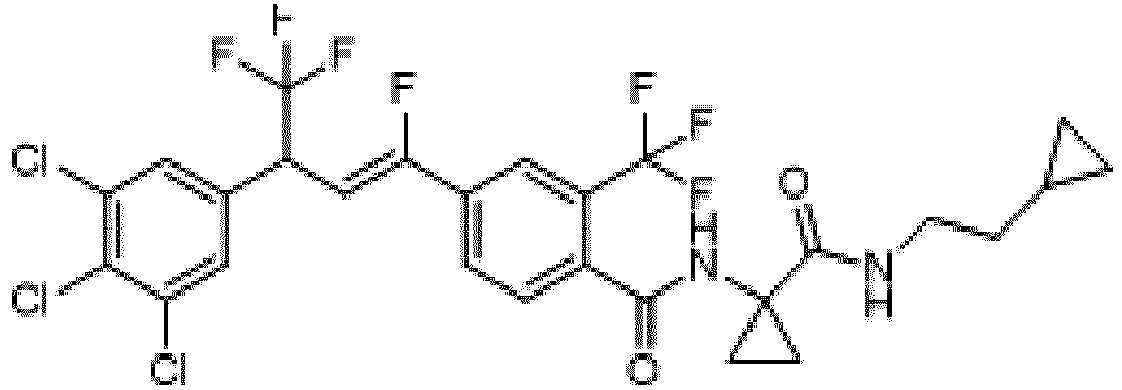
F5 
F6 
F7 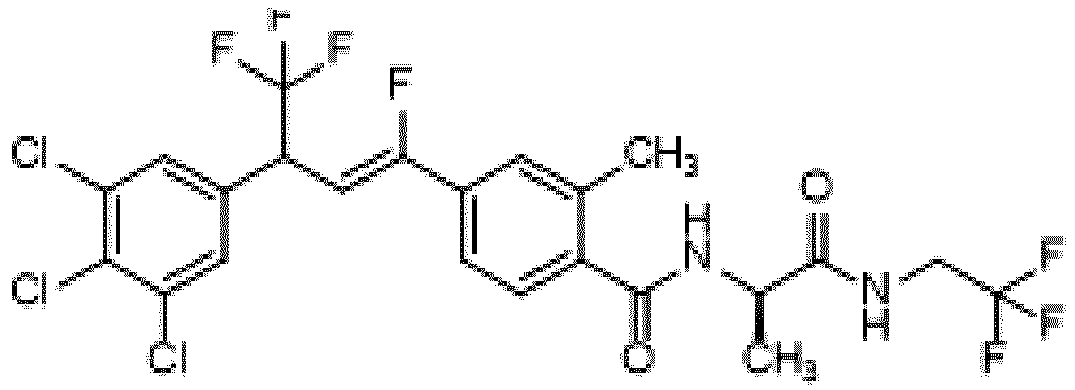
F8 
F9 
F10 
F11 
F12 
F13 
F14 
F15 
F16 
F17 
F18 
F19 
F20 
F21 
F22 
F23 
F24 
F25 
F26 
F27 
F28 
F29 
F30 
F31 
F32 
F33 
F34 
F35 
F36 
F37 
F38 
F39 
F40 
F41 
F42 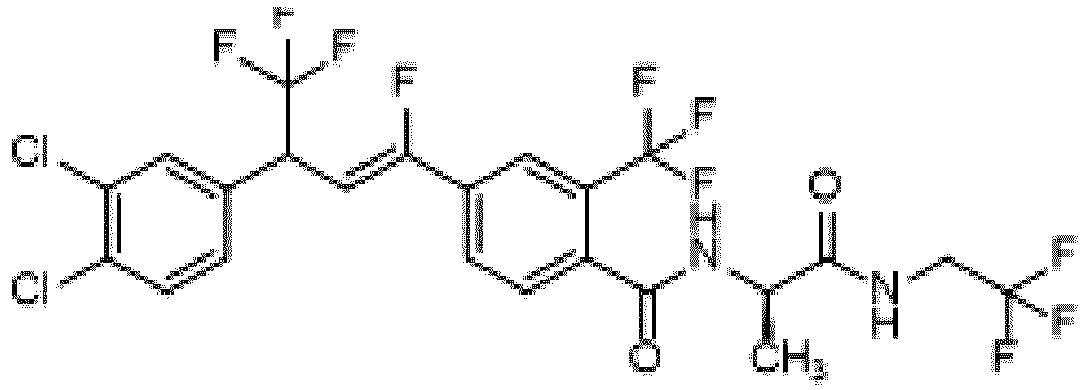
F43 
F44 
F45 
F46 
F47 
F48 
F49 
F50 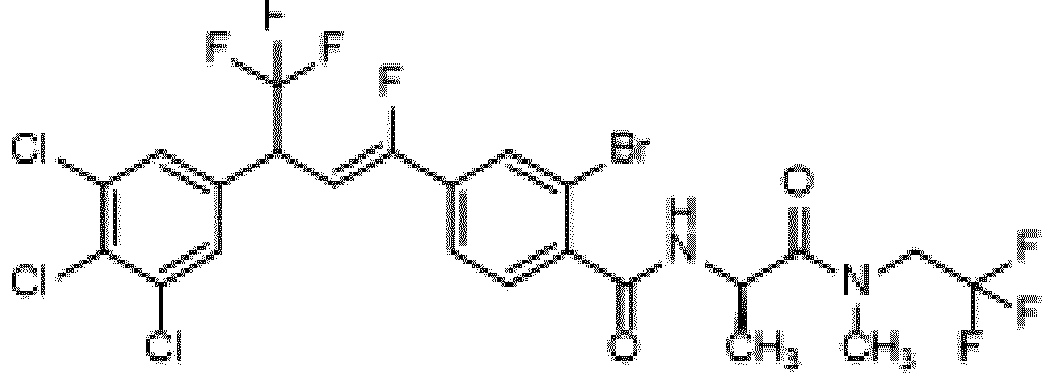
F51 
F52 
F53 
F54 
F55 
F56 
F57 
F58 
F59 
F60 
F61 
F62 
F63 
F64 
F65 
F66 
F67 
F68 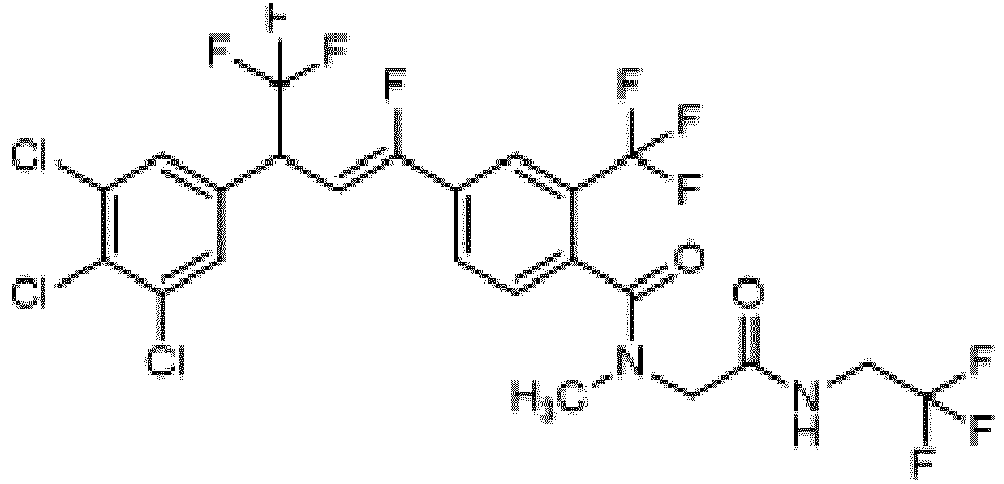
F69 
F70 
F71 
F72 
F73 
F74 
F75 
F76 
F77 
F78 
F79 
F80 
F81 
F82 
F83 
F84 
F85 
F86 
F87 
F88 
F89 
F90 
F91 
F92 
F93 
F94 
F95 
F96 
F97 
F98 
F99 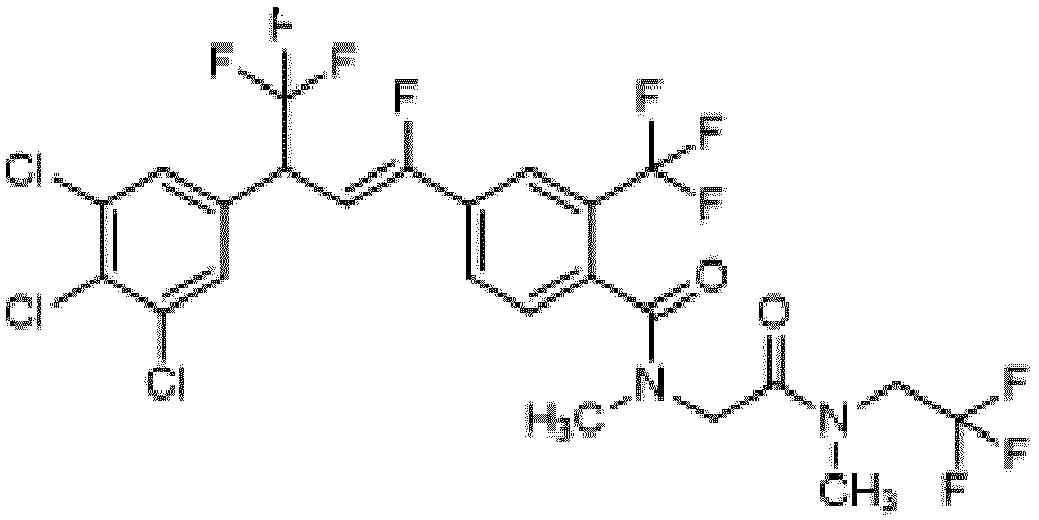
F100 
F101 
F102 
F103 
F104 
F105 
F106 
F107 
F108 
F109 
F110 
F111 
F112 
F113 
F114 
F115 
F116 
F117 
F118 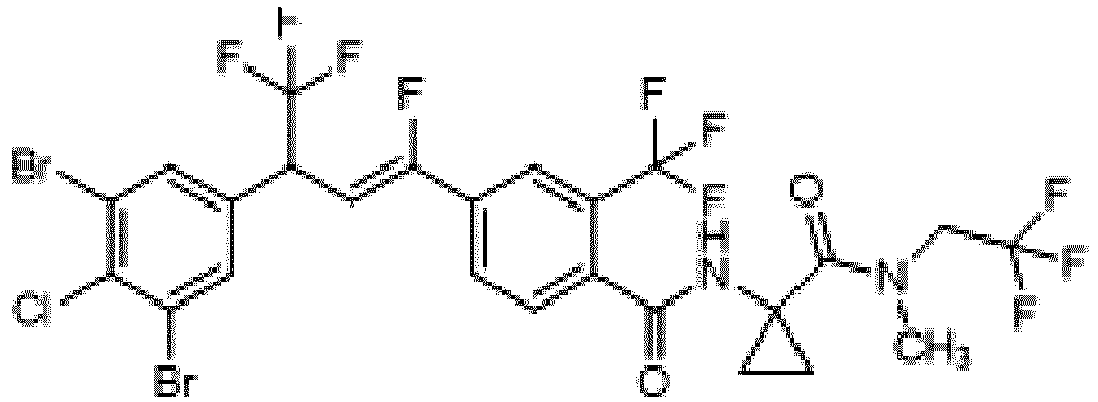
F119 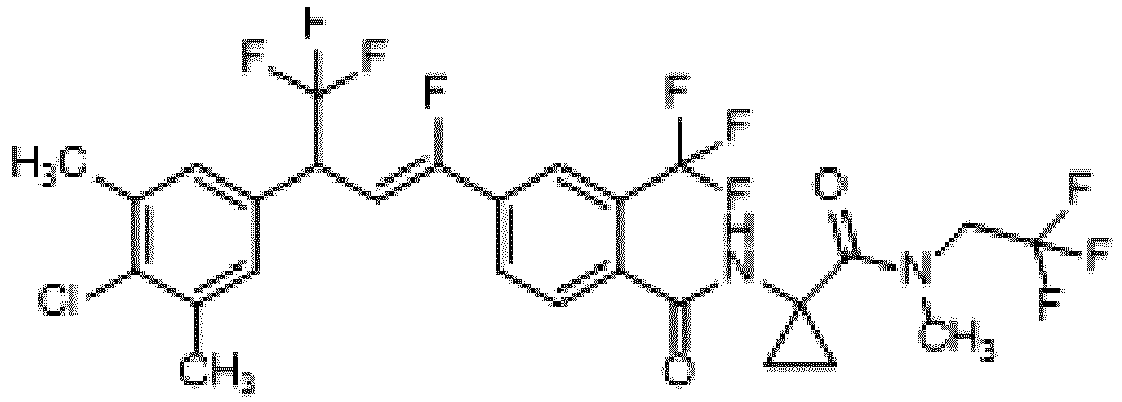
F120 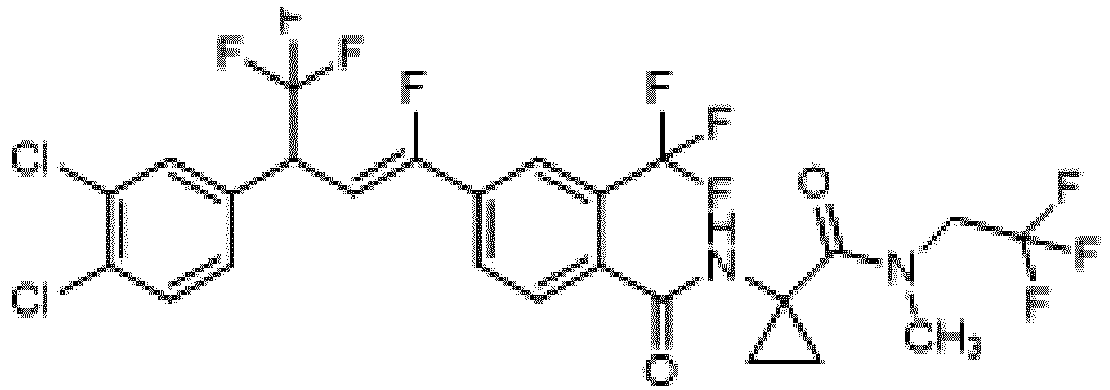
F121 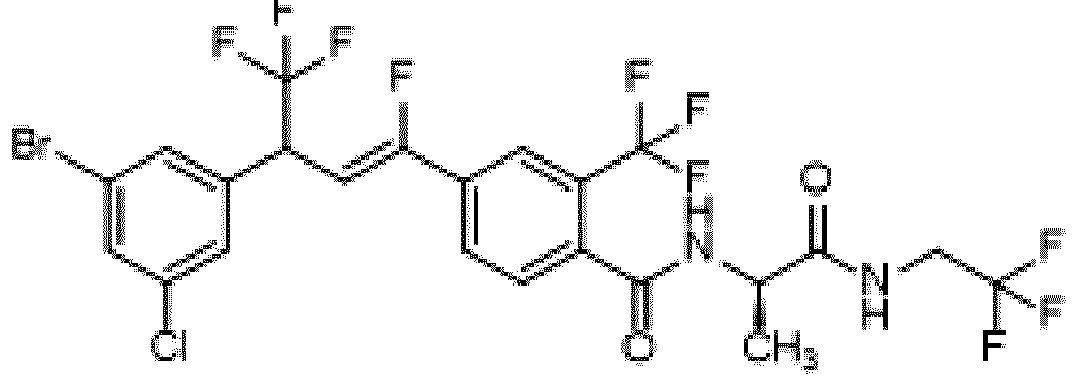
F122 
F123 
F124 
F125 
F126 
F127 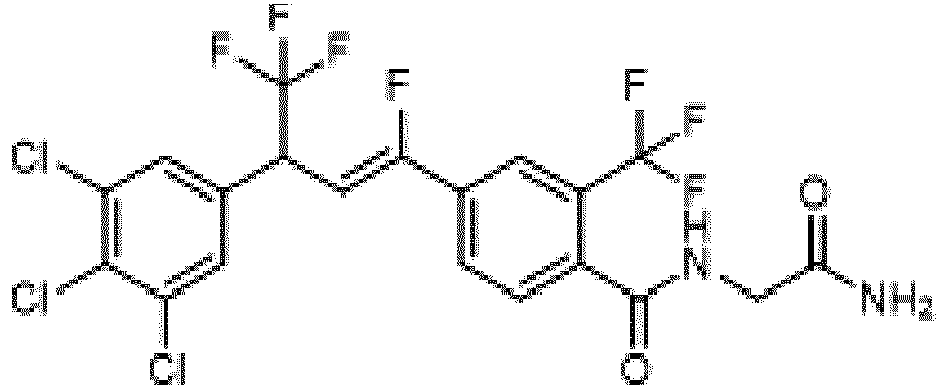
F128 
F129 
F130 
F131 
F132 
F133 
F134 
F135 
F136 
F137 
F138 
F139 
F140 
F141 
F142 
F143 
F144 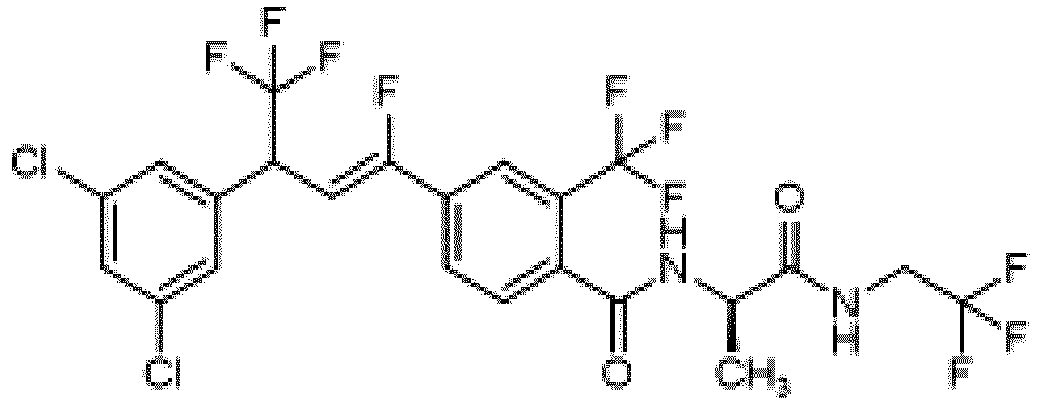
F145 
F146 
F147 
F148 
F150 
F153 
F154 
F155 
F157 
F158 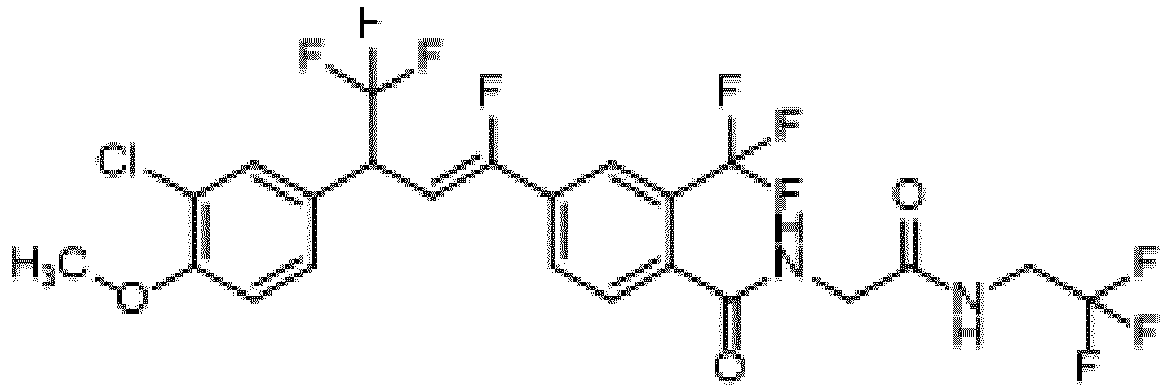
F159 
F160 
F161 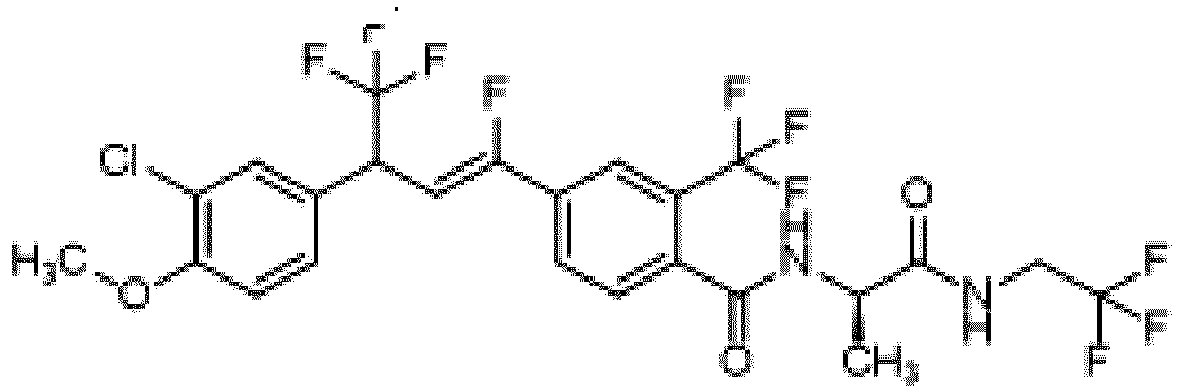
F162 
F163 
F164 
F165 
F166 
F167 
F168 
F169 
F170 
F171 
F172 
F173 
F174 
F175 
F176 
F177 
F178 
F180 
F181 
F182 
F183 
F184 
F185 
F186 
F187 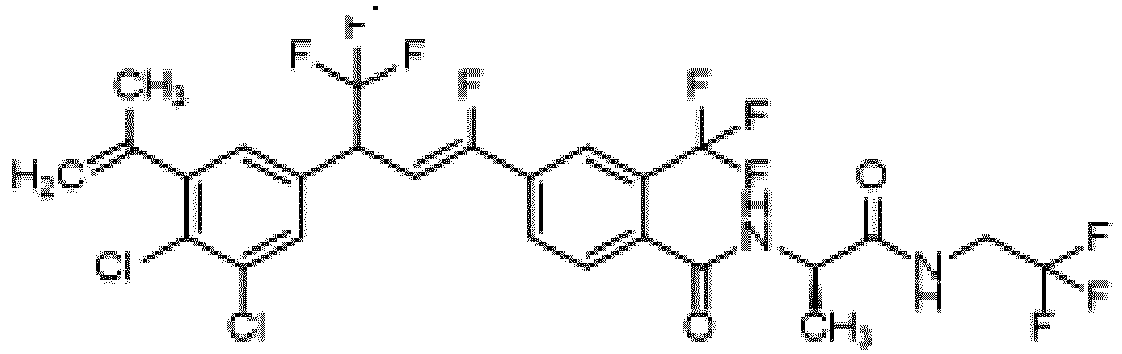
F188 
F189 
F190 
F191 
F192 
F193 
F194 
F195 
F196 
F197 
F198 
F199 
F200 
F201 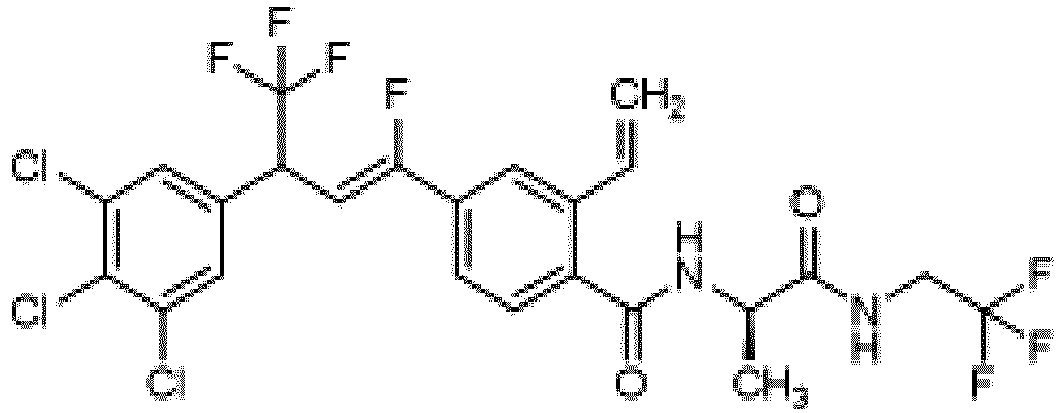
F202 
F203 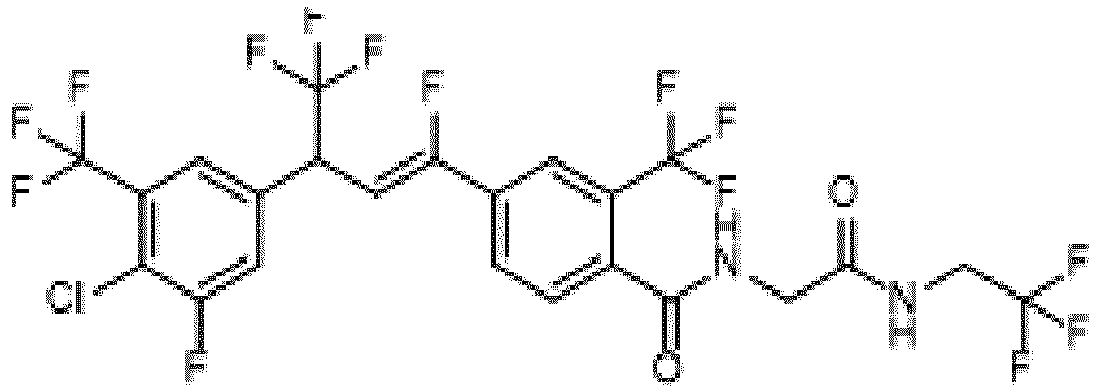
F204 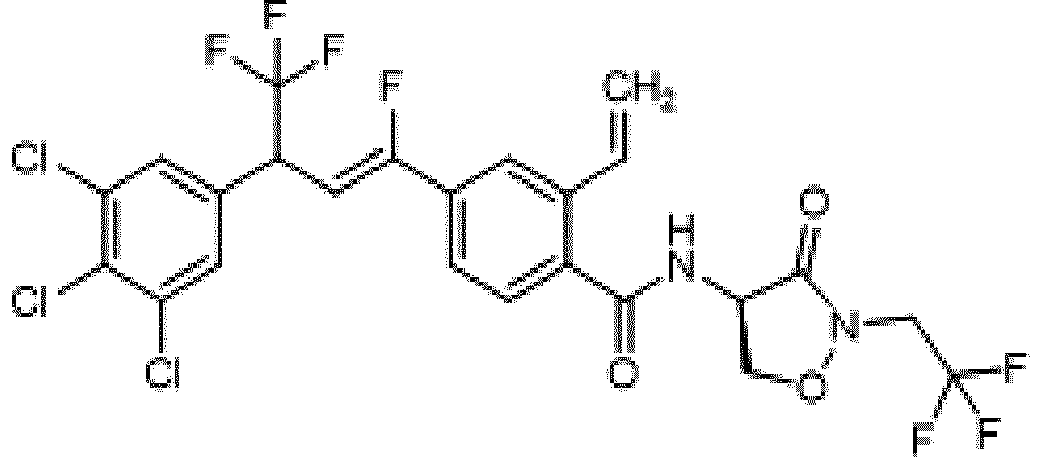
F205 
F206 
F207 
F208 
F209 
F210 
F211 
F212 
F213 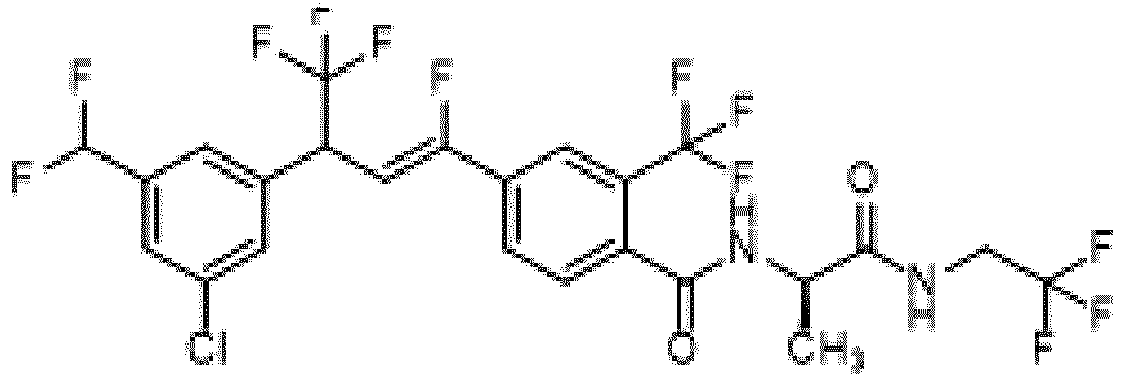
F214 
F215 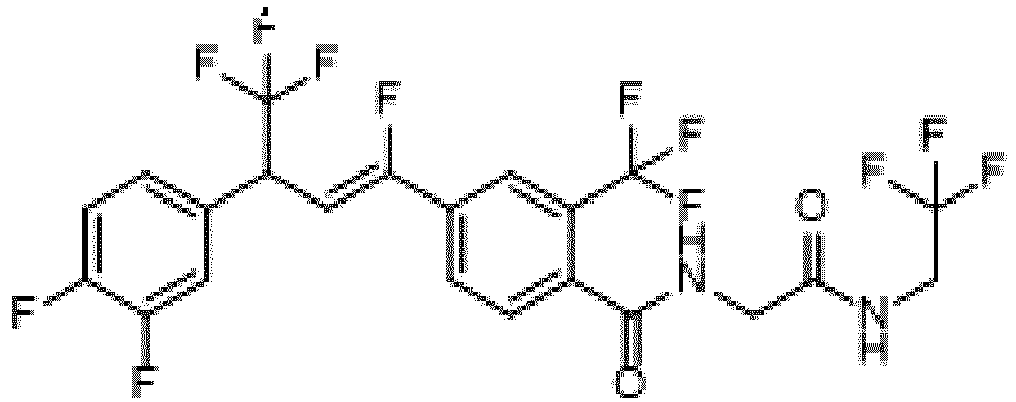
F216 
F217 
- Molécule conforme à la revendication 1, laquelle molécule est choisie parmi les molécules représentées dans le tableau suivant :
No. Structure P1 
P2 
P3 
P4 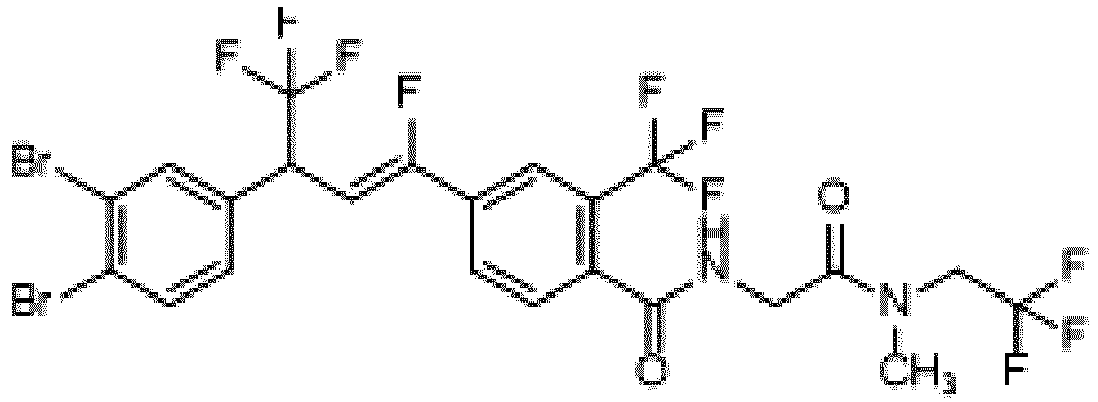
PS 
P6 
P7 
P8 
P9 
P10 
P11 
P12 
P13 
P14 
P15 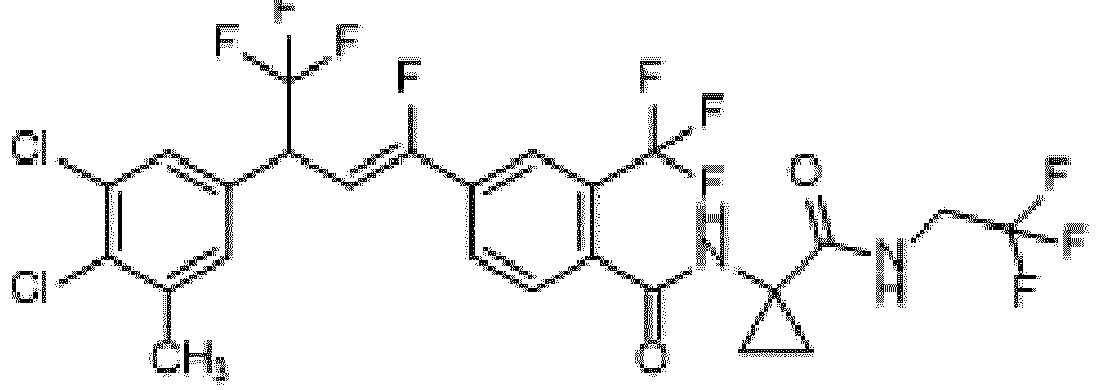
P16 
P17 
P18 
P19 
P20 
P21 
P22 
P23 
P24 
P25 
P26 
P27 
P28 
P29 
P30 
P31 
P32 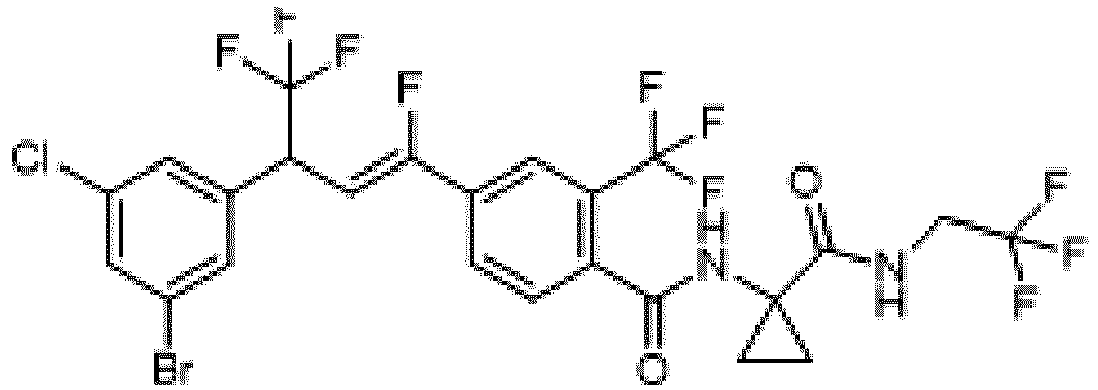
P33 
P34 
P35 
P37 
P39 
P40 
P41 
P42 
P43 
P44 
P45 
P46 
P47 
P48 
P49 
P50 
P51 
P52 
P53 
P54 
P55 
P56 
P57 
P58 
P59 
P60 
P61 
P62 
P63 
P64 
P65 
P66 
P67 
P68 
P69 
P70 
P71 
P72 
P73 
P74 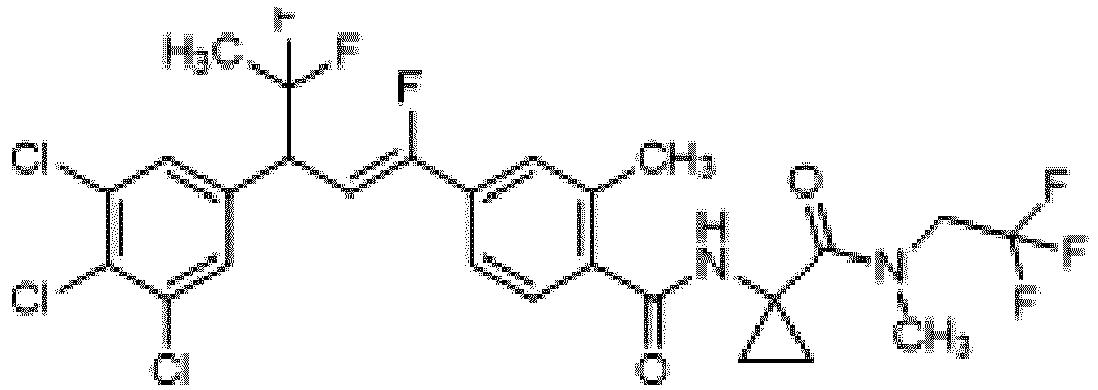
P75 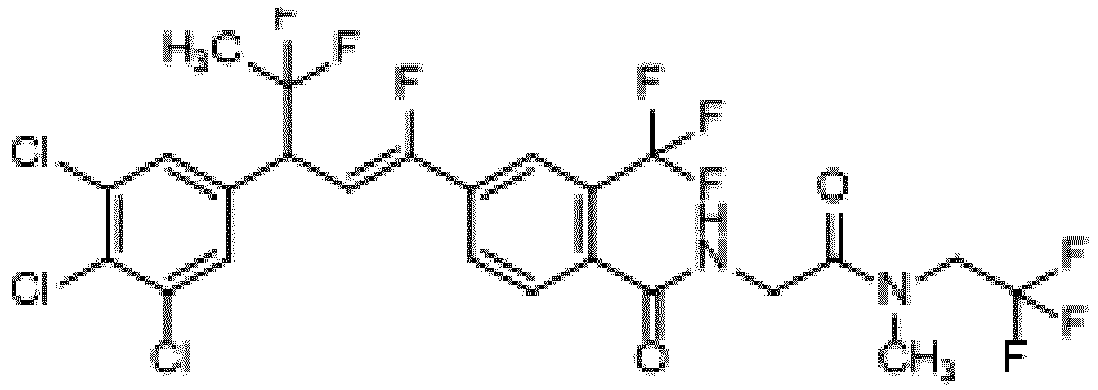
P76 
P77 
P78 
P79 
P80 
P81 
P82 
P83 
P84 
P85 
P86 
P87 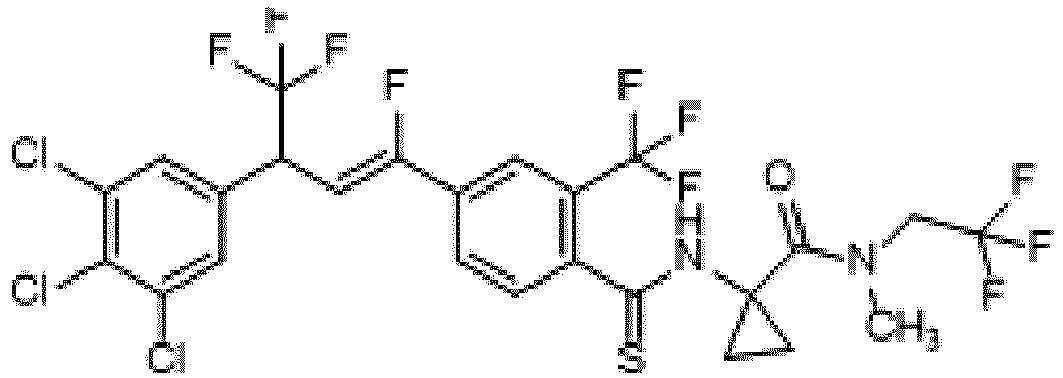
P88 
P89 
P90 
P91 
P92 
P93 
P94 
P95 
P96 
P97 
P98 
P99 
P100 
P101 
P102 
P103 
P104 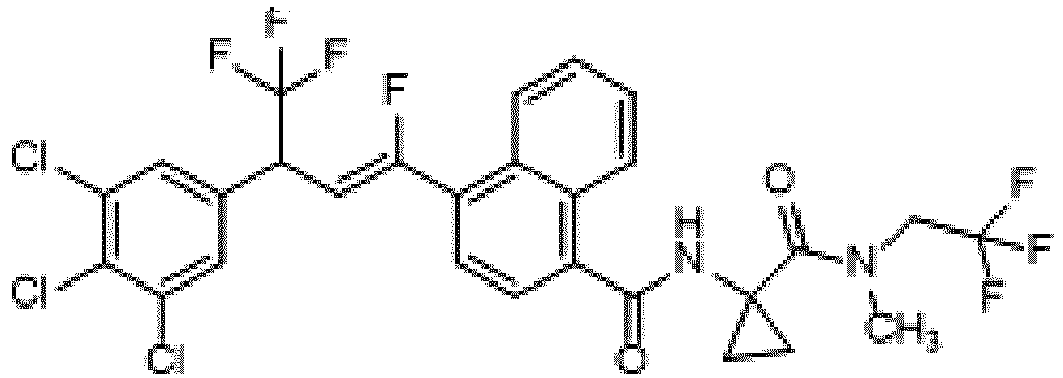
- Composition pesticide, comprenant une molécule conforme à l'une des revendications 1, 2, 3 et 4, et qui comprend en outre un ou plusieurs ingrédient(s) actif(s).
- Composition pesticide conforme à la revendication 5, dans laquelle ledit ingrédient actif est choisi parmi les suivants :1) bromure de (3-éthoxypropyl)mercure, 1,2-dibromoéthane, 1,2-dichloroéthane, 1,2-dichloropropane, 1,3-dichloropropène, 1-MCP, 1-méthylcyclopropène, 1-naphtol, 2-(octylthio)-éthanol, 2,3,3-TPA, acide 2,3,5-triiodobenzoïque, 2,3,6-TBA, 2,4,5-T, 2,4,5-TB, 2,4,5-TP, 2,4-D, 2,4-DB, 2,4-DEB, 2,4-DEP, 2,4-DES, 2,4-DP, 2,4-MCPA, 2,4-MCPB, 2iP, chlorure de (2-méthoxy-éthyl)-mercure, 2-phénylphénol, 3,4-DA, 3,4-DB, 3,4-DP, acide 3,6-dichloropicolinique, 4-amino-pyridine, 4-CPA, 4-CPB, 4-CPP, alcool (4-hydroxy-phényl)-éthylique, sulfate de 8-hydroxyquinoline, 8-(phényl-mercurioxy)-quinoléine, abamectine, abamectine-aminométhyl, acide abscissique, ACC, acéphate, acéquinocyle, acétamipride, acéthion, acétochlore, acétofénate, acétophos, acétoprole, acibenzolar, acifluorfène, aclonifène, ACN, acrep, acrinathrine, acroléine, acrylonitrile, acypétacs, afidopyropène, afoxolaner, alachlore, alanap, alanycarbe, albendazole, aldicarbe, aldicarbe sulfone, aldimorphe, aldoxycarbe, aldrine, alléthrine, allicine, allidochlore, allosamidine, alloxydime, alcool allylique, allyxycarbe, alorac, alpha-cyperméthrine, alpha-endosulfan, alphaméthrine, altrétamine, phosphure d'aluminium, amétoctradine, amétridione, amétryne, amibuzine, amicarbazone, amicarthiazol, amidithion, amidoflumet, amidosulfuron, aminocarbe, aminocyclopyrachlore, aminopyralide, aminotriazole, amiprophos, amiprophosméthyl, amisulbrom, amiton, amitraze, amitrole, sulfamate d'ammonium, amobame, gel de silice amorphe, dioxyde de silicium amorphe, ampropylfos, AMS, anabasine, ancymidole, anilazine, anilofos, anisuron, anthraquinone, antu, apholate, aramite, arprocarbe, oxyde arsénieux, asomate, aspirine, asulame, athidathion, atraton, atrazine, auréofongine, avermectine B1, AVG, aviglycine, azaconazole, azadirachtine, azafénidine, azaméthiphos, azidithion, azimsulfuron, azinphos-éthyl, azinphos-méthyl, aziprotryne, azithirame, azobenzène, azocyclotin, azothoate, azoxystrobine, bachmédesh, barbane, fluorosilicate de baryum, polysulfure de baryum, silicofluorure de baryum, barthrine, carbonate de cuivre basique, chlorure de cuivre basique, sulfate de cuivre basique, BCPC, béflubutamide, bénalaxyl, bénalaxyl-M, bénazoline, bencarbazone, benclothiaz, fenridazon-propyl, bendiocarbe, bendioxide, benfluraline, benfuracarb, benfurésate, saflufénacile, bénodanil, bénomyl, bénoxacore, bénoxafos, benquinox, bensulfuron, bensulide, bensultap, bentaluron, bentazone, benthiavalicarbe, benthiazole, benthiocarbe, bentranil, benzadox, chlorure de benzalkonium, benzamacril, benzamizole, benzamorphe, hexachlorure de benzène, benzfendizone, benzimine, benziprame, benzobicyclone, benzoépine, benzofénap, benzofluor, acide benzohydroxamique, benzomate, benzophosphate, acibenzolar-S-méthyle, benzovindiflupyr, benzoximate, benzoylprop, benzthiazuron, topramézone, benzoate de benzyle, benzyladénine, berbérine, bêta-cyfluthrine, bêta-cyperméthrine, béthoxazine, BHC, bialaphos, bicyclopyrone, bifénazate, bifénox, bifenthrine, bifujunzhi, bilanafos, binapacryl, bingqingxiao, bioalléthrine, bioéthanométhrine, bioperméthrine, bioresméthrine, biphényle, bisazir, bismerthiazol, bismerthiazol-cuivre, méthylène-di(x-naphtalène-y-sulfonate) de bis(phényl-mercure), bispyribac, bistrifluron, thiosultap disodique, bitertanol, bithionol, bixafène, blasticidine-S, borax, bouillie bordelaise, acide borique, boscalide, BPPS, brassinolide, brassinolide-éthyl, brévicomine, brodifacoum, brofenprox, brofenvalérate, broflanilide, brofluthrinate, bromacil, bromadiolone, bromchlophos, brométhaline, brométhrine, bromfenvinfos, bromoacétamide, bromobonil, bromobutide, bromocyclène, bromo-DDT, bromophénoxime, bromométhane, bromophos, bromophos-éthyl, bromopropylate, bromothalonil, bromoxynil, brompyrazone, bromuconazole, bronopol, BRP, BTH, bucarpolate, bufencarbe, buminafos, bupirimate, buprofézin, bouillie bourguignonne, busulfan, butacarbe, butachlor, butafénacile, butame, butamifos, butathiofos, buténachlore, butène-fipronil, butéthrine, buthidazole, buthiobate, buthiuron, butifos, butocarboxime, butonate, butopyronoxyl, butoxycarboxime, butraline, butrizol, butroxydime, buturon, butylamine, butilate, butylchlorophos, butylene-fipronil, acide cacodylique, cadusafos, cafenstrole, calciférol, arséniate de calcium, chlorate de calcium, cyanamide calcique, cyanure de calcium, polysulfure de calcium, calvinphos, cambendichlore, camphéchlore, camphre, captafol, captane, carbam, carbamorphe, carbanolate, carbaryl, carbasulam, carbathion, carbendazime, carbétamide, carbofénotion, carbofuran, sulfure de carbone, tétrachlorure de carbone, sulfure de carbonyle, carbophénothion, carbophos, carbosulfan, carboxazole, carboxyde, carboxine, carfentrazone, carpropamide, cartap, carvacrol, carvone, CAVP, CDAA, CDEA, CDEC, cellocidine, CEPC, céralure, cérénox, cévadilla, bouillie de Cheshunt, chinalphos, chinalphos-méthyl, chinométhionate, chiralaxyl, chitosane, chlobenthiazone, chlométhoxyfène, chloralose, chlorambène, chloramine phosphore, chloramphénicol, chloraniforméthane, chloranile, chloranocryl, chlorantraniliprole, chlorazifop, chlorazine, chlorbenside, chlorbenzuron, chlorbicyclènen, chlorbromuron, chlorbufame, chlordane, chlordécone, chlordiméforme, chlorempenthrine, chlorétazate, chloréthéphon, chloréthoxyfos, chloréturon, chlorfénac, chlorfénapyr, chlorfénazole, chlorfénéthol, chlorfénidim, chlorfenprop, chlorfenson, chlorfensulfide, chlorfenvinphos, chlorfenvinphos-méthyl, chlorfluazuron, chlorflurazole, chlorflurène, chlorflurénol, chloridazone, chlorimuron, chlorinate, chlor-IPC, chlorméphos, chlorméquat, chlormésulone, chlorméthoxynil, chlornidine, chlornitrofène, acide chloroacétique, chlorobenzilate, chlorodinitronaphtalènes, chlorofénizon, chloroforme, chloromébuforme, chlorométhiuron, chloronèbe, chlorophacinone, chlorophos, chloropicrine, chloropon, chloropropylate, chlorothalonil, chloroxuron, chloroxynil, chlorphonium, chlorphoxime, chlorprazophos, chlorprocarbe, chlorprophame, chlorpyrifos, chlorpyrifos-méthyl, chlorquinox, chlorsulfuron, chlorthal, chlorthiamide, chlorthiophos, chlortoluron, chlozolinate, cholécalciférol, chlorure de choline, chromafénozide, cycloheximide, cimétacarb, cinérine I, cinérine II, cinérines, cinidon-éthyl, cinméthyline, cinosulfuron, cintofène, ciobutide, cisanilide, cisméthrine, clacyfos, cléfoxydime, clenpirine, cléthodime, climbazole, cliodinate, clodinafop, cloéthocarbe, clofencet, clofénotane, clofentézine, clofenvinfos, acide clofibrique, clofop, clomazone, cloméprop, clonitralide, cloprop, cloproxydime, clopyralide, cloquintocet, cloransulame, closantel, clothianidine, clotrimazole, cloxyfonac, cloxylacon, clozylacon, CMA, CMMP, CMP, CMU, codlélure, colophonate, 8-quinoléinolate de cuivre, acétate de cuivre, acétoarsénite de cuivre, arséniate de cuivre, carbonate de cuivre basique, hydroxyde de cuivre, naphténate de cuivre, oléate de cuivre, oxychlorure de cuivre, silicate de cuivre, sulfate de cuivre, sulfate de cuivre basique, chromate double de cuivre et de zinc, coumachlore, coumafène, coumafuryl, coumaphos, coumatétralyl, couméthoxystrobine, coumithoate, coumoxystrobine, CPMC, CPMF, CPPC, crédazine, crésol, acide crésylique, crimidine, crotamiton, crotoxyphos, crufomate, cryolithe, cue-lure, cufranèbe, cumyluron, cuprobame, oxyde cuivreux, curcuménol, CVMP, cyanamide, cyanatryne, cyanazine, cyanofenphos, cyanogène, cyanophos, cyanthoate, cyantraniliprole, acide cyanurique, cyazofamide, cybutryne, cyclafuramide, cyclanilide, cyclaniliprole, cycléthrine, cycloate, cycloheximide, cycloprate, cycloprothrine, cyclopyrimorate, cyclosulfamuron, cycloxydime, cycluron, cyenopyrafène, cyflufénamide, cyflumétofen, cyfluthrine, cyhalofop, cyhalothrine, cyhéxatin, cymiazole, cymoxanil, cyométrinil, cypendazole, cyperméthrine, cyperquat, cyphénothrine, cyprazine, cyprazole, cyproconazole, cyprodinil, cyprofuram, cypromide, cyprosulfamide, cyromazine, cythioate, cytrex, daimuron, dalapon, daminozide, dayoutong, dazomet, DBCP, d-camphre, DCB, DCIP, DCPA, DCPTA, DCU, DDD, DDPP, DDT, DDVP, débacarbe, décafentin, décarbofuran, diéthyltoluamide, acide déhydroacétique, deiquat, délachlore, dioxathion, deltaméthrine, déméphion, déméphion-O, déméphion-S, déméton, déméton-méthyl, déméton-O, déméton-O-méthyl, déméton-S, déméton-S-méthyl, déméton-S-méthylsulfone, DEP, dépalléthrine, roténone, desmédiphame, desmétryne, d-fanshiluquebingjuzhi, diafenthiuron, dialiphos, diallate, diamidafos, terre de diatomées ou diatomite, diazinon, dibrom, phtalate de dibutyle, succinate de dibutyle, dicamba, dicapthon, dichlobénil, dichlofenthion, dichlofluanide, dichlone, dichloralurée, dichlorbenzuron, dichlorfénidime, dichlorflurénol, dichlormate, dichlormide, dichlorométhane, dicloromézotiaz, dichlorophène, dichlorprop, dichlorprop-P, dichlorvos, dichlozoline, diclobutrazol, diclocymet, diclofop, diclomézine, dicloran, diclosulame, dicofol, dicophane, dicoumarol, dicrésyle, dicrotophos, chloranocryl, dicyclanil, dicyclonone, dieldrine, diénochlore, diéthamquat, diéthatyl, diéthion, diéthofencarbe, diétholate, éthion, pyrocarbonate de diéthyle, diéthyltoluamide, difénacoum, difénoconazole, difénopentène, difénoxuron, difenzoquat, diféthialone, diflovidazine, diflubenzuron, diflufénican, diflufenzopyr, diflumétorime, dikégulac, dilor, dimatif, diméfluthrin, diméfox, diméfuron, diméhypo, dimépipérate, dimétachlone, dimétan, diméthacarb, diméthachlore, diméthamétryne, diméthénamide, diméthénamide-P, diméthipin, diméthirimol, diméthoate, diméthomorphe, diméthrine, carbate de diméthyle, disulfure de diméthyle, phtalate de diméthyle, diméthylvinphos, dimétilan, diméxano, dimidazone, dimoxystrobine, dimpylate, dimuron, dinex, pyrisoxazole, diniconazole, diniconazole-M, dinitramine, dinitrophénols, dinobuton, dinocap, dinocap-4, dinocap-6, dinocton, dinofénate, dinopenton, dinoprop, dinosame, dinosèbe, dinosulfon, dinotéfurane, dinoterbe, dinoterbon, diofénolane, dioxabenzofos, dioxacarbe, dioxathion, diphacinone, difénamide, diphénylsulfone, diphénylamine, diphénylsulfure, acide diprogulique, dipropaline, dipropétryne, trichlorfon, dipymétitrone, dipyrithione, diquat, tétraborate disodique, thiosultap disodique, disparlure, dicamba, disul, disulfirame, disulfoton, ditalimfos, dithianon, dithicrofos, disulfure de diméthyle, dithiométon, dithiopyr, diuron, dixanthogène, d-limonène, DMPA, DNOC, dodémorphe, dodicine, dodine, dofénapyne, dominicalure, doramectine, dinocap, drazoxolon, DSMA, d-trans-alléthrine, d-trans-resméthrine, dufulin, daimuron, EBEP, EBP, ébufos, ecdystérone, étridiazole, EDB, EDC, EDDP, edifenphos, églinazine, emamectine, EMPC, empenthrine, 2iP, endosulfan, endothal, endothion, endrine, imazalil, énoxastrobine, chlorfenson, EPN, épocholéone, épofénonane, époxiconazole, éprinomectine, épronaz, EPTC, erbon, ergocalciférol, erlujixiancaoan, esdépalléthrine, esfenvalérate, oxydéprofos, esprocarb, étacélasil, étaconazole, étaphos, etem, éthaboxame, éthachlore, éthalfluraline, éthamétsulfuron, éthaprochlore, éthéphon, éthidimuron, éthiophencarbe, éthiolate, éthion, éthiozine, éthiprole, éthirimol, éthoate-méthyl, étobenzanide, éthofumesate, éthohexadiol, éthoprophos, éthoxyfène, éthoxyquine, éthoxysulfuron, éthychlozate, formiate d'éthyle, pyrophosphate d'éthyle, éthyl-DDD, éthylène, dibromure d'éthylène, dichlorure d'éthylène, oxyde d'éthylène, éthylicine, 2,3-dihydroxypropanethiolate d'éthylmercure, acétate d'éthylmercure, bromure d'éthylmercure, chlorure d'éthylmercure, phosphate d'éthylmercure, étinofène, étem, etnipromide, étobenzanide, étofenprox, étoxazole, étridiazole, étrimfos, eugénol, dixanthogène, famoxadone, famphur, chlorfénac, fénamidone, phénaminosulf, fénaminstrobine, phénamiphos, fénapanil, fénarimol, fénasulame, fénazaflor, fénazaquine, fenbuconazole, fenbutatin-oxyde, fenchlorazole, fenchlorphos, fenclorime, fénéthacarbe, fenfluthrine, fenfurame, fenhexamide, fénuron, fénitropane, fénitrothion, fénizon, fenjuntong, fénobucarb, fentine, fénoprop, fénothiocarb, fénoxacrim, fénoxanil, fénoxaprop, fénoxaprop-P, fénoxasulfone, fénoxycarb, fenpiclonil, fenpirithrine, fenpropathrine, fenpropidine, fenpropimorphe, fenpyrazamine, fenpyroximate, fenquinotrione, fenridazon, fenson, fensulfothion, fentéracol, fenthion, fenthion-éthyl, fentiaprop, fentine, fentrazamide, fentrifanil, fénuron, fénuron-TCA, fenvalérate, ferbame, férimzone, phosphate ferrique, sulfate ferreux, fipronil, flamprop, flamprop-M, flazasulfuron, flocoumafène, flométoquine, flonicamide, florasulame, fluacrypyrime, fluazifop, fluazifop-P, fluaziname, fluazolate, fluazuron, flubendiamide, flubenzimine, flubrocythrinate, flucarbazone, flucétosulfuron, fluchloraline, flucofuron, flucycloxuron, flucythrinate, fludioxonil, fluénétil, fluensulfone, flufénacet, flufénérime, flufénican, flufénoxuron, flufénoxystrobine, flufenprox, flufenpyr, flufenzine, flufiprole, fluhexafone, fluméthrine, flumétovère, flumétraline, flumétsulame, flumézine, flumiclorac, flumioxazin, flumipropyne, flumorph, fluométuron, fluopicolide, fluopyram, fluorbenside, fluoridamide, fluoroacétamide, acide fluoroacétique, fluorodifène, fluoroglycofène, fluoroimide, fluoromidine, fluoronitrofène, fluothiuron, fluotrimazole, fluoxastrobine, flupoxame, flupropacil, flupropadine, flupropanate, flupyradifurone, flupyrsulfuron, fluquinconazole, fluralaner, flurazole, flurénol, fluridone, flurochloridone, fluromidine, fluroxypyr, flurprimidol, flursulamide, flurtamone, flusilazole, flusulfamide, diflovidazine, fluthiacet, flufénacet, flutianile, flutolanil, flutriafol, fluvalinate, fluxapyroxade, fluxofénime, folpet, fomésafène, fonofos, foramsulfuron, forchlorfénuron, formaldéhyde, formétanate, formothion, formparanate, fosamine, fosétyl, fosméthilane, fospirate, fosthiazate, fosthiétan, frontaline, phtalide, fubéridazole, fucaojing, fucaomi, flufénoxystrobine, éthoxyfène-éthyl, coumafuryl, funaihecaoling, fuphenthiourée, furalane, furalaxyl, furaméthrine, furametpyr, furane tébufénozide, furathiocarb, furcarbanil, furconazole, furconazole-cis, furéthrine, furfural, furilazole, furmécyclox, furophanate, furyloxyfène, gamma-cyhalothrine, gamma-HCH, genite, acide gibberellique, gibberelline A3, gibberellines, gliftor, glucochloralose, glufosinate, glufosinate-P, glyodin, glyoxime, glyphosate, glyphosine, gossyplure, grandlure, griséofulvine, guanoctine, guazatine, halacrinate, halauxifène, halfenprox, halofénozide, halosafène, halosulfuron, haloxydine, haloxyfop, haloxyfop-P, HCH, altétramine, hempa, HEOD, heptachlore, heptafluthrin, hepténophos, heptopargil, herbimycine, hétérophos, hexachlore, hexachloroacétone, hexachlorobenzène, hexachlorobutadiène, hexachlorophène, hexaconazole, hexaflumuron, fentrifanil, hexaflurate, hexalure, hexamide, hexazinone, hexylthiofos, hexythiazox, HHDN, holosulf, brassinolide-éthyl, huancaiwo, dicyclanil, huangcaoling, huanjunzuo, hydraméthylnone, hydrargaphène, chaux hydratée, cyanamide, acide cyanhydrique, hydroprène, hymexazol, hyquincarb, AIA, AIB, iprobenfos, icaridine, imazalil, imazaméthabenz, imazamox, imazapic, imazapyr, imazaquine, imazéthapyr, imazosulfuron, imibenconazole, imicyafos, imidaclopride, imidaclothiz, iminoctadine, imiprothrine, inabenfide, indanofan, indaziflame, indoxacarbe, inézin, terre d'infusoires, iodobonil, iodocarbe, iodofenphos, iodure de méthyle, iodosulfuron, iofensulfuron, ioxynil, ipazine, IPC, ipconazole, ipfencarbazone, iprobenfos, iprodione, iprovalicarbe, iprymidam, ipsdiénol, ipsénol, IPSP, IPX, isamidofos, isazofos, isobenzan, isocarbamide, isocarbophos, isocil, isodrine, isophenphos, isophenphos-méthyl, isofétamide, isolane, isométhiozine, isonoruron, isopamphos, isopolinate, isoprocarbe, isopropaline, isopropazol, isoprothiolane, isoproturon, isopyrazam, isopyrimol, isothioate, isotianil, isovalédione, isoxabène, isoxachlortole, isoxadifène, isoxaflutole, isoxapyrifop, isoxathion, isuron, ivermectine, izopamfos, japonilure, japothrins, jasmoline I, jasmoline II, acide jasmonique, jiahuangchongzong, jiajizengxiaolin, jiaxiangjunzhi, jiecaowan, jiecaoxi, validamycine, hormone juvénile I, hormone juvénile II, hormone juvénile III, kadéthrine, kappa-bifenthrine, kappatéfluthrine, karbutilate, karétazan, kasugamycine, kejunlin, kélévane, kétospiradox, kieselguhr, kinétine, kinoprène, bénalaxyl-M, krésoximeméthyle, kuicaoxi, lactofène, lambda-cyhalothrine, latilure, arséniate de plomb, lénacile, lépimectine, leptophos, bifénazate, sulfure de chaux, lindane, linéatine, linuron, lirimfos, litlure, looplure, lufénuron, triclopyricarbe, méperfluthrine, clacyfos, lythidathion, M-74, M-81, MAA, phosphure de magnésium, malathion, hydrazide maléique, malonobène, maltodextrine, MAMA, mancopper, mancozèbe, mandestrobine, mandipropamid, manèbe, matrine, mazidox, swep, 1-méthylcyclopropène, MCPA, MCPA-thioéthyl, MCPB, mébénil, mécarbame, mécarbinzide, mécarphon, mécoprop, mécoprop-P, médiméforme, médinoterbe, medlure, méfénacet, métalaxyl-M, méfenpyr, méfluidide, acide mégatomoïque, alcool mélissylique, mélitoxine, chlorure de 2-méthoxyéthylmercure, ménazon, fénitrothion, mépanipyrime, méperfluthrine, méphénate, méphospholan, mépiquat, mépronil, méptyldinocap, méthiocarbe, déméton-O, déméton-S, malathion, chlorure mercurique, oxyde de mercure, chlorure mercureux, merphos, tribufos, mésoprazine, mésosulfuron, mésotrione, mésulfène, mésulfenfos, métacrésol, métaflumizone, métalaxyl, métalaxyl-M, métaldéhyde, métam, métamifop, métamitrone, parathion-méthyl, MCPA, métazachlore, métazosulfuron, métazoxolon, métconazole, métépa, metflurazone, méthabenzthiazuron, méthacrifos, méthalpropaline, méthamidophos, méthasulfocarb, méthazole, méthfuroxame, méthidathion, méthiobencarbe, méthiocarbe, méthiopyrisulfuron, méthiotépa, méthiozoline, méthiuron, méthocrotophos, métolcarb, méthométon, méthomyl, méthoprène, méthoprotryne, méthoquine-butyl, méthothrine, méthoxychlore, méthoxyfénozide, méthoxyphénone, apholate de méthyle, bromure de méthyle, méthyleugénol, iodure de méthyle, isothiocyanate de méthyle, parathion-méthyl, méthylacétophos, méthylchloroforme, métam, méthyldymron, chlorure de méthylène, isophenphos-méthyl, déméton-O-méthyl, oxydéméton-méthyl, déméton-S-méthyl, benzoate de méthylmercure, méthylmercure dicyandiamide, pentachlorophénate de méthylmercure, méthylnéodécanamide, fénitrothion, azinphos-méthyl, métiozoline, métirame, métobenzuron, métobromuron, métofluthrine, métolachlore, métolcarb, tribénuron, métominostrobin, métosulame, métoxadiazone, métoxuron, métrafénone, métribuzine, trichlorfon, metsulfovax, metsulfuron, mévinphos, méxacarbate, XMC, mieshuan, pentméthrine, milbémectine, oxime de milbémycine, milnèbe, pyriminostrobin, mipafox, isoprocarb, mirex, MNAF, moguchun, molinate, momfluorothrine, monalide, monisuron, semiamitraze, acide chloroacétique, monocrotophos, monolinuron, sulfiram, monosulfuron, thiosultap-monosodium, monuron, monuron-TCA, morfamquat, moroxydine, morphothion, morzid, moxidectine, xylylcarb, MSMA, métolcarb, muscalure, myclobutanil, myclozoline, triacontanol, N-(éthylmercuro)-p-toluènesulfonanilide, nabame, naftalofos, naled, naphtalène, naphtalène-acétamide, anhydride naphtalique, acides naphtylacétiques, naphtylindane-1,3-diones, acides naphtyloxyacetiques, naproanilide, napropamide, napropamide-M, naptalame, natamycine, flursulamide, néburon, endrine, néonicotine, nichlorfos, niclosamide, boscalide, nicosulfuron, nicotine, sulfate de nicotine, nifluridide, nikkomycines, nipyraclofène, nitenpyrame, nithiazine, nitralin, nitrapyrin, nitrilacarbe, nitrofène, nitrofluorfène, nitrostyrène, nitrothal-isopropyl, nonanol, norbormide, norflurazone, nornicotine, noruron, novaluron, noviflumuron, naptalame, nuarimol, nuranone, OCH, oxyde de bis(2,3,3,3-tétrachloropropyle), octhilinone, ofurace, ométhoate, o-phénylphénol, orbencarb, orfralure, ortho-dichlorobenzène, orthosulfamuron, oryctalure, orysastrobine, oryzalin, osthole, ostramone, chlorfenson, oxabétrinil, oxadiargyle, oxadiazon, oxadixyl, oxamate, oxamyl, oxapyrazone, oxasulfuron, oxathiapiproline, oxazicloméfone, oxine-cuivre, acide oxolinique, oxpoconazole, oxycarboxine, oxydéméton-méthyl, oxydéprofos, oxydisulfoton, zéatine, oxyfluorfène, oxymatrine, oxytétracycline, chinométhionate, chloridazon, paclobutrazol, paichongding, alléthrine, phenthoate, para-dichlorobenzène, parafluron, paraquat, parathion, parathion-méthyl, parinol, vert de Paris, quintozène, pentachlorophénol, pentachlorophénate de sodium, p-dichlorobenzene, prohydrojasmon, pébulate, pédinex, pefurazoate, acide pélargonique, penconazole, pencycuron, pendiméthaline, penfénate, penflufène, penfluron, pénoxsulame, laurate de pentachlorophényle, pentanochlore, penthiopyrade, pentméthrine, pentoxazone, perchlordécone, perfluidone, perméthrine, péthoxamide, propoxur, phénamacril, phénamacril-éthyl, phénaminosulf, oxyde de phénazine, phénétacarbe, phénisophame, phenkapton, phenmédiphame, phenmédipham-éthyl, phénobenzuron, MCPA-thioéthyl, phénothrine, phenproxide, phenthoate, phénylmercuri-urée, acétate de phénylmercure, chloride de phénylmercure, pyrocatécholate de phénylmercure, nitrate de phénylmercure, salicylate de phénylmercure, phorate, phosacétime, phosalone, phosamétine, phosdiphène, fosétyl, phospholan, phospholanméthyl, phosglycine, phosmet, nichlorfos, diméthoate, phosphamidon, phosphine, glufosinate-P, phosphocarbe, phosphore, phostin, phoxime, phoxime-méthyl, phtalide, tétraméthrine, picarbutrazox, icaridine, piclorame, picolinafène, picoxystrobine, natamycine, pindone, pinoxadène, pipéraline, pipérazine, butoxyde de pipéronyle, pipéronyl cyclonène, pipérophos, piproctanyl, piprotal, pirimétaphos, pirimicarbe, pyrinuron, pirimioxyphos, pirimiphos-éthyl, pirimiphos-méthyl, plifénate, polybutènes, polycarbamate, camphéchlore, éthoxyquine, polyoxines, polyoxorime, polythialan, arsénite de potassium, azide de potassium, cyanate de potassium, éthylxanthate de potassium, naphténate de potassium, polysulfure de potassium, thiocyanate de potassium, pp'-DDT, pralléthrine, précocène I, précocène II, précocène III, prétilachlore, primidophos, primisulfuron, probénazole, prochloraze, proclonol, procyazine, procymidone, prodiamine, profénofos, profluazol, profluraline, profluthrine, profoxydime, thiosultap-diammonium, proglinazine, prohexadione, prohydrojasmon, promacyle, promécarbe, prométone, prométryne, prometryne, promurit, propyzamide, propachlore, propafos, propamidine, propamocarbe, propanil, propaquizafop, propargite, proparthrine, propazine, propétamphos, prophame, propiconazole, icaridine, propinèbe, propisochlore, propoxur, propoxycarbazone, propyl isome, propyrisulfuron, propyzamide, proquinazide, prosulfaline, prosulfocarbe, prosulfuron, prothidathion, prothiocarbe, prothioconazole, prothiofos, prothoate, protrifenbute, proxane, primidophos, prynachlore, psoralène, pydanon, pyflubumide, pymétrozine, pyracarbolide, pyraclofos, pyraclonile, pyraclostrobine, pyraflufène, pyrafluprole, pyramat, pyramétostrobine, pyraoxystrobine, pyrasulfotole, pyraziflumid, pyrazolynate, chloridazone, pyrazophos, pyrazosulfuron, pyrazothion, pyrazoxyfène, pyresméthrine, pyréthrine I, pyréthrine II, pyréthrines, pyribambenz-isopropyle, pyribambenz-propyle, pyribencarb, pyribenzoxime, pyributicarbe, pyriclor, pyridabène, pyridafol, pyridalyle, pyridaphenthion, pyridate, pyridinitrile, pyrifénox, pyrifluquinazone, pyriftalide, pirimétaphos, pyriméthanil, pirimicarbe, pyrimidifène, pyriminobac, pyriminostrobine, pyrimiphos-éthyl, pyrimiphos-méthyl, pyrimisulfan, pyrimitate, pyrinuron, pyriofénone, pyriprole, pyripropanol, pyriproxyfène, pyrisoxazole, pyrithiobac, pyrolan, pyroquilone, pyroxasulfone, pyroxsulame, pyroxychlore, pyroxyfur, fluthiacet, qingkuling, quassia, quinacétol, quinalphos, quinalphosméthyl, quinazamide, quinclorac, quinconazole, quinmérac, quinoclamine, chinométhionate, quinonamide, quinothion, quinoxyfène, quintiofos, quintozène, quizalofop, quizalofop-P, quwenzhi, quyingding, rabenzazole, rafoxanide, diniconazole-M, rébémide, diquat, rescalure, resméthrine, rhodojaponine-III, ribavirine, rimsulfuron, flufiprole, métalaxyl-M, rodéthanil, fenchlorphos, roténone, ryania, sabadilla, saflufénacile, saijunmao, saisentong, salicylanilide, sanguinarine, santonine, esdépalléthrine, schradane, scilliroside, sébuthylazine, secbuméton, sédaxane, sélamectine, semiamitraze, sésamex, sésamoline, disul, séthoxydime, carbaryl, shuangjiaancaolin, hydroprène, siduron, tétraméthylfluthrine, siglure, silafluofène, silatrane, gel de silice, silthiofame, fénoprop, simazine, siméconazole, simétone, simétryne, sintofène, kinoprène, chaux hydratée, SMA, méthoprène, S-métolachlore, arsénite de sodium, azide de sodium, chlorate de sodium, cyanure de sodium, fluorure de sodium, fluoroacétate de sodium, fluorosilicate de sodium, naphténate de sodium, orthophénylphénate de sodium, pentachlorophénate de sodium, polysulfure de sodium, tétrathiocarbonate de sodium, thiocyanate de sodium, pentanochlore, sophamide, spinétorame, spinosad, spirodiclofène, spiromésifène, spirotétramate, spiroxamine, tétrachlorvinphos, streptomycine, strychnine, sulcatol, sulcofuron, sulcotrione, sulfallate, sulfentrazone, sulfiram, sulfluramide, éthidimuron, sulfométuron, glyphosate-trimésium, sulfosulfuron, sulfotep, sulfoxaflore, sulfoxide, sulfoxime, soufre, acide sulfurique, fluorure de sulfuryle, sulglycapin, sulprofos, sultropène, swep, tau-fluvalinate, tavron, tazimcarbe, oxyde de tributylétain, thiabendazole, TCA, 2,3,6-TBA, benthiazole, TDE, tébuconazole, tébufénozide, tébufenpyrade, tébufloquine, tébupirimfos, tébutame, tébuthiuron, técloftalame, tecnazène, técoram, téflubenzuron, téfluthrine, téfuryltrione, tembotrione, téméphos, tepa, TEPP, tépraloxydime, téralléthrine, terbacil, terbucarbe, terbuchlore, terbufos, terbuméton, terbuthylazine, terbutryne, quintozène, oxytétracycline, tetcyclacis, tétrachloroéthane, tétrachlorvinphos, tétraconazole, tétradifon, tétrafluron, tétramethrine, tétraméthylfluthrine, tétramine, tétranactine, tétraniliprole, flupropanate-sodium, tétrasul, sulfate de thallium, thénylchlore, thêta-cyperméthrine, thiabendazole, thiaclopride, milnèbe, thiadifluor, thiaméthoxame, thiapronil, thiazafluron, dazomet, thiazopyr, thicrofos, thicyofène, thidiazimine, thidiazuron, thiencarbazone, thifensulfuron, thifluzamide, phorate, thiobencarbe, thiocarboxime, thiochlorphenphime, thiocyanatodinitrobenzènes, thiocyclame, endosulfan, thiodiazole-cuivre, thiodicarb, thiofanox, thiofluoximate, thiohempa, thiomersal, thiométon, thionazine, thiophanate, thiophanate-methyl, parathion, thioquinox, thiosemicarbazide, thiosultap, thiotépa, oxamyl, thirame, thuringiensine, tiadinil, tiafénacil, tiaojiean, acide 2,3,5-triiodobenzoïque, cymiazole, tiocarbazil, tioclorime, tioxazafen, tioxymide, tirpate, tolclofos-méthyl, tolfenpyrade, tolprocarbe, tolpyralate, tolylfluanide, acétate de tolylmercure, coumafuryl, topramézone, camphéchlore, chlorothalonil, tralkoxydime, tralocythrine, tralométhrine, tralopyril, transfluthrine, transperméthrine, trétamine, triacontanol, triadiméfone, triadiménol, triafamone, triallate, triamiphos, triapenthénol, triarathène, triarimol, triasulfuron, triazamate, triazbutil, triaziflame, triazophos, azinphos-éthyl, triazoxide, oxychlorure de cuivre, sulfate de cuivre basique, tribénuron, tribufos, oxyde de tributylétain, tricamba, trichlamide, trichlorfon, trichlormétaphos-3, trichloronat, trichlorotrinitrobenzènes, triclopyr, triclopyricarbe, crésol, tricyclazole, cyhéxatin, tridémorphe, tridiphane, triétazine, triphenmorphe, trifénofos, trifloxystrobine, trifloxysulfuron, trifludimoxazine, triflumezopyrim, triflumizole, triflumuron, trifluraline, triflusulfuron, trifop, trifopsime, triforine, trioxytriazine, trimedlure, trimétacarb, triméturon, trinéxapac, fentine, triprène, tripropindane, triptolide, tritac, chlorhydrate de thiocyclame, triticonazole, tritosulfuron, trunc-call, uniconazole, uniconazole-P, urbacide, urédépa, valérate, validamycine, valifénalate, valone, vamidothion, vangard, vaniliprole, vernolate, vinclozoline, cholécalciférol, warfarine, xiaochongliulin, xinjunan, fénaminstrobine, énoxastrobine, XMC, xylachlore, xylénols, xylylcarb, cymiazole, yishijing, zarilamide, zéatine, zengxiaoan, diétholate, zêta-cyperméthrine, naphténate de zinc, phosphure de zinc, zinc thiazole, trichlorophénate de zinc, zinèbe, zirame, zolaprofos, zoxamide, pyramétostrobine, cafenstrole, pyraoxystrobine, zuomihuanglong, alpha-chlorhydrine, alpha-ecdysone, alpha-multistriatine, acides alpha-naphtalèneacétiques, et bêta-ecdysone ;2)
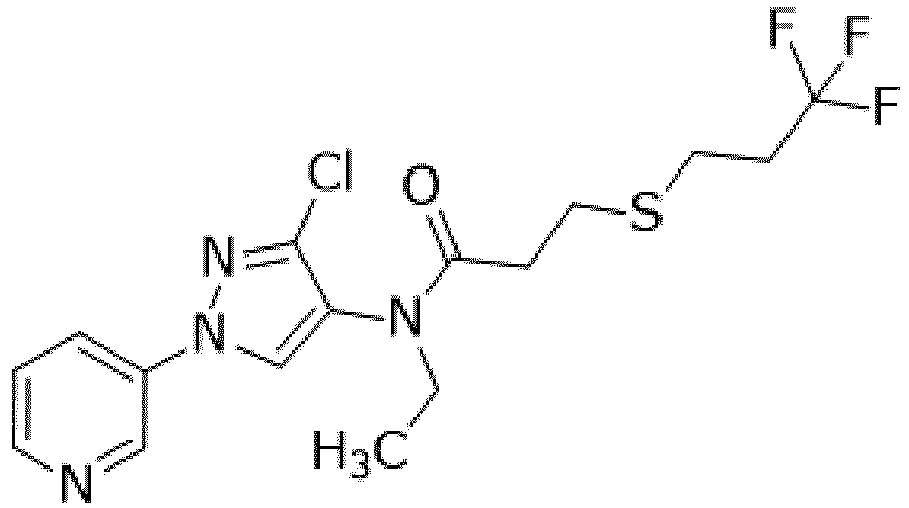 3) la molécule connue sous le nom de lotilanère, dont la structure est la suivante :
 4) et les molécules figurant dans le tableau suivant :
Nom Structure M1 
M2 
M3 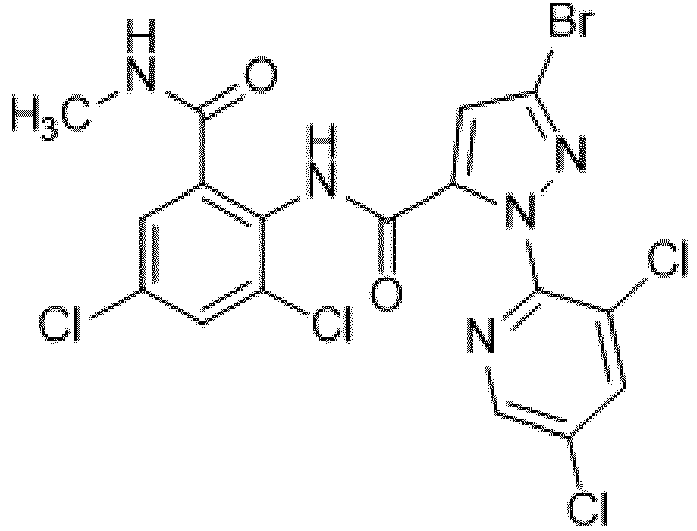
M4 
M5 
M6 
- Composition pesticide conforme à la revendication 5, dans laquelle ledit ingrédient actif est choisi parmi les suivants :
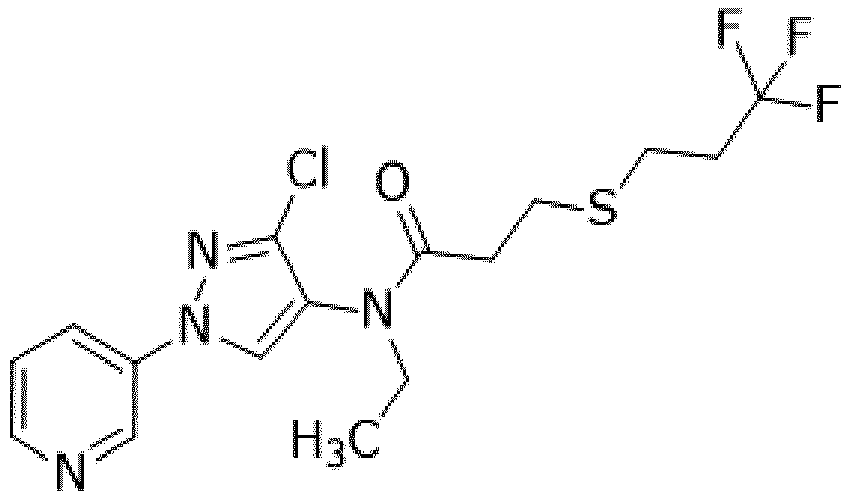
1,3-dichloropropène, chlorpyrifos, chlorpyrifos-méthyl, hexaflumuron, méthoxyfénozide, noviflumuron, spinétorame, spinosad, sulfoxaflore et fluorure de sulfuryle. - Composition pesticide conforme à la revendication 5, comprenant une substance dont le mode d'action (substance MoA) est choisi parmi les suivants :1) inhibiteurs de l'acétylcholine estérase (AChE),2) antagonistes des canaux chlorure GABA-dépendants,3) modulateurs des canaux sodiques,4) agonistes des récepteurs nicotiniques de l'acétylcholine (nAChR),5) activateurs allostériques des récepteurs nicotiniques de l'acétylcholine (nAChR),6) activateurs des canaux chlorure,7) mimétiques de l'hormone juvénile,8) divers inhibiteurs non spécifiques (à sites multiples),9) modulateurs des organes chordotonaux,10) inhibiteurs de croissance des acariens,11) perturbateurs microbiens des membranes de l'intestin moyen des insectes,12) inhibiteurs de l'ATP synthétase mitochondriale,13) découpleurs de la phosphorylation oxydative par perturbation du gradient de protons,14) inhibiteurs des canaux récepteurs nicotiniques de l'acétylcholine (nAChR),15) inhibiteurs de la biosynthèse de chitine de type 0,16) inhibiteurs de la biosynthèse de chitine de type 1,17) perturbateurs de la mue (diptères),18) agonistes des récepteurs d'ecdysone,19) agonistes des récepteurs d'octopamine,20) inhibiteurs du transport d'électrons par le complexe III dans les mitochondries,21) inhibiteurs du transport d'électrons par le complexe I dans les mitochondries,22) inhibiteurs des canaux sodiques dépendants du potentiel,23) inhibiteurs de l'acétyl-CoA carboxylase,24) inhibiteurs du transport d'électrons par le complexe IV dans les mitochondries,25) inhibiteurs du transport d'électrons par le complexe II dans les mitochondries,28) et modulateurs des récepteurs de ryanodine.
- Composition pesticide conforme à la revendication 8, dans laquelle ladite substance MoA est choisie parmi les suivantes :
abamectine, acéphate, acéquinocyle, acétamipride, acrinathrine, alanycarbe, aldicarbe, alléthrine, alpha-cyperméthrine, phosphure d'aluminium, amitraze, azaméthiphos, azinphos-éthyl, azinphos-méthyl, azocyclotin, bendiocarbe, benfuracarb, bensultap, bêta-cyfluthrine, bêta-cyperméthrine, bifenthrine, bioalléthrine, isomère S-cyclopentényle de bioalléthrine, bioresméthrine, bistrifluron, borax, buprofézin, butocarboxime, butoxycarboxime, cadusafos, phosphure de calcium, carbaryl, carbofuran, carbosulfan, chlorhydrate de cartap, chlorantraniliprole, chlordane, chloréthoxyfos, chlorfénapyr, chlorfenvinphos, chlorfluazuron, chlorméphos, chloropicrine, chlorpyriphos, chlorpyriphos-méthyl, chromafénozide, clofentézine, clothianidine, coumaphos, cyanure, cyanophos, cyantraniliprole, cycloprothrine, cyenopyrafène, cyflumétofen, cyfluthrine, cyhalothrine, cyhéxatin, cyperméthrine, cyphénothrine, cyromazine, d-cis-trans-alléthrine, DDT, deltaméthrine, déméton-S-méthyl, diafenthiuron, diazinon, dichlorvos, dicrotophos, diflovidazine, diflubenzuron, diméthoate, diméthylvinphos, dinotéfurane, disulfoton, DNOC, bioalléthrine, benzoate d'emamectine, empenthrine, endosulfan, EPN, esfenvalérate, éthiophencarbe, éthion, éthoprophos, étofenprox, étoxazole, famphur, phénamiphos, fénazaquine, fenbutatin-oxyde, fénitrothion, fénobucarb, fénoxycarb, fenpropathrine, fenpyroximate, fenthion, fenvalérate, flonicamide, fluacrypyrime, flubendiamide, flucycloxuron, flucythrinate, flufénoxuron, fluméthrine, flupyradifurone, formétanate, fosthiazate, furathiocarb, gamma-cyhalothrine, halfenprox, halofénozide, hepténophos, hexaflumuron, hexythiazox, hydraméthylnone, hydroprène, imicyafos, imidaclopride, imiprothrine, indoxacarbe, isophenphos, isoprocarbe, isoxathion, kadéthrine, kinoprène, lambda-cyhalothrine, lépimectine, lufénuron, malathion, mécarbame, métaflumizone, méthamidophos, méthidathion, méthiocarbe, méthomyl, méthoprène, salicylate de méthoxyaminothiophosphoryle, méthoxychlore, méthoxyfénozide, bromure de méthyle, métolcarb, mévinphos, milbémectine, monocrotophos, naled, nicotine, nitenpyrame, novaluron, noviflumuron, oxamyl, oxydéméton-méthyl, parathion, parathion-méthyl, perméthrine, phénothrine, phenthoate, phorate, phosalone, phosmet, phosphamidon, phosphine, phoxime, pirimicarbe, pyrimiphosméthyl, pralléthrine, profénofos, propargite, propétamphos, propoxur, prothiofos, pymétrozine, pyraclofos, pyréthrine, pyridabène, pyridaphenthion, pyrimidifène, pyriproxyfène, quinalphos, resméthrine, roténone, silafluofène, spinétorame, spinosad, spirodiclofène, spiromésifène, spirotétramate, sulfluramide, sulfotep, sulfoxaflor, fluorure de sulfuryle, tartre émétique, tau-fluvalinate, tébufénozide, tébufenpyrade, tébupirimfos, téflubenzuron, téfluthrine, téméphos, terbufos, tétrachlorvinphos, tétradifon, tétraméthrine, thêta-cyperméthrine, thiaclopride, thiaméthoxame, thiocyclame, thiodicarb, thiofanox, thiométon, thiosultap-sodium, tolfenpyrade, tralométhrine, transfluthrine, triazamate, triazophos, trichlorfon, triflumuron, trimétacarb, vamidothion, XMC, xylylcarb, zêta-cyperméthrine, et phosphure de zinc. - Composition pesticide conforme à l'une des revendications 5, 6, 7, 8 et 9, dans laquelle le rapport pondéral de la molécule de formule I audit ingrédient actif vaut :a) de 100/1 à 1/100,b) de 50/1 à 1/50,c) de 20/1 à 1/20,d) de 10/1 à 1/10,e) de 5/1 à 1/5,f) de 3/1 à 1/3,g) de 2/1 à 1/2,h) ou 1/1.
- Procédé non-thérapeutique de lutte contre un nuisible, lequel procédé comporte le fait d'appliquer, en un lieu de fréquentation du nuisible et en une quantité à effet pesticide, une molécule conforme à l'une des revendications 1, 2, 3 et 4.
- Procédé non-thérapeutique de lutte contre un nuisible, lequel procédé comporte le fait d'appliquer, en un lieu de fréquentation du nuisible et en une quantité à effet pesticide, une composition pesticide conforme à l'une des revendications 5, 6, 7, 8, 9 et 10.
- Procédé de production d'une composition pesticide, lequel procédé comporte le fait de mélanger une molécule conforme à l'une des revendications 1, 2, 3 et 4 avec un ou plusieurs ingrédient(s) actif(s).
- Molécule conforme à l'une des revendications 1, 2, 3 et 4, pour utilisation dans la lutte contre des endoparasites ou des ectoparasites en médecine vétérinaire et dans le domaine de la garde d'animaux non-humains, ou dans des procédés thérapeutiques de soins de santé humaine.
Applications Claiming Priority (3)
| Application Number | Priority Date | Filing Date | Title |
|---|---|---|---|
| US201662286702P | 2016-01-25 | 2016-01-25 | |
| US201662286708P | 2016-01-25 | 2016-01-25 | |
| PCT/US2017/013856 WO2017132015A1 (fr) | 2016-01-25 | 2017-01-18 | Molécules présentant une utilité en tant que pesticides, et intermédiaires, compositions et procédés associés |
Publications (4)
| Publication Number | Publication Date |
|---|---|
| EP3407716A1 EP3407716A1 (fr) | 2018-12-05 |
| EP3407716A4 EP3407716A4 (fr) | 2019-09-04 |
| EP3407716B1 EP3407716B1 (fr) | 2021-02-17 |
| EP3407716B9 true EP3407716B9 (fr) | 2021-07-14 |
Family
ID=59359925
Family Applications (1)
| Application Number | Title | Priority Date | Filing Date |
|---|---|---|---|
| EP17744693.7A Active EP3407716B9 (fr) | 2016-01-25 | 2017-01-18 | Molécules présentant une utilité en tant que pesticides, et intermédiaires, compositions et procédés associés |
Country Status (14)
| Country | Link |
|---|---|
| US (1) | US10251394B2 (fr) |
| EP (1) | EP3407716B9 (fr) |
| JP (1) | JP6923539B2 (fr) |
| KR (1) | KR102893495B1 (fr) |
| CN (1) | CN109152363B (fr) |
| AU (1) | AU2017211678B2 (fr) |
| BR (1) | BR102017001455B1 (fr) |
| CO (1) | CO2018008733A2 (fr) |
| IL (1) | IL260657B (fr) |
| MX (1) | MX2018008847A (fr) |
| TW (1) | TWI730038B (fr) |
| UY (1) | UY37085A (fr) |
| WO (1) | WO2017132015A1 (fr) |
| ZA (1) | ZA201805570B (fr) |
Families Citing this family (5)
| Publication number | Priority date | Publication date | Assignee | Title |
|---|---|---|---|---|
| AU2017212303B2 (en) | 2016-01-25 | 2019-09-12 | Corteva Agriscience Llc | Molecules having pesticidal utility, and intermediates, compositions, and processes, related thereto |
| CN108697081B (zh) | 2016-01-25 | 2021-07-23 | 美国陶氏益农公司 | 具有杀虫效用的分子,以及与其相关的中间体、组合物和方法 |
| JP6923534B2 (ja) | 2016-01-25 | 2021-08-18 | コルテバ アグリサイエンス エルエルシー | 農薬の効用を有する分子ならびに関連する中間体、組成物およびプロセス |
| MX2018008843A (es) | 2016-01-25 | 2019-03-06 | Dow Agrosciences Llc | Moléculas que tienen utilidad plaguicida, e intermediarios, composiciones y procesos, relacionados con ellas. |
| TWI780112B (zh) | 2017-03-31 | 2022-10-11 | 美商科迪華農業科技有限責任公司 | 具有殺蟲效用之分子,及其相關之中間物、組成物暨方法 |
Family Cites Families (28)
| Publication number | Priority date | Publication date | Assignee | Title |
|---|---|---|---|---|
| GB8700838D0 (en) | 1987-01-15 | 1987-02-18 | Shell Int Research | Termiticides |
| FR2765577A1 (fr) * | 1997-07-02 | 1999-01-08 | Hoechst Schering Agrevo Sa | Nouveaux amides aromatiques, leur procede de preparation et leur application comme pesticides |
| CN100506817C (zh) | 2001-08-15 | 2009-07-01 | 纳幕尔杜邦公司 | 用于防治无脊椎害虫的邻-杂环取代的芳基酰胺类化合物 |
| DE10307845A1 (de) * | 2003-02-25 | 2004-09-02 | Bayer Cropscience Gmbh | Heterocyclische Amide, Verfahren zu ihrer Herstellung, sie enthaltende Mittel und ihre Verwendung als Schädlingsbekämpfungsmittel |
| BRPI0508140B1 (pt) | 2004-03-05 | 2015-03-17 | Nissan Chemical Ind Ltd | Composto benzamida substituída por isoxazolina da fórmula (1); da fórmula (2) substituído por 3,5-bis (aril substituído); da fórmula (4) substituída por alquinibenzeno ou um sal do mesmo; "pesticida, agroquímico, inseticida, parasiticida contendo como ingrediente ativo um ou mais composto benzamida substituída por isoxazolina e sal do mesmo" |
| KR20100127255A (ko) * | 2008-03-03 | 2010-12-03 | 다우 아그로사이언시즈 엘엘씨 | 살충제 |
| UA108619C2 (xx) * | 2009-08-07 | 2015-05-25 | Пестицидні композиції | |
| JP6054307B2 (ja) * | 2011-02-09 | 2016-12-27 | ダウ アグロサイエンシィズ エルエルシー | 殺有害生物剤組成物とそれに関連する方法 |
| CA2839613A1 (fr) * | 2011-06-24 | 2012-12-27 | Dow Agrosciences Llc | Compositions pesticides et procedes associes |
| ES2729947T3 (es) * | 2011-07-12 | 2019-11-07 | Dow Agrosciences Llc | Composiciones pesticidas y procedimientos relacionados con las mismas |
| WO2013173096A2 (fr) * | 2012-05-18 | 2013-11-21 | Insero Health Inc. | Conjugués d'huperzine et leurs analogues |
| CA2878274A1 (fr) * | 2012-07-09 | 2014-01-16 | Dow Agrosciences Llc | Compositions pesticides et procedes correspondants |
| HK1211426A1 (en) | 2012-12-19 | 2016-05-27 | 美国陶氏益农公司 | Pesticidal compositions and processes related thereto |
| WO2014100190A1 (fr) * | 2012-12-19 | 2014-06-26 | Dow Agrosciences Llc | Compositions pesticides et leurs procédés associés |
| WO2014100163A1 (fr) | 2012-12-19 | 2014-06-26 | Dow Agrosciences Llc | Compositions pesticides et procédés associés |
| WO2014100206A1 (fr) * | 2012-12-19 | 2014-06-26 | Dow Agrosciences Llc | Compositions pesticides et leurs procédés associés |
| TWI631098B (zh) | 2012-12-19 | 2018-08-01 | 陶氏農業科學公司 | 殺蟲組成物及其相關方法(一) |
| TWI621604B (zh) * | 2012-12-19 | 2018-04-21 | 陶氏農業科學公司 | 殺蟲組成物及其相關之方法 |
| US9683804B2 (en) * | 2013-10-07 | 2017-06-20 | Randy Steven Hartness | Gun holder with brush |
| KR20160077113A (ko) * | 2013-10-22 | 2016-07-01 | 다우 아그로사이언시즈 엘엘씨 | 살충 조성물 및 관련 방법 |
| JP6838967B2 (ja) * | 2013-12-23 | 2021-03-03 | シンジェンタ パーティシペーションズ アーゲー | 殺虫性化合物 |
| TWI667224B (zh) * | 2014-06-09 | 2019-08-01 | 美商陶氏農業科學公司 | 殺蟲組成物及與其相關之方法 |
| EP3578541B1 (fr) * | 2015-04-17 | 2025-05-28 | Corteva Agriscience LLC | Compositions comprenant des molécules ayant une fonction pesticide et procédés associés |
| MX2018008843A (es) | 2016-01-25 | 2019-03-06 | Dow Agrosciences Llc | Moléculas que tienen utilidad plaguicida, e intermediarios, composiciones y procesos, relacionados con ellas. |
| CN108697081B (zh) | 2016-01-25 | 2021-07-23 | 美国陶氏益农公司 | 具有杀虫效用的分子,以及与其相关的中间体、组合物和方法 |
| MX2018008845A (es) | 2016-01-25 | 2019-03-06 | Dow Agrosciences Llc | Moléculas que tienen utilidad plaguicida, e intermediarios, composiciones y procesos, relacionados con ellas. |
| AU2017212303B2 (en) | 2016-01-25 | 2019-09-12 | Corteva Agriscience Llc | Molecules having pesticidal utility, and intermediates, compositions, and processes, related thereto |
| JP6923534B2 (ja) | 2016-01-25 | 2021-08-18 | コルテバ アグリサイエンス エルエルシー | 農薬の効用を有する分子ならびに関連する中間体、組成物およびプロセス |
-
2017
- 2017-01-18 EP EP17744693.7A patent/EP3407716B9/fr active Active
- 2017-01-18 JP JP2018538654A patent/JP6923539B2/ja active Active
- 2017-01-18 AU AU2017211678A patent/AU2017211678B2/en active Active
- 2017-01-18 KR KR1020187024021A patent/KR102893495B1/ko active Active
- 2017-01-18 WO PCT/US2017/013856 patent/WO2017132015A1/fr not_active Ceased
- 2017-01-18 US US15/408,604 patent/US10251394B2/en active Active
- 2017-01-18 MX MX2018008847A patent/MX2018008847A/es unknown
- 2017-01-18 CN CN201780012511.7A patent/CN109152363B/zh active Active
- 2017-01-24 BR BR102017001455-0A patent/BR102017001455B1/pt active IP Right Grant
- 2017-01-24 UY UY0001037085A patent/UY37085A/es not_active Application Discontinuation
- 2017-01-24 TW TW106102663A patent/TWI730038B/zh active
-
2018
- 2018-07-19 IL IL260657A patent/IL260657B/en active IP Right Grant
- 2018-08-21 ZA ZA201805570A patent/ZA201805570B/en unknown
- 2018-08-21 CO CONC2018/0008733A patent/CO2018008733A2/es unknown
Also Published As
| Publication number | Publication date |
|---|---|
| CO2018008733A2 (es) | 2018-11-22 |
| AU2017211678B2 (en) | 2019-05-02 |
| UY37085A (es) | 2017-08-31 |
| EP3407716B1 (fr) | 2021-02-17 |
| IL260657B (en) | 2021-02-28 |
| ZA201805570B (en) | 2019-11-27 |
| EP3407716A4 (fr) | 2019-09-04 |
| CN109152363A (zh) | 2019-01-04 |
| US10251394B2 (en) | 2019-04-09 |
| MX2018008847A (es) | 2019-02-20 |
| KR20180108682A (ko) | 2018-10-04 |
| WO2017132015A1 (fr) | 2017-08-03 |
| US20170208803A1 (en) | 2017-07-27 |
| TW201728558A (zh) | 2017-08-16 |
| IL260657A (en) | 2019-01-31 |
| JP2019511456A (ja) | 2019-04-25 |
| TWI730038B (zh) | 2021-06-11 |
| BR102017001455B1 (pt) | 2022-08-09 |
| CN109152363B (zh) | 2021-10-15 |
| AU2017211678A1 (en) | 2018-08-02 |
| JP6923539B2 (ja) | 2021-08-18 |
| KR102893495B1 (ko) | 2025-12-02 |
| BR102017001455A8 (pt) | 2022-06-14 |
| EP3407716A1 (fr) | 2018-12-05 |
| BR102017001455A2 (pt) | 2018-05-29 |
Similar Documents
| Publication | Publication Date | Title |
|---|---|---|
| EP3578542B1 (fr) | Compositions présentant une utilité en tant que pesticide et procédés associés | |
| EP3407720B1 (fr) | Molécules ayant une utilité pesticide, et intermédiaires, compositions et procédés associés à celles-ci | |
| EP3971166A1 (fr) | Molécules ayant une fonction pesticide et compositions et procédés associés | |
| EP3232788B1 (fr) | Dérivés de triazole présentant une utilité en tant que pesticides, et intermédiaires, compositions et procédés associés | |
| EP3407718B1 (fr) | Molécules présentant une utilité en tant que pesticides, et intermédiaires, compositions et procédés associés | |
| EP3408263B1 (fr) | Molécules présentant une utilité pesticide et produits intermédiaires, compositions et procédés associés | |
| AU2017211011B2 (en) | Molecules having pesticidal utility, and intermediates, compositions, and processes, related thereto | |
| EP3407716B1 (fr) | Molécules présentant une utilité en tant que pesticides, et intermédiaires, compositions et procédés associés | |
| EP3407717B1 (fr) | Molécules présentant une utilité en tant que pesticides, et intermédiaires, compositions et procédés associés |
Legal Events
| Date | Code | Title | Description |
|---|---|---|---|
| STAA | Information on the status of an ep patent application or granted ep patent |
Free format text: STATUS: THE INTERNATIONAL PUBLICATION HAS BEEN MADE |
|
| PUAI | Public reference made under article 153(3) epc to a published international application that has entered the european phase |
Free format text: ORIGINAL CODE: 0009012 |
|
| STAA | Information on the status of an ep patent application or granted ep patent |
Free format text: STATUS: REQUEST FOR EXAMINATION WAS MADE |
|
| 17P | Request for examination filed |
Effective date: 20180820 |
|
| AK | Designated contracting states |
Kind code of ref document: A1 Designated state(s): AL AT BE BG CH CY CZ DE DK EE ES FI FR GB GR HR HU IE IS IT LI LT LU LV MC MK MT NL NO PL PT RO RS SE SI SK SM TR |
|
| AX | Request for extension of the european patent |
Extension state: BA ME |
|
| DAV | Request for validation of the european patent (deleted) | ||
| DAX | Request for extension of the european patent (deleted) | ||
| A4 | Supplementary search report drawn up and despatched |
Effective date: 20190807 |
|
| RIC1 | Information provided on ipc code assigned before grant |
Ipc: A01N 37/34 20060101ALI20190801BHEP Ipc: C07C 327/46 20060101ALI20190801BHEP Ipc: A01N 37/18 20060101ALI20190801BHEP Ipc: C07D 261/04 20060101ALI20190801BHEP Ipc: C07C 233/76 20060101AFI20190801BHEP Ipc: C07C 327/42 20060101ALI20190801BHEP Ipc: C07C 237/22 20060101ALI20190801BHEP Ipc: A01N 43/40 20060101ALI20190801BHEP Ipc: C07C 255/57 20060101ALI20190801BHEP Ipc: C07C 233/81 20060101ALI20190801BHEP Ipc: C07C 327/48 20060101ALI20190801BHEP Ipc: C07C 243/34 20060101ALI20190801BHEP Ipc: A01N 53/00 20060101ALI20190801BHEP Ipc: C07C 281/02 20060101ALI20190801BHEP Ipc: A01N 43/74 20060101ALI20190801BHEP Ipc: A01N 43/36 20060101ALI20190801BHEP Ipc: C07C 233/83 20060101ALI20190801BHEP Ipc: C07C 259/06 20060101ALI20190801BHEP Ipc: C07C 237/24 20060101ALI20190801BHEP Ipc: C07D 207/273 20060101ALI20190801BHEP Ipc: C07D 211/56 20060101ALI20190801BHEP |
|
| STAA | Information on the status of an ep patent application or granted ep patent |
Free format text: STATUS: EXAMINATION IS IN PROGRESS |
|
| 17Q | First examination report despatched |
Effective date: 20200309 |
|
| REG | Reference to a national code |
Ref country code: DE Ref legal event code: R079 Ref document number: 602017032710 Country of ref document: DE Free format text: PREVIOUS MAIN CLASS: A01N0025320000 Ipc: C07C0233640000 |
|
| GRAP | Despatch of communication of intention to grant a patent |
Free format text: ORIGINAL CODE: EPIDOSNIGR1 |
|
| STAA | Information on the status of an ep patent application or granted ep patent |
Free format text: STATUS: GRANT OF PATENT IS INTENDED |
|
| RIC1 | Information provided on ipc code assigned before grant |
Ipc: A61P 33/14 20060101ALI20200723BHEP Ipc: A01N 37/18 20060101ALI20200723BHEP Ipc: A61K 31/166 20060101ALI20200723BHEP Ipc: A01N 53/00 20060101ALI20200723BHEP Ipc: C07D 261/04 20060101ALI20200723BHEP Ipc: C07C 327/38 20060101ALI20200723BHEP Ipc: C07C 255/57 20060101ALI20200723BHEP Ipc: A01N 43/74 20060101ALI20200723BHEP Ipc: C07C 233/64 20060101AFI20200723BHEP Ipc: C07C 243/34 20060101ALI20200723BHEP Ipc: C07C 281/02 20060101ALI20200723BHEP Ipc: C07C 237/24 20060101ALI20200723BHEP Ipc: C07D 211/56 20060101ALI20200723BHEP Ipc: A01N 43/34 20060101ALI20200723BHEP Ipc: A01N 37/34 20060101ALI20200723BHEP Ipc: C07C 237/22 20060101ALI20200723BHEP Ipc: C07C 259/06 20060101ALI20200723BHEP Ipc: C07D 207/273 20060101ALI20200723BHEP |
|
| INTG | Intention to grant announced |
Effective date: 20200826 |
|
| GRAS | Grant fee paid |
Free format text: ORIGINAL CODE: EPIDOSNIGR3 |
|
| GRAA | (expected) grant |
Free format text: ORIGINAL CODE: 0009210 |
|
| STAA | Information on the status of an ep patent application or granted ep patent |
Free format text: STATUS: THE PATENT HAS BEEN GRANTED |
|
| AK | Designated contracting states |
Kind code of ref document: B1 Designated state(s): AL AT BE BG CH CY CZ DE DK EE ES FI FR GB GR HR HU IE IS IT LI LT LU LV MC MK MT NL NO PL PT RO RS SE SI SK SM TR |
|
| REG | Reference to a national code |
Ref country code: GB Ref legal event code: FG4D |
|
| REG | Reference to a national code |
Ref country code: CH Ref legal event code: EP |
|
| REG | Reference to a national code |
Ref country code: DE Ref legal event code: R096 Ref document number: 602017032710 Country of ref document: DE |
|
| REG | Reference to a national code |
Ref country code: AT Ref legal event code: REF Ref document number: 1361288 Country of ref document: AT Kind code of ref document: T Effective date: 20210315 |
|
| REG | Reference to a national code |
Ref country code: IE Ref legal event code: FG4D |
|
| REG | Reference to a national code |
Ref country code: CH Ref legal event code: NV Representative=s name: FIAMMENGHI-FIAMMENGHI, CH |
|
| REG | Reference to a national code |
Ref country code: DE Ref legal event code: R082 Ref document number: 602017032710 Country of ref document: DE Representative=s name: FLEISCHER, ENGELS & PARTNER MBB, PATENTANWAELT, DE Ref country code: DE Ref legal event code: R081 Ref document number: 602017032710 Country of ref document: DE Owner name: CORTEVA AGRISCIENCE LLC, INDIANAPOLIS, US Free format text: FORMER OWNER: DOW AGROSCIENCES LLC, INDIANAPOLIS, IND., US |
|
| REG | Reference to a national code |
Ref country code: CH Ref legal event code: PFA Owner name: CORTEVA AGRISCIENCE LLC, US Free format text: NAMENSAENDERUNG |
|
| RAP4 | Party data changed (patent owner data changed or rights of a patent transferred) |
Owner name: CORTEVA AGRISCIENCE LLC |
|
| REG | Reference to a national code |
Ref country code: CH Ref legal event code: PK Free format text: BERICHTIGUNG B9 |
|
| REG | Reference to a national code |
Ref country code: LT Ref legal event code: MG9D |
|
| REG | Reference to a national code |
Ref country code: NL Ref legal event code: MP Effective date: 20210217 |
|
| PG25 | Lapsed in a contracting state [announced via postgrant information from national office to epo] |
Ref country code: FI Free format text: LAPSE BECAUSE OF FAILURE TO SUBMIT A TRANSLATION OF THE DESCRIPTION OR TO PAY THE FEE WITHIN THE PRESCRIBED TIME-LIMIT Effective date: 20210217 Ref country code: HR Free format text: LAPSE BECAUSE OF FAILURE TO SUBMIT A TRANSLATION OF THE DESCRIPTION OR TO PAY THE FEE WITHIN THE PRESCRIBED TIME-LIMIT Effective date: 20210217 Ref country code: GR Free format text: LAPSE BECAUSE OF FAILURE TO SUBMIT A TRANSLATION OF THE DESCRIPTION OR TO PAY THE FEE WITHIN THE PRESCRIBED TIME-LIMIT Effective date: 20210518 Ref country code: PT Free format text: LAPSE BECAUSE OF FAILURE TO SUBMIT A TRANSLATION OF THE DESCRIPTION OR TO PAY THE FEE WITHIN THE PRESCRIBED TIME-LIMIT Effective date: 20210617 Ref country code: NO Free format text: LAPSE BECAUSE OF FAILURE TO SUBMIT A TRANSLATION OF THE DESCRIPTION OR TO PAY THE FEE WITHIN THE PRESCRIBED TIME-LIMIT Effective date: 20210517 Ref country code: BG Free format text: LAPSE BECAUSE OF FAILURE TO SUBMIT A TRANSLATION OF THE DESCRIPTION OR TO PAY THE FEE WITHIN THE PRESCRIBED TIME-LIMIT Effective date: 20210517 Ref country code: LT Free format text: LAPSE BECAUSE OF FAILURE TO SUBMIT A TRANSLATION OF THE DESCRIPTION OR TO PAY THE FEE WITHIN THE PRESCRIBED TIME-LIMIT Effective date: 20210217 |
|
| REG | Reference to a national code |
Ref country code: AT Ref legal event code: MK05 Ref document number: 1361288 Country of ref document: AT Kind code of ref document: T Effective date: 20210217 |
|
| PG25 | Lapsed in a contracting state [announced via postgrant information from national office to epo] |
Ref country code: SE Free format text: LAPSE BECAUSE OF FAILURE TO SUBMIT A TRANSLATION OF THE DESCRIPTION OR TO PAY THE FEE WITHIN THE PRESCRIBED TIME-LIMIT Effective date: 20210217 Ref country code: NL Free format text: LAPSE BECAUSE OF FAILURE TO SUBMIT A TRANSLATION OF THE DESCRIPTION OR TO PAY THE FEE WITHIN THE PRESCRIBED TIME-LIMIT Effective date: 20210217 Ref country code: LV Free format text: LAPSE BECAUSE OF FAILURE TO SUBMIT A TRANSLATION OF THE DESCRIPTION OR TO PAY THE FEE WITHIN THE PRESCRIBED TIME-LIMIT Effective date: 20210217 Ref country code: PL Free format text: LAPSE BECAUSE OF FAILURE TO SUBMIT A TRANSLATION OF THE DESCRIPTION OR TO PAY THE FEE WITHIN THE PRESCRIBED TIME-LIMIT Effective date: 20210217 Ref country code: RS Free format text: LAPSE BECAUSE OF FAILURE TO SUBMIT A TRANSLATION OF THE DESCRIPTION OR TO PAY THE FEE WITHIN THE PRESCRIBED TIME-LIMIT Effective date: 20210217 |
|
| PG25 | Lapsed in a contracting state [announced via postgrant information from national office to epo] |
Ref country code: IS Free format text: LAPSE BECAUSE OF FAILURE TO SUBMIT A TRANSLATION OF THE DESCRIPTION OR TO PAY THE FEE WITHIN THE PRESCRIBED TIME-LIMIT Effective date: 20210617 |
|
| PG25 | Lapsed in a contracting state [announced via postgrant information from national office to epo] |
Ref country code: EE Free format text: LAPSE BECAUSE OF FAILURE TO SUBMIT A TRANSLATION OF THE DESCRIPTION OR TO PAY THE FEE WITHIN THE PRESCRIBED TIME-LIMIT Effective date: 20210217 Ref country code: CZ Free format text: LAPSE BECAUSE OF FAILURE TO SUBMIT A TRANSLATION OF THE DESCRIPTION OR TO PAY THE FEE WITHIN THE PRESCRIBED TIME-LIMIT Effective date: 20210217 Ref country code: SM Free format text: LAPSE BECAUSE OF FAILURE TO SUBMIT A TRANSLATION OF THE DESCRIPTION OR TO PAY THE FEE WITHIN THE PRESCRIBED TIME-LIMIT Effective date: 20210217 Ref country code: AT Free format text: LAPSE BECAUSE OF FAILURE TO SUBMIT A TRANSLATION OF THE DESCRIPTION OR TO PAY THE FEE WITHIN THE PRESCRIBED TIME-LIMIT Effective date: 20210217 |
|
| REG | Reference to a national code |
Ref country code: DE Ref legal event code: R097 Ref document number: 602017032710 Country of ref document: DE |
|
| PG25 | Lapsed in a contracting state [announced via postgrant information from national office to epo] |
Ref country code: RO Free format text: LAPSE BECAUSE OF FAILURE TO SUBMIT A TRANSLATION OF THE DESCRIPTION OR TO PAY THE FEE WITHIN THE PRESCRIBED TIME-LIMIT Effective date: 20210217 Ref country code: DK Free format text: LAPSE BECAUSE OF FAILURE TO SUBMIT A TRANSLATION OF THE DESCRIPTION OR TO PAY THE FEE WITHIN THE PRESCRIBED TIME-LIMIT Effective date: 20210217 Ref country code: SK Free format text: LAPSE BECAUSE OF FAILURE TO SUBMIT A TRANSLATION OF THE DESCRIPTION OR TO PAY THE FEE WITHIN THE PRESCRIBED TIME-LIMIT Effective date: 20210217 |
|
| PLBE | No opposition filed within time limit |
Free format text: ORIGINAL CODE: 0009261 |
|
| STAA | Information on the status of an ep patent application or granted ep patent |
Free format text: STATUS: NO OPPOSITION FILED WITHIN TIME LIMIT |
|
| 26N | No opposition filed |
Effective date: 20211118 |
|
| PG25 | Lapsed in a contracting state [announced via postgrant information from national office to epo] |
Ref country code: ES Free format text: LAPSE BECAUSE OF FAILURE TO SUBMIT A TRANSLATION OF THE DESCRIPTION OR TO PAY THE FEE WITHIN THE PRESCRIBED TIME-LIMIT Effective date: 20210217 Ref country code: AL Free format text: LAPSE BECAUSE OF FAILURE TO SUBMIT A TRANSLATION OF THE DESCRIPTION OR TO PAY THE FEE WITHIN THE PRESCRIBED TIME-LIMIT Effective date: 20210217 |
|
| PG25 | Lapsed in a contracting state [announced via postgrant information from national office to epo] |
Ref country code: SI Free format text: LAPSE BECAUSE OF FAILURE TO SUBMIT A TRANSLATION OF THE DESCRIPTION OR TO PAY THE FEE WITHIN THE PRESCRIBED TIME-LIMIT Effective date: 20210217 |
|
| PG25 | Lapsed in a contracting state [announced via postgrant information from national office to epo] |
Ref country code: IT Free format text: LAPSE BECAUSE OF FAILURE TO SUBMIT A TRANSLATION OF THE DESCRIPTION OR TO PAY THE FEE WITHIN THE PRESCRIBED TIME-LIMIT Effective date: 20210217 |
|
| PG25 | Lapsed in a contracting state [announced via postgrant information from national office to epo] |
Ref country code: IS Free format text: LAPSE BECAUSE OF FAILURE TO SUBMIT A TRANSLATION OF THE DESCRIPTION OR TO PAY THE FEE WITHIN THE PRESCRIBED TIME-LIMIT Effective date: 20210617 |
|
| PG25 | Lapsed in a contracting state [announced via postgrant information from national office to epo] |
Ref country code: MC Free format text: LAPSE BECAUSE OF FAILURE TO SUBMIT A TRANSLATION OF THE DESCRIPTION OR TO PAY THE FEE WITHIN THE PRESCRIBED TIME-LIMIT Effective date: 20210217 |
|
| REG | Reference to a national code |
Ref country code: BE Ref legal event code: MM Effective date: 20220131 |
|
| PG25 | Lapsed in a contracting state [announced via postgrant information from national office to epo] |
Ref country code: LU Free format text: LAPSE BECAUSE OF NON-PAYMENT OF DUE FEES Effective date: 20220118 |
|
| PG25 | Lapsed in a contracting state [announced via postgrant information from national office to epo] |
Ref country code: BE Free format text: LAPSE BECAUSE OF NON-PAYMENT OF DUE FEES Effective date: 20220131 |
|
| PG25 | Lapsed in a contracting state [announced via postgrant information from national office to epo] |
Ref country code: IE Free format text: LAPSE BECAUSE OF NON-PAYMENT OF DUE FEES Effective date: 20220118 |
|
| PGFP | Annual fee paid to national office [announced via postgrant information from national office to epo] |
Ref country code: GB Payment date: 20221201 Year of fee payment: 7 Ref country code: FR Payment date: 20221208 Year of fee payment: 7 |
|
| PGFP | Annual fee paid to national office [announced via postgrant information from national office to epo] |
Ref country code: CH Payment date: 20230106 Year of fee payment: 7 |
|
| PGFP | Annual fee paid to national office [announced via postgrant information from national office to epo] |
Ref country code: DE Payment date: 20221130 Year of fee payment: 7 |
|
| PG25 | Lapsed in a contracting state [announced via postgrant information from national office to epo] |
Ref country code: HU Free format text: LAPSE BECAUSE OF FAILURE TO SUBMIT A TRANSLATION OF THE DESCRIPTION OR TO PAY THE FEE WITHIN THE PRESCRIBED TIME-LIMIT; INVALID AB INITIO Effective date: 20170118 |
|
| PG25 | Lapsed in a contracting state [announced via postgrant information from national office to epo] |
Ref country code: MK Free format text: LAPSE BECAUSE OF FAILURE TO SUBMIT A TRANSLATION OF THE DESCRIPTION OR TO PAY THE FEE WITHIN THE PRESCRIBED TIME-LIMIT Effective date: 20210217 Ref country code: CY Free format text: LAPSE BECAUSE OF FAILURE TO SUBMIT A TRANSLATION OF THE DESCRIPTION OR TO PAY THE FEE WITHIN THE PRESCRIBED TIME-LIMIT Effective date: 20210217 |
|
| PG25 | Lapsed in a contracting state [announced via postgrant information from national office to epo] |
Ref country code: TR Free format text: LAPSE BECAUSE OF FAILURE TO SUBMIT A TRANSLATION OF THE DESCRIPTION OR TO PAY THE FEE WITHIN THE PRESCRIBED TIME-LIMIT Effective date: 20210217 |
|
| REG | Reference to a national code |
Ref country code: DE Ref legal event code: R119 Ref document number: 602017032710 Country of ref document: DE |
|
| REG | Reference to a national code |
Ref country code: CH Ref legal event code: PL |
|
| GBPC | Gb: european patent ceased through non-payment of renewal fee |
Effective date: 20240118 |
|
| PG25 | Lapsed in a contracting state [announced via postgrant information from national office to epo] |
Ref country code: MT Free format text: LAPSE BECAUSE OF FAILURE TO SUBMIT A TRANSLATION OF THE DESCRIPTION OR TO PAY THE FEE WITHIN THE PRESCRIBED TIME-LIMIT Effective date: 20210217 |
|
| PG25 | Lapsed in a contracting state [announced via postgrant information from national office to epo] |
Ref country code: DE Free format text: LAPSE BECAUSE OF NON-PAYMENT OF DUE FEES Effective date: 20240801 |
|
| PG25 | Lapsed in a contracting state [announced via postgrant information from national office to epo] |
Ref country code: GB Free format text: LAPSE BECAUSE OF NON-PAYMENT OF DUE FEES Effective date: 20240118 |
|
| PG25 | Lapsed in a contracting state [announced via postgrant information from national office to epo] |
Ref country code: FR Free format text: LAPSE BECAUSE OF NON-PAYMENT OF DUE FEES Effective date: 20240131 |
|
| PG25 | Lapsed in a contracting state [announced via postgrant information from national office to epo] |
Ref country code: CH Free format text: LAPSE BECAUSE OF NON-PAYMENT OF DUE FEES Effective date: 20240131 |
|
| PG25 | Lapsed in a contracting state [announced via postgrant information from national office to epo] |
Ref country code: GB Free format text: LAPSE BECAUSE OF NON-PAYMENT OF DUE FEES Effective date: 20240118 Ref country code: FR Free format text: LAPSE BECAUSE OF NON-PAYMENT OF DUE FEES Effective date: 20240131 Ref country code: DE Free format text: LAPSE BECAUSE OF NON-PAYMENT OF DUE FEES Effective date: 20240801 Ref country code: CH Free format text: LAPSE BECAUSE OF NON-PAYMENT OF DUE FEES Effective date: 20240131 |