EP3410529A1 - Festelektrolytmaterial und lithium-ionen-festkörpersekundärbatterie - Google Patents
Festelektrolytmaterial und lithium-ionen-festkörpersekundärbatterie Download PDFInfo
- Publication number
- EP3410529A1 EP3410529A1 EP16888206.6A EP16888206A EP3410529A1 EP 3410529 A1 EP3410529 A1 EP 3410529A1 EP 16888206 A EP16888206 A EP 16888206A EP 3410529 A1 EP3410529 A1 EP 3410529A1
- Authority
- EP
- European Patent Office
- Prior art keywords
- solid electrolyte
- electrolyte material
- crystal
- lithium
- material according
- Prior art date
- Legal status (The legal status is an assumption and is not a legal conclusion. Google has not performed a legal analysis and makes no representation as to the accuracy of the status listed.)
- Granted
Links
Images




Classifications
-
- C—CHEMISTRY; METALLURGY
- C01—INORGANIC CHEMISTRY
- C01G—COMPOUNDS CONTAINING METALS NOT COVERED BY SUBCLASSES C01D OR C01F
- C01G33/00—Compounds of niobium
-
- H—ELECTRICITY
- H01—ELECTRIC ELEMENTS
- H01M—PROCESSES OR MEANS, e.g. BATTERIES, FOR THE DIRECT CONVERSION OF CHEMICAL ENERGY INTO ELECTRICAL ENERGY
- H01M10/00—Secondary cells; Manufacture thereof
- H01M10/05—Accumulators with non-aqueous electrolyte
- H01M10/056—Accumulators with non-aqueous electrolyte characterised by the materials used as electrolytes, e.g. mixed inorganic/organic electrolytes
- H01M10/0561—Accumulators with non-aqueous electrolyte characterised by the materials used as electrolytes, e.g. mixed inorganic/organic electrolytes the electrolyte being constituted of inorganic materials only
- H01M10/0562—Solid materials
-
- C—CHEMISTRY; METALLURGY
- C01—INORGANIC CHEMISTRY
- C01G—COMPOUNDS CONTAINING METALS NOT COVERED BY SUBCLASSES C01D OR C01F
- C01G33/00—Compounds of niobium
- C01G33/006—Compounds containing niobium, with or without oxygen or hydrogen, and containing two or more other elements
-
- C—CHEMISTRY; METALLURGY
- C01—INORGANIC CHEMISTRY
- C01G—COMPOUNDS CONTAINING METALS NOT COVERED BY SUBCLASSES C01D OR C01F
- C01G35/00—Compounds of tantalum
-
- C—CHEMISTRY; METALLURGY
- C01—INORGANIC CHEMISTRY
- C01G—COMPOUNDS CONTAINING METALS NOT COVERED BY SUBCLASSES C01D OR C01F
- C01G35/00—Compounds of tantalum
- C01G35/006—Compounds containing tantalum, with or without oxygen or hydrogen, and containing two or more other elements
-
- C—CHEMISTRY; METALLURGY
- C30—CRYSTAL GROWTH
- C30B—SINGLE-CRYSTAL GROWTH; UNIDIRECTIONAL SOLIDIFICATION OF EUTECTIC MATERIAL OR UNIDIRECTIONAL DEMIXING OF EUTECTOID MATERIAL; REFINING BY ZONE-MELTING OF MATERIAL; PRODUCTION OF A HOMOGENEOUS POLYCRYSTALLINE MATERIAL WITH DEFINED STRUCTURE; SINGLE CRYSTALS OR HOMOGENEOUS POLYCRYSTALLINE MATERIAL WITH DEFINED STRUCTURE; AFTER-TREATMENT OF SINGLE CRYSTALS OR A HOMOGENEOUS POLYCRYSTALLINE MATERIAL WITH DEFINED STRUCTURE; APPARATUS THEREFOR
- C30B13/00—Single-crystal growth by zone-melting; Refining by zone-melting
-
- C—CHEMISTRY; METALLURGY
- C30—CRYSTAL GROWTH
- C30B—SINGLE-CRYSTAL GROWTH; UNIDIRECTIONAL SOLIDIFICATION OF EUTECTIC MATERIAL OR UNIDIRECTIONAL DEMIXING OF EUTECTOID MATERIAL; REFINING BY ZONE-MELTING OF MATERIAL; PRODUCTION OF A HOMOGENEOUS POLYCRYSTALLINE MATERIAL WITH DEFINED STRUCTURE; SINGLE CRYSTALS OR HOMOGENEOUS POLYCRYSTALLINE MATERIAL WITH DEFINED STRUCTURE; AFTER-TREATMENT OF SINGLE CRYSTALS OR A HOMOGENEOUS POLYCRYSTALLINE MATERIAL WITH DEFINED STRUCTURE; APPARATUS THEREFOR
- C30B13/00—Single-crystal growth by zone-melting; Refining by zone-melting
- C30B13/28—Controlling or regulating
-
- C—CHEMISTRY; METALLURGY
- C30—CRYSTAL GROWTH
- C30B—SINGLE-CRYSTAL GROWTH; UNIDIRECTIONAL SOLIDIFICATION OF EUTECTIC MATERIAL OR UNIDIRECTIONAL DEMIXING OF EUTECTOID MATERIAL; REFINING BY ZONE-MELTING OF MATERIAL; PRODUCTION OF A HOMOGENEOUS POLYCRYSTALLINE MATERIAL WITH DEFINED STRUCTURE; SINGLE CRYSTALS OR HOMOGENEOUS POLYCRYSTALLINE MATERIAL WITH DEFINED STRUCTURE; AFTER-TREATMENT OF SINGLE CRYSTALS OR A HOMOGENEOUS POLYCRYSTALLINE MATERIAL WITH DEFINED STRUCTURE; APPARATUS THEREFOR
- C30B15/00—Single-crystal growth by pulling from a melt, e.g. Czochralski method
-
- C—CHEMISTRY; METALLURGY
- C30—CRYSTAL GROWTH
- C30B—SINGLE-CRYSTAL GROWTH; UNIDIRECTIONAL SOLIDIFICATION OF EUTECTIC MATERIAL OR UNIDIRECTIONAL DEMIXING OF EUTECTOID MATERIAL; REFINING BY ZONE-MELTING OF MATERIAL; PRODUCTION OF A HOMOGENEOUS POLYCRYSTALLINE MATERIAL WITH DEFINED STRUCTURE; SINGLE CRYSTALS OR HOMOGENEOUS POLYCRYSTALLINE MATERIAL WITH DEFINED STRUCTURE; AFTER-TREATMENT OF SINGLE CRYSTALS OR A HOMOGENEOUS POLYCRYSTALLINE MATERIAL WITH DEFINED STRUCTURE; APPARATUS THEREFOR
- C30B15/00—Single-crystal growth by pulling from a melt, e.g. Czochralski method
- C30B15/20—Controlling or regulating
- C30B15/203—Controlling or regulating the relationship of pull rate (v) to axial thermal gradient (G)
-
- C—CHEMISTRY; METALLURGY
- C30—CRYSTAL GROWTH
- C30B—SINGLE-CRYSTAL GROWTH; UNIDIRECTIONAL SOLIDIFICATION OF EUTECTIC MATERIAL OR UNIDIRECTIONAL DEMIXING OF EUTECTOID MATERIAL; REFINING BY ZONE-MELTING OF MATERIAL; PRODUCTION OF A HOMOGENEOUS POLYCRYSTALLINE MATERIAL WITH DEFINED STRUCTURE; SINGLE CRYSTALS OR HOMOGENEOUS POLYCRYSTALLINE MATERIAL WITH DEFINED STRUCTURE; AFTER-TREATMENT OF SINGLE CRYSTALS OR A HOMOGENEOUS POLYCRYSTALLINE MATERIAL WITH DEFINED STRUCTURE; APPARATUS THEREFOR
- C30B29/00—Single crystals or homogeneous polycrystalline material with defined structure characterised by the material or by their shape
- C30B29/10—Inorganic compounds or compositions
- C30B29/16—Oxides
- C30B29/22—Complex oxides
- C30B29/30—Niobates; Vanadates; Tantalates
-
- H—ELECTRICITY
- H01—ELECTRIC ELEMENTS
- H01B—CABLES; CONDUCTORS; INSULATORS; SELECTION OF MATERIALS FOR THEIR CONDUCTIVE, INSULATING OR DIELECTRIC PROPERTIES
- H01B1/00—Conductors or conductive bodies characterised by the conductive materials; Selection of materials as conductors
- H01B1/06—Conductors or conductive bodies characterised by the conductive materials; Selection of materials as conductors mainly consisting of other non-metallic substances
- H01B1/08—Conductors or conductive bodies characterised by the conductive materials; Selection of materials as conductors mainly consisting of other non-metallic substances oxides
-
- H—ELECTRICITY
- H01—ELECTRIC ELEMENTS
- H01M—PROCESSES OR MEANS, e.g. BATTERIES, FOR THE DIRECT CONVERSION OF CHEMICAL ENERGY INTO ELECTRICAL ENERGY
- H01M10/00—Secondary cells; Manufacture thereof
- H01M10/05—Accumulators with non-aqueous electrolyte
- H01M10/052—Li-accumulators
-
- H—ELECTRICITY
- H01—ELECTRIC ELEMENTS
- H01M—PROCESSES OR MEANS, e.g. BATTERIES, FOR THE DIRECT CONVERSION OF CHEMICAL ENERGY INTO ELECTRICAL ENERGY
- H01M10/00—Secondary cells; Manufacture thereof
- H01M10/05—Accumulators with non-aqueous electrolyte
- H01M10/052—Li-accumulators
- H01M10/0525—Rocking-chair batteries, i.e. batteries with lithium insertion or intercalation in both electrodes; Lithium-ion batteries
-
- C—CHEMISTRY; METALLURGY
- C01—INORGANIC CHEMISTRY
- C01P—INDEXING SCHEME RELATING TO STRUCTURAL AND PHYSICAL ASPECTS OF SOLID INORGANIC COMPOUNDS
- C01P2002/00—Crystal-structural characteristics
- C01P2002/30—Three-dimensional structures
-
- C—CHEMISTRY; METALLURGY
- C01—INORGANIC CHEMISTRY
- C01P—INDEXING SCHEME RELATING TO STRUCTURAL AND PHYSICAL ASPECTS OF SOLID INORGANIC COMPOUNDS
- C01P2002/00—Crystal-structural characteristics
- C01P2002/70—Crystal-structural characteristics defined by measured X-ray, neutron or electron diffraction data
- C01P2002/72—Crystal-structural characteristics defined by measured X-ray, neutron or electron diffraction data by d-values or two theta-values, e.g. as X-ray diagram
-
- C—CHEMISTRY; METALLURGY
- C01—INORGANIC CHEMISTRY
- C01P—INDEXING SCHEME RELATING TO STRUCTURAL AND PHYSICAL ASPECTS OF SOLID INORGANIC COMPOUNDS
- C01P2002/00—Crystal-structural characteristics
- C01P2002/70—Crystal-structural characteristics defined by measured X-ray, neutron or electron diffraction data
- C01P2002/74—Crystal-structural characteristics defined by measured X-ray, neutron or electron diffraction data by peak-intensities or a ratio thereof only
-
- C—CHEMISTRY; METALLURGY
- C01—INORGANIC CHEMISTRY
- C01P—INDEXING SCHEME RELATING TO STRUCTURAL AND PHYSICAL ASPECTS OF SOLID INORGANIC COMPOUNDS
- C01P2002/00—Crystal-structural characteristics
- C01P2002/70—Crystal-structural characteristics defined by measured X-ray, neutron or electron diffraction data
- C01P2002/77—Crystal-structural characteristics defined by measured X-ray, neutron or electron diffraction data by unit-cell parameters, atom positions or structure diagrams
-
- C—CHEMISTRY; METALLURGY
- C01—INORGANIC CHEMISTRY
- C01P—INDEXING SCHEME RELATING TO STRUCTURAL AND PHYSICAL ASPECTS OF SOLID INORGANIC COMPOUNDS
- C01P2004/00—Particle morphology
- C01P2004/01—Particle morphology depicted by an image
- C01P2004/02—Particle morphology depicted by an image obtained by optical microscopy
-
- C—CHEMISTRY; METALLURGY
- C01—INORGANIC CHEMISTRY
- C01P—INDEXING SCHEME RELATING TO STRUCTURAL AND PHYSICAL ASPECTS OF SOLID INORGANIC COMPOUNDS
- C01P2004/00—Particle morphology
- C01P2004/30—Particle morphology extending in three dimensions
- C01P2004/38—Particle morphology extending in three dimensions cube-like
-
- C—CHEMISTRY; METALLURGY
- C01—INORGANIC CHEMISTRY
- C01P—INDEXING SCHEME RELATING TO STRUCTURAL AND PHYSICAL ASPECTS OF SOLID INORGANIC COMPOUNDS
- C01P2006/00—Physical properties of inorganic compounds
- C01P2006/40—Electric properties
-
- H—ELECTRICITY
- H01—ELECTRIC ELEMENTS
- H01M—PROCESSES OR MEANS, e.g. BATTERIES, FOR THE DIRECT CONVERSION OF CHEMICAL ENERGY INTO ELECTRICAL ENERGY
- H01M2300/00—Electrolytes
- H01M2300/0017—Non-aqueous electrolytes
- H01M2300/0065—Solid electrolytes
- H01M2300/0068—Solid electrolytes inorganic
- H01M2300/0071—Oxides
-
- Y—GENERAL TAGGING OF NEW TECHNOLOGICAL DEVELOPMENTS; GENERAL TAGGING OF CROSS-SECTIONAL TECHNOLOGIES SPANNING OVER SEVERAL SECTIONS OF THE IPC; TECHNICAL SUBJECTS COVERED BY FORMER USPC CROSS-REFERENCE ART COLLECTIONS [XRACs] AND DIGESTS
- Y02—TECHNOLOGIES OR APPLICATIONS FOR MITIGATION OR ADAPTATION AGAINST CLIMATE CHANGE
- Y02E—REDUCTION OF GREENHOUSE GAS [GHG] EMISSIONS, RELATED TO ENERGY GENERATION, TRANSMISSION OR DISTRIBUTION
- Y02E60/00—Enabling technologies; Technologies with a potential or indirect contribution to GHG emissions mitigation
- Y02E60/10—Energy storage using batteries
Definitions
- the present invention relates to a solid electrolyte material having high density and ion conductivity, and an all solid lithium ion secondary battery using the solid electrolyte material.
- a lithium ion secondary battery has high energy density and is capable of being operated at a high potential, in comparison to secondary batteries such as a Ni-Cd battery and a Ni-MH battery. Therefore, the lithium ion secondary battery is widely used in small information equipment such as a mobile phone or a laptop. Since reducing the size and the weight of the lithium ion secondary battery is easily achieved, a demand as a secondary battery for hybrid vehicles and electric vehicles is increased. When being used for vehicles and the like, high safety is required. Thus, an all solid lithium ion secondary battery which does not use a flammable electrolyte is researched and developed. High ion conductivity is required for a solid electrolyte used in the all solid lithium ion secondary battery.
- the solid electrolyte includes a solid material which is a high-density molded article.
- the solid material which is the high-density molded article is capable of preventing an occurrence of a short-circuit between a positive electrode and a negative electrode during charging and discharging, and the solid material can be thinned.
- reduction in size of the all solid lithium ion secondary battery may be allowed.
- the material having a cubic garnet-related structure has difficulty in being sintered, and it is difficult to produce a high-density molded article by using the material.
- Patent Document 1 Japanese Patent Application Laid-Open No. 2011-195373
- Non-Patent Document 1 J.Awaka, N.Kijima, H.Hayakawa, J.Akimoto, Journal of Solid State Chemistry, 182, P2046-2052 (2009 )
- an object of the present invention is to provide a lithium solid electrolyte material having high density and a producing method thereof, and an all solid lithium ion secondary battery in which such a lithium solid electrolyte material is used as a solid electrolyte.
- the present inventors considered that a method of producing a crystal body was devised, and thereby Li 7-x-y La 3 Zr 2-x-y Ta x Nb y O 12 crystal of high density, in which a grain boundary does not exist was obtained.
- a raw material is heated at a high temperature at which a garnet-related structure including a lithium-containing garnet crystal body is melted, lithium volatilizes, and thus lithium deficiency occurs and the raw material is broken down into lanthanum zirconium oxide.
- Li 7-x-y La 3 Zr 2-x-y Ta x Nb y O 12 crystal having a garnet-related structure of high density was capable of growing and the Li 7-x-y La 3 Zr 2-x-y Ta x Nb y O 12 crystal was allowed to be mechanically thinned, and the present invention was completed.
- a solid electrolyte material has a chemical composition represented by Li 7-x-y La 3 Zr 2-x-y Ta x Nb y O 12 (0 ⁇ x ⁇ 0.8, 0.2 ⁇ y ⁇ 1, and 0.2 ⁇ x+y ⁇ 1), relative density of 99% or greater, and a garnet-related structure, and belongs to a cubic system, x may be 0, that is, Ta may not be included.
- a high-density rod of high density crystal of Li 7-x-y La 3 Zr 2-x-y Ta x Nb y O 12 (0 ⁇ x ⁇ 0.8, 0.2 ⁇ y ⁇ 1, and 0.2 ⁇ x+y ⁇ 1) was capable of being produced in a manner that polycrystal Li (7-x-y)z La 3 Zr 2-x-y Ta x Nb y O 12 (0 ⁇ x ⁇ 0.8, 0.2 ⁇ y ⁇ 1, 0.2 ⁇ x+y ⁇ 1, and 1 ⁇ z ⁇ 2) was molded to have a rod shape, and then the polycrystal was melted and quickly cooled by an FZ method using infrared condensing heating.
- the high-density rod has high strength, unintended breakage and the like occur less frequently, and it is possible to be easily cut out by a diamond cutter and the like. It was also found that a thin piece of Li 7-x-y La 3 Zr 2-x-y Ta x Nb y O 12 crystal, which has a thickness of about 0.1 mm was capable of being produced by cutting out the high-density rod.
- a producing method of a solid electrolyte material in which a solid electrolyte material which has a chemical composition represented by Li 7-x-y La 3 Zr 2-x-y Ta x Nb y O 12 (0 ⁇ x ⁇ 0.8, 0.2 ⁇ y ⁇ 1, and 0.2 ⁇ x+y ⁇ 1), relative density of 99% or greater, and a garnet-related structure, and belongs to a cubic system is produced in a manner that a melted portion at which a single crystal is grown is formed by melting at least a portion of a raw material having a chemical composition represented by Li (7-x-y)z La 3 Zr 2-x-y Ta x Nb y O 12 (0 ⁇ x ⁇ 0.8, 0.2 ⁇ y ⁇ 1, 0.2 ⁇ x+y ⁇ 1, and 1 ⁇ z ⁇ 2), the melted portion is moved at a movement rate of 8 mm/h or faster, and a single crystal is grown.
- a solid electrolyte material which has a chemical composition represented by Li 7-x-y La 3 Zr 2-x-y Ta
- an all solid lithium ion secondary battery includes a positive electrode, a negative electrode, and a solid electrolyte.
- the solid electrolyte includes the solid electrolyte material according to the present invention.
- the solid electrolyte material has a new garnet-related structure in which a position occupied by a lithium ion is different from that in a garnet-related structure in the related art, and the solid electrolyte material has high density and ion conductivity. If the solid electrolyte material according to the present invention is used as a solid electrolyte, an all solid lithium ion secondary battery has high performance.
- a solid electrolyte material according to an embodiment of the present invention is a lithium-containing garnet crystal body.
- the lithium-containing garnet crystal body has a chemical composition represented by Li 7-x-y La 3 Zr 2-x-y Ta x Nb y O 12 (0 ⁇ x ⁇ 0.8, 0.2 ⁇ y ⁇ 1, and 0.2 ⁇ x+y ⁇ 1), belongs to a cubic system, and has a garnet-related structure.
- the garnet-related structure is a crystal structure in which a B site having O and tetrahedral coordination is not occupied and comes into a void, and alternatively, Li occupies a void in the crystal structure, among garnet structures which have a crystal system which is cubic, symmetry of the crystal structure which belongs to a space group la-3d, and is represented by a formula C 3 A 2 B 3 O 12 represented by YAG and the like.
- a crystal body Li 7-y La 3 Zr 2-y Nb y O 12 (y#0) which does not include Ta has a crystal structure in which La occupies an A site, Zr and Nb occupy C sites, and Li occupies a void.
- a crystal body Li 7-x-y La 3 Zr 2-x-y Ta x Nb y O 12 (xy ⁇ 0) including Ta has a crystal structure in which La occupies an A site, Zr, Ta, and Nb occupy C sites, and Li occupies a void.
- the position of Li occupying a void in the lithium-containing garnet crystal body in the embodiment is different from that in the garnet-related structure which has been reported until now. That is, in the garnet-related structure which has been conventionally reported, two kinds of lithium ions are provided. If occupying sites of the lithium ions are indicated by Wyckoff positions, one kind of 24d site and one kind of 96h site are provided. On the contrary, in the garnet-related structure of the lithium-containing garnet crystal body in the embodiment, two kinds of 96h sites are provided. Thus, the lithium-containing garnet crystal body in the embodiment has a new crystal structure which is different from the garnet-related structure in the related art.
- the Wyckoff position is configured by the number of equivalent points in the crystal structure, which is referred to as multiplicity, and a Wyckoff letter which is alphabetically assigned from the position having the highest symmetry.
- the crystal structure of the lithium-containing garnet crystal body in the embodiment can be represented by a space group la-3d.
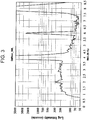
- a very weak diffraction spot is observed at a forbidden reflection position of the space group la-3d, as illustrated in Figs. 3 , 4 , 10 , and 11 which will be described later.
- 002 reflection and 006 reflection correspond to forbidden reflection.
- 011 reflection, 033 reflection, 055 reflection, and 077 reflection correspond to forbidden reflection.
- the consequences imply that the crystal structure of the lithium-containing garnet crystal body in the embodiment has a space group having lower symmetry. However, since intensity which can be detected in the single crystal X-ray diffraction measurement is very small, it is difficult to apply such consequences to crystal structure analysis.
- the forbidden reflection means Bragg reflection satisfying the Bragg condition which causes reflection intensity to be 0 such that a crystal structure factor is 0, in diffraction phenomena of an X-ray and a particle beam.
- the forbidden reflection can be determined by symmetry, that is, the space group of the crystal structure.
- the crystal structure factor provides the amplitude and the phase of a diffracted wave from crystal. Thus, the crystal structure factor is determined by the type and the position of an atom in the crystal structure.
- the lithium-containing garnet crystal body in the embodiment as described above, the lithium ion site is different from that in the garnet-related structure in the related art, and a distance between lithium ions is reduced. As the distance between lithium ions becomes closer, a diffusion distance is also reduced, in the lithium-containing garnet crystal body. Thus, as a result, lithium ion conductivity is improved. Accordingly, the lithium-containing garnet crystal body in the embodiment is useful as a lithium-ion solid electrolyte material.
- the lithium-containing garnet crystal body in the embodiment has relative density of 99% or greater.
- the relative density is calculated in a manner as follows. The outer shape of the produced thin piece is measured, and the apparent volume is calculated. The apparent density calculated from the measured mass is divided by true density obtained from an X-ray structure analysis result of the single crystal. In the lithium-containing garnet crystal body in the embodiment, higher relative density is more preferable, and a case where the relative density is 100% is particularly preferable. It is not necessary that all crystal domains are directed in the same direction, in the lithium-containing garnet crystal body in the embodiment.
- the lithium-containing garnet crystal body in the embodiment has high ion conductivity. Specifically, lithium ion conductivity is equal to or greater than 1.0 x 10 -3 S/cm. It is preferable that the lattice constant a of the lithium-containing garnet crystal body in the embodiment satisfies 1.28 nm ⁇ a ⁇ 1.30 nm.
- the diffraction spot is observed as a clear point in X-ray diffraction measurement using single crystal.
- a sample of Li 7-x-y La 3 Zr 2-x-y Ta x Nb y O 12 crystal which has been produced in the experiment and is a cubic crystal, and in which orientations of crystal domains are not aligned diffraction spots are complicated, or kinds of diffraction from various domains overlap each other so as to form a diffraction spot having a substantially ring shape, in X-ray diffraction measurement.
- the Nyquist plot by AC impedance measurement shows two resistance components of a resistance component by a crystal grain boundary and a resistance component of the material itself (see Non-Patent Document 1).
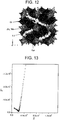
- the Nyquist plot of the lithium-containing garnet crystal body in the embodiment does not show the resistance component by a crystal grain boundary, and but shows only the resistance component of the material itself, as illustrated in Figs. 6 and 13 (which will be described later).
- diffraction spots in a diffraction pattern may be shown to have a ring shape, in X-ray diffraction measurement, neutron diffraction measurement, or electron diffraction measurement which uses a single crystal.
- the present inventors found that, if a raw material mixture including the more amount of lithium than the composition ratio of the aimed solid electrolyte material was melted at a high temperature and then was cooled, single crystal of Li 7-x-y La 3 Zr 2-x-y Ta x Nb y O 12 (0 ⁇ x ⁇ 0.8, 0.2 ⁇ y ⁇ 1, and 0.2 ⁇ x+y ⁇ 1), which belonged to the cubic system and had a garnet-related structure was obtained.
- the single crystal which belongs to the cubic system and has a garnet-related structure is grown by an FZ method, generally, a sample rod is rotated at 20 rpm or slower, and is lowered at a descent speed of about 2 mm/h.
- the melted portion of a rod-like raw material is lowered at a movement rate of 8 mm/h or faster and the melted portion is cooled at a high speed, while the raw material is rotated at a high speed.
- a rod of the obtained Li 7-x-y La 3 Zr 2-x-y Ta x Nb y O 12 (0 ⁇ x ⁇ 0.8, 0.2 ⁇ y ⁇ 1, and 0.2 ⁇ x+y ⁇ 1) crystal having high density can be cut out so as to have any thickness, by a diamond cutter or the like.
- the Li 7-x-y La 3 Zr 2-x-y Ta x Nb y O 12 (0 ⁇ x ⁇ 0.8, 0.2 ⁇ y ⁇ 1, and 0.2 ⁇ x+y ⁇ 1 ) crystal having high density in the embodiment is produced by melting a raw material mixture in which the amount of lithium is increased in comparison to the stoichiometric ratio of each metal in the chemical composition Li 7-x-y La 3 Zr 2-x-y Ta x Nb y O 12 (0 ⁇ x ⁇ 0.8, 0.2 ⁇ y ⁇ 1, and 0.2 ⁇ x+y ⁇ 1) considering that lithium volatilizes at a high temperature.
- the solid electrolyte material in the present invention can be produced in a manner as follows.
- a melted portion for single crystal growth is formed by melting at least a portion of a raw material having a chemical composition represented by Li (7-x-y)z La 3 Zr 2-x-y Ta x Nb y O 12 (0 ⁇ x ⁇ 0.8, 0.2 ⁇ y ⁇ 1, 0.2 ⁇ x+y ⁇ 1, and 1 ⁇ z ⁇ 2). While the melted portion is moved at a movement rate of 8 mm/h or faster, the melted portion is rotated around the central axis parallel to a movement direction, at a high speed.
- Li 7-x-y La 3 Zr 2-x-y Ta x Nb y O 12 (0 ⁇ x ⁇ 0.8, 0.2 ⁇ y ⁇ 1, and 0.2 ⁇ x+y ⁇ 1) crystal having high-density in the embodiment can also be grown by using a Czochralski (CZ) method, a Bridgman method, a pedestal method, and the like in addition to the FZ method, so long as the method is a producing method in which the melted portion for single crystal growth can be moved at a speed of 8 mm/h or faster and the melted portion can be rotated around the central axis parallel to a movement direction, at a high speed.
- CZ Czochralski
- the proper producing method may be selected from the above-described methods, in accordance with the size, the shape, or the like of Li 7-x-y La 3 Zr 2-x-y Ta x Nb y O 12 (0 ⁇ x ⁇ 0.8, 0.2 ⁇ y ⁇ 1, and 0.2 ⁇ x+y ⁇ 1) crystal desired to be produced.
- the Li 7-x-y La 3 Zr 2-x-y Ta x Nb y O 12 (0 ⁇ x ⁇ 0.8, 0.2 ⁇ y ⁇ 1, and 0.2 ⁇ x+y ⁇ 1) crystal having relative density of 100%, that is, the original single crystal of Li 7-x-y La 3 Zr 2-x-y Ta x Nb y O 12 (0 ⁇ x ⁇ 0.8, 0.2 ⁇ y ⁇ 1, and 0.2 ⁇ x+y ⁇ 1) can be produced by the FZ method.
- the Li 7-x-y La 3 Zr 2-x-y Ta x Nb y O 12 (0 ⁇ x ⁇ 0.8, 0.2 ⁇ y ⁇ 1, and 0.2 ⁇ x+y ⁇ 1) crystal having relative density of 100% has lithium ion conductivity which is particularly excellent. Rotation at a rotation speed of 30 rpm or higher is preferable as high-speed rotation.
- the solid electrolyte material in the embodiment is produced by the FZ method
- a crystal is grown in a manner that a rod-like raw material is melted while being rotated at a high speed in a plane perpendicular to a longitudinal direction of the rod-like raw material, and the melted portion of the raw material is moved in the longitudinal direction. Since the movement rate of the melted portion is set to be fast, that is, equal to or faster than 8 mm/h, decomposition of the raw material by volatilization of lithium is suppressed.
- the movement rate of the melted portion is preferably 8 mm/h to 19 mm/h. Bubbles rise at the melted portion by volatilization of lithium.
- the rotation speed of the rod-like raw material is set to be fast, that is, equal to or higher than 30 rpm, it is possible to remove the bubbles.
- the rotation speed of the raw material is preferably 30 rpm to 60 rpm. It is preferable that melting of the raw material and moving of the melted portion are performed in an atmosphere of dry air.
- Li 7-x-y La 3 Zr 2-x-y Ta x Nb y O 12 (0 ⁇ x ⁇ 0.8, 0.2 ⁇ y ⁇ 1, and 0.2 ⁇ x+y ⁇ 1) crystal having relative density of 99% or greater.
- the producing method of the solid electrolyte material in the embodiment will be described by using growth of Li 7-x-y La 3 Zr 2-x-y Ta x Nb y O 12 (0 ⁇ x ⁇ 0.8, 0.2 ⁇ y ⁇ 1, and 0.2 ⁇ x+y ⁇ 1) crystal which has relative density of 99% or greater, belongs to the cubic system, and has a garnet-related structure, as an example.
- a rod-like raw material is produced in a manner as follows. Firstly, a lithium compound, a lanthanum compound, a zirconium compound, a tantalum compound, and a niobium compound are weighed so as to cause the substance quantity ratio (so-called molar ratio) Li:La:Zr:Ta:Nb to obtain (7-x-y)z:3:2-x-y:x:y (0 ⁇ x ⁇ 0.8, 0.2 ⁇ y ⁇ 1, 0.2 ⁇ x+y ⁇ 1, 1 ⁇ z ⁇ 2) considering that lithium volatilizes at a high temperature.
- molar ratio substance quantity ratio
- the lithium compound is not particularly limited so long as the compound contains lithium, and oxides such as Li 2 O and carbonates such as Li 2 CO 3 are exemplified.
- the lanthanum compound is not particularly limited so long as the compound contains lanthanum, and oxides such as La 2 O 3 and hydroxides such as La(OH) 3 are exemplified.
- the zirconium compound is not particularly limited so long as the compound contains zirconium, and oxides such as ZrO 2 and chlorides such as ZrCl 4 are exemplified.
- the tantalum compound is not particularly limited so long as the compound contains tantalum, and oxides such as Ta 2 O 5 and chlorides such as TaCl 5 are exemplified.
- the niobium compound is not particularly limited so long as the compound contains niobium, and oxides such as Nb 2 O 5 and chlorides such as NbCl 5 are exemplified.
- Weighing may be performed by using a compound formed of two kinds or more selected from lithium, lanthanum, zirconium, tantalum, and niobium, such that the molar ratio of Li:La:Zr:Ta:Nb is (7-x-y)z:3:2-x-y:x:y (0 ⁇ x ⁇ 0.8, 0.2 ⁇ y ⁇ 1, 0.2 ⁇ x+y ⁇ 1, and 1 ⁇ z ⁇ 2).
- lithium zirconium oxide such as Li 2 ZrO 3
- lithium tantalum oxide such as LiTaO 3
- lithium niobium oxide such as LiNbO 3
- lanthanum zirconium oxide such as La 2 Zr 2 O 7
- lanthanum tantalum oxide such as LaTaO 4
- lanthanum niobium oxide such as LaNbO 4
- a mixing method is not particularly limited so long as the compounds can be uniformly mixed by the method.
- the compounds may be mixed by a mixing machine such as a mixer, in a wet or dry manner.
- a crucible with a lid is filled with the obtained mixture.
- the mixture is pre-sintered at a temperature of 600°C to 900°C, and preferably 850°C, and thereby powder as the raw material is obtained. It is more preferable that the raw material obtained by pre-sintering once is repetitively ground, mixed, and is sintered again.
- a grain size is reduced by grinding the obtained raw material powder, in order to easily perform molding.
- a grinding method is not particularly limited so long as the size of the powder can be reduced by using the method.
- grinding may be performed by using a grinding device such as a planetary ball mill, a pot mill, and a bead mill, in a wet or dry manner.
- a rubber tube is filled with the obtained ground material, and then molding to have a rod shape is performed by performing hydrostatic pressing.
- the obtained rod-like molded article is sintered at a temperature of about 700°C to 1300°C, and preferably 800°C to 1150°C, for about 4 hours, and thereby a rod-like raw material is obtained.
- the chemical composition of the raw material is Li (7-x-y)z La 3 Zr 2-x-y Ta x Nb y O 12 (0 ⁇ x ⁇ 0.8, 0.2 ⁇ y ⁇ 1, 0.2 ⁇ x+y ⁇ 1, and 1 ⁇ z ⁇ 2). In this manner, the rod-like raw material can be produced.
- the rod-like raw material is melted in an infrared condensing heating furnace while being rotated at a rotation speed of 30 rpm or higher. Then, the rod-like raw material is quickly cooled at a movement rate of 8 mm/h to 19 mm/h.
- Li 7-x-y La 3 Zr 2-x-y Ta x Nb y O 12 (0 ⁇ x ⁇ 0.8, 0.2 ⁇ y ⁇ 1, and 0.2 ⁇ x+y ⁇ 1) which has relative density of 99% or greater, belongs to the cubic system, and has a garnet-related structure is produced.
- Li 7-x-y La 3 Zr 2-x-y Ta x Nb y O 12 (0 ⁇ x ⁇ 0.8, 0.2 ⁇ y ⁇ 1, and 0.2 ⁇ x+y ⁇ 1) crystal having a length of 2 cm or longer is obtained. Therefore, it is possible to produce a thin piece having the same quality by cutting the crystal.
- Li 7-x-y La 3 Zr 2-x-y Ta x Nb y O 12 (0 ⁇ x ⁇ 0.8, 0.2 ⁇ y ⁇ 1, and 0.2 ⁇ x+y ⁇ 1) crystal having high density is produced by a CZ method
- the procedures are as follows. Firstly, a raw material is put into a crucible. Heating is performed, and thus the raw material is melted. A seed crystal is put in the melt of the raw material, and then is pulled up while rotating.
- Li 7-x-y La 3 Zr 2-x-y Ta x Nb y O 12 (0 ⁇ x ⁇ 0.8, 0.2 ⁇ y ⁇ 1, and 0.2 ⁇ x+y ⁇ 1) crystal having high density is obtained by setting the movement rate of the melted portion, that is, the pulling-up speed of the seed crystal to be fast, that is, equal to or faster than 8 mm/h.
- the Li 7-x-y La 3 Zr 2-x-y Ta x Nb y O 12 (0 ⁇ x ⁇ 0.8, 0.2 ⁇ y ⁇ 1, and 0.2 ⁇ x+y ⁇ 1) crystal having high density in the embodiment can be used as a solid electrolyte of an all solid lithium ion secondary battery, a lithium air battery, or a lithium sulfur battery, because of having excellent lithium ion conductivity. That is, an all solid lithium ion secondary battery according to the embodiment of the present invention includes a positive electrode, a negative electrode, and a solid electrolyte.
- the solid electrolyte includes the solid electrolyte material in the embodiment.
- the solid electrolyte material in the embodiment In a case where the solid electrolyte material in the embodiment is used in a lithium air battery, the solid electrolyte material in the embodiment has a function as a separator configured to prevent direct contact between lithium metal used in a negative electrode and an air on a positive electrode side.
- the solid electrolyte material having high density is useful for the solid electrolyte even in order to prevent leakage of an air from the air battery.
- sulfur used in a positive electrode is easily dissolved in an electrolyte at a time of discharging.
- a solid electrolyte material having high ion conductivity is required similar to the all solid lithium ion secondary battery.
- the present invention will be more specifically described below by using examples. However, the present invention is not limited to the following examples.
- Example 1 Production of Li 6.5 La 3 Zr 1.5 Ta 0.25 Nb 0.25 O 12 Crystal by FZ Method, and Evaluation
- the lanthanum oxide which had been pre-sintered at 900°C in advance was used. If comparing the molar ratio Li:La:Zr:Ta:Nb of metal of the mixture to the stoichiometric ratio of Li 6.5 La 3 Zr 1.5 Ta 0.25 Nb 0.25 O 12 as the aimed material, lithium is more included by 40 mol%. That is, regarding the amount ratio of the mixture of the raw materials, the chemical composition corresponds to Li 9.1 La 3 Zr 1.5 Ta 0.25 Nb 0.25 O 12 .
- 30.030 g of the mixture were filled with an alumina crucible with a lid (manufactured by NIKKATO CORPORATION, C3 type).
- the crucible was put into a box type electric furnace (manufactured by Yamato Scientific Co., Ltd., FP100 type). Then, pre-sintering was performed at 850°C for 6 hours, and thereby powder was obtained.
- the obtained powder was ground. That is, a zirconia grinding vessel having capacity of 45 mL was filled with 36 g of the powder, 50 g of zirconia balls having a diameter of 5 mm, and 14 mL of ion exchange water.
- a rod-like raw material was produced in procedures as follows, by using powder sieved in the above step. Firstly, a rubber mold was filled with 20.122 g of the powder, and then degassing was performed. The mold in a state of being sealed was put into water, and then was held at 40 MPa for 5 minutes. After pressure of the water is reduced, a molded article was extracted from the mold. The molded article had a cylindrical shape having a diameter of 1.0 cm and a height of 7.3 cm. The cylindrical molded article was sintered at 1150°C by using a box type electric furnace (manufactured by DENKEN.Co.ltd., model number of KDF009). The molded article which had been taken out had a cylindrical shape having a diameter of 0.92 cm and a height of 6.7 cm.
- the rod-like raw material obtained in the above step was installed in a four-oval type infrared condensing heating furnace (FZ furnace) (manufactured by Crystal System Corporation, type of FZ-T-10000H) provided with a 1 kW halogen lamp.
- the rod-like raw material was in an atmosphere of dry air.
- the rod-like raw material was heated at an output of 27.9% while being rotated at 30 rpm in a plane perpendicular to a longitudinal direction of the rod-like raw material. After a while, a portion of the polycrystal sample was melted, and thereby a melted portion was formed.
- Example 1 Li 6.5 La 3 Zr 1.5 Ta 0.25 Nb 0.25 O 12 crystal (may be referred to as "Sample 1" below) having high density was grown.
- the chemical composition of Sample 1 was analyzed by X-ray crystal structure analysis.
- Fig. 1 illustrates the outer shape of Sample 1. As illustrated in Fig. 1 , Li 6.5 La 3 Zr 1.5 Ta 0.25 Nb 0.25 O 12 crystal which had high density and had a length of 6 cm was capable of being produced.
- Fig. 2 illustrates an X-ray diffraction pattern of Sample 1. As illustrated in Fig. 2 , clear diffraction points could be measured. Pieces of diffraction intensity data of Sample 1 were collected, and the crystal structure was investigated by crystal structure analysis program Jana2006. As a result, it was understood that Sample 1 belonged to cubic crystal. Two thin pieces having a thickness of about 0.1 mm were produced by cutting Sample 1 with a diamond cutter, and relative density of the thin pieces was calculated by the above-described method. As a result, the relative density of the thin pieces was respectively 99.8% and 100%.
- Fig. 3 illustrates line scan of 00L (0 ⁇ L ⁇ 8.5) of Sample 1 measured by using a single crystal X-ray diffraction apparatus.
- a diffraction line is observed only when L is a multiple of 4, in a case of 00L, and a diffraction line is observed only when K and L are even numbers, in a case of 0KL.
- Fig. 5 schematically illustrates the crystal structure of Sample 1.
- Sample 1 Various cubic garnet-related structures which have been reported until now have two kinds of lithium ion sites (24d site and 96h site) in the crystal structure.
- Sample 1 had two lithium ion sites of one kind (two 96h sites) in the crystal structure. That is, in Sample 1, lithium was provided at only one kind of ion site, that is, 96h site.
- Li(x, y, z) was (0.601, 0.189, 0.072) and (0.771, 0.113, 0.025).
- An R factor indicating reliability of the crystal structure analysis is 2.10%, and thus the crystal structure analysis result is reasonable.
- lithium ion conductivity of the sample was measured at 25°C by an AC impedance method (measurement device: Solarton, 1260) in an atmosphere of nitrogen, Nyquist plot as in Fig. 6 was obtained, and the lithium ion conductivity was 1.1 ⁇ 10 -3 S/cm.
- the lattice constant a was obtained by the least square method and by using reflection of Sample 1 observed in single crystal X-ray diffraction measurement, the lattice constant a was 1.29670 nm ⁇ 0.00003 nm. It was understood that Sample 1 was a lithium composite oxide having a garnet-related structure, based on the lattice constant.
- Fig. 7 illustrates results obtained by grinding Sample 1 and performing powder X-ray diffraction measurement.
- the powder X-ray diffraction pattern of Sample 1 was similar to the pattern of Li 7-x-y La 3 Zr 2-x-y Ta x Nb y O 12 (0.2 ⁇ x+y ⁇ 1) having a cubic garnet-related structure which had been reported until now.
- the lattice constant a calculated based on results of powder X-ray structure analysis was 1.295076 nm ⁇ 0.000005 nm. If the results of the single crystal X-ray diffraction measurement and the powder X-ray structure analysis are combined, the lattice constant a of Sample 1 satisfies 1.29507 nm ⁇ a ⁇ 1.29670 nm.
- a mixture of raw materials was obtained from 9.7122 g of lithium carbonate Li 2 CO 3 , 16.4710 g of lanthanum oxide La 2 O 3 , 6.2293 g of zirconium oxide ZrO 2 , and 3.7234 g of niobium oxide Nb 2 O 5 , in a manner similar to that in Example 1. If comparing the molar ratio Li:La:Zr:Nb of metal of the mixture to the stoichiometric ratio of Li 6.55 La 3 Zr 1.55 Nb 0.45 O 12 as the aimed material, lithium is more included by 40 mol%. That is, regarding the amount ratio of the mixture of the raw materials, the chemical composition corresponds to Li 9.17 La 3 Zr 1.55 Nb 0.45 O 12 . 30.138 g of the mixture were filled with an alumina crucible with a lid. Then, pre-sintering, grinding, and classifying were performed in similar manners to those in Example 1.
- a rod-like raw material was produced in procedures as follows, in a manner similar to that in Example 1. That is, a rubber mold was filled with 20.287 g of sieved powder. Molding was performed, and thereby a cylindrical molded article having a diameter of 1.0 cm and a height of 9.8 cm was obtained. Then, the molded article was sintered, and thereby a cylindrical molded article having a diameter of 0.96 cm and a height of 9.2 cm was obtained.
- Li 6.55 La 3 Zr 1.55 Nb 0.45 O 12 crystal (may be referred to as "Sample 2" below) having high density was grown in a manner similar to that in Example 1, except that the rotation speed was set to 40 rpm, the output was set to 30.3%, and the descent speed of the installation stand was set to 19 mm/h.
- the chemical composition of Sample 2 was analyzed by X-ray crystal structure analysis.
- Fig. 8 illustrates the outer shape of Sample 2. As illustrated in Fig. 8 , Li 6.55 La 3 Zr 1.55 Nb 0.45 O 12 crystal having high density and a length of 6 cm was capable of being produced.
- Fig. 9 illustrates an X-ray diffraction pattern of Sample 2. As illustrated in Fig. 9 , clear diffraction points could be measured. If the crystal structure was investigated by a crystal structure analysis program in a manner similar to that in Example 1, it was understood that Sample 2 belonged to the cubic crystal. Four thin pieces having a thickness of 0.1 mm were produced by cutting Sample 2 with a diamond cutter, and relative density of the thin pieces was calculated. As a result, the relative density was respectively 99.2%, 99.7%, 99.9%, and 100%.
- Fig. 10 illustrates line scan of 00L (0 ⁇ L ⁇ 8.5) of Sample 2 measured by using a single crystal X-ray diffraction apparatus.
- a space group indicating symmetry of the crystal structure is la-3d in HM notation.
- a diffraction line is observed only when L is a multiple of 4, in a case of 00L, and a diffraction line is observed only when K and L are even numbers, in a case of 0KL.
- Fig. 12 schematically illustrates the crystal structure of Sample 2.
- Sample 2 had two lithium ion sites of one kind (two 96h sites) in the crystal structure. That is, in Sample 2, lithium was provided at only one kind of ion site, that is, 96h site.
- Li(x, y, z) was (0.726, 0.130, 0.017) and (0.602, 0.194, 0.072).
- the R factor indicating reliability of the crystal structure analysis is 3.05%, and thus the crystal structure analysis result is reasonable.
- the lattice constant a was obtained by the least square method and by using reflection of Sample 2 observed in single crystal X-ray diffraction measurement, the lattice constant a was 1.2942 nm ⁇ 0.0009 nm. It was understood that Sample 2 was a lithium composite oxide having a garnet-related structure, based on the lattice constant.
- Fig. 14 illustrates results obtained by grinding Sample 2 and performing powder X-ray diffraction measurement.
- the powder X-ray diffraction pattern of Sample 2 was similar to the pattern of Li 7-x La 3 Zr 2-x Nb x O 12 (0.2 ⁇ x ⁇ 1) having a cubic garnet-related structure which had been reported until now.
- the lattice constant a calculated based on results of powder X-ray structure analysis was 1.29481 nm ⁇ 0.00005 nm. If the results of the single crystal X-ray diffraction measurement and the powder X-ray structure analysis are combined, the lattice constant a of Sample 2 satisfies 1.2942 nm ⁇ a ⁇ 1.2949 nm.
- Example 3 Production of All Solid Lithium Ion Secondary Battery 0.0105 mol of lithium acetate dihydrate (produced by Sigma-Aldrich Co. LLC) and 0.01 mol of cobalt acetate tetrahydrate (produced by Wako Pure Chemical Industries, Ltd) were dissolved in 100 g of ethylene glycol (produced by Wako Pure Chemical Industries, Ltd). 10 g of polyvinylpyrrolidone K-30 (produced by Wako Pure Chemical Industries, Ltd) were added and dissolved, and thereby a lithium cobaltate precursor solution of 0.1 mol/kg was prepared. The amount of lithium acetate is set to be greater than the amount of cobalt acetate by 5 mol% in consideration of the amount of evaporated lithium in sintering. Thin pieces having a diameter of about 0.8 cm and a thickness of about 0.10 cm were produced by cutting Sample 1 and Sample 2 out respectively.
- the solid electrolyte material including Li 7-x-y La 3 Zr 2-x-y Ta x Nb y O 12 (0 ⁇ x ⁇ 0.8, 0.2 ⁇ y ⁇ 1, and 0.2 ⁇ x+y ⁇ 1) crystal having high density can be utilized as a solid electrolyte material, a separator, and the like of an all solid lithium ion secondary battery, a lithium air battery, and a lithium sulfur battery.
Landscapes
- Chemical & Material Sciences (AREA)
- Organic Chemistry (AREA)
- Engineering & Computer Science (AREA)
- Inorganic Chemistry (AREA)
- Materials Engineering (AREA)
- Manufacturing & Machinery (AREA)
- Chemical Kinetics & Catalysis (AREA)
- Electrochemistry (AREA)
- General Chemical & Material Sciences (AREA)
- Crystallography & Structural Chemistry (AREA)
- Metallurgy (AREA)
- General Physics & Mathematics (AREA)
- Condensed Matter Physics & Semiconductors (AREA)
- Physics & Mathematics (AREA)
- Secondary Cells (AREA)
- Conductive Materials (AREA)
- Inorganic Compounds Of Heavy Metals (AREA)
- Crystals, And After-Treatments Of Crystals (AREA)
Applications Claiming Priority (3)
| Application Number | Priority Date | Filing Date | Title |
|---|---|---|---|
| JP2016016061 | 2016-01-29 | ||
| JP2016016060 | 2016-01-29 | ||
| PCT/JP2016/088767 WO2017130622A1 (ja) | 2016-01-29 | 2016-12-26 | 固体電解質材料および全固体リチウムイオン二次電池 |
Publications (3)
| Publication Number | Publication Date |
|---|---|
| EP3410529A1 true EP3410529A1 (de) | 2018-12-05 |
| EP3410529A4 EP3410529A4 (de) | 2019-10-16 |
| EP3410529B1 EP3410529B1 (de) | 2020-12-23 |
Family
ID=59398144
Family Applications (1)
| Application Number | Title | Priority Date | Filing Date |
|---|---|---|---|
| EP16888206.6A Active EP3410529B1 (de) | 2016-01-29 | 2016-12-26 | Festelektrolytmaterial und lithium-ionen-festkörpersekundärbatterie |
Country Status (7)
| Country | Link |
|---|---|
| US (1) | US10566655B2 (de) |
| EP (1) | EP3410529B1 (de) |
| JP (1) | JP6278433B2 (de) |
| KR (1) | KR101935218B1 (de) |
| CN (1) | CN108352566B (de) |
| TW (1) | TWI624100B (de) |
| WO (1) | WO2017130622A1 (de) |
Cited By (10)
| Publication number | Priority date | Publication date | Assignee | Title |
|---|---|---|---|---|
| US10797344B2 (en) | 2017-02-02 | 2020-10-06 | Toyota Jidosha Kabushiki Kaisha | Method for producing garnet type oxide solid electrolyte |
| US10840545B2 (en) | 2017-09-05 | 2020-11-17 | Toyota Jidosha Kabushiki Kaisha | Slurry, method for producing solid electrolyte layer, and method for producing all-solid-state battery |
| US10847794B2 (en) | 2016-05-27 | 2020-11-24 | Toyota Jidosha Kabushiki Kaisha | Oxide electrolyte sintered body and method for producing the same |
| EP3819965A1 (de) * | 2019-11-05 | 2021-05-12 | Seiko Epson Corporation | Positives elektrodenaktives materialpulver, beschichtet mit festem elektrolyten und verfahren zur ihrer herstellung. |
| US11088393B2 (en) | 2017-12-28 | 2021-08-10 | Toyota Jidosha Kabushiki Kaisha | Battery |
| EP3904303A1 (de) * | 2020-04-29 | 2021-11-03 | Schott AG | Festkörper-lithiumionenleiter |
| US11251461B2 (en) | 2017-12-28 | 2022-02-15 | Toyota Jidosha Kabushiki Kaisha | Method for producing electrode, electrode, and electrode-electrolyte layer assembly |
| US11251462B2 (en) | 2017-12-28 | 2022-02-15 | Toyota Jidosha Kabushiki Kaisha | Battery separator, lithium battery and methods for producing them |
| US11264640B2 (en) | 2017-09-21 | 2022-03-01 | Toyota Jidosha Kabushiki Kaisha | Garnet-type ion-conducting oxide and method for producing oxide electrolyte sintered body |
| EP4249649A4 (de) * | 2020-11-17 | 2025-04-23 | National Institute Of Advanced Industrial Science and Technology | Lithiumverbundoxideinkristall, lithiumverbundoxidpolykristall, lithiumverbundoxidmaterial, festelektrolytmaterial, festkörper-lithiumionen-sekundärbatterie und verfahren zur herstellung von festelektrolytmaterial |
Families Citing this family (9)
| Publication number | Priority date | Publication date | Assignee | Title |
|---|---|---|---|---|
| CN109369182A (zh) * | 2018-11-29 | 2019-02-22 | 江苏海基新能源股份有限公司 | 一种立方相石榴石固态电解质材料的制备方法 |
| US11837695B2 (en) | 2019-08-05 | 2023-12-05 | Samsung Electronics Co., Ltd. | Oxide, method of preparing the same, solid electrolyte including the oxide, and electrochemical device including the oxide |
| JP7361299B2 (ja) | 2019-09-19 | 2023-10-16 | 国立研究開発法人産業技術総合研究所 | ガリウム置換型固体電解質材料および全固体リチウムイオン二次電池 |
| CN111224150B (zh) * | 2019-11-29 | 2022-02-22 | 横店集团东磁股份有限公司 | 一种固态氧化物电解质、其制备方法和在锂离子电池用的应用 |
| CN111046058B (zh) * | 2019-12-04 | 2023-08-18 | 姚宏宇 | 基于晶体结构离散化表达的遍历搜索方法 |
| JP2022039293A (ja) * | 2020-08-28 | 2022-03-10 | セイコーエプソン株式会社 | 固体電解質、固体電解質の製造方法および複合体 |
| KR102878280B1 (ko) | 2020-10-09 | 2025-10-29 | 내셔날 인스티튜트 오브 어드밴스드 인더스트리얼 사이언스 앤드 테크놀로지 | 신규 결정 구조를 구비하는 복합 산화물과, 이 복합 산화물을 고체 전해질로 하는 전고체 리튬 이온 이차 전지와, 복합 산화물의 제조 방법 |
| CN112467198B (zh) * | 2020-11-26 | 2022-06-14 | 同济大学 | 一种锂离子电池用氧化物固态电解质及其制备方法 |
| KR102562150B1 (ko) | 2023-03-02 | 2023-07-31 | 한밭대학교 산학협력단 | 소결 첨가제를 포함하는 리튬 이차전지용 가넷계 전고체 전해질 및 이의 제조방법 |
Family Cites Families (12)
| Publication number | Priority date | Publication date | Assignee | Title |
|---|---|---|---|---|
| US3446603A (en) | 1965-07-12 | 1969-05-27 | Bell Telephone Labor Inc | Growth of lithium niobate crystals |
| JP3642063B2 (ja) * | 2002-08-22 | 2005-04-27 | 株式会社村田製作所 | テルビウム・アルミニウム系常磁性ガーネット単結晶の製造方法 |
| JP5287499B2 (ja) * | 2009-05-21 | 2013-09-11 | 株式会社豊田中央研究所 | 全固体型リチウムイオン二次電池 |
| WO2010090301A1 (en) | 2009-02-04 | 2010-08-12 | Kabushiki Kaisha Toyota Chuo Kenkyusho | Garnet-type lithium ion-conducting oxide and all-solid-state lithium ion secondary battery containing the same |
| JP5181396B2 (ja) * | 2010-01-15 | 2013-04-10 | 独立行政法人産業技術総合研究所 | 単結晶育成装置および単結晶育成方法 |
| JP2011195372A (ja) | 2010-03-19 | 2011-10-06 | National Institute Of Advanced Industrial Science & Technology | リチウムイオン伝導性酸化物の単結晶及びその製造方法、並びにそれを部材として使用した電気化学デバイス |
| JP5649033B2 (ja) | 2010-03-19 | 2015-01-07 | 独立行政法人産業技術総合研究所 | リチウムイオン伝導性酸化物及びその製造方法、並びにそれを部材として使用した電気化学デバイス |
| DE102011079401A1 (de) | 2011-07-19 | 2013-01-24 | Robert Bosch Gmbh | Lithiumionen leitende, granatartige Verbindungen |
| CN104221214B (zh) * | 2012-04-26 | 2016-12-07 | 日本碍子株式会社 | 锂空气二次电池 |
| US10388975B2 (en) * | 2013-01-31 | 2019-08-20 | Board Of Trustees Of Michigan State University | Template-based methods of making and using ceramic solids |
| KR102206961B1 (ko) | 2014-05-12 | 2021-01-25 | 재단법인 포항산업과학연구원 | 고체 전해질, 이의 제조 방법, 및 이를 포함하는 리튬 이차 전지 |
| JP6690127B2 (ja) | 2014-09-30 | 2020-04-28 | セイコーエプソン株式会社 | 耐リチウム還元層形成用組成物および耐リチウム還元層の成膜方法 |
-
2016
- 2016-12-26 EP EP16888206.6A patent/EP3410529B1/de active Active
- 2016-12-26 US US15/776,229 patent/US10566655B2/en active Active
- 2016-12-26 JP JP2017557023A patent/JP6278433B2/ja active Active
- 2016-12-26 WO PCT/JP2016/088767 patent/WO2017130622A1/ja not_active Ceased
- 2016-12-26 CN CN201680066895.6A patent/CN108352566B/zh active Active
- 2016-12-26 KR KR1020187012806A patent/KR101935218B1/ko active Active
-
2017
- 2017-01-25 TW TW106102993A patent/TWI624100B/zh active
Cited By (12)
| Publication number | Priority date | Publication date | Assignee | Title |
|---|---|---|---|---|
| US10847794B2 (en) | 2016-05-27 | 2020-11-24 | Toyota Jidosha Kabushiki Kaisha | Oxide electrolyte sintered body and method for producing the same |
| US10797344B2 (en) | 2017-02-02 | 2020-10-06 | Toyota Jidosha Kabushiki Kaisha | Method for producing garnet type oxide solid electrolyte |
| US10840545B2 (en) | 2017-09-05 | 2020-11-17 | Toyota Jidosha Kabushiki Kaisha | Slurry, method for producing solid electrolyte layer, and method for producing all-solid-state battery |
| US11264640B2 (en) | 2017-09-21 | 2022-03-01 | Toyota Jidosha Kabushiki Kaisha | Garnet-type ion-conducting oxide and method for producing oxide electrolyte sintered body |
| US11088393B2 (en) | 2017-12-28 | 2021-08-10 | Toyota Jidosha Kabushiki Kaisha | Battery |
| US11251461B2 (en) | 2017-12-28 | 2022-02-15 | Toyota Jidosha Kabushiki Kaisha | Method for producing electrode, electrode, and electrode-electrolyte layer assembly |
| US11251462B2 (en) | 2017-12-28 | 2022-02-15 | Toyota Jidosha Kabushiki Kaisha | Battery separator, lithium battery and methods for producing them |
| EP3819965A1 (de) * | 2019-11-05 | 2021-05-12 | Seiko Epson Corporation | Positives elektrodenaktives materialpulver, beschichtet mit festem elektrolyten und verfahren zur ihrer herstellung. |
| EP3904303A1 (de) * | 2020-04-29 | 2021-11-03 | Schott AG | Festkörper-lithiumionenleiter |
| US12255306B2 (en) | 2020-04-29 | 2025-03-18 | Schott Ag | Solid-state lithium ion conductor |
| EP4249649A4 (de) * | 2020-11-17 | 2025-04-23 | National Institute Of Advanced Industrial Science and Technology | Lithiumverbundoxideinkristall, lithiumverbundoxidpolykristall, lithiumverbundoxidmaterial, festelektrolytmaterial, festkörper-lithiumionen-sekundärbatterie und verfahren zur herstellung von festelektrolytmaterial |
| US12467158B2 (en) | 2020-11-17 | 2025-11-11 | National Institute Of Advanced Industrial Science And Technology | Lithium composite oxide single crystal, lithium composite oxide polycrystal, lithium composite oxide material, solid electrolyte material, all- solid-state lithium-ion secondary battery, and method for producing solid electrolyte material |
Also Published As
| Publication number | Publication date |
|---|---|
| KR20180054879A (ko) | 2018-05-24 |
| JPWO2017130622A1 (ja) | 2018-04-05 |
| EP3410529B1 (de) | 2020-12-23 |
| JP6278433B2 (ja) | 2018-02-14 |
| CN108352566B (zh) | 2019-06-18 |
| WO2017130622A1 (ja) | 2017-08-03 |
| TWI624100B (zh) | 2018-05-11 |
| CN108352566A (zh) | 2018-07-31 |
| US10566655B2 (en) | 2020-02-18 |
| KR101935218B1 (ko) | 2019-01-03 |
| US20190341651A1 (en) | 2019-11-07 |
| TW201727984A (zh) | 2017-08-01 |
| EP3410529A4 (de) | 2019-10-16 |
Similar Documents
| Publication | Publication Date | Title |
|---|---|---|
| US10566655B2 (en) | Solid electrolyte material and all solid lithium ion secondary battery | |
| EP3214044B1 (de) | Lithiumhaltiger granatkristall und lithium-ionen-festkörpersekundärbatterie | |
| EP3466888B1 (de) | Niedrigsymmetrischer granatverwandter strukturierter festelektrolyt und lithiumsekundärbatterie | |
| KR101969657B1 (ko) | 리튬 함유 가닛 결정체, 그의 제조 방법 및 전고체 리튬 이온 이차 전지 | |
| US12206068B2 (en) | Gallium-substituted solid electrolyte material, and all-solid-state lithium ion secondary battery | |
| EP3214623B1 (de) | Lithium-ionen-leitender kristallkörper und lithium-ionen-festkörpersekundärbatterie | |
| KR102878280B1 (ko) | 신규 결정 구조를 구비하는 복합 산화물과, 이 복합 산화물을 고체 전해질로 하는 전고체 리튬 이온 이차 전지와, 복합 산화물의 제조 방법 | |
| EP4249649A1 (de) | Lithiumverbundoxideinkristall, lithiumverbundoxidpolykristall, lithiumverbundoxidmaterial, festelektrolytmaterial, festkörper-lithiumionen-sekundärbatterie und verfahren zur herstellung von festelektrolytmaterial |
Legal Events
| Date | Code | Title | Description |
|---|---|---|---|
| STAA | Information on the status of an ep patent application or granted ep patent |
Free format text: STATUS: THE INTERNATIONAL PUBLICATION HAS BEEN MADE |
|
| PUAI | Public reference made under article 153(3) epc to a published international application that has entered the european phase |
Free format text: ORIGINAL CODE: 0009012 |
|
| STAA | Information on the status of an ep patent application or granted ep patent |
Free format text: STATUS: REQUEST FOR EXAMINATION WAS MADE |
|
| 17P | Request for examination filed |
Effective date: 20180423 |
|
| AK | Designated contracting states |
Kind code of ref document: A1 Designated state(s): AL AT BE BG CH CY CZ DE DK EE ES FI FR GB GR HR HU IE IS IT LI LT LU LV MC MK MT NL NO PL PT RO RS SE SI SK SM TR |
|
| AX | Request for extension of the european patent |
Extension state: BA ME |
|
| RIN1 | Information on inventor provided before grant (corrected) |
Inventor name: TAKAMORI CHIKA Inventor name: ISHIZAKI HARUO Inventor name: AKIMOTO JUNJI Inventor name: KATAOKA KUNIMITSU |
|
| DAV | Request for validation of the european patent (deleted) | ||
| DAX | Request for extension of the european patent (deleted) | ||
| A4 | Supplementary search report drawn up and despatched |
Effective date: 20190918 |
|
| RIC1 | Information provided on ipc code assigned before grant |
Ipc: C01G 33/00 20060101ALI20190912BHEP Ipc: H01M 10/0562 20100101ALI20190912BHEP Ipc: H01M 10/052 20100101ALI20190912BHEP Ipc: C30B 15/00 20060101ALI20190912BHEP Ipc: C01G 35/00 20060101ALI20190912BHEP Ipc: C30B 29/30 20060101ALI20190912BHEP Ipc: H01B 1/08 20060101AFI20190912BHEP |
|
| STAA | Information on the status of an ep patent application or granted ep patent |
Free format text: STATUS: EXAMINATION IS IN PROGRESS |
|
| 17Q | First examination report despatched |
Effective date: 20200227 |
|
| REG | Reference to a national code |
Ref country code: DE Ref legal event code: R079 Ref document number: 602016050416 Country of ref document: DE Free format text: PREVIOUS MAIN CLASS: H01M0010056200 Ipc: H01B0001080000 |
|
| GRAP | Despatch of communication of intention to grant a patent |
Free format text: ORIGINAL CODE: EPIDOSNIGR1 |
|
| STAA | Information on the status of an ep patent application or granted ep patent |
Free format text: STATUS: GRANT OF PATENT IS INTENDED |
|
| INTG | Intention to grant announced |
Effective date: 20200729 |
|
| RIC1 | Information provided on ipc code assigned before grant |
Ipc: C30B 15/00 20060101ALI20200717BHEP Ipc: H01M 10/0562 20100101ALI20200717BHEP Ipc: H01B 1/08 20060101AFI20200717BHEP Ipc: C30B 13/00 20060101ALI20200717BHEP Ipc: C30B 29/30 20060101ALI20200717BHEP Ipc: C30B 13/28 20060101ALI20200717BHEP Ipc: C30B 15/20 20060101ALI20200717BHEP |
|
| RIN1 | Information on inventor provided before grant (corrected) |
Inventor name: AKIMOTO, JUNJI Inventor name: ISHIZAKI, HARUO Inventor name: KATAOKA, KUNIMITSU Inventor name: TAKAMORI, CHIKA |
|
| GRAS | Grant fee paid |
Free format text: ORIGINAL CODE: EPIDOSNIGR3 |
|
| GRAA | (expected) grant |
Free format text: ORIGINAL CODE: 0009210 |
|
| STAA | Information on the status of an ep patent application or granted ep patent |
Free format text: STATUS: THE PATENT HAS BEEN GRANTED |
|
| AK | Designated contracting states |
Kind code of ref document: B1 Designated state(s): AL AT BE BG CH CY CZ DE DK EE ES FI FR GB GR HR HU IE IS IT LI LT LU LV MC MK MT NL NO PL PT RO RS SE SI SK SM TR |
|
| REG | Reference to a national code |
Ref country code: GB Ref legal event code: FG4D |
|
| REG | Reference to a national code |
Ref country code: DE Ref legal event code: R096 Ref document number: 602016050416 Country of ref document: DE |
|
| REG | Reference to a national code |
Ref country code: AT Ref legal event code: REF Ref document number: 1348512 Country of ref document: AT Kind code of ref document: T Effective date: 20210115 |
|
| REG | Reference to a national code |
Ref country code: IE Ref legal event code: FG4D |
|
| PG25 | Lapsed in a contracting state [announced via postgrant information from national office to epo] |
Ref country code: GR Free format text: LAPSE BECAUSE OF FAILURE TO SUBMIT A TRANSLATION OF THE DESCRIPTION OR TO PAY THE FEE WITHIN THE PRESCRIBED TIME-LIMIT Effective date: 20210324 Ref country code: FI Free format text: LAPSE BECAUSE OF FAILURE TO SUBMIT A TRANSLATION OF THE DESCRIPTION OR TO PAY THE FEE WITHIN THE PRESCRIBED TIME-LIMIT Effective date: 20201223 Ref country code: NO Free format text: LAPSE BECAUSE OF FAILURE TO SUBMIT A TRANSLATION OF THE DESCRIPTION OR TO PAY THE FEE WITHIN THE PRESCRIBED TIME-LIMIT Effective date: 20210323 Ref country code: RS Free format text: LAPSE BECAUSE OF FAILURE TO SUBMIT A TRANSLATION OF THE DESCRIPTION OR TO PAY THE FEE WITHIN THE PRESCRIBED TIME-LIMIT Effective date: 20201223 |
|
| REG | Reference to a national code |
Ref country code: AT Ref legal event code: MK05 Ref document number: 1348512 Country of ref document: AT Kind code of ref document: T Effective date: 20201223 |
|
| REG | Reference to a national code |
Ref country code: NL Ref legal event code: MP Effective date: 20201223 |
|
| PG25 | Lapsed in a contracting state [announced via postgrant information from national office to epo] |
Ref country code: SE Free format text: LAPSE BECAUSE OF FAILURE TO SUBMIT A TRANSLATION OF THE DESCRIPTION OR TO PAY THE FEE WITHIN THE PRESCRIBED TIME-LIMIT Effective date: 20201223 Ref country code: BG Free format text: LAPSE BECAUSE OF FAILURE TO SUBMIT A TRANSLATION OF THE DESCRIPTION OR TO PAY THE FEE WITHIN THE PRESCRIBED TIME-LIMIT Effective date: 20210323 Ref country code: LV Free format text: LAPSE BECAUSE OF FAILURE TO SUBMIT A TRANSLATION OF THE DESCRIPTION OR TO PAY THE FEE WITHIN THE PRESCRIBED TIME-LIMIT Effective date: 20201223 |
|
| PG25 | Lapsed in a contracting state [announced via postgrant information from national office to epo] |
Ref country code: NL Free format text: LAPSE BECAUSE OF FAILURE TO SUBMIT A TRANSLATION OF THE DESCRIPTION OR TO PAY THE FEE WITHIN THE PRESCRIBED TIME-LIMIT Effective date: 20201223 Ref country code: HR Free format text: LAPSE BECAUSE OF FAILURE TO SUBMIT A TRANSLATION OF THE DESCRIPTION OR TO PAY THE FEE WITHIN THE PRESCRIBED TIME-LIMIT Effective date: 20201223 |
|
| REG | Reference to a national code |
Ref country code: LT Ref legal event code: MG9D |
|
| PG25 | Lapsed in a contracting state [announced via postgrant information from national office to epo] |
Ref country code: EE Free format text: LAPSE BECAUSE OF FAILURE TO SUBMIT A TRANSLATION OF THE DESCRIPTION OR TO PAY THE FEE WITHIN THE PRESCRIBED TIME-LIMIT Effective date: 20201223 Ref country code: CZ Free format text: LAPSE BECAUSE OF FAILURE TO SUBMIT A TRANSLATION OF THE DESCRIPTION OR TO PAY THE FEE WITHIN THE PRESCRIBED TIME-LIMIT Effective date: 20201223 Ref country code: LT Free format text: LAPSE BECAUSE OF FAILURE TO SUBMIT A TRANSLATION OF THE DESCRIPTION OR TO PAY THE FEE WITHIN THE PRESCRIBED TIME-LIMIT Effective date: 20201223 Ref country code: SM Free format text: LAPSE BECAUSE OF FAILURE TO SUBMIT A TRANSLATION OF THE DESCRIPTION OR TO PAY THE FEE WITHIN THE PRESCRIBED TIME-LIMIT Effective date: 20201223 Ref country code: RO Free format text: LAPSE BECAUSE OF FAILURE TO SUBMIT A TRANSLATION OF THE DESCRIPTION OR TO PAY THE FEE WITHIN THE PRESCRIBED TIME-LIMIT Effective date: 20201223 Ref country code: PT Free format text: LAPSE BECAUSE OF FAILURE TO SUBMIT A TRANSLATION OF THE DESCRIPTION OR TO PAY THE FEE WITHIN THE PRESCRIBED TIME-LIMIT Effective date: 20210423 Ref country code: SK Free format text: LAPSE BECAUSE OF FAILURE TO SUBMIT A TRANSLATION OF THE DESCRIPTION OR TO PAY THE FEE WITHIN THE PRESCRIBED TIME-LIMIT Effective date: 20201223 |
|
| REG | Reference to a national code |
Ref country code: CH Ref legal event code: PL |
|
| PG25 | Lapsed in a contracting state [announced via postgrant information from national office to epo] |
Ref country code: AT Free format text: LAPSE BECAUSE OF FAILURE TO SUBMIT A TRANSLATION OF THE DESCRIPTION OR TO PAY THE FEE WITHIN THE PRESCRIBED TIME-LIMIT Effective date: 20201223 Ref country code: PL Free format text: LAPSE BECAUSE OF FAILURE TO SUBMIT A TRANSLATION OF THE DESCRIPTION OR TO PAY THE FEE WITHIN THE PRESCRIBED TIME-LIMIT Effective date: 20201223 |
|
| REG | Reference to a national code |
Ref country code: BE Ref legal event code: MM Effective date: 20201231 |
|
| REG | Reference to a national code |
Ref country code: DE Ref legal event code: R097 Ref document number: 602016050416 Country of ref document: DE |
|
| PG25 | Lapsed in a contracting state [announced via postgrant information from national office to epo] |
Ref country code: MC Free format text: LAPSE BECAUSE OF FAILURE TO SUBMIT A TRANSLATION OF THE DESCRIPTION OR TO PAY THE FEE WITHIN THE PRESCRIBED TIME-LIMIT Effective date: 20201223 Ref country code: IS Free format text: LAPSE BECAUSE OF FAILURE TO SUBMIT A TRANSLATION OF THE DESCRIPTION OR TO PAY THE FEE WITHIN THE PRESCRIBED TIME-LIMIT Effective date: 20210423 |
|
| PG25 | Lapsed in a contracting state [announced via postgrant information from national office to epo] |
Ref country code: IT Free format text: LAPSE BECAUSE OF FAILURE TO SUBMIT A TRANSLATION OF THE DESCRIPTION OR TO PAY THE FEE WITHIN THE PRESCRIBED TIME-LIMIT Effective date: 20201223 Ref country code: LU Free format text: LAPSE BECAUSE OF NON-PAYMENT OF DUE FEES Effective date: 20201226 Ref country code: IE Free format text: LAPSE BECAUSE OF NON-PAYMENT OF DUE FEES Effective date: 20201226 Ref country code: AL Free format text: LAPSE BECAUSE OF FAILURE TO SUBMIT A TRANSLATION OF THE DESCRIPTION OR TO PAY THE FEE WITHIN THE PRESCRIBED TIME-LIMIT Effective date: 20201223 |
|
| PLBE | No opposition filed within time limit |
Free format text: ORIGINAL CODE: 0009261 |
|
| STAA | Information on the status of an ep patent application or granted ep patent |
Free format text: STATUS: NO OPPOSITION FILED WITHIN TIME LIMIT |
|
| PG25 | Lapsed in a contracting state [announced via postgrant information from national office to epo] |
Ref country code: CH Free format text: LAPSE BECAUSE OF NON-PAYMENT OF DUE FEES Effective date: 20201231 Ref country code: DK Free format text: LAPSE BECAUSE OF FAILURE TO SUBMIT A TRANSLATION OF THE DESCRIPTION OR TO PAY THE FEE WITHIN THE PRESCRIBED TIME-LIMIT Effective date: 20201223 Ref country code: LI Free format text: LAPSE BECAUSE OF NON-PAYMENT OF DUE FEES Effective date: 20201231 |
|
| 26N | No opposition filed |
Effective date: 20210924 |
|
| PG25 | Lapsed in a contracting state [announced via postgrant information from national office to epo] |
Ref country code: ES Free format text: LAPSE BECAUSE OF FAILURE TO SUBMIT A TRANSLATION OF THE DESCRIPTION OR TO PAY THE FEE WITHIN THE PRESCRIBED TIME-LIMIT Effective date: 20201223 |
|
| PG25 | Lapsed in a contracting state [announced via postgrant information from national office to epo] |
Ref country code: SI Free format text: LAPSE BECAUSE OF FAILURE TO SUBMIT A TRANSLATION OF THE DESCRIPTION OR TO PAY THE FEE WITHIN THE PRESCRIBED TIME-LIMIT Effective date: 20201223 |
|
| PG25 | Lapsed in a contracting state [announced via postgrant information from national office to epo] |
Ref country code: IS Free format text: LAPSE BECAUSE OF FAILURE TO SUBMIT A TRANSLATION OF THE DESCRIPTION OR TO PAY THE FEE WITHIN THE PRESCRIBED TIME-LIMIT Effective date: 20210423 Ref country code: TR Free format text: LAPSE BECAUSE OF FAILURE TO SUBMIT A TRANSLATION OF THE DESCRIPTION OR TO PAY THE FEE WITHIN THE PRESCRIBED TIME-LIMIT Effective date: 20201223 Ref country code: MT Free format text: LAPSE BECAUSE OF FAILURE TO SUBMIT A TRANSLATION OF THE DESCRIPTION OR TO PAY THE FEE WITHIN THE PRESCRIBED TIME-LIMIT Effective date: 20201223 Ref country code: CY Free format text: LAPSE BECAUSE OF FAILURE TO SUBMIT A TRANSLATION OF THE DESCRIPTION OR TO PAY THE FEE WITHIN THE PRESCRIBED TIME-LIMIT Effective date: 20201223 |
|
| PG25 | Lapsed in a contracting state [announced via postgrant information from national office to epo] |
Ref country code: MK Free format text: LAPSE BECAUSE OF FAILURE TO SUBMIT A TRANSLATION OF THE DESCRIPTION OR TO PAY THE FEE WITHIN THE PRESCRIBED TIME-LIMIT Effective date: 20201223 |
|
| PG25 | Lapsed in a contracting state [announced via postgrant information from national office to epo] |
Ref country code: BE Free format text: LAPSE BECAUSE OF NON-PAYMENT OF DUE FEES Effective date: 20201231 |
|
| PGFP | Annual fee paid to national office [announced via postgrant information from national office to epo] |
Ref country code: DE Payment date: 20251020 Year of fee payment: 10 |
|
| PGFP | Annual fee paid to national office [announced via postgrant information from national office to epo] |
Ref country code: GB Payment date: 20251023 Year of fee payment: 10 |
|
| PGFP | Annual fee paid to national office [announced via postgrant information from national office to epo] |
Ref country code: FR Payment date: 20251021 Year of fee payment: 10 |