EP3411468B1 - Extrait de houblon stable à la lumière - Google Patents
Extrait de houblon stable à la lumière Download PDFInfo
- Publication number
- EP3411468B1 EP3411468B1 EP17705043.2A EP17705043A EP3411468B1 EP 3411468 B1 EP3411468 B1 EP 3411468B1 EP 17705043 A EP17705043 A EP 17705043A EP 3411468 B1 EP3411468 B1 EP 3411468B1
- Authority
- EP
- European Patent Office
- Prior art keywords
- hop
- beer
- iso
- hop extract
- light
- Prior art date
- Legal status (The legal status is an assumption and is not a legal conclusion. Google has not performed a legal analysis and makes no representation as to the accuracy of the status listed.)
- Active
Links
Images


Classifications
-
- C—CHEMISTRY; METALLURGY
- C12—BIOCHEMISTRY; BEER; SPIRITS; WINE; VINEGAR; MICROBIOLOGY; ENZYMOLOGY; MUTATION OR GENETIC ENGINEERING
- C12C—BEER; PREPARATION OF BEER BY FERMENTATION; PREPARATION OF MALT FOR MAKING BEER; PREPARATION OF HOPS FOR MAKING BEER
- C12C3/00—Treatment of hops
- C12C3/12—Isomerised products from hops
-
- C—CHEMISTRY; METALLURGY
- C12—BIOCHEMISTRY; BEER; SPIRITS; WINE; VINEGAR; MICROBIOLOGY; ENZYMOLOGY; MUTATION OR GENETIC ENGINEERING
- C12H—PASTEURISATION, STERILISATION, PRESERVATION, PURIFICATION, CLARIFICATION OR AGEING OF ALCOHOLIC BEVERAGES; METHODS FOR ALTERING THE ALCOHOL CONTENT OF FERMENTED SOLUTIONS OR ALCOHOLIC BEVERAGES
- C12H1/00—Pasteurisation, sterilisation, preservation, purification, clarification, or ageing of alcoholic beverages
- C12H1/12—Pasteurisation, sterilisation, preservation, purification, clarification, or ageing of alcoholic beverages without precipitation
- C12H1/16—Pasteurisation, sterilisation, preservation, purification, clarification, or ageing of alcoholic beverages without precipitation by physical means, e.g. irradiation
- C12H1/165—Pasteurisation, sterilisation, preservation, purification, clarification, or ageing of alcoholic beverages without precipitation by physical means, e.g. irradiation by irradiation
-
- C—CHEMISTRY; METALLURGY
- C12—BIOCHEMISTRY; BEER; SPIRITS; WINE; VINEGAR; MICROBIOLOGY; ENZYMOLOGY; MUTATION OR GENETIC ENGINEERING
- C12C—BEER; PREPARATION OF BEER BY FERMENTATION; PREPARATION OF MALT FOR MAKING BEER; PREPARATION OF HOPS FOR MAKING BEER
- C12C3/00—Treatment of hops
- C12C3/04—Conserving; Storing; Packing
- C12C3/08—Solvent extracts from hops
Definitions
- the present invention relates to light-stable hop extracts and to the application of such hop extracts in beer.
- the invention further provides a method of preparing such a light-stable hop extract, said method comprising illuminating a pre-isomerised hop extract.
- Hops are the female flowers of the hop plant Humulus lupulus. They are used as an ingredient in beer, to which they impart a bitter, tangy flavour. Hops are usually dried in an oast house before they are used in the brewing process. In the brewing process the wort (sugar-rich liquid produced from malt) is boiled with hops before it is cooled down and yeast is added, to start fermentation.
- Boiling the wort with hops results in the extraction of alpha acids (humulones, such as humulone, adhumulone, cohumulone, posthumulone and prehumulone) into the sweet wort, which under the influence of temperature (thermal isomerisation) are partially isomerised to the corresponding iso-alpha acids (isohumulones).
- alpha acids humulones, such as humulone, adhumulone, cohumulone, posthumulone and prehumulone
- iso-alpha acids are responsible for the characteristic bitter taste of hopped beer.
- Typical alpha acid levels in the wort at the start of the wort boiling are below 0.01 wt % (below 100 ppm).
- Disadvantages of this traditional hopping approach to impart bitterness are the inefficient alpha acid extraction and isomerisation, typically resulting in iso-alpha acid yields below 40%.
- Hop utilization can be improved significantly by performing the alpha acid isomerisation outside the brewing process.
- pre-isomerised hop products have been developed. These pre-isomerised hop product are produced starting from hop extract.
- Hop extracts are usually obtained via liquid or supercritical carbon dioxide extraction. Carbon dioxide hop extracts provide predominantly alpha acids (humulones) next to beta acids (lupulones), and they can be further fractionated to obtain alpha acid enriched hop extracts. Starting from these alpha acid containing extracts, the "off-line" pre-isomerisation of alpha acids outside the brewing (wort boiling) process can be achieved using alkali metal and/or alkaline earth metal based compounds via two approaches. The first approach applies a solvent-free reaction medium while in the other approach the transformation is performed after addition of solvents, either pure water or alternatively water mixed with an organic solvent.
- AU 7540281 describes a process for the up-grading of the bitter substances from hops, and more particularly of practically pure alpha- and beta acids obtained from a highly purified hop extract, particularly by treatment with liquid carbon dioxide, characterized in that the alpha and/or beta acids are subjected to photolysis by sunlight, for a predetermined duration, under conditions adapted to produce an optimum quantic yield under suitable temperature conditions, preferably close to 60°C, to obtain respectively iso-alpha acids and deoxy-alpha acids
- US 4,767,640 describes a method of preparing light stable hop product that essentially consists of reduced isohumulones, and less than 0.5% unreduced isohumulones and non-isohumulones unstable products.
- Example 1 describes a process in which an isomerized hop extract was reduced, followed by acidification and separation of the aqueous layer and the oily layer. The oily extract so obtained contained 70% reduced isohumulone, 6.5% background material and less than 0.5% unreduced isohumulone.
- Example 3 describes how the oily extract was further purified to yield a "Post Purified Aqueous Phase" and a "Post Purified Oil Phase”.
- Example 4 describes the chromatographic separation of the oily extract of Example 1 into three fractions.
- Example 5 describes an experiment in which the light stability of the aforementioned purified extracts ("Post Purified Aqueous Phase” and a "Post Purified Oil Phase") and of the three chromatographic fractions was evaluated. This was done by adding these materials to beer and irradiating for 2 hours with 600 foot candles of fluorescent light.
- WO 93/02177 describes a process for producing a foam stabilizing and bittering agent for a malt beverage characterized by extracting hops under conditions which favour the separation and recovery of a fraction rich in adprehumulone, and subjecting the adprehumulone fraction to photo-isomerisation to produce iso-adprehumulone.
- US 5,811,144 describes a process for the production of a beer wherein wort having a high riboflavin content is hopped to produce the desired beverage, the improvement comprising treating the wort with an effective amount of actinic radiation adapted to decompose riboflavin and having a wave length of from 300 to 700 nanometers; wherein, during said treatment with the actinic radiation, the wort is maintained at a temperature of from about 25 °C - 90 °C and is substantially anaerobic; whereby the riboflavin content is reduced to less than 0.2 ppm and the resulting beer has enhanced stability to light.
- WO 2006/104387 relates to a composition that can be used as an additive in beverages or foodstuffs to prevent or reduce light induced flavour changes.
- the composition containing at least 10 ⁇ g of substituted pyrroles per kg of dry matter and at least 100 mg per kg of dry matter of a pyranone selected from the group consisting of maltol, 2,3-dihydro-3,5-dihydroxy-6-methyl-4H-pyran-4-one and combinations thereof.
- WO 2011/054838 relates to a bottle, container or beverage glass for containing a hops based beverage, including a concentration between 10 ⁇ g/l and 10 mg/l of riboflavin, said bottle, container or beverage glass being at least partially transparent or translucent to visible light and having an optical filter characteristic preventing light transmission of wavelengths between 200 nm and 510 nm to a level preventing generation of more than a tasteable concentration of MBT in said beverage through photochemical reactions and photochemically initiated auto-catalytic reactions involving said Riboflavin.
- GB 2,362,891 relates to a method of providing a beverage comprising treating a malted beverage such as beer to modify the original flavour or aroma of the beverage as brewed by exposing the beverage to a light source when the beverage is dispensed for consumption.
- flavour quality of beer is compromised by exposure to light, a phenomenon which is generally referred to as 'lightstruck' or 'sunstruck' flavour, and which is triggered by light-induced degradation of iso-alpha acids.
- the reaction requires light energy in the 300-550 nm range of the spectrum, a photosensitizer (e.g. riboflavin, i.e. vitamin B2), and a sulphur source (e.g. sulphur containing amino acid).
- a photosensitizer e.g. riboflavin, i.e. vitamin B2
- a sulphur source e.g. sulphur containing amino acid
- the photolytic degradation of iso-alpha acids occurs as a consequence of the presence of an iso-3-hexenoyl side chain in the iso-alpha acid molecules.
- Reduced iso-alpha acid derivatives that are commercially available contain dihydro-, tetrahydro- and/or hexahydro-iso-alpha acids, and are usually added after the primary fermentation stage of the brewing process.
- the dihydro-iso-alpha acids also called rho-iso-alpha acids
- the hexahydro-iso-alpha acids are produced by combining the aforementioned reduction and hydrogenation processes.
- pre-isomerised hop extract in accordance with the present invention greatly improves the light-stability of the hop extract, but surprisingly it has not more than a limited impact on the bitterness and desirable flavour characteristics of the hop extract.
- hop derived substances refers to substituted oxycyclohexyl substances represented by aforementioned formula (I).
- the aforementioned hop derived substances can occur in different isomeric forms. All these isomeric forms, including tautomers and stereo-isomeric forms are encompassed by the above mentioned definition "hop derived substances”.
- iso-alpha acids refers to substances selected from the group of isohumulone, isoadhumulone, isocohumulone, pre-isohumulone, post-isohumulone and combinations thereof.
- iso-alpha acids encompasses different stereo-isomers (cis-iso-alpha acids and trans-iso-alpha acids).
- alpha acids refers to substances selected from the group of humulone, adhumulone, cohumulone, prehumulone, posthumulone and combinations thereof.
- beta acids refers to substances selected from the group of lupulone, adlupulone, colupulone, prelupulone, and postlupulone and combinations thereof.
- beer encompasses both alcohol-containing and alcohol-free beer.
- the concentration of the hop derived substances in a hop extract or in beer can suitably be determined by means of LC-MS, using the methodology that is described in this document.
- the light-stable hop extract of the present invention typically contains the hop derived substances in a concentration of at least 3 g per kg of dry matter, more preferably in a concentration of at least 6 g per kg of dry matter and most preferably of at least 10 g per kg of dry matter.
- the hop extract contains not more than 350 g, preferably not more than 250 g of the hop derived substances per kg of dry matter.
- This hop derived substance is believed to originate from isocohumulone and is referred to herein as isocohumulone derived substance.
- the light-stable hop extract contains the isocohumulone derived substance in a concentration of at least 0.3 g per kg of dry matter, more preferably in a concentration of at least 1 g per kg of dry matter and most preferably of at least 3 g per kg of dry matter.
- the inventors have identified two isocohumulone derived substances in the light-stable hop extract of the present invention. These two isocohumulone derived substances, referred to as Co1 and Co2, are described in more detail below.
- the light-stable hop extract contains the isocohumulone derived substance Co2 in a concentration of at least 0.2 g per kg of dry matter, more preferably in a concentration of at least 0.7 g per kg of dry matter and most preferably of at least 2 g per kg of dry matter.
- This hop derived substance is believed to originate from isohumulone and is referred to herein as isohumulone derived substance.
- the light-stable hop extract contains the isohumulone derived substance in a concentration at least 0.5 g per kg of dry matter, more preferably in a concentration of at least 2 g per kg of dry matter and most preferably of at least 5 g per kg of dry matter.
- the light-stable hop extract of the present invention typically contains at least 1%, more preferably at least 2% and most preferably at least 3% of iso-alpha acids by weight of dry matter.
- the light-stable hop extract contains the hop derived substances in a concentration of at least 1%, more preferably at least 3%, even more preferably at least 5%, yet more preferably at least 10% and most preferably at least 20% by weight of the iso-alpha acids that are contained in the extract.
- the light-stable hop extract contains at least 0.3%, more preferably at least 3% and most preferably at least 6% of the isocohumulone derived substance by weight of the iso-alpha acids that are contained in the extract.
- the light-stable hop extract preferably contains at least 0.5%, more preferably at least 5% and most preferably at least 10% of the isohumulone derived substance by weight of the iso-alpha acids that are contained in the extract.
- Alpha acids are typically contained in the light-stable hop extract in a concentration of 0-10%, more preferably of 0-3% and most preferably of 0.01-2% by weight of dry matter.
- the light-stable hop extract of the present invention typically contains 0-10% beta acids by weight of dry matter, more preferably 0-5% beta acids by weight of dry matter.
- the amount of reduced iso-alpha acids (dihydro-iso-alpha acids, tetrahydro-iso-alpha acids and hexahydro-iso-alpha acids) in the light-stable hop extract preferably does not exceed 10% by weight of the iso-alpha acids. Even more preferably the amount of reduced iso-alpha acids does not exceed 3% by weight of the iso-alpha acids.
- the light-stable hop extract of the present invention typically comprises at least 20 mg/l of the hop derived substances. More preferably, the light-stable hop extract contains at least 80 mg/l of the hop derived substances, most preferably at least 150 mg/l of said hop derived substances.
- the light-stable hop extract preferably is a hop extract that has been isolated from hop by means of extraction of with liquid or supercritical carbon dioxide.
- the light-stable hop extract of the present invention preferably is a pre-isomerised hop extract, more preferably a pre-isomerised hop extract containing iso-alpha acids and alpha acids in a weight ratio that exceeds 10:1, most preferably in a weight ratio that exceeds 20:1.
- the light-stable hop extract preferably has a water content of at least 30 wt.%, more preferably a water content of at least 50 wt.% and most preferably of at least 70 wt.%.
- riboflavin plays an important role in the light-induced formation of 3-MBT in beer. Riboflavin is naturally present in beer and undergoes extremely rapid photolysis. As a matter of fact, in ordinary beer riboflavin is photolysed much more rapidly than iso-alpha acids. Thus, in light-struck beer riboflavin content is usually reduced to only a fraction of the original content even before a significant fraction of the iso-alpha acids has been photolysed.
- the light-stable beer of the present invention differs from ordinary beer in that it contains at least 0.1 mg/l of the aforementioned one or more hop derived substances.
- This light-stable beer differs from light-struck beer in that it simultaneously contains at least 0.1 mg/l of these hop derived substances and at least 40 ⁇ g/l riboflavin.
- the beer of the present invention typically contains at least 0.2 mg/l, more preferably at least 0.4 mg/l, and even more preferably at least 1 mg/l of the one or more hop derived substances.
- concentration of the one or more photolysed hop substances in the beer does not exceed 50 mg/l. More preferably said concentration does not exceed 40 mg/l, even more preferably it does not exceed 30 mg/l and most preferably it does not exceed 20 mg/l.
- the light-stable beer preferably contains at least 0.03 mg/l, more preferably at least 0.1 mg/l and most preferably at least 0.3 mg/l of the isocohumulone derived substance.
- the isocohumulone derived substance Co2 is preferably contained in the light-stable beer in a concentration of at least 0.02 mg/l, more preferably at least 0.07 mg/l and most preferably of at least 0.2 mg/l.
- the light-stable beer preferably contains at least 0.05 mg/l, more preferably at least 0.2 mg/l and most preferably at least 0.5 mg/l of the isohumulone derived substance.
- the riboflavin content of the light-stable beer preferably is at least 60 ⁇ g/l. Most preferably, the riboflavin content is in the range of 80 to 2,000 ⁇ g/l.
- the one or more hop derived substances and riboflavin are present in the light-stable beer in a weight ratio that does not exceed 200: 1, more preferably in a weight ratio that is in the range of 1:1 to 100:1 and most preferably in the range of 2:1 to 50:1.
- the light-stable beer typically contains the isocohumulone derived substance and riboflavin in a weight ratio that does not exceed 100:1, more preferably in a weight ratio of 1:2 to 50:1, most preferably of 1:1 to 40:1.
- the light-stable beer typically contains the isohumulone derived substance and riboflavin in a weight ratio that does not exceed 160:1, more preferably in a weight ratio of 1:1 to 80:1, most preferably of 2:1 to 60:1.
- the light-stable beer of the present invention typically contains at least 0.1 mg/l, more preferably at least 0.3 mg/l, even more preferably at least 0.6 mg/l and most preferably at least 1 mg/l of iso-alpha acids. Typically the level of iso-alpha acids in the beer will not exceed 30 mg/l.
- the one or more hop derived substances are preferably contained in the light-stable beer in a concentration of at least 1%, more preferably of at least 3%, even more preferably at least 5% and most preferably of at least 10% by weight of the iso-alpha acids that are also contained in the beer.
- the light-stable beer of the present invention typically contains less than 100 ng/l 3-methyl-2-butene-1-thiol (3-MBT). Even more preferably the 3-MBT content is less than 50 ng/l, most preferably less than 30 ng/l.
- the concentration of 3-MBT can suitably be determined by means of the method described by Hughes et al. ( Hughes P. S., Burke S. and Meacham A. E. (1997) "Aspects of the lightstruck character of beer". Institute of Brewing, Proceedings of the 6th Central and South Africa Section, pp. 123-128 ).
- a further aspect of the present invention relates to a process of preparing a beer as defined herein before, said process comprising introducing a light-stable hop extract as defined herein before.
- the light-stable hop extract is preferably added to wort or beer before clarification, i.e. before removal of entrained solids and yeast from the fermented beer.
- clarification of fermented beer is achieved by means of filtration.
- the light-stable hop extract is preferably introduced into the wort or beer in a concentration of at least 2 mg/l, more preferably in a concentration of 5-200 mg/l, most preferably in a concentration of 10-150 mg/l.
- the wort is subjected to further processing steps, including:
- the pre-isomerised hop extract is illuminated with light having a maximum intensity at a wavelength in the range of 200-800 nm, more preferably in the range of 250-600 nm, most preferably of 300-500 nm.
- the illumination intensity employed in the present process preferably exceeds 50 W/m 2 . More preferably, said illumination intensity exceeds 100 W/m 2 , most preferably it exceeds 200 W/m 2 .
- the pre-isomerised hop extract is typically illuminated with the aforementioned illumination intensity for at least 30 minutes, more preferably for at least 1 hour and most preferably for 2-48 hours.
- the temperature of the hop extract typically remains within the range of 0-100°C, more preferably of 15-80°C.
- the present method comprises the steps of:
- the aqueous diluted solution of the pre-isomerised hop extract typically has an iso-alpha acid content in the range of 0.2-200 g/l, more preferably of 0.5-70 g/l and most preferably 1-25 g/l when the illuminations starts.
- the aqueous diluted solution of the pre-isomerised hop extract typically contains at least 80 wt.% water. Even more preferably said dilution contains at least 90 wt.% water. Most preferably, at least 95 wt.% water.
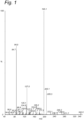
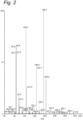
- the concentrations of 4 different hop derived substances represented by formula (I) can be determined by means of UPLC-MS using the procedure described below.
- These 4 hop derived substances include two isocohumulone derived substances (referred to as Co1 and Co2) and two isohumulone derived substance (referred to as N1 and N2).
- Typical retention times of these substances in the UPLC-MS method described below are listed below.
- Substance Retention time (min.) Co1 6.87 Co2 7.99 N1 9.08 N2 9.99
- the concentration of each hop derived substance is determined on the basis of calibration curves for each of the hop derived substances.
- These hop derived substances can be isolated in highly pure form from illuminated pre-isomerised hop extract by means of preparative UPLC.
- the calibration curves for the hop derived substances are determined using the detector conditions described below.
- the equipment, materials and conditions described below can be used to determine the concentrations of the aforementioned hop derived substances.
- UPLC system Acquity UPLC (Waters) equipped with a BEH C18 column (1.7 ⁇ m, 2.1 mm ⁇ 150 mm; Waters product number: 186002353)
- Detector XEVO TQ-S mass spectrometer (Waters)
- Analytical method is set-up in negative scan mode (ES-) and Multiple Reaction Monitoring (MRM) modes.
- ES- negative scan mode
- MRM Multiple Reaction Monitoring
- Polarity ES- Capilllary (kV) 2.5 Source Temperature (°C) 150 Desolvation temperature (°C) 600 Cone gas flow (L/Hr) 150 Desolvation gas flow (L/Hr) 1000 Collision gas flow (mL/min) 0.22
- MRM Multiple Reaction Monitoring
- the concentration of riboflavin in beer can be determined by means of UPLC-FLR using equipment, materials and conditions as described below.
- UPLC system Acquity UPLC (Waters) equipped with a BEH C18 column (1.7 ⁇ m, 2.1 mm ⁇ 150 mm; Waters product number: 186002353)
- Detector Acquity Fluorescence (FLR) detector (Waters)
- a pre-isomerised hop extract (so-called 'Isohop' obtained from Barth-Haas Group) was used as a starting material.
- This hop extract had the following characteristics (according to the product description sheet from Barth-Haas Group):
- the pre-isomerised hop extract was diluted with 'Milli-Q ® Ultrapure Water' (1:50 w/w). 16 mL of the diluted hop extract was introduced into a glass tube with screw cap (Duran glass, tube diameter is 16 mm, tube length is 160 mm). 30 of these glass tubes were simultaneously illuminated for a period of 32 hours inside a Suntest XLS+ device (ATLAS), using a Xenon lamp. During illumination, the following conditions were applicable:
- the concentrations of iso-alpha acids and hop derived substances in the hop extract were determined. Determination of iso-alpha acids in the hop extract was performed according to the method described by the European Brewery Convention (EBC) in 2005: ⁇ Method 7.8: Iso-alpha-, alpha- and beta-acids in hops, hop powder products and hop extracts (HPLC method)'. Determination of the concentration of the hop derived substances in the extract was performed according to the method described above.
- EBC European Brewery Convention
- HPLC method hop powder products and hop extracts
- Table 2 Iso-alpha acids (mg/L) Hop derived substances Co1 (mg/L) Co2 (mg/L) N1 (mg/L) N2 (mg/L) Sum (mg/L) Hop Extract 5808 ⁇ 0.01 ⁇ 0.01 ⁇ 0.01 ⁇ 0.01 ⁇ 0.01 ⁇ 0.01 Light-Stable Hop Extract 339 65 264 174 372 875
- the illuminated and non-illuminated hop extracts of Example 1 were added to unhopped beer (300 mL unhopped beer in green bottle).
- a first beer reference beer
- a second beer light-stable beer
- the illuminated hop extract was applied in a higher concentration in order to compensate for the loss in bitter intensity that had occurred as a result of the illumination.
- the flavour profile of the beer containing the illuminated hop extract had a flavour profile that was very similar to that of the beer containing the non-illuminated hop extract.
- Table 3 Iso-alpha acids (mg/L) Hop derived substances Riboflavin ( ⁇ g/L) MBT (ng/L) Co1 (mg/L) Co2 (mg/L) N1 (mg/L) N2 (mg/L) Sum (mg/L) Reference beer 0h illumination 19.2 ⁇ 0.01 ⁇ 0.01 ⁇ 0.01 ⁇ 0.01 318 7 2h illumination 18.8 0.01 0.02 0.03 0.04 0.11 16 309 6h illumination 17.8 0.05 0.08 0.11 0.15 0.39 2.8 660 24h illumination 16.0 0.19 0.28 0.42 0.54 1.42 0.3 2072 Light-stable beer 0h illumination 4.5 0.53 2.32 1.65 3.54 8.04 313 8 2h illumination 4.4 0.56 2.29 1.66 3.45 7.95 15 74 6h illumination 4.2 0.61 2.20 1.77 3.29 7.87 2.0 137 24h illumination 3.6 0.86 2.19 2.18 3.18 8.41 0.4 506
Landscapes
- Chemical & Material Sciences (AREA)
- Organic Chemistry (AREA)
- Engineering & Computer Science (AREA)
- Health & Medical Sciences (AREA)
- Biochemistry (AREA)
- Life Sciences & Earth Sciences (AREA)
- Bioinformatics & Cheminformatics (AREA)
- General Engineering & Computer Science (AREA)
- General Health & Medical Sciences (AREA)
- Genetics & Genomics (AREA)
- Food Science & Technology (AREA)
- Wood Science & Technology (AREA)
- Zoology (AREA)
- Toxicology (AREA)
- Distillation Of Fermentation Liquor, Processing Of Alcohols, Vinegar And Beer (AREA)
- Medicines Containing Plant Substances (AREA)
- Non-Alcoholic Beverages (AREA)
- Organic Low-Molecular-Weight Compounds And Preparation Thereof (AREA)
- Coloring Foods And Improving Nutritive Qualities (AREA)
- Food Preservation Except Freezing, Refrigeration, And Drying (AREA)
- Cosmetics (AREA)
Claims (15)
- - Bière comprenant un extrait de houblon stable à la lumière, ladite bière contenant au moins 40 µg/l de riboflavine et au moins 0,1 mg/l d'une ou plusieurs substances dérivées du houblon représentées par la formule (I) :

- - Bière selon la revendication 1, dans laquelle la bière contient au moins 0,2 mg/l, de préférence au moins 0,4 mg/l, de façon davantage préférée au moins 1 mg/l, de la ou des substances dérivées du houblon.
- - Bière selon l'une des revendications 1 ou 2, dans laquelle la bière ne contient pas plus de 50 mg/l, de préférence pas plus de 40 mg/l, de façon davantage préférée pas plus de 30 mg/l, de la ou des substances dérivées du houblon.
- - Bière selon l'une quelconque des revendications précédentes, dans laquelle la bière contient au moins 60 µg/l, de préférence 80 - 2000 µg/l, de riboflavine.
- - Bière selon l'une quelconque des revendications précédentes, dans laquelle la ou les substances dérivées du houblon et la riboflavine sont présentes dans un rapport en poids qui ne dépasse pas 200:1, de préférence dans un rapport en poids qui se situe dans la plage de 1:1 à 100:1.
- - Bière selon l'une quelconque des revendications précédentes, dans laquelle la bière contient au moins 0,1 mg/l, de préférence au moins 0,3 mg/l, de façon davantage préférée au moins 0,6 mg/l, d'acides iso-alpha.
- - Bière selon la revendication 6, dans laquelle la bière contient au moins 1 %, de façon davantage préférée au moins 3 % et de la façon que l'on préfère le plus au moins 5 % en poids des acides iso-alpha des substances dérivées du houblon.
- - Extrait de houblon stable à la lumière comprenant au moins 1 g par kg de matière sèche d'une ou plusieurs substances dérivées du houblon représentées par la formule (I) suivante :

- - Extrait de houblon selon la revendication 8, dans lequel l'extrait de houblon contient la ou les substances dérivées du houblon dans une concentration d'au moins 3 g par kg de matière sèche, de préférence dans une concentration d'au moins 6 g par kg de matière sèche et de façon davantage préférée d'au moins 10 g par kg de matière sèche.
- - Extrait de houblon selon l'une des revendications 8 ou 9, dans lequel l'extrait de houblon contient au moins 1 %, de façon davantage préférée au moins 3 % et de la façon que l'on préfère le plus au moins 5 % en poids des acides iso-alpha de la ou des substances dérivées du houblon.
- - Extrait de houblon selon l'une quelconque des revendications 8 à 10, dans lequel l'extrait de houblon contient au moins 1 % d'acides iso-alpha en poids de matière sèche.
- - Extrait de houblon selon l'une quelconque des revendications 8 à 11, dans lequel l'extrait de houblon contient des acides alpha dans une concentration de 0 - 10 % en poids de matière sèche, de préférence de 0 - 3 % en poids de matière sèche et de façon davantage préférée de 0,01 - 2 % en poids de matière sèche.
- - Extrait de houblon selon l'une quelconque des revendications 8 à 12, dans lequel l'extrait de houblon contient des acides bêta dans une concentration de 0 - 10 % en poids de matière sèche, de préférence de 0 - 5 % en poids de matière sèche.
- - Extrait de houblon selon l'une quelconque des revendications 8 à 13, dans lequel l'extrait de houblon contient des acides iso-alpha réduits dans une concentration qui ne dépasse pas 10 % en poids des acides iso-alpha, de préférence ne dépasse pas 3 % en poids des acides iso-alpha, lesdits acides iso-alpha réduits étant choisis parmi les acides dihydro-iso-alpha, les acides tétrahydro-iso-alpha, les acides hexahydro-iso-alpha et les combinaisons de ceux-ci.
- - Procédé de préparation d'une bière, ledit procédé comprenant l'introduction d'un extrait de houblon selon l'une quelconque des revendications 8 à 14.
Applications Claiming Priority (2)
| Application Number | Priority Date | Filing Date | Title |
|---|---|---|---|
| EP16154513 | 2016-02-05 | ||
| PCT/EP2017/052450 WO2017134263A1 (fr) | 2016-02-05 | 2017-02-03 | Extrait de houblon stable à la lumière |
Publications (2)
| Publication Number | Publication Date |
|---|---|
| EP3411468A1 EP3411468A1 (fr) | 2018-12-12 |
| EP3411468B1 true EP3411468B1 (fr) | 2023-06-07 |
Family
ID=55411168
Family Applications (2)
| Application Number | Title | Priority Date | Filing Date |
|---|---|---|---|
| EP17702409.8A Active EP3411467B1 (fr) | 2016-02-05 | 2017-02-03 | Extrait de houblon stable à la lumière |
| EP17705043.2A Active EP3411468B1 (fr) | 2016-02-05 | 2017-02-03 | Extrait de houblon stable à la lumière |
Family Applications Before (1)
| Application Number | Title | Priority Date | Filing Date |
|---|---|---|---|
| EP17702409.8A Active EP3411467B1 (fr) | 2016-02-05 | 2017-02-03 | Extrait de houblon stable à la lumière |
Country Status (14)
| Country | Link |
|---|---|
| US (2) | US10526571B2 (fr) |
| EP (2) | EP3411467B1 (fr) |
| JP (2) | JP6869993B2 (fr) |
| CN (2) | CN108603150B (fr) |
| BR (2) | BR112018016005B1 (fr) |
| CA (2) | CA3013310C (fr) |
| CO (2) | CO2018008622A2 (fr) |
| DK (2) | DK3411467T3 (fr) |
| EA (2) | EA037158B1 (fr) |
| ES (2) | ES2952949T3 (fr) |
| MX (2) | MX391325B (fr) |
| PL (2) | PL3411468T3 (fr) |
| WO (2) | WO2017134263A1 (fr) |
| ZA (2) | ZA201805187B (fr) |
Families Citing this family (2)
| Publication number | Priority date | Publication date | Assignee | Title |
|---|---|---|---|---|
| JP7201349B2 (ja) * | 2018-07-05 | 2023-01-10 | アサヒビール株式会社 | 発酵ビール様発泡性飲料のオフフレーバー低減方法 |
| EP3942012B1 (fr) * | 2020-05-15 | 2023-01-18 | Heineken Supply Chain B.V. | Appareil pour préparer une boisson de type bière |
Family Cites Families (26)
| Publication number | Priority date | Publication date | Assignee | Title |
|---|---|---|---|---|
| US3044879A (en) * | 1959-02-11 | 1962-07-17 | Miller Brewing | Anactinic malt product and hop extract therefor |
| US3155522A (en) * | 1961-07-04 | 1964-11-03 | Carlton & United Breweries | Process for the production of a hop concentrate |
| GB1006936A (en) * | 1961-07-04 | 1965-10-06 | Carlton & United Breweries | Hop concentrate and process for the preparation thereof |
| GB1064068A (en) * | 1963-09-03 | 1967-04-05 | Carlton & United Breweries | Hop concentrate and process for preparation thereof |
| US3615660A (en) * | 1969-06-11 | 1971-10-26 | Pfizer | Hop extract emulsion and preparation and use thereof |
| DE2217135C3 (de) * | 1972-04-10 | 1978-10-12 | Atlantic Research Institute Ltd., Nassau | Verfahren zur fotosensibilisierten Oxidation von Lupulonen |
| FR2490238B1 (fr) * | 1980-09-16 | 1985-09-27 | Tepral | Nouveau procede de valorisation des matieres ameres du houblon par phototransformation et appareillage pour la mise en oeuvre de ce procede |
| US4767640A (en) * | 1985-10-29 | 1988-08-30 | Miller Brewing Company | Light stable hop extracts and method of preparation |
| FR2590589B1 (fr) | 1985-11-26 | 1988-02-19 | Centre Nat Rech Scient | Nouveau procede de transformation photochimique d'extraits de houblon et dispositif pour la mise en oeuvre de ce procede. |
| WO1993002177A1 (fr) | 1991-07-15 | 1993-02-04 | S.S. Steiner, Inc. | Agents derives du houblon utilises pour stabiliser la mousse et lui donner son amertume |
| DE4226811A1 (de) * | 1992-08-13 | 1994-02-17 | Sueddeutsche Kalkstickstoff | Verfahren zur Stabilisierung von Hopfenprodukten |
| WO1996032465A1 (fr) | 1995-04-10 | 1996-10-17 | Labatt Brewing Company Limited | Biere presentant une stabilite a la lumiere amelioree |
| US6514542B2 (en) * | 1993-01-12 | 2003-02-04 | Labatt Brewing Company Limited | Treatments for improved beer flavor stability |
| AU2133495A (en) * | 1995-04-10 | 1996-10-30 | Labatt Brewing Company Limited | Beer having increased light stability |
| WO2001030961A1 (fr) * | 1999-10-28 | 2001-05-03 | Miller Brewing Company | Fraction de houblon stable a la lumiere et procede de preparation |
| GB0013052D0 (en) * | 2000-05-31 | 2000-07-19 | Bass Plc | Malt beverages |
| AU2001260479A1 (en) | 2000-05-31 | 2001-12-11 | Brandbrew Sa | Malt beverages |
| DK1299521T3 (da) * | 2000-06-30 | 2006-07-10 | Steiner Inc S S | Forbedringer af öls bitterhed |
| US7258887B2 (en) * | 2002-03-26 | 2007-08-21 | Miller Brewing Company | Preparation of light stable hops |
| NZ546006A (en) * | 2003-09-29 | 2009-04-30 | Heineken Supply Chain Bv | Beverages and foodstuffs resistant to light induced flavour changes, processes for making the same, and compositions for imparting such resistance |
| US8263165B2 (en) * | 2004-01-13 | 2012-09-11 | Jaimes Sher | Production of consumable alcohols and components thereof |
| WO2006065131A1 (fr) * | 2004-11-22 | 2006-06-22 | Universiteit Leiden, Faculteit Van Wiskunde En Natuurwetenschappen | Procede d’amelioration de la stabilite d’extraits de houblon et de boissons aromatisees au houblon |
| BRPI0609782B1 (pt) * | 2005-03-29 | 2015-08-11 | Heineken Supply Chain Bv | Composição, uso da mesma, método de fabricação de uma cerveja, cerveja, bebida contendo lúpulo, e, processo de preparação de uma composição |
| CN102695654A (zh) * | 2009-11-03 | 2012-09-26 | 嘉士伯酿酒有限公司 | 消除啤酒花型饮料中mbt的产生 |
| CN102695653A (zh) * | 2009-11-03 | 2012-09-26 | 嘉士伯酿酒有限公司 | 防止啤酒花型饮料中mbt的产生 |
| JP6333549B2 (ja) * | 2013-12-20 | 2018-05-30 | キリン株式会社 | 光誘導による風味劣化の抑制された飲料 |
-
2017
- 2017-02-03 US US16/075,129 patent/US10526571B2/en active Active
- 2017-02-03 ES ES17705043T patent/ES2952949T3/es active Active
- 2017-02-03 DK DK17702409.8T patent/DK3411467T3/da active
- 2017-02-03 DK DK17705043.2T patent/DK3411468T3/da active
- 2017-02-03 PL PL17705043.2T patent/PL3411468T3/pl unknown
- 2017-02-03 CN CN201780009833.6A patent/CN108603150B/zh active Active
- 2017-02-03 EP EP17702409.8A patent/EP3411467B1/fr active Active
- 2017-02-03 JP JP2018541183A patent/JP6869993B2/ja active Active
- 2017-02-03 PL PL17702409.8T patent/PL3411467T3/pl unknown
- 2017-02-03 JP JP2018541171A patent/JP6869992B2/ja active Active
- 2017-02-03 ES ES17702409T patent/ES2952948T3/es active Active
- 2017-02-03 WO PCT/EP2017/052450 patent/WO2017134263A1/fr not_active Ceased
- 2017-02-03 CN CN201780009852.9A patent/CN108603151B/zh active Active
- 2017-02-03 BR BR112018016005-9A patent/BR112018016005B1/pt active IP Right Grant
- 2017-02-03 EA EA201891719A patent/EA037158B1/ru unknown
- 2017-02-03 MX MX2018009390A patent/MX391325B/es unknown
- 2017-02-03 BR BR112018016006-7A patent/BR112018016006B1/pt active IP Right Grant
- 2017-02-03 CA CA3013310A patent/CA3013310C/fr active Active
- 2017-02-03 WO PCT/EP2017/052446 patent/WO2017134260A1/fr not_active Ceased
- 2017-02-03 US US16/075,426 patent/US10619127B2/en active Active
- 2017-02-03 EA EA201891720A patent/EA037171B1/ru unknown
- 2017-02-03 EP EP17705043.2A patent/EP3411468B1/fr active Active
- 2017-02-03 CA CA3013257A patent/CA3013257C/fr active Active
- 2017-02-03 MX MX2018009392A patent/MX392303B/es unknown
-
2018
- 2018-08-01 ZA ZA2018/05187A patent/ZA201805187B/en unknown
- 2018-08-02 ZA ZA2018/05207A patent/ZA201805207B/en unknown
- 2018-08-16 CO CONC2018/0008622A patent/CO2018008622A2/es unknown
- 2018-08-16 CO CONC2018/0008620A patent/CO2018008620A2/es unknown
Also Published As
Similar Documents
| Publication | Publication Date | Title |
|---|---|---|
| NO115000B (fr) | ||
| AU2015314110B2 (en) | Method for producing beers stored, offered, served or consumed in UV-VIS-transmittant bottles with reduced sensitivity, in particular no sensitivity, to skunky thiol flavor degradation upon exposure to sunlight or other sources of UV and/or VIS light, and beers stored, offered, served or consumed in UV-VIS-transmittant bottles with reduced sensitivity, in particular no sensitivity, to skunky thiol flavor degradation upon exposure to sunlight or other sources of UV and/or VIS light | |
| EP3411468B1 (fr) | Extrait de houblon stable à la lumière | |
| Mikyška et al. | Hop beta acids-from cones to beer | |
| CN112673084A (zh) | 具有降低的麦芽汁风味的低酒精啤酒 | |
| Munoz-Insa et al. | Use of polyphenol-rich hop products to reduce sunstruck flavor in beer | |
| JP7270648B2 (ja) | フムリノン類を含むホップ苦味組成物を含むビール | |
| EP0594788B1 (fr) | Agents derives du houblon utilises pour stabiliser la mousse et lui donner son amertume | |
| JPH11506604A (ja) | ケトル ホップエキス及びそれらの使用 | |
| NO134732B (fr) | ||
| JP7201349B2 (ja) | 発酵ビール様発泡性飲料のオフフレーバー低減方法 | |
| Heyerick | Unraveling the mechanism of the lightstruck flavor of beer | |
| Lajçi et al. | The evaluation of humulus lupulus utilisation during wort boiling and in beer |
Legal Events
| Date | Code | Title | Description |
|---|---|---|---|
| STAA | Information on the status of an ep patent application or granted ep patent |
Free format text: STATUS: UNKNOWN |
|
| STAA | Information on the status of an ep patent application or granted ep patent |
Free format text: STATUS: THE INTERNATIONAL PUBLICATION HAS BEEN MADE |
|
| PUAI | Public reference made under article 153(3) epc to a published international application that has entered the european phase |
Free format text: ORIGINAL CODE: 0009012 |
|
| STAA | Information on the status of an ep patent application or granted ep patent |
Free format text: STATUS: REQUEST FOR EXAMINATION WAS MADE |
|
| 17P | Request for examination filed |
Effective date: 20180803 |
|
| AK | Designated contracting states |
Kind code of ref document: A1 Designated state(s): AL AT BE BG CH CY CZ DE DK EE ES FI FR GB GR HR HU IE IS IT LI LT LU LV MC MK MT NL NO PL PT RO RS SE SI SK SM TR |
|
| AX | Request for extension of the european patent |
Extension state: BA ME |
|
| STAA | Information on the status of an ep patent application or granted ep patent |
Free format text: STATUS: EXAMINATION IS IN PROGRESS |
|
| DAV | Request for validation of the european patent (deleted) | ||
| DAX | Request for extension of the european patent (deleted) | ||
| 17Q | First examination report despatched |
Effective date: 20190510 |
|
| REG | Reference to a national code |
Ref country code: DE Ref legal event code: R079 Ref document number: 602017069449 Country of ref document: DE Free format text: PREVIOUS MAIN CLASS: C12C0003120000 Ipc: C12C0003080000 |
|
| GRAP | Despatch of communication of intention to grant a patent |
Free format text: ORIGINAL CODE: EPIDOSNIGR1 |
|
| STAA | Information on the status of an ep patent application or granted ep patent |
Free format text: STATUS: GRANT OF PATENT IS INTENDED |
|
| RIC1 | Information provided on ipc code assigned before grant |
Ipc: C12H 1/16 20060101ALI20220920BHEP Ipc: C12C 3/12 20060101ALI20220920BHEP Ipc: C12C 3/08 20060101AFI20220920BHEP |
|
| INTG | Intention to grant announced |
Effective date: 20221014 |
|
| GRAS | Grant fee paid |
Free format text: ORIGINAL CODE: EPIDOSNIGR3 |
|
| GRAA | (expected) grant |
Free format text: ORIGINAL CODE: 0009210 |
|
| STAA | Information on the status of an ep patent application or granted ep patent |
Free format text: STATUS: THE PATENT HAS BEEN GRANTED |
|
| AK | Designated contracting states |
Kind code of ref document: B1 Designated state(s): AL AT BE BG CH CY CZ DE DK EE ES FI FR GB GR HR HU IE IS IT LI LT LU LV MC MK MT NL NO PL PT RO RS SE SI SK SM TR |
|
| REG | Reference to a national code |
Ref country code: GB Ref legal event code: FG4D |
|
| REG | Reference to a national code |
Ref country code: CH Ref legal event code: EP Ref country code: AT Ref legal event code: REF Ref document number: 1575057 Country of ref document: AT Kind code of ref document: T Effective date: 20230615 Ref country code: DE Ref legal event code: R096 Ref document number: 602017069449 Country of ref document: DE |
|
| P01 | Opt-out of the competence of the unified patent court (upc) registered |
Effective date: 20230518 |
|
| REG | Reference to a national code |
Ref country code: NL Ref legal event code: FP |
|
| REG | Reference to a national code |
Ref country code: DK Ref legal event code: T3 Effective date: 20230620 |
|
| REG | Reference to a national code |
Ref country code: LT Ref legal event code: MG9D |
|
| PG25 | Lapsed in a contracting state [announced via postgrant information from national office to epo] |
Ref country code: SE Free format text: LAPSE BECAUSE OF FAILURE TO SUBMIT A TRANSLATION OF THE DESCRIPTION OR TO PAY THE FEE WITHIN THE PRESCRIBED TIME-LIMIT Effective date: 20230607 Ref country code: NO Free format text: LAPSE BECAUSE OF FAILURE TO SUBMIT A TRANSLATION OF THE DESCRIPTION OR TO PAY THE FEE WITHIN THE PRESCRIBED TIME-LIMIT Effective date: 20230907 |
|
| REG | Reference to a national code |
Ref country code: GR Ref legal event code: EP Ref document number: 20230401498 Country of ref document: GR Effective date: 20231010 |
|
| PG25 | Lapsed in a contracting state [announced via postgrant information from national office to epo] |
Ref country code: RS Free format text: LAPSE BECAUSE OF FAILURE TO SUBMIT A TRANSLATION OF THE DESCRIPTION OR TO PAY THE FEE WITHIN THE PRESCRIBED TIME-LIMIT Effective date: 20230607 Ref country code: LV Free format text: LAPSE BECAUSE OF FAILURE TO SUBMIT A TRANSLATION OF THE DESCRIPTION OR TO PAY THE FEE WITHIN THE PRESCRIBED TIME-LIMIT Effective date: 20230607 Ref country code: LT Free format text: LAPSE BECAUSE OF FAILURE TO SUBMIT A TRANSLATION OF THE DESCRIPTION OR TO PAY THE FEE WITHIN THE PRESCRIBED TIME-LIMIT Effective date: 20230607 Ref country code: HR Free format text: LAPSE BECAUSE OF FAILURE TO SUBMIT A TRANSLATION OF THE DESCRIPTION OR TO PAY THE FEE WITHIN THE PRESCRIBED TIME-LIMIT Effective date: 20230607 |
|
| PG25 | Lapsed in a contracting state [announced via postgrant information from national office to epo] |
Ref country code: FI Free format text: LAPSE BECAUSE OF FAILURE TO SUBMIT A TRANSLATION OF THE DESCRIPTION OR TO PAY THE FEE WITHIN THE PRESCRIBED TIME-LIMIT Effective date: 20230607 |
|
| PG25 | Lapsed in a contracting state [announced via postgrant information from national office to epo] |
Ref country code: SK Free format text: LAPSE BECAUSE OF FAILURE TO SUBMIT A TRANSLATION OF THE DESCRIPTION OR TO PAY THE FEE WITHIN THE PRESCRIBED TIME-LIMIT Effective date: 20230607 |
|
| PG25 | Lapsed in a contracting state [announced via postgrant information from national office to epo] |
Ref country code: IS Free format text: LAPSE BECAUSE OF FAILURE TO SUBMIT A TRANSLATION OF THE DESCRIPTION OR TO PAY THE FEE WITHIN THE PRESCRIBED TIME-LIMIT Effective date: 20231007 |
|
| PG25 | Lapsed in a contracting state [announced via postgrant information from national office to epo] |
Ref country code: SM Free format text: LAPSE BECAUSE OF FAILURE TO SUBMIT A TRANSLATION OF THE DESCRIPTION OR TO PAY THE FEE WITHIN THE PRESCRIBED TIME-LIMIT Effective date: 20230607 Ref country code: SK Free format text: LAPSE BECAUSE OF FAILURE TO SUBMIT A TRANSLATION OF THE DESCRIPTION OR TO PAY THE FEE WITHIN THE PRESCRIBED TIME-LIMIT Effective date: 20230607 Ref country code: RO Free format text: LAPSE BECAUSE OF FAILURE TO SUBMIT A TRANSLATION OF THE DESCRIPTION OR TO PAY THE FEE WITHIN THE PRESCRIBED TIME-LIMIT Effective date: 20230607 Ref country code: PT Free format text: LAPSE BECAUSE OF FAILURE TO SUBMIT A TRANSLATION OF THE DESCRIPTION OR TO PAY THE FEE WITHIN THE PRESCRIBED TIME-LIMIT Effective date: 20231009 Ref country code: IS Free format text: LAPSE BECAUSE OF FAILURE TO SUBMIT A TRANSLATION OF THE DESCRIPTION OR TO PAY THE FEE WITHIN THE PRESCRIBED TIME-LIMIT Effective date: 20231007 Ref country code: EE Free format text: LAPSE BECAUSE OF FAILURE TO SUBMIT A TRANSLATION OF THE DESCRIPTION OR TO PAY THE FEE WITHIN THE PRESCRIBED TIME-LIMIT Effective date: 20230607 |
|
| REG | Reference to a national code |
Ref country code: DE Ref legal event code: R097 Ref document number: 602017069449 Country of ref document: DE |
|
| PLBE | No opposition filed within time limit |
Free format text: ORIGINAL CODE: 0009261 |
|
| STAA | Information on the status of an ep patent application or granted ep patent |
Free format text: STATUS: NO OPPOSITION FILED WITHIN TIME LIMIT |
|
| PG25 | Lapsed in a contracting state [announced via postgrant information from national office to epo] |
Ref country code: SI Free format text: LAPSE BECAUSE OF FAILURE TO SUBMIT A TRANSLATION OF THE DESCRIPTION OR TO PAY THE FEE WITHIN THE PRESCRIBED TIME-LIMIT Effective date: 20230607 |
|
| 26N | No opposition filed |
Effective date: 20240308 |
|
| PG25 | Lapsed in a contracting state [announced via postgrant information from national office to epo] |
Ref country code: SI Free format text: LAPSE BECAUSE OF FAILURE TO SUBMIT A TRANSLATION OF THE DESCRIPTION OR TO PAY THE FEE WITHIN THE PRESCRIBED TIME-LIMIT Effective date: 20230607 |
|
| PG25 | Lapsed in a contracting state [announced via postgrant information from national office to epo] |
Ref country code: MC Free format text: LAPSE BECAUSE OF FAILURE TO SUBMIT A TRANSLATION OF THE DESCRIPTION OR TO PAY THE FEE WITHIN THE PRESCRIBED TIME-LIMIT Effective date: 20230607 |
|
| REG | Reference to a national code |
Ref country code: CH Ref legal event code: PL |
|
| PG25 | Lapsed in a contracting state [announced via postgrant information from national office to epo] |
Ref country code: LU Free format text: LAPSE BECAUSE OF NON-PAYMENT OF DUE FEES Effective date: 20240203 |
|
| PG25 | Lapsed in a contracting state [announced via postgrant information from national office to epo] |
Ref country code: CH Free format text: LAPSE BECAUSE OF NON-PAYMENT OF DUE FEES Effective date: 20240229 |
|
| PG25 | Lapsed in a contracting state [announced via postgrant information from national office to epo] |
Ref country code: LU Free format text: LAPSE BECAUSE OF NON-PAYMENT OF DUE FEES Effective date: 20240203 Ref country code: CH Free format text: LAPSE BECAUSE OF NON-PAYMENT OF DUE FEES Effective date: 20240229 |
|
| PG25 | Lapsed in a contracting state [announced via postgrant information from national office to epo] |
Ref country code: BG Free format text: LAPSE BECAUSE OF FAILURE TO SUBMIT A TRANSLATION OF THE DESCRIPTION OR TO PAY THE FEE WITHIN THE PRESCRIBED TIME-LIMIT Effective date: 20230607 |
|
| PG25 | Lapsed in a contracting state [announced via postgrant information from national office to epo] |
Ref country code: BG Free format text: LAPSE BECAUSE OF FAILURE TO SUBMIT A TRANSLATION OF THE DESCRIPTION OR TO PAY THE FEE WITHIN THE PRESCRIBED TIME-LIMIT Effective date: 20230607 |
|
| PG25 | Lapsed in a contracting state [announced via postgrant information from national office to epo] |
Ref country code: IE Free format text: LAPSE BECAUSE OF NON-PAYMENT OF DUE FEES Effective date: 20240203 |
|
| PG25 | Lapsed in a contracting state [announced via postgrant information from national office to epo] |
Ref country code: IE Free format text: LAPSE BECAUSE OF NON-PAYMENT OF DUE FEES Effective date: 20240203 |
|
| REG | Reference to a national code |
Ref country code: AT Ref legal event code: UEP Ref document number: 1575057 Country of ref document: AT Kind code of ref document: T Effective date: 20230607 |
|
| PG25 | Lapsed in a contracting state [announced via postgrant information from national office to epo] |
Ref country code: CY Free format text: LAPSE BECAUSE OF FAILURE TO SUBMIT A TRANSLATION OF THE DESCRIPTION OR TO PAY THE FEE WITHIN THE PRESCRIBED TIME-LIMIT; INVALID AB INITIO Effective date: 20170203 |
|
| PG25 | Lapsed in a contracting state [announced via postgrant information from national office to epo] |
Ref country code: HU Free format text: LAPSE BECAUSE OF FAILURE TO SUBMIT A TRANSLATION OF THE DESCRIPTION OR TO PAY THE FEE WITHIN THE PRESCRIBED TIME-LIMIT; INVALID AB INITIO Effective date: 20170203 |
|
| PG25 | Lapsed in a contracting state [announced via postgrant information from national office to epo] |
Ref country code: TR Free format text: LAPSE BECAUSE OF FAILURE TO SUBMIT A TRANSLATION OF THE DESCRIPTION OR TO PAY THE FEE WITHIN THE PRESCRIBED TIME-LIMIT Effective date: 20230607 |
|
| PGFP | Annual fee paid to national office [announced via postgrant information from national office to epo] |
Ref country code: NL Payment date: 20260209 Year of fee payment: 10 |
|
| PGFP | Annual fee paid to national office [announced via postgrant information from national office to epo] |
Ref country code: GB Payment date: 20260223 Year of fee payment: 10 |
|
| PGFP | Annual fee paid to national office [announced via postgrant information from national office to epo] |
Ref country code: ES Payment date: 20260317 Year of fee payment: 10 |
|
| PGFP | Annual fee paid to national office [announced via postgrant information from national office to epo] |
Ref country code: DE Payment date: 20260220 Year of fee payment: 10 Ref country code: DK Payment date: 20260223 Year of fee payment: 10 |
|
| PGFP | Annual fee paid to national office [announced via postgrant information from national office to epo] |
Ref country code: AT Payment date: 20260218 Year of fee payment: 10 |
|
| PGFP | Annual fee paid to national office [announced via postgrant information from national office to epo] |
Ref country code: BE Payment date: 20260220 Year of fee payment: 10 Ref country code: IT Payment date: 20260220 Year of fee payment: 10 |
|
| PGFP | Annual fee paid to national office [announced via postgrant information from national office to epo] |
Ref country code: FR Payment date: 20260224 Year of fee payment: 10 |
|
| PGFP | Annual fee paid to national office [announced via postgrant information from national office to epo] |
Ref country code: CZ Payment date: 20260126 Year of fee payment: 10 |
|
| PGFP | Annual fee paid to national office [announced via postgrant information from national office to epo] |
Ref country code: GR Payment date: 20260220 Year of fee payment: 10 Ref country code: PL Payment date: 20260120 Year of fee payment: 10 |