EP3412433A1 - Verfahren zur herstellung einer vorgeformten abdeckung mit thermoplastischer oberfläche und solch eine abdeckung - Google Patents
Verfahren zur herstellung einer vorgeformten abdeckung mit thermoplastischer oberfläche und solch eine abdeckung Download PDFInfo
- Publication number
- EP3412433A1 EP3412433A1 EP17175149.8A EP17175149A EP3412433A1 EP 3412433 A1 EP3412433 A1 EP 3412433A1 EP 17175149 A EP17175149 A EP 17175149A EP 3412433 A1 EP3412433 A1 EP 3412433A1
- Authority
- EP
- European Patent Office
- Prior art keywords
- sheet
- thermoplastic
- assembly
- section
- thermoplastic material
- Prior art date
- Legal status (The legal status is an assumption and is not a legal conclusion. Google has not performed a legal analysis and makes no representation as to the accuracy of the status listed.)
- Withdrawn
Links
Images



Classifications
-
- B—PERFORMING OPERATIONS; TRANSPORTING
- B29—WORKING OF PLASTICS; WORKING OF SUBSTANCES IN A PLASTIC STATE IN GENERAL
- B29C—SHAPING OR JOINING OF PLASTICS; SHAPING OF MATERIAL IN A PLASTIC STATE, NOT OTHERWISE PROVIDED FOR; AFTER-TREATMENT OF THE SHAPED PRODUCTS, e.g. REPAIRING
- B29C65/00—Joining or sealing of preformed parts, e.g. welding of plastics materials; Apparatus therefor
- B29C65/02—Joining or sealing of preformed parts, e.g. welding of plastics materials; Apparatus therefor by heating, with or without pressure
- B29C65/10—Joining or sealing of preformed parts, e.g. welding of plastics materials; Apparatus therefor by heating, with or without pressure using hot gases (e.g. combustion gases) or flames coming in contact with at least one of the parts to be joined
-
- B—PERFORMING OPERATIONS; TRANSPORTING
- B29—WORKING OF PLASTICS; WORKING OF SUBSTANCES IN A PLASTIC STATE IN GENERAL
- B29C—SHAPING OR JOINING OF PLASTICS; SHAPING OF MATERIAL IN A PLASTIC STATE, NOT OTHERWISE PROVIDED FOR; AFTER-TREATMENT OF THE SHAPED PRODUCTS, e.g. REPAIRING
- B29C48/00—Extrusion moulding, i.e. expressing the moulding material through a die or nozzle which imparts the desired form; Apparatus therefor
- B29C48/001—Combinations of extrusion moulding with other shaping operations
- B29C48/0021—Combinations of extrusion moulding with other shaping operations combined with joining, lining or laminating
-
- B—PERFORMING OPERATIONS; TRANSPORTING
- B29—WORKING OF PLASTICS; WORKING OF SUBSTANCES IN A PLASTIC STATE IN GENERAL
- B29C—SHAPING OR JOINING OF PLASTICS; SHAPING OF MATERIAL IN A PLASTIC STATE, NOT OTHERWISE PROVIDED FOR; AFTER-TREATMENT OF THE SHAPED PRODUCTS, e.g. REPAIRING
- B29C48/00—Extrusion moulding, i.e. expressing the moulding material through a die or nozzle which imparts the desired form; Apparatus therefor
- B29C48/001—Combinations of extrusion moulding with other shaping operations
- B29C48/0022—Combinations of extrusion moulding with other shaping operations combined with cutting
-
- B—PERFORMING OPERATIONS; TRANSPORTING
- B29—WORKING OF PLASTICS; WORKING OF SUBSTANCES IN A PLASTIC STATE IN GENERAL
- B29C—SHAPING OR JOINING OF PLASTICS; SHAPING OF MATERIAL IN A PLASTIC STATE, NOT OTHERWISE PROVIDED FOR; AFTER-TREATMENT OF THE SHAPED PRODUCTS, e.g. REPAIRING
- B29C48/00—Extrusion moulding, i.e. expressing the moulding material through a die or nozzle which imparts the desired form; Apparatus therefor
- B29C48/03—Extrusion moulding, i.e. expressing the moulding material through a die or nozzle which imparts the desired form; Apparatus therefor characterised by the shape of the extruded material at extrusion
- B29C48/07—Flat, e.g. panels
-
- B—PERFORMING OPERATIONS; TRANSPORTING
- B29—WORKING OF PLASTICS; WORKING OF SUBSTANCES IN A PLASTIC STATE IN GENERAL
- B29C—SHAPING OR JOINING OF PLASTICS; SHAPING OF MATERIAL IN A PLASTIC STATE, NOT OTHERWISE PROVIDED FOR; AFTER-TREATMENT OF THE SHAPED PRODUCTS, e.g. REPAIRING
- B29C66/00—General aspects of processes or apparatus for joining preformed parts
- B29C66/01—General aspects dealing with the joint area or with the area to be joined
- B29C66/02—Preparation of the material, in the area to be joined, prior to joining or welding
- B29C66/022—Mechanical pre-treatments, e.g. reshaping
- B29C66/0224—Mechanical pre-treatments, e.g. reshaping with removal of material
- B29C66/02241—Cutting, e.g. by using waterjets, or sawing
-
- B—PERFORMING OPERATIONS; TRANSPORTING
- B29—WORKING OF PLASTICS; WORKING OF SUBSTANCES IN A PLASTIC STATE IN GENERAL
- B29C—SHAPING OR JOINING OF PLASTICS; SHAPING OF MATERIAL IN A PLASTIC STATE, NOT OTHERWISE PROVIDED FOR; AFTER-TREATMENT OF THE SHAPED PRODUCTS, e.g. REPAIRING
- B29C66/00—General aspects of processes or apparatus for joining preformed parts
- B29C66/01—General aspects dealing with the joint area or with the area to be joined
- B29C66/05—Particular design of joint configurations
- B29C66/10—Particular design of joint configurations particular design of the joint cross-sections
- B29C66/11—Joint cross-sections comprising a single joint-segment, i.e. one of the parts to be joined comprising a single joint-segment in the joint cross-section
- B29C66/114—Single butt joints
- B29C66/1142—Single butt to butt joints
-
- B—PERFORMING OPERATIONS; TRANSPORTING
- B29—WORKING OF PLASTICS; WORKING OF SUBSTANCES IN A PLASTIC STATE IN GENERAL
- B29C—SHAPING OR JOINING OF PLASTICS; SHAPING OF MATERIAL IN A PLASTIC STATE, NOT OTHERWISE PROVIDED FOR; AFTER-TREATMENT OF THE SHAPED PRODUCTS, e.g. REPAIRING
- B29C66/00—General aspects of processes or apparatus for joining preformed parts
- B29C66/40—General aspects of joining substantially flat articles, e.g. plates, sheets or web-like materials; Making flat seams in tubular or hollow articles; Joining single elements to substantially flat surfaces
- B29C66/41—Joining substantially flat articles ; Making flat seams in tubular or hollow articles
- B29C66/43—Joining a relatively small portion of the surface of said articles
-
- B—PERFORMING OPERATIONS; TRANSPORTING
- B29—WORKING OF PLASTICS; WORKING OF SUBSTANCES IN A PLASTIC STATE IN GENERAL
- B29C—SHAPING OR JOINING OF PLASTICS; SHAPING OF MATERIAL IN A PLASTIC STATE, NOT OTHERWISE PROVIDED FOR; AFTER-TREATMENT OF THE SHAPED PRODUCTS, e.g. REPAIRING
- B29C66/00—General aspects of processes or apparatus for joining preformed parts
- B29C66/70—General aspects of processes or apparatus for joining preformed parts characterised by the composition, physical properties or the structure of the material of the parts to be joined; Joining with non-plastics material
- B29C66/73—General aspects of processes or apparatus for joining preformed parts characterised by the composition, physical properties or the structure of the material of the parts to be joined; Joining with non-plastics material characterised by the intensive physical properties of the material of the parts to be joined, by the optical properties of the material of the parts to be joined, by the extensive physical properties of the parts to be joined, by the state of the material of the parts to be joined or by the material of the parts to be joined being a thermoplastic or a thermoset
- B29C66/739—General aspects of processes or apparatus for joining preformed parts characterised by the composition, physical properties or the structure of the material of the parts to be joined; Joining with non-plastics material characterised by the intensive physical properties of the material of the parts to be joined, by the optical properties of the material of the parts to be joined, by the extensive physical properties of the parts to be joined, by the state of the material of the parts to be joined or by the material of the parts to be joined being a thermoplastic or a thermoset characterised by the material of the parts to be joined being a thermoplastic or a thermoset
- B29C66/7392—General aspects of processes or apparatus for joining preformed parts characterised by the composition, physical properties or the structure of the material of the parts to be joined; Joining with non-plastics material characterised by the intensive physical properties of the material of the parts to be joined, by the optical properties of the material of the parts to be joined, by the extensive physical properties of the parts to be joined, by the state of the material of the parts to be joined or by the material of the parts to be joined being a thermoplastic or a thermoset characterised by the material of the parts to be joined being a thermoplastic or a thermoset characterised by the material of at least one of the parts being a thermoplastic
- B29C66/73921—General aspects of processes or apparatus for joining preformed parts characterised by the composition, physical properties or the structure of the material of the parts to be joined; Joining with non-plastics material characterised by the intensive physical properties of the material of the parts to be joined, by the optical properties of the material of the parts to be joined, by the extensive physical properties of the parts to be joined, by the state of the material of the parts to be joined or by the material of the parts to be joined being a thermoplastic or a thermoset characterised by the material of the parts to be joined being a thermoplastic or a thermoset characterised by the material of at least one of the parts being a thermoplastic characterised by the materials of both parts being thermoplastics
-
- B—PERFORMING OPERATIONS; TRANSPORTING
- B29—WORKING OF PLASTICS; WORKING OF SUBSTANCES IN A PLASTIC STATE IN GENERAL
- B29C—SHAPING OR JOINING OF PLASTICS; SHAPING OF MATERIAL IN A PLASTIC STATE, NOT OTHERWISE PROVIDED FOR; AFTER-TREATMENT OF THE SHAPED PRODUCTS, e.g. REPAIRING
- B29C66/00—General aspects of processes or apparatus for joining preformed parts
- B29C66/80—General aspects of machine operations or constructions and parts thereof
- B29C66/83—General aspects of machine operations or constructions and parts thereof characterised by the movement of the joining or pressing tools
- B29C66/836—Moving relative to and tangentially to the parts to be joined, e.g. transversely to the displacement of the parts to be joined, e.g. using a X-Y table
-
- B—PERFORMING OPERATIONS; TRANSPORTING
- B29—WORKING OF PLASTICS; WORKING OF SUBSTANCES IN A PLASTIC STATE IN GENERAL
- B29C—SHAPING OR JOINING OF PLASTICS; SHAPING OF MATERIAL IN A PLASTIC STATE, NOT OTHERWISE PROVIDED FOR; AFTER-TREATMENT OF THE SHAPED PRODUCTS, e.g. REPAIRING
- B29C69/00—Combinations of shaping techniques not provided for in a single one of main groups B29C39/00 - B29C67/00, e.g. associations of moulding and joining techniques; Apparatus therefore
- B29C69/001—Combinations of shaping techniques not provided for in a single one of main groups B29C39/00 - B29C67/00, e.g. associations of moulding and joining techniques; Apparatus therefore a shaping technique combined with cutting, e.g. in parts or slices combined with rearranging and joining the cut parts
-
- B—PERFORMING OPERATIONS; TRANSPORTING
- B44—DECORATIVE ARTS
- B44C—PRODUCING DECORATIVE EFFECTS; MOSAICS; TARSIA WORK; PAPERHANGING
- B44C1/00—Processes, not specifically provided for elsewhere, for producing decorative surface effects
- B44C1/10—Applying flat materials, e.g. leaflets, pieces of fabrics
-
- B—PERFORMING OPERATIONS; TRANSPORTING
- B44—DECORATIVE ARTS
- B44C—PRODUCING DECORATIVE EFFECTS; MOSAICS; TARSIA WORK; PAPERHANGING
- B44C1/00—Processes, not specifically provided for elsewhere, for producing decorative surface effects
- B44C1/26—Inlaying with ornamental structures, e.g. niello work, tarsia work
-
- E—FIXED CONSTRUCTIONS
- E01—CONSTRUCTION OF ROADS, RAILWAYS, OR BRIDGES
- E01C—CONSTRUCTION OF, OR SURFACES FOR, ROADS, SPORTS GROUNDS, OR THE LIKE; MACHINES OR AUXILIARY TOOLS FOR CONSTRUCTION OR REPAIR
- E01C5/00—Pavings made of prefabricated single units
- E01C5/20—Pavings made of prefabricated single units made of units of plastics, e.g. concrete with plastics, linoleum
-
- E—FIXED CONSTRUCTIONS
- E04—BUILDING
- E04F—FINISHING WORK ON BUILDINGS, e.g. STAIRS, FLOORS
- E04F15/00—Flooring
- E04F15/02—Flooring or floor layers composed of a number of similar elements
- E04F15/10—Flooring or floor layers composed of a number of similar elements of other materials, e.g. fibrous or chipped materials, organic plastics, magnesite tiles, hardboard, or with a top layer of other materials
- E04F15/105—Flooring or floor layers composed of a number of similar elements of other materials, e.g. fibrous or chipped materials, organic plastics, magnesite tiles, hardboard, or with a top layer of other materials of organic plastics with or without reinforcements or filling materials
-
- B—PERFORMING OPERATIONS; TRANSPORTING
- B29—WORKING OF PLASTICS; WORKING OF SUBSTANCES IN A PLASTIC STATE IN GENERAL
- B29C—SHAPING OR JOINING OF PLASTICS; SHAPING OF MATERIAL IN A PLASTIC STATE, NOT OTHERWISE PROVIDED FOR; AFTER-TREATMENT OF THE SHAPED PRODUCTS, e.g. REPAIRING
- B29C65/00—Joining or sealing of preformed parts, e.g. welding of plastics materials; Apparatus therefor
- B29C65/48—Joining or sealing of preformed parts, e.g. welding of plastics materials; Apparatus therefor using adhesives, i.e. using supplementary joining material; solvent bonding
- B29C65/4805—Joining or sealing of preformed parts, e.g. welding of plastics materials; Apparatus therefor using adhesives, i.e. using supplementary joining material; solvent bonding characterised by the type of adhesives
- B29C65/481—Non-reactive adhesives, e.g. physically hardening adhesives
- B29C65/4815—Hot melt adhesives, e.g. thermoplastic adhesives
-
- B—PERFORMING OPERATIONS; TRANSPORTING
- B29—WORKING OF PLASTICS; WORKING OF SUBSTANCES IN A PLASTIC STATE IN GENERAL
- B29C—SHAPING OR JOINING OF PLASTICS; SHAPING OF MATERIAL IN A PLASTIC STATE, NOT OTHERWISE PROVIDED FOR; AFTER-TREATMENT OF THE SHAPED PRODUCTS, e.g. REPAIRING
- B29C66/00—General aspects of processes or apparatus for joining preformed parts
- B29C66/70—General aspects of processes or apparatus for joining preformed parts characterised by the composition, physical properties or the structure of the material of the parts to be joined; Joining with non-plastics material
- B29C66/73—General aspects of processes or apparatus for joining preformed parts characterised by the composition, physical properties or the structure of the material of the parts to be joined; Joining with non-plastics material characterised by the intensive physical properties of the material of the parts to be joined, by the optical properties of the material of the parts to be joined, by the extensive physical properties of the parts to be joined, by the state of the material of the parts to be joined or by the material of the parts to be joined being a thermoplastic or a thermoset
- B29C66/733—General aspects of processes or apparatus for joining preformed parts characterised by the composition, physical properties or the structure of the material of the parts to be joined; Joining with non-plastics material characterised by the intensive physical properties of the material of the parts to be joined, by the optical properties of the material of the parts to be joined, by the extensive physical properties of the parts to be joined, by the state of the material of the parts to be joined or by the material of the parts to be joined being a thermoplastic or a thermoset characterised by the optical properties of the material of the parts to be joined, e.g. fluorescence, phosphorescence
- B29C66/7332—General aspects of processes or apparatus for joining preformed parts characterised by the composition, physical properties or the structure of the material of the parts to be joined; Joining with non-plastics material characterised by the intensive physical properties of the material of the parts to be joined, by the optical properties of the material of the parts to be joined, by the extensive physical properties of the parts to be joined, by the state of the material of the parts to be joined or by the material of the parts to be joined being a thermoplastic or a thermoset characterised by the optical properties of the material of the parts to be joined, e.g. fluorescence, phosphorescence at least one of the parts to be joined being coloured
- B29C66/73321—General aspects of processes or apparatus for joining preformed parts characterised by the composition, physical properties or the structure of the material of the parts to be joined; Joining with non-plastics material characterised by the intensive physical properties of the material of the parts to be joined, by the optical properties of the material of the parts to be joined, by the extensive physical properties of the parts to be joined, by the state of the material of the parts to be joined or by the material of the parts to be joined being a thermoplastic or a thermoset characterised by the optical properties of the material of the parts to be joined, e.g. fluorescence, phosphorescence at least one of the parts to be joined being coloured both parts to be joined being coloured
- B29C66/73322—General aspects of processes or apparatus for joining preformed parts characterised by the composition, physical properties or the structure of the material of the parts to be joined; Joining with non-plastics material characterised by the intensive physical properties of the material of the parts to be joined, by the optical properties of the material of the parts to be joined, by the extensive physical properties of the parts to be joined, by the state of the material of the parts to be joined or by the material of the parts to be joined being a thermoplastic or a thermoset characterised by the optical properties of the material of the parts to be joined, e.g. fluorescence, phosphorescence at least one of the parts to be joined being coloured both parts to be joined being coloured both parts to be joined having a different colour
-
- B—PERFORMING OPERATIONS; TRANSPORTING
- B29—WORKING OF PLASTICS; WORKING OF SUBSTANCES IN A PLASTIC STATE IN GENERAL
- B29C—SHAPING OR JOINING OF PLASTICS; SHAPING OF MATERIAL IN A PLASTIC STATE, NOT OTHERWISE PROVIDED FOR; AFTER-TREATMENT OF THE SHAPED PRODUCTS, e.g. REPAIRING
- B29C66/00—General aspects of processes or apparatus for joining preformed parts
- B29C66/90—Measuring or controlling the joining process
- B29C66/91—Measuring or controlling the joining process by measuring or controlling the temperature, the heat or the thermal flux
- B29C66/919—Measuring or controlling the joining process by measuring or controlling the temperature, the heat or the thermal flux characterised by specific temperature, heat or thermal flux values or ranges
-
- B—PERFORMING OPERATIONS; TRANSPORTING
- B29—WORKING OF PLASTICS; WORKING OF SUBSTANCES IN A PLASTIC STATE IN GENERAL
- B29C—SHAPING OR JOINING OF PLASTICS; SHAPING OF MATERIAL IN A PLASTIC STATE, NOT OTHERWISE PROVIDED FOR; AFTER-TREATMENT OF THE SHAPED PRODUCTS, e.g. REPAIRING
- B29C66/00—General aspects of processes or apparatus for joining preformed parts
- B29C66/90—Measuring or controlling the joining process
- B29C66/93—Measuring or controlling the joining process by measuring or controlling the speed
- B29C66/939—Measuring or controlling the joining process by measuring or controlling the speed characterised by specific speed values or ranges
-
- B—PERFORMING OPERATIONS; TRANSPORTING
- B29—WORKING OF PLASTICS; WORKING OF SUBSTANCES IN A PLASTIC STATE IN GENERAL
- B29C—SHAPING OR JOINING OF PLASTICS; SHAPING OF MATERIAL IN A PLASTIC STATE, NOT OTHERWISE PROVIDED FOR; AFTER-TREATMENT OF THE SHAPED PRODUCTS, e.g. REPAIRING
- B29C66/00—General aspects of processes or apparatus for joining preformed parts
- B29C66/90—Measuring or controlling the joining process
- B29C66/94—Measuring or controlling the joining process by measuring or controlling the time
- B29C66/949—Measuring or controlling the joining process by measuring or controlling the time characterised by specific time values or ranges
-
- B—PERFORMING OPERATIONS; TRANSPORTING
- B29—WORKING OF PLASTICS; WORKING OF SUBSTANCES IN A PLASTIC STATE IN GENERAL
- B29L—INDEXING SCHEME ASSOCIATED WITH SUBCLASS B29C, RELATING TO PARTICULAR ARTICLES
- B29L2031/00—Other particular articles
- B29L2031/30—Vehicles, e.g. ships or aircraft, or body parts thereof
- B29L2031/3005—Body finishings
- B29L2031/3017—Floor coverings
-
- B—PERFORMING OPERATIONS; TRANSPORTING
- B29—WORKING OF PLASTICS; WORKING OF SUBSTANCES IN A PLASTIC STATE IN GENERAL
- B29L—INDEXING SCHEME ASSOCIATED WITH SUBCLASS B29C, RELATING TO PARTICULAR ARTICLES
- B29L2031/00—Other particular articles
- B29L2031/732—Floor coverings
-
- B—PERFORMING OPERATIONS; TRANSPORTING
- B32—LAYERED PRODUCTS
- B32B—LAYERED PRODUCTS, i.e. PRODUCTS BUILT-UP OF STRATA OF FLAT OR NON-FLAT, e.g. CELLULAR OR HONEYCOMB, FORM
- B32B2590/00—Signboards, advertising panels, road signs
Definitions
- the invention relates to a method for producing a preformed thermoplastic surface covering.
- the invention also relates to a preformed thermoplastic surface covering.
- thermoplastic markings having the shape of the total intended marking or having the shape of a part of the intended marking.
- Such pre-manufactured thermoplastic markings may e.g. be adapted to be placed on a road surface or the like and then be subjected to heat, e.g. by the use of a blow torch, until it reaches an almost liquefied state sufficient for it to adhere to the road surface.
- Pre-manufactured thermoplastic markings are e.g. known from GB-A-2 030 586 , SE-B-399 575 , SE-B-341 873 , and US-4 708 518 .
- pavement marking patterns composed of two or more independent sections formed from differently coloured thermoplastic materials.
- a hot melt adhesive spray is utilized on the bottom surface of the marking pattern to bridge the intersections between the first and second sections to maintain the integrity of the marking pattern for convenience during handling and application to a substrate.
- the hot melt spray adhesive has approximately the same softening point range as the pattern sections to accommodate heat treatment of the marking pattern during application of the marking pattern to the substrate.
- Such a pavement marking pattern is e.g. disclosed in EP 2 032 764 A1 .
- the spray adhesive When applying the spray adhesive, the worker on the manufacturing site need to apply on one hand sufficient amount of spray adhesive to secure that the sections are held together and on the other hand not apply too much adhesive. Moreover, the spray adhesive needs to be applied to the areas where the sections need to be bounded together. It may in this context be noted that such markings formed of different sections are typically manufactured in numerous variants in comparably small amounts which makes it difficult to automate with retained cost-efficiency.
- thermoplastic markings or surface coverings having differently coloured sections there is room for improvements when it comes to providing pre-manufactured or pre-formed thermoplastic markings or surface coverings having differently coloured sections.
- thermoplastic surface covering comprising the steps of:
- thermoplastic compositions having different characteristics
- hot gas preferably hot air
- the intended upper side is the side that will be facing away from the surface onto which the surface covering is applied to the intended surface, such as a road surface. In case being intended for a horizontal road surface, the intended upper side will be facing upwards.
- This freedom in orientation may be used to facilitate assembly. It may e.g. be possible to assemble the different sections with the intended upper side facing upwards and then bond together the sections without having to turn them upside down.
- thermoplastic surface covering in which the sections are bonded together to maintain the integrity of the preformed covering for convenience during handling and application to a substrate or surface.
- the hot gas may enter into any small gaps in the interfaces between the sections thereby providing more heat to areas where there is a greater need to provide an at least partial melting to secure that the sections bond to each other.
- thermoplastic surface covering is adapted for application on surfaces, such as road surfaces, side walk surfaces, foot and bicycle way surfaces, playground surfaces, parking lot surfaces, parking house floor surfaces, or sports ground surfaces.
- the surface covering may also be referred to as a thermoplastic marking.
- thermoplastic surface covering is adapted to have the shape of a sheet and form a pre-manufactured thermoplastic surface covering or marking having the shape of the total intended marking or having the shape of a part of the intended marking.
- pre-manufactured thermoplastic coverings or markings may e.g. be adapted to be placed on a road surface or the like and then be subjected to heat, e.g. by the use of a blow torch, until it reaches an almost liquefied state sufficient for it to adhere to the road surface.
- a pre-manufactured thermoplastic surface covering or marking may also be referred to as a preformed thermoplastic surface covering or marking.
- the preformed thermoplastic surface covering may have a number of different designs. It may be used to replicate repeating designs, such as layers of bricks, tiles or cobblestones.
- the first section may e.g. be a grid system replicating any substance, such as mortar between bricks or sand between cobblestones, and a plurality of second sections may be provided to replicate the bricks, tiles or stones.
- the preformed thermoplastic surface covering may be used to provide horizontal signage, logos and other components. It may be used on a playground and have the design of a game board, a hop scotch, a map, an alphabet as a line or a table, a multiplication table, a line of numbers, or the like. It may basically be used for any design typically making use of more than one colour to produce the design.
- the characteristics being different between the first sheet and the second sheet may basically be any kind of characteristic. It need not be different colours. The difference may relate to anti-slip properties, reflectivity, wear resistance, etc. Basically the inventive method is especially useful in providing a pre-formed thermoplastic surface covering in those cases where it is difficult to provide different characteristics after the thermoplastic material has been extruded into a sheet. It is e.g. often difficult to provide different colours to different parts of the sheet, at least if you want to have uniform colouring through the thickness of the sheet to secure that the design remains intact as the surface covering is worn.
- first section and the second section are separate sections.
- first and second sheets will be different sheets originating from two separate batches of thermoplastic composition. They may e.g. be two thermoplastic compositions that are basically the same when it comes to the choice and amount of thermoplastic material and filler material, but with different pigments thereby providing different colours. It is however also conceivable that the composition is changed during the extrusion and that the first sheet and the second sheet are actually different portions of a single sheet.
- the step of assembling may comprise positioning the at least one sheet section from the first sheet and at least one sheet section from the second sheet side by side on a work surface thereby forming an assembly on the work surface. Assembling the sections side by side, a preferably into abutment with each other, on a work surface facilitates assembly and may also be used for transferring the assembly to a heating station.
- the work surface may basically be any kind of closed or open surface capable of supporting the different sections even though they have not yet been bonded together.
- the work surface may be a solid surface, a net, a set of rollers, a set or rods, a set of belts, such as conveyor belts.
- the work surface may be a first work surface used in the assembling step and then the assembly may be transferred to a second work surface intended to support the assembly while hot gas is blown onto the assembly.
- the hot gas or air may be blown onto the assembly from the nozzle while providing a relative motion between the assembly and the nozzle such that the nozzles move along the major surface of the assembly.
- a relative motion it is possible to heat large coverings using comparably small and cost-effective nozzles.
- the assembly may be moved relative to the nozzles.
- the nozzles may be moved relative to the assembly.
- both the assembly and the nozzles may be moved in a counter-movement or in a joint movement direction at different speeds.
- the hot gas has preferably a temperature greater than 80° C. More preferably the hot gas has a temperature greater than 120° C.
- the temperature of the hot gas may, e.g. in case a gas burner is used, be up to about 1300° C. When such a hot gas from a gas burner is used, the gas burner nozzle will be used from either a long distance and/or for short time interval in order to avoid scorching.
- the hot gas is preferably hot air.
- the hot air preferably has a temperature of between 80 and 400, °C and more preferably a temperature of between 120 and 400° C. This is considered a suitable balance between on one hand being capable of providing an efficient partial melting of the thermoplastic material and on the other hand avoiding scorching the thermoplastic material.
- the relative movement may be performed at a speed being between 10 and 200 cm/minute, preferably between 20 and 150 cm/minute. This is considered a suitable balance between on one hand being capable of providing an efficient partial melting of the thermoplastic material and on the other hand avoiding scorching the thermoplastic material.
- the nozzle has an exit mouth for the hot gas being positioned at a distance of between 1 and 50 mm, preferably between 1 and 20 mm, from the major surface of the assembly.
- a distance is especially useful when the temperature of the hot gas, preferably hot air, is between 80 and 400°C, and more preferably between 120 and 400° C. In case higher temperatures of the gas is used, such as when using a gas burner, it is contemplated that the distance will be about 100mm or more. This is considered a suitable balance between on one hand being capable of providing an efficient partial melting of the thermoplastic material and on the other hand avoiding scorching the thermoplastic material.
- the thermoplastic material may be chosen from the group consisting of thermoplastic resins and thermoplastic polymers. Such materials are suitable for mixing with filler and pigments to provide a wear resistant road marking.
- the resin may e.g. be petrochemical based and/or colophony based.
- the polymers may e.g. be EVA or SIS.
- thermoplastic material constitutes between 5-90% by weight of the thermoplastic material composition. More preferably the thermoplastic material constitutes between 5-40% of the thermoplastic material composition.
- the pigment is preferably chosen from the group consisting of TiO2, organic pigments and inorganic pigments.
- the organic pigment may e.g. be PY13.
- the inorganic pigments may e.g. be PB29.
- the pigment of the first thermoplastic composition may be different from the pigment of the second thermoplastic composition such that the first sheet and the second sheet have different colours. This way the different sections will have different colours which open up for numerous different designs of the thermoplastic surface covering.
- the filler may comprise, preferably mainly comprises, inorganic substances.
- the filler may e.g. be chosen from the group comprising, and may preferably mainly comprise, Dolomite, CaCO3, sand and/or chalk. These fillers are considered cost-effective and suitable to use when providing a wear resistant marking, such as a road marking.
- the filler may constitute between 10-95%, preferably between 60-95% by weight of the thermoplastic material composition. These amounts are considered cost-effective and suitable to use when providing a wear resistant marking, such as a road marking.
- thermoplastic material compositions may be extruded to form the first sheet and the second sheet each having a material thickness of between 1 mm and 8mm, preferably between 2mm and 8mm. Such a thickness is considered useful in providing a wear resistant surface covering.
- the second sheet preferably has a material thickness being between 75% and 125%, and more preferably between 90% and 110%, of the material thickness of the first sheet.
- thermoplastic surface covering formed of at least one section from a first sheet of a first thermoplastic material composition
- the invention may also be said to relate to a method for producing a preformed thermoplastic surface covering, the method comprising the steps of:
- the method in short comprises a mixing step 100 in which the different constituents of the thermoplastic marking are brought together.
- the constituents include a) thermoplastic material, b) filler material, and c) pigment.
- Other constituents, such as glass beads, friction material or the like may also be mixed into the material composition at this point.
- thermoplastic material composition is typically heated and extruded 120.
- the extruder may be a so-called screw extruder forcefully extruding the material out of the extruder.
- the extruder may also heat the thermoplastic material to such an extent that the material may basically be poured out of the extruder more or less using gravity as the extruding force.
- the material may e.g. be smeared out on the conveyor using a blade.
- the thermoplastic material composition 1, 2 is extruded from the extruder 20 onto a conveyor 30.
- the thermoplastic material composition has an exit temperature of between 100-190 °C when leaving the extruder.
- the thermoplastic material composition 1 may be extruded to a material thickness t of between 1 mm and 8mm, preferably between 2mm and 8mm.
- the second thermoplastic material composition 2 may be extruded to a material thickness t of between 1 mm and 8mm, preferably between 2mm and 8mm.
- the mixing and extrusion of the first and second material compositions will be separate procedures. They may be separate in time and/or by using different apparatuses. However, they may also be produced somewhat together. It is e.g. possible to use a single master batch of a single thermoplastic composition and then dividing the master batch into two or more fractions and then adding different pigments to the different fractions and then extruding the different fractions into different sheets of different colours.
- the material 1, 2 is typically allowed to cool 130 to room temperature. Thereafter, the sheets 1, 2 are transported to a cutting station in which sections are cut 140 from the sheets 1, 2.
- the cutting station may e.g. be a station in which different sections are cut out of the sheets 1, 2 using a high pressure water jet or the like.
- the cutting may also be mechanical using a cutting tool, such as a stamping tool acting against a die.
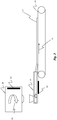
- cut-out sections are transferred to a work surface 40 onto which the sections 1, 2 are assembled 150 by being positioned side by side into an assembly having the appearance of the desired design.
- the assembly shown in figure 3 is formed of four square sections of a first thermoplastic composition 1 inside an outer square 2 of a second thermoplastic material 2.
- the first sections 1 may have a first colour and the second section 2 may have different colour.
- the sections 1 fits in cut-outs in the outer section 2.
- the cut-outs in the second section 2 are cut-out through the complete thickness of the section 2.
- the inner sections 1 will extend through the second section 2 and will form both upper side and lower side of the assembly.
- the sections 1 are positioned in recesses in the second section 2, the recesses formed by cut-outs having a depth being smaller than the material thickness of the second section.
- the assembly on the work surface 40 is then heated by blowing 160 hot gas, preferably hot air, from at least one nozzle 50 onto a major surface 1 a, 2a of the assembly thereby heating the assembly such that the at least one section 1 from the first sheet and the at least one section 2 from the second sheet partly melts.
- 160 hot gas preferably hot air
- blowing 160 ends and the partly melted sections are allowed to cool whereby the partly melted sections bonds together, thereby forming a preformed thermoplastic covering.
- the hot gas or air may be blown onto the assembly from the nozzle 50 while moving the assembly relative to the nozzle 50 such that the nozzles 50 move along the major surface 1 a, 2a of the assembly. This may e.g. be accomplished by moving the work surface 40 as indicated by arrow v in figures 5 and 6 .
- the hot gas which preferably is hot air, may have a temperature of between 80°C and 400°C and more preferably between 120 and 400 °C. In a preferred embodiment, the temperature is 300 °C.
- the hot air may e.g. be provided by fans 51 such as fans provided with integrated electrical heaters.
- the hot air may also be provided using fans blowing air or gas which has been heated by other means, such as by burning of a gas.
- each part of the thermoplastic material in the assembly is subjected to the hot gas or air during a time period of about 0,1 to 10 seconds, preferably about 0,5 to 5 seconds. In a preferred embodiment, each part of the thermoplastic material is subjected to the hot gas or air during a time period of about 2 seconds.
- the relative movement v may be performed at a speed being between 10 and 200 cm/minute, preferably between 20 and 150 cm/minute. In a preferred embodiment the relative speed is about 70 cm/minute.
- the nozzles 50 have an extension L along the travel direction v being between 0,5 and 5 cm. In a preferred embodiment, the nozzles 50 have an extension along the travel direction being about 1 cm.
- the nozzle has an exit mouth for the hot gas being positioned at a distance d of between 1 mm and 50mm, preferably between 1 mm and 20mm, from the major surface 1 a, 2a of the assembly. In a preferred embodiment, the distance is about 2mm.
- the total width of the nozzles is preferably chosen such that the complete width of the assembly may be covered in a single passing.
- the material After blowing hot air onto the assembly and allowing it to partly melt together the material is allowed to cool 170. This may be cooling by allowing it to rest at room temperature. It may alternatively be active cooling, e.g. by blowing air, such as cold air onto the assembly. This may be in line with the heaters 50, 51 or be performed as a separate step. Preferably, the cooling is performed while the assembly is on the same work surface 40, such as on the same conveyor, such that the assembly may bond together and form a strong preformed thermoplastic surface covering.
- This strong preformed thermoplastic surface covering may then be transported 170 and easily be positioned as a single unit on the site of application.
- the pre-manufactured thermoplastic coverings or markings may be placed on a road surface or the like and then be subjected to heat, e.g. by the use of a blow torch, until it reaches an almost liquefied state sufficient for it to adhere to the road surface. Thereafter the marking is allowed to cool and solidify and a thermoplastic marking with an elaborate design has been provided on a road or playground or the like.
- the thermoplastic material may be chosen from the group consisting of thermoplastic resins and thermoplastic polymers. Such materials are suitable for mixing with filler and pigments to provide a wear resistant road marking.
- the resin may e.g. be petrochemical based and/or colophony based.
- the polymers may e.g. be EVA or SIS.
- thermoplastic material constitutes between 5-90% by weight of the thermoplastic material composition. More preferably the thermoplastic material constitutes between 5-40% of the thermoplastic material composition.
- the pigment is preferably chosen from the group consisting of TiO2, organic pigments and inorganic pigments.
- the organic pigment may e.g. be PY13.
- the inorganic pigments may e.g. be PB29.
- the pigment of the first thermoplastic composition may be different from the pigment of the second thermoplastic composition such that the first sheet and the second sheet have different colours. This way the different sections will have different colours which open up for numerous different designs of the thermoplastic surface covering.
- the filler may comprise, preferably mainly comprises, inorganic substances.
- the filler may e.g. be chosen from the group comprising, and may preferably mainly comprise, Dolomite, CaCO3, sand and/or chalk.
- the filler may constitute between 10-95%, preferably between 60-95% by weight of the thermoplastic material composition. These amounts are considered cost-effective and suitable to use when providing a wear resistant marking, such as a road marking.
- the second sheet preferably has a material thickness being between 75% and 125%, and more preferably between 90% and 110%, of the material thickness of the first sheet.
- thermoplastic surface covering formed of at least one section from a first sheet of a first thermoplastic material composition
- thermoplastic material composition may be provided with retroreflective material, such as coated and/or non-coated glass beads, intermixed with the thermoplastic material composition.
- thermoplastic material composition may be provided with anti-slip material, such as so-called grit e.g. forming a fraction of the filler material, intermixed with the thermoplastic material composition.
- anti-slip material such as so-called grit e.g. forming a fraction of the filler material, intermixed with the thermoplastic material composition.
- the retroreflective material such as the coated and/or non-coated glass beads may as an alternative or as a complement be provided on the top surface of the one or more of the sections of the assembly. This may e.g. be performed by adding so-called drop-on beads on the sheets when the sheets have been extruded.
- the provision of drop-on beads may alternatively or as a complement be performed on the assembly in connection with the blowing hot gas, preferably hot air, from at least one nozzle onto a major surface of the assembly thereby heating the assembly such that the at least one sheet section from the first sheet and the at least one sheet section from the second sheet partly melts and after cooling bonds together, thereby forming a preformed thermoplastic covering.
- the drop-on beads may e.g.
- the beads may be dropped onto the top surface of the assembly before the assembly is subjected to the blowing of hot gas, whereby the beads will sink slightly into the partly melted sheets and thereby be bonded to the top-surface of the preformed thermoplastic covering.
- the provision of drop-on beads may be performed on the site of application when the road worker heats the performed thermoplastic covering for attaching it to the base surface, such as a road surface.
- the anti-slip material may as an alternative or as a complement be provided on the top surface of the one or more of the sections of the assembly. This may e.g. be performed by adding the anti-slip material on the surface of the sheets when the sheets have been extruded.
- the provision of anti-slip material may alternatively or as a complement be performed on the assembly in connection with the blowing hot gas, preferably hot air, from at least one nozzle onto a major surface of the assembly thereby heating the assembly such that the at least one sheet section from the first sheet and the at least one sheet section from the second sheet partly melts and after cooling bonds together, thereby forming a preformed thermoplastic covering.
- the anti-slip material may e.g.
- the anti-slip material may be dropped onto the top surface of the assembly before the assembly is subjected to the blowing of hot gas, whereby the anti-slip material will sink slightly into the partly melted sheets and thereby be bonded to the top-surface of the preformed thermoplastic covering.
- the provision of anti-slip material may be performed on the site of application when the road worker heats the performed thermoplastic covering for attaching it to the base surface, such as a road surface.
Landscapes
- Engineering & Computer Science (AREA)
- Mechanical Engineering (AREA)
- Architecture (AREA)
- Civil Engineering (AREA)
- Structural Engineering (AREA)
- Chemical & Material Sciences (AREA)
- Combustion & Propulsion (AREA)
- Laminated Bodies (AREA)
Priority Applications (1)
| Application Number | Priority Date | Filing Date | Title |
|---|---|---|---|
| EP17175149.8A EP3412433A1 (de) | 2017-06-09 | 2017-06-09 | Verfahren zur herstellung einer vorgeformten abdeckung mit thermoplastischer oberfläche und solch eine abdeckung |
Applications Claiming Priority (1)
| Application Number | Priority Date | Filing Date | Title |
|---|---|---|---|
| EP17175149.8A EP3412433A1 (de) | 2017-06-09 | 2017-06-09 | Verfahren zur herstellung einer vorgeformten abdeckung mit thermoplastischer oberfläche und solch eine abdeckung |
Publications (1)
| Publication Number | Publication Date |
|---|---|
| EP3412433A1 true EP3412433A1 (de) | 2018-12-12 |
Family
ID=59055019
Family Applications (1)
| Application Number | Title | Priority Date | Filing Date |
|---|---|---|---|
| EP17175149.8A Withdrawn EP3412433A1 (de) | 2017-06-09 | 2017-06-09 | Verfahren zur herstellung einer vorgeformten abdeckung mit thermoplastischer oberfläche und solch eine abdeckung |
Country Status (1)
| Country | Link |
|---|---|
| EP (1) | EP3412433A1 (de) |
Citations (9)
| Publication number | Priority date | Publication date | Assignee | Title |
|---|---|---|---|---|
| GB860658A (en) * | 1959-07-23 | 1961-02-08 | Mario Maccaferri | Plastic tile mosaics and methods of production thereof |
| SE341873B (de) | 1971-02-10 | 1972-01-17 | Svenska Cleanosol | |
| SE399575B (sv) | 1973-01-22 | 1978-02-20 | Eigenmann Ludwig | Bandmaterial for vegytemarkering |
| GB2030586A (en) | 1978-07-11 | 1980-04-10 | Pacey B | Road marking preformed from a thermoplastic composition |
| US4405539A (en) * | 1980-11-15 | 1983-09-20 | Dynamit Nobel Aktiengesellschaft | Process for the production of patterned tiles from thermoplastic synthetic resins |
| US4708518A (en) | 1985-07-23 | 1987-11-24 | Ludwig Eigenmann | Method of adhering a prefabricated marking strip to a roadway surface without having to treat the roadway surface and self-adhesive sealing strip itself |
| US6576074B1 (en) * | 2001-01-09 | 2003-06-10 | Avery Dennison Corporation | Pavement marking system |
| WO2008008824A1 (en) * | 2006-07-11 | 2008-01-17 | Martin Joel E | Installation method for non-slip sanitary flooring |
| EP2032764A1 (de) | 2006-06-15 | 2009-03-11 | LKF Vejmarkering A/S | Pflastermarkierungsmuster und auftragsverfahren dafür |
-
2017
- 2017-06-09 EP EP17175149.8A patent/EP3412433A1/de not_active Withdrawn
Patent Citations (9)
| Publication number | Priority date | Publication date | Assignee | Title |
|---|---|---|---|---|
| GB860658A (en) * | 1959-07-23 | 1961-02-08 | Mario Maccaferri | Plastic tile mosaics and methods of production thereof |
| SE341873B (de) | 1971-02-10 | 1972-01-17 | Svenska Cleanosol | |
| SE399575B (sv) | 1973-01-22 | 1978-02-20 | Eigenmann Ludwig | Bandmaterial for vegytemarkering |
| GB2030586A (en) | 1978-07-11 | 1980-04-10 | Pacey B | Road marking preformed from a thermoplastic composition |
| US4405539A (en) * | 1980-11-15 | 1983-09-20 | Dynamit Nobel Aktiengesellschaft | Process for the production of patterned tiles from thermoplastic synthetic resins |
| US4708518A (en) | 1985-07-23 | 1987-11-24 | Ludwig Eigenmann | Method of adhering a prefabricated marking strip to a roadway surface without having to treat the roadway surface and self-adhesive sealing strip itself |
| US6576074B1 (en) * | 2001-01-09 | 2003-06-10 | Avery Dennison Corporation | Pavement marking system |
| EP2032764A1 (de) | 2006-06-15 | 2009-03-11 | LKF Vejmarkering A/S | Pflastermarkierungsmuster und auftragsverfahren dafür |
| WO2008008824A1 (en) * | 2006-07-11 | 2008-01-17 | Martin Joel E | Installation method for non-slip sanitary flooring |
Similar Documents
| Publication | Publication Date | Title |
|---|---|---|
| ES2981741T3 (es) | Método para fabricar una piedra artificial, y una piedra artificial | |
| CN102388183B (zh) | 用于具有连续特征的预成型热塑性路标的组合物和系统 | |
| US20100239816A1 (en) | Composite building panel and method of making same | |
| JP5496224B2 (ja) | 差動インク媒体熱排除による実質的に正確なレジストレーションでのセラミックインクの層の印刷 | |
| US6960989B1 (en) | Detectable warning system | |
| CA2090368A1 (en) | Method for producing patterned shaped article | |
| RU2003130275A (ru) | Способ изготовления декоративных панелей | |
| JPH05253462A (ja) | 粉粒体一定層厚供給装置、及び粉粒体一定層厚供給装置を用いた模様入り成形体の製造方法 | |
| KR100224510B1 (ko) | 휘저음 부재를 사용하여 모양을 넣은 성형체를 성형하는 방법 | |
| US20160153155A1 (en) | pavement Marking Pattern and Method | |
| KR102400257B1 (ko) | 노면표지용 융착식 시트조성물, 및 이를 이용한 노면표지용 융착식 시트의 제조방법 및 시공방법 | |
| US6297297B1 (en) | Flooring containing microbeads | |
| KR101923028B1 (ko) | 용융형 도로 표시용 조성물 및 이의 시공 방법 | |
| JP6685862B2 (ja) | 道路標示シート | |
| EP3311976B1 (de) | Verfahren zum aufbringen von thermoplastischen markierungen auf strassenoberflächen | |
| GB2030586A (en) | Road marking preformed from a thermoplastic composition | |
| EP2841653A1 (de) | Vorgefertigtes kennzeichnungssystem und verfahren zu dessen herstellung | |
| CN101460682B (zh) | 路面标记图案及其施加方法 | |
| KR101456012B1 (ko) | 이형 모자이크 도자기 벽화 제작방법 | |
| US20150330035A1 (en) | Groutless Patterns for Pavement Surfaces Using Thermoplastic Preforms | |
| EP2231801A2 (de) | Flexibles kennzeichnungssystem | |
| EP1851026A1 (de) | Verfahren zur herstellung von fussbodenbelägen mit thermoplastischem material | |
| SE428449B (sv) | Ytbeklednadsmaterial avsett att efterlikna ytor bildade av geometriskt formade eller oregelbundna stycken av material av mineraltyp samt forfarande for ytbeklednadsmaterialets framstellning | |
| EP1126957B1 (de) | Verfahren und vorrichtung zur herstellung eines drahts zum verschweissen von fussbodenbelägen | |
| EP3744896A1 (de) | Oberflächenmarkierung und verfahren zur installation |
Legal Events
| Date | Code | Title | Description |
|---|---|---|---|
| PUAI | Public reference made under article 153(3) epc to a published international application that has entered the european phase |
Free format text: ORIGINAL CODE: 0009012 |
|
| STAA | Information on the status of an ep patent application or granted ep patent |
Free format text: STATUS: THE APPLICATION HAS BEEN PUBLISHED |
|
| AK | Designated contracting states |
Kind code of ref document: A1 Designated state(s): AL AT BE BG CH CY CZ DE DK EE ES FI FR GB GR HR HU IE IS IT LI LT LU LV MC MK MT NL NO PL PT RO RS SE SI SK SM TR |
|
| AX | Request for extension of the european patent |
Extension state: BA ME |
|
| STAA | Information on the status of an ep patent application or granted ep patent |
Free format text: STATUS: REQUEST FOR EXAMINATION WAS MADE |
|
| 17P | Request for examination filed |
Effective date: 20190610 |
|
| RBV | Designated contracting states (corrected) |
Designated state(s): AL AT BE BG CH CY CZ DE DK EE ES FI FR GB GR HR HU IE IS IT LI LT LU LV MC MK MT NL NO PL PT RO RS SE SI SK SM TR |
|
| STAA | Information on the status of an ep patent application or granted ep patent |
Free format text: STATUS: EXAMINATION IS IN PROGRESS |
|
| 17Q | First examination report despatched |
Effective date: 20201104 |
|
| GRAP | Despatch of communication of intention to grant a patent |
Free format text: ORIGINAL CODE: EPIDOSNIGR1 |
|
| STAA | Information on the status of an ep patent application or granted ep patent |
Free format text: STATUS: GRANT OF PATENT IS INTENDED |
|
| RIC1 | Information provided on ipc code assigned before grant |
Ipc: B29C 65/48 20060101ALN20221028BHEP Ipc: B29L 31/30 20060101ALN20221028BHEP Ipc: E01C 5/20 20060101ALI20221028BHEP Ipc: B29C 48/00 20190101ALI20221028BHEP Ipc: B29C 48/07 20190101ALI20221028BHEP Ipc: B44C 1/26 20060101ALI20221028BHEP Ipc: B44C 1/10 20060101ALI20221028BHEP Ipc: E04F 15/10 20060101ALI20221028BHEP Ipc: B29C 69/00 20060101ALI20221028BHEP Ipc: B29C 65/10 20060101AFI20221028BHEP |
|
| INTG | Intention to grant announced |
Effective date: 20221116 |
|
| STAA | Information on the status of an ep patent application or granted ep patent |
Free format text: STATUS: THE APPLICATION IS DEEMED TO BE WITHDRAWN |
|
| 18D | Application deemed to be withdrawn |
Effective date: 20230328 |