EP3417151B1 - Zylinderbaugruppe eines orc-motors - Google Patents
Zylinderbaugruppe eines orc-motors Download PDFInfo
- Publication number
- EP3417151B1 EP3417151B1 EP17710113.6A EP17710113A EP3417151B1 EP 3417151 B1 EP3417151 B1 EP 3417151B1 EP 17710113 A EP17710113 A EP 17710113A EP 3417151 B1 EP3417151 B1 EP 3417151B1
- Authority
- EP
- European Patent Office
- Prior art keywords
- crosshead
- connecting rod
- piston rod
- cylinder assembly
- piston
- Prior art date
- Legal status (The legal status is an assumption and is not a legal conclusion. Google has not performed a legal analysis and makes no representation as to the accuracy of the status listed.)
- Active
Links
Images
Classifications
-
- F—MECHANICAL ENGINEERING; LIGHTING; HEATING; WEAPONS; BLASTING
- F01—MACHINES OR ENGINES IN GENERAL; ENGINE PLANTS IN GENERAL; STEAM ENGINES
- F01B—MACHINES OR ENGINES, IN GENERAL OR OF POSITIVE-DISPLACEMENT TYPE, e.g. STEAM ENGINES
- F01B9/00—Reciprocating-piston machines or engines characterised by connections between pistons and main shafts, not specific to groups F01B1/00 - F01B7/00
- F01B9/02—Reciprocating-piston machines or engines characterised by connections between pistons and main shafts, not specific to groups F01B1/00 - F01B7/00 with crankshaft
-
- F—MECHANICAL ENGINEERING; LIGHTING; HEATING; WEAPONS; BLASTING
- F16—ENGINEERING ELEMENTS AND UNITS; GENERAL MEASURES FOR PRODUCING AND MAINTAINING EFFECTIVE FUNCTIONING OF MACHINES OR INSTALLATIONS; THERMAL INSULATION IN GENERAL
- F16C—SHAFTS; FLEXIBLE SHAFTS; ELEMENTS OR CRANKSHAFT MECHANISMS; ROTARY BODIES OTHER THAN GEARING ELEMENTS; BEARINGS
- F16C11/00—Pivots; Pivotal connections
- F16C11/04—Pivotal connections
- F16C11/045—Pivotal connections with at least a pair of arms pivoting relatively to at least one other arm, all arms being mounted on one pin
-
- F—MECHANICAL ENGINEERING; LIGHTING; HEATING; WEAPONS; BLASTING
- F16—ENGINEERING ELEMENTS AND UNITS; GENERAL MEASURES FOR PRODUCING AND MAINTAINING EFFECTIVE FUNCTIONING OF MACHINES OR INSTALLATIONS; THERMAL INSULATION IN GENERAL
- F16C—SHAFTS; FLEXIBLE SHAFTS; ELEMENTS OR CRANKSHAFT MECHANISMS; ROTARY BODIES OTHER THAN GEARING ELEMENTS; BEARINGS
- F16C5/00—Crossheads; Constructions of connecting-rod heads or piston-rod connections rigid with crossheads
-
- F—MECHANICAL ENGINEERING; LIGHTING; HEATING; WEAPONS; BLASTING
- F16—ENGINEERING ELEMENTS AND UNITS; GENERAL MEASURES FOR PRODUCING AND MAINTAINING EFFECTIVE FUNCTIONING OF MACHINES OR INSTALLATIONS; THERMAL INSULATION IN GENERAL
- F16C—SHAFTS; FLEXIBLE SHAFTS; ELEMENTS OR CRANKSHAFT MECHANISMS; ROTARY BODIES OTHER THAN GEARING ELEMENTS; BEARINGS
- F16C9/00—Bearings for crankshafts or connecting-rods; Attachment of connecting-rods
- F16C9/04—Connecting-rod bearings; Attachments thereof
-
- F—MECHANICAL ENGINEERING; LIGHTING; HEATING; WEAPONS; BLASTING
- F16—ENGINEERING ELEMENTS AND UNITS; GENERAL MEASURES FOR PRODUCING AND MAINTAINING EFFECTIVE FUNCTIONING OF MACHINES OR INSTALLATIONS; THERMAL INSULATION IN GENERAL
- F16C—SHAFTS; FLEXIBLE SHAFTS; ELEMENTS OR CRANKSHAFT MECHANISMS; ROTARY BODIES OTHER THAN GEARING ELEMENTS; BEARINGS
- F16C2360/00—Engines or pumps
-
- F—MECHANICAL ENGINEERING; LIGHTING; HEATING; WEAPONS; BLASTING
- F16—ENGINEERING ELEMENTS AND UNITS; GENERAL MEASURES FOR PRODUCING AND MAINTAINING EFFECTIVE FUNCTIONING OF MACHINES OR INSTALLATIONS; THERMAL INSULATION IN GENERAL
- F16C—SHAFTS; FLEXIBLE SHAFTS; ELEMENTS OR CRANKSHAFT MECHANISMS; ROTARY BODIES OTHER THAN GEARING ELEMENTS; BEARINGS
- F16C2360/00—Engines or pumps
- F16C2360/22—Internal combustion engines
Definitions
- the invention relates to a cylinder assembly of an ORC engine with a crosshead for the articulated connection of a piston rod of a piston guided in a working cylinder with a connecting rod of the ORC engine, wherein the crosshead is movable in a guide in the longitudinal direction of the piston rod.
- the invention is based on the object of reducing the effort required for repair or maintenance work on a cylinder assembly.
- the present invention provides a new cylinder assembly of the type mentioned at the outset which is easy to assemble and is characterized in that the crosshead can be detached from the connecting rod in the direction of the working cylinder without complete or partial disassembly of the guide.
- the guide leaves enough space for dismantling the crosshead by axially displacing a connecting rod bolt and/or according to the invention, the crosshead can be dismantled into parts for dismantling from the connecting rod.
- the crosshead is so small compared to the diameter of a bush-shaped guide that the connecting rod bolt connecting the crosshead and the connecting rod can be pushed out of its pivot bearings far enough to the side.
- the crosshead is formed from at least two half-shells enclosing the connecting rod bolts connecting the crosshead and the connecting rod.
- an assembly comprising the crosshead, the piston rod and the piston can be decoupled in its entirety from the connecting rod.
- the crosshead comprises fork legs which have through holes for the connecting rod bolt and between which the free end of the connecting rod is arranged.
- the crosshead is secured against rotation about the longitudinal axis of the piston rod by the guide. This advantageously allows torques exerted on the said structural unit to be absorbed during assembly work.
- the guide preferably has a guide bushing coaxial with the longitudinal axis of the piston rod with guide rails protruding from the inner wall of the bushing.
- the guide rails can, for example, form pairs of diametrically opposed guide surfaces, in particular flat guide surfaces, for the crosshead.
- the fork legs protrude from a preferably conical section of the crosshead that can be connected to the piston rod.
- the conical shape of the crosshead ensures that the piston force is evenly transmitted and distributed via the piston rod to the fork legs.
- a detachable connection in particular a screw connection, between at least one of the fork legs and the section.
- the crosshead can thus be dismantled into parts, which makes it possible to disassemble it even if the connecting rod bolt has limited mobility.
- the piston rod is designed as a hollow body.
- the crosshead can be screwed to the piston rod and the piston rod to the piston via threads coaxial with the longitudinal axis of the piston rod.
- the thread diameter of the screw connection of the piston rod to the crosshead is larger than the thread diameter of the screw connection of the piston rod to the piston. This enables the piston to be detached separately from the piston rod without loosening the screw connection between the piston rod and the crosshead.
- a dowel pin connection is made in addition to the screw connections mentioned.
- the dowel pin connection ensures that the piston always assumes the same rotational position in relation to the crosshead.
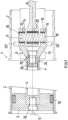
- the assembly 1 of an ORC engine shown comprises a working cylinder 2 in which a piston 3 and a piston rod 4 rigidly connected to the piston 3 are guided.
- the piston rod 4 is connected to a crosshead 6 which is guided within a bushing 7 coaxial with the working cylinder 2 in a direction parallel to the longitudinal direction of the piston rod 4 and is in turn connected to a connecting rod 8 which moves the crosshead 6.
- the bushing 7 is a cylinder bushing of an internal combustion engine, which forms a basis for the ORC engine, wherein the working cylinder 1 and the structural unit of the ORC engine forming the piston 3, the piston rod 4 and the crosshead 6 take the place of the piston and the cylinder head of the internal combustion engine.
- connection of the connecting rod 8 with the crosshead 6 is provided by a connecting rod bolt 9, which is rotatably mounted in a bearing bush insert 10 of the connecting rod 8.
- the connecting rod pin 9 projects with its two ends into a bearing bush insert 11 or 12, wherein the bearing bush inserts 11, 12 are each arranged in a through-opening of a fork leg 13 or 14 of the crosshead 6.
- the connecting rod pin 9 is axially fixed in the bush inserts 10 to 12 by a boundary wall 15 in the opening of the fork leg 14 and a snap ring 16 accommodated in a groove in the opening of the fork leg 13.
- the crosshead 6 comprises a conical section 17 which merges integrally into the fork leg 13.
- the fork leg 14 is connected by screws 18 and 18' ( Fig. 2 ) detachably connected to the conical section 17.
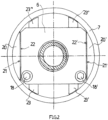
- diametrically opposed guide rails 20 and 20' are attached to the inner wall of the bushing 7, each of which has two flat guide surfaces 21 and 21' arranged at a distance from one another.
- the crosshead 6 slides against these guide surfaces 21, 21' with corresponding flat contact surfaces 22 and 22'.
- crosshead is secured against rotation about the longitudinal axis of the piston rod 4 by the contact against the four guide surfaces.
- the partially hollow conical section 17 is connected to the piston rod 4 via an intermediate piece 24.
- a screw 25 connects the conical section 17 to the intermediate piece 24.
- An end section 26 of the intermediate piece 24 has an external thread which is screwed to an internal thread of the piston rod 4 designed as a hollow body.
- the intermediate piece 24 could also be formed integrally with the conical section 17 or the piston rod 4.
- the sleeve 7 is connected to a crankcase (not shown) and the working cylinder 2 is connected coaxially to the bushing 7 to a cylinder bank (not shown) which may have several such bushings 7.
- the complete assembly consisting of the piston 3, the piston rod 4 and the crosshead 6 can be dismantled by loosening the connection between the crosshead 6 and the connecting rod 8 as follows: First, the snap ring 16 is removed using a tool inserted into the bushing 7. Due to the free space between the relevant pin end and the inner wall of the bushing 7, the connecting rod pin 9 can then be axially displaced so far that the other pin end of the connecting rod pin 9 no longer engages in the bearing bush section 12. In the next disassembly step, the screws 18 and 18' are loosened and the fork leg 14 is removed.
- the guide pins 23, 23', 23" and 23′′′ leave sufficient space in the bushing 7 to carry out the above-mentioned assembly steps, so that they can remain in place during assembly. In the example shown, they are permanently pinned to the bushing 7.
- This guide which absorbs torques around the bushing axis, easily enables separate disassembly of only the piston 3 when the assembly consisting of the piston 3, the piston rod 4 and the crosshead 6 is installed.
- the actuating element 5 normally strikes the piston 3 near the top dead center of the piston 3 vertically in the center of the piston. Transverse forces resulting from deviations in the impact position and the impact angle within the tolerance limits are by guiding the above-mentioned assembly in the working cylinder 2 via the guide ring 19 and in the bushing 7 through the rails 20, 20' as well as the inner wall of the bushing 7, against which the guide pins 23, 23', 23", 23′′′ rest.
Landscapes
- Engineering & Computer Science (AREA)
- General Engineering & Computer Science (AREA)
- Mechanical Engineering (AREA)
- Pistons, Piston Rings, And Cylinders (AREA)
Description
- Die Erfindung betrifft eine Zylinderbaugruppe eines ORC-Motors mit einem Kreuzkopf zur gelenkigen Verbindung einer Kolbenstange eines in einem Arbeitszylinder geführten Kolbens mit einer Pleuelstange des ORC-Motors, wobei der Kreuzkopf in einer Führung in Längsrichtung der Kolbenstange bewegbar ist.
- Durch Benutzung bekannte ORC-Motoren mit einer solchen Baugruppe bauen auf Verbrennungsmotoren auf, deren Zylinderbuchsen zur Führung des Kreuzkopfes dienen. Der den Kolben führende Arbeitszylinder schließt sich unmittelbar koaxial an eine Zylinderbuchse des Verbrennungsmotors an. Bei Reparatur- und Wartungsarbeiten notwendige Demontagen des Arbeitszylinders und der durch den Kolben, die Kolbenstange und den Kreuzkopf gebildeten Baueinheit sind mit hohem Aufwand, insbesondere mit einer zusätzlichen Demontage der Zylinderbuchsen des Verbrennungsmotors verbunden.
- Aus dem Stand der Technik ist aus der
NL 30 562 C US 2012/324889 A1 und ausGB 119 157 A - Aus
DE 12 64 882 B , ausWO 2015/063031 A1 , sowie ausDE 20 2015 000722 U1 sind unterschiedliche Ausgestaltungen von Kreuzköpfen bekannt. - Der Erfindung liegt die Aufgabe zugrunde, den Aufwand für Reparatur- bzw. Wartungsarbeiten bei einer Zylinderbaugruppe zu verringern.
- Durch die vorliegende Erfindung wird eine montagefreundliche neue Zylinderbaugruppe der eingangs genannten Art geschaffen, die dadurch gekennzeichnet ist, dass der Kreuzkopf ohne vollständige oder teilweise Demontage der Führung von der Pleuelstange in Richtung zu dem Arbeitszylinder hin ablösbar ist.
- Durch die Führung ist erfindungsgemäß genügend Freiraum zur Demontage des Kreuzkopfes unter axialer Verschiebung eines Pleuelbolzens belassen oder/und erfindungsgemäß ist der Kreuzkopf kann zwecks Demontage von der Pleuelstange in Teile zerlegbar. Dabei ist der Kreuzkopf im Vergleich zum Durchmesser einer buchsenförmigen Führung so klein, dass sich der den Kreuzkopf und die Pleuelstange verbindende Pleuelbolzen seitlich weit genug aus seinen Drehlagerungen herausschieben lässt. Gemäß einer Ausführungsform ist der Kreuzkopf aus wenigstens zwei, den Kreuzkopf und die Pleuelstange verbindenden Pleuelbolzen umschließenden Halbschalen gebildet.
- Mit der Lösung des Kreuzkopfes von der Pleuelstange lässt sich eine den Kreuzkopf, die Kolbenstange und den Kolben umfassende Baueinheit in ihrer Gesamtheit von der Pleuelstange abkoppeln.
- In einer bevorzugten Ausführungsform der Erfindung umfasst der Kreuzkopf Gabelschenkel, welche Durchgangsöffnungen für den Pleuelbolzen aufweisen und zwischen denen das freie Ende der Pleuelstange zur Anordnung kommt.
- Vorzugsweise ist der Kreuzkopf durch die Führung gegen Verdrehung um die Längsachse der Kolbenstange gesichert. Vorteilhaft lassen sich dadurch bei Montagearbeiten auf die genannte Baueinheit ausgeübte Drehmomente abfangen.
- Die Führung weist vorzugsweise eine zur Längsachse der Kolbenstange koaxiale Führungsbuchse mit von der Buchseninnenwand vorstehenden Führungsschienen auf. Durch die Führungsschienen können z.B. Paare diametral einander gegenüberliegender Führungsflächen, insbesondere ebene Führungsflächen, für den Kreuzkopf gebildet sein.
- Insbesondere stehen die Gabelschenkel von einem mit der Kolbenstange verbindbaren, vorzugsweise konischen Abschnitt des Kreuzkopfes vor. Die konische Form des Kreuzkopfes sorgt für eine gleichmäßige Übertragung und Verteilung der Kolbenkraft über die Kolbenstange auf die Gabelschenkel.
- In einer besonders bevorzugten Ausführungsform der Erfindung besteht zwischen wenigstens einem der Gabelschenkel und dem Abschnitt eine lösbare Verbindung, insbesondere Schraubverbindung. Der Kreuzkopf lässt sich somit in Teile zerlegen, was seine Demontage auch bei eingeschränkter Verschiebbarkeit des Pleuelbolzens möglich macht.
- In einer weiteren Ausführungsform der Erfindung ist die Kolbenstange als Hohlkörper ausgebildet.
- Vorzugsweise sind der Kreuzkopf mit der Kolbenstange und die Kolbenstange mit dem Kolben über zur Längsachse der Kolbenstange koaxiale Gewinde verschraubbar.
- Vorzugsweise ist der Gewindedurchmesser der Verschraubung der Kolbenstange mit dem Kreuzkopf größer als der Gewindedurchmesser der Verschraubung der Kolbenstange mit dem Kolben. Dies ermöglicht eine separate Loslösung des Kolbens von der Kolbenstange, ohne Lösung der Verschraubung zwischen der Kolbenstange und dem Kreuzkopf.
- In einer weiteren Ausführungsform der Erfindung ist neben den genannten Verschraubungen jeweils eine Passstiftverbindung hergestellt. Durch die Passstiftverbindung lässt sich sichern, dass der Kolben in Bezug auf den Kreuzkopf stets die gleiche Drehposition einnimmt.
- Die Erfindung wird nachfolgend anhand von Ausführungsbeispielen und der beiliegenden, sich auf eines dieser Ausführungsbeispiele beziehenden Zeichnungen weiter erläutert. Es zeigen:
- Fig. 1
- eine einen Kreuzkopf umfassende erfindungsgemäße Baugruppe eines ORC-Motors in einer geschnittenen Seitenansicht, und
- Fig. 2
- eine geschnittene Draufsicht auf die Baugruppe von
Fig. 1 . - Eine in
Fig. 1 dargestellte Baugruppe 1 eines ORC-Motors umfasst einen Arbeitszylinder 2, in dem ein Kolben 3 und eine starr mit dem Kolben 3 verbundene Kolbenstange 4 geführt sind. Von einem den Arbeitszylinder 2 abschließenden Zylinderkopf (nicht gezeigt) steht gegen den Kolben 3 zentral ein stiftartiges Element 5 zur Betätigung eines in dem Zylinderkopf untergebrachten Einlassventils für ein unter Druck stehendes Arbeitsmedium vor. - An ihrem dem Kolben 3 abgewandten Ende steht die Kolbenstange 4 in Verbindung mit einem Kreuzkopf 6, der innerhalb einer zu dem Arbeitszylinder 2 koaxialen Buchse 7 in Richtung parallel zur Längsrichtung der Kolbenstange 4 geführt und seinerseits mit einer den Kreuzkopf 6 bewegenden Pleuelstange 8 verbunden ist.
- In dem gezeigten Ausführungsbeispiel handelt es sich bei der Buchse 7 um eine Zylinderbuchse eines Verbrennungsmotors, welcher eine Basis für den ORC-Motor bildet, wobei der Arbeitszylinder 1 und die den Kolben 3, die Kolbenstange 4 und den Kreuzkopf 6 bildende Baueinheit des ORC-Motors an die Stelle des Kolbens und des Zylinderkopfes des Verbrennungsmotors treten.
- Der gelenkigen Verbindung der Pleuelstange 8 mit dem Kreuzkopf 6 dient ein Pleuelbolzen 9, welcher drehbar in einem Lagerbuchseneinsatz 10 der Pleuelstange 8 gelagert ist.
- Wie
Fig. 1 ferner erkennen lässt, ragt der Pleuelbolzen 9 mit seinen beiden Enden jeweils in einen Lagerbuchseneinsatz 11 bzw. 12, wobei die Lagerbuchseneinsätze 11,12 jeweils in einer Durchgangsöffnung eines Gabelschenkels 13 bzw. 14 des Kreuzkopfes 6 angeordnet sind. Durch eine Begrenzungswand 15 in der Öffnung des Gabelschenkels 14 und einen in einer Nut in der Öffnung des Gabelschenkels 13 untergebrachten Sprengring 16 ist der Pleuelbolzen 9 in den Buchseneinsätzen 10 bis 12 axial festgelegt. - Wie
Fig. 1 ferner erkennen lässt, umfasst der Kreuzkopf 6 einen konischen Abschnitt 17, welcher einstückig in den Gabelschenkel 13 übergeht. Der Gabelschenkel 14 ist durch Schrauben 18 und 18' (Fig. 2 ) lösbar mit dem konischen Abschnitt 17 verbunden. - Wie aus
Fig. 2 hervorgeht, sind an der Innenwand der Buchse 7 einander diametral gegenüberliegende Führungsschienen 20 und 20' angebracht, die jeweils zwei zueinander im Abstand angeordnete ebene Führungsflächen 21 bzw. 21' aufweisen. Gegen diese Führungsflächen 21,21' liegt der Kreuzkopf 6 mit entsprechenden ebenen Anlageflächen 22 bzw. 22' gleitend an. - Es versteht sich, dass der Kreuzkopf durch die Anlage gegen die vier Führungsflächen gegen Drehung um die Längsachse der Kolbenstange 4 gesichert Ist. Vier von dem Kreuzkopf 6 gegen die Innenwand der Buchse 7 vorstehende Führungszapfen 23, 23', 23" und 23‴, die auf der Innenfläche der Buchse 7 gleiten, legen den Kreuzkopf 6 in Richtung parallel zu den Führungsflächen innerhalb der Buchse 7 fest.
- Auf seiner der Pleuelstange 8 abgewandten Seite ist der zum Teil hohle konische Abschnitt 17 über ein Zwischenstück 24 mit der Kolbenstange 4 verbunden. Eine Schraube 25 verbindet den konischen Abschnitt 17 mit dem Zwischenstück 24. Ein Endabschnitt 26 des Zwischenstücks 24 weist ein Außengewinde auf, das mit einem Innengewinde der als Hohlkörper ausgebildeten Kolbenstange 4 verschraubt ist.
- Abweichend von dem gezeigten Beispiel könnte das Zwischenstück 24 auch einstückig mit dem konischen Abschnitt 17 oder der Kolbenstange 4 ausgebildet sein.
- Der mit einem Führungsring 19 versehene Kolben 3 lässt sich mit Hilfe einer zentralen Schraube 27 mit der Kolbenstange 4 verschrauben.
- Es versteht sich, dass die Hülse 7 mit einem (nicht gezeigten) Kurbelgehäuse und der Arbeitszylinder 2 koaxial zu der Buchse 7 mit einer ggf. mehrere solcher Buchsen 7 aufweisenden (nicht gezeigten) Zylinderbank verbunden ist.
- Im Falle von Reparatur- oder Wartungsarbeiten lässt sich nach Abbau des Arbeitszylinders 2 die komplette, aus dem Kolben 3, der Kolbenstange 4 und dem Kreuzkopf 6 bestehende Baueinheit durch Lösen der Verbindung zwischen dem Kreuzkopf 6 und der Pleuelstange 8 wie folgt demontieren:
Zunächst wird mit Hilfe eines in die Buchse 7 eingeführten Werkzeugs der Sprengring 16 entfernt. Aufgrund des Freiraums zwischen dem betreffenden Bolzenende und der Innenwand der Buchse 7 lässt sich dann der Pleuelbolzen 9 so weit axial verschieben, dass der Pleuelbolzen 9 mit seinem anderen Bolzenende nicht mehr in den Lagerbuchsenabschnitt 12 eingreift. Im nächsten Demontageschrittwerden die Schrauben 18 und 18' gelöst und der Gabelschenkel 14 entfernt. Nach axialer Verschiebung des Pleuelbolzen 9 in nun entgegengesetzter Richtung bis zur Aufhebung des Eingriffs des Pleuelbolzen 9 in den Lagerbuchseneinsatz 11 des Gabelschenkels 13 lässt sich die genannte Baueinheit in Richtung der Achse der Buchse 7 zum Zylinderkopf hin von der Pleuelstange 8 abkoppeln. - Die Führungszapfen 23, 23', 23" und 23‴ belassen in der Buchse 7 genügend Freiraum für die Durchführung der obengenannten Montageschritte, so dass sie während der Montage an Ort und Stelle verbleiben können. Sie sind in dem gezeigten Beispiel mit der Buchse 7 unlösbar verstiftet.
- Es versteht sich, dass die durch die Führungsschienen 20, 20' gebildeten Führungsflächen 21, 21' keine Drehung des Kreuzkopfes 6 um die Achse der Buchse 7 zulassen.
- Diese, Drehmomente um die Buchsenachse abfangende Führung ermöglicht problemlos eine separate Demontage nur des Kolbens 3 bei eingebauter, aus dem Kolben 3, der Kolbenstange 4 und dem Kreuzkopf 6 bestehender Baueinheit.
- Bei Lösung der zentralen Schraube 27 auftretende Drehmomente nimmt die Führung problemlos auf.
- Eine beim Lösen der Schraube 27 ungewollte Mitlösung der Verschraubung der Kolbenstange 4 mit dem Zwischenstück 24 ist dadurch verhindert, dass es infolge größerer Gewindedurchmesser zum Mitlösen letzterer Verschraubung eines höheren Drehmoments bedarf, als es die Lösung der Schraube 27 erfordert.
- Das Betätigungselement 5 trifft nahe dem oberen Totpunkt des Kolbens 3 im Normalfall senkrecht in der Kolbenmitte auf den Kolben 3 auf. Aus Abweichungen der Auftreffposition und des Auftreffwinkels im Rahmen von Toleranzgrenzen resultierende Querkräfte werden durch die Führung der obengenannten Baugruppe in dem Arbeitszylinder 2 über den Führungsring 19 und in der Buchse 7 durch die Schienen 20, 20' sowie die Innenwand der Buchse 7, gegen welche die Führungszapfen 23, 23', 23", 23‴ anliegen, aufgenommen.
- Querkräfte können sich dadurch verstärken, dass das Betätigungselement 5 nach Montagearbeiten versetzt zu einer durch ständiges Auftreffen auf die Kolbenoberfläche gebildeten Vertiefung auf den Kolben 3 auftrifft. Bei Montagearbeiten ist also darauf zu achten, dass der Kolben nach dem Zusammenbau sich wieder in seiner vorherigen Drehposition befindet. Die Reproduzierbarkeit der Drehposition kann durch Verstiftung zwischen dem Kolben 3 und der Kolbenstange 4 sowie zwischen der Kolbenstange 4 und dem Kreuzkopf 6 gesichert werden.
Claims (12)
- Zylinderbaugruppe (1) für einen ORC-Motor mit einem Kreuzkopf (6) zur gelenkigen Verbindung einer Kolbenstange (4) eines in einem Arbeitszylinder (2) geführten Kolbens (3) mit einer Pleuelstange (8) des ORC- Motors, wobei der Kreuzkopf (6) in einer buchsenförmigen Führung (7) in Längsrichtung der Kolbenstange (4) bewegbar ist,
dadurch gekennzeichnet,
dass der Kreuzkopf (6) ohne vollständige oder teilweise Demontage der Führung von der Pleuelstange (8) in Richtung zu dem Arbeitszylinder (2) hin ablösbar ist, wobei mit der Ablösung des Kreuzkopfes (6) von der Pleuelstange (8) eine durch den Kreuzkopf (6), die Kolbenstange (4) und den Kolben (3) gebildete Baueinheit in ihrer Gesamtheit von der Pleuelstange (8) abkoppelbar ist, und wobei durch die Führung Freiraum zur Demontage des Kreuzkopfes (6) unter axialer Verschiebung eines den Kreuzkopf (6) und die Pleuelstange (8) verbindenden Pleuelbolzens (9) belassen ist, indem der Kreuzkopf (6) im Vergleich zum Durchmesser der buchsenförmigen Führung (7) so klein ist, dass sich der Pleuelbolzen (9) seitlich weit genug aus seinen Drehlagerungen herausschieben lässt. - Zylinderbaugruppe (1) nach Anspruch 1, dadurch gekennzeichnet, dass der Kreuzkopf (6) zwecks Demontage in Teile (17,13; 14) zerlegbar ist, indem der Kreuzkopf (6) aus wenigstens zwei, einen den Kreuzkopf (6) und die Pleuelstange (8) verbindenden Pleuelbolzen (9) umschließenden Halbschalen gebildet ist.
- Zylinderbaugruppe (1) nach Anspruch 1 oder 2, dadurch gekennzeichnet,
dass der Kreuzkopf (6) Durchgangsöffnungen für den Pleuelbolzen (9) aufweisende Gabelschenkel (13,14) umfasst, zwischen denen das freie Ende der Pleuelstange (8) zur Anordnung kommt. - Zylinderbaugruppe (1) nach Anspruch 3, dadurch gekennzeichnet, dass die Gabelschenkel (13,14) von einem mit der Kolbenstange (4) verbindbaren, vorzugsweise konischen Abschnitt (17) des Kreuzkopfes (6) abstehen.
- Zylinderbaugruppe (1) nach Anspruch 4, dadurch gekennzeichnet, dass zwischen wenigstens einem der Gabelschenkel (13,14) und dem konischen Abschnitt (17) eine lösbare Verbindung, insbesondere durch Schrauben (18,18'), besteht.
- Zylinderbaugruppe (1) nach einem der Ansprüche 1 bis 5, dadurch gekennzeichnet,
dass der Kreuzkopf (6) durch die Führung gegen Verdrehung um die Längsachse der Kolbenstange (4) gesichert ist. - Zylinderbaugruppe (1) nach einem der Ansprüche 1 bis 6, dadurch gekennzeichnet,
dass die Führung eine zur Längsachse der Kolbenstange (4) koaxiale Führungsbuchse (7) mit von der Buchseninnenwand vorstehenden Führungsschienen (20,20') aufweist. - Zylinderbaugruppe (1) nach Anspruch 7, dadurch gekennzeichnet, dass durch die Führungsschienen (20,20') diametral einander gegenüberliegende Führungsflächen (21,21') gebildet sind, ggf. Paare von insbesondere ebenen Führungsflächen.
- Zylinderbaugruppe (1) nach einem der Ansprüche 1 bis 8, dadurch gekennzeichnet,
dass die Kolbenstange (4) als Hohlkörper ausgebildet ist. - Zylinderbaugruppe (1) nach einem der Ansprüche 1 bis 9, dadurch gekennzeichnet,
dass der Kreuzkopf (6) mit der Kolbenstange (4) und die Kolbenstange (4) mit dem Kolben (3) über zur Längsachse der Kolbenstange (4) koaxiale Gewinde verschraubbar sind. - Zylinderbaugruppe (1) nach Anspruch 10, dadurch gekennzeichnet, dass der Gewindedurchmesser der Verschraubung der Kolbenstange mit dem Kreuzkopf (4) größer als der Gewindedurchmesser der Verschraubung der Kolbenstange (4) mit dem Kolben (3) ist.
- Zylinderbaugruppe (1) nach Anspruch 10 oder 11, dadurch gekennzeichnet,
dass neben den Verschraubungen jeweils eine Passstiftverbindung hergestellt ist.
Applications Claiming Priority (2)
| Application Number | Priority Date | Filing Date | Title |
|---|---|---|---|
| DE102016102649.2A DE102016102649A1 (de) | 2016-02-16 | 2016-02-16 | Zylinderbaugruppe eines ORC-Motors |
| PCT/DE2017/100085 WO2017140296A1 (de) | 2016-02-16 | 2017-02-06 | Zylinderbaugruppe eines orc-motors |
Publications (3)
| Publication Number | Publication Date |
|---|---|
| EP3417151A1 EP3417151A1 (de) | 2018-12-26 |
| EP3417151C0 EP3417151C0 (de) | 2024-12-18 |
| EP3417151B1 true EP3417151B1 (de) | 2024-12-18 |
Family
ID=58266323
Family Applications (1)
| Application Number | Title | Priority Date | Filing Date |
|---|---|---|---|
| EP17710113.6A Active EP3417151B1 (de) | 2016-02-16 | 2017-02-06 | Zylinderbaugruppe eines orc-motors |
Country Status (5)
| Country | Link |
|---|---|
| US (1) | US20190032487A1 (de) |
| EP (1) | EP3417151B1 (de) |
| CN (1) | CN108699906B (de) |
| DE (2) | DE102016102649A1 (de) |
| WO (1) | WO2017140296A1 (de) |
Families Citing this family (1)
| Publication number | Priority date | Publication date | Assignee | Title |
|---|---|---|---|---|
| CN111946486B (zh) * | 2020-07-07 | 2021-04-09 | 北京工业大学 | 一种无泵自压缩有机朗肯循环发动机 |
Family Cites Families (21)
| Publication number | Priority date | Publication date | Assignee | Title |
|---|---|---|---|---|
| GB190621999A (en) * | 1906-10-05 | 1907-10-03 | George William Morrison | Improvements in and relating to Internal Combustion Motors. |
| GB191517953A (en) * | 1915-12-23 | 1918-02-21 | Harry Ralph Ricardo | Improvements in or relating to Pistons for Internal Combustion Engines. |
| GB119157A (en) * | 1917-12-07 | 1918-09-26 | John William Draper | Improvements in or connected with Piston Crossheads and in Means for Guiding the same. |
| NL30562C (de) * | 1931-05-05 | 1933-08-15 | ||
| US2057158A (en) * | 1935-03-25 | 1936-10-13 | Robert C Moffitt | Differential piston connecting linkage |
| GB485590A (en) * | 1936-11-21 | 1938-05-23 | Stephen Evans Alley | Improvements in or relating to steam-propelled vehicles |
| US2171554A (en) * | 1937-01-11 | 1939-09-05 | Hedges Motor Company | Rod connection and cross head guide |
| GB498455A (en) * | 1938-02-16 | 1939-01-09 | Werkspoor Nv | Improvements in and relating to single-acting crosshead combustion engines |
| US2463174A (en) * | 1946-05-29 | 1949-03-01 | William J Hasselberg | Fluid compressor |
| US2682433A (en) * | 1949-02-02 | 1954-06-29 | United States Steel Corp | Crosshead assembly |
| US3179451A (en) * | 1962-11-01 | 1965-04-20 | Ingersoll Rand Co | Wrist pin assembly |
| DE1264882B (de) | 1965-12-14 | 1968-03-28 | Nat Res Dev | Kreuzkopf fuer Kolbenstangen |
| JPS6172854A (ja) * | 1984-09-14 | 1986-04-14 | Mitsubishi Electric Corp | スタ−リング機関 |
| US4872395A (en) * | 1987-11-23 | 1989-10-10 | Dresser-Rand Company | Crosshead per se, and in combination with a connecting rod assembly and a piston rod |
| IT1229654B (it) * | 1989-04-21 | 1991-09-06 | Nuovo Pignone Spa | Testa a croce perfezionata per macchine alternative a stantuffo, in particolare per compressori alternativi. |
| JPH07208446A (ja) * | 1994-01-21 | 1995-08-11 | Mitsubishi Heavy Ind Ltd | クロスヘッドピンの軸受構造 |
| ITMI20042204A1 (it) * | 2004-11-17 | 2005-02-17 | Nuovo Pignone Spa | Mezzi di connessione tra asta e testa a croce per una macchina alternativa |
| AU2012203539A1 (en) | 2011-06-24 | 2013-01-17 | Microsteam, Inc. | Advanced uniflow Rankine engine and methods of use thereof |
| ITCO20130054A1 (it) | 2013-10-29 | 2015-04-30 | Nuovo Pignone Srl | Testacroce per un'asta di un pistone |
| ITCO20130055A1 (it) * | 2013-10-29 | 2015-04-30 | Nuovo Pignone Srl | Assieme testacroce-asta di pistone per compressore alternativo |
| ITBG20140002U1 (it) | 2014-02-03 | 2015-08-03 | Siad Macch Impianti S P A | Dispositivo di serraggio della connessione tra asta e testa a croce |
-
2016
- 2016-02-16 DE DE102016102649.2A patent/DE102016102649A1/de not_active Withdrawn
-
2017
- 2017-02-06 US US15/998,543 patent/US20190032487A1/en not_active Abandoned
- 2017-02-06 CN CN201780011562.8A patent/CN108699906B/zh active Active
- 2017-02-06 DE DE202017007714.0U patent/DE202017007714U1/de not_active Expired - Lifetime
- 2017-02-06 EP EP17710113.6A patent/EP3417151B1/de active Active
- 2017-02-06 WO PCT/DE2017/100085 patent/WO2017140296A1/de not_active Ceased
Also Published As
| Publication number | Publication date |
|---|---|
| US20190032487A1 (en) | 2019-01-31 |
| CN108699906A (zh) | 2018-10-23 |
| EP3417151C0 (de) | 2024-12-18 |
| CN108699906B (zh) | 2021-08-10 |
| WO2017140296A1 (de) | 2017-08-24 |
| DE102016102649A1 (de) | 2017-08-17 |
| DE202017007714U1 (de) | 2024-12-05 |
| EP3417151A1 (de) | 2018-12-26 |
Similar Documents
| Publication | Publication Date | Title |
|---|---|---|
| DE202013105469U1 (de) | Befestigungsanordnung, tragbares Arbeitsgerät zum Befestigen eines ersten Gehäuseteils an einem zweiten Gehäuseteil | |
| EP2236248B1 (de) | Vorrichtung zur Demontage eines Radlagergehäuses | |
| DE202010018283U1 (de) | Vorrichtung zum Herausziehen von Einspritzdüsen von Dieselmotoren | |
| DE202004015412U1 (de) | Zur Hubbegrenzung dienende, verstellbare Anschlaganordnung für eine Kolben-Zylinder-Einheit | |
| EP2964407B1 (de) | Verfahren zum herstellen eines laufs mit einstückig anschliessendem gehäuse | |
| EP3417151B1 (de) | Zylinderbaugruppe eines orc-motors | |
| DE4441019C2 (de) | Wellenkupplung | |
| DE102011102363B4 (de) | Vorrichtung zum Ausziehen einer Einspritzdüse | |
| DE3604610C2 (de) | Arbeitszylinderanordnung | |
| DE102013011061B3 (de) | Wärmetauscher mit einer Flanschverbindung | |
| EP3298250B1 (de) | Brennkraftmaschine | |
| DE20316274U1 (de) | Vorrichtung zur Montage einer Ölspritzdüse | |
| EP2505838B1 (de) | Kolbenverdichter | |
| DE102010006958B4 (de) | Verfahren zur Montage eines Kolbens und eines Pleuels in einem Zylinder einer Brennkraftmaschine sowie Brennkraftmaschine | |
| DE102006062201B4 (de) | Walzgerüst zum Walzen von langgestrecktem Gut | |
| DE102005011843B4 (de) | Verfahren zum Bruchtrennen und Crackeinheit | |
| DE10048701C1 (de) | Kolbenkompressor und Verfahren zur Kolbenstangenjustierung | |
| DE102005003552B4 (de) | Kreuzkopfmotor | |
| EP1034390B1 (de) | Kolbeneinheit | |
| DE2826219C2 (de) | Ziehmatrize mit verstellbarer Mehrkant-Ziehöffnung | |
| EP3293080B1 (de) | Landwirtschaftliche arbeitsmaschine | |
| DE102010054947A1 (de) | Vorrichtung zum Montieren und Demontieren eines Sicherungsstifts in Prüfbolzen von Wälzlagern | |
| DE2529131A1 (de) | Arbeitszylinder fuer pneumatische und hydraulische druckmedien | |
| DE102016103268A1 (de) | Bodenverdichter | |
| DE2907905C2 (de) | Druckmittelbetätigte Auswerfervorrichtung für eine Kunststoffspritzgießform o.dgl. |
Legal Events
| Date | Code | Title | Description |
|---|---|---|---|
| STAA | Information on the status of an ep patent application or granted ep patent |
Free format text: STATUS: UNKNOWN |
|
| STAA | Information on the status of an ep patent application or granted ep patent |
Free format text: STATUS: THE INTERNATIONAL PUBLICATION HAS BEEN MADE |
|
| PUAI | Public reference made under article 153(3) epc to a published international application that has entered the european phase |
Free format text: ORIGINAL CODE: 0009012 |
|
| STAA | Information on the status of an ep patent application or granted ep patent |
Free format text: STATUS: REQUEST FOR EXAMINATION WAS MADE |
|
| 17P | Request for examination filed |
Effective date: 20180726 |
|
| AK | Designated contracting states |
Kind code of ref document: A1 Designated state(s): AL AT BE BG CH CY CZ DE DK EE ES FI FR GB GR HR HU IE IS IT LI LT LU LV MC MK MT NL NO PL PT RO RS SE SI SK SM TR |
|
| AX | Request for extension of the european patent |
Extension state: BA ME |
|
| DAV | Request for validation of the european patent (deleted) | ||
| DAX | Request for extension of the european patent (deleted) | ||
| STAA | Information on the status of an ep patent application or granted ep patent |
Free format text: STATUS: EXAMINATION IS IN PROGRESS |
|
| 17Q | First examination report despatched |
Effective date: 20200507 |
|
| REG | Reference to a national code |
Ref country code: DE Ref legal event code: R079 Free format text: PREVIOUS MAIN CLASS: F01B0009020000 Ipc: F16C0009040000 Ref country code: DE Ref legal event code: R079 Ref document number: 502017016614 Country of ref document: DE Free format text: PREVIOUS MAIN CLASS: F01B0009020000 Ipc: F16C0009040000 |
|
| RIC1 | Information provided on ipc code assigned before grant |
Ipc: F16C 5/00 20060101ALI20221205BHEP Ipc: F01B 9/02 20060101ALI20221205BHEP Ipc: F16C 11/04 20060101ALI20221205BHEP Ipc: F16C 9/04 20060101AFI20221205BHEP |
|
| GRAP | Despatch of communication of intention to grant a patent |
Free format text: ORIGINAL CODE: EPIDOSNIGR1 |
|
| STAA | Information on the status of an ep patent application or granted ep patent |
Free format text: STATUS: GRANT OF PATENT IS INTENDED |
|
| INTG | Intention to grant announced |
Effective date: 20240926 |
|
| GRAS | Grant fee paid |
Free format text: ORIGINAL CODE: EPIDOSNIGR3 |
|
| GRAA | (expected) grant |
Free format text: ORIGINAL CODE: 0009210 |
|
| STAA | Information on the status of an ep patent application or granted ep patent |
Free format text: STATUS: THE PATENT HAS BEEN GRANTED |
|
| AK | Designated contracting states |
Kind code of ref document: B1 Designated state(s): AL AT BE BG CH CY CZ DE DK EE ES FI FR GB GR HR HU IE IS IT LI LT LU LV MC MK MT NL NO PL PT RO RS SE SI SK SM TR |
|
| REG | Reference to a national code |
Ref country code: GB Ref legal event code: FG4D Free format text: NOT ENGLISH |
|
| REG | Reference to a national code |
Ref country code: CH Ref legal event code: EP |
|
| REG | Reference to a national code |
Ref country code: DE Ref legal event code: R096 Ref document number: 502017016614 Country of ref document: DE |
|
| REG | Reference to a national code |
Ref country code: IE Ref legal event code: FG4D Free format text: LANGUAGE OF EP DOCUMENT: GERMAN |
|
| U01 | Request for unitary effect filed |
Effective date: 20250117 |
|
| U07 | Unitary effect registered |
Designated state(s): AT BE BG DE DK EE FI FR IT LT LU LV MT NL PT RO SE SI Effective date: 20250123 |
|
| U20 | Renewal fee for the european patent with unitary effect paid |
Year of fee payment: 9 Effective date: 20250220 |
|
| PG25 | Lapsed in a contracting state [announced via postgrant information from national office to epo] |
Ref country code: HR Free format text: LAPSE BECAUSE OF FAILURE TO SUBMIT A TRANSLATION OF THE DESCRIPTION OR TO PAY THE FEE WITHIN THE PRESCRIBED TIME-LIMIT Effective date: 20241218 |
|
| PG25 | Lapsed in a contracting state [announced via postgrant information from national office to epo] |
Ref country code: NO Free format text: LAPSE BECAUSE OF FAILURE TO SUBMIT A TRANSLATION OF THE DESCRIPTION OR TO PAY THE FEE WITHIN THE PRESCRIBED TIME-LIMIT Effective date: 20250318 |
|
| PG25 | Lapsed in a contracting state [announced via postgrant information from national office to epo] |
Ref country code: GR Free format text: LAPSE BECAUSE OF FAILURE TO SUBMIT A TRANSLATION OF THE DESCRIPTION OR TO PAY THE FEE WITHIN THE PRESCRIBED TIME-LIMIT Effective date: 20250319 |
|
| PG25 | Lapsed in a contracting state [announced via postgrant information from national office to epo] |
Ref country code: RS Free format text: LAPSE BECAUSE OF FAILURE TO SUBMIT A TRANSLATION OF THE DESCRIPTION OR TO PAY THE FEE WITHIN THE PRESCRIBED TIME-LIMIT Effective date: 20250318 |
|
| PG25 | Lapsed in a contracting state [announced via postgrant information from national office to epo] |
Ref country code: SM Free format text: LAPSE BECAUSE OF FAILURE TO SUBMIT A TRANSLATION OF THE DESCRIPTION OR TO PAY THE FEE WITHIN THE PRESCRIBED TIME-LIMIT Effective date: 20241218 |
|
| PG25 | Lapsed in a contracting state [announced via postgrant information from national office to epo] |
Ref country code: PL Free format text: LAPSE BECAUSE OF FAILURE TO SUBMIT A TRANSLATION OF THE DESCRIPTION OR TO PAY THE FEE WITHIN THE PRESCRIBED TIME-LIMIT Effective date: 20241218 |
|
| PG25 | Lapsed in a contracting state [announced via postgrant information from national office to epo] |
Ref country code: ES Free format text: LAPSE BECAUSE OF FAILURE TO SUBMIT A TRANSLATION OF THE DESCRIPTION OR TO PAY THE FEE WITHIN THE PRESCRIBED TIME-LIMIT Effective date: 20241218 |
|
| PG25 | Lapsed in a contracting state [announced via postgrant information from national office to epo] |
Ref country code: IS Free format text: LAPSE BECAUSE OF FAILURE TO SUBMIT A TRANSLATION OF THE DESCRIPTION OR TO PAY THE FEE WITHIN THE PRESCRIBED TIME-LIMIT Effective date: 20250418 |
|
| PG25 | Lapsed in a contracting state [announced via postgrant information from national office to epo] |
Ref country code: SK Free format text: LAPSE BECAUSE OF FAILURE TO SUBMIT A TRANSLATION OF THE DESCRIPTION OR TO PAY THE FEE WITHIN THE PRESCRIBED TIME-LIMIT Effective date: 20241218 |
|
| PG25 | Lapsed in a contracting state [announced via postgrant information from national office to epo] |
Ref country code: CZ Free format text: LAPSE BECAUSE OF FAILURE TO SUBMIT A TRANSLATION OF THE DESCRIPTION OR TO PAY THE FEE WITHIN THE PRESCRIBED TIME-LIMIT Effective date: 20241218 |
|
| PG25 | Lapsed in a contracting state [announced via postgrant information from national office to epo] |
Ref country code: MC Free format text: LAPSE BECAUSE OF FAILURE TO SUBMIT A TRANSLATION OF THE DESCRIPTION OR TO PAY THE FEE WITHIN THE PRESCRIBED TIME-LIMIT Effective date: 20241218 |
|
| REG | Reference to a national code |
Ref country code: CH Ref legal event code: PL |
|
| PG25 | Lapsed in a contracting state [announced via postgrant information from national office to epo] |
Ref country code: CH Free format text: LAPSE BECAUSE OF NON-PAYMENT OF DUE FEES Effective date: 20250228 |
|
| PLBE | No opposition filed within time limit |
Free format text: ORIGINAL CODE: 0009261 |
|
| STAA | Information on the status of an ep patent application or granted ep patent |
Free format text: STATUS: NO OPPOSITION FILED WITHIN TIME LIMIT |
|
| 26N | No opposition filed |
Effective date: 20250919 |
|
| GBPC | Gb: european patent ceased through non-payment of renewal fee |
Effective date: 20250318 |
|
| PG25 | Lapsed in a contracting state [announced via postgrant information from national office to epo] |
Ref country code: GB Free format text: LAPSE BECAUSE OF NON-PAYMENT OF DUE FEES Effective date: 20250318 |
|
| PG25 | Lapsed in a contracting state [announced via postgrant information from national office to epo] |
Ref country code: IE Free format text: LAPSE BECAUSE OF NON-PAYMENT OF DUE FEES Effective date: 20250206 |