EP3420698B1 - Vorhersage von multimediasitzungs-mos - Google Patents
Vorhersage von multimediasitzungs-mos Download PDFInfo
- Publication number
- EP3420698B1 EP3420698B1 EP17708715.2A EP17708715A EP3420698B1 EP 3420698 B1 EP3420698 B1 EP 3420698B1 EP 17708715 A EP17708715 A EP 17708715A EP 3420698 B1 EP3420698 B1 EP 3420698B1
- Authority
- EP
- European Patent Office
- Prior art keywords
- video
- audio
- features
- buffering
- scores
- Prior art date
- Legal status (The legal status is an assumption and is not a legal conclusion. Google has not performed a legal analysis and makes no representation as to the accuracy of the status listed.)
- Active
Links
Images


Classifications
-
- H—ELECTRICITY
- H04—ELECTRIC COMMUNICATION TECHNIQUE
- H04N—PICTORIAL COMMUNICATION, e.g. TELEVISION
- H04N21/00—Selective content distribution, e.g. interactive television or video on demand [VOD]
- H04N21/40—Client devices specifically adapted for the reception of or interaction with content, e.g. set-top-box [STB]; Operations thereof
- H04N21/43—Processing of content or additional data, e.g. demultiplexing additional data from a digital video stream; Elementary client operations, e.g. monitoring of home network or synchronising decoder's clock; Client middleware
- H04N21/442—Monitoring of processes or resources, e.g. detecting the failure of a recording device, monitoring the downstream bandwidth, the number of times a movie has been viewed, the storage space available from the internal hard disk
- H04N21/44209—Monitoring of downstream path of the transmission network originating from a server, e.g. bandwidth variations of a wireless network
-
- H—ELECTRICITY
- H04—ELECTRIC COMMUNICATION TECHNIQUE
- H04L—TRANSMISSION OF DIGITAL INFORMATION, e.g. TELEGRAPHIC COMMUNICATION
- H04L65/00—Network arrangements, protocols or services for supporting real-time applications in data packet communication
- H04L65/80—Responding to QoS
-
- H—ELECTRICITY
- H04—ELECTRIC COMMUNICATION TECHNIQUE
- H04N—PICTORIAL COMMUNICATION, e.g. TELEVISION
- H04N21/00—Selective content distribution, e.g. interactive television or video on demand [VOD]
- H04N21/20—Servers specifically adapted for the distribution of content, e.g. VOD servers; Operations thereof
- H04N21/23—Processing of content or additional data; Elementary server operations; Server middleware
- H04N21/24—Monitoring of processes or resources, e.g. monitoring of server load, available bandwidth, upstream requests
- H04N21/2402—Monitoring of the downstream path of the transmission network, e.g. bandwidth available
-
- H—ELECTRICITY
- H04—ELECTRIC COMMUNICATION TECHNIQUE
- H04N—PICTORIAL COMMUNICATION, e.g. TELEVISION
- H04N21/00—Selective content distribution, e.g. interactive television or video on demand [VOD]
- H04N21/40—Client devices specifically adapted for the reception of or interaction with content, e.g. set-top-box [STB]; Operations thereof
- H04N21/43—Processing of content or additional data, e.g. demultiplexing additional data from a digital video stream; Elementary client operations, e.g. monitoring of home network or synchronising decoder's clock; Client middleware
- H04N21/439—Processing of audio elementary streams
- H04N21/4392—Processing of audio elementary streams involving audio buffer management
Definitions
- the invention relates to a method, MOS estimators, a computer program and a computer program product for predicting multimedia session MOS (Mean Opinion Score).
- MOS Mean Opinion Score
- Objective MOS estimation refers to the approximation of subjective quality of service or application using mathematical models. These models require a set of measurable metrics or Key Performance Indicators (KPIs), which are then modelled against the subjective ratings given by the users. The models are then implemented in production environment to assess the quality.
- KPIs Key Performance Indicators
- a full-reference method which takes into account the information about media stream at the source and the receiver ends.
- the information/metrics are retrieved before the encoding of stream at the sender end, and compared with the information/metrics of the same decoded stream retrieved at the receiver end. These metrics are based on the pixel-based information of video streams.
- a reduced-reference method which does not rely on all the information of original stream but may operate on only a part of information about the original stream. For example, it estimates the amount of distortion in the received video without comparing it pixel-by-pixel with the original video at the sender end.
- NR No-Reference
- ITU-T International Telecommunication Union - Telecommunication Standardisation Sector
- ITU-T Recommendations International Telecommunication Union - Telecommunication Standardisation Sector
- QoS quality of service
- QoE quality of experience
- the multimedia comprises a video and an audio (i.e. a video stream and an audio stream), wherein video quality is represented by a list of per time unit scores of a video quality, an initial buffering event and rebuffering events in the video, and wherein audio quality is represented by a list of per time unit scores of audio quality.
- the method comprises: generating video features from the list of per time unit scores of the video quality; generating audio features from the list of per time unit scores of the audio quality; generating buffering features from the initial buffering event and rebuffering events in the video; and estimating a multimedia session MOS from the generated video features, generated audio features and generated buffering features by using machine learning technique.
- the video features may comprise a feature being a first percentile of the per unit time scores of the video quality.
- the video features may comprise a feature being a fifth percentile of the per unit time scores of the video quality.
- the video features may comprise a feature being a fifteenth percentile of the per unit time scores of the video quality.
- the step of estimating may be based on a random forest based model.
- the buffering features may comprise a feature being total buffering time.
- the buffering features may comprise a feature being number of rebuffering events.
- the buffering features may comprise a feature being percentage of buffering time divided by video time.
- the buffering features may comprise a feature being number of rebuffering events per video length.
- the buffering features may comprise a feature being last seen rebuffering from the end of the video.
- a MOS, Mean Opinion Score, estimator for predicting a multimedia session MOS in accordance with claim 2.
- the multimedia comprises a video and an audio, wherein video quality is represented by a list of per time unit scores of a video quality and an initial buffering event and rebuffering events in the video and wherein audio quality is represented by a list of per time unit scores of audio quality.
- the MOS estimator comprises processing means and a memory comprising instructions which, when executed by the processing means, causes the MOS estimator to: generate video features from the input list of per time unit scores of the video quality; generate audio features from the input list of per time unit scores of the audio quality; generate buffering features from the initial buffering event and rebuffering events in the video; and estimate a multimedia session MOS from the generated video features, generated audio features and generated buffering features by using machine learning technique.
- the video features may comprise a feature being a first percentile of the per unit time scores of the video quality.
- the video features may comprise a feature being a fifth percentile of the per unit time scores of the video quality.
- the video features may comprise a feature being a fifteenth percentile of the per unit time scores of the video quality.
- the instructions to estimate may comprise instructions which, when executed by the processing means, causes the MOS estimator to estimate using a random forest based model.
- the buffering features may comprise a feature being total buffering time.
- the buffering features may comprise a feature being number of rebuffering events.
- the buffering features may comprise a feature being percentage of buffering time divided by video time.
- the buffering features may comprise a feature being number of rebuffering events per video length.
- the buffering features may comprise a feature being last seen rebuffering from the end of the video.
- a computer program product for a MOS estimator comprising a computer program for a MOS estimator in accordance with claim 4.
- the subjective MOS is how humans rate the quality of a multimedia sequence.
- Objective MOS estimation is using models to predict/estimate how humans will rate it.
- parametric based methods are usually used to predict the multimedia MOS. This kind of parametric based methods usually results in quite a large prediction error.
- the basic idea of embodiments presented herein is to predict the multimedia session MOS using machine learning approaches.
- the input for the prediction includes the following:
- a time unit may be a second.
- the lists of per time unit scores of the video and audio quality may be obtained per second.
- a number of features are generated.
- a machine learning model is trained with random forest to predict session MOS.
- Each feature is such that a Boolean condition can be obtained by evaluating the feature according to some criteria, e.g. comparing a scalar feature with a certain value.
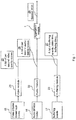
- Fig 1 illustrates the system architecture according to the embodiments presented herein.
- Fig 1 relate to a receiver (see 13 of Fig 7 ) of a multimedia session.
- a video module 21 to predict the per time unit (e.g. second) second scores of the video quality of a video sequence.
- the input 15 to this video module 21 includes video bitrates, codecs, screen size, frame types, etc.
- the output 25 of this video module 21 is a list of scores for video quality, with each element representing the quality for one second.
- the video output 25 includes a series of video scores such as [3.1, 3.2, 3.3, 3.3, 3.5, ...].
- the input 16 to this audio module 22 includes audio bitrates, audio codecs, etc.
- the output 26 is also a list of scores, but for audio quality.
- the audio output 26 includes a series of audio scores such as [2.1, 2.2, 3.3, 3.3, 3.5, ...].
- the input 17 to the buffering module is buffering events 17.
- the output 27 of the buffering module 23 contains a list of buffering events, where each event includes the time since start of video clip, and the duration of buffering.
- the buffer output 27 includes a series of buffering events such as [[0,2], [10,1]], where the first parameter of each event is the video time (i.e. a timestamp in a media timeline) at which point the buffering started and the latter is called buffering time (i.e. duration of the buffering). If the video time is 0, it is called the initial buffering. Otherwise, it is considered as the rebuffering.
- the video input 15, the audio input 16 and the buffering input 17 all relate to one multimedia session, i.e. a single reception of multimedia comprising both video and audio.
- An aggregation module 1 takes the outputs 21, 22, 23 from the video module 21, audio module 22, and buffering module 23 to predict the final session MOS score 29.
- the aggregation module 1 is also referred to as a MOS estimator herein.
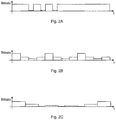
- Figs 2A-C are schematic graphs illustrating buffering. Time progresses along the horizontal axis. The vertical axis represents bitrate.
- rebuffering when the transmission speed is not high enough, as seen in Fig 2A . This can also be referred to as stalling. There are there three gaps (with zero bitrate) which represents rebuffering.
- Fig 2B illustrates an example for a 60-second video, where the height represents the bitrate, and each block is 5 seconds long.
- the quality models of the prior art do not account for this adaptation of bitrate.
- Fig 3 shows the aggregation module 1 of Fig 1 according to embodiments presented herein.
- the aggregation module 1 here uses an objective model for estimation of multimedia streaming quality, belonging to the No-Reference context.
- the aggregation module 1 contains several sub-modules. First, there is a video feature generation module 30. Second, there is an audio feature generation module 31. Third, there is a buffering feature generation module 32. Finally, there is a random forest prediction module 35 together with model builder 36.
- the video feature generation module 30 generates features from the list of per time unit video scores 25 (obtained from the video module 21 of Fig 1 ).
- the time unit can be any suitable time unit.
- a time unit may be a second.
- the output of the video feature generation module 30 contains one or more of the following 7 features:
- the audio feature generation module 31 is used to generate features from the list of per second audio scores 26 (obtained from the audio module 22 of Fig 1 ). It has been found empirically that audio quality is less important for MOS prediction than video quality. Therefore, it is here presented two features which may be used to capture audio quality. The two features are:
- the buffering feature generation module 32 is used to generate features based on buffering events.
- the input is the list of buffering events 27 (obtained from the buffering module 23 of Fig 1 ), where each event includes a video time, and a buffering time.
- the video time shows how much (when) in the video playout the buffering started, and the buffering time shows how much time of buffering it is. It is to be noted that the video time does not include the length of any possible previous bufferings. If the video time is 0, it means the buffering is initially buffering. Otherwise it is more considered as rebuffering. In other words, the initial buffering (at video time 0) is not a rebuffering but all subsequent bufferings (at video times after 0) are considered rebuffering.
- This example comprises three buffering events, one at the beginning of the video with 3 seconds of buffering, one in 10 seconds of the video with 2 seconds of rebuffering, and one in 50 seconds of the video with 1 second of rebuffering.
- the buffering event input 27 are then represented by: [[0, 3], [10, 2], [50, 1]]
- the total buffering time sums up the seconds of buffering in the video playout.
- the initial buffering event is given 1/3 rd of weight compared to other rebuffering events as users tend to forget about the events occurring at the start of streaming due to the effect of memory.
- the number of rebuffering events is the count of all the rebuffering events. In the above example, number of rebuffering events is two. The initial buffering is not considered a rebuffering event.
- the third feature percentage of buffering time compared to video time is calculated by taking the value of feature 1 divided by the total video length. This can also be thought of as a radio of stalling duration. As the test set of video sequences of different length, using this feature is also good.
- the fourth feature i.e., the number of rebuffering events per video length is to take feature 2 divided by video length.
- the video length is 60 seconds
- a random forest MOS prediction module 35 takes in inputs (features) from the video feature generation module 30, audio feature generation module 31 and the buffering feature generation module 32. In the case when the inputs from the modules are as described above, there is a total of fifteen inputs (i.e. features): the seven inputs are from the video feature generation module 30, two inputs are from the audio feature generation module 31 and five inputs are from the buffering feature generation module 32. Finally (and optionally), one more feature about the device type 33, which indicates if the test is on a mobile device or PC device is given as input to the model in the random forest MOS prediction module 35.
- the output 39 of the random forest MOS prediction module 35 is an estimated (or predicted) MOS value.
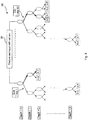
- Fig 4 depicts a random forest model 55 according to one scenario.
- the random forest model is applied in the random forest MOS prediction module 35 of Fig 3 . It is to be noted that other random forest models with different number of trees and/or depths can be applied.
- the input to the model 55 is a feature set input with values 50, i.e. one or more of the features described above.
- the random forest based model 55 may be built on a number of trees, each tree characterised with a maximum depth. For a model according to one scenario, the random forest is built on fifty trees. Each tree has a maximum depth of eight, which means that hierarchically there can be only eight levels in the trees. The depth is set to eight, which provides a good trade-off between accuracy and complexity of model.
- MOS Upon receiving inputs from video, audio and buffering modules for a particular streaming session, it estimates MOS in the following way.
- the model 55 parses through fifty trees 51a-n that were already constructed during a training phase of the model 55. At each node in a tree, there is a condition check on the value of a certain feature (for example, among the fifteen features described above) is smaller than the specified value of the tree node, if the answer to the condition is YES, it proceeds to the left child node. Otherwise, it proceeds to the right child node. It recursively goes through all the levels in a tree, until it reaches a leaf node of the tree, where it gets a MOS estimate. The leaf node can be reached at any depth between one and eight, depending on trees and the values of feature.
- the module gives an output (29 of Fig 3 ) in the form of average MOS score, which is the final estimate of MOS score for the considered streaming session.
- FIG 4 An example of the random forest model 55 with fifty trees and maximum depth of eight is shown in Fig 4 .
- the nodes in trees are ovals and leaves are depicted as rectangles.
- MOS estimate the MOS estimate for this example is 3.6, which is reached at depth 3 (the leaf being indicated with a solid line bordered rectangle).
- the paths to leaves in the above examples are shown by thick lined arrows.
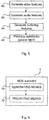
- Fig 5 is a flow chart illustrating the steps performed by a MOS estimator according to embodiments presented herein.
- the method is performed for predicting a multimedia session MOS, wherein the multimedia comprises a video and an audio, i.e. a video stream and an audio stream.
- video quality is represented by a list of per time unit scores of a video quality, an initial buffering event and rebuffering events in the video.
- audio quality is represented by a list of per time unit scores of audio quality.
- video features are generated from the list of per time unit scores of the video quality.
- the video features may comprise a feature being a first percentile of the per unit time scores of the video quality.
- the video features may comprise a feature being a fifth percentile of the per unit time scores of the video quality.
- the video features may comprise a feature being a fifteenth percentile of the per unit time scores of the video quality.
- audio features are generated from the list of per time unit scores of the audio quality.
- buffering features are generated from the initial buffering event and rebuffering events in the video.
- the buffering features may comprise a feature being total buffering time.
- the buffering features may comprise a feature being number of rebuffering events.
- the buffering features may comprise a feature being percentage of buffering time divided by video time.
- the buffering features may comprise a feature being number of rebuffering events per video length.
- the buffering features may comprise a feature being last seen rebuffering from the end of the video.
- a multimedia session MOS (39 of Fig 3 ) is estimated from the generated video features, generated audio features and generated buffering features by using machine learning technique.
- the estimating is based on a random forest based model.
- Fig 6 illustrates a MOS estimator according to the embodiments presented herein, wherein the MOS estimator comprises functional modules.
- the modules are implemented using software instructions such as a computer program executing in the MOS estimator.
- the modules are implemented using hardware, such as any one or more of an ASIC (Application Specific Integrated Circuit), an FPGA (Field Programmable Gate Array), or discrete logical circuits.
- the modules correspond to the steps in the methods illustrated in Fig 5 .
- a generating means 70 corresponds to steps 40, 42 and 44.
- a predicting means 72 corresponds to step 46.
- Fig 7 is a schematic diagram illustrating the relationship between transmitter and receiver.
- a transmitter 10 transmits multimedia 11 comprising video and audio, over a channel 12, to the receiver 13.
- the channel 12 can be based on wireless communication and/or wire-based communication. As explained above, the channel 12 is not perfect (e.g. due to interference, congestion, fading, etc.). Hence, the quality experienced at the receiver 13 can vary and can be expressed by MOS.
- Fig 8 is a schematic diagram illustrating components of the MOS estimator 1 of Fig 3 .
- the components can be shared with a host device hosting the MOS estimator.
- a processor 60 is provided using any combination of one or more of a suitable central processing unit (CPU), multiprocessor, microcontroller, digital signal processor (DSP), application specific integrated circuit etc., capable of executing software instructions 67 stored in a memory 64, which can thus be a computer program product.
- the processor 60 can be configured to execute the method described with reference to Fig 5 above.
- the memory 64 can be any combination of read and write memory (RAM) and read only memory (ROM).
- the memory 64 also comprises persistent storage, which, for example, can be any single one or combination of magnetic memory, optical memory, solid state memory or even remotely mounted memory.
- a data memory 66 is also provided for reading and/or storing data during execution of software instructions in the processor 60.
- the data memory 66 can be any combination of read and write memory (RAM) and read only memory (ROM).
- the MOS estimator further comprises an I/O interface 62 for communicating with other external entities.
- the I/O interface 62 also includes a user interface.
- Fig 9 shows one example of a computer program product comprising computer readable means.
- a computer program 91 can be stored, which computer program can cause a processor to execute a method according to embodiments described herein.
- the computer program product is an optical disc, such as a CD (compact disc) or a DVD (digital versatile disc) or a Blu-Ray disc.
- the computer program product could also be embodied in a memory of a device, such as the computer program product 64 of Fig 8 .
- the computer program 91 is here schematically shown as a track on the depicted optical disk, the computer program can be stored in any way which is suitable for the computer program product, such as a removable solid state memory, e.g. a Universal Serial Bus (USB) drive.
- USB Universal Serial Bus
Landscapes
- Engineering & Computer Science (AREA)
- Multimedia (AREA)
- Signal Processing (AREA)
- Computer Networks & Wireless Communication (AREA)
- Databases & Information Systems (AREA)
- Two-Way Televisions, Distribution Of Moving Picture Or The Like (AREA)
Claims (4)
- Verfahren, das durch einen MOS-Schätzer, Mean Opinion Score-Schätzer (1), durchgeführt wird, zum Vorhersagen eines Multimediasitzungs-MOS, wobei das Multimedia (11) eine Videospur und eine Audiospur umfasst, wobei die Videoqualität durch eine Liste von Bewertungen pro Zeiteinheit einer Videoqualität der Multimediasitzung, ein anfängliches Pufferungsereignis und Wiederpufferungsereignisse in dem Video der Multimediasitzung dargestellt wird, und wobei die Audioqualität durch eine Liste von Bewertungen pro Zeiteinheit der Audioqualität der Multimediasitzung dargestellt wird, das Verfahren umfassend:Erzeugen (40) von Videomerkmalen aus der Liste der Bewertungen pro Zeiteinheit der Videoqualität, wobei die Videomerkmale mindestens eines umfassen von: ein erstes Perzentil der Bewertungen pro Zeiteinheit der Videoqualität, ein fünftes Perzentil der Bewertungen pro Zeiteinheit der Videoqualität und ein fünfzehntes Perzentil der Bewertungen pro Zeiteinheit der Videoqualität;Erzeugen (42) von Audiomerkmalen aus der Liste der Bewertungen pro Zeiteinheit der Audioqualität, wobei die Audiomerkmale mindestens einen von einem Durchschnitt der ersten Hälfte der Sitzung der Bewertungen pro Zeiteinheit der Audiospur und einen Durchschnitt der zweiten Hälfte der Sitzung der Bewertungen pro Zeiteinheit der Audiospur umfassen;Erzeugen (44) von Pufferungsmerkmalen aus dem anfänglichen Pufferungsereignis und Wiederpufferungsereignissen in dem Video der Multimediasitzung, wobei die Pufferungsmerkmale mindestens eines umfassen von: eine Gesamtpufferungszeit, die Anzahl der Wiederpufferungsereignisse, einen Prozentsatz der Pufferungszeit geteilt durch die Videozeit, eine Häufigkeit von Wiederpufferungsereignissen und eine zuletzt gesehene Wiederpufferung von dem Ende des Videos aus; undSchätzen (46) eines Multimediasitzungs-MOS aus den erzeugten Videomerkmalen, erzeugten Audiomerkmalen und erzeugten Pufferungsmerkmalen unter Verwendung eines Random-Forest-Modells.
- MOS-Schätzer, Mean Opinion Score-Schätzer, zum Vorhersagen eines Multimediasitzungs-MOS, wobei das Multimedia eine Videospur und eine Audiospur umfasst, wobei die Videoqualität durch eine Liste von Bewertungen pro Zeiteinheit einer Videoqualität der Multimediasitzung, ein anfängliches Pufferungsereignis und Wiederpufferungsereignisse in dem Video der Multimediasitzung dargestellt wird, und wobei die Audioqualität durch eine Liste von Bewertungen pro Zeiteinheit der Audioqualität der Multimediasitzung dargestellt wird, wobei der MOS-Schätzer ein Verarbeitungsmittel (60) und einen Speicher (64) mit Befehlen (67) umfasst, die bei Ausführung durch das Verarbeitungsmittel (60) den MOS-Schätzer (1) dazu veranlassen:Videomerkmale aus der Liste der Bewertungen pro Zeiteinheit der Videoqualität zu erzeugen, wobei die Videomerkmale mindestens eines umfassen von: ein erstes Perzentil der Bewertungen pro Zeiteinheit der Videoqualität, ein fünftes Perzentil der Bewertungen pro Zeiteinheit der Videoqualität und ein fünfzehntes Perzentil der Bewertungen pro Zeiteinheit der Videoqualität;Audiomerkmale aus der Liste der Bewertungen pro Zeiteinheit der Audioqualität zu erzeugen, wobei die Audiomerkmale mindestens einen von einem Durchschnitt der ersten Hälfte der Sitzung der Bewertungen pro Zeiteinheit der Audiospur und einen Durchschnitt der zweiten Hälfte der Sitzung der Bewertungen pro Zeiteinheit der Audiospur umfassen;Pufferungsmerkmale aus dem anfänglichen Pufferungsereignis und Wiederpufferungsereignissen in dem Video der Multimediasitzung zu erzeugen, wobei die Pufferungsmerkmale mindestens eines umfassen von: eine Gesamtpufferungszeit, die Anzahl der Wiederpufferungsereignisse, einen Prozentsatz der Pufferungszeit geteilt durch die Videozeit, eine Häufigkeit von Wiederpufferungsereignissen und eine zuletzt gesehene Wiederpufferung von dem Ende des Videos aus; undeinen Multimediasitzungs-MOS aus den erzeugten Videomerkmalen, erzeugten Audiomerkmalen und erzeugten Pufferungsmerkmalen unter Verwendung eines Random-Forest-Modells zu schätzen.
- Computerprogramm für einen MOS-Schätzer, Mean Opinion Score-Schätzer, zum Vorhersagen eines Multimediasitzungs-MOS, wobei das Multimedia eine Videospur und eine Audiospur umfasst, wobei die Videoqualität durch eine Liste von Bewertungen pro Zeiteinheit einer Videoqualität der Multimediasitzung, ein anfängliches Pufferungsereignis und Wiederpufferungsereignisse in dem Video der Multimediasitzung dargestellt wird, und wobei die Audioqualität durch eine Liste von Bewertungen pro Zeiteinheit der Audioqualität der Multimediasitzung dargestellt wird, wobei das Computerprogramm einen Computerprogrammcode umfasst, der bei Ausführung den MOS-Schätzer dazu veranlasst:Videomerkmale aus der Liste der Bewertungen pro Zeiteinheit der Videoqualität zu erzeugen, wobei die Videomerkmale mindestens eines umfassen von: ein erstes Perzentil der Bewertungen pro Zeiteinheit der Videoqualität, ein fünftes Perzentil der Bewertungen pro Zeiteinheit der Videoqualität und ein fünfzehntes Perzentil der Bewertungen pro Zeiteinheit der Videoqualität;Audiomerkmale aus der Liste der Bewertungen pro Zeiteinheit der Audioqualität zu erzeugen, wobei die Audiomerkmale mindestens einen von einem Durchschnitt der ersten Hälfte der Sitzung der Bewertungen pro Zeiteinheit der Audiospur und einen Durchschnitt der zweiten Hälfte der Sitzung der Bewertungen pro Zeiteinheit der Audiospur umfassen;Pufferungsmerkmale aus dem anfänglichen Pufferungsereignis und Wiederpufferungsereignissen in dem Video der Multimediasitzung zu erzeugen, wobei die Pufferungsmerkmale mindestens eines umfassen von: eine Gesamtpufferungszeit, die Anzahl der Wiederpufferungsereignisse, einen Prozentsatz der Pufferungszeit geteilt durch die Videozeit, eine Häufigkeit von Wiederpufferungsereignissen und eine zuletzt gesehene Wiederpufferung von dem Ende des Videos aus; undeinen Multimediasitzungs-MOS aus den erzeugten Videomerkmalen, erzeugten Audiomerkmalen und erzeugten Pufferungsmerkmalen unter Verwendung eines Random-Forest-Modells zu schätzen.
- Computerprogrammprodukt für einen MOS-Schätzer, umfassend ein Computerprogramm für einen MOS-Schätzer nach Anspruch 3 und ein computerlesbares Mittel, auf dem das Computerprogramm für einen MOS-Schätzer gespeichert ist.
Priority Applications (1)
| Application Number | Priority Date | Filing Date | Title |
|---|---|---|---|
| EP20196621.5A EP3806418A1 (de) | 2016-02-25 | 2017-02-22 | Vorhersage von multimediasitzungs-mos |
Applications Claiming Priority (2)
| Application Number | Priority Date | Filing Date | Title |
|---|---|---|---|
| US201662299734P | 2016-02-25 | 2016-02-25 | |
| PCT/EP2017/054007 WO2017144506A1 (en) | 2016-02-25 | 2017-02-22 | Predicting multimedia session mos |
Related Child Applications (1)
| Application Number | Title | Priority Date | Filing Date |
|---|---|---|---|
| EP20196621.5A Division EP3806418A1 (de) | 2016-02-25 | 2017-02-22 | Vorhersage von multimediasitzungs-mos |
Publications (2)
| Publication Number | Publication Date |
|---|---|
| EP3420698A1 EP3420698A1 (de) | 2019-01-02 |
| EP3420698B1 true EP3420698B1 (de) | 2020-09-23 |
Family
ID=58228089
Family Applications (2)
| Application Number | Title | Priority Date | Filing Date |
|---|---|---|---|
| EP17708715.2A Active EP3420698B1 (de) | 2016-02-25 | 2017-02-22 | Vorhersage von multimediasitzungs-mos |
| EP20196621.5A Withdrawn EP3806418A1 (de) | 2016-02-25 | 2017-02-22 | Vorhersage von multimediasitzungs-mos |
Family Applications After (1)
| Application Number | Title | Priority Date | Filing Date |
|---|---|---|---|
| EP20196621.5A Withdrawn EP3806418A1 (de) | 2016-02-25 | 2017-02-22 | Vorhersage von multimediasitzungs-mos |
Country Status (3)
| Country | Link |
|---|---|
| US (2) | US11122329B2 (de) |
| EP (2) | EP3420698B1 (de) |
| WO (1) | WO2017144506A1 (de) |
Families Citing this family (5)
| Publication number | Priority date | Publication date | Assignee | Title |
|---|---|---|---|---|
| US11176654B2 (en) * | 2019-03-27 | 2021-11-16 | Sharif University Of Technology | Quality assessment of a video |
| US12165411B2 (en) | 2020-12-16 | 2024-12-10 | Istreamplanet Co., Llc | Context aware word cloud for context oriented dynamic actions |
| US11539985B2 (en) | 2020-12-16 | 2022-12-27 | Istreamplanet Co., Llc | No reference realtime video quality assessment |
| US11438218B2 (en) * | 2020-12-16 | 2022-09-06 | Istreamplanet Co., Llc | Video transport stream stability prediction |
| CN115273899B (zh) * | 2022-07-20 | 2025-05-30 | 中国联合网络通信集团有限公司 | 一种语音质量评估方法、装置、设备及存储介质 |
Family Cites Families (24)
| Publication number | Priority date | Publication date | Assignee | Title |
|---|---|---|---|---|
| BRPI0001810B1 (pt) * | 2000-03-28 | 2015-06-23 | Coppe Ufrj Coordenação Dos Programas De Pós Graduação De Engenharia Da Universidade Fed Do Rio De Ja | Memória cooperativa distribuída para sistema de vod interativo e escalável |
| DE602004013567D1 (de) * | 2003-04-17 | 2008-06-19 | Thomson Licensing | Datenabrufende und -übertragende vorrichtungen und verfahren |
| EP2615833B1 (de) * | 2006-10-19 | 2014-05-21 | Telefonaktiebolaget L M Ericsson (publ) | Verfahren zur videoqualitätsbestimmung |
| WO2009044458A1 (ja) * | 2007-10-02 | 2009-04-09 | Fujitsu Limited | ハンドオーバ制御装置、移動局、基地局、ハンドオーバ制御サーバおよびハンドオーバ制御方法 |
| KR101493776B1 (ko) * | 2007-12-07 | 2015-02-16 | 삼성전자주식회사 | 전력 상태에 따른 무선 메모리 디바이스 구동 방법 |
| US7877525B1 (en) * | 2008-05-02 | 2011-01-25 | Sprint Communications Company L.P. | Resuming media objects delivered via progressive downloading services upon data loss events |
| US20100040016A1 (en) * | 2008-08-15 | 2010-02-18 | Kar-Wing Edward Lor | Wireless Network Handoff Method and Mobile Device Using Same |
| US8239911B1 (en) * | 2008-10-22 | 2012-08-07 | Clearwire Ip Holdings Llc | Video bursting based upon mobile device path |
| US9124642B2 (en) * | 2009-10-16 | 2015-09-01 | Qualcomm Incorporated | Adaptively streaming multimedia |
| US8345616B2 (en) * | 2010-06-24 | 2013-01-01 | Microsoft Corporation | Scheduling communications in a mobile device |
| US8391896B2 (en) * | 2010-07-09 | 2013-03-05 | Nokia Corporation | Method and apparatus for providing a geo-predictive streaming service |
| US8751845B2 (en) * | 2011-06-07 | 2014-06-10 | Microsoft Corporation | Estimating and preserving battery life based on usage patterns |
| US8744172B2 (en) * | 2011-06-15 | 2014-06-03 | Siemens Aktiengesellschaft | Image processing using random forest classifiers |
| US8792439B2 (en) * | 2011-10-05 | 2014-07-29 | Alcatel Lucent | Method and system for rate adaptive allocation of resources |
| US8850054B2 (en) * | 2012-01-17 | 2014-09-30 | International Business Machines Corporation | Hypertext transfer protocol live streaming |
| US8867013B2 (en) * | 2012-01-26 | 2014-10-21 | Avaya Inc. | System and method for measuring video quality degradation using face detection |
| KR101629748B1 (ko) * | 2012-07-09 | 2016-06-13 | 후아웨이 테크놀러지 컴퍼니 리미티드 | Dash 클라이언트 행위 프레임워크 및 세션 관리의 실현 |
| US9858591B2 (en) * | 2012-09-28 | 2018-01-02 | International Business Machines Corporation | Event determination and invitation generation |
| JP6034150B2 (ja) * | 2012-11-16 | 2016-11-30 | ルネサスエレクトロニクス株式会社 | 半導体装置およびその製造方法 |
| GB201320216D0 (en) * | 2013-11-15 | 2014-01-01 | Microsoft Corp | Predicting call quality |
| GB2529446A (en) * | 2014-07-17 | 2016-02-24 | British Academy Of Film And Television Arts The | Measurement of video quality |
| US20160036980A1 (en) * | 2014-07-29 | 2016-02-04 | Genesys Telecommunications Laboratories, Inc. | System and Method for Addressing Hard-To-Understand for Contact Center Service Quality |
| US10063406B2 (en) * | 2015-07-15 | 2018-08-28 | TUPL, Inc. | Automatic customer complaint resolution |
| EP3264709B1 (de) * | 2016-06-30 | 2018-08-29 | Deutsche Telekom AG | Verfahren zur berechnung, bei einem client zum empfang von multimediainhalt von einem server mittels adaptivem streaming, der wahrgenommenen qualität einer vollständigen mediensitzung sowie client |
-
2017
- 2017-02-22 EP EP17708715.2A patent/EP3420698B1/de active Active
- 2017-02-22 WO PCT/EP2017/054007 patent/WO2017144506A1/en not_active Ceased
- 2017-02-22 EP EP20196621.5A patent/EP3806418A1/de not_active Withdrawn
- 2017-02-22 US US16/078,201 patent/US11122329B2/en active Active
-
2021
- 2021-09-13 US US17/472,844 patent/US20210409820A1/en not_active Abandoned
Non-Patent Citations (1)
| Title |
|---|
| None * |
Also Published As
| Publication number | Publication date |
|---|---|
| US20190052932A1 (en) | 2019-02-14 |
| US20210409820A1 (en) | 2021-12-30 |
| WO2017144506A1 (en) | 2017-08-31 |
| EP3420698A1 (de) | 2019-01-02 |
| EP3806418A1 (de) | 2021-04-14 |
| US11122329B2 (en) | 2021-09-14 |
Similar Documents
| Publication | Publication Date | Title |
|---|---|---|
| US20210409820A1 (en) | Predicting multimedia session mos | |
| US12069122B2 (en) | System and method for managing video streaming quality of experience | |
| Robitza et al. | A modular http adaptive streaming qoe model—candidate for itu-t p. 1203 (“p. nats”) | |
| US10963803B2 (en) | System and method for machine learning based QoE prediction of voice/video services in wireless networks | |
| EP3479579B1 (de) | Qualitätsschätzung von adaptivem multimedia-streaming | |
| US7957303B2 (en) | Communication quality evaluation method, derivation device, communication quality evaluation system and computer program | |
| Yang et al. | Content-adaptive packet-layer model for quality assessment of networked video services | |
| EP3393125A1 (de) | Vorrichtung zur schätzung der audio/visuellen qualität, verfahren zur schätzung der audio/visuellen qualität und programm | |
| CN113411218A (zh) | 即时通信质量的评价方法、装置和电子设备 | |
| Cherif et al. | A_PSQA: Efficient real-time video streaming QoE tool in a future media internet context | |
| Bartolec et al. | Impact of user playback interactions on in-network estimation of video streaming performance | |
| JP4460506B2 (ja) | ユーザ体感品質推定装置、方法、およびプログラム | |
| JP4460523B2 (ja) | ユーザ体感品質推定装置、方法、およびプログラム | |
| US9106551B2 (en) | Data packet frequency | |
| Arsenović et al. | Quality of Experience Assessment for HTTP Based Adaptive Video Streaming. | |
| Botia et al. | Strategies for improving the QoE assessment over iTV platforms based on QoS metrics | |
| KR102823341B1 (ko) | 멀티미디어 컨텐츠의 예측 스트리밍 시스템 | |
| JP4460549B2 (ja) | ユーザ体感品質推定装置、方法、およびプログラム | |
| JP5806981B2 (ja) | 再生状態推定装置及び方法及びプログラム | |
| JP2007329778A (ja) | ユーザ体感品質推定装置、方法、およびプログラム | |
| JP4460548B2 (ja) | ユーザ体感品質推定装置、方法、およびプログラム | |
| JP2007329774A (ja) | ユーザ体感品質推定装置、方法、およびプログラム | |
| JP2007329776A (ja) | ネットワーク品質分析装置、品質クラス決定装置、ネットワーク品質分析方法、品質クラス決定方法、およびプログラム | |
| Kovac et al. | Usability study of ITU-T P. 1201 Amd. 2 standard for video quality estimation in HTTP-Based online streaming services | |
| JP2007329775A (ja) | ユーザ体感品質推定装置、方法、およびプログラム |
Legal Events
| Date | Code | Title | Description |
|---|---|---|---|
| STAA | Information on the status of an ep patent application or granted ep patent |
Free format text: STATUS: UNKNOWN |
|
| STAA | Information on the status of an ep patent application or granted ep patent |
Free format text: STATUS: THE INTERNATIONAL PUBLICATION HAS BEEN MADE |
|
| PUAI | Public reference made under article 153(3) epc to a published international application that has entered the european phase |
Free format text: ORIGINAL CODE: 0009012 |
|
| STAA | Information on the status of an ep patent application or granted ep patent |
Free format text: STATUS: REQUEST FOR EXAMINATION WAS MADE |
|
| 17P | Request for examination filed |
Effective date: 20180919 |
|
| AK | Designated contracting states |
Kind code of ref document: A1 Designated state(s): AL AT BE BG CH CY CZ DE DK EE ES FI FR GB GR HR HU IE IS IT LI LT LU LV MC MK MT NL NO PL PT RO RS SE SI SK SM TR |
|
| AX | Request for extension of the european patent |
Extension state: BA ME |
|
| DAV | Request for validation of the european patent (deleted) | ||
| DAX | Request for extension of the european patent (deleted) | ||
| STAA | Information on the status of an ep patent application or granted ep patent |
Free format text: STATUS: EXAMINATION IS IN PROGRESS |
|
| 17Q | First examination report despatched |
Effective date: 20191002 |
|
| GRAP | Despatch of communication of intention to grant a patent |
Free format text: ORIGINAL CODE: EPIDOSNIGR1 |
|
| STAA | Information on the status of an ep patent application or granted ep patent |
Free format text: STATUS: GRANT OF PATENT IS INTENDED |
|
| RIC1 | Information provided on ipc code assigned before grant |
Ipc: H04N 21/439 20110101ALI20200402BHEP Ipc: H04N 21/24 20110101ALI20200402BHEP Ipc: H04L 29/06 20060101AFI20200402BHEP Ipc: H04N 21/442 20110101ALI20200402BHEP |
|
| INTG | Intention to grant announced |
Effective date: 20200416 |
|
| GRAS | Grant fee paid |
Free format text: ORIGINAL CODE: EPIDOSNIGR3 |
|
| GRAA | (expected) grant |
Free format text: ORIGINAL CODE: 0009210 |
|
| STAA | Information on the status of an ep patent application or granted ep patent |
Free format text: STATUS: THE PATENT HAS BEEN GRANTED |
|
| AK | Designated contracting states |
Kind code of ref document: B1 Designated state(s): AL AT BE BG CH CY CZ DE DK EE ES FI FR GB GR HR HU IE IS IT LI LT LU LV MC MK MT NL NO PL PT RO RS SE SI SK SM TR |
|
| REG | Reference to a national code |
Ref country code: GB Ref legal event code: FG4D |
|
| REG | Reference to a national code |
Ref country code: CH Ref legal event code: EP |
|
| REG | Reference to a national code |
Ref country code: IE Ref legal event code: FG4D |
|
| REG | Reference to a national code |
Ref country code: AT Ref legal event code: REF Ref document number: 1317562 Country of ref document: AT Kind code of ref document: T Effective date: 20201015 Ref country code: DE Ref legal event code: R096 Ref document number: 602017024107 Country of ref document: DE |
|
| REG | Reference to a national code |
Ref country code: NL Ref legal event code: FP |
|
| PG25 | Lapsed in a contracting state [announced via postgrant information from national office to epo] |
Ref country code: BG Free format text: LAPSE BECAUSE OF FAILURE TO SUBMIT A TRANSLATION OF THE DESCRIPTION OR TO PAY THE FEE WITHIN THE PRESCRIBED TIME-LIMIT Effective date: 20201223 Ref country code: GR Free format text: LAPSE BECAUSE OF FAILURE TO SUBMIT A TRANSLATION OF THE DESCRIPTION OR TO PAY THE FEE WITHIN THE PRESCRIBED TIME-LIMIT Effective date: 20201224 Ref country code: FI Free format text: LAPSE BECAUSE OF FAILURE TO SUBMIT A TRANSLATION OF THE DESCRIPTION OR TO PAY THE FEE WITHIN THE PRESCRIBED TIME-LIMIT Effective date: 20200923 Ref country code: NO Free format text: LAPSE BECAUSE OF FAILURE TO SUBMIT A TRANSLATION OF THE DESCRIPTION OR TO PAY THE FEE WITHIN THE PRESCRIBED TIME-LIMIT Effective date: 20201223 Ref country code: SE Free format text: LAPSE BECAUSE OF FAILURE TO SUBMIT A TRANSLATION OF THE DESCRIPTION OR TO PAY THE FEE WITHIN THE PRESCRIBED TIME-LIMIT Effective date: 20200923 Ref country code: HR Free format text: LAPSE BECAUSE OF FAILURE TO SUBMIT A TRANSLATION OF THE DESCRIPTION OR TO PAY THE FEE WITHIN THE PRESCRIBED TIME-LIMIT Effective date: 20200923 |
|
| REG | Reference to a national code |
Ref country code: AT Ref legal event code: MK05 Ref document number: 1317562 Country of ref document: AT Kind code of ref document: T Effective date: 20200923 |
|
| PG25 | Lapsed in a contracting state [announced via postgrant information from national office to epo] |
Ref country code: LV Free format text: LAPSE BECAUSE OF FAILURE TO SUBMIT A TRANSLATION OF THE DESCRIPTION OR TO PAY THE FEE WITHIN THE PRESCRIBED TIME-LIMIT Effective date: 20200923 Ref country code: RS Free format text: LAPSE BECAUSE OF FAILURE TO SUBMIT A TRANSLATION OF THE DESCRIPTION OR TO PAY THE FEE WITHIN THE PRESCRIBED TIME-LIMIT Effective date: 20200923 |
|
| REG | Reference to a national code |
Ref country code: LT Ref legal event code: MG4D |
|
| PG25 | Lapsed in a contracting state [announced via postgrant information from national office to epo] |
Ref country code: SM Free format text: LAPSE BECAUSE OF FAILURE TO SUBMIT A TRANSLATION OF THE DESCRIPTION OR TO PAY THE FEE WITHIN THE PRESCRIBED TIME-LIMIT Effective date: 20200923 Ref country code: CZ Free format text: LAPSE BECAUSE OF FAILURE TO SUBMIT A TRANSLATION OF THE DESCRIPTION OR TO PAY THE FEE WITHIN THE PRESCRIBED TIME-LIMIT Effective date: 20200923 Ref country code: RO Free format text: LAPSE BECAUSE OF FAILURE TO SUBMIT A TRANSLATION OF THE DESCRIPTION OR TO PAY THE FEE WITHIN THE PRESCRIBED TIME-LIMIT Effective date: 20200923 Ref country code: PT Free format text: LAPSE BECAUSE OF FAILURE TO SUBMIT A TRANSLATION OF THE DESCRIPTION OR TO PAY THE FEE WITHIN THE PRESCRIBED TIME-LIMIT Effective date: 20210125 Ref country code: LT Free format text: LAPSE BECAUSE OF FAILURE TO SUBMIT A TRANSLATION OF THE DESCRIPTION OR TO PAY THE FEE WITHIN THE PRESCRIBED TIME-LIMIT Effective date: 20200923 Ref country code: EE Free format text: LAPSE BECAUSE OF FAILURE TO SUBMIT A TRANSLATION OF THE DESCRIPTION OR TO PAY THE FEE WITHIN THE PRESCRIBED TIME-LIMIT Effective date: 20200923 |
|
| PG25 | Lapsed in a contracting state [announced via postgrant information from national office to epo] |
Ref country code: AL Free format text: LAPSE BECAUSE OF FAILURE TO SUBMIT A TRANSLATION OF THE DESCRIPTION OR TO PAY THE FEE WITHIN THE PRESCRIBED TIME-LIMIT Effective date: 20200923 Ref country code: AT Free format text: LAPSE BECAUSE OF FAILURE TO SUBMIT A TRANSLATION OF THE DESCRIPTION OR TO PAY THE FEE WITHIN THE PRESCRIBED TIME-LIMIT Effective date: 20200923 Ref country code: ES Free format text: LAPSE BECAUSE OF FAILURE TO SUBMIT A TRANSLATION OF THE DESCRIPTION OR TO PAY THE FEE WITHIN THE PRESCRIBED TIME-LIMIT Effective date: 20200923 Ref country code: IS Free format text: LAPSE BECAUSE OF FAILURE TO SUBMIT A TRANSLATION OF THE DESCRIPTION OR TO PAY THE FEE WITHIN THE PRESCRIBED TIME-LIMIT Effective date: 20210123 Ref country code: PL Free format text: LAPSE BECAUSE OF FAILURE TO SUBMIT A TRANSLATION OF THE DESCRIPTION OR TO PAY THE FEE WITHIN THE PRESCRIBED TIME-LIMIT Effective date: 20200923 |
|
| REG | Reference to a national code |
Ref country code: DE Ref legal event code: R097 Ref document number: 602017024107 Country of ref document: DE |
|
| PG25 | Lapsed in a contracting state [announced via postgrant information from national office to epo] |
Ref country code: SK Free format text: LAPSE BECAUSE OF FAILURE TO SUBMIT A TRANSLATION OF THE DESCRIPTION OR TO PAY THE FEE WITHIN THE PRESCRIBED TIME-LIMIT Effective date: 20200923 |
|
| PLBE | No opposition filed within time limit |
Free format text: ORIGINAL CODE: 0009261 |
|
| STAA | Information on the status of an ep patent application or granted ep patent |
Free format text: STATUS: NO OPPOSITION FILED WITHIN TIME LIMIT |
|
| PG25 | Lapsed in a contracting state [announced via postgrant information from national office to epo] |
Ref country code: SI Free format text: LAPSE BECAUSE OF FAILURE TO SUBMIT A TRANSLATION OF THE DESCRIPTION OR TO PAY THE FEE WITHIN THE PRESCRIBED TIME-LIMIT Effective date: 20200923 Ref country code: DK Free format text: LAPSE BECAUSE OF FAILURE TO SUBMIT A TRANSLATION OF THE DESCRIPTION OR TO PAY THE FEE WITHIN THE PRESCRIBED TIME-LIMIT Effective date: 20200923 |
|
| 26N | No opposition filed |
Effective date: 20210624 |
|
| PG25 | Lapsed in a contracting state [announced via postgrant information from national office to epo] |
Ref country code: MC Free format text: LAPSE BECAUSE OF FAILURE TO SUBMIT A TRANSLATION OF THE DESCRIPTION OR TO PAY THE FEE WITHIN THE PRESCRIBED TIME-LIMIT Effective date: 20200923 |
|
| REG | Reference to a national code |
Ref country code: BE Ref legal event code: MM Effective date: 20210228 |
|
| PG25 | Lapsed in a contracting state [announced via postgrant information from national office to epo] |
Ref country code: IT Free format text: LAPSE BECAUSE OF FAILURE TO SUBMIT A TRANSLATION OF THE DESCRIPTION OR TO PAY THE FEE WITHIN THE PRESCRIBED TIME-LIMIT Effective date: 20200923 Ref country code: LU Free format text: LAPSE BECAUSE OF NON-PAYMENT OF DUE FEES Effective date: 20210222 |
|
| REG | Reference to a national code |
Ref country code: DE Ref legal event code: R079 Ref document number: 602017024107 Country of ref document: DE Free format text: PREVIOUS MAIN CLASS: H04L0029060000 Ipc: H04L0065000000 |
|
| PG25 | Lapsed in a contracting state [announced via postgrant information from national office to epo] |
Ref country code: IE Free format text: LAPSE BECAUSE OF NON-PAYMENT OF DUE FEES Effective date: 20210222 |
|
| PG25 | Lapsed in a contracting state [announced via postgrant information from national office to epo] |
Ref country code: BE Free format text: LAPSE BECAUSE OF NON-PAYMENT OF DUE FEES Effective date: 20210228 |
|
| P01 | Opt-out of the competence of the unified patent court (upc) registered |
Effective date: 20230517 |
|
| PG25 | Lapsed in a contracting state [announced via postgrant information from national office to epo] |
Ref country code: CY Free format text: LAPSE BECAUSE OF FAILURE TO SUBMIT A TRANSLATION OF THE DESCRIPTION OR TO PAY THE FEE WITHIN THE PRESCRIBED TIME-LIMIT Effective date: 20200923 |
|
| PG25 | Lapsed in a contracting state [announced via postgrant information from national office to epo] |
Ref country code: HU Free format text: LAPSE BECAUSE OF FAILURE TO SUBMIT A TRANSLATION OF THE DESCRIPTION OR TO PAY THE FEE WITHIN THE PRESCRIBED TIME-LIMIT; INVALID AB INITIO Effective date: 20170222 |
|
| PG25 | Lapsed in a contracting state [announced via postgrant information from national office to epo] |
Ref country code: MK Free format text: LAPSE BECAUSE OF FAILURE TO SUBMIT A TRANSLATION OF THE DESCRIPTION OR TO PAY THE FEE WITHIN THE PRESCRIBED TIME-LIMIT Effective date: 20200923 |
|
| PG25 | Lapsed in a contracting state [announced via postgrant information from national office to epo] |
Ref country code: TR Free format text: LAPSE BECAUSE OF FAILURE TO SUBMIT A TRANSLATION OF THE DESCRIPTION OR TO PAY THE FEE WITHIN THE PRESCRIBED TIME-LIMIT Effective date: 20200923 |
|
| PG25 | Lapsed in a contracting state [announced via postgrant information from national office to epo] |
Ref country code: MT Free format text: LAPSE BECAUSE OF FAILURE TO SUBMIT A TRANSLATION OF THE DESCRIPTION OR TO PAY THE FEE WITHIN THE PRESCRIBED TIME-LIMIT Effective date: 20200923 |
|
| REG | Reference to a national code |
Ref country code: CH Ref legal event code: U11 Free format text: ST27 STATUS EVENT CODE: U-0-0-U10-U11 (AS PROVIDED BY THE NATIONAL OFFICE) Effective date: 20260301 |
|
| PGFP | Annual fee paid to national office [announced via postgrant information from national office to epo] |
Ref country code: NL Payment date: 20260226 Year of fee payment: 10 |
|
| PGFP | Annual fee paid to national office [announced via postgrant information from national office to epo] |
Ref country code: GB Payment date: 20260227 Year of fee payment: 10 |
|
| PGFP | Annual fee paid to national office [announced via postgrant information from national office to epo] |
Ref country code: DE Payment date: 20260227 Year of fee payment: 10 |
|
| PGFP | Annual fee paid to national office [announced via postgrant information from national office to epo] |
Ref country code: FR Payment date: 20260225 Year of fee payment: 10 |
|
| PGFP | Annual fee paid to national office [announced via postgrant information from national office to epo] |
Ref country code: CH Payment date: 20260301 Year of fee payment: 10 |