EP3428748B1 - Procédé pour augmenter la fiabilité de deux systèmes redondants en détectant le système entaché d'un défaut - Google Patents
Procédé pour augmenter la fiabilité de deux systèmes redondants en détectant le système entaché d'un défaut Download PDFInfo
- Publication number
- EP3428748B1 EP3428748B1 EP17181169.8A EP17181169A EP3428748B1 EP 3428748 B1 EP3428748 B1 EP 3428748B1 EP 17181169 A EP17181169 A EP 17181169A EP 3428748 B1 EP3428748 B1 EP 3428748B1
- Authority
- EP
- European Patent Office
- Prior art keywords
- systems
- provision
- operating parameter
- parameter
- cycle
- Prior art date
- Legal status (The legal status is an assumption and is not a legal conclusion. Google has not performed a legal analysis and makes no representation as to the accuracy of the status listed.)
- Active
Links
Images
Classifications
-
- G—PHYSICS
- G05—CONTROLLING; REGULATING
- G05B—CONTROL OR REGULATING SYSTEMS IN GENERAL; FUNCTIONAL ELEMENTS OF SUCH SYSTEMS; MONITORING OR TESTING ARRANGEMENTS FOR SUCH SYSTEMS OR ELEMENTS
- G05B23/00—Testing or monitoring of control systems or parts thereof
- G05B23/02—Electric testing or monitoring
- G05B23/0205—Electric testing or monitoring by means of a monitoring system capable of detecting and responding to faults
- G05B23/0218—Electric testing or monitoring by means of a monitoring system capable of detecting and responding to faults characterised by the fault detection method dealing with either existing or incipient faults
- G05B23/0221—Preprocessing measurements, e.g. data collection rate adjustment; Standardization of measurements; Time series or signal analysis, e.g. frequency analysis or wavelets; Trustworthiness of measurements; Indexes therefor; Measurements using easily measured parameters to estimate parameters difficult to measure; Virtual sensor creation; De-noising; Sensor fusion; Unconventional preprocessing inherently present in specific fault detection methods like PCA-based methods
-
- G—PHYSICS
- G05—CONTROLLING; REGULATING
- G05B—CONTROL OR REGULATING SYSTEMS IN GENERAL; FUNCTIONAL ELEMENTS OF SUCH SYSTEMS; MONITORING OR TESTING ARRANGEMENTS FOR SUCH SYSTEMS OR ELEMENTS
- G05B9/00—Safety arrangements
- G05B9/02—Safety arrangements electric
- G05B9/03—Safety arrangements electric with multiple-channel loop, i.e. redundant control systems
-
- G—PHYSICS
- G05—CONTROLLING; REGULATING
- G05B—CONTROL OR REGULATING SYSTEMS IN GENERAL; FUNCTIONAL ELEMENTS OF SUCH SYSTEMS; MONITORING OR TESTING ARRANGEMENTS FOR SUCH SYSTEMS OR ELEMENTS
- G05B19/00—Program-control systems
- G05B19/02—Program-control systems electric
- G05B19/04—Program control other than numerical control, i.e. in sequence controllers or logic controllers
- G05B19/042—Program control other than numerical control, i.e. in sequence controllers or logic controllers using digital processors
- G05B19/0428—Safety, monitoring
-
- G—PHYSICS
- G05—CONTROLLING; REGULATING
- G05B—CONTROL OR REGULATING SYSTEMS IN GENERAL; FUNCTIONAL ELEMENTS OF SUCH SYSTEMS; MONITORING OR TESTING ARRANGEMENTS FOR SUCH SYSTEMS OR ELEMENTS
- G05B19/00—Program-control systems
- G05B19/02—Program-control systems electric
- G05B19/04—Program control other than numerical control, i.e. in sequence controllers or logic controllers
- G05B19/042—Program control other than numerical control, i.e. in sequence controllers or logic controllers using digital processors
- G05B19/0423—Input/output
- G05B19/0425—Safety, monitoring
-
- G—PHYSICS
- G06—COMPUTING OR CALCULATING; COUNTING
- G06F—ELECTRIC DIGITAL DATA PROCESSING
- G06F11/00—Error detection; Error correction; Monitoring
- G06F11/07—Responding to the occurrence of a fault, e.g. fault tolerance
- G06F11/16—Error detection or correction of the data by redundancy in hardware
- G06F11/20—Error detection or correction of the data by redundancy in hardware using active fault-masking, e.g. by switching out faulty elements or by switching in spare elements
- G06F11/202—Error detection or correction of the data by redundancy in hardware using active fault-masking, e.g. by switching out faulty elements or by switching in spare elements where processing functionality is redundant
-
- G—PHYSICS
- G05—CONTROLLING; REGULATING
- G05B—CONTROL OR REGULATING SYSTEMS IN GENERAL; FUNCTIONAL ELEMENTS OF SUCH SYSTEMS; MONITORING OR TESTING ARRANGEMENTS FOR SUCH SYSTEMS OR ELEMENTS
- G05B2219/00—Program-control systems
- G05B2219/20—Pc systems
- G05B2219/24—Pc safety
- G05B2219/24182—Redundancy
-
- G—PHYSICS
- G05—CONTROLLING; REGULATING
- G05B—CONTROL OR REGULATING SYSTEMS IN GENERAL; FUNCTIONAL ELEMENTS OF SUCH SYSTEMS; MONITORING OR TESTING ARRANGEMENTS FOR SUCH SYSTEMS OR ELEMENTS
- G05B2219/00—Program-control systems
- G05B2219/20—Pc systems
- G05B2219/24—Pc safety
- G05B2219/24195—Compare data in channels at timed intervals, for equality
Definitions
- the invention relates to a method for operating an arrangement with two redundant systems according to the preamble of claim 1, and an arrangement with two redundant systems according to the preamble of claim 7.
- high availability In industrial automation technology, but also in other technical areas, there are applications in which increased availability (“high availability”) is required. In contrast to manipulation security, which is often summarized under the generic term “security”, "high availability” is primarily about coping with random failures of subsystems or components. In particular, a failure of a sub-system, in particular a controller (e.g. programmable logic controller, control computer, etc.) should be recognized and caught, and faults should also be identified that cannot be identified as a complete failure of a system but, for example, as a malfunction , recognized as an error and caught.
- a controller e.g. programmable logic controller, control computer, etc.
- the redundant system can be switched over to the redundant system, ie the system that was previously in "shadow operation", with almost no delay. If faults are found in the redundant system (shadow system), the previous productive system (“master”) remains in its role and the faulty system is switched off and, for example, restarted or repaired.
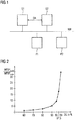
- FIG. 2 shows the ratio of the mean time between two failures (MTBF) of a redundant system (MTBF system ) to a simple system (MTBF single ) as a function of the error coverage (diagnostic coverage - DC).
- DC degree of fault coverage
- the MTBF of the redundant overall system grows superlinearly with the degree of fault coverage (DC), which makes it clear that this has an outstanding role in improving the overall system.
- special sensors in particular temperature sensors, can also be used to detect errors in individual systems.
- the pamphlet EP 3 048 497 A1 - Grosch et al. "Method for operating a redundant automation system and redundant automation system" already shows one method for the selection of one of two redundantly structured sub-systems, whereby a respective failure probability of the sub-systems is taken into account when deciding which sub-system is switched to productive.
- the inventive solution to this problem is based on the measurement of operating parameters, in particular a so-called “performance”, of individual parts of the system program or user program of the respective system.
- the operating parameter or the operating parameters are recorded statistically. If there is a discrepancy between the two systems (master and reserve or productive system and shadow system), a check can be made as to whether the last operating parameter (s) recorded in one of the systems shows a greater discrepancy between the previously processed cycles. That one of the systems in which the current operating parameter or the current operating parameters have a greater deviation from the statistical records, for example an average value of the respective parameter under consideration, is recognized as the system that is likely to be disturbed.
- the object is achieved in particular by a method according to claim 1 and by an arrangement according to claim 7.
- a method for operating an arrangement with two redundant systems in particular two industrial automation components, the two systems each working in parallel in a cyclical mode, with one of the systems working in productive mode and the other of the systems processes the same task to control, the systems regularly checking at least one result of the other system, in particular the result of the other Compare the systems of the two systems with your own result, and if a discrepancy between the results is detected, an error is detected, with one of the systems being selected or confirmed for productive operation in the event of an error.
- At least one parameter is recorded via an operating parameter and used to update at least one statistical parameter, at least in the case in which a discrepancy between the results of the two systems is determined for each system a current operating parameter is related to the associated statistical parameter of the same system, and the system in which the respective current operating parameter deviates less from the associated statistical parameter than the properly functioning system is recognized and used for further productive operation.
- DC Diagnostic Coverage
- the object is also achieved by an arrangement with two redundant systems, in particular with two industrial automation components, it being provided that the two systems work in parallel in a cyclic operation, with one of the systems in each case being switched to productive operation and the other system for control is provided for processing the same task, it being provided that the systems mutually check results of the other system once or regularly, in particular by comparing the result of the other of the two systems with their own result, and it is provided that in an error is detected if the results differ from one another, it being provided that in the event of an error one of the systems is selected for further productive operation or confirmed for productive operation.
- At least one parameter is recorded via an operating parameter and updated at least one statistical parameter is used in each case, whereby at least in the case in which a discrepancy between the results of the two systems is determined, a current operating parameter is related to the associated statistical parameter of the same system for each system, and the system in which the respective current operating parameter deviates less from the associated statistical parameter than the properly functioning system is recognized and used for productive operation.
- the alternating check takes place at least once, but preferably regularly, in particular after each cycle of a cycle-oriented program (e.g. automation application).
- a user can administer the type and frequency of the data comparison, in particular time-controlled, cycle-controlled or event-controlled.
- a program runtime can advantageously be used as an operating parameter, in particular the runtime for processing a complete cycle or a part of the program (for example function modules), which advantageously must be run through in each cycle.
- Such a program runtime or cycle duration can be recorded easily and without much influence on the system performance, whereby it is assumed that there is a malfunction if the runtime or execution duration differs significantly from the statistical mean.
- Regular deviations in the execution time for example due to a regular, complex calculation or a Changes in the process structure due to conditional branches or the like can occur regularly are not misinterpreted, because the statistical deviations on both systems are compared with each other, so that in the case of regular changes in runtime, these in both systems lead to deviations in the current, current program runtime compared to the statistical mean and thus do not falsely report an error in normal function. This also applies to deviations in other operating parameters.
- performance counter can advantageously be used as an operating parameter, such performance counters being available for a large number of operating systems and architectures (see: http://www.intel.com/software/pcm).
- use is made of the knowledge that a changed performance of a system can be based on malfunctions in the software or the hardware, so that temporary deviations in these performance indicators can be compared in both systems and can provide an indication of which of the systems is disturbed and which is working regularly.
- it is assumed that the system which has the greater changes in performance indicators compared to the statistical average is probably the faulty system.
- a single operating parameter for example a running time specification or a performance indicator
- a large number of parameters are recorded, this large number of parameters either being a set of statistical parameters, in particular a parameter vector or a parameter matrix can be combined, or can be combined into a single, overall statistical parameter.
- the probability that anomalies can be detected increases.
- the summary of individual statistical parameters or parameter vectors ensures that at the end of a cycle the comparison of the current operating parameters with the local statistical parameters on the one hand and the comparison of the deviation of the productive system with the deviation that is determined in the shadow system can be done as easily and quickly as possible.
- the program code of the user program and advantageously also of an operating system or firmware is provided with commands, that is to say program commands, for generating or recording the operating parameters.
- the operating system can also generate it.
- two systems S1, S2 (also called “nodes") are shown, which work in parallel in a redundant operation.
- the systems S1, S2 are connected to production units P1, P2 and also to one another for a data exchange DA via a network NW, for example an automation network, the production units P1, P2 being controlled by the systems S1, S2.
- NW for example an automation network
- the production units P1, P2 being controlled by the systems S1, S2.
- one of the systems S1, S2 works in productive mode (master), i.e. actually controls the production facility P1, P2, while the other of the systems S1, S2 operates in shadow mode (slave) using the same software (operating system, application program, automation program) processed using the same input data (e.g. process parameters, measured values), but the results are only used to control the other of the systems S1, S2.
- the other of the systems S1, S2 takes over or continues productive operation while the faulty one of the systems S1, S2 is repaired, for example by restarting.
- FIG. 2 shows the ratio of the mean time between two failures (MTBF) of a redundant system (MTBF system ) to a simple system (MTBF single ) depending on the degree of fault coverage (diagnostic coverage-DC).
- MTBF system redundant system
- MTBF single simple system
- diagnosis coverage-DC degree of fault coverage
- the method according to the invention is based on measuring the performance of individual parts of the operating system, or the firmware (system programs) and / or the user program. Since the user program is usually the most error-prone software component and is also the easiest to provide with diagnostic instructions, the application program is usually the focus of the investigations considered here. Operating parameters are recorded. For this purpose, the running time can be measured and / or so-called performance counters of the respective (individual) system S1, S2 are determined, which a modern CPU usually makes available.
- the exemplary embodiment is based on programmable logic controllers as the systems S1, S2 under consideration, with these processing an automation task (e.g. production control or process automation) in cycles.
- an automation task e.g. production control or process automation
- Approx. 10-1000 of these measured values for operating parameters are determined per cycle and, in the normal case, at the end of the cycle on each of the two nodes derived variables, so-called statistical parameters, are calculated. In a simple case, these are the mean and variance for each measured value of an operating parameter.
- each of the two systems S1, S2 or each of the nodes uses the previously calculated derived variables, i.e. the statistical parameters, to determine whether the current measured values of the operating parameters indicate an anomaly, ie an error.
- the deviation of the current measured value of an operating parameter from its continuously updated statistical parameter is a so-called "anomaly value”. If one of the systems S1, S2 or nodes has calculated a much higher anomaly value than the other, it makes sense to switch this system off or remove it from productive operation and let the other system continue to run in productive operation or from shadow operation to To transfer productive operation.
- a data exchange DA between systems S1, S2 if systems S1, S2 monitor each other) or between each system S1, S2 and an evaluation entity (not shown in the figures) can be provided for the comparison.
- the proposed measures can reduce the probability of the wrong node being switched off from 50% can be reduced significantly. Note that a reduction to just 30% would lead to a significant increase in the MTBF (and thus to a reduction in the costs for an operator due to the failure) - see also Figure 2 .
- a specific exemplary embodiment assumes that the cyclically executed program can be broken down at the top level into a suitable number (approx. 10-1000) of sequentially executed blocks. This means that loops and case distinctions only occur within these blocks.
- the blocks can contain system functions (e.g. driver calls) or functions programmed by the user (e.g. reading and processing of sensor data, comparing data with each other and against constant setpoints, Boolean linking of the comparison results, calculation of control values, etc.).
- Each program block is instrumented by the generation chain (e.g. engineering system, especially compiler) in such a way that one or more measured values (runtime, number of cache hits, ...) are generated for this block in each cycle.
- N measured values x_1 to x_N are generated for all blocks in one cycle.
- each of the two nodes can calculate a total anomaly value for itself. If in doubt, the node with the higher value is switched off; for this purpose, the own anomaly value can be transmitted to the neighboring node by means of a data exchange DA, and vice versa.
- a node decides itself (if it is still operational) whether it needs to be switched off / repaired, or whether it can continue to be operated. In another variant, this decision is made by a central entity, for example a central operational control, a "watchdog" device or the like, based on the anomaly values determined.
- the statistical evaluation of the operating parameters can be further refined, for example by taking into account the distribution function for individual x_i or taking into account the dependencies between the x_i that belong to the same program section. Furthermore, the dependencies between x_i of different program sections can be taken into account. Furthermore, a historical development of an x_i can take place, whereby it is also possible to take dependencies on the current and historical process input values into account.
Landscapes
- Engineering & Computer Science (AREA)
- Physics & Mathematics (AREA)
- General Physics & Mathematics (AREA)
- Automation & Control Theory (AREA)
- Theoretical Computer Science (AREA)
- Quality & Reliability (AREA)
- General Engineering & Computer Science (AREA)
- Hardware Redundancy (AREA)
- Safety Devices In Control Systems (AREA)
- Testing And Monitoring For Control Systems (AREA)
- Debugging And Monitoring (AREA)
Claims (12)
- Procédé pour faire fonctionner un agencement ayant deux systèmes ( S1, S2 ) redondants,
notamment deux composants d'automatisation industriels,
dans lequel les deux systèmes ( S1, S2 ) travaillent en parallèle chacun suivant un fonctionnement cyclique,
dans lequel, respectivement, l'un des systèmes ( S1, S2 ) travaille dans un fonctionnement productif et l'autre des systèmes ( S1, S2 ) achève le travail pour le contrôle de cette tâche,
dans lequel les systèmes ( S1, S2 ) contrôlent régulièrement, réciproquement, au moins un résultat de la tâche de l'autre système,
en comparant notamment le résultat de la tâche de l'autre système des deux systèmes ( S1, S2 ) à son propre résultat, et dans lequel, lorsqu'un défaut est détecté, ou notamment lorsqu'un écart est détecté entre les résultats, on constate un cas de défaut, dans lequel, lorsqu'un cas de défaut est constaté, on sélectionne ou on confirme l'un des systèmes ( S1, S2 ) pour le fonctionnement productif,
caractérisé
en ce que, pour chacun des systèmes ( S1, S2 ), on relève dans plusieurs cycles ou dans tous les cycles, respectivement, au moins une grandeur caractéristique sur un paramètre de fonctionnement et on l'utilise pour la mise à jour d'au moins un paramètre statistique,
en ce que, au moins dans le cas où l'on constate un écart de résultat entre les deux systèmes ( S1, S2 ), on met en rapport, pour chaque système ( S1, S2 ), un paramètre de fonctionnement en cours avec le paramètre statistique associé, et
en ce que le système ( S1, S2 ), pour lequel le paramètre de fonctionnement en cours s'écarte le moins du paramètre statistique associé, est détecté comme le système ( S1, S2 ) fonctionnant en bon ordre et est utilisé pour le fonctionnement productif. - Procédé suivant la revendication 1,
caractérisé
en ce que, comme paramètre de fonctionnement, on utilise un temps de déroulement d'un programme, notamment un temps de déroulement pour l'élaboration d'un cycle complet ou d'une partie d'un programme élaborée, respectivement, dans un cycle. - Procédé suivant l'une des revendications précédentes,
caractérisé
en ce que l'on utilise comme paramètre de fonctionnement au moins un indicateur de performance pour indiquer un indice de puissance du système ( S1, S2 ) respectif. - Procédé suivant l'une des revendications précédentes,
caractérisé
en ce que l'on relève une pluralité de grandeurs caractéristiques comme paramètres de fonctionnement et on les rassemble en un jeu de paramètres statistiques ou en un paramètre statistique d'ensemble unique. - Procédé suivant l'une des revendications précédentes,
caractérisé
en ce que, dans un programme d'application, l'on insère au système ( S1, S2 ), qui est élaboré à chaque cycle, les instructions de détection du ou des paramètres de fonctionnement. - Procédé suivant la revendication 5,
caractérisé
en ce que l'on insère les instructions dans un certain nombre de blocs de programme, qui sont élaborés indépendamment de bifurcations ou de conditions dans chaque cycle. - Agencement ayant deux systèmes ( S1, S2 ) redondants, notamment ayant deux composants d'automatisation industriels, dans lequel il est prévu,
que les deux systèmes travaillent en parallèle suivant un fonctionnement cyclique,
dans lequel, respectivement, l'un des systèmes ( S1, S2 ) est dans un fonctionnement productif et l'autre système ( S1, S2 ) est prévu pour la commande du déroulement de la même tâche, dans lequel il est prévu que les systèmes ( S1, S2 ) contrôlent régulièrement, réciproquement, des résultats de l'autre système ( S1, S2 ), notamment en comparant chacun le résultat de la tâche de l'autre des deux systèmes ( S1, S2 ) à son propre résultat de la tâche,
et dans lequel il est prévu que, lorsqu'un défaut est détecté, ou notamment lorsqu'il est détecté un écart des résultats entre eux, on constate un cas de défaut,
dans lequel il est prévu, dans le cas d'un défaut, de choisir pour le fonctionnement productif ou de confirmer pour le fonctionnement productif, l'un des systèmes ( S1, S2 ), caractérisé
en ce qu'il est prévu, en outre,
que pour chacun des systèmes ( S1, S2 ), on relève dans plusieurs cycles ou dans tous les cycles, respectivement, au moins une grandeur caractéristique sur un paramètre de fonctionnement et on l'utilise pour la mise à jour d'au moins un paramètre statistique,
en ce que, au moins dans le cas où l'on constate un écart de résultat entre les deux systèmes ( S1, S2 ), on met en rapport, pour chaque système ( S1, S2 ), un paramètre de fonctionnement en cours avec le paramètre statistique associé, et
en ce que le système ( S1, S2 ), pour lequel le paramètre de fonctionnement en cours s'écarte le moins du paramètre statistique associé, est détecté comme le système ( S1, S2 ) fonctionnant en bon ordre et est utilisé pour le fonctionnement productif. - Agencement suivant la revendication 7,
caractérisé
en ce qu'il est prévu
qu'on utilise, comme paramètre de fonctionnement, un temps de déroulement d'un programme, notamment un temps de déroulement pour l'élaboration d'un cycle complet ou d'une partie d'un programme élaborée, respectivement, dans un cycle. - Agencement suivant l'une des revendications 7 ou 8,
caractérisé
en ce qu'il est prévu
que l'on utilise comme paramètre de fonctionnement au moins un indicateur de performance pour indiquer un indice de puissance du système ( S1, S2 ) respectif. - Agencement suivant l'une des revendications 7 à 9,
caractérisé
en ce qu'il est prévu
qu'on relève une pluralité de grandeurs caractéristiques comme paramètres de fonctionnement et on les rassemble en un jeu de paramètres statistiques ou en un paramètre statistique d'ensemble unique. - Agencement suivant l'une des revendications 7 à 10,
caractérisé
en ce qu'il est prévu
que, dans un programme d'application, on insère au système ( S1, S2 ), qui est élaboré à chaque cycle, des instructions de détection du ou des paramètres de fonctionnement. - Agencement suivant la revendication 11,
caractérisé
en ce qu'il est prévu
que l'on insère les instructions dans un certain nombre de blocs de programme, qui sont élaborés indépendamment de bifurcations ou de conditions dans chaque cycle.
Priority Applications (3)
| Application Number | Priority Date | Filing Date | Title |
|---|---|---|---|
| EP17181169.8A EP3428748B1 (fr) | 2017-07-13 | 2017-07-13 | Procédé pour augmenter la fiabilité de deux systèmes redondants en détectant le système entaché d'un défaut |
| US16/032,433 US10564636B2 (en) | 2017-07-13 | 2018-07-11 | Method and arrangement for operating two redundant systems |
| CN201810763229.9A CN109254525B (zh) | 2017-07-13 | 2018-07-12 | 用于运行两个冗余的系统的方法和设施 |
Applications Claiming Priority (1)
| Application Number | Priority Date | Filing Date | Title |
|---|---|---|---|
| EP17181169.8A EP3428748B1 (fr) | 2017-07-13 | 2017-07-13 | Procédé pour augmenter la fiabilité de deux systèmes redondants en détectant le système entaché d'un défaut |
Publications (2)
| Publication Number | Publication Date |
|---|---|
| EP3428748A1 EP3428748A1 (fr) | 2019-01-16 |
| EP3428748B1 true EP3428748B1 (fr) | 2020-08-26 |
Family
ID=59362944
Family Applications (1)
| Application Number | Title | Priority Date | Filing Date |
|---|---|---|---|
| EP17181169.8A Active EP3428748B1 (fr) | 2017-07-13 | 2017-07-13 | Procédé pour augmenter la fiabilité de deux systèmes redondants en détectant le système entaché d'un défaut |
Country Status (3)
| Country | Link |
|---|---|
| US (1) | US10564636B2 (fr) |
| EP (1) | EP3428748B1 (fr) |
| CN (1) | CN109254525B (fr) |
Families Citing this family (6)
| Publication number | Priority date | Publication date | Assignee | Title |
|---|---|---|---|---|
| CN109884879B (zh) * | 2019-03-28 | 2021-11-16 | 潍柴重机股份有限公司 | 一种主从ecu对多传感器协同管理的方法 |
| EP3936949A1 (fr) * | 2020-07-09 | 2022-01-12 | Siemens Aktiengesellschaft | Procédé de fonctionnement d'un système d'automatisation redondant et système d'automatisation redondant |
| EP3940467A1 (fr) * | 2020-07-13 | 2022-01-19 | Siemens Aktiengesellschaft | Système de contrôle pour contrôler un appareil ou un système |
| DE102020127496A1 (de) * | 2020-10-19 | 2022-04-21 | Vega Grieshaber Kg | Messgerät, Anordnung und Verfahren zur zyklischen Messwertübertragung |
| CN114454956B (zh) * | 2022-03-15 | 2023-06-13 | 一汽解放汽车有限公司 | 一种车辆的转向动力系统的控制方法及车辆 |
| CN114643882B (zh) * | 2022-05-23 | 2022-08-12 | 合肥有感科技有限责任公司 | 无线充电匹配方法 |
Family Cites Families (25)
| Publication number | Priority date | Publication date | Assignee | Title |
|---|---|---|---|---|
| DE19625195A1 (de) * | 1996-06-24 | 1998-01-02 | Siemens Ag | Synchronisationsverfahren |
| DE69804489T2 (de) * | 1997-11-14 | 2002-11-14 | Marathon Technologies Corp., Boxboro | Verfahren zur erhaltung von synchronisierter ausführung bei fehler-betriebssicheren/ fehlertoleranten rechnersystemen |
| US6820213B1 (en) * | 2000-04-13 | 2004-11-16 | Stratus Technologies Bermuda, Ltd. | Fault-tolerant computer system with voter delay buffer |
| US6898554B2 (en) * | 2000-06-12 | 2005-05-24 | Scientific Monitoring, Inc. | Fault detection in a physical system |
| KR100408291B1 (ko) * | 2001-08-08 | 2003-12-01 | 삼성전자주식회사 | 고장 및 잡음 허용 시스템과 그 방법 |
| CN1879068A (zh) * | 2003-11-17 | 2006-12-13 | 西门子公司 | 控制工艺设备的冗余自动化系统及运行该自动化系统的方法 |
| EP1672505A3 (fr) * | 2004-12-20 | 2012-07-04 | BWI Company Limited S.A. | Architecture de noeud silencieux sur panne |
| US7467327B2 (en) * | 2005-01-25 | 2008-12-16 | Hewlett-Packard Development Company, L.P. | Method and system of aligning execution point of duplicate copies of a user program by exchanging information about instructions executed |
| US20060212677A1 (en) * | 2005-03-15 | 2006-09-21 | Intel Corporation | Multicore processor having active and inactive execution cores |
| US7802075B2 (en) * | 2005-07-05 | 2010-09-21 | Viasat, Inc. | Synchronized high-assurance circuits |
| PL1764694T3 (pl) * | 2005-09-16 | 2008-12-31 | Siemens Transportation Systems | Sposób i układ kontroli nadmiarowej komputerów zapewniających bezpieczeństwo |
| CN101390067B (zh) * | 2006-02-28 | 2012-12-05 | 英特尔公司 | 增强众核处理器的可靠性 |
| CN101546187B (zh) * | 2008-03-25 | 2010-12-08 | 上海宝信软件股份有限公司 | 冗余plc系统 |
| DE102010039607B3 (de) * | 2010-08-20 | 2011-11-10 | Siemens Aktiengesellschaft | Verfahren zum redundanten Steuern von Prozessen eines Automatisierungssystems |
| CN102103532B (zh) * | 2011-01-26 | 2013-08-14 | 中国铁道科学研究院通信信号研究所 | 列控车载设备的安全冗余计算机系统 |
| EP2657797B1 (fr) * | 2012-04-27 | 2017-01-18 | Siemens Aktiengesellschaft | Procédé de fonctionnement d'un système d'automatisation redondant |
| DE102012012521A1 (de) * | 2012-06-26 | 2014-01-02 | Inter Control Hermann Köhler Elektrik GmbH & Co. KG | Vorrichtung und Verfahren für eine sicherheitskritische Anwendung |
| US20140032169A1 (en) * | 2012-07-24 | 2014-01-30 | General Electric Company | Systems and methods for improving control system reliability |
| JP5700009B2 (ja) * | 2012-09-18 | 2015-04-15 | 横河電機株式会社 | フォールトトレラントシステム |
| CN103197978B (zh) * | 2013-04-03 | 2016-08-24 | 浙江中控技术股份有限公司 | 控制器、多重冗余控制系统及其同步控制方法 |
| CN104238435B (zh) * | 2014-05-27 | 2017-01-18 | 北京航天自动控制研究所 | 一种三冗余控制计算机及容错控制系统 |
| FR3025617B1 (fr) * | 2014-09-05 | 2016-12-16 | Sagem Defense Securite | Architecture bi-voies |
| EP3048497A1 (fr) * | 2015-01-21 | 2016-07-27 | Siemens Aktiengesellschaft | Procédé de fonctionnement d'un système d'automatisation redondant et système d'automatisation redondant |
| CN105929765B (zh) * | 2016-07-01 | 2018-06-15 | 沈阳远大电力电子科技有限公司 | 一种冗余控制系统 |
| US10289404B2 (en) * | 2017-07-25 | 2019-05-14 | Aurora Labs Ltd. | Detecting anomalies using real-time ECU processing activity |
-
2017
- 2017-07-13 EP EP17181169.8A patent/EP3428748B1/fr active Active
-
2018
- 2018-07-11 US US16/032,433 patent/US10564636B2/en active Active
- 2018-07-12 CN CN201810763229.9A patent/CN109254525B/zh active Active
Non-Patent Citations (1)
| Title |
|---|
| None * |
Also Published As
| Publication number | Publication date |
|---|---|
| EP3428748A1 (fr) | 2019-01-16 |
| US10564636B2 (en) | 2020-02-18 |
| CN109254525A (zh) | 2019-01-22 |
| US20190018401A1 (en) | 2019-01-17 |
| CN109254525B (zh) | 2021-02-12 |
Similar Documents
| Publication | Publication Date | Title |
|---|---|---|
| EP3428748A1 (fr) | Procédé pour augmenter la fiabilité de deux systèmes redondants en détectant le système entaché d'un défaut | |
| DE60019038T2 (de) | Intelligente Fehlerverwaltung | |
| EP2210151B1 (fr) | Appareil de champ pour déterminer ou surveiller une variable de processus dans l'automatisation des processus | |
| DE102019108268B4 (de) | Anomaliedetektion in einem pneumatischen System | |
| DE102011005800A1 (de) | Kontrollrechnersystem, Verfahren zur Steuerung eines Kontrollrechnersystems, sowie Verwendung eines Kontrollrechnersystems | |
| EP0895197A1 (fr) | Procédé pour surveiller des installations avec des composants mécaniques | |
| WO2008040641A2 (fr) | Procédé et dispositif de gestion des pannes | |
| WO2010086073A1 (fr) | Appareil de terrain servant à déterminer et/ou surveiller une grandeur physique ou chimique de processus | |
| EP2875408A1 (fr) | Appareil de champ pour la détermination ou la surveillance d'une grandeur de processus dans la technique de l'automatisation | |
| EP2229645A1 (fr) | Procédé de détection d'erreurs dans un système de commande d'un appareil de diagnostic et/ou de traitement médical | |
| EP2954534A1 (fr) | Dispositif et procédé de détection de manipulations non autorisée de l'état du système d'une unité de commande et de régulation d'une installation nucléaire | |
| AT515341B1 (de) | Verfahren zur Überprüfung der Abarbeitung von Software | |
| EP2864845B1 (fr) | Reconfiguration automatisée d'un circuit de réglage à événements discrets | |
| EP1924914B1 (fr) | Systeme de traitement de donnees et procede pour l'exploiter | |
| DE112017006135B4 (de) | Ersetzungseinrichtung, informationsverarbeitungssystem und ersetzungsverfahren | |
| DE102019109353B3 (de) | Dynamische Anomalieerkennung und -behandlung | |
| EP1917591A1 (fr) | Dispositif et procede pour configurer un circuit a semi-conducteur | |
| DE10137671A1 (de) | Verfahren und Vorrichtung zur Überwachung einer insbesondere speicherprogrammierbaren Steuerung | |
| DE102023114064A1 (de) | Sicherheitssystem mit einem Sicherheitskanal zur Ausführung und Verwaltung von Sicherheitsfunktionen | |
| DE102021111911A1 (de) | Verfahren zur Überprüfung eines Sensorsystems und System aus einer Mehrzahl von Sensoren und einer Datenverarbeitungseinrichtung | |
| EP4517461A1 (fr) | Procédé de détermination d'une cause de défaillance dans une machine au moyen d'un dispositif de surveillance | |
| DE202023102955U1 (de) | Sicherheitssystem mit einem Sicherheitskanal zur Ausführung und Verwaltung von Sicherheitsfunktionen | |
| DE102007058336B4 (de) | Fehlererfassung in einem vernetzten eingebetteten System | |
| DE102005037262A1 (de) | Vorrichtung und Verfahren zur Steuerung eines Rechnersystems | |
| WO2024235517A1 (fr) | Procédé et dispositif d'optimisation de la robustesse d'un jumeau numérique |
Legal Events
| Date | Code | Title | Description |
|---|---|---|---|
| PUAI | Public reference made under article 153(3) epc to a published international application that has entered the european phase |
Free format text: ORIGINAL CODE: 0009012 |
|
| STAA | Information on the status of an ep patent application or granted ep patent |
Free format text: STATUS: THE APPLICATION HAS BEEN PUBLISHED |
|
| AK | Designated contracting states |
Kind code of ref document: A1 Designated state(s): AL AT BE BG CH CY CZ DE DK EE ES FI FR GB GR HR HU IE IS IT LI LT LU LV MC MK MT NL NO PL PT RO RS SE SI SK SM TR |
|
| AX | Request for extension of the european patent |
Extension state: BA ME |
|
| STAA | Information on the status of an ep patent application or granted ep patent |
Free format text: STATUS: REQUEST FOR EXAMINATION WAS MADE |
|
| 17P | Request for examination filed |
Effective date: 20190704 |
|
| RBV | Designated contracting states (corrected) |
Designated state(s): AL AT BE BG CH CY CZ DE DK EE ES FI FR GB GR HR HU IE IS IT LI LT LU LV MC MK MT NL NO PL PT RO RS SE SI SK SM TR |
|
| GRAP | Despatch of communication of intention to grant a patent |
Free format text: ORIGINAL CODE: EPIDOSNIGR1 |
|
| STAA | Information on the status of an ep patent application or granted ep patent |
Free format text: STATUS: GRANT OF PATENT IS INTENDED |
|
| RIC1 | Information provided on ipc code assigned before grant |
Ipc: G05B 19/042 20060101AFI20200131BHEP Ipc: G05B 9/03 20060101ALI20200131BHEP |
|
| INTG | Intention to grant announced |
Effective date: 20200224 |
|
| GRAJ | Information related to disapproval of communication of intention to grant by the applicant or resumption of examination proceedings by the epo deleted |
Free format text: ORIGINAL CODE: EPIDOSDIGR1 |
|
| STAA | Information on the status of an ep patent application or granted ep patent |
Free format text: STATUS: REQUEST FOR EXAMINATION WAS MADE |
|
| GRAP | Despatch of communication of intention to grant a patent |
Free format text: ORIGINAL CODE: EPIDOSNIGR1 |
|
| STAA | Information on the status of an ep patent application or granted ep patent |
Free format text: STATUS: GRANT OF PATENT IS INTENDED |
|
| INTC | Intention to grant announced (deleted) | ||
| INTG | Intention to grant announced |
Effective date: 20200520 |
|
| GRAS | Grant fee paid |
Free format text: ORIGINAL CODE: EPIDOSNIGR3 |
|
| GRAA | (expected) grant |
Free format text: ORIGINAL CODE: 0009210 |
|
| STAA | Information on the status of an ep patent application or granted ep patent |
Free format text: STATUS: THE PATENT HAS BEEN GRANTED |
|
| AK | Designated contracting states |
Kind code of ref document: B1 Designated state(s): AL AT BE BG CH CY CZ DE DK EE ES FI FR GB GR HR HU IE IS IT LI LT LU LV MC MK MT NL NO PL PT RO RS SE SI SK SM TR |
|
| REG | Reference to a national code |
Ref country code: GB Ref legal event code: FG4D Free format text: NOT ENGLISH |
|
| REG | Reference to a national code |
Ref country code: CH Ref legal event code: EP |
|
| REG | Reference to a national code |
Ref country code: DE Ref legal event code: R096 Ref document number: 502017006896 Country of ref document: DE |
|
| REG | Reference to a national code |
Ref country code: AT Ref legal event code: REF Ref document number: 1306944 Country of ref document: AT Kind code of ref document: T Effective date: 20200915 |
|
| REG | Reference to a national code |
Ref country code: IE Ref legal event code: FG4D Free format text: LANGUAGE OF EP DOCUMENT: GERMAN |
|
| REG | Reference to a national code |
Ref country code: LT Ref legal event code: MG4D |
|
| PG25 | Lapsed in a contracting state [announced via postgrant information from national office to epo] |
Ref country code: FI Free format text: LAPSE BECAUSE OF FAILURE TO SUBMIT A TRANSLATION OF THE DESCRIPTION OR TO PAY THE FEE WITHIN THE PRESCRIBED TIME-LIMIT Effective date: 20200826 Ref country code: LT Free format text: LAPSE BECAUSE OF FAILURE TO SUBMIT A TRANSLATION OF THE DESCRIPTION OR TO PAY THE FEE WITHIN THE PRESCRIBED TIME-LIMIT Effective date: 20200826 Ref country code: HR Free format text: LAPSE BECAUSE OF FAILURE TO SUBMIT A TRANSLATION OF THE DESCRIPTION OR TO PAY THE FEE WITHIN THE PRESCRIBED TIME-LIMIT Effective date: 20200826 Ref country code: PT Free format text: LAPSE BECAUSE OF FAILURE TO SUBMIT A TRANSLATION OF THE DESCRIPTION OR TO PAY THE FEE WITHIN THE PRESCRIBED TIME-LIMIT Effective date: 20201228 Ref country code: BG Free format text: LAPSE BECAUSE OF FAILURE TO SUBMIT A TRANSLATION OF THE DESCRIPTION OR TO PAY THE FEE WITHIN THE PRESCRIBED TIME-LIMIT Effective date: 20201126 Ref country code: NO Free format text: LAPSE BECAUSE OF FAILURE TO SUBMIT A TRANSLATION OF THE DESCRIPTION OR TO PAY THE FEE WITHIN THE PRESCRIBED TIME-LIMIT Effective date: 20201126 Ref country code: SE Free format text: LAPSE BECAUSE OF FAILURE TO SUBMIT A TRANSLATION OF THE DESCRIPTION OR TO PAY THE FEE WITHIN THE PRESCRIBED TIME-LIMIT Effective date: 20200826 Ref country code: GR Free format text: LAPSE BECAUSE OF FAILURE TO SUBMIT A TRANSLATION OF THE DESCRIPTION OR TO PAY THE FEE WITHIN THE PRESCRIBED TIME-LIMIT Effective date: 20201127 |
|
| REG | Reference to a national code |
Ref country code: NL Ref legal event code: MP Effective date: 20200826 |
|
| PG25 | Lapsed in a contracting state [announced via postgrant information from national office to epo] |
Ref country code: RS Free format text: LAPSE BECAUSE OF FAILURE TO SUBMIT A TRANSLATION OF THE DESCRIPTION OR TO PAY THE FEE WITHIN THE PRESCRIBED TIME-LIMIT Effective date: 20200826 Ref country code: NL Free format text: LAPSE BECAUSE OF FAILURE TO SUBMIT A TRANSLATION OF THE DESCRIPTION OR TO PAY THE FEE WITHIN THE PRESCRIBED TIME-LIMIT Effective date: 20200826 Ref country code: PL Free format text: LAPSE BECAUSE OF FAILURE TO SUBMIT A TRANSLATION OF THE DESCRIPTION OR TO PAY THE FEE WITHIN THE PRESCRIBED TIME-LIMIT Effective date: 20200826 Ref country code: LV Free format text: LAPSE BECAUSE OF FAILURE TO SUBMIT A TRANSLATION OF THE DESCRIPTION OR TO PAY THE FEE WITHIN THE PRESCRIBED TIME-LIMIT Effective date: 20200826 Ref country code: IS Free format text: LAPSE BECAUSE OF FAILURE TO SUBMIT A TRANSLATION OF THE DESCRIPTION OR TO PAY THE FEE WITHIN THE PRESCRIBED TIME-LIMIT Effective date: 20201226 |
|
| PG25 | Lapsed in a contracting state [announced via postgrant information from national office to epo] |
Ref country code: DK Free format text: LAPSE BECAUSE OF FAILURE TO SUBMIT A TRANSLATION OF THE DESCRIPTION OR TO PAY THE FEE WITHIN THE PRESCRIBED TIME-LIMIT Effective date: 20200826 Ref country code: CZ Free format text: LAPSE BECAUSE OF FAILURE TO SUBMIT A TRANSLATION OF THE DESCRIPTION OR TO PAY THE FEE WITHIN THE PRESCRIBED TIME-LIMIT Effective date: 20200826 Ref country code: RO Free format text: LAPSE BECAUSE OF FAILURE TO SUBMIT A TRANSLATION OF THE DESCRIPTION OR TO PAY THE FEE WITHIN THE PRESCRIBED TIME-LIMIT Effective date: 20200826 Ref country code: EE Free format text: LAPSE BECAUSE OF FAILURE TO SUBMIT A TRANSLATION OF THE DESCRIPTION OR TO PAY THE FEE WITHIN THE PRESCRIBED TIME-LIMIT Effective date: 20200826 Ref country code: SM Free format text: LAPSE BECAUSE OF FAILURE TO SUBMIT A TRANSLATION OF THE DESCRIPTION OR TO PAY THE FEE WITHIN THE PRESCRIBED TIME-LIMIT Effective date: 20200826 |
|
| REG | Reference to a national code |
Ref country code: DE Ref legal event code: R097 Ref document number: 502017006896 Country of ref document: DE |
|
| PG25 | Lapsed in a contracting state [announced via postgrant information from national office to epo] |
Ref country code: AL Free format text: LAPSE BECAUSE OF FAILURE TO SUBMIT A TRANSLATION OF THE DESCRIPTION OR TO PAY THE FEE WITHIN THE PRESCRIBED TIME-LIMIT Effective date: 20200826 Ref country code: ES Free format text: LAPSE BECAUSE OF FAILURE TO SUBMIT A TRANSLATION OF THE DESCRIPTION OR TO PAY THE FEE WITHIN THE PRESCRIBED TIME-LIMIT Effective date: 20200826 |
|
| PG25 | Lapsed in a contracting state [announced via postgrant information from national office to epo] |
Ref country code: SK Free format text: LAPSE BECAUSE OF FAILURE TO SUBMIT A TRANSLATION OF THE DESCRIPTION OR TO PAY THE FEE WITHIN THE PRESCRIBED TIME-LIMIT Effective date: 20200826 |
|
| PLBE | No opposition filed within time limit |
Free format text: ORIGINAL CODE: 0009261 |
|
| STAA | Information on the status of an ep patent application or granted ep patent |
Free format text: STATUS: NO OPPOSITION FILED WITHIN TIME LIMIT |
|
| 26N | No opposition filed |
Effective date: 20210527 |
|
| PG25 | Lapsed in a contracting state [announced via postgrant information from national office to epo] |
Ref country code: SI Free format text: LAPSE BECAUSE OF FAILURE TO SUBMIT A TRANSLATION OF THE DESCRIPTION OR TO PAY THE FEE WITHIN THE PRESCRIBED TIME-LIMIT Effective date: 20200826 |
|
| REG | Reference to a national code |
Ref country code: CH Ref legal event code: PL |
|
| GBPC | Gb: european patent ceased through non-payment of renewal fee |
Effective date: 20210713 |
|
| PG25 | Lapsed in a contracting state [announced via postgrant information from national office to epo] |
Ref country code: MC Free format text: LAPSE BECAUSE OF FAILURE TO SUBMIT A TRANSLATION OF THE DESCRIPTION OR TO PAY THE FEE WITHIN THE PRESCRIBED TIME-LIMIT Effective date: 20200826 |
|
| REG | Reference to a national code |
Ref country code: BE Ref legal event code: MM Effective date: 20210731 |
|
| PG25 | Lapsed in a contracting state [announced via postgrant information from national office to epo] |
Ref country code: LI Free format text: LAPSE BECAUSE OF NON-PAYMENT OF DUE FEES Effective date: 20210731 Ref country code: GB Free format text: LAPSE BECAUSE OF NON-PAYMENT OF DUE FEES Effective date: 20210713 Ref country code: CH Free format text: LAPSE BECAUSE OF NON-PAYMENT OF DUE FEES Effective date: 20210731 |
|
| PG25 | Lapsed in a contracting state [announced via postgrant information from national office to epo] |
Ref country code: LU Free format text: LAPSE BECAUSE OF NON-PAYMENT OF DUE FEES Effective date: 20210713 |
|
| PG25 | Lapsed in a contracting state [announced via postgrant information from national office to epo] |
Ref country code: IE Free format text: LAPSE BECAUSE OF NON-PAYMENT OF DUE FEES Effective date: 20210713 Ref country code: BE Free format text: LAPSE BECAUSE OF NON-PAYMENT OF DUE FEES Effective date: 20210731 |
|
| PG25 | Lapsed in a contracting state [announced via postgrant information from national office to epo] |
Ref country code: CY Free format text: LAPSE BECAUSE OF FAILURE TO SUBMIT A TRANSLATION OF THE DESCRIPTION OR TO PAY THE FEE WITHIN THE PRESCRIBED TIME-LIMIT Effective date: 20200826 |
|
| PG25 | Lapsed in a contracting state [announced via postgrant information from national office to epo] |
Ref country code: HU Free format text: LAPSE BECAUSE OF FAILURE TO SUBMIT A TRANSLATION OF THE DESCRIPTION OR TO PAY THE FEE WITHIN THE PRESCRIBED TIME-LIMIT; INVALID AB INITIO Effective date: 20170713 |
|
| REG | Reference to a national code |
Ref country code: AT Ref legal event code: MM01 Ref document number: 1306944 Country of ref document: AT Kind code of ref document: T Effective date: 20220713 |
|
| PG25 | Lapsed in a contracting state [announced via postgrant information from national office to epo] |
Ref country code: AT Free format text: LAPSE BECAUSE OF NON-PAYMENT OF DUE FEES Effective date: 20220713 |
|
| PG25 | Lapsed in a contracting state [announced via postgrant information from national office to epo] |
Ref country code: MK Free format text: LAPSE BECAUSE OF FAILURE TO SUBMIT A TRANSLATION OF THE DESCRIPTION OR TO PAY THE FEE WITHIN THE PRESCRIBED TIME-LIMIT Effective date: 20200826 |
|
| PG25 | Lapsed in a contracting state [announced via postgrant information from national office to epo] |
Ref country code: MT Free format text: LAPSE BECAUSE OF FAILURE TO SUBMIT A TRANSLATION OF THE DESCRIPTION OR TO PAY THE FEE WITHIN THE PRESCRIBED TIME-LIMIT Effective date: 20200826 |
|
| PGFP | Annual fee paid to national office [announced via postgrant information from national office to epo] |
Ref country code: IT Payment date: 20231009 Year of fee payment: 9 |
|
| PGFP | Annual fee paid to national office [announced via postgrant information from national office to epo] |
Ref country code: DE Payment date: 20250919 Year of fee payment: 9 |
|
| PGFP | Annual fee paid to national office [announced via postgrant information from national office to epo] |
Ref country code: FR Payment date: 20250716 Year of fee payment: 9 |
|
| PG25 | Lapsed in a contracting state [announced via postgrant information from national office to epo] |
Ref country code: TR Free format text: LAPSE BECAUSE OF FAILURE TO SUBMIT A TRANSLATION OF THE DESCRIPTION OR TO PAY THE FEE WITHIN THE PRESCRIBED TIME-LIMIT Effective date: 20200826 |