EP3434264A1 - Microparticules libérant un principe actif - Google Patents
Microparticules libérant un principe actif Download PDFInfo
- Publication number
- EP3434264A1 EP3434264A1 EP18194862.1A EP18194862A EP3434264A1 EP 3434264 A1 EP3434264 A1 EP 3434264A1 EP 18194862 A EP18194862 A EP 18194862A EP 3434264 A1 EP3434264 A1 EP 3434264A1
- Authority
- EP
- European Patent Office
- Prior art keywords
- microparticles
- acid
- formulation
- microparticle
- active ingredient
- Prior art date
- Legal status (The legal status is an assumption and is not a legal conclusion. Google has not performed a legal analysis and makes no representation as to the accuracy of the status listed.)
- Withdrawn
Links
Images





Classifications
-
- A—HUMAN NECESSITIES
- A43—FOOTWEAR
- A43B—CHARACTERISTIC FEATURES OF FOOTWEAR; PARTS OF FOOTWEAR
- A43B1/00—Footwear characterised by the material
- A43B1/0045—Footwear characterised by the material made at least partially of deodorant means
-
- A—HUMAN NECESSITIES
- A61—MEDICAL OR VETERINARY SCIENCE; HYGIENE
- A61K—PREPARATIONS FOR MEDICAL, DENTAL OR TOILETRY PURPOSES
- A61K9/00—Medicinal preparations characterised by special physical form
- A61K9/14—Particulate form, e.g. powders, Processes for size reducing of pure drugs or the resulting products, Pure drug nanoparticles
- A61K9/16—Agglomerates; Granulates; Microbeadlets ; Microspheres; Pellets; Solid products obtained by spray drying, spray freeze drying, spray congealing,(multiple) emulsion solvent evaporation or extraction
-
- A—HUMAN NECESSITIES
- A43—FOOTWEAR
- A43B—CHARACTERISTIC FEATURES OF FOOTWEAR; PARTS OF FOOTWEAR
- A43B17/00—Insoles for insertion, e.g. footbeds or inlays, for attachment to the shoe after the upper has been joined
- A43B17/003—Insoles for insertion, e.g. footbeds or inlays, for attachment to the shoe after the upper has been joined characterised by the material
-
- A—HUMAN NECESSITIES
- A61—MEDICAL OR VETERINARY SCIENCE; HYGIENE
- A61K—PREPARATIONS FOR MEDICAL, DENTAL OR TOILETRY PURPOSES
- A61K47/00—Medicinal preparations characterised by the non-active ingredients used, e.g. carriers or inert additives; Targeting or modifying agents chemically bound to the active ingredient
- A61K47/44—Oils, fats or waxes according to two or more groups of A61K47/02-A61K47/42; Natural or modified natural oils, fats or waxes, e.g. castor oil, polyethoxylated castor oil, montan wax, lignite, shellac, rosin, beeswax or lanolin
-
- A—HUMAN NECESSITIES
- A61—MEDICAL OR VETERINARY SCIENCE; HYGIENE
- A61K—PREPARATIONS FOR MEDICAL, DENTAL OR TOILETRY PURPOSES
- A61K8/00—Cosmetics or similar toiletry preparations
- A61K8/02—Cosmetics or similar toiletry preparations characterised by special physical form
- A61K8/0208—Tissues; Wipes; Patches
-
- A—HUMAN NECESSITIES
- A61—MEDICAL OR VETERINARY SCIENCE; HYGIENE
- A61K—PREPARATIONS FOR MEDICAL, DENTAL OR TOILETRY PURPOSES
- A61K8/00—Cosmetics or similar toiletry preparations
- A61K8/02—Cosmetics or similar toiletry preparations characterised by special physical form
- A61K8/0241—Containing particulates characterized by their shape and/or structure
-
- A—HUMAN NECESSITIES
- A61—MEDICAL OR VETERINARY SCIENCE; HYGIENE
- A61K—PREPARATIONS FOR MEDICAL, DENTAL OR TOILETRY PURPOSES
- A61K8/00—Cosmetics or similar toiletry preparations
- A61K8/18—Cosmetics or similar toiletry preparations characterised by the composition
- A61K8/30—Cosmetics or similar toiletry preparations characterised by the composition containing organic compounds
- A61K8/55—Phosphorus compounds
- A61K8/553—Phospholipids, e.g. lecithin
-
- A—HUMAN NECESSITIES
- A61—MEDICAL OR VETERINARY SCIENCE; HYGIENE
- A61K—PREPARATIONS FOR MEDICAL, DENTAL OR TOILETRY PURPOSES
- A61K8/00—Cosmetics or similar toiletry preparations
- A61K8/18—Cosmetics or similar toiletry preparations characterised by the composition
- A61K8/92—Oils, fats or waxes; Derivatives thereof, e.g. hydrogenation products thereof
-
- A—HUMAN NECESSITIES
- A61—MEDICAL OR VETERINARY SCIENCE; HYGIENE
- A61K—PREPARATIONS FOR MEDICAL, DENTAL OR TOILETRY PURPOSES
- A61K9/00—Medicinal preparations characterised by special physical form
-
- A—HUMAN NECESSITIES
- A61—MEDICAL OR VETERINARY SCIENCE; HYGIENE
- A61L—METHODS OR APPARATUS FOR STERILISING MATERIALS OR OBJECTS IN GENERAL; DISINFECTION, STERILISATION OR DEODORISATION OF AIR; CHEMICAL ASPECTS OF BANDAGES, DRESSINGS, ABSORBENT PADS OR SURGICAL ARTICLES; MATERIALS FOR BANDAGES, DRESSINGS, ABSORBENT PADS OR SURGICAL ARTICLES
- A61L15/00—Chemical aspects of, or use of materials for, bandages, dressings or absorbent pads
- A61L15/16—Bandages, dressings or absorbent pads for physiological fluids such as urine or blood, e.g. sanitary towels, tampons
- A61L15/42—Use of materials characterised by their function or physical properties
-
- A—HUMAN NECESSITIES
- A61—MEDICAL OR VETERINARY SCIENCE; HYGIENE
- A61L—METHODS OR APPARATUS FOR STERILISING MATERIALS OR OBJECTS IN GENERAL; DISINFECTION, STERILISATION OR DEODORISATION OF AIR; CHEMICAL ASPECTS OF BANDAGES, DRESSINGS, ABSORBENT PADS OR SURGICAL ARTICLES; MATERIALS FOR BANDAGES, DRESSINGS, ABSORBENT PADS OR SURGICAL ARTICLES
- A61L15/00—Chemical aspects of, or use of materials for, bandages, dressings or absorbent pads
- A61L15/16—Bandages, dressings or absorbent pads for physiological fluids such as urine or blood, e.g. sanitary towels, tampons
- A61L15/42—Use of materials characterised by their function or physical properties
- A61L15/44—Medicaments
-
- A—HUMAN NECESSITIES
- A61—MEDICAL OR VETERINARY SCIENCE; HYGIENE
- A61P—SPECIFIC THERAPEUTIC ACTIVITY OF CHEMICAL COMPOUNDS OR MEDICINAL PREPARATIONS
- A61P17/00—Drugs for dermatological disorders
-
- A—HUMAN NECESSITIES
- A61—MEDICAL OR VETERINARY SCIENCE; HYGIENE
- A61P—SPECIFIC THERAPEUTIC ACTIVITY OF CHEMICAL COMPOUNDS OR MEDICINAL PREPARATIONS
- A61P43/00—Drugs for specific purposes, not provided for in groups A61P1/00-A61P41/00
-
- A—HUMAN NECESSITIES
- A61—MEDICAL OR VETERINARY SCIENCE; HYGIENE
- A61Q—SPECIFIC USE OF COSMETICS OR SIMILAR TOILETRY PREPARATIONS
- A61Q19/00—Preparations for care of the skin
-
- D—TEXTILES; PAPER
- D06—TREATMENT OF TEXTILES OR THE LIKE; LAUNDERING; FLEXIBLE MATERIALS NOT OTHERWISE PROVIDED FOR
- D06M—TREATMENT, NOT PROVIDED FOR ELSEWHERE IN CLASS D06, OF FIBRES, THREADS, YARNS, FABRICS, FEATHERS OR FIBROUS GOODS MADE FROM SUCH MATERIALS
- D06M23/00—Treatment of fibres, threads, yarns, fabrics or fibrous goods made from such materials, characterised by the process
- D06M23/08—Processes in which the treating agent is applied in powder or granular form
-
- D—TEXTILES; PAPER
- D06—TREATMENT OF TEXTILES OR THE LIKE; LAUNDERING; FLEXIBLE MATERIALS NOT OTHERWISE PROVIDED FOR
- D06M—TREATMENT, NOT PROVIDED FOR ELSEWHERE IN CLASS D06, OF FIBRES, THREADS, YARNS, FABRICS, FEATHERS OR FIBROUS GOODS MADE FROM SUCH MATERIALS
- D06M23/00—Treatment of fibres, threads, yarns, fabrics or fibrous goods made from such materials, characterised by the process
- D06M23/12—Processes in which the treating agent is incorporated in microcapsules
-
- A—HUMAN NECESSITIES
- A61—MEDICAL OR VETERINARY SCIENCE; HYGIENE
- A61K—PREPARATIONS FOR MEDICAL, DENTAL OR TOILETRY PURPOSES
- A61K2800/00—Properties of cosmetic compositions or active ingredients thereof or formulation aids used therein and process related aspects
- A61K2800/40—Chemical, physico-chemical or functional or structural properties of particular ingredients
- A61K2800/56—Compounds, absorbed onto or entrapped into a solid carrier, e.g. encapsulated perfumes, inclusion compounds, sustained release forms
-
- A—HUMAN NECESSITIES
- A61—MEDICAL OR VETERINARY SCIENCE; HYGIENE
- A61K—PREPARATIONS FOR MEDICAL, DENTAL OR TOILETRY PURPOSES
- A61K9/00—Medicinal preparations characterised by special physical form
- A61K9/0012—Galenical forms characterised by the site of application
- A61K9/0014—Skin, i.e. galenical aspects of topical compositions
-
- A—HUMAN NECESSITIES
- A61—MEDICAL OR VETERINARY SCIENCE; HYGIENE
- A61K—PREPARATIONS FOR MEDICAL, DENTAL OR TOILETRY PURPOSES
- A61K9/00—Medicinal preparations characterised by special physical form
- A61K9/14—Particulate form, e.g. powders, Processes for size reducing of pure drugs or the resulting products, Pure drug nanoparticles
- A61K9/16—Agglomerates; Granulates; Microbeadlets ; Microspheres; Pellets; Solid products obtained by spray drying, spray freeze drying, spray congealing,(multiple) emulsion solvent evaporation or extraction
- A61K9/1605—Excipients; Inactive ingredients
- A61K9/1617—Organic compounds, e.g. phospholipids, fats
-
- A—HUMAN NECESSITIES
- A61—MEDICAL OR VETERINARY SCIENCE; HYGIENE
- A61K—PREPARATIONS FOR MEDICAL, DENTAL OR TOILETRY PURPOSES
- A61K9/00—Medicinal preparations characterised by special physical form
- A61K9/70—Web, sheet or filament bases ; Films; Fibres of the matrix type containing drug
-
- A—HUMAN NECESSITIES
- A61—MEDICAL OR VETERINARY SCIENCE; HYGIENE
- A61L—METHODS OR APPARATUS FOR STERILISING MATERIALS OR OBJECTS IN GENERAL; DISINFECTION, STERILISATION OR DEODORISATION OF AIR; CHEMICAL ASPECTS OF BANDAGES, DRESSINGS, ABSORBENT PADS OR SURGICAL ARTICLES; MATERIALS FOR BANDAGES, DRESSINGS, ABSORBENT PADS OR SURGICAL ARTICLES
- A61L2300/00—Biologically active materials used in bandages, wound dressings, absorbent pads or medical devices
- A61L2300/60—Biologically active materials used in bandages, wound dressings, absorbent pads or medical devices characterised by a special physical form
- A61L2300/602—Type of release, e.g. controlled, sustained, slow
-
- A—HUMAN NECESSITIES
- A61—MEDICAL OR VETERINARY SCIENCE; HYGIENE
- A61L—METHODS OR APPARATUS FOR STERILISING MATERIALS OR OBJECTS IN GENERAL; DISINFECTION, STERILISATION OR DEODORISATION OF AIR; CHEMICAL ASPECTS OF BANDAGES, DRESSINGS, ABSORBENT PADS OR SURGICAL ARTICLES; MATERIALS FOR BANDAGES, DRESSINGS, ABSORBENT PADS OR SURGICAL ARTICLES
- A61L2300/00—Biologically active materials used in bandages, wound dressings, absorbent pads or medical devices
- A61L2300/60—Biologically active materials used in bandages, wound dressings, absorbent pads or medical devices characterised by a special physical form
- A61L2300/62—Encapsulated active agents, e.g. emulsified droplets
- A61L2300/622—Microcapsules
-
- A—HUMAN NECESSITIES
- A61—MEDICAL OR VETERINARY SCIENCE; HYGIENE
- A61L—METHODS OR APPARATUS FOR STERILISING MATERIALS OR OBJECTS IN GENERAL; DISINFECTION, STERILISATION OR DEODORISATION OF AIR; CHEMICAL ASPECTS OF BANDAGES, DRESSINGS, ABSORBENT PADS OR SURGICAL ARTICLES; MATERIALS FOR BANDAGES, DRESSINGS, ABSORBENT PADS OR SURGICAL ARTICLES
- A61L2300/00—Biologically active materials used in bandages, wound dressings, absorbent pads or medical devices
- A61L2300/80—Biologically active materials used in bandages, wound dressings, absorbent pads or medical devices characterised by a special chemical form
- A61L2300/802—Additives, excipients, e.g. cyclodextrins, fatty acids, surfactants
-
- A—HUMAN NECESSITIES
- A61—MEDICAL OR VETERINARY SCIENCE; HYGIENE
- A61M—DEVICES FOR INTRODUCING MEDIA INTO, OR ONTO, THE BODY; DEVICES FOR TRANSDUCING BODY MEDIA OR FOR TAKING MEDIA FROM THE BODY; DEVICES FOR PRODUCING OR ENDING SLEEP OR STUPOR
- A61M35/00—Devices for applying media, e.g. remedies, on the human body
Definitions
- the present invention relates to articles of manufacture having a formulation distributed therein, wherein the formulation comprises an active ingredient which manifests a desirable property when released from the articles of manufacture.
- the present invention also relates to methods for manufacturing such articles and to vehicles for applying the formulation to the articles. Further, the present invention relates to articles of manufacture having perception indicators indicating the presence of a formulation dispersed within the articles.
- articles of manufacture such as, but not limited to, articles made of woven and non-woven textiles, having an active ingredient distributed therein, wherein the articles of manufacture exhibit a progressive or immediate release of the active ingredient.
- the present invention relates to an article of manufacture, comprising: a substrate; microparticles distributed in at least a portion of the substrate, wherein the microparticles include an active ingredient dispersed within a carrier material, the microparticles undergoing progressive erosion in response to a stimulus to cause gradual release of the active ingredient; the microparticles having a release index of between about 1 and about 20.
- the present invention relates to an article of manufacture comprising: a substrate; microparticles distributed in at least a portion of the substrate, wherein the microparticles include an active ingredient dispersed within a carrier material, the microparticles undergoing progressive erosion in response to a stimulus to cause gradual release of the active ingredient; wherein after having been through 20 wash cycles, the article of manufacture still maintains a positive active ingredient release rate.
- the present invention relates to an article of manufacture comprising: a substrate; microparticles distributed in at least a portion of the substrate, wherein the microparticles include an active ingredient dispersed within a carrier material, the microparticles undergoing progressive erosion in response to a stimulus to cause gradual release of the active ingredient; wherein the article of manufacture maintains a constant rate of release of the active ingredient between 20 and 40 wash cycles.
- the present invention relates to an article of manufacture comprising: a substrate; microparticles distributed in at least a portion of the substrate, wherein the microparticles include an active ingredient dispersed within a carrier material, the microparticles undergoing progressive erosion in response to a stimulus to cause gradual release of the active ingredient; wherein the article of manufacture maintains a constant rate of release of the active ingredient between 10 and 20 wash cycles.
- the present invention relates to an article of manufacture comprising: a substrate; microparticles distributed in at least a portion of the substrate, wherein the microparticles include an active ingredient dispersed within a carrier material, the microparticles undergoing progressive erosion in response to a stimulus to cause gradual release of the active ingredient; wherein release of the active ingredient is maintained between 15 and 20 wash cycles at a rate that is about 2 to about 3 times the rate between 30 and 40 wash cycles.
- the present invention relates to a method for obtaining microparticles having an active ingredient dispersed therein, comprising: forming a stirred melt of a formulation comprising the active ingredient; and obtaining microparticles from the formulation, wherein the microparticles obtained have the active ingredient dispersed therein.
- the present invention relates to a method for preparing an article of manufacture as defined herein, comprising: forming a stirred melt of a preparation comprising the active ingredient; obtaining microparticles from the formulation; wherein the microparticles obtained have the active ingredient dispersed therein; and applying the microparticles to the article of manufacture.
- the present invention relates to a method for delivering an active ingredient to a subject, comprising: obtaining a formulation of microparticles having the active ingredient dispersed therein; wherein the microparticles undergo progressive erosion in response to a stimulus causing gradual release of the active ingredient; transferring the formulation of microparticles to a substrate; and placing the substrate in contact with the subject, wherein contact of the substrate with the subject causes the active ingredient to be delivered to the subject.
- the present invention relates to a method for delivering a therapeutic agent to a subject, comprising: applying microparticles having the therapeutic agent dispersed therein to an article of manufacture; wherein the microparticles undergo progressive erosion in response to a stimulus causing gradual release of the therapeutic agent; and wearing of the article of manufacture by the subject; wherein contact of the article of manufacture with the subject's body causes release of the therapeutic agent to the subject's body.
- the present invention relates to a method for delivering a cosmetic agent to a subject, comprising: applying microparticles having the cosmetic agent dispersed therein to an article of manufacture; wherein the microparticles undergo progressive erosion in response to a stimulus causing gradual release of the cosmetic agent; and wearing of the article of manufacture of by the subject; wherein contact of the article of manufacture with the subject's body causes release of the cosmetic agent to the subject's body.
- the present invention relates to a microparticle for delivery of an active ingredient, wherein the microparticle: is obtained from a formulation comprising a carrier material; has the active ingredient dispersed therein; and undergoes progressive erosion in response to a physical stimulus to cause gradual release of the active ingredient.
- the present invention relates to a microparticle for delivery of an active ingredient, wherein the microparticle is made from stearic acid and palmitic acid and has an active ingredient dispersed therein, the microparticle undergoing progressive erosion in response to a stimulus to cause gradual release of the active ingredient.
- the present invention relates to microparticles for delivery of an active ingredient, wherein one or more of the microparticles have a size in the range from about 0.1 ⁇ m to about 200 ⁇ m, the microparticles undergo progressive erosion in response to a stimulus to cause gradual release of the active ingredient.
- the present invention relates to microparticles for delivery of an active ingredient, wherein the microparticles have a melting temperature between about 20°C and about 60°C, the microparticles undergoing progressive erosion in response to a stimulus to cause gradual release of the active ingredient.
- the present invention relates to a formulation for obtaining microparticles, comprising a carrier material, a binding agent and a surfactant, wherein the carrier material includes a lipid, a fatty acid-based lipid, a fatty acid or a glyceride or any combination thereof.
- the present invention relates to an application vehicle for transferring microparticles to a substrate, comprising: a support, microparticles applied to the support; wherein the microparticles include an active ingredient dispersed therein, the microparticles undergoing progressive erosion in response to a stimulus to cause gradual release of the active ingredient; wherein when the support is placed in contact with the substrate, the microparticles are transferred from the support to the substrate.
- Microparticles as defined herein are not limited to any particular geometric shape and can for example be in the form of globules, bits, droplets, may have a spherical shape, an elliptical shape or may have an irregular or discontinuous shape.
- the shape of the microparticle may be irregular so as to create physical attachment points or locations to assist with retention of the microparticle into or onto a substrate such as, but not limited to, a fabric, a textile, fibers, foams or the like, onto which the microparticle is applied.
- a substrate such as, but not limited to, a fabric, a textile, fibers, foams or the like, onto which the microparticle is applied.
- the surface of the microparticle or parts thereof may be irregular, discontinuous and/or rough.
- the surface of a microparticle or parts thereof may also be regular, continuous and/or smooth.
- microparticles Due to the methods used to create microparticles, which may include such techniques as homogenization, sonication and planetary centrifugal mixers, the shape of microparticles may vary. While the general shape of microparticles can be controlled such as, but not limited to, through using the vibrational nozzle technique, it should be appreciated that for convenience microparticles are categorized and grouped by their size rather than by their shape.
- the microparticles have all three dimensions in the range of about 0.1 ⁇ m to about 200 ⁇ m, preferably in the range of about 1 ⁇ m to about 50 ⁇ m and most preferably in the range of about 2 ⁇ m to about 20 ⁇ m.
- all three dimensions of the microparticles permit dispersion of an active ingredient within the microparticles and allow retention of the microparticles in the substrate onto which the microparticles are applied, such as for example, in the interstices, pores or cross linkage openings in a substrate, or onto the substrate itself (e.g., onto the fibers of a textile) or absorbed into the substrate (e.g., absorbed into the fibers of a textile).
- size refers to the largest dimension of the microparticle.
- the microparticles have a size that permits the incorporation of one or more nanoparticles having an active ingredient dispersed therein.
- Nanoparticles generally include small particles with all three dimensions less than 100 nanometres. Nanoparticles also include subcategories such as nanopowders, nanoclusters and nanocrystals.
- Nanocluster generally refers to an amorphous/semicrystalline nanostructure with at least one dimension being between about 1 nm and about 10 nm and a narrow size distribution.
- Nanopowder generally refers to an agglomeration of noncrystalline nanostructural subunits with at least one dimension less than 100 nm.
- Nanocrystal generally refers to any nanomaterial with at least one dimension ⁇ 100 nm and that is singlecrystalline.
- Microparticles may be visualized using techniques such as, but not limited to, extraction method with tracer techniques (e.g., electron microscopy). Other techniques to visualize microparticles will be known to those of skill in the art.
- the size of the microparticle is determined by techniques well known in the art, such as, but not limited to, photon correlation spectroscopy, laser diffractometry, scanning electron microscopy and/or 3CCD (charged-couple device).
- Visual indicators may also be added to the microparticles to promote their visualization.
- the microparticles may incorporate a labeled dye into or onto the microparticles.
- Variants of labeled microparticles include additional dyes and/or bioreactive substances.
- Microparticles may be electrostatically charged or may be electrostatically uncharged.
- the surface of the microparticles may have a residual positive charge or a residual negative charge.
- Microparticles may be obtained from a formulation comprising a carrier material, wherein the carrier material may be hydrophilic or hydrophobic.
- the formulation represents the milieu from which the microparticles are formed and/or the environment of the formed microparticles.
- a formulation may or may not comprise microparticles dispersed therein.
- hydrophilic refers to a physical property of a molecule that can transiently bond with water through hydrogen bonding.
- a hydrophilic molecule or portion of a molecule is one that is typically charge-polarized and capable of hydrogen bonding, enabling it to dissolve more readily in water than in oil or other hydrophobic solvents.
- hydrophobe or “hydrophobic” refers to the physical property of a molecule that is repelled from a mass of water. Hydrophobic molecules tend to be non-polar and thus prefer other neutral molecules and non-polar solvents. Examples of hydrophobic molecules include alkanes, oils, fats, and greasy substances in general.
- the carrier material includes lipids, fatty acid-based lipids, glycerides, fatty acids, paraffin, waxes, or any combination thereof.
- Lipids generally include any fat-soluble (lipophilic), naturally-occurring molecules, such as, but not limited to, fats, oils, waxes, cholesterol, sterols, fat-soluble vitamins (such as vitamins A, D, E and K), monoglycerides, diglycerides, phospholipids, and others. Other types of lipids that may be suitable carrier material will be readily recognized by skilled workers in the art.
- fatty acid or "fatty acid moiety” includes aliphatic monocarboxylic acids, derived from, or contained in esterified form in an animal or vegetable fat, oil, wax or the like. Natural fatty acids commonly have a chain of 4 to 28 carbons.
- the fatty acid moiety may be saturated or unsaturated, linear or branched and may be such as, but not limited to, caproic acid, caprylic acid, capric acid, undecanoic acid, lauric acid, tridecanoic acid, myristic acid, pentadecanoic acid, palmitic acid, heptadecanoic acid, stearic acid, oleic acid, elaidic acid, linoleic acid, linolenic acid, arachidic acid, and arachidonic acid, or a fatty acid derivative such as an aryl-fatty acid derivative (e.g., phenylacetyl) or a cycloalkyl-fatty acid derivative (e.g., cyclohexylacetyl or cyclohexylpropionyl), arylacyl moieties include, but are not limited to, benzoyl. A person skilled in the art would readily recognize a fatty acid or a fatty acid moiety
- Fatty acid-containing lipid includes lipids which comprise fatty acid moieties.
- Glycerides or acylglycerols include esters formed from glycerol and fatty acids.
- the carrier material is glycerol monostearate, tristearin (tristearic acid), tripalmitin (a triglyceride of palmitic acid), stearic acid, palmitic acid, mysitic acid, lauric acid, , bee's wax or any combination thereof.
- Table 1 shows examples of carrier materials that may be used as components of the formulation, the proportion in which these carrier materials may be used and the expected melting temperature of each carrier material;
- the formulations may further comprise a surfactant, a binding agent, an active ingredient, or any combination thereof.
- a surfactant may be used in the instant formulations to disperse the carrier material into water and to confer a residual charge to the microparticles.
- the surfactant may be cationic (based on quaternary ammonium cations), anionic (based on sulfate, sulfonate or carboxylate anions), nonionic or amphoteric.
- surfactant examples include sodium dodecyl sulfate (SDS) and other alkyl sulfate salts, sodium laureth sulfate, also known as sodium lauryl ether sulfate (SLES), alkyl benzene sulfonate, soaps, fatty acid salts, cetyl trimethylammonium bromide (CTAB), cetyl trimethylammonium chloride (CTAC) and other alkyltrimethylammonium salts, cetylpyridinium chloride (CPC), polyethoxylated tallow amine (POEA), benzalkonium chloride (BAC), benzethonium chloride (BZT), zwitterionic (amphoteric), dodecyl betaine, dodecyl dimethylamine oxide, cocamidopropyl betaine, coco ampho glycinate, nonionic alkyl poly(ethylene oxide), copolymers of poly(ethylene oxide)
- SDS sodium dode
- Sucrose esters may also be used as surfactant.
- Sucrose esters suitable for use in the present invention have been used for other purposes such as biologically decomposable emulsifiers in food processing, in the pharmaceutical industry, in cosmetics and in household detergent formulations.
- Sucrose esters consist largely of the sucrose mono- and di-esters of the natural fatty acids having 12 to 20 carbon atoms and preferably 16 to 20 carbon atoms.
- sucrose esters that may used in the present invention include sucrose cocoate, sucrose dilaurate, sucrose distearate, sucrose laurate, sucrose myristate, sucrose oleate, sucrose palmitate, sucrose polylaurate, sucrose polylinoleate, sucrose polyoleate, sucrose polystearate, sucrose stearate, sucrose tetrastearate, sucrose tribehenate, sucrose tristearate or any combination thereof.
- binding agent may be used in the instant formulations to confer stability to the formulations.
- Binding agents that may be useful in the present invention include, but are not limited to, polyacrylics (also referred herein as PAC), polyurethanes (also referred herein as PU), polysiloxanes (also referred herein as POL), polyvinylpyrrolidone (also referred herein as PVP), guar gum, resin or acrylic base or any combination thereof.
- Other binding agents that are useful elements in the formulations defined herein will be apparent to a person skilled in the art.
- the formulation may comprise any combination of the elements listed in Table 2: Table 2: Examples of elements that may be used in the formulations defined herein Name Abbreviations used herein Function Glycerol monostearate GMS carrier material Tristearin TS carrier material Tripalmitin TP carrier material Stearic acid SA carrier material Palmitic acid PA carrier material Mysitic acid MA carrier material Lauric acid LA carrier material Paraffin PARA carrier material Bee's wax BEE carrier material Shea butter KAR carrier material/active ingredient Cetyl trimethylammonium chloride CTAC surfactant Sodium laureth sulfate ESB surfactant PolyAc M-4445 PAC binding agent PU30 PU binding agent Polon POL binding agent PVP K90 PVP binding agent
- the formulation may comprise any of the following combination of elements:
- the formulation may comprise a natural butter, such as, shea butter, lemon butter, cocoa butter, grape seed butter, mago butter, sal butter, Illipe butter, kokum butter, pentadesma butter or the like, or any combination thereof.
- the natural butter may also be used as carrier and/or as an active ingredient in the formulations defined herein.
- Microparticles may also be obtained from formulations that comprise natural butters and the microparticles obtained from such formulation also comprise natural butters.
- the microparticles comprise about 25% to about 40% of natural butters, more preferably about 30 to about 35 % of natural butters.
- the microparticles melt at a temperature between about 20°C to about 60°C.
- the pH of the formulation may be in the range of from about 4 to about 10; preferably in the range of from about 6 to about 8.
- the first step includes the selection of the elements for preparing the formulation.
- selection includes; 1) selecting one or more carrier material; 2) selecting one or more active ingredient; 3) selecting one or more surfactant; and 4) selecting one or more binding agent.
- the selected carrier materials and selected active ingredient(s) are mixed and melted so as to form a liquid phase that is mixed in an aqueous solution of the surfactant that may be pre-heated and homogenized to obtain microdoplets.
- the molten liquid or stirred melt comprising the carrier materials and the active ingredient may be dispersed into microdroplets using techniques such as, but not limited to, stirring or sonication.
- microdoplets solidify into microparticles.
- the binding agent is added and mixed to the dispersion to form the formulation containing the microparticles. Any variation in this general method which results in the formation of formulations comprising microparticles is also encompassed by the present application.
- the amounts and ratios of elements composing the formulation; the temperature at which the elements are melted; the speed, frequency and duration of the homogenization step; the temperature at which the formulation is cooled; are all factors that may affect the composition, concentration, size and resistance of microparticles.
- the elements of the formulation have low toxicity and are preferably compatible with the active ingredient to be incorporated in the formulation. Preferably, the elements of the formulation should not affect the desirable properties of the active ingredients.
- the microparticles defined herein comprise one or more active ingredient dispersed therein.
- the active ingredient includes any substance that manifests a desirable property, activity, purpose and/or virtue on, for example a subject or on an object.
- the term "subject” includes humans and animals.
- active ingredient is determined by the desired effect or the desired property to be manifested.
- Active ingredients include, but are not limited to pharmaceutical agents, therapeutic agents, medicinal agents, nutraceutical agents, cosmetic agents, cleansing agents, detoxification agents, aromatic agents, flavorings agents, surface-active compositions, beautifying agent, etc.
- the active ingredient may be a naturally-occurring or a synthetic molecule.
- Pharmaceutical active ingredients include agents having a direct or indirect beneficial effect upon introduction into or administration to a host.
- the expression pharmaceutical active ingredient is also meant to indicate prodrug forms thereof.
- a prodrug form of a pharmaceutical active ingredient means a structurally related compound or derivative of the pharmaceutical active ingredient which, when introduced into or administered to a host is converted into the desired pharmaceutical active ingredient.
- a therapeutic agent include agents that are effective to ameliorate symptoms associated with a disease, a disorder or a condition to lessen the severity or cure the disease, disorder or condition or to prevent the disease, disorder or condition from occurring.
- treatment refers to both therapeutic treatments as well as to prophylactic and preventative measures.
- therapeutical agents include, but are not limited to: acepromazine, acetaminophen, acetohexamide, acetohydroxamic acid, acetylcholine, acetylcysteine acyclovir, albendazole, alclometasone dipropionate, allopurinol, alprazolam, alprostadil, amcinoide, amantadine, amidinocillin, amikacin amiloride, aminocaproic acid, aminophylline, aminosalicylate, aminosalicylic acid, amitriptyline hydrochloride, ammonium chloride, amobarbital, amodiaquine hydrochloride, amoxapine, amoxicillin, amphetamine sulfate, amphotericin, ampicillin amprolium, acetazolamide acetyldigoxin, acetylsalicylic acid, anileridine, anthralin, antipyrine,
- nutraceutical agents include components which promote or prevent disease or enhance well-being such as antioxidants, phytochemicals, hormones, vitamins such as Vitamin C and Vitamin E, pro-vitamins, minerals, microorganisms such as bacteria, fungi and yeast, prebiotics, trace elements, essential and/or highly unsaturated fatty acids such as omega-3 fatty acids and mid-chain triglycerides, nutritional supplements, enzymes, pigments, oligopeptides, dipeptides and amino acids.
- antioxidants phytochemicals, hormones, vitamins such as Vitamin C and Vitamin E, pro-vitamins, minerals, microorganisms such as bacteria, fungi and yeast, prebiotics, trace elements, essential and/or highly unsaturated fatty acids such as omega-3 fatty acids and mid-chain triglycerides, nutritional supplements, enzymes, pigments, oligopeptides, dipeptides and amino acids.
- the active ingredient may also be a protein, an enzyme, a peptide, a polysaccharide, a nucleic acid, a cell fragment, a biologically active substance, a salt, or the like.
- the actice agent may also be a lipid such as, but not limited to, fat-soluble vitamins (e.g., vitamins A, D, E and K), ceramides in which the fatty acid components may be one or more of the following: alpha-hydroxy 6-hydroxy-4-sphingenine, alpha-hydroxy phytosphingosine, alpha-hydroxy sphingosine, ester linked omega-hydroxy 6-hydroxy-4-sphingenine, non-hydroxy phytosphingosine, non-hydroxy sphingosine, and/or ester linked omega-hydroxysphingosine and free sterols.
- fat-soluble vitamins e.g., vitamins A, D, E and K
- ceramides in which the fatty acid components may be one or more of the following: alpha-hydroxy 6-hydroxy-4
- the active ingredients may have cosmetic properties such as, but not limited to: moisturizing and/or humectant, dermatological, self-tanning, anti-allergenic, anti-hair re-growth, anti-acne and/or seboregulator, anti-ageing, anti-dandruff, antimicrobial, antioxidant, antiperspirant/deo-active, antipuffing, antistatic, anti-stretch marks, anti-tartar, anti-wrinkle, astringent, conditioning, cooling, complexing and sequestering, depilatory, depigmentors, draining, dyes, emollient, exfoliating, firming/botox-like, foaming, hair growth, healing, heating, insects repellents, lightening/whitening, myorelaxing, natural sun protector, nourishing, protective, perfumes, pearlescent agents, plant extracts, purifying, radiance, rebalance, refreshing, regenerating/revitalizing, repairing, restructuring/ replenishing, softener
- the active ingredient may also counteract cellulite, counteract the loss of hair, decrease fat deposition, treat discoloring of the skin, modify aspects of a body part, muscle toner, skin or hair, may prevent cavities, prevent or treat dental plaque, prevent redness/anti-rosacea, or the like.
- Non-limiting examples of cosmetic agent include: glycerin, lactic acid and/or lactates, sodium lactate, butylene glycol, propylene glycol, biosaccaride gum-1, glycine soy, ethylhexyloxyglycerin, pyrrrolidone, carboxylic acid, hyaluronic acid, chitosan, fucose-rich polysaccharide, vitamins A, B 1-6 , B 12 , C, D, E, F, H, K, and PP, as well as their derivatives, retinyl palmitate, ascorbyl glucoside, tocopheryl acetate, tocopheryl palmitate, niacinamide, panthenol, alpha-lipoic acid, phytoene, D-biotin, coenzyme Q10, alpha-glucosylrutin, carnitine, carnosine, natural and/or synthetic isoflavonoids, creatine, creatinine, lign
- the formulation may also comprise irritation-mitigating additives to minimize or eliminate the possibility of skin irritation or skin damage resulting from the active ingredient or other components of the formulation.
- Suitable irritation-mitigating additives include, for example: alpha-tocopherol; monoamine oxidase inhibitors, particularly phenyl alcohols such as 2-phenyl-1-ethanol, glycerin, salicylic acids and salicylates, ascorbic acids and ascorbates, ionophores such as monensin, amphiphilic amines, ammonium chloride, N-acetylcysteine, cis-urocanic acid, capsaicin, and chloroquine.
- the active ingredient may have deodorizing properties and/or scents such as deodorants, fragrances or perfumes that are used to mask odorS or replace an unwanted odor with a more desired one.
- deodorizing agents include agents that capture and remove smells from the surrounding air or object or skin.
- Representative examples of the deodorizing agents include pine oil, activated charcoal and aqueous solutions containing chlorine, glyoxal, glycol, zeolite, silica, quartz diorite-porphyrite, and/or calcium chloride.
- the deodorizing agent may be used to remove one or more unwanted smells from an area, such as those of human sweat caused by odor-causing microbes on the skin, hydrogen sulfide, animal hair and dander, cigarette smoke.
- a fragrance include aqueous solutions made from, but not limited to, the following ingredients or combinations thereof: aromatic compounds made from fragrant essential oils, such as those made from plants like rose, jasmine, lavender; fruits, such as oranges, lemons and limes; leaves, such as sage and rosemary; seeds, such as the cocoa bean, coriander seed, cardamom seed and anise seed; woods, such as those from pine, fir, and sandalwood trees; seaweed; lichens or moss, or the like.
- the fragrance is generally used to give the surrounding air or selected objects a particular desired smell that can be used to mask other odors or scents or add to the surrounding area a desirable scent.
- the active ingredient may be a combination of a deodorizing agent and a fragrance.
- the active ingredient may also be suitable for the reduction and potential blocking of UV rays to exposed skin.
- a sunscreen also referred to as sun block
- a sunscreen include topically applied compound that reduces or reflects (blocks) certain wavelengths of the ultraviolet (UV) spectrum in sunlight, specifically UV-A rays in the 400 nm to 315 nm spectrum and UV-B rays in the 315 nm to 280 nm spectrum.
- UV-A rays in the 400 nm to 315 nm spectrum and UV-B rays in the 315 nm to 280 nm spectrum UV-A rays in the 400 nm to 315 nm spectrum
- UV-B rays in the 315 nm to 280 nm spectrum.
- agents in sunscreen include p-aminobenzoic acid (PABA), padimate O-phenylbenzimidazole sulfonic acid, cinoxate, dioxybenzone, oxybenzone homosalate, methyl anthranilate, octocrylene, octyl methoxycinnamate, octyl salicylate, sulisobenzone, trolamine salicylate, avobenzone, ecamsule, titanium dioxide, and zinc oxide.
- PABA p-aminobenzoic acid
- padimate O-phenylbenzimidazole sulfonic acid cinoxate
- dioxybenzone oxybenzone homosalate
- methyl anthranilate octocrylene
- octyl methoxycinnamate octyl salicylate
- sulisobenzone trolamine salicylate
- avobenzone ecamsul
- Representative agents that may treat the effects of sunburn typically include cream or gel solution of aloe vera, vitamin E, and hydrocortisone. Another variant on the above method for using the active ingredient may also conceivably deliver agents that tint the skin with a particular shade, color or hue that mimics the effect of exposure to the sun (this is commonly referred to as a "sunless tan”). Representative agents that may deliver a "sunless tan” include dihydroxyacetone (DHA), erythrulose, and canthaxanthin.
- DHA dihydroxyacetone
- erythrulose erythrulose
- canthaxanthin canthaxanthin
- Active ingredients may also have cleansing or detoxifying properties.
- Representative examples of such active ingredients include disinfectants such as chlorohexidine gluconate, cetramide, benzylknium chloride or peptides such as polymixin B.
- some active ingredients may be used to achieved the following results: shea butter may be used to hydrate or heal the skin; caffeine may be used to remove fat; mango butter may be used to moisturize skin; green tea may be used to stimulate; vitamin A palmitate may be used as an anti-aging agent or as an anti-oxidant agent; vitamin C palmitate may be used as an anti-ageing agent, an anti-oxidant agent, for whitening the skin; wheat cerasome powder may be used as an anti-aging agent; glycerrhizinic acid may be used as an anti-inflammatory agent, as a calming agent or a revitalizing agent; cococin may be used to improve hair growth, cell growth and blood circulation; ursolic acid may be used to increase collagen levels; venocin may be used to improve blood circulation and scaring; vitacell powder may be used as a tonic or a detoxifying agent.
- Such agents may also be used in combination such as, for example, venocin or cococin may be combined to caffeine to treat cellulites;
- active ingredients may include: aluminum trihydrate as a fire retardant, astringent; acediasulfone as a antibacterial; agaricic acid as a antiperspirant; alclometastone as a topical anti-inflammatory; calcium alginate as a topical hemostatic; amidomycin as a fungicide; antimony oxide as a fire retardant; apigenin as a yellow dye, mordant; aspirin as an anti-inflammatory, antipyretic; azanidazole as a antiprotozoal (trichomonas); azelaic acid as a antiacne; baicalein as an astringent; bendazac as an anti-inflammatory; benomyl as a fungicide, ascaricide; benzestrol as estrogen; benzylpenicillinic acid as an antibacterial; benzylsulfamide as an antibacterial; bergaptene as an antipsoriatic; betasine as an iodine source; bezitramide
- the active ingredients may be in the form of a formulation, a composition, a mixture, a preparation, a composite, a solution, a powder, a crystal or the like.
- the active ingredient is mixed with the other elements of the formulation, preferably prior to the formation of microparticles. Active ingredients having different properties may be added to the same formulation. Microparticles obtained from such a formulations will have a mix of the different active ingredients dispersed therein.
- the active ingredient and the other elements of the formulation may be separable and uncompounded with each other.
- the active ingredient and the other elements of the formulation may be chemically bounded or may chemically interact.
- the types of possible interactions between the active ingredient and the other elements of the formulations depend, in part, on the nature of the active ingredient and the nature of the elements of the formulations.
- the formulation may be homogenous or heterogeneous.
- a homogenous formulation includes a formulation of two or more substances that cannot be readily separated by common physical means (such as, for example, setting, filtration, etc).
- a heterogeneous formulation includes a formulation of two or more substances that can be readily separated by common physical means (such as, for example, setting, filtration, etc).
- the active ingredient may be uniformly or a non-uniformly distributed within the microparticles.
- the concentration of active ingredient in the microparticle is steady as the microparticle disintegrates, whereas when the active ingredient is not uniformly distributed within the microparticle, the concentration of the active ingredient in the microparticle varies as the microparticle disintegrates.
- the concentration of the active ingredient increases towards the center of the microparticle to compensate for reduced surface area as the microparticle disintegrates and thus tend to counteract the reduction of the rate of release of the active ingredient owing to the reduction of the surface area of the particle (as the particle shrinks due to erosion, its surface area diminishes).
- the active ingredient may be hydrophobic or hydrophilic; preferably, the active ingredient is hydrophobic.
- the active ingredient may, for example, be encapsulated in a material that is itself miscible with the carrier material so that the encapsulated active ingredient can be incorporated in the microparticles.
- a hydrophilic active ingredient in a microparticle composed primarily of a hydrophobic carrier material, it may be advantageous to encapsulate the hydrophilic active ingredient in a substance that is miscible with the hydrophobic carrier material of the microparticle. Examples of such substance include, but are not limited to, biocompatible polymers, such as polyethylene glycol; and amphipathic compounds such as soaps and detergents.
- the active ingredient is suitable for topical application and/or transdermal administration to a subject.
- application vehicles are useful for storage, transport and/or application of the microparticles.
- the application vehicle may for example, be a liquid body, a cream, a paste, a gel, a foam body or the like.
- the nature of the application vehicles is compatible with the composition of the microparticle as well as with the substrate onto which the microparticles are to be applied so as to avoid deterioration, degradation or weakening of the microparticles and/or substrate and/or any active ingredient that may be dispersed within the microparticles, and/or to avoid any other undesirable effects.
- the amount of microparticles in the application vehicle may influence the state of the vehicle, i.e., whether the vehicle is a liquid, a paste, etc.
- the amount of microparticles also influences the viscosity of the vehicle, for example, the concentration of microparticles in a liquid vehicle is such that the viscosity of the liquid vehicle allows a substrate such as, for example, a textile, to be readily immersed into the liquid vehicle having the microparticles.
- the concentration of microparticles in a cream, gel or paste vehicle is such that the viscosity of the cream, gel or paste vehicle does not permit to readily immerse the substrate into the gel or paste vehicle but allows for the direct application of the vehicle onto the substrate such as, for example, by coating or spreading the application vehicle onto the substrate.
- Application of a cream, gel or paste vehicle to a substrate may be done using, for example, a knife, a blade, a Meyer Rod or may be done by rolling the application vehicle onto the substrate such as a foam sheet via, for example, a roller, or by direct application with the use of an analog roller, or serigraphy instrumentation or Flexo instrumentation or precision spray or deposit nozzles.
- Ancillary agents may also be present in the application vehicle to facilitate the storage, transport and/or application of the application vehicle/microparticles as well as to facilitate or improve the activity or property of the active ingredient.
- ancillary agents may include: dies, antiseptic agents, anti-fungic agents, antibiotics, wetting agents, agents for hydrophobic treatment, surfactants, preservatives, color retention agents, emulsifiers, humectants, foaming/antifoaming agents, anti-coagulating agents, stabilizers, antioxidants (to prevent oxidization), pharmaceutically acceptable carriers, diluents, excipients, among others.
- the formulation from which the microparticles are obtained acts as the application vehicle.
- the formulation acting as application vehicle is the formulation not forming part of the microparticles.
- the application vehicle is applied to a support.
- the term "support” includes applicators that may be used to transfer the formulation of microparticles to a substrate, wherein the substrate include an article of manufacture, the skin, etc.
- the support may be flexible, semi-flexible or non-flexible.
- the surface of the support may be embossed, may have raised patterns, may have recesses or holes defined therein into which the formulation may be applied, such as, for example a polyethylene film embossed with a pattern such as a diamond pattern.
- the support may be, for example, a polymer, more particularly a polyolefin, a foam, a non-woven material, a woven material, a paper release composition, a resin, a glass fiber, a carbon fiber, as well as known ductile metals such as aluminum, stainless steel, copper, silver or gold, or any combination thereof.
- a polymer more particularly a polyolefin, a foam, a non-woven material, a woven material, a paper release composition, a resin, a glass fiber, a carbon fiber, as well as known ductile metals such as aluminum, stainless steel, copper, silver or gold, or any combination thereof.
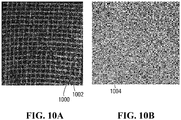
- the application vehicle is applied to a polypropylene (also referred to herein as PPFV) support ( Figure 10A , element 1002) on which, for example, a square pattern of glass fiber has been applied ( Figure 10A , element 1000), thereby defining embossment and recesses on the surface of the polypropylene.
- the application vehicle may be prepared at a concentration of microparticles which is lower than the final concentration of microparticles desired.
- the application vehicle is applied to the PPFV so as to fill the recesses created by the pattern or glass fiber.
- the application vehicle/PPFV is then partially dried to evaporate part of the water from the application vehicle after which step, more application vehicle may be applied.
- the resulting treated PPFV may be pressed against a substrate, such as for example a textile, to transfer the formulation of microparticles onto the substrate ( Figure 10B , element 1004).
- drying transfer where very little or no water is transferred to the substrate.
- This type of transfer may be facilitated by the application of heat or ventilation. However, if heat is to be used, it should be carefully applied so as to prevent premature melting of the microparticles.
- treated refers to a material, a support, a substrate, an article, a textile, a fabric, etc. having the formulations and/or the microparticles as defined herein applied thereon.
- a treated material, support, substrate, article, textile, fabric, etc. has formulations and/or microparticles distributed therein.
- the term “distributed” includes microparticles that are retained in the pores or interstice of the material, support, substrate, article, textile, fabric, etc.; includes microparticles that are attached or fixed to the material, support, substrate, article, textile, fabric, etc.; and includes microparticles that have been absorbed by the material, support, substrate, article, textile, fabric, etc., and which upon being absorbed may or may not retain the microparticle shape.
- the term "substrate” includes materials onto which the formulation and/or microparticles are applied and from which the microparticle/active ingredient are released.
- the substrate is porous.
- a porous substrate refers to a substrate that has interstices, recesses, pores or cross linkage openings in which the microparticles can be retained, impregnated or trapped.
- the interstices, recesses or cross linkage openings are preferably of a dimension that permits insertion and/or retention of the microparticles.
- the substrate is the skin of a human or an animal.
- suitable substrates include, but are not limited to, fibrous textiles including natural fibers either vegetal (e.g., cotton, linen, jute) or animal (e.g., wool and silk) as well as mineral fibers (e.g., asbestos and viscose); chemical fibers either synthetic or artificial like polyester, nylon, acetate, polypropylene and rayon; paper and paper products; product made from composites; products made from wood or wood by-products, such as furniture materials and doors; products made from carbon fiber, products made from glass fiber, synthetic foam, such as polyethylene, polystyrene and polyurethane foam. Textiles may be woven, knitted or machine-knitted, or be present as a composite material (non-woven textile).
- vegetal e.g., cotton, linen, jute
- animal e.g., wool and silk
- mineral fibers e.g., asbestos and viscose
- chemical fibers either synthetic or artificial like polyester, nylon, acetate, polypropylene and
- the fabric is not produced by wrap and weft or stitch formation, but by interlocking and/or cohesive and/or adhesive bonding of textile fibers.
- Non-woven fabrics are loose materials produced from spun fibers or filaments, in most cases made of polypropylene, polyester or viscose, the cohesion of which is generally provided by the fibers intrinsically holding together.
- the individual fibers may have a preferred orientation (oriented or cross-laid non-woven fabrics), or be unoriented (entangled non-woven fabrics).
- the non-woven fabrics may be mechanically bonded by needle punching, stitching, or entangling by means of strong water jets.
- Adhesively bonded non-woven fabrics are produced by gluing the fibers together with liquid binding agents (for example, acrylate polymers, SBR/NBR, polyvinyl ester, polyurethane dispersions), or by melting or dissolving so-called binder fibers that are added to the non-woven fabric during its production.
- Non-woven material may be obtained from, for example, viscose, cotton, cellulose, jute, hemp, sisal, silk, wool, polypropylene, polyester, polyethylene terephthalate (PET), aramide, nylon, polyvinyl derivatives, polyurethanes, polylactide, polyhydroxyalkanoate, cellulose esters and/or polyethylene, and also mineral fibers, such as glass fibers or carbon fibers.
- fabrics also include blends of dual or multiple fibers such as, but not limited to, polyester/elastane blends, polyamids, polyamide/elastane blends, cotton/polyester/elastane blends, polyacrylonitriles, acetates, modal, lyocell and linens.
- Non-limiting examples of substrate onto or into which the formulation and/or microparticles may be applied include: clothing and accessories, bags and suitcases, personal cares, bandages, animal cares, toys, furniture, housing cleansing products, beddings, carpets/rugs, kitchen accessories, paints/decorations, agro textiles, geo-textiles, paper and pulp, plastic, ceramics, wood, glass, metal, leather, sporting articles, leisure and outdoor articles, tools, protective gears or the like.
- formulations and/or microparticles defined herein may be applied onto a finished article of manufacture, such as an article of clothing, bedding, etc.
- the formulations and/or microparticles may alternatively be applied to the material entering into the fabrication of the article of manufacture, prior to its production.
- the formulations and/or microparticles defined herein may be coated onto a thread for sewing or weaving (e.g., a cotton, silk or nylon thread) entering into the fabrication of an article of manufacture (e.g., an article of clothing).
- the treated thread may be further coated with a protective material to prevent premature release of the active ingredient.
- a protective coating may comprise, for example, a wax component.
- the type of interactions between the microparticles and the substrate can be of physical, chemical or electrical nature or may be of any combination thereof. Specific examples include, but are not limited to:
- the microparticles are applied to a substrate by transfer printing.
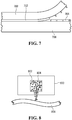
- the schematic representation at Figure 7 illustrates how a formulation of microparticles may be transferred to a substrate using transfer printing.
- the formulation of microparticles (702) may be first applied to a solid support (700). This formulation may then be transferred (704) to a substrate (706) such as a textile when the support (700) is pressed against the substrate (706).
- a substrate such as a textile
- the microparticles may be applied to the substrate by screen-printing.
- the technique of screen-printing includes the technique of reproducing a stencil representing a design (such as a graphic design or logo) to an object using a flat screen or a cylinder screen made of a fine, porous fabric. These techniques are also referred to as serigraphy or stenciling method.
- a stencil that represents the inverse (or negative) image of the design to be reproduced is created on a screen made of a fine, porous fabric that is stretched out over a frame.
- the stencil defines the areas where the design will not appear on the object to be printed and an application vehicle/formulation of microparticles as defined herein is placed on top of the screen, and the mesh openings are filled with the application vehicle/formulation of microparticles.
- An operator or an automatic system fills then applies the application vehicle/formulation of microparticles that is in the mesh openings to the object and the formulation of microparticles is transferred by capillary action to the substrate in a controlled and prescribed amount defined by the thickness of the stencil and the mesh.
- the frame is then removed from the surface of the object, leaving the formulation of microparticles upon its surface in the prescribed design.
- the technique of screen-printing is well known in the art and is known as a versatile technology that is used to print designs on a wide variety of objects including shirts, hats, polyethylene, polypropylene, paper, metals, wood, etc. and may be used to apply to a substrate the microparticles defined herein.
- the microparticles comprising a prescribed pharmaceutical agent (or drug) are printed in a prescribed design on a substrate such as, for example, a shirt that can be worn by those in need of the pharmaceutical agent. By wearing this shirt, the wearer absorbs their prescribed dose of the active ingredient through the skin.
- the microparticles may be suspended in a liquid or semi-liquid application vehicle that may also be used solely or combined with dye or ink to help identify when the dose is exhausted.
- a liquid or semi-liquid application vehicle may also be used solely or combined with dye or ink to help identify when the dose is exhausted.
- Each shirt is turned inside out and then put on a support that is used to hold the shirt while the liquid application vehicle is being applied.
- Non-permeable material is then applied to a fine mesh of porous fabric (such as for example, PPFV) stretched over a frame to form the inverse (negative) image of the design to be printed on the shirt.
- the application vehicle is then applied to the mesh and a bar is used to distribute the application vehicle along the mesh, filling the spaces within the mesh with the application vehicle containing the microparticles.
- the frame is then applied to the surface of the shirt and then a spongious material, such as a squeegee (or rubber blade) is passed over the mesh to force the liquid application vehicle onto the surface of the shirt.
- the application vehicle that is contained in the mesh openings is transferred to the shirt. The process may be repeated with other stencils and application vehicles to apply other designs and other active ingredients to the shirt.
- the shirt is then removed from the support, dried and then turned inside-out again so that the surface of the shirt onto which the liquid material was applied is now on the inside of the shirt and will be physically in contact with the skin of the wearer.
- the technique of ink-jet printing includes propelling variably sized droplets of liquid or melted material (such as dye or ink) onto an object, fabric or substrate.
- ink-jet printing applies the compound or ink to be printed directly to the material itself, without having to transfer the material to an intermediary, such as a frame.
- This technique may require a computer to control the ink-jet printing equipment that is used to deliver the ink (or other material) onto the substrate according to a certain pattern.
- This technique is well known in the art and is known as a very versatile technology that can be cheaply and reliably used to print designs on a wide variety of materials, including most paper products, as well as thin fabrics (e.g., cotton) made of natural or artificial fibers.
- This technique may also be used to apply the microparticles as defined herein to an object.
- FIG. 8 illustrates an example of how a formulation of microparticles/active ingredients may be transferred to a textile using an ink-jet printer.
- the cartridge (802) of the ink-jet printer (800) is filled with the application vehicle/formulation of microparticles (804) and is inserted into an ink-jet printer that is connected to a computer and controlled by a software application running on the computer.
- the ink-jet printer applies the application vehicle/formulation of microparticles (804) directly to the surface of the substrate (806) in the prescribed design under the direction of a software application running on a computer.
- the formulation of microparticles may be applied to a substrate by use of pressing rollers. This technique may be used where it is necessary to apply the formulation of microparticles consistently across and throughout the substrate, as well as in cases where an earlier usage of the printing technique either did not transfer sufficient amounts of the formulation or did not saturate the substrate sufficiently.
- Pressing rollers could also be used to transfer a predetermined design in a gel form. Pressure is used to release the predetermined design onto an article of manufacture.
- the dose or amount of active ingredient to be applied to a substrate, the distribution of the active ingredient on the substrate, and the period of exposure to the active ingredient depend on the effect or manifestation desired and on the nature of the active ingredient.
- the dose, distribution and period of exposure of active ingredient will thus be apparent to a person skilled in the relevant art.
- Microparticles are released from the substrate when the microparticles are subjected to progressive erosion and/or degradation caused by one or more stimuli or when the treated substrate is subjected to stimuli that cause progressive erosion and/or degradation of the microparticles or simply when the microparticles are detached from the substrate.
- the overall physical structure of the microparticles is affected by stimulus which weakens or breaks the interactions between the microparticles and the substrate so as to release or detach the microparticles from the substrate.
- a stimulus does not affect each microparticle in a population of microparticles evenly giving rise to a progressive erosion, destruction and/or release of the microparticles.
- progressive erosion or “progressive destruction” or “progressive release” refers to the progressive disintegration of the microparticles causing gradual release of an active ingredient dispersed therein. As the microparticles disintegrate, the active ingredient is released from the microparticles.
- the release of microparticles and active ingredient from the substrate is relatively continuous and constant.
- Erosion may cause all or part of the microparticles to be released from a substrate or may cause detachment of all or part of the microparticles from the substrate. Released or detached microparticles may fall from the substrate or may remain in the substrate to form, for example, a homogeneous film.
- Stimuli that cause progressive erosion, destruction or detachment of the microparticles include, but are not limited to, physical stimuli, chemical stimuli or electrical stimuli.
- a physical stimulus may be such as a mechanical contact with the treated substrate, rubbing or vibration of the substrate, heat that may or may not be involved in mechanical contact.
- a chemical stimulus may be such as the exposure to a chemical agent, a change in pH, a change in salt concentration, exposure to microbes or toxin secreted by microbes, a change in temperature and a change in humidity or the like.
- the intensity of the stimulus determines the degree of release of the active ingredient and the period over which the active ingredient is released.
- the normal body heat of a person may be sufficient to cause the destruction of the microparticles and release of the active ingredient.
- the chemical stimulus may be a component of human sweat that causes the progressive erosion of the microparticles and the release of the active ingredient. Body heat produced by physical exertion through exercise (which may also be accompanied by increased sweat production) may increase the degree at which the active ingredient is released.
- microparticles and active ingredient from a substrate may cause or influence the release or disintegration of the microparticles.
- the temperature of the skin may cause the microparticles to melt.
- Acidity or alkalinity of the skin may affect the components of the microparticles so as to cause their disintegration.
- Normal skin surface pH is between 4 and 6.5 in healthy people, though it varies among the different areas of the skin. Skin surface pH below 4 or above 6.5 may affect the integrity of the microparticles.
- the skin also secretes chemical substances that may affect the integrity of the microparticles.
- the microparticles may be in contact with the areas of the skin which is subjected to frequent movement such at articulations and/or joints (e.g., at elbows, ankles, knees or the neck). Skin movement at these areas may be more frequent than at other areas of the body where there are no articulations and/or joints. Movement of the skin creates friction which may be accompanied by an increase in local temperature of the skin thus affecting the integrity of the microparticles.
- the active ingredient is released from the substrate in response to a predetermined stimulus.
- the stimulus is functionally related with the active ingredient to be released.
- a coagulant may be released from a substrate when the substrate is placed in contact with blood or a cooling agent may be released from a substrate upon exposure to heat.
- Progressive erosion can also result from mechanical action producing wearing of the surface of the microparticles, such as when the microparticles are in contact with an external body or are rubbed against the substrate itself; can result from melting of the surface of the microparticles as a result of application of heat or as the result of application of a chemical agent; can result from application of chemical agent that degrades the substrate and/or degrades the microparticles.
- the release of the active ingredient is gradual, in some other aspects; the release of the active ingredient is steady during the entire life of the microparticle. Alternatively, the release of the active ingredient may be variable throughout the life of the microparticle. Release of the active ingredient is measured per unit area of surface of treated substrate over time.
- progressive erosion of the microparticle and the gradual release of the active ingredient relate to, for example, the intensity of the stimulus applied to the microparticle and/or the substrate, the distribution profile of the microparticles in the substrate, the nature of the formulation and the nature of the active ingredients.
- the factors influencing the gradual release of an active ingredient from the substrate will be readily appreciated by those of skill in the art.
- articles of manufacture having microparticles distributed therein still release microparticles, and the active ingredient dispersed therein, after 5, 10, 15, 20, 25, 30, 35, 40, 45, 50, 55 or 60 wash cycles.
- articles of manufacture having been through 5, 10, 15, 20, 25, 30, 35, 40, 45,50, 55 and 60 wash cycles still maintains a positive active ingredient release rate.
- the expression "positive active ingredient release rate” indicates that microparticles and therefore the active ingredient dispersed therein are still being released from the substrate.
- articles of manufacture having the microparticles distributed therein still retain microparticles and the active ingredient dispersed therein after 60, 55, 50, 45, 40, 35, 30, 25, 20, 15, 10 or 5 wash cycles.
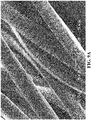
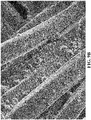
- the electron micrograph shown in Figure 9B demonstrates the microparticles obtained from a TPMAGMS formulation attached to a polyester textile after 30 wash cycles ( Figure 9B ).
- the microparticles can be distinguished when comparing Figure 9B with a non-treated polyester textile (virgin) subjected to five wash cycles ( Figure 9A ).
- the formulations defined herein comprising an active ingredient are directly applied to a substrate without first obtaining microparticles, by for example, using formulations that do not have binding agent.
- Such implementation is advantageous in situations where, for example, a fast release of the active ingredient from the substrate is desirable.
- the present invention provides for a method of improving stabilization of one or more active ingredient in an article of manufacture such as a fabric, textile, fibers, foam or the like.
- the formulations of microparticles as defined herein present several advantages for use in this method.
- the physical and chemical properties of the microparticles allow them to reach the interstices, pores or cross linkage openings of a porous substrate and to be retained, trapped, attached or fixed into these interstices, pores, cavities or cross linkage openings.
- the microparticles reach the inner core of the substrate, it gives rise to a progressive erosion and/or disintegration of the microparticles and its gradual release from the substrate, thereby giving rise to gradual release of the active ingredient.
- Other factors influencing the progressive release of microparticles from the substrate include the nature of the substrate, the presence and the concentration of a binding agent as well as the nature of the surfactant.
- the addition of a cationic surfactant in the formulation creates an overall residual positive charge on the surface of the microparticles.
- the positively charged microparticles adhere to, by charge neutralization, or are absorbed by, the fibers of a textile which are generally negatively charged. Adherence of the microparticles to the textile is also increased by the addition of a binding agent into the formulation, which binding agent itself adheres to the fibers of the textile bridging them to the microparticles.
- the release index refers to a constant associated with the rate of release of microparticles from a given surface of treated substrate over time. More particularly, the release index is a representation of the decrease in mass of microparticles per a given surface of treated substrate over time. In one aspect of the present invention, the release index is in the range of about 1 to about 20, preferably in the range of about 2 to about 7, and more preferably in the range of about 4 to about 6.
- the present invention allows to create articles of manufacture having perception indicators that are functionally related to the presence, the nature and/or the amount of active ingredient.
- the perception indicators provide information regarding the presence and distribution of the microparticles and active ingredients on the substrate, provide information on the type of active ingredient available at certain locations on the treated substrate and provide information regarding the amount of active ingredients remaining on, or released from the treated substrate.
- a perception indicator may be a visual indicator, an olfactory indicator, a tactile (or feel) or a sonic indicator.
- a visual indicator may be such as a distinguishable pattern, a color indicator, single- or multi-colored patterns, single- or multi-colored icons and pictograms, such as an emoticon; single- or multi-colored alphanumeric text, symbols, such and logos or the like.
- the visual indicator indicates the location of active zones; wherein an active zone refers to a zone on the article having been applied with the active ingredient (or with the microparticles comprising it).
- the presence of different active ingredients within the same substrate may be correlated with different perception indicators (such as a different color, motif or pattern) to inform of the location of these active ingredients and how the substrate should be disposed of to achieve the best results.
- different perception indicators such as a different color, motif or pattern
- the perception indicator also acts as wear indicator.
- a wear indicator shows how much active ingredient has been released from the substrate and/or how much active ingredient remains, and indicates when the treated substrate needs to be replenished with the active ingredient.
- a dye may be added to the formulation of microparticles and transferred to the substrate to indicate the location of the microparticles. As the microparticles are released from the substrate the intensity of the dye diminishes providing the user with an appreciation of how much microparticles/active ingredient remains (or has been released) from the substrate.
- olfactory perception indicators include, but are not limited to, a fragrance or a perfume that is applied to the substrate and which indicates the presence of an active ingredient.
- the odor indicator is proportional to the amount of active ingredient present on the substrate and as the active ingredient diminishes, the odor indicator diminishes accordingly.
- the perception indicator may also be a tactile or feel indicator which is perceived by the skin of the user as a physical sensation.
- application of the microparticles to the substrate creates a relief or embossments on the substrate that are felt by the skin of the user.
- Such relief or embossments indicate the location on the substrate of the active ingredient.
- the tactile or feel indicator may also micro-massage the area of the skin it is in contact with or may exfoliate it.
- the perception indicator indicates how much active ingredient is present at different locations on the substrate.
- the perception indicator is adjusted so as to be proportional to the release of the active ingredient, i.e., the perception indicator diminishes proportionally to the diminution of the active ingredient.
- Perception indicators may be obtained, for example, by transferring, printing, spraying, spreading, applying, impregnating or saturating a formulation of microparticles onto a substrate so as to form a perception indicator.
- the indicator may be used in a number of formats, shapes, colors and textures.
- the perception indicator may be applied onto the substrate to cover any where between about 0.01% to about 99% of the total surface of the substrate.
- the perception indicator should be applied onto a substrate so as to maintain the desired initial properties of the substrate such as for example, its flexibility, its breathability, or the like.
- the perception indicator may also be applied onto the substrate in a repetitive pattern.
- the pattern may occupy any where between about 0.01 mm to about 20 cm per m 2 of the substrate and may repeat itself over a given surface area of the substrate.
- the repetitive pattern has the shape of a circle having a given diameter that is repeated aver a given surface of a substrate such as for example, a textile.
- Figure 13 is a schematic representation of an undergarment for women (1400) onto the inner surface of which has been applied a formulation of microparticles in repetitive circles. As seen on Figure 13 , the circles (1404) are disposed on a repetitive pattern (1402) over a given surface of the substrate.
- each circle 1404
- the microparticles that are applied to this undergarment may comprise such active ingredients as slimming agents.
- the repetitive pattern is applied onto the substrate so as to allow the substrate to retain its properties such as flexibility and breathability.
- the material to which the microparticles are to be applied may for example be insoles to be inserted within shoes.
- a formulation of microparticles having a deodorizing agent as an active ingredient is applied to the insole of a shoe through for example, the PPFV technology defined herein.
- An anti-bacterial agent, an anti-fungal agent and a dye-based visual indicator may also be included in the formulation and in the microparticles. These agents may also be included in the application vehicle.
- microparticles comprising a dye-based indicator may be applied, for example, in the pattern of a corporate logo within the area of the insole that is normally resides under the heel of the foot.
- the dye-based indicator is tied to the general level of the active deodorant agent within the insole, so that as the active ingredient is discharged, the logo created from the dye appears to fade until the active ingredient is exhausted and the logo completely disappears. Once the logo disappears, the user knows he must either replenish the active ingredient with the insole or replace the insole to avoid unpleasant foot odor.
- an article of manufacture upon which the formulation of microparticles is to be applied is a shirt.
- the perception indicator is the fragrance itself, which is incorporated within microparticles that are activated by body heat to erode and release the fragrance into the surrounding air.
- the formulation of microparticles containing the fragrance is applied to the shirt. As the amount of microparticles and active ingredient decreases over time, the smell of the fragrance becomes successively less and less noticeable until it disappears completely when the active ingredient is exhausted.
- the olfactory indicator may be different than the active ingredient.
- the olfactory indicator would be tied to the level of the active ingredient such that the level of the active ingredient could be determined by the intensity of the scent or fragrance.
- the active ingredient incorporated within the shirt may be a therapeutical agent such as a drug.
- the olfactory indicator would be tied to the amount of the drug within the shirt such that a wearer would be able to determine the amount of drug remaining on the substrate.
- the active ingredient may be, for example, a medicinal agent or drug suitable for children.
- the present invention is used in the capacity of placing a predefined dosage of the active ingredient for a period of several days onto for example, the underside of a wristband (i.e., the side that is in contact with the skin), which the child wears on their wrist or arm.
- the microparticles containing the drug may also comprise a foaming agent that solidifies in the presence of a particular frequency of ultraviolet (UV) light.
- the formulation of microparticles may be applied to the underside of the wristband via a gel application vehicle using a solid support (such as for example, a PPFV) that applies the formulation to the substrate in identifiable and predictable patterns (e.g., stripes, crosses, waves or the like).
- a solid support such as for example, a PPFV
- the UV light is applied to the wristband that causes the foaming agent to solidify into a raised pattern.
- the raised pattern created by the foaming agent can be identified easily.
- the microparticles containing the active ingredient are eroded and more and more of the drug as well as the foaming agent are dispensed the pattern on the underside of the wristband wears down.
- Replenishing or reactivating a treated article extends the life of the active ingredient in the treated article, thereby prolonging the release of the active ingredient from the article and the duration of the beneficial properties procured by the active ingredient.
- Methods for reactivation or for replenishing a substrate include methods of applying a formulation of microparticles to a substrate as defined herein. Other methods are also useful such as, but not limited to, the use of treated patches or pads which can be applied to individual article of manufacture.
- a formulation of microparticles may be transferred from a treated patch or a treated pad to a selected area of the article by contacting the treated surface of the patch or pad with the surface of the substrate in need of further active ingredient.
- the transfer may be performed by applying pressure to the patch or the pad.
- the pressure may be provided by using, for example, pressing rollers or by ironing the patch at a temperature that will preclude premature melting of the microparticles.
- a solution comprising the formulation of microparticles may also be sprayed onto selected areas of the article of manufacture or may be spread.
- the patches or pads are applied directly onto the skin of the user.
- the patches may be transdermal adhesive patches to deliver a specific dose of medication through the skin and into the bloodstream; nicotine patches that releases nicotine into the body; contraceptive patches that releases contraceptive (such as synthetic estrogen and progestin hormones) to the body; dermatological patches that release a dermatological ingredient to the skin.
- Such patches may be made in different shapes and design and may be harboring different colors.
- a pad having the shape of an eye mask and being treated with microparticles comprising as active ingredient colostrums, such as for example bovine colostrums, may be applied onto the eyes of the wearer and the colostrums is delivered to the skin around the eyes of the wearer.
- refill containers filled with formulations of microparticles defined herein are used to re-apply the active ingredient to the article.
- the refill containers may be in the from of, for example, a can, a bag, a pouch, or the like and their content may be spread, sprayed, poured, applied, transferred, impregnated or printed onto the article.
- the article may also be soaked and/or rinsed in the formulation of microparticles or in a milieu comprising a formulation of microparticles.
- an article to be replenished or reactivated with an active ingredient may be placed in a domestic washing machine into which the content of the refill container has been placed or into which sheets of fabric softener onto which the formulations defined herein have been applied have been placed.
- the microparticles enter in contact with the article and are trapped on the article.
- Such method is useful in situations where, for example, release of the active ingredient is to be achieved over a very short period of time as the application of the formulations of microparticles may resist few wash cycles.
- treated articles are manufactured from a treated substrate such as a treated fabric, fibers or textile.
- the treated substrate may be transported in rolls or bales to the location where the articles are to be manufactured.
- microparticles it is possible for microparticles to be released by mechanical stimuli and it may be advantageous to add such microparticles to the substrate prior to incorporation of the substrate into the article. Therefore, the invention defined here allows the end user of the present invention to incorporate formulation of microparticles having the desired active ingredient at the time the substrate is converted into an article.
- the article to be replenished with an active ingredient may be a shirt that contains microparticles embedded in the region of the underarms.
- the formulation of microparticles applied via a solid support (such as, for example, PPFV) contains a deodorant, a fragrance and a color indicator that are released with normal body heat to provide deodorizing properties to the wearer.
- the color indicator also disappears over time as the microparticles are eroded and the active ingredients within the shirt are exhausted.
- the shirt may be sold with press-on patches that are used to replenish the active ingredients, once the visual indicator shows that these agents are exhausted. Since a single patch is used to replenish the active ingredient in one region of the shirt, patches may typically be sold in even-numbered quantities, such as 2, 4 or 8 patches.
- patches may also be purchased independently of the shirt and may apply different fragrances upon application.
- Each patch used to replenish the active ingredients in a shirt may have a color top side that differs with the fragrance applied, as well as a different color underside that contains the microparticles having the deodorant and fragrance.
- the difference in the appearance of the sides of the patch ensures that a wearer does not apply the wrong side of the patch during the replenishment procedure outlined below.
- the underside of the patch may also be embossed so as to leave a visual pattern on the shirt.
- the shirt is turned inside out and the patch is aligned with the area in the underarm region, with the top (colored) side facing up. Pressure is applied to the top (colored) side of the patch for a duration sufficient to transfer the microparticles from the substrate on the underside of the patch to the material in the shirt.
- This procedure also causes the visual indicator, corresponding to the embossed surface of the patch, to reappear on the shirt, indicating that the active ingredients have been replenished.
- Cosmetotextile The invention defined herein is also useful in the field of cosmetotextile.
- the field of cosmetotextile relates to articles of manufacture made of textile and which comprise a substance or a formulation to be released from the textile onto one or more parts of the human body, wherein the substance or formulation serves an esthetical purpose.
- the invention defined herein may be used to produce for example, upper-body-clothing articles that contain samples of for example, but not limited to, perfume or cologne, anti-aging creams, new depilatory lotion, anti-cellulite treatment, slimming treatment.
- Manufacturers of clothing articles may use the invention to deliver agents for cosmetic or therapeutic purposes, such as athletic socks that contain a deodorant that is released during and after exercise, pants that contain an anti-cellulite treatment or night masks with anti-wrinkle agents.
- Therapeutic pharmaceutical companies, biotechnology companies and other may use the present invention to deliver topically or transdermally one or more therapeutic agents to a subject.
- Producers of luggage may use the invention to deliver agents for cosmetic purposes, such as suitcase interiors.
- Producers of personal care products may use the invention to deliver agents for cosmetic or therapeutic purposes, such as a bath towel that contains moisturizing and firming agents, furniture cleaning spray that also contains UV-blocking products and to maintain and extend the vibrancy of colors used for fabrics that are continually exposed to the sun, such as lawn furniture pillows and cushions, textiles or fabrics that contain insect repellents.
- agents for cosmetic or therapeutic purposes such as a bath towel that contains moisturizing and firming agents, furniture cleaning spray that also contains UV-blocking products and to maintain and extend the vibrancy of colors used for fabrics that are continually exposed to the sun, such as lawn furniture pillows and cushions, textiles or fabrics that contain insect repellents.
- Toys Manufacturers of toys designed for use by humans may use the invention to deliver agents for pharmaceutical or hygienic purposes, such as a baby pacifier that delivers pre-determined doses of medicine.
- the invention may also be applied to toys designed for animals.
- Producers of furniture may use the invention to deliver agents for cosmetic or for conservation purposes such as sprays, creams and foaming gels that maintain the cleanliness and deodorization of the fabrics.
- Carpets and Rugs Manufacturers of carpets and rugs may use the invention to deliver agents for cosmetic purposes, such as sprays or creams that apply pedicure treatment to the users.
- agents for cosmetic purposes such as sprays or creams that apply pedicure treatment to the users.
- the invention defined herein may also be used to deliver anti-histaminic agents.
- Kitchen accessories Producers of kitchen accessories may use the invention to deliver agents for cosmetic or hygienic and cleansing purposes, such as paper towels that release fragrance, soap and/or detergents while absorbing waste liquids.
- Agro-textiles Manufacturers of textiles for agricultural uses (referred to as agro-textiles) may use the invention for prevention or industrial purposes, such as for bags of animal feed that would contain pesticides on the exterior of the bag to kill pests while containing a hygroscopic substance on the interior of the bag that would absorb humidity and keep the feed materials dry.
- Geo-textiles Producers of textiles for use in building and construction (referred to as geo textiles) may use the invention for added value purposes such as, for example, producing screens with fog preventing agents.
- Sports, Leisure and Outdoor products Producers of sport, leisure and outdoor products may use the invention for cosmetic or therapeutic purposes, such as to produce camping equipment with built-in insect repellent.
- Manufacturers of vehicles may use the invention for cosmetic purposes, such as to integrate deodorant or therapeutic fragrances into the fabric used in seats for mass transit vehicles, like trains, planes and automobiles.
- the present invention relates to the manufacture of a treated glove, the inner side of which (i.e., the side of the glove in contact with the skin of the hand of the wearer) is treated with the microparticles defined herein.
- the treated glove is made of a cotton blend.
- the active ingredient is a dermatological agent that reduces skin irritation such as a corticosteroid and a moisturizer to improve the skin's overall hydration.
- the microparticles having the active ingredients dispersed therein are prepared using a formulation such as defined herein. Namely, the elements of the formulation including the dermatological agent and the moisturizer are mixed together. The mixed formulation is emulsified to created microparticles.
- a solid support is used to transfer the formulation comprising the microparticles onto the interior surface of the gloves.
- the solid support consists of a mould of a hand that would fit inside the glove and that is created from a PPFV fiber with dispersion mechanism located at the end of each finger where the fingertip would normally be located. This mechanism disperses a predefined amount of the formulation at the end of each glove finger.
- the glove is then removed from the mould and inserted between two moving rollers spaced appropriately to compress the glove and to spread the formulation on the inner surface of he glove. By inserting the finger-end of the glove between the rollers first, the rollers both remove forces the formulation that was deposited by the mechanism at the fingertip upwards towards the open end of the glove. This step ensures that the formulation is distributed throughout the glove's interior surface while also increasing the amount of microparticles that are impregnated into the cotton fibers of the glove.
- the blended cotton spandex textile is first treated with the formulation comprising the microparticles.
- the formulation is applied onto the textile by using pressing rollers.
- the treated textile is cut and sewed in a glove shape with the treated surface of the textile corresponding to the inner surface of the glove (i.e., the surface in contact with the skin of the wearer).
- Such treated gloves can be used as inner gloves.
- the treated gloves may be placed in work gloves and safety gloves (e.g., barbed wire handler's gloves, chainsaw gloves, fireman's gauntlets, welder's gloves, aircrew gloves: fire resistant, sandblasting gloves, gardening gloves, impact gloves, rubber gloves, sport and recreational gloves).
- work gloves and safety gloves e.g., barbed wire handler's gloves, chainsaw gloves, fireman's gauntlets, welder's gloves, aircrew gloves: fire resistant, sandblasting gloves, gardening gloves, impact gloves, rubber gloves, sport and recreational gloves.
- Such treated gloves can also be placed in medical gloves such as those used by health care professionals (e.g., latex gloves or surgical gloves).
- the term "gloves" includes mittens and other variants of garments that cover the hand of a wearer.
- the present invention relates to the manufacture of a treated bandage for use in the preparation of orthopedic casts, such as plaster bandages.
- plaster bandages consist of a cotton bandage that has been impregnated with plaster of paris, which hardens after it has been made wet.
- the first layer of cotton bandage which comes in contact with the skin of the patient is treated with a formulation of microparticles comprising a therapeutic agent such as an antibiotic to prevent and/or treat any lesions on the skin that is to be covered by the cast as well as a moisturizer or a calming lotion.
- the formulation is prepared my mixing the elements including the active ingredients and microparticles are obtained by emulsifying the mixed formulation.
- the cotton bandage is impregnated with the microparticles by either soaking the bandage into the formulation comprising microparticles or by applying the formulation onto the bandages using for example, pressing rollers.
- the treated bandages are dried and then applied directly onto the skin of the patient. Subsequent layers of the bandages that have been impregnated with plaster of paris are applied onto the treated bandage to create the cast.
- the present invention may also be used in the preparation of many other types of prosthesis.
- the present invention relates to the manufacture of bed sheets that are impregnated with a formulation comprising microparticles having an active therapeutical agent dispersed therein.
- the application vehicle may be a liquid, a gel or an aerosol spray comprising the microparticles, for example, the sheets may be washed in a liquid comprising the microparticles or the sheets may be sprayed with an aerosol application vehicle containing the microparticles.
- the application vehicles and treatment methods for applying the microparticles listed above constitute a non-exhaustive list as other possibilities remain and would be covered by the present invention.
- this application could be used to provide regular doses of therapeutical agents.
- the invention defined herein may be used to, for example, reduce and remove persistent odors from animal-related furniture, such as dog beds.
- the active ingredient may be a deodorizing agent specially formulated to counteract the general smell of the animal.
- the application vehicle may be a paste that is initially spread over the fabric during the manufacture of the furniture. This paste comprises the microparticles and is applied by the manufacturer before shipping.
- An aerosol spray containing a formulation of microparticles having the same active ingredients may also be provided separately so that the odor-removing functionality of the furniture can be recharged when indicated by a wear indicator.
- the substrate may be any fabric made of artificial fibers (such as for example, nylon) that is used for the exterior covering of furniture.
- a solid support is used to apply the paste acting as the application vehicle.
- the rollers may be covered with an area of PPFV to which the application vehicle (paste) is applied.
- the application vehicle (paste) is then pressed onto the fabric, at which point the process is repeated until all of the exposed fabric has been treated.
- a visible wear indicator may be identified on an area on the fabric, such as a small patch of specially treated fabric that changes color as the active ingredients are gradually exhausted. When the wear indicator shows the active ingredients are exhausted, an aerosol spray may be used to reapply the active ingredients and maintain the odor-neutralizing ability of the treated fabric.
- the invention defined herein may be used to apply a skin moisturizer through the application of a bath towel or cloths to a subject's body.
- the active ingredient is a moisturizer that rehydrates and protects skin.
- the application vehicle may be a liquid vehicle that contains the microparticles with the skin moisturizer.
- the bath towel is soaked in the liquid vehicle and dried before it is shipped.
- the microparticles within the application vehicle are electrostatically attracted to the material of the bath towel (which may be cotton, rayon, or polyester among others) and attach themselves to the fibers.
- the application of the microparticles via the liquid application vehicle causes the indicator to show that the towel has a full charge of skin moisturizer.
- the subject rubs the towel against their body to dry themselves off. The rubbing motion of the towel against the skin causes the microparticles to erode and the skin moisturizer to be released. Over time, the amount of moisturizer released onto the skin decreases as microparticles in the bath towel are exhausted. Once the microparticles are exhausted, the subjects may replenish the towel by re-soaking it into the liquid application vehicle.
- the formulation comprising a color dye and an active ingredient (such as for example, taurine) is prepared as defined herein.
- the formulation is applied to a sticker-type non-permanent tattoo support in a desired shape or design and then dried.
- the treated sticker-type tattoo support is applied onto the skin and the formulation (as well as the shape or design) is transferred onto the skin by rubbing the treated sticker-type tattoo support with a damp washcloth.
- taurine is absorbed transdermally by the skin during the wear period of the tattoo.
- kits or commercial packages typically comprise instructions indicating for example, how to use the formulations, application vehicles and treated supports, the nature of the active ingredient(s) (if any provided), the recommended uses, the recommended period of time over which the use should be carried out, the expiry date, etc.
- the following example illustrates the manner of preparation of 20 g of a formulation comprising 10% of microparticles in water, wherein the microparticles comprise 5% Ceramide A as active ingredient, and a binding agent is used to achieve a microparticles:binding agent ratio of 0.5:1.
- Table 3 indicates the elements and the amounts thereof entering the formulation.
- PART A was prepared in an aluminum crucible, the mass of which was previously determined [A0] using an analytical balance.
- the crucible was weighted after addition of each of the elements of PART A: namely, [A1], [A2], [A3] and [A4].
- the crucible was then heated in order to melt the elements.
- the melted elements were stirred with a spatula.
- the aluminum crucible was then removed from the heat source and was cooled down until the mixture had solidified, at which stage the mass of the aluminum crucible was measured [Atot].
- Part B was prepared into a 50 ml beaker (PYREXTM). The empty beaker was weighted prior to addition of the elements [B0] and after addition of each of CTAC [CATC] and water [WATER]. The beaker containing CTAC and water was then heated to between about 60°C and about 70°C. At this point, the aluminum crucible was heated again so as to melt completely the PART A mixture. Melted PART A was added into PART B and mixed to obtain a coarse emulsion. The mass of the beaker was weighted again [Btot]. The mass of the aluminum crucible was measured [Afin].
- microparticles by homogenization The coarse emulsion containing PART A and PART B was homogenized one minute using a SilversonTM homogenizer at maximum speed (at around 10 000 rpm). The beaker was cooled down in a water bath at temperatures equal to or inferior of 15°C and the homogenization was resumed for one minute at minimum speed. The beaker containing the formulation of microparticles was then removed from the water bath.
- the formulation of microparticles obtained by this procedure may be applied to a substrate or may be kept into a hermetic container for later use.
- a solid support was prepared using polypropylene (Gemex PPC3119TM) (see Figure 10A , (1002)) and glass fiber (Fiba TapeTM) (see Figure 10A , (1004)) which were assembled together by pressing the two material against each other using pressing rollers (RichesonTM 11" Baby Press) (see for example, Figure 10A ).
- the solid support was weighted [S0].
- the formulation was applied onto the solid support so as to fill up the recesses defined by the glass fiber net applied onto the polypropylene film.
- the solid support with the applied formulation was weighted [S1].
- the mass of the formulation was determined by calculating the difference ([S1]-[S0]).
- the formulation was dried until the mass of the formulation in the recesses had diminished by half [S2].
- the surface of the textile (substrate) onto which the formulation is to be transferred should preferably be larger than the surface of the solid support.
- pressing rollers Riveson 11" Baby Press (1100) are used to transfer the microparticles from the solid support (1104), having a mesh of for example glass fiber (1106), onto a textile (1108).
- a foam (1102), preferably having a larger surface than the textile (1108) is applied to the plate onto which the textile is placed (i.e., so as to be in contact with the surface of the substrate that will not be applied with the formulation) to facilitate contact between the formulation on the support (1104) and the textile (1108).
- the textile (1108) is weighted [E0] and placed onto the foam (1102).
- the surface of the textile that will be applied with the formulation should be facing up.
- the support (1104) having the formulation of microparticles applied thereon is placed onto the textile (1108) so as to place the microparticles in contact with the textile (1108).
- a further foam may be applied between the roller (1100) and the support (1104) (not shown).
- the press is operated so as to press the sandwich "foam-textile-support" or "foam-textile-support-foam” on its entire length.
- the foam and the substrate are removed and the treated textile is weighted.
- the support devoid of formulation is weighted [Sfin].
- the treated textile is dried at room temperature with or without application of extra ventilation, such as by using a table fan. Once dried, the textile is weighted [Efin].
- Figure 5 indicates the percent of formulation transferred from a solid support to a rigid-surfaced substrate or to a flexible-surfaced substrate (use of foam). Notably, the percent of formulation transferred is increased when foam is used, indicating that the efficiency of transfer is improved when the substrate is at least partially flexible.
- the concentration of microparticles and elements entering in the preparation thereof may be determined using the measurements obtained in the preparation of the formulation comprising the microparticles: Table 4: Determining the concentration of microparticles Elements Amount (%) TP [A1] 100*(A1-A0)/(A4-A0) GMS [A2] 100*(A2-A1)/(A4-A0) PARA [A3] 100*(A3-A2)/(A4-A0) CER [A4] 100*(A4-A3)/(A4-A0)
- ⁇ Pi concentration of microparticles
- CTAC surfactant
- PAC binding agent
- Table 5 Determining the concentration of microparticles Formula ⁇ Pi % (p/p) 100* ⁇ Pi*(Bfin-B0)/(C-B0) PAC, % (p/p) 100*PAC*(C-Bfin)*0.45/(C-B0) CTAC, % (p/p) 100*CTACi*(Bfin-B0)/(C-B0)
- the temperature at which the microparticles melt may be determined from the formulation remaining on the aluminum crucible (Afin-A0) or may be determined on the treated textile (in the dry state) using a melting point apparatus such as a AT-HLM (Qinc) apparatus or using differential scanning calorimeter or thermal analysis. Methods and apparatus to determine melting temperatures are well known in the art.
- Resistance of a treated textile to wash cycles was assessed by determining the amount of microparticles remaining on the treated textile (or by determining the amount of microparticles released from the treated textile) after consecutive wash cycles.
- the procedure includes obtaining a sample of 7 cm x 7 cm of a generally flat textile.
- the sample may be obtained from a textile which is of commercial interest and which is to enter in the fabrication of an article of manufacture of interest.
- the edges of the sample are doubled over and sewed using a conventional sewing machine or sewed manually using a needle and a thread.
- the techniques to sew the edges of a textile to prevent raveling will be well known by those of skill in the art.
- the edges of the sample may also be welded using a heat source such as a blowtorch, a welding torch or other flame sources.
- a heat source such as a blowtorch, a welding torch or other flame sources.
- edges of the sample should be subjected to sewing or welding so that the remaining of the sample is suitable for deposition of a formulation of microparticles. If the edges of the sample are welded, the welded sample should be allowed to cool down before the formulation is applied thereon.
- the mass of the sample is weighed, preferably on an analytical balance to the 4 th decimal [TS].
- the formulation of microparticles as obtained in EXAMPLE 1 was applied to the sample using the techniques as defined in EXAMPLE 2 and EXAMPLE 3.
- the mass of the treated sample was weighed on an analytical balance to the 4 th decimal.
- the treated sample was then dried at approximately 23°C for approximately 11 ⁇ 2 hour and/or until the mass of the treated sample had diminished by approximately 50%.
- the water content remaining in the sample may be determined by weighing the sample or by any other suitable method.
- the mass of the treated sample was determined again using an analytical balance [TSini].
- Suitable containers for use in this test have a volume of 500 ml and can be hermetically closed to avoid leakage of the washing solution during the procedure.
- a wash cycle consists in filling the container with 250 ml of washing solution as defined above.
- the washing solution was manually poured into the container.
- the volume of wash solution poured into the container should preferably be smaller then the volume of the container to allow for movement of the wash solution in the container during the procedure.
- the treated sample was then placed in the container and the container was closed hermetically.
- the container was rotated at a frequency of 1 Hz, for 15 minutes so that at the end of the 15-minute rotation period, the container had been through about 900 rotations.
- the container was mounted on the rotation axis of a tilt-head stand mixer (obtained from Kitchen-AidTM) having a motor wattage of 325 watts such as illustrated in Figure 12 .
- the stand mixer (1200) comprises a platform (1204) mounted in the axis of the motor of the stand mixer (1200). One end of the platform is rotably mounted to the stand mixer through the attachment port (1206) of the stand mixer (1200).
- the other end of platform is also rotably mounted on a supporting plate (1210) through a supporting pin (1208) received in a recess in the supporting plate (1210).
- the supporting plate (1210) is required to prevent the stand mixer (1200) from tipping over due to the weight of the platform (1204) and the container (1202) mounted thereon.
- the container (1202) is attached to the platform (1204) using suitable attachment means such as, but not limited to, elastics, tapes, latches, etc. Any other technique and/or apparatus to rotate the container are also intended to be covered by the present specification.
- the container was open and substantially all of the washing solution was gently removed while preventing the sample from exiting the container.
- the washing solution was poured into a waste container.
- the wash solution may be poured manually or by any means to transport the wash solution out of the container such as by using a pipette of suitable size.
- the treated sample was then rinsed twice with 250 ml of rinsing water.
- 250 ml of rinsing water was poured into the container.
- the container was closed hermetically and rotated as described above for about 1 minute.
- the container was open and substantially all of the rinsing water was poured out of the container and added to the waste container comprising the wash solution.
- Another 250 ml of rinsing water was added to the container.
- the container was hermetically closed and rotated for about 1 minute.
- the container was open and substantially all of the rinsing water was poured out of the container and added to the waste container having the wash solution and the first rinsing water.
- substantially all of the rinsing water is meant that the inside of the container is visibly free of liquid body.
- the treated sample was wrung manually such as by using a rotating salad spinner.
- the treated sample was rotated in the salad spinner for about 1 minute.
- the treated sample was then air-dried at approximately 23°C for approximately 11 ⁇ 2 hour with or without application of extra ventilation provided by a table fan and/or until the treated sample had lost 50% of its initial mass (i.e., 50% of [TSini]).
- Other methods to determine the water content of the sample may be used. Such techniques and apparatus are well known to those of skill in the art.
- the content of the waste container i.e., the wash solution and the rinsing solution
- the content of the waste container may be filtered using conventional methods used in the art, such as for example, by using filters of suitable pore size and a vacuum system.
- the pores of the filters should be small enough to prevent fibers of the sample to pass though the pores during filtration.
- the fibers obtained from filtration of the wash and rinse solutions are air-dried at approximately 23°C for approximately 11 ⁇ 2 hour.
- the weight of the treated sample (and any material recovered from filtration of the waste solution) is determined to the 4 th decimal using an analytical balance [TSfin wash 1 ].
- the wash cycle test was repeated at least 40 times (40 wash cycles) for the same sample.
- the weight of the microparticles remaining on the sample after each wash cycle was determined.
- the data obtained was plotted as illustrated in Figures 3A to 3C .
- the test was repeated with 3 other treated samples using the same condition as above.
- An average of the mass of microparticles remaining on the samples was obtained from the four samples tested and plotted against the number of wash cycles. Not more than one sample should be placed in the same container as the samples may adhere to one another and the results of the test may be corrupted.
- Figures 3A , 3B and 3C illustrate the percent microparticles remaining on the samples following the indicated number of wash cycles. Figures 3A , 3B and 3C also show the influence of a binding agent on the release of microparticles from the treated textile. Table 6 indicates the conditions used in this experiment.
- the test allows determining the rate of release of the microparticles from the sample.
- the data obtained from the test demonstrates that the rate of release of microparticles from the sample is positive and constant at least between 10 and 20 wash cycles and/or constant at least between 20 and 30 wash cycles.
- a positive rate of release indicates that microparticles and therefore active ingredient dispersed therein are still being released from the sample at least between 10 and 20 wash cycles and/or at least between 20 and 30 wash cycles.
- the data also demonstrates that the amount of microparticles released from the sample between 15 and 20 wash cycles is about 2 to about 3 times the amount of microparticles released from the substrate between 30 to 40 wash cycles.
- the release index is a correlation of the rate of release of microparticles over a determined surface of treated substrate over time (evaluated in terms of number of wash cycles).
- the rate of release of microparticles obtained from LASA, LASAKAR and TPMAGMS formulations were obtained from the data presented in Figures 3A , 3B and 3C .
- Figure 4A shows the rate analysis of microparticles obtained from a LASA formulation
- Figure 4B shows the rate analysis of microparticles obtained from a LASAKAR formulation
- Figure 4C shows the rate analysis of microparticles obtained from a TPMAGMS formulation.
- Table 7 provides the rate constant and the release index of microparticles obtained from the indicated formulation: Table 7: Release Index Formulation First Order Rate Constant Release Index (RI) LASA -0,067 7 LASA-PAC -0,019 2 LASA-MOLTEN -0,059 6 LASAKAR -0,173 17 LASAKAR-PAC -0,026 3 LASAKAR-MOLTEN -0,085 8 TPMAGMS -0,189 19 TPMAGMS-PAC -0,009 1 TPMAGMS-MOLTEN -0,036 4
- RI Release Index Formulation First Order Rate Constant Release Index
- release Index RI Round ⁇ 100 * rate constant
- the release index indicated in Table 7 corresponds to the kinetic of the release of microparticles in a soapy solution.
- Tests have been performed to assess the efficiency of microparticles transfer from a substrate to human skin as well as to determine the influence of the temperature on the transfer efficiency.
- Samples (or patches) of polyester treated with LASA or LASAKAR formulated microparticles with or without a binding agent (PAC; in a ratio of binding agent/microparticles of approximately 0.5) were applied onto the skin for a period of 30 min.
- the treated polyester samples were placed on three zones of the skin having the following temperatures 31°C, 33°C and 34°C and not covering an articulation and/or a joint.
- the samples were applied on a surface of 25 cm 2 in an amount of approximately 8 g/m 2 for all the formulations tested except for the LASA/PAC formulation, which was applied at 16 g/m 2 .
- the amount of formulation transferred is indicated in Figure 6 .
- Figure 6 shows, inter alia , that the amount of LASA formulated microparticles transferred increases significantly with an increase in temperature.
- the amount LASAKAR formulated microparticles transferred was similar at all the temperatures tested. This observation may be explained by the fact that this formulation comprises shea butter which partly melts at room temperature. In this experiment, the presence of a binding agent did not significantly influence the transfer.
- Table 8 Formulation comprising natural butters % final Weight (g) Distilled H 2 O 84.1 107.2067 Surfactant CTAC 0.3 g/g 0.7 3.0333 [CTAC-30 (30%), Ammonvx, Stepan, Northfield, U.S.] Anti-oxydant Vitamine E 0.2 0.2600 [Oil 28 000 IU (acetate tocopheryl), Life, Toronto, Canada] Emulsifier GMS 1.05 1.3650 [Cutina, Catalog No.
- SA Stearic acid
- PA Palmitic acid
- the stearic acid used was composed of 45.5% stearic acid, 50% palmitic acid, 2.5% myristic acid and 1.5% heptadecanoic acid, therefore the final % of stearic acid in the formulation was 2.66%, the final % of palmitic acid in the formulation was 5.3505% [(5.85% x 50%) + (3.15% x 97% contained in palmitic acid)], the final % of myristic acid in the formulation was 0.146% and the final % of heptadecanoic acid in the formulation was 0.088%.
- Beaker no. 1 The fatty acids, butters, GMS and vitamin E were weighted and combined into a first 100 ml beaker (beaker no. 1) (PYREXTM). Beaker no. 1 was covered with aluminum foil and placed into a 77°C incubator until all the elements had melted.
- Beaker no. 2 Distilled water and CTAC were combined in a second 200 ml beaker (beaker no. 2) (PYREXTM) having a diameter of 5 cm. Beaker no. 2 was covered with aluminum foil and placed in a 77°C water bath for approximately 15 minutes until the content of beaker no. 1 was completely melted.
- the second procedure presents certain advantages over the first procedure, namely, the melting time of the fatty acids and butters is decreased compared to the first procedure and waste of elements is minimized as the second procedure does not require transfer from beaker to beaker.
- the formulation does not appear to be affected by which of the first or second procedure is carried out.
- a SylversonTM L4R homogenizer (Sylverson L4R, Sylverson Machines Ltd., Chesham, UK) equipped with a square hole high sheer screen work head was used for homogenization. While carrying the first (or the second procedure), the homogenizer was pre-heated by immersing the mixing head of the homogenizer into boiled distilled water. The mixing head was then activated to liberate air bubbles that may have been trapped into the system.
- the beaker having the formulation was placed into a water bath so as to maintain the formulation at a temperature of about 68°C during the homogenization step.
- the homogenizer was set at a speed of 11 500 rpm and the formulation was homogenized for between about 4 to about 6 minutes (the formulation could be homogenized for about 2 to about 16 minutes). Speed of around 7 300 rpm could also be used to obtain formulations having the desired thickness.
- Microscopy The size of the microparticles was monitored during and after homogenization using a microscope Olympus CX-30. Microparticles having a circular shape, a smooth texture, showing a homogeneous dispersion throughout the formulation and having a size of between about 2 to about 20 microns were observed. It was also observed that the faster the speed at which a formulation is homogenized, the smaller the size of the microparticles obtained.
- Cooling Following homogenization, the formulation was cooled at room temperature (approximately 21°C) with occasional manual stirring. The rate of cooling was measured to be approximately 1°C/min.
- the formulation can be cooled in a water bath having a temperature of approximately 15°C.
- the formulation may be cooled using a copper coil in which water (approximately 20°C) circulates.
- a rate of cooling of about 1.5°C/min can be achieved with the latter procedure.
- Thickness of the formulation was established according to known or recognized visual parameters, namely a formulation showing a thickness that is similar to a lotion was attributed the value "0”, a formulation showing a thickness similar to mustard was attributed a value of "1”, a formulation showing a thickness similar to butter (at room temperature) was attributed the value "2”, a formulation showing a thickness similar to whipped butter was attributed a value of "3”, a formulation showing a thickness similar firm cream was attributed with a value of "4" and a formulation showing a thickness similar to lard was attributed with a value of "5".
- the formulation obtained with the elements as indicated in Table 8 showed a thickness of 4.
- SA refers to stearic acid
- PA palmitic acid
- LA lauric acid
- O olive butter
- M mango butter
- G grape seed butter
- KAR shea butter
- L lemon butter
- GMS glycerol monostearate
- Table 8 Formulations Formulation rpm Time hom min Rate cooling oC/min Thickness Temp Ini oC Temp hom oC Size ⁇ m Temp fusion oC GMS % Temp cooling SAPAOMGKARL-GMS 3 6 -1.1 1 66 64 ⁇ 20 45.7 7 RT SAPAOMGKARL-GMS 3 6 -0.62 2 65 60 ⁇ 20& ⁇ 40 46 7 RT SAPAOMGKARL-GMS 3 6 -0.59 2 - - 20 ⁇ 40 45.4 8 RT SAPAOMGKARL-GMS 6 6 -1.2 3 69 68 5 ⁇ 20 - 7 RT SAPAOMGKARL-GMS 7 6 -0.7 3 69 69 5 ⁇ 15 - 7 RT SAPAOMGKARL-GMS 7 6 -2.4 3 69 69 7 ⁇ 15 - 7 RT SAPAOMGKARL-GMS 7 6 -0.8 4 68 68 5 ⁇ 20 - 7 RT SAPAOMGKARL-GMS 7 6 -
- the thickness of the formulations is as defined in Example 8.
- Embodiment 1 An article of manufacture, comprising:
- Embodiment 2 An article of manufacture as defined in embodiment 1, wherein the microparticles are derived from a formulation comprising the carrier material.
- Embodiment 3 An article of manufacture as defined in embodiment 1 or 2, wherein the carrier material is a lipid, a fatty acid-based lipid, a fatty acid or a glyceride or any combination thereof.
- Embodiment 4 An article of manufacture as defined in embodiment 1 or 2, wherein the carrier material is caproic acid, caprylic acid, capric acid, undecanoic acid, lauric acid, tridecanoic acid, myristic acid, pentadecanoic acid, palmitic acid, heptadecanoic acid, stearic acid, oleic acid, elaidic acid, linoleic acid, linolenic acid, arachidic acid, arachidonic acid, a fatty acid derivative, tripalmitin, tristearin or glycerol monostearate or any combination thereof.
- the carrier material is caproic acid, caprylic acid, capric acid, undecanoic acid, lauric acid, tridecanoic acid, myristic acid, pentadecanoic acid, palmitic acid, heptadecanoic acid, stearic acid, oleic acid, elaidic acid, linoleic acid,
- Embodiment 5 An article of manufacture as defined in any one of embodiments 1 to 3, wherein the carrier material includes a composition of stearic acid and palmitic acid.
- Embodiment 6 An article of manufacture as defined in any one of embodiments 1 to 3, wherein the carrier material includes a composition of stearic acid, palmitic acid and a natural butter.
- Embodiment 7 An article of manufacture as defined in embodiment 6, wherein the natural butter is olive butter, mango butter, grape seed butter, shea butter or lemon butter or any combination thereof.
- Embodiment 8 An article of manufacture as defined in any one of embodiments 2 to 7, wherein the formulation further comprises a binding agent.
- Embodiment 9 An article of manufacture as defined in embodiment 8, wherein the binding agent is a polyacrylic (PAC), a polyurethane (PU), a polysiloxane (POL), a polyvinylpyrrolidone (PVP), a guar gum or an acrylic base or any combination thereof.
- PAC polyacrylic
- PU polyurethane
- POL polysiloxane
- PVP polyvinylpyrrolidone
- guar gum an acrylic base or any combination thereof.
- Embodiment 10 An article of manufacture as defined in any one of embodiments 2 to 9, wherein the formulation further comprises a surfactant.
- Embodiment 11 An article of manufacture as defined in embodiment 10, wherein the surfactant includes cetyl trimethylammonium chloride (CTAC).
- CTAC cetyl trimethylammonium chloride
- Embodiment 12 An article of manufacture as defined in any one of embodiments 1 to 11, wherein one or more of the microparticles have a size in the range from about 0.1 ⁇ m to about 200 ⁇ m.
- Embodiment 13 An article of manufacture as defined in any one of embodiments 1 to 11, wherein one or more of the microparticle have a size in the range of about 2 ⁇ m and about 20 ⁇ m.
- Embodiment 14 An article of manufacture as defined in any one of embodiments 1 to 13, wherein the microparticles have a melting temperature between about 20°C and about 60°C.
- Embodiment 15 An article of manufacture as defined in any one of embodiments 1 to 14, wherein the release index is between 2 and 7.
- Embodiment 16 An article of manufacture as defined in any one of embodiments 1 to 15, wherein the active ingredient is a cosmetic agent, a therapeutic agent, a pharmaceutical agent, a nutraceutical agent, a cleansing agent, a detoxifying agent or a fragrance or any combination thereof.
- Embodiment 17 An article of manufacture as defined in any one of embodiments 1 to 16, wherein the substrate comprises fibers, and interstices are formed between the fibers.
- Embodiment 18 An article of manufacture as defined in embodiment 17, wherein the microparticles are retained within the interstices of the substrate.
- Embodiment 19 An article of manufacture as defined in embodiment 17, wherein the microparticles are retained on the fibers of the substrate.
- Embodiment 20 An article of manufacture as defined in any one of embodiments 1 to 16, wherein the substrate is a non-woven fabric.
- Embodiment 21 An article of manufacture as defined in any one of embodiments 1 to 16, wherein the substrate is a woven fabric.
- Embodiment 22 An article of manufacture as defined in any one of embodiments 1 to 21, wherein the stimulus is a physical, a chemical or an electrical stimulus.
- Embodiment 23 An article of manufacture as defined in embodiment 22, wherein the stimulus is heat.
- Embodiment 24 An article of manufacture as defined in embodiment 22, wherein the stimulus is friction.
- Embodiment 25 An article of manufacture as defined in embodiment 22, wherein the stimulus is the pH of skin when pH of the skin is above 6.5 or below 4.
- Embodiment 26 An article of manufacture as defined in embodiment 22, wherein the stimulus is triggered by a microbial organism.
- Embodiment 27 An article of manufacture comprising:
- Embodiment 28 An article of manufacture as defined in embodiment 27, wherein the article of manufacture having been through 40 wash cycles still maintains a positive active ingredient release rate.
- Embodiment 29 An article of manufacture as defined in embodiment 27, wherein the article of manufacture having been through 60 wash cycles still maintains a positive active ingredient release rate.
- Embodiment 30 An article of manufacture comprising:
- Embodiment 31 An article of manufacture as defined in embodiment 30, wherein the article of manufacture maintains a constant rate of release of the active ingredient between 20 and 30 wash cycles.
- Embodiment 32 An article of manufacture comprising:
- Embodiment 33 An article of manufacture as defined in embodiment 32, wherein the article of manufacture maintains a constant rate of release of the active ingredient between 15 and 20 wash cycles.
- Embodiment 34 An article of manufacture comprising:
- Embodiment 35 An article of manufacture as defined in any one of embodiments 1 to 34, the article of manufacture being a garment for covering a hand.
- Embodiment 36 An article of manufacture as defined in embodiment 35, the garment being a glove.
- Embodiment 37 An article of manufacture as defined in any one of embodiments 1 to 34, the article being a bandage.
- Embodiment 38 A method for obtaining microparticles having an active ingredient dispersed therein, comprising:
- Embodiment 39 A method as defined in embodiment 38, wherein the microparticles are obtained by homogenization of the formulation of b).
- Embodiment 40 A method as defined in embodiment 38 or 39, wherein the formulation further comprise a binding agent.
- Embodiment 41 A method as defined in any one of embodiments 38 to 40, wherein the microparticles have a release index of between about 1 and about 20.
- Embodiment 42 A method for preparing an article of manufacture as defined in any one of embodiments 1 to 37, comprising:
- Embodiment 43 A method for delivering an active ingredient to a subject, comprising:
- Embodiment 44 A method as defined in embodiment 43, wherein friction between the substrate and the subject triggeres the active ingredient to be delivered to the subject.
- Embodiment 45 A method as defined in embodiment 43 or 44, wherein temperature of the subject's body triggers the active ingredient to be delivered to the subject.
- Embodiment 46 A method as defined in any one of embodiments 43 to 45, wherein the substrate is an article of clothing.
- Embodiment 47 A method as defined in any one of embodiments 43 to 45, wherein the substrate is a bandage.
- Embodiment 48 A method as defined in any one of embodiments 43 to 47, wherein the subject is a human.
- Embodiment 49 A method for delivering a therapeutic agent to a subject, comprising:
- Embodiment 50 A method for delivering a cosmetic agent to a subject, comprising:
- Embodiment 51 A method as defined in any one of embodiments 38 to 50, wherein the microparticles are derived from a formulation comprising a carrier material.
- Embodiment 52 A method as defined in embodiment 51, wherein the carrier material is a lipid, a fatty acid-based lipid, a fatty acid or glyceride or any combination thereof.
- Embodiment 53 A method as defined in embodiment 51 or 52, wherein the carrier material is caproic acid, caprylic acid, capric acid, undecanoic acid, lauric acid, tridecanoic acid, myristic acid, pentadecanoic acid, palmitic acid, heptadecanoic acid, stearic acid, oleic acid, elaidic acid, linoleic acid, linolenic acid, arachidic acid, arachidonic acid, a fatty acid derivative, tripalmitin, tristearin or glycerol monostearate or any combination thereof.
- the carrier material is caproic acid, caprylic acid, capric acid, undecanoic acid, lauric acid, tridecanoic acid, myristic acid, pentadecanoic acid, palmitic acid, heptadecanoic acid, stearic acid, oleic acid, elaidic acid, linoleic acid, l
- Embodiment 54 A method as defined in embodiment 51, wherein the carrier material includes a composition of stearic acid and palmitic acid.
- Embodiment 55 A method as defined in embodiment 51, wherein the carrier material includes a composition of stearic acid, palmitic acid and a natural butter.
- Embodiment 56 A method as defined in embodiment 55, wherein the natural butter is olive butter, mango butter, grape seed butter, shea butter or lemon butter or any combination thereof.
- Embodiment 57 A method as defined in any one of embodiments 38 to 56, wherein the formulation further comprises a binding agent.
- Embodiment 58 A method as defined in embodiment 57, wherein the binding agent is a polyacrylic (PAC), a polyurethane (PU), a polysiloxane (POL), a polyvinylpyrrolidone (PVP), a guar gum or an acrylic base or any combination thereof.
- PAC polyacrylic
- PU polyurethane
- POL polysiloxane
- PVP polyvinylpyrrolidone
- guar gum an acrylic base or any combination thereof.
- Embodiment 59 A method as defined in any one of embodiments 38 to 58, wherein the formulation further comprises a surfactant.
- Embodiment 60 A method as defined in embodiment 59, wherein the surfactant includes cetyl trimethylammonium chloride (CTAC).
- CTAC cetyl trimethylammonium chloride
- Embodiment 61 A method as defined in any one of embodiments 38 to 60, wherein one or more of the microparticles have a size in the range from about 0.1 ⁇ m and about 200 ⁇ m.
- Embodiment 62 A method as defined in any one of embodiments 38 to 60, wherein one or more of the microparticles have a size in the range from about 2 ⁇ m and about 20 ⁇ m.
- Embodiment 63 A method as defined in any one of embodiments 38 to 62, wherein the microparticles have a melting temperature between about 20°C and about 60°C.
- Embodiment 64 A method as defined in any one of embodiments 38 to 63, wherein the microparticles have a release index between 2 and 7.
- Embodiment 65 A microparticle for delivery of an active ingredient, wherein the microparticle:
- Embodiment 66 A microparticle as defined in embodiment 65, wherein the carrier material is a lipid, a fatty acid-based lipid, a fatty acid or a glyceride or any combination thereof.
- Embodiment 67 A microparticle as defined in embodiment 65 or 66, wherein the carrier material is caproic acid, caprylic acid, capric acid, undecanoic acid, lauric acid, tridecanoic acid, myristic acid, pentadecanoic acid, palmitic acid, heptadecanoic acid, stearic acid, oleic acid, elaidic acid, linoleic acid, linolenic acid, arachidic acid, arachidonic acid, a fatty acid derivative, tripalmitin, tristearin or glycerol monostearate or any combination thereof.
- the carrier material is caproic acid, caprylic acid, capric acid, undecanoic acid, lauric acid, tridecanoic acid, myristic acid, pentadecanoic acid, palmitic acid, heptadecanoic acid, stearic acid, oleic acid, elaidic acid, linoleic
- Embodiment 68 A microparticle as defined in embodiment 65, wherein the carrier material includes a composition of stearic acid, palmitic acid and a natural butter.
- Embodiment 69 A microparticle as defined in embodiment 68, wherein the natural butter is olive butter, mango butter, grape seed butter, shea butter or lemon butter or any combination thereof.
- Embodiment 70 A microparticle as defined in any one of embodiments 65 to 69, wherein the formulation further comprises a binding agent.
- Embodiment 71 A microparticle as defined in any one of embodiments 65 to 70, wherein one or more of the microparticles have a size in the range from about 0.1 ⁇ m and about 200 ⁇ m.
- Embodiment 72 A microparticle as defined in any one of embodiments 65 to 71, wherein the microparticles have a melting temperature between about 20°C and about 60°C.
- Embodiment 73 A microparticle for delivery of an active ingredient, wherein the microparticle is made from stearic acid and palmitic acid and has an active ingredient dispersed therein, the microparticle undergoing progressive erosion in response to a stimulus to cause gradual release of the active ingredient.
- Embodiment 74 A microparticle as defined in embodiment 73, further comprising a binding agent.
- Embodiment 75 A microparticle as defined in embodiment 73 or 74, further comprising a surfactant.
- Embodiment 76 A microparticle as defined in any one of embodiments 73 to 75, further comprising a natural butter.
- Embodiment 77 A microparticle for delivery of an active ingredient, wherein the microparticle size is in the range from about 0.1 ⁇ m to about 200 ⁇ m, the microparticle undergoes progressive erosion in response to a stimulus to cause gradual release of the active ingredient.
- Embodiment 78 A microparticle as defined in embodiment 77, wherein the microparticle size is in the range from about 2 ⁇ m to about 20 ⁇ m.
- Embodiment 79 A microparticle for delivery of an active ingredient, wherein the microparticle has a melting temperature between about 20°C and about 60°C, the microparticle undergoing progressive erosion in response to a stimulus to cause gradual release of the active ingredient.
- Embodiment 80 A formulation for obtaining microparticles, comprising a carrier material, a binding agent and a surfactant, wherein the carrier material includes a lipid, a fatty acid-based lipid, a fatty acid or a glyceride or any combination thereof.
- Embodiment 81 A formulation as defined in embodiment 80, wherein the carrier material is caproic acid, caprylic acid, capric acid, undecanoic acid, lauric acid, tridecanoic acid, myristic acid, pentadecanoic acid, palmitic acid, heptadecanoic acid, stearic acid, oleic acid, elaidic acid, linoleic acid, linolenic acid, arachidic acid, arachidonic acid, a fatty acid derivative, tripalmitin, tristearin or glycerol monostearate or any combination thereof.
- the carrier material is caproic acid, caprylic acid, capric acid, undecanoic acid, lauric acid, tridecanoic acid, myristic acid, pentadecanoic acid, palmitic acid, heptadecanoic acid, stearic acid, oleic acid, elaidic acid, linoleic acid, lin
- Embodiment 82 A formulation as defined in embodiment 80 or 81, further comprising an active ingredient.
- Embodiment 83 An application vehicle for transferring microparticles to a substrate, comprising:
- Embodiment 84 An application vehicle as defined in embodiment 83, wherein the support comprises a non-woven material.
- Embodiment 85 An application vehicle as defined in embodiment 83, wherein the support comprises a woven material.
Landscapes
- Health & Medical Sciences (AREA)
- Life Sciences & Earth Sciences (AREA)
- Veterinary Medicine (AREA)
- Public Health (AREA)
- General Health & Medical Sciences (AREA)
- Animal Behavior & Ethology (AREA)
- Engineering & Computer Science (AREA)
- Epidemiology (AREA)
- Chemical & Material Sciences (AREA)
- Birds (AREA)
- Materials Engineering (AREA)
- Pharmacology & Pharmacy (AREA)
- Medicinal Chemistry (AREA)
- Hematology (AREA)
- Textile Engineering (AREA)
- Bioinformatics & Cheminformatics (AREA)
- Dermatology (AREA)
- Biophysics (AREA)
- Molecular Biology (AREA)
- Oil, Petroleum & Natural Gas (AREA)
- Biomedical Technology (AREA)
- Wood Science & Technology (AREA)
- General Chemical & Material Sciences (AREA)
- Chemical Kinetics & Catalysis (AREA)
- Nuclear Medicine, Radiotherapy & Molecular Imaging (AREA)
- Organic Chemistry (AREA)
- Medicinal Preparation (AREA)
- Medicines That Contain Protein Lipid Enzymes And Other Medicines (AREA)
- Agricultural Chemicals And Associated Chemicals (AREA)
- Acyclic And Carbocyclic Compounds In Medicinal Compositions (AREA)
Applications Claiming Priority (3)
| Application Number | Priority Date | Filing Date | Title |
|---|---|---|---|
| US8191108P | 2008-07-18 | 2008-07-18 | |
| PCT/CA2009/001012 WO2010006442A1 (fr) | 2008-07-18 | 2009-07-17 | Articles manufacturés libérant un ingrédient actif |
| EP09797326.7A EP2317984B1 (fr) | 2008-07-18 | 2009-07-17 | Articles manufacturés libérant un ingrédient actif |
Related Parent Applications (2)
| Application Number | Title | Priority Date | Filing Date |
|---|---|---|---|
| EP09797326.7A Division-Into EP2317984B1 (fr) | 2008-07-18 | 2009-07-17 | Articles manufacturés libérant un ingrédient actif |
| EP09797326.7A Division EP2317984B1 (fr) | 2008-07-18 | 2009-07-17 | Articles manufacturés libérant un ingrédient actif |
Publications (1)
| Publication Number | Publication Date |
|---|---|
| EP3434264A1 true EP3434264A1 (fr) | 2019-01-30 |
Family
ID=41549975
Family Applications (2)
| Application Number | Title | Priority Date | Filing Date |
|---|---|---|---|
| EP09797326.7A Active EP2317984B1 (fr) | 2008-07-18 | 2009-07-17 | Articles manufacturés libérant un ingrédient actif |
| EP18194862.1A Withdrawn EP3434264A1 (fr) | 2008-07-18 | 2009-07-17 | Microparticules libérant un principe actif |
Family Applications Before (1)
| Application Number | Title | Priority Date | Filing Date |
|---|---|---|---|
| EP09797326.7A Active EP2317984B1 (fr) | 2008-07-18 | 2009-07-17 | Articles manufacturés libérant un ingrédient actif |
Country Status (12)
| Country | Link |
|---|---|
| US (4) | US9861154B2 (fr) |
| EP (2) | EP2317984B1 (fr) |
| KR (3) | KR20180038574A (fr) |
| CN (1) | CN102099015B (fr) |
| AU (1) | AU2009270415B2 (fr) |
| BR (1) | BRPI0910382B1 (fr) |
| CA (2) | CA2689472C (fr) |
| IL (1) | IL210561A (fr) |
| NZ (1) | NZ590950A (fr) |
| RU (2) | RU2018129725A (fr) |
| WO (1) | WO2010006442A1 (fr) |
| ZA (1) | ZA201101244B (fr) |
Cited By (1)
| Publication number | Priority date | Publication date | Assignee | Title |
|---|---|---|---|---|
| CN113318092A (zh) * | 2021-06-10 | 2021-08-31 | 黑龙江澳利达奈德制药有限公司 | 一种别嘌醇缓释胶囊 |
Families Citing this family (78)
| Publication number | Priority date | Publication date | Assignee | Title |
|---|---|---|---|---|
| CN101910942B (zh) * | 2007-11-01 | 2013-11-20 | 3M创新有限公司 | 复制母模的方法 |
| KR20180038574A (ko) | 2008-07-18 | 2018-04-16 | 바이오모드 컨셉츠 인코포레이티드 | 활성 성분을 방출하는 제품 |
| US8470304B2 (en) | 2009-08-04 | 2013-06-25 | Avidas Pharmaceuticals Llc | Therapeutic vitamin D sun-protecting formulations and methods for their use |
| WO2011097480A1 (fr) | 2010-02-05 | 2011-08-11 | University Of Louisville Research Foundation, Inc. | Compositions exosomales et procédés pour le traitement de maladies |
| WO2011128682A2 (fr) * | 2010-04-14 | 2011-10-20 | Hypo-Stream Limited | Dispositif de préparation d'une solution de désinfectant dilué |
| CN201712857U (zh) | 2010-05-10 | 2011-01-19 | S.C.约翰逊父子公司 | 用于挥发性材料的散发装置及其壳体和散发片 |
| CN103025930B (zh) * | 2010-07-02 | 2014-11-12 | 宝洁公司 | 递送活性剂的方法 |
| MX345025B (es) * | 2010-07-02 | 2017-01-12 | Procter & Gamble | Producto detergente. |
| DE102010033343A1 (de) * | 2010-08-04 | 2012-02-09 | Dirk Kienappel | Schlafmaske/-brille |
| TWI607786B (zh) | 2010-08-11 | 2017-12-11 | 極風有限責任公司 | 緩衝墊 |
| US20120064135A1 (en) * | 2010-09-15 | 2012-03-15 | Norac Pharma | Benzoyl Peroxide Composition, Methods for Making Same, and Pharmaceutical or Cosmetic Formulations Comprising Same, and Uses Thereof |
| EP2627210A4 (fr) * | 2010-10-12 | 2015-03-04 | G Form Llc | Boîtiers flexibles de protection contre les chocs et procédés de fabrication associés |
| US20110088593A1 (en) * | 2010-12-23 | 2011-04-21 | Mansour Hemmati | Silver dz nano-fluid composition for nano-fin formation and a method of producing the same |
| EA023511B1 (ru) * | 2010-12-24 | 2016-06-30 | Юнилевер Нв | Способ и устройство для обработки кожи |
| MX2013009112A (es) | 2011-02-10 | 2014-01-08 | Michelle Moran | Sistemas y metodos de ropa de cosmeto - compresion. |
| CA2877102C (fr) * | 2011-06-29 | 2020-06-30 | Avidas Pharmaceuticals Llc | Formulations topiques comprenant des vehicules d'administration de microcapsules lipidiques et leurs utilisations |
| US9108380B2 (en) * | 2011-08-19 | 2015-08-18 | The Glad Products Company | Trash bag with odor control and method of making same |
| WO2013070324A1 (fr) | 2011-11-07 | 2013-05-16 | University Of Louisville Research Foundation, Inc. | Compositions de microvésicules dérivées de plante comestible pour le diagnostic et le traitement d'une maladie |
| US20130237964A1 (en) * | 2012-03-07 | 2013-09-12 | John Kicos | Non-invasive urine directional device, urine collection system, and kit |
| US8603549B1 (en) * | 2012-05-25 | 2013-12-10 | Svetlana Baker | Systems and methods for inhibiting formation of stretch marks |
| US9089536B2 (en) * | 2012-06-06 | 2015-07-28 | Brian J. Smith | Ophthalmic solution for absorbing ultraviolet radiation and method for absorbing ultraviolet radiation |
| US9498554B2 (en) | 2012-07-24 | 2016-11-22 | S.C. Johnson & Son, Inc. | Dispensing device |
| US10694747B2 (en) | 2012-11-21 | 2020-06-30 | S. C. Johnson & Son, Inc. | Dispenser comprising only one single hinge |
| US9205163B2 (en) | 2012-11-27 | 2015-12-08 | S.C. Johnson & Son, Inc. | Volatile material dispenser |
| US9278151B2 (en) | 2012-11-27 | 2016-03-08 | S.C. Johnson & Son, Inc. | Volatile material dispenser |
| CN102973191A (zh) * | 2012-11-29 | 2013-03-20 | 李安平 | 药物纸巾制造方法 |
| US9839561B2 (en) | 2012-12-11 | 2017-12-12 | Innovative Trauma Care, Inc. | Hemostatic glove device and method for use of same |
| DE102012223050A1 (de) * | 2012-12-13 | 2014-06-18 | FD Fit Technology UG (haftungsbeschränkt) | Verfahren zur Behandlung von Cellulite, elastisches Kleidungsstück und Verfahren zu dessen Herstellung |
| WO2014116770A1 (fr) | 2013-01-23 | 2014-07-31 | Arx, Llc | Production de constructions de doses unitaires |
| BR112015019097A2 (pt) | 2013-02-08 | 2017-07-18 | Council Scient Ind Res | carboditioato e o processo de preparação do mesmo |
| US9993040B2 (en) * | 2013-03-15 | 2018-06-12 | Richard William SCHREIBER, SR. | Detachable sweat absorbing liner |
| US20160101114A1 (en) * | 2013-03-25 | 2016-04-14 | Sloan-Kettering Institute For Cancer Research | Articles and methods for preventing and treating dermatologic adverse events |
| ES2526152B1 (es) * | 2013-05-31 | 2015-10-20 | Maria Pilar Mateo Herrero | Calzado con producto biocida y método de incorporación del producto biocida |
| EP3082673A1 (fr) | 2013-12-18 | 2016-10-26 | Beiersdorf AG | Textile pour des vêtements à libération de principe actif |
| DE202013011206U1 (de) | 2013-12-18 | 2014-02-07 | Beiersdorf Ag | Textil für wirkstofffreisetzende Bekleidung |
| DE102013226337A1 (de) | 2013-12-18 | 2015-06-18 | Beiersdorf Ag | Textil für wirkstofffreisetzende Bekleidung |
| WO2015105947A1 (fr) * | 2014-01-08 | 2015-07-16 | Mayo Foundation For Medical Education And Research | Pansements imprégnés pour le traitement de troubles dermatologiques |
| US20170035700A1 (en) | 2014-04-11 | 2017-02-09 | University Of Louisville Research Foundation, Inc. | Coated edible plant-derived microvesicle compositions and methods for using the same |
| PT3009020T (pt) | 2014-10-17 | 2018-10-25 | Cofemel Soc De Vestuario S A | Peça de vestuário e método de fabrico |
| CA2966345A1 (fr) * | 2014-10-31 | 2016-05-06 | Avent, Inc. | Procede et articles pour inhiber les contractions de la vessie |
| KR20170086126A (ko) | 2014-12-29 | 2017-07-25 | 킴벌리-클라크 월드와이드, 인크. | 화장품 유화액 |
| KR101834713B1 (ko) | 2014-12-29 | 2018-03-05 | 킴벌리-클라크 월드와이드, 인크. | 다기능 베이스 유화액 |
| PL229192B1 (pl) * | 2015-11-27 | 2018-06-29 | Rog Stanislaw Przed Pentar | Talerzowa ściernica listkowa |
| EP3393530B1 (fr) * | 2015-12-23 | 2022-08-31 | Henkel AG & Co. KGaA | Fluide de traitement de métaux |
| ITUB20160211A1 (it) * | 2016-01-26 | 2017-07-26 | P M A Srl – Produttori Medicali Ass | Struttura di benda medicata, particolarmente per il trattamento delle insufficienze venose croniche, con o senza ulcera, linfedemi e simili, quali il flebo linfedema e l'edema post-traumatico. |
| EP3426706A1 (fr) | 2016-03-08 | 2019-01-16 | Living Proof, Inc. | Compositions cosmétiques longue durée |
| CN105996248A (zh) * | 2016-05-31 | 2016-10-12 | 爱谱诗(苏州)服装有限公司 | 一种减脂保健面料 |
| CN106757460B (zh) * | 2016-11-30 | 2020-05-22 | 中科纺织研究院(青岛)有限公司 | 一种含活性成分的抑制加龄臭体味的再生纤维素纤维及其制备方法 |
| CN106905570A (zh) * | 2017-04-17 | 2017-06-30 | 中国热带农业科学院农产品加工研究所 | 散发芳香的胶乳制品及其制备方法 |
| CN106995539A (zh) * | 2017-04-17 | 2017-08-01 | 中国热带农业科学院农产品加工研究所 | 散发芳香的胶乳制品及其制备方法 |
| KR102101969B1 (ko) * | 2017-09-06 | 2020-04-22 | (주)인벤티지랩 | 목시덱틴을 포함하는 마이크로 입자 및 이의 제조 방법 |
| EP3681920B1 (fr) | 2017-09-13 | 2025-06-25 | Living Proof, Inc. | Compositions cosmétiques longue durée |
| KR102081665B1 (ko) * | 2017-09-13 | 2020-02-26 | 한국섬유개발연구원 | 기능성 미세입자가 섬유 표면에 고정화된 부직포 및 그의 제조방법 |
| CA3074845A1 (fr) | 2017-09-13 | 2019-03-21 | Living Proof, Inc. | Compositions de protection de couleur |
| AU2018370210B2 (en) | 2017-11-20 | 2024-09-26 | Living Proof, Inc. | Properties for achieving long-lasting cosmetic performance |
| US12036262B2 (en) | 2017-11-22 | 2024-07-16 | University Of Louisville Research Foundation, Inc. | Edible plant-derived nanoparticles for regulation of gut microbiota |
| WO2019129558A1 (fr) * | 2017-12-29 | 2019-07-04 | Exentis Knowledge Gmbh | Procédé de production d'un système d'administration de produits nutraceutiques |
| EP3731656A1 (fr) * | 2017-12-29 | 2020-11-04 | Exentis Knowledge GmbH | Système d'administration de neutraceutiques |
| CN108079273B (zh) * | 2018-02-06 | 2020-10-09 | 重庆医科大学附属永川医院 | 用于局部皮肤麻醉后的护理磨砂膏及其制备方法 |
| KR20190122999A (ko) | 2018-04-23 | 2019-10-31 | 심지혜 | 고내구성 기능성 코스메틱 섬유 |
| US20190321867A1 (en) * | 2018-04-23 | 2019-10-24 | Microsoft Technology Licensing, Llc | Cleaning article for use with electronic devices |
| EP3784711A1 (fr) | 2018-04-27 | 2021-03-03 | Living Proof, Inc. | Compositions cosmétiques longue durée |
| CN112888331B (zh) | 2018-10-13 | 2023-03-21 | 彪马欧洲股份公司 | 服装 |
| CN109330065B (zh) * | 2018-11-02 | 2020-09-25 | 江西中红普林医疗制品有限公司 | 一种血液透析护理用抗菌手套及其制备方法 |
| ES2784955B2 (es) * | 2019-03-29 | 2021-06-17 | Nayco Man S L | Marcador del grado de liberacion de elementos dificil o lentamente biogregadable (elementos nocivos) al medio ambiente para objetos |
| US11603247B2 (en) | 2019-04-08 | 2023-03-14 | Puma SE | Biodegradable packaging |
| US20200315286A1 (en) * | 2019-04-08 | 2020-10-08 | Puma SE | Article having a microbial sensor system |
| US11460410B2 (en) | 2019-04-08 | 2022-10-04 | Puma SE | Bioindicator component applied to an article |
| CN110839946A (zh) * | 2019-11-06 | 2020-02-28 | 湖北中烟工业有限责任公司 | 一种新型香料相变缓释负载复合体系及其应用 |
| CN111395004A (zh) * | 2020-05-09 | 2020-07-10 | 徐建平 | 一种烟酰胺单核苷酸生物酶纺织面料的制备方法和应用 |
| CN111544376A (zh) * | 2020-06-12 | 2020-08-18 | 巴达玛莲花 | 黄油冷敷凝胶 |
| US12250946B2 (en) | 2020-10-20 | 2025-03-18 | Korea University Research And Business Foundation | Antifungal composition having excellent antifungal activity even at low temperature |
| KR102619716B1 (ko) * | 2020-10-20 | 2023-12-29 | 고려대학교 산학협력단 | 저온에서도 우수한 항균활성을 갖는 항진균용 조성물 |
| CN113373685A (zh) * | 2021-04-30 | 2021-09-10 | 百事基材料(青岛)股份有限公司 | 含可可活性成分的羊毛、羊绒大生物纤维及其制备方法 |
| US20220372695A1 (en) * | 2021-05-20 | 2022-11-24 | Textile-Based Delivery, Inc. | Active agent indicator for textiles |
| US20240415880A1 (en) * | 2023-06-14 | 2024-12-19 | Norman A. Brooks | Treatment of Breast and Other Cancers Using Zinc Chloride Instead of Radiation |
| WO2025059223A1 (fr) * | 2023-09-11 | 2025-03-20 | American Custom Technologies, Llc | Semelle intérieure de chaussure thérapeutique auto-assemblée avec distribution de principe actif |
| CN119041246B (zh) * | 2024-09-30 | 2025-09-09 | 浙江科技大学 | 一种提升内部孔隙结构分布的碳纸制备方法 |
Citations (6)
| Publication number | Priority date | Publication date | Assignee | Title |
|---|---|---|---|---|
| EP0436729A1 (fr) * | 1989-08-01 | 1991-07-17 | Kanebo, Ltd. | Microcapsules, liquide de traitement et structure textile contenant des microcapsules |
| WO2003028599A2 (fr) * | 2001-09-28 | 2003-04-10 | Krunoslav Saric | Manchon de compression conçu pour le traitement des extremites |
| US20030232091A1 (en) * | 2002-06-17 | 2003-12-18 | Adi Shefer | Stabilized retinol for cosmetic dermatological, and pharmaceutical compositions, and use thereof |
| US20040062778A1 (en) * | 2002-09-26 | 2004-04-01 | Adi Shefer | Surface dissolution and/or bulk erosion controlled release compositions and devices |
| JP2004124326A (ja) * | 2002-10-04 | 2004-04-22 | Nicca Chemical Co Ltd | 繊維用処理剤および繊維材料 |
| WO2008013757A2 (fr) * | 2006-07-24 | 2008-01-31 | Amcol International Corporation | Système d'administration et procédé de fabrication de celui-ci |
Family Cites Families (60)
| Publication number | Priority date | Publication date | Assignee | Title |
|---|---|---|---|---|
| US4550035A (en) * | 1982-12-10 | 1985-10-29 | Creative Products Resource Associates, Ltd. | Cosmetic applicator useful for skin moisturizing and deodorizing |
| US4931201A (en) * | 1988-09-02 | 1990-06-05 | Colgate-Palmolive Company | Wiping cloth for cleaning non-abrasive surfaces |
| US5156843A (en) * | 1989-03-20 | 1992-10-20 | Advanced Polymer Systems, Inc. | Fabric impregnated with functional substances for controlled release |
| US5593508A (en) * | 1991-02-11 | 1997-01-14 | Yissum Research Development Company Of The Hebrew University Of Jerusalem | Moist, absorbent material for cleaning articles and surfaces |
| AU658608B2 (en) * | 1991-03-25 | 1995-04-27 | Astellas Pharma Europe B.V. | Topical preparation containing a suspension of solid lipid particles |
| US5885260A (en) * | 1991-05-30 | 1999-03-23 | Mehl, Sr.; Thomas L. | Freeze-dried liposome delivery system for application of skin treatment agents |
| US5413924A (en) | 1992-02-13 | 1995-05-09 | Kosak; Kenneth M. | Preparation of wax beads containing a reagent for release by heating |
| US6391453B1 (en) * | 1992-08-17 | 2002-05-21 | Weyernaeuser Company | Binder treated particles |
| US5820879A (en) | 1993-02-12 | 1998-10-13 | Access Pharmaceuticals, Inc. | Method of delivering a lipid-coated condensed-phase microparticle composition |
| JP2819236B2 (ja) * | 1994-05-06 | 1998-10-30 | 日東電工株式会社 | 経皮吸収製剤 |
| US5660854A (en) * | 1994-11-28 | 1997-08-26 | Haynes; Duncan H | Drug releasing surgical implant or dressing material |
| US5814031A (en) * | 1995-03-02 | 1998-09-29 | Mooney; Mark | Structured occllusive dressings |
| US20020039594A1 (en) | 1997-05-13 | 2002-04-04 | Evan C. Unger | Solid porous matrices and methods of making and using the same |
| US6342250B1 (en) * | 1997-09-25 | 2002-01-29 | Gel-Del Technologies, Inc. | Drug delivery devices comprising biodegradable protein for the controlled release of pharmacologically active agents and method of making the drug delivery devices |
| US6423345B2 (en) * | 1998-04-30 | 2002-07-23 | Acusphere, Inc. | Matrices formed of polymer and hydrophobic compounds for use in drug delivery |
| IL125244A (en) | 1998-07-07 | 2002-12-01 | Yissum Res Dev Co | Pharmaceutical compositions containing low-melting waxes |
| US6284234B1 (en) * | 1998-08-04 | 2001-09-04 | Johnson & Johnson Consumer Companies, Inc. | Topical delivery systems for active agents |
| US6248363B1 (en) * | 1999-11-23 | 2001-06-19 | Lipocine, Inc. | Solid carriers for improved delivery of active ingredients in pharmaceutical compositions |
| US6530439B2 (en) * | 2000-04-06 | 2003-03-11 | Henry B. Mazorow | Flexible hose with thrusters for horizontal well drilling |
| FR2807321B1 (fr) * | 2000-04-06 | 2002-08-30 | Seppic Sa | Nouvel actif, composition le renfermant et utilisation en cosmetique, dermocosmetique, dermopharmacie ou pharmacie ou sur des supports tisses ou non tisses |
| GB0015617D0 (en) * | 2000-06-26 | 2000-08-16 | Vectura Ltd | Improved preparations for dermal delivery of active substances |
| US6979440B2 (en) * | 2001-01-29 | 2005-12-27 | Salvona, Llc | Compositions and method for targeted controlled delivery of active ingredients and sensory markers onto hair, skin, and fabric |
| US6491902B2 (en) | 2001-01-29 | 2002-12-10 | Salvona Llc | Controlled delivery system for hair care products |
| US20040170670A1 (en) * | 2001-03-09 | 2004-09-02 | Smith James A. | Cosmetic sponges |
| DE10129973A1 (de) * | 2001-06-21 | 2003-01-02 | Beiersdorf Ag | Kosmetische oder dermatologische getränkte Tücher |
| US7135189B2 (en) * | 2001-08-23 | 2006-11-14 | Boston Scientific Scimed, Inc. | Compositions and techniques for localized therapy |
| US6709663B2 (en) * | 2001-08-31 | 2004-03-23 | Healthpoint, Ltd. | Multivesicular emulsion drug delivery systems |
| US20060039958A1 (en) * | 2003-05-28 | 2006-02-23 | Monosolrx, Llc. | Multi-layer films having uniform content |
| EP1438017B1 (fr) | 2001-10-26 | 2006-05-10 | Cognis IP Management GmbH | Solution d'impregnation pour serviettes a usage cosmetique |
| DE50313613D1 (de) * | 2002-02-28 | 2011-05-26 | Heitland & Petre Internat Gmbh | Mikro-/nanopartikel aus lipidhaltigen marinen organismen für pharmazie und kosmetik |
| US8580291B2 (en) * | 2002-03-15 | 2013-11-12 | The Trustees Of The University Of Pennsylvania | Fibrous composite for tissue engineering |
| US6825161B2 (en) * | 2002-04-26 | 2004-11-30 | Salvona Llc | Multi component controlled delivery system for soap bars |
| WO2003092646A1 (fr) * | 2002-05-03 | 2003-11-13 | Children's Hospital Medical Center | Compositions simulant les proprietes du vernix caseosa pour le nettoyage de la peau et autres applications |
| JP2005538077A (ja) * | 2002-07-12 | 2005-12-15 | ジョンソン・アンド・ジョンソン・ゲーエムベーハー | 塗薬用具および蝋質相を備えた乾燥性製品 |
| FR2843023B1 (fr) * | 2002-07-30 | 2004-09-24 | Sederma Sa | Compositions cosmetiques ou dermopharmaceutiques contenant du kombucha. |
| US7670627B2 (en) | 2002-12-09 | 2010-03-02 | Salvona Ip Llc | pH triggered targeted controlled release systems for the delivery of pharmaceutical active ingredients |
| US20040116018A1 (en) * | 2002-12-17 | 2004-06-17 | Kimberly-Clark Worldwide, Inc. | Method of making fibers, nonwoven fabrics, porous films and foams that include skin treatment additives |
| WO2005074864A1 (fr) * | 2003-01-08 | 2005-08-18 | Johnson & Johnson Gmbh | Produits comprenant un applicateur et une dispersion de cire |
| FR2850040B1 (fr) * | 2003-01-20 | 2005-03-11 | Centre Nat Rech Scient | Systemes pour microencapsulation et leurs applications |
| US7456147B2 (en) * | 2003-05-14 | 2008-11-25 | Dow Corning, Corporation | Controlled release of active agents utilizing repeat sequence protein polymers |
| CN1835723B (zh) * | 2003-06-16 | 2011-06-22 | 洛马林达大学医学中心 | 可展开的多功能止血剂 |
| DE10339358A1 (de) * | 2003-08-27 | 2005-03-24 | Cognis Deutschland Gmbh & Co. Kg | Verwendung von Liposomen zur Ausrüstung von Fasern und Textilien |
| US20070009583A1 (en) * | 2003-10-10 | 2007-01-11 | Qvist Michael H | Dressing |
| DE10352370A1 (de) * | 2003-11-10 | 2005-06-23 | Beiersdorf Ag | Lipidhaltiges Substrat |
| US20050136772A1 (en) * | 2003-12-23 | 2005-06-23 | Kimberly-Clark Worldwide, Inc. | Composite structures containing tissue webs and other nonwovens |
| US20060088581A1 (en) * | 2004-09-22 | 2006-04-27 | Thomas Blaszczykiewicz | Device for delivery of therapeutic agent |
| US20060106546A1 (en) * | 2004-11-17 | 2006-05-18 | Time Domain Corporation | System and method for evaluating materials using ultra wideband signals |
| US20060135026A1 (en) * | 2004-12-22 | 2006-06-22 | Kimberly-Clark Worldwide, Inc. | Composite cleaning products having shape resilient layer |
| CA2596886C (fr) * | 2005-02-04 | 2011-01-04 | Amcol International Corporation | Delivrance etendue d'ingredients a partir d'une composition assouplissante |
| JP5039567B2 (ja) | 2005-02-16 | 2012-10-03 | ダウ・コーニング・コーポレイション | ポリマー粒子、および、有機ボランアミン錯体を用いた封入(encapsulated)組成物 |
| ITMI20050592A1 (it) | 2005-04-08 | 2006-10-09 | Massimo Guarducci S R L | Prodotto tessile con particolari proprieta' funzionali per la pelle e procedimento per la sua preparazi0ne |
| WO2007071325A2 (fr) | 2005-12-21 | 2007-06-28 | Unilever Plc | Composition cosmetique amelioree |
| MX2009003600A (es) | 2006-10-05 | 2009-09-29 | Amcol International Corp | Composiciones que tienen un compartimiento indicador. |
| FR2908427B1 (fr) | 2006-11-15 | 2009-12-25 | Skin Up | Procede d'impregnation de fibres et/ou de textiles par un compose d'interet et/ou un principe actif sous forme de nanoparticules |
| US20080152894A1 (en) | 2006-12-20 | 2008-06-26 | Amcol Health & Beauty Solutions | Treated substrates having improved delivery of impregnated ingredients |
| US9511016B2 (en) * | 2007-06-12 | 2016-12-06 | Epicentrx, Inc. | Topical composition for treating pain |
| DE102007043397A1 (de) | 2007-09-12 | 2009-03-19 | Fhw Feucht-Hygiene-Werk Gmbh | Wundschutzcremetuch |
| EP2254605A4 (fr) | 2008-02-22 | 2012-06-20 | Celonova Biosciences Inc | Matrices multifonctionnelles pour pansements et procédés associés |
| KR20180038574A (ko) | 2008-07-18 | 2018-04-16 | 바이오모드 컨셉츠 인코포레이티드 | 활성 성분을 방출하는 제품 |
| LT2344198T (lt) | 2008-09-27 | 2021-02-25 | Jina Pharmaceuticals Inc. | Farmaciniai preparatai lipidų pagrindu, skirti vietiniam naudojimui |
-
2009
- 2009-07-17 KR KR1020187009297A patent/KR20180038574A/ko not_active Ceased
- 2009-07-17 BR BRPI0910382-1A patent/BRPI0910382B1/pt active IP Right Grant
- 2009-07-17 KR KR1020177006034A patent/KR20170029019A/ko not_active Ceased
- 2009-07-17 CA CA2689472A patent/CA2689472C/fr active Active
- 2009-07-17 EP EP09797326.7A patent/EP2317984B1/fr active Active
- 2009-07-17 KR KR1020117003712A patent/KR20110040936A/ko not_active Ceased
- 2009-07-17 CA CA2898535A patent/CA2898535C/fr active Active
- 2009-07-17 CN CN200980128018.7A patent/CN102099015B/zh active Active
- 2009-07-17 RU RU2018129725A patent/RU2018129725A/ru not_active Application Discontinuation
- 2009-07-17 NZ NZ590950A patent/NZ590950A/xx not_active IP Right Cessation
- 2009-07-17 EP EP18194862.1A patent/EP3434264A1/fr not_active Withdrawn
- 2009-07-17 AU AU2009270415A patent/AU2009270415B2/en not_active Ceased
- 2009-07-17 WO PCT/CA2009/001012 patent/WO2010006442A1/fr not_active Ceased
- 2009-07-17 RU RU2011106123/15A patent/RU2011106123A/ru not_active Application Discontinuation
- 2009-07-17 US US12/680,836 patent/US9861154B2/en active Active
-
2010
- 2010-08-13 US US12/855,783 patent/US9883710B2/en active Active
- 2010-08-13 US US12/855,778 patent/US9730483B2/en active Active
-
2011
- 2011-01-11 IL IL210561A patent/IL210561A/en active IP Right Grant
- 2011-02-16 ZA ZA2011/01244A patent/ZA201101244B/en unknown
-
2017
- 2017-11-29 US US15/825,232 patent/US10743604B2/en active Active
Patent Citations (6)
| Publication number | Priority date | Publication date | Assignee | Title |
|---|---|---|---|---|
| EP0436729A1 (fr) * | 1989-08-01 | 1991-07-17 | Kanebo, Ltd. | Microcapsules, liquide de traitement et structure textile contenant des microcapsules |
| WO2003028599A2 (fr) * | 2001-09-28 | 2003-04-10 | Krunoslav Saric | Manchon de compression conçu pour le traitement des extremites |
| US20030232091A1 (en) * | 2002-06-17 | 2003-12-18 | Adi Shefer | Stabilized retinol for cosmetic dermatological, and pharmaceutical compositions, and use thereof |
| US20040062778A1 (en) * | 2002-09-26 | 2004-04-01 | Adi Shefer | Surface dissolution and/or bulk erosion controlled release compositions and devices |
| JP2004124326A (ja) * | 2002-10-04 | 2004-04-22 | Nicca Chemical Co Ltd | 繊維用処理剤および繊維材料 |
| WO2008013757A2 (fr) * | 2006-07-24 | 2008-01-31 | Amcol International Corporation | Système d'administration et procédé de fabrication de celui-ci |
Non-Patent Citations (1)
| Title |
|---|
| DATABASE WPI Week 200442, Derwent World Patents Index; AN 2004-443910, XP002722347 * |
Cited By (1)
| Publication number | Priority date | Publication date | Assignee | Title |
|---|---|---|---|---|
| CN113318092A (zh) * | 2021-06-10 | 2021-08-31 | 黑龙江澳利达奈德制药有限公司 | 一种别嘌醇缓释胶囊 |
Also Published As
| Publication number | Publication date |
|---|---|
| ZA201101244B (en) | 2012-06-27 |
| CA2898535C (fr) | 2016-05-17 |
| KR20170029019A (ko) | 2017-03-14 |
| IL210561A0 (en) | 2011-03-31 |
| CN102099015A (zh) | 2011-06-15 |
| US20100226947A1 (en) | 2010-09-09 |
| EP2317984A1 (fr) | 2011-05-11 |
| EP2317984B1 (fr) | 2018-10-31 |
| US20180146735A1 (en) | 2018-05-31 |
| US9883710B2 (en) | 2018-02-06 |
| CA2689472A1 (fr) | 2010-01-21 |
| IL210561A (en) | 2016-12-29 |
| US9861154B2 (en) | 2018-01-09 |
| US20100305209A1 (en) | 2010-12-02 |
| KR20180038574A (ko) | 2018-04-16 |
| CA2898535A1 (fr) | 2010-01-21 |
| BRPI0910382B1 (pt) | 2021-07-06 |
| US20110010817A1 (en) | 2011-01-20 |
| CN102099015B (zh) | 2015-05-06 |
| KR20110040936A (ko) | 2011-04-20 |
| US10743604B2 (en) | 2020-08-18 |
| AU2009270415A1 (en) | 2010-01-21 |
| CA2689472C (fr) | 2019-01-15 |
| WO2010006442A1 (fr) | 2010-01-21 |
| RU2011106123A (ru) | 2012-08-27 |
| EP2317984A4 (fr) | 2014-05-14 |
| BRPI0910382A2 (pt) | 2019-10-01 |
| NZ590950A (en) | 2012-12-21 |
| AU2009270415B2 (en) | 2015-09-17 |
| US9730483B2 (en) | 2017-08-15 |
| RU2018129725A (ru) | 2019-03-20 |
Similar Documents
| Publication | Publication Date | Title |
|---|---|---|
| US10743604B2 (en) | Articles of manufacture releasing an active ingredient | |
| JP2557987B2 (ja) | 湿つたワイプ | |
| ES2420931T5 (es) | Producto de tratamiento textil | |
| JP4652540B2 (ja) | 体臭抑制剤とその用途 | |
| AU768087B2 (en) | Skin-friendly absorbent articles and compositions | |
| EP0436729A1 (fr) | Microcapsules, liquide de traitement et structure textile contenant des microcapsules | |
| US6475197B1 (en) | Absorbent articles having skin health benefits | |
| KR101857827B1 (ko) | 수증기 발생 온열구 | |
| WO2019053689A1 (fr) | Système d'encapsulation pour la libération prolongée d'agents actifs | |
| DE69617960T2 (de) | Atmungsfähige Schweisseinlage mit Geruchsbeherrschung | |
| JP2004065949A (ja) | 発熱性粒子及び発熱性組成物、該組成物を使用した発熱性シート | |
| KR102615755B1 (ko) | 주름개선 기능성 펩타이드를 함유한 화장료 조성물 및 이를 포함하는 마스크팩 및 앰플 | |
| JP2562233B2 (ja) | マイクロカプセル、それを含有する処理液およびそれを付着した繊維構造物 | |
| KR100586198B1 (ko) | 생리대용 방취 방수막 필름 | |
| JPWO1991001801A1 (ja) | マイクロカプセル、それを含有する処理液およびそれを付着した繊維構造物 | |
| JP2017537943A (ja) | 局所適用用の無水化粧組成物 | |
| YAPAR et al. | COSMETOTEXTILES AND EVALUATION OF THEIR PERFORMANCE | |
| JP2004204403A (ja) | 複合粉体含有材料 | |
| CZ20001417A3 (cs) | Čistící a upravující výrobek na pokožku nebo vlasy mající zlepšené dodávání vůně |
Legal Events
| Date | Code | Title | Description |
|---|---|---|---|
| PUAI | Public reference made under article 153(3) epc to a published international application that has entered the european phase |
Free format text: ORIGINAL CODE: 0009012 |
|
| STAA | Information on the status of an ep patent application or granted ep patent |
Free format text: STATUS: REQUEST FOR EXAMINATION WAS MADE |
|
| 17P | Request for examination filed |
Effective date: 20180917 |
|
| AC | Divisional application: reference to earlier application |
Ref document number: 2317984 Country of ref document: EP Kind code of ref document: P |
|
| AK | Designated contracting states |
Kind code of ref document: A1 Designated state(s): AT BE BG CH CY CZ DE DK EE ES FI FR GB GR HR HU IE IS IT LI LT LU LV MC MK MT NL NO PL PT RO SE SI SK SM TR |
|
| AX | Request for extension of the european patent |
Extension state: AL BA RS |
|
| STAA | Information on the status of an ep patent application or granted ep patent |
Free format text: STATUS: EXAMINATION IS IN PROGRESS |
|
| 17Q | First examination report despatched |
Effective date: 20200924 |
|
| STAA | Information on the status of an ep patent application or granted ep patent |
Free format text: STATUS: THE APPLICATION IS DEEMED TO BE WITHDRAWN |
|
| 18D | Application deemed to be withdrawn |
Effective date: 20210202 |