EP3440146B1 - Durchsichtiger heissschmelzklebstoff - Google Patents
Durchsichtiger heissschmelzklebstoff Download PDFInfo
- Publication number
- EP3440146B1 EP3440146B1 EP17719095.6A EP17719095A EP3440146B1 EP 3440146 B1 EP3440146 B1 EP 3440146B1 EP 17719095 A EP17719095 A EP 17719095A EP 3440146 B1 EP3440146 B1 EP 3440146B1
- Authority
- EP
- European Patent Office
- Prior art keywords
- hot melt
- melt adhesive
- block copolymer
- adhesive
- subject matter
- Prior art date
- Legal status (The legal status is an assumption and is not a legal conclusion. Google has not performed a legal analysis and makes no representation as to the accuracy of the status listed.)
- Active
Links
Images






Classifications
-
- C—CHEMISTRY; METALLURGY
- C09—DYES; PAINTS; POLISHES; NATURAL RESINS; ADHESIVES; COMPOSITIONS NOT OTHERWISE PROVIDED FOR; APPLICATIONS OF MATERIALS NOT OTHERWISE PROVIDED FOR
- C09J—ADHESIVES; NON-MECHANICAL ASPECTS OF ADHESIVE PROCESSES IN GENERAL; ADHESIVE PROCESSES NOT PROVIDED FOR ELSEWHERE; USE OF MATERIALS AS ADHESIVES
- C09J153/00—Adhesives based on block copolymers containing at least one sequence of a polymer obtained by reactions only involving carbon-to-carbon unsaturated bonds; Adhesives based on derivatives of such polymers
- C09J153/02—Vinyl aromatic monomers and conjugated dienes
-
- B—PERFORMING OPERATIONS; TRANSPORTING
- B32—LAYERED PRODUCTS
- B32B—LAYERED PRODUCTS, i.e. PRODUCTS BUILT-UP OF STRATA OF FLAT OR NON-FLAT, e.g. CELLULAR OR HONEYCOMB, FORM
- B32B27/00—Layered products comprising a layer of synthetic resin
- B32B27/06—Layered products comprising a layer of synthetic resin as the main or only constituent of a layer, which is next to another layer of the same or of a different material
-
- B—PERFORMING OPERATIONS; TRANSPORTING
- B32—LAYERED PRODUCTS
- B32B—LAYERED PRODUCTS, i.e. PRODUCTS BUILT-UP OF STRATA OF FLAT OR NON-FLAT, e.g. CELLULAR OR HONEYCOMB, FORM
- B32B7/00—Layered products characterised by the relation between layers; Layered products characterised by the relative orientation of features between layers, or by the relative values of a measurable parameter between layers, i.e. products comprising layers having different physical, chemical or physicochemical properties; Layered products characterised by the interconnection of layers
- B32B7/04—Interconnection of layers
- B32B7/06—Interconnection of layers permitting easy separation
-
- B—PERFORMING OPERATIONS; TRANSPORTING
- B32—LAYERED PRODUCTS
- B32B—LAYERED PRODUCTS, i.e. PRODUCTS BUILT-UP OF STRATA OF FLAT OR NON-FLAT, e.g. CELLULAR OR HONEYCOMB, FORM
- B32B7/00—Layered products characterised by the relation between layers; Layered products characterised by the relative orientation of features between layers, or by the relative values of a measurable parameter between layers, i.e. products comprising layers having different physical, chemical or physicochemical properties; Layered products characterised by the interconnection of layers
- B32B7/04—Interconnection of layers
- B32B7/12—Interconnection of layers using interposed adhesives or interposed materials with bonding properties
-
- C—CHEMISTRY; METALLURGY
- C08—ORGANIC MACROMOLECULAR COMPOUNDS; THEIR PREPARATION OR CHEMICAL WORKING-UP; COMPOSITIONS BASED THEREON
- C08L—COMPOSITIONS OF MACROMOLECULAR COMPOUNDS
- C08L53/00—Compositions of block copolymers containing at least one sequence of a polymer obtained by reactions only involving carbon-to-carbon unsaturated bonds; Compositions of derivatives of such polymers
-
- C—CHEMISTRY; METALLURGY
- C08—ORGANIC MACROMOLECULAR COMPOUNDS; THEIR PREPARATION OR CHEMICAL WORKING-UP; COMPOSITIONS BASED THEREON
- C08L—COMPOSITIONS OF MACROMOLECULAR COMPOUNDS
- C08L53/00—Compositions of block copolymers containing at least one sequence of a polymer obtained by reactions only involving carbon-to-carbon unsaturated bonds; Compositions of derivatives of such polymers
- C08L53/02—Compositions of block copolymers containing at least one sequence of a polymer obtained by reactions only involving carbon-to-carbon unsaturated bonds; Compositions of derivatives of such polymers of vinyl-aromatic monomers and conjugated dienes
- C08L53/025—Compositions of block copolymers containing at least one sequence of a polymer obtained by reactions only involving carbon-to-carbon unsaturated bonds; Compositions of derivatives of such polymers of vinyl-aromatic monomers and conjugated dienes modified
-
- C—CHEMISTRY; METALLURGY
- C09—DYES; PAINTS; POLISHES; NATURAL RESINS; ADHESIVES; COMPOSITIONS NOT OTHERWISE PROVIDED FOR; APPLICATIONS OF MATERIALS NOT OTHERWISE PROVIDED FOR
- C09J—ADHESIVES; NON-MECHANICAL ASPECTS OF ADHESIVE PROCESSES IN GENERAL; ADHESIVE PROCESSES NOT PROVIDED FOR ELSEWHERE; USE OF MATERIALS AS ADHESIVES
- C09J11/00—Features of adhesives not provided for in group C09J9/00, e.g. additives
- C09J11/08—Macromolecular additives
-
- C—CHEMISTRY; METALLURGY
- C09—DYES; PAINTS; POLISHES; NATURAL RESINS; ADHESIVES; COMPOSITIONS NOT OTHERWISE PROVIDED FOR; APPLICATIONS OF MATERIALS NOT OTHERWISE PROVIDED FOR
- C09J—ADHESIVES; NON-MECHANICAL ASPECTS OF ADHESIVE PROCESSES IN GENERAL; ADHESIVE PROCESSES NOT PROVIDED FOR ELSEWHERE; USE OF MATERIALS AS ADHESIVES
- C09J153/00—Adhesives based on block copolymers containing at least one sequence of a polymer obtained by reactions only involving carbon-to-carbon unsaturated bonds; Adhesives based on derivatives of such polymers
-
- C—CHEMISTRY; METALLURGY
- C09—DYES; PAINTS; POLISHES; NATURAL RESINS; ADHESIVES; COMPOSITIONS NOT OTHERWISE PROVIDED FOR; APPLICATIONS OF MATERIALS NOT OTHERWISE PROVIDED FOR
- C09J—ADHESIVES; NON-MECHANICAL ASPECTS OF ADHESIVE PROCESSES IN GENERAL; ADHESIVE PROCESSES NOT PROVIDED FOR ELSEWHERE; USE OF MATERIALS AS ADHESIVES
- C09J153/00—Adhesives based on block copolymers containing at least one sequence of a polymer obtained by reactions only involving carbon-to-carbon unsaturated bonds; Adhesives based on derivatives of such polymers
- C09J153/02—Vinyl aromatic monomers and conjugated dienes
- C09J153/025—Vinyl aromatic monomers and conjugated dienes modified
-
- C—CHEMISTRY; METALLURGY
- C09—DYES; PAINTS; POLISHES; NATURAL RESINS; ADHESIVES; COMPOSITIONS NOT OTHERWISE PROVIDED FOR; APPLICATIONS OF MATERIALS NOT OTHERWISE PROVIDED FOR
- C09J—ADHESIVES; NON-MECHANICAL ASPECTS OF ADHESIVE PROCESSES IN GENERAL; ADHESIVE PROCESSES NOT PROVIDED FOR ELSEWHERE; USE OF MATERIALS AS ADHESIVES
- C09J7/00—Adhesives in the form of films or foils
- C09J7/20—Adhesives in the form of films or foils characterised by their carriers
- C09J7/22—Plastics; Metallised plastics
-
- G—PHYSICS
- G09—EDUCATION; CRYPTOGRAPHY; DISPLAY; ADVERTISING; SEALS
- G09F—DISPLAYING; ADVERTISING; SIGNS; LABELS OR NAME-PLATES; SEALS
- G09F3/00—Labels, tag tickets, or similar identification or indication means; Seals; Postage or like stamps
- G09F3/02—Forms or constructions
-
- G—PHYSICS
- G09—EDUCATION; CRYPTOGRAPHY; DISPLAY; ADVERTISING; SEALS
- G09F—DISPLAYING; ADVERTISING; SIGNS; LABELS OR NAME-PLATES; SEALS
- G09F3/00—Labels, tag tickets, or similar identification or indication means; Seals; Postage or like stamps
- G09F3/08—Fastening or securing by means not forming part of the material of the label itself
- G09F3/10—Fastening or securing by means not forming part of the material of the label itself by an adhesive layer
-
- B—PERFORMING OPERATIONS; TRANSPORTING
- B32—LAYERED PRODUCTS
- B32B—LAYERED PRODUCTS, i.e. PRODUCTS BUILT-UP OF STRATA OF FLAT OR NON-FLAT, e.g. CELLULAR OR HONEYCOMB, FORM
- B32B2519/00—Labels, badges
-
- C—CHEMISTRY; METALLURGY
- C09—DYES; PAINTS; POLISHES; NATURAL RESINS; ADHESIVES; COMPOSITIONS NOT OTHERWISE PROVIDED FOR; APPLICATIONS OF MATERIALS NOT OTHERWISE PROVIDED FOR
- C09J—ADHESIVES; NON-MECHANICAL ASPECTS OF ADHESIVE PROCESSES IN GENERAL; ADHESIVE PROCESSES NOT PROVIDED FOR ELSEWHERE; USE OF MATERIALS AS ADHESIVES
- C09J2203/00—Applications of adhesives in processes or use of adhesives in the form of films or foils
- C09J2203/334—Applications of adhesives in processes or use of adhesives in the form of films or foils as a label
-
- C—CHEMISTRY; METALLURGY
- C09—DYES; PAINTS; POLISHES; NATURAL RESINS; ADHESIVES; COMPOSITIONS NOT OTHERWISE PROVIDED FOR; APPLICATIONS OF MATERIALS NOT OTHERWISE PROVIDED FOR
- C09J—ADHESIVES; NON-MECHANICAL ASPECTS OF ADHESIVE PROCESSES IN GENERAL; ADHESIVE PROCESSES NOT PROVIDED FOR ELSEWHERE; USE OF MATERIALS AS ADHESIVES
- C09J2301/00—Additional features of adhesives in the form of films or foils
- C09J2301/30—Additional features of adhesives in the form of films or foils characterized by the chemical, physicochemical or physical properties of the adhesive or the carrier
- C09J2301/302—Additional features of adhesives in the form of films or foils characterized by the chemical, physicochemical or physical properties of the adhesive or the carrier the adhesive being pressure-sensitive, i.e. tacky at temperatures inferior to 30°C
-
- C—CHEMISTRY; METALLURGY
- C09—DYES; PAINTS; POLISHES; NATURAL RESINS; ADHESIVES; COMPOSITIONS NOT OTHERWISE PROVIDED FOR; APPLICATIONS OF MATERIALS NOT OTHERWISE PROVIDED FOR
- C09J—ADHESIVES; NON-MECHANICAL ASPECTS OF ADHESIVE PROCESSES IN GENERAL; ADHESIVE PROCESSES NOT PROVIDED FOR ELSEWHERE; USE OF MATERIALS AS ADHESIVES
- C09J2301/00—Additional features of adhesives in the form of films or foils
- C09J2301/30—Additional features of adhesives in the form of films or foils characterized by the chemical, physicochemical or physical properties of the adhesive or the carrier
- C09J2301/304—Additional features of adhesives in the form of films or foils characterized by the chemical, physicochemical or physical properties of the adhesive or the carrier the adhesive being heat-activatable, i.e. not tacky at temperatures inferior to 30°C
-
- C—CHEMISTRY; METALLURGY
- C09—DYES; PAINTS; POLISHES; NATURAL RESINS; ADHESIVES; COMPOSITIONS NOT OTHERWISE PROVIDED FOR; APPLICATIONS OF MATERIALS NOT OTHERWISE PROVIDED FOR
- C09J—ADHESIVES; NON-MECHANICAL ASPECTS OF ADHESIVE PROCESSES IN GENERAL; ADHESIVE PROCESSES NOT PROVIDED FOR ELSEWHERE; USE OF MATERIALS AS ADHESIVES
- C09J2301/00—Additional features of adhesives in the form of films or foils
- C09J2301/30—Additional features of adhesives in the form of films or foils characterized by the chemical, physicochemical or physical properties of the adhesive or the carrier
- C09J2301/312—Additional features of adhesives in the form of films or foils characterized by the chemical, physicochemical or physical properties of the adhesive or the carrier parameters being the characterizing feature
-
- C—CHEMISTRY; METALLURGY
- C09—DYES; PAINTS; POLISHES; NATURAL RESINS; ADHESIVES; COMPOSITIONS NOT OTHERWISE PROVIDED FOR; APPLICATIONS OF MATERIALS NOT OTHERWISE PROVIDED FOR
- C09J—ADHESIVES; NON-MECHANICAL ASPECTS OF ADHESIVE PROCESSES IN GENERAL; ADHESIVE PROCESSES NOT PROVIDED FOR ELSEWHERE; USE OF MATERIALS AS ADHESIVES
- C09J2453/00—Presence of block copolymer
-
- G—PHYSICS
- G09—EDUCATION; CRYPTOGRAPHY; DISPLAY; ADVERTISING; SEALS
- G09F—DISPLAYING; ADVERTISING; SIGNS; LABELS OR NAME-PLATES; SEALS
- G09F3/00—Labels, tag tickets, or similar identification or indication means; Seals; Postage or like stamps
- G09F3/02—Forms or constructions
- G09F2003/023—Adhesive
- G09F2003/0241—Repositionable or pressure sensitive adhesive
-
- G—PHYSICS
- G09—EDUCATION; CRYPTOGRAPHY; DISPLAY; ADVERTISING; SEALS
- G09F—DISPLAYING; ADVERTISING; SIGNS; LABELS OR NAME-PLATES; SEALS
- G09F3/00—Labels, tag tickets, or similar identification or indication means; Seals; Postage or like stamps
- G09F3/02—Forms or constructions
- G09F2003/0272—Labels for containers
- G09F2003/0273—Labels for bottles, flasks
-
- Y—GENERAL TAGGING OF NEW TECHNOLOGICAL DEVELOPMENTS; GENERAL TAGGING OF CROSS-SECTIONAL TECHNOLOGIES SPANNING OVER SEVERAL SECTIONS OF THE IPC; TECHNICAL SUBJECTS COVERED BY FORMER USPC CROSS-REFERENCE ART COLLECTIONS [XRACs] AND DIGESTS
- Y10—TECHNICAL SUBJECTS COVERED BY FORMER USPC
- Y10T—TECHNICAL SUBJECTS COVERED BY FORMER US CLASSIFICATION
- Y10T428/00—Stock material or miscellaneous articles
- Y10T428/14—Layer or component removable to expose adhesive
- Y10T428/1476—Release layer
-
- Y—GENERAL TAGGING OF NEW TECHNOLOGICAL DEVELOPMENTS; GENERAL TAGGING OF CROSS-SECTIONAL TECHNOLOGIES SPANNING OVER SEVERAL SECTIONS OF THE IPC; TECHNICAL SUBJECTS COVERED BY FORMER USPC CROSS-REFERENCE ART COLLECTIONS [XRACs] AND DIGESTS
- Y10—TECHNICAL SUBJECTS COVERED BY FORMER USPC
- Y10T—TECHNICAL SUBJECTS COVERED BY FORMER US CLASSIFICATION
- Y10T428/00—Stock material or miscellaneous articles
- Y10T428/28—Web or sheet containing structurally defined element or component and having an adhesive outermost layer
- Y10T428/2852—Adhesive compositions
- Y10T428/2878—Adhesive compositions including addition polymer from unsaturated monomer
- Y10T428/2883—Adhesive compositions including addition polymer from unsaturated monomer including addition polymer of diene monomer [e.g., SBR, SIS, etc.]
Definitions
- the present subject matter relates to hot melt adhesives, and particularly those exhibiting clear or transparent optical properties.
- the present subject matter also relates to label assemblies including such adhesives, and labeled articles such as containers.
- Hot melt adhesives are used in numerous applications such as labelling and packaging. When used in certain labelling applications, many hot melt adhesives exhibit poor aesthetics as the adhesives are opaque/yellowish or exhibit poor optical clarity. Furthermore, many clear or generally transparent hot melt adhesives tend to undergo yellowing as the adhesive ages and/or upon exposure to UV light. Such yellowing is undesirable particularly for applications involving transparent labels.
- hot melt adhesives and particularly those based on styrenic block copolymers exhibit good adhesion at low temperatures if the adhesives contain an oil plasticizer.
- an oil plasticizer leads to other undesirable properties, namely chemical reaction with filmic face material like swelling.
- film face applications such as labelling of food or beverage containers that will be subjected to refrigeration or freezer temperatures, such hot melt adhesives containing oil plasticizers are entirely unacceptable.
- DE 10 2011 086845 A1 discloses a hot melt adhesive comprising 15 to 70 wt.-% of a mixture of at least one copolymer based on ethylene and/or propylene and at least one C4-20 ⁇ -olefin, which copolymer is obtainable as a block copolymer by metallocene-catalyzed polymerization, and at least one styrene block copolymer; 10 to 70 wt.-% of at least one tackifying resin; and 0 to 40 wt.-% of further additives, wherein the tackifying resin is entirely or partly a soft resin that is liquid at a temperature of below 50°C.
- WO 2014/034916 A1 discloses a hot melt adhesive comprising a thermoplastic block copolymer which is a copolymer of a vinyl-based aromatic hydrocarbon with a conjugated diene compound; a propylene homopolymer having a melting point of 100°C or lower which is obtainable by polymerizing propylene using a metallocene catalyst; and an ethylene/ ⁇ -olefin copolymer.
- WO 2011/022523 A2 discloses a low application temperature hot melt adhesive comprising an olefin copolymer, wherein the olefin copolymer has an average melt index range of greater than 5 and less than about 35 g/10 minutes at 190°C and said adhesive has a viscosity of below about 11 Pa ⁇ s at 120°C.
- US 2011/021103 A1 discloses a hot melt adhesive composition, comprising a blend of the following components: about 5% to about 50% by weight of an olefin block copolymer; about 10% to about 70% by weight of a first tackifying resin having a softening point of at least about 95°C; about 0 to 65% of second tackifying resin different than the first tackifying resin; about 0% to about 60% by weight of a plasticizer; and about 0% to about 20% by weight of an aromatic reinforcing resin having a softening point equal to or higher than 115°C; about 1% to about 40% by weight of a secondary polymer having relatively low crystallinity, which low crystallinity is equal to or less than 250 Joules/gram, said secondary polymer being a polymer that is different from the olefin block copolymer, the first and second tackifying resins, and the reinforcing resin; and about 0.1% to about 5% by weight of a stabilizer; wherein
- US 2011/229721 A1 discloses a hot melt adhesive for bonding substrates, comprising: 5 to 70 phr, preferably 10 to 60 phr, of at least one ethylene-vinyl acetate copolymer having a vinyl acetate content in the range from 40% to 90% by weight; 95 to 30 phr, preferably 90 to 40 phr, of at least one styrene block copolymer; and 20 to 200 phr, preferably 25 to 130 phr, of at least one tackifying resin, wherein phr represents the parts by weight based on 100 parts by weight of polymer.
- the present subject matter provides a hot melt adhesive comprising styrene butadiene block copolymer, olefin block copolymer, and water white hydrocarbon resin, as characterized in appended claim 1.
- the present subject matter provides a label comprising a polymeric film defining a first face and an oppositely directed second face.
- the label also comprises the above adhesive disposed on the first face of the film.
- the present subject matter provides a labeled article comprising an article defining an outer surface, a polymeric film, and the above adhesive disposed between the outer surface of the article and the polymeric film.
- the present subject matter generally relates to clear hot melt adhesives comprising styrene butadiene copolymer(s), olefin block copolymer(s) (OBC), water white hydrogenated hydrocarbon resin(s), and optionally polyisobutylene plasticizer(s), and antioxidant.
- the styrene butadiene copolymer is poly(styrene-butadiene-butadiene-styrene) polymer including at least one of a fully hydrogenated styrene butadiene block copolymer, a partially hydrogenated styrene butadiene block copolymer, and/or combinations thereof.
- the adhesives of the present subject matter exhibit excellent low temperature adhesion and/or good optical properties, e.g., the adhesive is optically clear.
- the present subject matter also relates to laminates of the adhesives coated or otherwise applied to polymeric films such as for example face stock films.
- Non-limiting examples of such laminates include adhesive labels and/or label assemblies that are applied to containers such as beverage containers.
- the present subject matter additionally relates to articles or goods such as containers having labels adhered thereto using the adhesives. Additional details of the present subject matter and its various aspects are provided herein.
- the adhesives of the present subject matter include one or more styrene butadiene block copolymers.
- the styrene block copolymer is based on an A-B-A structure, i.e., styrene moieties or components are provided at terminal ends of the polymer as A blocks, and include one or more interior B block(s) which includes 1,3-butadiene monomer, which is located between the A blocks.
- Suitable styrenes useful for the polystyrene A blocks of the styrene butadiene block copolymer of the present subject matter are for example styrene, o-methylstyrene, p-methylstyrene, m-methylstyrene, p-tert-butylstyrene, dimethylstyrene, and various other alkyl-substituted styrenes, alkoxy-substituted styrenes, vinylnaphthalene and vinyl xylene. Combinations of any of these can be used.
- the alkyl and alkoxy groups of the alkyl-substituted or alkoxy-substituted styrenes respectively include in certain embodiments, from 1 to 6 carbon atoms, and particularly from 1 to 4 carbon atoms. It will be noted that this description is merely illustrative and the present subject matter is not limited to such.
- the polystyrene A blocks may comprise minor amounts (e.g. up to 5 % by weight) of other copolymerizable monomers. Non-limiting examples of other copolymerizable monomers styrenes, other dienes, and mixtures thereof.
- Suitable butadienes useful for the butadiene B block of the styrene butadiene block copolymer of the present subject matter are for example butadiene, butadiene-butylene, butylene-butadiene, substituted butadienes, substituted butadiene-butylenes, and substituted butylene-butadienes. Combinations of these can be used.
- the butadiene block includes alkyl-substituted butadienes, alkyl-substituted butylenes, and/or combinations thereof.
- the butadiene B block may comprise minor amounts (e.g., up to 5% by weight) of other copolymerizable monomers.
- Non-limiting examples of other copolymerizable monomers include butadiene, isoprene, and mixtures thereof. It will be understood that this description is merely representative, and the present subject matter includes the use of other butadiene block groups or moieties in the styrene butadiene block copolymers.
- the styrene butadiene block copolymer(s) used in the adhesives of the present subject matter have a polystyrene content within a range of from 5 to 35% by weight, or 10 to 30% by weight, or 20 to 30% by weight, or 12 to 18% by weight.
- the styrene butadiene block copolymer is a partially hydrogenated "SBBS polymer.”
- SBBS polymer as used herein includes styrene-butadiene-butadiene-styrene polymers and styrene-butadiene-butylene-styrene polymers and includes those designated as styrene-butylene-butadiene-styrene.
- KRATON G1657 M Polymer An example of a commercially available styrene butadiene block copolymer suitable for use in the present subject matter adhesives is KRATON G1657 M Polymer, available from Kraton North America. KRATON G1657 M is a clear, linear triblock copolymer based on styrene and ethylene/butylene with a polystyrene content of about 13%.
- Another example of a commercially available styrene butadiene block, copolymer suitable for use in the present subject matter adhesives is ASAPRENE N515 and TUFTEC P1500 both available from Asahi Kasei. These are partially hydrogenated SBBS polymers.
- the ASAPRENE N515 polymer is believed to have a polystyrene content of about 15%.
- the TUFTEC P1500 polymer is believed to have a styrene content of about 30%.
- combinations of styrene butadiene block copolymers are used such as for example a 1:1 weight ratio of the N515 and P1500 materials.
- the styrene butadiene block copolymer of the present subject matter includes at least one of a fully hydrogenated styrene butadiene block copolymer, a partially hydrogenated styrene butadiene block copolymer, and combinations thereof.
- the hot melt adhesives of the present subject matter include styrene butadiene block copolymer content within a range of from 5 to 35% by weight, or 10 to 30% by weight, or 10 to 25% by weight, or 15 to 25% by weight, and/or 15 to 20% by weight.
- Tg glass transition temperatures
- olefinic block copolymer materials that comprise at least one crystalline ethylene hard block and at least one soft block comprising at least one C 3 -C 20 alpha-olefin are suitable for use in the adhesives of the present subject matter.
- the suitable olefinic block copolymers are copolymers in which the at least one crystalline ethylene hard block comprises less than 30% by weight of the olefinic block copolymer.
- the at least one crystalline ethylene hard block comprises less than 15% by weight of the olefinic block copolymer.
- the olefinic block copolymer has a density of less than 0.90 g/cm 3 and/or a melt temperature of from 100° C to 120° C. In certain embodiments, the melt temperature is from 110° C to 120° C. It has been found that olefinic block copolymers with these parameters are particularly suitable for both hot melt processing as well as good pressure sensitive adhesive properties.
- Suitable olefinic block copolymer materials are described in PCT Patent Publication No. WO 2009/029476 (Dow Global Technologies, Inc.) and are prepared using the INSITE catalyst "chain shuttling technology" as described, for example in PCT Patent Publication Nos. WO 2005/090427 , WO 2005/090426 , and WO 2005/090425 , and US Patent Publication No 2006/199939 .
- Particularly suitable materials include those polymers commercially available from DOW Chemical Company, Midland, Mich. under the trade name INFUSE.
- Suitable materials include the INFUSE block copolymers with INFUSE 9807 being particularly suitable.
- INFUSE 9807 has a density of 0.866 g/cm 3 and a melt temperature of 118° C.
- the olefin block copolymer of the present subject matter preferably includes a fully hydrogenated olefin block copolymer.
- the hot melt adhesives of the present subject matter include olefinic block copolymer content within a range of from 5 to 35% by weight, or 10 to 30% by weight, or 10 to 20% by weight, or 10 to 25% by weight, or 15 to 25% by weight, or 15 to 20% by weight, and/or 12 to 18% by weight.
- Tg glass transition temperatures
- the adhesives of the present subject matter include at least one water white hydrogenated resin(s).
- This resin can include one or more aromatic hydrocarbon(s), one or more aliphatic hydrocarbon(s), and/or combinations thereof.
- the water white hydrogenated resin is a cycloaliphatic hydrocarbon resin.
- Suitable resins have an average molecular weight ranging from 350 to 1800 g/mol, or between 350 and 1500 g/mol, or from 400 to 1200 g/mol. These average molecular weights are weight average molecular weights (Mw).
- the resins also have a narrow molecular weight distribution with a polydispersity (Mw/Mn) of less than 2.5, or less than 2.1, or less than 1.9.
- the softening points (Ring and Ball softening points as determined by ASTM E-28 and D 6493) of these resins typically fall within a range of 40° C to 140° C, and in certain embodiments from 65° C to 105° C.
- the resins, after hydrogenation, are water white.
- a "water white” resin is defined herein as a resin having a molten Gardner color of less than 2. In certain embodiments, the resin has a molten Gardner color of less than 1. Gardner color is determined by ASTM D 6166.
- Non-limiting examples of water white hydrogenated resins that can be used in the adhesives of the present subject matter include ESCOREZ 5300, ESCOREZ 5320, ESCOREZ 5340, ESCOREZ 5380, ESCOREZ 5400, ESCOREZ 5415, ESCOREZ 5600, ESCOREZ 5615, ESCOREZ 5637, and ESCOREZ 5690, all available from Exxon Mobil; and REGALITE R1100 and REGALITE S5100 both available from Eastman Chemical.
- ESCOREZ 5300 can be used.
- Additional examples of suitable water white hydrogenated resins include SYLVARES SA100 available from Arizona Chemical.
- ESCOREZ 5300 exhibits a number average molecular weight (Mn) of 410 g/mol, a weight average molecular weight (Mw) of 670 g/mol, a polydispersity of 1.63; and softening point of 105° C.
- REGALITE R1100 exhibits a number average molecular weight of 600 g/mol, a weight average molecular weight of 850 g/mol, a polydispersity of 1.4, and a softening point of 100° C.
- REGALITE S5100 exhibits a number average molecular weight of 600 g/mol, a weight average molecular weight of 900 g/mol, a polydispersity of 1.5, and a softening point of 100° C.
- the hot melt adhesives of the present subject matter include water white hydrogenated resins content within a range of from 30 to 70% by weight, or 30 to 60% by weight, or 30 to 50% by weight, or 40 to 50% by weight, and/or 40 to 48% by weight.
- Tg glass transition temperatures
- the adhesives include one or more plasticizers.
- plasticizers include polyisobutylene.
- a polybutene polymer generally comprises a polymer resulting from the polymerization of major proportions of a monomer selected from at least one of 1-butene, 2-butene, isobutylene (2-methyl-propene), butadiene, and/or mixtures thereof.
- Such polymers are typically viscous liquids having a Saybolt kinematic viscosity (measured by ASTM D 2161) of at least 100 cST at 100° C, and in certain embodiments from 200 to 20,000 cST at 100° C.
- Such polymers also have a molecular weight (Mn) of at least 300 to 5,000 g/mol, and in certain embodiments from 900 to 2500 g/mol.
- Non-limiting examples of commercially available polybutylene plasticizers that can be used in the adhesives of the present subject matter include INDOPOL H-100, H-1200, and H-2100 all available from various suppliers. Additional examples are the polybutenes or polyisobutenes available from TER Chemicals as grades 950, 1300, 1700, and 2600.
- INDOPOL H-100 polybutene exhibits a Saybolt viscosity of 1025 at 100° C and a molecular weight of 910 g/mol.
- INDOPOL H-1200 polybutene exhibits a Saybolt viscosity of 11,650 and 100° C and a molecular weight of 2100 g/mol.
- INDOPOL H-2100 polybutene exhibits a Saybolt viscosity of 19,800 at 100° C and a molecular weight of 2500 g/mol.
- the noted polybutenes from TER Chemicals exhibit a kinematic viscosity within a range of from 200 to 4600 cST at 100° C.
- the hot melt adhesives of the present subject matter include plasticizer content within a range of from 0.1 to 35% by weight, 0.1 to 30% by weight, or 5 to 35% by weight, or 10 to 30% by weight, or 15 to 25% by weight, and/or 18 to 22% by weight.
- Tg glass transition temperatures
- the adhesives of the present subject matter may additionally comprise one or more antioxidants.
- a wide array of antioxidants and combinations of antioxidants can be used in the adhesives.
- a combination of a high molecular weight hindered phenolic antioxidant is used in combination with a phosphite antioxidant.
- a non-limiting example for the high molecular weight hindered phenolic antioxidant includes tetrakis[methylene-3-(3,5-di-tert-butyl-4-hydroxyphenyl)propionate] methane (available as SONGNOX 1010 from SongWon Industrial Co., Ltd.).
- phosphite antioxidant includestris(2,4-di-tert-butylphenyl) phosphite (available as SONGNOX 1680 from SongWon Industrial Co., Ltd.). It will be appreciated that the present subject matter includes the use of other antioxidants and is not limited to these representative antioxidants.
- the hot melt adhesives of the present subject matter include antioxidant content within a range of from 0.1 to 7.5% by weight, or 0.5 to 5% by weight, or less than or equal to 0.8% by weight.
- adhesives may optionally comprise additional components such as but not limited to various ancillary tackifiers, plasticizers, waxes, stabilizers, fillers, and like agents.
- additional components such as but not limited to various ancillary tackifiers, plasticizers, waxes, stabilizers, fillers, and like agents.
- polyolefins such as polyethylene, polypropylene, polymethylpentene, and/or polybutene-1 is also contemplated.
- adhesives may comprise such optional components as long as the incorporation of such components does not detract or negatively impact the final properties and/or characteristics of the adhesives.
- a wide array of tackifiers could potentially be used.
- Non-limiting examples of such other agents include SYLVARES XL 105 from Arizona Chemical, which is a low color rosin ester tackifier; and QUINTONE DX395 from Mitsui Zeon, which is a hydrocarbon resin.
- the adhesives of the present subject contain less than 1.0% by weight and more particularly less than 0.5% by weight of oil plasticizers, and in some embodiments, the adhesives are free of oil plasticizers.
- the adhesives of the present subject matter meet the Dahlquist criteria, indicating their suitability as a pressure sensitive adhesive.
- the Dahlquist criteria to be a pressure sensitive adhesive, the formulation must have a plateau shear modulus at 25° C at 1 radian per second that is between 1 ⁇ 10 5 and 6 ⁇ 10 6 dynes/cm 2 , preferably from 1 ⁇ 10 5 and 3 ⁇ 10 6 dynes/cm 2 as determined by dynamic mechanical spectroscopy.
- a material stiffer than this that is, a material that has a plateau shear modulus at 25° C of 1 ⁇ 10 7 dynes/cm 2 will not exhibit surface tack at room temperature (20° C to 25° C).
- a material less stiff than this that is, a material that has a plateau shear modulus at 25° C of 1 ⁇ 10 4 dynes/cm 2 will lack sufficient cohesive strength to be useful as a pressure sensitive adhesive.
- Ranges of glass transition temperatures (Tg) for the hot melt adhesive of the present subject matter are from -50° C to 10° C, preferably from -20° C to 0° C, and/or from -13° C to -8° C.
- the present subject matter also relates to labels, label assemblies, and/or laminates having a layer or region of adhesive as described herein.
- the labels comprise one or more polymeric films and one or more layers of adhesive.
- the labels may additionally comprise one or more release liners or liner assemblies.
- the label assemblies include a facestock film or layer to provide support for the label.
- the facestock layer can be formed from a wide array of materials such as polyester film materials, polyolefin film materials or paper, cardboard, or other paper-based materials.
- Representative materials for the layer include, but are not limited to, polyethylene terephthalate (PET), polyethylene (PE), polypropylene (PP), both oriented and nonoriented, and copolymers thereof.
- PET polyethylene terephthalate
- PE polyethylene
- PP polypropylene
- Another example of a potentially suitable film for the facestock is a layer of polyvinyl chloride (PVC) and copolymers thereof.
- Additional materials include, but are not limited to, ortho-phthalaldehyde (OPA).
- PET is preferred.
- BOPP biaxially oriented polypropylene
- the facestock can be utilized at various thicknesses in the label assembly.
- the facestock can have a typical thickness of from 10 to 120 microns, and in many embodiments, a thickness of from 25 to 85 microns.
- the facestock layer is transparent or substantially so.
- the transmittance of the facestock layer is at least 80%, more particularly at least 90%, and most particularly at least 95%.
- the term "transmittance” as used herein refers to the percentage of light that passes through the facestock layer in a single pass in the visible spectral region.
- the material selected for the facestock, at least along this outwardly directed face in many embodiments exhibits attractive printability characteristics.
- Printability is typically defined by the sharpness and brightness of the image and by ink anchorage.
- the sharpness is closely related to the surface tension of the print surface.
- the ink anchorage is often tested by a tape test (Finat test: FTM21).
- FTM21 tape test
- PVC is printable with a variety of inks intended to be used with PVC.
- the inks are water-based (especially in the US) or designed for UV drying (especially in Europe).
- all polyolefin films can be printed with UV inks after on-press corona treatment, polyethylene being better than propylene mainly on ink adhesion.
- an additional primer or topcoat is preferred to preferred to achieve good ink anchorage.
- the facestock layer may include an optional printing layer and/or topcoat disposed on an outer face of the facestock or below the outer face of the facestock.
- Conventional topcoat formulations can be used.
- the thickness of the adhesive layer typically ranges from 5 to 40 microns and in many embodiments from 15 to 22 microns. It will be understood however, that the present subject matter includes laminates and/or labels using thicknesses greater than or lesser than these thicknesses for the adhesive layer.
- the label assemblies include an optional release or liner layer.
- the release layer is disposed immediately adjacent to the adhesive layer in the label.
- the release layer provides a release surface which is immediately adjacent to, and in contact with, the adhesive layer.
- release materials such as those typically used for pressure sensitive tapes and labels are known, including silicones, alkyds, stearyl derivatives of vinyl polymers (such as polyvinyl stearylcarbamate), stearate chromic chloride, stearamides and the like.
- Fluorocarbon polymer coated release liners are also known but are relatively expensive. For most pressure sensitive adhesive applications, silicones are by far the most frequently used materials. Silicone release coatings have easy release at both high and low peel rates, making them suitable for a variety of production methods and applications.
- Known silicone release coating systems generally include a reactive silicone polymer, e.g., an organopolysiloxane (often referred to as a "polysiloxane,” or simply, “siloxane”); a cross-linker; and a catalyst. After being applied to the adjacent layer or other substrate, the coating generally must be cured to cross-link the silicone polymer chains, either thermally or radiatively (by, e.g., ultraviolet or electron beam irradiation).
- silicone release coatings used in the pressure sensitive adhesive industry are known: solvent borne, water borne emulsions, and solvent free coatings.
- solvent borne silicone release coatings have been used extensively but, because they employ a hydrocarbon solvent, their use in recent years has tapered off due to increasingly strict air pollution regulations, high energy requirements, and high cost. Indeed, the energy requirements of solvent recovery or incineration generally exceed that of the coating operation itself.
- Water borne silicone emulsion release systems are as well-known as solvent systems, and have been used on a variety of pressure sensitive products, including tapes, floor tiles, and vinyl wall coverings. Their use has been limited, however, by problems associated with applying them to paper substrates. Water swells paper fibers, destroying the dimensional stability of the release liner backing and causing sheet curling and subsequent processing difficulties.
- Solventless or solvent free silicone release coatings have grown in recent years and now represent a major segment of the silicone release coating market. Like other silicone coatings, they must be cured after being applied to the flexible liner substrate. Curing produces a cross-linked film that resists penetration by the pressure sensitive adhesive.
- the preferred labels utilize release layers that are relatively thin.
- a typical release layer thickness is from 1 to 4 microns.
- the thickness of the release layer is from 1 to 2 microns.
- the various embodiment label assemblies or laminates can also comprise one or more additional layers such as a secondary substrate, a topcoat, a sealing layer, a protective layer, and combinations thereof.
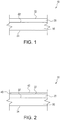
- Figure 1 is a schematic cross sectional view of a label assembly 10 in accordance with the present subject matter.
- the label 10 comprises a film 30 defining a first face 32 and an oppositely directed second face 34.
- the label also comprises a layer or region of adhesive 20 disposed on the film 30 such as on the first face 32.
- the layer of adhesive 20 defines an adhesive face 22.
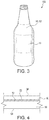
- FIG 2 is a schematic cross sectional view of another label assembly 15 in accordance with the present subject matter.
- the label 15 comprises adhesive 20 disposed on film 30 as previously described in association with Figure 1 , and additionally comprises a liner 40 disposed on the adhesive face 22.
- the liner 40 defines a liner face 42.
- the present subject matter also provides methods of forming or producing the noted label assemblies and methods of using the label assemblies.
- a method of forming the label assemblies described herein comprises providing a web or layer of the facestock material.
- Ink or other agent such as pigment is obtained and then applied to a face or region of the facestock.
- Application of the ink is typically by any known liquid application technique and in many embodiments by spraying, roll coating, or printing the ink onto the facestock.
- the ink is then dried or at least partially dried.
- An effective amount of an adhesive is then applied to the ink and underlying facestock. Any known technique typically used for applying the adhesive can be utilized.
- One or more optional layers can be applied or otherwise incorporated into the laminate assembly.
- the ink could be applied onto the adhesive layer. After sufficient drying of the ink, if necessary, a facestock layer could be applied onto the ink and underlying adhesive layer.
- the subject matter also includes other variants in which all ora portion of the ink is applied onto the adhesive layer and an optional remaining portion of the ink applied to the facestock layer.
- the facestock layer with an optional portion of the ink is then mated with the adhesive layer also carrying a portion of the ink.
- all or a portion of the ink, or the pigment, agent or material can be incorporated in the adhesive layer.
- all or a portion of the pigment, agent or material could be blended in the adhesive and then upon applying the adhesive and forming the adhesive layer, the pigment, agent or material is dispersed throughout the adhesive layer. This strategy can be used in conjunction with providing a layer of ink which can include the same or different pigment, agent or material.
- the present subject matter also relates to articles or goods in combination with the adhesives described herein and particularly the label assemblies described herein.
- the articles include one or more labels, tags, printed members, or other item that is adhered to the article using the present subject matter adhesives.
- the label is adhered to an outer surface of the article.
- a wide array of articles can be utilized such as but not limited to containers such as bottles (both plastic and glass), liquid containers, food and/or beverage containers, and personal care products.
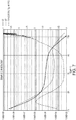
- FIGs 3 and 4 schematically depict a labeled container 100 in accordance with the present subject matter.
- the labeled container 100 includes a container 50 which has the label 10 adhered to an outer surface 52 of the container 50.
- Figure 4 illustrates the adhesive layer 20 adhering label film 30 to the outer surface 52 of the container 50. It is contemplated that one or more additional labels could be adhered to an oppositely directed face 54 of the container 50 or other substrate.
- the adhesives of the present subject matter are clear or substantially so. This means that upon application of the adhesive to form an adhesive layer at the thicknesses described herein, the transmittance of the adhesive layer is at least 80%, more particularly at least 90%, and in many embodiments, at least 95%. And in particular embodiments, the adhesives do not exhibit yellowing after aging and/or exposure to UV light for one week. In some embodiments the adhesive of the present subject matter has a haze of less than 2% measured using an instrument such as BYK-Gardner Haze-Gard Plus according to ASTM D-1003.
- the adhesives of the present subject matter also exhibit good adhesion characteristics at relatively low temperatures such as below 15° C, more particularly below 8° C, and for certain embodiments at temperatures of 0° C.
- Samples A-J were prepared as set forth below in Table 1, Samples D, E, I and J are in accordance with the present invention and Samples A-C and F-H are reference examples.
- the values in Table 1 are parts by weight.
- Each of the adhesive samples was prepared by conventional mixing or blending techniques. Each adhesive sample was then coated onto filmic material and subjected to various testing and/or measurements as follows.
- Looptack was assessed by Finat Test Method (FTM) 9.
- FTM 9 test is described in the FINAT technical manual, Laan Copes Van Cattenbubch 79, NL 2585 EW, THE HAGUE (1995) (HMPSA ).
- the FTM 9 measures tack of a pressure sensitive adhesive and allows comparison of "initial grab” or "application tack” of adhesives.
- the Looptack value is expressed as the force in Newtons per inch (N/in) required to separate, at a specified speed, a loop of material with adhesive facing outward, which has been brought into contact with a specific area of a standard or test surface.
- a loop of a sample approximately 25 mm wide is caused to descend and then be immediately removed from the test surface.
- the rate is 300 mm per minute.
- the area of contact is approximately 25 mm ⁇ 25 mm.
- the Looptack test is conducted at a temperature of 23° C ⁇ 2° C and at a 50% ⁇ 5% RH.
- Various looptack evaluations were performed using different test surfaces, namely glass, high density polyethylene (HDPE), and polyethylene terephthalate (PET). The results of this testing are reported in Table 2, below, as "LT (test surface)."
- 90° Peel Adhesion was determined by FTM 2.
- FTM 2 also employs a sample 25 mm wide. Its adhesive coating surface is applied to a selected test surface with light finger pressure and rolled with a standard FINAT test roller to obtain intimate contact between adhesive mass and the test surface. After a predetermined recorded period of time, i.e., either 20 minutes or 24 hours, the test strip is peeled from the surface at an angle of 90° to the surface at the rate of 300 mm per minute and reported in Newtons per inch.
- the 90° Peel Adhesion test is conducted at a temperature of 23° C ⁇ 2° C and at a 50% Relative Humidity ⁇ 5% (RH). These measurements are provided in Table 2 as "(test surface)-(time period)," in which the test surface is glass (GL), HDPE, or PET; and the time period is either 20 minutes or 24 hours.
- Temperature Looptack was performed using a modified FTM 9 test in which the looptack evaluation is performed at different temperatures, i.e., 1° C, 5° C, 10° C, 15° C, 23° C, and 40° C. These measurements are provided in Table 2 as "LT (test surface) (temperature)."
- Static Shear was performed using FTM 8. This test is described as FTM 8, to shear from a standard surface," FINAT Technical Handbook, 7th Ed., 2005. Static shear is reported in Table 2 .
- Dynamic Shear was performed using FTM 18. This test is described as FTM 18, “Dynamic Shear,” FINAT Technical Handbook, 7th Ed., 2005 . Dynamic shear is reported in Table 2.
- test surface time period 10 mm or 15 mm testing was performed by FTM 24.
- Two different test surfaces were evaluated: glass (GL), and HDPE. Time periods of 1 day, 7 days, and 14 days were used. These measurements are reported in Table 2 as "(test surface) (time period) (10 mm or 15 mm)."
- Mandrel on Beer Bottle testing was performed using a modified FTM 24 procedure in which the samples in the form of labels are applied onto a beer bottle. Time periods of 1 day, 7 days, and 14 days were used. The test surface was glass, and these measurements are reported in Table 2 as "GL (time period) (beer bottle)."
- Viscosity at 160° C was measured using Brookfield cone and plate viscosity at 160° C. These values are reported in Table 2.
- Rheology was measured using a rheometer to measure temperature sweep and frequency sweep from the adhesive.
- Samples A-J were subjected to aging tests in which the samples were aged and exposed to UV light for a time period of one week, i.e., 7 days. All samples exhibited acceptable characteristics, i.e., did not undergo significant yellowing. Samples E and J exhibited excellent performance and no appreciable yellowing was observed, as reported in Table 2.
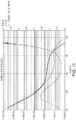
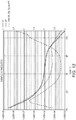
- FIGS 5-14 are rheology plots showing G', G", and Tan(Delta) for each of Samples A-J, respectively. All adhesive Samples A-J exhibited pressure sensitive adhesive properties in which the G' curve crosses Dahlquist criterion in a desired area and the glass transition temperature (Tg) equals Tan(Delta) peak or maximum also in a desired area.
- Tg glass transition temperature
- the present subject matter includes all operable combinations of features and aspects described herein. Thus, for example if one feature is described in association with an embodiment and another feature is described in association with another embodiment, it will be understood that the present subject matter includes embodiments having a combination of these features.
Landscapes
- Chemical & Material Sciences (AREA)
- Organic Chemistry (AREA)
- Chemical Kinetics & Catalysis (AREA)
- Health & Medical Sciences (AREA)
- Medicinal Chemistry (AREA)
- Polymers & Plastics (AREA)
- Physics & Mathematics (AREA)
- General Physics & Mathematics (AREA)
- Engineering & Computer Science (AREA)
- Theoretical Computer Science (AREA)
- Adhesives Or Adhesive Processes (AREA)
- Laminated Bodies (AREA)
- Adhesive Tapes (AREA)
Claims (15)
- Heißschmelzklebstoff, umfassend:Styrol-Butadien-Blockcopolymer,Olefin-Blockcopolymer,wasserklares Kohlenwasserstoffharz,wobei das Styrol-Butadien-Blockcopolymer eine A-B-A-Struktur zeigt, wobei die A Blöcke Styrol einschließen und der B Block Butadien einschließt, wobei das Styrol-Butadien-Blockcopolymer mindestens eines von einem vollständig hydrierten Styrol-Butadien-Blockcopolymer, einem teilweise hydrierten Styrol-Butadien-Blockcopolymer und/oder Kombinationen davon einschließt,wobei das Olefinblockcopolymer mindestens einen kristallinen Ethylen-Hartblock und einen weiteren Block einschließt, der mindestens ein C3-C20 Alpha-Olefin einschließt,wobei das wasserklare Kohlenwasserstoffharz eine geschmolzene Gardnerfarbe von weniger als 2, bestimmt durch ASTM D 6166, aufweist, undwobei der Heißschmelzklebstoff weniger als 1,0 Gew.-% an Ölweichmachern enthält und eine Glasübergangstemperatur in einem Bereich von -50 °C bis 10°C aufweist.
- Heißschmelzklebstoff gemäß Anspruch 1, wobei das Styrol-Butadien-Blockcopolymer eine Glasübergangstemperatur in einem Bereich von -92 °C bis 68 °C, vorzugsweise von -62 °C bis -40 °C, aufweist.
- Heißschmelzklebstoff gemäß Anspruch 1 oder 2, wobei das Olefin-Blockcopolymer ein vollständig hydriertes Olefin-Blockcopolymer einschließt.
- Heißschmelzklebstoff gemäß einem der Ansprüche 1 - 3, wobei das Olefin-blockcopolymer eine Glasübergangstemperatur in einem Bereich von -65 °C bis -50 °C aufweist.
- Heißschmelzklebstoff gemäß einem der Ansprüche 1- 4, wobei das wasserklare hydrierte Harz eine Polydispersität von weniger als 2,5 aufweist.
- Heißschmelzklebstoff gemäß einem der Ansprüche 1 - 5, wobei das wasserklare hydrierte Harz einen Erweichungspunkt in einem Bereich von 40 °C bis 140 °C aufweist.
- Heißschmelzklebstoff gemäß einem der Ansprüche 1 - 6, wobei das wasserklare hydrierte Harz eine Glasübergangstemperatur in einem Bereich von 30 °C bis 100 °C aufweist.
- Heißschmelzklebstoff gemäß einem der Ansprüche 1 - 7, weiter einschließend einen Weichmacher.
- Heißschmelzklebstoff gemäß Anspruch 8, wobei der Weichmacher eine Saybolt kinematische Viskosität, gemessen gemäß ASTM D 2161, von 100 bis 20 000 cST bei 100 °C zeigt.
- Heißschmelzklebstoff gemäß Anspruch 8, wobei der Weichmacher Polyisobutylen ist.
- Heißschmelzklebstoff gemäß Anspruch 8, wobei der Heißschmelzklebstoff frei von Ölweichmachern ist.
- Heißschmelzklebstoff gemäß einem der Ansprüche 1 - 8, weiter einschließend ein Antioxidans und/oder ein Polyolefin.
- Heißschmelzklebstoff gemäß einem der Ansprüche 1 - 8 oder 12, wobei der Klebstoff ein Elastizitätsmodul (G') von weniger als dem Dahlquist-Maßstabswert von 3x10⁶ dynes/cm2 und 1x10⁵ dynes/cm2 oder mehr bei Raumtemperatur, bestimmt durch dynamische mechanische Spektroskopie bei 25°C bei 1 Radian pro Sekunde, zeigt.
- Etikett, umfassend:einen Polymerfilm, welcher eine erste Fläche und eine entgegengesetzt gerichtete zweite Fläche definiert,den Klebstoff gemäß einem der Ansprüche 1 - 8 oder 12 oder 13, angeordnet auf der ersten Fläche des Films, undgegebenenfalls einen Release-Liner, der mindestens teilweise den Klebstoff, angeordnet auf dem Film, bedeckt.
- Etikettierter Gegenstand, umfassend:einen Gegenstand, der eine äußere Oberfläche definiert,einen Polymerfilm,den Klebstoff gemäß einem der Ansprüche 1-8 oder 12 oder 13, angeordnet zwischen der äußeren Oberfläche des Gegenstands und dem Polymerfilm.
Applications Claiming Priority (2)
| Application Number | Priority Date | Filing Date | Title |
|---|---|---|---|
| US201662319947P | 2016-04-08 | 2016-04-08 | |
| PCT/US2017/026351 WO2017176997A1 (en) | 2016-04-08 | 2017-04-06 | Clear hot melt adhesives |
Publications (2)
| Publication Number | Publication Date |
|---|---|
| EP3440146A1 EP3440146A1 (de) | 2019-02-13 |
| EP3440146B1 true EP3440146B1 (de) | 2020-05-13 |
Family
ID=58610014
Family Applications (1)
| Application Number | Title | Priority Date | Filing Date |
|---|---|---|---|
| EP17719095.6A Active EP3440146B1 (de) | 2016-04-08 | 2017-04-06 | Durchsichtiger heissschmelzklebstoff |
Country Status (13)
| Country | Link |
|---|---|
| US (2) | US11312886B2 (de) |
| EP (1) | EP3440146B1 (de) |
| JP (1) | JP6832363B2 (de) |
| KR (1) | KR102182237B1 (de) |
| CN (2) | CN118580814A (de) |
| AR (1) | AR108200A1 (de) |
| AU (1) | AU2017246738B2 (de) |
| BR (1) | BR112018068765A2 (de) |
| CA (1) | CA3017832C (de) |
| CL (1) | CL2018002622A1 (de) |
| CO (1) | CO2018009601A2 (de) |
| MX (1) | MX2018011090A (de) |
| WO (1) | WO2017176997A1 (de) |
Families Citing this family (8)
| Publication number | Priority date | Publication date | Assignee | Title |
|---|---|---|---|---|
| EP3440146B1 (de) * | 2016-04-08 | 2020-05-13 | Avery Dennison Corporation | Durchsichtiger heissschmelzklebstoff |
| DE102018204464A1 (de) * | 2018-03-23 | 2019-09-26 | Tesa Se | Witterungsbeständige Klebemasse mit gutem Auffließvermögen und darauf basierende Klebebänder |
| WO2019198827A1 (ja) * | 2018-04-13 | 2019-10-17 | 株式会社クラレ | 多層フィルムおよびそれを備える成形体 |
| BR112022000934A2 (pt) * | 2019-07-18 | 2022-07-05 | Isp Investments Llc | Etiqueta autoadesiva flexível compreendendo um indicador sensível à radiação para uma seringa |
| US12049578B2 (en) | 2020-07-16 | 2024-07-30 | Avery Dennison Corporation | Recyclable olefin based hot melt pressure sensitive adhesive label and methods of making and using thereof |
| CN112375511B (zh) * | 2020-11-04 | 2022-03-29 | 江苏锦厚新材料科技有限公司 | 一种密封胶及其制备方法和应用 |
| WO2023003546A1 (en) * | 2021-07-21 | 2023-01-26 | Avery Dennison Corporation | Recyclable olefin based hot melt pressure sensitive adhesive label and methods of making and using thereof |
| DE102023130734A1 (de) * | 2023-11-07 | 2025-05-08 | All4Labels Group GmbH | Verfahren zur Etikettierung von durch Blasform hergestellten Kunststoffflaschen |
Family Cites Families (48)
| Publication number | Priority date | Publication date | Assignee | Title |
|---|---|---|---|---|
| FR2504933A1 (fr) * | 1981-04-30 | 1982-11-05 | Charbonnages Ste Chimique | Compositions applicables a la fabrication de colles thermofusibles et leur procede de preparation |
| JPS62151481A (ja) * | 1985-12-26 | 1987-07-06 | Sunstar Giken Kk | ホツトメルト接着剤 |
| US4683268A (en) | 1986-02-18 | 1987-07-28 | Exxon Chemical Patents Inc. | Pressure sensitive adhesive using light color, low softening point petroleum hydrocarbon resins |
| US5317070A (en) * | 1990-11-09 | 1994-05-31 | Exxon Chemical Patents, Inc. | Syndiotactic hot melt adhesive |
| JP3380043B2 (ja) * | 1994-06-30 | 2003-02-24 | 三菱樹脂株式会社 | 食品包装用ストレツチフイルム |
| US5695837A (en) | 1995-04-20 | 1997-12-09 | Minnesota Mining And Manufacturing Company | Tackified acrylic adhesives |
| US5728469A (en) | 1995-06-06 | 1998-03-17 | Avery Dennison Corporation | Block copolymer release surface for pressure sensitive adhesives |
| US6824828B2 (en) | 1995-06-07 | 2004-11-30 | Avery Dennison Corporation | Method for forming multilayer release liners |
| ID17196A (id) | 1996-03-14 | 1997-12-11 | Dow Chemical Co | Bahan-bahan perekat yang mengandung polimer-polimer olefin |
| US6153674A (en) * | 1998-01-30 | 2000-11-28 | 3M Innovative Properties Company | Fire barrier material |
| JP2000239635A (ja) * | 1999-02-24 | 2000-09-05 | Kuraray Co Ltd | 接着剤 |
| US6777082B2 (en) * | 1999-07-28 | 2004-08-17 | The Dow Chemical Company | Hydrogenated block copolymers having elasticity and articles made therefrom |
| US6486229B1 (en) * | 2000-03-02 | 2002-11-26 | National Starch And Chemical Investment Holding Corporation | Radiation curable hot melt adhesive |
| US6486267B1 (en) | 2000-08-03 | 2002-11-26 | Avery Dennison Corporation | Release composition |
| US6828017B2 (en) * | 2000-09-29 | 2004-12-07 | Ricoh Company, Ltd. | Heat-sensitive adhesive material, method of preparing same and method of using same |
| US20030077443A1 (en) * | 2001-07-06 | 2003-04-24 | Di Stefano Frank Vito | Blends of high Tg polymer emulsions and pressure sensitive adhesive polymer emulsions useful as pressure sensitive adhesives |
| EP1571175B1 (de) | 2002-11-29 | 2015-08-12 | Zeon Corporation | Verfahren zur herstellung einer polyether-polymer-zusammensetzung, polyether-polymer-zusammensetzung und fester elektrolytfilm |
| US6984680B2 (en) | 2003-04-15 | 2006-01-10 | Adherent Laboratories, Inc. | Low odor, light color hot pick-up adhesive |
| EP1493794A1 (de) | 2003-07-03 | 2005-01-05 | Collano AG | Haftklebstoff-Zusammensetzung |
| US7858706B2 (en) | 2004-03-17 | 2010-12-28 | Dow Global Technologies Inc. | Catalyst composition comprising shuttling agent for ethylene multi-block copolymer formation |
| NZ549262A (en) | 2004-03-17 | 2010-08-27 | Dow Global Technologies Inc | Catalyst composition comprising shuttling agent for higher olefin multi-block copolymer formation |
| SG151310A1 (en) | 2004-03-17 | 2009-04-30 | Dow Global Technologies Inc | Catalyst composition comprising shuttling agent for ethylene copolymer formation |
| US20070088116A1 (en) | 2005-10-14 | 2007-04-19 | Fabienne Abba | Low application temperature hot melt adhesive |
| DE102006039833A1 (de) | 2006-08-25 | 2008-03-20 | Henkel Kgaa | Schmelzklebstoff mit verbesserter Haftung |
| KR100939905B1 (ko) * | 2007-01-04 | 2010-02-03 | 주식회사 엘지화학 | 고리형 올레핀계 필름과의 부착성이 우수한 코팅 조성물 및 이를 이용하여 제조된 코팅층을 포함하는 고리형 올레핀계 필름 |
| US7838590B2 (en) | 2007-06-08 | 2010-11-23 | Bostik, Inc. | Hot melt adhesive based on styrene-ethylene-ethylene-propylene-styrene copolymer |
| EP2185601B1 (de) | 2007-08-24 | 2019-02-27 | Dow Global Technologies LLC | Aus interpolymeren von ethylen/alpha-olefinen hergestellte haftstoffe |
| DE102007060533A1 (de) | 2007-12-13 | 2009-06-18 | Henkel Ag & Co. Kgaa | Coextrudierbarer Schmelzklebstoff |
| AU2010275394B2 (en) | 2009-07-24 | 2015-06-18 | Bostik, Inc. | Hot melt adhesive based on olefin block copolymers |
| PT2467441E (pt) * | 2009-08-20 | 2014-06-11 | Henkel Corp | Adesivo termofusível com baixa temperatura de aplicação |
| WO2012123633A1 (en) | 2011-03-11 | 2012-09-20 | Upm Raflatac Oy | A laminate web |
| WO2013052875A1 (en) | 2011-10-05 | 2013-04-11 | Bostik, Inc. | Petrolatum containing hot melt bottle labeling adhesive |
| DE102011086845A1 (de) * | 2011-11-22 | 2013-05-23 | Henkel Ag & Co. Kgaa | PSA enthaltend Olefinblockcopolymeren und Styrolblockcopolymere |
| JP2013124293A (ja) * | 2011-12-14 | 2013-06-24 | Dic Corp | 表面保護フィルム |
| CN104144997A (zh) * | 2011-12-22 | 2014-11-12 | 3M创新有限公司 | 基于烯烃嵌段共聚物的压敏粘合剂 |
| CA2888745C (en) | 2012-07-16 | 2020-09-22 | Bostik, Inc. | Polypropylene impact copolymer based hot melt adhesive |
| JP5947153B2 (ja) * | 2012-08-28 | 2016-07-06 | ヘンケルジャパン株式会社 | ホットメルト接着剤 |
| JP5578249B1 (ja) | 2013-03-08 | 2014-08-27 | 横浜ゴム株式会社 | ホットメルト接着剤組成物 |
| JP2016528323A (ja) | 2013-06-21 | 2016-09-15 | ヘンケル アイピー アンド ホールディング ゲゼルシャフト ミット ベシュレンクテル ハフツング | 接着剤組成物およびその使用 |
| US10307995B2 (en) | 2013-07-16 | 2019-06-04 | Bostik, Inc. | Polypropylene impact copolymer based hot melt adhesive |
| MX382603B (es) | 2014-04-16 | 2025-03-13 | Bostik Inc | Adhesivos termo-fusibles a base de poliolefinas con propiedades mejoradas. |
| EP3440146B1 (de) * | 2016-04-08 | 2020-05-13 | Avery Dennison Corporation | Durchsichtiger heissschmelzklebstoff |
| JP6807463B2 (ja) | 2017-02-08 | 2021-01-06 | アベリー・デニソン・コーポレイションAvery Dennison Corporation | クリア・オン・クリアラベル用ホットメルト感圧接着剤 |
| JP7032878B2 (ja) | 2017-06-30 | 2022-03-09 | ヘンケルジャパン株式会社 | ホットメルト接着剤 |
| WO2019210120A1 (en) | 2018-04-27 | 2019-10-31 | Avery Dennison Corporation | Non-swelling hot melt adhesive |
| EP3827061B1 (de) | 2018-07-24 | 2025-01-22 | Henkel AG & Co. KGaA | Schmelzhaftkleberzusammensetzung mit niedrigerer schmelzviskosität |
| BR112021011442A2 (pt) | 2018-12-14 | 2021-08-31 | 3M Innovative Properties Company | Artigos adesivos e métodos |
| US20230203349A1 (en) | 2020-06-03 | 2023-06-29 | Upm Raflatac Oy | Recyclable plastic label |
-
2017
- 2017-04-06 EP EP17719095.6A patent/EP3440146B1/de active Active
- 2017-04-06 BR BR112018068765A patent/BR112018068765A2/pt not_active Application Discontinuation
- 2017-04-06 US US15/481,004 patent/US11312886B2/en active Active
- 2017-04-06 KR KR1020187026539A patent/KR102182237B1/ko active Active
- 2017-04-06 CA CA3017832A patent/CA3017832C/en active Active
- 2017-04-06 AU AU2017246738A patent/AU2017246738B2/en active Active
- 2017-04-06 MX MX2018011090A patent/MX2018011090A/es unknown
- 2017-04-06 CN CN202410789831.5A patent/CN118580814A/zh active Pending
- 2017-04-06 CN CN201780017562.9A patent/CN109312204A/zh active Pending
- 2017-04-06 WO PCT/US2017/026351 patent/WO2017176997A1/en not_active Ceased
- 2017-04-06 JP JP2018548448A patent/JP6832363B2/ja active Active
- 2017-04-07 AR ARP170100895A patent/AR108200A1/es unknown
-
2018
- 2018-09-13 CL CL2018002622A patent/CL2018002622A1/es unknown
- 2018-09-13 CO CONC2018/0009601A patent/CO2018009601A2/es unknown
-
2022
- 2022-03-16 US US17/655,023 patent/US12168740B2/en active Active
Non-Patent Citations (1)
| Title |
|---|
| None * |
Also Published As
| Publication number | Publication date |
|---|---|
| CN109312204A (zh) | 2019-02-05 |
| US12168740B2 (en) | 2024-12-17 |
| AR108200A1 (es) | 2018-07-25 |
| BR112018068765A2 (pt) | 2019-01-22 |
| JP6832363B2 (ja) | 2021-02-24 |
| JP2019516810A (ja) | 2019-06-20 |
| US11312886B2 (en) | 2022-04-26 |
| CO2018009601A2 (es) | 2018-09-28 |
| WO2017176997A1 (en) | 2017-10-12 |
| CN118580814A (zh) | 2024-09-03 |
| US20220204819A1 (en) | 2022-06-30 |
| AU2017246738B2 (en) | 2019-08-22 |
| KR20180123673A (ko) | 2018-11-19 |
| MX2018011090A (es) | 2018-11-22 |
| CL2018002622A1 (es) | 2019-01-11 |
| CA3017832A1 (en) | 2017-10-12 |
| AU2017246738A1 (en) | 2018-09-27 |
| CA3017832C (en) | 2019-03-05 |
| KR102182237B1 (ko) | 2020-11-25 |
| US20170292048A1 (en) | 2017-10-12 |
| EP3440146A1 (de) | 2019-02-13 |
Similar Documents
| Publication | Publication Date | Title |
|---|---|---|
| US12168740B2 (en) | Clear hot melt adhesives | |
| US5728469A (en) | Block copolymer release surface for pressure sensitive adhesives | |
| CN108084929B (zh) | 用于清澈对清澈标签的热熔压敏粘合剂 | |
| US8263696B2 (en) | Hot melt pressure sensitive adhesives for paper labels | |
| US20090324940A1 (en) | Self-adhesive material of hydrogenated block copolymers and protective film for smooth and rough surfaces produced thereof | |
| US20100255302A1 (en) | Adhesive film or sheet | |
| US20160347973A1 (en) | Adhesive tape | |
| CA2427715A1 (en) | Pressure-sensitive adhesive | |
| CN101495590B (zh) | 包含氢化嵌段共聚物的自粘合组合物和由其制备的用于光滑表面的保护膜 | |
| CA3212675A1 (en) | Multilayer polyolefin films and methods for their production | |
| WO2022150688A1 (en) | A hot melt pressure sensitive adhesive composition | |
| JP4852899B2 (ja) | 積層体 |
Legal Events
| Date | Code | Title | Description |
|---|---|---|---|
| STAA | Information on the status of an ep patent application or granted ep patent |
Free format text: STATUS: UNKNOWN |
|
| STAA | Information on the status of an ep patent application or granted ep patent |
Free format text: STATUS: THE INTERNATIONAL PUBLICATION HAS BEEN MADE |
|
| PUAI | Public reference made under article 153(3) epc to a published international application that has entered the european phase |
Free format text: ORIGINAL CODE: 0009012 |
|
| STAA | Information on the status of an ep patent application or granted ep patent |
Free format text: STATUS: REQUEST FOR EXAMINATION WAS MADE |
|
| 17P | Request for examination filed |
Effective date: 20180913 |
|
| AK | Designated contracting states |
Kind code of ref document: A1 Designated state(s): AL AT BE BG CH CY CZ DE DK EE ES FI FR GB GR HR HU IE IS IT LI LT LU LV MC MK MT NL NO PL PT RO RS SE SI SK SM TR |
|
| AX | Request for extension of the european patent |
Extension state: BA ME |
|
| DAV | Request for validation of the european patent (deleted) | ||
| DAX | Request for extension of the european patent (deleted) | ||
| REG | Reference to a national code |
Ref country code: DE Ref legal event code: R079 Ref document number: 602017016482 Country of ref document: DE Free format text: PREVIOUS MAIN CLASS: C09J0153020000 Ipc: C09J0153000000 |
|
| GRAP | Despatch of communication of intention to grant a patent |
Free format text: ORIGINAL CODE: EPIDOSNIGR1 |
|
| STAA | Information on the status of an ep patent application or granted ep patent |
Free format text: STATUS: GRANT OF PATENT IS INTENDED |
|
| RIC1 | Information provided on ipc code assigned before grant |
Ipc: C08L 53/00 20060101ALI20191029BHEP Ipc: C08L 53/02 20060101ALI20191029BHEP Ipc: C09J 7/22 20180101ALI20191029BHEP Ipc: C09J 153/00 20060101AFI20191029BHEP Ipc: C09J 153/02 20060101ALI20191029BHEP |
|
| INTG | Intention to grant announced |
Effective date: 20191120 |
|
| GRAS | Grant fee paid |
Free format text: ORIGINAL CODE: EPIDOSNIGR3 |
|
| GRAA | (expected) grant |
Free format text: ORIGINAL CODE: 0009210 |
|
| STAA | Information on the status of an ep patent application or granted ep patent |
Free format text: STATUS: THE PATENT HAS BEEN GRANTED |
|
| RIN1 | Information on inventor provided before grant (corrected) |
Inventor name: PITKO, JARKKO T. |
|
| AK | Designated contracting states |
Kind code of ref document: B1 Designated state(s): AL AT BE BG CH CY CZ DE DK EE ES FI FR GB GR HR HU IE IS IT LI LT LU LV MC MK MT NL NO PL PT RO RS SE SI SK SM TR |
|
| REG | Reference to a national code |
Ref country code: GB Ref legal event code: FG4D |
|
| REG | Reference to a national code |
Ref country code: CH Ref legal event code: EP |
|
| REG | Reference to a national code |
Ref country code: DE Ref legal event code: R096 Ref document number: 602017016482 Country of ref document: DE |
|
| REG | Reference to a national code |
Ref country code: AT Ref legal event code: REF Ref document number: 1270257 Country of ref document: AT Kind code of ref document: T Effective date: 20200615 |
|
| REG | Reference to a national code |
Ref country code: NL Ref legal event code: FP |
|
| REG | Reference to a national code |
Ref country code: LT Ref legal event code: MG4D |
|
| PG25 | Lapsed in a contracting state [announced via postgrant information from national office to epo] |
Ref country code: SE Free format text: LAPSE BECAUSE OF FAILURE TO SUBMIT A TRANSLATION OF THE DESCRIPTION OR TO PAY THE FEE WITHIN THE PRESCRIBED TIME-LIMIT Effective date: 20200513 Ref country code: PT Free format text: LAPSE BECAUSE OF FAILURE TO SUBMIT A TRANSLATION OF THE DESCRIPTION OR TO PAY THE FEE WITHIN THE PRESCRIBED TIME-LIMIT Effective date: 20200914 Ref country code: IS Free format text: LAPSE BECAUSE OF FAILURE TO SUBMIT A TRANSLATION OF THE DESCRIPTION OR TO PAY THE FEE WITHIN THE PRESCRIBED TIME-LIMIT Effective date: 20200913 Ref country code: FI Free format text: LAPSE BECAUSE OF FAILURE TO SUBMIT A TRANSLATION OF THE DESCRIPTION OR TO PAY THE FEE WITHIN THE PRESCRIBED TIME-LIMIT Effective date: 20200513 Ref country code: GR Free format text: LAPSE BECAUSE OF FAILURE TO SUBMIT A TRANSLATION OF THE DESCRIPTION OR TO PAY THE FEE WITHIN THE PRESCRIBED TIME-LIMIT Effective date: 20200814 Ref country code: NO Free format text: LAPSE BECAUSE OF FAILURE TO SUBMIT A TRANSLATION OF THE DESCRIPTION OR TO PAY THE FEE WITHIN THE PRESCRIBED TIME-LIMIT Effective date: 20200813 Ref country code: LT Free format text: LAPSE BECAUSE OF FAILURE TO SUBMIT A TRANSLATION OF THE DESCRIPTION OR TO PAY THE FEE WITHIN THE PRESCRIBED TIME-LIMIT Effective date: 20200513 |
|
| PG25 | Lapsed in a contracting state [announced via postgrant information from national office to epo] |
Ref country code: LV Free format text: LAPSE BECAUSE OF FAILURE TO SUBMIT A TRANSLATION OF THE DESCRIPTION OR TO PAY THE FEE WITHIN THE PRESCRIBED TIME-LIMIT Effective date: 20200513 Ref country code: BG Free format text: LAPSE BECAUSE OF FAILURE TO SUBMIT A TRANSLATION OF THE DESCRIPTION OR TO PAY THE FEE WITHIN THE PRESCRIBED TIME-LIMIT Effective date: 20200813 Ref country code: RS Free format text: LAPSE BECAUSE OF FAILURE TO SUBMIT A TRANSLATION OF THE DESCRIPTION OR TO PAY THE FEE WITHIN THE PRESCRIBED TIME-LIMIT Effective date: 20200513 Ref country code: HR Free format text: LAPSE BECAUSE OF FAILURE TO SUBMIT A TRANSLATION OF THE DESCRIPTION OR TO PAY THE FEE WITHIN THE PRESCRIBED TIME-LIMIT Effective date: 20200513 |
|
| REG | Reference to a national code |
Ref country code: AT Ref legal event code: MK05 Ref document number: 1270257 Country of ref document: AT Kind code of ref document: T Effective date: 20200513 |
|
| PG25 | Lapsed in a contracting state [announced via postgrant information from national office to epo] |
Ref country code: AL Free format text: LAPSE BECAUSE OF FAILURE TO SUBMIT A TRANSLATION OF THE DESCRIPTION OR TO PAY THE FEE WITHIN THE PRESCRIBED TIME-LIMIT Effective date: 20200513 |
|
| PG25 | Lapsed in a contracting state [announced via postgrant information from national office to epo] |
Ref country code: SM Free format text: LAPSE BECAUSE OF FAILURE TO SUBMIT A TRANSLATION OF THE DESCRIPTION OR TO PAY THE FEE WITHIN THE PRESCRIBED TIME-LIMIT Effective date: 20200513 Ref country code: EE Free format text: LAPSE BECAUSE OF FAILURE TO SUBMIT A TRANSLATION OF THE DESCRIPTION OR TO PAY THE FEE WITHIN THE PRESCRIBED TIME-LIMIT Effective date: 20200513 Ref country code: AT Free format text: LAPSE BECAUSE OF FAILURE TO SUBMIT A TRANSLATION OF THE DESCRIPTION OR TO PAY THE FEE WITHIN THE PRESCRIBED TIME-LIMIT Effective date: 20200513 Ref country code: DK Free format text: LAPSE BECAUSE OF FAILURE TO SUBMIT A TRANSLATION OF THE DESCRIPTION OR TO PAY THE FEE WITHIN THE PRESCRIBED TIME-LIMIT Effective date: 20200513 Ref country code: IT Free format text: LAPSE BECAUSE OF FAILURE TO SUBMIT A TRANSLATION OF THE DESCRIPTION OR TO PAY THE FEE WITHIN THE PRESCRIBED TIME-LIMIT Effective date: 20200513 Ref country code: CZ Free format text: LAPSE BECAUSE OF FAILURE TO SUBMIT A TRANSLATION OF THE DESCRIPTION OR TO PAY THE FEE WITHIN THE PRESCRIBED TIME-LIMIT Effective date: 20200513 Ref country code: RO Free format text: LAPSE BECAUSE OF FAILURE TO SUBMIT A TRANSLATION OF THE DESCRIPTION OR TO PAY THE FEE WITHIN THE PRESCRIBED TIME-LIMIT Effective date: 20200513 Ref country code: ES Free format text: LAPSE BECAUSE OF FAILURE TO SUBMIT A TRANSLATION OF THE DESCRIPTION OR TO PAY THE FEE WITHIN THE PRESCRIBED TIME-LIMIT Effective date: 20200513 |
|
| REG | Reference to a national code |
Ref country code: DE Ref legal event code: R097 Ref document number: 602017016482 Country of ref document: DE |
|
| PG25 | Lapsed in a contracting state [announced via postgrant information from national office to epo] |
Ref country code: SK Free format text: LAPSE BECAUSE OF FAILURE TO SUBMIT A TRANSLATION OF THE DESCRIPTION OR TO PAY THE FEE WITHIN THE PRESCRIBED TIME-LIMIT Effective date: 20200513 Ref country code: PL Free format text: LAPSE BECAUSE OF FAILURE TO SUBMIT A TRANSLATION OF THE DESCRIPTION OR TO PAY THE FEE WITHIN THE PRESCRIBED TIME-LIMIT Effective date: 20200513 |
|
| PLBE | No opposition filed within time limit |
Free format text: ORIGINAL CODE: 0009261 |
|
| STAA | Information on the status of an ep patent application or granted ep patent |
Free format text: STATUS: NO OPPOSITION FILED WITHIN TIME LIMIT |
|
| 26N | No opposition filed |
Effective date: 20210216 |
|
| PG25 | Lapsed in a contracting state [announced via postgrant information from national office to epo] |
Ref country code: SI Free format text: LAPSE BECAUSE OF FAILURE TO SUBMIT A TRANSLATION OF THE DESCRIPTION OR TO PAY THE FEE WITHIN THE PRESCRIBED TIME-LIMIT Effective date: 20200513 |
|
| PG25 | Lapsed in a contracting state [announced via postgrant information from national office to epo] |
Ref country code: MC Free format text: LAPSE BECAUSE OF FAILURE TO SUBMIT A TRANSLATION OF THE DESCRIPTION OR TO PAY THE FEE WITHIN THE PRESCRIBED TIME-LIMIT Effective date: 20200513 |
|
| PG25 | Lapsed in a contracting state [announced via postgrant information from national office to epo] |
Ref country code: LU Free format text: LAPSE BECAUSE OF NON-PAYMENT OF DUE FEES Effective date: 20210406 |
|
| PG25 | Lapsed in a contracting state [announced via postgrant information from national office to epo] |
Ref country code: CH Free format text: LAPSE BECAUSE OF NON-PAYMENT OF DUE FEES Effective date: 20210430 Ref country code: LI Free format text: LAPSE BECAUSE OF NON-PAYMENT OF DUE FEES Effective date: 20210430 |
|
| PG25 | Lapsed in a contracting state [announced via postgrant information from national office to epo] |
Ref country code: IE Free format text: LAPSE BECAUSE OF NON-PAYMENT OF DUE FEES Effective date: 20210406 |
|
| REG | Reference to a national code |
Ref country code: DE Ref legal event code: R081 Ref document number: 602017016482 Country of ref document: DE Owner name: AVERY DENNISON CORPORATION, MENTOR, US Free format text: FORMER OWNER: AVERY DENNISON CORPORATION, GLENDALE, CALIF., US |
|
| REG | Reference to a national code |
Ref country code: BE Ref legal event code: PD Owner name: AVERY DENNISON CORPORATION; US Free format text: DETAILS ASSIGNMENT: CHANGE OF OWNER(S), OTHER; FORMER OWNER NAME: AVERY DENNISON CORPORATION Effective date: 20220602 |
|
| PG25 | Lapsed in a contracting state [announced via postgrant information from national office to epo] |
Ref country code: CY Free format text: LAPSE BECAUSE OF FAILURE TO SUBMIT A TRANSLATION OF THE DESCRIPTION OR TO PAY THE FEE WITHIN THE PRESCRIBED TIME-LIMIT Effective date: 20200513 |
|
| P01 | Opt-out of the competence of the unified patent court (upc) registered |
Effective date: 20230526 |
|
| PG25 | Lapsed in a contracting state [announced via postgrant information from national office to epo] |
Ref country code: HU Free format text: LAPSE BECAUSE OF FAILURE TO SUBMIT A TRANSLATION OF THE DESCRIPTION OR TO PAY THE FEE WITHIN THE PRESCRIBED TIME-LIMIT; INVALID AB INITIO Effective date: 20170406 |
|
| PG25 | Lapsed in a contracting state [announced via postgrant information from national office to epo] |
Ref country code: MK Free format text: LAPSE BECAUSE OF FAILURE TO SUBMIT A TRANSLATION OF THE DESCRIPTION OR TO PAY THE FEE WITHIN THE PRESCRIBED TIME-LIMIT Effective date: 20200513 |
|
| PG25 | Lapsed in a contracting state [announced via postgrant information from national office to epo] |
Ref country code: MT Free format text: LAPSE BECAUSE OF FAILURE TO SUBMIT A TRANSLATION OF THE DESCRIPTION OR TO PAY THE FEE WITHIN THE PRESCRIBED TIME-LIMIT Effective date: 20200513 |
|
| PGFP | Annual fee paid to national office [announced via postgrant information from national office to epo] |
Ref country code: DE Payment date: 20250317 Year of fee payment: 9 |
|
| PG25 | Lapsed in a contracting state [announced via postgrant information from national office to epo] |
Ref country code: TR Free format text: LAPSE BECAUSE OF FAILURE TO SUBMIT A TRANSLATION OF THE DESCRIPTION OR TO PAY THE FEE WITHIN THE PRESCRIBED TIME-LIMIT Effective date: 20200513 |
|
| PGFP | Annual fee paid to national office [announced via postgrant information from national office to epo] |
Ref country code: GB Payment date: 20260320 Year of fee payment: 10 |
|
| PGFP | Annual fee paid to national office [announced via postgrant information from national office to epo] |
Ref country code: BE Payment date: 20260324 Year of fee payment: 10 |
|
| PGFP | Annual fee paid to national office [announced via postgrant information from national office to epo] |
Ref country code: NL Payment date: 20260323 Year of fee payment: 10 |
|
| PGFP | Annual fee paid to national office [announced via postgrant information from national office to epo] |
Ref country code: FR Payment date: 20260317 Year of fee payment: 10 |