EP3441497A1 - Leichter stahl und stahlblech mit erhöhtem elastizitätsmodul und herstellungsverfahren dafür - Google Patents
Leichter stahl und stahlblech mit erhöhtem elastizitätsmodul und herstellungsverfahren dafür Download PDFInfo
- Publication number
- EP3441497A1 EP3441497A1 EP17778614.2A EP17778614A EP3441497A1 EP 3441497 A1 EP3441497 A1 EP 3441497A1 EP 17778614 A EP17778614 A EP 17778614A EP 3441497 A1 EP3441497 A1 EP 3441497A1
- Authority
- EP
- European Patent Office
- Prior art keywords
- hot
- manufacturing
- steel
- rolled sheet
- rolling
- Prior art date
- Legal status (The legal status is an assumption and is not a legal conclusion. Google has not performed a legal analysis and makes no representation as to the accuracy of the status listed.)
- Granted
Links
Images

Classifications
-
- C—CHEMISTRY; METALLURGY
- C22—METALLURGY; FERROUS OR NON-FERROUS ALLOYS; TREATMENT OF ALLOYS OR NON-FERROUS METALS
- C22C—ALLOYS
- C22C38/00—Ferrous alloys, e.g. steel alloys
- C22C38/14—Ferrous alloys, e.g. steel alloys containing titanium or zirconium
-
- C—CHEMISTRY; METALLURGY
- C22—METALLURGY; FERROUS OR NON-FERROUS ALLOYS; TREATMENT OF ALLOYS OR NON-FERROUS METALS
- C22C—ALLOYS
- C22C38/00—Ferrous alloys, e.g. steel alloys
- C22C38/004—Very low carbon steels, i.e. having a carbon content of less than 0,01%
-
- C—CHEMISTRY; METALLURGY
- C21—METALLURGY OF IRON
- C21D—MODIFYING THE PHYSICAL STRUCTURE OF FERROUS METALS; GENERAL DEVICES FOR HEAT TREATMENT OF FERROUS OR NON-FERROUS METALS OR ALLOYS; MAKING METAL MALLEABLE, e.g. BY DECARBURISATION OR TEMPERING
- C21D9/00—Heat treatment, e.g. annealing, hardening, quenching or tempering, adapted for particular articles; Furnaces therefor
- C21D9/46—Heat treatment, e.g. annealing, hardening, quenching or tempering, adapted for particular articles; Furnaces therefor for sheet metals
-
- B—PERFORMING OPERATIONS; TRANSPORTING
- B22—CASTING; POWDER METALLURGY
- B22D—CASTING OF METALS; CASTING OF OTHER SUBSTANCES BY THE SAME PROCESSES OR DEVICES
- B22D11/00—Continuous casting of metals, i.e. casting in indefinite lengths
- B22D11/001—Continuous casting of metals, i.e. casting in indefinite lengths of specific alloys
-
- C—CHEMISTRY; METALLURGY
- C21—METALLURGY OF IRON
- C21D—MODIFYING THE PHYSICAL STRUCTURE OF FERROUS METALS; GENERAL DEVICES FOR HEAT TREATMENT OF FERROUS OR NON-FERROUS METALS OR ALLOYS; MAKING METAL MALLEABLE, e.g. BY DECARBURISATION OR TEMPERING
- C21D6/00—Heat treatment of ferrous alloys
- C21D6/001—Heat treatment of ferrous alloys containing Ni
-
- C—CHEMISTRY; METALLURGY
- C21—METALLURGY OF IRON
- C21D—MODIFYING THE PHYSICAL STRUCTURE OF FERROUS METALS; GENERAL DEVICES FOR HEAT TREATMENT OF FERROUS OR NON-FERROUS METALS OR ALLOYS; MAKING METAL MALLEABLE, e.g. BY DECARBURISATION OR TEMPERING
- C21D6/00—Heat treatment of ferrous alloys
- C21D6/002—Heat treatment of ferrous alloys containing Cr
-
- C—CHEMISTRY; METALLURGY
- C21—METALLURGY OF IRON
- C21D—MODIFYING THE PHYSICAL STRUCTURE OF FERROUS METALS; GENERAL DEVICES FOR HEAT TREATMENT OF FERROUS OR NON-FERROUS METALS OR ALLOYS; MAKING METAL MALLEABLE, e.g. BY DECARBURISATION OR TEMPERING
- C21D6/00—Heat treatment of ferrous alloys
- C21D6/005—Heat treatment of ferrous alloys containing Mn
-
- C—CHEMISTRY; METALLURGY
- C21—METALLURGY OF IRON
- C21D—MODIFYING THE PHYSICAL STRUCTURE OF FERROUS METALS; GENERAL DEVICES FOR HEAT TREATMENT OF FERROUS OR NON-FERROUS METALS OR ALLOYS; MAKING METAL MALLEABLE, e.g. BY DECARBURISATION OR TEMPERING
- C21D6/00—Heat treatment of ferrous alloys
- C21D6/008—Heat treatment of ferrous alloys containing Si
-
- C—CHEMISTRY; METALLURGY
- C21—METALLURGY OF IRON
- C21D—MODIFYING THE PHYSICAL STRUCTURE OF FERROUS METALS; GENERAL DEVICES FOR HEAT TREATMENT OF FERROUS OR NON-FERROUS METALS OR ALLOYS; MAKING METAL MALLEABLE, e.g. BY DECARBURISATION OR TEMPERING
- C21D8/00—Modifying the physical properties of ferrous metals or ferrous alloys by deformation combined with, or followed by, heat treatment
- C21D8/02—Modifying the physical properties of ferrous metals or ferrous alloys by deformation combined with, or followed by, heat treatment during manufacturing of plates or strips
-
- C—CHEMISTRY; METALLURGY
- C21—METALLURGY OF IRON
- C21D—MODIFYING THE PHYSICAL STRUCTURE OF FERROUS METALS; GENERAL DEVICES FOR HEAT TREATMENT OF FERROUS OR NON-FERROUS METALS OR ALLOYS; MAKING METAL MALLEABLE, e.g. BY DECARBURISATION OR TEMPERING
- C21D8/00—Modifying the physical properties of ferrous metals or ferrous alloys by deformation combined with, or followed by, heat treatment
- C21D8/02—Modifying the physical properties of ferrous metals or ferrous alloys by deformation combined with, or followed by, heat treatment during manufacturing of plates or strips
- C21D8/0221—Modifying the physical properties of ferrous metals or ferrous alloys by deformation combined with, or followed by, heat treatment during manufacturing of plates or strips characterised by the working steps
- C21D8/0226—Hot rolling
-
- C—CHEMISTRY; METALLURGY
- C21—METALLURGY OF IRON
- C21D—MODIFYING THE PHYSICAL STRUCTURE OF FERROUS METALS; GENERAL DEVICES FOR HEAT TREATMENT OF FERROUS OR NON-FERROUS METALS OR ALLOYS; MAKING METAL MALLEABLE, e.g. BY DECARBURISATION OR TEMPERING
- C21D8/00—Modifying the physical properties of ferrous metals or ferrous alloys by deformation combined with, or followed by, heat treatment
- C21D8/02—Modifying the physical properties of ferrous metals or ferrous alloys by deformation combined with, or followed by, heat treatment during manufacturing of plates or strips
- C21D8/0221—Modifying the physical properties of ferrous metals or ferrous alloys by deformation combined with, or followed by, heat treatment during manufacturing of plates or strips characterised by the working steps
- C21D8/0236—Cold rolling
-
- C—CHEMISTRY; METALLURGY
- C21—METALLURGY OF IRON
- C21D—MODIFYING THE PHYSICAL STRUCTURE OF FERROUS METALS; GENERAL DEVICES FOR HEAT TREATMENT OF FERROUS OR NON-FERROUS METALS OR ALLOYS; MAKING METAL MALLEABLE, e.g. BY DECARBURISATION OR TEMPERING
- C21D8/00—Modifying the physical properties of ferrous metals or ferrous alloys by deformation combined with, or followed by, heat treatment
- C21D8/02—Modifying the physical properties of ferrous metals or ferrous alloys by deformation combined with, or followed by, heat treatment during manufacturing of plates or strips
- C21D8/0247—Modifying the physical properties of ferrous metals or ferrous alloys by deformation combined with, or followed by, heat treatment during manufacturing of plates or strips characterised by the heat treatment
- C21D8/0273—Final recrystallisation annealing
-
- C—CHEMISTRY; METALLURGY
- C22—METALLURGY; FERROUS OR NON-FERROUS ALLOYS; TREATMENT OF ALLOYS OR NON-FERROUS METALS
- C22C—ALLOYS
- C22C38/00—Ferrous alloys, e.g. steel alloys
- C22C38/001—Ferrous alloys, e.g. steel alloys containing N
-
- C—CHEMISTRY; METALLURGY
- C22—METALLURGY; FERROUS OR NON-FERROUS ALLOYS; TREATMENT OF ALLOYS OR NON-FERROUS METALS
- C22C—ALLOYS
- C22C38/00—Ferrous alloys, e.g. steel alloys
- C22C38/002—Ferrous alloys, e.g. steel alloys containing In, Mg, or other elements not provided for in one single group C22C38/001 - C22C38/60
-
- C—CHEMISTRY; METALLURGY
- C22—METALLURGY; FERROUS OR NON-FERROUS ALLOYS; TREATMENT OF ALLOYS OR NON-FERROUS METALS
- C22C—ALLOYS
- C22C38/00—Ferrous alloys, e.g. steel alloys
- C22C38/02—Ferrous alloys, e.g. steel alloys containing silicon
-
- C—CHEMISTRY; METALLURGY
- C22—METALLURGY; FERROUS OR NON-FERROUS ALLOYS; TREATMENT OF ALLOYS OR NON-FERROUS METALS
- C22C—ALLOYS
- C22C38/00—Ferrous alloys, e.g. steel alloys
- C22C38/04—Ferrous alloys, e.g. steel alloys containing manganese
-
- C—CHEMISTRY; METALLURGY
- C22—METALLURGY; FERROUS OR NON-FERROUS ALLOYS; TREATMENT OF ALLOYS OR NON-FERROUS METALS
- C22C—ALLOYS
- C22C38/00—Ferrous alloys, e.g. steel alloys
- C22C38/06—Ferrous alloys, e.g. steel alloys containing aluminium
-
- C—CHEMISTRY; METALLURGY
- C22—METALLURGY; FERROUS OR NON-FERROUS ALLOYS; TREATMENT OF ALLOYS OR NON-FERROUS METALS
- C22C—ALLOYS
- C22C38/00—Ferrous alloys, e.g. steel alloys
- C22C38/08—Ferrous alloys, e.g. steel alloys containing nickel
-
- C—CHEMISTRY; METALLURGY
- C22—METALLURGY; FERROUS OR NON-FERROUS ALLOYS; TREATMENT OF ALLOYS OR NON-FERROUS METALS
- C22C—ALLOYS
- C22C38/00—Ferrous alloys, e.g. steel alloys
- C22C38/12—Ferrous alloys, e.g. steel alloys containing tungsten, tantalum, molybdenum, vanadium, or niobium
-
- C—CHEMISTRY; METALLURGY
- C22—METALLURGY; FERROUS OR NON-FERROUS ALLOYS; TREATMENT OF ALLOYS OR NON-FERROUS METALS
- C22C—ALLOYS
- C22C38/00—Ferrous alloys, e.g. steel alloys
- C22C38/16—Ferrous alloys, e.g. steel alloys containing copper
-
- C—CHEMISTRY; METALLURGY
- C22—METALLURGY; FERROUS OR NON-FERROUS ALLOYS; TREATMENT OF ALLOYS OR NON-FERROUS METALS
- C22C—ALLOYS
- C22C38/00—Ferrous alloys, e.g. steel alloys
- C22C38/18—Ferrous alloys, e.g. steel alloys containing chromium
-
- C—CHEMISTRY; METALLURGY
- C22—METALLURGY; FERROUS OR NON-FERROUS ALLOYS; TREATMENT OF ALLOYS OR NON-FERROUS METALS
- C22C—ALLOYS
- C22C38/00—Ferrous alloys, e.g. steel alloys
- C22C38/18—Ferrous alloys, e.g. steel alloys containing chromium
- C22C38/22—Ferrous alloys, e.g. steel alloys containing chromium with molybdenum or tungsten
-
- C—CHEMISTRY; METALLURGY
- C22—METALLURGY; FERROUS OR NON-FERROUS ALLOYS; TREATMENT OF ALLOYS OR NON-FERROUS METALS
- C22C—ALLOYS
- C22C38/00—Ferrous alloys, e.g. steel alloys
- C22C38/18—Ferrous alloys, e.g. steel alloys containing chromium
- C22C38/26—Ferrous alloys, e.g. steel alloys containing chromium with niobium or tantalum
-
- C—CHEMISTRY; METALLURGY
- C22—METALLURGY; FERROUS OR NON-FERROUS ALLOYS; TREATMENT OF ALLOYS OR NON-FERROUS METALS
- C22C—ALLOYS
- C22C38/00—Ferrous alloys, e.g. steel alloys
- C22C38/18—Ferrous alloys, e.g. steel alloys containing chromium
- C22C38/28—Ferrous alloys, e.g. steel alloys containing chromium with titanium or zirconium
-
- C—CHEMISTRY; METALLURGY
- C22—METALLURGY; FERROUS OR NON-FERROUS ALLOYS; TREATMENT OF ALLOYS OR NON-FERROUS METALS
- C22C—ALLOYS
- C22C38/00—Ferrous alloys, e.g. steel alloys
- C22C38/18—Ferrous alloys, e.g. steel alloys containing chromium
- C22C38/32—Ferrous alloys, e.g. steel alloys containing chromium with boron
-
- C—CHEMISTRY; METALLURGY
- C22—METALLURGY; FERROUS OR NON-FERROUS ALLOYS; TREATMENT OF ALLOYS OR NON-FERROUS METALS
- C22C—ALLOYS
- C22C38/00—Ferrous alloys, e.g. steel alloys
- C22C38/18—Ferrous alloys, e.g. steel alloys containing chromium
- C22C38/38—Ferrous alloys, e.g. steel alloys containing chromium with more than 1.5% by weight of manganese
-
- C—CHEMISTRY; METALLURGY
- C21—METALLURGY OF IRON
- C21D—MODIFYING THE PHYSICAL STRUCTURE OF FERROUS METALS; GENERAL DEVICES FOR HEAT TREATMENT OF FERROUS OR NON-FERROUS METALS OR ALLOYS; MAKING METAL MALLEABLE, e.g. BY DECARBURISATION OR TEMPERING
- C21D2211/00—Microstructure comprising significant phases
- C21D2211/002—Bainite
-
- C—CHEMISTRY; METALLURGY
- C21—METALLURGY OF IRON
- C21D—MODIFYING THE PHYSICAL STRUCTURE OF FERROUS METALS; GENERAL DEVICES FOR HEAT TREATMENT OF FERROUS OR NON-FERROUS METALS OR ALLOYS; MAKING METAL MALLEABLE, e.g. BY DECARBURISATION OR TEMPERING
- C21D2211/00—Microstructure comprising significant phases
- C21D2211/004—Dispersions; Precipitations
-
- C—CHEMISTRY; METALLURGY
- C21—METALLURGY OF IRON
- C21D—MODIFYING THE PHYSICAL STRUCTURE OF FERROUS METALS; GENERAL DEVICES FOR HEAT TREATMENT OF FERROUS OR NON-FERROUS METALS OR ALLOYS; MAKING METAL MALLEABLE, e.g. BY DECARBURISATION OR TEMPERING
- C21D2211/00—Microstructure comprising significant phases
- C21D2211/005—Ferrite
Definitions
- the disclosure relates to a lightweight steel, a steel sheet and a method of manufacturing the same, particularly to a lightweight steel featuring an enhanced elastic modulus, a steel sheet and a method of manufacturing the same.
- Replacement of a traditional low-strength steel material with a high-strength steel material or an advanced high-strength steel material may increase the specific strength (a ratio of strength to density) of a vehicle steel and reduce the thickness of a steel sheet for structural components, so as to realize weight reduction of the body structure of a vehicle.
- a low-density, high-strength-and-toughness, aluminum-rich steel sheet under current research and development may further improve the specific strength of a steel sheet to meet the weight reduction requirement that is potentially more stringent.
- the elastic modulus of the steel decreases as the aluminum content increases (for example, an Fe-8.5wt% A1 lightweight steel has an elastic modulus of about 170GPa which is up to 17% lower than the elastic modulus of about 205GPa that is exhibited by a conventional C-Mn steel).
- an Fe-8.5wt% A1 lightweight steel has an elastic modulus of about 170GPa which is up to 17% lower than the elastic modulus of about 205GPa that is exhibited by a conventional C-Mn steel.
- the rigidity requirement of a component limits thinning of a high-strength steel sheet.
- the elastic modulus of the high-strength steel sheet material can be increased per se, further reduction of the steel sheet thickness and the vehicle body weight can be achieved without changing the shape of the component.
- the increased elastic modulus of the high-strength steel can reduce resilience of the steel sheet during stamping molding, favorable for manufacturing stamped components having precise shapes.
- the decreased elastic modulus of the lightweight aluminum-rich steel significantly counteracts the weight reduction effect brought about by the decreased density and increased specific strength. Therefore, as the lightweight high-strength aluminum-rich steel is concerned, increasing its elastic modulus is one of the important factors that must be considered to develop new types of steel and promote their applications.
- Addition of hard ceramic particles such as carbides, borides and the like (e.g. TiC, VC and TiB 2 ) into a steel matrix can increase the overall elastic modulus of a steel material.
- the abovementioned ceramic particles have a high elastic modulus of about 300-565GPa, far higher than the elastic modulus of a conventional steel sheet used for the matrix material.
- the abovementioned ceramic particles have a lower density than the conventional steel sheet.
- a steel based composite material formed by addition of the reinforcing particles also features lightweight.
- TiB 2 particles are particularly suitable for a reinforcing phase of a steel sheet matrix, because a direct thermodynamic equilibrium relationship can be easily established between TiB 2 and iron or an iron-based alloy, and the two phases (the matrix and the TiB 2 reinforcing phase) form a coherent relationship at the phase interface. Moreover, the elastic modulus of TiB 2 particles is remarkably higher than that of carbide reinforcing particles.
- a steel based composite material reinforced by particles (referred to hereafter as lightweight steel with an enhanced elastic modulus) is generally prepared by a powder metallurgical process, wherein a variety of metal powders are subjected to homogeneous mixing, compact molding and high-temperature sintering in sequence. Ceramics particles of TiB 2 and the like are formed in situ by chemical reactions of the variety of metal powders.
- a lightweight steel with an enhanced elastic modulus may be produced in an industrial scale by in-situ reaction casting.
- hard reinforcing particles are formed in situ by eutectic reaction during solidification of molten steel.
- an appropriate volumetric fraction of fine hard reinforcing particles can be uniformly, dispersively distributed in the steel matrix.
- this process is also characterized by good compatibility between the particles and the matrix, as well as low manufacture cost of the material, etc.
- reinforcing particles of TiB 2 and the like tend to exhibit a continuous reticular distribution at ferrite grain boundaries, which affects post-processability and deformability of a cast blank.
- One of the objects of the disclosure is to provide a lightweight steel with an enhanced elastic modulus, which has such properties as a low density, a high specific strength, a high tensile strength and a high elastic modulus, can be produced in an industrial scale, and can suppress continuous distribution of hard reinforcing particles at grain boundaries in the matrix, so as to improve processability and deformability of the material, and impart good ductility.
- the disclosure provides a lightweight steel with an enhanced elastic modulus, wherein the lightweight steel has a chemical composition by mass percentage of 0.001% ⁇ C ⁇ 0.30%, 0.05% ⁇ Mn ⁇ 4.0%, 1.5% ⁇ A1 ⁇ 3.0%, 1.5% ⁇ Ti ⁇ 7.0%, 0.5% ⁇ B ⁇ 3.6%, with a balance of Fe and unavoidable impurity elements; wherein the lightweight steel has a microstructure comprising a matrix and fine hard reinforcing particles dispersively distributed in the matrix uniformly, wherein the matrix is entirely or partially ferrite and/or bainite, wherein the hard reinforcing particles comprise at least TiB 2 .
- the unavoidable impurities are mainly S, P and N elements.
- P is a solid solution reinforcing element, but it may increase cold shortness of the steel and decrease plasticity of the steel, degrading cold bendability and weldability.
- P is a solid solution reinforcing element, but it may increase cold shortness of the steel and decrease plasticity of the steel, degrading cold bendability and weldability.
- P renders hot shortness of the steel, decreases ductility and toughness of steel, deteriorating weldability, and degrades corrosion resistance of the steel.
- S renders hot shortness of the steel, decreases ductility and toughness of steel, deteriorating weldability, and degrades corrosion resistance of the steel.
- S renders hot shortness of the steel, decreases ductility and toughness of steel, deteriorating weldability, and degrades corrosion resistance of the steel.
- S renders hot shortness of the steel, decreases ductility and toughness of steel, deteriorat
- Ti and B elements further meet: - 1.2% ⁇ (Ti-2.22*B) ⁇ 1.2%.
- Ti and B represent mass percentages of Ti and B elements respectively.
- Ti content is 1.6%
- B content is 0.6%
- the value of Ti put in the formula is 1.6, not 0.016
- the value of B put in the formula is 0.6, not 0.006.
- the volumetric fraction of the hard particles amounts to at least 3% of the whole microstructure.
- the sum of the volumetric fractions of the hard reinforcing particles in the microstructure of the lightweight steel amounts to at least 3% of the whole microstructure, which can enhance the elastic modulus of the lightweight steel effectively.
- it's important to control the lower limit of the proportion of the hard reinforcing particles without particularly strict requirement of the upper limit.
- the sum of the volumetric fractions of the hard reinforcing particles may be controlled to amount to 3-25% of the whole microstructure. It's generally difficult to have this proportion exceed 25% in industrial production.
- the lightweight steel has a tensile strength >500MPa, an elastic modulus >200GPa, and a density ⁇ 7600kg/m 3 .
- the content of Ti element is 3.0% ⁇ Ti ⁇ 6.0%; the content of B element is 1.2% ⁇ B ⁇ 3.0%; Ti and B elements further meet: -0.6% ⁇ (Ti-2.22*B) ⁇ 0.6%; and the volumetric fraction of the hard particles amounts to at least 6% of the whole microstructure.
- the contents of Ti and B elements in the chemical composition of the lightweight steel according to the disclosure meet: 3.0% ⁇ Ti ⁇ 6.0%, 1.2% ⁇ B ⁇ 3.0%, such that the sum of the volumetric fractions of the reinforcing particles contained in the steel matrix is no less than 6%.
- the contents of Ti and B elements preferably meet -0.6% ⁇ (Ti-2.22*B) ⁇ 0.6%, such that the reinforcing particles in the steel matrix is mainly TiB 2 , thereby improving the effect of the hard particles in enhancing the elastic modulus of the lightweight steel.
- the lightweight steel has a tensile strength >500MPa, an elastic modulus >210GPa, and a density ⁇ 7400kg/m 3 .
- the hard reinforcing particles further comprise at least one of TiC and Fe 2 B.
- the hard reinforcing particles have an average particle size of less than 15 ⁇ m.
- the amounts of the alloy elements are such that the hard reinforcing particles in the steel matrix mostly originate from eutectic reactions occurring when molten steel solidifies, wherein formation of a coarse primary phase is suppressed.
- the hard reinforcing particles can be distributed uniformly, finely in the steel matrix and, in turn, the lightweight steel has superior post-processability and mechanical properties.
- the hard reinforcing particles have an average particle size of no more than 15 ⁇ m, the lightweight steel has a good elongation at break.
- the chemical composition of the lightweight steel further comprises at least one of the following elements: 0.01% ⁇ Si ⁇ 1.5%, 0.01% ⁇ Cr ⁇ 2.0%, 0.01% ⁇ Mo ⁇ 1.0%, 0.01% ⁇ Nb ⁇ 0.2%, 0.01% ⁇ V ⁇ 0.5%, 0.05% ⁇ Ni ⁇ 1.0%, 0.05% ⁇ Cu ⁇ 1.0%, 0.001% ⁇ Ca ⁇ 0.2%.
- Another object of the disclosure is to provide a steel sheet made of the lightweight steel according to any one of the above solutions.
- the disclosure further proposes a steel sheet which is made of the lightweight steel according to any one of the above solutions.
- Still another object of the disclosure is to provide a manufacturing method for manufacturing the above steel sheet, wherein the method may use the lightweight steel according to any one of the above solutions to produce the above steel sheet.
- the disclosure further proposes a method for manufacturing the above steel sheet, comprising the following steps:
- Step (2) is followed by Step (3): recrystallization annealing.
- the above solution takes into account that, if a non-recrystallized microstructure exists in the matrix of a hot-rolled sheet, the hot-rolled sheet is subjected to recrystallization annealing treatment to increase the ductility of the hot-rolled sheet, and provide the hot-rolled sheet with good rolling deformability for subsequent cold rolling deformation. If the structure of the hot-rolled sheet is a complete recrystallization structure, such that the hot-rolled steel sheet already has good cold rolling deformability and ductility, the recrystallization annealing step may be omitted.
- Step (2) a heating temperature is 1000-1250°C; a soaking time is 0.5-3 h; a final rolling temperature is ⁇ 850°C; and coiling is then performed at 400-750°C.
- the hot-rolled sheet when the hot-rolled sheet is subjected to recrystallization annealing by way of continuous annealing in Step (3), the hot-rolled sheet is heated to a soaking temperature of 800-1000°C, held for 30-600s, and then cooled to room temperature.
- the ranges of the related parameters for the continuous annealing in Step (3) are chosen for the following reasons: if the soaking temperature is lower than 800°C or the soaking time is less than 30s, the structure of the matrix of the steel sheet will not recrystallize observably; if the soaking temperature is higher than 1000°C, the structure of the matrix of the steel sheet will coarsen rapidly, which, in turn, will affect its deformability in subsequent processes.
- a soaking time of no more than 600s is set from a viewpoint of the economy of production.
- the hot-rolled sheet when the hot-rolled sheet is subjected to recrystallization annealing by way of bell furnace annealing in Step (3), the hot-rolled sheet is heated to a soaking temperature of 650-900°C, held for 0.5-48h, and then cooled to room temperature along with the furnace.
- the ranges of the related parameters for the bell furnace annealing in Step (3) are chosen for the following reasons: if the soaking temperature is lower than 650°C and the soaking time is less than 0.5 h, the structure of the matrix of the steel sheet will not recrystallize observably; if the soaking temperature is higher than 900°C, the structure of the matrix of the steel sheet will coarsen rapidly, which, in turn, will affect its deformability in subsequent processes. A soaking time of no more than 48 hours is set for the reason that an excessively long soaking time will affect the production efficiency.
- the disclosure further proposes another method for manufacturing the above steel sheet, comprising the following steps:
- a strip casting process is utilized in Step (1): a molten steel having a composition of the lightweight steel is infused into a gap between a pair of cooling rollers rotating conversely, wherein the molten steel solidifies between the two rollers to form a thin strip having a thickness of no more than 10 mm, and a cooling rate for the solidification is greater than 80 °C/s.
- rapid solidification of the molten steel may prevent segregation of alloy elements, and allow hard reinforcing particles thus generated to distribute finely, uniformly in the matrix of the thin strip.
- the average particle size of the hard reinforcing particles can be refined to 10 ⁇ m or less.
- the thin strip prepared using the strip casting process may be hot rolled to a hot-rolled coil having a specified thickness without external heating, which greatly simplifies the process for producing strip steel, and thus reduces the production cost.
- Step (2) is followed by Step (3): recrystallization annealing.
- the above solution takes into account that, if a non-recrystallized microstructure exists in the matrix of a hot-rolled sheet, the hot-rolled sheet is subjected to recrystallization annealing treatment to increase the ductility of the hot-rolled sheet, and provide the hot-rolled sheet with good rolling deformability for subsequent cold rolling deformation. If the structure of the hot-rolled sheet is a complete recrystallization structure, such that the hot-rolled steel sheet already has good cold rolling deformability and ductility, the recrystallization annealing step may be omitted.
- Step (2) the thin strip is hot rolled immediately with no aid of external heating; a final rolling temperature is controlled at ⁇ 850 °C; a hot rolling reduction is 20-60%; and coiling is then performed at 400-750 °C.
- the hot-rolled sheet when the hot-rolled sheet is subjected to recrystallization annealing by way of continuous annealing in Step (3), the hot-rolled sheet is heated to a soaking temperature of 800-1000°C, held for 30-600s, and then cooled to room temperature.
- the ranges of the related parameters for the continuous annealing in Step (3) are chosen for the following reasons: if the soaking temperature is lower than 800°C or the soaking time is less than 30s, the structure of the matrix of the steel sheet will not recrystallize observably; if the soaking temperature is higher than 1000°C, the structure of the matrix of the steel sheet will coarsen rapidly, which, in turn, will affect its deformability in subsequent processes.
- a soaking time of no more than 600s is set from a viewpoint of the economy of production.
- the hot-rolled sheet when the hot-rolled sheet is subjected to recrystallization annealing by way of bell furnace annealing in Step (3), the hot-rolled sheet is heated to a soaking temperature of 650-900°C, held for 0.5-48h, and then cooled to room temperature along with the furnace.
- the ranges of the related parameters for the bell furnace annealing in Step (3) are chosen for the following reasons: if the soaking temperature is lower than 650°C and the soaking time is less than 0.5 h, the structure of the matrix of the steel sheet will not recrystallize observably; if the soaking temperature is higher than 900°C, the structure of the matrix of the steel sheet will coarsen rapidly, which, in turn, will affect its deformability in subsequent processes. A soaking time of no more than 48 hours is set for the reason that an excessively long soaking time will affect the production efficiency.
- the disclosure further proposes still another method for manufacturing the above steel sheet, comprising the following steps:
- Step (5) a recrystallization annealing process is utilized in Step (5) to convert the deformed structure in the matrix of the steel sheet into an equiaxed recrystallized structure, thereby increasing the deformability of the steel sheet and its elongation at break
- Step (2) is followed by Step (2a): post-hot-rolling recrystallization annealing.
- the above solution takes into account that, if a non-recrystallized microstructure exists in the matrix of a hot-rolled sheet, the hot-rolled sheet is subjected to recrystallization annealing treatment to increase the ductility of the hot-rolled sheet, and provide the hot-rolled sheet with good rolling deformability for subsequent cold rolling deformation. If the structure of the hot-rolled sheet is a complete recrystallization structure, such that the hot-rolled steel sheet already has good cold rolling deformability, the recrystallization annealing step may be omitted.
- Step (2) a heating temperature is 1000-1250°C; a soaking time is 0.5-3 h; a final rolling temperature is ⁇ 850°C; and coiling is then performed at 400-750°C.
- Step (2a) when the post-hot-rolling recrystallization annealing in Step (2a) is performed by way of continuous annealing, the hot-rolled sheet is heated to a soaking temperature of 800-1000°C, held for 30-600s, and then cooled to room temperature.
- the ranges of the related parameters for the continuous annealing in Step (2a) are chosen for the following reasons: if the soaking temperature is lower than 800°C or the soaking time is less than 30s, the structure of the matrix of the steel sheet will not recrystallize observably; if the soaking temperature is higher than 1000°C, the structure of the matrix of the steel sheet will coarsen rapidly, which, in turn, will affect its deformability in subsequent processes.
- a soaking time of no more than 600s is set from a viewpoint of the economy of production.
- Step (2a) when the post-hot-rolling recrystallization annealing in Step (2a) is performed by way of bell furnace annealing, the hot-rolled sheet is heated to a soaking temperature of 650-900°C, held for 0.5-48h, and then cooled to room temperature along with the furnace.
- the ranges of the related parameters for the bell furnace annealing in Step (2a) are chosen for the following reasons: if the soaking temperature is lower than 650°C and the soaking time is less than 0.5 h, the structure of the matrix of the steel sheet will not recrystallize observably; if the soaking temperature is higher than 900°C, the structure of the matrix of the steel sheet will coarsen rapidly, which, in turn, will affect its deformability in subsequent processes. A soaking time of no more than 48 hours is set for the reason that an excessively long soaking time will affect the production efficiency.
- a cold rolling reduction is controlled at 25-75% in Step (4).
- the pickled hot-rolled steel sheet is deformed by cold rolling to a specified thickness, wherein the cold rolling reduction is 25-75%, preferably 40-60%.
- An increased cold rolling reduction may help to refine the microstructure of the matrix in a subsequent annealing process and increase the homogeneity of the structure of the annealed steel sheet, thereby improving the ductility of the annealed steel sheet.
- the cold rolling reduction is too large, resistance of the material to deformation will become very high due to work hardening, such that it will be extremely difficult to prepare a cold-rolled steel sheet having a specified thickness and a good shape.
- an unduly high cold rolling reduction will induce microcracking between the matrix and the hard reinforcing particles inside the steel sheet and, in turn, lead to failure of the material.
- the cold-rolled sheet when the cold-rolled sheet is subjected to recrystallization annealing by way of continuous annealing in Step (5), the cold-rolled sheet is heated to a soaking temperature of 700-900°C, held for 30-600s, and then cooled to room temperature.
- the ranges of the related parameters for the continuous annealing in Step (5) are chosen for the following reasons: if the soaking temperature is lower than 700°C or the soaking time is less than 30s, the deformed structure of the matrix of the steel sheet will not recrystallize observably; if the soaking temperature is higher than 900°C, the structure of the matrix of the steel sheet will coarsen rapidly after the recrystallization is completed, which, in turn, will affect the annealed steel sheet's elongation at break.
- a soaking time of no more than 600s is set from a viewpoint of the economy of production.
- the cold-rolled sheet when the cold-rolled sheet is subjected to recrystallization annealing by way of bell furnace annealing in Step (5), the cold-rolled sheet is heated to a soaking temperature of 600-800°C, held for 0.5-48 h, and then cooled to room temperature along with the furnace.
- the ranges of the related parameters for the bell furnace annealing in Step (5) are chosen for the following reasons: if the soaking temperature is lower than 600°C and the soaking time is less than 0.5 h, the deformed structure of the matrix of the steel sheet will not recrystallize observably; if the soaking temperature is higher than 800°C, the deformed structure of the matrix of the steel sheet will coarsen rapidly after the recrystallization is completed, which, in turn, will affect the annealed steel sheet's elongation at break. A soaking time of no more than 48 hours is set for the reason that an excessively long soaking time will affect the production efficiency.
- the disclosure further proposes yet another method for manufacturing the above steel sheet, comprising the following steps:
- a strip casting process is utilized in Step (1): a molten steel having a composition of the lightweight steel is infused into a gap between a pair of cooling rollers rotating conversely, wherein the molten steel solidifies between the two rollers to form a thin strip having a thickness of no more than 10 mm, and a cooling rate for the solidification is greater than 80 °C/s.
- rapid solidification of the molten steel may prevent segregation of alloy elements, and allow hard reinforcing particles thus generated to distribute finely, uniformly in the matrix of the thin strip.
- the average particle size of the hard reinforcing particles can be refined to 10 ⁇ m or less.
- the thin strip prepared using the strip casting process may be hot rolled to a hot-rolled coil having a specified thickness without external heating, which greatly simplifies the process for producing strip steel, and thus reduces the production cost.
- the strip casting process the molten steel is directly cast into a thin strip which is not hot rolled or slightly hot rolled (1-2 passes), and then cold rolled to produce a cold rolled thin sheet.
- Step (5) a recrystallization annealing process is utilized in Step (5) to convert the deformed structure in the matrix of the steel sheet into an equiaxed recrystallized structure, thereby increasing the deformability of the steel sheet and its elongation at break.
- Step (2) is followed by Step (2a): post-hot-rolling recrystallization annealing.
- the above solution takes into account that, if a non-recrystallized microstructure exists in the matrix of a hot-rolled sheet, the hot-rolled sheet is subjected to recrystallization annealing treatment to increase the ductility of the hot-rolled sheet, and provide the hot-rolled sheet with good rolling deformability for subsequent cold rolling deformation. If the structure of the hot-rolled sheet is a complete recrystallization structure, such that the hot-rolled steel sheet already has good cold rolling deformability and ductility, the recrystallization annealing step may be omitted.
- Step (2) the thin strip is hot rolled immediately with no aid of external heating; a final rolling temperature is controlled at ⁇ 850 °C; a hot rolling reduction is 20-60%; and coiling is then performed at 400-750 °C.
- the hot-rolled sheet is heated to a soaking temperature of 800-1000°C, held for 30-600s, and then cooled to room temperature.
- the ranges of the related parameters for the continuous annealing in Step (2a) are chosen for the following reasons: if the soaking temperature is lower than 800°C or the soaking time is less than 30s, the structure of the matrix of the steel sheet will not recrystallize observably; if the soaking temperature is higher than 1000°C, the structure of the matrix of the steel sheet will coarsen rapidly, which, in turn, will affect its deformability in subsequent processes.
- a soaking time of no more than 600s is set from a viewpoint of the economy of production.
- Step (2a) when the post-hot-rolling recrystallization annealing in Step (2a) is performed by way of bell furnace annealing, the hot-rolled sheet is heated to a soaking temperature of 650-900°C, held for 0.5-48h, and then cooled to room temperature along with the furnace.
- the ranges of the related parameters for the bell furnace annealing in Step (2a) are chosen for the following reasons: if the soaking temperature is lower than 650°C and the soaking time is less than 0.5 h, the structure of the matrix of the steel sheet will not recrystallize observably; if the soaking temperature is higher than 900°C, the structure of the matrix of the steel sheet will coarsen rapidly, which, in turn, will affect its deformability in subsequent processes. A soaking time of no more than 48 hours is set for the reason that an excessively long soaking time will affect the production efficiency.
- a cold rolling reduction is controlled at 25-75% in Step (4).
- the pickled hot-rolled steel sheet is deformed by cold rolling to a specified thickness, wherein the cold rolling reduction is 25-75%, preferably 40-60%.
- An increased cold rolling reduction may help to refine the structure of the matrix in a subsequent annealing process and increase the homogeneity of the structure of the annealed steel sheet, thereby improving the ductility of the annealed steel sheet.
- the cold rolling reduction is too large, resistance of the material to deformation will become very high due to work hardening, such that it will be extremely difficult to prepare a cold-rolled steel sheet having a specified thickness and a good shape.
- an unduly high cold rolling reduction will induce microcracking between the matrix and the hard reinforcing particles inside the steel sheet and, in turn, lead to failure of the material.
- the cold-rolled sheet when the cold-rolled sheet is subjected to recrystallization annealing by way of continuous annealing in Step (5), the cold-rolled sheet is heated to a soaking temperature of 700-900°C, held for 30-600s, and then cooled to room temperature.
- the ranges of the related parameters for the continuous annealing in Step (5) are chosen for the following reasons: if the soaking temperature is lower than 700°C or the soaking time is less than 30s, the deformed structure of the matrix of the steel sheet will not recrystallize observably; if the soaking temperature is higher than 900°C, the structure of the matrix of the steel sheet will coarsen rapidly after the recrystallization is completed, which, in turn, will affect the annealed steel sheet's elongation at break.
- a soaking time of no more than 600s is set from a viewpoint of the economy of production.
- the cold-rolled sheet when the cold-rolled sheet is subjected to recrystallization annealing by way of bell furnace annealing in Step (5), the cold-rolled sheet is heated to a soaking temperature of 600-800°C, held for 0.5-48 h, and then cooled to room temperature along with the furnace.
- the ranges of the related parameters for the bell furnace annealing in Step (5) are chosen for the following reasons: if the soaking temperature is lower than 600°C and the soaking time is less than 0.5 h, the deformed structure of the matrix of the steel sheet will not recrystallize observably; if the soaking temperature is higher than 800°C, the deformed structure of the matrix of the steel sheet will coarsen rapidly after the recrystallization is completed, which, in turn, will affect the annealed steel sheet's elongation at break. A soaking time of no more than 48 hours is set for the reason that an excessively long soaking time will affect the production efficiency.
- formation of hard reinforcing particles having a high elastic modulus and finely, dispersively distributed in the steel matrix is utilized to enhance the whole elastic modulus of the above steel sheet material, and impart a high strength and a high elongation at break to the above steel sheet.
- the microstructural features and macromechanical properties of the above steel sheet are achieved generally by control over the composition of the above lightweight steel in combination with the above manufacturing method.
- the lightweight steel characterized by an enhanced elastic modulus, the steel sheet and the method for manufacturing the same according to the disclosure have the following beneficial effects:
- Table 1 lists the mass percentages of the chemical elements in Examples A1-A9 and Comparative Examples B1-B3 of the lightweight steel with an enhanced elastic modulus.
- Table 1 (wt%) C Mn Al B Ti Nb V Cr Mo Ni Cu Si Ca N S P Ti-2.22*B A1 0.15 2.1 2.0 0.5 1.5 - 0.4 - 0.9 - - - 0.2 0.003 0.005 0.004 0.39 A2 0.05 4.0 2.4 1.2 3.5 0.2 - 1.4 - - - - - 0.003 0.004 0.010 0.84 A3 0.10 0.8 2.8 2.1 4.8 - - - - 1.0 1.0 - - 0.008 0.001 0.006 0.14 A4 0.15 3.0 2.3 1.1 3.0 - - - - - - 1.2 - 0.003 0.002 0.008 0.56 A5 0.26 1.0 2.0 2.6 6.9 - - - - - - - 0.004 0.00
- Step (2) The hot-rolled sheet in Step (2) was rapidly cooled to a coiling temperature and held for 1 hour, and then cooled to room temperature along with the furnace, so as to simulate the coiling and cooling processes of the hot-rolled sheet.
- Step (3) might be exempted.
- Table 2 lists the specific process parameters in the manufacturing method for the steel sheets in Examples HM1-HM9 and Comparative Examples CS1-CS3.
- Table 2 Step (1) Step (2) Step (3) Material Thickness (mm) Heating temperature (°C) soaking time (h) Final rolling temperature (°C) Coiling Temperature (°C) Continuous Annealing Bell Furnace Annealing Soaking temperature (°C) soaking time (s) Soaking temperature (°C) soaking time (h) HM1 A1 120 1100 1.0 850 550 - - 850 0.8 HM2 A2 120 1200 1.0 850 550 1000 30 - - HM3 A3 150 1180 1.5 900 600 800 600 - - HM4 A4 150 1230 1.5 880 750 - - - - HM5 A5 230 1230 2.5 850 550 - - 650 48 HM6 A6 230 1250 2.5 910 700 - - - - HM7 A7 250 1200 2.5 880 600 900
- the steel sheets have a tensile strength > 500MPa, a density ⁇ 7600kg/m 3 , an elastic modulus >200GPa.
- a hot-rolled lightweight steel sheet having a low density, a high tensile strength, a high elastic modulus and a good ductility can be obtained by designing the composition and process reasonably according to the disclosure.
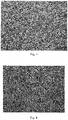
- Figs. 1 and 2 show the cast structure of the lightweight steel of Comparative Example B2 at low and high magnifications respectively; and Figs. 3 and 4 show the cast structure of the lightweight steel of Example A6 at low and high magnifications respectively.
- the arrows in Figs. 2 and 4 indicate the hard reinforcing particles.
- addition of Al element is favorable for improving the microstructure of a lightweight steel cast slab, reducing continuous distribution of hard reinforcing particles at grain boundaries in the matrix, and inhibiting enclosure of the grain boundaries in the matrix by a film-like hard reinforcing phase.
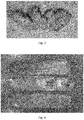
- Figs. 5 and 6 show the morphologies of the steel sheets in Comparative Example CS2 and Examples HM6-HM8 after hot rolling.
- Comparative Example CS2 cannot be deformed well by hot rolling.
- the steel sheets of Examples HM6-HM8 can be hot rolled to desired thicknesses.
- Comparative Examples CS2-CS3 are free of Al element, while Examples HM1-HM9 comprise A1 element. Hence, addition of Al element is favorable for hot rolling deformability of a steel sheet.
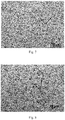
- Figs. 7 and 8 show the microstructure of the steel sheet of Example HM6 after hot rolling at low and high magnifications respectively.
- the arrows in Figs. 7 and 8 indicate the hard reinforcing particles.
- Table 4 lists the specific process parameters in the method for manufacturing the steel sheets of Examples HM10-HM13.
- metallographical examination on the above Examples HM10-HM13 shows that the matrix of the hot-rolled sheets is an equiaxed ferrite structure, and the average particle size of the hard reinforcing particles of mainly TiB 2 distributed in the matrix is about 3-5 ⁇ m.
- Table 6 lists the specific process parameters in the method for manufacturing the steel sheets of Examples HM14-HM18.
- the steel sheets have a tensile strength > 500MPa, and an elastic modulus >200GPa.
- a hot-rolled lightweight steel sheet having a low density, a high tensile strength, a high elastic modulus and a good ductility can be obtained according to the disclosure.
- Table 8 lists the specific process parameters in the method for manufacturing the steel sheets of Examples HM19-HM22.
- Metallographical examination on the above Examples HM19-HM22 shows that the matrix of the annealed cold-rolled sheets is an equiaxed ferrite structure, and the average particle size of the hard reinforcing particles of mainly TiB 2 distributed in the matrix is about 3-6 ⁇ m.
Landscapes
- Chemical & Material Sciences (AREA)
- Engineering & Computer Science (AREA)
- Mechanical Engineering (AREA)
- Materials Engineering (AREA)
- Metallurgy (AREA)
- Organic Chemistry (AREA)
- Physics & Mathematics (AREA)
- Thermal Sciences (AREA)
- Crystallography & Structural Chemistry (AREA)
- Heat Treatment Of Sheet Steel (AREA)
- Heat Treatment Of Steel (AREA)
Applications Claiming Priority (2)
| Application Number | Priority Date | Filing Date | Title |
|---|---|---|---|
| CN201610209295.2A CN105838993B (zh) | 2016-04-05 | 2016-04-05 | 具有增强弹性模量特征的轻质钢、钢板及其制造方法 |
| PCT/CN2017/078770 WO2017173950A1 (zh) | 2016-04-05 | 2017-03-30 | 具有增强弹性模量特征的轻质钢、钢板及其制造方法 |
Publications (3)
| Publication Number | Publication Date |
|---|---|
| EP3441497A1 true EP3441497A1 (de) | 2019-02-13 |
| EP3441497A4 EP3441497A4 (de) | 2019-08-28 |
| EP3441497B1 EP3441497B1 (de) | 2020-12-02 |
Family
ID=56596823
Family Applications (1)
| Application Number | Title | Priority Date | Filing Date |
|---|---|---|---|
| EP17778614.2A Active EP3441497B1 (de) | 2016-04-05 | 2017-03-30 | Leichtes stahlblech mit erhöhtem elastizitätsmodul und herstellungsverfahren dafür |
Country Status (6)
| Country | Link |
|---|---|
| US (1) | US11078554B2 (de) |
| EP (1) | EP3441497B1 (de) |
| JP (1) | JP6783871B2 (de) |
| KR (1) | KR102128491B1 (de) |
| CN (1) | CN105838993B (de) |
| WO (1) | WO2017173950A1 (de) |
Families Citing this family (16)
| Publication number | Priority date | Publication date | Assignee | Title |
|---|---|---|---|---|
| CN105838993B (zh) * | 2016-04-05 | 2018-03-30 | 宝山钢铁股份有限公司 | 具有增强弹性模量特征的轻质钢、钢板及其制造方法 |
| DE102017201068A1 (de) * | 2017-01-24 | 2018-07-26 | Thyssenkrupp Ag | Fahrzeugrahmen und Verwendung |
| KR102319210B1 (ko) | 2017-04-21 | 2021-10-29 | 아르셀러미탈 | 경량 구조 부품의 제조를 위한 고 성형성 강판 및 제조 방법 |
| US11725265B2 (en) | 2017-04-21 | 2023-08-15 | Arcelormittal | High formability steel sheet for the manufacture of lightweight structural parts and manufacturing process |
| CN110195187B (zh) * | 2019-05-17 | 2020-06-05 | 北京科技大学 | 一种高弹性模量汽车用钢铁材料及其制备方法 |
| WO2021123896A1 (en) * | 2019-12-20 | 2021-06-24 | Arcelormittal | Metal powder for additive manufacturing |
| CN114786844B (zh) * | 2019-12-20 | 2023-12-19 | 安赛乐米塔尔公司 | 用于增材制造的金属粉末 |
| CN114381580B (zh) * | 2020-10-19 | 2023-12-12 | 宝山钢铁股份有限公司 | 一种高耐蚀耐候钢的罩式退火工艺及制造方法 |
| CN112877605A (zh) * | 2020-12-30 | 2021-06-01 | 亚威机械制造(徐州)有限公司 | 一种耐腐蚀阀门的阀片制造工艺 |
| RU2760968C1 (ru) * | 2021-02-25 | 2021-12-01 | Публичное Акционерное Общество "Новолипецкий металлургический комбинат" | Способ производства высокопрочной особонизкоуглеродистой холоднокатаной стали с отжигом в периодических печах |
| CN113930677B (zh) * | 2021-09-24 | 2023-04-11 | 首钢集团有限公司 | 一种包装用钢带及其生产方法 |
| CN114012058B (zh) * | 2021-11-02 | 2023-02-17 | 邢台德龙机械轧辊有限公司 | 一种硼化物强化高速钢复合轧辊制备方法 |
| CN115125411A (zh) * | 2022-06-22 | 2022-09-30 | 昆明理工大学 | 一种颗粒增强金属基复合材料及其制备方法 |
| CN119710477B (zh) * | 2024-12-12 | 2025-08-15 | 东北大学 | 一种无碳高模量低密度轻型结构钢板及其制备方法 |
| CN119870392B (zh) * | 2025-01-21 | 2025-10-03 | 上海交通大学 | 一种高模高强高抗疲劳铝基复合板材制备方法 |
| CN120818751B (zh) * | 2025-09-17 | 2025-11-18 | 鞍钢股份有限公司 | 一种高刚度环保预硬型低裂纹敏感性锯片钢及其制造方法 |
Family Cites Families (11)
| Publication number | Priority date | Publication date | Assignee | Title |
|---|---|---|---|---|
| JP3409301B2 (ja) | 2000-02-25 | 2003-05-26 | 株式会社豊田中央研究所 | 往復運動部材 |
| JP5016172B2 (ja) | 2001-09-28 | 2012-09-05 | 株式会社神戸製鋼所 | 高疲労強度・高剛性鋼およびその製造方法 |
| JP3934475B2 (ja) * | 2002-05-09 | 2007-06-20 | 株式会社神戸製鋼所 | 高剛性鋼および高強度・高剛性部材 |
| EP1897963A1 (de) | 2006-09-06 | 2008-03-12 | ARCELOR France | Stahlblech für die Herstellung leichter Strukturen und Herstellungsverfahren dieses Blattes |
| US9067260B2 (en) * | 2006-09-06 | 2015-06-30 | Arcelormittal France | Steel plate for producing light structures and method for producing said plate |
| US20110277886A1 (en) * | 2010-02-20 | 2011-11-17 | Nucor Corporation | Nitriding of niobium steel and product made thereby |
| EP2703509A1 (de) | 2012-08-28 | 2014-03-05 | Tata Steel Nederland Technology B.V. | TiC- und TiB2-Partikel-verstärkter hochfester Stahl von geringer Dichte mit verbessertem E-Modul und Verfahren zur Herstellung dieses Stahls |
| KR20150082199A (ko) * | 2012-09-14 | 2015-07-15 | 타타 스틸 네덜란드 테크날러지 베.뷔. | 개선된 e-모듈러스를 구비한 고강도 및 저밀도 입자강화형 강 및 상기 강의 제조 방법 |
| WO2014040783A1 (en) | 2012-09-14 | 2014-03-20 | Tata Steel Nederland Technology Bv | TiC-PARTICLE-REINFORCED HIGH STRENGTH AND LOW DENSITY STEEL PRODUCTS WITH IMPROVED E-MODULUS AND METHOD FOR PRODUCING SAID PRODUCT |
| EP2759614B1 (de) | 2013-01-25 | 2019-01-02 | ThyssenKrupp Steel Europe AG | Verfahren zum Erzeugen eines Stahlflachprodukts mit einem amorphen, teilamorphen oder feinkristallinen Gefüge und derart beschaffenes Stahlflachprodukt |
| CN105838993B (zh) * | 2016-04-05 | 2018-03-30 | 宝山钢铁股份有限公司 | 具有增强弹性模量特征的轻质钢、钢板及其制造方法 |
-
2016
- 2016-04-05 CN CN201610209295.2A patent/CN105838993B/zh active Active
-
2017
- 2017-03-30 WO PCT/CN2017/078770 patent/WO2017173950A1/zh not_active Ceased
- 2017-03-30 EP EP17778614.2A patent/EP3441497B1/de active Active
- 2017-03-30 JP JP2018552174A patent/JP6783871B2/ja active Active
- 2017-03-30 KR KR1020187031733A patent/KR102128491B1/ko active Active
- 2017-03-30 US US16/092,867 patent/US11078554B2/en active Active
Also Published As
| Publication number | Publication date |
|---|---|
| EP3441497B1 (de) | 2020-12-02 |
| EP3441497A4 (de) | 2019-08-28 |
| JP6783871B2 (ja) | 2020-11-11 |
| CN105838993B (zh) | 2018-03-30 |
| CN105838993A (zh) | 2016-08-10 |
| KR102128491B1 (ko) | 2020-07-09 |
| US20190144965A1 (en) | 2019-05-16 |
| KR20180125589A (ko) | 2018-11-23 |
| WO2017173950A1 (zh) | 2017-10-12 |
| JP2019513897A (ja) | 2019-05-30 |
| US11078554B2 (en) | 2021-08-03 |
Similar Documents
| Publication | Publication Date | Title |
|---|---|---|
| EP3441497B1 (de) | Leichtes stahlblech mit erhöhtem elastizitätsmodul und herstellungsverfahren dafür | |
| CN113278896B (zh) | 一种Fe-Mn-Al-C系高强度低密度钢及其制备方法 | |
| KR101694875B1 (ko) | 고강도 열간 압연 q&p 강 및 이의 제조 방법 | |
| CN106636961B (zh) | 一种含Cu纳米相强化易焊接钢及制备方法 | |
| CN105568151B (zh) | 一种铝增强马氏体时效钢及其制备方法 | |
| US20190024198A1 (en) | Precipitation Hardening High Entropy Alloy and Method of Manufacturing the Same | |
| JP4084733B2 (ja) | 延性に優れた高強度低比重鋼板およびその製造方法 | |
| EP3492618A1 (de) | 1500-mpa-stahl mit hoher festigkeit und dehnung für fahrzeuge und herstellungsverfahren dafür | |
| CN104328360A (zh) | 双相孪生诱导塑性超高强度汽车钢板及其制备工艺 | |
| CN110218948A (zh) | 一种低密度高韧度钢及其制备方法 | |
| CN108728728B (zh) | 一种具有极低屈强比的高锰钢及其制造方法 | |
| JP2010180459A (ja) | 2相ステンレス鋼およびその製造方法 | |
| EP2703509A1 (de) | TiC- und TiB2-Partikel-verstärkter hochfester Stahl von geringer Dichte mit verbessertem E-Modul und Verfahren zur Herstellung dieses Stahls | |
| CN114231765B (zh) | 一种高温合金棒材的制备方法与应用 | |
| CN112874058A (zh) | 一种建筑用铜钢固液复合双金属材料及其制备方法 | |
| CN110592491B (zh) | 一种高耐磨性马氏体/奥氏体双相耐磨钢板及制造方法 | |
| CN110331344B (zh) | 一种强度性能稳定的Rm≥600MPa汽车大梁钢及生产方法 | |
| JP2909089B2 (ja) | マルエージング鋼およびその製造方法 | |
| CN102041445A (zh) | 高强度超低膨胀因瓦合金基复合材料的制备方法 | |
| EP2527481B1 (de) | Vergütetes stahlblech mit hervorragender heisspressformbarkeit und herstellungsverfahren dafür | |
| KR101952015B1 (ko) | Co-Cu-Ni-Mn계 고엔트로피 합금 | |
| JP4626484B2 (ja) | プレス成形性に優れたフェライト系ステンレス冷延鋼板およびその製造方法 | |
| JP2738130B2 (ja) | 高冷却能を有する高強度Cu合金製連続鋳造鋳型材およびその製造法 | |
| TWI760241B (zh) | 多性能中熵輕量鋼及其製造方法 | |
| KR101957601B1 (ko) | 냉연강판 및 그 제조방법 |
Legal Events
| Date | Code | Title | Description |
|---|---|---|---|
| STAA | Information on the status of an ep patent application or granted ep patent |
Free format text: STATUS: THE INTERNATIONAL PUBLICATION HAS BEEN MADE |
|
| PUAI | Public reference made under article 153(3) epc to a published international application that has entered the european phase |
Free format text: ORIGINAL CODE: 0009012 |
|
| STAA | Information on the status of an ep patent application or granted ep patent |
Free format text: STATUS: REQUEST FOR EXAMINATION WAS MADE |
|
| 17P | Request for examination filed |
Effective date: 20181031 |
|
| AK | Designated contracting states |
Kind code of ref document: A1 Designated state(s): AL AT BE BG CH CY CZ DE DK EE ES FI FR GB GR HR HU IE IS IT LI LT LU LV MC MK MT NL NO PL PT RO RS SE SI SK SM TR |
|
| AX | Request for extension of the european patent |
Extension state: BA ME |
|
| DAV | Request for validation of the european patent (deleted) | ||
| DAX | Request for extension of the european patent (deleted) | ||
| A4 | Supplementary search report drawn up and despatched |
Effective date: 20190731 |
|
| RIC1 | Information provided on ipc code assigned before grant |
Ipc: C21D 6/00 20060101ALI20190725BHEP Ipc: C22C 38/26 20060101ALI20190725BHEP Ipc: C21D 9/46 20060101ALI20190725BHEP Ipc: C22C 38/32 20060101ALI20190725BHEP Ipc: C22C 38/04 20060101AFI20190725BHEP Ipc: C22C 38/18 20060101ALI20190725BHEP Ipc: B22D 11/12 20060101ALI20190725BHEP Ipc: C22C 38/00 20060101ALI20190725BHEP Ipc: C21D 8/02 20060101ALI20190725BHEP Ipc: C22C 38/14 20060101ALI20190725BHEP Ipc: C22C 38/28 20060101ALI20190725BHEP Ipc: C22C 38/08 20060101ALI20190725BHEP Ipc: C22C 38/38 20060101ALI20190725BHEP Ipc: C22C 38/22 20060101ALI20190725BHEP Ipc: C22C 38/06 20060101ALI20190725BHEP Ipc: C22C 38/02 20060101ALI20190725BHEP Ipc: C22C 38/16 20060101ALI20190725BHEP Ipc: B22D 11/00 20060101ALI20190725BHEP Ipc: C22C 38/12 20060101ALI20190725BHEP |
|
| GRAP | Despatch of communication of intention to grant a patent |
Free format text: ORIGINAL CODE: EPIDOSNIGR1 |
|
| STAA | Information on the status of an ep patent application or granted ep patent |
Free format text: STATUS: GRANT OF PATENT IS INTENDED |
|
| INTG | Intention to grant announced |
Effective date: 20200624 |
|
| GRAS | Grant fee paid |
Free format text: ORIGINAL CODE: EPIDOSNIGR3 |
|
| GRAA | (expected) grant |
Free format text: ORIGINAL CODE: 0009210 |
|
| STAA | Information on the status of an ep patent application or granted ep patent |
Free format text: STATUS: THE PATENT HAS BEEN GRANTED |
|
| RIN1 | Information on inventor provided before grant (corrected) |
Inventor name: YANG, QI Inventor name: WANG, LI |
|
| AK | Designated contracting states |
Kind code of ref document: B1 Designated state(s): AL AT BE BG CH CY CZ DE DK EE ES FI FR GB GR HR HU IE IS IT LI LT LU LV MC MK MT NL NO PL PT RO RS SE SI SK SM TR |
|
| REG | Reference to a national code |
Ref country code: GB Ref legal event code: FG4D |
|
| REG | Reference to a national code |
Ref country code: AT Ref legal event code: REF Ref document number: 1341027 Country of ref document: AT Kind code of ref document: T Effective date: 20201215 Ref country code: CH Ref legal event code: EP |
|
| REG | Reference to a national code |
Ref country code: IE Ref legal event code: FG4D |
|
| REG | Reference to a national code |
Ref country code: DE Ref legal event code: R096 Ref document number: 602017028859 Country of ref document: DE |
|
| PG25 | Lapsed in a contracting state [announced via postgrant information from national office to epo] |
Ref country code: NO Free format text: LAPSE BECAUSE OF FAILURE TO SUBMIT A TRANSLATION OF THE DESCRIPTION OR TO PAY THE FEE WITHIN THE PRESCRIBED TIME-LIMIT Effective date: 20210302 Ref country code: GR Free format text: LAPSE BECAUSE OF FAILURE TO SUBMIT A TRANSLATION OF THE DESCRIPTION OR TO PAY THE FEE WITHIN THE PRESCRIBED TIME-LIMIT Effective date: 20210303 Ref country code: RS Free format text: LAPSE BECAUSE OF FAILURE TO SUBMIT A TRANSLATION OF THE DESCRIPTION OR TO PAY THE FEE WITHIN THE PRESCRIBED TIME-LIMIT Effective date: 20201202 Ref country code: FI Free format text: LAPSE BECAUSE OF FAILURE TO SUBMIT A TRANSLATION OF THE DESCRIPTION OR TO PAY THE FEE WITHIN THE PRESCRIBED TIME-LIMIT Effective date: 20201202 |
|
| REG | Reference to a national code |
Ref country code: NL Ref legal event code: MP Effective date: 20201202 |
|
| REG | Reference to a national code |
Ref country code: AT Ref legal event code: MK05 Ref document number: 1341027 Country of ref document: AT Kind code of ref document: T Effective date: 20201202 |
|
| PG25 | Lapsed in a contracting state [announced via postgrant information from national office to epo] |
Ref country code: BG Free format text: LAPSE BECAUSE OF FAILURE TO SUBMIT A TRANSLATION OF THE DESCRIPTION OR TO PAY THE FEE WITHIN THE PRESCRIBED TIME-LIMIT Effective date: 20210302 Ref country code: LV Free format text: LAPSE BECAUSE OF FAILURE TO SUBMIT A TRANSLATION OF THE DESCRIPTION OR TO PAY THE FEE WITHIN THE PRESCRIBED TIME-LIMIT Effective date: 20201202 Ref country code: PL Free format text: LAPSE BECAUSE OF FAILURE TO SUBMIT A TRANSLATION OF THE DESCRIPTION OR TO PAY THE FEE WITHIN THE PRESCRIBED TIME-LIMIT Effective date: 20201202 Ref country code: SE Free format text: LAPSE BECAUSE OF FAILURE TO SUBMIT A TRANSLATION OF THE DESCRIPTION OR TO PAY THE FEE WITHIN THE PRESCRIBED TIME-LIMIT Effective date: 20201202 |
|
| PG25 | Lapsed in a contracting state [announced via postgrant information from national office to epo] |
Ref country code: NL Free format text: LAPSE BECAUSE OF FAILURE TO SUBMIT A TRANSLATION OF THE DESCRIPTION OR TO PAY THE FEE WITHIN THE PRESCRIBED TIME-LIMIT Effective date: 20201202 Ref country code: HR Free format text: LAPSE BECAUSE OF FAILURE TO SUBMIT A TRANSLATION OF THE DESCRIPTION OR TO PAY THE FEE WITHIN THE PRESCRIBED TIME-LIMIT Effective date: 20201202 |
|
| REG | Reference to a national code |
Ref country code: LT Ref legal event code: MG9D |
|
| PG25 | Lapsed in a contracting state [announced via postgrant information from national office to epo] |
Ref country code: SM Free format text: LAPSE BECAUSE OF FAILURE TO SUBMIT A TRANSLATION OF THE DESCRIPTION OR TO PAY THE FEE WITHIN THE PRESCRIBED TIME-LIMIT Effective date: 20201202 Ref country code: CZ Free format text: LAPSE BECAUSE OF FAILURE TO SUBMIT A TRANSLATION OF THE DESCRIPTION OR TO PAY THE FEE WITHIN THE PRESCRIBED TIME-LIMIT Effective date: 20201202 Ref country code: EE Free format text: LAPSE BECAUSE OF FAILURE TO SUBMIT A TRANSLATION OF THE DESCRIPTION OR TO PAY THE FEE WITHIN THE PRESCRIBED TIME-LIMIT Effective date: 20201202 Ref country code: LT Free format text: LAPSE BECAUSE OF FAILURE TO SUBMIT A TRANSLATION OF THE DESCRIPTION OR TO PAY THE FEE WITHIN THE PRESCRIBED TIME-LIMIT Effective date: 20201202 Ref country code: RO Free format text: LAPSE BECAUSE OF FAILURE TO SUBMIT A TRANSLATION OF THE DESCRIPTION OR TO PAY THE FEE WITHIN THE PRESCRIBED TIME-LIMIT Effective date: 20201202 Ref country code: SK Free format text: LAPSE BECAUSE OF FAILURE TO SUBMIT A TRANSLATION OF THE DESCRIPTION OR TO PAY THE FEE WITHIN THE PRESCRIBED TIME-LIMIT Effective date: 20201202 Ref country code: PT Free format text: LAPSE BECAUSE OF FAILURE TO SUBMIT A TRANSLATION OF THE DESCRIPTION OR TO PAY THE FEE WITHIN THE PRESCRIBED TIME-LIMIT Effective date: 20210405 |
|
| PG25 | Lapsed in a contracting state [announced via postgrant information from national office to epo] |
Ref country code: AT Free format text: LAPSE BECAUSE OF FAILURE TO SUBMIT A TRANSLATION OF THE DESCRIPTION OR TO PAY THE FEE WITHIN THE PRESCRIBED TIME-LIMIT Effective date: 20201202 |
|
| REG | Reference to a national code |
Ref country code: DE Ref legal event code: R097 Ref document number: 602017028859 Country of ref document: DE |
|
| PG25 | Lapsed in a contracting state [announced via postgrant information from national office to epo] |
Ref country code: IS Free format text: LAPSE BECAUSE OF FAILURE TO SUBMIT A TRANSLATION OF THE DESCRIPTION OR TO PAY THE FEE WITHIN THE PRESCRIBED TIME-LIMIT Effective date: 20210402 |
|
| PLBE | No opposition filed within time limit |
Free format text: ORIGINAL CODE: 0009261 |
|
| STAA | Information on the status of an ep patent application or granted ep patent |
Free format text: STATUS: NO OPPOSITION FILED WITHIN TIME LIMIT |
|
| PG25 | Lapsed in a contracting state [announced via postgrant information from national office to epo] |
Ref country code: AL Free format text: LAPSE BECAUSE OF FAILURE TO SUBMIT A TRANSLATION OF THE DESCRIPTION OR TO PAY THE FEE WITHIN THE PRESCRIBED TIME-LIMIT Effective date: 20201202 Ref country code: IT Free format text: LAPSE BECAUSE OF FAILURE TO SUBMIT A TRANSLATION OF THE DESCRIPTION OR TO PAY THE FEE WITHIN THE PRESCRIBED TIME-LIMIT Effective date: 20201202 Ref country code: MC Free format text: LAPSE BECAUSE OF FAILURE TO SUBMIT A TRANSLATION OF THE DESCRIPTION OR TO PAY THE FEE WITHIN THE PRESCRIBED TIME-LIMIT Effective date: 20201202 |
|
| REG | Reference to a national code |
Ref country code: CH Ref legal event code: PL |
|
| 26N | No opposition filed |
Effective date: 20210903 |
|
| GBPC | Gb: european patent ceased through non-payment of renewal fee |
Effective date: 20210330 |
|
| PG25 | Lapsed in a contracting state [announced via postgrant information from national office to epo] |
Ref country code: DK Free format text: LAPSE BECAUSE OF FAILURE TO SUBMIT A TRANSLATION OF THE DESCRIPTION OR TO PAY THE FEE WITHIN THE PRESCRIBED TIME-LIMIT Effective date: 20201202 Ref country code: SI Free format text: LAPSE BECAUSE OF FAILURE TO SUBMIT A TRANSLATION OF THE DESCRIPTION OR TO PAY THE FEE WITHIN THE PRESCRIBED TIME-LIMIT Effective date: 20201202 |
|
| REG | Reference to a national code |
Ref country code: BE Ref legal event code: MM Effective date: 20210331 |
|
| PG25 | Lapsed in a contracting state [announced via postgrant information from national office to epo] |
Ref country code: ES Free format text: LAPSE BECAUSE OF FAILURE TO SUBMIT A TRANSLATION OF THE DESCRIPTION OR TO PAY THE FEE WITHIN THE PRESCRIBED TIME-LIMIT Effective date: 20201202 Ref country code: CH Free format text: LAPSE BECAUSE OF NON-PAYMENT OF DUE FEES Effective date: 20210331 Ref country code: LI Free format text: LAPSE BECAUSE OF NON-PAYMENT OF DUE FEES Effective date: 20210331 Ref country code: LU Free format text: LAPSE BECAUSE OF NON-PAYMENT OF DUE FEES Effective date: 20210330 Ref country code: IE Free format text: LAPSE BECAUSE OF NON-PAYMENT OF DUE FEES Effective date: 20210330 Ref country code: GB Free format text: LAPSE BECAUSE OF NON-PAYMENT OF DUE FEES Effective date: 20210330 |
|
| PG25 | Lapsed in a contracting state [announced via postgrant information from national office to epo] |
Ref country code: IS Free format text: LAPSE BECAUSE OF FAILURE TO SUBMIT A TRANSLATION OF THE DESCRIPTION OR TO PAY THE FEE WITHIN THE PRESCRIBED TIME-LIMIT Effective date: 20210402 |
|
| PG25 | Lapsed in a contracting state [announced via postgrant information from national office to epo] |
Ref country code: BE Free format text: LAPSE BECAUSE OF NON-PAYMENT OF DUE FEES Effective date: 20210331 |
|
| PG25 | Lapsed in a contracting state [announced via postgrant information from national office to epo] |
Ref country code: CY Free format text: LAPSE BECAUSE OF FAILURE TO SUBMIT A TRANSLATION OF THE DESCRIPTION OR TO PAY THE FEE WITHIN THE PRESCRIBED TIME-LIMIT Effective date: 20201202 |
|
| PG25 | Lapsed in a contracting state [announced via postgrant information from national office to epo] |
Ref country code: HU Free format text: LAPSE BECAUSE OF FAILURE TO SUBMIT A TRANSLATION OF THE DESCRIPTION OR TO PAY THE FEE WITHIN THE PRESCRIBED TIME-LIMIT; INVALID AB INITIO Effective date: 20170330 |
|
| PG25 | Lapsed in a contracting state [announced via postgrant information from national office to epo] |
Ref country code: MK Free format text: LAPSE BECAUSE OF FAILURE TO SUBMIT A TRANSLATION OF THE DESCRIPTION OR TO PAY THE FEE WITHIN THE PRESCRIBED TIME-LIMIT Effective date: 20201202 |
|
| PG25 | Lapsed in a contracting state [announced via postgrant information from national office to epo] |
Ref country code: TR Free format text: LAPSE BECAUSE OF FAILURE TO SUBMIT A TRANSLATION OF THE DESCRIPTION OR TO PAY THE FEE WITHIN THE PRESCRIBED TIME-LIMIT Effective date: 20201202 |
|
| PG25 | Lapsed in a contracting state [announced via postgrant information from national office to epo] |
Ref country code: MT Free format text: LAPSE BECAUSE OF FAILURE TO SUBMIT A TRANSLATION OF THE DESCRIPTION OR TO PAY THE FEE WITHIN THE PRESCRIBED TIME-LIMIT Effective date: 20201202 |
|
| PGFP | Annual fee paid to national office [announced via postgrant information from national office to epo] |
Ref country code: DE Payment date: 20260324 Year of fee payment: 10 |
|
| PGFP | Annual fee paid to national office [announced via postgrant information from national office to epo] |
Ref country code: FR Payment date: 20260323 Year of fee payment: 10 |