EP3444859B1 - Thermoelektrisches umwandlungsmodulpaket - Google Patents
Thermoelektrisches umwandlungsmodulpaket Download PDFInfo
- Publication number
- EP3444859B1 EP3444859B1 EP17782548.6A EP17782548A EP3444859B1 EP 3444859 B1 EP3444859 B1 EP 3444859B1 EP 17782548 A EP17782548 A EP 17782548A EP 3444859 B1 EP3444859 B1 EP 3444859B1
- Authority
- EP
- European Patent Office
- Prior art keywords
- thermoelectric conversion
- conversion module
- package
- metal foil
- resin
- Prior art date
- Legal status (The legal status is an assumption and is not a legal conclusion. Google has not performed a legal analysis and makes no representation as to the accuracy of the status listed.)
- Not-in-force
Links
Images




Classifications
-
- H—ELECTRICITY
- H10—SEMICONDUCTOR DEVICES; ELECTRIC SOLID-STATE DEVICES NOT OTHERWISE PROVIDED FOR
- H10N—ELECTRIC SOLID-STATE DEVICES NOT OTHERWISE PROVIDED FOR
- H10N10/00—Thermoelectric devices comprising a junction of dissimilar materials, i.e. devices exhibiting Seebeck or Peltier effects
- H10N10/80—Constructional details
- H10N10/82—Interconnections
-
- H—ELECTRICITY
- H10—SEMICONDUCTOR DEVICES; ELECTRIC SOLID-STATE DEVICES NOT OTHERWISE PROVIDED FOR
- H10N—ELECTRIC SOLID-STATE DEVICES NOT OTHERWISE PROVIDED FOR
- H10N10/00—Thermoelectric devices comprising a junction of dissimilar materials, i.e. devices exhibiting Seebeck or Peltier effects
- H10N10/10—Thermoelectric devices comprising a junction of dissimilar materials, i.e. devices exhibiting Seebeck or Peltier effects operating with only the Peltier or Seebeck effects
- H10N10/13—Thermoelectric devices comprising a junction of dissimilar materials, i.e. devices exhibiting Seebeck or Peltier effects operating with only the Peltier or Seebeck effects characterised by the heat-exchanging means at the junction
-
- H—ELECTRICITY
- H10—SEMICONDUCTOR DEVICES; ELECTRIC SOLID-STATE DEVICES NOT OTHERWISE PROVIDED FOR
- H10N—ELECTRIC SOLID-STATE DEVICES NOT OTHERWISE PROVIDED FOR
- H10N10/00—Thermoelectric devices comprising a junction of dissimilar materials, i.e. devices exhibiting Seebeck or Peltier effects
- H10N10/10—Thermoelectric devices comprising a junction of dissimilar materials, i.e. devices exhibiting Seebeck or Peltier effects operating with only the Peltier or Seebeck effects
- H10N10/17—Thermoelectric devices comprising a junction of dissimilar materials, i.e. devices exhibiting Seebeck or Peltier effects operating with only the Peltier or Seebeck effects characterised by the structure or configuration of the cell or thermocouple forming the device
-
- H—ELECTRICITY
- H10—SEMICONDUCTOR DEVICES; ELECTRIC SOLID-STATE DEVICES NOT OTHERWISE PROVIDED FOR
- H10W—GENERIC PACKAGES, INTERCONNECTIONS, CONNECTORS OR OTHER CONSTRUCTIONAL DETAILS OF DEVICES COVERED BY CLASS H10
- H10W40/00—Arrangements for thermal protection or thermal control
- H10W40/20—Arrangements for cooling
- H10W40/28—Arrangements for cooling comprising Peltier coolers
Definitions
- the present invention relates to a thermoelectric conversion module package in which a thermoelectric conversion module is sealed with a package.
- thermoelectric conversion module can be used as a cooling module utilizing the Peltier effect of a thermoelectric material or as a power generation module utilizing the Seebeck effect of a thermoelectric material. With the expansion of applications of thermoelectric conversion modules, thermoelectric conversion modules have come to be used in various environments. In a thermoelectric conversion module, performance deteriorates due to oxidation and corrosion of the thermoelectric material.
- JP 2006-49872 A discloses a thermoelectric conversion module capable of preventing oxidation and corrosion of the thermoelectric material.
- This thermoelectric conversion module has a structure hermetically sealed with a package constituted from a metallic cooling plate covering the low-temperature side substrate and a metallic lid covering the high-temperature side substrate. Therefore, in this thermoelectric conversion module, since the thermoelectric material does not come into contact with the external environment, excellent environmental resistance can be obtained.
- US 3 225 549 A is related to the preamble of claim 1, and JP 2000 188430 A . discloses a similar module.
- thermoelectric conversion module In the thermoelectric conversion module according to JP 2006-49872 A , the metallic cooling plate and the metallic lid are joined by means such as welding or the like. Therefore, in this thermoelectric conversion module, since the metallic cooling plate and the metallic lid are thermally connected, it is difficult for a temperature difference to arise between the low temperature-side substrate and the high temperature-side substrate. As a result, in this thermoelectric conversion module, cooling performance and power generation performance are greatly reduced.
- thermoelectric conversion module in the thermoelectric conversion module according to JP 2006-49872 A , lead wires are drawn out from the metallic lid. Since both the lead wires and the metallic lid are made of metal, in this thermoelectric conversion module a constitution is required for electrically insulating the lead wires and the metallic lid and for hermetically sealing the lead wires and the metallic lid. For this reason, in this thermoelectric conversion module, the manufacturing process becomes complicated and the manufacturing cost increases.
- an object of the present invention is to provide a configuration capable of easily sealing a thermoelectric conversion module with a package without impairing the performance thereof.
- thermoelectric conversion module package according to one embodiment of the present invention is provided with a thermoelectric conversion module and a package.
- the thermoelectric conversion module includes a first and a second substrate opposed to each other, a plurality of thermoelectric elements arranged between the first and second substrates, and a first and a second lead wire drawn out from one of the first and second substrates.
- the package includes a first metal foil covering the first substrate on one side of the thermoelectric conversion module, a second metal foil covering the second substrate on the other side of the thermoelectric conversion module, a resin portion hermetically connecting the first metal foil and the second metal foil along an outer edge portion of the thermoelectric conversion module, and an insertion portion for hermetically passing the first and second lead wires through the resin portion.
- the second metal foil has a side wall portion extending toward the first metal foil at the outer edge portion of the thermoelectric conversion module, and a flange portion protruding outward from the side wall portion.
- the resin portion connects the first metal foil and the flange portion.
- the resin portion may be disposed at a position closer to the first substrate than the second substrate.
- the first metal foil may have an expansion portion that is expanded outward from a region facing the first substrate.
- the resin portion may connect the expansion portion and the flange portion.
- thermoelectric conversion module may be configured as an assembly including a plurality of the thermoelectric conversion modules.
- a connecting portion for electrically connecting the plurality of thermoelectric conversion modules may be further provided.
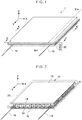
- FIG. 1 and FIG. 2 are perspective views of a thermoelectric conversion module package 1 according to one embodiment of the present invention.
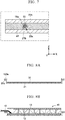
- FIG. 3 is a cross-sectional view of the thermoelectric conversion module package 1 taken along the line A-A' in FIG. 1 .
- FIG. 4 is a cross-sectional view of the thermoelectric conversion module package 1 taken along line B-B' of FIG. 1 .
- thermoelectric conversion module package 1 is provided with a thermoelectric conversion module 10 and a package 20, and has a constitution in which the thermoelectric conversion module 10 is hermetically sealed by the package 20.
- the package 20 is indicated by a broken line, with the thermoelectric conversion module 10 being shown by looking through the package 20.
- thermoelectric conversion module 10 constitutes the main body of the thermoelectric conversion module package 1 and is configured to exhibit the function of the thermoelectric conversion module package 1.
- the package 20 hermetically seals the thermoelectric conversion module 10.
- thermoelectric conversion module 10 (Thermoelectric conversion module 10)
- the thermoelectric conversion module 10 of the thermoelectric conversion module package 1 is provided with a first substrate 12 that is a low temperature-side substrate, a second substrate 13 that is a high temperature-side substrate, a thermoelectric element 11, and lead wires 15.
- the first substrate 12 and the second substrate 13 are arranged to face each other.
- the thermoelectric element 11 is composed of a plurality of pairs of P-type and N-type thermoelectric elements, and is arranged between the substrate 12 and the substrate 13.
- the lead wires 15 are configured as a pair of conductive wires that are each connected to the first substrate 12.
- the substrates 12 and 13 are each formed as a rectangular flat plate parallel to the XY plane.
- the substrates 12 and 13 are formed of an insulator material having excellent heat resistance. Since the thermoelectric conversion efficiency of the thermoelectric conversion module 10 is improved as the thermal conductivities of the substrates 12 and 13 are higher, it is preferable that the substrates 12 and 13 be formed thin with a material having a high thermal conductivity.
- a material for forming the substrates 12 and 13 for example, a ceramic material such as aluminum nitride, aluminum oxide, silicon carbide, silicon nitride or the like can be used. Further, the substrates 12 and 13 may be substrates using resins as substrates, such as so-called flexible substrates.
- Electrodes 14 are formed on each of the substrates 12 and 13.
- the electrodes 14 are formed on the upper surface of the first substrate 12 in FIG. 2 (the surface in the Z-axis positive direction), and the electrodes 14 is formed on the lower surface of the second substrate 13 in FIG. 2 (the surface in the negative direction of the Z axis). Therefore, the electrodes 14 of the first substrate 12 and the electrodes 14 of the second substrate 13 face each other in the Z-axis direction.
- Each electrode 14 is formed of a conductive material and, on the substrates 12 and 13, electrically connect pairs of the thermoelectric elements 11.
- the electrodes 14 are patterned so as to connect all the thermoelectric elements 11 in series between the substrates 12 and 13.
- the electrodes 14 of the substrates 12 and 13 can be constituted using, for example, gold (Au), nickel (Ni), tin (Sn), copper (Cu), or alloys thereof.
- the substrates 12 and 13 can have a single layer structure or a multilayer structure in which a plurality of metal materials are combined.
- the method of forming the electrodes 14 on the substrates 12 and 13 is not limited to a specific method and can be appropriately selected from known methods.
- the electrodes 14 can be formed by subjecting the substrates 12 and 13 to a metal plating treatment. In the formation of the electrodes 14, multilayer plating can be used if necessary. The metal plating process can be performed at the wafer stage before being cut into the respective substrates 12 and 13.
- the substrates 12 and 13 may be DBC (Direct Bonded Copper) substrates on which the electrodes 14 made of copper are directly bonded.
- DBC Direct Bonded Copper
- thermoelectric elements 11 are composed of P-type thermoelectric elements 11 and N-type thermoelectric elements 11.
- the thermoelectric conversion module 10 of the thermoelectric conversion module package 1 has 49 pairs of thermoelectric elements 11 arranged in 10 rows in the X-axis direction and the Y-axis direction except for two corners in the Y-axis direction at which the lead wires 15 are connected. That is, between the substrates 12 and 13, 49 P-type thermoelectric elements 11 and 49 N-type thermoelectric elements 11 are alternately arranged.
- thermoelectric element 11 is formed of a thermoelectric material, that is, the P-type thermoelectric element 11 is formed of a P-type thermoelectric material and the N-type thermoelectric element 11 is formed of an N-type thermoelectric material.
- the thermoelectric material forming the thermoelectric element 11 for example, a bismuth-tellurium-based thermoelectric material exhibiting good performance at a relatively low temperature can be used.
- thermoelectric material forming the thermoelectric element 11 examples include a half-Heusler-based thermoelectric material, a silicide-based thermoelectric material, a lead-tellurium-based thermoelectric material, a silicon-germanium-based thermoelectric material, a skutterudite-based thermoelectric material, and a tetrahedrite-based thermoelectric material.
- the lead wires 15 are joined to two corners of the first substrate 12 in the Y-axis direction and led out in the Y-axis direction. That is, the lead wires 15 are connected to the electrodes 14 at the two places where the thermoelectric element 11 is not disposed on the first substrate 12. Therefore, each lead wire 15 is electrically connected to the thermoelectric element 11 adjacent in the Y-axis direction via the electrode 14.
- a known joining material such as solder, a brazing filler metal, a conductive paste or the like can be used for joining the lead wires 15 to the first substrate 12.
- thermoelectric conversion module 10 of the thermoelectric conversion module package 1 all the thermoelectric elements 11 are connected in series between the pair of lead wires 15.
- thermoelectric conversion module 10 of the thermoelectric conversion module package 1 can be variously changed in accordance with the use of the thermoelectric conversion module package 1.
- the substrates 12 and 13 may be divided into a plurality.
- the package 20 includes a first metal foil 21, a second metal foil 22, and a resin portion 23.
- the first metal foil 21 is disposed on the lower surface of the thermoelectric conversion module 10 in FIG. 3 (the surface in the Z-axis negative direction), and covers the first substrate 12 side of the thermoelectric conversion module 10.
- the second metal foil 22 is disposed on the upper surface of the thermoelectric conversion module 10 in FIG. 3 (the surface in the Z-axis positive direction), and covers the second substrate 13 side of the thermoelectric conversion module 10.
- the resin portion 23 is provided along the outer edge portion of the thermoelectric conversion module 10 and hermetically seals the first metal foil 21 and the second metal foil 22.
- a side wall portion 21a extending in the Z-axis positive direction to a position adjacent to the thermoelectric element 11 and a flange portion 21b extending from the upper end portion of the side wall portion 21a in the X axis and Y-axis positive direction are provided at the outer edge portion of the first metal foil 21.
- a side wall portion 22a extending in the Z-axis negative direction to a position adjacent to the thermoelectric element 11 and a flange portion 22b extending from the lower end portion of the side wall portion 22a in the X axis and Y-axis positive direction are provided at the outer edge portion of the second metal foil 22.
- the flange portion 21b of the first metal foil 21 and the flange portion 22b of the second metal foil 22 are opposed to each other in the Z-axis direction at an intermediate position in the Z-axis direction of the thermoelectric conversion module 10.
- the resin portion 23 is disposed between the flange portion 21b of the first metal foil 21 and the flange portion 22b of the second metal foil 22 and hermetically connects the first metal foil 21 and the second metal foil 22.
- thermoelectric conversion module package 1 by providing the side wall portion 22a in the second metal foil 22, it is possible to dispose the resin portion 23 away from the second substrate 13 in the negative Z-axis direction. This makes it difficult for the heat of the second substrate 13 to be applied to the resin portion 23 during use of the thermoelectric conversion module package 1, so that the resin portion 23 is less likely to be damaged. Therefore, in the thermoelectric conversion module package 1, high durability and reliability are obtained.
- thermoelectric conversion module package 1 by providing the flange portions 21b, 22b, it is possible to ensure a wide bonding area of the metal foils 21, 22 with the resin portion 23. As a result, the metal foils 21, 22 are better connected via the resin portion 23, so that the durability and reliability of the thermoelectric conversion module package 1 are improved.
- the dimension L (see FIG. 3 ) of the flange portions 21b, 22b in the X-axis direction and the Y-axis direction is preferably large to some extent. Specifically, it is preferably 2 mm or more, and more preferably 3 mm or more.
- the resin portion 23 is provided with an insertion portion 23a for drawing out the lead wires 15 of the thermoelectric conversion module 10 to the outside of the package 20.
- Each lead wire 15 is drawn out from the first substrate 12 to the height of the insertion portion 23a, and hermetically passed through the resin portion 23 at the insertion portion 23a.
- the thermoelectric conversion module package 1 it is possible to expose only the lead wires 15 of the thermoelectric conversion module 10 to the outside of the package 20.
- sealing of the metal foils 21 and 22 and drawing out of the lead wires 15 can be performed collectively in the resin portion 23. Thereby, the manufacturing cost of the thermoelectric conversion module package 1 can be reduced.
- FIG. 5 is a cross-sectional view of the thermoelectric conversion module package 1 taken along line C-C' of FIG. 1 , showing a cross section of the flange portions 21b and 22b and the resin portion 23.
- FIG. 6 is an enlarged partial cross-sectional view showing the region indicated by the long-dashed short-dashed line in FIG. 5 , particularly showing an enlargement of the cross section of the insertion portion 23a.
- the entire circumference of the lead wire 15 is covered with the resin portion 23 at the insertion portion 23a, and the resin portion 23 separates the metal foils 21 and 22 from the flange portions 21b and 22b. Therefore, in the thermoelectric conversion module package 1, it is possible to prevent a short circuit caused by the lead wires 15 contacting the metal foils 21 and 22.
- FIG. 7 is a partial cross-sectional view of a thermoelectric conversion module package 1 showing a modification of the configuration shown in FIG. 6 .
- Each lead wire 15 may be provided with a covering portion 15a made of resin that hermetically covers the outer surface of the lead wire 15.
- the lead wire 15 is separated from the flange portions 21b and 22b of the metal foils 21 and 22 by the covering portion 15a.
- the covering portion 15a As a result, it is possible to more effectively prevent a short circuit caused by the lead wires 15 contacting the metal foils 21 and 22.
- the covering portion 15a is not limited to a specific configuration provided it has insulation properties and can hermetically cover the lead wires 15.
- a sealant film capable of being brought into close contact with the lead wires 15 by a heat sealer can be used as the coating portion 15a.
- the material of the sealant film may be any material as long as it can adhere well to the resin portion 23 and may be the same as the resin portion 23 or different from the resin portion 23.
- the resin portion 23 functions to suppress heat transfer between the metal foils 21 and 22, in addition to the functions of sealing the package 20 and drawing out the lead wires 15. That is, the resin portion 23 has a very low thermal conductivity compared with metal, and therefore can function to thermally insulate the metal foils 21 and 22. As a result, since the temperature difference between the first substrate 12, which is the low temperature-side substrate, and the second substrate 13, which is the high temperature-side substrate, is maintained in the thermoelectric conversion module 10, the cooling performance and the power generation performance of the thermoelectric conversion module package 1 are not impaired.
- the thickness T of the resin portion 23 in the Z-axis direction is preferably large in view of the thermal insulation of the metal foils 21 and 22 and the electrical insulation between the lead wires 15 and the metal foils 21 and 22.
- the thickness T of the resin portion 23 is too large, the heat applied from the second metal foil 22 to the resin portion 23 easily accumulates, leading to damage of the resin portion 23 easily occurring.
- the thickness T of the resin portion 23 is preferably 10 ⁇ m or more and 160 ⁇ m or less.
- the resin material forming the resin portion 23 preferably has heat resistance.
- a resin material include a polyolefin-based resin, an epoxy-based resin, a polyimide-based resin, a silicone-based resin, a phenol-based resin, a urethane-based resin, an acrylic-based resin, and the like.
- a polyolefin-based resin, an epoxy-based resin, a polyimide-based resin, a silicone-based resin and a phenol-based resin are preferable, and from the viewpoint of adhesion to the metal foils, a polyolefin-based resin, an epoxy-based resin, and a silicone-based resin are more preferable.
- Examples of a polyolefin-based resin include low-density, medium-density or high-density polyethylene; an ethylene-a olefin copolymer; homo, block or random polypropylene; a propylene-a olefin copolymer and the like. From the viewpoint of heat resistance, homo, block or random polypropylene is preferable. Further, from the viewpoint of adhesion to the metal foils, the polyolefin-based resin may be graft-modified with an acid such as maleic anhydride.
- the epoxy-based resin is composed of a thermosetting composition containing at least an epoxy resin and a curing agent, and may contain a thermoplastic resin from the viewpoint of imparting flexibility or may contain an inorganic filler from the viewpoint of improving heat resistance.
- the epoxy resin is not particularly limited provided it is one having two or more epoxy groups in one molecule, with examples thereof including bisphenol F, bisphenol A, bisphenol S, resorcinol, dihydroxynaphthalene, dicyclopentadiene diphenol, dicyclopentadiene dixylenol and other diglycidyl ethers, epoxidized phenol novolac, epoxidized cresol novolac, epoxidized trisphenylolmethane, epoxidized tetraphenylolethane, epoxidized metaxylenediamine, cyclohexane epoxide and other alicyclic epoxies, and phenoxy resin.
- the curing agent examples include a phenol resin, a melamine resin, a maleimide resin, a xylene resin, a furan resin, a cyanate ester resin, and an aromatic polyamine.
- an addition-curable type there are an addition-curable type, a condensation-curable type, and a UV-curable type, with an addition-curable type that is curable in a short time by heating being preferable.
- An addition-curable silicone resin is a compound having a reactive functional group such as an alkenyl group, with the alkenyl group being one that causes crosslinking with a curing agent such as organic peroxide and addition reaction with hydrogen siloxane, and cured by mixed curing or heat curing. Further, it may contain a catalyst such as platinum for promoting curing, and an adhesion imparting agent such as a coupling agent for improving adhesion to the metal foils.
- the resin material forming the resin portion 23 may be another resin material provided it is one capable of obtaining high adhesiveness to the metal foils 21 and 22.
- the resin portion 23 may be constituted with a single resin material or may be constituted with a plurality of kinds of resin materials. Further, the resin material forming the resin portion 23 may be a sheet shape or a flow shape having viscosity.
- the thermoelectric conversion module package 1 includes heat transfer layers 31 and 32.
- the first heat transfer layer 31 is provided between the first substrate 12 and the first metal foil 21 and is in close contact with the first substrate 12 and the first metal foil 21.
- the second heat transfer layer 32 is provided between the second substrate 13 and the second metal foil 22 and is in close contact with the second substrate 13 and the second metal foil 22.
- the heat transfer layers 31 and 32 improve the heat transfer between the substrates 12 and 13 and the metal foils 21 and 22 by reducing the thermal resistance between the substrates 12 and 13 and the metal foils 21 and 22, respectively.
- heat transfer layers 31 and 32 for example, silicon grease, a graphite sheet, or a thermally conductive adhesive can be used.
- the members used for the heat transfer layers 31 and 32 may be the same or different.
- the combination of members used for the heat transfer layers 31 and 32 can be determined as appropriate.
- silicon grease can be used for the first heat transfer layer 31 on the first substrate 12 side, which is the low-temperature side substrate
- a graphite sheet with high heat resistance can be used for the second heat transfer layer 32 on the second substrate 13 side, which is the high-temperature side substrate.
- thermoelectric conversion module package 1 it is possible to favorably perform thermoelectric conversion between the potential difference between the pair of lead wires 15 drawn to the outside of the package 20 and the temperature difference between the metal foils 21, 22.
- thermoelectric conversion module package 1 since the thermoelectric conversion module 10 is hermetically sealed by the package 20, even when used in an environment where corrosion is likely to occur in the thermoelectric element 11, corrosion does not occur in the thermoelectric element 11. Moreover, in the thermoelectric conversion module package 1, the performance of the thermoelectric conversion module 10 is not affected by humidity even when used in a high humidity environment. Therefore, high durability and reliability are obtained in the thermoelectric conversion module package 1.
- the space in the package 20 be a non-oxidizing atmosphere having a smaller amount of oxygen than the atmosphere. This makes it possible to prevent an increase in electrical resistance of the thermoelectric conversion module package 1 due to oxidation of the thermoelectric element 11. Accordingly, the thermoelectric conversion module package 1 can obtain even higher durability and reliability. More specifically, the space within the package 20 can be made a non-oxidizing atmosphere by enclosing an inert gas such as nitrogen or argon, for example. Further, the space in the package 20 may be depressurized.
- thermoelectric conversion module package 1 is extremely lightweight because the package 20 is composed of the lightweight metal foils 21 and 22 and the resin portion 23. This facilitates the handling of the thermoelectric conversion module package 1, so that it is possible to efficiently perform mounting of the thermoelectric conversion module package 1 to other devices and the like.
- the metal foils 21 and 22 have flexibility, it is difficult for a load to be applied to the thermoelectric conversion module 10 due to thermal expansion or thermal contraction of the metal foils 21 and 22 during use of the thermoelectric conversion module package 1. As a result, durability and reliability are further improved in the thermoelectric conversion module package 1.
- the raw material cost can be reduced.
- the thickness of the metal foils 21 and 22 is preferably 10 ⁇ m or more, and more preferably 20 ⁇ m or more.
- the metal foils 21 and 22 are also required to have flexibility for obtaining high adhesion to the heat transfer layer 32.
- the thickness of the metal foils 21 and 22 is preferably 300 ⁇ m or less, and more preferably 200 ⁇ m or less.
- Examples of materials for forming the metal foils 21 and 22 include aluminum, aluminum alloys, copper, copper alloys, and stainless steel, with aluminum and aluminum alloys having light weight and flexibility being preferable.
- the metal foils 21 and 22 may be subjected to an adhesion improving treatment such as an alumite treatment, a chemical conversion treatment, a plating treatment, a coupling treatment and the like from the viewpoint of improving the adhesiveness with the resin material of the resin portion 23.
- FIGS. 8A to 8E are cross-sectional views illustrating a method of sealing the thermoelectric conversion module 10 with the package 20. The method of sealing the thermoelectric conversion module 10 by the package 20 will be described with reference to FIGS. 8A to 8E .
- the heat transfer layer 31 is arranged on the bottom surface of the first metal foil 21 that is molded is advance by press molding or the like.
- a first resin piece 123a for forming each resin portion 23 is disposed on the flange portion 21b of the first metal foil 21.
- the thermoelectric conversion module 10 is arranged on the heat transfer layer 31.
- the lead wires 15 of the thermoelectric conversion module 10 are arranged on each first resin piece 123a.
- the heat transfer layer 32 is disposed on the second substrate 13 of the thermoelectric conversion module 10.
- the second metal foil 22 molded in advance by press molding or the like is placed on the heat transfer layer 32.
- a second resin piece 123b formed similarly to the first resin piece 123a is disposed, and each lead wire 15 is sandwiched between the resin pieces 123a, 123b.
- heat is applied to the assembly shown in FIG. 8D to weld the resin pieces 23a and 123b, whereby the resin portion 23 is formed.
- the thermoelectric conversion module package 1 shown in FIG. 8E is obtained.
- thermoelectric conversion module package 1 since the metal foils 21 and 22 are sealed by the welding of the resin pieces 123a and 123b, it is unnecessary to expose the thermoelectric conversion module 10 to a high temperature as compared with a method such as welding. Therefore, the performance and reliability of the thermoelectric conversion module package 1 are hardly deteriorated. In addition, since the heat capacities of the metal foils 21 and 22 are small and the temperature of the resin pieces 123a and 123b rises in a short time, the metal foils 21 and 22 can be sealed in a short time.
- the method for forming the resin portion 23 in the package 20 is not limited to the welding of the resin pieces 123a and 123b, and any known method can be adopted freely.
- the resin portion 23 can be formed with an adhesive.
- the adhesive is applied to the flange portions 21b and 22b of the metal foils 21 and 22, and the adhesive is cured in a state in which the lead wires 15 are passed through the adhesive between the flange portions 21b and 22b.
- FIGS. 9A and 9B are cross-sectional views of a thermoelectric conversion module package 1 showing a modification of the package 20.
- the side wall portion 21a of the first metal foil 21 is short, and the side wall portion 22a of the second metal foil 22 is long. Therefore, the flange portions 21b and 22b and the resin portion 23 are arranged at low positions in the Z-axis direction. As a result, since the resin portion 23 can be further separated from the second substrate 13 in the negative direction of the Z axis (the lower side in FIG. 9A ), the heat of the second substrate 13 is less likely to be applied to the resin portion 23. Therefore, in the thermoelectric conversion module package 1, durability and reliability can be improved.
- the first metal foil 21 of the package 20 shown in FIG. 9B is not provided with the side wall portion 21a, and instead there is provided an expansion portion 21c that expands in the X-axis and Y-axis positive directions (outward) from the region facing the first substrate 12. That is, the first metal foil 21 is formed in a flat plate shape.
- the side wall portion 22a of the second metal foil 22 is made longer. Accordingly, since the resin portion 23 can be further separated from the second substrate 13 in the negative Z-axis direction (downward), the heat of the second substrate 13 has less of a tendency to be applied to the resin portion 23. Therefore, in the thermoelectric conversion module package 1, durability and reliability can be further improved.
- thermoelectric conversion module 10 Modification of thermoelectric conversion module 10.
- FIG. 10 is a cross-sectional view of the thermoelectric conversion module package 1 having an assembly of the thermoelectric conversion module 10 including a plurality of the thermoelectric conversion modules 10.
- the thermoelectric conversion module package 1 has an assembly of four thermoelectric conversion modules 10. Further, the thermoelectric conversion module package 1 has connecting portions 16 for connecting the four thermoelectric conversion modules 10 in series. Each connecting portion 16 is formed of, for example, a conductive wire or a metal foil.
- the lead wires 15 are respectively drawn out from the thermoelectric conversion modules 10 at both ends of the series connection in the four thermoelectric conversion modules 10.
- thermoelectric conversion module package 1 by combining a plurality of the thermoelectric conversion modules 10, it is possible to increase the area without increasing the size of each thermoelectric conversion module 10.
- thermoelectric conversion module package 1 since the thermal stress is mitigated more favorably by the configuration divided into a plurality of thermoelectric conversion modules 10 than the configuration in which the thermoelectric conversion module 10 itself is enlarged, excellent durability and reliability are obtained.
- FIG. 11 is a cross-sectional view of the thermoelectric conversion module package 1 taken along line D-D' in FIG. 10 , and shows the area between the two thermoelectric conversion modules 10.
- the metal foils 21 and 22 are not held in the region between the two thermoelectric conversion modules 10. Therefore, concave portions 21r and 22r recessed inward in the Z-axis direction may be generated in the metal foils 21 and 22.
- the concave portions 21r and 22r of the metal foils 21 and 22 are particularly likely to occur in the configuration in which the space inside the package 20 is depressurized. When the concave portions 21r and 22r make contact with the connecting portion 16, a short circuit occurs due to conduction between the connecting portions 16.
- thermoelectric conversion module package 1 is provided with two resin sheets 17 sandwiching the connecting portion 16 in the Z-axis direction. Thereby, it is possible to prevent the recessed portions 21r and 22r of the metal foils 21 and 22 from contacting the connecting portions 16. Note that in the case of using a covered wire or the like which is insulated in advance as the connecting portion 16, it is not necessary to provide the resin sheet 17.
- the lead wire 15 provided with the covering portion 15a such as a sealant film shown in FIG. 7 may be used as the connecting portion 16. In this case as well, there is no need to provide the resin sheet 17.
- thermoelectric conversion module packages of the embodiments and comparative example are shown below.
- Thermoelectric conversion module A-1 The size of the first substrate 12 is set to be 40 mm in width (X-axis direction), 32 mm in length (Y-axis direction), 2 mm in height (Z-axis direction), and the size of the second substrate 13 is set to be 40 mm in width (X-axis direction), 35 mm in length (Y-axis direction), and 2 mm in height (Z-axis direction).
- the thermoelectric element 11 is formed with a bismuth telluride-based thermoelectric material.
- Thermoelectric conversion module A-2 The size of the first substrate 12 is set to be 40 mm in width (X-axis direction), 38 mm in length (Y-axis direction), 2 mm in height (Z-axis direction), and the size of the second substrate 13 is set to be 40 mm in width (X-axis direction), 35 mm in length (Y-axis direction) of 40 mm, and 2 mm in height (Z-axis direction).
- the thermoelectric element 11 was formed with a bismuth telluride-based thermoelectric material.
- thermoelectric conversion module 10 In the thermoelectric conversion module packages of the embodiments and the comparative example, the thermoelectric conversion module 10, the heat transfer layer 31, the heat transfer layer 32, the first metal foil 21, the second metal foil 22 and the resin portion 23 were constituted using the materials of Table 1.
- Table 1 Embodiments & Comparative Example Thermoelectric Conversion Module 10 Heat Transfer Layer 31 Heat Transfer Layer 32 First Metal Foil 21 Second Metal Foil 22 Resin Portion 23 Embodiment 1 A-1 B-1 B-2 C-1 C-1 D-1 Embodiment 2 A-2 B-1 B-2 C-2 C-2 D-1 Embodiment 3 A-1 B-2 B-2 C-3 C-3 D-1 Embodiment 4 A-1 B-1 B-2 C-3 C-3 D-1 Embodiment 5 A-1 B-1 B-2 C-4 C-4 D-1 Embodiment 6 A-1 B-1 B-2 C-5 C-5 D-1 Embodiment 7 A-1 B-1 B-2 C-6 C-6 D-1 Embodiment 8 A-1 B-1 B-2 C-7 C-7 D-1 Embodiment 9 A-1 B-1 B
- thermoelectric conversion module packages of the embodiments and the comparative example were evaluated according to the following method.
- Durability tests were conducted on the thermoelectric conversion module packages of the embodiments and the comparative example.
- the durability test while keeping the temperature of the first metal foil 21 on the first substrate 12 at 90° C, the temperature of the second metal foil 22 on the second substrate 13 was changed in the range of 90°C to 330°C. More specifically, a cycle was performed 1,000 times in which the temperature of the second metal foil 22 on the second substrate 13 was raised from 90°C to 330°C in 5 minutes, held at 330°C for 2 minutes, cooled from 330°C to 90°C in 5 minutes, and held at 90°C for 2 minutes.
- thermoelectric conversion module package excellent in durability could be provided.
- thermoelectric conversion module 10 of the thermoelectric conversion module package 1 has only one thermoelectric element layer.
- thermoelectric conversion module package 1 may have an assembly of the thermoelectric conversion module 10 including a plurality of thermoelectric conversion modules 10 stacked in the Z-axis direction.
Landscapes
- Cooling Or The Like Of Semiconductors Or Solid State Devices (AREA)
- Structures Or Materials For Encapsulating Or Coating Semiconductor Devices Or Solid State Devices (AREA)
Claims (7)
- Packung (1) eines thermoelektrischen Umwandlungsmoduls, umfassend:ein thermoelektrisches Umwandlungsmodul (10), das ein erstes Substrat (12) und ein zweites Substrat (13), die einander gegenüberliegen, eine Vielzahl von thermoelektrischen Elementen (11), die zwischen dem ersten und zweiten Substrat angeordnet sind, und einen ersten und einen zweiten Leiterdraht (15) umfasst, die aus einem aus dem ersten und zweiten Substrat herausgezogen sind; undeine Packung, die eine erste Metallfolie (21), welche das erste Substrat (12) auf einer Seite des thermoelektrischen Umwandlungsmoduls (10) bedeckt, eine zweite Metallfolie (22), welche das zweite Substrat (13) auf der anderen Seite des thermoelektrischen Umwandlungsmoduls (10) bedeckt, einen Harzabschnitt (23), der die erste Metallfolie (21) und die zweite Metallfolie (22) entlang eines Außenrandabschnitts des thermoelektrischen Umwandlungsmoduls (10) hermetisch dicht verbindet, und einen Einführabschnitt (23a) zum hermetisch dichten Durchführen des ersten und zweiten Leiterdrahts (15) durch den Harzabschnitt umfasst, dadurch gekennzeichnet, dassein gesamter Umfang des ersten und zweiten Leiterdrahts (15) mit dem Harzabschnitt bedeckt sind,wobei die zweite Metallfolie (22) einen Seitenwandabschnitt (22a), der sich am Außenrandabschnitt des thermoelektrischen Umwandlungsmoduls (10) zur ersten Metallfolie (21) hin erstreckt, und einen Flanschabschnitt (22b) umfasst, der vom Seitenwandabschnitt nach außen vorspringt, undwobei der Harzabschnitt die erste Metallfolie (21) und den Flanschabschnitt (22b) verbindet.
- Packung (1) eines thermoelektrischen Umwandlungsmoduls nach Anspruch 1, wobei der Harzabschnitt an einer Stelle angeordnet ist, die näher am ersten Substrat (12) als dem zweiten Substrat (13) liegt.
- Packung (1) eines thermoelektrischen Umwandlungsmoduls nach Anspruch 2, wobei:die erste Metallfolie (21) einen Dehnungsabschnitt umfasst, der von dem dem ersten Substrat (12) zugewandten Bereich nach außen gedehnt wird; undder Harzabschnitt den Dehnungsabschnitt und den Flanschabschnitt (22b) verbindet.
- Packung (1) eines thermoelektrischen Umwandlungsmoduls nach einem der Ansprüche 1 bis 3, umfassend:eine thermoelektrische Umwandlungsmodule-Montage, die eine Vielzahl der thermoelektrischen Umwandlungsmodule (10) einschließt; undeinen Verbindungsabschnitt (16), der die Vielzahl der thermoelektrischen Umwandlungsmodule (10) elektrisch verbindet.
- Packung (1) eines thermoelektrischen Umwandlungsmoduls nach Anspruch 1, wobei der erste und zweite Leiterdraht (15) mit einem Deckabschnitt (15a) versehen sind, der eine Außenfläche des ersten und zweiten Leiterdrahts (15) hermetisch dicht bedeckt.
- Packung (1) eines thermoelektrischen Umwandlungsmoduls nach Anspruch 5, wobei der Deckabschnitt (15a) aus einem Material gefertigt ist, das sich von demjenigen des Harzabschnitts unterscheidet.
- Packung (1) eines thermoelektrischen Umwandlungsmoduls nach Anspruch 1, wobei Dicke der ersten Metallfolie (21) und der zweiten Metallfolie (22) gleich oder größer als 10 µm, und gleich oder kleiner als 300 µm ist.
Applications Claiming Priority (2)
| Application Number | Priority Date | Filing Date | Title |
|---|---|---|---|
| JP2016081728 | 2016-04-15 | ||
| PCT/JP2017/015401 WO2017179735A1 (ja) | 2016-04-15 | 2017-04-14 | 熱電変換モジュールパッケージ |
Publications (3)
| Publication Number | Publication Date |
|---|---|
| EP3444859A1 EP3444859A1 (de) | 2019-02-20 |
| EP3444859A4 EP3444859A4 (de) | 2019-10-30 |
| EP3444859B1 true EP3444859B1 (de) | 2020-12-02 |
Family
ID=60041811
Family Applications (1)
| Application Number | Title | Priority Date | Filing Date |
|---|---|---|---|
| EP17782548.6A Not-in-force EP3444859B1 (de) | 2016-04-15 | 2017-04-14 | Thermoelektrisches umwandlungsmodulpaket |
Country Status (5)
| Country | Link |
|---|---|
| US (1) | US10665768B2 (de) |
| EP (1) | EP3444859B1 (de) |
| JP (1) | JP6730425B2 (de) |
| CN (1) | CN109075245A (de) |
| WO (1) | WO2017179735A1 (de) |
Families Citing this family (10)
| Publication number | Priority date | Publication date | Assignee | Title |
|---|---|---|---|---|
| DE102019203752A1 (de) * | 2019-03-19 | 2020-09-24 | Mahle International Gmbh | Thermoelektrisches Modul und Verfahren zum Herstellen des thermoelektrischen Moduls |
| JP7506054B2 (ja) * | 2019-03-25 | 2024-06-25 | リンテック株式会社 | 熱電変換モジュール及び熱電変換モジュールを製造する方法 |
| KR20210001074A (ko) * | 2019-06-26 | 2021-01-06 | 엘지전자 주식회사 | 열전 모듈 및 이를 구비한 냉장고 |
| EP4033550A4 (de) * | 2019-09-19 | 2023-10-04 | Yamaha Corporation | Modul zur thermoelektrischen umwandlung |
| KR102832508B1 (ko) * | 2020-09-07 | 2025-07-11 | 엘지이노텍 주식회사 | 열전 모듈 및 이를 포함하는 발전 장치 |
| JP7797109B2 (ja) * | 2021-02-08 | 2026-01-13 | 株式会社Kelk | 熱電発電モジュール |
| JP2024025536A (ja) * | 2022-08-12 | 2024-02-26 | 株式会社Kelk | 熱電発電モジュール及び熱電発電ユニット |
| JP2024025537A (ja) * | 2022-08-12 | 2024-02-26 | 株式会社Kelk | 熱電発電モジュール及び熱電発電ユニット |
| EP4543183A1 (de) * | 2022-08-12 | 2025-04-23 | KELK Ltd. | Modul zur thermoelektrischen erzeugung und einheit zur thermoelektrischen erzeugung |
| DE102024121219A1 (de) | 2024-07-25 | 2026-01-29 | Deutsches Zentrum für Luft- und Raumfahrt e.V. | Thermoelektrisches Compound-Modul |
Family Cites Families (21)
| Publication number | Priority date | Publication date | Assignee | Title |
|---|---|---|---|---|
| US3225549A (en) * | 1962-04-18 | 1965-12-28 | Thore M Elfving | Thermoelectric cooling device |
| JP3968669B2 (ja) * | 1997-04-03 | 2007-08-29 | アイシン精機株式会社 | 熱電変換装置 |
| JP3252902B2 (ja) * | 1998-12-21 | 2002-02-04 | 日本電気株式会社 | 温度制御ユニット |
| JP2001144337A (ja) * | 1999-11-11 | 2001-05-25 | Orion Mach Co Ltd | 熱電変換モジュール、熱交換ユニットおよびその製造方法 |
| JP2001165525A (ja) * | 1999-12-07 | 2001-06-22 | Seiko Seiki Co Ltd | 熱電加熱冷却装置 |
| JP2003142739A (ja) * | 2001-11-02 | 2003-05-16 | Yamaha Corp | 熱電装置 |
| US7132756B2 (en) * | 2002-10-30 | 2006-11-07 | Matsushita Electric Industrial Co., Ltd. | Semiconductor device and method for manufacturing the same |
| JP4488778B2 (ja) * | 2003-07-25 | 2010-06-23 | 株式会社東芝 | 熱電変換装置 |
| JP2005353621A (ja) * | 2004-06-08 | 2005-12-22 | Toshiba Corp | 熱電変換システム |
| JP4829552B2 (ja) * | 2004-07-06 | 2011-12-07 | 財団法人電力中央研究所 | 熱電変換モジュール |
| US20060005873A1 (en) | 2004-07-06 | 2006-01-12 | Mitsuru Kambe | Thermoelectric conversion module |
| JP2006073632A (ja) * | 2004-08-31 | 2006-03-16 | Toshiba Corp | 熱電変換装置および熱電変換装置の製造方法 |
| JP4686171B2 (ja) * | 2004-10-29 | 2011-05-18 | 株式会社東芝 | 熱−電気直接変換装置 |
| JP4901350B2 (ja) * | 2005-08-02 | 2012-03-21 | 株式会社東芝 | 熱電変換装置及びその製造方法 |
| DE102008038985A1 (de) * | 2008-08-13 | 2010-02-18 | Emitec Gesellschaft Für Emissionstechnologie Mbh | Thermoelektrische Vorrichtung |
| CN101807662B (zh) * | 2009-02-18 | 2012-09-05 | 财团法人工业技术研究院 | 热电元件及其制作方法、芯片堆叠结构及芯片封装结构 |
| JP2012204755A (ja) * | 2011-03-28 | 2012-10-22 | Toppan Printing Co Ltd | 熱電変換素子包装体 |
| KR101554356B1 (ko) * | 2011-10-25 | 2015-09-18 | 다이니폰 인사츠 가부시키가이샤 | 전기화학 셀용 포장재료 |
| WO2013132673A1 (ja) * | 2012-03-05 | 2013-09-12 | 新日鉄住金マテリアルズ株式会社 | 樹脂金属複合シール容器及びその製造方法 |
| DE102014216974A1 (de) * | 2014-08-26 | 2016-03-03 | Mahle International Gmbh | Thermoelektrisches Modul |
| DE102014218787A1 (de) * | 2014-09-18 | 2016-03-24 | Mahle International Gmbh | Thermoelektrische Vorrichtung, insbesondere thermoelektrischer Generator, für ein Kraftfahrzeug |
-
2017
- 2017-04-14 EP EP17782548.6A patent/EP3444859B1/de not_active Not-in-force
- 2017-04-14 JP JP2018512113A patent/JP6730425B2/ja not_active Expired - Fee Related
- 2017-04-14 WO PCT/JP2017/015401 patent/WO2017179735A1/ja not_active Ceased
- 2017-04-14 CN CN201780022996.8A patent/CN109075245A/zh active Pending
-
2018
- 2018-10-12 US US16/158,980 patent/US10665768B2/en not_active Expired - Fee Related
Non-Patent Citations (1)
| Title |
|---|
| None * |
Also Published As
| Publication number | Publication date |
|---|---|
| JPWO2017179735A1 (ja) | 2019-02-07 |
| JP6730425B2 (ja) | 2020-07-29 |
| US20190081226A1 (en) | 2019-03-14 |
| WO2017179735A1 (ja) | 2017-10-19 |
| EP3444859A1 (de) | 2019-02-20 |
| US10665768B2 (en) | 2020-05-26 |
| EP3444859A4 (de) | 2019-10-30 |
| CN109075245A (zh) | 2018-12-21 |
Similar Documents
| Publication | Publication Date | Title |
|---|---|---|
| EP3444859B1 (de) | Thermoelektrisches umwandlungsmodulpaket | |
| US7936054B2 (en) | Multi-chip package | |
| JP3927784B2 (ja) | 熱電変換部材の製造方法 | |
| JP6711001B2 (ja) | 半導体装置及び製造方法 | |
| US10727209B2 (en) | Semiconductor device and semiconductor element with improved yield | |
| US20150214198A1 (en) | Stacked semiconductor system having interposer of half-etched and molded sheet metal | |
| US9318421B2 (en) | Power semiconductor chip with a metallic moulded body for contacting thick wires or strips and method for the production thereof | |
| US8963315B2 (en) | Semiconductor device with surface electrodes | |
| JP2010109132A (ja) | 熱電モジュールを備えたパッケージおよびその製造方法 | |
| US8786064B2 (en) | Semiconductor package and method for manufacturing the same and semiconductor package module having the same | |
| CN108231706B (zh) | 一种功率半导体器件封装结构及封装方法 | |
| US20130147027A1 (en) | Semiconductor package | |
| CN108886084A (zh) | 热电转换模块以及热电转换模块的制造方法 | |
| CN113745168A (zh) | 用于to-252封装的金属陶瓷外壳及制备方法 | |
| JP2012142466A (ja) | 半導体装置 | |
| JP2015026667A (ja) | 半導体モジュール | |
| CN100418216C (zh) | 半导体封装及半导体模块 | |
| US20220149260A1 (en) | Thermoelectric conversion module | |
| JP6507874B2 (ja) | 半導体装置および半導体装置の製造方法 | |
| JP7520273B1 (ja) | パワーモジュール | |
| JP4579855B2 (ja) | 電子冷熱モジュールおよびその製造方法 | |
| WO2025017953A1 (ja) | 半導体装置 | |
| JP2024031432A (ja) | 半導体装置及び半導体装置の製造方法 | |
| CN117080176A (zh) | 功率半导体模块装置及其制造方法 | |
| JP2021034607A (ja) | 熱電変換デバイスおよび製造方法 |
Legal Events
| Date | Code | Title | Description |
|---|---|---|---|
| STAA | Information on the status of an ep patent application or granted ep patent |
Free format text: STATUS: THE INTERNATIONAL PUBLICATION HAS BEEN MADE |
|
| PUAI | Public reference made under article 153(3) epc to a published international application that has entered the european phase |
Free format text: ORIGINAL CODE: 0009012 |
|
| STAA | Information on the status of an ep patent application or granted ep patent |
Free format text: STATUS: REQUEST FOR EXAMINATION WAS MADE |
|
| 17P | Request for examination filed |
Effective date: 20181012 |
|
| AK | Designated contracting states |
Kind code of ref document: A1 Designated state(s): AL AT BE BG CH CY CZ DE DK EE ES FI FR GB GR HR HU IE IS IT LI LT LU LV MC MK MT NL NO PL PT RO RS SE SI SK SM TR |
|
| AX | Request for extension of the european patent |
Extension state: BA ME |
|
| DAV | Request for validation of the european patent (deleted) | ||
| DAX | Request for extension of the european patent (deleted) | ||
| A4 | Supplementary search report drawn up and despatched |
Effective date: 20191001 |
|
| RIC1 | Information provided on ipc code assigned before grant |
Ipc: H01L 35/32 20060101ALI20190925BHEP Ipc: H01L 35/30 20060101AFI20190925BHEP Ipc: H01L 35/10 20060101ALI20190925BHEP |
|
| GRAP | Despatch of communication of intention to grant a patent |
Free format text: ORIGINAL CODE: EPIDOSNIGR1 |
|
| STAA | Information on the status of an ep patent application or granted ep patent |
Free format text: STATUS: GRANT OF PATENT IS INTENDED |
|
| INTG | Intention to grant announced |
Effective date: 20200624 |
|
| GRAS | Grant fee paid |
Free format text: ORIGINAL CODE: EPIDOSNIGR3 |
|
| GRAA | (expected) grant |
Free format text: ORIGINAL CODE: 0009210 |
|
| STAA | Information on the status of an ep patent application or granted ep patent |
Free format text: STATUS: THE PATENT HAS BEEN GRANTED |
|
| RAP1 | Party data changed (applicant data changed or rights of an application transferred) |
Owner name: TOYOTA TSUSHO CORPORATION Owner name: TOPPAN PRINTING CO., LTD. Owner name: YAMAHA CORPORATION |
|
| RIN1 | Information on inventor provided before grant (corrected) |
Inventor name: HAYASHI TAKAHIRO Inventor name: HAMANO TETSUTSUGU Inventor name: TANIGUCHI TOMOAKI Inventor name: MUROI YUKI Inventor name: NAKAMURA TAKASHI Inventor name: HORIO YUMA |
|
| AK | Designated contracting states |
Kind code of ref document: B1 Designated state(s): AL AT BE BG CH CY CZ DE DK EE ES FI FR GB GR HR HU IE IS IT LI LT LU LV MC MK MT NL NO PL PT RO RS SE SI SK SM TR |
|
| REG | Reference to a national code |
Ref country code: GB Ref legal event code: FG4D |
|
| REG | Reference to a national code |
Ref country code: AT Ref legal event code: REF Ref document number: 1341883 Country of ref document: AT Kind code of ref document: T Effective date: 20201215 Ref country code: CH Ref legal event code: EP |
|
| REG | Reference to a national code |
Ref country code: IE Ref legal event code: FG4D |
|
| REG | Reference to a national code |
Ref country code: DE Ref legal event code: R096 Ref document number: 602017028870 Country of ref document: DE |
|
| PG25 | Lapsed in a contracting state [announced via postgrant information from national office to epo] |
Ref country code: FI Free format text: LAPSE BECAUSE OF FAILURE TO SUBMIT A TRANSLATION OF THE DESCRIPTION OR TO PAY THE FEE WITHIN THE PRESCRIBED TIME-LIMIT Effective date: 20201202 Ref country code: RS Free format text: LAPSE BECAUSE OF FAILURE TO SUBMIT A TRANSLATION OF THE DESCRIPTION OR TO PAY THE FEE WITHIN THE PRESCRIBED TIME-LIMIT Effective date: 20201202 Ref country code: NO Free format text: LAPSE BECAUSE OF FAILURE TO SUBMIT A TRANSLATION OF THE DESCRIPTION OR TO PAY THE FEE WITHIN THE PRESCRIBED TIME-LIMIT Effective date: 20210302 Ref country code: GR Free format text: LAPSE BECAUSE OF FAILURE TO SUBMIT A TRANSLATION OF THE DESCRIPTION OR TO PAY THE FEE WITHIN THE PRESCRIBED TIME-LIMIT Effective date: 20210303 |
|
| REG | Reference to a national code |
Ref country code: NL Ref legal event code: MP Effective date: 20201202 |
|
| REG | Reference to a national code |
Ref country code: AT Ref legal event code: MK05 Ref document number: 1341883 Country of ref document: AT Kind code of ref document: T Effective date: 20201202 |
|
| PG25 | Lapsed in a contracting state [announced via postgrant information from national office to epo] |
Ref country code: BG Free format text: LAPSE BECAUSE OF FAILURE TO SUBMIT A TRANSLATION OF THE DESCRIPTION OR TO PAY THE FEE WITHIN THE PRESCRIBED TIME-LIMIT Effective date: 20210302 Ref country code: LV Free format text: LAPSE BECAUSE OF FAILURE TO SUBMIT A TRANSLATION OF THE DESCRIPTION OR TO PAY THE FEE WITHIN THE PRESCRIBED TIME-LIMIT Effective date: 20201202 Ref country code: PL Free format text: LAPSE BECAUSE OF FAILURE TO SUBMIT A TRANSLATION OF THE DESCRIPTION OR TO PAY THE FEE WITHIN THE PRESCRIBED TIME-LIMIT Effective date: 20201202 Ref country code: SE Free format text: LAPSE BECAUSE OF FAILURE TO SUBMIT A TRANSLATION OF THE DESCRIPTION OR TO PAY THE FEE WITHIN THE PRESCRIBED TIME-LIMIT Effective date: 20201202 |
|
| PG25 | Lapsed in a contracting state [announced via postgrant information from national office to epo] |
Ref country code: NL Free format text: LAPSE BECAUSE OF FAILURE TO SUBMIT A TRANSLATION OF THE DESCRIPTION OR TO PAY THE FEE WITHIN THE PRESCRIBED TIME-LIMIT Effective date: 20201202 Ref country code: HR Free format text: LAPSE BECAUSE OF FAILURE TO SUBMIT A TRANSLATION OF THE DESCRIPTION OR TO PAY THE FEE WITHIN THE PRESCRIBED TIME-LIMIT Effective date: 20201202 |
|
| REG | Reference to a national code |
Ref country code: LT Ref legal event code: MG9D |
|
| PG25 | Lapsed in a contracting state [announced via postgrant information from national office to epo] |
Ref country code: RO Free format text: LAPSE BECAUSE OF FAILURE TO SUBMIT A TRANSLATION OF THE DESCRIPTION OR TO PAY THE FEE WITHIN THE PRESCRIBED TIME-LIMIT Effective date: 20201202 Ref country code: PT Free format text: LAPSE BECAUSE OF FAILURE TO SUBMIT A TRANSLATION OF THE DESCRIPTION OR TO PAY THE FEE WITHIN THE PRESCRIBED TIME-LIMIT Effective date: 20210405 Ref country code: SK Free format text: LAPSE BECAUSE OF FAILURE TO SUBMIT A TRANSLATION OF THE DESCRIPTION OR TO PAY THE FEE WITHIN THE PRESCRIBED TIME-LIMIT Effective date: 20201202 Ref country code: SM Free format text: LAPSE BECAUSE OF FAILURE TO SUBMIT A TRANSLATION OF THE DESCRIPTION OR TO PAY THE FEE WITHIN THE PRESCRIBED TIME-LIMIT Effective date: 20201202 Ref country code: LT Free format text: LAPSE BECAUSE OF FAILURE TO SUBMIT A TRANSLATION OF THE DESCRIPTION OR TO PAY THE FEE WITHIN THE PRESCRIBED TIME-LIMIT Effective date: 20201202 Ref country code: EE Free format text: LAPSE BECAUSE OF FAILURE TO SUBMIT A TRANSLATION OF THE DESCRIPTION OR TO PAY THE FEE WITHIN THE PRESCRIBED TIME-LIMIT Effective date: 20201202 Ref country code: CZ Free format text: LAPSE BECAUSE OF FAILURE TO SUBMIT A TRANSLATION OF THE DESCRIPTION OR TO PAY THE FEE WITHIN THE PRESCRIBED TIME-LIMIT Effective date: 20201202 |
|
| PG25 | Lapsed in a contracting state [announced via postgrant information from national office to epo] |
Ref country code: AT Free format text: LAPSE BECAUSE OF FAILURE TO SUBMIT A TRANSLATION OF THE DESCRIPTION OR TO PAY THE FEE WITHIN THE PRESCRIBED TIME-LIMIT Effective date: 20201202 |
|
| REG | Reference to a national code |
Ref country code: DE Ref legal event code: R097 Ref document number: 602017028870 Country of ref document: DE |
|
| PG25 | Lapsed in a contracting state [announced via postgrant information from national office to epo] |
Ref country code: IS Free format text: LAPSE BECAUSE OF FAILURE TO SUBMIT A TRANSLATION OF THE DESCRIPTION OR TO PAY THE FEE WITHIN THE PRESCRIBED TIME-LIMIT Effective date: 20210402 |
|
| PLBE | No opposition filed within time limit |
Free format text: ORIGINAL CODE: 0009261 |
|
| STAA | Information on the status of an ep patent application or granted ep patent |
Free format text: STATUS: NO OPPOSITION FILED WITHIN TIME LIMIT |
|
| PG25 | Lapsed in a contracting state [announced via postgrant information from national office to epo] |
Ref country code: AL Free format text: LAPSE BECAUSE OF FAILURE TO SUBMIT A TRANSLATION OF THE DESCRIPTION OR TO PAY THE FEE WITHIN THE PRESCRIBED TIME-LIMIT Effective date: 20201202 |
|
| 26N | No opposition filed |
Effective date: 20210903 |
|
| PG25 | Lapsed in a contracting state [announced via postgrant information from national office to epo] |
Ref country code: DK Free format text: LAPSE BECAUSE OF FAILURE TO SUBMIT A TRANSLATION OF THE DESCRIPTION OR TO PAY THE FEE WITHIN THE PRESCRIBED TIME-LIMIT Effective date: 20201202 Ref country code: SI Free format text: LAPSE BECAUSE OF FAILURE TO SUBMIT A TRANSLATION OF THE DESCRIPTION OR TO PAY THE FEE WITHIN THE PRESCRIBED TIME-LIMIT Effective date: 20201202 Ref country code: MC Free format text: LAPSE BECAUSE OF FAILURE TO SUBMIT A TRANSLATION OF THE DESCRIPTION OR TO PAY THE FEE WITHIN THE PRESCRIBED TIME-LIMIT Effective date: 20201202 |
|
| GBPC | Gb: european patent ceased through non-payment of renewal fee |
Effective date: 20210414 |
|
| PG25 | Lapsed in a contracting state [announced via postgrant information from national office to epo] |
Ref country code: LU Free format text: LAPSE BECAUSE OF NON-PAYMENT OF DUE FEES Effective date: 20210414 |
|
| REG | Reference to a national code |
Ref country code: BE Ref legal event code: MM Effective date: 20210430 |
|
| PG25 | Lapsed in a contracting state [announced via postgrant information from national office to epo] |
Ref country code: LI Free format text: LAPSE BECAUSE OF NON-PAYMENT OF DUE FEES Effective date: 20210430 Ref country code: CH Free format text: LAPSE BECAUSE OF NON-PAYMENT OF DUE FEES Effective date: 20210430 Ref country code: ES Free format text: LAPSE BECAUSE OF FAILURE TO SUBMIT A TRANSLATION OF THE DESCRIPTION OR TO PAY THE FEE WITHIN THE PRESCRIBED TIME-LIMIT Effective date: 20201202 Ref country code: GB Free format text: LAPSE BECAUSE OF NON-PAYMENT OF DUE FEES Effective date: 20210414 |
|
| PG25 | Lapsed in a contracting state [announced via postgrant information from national office to epo] |
Ref country code: IE Free format text: LAPSE BECAUSE OF NON-PAYMENT OF DUE FEES Effective date: 20210414 |
|
| PG25 | Lapsed in a contracting state [announced via postgrant information from national office to epo] |
Ref country code: IS Free format text: LAPSE BECAUSE OF FAILURE TO SUBMIT A TRANSLATION OF THE DESCRIPTION OR TO PAY THE FEE WITHIN THE PRESCRIBED TIME-LIMIT Effective date: 20210402 |
|
| PG25 | Lapsed in a contracting state [announced via postgrant information from national office to epo] |
Ref country code: BE Free format text: LAPSE BECAUSE OF NON-PAYMENT OF DUE FEES Effective date: 20210430 |
|
| PGFP | Annual fee paid to national office [announced via postgrant information from national office to epo] |
Ref country code: IT Payment date: 20220420 Year of fee payment: 6 Ref country code: FR Payment date: 20220421 Year of fee payment: 6 Ref country code: DE Payment date: 20220420 Year of fee payment: 6 |
|
| REG | Reference to a national code |
Ref country code: DE Ref legal event code: R079 Ref document number: 602017028870 Country of ref document: DE Free format text: PREVIOUS MAIN CLASS: H01L0035300000 Ipc: H10N0010130000 |
|
| PG25 | Lapsed in a contracting state [announced via postgrant information from national office to epo] |
Ref country code: CY Free format text: LAPSE BECAUSE OF FAILURE TO SUBMIT A TRANSLATION OF THE DESCRIPTION OR TO PAY THE FEE WITHIN THE PRESCRIBED TIME-LIMIT Effective date: 20201202 |
|
| PG25 | Lapsed in a contracting state [announced via postgrant information from national office to epo] |
Ref country code: HU Free format text: LAPSE BECAUSE OF FAILURE TO SUBMIT A TRANSLATION OF THE DESCRIPTION OR TO PAY THE FEE WITHIN THE PRESCRIBED TIME-LIMIT; INVALID AB INITIO Effective date: 20170414 |
|
| REG | Reference to a national code |
Ref country code: DE Ref legal event code: R119 Ref document number: 602017028870 Country of ref document: DE |
|
| PG25 | Lapsed in a contracting state [announced via postgrant information from national office to epo] |
Ref country code: FR Free format text: LAPSE BECAUSE OF NON-PAYMENT OF DUE FEES Effective date: 20230430 Ref country code: DE Free format text: LAPSE BECAUSE OF NON-PAYMENT OF DUE FEES Effective date: 20231103 |
|
| PG25 | Lapsed in a contracting state [announced via postgrant information from national office to epo] |
Ref country code: MK Free format text: LAPSE BECAUSE OF FAILURE TO SUBMIT A TRANSLATION OF THE DESCRIPTION OR TO PAY THE FEE WITHIN THE PRESCRIBED TIME-LIMIT Effective date: 20201202 Ref country code: IT Free format text: LAPSE BECAUSE OF NON-PAYMENT OF DUE FEES Effective date: 20230414 |
|
| PG25 | Lapsed in a contracting state [announced via postgrant information from national office to epo] |
Ref country code: MT Free format text: LAPSE BECAUSE OF FAILURE TO SUBMIT A TRANSLATION OF THE DESCRIPTION OR TO PAY THE FEE WITHIN THE PRESCRIBED TIME-LIMIT Effective date: 20201202 |
|
| PG25 | Lapsed in a contracting state [announced via postgrant information from national office to epo] |
Ref country code: TR Free format text: LAPSE BECAUSE OF FAILURE TO SUBMIT A TRANSLATION OF THE DESCRIPTION OR TO PAY THE FEE WITHIN THE PRESCRIBED TIME-LIMIT Effective date: 20201202 |