EP3446798B1 - Verfahren zur ultraniedertemperaturkarbonisierungsbehandlung von biomassematerial und verfahren zur herstellung von carbid - Google Patents
Verfahren zur ultraniedertemperaturkarbonisierungsbehandlung von biomassematerial und verfahren zur herstellung von carbid Download PDFInfo
- Publication number
- EP3446798B1 EP3446798B1 EP17795768.5A EP17795768A EP3446798B1 EP 3446798 B1 EP3446798 B1 EP 3446798B1 EP 17795768 A EP17795768 A EP 17795768A EP 3446798 B1 EP3446798 B1 EP 3446798B1
- Authority
- EP
- European Patent Office
- Prior art keywords
- biomass material
- carbonization
- water
- treatment
- oxygen
- Prior art date
- Legal status (The legal status is an assumption and is not a legal conclusion. Google has not performed a legal analysis and makes no representation as to the accuracy of the status listed.)
- Active
Links
Images



Classifications
-
- C—CHEMISTRY; METALLURGY
- C10—PETROLEUM, GAS OR COKE INDUSTRIES; TECHNICAL GASES CONTAINING CARBON MONOXIDE; FUELS; LUBRICANTS; PEAT
- C10B—DESTRUCTIVE DISTILLATION OF CARBONACEOUS MATERIALS FOR PRODUCTION OF GAS, COKE, TAR, OR SIMILAR MATERIALS
- C10B49/00—Destructive distillation of solid carbonaceous materials by direct heating with heat-carrying agents including the partial combustion of the solid material to be treated
- C10B49/02—Destructive distillation of solid carbonaceous materials by direct heating with heat-carrying agents including the partial combustion of the solid material to be treated with hot gases or vapours, e.g. hot gases obtained by partial combustion of the charge
-
- B—PERFORMING OPERATIONS; TRANSPORTING
- B09—DISPOSAL OF SOLID WASTE; RECLAMATION OF CONTAMINATED SOIL
- B09B—DISPOSAL OF SOLID WASTE NOT OTHERWISE PROVIDED FOR
- B09B3/00—Destroying solid waste or transforming solid waste into something useful or harmless
- B09B3/60—Biochemical treatment, e.g. by using enzymes
-
- C—CHEMISTRY; METALLURGY
- C01—INORGANIC CHEMISTRY
- C01B—NON-METALLIC ELEMENTS; COMPOUNDS THEREOF; METALLOIDS OR COMPOUNDS THEREOF NOT COVERED BY SUBCLASS C01C
- C01B32/00—Carbon; Compounds thereof
- C01B32/90—Carbides
-
- C—CHEMISTRY; METALLURGY
- C02—TREATMENT OF WATER, WASTE WATER, SEWAGE, OR SLUDGE
- C02F—TREATMENT OF WATER, WASTE WATER, SEWAGE, OR SLUDGE
- C02F11/00—Treatment of sludge; Devices therefor
- C02F11/10—Treatment of sludge; Devices therefor by pyrolysis
-
- C—CHEMISTRY; METALLURGY
- C02—TREATMENT OF WATER, WASTE WATER, SEWAGE, OR SLUDGE
- C02F—TREATMENT OF WATER, WASTE WATER, SEWAGE, OR SLUDGE
- C02F11/00—Treatment of sludge; Devices therefor
- C02F11/12—Treatment of sludge; Devices therefor by de-watering, drying or thickening
- C02F11/13—Treatment of sludge; Devices therefor by de-watering, drying or thickening by heating
-
- C—CHEMISTRY; METALLURGY
- C10—PETROLEUM, GAS OR COKE INDUSTRIES; TECHNICAL GASES CONTAINING CARBON MONOXIDE; FUELS; LUBRICANTS; PEAT
- C10B—DESTRUCTIVE DISTILLATION OF CARBONACEOUS MATERIALS FOR PRODUCTION OF GAS, COKE, TAR, OR SIMILAR MATERIALS
- C10B53/00—Destructive distillation, specially adapted for particular solid raw materials or solid raw materials in special form
- C10B53/02—Destructive distillation, specially adapted for particular solid raw materials or solid raw materials in special form of cellulose-containing material
-
- C—CHEMISTRY; METALLURGY
- C10—PETROLEUM, GAS OR COKE INDUSTRIES; TECHNICAL GASES CONTAINING CARBON MONOXIDE; FUELS; LUBRICANTS; PEAT
- C10L—FUELS NOT OTHERWISE PROVIDED FOR; NATURAL GAS; SYNTHETIC NATURAL GAS OBTAINED BY PROCESSES NOT COVERED BY SUBCLASSES C10G OR C10K; LIQUIFIED PETROLEUM GAS; USE OF ADDITIVES TO FUELS OR FIRES; FIRE-LIGHTERS
- C10L5/00—Solid fuels
- C10L5/40—Solid fuels essentially based on materials of non-mineral origin
- C10L5/42—Solid fuels essentially based on materials of non-mineral origin on animal substances or products obtained therefrom, e.g. manure
-
- C—CHEMISTRY; METALLURGY
- C10—PETROLEUM, GAS OR COKE INDUSTRIES; TECHNICAL GASES CONTAINING CARBON MONOXIDE; FUELS; LUBRICANTS; PEAT
- C10L—FUELS NOT OTHERWISE PROVIDED FOR; NATURAL GAS; SYNTHETIC NATURAL GAS OBTAINED BY PROCESSES NOT COVERED BY SUBCLASSES C10G OR C10K; LIQUIFIED PETROLEUM GAS; USE OF ADDITIVES TO FUELS OR FIRES; FIRE-LIGHTERS
- C10L5/00—Solid fuels
- C10L5/40—Solid fuels essentially based on materials of non-mineral origin
- C10L5/44—Solid fuels essentially based on materials of non-mineral origin on vegetable substances
-
- C—CHEMISTRY; METALLURGY
- C10—PETROLEUM, GAS OR COKE INDUSTRIES; TECHNICAL GASES CONTAINING CARBON MONOXIDE; FUELS; LUBRICANTS; PEAT
- C10L—FUELS NOT OTHERWISE PROVIDED FOR; NATURAL GAS; SYNTHETIC NATURAL GAS OBTAINED BY PROCESSES NOT COVERED BY SUBCLASSES C10G OR C10K; LIQUIFIED PETROLEUM GAS; USE OF ADDITIVES TO FUELS OR FIRES; FIRE-LIGHTERS
- C10L9/00—Treating solid fuels to improve their combustion
- C10L9/08—Treating solid fuels to improve their combustion by heat treatments, e.g. calcining
-
- C—CHEMISTRY; METALLURGY
- C02—TREATMENT OF WATER, WASTE WATER, SEWAGE, OR SLUDGE
- C02F—TREATMENT OF WATER, WASTE WATER, SEWAGE, OR SLUDGE
- C02F2103/00—Nature of the water, waste water, sewage or sludge to be treated
- C02F2103/20—Nature of the water, waste water, sewage or sludge to be treated from animal husbandry
-
- C—CHEMISTRY; METALLURGY
- C02—TREATMENT OF WATER, WASTE WATER, SEWAGE, OR SLUDGE
- C02F—TREATMENT OF WATER, WASTE WATER, SEWAGE, OR SLUDGE
- C02F2209/00—Controlling or monitoring parameters in water treatment
- C02F2209/02—Temperature
-
- C—CHEMISTRY; METALLURGY
- C05—FERTILISERS; MANUFACTURE THEREOF
- C05F—ORGANIC FERTILISERS NOT COVERED BY SUBCLASSES C05B, C05C, e.g. FERTILISERS FROM WASTE OR REFUSE
- C05F17/00—Preparation of fertilisers characterised by biological or biochemical treatment steps, e.g. composting or fermentation
- C05F17/60—Heating or cooling during the treatment
-
- C—CHEMISTRY; METALLURGY
- C10—PETROLEUM, GAS OR COKE INDUSTRIES; TECHNICAL GASES CONTAINING CARBON MONOXIDE; FUELS; LUBRICANTS; PEAT
- C10L—FUELS NOT OTHERWISE PROVIDED FOR; NATURAL GAS; SYNTHETIC NATURAL GAS OBTAINED BY PROCESSES NOT COVERED BY SUBCLASSES C10G OR C10K; LIQUIFIED PETROLEUM GAS; USE OF ADDITIVES TO FUELS OR FIRES; FIRE-LIGHTERS
- C10L2290/00—Fuel preparation or upgrading, processes or apparatus therefore, comprising specific process steps or apparatus units
- C10L2290/02—Combustion or pyrolysis
-
- C—CHEMISTRY; METALLURGY
- C10—PETROLEUM, GAS OR COKE INDUSTRIES; TECHNICAL GASES CONTAINING CARBON MONOXIDE; FUELS; LUBRICANTS; PEAT
- C10L—FUELS NOT OTHERWISE PROVIDED FOR; NATURAL GAS; SYNTHETIC NATURAL GAS OBTAINED BY PROCESSES NOT COVERED BY SUBCLASSES C10G OR C10K; LIQUIFIED PETROLEUM GAS; USE OF ADDITIVES TO FUELS OR FIRES; FIRE-LIGHTERS
- C10L2290/00—Fuel preparation or upgrading, processes or apparatus therefore, comprising specific process steps or apparatus units
- C10L2290/06—Heat exchange, direct or indirect
-
- C—CHEMISTRY; METALLURGY
- C10—PETROLEUM, GAS OR COKE INDUSTRIES; TECHNICAL GASES CONTAINING CARBON MONOXIDE; FUELS; LUBRICANTS; PEAT
- C10L—FUELS NOT OTHERWISE PROVIDED FOR; NATURAL GAS; SYNTHETIC NATURAL GAS OBTAINED BY PROCESSES NOT COVERED BY SUBCLASSES C10G OR C10K; LIQUIFIED PETROLEUM GAS; USE OF ADDITIVES TO FUELS OR FIRES; FIRE-LIGHTERS
- C10L2290/00—Fuel preparation or upgrading, processes or apparatus therefore, comprising specific process steps or apparatus units
- C10L2290/08—Drying or removing water
-
- Y—GENERAL TAGGING OF NEW TECHNOLOGICAL DEVELOPMENTS; GENERAL TAGGING OF CROSS-SECTIONAL TECHNOLOGIES SPANNING OVER SEVERAL SECTIONS OF THE IPC; TECHNICAL SUBJECTS COVERED BY FORMER USPC CROSS-REFERENCE ART COLLECTIONS [XRACs] AND DIGESTS
- Y02—TECHNOLOGIES OR APPLICATIONS FOR MITIGATION OR ADAPTATION AGAINST CLIMATE CHANGE
- Y02E—REDUCTION OF GREENHOUSE GAS [GHG] EMISSIONS, RELATED TO ENERGY GENERATION, TRANSMISSION OR DISTRIBUTION
- Y02E50/00—Technologies for the production of fuel of non-fossil origin
- Y02E50/10—Biofuels, e.g. bio-diesel
-
- Y—GENERAL TAGGING OF NEW TECHNOLOGICAL DEVELOPMENTS; GENERAL TAGGING OF CROSS-SECTIONAL TECHNOLOGIES SPANNING OVER SEVERAL SECTIONS OF THE IPC; TECHNICAL SUBJECTS COVERED BY FORMER USPC CROSS-REFERENCE ART COLLECTIONS [XRACs] AND DIGESTS
- Y02—TECHNOLOGIES OR APPLICATIONS FOR MITIGATION OR ADAPTATION AGAINST CLIMATE CHANGE
- Y02E—REDUCTION OF GREENHOUSE GAS [GHG] EMISSIONS, RELATED TO ENERGY GENERATION, TRANSMISSION OR DISTRIBUTION
- Y02E50/00—Technologies for the production of fuel of non-fossil origin
- Y02E50/30—Fuel from waste, e.g. synthetic alcohol or diesel
-
- Y—GENERAL TAGGING OF NEW TECHNOLOGICAL DEVELOPMENTS; GENERAL TAGGING OF CROSS-SECTIONAL TECHNOLOGIES SPANNING OVER SEVERAL SECTIONS OF THE IPC; TECHNICAL SUBJECTS COVERED BY FORMER USPC CROSS-REFERENCE ART COLLECTIONS [XRACs] AND DIGESTS
- Y02—TECHNOLOGIES OR APPLICATIONS FOR MITIGATION OR ADAPTATION AGAINST CLIMATE CHANGE
- Y02W—CLIMATE CHANGE MITIGATION TECHNOLOGIES RELATED TO WASTEWATER TREATMENT OR WASTE MANAGEMENT
- Y02W10/00—Technologies for wastewater treatment
- Y02W10/40—Valorisation of by-products of wastewater, sewage or sludge processing
Definitions
- the present invention relates to a method capable of partially carbonizing a biomass material of a waste system or a plant (cultivated crop) system at an extremely low temperature, and a method for producing carbide.
- livestock feces, raw garbage, and the like which are expected to have the highest resource recovery, are often in a so-called muddy state due to the large amount of water when generated.
- livestock feces, etc. is subjected to carbonization treatment and utilized as an agricultural or industrial resource, such a large amount of water becomes problematic, requiring a water reduction process.
- Patent Document 1 as a carbonization treatment device for reducing the fuel consumption required for carbonization treatment, there is proposed a device that comprises a drying part for decreasing the water content by heating the waste, a carbonization part for baking and carbonizing the dried waste, a dry distillation gas heating supply part for heating and supplying a dry distillation gas generated in the carbonization part to the drying part and a carbonization tube heating chamber, and the like.
- Patent Document 2 as well, as a device for reducing the fuel consumption required for carbonization treatment of a treated object, there is proposed a device that comprises a drying furnace for heating and drying the livestock feces, a hopper for supplying the livestock feces to an interior of a drying part, a carbonization furnace for heating and carbonizing the livestock feces dried in the drying part by an electric heater, communicated with the drying part, a dry distillation gas heating chamber for heating a dry distillation gas generated in the carbonization furnace by the combustion heat of the waste and generating hot gas for drying in the drying furnace, integrally provided with an incineration heating furnace that incinerates the waste, a hot gas supply passage that connects the dry distillation gas heating chamber and drying furnace and introduces hot gas from the dry distillation gas heating chamber to the drying furnace, and a dry distillation gas passage that connects the carbonization furnace and the dry distillation gas heating chamber and introduces the dry distillation gas generated in the carbonization furnace to the dry distillation gas heating chamber.
- Patent Documents 1 and 2 utilize a dry distillation gas generated during the treatment step to reduce the consumption of fuel required for carbonization treatment.
- Patent Document 3 as means for decreasing the water content of livestock feces, etc., containing a large amount of water, there is described a method for decreasing the water content by applying thermal energy, air-blowing, or the like to the livestock feces, etc., and a method for reducing the water by mixing agricultural by-products such as sawdust, rice straw, and rice husks with organic waste.
- EP 2 486 989 A1 describes a method of treating biomass material, which can achieve volume reduction or carbonization of biomass material at extremely low cost.
- the method of treating biomass material to achieve volume reduction or carbonization of one type or more of biomass material which is selected among food scraps, livestock excreta, agricultural waste products, marine waste products and forest waste products in a pressurizable and heatable container includes: placing the biomass material in the container; setting an initial condition of the container after placing the biomass material, the initial condition including all of (a) an atmosphere in the container having oxygen, (b) a temperature range in the container being equal to or greater than 55 °C and equal to or less than 80 °C, (c) a pressure range in the container being equal to or greater than atmospheric pressure and equal to or less than 15 atmospheric pressure and (d) carbon monoxide concentration being equal to or greater than 100 ppm; increasing temperature of the biomass material over 80 °C under the initial condition; setting a continuation condition after initiating increase in the temperature of the biomass to over 80 °C under the initial condition, the continuation condition
- JP 2001 019580 A relates to the problem to eliminate the need of a deodorizing treatment and compost an organic waste without using an electrical energy by mixing the organic waste with a photophilic/thermophilic microorganism group, filling the resultant mixture in a hermetically sealed chamber, applying a light energy to the organic waste and fermenting and photolyzing the organic waste.
- an apparatus for a composting treatment is obtained by forming a hermetically sealed chamber of a horizontal rectangular cross section from a peripheral wall, a ceiling wall and a floor wall and dividing the hermetically sealed chamber into a first treating chamber, a second treating chamber and a third treating chamber with partition walls.
- a mixture prepared by mixing a garbage with KN bacteria is initially piled up in the first treating chamber to prepare starter bacteria while repeating, gas stirring and scattering of a photolytic and fermentation liquor.
- the garbage is then mixed with the starter bacteria and piled up in the second treating chamber and the third treating chamber and the composting treatment is performed while similarly repeating the gas stirring and scattering of the photolytic and fermentation liquor.
- sunshine is used as the light energy for light emission and photolysis.
- JP H08 132008 A relates to the problem to provide an organic waste carbonizing treatment device in which since water contained in organic waste is evaporated and also carbonized to sharply reduce weight thereof, disposal thereof is easy, and which is widely applied to organic waste which has been hard to decompose and ferment and is also used in facilities in a city area because it generates no malodor.
- a treating vessel for housing thermophile which absorb a nitrogen content and generate heat by itself and organic waste such as garbage to be treated an agitating device is installed, and also a compressor for feeding gaseous nitrogen into the treating vessel is installed.
- a controller for controlling the compressor to adjust the feed quantity of gaseous nitrogen, and also a temperature sensor connected to the controller are installed in the treating vessel.
- US 4,139,640 A describes a composting method which produces complete aerobic digestion and pasteurization of animal and other solid organic waste materials, which method is effected in an open top, elongate, composting vessel, for producing an odor free, pasteurized, organic fertilizer, mulch or animal feed supplement.
- An object of the present invention is to provide a novel partial carbonization treatment method for partially carbonizing a biomass material of a waste system or a plant (cultivated crop) system containing a large amount of water at an extremely low temperature, and a method for producing carbide.
- the present inventors when working with livestock feces containing a large amount of water in the course of studying carbonization treatment methods of a biomass material of a waste system or a plant (cultivated crop) system, unintentionally discovered that a biomass material maintained at a temperature that does not reach 100°C was naturally carbonized.
- the present invention has been completed on the basis of these findings.
- the present invention provides the partial carbonization treatment method of a biomass material defined in claim 1.
- a preferred embodiment thereof is defined in claim 2.
- the invention also provides the method for producing a carbide defined in claim 3.
- the water-containing biomass material can be carbonized by simply maintaining the biomass material under the treatment conditions defined in claim 1, without a drying step for removing or reducing the water forcibly as in the related art.
- the partial carbonization (hereinafter also simply referred to as "carbonization") that occurs while the biomass material is maintained under such treatment conditions was found to advance by an oxidation reaction that occurs between the oxygen and the biomass material, and promote the carbonization reaction by the water contained in the biomass material.
- This carbonization treatment method does not need the large equipment required for drying and does not consume large amounts of electrical energy, making it possible to partially carbonize the biomass material at a low cost.
- the biomass material has a water content (percentage) within a range of 40 to 80%, inclusive, at the start of carbonization while the biomass is maintained under the treatment conditions.
- the water content of the biomass material at the start of carbonization treatment is within the above-described range.
- the biomass material is thus maintained for at least two weeks. According to the present invention, the biomass material is thus maintained for at least two weeks, making it possible to advance the carbonization of the biomass material in a stable manner.
- the biomass material is one material or a mixture of two or more materials selected from waste biomass materials and plant (cultivated crop) biomass materials, namely food waste, livestock excrement, agricultural waste, and marine waste.
- the ultra-low temperature carbonization treatment method according to the present invention can be applied to these various types of biomass materials.
- the biomass material is stored in a container comprising a container main body covered with a lid, an intake port and an exhaust port for air or oxygen from the outside, preferably the biomass material is stored in a container comprising an air open port and a temperature controller for maintaining the biomass material under the treatment conditions.
- the biomass material is stored in the container comprising an air open port and preferably a temperature controller, making it possible to achieve an oxygen-containing atmosphere and temperature conditions, and thus start and advance the carbonization of the biomass material in a stable manner.
- the method for producing carbide according to the present invention is a method for producing carbide using the ultra-low temperature partial carbonization treatment method of a biomass material according to the present invention described above, the method comprising the steps of preparing a water-containing biomass material, and treating the biomass material thus prepared under treatment conditions including an oxygen-containing atmosphere and a temperature range of 70°C or greater and less than 100°C, without a drying step for removing or reducing the water forcibly.
- the present invention it is possible to provide a novel carbonization treatment method for carbonizing a biomass material of a waste system or a plant (cultivated crop) system containing a large amount of water at an extremely low temperature, and a method for producing carbide.
- the ultra-low temperature carbonization treatment method of a biomass material according to the present invention is a novel method for partially carbonizing a biomass material containing a large amount of water at an extremely low temperature.
- the method comprises a step of carbonizing a water-containing biomass material while maintaining the biomass material under treatment conditions including an oxygen-containing atmosphere and a temperature range of 70°C or greater and less than 100°C, without a drying step for removing or reducing the water forcibly as further defined in claim 1.
- This method is based on an unintentional discovery when working with livestock feces containing a large amount of water in the course of studying carbonization treatment methods of a biomass material.
- a biomass material maintained at a temperature that does not reach 100°C (a low temperature considered unlikely as a carbonization treatment temperature; referred to as "ultra-low temperature” in the present application) was naturally carbonized.
- a water-containing biomass material can be carbonized by simply maintaining the biomass material under the above-described treatment conditions, and thus there is no need to include a drying step for removing or reducing the water forcibly as in the related art.
- the carbonization treatment method of the present invention (referred to as “ultra-low temperature carbonization treatment method") does not need the large equipment required for drying and does not consume large amounts of electrical energy, making it possible to carbonize the biomass material at a low cost.
- the biomass material is a biomass material as defined in claim 1 that contains a large amount of water, such as a waste biomass material or a plant (cultivated crop) biomass material, for example. More specifically, the biomass material includes one material or a mixture of two or more materials selected from waste biomass materials and plant (cultivated crop) biomass materials, namely food waste, livestock excrement, agricultural waste, and marine waste. Specific examples of the waste biomass materials include food waste (food residue) such as raw garbage, livestock excrement (feces and urine) such as cow, pig, and horse feces, agricultural waste such as surplus products, sorting discards, and processing by-products (rice bran and the like), and marine waste such as excess marine products and processing garbage. These waste biomass materials and plant (cultivated crop) biomass materials may be a single material or a mixture of a plurality of types.
- the waste biomass material may be a composted material or the like as long as the material is of biological origin.
- the term "waste” naturally includes matter that is actually discarded, but also includes matter that can be used in other applications, even if initially discarded. For example, matter obtained by composting waste or the like, even when considered waste prior to composting, can be useful and not considered waste after composting. In the present invention, the term “waste” expresses such cases as well.
- biomass is a term expressing the amount (mass) of biological resources (bio), and refers to "renewable organic resources of biological origin (excluding fossil fuels).”
- waste biomass refers to organic resources such as industrial waste (black liquor and wood chips) discharged in a process such as papermaking, waste and by-products (rice husks, cow feces, and the like) discharged in agricultural, forestry, and livestock industrial processes, and general waste (garbage, waste cooking oil, and the like), while plant (cultivated crop) biomass refers to organic resources utilized in the conversion of plants such as sugar cane and rape seed to fuel alcohol and the like.
- plant biomass materials used in the present invention are renewable organic resources of biological origin (excluding fossil fuels), and refer to both waste biomass and plant (cultivated crop) biomass.
- Biomass materials contain large amounts of water.
- the water content (percentage) of a biomass material at the start of carbonization while maintained under carbonization treatment conditions is within a range of 40 to 80%, inclusive. With the biomass material maintained under carbonization treatment conditions within this range of water content, it is possible to start and subsequently advance the carbonization of the biomass material.
- the water content of the biomass material can be evaluated by weighing the extracted biomass material before and after drying.
- the water content need only be within the above-described range at the start of supply for carbonization treatment, and a dried body or substantially dried body in which the biomass material has a water content less than 40% can be used as a biomass material supplied for carbonization treatment by adding water and increasing the water content to 40% or greater.
- a muddy body in which the biomass material has a water content exceeding 80% can be used as a biomass material supplied for carbonization treatment by leaving the material alone (naturally drying the material) and the like, until the water reduces to 80% or less.
- natural drying include sun drying, ventilation, dispersion, and the like, and drying may be performed by air-blowing as needed.
- biomass material may be mixed into the biomass material within a range that does not inhibit the carbonization in the present invention.
- biomass materials include plastic materials (partition decorations, lingua, bottle caps, straws, rubber bands, packing material, and the like), paper products, wood products (disposable chopsticks, toothpicks, and the like), and the like, which are easily discarded with raw garbage from households.
- the water-containing biomass material is maintained under treatment conditions including an oxygen-containing atmosphere and a temperature range of 70°C or greater and less than 100°C, without a drying step for heating at about 500°C, for example, to forcibly remove or reduce the water contained in the biomass material as in the related art.
- the carbonization at this time advances by the oxidation reaction that occurs between the oxygen and biomass material within the temperature range of 70°C or greater and less than 100°C, promoting and advancing the carbonization reaction by the water contained in the biomass material.
- the carbonization treatment is started and advanced in an oxygen-containing atmosphere.
- an oxygen-containing atmosphere As illustrated in experiment examples ( Fig. 5 and Fig. 6 ) described later as well, since the carbon dioxide production rate and the oxygen uptake rate are proportionally related, presumably, once the oxidation reaction occurs between the biomass material and the oxygen to produce carbon dioxide, the oxygen uptake rate increases to the extent that the carbon dioxide is produced, advancing carbonization.
- the oxygen-containing atmosphere while not particularly limited as long as one that contains oxygen, may normally be an open air atmosphere. The oxygen needs to be continually present while carbonization is in progress. The oxygen content need only be the level contained in the atmosphere (approximately 21%).
- the oxygen may simply be contained at a level that allows an oxidation reaction to occur and continue between the oxygen and the biomass material (several percentage of oxygen). On the other hand, in an atmosphere that does not contain oxygen, an oxidation reaction of the biomass material does not occur, and carbonization cannot advance.
- the temperature of the carbonization treatment need only be within the temperature range of 70°C or greater and less than 100°C described above, even if fluctuation exists within that range. While the results obtained at 80°C and 90°C are shown in the experiment examples described later, the advancement of carbonization within the temperature range of 70°C or greater and less than 100°C has been confirmed. This does not necessarily mean that carbonization will not advance even when the temperature is less than 70°C, but the water may not readily reduce and carbonization may not readily advance, requiring significant time for carbonization and making such a temperature not very economical. On the other hand, water immediately evaporates at 100°C or greater, causing the biomass material to dry and the carbonization reaction to no longer advance and to stop.
- the carbonization reaction will not adequately advance when the water is slowly reduced and the above-described water content at the start of carbonization remains as is for a long period of time.
- the carbonization reaction advances while the water at the start of carbonization (water content of 40 to 80%, inclusive) is gradually reduced by evaporation or the like over a maintenance period of two weeks or longer, ultimately forming a dried carbide (with a water content of 5% or less, for example).
- the above-described temperature is maintained by heating a reactor vessel that stores the biomass material as illustrated in Fig. 1 , for example.
- the heating may be performed by an electric heater, steam supplied from a boiler or the like, or the use of heat from other heat sources.
- the temperature may be maintained by heat produced by a microbial reaction of the biomass material.
- the microbial reaction that occurs as a result of the biomass material coming into contact with oxygen generates a temperature of approximately 70 to 80°C and thus, once heat is generated by the microbial reaction, it is also possible to maintain the temperature by the heat generated from the microbial reaction and continue the carbonization treatment without heating or by only slightly heating with an electric heater or the like.
- the maintenance period of the carbonization treatment is at least two weeks. While the maintenance period differs depending on the treatment temperature as well, it is possible to advance the oxidation reaction and the carbonization in a stable manner by maintaining the material for at least two weeks within the range of 70°C or greater and less than 100°C. Note that this maintenance period of two weeks is not a period that allows formation of carbide upon complete carbonization of the biomass material (100% carbide), but is a period that allows stabilization of the carbonization treatment and partial but not complete carbonization. Within the range of 70°C or greater and less than 100°C, as the temperature approaches 70°C, the degree of water reduction decreases and carbonization slowly advances, lengthening the maintenance period. On the other hand, as the temperature approaches 100°C, carbonization is promoted, shortening the maintenance period.
- the upper limit of the maintenance period differs according to the water content, treatment temperature, maintenance environment (oxygen content, degree of water reduction, and the like) and is thus not particularly limited.
- the maintenance period lengthens when the temperature is low and shortens when the temperature is high, as illustrated in the experiment examples described later, for example.
- the upper limit is within a range of three weeks (21 days) to 12 weeks (84 days) in the experiment examples, for example, but may be two weeks when the maintenance period is for partial carbonization in which the degree of carbonization is low, and may exceed 12 weeks when the maintenance period is for increased carbonization.
- the maintenance period may be, for example, several months or longer (for example, six months, 12 months, or the like).
- Carbonization at ultra-low temperatures cannot advance with a biomass material that does not contain water, and cannot adequately advance even when the water in the biomass material is abruptly reduced or eliminated in a short period of time. Further, when the temperature exceeds 100°C, the water in the biomass material readily evaporates and is quickly eliminated. Further, under atmospheric pressure, carbonization under a temperature environment of 160°C or less, in which spontaneous combustion does not occur, cannot advance.
- water is present until the carbonization reaction is completed within the range of the above-described treatment conditions, in other words, the carbonization reaction advances in the presence of water.
- Carbonization under the above-described treatment conditions continues while water is contained in the biomass material.
- the water content (percentage) required for continuation need only be at least 5%.
- carbonization advances within the above-described treatment conditions.
- the water content in the biomass material becomes approximately 5% or less in the final stage of carbonization, with the carbonization treatment in the present invention, it is possible to not form carbide in which the organic components of the biomass material are 100% carbonized.
- the degree of carbonization is low, the water content in the biomass material may be higher, such as 10% or 20%.
- the degree of carbonization is high, the water content in the biomass material is low, such as 10%, 5%, or less.
- the maintenance period is even longer and, although dependent on the treatment temperature and water content as well, preferably the maintenance period is seven weeks or longer, for example.
- the upper limit at this time is affected by water content, treatment temperature, and maintenance environment (oxygen content, degree of water reduction, and the like), and may be, for example, several months or longer (for example, six months, 12 months, or the like), depending on the degree of carbonization.
- carbonization of a water-containing biomass material can be carried out while maintaining the biomass material for a long period of time at an ultra-low temperature less than 100°C in an oxygen-containing atmosphere.
- carbonization of the biomass material can be carried out at low cost.
- the biomass material is stored in a container comprising a container main body covered with a lid, an intake port and an exhaust port for air or oxygen from the outside.
- the treatment vessel as illustrated in Fig. 1 , preferably include a reactor vessel 1 comprising a heating device 6 for maintaining a biomass material 10 within the above-described temperature range, and an air open port (an intake port 4 and an exhaust port 5). With such a reactor vessel 1, it is possible to perform carbonization of the biomass material 10 in a stable manner.
- the reactor vessel 1, as illustrated in Fig. 1 comprises a container main body 2 and a lid 3, and further comprises the intake port 4 and the exhaust port 5 for air or oxygen from the outside.
- the structural form of this reactor vessel 1 is not particularly limited to that illustrated in Fig. 1 as long as the vessel can at least maintain a temperature within the range of 70°C or greater and less than 100°C and air or oxygen can be introduced and discharged.
- the container main body 2 and the lid 3 may or may not be sealable.
- a size and a shape of the intake port 4 and the exhaust port 5 are not particularly limited as long as air or oxygen can be introduced into and discharged from the reactor vessel 1.
- the biomass material 10 is stored in the reactor vessel 1.
- the biomass material 10 may be stored as is in the reactor vessel 1, or may be placed in the reactor vessel 1 after being inserted into a storage container 11 such as illustrated in Fig. 1 .
- a material, a size, a shape, and the like of the reactor vessel 1, and a material, a size, a shape, and the like of the storage container 11 are not particularly limited, and can be designed as desired in accordance with the treatment amount and usage mode of the biomass material 10.
- reference numeral 12 denotes a stand for the storage container 11.
- the reactor vessel 1 is provided with the heating device 6 which allows heating to a temperature of 70°C or greater and less than 100°C described above.
- the heating device 6 may be a heating device that uses an electric heater, a heating device with introduction piping for steam supplied from a boiler or the like, or a heating device that utilizes heat from another heat source.
- the carbonization treatment of the present invention can be used in various applications, and controlled as desired.
- the carbonization treatment can be advanced once again by adding water to the biomass material and subsequently setting the biomass material to a predetermined temperature (70°C or greater and less than 100°C) once again.
- a predetermined temperature 70°C or greater and less than 100°C
- the carbonization treatment is to be stopped, the water contained in the biomass material may be forcibly reduced.
- carbonization can be advanced and stopped by controlling treatment conditions, resulting in a significantly large degree of freedom in the treatment method.
- carbonization can be stopped or slowed by decreasing the temperature to less than 70°C, stopping the supply of oxygen, increasing the temperature to 100°C or greater to evaporate and remove the water, or the like.
- carbonization can be restarted by returning the temperature to 70°C or greater and less than 100°C, restarting the supply of oxygen, adding water, or the like.
- the carbonization treatment of the present invention by thus allowing free control of the stopping and restarting of carbonization, makes it possible to freely change the carbonization period, change the carbonization location, and reduce the weight or volume of carbonization in the preliminary stage.
- the method for producing carbide according to the present invention is a method for producing carbide using the ultra-low temperature partial carbonization treatment method of a biomass material according to the present invention described above. Then, the method comprises the steps of preparing a water-containing biomass material (preparing step), and treating the biomass material thus prepared under treatment conditions including an oxygen-containing atmosphere and a temperature range of 70°C or greater and less than 100°C, without a drying step for removing or reducing the water forcibly (treatment step).
- the treated object treated in the treatment step is obtained by partial carbonization the biomass material.
- Partial carbonization refers to not carbonizing the biomass material in its entirety to charcoal.
- “Complete carbonization” refers to carbonizing the biomass material in its entirety to charcoal.
- partial carbonization may be performed followed by complete carbonization using another method. Examples of the other method include a method in which carbonization is performed using the heat of a renewable energy such as biogas, or the like.
- partial carbonization while not resulting in 100% carbonized carbide, can achieve a significant reduction in the weight or the volume of the biomass material, and thus is advantageous from that perspective as well.
- a treated object with a reduced weight or volume of biomass material is easily transported, and thus can be moved to another location or into a treatment vessel and subjected to a subsequent carbonization treatment or the like once again.
- Cow feces taken from a cowshed (water content of 60% w.b., 200 g) was used as an experiment sample.
- the sample was inserted into the storage container 11 made of stainless steel illustrated in Fig. 1 , the storage container 11 was placed into the reactor vessel 1, and the reactor vessel 1 was covered with the lid 3.
- This reactor vessel 1 comprises the intake port 4 and the exhaust port 5 for air.
- the reactor vessel 1 is provided with the heating device 6, making it possible to keep the interior of the reactor vessel 1 at a constant temperature.
- the temperature inside the reactor vessel was set to 80°C and, with the air intake and exhaust ports open, the sample was maintained for 69 days (approximately 10 weeks).
- the temperature inside the reactor vessel was set to 90°C, and the sample was maintained for 21 days (three weeks). All other conditions were the same as those in Experiment 1.
- the temperature inside the reactor vessel was set to 90°C, and the sample was maintained for 52 days (approximately 7.5 weeks). All other conditions were the same as those in Experiment 1.
- the temperature inside the reactor vessel was set to 70°C, and the sample was maintained for 150 days (five months). All other conditions were the same as those in Experiment 1.
- the temperature inside the reactor vessel was set to 90°C and, to ensure that the atmosphere inside the vessel did not become an oxygen-containing atmosphere, nitrogen was introduced from the intake port 4 of the reactor vessel 1 and discharged from the exhaust port 5, creating a nitrogen atmosphere. All other conditions were the same as those in Experiment 1.
- the temperature inside the reactor vessel was set to 90°C, and cow feces having a water content of 80% w.b. was used. All other conditions were the same as those in Experiment 1.
- the temperature inside the reactor vessel was set to 90°C, and cow feces having a water content of 42% w.b. was used. All other conditions were the same as those in Experiment 1.
- the temperature inside the reactor vessel was set to 90°C, and cow feces having a water content of 33% w.b. was used. All other conditions were the same as those in Experiment 1.
- the carbon dioxide production rate was calculated by measuring the CO 2 concentration of the gas introduced into the reactor vessel and the gas discharged from the reactor vessel by gas chromatography, and then multiplying the difference by a flow rate F of air [F (CO 2 in - CO 2 out)].
- the oxygen uptake rate was calculated by measuring the O 2 concentration of the gas introduced into the reactor vessel and the gas discharged from the reactor vessel using a galvanic cell type oxygen sensor, and then multiplying the difference by the flow rate F of air [F (O 2 in - O 2 out)].
- the weight loss curve was calculated from the generated amount of carbon dioxide. That is, a total solid mass reduction TM was calculated from the difference between the solid mass at the start of carbonization treatment and the solid mass at the end of carbonization treatment. Further, similarly, the total carbon dioxide generating amount TCO 2 was found, and then the solid mass reduction per unit of carbon dioxide generating amount TM/TCO 2 was calculated. Then, the solid mass reduction per carbon dioxide generating amount ( ⁇ CO 2 ) was calculated by ⁇ CO 2 ⁇ (TM/TCO 2 ). Note that the weight loss curve was calculated from the measured mass after the sample was dried to remove water before mass measurement.
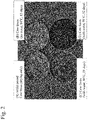
- Fig. 2A is an image of a sample (cow feces) before treatment.
- Fig. 2B is an image of a sample after treatment in Experiment 4 (84°C, 83 days, without lid).
- Fig. 2C is an image of a sample after treatment in Experiment 2 (90°C, 21 days, with lid).
- Fig 2D is an image of a sample after treatment in Experiment 3 (90°C, 52 days, with lid).
- the samples after treatment in Experiments 2 and 3 turned black as a result of advanced carbonization.
- the water immediately evaporated without the lid, causing the sample to dry, and thus carbonization did not advance and the sample remained substantially the same as that before treatment.
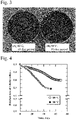
- Fig. 3A shows a sample after treatment in Experiment 1 (80°C, 69 days, with lid) and the sample exhibited a blacker color as a result of more advanced carbonization than the sample after treatment in Experiment 3 (90°C, 52 days, with lid) shown in Fig. 3B . Based on these results, it was found that the presence of water is necessary for the advancement of carbonization at a temperature less than 100°C.
- Fig. 4 shows the weight loss results of the biomass material during carbonization treatment in Experiment 1 (80°C, 69 days) and Experiment 3 (90°C, 52 days). In both cases, the mass gradually reduced with a lapse of days, reducing by approximately 21% after a lapse of 69 days in the case of 80°C, and by approximately 32% after a lapse of 52 days in the case of 90°C. The weight loss is considered to be due to the carbonization of the organic matter contained in the biomass material.
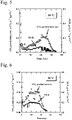
- Fig. 5 is a graph showing the carbon dioxide production rate and oxygen uptake rate (OUR) per unit mass of biomass material during carbonization treatment in Experiment 1 (80°C, 69 days).
- Fig. 6 is a graph showing the carbon dioxide production rate and oxygen uptake rate (OUR) per unit mass of biomass material during carbonization treatment in Experiment 3 (90°C, 52 days). From these results it is understood that the oxygen had a lower concentration than in the composition of air, and carbon dioxide had a higher concentration than in the composition of air.
- the production rate of carbon dioxide produced by the carbonization reaction of the biomass material is proportionally correlated with the oxygen uptake rate, it is understood that, once an oxidation reaction occurred, carbon dioxide was produced, and the oxygen uptake rate increased to the extent that the carbon dioxide was produced.
- Such a correlation means that the carbonization phenomenon advances in the presence of oxygen, and this indicates that the carbonization treatment requires the presence of air (strictly oxygen). Therefore, in this carbonization treatment, presumably an oxidation reaction occurred between the oxygen in the air and the biomass material, thereby producing carbon dioxide.
- Experiment 5 is an experiment in which the sample was left for five months at 70°C. The sample after treatment exhibited a black color, and carbonization was confirmed.
- Experiment 6 is an experiment with oxygen removed. The sample after treatment exhibited negligible change and was similar to the sample before treatment, and no advancement in carbonization was confirmed.
- Experiment 7 is an experiment in which the water content was set to 80%. The sample after treatment exhibited a black color, and carbonization was confirmed.
- Experiment 8 is an experiment in which the water content was set to 42%. The sample after treatment exhibited a black color, and carbonization was confirmed.
- Experiment 9 is an experiment in which the water content was set to 33%. The sample after treatment exhibited negligible change and was similar to the sample before treatment, and inadequate advancement in carbonization was confirmed.
- Figs. 7A to 7C are images of samples after treatment in Experiments 6, 7, and 9 among Experiments 5 to 9 described above. While the sample in the image of Experiment 7 shown in Fig. 7B exhibited a black color and carbonization was confirmed, the samples in the image of Experiment 6 shown in Fig. 7A and the image of Experiment 9 shown in Fig. 7C were not black in color and carbonization was not confirmed.
- the ultra-low temperature carbonization treatment method of a biomass material according to the present invention can eliminate some of the drawbacks of a biomass material. That is, (1) the biggest challenge of many biomass materials represented by cow feces and the like has been the removal of water contained in large amounts therein. However, according to the present invention, the presence of water is necessary for carbonization, and thus the cost and effort for water removal are not required. (2) In a typical charcoal production method, when carbonization is conducted by heating the material at a high temperature of 500°C or greater, a thermal decomposition reaction advances, causing the generated gas to contain large amounts of tar. Therefore, costs occur due to the need for a device for removing the tar, and the like.
- a thermal decomposition reaction substantially does not occur, making it possible to suppress the generation of tar.
- carbonization is possible at an ultra-low temperature less than 100°C, the energy applied from the outside can be significantly reduced compared to the production of charcoal in the related art. Furthermore, it is also possible to achieve such a low temperature using a renewable energy, such as biogas.
Landscapes
- Chemical & Material Sciences (AREA)
- Engineering & Computer Science (AREA)
- Organic Chemistry (AREA)
- Oil, Petroleum & Natural Gas (AREA)
- Environmental & Geological Engineering (AREA)
- Life Sciences & Earth Sciences (AREA)
- Combustion & Propulsion (AREA)
- Water Supply & Treatment (AREA)
- Hydrology & Water Resources (AREA)
- Chemical Kinetics & Catalysis (AREA)
- General Chemical & Material Sciences (AREA)
- Materials Engineering (AREA)
- Mechanical Engineering (AREA)
- Physics & Mathematics (AREA)
- Thermal Sciences (AREA)
- Biochemistry (AREA)
- Inorganic Chemistry (AREA)
- Processing Of Solid Wastes (AREA)
- Carbon And Carbon Compounds (AREA)
- Treatment Of Sludge (AREA)
Claims (3)
- Verfahren zur partiellen Karbonisierung eines Biomassematerials, das die folgenden Schritte umfasst:Aufrechterhaltung eines wasserhaltigen Biomassematerials mit einem Wassergehalt (Prozentsatz) innerhalb eines Bereichs von 40 bis einschließlich 80 % zu Beginn der partiellen Karbonisierung unter Behandlungsbedingungen, die eine sauerstoffhaltige Atmosphäre und einen Temperaturbereich von 70 °C oder mehr und weniger als 100 °C einschließen, ohne einen Trocknungsschritt zur zwangsweisen Entfernung oder Reduzierung des Wassers; undErzeugung einer Oxidationsreaktion zwischen dem Sauerstoff in der Atmosphäre und dem Biomassematerial, um das Biomassematerial in Gegenwart von Wasser teilweise zu karbonisieren und Kohlendioxid zu erzeugen;wobei es sich bei dem Biomassematerial um ein Material oder ein Gemisch aus zwei oder mehr Materialien handelt, die aus Lebensmittelabfällen, Exkrementen von Tieren, landwirtschaftlichen Abfällen und Meeresabfällen ausgewählt sind;wobei das Biomassematerial in einem Behälter gelagert wird, der einen mit einem Deckel abgedeckten Behälterhauptkörper, eine Einlassöffnung und eine Auslassöffnung für Luft oder Sauerstoff von außen umfasst;und wobei das Biomassematerial auf diese Weise zwei Wochen oder länger gehalten bleibt.
- Verfahren zur partiellen Karbonisierung eines Biomassematerials nach Anspruch 1, wobei
der Behälter außerdem einen Temperaturregler umfasst, um das Biomassematerial unter den Behandlungsbedingungen zu halten. - Verfahren zur Herstellung eines Karbids unter Verwendung des Verfahrens zur partiellen Karbonisierung eines Biomassematerials nach einem der Ansprüche 1 oder 2, wobei das Verfahren die folgenden Schritte umfasst:Herstellung eines wasserhaltigen Biomassematerials; undBehandlung des so hergestellten Biomassematerials unter Behandlungsbedingungen, die eine sauerstoffhaltige Atmosphäre und einen Temperaturbereich von 70 °C oder mehr und weniger als 100 °C umfassen, ohne einen Trocknungsschritt zur zwangsweisen Entfernung oder Reduzierung des Wassers.
Applications Claiming Priority (2)
| Application Number | Priority Date | Filing Date | Title |
|---|---|---|---|
| JP2016095471 | 2016-05-11 | ||
| PCT/JP2017/003383 WO2017195407A1 (ja) | 2016-05-11 | 2017-01-31 | バイオマス材料の超低温炭化処理方法及び炭化物の製造方法 |
Publications (3)
| Publication Number | Publication Date |
|---|---|
| EP3446798A1 EP3446798A1 (de) | 2019-02-27 |
| EP3446798A4 EP3446798A4 (de) | 2019-04-17 |
| EP3446798B1 true EP3446798B1 (de) | 2022-11-30 |
Family
ID=60266425
Family Applications (1)
| Application Number | Title | Priority Date | Filing Date |
|---|---|---|---|
| EP17795768.5A Active EP3446798B1 (de) | 2016-05-11 | 2017-01-31 | Verfahren zur ultraniedertemperaturkarbonisierungsbehandlung von biomassematerial und verfahren zur herstellung von carbid |
Country Status (6)
| Country | Link |
|---|---|
| US (1) | US11542436B2 (de) |
| EP (1) | EP3446798B1 (de) |
| JP (1) | JP6374632B2 (de) |
| CN (1) | CN109153050B (de) |
| ES (1) | ES2935587T3 (de) |
| WO (1) | WO2017195407A1 (de) |
Families Citing this family (3)
| Publication number | Priority date | Publication date | Assignee | Title |
|---|---|---|---|---|
| JP7043130B2 (ja) * | 2018-03-13 | 2022-03-29 | 克守 谷黒 | バイオマス材料の加圧環境下での処理方法 |
| JP7098176B2 (ja) * | 2020-06-19 | 2022-07-11 | グレンカル・テクノロジー株式会社 | 成形材料、成形体、及び、成形材料の製造方法 |
| TWI781716B (zh) * | 2021-08-05 | 2022-10-21 | 國立中正大學 | 批次式竹炭爐連續操作系統 |
Citations (1)
| Publication number | Priority date | Publication date | Assignee | Title |
|---|---|---|---|---|
| US4139640A (en) * | 1973-07-11 | 1979-02-13 | Paygro, Inc. | Method of effecting the aerobic thermophilic decomposition of organic waste materials |
Family Cites Families (22)
| Publication number | Priority date | Publication date | Assignee | Title |
|---|---|---|---|---|
| US2285834A (en) * | 1937-07-10 | 1942-06-09 | Mitchell Engineering Ltd | Process for the treatment of organic matter by fermentation |
| US2723493A (en) * | 1951-02-21 | 1955-11-15 | Benjamin B Stoller | Method of making composts and for growing mushrooms |
| US3462275A (en) * | 1968-01-31 | 1969-08-19 | Gen Electric | Waste conversion process and product |
| US4292328A (en) * | 1978-08-21 | 1981-09-29 | Coulthard T Lionel | Thermophilic aerobic digestion process for producing animal nutrients and other digested products |
| AT382862B (de) * | 1985-02-01 | 1987-04-27 | Erich Eigner | Verfahren und vorrichtung zum trocknen und konditionieren von huehnermist oder aehnlichen pastoesen stoffen |
| JP2736750B2 (ja) * | 1994-11-09 | 1998-04-02 | 正成 西 | 有機廃棄物炭化処理方法およびその装置 |
| JP2974067B1 (ja) | 1998-05-19 | 1999-11-08 | 有限会社丸平総業 | 廃棄物等の炭化処理装置 |
| JP2001002486A (ja) * | 1999-06-18 | 2001-01-09 | Sapporo Breweries Ltd | 珪酸含有有機質肥料の製造方法 |
| JP3839188B2 (ja) * | 1999-06-29 | 2006-11-01 | 有限会社若葉 | 有機廃棄物堆肥化処理方法及びそれに使用する装置 |
| US6200475B1 (en) * | 1999-09-20 | 2001-03-13 | Shen-Yuan Chen | Method of converting organic waste by thermophilic fermentation |
| US6576462B2 (en) * | 2001-02-16 | 2003-06-10 | J. Michael Thompson | Vermiculture composting device |
| WO2006128305A1 (fr) * | 2005-06-02 | 2006-12-07 | Institut De Recherche Et De Developpement En Agroenvironnement Inc. (Irda) | Procede et systeme de fabrication de biofertilisants |
| JP2007105605A (ja) | 2005-10-12 | 2007-04-26 | Wako Kikai Kogyo Kk | 炭化処理装置および方法 |
| US20080124791A1 (en) * | 2006-11-27 | 2008-05-29 | Bucci Paul A | Device and method for collecting of organic waste |
| JP4382856B2 (ja) | 2008-04-08 | 2009-12-16 | 株式会社谷黒組 | 有機性廃棄物の処理方法及び熱エネルギー利用方法 |
| JP4538595B1 (ja) | 2009-10-07 | 2010-09-08 | 克守 谷黒 | バイオマス材料の処理方法及び熱エネルギー利用方法 |
| JP2011189268A (ja) * | 2010-03-15 | 2011-09-29 | New Industry Research Organization | 乾燥バイオマスの製造方法 |
| CN101891195B (zh) * | 2010-07-23 | 2012-03-07 | 浙江大学 | 一种从农业废弃物低温合成碳化硅的方法 |
| WO2012093529A1 (ja) * | 2011-01-07 | 2012-07-12 | 環清技研エンジニアリング株式会社 | 高カロリー発酵物の製造方法 |
| WO2012105240A1 (ja) * | 2011-01-31 | 2012-08-09 | 株式会社地球ワクチン | 炭化物の製造方法、炭化物、木酢液、放射性物質除去材および除塩材 |
| WO2014107791A1 (en) * | 2013-01-14 | 2014-07-17 | 1867239 Ontario Corp. | Method of aerobic treatment of poultry manure and apparatus for producing organic fertilizer |
| CN203782002U (zh) * | 2014-03-19 | 2014-08-20 | 潘燕瑜 | 一种污泥低温碳化系统 |
-
2017
- 2017-01-31 ES ES17795768T patent/ES2935587T3/es active Active
- 2017-01-31 EP EP17795768.5A patent/EP3446798B1/de active Active
- 2017-01-31 CN CN201780029024.1A patent/CN109153050B/zh active Active
- 2017-01-31 WO PCT/JP2017/003383 patent/WO2017195407A1/ja not_active Ceased
- 2017-01-31 JP JP2018512349A patent/JP6374632B2/ja active Active
-
2018
- 2018-11-09 US US16/185,061 patent/US11542436B2/en active Active
Patent Citations (1)
| Publication number | Priority date | Publication date | Assignee | Title |
|---|---|---|---|---|
| US4139640A (en) * | 1973-07-11 | 1979-02-13 | Paygro, Inc. | Method of effecting the aerobic thermophilic decomposition of organic waste materials |
Also Published As
| Publication number | Publication date |
|---|---|
| CN109153050A (zh) | 2019-01-04 |
| JP6374632B2 (ja) | 2018-08-15 |
| US20190093018A1 (en) | 2019-03-28 |
| EP3446798A1 (de) | 2019-02-27 |
| US11542436B2 (en) | 2023-01-03 |
| EP3446798A4 (de) | 2019-04-17 |
| WO2017195407A1 (ja) | 2017-11-16 |
| JPWO2017195407A1 (ja) | 2018-06-07 |
| CN109153050B (zh) | 2019-06-18 |
| ES2935587T3 (es) | 2023-03-08 |
Similar Documents
| Publication | Publication Date | Title |
|---|---|---|
| Meng et al. | Feasibility of co-composting of sewage sludge, spent mushroom substrate and wheat straw | |
| US6802974B2 (en) | Method and device for producing biogas, which contains methane, from organic substances | |
| Lu et al. | Integrating Spirulina platensis cultivation and aerobic composting exhaust for carbon mitigation and biomass production | |
| Nie et al. | Effects of lactic acid on modulating the ammonia emissions in co-composts of poultry litter with slaughter sludge | |
| Wang et al. | Thermophilic semi-continuous composting of kitchen waste: Performance evaluation and microbial community characteristics | |
| JPWO2012093529A1 (ja) | 高カロリー発酵物の製造方法 | |
| US11542436B2 (en) | Biomass treatment method | |
| CN1248792C (zh) | 一种有机废物的处理方法 | |
| US7960165B2 (en) | Method and apparatus for drying organic material | |
| KR101183744B1 (ko) | 원통형 또는 다각형 밀폐형 발효조에 축사 깔짚을 포함한 축사폐기물을 수분조절제로 가축분뇨 폐수 무 방류, 속성발효로 퇴, 액비를 제조하는 방법과 장치. | |
| JP5246788B2 (ja) | 水分調整剤の製造方法、水分調整剤 | |
| JP4468123B2 (ja) | 有機性廃棄物の処理方法および処理装置 | |
| SK10799A3 (en) | Processes and apparatus for preparing compost | |
| Enakiev et al. | Study of the main parameters of composting agricultural waste in Bulgaria | |
| JP7804449B2 (ja) | 下水汚泥発酵原料及び下水汚泥の処理方法 | |
| Espinosa-Salgado et al. | Composting a digestate from the organic fraction of urban solid wastes Composteando el digestato de la fracción orgánica de residuos sólidos urbanos | |
| JP5134497B2 (ja) | 油分解処理槽 | |
| JP7569649B2 (ja) | 下水汚泥発酵原料及び下水汚泥の処理方法 | |
| JP2023173973A (ja) | 発酵乾燥汚泥の製造方法及び発酵乾燥汚泥製造システム | |
| JP4665693B2 (ja) | 有機性廃棄物の処理方法および処理装置 | |
| Firozjaee et al. | Co-Composting MSW and Sewage Sludge: Comparing Vertical vs. Horizontal Methods with Different Aeration Rates in Lab-Scale | |
| JP2010083742A (ja) | 肥料の製造方法 | |
| UA42753C2 (uk) | Спосіб для переробки твердої біомаси та пристрій для його здійснення | |
| EP4377420A1 (de) | Eingabeverarbeitungsvorrichtung und verfahren zur verwendung einer solchen vorrichtung | |
| JP2022089149A (ja) | 下水汚泥発酵原料及び下水汚泥の処理方法 |
Legal Events
| Date | Code | Title | Description |
|---|---|---|---|
| STAA | Information on the status of an ep patent application or granted ep patent |
Free format text: STATUS: THE INTERNATIONAL PUBLICATION HAS BEEN MADE |
|
| PUAI | Public reference made under article 153(3) epc to a published international application that has entered the european phase |
Free format text: ORIGINAL CODE: 0009012 |
|
| STAA | Information on the status of an ep patent application or granted ep patent |
Free format text: STATUS: REQUEST FOR EXAMINATION WAS MADE |
|
| 17P | Request for examination filed |
Effective date: 20181120 |
|
| AK | Designated contracting states |
Kind code of ref document: A1 Designated state(s): AL AT BE BG CH CY CZ DE DK EE ES FI FR GB GR HR HU IE IS IT LI LT LU LV MC MK MT NL NO PL PT RO RS SE SI SK SM TR |
|
| AX | Request for extension of the european patent |
Extension state: BA ME |
|
| A4 | Supplementary search report drawn up and despatched |
Effective date: 20190318 |
|
| RIC1 | Information provided on ipc code assigned before grant |
Ipc: C10L 5/42 20060101ALI20190312BHEP Ipc: C02F 11/06 20060101ALI20190312BHEP Ipc: C02F 11/10 20060101ALI20190312BHEP Ipc: B09B 3/00 20060101AFI20190312BHEP Ipc: C10L 5/44 20060101ALI20190312BHEP |
|
| DAV | Request for validation of the european patent (deleted) | ||
| DAX | Request for extension of the european patent (deleted) | ||
| STAA | Information on the status of an ep patent application or granted ep patent |
Free format text: STATUS: EXAMINATION IS IN PROGRESS |
|
| 17Q | First examination report despatched |
Effective date: 20210528 |
|
| GRAP | Despatch of communication of intention to grant a patent |
Free format text: ORIGINAL CODE: EPIDOSNIGR1 |
|
| STAA | Information on the status of an ep patent application or granted ep patent |
Free format text: STATUS: GRANT OF PATENT IS INTENDED |
|
| INTG | Intention to grant announced |
Effective date: 20220719 |
|
| GRAS | Grant fee paid |
Free format text: ORIGINAL CODE: EPIDOSNIGR3 |
|
| GRAA | (expected) grant |
Free format text: ORIGINAL CODE: 0009210 |
|
| STAA | Information on the status of an ep patent application or granted ep patent |
Free format text: STATUS: THE PATENT HAS BEEN GRANTED |
|
| AK | Designated contracting states |
Kind code of ref document: B1 Designated state(s): AL AT BE BG CH CY CZ DE DK EE ES FI FR GB GR HR HU IE IS IT LI LT LU LV MC MK MT NL NO PL PT RO RS SE SI SK SM TR |
|
| REG | Reference to a national code |
Ref country code: CH Ref legal event code: EP Ref country code: GB Ref legal event code: FG4D |
|
| REG | Reference to a national code |
Ref country code: AT Ref legal event code: REF Ref document number: 1534281 Country of ref document: AT Kind code of ref document: T Effective date: 20221215 Ref country code: DE Ref legal event code: R096 Ref document number: 602017064167 Country of ref document: DE |
|
| REG | Reference to a national code |
Ref country code: IE Ref legal event code: FG4D |
|
| REG | Reference to a national code |
Ref country code: NL Ref legal event code: FP |
|
| REG | Reference to a national code |
Ref country code: ES Ref legal event code: FG2A Ref document number: 2935587 Country of ref document: ES Kind code of ref document: T3 Effective date: 20230308 |
|
| REG | Reference to a national code |
Ref country code: NO Ref legal event code: T2 Effective date: 20221130 |
|
| REG | Reference to a national code |
Ref country code: LT Ref legal event code: MG9D |
|
| PG25 | Lapsed in a contracting state [announced via postgrant information from national office to epo] |
Ref country code: SE Free format text: LAPSE BECAUSE OF FAILURE TO SUBMIT A TRANSLATION OF THE DESCRIPTION OR TO PAY THE FEE WITHIN THE PRESCRIBED TIME-LIMIT Effective date: 20221130 Ref country code: PT Free format text: LAPSE BECAUSE OF FAILURE TO SUBMIT A TRANSLATION OF THE DESCRIPTION OR TO PAY THE FEE WITHIN THE PRESCRIBED TIME-LIMIT Effective date: 20230331 Ref country code: LT Free format text: LAPSE BECAUSE OF FAILURE TO SUBMIT A TRANSLATION OF THE DESCRIPTION OR TO PAY THE FEE WITHIN THE PRESCRIBED TIME-LIMIT Effective date: 20221130 Ref country code: FI Free format text: LAPSE BECAUSE OF FAILURE TO SUBMIT A TRANSLATION OF THE DESCRIPTION OR TO PAY THE FEE WITHIN THE PRESCRIBED TIME-LIMIT Effective date: 20221130 |
|
| REG | Reference to a national code |
Ref country code: AT Ref legal event code: MK05 Ref document number: 1534281 Country of ref document: AT Kind code of ref document: T Effective date: 20221130 |
|
| PG25 | Lapsed in a contracting state [announced via postgrant information from national office to epo] |
Ref country code: RS Free format text: LAPSE BECAUSE OF FAILURE TO SUBMIT A TRANSLATION OF THE DESCRIPTION OR TO PAY THE FEE WITHIN THE PRESCRIBED TIME-LIMIT Effective date: 20221130 Ref country code: PL Free format text: LAPSE BECAUSE OF FAILURE TO SUBMIT A TRANSLATION OF THE DESCRIPTION OR TO PAY THE FEE WITHIN THE PRESCRIBED TIME-LIMIT Effective date: 20221130 Ref country code: LV Free format text: LAPSE BECAUSE OF FAILURE TO SUBMIT A TRANSLATION OF THE DESCRIPTION OR TO PAY THE FEE WITHIN THE PRESCRIBED TIME-LIMIT Effective date: 20221130 Ref country code: IS Free format text: LAPSE BECAUSE OF FAILURE TO SUBMIT A TRANSLATION OF THE DESCRIPTION OR TO PAY THE FEE WITHIN THE PRESCRIBED TIME-LIMIT Effective date: 20230330 Ref country code: HR Free format text: LAPSE BECAUSE OF FAILURE TO SUBMIT A TRANSLATION OF THE DESCRIPTION OR TO PAY THE FEE WITHIN THE PRESCRIBED TIME-LIMIT Effective date: 20221130 Ref country code: GR Free format text: LAPSE BECAUSE OF FAILURE TO SUBMIT A TRANSLATION OF THE DESCRIPTION OR TO PAY THE FEE WITHIN THE PRESCRIBED TIME-LIMIT Effective date: 20230301 |
|
| PG25 | Lapsed in a contracting state [announced via postgrant information from national office to epo] |
Ref country code: SM Free format text: LAPSE BECAUSE OF FAILURE TO SUBMIT A TRANSLATION OF THE DESCRIPTION OR TO PAY THE FEE WITHIN THE PRESCRIBED TIME-LIMIT Effective date: 20221130 Ref country code: RO Free format text: LAPSE BECAUSE OF FAILURE TO SUBMIT A TRANSLATION OF THE DESCRIPTION OR TO PAY THE FEE WITHIN THE PRESCRIBED TIME-LIMIT Effective date: 20221130 Ref country code: EE Free format text: LAPSE BECAUSE OF FAILURE TO SUBMIT A TRANSLATION OF THE DESCRIPTION OR TO PAY THE FEE WITHIN THE PRESCRIBED TIME-LIMIT Effective date: 20221130 Ref country code: DK Free format text: LAPSE BECAUSE OF FAILURE TO SUBMIT A TRANSLATION OF THE DESCRIPTION OR TO PAY THE FEE WITHIN THE PRESCRIBED TIME-LIMIT Effective date: 20221130 Ref country code: CZ Free format text: LAPSE BECAUSE OF FAILURE TO SUBMIT A TRANSLATION OF THE DESCRIPTION OR TO PAY THE FEE WITHIN THE PRESCRIBED TIME-LIMIT Effective date: 20221130 Ref country code: AT Free format text: LAPSE BECAUSE OF FAILURE TO SUBMIT A TRANSLATION OF THE DESCRIPTION OR TO PAY THE FEE WITHIN THE PRESCRIBED TIME-LIMIT Effective date: 20221130 |
|
| PG25 | Lapsed in a contracting state [announced via postgrant information from national office to epo] |
Ref country code: SK Free format text: LAPSE BECAUSE OF FAILURE TO SUBMIT A TRANSLATION OF THE DESCRIPTION OR TO PAY THE FEE WITHIN THE PRESCRIBED TIME-LIMIT Effective date: 20221130 Ref country code: AL Free format text: LAPSE BECAUSE OF FAILURE TO SUBMIT A TRANSLATION OF THE DESCRIPTION OR TO PAY THE FEE WITHIN THE PRESCRIBED TIME-LIMIT Effective date: 20221130 |
|
| REG | Reference to a national code |
Ref country code: DE Ref legal event code: R097 Ref document number: 602017064167 Country of ref document: DE Ref country code: CH Ref legal event code: PL |
|
| PG25 | Lapsed in a contracting state [announced via postgrant information from national office to epo] |
Ref country code: LU Free format text: LAPSE BECAUSE OF NON-PAYMENT OF DUE FEES Effective date: 20230131 |
|
| REG | Reference to a national code |
Ref country code: BE Ref legal event code: MM Effective date: 20230131 |
|
| PLBE | No opposition filed within time limit |
Free format text: ORIGINAL CODE: 0009261 |
|
| STAA | Information on the status of an ep patent application or granted ep patent |
Free format text: STATUS: NO OPPOSITION FILED WITHIN TIME LIMIT |
|
| PG25 | Lapsed in a contracting state [announced via postgrant information from national office to epo] |
Ref country code: LI Free format text: LAPSE BECAUSE OF NON-PAYMENT OF DUE FEES Effective date: 20230131 Ref country code: CH Free format text: LAPSE BECAUSE OF NON-PAYMENT OF DUE FEES Effective date: 20230131 |
|
| 26N | No opposition filed |
Effective date: 20230831 |
|
| PG25 | Lapsed in a contracting state [announced via postgrant information from national office to epo] |
Ref country code: SI Free format text: LAPSE BECAUSE OF FAILURE TO SUBMIT A TRANSLATION OF THE DESCRIPTION OR TO PAY THE FEE WITHIN THE PRESCRIBED TIME-LIMIT Effective date: 20221130 Ref country code: BE Free format text: LAPSE BECAUSE OF NON-PAYMENT OF DUE FEES Effective date: 20230131 |
|
| PG25 | Lapsed in a contracting state [announced via postgrant information from national office to epo] |
Ref country code: IE Free format text: LAPSE BECAUSE OF NON-PAYMENT OF DUE FEES Effective date: 20230131 |
|
| PG25 | Lapsed in a contracting state [announced via postgrant information from national office to epo] |
Ref country code: IT Free format text: LAPSE BECAUSE OF FAILURE TO SUBMIT A TRANSLATION OF THE DESCRIPTION OR TO PAY THE FEE WITHIN THE PRESCRIBED TIME-LIMIT Effective date: 20221130 |
|
| PG25 | Lapsed in a contracting state [announced via postgrant information from national office to epo] |
Ref country code: MC Free format text: LAPSE BECAUSE OF FAILURE TO SUBMIT A TRANSLATION OF THE DESCRIPTION OR TO PAY THE FEE WITHIN THE PRESCRIBED TIME-LIMIT Effective date: 20221130 |
|
| PG25 | Lapsed in a contracting state [announced via postgrant information from national office to epo] |
Ref country code: MC Free format text: LAPSE BECAUSE OF FAILURE TO SUBMIT A TRANSLATION OF THE DESCRIPTION OR TO PAY THE FEE WITHIN THE PRESCRIBED TIME-LIMIT Effective date: 20221130 |
|
| PG25 | Lapsed in a contracting state [announced via postgrant information from national office to epo] |
Ref country code: BG Free format text: LAPSE BECAUSE OF FAILURE TO SUBMIT A TRANSLATION OF THE DESCRIPTION OR TO PAY THE FEE WITHIN THE PRESCRIBED TIME-LIMIT Effective date: 20221130 |
|
| PG25 | Lapsed in a contracting state [announced via postgrant information from national office to epo] |
Ref country code: BG Free format text: LAPSE BECAUSE OF FAILURE TO SUBMIT A TRANSLATION OF THE DESCRIPTION OR TO PAY THE FEE WITHIN THE PRESCRIBED TIME-LIMIT Effective date: 20221130 |
|
| PG25 | Lapsed in a contracting state [announced via postgrant information from national office to epo] |
Ref country code: CY Free format text: LAPSE BECAUSE OF FAILURE TO SUBMIT A TRANSLATION OF THE DESCRIPTION OR TO PAY THE FEE WITHIN THE PRESCRIBED TIME-LIMIT; INVALID AB INITIO Effective date: 20170131 |
|
| PG25 | Lapsed in a contracting state [announced via postgrant information from national office to epo] |
Ref country code: HU Free format text: LAPSE BECAUSE OF FAILURE TO SUBMIT A TRANSLATION OF THE DESCRIPTION OR TO PAY THE FEE WITHIN THE PRESCRIBED TIME-LIMIT; INVALID AB INITIO Effective date: 20170131 |
|
| PG25 | Lapsed in a contracting state [announced via postgrant information from national office to epo] |
Ref country code: TR Free format text: LAPSE BECAUSE OF FAILURE TO SUBMIT A TRANSLATION OF THE DESCRIPTION OR TO PAY THE FEE WITHIN THE PRESCRIBED TIME-LIMIT Effective date: 20221130 |
|
| PGFP | Annual fee paid to national office [announced via postgrant information from national office to epo] |
Ref country code: NL Payment date: 20260121 Year of fee payment: 10 |
|
| PGFP | Annual fee paid to national office [announced via postgrant information from national office to epo] |
Ref country code: GB Payment date: 20260123 Year of fee payment: 10 |
|
| PGFP | Annual fee paid to national office [announced via postgrant information from national office to epo] |
Ref country code: ES Payment date: 20260227 Year of fee payment: 10 |
|
| PGFP | Annual fee paid to national office [announced via postgrant information from national office to epo] |
Ref country code: DE Payment date: 20260121 Year of fee payment: 10 Ref country code: NO Payment date: 20260123 Year of fee payment: 10 |
|
| PGFP | Annual fee paid to national office [announced via postgrant information from national office to epo] |
Ref country code: FR Payment date: 20260123 Year of fee payment: 10 |