WO2012105240A1 - 炭化物の製造方法、炭化物、木酢液、放射性物質除去材および除塩材 - Google Patents
炭化物の製造方法、炭化物、木酢液、放射性物質除去材および除塩材 Download PDFInfo
- Publication number
- WO2012105240A1 WO2012105240A1 PCT/JP2012/000626 JP2012000626W WO2012105240A1 WO 2012105240 A1 WO2012105240 A1 WO 2012105240A1 JP 2012000626 W JP2012000626 W JP 2012000626W WO 2012105240 A1 WO2012105240 A1 WO 2012105240A1
- Authority
- WO
- WIPO (PCT)
- Prior art keywords
- jatroha
- carbide
- carbonized
- bacteria
- waste
- Prior art date
- Legal status (The legal status is an assumption and is not a legal conclusion. Google has not performed a legal analysis and makes no representation as to the accuracy of the status listed.)
- Ceased
Links
Images




Classifications
-
- C—CHEMISTRY; METALLURGY
- C09—DYES; PAINTS; POLISHES; NATURAL RESINS; ADHESIVES; COMPOSITIONS NOT OTHERWISE PROVIDED FOR; APPLICATIONS OF MATERIALS NOT OTHERWISE PROVIDED FOR
- C09K—MATERIALS FOR MISCELLANEOUS APPLICATIONS, NOT PROVIDED FOR ELSEWHERE
- C09K17/00—Soil-conditioning materials or soil-stabilising materials
- C09K17/14—Soil-conditioning materials or soil-stabilising materials containing organic compounds only
- C09K17/18—Prepolymers; Macromolecular compounds
- C09K17/32—Prepolymers; Macromolecular compounds of natural origin, e.g. cellulosic materials
-
- B—PERFORMING OPERATIONS; TRANSPORTING
- B01—PHYSICAL OR CHEMICAL PROCESSES OR APPARATUS IN GENERAL
- B01J—CHEMICAL OR PHYSICAL PROCESSES, e.g. CATALYSIS OR COLLOID CHEMISTRY; THEIR RELEVANT APPARATUS
- B01J20/00—Solid sorbent compositions or filter aid compositions; Sorbents for chromatography; Processes for preparing, regenerating or reactivating thereof
- B01J20/02—Solid sorbent compositions or filter aid compositions; Sorbents for chromatography; Processes for preparing, regenerating or reactivating thereof comprising inorganic material
- B01J20/20—Solid sorbent compositions or filter aid compositions; Sorbents for chromatography; Processes for preparing, regenerating or reactivating thereof comprising inorganic material comprising free carbon; comprising carbon obtained by carbonising processes
-
- C—CHEMISTRY; METALLURGY
- C01—INORGANIC CHEMISTRY
- C01B—NON-METALLIC ELEMENTS; COMPOUNDS THEREOF; METALLOIDS OR COMPOUNDS THEREOF NOT COVERED BY SUBCLASS C01C
- C01B32/00—Carbon; Compounds thereof
- C01B32/05—Preparation or purification of carbon not covered by groups C01B32/15, C01B32/20, C01B32/25, C01B32/30
-
- C—CHEMISTRY; METALLURGY
- C05—FERTILISERS; MANUFACTURE THEREOF
- C05F—ORGANIC FERTILISERS NOT COVERED BY SUBCLASSES C05B, C05C, e.g. FERTILISERS FROM WASTE OR REFUSE
- C05F17/00—Preparation of fertilisers characterised by biological or biochemical treatment steps, e.g. composting or fermentation
-
- C—CHEMISTRY; METALLURGY
- C05—FERTILISERS; MANUFACTURE THEREOF
- C05F—ORGANIC FERTILISERS NOT COVERED BY SUBCLASSES C05B, C05C, e.g. FERTILISERS FROM WASTE OR REFUSE
- C05F5/00—Fertilisers from distillery wastes, molasses, vinasses, sugar plant or similar wastes or residues, e.g. from waste originating from industrial processing of raw material of agricultural origin or derived products thereof
- C05F5/002—Solid waste from mechanical processing of material, e.g. seed coats, olive pits, almond shells, fruit residue, rice hulls
-
- G—PHYSICS
- G21—NUCLEAR PHYSICS; NUCLEAR ENGINEERING
- G21F—PROTECTION AGAINST X-RADIATION, GAMMA RADIATION, CORPUSCULAR RADIATION OR PARTICLE BOMBARDMENT; TREATING RADIOACTIVELY CONTAMINATED MATERIAL; DECONTAMINATION ARRANGEMENTS THEREFOR
- G21F9/00—Treating radioactively contaminated material; Decontamination arrangements therefor
- G21F9/04—Treating liquids
- G21F9/06—Processing
- G21F9/12—Processing by absorption; by adsorption; by ion-exchange
-
- G—PHYSICS
- G21—NUCLEAR PHYSICS; NUCLEAR ENGINEERING
- G21F—PROTECTION AGAINST X-RADIATION, GAMMA RADIATION, CORPUSCULAR RADIATION OR PARTICLE BOMBARDMENT; TREATING RADIOACTIVELY CONTAMINATED MATERIAL; DECONTAMINATION ARRANGEMENTS THEREFOR
- G21F9/00—Treating radioactively contaminated material; Decontamination arrangements therefor
- G21F9/04—Treating liquids
- G21F9/06—Processing
- G21F9/18—Processing by biological processes
-
- B—PERFORMING OPERATIONS; TRANSPORTING
- B01—PHYSICAL OR CHEMICAL PROCESSES OR APPARATUS IN GENERAL
- B01J—CHEMICAL OR PHYSICAL PROCESSES, e.g. CATALYSIS OR COLLOID CHEMISTRY; THEIR RELEVANT APPARATUS
- B01J2220/00—Aspects relating to sorbent materials
- B01J2220/40—Aspects relating to the composition of sorbent or filter aid materials
- B01J2220/48—Sorbents characterised by the starting material used for their preparation
- B01J2220/4812—Sorbents characterised by the starting material used for their preparation the starting material being of organic character
- B01J2220/4825—Polysaccharides or cellulose materials, e.g. starch, chitin, sawdust, wood, straw, cotton
-
- B—PERFORMING OPERATIONS; TRANSPORTING
- B01—PHYSICAL OR CHEMICAL PROCESSES OR APPARATUS IN GENERAL
- B01J—CHEMICAL OR PHYSICAL PROCESSES, e.g. CATALYSIS OR COLLOID CHEMISTRY; THEIR RELEVANT APPARATUS
- B01J2220/00—Aspects relating to sorbent materials
- B01J2220/40—Aspects relating to the composition of sorbent or filter aid materials
- B01J2220/48—Sorbents characterised by the starting material used for their preparation
- B01J2220/4875—Sorbents characterised by the starting material used for their preparation the starting material being a waste, residue or of undefined composition
-
- Y—GENERAL TAGGING OF NEW TECHNOLOGICAL DEVELOPMENTS; GENERAL TAGGING OF CROSS-SECTIONAL TECHNOLOGIES SPANNING OVER SEVERAL SECTIONS OF THE IPC; TECHNICAL SUBJECTS COVERED BY FORMER USPC CROSS-REFERENCE ART COLLECTIONS [XRACs] AND DIGESTS
- Y02—TECHNOLOGIES OR APPLICATIONS FOR MITIGATION OR ADAPTATION AGAINST CLIMATE CHANGE
- Y02A—TECHNOLOGIES FOR ADAPTATION TO CLIMATE CHANGE
- Y02A40/00—Adaptation technologies in agriculture, forestry, livestock or agroalimentary production
- Y02A40/10—Adaptation technologies in agriculture, forestry, livestock or agroalimentary production in agriculture
- Y02A40/20—Fertilizers of biological origin, e.g. guano or fertilizers made from animal corpses
-
- Y—GENERAL TAGGING OF NEW TECHNOLOGICAL DEVELOPMENTS; GENERAL TAGGING OF CROSS-SECTIONAL TECHNOLOGIES SPANNING OVER SEVERAL SECTIONS OF THE IPC; TECHNICAL SUBJECTS COVERED BY FORMER USPC CROSS-REFERENCE ART COLLECTIONS [XRACs] AND DIGESTS
- Y02—TECHNOLOGIES OR APPLICATIONS FOR MITIGATION OR ADAPTATION AGAINST CLIMATE CHANGE
- Y02E—REDUCTION OF GREENHOUSE GAS [GHG] EMISSIONS, RELATED TO ENERGY GENERATION, TRANSMISSION OR DISTRIBUTION
- Y02E50/00—Technologies for the production of fuel of non-fossil origin
- Y02E50/10—Biofuels, e.g. bio-diesel
-
- Y—GENERAL TAGGING OF NEW TECHNOLOGICAL DEVELOPMENTS; GENERAL TAGGING OF CROSS-SECTIONAL TECHNOLOGIES SPANNING OVER SEVERAL SECTIONS OF THE IPC; TECHNICAL SUBJECTS COVERED BY FORMER USPC CROSS-REFERENCE ART COLLECTIONS [XRACs] AND DIGESTS
- Y02—TECHNOLOGIES OR APPLICATIONS FOR MITIGATION OR ADAPTATION AGAINST CLIMATE CHANGE
- Y02P—CLIMATE CHANGE MITIGATION TECHNOLOGIES IN THE PRODUCTION OR PROCESSING OF GOODS
- Y02P20/00—Technologies relating to chemical industry
- Y02P20/141—Feedstock
- Y02P20/145—Feedstock the feedstock being materials of biological origin
-
- Y—GENERAL TAGGING OF NEW TECHNOLOGICAL DEVELOPMENTS; GENERAL TAGGING OF CROSS-SECTIONAL TECHNOLOGIES SPANNING OVER SEVERAL SECTIONS OF THE IPC; TECHNICAL SUBJECTS COVERED BY FORMER USPC CROSS-REFERENCE ART COLLECTIONS [XRACs] AND DIGESTS
- Y02—TECHNOLOGIES OR APPLICATIONS FOR MITIGATION OR ADAPTATION AGAINST CLIMATE CHANGE
- Y02W—CLIMATE CHANGE MITIGATION TECHNOLOGIES RELATED TO WASTEWATER TREATMENT OR WASTE MANAGEMENT
- Y02W30/00—Technologies for solid waste management
- Y02W30/40—Bio-organic fraction processing; Production of fertilisers from the organic fraction of waste or refuse
Definitions
- the present invention includes (1) a method for producing a carbide from at least one of jatroha fruit, a substance derived from the fruit of jatroha and a substance derived from sugarcane, (2) a carbide produced by the production method, (3) It relates to a wood vinegar solution containing the carbide, (4) a radioactive substance removing material containing the carbide as an active ingredient, and (5) a salt removal material containing the carbide as an active ingredient.
- Patent Document 1 a technique of using raw garbage, lawn, livestock excrement and the like as compost that is incinerated or dumped in a landfill as it is has been proposed (for example, see Patent Document 1).
- the seeds of Jatroha grown in the Philippines are rich in oil. This oil has been used for a long time. As one of environmental measures in recent years, attention has been paid to the fact that oil obtained from Jatroha seeds can be used as a material for biodiesel fuel. However, the pomace obtained by squeezing oil from the seeds, and the skin parts and pulp parts other than the seeds have been discarded.
- sugarcane squeezed residue has been partially used effectively, but in recent years, further expansion of the effective use of sugarcane squeezed residue has been demanded.
- an object of the present invention is to produce high-value-added carbides (carbonized fertilizer, carbon black, etc.) using at least one of jatroha fruit, jatroha fruit-derived substance, and sugarcane-derived substance. It is to provide a method.
- a carbide according to the present invention carbonization is performed by applying light energy to a mixture of at least one substance of Jatroha fruit, Jatroha fruit-derived substance and sugarcane-derived substance, and a group of fermenting bacteria.
- the carbide produced by the production method of the present invention is carbonized compost, carbon black and the like.
- the term “jatroha fruit” as used herein is a general term for jatroha fruit skin, jatroha fruit pulp, and jatroha fruit seeds.
- the substance derived from the fruit of Jatroha is, for example, a pomace obtained by squeezing oil from the seed of the fruit of Jatroha.
- the substance derived from sugarcane is, for example, bagasse (residue after squeezing sugarcane), mud press (cask obtained by crushing sugarcane and extracting sugar with water), and the like.
- carbonized compost containing carbides bearing positive ions and negative ions can be obtained.
- this carbonized compost is irradiated with sunlight, the carbides vibrate slightly and enter the soil, creating a large amount of bubbles near the roots of the plant.
- air bubbles of about 70% nitrogen are continuously absorbed from the plant roots. That is, carbonized compost that can fix nitrogen in the air in the soil can be obtained.
- the carbide of Jatroha's pulp is porous and has a hole with a diameter of about 70,000 nm (70 ⁇ m).
- the carbonized Jatroha pulp can draw soil contaminants (for example, heavy metals, salt, radioactive substances and dyes) into the pores and absorb the contaminants to shield them.
- soil contaminants for example, heavy metals, salt, radioactive substances and dyes
- a group of fermenting bacteria such as halophilic bacteria and photosynthetic bacteria
- nitrogen in the air enters the pores of the carbonized Jatrocha pulp. For this reason, jatroha pulp can fix nitrogen in the air in the soil.
- carbon black which is carbon fine particles having a diameter of about 3 nm to 500 nm. That is, high-value-added carbon black used for rubber reinforcing materials, black colorants, conductivity-imparting materials, activated carbon, and the like can be obtained from jatroha fruits, materials derived from jatroja fruits, and materials derived from sugarcane.
- a pyroligneous acid solution can be obtained in the process of carbonization of the mixture. That is, a high-value-added wood vinegar used as an agrochemical effective for food processing and pest control can be obtained from jatroha fruit, jatroha fruit-derived substance, and sugarcane-derived substance.
- carbonized compost, carbon black, wood vinegar, etc. are created from squeezed jatroha pulp and seeds that are no longer needed after squeezing oil, bagasse and mud press that are no longer needed after squeezing can do. That is, by using the production method of the present invention, it is possible to create high value-added products from jatroha fruits and seeds that have become waste, bagasse and mud press where further effective utilization destinations are required. . As a result, waste can be reduced. Therefore, the amount of CO 2 emission is reduced. For this reason, a CO 2 emission right can be obtained.
- the mixture preferably further includes boiler ash.
- boiler ash is ash obtained as a result of burning bagasse or the like in a boiler.
- the fermenting bacteria group includes at least photosynthetic bacteria, photothermal bacteria, lactic acid bacteria, nitrogen-fixing bacteria, yeasts, and radioactive bacteria.
- the photosynthetic bacterium is a symbiotic base of other fungal groups, and can be ionized by a synthetic action with sunlight to increase the absorbability of plants.
- Photothermal bacteria are active at high temperatures and control plant pests. Lactic acid bacteria can produce lactic acid by fermentation and protect the living body from other pathogenic microorganisms. Nitrogen-fixing bacteria fix nitrogen in the atmosphere and are supplied to plants as nutrients. Yeast can produce carbon dioxide and alcohol from organic matter. Radioactive bacteria like chitin and can decompose the chitin and suppress the activity of plant pathogens.
- the above-mentioned fermenting bacteria group has both photosensitivity and thermophilicity, fermentation of jatroha fruit, jatroha fruit-derived substance and sugarcane-derived substance in an environment exceeding 80 ° C. Can do. Thereby, it is possible to prevent the fermentation bacteria group from being killed in an environment where a large amount of sunlight is irradiated. Thereby, the high value-added carbonized compost in which miscellaneous sterilization is killed can be obtained by the sterilization effect of ultraviolet rays from sunlight.
- the above-mentioned fermenting bacteria group since the above-mentioned fermenting bacteria group has halophilicity, it becomes carbonized compost having a low salinity concentration, and can provide high value-added carbonized compost that is good for crop cultivation, and also has a salt-removing effect in salt damage areas. Can be demonstrated.
- the carbonized compost produced by the above production method is carbonized compost containing carbides having positive ions and negative ions.
- this carbonized compost is irradiated with sunlight, the carbides vibrate slightly and enter the soil, creating a large amount of bubbles near the roots of the plant. As a result, bubbles of about 70% nitrogen are continuously absorbed from the plant roots. That is, carbonized compost that can fix nitrogen in the air in the soil can be obtained.
- the carbide of Jatroha's pulp is porous and has a hole with a diameter of about 70,000 nm (70 ⁇ m).
- the carbonized Jatroha pulp can draw soil contaminants (for example, heavy metals, salt, radioactive substances and dyes) into the pores and absorb the contaminants to shield them.
- soil contaminants for example, heavy metals, salt, radioactive substances and dyes
- fermenting bacteria such as halophilic bacteria and photosynthetic bacteria
- the carbon black produced by the above production method can be used for rubber reinforcing materials, black colorants, conductivity-imparting materials, activated carbon and the like.
- the wood vinegar produced by the above production method can be used as an agrochemical effective for food processing and pest control.
- Carbonized fertilizers and carbon black such as carbon black produced by the above production method are mainly made from jatroha fruits and seeds that have become waste, bagasse and mud presses that require further effective utilization. . As a result, the amount of waste can be reduced, so that the amount of CO 2 emission is reduced.
- thermophilic bacteria Since the wood vinegar according to the present invention contains black charcoal, the surface of jatroha waste and sugarcane waste is blackened by spraying this wood vinegar on jatroha waste and sugarcane waste, and the sun rays (especially , Heat ray) absorption efficiency is increased, and more thermophilic bacteria can be expected to grow.
- the radioactive substance removing material and the salt removing material according to the present invention contain the above-described carbide as an active ingredient. For this reason, the radioactive substance removal material and salt removal material which concern on this invention can absorb and shield a radioactive substance and salt efficiently.
- the method for producing carbide according to the present embodiment includes a pulp A of Jatroha fruit (fruit waste in the figure) and a pomace B obtained by squeezing oil from Jatroha fruit seeds (hereinafter referred to as A). And B are collectively referred to as “jatroha waste”) and fermented fungus group C, and the mixture is subjected to carbonization by applying light energy.
- sugarcane waste for example, bagasse and mud press
- Jatroha waste may be mixed into the jatroha waste. Jatroha waste may be replaced with sugarcane waste (for example, bagasse or mud press).
- a mixture of the pulp A of Jatroha fruit and the squeezed B after squeezing oil from the seeds of the fruit of Jatroha and the fermentation fungus group C is maintained at a low temperature of 80 ° C. or higher and 90 ° C. or lower. It is preferable to perform carbonization.
- the carbide according to this embodiment is manufactured by the above-described manufacturing method.
- the pyroligneous acid solution according to the present embodiment is characterized by containing a carbide produced by the above-described production method.
- radioactive substance removing material and the salt removing material according to the present embodiment are characterized in that a carbide produced by the production method described above is used as an active ingredient.
- Jatroha fruit is a general term for the skin of Jatroha fruit, the pulp of Jatroha fruit, and the seed of Jatroha fruit.
- Jatroha is a plant that can grow on thin soil (land with an annual rainfall of about 500 mL, volcanic ash). This jatroha produces fruits with highly toxic seeds.
- the seeds of the fruit of Jatroha are oil-rich seeds, and oil refined by squeezing from the seeds is used as Jatroha Crude oil that can be used as biodiesel fuel.
- Jatroha is a very fast growing plant. As shown in Fig. 2, after planting, it is about 20cm in 2 months, about 180cm in 8 months, 200cm in 1 year, 300cm in 3 years, 500cm in 5 years. Grows until. Jatroha, which has grown in about 5 years, can harvest fruits for about 50 years. This Jatroha can harvest fruits more than twice a year.
- Jatroha can harvest 30 tons of fruit per ha, the fruit pulp ratio is about 22.5 t, and the seed ratio is about 7.5 t.
- Jatroha's pulp is porous having a large number of pores with a diameter of 70,000 nm (70 ⁇ m), and heavy metals and dyes in the soil are drawn into the pores of the carbonized Jatroha's pulp.
- air enters the hole of the carbonized Jatrocha pulp. For this reason, the carbonized jatroha pulp can retain nitrogen in the air in the soil.
- Jatroha seeds is squeezed with a squeezer or the like, and about 6.0 t of pomace remains.
- Jatrocha pulp about 22.5 t
- pomace 6.0 t
- carbonized compost about 4.8 t
- carbon black 2.0 t
- wood vinegar 3.0 t
- carbon black (about 2.0 t) and wood vinegar (3.0 t), which are high value-added products, are obtained from Jatroha waste, in addition to carbonized compost. It is done.
- the oil obtained by squeezing the seed is refined to obtain jatrohaclude oil (about 1.5 t) that can be used as biodiesel fuel.
- Carbonized compost produced from Jatroha waste is used as a soil conditioner, organic fertilizer, horticultural charcoal, soil contamination purification agent, and the like. Carbon black is used as a rubber reinforcing material, a black colorant, a conductivity imparting material, activated carbon, and the like.
- wood vinegar is used for pesticides and food processing effective for pest control.
- Jatroha crude oil is used as transportation fuel, ink solvent, soap, and plastic merchandise. Thus, carbonized compost derived from jatroha, carbon black, wood vinegar and jatroha crude oil are sold as products with high added value.
- the fermenting fungal group necessary for producing the above-mentioned carbides is at least a photosynthetic bacterium, a photothermal bacterium, a lactic acid bacterium, a nitrogen-fixing bacterium, a yeast, and a radiobacterium. It is preferable to have.
- This group of fermenting bacteria has photosensitivity, thermophilicity, and halophilicity.
- the photophilic bacterium is, for example, a photosynthetic bacterium, and examples of the photosynthetic bacterium include, but are not limited to, a red bacterium, a green bacterium, an aerobic photosynthetic bacterium, and a heliobacterium.
- heat-resistant yeast that grows using light as energy can also be used.
- thermophilic bacterium is a generic term for a bacterium having an optimum growth temperature of 50 to 105 ° C. and hardly proliferating at a temperature of 30 ° C. or less.
- a normal bacterium has a neutral temperature, that is, an optimum growth temperature of 25 to 40 ° C.
- bacteria that can grow at both high and low temperatures are distinguished from heat-resistant bacteria. ”(Yasugi et al.,“ Iwanami Biology Dictionary 4th Edition ”(1996-3) ⁇ 21) Iwanami, p452).
- thermophilic bacteria include thermostable bacteria. This is because the inside of the greenhouse 10 (see FIG. 3) is hot during the daytime, but at night, if the temperature is not adjusted, the optimum temperature for growth of bacteria may usually fall to 25 to 40 ° C.
- the halophilic bacteria refer to “bacteria and fungi that prefer a medium having a salt concentration of 5 to 10 wt% or higher”, and refer to bacteria that reduce the salt concentration by incorporating a large amount of Na + into the cells (see p424). reference).
- fermenting fungus group having the above-mentioned photosensitivity, thermophilicity, and saltyness
- fermenting fungus group having the above-mentioned photosensitivity, thermophilicity, and saltyness
- group can be preferably used.
- This "Kenium fungus” group is a series of microorganisms in which inoculums (microorganism species) collected from various parts of Japan have been cultured and stabilized at a factory for over 40 years, as described below.
- the period of direct irradiation is sequentially increased to 1 day, 3 days, 1 week, 1 month, 2 months, and 3 months.
- the temperature is adjusted so that the medium becomes 60 ° C. or higher during direct irradiation.
- the microorganism group has photosensitivity and thermophilicity.
- the characteristics of the "K. nuensis" are as follows. It reacts mainly with sunlight and is active in both aerobic and anaerobic conditions. Jatroha waste grows if the moisture (based on moisture content) is 70 wt% or less (preferably 45-65%) and temperature is 40-100 ° C (preferably 50-70 ° C). Promote fermentation and decomposition of things.
- the salt concentration (mainly NaCl) in the fermentation residue / fermentation residual water is reduced to half or less as compared with the case of normal fermentation decomposition by selectively taking in Na + of the salt. Therefore, fermentation of organic matter is promoted, and combined with high temperature fermentation, the processed product is dried quickly.
- Jatroha waste is composted in a closed greenhouse 10 as shown in FIG.
- the reason why the jatroha waste is composted in the sealed greenhouse 10 is to prevent the odor generated from the jatroha waste (especially from immediately after input to the initial and middle stages of fermentation) from being released to the outside.
- the light energy source given to Jatroha waste is usually sunlight, but may be an ultraviolet irradiation lamp or the like.
- fermenting of Jatroha waste may be promoted by using an ultraviolet irradiation lamp as an auxiliary at night or on a cloudy or rainy day.
- the gas (gas) stored in the gas storage unit is a high-temperature gas that is heated by decomposition of the mixture and heat of fermentation, and further heated by solar heat.
- this high-temperature gas usually 60 ° C. or higher
- the jatroha waste is heated and the propagation of the microbial group in the mixture is promoted.
- the propagation of normal bacteria died at 60 ° C. or higher
- the surface of the Jatroha waste is sterilized by sunlight.
- the wood vinegar solution produced by fermentation and decomposition of Jatroha waste may be commercialized as it is, it can also be sprayed on Jatroha waste as an insect repellent.
- carbonized_material which concerns on this embodiment, in order to make the inside of the greenhouse 10 into 60 degreeC or more high temperature, a carbide
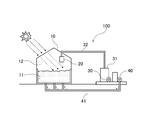
- the carbonized compost production plant 100 includes a greenhouse 10 for storing Jatroha waste, a steam collecting cap 20, a suction blower 30, and a blower blower 40.
- the greenhouse 10 has a filling part 11 for storing Jatroha waste and a gas storage part 12 formed above the filling part 11.
- the filling unit 11 accommodates a mixture in which Jatroha waste and fermented bacteria are mixed. And the gas produced by decomposition
- FIG. This gas is heated by sunlight and becomes a high-temperature gas (about 60 ° C.).
- the gas storage part 12 is provided with a steam collecting cap 20.
- the vapor in the gas reservoir 12 passes through the fossil coral inside the vapor collection cap 20 and is collected into a tank (not shown).
- the tank 31 collects the pyroligneous acid produced when the Jatroha waste is fermented.
- the suction blower 30 is provided outside the greenhouse 10 and is provided for sucking the steam drifting in the vicinity of the gas storage unit 12.
- the suction blower 30 is driven, the vapor in the gas storage unit 12 is collected from the vapor collection cap 20 to the tank 31 through the duct 32.
- the blower blower 40 is provided to supply the high-temperature gas recovered from the gas storage unit 12 to the lower side of the Jatroha waste in the greenhouse 10.
- the Jatroja waste accommodated in the filling unit 11 is agitated by the hot gas blown out from the blower blower 40. By this gas stirring with the high-temperature gas, the reproduction of the fermenting bacteria group is increased.
- Jatroha pulp A and Jatroha seed pomace B are prepared (step S1). Then, the Jatroha waste and the fermentation fungus group C are weighed so as to have a desired mixing ratio (step S2). At this time, the dust contained in the Jatroha waste is separated (step S3). And while mixing a Jatroha waste and the fermentation microbe group C, the moisture content of the said mixture is adjusted (step S4). And in this embodiment, the hot gas stored in the gas storage part 12 of the greenhouse 10 is circulated, and is supplied to the bottom face side of Jatroha waste (step S5). Then, the composted mixture is sieved (step S6) to produce carbonized compost.
- the pulp A of Jatroha fruit (fruit waste in the figure), the squeezed B obtained by squeezing oil from the seed of Jatroha fruit (hereinafter referred to as Jatroha waste), etc. It is mixed with the fermenting bacteria group C, and the mixture is subjected to carbonization by applying light energy.
- carbonized_material (C) tinged with a positive ion and a negative ion can be obtained.
- the mixture is maintained at a temperature of 80 ° C. or higher and 90 ° C. or lower and composted to efficiently generate carbonized compost containing charcoal having positive ions and negative ions. be able to.
- the fruit of Jatroha is porous and has a hole with a diameter of about 70,000 nm (70 ⁇ m).
- the carbonized jatroha pulp can draw contaminants (for example, heavy metals and dyes) in the soil into the holes. Thereby, good-quality soil can be obtained.
- the carbonized compost can be fermented in a short time by a synthetic action with light energy.
- the “K. genus” group has both photosensitivity and thermophilicity, soil fermentation can be performed in an environment exceeding 80 ° C. Thereby, the carbonized compost from which miscellaneous sterilization dies can be obtained by the sterilization effect of ultraviolet rays from sunlight.
- the “Kenynu fungus” group has halophilicity, it becomes compost with a low salinity, and it can produce good compost for crop cultivation, and it can also exert a salt removal effect in salt damage areas. it can.
- carbon black which is carbon fine particles having a diameter of about 3 nm to 500 nm. That is, it is possible to obtain high-value-added carbon black used for rubber reinforcing materials, black colorants, conductivity-imparting materials, activated carbon and the like from Jatroha waste.
- a wood vinegar solution can be obtained in the process of carbonization of the Jatroha waste. That is, a high value-added wood vinegar solution used as an agrochemical effective for food processing and pest control can be obtained from Jatroha waste.
- carbonized compost, carbon black, a wood vinegar liquid, etc. can be created from the Jatroha waste etc. which became unnecessary after squeezing oil. That is, if the manufacturing method of the present embodiment is used, a high-value-added product can be created from jatroha that has become waste. As a result, the amount of waste can be reduced, so that the amount of CO 2 emission is reduced.
- the jatroha waste was carbonized and composted in the greenhouse 10 shown in FIG.
- the radioactive iodine adsorption rate of the carbide obtained as described above was measured, the value was 710 mg / g.
- carbonized_material was measured, the result was as Table 1 showing.
Landscapes
- Chemical & Material Sciences (AREA)
- Engineering & Computer Science (AREA)
- Organic Chemistry (AREA)
- Life Sciences & Earth Sciences (AREA)
- Chemical Kinetics & Catalysis (AREA)
- Health & Medical Sciences (AREA)
- Physics & Mathematics (AREA)
- General Engineering & Computer Science (AREA)
- High Energy & Nuclear Physics (AREA)
- Inorganic Chemistry (AREA)
- Molecular Biology (AREA)
- Biomedical Technology (AREA)
- Environmental & Geological Engineering (AREA)
- General Chemical & Material Sciences (AREA)
- Microbiology (AREA)
- Biochemistry (AREA)
- Mechanical Engineering (AREA)
- Botany (AREA)
- Biotechnology (AREA)
- General Health & Medical Sciences (AREA)
- Analytical Chemistry (AREA)
- General Life Sciences & Earth Sciences (AREA)
- Soil Sciences (AREA)
- Materials Engineering (AREA)
- Processing Of Solid Wastes (AREA)
- Fertilizers (AREA)
Abstract
ジャトロハの果実、ジャトロハの果実由来の物質およびサトウキビ由来の物質を利用して、付加価値の高い炭化物を得る。炭化物の製造方法は、ジャトロハの果実A、ジャトロハの果実由来の物質Bおよびサトウキビ由来の物質の少なくとも1種の物質と、発酵菌群Cとを混合して、その混合物に光エネルギーを与えて炭化を行なう。この際、混合物は、80℃以上90℃以下の低温下で維持されて炭化されることが好ましい。また、発酵菌群Cには、光合成細菌、光熱細菌、乳酸菌、窒素固定菌、酵母菌および放射菌の少なくとも1種の菌が含まれる。
Description
本発明は、(1)ジャトロハの果実、ジャトロハの果実由来の物質およびサトウキビ由来の物質の少なくとも1種の物質から炭化物を製造する方法、(2)その製造方法により製造される炭化物、(3)その炭化物を含む木酢液、(4)その炭化物を有効成分とする放射性物質除去材および(5)その炭化物を有効成分とする除塩材に関する。
昨今、環境フレンドリーの見地から、焼却ないしそのまま埋立地等に投棄するような生ゴミ、芝生、家畜排泄物などを堆肥として利用する技術が提案されている(例えば、特許文献1参照)。
ところで、フィリピンなどで育成されるジャトロハの種子は、油分に富む。この油分は古くから利用されている。そして、近年の環境対策の一つとして、ジャトロハの種子から取得される油が、バイオディーゼル燃料の材料として利用できることが注目されている。しかしながら、種子から油を絞った絞りかす、及び、種子以外の皮部分や果肉部分は、廃棄処理されていた。
また、サトウキビの絞りカス等は一部有効活用されているが、近年、サトウキビの絞りカス等の有効活用先のさらなる拡大が求められている。
そこで、本発明の課題は、ジャトロハの果実、ジャトロハの果実由来の物質およびサトウキビ由来の物質の少なくとも1種の物質を利用して、高付加価値の炭化物(炭化肥料、カーボンブラックなど)を製造する方法を提供することにある。
(1)
本発明に係る炭化物の製造方法では、ジャトロハの果実、ジャトロハの果実由来の物質およびサトウキビ由来の物質の少なくとも1種の物質と、発酵菌群との混合物に光エネルギーを与えて炭化を行なう。本発明の製造方法によって製造される炭化物は、炭化堆肥、カーボンブラックなどである。なお、ここにいう「ジャトロハの果実」とは、ジャトロハの果実の皮、ジャトロハの果実の果肉およびジャトロハの果実の種子の総称である。また、ジャトロハの果実由来の物質とは、例えば、ジャトロハの果実の種子から油を絞った絞りかす等である。また、サトウキビ由来の物質とは、例えば、バガス(サトウキビ搾汁後の残渣)、マッドプレス(サトウキビを砕いて水で砂糖を取り出したものを濾過して得られるカス)等である。
本発明に係る炭化物の製造方法では、ジャトロハの果実、ジャトロハの果実由来の物質およびサトウキビ由来の物質の少なくとも1種の物質と、発酵菌群との混合物に光エネルギーを与えて炭化を行なう。本発明の製造方法によって製造される炭化物は、炭化堆肥、カーボンブラックなどである。なお、ここにいう「ジャトロハの果実」とは、ジャトロハの果実の皮、ジャトロハの果実の果肉およびジャトロハの果実の種子の総称である。また、ジャトロハの果実由来の物質とは、例えば、ジャトロハの果実の種子から油を絞った絞りかす等である。また、サトウキビ由来の物質とは、例えば、バガス(サトウキビ搾汁後の残渣)、マッドプレス(サトウキビを砕いて水で砂糖を取り出したものを濾過して得られるカス)等である。
上記製造方法によれば、プラスイオンおよびマイナスイオンを帯びた炭化物を含む炭化堆肥を得ることができる。この炭化堆肥は、太陽光が照射されると、炭化物が微振動を起こして、土壌のなかに入り込み、植物の根の近辺に多量の気泡を作り出す。そうすると、約70%が窒素で構成される空気の気泡が、植物の根から吸収し続けられる。すなわち、空気中の窒素を土壌内に固定することができる炭化堆肥を得ることができる。
また、ジャトロハの果肉の炭化物は多孔質であり、直径約7万nm(70μm)の孔が形成されている。これにより、炭化されたジャトロハの果肉は、土壌中の汚染物質(例えば、重金属、塩分、放射性物質および染料など)を孔に引き込み、その汚染物質を吸収して遮蔽することができる。なお、かかる場合、その孔内に発酵菌群(好塩性細菌や光合成細菌など)が住み着いていることが好ましい。また、炭化されたジャトロハの果肉の孔には空気中の窒素が入り込む。このため、ジャトロハの果肉は、空気中の窒素を土壌内に固定することができる。
また、炭化堆肥に太陽光が照射されると、炭化物が発熱し、その発熱により雑草種子が死滅する。これにより、雑草の除去に係る作業負担が軽減される。さらに、炭化堆肥中の炭化物の発熱により、土壌が保温されるので、糖度の高い果実を収穫することができる。
また、上記製造方法によれば、直径が3nm~500nm程度の炭素の微粒子であるカーボンブラックを得ることができる。すなわち、ジャトロハの果実、ジャトロハの果実由来の物質およびサトウキビ由来の物質から、ゴム補強材、黒色着色剤、導電付与材および活性炭などに利用される高付加価値のカーボンブラックを得ることができる。
また、上記製造方法によれば、混合物の炭化の過程において、木酢液を得ることができる。すなわち、ジャトロハの果実、ジャトロハの果実由来の物質およびサトウキビ由来の物質から食品加工および害虫対策に効果のある農薬として利用される高付加価値の木酢液を得ることができる。
また、上記製造方法によれば、油を絞って不要となったジャトロハの果肉および種子の搾りかす、搾汁後に不要となったバガスおよびマッドプレスから、炭化堆肥、カーボンブラックおよび木酢液などを創出することができる。すなわち、本発明の製造方法を用いれば、廃棄物となっていたジャトロハの果実および種子、さらなる有効活用先が求められているバガスやマッドプレスから、高付加価値の商材を創出することができる。これにより、廃棄物の削減を図ることができる。したがって、CO2の排出量が削減される。このため、CO2排出権を得ることができる。
(2)
上記した炭化物の製造方法において、混合物には、ボイラーアッシュがさらに含まれることが好ましい。なお、ここにいう「ボイラーアッシュ」とは、バガス等をボイラーで燃焼させた結果、得られる灰である。
上記した炭化物の製造方法において、混合物には、ボイラーアッシュがさらに含まれることが好ましい。なお、ここにいう「ボイラーアッシュ」とは、バガス等をボイラーで燃焼させた結果、得られる灰である。
上記混合物にボイラーアッシュを混入させることにより、多量の発酵菌群を混合物中に住み着かせることができる。このため、混合物を効率的に炭化させることができると共に、上記汚染物質の吸収効率を高めることができる。
(3)
上記した炭化物の製造方法において、混合物を80℃以上90℃以下の温度で維持して炭化を行うことが好ましい。
上記した炭化物の製造方法において、混合物を80℃以上90℃以下の温度で維持して炭化を行うことが好ましい。
120℃程度の高温でジャトロハの果実、ジャトロハの果実由来の物質およびサトウキビ由来の物質の炭化を行うと、マイナスイオンを帯びた活性炭が得られる。これに対し、上記製造方法によれば、プラスイオンおよびマイナスイオンを帯びた炭化物を有する炭化堆肥を得ることができる。
(4)
上記した炭化物の製造方法において、発酵菌群には、少なくとも光合成細菌、光熱細菌、乳酸菌、窒素固定菌、酵母菌および放射菌が含まれる。
上記した炭化物の製造方法において、発酵菌群には、少なくとも光合成細菌、光熱細菌、乳酸菌、窒素固定菌、酵母菌および放射菌が含まれる。
光合成細菌は、他の菌群の共生のベースとなるものであって、太陽光との合成作用でイオン化して植物の吸収力を高めることができる。
光熱細菌は、高温で活動し、植物の病害虫の抑制を行う。
乳酸菌は、発酵によって乳酸を生成して他の病原微生物から生体を守ることができる。
窒素固定菌は、大気中の窒素を固定して植物に栄養素として供給される。
酵母菌は、有機物から二酸化炭素およびアルコールなどを生産することができる。
放射菌は、キチン質を好み、キチン質を分解して植物の病原菌の活性を抑制することができる。
光熱細菌は、高温で活動し、植物の病害虫の抑制を行う。
乳酸菌は、発酵によって乳酸を生成して他の病原微生物から生体を守ることができる。
窒素固定菌は、大気中の窒素を固定して植物に栄養素として供給される。
酵母菌は、有機物から二酸化炭素およびアルコールなどを生産することができる。
放射菌は、キチン質を好み、キチン質を分解して植物の病原菌の活性を抑制することができる。
上記した種々の菌を有する発酵菌群を採用することによって、光エネルギーとの合成作用により短時間でジャトロハの果実、ジャトロハの果実由来の物質およびサトウキビ由来の物質の発酵を行うことができる。
また、上記発酵菌群は、好光性および好熱性の双方を備えているので、80℃を超える環境化において、ジャトロハの果実、ジャトロハの果実由来の物質およびサトウキビ由来の物質の発酵を行うことができる。これにより、太陽光が多量に照りつけられる環境下において、発酵菌群が死滅するのを防止することができる。これにより、太陽光からの紫外線の殺菌効果により、雑殺菌が死滅した高付加価値の炭化堆肥を得ることができる。
また、上記発酵菌群は、好塩性を備えているので、塩分濃度の低い炭化堆肥となり、作物の栽培にとって良好な高付加価値の炭化堆肥を得ることができると共に、塩害地域において除塩効果を発揮することができる。
(5)
上記製造方法により製造される炭化堆肥は、プラスイオンおよびマイナスイオンを帯びた炭化物を含む炭化堆肥となる。この炭化堆肥は、太陽光が照射されると、炭化物が微振動を起こして、土壌のなかに入り込み、植物の根の近辺に多量の気泡を作り出す。そうすると、約70%が窒素で構成される気泡が、植物の根から吸収し続けられる。すなわち、空気中の窒素を土壌内に固定することができる炭化堆肥を得ることができる。
上記製造方法により製造される炭化堆肥は、プラスイオンおよびマイナスイオンを帯びた炭化物を含む炭化堆肥となる。この炭化堆肥は、太陽光が照射されると、炭化物が微振動を起こして、土壌のなかに入り込み、植物の根の近辺に多量の気泡を作り出す。そうすると、約70%が窒素で構成される気泡が、植物の根から吸収し続けられる。すなわち、空気中の窒素を土壌内に固定することができる炭化堆肥を得ることができる。
また、ジャトロハの果肉の炭化物は多孔質であり、直径約7万nm(70μm)の孔が形成されている。これにより、炭化されたジャトロハの果肉は、土壌中の汚染物質(例えば、重金属、塩分、放射性物質および染料など)を孔に引き込み、その汚染物質を吸収して遮蔽することができる。なお、かかる場合、その孔に発酵菌群(好塩性細菌や光合成細菌など)が住み着いていることが好ましい。
また、炭化堆肥に太陽光が照射されると、炭化物が発熱し、その発熱により雑草種子が死滅する。これにより、雑草の除去に係る作業負担が軽減される。さらに、炭化堆肥中の炭化物の発熱により、土壌が保温されるので、糖度の高い果実を収穫することができる。
また、上記製造方法により製造されるカーボンブラックは、ゴム補強材、黒色着色剤、導電付与材および活性炭などに利用することができる。
また、上記製造方法により製造される木酢液は、食品加工および害虫対策に効果のある農薬として利用することができる。
また、上記製造方法により製造される炭化肥料、カーボンブラックなどの炭化物は、廃棄物となっていたジャトロハの果実および種子、さらなる有効活用が求められているバガスやマッドプレスが主原料となっている。これにより、廃棄物の削減を図ることができるので、CO2の排出量が削減される。
(6)
本発明に係る木酢液は、黒色の炭化物を含むので、この木酢液をジャトロハ廃棄物やサトウキビ廃棄物に散布することにより、ジャトロハ廃棄物やサトウキビ廃棄物の表面が黒色化して、太陽光線(特に、熱線)の吸収効率が増大し、より好熱性細菌の繁殖増大が期待できる。
本発明に係る木酢液は、黒色の炭化物を含むので、この木酢液をジャトロハ廃棄物やサトウキビ廃棄物に散布することにより、ジャトロハ廃棄物やサトウキビ廃棄物の表面が黒色化して、太陽光線(特に、熱線)の吸収効率が増大し、より好熱性細菌の繁殖増大が期待できる。
(7)
本発明に係る放射性物質除去材および除塩材は、上述の炭化物を有効成分とする。このため、本発明に係る放射性物質除去材および除塩材は、効率よく放射性物質や塩分を吸収して遮蔽することができる。
本発明に係る放射性物質除去材および除塩材は、上述の炭化物を有効成分とする。このため、本発明に係る放射性物質除去材および除塩材は、効率よく放射性物質や塩分を吸収して遮蔽することができる。
10 ビニールハウス
11 充填部
12 気体貯留部
20 蒸気収集キャップ
30 吸い込みブロワ
40 吹き出しブロワ
100 炭化堆肥製造プラント
11 充填部
12 気体貯留部
20 蒸気収集キャップ
30 吸い込みブロワ
40 吹き出しブロワ
100 炭化堆肥製造プラント
以下、本発明の実施形態に係る炭化物の製造方法、その製造方法により製造される炭化物、その炭化物を含む木酢液、ならびに、その炭化物を有効成分とする放射性物質除去材および除塩材について図面を参照しながら説明する。
本実施形態に係る炭化物の製造方法は、図1に示すように、ジャトロハの果実の果肉A(図中では、果実ごみ)およびジャトロハの果実の種子から油を絞った絞りかすB(以下、AおよびBを総称して「ジャトロハ廃棄物」とする)を発酵菌群Cと混合して、その混合物に光エネルギーを与えて炭化を行うことを特徴とするものである。なお、上記ジャトロハ廃棄物に、サトウキビ廃棄物(例えば、バガスやマッドプレス等)が混入されてもよい。また、ジャトロハ廃棄物が、サトウキビ廃棄物(例えば、バガスやマッドプレス等)に置き換えられてもかまわない。
また、この炭化物の製造方法では、ジャトロハの果実の果肉Aおよびジャトロハの果実の種子から油を絞った絞りかすBと発酵菌群Cとの混合物を、80℃以上90℃以下の低温度で維持して炭化を行うことが好ましい。
また、この炭化物の製造方法では、上記混合物にボイラーアッシュを添加することが好ましい。
また、本実施形態に係る炭化物は、上記した製造方法により製造されることを特徴とするものである。
また、本実施形態に係る木酢液は、上記した製造方法により製造される炭化物を含むことを特徴とするものである。
また、本実施形態に係る放射性物質除去材および除塩材は、上記した製造方法により製造される炭化物を有効成分とすることを特徴とするものである。
なお、上記したジャトロハの果実とは、ジャトロハの果実の皮、ジャトロハの果実の果肉およびジャトロハの果実の種子の総称である。
ジャトロハとは、痩せた土壌(年間降雨量が500mL程度の土地、火山灰地)でも生長可能な植物である。このジャトロハは、毒性の強い種子を有する果実を実らせる。このジャトロハの果実の種子は、油分に富む種子であって、その種子から絞られて精製されたオイルは、バイオディーゼル燃料として使用可能なジャトロハクルードオイルとして使用される。
ジャトロハは、非常に生長の早い植物であって、図2に示すように、植林後、2カ月で約20cm、8カ月で約180cm、1年で200cm、3年で300cm、5年で500cmにまで生長する。約5年で成木となったジャトロハは、約50年間果実の収穫が可能である。また、このジャトロハは、年に2回以上、果実の収穫が可能である。
ジャトロハは、1haあたり30tの果実が収穫可能であって、果実の果肉の割合は、約22.5tであり、種子の割合は、約7.5tである。ジャトロハの果肉は、直径が7万nm(70μm)の孔を多数有する多孔質であり、炭化したジャトロハの果肉の孔には、土壌中の重金属および染料が引き込まれる。また、この炭化したジャトロハの果肉の孔には空気が入り込む。このため、炭化したジャトロハの果肉は、土壌内において空気中の窒素を保持することができる。
また、ジャトロハの種子は、絞り機などにより油が絞られて、約6.0tの搾りかすが残余する。本実施形態では、ジャトロハの果肉(約22.5t)および搾りかす(6.0t)から、炭化堆肥(約4.8t)、カーボンブラック(2.0t)、および、木酢液(3.0t)が生成される。
本実施形態に係る炭化物の製造方法によれば、ジャトロハ廃棄物からは、炭化堆肥以外にも、高付加価値商材であるカーボンブラック(約2.0t)、木酢液(3.0t)が得られる。また、種子を絞って得られた油は、精製されて、バイオディーゼル燃料として利用可能なジャトロハクルードオイル(約1.5t)が得られる。
ジャトロハ廃棄物から製造された炭化堆肥は、土壌改良剤、有機肥料、園芸炭、土壌汚染浄化剤などとして利用される。また、カーボンブラックは、ゴム補強材、黒色着色剤、導電付与材、活性炭などとして利用される。また、木酢液は、害虫対策に効果的な農薬、食品加工などに利用される。また、ジャトロハクルードオイルは、輸送燃料、インク溶剤、石鹸、プラスチック商材として利用される。このように、ジャトロハ由来の炭化堆肥、カーボンブラック、木酢液およびジャトロハクルードオイルは、付加価値の高い商材として販売される。
ここで、本実施形態では、上記した炭化物(炭化肥料、カーボンブラックなど)を生成する上で必要となる発酵菌群は、少なくとも光合成細菌、光熱細菌、乳酸菌、窒素固定菌、酵母菌および放射菌を有することが好ましい。この発酵菌群は、好光性、好熱性および好塩性を備えている。
好光性細菌は、例えば、光合成細菌であって、この光合成細菌としては、特に限定されないが、紅色細菌、緑色細菌、好気性光合成細菌、ヘリオバクテリウム等が挙げられる。当然、光をエネルギーとして増殖する耐熱性の酵母も使用可能である。
好熱性細菌は、「生育至適温度が、50~105℃で、30℃以下の温度ではほとんど増殖しない細菌の総称。通常の細菌は中性温、すなわち生育の至適温度が25~40℃であり、50℃以上では一般に生育し難い。なお、高温でも低温でも生育可能な細菌は耐熱性細菌とよんで区別される。」(八杉他編「岩波生物学辞典第4版」(1996-3-21)岩波、p452参照)とされているが、本明細書では、好熱性細菌には耐熱性細菌も含む。昼間はビニールハウス10(図3参照)内は、高温となるが、夜間は、温調しなければ、通常細菌の生育至適温度25~40℃に下がる場合もあるためである。
好塩性の細菌は、「5~10wt%あるいはそれ以上の食塩濃度の培地を好む細菌や菌類」をいい、菌体内に多量のNa+を取り入れて塩濃度を低下させる細菌を言う(同p424参照)。
上記した好光性、好熱性および好塩性を備える発酵菌群として、例えば、吉良微生物研究所(愛知県幡豆郡吉良町大字鮫馬字内の山23)から製造販売されている「ケイエヌ菌」群を好適に使用することができる。この「ケイエヌ菌」群は、下記の如く、日本各地から採取した種菌(微生物種)を工場で40年以上、培養・安定化させた一連の微生物群である。日本各地の山や神社の大木(通常、樹齢100年以上)の根っこに小穴(径・深さとも約10~15cm)を掘りそこへ、砂糖50~100cc、酢10~15ccを添加して、土を被せて2~3日放置後、種菌を採取する。上記種菌を工場に持ち帰り、栄養源となるカット野菜(レタス、キャベツ、白菜、スイカ、なす等)と混合して、加温(30~40℃)しながら発酵させて培養する。菌が安定してきたら(約1年後)、太陽光を培地に直接照射した後、残存生菌のみを取り出し、上記と同様にして培養を1年間行なう。この工程を繰り返す。この際、直接照射の期間は、1日、3日、1週間、1ケ月、2ケ月、3ケ月と順次増やして行く。培養期間が5年程経過したら、直接照射の際に、培地が60℃以上となるように温調を行なう。
こうして、微生物群は、好光性および好熱性を備えたものとなる。該「ケイエヌ菌」の特性は、下記の如くである。
主として太陽光線の光で反応し、好気性・嫌気性のどちらの状態でも活動する。
ジャトロハ廃棄物の水分(湿量含量基準)が70wt%以下(望ましくは45~65%)、温度40~100℃(望ましくは50~70℃)において、太陽光線があれば増殖して、ジャトロハ廃棄物の発酵・分解を促進させる。
塩のNa+を選択的に取り込み、通常の発酵分解の場合に比して、発酵残渣・発酵残水中の塩濃度(主としてNaCl)が半分以下となる。したがって、有機物の発酵を促進させ、高温発酵と相まって、処理物が早く乾燥する。
分解・発酵時に70℃以上の高温となる。腐敗菌及び雑菌が死滅して、それらのメタン菌等に起因するアンモニアガス、メタンガス、ブタンガス等の発生が抑制される。
有機物と無機塩との分離作用を有する。
主として太陽光線の光で反応し、好気性・嫌気性のどちらの状態でも活動する。
ジャトロハ廃棄物の水分(湿量含量基準)が70wt%以下(望ましくは45~65%)、温度40~100℃(望ましくは50~70℃)において、太陽光線があれば増殖して、ジャトロハ廃棄物の発酵・分解を促進させる。
塩のNa+を選択的に取り込み、通常の発酵分解の場合に比して、発酵残渣・発酵残水中の塩濃度(主としてNaCl)が半分以下となる。したがって、有機物の発酵を促進させ、高温発酵と相まって、処理物が早く乾燥する。
分解・発酵時に70℃以上の高温となる。腐敗菌及び雑菌が死滅して、それらのメタン菌等に起因するアンモニアガス、メタンガス、ブタンガス等の発生が抑制される。
有機物と無機塩との分離作用を有する。
ジャトロハ廃棄物は、図3に示すように、密閉されたビニールハウス10内で堆肥化される。このように密閉されたビニールハウス10内でジャトロハ廃棄物を堆肥化処理するのは、ジャトロハ廃棄物から発生する臭気(特に、投入直後から発酵初期・中期まで)を外部へ放出させないためである。
ジャトロハ廃棄物に与える光エネルギー源は、通常、太陽光とするが、紫外線照射ランプ等であってもよい。例えば、夜間や曇天・雨天の日に、紫外線照射ランプを補助的に使用して、ジャトロハ廃棄物の発酵を促進させてもよい。
即ち、気体貯留部の貯留する気体(ガス)は、混合物の分解および発酵熱により加温され、さらに、太陽熱により加熱された高温ガスである。この高温ガス(通常、60℃以上)をジャトロハ廃棄物の底部側から導入することにより、ジャトロハ廃棄物が加熱されて、当該混合物中の微生物群の繁殖が促進される。この際、通常雑菌(60℃以上では死滅する。)の繁殖が抑制される。また、ジャトロハ廃棄物の表面は、太陽光により殺菌される。
また、ジャトロハ廃棄物の発酵および分解により生成する木酢液は、そのまま商品化しても良いが、防虫剤としてジャトロハ廃棄物に散布することも可能である。本実施形態に係る炭化物の製造方法では、ビニールハウス10内を60℃以上の高温とするため、分解および発酵に伴い炭化物が生成され、当該炭化物(黒色)が木酢液中に含まれる。このため、木酢液をジャトロハ廃棄物の表面に散布することにより、当該ジャトロハ廃棄物の表面が黒色化して、太陽光線(特に、熱線)の吸収効率が増大し、より好熱性細菌の繁殖増大が期待できる。
次に、図3を参照して、上記のジャトロハ廃棄物の炭化に使用する炭化堆肥製造プラントについて説明する。
この炭化堆肥製造プラント100は、図3に示すように、ジャトロハ廃棄物を収容するビニールハウス10と、蒸気収集キャップ20と、吸い込みブロワ30と、吹き出しブロワ40と、を備えている。
ビニールハウス10は、ジャトロハ廃棄物を収容する充填部11、および、当該充填部11の上方に形成される気体貯留部12を有している。充填部11には、ジャトロハ廃棄物と発酵菌群とを混合した混合物が収容されている。そして、気体貯留部12には、混合物の分解・発酵により生じたガスが貯留される。このガスは、太陽光により加熱されて高温(約60℃)のガスとなる。
気体貯留部12には、蒸気収集キャップ20が設けられている。気体貯留部12中の蒸気は、蒸気収集キャップ20の内部にある化石サンゴを通過して、図示しないタンクへと回収される。このタンク31には、ジャトロハ廃棄物が発酵した際に生じる木酢液が回収される。
吸い込みブロワ30は、ビニールハウス10の外部に設けられており、気体貯留部12の付近に漂う蒸気を吸引するために設けられている。この吸い込みブロワ30が駆動すると、上記した蒸気収集キャップ20から気体貯留部12内の蒸気が、ダクト32を介して、タンク31に回収される。
吹き出しブロワ40は、気体貯留部12から回収された高温ガスを、ビニールハウス10内のジャトロハ廃棄物の下方に供給するために設けられている。充填部11に収容されるジャトロハ廃棄物は、吹き出しブロワ40から吹き出された高温ガスにより撹拌される。この高温ガスによる気体撹拌により、発酵菌群の繁殖が増大される。
次に、図4を参照して、ジャトロハ廃棄物の堆肥化方法について詳細に説明する。
まず、ジャトロハの果肉Aおよびジャトロハの種子の搾りかすB(図1参照)を準備する(ステップS1)。そして、ジャトロハ廃棄物および発酵菌群Cが、所望の混合割合になるように計量する(ステップS2)。この際、ジャトロハ廃棄物に含まれるゴミなどを分離しておく(ステップS3)。そして、ジャトロハ廃棄物と発酵菌群Cとを混合すると共に、当該混合物の水分量を調整する(ステップS4)。そして、本実施形態では、ビニールハウス10の気体貯留部12に貯留される高温ガスを循環させてジャトロハ廃棄物の底面側に供給する(ステップS5)。そして、堆肥化された混合物をふるいにかけて(ステップS6)、炭化堆肥を製造する。
<本実施形態の炭化物の製造方法の特徴>
上記実施形態に係る炭化物の製造方法では、ジャトロハの果実の果肉A(図中では、果実ごみ)およびジャトロハの果実の種子から油を絞った絞りかすB(以下、ジャトロハ廃棄物とする)等を発酵菌群Cと混合して、その混合物に光エネルギーを与えて炭化を行なう。これにより、図5に示すように、プラスイオンおよびマイナスイオンを帯びた炭化物(C)を含む炭化堆肥を得ることができる。この炭化堆肥は、太陽光が照射されると、炭が微振動を起こして、土壌のなかに入り込み、植物の根の近辺に多量の気泡を作り出す。そうすると、約70%が窒素で構成される気泡が、植物の根から吸収し続けられる。すなわち、空気中の窒素を土壌内に固定することができる炭化堆肥を得ることができる。
上記実施形態に係る炭化物の製造方法では、ジャトロハの果実の果肉A(図中では、果実ごみ)およびジャトロハの果実の種子から油を絞った絞りかすB(以下、ジャトロハ廃棄物とする)等を発酵菌群Cと混合して、その混合物に光エネルギーを与えて炭化を行なう。これにより、図5に示すように、プラスイオンおよびマイナスイオンを帯びた炭化物(C)を含む炭化堆肥を得ることができる。この炭化堆肥は、太陽光が照射されると、炭が微振動を起こして、土壌のなかに入り込み、植物の根の近辺に多量の気泡を作り出す。そうすると、約70%が窒素で構成される気泡が、植物の根から吸収し続けられる。すなわち、空気中の窒素を土壌内に固定することができる炭化堆肥を得ることができる。
上記実施形態に係る炭化物の製造方法において、混合物を80℃以上90℃以下の温度で維持して堆肥化を行うことによって、プラスイオンおよびマイナスイオンを帯びた炭を含む炭化堆肥を効率良く生成することができる。
また、ジャトロハの果肉は多孔質であり、直径約7万nm(70μm)の孔が形成されている。これにより、炭化されたジャトロハの果肉は、土壌中の汚染物質(例えば、重金属および染料など)を孔に引き込むことができる。これにより、良質な土壌を得ることができる。
また、上記実施形態に係る炭化物の製造方法において、混合物にボイラーアッシュが添加されることによって、多量の発酵菌群を混合物中に住み着かせることができると共に混合物を効率的に炭化させることができ、上記汚染物質の吸収効率を高めることができる。
また、炭化されたジャトロハの果肉の孔には、空気中の窒素が入り込むので、空気中の窒素を土壌内に固定することができる。
また、上記した炭化物の製造方法により製造された炭化堆肥は、太陽光が照射されると、炭が発熱し、その発熱により雑草種子が死滅する。これにより、雑草の除去に係る作業負担が軽減される。さらに、炭化堆肥中の炭の発熱により、土壌が保温されるので、糖度の高い果実を収穫することができる。
また、上記実施形態の炭化物の製造方法において、発酵菌群として「ケイエヌ菌」群を用いることによって、光エネルギーとの合成作用により短時間で炭化堆肥の発酵を行うことができる。
また、「ケイエヌ菌」群は、好光性および好熱性の双方を備えているので、80℃を超える環境化において、土壌の発酵を行うことができる。これにより、太陽光からの紫外線の殺菌効果により、雑殺菌が死滅した炭化堆肥を得ることができる。
さらに、「ケイエヌ菌」群は、好塩性を備えているので、塩分濃度の低い堆肥となり、作物の栽培にとって良好な堆肥を得ることができると共に、塩害地域において除塩効果を発揮することができる。
また、気体貯留部12に貯留した高温ガスをジャトロハ廃棄物の底面側から吹き出させて攪拌することにより、ジャトロハ廃棄物の温度分布が均一となるとともに、高温ガス中に浮遊している細菌がジャトロハ廃棄物に搬送される。このため、細菌の増殖が均一となり、ジャトロハ廃棄物の堆肥化処理が促進される。
また、上記製造方法によれば、直径が3nm~500nm程度の炭素の微粒子であるカーボンブラックを得ることができる。すなわち、ジャトロハ廃棄物から、ゴム補強材、黒色着色剤、導電付与材、および、活性炭などに利用される高付加価値のカーボンブラックを得ることができる。
また、上記製造方法によれば、ジャトロハ廃棄物の炭化の過程において、木酢液を得ることができる。すなわち、ジャトロハ廃棄物から、食品加工および害虫対策に効果のある農薬として利用される高付加価値の木酢液を得ることができる。
また、上記製造方法によれば、油を絞って不要となったジャトロハ廃棄物等から、炭化堆肥、カーボンブラックおよび木酢液などを創出することができる。すなわち、本実施形態の製造方法を用いれば、廃棄物となっていたジャトロハから、高付加価値の商材を創出することができる。これにより、廃棄物の削減を図ることができるので、CO2の排出量が削減される。
また、光エネルギーとして太陽光を使用することにより、電気エネルギーを使用する必要がなく、省エネルギーにつながる。
<実施例>
以下、実施例を用いて本発明をさらに詳細に説明する。
以下、実施例を用いて本発明をさらに詳細に説明する。
ジャトロハ廃棄物にケイエヌ菌を添加した後、そのジャトロハ廃棄物を、図3に示されるビニールハウス10内で炭化堆肥化させた。
上記のようにして得られた炭化物の放射性ヨウ素吸着率を測定したところ、その値は710mg/gであった。また、この炭化物による土壌中の塩分の除去率を測定したところ、その結果は表1に示される通りであった。

上記のようにして得られた炭化物の放射性ヨウ素吸着率を測定したところ、その値は710mg/gであった。また、この炭化物による土壌中の塩分の除去率を測定したところ、その結果は表1に示される通りであった。
以上、本発明の実施形態および実施例について図面に基づいて説明したが、具体的な構成は、これらの実施形態に限定されるものでないと考えられるべきである。本発明の範囲は、上記した実施形態の説明だけではなく特許請求の範囲によって示され、さらに特許請求の範囲と均等の意味及び範囲内でのすべての変更が含まれる。
Claims (8)
- ジャトロハの果実、前記ジャトロハの果実由来の物質およびサトウキビ由来の物質の少なくとも1種の物質と、発酵菌群との混合物に光エネルギーを与えて炭化を行なう
炭化物の製造方法。 - 前記混合物には、ボイラーアッシュがさらに含まれる
請求項1に記載の炭化物の製造方法。 - 前記混合物を80℃以上90℃以下の温度で維持して炭化を行う
請求項1または2に記載の炭化物の製造方法。 - 前記発酵菌群には、少なくとも光合成細菌、光熱細菌、乳酸菌、窒素固定菌、酵母菌および放射菌が含まれる
請求項1から3のいずれかに記載の炭化物の製造方法。 - 請求項1から4のいずれか1項に記載の炭化物の製造方法により製造される
炭化物。 - 請求項5に記載の炭化物を含む
木酢液。 - 請求項5に記載の炭化物を有効成分とする放射性物質除去材。
- 請求項5に記載の炭化物を有効成分とする除塩材。
Priority Applications (2)
| Application Number | Priority Date | Filing Date | Title |
|---|---|---|---|
| JP2012555753A JPWO2012105240A1 (ja) | 2011-01-31 | 2012-01-31 | 炭化物の製造方法、炭化物、木酢液、放射性物質除去材および除塩材 |
| CN201280007199XA CN103459053A (zh) | 2011-01-31 | 2012-01-31 | 碳化物的制造方法、碳化物、木醋液、放射性物质去除材料及除盐材料 |
Applications Claiming Priority (2)
| Application Number | Priority Date | Filing Date | Title |
|---|---|---|---|
| JP2011018005 | 2011-01-31 | ||
| JP2011-018005 | 2011-01-31 |
Publications (1)
| Publication Number | Publication Date |
|---|---|
| WO2012105240A1 true WO2012105240A1 (ja) | 2012-08-09 |
Family
ID=46602463
Family Applications (1)
| Application Number | Title | Priority Date | Filing Date |
|---|---|---|---|
| PCT/JP2012/000626 Ceased WO2012105240A1 (ja) | 2011-01-31 | 2012-01-31 | 炭化物の製造方法、炭化物、木酢液、放射性物質除去材および除塩材 |
Country Status (3)
| Country | Link |
|---|---|
| JP (1) | JPWO2012105240A1 (ja) |
| CN (1) | CN103459053A (ja) |
| WO (1) | WO2012105240A1 (ja) |
Cited By (5)
| Publication number | Priority date | Publication date | Assignee | Title |
|---|---|---|---|---|
| JP2014169919A (ja) * | 2013-03-04 | 2014-09-18 | Tadatsugu Yamazaki | 除染剤および除染方法 |
| WO2017195407A1 (ja) * | 2016-05-11 | 2017-11-16 | 克守 谷黒 | バイオマス材料の超低温炭化処理方法及び炭化物の製造方法 |
| CN108178693A (zh) * | 2018-02-13 | 2018-06-19 | 平南县亿翔环保能源有限公司 | 含有木醋液的桑树专用肥 |
| CN108299090A (zh) * | 2018-02-13 | 2018-07-20 | 平南县亿翔环保能源有限公司 | 桑树专用叶面肥及其制备方法 |
| CN111069243A (zh) * | 2019-12-25 | 2020-04-28 | 赵莉莉 | 一种城市生活垃圾处理系统 |
Citations (8)
| Publication number | Priority date | Publication date | Assignee | Title |
|---|---|---|---|---|
| JPH04204295A (ja) * | 1990-11-30 | 1992-07-24 | Tomoji Tanaka | 原子力発電に於ける放射能汚染塵灰と排水及び土壌の淨化法 |
| JPH09234446A (ja) * | 1996-03-04 | 1997-09-09 | Masashige Nishi | 微生物による熱エネルギー発生装置 |
| JPH10183135A (ja) * | 1996-12-25 | 1998-07-14 | Norio Namikata | 有機物の炭化処理装置及び炭化処理方法 |
| JP2001019580A (ja) * | 1999-06-29 | 2001-01-23 | Wakaba:Kk | 有機廃棄物堆肥化処理方法及びそれに使用する装置 |
| JP2003192476A (ja) * | 2001-12-20 | 2003-07-09 | Nihonkai Kankyo Service Kk | クリンカーアッシュ並びにフライアッシュを混合し発酵させた土壌改良効果を有する有機肥料及びその製造方法 |
| JP2009062531A (ja) * | 2007-08-13 | 2009-03-26 | Hisakazu Ikeda | 乾燥有機物燃料の製造方法及びその製造装置 |
| WO2010044167A1 (ja) * | 2008-10-17 | 2010-04-22 | Miyanouchi Koji | 有用産物製造装置、その装置によって製造された有用産物及びその製造方法 |
| JP2010209177A (ja) * | 2009-03-09 | 2010-09-24 | Lion Corp | 精製ジャトロファ油の製造方法 |
-
2012
- 2012-01-31 JP JP2012555753A patent/JPWO2012105240A1/ja active Pending
- 2012-01-31 CN CN201280007199XA patent/CN103459053A/zh active Pending
- 2012-01-31 WO PCT/JP2012/000626 patent/WO2012105240A1/ja not_active Ceased
Patent Citations (8)
| Publication number | Priority date | Publication date | Assignee | Title |
|---|---|---|---|---|
| JPH04204295A (ja) * | 1990-11-30 | 1992-07-24 | Tomoji Tanaka | 原子力発電に於ける放射能汚染塵灰と排水及び土壌の淨化法 |
| JPH09234446A (ja) * | 1996-03-04 | 1997-09-09 | Masashige Nishi | 微生物による熱エネルギー発生装置 |
| JPH10183135A (ja) * | 1996-12-25 | 1998-07-14 | Norio Namikata | 有機物の炭化処理装置及び炭化処理方法 |
| JP2001019580A (ja) * | 1999-06-29 | 2001-01-23 | Wakaba:Kk | 有機廃棄物堆肥化処理方法及びそれに使用する装置 |
| JP2003192476A (ja) * | 2001-12-20 | 2003-07-09 | Nihonkai Kankyo Service Kk | クリンカーアッシュ並びにフライアッシュを混合し発酵させた土壌改良効果を有する有機肥料及びその製造方法 |
| JP2009062531A (ja) * | 2007-08-13 | 2009-03-26 | Hisakazu Ikeda | 乾燥有機物燃料の製造方法及びその製造装置 |
| WO2010044167A1 (ja) * | 2008-10-17 | 2010-04-22 | Miyanouchi Koji | 有用産物製造装置、その装置によって製造された有用産物及びその製造方法 |
| JP2010209177A (ja) * | 2009-03-09 | 2010-09-24 | Lion Corp | 精製ジャトロファ油の製造方法 |
Cited By (8)
| Publication number | Priority date | Publication date | Assignee | Title |
|---|---|---|---|---|
| JP2014169919A (ja) * | 2013-03-04 | 2014-09-18 | Tadatsugu Yamazaki | 除染剤および除染方法 |
| WO2017195407A1 (ja) * | 2016-05-11 | 2017-11-16 | 克守 谷黒 | バイオマス材料の超低温炭化処理方法及び炭化物の製造方法 |
| JPWO2017195407A1 (ja) * | 2016-05-11 | 2018-06-07 | 克守 谷黒 | バイオマス材料の炭化処理方法及び炭化物の製造方法 |
| US11542436B2 (en) | 2016-05-11 | 2023-01-03 | Katsumori Taniguro | Biomass treatment method |
| CN108178693A (zh) * | 2018-02-13 | 2018-06-19 | 平南县亿翔环保能源有限公司 | 含有木醋液的桑树专用肥 |
| CN108299090A (zh) * | 2018-02-13 | 2018-07-20 | 平南县亿翔环保能源有限公司 | 桑树专用叶面肥及其制备方法 |
| CN111069243A (zh) * | 2019-12-25 | 2020-04-28 | 赵莉莉 | 一种城市生活垃圾处理系统 |
| CN111069243B (zh) * | 2019-12-25 | 2021-04-13 | 赵莉莉 | 一种城市生活垃圾处理系统 |
Also Published As
| Publication number | Publication date |
|---|---|
| CN103459053A (zh) | 2013-12-18 |
| JPWO2012105240A1 (ja) | 2014-07-03 |
Similar Documents
| Publication | Publication Date | Title |
|---|---|---|
| CN104450597A (zh) | 一种石油降解菌固体菌剂的制备方法及由其制备的固体菌剂修复石油污染的土壤的方法 | |
| CN104446683A (zh) | 一种城市生活污泥综合处理工艺 | |
| CN102965319B (zh) | 冬枣专用微生物菌剂、生物有机肥及其制备方法 | |
| CN103342596B (zh) | 一种番茄育苗基质及其制备方法 | |
| CN102276299A (zh) | 处理餐厨垃圾的方法 | |
| CN107827502A (zh) | 一种餐厨垃圾堆肥用于土壤改良的方法 | |
| CN102863265A (zh) | 一种花卉种植营养土及其生产方法 | |
| CN108840781A (zh) | 一种用于烟草的生物专用肥及其制备方法和应用 | |
| CN105272421A (zh) | 农业栽培基质及其生产方法和应用 | |
| WO2012105240A1 (ja) | 炭化物の製造方法、炭化物、木酢液、放射性物質除去材および除塩材 | |
| CN106085909A (zh) | 玉米秸秆基质化的熟化菌剂及应用 | |
| CN106866231A (zh) | 一种含有中药渣的玉米秸秆生物质炭有机肥 | |
| CN117263309B (zh) | 一种利用生物质联合真菌和微藻处理染料废水的方法 | |
| CN106669411A (zh) | 大气圈中co2及co2当量物质平衡的方法 | |
| CN1414093A (zh) | 一种直接分解秸秆为肥的微生物肥料菌剂及其生产工艺和使用方法 | |
| CN103992957B (zh) | 一株梨树枝条降解真菌及其菌剂 | |
| CN102942420A (zh) | 甜樱桃专用微生物菌剂、生物有机肥及其制备方法 | |
| CN111492936A (zh) | 一种食用菌栽培场生产有机蔬菜的方法 | |
| CN103898029A (zh) | 一种园林废枝叶发酵菌剂及其制备方法和应用 | |
| CN105152703A (zh) | 一种土壤调节剂 | |
| Jansirani et al. | Production and utilization of vermicast using organic wastes and its impact on Trigonella foenum and Phaseolus aureus | |
| CN102153379A (zh) | 利用餐厨废液生产液态有机菌肥的方法 | |
| CN103145502A (zh) | 一种杉木栽培复合基质及其配制方法 | |
| CN102826876A (zh) | 利用餐厨垃圾、污泥和粪便处理成复合土的方法 | |
| CN115007638B (zh) | 一种利用能源植物甜高梁及其衍生产品可持续性修复含镉盐碱地的方法 |
Legal Events
| Date | Code | Title | Description |
|---|---|---|---|
| 121 | Ep: the epo has been informed by wipo that ep was designated in this application |
Ref document number: 12741832 Country of ref document: EP Kind code of ref document: A1 |
|
| ENP | Entry into the national phase |
Ref document number: 2012555753 Country of ref document: JP Kind code of ref document: A |
|
| NENP | Non-entry into the national phase |
Ref country code: DE |
|
| 122 | Ep: pct application non-entry in european phase |
Ref document number: 12741832 Country of ref document: EP Kind code of ref document: A1 |