EP3449737A1 - Fermentiertes apfelprodukt mit grosser menge an calciumionen - Google Patents
Fermentiertes apfelprodukt mit grosser menge an calciumionen Download PDFInfo
- Publication number
- EP3449737A1 EP3449737A1 EP17789980.4A EP17789980A EP3449737A1 EP 3449737 A1 EP3449737 A1 EP 3449737A1 EP 17789980 A EP17789980 A EP 17789980A EP 3449737 A1 EP3449737 A1 EP 3449737A1
- Authority
- EP
- European Patent Office
- Prior art keywords
- calcium
- fermented
- product
- acetic acid
- alcohol
- Prior art date
- Legal status (The legal status is an assumption and is not a legal conclusion. Google has not performed a legal analysis and makes no representation as to the accuracy of the status listed.)
- Withdrawn
Links
Images



Classifications
-
- A—HUMAN NECESSITIES
- A23—FOODS OR FOODSTUFFS; TREATMENT THEREOF, NOT COVERED BY OTHER CLASSES
- A23L—FOODS, FOODSTUFFS OR NON-ALCOHOLIC BEVERAGES, NOT OTHERWISE PROVIDED FOR; PREPARATION OR TREATMENT THEREOF
- A23L33/00—Modifying nutritive qualities of foods; Dietetic products; Preparation or treatment thereof
- A23L33/10—Modifying nutritive qualities of foods; Dietetic products; Preparation or treatment thereof using additives
- A23L33/105—Plant extracts, their artificial duplicates or their derivatives
-
- A—HUMAN NECESSITIES
- A23—FOODS OR FOODSTUFFS; TREATMENT THEREOF, NOT COVERED BY OTHER CLASSES
- A23L—FOODS, FOODSTUFFS OR NON-ALCOHOLIC BEVERAGES, NOT OTHERWISE PROVIDED FOR; PREPARATION OR TREATMENT THEREOF
- A23L19/00—Products from fruits or vegetables; Preparation or treatment thereof
-
- A—HUMAN NECESSITIES
- A23—FOODS OR FOODSTUFFS; TREATMENT THEREOF, NOT COVERED BY OTHER CLASSES
- A23L—FOODS, FOODSTUFFS OR NON-ALCOHOLIC BEVERAGES, NOT OTHERWISE PROVIDED FOR; PREPARATION OR TREATMENT THEREOF
- A23L19/00—Products from fruits or vegetables; Preparation or treatment thereof
- A23L19/20—Products from fruits or vegetables; Preparation or treatment thereof by pickling, e.g. sauerkraut or pickles
-
- A—HUMAN NECESSITIES
- A23—FOODS OR FOODSTUFFS; TREATMENT THEREOF, NOT COVERED BY OTHER CLASSES
- A23L—FOODS, FOODSTUFFS OR NON-ALCOHOLIC BEVERAGES, NOT OTHERWISE PROVIDED FOR; PREPARATION OR TREATMENT THEREOF
- A23L33/00—Modifying nutritive qualities of foods; Dietetic products; Preparation or treatment thereof
- A23L33/10—Modifying nutritive qualities of foods; Dietetic products; Preparation or treatment thereof using additives
- A23L33/16—Inorganic salts, minerals or trace elements
-
- A—HUMAN NECESSITIES
- A61—MEDICAL OR VETERINARY SCIENCE; HYGIENE
- A61K—PREPARATIONS FOR MEDICAL, DENTAL OR TOILETRY PURPOSES
- A61K8/00—Cosmetics or similar toiletry preparations
- A61K8/18—Cosmetics or similar toiletry preparations characterised by the composition
- A61K8/96—Cosmetics or similar toiletry preparations characterised by the composition containing materials, or derivatives thereof of undetermined constitution
- A61K8/97—Cosmetics or similar toiletry preparations characterised by the composition containing materials, or derivatives thereof of undetermined constitution from algae, fungi, lichens or plants; from derivatives thereof
-
- A—HUMAN NECESSITIES
- A61—MEDICAL OR VETERINARY SCIENCE; HYGIENE
- A61Q—SPECIFIC USE OF COSMETICS OR SIMILAR TOILETRY PREPARATIONS
- A61Q19/00—Preparations for care of the skin
-
- A—HUMAN NECESSITIES
- A61—MEDICAL OR VETERINARY SCIENCE; HYGIENE
- A61Q—SPECIFIC USE OF COSMETICS OR SIMILAR TOILETRY PREPARATIONS
- A61Q19/00—Preparations for care of the skin
- A61Q19/08—Anti-ageing preparations
-
- C—CHEMISTRY; METALLURGY
- C12—BIOCHEMISTRY; BEER; SPIRITS; WINE; VINEGAR; MICROBIOLOGY; ENZYMOLOGY; MUTATION OR GENETIC ENGINEERING
- C12G—WINE; PREPARATION THEREOF; ALCOHOLIC BEVERAGES; PREPARATION OF ALCOHOLIC BEVERAGES NOT PROVIDED FOR IN SUBCLASSES C12C OR C12H
- C12G3/00—Preparation of other alcoholic beverages
- C12G3/02—Preparation of other alcoholic beverages by fermentation
- C12G3/024—Preparation of other alcoholic beverages by fermentation of fruits other than botanical genus Vitis
-
- C—CHEMISTRY; METALLURGY
- C12—BIOCHEMISTRY; BEER; SPIRITS; WINE; VINEGAR; MICROBIOLOGY; ENZYMOLOGY; MUTATION OR GENETIC ENGINEERING
- C12G—WINE; PREPARATION THEREOF; ALCOHOLIC BEVERAGES; PREPARATION OF ALCOHOLIC BEVERAGES NOT PROVIDED FOR IN SUBCLASSES C12C OR C12H
- C12G3/00—Preparation of other alcoholic beverages
- C12G3/02—Preparation of other alcoholic beverages by fermentation
- C12G3/026—Preparation of other alcoholic beverages by fermentation with health-improving ingredients, e.g. flavonoids, flavones, polyphenols or polysaccharides, added before or during the fermentation stage; with flavouring ingredients added before or during the fermentation stage
-
- C—CHEMISTRY; METALLURGY
- C12—BIOCHEMISTRY; BEER; SPIRITS; WINE; VINEGAR; MICROBIOLOGY; ENZYMOLOGY; MUTATION OR GENETIC ENGINEERING
- C12J—VINEGAR; PREPARATION OR PURIFICATION THEREOF
- C12J1/00—Vinegar; Preparation or purification thereof
- C12J1/04—Vinegar; Preparation or purification thereof from alcohol
-
- A—HUMAN NECESSITIES
- A23—FOODS OR FOODSTUFFS; TREATMENT THEREOF, NOT COVERED BY OTHER CLASSES
- A23V—INDEXING SCHEME RELATING TO FOODS, FOODSTUFFS OR NON-ALCOHOLIC BEVERAGES AND LACTIC OR PROPIONIC ACID BACTERIA USED IN FOODSTUFFS OR FOOD PREPARATION
- A23V2002/00—Food compositions, function of food ingredients or processes for food or foodstuffs
-
- A—HUMAN NECESSITIES
- A23—FOODS OR FOODSTUFFS; TREATMENT THEREOF, NOT COVERED BY OTHER CLASSES
- A23V—INDEXING SCHEME RELATING TO FOODS, FOODSTUFFS OR NON-ALCOHOLIC BEVERAGES AND LACTIC OR PROPIONIC ACID BACTERIA USED IN FOODSTUFFS OR FOOD PREPARATION
- A23V2200/00—Function of food ingredients
- A23V2200/30—Foods, ingredients or supplements having a functional effect on health
- A23V2200/318—Foods, ingredients or supplements having a functional effect on health having an effect on skin health and hair or coat
-
- A—HUMAN NECESSITIES
- A23—FOODS OR FOODSTUFFS; TREATMENT THEREOF, NOT COVERED BY OTHER CLASSES
- A23V—INDEXING SCHEME RELATING TO FOODS, FOODSTUFFS OR NON-ALCOHOLIC BEVERAGES AND LACTIC OR PROPIONIC ACID BACTERIA USED IN FOODSTUFFS OR FOOD PREPARATION
- A23V2250/00—Food ingredients
- A23V2250/08—Alcohol
- A23V2250/082—Ethanol
-
- A—HUMAN NECESSITIES
- A23—FOODS OR FOODSTUFFS; TREATMENT THEREOF, NOT COVERED BY OTHER CLASSES
- A23V—INDEXING SCHEME RELATING TO FOODS, FOODSTUFFS OR NON-ALCOHOLIC BEVERAGES AND LACTIC OR PROPIONIC ACID BACTERIA USED IN FOODSTUFFS OR FOOD PREPARATION
- A23V2250/00—Food ingredients
- A23V2250/15—Inorganic Compounds
-
- A—HUMAN NECESSITIES
- A23—FOODS OR FOODSTUFFS; TREATMENT THEREOF, NOT COVERED BY OTHER CLASSES
- A23V—INDEXING SCHEME RELATING TO FOODS, FOODSTUFFS OR NON-ALCOHOLIC BEVERAGES AND LACTIC OR PROPIONIC ACID BACTERIA USED IN FOODSTUFFS OR FOOD PREPARATION
- A23V2250/00—Food ingredients
- A23V2250/15—Inorganic Compounds
- A23V2250/156—Mineral combination
- A23V2250/1578—Calcium
-
- A—HUMAN NECESSITIES
- A23—FOODS OR FOODSTUFFS; TREATMENT THEREOF, NOT COVERED BY OTHER CLASSES
- A23V—INDEXING SCHEME RELATING TO FOODS, FOODSTUFFS OR NON-ALCOHOLIC BEVERAGES AND LACTIC OR PROPIONIC ACID BACTERIA USED IN FOODSTUFFS OR FOOD PREPARATION
- A23V2400/00—Lactic or propionic acid bacteria
- A23V2400/11—Lactobacillus
Definitions
- the present invention relates to a fermented fruit product having outstanding flavor with a content of Ca 2+ ion in an amount of 100 ppm or higher on the basis of the total weight of the fermented fruit product, a composition including the same and a preparation method thereof, in which the fermented fruit product has a sugar concentration of 10 brix to 50 brix, the fruit comprises an apple, or the fruit is an apple.
- Calcium is essential for the growth and maintenance of bones and teeth, which functions to help blood coagulation and muscle contraction. Calcium is a major constituent of the hydroxyapatite in the bone, and it acts to strengthen the bones and also functions to store calcium in the body. Further, calcium acts as a critical signal transducer in cells, and the increase or decrease of the calcium concentration mediates the signal transduction process in cells. As another function, calcium is an essential element for controlling the homeostasis of the skin barrier. It is involved in the regeneration process after the skin barrier damage. Calcium administered in a high concentration induces restoration of damaged skin barrier function, an increase in skin hydration and a decrease in inflammation. As such, calcium is a critical and essential nutrient for the growth and composition of the human body, and a sufficient amount of calcium is required to maintain physical health.
- calcium is a typical essential nutrient having low-intake and is less utilized in the body compared to other nutrients.
- Fruits have excellent flavor and taste so that they are a preferred food group compared with other food groups. Further, fruits are recommended to eat properly because they contain a lot of micronutrients such as vitamins and minerals involved in energy metabolism ( Hyesoo Kim et al., J Nutr Health 2014; 47(2): 134-144 ). Among them, apples are known to be a fruit having familiar taste and flavor and high in preference because of being widely used as food ingredients and having nutritional value and efficacy rich in minerals such as vitamins, calcium, potassium, and polyphenols. However, there is a problem that when calcium and apple are taken together, calcium absorption inhibitor such as cellulose or hemicellulose of an apple interferes with calcium absorption so that it is not suitable.
- calcium absorption inhibitor such as cellulose or hemicellulose of an apple interferes with calcium absorption so that it is not suitable.
- the fermented apple product converts sugar into a great quantity of organic acid through alcohol fermentation and acetic acid fermentation.
- various flavors and tastes are generated depending on the temperature, time, and microbial activity of fermentation.
- the fermentation by yeast during the alcohol fermentation process is a critical process to produce unique flavor of the fermented product.
- Yeast undergoes autolysis according to fermentation, aging and storage state.
- enzymes in the yeast decompose carbohydrate, nitrogen component, etc. of cells to break down cell structure. Accordingly, the basic amino acid is discharged to raise the pH and to release the fatty acid having the middle chain (C 6 to C 12 ).
- the substances produced generate esters, aldehydes, and other aromatic substances and flavor components derived from amino acids and single fatty acids can act as odorants.
- the fatty acids having a middle chain (C 6 to C 12 ) caused due to the autolysis of yeast are oxidized or heated to generate carboxylic acid, which mainly includes hexanoic acid, octanoic acid, and decanoic acid. These substances have an adverse effect on the flavor of the alcohol-fermented product.
- the amino acids produced by the autolysis of yeast are subjected to heat treatment and the like to generate aldehyde due to the Strecker degradation reaction.
- isovaleric acid is produced via a precursor of Leucine
- butanoic acid is produced via a precursor of isoleucine.
- These substances are one of the substances recognized as odorous when they are contained in large amounts ( P. Comuzzo et al. Food chemistry 99, 2006, 217-230 ).
- the yeast is not removed and remains, the growth of acetic acid bacteria may be inhibited to decrease the initial yield of acetic acid fermentation.
- acetic acid fermentation was performed mainly after heat sterilization. Thus, there was a problem that heat was applied during the sterilization process, and the odor was generated due to residual yeast that was not killed. Therefore, after the completion of alcohol fermentation, yeast is removed so that the yeast is controlled to prevent autolysis, thereby inhibiting undesirable flavor formation and controlling the flavor.
- the familiar food sources particularly apples, having excellent taste and flavor are utilized so as to increase calcium intake and calcium bioavailability, thereby providing calcium in a sufficient amount as a form for convenient intake and increasing calcium bioavailability.
- a microbial fermentation technique is applied to fruits to prepare fermented fruit products, thereby converting cellulose, hemicellulose, pectin and the like into low molecular weight components and into organic acids so as to remove the calcium absorption inhibitors and provide calcium in an easy-to-absorb form.
- the acetic acid fermentation is performed after conventional heating and sterilizing process during the fruit product fermentation process.
- the membrane filtration which is non-heat sterilization, is used to eliminate yeast to control the cause of odor.
- the present invention provides the fermented fruit product with superior flavor and taste compared with the conventional method in which yeast is removed by heat sterilization.
- One aspect of the present invention is to provide a fermented fruit product containing a great quantity of calcium with high bioavailability.
- One aspect of the present invention is to provide a fermented fruit product containing a great quantity of calcium in ionic form by increasing the solubility of calcium derived from raw calcium material.
- One aspect of the present invention is to provide a fresh fermented fruit product with excellent flavor and taste.
- One aspect of the present invention is to provide a fresh fermented fruit product with excellent flavor and taste as well as a great quantity of calcium in ionic form.
- One aspect of the present invention is to provide a method of preparing a fermented fruit product containing a great quantity of calcium in ionic form by increasing the solubility of calcium derived from raw calcium material.
- One aspect of the present invention is to provide a method of preparing a fresh fermented fruit product with excellent flavor and taste.
- One aspect of the present invention is to provide a method of preparing a fresh fermented fruit product with excellent flavor and taste as well as a great quantity of calcium in ionic form.
- One aspect of the present invention is to provide a food and cosmetic composition including a fermented fruit product containing a great quantity of calcium in ionic form.
- One aspect of the present invention is to provide a food and cosmetic composition including a fermented fruit product with excellent flavor or taste.
- One aspect of the present invention is to provide a food and cosmetic composition including a fermented fruit product with excellent flavor and taste as well as a great quantity of calcium in ionic form.
- One aspect of the present invention provides a fermented fruit product containing organic acid, in which Ca 2+ ions are contained in an amount of 100 ppm or higher on the basis of the total weight of the fermented fruit product.
- One aspect of the present invention provides the fermented fruit product of a fruit concentrate having a sugar content of 10 brix to 50 brix.
- One aspect of the present invention provides a fermented fruit product, in which the fruit comprises an apple.
- One aspect of the present invention provides a fermented fruit product, in which the fruit is an apple.
- One aspect of the present invention provides a fermented fruit product, in which Ca 2+ ions are contained in an amount of 1,000 ppm or higher on the basis of the total weight of the fermented fruit product.
- One aspect of the present invention provides a fermented fruit product, in which Ca 2+ ions are contained in an amount of 5,000 ppm or higher on the basis of the total weight of the fermented fruit product.
- One aspect of the present invention provides the fermented fruit product which is by an alcohol fermentation and an acetic acid fermention.
- One aspect of the present invention provides a fermented fruit product which is a fermented product by Saccharomyces genus yeast and Acetobacter genus acetic acid bacteria.
- One aspect of the present invention provides a fermented fruit product, in which the organic acid is contained in an amount of 10,000 ppm or higher on the basis of the total weight of the fermented fruit product and a free sugar is contained in an amount of 25,000 ppm or lower on the basis of the total weight of the fermented fruit product.
- compositions comprising the fermented fruit product as described above, wherein the composition is a food or a cosmetic composition.
- Still another aspect of the present invention provides a method of preparing the fermented fruit product, the method including: alcohol-fermenting a raw fruit material with yeast; and acetic acid-fermenting the alcohol-fermented product with acetic acid bacteria to obtain a fermented fruit product, in which a raw calcium material is added at a concentration of 0.05% by weight (w/v) or more on the basis of the total volume of the alcohol fermented product during the acetic acid fermentation, and in which, during the acetic acid fermentation, the raw calcium material is added at the time when a content of the organic acid reaches 10,000 ppm or higher in the fermented product.
- Still another aspect of the present invention provides a method of preparing a fermented fruit product, wherein the method further comprises removing the yeast by non-heat sterilization after completion of the alcohol fermentation.
- Still another aspect of the present invention provides a method of preparing a fermented fruit product, in which the non-heat sterilization comprises one or more selected from the group consisting of ultraviolet sterilization, membrane filtration sterilization, high voltage pulsed magnetic field sterilization, ultrahigh pressure sterilization, and ultrasonic sterilization.
- Still another aspect of the present invention provides a method of preparing a fermented fruit product, in which the non-heat sterilization is membrane filtration sterilization.
- Still another aspect of the present invention provides a method of preparing a fermented fruit product, in which, during the membrane filtration sterilization, the pore size of the membrane may be 5 um or less, 1 um or less, 0.65 um or less, 0.45 um or less, 0.2 um or less, or 0.1 um or less.
- Still another aspect of the present invention provides a method of preparing a fermented fruit product, in which removing the yeast is carried out at a temperature of 10°C to 40°C.
- Still another aspect of the present invention provides a method of preparing a fermented fruit product, in which, during the acetic acid fermentation, the raw calcium material is added at the time when a content of the organic acid in the fermented product is 10,000 ppm to 100,000 ppm.
- Still another aspect of the present invention provides a method of preparation a fermented fruit product, the method further comprising, during the acetic acid fermentation, aging after the addition of the raw calcium material.
- Still another aspect of the present invention provides a method of preparation a fermented fruit product, wherein the method further comprises lactic acid-fermenting using the lactic acid bacteria before the alcohol fermentation.
- Still another aspect of the present invention provides a method, in which the yeast is Saccharomyces genus, the acetic acid bacteria is Acetobacter genus, and the lactic acid bacteria is Lactobacillus genus.
- Still another aspect of the present invention provides a method, in which the Saccharomyces genus is Saccharomyces cerevisiae, the Acetobacter genus is Acetobacter aceti, and the Lactobacillus genus is Lactobacillus casei.
- the raw calcium material may be a raw material comprising calcium, and more particularly, but is not limited to, calcium-class which can be used as a food additive.
- Still another aspect of the present invention provides a method, in which the raw calcium material comprises one or more selected from the group consisting of calcium citrate, calcium gluconate, calcium 5-ribonucleotide, calcium hydroxide, calcium stearyl lactate, calcium chloride, calcium disodium EDTA, calcium lactate, Calcium hydroxyapatite, Calcium hydrogen phosphate, Calcium dihydrogen phosphate, carboxymethylcellulose calcium, calcium carbonate, calcium pantothenate, calcium propionate, calcium sulfate, calcium glycerophosphate, calcium oxide, calcium ascorbate, calcium alginate, calcium acetate, calcium benzoate, calcium stearate, calcium sorbate, calcium ferrocyanide, and calcium caseinate.
- the raw calcium material comprises one or more selected from the group consisting of calcium citrate, calcium gluconate, calcium 5-ribonucleotide, calcium hydroxide, calcium stearyl lactate, calcium chloride, calcium disodium EDTA, calcium lactate, Calcium hydroxya
- Still another aspect of the present invention provides a method, in which the calcium carbonate comprises one or more selected from the group consisting of eggshell calcium, shell calcium, seaweed calcium, and pearl calcium.
- the fermented product according to one aspect of the present invention provides a fermented fruit product with improved flavor and taste, which facilitates calcium intake in accordance with consumer preferences.
- the fermented product according to one aspect of the present invention has an excellent bioavailability of calcium because a great quantity of organic acid contained in the fermented product ionizes the calcium.
- the fermented product according to one aspect of the present invention is excellent in fatigue recovery because it contains a great quantity of organic acid.
- the fermented product according to one aspect of the present invention has an excellent effect of promoting internal or skin absorption of calcium component included in the fermented product.
- the fermented product according to one aspect of the present invention has a high content of Ca 2+ ions.
- the fermented product according to one aspect of the present invention or the composition according to the other aspect of the present invention has an excellent effect in helping blood coagulation.
- the fermented product according to one aspect of the present invention or the composition according to the other aspect of the present invention has an excellent effect in helping muscle contraction.
- the fermented product according to one aspect of the present invention or the composition according to the other aspect of the present invention has an excellent effect in controlling skin barrier homeostasis.
- the fermented product according to one aspect of the present invention or the composition according to the other aspect of the present invention has an excellent effect in recovering a skin barrier function.
- the fermented product according to one aspect of the present invention or the composition according to the other aspect of the present invention has an excellent effect in increasing skin hydration.
- the fermented product according to one aspect of the present invention or the composition according to the other aspect of the present invention has an excellent effect in reducing inflammation.
- the fermented product according to one aspect of the present invention or the composition according to the other aspect of the present invention has an excellent effect in the absorption of calcium in the skin.
- the fermented product according to one aspect of the present invention or the composition according to the other aspect of the present invention has an excellent effect in the absorption of calcium in the body.
- a method of preparing a composition according to still another aspect of the present invention provides a method of preparing a fermented product having an excellent effect in enhancing internal or skin absorption of calcium component included in the fermented product.
- One aspect of the present invention provides a fermented fruit product containing organic acid, in which Ca 2+ ions are contained in an amount of 100 ppm or higher on the basis of the total weight of the fermented fruit product.
- One aspect of the present invention provides a fermented fruit product containing a fermented product of fruit concentrate having a sugar content of 10 brix to 50 brix.
- the sugar content of fruit concentrate may be 10 brix or more, 15 brix or more, or 20 brix or more, and may be 50 brix or less, 45 brix or less, or 40 brix or less.
- One aspect of the present invention provides a fermented fruit product, in which the fruit comprises an apple.
- One aspect of the present invention provides a fermented fruit product, in which the fruit is an apple.
- One aspect of the present invention provides a fermented fruit product, in which Ca 2+ ions are contained in an amount of 1,000 ppm or higher on the basis of the total weight of the fermented fruit product.
- One aspect of the present invention provides a fermented fruit product, in which Ca 2+ ions are contained in an amount of 5,000 ppm or higher on the basis of the total weight of the fermented fruit product.
- One aspect of the present invention provides a composition, in which Ca 2+ ions are contained in an amount of 1,000 ppm to 40,000 ppm on the basis of the total weight of the fermented fruit product.
- a content of the Ca 2+ ions may be 100 ppm or higher, 500 ppm or higher, 1,000 ppm or higher, 5,000 ppm or higher, 7,000 ppm or higher, 8,000 ppm or higher, 9,000 ppm or higher, 10,000 ppm or higher, 11,000 ppm or higher, 12,000 ppm or higher, 15,000 ppm or higher, 20,000 ppm or higher or 30,000 ppm or higher on the basis of the total weight of the fermented fruit product.
- the content of Ca 2+ ion may be 40,000 ppm or lower, 30,000 ppm or lower, 20,000 ppm or lower, 17,000 ppm or lower, 14,000 ppm or lower, 13,000 ppm or lower, 12,000 ppm or lower, or 10,000 ppm or lower on the basis of the total weight of the fermented fruit product.
- One aspect of the present invention includes a fermented fruit product containing organic calcium.
- the organic calcium may be present in the easy-to-absorb form of a Ca 2+ ion into the body or skin by the organic acid component of the fermented fruit product. Calcium in the form of general inorganic calcium is not present enough in the form of Ca 2+ ion, thereby decreasing the body or skin absorption rate. Thus, the fermented product has sufficient amount of Ca 2+ ions so that it is easy to use.
- the term 'body' refers to the interior of the body of a subject to which the composition is administered
- the term 'skin' refers to the outer cover of the body of a subject to which the composition is administered.
- one aspect of the present invention is to provide a fermented product that can effectively dissolve the raw calcium material to improve the absorption of the organic calcium in the body.
- the raw apple material may be, but is not limited to, apple, apple juice, and apple concentrate.
- the apple Malus domestica
- the apple may be included in one or more of the species: early variety (Sunhong, Tsugaru, Sansa, Seogwang), medium variety (Hongo, Gamhong, Yangkwang, Chuwang, Hongwol, Goul, Hirosaki, Jonagold, Hongwok, Yangkwang), and late variety (Fuji, Hawhong, royal fuji), but the present invention is not limited thereto.
- One aspect of the present invention provides the fermented fruit product which is an alcohol and acetic acid fermented product.
- One aspect of the present invention provides a fermented fruit product which is a fermented product by Saccharomyces genus yeast and Acetobacter genus acetic acid bacteria.
- One aspect of the present invention provides a fermented fruit product, in which the organic acid is contained in an amount of 10,000 ppm or higher on the basis of the total weight of the fermented fruit product and a free sugar is contained in an amount of 25,000 ppm or lower on the basis of the total weight of the fermented fruit product.
- a content of organic acid may be 10,000 ppm to 170,000 ppm on the basis of the total weight of the fermented fruit product.
- the content of organic acid may be 10,000 ppm or higher, 15,000 ppm or higher, 20,000 ppm or higher, 25,000 ppm or higher, 30,000 ppm or higher, 35,000 ppm or higher, 40,000 ppm or higher, 45,000 ppm or higher, 48,000 ppm or higher, 50,000 ppm or higher, 55,000 ppm or higher, 60,000 ppm or higher, or 65,000 ppm or higher on the basis of the total weight of the fermented fruit product.
- the content of organic acid may be 170,000 ppm or lower, 150,000 ppm or lower, 100,000 ppm or lower, 90,000 ppm or lower, 80,000 ppm or lower, 70,000 ppm or lower, or 65,000 ppm on the basis of the total weight of the fermented fruit product.
- the sugar component contained in the raw material is sufficiently converted into the organic acid through the fermentation process, so that the calcium salt-type calcium is dissociated to increase the content of Ca 2+ ion which may be easily absorbed.
- the content of free sugar may be 25,000 ppm or lower, 20,000 ppm or lower, 5,000 ppm or lower, 3,500 ppm or lower, or 3,000 ppm or lower on the basis of the total weight of the fermented fruit product.
- the sugar component contained in the raw material is sufficiently converted into the organic acid through the fermentation process, so that the calcium salt-type calcium is dissociated to increase the content of Ca 2+ ion which may be easily absorbed.
- Another aspect of the present invention provides a food or cosmetic composition including the fermented fruit product.
- the food or cosmetic composition may further include additives necessary within the range for the purpose of each food or cosmetic composition.
- Still another aspect of the present invention provides a method of preparing a fermented fruit product, the method including: alcohol-fermenting a raw fruit material with yeast; and acetic acid-fermenting the alcohol-fermented product with acetic acid bacteria to obtain a fermented fruit product, in which a raw calcium material is added at a concentration of 0.05% by weight (w/v) or more on the basis of the total volume of the alcohol fermented product during the acetic acid fermentation, and in which, during the acetic acid fermentation, the raw calcium material is added at the time when a content of the organic acid reaches 10,000 ppm or higher in the fermented product.
- alcohol-fermenting a raw fruit material with the yeast may include increasing the alcohol content to a high concentration by gradually adding a raw fruit material.
- still another aspect of the present invention provides a method of preparing a fermented fruit product in which alcohol-fermenting includes fermentation in which the addition is initiated at the time when a alcohol content of the alcohol-fermented product reaches 12% or more, then a process of adding 3% by weight to 7% by weight of the raw fruit material on the basis of the total weight of the alcohol-fermented product is repeated two times or more, and thus the fermentation is maintained until the final alcohol content of the alcohol-fermented product reaches 15% or more.
- the further addition count may be 3 times to 5 times.
- the addition time may be the time when the alcohol content of the alcohol-fermented product is 12% or more, 12.5% or more, 13% or more, 13.5% or more, 14% or more, 14.5% or more, or 15% or more. Further, the final alcohol content may be 15% or more, 15.5% or more or 16% or more.
- the further added raw fruit material may be 3% by weight or more, 3.5% by weight or more, 4% by weight or more, 4.5% by weight or more, 5% by weight or more, or 5.5% by weight or more on the basis of the total weight of the alcohol-fermented product. Further, it may be 7% by weight or less, 6.5% by weight or less, 6.0% by weight or less, 5.5% by weight or less, or 5% by weight or less on the basis of the total weight of the alcohol-fermented product.
- acetic acid-fermenting the alcohol-fermented product with an acetic acid bacteria may include preparing an acetic acid-fermented product with high acidity by gradually adding the alcohol-fermented product.
- still another aspect of the present invention provides a method of preparing a fermented fruit product in which acetic acid-fermenting includes fermentation in which the addition is initiated at the time when the acidity of the acetic acid-fermented product reaches 5% or more, then a process of adding 15% by weight to 20% by weight of the alcohol-fermented product on the basis of the total weight of the acetic acid-fermented product is repeated two times or more, and thus the fermentation is maintained until the final acidity of the acetic acid-fermented product reaches 9% or more.
- the further addition count may be 3 times to 5 times.
- the addition time may be the time when the acidity of the acetic acid-fermented product is 5% or more, 5.5% or more, 6% or more, 6.5% or more, 7% or more, 7.5% or more, or 8% or more.
- the final acidity of the acetic acid-fermented product may be 9% or more, 9.5% or more or 10% or more.
- the further added alcohol-fermented product may be 15% by weight or more, 15.5% by weight or more, 16% by weight or more, 16.5% by weight or more, 17% by weight or more, or 17.5% by weight or more on the basis of the total weight of the acetic acid-fermented product. Further, it may be 20% by weight or less, 19.5% by weight or less, 19% by weight or less, 18.5% by weight or less, or 18% by weight or less on the basis of the total weight of the acetic acid-fermented product.
- a fermentation process technology that converts to a great quantity of organic acid is needed so as to dissolve calcium in an easy-to-absorb form.
- vinegar containing a high concentration of acetic acid having a concentration of 10% or more of organic acid a high content of alcohol is required.
- a high concentration of glycogen is required.
- a high concentration of glycogen may act as a factor of inhibiting the growth of yeast.
- a high concentration of alcohol conent may act as a factor of inhibiting the growth of acetic acid bacteria.
- the present invention is to provide a fermented fruit product containing a great quantity of organic acid by preparing a highly concentrated alcohol-fermented product and a highly concentrated acetic acid-fermented product through a stepwise addition process of high-concentration raw material. Accordingly, the present invention is to provide a fermented fruit product in which calcium may be dissolved in a great quantity and calcium may be provided in a great quantity of ionized form of calcium with high bioavailability.
- Still another aspect of the present invention provides a method of preparing a fermented fruit product, wherein the method further comprises removing the yeast by non-heat sterilization after completion of the alcohol fermentation.
- Still another aspect of the present invention provides a method of preparing a fermented fruit product, in which the non-heat sterilization comprises one or more selected from the group consisting of ultraviolet sterilization, membrane filtration sterilization, high voltage pulsed magnetic field sterilization, ultrahigh pressure sterilization, and ultrasonic sterilization.
- the non-heat sterilization of removing yeast results in the free-odor and complete removal of the residual yeast, thereby improving the flavor and taste of the final fermented product.
- Still another aspect of the present invention provides a method of preparing a fermented fruit product, in which the non-heat sterilization is membrane filtration sterilization.
- Still another aspect of the present invention provides a method of preparing a fermented fruit product, in which, during the membrane filtration sterilization, the pore size of the membrane may be 5 um or less, 1 um or less, 0.65 um or less, 0.45 um or less, 0.2 um or less, or 0.1 um or less.
- Still another aspect of the present invention provides a method of preparing a fermented fruit product, in which removing the yeast is carried out at a temperature of 10°C to 40°C.
- removing the yeast may be carried out at a temperature of 10°C or more, 13°C or more, 15°C or more, 17°C or more, 20°C or more, 25°C or more, 28°C or more, or 30°C or more.
- removing the yeast may be carried out at a temperature of 40°C or less, 38°C or less, 36°C or less, 35°C or less, 34°C or less, 33°C or less, 30°C or less, or 28°C or less.
- removing the yeast may be carried out at a temperature of 15°C to 35°C.
- Still another aspect of the present invention provides a method of preparing a fermented fruit product, in which, during the acetic acid fermentation, the raw calcium material is added at the time when the content of the organic acid in the fermented product is 10,000 ppm or higher.
- the raw calcium material may be added at the time when the content of the organic acid in the fermented product is 10,000 ppm or higher, 15,000 ppm or higher, 20,000 ppm or higher, 25,000 ppm or higher, 30,000 ppm or higher, 35,000 ppm or higher, 40,000 ppm or higher, 50,000 ppm or higher, 60,000 ppm or higher, 70,000 ppm or higher, 80,000 ppm or higher, 90,000 ppm or higher, or 100,000 ppm or higher.
- the content of the organic acid in the fermented product is 150,000 ppm or lower, 140,000 ppm or lower, 130,000 ppm or lower, 110,000 ppm or lower, 100,000 ppm or lower, 95,000 ppm or lower, 90,000 ppm or lower, 80,000 ppm or lower, 50,000 ppm or lower, 30,000 ppm or lower, or 25,000 ppm or lower.
- Still another aspect of the present invention provides a method of preparing a fermented fruit product, in which, during the acetic acid fermentation, the raw calcium material is added at the time when the content of the organic acid in the fermented product is 70,000 ppm to 100,000 ppm.
- Still another aspect of the present invention provides a method of preparing a fermented fruit product, the method further including, during the acetic acid fermentation, aging and fermenting after the addition of the raw calcium material.
- the raw fruit materail may be a fruit, fruit juice, or fruit concentrate.
- the raw calcium material may be a raw material including calcium, and more particularly, but is not limited to, calcium-class which can be used as a food additive.
- Still another aspect of the present invention provides a method, in which the raw calcium material comprises one or more selected from the group consisting of calcium citrate, calcium gluconate, calcium 5-ribonucleotide, calcium hydroxide, calcium stearyl lactate, calcium chloride, calcium disodium ETDA, calcium lactate, Calcium hydroxyapatite, Calcium hydrogen phosphate, Calcium dihydrogen phosphate, carboxymethylcellulose calcium, calcium carbonate, calcium pantothenate, calcium propionate, calcium sulfate, calcium glycerophosphate, calcium oxide, calcium ascorbate, calcium alginate, calcium acetate, calcium benzoate, calcium stearate, calcium sorbate, calcium ferrocyanide, and calcium caseinate.
- the raw calcium material comprises one or more selected from the group consisting of calcium citrate, calcium gluconate, calcium 5-ribonucleotide, calcium hydroxide, calcium stearyl lactate, calcium chloride, calcium disodium ETDA, calcium lactate, Calcium hydroxyapatit
- Still another aspect of the present invention provides a method, in which the calcium carbonate comprises one or more selected from the group consisting of eggshell calcium, shell calcium, seaweed calcium, and pearl calcium.
- the raw calcium material may be shell calcium, pearl calcium, calcium lactate, calcium hydroxide, calcium carbonate, or seaweed calcium as a raw material for food or cosmetics depending on its purpose, but the range thereof is not limited thereto.
- the raw calcium material may be added in a content of 0.05% to 20% (w/v) for the preparation depending on its purpose.
- the fermented fruit product may be one prepared by using apples (including pericarp) as a raw material, being subjected to an enzymatic reaction to decompose components such as cellulose, hemicellulose and pectin, which are insoluble or soluble fibrin, if necessary, and proceeding the alcohol fermentation and acetic acid fermentation (if necessary, the lactic acid-fermentation is performed).
- the alcohol fermentation may be performed at a temperature of 15°C to 35°C by inoculating 0.1% to 1.0% (v/v) of yeast into the raw apple material.
- the juice or concentrate may be titrated to a brix of 20 to 40.
- the alcohol content of the fermented fruit product obtained after the completion of alcohol fermentation may be 10% to 20%.
- an raw apple material may be added in 3 steps to 4 steps to obtain a fruit wine with a high concentration.
- the removal of yeast (and lactic acid bacteria) may be performed by the sterilization through membrane filtration sterilization method, which is one of the non-heat sterilization methods.
- the acetic acid fermentation may be performed at a temperature of 25°C to 35°C by inoculating 0.1% to 1.0% (v/v) of acetic acid bacterial culture medium into the fermented fruit product.
- the fruit wine containing a high-concentration alcohol may be added in 4 steps to 5 steps to carry out acetic acid fermentation and aging and fermentation, thereby preparing the fermented fruit product.
- the total acidity of the fermented fruit product prepared may be 4.5% to 12.0%.
- Still another aspect of the present invention provides a method of preparing a fermented fruit product, wherein the method further comprises lactic acid-fermenting using the lactic acid bacteria before the alcohol fermentation.
- the lactic acid-fermentation may be performed depending on its purpose, and is carried out at a temperature of 25°C to 35°C by inoculating 0.1% to 1.0% (v/v) of lactic acid bacteria thereinto.
- the alcohol content of the ethanol-fermented product obtained after completion of the lactic acid-fermentation and alcohol fermentation may be 10% to 20%.
- Still another aspect of the present invention provides a method, in which the yeast is Saccharomyces genus, the acetic acid bacteria is Acetobacter genus, and the lactic acid bacteria is Lactobacillus genus.
- Still another aspect of the present invention provides a method, in which the Saccharomyces genus is Saccharomyces cerevisiae, the Acetobacter genus is Acetobacter aceti, and the Lactobacillus genus is Lactobacillus casei.
- the Saccharomyces cerevisiae may be a microorganism owned by Sempio foods co., Ltd, which is a microorganism deposited with the microorganism deposit number KCTC 12749BP on January 22, 2015, at the Korean Collection for Type Cultures of the Korea Research Institute of Bioscience and Biotechnology.
- the Acetobacter aceti may be obtained by isolating a bacterium having excellent growth and acetic acid production from vinegar into which rice wine is naturally fermented. It may be obtained by performing the shaking-culture using YPGD (W/0.5% acetic acid, 6% ethanol) medium (YPGD medium composition: 1% yeast extract, 1% peptone, 2% glycerol, 0.5% glucose, 0.5% acetic acid, and 6% ethanol) under an aerobic condition at a temperature of 25°C to 33°C.
- YPGD W/0.5% acetic acid, 6% ethanol
- YPGD medium composition 1% yeast extract, 1% peptone, 2% glycerol, 0.5% glucose, 0.5% acetic acid, and 6% ethanol
- the Lactobacillus casei may be obtained by isolating a strain having excellent growth and flavor from rice wine. It may be obtained by performing the static-culture using MRS broth medium (DifcoTM Lactobacilli MRS broth: 10 g proteose peptone No. 3, 10 g beef extract, 5g yeast extract, 20 g dextrose, 1 g polysorbate 80, 2 g ammonium citrate, 5 g sodium acetate, 0.1 g magnesium sulfate, 0.05 g manganese sulfate, 2 g dipotassium phosphate per 1L) under an anaerobic condition at a temperature of 28°C to 37°C.
- MRS broth medium DifcoTM Lactobacilli MRS broth: 10 g proteose peptone No. 3, 10 g beef extract, 5g yeast extract, 20 g dextrose, 1 g polysorbate 80, 2 g ammonium citrate, 5 g sodium acetate, 0.1 g magnesium
- a commercially available apple concentrate (raw apple material) was used as a comparative example 1.
- the organic acid and organic sugar content of the apple concentrate of Comparative example 1 was confirmed in experimental example 5 as described below.
- the apple concentrate of Comparative example 1 was fermented with microorganisms to prepare a fermented apple product.
- the yeast yeast culture solution: Saccharomyces cerevisiae of Accession number KCTC 12749BP
- the alcohol fermentation was carried out at 15°C to 30°C to obtain apple wine.
- the obtained apple wine was heated so that the material temperature reached 60°C to 70°C to be sterilized.
- the apple wine was mixed with purified water at a volume ratio of 1:1.
- 0.1% to 1.0% (v/v) of acetic acid culture medium (a culture medium containing Acetobacter aceti ) was inoculated into the mixture on the basis of the total liquid amount thereof.
- Acetic acid fermentation and aging were performed at 25°C to 30°C, thereby preparing a fermented apple product.
- the raw calcium material was added thereto during the alcohol fermentation, thereby preparing the fermented apple product.
- the yeast yeast culture solution: Saccharomyces cerevisiae of Accession number KCTC 12749BP
- the alcohol fermentation was carried out at 15°C to 30°C to obtain apple wine.
- the obtained apple wine was heated so that the material temperature reached 60°C to 70°C to be sterilized.
- the apple wine was mixed with purified water at a volume ratio of 1:1. Then, 0.1% to 1.0% (v/v) of acetic acid culture medium (a culture medium containing Acetobacter aceti ) was inoculated into the mixture on the basis of the total liquid amount thereof. Then, Acetic acid fermentation and aging were performed at 25°C to 30°C, thereby preparing a fermented apple product.
- acetic acid culture medium a culture medium containing Acetobacter aceti
- the raw calcium material was added thereto during the initial acetic acid fermentation, thereby preparing the fermented apple product.
- the yeast yeast culture solution: Saccharomyces cerevisiae of Accession number KCTC 12749BP
- the alcohol fermentation was carried out at 15°C to 30°C to obtain apple wine.
- the obtained apple wine was heated so that the material temperature reached 60°C to 70°C to be sterilized.
- the apple wine was mixed with purified water at a volume ratio of 1:1.
- acetic acid culture medium a culture medium containing Acetobacter aceti
- acetic acid culture medium a culture medium containing Acetobacter aceti
- 1.0% (w/v) calcium hydroxide was added thereto.
- Acetic acid fermentation and aging were performed at 20°C to 30°C, thereby preparing a fermented apple product.
- the fermented apple product was prepared by removing yeast through non-heat sterilization it is different from Comparative example 2.
- the yeast yeast culture solution: Saccharomyces cerevisiae of Accession number KCTC 12749BP
- the alcohol fermentation was carried out at 15°C to 30°C, and then the yeast was removed to obtain apple wine.
- the apple concentrate was added in 3 steps to 4 steps in 5% parts by weight on the basis of the total liquid amount to obtain a high concentration of apple wine.
- the removal of yeast was carried out by membrane filtration sterilization, which is one of the non-heat sterilization processes, in which a filtration membrane having a size of 0.45 um was used.
- the apple wine was mixed with purified water at a volume ratio of 1:1.
- 0.1% to 1.0% (v/v) of acetic acid culture medium (a culture medium containing Acetobacter aceti) was inoculated into the mixture on the basis of the total liquid amount thereof.
- acetic acid fermentation was performed at 25°C to 30°C.
- the apple wine containing a high concentration of alcohol was added thereto in 4 steps to 5 steps in 17% parts by weight on the basis of the total liquid amount in order to obtain acetic acid-fermented product containing high concentration of organic acid. Then, acetic acid fermentation and aging were performed to prepare a fermented apple product.
- Example 2 Fermented apple product containing a great quantity of calcium ion (derived from calcium hydroxide) according to the amount of raw calcium material added
- Example 1 The same manner of Example 1 was used except that 0.1%, 1.0%, 2.0%, 3.0%, 4.0%, 5.0%, 10.0%, and 30.0% calcium hydroxide were added thereto during the acetic acid fermentation, and acetic acid fermentation and aging were performed to prepare a fermented apple product having a great quantity of calcium ions. At this time, seaweed calcium was added at the time when the content of organic acid reached 90,000 ppm after the acetic acid fermentation proceeded, rather than the beginning of acetic acid fermentation.
- Example 2 The same manner of Example 1 was used except that 1% (w/v) calcium hydroxide was added thereto during the acetic acid fermentation, and acetic acid fermentation and aging were performed to prepare a fermented apple product having a great quantity of calcium ions. At this time, calcium hydroxide was added at the time when the content of organic acid reached 90,000 ppm after the acetic acid fermentation proceeded, rather than the beginning of acetic acid fermentation.
- Example 2 The same manner of Example 1 was used except that 4% (w/v) seaweed calcium was added thereto during the acetic acid fermentation, and acetic acid fermentation and aging were performed to prepare a fermented apple product having a great quantity of calcium ions. At this time, seaweed calcium was added at the time when the content of organic acid reached 90,000 ppm after the acetic acid fermentation proceeded, rather than the beginning of acetic acid fermentation.
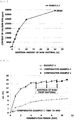
- FIG. 1 The preparation process of fermented apple products according to Examples 2 to 4 is illustrated in FIG. 1 .
- Example 4 in which the fermentation was performed by adding the raw calcium material (seaweed calcium) was about 575 times or more as compared with that of Comparative example 3, and the calcium content of Example 2 was increased about 100 times or more as compared with that of Example 1.
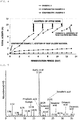
- Example 2 The calcium contents of the fermented apple product according to the addition amount of the raw calcium material in Example 2 were compared by the same manner used in Experimental example 1-1. The results of measuring calcium ion content according to the amount of raw calcium material added are illustrated in FIG. 2 .
- Comparative examples 4 and 5 and Example 3 were compared to confirm whether the raw calcium material was lost according to the timing of adding the raw calcium material.
- the alcohol content and total acidity were measured so as to adjust the right timing of adding the raw material.
- Comparative example 4 32% of the raw calcium material was dissolved, and thus the loss of the raw calcium material was large. Further, the fermentation yield of alcohol fermentation decreased significantly compared with those of Comparative example 5 and Example 3 in which the alcohol fermentation was carried out without the addition of raw calcium material, so that it was not suitable for the preparation of fermented apple products, indicating that the time of adding was not proper. Further, in the case of Comparative example 5 in which raw calcium material was added at the beginning of the acetic acid fermentation, 86% of the raw calcium material was dissolved and 14.1% of the raw material was lost. In addition, acetic acid fermentation hardly occurred so that it was not suitable for the preparation of fermented apple products, indicating that the time of adding was not proper.
- Example 3 99% of the raw calcium material was dissolved, and the loss of the raw calcium material was small, and it did not affect largely on the alcohol fermentation or acetic acid fermentation yield. It was confirmed that raw calcium material added at the time when the acetic acid fermentation proceeded and the organic acid content was 10,000 ppm or higher is desirable for increasing calcium ion content.
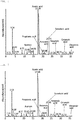
- FIG. 5 illustrates the results of Comparative example 2.
- FIG. 6 illustrates the results of Example 1.
- FIG. 7 illustrates the results of Example 3.
- Example 1 Ethyl acetate Ethereal, fruity 2,585,317,4 88 6,861,523,031 6,676,821,504 2-Butanone Sweet, acetone-like 26, 337,743 - - Ethanol - 220,813,622 1,404,484,448 1,248,094,158 2,3-Butanedione Strong, buttery odor 409,478,071 84,713,858 88,777,934 Isobutyl acetate Fruity, banana 538,871,281 354,603,350 324,864,878 2-Butenal Spicy buttery odor 27,780,026 40,547,122 29,927,955 Eth
- Examples 1 and 3 prepared by the non-heat sterilization method showed a tendency of decreases in contents of acetoin, propionic acid, butanoic acid, isovaleric acid, hexanoic acid, octanoic acid, and decanoic acid, which are components having the characteristics of the offensive or unpleasant odor (fatty, cheese, unpleasant), compared to Comparative example 2 in which the fermented apple product was prepared by the heat-sterilization treatment of the conventional process.
- a sensory test was conducted on 20 people aged 20 to 50 in the food industry. The sensory test was carried out on a 5-point scale for each flavor characteristic. For fruity, fresh, sweety, unpleasant, cheesy, and sweaty, 5 points indicate “strong,” 4 points indicate “slightly strong,” 3 points indicate “average,” 2 point indicates “slightly weak,” and 1 point indicates “weak.”
- Example 1 has 3 points or more for fruity, fresh and sweety and 2 points or less for unpleasant, cheesy and sweaty, indicating superior sensory effects in the flavor portion compared to those of the Comparative example 2.
- the analysis was performed on free sugars and organic acids contained in the raw apple material of Comparative example 1 and the fermented apple product of Examples 1 and 3, respectively.
- (1) Analysis of free sugars was performed by the following method. HPLC analysis was used for analysis of free sugar. For sample pretreatment, 10 ml of liquid was sufficiently dissolved in 50 ml of water, the mixture was constant-volumized using acetonitrile and filtered through a 0.2 ⁇ m filter, followed by the analysis. Standard reagents were glucose, fructose, sucrose, lactose, and maltose. The HPLC analysis conditions are shown in the following Table 6.
- Example 1 As a result of experiments, the content of fructose, glucose, and sucrose was reduced and organic acids were produced in Example 1 and Example 3, which were prepared through fermentation process compared with Comparative example 1. Accordingly, it was confirmed that the fermentation process of Example 1 of the present invention allowed the sugar contained in the raw material to be converted into the organic acid.
Landscapes
- Health & Medical Sciences (AREA)
- Life Sciences & Earth Sciences (AREA)
- Engineering & Computer Science (AREA)
- Chemical & Material Sciences (AREA)
- General Health & Medical Sciences (AREA)
- Organic Chemistry (AREA)
- Animal Behavior & Ethology (AREA)
- Public Health (AREA)
- Veterinary Medicine (AREA)
- Food Science & Technology (AREA)
- Mycology (AREA)
- Dermatology (AREA)
- Nutrition Science (AREA)
- Botany (AREA)
- Bioinformatics & Cheminformatics (AREA)
- General Engineering & Computer Science (AREA)
- Wood Science & Technology (AREA)
- Polymers & Plastics (AREA)
- Biochemistry (AREA)
- Zoology (AREA)
- Genetics & Genomics (AREA)
- Microbiology (AREA)
- Epidemiology (AREA)
- Birds (AREA)
- Biotechnology (AREA)
- Gerontology & Geriatric Medicine (AREA)
- Inorganic Chemistry (AREA)
- Coloring Foods And Improving Nutritive Qualities (AREA)
- Seasonings (AREA)
- Preparation Of Fruits And Vegetables (AREA)
- Preparation Of Compounds By Using Micro-Organisms (AREA)
Applications Claiming Priority (2)
| Application Number | Priority Date | Filing Date | Title |
|---|---|---|---|
| KR20160052476 | 2016-04-28 | ||
| PCT/KR2017/004609 WO2017188796A1 (ko) | 2016-04-28 | 2017-04-28 | 칼슘 이온이 다량 함유된 사과발효물 |
Publications (2)
| Publication Number | Publication Date |
|---|---|
| EP3449737A1 true EP3449737A1 (de) | 2019-03-06 |
| EP3449737A4 EP3449737A4 (de) | 2020-01-08 |
Family
ID=60159938
Family Applications (1)
| Application Number | Title | Priority Date | Filing Date |
|---|---|---|---|
| EP17789980.4A Withdrawn EP3449737A4 (de) | 2016-04-28 | 2017-04-28 | Fermentiertes apfelprodukt mit grosser menge an calciumionen |
Country Status (5)
| Country | Link |
|---|---|
| US (1) | US20190142045A1 (de) |
| EP (1) | EP3449737A4 (de) |
| KR (1) | KR101941967B1 (de) |
| CN (1) | CN109561726A (de) |
| WO (1) | WO2017188796A1 (de) |
Cited By (1)
| Publication number | Priority date | Publication date | Assignee | Title |
|---|---|---|---|---|
| CN113388485A (zh) * | 2021-06-01 | 2021-09-14 | 云南农业大学热带作物学院 | 一种解酒护肝玫瑰果醋饮料的制备方法 |
Families Citing this family (10)
| Publication number | Priority date | Publication date | Assignee | Title |
|---|---|---|---|---|
| CN108251253A (zh) * | 2018-04-06 | 2018-07-06 | 周子云 | 一种枸杞酒的生产方法 |
| TWI710321B (zh) * | 2018-05-03 | 2020-11-21 | 綠茵生技股份有限公司 | 低糖蔬果酵素液之製作方法 |
| CN110214887B (zh) * | 2019-06-28 | 2022-10-11 | 浙江大学 | 针对液体自冷型超高压杀菌的装置及方法 |
| KR102482886B1 (ko) * | 2020-08-21 | 2022-12-28 | 김방희 | 칼슘 식초의 제조방법 |
| KR102476532B1 (ko) * | 2020-11-04 | 2022-12-09 | 권천경 | 기능성 사과 농축액의 제조방법 |
| JP2023018662A (ja) * | 2021-07-27 | 2023-02-08 | 奥野製薬工業株式会社 | 醸造酢の製造方法および該方法に使用するための酢酸発酵助剤 |
| CN113768067A (zh) * | 2021-09-13 | 2021-12-10 | 浙江聚仙庄饮品有限公司 | 一种高钙杨梅醋饮及其制备方法 |
| KR20240017267A (ko) * | 2022-07-29 | 2024-02-07 | 씨제이제일제당 (주) | 사과발효조성물 |
| KR20240016738A (ko) * | 2022-07-29 | 2024-02-06 | 씨제이제일제당 (주) | 사과발효조성물 |
| KR20240017266A (ko) * | 2022-07-29 | 2024-02-07 | 씨제이제일제당 (주) | 사과발효조성물 |
Family Cites Families (15)
| Publication number | Priority date | Publication date | Assignee | Title |
|---|---|---|---|---|
| KR100211515B1 (ko) * | 1996-09-11 | 1999-08-02 | 남승우 | 과채를 주원료로 하는 수전해칼슘 함유 건강보조식품의 제조방법 |
| JP3308475B2 (ja) * | 1997-10-08 | 2002-07-29 | 堯 近藤 | 水溶性有機カルシウム剤の製造方法 |
| KR20020091321A (ko) * | 2001-05-30 | 2002-12-06 | 최혁문 | 굴 껍질과 각종 과일을 이용한 칼슘보급제 및 그 제조방법 |
| KR100499619B1 (ko) * | 2002-11-13 | 2005-07-05 | 주식회사 계명푸덱스 | 고 용해성 재처리 분말칼슘의 제조방법 |
| WO2004063095A2 (en) * | 2003-01-13 | 2004-07-29 | Keimyung Foodex Co. Ltd. | Method for production of solvent for high solution of calcium, calcium powder with high solubility thereof and calcium liquid thereof |
| CN100379359C (zh) * | 2005-04-01 | 2008-04-09 | 浙江杭州鑫富药业股份有限公司 | 一种含醋蛋粉的组合物及用途 |
| CN1954801A (zh) * | 2005-10-28 | 2007-05-02 | 李春萌 | 苹果醋润肤膏 |
| CN1814741A (zh) * | 2005-12-11 | 2006-08-09 | 李新明 | 高钙醋 |
| JP4521447B2 (ja) * | 2008-01-30 | 2010-08-11 | 株式会社 ミヤトウ野草研究所 | 酵素含有の健康食品の製造方法及び健康食品 |
| KR101406739B1 (ko) * | 2008-07-15 | 2014-06-13 | 대상 주식회사 | 과일식초 또는 곡류식초의 제조방법 |
| KR101070294B1 (ko) * | 2008-11-05 | 2011-10-06 | 부여군 | 수박식초의 제조방법 및 이의 방법으로 제조된 수박식초를 함유하는 음료조성물 |
| KR101227366B1 (ko) * | 2010-08-06 | 2013-01-29 | 한국식품연구원 | 친환경사과 식초의 제조 방법 및 상기 방법에 의해 제조된 친환경사과 식초 |
| KR101175038B1 (ko) * | 2010-12-02 | 2012-08-17 | 웅진식품주식회사 | 발효유자원액의 제조방법 및 이로 제조된 발효유자원액을 이용한 유자음료 조성물 |
| KR101321611B1 (ko) | 2012-02-29 | 2013-10-23 | (주)그린팜테크 | 구절초 및 진주조개껍질을 함유한 기능성 식초 및 이의 제조방법 |
| CN104116110B (zh) * | 2014-08-07 | 2015-09-30 | 绿杰股份有限公司 | 多菌种发酵型苹果醋饮料及其制备方法 |
-
2017
- 2017-04-28 US US16/096,127 patent/US20190142045A1/en not_active Abandoned
- 2017-04-28 KR KR1020170055364A patent/KR101941967B1/ko active Active
- 2017-04-28 WO PCT/KR2017/004609 patent/WO2017188796A1/ko not_active Ceased
- 2017-04-28 EP EP17789980.4A patent/EP3449737A4/de not_active Withdrawn
- 2017-04-28 CN CN201780026659.6A patent/CN109561726A/zh active Pending
Cited By (1)
| Publication number | Priority date | Publication date | Assignee | Title |
|---|---|---|---|---|
| CN113388485A (zh) * | 2021-06-01 | 2021-09-14 | 云南农业大学热带作物学院 | 一种解酒护肝玫瑰果醋饮料的制备方法 |
Also Published As
| Publication number | Publication date |
|---|---|
| CN109561726A (zh) | 2019-04-02 |
| US20190142045A1 (en) | 2019-05-16 |
| KR20170123284A (ko) | 2017-11-07 |
| WO2017188796A1 (ko) | 2017-11-02 |
| EP3449737A4 (de) | 2020-01-08 |
| KR101941967B1 (ko) | 2019-01-24 |
Similar Documents
| Publication | Publication Date | Title |
|---|---|---|
| EP3449737A1 (de) | Fermentiertes apfelprodukt mit grosser menge an calciumionen | |
| Fiorda et al. | Microbiological, biochemical, and functional aspects of sugary kefir fermentation-A review | |
| US4702923A (en) | Lyophilized kefir yoghurt health food | |
| CN101988046B (zh) | 一种微生物转化制备乳糖酸的方法 | |
| CN108936160A (zh) | 包含丙酸盐的果实发酵物及其用途 | |
| CN105670895B (zh) | 一种芒果醋、芒果醋饮料及其制备方法 | |
| CN111117926A (zh) | 一种高产γ-氨基丁酸的菌株及其制备富γ-氨基丁酸果汁的应用 | |
| JP5011543B2 (ja) | Gaba含有発酵物の製造方法 | |
| CN117887609A (zh) | 一种植物乳植杆菌mc14及其在腌制蔬菜中的应用 | |
| CN119662447B (zh) | 一种有助于抗氧化、改善睡眠、维持血压健康水平的发酵辣白菜及其制备方法 | |
| CN112226331A (zh) | 一种用苹果酸-乳酸发酵法酿造苹果醋的方法 | |
| Ganda-Putra et al. | Characteristics of cocoa vinegar from pulp liquids fermentation by various methods | |
| KR102834375B1 (ko) | 콤부차 발효액을 이용한 콤부차 음료 제조 방법 | |
| Miguel et al. | Volatile compounds formation in kefir | |
| KR101582728B1 (ko) | Gaba 생산 젖산균 및 젖산발효 사과박을 이용한 산수유 잼 제조방법 | |
| CN118319000B (zh) | 一种分步接种、套醪工艺的青梅酵素发酵方法 | |
| González-Herrera et al. | Chemical composition of kombucha analogs and their influence on sensory acceptability | |
| JP6713636B2 (ja) | 泡盛もろみ酢発酵飲料の製造方法 | |
| JP7756280B1 (ja) | 芳醇感の増強された飲料及びその製造方法、並びに飲料の芳醇感の増強方法 | |
| JP2004121134A (ja) | 果実の加工方法及び飲料 | |
| KR100514436B1 (ko) | 유산균을 함유한 과실주의 제조방법 | |
| JPH0690733A (ja) | 食 酢 | |
| KR20100003396A (ko) | 유효 미생물을 이용한 농수산물 소재의 기능성 발효제제조개발 | |
| CN118844597A (zh) | 一种采用复合菌种制备牡蛎发酵液的方法及应用 | |
| CN121294256A (zh) | 一株产阿魏酸酯酶的植物乳植杆菌及应用 |
Legal Events
| Date | Code | Title | Description |
|---|---|---|---|
| STAA | Information on the status of an ep patent application or granted ep patent |
Free format text: STATUS: THE INTERNATIONAL PUBLICATION HAS BEEN MADE |
|
| PUAI | Public reference made under article 153(3) epc to a published international application that has entered the european phase |
Free format text: ORIGINAL CODE: 0009012 |
|
| STAA | Information on the status of an ep patent application or granted ep patent |
Free format text: STATUS: REQUEST FOR EXAMINATION WAS MADE |
|
| 17P | Request for examination filed |
Effective date: 20181127 |
|
| AK | Designated contracting states |
Kind code of ref document: A1 Designated state(s): AL AT BE BG CH CY CZ DE DK EE ES FI FR GB GR HR HU IE IS IT LI LT LU LV MC MK MT NL NO PL PT RO RS SE SI SK SM TR |
|
| AX | Request for extension of the european patent |
Extension state: BA ME |
|
| DAV | Request for validation of the european patent (deleted) | ||
| DAX | Request for extension of the european patent (deleted) | ||
| A4 | Supplementary search report drawn up and despatched |
Effective date: 20191211 |
|
| RIC1 | Information provided on ipc code assigned before grant |
Ipc: A23L 33/105 20160101AFI20191205BHEP Ipc: A23L 19/00 20160101ALI20191205BHEP Ipc: A61Q 19/00 20060101ALI20191205BHEP Ipc: A61K 8/97 20170101ALI20191205BHEP Ipc: A23L 19/20 20160101ALI20191205BHEP Ipc: A23L 33/16 20160101ALI20191205BHEP Ipc: C12J 1/04 20060101ALI20191205BHEP Ipc: A61Q 19/08 20060101ALI20191205BHEP Ipc: C12G 3/026 20190101ALI20191205BHEP |
|
| STAA | Information on the status of an ep patent application or granted ep patent |
Free format text: STATUS: THE APPLICATION IS DEEMED TO BE WITHDRAWN |
|
| 18D | Application deemed to be withdrawn |
Effective date: 20221101 |