EP3456702A1 - Procede de deshydratation des alcools en olefines comprenant le recyclage des alcools - Google Patents
Procede de deshydratation des alcools en olefines comprenant le recyclage des alcools Download PDFInfo
- Publication number
- EP3456702A1 EP3456702A1 EP18193532.1A EP18193532A EP3456702A1 EP 3456702 A1 EP3456702 A1 EP 3456702A1 EP 18193532 A EP18193532 A EP 18193532A EP 3456702 A1 EP3456702 A1 EP 3456702A1
- Authority
- EP
- European Patent Office
- Prior art keywords
- effluent
- alcohol
- fraction
- produce
- charge
- Prior art date
- Legal status (The legal status is an assumption and is not a legal conclusion. Google has not performed a legal analysis and makes no representation as to the accuracy of the status listed.)
- Granted
Links
Classifications
-
- C—CHEMISTRY; METALLURGY
- C07—ORGANIC CHEMISTRY
- C07C—ACYCLIC OR CARBOCYCLIC COMPOUNDS
- C07C1/00—Preparation of hydrocarbons from one or more compounds, none of them being a hydrocarbon
- C07C1/20—Preparation of hydrocarbons from one or more compounds, none of them being a hydrocarbon starting from organic compounds containing only oxygen atoms as heteroatoms
- C07C1/24—Preparation of hydrocarbons from one or more compounds, none of them being a hydrocarbon starting from organic compounds containing only oxygen atoms as heteroatoms by elimination of water
-
- B—PERFORMING OPERATIONS; TRANSPORTING
- B01—PHYSICAL OR CHEMICAL PROCESSES OR APPARATUS IN GENERAL
- B01D—SEPARATION
- B01D3/00—Distillation or related exchange processes in which liquids are contacted with gaseous media, e.g. stripping
- B01D3/14—Fractional distillation or use of a fractionation or rectification column
-
- B—PERFORMING OPERATIONS; TRANSPORTING
- B01—PHYSICAL OR CHEMICAL PROCESSES OR APPARATUS IN GENERAL
- B01J—CHEMICAL OR PHYSICAL PROCESSES, e.g. CATALYSIS OR COLLOID CHEMISTRY; THEIR RELEVANT APPARATUS
- B01J29/00—Catalysts comprising molecular sieves
- B01J29/04—Catalysts comprising molecular sieves having base-exchange properties, e.g. crystalline zeolites
- B01J29/06—Crystalline aluminosilicate zeolites; Isomorphous compounds thereof
- B01J29/65—Crystalline aluminosilicate zeolites; Isomorphous compounds thereof of the ferrierite type, e.g. types ZSM-21, ZSM-35 or ZSM-38, as exemplified by patent documents US4046859, US4016245 and US4046859, respectively
-
- C—CHEMISTRY; METALLURGY
- C07—ORGANIC CHEMISTRY
- C07C—ACYCLIC OR CARBOCYCLIC COMPOUNDS
- C07C5/00—Preparation of hydrocarbons from hydrocarbons containing the same number of carbon atoms
- C07C5/22—Preparation of hydrocarbons from hydrocarbons containing the same number of carbon atoms by isomerisation
- C07C5/27—Rearrangement of carbon atoms in the hydrocarbon skeleton
- C07C5/2767—Changing the number of side-chains
- C07C5/277—Catalytic processes
- C07C5/2775—Catalytic processes with crystalline alumino-silicates, e.g. molecular sieves
-
- C—CHEMISTRY; METALLURGY
- C07—ORGANIC CHEMISTRY
- C07C—ACYCLIC OR CARBOCYCLIC COMPOUNDS
- C07C7/00—Purification; Separation; Use of additives
- C07C7/04—Purification; Separation; Use of additives by distillation
-
- C—CHEMISTRY; METALLURGY
- C07—ORGANIC CHEMISTRY
- C07C—ACYCLIC OR CARBOCYCLIC COMPOUNDS
- C07C2529/00—Catalysts comprising molecular sieves
- C07C2529/04—Catalysts comprising molecular sieves having base-exchange properties, e.g. crystalline zeolites, pillared clays
- C07C2529/06—Crystalline aluminosilicate zeolites; Isomorphous compounds thereof
- C07C2529/65—Crystalline aluminosilicate zeolites; Isomorphous compounds thereof of the ferrierite type, e.g. types ZSM-21, ZSM-35 or ZSM-38
-
- C—CHEMISTRY; METALLURGY
- C07—ORGANIC CHEMISTRY
- C07C—ACYCLIC OR CARBOCYCLIC COMPOUNDS
- C07C2529/00—Catalysts comprising molecular sieves
- C07C2529/88—Ferrosilicates; Ferroaluminosilicates
-
- Y—GENERAL TAGGING OF NEW TECHNOLOGICAL DEVELOPMENTS; GENERAL TAGGING OF CROSS-SECTIONAL TECHNOLOGIES SPANNING OVER SEVERAL SECTIONS OF THE IPC; TECHNICAL SUBJECTS COVERED BY FORMER USPC CROSS-REFERENCE ART COLLECTIONS [XRACs] AND DIGESTS
- Y02—TECHNOLOGIES OR APPLICATIONS FOR MITIGATION OR ADAPTATION AGAINST CLIMATE CHANGE
- Y02P—CLIMATE CHANGE MITIGATION TECHNOLOGIES IN THE PRODUCTION OR PROCESSING OF GOODS
- Y02P30/00—Technologies relating to oil refining and petrochemical industry
- Y02P30/40—Ethylene production
Definitions
- the present invention relates to a process for dehydrating alcohols to olefins comprising an improved step of recovering the unreacted alcohol.
- the feedstock of the process can be obtained by chemical processes or by fermentative processes.
- alkenes obtained in particular isobutene, butene-1 and butenes-2, are of great interest in the field of the petrochemical industry and organic synthesis.
- the document EP 2348 005 discloses the dehydration of alcohols containing from 2 to 10 carbon atoms to the corresponding olefin on a zeolitic FER catalyst having an Si / Al atomic ratio of less than 100.
- the hourly space velocity (Weight Hourly Space Velocity), or WHSV) relative to the alcohol is at least 4 h -1 and the temperature of 320 to 600 ° C.
- the document WO 2011/113834 describes the simultaneous dehydration and skeletal isomerization of isobutanol in the presence of crystalline silicate catalysts (10MR), whether or not phosphonized or non-phosphorus modified, of the FER group, MWW, EUO, MFS, ZSM- 48, MTT, MFI, MEL or TON having an Si / Al ratio greater than 10, AEL group silicoaluminophosphate molecular sieves, or silica-zirconia-, titanium- or fluorine-alumina on zeolitic catalysts.
- the PPH ratio of the mass flow rate on the mass of catalyst, corresponding to the WHSV
- the maximum proportion of n-butenes obtained in the butenes is 58.4% at 375 ° C. to high PPH (12.6 h -1 ) on a powdered Si / Al 33 zeolite FER.
- light hydrocarbon effluent is meant an effluent comprising mainly hydrocarbons comprising at most 4 carbon atoms, that is to say at least 50% by weight of hydrocarbons comprising at most 4 carbon atoms.
- olefinic effluent is meant an effluent comprising at least 50% by weight, advantageously at least 70% by weight, preferably at least 80% by weight, of olefins corresponding to or to primary alcohols substituted in position 2 by an alkyl group fed into the feedstock. process according to the invention.
- heavy hydrocarbon effluent an effluent comprising at least 50% by weight of hydrocarbons comprising at least 4 carbon atoms, advantageously at least 5 carbon atoms.
- the method according to the invention aims to produce mainly linear olefins in an olefinic effluent from step g), said linear olefins being the olefins corresponding to or primary alcohols substituted in the 2-position by an alkyl group fed into the feedstock.
- process according to the invention and to recycle the unconverted alcohol obtained following a dilution of a heavy hydrocarbon phase with the alcohol of the feedstock and a distillation of said mixture.
- An advantage of the process according to the invention is, by a dilution of the heavy hydrocarbon effluent from step g), to improve the recovery of the unreacted alcohol by improving the purity of the organic effluent rich in alcohol. recycled.
- this arrangement limits the accumulation of impurities in the recycle loop, which avoids or decreases the purges required on said loops, thus improving the overall efficiency of the process.
- the process according to the invention is a process for the isomerizing dehydration of a feedstock comprising from 40 to 100% by weight of primary alcohol substituted in the 2-position by an alkyl group.
- the filler treated in the process according to the invention is a filler comprising at least one alcohol, advantageously at least one primary monoalcohol of formula R-CH 2 -OH, in which R is a nonlinear alkyl radical of general formula C n H 2n +1 where n is an integer from 3 to 20, preferably from 3 to 10, more preferably from 3 to 5.
- the filler comprises from 40 to 100% by weight, preferably from 70 to 100% by weight, advantageously from 85 to 100% by weight of at least one alcohol, advantageously from at least one primary monoalcohol as defined above.
- Said feed may comprise one or more primary monoalcohols.
- Said primary monoalcohol is preferably isobutanol or 2-methyl-1-butanol, alone or as a mixture. Very preferably, said primary monoalcohol is isobutanol.
- Said feedstock can come from chemical or biochemical processes, for example fermentation processes.
- this feedstock can be derived from fermentation processes of lignocellulosic biomass.
- Said filler may contain water, advantageously up to 15% by weight of water, preferably up to 10% by weight, very advantageously up to 5% by weight. It may also comprise impurities of mineral type (such as Na, Ca, P, Al, Si, K, SO 4 ) and of organic type (such as methanol, ethanol, n-butanol, aldehydes, ketones, and the corresponding acids, for example furanic acid, acetic acid, isobutyric acid).
- mineral type such as Na, Ca, P, Al, Si, K, SO 4
- organic type such as methanol, ethanol, n-butanol, aldehydes, ketones, and the corresponding acids, for example furanic acid, acetic acid, isobutyric acid.
- the method according to the invention comprises a step of pressurizing said charge, followed by mixing a fraction of said compressed charge with the organic effluent rich in alcohol from step h. ) and with a fraction of the aqueous effluent resulting from stage f), and then preheating said mixture by heat exchange, advantageously with a olefinic effluent from step g), with an aqueous effluent from step f) and with a dehydration effluent from step c) so as to produce a partially vaporized charge, the residual fraction of compressed charge being sent to step h).
- the pressurization can be carried out by any means known to those skilled in the art, in particular with the aid of a pump.
- Said charge is pressurized at a pressure of between 0.2 and 1 MPa. Said preheating allows said mixture to reach a temperature between 100 and 250 ° C, preferably between 100 and 200 ° C.
- the residual fraction of compressed charge is sent to step h) mixed with the heavy hydrocarbon effluent from step g), the flow rate of said residual fraction being adjusted so that the mass ratio of the residual fraction flow rates on non-converted alcohol in a heavy hydrocarbon effluent is between 2: 1 and 10: 1.
- non-converted alcohol flow rate in a heavy hydrocarbon effluent is meant the flow rate in the heavy hydrocarbon effluent resulting from step g) of primary monoalcohol of formula R-CH 2 -OH, in which R is an alkyl radical.
- non-linear compound of the general formula C n H 2n + 1 where n is an integer between 3 and 20, preferably between 3 and 10, more preferably between 3 and 5, preferably an alcohol selected from the group consisting of isobutanol, 2-methylbutan-1-ol, 2,2-dimethylpropan-1-ol, 2-methylpentan-1-ol, 2,2-dimethylbutan-1-ol, 2-ethylbutan-1-ol and their mixtures, very preferably in the group consisting of isobutanol, 2-methyl-1-butanol and mixtures thereof and very preferably isobutanol.
- an alcohol selected from the group consisting of isobutanol, 2-methylbutan-1-ol, 2,2-dimethylpropan-1-ol, 2-methylpentan-1-ol, 2,2-dimethylbutan-1-ol, 2-ethylbutan-1-ol and their mixtures, very preferably in the group consisting of isobutanol, 2-methyl-1-but
- the method according to the invention comprises a step b) of vaporization and final overheating of said partially vaporized charge from step a) so as to produce a vaporized charge.
- said partially vaporized charge resulting from step a) is vaporized by at least one indirect exchange with a hot utility, and then overheated by indirect exchange with a hot utility.
- Said filler is superheated to a temperature of between 250 and 375 ° C, preferably between 310 and 365 ° C.
- the method according to the invention comprises a step of dehydration of said vaporized charge in at least one dehydration reactor operating in the gas phase at a weighted average temperature of between 250 and 375 ° C., at a pressure comprised between 0.2 MPa and 1 MPa and at a PPH of between 1 and 18 h -1, in the presence of a catalyst comprising a zeolite having at least one series of channels whose opening is defined by an 8 atom ring. oxygen (8MR), said catalyst being previously coked in situ or ex situ, so as to produce a dewatering effluent.
- a catalyst comprising a zeolite having at least one series of channels whose opening is defined by an 8 atom ring. oxygen (8MR), said catalyst being previously coked in situ or ex situ, so as to produce a dewatering effluent.
- the dehydration step comprises at least one dehydration reactor.
- this step comprises more than one reactor
- the temperature at the inlet of each of the reactors is adjusted to a value between 250 and 375 ° C. by a heating means, the isomerizing dehydration reaction being endothermic, and each reactor is operated under identical conditions.
- the term "the reactor” designates both the reactor of said step c), when it comprises only one reactor, and each of the reactors of said step c), when the reactor it comprises more than one reactor.
- the reactor is operated in the gas phase, at a weighted average temperature of between 250 and 375 ° C., at a pressure of between 0.2 MPa and 1 MPa, at a PPH of between 1 and 18 h -1, in the presence of a catalyst comprising a zeolite comprising at least one series of channels whose opening is defined by an 8-atom oxygen ring (8MR).
- Said catalyst is arranged in one or more fixed beds, which can be operated in ascending, descending or radial flow.
- PPH Weight per Weight per Hour
- WHSV Weight Hourly Space Velocity
- the catalyst used in said dehydration reaction stage comprises a zeolite having at least one series of channels, the opening of which is defined by an 8-atom oxygen ring (8MR) as defined in FIG. classification " Atlas of Zeolite Structure Types ", Ch. Baerlocher, LB Mc Cusker, DH Olson, 6th Edition, Elsevier, 2007, Elsevier ".
- 8MR 8-atom oxygen ring
- the zeolite may also advantageously contain at least one series of channels whose pore opening is defined by a ring containing 10 oxygen atoms (10 MR).
- Said zeolite is advantageously chosen from zeolites having 8 and 10MR channels such as zeolites of structural type FER and MFS, taken alone or as a mixture.
- the zeolite is more preferably selected from the group consisting of, for the FER type, ferrierite zeolites, FU-9, ISI-6, NU-23, ZSM-35 and for the MFS type, zeolite ZSM-57, and their mixtures.
- Said zeolite is very advantageously of the FER type, and preferably ferrierite.
- said zeolite is made of ferrierite.
- said zeolite is a ferrierite having an Si / Al molar ratio of from 8 to 70, preferably from 10 to 70, preferably from 10 to 50, preferably from 20 to 50.
- Said catalyst also comprises a binder.
- the zeolite content in the catalyst is 55-90% by weight, preferably between 60 and 80% by weight.
- the binder is advantageously chosen from a silicic binder, an AlPO 4, a clay, a zirconia, a Ti oxide or SiC. Very preferably, it is a silicic binder.
- the binder content in the catalyst is between 10 and 45% by weight, preferably between 20 and 40%.
- the catalyst may optionally contain impurities in small amounts having no technical effect on the conversion / selectivity of the catalyst.
- Said catalyst may be shaped by any of the techniques known to those skilled in the art, for example in the form of powder, beads, pellets, granules, or extrudates (hollow or non-hollow cylinders, multilobed rolls of 2, 3, 4 or 5 lobes for example, twisted cylinders), rings, etc.
- the catalyst does not include metals. It is understood by this expression “no metals”, that there are no metals added during the preparation. It is also understood that there may be impurities in the binders and therefore in small amounts. Preferably, there is no aluminum or iron in the silica.
- Said reaction step c) is a step in which the alcohol is dehydrated to olefin, the branched alcohols being advantageously dehydrated to linear olefins.
- Said reaction stage of the process according to the invention is advantageously an isomerization dehydration step.
- the process according to the invention comprises a step of cooling said dehydration effluent, advantageously by at least four indirect indirect heat exchanges with at least said feedstock resulting from step a), the organic and aqueous phases. from step e) and a cold utility, so as to produce a cooled effluent.
- Said cooling step enables said dehydration effluent to be cooled to a temperature of between 30 and 50.degree. C., preferably between 35 and 45.degree.
- This cooling temperature makes it possible, on the one hand, to liquefy the dehydration effluent and, on the other hand, to demix the liquefied effluent into an aqueous phase and an organic phase, this temperature range making it possible to maximize the alkene and alcohol recovery.
- the process according to the invention comprises a step of separation by decantation of said cooled effluent from step d) into an aqueous phase and an organic phase.
- This step may be carried out by any means known to those skilled in the art, for example in a settling tank, the aqueous phase being withdrawn in the lower part and the organic phase in the upper part.
- the process according to the invention comprises a step of separation by distillation of said aqueous phase resulting from step e) so as to produce a light hydrocarbon effluent and an aqueous effluent, a fraction of said aqueous effluent being purged. the other part being recycled to step a).
- the fraction of the aqueous effluent recycled to step a) represents between 10 and 20% by weight of the flow rate of the aqueous phase resulting from stage e), advantageously between 12 and 17% by weight.
- Said separation step is carried out at a pressure of between 0.8 and 0.9 MPa.
- the fraction of the aqueous effluent recycled to stage a) is adjusted so that the water content in the vaporized feedstock at the inlet of stage c) is between 4 and 15% by weight, advantageously between 4 and 10% by weight, very advantageously between 5 and 10% by weight.
- the process according to the invention comprises a step of separation by distillation of the organic phase resulting from step e) so as to produce an effluent alkenes and a heavy hydrocarbon effluent.
- Said distillation is carried out in at least one distillation column, operated at a pressure of between 0.6 and 0.7 MPa.
- This distillation known to those skilled in the art, is operated according to the rules of the art.
- the process according to the invention comprises a step comprising mixing the heavy hydrocarbon effluent from step g) with the residual fraction of compressed charge resulting from step a), the flow rate of said the residual fraction being adjusted so that the mass ratio of the flow rates of residual fraction on unconverted alcohol in a heavy hydrocarbon effluent is between 2: 1 and 10: 1, then the separation by distillation of said mixture so as to produce a C5-C6 hydrocarbon effluent, an organic effluent rich in alcohol and a C6 + hydrocarbon effluent, and recycling said organic effluent rich in alcohol to step a).
- the mass ratio of the flow rates of the residual fraction on non-converted alcohol in the heavy hydrocarbon effluent is advantageously between 5: 1 and 9: 1.
- This dilution makes it possible to obtain an organic effluent rich in alcohol comprising between 47% and 92% mol of alcohol, preferably between 79% and 91% mol of alcohol and an overall recovery of alcohol on this stage (ratio of the mass flow rate of alcohol in the organic effluent rich in alcohol on the mass flow of alcohol in the heavy hydrocarbon effluent) of between 92 and 96%, advantageously between 94 and 96%.
- Example 1 (non-compliant): recycling of isobutanol without dilution by isobutanol of the filler
- the flow rate of said lateral withdrawal is adjusted to extract 95% of the isobutanol feeding the column.
- the composition of said side racking is shown in Table 1.
- Table 1 Composition of organic effluent rich in isobutanol %molar isobutanol 22.65 Acetic acid 11.37 2-methyl-2-butene 0.77 Isobutaldéhyde 0.07 n-butanol 0.10 s-butanol 0.38 t-butanol 0.05 2,3,3-trimethyl-1-butene 0.25 2,4,4-trimethyl-1-pentene 63.02
- Example 2 differs from Example 1 in that the heavy hydrocarbon effluent is diluted by a fraction of the feed before being separated.
- Table 2 The composition of said racking is presented in Table 2.
- Table 2 Composition of organic effluent rich in isobutanol %molar isobutanol 47.18 Acetic acid 5.76 2-methyl-2-butene 0.68 Isobutaldéhyde 0.06 n-butanol 0.08 s-butanol 0.24 t-butanol 0.04 2,3,3-trimethyl-1-butene 0.79 2,4,4-trimethyl-1-pentene 44.28
- Example 2 differs from Example 1 in that the heavy hydrocarbon effluent is diluted by a fraction of the feed before being separated.
- the composition of said racking is presented in Table 3.
- Table 3 Composition of organic effluent rich in isobutanol %molar isobutanol 92.39 Acetic acid 1.14 2-methyl-2-butene 0.40 Isobutaldéhyde 0.04 n-butanol 0.03 s-butanol 0.14 t-butanol 0.02 2,3,3-trimethyl-1-butene 0.27 2,4,4-trimethyl-1-pentene 3.37
Landscapes
- Chemical & Material Sciences (AREA)
- Organic Chemistry (AREA)
- Chemical Kinetics & Catalysis (AREA)
- Crystallography & Structural Chemistry (AREA)
- Engineering & Computer Science (AREA)
- Analytical Chemistry (AREA)
- Oil, Petroleum & Natural Gas (AREA)
- Water Supply & Treatment (AREA)
- Materials Engineering (AREA)
- Organic Low-Molecular-Weight Compounds And Preparation Thereof (AREA)
Abstract
Description
- La présente invention concerne un procédé de déshydratation des alcools en oléfines comprenant une étape améliorée de récupération de l'alcool non réagi. La charge du procédé peut être obtenue par des procédés chimiques ou par des procédés fermentaires.
- Les alcènes obtenus, en particulier l'isobutène, le butène-1 et les butènes-2, présentent un intérêt important dans le domaine de l'industrie pétrochimique et de la synthèse organique.
- Le document
EP 2348 005 décrit la déshydratation d'alcools contenant de 2 à 10 atomes de carbone en l'oléfine correspondante sur un catalyseur zéolithique FER de ratio atomique Si/Al inférieur à 100. La vitesse spatiale horaire massique (Weight Hourly Space Velocity selon la dénomination anglaise, ou WHSV) par rapport à l'alcool est d'au moins 4 h-1 et la température de 320 à 600°C. - Le document
WO 2011/113834 décrit la déshydratation et l'isomérisation squelettale simultanée de l'isobutanol en présence de catalyseurs silicates cristallins, à taille de canaux moyenne (10MR) déaluminisés ou non, modifiés au phosphore ou non, du groupe FER, MWW, EUO, MFS, ZSM-48, MTT, MFI, MEL ou TON ayant un ratio Si/Al supérieur à 10, tamis moléculaires silicoaluminophosphates du groupe AEL, ou silice-, zircone-, titane- ou fluor-alumine sur catalyseurs zéolithiques. La PPH (ratio du débit massique de charge sur la masse de catalyseur, correspondant à la WHSV) par rapport à l'alcool est d'au moins 1 h-1 et la température de 200 à 600°C. La proportion maximale atteinte en n-butènes dans les butènes est de 58.4% à 375°C à forte PPH (12.6 h-1) sur une zéolithe FER en poudre de Si/Al 33. - Afin de maintenir la cible en conversion, la température moyenne de réaction est augmentée, induisant des baisses de sélectivité. La récupération et le recyclage des espèces réactives non réagies est donc de prime importance pour la viabilité du procédé.
- La demanderesse a découvert un arrangement particulier du procédé de déshydratation des alcools permettant une meilleure récupération et recyclage de l'alcool non réagi, permettant ainsi une meilleure conversion globale.
- L'invention concerne un procédé de déshydratation isomérisante d'une charge comprenant de 40 à 100% poids d'alcool primaire substitué en position 2 par un groupement alkyl comprenant au moins les étapes suivantes :
- a) Mise en pression de ladite charge, suivie du mélange d'une fraction de ladite charge, comprimée, avec l'effluent organique riche en alcool issu de l'étape h) et avec une fraction de l'effluent aqueux issu de l'étape f), puis préchauffe dudit mélange par échange de chaleur, avantageusement avec un effluent oléfinique issu de l'étape g), avec un effluent aqueux provenant de l'étape f) et avec un effluent de déshydratation issu de l'étape c) de manière à produire une charge partiellement vaporisée, la fraction résiduelle de charge comprimée étant envoyée vers l'étape h) ;
- b) Vaporisation et surchauffe finale de ladite charge partiellement vaporisée à une température comprise entre 250 et 375°C de manière à produire une charge vaporisée ;
- c) Déshydratation de ladite charge vaporisée dans au moins un réacteur de déshydratation opérant en phase gaz à une température moyenne pondérée comprise entre 250 et 375°C, à une pression comprise entre 0,2 MPa et 1 MPa et à une PPH comprise entre 1 et 18 h-1, en présence d'un catalyseur comprenant une zéolithe présentant au moins une série de canaux dont l'ouverture est définie par un anneau à 8 atomes d'oxygène (8MR), ledit catalyseur étant préalablement coké in-situ ou ex-situ, de manière à produire un effluent de déshydratation ;
- d) Refroidissement dudit effluent de déshydratation issu de l'étape c) à une température comprise entre 30 et 50°C, avantageusement par au moins quatre échanges de chaleur indirects successifs avec au moins ladite charge de l'étape a), les phases organique et aqueuses issues de l'étape e) et une utilité froide, de manière à produire un effluent refroidi ;
- e) Séparation par décantation dudit effluent refroidi en une phase aqueuse et une phase organique ;
- f) Séparation par distillation de ladite phase aqueuse issue de l'étape e) de manière à produire un effluent hydrocarbures légers et un effluent aqueux, une fraction dudit effluent aqueux étant purgée, l'autre partie étant recyclée vers l'étape a) ;
- g) Séparation par distillation de ladite phase organique issue de l'étape e) de manière à produire un effluent oléfinique et un effluent hydrocarbures lourds ;
- h) Mélange de l'effluent hydrocarbures lourds issu de l'étape g) avec la fraction résiduelle de charge comprimée issue de l'étape a), le débit de ladite fraction résiduelle étant ajusté de manière à ce que le ratio massique des débits de ladite fraction résiduelle sur alcool non-converti dans ledit effluent hydrocarbures lourds soit compris entre 2:1 et 10:1, puis séparation par distillation dudit mélange de manière à produire un effluent hydrocarbures C5-C6, un effluent organique riche en alcool et un effluent hydrocarbures C6 +, et recyclage dudit effluent organique riche en alcool vers l'étape a).
- Par effluent hydrocarbures légers, on entend un effluent comprenant majoritairement des hydrocarbures comprenant au plus 4 atomes de carbone, c'est-à-dire au moins 50% poids d'hydrocarbures comprenant au plus 4 atomes de carbone.
- Par effluent oléfinique, on entend un effluent comprenant au moins 50% poids avantageusement au moins 70% poids, préférentiellement au moins 80% poids, d'oléfines correspondantes à ou aux alcools primaires substitués en position 2 par un groupement alkyle alimentés dans la charge du procédé selon l'invention.
- Par effluent hydrocarbures lourds, on entend un effluent comprenant au moins 50% poids d'hydrocarbures comprenant au moins 4 atomes de carbone, avantageusement au moins 5 atomes de carbone.
- Le procédé selon l'invention vise à produire principalement des oléfines linéaires dans un effluent oléfinique issu de l'étape g), lesdites oléfines linéaires étant les oléfines correspondant à ou aux alcools primaires substitués en position 2 par un groupement alkyle alimentés dans la charge du procédé selon l'invention, et à recycler l'alcool non-converti obtenu suite à une dilution d'une phase hydrocarbures lourds par l'alcool de la charge et une distillation dudit mélange.
- Un avantage du procédé selon l'invention est, par une dilution de l'effluent Hydrocarbures Lourds issu de l'étape g), d'améliorer la récupération de l'alcool non réagi en améliorant la pureté de l'effluent organique riche en alcool recyclé.
- Outre une meilleure récupération, cet arrangement limite l'accumulation d'impuretés dans la boucle de recyclage, ce qui évite ou diminue les purges nécessaires sur lesdites boucles, améliorant donc le rendement global du procédé.
- Conformément à l'invention, le procédé selon l'invention est un procédé de déshydratation isomérisante d'une charge comprenant de 40 à 100% poids d'alcool primaire substitué en position 2 par un groupement alkyl.
- La charge traitée dans le procédé selon l'invention est une charge comprenant au moins un alcool, avantageusement au moins un monoalcool primaire de formule R-CH2-OH, dans lequel R est un radical alkyl non linéaire de formule générale CnH2n+1 où n est un entier compris entre 3 et 20, de préférence entre 3 et 10, de manière préférée entre 3 et 5.
- La charge comprend de 40 à 100% poids, préférentiellement de 70 à 100% poids, de manière avantageuse de 85 à 100% poids d'au moins un alcool, avantageusement d'au moins un monoalcool primaire tel que défini précédemment.
- Parmi les monoalcools primaires utilisables dans le procédé selon l'invention, on peut citer l'isobutanol, le 2-methylbutan-1-ol, le 2,2-dimethylpropan-1-ol, le 2-methylpentan-1-ol, le 2,2-dimethylbutan-1-ol, le 2-ethylbutan-1-ol. Ladite charge peut comprendre un ou plusieurs monoalcools primaires.
- Ledit monoalcool primaire est préférentiellement l'isobutanol ou le 2-methyl-1-butanol, pris seul ou en mélange. Très préférentiellement, ledit monoalcool primaire est l'isobutanol.
- Ladite charge peut provenir de procédés chimiques ou biochimiques, par exemple fermentaires. En particulier, cette charge peut être issue de procédés de fermentation de biomasse lignocellulosique.
- Ladite charge peut contenir de l'eau, avantageusement jusqu'à 15% poids d'eau, préférentiellement jusqu'à 10% poids, très avantageusement jusqu'à 5% poids. Elle peut également comprendre des impuretés de type minéral (telles que Na, Ca, P, Al, Si, K, SO4) et de type organique (telles que du méthanol, de l'éthanol, du n-butanol, des aldéhydes, des cétones, et les acides correspondant, par exemple l'acide furanique, acétique, isobutyrique).
- Conformément à l'invention, le procédé selon l'invention comprend une étape de mise en pression de ladite charge, suivie du mélange d'une fraction de ladite charge, comprimée, avec l'effluent organique riche en alcool issu de l'étape h) et avec une fraction de l'effluent aqueux issu de l'étape f), puis préchauffe dudit mélange par échange de chaleur, avantageusement avec un effluent oléfinique issu de l'étape g), avec un effluent aqueux provenant de l'étape f) et avec un effluent de déshydratation issu de l'étape c) de manière à produire une charge partiellement vaporisée, la fraction résiduelle de charge comprimée étant envoyée vers l'étape h).
- La mise en pression peut être réalisée par tout moyen connu de l'homme du métier, en particulier à l'aide d'une pompe.
- Ladite charge est mise en pression à une pression comprise entre 0,2 et 1 MPa. Ladite préchauffe permet audit mélange d'atteindre une température comprise entre 100 et 250°C, préférentiellement entre 100 et 200°C.
- La fraction résiduelle de charge comprimée est envoyée vers l'étape h) en mélange avec l'effluent hydrocarbures lourds issu de l'étape g), le débit de ladite fraction résiduelle étant ajustée de manière à ce que le ratio massique des débits fraction résiduelle sur alcool non-converti dans un effluent hydrocarbures lourds soit compris entre 2:1 et 10:1.
- Par débit alcool non-converti dans un effluent hydrocarbures lourds, on entend le débit dans l'effluent hydrocarbures lourds issu de l'étape g) de mono-alcool primaire de formule R-CH2-OH, dans lequel R est un radical alkyl non linéaire de formule générale CnH2n+1 où n est un entier compris entre 3 et 20, de préférence entre 3 et 10, de manière préférée entre 3 et 5, préférentiellement un alcool choisi dans le groupe constitué par l'isobutanol, le 2-methylbutan-1-ol, le 2,2-dimethylpropan-1-ol, le 2-methylpentan-1-ol, le 2,2-dimethylbutan-1-ol, le 2-ethylbutan-1-ol et leurs mélanges, très préférentiellement dans le groupe constitué par l'isobutanol, le 2-methyl-1-butanol et leurs mélanges et de manière très préféré l'isobutanol.
- Conformément à l'invention, le procédé selon l'invention comprend une étape b) de vaporisation et de surchauffe finale de ladite charge partiellement vaporisée issue de l'étape a) de manière à produire une charge vaporisée.
- De manière avantageuse, ladite charge partiellement vaporisée issue de l'étape a) est vaporisée par au moins un échange indirect avec une utilité chaude, puis surchauffé par un échange indirect avec une utilité chaude. Ladite charge est surchauffé jusqu'à une température comprise entre 250 et 375°C, préférentiellement entre 310 et 365°C.
- Conformément à l'invention, le procédé selon l'invention comprend une étape de déshydratation de ladite charge vaporisée dans au moins un réacteur de déshydratation opérant en phase gaz à une température moyenne pondérée comprise entre 250 et 375°C, à une pression comprise entre 0,2 MPa et 1 MPa et à une PPH comprise entre 1 et 18 h-1, en présence d'un catalyseur comprenant une zéolithe présentant au moins une série de canaux dont l'ouverture est définie par un anneau à 8 atomes d'oxygène (8MR), ledit catalyseur étant préalablement coké in-situ ou ex-situ, de manière à produire un effluent de déshydratation.
- L'étape de déshydratation comprend au moins un réacteur de déshydratation. Lorsque cette étape comprend plus d'un réacteur, la température à l'entrée de chacun des réacteurs est ajustée à une valeur comprise entre 250 et 375°C par un moyen de chauffe, la réaction de déshydratation isomérisante étant endothermique, et chaque réacteur est opéré dans des conditions identiques. Ainsi, dans la suite de l'exposé, le terme « le réacteur » désigne aussi bien le réacteur de ladite étape c), lorsque celle-ci ne comprend qu'un réacteur, que chacun des réacteurs de ladite étape c), lorsque celle-ci comprend plus d'un réacteur.
- Le réacteur est opéré en phase gaz, à une température moyenne pondérée comprise entre 250 et 375°C, à une pression comprise entre 0,2 MPa et 1 MPa, à une PPH comprise entre 1 et 18 h-1, en présence d'un catalyseur comprenant une zéolithe comprenant au moins une série de canaux dont l'ouverture est définie par un anneau à 8 atomes d'oxygène (8MR). Ledit catalyseur est disposé dans un ou plusieurs lits fixes, lesquels peuvent être opérés en écoulement ascendant, descendant ou radial.
- Par PPH, on entend « Poids par Poids par Heure », c'est-à-dire le débit massique d'alcool primaire substitué en position 2 par un groupement alkyl dans la charge en entrée de réacteur divisé par la masse de catalyseur dans ledit réacteur. Cette notion est également parfois désignée sous son acronyme anglais de WHSV, ou « Weight Hourly Space Velocity ».
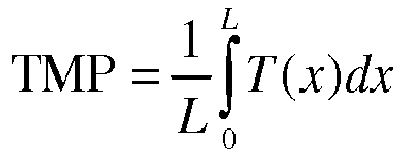
- Par température moyenne pondérée, on entend la moyenne de la température dans le lit catalytique calculée le long de l'axe d'écoulement dans ledit lit. Soit un lit de longueur L et de surface S, le mélange réactif s'écoulant le long de l'axe longitudinal x de ce lit, l'entrée dans le lit catalytique formant l'origine de l'axe (x=0), la température moyenne pondérée s'exprime selon :
- Selon un mode de réalisation particulier, la zéolithe peut également avantageusement contenir au moins une série de canaux dont l'ouverture de pores est définie par un anneau contenant 10 atomes d'oxygène (10 MR).
- Ladite zéolithe est avantageusement choisie parmi les zéolithes ayant des canaux 8 et 10MR telles que les zéolithes de type structural FER et MFS, prises seules ou en mélange. La zéolite est plus avantageusement choisie dans le groupe constitué par, pour le type FER, les zéolithes ferrierite, FU-9, ISI-6, NU-23, ZSM-35 et pour le type MFS, la zéolite ZSM-57, et leurs mélanges. Ladite zéolithe est très avantageusement de type FER, et de préférence la ferrierite. De préférence, ladite zéolite est constituée de ferrierite.
- De façon préférée, ladite zéolite est une ferrierite de rapport molaire Si/Al de 8 à 70, de préférence 10 à 70, de préférence choisi entre 10 et 50, de manière préférée choisi entre 20 et 50.
- Ledit catalyseur comprend également un liant.
- La teneur en zéolite dans le catalyseur est de 55-90%pds, de préférence entre 60 et 80%pds.
- Le liant est avantageusement choisi parmi un liant silicique, un AlPO4, une argile, une zircone, un oxyde de Ti, du SiC. De façon très préférée, c'est un liant silicique.
- La teneur en liant dans le catalyseur est comprise entre 10 et 45% pds, de préférence entre 20 et 40%. Le catalyseur peut éventuellement contenir des impuretés en faible quantité n'ayant pas d'effet technique sur la conversion /sélectivité du catalyseur. Ledit catalyseur peut être mis en forme par toutes les techniques connues de l'Homme du métier, par exemple sous forme de poudre, de billes, de pastilles, de granulés, ou d'extrudés (cylindres creux ou non, cylindres multilobés à 2, 3, 4 ou 5 lobes par exemple, cylindres torsadés), d'anneaux, etc...
- Généralement, le catalyseur ne comprend pas de métaux. On comprend par cette expression « pas de métaux », qu'il n'y a pas de métaux ajoutés lors de la préparation. On comprend également qu'il peut y avoir des impuretés dans les liants et donc en faibles quantités. De manière préférée, il n'y a pas d'aluminium ou de fer dans la silice.
- Ladite étape réactionnelle c) est une étape dans laquelle l'alcool est déshydraté en oléfine, les alcools branchés étant avantageusement déshydratés en oléfines linéaires. Ladite étape réactionnelle du procédé selon l'invention est avantageusement une étape de déshydratation isomérisante.
- Conformément à l'invention, le procédé selon l'invention comprend une étape de refroidissement dudit effluent de déshydratation, avantageusement par au moins quatre échanges de chaleur indirects successifs avec au moins ladite charge issue de l'étape a), les phases organique et aqueuse issues de l'étape e) et une utilité froide, de manière à produire un effluent refroidi.
- Ladite étape de refroidissement permet de refroidir ledit effluent de déshydratation à une température comprise entre 30 et 50°C, préférentiellement entre 35 et 45°C. Cette température de refroidissement permet d'une part de liquéfier l'effluent de déshydratation, et d'autre part d'aboutir à la démixtion de l'effluent liquéfié en une phase aqueuse et une phase organique, cette fourchette de température permettant de maximiser la récupération d'alcène et d'alcool.
- Conformément à l'invention, le procédé selon l'invention comprend une étape de séparation par décantation dudit effluent refroidi issu de l'étape d) en une phase aqueuse et une phase organique.
- Cette étape peut être mise en oeuvre par tout moyen connu de l'Homme du métier, par exemple dans un ballon de décantation, la phase aqueuse étant soutirée en partie inférieure et la phase organique en partie supérieure.
- Conformément à l'invention, le procédé selon l'invention comprend une étape de séparation par distillation de ladite phase aqueuse issue de l'étape e) de manière à produire un effluent hydrocarbures légers et un effluent aqueux, une fraction dudit effluent aqueux étant purgée, l'autre partie étant recyclée vers l'étape a).
- La fraction de l'effluent aqueux recyclé vers l'étape a) représente entre 10 et 20% poids du débit de la phase aqueuse issue de l'étape e), avantageusement entre 12 et 17% poids. Ladite étape de séparation est opérée à une pression comprise entre 0,8 et 0,9 MPa.
- La fraction de l'effluent aqueux recyclé vers l'étape a) est ajustée de manière à ce que la teneur en eau dans la charge vaporisée à l'entrée de l'étape c) soit comprise entre 4 et 15% poids, avantageusement entre 4 et 10% poids, très avantageusement entre 5 et 10% poids.
- Conformément à l'invention, le procédé selon l'invention comprend une étape de séparation par distillation de la phase organique issue de l'étape e) de manière à produire un effluent alcènes et un effluent hydrocarbures lourds.
- Ladite distillation est mise en oeuvre dans au moins une colonne à distiller, opérée à une pression comprise entre 0,6 et 0,7 MPa. Cette distillation, connue de l'Homme du métier, est opérée selon les règles de l'art.
- Conformément à l'invention, le procédé selon l'invention comprend une étape comprenant le mélange de l'effluent hydrocarbures lourds issu de l'étape g) avec la fraction résiduelle de charge comprimée issue de l'étape a), le débit de ladite fraction résiduelle étant ajusté de manière à ce que le ratio massique des débits de fraction résiduelle sur alcool non-converti dans un effluent hydrocarbures lourds soit compris entre 2:1 et 10:1, puis la séparation par distillation dudit mélange de manière à produire un effluent hydrocarbures C5-C6, un effluent organique riche en alcool et un effluent hydrocarbures C6+, et recyclage dudit effluent organique riche en alcool vers l'étape a).
- Le ratio massique des débits de fraction résiduelle sur alcool non-converti dans effluent hydrocarbures lourds est avantageusement compris entre 5:1 et 9:1. Cette dilution permet d'obtenir un effluent organique riche en alcool comprenant entre 47% et 92% mol d'alcool, préférentiellement entre 79% et 91% mol d'alcool et une récupération globale d'alcool sur cette étape (ratio du débit massique d'alcool dans l'effluent organique riche en alcool sur le débit massique d'alcool dans l'effluent hydrocarbures lourds) comprise entre 92 et 96%, avantageusement entre 94 et 96%.
- La dilution de l'effluent hydrocarbures lourds avec une fraction de la charge est contre-intuitive, car elle conduit à priori à la pollution d'une fraction de la charge par la mise en contact avec un effluent comprenant de nombreuses impuretés alors que cette charge devrait être directement alimentée dans l'étape de réaction, après préchauffe et vaporisation. Or il a été observé que l'accroissement observé dans la pureté de l'effluent organique riche en alcool permettait de compenser cet effet de pollution, d'une part par une amélioration de la récupération de l'alcool non réagit, et d'autre part par la diminution des purges nécessaires sur la boucle de recyclage dudit effluent organique riche en alcool.
- Un effluent hydrocarbures lourds alimente une colonne de distillation dans laquelle il est séparé en un effluent organique riche en isobutanol, extrait par un soutirage latéral, en un effluent hydrocarbures C5-C6 en tête et en un effluent hydrocarbures C6+ en fond. Le débit dudit soutirage latéral est ajusté pour extraire 95% de l'isobutanol alimentant la colonne. La composition dudit soutirage latéral est présentée dans le Tableau 1.
Tableau 1 - Composition de l'effluent organique riche en isobutanol %molaire Isobutanol 22.65 Acide acétique 11.37 2-méthyl-2-butène 0.77 Isobutaldéhyde 0.07 n-butanol 0.10 s-butanol 0.38 t-butanol 0.05 2,3,3-triméthyl-1-butène 0.25 2,4,4-triméthyl-1-pentène 63.02 - Un effluent hydrocarbures lourds alimente une colonne de distillation. Préalablement à son alimentation, il est dilué avec une fraction de la charge du procédé avec un ratio de débits massiques effluent fraction de charge / isobutanol dans hydrocarbures lourds égal à 2/1. Ce mélange est séparé en un effluent organique riche en isobutanol, extrait par un soutirage latéral, en un effluent hydrocarbures C5-C6 en tête et en un effluent hydrocarbures C6+ en fond. Le débit dudit soutirage latéral est ajusté pour extraire 95% de l'isobutanol alimentant la colonne. La composition dudit soutirage est présentée dans le Tableau 2.
Tableau 2 - Composition de l'effluent organique riche en isobutanol %molaire Isobutanol 47.18 Acide acétique 5.76 2-méthyl-2-butène 0.68 Isobutaldéhyde 0.06 n-butanol 0.08 s-butanol 0.24 t-butanol 0.04 2,3,3-triméthyl-1-butène 0.79 2,4,4-triméthyl-1-pentène 44.28 - On observe que la concentration en isobutanol dans le soutirage latéral est améliorée par rapport à l'exemple 1.
- Un effluent hydrocarbures lourds alimente une colonne de distillation. Préalablement à son alimentation, il est dilué avec une fraction de la charge du procédé avec un ratio de débits massiques fraction de charge / isobutanol dans effluent hydrocarbures lourds égal à 10/1. Ce mélange est séparé en un effluent organique riche en isobutanol, extrait par un soutirage latérale, en un effluent hydrocarbures C5-C6 en tête et en un effluent hydrocarbures C6+ en fond. Le débit dudit soutirage latéral est ajusté pour extraire 95% de l'isobutanol compris dans l'alimentation de la colonne. La composition dudit soutirage est présentée dans le Tableau 3.
Tableau 3 - Composition de l'effluent organique riche en isobutanol %molaire Isobutanol 92.39 Acide acétique 1.14 2-méthyl-2-butène 0.40 Isobutaldéhyde 0.04 n-butanol 0.03 s-butanol 0.14 t-butanol 0.02 2,3,3-triméthyl-1-butène 0.27 2,4,4-triméthyl-1-pentène 3.37 - On observe que la concentration en isobutanol dans le soutirage latéral est améliorée par rapport à l'exemple 1.
Claims (6)
- Procédé de déshydratation isomérisante d'une charge comprenant de 40 à 100% poids d'alcool primaire substitué en position 2 par un groupement alkyl comprenant au moins les étapes suivantes :a) Mise en pression de ladite charge, suivie du mélange d'une fraction de ladite charge, comprimée, avec l'effluent organique riche en alcool issu de l'étape h) et avec une fraction de l'effluent aqueux issu de l'étape f), puis préchauffe dudit mélange, de manière à produire une charge partiellement vaporisée, la fraction résiduelle de charge comprimée étant envoyée vers l'étape h) ;b) Vaporisation et surchauffe finale de ladite charge partiellement vaporisée à une température comprise entre 250 et 375°C de manière à produire une charge vaporisée ;c) Déshydratation de ladite charge vaporisée dans au moins un réacteur de déshydratation opérant en phase gaz à une température moyenne pondérée comprise entre 250 et 375°C, à une pression comprise entre 0,2 MPa et 1 MPa et à une PPH comprise entre 1 et 18 h-1, en présence d'un catalyseur comprenant une zéolithe présentant au moins une série de canaux dont l'ouverture est définie par un anneau à 8 atomes d'oxygène (8MR), ledit catalyseur étant préalablement coké in-situ ou ex-situ, de manière à produire un effluent de déshydratation ;d) Refroidissement dudit effluent de déshydratation issu de l'étape c) à une température comprise entre 30 et 50°C, de manière à produire un effluent refroidi ;e) Séparation par décantation dudit effluent refroidi en une phase aqueuse et une phase organique ;f) Séparation par distillation de ladite phase aqueuse issue de l'étape e) de manière à produire un effluent hydrocarbures légers comprenant au moins 50% poids d'hydrocarbures comprenant au plus 4 atomes de carbone et un effluent aqueux, une fraction dudit effluent aqueux étant purgée, l'autre partie étant recyclée vers l'étape a) ;g) Séparation par distillation de ladite phase organique issue de l'étape e) de manière à produire un effluent oléfinique comprenant au moins 50% poids d'oléfines correspondantes à ou aux alcools primaires substitués en position 2 par un groupement alkyle alimentés dans ladite charge et un effluent hydrocarbures lourds ;h) Mélange de l'effluent hydrocarbures lourds issu de l'étape g) avec la fraction résiduelle de charge comprimée issue de l'étape a), le débit de ladite fraction résiduelle étant ajusté de manière à ce que le ratio massique des débits de fraction résiduelle sur alcool non-converti dans un effluent hydrocarbures lourds soit compris entre 2:1 et 10:1, puis séparation par distillation dudit mélange de manière à produire un effluent hydrocarbures C5-C6, un effluent organique riche en alcool et un effluent hydrocarbures C6+, et recyclage dudit effluent organique riche en alcool vers l'étape a).
- Procédé selon la revendication 1 dans lequel la préchauffe de ladite étape a) est réalisée par échange de chaleur avec un effluent oléfinique issu de l'étape g), avec un effluent aqueuse provenant de l'étape f) et avec un effluent de déshydratation issu de l'étape c).
- Procédé selon l'une des revendications précédentes dans lequel ladite charge partiellement vaporisée est vaporisée et surchauffée dans ladite étape b) à une température comprise entre 310 et 365°C.
- Procédé selon l'une des revendications précédentes dans lequel le catalyseur mis en oeuvre dans l'étape c) comprend une zéolithe comprenant au moins une série de canaux dont l'ouverture de pores est définie par un anneau contenant 10 atomes d'oxygène.
- Procédé selon l'une des revendications précédentes dans lequel le refroidissement selon l'étape d) est réalisé par au moins quatre échanges de chaleur indirects successifs avec au moins ladite charge de l'étape a), les phases organique et aqueuses issues de l'étape e) et une utilité froide.
- Procédé selon l'une des revendications précédentes dans lequel le débit de ladite fraction résiduelle dans ladite étape h) est ajusté de manière à ce que le ratio massique des débits de fraction résiduelle sur alcool non-converti dans un effluent hydrocarbures lourds sur soit compris entre 5:1 et 9:1.
Applications Claiming Priority (1)
| Application Number | Priority Date | Filing Date | Title |
|---|---|---|---|
| FR1758667A FR3071250B1 (fr) | 2017-09-19 | 2017-09-19 | Procede de deshydratation des alcools en olefines comprenant le recyclage des alcools |
Publications (2)
| Publication Number | Publication Date |
|---|---|
| EP3456702A1 true EP3456702A1 (fr) | 2019-03-20 |
| EP3456702B1 EP3456702B1 (fr) | 2020-07-08 |
Family
ID=61003082
Family Applications (1)
| Application Number | Title | Priority Date | Filing Date |
|---|---|---|---|
| EP18193532.1A Active EP3456702B1 (fr) | 2017-09-19 | 2018-09-10 | Procede de deshydratation des alcools en olefines comprenant le recyclage des alcools |
Country Status (3)
| Country | Link |
|---|---|
| US (1) | US10604456B2 (fr) |
| EP (1) | EP3456702B1 (fr) |
| FR (1) | FR3071250B1 (fr) |
Citations (3)
| Publication number | Priority date | Publication date | Assignee | Title |
|---|---|---|---|---|
| WO2011085223A1 (fr) * | 2010-01-08 | 2011-07-14 | Gevo, Inc. | Méthodes intégrées de synthèse de produits chimiques renouvelables |
| WO2016046242A1 (fr) * | 2014-09-26 | 2016-03-31 | IFP Energies Nouvelles | Procede de deshydratation isomerisante d'une charge alcool primaire substitue en position 2 par un groupement alkyl sur un catalyseur comprenant une zeolithe de type fer |
| EP3162763A1 (fr) * | 2015-10-30 | 2017-05-03 | Total Research & Technology Feluy SA | Déshydratation simultanée et isomérisation squelettique d'isobutanol sur des catalyseurs de zéolite contenant du titane |
-
2017
- 2017-09-19 FR FR1758667A patent/FR3071250B1/fr not_active Expired - Fee Related
-
2018
- 2018-09-10 EP EP18193532.1A patent/EP3456702B1/fr active Active
- 2018-09-18 US US16/134,363 patent/US10604456B2/en active Active
Patent Citations (3)
| Publication number | Priority date | Publication date | Assignee | Title |
|---|---|---|---|---|
| WO2011085223A1 (fr) * | 2010-01-08 | 2011-07-14 | Gevo, Inc. | Méthodes intégrées de synthèse de produits chimiques renouvelables |
| WO2016046242A1 (fr) * | 2014-09-26 | 2016-03-31 | IFP Energies Nouvelles | Procede de deshydratation isomerisante d'une charge alcool primaire substitue en position 2 par un groupement alkyl sur un catalyseur comprenant une zeolithe de type fer |
| EP3162763A1 (fr) * | 2015-10-30 | 2017-05-03 | Total Research & Technology Feluy SA | Déshydratation simultanée et isomérisation squelettique d'isobutanol sur des catalyseurs de zéolite contenant du titane |
Also Published As
| Publication number | Publication date |
|---|---|
| US10604456B2 (en) | 2020-03-31 |
| FR3071250A1 (fr) | 2019-03-22 |
| FR3071250B1 (fr) | 2019-09-13 |
| US20190084901A1 (en) | 2019-03-21 |
| BR102018068667A2 (pt) | 2019-04-16 |
| EP3456702B1 (fr) | 2020-07-08 |
Similar Documents
| Publication | Publication Date | Title |
|---|---|---|
| DK2547639T3 (en) | Producing propylene VIA THE SAME TIME dehydration and skeletal isobutanol ON ACID CATALYSTS FOLLOWED BY META TESE | |
| CA2931704C (fr) | Procede de deshydratation d'un melange contenant de l'ethanol et de l'isopropanol | |
| EP1862528A1 (fr) | Procédé de transformation de l'éthanol en base pour carburant diesel | |
| FR2837213A1 (fr) | Procede de production conjointe de propylene et d'essence a partir d'une charge relativement lourde | |
| EP2385092A1 (fr) | Procédé flexible de transformation de l'ethanol en distillats moyens | |
| KR20250095632A (ko) | C1-c5 알코올을 c2-c5 올레핀 혼합물로 촉매 전환하는 방법 | |
| CA2960785C (fr) | Procede de deshydratation isomerisante d'une charge alcool primaire substitue en position 2 par un groupement alkyl sur un catalyseur comprenant une zeolithe de type fer | |
| CA2931705C (fr) | Procede de deshydratation d'un melange contenant de l'ethanol et du n-propanol | |
| WO2012069709A2 (fr) | Procede de conversion d'une charge lourde en distillat moyen. | |
| EP0930285A1 (fr) | Procédé pour l'obtention de 1-butène | |
| EP3456702B1 (fr) | Procede de deshydratation des alcools en olefines comprenant le recyclage des alcools | |
| EP3652136B1 (fr) | Procede de deshydratation des alcools en olefines comprenant une etape de selectivation du catalyseur | |
| FR3104574A1 (fr) | Dispositif et procédé de conversion de composés aromatiques par alkylation de toluène par du CO et de benzène par l’éthanol | |
| WO2012131184A1 (fr) | Procede d'oligomerisation d'une charge hydrocarbonee olefinique utilisant un catalyseur comprenant un materiau de la famille des zif de type structural sod | |
| FR2948937A1 (fr) | Procede de production d'olefines legeres a partir d'ethanol en presence d'un catalyseur macroporeux se presentant sous forme de billes | |
| FR3144023A1 (fr) | Catalyseur a base d’une zeolithe et d’une structure alpo et presentant un volume macroporeux eleve | |
| WO2026077733A1 (fr) | Procede de production de carburant a partir d'une charge comprenant des olefines legeres, comprenant une etape d'oligomerisation et une etape d'oligomerisation heterogene | |
| KR20180047941A (ko) | 폴리이소부텐 원료 전처리 방법 | |
| WO2025068471A1 (fr) | Procede de production de carburant d'aviation a partir d'une charge comprenant des olefines comprenant une etape d'oligomerisation et une etape d'oligomerisation heterogene | |
| BR102018068667B1 (pt) | Processo de desidratação de álcoois em olefinas compreendendo a reciclagem de álcoois | |
| Wang et al. | Up2Grading of FCC Gasoline by Olefin Hydration over HβZeolite | |
| FR2884513A1 (fr) | Procede de purification d'une coupe olefinique |
Legal Events
| Date | Code | Title | Description |
|---|---|---|---|
| PUAI | Public reference made under article 153(3) epc to a published international application that has entered the european phase |
Free format text: ORIGINAL CODE: 0009012 |
|
| STAA | Information on the status of an ep patent application or granted ep patent |
Free format text: STATUS: THE APPLICATION HAS BEEN PUBLISHED |
|
| AK | Designated contracting states |
Kind code of ref document: A1 Designated state(s): AL AT BE BG CH CY CZ DE DK EE ES FI FR GB GR HR HU IE IS IT LI LT LU LV MC MK MT NL NO PL PT RO RS SE SI SK SM TR |
|
| AX | Request for extension of the european patent |
Extension state: BA ME |
|
| STAA | Information on the status of an ep patent application or granted ep patent |
Free format text: STATUS: REQUEST FOR EXAMINATION WAS MADE |
|
| 17P | Request for examination filed |
Effective date: 20190920 |
|
| RBV | Designated contracting states (corrected) |
Designated state(s): AL AT BE BG CH CY CZ DE DK EE ES FI FR GB GR HR HU IE IS IT LI LT LU LV MC MK MT NL NO PL PT RO RS SE SI SK SM TR |
|
| RIC1 | Information provided on ipc code assigned before grant |
Ipc: C07C 11/08 20060101ALI20191204BHEP Ipc: C07C 5/27 20060101ALI20191204BHEP Ipc: C07C 11/09 20060101ALI20191204BHEP Ipc: C07C 1/24 20060101AFI20191204BHEP |
|
| GRAJ | Information related to disapproval of communication of intention to grant by the applicant or resumption of examination proceedings by the epo deleted |
Free format text: ORIGINAL CODE: EPIDOSDIGR1 |
|
| STAA | Information on the status of an ep patent application or granted ep patent |
Free format text: STATUS: GRANT OF PATENT IS INTENDED |
|
| GRAP | Despatch of communication of intention to grant a patent |
Free format text: ORIGINAL CODE: EPIDOSNIGR1 |
|
| INTG | Intention to grant announced |
Effective date: 20200206 |
|
| GRAS | Grant fee paid |
Free format text: ORIGINAL CODE: EPIDOSNIGR3 |
|
| GRAA | (expected) grant |
Free format text: ORIGINAL CODE: 0009210 |
|
| STAA | Information on the status of an ep patent application or granted ep patent |
Free format text: STATUS: THE PATENT HAS BEEN GRANTED |
|
| AK | Designated contracting states |
Kind code of ref document: B1 Designated state(s): AL AT BE BG CH CY CZ DE DK EE ES FI FR GB GR HR HU IE IS IT LI LT LU LV MC MK MT NL NO PL PT RO RS SE SI SK SM TR |
|
| REG | Reference to a national code |
Ref country code: CH Ref legal event code: EP Ref country code: AT Ref legal event code: REF Ref document number: 1288291 Country of ref document: AT Kind code of ref document: T Effective date: 20200715 |
|
| REG | Reference to a national code |
Ref country code: DE Ref legal event code: R096 Ref document number: 602018005858 Country of ref document: DE |
|
| REG | Reference to a national code |
Ref country code: IE Ref legal event code: FG4D Free format text: LANGUAGE OF EP DOCUMENT: FRENCH |
|
| REG | Reference to a national code |
Ref country code: NL Ref legal event code: FP |
|
| REG | Reference to a national code |
Ref country code: LT Ref legal event code: MG4D |
|
| REG | Reference to a national code |
Ref country code: AT Ref legal event code: MK05 Ref document number: 1288291 Country of ref document: AT Kind code of ref document: T Effective date: 20200708 |
|
| PG25 | Lapsed in a contracting state [announced via postgrant information from national office to epo] |
Ref country code: GR Free format text: LAPSE BECAUSE OF FAILURE TO SUBMIT A TRANSLATION OF THE DESCRIPTION OR TO PAY THE FEE WITHIN THE PRESCRIBED TIME-LIMIT Effective date: 20201009 Ref country code: ES Free format text: LAPSE BECAUSE OF FAILURE TO SUBMIT A TRANSLATION OF THE DESCRIPTION OR TO PAY THE FEE WITHIN THE PRESCRIBED TIME-LIMIT Effective date: 20200708 Ref country code: SE Free format text: LAPSE BECAUSE OF FAILURE TO SUBMIT A TRANSLATION OF THE DESCRIPTION OR TO PAY THE FEE WITHIN THE PRESCRIBED TIME-LIMIT Effective date: 20200708 Ref country code: HR Free format text: LAPSE BECAUSE OF FAILURE TO SUBMIT A TRANSLATION OF THE DESCRIPTION OR TO PAY THE FEE WITHIN THE PRESCRIBED TIME-LIMIT Effective date: 20200708 Ref country code: PT Free format text: LAPSE BECAUSE OF FAILURE TO SUBMIT A TRANSLATION OF THE DESCRIPTION OR TO PAY THE FEE WITHIN THE PRESCRIBED TIME-LIMIT Effective date: 20201109 Ref country code: FI Free format text: LAPSE BECAUSE OF FAILURE TO SUBMIT A TRANSLATION OF THE DESCRIPTION OR TO PAY THE FEE WITHIN THE PRESCRIBED TIME-LIMIT Effective date: 20200708 Ref country code: LT Free format text: LAPSE BECAUSE OF FAILURE TO SUBMIT A TRANSLATION OF THE DESCRIPTION OR TO PAY THE FEE WITHIN THE PRESCRIBED TIME-LIMIT Effective date: 20200708 Ref country code: NO Free format text: LAPSE BECAUSE OF FAILURE TO SUBMIT A TRANSLATION OF THE DESCRIPTION OR TO PAY THE FEE WITHIN THE PRESCRIBED TIME-LIMIT Effective date: 20201008 Ref country code: BG Free format text: LAPSE BECAUSE OF FAILURE TO SUBMIT A TRANSLATION OF THE DESCRIPTION OR TO PAY THE FEE WITHIN THE PRESCRIBED TIME-LIMIT Effective date: 20201008 Ref country code: AT Free format text: LAPSE BECAUSE OF FAILURE TO SUBMIT A TRANSLATION OF THE DESCRIPTION OR TO PAY THE FEE WITHIN THE PRESCRIBED TIME-LIMIT Effective date: 20200708 |
|
| PG25 | Lapsed in a contracting state [announced via postgrant information from national office to epo] |
Ref country code: RS Free format text: LAPSE BECAUSE OF FAILURE TO SUBMIT A TRANSLATION OF THE DESCRIPTION OR TO PAY THE FEE WITHIN THE PRESCRIBED TIME-LIMIT Effective date: 20200708 Ref country code: PL Free format text: LAPSE BECAUSE OF FAILURE TO SUBMIT A TRANSLATION OF THE DESCRIPTION OR TO PAY THE FEE WITHIN THE PRESCRIBED TIME-LIMIT Effective date: 20200708 Ref country code: LV Free format text: LAPSE BECAUSE OF FAILURE TO SUBMIT A TRANSLATION OF THE DESCRIPTION OR TO PAY THE FEE WITHIN THE PRESCRIBED TIME-LIMIT Effective date: 20200708 Ref country code: IS Free format text: LAPSE BECAUSE OF FAILURE TO SUBMIT A TRANSLATION OF THE DESCRIPTION OR TO PAY THE FEE WITHIN THE PRESCRIBED TIME-LIMIT Effective date: 20201108 |
|
| REG | Reference to a national code |
Ref country code: DE Ref legal event code: R119 Ref document number: 602018005858 Country of ref document: DE |
|
| PG25 | Lapsed in a contracting state [announced via postgrant information from national office to epo] |
Ref country code: IT Free format text: LAPSE BECAUSE OF FAILURE TO SUBMIT A TRANSLATION OF THE DESCRIPTION OR TO PAY THE FEE WITHIN THE PRESCRIBED TIME-LIMIT Effective date: 20200708 Ref country code: SM Free format text: LAPSE BECAUSE OF FAILURE TO SUBMIT A TRANSLATION OF THE DESCRIPTION OR TO PAY THE FEE WITHIN THE PRESCRIBED TIME-LIMIT Effective date: 20200708 Ref country code: RO Free format text: LAPSE BECAUSE OF FAILURE TO SUBMIT A TRANSLATION OF THE DESCRIPTION OR TO PAY THE FEE WITHIN THE PRESCRIBED TIME-LIMIT Effective date: 20200708 Ref country code: DK Free format text: LAPSE BECAUSE OF FAILURE TO SUBMIT A TRANSLATION OF THE DESCRIPTION OR TO PAY THE FEE WITHIN THE PRESCRIBED TIME-LIMIT Effective date: 20200708 Ref country code: CZ Free format text: LAPSE BECAUSE OF FAILURE TO SUBMIT A TRANSLATION OF THE DESCRIPTION OR TO PAY THE FEE WITHIN THE PRESCRIBED TIME-LIMIT Effective date: 20200708 Ref country code: EE Free format text: LAPSE BECAUSE OF FAILURE TO SUBMIT A TRANSLATION OF THE DESCRIPTION OR TO PAY THE FEE WITHIN THE PRESCRIBED TIME-LIMIT Effective date: 20200708 |
|
| PLBE | No opposition filed within time limit |
Free format text: ORIGINAL CODE: 0009261 |
|
| STAA | Information on the status of an ep patent application or granted ep patent |
Free format text: STATUS: NO OPPOSITION FILED WITHIN TIME LIMIT |
|
| PG25 | Lapsed in a contracting state [announced via postgrant information from national office to epo] |
Ref country code: AL Free format text: LAPSE BECAUSE OF FAILURE TO SUBMIT A TRANSLATION OF THE DESCRIPTION OR TO PAY THE FEE WITHIN THE PRESCRIBED TIME-LIMIT Effective date: 20200708 |
|
| 26N | No opposition filed |
Effective date: 20210409 |
|
| PG25 | Lapsed in a contracting state [announced via postgrant information from national office to epo] |
Ref country code: LU Free format text: LAPSE BECAUSE OF NON-PAYMENT OF DUE FEES Effective date: 20200910 Ref country code: SK Free format text: LAPSE BECAUSE OF FAILURE TO SUBMIT A TRANSLATION OF THE DESCRIPTION OR TO PAY THE FEE WITHIN THE PRESCRIBED TIME-LIMIT Effective date: 20200708 |
|
| PG25 | Lapsed in a contracting state [announced via postgrant information from national office to epo] |
Ref country code: DE Free format text: LAPSE BECAUSE OF NON-PAYMENT OF DUE FEES Effective date: 20210401 |
|
| PG25 | Lapsed in a contracting state [announced via postgrant information from national office to epo] |
Ref country code: SI Free format text: LAPSE BECAUSE OF FAILURE TO SUBMIT A TRANSLATION OF THE DESCRIPTION OR TO PAY THE FEE WITHIN THE PRESCRIBED TIME-LIMIT Effective date: 20200708 Ref country code: IE Free format text: LAPSE BECAUSE OF NON-PAYMENT OF DUE FEES Effective date: 20200910 |
|
| REG | Reference to a national code |
Ref country code: CH Ref legal event code: PL |
|
| PG25 | Lapsed in a contracting state [announced via postgrant information from national office to epo] |
Ref country code: TR Free format text: LAPSE BECAUSE OF FAILURE TO SUBMIT A TRANSLATION OF THE DESCRIPTION OR TO PAY THE FEE WITHIN THE PRESCRIBED TIME-LIMIT Effective date: 20200708 Ref country code: MT Free format text: LAPSE BECAUSE OF FAILURE TO SUBMIT A TRANSLATION OF THE DESCRIPTION OR TO PAY THE FEE WITHIN THE PRESCRIBED TIME-LIMIT Effective date: 20200708 Ref country code: CY Free format text: LAPSE BECAUSE OF FAILURE TO SUBMIT A TRANSLATION OF THE DESCRIPTION OR TO PAY THE FEE WITHIN THE PRESCRIBED TIME-LIMIT Effective date: 20200708 |
|
| PG25 | Lapsed in a contracting state [announced via postgrant information from national office to epo] |
Ref country code: MK Free format text: LAPSE BECAUSE OF FAILURE TO SUBMIT A TRANSLATION OF THE DESCRIPTION OR TO PAY THE FEE WITHIN THE PRESCRIBED TIME-LIMIT Effective date: 20200708 Ref country code: MC Free format text: LAPSE BECAUSE OF FAILURE TO SUBMIT A TRANSLATION OF THE DESCRIPTION OR TO PAY THE FEE WITHIN THE PRESCRIBED TIME-LIMIT Effective date: 20200708 |
|
| PG25 | Lapsed in a contracting state [announced via postgrant information from national office to epo] |
Ref country code: LI Free format text: LAPSE BECAUSE OF NON-PAYMENT OF DUE FEES Effective date: 20210930 Ref country code: CH Free format text: LAPSE BECAUSE OF NON-PAYMENT OF DUE FEES Effective date: 20210930 |
|
| GBPC | Gb: european patent ceased through non-payment of renewal fee |
Effective date: 20220910 |
|
| PG25 | Lapsed in a contracting state [announced via postgrant information from national office to epo] |
Ref country code: GB Free format text: LAPSE BECAUSE OF NON-PAYMENT OF DUE FEES Effective date: 20220910 |
|
| P01 | Opt-out of the competence of the unified patent court (upc) registered |
Effective date: 20240323 |
|
| PGFP | Annual fee paid to national office [announced via postgrant information from national office to epo] |
Ref country code: NL Payment date: 20250925 Year of fee payment: 8 |
|
| PGFP | Annual fee paid to national office [announced via postgrant information from national office to epo] |
Ref country code: BE Payment date: 20250925 Year of fee payment: 8 |
|
| PGFP | Annual fee paid to national office [announced via postgrant information from national office to epo] |
Ref country code: FR Payment date: 20250925 Year of fee payment: 8 |