EP3459958A1 - Procédé et intermédiaires pour la préparation des promédicaments d'amides de pyridone utiles en tant que modulateurs de canaux sodiques - Google Patents
Procédé et intermédiaires pour la préparation des promédicaments d'amides de pyridone utiles en tant que modulateurs de canaux sodiques Download PDFInfo
- Publication number
- EP3459958A1 EP3459958A1 EP18186616.1A EP18186616A EP3459958A1 EP 3459958 A1 EP3459958 A1 EP 3459958A1 EP 18186616 A EP18186616 A EP 18186616A EP 3459958 A1 EP3459958 A1 EP 3459958A1
- Authority
- EP
- European Patent Office
- Prior art keywords
- compound
- another embodiment
- pain
- alkyl
- fluoro
- Prior art date
- Legal status (The legal status is an assumption and is not a legal conclusion. Google has not performed a legal analysis and makes no representation as to the accuracy of the status listed.)
- Granted
Links
- CSKLRKQUNQCFCW-UHFFFAOYSA-N COc(cc(cc1)F)c1Oc(c(C(NC(C=CN1)=CC1=O)=O)c1)cc(Cl)c1Cl Chemical compound COc(cc(cc1)F)c1Oc(c(C(NC(C=CN1)=CC1=O)=O)c1)cc(Cl)c1Cl CSKLRKQUNQCFCW-UHFFFAOYSA-N 0.000 description 1
- AYCOKWRGDFOKJE-UHFFFAOYSA-N Cc1cc(F)ccc1Oc(ccc(C(F)(F)F)c1)c1C(NC(C=CN1CCl)=CC1=O)=O Chemical compound Cc1cc(F)ccc1Oc(ccc(C(F)(F)F)c1)c1C(NC(C=CN1CCl)=CC1=O)=O AYCOKWRGDFOKJE-UHFFFAOYSA-N 0.000 description 1
- PRJUCGVKVMJHAQ-UHFFFAOYSA-N Cc1cc(F)ccc1Oc1cc(C(F)(F)F)ccc1C(NC(C=CN1CCl)=CC1=O)=O Chemical compound Cc1cc(F)ccc1Oc1cc(C(F)(F)F)ccc1C(NC(C=CN1CCl)=CC1=O)=O PRJUCGVKVMJHAQ-UHFFFAOYSA-N 0.000 description 1
Images


Classifications
-
- C—CHEMISTRY; METALLURGY
- C07—ORGANIC CHEMISTRY
- C07F—ACYCLIC, CARBOCYCLIC OR HETEROCYCLIC COMPOUNDS CONTAINING ELEMENTS OTHER THAN CARBON, HYDROGEN, HALOGEN, OXYGEN, NITROGEN, SULFUR, SELENIUM OR TELLURIUM
- C07F9/00—Compounds containing elements of Groups 5 or 15 of the Periodic Table
- C07F9/02—Phosphorus compounds
- C07F9/547—Heterocyclic compounds, e.g. containing phosphorus as a ring hetero atom
- C07F9/553—Heterocyclic compounds, e.g. containing phosphorus as a ring hetero atom having one nitrogen atom as the only ring hetero atom
- C07F9/576—Six-membered rings
- C07F9/58—Pyridine rings
-
- A—HUMAN NECESSITIES
- A61—MEDICAL OR VETERINARY SCIENCE; HYGIENE
- A61K—PREPARATIONS FOR MEDICAL, DENTAL OR TOILETRY PURPOSES
- A61K31/00—Medicinal preparations containing organic active ingredients
- A61K31/66—Phosphorus compounds
- A61K31/675—Phosphorus compounds having nitrogen as a ring hetero atom, e.g. pyridoxal phosphate
-
- A—HUMAN NECESSITIES
- A61—MEDICAL OR VETERINARY SCIENCE; HYGIENE
- A61K—PREPARATIONS FOR MEDICAL, DENTAL OR TOILETRY PURPOSES
- A61K31/00—Medicinal preparations containing organic active ingredients
- A61K31/66—Phosphorus compounds
- A61K31/683—Diesters of a phosphorus acid with two hydroxy compounds, e.g. phosphatidylinositols
- A61K31/685—Diesters of a phosphorus acid with two hydroxy compounds, e.g. phosphatidylinositols one of the hydroxy compounds having nitrogen atoms, e.g. phosphatidylserine, lecithin
-
- A—HUMAN NECESSITIES
- A61—MEDICAL OR VETERINARY SCIENCE; HYGIENE
- A61K—PREPARATIONS FOR MEDICAL, DENTAL OR TOILETRY PURPOSES
- A61K45/00—Medicinal preparations containing active ingredients not provided for in groups A61K31/00 - A61K41/00
- A61K45/06—Mixtures of active ingredients without chemical characterisation, e.g. antiphlogistics and cardiaca
-
- A—HUMAN NECESSITIES
- A61—MEDICAL OR VETERINARY SCIENCE; HYGIENE
- A61P—SPECIFIC THERAPEUTIC ACTIVITY OF CHEMICAL COMPOUNDS OR MEDICINAL PREPARATIONS
- A61P1/00—Drugs for disorders of the alimentary tract or the digestive system
-
- A—HUMAN NECESSITIES
- A61—MEDICAL OR VETERINARY SCIENCE; HYGIENE
- A61P—SPECIFIC THERAPEUTIC ACTIVITY OF CHEMICAL COMPOUNDS OR MEDICINAL PREPARATIONS
- A61P1/00—Drugs for disorders of the alimentary tract or the digestive system
- A61P1/02—Stomatological preparations, e.g. drugs for caries, aphtae, periodontitis
-
- A—HUMAN NECESSITIES
- A61—MEDICAL OR VETERINARY SCIENCE; HYGIENE
- A61P—SPECIFIC THERAPEUTIC ACTIVITY OF CHEMICAL COMPOUNDS OR MEDICINAL PREPARATIONS
- A61P1/00—Drugs for disorders of the alimentary tract or the digestive system
- A61P1/06—Anti-spasmodics, e.g. drugs for colics, esophagic dyskinesia
-
- A—HUMAN NECESSITIES
- A61—MEDICAL OR VETERINARY SCIENCE; HYGIENE
- A61P—SPECIFIC THERAPEUTIC ACTIVITY OF CHEMICAL COMPOUNDS OR MEDICINAL PREPARATIONS
- A61P11/00—Drugs for disorders of the respiratory system
- A61P11/14—Antitussive agents
-
- A—HUMAN NECESSITIES
- A61—MEDICAL OR VETERINARY SCIENCE; HYGIENE
- A61P—SPECIFIC THERAPEUTIC ACTIVITY OF CHEMICAL COMPOUNDS OR MEDICINAL PREPARATIONS
- A61P13/00—Drugs for disorders of the urinary system
-
- A—HUMAN NECESSITIES
- A61—MEDICAL OR VETERINARY SCIENCE; HYGIENE
- A61P—SPECIFIC THERAPEUTIC ACTIVITY OF CHEMICAL COMPOUNDS OR MEDICINAL PREPARATIONS
- A61P13/00—Drugs for disorders of the urinary system
- A61P13/02—Drugs for disorders of the urinary system of urine or of the urinary tract, e.g. urine acidifiers
-
- A—HUMAN NECESSITIES
- A61—MEDICAL OR VETERINARY SCIENCE; HYGIENE
- A61P—SPECIFIC THERAPEUTIC ACTIVITY OF CHEMICAL COMPOUNDS OR MEDICINAL PREPARATIONS
- A61P19/00—Drugs for skeletal disorders
-
- A—HUMAN NECESSITIES
- A61—MEDICAL OR VETERINARY SCIENCE; HYGIENE
- A61P—SPECIFIC THERAPEUTIC ACTIVITY OF CHEMICAL COMPOUNDS OR MEDICINAL PREPARATIONS
- A61P19/00—Drugs for skeletal disorders
- A61P19/02—Drugs for skeletal disorders for joint disorders, e.g. arthritis, arthrosis
-
- A—HUMAN NECESSITIES
- A61—MEDICAL OR VETERINARY SCIENCE; HYGIENE
- A61P—SPECIFIC THERAPEUTIC ACTIVITY OF CHEMICAL COMPOUNDS OR MEDICINAL PREPARATIONS
- A61P21/00—Drugs for disorders of the muscular or neuromuscular system
-
- A—HUMAN NECESSITIES
- A61—MEDICAL OR VETERINARY SCIENCE; HYGIENE
- A61P—SPECIFIC THERAPEUTIC ACTIVITY OF CHEMICAL COMPOUNDS OR MEDICINAL PREPARATIONS
- A61P25/00—Drugs for disorders of the nervous system
-
- A—HUMAN NECESSITIES
- A61—MEDICAL OR VETERINARY SCIENCE; HYGIENE
- A61P—SPECIFIC THERAPEUTIC ACTIVITY OF CHEMICAL COMPOUNDS OR MEDICINAL PREPARATIONS
- A61P25/00—Drugs for disorders of the nervous system
- A61P25/02—Drugs for disorders of the nervous system for peripheral neuropathies
-
- A—HUMAN NECESSITIES
- A61—MEDICAL OR VETERINARY SCIENCE; HYGIENE
- A61P—SPECIFIC THERAPEUTIC ACTIVITY OF CHEMICAL COMPOUNDS OR MEDICINAL PREPARATIONS
- A61P25/00—Drugs for disorders of the nervous system
- A61P25/04—Centrally acting analgesics, e.g. opioids
-
- A—HUMAN NECESSITIES
- A61—MEDICAL OR VETERINARY SCIENCE; HYGIENE
- A61P—SPECIFIC THERAPEUTIC ACTIVITY OF CHEMICAL COMPOUNDS OR MEDICINAL PREPARATIONS
- A61P29/00—Non-central analgesic, antipyretic or antiinflammatory agents, e.g. antirheumatic agents; Non-steroidal antiinflammatory drugs [NSAID]
-
- A—HUMAN NECESSITIES
- A61—MEDICAL OR VETERINARY SCIENCE; HYGIENE
- A61P—SPECIFIC THERAPEUTIC ACTIVITY OF CHEMICAL COMPOUNDS OR MEDICINAL PREPARATIONS
- A61P43/00—Drugs for specific purposes, not provided for in groups A61P1/00-A61P41/00
-
- A—HUMAN NECESSITIES
- A61—MEDICAL OR VETERINARY SCIENCE; HYGIENE
- A61P—SPECIFIC THERAPEUTIC ACTIVITY OF CHEMICAL COMPOUNDS OR MEDICINAL PREPARATIONS
- A61P9/00—Drugs for disorders of the cardiovascular system
- A61P9/06—Antiarrhythmics
-
- C—CHEMISTRY; METALLURGY
- C07—ORGANIC CHEMISTRY
- C07D—HETEROCYCLIC COMPOUNDS
- C07D213/00—Heterocyclic compounds containing six-membered rings, not condensed with other rings, with one nitrogen atom as the only ring hetero atom and three or more double bonds between ring members or between ring members and non-ring members
- C07D213/02—Heterocyclic compounds containing six-membered rings, not condensed with other rings, with one nitrogen atom as the only ring hetero atom and three or more double bonds between ring members or between ring members and non-ring members having three double bonds between ring members or between ring members and non-ring members
- C07D213/04—Heterocyclic compounds containing six-membered rings, not condensed with other rings, with one nitrogen atom as the only ring hetero atom and three or more double bonds between ring members or between ring members and non-ring members having three double bonds between ring members or between ring members and non-ring members having no bond between the ring nitrogen atom and a non-ring member or having only hydrogen or carbon atoms directly attached to the ring nitrogen atom
- C07D213/06—Heterocyclic compounds containing six-membered rings, not condensed with other rings, with one nitrogen atom as the only ring hetero atom and three or more double bonds between ring members or between ring members and non-ring members having three double bonds between ring members or between ring members and non-ring members having no bond between the ring nitrogen atom and a non-ring member or having only hydrogen or carbon atoms directly attached to the ring nitrogen atom containing only hydrogen and carbon atoms in addition to the ring nitrogen atom
- C07D213/16—Heterocyclic compounds containing six-membered rings, not condensed with other rings, with one nitrogen atom as the only ring hetero atom and three or more double bonds between ring members or between ring members and non-ring members having three double bonds between ring members or between ring members and non-ring members having no bond between the ring nitrogen atom and a non-ring member or having only hydrogen or carbon atoms directly attached to the ring nitrogen atom containing only hydrogen and carbon atoms in addition to the ring nitrogen atom containing only one pyridine ring
- C07D213/18—Salts thereof
-
- C—CHEMISTRY; METALLURGY
- C07—ORGANIC CHEMISTRY
- C07F—ACYCLIC, CARBOCYCLIC OR HETEROCYCLIC COMPOUNDS CONTAINING ELEMENTS OTHER THAN CARBON, HYDROGEN, HALOGEN, OXYGEN, NITROGEN, SULFUR, SELENIUM OR TELLURIUM
- C07F9/00—Compounds containing elements of Groups 5 or 15 of the Periodic Table
- C07F9/02—Phosphorus compounds
- C07F9/547—Heterocyclic compounds, e.g. containing phosphorus as a ring hetero atom
- C07F9/553—Heterocyclic compounds, e.g. containing phosphorus as a ring hetero atom having one nitrogen atom as the only ring hetero atom
- C07F9/576—Six-membered rings
-
- C—CHEMISTRY; METALLURGY
- C07—ORGANIC CHEMISTRY
- C07F—ACYCLIC, CARBOCYCLIC OR HETEROCYCLIC COMPOUNDS CONTAINING ELEMENTS OTHER THAN CARBON, HYDROGEN, HALOGEN, OXYGEN, NITROGEN, SULFUR, SELENIUM OR TELLURIUM
- C07F9/00—Compounds containing elements of Groups 5 or 15 of the Periodic Table
- C07F9/02—Phosphorus compounds
- C07F9/547—Heterocyclic compounds, e.g. containing phosphorus as a ring hetero atom
- C07F9/553—Heterocyclic compounds, e.g. containing phosphorus as a ring hetero atom having one nitrogen atom as the only ring hetero atom
- C07F9/576—Six-membered rings
- C07F9/59—Hydrogenated pyridine rings
Definitions
- Pain is a protective mechanism that allows healthy animals to avoid tissue damage and to prevent further damage to injured tissue. Nonetheless there are many conditions where pain persists beyond its usefulness, or where patients would benefit from inhibition of pain.
- Neuropathic pain is a form of chronic pain caused by an injury to the sensory nerves ( Dieleman, J.P., et al., Incidence rates and treatment of neuropathic pain conditions in the general population. Pain, 2008. 137(3): p. 681-8 ).
- Neuropathic pain can be divided into two categories, pain caused by generalized metabolic damage to the nerve and pain caused by a discrete nerve injury.
- the metabolic neuropathies include post herpetic neuropathy, diabetic neuropathy, and drug-induced neuropathy.
- Discrete nerve injuries indications include post amputation pain, post-surgical nerve injury pain, and nerve entrapment injuries like neuropathic back pain.
- Na V 's Voltage-gated sodium channels
- Na V 's are key biological mediators of electrical signaling as they are the primary mediators of the rapid upstroke of the action potential of many excitable cell types (e.g. neurons, skeletal myocytes, cardiac myocytes).
- excitable cell types e.g. neurons, skeletal myocytes, cardiac myocytes.
- the evidence for the role of these channels in normal physiology, the pathological states arising from mutations in sodium channel genes, preclinical work in animal models, and the clinical pharmacology of known sodium channel modulating agents all point to the central role of Na V 's in pain sensation ( Rush, A.M. and T.R.
- the Na V 's form a subfamily of the voltage-gated ion channel super-family and comprises 9 isoforms, designated Na V 1.1 - Na V 1.9.
- the tissue localizations of the nine isoforms vary greatly.
- Na V 1.4 is the primary sodium channel of skeletal muscle
- Na V 1.5 is primary sodium channel of cardiac myocytes.
- Na V 's 1.7, 1.8 and 1.9 are primarily localized to the peripheral nervous system, while Na V 's 1.1, 1.2, 1.3, and 1.6 are neuronal channels found in both the central and peripheral nervous systems.
- the functional behaviors of the nine isoforms are similar but distinct in the specifics of their voltage-dependent and kinetic behavior ( Catterall, W. A., Goldin, A. L., and Waxman, S. G., International Union of Pharmacology. XLVII. Nomenclature and structure-function relationships of voltage-gated sodium channels. Pharmacol Rev 57 (4), p. 397 (2005 )
- Na V 1.8 channels were identified as likely targets for analgesia ( Akopian, A.N., L. Sivilotti, and J.N. Wood, A tetrodotoxin-resistant voltage-gated sodium channel expressed by sensory neurons. Nature, 1996. 379(6562): p. 257-62 ). Since then, Na v 1.8 has been shown to be the most significant carrier of the sodium current that maintains action potential firing in small DRG neurons ( Blair, N.T. and B.P. Bean, Roles of tetrodotoxin (TTX)-sensitive Na+ current, TTX-resistant Na+ current, and Ca2+ current in the action potentials of nociceptive sensory neurons. J Neurosci., 2002.
- TTX tetrodotoxin
- Na V 1.8 is essential for spontaneous firing in damaged neurons, like those that drive neuropathic pain ( Roza, C., et al., The tetrodotoxin-resistant Na+ channel NaV1.8 is essential for the expression of spontaneous activity in damaged sensory axons of mice. J. Physiol., 2003. 550(Pt 3): p. 921-6 ; Jarvis, M.F., et al., A-803467, a potent and selective NaV1.8 sodium channel blocker, attenuates neuropathic and inflammatory pain in the rat. Proc Natl Acad Sci. USA, 2007. 104(20): p.
- Na V 1.8 is the primary channel that mediates large amplitude action potentials in small neurons of the dorsal root ganglia ( Blair, N.T. and B.P. Bean, Roles of tetrodotoxin (TTX)-sensitive Na+ current, TTX-resistant Na+ current, and Ca2+ current in the action potentials of nociceptive sensory neurons. J Neurosci., 2002. 22(23): p. 10277-90 ). Na V 1.8 is necessary for rapid repetitive action potentials in nociceptors, and for spontaneous activity of damaged neurons. ( Choi, J.S. and S.G. Waxman, Physiological interactions between NaV1.7 and NaV1.8 sodium channels: a computer simulation study. J Neurophysiol.
- Na V 1.8 appears to be the primary driver of hyper-excitablility ( Rush, A.M., et al., A single sodium channel mutation produces hyper- or hypoexcitability in different types of neurons. Proc Natl Acad Sci USA, 2006. 103(21): p. 8245-50 ). In some animal pain models, Na V 1.8 mRNA expression levels have been shown to increase in the DRG ( Sun, W., et al., Reduced conduction failure of the main axon of polymodal nociceptive C-fibres contributes to painful diabetic neuropathy in rats. Brain. 135(Pt 2): p.
- Na V 1.8 is primarily restricted to the neurons that sense pain, selective Na V 1.8 blockers are unlikely to induce the adverse events common to non-selective Na V blockers. Accordingly, there remains a need to develop additional Na V channel antagonists preferably those that are more Nav1.8 selective and more potent with increased metabolic stability, increased solubility and with fewer side effects.
- the present invention also relates to novel, solid forms of (4-(2-(4-fluoro-2-methylphenoxy)-4-(trifluoromethyl)benzamido)-2-oxopyridin-1(2 H )-yl)methyl dihydrogen phosphate ('compound 9").
- the present invention provides solid Form B of compound 9, which is characterized by an X-ray powder diffraction (XRPD) comprising at least three approximate peak positions (degrees 2 theta [2 ⁇ ] ⁇ 0.2) when measured using Cu K ⁇ radiation, selected from the group consisting of 4.4, 12.7, 13.3, 14.7, 15.2, 16.4, 18.0, 19.1, 19.3, 19.9, 20.2, 20.5, 21.0, 22.2, 23.5 24.2, 24.8, 26.3, 29.6, 30.1 and 31.3, when the XPRD is collected from about 4 to about 40 degrees two theta (2 ⁇ ).
- XRPD X-ray powder diffraction
- Solid Form B may also be characterized by an X-ray powder diffraction pattern, as measured using Cu K ⁇ radiation, substantially similar to Figure 2 and an endothermic peak having an onset temperature at about 210°C as measured by differential scanning calorimetry in which the temperature is scanned at about 10°C per minute.
- the present application also provides a method for preparing crystal Form B of compound 9 by suspending a solid material of free compound 9 in a solvent system comprising water, an organic solvent or an organic solvent/water mixture and isolating the solid.
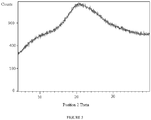
- the present invention provides amorphous Form C of compound 9, which is characterized by an X-ray powder diffraction (XRPD) substantially similar to that in Figure 5 .
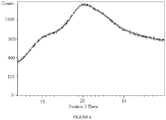
- the present invention provides a srpay dry dispersion of amorphous Form C of compound 9, which is characterized by an X-ray powder diffraction (XRPD) substantially similar to that in Figure 6 .
- compositions comprising a compound of formula I and a pharmaceutically acceptable carrier, adjuvant, or vehicle.
- the present invention relates to a pharmaceutical composition
- a pharmaceutical composition comprising a compound of formula I; a pharmaceutically acceptable carrier, adjuvant, or vehicle; and an additional therapeutic agent.
- the present invention relates to a method of treating or lessening the severity of a variety of diseases, disorders, or conditions in a subject, including, but not limited to, chronic pain, gut pain, neuropathic pain, musculoskeletal pain, acute pain, inflammatory pain, cancer pain, idiopathic pain, multiple sclerosis, Charcot-Marie-Tooth syndrome, incontinence, pathological cough, or cardiac arrhythmia comprising administering to the subject a therapeutically effective amount of a compound of formula I.
- the present invention relates to a method of treating or lessening the severity of a variety of diseases, disorders, or conditions in a subject, including, but not limited to, chronic pain, gut pain, neuropathic pain, musculoskeletal pain, acute pain, inflammatory pain, cancer pain, idiopathic pain, multiple sclerosis, Charcot-Marie-Tooth syndrome, incontinence, pathological cough, or cardiac arrhythmia comprising administering to the subject a therapeutically effective amount of a compound of formula I and an additional therapeutic agent.
- the instant compounds of formula I are prodrugs of their respective parent compounds.
- the activity exhibited upon administration of the prodrug is principally due to the presence of the parent compound that results from cleavage of the prodrug.
- the present invention also relates to novel, solid forms of (4-(2-(4-fluoro-2-methylphenoxy)-4-(trifluoromethyl)benzamido)-2-oxopyridin-1(2 H )-yl)methyl dihydrogen phosphate ("compound 9").
- the present invention provides a free crystalline form of compound 9 (Form B).
- the present invention provides a process for preparing solid Form B of compound 9.
- the present invention provides an amorphous form of compound 9 (Form C).
- the present invention provides a method of preparing amorphous Form C of compound 9.
- prodrug refers to compounds which are drug precursors which, following administration and absorption, release the drug in vivo via some metabolic process. In general, a prodrug possesses less biological activity than its parent drug. A prodrug may also improve the physical properties of the parent drug and/or it may also improve overall drug efficacy, for example through the reduction of toxicity and unwanted effects of a drug by controlling its absorption, blood levels, metabolic distribution and cellular uptake.
- parent compound or “parent drug” refers to the biologically active entity that is released via enzymatic action of a metabolic or a catabolic process, or via a chemical process following administration of the prodrug.
- the parent compound may also be the starting material for the preparation of its corresponding prodrug.
- the monovalent cations defined by M + include ammonium (e.g., N(R 9 ) 4 , wherein R 9 is H or C 1 -C 4 alkyl), alkali metal ions such as sodium, lithium and potassium ions, dicyclohexylamine ion, and N-methyl-D-glucamine ion.
- the divalent cations defined by D 2+ include- alkaline earth metal ions such as calcium and magnesium ions, as well as divalent aluminum ions. Also included are amino acid cations such as monovalent or divalent ions of arginine, lysine, ornithine, and so forth.
- M + is a monovalent cation
- each of M + may be the same or different.
- a divalent cation D 2+ may instead be present.
- the basic nitrogen-containing groups may be quaternized with such agents as: lower alkyl halides, such as methyl, ethyl, propyl, and butyl chloride, bromides and iodides; dialkyl sulfates like dimethyl, diethyl, dibutyl; diamyl sulfates; long chain halides such as decyl, lauryl, myristyl and stearyl chlorides, bromides and iodides; aralkyl halides like benzyl bromide and others.
- lower alkyl halides such as methyl, ethyl, propyl, and butyl chloride, bromides and iodides
- dialkyl sulfates like dimethyl, diethyl, dibutyl
- diamyl sulfates long chain halides
- decyl, lauryl, myristyl and stearyl chlorides bromides and
- the prodrugs and solid forms of the present invention are characterized by unexpectedly high aqueous solubility. This solubility facilitates administration of higher doses of the prodrug, resulting in a greater drug load per unit dosage.
- a stable compound or chemically feasible compound is one that is not substantially altered when kept at a temperature of 40°C or less, in the absence of moisture or other chemically reactive conditions, for at least a week.
- alkyl as used herein, means a straight-chain (i.e., unbranched) or branched, substituted or unsubstituted hydrocarbon chain that is completely saturated or that contains one or more units of unsaturation.
- Suitable alkyl groups include, but are not limited to, linear or branched, and substituted or unsubstituted alkyl.
- halogen or "halo" as used herein, means F, Cl, Br or I.
- CH 2 CH 2 CH 2 OH is within the definition of C 1 -C 6 alkyl wherein up to two non-adjacent CH 2 units may be replaced by -O- because the CH 2 unit of the terminal methyl group has been replaced by -O-.
- structures depicted herein are also meant to include all isomeric (e.g., enantiomeric, diastereomeric, and geometric (or conformational)) forms of the structure; for example, the R and S configurations for each asymmetric center, (Z) and (E) double bond isomers, and (Z) and (E) conformational isomers. Therefore, single stereochemical isomers as well as enantiomeric, diastereomeric, and geometric (or conformational) mixtures of the present compounds are within the scope of the invention. Unless otherwise stated, all tautomeric forms of the compounds of the invention are within the scope of the invention. Thus, included within the scope of the invention are tautomers of compounds of formula I.
- the structures also include zwitterioinc forms of the compounds or salts of fomula where appropriate.
- structures depicted herein are also meant to include compounds that differ only in the presence of one or more isotopically enriched or isotopically-labeled atoms.
- the isotopically-labeled compounds may have one or more atoms replaced by an atom having an atomic mass or mass number usually found in nature.
- isotopes present in compounds of formula I include isotopes of hydrogen, carbon, nitrogen, oxygen, phosphorus, fluorine and chlorine, such as, but not limited to, 2 H, 3 H, 13 C, 14 C, 15 N, 18 O, 17 O, 35 S and 18 F.
- Certain isotopically-labeled compounds of formula I in addition to being useful as as therapuetic agents, are also useful in drug and/or substrate tissue distribution assays, as analytical tools or as probes in other biological assays.
- tritiated (e.g., 3 H) and carbon-14 (e.g., 14 C) isotopes are useful given their ease of detectability.
- replacement of one or more hydrogen atoms with heavier isotopes such as deuterium, (e.g., 2 H) can afford certain therapeutic advantages.
- the invention features a compound of formula I and the attendant definitions, wherein R 2 is H. In another embodiment, R 2 is halogen. In another embodiment, R 2 is Cl. In another embodiment, R 2 is F. In another embodiment, R 2 is C 1 -C 6 alkyl wherein said C 1 -C 6 alkyl is substituted with 0-6 halogen. In another embodiment, R 2 is CF 3 . In another embodiment, R 2 is H, Cl or CF 3 .
- the invention features a compound of formula I and the attendant definitions, wherein R 3 is H. In another embodiment, R 3 is halogen. In another embodiment, R 3 is Cl. In another embodiment, R 3 is C 1 -C 6 alkyl wherein said C 1 -C 6 alkyl is substituted with 0-6 halogen. In another embodiment, R 3 is CF 3 . In another embodiment, R 3 is CF 2 CF 3 .
- the invention features a compound of formula I and the attendant definitions, wherein R 5 is H. In another embodiment, R 5 is halogen. In another embodiment, R 5 is Cl. In another embodiment, R 5 is F. In another embodiment, R 5 is C 1 -C 6 alkyl. In another embodiment, R 5 is CH 3 . In another embodiment, R 5 is C 1 -C 6 alkyl wherein said C 1 -C 6 alkyl is substituted with 0-6 halogen wherein one CH 2 unit of said C 1 -C 6 alkyl is replaced with -O-. In another embodiment, R 5 is OCH 3 . In another embodiment, R 5 is OH. In another embodiment, R 5 is OCF 3 .
- the invention features a compound of formula I and the attendant definitions, wherein R 7 is H.
- R 7 is halogen.
- R 7 is F.
- R 7 is C 1 -C 6 alkyl wherein said C 1 -C 6 alkyl is substituted with 0-6 halogen wherein two non-adjacent CH 2 units of said C 1 -C 6 alkyl are replaced with -O-.
- R 7 is OCH 3 .
- R 7 is OCF 3 .
- the invention features a compound of formula I and the attendant definitions, wherein X is -PO(OH)O - M + , -PO(O) 2 •2M + ; or -PO(O - ) 2 •D 2+ ; M + is Li + , Na + , K + or N(R 9 ) 4 + ; wherein each R 9 is independently H or a C 1 -C 4 alkyl group and D 2+ is Mg 2+ , Ca 2+ or Ba 2+ .
- the invention features a compound of formula I and the attendant definitions, wherein X is -PO(OH)O - M + and M + is Li + .
- X is - PO(OH)O - M + and M + is Na + .
- X is -PO(OH)O - M + and M + is K + .
- X is -PO(OH)O - M + and M + is N(R 9 ) 4 + ; wherein each R 9 is independently H or a C 1 -C 4 alkyl group.
- X is -PO(OH)O - M + and M + is N(R 9 ) 4 + ; wherein each R 9 is a CH 3 group.
- the invention features a compound of formula I and the attendant definitions, wherein X is -PO(O - ) 2 •2M + and M + is Li + .
- X is -PO(O - ) 2 •2M + and M + is Na + .
- X is -PO(O - ) 2 •2M + and M + is K + .
- X is -PO(O - ) 2 •2M + and M + is N(R 9 ) 4 + ; wherein each R 9 is independently H or a C 1 -C 4 alkyl group.
- X is -PO(O - ) 2 •2M + and M + is N(R 9 ) 4 + ; wherein each R 9 is a CH 3 group.
- the invention features a compound of formula I and the attendant definitions, wherein X is -PO(O - ) 2 •D 2+ and D 2+ is Mg 2+ , Ca 2+ or Ba 2+ .
- X is -PO(O - ) 2 •D 2+ and D 2+ is Mg 2+ .
- X is -PO(O - ) 2 •D 2+ and D 2+ is Ca 2+ .
- X is -PO(O - ) 2 •D 2+ and D 2+ is Ba 2+ .
- the invention features a compound of formula I and the attendant definitions, wherein X is -PO(OH) 2 .
- the invention features a compound of formula I and the attendant definitions, wherein R 2 is Cl, R 3 is Cl, R 5 is OCH 3 , R 7 is F and X is -PO(OH) 2 .
- the invention features a compound of formula I and the attendant definitions, wherein R 2 is Cl, R 3 is Cl, R 5 is OCH 3 , R 7 is F and X is -PO(O - ) 2 •2M + , M + is Li + , Na + , K + or N(R 9 ) 4 + wherein each R 9 is independently H or a C 1 -C 4 alkyl group.
- the invention features a compound of formula I and the attendant definitions, wherein R 2 is Cl, R 3 is Cl, R 5 is OCH 3 , R 7 is F and X is-PO(OH)O - M + , M + is Li + , Na + , K + or N(R 9 ) 4 + wherein each R 9 is independently H or a C 1 -C 4 alkyl group.
- the invention features a compound of formula I and the attendant definitions, wherein R 3 is CF 2 CF 3 , R 5 is OCH 3 , R 7 is F and X is -PO(OH) 2 .
- the invention features a compound of formula I and the attendant definitions, wherein R 3 is CF 2 CF 3 , R 5 is OCH 3 , R 7 is F and X is -PO(O - ) 2 •2M + , M + is Li + , Na + , K + or N(R 9 ) 4 + wherein each R 9 is independently H or a C 1 -C 4 alkyl group.
- the invention features a compound of formula I and the attendant definitions, wherein R 3 is CF 2 CF 3 , R 5 is OCH 3 , R 7 is F and X is-PO(OH)O - M + , M + is Li + , Na + , K + or N(R 9 ) 4 + wherein each R 9 is independently H or a C 1 -C 4 alkyl group.
- the invention features a compound of formula I and the attendant definitions, wherein R 3 is CF 3 , R 5 is CH 3 , R 7 is F and X is -PO(OH) 2 .
- the invention features a compound of formula I and the attendant definitions, wherein R 3 is CF 3 , R 5 is CH 3 , R 7 is F, X is -PO(O - ) 2 •2M + , M + is Li + , Na + , K + . In another embodiment, M + is Li + . In yet another embodiment, M + is Na + .
- the invention features a compound of formula I and the attendant definitions, wherein R 3 is CF 3 , R 5 is CH 3 , R 7 is F, X is -PO(O - ) 2 •D 2+ and D 2+ is Mg 2+ , Ca 2+ or Ba 2+ . In one embodiment, X is -PO(O - ) 2 •D 2+ and D 2+ is Mg 2+ . In another embodiment, X is -PO(O - ) 2 •D 2+ and D 2+ is Ca 2+ .
- the invention features a compound of formula I and the attendant definitions, wherein R 2 is CF 3 , R 5 is CH 3 , R 7 is F and X is -PO(OH) 2 .
- the invention features a compound of formula I and the attendant definitions, wherein R 2 is CF 3 , R 5 is CH 3 , R 7 is F, X is -PO(O - ) 2 •2M + , M + is Li + , Na + , K + . In another embodiment, M + is Li + . In yet another embodiment, M + is Na + .
- the invention features a compound of formula I and the attendant definitions, wherein R 2 is CF 3 , R 5 is CH 3 , R 7 is F, X is -PO(O - ) 2 •D 2+ and D 2+ is Mg 2+ , Ca 2+ or Ba 2+ . In one embodiment, X is -PO(O - ) 2 •D 2+ and D 2+ is Mg 2+ . In another embodiment, X is -PO(O - ) 2 •D 2+ and D 2+ is Ca 2+ .
- the invention features a compound of formula I and the attendant definitions, wherein R 3 is Cl, R 5 is CH 3 , R 7 is F and X is -PO(OH) 2 .
- the invention features a compound of formula I and the attendant definitions, wherein R 3 is Cl, R 5 is CH 3 , R 7 is F and X is -PO(O - ) 2 •2M + , M + is Li + , Na + , K + or N(R 9 ) 4 + wherein each R 9 is independently H or a C 1 -C 4 alkyl group.
- the invention features a compound of formula I and the attendant definitions, wherein R 3 is Cl, R 5 is CH 3 , R 7 is F and X is -PO(OH)O - M + , M + is Li + , Na + , K + or N(R 9 ) 4 + wherein each R 9 is independently H or a C 1 -C 4 alkyl group.
- the invention features a compound of formula I and the attendant definitions, wherein R 2 is CF 3 , R 5 is CH 3 , R 7 is F and X is -PO(OH) 2 .
- the invention features a compound of formula I and the attendant definitions, wherein R 2 is CF 3 , R 7 is F, X is -PO(O - ) 2 •2M + , M + is Li + , Na + , K + . In another embodiment, M + is Li + . In yet another embodiment, M + is Na + .
- the invention features a compound of formula I and the attendant definitions, wherein R 2 is CF 3 , R 7 is F, X is -PO(O - ) 2 •D 2+ and D 2+ is Mg 2+ , Ca 2+ or Ba 2+ . In one embodiment, X is -PO(O - ) 2 •D 2+ and D 2+ is Mg 2+ . In another embodiment, X is -PO(O - ) 2 •D 2+ and D 2+ is Ca 2+ .
- the invention provides a compound of formula I-A wherein, independently for each occurrence:
- the invention features a compound of formula I-A and the attendant definitions, wherein R 2 is halogen.
- R 2 is Cl.
- R 2 is F.
- R 2 is C 1 -C 6 alkyl wherein said C 1 -C 6 alkyl is substituted with 0-6 halogen.
- R 2 is CF 3 .
- R 2 is Cl or CF 3 .
- the invention features a compound of formula I-A and the attendant definitions, wherein R 5 is halogen.
- R 5 is Cl.
- R 5 is F.
- R 5 is C 1 -C 6 alkyl.
- R 5 is CH 3 .
- R 5 is C 1 -C 6 alkyl wherein said C 1 -C 6 alkyl is substituted with 0-6 halogen wherein one CH 2 unit of said C 1 -C 6 alkyl is replaced with -O-.
- R 5 is OCH 3 .
- R 5 is OH.
- R 5 is OCF 3 .
- R 5 is F, Cl, CH 3 , OCH 3 , OH or OCF 3 .
- the invention features a compound of formula I-A and the attendant definitions, wherein R 7 is halogen.
- R 7 is F.
- R 7 is C 1 -C 6 alkyl wherein said C 1 -C 6 alkyl is substituted with 0-6 halogen wherein two non-adjacent CH 2 units of said C 1 -C 6 alkyl are replaced with -O-.
- R 7 is OCH 3 .
- R 7 is OCF 3 .
- R 7 is F, OCH 3 or OCF 3 .
- the invention features a compound of formula I-A and the attendant definitions, wherein X is -PO(OH) 2 , -PO(OH)O - M + ; -PO(O - ) 2 •2M + or -PO(O - ) 2 •D 2+ ; wherein M + is Li + , Na + or K + and wherein D 2+ is Mg 2+ or Ca 2+ .
- the invention features a compound of formula I-A and the attendant definitions, wherein R 2 is CF 3 , R 5 is Cl, OCH 3 or CH 3 and R 7 is F. In one embodiment, R 2 is CF 3 , R 5 is Cl and R 7 is F. In another embodiment, R 2 is CF 3 , R 5 is OCH 3 and R 7 is F. In another embodiment, R 2 is CF 3 , R 5 is CH 3 and R 7 is F.
- the invention features a compound of formula I-A and the attendant definitions, wherein R 2 is CF 3 , R 5 is Cl, OCH 3 or CH 3 , R 7 is F and X is -PO(OH) 2 .
- R 2 is CF 3 , R 5 is Cl, R 7 is F and X is -PO(OH) 2 .
- R 2 is CF 3 , R 5 is OCH 3 , R 7 is F and X is -PO(OH) 2 .
- R 2 is CF 3 , R 5 is CH 3 , R 7 is F and X is -PO(OH) 2 .
- the invention features a compound of formula I-A and the attendant definitions, wherein X is -PO(OH)O - M + , -PO(O - ) 2 •2M + ; or -PO(O - ) 2 •D 2+ ; M + is Li + , Na + , K + or N(R 9 ) 4 + ; wherein each R 9 is independently H or a C 1 -C 4 alkyl group and D 2+ is Mg 2+ , Ca 2+ or Ba 2+ .
- the invention features a compound of formula I-A and the attendant definitions, wherein X is -PO(OH)O - M + and M + is Li + .
- X is - PO(OH)O - M + and M + is Na + .
- X is -PO(OH)O - M + and M + is K + .
- X is -PO(OH)O - M + and M + is N(R 9 ) 4 + ; wherein each R 9 is independently H or a C 1 -C 4 alkyl group.
- X is -PO(OH)O - M + and M + is N(R 9 ) 4 + ; wherein each R 9 is a CH 3 group.
- the invention features a compound of formula I-A and the attendant definitions, wherein X is -PO(O - ) 2 •2M + and M + is Li + .
- X is -PO(O - ) 2 •2M + and M + is Na + .
- X is -PO(O - ) 2 •2M + and M + is K + .
- X is -PO(O - ) 2 •2M + and M + is N(R 9 ) 4 + ; wherein each R 9 is independently H or a C 1 -C 4 alkyl group.
- X is -PO(O - ) 2 •2M + and M + is N(R 9 ) 4 + ; wherein each R 9 is a CH 3 group.
- the invention features a compound of formula I-A and the attendant definitions, wherein X is -PO(O - ) 2 •D 2+ and D 2+ is Mg 2+ , Ca 2+ or Ba 2+ .
- X is -PO(O - ) 2 •D 2+ and D 2+ is Mg 2+ .
- X is -PO(O - ) 2 •D 2+ and D 2+ is Ca 2+ .
- X is -PO(O - ) 2 •D 2+ and D 2+ is Ba 2+ .
- the invention features a compound of formula I-A and the attendant definitions, wherein X is -PO(OH) 2 .
- the invention features a compound of formula I-A and the attendant definitions, wherein R 2 is CF 3 , R 5 is CH 3 , R 7 is F and X is -PO(OH) 2 .
- the invention features a compound of formula I-A and the attendant definitions, wherein R 2 is CF 3 , R 5 is CH 3 , R 7 is F, X is -PO(O - ) 2 •2M + , M + is Li + , Na + , K + . In another embodiment, M + is Li + . In yet another embodiment, M + is Na + .
- the invention features a compound of formula I-A and the attendant definitions, wherein R 2 is CF 3 , R 5 is CH 3 , R 7 is F, X is -PO(O - ) 2 •D 2+ and D 2+ is Mg 2+ , Ca 2+ or Ba 2+ . In one embodiment, X is -PO(O - ) 2 •D 2+ and D 2+ is Mg 2+ . In another embodiment, X is -PO(O - ) 2 •D 2+ and D 2+ is Ca 2+ .
- the invention provides a compound of formula I-B wherein, independently for each occurrence:
- the invention features a compound of formula I-B and the attendant definitions, wherein R 3 is halogen.
- R 3 is Cl.
- R 3 is C 1 -C 6 alkyl wherein said C 1 -C 6 alkyl is substituted with 0-6 halogen.
- R 3 is CF 3 .
- R 3 is CF 2 CF 3 .
- the invention features a compound of formula I-B and the attendant definitions, wherein R 5 is halogen.
- R 5 is Cl.
- R 5 is F.
- R 5 is C 1 -C 6 alkyl.
- R 5 is CH 3 .
- R 5 is C 1 -C 6 alkyl wherein said C 1 -C 6 alkyl is substituted with 0-6 halogen wherein one CH 2 unit of said C 1 -C 6 alkyl is replaced with -O-.
- R 5 is OCH 3 .
- R 5 is OH.
- R 5 is OCF 3 .
- the invention features a compound of formula I-B and the attendant definitions, wherein R 7 is halogen.
- R 7 is F.
- R 7 is C 1 -C 6 alkyl wherein said C 1 -C 6 alkyl is substituted with 0-6 halogen wherein two non-adjacent CH 2 units of said C 1 -C 6 alkyl are replaced with -O-.
- R 7 is OCH 3 .
- R 7 is OCF 3 .
- the invention features a compound of formula I-B and the attendant definitions, wherein X is X is -PO(OH) 2 , -PO(OH)O - M + ; -PO(O - ) 2 •2M + or -PO(O - ) 2 •D 2+ ; wherein M + is Li + , Na + or K + and wherein D 2+ is Mg 2+ or Ca 2+ .
- the invention features a compound of formula I-B and the attendant definitions, wherein R 3 is CF 3 , R 5 is F or CH 3 and R 7 is F. In one embodiment, R 3 is Cl, R 5 is CH 3 and R 7 is F. In another embodiment, R 3 is CF 2 CF 3 , R 5 is OCH 3 and R 7 is F.
- the invention features a compound of formula I-B and the attendant definitions, wherein R 3 is CF 3 , R 5 is F or CH 3 , R 7 is F and X is -PO(OH) 2 .
- R 3 is Cl
- R 5 is CH 3
- R 7 is F and X is -PO(OH) 2 .
- R 3 is CF 2 CF 3
- R 5 is OCH 3
- R 7 is F and X is -PO(OH) 2 .
- the invention features a compound of formula I-B and the attendant definitions, wherein X is -PO(OH)O - M + , -PO(O - ) 2 •2M + ; or -PO(O - ) 2 •D 2+ ; M + is Li + , Na + , K + or N(R 9 ) 4 + ; wherein each R 9 is independently H or a C 1 -C 4 alkyl group and D 2+ is Mg 2+ , Ca 2+ or Ba 2+ .
- the invention features a compound of formula I-B and the attendant definitions, wherein X is -PO(OH)O - M + and M + is Li + .
- X is - PO(OH)O - M + and M + is Na + .
- X is -PO(OH)O - M + and M + is K + .
- X is -PO(OH)O - M + and M + is N(R 9 ) 4 + ; wherein each R 9 is independently H or a C 1 -C 4 alkyl group.
- X is -PO(OH)O - M + and M + is N(R 9 ) 4 + ; wherein each R 9 is a CH 3 group.
- the invention features a compound of formula I-B and the attendant definitions, wherein X is -PO(O - ) 2 •2M + and M + is Li + .
- X is -PO(O - ) 2 •2M and M + is Na + .
- X is -PO(O - ) 2 •2M + and M + is K + .
- X is -PO(O - ) 2 •2M + and M + is N(R 9 ) 4 + ; wherein each R 9 is independently H or a C 1 -C 4 alkyl group.
- X is -PO(O - ) 2 •2M + and M + is N(R 9 ) 4 + ; wherein each R 9 is a CH 3 group.
- the invention features a compound of formula I-B and the attendant definitions, wherein X is -PO(O - ) 2 •D 2+ and D 2+ is Mg 2+ , Ca 2+ or Ba 2+ .
- X is -PO(O - ) 2 •D 2+ and D 2+ is Mg 2+ .
- X is -PO(O - ) 2 •D 2+ and D 2+ is Ca 2+ .
- X is -PO(O - ) 2 •D 2+ and D 2+ is Ba 2+ .
- the invention features a compound of formula I-B and the attendant definitions, wherein X is -PO(OH) 2 .
- the invention features a compound of formula I-B and the attendant definitions, wherein R 3 is CF 2 CF 3 , R 5 is OCH 3 , R 7 is F and X is -PO(OH) 2 .
- the invention features a compound of formula I-B and the attendant definitions, wherein R 3 is CF 2 CF 3 , R 5 is OCH 3 , R 7 is F and X is -PO(O - ) 2 •2M + , M + is Li + , Na + , K + or N(R 9 ) 4 + wherein each R 9 is independently H or a C 1 -C 4 alkyl group.
- the invention features a compound of formula I-B and the attendant definitions, wherein R 3 is CF 2 CF 3 , R 5 is OCH 3 , R 7 is F and X is-PO(OH)O - M + , M + is Li + , Na + , K + or N(R 9 ) 4 + wherein each R 9 is independently H or a C 1 -C 4 alkyl group.
- the invention features a compound of formula I-B and the attendant definitions, wherein R 3 is CF 3 , R 5 is CH 3 , R 7 is F and X is -PO(OH) 2 .
- the invention features a compound of formula I-B and the attendant definitions, wherein R 3 is CF 3 , R 5 is CH 3 , R 7 is F, X is -PO(O - ) 2 •2M + , M + is Li + , Na + , K + . In another embodiment, M + is Li + . In yet another embodiment, M + is Na + .
- the invention features a compound of formula I-B and the attendant definitions, wherein R 3 is CF 3 , R 5 is CH 3 , R 7 is F, X is -PO(O - ) 2 •D 2+ and D 2+ is Mg 2+ , Ca 2+ or Ba 2+ . In one embodiment, X is -PO(O - ) 2 •D 2+ and D 2+ is Mg 2+ . In another embodiment, X is -PO(O - ) 2 •D 2+ and D 2+ is Ca 2+ .
- the invention features a compound of formula I-B and the attendant definitions, wherein R 3 is Cl, R 5 is CH 3 , R 7 is F and X is -PO(OH) 2 .
- the invention features a compound of formula I-B and the attendant definitions, wherein R 3 is Cl, R 5 is CH 3 , R 7 is F and X is -PO(O - ) 2 •2M + , M + is Li + , Na + , K + or N(R 9 ) 4 + wherein each R 9 is independently H or a C 1 -C 4 alkyl group.
- the invention features a compound of formula I-B and the attendant definitions, wherein R 3 is Cl, R 5 is CH 3 , R 7 is F and X is-PO(OH)O - M + , M + is Li + , Na + , K + or N(R 9 ) 4 + wherein each R 9 is independently H or a C 1 -C 4 alkyl group.
- the invention provides a compound of formula I-C wherein, independently for each occurrence:
- the invention features a compound of formula I-C and the attendant definitions, wherein R 2 is C 1 -C 6 alkyl wherein said C 1 -C 6 alkyl is substituted with 0-6 halogen. In another embodiment, R 2 is CF 3 .
- the invention features a compound of formula I-C and the attendant definitions, wherein R 7 is halogen.
- R 7 is F.
- R 7 is C 1 -C 6 alkyl wherein said C 1 -C 6 alkyl is substituted with 0-6 halogen and wherein up to two non-adjacent CH 2 units of said C 1 -C 6 alkyl may be replaced with -O-.
- R 7 is OCF 3 .
- the invention features a compound of formula I-C and the attendant definitions, wherein X is -PO(OH) 2 , -PO(OH)O - M + ; -PO(O - ) 2 •2M + or -PO(O - ) 2 •D 2+ ; wherein M + is Li + , Na + or K + and wherein D 2+ is Mg 2+ or Ca 2+ .
- the invention features a compound of formula I-C and the attendant definitions, wherein R 2 is CF 3 and R 7 is F or OCF 3 .
- the invention features a compound of formula I-C and the attendant definitions, wherein R 2 is CF 3 , R 7 is F or OCF 3 and X is -PO(OH) 2 .
- the invention features a compound of formula I-C and the attendant definitions, wherein X is -PO(OH)O - M + , -PO(O - ) 2 •2M + ; or -PO(O - ) 2 •D 2+ ; M + is Li + , Na + , K + or N(R 9 ) 4 + ; wherein each R 9 is independently H or a C 1 -C 4 alkyl group and D 2+ is Mg 2+ , Ca 2+ or Ba 2+ .
- the invention features a compound of formula I-C and the attendant definitions, wherein X is -PO(OH)O - M + and M + is Li + .
- X is - PO(OH)O - M + and M + is Na + .
- X is -PO(OH)O - M + and M + is K + .
- X is -PO(OH)O - M + and M + is N(R 9 ) 4 + ; wherein each R 9 is independently H or a C 1 -C 4 alkyl group.
- X is -PO(OH)O - M + and M + is N(R 9 ) 4 + ; wherein each R 9 is a CH 3 group.
- the invention features a compound of formula I-C and the attendant definitions, wherein X is -PO(O - ) 2 •2M + and M + is Li + .
- X is -PO(O - ) 2 •2M + and M + is Na + .
- X is -PO(O - ) 2 •2M + and M + is K + .
- X is -PO(O - ) 2 •2M + and M + is N(R 9 ) 4 + ; wherein each R 9 is independently H or a C 1 -C 4 alkyl group.
- X is -PO(O - ) 2 •2M + and M + is N(R 9 ) 4 + ; wherein each R 9 is a CH 3 group.
- the invention features a compound of formula I-C and the attendant definitions, wherein X is -PO(O - ) 2 •D 2+ and D 2+ is Mg 2+ , Ca 2+ or Ba 2+ .
- X is -PO(O - ) 2 •D 2+ and D 2+ is Mg 2+ .
- X is -PO(O - ) 2 •D 2+ and D 2+ is Ca 2+ .
- X is -PO(O - ) 2 •D 2+ and D 2+ is Ba 2+ .
- the invention features a compound of formula I-C and the attendant definitions, wherein X is -PO(OH) 2 .
- the invention features a compound of formula I-C and the attendant definitions, wherein R 2 is CF 3 , R 5 is CH 3 , R 7 is F and X is -PO(OH) 2 .
- the invention features a compound of formula I-C and the attendant definitions, wherein R 2 is CF 3 , R 7 is F, X is -PO(O - ) 2 •2M + , M + is Li + , Na + , K + . In another embodiment, M + is Li + . In yet another embodiment, M + is Na + .
- the invention features a compound of formula I-C and the attendant definitions, wherein R 2 is CF 3 , R 7 is F, X is -PO(O - ) 2 •D 2+ and D 2+ is Mg 2+ , Ca 2+ or Ba 2+ . In one embodiment, X is -PO(O - ) 2 •D 2+ and D 2+ is Mg 2+ . In another embodiment, X is -PO(O - ) 2 •D 2+ and D 2+ is Ca 2+ .
- the invention provides a compound of formula I-D wherein, independently for each occurrence:
- the invention features a compound of formula I-D and the attendant definitions, wherein R 3 is C 1 -C 6 alkyl wherein said C 1 -C 6 alkyl is substituted with 0-6 halogen. In another embodiment, R 3 is CF 3 . In another embodiment, R 3 is CF 2 CF 3 .
- the invention features a compound of formula I-D and the attendant definitions, wherein R 7 is halogen.
- R 7 is F.
- R 7 is C 1 -C 6 alkyl wherein said C 1 -C 6 alkyl is substituted with 0-6 halogen and wherein up to two non-adjacent CH 2 units of said C 1 -C 6 alkyl may be replaced with -O-.
- R 7 is OCF 3 .
- the invention features a compound of formula I-D and the attendant definitions, wherein X is -PO(OH) 2 , -PO(OH)O - M + ; -PO(O - ) 2 •2M + or -PO(O - ) 2 •D 2+ ; wherein M + is Li + , Na + or K + and wherein D 2+ is Mg 2+ or Ca 2+ .
- the invention features a compound of formula I-D and the attendant definitions, wherein R 3 is CF 3 and R 7 is CF 3 . In another embodiment, R 3 is CF 2 CF 3 and R 7 is F.
- the invention features a compound of formula I-D and the attendant definitions, wherein R 3 is CF 3 , R 7 is CF 3 and X is -PO(OH) 2 . In another embodiment, R 3 is CF 2 CF 3 , R 7 is F and X is -PO(OH) 2 .
- the invention features a compound of formula I-D and the attendant definitions, wherein X is -PO(OH)O - M + , -PO(O - ) 2 •2M + ; or -PO(O - ) 2 •D 2+ ; M + is Li + , Na + , K + or N(R 9 ) 4 + ; wherein each R 9 is independently H or a C 1 -C 4 alkyl group and D 2+ is Mg 2+ , Ca 2+ or Ba 2+ .
- the invention features a compound of formula I-D and the attendant definitions, wherein X is -PO(OH)O - M + and M + is Li + .
- X is - PO(OH)O - M + and M + is Na + .
- X is -PO(OH)O - M + and M + is K + .
- X is -PO(OH)O - M + and M + is N(R 9 ) 4 + ; wherein each R 9 is independently H or a C 1 -C 4 alkyl group.
- X is -PO(OH)O - M + and M + is N(R 9 ) 4 + ; wherein each R 9 is a CH 3 group.
- the invention features a compound of formula I-D and the attendant definitions, wherein X is -PO(O - ) 2 •2M + and M + is Li + .
- X is -PO(O - ) 2 •2M + and M + is Na + .
- X is -PO(O - ) 2 •2M + and M + is K + .
- X is -PO(O - ) 2 •2M + and M + is N(R 9 ) 4 + ; wherein each R 9 is independently H or a C 1 -C 4 alkyl group.
- X is -PO(O - ) 2 •2M + and M + is N(R 9 ) 4 + ; wherein each R 9 is a CH 3 group.
- the invention features a compound of formula I-D and the attendant definitions, wherein X is -PO(O - ) 2 •D 2+ and D 2+ is Mg 2+ , Ca 2+ or Ba 2+ .
- X is -PO(O - ) 2 •D 2+ and D 2+ is Mg 2+ .
- X is -PO(O - ) 2 •D 2+ and D 2+ is Ca 2+ .
- X is -PO(O - ) 2 •D 2+ and D 2+ is Ba 2+ .
- the invention features a compound of formula I-D and the attendant definitions, wherein X is -PO(OH) 2 .
- the invention provides a compound of formula I-E wherein, independently for each occurrence:
- the invention features a compound of formula I-E and the attendant definitions, wherein R 2 is halogen. In another embodiment, R 2 is Cl.
- the invention features a compound of formula I-E and the attendant definitions, wherein R 3 is halogen. In another embodiment, R 3 is Cl.
- the invention features a compound of formula I-E and the attendant definitions, wherein R 7 is halogen. In one embodiment, R 7 is F.
- the invention features a compound of formula I-E and the attendant definitions, wherein X is -PO(OH) 2 , -PO(OH)O - M + ; -PO(O - ) 2 •2M + or -PO(O - ) 2 •D 2+ wherein M + is Li + , Na + or K + and wherein D 2+ is Mg 2+ or Ca 2+ .
- the invention features a compound of formula I-E and the attendant definitions, wherein R 2 and R 3 are Cl and R 7 is F.
- the invention features a compound of formula I-E and the attendant definitions, wherein R 2 and R 3 are Cl, R 7 is F and X is -PO(OH) 2 .
- the invention features a compound of formula I-E and the attendant definitions, wherein X is -PO(OH)O - M + , -PO(O - ) 2 •2M + ; or -PO(O - ) 2 •D 2+ ; M + is Li + , Na + , K + or N(R 9 ) 4 + ; wherein each R 9 is independently H or a C 1 -C 4 alkyl group and D 2+ is Mg 2+ , Ca 2+ or Ba 2+ .
- the invention features a compound of formula I-E and the attendant definitions, wherein X is -PO(OH)O - M + and M + is Li + .
- X is-PO(OH)O - M + and M + is Na + .
- X is -PO(OH)O - M + and M + is K + .
- X is -PO(OH)O - M + and M + is N(R 9 ) 4 + ; wherein each R 9 is independently H or a C 1 -C 4 alkyl group.
- X is -PO(OH)O - M + and M + is N(R 9 ) 4 + ; wherein each R 9 is a CH 3 group.
- the invention features a compound of formula I-E and the attendant definitions, wherein X is -PO(O - ) 2 •2M + and M + is Li + .
- X is -PO(O - ) 2 •2M + and M + is Na + .
- X is -PO(O - ) 2 •2M + and M + is K + .
- X is -PO(O - ) 2 •2M + and M + is N(R 9 ) 4 + ; wherein each R 9 is independently H or a C 1 -C 4 alkyl group.
- X is -PO(O - ) 2 •2M + and M + is N(R 9 ) 4 + ; wherein each R 9 is a CH 3 group.
- the invention features a compound of formula I-E and the attendant definitions, wherein X is -PO(O - ) 2 •D 2+ and D 2+ is Mg 2+ , Ca 2+ or Ba 2+ .
- X is -PO(O - ) 2 •D 2+ and D 2+ is Mg 2+ .
- X is -PO(O - ) 2 •D 2+ and D 2+ is Ca 2+ .
- X is -PO(O - ) 2 •D 2+ and D 2+ is Ba 2+ .
- the invention features a compound of formula I-E and the attendant definitions, wherein X is -PO(OH) 2 .
- the invention provides a compound of formula I-F wherein, independently for each occurrence:
- the invention features a compound of formula I-F and the attendant definitions, wherein R 2 is C 1 -C 6 alkyl wherein said C 1 -C 6 alkyl is substituted with 0-6 halogen. In another embodiment, R 2 is CF 3 .
- the invention features a compound of formula I-F and the attendant definitions, wherein R 5 is C 1 -C 6 alkyl wherein said C 1 -C 6 alkyl is substituted with 0-6 halogen and wherein up to two non-adjacent CH 2 units of said C 1 -C 6 alkyl may be replaced with - O-.
- R 5 is CH 3 .
- R 5 is OCF 3 .
- the invention features a compound of formula I-F and the attendant definitions, wherein X is -PO(OH) 2 , -PO(OH)O - M + ; -PO(O - ) 2 •2M + or -PO(O - ) 2 •D 2+ wherein M + is Li + , Na + or K + and wherein D 2+ is Mg 2+ or Ca 2+ .
- the invention features a compound of formula I-F and the attendant definitions, wherein R 2 is CF 3 , R 7 is CH 3 or OCF 3 and X is -PO(OH) 2 .
- the invention features a compound of formula I-F and the attendant definitions, wherein X is -PO(OH)O - M + , -PO(O - ) 2 •2M + ; or -PO(O - ) 2 •D 2+ ; M + is Li + , Na + , K + or N(R 9 ) 4 + ; wherein each R 9 is independently H or a C 1 -C 4 alkyl group and D 2+ is Mg 2+ , Ca 2+ or Ba 2+ .
- the invention features a compound of formula I-F and the attendant definitions, wherein X is -PO(OH)O - M + and M + is Li + .
- X is-PO(OH)O - M + and M + is Na + .
- X is -PO(OH)O - M + and M + is K + .
- X is -PO(OH)O - M + and M + is N(R 9 ) 4 + ; wherein each R 9 is independently H or a C 1 -C 4 alkyl group.
- X is -PO(OH)O - M + and M + is N(R 9 ) 4 + ; wherein each R 9 is a CH 3 group.
- the invention features a compound of formula I-F and the attendant definitions, wherein X is -PO(O - ) 2 •2M + and M + is Li + .
- X is -PO(O - ) 2 •2M + and M + is Na + .
- X is -PO(O - ) 2 •2M + and M + is K + .
- X is -PO(O - ) 2 •2M + and M + is N(R 9 ) 4 + ; wherein each R 9 is independently H or a C 1 -C 4 alkyl group.
- X is -PO(O - ) 2 •2M + and M + is N(R 9 ) 4 + ; wherein each R 9 is a CH 3 group.
- the invention features a compound of formula I-F and the attendant definitions, wherein X is -PO(O - ) 2 •D 2+ and D 2+ is Mg 2+ , Ca 2+ or Ba 2+ .
- X is -PO(O - ) 2 •D 2+ and D 2+ is Mg 2+ .
- X is -PO(O - ) 2 •D 2+ and D 2+ is Ca 2+ .
- X is -PO(O - ) 2 •D 2+ and D 2+ is Ba 2+ .
- the invention features a compound of formula I-F and the attendant definitions, wherein X is -PO(OH) 2 .
- the invention provides a compound of formula I-G wherein, independently for each occurrence:
- the invention features a compound of formula I-G and the attendant definitions, wherein R 2 is halogen. In another embodiment, R 2 is Cl.
- the invention features a compound of formula I-G and the attendant definitions, wherein R 3 is halogen. In another embodiment, R 3 is Cl.
- the invention features a compound of formula I-G and the attendant definitions, wherein R 5 is halogen.
- R 5 is Cl.
- R 5 is F.
- R 5 is C 1 -C 6 alkyl.
- R 5 is CH 3 .
- R 5 is C 1 -C 6 alkyl wherein said C 1 -C 6 alkyl is substituted with 0-6 halogen wherein one CH 2 unit of said C 1 -C 6 alkyl is replaced with -O-.
- R 5 is OCH 3 .
- R 5 is OH.
- R 5 is OCF 3 .
- the invention features a compound of formula I-G and the attendant definitions, wherein R 7 is halogen. In one embodiment, R 7 is F.
- the invention features a compound of formula I-G and the attendant definitions, wherein X is -PO(OH) 2 , -PO(OH)O - M + ; -PO(O - ) 2 •2M + or -PO(O - ) 2 •D 2+ ; wherein M + is Li + , Na + or K + and wherein D 2+ is Mg 2+ or Ca 2+ .
- the invention features a compound of formula I-G and the attendant definitions, wherein R 2 and R 3 are Cl, R 5 is OCH 3 and R 7 is F.
- the invention features a compound of formula I-G and the attendant definitions, wherein R 2 and R 3 are Cl, R 7 is F, R 5 is OCH 3 and X is -PO(OH) 2 .
- the invention features a compound of formula I-G and the attendant definitions, wherein X is -PO(OH)O - M + , -PO(O - ) 2 •2M + ; or -PO(O - ) 2 •D 2+ ; M + is Li + , Na + , K + or N(R 9 ) 4 + ; wherein each R 9 is independently H or a C 1 -C 4 alkyl group and D 2+ is Mg 2+ , Ca 2+ or Ba 2+ .
- the invention features a compound of formula I-G and the attendant definitions, wherein X is -PO(OH)O - M + and M + is Li + .
- X is-PO(OH)O - M + and M + is Na + .
- X is -PO(OH)O - M + and M + is K + .
- X is -PO(OH)O - M + and M + is N(R 9 ) 4 + ; wherein each R 9 is independently H or a C 1 -C 4 alkyl group.
- X is -PO(OH)O - M + and M + is N(R 9 ) 4 + ; wherein each R 9 is a CH 3 group.
- the invention features a compound of formula I-G and the attendant definitions, wherein X is -PO(O - ) 2 •2M + and M + is Li + . In one embodiment, X is -PO(O - ) 2 •2M + and M + is Na + . In another embodiment, X is -PO(O - ) 2 •2M + and M + is K + . In another embodiment, X is -PO(O - ) 2 •2M + and M + is N(R 9 ) 4 + ; wherein each R 9 is independently H or a C 1 -C 4 alkyl group. In another embodiment, X is -PO(O - ) 2 •2M + and M + is N(R 9 ) 4 + ; wherein each R 9 is a CH 3 group.
- the invention features a compound of formula I-G and the attendant definitions, wherein X is -PO(O - ) 2 •D 2+ and D 2+ is Mg 2+ , Ca 2+ or Ba 2+ .
- X is -PO(O - ) 2 •D 2+ and D 2+ is Mg 2+ .
- X is -PO(O - ) 2 •D 2+ and D 2+ is Ca 2+ .
- X is -PO(O - ) 2 •D 2+ and D 2+ is Ba 2+ .
- the invention features a compound of formula I-G and the attendant definitions, wherein X is -PO(OH) 2 .
- the invention features a compound of formula I-G and the attendant definitions, wherein R 2 is Cl, R 3 is Cl, R 5 is OCH 3 , R 7 is F and X is -PO(OH) 2 .
- the invention features a compound of formula I-G and the attendant definitions, wherein R 2 is Cl, R 3 is Cl, R 5 is OCH 3 , R 7 is F and X is -PO(O - ) 2 •2M + , M + is Li + , Na + , K + or N(R 9 ) 4 + wherein each R 9 is independently H or a C 1 -C 4 alkyl group.
- the invention features a compound of formula I-G and the attendant definitions, wherein R 2 is Cl, R 3 is Cl, R 5 is OCH 3 , R 7 is F and X is-PO(OH)O - M + , M + is Li + , Na + , K + or N(R 9 ) 4 + wherein each R 9 is independently H or a C 1 -C 4 alkyl group.
- the invention features a solid form of (4-(2-(4-fluoro-2-methylphenoxy)-4-(trifluoromethyl)benzamido)-2-oxopyridin-1(2 H )-yl)methyl dihydrogen phosphate.
- the present invention provides a free crystalline Form B of compound 9.
- the present invention provides a crystalline Form B of (4-(2-(4-fluoro-2-methylphenoxy)-4-(trifluoromethyl)benzamido)-2-oxopyridin-1(2 H )-yl)methyl dihydrogen phosphate.
- the present invention provides a crystalline Form B of (4-(2-(4-fluoro-2-methylphenoxy)-4-(trifluoromethyl)benzamido)-2-oxopyridin-1(2 H )-yl)methyl dihydrogen phosphate which is characterized by an X-ray powder diffraction pattern (XRPD) comprising at least three approximate peak positions (degrees 2 theta ⁇ 0.2) when measured using Cu K ⁇ radiation, selected from the group consisting of 4.4, 15.2, 16.4, 18.0, 19.1, 19.3, 19.9, 20.2, 20.5, 21.0, 22.2, 23.5 24.2, 24.8, 26.3, 29.6, 30.1 and 31.3, when the XRPD is collected from about 4 to about 40 degrees 2 theta (2 ⁇ ).
- XRPD X-ray powder diffraction pattern
- the present invention provides a crystalline Form B of (4-(2-(4-fluoro-2-methylphenoxy)-4-(trifluoromethyl)benzamido)-2-oxopyridin-1(2 H )-yl)methyl dihydrogen phosphate which is characterized by an X-ray powder diffraction pattern (XRPD) comprising at least three approximate peak positions (degrees 2 theta ⁇ 0.2) when measured using Cu K ⁇ radiation, selected from the group consisting of 19.3, 22.2, 23.5, 26.3 and 30.1, when the XRPD is collected from about 4 to about 40 degrees 2 theta (2 ⁇ ).
- XRPD X-ray powder diffraction pattern
- the present invention provides a crystalline Form B of (4-(2-(4-fluoro-2-methylphenoxy)-4-(trifluoromethyl)benzamido)-2-oxopyridin-1(2 H )-yl)methyl dihydrogen phosphate characterized by an X-ray powder diffraction pattern, as measured by Cu K ⁇ radiation, substantially similar to Figure 2 .
- the present invention provides a crystalline Form B of (4-(2-(4-fluoro-2-methylphenoxy)-4-(trifluoromethyl)benzamido)-2-oxopyridin-1(2 H )-yl)methyl dihydrogen phosphate, further characterized by an endothermic peak having an onset temperature at about 210°C degrees as measured by differential scanning calorimetry in which the temperature is scanned at about 10°C per minute.
- the present invention provides a process for preparing solid Form B of compound 9.
- the present invention provides a process for preparing crystalline Form B of compound 9.
- a substantially pure solid Form B of compound 9 may be prepared from amorphous or crystalline compound 9 by contacting the compound with an organic solvent, a mixture of organic solvents or a mixture of an organic solvent and water at a suitable temperature, stirring for up to 4 weeks and isolating the solid.
- a substantially pure solid Form B of compound 9 may be prepared from amorphous or crystalline compound 9 by contacting the compound with water at a suitable temperature, stirring for up to 4 weeks and isolating the solid.
- a substantially pure solid Form B of compound 9 may be prepared from amorphous or crystalline compound 9 by contacting the compound with an alcoholic solvent at room temperature, stirring for up to 4 weeks and isolating the solid.
- the alcoholic solvent comprises methanol, ethanol or isopropanol.
- a substantially pure solid Form B of compound 9 may be prepared from amorphous or crystalline compound 9 by contacting the compound with an organic ester solvent at room temperature, stirring for up to 4 weeks and isolating the solid.
- the organic ester solvent comprises ethyl acetate or isopropyl acetate.
- a substantially pure solid Form B of compound 9 may be prepared from amorphous or crystalline compound 9 by contacting the compound with an organic solvent at room temperature, stirring for up to 4 weeks and isolating the solid.
- the organic solvent comprises acetonitrile, acetone, tetrahydrofuran (THF), 2-methyl tetrahydrofuran or methyl ethyl ketone.
- a substantially pure solid Form B of compound 9 may be prepared from amorphous or crystalline compound 9 by contacting the compound with a mixture of an organic solvent and water at room temperature, stirring for up to 4 weeks and isolating the solid.
- the organic solvent/water mixture comprises THF/water, acetone/water or alcohol/water.
- the alcohol ot the alcohol/water mixture comprises, methanol, ethanol or isopropanol.
- a substantially pure solid Form B of compound 9 may be prepared from amorphous or crystalline compound 9 by contacting the compound with a mixture of an organic solvent and water at room temperature, stirring for up to 4 weeks and isolating the solid.
- a substantially pure solid Form B of compound 9 may be prepared from amorphous or crystalline compound 9 by contacting the compound with a mixture of an organic solvent and water at elevated temperature, stirring for up to 4 weeks and isolating the solid.
- a substantially pure solid Form B of compound 9 may be prepared from amorphous or crystalline compound 9 by contacting the compound with a mixture of an organic solvent and water at reflux, stirring for up to 24 hours and isolating the solid.
- the organic solvent/water mixture comprises THF/water, acetone/water or alcohol/water.
- the organic solvent/water mixture comprises acetone/water.
- the organic solvent/water mixture comprises THF/water.
- a substantially pure solid Form B of compound 9 may be prepared from amorphous or crystalline compound 9 by exposing the compound to atmospheric conditions for up to 4 weeks and isolating the solid.
- a substantially pure crystalline Form B of compound 9 may be prepared from amorphous or crystalline compound 9 by contacting the compound with an organic solvent, a mixture of organic solvents or a mixture of an organic solvent and water at a suitable temperature, stirring for up to 4 weeks and isolating the crystalline solid.
- a substantially pure crystalline Form B of compound 9 may be prepared from amorphous or crystalline compound 9 by contacting the compound with water at a suitable temperature, stirring for up to 4 weeks and isolating the crystalline solid.
- a substantially pure crystalline Form B of compound 9 may be prepared from amorphous or crystalline compound 9 by contacting the compound with an alcoholic solvent at room temperature, stirring for up to 4 weeks and isolating the crystalline solid.
- the alcoholic solvent comprises methanol, ethanol or isopropanol.
- a substantially pure crystalline Form B of compound 9 may be prepared from amorphous or crystalline compound 9 by contacting the compound with an organic ester solvent at room temperature, stirring for up to 4 weeks and isolating the crystalline solid.
- the organic ester solvent comprises ethyl acetate or isopropyl acetate.
- a substantially pure crystalline Form B of compound 9 may be prepared from amorphous or crystalline compound 9 by contacting the compound with an organic solvent at room temperature, stirring for up to 4 weeks and isolating the crystalline solid.
- the organic solvent comprises acetonitrile, acetone, tetrahydrofuran (THF), 2-methyl tetrahydrofuran or methyl ethyl ketone.
- a substantially pure crystalline Form B of compound 9 may be prepared from amorphous or crystalline compound 9 by contacting the compound with a mixture of an organic solvent and water at room temperature, stirring for up to 4 weeks and isolating the crystalline solid.
- the organic solvent/water mixture comprises THF/water, acetone/water or alcohol/water.
- the alcohol ot the alcohol/water mixture comprises, methanol, ethanol or isopropanol.
- a substantially pure crystalline Form B of compound 9 may be prepared from amorphous or crystalline compound 9 by contacting the compound with a mixture of an organic solvent and water at room temperature, stirring for up to 4 weeks and isolating the crystalline solid.
- a substantially pure crystalline Form B of compound 9 may be prepared from amorphous or crystalline compound 9 by contacting the compound with a mixture of an organic solvent and water at elevated temperature, stirring for up to 4 weeks and isolating the solid.
- a substantially pure crystalline Form B of compound 9 may be prepared from amorphous or crystalline compound 9 by contacting the compound with a mixture of an organic solvent and water at reflux, stirring for up to 24 hours and isolating the crystalline solid.
- the organic solvent/water mixture comprises THF/water, acetone/water or alcohol/water.
- the organic solvent/water mixture comprises acetone/water.
- the organic solvent/water mixture comprises THF/water.
- a substantially pure crystalline Form B of compound 9 may be prepared from amorphous or crystalline compound 9 by exposing the compound to atmospheric conditions for up to 4 weeks and isolating the solid.
- Crystalline Form B of compound 9 may be identified by a broad endotherm at about 214°C, followed by an exothermic peak at about 217°C.
- the endothermic peak has an onset temperature of 210°C.
- Crystalline Form B of compound 9 may also be identified by an X-ray powder diffraction pattern essentially as shown in Table 1 and Figure 2 wherein the XRPD patterns were measured using a powder diffractometer equipped with a Cu X-ray tube source. The sample was illuminated with Cu K ⁇ 1 radiation and XRPD data were collected from about 4 to about 40° 2 theta (2 ⁇ ).
- Figure 2 is an X-ray powder diffraction pattern of crystalline Form B of compound 9 collected from about 4 to about 40 degrees 2 ⁇ .
- the peaks corresponding to the X-ray powder diffraction pattern having a relative intensity greater than or equal to 5% are listed in Table 1.
- Figure 3 shows a DSC thermogram of crystalline Form B of compound 9 exhibiting a broad endothermic peak at about 214°C followed by exothermic peak at about 217°C.
- the endothermic peak has an onset temperature of 210°C.
- Data in Figure 3 was collected as follows: a sample of approximately 1-2 mg was weighed into an aluminum pan that was crimped using lids with either one pin-hole lids. The DSC sample was scanned from 25°C to temperatures indicated in the plots at a heating rate of 10°C/min with 50 mL/min nitrogen flow. The samples run under modulated DSC (MDSC) were modulated + and - 1°C every 60 seconds with ramp rates of 2 or 3 °C/min. Data was collected and analyzed by TRIOS (TA Instruments, New Castle, DE)
- Figure 4 is a TGA (thermal gravimetric analysis) thermogram of crystalline Form B of compound 9 exhibiting an onset weight loss at about 218°C and scanned from room temperature to about 300°C at a heating rate of 10°C/min.
- the present invention provides a solid Form B of (4-(2-(4-fluoro-2-methylphenoxy)-4-(trifluoromethyl)benzamido)-2-oxopyridin-1(2 H )-yl)methyl dihydrogen phosphate.
- the present invention provides a crystalline Form B of (4-(2-(4-fluoro-2-methylphenoxy)-4-(trifluoromethyl)benzamido)-2-oxopyridin-1(2 H )-yl)methyl dihydrogen phosphate.
- the crystalline Form B of (4-(2-(4-fluoro-2-methylphenoxy)-4-(trifluoromethyl)benzamido)-2-oxopyridin-1(2 H )-yl)methyl dihydrogen phosphate is characterized by an X-ray powder diffraction pattern (XPRD) comprising at least three approximate peak positions (degrees 2 theta [2 ⁇ ] ⁇ 0.2) when measured using Cu K ⁇ radiation, selected from the group consisting of 4.4, 12.7, 13.3, 14.7, 15.2, 16.4, 18.0, 19.1, 19.3, 19.9, 20.2, 20.5, 21.0, 22.2, 23.5 24.2, 24.8, 26.3, 29.6, 30.1 and 31.3, when the XPRD is collected from about 4 to about 40 degrees 2 theta (2 ⁇ ).
- XPRD X-ray powder diffraction pattern
- the crystalline Form B of (4-(2-(4-fluoro-2-methylphenoxy)-4-(trifluoromethyl)benzamido)-2-oxopyridin-1(2 H )-yl)methyl dihydrogen phosphate is characterized by an X-ray powder diffraction pattern (XPRD) comprising at least three approximate peak positions (degrees 2 theta ⁇ 0.2) when measured using Cu K ⁇ radiation, selected from the group consisting of 4.4, 16.4, 19.3, 22.2, 23.5, 26.3, 29.6 and 30.1 when the XPRD is collected from about 4 to about 40 degrees 2 ⁇ .
- XPRD X-ray powder diffraction pattern
- the crystalline Form B of (4-(2-(4-fluoro-2-methylphenoxy)-4-(trifluoromethyl)benzamido)-2-oxopyridin-1(2 H )-yl)methyl dihydrogen phosphate is characterized by an X-ray powder diffraction pattern, as measured using Cu K ⁇ radiation, substantially similar to Figure 2 .
- the crystalline Form B of (4-(2-(4-fluoro-2-methylphenoxy)-4-(trifluoromethyl)benzamido)-2-oxopyridin-1(2 H )-yl)methyl dihydrogen phosphate is further characterized by an endothermic peak having an onset temperature at about 210°C as measured by differential scanning calorimetry in which the temperature is scanned at 2-3°C per minute.
- the present invention provides a method for preparing crystalline Form B of compound 9 comprising suspending a solid material of the free form in a solvent system comprising one or more organic solvents or a mixture of one or more organic solvents and water and isolating the solid.
- the present invention provides a process for preparing solid Form B of compound 9, comprising contacting compound 9 with water, an organic solvent, a mixture of organic solvents or a mixture of an organic solvent and water at a suitable temperature, stirring for up to 4 weeks and isolating the solid.
- the present invention provides a process for preparing crystalline Form B of compound 9, comprising direct crystallization from a reaction mixture with or without seeding with Form B.
- the direct crystallization is from a final deprotection step wherein compound 20 is heated to a suitable temperature in a suitable solvent mixture with a suitable acidic reagent for a suitable period of time.
- the suitable organic solvent mixture is water and acetonitrile
- the suitable acidic reagent is acetic acid
- the suitable temperature is between 50°C and 100°C
- the suitable time is between 10 and 240 minutes.
- the direct crystallization process comprises treating di-tert-butyl [4-[[2-(4-fluoro-2-methyl-phenoxy)-4-(trifluoromethyl)benzoyl]amino]-2-oxo-1-pyridyl]methyl phosphate (123.2 g, 196 mmole) in a 3 liter flask with acetonitrile (1.23 L), acetic acid (616 ml) water (616 ml) and heating with stirring at 70°C for 1.1 hours, then treating the mixture with a few seed crystals of Form B of 4-(2-(4-fluoro-2-methylphenoxy)-4-(trifluoromethyl)benzamido)-2-oxopyridin-1(2 H )-yl)methyl dihydrogen phosphate, letting the mixture stir at 70°C until cloudy, then turning off the heat and allowing the mixture to cool to room temperature.
- crystalline Form B is chemically and physically stable for at least one month at 5°C/dry, 40°C/dry, 25°C with relative humidity of up to 60%; and 40°C with relative humidity of up to 75%.
- crystalline Form B is chemically and physically stable for at least three months in all conditions including, but not limited to open dish at 40°C, 40°C with relative humidity of up to 75%, 25°C with relative humidity of up to 60% and closed dish at 5°C with a desiccator. Chemically and physically stable means no changes were observed on the X-ray powder diffraction and HPLC impurity profiles (e.g., less than 0.2% variance) and there were no observed changes in physical appearance of the samples. Table 1.
- the present invention provides an amorphous Form C of (4-(2-(4-fluoro-2-methylphenoxy)-4-(trifluoromethyl)benzamido)-2-oxopyridin-1(2 H )-yl)methyl dihydrogen phosphate.
- the amorphous Form C of compound 9 is characterized by an X-ray powder diffraction pattern (XPRD) using Cu K ⁇ radiation, characterized by a broad halo with no discernable diffraction peak.
- XPRD X-ray powder diffraction pattern
- the present invention provides a method for preparing amorphous Form C of compound 9 comprising spray drying a solution of compound 9 with or without co-polymer.
- the present application provides a process for preparing solid Form C of the compound 9.
- the amorphous material is collected after being precipitated from a solvent or from a solution after concentrating the solution by evaporating some of the solvent, for example, using a rotator evaporator.
- adding a second solvent to the mixture may precipitate Form C.
- Compound 9 may be converted to amorphous solid Form C using any method known to those skilled in the art.
- the amorphous compound 9 may be characterized by the absence of a diffraction pattern characteristic of a crystalline form.
- the X-ray powder diffraction of a partially amorphous Form C may still lack features characteristic of a crystal form because the diffraction peaks from the crystalline portion of the sample may be too weak to be observable over the noise.
- Figure 5 is an X-ray powder diffraction pattern of an amorphous Form X of compound 9.
- the amorphous Form C of compound 9 may be prepared by spray drying a solution of the compound in appropriate solvent.
- Spray drying is well known in the art and is often used to dry thermally-sensitive materials such as pharmaceutical drugs. Spray drying also provides consistent particle distribution that can be reproduced fairly well. Any gas may be used to dry the powder although air is commonly used. If the material is sensitive to air, an inert gas, such nitrogen or argon, may be used. Any method that converts a solution, slurry, suspension or an emulsion of the compound to produce a solid powder may be suitable for amorphous Form C of compound 9.
- a solution of compound 9 in a polar solvent may be spray dried using a nanospray dryer equipped a condenser.
- the inlet temperature may be kept between 70-120°C.
- crystalline Form B of compound 9 and amorphous solid Form C of compound 9, in addition to having the XRPD, DSC, TGA and other characteristics described herein, may also possess other characteristics not described, such as but not limited to the presence of water or one or more solvent molecules.
- X-Ray Powder Diffraction The powder x-ray diffraction measurements were performed using PANalytical's X-pert Pro diffractometer at room temperature with copper radiation (1.54060 A).
- the incident beam optic was comprised of a variable divergence slit to ensure a constant illuminated length on the sample and on the diffracted beam side; a fast linear solid state detector was used with an active length of 2.12 degrees 2 theta measured in a scanning mode.
- the powder sample was packed on the indented area of a zero background silicon holder and spinning was performed to achieve better statistics.
- a symmetrical scan was measured from 4 - 40 degrees 2 theta (2 ⁇ ) with a step size of 0.017 degrees and a scan step time of 15.5s.
- DSC Dynamic Slicious Substyrene-semiconductor
- TA Instruments New Castle, DE
- the instrument was calibrated with indium.
- a sample of approximately 1-2 mg was weighed into an aluminum pan that was crimped using lids with either one pin-hole lids.
- the DSC samples were scanned from 25°C to temperatures indicated in the plots at a heating rate of 10°C/min with 50 mL/min nitrogen flow.
- the samples run under modulated DSC (MDSC) were modulated + and - 1°C every 60s with ramp rates of 2 or 3 °C/min. Data was collected and analyzed by TRIOS (TA Instruments, New Castle, DE).
- TGA Thermogravimetric Analyzer
- the compound is (4-(4,5-dichloro-2-(4-fluoro-2-methoxyphenoxy)benzamido)-2-oxopyridin-1(2 H )-yl)methyl dihydrogen phosphate or a pharmaceutically acceptable salt thereof.
- the compound is (4-(2-(4-fluoro-2-methoxyphenoxy)-4-(perfluoroethyl)benzamido)-2-oxopyridin-1(2 H )-yl)methyl dihydrogen phosphate or a pharmaceutically acceptable salt thereof.
- the compound is (4-(4,5-dichloro-2-(4-fluorophenoxy)benzamido)-2-oxopyridin-1(2 H )-yl)methyl dihydrogen phosphate or a pharmaceutically acceptable salt thereof.
- the compound is (4-(2-(4-fluoro-2-methoxyphenoxy)-5-(trifluoromethyl)benzamido)-2-oxopyridin-1(2 H )-yl)methyl dihydrogen phosphate or a pharmaceutically acceptable salt thereof.
- the compound is (2-oxo-4-(2-(4-(trifluoromethoxy)phenoxy)-4-(trifluoromethyl)benzamido)pyridin-1(2 H )-yl)methyl dihydrogen phosphate or a pharmaceutically acceptable salt thereof.
- the compound is (4-(2-(4-fluorophenoxy)-4-(perfluoroethyl)benzamido)-2-oxopyridin-1(2 H )-yl)methyl dihydrogen phosphate or a pharmaceutically acceptable salt thereof.
- the compound is (4-(5-chloro-2-(4-fluoro-2-methoxyphenoxy)benzamido)-2-oxopyridin-1(2 H )-yl)methyl dihydrogen phosphate or a pharmaceutically acceptable salt thereof.
- the compound is (2-oxo-4-(2-(4-(trifluoromethoxy)phenoxy)-5-(trifluoromethyl)benzamido)pyridin-1(2 H )-yl)methyl dihydrogen phosphate or a pharmaceutically acceptable salt thereof.
- the compound is (4-(2-(4-fluoro-2-methylphenoxy)-4-(trifluoromethyl)benzamido)-2-oxopyridin-1(2 H )-yl)methyl dihydrogen phosphate or a pharmaceutically acceptable salt thereof.
- the compound is (4-(2-(4-fluoro-2-methylphenoxy)-5-(trifluoromethyl)benzamido)-2-oxopyridin-1(2 H )-yl)methyl dihydrogen phosphate or a pharmaceutically acceptable salt thereof.
- the compound is (4-(2-(2-chloro-4-fluorophenoxy)-5-(trifluoromethyl)benzamido)-2-oxopyridin-1(2 H )-yl)methyl dihydrogen phosphate or a pharmaceutically acceptable salt thereof.
- the compound is (4-(5-chloro-2-(4-fluoro-2-methylphenoxy)benzamido)-2-oxopyridin-1(2 H )-yl)methyl dihydrogen phosphate or a pharmaceutically acceptable salt thereof.
- the compound is (4-(4-chloro-2-(4-fluoro-2-methylphenoxy)benzamido)-2-oxopyridin-1(2 H )-yl)methyl dihydrogen phosphate or a pharmaceutically acceptable salt thereof.
- the compound is (4-(5-chloro-2-(2-chloro-4-fluorophenoxy)benzamido)-2-oxopyridin-1(2 H )-yl)methyl dihydrogen phosphate or a pharmaceutically acceptable salt thereof.
- the compound is (2-oxo-4-(2-(o-tolyloxy)-5-(trifluoromethyl)benzamido)pyridin-1(2 H )-yl)methyl dihydrogen phosphate or a pharmaceutically acceptable salt thereof.
- the compound is (4-(2-(2,4-difluorophenoxy)-4-(trifluoromethyl)benzamido)-2-oxopyridin-1(2 H )-yl)methyl dihydrogen phosphate or a pharmaceutically acceptable salt thereof.
- the compound is (2-oxo-4-(2-(2-(trifluoromethoxy)phenoxy)-5-(trifluoromethyl)benzamido)pyridin-1(2 H )-yl)methyl dihydrogen phosphate or a pharmaceutically acceptable salt thereof.
- the compound is (4-(2-(4-fluorophenoxy)-5-(trifluoromethyl)benzamido)-2-oxopyridin-1(2 H )-yl)methyl dihydrogen phosphate or a pharmaceutically acceptable salt thereof.
- compositions Uses. Formulation,Administration and Additional Agents
- compositions are provided.
- the invention provides compounds that are inhibitors of voltage-gated sodium channels, and thus the present compounds are useful for the treatment of diseases, disorders, and conditions including, but not limited to chronic pain, gut pain, neuropathic pain, musculoskeletal pain, acute pain, inflammatory pain, cancer pain, idiopathic pain, multiple sclerosis, Charcot-Marie-Tooth syndrome, incontinence, pathological cough, or cardiac arrhythmia.
- pharmaceutically acceptable compositions are provided, wherein these compositions comprise any of the compounds as described herein, and optionally comprise a pharmaceutically acceptable carrier, adjuvant or vehicle. In certain embodiments, these compositions optionally further comprise one or more additional therapeutic agents.
- pharmaceutically acceptable salt refers to those salts which are, within the scope of sound medical judgement, suitable for use in contact with the tissues of humans and lower animals without undue toxicity, irritation, allergic response and the like, and are commensurate with a reasonable benefit/risk ratio.
- pharmaceutically acceptable salt means any non-toxic salt of this invention that, upon administration to a recipient, is capable of providing, either directly or indirectly, a compound of this invention or an inhibitorily active metabolite or residue thereof.
- inhibitorily active metabolite or residue thereof means that a metabolite or residue thereof is also an inhibitor of a voltage-gated sodium channel.
- Pharmaceutically acceptable salts are well known in the art. For example, S. M. Berge, et al. describe pharmaceutically acceptable salts in detail in J. Pharmaceutical Sciences, 1977, 66, 1-19 , incorporated herein by reference.
- Pharmaceutically acceptable salts of the compounds of this invention include those derived from suitable inorganic and organic acids and bases.
- Examples of pharmaceutically acceptable, nontoxic acid addition salts are salts of an amino group formed with inorganic acids such as hydrochloric acid, hydrobromic acid, phosphoric acid, sulfuric acid and perchloric acid or with organic acids such as acetic acid, oxalic acid, maleic acid, tartaric acid, citric acid, succinic acid or malonic acid or by using other methods used in the art such as ion exchange.
- salts include adipate, alginate, ascorbate, aspartate, benzenesulfonate, benzoate, bisulfate, borate, butyrate, camphorate, camphorsulfonate, citrate, cyclopentanepropionate, digluconate, dodecylsulfate, ethanesulfonate, formate, fumarate, glucoheptonate, glycerophosphate, gluconate, hemisulfate, heptanoate, hexanoate, hydroiodide, 2-hydroxy-ethanesulfonate, lactobionate, lactate, laurate, lauryl sulfate, malate, maleate, malonate, methanesulfonate, 2-naphthalenesulfonate, nicotinate, nitrate, oleate, oxalate, palmitate, pamoate, pectinate,
- Salts derived from appropriate bases include alkali metal, alkaline earth metal, ammonium and N + (C 1-4 alkyl) 4 salts.
- This invention also envisions the quaternization of any basic nitrogen-containing groups of the compounds disclosed herein. Water or oil-soluble or dispersable products may be obtained by such quaternization.
- Representative alkali or alkaline earth metal salts include sodium, lithium, potassium, calcium, magnesium, and the like.
- Further pharmaceutically acceptable salts include, when appropriate, nontoxic ammonium, quaternary ammonium, and amine cations formed using counterions such as halide, hydroxide, carboxylate, sulfate, phosphate, nitrate, lower alkyl sulfonate and aryl sulfonate.
- the pharmaceutically acceptable compositions of the invention additionally comprise a pharmaceutically acceptable carrier, adjuvant, or vehicle, which, as used herein, includes any and all solvents, diluents, or other liquid vehicle, dispersion or suspension aids, surface active agents, isotonic agents, thickening or emulsifying agents, preservatives, solid binders, lubricants and the like, as suited to the particular dosage form desired.
- a pharmaceutically acceptable carrier, adjuvant, or vehicle which, as used herein, includes any and all solvents, diluents, or other liquid vehicle, dispersion or suspension aids, surface active agents, isotonic agents, thickening or emulsifying agents, preservatives, solid binders, lubricants and the like, as suited to the particular dosage form desired.
- Remington's Pharmaceutical Sciences, Sixteenth Edition, E. W. Martin (Mack Publishing Co., Easton, Pa., 1980 ) discloses various carriers used in formulating pharmaceutically acceptable compositions
- any conventional carrier medium is incompatible with the compounds of the invention, such as by producing any undesirable biological effect or otherwise interacting in a deleterious manner with any other component(s) of the pharmaceutically acceptable composition, its use is contemplated to be within the scope of this invention.
- materials which can serve as pharmaceutically acceptable carriers include, but are not limited to, ion exchangers, alumina, aluminum stearate, lecithin, serum proteins, such as human serum albumin, buffer substances such as phosphates, glycine, sorbic acid, or potassium sorbate, partial glyceride mixtures of saturated vegetable fatty acids, water, salts or electrolytes, such as protamine sulfate, disodium hydrogen phosphate, potassium hydrogen phosphate, sodium chloride, zinc salts, colloidal silica, magnesium trisilicate, polyvinyl pyrrolidone, polyacrylates, waxes, polyethylene-polyoxypropylene-block polymers, wool fat, sugars such as lactose, glucose and sucrose; starches such as corn starch and potato starch; cellulose and its derivatives such as sodium carboxymethyl cellulose, ethyl cellulose and cellulose acetate; powdered tragacanth; malt; gelatin; talc
- the invention features a pharmaceutical composition
- a pharmaceutical composition comprising the compound of the invention and a pharmaceutically acceptable carrier.
- the invention features a pharmaceutical composition
- a pharmaceutical composition comprising a therapeutically effective amount of the compounds of formula I and one or more pharmaceutically acceptable carriers or vehicles.
- the invention features a method of inhibiting a voltage-gated sodium channel in a subject comprising administering to the subject a compound of formula I or a pharmaceutical composition thereof.
- the voltage-gated sodium channel is Navl.8.
- the invention features a method of treating or lessening the severity in a subject of chronic pain, gut pain, neuropathic pain, musculoskeletal pain, acute pain, inflammatory pain, cancer pain, idiopathic pain, multiple sclerosis, Charcot-Marie-Tooth syndrome, incontinence, pathological cough, or cardiac arrhythmia comprising administering an effective amount of a compound to the subject, or a pharmaceutical composition of the compound of formula I.
- the invention features a method of treating or lessening the severity in a subject of gut pain, wherein gut pain comprises inflammatory bowel disease pain, Crohn's disease pain or interstitial cystitis pain wherein said method comprises administering an effective amount of a compound, or a pharmaceutical composition of the compound of formula I.
- the invention features a method of treating or lessening the severity in a subject of neuropathic pain, wherein neuropathic pain comprises post-herpetic neuralgia, diabetic neuralgia, painful HIV-associated sensory neuropathy, trigeminal neuralgia, burning mouth syndrome, post-amputation pain, phantom pain, painful neuroma, traumatic neuroma, Morton's neuroma, nerve entrapment injury, spinal stenosis, carpal tunnel syndrome, radicular pain, sciatica pain; nerve avulsion injury, brachial plexus avulsion injury, complex regional pain syndrome, drug therapy induced neuralgia, cancer chemotherapy induced neuralgia, anti-retroviral therapy induced neuralgia, post spinal cord injury pain, idiopathic small-fiber neuropathy, idiopathic sensory neuropathy or trigeminal autonomic cephalalgia wherein said method comprises administering an effective amount of a compound, or a pharmaceutical composition of the compound of
- the invention features a method of treating or lessening the severity in a subject of musculoskeletal pain, wherein musculoskeletal pain comprises osteoarthritis pain, back pain, cold pain, burn pain or dental pain wherein said method comprises administering an effective amount of a compound, or a pharmaceutical composition of the compound of formula I.
- the invention features a method of treating or lessening the severity in a subject of inflammatory pain, wherein inflammatory pain comprises rheumatoid arthritis pain or vulvodynia wherein said method comprises administering an effective amount of a compound, or a pharmaceutical composition of the compound of formula I.
- the invention features a method of treating or lessening the severity in a subject of inflammatory pain, wherein inflammatory pain comprises rheumatoid arthritis pain wherein said method comprises administering an effective amount of a compound, or a pharmaceutical composition of the compound of formula I.
- the invention features a method of treating or lessening the severity in a subject of idiopathic pain, wherein idiopathic pain comprises fibromyalgia pain wherein said method comprises administering an effective amount of a compound, or a pharmaceutical composition of the compound of formula I.
- the invention features a method of treating or lessening the severity in a subject of pathological cough wherein said method comprises administering an effective amount of a compound, or a pharmaceutical composition of the compound of formula I.
- the invention features a method wherein the subject is treated with one or more additional therapeutic agents administered concurrently with, prior to, or subsequent to treatment with an effective amount of a compound, or a pharmaceutical composition of the compound of formula I.
- the invention features a method of inhibiting a voltage-gated sodium channel in a subject comprising administering to the subject an effective amount of a compound, or a pharmaceutical composition of the compound of formula I.
- the voltage-gated sodium channel is Na v 1.8.
- the invention features a method of inhibiting a voltage-gated sodium channel in a biological sample comprising contacting the biological sample with an effective amount of a compound, or a pharmaceutical composition of the compound of formula I.
- the voltage-gated sodium channel is Na v 1.8.
- the invention features a method of treating or lessening the severity in a subject of acute pain, chronic pain, neuropathic pain, inflammatory pain, arthritis, migraine, cluster headaches, trigeminal neuralgia, herpetic neuralgia, general neuralgias, epilepsy, epilepsy conditions, neurodegenerative disorders, psychiatric disorders, anxiety, depression, dipolar disorder, myotonia, arrhythmia, movement disorders, neuroendocrine disorders, ataxia, multiple sclerosis, irritable bowel syndrome, incontinence, pathological cough, visceral pain, osteoarthritis pain, postherpetic neuralgia, diabetic neuropathy, radicular pain, sciatica, back pain, head pain, neck pain, severe pain, intractable pain, nociceptive pain, breakthrough pain, postsurgical pain, cancer pain, stroke, cerebral ischemia, traumatic brain injury, amyotrophic lateral sclerosis, stress induced angina, exercise induced angina, palpitations, hypertension, or abnormal
- the invention features a method of treating or lessening the severity in a subject of femur cancer pain, non-malignant chronic bone pain, rheumatoid arthritis, osteoarthritis, spinal stenosis, neuropathic low back pain, myofascial pain syndrome; fibromyalgia, temporomandibular joint pain, chronic visceral pain, abdominal pain, pancreatic pain, IBS pain, chronic and acute headache pain; migraine, tension headache, cluster headaches, chronic and acute neuropathic pain, post-herpetic neuralgia, diabetic neuropathy, HIV-associated neuropathy, trigeminal neuralgia, Charcot-Marie Tooth neuropathy, hereditary sensory neuropathy, peripheral nerve injury, painful neuromas, ectopic proximal and distal discharges; radiculopathy, chemotherapy induced neuropathic pain, radiotherapy-induced neuropathic pain, post-mastectomy pain, central pain, spinal cord injury pain, post-stroke pain, thalamic pain, complex
- the invention features a method of treating or lessening the severity in a subject of neuropathic pain comprising administering an effective amount of a compound, or a pharmaceutical composition of the compound of formula I.
- the neuropathic pain is selected from post-herpetic neuralgia, diabetic neuralgia, painful HIV-associated sensory neuropathy, trigeminal neuralgia, burning mouth syndrome, post-amputation pain, phantom pain, painful neuroma, traumatic neuroma, Morton's neuroma, nerve entrapment injury, spinal stenosis, carpal tunnel syndrome, radicular pain, sciatica pain, nerve avulsion injury, brachial plexus avulsion, complex regional pain syndrome, drug therapy induced neuralgia, cancer chemotherapy induced neuralgia, anti-retroviral therapy induced neuralgia, post spinal cord injury pain, idiopathic small-fiber neuropathy, idiopathic sensory neuropathy or trigeminal autonomic cephalalg
- the invention provides the use of a compound or pharmaceutical composition of formula I for the manufacture of a medicament for use in inhibiting a voltage-gated sodium channel.
- the voltage-gated sodium channel is Na v 1.8.
- the invention provides the use of a compound or pharmaceutical composition of formula I for the manufacture of a medicament for use in treating or lessening the severity in a subject of chronic pain, gut pain, neuropathic pain, musculoskeletal pain, acute pain, inflammatory pain, cancer pain, idiopathic pain, multiple sclerosis, Charcot-Marie-Tooth syndrome, incontinence, pathological cough, or cardiac arrhythmia.
- the invention provides the use of a compound or pharmaceutical composition of formula I for the manufacture of a medicament for use in treating or lessening the severity in a subject of gut pain, wherein gut pain comprises inflammatory bowel disease pain, Crohn's disease pain or interstitial cystitis pain.
- the invention provides the use of a compound or pharmaceutical composition of formula I for the manufacture of a medicament for use in a treating or lessening the severity in a subject of neuropathic pain
- neuropathic pain comprises post-herpetic neuralgia, diabetic neuralgia, painful HIV-associated sensory neuropathy, trigeminal neuralgia, burning mouth syndrome, post-amputation pain, phantom pain, painful neuroma; traumatic neuroma, Morton's neuroma, nerve entrapment injury, spinal stenosis, carpal tunnel syndrome, radicular pain, sciatica pain, nerve avulsion injury, brachial plexus avulsion injury, complex regional pain syndrome, drug therapy induced neuralgia, cancer chemotherapy induced neuralgia, anti-retroviral therapy induced neuralgia, post spinal cord injury pain, idiopathic small-fiber neuropathy, idiopathic sensory neuropathy or trigeminal autonomic neuropathy.
- the invention provides the use of a compound or pharmaceutical composition of formula I for the manufacture of a medicament for use in treating or lessening the severity in a subject of musculoskeletal pain, wherein musculoskeletal pain comprises osteoarthritis pain, back pain, cold pain, burn pain or dental pain.
- the invention provides the use of a compound or pharmaceutical composition of formula I for the manufacture of a medicament for use in treating or lessening the severity in a subject of inflammatory pain, wherein inflammatory pain comprises rheumatoid arthritis pain or vulvodynia.
- the invention provides the use of a compound or pharmaceutical composition of formula I for the manufacture of a medicament for use in treating or lessening the severity in a subject of inflammatory pain, wherein inflammatory pain comprises rheumatoid arthritis pain.
- the invention provides the use of a compound or pharmaceutical composition of formula I for the manufacture of a medicament for use in treating or lessening the severity in a subject of idiopathic pain, wherein idiopathic pain comprises fibromyalgia pain.
- the invention provides the use of a compound or pharmaceutical composition of formula I for the manufacture of a medicament for use in treating or lessening the severity in a subject of pathological cough.
- the invention provides the use of a compound or pharmaceutical composition of formula I for the manufacture of a medicament in combination with one or more additional therapeutic agents administered concurrently with, prior to, or subsequent to treatment with the compound or pharmaceutical composition.
- the invention provides the use of a compound or pharmaceutical composition of formula I for the manufacture of a medicament for use in treating or lessening the severity of acute pain, chronic pain, neuropathic pain, inflammatory pain, arthritis, migraine, cluster headaches, trigeminal neuralgia, herpetic neuralgia, general neuralgias, epilepsy, epilepsy conditions, neurodegenerative disorders, psychiatric disorders, anxiety, depression, dipolar disorder, myotonia, arrhythmia, movement disorders, neuroendocrine disorders, ataxia, multiple sclerosis, irritable bowel syndrome, incontinence, pathological cough, visceral pain, osteoarthritis pain, postherpetic neuralgia, diabetic neuropathy, radicular pain, sciatica, back pain, head pain, neck pain, severe pain, intractable pain, nociceptive pain, breakthrough pain, postsurgical pain, cancer pain, stroke, cerebral ischemia, traumatic brain injury, amyotrophic lateral sclerosis, stress induced angina, exercise
- the invention provides the use of a compound or pharmaceutical composition of formula I for the manufacture of a medicament for use in treating or lessening the severity of femur cancer pain, non-malignant chronic bone pain, rheumatoid arthritis, osteoarthritis, spinal stenosis, neuropathic low back pain, myofascial pain syndrome, fibromyalgia, temporomandibular joint pain, chronic visceral pain, abdominal pain, pancreatic pain, IBS pain, chronic and acute headache pain, migraine, tension headache, cluster headaches, chronic and acute neuropathic pain, post-herpetic neuralgia, diabetic neuropathy, HIV-associated neuropathy, trigeminal neuralgia, Charcot-Marie Tooth neuropathy, hereditary sensory neuropathy, peripheral nerve injury, painful neuromas, ectopic proximal and distal discharges, radiculopathy, chemotherapy induced neuropathic pain, radiotherapy-induced neuropathic pain, post-mastectomy pain, central pain, spinal cord injury
- the invention provides the use of a compound or pharmaceutical composition of formula I for the manufacture of a medicament for use in treating or lessening the severity of neuropathic pain.
- the neuropathic pain is selected from post-herpetic neuralgia, diabetic neuralgia, painful HIV-associated sensory neuropathy, trigeminal neuralgia, burning mouth syndrome, post-amputation pain, phantom pain, painful neuroma, traumatic neuroma, Morton's neuroma, nerve entrapment injury, spinal stenosis, carpal tunnel syndrome, radicular pain, sciatica pain, nerve avulsion injury, brachial plexus avulsion, complex regional pain syndrome, drug therapy induced neuralgia, cancer chemotherapy induced neuralgia, anti-retroviral therapy induced neuralgia, post spinal cord injury pain, idiopathic small-fiber neuropathy, idiopathic sensory neuropathy or trigeminal autonomic cephalalgia.
- an "effective amount" of the compound, or pharmaceutically acceptable composition is that amount effective for treating or lessening the severity of one or more of chronic pain, gut pain, neuropathic pain, musculoskeletal pain, acute pain, inflammatory pain, cancer pain, idiopathic pain, multiple sclerosis, Charcot-Marie-Tooth syndrome, incontinence, pathological cough, or cardiac arrhythmia.
- the compounds and compositions, according to the methods of the present invention may be administered using any amount and any route of administration effective for treating or lessening the severity of one or more of the pain or non-pain diseases recited herein.
- the exact amount required will vary from subject to subject, depending on the species, age, and general condition of the subject, the severity of the infection, the particular agent, its mode of administration, and the like.
- the compounds of the invention are preferably formulated in dosage unit form for ease of administration and uniformity of dosage.
- dosage unit form refers to a physically discrete unit of agent appropriate for the subject to be treated. It will be understood, however, that the total daily usage of the compounds and compositions of the invention will be decided by the attending physician within the scope of sound medical judgment.
- the specific effective dose level for any particular subject or organism will depend upon a variety of factors including the disorder being treated and the severity of the disorder; the activity of the specific compound employed; the specific composition employed; the age, body weight, general health, sex and diet of the subject; the time of administration, route of administration, and rate of excretion of the specific compound employed; the duration of the treatment; drugs used in combination or coincidental with the specific compound employed, and like factors well known in the medical arts.
- subject or "patient,” as used herein, means an animal, preferably a mammal, and most preferably a human.
- compositions of this invention can be administered to humans and other animals orally, rectally, parenterally, intracisternally, intravaginally, intraperitoneally, topically (as by powders, ointments, or drops), bucally, as an oral or nasal spray, or the like, depending on the severity of the infection being treated.
- the compounds of the invention may be administered orally or parenterally at dosage levels of about 0.01 mg/kg to about 50 mg/kg and preferably from about 1 mg/kg to about 25 mg/kg, of subject body weight per day, one or more times a day, to obtain the desired therapeutic effect.
- Liquid dosage forms for oral administration include, but are not limited to, pharmaceutically acceptable emulsions, microemulsions, solutions, suspensions, syrups and elixirs.
- the liquid dosage forms may contain inert diluents commonly used in the art such as, for example, water or other solvents, solubilizing agents and emulsifiers such as ethyl alcohol, isopropyl alcohol, ethyl carbonate, ethyl acetate, benzyl alcohol, benzyl benzoate, propylene glycol, 1,3-butylene glycol, dimethylformamide, oils (in particular, cottonseed, groundnut, corn, germ, olive, castor, and sesame oils), glycerol, tetrahydrofurfuryl alcohol, polyethylene glycols and fatty acid esters of sorbitan, and mixtures thereof.
- the oral compositions can also include adjuvants such as, for example, water or other solvents, solubil
- sterile injectable aqueous or oleaginous suspensions may be formulated according to the known art using suitable dispersing or wetting agents and suspending agents.
- the sterile injectable preparation may also be a sterile injectable solution, suspension or emulsion in a nontoxic parenterally acceptable diluent or solvent, for example, as a solution in 1,3-butanediol.
- acceptable vehicles and solvents that may be employed are water, Ringer's solution, U.S.P. and isotonic sodium chloride solution.
- sterile, fixed oils are conventionally employed as a solvent or suspending medium.
- any bland fixed oil can be employed including synthetic mono- or diglycerides.
- fatty acids such as oleic acid are used in the preparation of injectables.
- the injectable formulations can be sterilized, for example, by filtration through a bacterial-retaining filter, or by incorporating sterilizing agents in the form of sterile solid compositions which can be dissolved or dispersed in sterile water or other sterile injectable medium prior to use.
- the rate of compound release can be controlled.
- biodegradable polymers include poly(orthoesters) and poly(anhydrides).
- Depot injectable formulations are also prepared by entrapping the compound in liposomes or microemulsions that are compatible with body tissues.
- compositions for rectal or vaginal administration are preferably suppositories which can be prepared by mixing the compounds of this invention with suitable non-irritating excipients or carriers such as cocoa butter, polyethylene glycol or a suppository wax which are solid at ambient temperature but liquid at body temperature and therefore melt in the rectum or vaginal cavity and release the active compound.
- suitable non-irritating excipients or carriers such as cocoa butter, polyethylene glycol or a suppository wax which are solid at ambient temperature but liquid at body temperature and therefore melt in the rectum or vaginal cavity and release the active compound.
- Solid dosage forms for oral administration include capsules, tablets, pills, powders, and granules.
- the active compound is mixed with at least one inert, pharmaceutically acceptable excipient or carrier such as sodium citrate or dicalcium phosphate and/or a) fillers or extenders such as starches, lactose, sucrose, glucose, mannitol, and silicic acid, b) binders such as, for example, carboxymethylcellulose, alginates, gelatin, polyvinylpyrrolidinone, sucrose, and acacia, c) humectants such as glycerol, d) disintegrating agents such as agar--agar, calcium carbonate, potato or tapioca starch, alginic acid, certain silicates, and sodium carbonate, e) solution retarding agents such as paraffin, f) absorption accelerators such as quaternary ammonium compounds, g) wetting agents such as, for example, cetyl alcohol and g
- Solid compositions of a similar type may also be employed as fillers in soft and hard-filled gelatin capsules using such excipients as lactose or milk sugar as well as high molecular weight polyethylene glycols and the like.
- the solid dosage forms of tablets, dragees, capsules, pills, and granules can be prepared with coatings and shells such as enteric coatings and other coatings well known in the pharmaceutical formulating art. They may optionally contain opacifying agents and can also be of a composition that they release the active ingredient(s) only, or preferentially, in a certain part of the intestinal tract, optionally, in a delayed manner. Examples of embedding compositions that can be used include polymeric substances and waxes. Solid compositions of a similar type may also be employed as fillers in soft and hard-filled gelatin capsules using such excipients as lactose or milk sugar as well as high molecular weight polethylene glycols and the like.
- the active compounds can also be in microencapsulated form with one or more excipients as noted above.
- the solid dosage forms of tablets, dragees, capsules, pills, and granules can be prepared with coatings and shells such as enteric coatings, release controlling coatings and other coatings well known in the pharmaceutical formulating art.
- the active compound may be admixed with at least one inert diluent such as sucrose, lactose or starch.
- Such dosage forms may also comprise, as is normal practice, additional substances other than inert diluents, e.g., tableting lubricants and other tableting aids such a magnesium stearate and microcrystalline cellulose.
- the dosage forms may also comprise buffering agents. They may optionally contain opacifying agents and can also be of a composition that they release the active ingredient(s) only, or preferentially, in a certain part of the intestinal tract, optionally, in a delayed manner.
- buffering agents include polymeric substances and waxes.
- Dosage forms for topical or transdermal administration of a compound of this invention include ointments, pastes, creams, lotions, gels, powders, solutions, sprays, inhalants or patches.
- the active component is admixed under sterile conditions with a pharmaceutically acceptable carrier and any needed preservatives or buffers as may be required.
- Ophthalmic formulation, eardrops, and eye drops are also contemplated as being within the scope of this invention.
- the invention contemplates the use of transdermal patches, which have the added advantage of providing controlled delivery of a compound to the body.
- Such dosage forms are prepared by dissolving or dispensing the compound in the proper medium.
- Absorption enhancers can also be used to increase the flux of the compound across the skin. The rate can be controlled by either providing a rate controlling membrane or by dispersing the compound in a polymer matrix or gel.
- the compounds of the invention are useful as inhibitors of voltage-gated sodium channels.
- the compounds and compositions of the invention are inhibitors of Na V 1.8 and thus, without wishing to be bound by any particular theory, the compounds and compositions are particularly useful for treating or lessening the severity of a disease, condition, or disorder where activation or hyperactivity of Na V 1.8 is implicated in the disease, condition, or disorder.
- the disease, condition, or disorder may also be referred to as a "Na V 1.8 -mediated disease, condition or disorder.” Accordingly, in another aspect, the invention provides a method for treating or lessening the severity of a disease, condition, or disorder where activation or hyperactivity of Na V 1.8 is implicated in the disease state.
- the activity of a compound utilized in this invention as an inhibitor of Na V 1.8 may be assayed according to methods described generally in the Examples herein, or according to methods available to one of ordinary skill in the art.
- the compounds and pharmaceutically acceptable compositions of the invention can be employed in combination therapies, that is, the compounds and pharmaceutically acceptable compositions can be administered concurrently with, prior to, or subsequent to, one or more other desired therapeutics or medical procedures.
- the particular combination of therapies (therapeutics or procedures) to employ in a combination regimen will take into account compatibility of the desired therapeutics and/or procedures and the desired therapeutic effect to be achieved.
- the therapies employed may achieve a desired effect for the same disorder (for example, an inventive compound may be administered concurrently with another agent used to treat the same disorder), or they may achieve different effects (e.g., control of any adverse effects).
- additional therapeutic agents that are normally administered to treat or prevent a particular disease, or condition, are known as "appropriate for the disease, or condition, being treated.”
- exemplary additional therapeutic agents include, but are not limited to: nonopioid analgesics (indoles such as Etodolac, Indomethacin, Sulindac, Tolmetin; naphthylalkanones such sa Nabumetone; oxicams such as Piroxicam; para-aminophenol derivatives, such as Acetaminophen; propionic acids such as Fenoprofen, Flurbiprofen, Ibuprofen, Ketoprofen, Naproxen, Naproxen sodium, Oxaprozin; salicylates such as Asprin, Choline magnesium trisalicylate, Diflunisal; fenamates such as meclofenamic acid, Mefenamic acid; and pyrazoles such as Phenylbutazone); or opioid (narcotic)
- nondrug analgesic approaches may be utilized in conjunction with administration of one or more compounds of the invention.
- anesthesiologic intraspinal infusion, neural blocade
- neurosurgical neurolysis of CNS pathways
- neurostimulatory transcutaneous electrical nerve stimulation, dorsal column stimulation
- physiatric physical therapy, orthotic devices, diathermy
- psychologic psychologic
- additional appropriate therapeutic agents are selected from the following:
- the additional appropriate therapeutic agents are selected from V-116517, Pregbalin, controlled release Pregbalin, Ezogabine (Potiga®), Ketamine/amitriptyline topical cream (Amiket®), AVP-923, Perampanel (E-2007), Ralfinamide, transdermal bupivacaine (Eladur®), CNV1014802, JNJ-10234094 (Carisbamate), BMS-954561 or ARC-4558.
- the additional appropriate therapeutic agents are selected from N-(6-amino-5-(2,3,5-trichlorophenyl)pyridin-2-yl)acetamide; N-(6-amino-5-(2-chloro-5-methoxyphenyl)pyridin-2-yl)-1-methyl-1H-pyrazole-5-carboxamide; or 3-((4-(4-(trifluoromethoxy)phenyl)-1H-imidazol-2-yl)methyl)oxetan-3-amine.
- the amount of additional therapeutic agent present in the compositions of this invention will be no more than the amount that would normally be administered in a composition comprising that therapeutic agent as the only active agent.
- the amount of additional therapeutic agent in the presently disclosed compositions will range from about 10% to 100% of the amount normally present in a composition comprising that agent as the only therapeutically active agent.
- the invention in another aspect, includes a composition for coating an implantable device comprising a compound of the invention as described generally above, and in classes and subclasses herein, and a carrier suitable for coating said implantable device.
- the invention includes an implantable device coated with a composition comprising a compound of the invention as described generally above, and in classes and subclasses herein, and a carrier suitable for coating said implantable device.
- Suitable coatings and the general preparation of coated implantable devices are described in US Patents 6,099,562 ; 5,886,026 ; and 5,304,121 .
- the coatings are typically biocompatible polymeric materials such as a hydrogel polymer, polymethyldisiloxane, polycaprolactone, polyethylene glycol, polylactic acid, ethylene vinyl acetate, and mixtures thereof.
- the coatings may optionally be further covered by a suitable topcoat of fluorosilicone, polysaccarides, polyethylene glycol, phospholipids or combinations thereof to impart controlled release characteristics in the composition.
- Another aspect of the invention relates to inhibiting Na v 1.8 activity in a subject, which method comprises administering to the subject a compound of formula I or a composition comprising said compound.
- Yet another aspect of the invention relates to inhibiting Na v 1.8 activity in a biological sample, which method comprises contacting said biological sample with a compound of formula I or a composition comprising said compound.
- biological sample includes, without limitation, cell cultures or extracts thereof; biopsied material obtained from a mammal or extracts thereof; and blood, saliva, urine, feces, semen, tears, or other body fluids or extracts thereof.
- Inhibition of Na v 1.8 activity in a biological sample is useful for a variety of purposes that are known to one of skill in the art. Examples of such purposes include, but are not limited to, the study of sodium channels in biological and pathological phenomena; and the comparative evaluation of new sodium channel inhibitors.
- the compounds of the invention may be prepared readily using the following methods. Illustrated below in Scheme 1 is a general method for preparing the compounds of the present invention.
- K(PG 1 ) 2 PO 4 including K( t -Bu) 2 PO 4 and the like), ( n -Bu) 4 NI, solvent (i.e., DMF), base (e.g., DIPEA), heat (i.e., 70°C); (h) HOAc, H 2 O, solvent (i.e., CH 3 CN), heat (i.e, 70°C).
- solvent i.e., DMF
- base e.g., DIPEA
- heat i.e., 70°C
- HOAc H 2 O
- solvent i.e., CH 3 CN
- heat i.e, 70°C
- Salts of compounds of formula I may be prepared as shown in Scheme 1A.
- Silica gel chromatography was performed using silica gel-60 with a particle size of 230-400 mesh.
- Pyridine, dichloromethane (CH 2 Cl 2 ), tetrahydrofuran (THF), dimethylformamide (DMF), acetonitrile (ACN), methanol (MeOH), and 1,4-dioxane were from Baker or Aldrich and in some cases the reagents were Aldrich Sure-Seal bottles kept under dry nitrogen. All reactions were stirred magnetically unless otherwise noted.
- HATU stands for (1-[bis(dimethylamino)methylene]-1H-1,2,3-triazolo[4,5-b]pyridinium-3-oxide hexafluorophosphate).
- reaction was filtered and purified by reverse phase HPLC using a gradient of acetonitrile in water (10-99%) and HCl as a modifier to yield 5-chloro-2-(4-fluoro-2-methoxyphenoxy)-N-(2-oxo-1,2-dihydropyridin-4-yl)benzamide ( 7a ) (31.8 mg, 30%).
- ESI-MS m/z calc. 388.06, found 389.10 (M+1) + ; Retention time: 1.52 minutes (3 minutes run).
- reaction was filtered and purified by reverse phase HPLC using a gradient of acetonitrile in water (1-99%) and HCl as a modifier to yield 4,5-dichloro-2-(4-fluoro-2-methoxyphenoxy)-N-(2-oxo-1,2-dihydropyridin-4-yl)benzamide ( 1a ) (13.2 mg, 30%).
- ESI-MS m/z calc. 422.02, found 423.3 (M+1) + ; Retention time: 1.57 minutes (3 minutes run).
- the material was further purified according to the following procedure.
- reaction mixture was diluted with ethyl acetate, washed with saturated aqueous sodium bicarbonate, brine, dried with anhydrous sodium sulfate, filtered and evaporated to dryness.
- the resulting oil was purified by column chromatography (40g silica, 20 - 100% EtOAc in Hexanes), product fractions were pooled and evaporated to give N-[1-(chloromethyl)-2-oxo-4-pyridyl]-2-(4-fluoro-2-methyl-phenoxy)-4-(trifluoromethyl)benzamide (3.26g, 7.168 mmol) that was used in the next step without further purification.
- a 50 liter jacketed glass reactor was fitted with an N 2 inlet, a mechanical stirrer, and a condenser. With the stirrer set to 150 rpm and the jacket temperature set at 40 °C, 2-Me-THF (6.000 L, 3.0 vol), 2-fluoro-4-(trifluoromethyl)benzoic acid (2000 g, 9.610 mol), 2-methoxypyridin-4-amine (1.278 kg, 10.09 mol), and TEA (2.917 kg, 4.018 L, 28.83 mol) were added to the reactor, which resulted in a slightly hazy, light amber solution. The reactor was switched to reaction control and heated to 35 °C.
- the organic layer was washed with 10% aqueous NaOH (6.000 L, 3.0 vol), stirring resulted in an emulsion.
- Brine 500.0 mL, 0.25 vol
- the organic layer was washed again with brine (10.00 L, 5.0 vol), and the aqueous layer was drained.
- the organic layer was dried over Na 2 SO 4 , and filtered through diatomaceous earth (Celite). The filter cake was washed with 2-Me-THF (4.000 L, 2.0 vol) and pulled dry.
- the filtrate was transferred to a rotovap, and partial distillation of solvent was begun at a bath temperature of 40 °C and a pressure of 150 mbar, resulting in the formation of solids in the mixture.
- Cyclohexane (10.00 L, 5.0 vol) was added portionwise during the partial distillation. Distillation was stopped, the reaction mixture ( ⁇ 8 liter) was slurried on the rotovap, and the bath temperature was reduced to room temperature. The mixture was filtered, and the filter cake was washed with cyclohexane (2.000 L, 1.0 vol) and pulled dry under a nitrogen blanket to afford a light yellow solid.
- the temperature of the reaction mixture was increased to a mild reflux (70 °C internal), over ⁇ 30 min, resulting in the generation of a substantial amount of gas (MeBr, HBr).
- the internal temperature of the reaction mixture was then increased to 85 °C over 1.5 hrs, and stirring was continued overnight at a temperature of 85 °C.
- the progress of the reaction was monitored by HPLC analysis until completion, which was achieved after about 16 hours ( ⁇ 1% of 2-fluoro-N-(2-methoxypyridin-4-yl)-4-(trifluoromethyl)benzamide remaining relative to the product 2-fluoro-N-(2-oxo-1,2-dihydropyridin-4-yl)-4-(trifluoromethyl)benzamide hydrobromide).
- the internal temperature of the reaction mixture was reduced from 85 to 50 °C over 30 min, and then toluene (7.500 L, 3.0 vol) was added. Stirring was continued for 10-15 min. The internal temperature of the reaction mixture was then reduced to 20 °C, and the mixture was stirred at this temperature for 1-2 hrs. The reaction mixture was then filtered, and the wet filter cake was washed with toluene (7.500 L, 3.0 vol) and pulled dry.
- Chloromethyl chloroformate (815 ml, 9.16 moles, 1.5 eq) was then added over 30 minutes. When the addition of chloromethyl chloroformate was complete, the jacket temperature was ramped up to 60 °C over 30 minutes. The resulting yellow-slurry was stirred for 3 hours at about 60 °C, at which time the reaction was judged to be complete by HPLC analysis. The jacket temperature was ramped down to 15 °C over 20 minutes before quenching the reaction by slow addition of water (500 ml) over 10 minutes. Additional water was added, and the mixture stirred at 115 rpm for 15 minutes.
- the organic layer was concentrated down to 3.0-3.5 volumes at 40°C using a rotovap.
- Heptane (1.8 liters) was added as an antisolvent, and then the bath heater of the rotovap was turned off, and the mixture was allowed to cool to room temp and was stirred at 40 rpm overnight.
- the clear solution was polish filtered and transferred to a 50 liter jacketed glass reactor system with stirring at 100 rpm. Water (5.6 liters) was added, and the jacket temperature was ramped to 71 °C over 20 minutes. After 4.5 hours of stirring and heating, HPLC analysis indicated that the reaction was complete. The jacket temperature was ramped down to 19 °C over 3 hours, and the product began crystallizing out of solution. The solid was collected by filtration, rinsed with acetone (5 liters). The solid was added back into the reactor vessel, acetone was added (8.5 liters), the jacket temperature was ramped to 45 °C over 10 minutes, and the suspension was stirred.
- the reaction mixture was diluted with EtOAc, the organic phase washed with sat. aq. NaHCO 3 , brine, dried with Na 2 SO 4 and evaporated to dryness.
- the residue was taken up in DMF (3 mL), di- tert -butoxyphosphoryloxypotassium (249.3 mg, 1.004 mmol) and tetrabutylammonium iodide (9.271 mg, 0.02510 mmol) were added and the reaction mixture was stirred at 70 °C for 4 hours.
- the reaction mixture was cooled, diluted with water and extracted with EtOAc (3x). The organic layers were combined, washed with water then brine, dried with Na 2 SO 4 and evaporated to dryness.
- a spray dry dispersion of compound 9 with 50% HPMCAS was prepared as follows. Compound 9 (14 grams) was added to a beaker (1000ml), followed by 400 mL of THF/H 2 0 (95:5) and 100 mL of MeOH. The material was stirred for 1 h giving a slightly hazy solution. In a separate container, 14 grams of Hydroxypropylmethylcellulose acetate succinate HF grade (HPMCAS-HF) was dissolved in 100 mL of THF and the mixture was stirred for 15 minutes.
- HPMCAS-HF Hydroxypropylmethylcellulose acetate succinate HF grade
- a neat amorphous Form C of compound 9 was prepared by spray dry dispersion according to the conditions discussed above except that no HPMCAS polymer was added.
- the neat amorphous Form C of compound 9 in the spray dry dispersion was confirmed by XRPD ( Figure 6 ).
- a diffraction data set of reciprocal space was obtained to a resolution of 0.84 ⁇ using 1.0° steps using 60 seconds exposures for each low angle frame and 120 seconds for each high angle frame. Observation of the crystal after data collection showed no signs of decomposition.
- the data was collected, refined and reduced using the Bruker Apex software.
- the structure was solved using the SHELXS97 (Sheldrick, 1990); program(s) and the structure refined using the SHELXL97 (Sheldrick, 1997) program.
- the crystal shows monoclinic cell with P2 1 /c space group.
- the high angle reflections were weak, leading to a high R factor 9.8%.
- the structure was ordered and there was one symmetry independent molecule in the structure. Table 3. Analytical Data for Compounds and Intermediates Cmpd. No.
- Sodium channels are voltage-dependent proteins that can be activated by inducing membrane voltage changes by applying electric fields.
- the electrical stimulation instrument and methods of use are described in Ion Channel Assay Methods PCT/US01/21652 , herein incorporated by reference and are referred to as E-VIPR.
- the instrument comprises a microtiter plate handler, an optical system for exciting the coumarin dye while simultaneously recording the coumarin and oxonol emissions, a waveform generator, a current- or voltage-controlled amplifier, and a device for inserting electrodes in well. Under integrated computer control, this instrument passes user-programmed electrical stimulus protocols to cells within the wells of the microtiter plate.
- the E-VIPR assay is conducted according to the following procedure (including reagents and solutions, assay protocol, and data analysis). For simplicity, the procedure is described in the past tense, but it will be understood that this procedure applies to such assays conducted in the past (if any) and to such assays conducted in the future (if any).
- HEK cells expressing human Nav1.8 were seeded in 384-well poly-lysine coated plates at 15,000-20,000 cells per well.
- HEK cells were grown in media (exact composition is specific to each cell type and NaV subtype) supplemented with 10% FBS (Fetal Bovine Serum, qualified; GibcoBRL #16140-071) and 1% Pen-Strep (Penicillin-Streptomycin; GibcoBRL #15140-122). Cells were grown in vented cap flasks, in 90% humidity and 5% CO 2 .
- Bath1 buffer Glucose 10mM (1.8g/L), Magnesium Chloride (Anhydrous), 1mM (0.095g/L), Calcium Chloride, 2mM (0.222g/L), HEPES 10mM (2.38g/L), Potassium Chloride, 4.5mM (0.335g/L), Sodium Chloride 160mM (9.35g/L).
- Hexyl Dye Solution Bath1 Buffer + 0.5% ⁇ -cyclodextrin (made this prior to use, Sigma #C4767), 8 ⁇ M CC2-DMPE + 2.5 ⁇ M DiSBAC 6 (3).
- Pluronic F127 stock a mixture of Pluronic F127 stock equal to volumes of CC2-DMPE + DiSBAC 6 (3).
- the order of preparation was first mixing Pluronic and CC2-DMPE, then adding DiSBAC 6 (3) while vortexing, then adding Bath1 + ⁇ -Cyclodextrin.
- the data was further reduced by calculating the initial (R i ) and final (R f ) ratios. These were the average ratio values during part or all of the pre-stimulation period, and during sample points during the stimulation period.
- the response to the stimulus R R f /R i was then calculated and reported as a function of time.
- Control responses were obtained by performing assays in the presence of a compound with the desired properties (positive control), such as tetracaine, and in the absence of pharmacological agents (negative control). Responses to the negative ( N ) and positive ( P ) controls were calculated as above.
- Patch clamp electrophysiology was used to assess the efficacy and selectivity of sodium channel blockers in dorsal root ganglion neurons.
- Rat neurons were isolated from the dorsal root ganglions and maintained in culture for 2 to 10 days in the presence of NGF (50 ng/ml) (culture media consisted of NeurobasalA supplemented with B27, glutamine and antibiotics). Small diameter neurons (nociceptors, 8-12 ⁇ m in diameter) were visually identified and probed with fine tip glass electrodes connected to an amplifier (Axon Instruments).
- the "voltage clamp” mode was used to assess the compound's IC 50 holding the cells at - 60 mV.
- the "current clamp” mode was employed to test the efficacy of the compounds in blocking action potential generation in response to current injections. The results of these experiments contributed to the definition of the efficacy profile of the compounds.
- Na v 1.8 IC 50 activity Cmpd. No Na v 1.8 IC 50 ( ⁇ M) 1 0.004 1a 0.001 2 0.028 2a 0.003 3a 0.006 4a 0.011 5a 0.011 6a 0.012 7a 0.013 8a 0.013 9 0.33 9a 0.014 10 0.086 10a 0.017 11a 0.028 12a 0.03 13 0.329 13a 0.03 14a 0.037 15a 0.044 16a 0.05 17a 0.051 18 0.457 18a 0.054
- IonWorks assays This assay is performed to determine the activity for the compounds of the present invention against non Na v 1.8 channels. This assay is conducted according to the following procedure. For simplicity, the procedure is described in the past tense, but it will be understood that this procedure applies to such assays conducted in the past (if any) and to such assays conducted in the future (if any).
- Sodium currents were recorded using the automated patch clamp system, IonWorks (Molecular Devices Corporation, Inc.). Cells expressing Na v subtypes were harvested from tissue culture and placed in suspension at 0.5-4 million cells per mL Bath1. The IonWorks instrument measured changes in sodium currents in response to applied voltage clamp similarly to the traditional patch clamp assay, except in a 384-well format.
- the aqueous solubility of compound 9 and 9a were determined according to the following procedure. Solubility data was determined at ambient conditions by equilibrating the compound with water on a shaking bed for 24 hours, followed by centrifugation and separation of the saturated solutions. The pH value of each media was measured before centrifugation, and the saturated solutions were assayed by HPLC. The aqueous solubility of compound 9a in water was low ( ⁇ 0.001 mg/ml at pH 6.0) whereas the aqueous solubility of compound 9 in water was approximately 0.3 mg/ml. Table 5.
- Aqueous Solubility of Compounds 9 and 9a Compound Solid form pH Solubility (mg/mL) 9a crystalline 6.0 ⁇ 0.001 9a crystalline 1.2 ⁇ 0.001 9 crystalline 1 0.002 9 crystalline 3 0.11 9 crystalline 3.3 0.24 9 crystalline 5 0.42 9 crystalline 7 0.50 9 crystalline 8 2.24
- the HPLC system included a Phenomenex Synergy Kinetix C8 column, 2.6 micron, 2.0 mm diameter x 75 mm long eluted with a gradient mobile phase consisting of 0.1% formic acid in water or in acetonitrile.
- the analytes were detected by MS/MS with Electrospray Ionization (ESI) in the mode of multiple reaction monitoring (MRM).
- the lower limit of quantitation (LLOQ) was 1 to 10 ng/mL for compound 9a and 2.5 to 25 ng/mL for compound 9.
- the linear range of the assay was from 1 or 10 to 10000 ng/mL for compound 9a and 2.5 or 25 to 10000 ng/mL for compound 9.
- the intra-day and inter-day assay accuracy was within 20% of the nominal values.
- the intra- and inter-day assay variability was ⁇ 20%.
- Plasma concentration-time profiles of compound 9a and compound 9 were analyzed by noncompartmental pharmacokinetic methods using Watson LIMS version 7.4 SP3 (Thermo Fisher Scientific, Inc., Philadelphia, PA)
- Compound 9 was formulated in 30% PEG400 and 10% TPGS in water or 5% TPGS, 5% PVP-K30 in 50 mM Citrate, pH 5. Animals were fasted overnight prior to dosing, and were fed two hours post dose. Water was available before and after dosing.
- Plasma samples (approximately 0.25 mL each) were collected via a carotid artery catheter prior to dosing and at 0.25, 0.5, 1, 2, 4, 8, 12, 24, 48 and 72 hours post dose. Each blood sample was collected into a tube that was kept on wet ice and contained potassium EDTA as the anticoagulant. Plasma was separated and stored at approximately -70°C until analysis.
- Plasma samples were analyzed using a liquid chromatography/tandem mass spectrometry (LC/MS/MS) method to determine the concentrations of compound 9a and compound 9 with a lower limit of quantitation (LLOQ) of 1.00 to 10.0 ng/mLfor compound 9a, and 10.0 to 25.0 ng/mL for compound 9.
- LLOQ lower limit of quantitation
- Plasma concentration vs. time data of compound 9a was subjected to noncompartmental pharmacokinetic (PK) analysis. The results of this analysis are provided in Table 7. For compound 9, plasma concentrations were below LLOQ for the majority of the samples, and no PK analysis could be performed. Table 7.
- Compound 9 was formulated in either 30% PEG400 and 10% TPGS in water or 5% TPGS, 5% PVP-K30 in 50 mM Citrate, pH 5. Animals had free access to food and water before and after dosing.
- Blood samples (approximately 0.25 mL each) were collected via a carotid artery catheter prior to dosing and at 0.25, 0.5, 1, 2, 4, 8, 12, 24, 48 and 72 hours post dose. Each blood sample was collected into a tube that was kept on wet ice and contained potassium EDTA as the anticoagulant. Plasma was separated and stored at approximately -70°C until analysis.
- Plasma samples were analyzed using a liquid chromatography/tandem mass spectrometry (LC/MS/MS) method to determine the concentrations of compound 9a and compound 9 with a lower limit of quantitation (LLOQ) of 1 to 25 ng/mLfor compound 9a and 2.5 to 25 ng/mL for compound 9.
- LLOQ lower limit of quantitation
- Plasma concentration vs. time data of compound 9a was subjected to noncompartmental pharmacokinetic (PK) analysis. The results of this analysis are provided in Table 8. For compound 9, plasma concentrations were below LLOQ for the majority of the samples, and no PK analysis could be performed. Table 8.
- Compound 9 was formulated in DMI vehicle, consisting of 35% PEG400, 15% ethanol, 10% dimethyl isosorbide and 40% of (5% dextran in water). Animals had free access to food and water before and after dosing.
- Blood samples (approximately 0.25 mL each) were collected via a carotid artery catheter prior to dosing and at 5min, 10min, 0.25, 0.5, 1, 2, 4, 8, 12, 24 hours post dose. Each blood sample was collected into a tube that was kept on wet ice and contained potassium EDTA as the anticoagulant. Plasma was separated and stored at approximately -70°C until analysis.
- Plasma samples were analyzed using a liquid chromatography/tandem mass spectrometry (LC/MS/MS) method to determine the concentrations of compound 9a and compound 9 with a lower limit of quantitation (LLOQ) of 1 ng/mL for compound 9a and 2.5 ng/mL for compound 9.
- LLOQ lower limit of quantitation
- Plasma concentration vs. time data were subjected to noncompartmental pharmacokinetic (PK) analysis. The results of this analysis are provided in Table 9. For compound 9, plasma concentrations were below LLOQ for the majority of the samples, and no PK analysis could be performed. Table 9.
Landscapes
- Health & Medical Sciences (AREA)
- Chemical & Material Sciences (AREA)
- Organic Chemistry (AREA)
- General Health & Medical Sciences (AREA)
- Life Sciences & Earth Sciences (AREA)
- Medicinal Chemistry (AREA)
- Pharmacology & Pharmacy (AREA)
- Animal Behavior & Ethology (AREA)
- Public Health (AREA)
- Veterinary Medicine (AREA)
- Nuclear Medicine, Radiotherapy & Molecular Imaging (AREA)
- General Chemical & Material Sciences (AREA)
- Chemical Kinetics & Catalysis (AREA)
- Engineering & Computer Science (AREA)
- Bioinformatics & Cheminformatics (AREA)
- Biochemistry (AREA)
- Molecular Biology (AREA)
- Neurology (AREA)
- Epidemiology (AREA)
- Physical Education & Sports Medicine (AREA)
- Biomedical Technology (AREA)
- Neurosurgery (AREA)
- Orthopedic Medicine & Surgery (AREA)
- Urology & Nephrology (AREA)
- Pain & Pain Management (AREA)
- Rheumatology (AREA)
- Heart & Thoracic Surgery (AREA)
- Cardiology (AREA)
- Immunology (AREA)
- Pulmonology (AREA)
- Pharmaceuticals Containing Other Organic And Inorganic Compounds (AREA)
- Plural Heterocyclic Compounds (AREA)
- Pyridine Compounds (AREA)
- Hydrogenated Pyridines (AREA)
- Organic Low-Molecular-Weight Compounds And Preparation Thereof (AREA)
- Thermistors And Varistors (AREA)
Applications Claiming Priority (3)
| Application Number | Priority Date | Filing Date | Title |
|---|---|---|---|
| US201361915937P | 2013-12-13 | 2013-12-13 | |
| EP14824658.0A EP3080134B1 (fr) | 2013-12-13 | 2014-12-12 | Promédicaments d'amides de pyridone utiles en tant que modulateurs des canaux sodiques |
| PCT/US2014/069916 WO2015089361A1 (fr) | 2013-12-13 | 2014-12-12 | Promédicaments d'amides de pyridone utiles en tant que modulateurs des canaux sodiques |
Related Parent Applications (1)
| Application Number | Title | Priority Date | Filing Date |
|---|---|---|---|
| EP14824658.0A Division EP3080134B1 (fr) | 2013-12-13 | 2014-12-12 | Promédicaments d'amides de pyridone utiles en tant que modulateurs des canaux sodiques |
Publications (2)
| Publication Number | Publication Date |
|---|---|
| EP3459958A1 true EP3459958A1 (fr) | 2019-03-27 |
| EP3459958B1 EP3459958B1 (fr) | 2024-08-07 |
Family
ID=52293220
Family Applications (2)
| Application Number | Title | Priority Date | Filing Date |
|---|---|---|---|
| EP18186616.1A Active EP3459958B1 (fr) | 2013-12-13 | 2014-12-12 | Procédé et intermédiaires pour la préparation des promédicaments d'amides de pyridone utiles en tant que modulateurs de canaux sodiques |
| EP14824658.0A Active EP3080134B1 (fr) | 2013-12-13 | 2014-12-12 | Promédicaments d'amides de pyridone utiles en tant que modulateurs des canaux sodiques |
Family Applications After (1)
| Application Number | Title | Priority Date | Filing Date |
|---|---|---|---|
| EP14824658.0A Active EP3080134B1 (fr) | 2013-12-13 | 2014-12-12 | Promédicaments d'amides de pyridone utiles en tant que modulateurs des canaux sodiques |
Country Status (33)
| Country | Link |
|---|---|
| US (6) | US9163042B2 (fr) |
| EP (2) | EP3459958B1 (fr) |
| JP (3) | JP6463580B2 (fr) |
| KR (1) | KR102435145B1 (fr) |
| CN (2) | CN108395452B (fr) |
| AP (1) | AP2016009287A0 (fr) |
| AU (2) | AU2014362255B2 (fr) |
| BR (1) | BR122020007729B1 (fr) |
| CA (1) | CA2931550C (fr) |
| CL (1) | CL2016001400A1 (fr) |
| CY (1) | CY1121030T1 (fr) |
| DK (1) | DK3080134T3 (fr) |
| EC (1) | ECSP16025201A (fr) |
| ES (2) | ES2688590T3 (fr) |
| GE (2) | GEP20207082B (fr) |
| HR (1) | HRP20181563T1 (fr) |
| IL (1) | IL246061B (fr) |
| LT (1) | LT3080134T (fr) |
| MX (2) | MX379264B (fr) |
| NZ (2) | NZ720444A (fr) |
| PE (1) | PE20161131A1 (fr) |
| PH (1) | PH12016501028A1 (fr) |
| PL (1) | PL3080134T3 (fr) |
| PT (1) | PT3080134T (fr) |
| RS (1) | RS57700B1 (fr) |
| RU (1) | RU2692766C1 (fr) |
| SG (2) | SG11201604477SA (fr) |
| SI (1) | SI3080134T1 (fr) |
| SM (1) | SMT201800521T1 (fr) |
| TW (3) | TWI703154B (fr) |
| UA (1) | UA121379C2 (fr) |
| WO (1) | WO2015089361A1 (fr) |
| ZA (1) | ZA201603546B (fr) |
Families Citing this family (73)
| Publication number | Priority date | Publication date | Assignee | Title |
|---|---|---|---|---|
| WO2013169939A2 (fr) | 2012-05-08 | 2013-11-14 | Aeromics, Llc | Nouveaux procédés |
| RS56015B1 (sr) | 2013-01-31 | 2017-09-29 | Vertex Pharma | Piridon amidi kao modulatori natrijumovih kanala |
| RU2683788C2 (ru) | 2013-01-31 | 2019-04-02 | Вертекс Фармасьютикалз Инкорпорейтед | Амиды хинолина и хиназолина, полезные в качестве модуляторов натриевых каналов |
| UA119147C2 (uk) | 2013-07-19 | 2019-05-10 | Вертекс Фармасьютікалз Інкорпорейтед | Сульфонаміди як модулятори натрієвих каналів |
| US20160279155A1 (en) | 2013-11-06 | 2016-09-29 | Aeromics, Inc. | Novel formulations |
| CA2931550C (fr) | 2013-12-13 | 2023-09-26 | Vertex Pharmaceuticals Incorporated | Promedicaments d'amides de pyridone utiles en tant que modulateurs des canaux sodiques |
| US11221329B2 (en) | 2015-10-30 | 2022-01-11 | Lieber Institute, Inc. | Treatment of neurological and neurodevelopmental diseases and disorders associated with aberrant ion channel expression and activity |
| US20170239183A1 (en) * | 2016-02-23 | 2017-08-24 | PixarBio Corporation | COMPOSITIONS COMPRISING NAv1.7 SELECTIVE INHIBITORS FOR TREATING ACUTE, POST-OPERATIVE, OR CHRONIC PAIN AND METHODS OF USING THE SAME |
| US11117909B2 (en) | 2016-05-13 | 2021-09-14 | Aeromics, Inc. | Crystals |
| EP3625214B1 (fr) * | 2017-05-16 | 2022-07-06 | Vertex Pharmaceuticals Incorporated | Amides de pyridone deutérés et leurs promédicaments utilisés en tant que modulateurs de canaux sodiques |
| AU2018300150A1 (en) | 2017-07-11 | 2020-01-30 | Vertex Pharmaceuticals Incorporated | Carboxamides as modulators of sodium channels |
| US10495175B2 (en) * | 2017-08-08 | 2019-12-03 | Ford Global Technologies, Llc | Composite materials having embedded metal ropes for increased damping capacity and methods of manufacturing same |
| US11529337B2 (en) | 2018-02-12 | 2022-12-20 | Vertex Pharmaceuticals Incorporated | Method of treating pain |
| CA3105657A1 (fr) | 2018-07-09 | 2020-01-16 | Lieber Institute, Inc. | Composes de pyridine carboxamide pour inhiber nav1.8 |
| AU2019302534B2 (en) | 2018-07-09 | 2024-10-03 | Lieber Institute, Inc. | Pyridazine compounds for inhibiting NaV1.8 |
| JP7288051B2 (ja) | 2018-11-02 | 2023-06-06 | メルク・シャープ・アンド・ドーム・エルエルシー | Nav1.8阻害薬としての2-アミノ-N-ヘテロアリール-ニコチンアミド類 |
| US12344595B2 (en) | 2018-11-02 | 2025-07-01 | Merck Sharp & Dohme Llc | 2-amino-n-phenyl-nicotinamides as NAV1.8 inhibitors |
| WO2020146682A1 (fr) | 2019-01-10 | 2020-07-16 | Vertex Pharmaceuticals Incorporated | Carboxamides utilisés en tant que modulateurs de canaux sodiques |
| US12440481B2 (en) | 2019-01-10 | 2025-10-14 | Vertex Pharmaceuticals Incorporated | Esters and carbamates as modulators of sodium channels |
| TW202043200A (zh) * | 2019-01-25 | 2020-12-01 | 大陸商江蘇恆瑞醫藥股份有限公司 | 2-側氧基-1,2-二氫吡啶類衍生物、其製備方法及其在醫藥上的應用 |
| WO2020169042A1 (fr) * | 2019-02-20 | 2020-08-27 | 江苏恒瑞医药股份有限公司 | Dérivé de promédicament de 6-oxo -1,6-dihydropyridazine, son procédé de préparation et son application en médecine |
| WO2020176763A1 (fr) | 2019-02-27 | 2020-09-03 | Vertex Pharmaceuticals Incorporated | Forme posologique comprenant un promédicament inhibiteur de canal sodique na 1,8 |
| WO2020206119A1 (fr) * | 2019-04-02 | 2020-10-08 | Vertex Pharmaceuticals Incorporated | Procédé de production d'amides de pyridone et de promédicaments associés utiles en tant que modulateurs de canaux sodiques |
| WO2020219867A1 (fr) | 2019-04-25 | 2020-10-29 | Vertex Pharmaceuticals Incorporated | Compositions de co-cristaux d'amide de pyridone pour le traitement de la douleur |
| WO2021018165A1 (fr) * | 2019-07-30 | 2021-02-04 | 江苏恒瑞医药股份有限公司 | Dérivé pyridine benzamide, son procédé de préparation, et ses applications médicales |
| WO2021032074A1 (fr) * | 2019-08-19 | 2021-02-25 | 江苏恒瑞医药股份有限公司 | Dérivé cyclicque aromatique condensé de benzamide, son procédé de préparation et son utilisation en médecine |
| BR112022004495A8 (pt) * | 2019-09-12 | 2023-04-18 | Jiangxi Jemincare Group Co Ltd | Compostos oxinitreto de piridina, composição farmacêutica compreendendo os mesmos e usos dos mesmos |
| BR112022010924A2 (pt) | 2019-12-06 | 2022-09-06 | Vertex Pharma | Tetra-hidrofuranos substituídos como moduladores de canais de sódio |
| CN114437062B (zh) * | 2020-04-30 | 2024-05-17 | 成都海博为药业有限公司 | 一种可作为钠通道调节剂的化合物及其用途 |
| US12516046B2 (en) | 2020-06-17 | 2026-01-06 | Merck Sharp & Dohme Llc | 2-oxo-oxazolidine-5-carboxamides as NAV1.8 inhibitors |
| US11802122B2 (en) | 2020-06-17 | 2023-10-31 | Merck Sharp & Dohme Llc | 2-oxoimidazolidine-4-carboxamides as NAv1.8 inhibitors |
| CN113880771B (zh) * | 2020-07-03 | 2023-09-19 | 福建盛迪医药有限公司 | 一种选择性Nav抑制剂的结晶形式及其制备方法 |
| EP4192442A4 (fr) * | 2020-08-05 | 2025-03-19 | Jiangsu Simcere Pharmaceutical Co., Ltd. | Composition pharmaceutique à base d'un inhibiteur de l'aquaporine et son procédé de préparation |
| TW202214259A (zh) * | 2020-08-19 | 2022-04-16 | 大陸商江蘇恆瑞醫藥股份有限公司 | 一種選擇性NaV抑制劑的前藥及其晶型 |
| CN111808019B (zh) * | 2020-09-08 | 2020-11-27 | 上海济煜医药科技有限公司 | 一种并环化合物及其应用 |
| CN114591293A (zh) * | 2020-12-07 | 2022-06-07 | 成都康弘药业集团股份有限公司 | 作为Nav1.8抑制剂的并环化合物及其用途 |
| CN114031518B (zh) * | 2020-12-08 | 2023-08-18 | 成都海博为药业有限公司 | 一种苄胺或苄醇衍生物及其用途 |
| EP4262978A1 (fr) * | 2020-12-18 | 2023-10-25 | GlaxoSmithKline Intellectual Property Development Limited | Composés chimiques utiles pour inhiber les canaux sodiques sensibles à la tension nav1.8 et traiter les maladies médiées par nav1.8 |
| WO2022179624A1 (fr) * | 2021-02-26 | 2022-09-01 | 江苏恒瑞医药股份有限公司 | Sel pharmaceutiquement acceptable d'un inhibiteur sélectif de nav et forme cristalline de ce dernier, et procédé de préparation associé |
| GEP20257795B (en) | 2021-05-07 | 2025-09-25 | Merck Sharp & Dohme Llc | Cycloalkyl 3-oxopiperazine carboxamides and cycloheteroalkyl 3-oxopiperazine carboxamides as nav1.8 inhibitors |
| AU2022283934A1 (en) | 2021-06-04 | 2023-11-30 | Vertex Pharmaceuticals Incorporated | Substituted tetrahydrofuran-2-carboxamides as modulators of sodium channels |
| SMT202500481T1 (it) | 2021-06-04 | 2026-01-12 | Vertex Pharma | N-(idrossialchil(etero)aril)tetraidrofuran carbossammidi come modulatori di canali del sodio |
| WO2022256842A1 (fr) | 2021-06-04 | 2022-12-08 | Vertex Pharmaceuticals Incorporated | Tétrahydrofuranes à substitution hydroxy et (halo)alkoxy utiles en tant que modulateurs de canaux sodiques |
| US20240400544A1 (en) | 2021-06-04 | 2024-12-05 | Vertex Pharmaceuticals Incorporated | N-(hydroxyalkyl (hetero)aryl) tetrahydrofuran carboxamide analogs as modulators of sodium channels |
| CA3221938A1 (fr) | 2021-06-04 | 2022-12-08 | Vertex Pharmaceuticals Incorporated | Analogues de tetrahydrofurane substitues utiles en tant que modulateurs de canaux sodiques |
| HRP20260068T1 (hr) | 2021-06-04 | 2026-02-27 | Vertex Pharmaceuticals Incorporated | Čvrsti farmaceutski oblici i režimi doziranja koji obuhvaćaju (2r,3s,4s,5r)-4-[[3-(3,4-difluor-2-metoksifenil)-4,5-dimetil-5-(trifluormetil)tetrahidrofuran-2-karbonil]amino]piridin-2-karboksamid |
| UY39882A (es) | 2021-08-02 | 2023-06-15 | Eurofarma Laboratorios S A | COMPUESTOS NACILHIDRAZÓNICOS INHIBIDORES DE Nav 1.7 Y/O Nav 1.8, SUS PROCESOS DE OBTENCIÓN, COMPOSICIONES, USOS, MÉTODOS DE TRATAMIENTO DE ESTOS Y KITS |
| AR126669A1 (es) | 2021-08-02 | 2023-11-01 | Eurofarma Laboratorios S A | COMPUESTOS N-ACILIDRAZÓNICOS INHIBIDORES DE Nav 1.7 Y/O Nav 1.8, SUS PROCESOS DE OBTENCIÓN, COMPOSICIONES, USOS, MÉTODOS DE TRATAMIENTO DE ESTOS Y KITS |
| CN114288289A (zh) * | 2022-02-17 | 2022-04-08 | 昆山彭济凯丰生物科技有限公司 | 具有镇痛和/或止痒功能的药物组合物及其应用 |
| CN116655497B (zh) * | 2022-02-25 | 2025-06-03 | 中国科学院上海药物研究所 | 脒类衍生化合物及其制备方法和用途 |
| CA3256248A1 (fr) | 2022-04-22 | 2023-10-26 | Vertex Pharmaceuticals Incorporated | Composés hétéroaryles pour le traitement de la douleur |
| WO2023205463A1 (fr) | 2022-04-22 | 2023-10-26 | Vertex Pharmaceuticals Incorporated | Composés hétéroaryles pour le traitement de la douleur |
| CA3257285A1 (fr) | 2022-04-22 | 2023-10-26 | Vertex Pharmaceuticals Incorporated | Composés hétéroaryles pour le traitement de la douleur |
| US20230382910A1 (en) | 2022-04-22 | 2023-11-30 | Vertex Pharmaceuticals Incorporated | Heteroaryl compounds for the treatment of pain |
| JP2025516005A (ja) | 2022-04-25 | 2025-05-23 | サイトワン セラピューティクス インコーポレイテッド | 疼痛の処置のためのnav1.8の二環式複素環アミド阻害剤 |
| WO2023232117A1 (fr) * | 2022-06-02 | 2023-12-07 | 上海济煜医药科技有限公司 | Procédé de préparation d'un composé d'oxynitrure de pyridine |
| CA3258570A1 (fr) * | 2022-06-09 | 2023-12-14 | Glaxosmithkline Intellectual Property Development Limited | Composés chimiques |
| WO2024067783A1 (fr) * | 2022-09-28 | 2024-04-04 | 上海济煜医药科技有限公司 | Composé contenant du phosphore, son procédé de préparation et son utilisation pharmaceutique |
| WO2024123815A1 (fr) | 2022-12-06 | 2024-06-13 | Vertex Pharmaceuticals Incorporated | Procédé de synthèse de modulateurs de tétrahydrofurane substitués de canaux sodiques |
| PY2404641A (es) | 2023-01-30 | 2024-10-03 | Eurofarma Laboratorios S A | COMPUESTOS FENÓLICOS BLOQUEADORES DE Nav 1.7 Y/O Nav 1.8, SUS PROCESOS DE OBTENCIÓN, SUS COMPOSICIONES, SUS USOS, LOS MÉTODOS DE TRATAMIENTO DE LOS MISMOS Y SUS KITS |
| PY2404093A (es) | 2023-01-30 | 2024-10-03 | Eurofarma Laboratorios S A | Hidrazidas bloqueadoras de nav 1.7 y/o nav 1.8, sus procesos de obtención, composiciones, usos, métodos de tratamiento de los mismos y kits |
| WO2024159287A1 (fr) | 2023-01-30 | 2024-08-08 | Eurofarma Laboratórios S.A. | Hydoxymates inhibiteurs de nav 1.7 et/ou de nav 1.8, leurs procédés d'obtention, compositions, utilisations, méthodes de traitement et trousses |
| EP4660182A1 (fr) | 2023-01-30 | 2025-12-10 | Eurofarma Laboratórios S.A. | Composés aryle pyridines inhibiteurs de nav 1.7 et/ou de nav 1.8, leurs procédés d'obtention, compositions, utilisations, méthodes de traitement et trousses |
| PY2405420A (es) | 2023-01-30 | 2024-11-14 | Eurofarma Laboratorios S A | Amidas bloqueadoras de nav 1.7 y/o nav 1.8, sus procesos de obtención, composiciones, usos, métodos de tratamiento de los mismos y kits |
| WO2025090465A1 (fr) | 2023-10-23 | 2025-05-01 | Vertex Pharmaceuticals Incorporated | Composés hétéroaryle pour le traitement de la douleur |
| WO2025090511A1 (fr) | 2023-10-23 | 2025-05-01 | Vertex Pharmaceuticals Incorporated | Procédés de préparation de modulateurs de canaux sodiques et formes solides de ceux-ci pour le traitement de la douleur |
| WO2025090480A1 (fr) | 2023-10-23 | 2025-05-01 | Vertex Pharmaceuticals Incorporated | Composés hétéroaryles pour le traitement de la douleur |
| WO2025090516A1 (fr) | 2023-10-23 | 2025-05-01 | Vertex Pharmaceuticals Incorporated | Procédés de préparation de composés pour le traitement de la douleur et de formes solides de ceux-ci |
| US20250186419A1 (en) | 2023-12-07 | 2025-06-12 | Vertex Pharmaceuticals Incorporated | Dosing regimens for treating pain |
| WO2025160286A1 (fr) | 2024-01-24 | 2025-07-31 | Siteone Therapeutics, Inc. | 2-aryl cycloalkyle et inhibiteurs d'hétérocycloalkyle de nav1.8 pour le traitement de la douleur |
| US20260001877A1 (en) | 2024-06-28 | 2026-01-01 | Vertex Pharmaceuticals Incorporated | Heteroaryl compounds for the treatment of pain |
| WO2026013449A2 (fr) | 2024-07-11 | 2026-01-15 | Sea4Us - Biotecnologia E Recursos Marinhos, Sa | Composés dérivés d'oxazolidone et leur utilisation dans le traitement de la douleur chronique et aiguë |
| WO2026030525A1 (fr) | 2024-07-31 | 2026-02-05 | Vertex Pharmaceuticals Incorporated | Formes galéniques et schémas posologiques de zilvétrigine pour le traitement de la douleur |
Citations (23)
| Publication number | Priority date | Publication date | Assignee | Title |
|---|---|---|---|---|
| US5304121A (en) | 1990-12-28 | 1994-04-19 | Boston Scientific Corporation | Drug delivery system making use of a hydrogel polymer coating |
| US5886026A (en) | 1993-07-19 | 1999-03-23 | Angiotech Pharmaceuticals Inc. | Anti-angiogenic compositions and methods of use |
| US6099562A (en) | 1996-06-13 | 2000-08-08 | Schneider (Usa) Inc. | Drug coating with topcoat |
| WO2006011050A2 (fr) | 2004-07-23 | 2006-02-02 | Pfizer Limited | Derives de pyridine |
| WO2008135826A2 (fr) | 2007-05-03 | 2008-11-13 | Pfizer Limited | Dérivés de la pyridine |
| WO2009049181A1 (fr) * | 2007-10-11 | 2009-04-16 | Vertex Pharmaceuticals Incorporated | Amides utiles en tant qu'inhibiteurs de canaux sodiques sensibles au voltage |
| WO2009049183A1 (fr) * | 2007-10-11 | 2009-04-16 | Vertex Pharmaceuticals Incorporated | Aryl amides utiles en tant qu'inhibiteurs de canaux sodiques sensibles au voltage |
| WO2011026240A1 (fr) | 2009-09-04 | 2011-03-10 | Zalicus Pharmaceuticals Ltd. | Dérivés d'oxopipérazine pour le traitement de la douleur et de l'épilepsie |
| WO2011140425A1 (fr) | 2010-05-06 | 2011-11-10 | Vertex Pharmaceuticals Incorporated | Amides de chromène hétérocyclique-pipéridine spirocyclique utiles comme modulateurs des canaux ioniques |
| WO2012106499A1 (fr) | 2011-02-02 | 2012-08-09 | Vertex Pharmaceuticals Incorporated | Amides de pipéridine spirocyclique-pyrrolopyrazine en tant que modulateurs de canaux ioniques |
| WO2012112743A1 (fr) | 2011-02-18 | 2012-08-23 | Vertex Pharmaceuticals Incorporated | Amides de pipéridine spirocyclique chromanique en tant que modulateurs des canaux ioniques |
| WO2012116440A1 (fr) | 2011-03-03 | 2012-09-07 | Zalicus Pharmaceuticals Ltd. | Inhibiteurs de type benzimidazole du canal sodique |
| WO2012125613A1 (fr) | 2011-03-14 | 2012-09-20 | Vertex Pharmaceuticals Incorporated | Amides de pipéridine spirocycliques morpholines utilisés en tant que modulateurs de canaux ioniques |
| US20130021535A1 (en) | 2011-07-18 | 2013-01-24 | Lg Electronics Inc. | Electronic device and operating method thereof |
| WO2013061205A2 (fr) | 2011-10-26 | 2013-05-02 | Pfizer Limited | Composés chimiques |
| US8466188B2 (en) | 2006-10-12 | 2013-06-18 | Xenon Pharmaceuticals Inc. | Use of spiro-oxindole compounds as therapeutic agents |
| WO2013114250A1 (fr) | 2012-02-03 | 2013-08-08 | Pfizer Inc. | Dérivés d'imidazopyridine et de benziimidazole en tant que modulateurs du canal sodium |
| WO2013131018A1 (fr) | 2012-03-02 | 2013-09-06 | Zalicus Pharmaceuticals Ltd. | Inhibiteurs biaryle du canal sodique |
| US20130303535A1 (en) | 2008-12-26 | 2013-11-14 | Dainippon Sumitomo Pharma Co., Ltd. | Novel bicyclic heterocyclic compound |
| WO2014120820A1 (fr) | 2013-01-31 | 2014-08-07 | Vertex Pharmaceuticals Incorporated | Amides comme modulateurs des canaux sodiques |
| WO2014120815A1 (fr) | 2013-01-31 | 2014-08-07 | Vertex Pharmaceuticals Incorporated | Quinoléine et quinazoline amides comme modulateurs des canaux sodiques |
| WO2014120808A1 (fr) | 2013-01-31 | 2014-08-07 | Vertex Parmaceuticals Incorporated | Pyridone amides comme modulateurs des canaux sodiques |
| US8883840B2 (en) | 2009-06-29 | 2014-11-11 | Xenon Pharmaceuticals Inc. | Enantiomers of spiro-oxindole compounds and their uses as therapeutic agents |
Family Cites Families (23)
| Publication number | Priority date | Publication date | Assignee | Title |
|---|---|---|---|---|
| JPH02245793A (ja) | 1989-03-20 | 1990-10-01 | Hitachi Ltd | マトリックス表示装置 |
| AU2001275881B2 (en) | 2000-07-10 | 2006-04-06 | Vertex Pharmaceuticals (San Diego) Llc | Ion channel assay methods |
| JP2003034671A (ja) | 2001-05-17 | 2003-02-07 | Nippon Nohyaku Co Ltd | ベンズアミド誘導体及び農園芸用薬剤並びにその使用方法 |
| ATE448784T1 (de) | 2002-02-14 | 2009-12-15 | Pharmacia Corp | Substituierte pyridinone als modulatoren für p38 map kinase |
| EP1673357A2 (fr) * | 2003-08-08 | 2006-06-28 | Vertex Pharmaceuticals Incorporated | Compositions utilisees comme inhibiteurs de canaux sodium voltage dependants |
| EP2004596A2 (fr) * | 2006-04-11 | 2008-12-24 | Vertex Pharmaceuticals Incorporated | Compositions utiles en tant qu'inhibiteurs de canaux sodiques sensibles a la tension |
| AU2008310660A1 (en) | 2007-10-11 | 2009-04-16 | Vertex Pharmaceuticals Incorporated | Heteroaryl amides useful as inhibitors of voltage-gated sodium channels |
| EP2307372B1 (fr) * | 2008-07-23 | 2012-04-25 | F. Hoffmann-La Roche AG | Composés antiviraux hétérocycliques |
| BRPI0919648A2 (pt) * | 2008-10-29 | 2015-12-08 | Hoffmann La Roche | novos derivados de fenil amida ou piridil amida e seu uso como agonistas de gpbar1 |
| MX2011006843A (es) | 2008-12-23 | 2011-08-04 | Hoffmann La Roche | Dihidropiridona-amidas como moduladores de p2x7. |
| CN105254557A (zh) | 2009-05-29 | 2016-01-20 | 拉夸里亚创药株式会社 | 作为钙或钠通道阻滞剂的芳基取代羧酰胺衍生物 |
| TW201103904A (en) | 2009-06-11 | 2011-02-01 | Hoffmann La Roche | Janus kinase inhibitor compounds and methods |
| EP2655330B1 (fr) * | 2010-12-22 | 2016-02-10 | Purdue Pharma LP | Pyridines substituées en tant que bloqueurs de canaux sodiques |
| TWI567061B (zh) * | 2011-07-01 | 2017-01-21 | 吉李德科學股份有限公司 | 用於治療成癮之化合物 |
| EP3255041A1 (fr) | 2011-09-02 | 2017-12-13 | Purdue Pharma L.P. | Pyrimidines utilisées comme bloqueurs de canaux sodiques |
| NZ627259A (en) | 2012-01-16 | 2016-12-23 | Vertex Pharma | Pyran-spirocyclic piperidine amides as modulators of ion channels |
| WO2013130625A1 (fr) * | 2012-02-27 | 2013-09-06 | Basil Rigas | Dérivés de phospho-ester et leurs utilisations |
| DK2822953T5 (en) | 2012-03-06 | 2017-09-11 | Pfizer | Macrocyclic derivatives for the treatment of proliferative diseases |
| TWI606048B (zh) | 2013-01-31 | 2017-11-21 | 帝人製藥股份有限公司 | 唑苯衍生物 |
| UA119147C2 (uk) * | 2013-07-19 | 2019-05-10 | Вертекс Фармасьютікалз Інкорпорейтед | Сульфонаміди як модулятори натрієвих каналів |
| CA2931550C (fr) | 2013-12-13 | 2023-09-26 | Vertex Pharmaceuticals Incorporated | Promedicaments d'amides de pyridone utiles en tant que modulateurs des canaux sodiques |
| AU2018300150A1 (en) | 2017-07-11 | 2020-01-30 | Vertex Pharmaceuticals Incorporated | Carboxamides as modulators of sodium channels |
| US11529337B2 (en) | 2018-02-12 | 2022-12-20 | Vertex Pharmaceuticals Incorporated | Method of treating pain |
-
2014
- 2014-12-12 CA CA2931550A patent/CA2931550C/fr active Active
- 2014-12-12 TW TW108123460A patent/TWI703154B/zh active
- 2014-12-12 RS RS20181154A patent/RS57700B1/sr unknown
- 2014-12-12 EP EP18186616.1A patent/EP3459958B1/fr active Active
- 2014-12-12 PE PE2016000745A patent/PE20161131A1/es unknown
- 2014-12-12 GE GEAP201414203A patent/GEP20207082B/en unknown
- 2014-12-12 NZ NZ720444A patent/NZ720444A/en unknown
- 2014-12-12 SI SI201430873T patent/SI3080134T1/sl unknown
- 2014-12-12 LT LTEP14824658.0T patent/LT3080134T/lt unknown
- 2014-12-12 BR BR122020007729-8A patent/BR122020007729B1/pt active IP Right Grant
- 2014-12-12 SM SM20180521T patent/SMT201800521T1/it unknown
- 2014-12-12 US US14/568,391 patent/US9163042B2/en active Active
- 2014-12-12 UA UAA201607639A patent/UA121379C2/uk unknown
- 2014-12-12 PL PL14824658T patent/PL3080134T3/pl unknown
- 2014-12-12 MX MX2016007258A patent/MX379264B/es unknown
- 2014-12-12 ES ES14824658.0T patent/ES2688590T3/es active Active
- 2014-12-12 ES ES18186616T patent/ES2986650T3/es active Active
- 2014-12-12 JP JP2016538757A patent/JP6463580B2/ja active Active
- 2014-12-12 CN CN201810375545.9A patent/CN108395452B/zh active Active
- 2014-12-12 NZ NZ760006A patent/NZ760006A/en unknown
- 2014-12-12 EP EP14824658.0A patent/EP3080134B1/fr active Active
- 2014-12-12 KR KR1020167018800A patent/KR102435145B1/ko active Active
- 2014-12-12 SG SG11201604477SA patent/SG11201604477SA/en unknown
- 2014-12-12 GE GEAP201414976A patent/GEP20217223B/en unknown
- 2014-12-12 DK DK14824658.0T patent/DK3080134T3/en active
- 2014-12-12 PT PT14824658T patent/PT3080134T/pt unknown
- 2014-12-12 RU RU2016127914A patent/RU2692766C1/ru active
- 2014-12-12 TW TW107147684A patent/TWI668226B/zh active
- 2014-12-12 CN CN201480068225.9A patent/CN105814067B/zh active Active
- 2014-12-12 WO PCT/US2014/069916 patent/WO2015089361A1/fr not_active Ceased
- 2014-12-12 HR HRP20181563TT patent/HRP20181563T1/hr unknown
- 2014-12-12 AP AP2016009287A patent/AP2016009287A0/en unknown
- 2014-12-12 TW TW103143540A patent/TWI651329B/zh active
- 2014-12-12 AU AU2014362255A patent/AU2014362255B2/en active Active
- 2014-12-12 SG SG10201913313QA patent/SG10201913313QA/en unknown
-
2015
- 2015-09-18 US US14/858,635 patent/US9464102B2/en active Active
-
2016
- 2016-05-24 ZA ZA2016/03546A patent/ZA201603546B/en unknown
- 2016-06-01 PH PH12016501028A patent/PH12016501028A1/en unknown
- 2016-06-03 MX MX2021000781A patent/MX2021000781A/es unknown
- 2016-06-06 IL IL246061A patent/IL246061B/en unknown
- 2016-06-08 CL CL2016001400A patent/CL2016001400A1/es unknown
- 2016-06-13 EC ECIEPI201625201A patent/ECSP16025201A/es unknown
- 2016-09-09 US US15/260,778 patent/US9828397B2/en active Active
-
2017
- 2017-10-24 US US15/791,982 patent/US10253054B2/en active Active
-
2018
- 2018-10-24 CY CY181101096T patent/CY1121030T1/el unknown
- 2018-11-27 JP JP2018221093A patent/JP2019055974A/ja not_active Withdrawn
-
2019
- 2019-02-25 US US16/283,904 patent/US10787472B2/en active Active
- 2019-11-26 AU AU2019271928A patent/AU2019271928B2/en active Active
-
2020
- 2020-08-07 JP JP2020134430A patent/JP7465174B2/ja active Active
- 2020-08-20 US US16/998,426 patent/US11773119B2/en active Active
Patent Citations (23)
| Publication number | Priority date | Publication date | Assignee | Title |
|---|---|---|---|---|
| US5304121A (en) | 1990-12-28 | 1994-04-19 | Boston Scientific Corporation | Drug delivery system making use of a hydrogel polymer coating |
| US5886026A (en) | 1993-07-19 | 1999-03-23 | Angiotech Pharmaceuticals Inc. | Anti-angiogenic compositions and methods of use |
| US6099562A (en) | 1996-06-13 | 2000-08-08 | Schneider (Usa) Inc. | Drug coating with topcoat |
| WO2006011050A2 (fr) | 2004-07-23 | 2006-02-02 | Pfizer Limited | Derives de pyridine |
| US8466188B2 (en) | 2006-10-12 | 2013-06-18 | Xenon Pharmaceuticals Inc. | Use of spiro-oxindole compounds as therapeutic agents |
| WO2008135826A2 (fr) | 2007-05-03 | 2008-11-13 | Pfizer Limited | Dérivés de la pyridine |
| WO2009049181A1 (fr) * | 2007-10-11 | 2009-04-16 | Vertex Pharmaceuticals Incorporated | Amides utiles en tant qu'inhibiteurs de canaux sodiques sensibles au voltage |
| WO2009049183A1 (fr) * | 2007-10-11 | 2009-04-16 | Vertex Pharmaceuticals Incorporated | Aryl amides utiles en tant qu'inhibiteurs de canaux sodiques sensibles au voltage |
| US20130303535A1 (en) | 2008-12-26 | 2013-11-14 | Dainippon Sumitomo Pharma Co., Ltd. | Novel bicyclic heterocyclic compound |
| US8883840B2 (en) | 2009-06-29 | 2014-11-11 | Xenon Pharmaceuticals Inc. | Enantiomers of spiro-oxindole compounds and their uses as therapeutic agents |
| WO2011026240A1 (fr) | 2009-09-04 | 2011-03-10 | Zalicus Pharmaceuticals Ltd. | Dérivés d'oxopipérazine pour le traitement de la douleur et de l'épilepsie |
| WO2011140425A1 (fr) | 2010-05-06 | 2011-11-10 | Vertex Pharmaceuticals Incorporated | Amides de chromène hétérocyclique-pipéridine spirocyclique utiles comme modulateurs des canaux ioniques |
| WO2012106499A1 (fr) | 2011-02-02 | 2012-08-09 | Vertex Pharmaceuticals Incorporated | Amides de pipéridine spirocyclique-pyrrolopyrazine en tant que modulateurs de canaux ioniques |
| WO2012112743A1 (fr) | 2011-02-18 | 2012-08-23 | Vertex Pharmaceuticals Incorporated | Amides de pipéridine spirocyclique chromanique en tant que modulateurs des canaux ioniques |
| WO2012116440A1 (fr) | 2011-03-03 | 2012-09-07 | Zalicus Pharmaceuticals Ltd. | Inhibiteurs de type benzimidazole du canal sodique |
| WO2012125613A1 (fr) | 2011-03-14 | 2012-09-20 | Vertex Pharmaceuticals Incorporated | Amides de pipéridine spirocycliques morpholines utilisés en tant que modulateurs de canaux ioniques |
| US20130021535A1 (en) | 2011-07-18 | 2013-01-24 | Lg Electronics Inc. | Electronic device and operating method thereof |
| WO2013061205A2 (fr) | 2011-10-26 | 2013-05-02 | Pfizer Limited | Composés chimiques |
| WO2013114250A1 (fr) | 2012-02-03 | 2013-08-08 | Pfizer Inc. | Dérivés d'imidazopyridine et de benziimidazole en tant que modulateurs du canal sodium |
| WO2013131018A1 (fr) | 2012-03-02 | 2013-09-06 | Zalicus Pharmaceuticals Ltd. | Inhibiteurs biaryle du canal sodique |
| WO2014120820A1 (fr) | 2013-01-31 | 2014-08-07 | Vertex Pharmaceuticals Incorporated | Amides comme modulateurs des canaux sodiques |
| WO2014120815A1 (fr) | 2013-01-31 | 2014-08-07 | Vertex Pharmaceuticals Incorporated | Quinoléine et quinazoline amides comme modulateurs des canaux sodiques |
| WO2014120808A1 (fr) | 2013-01-31 | 2014-08-07 | Vertex Parmaceuticals Incorporated | Pyridone amides comme modulateurs des canaux sodiques |
Non-Patent Citations (34)
Also Published As
Similar Documents
| Publication | Publication Date | Title |
|---|---|---|
| US11773119B2 (en) | Prodrugs of pyridone amides useful as modulators of sodium channels | |
| EP2953931B1 (fr) | Pyridone amides comme modulateurs des canaux sodiques | |
| EP2951155B1 (fr) | Amides comme modulateurs des canaux sodiques | |
| HK40006287A (en) | Process and intermediates for preparing prodrugs of pyridone amides useful as modulators of sodium channels | |
| HK40006287B (en) | Process and intermediates for preparing prodrugs of pyridone amides useful as modulators of sodium channels | |
| HK40056551A (en) | Process for preparing pyridone amides which are modulators of sodium channels and intermediate compounds used therein | |
| RU2811402C2 (ru) | Пролекарства пиридонамидов, применяемые в качестве модуляторов натриевых каналов | |
| HK1228914A1 (en) | Prodrugs of pyridone amides useful as modulators of sodium channels | |
| HK1228914B (en) | Prodrugs of pyridone amides useful as modulators of sodium channels | |
| HK1244269B (en) | Pyridone amides as modulators of sodium channels | |
| HK1217693B (en) | Pyridone amides as modulators of sodium channels | |
| OA17903A (en) | Prodrugs of pyridone amides useful as modulators of sodium channels. | |
| HK1217692B (en) | Amides as modulators of sodium channels | |
| BR112016012811B1 (pt) | Pró-fármacos de piridona amidas, suas formas cristalinas,composição que os compreende, processo para preparar a forma b cristalina, e uso |
Legal Events
| Date | Code | Title | Description |
|---|---|---|---|
| PUAI | Public reference made under article 153(3) epc to a published international application that has entered the european phase |
Free format text: ORIGINAL CODE: 0009012 |
|
| STAA | Information on the status of an ep patent application or granted ep patent |
Free format text: STATUS: THE APPLICATION HAS BEEN PUBLISHED |
|
| AC | Divisional application: reference to earlier application |
Ref document number: 3080134 Country of ref document: EP Kind code of ref document: P |
|
| AK | Designated contracting states |
Kind code of ref document: A1 Designated state(s): AL AT BE BG CH CY CZ DE DK EE ES FI FR GB GR HR HU IE IS IT LI LT LU LV MC MK MT NL NO PL PT RO RS SE SI SK SM TR |
|
| AX | Request for extension of the european patent |
Extension state: BA ME |
|
| STAA | Information on the status of an ep patent application or granted ep patent |
Free format text: STATUS: REQUEST FOR EXAMINATION WAS MADE |
|
| STAA | Information on the status of an ep patent application or granted ep patent |
Free format text: STATUS: EXAMINATION IS IN PROGRESS |
|
| 17P | Request for examination filed |
Effective date: 20190927 |
|
| RAX | Requested extension states of the european patent have changed |
Extension state: BA Payment date: 20190927 Extension state: ME Payment date: 20190927 |
|
| RBV | Designated contracting states (corrected) |
Designated state(s): AL AT BE BG CH CY CZ DE DK EE ES FI FR GB GR HR HU IE IS IT LI LT LU LV MC MK MT NL NO PL PT RO RS SE SI SK SM TR |
|
| 17Q | First examination report despatched |
Effective date: 20191025 |
|
| REG | Reference to a national code |
Ref country code: HK Ref legal event code: DE Ref document number: 40006287 Country of ref document: HK |
|
| P01 | Opt-out of the competence of the unified patent court (upc) registered |
Effective date: 20230528 |
|
| GRAP | Despatch of communication of intention to grant a patent |
Free format text: ORIGINAL CODE: EPIDOSNIGR1 |
|
| STAA | Information on the status of an ep patent application or granted ep patent |
Free format text: STATUS: GRANT OF PATENT IS INTENDED |
|
| INTG | Intention to grant announced |
Effective date: 20240229 |
|
| GRAS | Grant fee paid |
Free format text: ORIGINAL CODE: EPIDOSNIGR3 |
|
| GRAA | (expected) grant |
Free format text: ORIGINAL CODE: 0009210 |
|
| STAA | Information on the status of an ep patent application or granted ep patent |
Free format text: STATUS: THE PATENT HAS BEEN GRANTED |
|
| AC | Divisional application: reference to earlier application |
Ref document number: 3080134 Country of ref document: EP Kind code of ref document: P |
|
| AK | Designated contracting states |
Kind code of ref document: B1 Designated state(s): AL AT BE BG CH CY CZ DE DK EE ES FI FR GB GR HR HU IE IS IT LI LT LU LV MC MK MT NL NO PL PT RO RS SE SI SK SM TR |
|
| REG | Reference to a national code |
Ref country code: GB Ref legal event code: FG4D |
|
| REG | Reference to a national code |
Ref country code: CH Ref legal event code: EP |
|
| REG | Reference to a national code |
Ref country code: IE Ref legal event code: FG4D |
|
| REG | Reference to a national code |
Ref country code: DE Ref legal event code: R096 Ref document number: 602014090669 Country of ref document: DE |
|
| REG | Reference to a national code |
Ref country code: ES Ref legal event code: FG2A Ref document number: 2986650 Country of ref document: ES Kind code of ref document: T3 Effective date: 20241112 |
|
| REG | Reference to a national code |
Ref country code: LT Ref legal event code: MG9D |
|
| REG | Reference to a national code |
Ref country code: NL Ref legal event code: MP Effective date: 20240807 |
|
| PG25 | Lapsed in a contracting state [announced via postgrant information from national office to epo] |
Ref country code: NO Free format text: LAPSE BECAUSE OF FAILURE TO SUBMIT A TRANSLATION OF THE DESCRIPTION OR TO PAY THE FEE WITHIN THE PRESCRIBED TIME-LIMIT Effective date: 20241107 |
|
| REG | Reference to a national code |
Ref country code: AT Ref legal event code: MK05 Ref document number: 1710833 Country of ref document: AT Kind code of ref document: T Effective date: 20240807 |
|
| PG25 | Lapsed in a contracting state [announced via postgrant information from national office to epo] |
Ref country code: PT Free format text: LAPSE BECAUSE OF FAILURE TO SUBMIT A TRANSLATION OF THE DESCRIPTION OR TO PAY THE FEE WITHIN THE PRESCRIBED TIME-LIMIT Effective date: 20241209 Ref country code: NL Free format text: LAPSE BECAUSE OF FAILURE TO SUBMIT A TRANSLATION OF THE DESCRIPTION OR TO PAY THE FEE WITHIN THE PRESCRIBED TIME-LIMIT Effective date: 20240807 Ref country code: FI Free format text: LAPSE BECAUSE OF FAILURE TO SUBMIT A TRANSLATION OF THE DESCRIPTION OR TO PAY THE FEE WITHIN THE PRESCRIBED TIME-LIMIT Effective date: 20240807 Ref country code: GR Free format text: LAPSE BECAUSE OF FAILURE TO SUBMIT A TRANSLATION OF THE DESCRIPTION OR TO PAY THE FEE WITHIN THE PRESCRIBED TIME-LIMIT Effective date: 20241108 Ref country code: PL Free format text: LAPSE BECAUSE OF FAILURE TO SUBMIT A TRANSLATION OF THE DESCRIPTION OR TO PAY THE FEE WITHIN THE PRESCRIBED TIME-LIMIT Effective date: 20240807 |
|
| PG25 | Lapsed in a contracting state [announced via postgrant information from national office to epo] |
Ref country code: BG Free format text: LAPSE BECAUSE OF FAILURE TO SUBMIT A TRANSLATION OF THE DESCRIPTION OR TO PAY THE FEE WITHIN THE PRESCRIBED TIME-LIMIT Effective date: 20240807 |
|
| PG25 | Lapsed in a contracting state [announced via postgrant information from national office to epo] |
Ref country code: LV Free format text: LAPSE BECAUSE OF FAILURE TO SUBMIT A TRANSLATION OF THE DESCRIPTION OR TO PAY THE FEE WITHIN THE PRESCRIBED TIME-LIMIT Effective date: 20240807 |
|
| PG25 | Lapsed in a contracting state [announced via postgrant information from national office to epo] |
Ref country code: AT Free format text: LAPSE BECAUSE OF FAILURE TO SUBMIT A TRANSLATION OF THE DESCRIPTION OR TO PAY THE FEE WITHIN THE PRESCRIBED TIME-LIMIT Effective date: 20240807 Ref country code: IS Free format text: LAPSE BECAUSE OF FAILURE TO SUBMIT A TRANSLATION OF THE DESCRIPTION OR TO PAY THE FEE WITHIN THE PRESCRIBED TIME-LIMIT Effective date: 20241207 |
|
| PG25 | Lapsed in a contracting state [announced via postgrant information from national office to epo] |
Ref country code: HR Free format text: LAPSE BECAUSE OF FAILURE TO SUBMIT A TRANSLATION OF THE DESCRIPTION OR TO PAY THE FEE WITHIN THE PRESCRIBED TIME-LIMIT Effective date: 20240807 |
|
| PG25 | Lapsed in a contracting state [announced via postgrant information from national office to epo] |
Ref country code: RS Free format text: LAPSE BECAUSE OF FAILURE TO SUBMIT A TRANSLATION OF THE DESCRIPTION OR TO PAY THE FEE WITHIN THE PRESCRIBED TIME-LIMIT Effective date: 20241107 |
|
| PG25 | Lapsed in a contracting state [announced via postgrant information from national office to epo] |
Ref country code: RS Free format text: LAPSE BECAUSE OF FAILURE TO SUBMIT A TRANSLATION OF THE DESCRIPTION OR TO PAY THE FEE WITHIN THE PRESCRIBED TIME-LIMIT Effective date: 20241107 Ref country code: PT Free format text: LAPSE BECAUSE OF FAILURE TO SUBMIT A TRANSLATION OF THE DESCRIPTION OR TO PAY THE FEE WITHIN THE PRESCRIBED TIME-LIMIT Effective date: 20241209 Ref country code: PL Free format text: LAPSE BECAUSE OF FAILURE TO SUBMIT A TRANSLATION OF THE DESCRIPTION OR TO PAY THE FEE WITHIN THE PRESCRIBED TIME-LIMIT Effective date: 20240807 Ref country code: NO Free format text: LAPSE BECAUSE OF FAILURE TO SUBMIT A TRANSLATION OF THE DESCRIPTION OR TO PAY THE FEE WITHIN THE PRESCRIBED TIME-LIMIT Effective date: 20241107 Ref country code: NL Free format text: LAPSE BECAUSE OF FAILURE TO SUBMIT A TRANSLATION OF THE DESCRIPTION OR TO PAY THE FEE WITHIN THE PRESCRIBED TIME-LIMIT Effective date: 20240807 Ref country code: LV Free format text: LAPSE BECAUSE OF FAILURE TO SUBMIT A TRANSLATION OF THE DESCRIPTION OR TO PAY THE FEE WITHIN THE PRESCRIBED TIME-LIMIT Effective date: 20240807 Ref country code: IS Free format text: LAPSE BECAUSE OF FAILURE TO SUBMIT A TRANSLATION OF THE DESCRIPTION OR TO PAY THE FEE WITHIN THE PRESCRIBED TIME-LIMIT Effective date: 20241207 Ref country code: HR Free format text: LAPSE BECAUSE OF FAILURE TO SUBMIT A TRANSLATION OF THE DESCRIPTION OR TO PAY THE FEE WITHIN THE PRESCRIBED TIME-LIMIT Effective date: 20240807 Ref country code: GR Free format text: LAPSE BECAUSE OF FAILURE TO SUBMIT A TRANSLATION OF THE DESCRIPTION OR TO PAY THE FEE WITHIN THE PRESCRIBED TIME-LIMIT Effective date: 20241108 Ref country code: FI Free format text: LAPSE BECAUSE OF FAILURE TO SUBMIT A TRANSLATION OF THE DESCRIPTION OR TO PAY THE FEE WITHIN THE PRESCRIBED TIME-LIMIT Effective date: 20240807 Ref country code: BG Free format text: LAPSE BECAUSE OF FAILURE TO SUBMIT A TRANSLATION OF THE DESCRIPTION OR TO PAY THE FEE WITHIN THE PRESCRIBED TIME-LIMIT Effective date: 20240807 Ref country code: AT Free format text: LAPSE BECAUSE OF FAILURE TO SUBMIT A TRANSLATION OF THE DESCRIPTION OR TO PAY THE FEE WITHIN THE PRESCRIBED TIME-LIMIT Effective date: 20240807 |
|
| PG25 | Lapsed in a contracting state [announced via postgrant information from national office to epo] |
Ref country code: SM Free format text: LAPSE BECAUSE OF FAILURE TO SUBMIT A TRANSLATION OF THE DESCRIPTION OR TO PAY THE FEE WITHIN THE PRESCRIBED TIME-LIMIT Effective date: 20240807 Ref country code: DK Free format text: LAPSE BECAUSE OF FAILURE TO SUBMIT A TRANSLATION OF THE DESCRIPTION OR TO PAY THE FEE WITHIN THE PRESCRIBED TIME-LIMIT Effective date: 20240807 Ref country code: RO Free format text: LAPSE BECAUSE OF FAILURE TO SUBMIT A TRANSLATION OF THE DESCRIPTION OR TO PAY THE FEE WITHIN THE PRESCRIBED TIME-LIMIT Effective date: 20240807 |
|
| PG25 | Lapsed in a contracting state [announced via postgrant information from national office to epo] |
Ref country code: EE Free format text: LAPSE BECAUSE OF FAILURE TO SUBMIT A TRANSLATION OF THE DESCRIPTION OR TO PAY THE FEE WITHIN THE PRESCRIBED TIME-LIMIT Effective date: 20240807 |
|
| PG25 | Lapsed in a contracting state [announced via postgrant information from national office to epo] |
Ref country code: CZ Free format text: LAPSE BECAUSE OF FAILURE TO SUBMIT A TRANSLATION OF THE DESCRIPTION OR TO PAY THE FEE WITHIN THE PRESCRIBED TIME-LIMIT Effective date: 20240807 |
|
| PG25 | Lapsed in a contracting state [announced via postgrant information from national office to epo] |
Ref country code: SK Free format text: LAPSE BECAUSE OF FAILURE TO SUBMIT A TRANSLATION OF THE DESCRIPTION OR TO PAY THE FEE WITHIN THE PRESCRIBED TIME-LIMIT Effective date: 20240807 |
|
| REG | Reference to a national code |
Ref country code: DE Ref legal event code: R097 Ref document number: 602014090669 Country of ref document: DE |
|
| PLBE | No opposition filed within time limit |
Free format text: ORIGINAL CODE: 0009261 |
|
| STAA | Information on the status of an ep patent application or granted ep patent |
Free format text: STATUS: NO OPPOSITION FILED WITHIN TIME LIMIT |
|
| PG25 | Lapsed in a contracting state [announced via postgrant information from national office to epo] |
Ref country code: MC Free format text: LAPSE BECAUSE OF FAILURE TO SUBMIT A TRANSLATION OF THE DESCRIPTION OR TO PAY THE FEE WITHIN THE PRESCRIBED TIME-LIMIT Effective date: 20240807 |
|
| 26N | No opposition filed |
Effective date: 20250508 |
|
| REG | Reference to a national code |
Ref country code: CH Ref legal event code: PL |
|
| PG25 | Lapsed in a contracting state [announced via postgrant information from national office to epo] |
Ref country code: LU Free format text: LAPSE BECAUSE OF NON-PAYMENT OF DUE FEES Effective date: 20241212 |
|
| PG25 | Lapsed in a contracting state [announced via postgrant information from national office to epo] |
Ref country code: SE Free format text: LAPSE BECAUSE OF FAILURE TO SUBMIT A TRANSLATION OF THE DESCRIPTION OR TO PAY THE FEE WITHIN THE PRESCRIBED TIME-LIMIT Effective date: 20240807 |
|
| REG | Reference to a national code |
Ref country code: BE Ref legal event code: MM Effective date: 20241231 |
|
| PG25 | Lapsed in a contracting state [announced via postgrant information from national office to epo] |
Ref country code: BE Free format text: LAPSE BECAUSE OF NON-PAYMENT OF DUE FEES Effective date: 20241231 |
|
| PG25 | Lapsed in a contracting state [announced via postgrant information from national office to epo] |
Ref country code: CH Free format text: LAPSE BECAUSE OF NON-PAYMENT OF DUE FEES Effective date: 20241231 |
|
| PGFP | Annual fee paid to national office [announced via postgrant information from national office to epo] |
Ref country code: GB Payment date: 20251229 Year of fee payment: 12 |
|
| PG25 | Lapsed in a contracting state [announced via postgrant information from national office to epo] |
Ref country code: IT Free format text: LAPSE BECAUSE OF NON-PAYMENT OF DUE FEES Effective date: 20241212 |
|
| PGFP | Annual fee paid to national office [announced via postgrant information from national office to epo] |
Ref country code: FR Payment date: 20251226 Year of fee payment: 12 |
|
| PGFP | Annual fee paid to national office [announced via postgrant information from national office to epo] |
Ref country code: IE Payment date: 20251229 Year of fee payment: 12 |
|
| PGFP | Annual fee paid to national office [announced via postgrant information from national office to epo] |
Ref country code: ES Payment date: 20260102 Year of fee payment: 12 |
|
| PGFP | Annual fee paid to national office [announced via postgrant information from national office to epo] |
Ref country code: DE Payment date: 20251229 Year of fee payment: 12 |
|
| PG25 | Lapsed in a contracting state [announced via postgrant information from national office to epo] |
Ref country code: IT Free format text: LAPSE BECAUSE OF NON-PAYMENT OF DUE FEES Effective date: 20241212 |
|
| PGFP | Annual fee paid to national office [announced via postgrant information from national office to epo] |
Ref country code: IT Payment date: 20251219 Year of fee payment: 12 |
|
| PGRI | Patent reinstated in contracting state [announced from national office to epo] |
Ref country code: IT Effective date: 20250430 |