EP3462176A1 - Procédé et programme informatique permettant de prédire les niveaux de bilirubine chez les néonates - Google Patents
Procédé et programme informatique permettant de prédire les niveaux de bilirubine chez les néonates Download PDFInfo
- Publication number
- EP3462176A1 EP3462176A1 EP17194160.2A EP17194160A EP3462176A1 EP 3462176 A1 EP3462176 A1 EP 3462176A1 EP 17194160 A EP17194160 A EP 17194160A EP 3462176 A1 EP3462176 A1 EP 3462176A1
- Authority
- EP
- European Patent Office
- Prior art keywords
- bilirubin
- neonate
- covariate
- model
- phototherapy
- Prior art date
- Legal status (The legal status is an assumption and is not a legal conclusion. Google has not performed a legal analysis and makes no representation as to the accuracy of the status listed.)
- Withdrawn
Links
Images



Classifications
-
- G—PHYSICS
- G01—MEASURING; TESTING
- G01N—INVESTIGATING OR ANALYSING MATERIALS BY DETERMINING THEIR CHEMICAL OR PHYSICAL PROPERTIES
- G01N33/00—Investigating or analysing materials by specific methods not covered by groups G01N1/00 - G01N31/00
- G01N33/48—Biological material, e.g. blood, urine; Haemocytometers
- G01N33/50—Chemical analysis of biological material, e.g. blood, urine; Testing involving biospecific ligand binding methods; Immunological testing
- G01N33/72—Chemical analysis of biological material, e.g. blood, urine; Testing involving biospecific ligand binding methods; Immunological testing involving blood pigments, e.g. haemoglobin, bilirubin or other porphyrins; involving occult blood
- G01N33/728—Bilirubin; including biliverdin
-
- G—PHYSICS
- G06—COMPUTING OR CALCULATING; COUNTING
- G06F—ELECTRIC DIGITAL DATA PROCESSING
- G06F17/00—Digital computing or data processing equipment or methods, specially adapted for specific functions
- G06F17/10—Complex mathematical operations
- G06F17/18—Complex mathematical operations for evaluating statistical data, e.g. average values, frequency distributions, probability functions, regression analysis
-
- G—PHYSICS
- G16—INFORMATION AND COMMUNICATION TECHNOLOGY [ICT] SPECIALLY ADAPTED FOR SPECIFIC APPLICATION FIELDS
- G16H—HEALTHCARE INFORMATICS, i.e. INFORMATION AND COMMUNICATION TECHNOLOGY [ICT] SPECIALLY ADAPTED FOR THE HANDLING OR PROCESSING OF MEDICAL OR HEALTHCARE DATA
- G16H10/00—ICT specially adapted for the handling or processing of patient-related medical or healthcare data
-
- G—PHYSICS
- G16—INFORMATION AND COMMUNICATION TECHNOLOGY [ICT] SPECIALLY ADAPTED FOR SPECIFIC APPLICATION FIELDS
- G16H—HEALTHCARE INFORMATICS, i.e. INFORMATION AND COMMUNICATION TECHNOLOGY [ICT] SPECIALLY ADAPTED FOR THE HANDLING OR PROCESSING OF MEDICAL OR HEALTHCARE DATA
- G16H50/00—ICT specially adapted for medical diagnosis, medical simulation or medical data mining; ICT specially adapted for detecting, monitoring or modelling epidemics or pandemics
- G16H50/20—ICT specially adapted for medical diagnosis, medical simulation or medical data mining; ICT specially adapted for detecting, monitoring or modelling epidemics or pandemics for computer-aided diagnosis, e.g. based on medical expert systems
-
- Y—GENERAL TAGGING OF NEW TECHNOLOGICAL DEVELOPMENTS; GENERAL TAGGING OF CROSS-SECTIONAL TECHNOLOGIES SPANNING OVER SEVERAL SECTIONS OF THE IPC; TECHNICAL SUBJECTS COVERED BY FORMER USPC CROSS-REFERENCE ART COLLECTIONS [XRACs] AND DIGESTS
- Y10—TECHNICAL SUBJECTS COVERED BY FORMER USPC
- Y10T—TECHNICAL SUBJECTS COVERED BY FORMER US CLASSIFICATION
- Y10T436/00—Chemistry: analytical and immunological testing
- Y10T436/14—Heterocyclic carbon compound [i.e., O, S, N, Se, Te, as only ring hetero atom]
- Y10T436/145555—Hetero-N
- Y10T436/146666—Bile pigment
Definitions
- the invention relates to a method and a computer program for estimating a time course of a bilirubin concentration of a neonate.
- Physiological jaundice is the most prevalent clinical condition occurring during the first days of life, with higher incidence in preterm than term neonates. It is caused by an abnormally high level of bilirubin, a byproduct of red blood cells (RBCs) decomposition and or immature metabolism and elimination of bilirubin during the first days of life. Increased serum bilirubin levels occur in literally every neonate, while in 5%-10% of them an intervention is needed.
- RBCs red blood cells
- Phototherapy is the standard of care, but there is no clear quantitative method to optimize its delivery.
- Some risk factors for development of hyperbilirubinemia have been described, such as gestational age (GA), blood group incompatibility, breastfeeding or excessive weight loss. Failure to promptly identify infants at risk for developing severe jaundice can lead to life-long neurologic consequences.
- G gestational age
- nursing or excessive weight loss Failure to promptly identify infants at risk for developing severe jaundice can lead to life-long neurologic consequences.
- neonatal hyperbilirubinemia requires close monitoring and increased medical vigilance which, in turn, may result in delayed hospital discharge or in readmission of an otherwise healthy neonate.
- a single bilirubin measurement is currently interpreted using specific bilirubin charts, which compare the acquired bilirubin level at a given time-point to the distribution of bilirubin in a population of reference.
- the major limitation of this current static approach is the use of only one single bilirubin measurement at a given time point, which does not take into account the dynamics of bilirubin. This leads to inaccuracies, as this approach relies on a single concentration at which the measurement is prone to inter- and intra-individual variability.
- the problem underlying the invention is to provide a method for accurately estimating future bilirubin levels (i.e. forecasting individual bilirubin time course) in a neonate as well as for accounting for and quantifying the influence of phototherapy on a neonate.
- a method for estimating, particularly predicting or forecasting an expected bilirubin level of a neonate comprises the steps of:
- a bilirubin level can be a bilirubin concentration or an amount of bilirubin.
- the acquisition and also the estimation of bilirubin levels are particularly achieved with state of the art methods.
- the bilirubin levels are particularly measured from a blood sample obtained from the neonate.
- a series of bilirubin levels is therefore a plurality of bilirubin levels acquired form the same neonate over a time interval.
- the acquired series of bilirubin levels corresponds to different ages, i.e. time points, of the neonate, such that particularly a temporal series of bilirubin levels is generated.
- This series serves as the basis for the estimation of an individual bilirubin level prediction.
- the method is particularly suited for estimating an expected bilirubin level in a preterm neonate. However it can also be applied to term and late term neonates.
- a neonate in the context of the specification is particularly a newborn baby in the first 28 days of life.
- a preterm neonate in the context of the specification is particularly a neonate born with less than 37 weeks of gestation that is more than 21 days before the expected time of birth.
- a term neonate in the context of the specification is particularly a neonate born around the expected time of birth with at least 37 weeks of gestational age .
- a late-preterm neonate in the context of the specification is particularly a neonate born between 34 and 36 weeks of gestation that is between 21 and 35 days before the expected time of birth.
- Late-preterm neonates have a particularly high risk of bilirubin morbidity.
- a covariate comprises information about a neonatal property. This information is particularly comprised or expressed in a numerical or logical value that can be used to calculate the model parameter.
- a covariate particularly comprises an information or is a relevant factor that influences bilirubin changes.
- the covariates are particularly a physical property of the neonate, such as the birth weight, or events that are associated to the neonate, such as receiving a phototherapy or being born via caesarean section. Therefore, a covariate in the context of the description is not arbitrarily chosen but is a property associated to the neonate.
- the acquisition of a covariate can for example be facilitated by a database query of the birth record and/or by an interview with a person in possession of this information.
- Covariates are particularly variables that influence the model parameters of the bilirubin model function. Therefore, the model parameters can be understood as being depended on the covariate.
- the model parameters particularly are the variables of the model function, wherein the model function directly depends on these model parameters.
- the predefined bilirubin model function is configured to model a plurality of bilirubin levels for a plurality of neonates. It is particularly suited for taking into account an inter-population variability as well as differently valued covariates of the plurality neonates.
- the model function is particularly configured to account for all variations and deviations of bilirubin levels potentially observable at a neonate at different time points.
- the model function particularly provides a sufficiently high degree of flexibility in order to describe individual bilirubin levels of a neonate while at the same time a general bilirubin production and elimination characteristic is validly described.
- Particularly a model function that exhibits these features is suited to characterize the time course of bilirubin levels.
- the covariates particularly account for different subpopulations in a population of neonates, wherein the subpopulations exhibit significant differently time courses of bilirubin levels, so that the population average time course would not sufficiently well describe the time course.
- the model function according to the invention is particularly configured to model the specific time course of bilirubin level for a specific neonate, based on the acquired covariates and the model parameters.
- model function is also configured to take into account inter-individual variability (IIV).
- IIV refers to the fact that neonates of the same subpopulation can exhibit different bilirubin levels and time courses of bilirubin levels.
- the method according to the invention is particularly suited to account for the IIV and thus to provide an individual estimate for the neonate's bilirubin levels in the future.
- model parameters of the bilirubin model function are estimated based on the acquired covariates and the acquired series of bilirubin levels.
- the method requires a series of bilirubin levels of the neonate, rather than just a single bilirubin level.
- each model parameter of the plurality of model parameters can be estimated from or be a function of a pre-defined, associated population model parameter.
- the population model parameter is estimated particularly from a plurality of measurements of bilirubin levels from a plurality of different neonates. From such a population of neonates a variety of associated covariates is estimated and eventually a population model parameter is determined.
- the population model parameter is particularly estimated using a so-called population approach.
- the population model parameter corresponds to a model parameter for a neonate particularly exhibiting average covariate(s). A model parameter from a specific neonate therefore can be calculated by taking into account a deviation of the corresponding covariates from a population average covariate value.
- the estimated model parameters as well as the acquired series of bilirubin levels and particularly a probability distribution for the model parameters can be processed such that a bilirubin level in the future, but also in the past, can be estimated.
- the estimation of a future or a past (expected) bilirubin level of the neonate can be done e.g. by using Bayesian statistical methods.
- the additional information provided by the covariates, and the acquired bilirubin levels from the neonate or from a sample obtained from the neonate allow for an accurate estimation of a future and past (expected) bilirubin level of the neonate.
- a population model parameter set can be established, that can be used for estimating the model parameters from the covariates.
- the dependency of the model parameters from the covariates and particularly from the population model parameters have to be estimated quantitatively, particularly prior the method according to the invention is executed.
- the bilirubin model function is given by a rate equation relating a time-varying bilirubin production rate Kprod, with a time-varying bilirubin elimination rate Kelim, and particularly a time-varying phototherapy exposure function PT, wherein the bilirubin production rate Kprod, the bilirubin elimination rate Kelim and particularly the phototherapy exposure function PT comprise model parameters from the plurality of model parameters.
- the rate equation comprises the model parameters, wherein the model parameters are particularly configured to determine the magnitude of the production rate, the elimination rate as well as a potential effect of phototherapy exposure.
- the phototherapy exposure leads to a decrease of the bilirubin level. Therefore, the function describing the phototherapy exposure will be associated to an elimination process of bilirubin in the rate equation.
- the method according to the invention particularly allows for the quantitative estimation of the effect of phototherapy on the bilirubin level. Consequently, the method according to the invention is capable of predicting the effect of phototherapy on the bilirubin level of a neonate exhibiting a specific set of covariates.
- the time is particularly given with respect to the age of the neonate, particularly in hours or days.
- Equation Eq. 1 is a rate equation describing the production and elimination processes as well as elimination processes due to phototherapy accurately.
- the production rate according to equation Eq. 2 consists of two different terms.
- a first term comprising the excess neonatal bilirubin production rate
- Kin Base describes the time varying behaviour of the production rate of a neonate.
- a second term comprising the average production rate of an adult KAD is added to the bilirubin production rate.
- the average production rate of an adult KAD is particularly not time-dependent.
- the excess neonatal bilirubin production rate Kin Base and the decay rate K PNA are particularly not time-dependent.
- the time dependency of the production rate is of exponential nature.
- the excess neonatal bilirubin production rate Kin Base as well as the decay rate K PNA are model parameters, and therefore dependent on at least one of the estimated covariate from the neonate.
- the Hill coefficient is particularly estimated from a population approach, and can assume positive values.
- the time-varying elimination rate Kelim(t) comprises a model parameter KEMAX, that has to be estimated for the neonate based on its associated covariates.
- the model parameter is a maximum stimulation rate of bilirubin.
- T 50 is a model parameter too, it is sufficient for describing the bilirubin level of the neonate, if only KEMAX is a model parameter.
- the influence of the covariates on T 50 can be compensated by other model parameters.
- the time dependency of PT particularly takes the form of a step function. This way it can be for example modelled that for times when phototherapy has been received S(t) assumes the value 1, and for times when no phototherapy has been received S(t) assumes the value 0.
- PT particularly accounts for the effect of received phototherapy intervals but can also take into account the effect of a phototherapy that might be administered to the neonate in the future.
- Equation Eq. 1 models the bilirubin levels in the neonate so accurate, that phototherapy effects can be accounted for. This way it is possible to quantify the effect of phototherapy on the neonate.
- the at least one covariate from the plurality of covariates for estimating the model parameter comprises one of the following information about the neonatal property:
- the plurality of covariates can comprise either all of the above detailed information or only selected information of the above listed information, wherein each covariate comprises particularly only one such information.
- the covariate information listed above is allowing for estimating the individual model parameters of the model function to a sufficiently high degree, such that the bilirubin level can be estimated for the neonate.
- the listed information is particularly easy accessible for any neonate.
- a categorical covariate is a covariate that comprises information in form of a discrete category.
- a categorical covariate can provide information in form of two values, each value representing a category. The covariate cannot assume any value between the two values.
- a continuous covariate particularly comprises information in form of a continuous variable that can assume a plurality values, and wherein the values are not predefined by a category.
- Respiratory support in the context of the description refers to a neonate that for example has received oxygen enriched air. Respiratory support is particularly needed often for many days, when the lung of the neonate is immature or when the lung is compromised by infection and other diseases. Respiratory support is provided by a machine.
- the provision of a previously estimated population model parameter allows to express the model parameter in terms of a deviation of the associated covariate from an average value for the covariate, or from the categorical covariate directly.
- ⁇ can have a different value.
- the categorical covariate is particularly expressed as either being 0 or 1.
- the individual parameters and expected bilirubin level of the neonate is further determined by a maximum a posteriori probability estimate method (MAP), processing the acquired bilirubin levels for the neonate and the bilirubin model function with the determined model parameters, particularly wherein a probability distribution for each model parameter is provided to the maximum a posteriori estimate method, particularly wherein the probability distribution is a log-normal distribution particularly centred the around the population model parameter.
- MAP maximum a posteriori probability estimate method
- the statistical method of determining a maximum a posteriori probability estimate is particularly based on Bayesian statistics configured for taking into account a prior probability distribution, particularly corresponding to the associated probability distribution of the model parameters and the model function with the determined model parameters and particularly its associated resulting probability distribution, and a plurality of observations, corresponding to the acquired series of bilirubin levels.
- MAP allows for individually estimating and predicting the expected bilirubin level of the neonate.
- the acquired and determined covariates, model parameters and model function as well as the acquired series of bilirubin levels are configured for being processed by the MAP.
- the MAP allows forecasting of an individual bilirubin time course, i.e. it particularly permits to predict bilirubin values for a given individual neonate rather than just making predictions at the population or subpopulation level or comparing observed values in an individual neonate with predicted population average values.
- the method according to the invention permits to forecast a time series of bilirubin values (i.e. entire bilirubin profiles up 7-10 days canbe predicted) not just one bilirubin value at a certain time point.
- the method according to the invention can help caregivers to individualize treatment strategies for neonates with jaundice (e.g. decision support tools).
- the bilirubin levels of the acquired series of bilirubin levels are acquired particularly from the samples during a course of at least 2 days, and wherein at least two bilirubin levels are estimated, more particularly wherein 3 or 4 bilirubin levels are estimated, more particularly more than 4 bilirubin levels.
- This embodiment allows for a precise estimation of the expected bilirubin level.
- the bilirubin levels form the acquired series of bilirubin levels are estimated from a sample, particularly a blood sample, obtained from the neonate.
- a maximum bilirubin level is provided, wherein if, particularly for any given time in the future, the expected bilirubin level is higher than the maximum bilirubin level, the neonate is exposed to phototherapy, particularly for a determined time interval.
- This embodiment allows predicting an expected bilirubin level that is higher than a predefined maximum bilirubin level.
- the maximum bilirubin level differs between countries, the maximum bilirubin level has particularly a lower limit for preterm neonates than term neonates in almost all national guidelines.
- the maximum bilirubin level can be for example the maximum bilirubin level for Germany, France, Great Britain, or the United States of America, particularly for preterm neonates.
- the time interval for phototherapy exposure is estimated by the method according to the invention, particularly wherein the phototherapy during the time interval is taken into account, particularly with the phototherapy exposure function PT, when determining the expected bilirubin level.
- This embodiment allows for the precise determination of the effect of phototherapy.
- the expected bilirubin level is estimated for a time interval of less than 15 days from birth of the neonate.
- the problem according to the invention is also solved by a computer program for predicting an expected bilirubin concentration of a neonate, wherein the computer program comprises computer program code, wherein when the computer program is executed on a computer, the computer executes the method according to the invention.
- the term 'computer', or system thereof, is used herein as ordinary context of the art, such as a general purpose processor or a micro-processor, RISC processor, or DSP, possibly comprising additional elements such as memory or communication ports.
- the terms 'processor' or 'computer' or derivatives thereof denote an apparatus that is capable of carrying out a provided or an incorporated program and/or is capable of controlling and/or accessing data storage apparatus and/or other apparatus such as input and output ports.
- the terms 'processor' or 'computer' denote also a plurality of processors or computers connected, and/or linked and/or otherwise communicating, possibly sharing one or more other resources such as a memory.
- 'Computer program' or 'computer program code' denote one or more instructions or directives or circuitry for performing a sequence of operations that generally represent an algorithm and/or other process or method.
- the program is stored in or on a medium such as RAM, ROM, or disk, or embedded in a circuitry accessible and executable by an apparatus such as a processor, a computer or other circuitry.
- the processor and program may constitute the same apparatus, at least partially, such as an array of electronic gates, such as FPGA or ASIC, designed to perform a programmed sequence of operations, optionally comprising or linked with a processor or other circuitry.
- an array of electronic gates such as FPGA or ASIC
- a total of 95 late preterm neonates with physiological jaundice receiving phototherapy or not has been used to test the method according to the invention. From the reviewed 95 neonates, 5 patients with insufficient number of bilirubin observations (less than 3 acquired bilirubin levels in the series) and 2 neonates with aberrant bilirubin levels (profiles) have been excluded. Thus, a total of 88 neonates are used for the evaluation and testing of the method according to the invention.
- the method according to the invention is designed to predict longitudinal bilirubin data, i.e. expected bilirubin levels, from preterm neonates with hyperbilirubinemia during their first weeks of life.
- Postnatal bilirubin levels can be described with a turnover model, considering the bilirubin level as a function of the time-dependent rates of a bilirubin production, Kprod and a first-order bilirubin elimination, Kelim, as described in Fig. 1 .
- Kprod and Kelim change over time, i.e. they change with increasing postnatal age (PNA).
- PNA postnatal age
- the bilirubin production rate Kprod is maximal at birth, particularly because of the initial high red blood cell's (RBC) hemolysis, due to the higher RBCs turnover and shorter lifespan in neonates. It decreases to a normal production rate for a healthy adult within 10 days.
- the bilirubin elimination rate Kelim increases with time corresponding to the maturity/ontogeny of hepatic function in the neonate.
- Different time-dependent functions have been tested such as linear, exponential or saturable Emax for Kelim. It turns out that the saturable Emax function describes the bilirubin elimination most accurate.
- the model function comprises an additional term PT(t) that is associated to the bilirubin elimination.
- the bilirubin production rate, Kprod is modelled as a decreasing age-dependent exponential function (c.f. Fig. 1 , left panel).
- An additional constant bilirubin production rate KAD is added to the exponential function to reflect the adult production of bilirubin.
- the elimination rate, Kelim is modelled with an increasing age-dependent Emax function to describe the ontogeny of hepatic function (c.f. Fig. 1 , right panel). Transcutaneous phototherapy is assumed to increase the elimination of bilirubin.
- Kprod(t) in units of ( ⁇ mol.L -1 .hour -1 ) and Kelim(t) in units of ( hour -1 ) are the time-dependent bilirubin production rate and bilirubin elimination rate, respectively.
- t is the time, corresponding to the postnatal age (PNA) measured in the units of ( hour ) .
- Bilirubin ( t ) represents the bilirubin concentration ( ⁇ mol.L - 1 ) at the time t.
- KP ( hour - 1 ) is the additional bilirubin elimination rate constant accounting for the effect of phototherapy on Kelim(t) .
- K PNA defines the shape of the time-dependent bilirubin production rate.
- KEMAX ( hour - 1 ) is the maximum stimulation of bilirubin elimination rate
- T 50 ( hour ) the time at which Kelim(t) equals 50% of KEMAX
- H (dimensionless) is the Hill coefficient determining the steepness of the time-dependent rate of bilirubin elimination.
- the initial condition of bilirubin at time 0h is estimated with the parameter BILI0 ( ⁇ mol.L - 1 ) , as commonly done in pharmacometric modelling [2].
- Inter-individual variability is estimated on Kin Base , BILIO, KEMAX, T50, K PNA and KP.
- the data does not support estimation of IIV on H and thus is fixed to 0 for H.
- log-normal parameter distributions are assumed, and a mixed error model, combining additive and proportional components, is used to reflect residual variability, including measurement errors in acquired bilirubin levels.
- the covariates can also be used to account for a so-called population effect (neonates who received phototherapy versus neonates who did not receive phototherapy).
- the mixture model allows the use of multimodal distribution of model parameters in case of different subpopulations, and thus assumes that one fraction of the population has one set of population model parameters while the remaining fraction has another set of population model parameters, depending on the value of the associated covariate.
- K PNA K PNA
- the model parameter K PNA has two associated population model parameters depending on the value of the associated covariate (here the categorical covariate comprising the information whether the neonate has received phototherapy).
- K PNA 0 and K PNA 1 can be estimated.
- IIV inter-individual variability
- the model parameter Kin Base is higher in neonates born by vaginal delivery leading to higher bilirubin values compared to those born by cesarean sections ( Fig. 6A ).
- Neonates with low birth weight having a higher baseline bilirubin ( BILI 0) ( Fig. 6D ).
- Increased weight loss and birth weight and mother milk feeding are associated with lower values of K PNA ( Fig. 6E ), so longer time for Kprod to reach adult values and thus higher bilirubin levels.
- Mother milk feeding is associated with lower maximum stimulation of bilirubin elimination rate ( KEMAX ) ( Fig. 6C ), and thus slower bilirubin elimination.
- Fig. 2 postnatal bilirubin levels of two scenarios of neonates exhibiting specific covariates are illustrated. As can be seen from the results of 1000 simulations, a first scenario leads (i) to lower bilirubin levels compared to a second scenario (ii).
- the typical baseline bilirubin ( BILI 0) is estimated at 15.4 ⁇ mol.L -1 in a neonate with a birth weight>2500g and at 33.26 ⁇ mol.L -1 in a neonate with a birth weight ⁇ 2500g.
- the typical (i.e. the average population parameter) total basal production rate of bilirubin Kin Base + KAD is estimated at 3.23 ⁇ mol.L -1 .hour -1 in a typical neonate delivered by cesarean section and at 4.05 ⁇ mol.L -1 .hour -1 in a typical neonate vaginally delivered.
- the maximum stimulation of bilirubin elimination rate ( KEMAX ) is estimated to be slowed by one-half (T50) at a typical age of 110 hours.
- K PNA 0 is estimated to be equal to 2.2 times K PNA 1 (0.022 hour -1 versus 0.0099 hour -1 ).
- the time-dependent bilirubin elimination rate is increased by 0.022 hour -1 in neonates without respiratory support and by 0.013 hour -1 in neonates with respiratory support.
- the model function with covariates and associated model parameters is applied to the series of acquired bilirubin levels (particularly acquired from a sample of the neonate within the first two days of life) in order to forecast individual bilirubin levels up to two weeks of life.
- a maximum a posteriori Bayesian method (MAP) is used to predict or forecast bilirubin levels for a individual neonate with hyperbilirubinemia.
- the same MAP method can be applied to forecast the bilirubin level after a first phototherapy cycle.
- the maximum a posteriori (MAP) Bayesian method uses a point estimate of the mode of model parameters' posterior density, corresponding to the product of a prior (model function and population parameters' log-normal distributions) and a likelihood (residual error model).
- MPE mean percentage error
- MPE mean absolute percentage error
- RMSE root mean squared error
- MPE mean percentage error
- MAPE mean absolute percentage error
- RMSE root mean squared error
- n is the number of observations.
- the method according to the invention can also be applied to forecast a first bilirubin level measurement just after the first phototherapy cycle.
- Observed bilirubin level data plotted against the first forecasted bilirubin level after the first phototherapy cycle shows good graphical agreement (see Fig. 8B ).
- the second objective of the invention is to early identify aberrant bilirubin levels or trends that may precede treatment with phototherapy. For that, the probability of receiving phototherapy treatment can be linked with predictors using logistic regression.
- the ability of the method according to the invention, including significant predictors, to differentiate neonates who received phototherapy from those who did not receive phototherapy can be evaluated with a ROC (Receiver operating characteristic) curve by calculating the sensitivity and specificity.
- ROC Receiveiver operating characteristic
- the software NONMEM 7.3 (ICON Development Solutions, Ellicott City, MD, USA) can be used to fit individual bilirubin data to the model function. Estimations can be made by maximizing the likelihood of the data, with the first-order conditional estimation (FOCE) algorithm with interaction. Data handling, graphical representations, numerical criteria calculations, logistic regressions and ROC curves (see Fig. 9) can be performed with an appropriate computer language.
- Neonates are all moderate to late preterm with a GA of 33.3 weeks [32.0 - 34.8] and a birth weight of 1880 g [1050 - 3500]. Among these neonates, 47 received at least one cycle of phototherapy and 41 neonates did not receive any phototherapy. The time of the start of each phototherapy cycle and the duration is known.
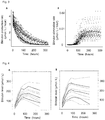
- Fig. 5 All individuals' series of bilirubin levels are represented in Fig. 5 .
- the time 0 corresponds to the time of birth.
- APGAR 5 Apgar score at 5 minutes; PE: pre-eclampsia; HELLP syndrome: complication of pre-eclampsia; DM: diabetes mellitus; GDM: gestational diabetes mellitus.
- Neonatal jaundice occurs in literally all newborns and, although in the majority of cases this condition is self-limited, a fraction of neonates need to be treated with phototherapy or other medical interventions are required. Failure to promptly identify newborns at risk for developing severe jaundice can lead to life-long neurologic sequelae, including potential reduction in IQ score.
- the method according to the invention is capable of predicting the physiological patterns of bilirubin levels during the first weeks of life in preterm neonates with hyperbilirubinemia. Further, neonatal physiology in the model development with time-dependent decrease in input rate ( Kprod ) and ontogenic effect on the output rate ( Kelim ) is taken into account.
- the method according to the invention is not only able to identify late preterm neonates that are at risk for hyperbilirubinemia but can also characterize and project effects of phototherapy sessions on individual bilirubin profiles.
- Bilirubin charts known from the state of the art show clear limits as these are not taking the dynamics of bilirubin changes during the first weeks of life into account and cannot be used to project individual bilirubin profiles.
- the method according to the invention accounts for both covariates and time dependent changes of bilirubin level. As such it can be applied to predict not just a reference curve from a neonatal population but also individual bilirubin levels during the first weeks of life of a specific neonate.
- a decision support tool, particularly a computer program, based on the method according to the invention is expected and designed to
- the method according to the invention is particularly limited to late preterm neonates with physiological jaundice receiving (or not receiving) phototherapy. As such the method may particularly not be used to project bilirubin levels or the risk for phototherapy in other neonatal populations.
- the method according to the invention is the first method that describes bilirubin levels and kinetics and phototherapy effects in preterm neonates with physiological jaundice during the first weeks of life.
- a user-friendly online tool that can be used to forecast individual bilirubin levels and phototherapy effects is disclosed as well. Said tool can optimize treatment strategies for neonates with jaundice.
- a decision support tool that permits neonatologists to quantitatively individualize management of late preterm neonates with jaundice is provided.
Landscapes
- Health & Medical Sciences (AREA)
- Engineering & Computer Science (AREA)
- Life Sciences & Earth Sciences (AREA)
- Biomedical Technology (AREA)
- Hematology (AREA)
- Physics & Mathematics (AREA)
- Medical Informatics (AREA)
- Public Health (AREA)
- General Health & Medical Sciences (AREA)
- Data Mining & Analysis (AREA)
- General Physics & Mathematics (AREA)
- Immunology (AREA)
- Pathology (AREA)
- Molecular Biology (AREA)
- Urology & Nephrology (AREA)
- Chemical & Material Sciences (AREA)
- Primary Health Care (AREA)
- Databases & Information Systems (AREA)
- Epidemiology (AREA)
- Analytical Chemistry (AREA)
- Cell Biology (AREA)
- Biochemistry (AREA)
- Food Science & Technology (AREA)
- Microbiology (AREA)
- Biotechnology (AREA)
- Medicinal Chemistry (AREA)
- Mathematical Physics (AREA)
- Pure & Applied Mathematics (AREA)
- Theoretical Computer Science (AREA)
- Mathematical Analysis (AREA)
- Mathematical Optimization (AREA)
- Computational Mathematics (AREA)
- Probability & Statistics with Applications (AREA)
- Operations Research (AREA)
- Algebra (AREA)
- Bioinformatics & Computational Biology (AREA)
- Bioinformatics & Cheminformatics (AREA)
- Software Systems (AREA)
- General Engineering & Computer Science (AREA)
- Evolutionary Biology (AREA)
Priority Applications (15)
| Application Number | Priority Date | Filing Date | Title |
|---|---|---|---|
| EP17194160.2A EP3462176A1 (fr) | 2017-09-29 | 2017-09-29 | Procédé et programme informatique permettant de prédire les niveaux de bilirubine chez les néonates |
| PL18788676T PL3688473T3 (pl) | 2017-09-29 | 2018-09-27 | Sposób i program komputerowy do przewidywania poziomów bilirubiny u noworodków |
| NZ762391A NZ762391B2 (en) | 2018-09-27 | Method and computer program for predicting bilirubin levels in neonates | |
| ES18788676T ES2852824T3 (es) | 2017-09-29 | 2018-09-27 | Método y programa informático para predecir niveles de bilirrubina en neonatos |
| JP2020518427A JP7228580B2 (ja) | 2017-09-29 | 2018-09-27 | 新生児のビリルビン値を予測する方法およびコンピュータプログラム |
| US16/651,992 US11656234B2 (en) | 2017-09-29 | 2018-09-27 | Method and computer program for predicting bilirubin levels in neonates |
| SG11202002066RA SG11202002066RA (en) | 2017-09-29 | 2018-09-27 | Method and computer program for predicting bilirubin levels in neonates |
| CA3074798A CA3074798C (fr) | 2017-09-29 | 2018-09-27 | Procede et programme informatique pour predire des taux de bilirubine chez des nouveau-nes |
| AU2018342922A AU2018342922B2 (en) | 2017-09-29 | 2018-09-27 | Method and computer program for predicting bilirubin levels in neonates |
| EP18788676.7A EP3688473B1 (fr) | 2017-09-29 | 2018-09-27 | Procédé et programme informatique permettant de prédire les niveaux de bilirubine chez les néonates |
| KR1020207011982A KR102693665B1 (ko) | 2017-09-29 | 2018-09-27 | 신생아에서 빌리루빈 수준을 예측하기 위한 방법 및 컴퓨터 프로그램 |
| PCT/EP2018/076325 WO2019063722A1 (fr) | 2017-09-29 | 2018-09-27 | Procédé et programme informatique pour prédire des taux de bilirubine chez des nouveau-nés |
| CN201880063799.5A CN111148999B (zh) | 2017-09-29 | 2018-09-27 | 用于预测新生儿胆红素水平的方法和计算机程序 |
| DK18788676.7T DK3688473T3 (da) | 2017-09-29 | 2018-09-27 | Fremgangsmåde og computerprogram til forudsigelse af bilirubinniveauer hos nyfødte |
| US17/695,714 US11662354B2 (en) | 2017-09-29 | 2022-03-15 | Method and computer program for predicting bilirubin levels in neonates |
Applications Claiming Priority (1)
| Application Number | Priority Date | Filing Date | Title |
|---|---|---|---|
| EP17194160.2A EP3462176A1 (fr) | 2017-09-29 | 2017-09-29 | Procédé et programme informatique permettant de prédire les niveaux de bilirubine chez les néonates |
Publications (1)
| Publication Number | Publication Date |
|---|---|
| EP3462176A1 true EP3462176A1 (fr) | 2019-04-03 |
Family
ID=60117483
Family Applications (2)
| Application Number | Title | Priority Date | Filing Date |
|---|---|---|---|
| EP17194160.2A Withdrawn EP3462176A1 (fr) | 2017-09-29 | 2017-09-29 | Procédé et programme informatique permettant de prédire les niveaux de bilirubine chez les néonates |
| EP18788676.7A Active EP3688473B1 (fr) | 2017-09-29 | 2018-09-27 | Procédé et programme informatique permettant de prédire les niveaux de bilirubine chez les néonates |
Family Applications After (1)
| Application Number | Title | Priority Date | Filing Date |
|---|---|---|---|
| EP18788676.7A Active EP3688473B1 (fr) | 2017-09-29 | 2018-09-27 | Procédé et programme informatique permettant de prédire les niveaux de bilirubine chez les néonates |
Country Status (12)
| Country | Link |
|---|---|
| US (2) | US11656234B2 (fr) |
| EP (2) | EP3462176A1 (fr) |
| JP (1) | JP7228580B2 (fr) |
| KR (1) | KR102693665B1 (fr) |
| CN (1) | CN111148999B (fr) |
| AU (1) | AU2018342922B2 (fr) |
| CA (1) | CA3074798C (fr) |
| DK (1) | DK3688473T3 (fr) |
| ES (1) | ES2852824T3 (fr) |
| PL (1) | PL3688473T3 (fr) |
| SG (1) | SG11202002066RA (fr) |
| WO (1) | WO2019063722A1 (fr) |
Cited By (1)
| Publication number | Priority date | Publication date | Assignee | Title |
|---|---|---|---|---|
| RU2711107C1 (ru) * | 2019-08-15 | 2020-01-15 | Федеральное государственное бюджетное учреждение "Уральский научно-исследовательский институт охраны материнства и младенчества" Министерства здравоохранения Российской Федерации (ФГБУ "НИИ ОММ" Минздрава России) | Способ прогноза развития гипербилирубинемии у доношенных новорожденных, родившихся способом операции кесарева сечения |
Families Citing this family (4)
| Publication number | Priority date | Publication date | Assignee | Title |
|---|---|---|---|---|
| WO2022263459A1 (fr) | 2021-06-15 | 2022-12-22 | Neopredix Ag | Système et méthode pour la prise en charge de la santé pendant les 1000 premiers jours de la vie |
| CN114003681B (zh) * | 2021-11-09 | 2025-02-14 | 深圳数研时空科技有限公司 | 基于gis的生态区域温度场生成方法、装置及存储介质 |
| WO2025091261A1 (fr) * | 2023-10-31 | 2025-05-08 | 深圳高性能医疗器械国家研究院有限公司 | Procédé et appareil d'évaluation d'indice de risque de jaunisse, dispositif informatique et support de stockage |
| CN121354928B (zh) * | 2025-12-09 | 2026-03-17 | 福州大学附属省立医院 | 一种基于大数据的新生儿黄疸健康管理系统 |
Family Cites Families (9)
| Publication number | Priority date | Publication date | Assignee | Title |
|---|---|---|---|---|
| EP0484133B1 (fr) * | 1990-10-30 | 1996-06-19 | Wako Pure Chemical Industries Ltd | Procédé pour la mesure de la bilirubine |
| US5353790A (en) * | 1992-01-17 | 1994-10-11 | Board Of Regents, The University Of Texas System | Method and apparatus for optical measurement of bilirubin in tissue |
| WO2009101538A2 (fr) * | 2008-02-11 | 2009-08-20 | Uti Limited Partnership | Contrôle qualité pour bilirubinomètres |
| US9495514B2 (en) * | 2009-01-02 | 2016-11-15 | Cerner Innovation, Inc. | Predicting neonatal hyperbilirubinemia |
| JP6243226B2 (ja) * | 2011-01-04 | 2017-12-06 | コーニンクレッカ フィリップス エヌ ヴェKoninklijke Philips N.V. | 関連組織の光学分析のための装置 |
| US9173603B2 (en) * | 2011-07-20 | 2015-11-03 | Jonathan Molcho | Non-invasive device and method for measuring bilirubin levels |
| CA2857153A1 (fr) * | 2011-12-01 | 2013-06-06 | Infacare Pharmaceutical Corporation | Methodes d'utilisation de la mesoporphyrine d'etain pour le traitement de l'hyperbilirubinemie |
| KR102237583B1 (ko) * | 2013-03-12 | 2021-04-07 | 유니버시티 오브 워싱톤 스루 이츠 센터 포 커머셜리제이션 | 빌리루빈 레벨의 추정 |
| RU2018101869A (ru) * | 2015-06-22 | 2019-07-22 | Конинклейке Филипс Н.В. | Аппарат фототерапии со встроенным мочеприемником и датчиком, позволяющий уменьшить побочные эффекты |
-
2017
- 2017-09-29 EP EP17194160.2A patent/EP3462176A1/fr not_active Withdrawn
-
2018
- 2018-09-27 JP JP2020518427A patent/JP7228580B2/ja active Active
- 2018-09-27 CA CA3074798A patent/CA3074798C/fr active Active
- 2018-09-27 EP EP18788676.7A patent/EP3688473B1/fr active Active
- 2018-09-27 SG SG11202002066RA patent/SG11202002066RA/en unknown
- 2018-09-27 AU AU2018342922A patent/AU2018342922B2/en active Active
- 2018-09-27 WO PCT/EP2018/076325 patent/WO2019063722A1/fr not_active Ceased
- 2018-09-27 PL PL18788676T patent/PL3688473T3/pl unknown
- 2018-09-27 DK DK18788676.7T patent/DK3688473T3/da active
- 2018-09-27 US US16/651,992 patent/US11656234B2/en active Active
- 2018-09-27 ES ES18788676T patent/ES2852824T3/es active Active
- 2018-09-27 CN CN201880063799.5A patent/CN111148999B/zh active Active
- 2018-09-27 KR KR1020207011982A patent/KR102693665B1/ko active Active
-
2022
- 2022-03-15 US US17/695,714 patent/US11662354B2/en active Active
Non-Patent Citations (7)
| Title |
|---|
| BERK ET AL.: "Studies of bilirubin kinetics in normal adults", J CLIN INVEST., 1969 |
| DANSIRIKUL C; SILBER HE; KARLSSON MO: "Approaches to handling pharmacodynamic baseline responses", JOURNAL OF PHARMACOKINETICS AND PHARMACODYNAMICS, vol. 35, no. 3, 2008, pages 269 - 83, XP019609265 |
| HSIN-CHUNG HUANG ET AL: "Model to Predict Hyperbilirubinemia in Healthy Term and Near-Term Newborns with Exclusive Breast Feeding", PEDIATRICS & NEONATOLOGY, vol. 53, no. 6, 1 December 2012 (2012-12-01), AMSTERDAM, NL, pages 354 - 358, XP055445190, ISSN: 1875-9572, DOI: 10.1016/j.pedneo.2012.08.012 * |
| NELSON OSSAMU OSAKU ET AL: "A Dose-Response Model for the Conventional Phototherapy of the Newborn", JOURNAL OF CLINICAL MONITORING AND COMPUTING, KLUWER ACADEMIC PUBLISHERS, DO, vol. 20, no. 3, 10 June 2006 (2006-06-10), pages 159 - 164, XP019400167, ISSN: 1573-2614, DOI: 10.1007/S10877-006-9016-1 * |
| OSAKU N O ET AL: "Phototherapy of the Newborn: a Predictive Model for the Outcome", ENGINEERING IN MEDICINE AND BIOLOGY SOCIETY, 2005. IEEE-EMBS 2005. 27T H ANNUAL INTERNATIONAL CONFERENCE OF THE SHANGHAI, CHINA 01-04 SEPT. 2005, PISCATAWAY, NJ, USA,IEEE, 1 September 2005 (2005-09-01), pages 6725 - 6728, XP010907390, ISBN: 978-0-7803-8741-6, DOI: 10.1109/IEMBS.2005.1616047 * |
| SHEINER LB; BEAL SL: "Some suggestions for measuring predictive performance", J PHARMACOKINET BIOPHARM, vol. 9, no. 4, 1981, pages 503 - 12 |
| SHIVANI RANDEV ET AL: "Predicting neonatal hyperbilirubinemia using first day serum bilirubin levels", INDIAN JOURNAL OF PEDIATRICS., vol. 77, no. 2, 26 January 2010 (2010-01-26), IN, pages 147 - 150, XP055445194, ISSN: 0019-5456, DOI: 10.1007/s12098-009-0335-3 * |
Cited By (1)
| Publication number | Priority date | Publication date | Assignee | Title |
|---|---|---|---|---|
| RU2711107C1 (ru) * | 2019-08-15 | 2020-01-15 | Федеральное государственное бюджетное учреждение "Уральский научно-исследовательский институт охраны материнства и младенчества" Министерства здравоохранения Российской Федерации (ФГБУ "НИИ ОММ" Минздрава России) | Способ прогноза развития гипербилирубинемии у доношенных новорожденных, родившихся способом операции кесарева сечения |
Also Published As
| Publication number | Publication date |
|---|---|
| DK3688473T3 (da) | 2021-03-08 |
| US11662354B2 (en) | 2023-05-30 |
| NZ762391A (en) | 2025-08-29 |
| US20220252621A1 (en) | 2022-08-11 |
| AU2018342922B2 (en) | 2024-08-01 |
| EP3688473B1 (fr) | 2020-12-16 |
| CA3074798A1 (fr) | 2019-04-04 |
| US20200300872A1 (en) | 2020-09-24 |
| CN111148999A (zh) | 2020-05-12 |
| US11656234B2 (en) | 2023-05-23 |
| KR102693665B1 (ko) | 2024-08-09 |
| SG11202002066RA (en) | 2020-04-29 |
| JP2020535442A (ja) | 2020-12-03 |
| AU2018342922A1 (en) | 2020-03-26 |
| ES2852824T3 (es) | 2021-09-14 |
| EP3688473A1 (fr) | 2020-08-05 |
| WO2019063722A1 (fr) | 2019-04-04 |
| PL3688473T3 (pl) | 2021-06-28 |
| KR20200066322A (ko) | 2020-06-09 |
| JP7228580B2 (ja) | 2023-02-24 |
| CA3074798C (fr) | 2023-10-10 |
| CN111148999B (zh) | 2024-06-04 |
Similar Documents
| Publication | Publication Date | Title |
|---|---|---|
| US11662354B2 (en) | Method and computer program for predicting bilirubin levels in neonates | |
| Muglu et al. | Risks of stillbirth and neonatal death with advancing gestation at term: A systematic review and meta-analysis of cohort studies of 15 million pregnancies | |
| JP6049620B2 (ja) | 医学的スコアリングシステムおよび方法 | |
| Belgrave et al. | Joint modeling of parentally reported and physician-confirmed wheeze identifies children with persistent troublesome wheezing | |
| Ukah et al. | Temporal and external validation of the fullPIERS model for the prediction of adverse maternal outcomes in women with pre-eclampsia | |
| Knight et al. | Relationship between epigenetic maturity and respiratory morbidity in preterm infants | |
| JP7710523B2 (ja) | 医学検査値分析を実行するためのコンピュータ実装された方法、及び、装置 | |
| Headen et al. | Associations between cumulative neighborhood deprivation, long-term mobility trajectories, and gestational weight gain | |
| Deng et al. | Association between maternal glucose levels in pregnancy and offspring’s metabolism and adiposity: an 18-year birth cohort study | |
| Li et al. | A partially functional linear regression framework for integrating genetic, imaging, and clinical data | |
| McGowan et al. | Neonatal intensive care and late preterm infants: Health and Family functioning at three years | |
| HK40026541B (en) | Method and computer program for predicting bilirubin levels in neonates | |
| HK40026541A (en) | Method and computer program for predicting bilirubin levels in neonates | |
| EP3460808A1 (fr) | Détermination de l'état d'un patient sur la base de caractéristiques médicales mesurables | |
| Dhaifalah et al. | Quality assessment of first‐trimester screening for preterm pre‐eclampsia | |
| Aylward | Methodological considerations in neurodevelopmental outcome studies of infants born prematurely | |
| CN120299673B (zh) | 一种基于血糖生物传感器的妊娠期辅助系统 | |
| Okeh et al. | Estimating Probabilities, Odds and Odds Ratios in Gestational Outcomes: A Dummy Variable Regression Illustration | |
| Willik | an der, Breda, F. an, aars eld, BC an, Putte, M. an de, etten, IW | |
| EP4671769A1 (fr) | Procédé, système de test d'échantillon, dispositif et support pour le contrôle de qualité d'un instrument de test | |
| Selimi et al. | Bayesian Joint Modelling of Longitudinal Creatinine Trajectories in Children with Auto-Immune Disorders to Predict Paediatric Kidney Disease Risk in a Single Centre Study | |
| Heisecke et al. | Short interbirth interval and adverse pregnancy outcomes: a Bayesian network approach | |
| Turgal et al. | Joint modeling of survival and longitudinal data: Carrico index data example | |
| Sun | Biomedical-driven NIPT optimization for high-BMI pregnant women: multimodel comodeling and information engineering algorithm verification | |
| McWhorter | The Association Between Gestational Weight Gain and Weight Gain Patterns with Large for Gestational Age Outcomes Among Women With Type I Insulin-Dependent Diabetes |
Legal Events
| Date | Code | Title | Description |
|---|---|---|---|
| PUAI | Public reference made under article 153(3) epc to a published international application that has entered the european phase |
Free format text: ORIGINAL CODE: 0009012 |
|
| AK | Designated contracting states |
Kind code of ref document: A1 Designated state(s): AL AT BE BG CH CY CZ DE DK EE ES FI FR GB GR HR HU IE IS IT LI LT LU LV MC MK MT NL NO PL PT RO RS SE SI SK SM TR |
|
| AX | Request for extension of the european patent |
Extension state: BA ME |
|
| STAA | Information on the status of an ep patent application or granted ep patent |
Free format text: STATUS: THE APPLICATION IS DEEMED TO BE WITHDRAWN |
|
| 18D | Application deemed to be withdrawn |
Effective date: 20191005 |