EP3466419A1 - Utilisation du trimethoxybenzyl acetylsinapate, avantageusement en combinaison avec au moins un filtre solaire, pour la protection de la peau - Google Patents
Utilisation du trimethoxybenzyl acetylsinapate, avantageusement en combinaison avec au moins un filtre solaire, pour la protection de la peau Download PDFInfo
- Publication number
- EP3466419A1 EP3466419A1 EP18197698.6A EP18197698A EP3466419A1 EP 3466419 A1 EP3466419 A1 EP 3466419A1 EP 18197698 A EP18197698 A EP 18197698A EP 3466419 A1 EP3466419 A1 EP 3466419A1
- Authority
- EP
- European Patent Office
- Prior art keywords
- composition
- advantageously
- extract
- agent
- composition according
- Prior art date
- Legal status (The legal status is an assumption and is not a legal conclusion. Google has not performed a legal analysis and makes no representation as to the accuracy of the status listed.)
- Granted
Links
Images
Classifications
-
- A—HUMAN NECESSITIES
- A61—MEDICAL OR VETERINARY SCIENCE; HYGIENE
- A61K—PREPARATIONS FOR MEDICAL, DENTAL OR TOILETRY PURPOSES
- A61K31/00—Medicinal preparations containing organic active ingredients
- A61K31/21—Esters, e.g. nitroglycerine, selenocyanates
- A61K31/215—Esters, e.g. nitroglycerine, selenocyanates of carboxylic acids
- A61K31/216—Esters, e.g. nitroglycerine, selenocyanates of carboxylic acids of acids having aromatic rings, e.g. benactizyne, clofibrate
-
- A—HUMAN NECESSITIES
- A61—MEDICAL OR VETERINARY SCIENCE; HYGIENE
- A61K—PREPARATIONS FOR MEDICAL, DENTAL OR TOILETRY PURPOSES
- A61K8/00—Cosmetics or similar toiletry preparations
- A61K8/18—Cosmetics or similar toiletry preparations characterised by the composition
- A61K8/30—Cosmetics or similar toiletry preparations characterised by the composition containing organic compounds
- A61K8/33—Cosmetics or similar toiletry preparations characterised by the composition containing organic compounds containing oxygen
- A61K8/37—Esters of carboxylic acids
-
- A—HUMAN NECESSITIES
- A61—MEDICAL OR VETERINARY SCIENCE; HYGIENE
- A61K—PREPARATIONS FOR MEDICAL, DENTAL OR TOILETRY PURPOSES
- A61K8/00—Cosmetics or similar toiletry preparations
- A61K8/18—Cosmetics or similar toiletry preparations characterised by the composition
- A61K8/30—Cosmetics or similar toiletry preparations characterised by the composition containing organic compounds
- A61K8/49—Cosmetics or similar toiletry preparations characterised by the composition containing organic compounds containing heterocyclic compounds
- A61K8/494—Cosmetics or similar toiletry preparations characterised by the composition containing organic compounds containing heterocyclic compounds with more than one nitrogen as the only hetero atom
- A61K8/496—Triazoles or their condensed derivatives, e.g. benzotriazoles
-
- A—HUMAN NECESSITIES
- A61—MEDICAL OR VETERINARY SCIENCE; HYGIENE
- A61K—PREPARATIONS FOR MEDICAL, DENTAL OR TOILETRY PURPOSES
- A61K8/00—Cosmetics or similar toiletry preparations
- A61K8/18—Cosmetics or similar toiletry preparations characterised by the composition
- A61K8/30—Cosmetics or similar toiletry preparations characterised by the composition containing organic compounds
- A61K8/49—Cosmetics or similar toiletry preparations characterised by the composition containing organic compounds containing heterocyclic compounds
- A61K8/494—Cosmetics or similar toiletry preparations characterised by the composition containing organic compounds containing heterocyclic compounds with more than one nitrogen as the only hetero atom
- A61K8/4966—Triazines or their condensed derivatives
-
- A—HUMAN NECESSITIES
- A61—MEDICAL OR VETERINARY SCIENCE; HYGIENE
- A61K—PREPARATIONS FOR MEDICAL, DENTAL OR TOILETRY PURPOSES
- A61K9/00—Medicinal preparations characterised by special physical form
- A61K9/0012—Galenical forms characterised by the site of application
- A61K9/0014—Skin, i.e. galenical aspects of topical compositions
-
- A—HUMAN NECESSITIES
- A61—MEDICAL OR VETERINARY SCIENCE; HYGIENE
- A61K—PREPARATIONS FOR MEDICAL, DENTAL OR TOILETRY PURPOSES
- A61K9/00—Medicinal preparations characterised by special physical form
- A61K9/06—Ointments; Bases therefor; Other semi-solid forms, e.g. creams, sticks, gels
-
- A—HUMAN NECESSITIES
- A61—MEDICAL OR VETERINARY SCIENCE; HYGIENE
- A61P—SPECIFIC THERAPEUTIC ACTIVITY OF CHEMICAL COMPOUNDS OR MEDICINAL PREPARATIONS
- A61P17/00—Drugs for dermatological disorders
- A61P17/16—Emollients or protectives, e.g. against radiation
-
- A—HUMAN NECESSITIES
- A61—MEDICAL OR VETERINARY SCIENCE; HYGIENE
- A61Q—SPECIFIC USE OF COSMETICS OR SIMILAR TOILETRY PREPARATIONS
- A61Q17/00—Barrier preparations; Preparations brought into direct contact with the skin for affording protection against external influences, e.g. sunlight, X-rays or other harmful rays, corrosive materials, bacteria or insect stings
- A61Q17/04—Topical preparations for affording protection against sunlight or other radiation; Topical sun tanning preparations
-
- A—HUMAN NECESSITIES
- A61—MEDICAL OR VETERINARY SCIENCE; HYGIENE
- A61K—PREPARATIONS FOR MEDICAL, DENTAL OR TOILETRY PURPOSES
- A61K2800/00—Properties of cosmetic compositions or active ingredients thereof or formulation aids used therein and process related aspects
- A61K2800/40—Chemical, physico-chemical or functional or structural properties of particular ingredients
- A61K2800/52—Stabilizers
- A61K2800/522—Antioxidants; Radical scavengers
Definitions
- the present invention relates in particular to cosmetic or dermatological compositions intended for the protection of skin cells and / or integuments against solar radiation, in particular ultraviolet radiation.
- the sun emits several categories of radiation some of which penetrates the atmosphere, including ultraviolet (100 to 400 nm), visible light (400 and 700 nm) and infrared light (700 nm to 1 mm).
- the sun has certain beneficial effects in humans, such as its antirachitic or antidepressant action.
- Light-emitting radiations especially UV-A and UV-B type A and B, are necessary for the good functioning of the human body, but they also have deleterious effects (photodermatoses and photo-carcinogenesis). especially).
- UV radiation itself consists of light with a wavelength between 100 nm and 400 nm, traditionally divided into 3 subgroups: UV-A (400-315 nm), UV-B ( 315-280 nm) and UV-C (280-100 nm).
- Short-wave UV-C is the most energetic and harmful UV, but is filtered by the ozone layer of the atmosphere and does not reach the Earth's surface.
- UV-C Low-C
- UV-B is more particularly at the origin of the stimulation of the production of the natural pigment of the skin called melanin, this phenomenon being commonly called tanning. UV-B also stimulates skin cells to produce a thicker epidermis. These reactions are a defense mechanism of the body against UV rays. UV-B is more energetic than UV-A and is responsible for solar erythema (or "sunburn"), which exhibits its maximum inflammatory intensity 24 hours after exposure.
- UV-B The important energy of UV-B also causes molecular disorders, such as DNA damage and protein damage (including carbonylation). In the long term, these degradations saturate and block the nuclear DNA repair system. This leads to permanent mutations in the genome of affected cells, inducing the appearance of skin cancers. This is referred to as direct UV-B toxicity.
- UV-A which does not show visible harmful effects in the short term, have long been considered harmless.
- UV-A penetrates the deep layers of the skin, and has an effect on connective tissue and blood vessels. These rays are particularly at the origin of the phenomenon called heliodermia, that is to say the premature actinic aging of the skin.
- UV-B is the main cause of cutaneous cancers
- UV-A also have an indirect contribution to this type of damage.
- the UV-A are at the origin of the production of free radicals, in particular the ROS (" Reactive Oxygen Species " or reactive oxygen species (ROS)).
- ROS reactive oxygen species
- These molecules are very unstable and have a very short half-life, ranging from nanoseconds to milliseconds.
- ROS are able to damage both cellular structures (DNA, membranes, intracellular proteins) and extracellular structures (components of the extracellular matrix such as collagen fibers).
- ROS also exert an indirect harmful action, causing the oxidation of membrane lipids, which induces the formation of carbonyl reactive species, helping to amplify the tissue and cell damage caused.
- the same damage is also caused or amplified by environmental pollution, which also generates free radicals responsible for skin aging.
- UV-A and UV-B A permanent concern is therefore to combat the harmful effects of UV radiation, in particular UV-A and UV-B, taking into account the type of skin (phototype) and the exposure time to the sun.
- compositions are generally in the form of lotion, oil, emulsion of oil-in-water (O / W) or water-in-oil (W / O) type, foam, gel, stick or spray. They contain, in a cosmetically acceptable carrier and at various concentrations, one or more chemical or mineral filters.
- Chemical filters are organic compounds that absorb light by creating a filter layer on the skin that neutralizes UV rays. Thus, when the solar filter molecule receives UV radiation, it goes into an excited state by absorbing the energy of the radiation and then returns to its stable state. By this mechanism, the luminous radiation is converted into heat and thus dissipated. Thus, chemical filters act in the same way as melanin, the natural photoprotective pigment of the skin, whose synthesis is stimulated by UV-B.
- the filter associations which have different absorption spectra, and the quantities used, are selected. This selection is based on the level of sun protection sought and the area of the body to be protected, taking into account the degree of vulnerability due to the thickness of the skin.
- Mineral filters or physical screens are, in turn, inert and opaque powders that reflect light.
- mineral filters are zinc oxide, iron oxide, titanium dioxide and cerium oxide.
- Mineral filters act as mirrors and reflect solar radiation. The advantage of these filters is that they do not penetrate the skin, are hypoallergenic, and generally less ecotoxic.
- compositions containing high doses of mineral filters leave white marks on the skin, spread out with difficulty and can dry out the skin.
- These problems have now been solved by reducing the mineral filters to the state of nanoparticles.
- the recoil is not yet enough to be able to affirm with certainty that the mineral screens in the form of nanoparticles have no detrimental consequences on the human organism.
- the general trend is therefore to limit, as far as possible, the use of chemical or mineral filters in solar products.
- An alternative or supplement to external sun protection is the internal sun protection, which consists in strengthening the skin's defenses by acting on the endogenous mechanisms that regulate the natural response of cells to solar radiation.
- Nrf2 Nuclear factor erythroid-2-related factor 2
- NFE2L2 Nuclear factor erythroid-2-related factor 2
- the Nrf2 protein also known as NFE2L2
- the Nrf2 protein is bound to the protein Keap-1 ("Kelch-like ECH-associated protein 1 "), forming a cytoplasmic complex inhibiting the action of Nrf2.
- Keap-1 In response to oxidative stress and in the presence of the inducers of the antioxidant response, Keap-1 is inactivated allowing Nrf2 release:
- the active Nrf2 transcription factor is translocated into the nucleus where it attaches to a class of promoters specific for gene expression, the ARE (" Antioxidant Response Element "). It induces the transcription of many genes involved in the response to oxidative stress and cellular detoxification.
- Nrf2 is described for its central role in the UV-induced damage protection process by activating the expression of many genes involved in ROS detoxification.
- Nrf2 protein stimulates the production of phase II detoxification enzymes involved in the synthesis of antioxidants (including glutathione, NADPH and thioredoxin) and conjugation to graft molecular radicals to promote elimination. of these metabolites (Gorrini et al., 2013).
- Nrf2 In practice, the function of the Nrf2 protein has been demonstrated by examining the genotype of a mouse line for which the expression of the Nrf2 gene is suppressed ( Knockout Mouse (KO) nrf-2- / -). Thus, KO Nrf2 mice show a reduction in the expression level, basal and induced, cytoprotective genes and are more vulnerable to the toxicity induced by the ROS (Copple et al., 2008). In addition, Nrf2 KO mice show a higher rate of cellular apoptosis and oxidative damage in keratinocytes after UV-B irradiation (Kawachi et al. al., 2008).
- Nrf2 KO mice with UV-B induces a stronger and longer inflammatory response than for wild-type mice for this gene (Kawachi et al., 2008).
- activation of the Nrf2 protein effectively protects murine cells from ROS damage in vitro and in vivo.
- Nrf2 transcription factor is constitutively expressed by the keratinocytes of the skin which is in a normal state, and overexpressed during the healing process (Braun et al., 2002).
- Nrf2 transcription factor activation Inducers of Nrf2 transcription factor activation have been identified, including sulforaphane, an organosulfuric compound of the isothiocyanate group found in cruciferous plants such as broccoli, Brussels sprouts or cauliflower (Dinkova). -Kostova et al., 2006).
- the Applicant has demonstrated that solar dermocosmetic compositions comprising trimethoxybenzyl acetylsinapate (INCI), a stable compound, meet the need for a composition to ensure endogenous cellular protection vis-à-vis UV radiation .
- this active has properties of induction of gene expression controlled by the Nrf2 transcription factor, on which it has an effect comparable to that of the reference asset, sulphoraphane.
- Such cosmetic or dermatological compositions are therefore of obvious interest in preventing damage caused by UV radiation, advantageously in combination with so-called conventional solar filters.
- trimethoxybenzyl acetylsinapate corresponds to the molecule 3- [4- (acetyloxy) -3,5-dimethoxyphenyl] - (3,4,5-trimethoxyphenyl) methyl ester- (2E) -Propenoic acid (CAS number 1469299-98- 6), characterized by the following structure:
- Trimethoxybenzyl acetylsinapate is known to promote the synthesis of DKK-1 ( Dickkopf-1 ), an intercellular messenger involved in melanogenesis (Yamaguchi et al., 2009). DKK-1 activates the Wnt ( Winnt ) signaling pathway and thus reduces the levels of melanin synthesis in melanocytes. Trimethoxybenzyl acetylsinapate therefore has a depigmenting effect mediated by the activation of DKK-1.
- DKK-1 Dickkopf-1
- Wnt Winnt
- the present invention relates to a cosmetic or dermatological composition
- a cosmetic or dermatological composition comprising trimethoxybenzyl acetylsinapate.
- such a composition further comprises at least one sunscreen, advantageously a UV filter.
- the present invention relates to the use of trimethoxybenzyl acetylsinapate in a cosmetic or dermatological composition for its antioxidant and photoprotective activity.
- trimethoxybenzyl acetylsinapate represents between 0.001% and 10% by total weight of the composition, preferably between 0.01% and 1%.
- trimethoxybenzyl acetylsinapate Any form of trimethoxybenzyl acetylsinapate may be employed in a composition within the meaning of the invention. Trimethoxybenzyl acetylsinapate can be obtained from plant extracts or microorganisms or by chemical synthesis. Thus, the composition according to the invention may comprise trimethoxybenzyl acetylsinapate of chemical origin or of natural origin, preferably of chemical origin.
- trimethoxybenzyl acetylsinapate can be used in the composition according to the invention in purified or isolated form, with a purity of at least 60%, preferably at least 70%, advantageously at least 80%, and even more advantageously at least equal to 90%, or even at least 95%.
- it may be in the form of a mixture with a carrier capable of increasing its solubility and / or its cutaneous bioavailability.
- the active ingredient trimethoxybenzyl acetylsinapate is vectorized in a clay support.
- the raw material INACLEAR® marketed by the companies INABATA and PHARMASYNTHESE and corresponding to the INCI designations Bentonite (and) Trimethoxybenzyl acetylsinapate, can be used in the context of the present invention.
- composition according to the invention further comprises at least one UV filter.
- UV filter includes organic or inorganic compounds capable of filtering UV-A, UV-B and / or UV-C.
- UV filters in a composition containing trimethoxybenzyl acetylsinapate makes it possible to improve the protective effect of the skin, superficial body growths, lips, hair and / or mucous membranes, the harmful effects of UV radiation by combining a form of protection external to the internal protection highlighted in the present application.
- inorganic filters as chemical or organic filters.
- compositions according to the invention may contain one or more broad-spectrum UV filters, that is to say compounds or mixtures which absorb UV-A, UV-B, UV-C and possibly visible light. .
- the filters corresponding to the following INCI designations may be used in the context of the invention: tris biphenyl triazine, bis ethylhexyloxyphenol methoxyphenyl triazine, methylene bis-benzotriazolyl tetramethylbutylphenol.
- these are marketed by BASF under the names TINOSORB S® / TINOSORB AQUA®, TINOSORB A2B®, TINOSORB M®, respectively.
- Another example of a broad-spectrum filter adapted to the composition according to the invention corresponds to the INCI designation diethylhexyl butamido triazone, for example marketed by SIGMA 3V under the name UVASORB HEB®.
- the composition according to the invention comprises at least one filter selected from the following group of compounds identified by their INCI designation: tris biphenyl triazine, bis ethylhexyloxyphenol methoxyphenyl triazine, and methylene bis-benzotriazolyl tetramethylbutylphenol, diethylhexyl butamido triazone, or mixtures thereof.
- the composition comprises the bis-ethylhexyloxyphenol methoxyphenyl triazine filter.
- the composition contains at least one UV-A and / or UV-B filter, organic and / or mineral, which can be present in aqueous phase (lipophilic) and / or oily (fat-soluble).
- composition according to the invention may contain liposoluble UV-B filters capable of contributing to the stabilization or solubilization of the broad-spectrum filters or else of stabilizing each other and thereby increasing the sun protection factor (SPF or SPF ).
- SPDF sun protection factor
- such filters correspond to the following INCI designations: homosalate, octocrylene, ethylhexyl salicylate, ethylhexyl triazone.
- the composition according to the invention comprises ethylhexyl triazone, marketed by BASF under the name UVINUL T150®.
- the liposoluble UV-B filter is ⁇ - (trimethylsilyl) - ⁇ - (trimethylsilyloxy) poly [oxy (dimethyl) silylene] -co- [oxy (methyl) (2- ⁇ 4- [ 2,2-bis (ethoxycarbonyl) vinyl] phenoxy ⁇ -1-méthylèneéthyl) silylene] -co- [oxy (methyl) (2- (4- [2,2-bis (ethoxycarbonyl) vinyl] phenoxy) prop-1- enyl) silylene], a silicone polymer capable of filtering in UV-B.
- This filter corresponds for example to the cosmetic raw material Parsol SLX®, sold by the company DSM according to the INCI designation polysilicone-15.
- the composition according to the invention comprises at least one UV-B filter selected from the following group of compounds identified by their INCI designation: homosalate, octocrylene, ethylhexyl salicylate, ethylhexyl triazone, polysilicone-15, or their mixtures.
- the composition is free of the following filters: 4-methylbenzylidene camphor, benzophenone-2, benzophenone-3, ethylhexyl methoxycinnamate.
- the composition according to the invention comprises at least one UV-A filter, in order to ensure complete filtration of the harmful part of the solar spectrum.
- UV-A filters within the meaning of the present invention are butyl methoxydibenzoylmethane (INCI) and diethylamino hydroxybenzoyl hexylbenzoate (INCI), respectively corresponding to the Parsol 1789® raw materials marketed by DSM and UVINUL® A + marketed by the company. BASF.
- the UV-A filter is bis (diethylaminohydroxybenzoyl benzoyl) piperazine (INCI) (CAS No. 919803-06-8), corresponding for example to the C1332® raw material marketed by BASF.
- the composition according to the invention comprises at least one filter selected from the following group of compounds identified by their INCI designation: butyl methoxydibenzoylmethane, diethylamino hydroxybenzoyl hexylbenzoate, bis (diethylaminohydroxybenzoyl benzoyl) piperazine, or their mixtures.
- the composition according to the invention comprises at least one water-soluble filter selected from the following group of compounds identified by their INCI designation: Disodium phenyl dibenzimidazole tetrasulphonate, phenylbenzimidazole sulphonic acid, or mixtures thereof.
- inorganic mineral filters are metal oxides and / or other compounds that are difficult to dissolve or insoluble in water, in particular the oxides of titanium (TiO 2 ), zinc (ZnO) and iron (Fe 2 O 3 ), zirconium (ZrO 2 ), silicon (SiO 2 ), manganese (for example MnO), aluminum (Al2O 3 ), or cerium (Ce 2 O 3 ).
- the inorganic mineral filters can be used in the form of an oily or aqueous predispersion available on the market.
- These predispersions can advantageously be added dispersion aids and / or solubilization mediators.
- the inorganic inorganic filters may also be surface-treated or encapsulated to give them a hydrophilic, amphiphilic or hydrophobic character.
- This surface treatment can consist in that the mineral filters are provided with a thin inorganic and / or hydrophilic and / or hydrophobic organic film.
- the composition according to the invention comprises at least one mineral screen selected from the following group of compounds identified by their INCI designation: zinc oxide, titanium dioxide, or mixtures thereof.
- the UV filters as described above, present in the composition according to the invention represent from 0.1% to 30% by total weight of the composition, advantageously from 0.5% to 20%, still more preferably from 1% to 15%, to provide cosmetic compositions that protect the skin or integuments of the entire UV radiation range.
- the composition according to the invention has a sun protection factor (" SPF" or SPF) greater than or equal to 10, preferably greater than or equal to 20, advantageously greater than or equal to 30, and even more advantageously greater than or equal to 50.
- the composition according to the invention comprises a UV-A / UV-B protection ratio equal to or greater than 1/3.
- the composition according to the invention also comprises one or more substances capable of filtering visible light, in particular blue light.
- the compounds described in the document EP 1 484 051 can be used to ensure blue light filtration.
- the composition according to the invention may furthermore comprise an extract of the bacterium Arthrobacter agilis, in particular an extract rich in carotenoids, as described in document WO 2014/167247 .
- the composition according to the invention comprises from 0.00001% to 0.1% by total weight of the composition, more advantageously from 0.0001% to 0.001% of such a dry extract.
- the composition according to the invention further comprises other components that can contribute to the internal protection by an action that may consist of a protection of the DNA, a decrease of the immunosuppression induced by the radiation. UV, an antiradical action or a combined effect of these actions.
- the protective action of a preparation according to the invention against oxidative stress or against the effect of free radicals can be further improved if it further comprises one or more antioxidants, easily selected by man of the art, for example in the following list: totarol, magnolol, honokiol, amino acids and their derivatives, imidazoles (urocanic acid) and their derivatives, peptides (D and / or L-carnosine) and their derivatives (for example, anserine, hypotaurine, taurine), carotenoids, carotenes (a-carotene, ⁇ -carotene, lycopene) and their derivatives, chlorogenic acid and its derivatives, lipoic acid and its derivatives (dihydrolipoic acid), aurothioglucose, propylthiouracil and other thiols (thioredoxin, glutathione, cysteine, cystine, cystamine and their glycosyl esters, N-acetyl,
- the composition according to the invention additionally contains glycyrrhetinic acid, a derivative or a salt of this acid, used as a soothing agent (anti-inflammatory agent) and representing between 0.01% and 2%. in total weight of the composition, preferably between 0.1% and 1%.
- composition according to the invention may also further comprise peptide extracts of soya and / or wheat, such as those described in US Pat. EP 2 059 230 .
- the peptide extracts derived from soybean and wheat seeds are derived from enzymatic hydrolysis of said seeds by means of peptidases which makes it possible to recover peptides with an average size of 700 Daltons.
- the peptide extract of soy is the extract identified under the CAS number 68607-88-5, as well as the peptide extract of wheat is the extract identified under the CAS number 70084-87-6.
- the wheat and soy extracts can be referred to as INCI Hydrolyzed Wheat Protein and Hydrolyzed Soy Protein, respectively.
- the peptide extracts of soya and wheat are used together, for example in a weight ratio respectively between 80/20 and 20/80, advantageously between 70/30 and 30/70, preferably equal to at 60/40.
- the peptide extracts of soy and / or wheat are free of synthetic tripeptides GHK (glycyl-histidyl-lysine; INCI: Tripeptide-1).
- GHK glycol-histidyl-lysine
- the peptide extracts of soy and / or wheat representing from 0.01% to 20% by total weight of the composition, advantageously from 0.1% to 10%, still more advantageously from 0.2% to 0.7%.
- composition according to the invention comprises, in accordance with the teachings of the document FR 2 865 398 the combination of at least one amino acid selected from the group consisting of ectoin, creatine, ergothioneine and / or carnosine, or their physiologically acceptable salts, and mannitol or a derivative of mannitol.
- the composition according to the invention comprises in a physiologically acceptable medium the amino acid or one of its salts, alone or as a mixture in proportions of between 0.001% and 10% by total weight of the composition, and of preferably between 0.01% and 5%.
- composition according to the present invention preferably comprises, in a physiologically acceptable medium, mannitol or a derivative thereof, in proportions of between 0.01% and 30% by total weight of the composition, advantageously between 0, 1% and 10%.
- composition according to the invention comprises ectoin and mannitol.
- the composition according to the invention contains one or more other bronzing agents or self-tanning agents. It may be a self-tanner that reacts with the amino acids in the skin in a Maillard reaction or through Michael addition, or a melanogenesis promoter or a propigmenting compound that promotes tanning. natural skin.
- Such a substance is preferably present in the composition in an amount ranging from 0.01% to 20% by total weight of the composition, preferably from 0.5% to 15%, even more preferably from 1% to 8%.
- the self-tanning substances may be 1,3-dihydroxyacetone (DHA), glycerolaldehyde, hydroxymethylglyoxal, ⁇ -dialdehyde, erythrulose, 6-aldo-D-fructose, ninhydrin, 5-hydroxy-1 , 4-naphthoquinone (juglone), 2-hydroxy-1,4-naphthoquinone (lawsone) or combinations thereof.
- DHA 1,3-dihydroxyacetone
- glycerolaldehyde hydroxymethylglyoxal
- ⁇ -dialdehyde erythrulose
- 6-aldo-D-fructose 6-aldo-D-fructose
- ninhydrin 5-hydroxy-1 , 4-naphthoquinone (juglone), 2-hydroxy-1,4-naphthoquinone (lawsone) or combinations thereof.
- the propigmenting substances may be melanocyte stimulating hormone ( ⁇ -MSH), ⁇ -MSH peptide analogs, endothelin-1 receptor agonists, opioid ⁇ agonists, stimulating agents of CAMP, tyrosinase stimulating agents.
- ⁇ -MSH melanocyte stimulating hormone
- ⁇ -MSH peptide analogs endothelin-1 receptor agonists
- opioid ⁇ agonists stimulating agents of CAMP
- stimulating agents of CAMP tyrosinase stimulating agents.
- the composition according to the invention further comprises, as a self-tanning agent, a combination of dihydroxy methylchromonyl palmitate and a lipophilic form of tyrosine.
- the dihydroxy methylchromonyl palmitate corresponds, for example, to the cosmetic ingredient marketed by Merck under the name RonaCare® Bronzyl. It is in the form of a white powder, odorless, with a purity greater than 99%.
- the dihydroxy methylchromonyl palmitate is present in the composition according to the invention in a proportion of from 0.01% to 10% by total weight of the composition, advantageously from 0.05% to 10%, even more advantageously from 0.1% to 5%, more preferably from 0.1% to 0.5%.
- the lipophilic form of tyrosine is an ingredient based on tyrosine and having a more pronounced lipophilic character than tyrosine.
- the lipophilic form of tyrosine may especially correspond to oleoyl tyrosine (CAS number: 147732-57-8), which is found, for example, in the liquid cosmetic ingredient TYR-OL, marketed by SEDERMA, and which comprises about 50% by weight of oleoyl tyrosine in butylene glycol (about 30% + about 20% oleic acid), or in the liquid cosmetic ingredient TYR-EXCEL, sold by SEDERMA, which comprises about 50% by weight of oleoyl tyrosine, about 20% oleic acid (CAS No. 112-80-1) and about 30% of Luffa cylindrica oil (sponge pumpkin seed oil; CAS No. 1242417-48- 6).
- the lipophilic form of tyrosine corresponds to a vegetable oil in which tyrosine has been formulated.
- the vegetable oil is oleic sunflower oil, advantageously deodorized.
- the OLEOACTIF TYROSINE BASE HELIANTHUS ANNUS raw material marketed by the OLEOS company, and corresponding to the INCI designations Helianthus annuus seed oil (and) tyrosine (and) glyceryl stearate, may be used in the context of the present invention.
- the lipophilic form of tyrosine such as in cosmetic ingredients based on oleoyl-tyrosine (advantageously 50% by weight) or on tyrosine formulated in vegetable oil, represents between 0.1% and 10% by total weight of the composition, advantageously between 1 and 3%, even more advantageously between 1% and 1.5%.
- composition according to the invention may also contain active agents having healing properties, for example an antimicrobial agent chosen from the active ingredients corresponding to the following INCI designations: Copper sulfate, zinc sulfate, sodium hyaluronate, Vitis vinifera (grape) vine extract, or their mixtures.
- active agents having healing properties for example an antimicrobial agent chosen from the active ingredients corresponding to the following INCI designations: Copper sulfate, zinc sulfate, sodium hyaluronate, Vitis vinifera (grape) vine extract, or their mixtures.
- composition according to the invention may also contain active agents having sebocorrectice, keratolytic, seboregulatory properties and / or anacneic activity, in order to allow the formulation of acne-treating sun products.
- composition according to the invention may comprise an antimicrobial agent chosen from the active ingredients corresponding to the INCI names: propyl gallate, dodecyl gallate, Ginkgo biloba leaf extract, bakuchiol, dihydromyricetine, zinc gluconate, salicylic acid, or mixtures thereof.
- an antimicrobial agent chosen from the active ingredients corresponding to the INCI names: propyl gallate, dodecyl gallate, Ginkgo biloba leaf extract, bakuchiol, dihydromyricetine, zinc gluconate, salicylic acid, or mixtures thereof.
- composition according to the invention may also contain adjuvants such as those conventionally used in the field of cosmetics, such as active agents, preservatives, antioxidants, complexing agents, solvents, fragrances, fillers, bactericides, electrolytes, odor absorbers, dyes or lipid vesicles.
- adjuvants such as those conventionally used in the field of cosmetics, such as active agents, preservatives, antioxidants, complexing agents, solvents, fragrances, fillers, bactericides, electrolytes, odor absorbers, dyes or lipid vesicles.
- composition of the invention is intended for topical application and more particularly for application to the skin, lips, hair and / or mucous membranes.
- a composition is in particular intended for the protection of the skin and / or integuments, in particular the mucous membranes, the lips and the hair, against UV radiation.
- composition of the invention may be in any galenical form normally used in the cosmetic and dermatological fields, such as, but not limited to, in the form of an optionally gelled aqueous solution, a dispersion of the type lotion, an emulsion Oil in Water (O / W) Water in Oil (W / H), more or less fluid, or a multiple emulsion such as for example a triple emulsion (W / O / W or O / W) / H), or in the form of a vesicular dispersion of ionic type (liposomes) and / or nonionic, a two-phase composition devoid of emulsifiers and gelling agents whose immiscible phases are separated during storage, foam, stick, anhydrous oil, spray or mist.
- a galenical form normally used in the cosmetic and dermatological fields, such as, but not limited to, in the form of an optionally gelled aqueous solution, a dispersion of the type lotion, an e
- the composition according to the invention is an W / O emulsion.
- the W / O emulsions according to the invention comprise PEG-30 dipolyhydroxystearate (INCI) as an emulsifier.
- the W / O emulsions according to the invention comprise a solubilizer chosen from the following group of compounds identified by their INCI designation: dicaprylyl carbonate, C12-15 alkyl benzoate, dibutyl adipate, alone or as a mixture.
- solubilizers chosen from the following group of compounds identified by their INCI designation: dicaprylyl carbonate, C12-15 alkyl benzoate, dibutyl adipate, alone or as a mixture.
- the composition according to the invention is an O / W emulsion.
- the O / W emulsions according to the invention comprise an emulsifier selected from the following group of compounds identified by their INCI designation: potassium cetyl phosphate, glyceryl stearate, PEG-100 stearate and C20-22 alkyl phosphate / C20-C22 alkyl alcohol , tribehenin PEG-20 Esters and their mixtures.
- the O / W emulsions according to the invention comprise a solubilizer chosen from the following group of compounds identified by their INCI designation: dicaprylyl carbonate C12-15 alkyl benzoate, dibutyl adipate, disopropyl sebacate alone or their mixtures.
- solubilizers chosen from the following group of compounds identified by their INCI designation: dicaprylyl carbonate C12-15 alkyl benzoate, dibutyl adipate, disopropyl sebacate alone or their mixtures.
- composition according to the invention may also comprise preservatives. Any preservative suitable for use in cosmetic or dermatological compositions can be used in the formulation of a composition according to the invention.
- the preservatives used are alkanediols, even more advantageously 1,2-alkanediols or 1,3-alkanediols, and mixtures thereof.
- the preservative is a 1,2-diol selected from 1,2-pentanediol, 1,2-hexanediol, 1,2-heptanediol, 1,2-octanediol and 1,2-hexanediol. -decanediol, or mixtures thereof.
- the preservative is a 1,3-diol selected from 1,3-propanediol and 1,3-butanediol, or mixtures thereof.
- these alkanediols are marketed by several companies, including SYMRISE or MINACARE.
- the composition according to the invention comprises between 0.01% and 2% by total weight of the diol composition, advantageously between 0.1% and 1%, for example 0.5%.
- Another contribution of the invention relates to the demonstration of the antioxidant activity of a composition comprising trimethoxybenzyl acetylsinapate, via the activation of Nrf2. As described in the literature, this antioxidant activity is correlated with an anti-radical activity and a protective effect vis-à-vis the UV radiation.
- such a composition can be used in the prevention and / or treatment of skin, lip, hair, and / or mucosal cell damage caused by solar radiation, in particular UV radiation. As such it allows to fight against aging, especially photoaging.
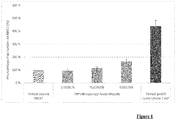
- Figure 1 Effect of trimethoxybenzyl acetylsinapate on the induction of the Nrf2 pathway in the cellular model "ARE Reporter-HepG2". The percentage activation of Nrf2 in the treated cells (HepG2 line) after 18 hours of contact with the trimethoxybenzyl acetylsinapate molecule is indicated.
- the aim of the study is to evaluate the induction of the Nrf2 pathway in the cellular model "ARE Reporter-HepG2" (HepG2, BPS BIOSCIENCE) [Lee et al., (2004), Dinkova-Kostova et al. (2002)] by the asset referred to in the invention.
- MEM medium Minimum Essential Medium
- FCS Fetal Calf Serum
- Penicillin / Streptomycin% 1 mM sodium pyruvate
- M1 medium 1% non-essential amino acids
- the cells are detached from the support by incubation with the trypsin / EDTA reagent (ethylene diamine tetraacetic acid) and then centrifuged for 5 minutes at 200 g.
- test solution was prepared on the day of the activation test. The dilution was carried out in M1 medium. Active Reference / Lot number Mother solution Doses tested Trimethoxybenzyl Acetylsinapate INABATA LB 189/696 1.25% in DMSO 0.00063% 0.00125%
- a stock solution of sulforaphane (10 mM) (Sigma-Aldrich reference S4441 - lot SLBR6147V) reference activator was prepared in DMSO and then diluted in M1 medium (final concentration 3 ⁇ M).
- the HepG2 cells were seeded, in M1 medium, in wells of 96-well plates, at a rate of 40,000 cells / well (volume of 100 ⁇ l). Only the 60 central wells of the plates were used, the remaining wells received only PBS.
- the culture medium was removed.
- the cells were treated with the test products diluted in the M1 culture medium for 18 hours (final volume: 50 ⁇ L).
- "control cell" wells were treated with the M1 medium containing the same percentage of DMSO solvent as the wells treated with the test molecules.
- the MTT was removed and the cells were lysed by adding 100 ⁇ L of DMSO.
- the optical density of formazan blue was measured spectrophotometrically at 540 nm. This optical density is directly proportional to the number of metabolically active cells.
- results were expressed as a percentage of the optical density of the treated wells versus the mean optical density of the "control cell" group treated with the same percentage of the same solvent.
- HepG2 cells were also seeded in wells of 96-well plates (opaque plates with transparent background) at the rate of 40,000 cells / well (volume of 100 ⁇ L), in M1 medium.
- the M1 culture medium was removed.
- the "cell-free” wells were used to detect the luminescence related to the background noise of the medium.
- the “control cell” wells were used to detect the intrinsic luminescence of the test system (without activation).
- the cells were lysed by adding 100 ⁇ L of the reagent " One-step luciferase assay system ".
- the luminescence emitted by the neo-synthesized luciferase was evaluated with an Optima luminometer.
- Sulforaphane tested at 3 ⁇ M, increases the luminescence emitted by the treated HepG2 cells, in comparison with the luminescence emitted by the cells treated with the corresponding solvent control, up to 438%. This increase validates the test.
- trimethoxybenzyl acetylsinapate active has a dose-dependent Nrf2 activation rate, with an activation rate of 164% at a dose of 0.00125% relative to the corresponding solvent control ( figure 1 ).
Landscapes
- Health & Medical Sciences (AREA)
- Life Sciences & Earth Sciences (AREA)
- Public Health (AREA)
- Veterinary Medicine (AREA)
- Animal Behavior & Ethology (AREA)
- General Health & Medical Sciences (AREA)
- Epidemiology (AREA)
- Medicinal Chemistry (AREA)
- Chemical & Material Sciences (AREA)
- Pharmacology & Pharmacy (AREA)
- Birds (AREA)
- Dermatology (AREA)
- Emergency Medicine (AREA)
- Engineering & Computer Science (AREA)
- Toxicology (AREA)
- Bioinformatics & Cheminformatics (AREA)
- Chemical Kinetics & Catalysis (AREA)
- General Chemical & Material Sciences (AREA)
- Nuclear Medicine, Radiotherapy & Molecular Imaging (AREA)
- Organic Chemistry (AREA)
- Cosmetics (AREA)
Abstract
Description
- La présente invention concerne notamment des compositions cosmétiques ou dermatologiques destinées à la protection des cellules de la peau et/ou des phanères contre le rayonnement solaire, en particulier le rayonnement ultraviolet.
- Le soleil émet plusieurs catégories de rayonnement dont une partie pénètre l'atmosphère, notamment les rayons ultraviolets (100 à 400 nm), la lumière visible (400 et 700 nm) et la lumière infrarouge (700 nm à 1 mm).
- Le soleil a certains effets bénéfiques avérés chez l'homme, tels que son action antirachitique ou antidépressive. Les radiations lumineuses, notamment les ultraviolets de type A et B (notés UV-A et UV-B) émises par le soleil sont nécessaires au bon fonctionnement de l'organisme humain, mais elles provoquent également des effets délétères (photodermatoses et photo-cancérogenèse notamment).
- Le rayonnement ultraviolet (UV) se compose lui-même de lumière de longueur d'onde comprise entre 100 nm et 400 nm, traditionnellement répartie en 3 sous-groupes : les UV-A (400-315 nm), les UV-B (315-280 nm) et les UV-C (280-100 nm). Les UV-C, de courte longueur d'onde, sont les UV les plus énergétiques et les plus nocifs, mais sont filtrés par la couche d'ozone de l'atmosphère et n'atteignent pas la surface de la Terre. Toutefois, en raison de la diminution de la couche d'ozone dans certaines régions du globe, la lumière solaire parvenant à la surface de la Terre a tendance à s'enrichir en rayonnements UV, notamment les UV-C (Lloyd et al., 1993). La plupart des dégâts sur la peau restent malgré tout causés par les UV-A et les UV-B.
- Les UV-B sont plus particulièrement à l'origine de la stimulation de la production du pigment naturel de la peau appelé mélanine, ce phénomène étant communément appelé le bronzage. Les UV-B stimulent également les cellules de la peau pour qu'elles produisent un épiderme plus épais. Ces réactions constituent un mécanisme de défense de l'organisme contre les rayons UV. Les UV-B sont plus énergétiques que les UV-A et sont responsables de l'érythème solaire (ou « coup de soleil »), qui manifeste son maximum d'intensité inflammatoire 24 heures après l'exposition.
- L'importante énergie des UV-B entraine également des désordres moléculaires, comme une altération de l'ADN et des dommages aux protéines (notamment leur carbonylation). A long terme, ces dégradations saturent et bloquent le système de réparation de l'ADN nucléaire. Cela entraîne des mutations permanentes dans le génome des cellules atteintes, induisant l'apparition de cancers cutanés. On parle ainsi de toxicité directe des UV-B.
- Les UV-A, qui ne présentent pas d'effets nocifs visibles à court terme, ont longtemps été considérés comme inoffensifs. Cependant, il est désormais largement reconnu que les UV-A pénètrent dans les couches profondes de la peau, et ont un effet sur le tissu conjonctif et les vaisseaux sanguins. Ces rayons sont notamment à l'origine du phénomène nommé héliodermie, c'est-à-dire le vieillissement actinique prématuré de la peau.
- De surcroît, bien que les UV-B soient les principaux responsables des cancers cutanés, les UV-A ont également une contribution indirecte à ce type d'atteintes. En effet, les UV-A sont à l'origine de la production de radicaux libres, notamment les ROS (« Reactive Oxygen Species » ou espèces réactives de l'oxygène (ERO)). Ces molécules sont très instables et possèdent une demi-vie très courte, pouvant aller de la nanoseconde à la milliseconde. Les ROS sont capables d'endommager aussi bien les structures cellulaires (ADN, membranes, protéines intracellulaires), que les structures extracellulaires (composants de la matrice extracellulaire tels que les fibres de collagène). Les ROS exercent également une action nocive indirecte, en provoquant l'oxydation des lipides membranaires, ce qui induit la formation d'espèces réactives carbonylées, contribuant à amplifier les dégâts tissulaires et cellulaires causés. Les mêmes dommages sont également causés voire amplifiés par la pollution environnementale, qui génère aussi des radicaux libres responsables du vieillissement cutané.
- Une préoccupation permanente est donc de combattre les effets nocifs des rayonnements UV, notamment UV-A et UV-B, en prenant en compte le type de peau (phototype) et les temps d'exposition au soleil.
- Il existe deux façons de minimiser les dégâts causés par le soleil sur la peau : la protection externe et la protection interne.
- La protection externe est réalisée en filtrant le rayonnement UV qui pénètre la peau ou en occultant les zones exposées au soleil. Bien que le recouvrement des zones exposées assure la meilleure photoprotection, elle n'est pas toujours possible ou pratique. Pour cette raison, des compositions solaires sont nécessaires afin d'assurer une photoprotection des zones exposées au rayonnement UV. Ces compositions se présentent généralement sous la forme de lotion, huile, émulsion de type huile-dans-eau (H/E) ou eau-dans-huile (E/H), mousse, gel, stick ou spray. Elles contiennent, dans un support acceptable d'un point de vue cosmétique et à des concentrations diverses, un ou plusieurs filtres chimiques ou minéraux.
- Les filtres chimiques sont des composés organiques qui absorbent la lumière en créant sur la peau une couche filtrante qui neutralise les rayons UV. Ainsi lorsque la molécule de filtre solaire reçoit une radiation UV, elle passe dans un état excité en absorbant l'énergie du rayonnement puis retourne dans son état stable. Par ce mécanisme, la radiation lumineuse est convertie en chaleur et donc dissipée. Ainsi, les filtres chimiques agissent de la même façon que la mélanine, le pigment photoprotecteur naturel de la peau, dont la synthèse est stimulée par les UV-B.
- Les associations de filtres, qui ont des spectres d'absorption différents, et les quantités mises en oeuvre, sont sélectionnées. Cette sélection se fait en fonction du niveau de protection solaire recherché et de la zone du corps à protéger, en tenant ainsi compte du degré de vulnérabilité dû à l'épaisseur de la peau.
- Au cours des dernières décennies, des filtres chimiques de plus en plus performants ont été développés, présentant une photostabilité accrue et de larges spectres d'absorption vis-à-vis des UV-A et/ou UV-B. Ces filtres chimiques assurent une bonne photoprotection mais leur utilisation massive est de plus en plus décriée. En effet, ils possèdent souvent des propriétés allergisantes et peuvent être toxiques ou nuisibles s'ils pénètrent à travers la barrière épidermique. Ainsi, plusieurs filtres sont soupçonnés d'être des perturbateurs endocriniens. En outre, les filtres sont souvent peu biodégradables et deviennent des polluants environnementaux. Entre autres exemples d'effet écotoxique, les filtres solaires auraient un impact négatif sur les récifs marins et seraient notamment responsables du phénomène de blanchiment corallien (Danovaro et al. 2008).
- Les filtres minéraux ou écrans physiques sont, quant à eux, des poudres inertes et opaques qui reflètent la lumière. Des exemples de filtres minéraux bien connus sont l'oxyde de zinc, l'oxyde de fer, le dioxyde de titane et l'oxyde de cérium. Les filtres minéraux agissent comme des miroirs et reflètent la radiation solaire. L'avantage de ces filtres est qu'ils ne pénètrent pas dans la peau, sont hypoallergéniques, et en général moins écotoxiques.
- Toutefois, les compositions contenant des fortes doses de filtres minéraux laissent des traces blanches sur la peau, s'étalent difficilement et peuvent dessécher la peau. Ces problèmes ont été aujourd'hui résolus en réduisant les filtres minéraux à l'état de nanoparticules. Mais, le recul n'est pas encore suffisant pour pouvoir affirmer avec certitude que les écrans minéraux sous forme de nanoparticules n'ont aucune conséquence néfaste sur l'organisme humain. La tendance générale est donc de limiter, dans la mesure du possible, l'utilisation de filtres chimiques ou minéraux dans les produits solaires.
- Une alternative ou un complément à la protection solaire externe est la protection solaire interne, qui consiste à renforcer les défenses de la peau en agissant sur les mécanismes endogènes qui régulent la réponse naturelle des cellules aux radiations solaires.
- Pour lutter contre le stress photoxydatif et les dommages induits par les rayons UV, les cellules possèdent des systèmes de défense complexes. Ces mécanismes sont présents dans toutes les cellules de l'organisme et sont plus particulièrement développés au niveau des cellules de la peau, en raison de son exposition aux UV.
- La protection interne a pour point de départ, l'observation selon laquelle ces défenses cellulaires endogènes peuvent être induites, afin d'améliorer l'efficacité de la réponse cutanée aux dégâts et mutations causés par la radiation solaire et/ou les polluants environnementaux.
- Un médiateur clé de la réponse antioxydante de la peau est la protéine de la famille bZIP, Nrf2 (« Nuclear factor erythroid-2-related factor 2 »). La protéine Nrf2, aussi connue sur le nom de NFE2L2, est un facteur de transcription qui contrôle l'expression de plusieurs gènes antioxydants au niveau des cellules. A l'état physiologique, la protéine Nrf2 est liée à la protéine Keap-1 (« Kelch-like ECH-associated protein 1 »), formant un complexe cytoplasmique inhibant l'action de Nrf2. En réponse à un stress oxydatif et en présence des inducteurs de la réponse antioxydante, Keap-1 est inactivée permettant une libération de Nrf2 : Le facteur de transcription Nrf2 actif est transloqué dans le noyau où il se fixe à une classe de promoteurs spécifiques de l'expression génique, les ARE (« Antioxidant Response Element »). Il induit ainsi la transcription de nombreux gènes impliqués dans la réponse au stress oxydatif et dans la détoxification cellulaire.
- Au niveau des cellules de la peau, Nrf2 est décrit pour son rôle central dans le processus de protection vis-à-vis des dommages induits par les UV, en activant l'expression de nombreux gènes impliqués dans la détoxification des ROS. Par ailleurs, la protéine Nrf2 stimule la production d'enzymes de détoxification de phase II, impliquées dans la synthèse d'antioxydants (notamment le glutathion, le NADPH et la thioredoxine) et la conjugaison permettant de greffer des radicaux moléculaires pour favoriser l'élimination de ces métabolites (Gorrini et al., 2013).
- En pratique, la fonction de la protéine Nrf2 a été mise en évidence en examinant le génotype d'une lignée de souris pour lesquelles l'expression du gène Nrf2 est supprimée (souris Knock-out (KO) nrf-2-/-). Ainsi, les souris KO Nrf2 montrent une réduction du niveau d'expression, basal et induit, des gènes cytoprotecteurs et sont plus vulnérables à la toxicité induite par les ROS (Copple et al., 2008). En outre, les souris KO Nrf2 présentent un taux d'apoptose cellulaire et de dommages oxydatifs plus importants dans les kératinocytes après irradiation UV-B (Kawachi et al., 2008). Dans cette étude, une seule irradiation des souris KO Nrf2 avec des UV-B induit une réaction inflammatoire plus forte et plus longue que pour les souris sauvages pour ce gène (Kawachi et al., 2008). A l'inverse, l'activation de la protéine Nrf2 protège efficacement les cellules murines des dommages des ROS in vitro et in vivo.
- Par ailleurs, le facteur de transcription Nrf2 est constitutivement exprimé par les kératinocytes de la peau qui se trouve dans un état normal, et surexprimé durant le processus de cicatrisation (Braun et al., 2002).
- Des inducteurs de l'activation du facteur de transcription Nrf2 ont été identifiés, notamment le sulforaphane, un composé organosulfuré du groupe des isothiocyanates que l'on trouve dans les plantes crucifères comme le brocoli, le chou de Bruxelles ou le chou-fleur (Dinkova-Kostova et al., 2006).
- Dans des modèles de souris, il a été montré que l'application topique d'extraits de brocoli, contenant du sulforaphane, exerce un effet protecteur vis-à-vis de l'inflammation (Saw et al., 2011) et de la photocarcinogenèse (Dinkova-Kostova et al., 2006) UV-B-induites. Cependant, le sulphoraphane est une molécule très instable et n'est, à ce titre, pas adaptée au développement de produits solaires.
- Il existe donc un besoin évident d'identifier de nouveaux actifs cosmétiques, formulables dans les produits solaires et capables d'agir en tant qu'inducteurs des réponses antioxydantes des cellules, notamment par le biais de l'activation de la voie Nrf2.
- De façon surprenante, la Demanderesse a mis en évidence que des compositions dermocosmétiques solaires comprenant du trimethoxybenzyl acetylsinapate (INCI), un composé stable, répondent au besoin d'une composition permettant d'assurer une protection cellulaire endogène vis-à-vis des radiations UV. Notamment, cet actif possède des propriétés d'induction de l'expression génique contrôlée par le facteur de transcription Nrf2, sur lequel il exerce un effet comparable à celui de l'actif de référence, le sulphoraphane. De telles compositions cosmétiques ou dermatologiques présentent donc un intérêt évident dans la prévention des dégâts causés par les rayonnements UV, avantageusement en combinaison avec des filtres solaires dits classiques.
- A noter que l'utilisation des dérivés de l'acide sinapinique a déjà été préconisée dans le domaine de la cosmétique ou de la pharmacie. En particulier, le document
WO 2014/108629 décrit une longue liste de 41 dérivés, le trimethoxybenzyl acetylsinapate correspondant au composé 5. Celui-ci n'est décrit que pour son activité potentiellement amincissante, son effet anti-vieillissement via une compensation du déséquilibre de la production de protéines de la peau, et son activité blanchissante. - La désignation INCI trimethoxybenzyl acetylsinapate correspond à la molécule 3-[4-(acetyloxy)-3,5-dimethoxyphenyl] -(3,4,5-trimethoxyphenyl)methyl ester-(2E)-Propenoic acid (numéro CAS 1469299-98-6), caractérisée par la structure suivante :

- Par la suite, la désignation INCI sera utilisée pour dénommer cette molécule.
- Le trimethoxybenzyl acetylsinapate est connu en qualité d'activateur de la synthèse de DKK-1 (Dickkopf-1), un messager intercellulaire impliqué dans la mélanogénèse (Yamaguchi et al., 2009). DKK-1 active la voie de signalisation Wnt (Winnt) et permet ainsi de réduire les niveaux de synthèse de mélanine dans les mélanocytes. Le trimethoxybenzyl acetylsinapate a donc un effet dépigmentant médié par l'activation de DKK-1.
- Cependant, à la connaissance de la Demanderesse, les propriétés antioxydantes et photoprotectrices du trimethoxybenzyl acetylsinapate, notamment grâce à sa fonction d'activateur de la voie Nrf-2 illustrée dans la présente demande, n'ont jamais été rapportées.
- Selon un premier aspect, la présente invention concerne une composition cosmétique ou dermatologique comprenant du trimethoxybenzyl acetylsinapate. Selon un mode de réalisation privilégiée en rapport avec ses propriétés photoprotectrices, une telle composition comprend en outre au moins un filtre solaire, avantageusement un filtre UV.
- Selon un autre aspect, la présente invention concerne l'utilisation du trimethoxybenzyl acetylsinapate dans une composition cosmétique ou dermatologique pour son activité antioxydante et photoprotectrice.
- Avantageusement, le trimethoxybenzyl acetylsinapate représente entre 0,001% et 10% en poids total de la composition, de préférence entre 0,01% et 1%.
- Toute forme de trimethoxybenzyl acetylsinapate peut être employée dans une composition au sens de l'invention. Le trimethoxybenzyl acetylsinapate peut être obtenu à partir d'extraits de plantes ou microorganismes ou encore par synthèse chimique. Ainsi, la composition selon l'invention peut comprendre du trimethoxybenzyl acetylsinapate d'origine chimique ou d'origine naturelle, de préférence d'origine chimique.
- En pratique, le trimethoxybenzyl acetylsinapate peut être utilisé dans la composition selon l'invention sous forme purifiée ou isolée, de pureté au moins égale à 60%, de préférence au moins égale à 70%, avantageusement au moins égale à 80%, encore plus avantageusement au moins égale à 90%, voire au moins égale à 95%.
- Alternativement, il peut se présenter sous forme de mélange avec un support susceptible d'augmenter sa solubilité et/ou sa biodisponibilité cutanée.
- Dans un mode de réalisation particulier, le principe actif trimethoxybenzyl acetylsinapate est vectorisé dans un support argileux. En pratique, la matière première INACLEAR®, commercialisée par les sociétés INABATA et PHARMASYNTHESE et correspondant aux désignations INCI Bentonite (and) Trimethoxybenzyl acetylsinapate, peut être utilisée dans le cadre de la présente invention.
- Comme déjà dit et de manière avantageuse, la composition selon l'invention comprend, en outre, au moins un filtre UV.
- Au sens de l'invention, le terme « filtre UV» englobe les composés organiques ou minéraux capables de filtrer les UV-A, les UV-B et/ou les UV-C.
- Ainsi, l'adjonction de filtres UV dans une composition contenant du trimethoxybenzyl acetylsinapate permet d'améliorer l'effet de protection de la peau, des phanères, des lèvres, des cheveux et/ou des muqueuses, des effets néfastes des rayonnements UV en combinant une forme de protection externe à la protection interne mise en évidence dans la présente demande.
- Selon l'invention, il peut aussi bien s'agir de filtres minéraux que de filtres chimiques ou organiques.
- Les compositions selon l'invention peuvent contenir un ou plusieurs filtres UV à large spectre, c'est-à-dire des composés ou des mélanges qui absorbent les UV-A, les UV-B, les UV-C et éventuellement la lumière visible.
- Parmi les filtres organiques à large spectre, les filtres correspondant aux désignations INCI suivantes peuvent être utilisés dans le cadre de l'invention : tris biphenyl triazine, bis ethylhexyloxyphenol methoxyphenyl triazine, methylene bis-benzotriazolyl tetramethylbutylphenol. A titre d'exemple, ceux-ci sont commercialisés par la société BASF sous les noms de TINOSORB S®/TINOSORB AQUA®, TINOSORB A2B®, TINOSORB M®, respectivement. Un autre exemple de filtre à large spectre adapté à la composition selon l'invention répond à la désignation INCI diethylhexyl butamido triazone, par exemple commercialisé par la société SIGMA 3V sous le nom d'UVASORB HEB®.
- Ainsi et dans un mode de réalisation particulier, la composition selon l'invention comprend au moins un filtre choisi dans le groupe suivant de composés identifiés par leur désignation INCI : tris biphenyl triazine, bis ethylhexyloxyphenol methoxyphenyl triazine, et methylene bis-benzotriazolyl tetramethylbutylphenol, diethylhexyl butamido triazone, ou leurs mélanges.
- Avantageusement, la composition comprend le filtre bis-ethylhexyloxyphenol methoxyphenyl triazine.
- Selon un autre mode de réalisation, à la place ou en plus du ou des filtre(s) à large spectre, la composition contient au moins un filtre UV-A et/ou UV-B, organique et/ou minéral, qui peut se présenter en phase aqueuse (lipophile) et/ou huileuse (liposoluble).
- Ainsi et à titre d'exemple, la composition selon l'invention peut contenir des filtres UV-B liposolubles, susceptibles de contribuer à la stabilisation ou à la solubilisation des filtres à large spectre ou encore de se stabiliser réciproquement et par ce fait, augmenter le facteur de protection solaire (FPS ou « SPF » en anglais).
- Avantageusement, de tels filtres correspondent aux désignations INCI suivantes: homosalate, octocrylene, ethylhexyl salicylate, ethylhexyl triazone.
- Dans un mode de réalisation préféré, la composition selon l'invention comprend de l'ethylhexyl triazone, commercialisé par BASF sous le nom d'UVINUL T150®.
- Dans un autre mode de réalisation, le filtre UV-B liposoluble est l'α-(triméthylsilyl)-ω-(triméthylsilyloxy)poly[oxy(diméthyl)silylène]-co-[oxy(méthyl)(2-{4-[2,2-bis(éthoxycarbonyl)vinyl]phénoxy}-1-méthylèneéthyl)silylène]-co-[oxy(méthyl)(2-(4-[2,2-bis(éthoxycarbonyl)vinyl]phénoxy)prop-1-ényl)silylène], un polymère siliconé capable de filtrer dans l'UV-B. Ce filtre correspond par exemple à la matière première cosmétique Parsol SLX®, commercialisée par la société DSM selon la désignation INCI polysilicone-15.
- Dans un mode de réalisation préféré, la composition selon l'invention comprend au moins un filtre UV-B choisi dans le groupe suivant de composés identifiés par leur désignation INCI : homosalate, octocrylene, ethylhexyl salicylate, ethylhexyl triazone, polysilicone-15, ou leurs mélanges.
- Dans un mode de réalisation particulier, la composition est exempte des filtres suivants : 4-methylbenzylidene camphor, benzophenone-2, benzophenone-3, ethylhexyl methoxycinnamate.
- Dans un mode de réalisation avantageux, la composition selon l'invention comprend au moins un filtre UV-A, afin d'assurer une filtration complète de la partie nuisible du spectre solaire.
- Des filtres UV-A avantageux au sens de la présente invention sont le butyl methoxydibenzoylmethane (INCI) et le diethylamino hydroxybenzoyl hexyl benzoate (INCI), correspondant respectivement aux matières premières Parsol 1789® commercialisée par la société DSM et UVINUL® A+ commercialisée par la société BASF.
- Dans un mode de réalisation particulier, le filtre UV-A est le bis-(diethylaminohydroxybenzoyl benzoyl) piperazine (INCI) (numéro CAS 919803-06-8), correspondant par exemple à la matière première C1332® commercialisée par la société BASF.
- Ainsi et dans un mode de réalisation préféré, la composition selon l'invention comprend au moins un filtre choisi dans le groupe suivant de composés identifiés par leur désignation INCI : butyl methoxydibenzoylmethane, diethylamino hydroxybenzoyl hexyl benzoate, bis-(diethylaminohydroxybenzoyl benzoyl) piperazine, ou leurs mélanges.
- D'autres filtres UV avantageux au sens de la présente invention sont des filtres hydrosolubles, comme par exemple :
- le filtre correspondant à la désignation INCI disodium phenyl dibenzimidazole tetrasulfonate, notamment disponible sous la dénomination Neo Heliopan® AP (Symrise) ;
- le filtre correspondant à la désignation INCI phenylbenzimidazole sulfonic acid, notamment disponible sous la dénomination Neo Heliopan® hydro (Symrise), de préférence en combinaison avec un acide aminé basique, avantageusement de l'arginine. En pratique, l'acide aminé basique représente entre 0,5 et 2% en poids total de la composition, de préférence entre 1 et 1,5%.
- Dans un mode de réalisation préféré, la composition selon l'invention comprend au moins un filtre hydrosoluble choisi dans le groupe suivant de composés identifiés par leur désignation INCI : Disodium phenyl dibenzimidazole tetrasulfonate, phenylbenzimidazole sulfonic acid, ou leurs mélanges.
- Avantageusement, les filtres minéraux inorganiques, ou écrans minéraux, sont des oxydes métalliques et/ou d'autres composés difficilement solubles ou insolubles dans l'eau, en particulier les oxydes de titane (TiO2), de zinc (ZnO), de fer (Fe2O3), de zirconium (ZrO2), de silicium (SiO2), de manganèse (par exemple MnO), d'aluminium (Al2O3), ou de cérium (Ce2O3).
- Selon un mode de réalisation particulier, les filtres minéraux inorganiques peuvent être utilisés sous forme de prédispersion huileuse ou aqueuse disponible sur le marché. Ces prédispersions peuvent être additionnées avantageusement d'auxiliaires de dispersion et/ou de médiateurs de solubilisation.
- Les filtres minéraux inorganiques peuvent également être traités en surface ou encapsulés, afin de leur conférer un caractère hydrophile, amphiphile ou hydrophobe. Ce traitement de surface peut consister en ce que les filtres minéraux soient dotés d'une mince pellicule inorganique et/ou organique hydrophile et/ou hydrophobe.
- Dans un mode de réalisation préféré, la composition selon l'invention comprend au moins un écran minéral choisi dans le groupe suivant de composés identifiés par leur désignation INCI : zinc oxide, titanium dioxide, ou leurs mélanges.
- Les listes des filtres UV cités pouvant être mis en oeuvre au sens de la présente invention sont bien entendu donnés à titre indicatif et non limitatif.
- De manière avantageuse, les filtres UV tels que décrits ci-dessus, présents dans la composition selon l'invention, représentent de 0,1 % à 30 % en poids total de la composition, avantageusement de 0,5 % à 20 %, encore plus avantageusement de 1 % à 15 %, afin de proposer des compositions cosmétiques qui protègent la peau ou les phanères de la totalité du domaine du rayonnement UV. Selon un mode de réalisation particulier, la composition selon l'invention présente un facteur de protection solaire (« SPF » ou FPS) supérieur ou égal à 10, de préférence supérieur ou égal à 20, avantageusement supérieur ou égal à 30, encore plus avantageusement supérieur ou égal à 50.
- Selon un mode de réalisation préféré, la composition selon l'invention comporte un ratio de protection UV-A/UV-B égal ou supérieur à 1/3.
- La composition selon l'invention, constituée au minimum de trimethoxybenzyl acetylsinapate, avantageusement combiné à au moins un filtre UV, peut en outre comprendre un « booster » de SPF, c'est-à-dire un agent amplificateur du facteur de protection solaire, et/ou un photostabilisant, c'est à dire un ingrédient qui permet d'augmenter le SPF ou de photostabiliser les filtres, un tel ingrédient n'étant pas considéré lui-même comme un filtre solaire. On peut par exemple citer :
- le butyloctyl salicylate (INCI), photostabilisant représentant avantageusement entre 0,01 % et 10 % en poids total de la composition, encore plus avantageusement ente 0,1 % et 2 %. Cette matière première est par exemple commercialisée par la société HALLSTAR sous le nom de Hallbrite® BHB ;
- le benzotriazolyl dodecyl p-cresol (INCI), photostabilisant représentant avantageusement entre 0,01 % et 10 % en poids total de la composition, encore plus avantageusement entre 0,1 % et 2 %. Cette matière première est par exemple commercialisée par la société BASF sous le nom de TINOGARD® TL ;
- le pongamol (INCI), molécule végétale absorbant dans les UV-A, représentant avantageusement entre 0,5 et 2% en poids total de la composition, encore plus avantageusement de l'ordre de 1%. A titre d'exemple, la matière première Pongamia Extract commercialisée par la société GIVAUDAN peut être utilisée dans le cadre la présente invention ;
- l'ethylhexyl methoxycrylene (INCI), photostabilisant, solubilisant et « booster » de SPF représentant avantageusement entre 1 % et 5 % en poids total de la composition. La matière première SolaStay® SI commercialisée par la société HALLSTAR peut être utilisée dans le cadre de la présente invention ;
- un copolymère de styrène acrylate (INCI : styrene/acrylate copolymer), représentant de préférence entre 1% et 10% en poids total de la composition selon l'invention. Les matières premières SunSpheres® H53 et SunSpheres® PGL Polymer, commercialisées par la société DOW CHEMICALS, peuvent être utilisées dans le cadre de la présente invention ;
- le diethylhexyl syringylidene malonate (INCI), représentant avantageusement entre 1 % et 10 % en poids total de la composition. La matière première OXYNET® ST, commercialisée par la société MERCK, peut être utilisée dans le cadre de la présente invention ;
- un polyester hydrodispersible, correspondant aux désignations INCI polyester-5 (and) Sodium silicoaluminate, représentant avantageusement entre 1 % et 10 % en poids total de la composition, notamment l'EASTMANN AQ™38S Polymer commercialisé par la société SAFIC-ALCAN ;
- un copolymère d'acrylate ayant une température de transition vitreuse de -5 °C à -15 °C telle que mesurée par calorimétrie différentielle à balayage, ledit copolymère représentant avantageusement entre 1 % et 10 % en poids total de la composition. Par exemple, un polymère correspondant à la désignation INCI Acrylate copolymer, tel que la matière première EPITEX 66, commercialisée par la société DOW CHEMICALS, peut être utilisée dans le cadre de la présente invention.
- Dans un mode de réalisation particulier, la composition selon l'invention comprend également une ou plusieurs substances aptes à filtrer la lumière visible, en particulier la lumière bleue. A titre d'exemple, les composés décrits dans le document
EP 1 484 051 peuvent être employés pour assurer une filtration de la lumière bleue. - Selon un autre mode de réalisation, la composition selon l'invention peut comprendre en outre un extrait de la bactérie Arthrobacter agilis, notamment un extrait riche en caroténoïdes, tel que décrit dans le document
WO 2014/167247 . Avantageusement, la composition selon l'invention comprend de 0,00001 % à 0,1 % en poids total de la composition, encore plus avantageusement de 0,0001 % à 0,001 % d'un tel extrait sec. - Dans un mode de réalisation privilégié, la composition selon l'invention comprend en outre d'autres composants pouvant contribuer à la protection interne par une action qui peut consister en une protection de l'ADN, une diminution de l'immunosuppression induite par les radiations UV, une action antiradicalaire ou un effet combiné de ces actions.
- L'action protectrice d'une préparation selon l'invention contre le stress oxydatif ou à l'encontre de l'effet des radicaux libres peut être encore améliorée si celle-ci comprend en outre un ou plusieurs antioxydants, aisément sélectionnés par l'homme du métier, par exemple dans la liste suivante : le totarol, le magnolol, l'honokiol, les acides aminés et leurs dérivés, les imidazoles (acide urocanique) et leurs dérivés, des peptides (D et/ou L-carnosine) et leurs dérivés (par exemple l'ansérine, l'hypotaurine, la taurine), les caroténoïdes, les carotènes (a-carotène, β-carotène, lycopène) et leurs dérivés, l'acide chlorogénique et ses dérivés, l'acide lipoïque et ses dérivés (acide dihydrolipoïque), l'aurothioglucose, le propylthiouracile et autres thiols (thiorédoxine, glutathion, cystéine, cystine, cystamine et leurs esters glycosyle, N-acétyle, méthyle, éthyle, propyle, amyle, butyle et lauryle, palmitoyle, oléyle, γ-linoléique, cholestéryle et glycéryle) ainsi que des sels de ceux-ci, le thiodipropionate de dilauryle, le thiodipropionate de distéaryle, l'acide thiodipropionique et ses dérivés, les composés sulfoximine (sulfoximine de buthionine, l'homocystéine sulfoximine, les buthionine sulfones, penta-, hexa- et heptathionine sulfoximine), des agents chélatants (tels que les acides α-hydroxygras, l'acide palmitique, l'acide phytique, la lactoferrine), les α-hydroxyacides (tels que l'acide citrique, lactique, ou malique), l'acide humique, l'acide biliaire, les extraits de bile, la bilirubine, la biliverdine, l'EDTA, l'EGTA, le tétraméthylène phosphonate pentasodique d'éthylènediamine et ses dérivés, les acides gras insaturés et leurs dérivés, la vitamine A et ses dérivés (palmitate de vitamine A), le benzoate de coniféryle de la résine de benjoin, l'acide rutinique et ses dérivés, l'a-glycosyl rutine, l'acide férulique et ses dérivés, le furfurylideneglucitol, la carnosine, le butylhydroxytoluène, le butylhydroxyanisole, l'acide nordihydroguaiarétique, trihydroxybutyrophenone, la quercétine, l'acide urique et ses dérivés, le mannose et les dérivés de ceux-ci, le zinc et ses dérivés (ZnO, ZnSO4), le sélénium et ses dérivés (sélénométhionine), les stilbènes et leurs dérivés (l'oxyde de stilbène, l'oxyde trans-stilbène).
- Dans un mode de réalisation particulier, la composition selon l'invention contient en outre de l'acide glycyrrhétinique, un dérivé ou un sel de cet acide, utilisé comme apaisant (agent anti-inflammatoire) et représentant entre 0,01 % et 2 % en poids total de la composition, de préférence entre 0,1 % et 1 %.
- Selon une autre caractéristique privilégiée de l'invention, la composition cosmétique et/ou dermatologique contient au moins un, voire tous les constituants suivants exerçant une activité biologique in vivo sur les cellules de la peau, des lèvres, des cheveux et/ou des muqueuses soumises à une rayonnement UV-A et/ou UV-B, respectivement :
- un agent antiradicalaire préservant les structures cellulaires, tel que par exemple la vitamine E et/ou ses dérivés liposolubles ou hydrosolubles, en particulier le tocotriénol et/ou le tocophérol, représentant avantageusement entre 0,001 et 10 % en poids total de la composition, encore plus avantageusement entre 0,02 et 2 %, de préférence de l'ordre de 0,04 % ;
- un agent limitant l'immunosuppression, tel que par exemple la vitamine PP, représentant avantageusement entre 0,001 et 1 % en poids total de la composition, encore plus avantageusement de 0,01 % à 0,3 %;
- un agent protecteur de la protéine p53, tel que par exemple l'épigallocatéchine gallate (EGCG), représentant avantageusement entre 0,001 et 0,1 % en poids total de la composition, encore plus avantageusement de 0,005 % à 0,05 %.
- La composition selon l'invention peut également comprendre en outre des extraits peptidiques de soja et/ou de blé, tels que ceux décrits dans
EP 2 059 230 . - En pratique, les extraits peptidiques proviennent de graines de soja et de blé sont issu d'une hydrolyse enzymatique desdites graines par l'intermédiaire de peptidases qui permet de récupérer des peptides d'une taille moyenne de 700 Daltons. Préférentiellement, l'extrait peptidique de soja est l'extrait identifié sous le numéro CAS 68607-88-5, de même que l'extrait peptidique de blé est l'extrait identifié sous le numéro CAS 70084-87-6. Les extraits de blé et soja peuvent correspondre aux désignations INCI Hydrolyzed wheat protein et Hydrolyzed soy protein, respectivement.
- Dans un mode de réalisation particulier, les extraits peptidiques de soja et de blé sont utilisés ensemble, par exemple dans un rapport pondéral respectivement compris entre 80/20 et 20/80, avantageusement compris entre 70/30 et 30/70, de préférence égal à 60/40.
- Dans un mode de réalisation avantageux, les extraits peptidiques de soja et/ou de blé sont exempts de tripeptides synthétiques GHK (glycyl-histidyl-lysine ; INCI : Tripeptide-1). En pratique, les extraits peptidiques de soja et/ou blé représentant de 0,01 à 20 % en poids total de la composition, avantageusement de 0,1 % à 10 %, encore plus avantageusement de 0,2 % à 0,7 %.
- Dans un mode de réalisation alternatif, la composition selon l'invention comprend, conformément aux enseignements du document
FR 2 865 398 - De préférence, la composition selon l'invention comprend dans un milieu physiologiquement acceptable l'acide aminé ou l'un de ses sels, seul ou en mélange dans des proportions comprises entre 0,001 % et 10 % en poids total de la composition, et de préférence entre 0,01 % et 5 %.
- La composition selon la présente invention comprend, de préférence, dans un milieu physiologiquement acceptable, du mannitol ou l'un de ses dérivés, dans des proportions comprises entre 0,01% et 30 % en poids total de la composition, avantageusement entre 0,1 % et 10 %.
- Dans un mode de réalisation privilégié, la composition selon l'invention comprend de l'ectoïne et du mannitol.
- Selon un mode de réalisation particulier, la composition selon l'invention contient un ou plusieurs autres agents bronzants ou autobronzants. Il peut s'agir d'un autobronzant qui réagit avec les acides aminés de la peau selon une réaction de Maillard ou par l'intermédiaire d'une addition de Michael, ou bien un promoteur de la mélanogénèse ou un composé propigmentant qui favorise le bronzage naturel de la peau.
- Une telle substance est de préférence présente dans la composition en quantité allant de 0,01 % à 20 % en poids total de la composition, avantageusement de 0,5 % à 1 5%, encore plus avantageusement de 1 % à 8 %.
- Les substances autobronzantes peuvent être le 1,3-dihydroxyacétone (DHA), le glycérolaldéhyde, l'hydroxyméthylglyoxal, l'γ-dialdéhyde, l'érythrulose, le 6-aldo-D-fructose, la ninhydrine, la 5-hydroxy-1,4-naphtoquinone (juglone), la 2-hydroxy-1,4-naphtoquinone (lawsone) ou leurs combinaisons.
- Les substances propigmentantes peuvent être l'hormone stimulant les mélanocytes (a-MSH), des analogues peptidiques de l'a-MSH, des agonistes du récepteur à l'endothéline-1, des agonistes des récepteurs µ opiacés, des agents stimulateurs d'AMPc, des agents stimulateurs de tyrosinase.
- Dans un mode de réalisation particulier, la composition selon l'invention comprend en outre, en qualité d'autobronzant, une combinaison de dihydroxy méthylchromonyl palmitate et une forme lipophile de la tyrosine.
- Comme décrit dans le document
FR 3 031 301 - Selon un mode de réalisation particulier, le dihydroxy méthylchromonyl palmitate est présent dans la composition selon l'invention à hauteur de 0,01 % à 10 % en poids total de la composition, avantageusement de 0,05 % à 10 %, encore plus avantageusement de 0,1 % à 5 %, plus particulièrement de 0,1 % à 0,5 %.
- La forme lipophile de la tyrosine, au sens de l'invention, est un ingrédient à base de tyrosine et présentant un caractère lipophile plus prononcé que la tyrosine. La forme lipophile de tyrosine peut notamment correspondre à l'oléoyl tyrosine (Numéro CAS : 147732-57-8), qui se retrouve, par exemple, dans l'ingrédient cosmétique liquide TYR-OL, commercialisé par la société SEDERMA, et qui comprend environ 50 % en poids d'oléoyl tyrosine dans du butylène glycol (environ 30 % + environ 20 % d'acide oléique), ou bien dans l'ingrédient cosmétique liquide TYR-EXCEL, commercialisé par la société SEDERMA, qui comprend environ 50 % en poids d'oléoyl tyrosine, environ 20 % d'acide oléique (N° CAS : 112-80-1) et environ 30 % d'huile de Luffa cylindrica (huile de pépins de courge éponge; N° CAS 1242417-48-6).
- Selon un autre mode de réalisation, la forme lipophile de la tyrosine correspond à une huile végétale dans laquelle a été formulée la tyrosine.
- Selon un mode de réalisation particulier, l'huile végétale est de l'huile de tournesol oléique, avantageusement désodorisée. Ainsi, la matière première OLEOACTIF TYROSINE BASE HELIANTHUS ANNUS commercialisée par l'entreprise OLEOS, et correspondant aux désignations INCI Helianthus annuus seed oil (and) tyrosine (and) glyceryl stearate, peut être utilisée dans le cadre de la présente invention.
- En pratique, la forme lipophile de la tyrosine, telle que dans les ingrédients cosmétiques à base d'oléoyl-tyrosine (avantageusement à 50 % en poids) ou de la tyrosine formulée dans de l'huile végétale, représente entre 0,1 % et 10 % en poids total de la composition, avantageusement entre 1 et 3%, encore plus avantageusement entre 1 % et 1,5 %.
- La composition selon l'invention peut également contenir des actifs ayant des propriétés dépigmentantes, comme par exemple :
- de l'azéilate de lysine, ou d'autres dérivés ou sels de l'acide azélaïque ;
- de l'andrographolide, notamment l'extrait d'Andrographis paniculata correspondant à la désignation INCI Andrographis paniculata leaf extract ;
- de l'acide ascorbique natif (vitamine C) ou ses dérivés, notamment les dérivés correspondant aux INCI Ascorbyl Glucoside Ethyl ascorbic acid, Ascorbyl methylsilanol pectinate, Sodium ascorbyl phosphate et Ascorbyl tetraisopalmitate ;
- de l'arbutine ou un extrait végétal la contenant, notamment l'extrait de busserole correspondant à la désignation INCI Arctostaphylos uva-ursi leaf extract ;
- de la glabridine ou un extrait végétal la contenant, notamment les extraits de réglisse correspondant à la désignation INCI Glycyrrhiza glabra root extract, Glycyrrhiza inflata root extract, Glycyrrhiza uralensis root extract ;
- les peptides biomimétiques correspondant aux désignations INCI hexapeptide 2 et/ou nonapeptide-1 ;
- un extrait aqueux d'une algue dénommée Palmaria palmata, notamment l'extrait correspondant à la désignation INCI Palmaria palmata extract ;
- le 4-n-butylresorcinol ;
- de la vitamine PP, également appelée niacinamide ou nicotinamide, et ses dérivés ;
- La composition selon l'invention peut également contenir des actifs ayant des propriétés cicatrisantes comme par exemple un agent antimicrobien choisi parmi les actifs correspondant aux désignations INCI suivantes : Copper sulfate, zinc sulfate, sodium hyaluronate, Vitis vinifera (grape) vine extract, ou leurs mélanges.
- La composition selon l'invention peut également contenir des actifs ayant des propriétés sébocorrectices, kératolytiques, séboregulatrices et/ou une activité antiacnéique, afin de permettre la formulation de produits solaires traitant l'acné.
- Par exemple, la composition selon l'invention peut comprendre un agent antimicrobien choisi parmi les actifs correspondant aux désignations INCI propyl gallate, dodecyl gallate, Ginkgo biloba leaf extract, bakuchiol, dihydromyricetine, zinc gluconate, salicylic acid, ou leurs mélanges.
- La composition selon l'invention peut donc en outre comprendre au moins un ingrédient choisi dans la liste suivante :
- un agent amplificateur du facteur de protection solaire ou booster SPF ;
- un photostabilisant ;
- un extrait de la bactérie Arthrobacter agilis, avantageusement riche en caroténoïdes ;
- un méroterpène, avantageusement du bakuchiol ;
- au moins un polyol choisi parmi le xylitol, le rhamnose, le sorbitol et le mannitol ;
- un extrait de Gingko biloba ;
- du butyl hydroxytoluène (BHT) ;
- un extrait de la plante Andrographis paniculata ;
- un extrait de l'algue Palmaria palmata ;
- un extrait des algues Laminaria ochroleuca, Blidingia Minima ou Laminaria Saccharina ;
- un extrait de la plante Zanthoxylum alatum ;
- du panthénol ;
- un agent antiradicalaire préservant les structures cellulaires, tel que par exemple la vitamine E et/ou un de ses dérivés liposoluble ou hydrosoluble, en particulier le tocotriénol et/ou le tocophérol ;
- de l'acide salicylique ou un de ses dérivés ;
- un extrait de bois de cade ;
- un extrait de Boldo ;
- un extrait de Reine des prés ;
- de l'acide glycyrrhétinique ou un de ses dérivés, ou un de leurs sels ;
- un agent limitant l'immunosuppression, avantageusement la vitamine PP ;
- un agent protecteur de la protéine p53, avantageusement l'épigallocathéchine gallate (EGCG) ;
- un extrait d'huile de karanja issue du Pongamia glabra ;
- des paraffines linéaires ;
- de l'ATP (adénosine-5 tri-phosphate) ou un précurseur d'ATP, par exemple la Gp4G (diguanosine tétraphosphate), ou l'Ap4A (diadénosine tétraphosphate) ;
- un agent limitant l'action des ions fer impliqués dans la formation des radicaux libres, avantageusement l'EDTA ;
- un extrait peptidique de soja et/ou de blé ;
- un acide aminé ou dérivé d'acide aminé choisi parmi le groupe constitué de l'ectoïne, la créatine, l'ergothionéine, la carnosine, la tyrosine, la décarboxycarnosine, la glutamine et leurs sels ;
- un agent bronzant ou autobronzant ;
- un agent dépigmentant ;
- un agent cicatrisant ;
- un agent sébocorrecteur, kératolytique, séborégulateur et/ou antiacnéique.
- La composition selon l'invention peut également contenir des adjuvants comme ceux habituellement utilisés dans le domaine de la cosmétique, tels que des actifs, des conservateurs, des antioxydants, des agents complexants, des solvants, des parfums, des charges, des bactéricides, des électrolytes, des absorbeurs d'odeur, des matières colorantes ou encore des vésicules lipidiques. Le choix de ces adjuvants, ainsi que leurs concentrations, doivent être déterminés de telle sorte qu'ils ne modifient pas les propriétés et les avantages recherchés pour la composition de la présente invention.
- La composition de l'invention est destinée à une application topique et plus particulièrement à une application sur la peau, les lèvres, les cheveux et/ou les muqueuses. Ainsi et dans le cadre de l'invention, une telle composition est notamment destinée à la protection de la peau et/ou des phanères, en particulier les muqueuses, les lèvres et les cheveux, contre le rayonnement UV.
- La composition de l'invention peut se présenter sous toutes les formes galéniques normalement utilisées dans les domaines cosmétique et dermatologique, comme par exemple, mais de façon non limitative, sous la forme d'une solution aqueuse éventuellement gélifiée, d'une dispersion du type lotion, d'une émulsion Huile dans Eau (H/E) Eau dans Huile (E/H), plus ou moins fluide, ou d'une émulsion multiple comme par exemple une émulsion triple (E/H/E ou H/E/H), ou encore sous la forme d'une dispersion vésiculaire de type ionique (liposomes) et/ou non ionique, d'une composition biphasée dépourvue d'émulsionnants et gélifiants dont les phases immiscibles se séparent pendant le stockage, de mousse, de stick, d'huile anhydre, de spray ou de brume.
- Dans un mode de réalisation préféré, la composition selon l'invention est une émulsion E/H. Avantageusement, les émulsions E/H selon l'invention comprennent le PEG-30 dipolyhydroxystearate (INCI) en qualité d'émulsionnant.
- De préférence, les émulsions E/H selon l'invention comprennent un solubilisant choisi dans le groupe suivant de composés identifiés par leur désignation INCI : dicaprylyl carbonate, C12-15 alkyl benzoate, dibutyl adipate, seuls ou en mélange. Ces émulsionnants et solubilisants sont disponibles sur le marché auprès de plusieurs fournisseurs.
- Dans un mode de réalisation alternatif, la composition selon l'invention est une émulsion H/E. Avantageusement, les émulsions H/E selon l'invention comprennent un émulsionnant choisi dans le groupe suivant de composés identifiés par leur désignation INCI : potassium cetyl phosphate, glyceryl stearate, PEG-100 stearate et C20-22 alkyl phosphate/C20-C22 alkyl alcool, tribehenin PEG-20 Esters et leurs mélanges.
- De préférence, les émulsions H/E selon l'invention comprennent un solubilisant choisi dans le groupe suivant de composés identifiés par leur désignation INCI : dicaprylyl carbonate C12-15 alkyl benzoate, dibutyl adipate, disopropyl sebacate seuls ou leurs mélanges. Ces émulsionnants et solubilisants sont disponibles sur le marché auprès de plusieurs fournisseurs.
- La composition selon l'invention peut également comprendre des conservateurs. Tout conservateur apte à être utilisé dans des compositions cosmétiques ou dermatologiques peut être employé dans la formulation d'une composition selon l'invention.
- Avantageusement, les conservateurs utilisés sont des alcanediols, encore plus avantageusement des 1,2-alcanediols ou 1,3-alcanediols, et leurs mélanges.
- Dans un mode de réalisation préféré, le conservateur est un 1,2-diol choisi parmi le 1,2-pentanediol, le 1,2-hexanediol, le 1,2-heptanediol, le 1,2-octanediol et le 1,2-decanediol, ou leurs mélanges.
- Dans un mode de réalisation alternatif, le conservateur est un 1,3-diol choisi parmi le 1,3-propanediol et le 1,3-butanediol, ou leurs mélanges. En pratique, ces alcanediols sont commercialisés par plusieurs entreprises, notamment la société SYMRISE ou MINACARE.
- De préférence, la composition selon l'invention comprend entre 0,01 % et 2 % en poids total de la composition de diols, avantageusement entre 0,1 % et 1 %, par exemple 0,5 %.
- Une autre contribution de l'invention concerne la mise en évidence de l'activité antioxydante d'une composition comprenant du trimethoxybenzyl acetylsinapate, via l'activation de Nrf2. Comme décrit dans la littérature, cette activité antioxydante est corrélée à une activité anti-radicalaire et un effet protecteur vis-à-vis du rayonnement UV.
- Selon un autre aspect, la présente invention concerne donc une composition comprenant du trimethoxybenzyl acetylsinapate, avantageusement comme décrite ci-dessus notamment en combinaison avec un filtre UV, pour son utilisation comme :
- agent antioxydant ;
- agent anti-radicalaire ;
- agent de protection contre la pollution ;
- agent de protection contre les rayonnements UV.
- Il en résulte qu'une telle composition peut être utilisée dans la prévention et/ou le traitement des altérations des cellules de la peau, des lèvres, des cheveux, et/ou des muqueuses causées par les radiations solaires, en particulier les rayonnements UV. A ce titre elle permet donc de lutter contre le vieillissement, en particulier le photovieillissement.
- La manière dont l'invention peut être réalisée et les avantages qui en découlent ressortiront mieux des exemples de réalisation qui suivent, donnés à titre indicatif et non limitatif, à l'appui de la figure annexée.
-
Figure 1 : Effet du trimethoxybenzyl acetylsinapate sur l'induction de la voie Nrf2 dans le modèle cellulaire « ARE Reporter-HepG2 ». Le pourcentage d'activation de Nrf2 dans les cellules traitées (lignée HepG2) après 18 heures de contact avec la molécule trimethoxybenzyl acetylsinapate est indiqué. - Les pourcentages indiqués sont donnés en poids de produit par rapport au poids total de la composition dans les tableaux ci-dessous.
-
Nom INCI % Alcohol denat. 35,00 Bis-ethylhexyloxyphenol methoxyphenyl triazine 10,00 Dibutyl adipate 10,00 Diethylamino hydroxybenzoyl hexyl benzoate 10,00 Homosalate 10,00 Diisopropyl sebacate 5,00 Ethylhexyl salicylate 5,00 Ethylhexyl triazone 5,00 Dicaprylyl carbonate 4,9985 Dicaprylyl ether 3,09904 Aqua/water/eau 1,50 Fragrance (parfum) 0,30 Trimethoxybenzyl acetylsinapate 0,10 Tocopherol 0,002460 -
Nom INCI % Aqua/water/eau 64,658 Octocrylene 7,05 C12-15 alkyl benzoate 5,00 Methylene bis-benzotriazolyl tetramethylbutylphenol [nano] 5,00 Dicaprylyl carbonate 4,9985 Ethylhexyl methoxycinnamate 2,9979 Glycerin 2,00 Cetearyl alcohol 1,30 Isononyl isononanoate 1,00 Phenoxyethanol 1,00 Microcrystalline cellulose 0,88 Decyl glucoside 0,75 Coco-glucoside 0,70 Hydroxyethyl acrylate/sodium acryloyldimethyl taurate copolymer 0,592 C20-22 alkyl phosphate 0,55 C20-22 alcohols 0,45 Squalane 0,408 Disodium EDTA 0,20 Trimethoxybenzyl acetylsinapate 0,15 Cellulose gum 0,12 Polysorbate 60 0,088 Propylene glycol 0,04 Sorbitan isostearate 0,024 Citric acid 0,02 Xanthan gum 0,02 BHT 0,0021 Tocopherol 0,0015 -
Nom INCI % Aqua/water/eau 45,057 C12-15 alkyl benzoate 24,90 Bis-ethylhexyloxyphenol methoxyphenyl triazine 5,00 Butyl methoxydibenzoylmethane 5,00 Octocrylene 5,00 Ethylhexyl methoxycinnamate 4,9965 PEG-30 dipolyhydroxystearate 3,00 Glycerin 2,00 Dicaprylyl carbonate 1,7392 Tris-biphenyl triazine 1,50 Phenoxyethanol 1,00 Decyl glucoside 0,225 Disodium EDTA 0,20 Stearalkonium hectorite 0,20 Propylene carbonate 0,060 Trimethoxybenzyl acetylsinapate 0,10 Propylene glycol 0,012 Xanthan gum 0,006 BHT 0,0035 Tocopherol 0,0008 - Le but de l'étude est d'évaluer l'induction de la voie Nrf2 dans le modèle cellulaire « ARE Reporter-HepG2 » (HepG2 ; BPS BIOSCIENCE) [Lee et al., (2004), Dinkova-Kostova et al., (2002)] par l'actif visé dans l'invention.
- La décongélation des cellules HepG2 transfectées a été réalisée selon les recommandations du fournisseur de cellules (BPS Bioscience).
- Les cellules d'une ampoule ont été décongelées rapidement dans un bain-marie à 37 °C, puis transférées dans un tube contenant 10 ml de milieu MEM (Milieu Essentiel Minimum) supplémenté avec 10 % de SVF (Sérum de Veau Foetal), 1 % de Pénicilline/Streptomycine, 1 mM de pyruvate de sodium, 1% d'acides aminés non essentiels (= milieu M1). Après centrifugation 5 minutes à 200 g, les cellules du culot sont mises en suspension dans 7 ml de milieu de culture préchauffé et introduites dans un flacon de culture T25 cm2 pour croissance.
- Avant la confluence, les cellules sont détachées du support par incubation avec le réactif trypsine/EDTA (acide éthylène diamine tétra-acétique), puis centrifugées 5 minutes à 200 g. Les cellules du culot sont mises en suspension dans 5 ml de milieu de culture M1 contenant de la généticine 600 µg/mL (= milieu M2), puis elles sont ensemencées dans des flacons de culture T75 cm2 pour amplification (15 ml de milieu M2).
- Toutes les étapes de culture (amplification et incubation) ont été réalisées à 37°C, sous 5 % de CO2.
- La solution à tester a été préparée le jour de l'essai d'activation. La dilution a été réalisée dans du milieu M1.
Actif Référence / N° lot Solution mère Doses testées Trimethoxybenzyl Acetylsinapate INABATA LB 189/696 1,25 % dans DMSO 0,00063 % 0,00125 % - Une solution mère de sulforaphane (10 mM) (Sigma-Aldrich réf. S4441 - lot SLBR6147V) activateur de référence, a été préparée dans du DMSO, puis diluée en milieu M1 (concentration finale 3 µM).
- Les cellules HepG2 ont été ensemencées, en milieu M1, dans des puits de plaques à 96 puits, à raison de 40 000 cellules/puits (volume de 100 µL). Seuls les 60 puits centraux des plaques ont été utilisés, les puits restants n'ont reçu que du PBS.
- Après adhésion des cellules, le milieu de culture a été enlevé. Les cellules ont été traitées avec les produits à l'essai dilués dans le milieu de culture M1, pendant 18 heures (volume final : 50 µL). Sur chaque plaque, des puits « cellules témoins » ont été traités avec le milieu M1 contenant le même pourcentage de solvant DMSO que les puits traités avec les molécules à tester.
- Après 18 heures d'incubation, les milieux ont été enlevés. Les cellules ont été rincées 1 fois avec 100 µl de PBS, puis traitées avec 100 µl de PBS contenant 0,5 mg/mL de MTT (bromure de 3-(4,5-dimethylthiazol-2-yl)-2,5-diphenyl tetrazolium).
- Après 2h30 d'incubation à 37°C sous 5 % de CO2, le MTT a été éliminé et les cellules ont été lysées par ajout de 100µL de DMSO.
- La densité optique du bleu de formazan (MTT réduit par les déshydrogénases mitochondriales) a été mesurée par spectrophotométrie à 540 nm. Cette densité optique est directement proportionnelle au nombre de cellules métaboliquement actives.
- Les résultats ont été exprimés en pourcentage de la densité optique des puits traités par rapport à la moyenne de la densité optique du groupe « cellules témoins » traitées avec le même pourcentage du même solvant.
- Les moyennes et les écarts types ont été calculés.
- En parallèle du test de cytotoxicité, des cellules HepG2 ont été également ensemencées dans des puits de plaques à 96 puits (plaques opaques avec fond transparent) à raison de 40 000 cellules/puits (volume de 100 µL), en milieu M1.
- Seuls les 60 puits centraux des plaques ont été utilisés, les puits restants n'ont reçu que du PBS.
- Après adhésion des cellules, le milieu de culture M1 a été enlevé. Les cellules ont été traitées (volume final: 50 µL) avec le produit à l'essai, dilué dans le milieu de culture M1 (n=3/concentration à tester, 1 concentration/produit), pendant 18 heures.
- Sur chaque plaque, des puits « sans cellules » et des puits « cellules témoins solvant » ont été traités avec le milieu M1 contenant 0,5 % de DMSO.
- Les puits « sans cellules » ont servi à la détection de la luminescence liée au bruit de fond du milieu. Les puits « cellules témoins » ont servi à la détection de la luminescence intrinsèque du système d'essais (sans activation).
- Le sulforaphane à 3 µM a été testé comme activateur de référence.
- A la fin de la période d'incubation (18 heures à 37°C, 5 % de CO2), les cellules ont été lysées par ajout de 100 µL du réactif « One-step luciferase assay system ». La luminescence émise par la luciférase néo-synthétisée a été évaluée avec un luminomètre Optima.
- Le traitement des données a été réalisé selon le protocole suivant :
- Soustraction de la valeur moyenne de la luminescence des puits « sans cellules » à toutes les valeurs de luminescence obtenues dans les puits non traités (« cellules témoins ») et traités.
- Moyenne de la luminescence des puits « cellules témoins »
- Le pourcentage d'induction de la luciférase (proportionnel au niveau d'activation de Nrf2 par les molécules testées) a été calculé selon la formule :

- Les moyennes et les écarts types des pourcentages d'activation ont été calculés.
- Aucune des doses retenues de la composition selon l'invention n'induit une cytotoxicité significative dans le modèle cellulaire étudié.
- Le sulforaphane, testé à 3 µM, augmente la luminescence émise par les cellules HepG2 traitées, en comparaison à la luminescence émise par les cellules traitées avec le témoin solvant correspondant, à hauteur de 438 %. Cette augmentation valide le test.
- L'actif trimethoxybenzyl acetylsinapate présente un taux d'activation de Nrf2 dose-dépendant, avec un taux d'activation à 164 % à la dose de 0,00125 % par rapport au témoin solvant correspondant (
figure 1 ). -
- Braun S., Hanselmann C., Gassmann M.G., Auf dem Keller U., Born-Berclaz C., Chan K., Kan Y.W., Werner S. (2002) Nrf2 transcription factor, a novel target of keratinocyte growth factor action which regulates gene expression and inflammation in the healing skin wound. Mol Cell Biol. 22(15):5492-5505.
- Copple I.M., Goldring C.E., Kitteringham N.R., Park B.K. (2008) The Nrf2-Keap1 defence pathway: role in protection against drug-induced toxicity. Toxicology. 246(1):24-33.
- Danovaro R., Bongiorni L., Corinaldesi C., Giovannelli D., Damiani E., Astolfi P., Greci L. Pusceddu A. (2008) Sunscreens cause coral bleaching by promoting viral infections. Environ Health Perspect 116(4):441-447.
- Dinkova-Kostova, AT. Holtzclaw WD, Cole, R.N. , Itoh, K. , Wakabayashi, N. , Katoh, Y. , Yamamoto, M., Talalay. P. (2002). Direct evidence that sulfhydryl groups of Keap1 are the sensors regulating induction of phase 2 enzymes that protect against carcinogens and oxidants. Proc Natl Acad Sci U S A. 99(18): 11908-11913.
- Dinkova-Kostova A.T., Jenkins S.N., Fahey J.W., Ye L., Wehage S.L., Liby K.T., Stephenson K.K. Wade K.L., Talalay P. (2006) Protection against UV-light-induced skin carcinogenesis in SKH-1 high-risk mice by sulforaphane-containing broccoli sprout extracts. Cancer Lett. 240(2):243-252.
- Gorrini C., Baniasadi P.S., Harris I.S., Silvester J., Inoue S., Snow B., Joshi P.A., Wakeham A., Molyneux S.D., Martin B., Bouwman P., Cescon D.W., Elia A.J., Winterton-Perks Z., Cruickshank J., Brenner D., Tseng A., Musgrave M., Berman H.K., Khokha R., Jonkers J., Mak T.W., Gauthier M.L. (2013) BRCA1 interacts with Nrf2 to regulate antioxidant signaling and cell survival. J Exp Med. 210(8):1529-1544.
- Kawachi Y., Xu X., Taguchi S., Sakurai H., Nakamura Y., Ishii Y., Fujisawa Y., Furuta J., Takahashi T., Itoh K., Yamamoto M., Yamazaki F., Otsuka F. (2008) Attenuation of UVB-induced sunburn reaction and oxidative DNA damage with no alterations in UVB-induced skin carcinogenesis in Nrf2 gene-deficient mice. J Invest Dermatol. 128(7):1773-1779.
- Lee, J.M. et. Johnson J.A. (2004) An important role of Nrf2-ARE pathway in the cellular defense mechanism. J Biochem Mol Biol. 37(2): 139-143.
- Lloyd, S.A. (1993) Stratospheric ozone depletion. Lancet. 342(8880):1156-8.
- Saw C.L., Huang M.T., Liu Y., Khor T.O., Conney A.H., Kong A.N. (2011) Impact of Nrf2 on UVB-induced skin inflammation/photoprotection and photoprotective effect of sulforaphane. Mol Carcinog. 2011 50(6):479-486.
- Yamaguchi Y., Passeron T., Hoashi T.,Watabe H., Rouzaud F., Yasumoto K., Hara T., Tohyama C., Katayama I., Miki T.,Hearing V.J.Dicckopf 1 (2009) DKK1 regulates skin pigmentation and thickness by affecting Wnt/beta-catenin signaling in keratinocytes. FASEB J. (22) 1009-1020.
Claims (11)
- Composition comprenant du trimethoxybenzyl acetylsinapate et au moins un filtre UV.
- Composition selon la revendication 1, caractérisée en ce que le trimethoxybenzyl acetylsinapate représente entre 0,001 % et 10 % en poids total de la composition, avantageusement entre 0,01 % et 1 %.
- Composition selon l'une des revendications précédentes, caractérisée en ce que le filtre est choisi dans le groupe suivant : tris biphenyl triazine, bis ethylhexyloxyphenol methoxyphenyl triazine, methylene bis-benzotriazolyl tetramethylbutylphenol, diethylhexyl butamido triazone et leurs mélanges, avantageusement le bis ethylhexyloxyphenol methoxyphenyl triazine.
- Composition selon l'une des revendications précédentes, caractérisée en ce que le filtre UV représente de 0,1 % à 30 % en poids total de la composition, avantageusement de 0,5 % à 20 %, encore plus avantageusement de 1 % à 15 %.
- Composition selon l'une des revendications précédentes, caractérisée en ce qu'elle comprend en outre un ingrédient choisi dans le groupe suivant :- un agent amplificateur du facteur de protection solaire ;- un agent photostabilisant ;- un agent apte à filtrer la lumière visible, en particulier la lumière bleue ;- un extrait de la bactérie Arthrobacter agilis, avantageusement riche en caroténoïdes ;- au moins un polyol choisi parmi le xylitol, le rhamnose, le sorbitol et le mannitol ;- un extrait des algues Laminaria ochroleuca, Blidingia minima ou Laminaria saccharina ;- un extrait de la plante Zanthoxylum alatum ;- du panthénol ;- de la vitamine E ou un de ses dérivés hydrophile ou lipophile, ou un de leurs sels, avantageusement le tocotriénol ou le tocophérol ;- de l'acide salicylique ou un de ses dérivés ;- un extrait de bois de cade ;- un extrait de Boldo ;- un extrait de Reine des prés ;- de l'acide glycyrrhétinique ou un de ses dérivés ou sels ;- un agent limitant l'immunosuppression, avantageusement la vitamine PP,- un agent protecteur de la protéine p53, avantageusement l'épigallocathéchine gallate (EGCG) ;- un extrait d'huile de karanja issue du Pongamia glabra ;- des paraffines linéaires ;- de l'ATP (adénosine-5 tri-phosphate) ou un précurseur d'ATP, par exemple la Gp4G (diguanosine tétraphosphate), ou l'Ap4A (diadénosine tétraphosphate) ;- un agent limitant l'action des ions fer impliqués dans la formation des radicaux libres, avantageusement l'EDTA ;- un extrait peptidique de soja et/ou de blé ;- un acide aminé ou dérivé d'acide aminé choisi dans le groupe constitué de l'ectoïne, la créatine, l'ergothionéine, la carnosine, la tyrosine, la décarboxycarnosine, la glutamine et leurs sels ;- un agent bronzant ou autobronzant ;- un agent dépigmentant ;- un agent cicatrisant ;- un agent sébocorrecteur, kératolytique, séborégulateur et/ou antiacnéique.
- Composition selon l'une des revendications précédentes, caractérisée en ce qu'elle comprend du mannitol et de l'ectoïne.
- Composition selon l'une des revendications précédentes, caractérisée en ce qu'elle se présente sous la forme d'une crème, d'une lotion, d'une solution, d'une émulsion, d'un gel, d'une huile, d'un stick, d'une mousse, d'un spray ou d'une brume.
- Composition comprenant du trimethoxybenzyl acetylsinapate pour utilisation comme agent antioxydant.
- Composition comprenant du trimethoxybenzyl acetylsinapate pour utilisation dans le traitement des altérations des cellules de la peau, des lèvres, des cheveux, et/ou des muqueuses causées par les radiations solaires, en particulier les rayonnements UV.
- Composition pour son utilisation selon la revendication 8 ou 9, caractérisée en ce que la composition est telle que définie dans les revendications 1 à 7.
- Composition pour son utilisation selon l'une des revendications 8 à 10, caractérisée en ce que la composition est appliquée sur la peau, les lèvres, les cheveux, et/ou les muqueuses.
Priority Applications (1)
| Application Number | Priority Date | Filing Date | Title |
|---|---|---|---|
| EP24174263.4A EP4389214A3 (fr) | 2017-10-05 | 2018-09-28 | Utilisation du trimethoxybenzyl acetylsinapate, avantageusement en combinaison avec au moins un filtre solaire, pour la protection de la peau |
Applications Claiming Priority (1)
| Application Number | Priority Date | Filing Date | Title |
|---|---|---|---|
| FR1759351A FR3072023B1 (fr) | 2017-10-05 | 2017-10-05 | Utilisation du trimethoxybenzyl acetylsinapate, avantageusement en combinaison avec au moins un filtre solaire, pour la protection de la peau |
Related Child Applications (1)
| Application Number | Title | Priority Date | Filing Date |
|---|---|---|---|
| EP24174263.4A Division EP4389214A3 (fr) | 2017-10-05 | 2018-09-28 | Utilisation du trimethoxybenzyl acetylsinapate, avantageusement en combinaison avec au moins un filtre solaire, pour la protection de la peau |
Publications (2)
| Publication Number | Publication Date |
|---|---|
| EP3466419A1 true EP3466419A1 (fr) | 2019-04-10 |
| EP3466419B1 EP3466419B1 (fr) | 2024-05-08 |
Family
ID=60765836
Family Applications (2)
| Application Number | Title | Priority Date | Filing Date |
|---|---|---|---|
| EP18197698.6A Active EP3466419B1 (fr) | 2017-10-05 | 2018-09-28 | Utilisation du trimethoxybenzyl acetylsinapate, avantageusement en combinaison avec au moins un filtre solaire, pour la protection de la peau |
| EP24174263.4A Withdrawn EP4389214A3 (fr) | 2017-10-05 | 2018-09-28 | Utilisation du trimethoxybenzyl acetylsinapate, avantageusement en combinaison avec au moins un filtre solaire, pour la protection de la peau |
Family Applications After (1)
| Application Number | Title | Priority Date | Filing Date |
|---|---|---|---|
| EP24174263.4A Withdrawn EP4389214A3 (fr) | 2017-10-05 | 2018-09-28 | Utilisation du trimethoxybenzyl acetylsinapate, avantageusement en combinaison avec au moins un filtre solaire, pour la protection de la peau |
Country Status (4)
| Country | Link |
|---|---|
| EP (2) | EP3466419B1 (fr) |
| ES (1) | ES2979274T3 (fr) |
| FR (1) | FR3072023B1 (fr) |
| PT (1) | PT3466419T (fr) |
Cited By (3)
| Publication number | Priority date | Publication date | Assignee | Title |
|---|---|---|---|---|
| KR20180122444A (ko) * | 2016-03-21 | 2018-11-12 | 시므라이즈 아게 | 약제 |
| CN110917061A (zh) * | 2019-12-26 | 2020-03-27 | 华熙生物科技股份有限公司 | 一种含麦角硫因提取液、糙米发酵滤液和乙酰壳糖胺的组合物及其应用 |
| EP3897538A1 (fr) * | 2018-12-21 | 2021-10-27 | L'oreal | Composition photoprotectrice de fluide |
Families Citing this family (1)
| Publication number | Priority date | Publication date | Assignee | Title |
|---|---|---|---|---|
| CN115317391B (zh) * | 2022-07-27 | 2023-11-14 | 旖帆(上海)实业有限公司 | 一种抗皱组合物及应用的抗皱精华乳、制备方法 |
Citations (7)
| Publication number | Priority date | Publication date | Assignee | Title |
|---|---|---|---|---|
| US5609875A (en) * | 1994-03-17 | 1997-03-11 | Fischer Pharmaceuticals Ltd. | Skin whitening composition |
| EP1484051A2 (fr) | 2003-06-05 | 2004-12-08 | L'oreal | Utilisation d'au moins un filtre de la lumière bleue pour préserver le capital de caroténoides endogènes de la peau; nouveaux filtres de la lumière bleue; compositions cosmétiques |
| FR2865398A1 (fr) | 2004-01-23 | 2005-07-29 | Jean Noel Thorel | Compositions destinees a la protection cellulaire vis-a-vis des uva, de la peau, et/ou des phaneres. |
| EP2059230A2 (fr) | 2006-09-06 | 2009-05-20 | THOREL, Jean-Noel | Utilisation topique d'un extrait peptidique de soja et/ou de ble comme agent photoprotecteur |
| WO2014108629A1 (fr) | 2013-01-08 | 2014-07-17 | Pharmasynthese | Nouveaux dérivés de l'acide sinapinique |
| WO2014167247A2 (fr) | 2013-04-09 | 2014-10-16 | THOREL JEAN-NOëL | Extrait d'arthrobacter agilis pour son utilisation notamment en cosmetique |
| FR3031301A1 (fr) | 2015-01-05 | 2016-07-08 | Jean-Noel Thorel | Nouvelle composition associant derives de chromone et de tyrosine pour le traitement de la peau |
-
2017
- 2017-10-05 FR FR1759351A patent/FR3072023B1/fr active Active
-
2018
- 2018-09-28 ES ES18197698T patent/ES2979274T3/es active Active
- 2018-09-28 EP EP18197698.6A patent/EP3466419B1/fr active Active
- 2018-09-28 EP EP24174263.4A patent/EP4389214A3/fr not_active Withdrawn
- 2018-09-28 PT PT181976986T patent/PT3466419T/pt unknown
Patent Citations (7)
| Publication number | Priority date | Publication date | Assignee | Title |
|---|---|---|---|---|
| US5609875A (en) * | 1994-03-17 | 1997-03-11 | Fischer Pharmaceuticals Ltd. | Skin whitening composition |
| EP1484051A2 (fr) | 2003-06-05 | 2004-12-08 | L'oreal | Utilisation d'au moins un filtre de la lumière bleue pour préserver le capital de caroténoides endogènes de la peau; nouveaux filtres de la lumière bleue; compositions cosmétiques |
| FR2865398A1 (fr) | 2004-01-23 | 2005-07-29 | Jean Noel Thorel | Compositions destinees a la protection cellulaire vis-a-vis des uva, de la peau, et/ou des phaneres. |
| EP2059230A2 (fr) | 2006-09-06 | 2009-05-20 | THOREL, Jean-Noel | Utilisation topique d'un extrait peptidique de soja et/ou de ble comme agent photoprotecteur |
| WO2014108629A1 (fr) | 2013-01-08 | 2014-07-17 | Pharmasynthese | Nouveaux dérivés de l'acide sinapinique |
| WO2014167247A2 (fr) | 2013-04-09 | 2014-10-16 | THOREL JEAN-NOëL | Extrait d'arthrobacter agilis pour son utilisation notamment en cosmetique |
| FR3031301A1 (fr) | 2015-01-05 | 2016-07-08 | Jean-Noel Thorel | Nouvelle composition associant derives de chromone et de tyrosine pour le traitement de la peau |
Non-Patent Citations (20)
| Title |
|---|
| "Innovation zone 2015 - Discover the latest ingredients and the most innovative formulations", INTERNET CITATION, 2015, pages 1 - 49, XP002749062, Retrieved from the Internet <URL:http://www.in-cosmetics.com/RXUK/RXUK_InCosmetics/2015-Website/Documents/8793_INCOS_EUROPE_INNOVATION_ZONE_GUIDE_2015_v16_LO.pdf?v=635666863387152785> [retrieved on 20151026] * |
| ANONYMOUS: "Publications and Events | Whitening Silk", 30 August 2017 (2017-08-30), XP055478654, Retrieved from the Internet <URL:https://www.lvlomas.com/en-ca/publications-and-events/postid/249/whitening-silk> [retrieved on 20180525] * |
| BALAGUER ET AL: "A rapid and reliable size-exclusion chromatographic method for determination of kojic dipalmitate in skin-whitening cosmetic products", TALANTA, ELSEVIER, AMSTERDAM, NL, vol. 75, no. 2, 17 November 2007 (2007-11-17), pages 407 - 411, XP022534984, ISSN: 0039-9140, DOI: 10.1016/J.TALANTA.2007.11.021 * |
| BRAUN S.; HANSELMANN C.; GASSMANN M.G.; AUF DEM KELLER U.; BORN-BERCLAZ C.; CHAN K.; KAN Y.W.; WERNER S.: "Nrf2 transcription factor, a novel target of keratinocyte growth factor action which regulates gene expression and inflammation in the healing skin wound", MOL CELL BIOL, vol. 22, no. 15, 2002, pages 5492 - 5505 |
| CHEMICAL ABSTRACTS, Columbus, Ohio, US; abstract no. 112-80-1 |
| CHEMICAL ABSTRACTS, Columbus, Ohio, US; abstract no. 1242417-48-6 |
| CHEMICAL ABSTRACTS, Columbus, Ohio, US; abstract no. 1469299-98-6 |
| CHEMICAL ABSTRACTS, Columbus, Ohio, US; abstract no. 147732-57-8 |
| COPPLE I.M.; GOLDRING C.E.; KITTERINGHAM N.R.; PARK B.K.: "The Nrf2-Keapl defence pathway: rôle in protection against drug-induced toxicity", TOXICOLOGY, vol. 246, no. l, 2008, pages 24 - 33 |
| DANOVARO R.; BONGIORNI L.; CORINALDESI C.; GIOVANNELLI D.; DAMIANI E.; ASTOLIÏ P.; GRECI L.; PUSCEDDU A.: "Sunscreens cause coral bleaching by promoting viral infections", ENVIRON HEALTH PERSPECT, vol. 116, no. 4, 2008, pages 441 - 447, XP002671830, DOI: doi:10.1289/EHP.10966 |
| DINKOVA-KOSTOVA A.T.; JENKINS S.N.; FAHEY J.W.; YE L.; WEHAGE S.L.; LIBY K.T.; STEPHENSON K.K.; WADE K.L.; TALALAY P.: "Protection against UV-light-induced skin carcinogenesis in SKH-1 high-risk mice by sulforaphane-containing broccoli sprout extracts", CANCER LETT., vol. 240, no. 2, 2006, pages 243 - 252, XP025021786, DOI: doi:10.1016/j.canlet.2005.09.012 |
| DINKOVA-KOSTOVA, AT; HOLTZCLAW WD; COLE, R.N.; ITOH, K.; WAKABAYASHI, N.; KATOH, Y.; YAMAMOTO, M.; TALALAY. P.: "Direct evidence that sulfhydryl groups of Keapl are the sensors regulating induction of phase 2 enzymes that protect against carcinogens and oxidants", PROC NATL ACAD SEI USA, vol. 99, no. 18, 2002, pages 11908 - 11913 |
| GORRINI C.; BANIASADI P.S.; HARRIS I.S.; SILVESTER J.; INOUE S.; SNOW B.; JOSHI P.A.; WAKEHAM A.; MOLYNEUX S.D.; MARTIN B.: "BRCA1 interacts with Nrf2 to regulate antioxidant signaling and cell survival", JEXP MED, vol. 210, no. 8, 2013, pages 1529 - 1544 |
| JUNKINS-HOPKINS ET AL: "Antioxidants and their chemopreventive properties in dermatology", JOURNAL OF THE AMERICAN ACADEMY OF DERMATOLOGY, MOSBY, INC, US, vol. 62, no. 4, 1 April 2010 (2010-04-01), pages 663 - 665, XP027031615, ISSN: 0190-9622, [retrieved on 20100401] * |
| KAWACHI Y.; XU X.; TAGUCHI S.; SAKURAI H.; NAKAMURA Y.; ISHII Y.; FUJISAWA Y.; FURUTA J.; TAKAHASHI T.; ITOH K.: "Atténuation of UVB-induced sunburn reaction and oxidative DNA damage with no altérations in UVB-induced skin carcinogenesis in Nrf2 gene-deficient mice", JINVEST DERMATOL, vol. 128, no. 7, 2008, pages 1773 - 1779 |
| L.V. LOMAS: "Whitening Silk", 30 August 2017 (2017-08-30), pages 1 - 2, XP055478645, Retrieved from the Internet <URL:https://www.lvlomas.com/portals/0/data/prototypefiles/whitening-silk.pdf> [retrieved on 20180525] * |
| LEE, J.M.; JOHNSON J.A.: "An important rôle of Nrf2-ARE pathway in the cellular defense mechanism", JBIOCHEM MOL BIOL, vol. 37, no. 2, 2004, pages 139 - 143, XP009157479, DOI: doi:10.5483/BMBRep.2004.37.2.139 |
| LLOYD, S.A.: "Stratospheric ozone depletion", LANCET, vol. 342, no. 8880, 1993, pages 1156 - 8 |
| SAW C.L.; HUANG M.T.; LIU Y.; KHOR T.O.; CONNEY A.H.; KONG A.N.: "Impact of Nrf2 on UVB-induced skin inflammation/photoprotection and photoprotective effect of sulforaphane", MOL CARCINOG., vol. 50, no. 6, 2011, pages 479 - 486, XP009158556, DOI: doi:10.1002/mc.20725 |
| YAMAGUCHI Y.; PASSERON T.; HOASHI T.; WATABE H.; ROUZAUD F.; YASUMOTO K.; HARA T.; TOHYAMA C.; KATAYAMA I.; MIKI T.: "DKK1 regulates skin pigmentation and thickness by affecting Wnt/beta-catenin signaling in keratinocytes", FASEB ./., vol. 22, 2009, pages 1009 - 1020 |
Cited By (4)
| Publication number | Priority date | Publication date | Assignee | Title |
|---|---|---|---|---|
| KR20180122444A (ko) * | 2016-03-21 | 2018-11-12 | 시므라이즈 아게 | 약제 |
| EP3897538A1 (fr) * | 2018-12-21 | 2021-10-27 | L'oreal | Composition photoprotectrice de fluide |
| CN110917061A (zh) * | 2019-12-26 | 2020-03-27 | 华熙生物科技股份有限公司 | 一种含麦角硫因提取液、糙米发酵滤液和乙酰壳糖胺的组合物及其应用 |
| CN110917061B (zh) * | 2019-12-26 | 2022-12-30 | 华熙生物科技股份有限公司 | 一种含麦角硫因提取液、糙米发酵滤液和乙酰壳糖胺的组合物及其应用 |
Also Published As
| Publication number | Publication date |
|---|---|
| ES2979274T3 (es) | 2024-09-25 |
| EP4389214A3 (fr) | 2024-08-28 |
| PT3466419T (pt) | 2024-05-14 |
| EP4389214A2 (fr) | 2024-06-26 |
| FR3072023B1 (fr) | 2019-10-18 |
| EP3466419B1 (fr) | 2024-05-08 |
| FR3072023A1 (fr) | 2019-04-12 |
Similar Documents
| Publication | Publication Date | Title |
|---|---|---|
| EP3714865B1 (fr) | Composition cosmetique solaire a haute teneur en filtres solaires derives de triazine | |
| FR3158039A1 (fr) | Composition cosmetique solaire contenant des acides amines analogues de la mycosporine | |
| EP3466419B1 (fr) | Utilisation du trimethoxybenzyl acetylsinapate, avantageusement en combinaison avec au moins un filtre solaire, pour la protection de la peau | |
| EP3818973B1 (fr) | Composition solaire resistante a l'eau a haute teneur de triazines | |
| FR2937866A1 (fr) | Complexe antioxydant, compositions cosmetiques et pharmaceutiques contenant ledit complexe et utilisation dudit complexe | |
| EP1845935B1 (fr) | Utilisation de la silymarine et/ou de ses constituants comme agents promoteur de la pigmentation de la peau ou des cheveux | |
| FR2779645A1 (fr) | Compositions a usage cosmetique ou dermopharmaceutique contenant un melange d'extrait de cafe vert et de beurre de karite | |
| KR100905388B1 (ko) | 엘라직산을 유효성분으로 포함하는 피부 미백활성을 갖는 재배딸기류의 잎 추출물 | |
| WO2008081095A2 (fr) | Utilisation de l'acide gamma-aminobutyrique en tant qu'agent depigmentant | |
| EP3995131B1 (fr) | Composition pour le traitement de la rosacee et/ou de la telangiectasie | |
| FR3128881A1 (fr) | Composition solaire comprenant des filtres UV organiques et des copolymères huileux respectueux de l’environnement | |
| EP0985409A1 (fr) | Utilisation en cosmétique d'acides gras | |
| EP4262706A1 (fr) | Bactériorubérines glycosylées et leurs applications industrielles | |
| FR3091649A1 (fr) | Composition cosmetique ou pharmaceutique permettant de reduire l’immunosuppression induite par une exposition au rayonnement ultraviolet | |
| EP3485870A1 (fr) | Composition cosmetique stabilisante pour reduire la degradation d'actifs cosmetiques instables | |
| WO2022018347A1 (fr) | Composition aqueuse ayant des propriétés trophiques vis-a-vis de cellules de la peau et apte à faciliter la formulation de produits cosmétiques ou vétérinaires | |
| FR3091652A1 (fr) | Composition topique solaire protectrice de la peau exposee a l’irradiation de la lumiere visible a haute energie | |
| FR3067249A1 (fr) | Compositions cosmetiques comprenant des extraits naturels et leurs utilisations | |
| FR3031301A1 (fr) | Nouvelle composition associant derives de chromone et de tyrosine pour le traitement de la peau | |
| FR3023715A1 (fr) | Booster de filtre solaire | |
| EP2039341B1 (fr) | Compositions cosmétiques comprenant des dérivés thiazolidines contre les conséquences du stress oxydatif de la peau | |
| MC200110A1 (fr) | Utilisation topique de dérivés thiazolidines contre les conséquences du stress oxydatif de la peau |
Legal Events
| Date | Code | Title | Description |
|---|---|---|---|
| PUAI | Public reference made under article 153(3) epc to a published international application that has entered the european phase |
Free format text: ORIGINAL CODE: 0009012 |
|
| STAA | Information on the status of an ep patent application or granted ep patent |
Free format text: STATUS: THE APPLICATION HAS BEEN PUBLISHED |
|
| AK | Designated contracting states |
Kind code of ref document: A1 Designated state(s): AL AT BE BG CH CY CZ DE DK EE ES FI FR GB GR HR HU IE IS IT LI LT LU LV MC MK MT NL NO PL PT RO RS SE SI SK SM TR |
|
| AX | Request for extension of the european patent |
Extension state: BA ME |
|
| STAA | Information on the status of an ep patent application or granted ep patent |
Free format text: STATUS: REQUEST FOR EXAMINATION WAS MADE |
|
| 17P | Request for examination filed |
Effective date: 20191008 |
|
| RBV | Designated contracting states (corrected) |
Designated state(s): AL AT BE BG CH CY CZ DE DK EE ES FI FR GB GR HR HU IE IS IT LI LT LU LV MC MK MT NL NO PL PT RO RS SE SI SK SM TR |
|
| STAA | Information on the status of an ep patent application or granted ep patent |
Free format text: STATUS: EXAMINATION IS IN PROGRESS |
|
| 17Q | First examination report despatched |
Effective date: 20220627 |
|
| P01 | Opt-out of the competence of the unified patent court (upc) registered |
Effective date: 20230527 |
|
| GRAP | Despatch of communication of intention to grant a patent |
Free format text: ORIGINAL CODE: EPIDOSNIGR1 |
|
| STAA | Information on the status of an ep patent application or granted ep patent |
Free format text: STATUS: GRANT OF PATENT IS INTENDED |
|
| INTG | Intention to grant announced |
Effective date: 20231219 |
|
| GRAS | Grant fee paid |
Free format text: ORIGINAL CODE: EPIDOSNIGR3 |
|
| GRAA | (expected) grant |
Free format text: ORIGINAL CODE: 0009210 |
|
| STAA | Information on the status of an ep patent application or granted ep patent |
Free format text: STATUS: THE PATENT HAS BEEN GRANTED |
|
| AK | Designated contracting states |
Kind code of ref document: B1 Designated state(s): AL AT BE BG CH CY CZ DE DK EE ES FI FR GB GR HR HU IE IS IT LI LT LU LV MC MK MT NL NO PL PT RO RS SE SI SK SM TR |
|
| REG | Reference to a national code |
Ref country code: GB Ref legal event code: FG4D Free format text: NOT ENGLISH |
|
| REG | Reference to a national code |
Ref country code: PT Ref legal event code: SC4A Ref document number: 3466419 Country of ref document: PT Date of ref document: 20240514 Kind code of ref document: T Free format text: AVAILABILITY OF NATIONAL TRANSLATION Effective date: 20240509 |
|
| REG | Reference to a national code |
Ref country code: CH Ref legal event code: EP |
|
| REG | Reference to a national code |
Ref country code: DE Ref legal event code: R096 Ref document number: 602018069212 Country of ref document: DE |
|
| REG | Reference to a national code |
Ref country code: IE Ref legal event code: FG4D Free format text: LANGUAGE OF EP DOCUMENT: FRENCH |
|
| REG | Reference to a national code |
Ref country code: LT Ref legal event code: MG9D |
|
| REG | Reference to a national code |
Ref country code: NL Ref legal event code: MP Effective date: 20240508 |
|
| REG | Reference to a national code |
Ref country code: ES Ref legal event code: FG2A Ref document number: 2979274 Country of ref document: ES Kind code of ref document: T3 Effective date: 20240925 |
|
| PG25 | Lapsed in a contracting state [announced via postgrant information from national office to epo] |
Ref country code: IS Free format text: LAPSE BECAUSE OF FAILURE TO SUBMIT A TRANSLATION OF THE DESCRIPTION OR TO PAY THE FEE WITHIN THE PRESCRIBED TIME-LIMIT Effective date: 20240908 |
|
| PG25 | Lapsed in a contracting state [announced via postgrant information from national office to epo] |
Ref country code: BG Free format text: LAPSE BECAUSE OF FAILURE TO SUBMIT A TRANSLATION OF THE DESCRIPTION OR TO PAY THE FEE WITHIN THE PRESCRIBED TIME-LIMIT Effective date: 20240508 |
|
| PG25 | Lapsed in a contracting state [announced via postgrant information from national office to epo] |
Ref country code: FI Free format text: LAPSE BECAUSE OF FAILURE TO SUBMIT A TRANSLATION OF THE DESCRIPTION OR TO PAY THE FEE WITHIN THE PRESCRIBED TIME-LIMIT Effective date: 20240508 Ref country code: HR Free format text: LAPSE BECAUSE OF FAILURE TO SUBMIT A TRANSLATION OF THE DESCRIPTION OR TO PAY THE FEE WITHIN THE PRESCRIBED TIME-LIMIT Effective date: 20240508 |
|
| PG25 | Lapsed in a contracting state [announced via postgrant information from national office to epo] |
Ref country code: GR Free format text: LAPSE BECAUSE OF FAILURE TO SUBMIT A TRANSLATION OF THE DESCRIPTION OR TO PAY THE FEE WITHIN THE PRESCRIBED TIME-LIMIT Effective date: 20240809 |
|
| REG | Reference to a national code |
Ref country code: AT Ref legal event code: MK05 Ref document number: 1684436 Country of ref document: AT Kind code of ref document: T Effective date: 20240508 |
|
| PG25 | Lapsed in a contracting state [announced via postgrant information from national office to epo] |
Ref country code: NL Free format text: LAPSE BECAUSE OF FAILURE TO SUBMIT A TRANSLATION OF THE DESCRIPTION OR TO PAY THE FEE WITHIN THE PRESCRIBED TIME-LIMIT Effective date: 20240508 |
|
| PG25 | Lapsed in a contracting state [announced via postgrant information from national office to epo] |
Ref country code: AT Free format text: LAPSE BECAUSE OF FAILURE TO SUBMIT A TRANSLATION OF THE DESCRIPTION OR TO PAY THE FEE WITHIN THE PRESCRIBED TIME-LIMIT Effective date: 20240508 |
|
| PG25 | Lapsed in a contracting state [announced via postgrant information from national office to epo] |
Ref country code: PL Free format text: LAPSE BECAUSE OF FAILURE TO SUBMIT A TRANSLATION OF THE DESCRIPTION OR TO PAY THE FEE WITHIN THE PRESCRIBED TIME-LIMIT Effective date: 20240508 |
|
| PG25 | Lapsed in a contracting state [announced via postgrant information from national office to epo] |
Ref country code: LV Free format text: LAPSE BECAUSE OF FAILURE TO SUBMIT A TRANSLATION OF THE DESCRIPTION OR TO PAY THE FEE WITHIN THE PRESCRIBED TIME-LIMIT Effective date: 20240508 |
|
| PG25 | Lapsed in a contracting state [announced via postgrant information from national office to epo] |
Ref country code: PL Free format text: LAPSE BECAUSE OF FAILURE TO SUBMIT A TRANSLATION OF THE DESCRIPTION OR TO PAY THE FEE WITHIN THE PRESCRIBED TIME-LIMIT Effective date: 20240508 Ref country code: NO Free format text: LAPSE BECAUSE OF FAILURE TO SUBMIT A TRANSLATION OF THE DESCRIPTION OR TO PAY THE FEE WITHIN THE PRESCRIBED TIME-LIMIT Effective date: 20240808 Ref country code: NL Free format text: LAPSE BECAUSE OF FAILURE TO SUBMIT A TRANSLATION OF THE DESCRIPTION OR TO PAY THE FEE WITHIN THE PRESCRIBED TIME-LIMIT Effective date: 20240508 Ref country code: LV Free format text: LAPSE BECAUSE OF FAILURE TO SUBMIT A TRANSLATION OF THE DESCRIPTION OR TO PAY THE FEE WITHIN THE PRESCRIBED TIME-LIMIT Effective date: 20240508 Ref country code: IS Free format text: LAPSE BECAUSE OF FAILURE TO SUBMIT A TRANSLATION OF THE DESCRIPTION OR TO PAY THE FEE WITHIN THE PRESCRIBED TIME-LIMIT Effective date: 20240908 Ref country code: HR Free format text: LAPSE BECAUSE OF FAILURE TO SUBMIT A TRANSLATION OF THE DESCRIPTION OR TO PAY THE FEE WITHIN THE PRESCRIBED TIME-LIMIT Effective date: 20240508 Ref country code: GR Free format text: LAPSE BECAUSE OF FAILURE TO SUBMIT A TRANSLATION OF THE DESCRIPTION OR TO PAY THE FEE WITHIN THE PRESCRIBED TIME-LIMIT Effective date: 20240809 Ref country code: FI Free format text: LAPSE BECAUSE OF FAILURE TO SUBMIT A TRANSLATION OF THE DESCRIPTION OR TO PAY THE FEE WITHIN THE PRESCRIBED TIME-LIMIT Effective date: 20240508 Ref country code: BG Free format text: LAPSE BECAUSE OF FAILURE TO SUBMIT A TRANSLATION OF THE DESCRIPTION OR TO PAY THE FEE WITHIN THE PRESCRIBED TIME-LIMIT Effective date: 20240508 Ref country code: AT Free format text: LAPSE BECAUSE OF FAILURE TO SUBMIT A TRANSLATION OF THE DESCRIPTION OR TO PAY THE FEE WITHIN THE PRESCRIBED TIME-LIMIT Effective date: 20240508 Ref country code: RS Free format text: LAPSE BECAUSE OF FAILURE TO SUBMIT A TRANSLATION OF THE DESCRIPTION OR TO PAY THE FEE WITHIN THE PRESCRIBED TIME-LIMIT Effective date: 20240808 |
|
| PG25 | Lapsed in a contracting state [announced via postgrant information from national office to epo] |
Ref country code: DK Free format text: LAPSE BECAUSE OF FAILURE TO SUBMIT A TRANSLATION OF THE DESCRIPTION OR TO PAY THE FEE WITHIN THE PRESCRIBED TIME-LIMIT Effective date: 20240508 |
|
| PG25 | Lapsed in a contracting state [announced via postgrant information from national office to epo] |
Ref country code: EE Free format text: LAPSE BECAUSE OF FAILURE TO SUBMIT A TRANSLATION OF THE DESCRIPTION OR TO PAY THE FEE WITHIN THE PRESCRIBED TIME-LIMIT Effective date: 20240508 |
|
| PG25 | Lapsed in a contracting state [announced via postgrant information from national office to epo] |
Ref country code: SK Free format text: LAPSE BECAUSE OF FAILURE TO SUBMIT A TRANSLATION OF THE DESCRIPTION OR TO PAY THE FEE WITHIN THE PRESCRIBED TIME-LIMIT Effective date: 20240508 |
|
| PG25 | Lapsed in a contracting state [announced via postgrant information from national office to epo] |
Ref country code: SM Free format text: LAPSE BECAUSE OF FAILURE TO SUBMIT A TRANSLATION OF THE DESCRIPTION OR TO PAY THE FEE WITHIN THE PRESCRIBED TIME-LIMIT Effective date: 20240508 |
|
| PG25 | Lapsed in a contracting state [announced via postgrant information from national office to epo] |
Ref country code: SM Free format text: LAPSE BECAUSE OF FAILURE TO SUBMIT A TRANSLATION OF THE DESCRIPTION OR TO PAY THE FEE WITHIN THE PRESCRIBED TIME-LIMIT Effective date: 20240508 Ref country code: SK Free format text: LAPSE BECAUSE OF FAILURE TO SUBMIT A TRANSLATION OF THE DESCRIPTION OR TO PAY THE FEE WITHIN THE PRESCRIBED TIME-LIMIT Effective date: 20240508 Ref country code: EE Free format text: LAPSE BECAUSE OF FAILURE TO SUBMIT A TRANSLATION OF THE DESCRIPTION OR TO PAY THE FEE WITHIN THE PRESCRIBED TIME-LIMIT Effective date: 20240508 Ref country code: DK Free format text: LAPSE BECAUSE OF FAILURE TO SUBMIT A TRANSLATION OF THE DESCRIPTION OR TO PAY THE FEE WITHIN THE PRESCRIBED TIME-LIMIT Effective date: 20240508 |
|
| REG | Reference to a national code |
Ref country code: DE Ref legal event code: R097 Ref document number: 602018069212 Country of ref document: DE |
|
| PLBE | No opposition filed within time limit |
Free format text: ORIGINAL CODE: 0009261 |
|
| STAA | Information on the status of an ep patent application or granted ep patent |
Free format text: STATUS: NO OPPOSITION FILED WITHIN TIME LIMIT |
|
| 26N | No opposition filed |
Effective date: 20250211 |
|
| PG25 | Lapsed in a contracting state [announced via postgrant information from national office to epo] |
Ref country code: SI Free format text: LAPSE BECAUSE OF FAILURE TO SUBMIT A TRANSLATION OF THE DESCRIPTION OR TO PAY THE FEE WITHIN THE PRESCRIBED TIME-LIMIT Effective date: 20240508 Ref country code: MC Free format text: LAPSE BECAUSE OF FAILURE TO SUBMIT A TRANSLATION OF THE DESCRIPTION OR TO PAY THE FEE WITHIN THE PRESCRIBED TIME-LIMIT Effective date: 20240508 |
|
| PG25 | Lapsed in a contracting state [announced via postgrant information from national office to epo] |
Ref country code: LU Free format text: LAPSE BECAUSE OF NON-PAYMENT OF DUE FEES Effective date: 20240928 |
|
| PG25 | Lapsed in a contracting state [announced via postgrant information from national office to epo] |
Ref country code: IE Free format text: LAPSE BECAUSE OF NON-PAYMENT OF DUE FEES Effective date: 20240928 |
|
| PG25 | Lapsed in a contracting state [announced via postgrant information from national office to epo] |
Ref country code: SE Free format text: LAPSE BECAUSE OF FAILURE TO SUBMIT A TRANSLATION OF THE DESCRIPTION OR TO PAY THE FEE WITHIN THE PRESCRIBED TIME-LIMIT Effective date: 20240508 |
|
| REG | Reference to a national code |
Ref country code: CH Ref legal event code: U11 Free format text: ST27 STATUS EVENT CODE: U-0-0-U10-U11 (AS PROVIDED BY THE NATIONAL OFFICE) Effective date: 20251001 |
|
| PGFP | Annual fee paid to national office [announced via postgrant information from national office to epo] |
Ref country code: PT Payment date: 20250822 Year of fee payment: 8 |
|
| PGFP | Annual fee paid to national office [announced via postgrant information from national office to epo] |
Ref country code: DE Payment date: 20250916 Year of fee payment: 8 |
|
| PGFP | Annual fee paid to national office [announced via postgrant information from national office to epo] |
Ref country code: TR Payment date: 20250912 Year of fee payment: 8 Ref country code: IT Payment date: 20250909 Year of fee payment: 8 |
|
| PGFP | Annual fee paid to national office [announced via postgrant information from national office to epo] |
Ref country code: BE Payment date: 20250919 Year of fee payment: 8 Ref country code: GB Payment date: 20250919 Year of fee payment: 8 |
|
| PGFP | Annual fee paid to national office [announced via postgrant information from national office to epo] |
Ref country code: FR Payment date: 20250929 Year of fee payment: 8 |
|
| PGFP | Annual fee paid to national office [announced via postgrant information from national office to epo] |
Ref country code: CZ Payment date: 20250926 Year of fee payment: 8 |
|
| PGFP | Annual fee paid to national office [announced via postgrant information from national office to epo] |
Ref country code: RO Payment date: 20250901 Year of fee payment: 8 |
|
| PGFP | Annual fee paid to national office [announced via postgrant information from national office to epo] |
Ref country code: CH Payment date: 20251001 Year of fee payment: 8 |
|
| PG25 | Lapsed in a contracting state [announced via postgrant information from national office to epo] |
Ref country code: CY Free format text: LAPSE BECAUSE OF FAILURE TO SUBMIT A TRANSLATION OF THE DESCRIPTION OR TO PAY THE FEE WITHIN THE PRESCRIBED TIME-LIMIT; INVALID AB INITIO Effective date: 20180928 |
|
| PGFP | Annual fee paid to national office [announced via postgrant information from national office to epo] |
Ref country code: ES Payment date: 20251015 Year of fee payment: 8 |
|
| PG25 | Lapsed in a contracting state [announced via postgrant information from national office to epo] |
Ref country code: HU Free format text: LAPSE BECAUSE OF FAILURE TO SUBMIT A TRANSLATION OF THE DESCRIPTION OR TO PAY THE FEE WITHIN THE PRESCRIBED TIME-LIMIT; INVALID AB INITIO Effective date: 20180928 |
|
| REG | Reference to a national code |
Ref country code: DE Ref legal event code: R082 Ref document number: 602018069212 Country of ref document: DE Representative=s name: VUILLERMOZ, BRUNO, FR |