EP3467596B1 - Mécanisme d'affichage de phase de lune - Google Patents
Mécanisme d'affichage de phase de lune Download PDFInfo
- Publication number
- EP3467596B1 EP3467596B1 EP18198661.3A EP18198661A EP3467596B1 EP 3467596 B1 EP3467596 B1 EP 3467596B1 EP 18198661 A EP18198661 A EP 18198661A EP 3467596 B1 EP3467596 B1 EP 3467596B1
- Authority
- EP
- European Patent Office
- Prior art keywords
- moon
- display mechanism
- drive pinion
- pinion
- phase display
- Prior art date
- Legal status (The legal status is an assumption and is not a legal conclusion. Google has not performed a legal analysis and makes no representation as to the accuracy of the status listed.)
- Active
Links
Images

Classifications
-
- G—PHYSICS
- G04—HOROLOGY
- G04B—MECHANICALLY-DRIVEN CLOCKS OR WATCHES; MECHANICAL PARTS OF CLOCKS OR WATCHES IN GENERAL; TIME PIECES USING THE POSITION OF THE SUN, MOON OR STARS
- G04B19/00—Indicating the time by visual means
- G04B19/24—Clocks or watches with date or week-day indicators, i.e. calendar clocks or watches; Clockwork calendars
-
- G—PHYSICS
- G04—HOROLOGY
- G04B—MECHANICALLY-DRIVEN CLOCKS OR WATCHES; MECHANICAL PARTS OF CLOCKS OR WATCHES IN GENERAL; TIME PIECES USING THE POSITION OF THE SUN, MOON OR STARS
- G04B19/00—Indicating the time by visual means
- G04B19/26—Clocks or watches with indicators for tides, for the phases of the moon, or the like
- G04B19/268—Clocks or watches with indicators for tides, for the phases of the moon, or the like with indicators for the phases of the moon
-
- G—PHYSICS
- G04—HOROLOGY
- G04B—MECHANICALLY-DRIVEN CLOCKS OR WATCHES; MECHANICAL PARTS OF CLOCKS OR WATCHES IN GENERAL; TIME PIECES USING THE POSITION OF THE SUN, MOON OR STARS
- G04B19/00—Indicating the time by visual means
- G04B19/04—Hands; Discs with a single mark or the like
- G04B19/042—Construction and manufacture of the hands; arrangements for increasing reading accuracy
-
- G—PHYSICS
- G04—HOROLOGY
- G04B—MECHANICALLY-DRIVEN CLOCKS OR WATCHES; MECHANICAL PARTS OF CLOCKS OR WATCHES IN GENERAL; TIME PIECES USING THE POSITION OF THE SUN, MOON OR STARS
- G04B19/00—Indicating the time by visual means
- G04B19/04—Hands; Discs with a single mark or the like
- G04B19/046—Indicating by means of a disc with a mark or window
-
- G—PHYSICS
- G04—HOROLOGY
- G04B—MECHANICALLY-DRIVEN CLOCKS OR WATCHES; MECHANICAL PARTS OF CLOCKS OR WATCHES IN GENERAL; TIME PIECES USING THE POSITION OF THE SUN, MOON OR STARS
- G04B19/00—Indicating the time by visual means
- G04B19/24—Clocks or watches with date or week-day indicators, i.e. calendar clocks or watches; Clockwork calendars
- G04B19/243—Clocks or watches with date or week-day indicators, i.e. calendar clocks or watches; Clockwork calendars characterised by the shape of the date indicator
- G04B19/247—Clocks or watches with date or week-day indicators, i.e. calendar clocks or watches; Clockwork calendars characterised by the shape of the date indicator disc-shaped
- G04B19/253—Driving or releasing mechanisms
-
- G—PHYSICS
- G04—HOROLOGY
- G04B—MECHANICALLY-DRIVEN CLOCKS OR WATCHES; MECHANICAL PARTS OF CLOCKS OR WATCHES IN GENERAL; TIME PIECES USING THE POSITION OF THE SUN, MOON OR STARS
- G04B19/00—Indicating the time by visual means
- G04B19/26—Clocks or watches with indicators for tides, for the phases of the moon, or the like
Definitions
- the invention relates to a moon phase display mechanism arranged to cooperate with a clockwork movement, and comprising an input pinion arranged to perform three turns, or respectively two turns, in 24 hours.
- the invention also relates to a clockwork display mechanism comprising such a moon phase display mechanism.
- the invention also relates to a timepiece movement comprising such a moon phase display mechanism.
- the invention also relates to a watch comprising such a movement.
- the invention relates to the field of display mechanisms for watches, in particular for mechanical watches with complications.
- the moon phase display is a popular function in watchmaking, which complicates the manufacture of the movement, and which quickly occupies a large volume inside the case. Correcting such a display is not always easy.
- the invention proposes to produce a moon phase display mechanism for a watch, which is simple and economical, with very few components and without any complexity of production.
- the invention relates to a moon phase display mechanism according to claim 1.
- the invention also relates to a clockwork display mechanism comprising such a moon phase display mechanism.
- the invention also relates to a timepiece movement comprising such a moon phase display mechanism.
- the invention also relates to a watch comprising such a movement.
- a simple and economical moon phase display mechanism for a watch is provided.
- the invention relates to a moon phase display mechanism 10, which is arranged to cooperate with a timepiece movement 200, and comprises an input pinion.
- This upper wheel makes, for each of the variants, one revolution per day.
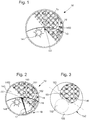
- the upper wheel comprises, on the user's side, a sky disc 1400, with a representation of the sky and of an eccentric sun 141, and which comprises an eccentric aperture 16, substantially opposite the sun 141, and by which is visible part of the lower wheel 15 illustrating the instantaneous appearance of the moon.
- the representation of the sky at the level of the sky disc 1400, comprises a first clear or illuminated part 142 corresponding to the day, which bears the representation of the sun 141, and has a second dark or degraded part corresponding to the night, which carries the window 16 through which the moon phase is visible.
- the representation of the sky at the level of the sky disc 1400, comprises a gradient image 144, the gradient not being illustrated in the figure, from a clear part corresponding to the day at the level of the representation of the sun 141, up to to a dark part corresponding to the night, at the level of the counter 16.
- the drive pinion designated by 13 or 130 depending on the variant, drives a lower wheel 15 to 59 teeth.
- This lower wheel 15 to 59 teeth carries a moon disc, called 150 in the first variant as visible on the figure. figure 3 Where 7 , or 1500 in the second variant as seen on the figure 10 .
- the moon disc can be attached to the lower wheel, or else constitute with it a single component, and can be constituted by enamelling, painting, screen printing, decal, or the like.
- the sky background zone 151 is configured so that the duration of the black moon and of the full moon are approximately respected.
- this sky background zone 151 is delimited by a border 153 in the form of a conchoid of a circle or in a cardioid shape and such that complete representations of the new moon and of the full moon are each visible through the window 16.
- the sky disc 1400 rotates outward. Otherwise, its axis could be obscured by the horizon line.
- the upper wheel, 14 or 140 depending on the variant is coaxial with the lower wheel 15.
- the first variant uses a particular gear ratio, 57-19-59, which makes it possible to produce an extremely simple moon phase, and which hardly consumes any energy, because the mechanism does not have a jumper, and is in direct contact with the hour wheel in a continuous movement.
- This input pinion 11 carries the drive pinion 13 of 19 teeth, which drives the two coaxial wheels of respectively 57 and 59 teeth: upper wheel 14 to 57 teeth, and lower wheel 15 to 59 teeth.
- the mechanism 10 comprises a fixed part constituted by a plate 30 or a bridge 31, to which is fixed a bar 19 in superposition of the sky disc 1400 and symbolizing the horizon line on either side of which the representation is movable. of the sun 141 during the rotation of the upper wheel 14 or 140, as visible on the figures 1 and 2 .
- the sky disc 1400 with the moon and the sun rotates to the rhythm of day and night.
- the lower wheel 15 is integral, for example through a needle barrel, a display or a needle 17 for the display of the age of the moon on a graduation 18 that comprises the disc of sky 1400.
- the drive pinion 13 to 19 teeth is single, and meshes simultaneously with the upper wheel 14 to 57 teeth, and with the lower wheel 15 to 59 teeth.
- the input pinion 11 is arranged to perform three turns in 24 hours
- the drive pinion 13 has 19 teeth
- the upper wheel 14 has 57 teeth
- the two-color representation has an illuminated area 152 and a sky background area 151, delimited by a border 153 in a conchoid of a circle or a cardioid shape and such as full representations of the new moon and full moon are each visible through window 16.
- the second variant exploits a further 58-29-59 gear ratio.
- the input pinion 110 meshes with the 12 hour wheel of the clockwork movement and rotates twice in 24 hours.
- This input pinion 110 carries the drive pinion 130 to 29 teeth, which drives the upper wheel 140 to 58 teeth, as seen in the figure. figure 9 , and the lower wheel 15 to 59 teeth.
- the input pinion 11 is arranged to perform two turns in 24 hours, the drive pinion 130 has 29 teeth, the two-color representation of the speed disc.
- moon 1500 has an illuminated area 152 and two sky background areas 151, in that the upper wheel 14 has 58 teeth.
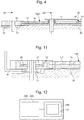
- the figure 11 illustrates a simple means of producing a moon phase corrector: the correction can be carried out by inserting a friction 20 on the connecting mobile between the input pinion 11 linked to the hours wheel 12, on which is driven a retaining ring 21, and the drive pinion 13 controlling the lunations. It is in particular possible to envisage correcting the moon from the position T2 of the winding stem of a watch 300, by means of a gear train or by a corrective lever acting on the drive pinion 13. The drive pinion 13 is thus driven by the input pinion 11 via a friction means 20, to allow correction from a control rod via a gear train, or from a corrective lever acting on the pinion d 'training 13.
- the invention also relates to a clockwork display mechanism 100 comprising such a moon phase display mechanism 10.
- the invention also relates to a timepiece movement 200 comprising such a moon phase display mechanism 10, and comprising an hour wheel 12 arranged either to drive the input pinion 11 and drive the drive pinion 13. or 130, either to constitute the input pinion 11 and at the same time carry and drive the drive pinion, in which case the drive pinion 13 drives the upper wheel 14 indirectly through a reverser and the pinion of drive 13 drives the lower wheel 15 indirectly through a decoupling.
- this movement 200 comprises a winding and correction rod, not shown in the figures, and the rod is arranged to control the correction of the moon phase by means of a train of references.
- the invention also relates to a watch 300 comprising such a movement 200.
Landscapes
- Physics & Mathematics (AREA)
- General Physics & Mathematics (AREA)
- Astronomy & Astrophysics (AREA)
- Engineering & Computer Science (AREA)
- Manufacturing & Machinery (AREA)
- Electromechanical Clocks (AREA)
Description
- L'invention concerne un mécanisme d'affichage de phase de lune agencé pour coopérer avec un mouvement d'horlogerie, et comportant un pignon d'entrée agencé pour effectuer trois tours, ou respectivement deux tours, en 24 heures.
- L'invention concerne encore un mécanisme d'affichage d'horlogerie comportant un tel mécanisme d'affichage de phase de lune.
- L'invention concerne encore un mouvement d'horlogerie comportant un tel mécanisme d'affichage de phase de lune.
- L'invention concerne encore une montre comportant un tel mouvement.
- L'invention concerne le domaine des mécanismes d'affichage de montres, en particulier pour les montres mécaniques à complications.
- L'affichage des phases de lune est une fonction prisée en horlogerie, qui complique la fabrication du mouvement, et qui occupe vite un volume important à l'intérieur de la boîte. La correction d'un tel affichage n'est pas toujours aisée.
- Les documents
EP2853957A1 etUS2006221771A1 , par exemple, divulguent chacun un système d'affichage de phases de lune. - L'invention se propose de réaliser un mécanisme d'affichage de phase de lune pour une montre, simple et économique, avec très peu de composants et sans aucune complexité de réalisation.
- A cet effet, l'invention concerne un mécanisme d'affichage de phase de lune selon la revendication 1.
- L'invention concerne encore un mécanisme d'affichage d'horlogerie comportant un tel mécanisme d'affichage de phase de lune.
- L'invention concerne encore un mouvement d'horlogerie comportant un tel mécanisme d'affichage de phase de lune.
- L'invention concerne encore une montre comportant un tel mouvement.
- D'autres caractéristiques et avantages de l'invention apparaîtront à la lecture de la description détaillée qui va suivre, en référence aux dessins annexés, où :
- la
figure 1 représente, de façon schématisée, et en vue de face, un mécanisme d'affichage de phase de lune selon l'invention, avec un disque de lune visible au travers d'un guichet d'un disque de ciel, ces deux disques étant portés par des roues coaxiales de vitesse de rotation différente, et le disque de ciel constituant un affichage jour-nuit, visible derrière une barrette symbolisant l'horizon ; - la
figure 2 représente, de façon similaire à lafigure 1 , le même mécanisme, complété par un afficheur d'âge de la lune, comportant une aiguille mobile face à une échelle graduée représentée partiellement ; - la
figure 3 représente, de façon similaire à lafigure 1 , le disque de lune du même mécanisme ; - la
figure 4 représente, en vue en coupe passant par les axes d'un mobile de commande et des roues coaxiales, une première variante du mécanisme selon l'invention ; - la
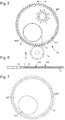
figure 5 représente, de façon schématisée, partielle et en vue de face, un mécanisme d'affichage de phase de lune selon une première variante de l'invention ; - la
figure 6 représente, de façon similaire à lafigure 4 , le mécanisme de lafigure 5 ; - la
figure 7 représente, de façon similaire à lafigure 3 , le disque de lune du mécanisme de lafigure 5 ; - la
figure 8 représente, de façon schématisée, partielle et en vue de face, un mécanisme d'affichage de phase de lune selon une deuxième variante de l'invention ; - la
figure 9 représente, de façon similaire à lafigure 6 , le mécanisme de lafigure 8 ; - la
figure 10 représente, de façon similaire à lafigure 7 , le disque de lune du mécanisme de lafigure 8 ; - la
figure 11 représente, en vue en coupe passant par les axes d'un mobile de commande et des roues coaxiales, un mécanisme à friction permettant la correction d'affichage de phase de lune applicable à la première variante ou à la deuxième variante de l'invention ; - la
figure 12 est un schéma-blocs représentant une montre comportant un mouvement d'horlogerie comportant un mécanisme d'affichage d'horlogerie comportant un tel mécanisme d'affichage de phase de lune. - L'invention concerne un mécanisme d'affichage de phase de lune pour une montre, simple et économique.
- Ce mécanisme est décrit ci-après selon deux variantes, qui utilisent le même principe général, mais avec des différences d'exécution au niveau des rouages.
- L'invention concerne un mécanisme d'affichage de phase de lune 10, qui est agencé pour coopérer avec un mouvement d'horlogerie 200, et comporte un pignon d'entrée.
- Ce pignon d'entrée est agencé pour effectuer :
- dans une première variante, trois tours en 24 heures, référencé 11 sur la
figure 4 , - ou respectivement, dans une deuxième variante, deux tours en 24 heures.
- Selon l'invention, le pignon d'entrée entraîne au moins un pignon d'entraînement, soit directement, soit par l'intermédiaire d'un moyen de friction 20 comme dans le cas de la variante de la
figure 11 : - dans la première variante, le pignon d'entrée entraîne au moins un pignon d'entraînement à 19 dents, référencé 13 sur la
figure 4 , - dans la deuxième variante, le pignon d'entrée entraîne un pignon d'entraînement à 29 dents, référencé 130 sur la
figure 8 . - Le pignon d'entraînement, dénommé 13 ou 130 selon la variante, entraîne une roue supérieure:
- dans la première variante, le pignon d'entraînement 13 entraîne une roue supérieure à 57 dents, référencée 14sur la
figure 4 , - dans la deuxième variante le pignon d'entraînement 130 entraîne une roue supérieure à 58 dents, .référencée 140 sur la
figure 9 . - Cette roue supérieure fait, pour chacune des variantes, un tour par jour.
- La roue supérieure comporte, du côté de l'utilisateur, un disque de ciel 1400, avec une représentation du ciel et d'un soleil 141 excentré, et qui comporte un guichet 16 excentré, sensiblement à l'opposé du soleil 141, et par lequel est visible une partie de la roue inférieure 15 illustrant l'aspect instantané de la lune.
- Dans une réalisation particulière et tel que visible sur les
figures 1, 2 , et8 , la représentation du ciel, au niveau du disque de ciel 1400, comporte une première partie claire ou éclairée 142 correspondant au jour, qui porte la représentation du soleil 141, et comporte une deuxième partie sombre ou en dégradé correspondant à la nuit, qui porte le guichet 16 au travers duquel est visible la phase de lune. - Sur la
figure 5 , la représentation du ciel, au niveau du disque de ciel 1400, comporte une image en dégradé 144, le dégradé n'étant pas illustré sur la figure, depuis une partie claire correspondant au jour au niveau de la représentation du soleil 141, jusqu'à une partie sombre correspondant à la nuit, au niveau du guichet 16. - Pour permettre l'affichage de la phase de lune, le pignon d'entraînement, désigné par 13 ou 130 selon la variante, entraîne une roue inférieure 15 à 59 dents.
- Cette roue inférieure 15 à 59 dents, commune aux deux variantes, est porteuse d'un disque de lune, dénommé 150 dans la première variante tel que visible sur la
figure 3 ou7 , ou 1500 dans la deuxième variante tel que visible sur lafigure 10 . Naturellement, le disque de lune peut être rapporté sur la roue inférieure, ou bien constituer avec elle un composant unique, et peut être constitué par un émaillage, une peinture, une sérigraphie, une décalcomanie, ou autre. - Ce disque de lune 150 ou 1500 comporte une représentation bicolore comportant au moins une zone éclairée 152, et au moins une zone de fond de ciel 151 sombre:
- dans la première variante, le disque de lune 150 comporte une zone éclairée 152 et une zone de fond de ciel 151, la zone éclairée 152 comportant une zone 155 correspondant à l'affichage de la pleine lune, et zone de fond de ciel 151 comportant une zone 154 correspondant à l'affichage de la nouvelle lune, dite aussi lune noire ;
- dans la deuxième variante, le disque de lune 1500 comporte une zone éclairée 152 et deux zones de fond de ciel 151 diamétralement opposée.
- Dans la première variante, la zone de fond de ciel 151 est configurée de façon à ce que la durée de la lune noire et de la pleine lune soient approximativement respectées. Dans une réalisation particulière, cette zone de fond de ciel 151 est délimitée par une frontière 153 en conchoïde de cercle ou en cardioïde et telle que des représentations complètes de la nouvelle lune et de la pleine lune soient chacune visible à travers le guichet 16.
- Pour que la lune apparaisse complète, le disque de ciel 1400 pivote sur l'extérieur. Sinon, son axe pourrait être masqué par la ligne d'horizon.
- Dans les réalisations illustrées correspondant à une réalisation préférée de moindre encombrement, la roue supérieure, 14 ou 140 selon la variante, est coaxiale à la roue inférieure 15.
- La première variante exploite un rapport d'engrenage particulier, 57-19-59, qui permet de réaliser une phase de lune d'une extrême simplicité, et qui ne consomme pratiquement pas d'énergie, car le mécanisme est dépourvu de sautoir, et est en prise directe sur la roue des heures dans un mouvement continu.
- Le pignon d'entrée 11 engrène avec la roue des heures 12 du mouvement d'horlogerie et fait trois tours en 24 heures : Z = Zh/3.
- Ce pignon d'entrée 11 porte le pignon d'entraînement 13 de 19 dents, qui entraîne les deux roues coaxiales de respectivement 57 et 59 dents: roue supérieure 14 à 57 dents, et roue inférieure 15 à 59 dents.
- La roue supérieure 14 comporte 57 dents et fait donc:

- La roue inférieure 15 compte 59 dents et fait:

- Le mécanisme 10 comporte une partie fixe constituée par une platine 30 ou un pont 31, à laquelle est fixée une barrette 19 en superposition du disque de ciel 1400 et symbolisant la ligne d'horizon de part et d'autre de laquelle est mobile la représentation du soleil 141 lors de la rotation de la roue supérieure 14 ou 140, tel que visible sur les
figures 1 et 2 . Le disque de ciel 1400 avec la lune et le soleil tourne au rythme du jour et de la nuit. - Dans la réalisation particulière de la
figure 2 , la roue inférieure 15 est solidaire, par exemple au travers d'un canon d'aiguille, d'un afficheur ou d'une aiguille 17 pour l'affichage de l'âge de la lune sur une graduation 18 que comporte le disque de ciel 1400. - Différents choix de rouage sont possibles pour la réalisation de cette première variante.
- Dans une première option, le pignon d'entraînement 13 à 19 dents est unique, et engrène simultanément avec la roue supérieure 14 à 57 dents, et avec la roue inférieure 15 à 59 dents.
- Pour un module m= 0.17, (calibre Blancpain 67) convenant à un diamètre de lune de 9.0 mm, on a :


- Avec Cm 6.545, on a:


- Dans une deuxième option, on dédouble le pignon d'entraînement, avec :

- En somme, dans cette première variante du mécanisme d'affichage de phase de lune 10, le pignon d'entrée 11 est agencé pour effectuer trois tours en 24 heures, le pignon d'entraînement 13 comporte 19 dents, la roue supérieure 14 comporte 57 dents, et, sur le disque de lune 150, la représentation bicolore comporte une zone éclairée 152 et une zone de fond de ciel 151, délimitées par une frontière 153 en conchoïde de cercle ou en cardioïde et telle que des représentations complètes de la nouvelle lune et de la pleine lune sont chacune visible à travers le guichet 16.
- La deuxième variante exploite un autre rapport d'engrenage 58-29-59.
- Le pignon d'entrée 110 engrène avec la roue des heures 12 du mouvement d'horlogerie et fait deux tours en 24 heures. Ce pignon d'entrée 110 porte le pignon d'entraînement 130 à 29 dents, qui entraîne la roue supérieure 140 à 58 dents, tel que visible sur la
figure 9 , et la roue inférieure 15 à 59 dents. - La roue supérieure 140 comporte 58 dents et fait donc:

- La roue inférieure 15 compte 59 dents, et son disque de lune 1500 comporte deux zones de fond de ciel 151. Cette roue inférieure 15 fait:


- Comme le pignon d'entraînement 130 à 29 dents fait un tour en 12 h, il est envisageable de l'implanter directement sur la roue des heures du mouvement, mais il faut rajouter un inverseur pour assurer le sens de rotation correct pour l'affichage jour/nuit, et il faut également un découplage entre la roue des heures et l'entraînement de la lune.
- En somme, dans cette deuxième variante du mécanisme d'affichage de phase de lune 10, le pignon d'entrée 11 est agencé pour effectuer deux tours en 24 heures, le pignon d'entraînement 130 comporte 29 dents, la représentation bicolore du disque de lune 1500 comporte une zone éclairée 152 et deux zones de fond de ciel 151, en ce que la roue supérieure 14 comporte 58 dents.
- La
figure 11 illustre un moyen simple de réalisation d'un correcteur des phases de lune: la correction peut être réalisée en intercalant une friction 20 sur le mobile de liaison entre le pignon d'entrée 11 lié à la roue des heures 12, sur lequel est chassée une bague de maintien 21, et le pignon d'entraînement 13 commandant les lunaisons. On peut notamment envisager de corriger la lune depuis la position T2 de la tige de remontoir d'une montre 300, moyennant un train de renvois ou par un levier correcteur agissant sur le pignon d'entraînement 13. Le pignon d'entraînement 13 est ainsi entraîné par le pignon d'entrée 11 par l'intermédiaire d'un moyen de friction 20, pour autoriser une correction depuis une tige de commande par l'intermédiaire d'un train de renvois, ou depuis un levier correcteur agissant sur le pignon d'entraînement 13. - L'invention concerne encore un mécanisme d'affichage d'horlogerie 100 comportant un tel mécanisme d'affichage de phase de lune 10.
- L'invention concerne encore un mouvement d'horlogerie 200 comportant un tel mécanisme d'affichage de phase de lune 10, et comportant une roue des heures 12 agencée, soit pour entraîner le pignon d'entrée 11 et entraîner le pignon d'entraînement 13 ou 130, soit pour constituer le pignon d'entrée 11 et à la fois porter et entraîner le pignon d'entraînement, auquel cas le pignon d'entraînement 13 entraîne la roue supérieure 14 indirectement au travers d'un inverseur et le pignon d'entraînement 13 entraîne la roue inférieure 15 indirectement au travers un découplage.
- Plus particulièrement, ce mouvement 200 comporte une tige de remontoir et de correction, non illustrée sur les figures, et la tige est agencée pour commander la correction de la phase de lune par l'intermédiaire d'un train de renvois.
- L'invention concerne encore une montre 300 comportant un tel mouvement 200.
Claims (11)
- Mécanisme d'affichage de phase de lune (10) agencé pour coopérer avec un mouvement d'horlogerie (200), et comportant un pignon d'entrée (11) agencé pour effectuer trois tours, ou respectivement deux tours, en 24 heures, et où ledit pignon d'entrée (11) entraîne, soit directement, soit par l'intermédiaire d'un moyen de friction (20), au moins un pignon d'entraînement (13 ; 130) à 19 dents, ou respectivement 29 dents, et en ce que un dit pignon d'entraînement (13 ; 130) entraîne une roue inférieure (15) à 59 dents porteuse d'un disque de lune (150 ; 1500) avec une représentation bicolore comportant une zone éclairée (152) et une, ou respectivement deux, zone de fond de ciel (151), caractérisé en ce que ledit pignon d'entraînement (13 ; 130) entraîne une roue supérieure (14 ; 140) à 57 dents, ou respectivement 58 dents, coaxiale à ladite roue inférieure (15) et qui fait un tour par jour et qui comporte, du côté de l'utilisateur, un disque de ciel (1400) avec une représentation du ciel et d'un soleil (141) excentré, et comportant un guichet (16) excentré sensiblement à l'opposé dudit soleil (141) et par lequel est visible une partie dudit disque de lune (150 ; 1500) illustrant l'aspect instantané de la lune.
- Mécanisme d'affichage de phase de lune (10) selon la revendication 1, caractérisé en ce que ledit pignon d'entraînement (13) est unique et entraîne à la fois ladite roue inférieure (15) et ladite roue supérieure (14).
- Mécanisme d'affichage de phase de lune (10) selon la revendication 1 ou 2, caractérisé en ce que ledit pignon d'entrée (11) est agencé pour effectuer trois tours en 24 heures, en ce que ledit pignon d'entraînement (13) comporte 19 dents, en ce que ladite représentation bicolore comporte une zone éclairée (152) et une zone de fond de ciel (151), en ce que ladite roue supérieure (14) comporte 57 dents, et en ce que, sur ledit disque de lune (150), ladite représentation bicolore de la lune et du fond de ciel comporte une frontière (153) en conchoïde de cercle ou en cardioïde et telle que des représentations complètes de la nouvelle lune et de la pleine lune soient chacune visible à travers ledit guichet (16).
- Mécanisme d'affichage de phase de lune (10) selon la revendication 1 ou 2, caractérisé en ce que ledit pignon d'entrée (11) est agencé pour effectuer deux tours en 24 heures, en ce que ledit pignon d'entraînement (130) comporte 29 dents, en ce que ladite représentation bicolore comporte une zone éclairée (152) et deux zones de fond de ciel (151), en ce que ladite roue supérieure (140) comporte 58 dents.
- Mécanisme d'affichage de phase de lune (10) selon l'une des revendications 1 à 4, caractérisé en ce que ledit mécanisme d'affichage de phase de lune (10) comporte une partie fixe constituée par une platine (30) ou un pont (31), à laquelle est fixée une barrette (19) en superposition dudit disque de ciel (1400) et symbolisant la ligne d'horizon de part et d'autre de laquelle est mobile la représentation dudit soleil (141) lors de la rotation de ladite roue supérieure (14 ; 140).
- Mécanisme d'affichage de phase de lune (10) selon l'une des revendications 1 à 5, caractérisé en ce que ladite roue inférieure (15) est solidaire d'un afficheur ou d'une aiguille (17) pour l'affichage de l'âge de la lune sur une graduation (18) que comporte ledit disque de ciel (1400).
- Mécanisme d'affichage de phase de lune (10) selon la revendication 2, caractérisé en ce que ledit pignon d'entraînement (13 ; 130) est entraîné par ledit pignon d'entrée (11) par l'intermédiaire d'un moyen de friction (20), pour autoriser une correction depuis une tige de commande par l'intermédiaire d'un train de renvois, ou depuis un levier correcteur agissant sur ledit pignon d'entraînement (13 ; 130).
- Mécanisme d'affichage d'horlogerie (100) comportant un mécanisme d'affichage de phase de lune (10) selon l'une des revendications 1 à 7.
- Mouvement d'horlogerie (200) comportant un mécanisme d'affichage de phase de lune (10) selon l'une des revendications 1 à 7, et comportant une roue des heures agencée, soit pour entraîner ledit pignon d'entrée (11) et entraîner ledit au moins un pignon d'entraînement (13 ; 130), soit pour constituer ledit pignon d'entrée (11) et à la fois porter et entraîner ledit au moins un pignon d'entraînement (13 ; 130) auquel cas un dit pignon d'entraînement (13 ; 130) entraîne ladite roue supérieure (14 ; 140) indirectement au travers d'un inverseur, et un dit pignon d'entraînement (13; 130) entraîne ladite roue inférieure (15) indirectement au travers d'un découplage.
- Mouvement d'horlogerie (200) selon la revendication 9 avec un mécanisme d'affichage de phase de lune (10) selon la revendication 7, et comportant une tige de remontoir et de correction, caractérisé en ce que ladite tige est agencée pour commander la correction de la phase de lune par l'intermédiaire d'un train de renvois.
- Montre (300) comportant un mouvement d'horlogerie (200) selon la revendication 9 ou 10.
Priority Applications (1)
| Application Number | Priority Date | Filing Date | Title |
|---|---|---|---|
| EP18198661.3A EP3467596B1 (fr) | 2016-07-04 | 2016-07-04 | Mécanisme d'affichage de phase de lune |
Applications Claiming Priority (3)
| Application Number | Priority Date | Filing Date | Title |
|---|---|---|---|
| EP18198661.3A EP3467596B1 (fr) | 2016-07-04 | 2016-07-04 | Mécanisme d'affichage de phase de lune |
| EP16177847.7A EP3267267B1 (fr) | 2016-07-04 | 2016-07-04 | Mécanisme d'affichage de phase de lune |
| CH00843/16A CH712644B1 (fr) | 2016-07-04 | 2016-07-04 | Mécanisme d'affichage de phase de lune. |
Related Parent Applications (2)
| Application Number | Title | Priority Date | Filing Date |
|---|---|---|---|
| EP16177847.7A Division EP3267267B1 (fr) | 2016-07-04 | 2016-07-04 | Mécanisme d'affichage de phase de lune |
| EP16177847.7A Division-Into EP3267267B1 (fr) | 2016-07-04 | 2016-07-04 | Mécanisme d'affichage de phase de lune |
Publications (2)
| Publication Number | Publication Date |
|---|---|
| EP3467596A1 EP3467596A1 (fr) | 2019-04-10 |
| EP3467596B1 true EP3467596B1 (fr) | 2021-12-22 |
Family
ID=63383793
Family Applications (2)
| Application Number | Title | Priority Date | Filing Date |
|---|---|---|---|
| EP18198661.3A Active EP3467596B1 (fr) | 2016-07-04 | 2016-07-04 | Mécanisme d'affichage de phase de lune |
| EP16177847.7A Active EP3267267B1 (fr) | 2016-07-04 | 2016-07-04 | Mécanisme d'affichage de phase de lune |
Family Applications After (1)
| Application Number | Title | Priority Date | Filing Date |
|---|---|---|---|
| EP16177847.7A Active EP3267267B1 (fr) | 2016-07-04 | 2016-07-04 | Mécanisme d'affichage de phase de lune |
Country Status (6)
| Country | Link |
|---|---|
| US (1) | US10078309B2 (fr) |
| EP (2) | EP3467596B1 (fr) |
| JP (1) | JP6356875B2 (fr) |
| KR (1) | KR101964520B1 (fr) |
| CN (1) | CN107577135B (fr) |
| CH (2) | CH712644B1 (fr) |
Families Citing this family (14)
| Publication number | Priority date | Publication date | Assignee | Title |
|---|---|---|---|---|
| EP3379348B1 (fr) * | 2017-03-20 | 2023-08-23 | ETA SA Manufacture Horlogère Suisse | Affichage de phase de lune universel |
| JP6998234B2 (ja) * | 2018-02-21 | 2022-02-10 | セイコーインスツル株式会社 | 表示機構、ムーブメントおよび時計 |
| EP3644138A1 (fr) * | 2018-10-23 | 2020-04-29 | ETA SA Manufacture Horlogère Suisse | Piece d'horlogerie pouvant indiquer la position du soleil par rapport a l'horizon en tout point du globe |
| JP7251272B2 (ja) * | 2019-04-01 | 2023-04-04 | セイコーエプソン株式会社 | 月齢表示時計 |
| EP3800513B1 (fr) * | 2019-10-04 | 2023-08-09 | ETA SA Manufacture Horlogère Suisse | Pièce d'horlogerie comprenant des moyens d'indication am-pm |
| EP3819716A1 (fr) * | 2019-11-05 | 2021-05-12 | The Swatch Group Research and Development Ltd | Dispositif d'affichage de lune à la demande |
| EP4369113B1 (fr) * | 2019-12-23 | 2025-10-01 | Blancpain SA | Mecanisme d'affichage des phases de lune |
| EP3985449B1 (fr) | 2020-10-13 | 2024-11-27 | The Swatch Group Research and Development Ltd | Indicateur de phase de lune par disque tournant |
| CH718104A1 (fr) * | 2020-11-30 | 2022-05-31 | Mft Dhorlogerie Audemars Piguet Sa | Mécanisme d'affichage de phases de lune. |
| EP4180880A1 (fr) * | 2021-11-10 | 2023-05-17 | Montres Breguet S.A. | Dispositif d'affichage d'une succession d'indications d'une grandeur temporelle pour une pièce d'horlogerie |
| CN114063424A (zh) * | 2021-12-20 | 2022-02-18 | 深圳市贝伦斯智能穿戴科技有限公司 | 一种望月表盘 |
| USD988898S1 (en) | 2022-02-14 | 2023-06-13 | Richemont International Sa | Watch dial |
| US20250377631A1 (en) * | 2024-06-09 | 2025-12-11 | Marc L. Diamond | Apparatus for Displaying Time |
| US12436502B1 (en) * | 2024-06-09 | 2025-10-07 | Marc L. Diamond | Apparatus for displaying time |
Citations (1)
| Publication number | Priority date | Publication date | Assignee | Title |
|---|---|---|---|---|
| EP3098671A1 (fr) * | 2015-05-27 | 2016-11-30 | Montres Breguet S.A. | Mecanisme d'affichage de phase de lune d'horlogerie |
Family Cites Families (10)
| Publication number | Priority date | Publication date | Assignee | Title |
|---|---|---|---|---|
| US4684260A (en) * | 1985-02-15 | 1987-08-04 | Johann Jackle Metallwarenfabrik, GmbH & Co. | Astronomical clock |
| CH668884GA3 (fr) * | 1987-09-24 | 1989-02-15 | ||
| CH1445672H1 (fr) | 2003-02-07 | 2014-01-15 | Richemont Int Sa | |
| DE10315757B4 (de) * | 2003-04-04 | 2006-10-12 | Lange Uhren Gmbh | Uhr mit einer Mondphasenanzeige |
| EP1475679A1 (fr) * | 2003-05-05 | 2004-11-10 | Asulab S.A. | Dispositif d'affichage des phases de la lune, notamment dans une piece d'horologerie |
| EP1708049B1 (fr) * | 2005-03-31 | 2019-05-08 | Richemont International S.A. | Mécanisme indicateur des phases de la lune |
| ATE479925T1 (de) * | 2007-06-28 | 2010-09-15 | Eta Sa Mft Horlogere Suisse | Uhr mit mondphasenanzeige |
| US7859950B2 (en) | 2008-08-11 | 2010-12-28 | Blancpain S.A. | Large date calendar day mechanism for a timepiece |
| EP2544055B1 (fr) | 2011-07-07 | 2017-11-08 | Blancpain S.A. | Affichage d'une grandeur physique sur un support d'affichage horloger |
| EP2853957B1 (fr) * | 2013-09-26 | 2017-04-05 | Christophe Claret Engineering S.A. | Dispositif d'affichage de phases de lune |
-
2016
- 2016-07-04 EP EP18198661.3A patent/EP3467596B1/fr active Active
- 2016-07-04 EP EP16177847.7A patent/EP3267267B1/fr active Active
- 2016-07-04 CH CH00843/16A patent/CH712644B1/fr unknown
- 2016-10-27 CH CH01437/16A patent/CH712668A2/fr not_active Application Discontinuation
-
2017
- 2017-06-05 JP JP2017110700A patent/JP6356875B2/ja active Active
- 2017-06-06 US US15/614,858 patent/US10078309B2/en active Active
- 2017-06-30 KR KR1020170083127A patent/KR101964520B1/ko active Active
- 2017-07-03 CN CN201710532476.3A patent/CN107577135B/zh active Active
Patent Citations (1)
| Publication number | Priority date | Publication date | Assignee | Title |
|---|---|---|---|---|
| EP3098671A1 (fr) * | 2015-05-27 | 2016-11-30 | Montres Breguet S.A. | Mecanisme d'affichage de phase de lune d'horlogerie |
Also Published As
| Publication number | Publication date |
|---|---|
| CN107577135B (zh) | 2019-11-19 |
| US20180004162A1 (en) | 2018-01-04 |
| EP3267267A1 (fr) | 2018-01-10 |
| JP2018004626A (ja) | 2018-01-11 |
| CH712668A2 (fr) | 2018-01-15 |
| US10078309B2 (en) | 2018-09-18 |
| EP3467596A1 (fr) | 2019-04-10 |
| CH712644A2 (fr) | 2018-01-15 |
| KR20180004668A (ko) | 2018-01-12 |
| EP3267267B1 (fr) | 2019-02-27 |
| CN107577135A (zh) | 2018-01-12 |
| JP6356875B2 (ja) | 2018-07-11 |
| CH712644B1 (fr) | 2019-03-15 |
| KR101964520B1 (ko) | 2019-04-01 |
Similar Documents
| Publication | Publication Date | Title |
|---|---|---|
| EP3267267B1 (fr) | Mécanisme d'affichage de phase de lune | |
| EP0579093B1 (fr) | Pièce d'horlogerie à affichage universel de l'heure | |
| EP2728421B1 (fr) | Montre astronomique | |
| EP2544055B1 (fr) | Affichage d'une grandeur physique sur un support d'affichage horloger | |
| CH686808B5 (fr) | Piece d'horlogerie avec indication de la partie de la terre visible depuis la lune. | |
| EP2515186B1 (fr) | Rouage de finissage pour pièce d'horlogerie | |
| EP3764170B1 (fr) | Mecanisme d'affichage d'horlogerie a aiguille elastique | |
| EP3327516B1 (fr) | Mécanisme d'affichage de période temporelle ou de saison | |
| EP2442191A1 (fr) | Pièce d'horlogerie à affichage analogique modulaire | |
| WO2008046917A2 (fr) | Aiguille indicatrice pour piece d'horlogerie, mouvement pour entraîner une telle aiguille indicatrice et piece d'horlogerie correspondante | |
| EP3696617A1 (fr) | Mecanisme d'affichage de mois et d'annee bissextile pour piece d'horlogerie | |
| EP2721449A1 (fr) | Dispositif d'affichage | |
| EP1271268A1 (fr) | Montre à double fuseau horaire | |
| CH715842A2 (fr) | Mécanisme d'affichage de mois et d'année bissextile pour pièce d'horlogerie. | |
| CH688171B5 (fr) | Mécanisme additionnel de représentation astronomique pour pièces d'horlogerie. | |
| EP1866708B1 (fr) | Pièce d'horlogerie | |
| EP4372482A1 (fr) | Mecanisme d'affichage des periodes d'un cycle annuel de piece d'horlogerie | |
| CH705336B1 (fr) | Mécanisme d'affichage des phases de lune. | |
| CH720155A1 (fr) | Mécanisme d'affichage pour montre à fuseaux horaires. | |
| CH714979B1 (fr) | Mécanisme d'affichage de phases de lune pour une pièce d'horlogerie. | |
| EP1826638A1 (fr) | Mouvement de pièce d'horlogerie | |
| CH705990A2 (fr) | Dispositif d'indication de réserve de marche pour pièce d'horlogerie. |
Legal Events
| Date | Code | Title | Description |
|---|---|---|---|
| PUAI | Public reference made under article 153(3) epc to a published international application that has entered the european phase |
Free format text: ORIGINAL CODE: 0009012 |
|
| STAA | Information on the status of an ep patent application or granted ep patent |
Free format text: STATUS: THE APPLICATION HAS BEEN PUBLISHED |
|
| AC | Divisional application: reference to earlier application |
Ref document number: 3267267 Country of ref document: EP Kind code of ref document: P |
|
| AK | Designated contracting states |
Kind code of ref document: A1 Designated state(s): AL AT BE BG CH CY CZ DE DK EE ES FI FR GB GR HR HU IE IS IT LI LT LU LV MC MK MT NL NO PL PT RO RS SE SI SK SM TR |
|
| STAA | Information on the status of an ep patent application or granted ep patent |
Free format text: STATUS: REQUEST FOR EXAMINATION WAS MADE |
|
| 17P | Request for examination filed |
Effective date: 20191010 |
|
| RBV | Designated contracting states (corrected) |
Designated state(s): AL AT BE BG CH CY CZ DE DK EE ES FI FR GB GR HR HU IE IS IT LI LT LU LV MC MK MT NL NO PL PT RO RS SE SI SK SM TR |
|
| RIC1 | Information provided on ipc code assigned before grant |
Ipc: G04B 19/26 20060101AFI20200214BHEP |
|
| STAA | Information on the status of an ep patent application or granted ep patent |
Free format text: STATUS: EXAMINATION IS IN PROGRESS |
|
| 17Q | First examination report despatched |
Effective date: 20200807 |
|
| GRAP | Despatch of communication of intention to grant a patent |
Free format text: ORIGINAL CODE: EPIDOSNIGR1 |
|
| STAA | Information on the status of an ep patent application or granted ep patent |
Free format text: STATUS: GRANT OF PATENT IS INTENDED |
|
| INTG | Intention to grant announced |
Effective date: 20210921 |
|
| GRAS | Grant fee paid |
Free format text: ORIGINAL CODE: EPIDOSNIGR3 |
|
| GRAA | (expected) grant |
Free format text: ORIGINAL CODE: 0009210 |
|
| STAA | Information on the status of an ep patent application or granted ep patent |
Free format text: STATUS: THE PATENT HAS BEEN GRANTED |
|
| AC | Divisional application: reference to earlier application |
Ref document number: 3267267 Country of ref document: EP Kind code of ref document: P |
|
| AK | Designated contracting states |
Kind code of ref document: B1 Designated state(s): AL AT BE BG CH CY CZ DE DK EE ES FI FR GB GR HR HU IE IS IT LI LT LU LV MC MK MT NL NO PL PT RO RS SE SI SK SM TR |
|
| REG | Reference to a national code |
Ref country code: GB Ref legal event code: FG4D Free format text: NOT ENGLISH |
|
| REG | Reference to a national code |
Ref country code: CH Ref legal event code: EP |
|
| REG | Reference to a national code |
Ref country code: DE Ref legal event code: R096 Ref document number: 602016067734 Country of ref document: DE |
|
| REG | Reference to a national code |
Ref country code: AT Ref legal event code: REF Ref document number: 1457457 Country of ref document: AT Kind code of ref document: T Effective date: 20220115 |
|
| REG | Reference to a national code |
Ref country code: IE Ref legal event code: FG4D Free format text: LANGUAGE OF EP DOCUMENT: FRENCH |
|
| REG | Reference to a national code |
Ref country code: LT Ref legal event code: MG9D |
|
| PG25 | Lapsed in a contracting state [announced via postgrant information from national office to epo] |
Ref country code: RS Free format text: LAPSE BECAUSE OF FAILURE TO SUBMIT A TRANSLATION OF THE DESCRIPTION OR TO PAY THE FEE WITHIN THE PRESCRIBED TIME-LIMIT Effective date: 20211222 Ref country code: LT Free format text: LAPSE BECAUSE OF FAILURE TO SUBMIT A TRANSLATION OF THE DESCRIPTION OR TO PAY THE FEE WITHIN THE PRESCRIBED TIME-LIMIT Effective date: 20211222 Ref country code: FI Free format text: LAPSE BECAUSE OF FAILURE TO SUBMIT A TRANSLATION OF THE DESCRIPTION OR TO PAY THE FEE WITHIN THE PRESCRIBED TIME-LIMIT Effective date: 20211222 Ref country code: BG Free format text: LAPSE BECAUSE OF FAILURE TO SUBMIT A TRANSLATION OF THE DESCRIPTION OR TO PAY THE FEE WITHIN THE PRESCRIBED TIME-LIMIT Effective date: 20220322 |
|
| REG | Reference to a national code |
Ref country code: NL Ref legal event code: MP Effective date: 20211222 |
|
| REG | Reference to a national code |
Ref country code: AT Ref legal event code: MK05 Ref document number: 1457457 Country of ref document: AT Kind code of ref document: T Effective date: 20211222 |
|
| PG25 | Lapsed in a contracting state [announced via postgrant information from national office to epo] |
Ref country code: SE Free format text: LAPSE BECAUSE OF FAILURE TO SUBMIT A TRANSLATION OF THE DESCRIPTION OR TO PAY THE FEE WITHIN THE PRESCRIBED TIME-LIMIT Effective date: 20211222 Ref country code: NO Free format text: LAPSE BECAUSE OF FAILURE TO SUBMIT A TRANSLATION OF THE DESCRIPTION OR TO PAY THE FEE WITHIN THE PRESCRIBED TIME-LIMIT Effective date: 20220322 Ref country code: LV Free format text: LAPSE BECAUSE OF FAILURE TO SUBMIT A TRANSLATION OF THE DESCRIPTION OR TO PAY THE FEE WITHIN THE PRESCRIBED TIME-LIMIT Effective date: 20211222 Ref country code: HR Free format text: LAPSE BECAUSE OF FAILURE TO SUBMIT A TRANSLATION OF THE DESCRIPTION OR TO PAY THE FEE WITHIN THE PRESCRIBED TIME-LIMIT Effective date: 20211222 Ref country code: GR Free format text: LAPSE BECAUSE OF FAILURE TO SUBMIT A TRANSLATION OF THE DESCRIPTION OR TO PAY THE FEE WITHIN THE PRESCRIBED TIME-LIMIT Effective date: 20220323 |
|
| PG25 | Lapsed in a contracting state [announced via postgrant information from national office to epo] |
Ref country code: NL Free format text: LAPSE BECAUSE OF FAILURE TO SUBMIT A TRANSLATION OF THE DESCRIPTION OR TO PAY THE FEE WITHIN THE PRESCRIBED TIME-LIMIT Effective date: 20211222 |
|
| PG25 | Lapsed in a contracting state [announced via postgrant information from national office to epo] |
Ref country code: SM Free format text: LAPSE BECAUSE OF FAILURE TO SUBMIT A TRANSLATION OF THE DESCRIPTION OR TO PAY THE FEE WITHIN THE PRESCRIBED TIME-LIMIT Effective date: 20211222 Ref country code: SK Free format text: LAPSE BECAUSE OF FAILURE TO SUBMIT A TRANSLATION OF THE DESCRIPTION OR TO PAY THE FEE WITHIN THE PRESCRIBED TIME-LIMIT Effective date: 20211222 Ref country code: RO Free format text: LAPSE BECAUSE OF FAILURE TO SUBMIT A TRANSLATION OF THE DESCRIPTION OR TO PAY THE FEE WITHIN THE PRESCRIBED TIME-LIMIT Effective date: 20211222 Ref country code: PT Free format text: LAPSE BECAUSE OF FAILURE TO SUBMIT A TRANSLATION OF THE DESCRIPTION OR TO PAY THE FEE WITHIN THE PRESCRIBED TIME-LIMIT Effective date: 20220422 Ref country code: ES Free format text: LAPSE BECAUSE OF FAILURE TO SUBMIT A TRANSLATION OF THE DESCRIPTION OR TO PAY THE FEE WITHIN THE PRESCRIBED TIME-LIMIT Effective date: 20211222 Ref country code: EE Free format text: LAPSE BECAUSE OF FAILURE TO SUBMIT A TRANSLATION OF THE DESCRIPTION OR TO PAY THE FEE WITHIN THE PRESCRIBED TIME-LIMIT Effective date: 20211222 Ref country code: CZ Free format text: LAPSE BECAUSE OF FAILURE TO SUBMIT A TRANSLATION OF THE DESCRIPTION OR TO PAY THE FEE WITHIN THE PRESCRIBED TIME-LIMIT Effective date: 20211222 |
|
| PG25 | Lapsed in a contracting state [announced via postgrant information from national office to epo] |
Ref country code: PL Free format text: LAPSE BECAUSE OF FAILURE TO SUBMIT A TRANSLATION OF THE DESCRIPTION OR TO PAY THE FEE WITHIN THE PRESCRIBED TIME-LIMIT Effective date: 20211222 Ref country code: AT Free format text: LAPSE BECAUSE OF FAILURE TO SUBMIT A TRANSLATION OF THE DESCRIPTION OR TO PAY THE FEE WITHIN THE PRESCRIBED TIME-LIMIT Effective date: 20211222 |
|
| REG | Reference to a national code |
Ref country code: DE Ref legal event code: R097 Ref document number: 602016067734 Country of ref document: DE |
|
| PG25 | Lapsed in a contracting state [announced via postgrant information from national office to epo] |
Ref country code: IS Free format text: LAPSE BECAUSE OF FAILURE TO SUBMIT A TRANSLATION OF THE DESCRIPTION OR TO PAY THE FEE WITHIN THE PRESCRIBED TIME-LIMIT Effective date: 20220422 |
|
| PLBE | No opposition filed within time limit |
Free format text: ORIGINAL CODE: 0009261 |
|
| STAA | Information on the status of an ep patent application or granted ep patent |
Free format text: STATUS: NO OPPOSITION FILED WITHIN TIME LIMIT |
|
| PG25 | Lapsed in a contracting state [announced via postgrant information from national office to epo] |
Ref country code: DK Free format text: LAPSE BECAUSE OF FAILURE TO SUBMIT A TRANSLATION OF THE DESCRIPTION OR TO PAY THE FEE WITHIN THE PRESCRIBED TIME-LIMIT Effective date: 20211222 Ref country code: AL Free format text: LAPSE BECAUSE OF FAILURE TO SUBMIT A TRANSLATION OF THE DESCRIPTION OR TO PAY THE FEE WITHIN THE PRESCRIBED TIME-LIMIT Effective date: 20211222 |
|
| 26N | No opposition filed |
Effective date: 20220923 |
|
| PG25 | Lapsed in a contracting state [announced via postgrant information from national office to epo] |
Ref country code: SI Free format text: LAPSE BECAUSE OF FAILURE TO SUBMIT A TRANSLATION OF THE DESCRIPTION OR TO PAY THE FEE WITHIN THE PRESCRIBED TIME-LIMIT Effective date: 20211222 Ref country code: MC Free format text: LAPSE BECAUSE OF FAILURE TO SUBMIT A TRANSLATION OF THE DESCRIPTION OR TO PAY THE FEE WITHIN THE PRESCRIBED TIME-LIMIT Effective date: 20211222 |
|
| REG | Reference to a national code |
Ref country code: BE Ref legal event code: MM Effective date: 20220731 |
|
| PG25 | Lapsed in a contracting state [announced via postgrant information from national office to epo] |
Ref country code: LU Free format text: LAPSE BECAUSE OF NON-PAYMENT OF DUE FEES Effective date: 20220704 |
|
| PG25 | Lapsed in a contracting state [announced via postgrant information from national office to epo] |
Ref country code: IT Free format text: LAPSE BECAUSE OF FAILURE TO SUBMIT A TRANSLATION OF THE DESCRIPTION OR TO PAY THE FEE WITHIN THE PRESCRIBED TIME-LIMIT Effective date: 20211222 Ref country code: BE Free format text: LAPSE BECAUSE OF NON-PAYMENT OF DUE FEES Effective date: 20220731 |
|
| P01 | Opt-out of the competence of the unified patent court (upc) registered |
Effective date: 20230611 |
|
| PG25 | Lapsed in a contracting state [announced via postgrant information from national office to epo] |
Ref country code: IE Free format text: LAPSE BECAUSE OF NON-PAYMENT OF DUE FEES Effective date: 20220704 |
|
| PG25 | Lapsed in a contracting state [announced via postgrant information from national office to epo] |
Ref country code: HU Free format text: LAPSE BECAUSE OF FAILURE TO SUBMIT A TRANSLATION OF THE DESCRIPTION OR TO PAY THE FEE WITHIN THE PRESCRIBED TIME-LIMIT; INVALID AB INITIO Effective date: 20160704 |
|
| PG25 | Lapsed in a contracting state [announced via postgrant information from national office to epo] |
Ref country code: MK Free format text: LAPSE BECAUSE OF FAILURE TO SUBMIT A TRANSLATION OF THE DESCRIPTION OR TO PAY THE FEE WITHIN THE PRESCRIBED TIME-LIMIT Effective date: 20211222 Ref country code: CY Free format text: LAPSE BECAUSE OF FAILURE TO SUBMIT A TRANSLATION OF THE DESCRIPTION OR TO PAY THE FEE WITHIN THE PRESCRIBED TIME-LIMIT Effective date: 20211222 |
|
| PG25 | Lapsed in a contracting state [announced via postgrant information from national office to epo] |
Ref country code: MT Free format text: LAPSE BECAUSE OF FAILURE TO SUBMIT A TRANSLATION OF THE DESCRIPTION OR TO PAY THE FEE WITHIN THE PRESCRIBED TIME-LIMIT Effective date: 20211222 |
|
| PGFP | Annual fee paid to national office [announced via postgrant information from national office to epo] |
Ref country code: GB Payment date: 20250619 Year of fee payment: 10 |
|
| PGFP | Annual fee paid to national office [announced via postgrant information from national office to epo] |
Ref country code: FR Payment date: 20250620 Year of fee payment: 10 |
|
| PGFP | Annual fee paid to national office [announced via postgrant information from national office to epo] |
Ref country code: DE Payment date: 20250620 Year of fee payment: 10 |
|
| PGFP | Annual fee paid to national office [announced via postgrant information from national office to epo] |
Ref country code: CH Payment date: 20250801 Year of fee payment: 10 |
|
| PG25 | Lapsed in a contracting state [announced via postgrant information from national office to epo] |
Ref country code: TR Free format text: LAPSE BECAUSE OF FAILURE TO SUBMIT A TRANSLATION OF THE DESCRIPTION OR TO PAY THE FEE WITHIN THE PRESCRIBED TIME-LIMIT Effective date: 20211222 |