EP3470526A2 - Antikörper zur spezifischen bindung an staphylococcus-aureus-alpha-toxin und verwendungsverfahren dafür - Google Patents
Antikörper zur spezifischen bindung an staphylococcus-aureus-alpha-toxin und verwendungsverfahren dafür Download PDFInfo
- Publication number
- EP3470526A2 EP3470526A2 EP18190790.8A EP18190790A EP3470526A2 EP 3470526 A2 EP3470526 A2 EP 3470526A2 EP 18190790 A EP18190790 A EP 18190790A EP 3470526 A2 EP3470526 A2 EP 3470526A2
- Authority
- EP
- European Patent Office
- Prior art keywords
- seq
- nos
- antibody
- alpha toxin
- amino acid
- Prior art date
- Legal status (The legal status is an assumption and is not a legal conclusion. Google has not performed a legal analysis and makes no representation as to the accuracy of the status listed.)
- Pending
Links
Images










Classifications
-
- C—CHEMISTRY; METALLURGY
- C07—ORGANIC CHEMISTRY
- C07K—PEPTIDES
- C07K16/00—Immunoglobulins [IG], e.g. monoclonal or polyclonal antibodies
- C07K16/12—Immunoglobulins [IG], e.g. monoclonal or polyclonal antibodies against material from bacteria
-
- C—CHEMISTRY; METALLURGY
- C07—ORGANIC CHEMISTRY
- C07K—PEPTIDES
- C07K16/00—Immunoglobulins [IG], e.g. monoclonal or polyclonal antibodies
- C07K16/12—Immunoglobulins [IG], e.g. monoclonal or polyclonal antibodies against material from bacteria
- C07K16/1267—Gram-positive bacteria
- C07K16/1271—Micrococcaceae (F); Staphylococcaceae (F), e.g. Staphylococcus (G)
-
- A—HUMAN NECESSITIES
- A61—MEDICAL OR VETERINARY SCIENCE; HYGIENE
- A61K—PREPARATIONS FOR MEDICAL, DENTAL OR TOILETRY PURPOSES
- A61K38/00—Medicinal preparations containing peptides
- A61K38/04—Peptides having up to 20 amino acids in a fully defined sequence; Derivatives thereof
- A61K38/14—Peptides containing saccharide radicals; Derivatives thereof, e.g. bleomycin, phleomycin, muramylpeptides or vancomycin
-
- A—HUMAN NECESSITIES
- A61—MEDICAL OR VETERINARY SCIENCE; HYGIENE
- A61K—PREPARATIONS FOR MEDICAL, DENTAL OR TOILETRY PURPOSES
- A61K39/00—Medicinal preparations containing antigens or antibodies
- A61K39/395—Antibodies; Immunoglobulins; Immune serum, e.g. antilymphocytic serum
- A61K39/40—Antibodies; Immunoglobulins; Immune serum, e.g. antilymphocytic serum bacterial
-
- A—HUMAN NECESSITIES
- A61—MEDICAL OR VETERINARY SCIENCE; HYGIENE
- A61K—PREPARATIONS FOR MEDICAL, DENTAL OR TOILETRY PURPOSES
- A61K45/00—Medicinal preparations containing active ingredients not provided for in groups A61K31/00 - A61K41/00
- A61K45/06—Mixtures of active ingredients without chemical characterisation, e.g. antiphlogistics and cardiaca
-
- A—HUMAN NECESSITIES
- A61—MEDICAL OR VETERINARY SCIENCE; HYGIENE
- A61P—SPECIFIC THERAPEUTIC ACTIVITY OF CHEMICAL COMPOUNDS OR MEDICINAL PREPARATIONS
- A61P11/00—Drugs for disorders of the respiratory system
-
- A—HUMAN NECESSITIES
- A61—MEDICAL OR VETERINARY SCIENCE; HYGIENE
- A61P—SPECIFIC THERAPEUTIC ACTIVITY OF CHEMICAL COMPOUNDS OR MEDICINAL PREPARATIONS
- A61P15/00—Drugs for genital or sexual disorders; Contraceptives
- A61P15/14—Drugs for genital or sexual disorders; Contraceptives for lactation disorders, e.g. galactorrhoea
-
- A—HUMAN NECESSITIES
- A61—MEDICAL OR VETERINARY SCIENCE; HYGIENE
- A61P—SPECIFIC THERAPEUTIC ACTIVITY OF CHEMICAL COMPOUNDS OR MEDICINAL PREPARATIONS
- A61P17/00—Drugs for dermatological disorders
-
- A—HUMAN NECESSITIES
- A61—MEDICAL OR VETERINARY SCIENCE; HYGIENE
- A61P—SPECIFIC THERAPEUTIC ACTIVITY OF CHEMICAL COMPOUNDS OR MEDICINAL PREPARATIONS
- A61P17/00—Drugs for dermatological disorders
- A61P17/02—Drugs for dermatological disorders for treating wounds, ulcers, burns, scars, keloids, or the like
-
- A—HUMAN NECESSITIES
- A61—MEDICAL OR VETERINARY SCIENCE; HYGIENE
- A61P—SPECIFIC THERAPEUTIC ACTIVITY OF CHEMICAL COMPOUNDS OR MEDICINAL PREPARATIONS
- A61P29/00—Non-central analgesic, antipyretic or antiinflammatory agents, e.g. antirheumatic agents; Non-steroidal antiinflammatory drugs [NSAID]
-
- A—HUMAN NECESSITIES
- A61—MEDICAL OR VETERINARY SCIENCE; HYGIENE
- A61P—SPECIFIC THERAPEUTIC ACTIVITY OF CHEMICAL COMPOUNDS OR MEDICINAL PREPARATIONS
- A61P31/00—Antiinfectives, i.e. antibiotics, antiseptics, chemotherapeutics
- A61P31/04—Antibacterial agents
-
- A—HUMAN NECESSITIES
- A61—MEDICAL OR VETERINARY SCIENCE; HYGIENE
- A61P—SPECIFIC THERAPEUTIC ACTIVITY OF CHEMICAL COMPOUNDS OR MEDICINAL PREPARATIONS
- A61P39/00—General protective or antinoxious agents
- A61P39/02—Antidotes
-
- A—HUMAN NECESSITIES
- A61—MEDICAL OR VETERINARY SCIENCE; HYGIENE
- A61P—SPECIFIC THERAPEUTIC ACTIVITY OF CHEMICAL COMPOUNDS OR MEDICINAL PREPARATIONS
- A61P43/00—Drugs for specific purposes, not provided for in groups A61P1/00-A61P41/00
-
- G—PHYSICS
- G01—MEASURING; TESTING
- G01N—INVESTIGATING OR ANALYSING MATERIALS BY DETERMINING THEIR CHEMICAL OR PHYSICAL PROPERTIES
- G01N33/00—Investigating or analysing materials by specific methods not covered by groups G01N1/00 - G01N31/00
- G01N33/48—Biological material, e.g. blood, urine; Haemocytometers
- G01N33/50—Chemical analysis of biological material, e.g. blood, urine; Testing involving biospecific ligand binding methods; Immunological testing
- G01N33/53—Immunoassay; Biospecific binding assay; Materials therefor
- G01N33/569—Immunoassay; Biospecific binding assay; Materials therefor for microorganisms, e.g. protozoa, bacteria, viruses
-
- G—PHYSICS
- G01—MEASURING; TESTING
- G01N—INVESTIGATING OR ANALYSING MATERIALS BY DETERMINING THEIR CHEMICAL OR PHYSICAL PROPERTIES
- G01N33/00—Investigating or analysing materials by specific methods not covered by groups G01N1/00 - G01N31/00
- G01N33/48—Biological material, e.g. blood, urine; Haemocytometers
- G01N33/50—Chemical analysis of biological material, e.g. blood, urine; Testing involving biospecific ligand binding methods; Immunological testing
- G01N33/53—Immunoassay; Biospecific binding assay; Materials therefor
- G01N33/569—Immunoassay; Biospecific binding assay; Materials therefor for microorganisms, e.g. protozoa, bacteria, viruses
- G01N33/56911—Bacteria
- G01N33/56938—Staphylococcus
-
- A—HUMAN NECESSITIES
- A61—MEDICAL OR VETERINARY SCIENCE; HYGIENE
- A61K—PREPARATIONS FOR MEDICAL, DENTAL OR TOILETRY PURPOSES
- A61K39/00—Medicinal preparations containing antigens or antibodies
- A61K2039/505—Medicinal preparations containing antigens or antibodies comprising antibodies
-
- C—CHEMISTRY; METALLURGY
- C07—ORGANIC CHEMISTRY
- C07K—PEPTIDES
- C07K2299/00—Coordinates from 3D structures of peptides, e.g. proteins or enzymes
-
- C—CHEMISTRY; METALLURGY
- C07—ORGANIC CHEMISTRY
- C07K—PEPTIDES
- C07K2317/00—Immunoglobulins specific features
- C07K2317/20—Immunoglobulins specific features characterized by taxonomic origin
- C07K2317/21—Immunoglobulins specific features characterized by taxonomic origin from primates, e.g. man
-
- C—CHEMISTRY; METALLURGY
- C07—ORGANIC CHEMISTRY
- C07K—PEPTIDES
- C07K2317/00—Immunoglobulins specific features
- C07K2317/20—Immunoglobulins specific features characterized by taxonomic origin
- C07K2317/24—Immunoglobulins specific features characterized by taxonomic origin containing regions, domains or residues from different species, e.g. chimeric, humanized or veneered
-
- C—CHEMISTRY; METALLURGY
- C07—ORGANIC CHEMISTRY
- C07K—PEPTIDES
- C07K2317/00—Immunoglobulins specific features
- C07K2317/30—Immunoglobulins specific features characterized by aspects of specificity or valency
- C07K2317/34—Identification of a linear epitope shorter than 20 amino acid residues or of a conformational epitope defined by amino acid residues
-
- C—CHEMISTRY; METALLURGY
- C07—ORGANIC CHEMISTRY
- C07K—PEPTIDES
- C07K2317/00—Immunoglobulins specific features
- C07K2317/50—Immunoglobulins specific features characterized by immunoglobulin fragments
- C07K2317/56—Immunoglobulins specific features characterized by immunoglobulin fragments variable (Fv) region, i.e. VH and/or VL
-
- C—CHEMISTRY; METALLURGY
- C07—ORGANIC CHEMISTRY
- C07K—PEPTIDES
- C07K2317/00—Immunoglobulins specific features
- C07K2317/70—Immunoglobulins specific features characterized by effect upon binding to a cell or to an antigen
- C07K2317/76—Antagonist effect on antigen, e.g. neutralization or inhibition of binding
-
- C—CHEMISTRY; METALLURGY
- C07—ORGANIC CHEMISTRY
- C07K—PEPTIDES
- C07K2317/00—Immunoglobulins specific features
- C07K2317/90—Immunoglobulins specific features characterized by (pharmaco)kinetic aspects or by stability of the immunoglobulin
-
- C—CHEMISTRY; METALLURGY
- C07—ORGANIC CHEMISTRY
- C07K—PEPTIDES
- C07K2317/00—Immunoglobulins specific features
- C07K2317/90—Immunoglobulins specific features characterized by (pharmaco)kinetic aspects or by stability of the immunoglobulin
- C07K2317/92—Affinity (KD), association rate (Ka), dissociation rate (Kd) or EC50 value
-
- G—PHYSICS
- G01—MEASURING; TESTING
- G01N—INVESTIGATING OR ANALYSING MATERIALS BY DETERMINING THEIR CHEMICAL OR PHYSICAL PROPERTIES
- G01N2333/00—Assays involving biological materials from specific organisms or of a specific nature
- G01N2333/195—Assays involving biological materials from specific organisms or of a specific nature from bacteria
- G01N2333/305—Assays involving biological materials from specific organisms or of a specific nature from bacteria from Micrococcaceae (F)
- G01N2333/31—Assays involving biological materials from specific organisms or of a specific nature from bacteria from Micrococcaceae (F) from Staphylococcus (G)
-
- G—PHYSICS
- G01—MEASURING; TESTING
- G01N—INVESTIGATING OR ANALYSING MATERIALS BY DETERMINING THEIR CHEMICAL OR PHYSICAL PROPERTIES
- G01N2800/00—Detection or diagnosis of diseases
- G01N2800/20—Dermatological disorders
-
- G—PHYSICS
- G01—MEASURING; TESTING
- G01N—INVESTIGATING OR ANALYSING MATERIALS BY DETERMINING THEIR CHEMICAL OR PHYSICAL PROPERTIES
- G01N2800/00—Detection or diagnosis of diseases
- G01N2800/44—Multiple drug resistance
-
- G—PHYSICS
- G01—MEASURING; TESTING
- G01N—INVESTIGATING OR ANALYSING MATERIALS BY DETERMINING THEIR CHEMICAL OR PHYSICAL PROPERTIES
- G01N2800/00—Detection or diagnosis of diseases
- G01N2800/70—Mechanisms involved in disease identification
- G01N2800/709—Toxin induced
-
- Y—GENERAL TAGGING OF NEW TECHNOLOGICAL DEVELOPMENTS; GENERAL TAGGING OF CROSS-SECTIONAL TECHNOLOGIES SPANNING OVER SEVERAL SECTIONS OF THE IPC; TECHNICAL SUBJECTS COVERED BY FORMER USPC CROSS-REFERENCE ART COLLECTIONS [XRACs] AND DIGESTS
- Y02—TECHNOLOGIES OR APPLICATIONS FOR MITIGATION OR ADAPTATION AGAINST CLIMATE CHANGE
- Y02A—TECHNOLOGIES FOR ADAPTATION TO CLIMATE CHANGE
- Y02A50/00—TECHNOLOGIES FOR ADAPTATION TO CLIMATE CHANGE in human health protection, e.g. against extreme weather
- Y02A50/30—Against vector-borne diseases, e.g. mosquito-borne, fly-borne, tick-borne or waterborne diseases whose impact is exacerbated by climate change
Definitions
- antibodies including human, humanized and/or chimeric forms, as well as fragments, derivatives/conjugates and compositions thereof that bind to Staphylococcus aureus alpha toxin.
- Such antibodies can be useful for detecting and/or visualizing alpha toxin and therefore may be useful in assays and diagnostic methods.
- Antibodies described herein also interfere with alpha toxin heptamer formation, thereby inhibiting formation of the active pore forming complex, and therefore can be useful for, therapeutic and prophylactic methods..
- Staphylococcus aureus is a ubiquitous pathogen, and sometimes is an etiological agent of a variety of conditions, ranging in severity from mild to fatal.
- S. aureus produces a large number of extracellular and cell-associated proteins, many of which are involved in pathogenesis, such as alpha-toxin, beta-toxin, gamma-toxin, delta-toxin, leukocidin, toxic shock syndrome toxin (TSST), enterotoxins, coagulase, protein A, fibrinogen, fibronectin binding protein and the like.
- Alpha-toxin e.g ., encoded by the hla gene
- Isolated antibodies presented comprise antibody amino acid sequences disclosed herein, which can be encoded by any suitable polynucleotide. Isolated antibodies sometimes are provided in formulated form.
- an anti-alpha toxin antibody or fragment binds S. aureus alpha toxin and, thereby partially or substantially alters at least one biological activity of the alpha toxin, for example, oligomerization into the active heptamer complex.
- VH-CDR2 begins at the fifteenth residue after the end of CDR- H1, includes approximately 16-19 amino acids, and ends at the next glycine residue.
- VH-CDR3 begins at approximately the thirtieth amino acid residue after the end of VH-CDR2; includes approximately 13-15 amino acids; and ends at the sequence M-D-V.
- VL-CDR1 begins at approximately residue 24 ( i.e ., following a cysteine residue); includes approximately 10-15 residues; and ends with the sequence Y-V-S.
- VL-CDR2 begins at approximately the sixteenth residue after the end of VL-CDR1 and includes approximately 7 residues.
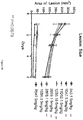
- an isolated antibody or antigen-binding fragment thereof immunospecifically binds alpha toxin and comprises a VH CDR3 comprising an amino acid sequence identical to, or comprising 1, 2, or 3 amino acid residue substitutions relative to SEQ ID NO: SEQ ID NO: 9, 12, 15, 18, 16, 65, 66, 67, 71, 72, 76 or 78, where the antibody or antigen binding fragment alleviates or eliminates dermonecrosis.
- Stringent hybridization temperatures can also be altered (i.e., lowered) with the addition of certain organic solvents, formamide for example.
- Organic solvents like formamide, reduce the thermal stability of double-stranded polynucleotides, so that hybridization can be performed at lower temperatures, while still maintaining stringent conditions and extending the useful life of nucleic acids that may be heat labile.
- Determination of binding affinity can be measured using the specific techniques described further in the Example section, see Example 1, and methods known in the art.
- One example of such a method includes measuring the disassociation constant "K d " by a radiolabeled antigen binding assay (RIA) performed with the Fab version of an antibody of interest and its antigen as described by the following assay that measures solution binding affinity of Fabs for antigen by equilibrating Fab with a minimal concentration of ( 125 I)-labeled antigen in the presence of a titration series of unlabeled antigen, then capturing bound antigen with an anti-Fab antibody-coated plate.
- RIA radiolabeled antigen binding assay
- an anti-alpha toxin antibody or fragment alters the biological properties of alpha toxin and/or alpha toxin expressing cells.
- an anti-alpha toxin antibody or fragment neutralizes the biological activity of alpha toxin by binding to the polypeptide and inhibiting the assembly of alpha toxin monomers into a transmembrane pore (e.g., alpha toxin heptamer).
- Neutralization assays can be performed using methods known in the art using, in some circumstances, commercially available reagents.
- mice are immunized against the antigen, immunogenic conjugates, or derivatives by combining an appropriate concentration of antigen or conjugate with adjuvant and injecting the solution at multiple sites. Immunizations can also be performed as described in Example 1 (immunization/hybridoma generation).
- Additional cell lines that may be used as hosts for expression of recombinant antibodies include, but are not limited to, insect cells (e . g ., Sf21/Sf9, Trichoplusia ni Bti-Tn5b1-4) or yeast cells ( e . g ., S. cerevisiae, Pichia, US7326681 ; etc), plants cells ( US20080066200 ); and chicken cells.
- an antibody molecule may be purified by any method known in the art for purification of an immunoglobulin molecule, for example, by chromatography (e . g ., ion exchange, affinity, particularly by affinity for the specific antigens Protein A or Protein G, and sizing column chromatography), centrifugation, differential solubility, or by any other standard technique for the purification of proteins.
- chromatography e . g ., ion exchange, affinity, particularly by affinity for the specific antigens Protein A or Protein G, and sizing column chromatography
- centrifugation e.g ion exchange, affinity, particularly by affinity for the specific antigens Protein A or Protein G, and sizing column chromatography
- differential solubility e.g chromatography
- the antibodies of the present technology or fragments thereof may be fused to heterologous polypeptide sequences (referred to herein as "tags") described above or otherwise known in the art to facilitate purification.
- an exogenous Ig locus is mimicked through the inclusion of pieces (individual genes) from the Ig locus.
- one or more VH genes, one or more DH genes, one or more JH genes, a mu constant region, and usually a second constant region are formed into a construct for insertion into an animal.
- Human antibodies can also be derived by in vitro methods. Suitable examples include but are not limited to phage display (Medlmmune (formerly CAT), Morphosys, Dyax, Biosite/Medarex, Xoma, Symphogen, Alexion (formerly Proliferon), Affimed) ribosome display (Medlmmune (formerly CAT)), yeast display, and the like.
- the phage display technology can be used to produce human antibodies and antibody fragments in vitro, from immunoglobulin variable (V) domain gene repertoires from unimmunized donors.
- the diversification processes may also generate some structural liabilities or these structural liabilities may exist within germline sequences contributing to the heavy and light chain variable domains. Regardless of the source, it may be desirable to remove potential structural liabilities that may result in instability, aggregation, heterogeneity of product, or increased immunogenicity. Examples of undesirable liabilities include unpaired cysteines (which may lead to disulfide bond scrambling, or variable sulfhydryl adduct formation), N-linked glycosylation sites (resulting in heterogeneity of structure and activity), as well as deamidation ( e . g ., NG, NS), isomerization (DG), oxidation (exposed methionine), and hydrolysis (DP) sites.
- unpaired cysteines which may lead to disulfide bond scrambling, or variable sulfhydryl adduct formation
- N-linked glycosylation sites resulting in heterogeneity of structure and activity
- deamidation e . g ., NG, NS
- the antibody of choice is a single-chain Fv fragment (scFv).
- the antibody is not a Fab fragment.
- Fv and scFv are the only species with intact combining sites that are devoid of constant regions; thus, they are suitable for reduced nonspecific binding during in vivo use.
- scFv fusion proteins may be constructed to yield fusion of an effector protein at either the amino or the carboxy terminus of an scFv.
- an antibody can be modified to produce fusion proteins; i.e., the antibody, or a fragment thereof, fused to a heterologous protein, polypeptide or peptide.
- the protein fused to the portion of an antibody is an enzyme component of Antibody-Directed Enzyme Prodrug Therapy (ADEPT).
- ADPT Antibody-Directed Enzyme Prodrug Therapy
- “Effector cells” are leukocytes that express one or more FcRs and perform effector functions.
- the cells express at least Fc ⁇ , FC ⁇ RII, Fc ⁇ RIII and/or Fc ⁇ RIV and carry out ADCC effector function.
- Examples of human leukocytes which mediate ADCC include peripheral blood mononuclear cells (PBMC), natural killer (NK) cells, monocytes, cytotoxic T cells and neutrophils.
- PBMC peripheral blood mononuclear cells
- NK natural killer cells
- monocytes monocytes
- cytotoxic T cells cytotoxic T cells and neutrophils.
- Fc receptor or “FcR” are used to describe a receptor that binds to the Fc region of an antibody.
- the FcR is a native sequence human FcR.
- the FcR is one that binds an IgG antibody (a gamma receptor) and includes receptors of the Fc ⁇ RI, Fc ⁇ RII, Fc ⁇ RIII, and Fc ⁇ RIV subclasses, including allelic variants and alternatively spliced forms of these receptors.
- Fc ⁇ RII receptors include Fc ⁇ RIIA (an “activating receptor") and FcyRIIB (an “inhibiting receptor”), which have similar amino acid sequences that differ primarily in the cytoplasmic domains thereof.
- Activating receptor Fc ⁇ RIIA contains an immunoreceptor tyrosine-based activation motif (ITAM) in its cytoplasmic domain.
- ITAM immunoreceptor tyrosine-based activation motif
- Anti-alpha toxin antibodies and fragments herein comprising a variant Fc region are also referred to here as "Fc variant antibodies.”
- native refers to the unmodified parental sequence and the antibody comprising a native Fc region is herein referred to as a "native Fc antibody”.
- the variant Fc region exhibits a similar level of inducing effector function as compared to the native Fc region.
- the variant Fc region exhibits a higher induction of effector function as compared to the native Fc.
- the variant Fc region exhibits lower induction of effector function as compared to the native Fc.
- an Fc variant where the Fc region comprises at least one substitution selected from the group consisting of 234D, 234E, 234N, 234Q, 234T, 234H, 234Y, 234I, 234V, 234F, 235A, 235D, 235R, 235W, 235P, 235S, 235N, 235Q, 235T, 235H, 235Y, 235I, 235V, 235F, 236E, 239D, 239E, 239N, 239Q, 239F, 239T, 239H, 239Y, 240I, 240A, 240T, 240M, 241W, 241 L, 241Y, 241E, 241 R.
- an Fc variant antibody where the Fc region comprises at least one modification (e.g., amino acid substitutions, amino acid insertions, amino acid deletions) at one or more positions selected from the group consisting of 234, 235 and 331.
- the non-naturally occurring amino acids are selected from the group consisting of 234F, 235F, 235Y, and 331S.
- the Fc region comprises at least one non-naturally occurring amino acid at one or more positions selected from the group consisting of 239, 330 and 332.
- the non-naturally occurring amino acids are selected from the group consisting of 239D, 330L and 332E.
- the Fc variants herein may be combined with other known Fc variants as known in the art.
- Other modifications and/or substitutions and/or additions and/or deletions of the Fc domain can be introduced.
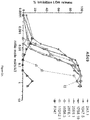
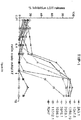
- A549 cells were maintained in a 5% CO 2 37°C incubator in RMPI supplemented with non essential amino acid, glutamine and 10% fetal bovine serum. Cells were washed once with Hank's balanced media, and plated at 10 4 /well under 50 ⁇ l in RPMI, 5% FBS, and incubated at 37°C with 5% CO 2 for 20 hr. Anti-AT mAbs were added to a 96-well plate at 80 ⁇ g/mL in RPMI and the samples serially diluted (two-fold) in RPMI. An irrelevant IgG1 (R347) was included as an isotype control.
- Each anti-AT IgG was first injected over the capture and reference surfaces at a flow rate of 50 ⁇ L/min. Once the binding of the captured IgG had stabilized, a single concentration of the nAT protein was injected over both surfaces, at a flow rate of 50 ⁇ L/min. The resultant binding response curves was used to determine the association phase data. Following the injection of the nAT, the flow was then switched back to instrument buffer for 10 minutes to permit the collection of dissociation phase data followed by a 1 minute pulse of 10mM glycine, pH 1.5 to regenerate the IgG capture surface on the chip. Binding responses from duplicate injections of each concentration of nAT were recorded against all anti-AT IgGs.
- the IC 50 was calculated using the RBC hemolytic assay with S . aureus alpha toxin at 0.1mg/ml
- Presence of the SDS-resistant heptamer is readily apparent at the top of the gel shown in Figure 12 , in lanes 6 and 7 (e.g., mAb9D7.3 and no IgG control lane, respectively). All of the inhibitory mAbs ablated heptamer formation, whereas an irrelevant isotype control ( e . g ., Lane 6; 9D7.3) had no effect.
- the inhibition of oligomerization activity was confirmed using mAbs 2A3.1, 10A7.5 and 12B8.19 in an oligomerization assay on rabbit RBC ghosts, as illustrated in the representative western blots shown in Figures 13A and 13B .
- Example 10 Representative Amino Acid and Nucleotide Sequences for Antibodies that Specifically Bind to S. aureus Alpha Toxin
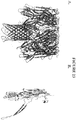
- the segment corresponding to aa 248-277 showed impact on binding and also contained the X-ray structural contact residues identified as comprising aa 261-272 (in which T263, N264, and K266 are actual contacting residues) ( Figure 20 ).
- the crystal structure revealed another segment corresponding to aa 173-201 in which D183, W187, and N188 are actual contacting residues ( Figure 20 ).
- the chimeric variant that contained this particular segment (KO_148-205) still exhibited good binding to LC10 YTE. This is likely attributable to this particular region's high sequence homology (52% identity and 63% similarity) between alpha toxin and LukF-PV.
- the amino acids around the contacting residues (aa 179-193) share even higher homology (67% identity), while, in contrast, the entire sequence shares only 25% identity.
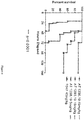
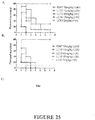
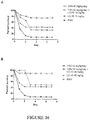
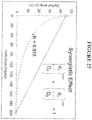
- mice Seven-week old female C57BL/6J mice were infected intranasally with 2e8 cfu (LD100) of methicillin-resistant Staphylococcus aureus USA300. Vancomycin and LC-10 were individually titrated to determine the optimal and sub-efficacious doses.
- LD100 methicillin-resistant Staphylococcus aureus USA300.
- Vancomycin and LC-10 were individually titrated to determine the optimal and sub-efficacious doses.
- mice were treated one hour post-infection, with a single intraperitoneal dose of LC-10, or the negative control antibody R347 (15 mg/kg). Vancomycin treatment in mono or dual therapy was initiated 1 hr postinfection and administered BID subcutaneously 3 days. The percent survival for all treated groups was determined at the end of seven days. Survival curves were analyzed using the Mandel-Cox log-rank test.
Landscapes
- Health & Medical Sciences (AREA)
- Life Sciences & Earth Sciences (AREA)
- Chemical & Material Sciences (AREA)
- Medicinal Chemistry (AREA)
- General Health & Medical Sciences (AREA)
- Immunology (AREA)
- Engineering & Computer Science (AREA)
- Organic Chemistry (AREA)
- Pharmacology & Pharmacy (AREA)
- Animal Behavior & Ethology (AREA)
- Public Health (AREA)
- Veterinary Medicine (AREA)
- Molecular Biology (AREA)
- Bioinformatics & Cheminformatics (AREA)
- Biochemistry (AREA)
- Epidemiology (AREA)
- Urology & Nephrology (AREA)
- Hematology (AREA)
- Biomedical Technology (AREA)
- Microbiology (AREA)
- Proteomics, Peptides & Aminoacids (AREA)
- Nuclear Medicine, Radiotherapy & Molecular Imaging (AREA)
- Chemical Kinetics & Catalysis (AREA)
- General Chemical & Material Sciences (AREA)
- Biophysics (AREA)
- Genetics & Genomics (AREA)
- Cell Biology (AREA)
- Tropical Medicine & Parasitology (AREA)
- Virology (AREA)
- Pathology (AREA)
- Biotechnology (AREA)
- Food Science & Technology (AREA)
- General Physics & Mathematics (AREA)
- Analytical Chemistry (AREA)
- Physics & Mathematics (AREA)
- Mycology (AREA)
- Gastroenterology & Hepatology (AREA)
- Dermatology (AREA)
- Communicable Diseases (AREA)
- Pain & Pain Management (AREA)
Applications Claiming Priority (3)
| Application Number | Priority Date | Filing Date | Title |
|---|---|---|---|
| US201161440581P | 2011-02-08 | 2011-02-08 | |
| PCT/US2012/024201 WO2012109285A2 (en) | 2011-02-08 | 2012-02-07 | Antibodies that specifically bind staphylococcus aureus alpha toxin and methods of use |
| EP12745207.6A EP2673373B3 (de) | 2011-02-08 | 2012-02-07 | Antikörper zur spezifischen bindung an staphylococcus-aureus-alpha-toxin und verwendungsverfahren dafür |
Related Parent Applications (3)
| Application Number | Title | Priority Date | Filing Date |
|---|---|---|---|
| EP12745207.6A Division EP2673373B3 (de) | 2011-02-08 | 2012-02-07 | Antikörper zur spezifischen bindung an staphylococcus-aureus-alpha-toxin und verwendungsverfahren dafür |
| EP12745207.6A Division-Into EP2673373B3 (de) | 2011-02-08 | 2012-02-07 | Antikörper zur spezifischen bindung an staphylococcus-aureus-alpha-toxin und verwendungsverfahren dafür |
| PCT/US2012/024201 Previously-Filed-Application WO2012109285A2 (en) | 2011-02-08 | 2012-02-07 | Antibodies that specifically bind staphylococcus aureus alpha toxin and methods of use |
Publications (2)
| Publication Number | Publication Date |
|---|---|
| EP3470526A2 true EP3470526A2 (de) | 2019-04-17 |
| EP3470526A3 EP3470526A3 (de) | 2019-07-17 |
Family
ID=46639171
Family Applications (2)
| Application Number | Title | Priority Date | Filing Date |
|---|---|---|---|
| EP18190790.8A Pending EP3470526A3 (de) | 2011-02-08 | 2012-02-07 | Antikörper zur spezifischen bindung an staphylococcus-aureus-alpha-toxin und verwendungsverfahren dafür |
| EP12745207.6A Active EP2673373B3 (de) | 2011-02-08 | 2012-02-07 | Antikörper zur spezifischen bindung an staphylococcus-aureus-alpha-toxin und verwendungsverfahren dafür |
Family Applications After (1)
| Application Number | Title | Priority Date | Filing Date |
|---|---|---|---|
| EP12745207.6A Active EP2673373B3 (de) | 2011-02-08 | 2012-02-07 | Antikörper zur spezifischen bindung an staphylococcus-aureus-alpha-toxin und verwendungsverfahren dafür |
Country Status (24)
| Country | Link |
|---|---|
| US (1) | US9527905B2 (de) |
| EP (2) | EP3470526A3 (de) |
| JP (4) | JP2014508748A (de) |
| KR (1) | KR101993839B1 (de) |
| CN (2) | CN103443285B9 (de) |
| AU (1) | AU2012214531C1 (de) |
| BR (1) | BR112013020086B1 (de) |
| CA (1) | CA2826566C (de) |
| CY (1) | CY1121389T1 (de) |
| DK (1) | DK2673373T6 (de) |
| ES (1) | ES2709065T7 (de) |
| HR (1) | HRP20182017T4 (de) |
| HU (1) | HUE040734T2 (de) |
| LT (1) | LT2673373T (de) |
| MX (3) | MX345285B (de) |
| PL (1) | PL2673373T6 (de) |
| PT (1) | PT2673373T (de) |
| RS (1) | RS58190B2 (de) |
| RU (1) | RU2620065C2 (de) |
| SG (3) | SG10201913690SA (de) |
| SI (1) | SI2673373T1 (de) |
| SM (1) | SMT201800635T1 (de) |
| TR (1) | TR201817932T4 (de) |
| WO (1) | WO2012109285A2 (de) |
Cited By (1)
| Publication number | Priority date | Publication date | Assignee | Title |
|---|---|---|---|---|
| CN117106077A (zh) * | 2022-04-28 | 2023-11-24 | 珠海泰诺麦博制药股份有限公司 | 特异性结合金黄色葡萄球菌Hla毒素的全人源单克隆抗体 |
Families Citing this family (34)
| Publication number | Priority date | Publication date | Assignee | Title |
|---|---|---|---|---|
| RS57024B1 (sr) | 2011-06-10 | 2018-05-31 | Medimmune Ltd | Anti-pseudomonas psl vezujući molekuli i njihova upotreba |
| US10597439B2 (en) | 2011-11-07 | 2020-03-24 | Medimmune Limited | Combination therapies using anti-pseudomonas PSL and PCRV binding molecules |
| US9988439B2 (en) | 2011-12-23 | 2018-06-05 | Nicholas B. Lydon | Immunoglobulins and variants directed against pathogenic microbes |
| EP2793944B1 (de) | 2011-12-23 | 2025-10-08 | Nicholas B. Lydon | Immunoglobuline und varianten gegen pathogene mikroben |
| JOP20200236A1 (ar) | 2012-09-21 | 2017-06-16 | Regeneron Pharma | الأجسام المضادة لمضاد cd3 وجزيئات ربط الأنتيجين ثنائية التحديد التي تربط cd3 وcd20 واستخداماتها |
| JP6506172B2 (ja) * | 2012-11-06 | 2019-04-24 | メディミューン,エルエルシー | 黄色ブドウ球菌(S.aureus)関連性疾患を治療する方法 |
| JP2015535005A (ja) * | 2012-11-06 | 2015-12-07 | メディミューン,エルエルシー | 抗シュードモナス属(Pseudomonas)PslおよびPcrV結合分子を用いた併用治療 |
| CN104968797B (zh) * | 2012-11-06 | 2018-11-30 | 米迪缪尼有限公司 | 金黄色葡萄球菌表面决定簇的抗体 |
| CA2925071A1 (en) * | 2013-10-17 | 2015-04-23 | Arsanis Biosciences Gmbh | Cross-reactive staphylococcus aureus antibody sequences |
| WO2015109012A1 (en) * | 2014-01-14 | 2015-07-23 | Integrated Biotherapeutics, Inc. | Targeting immunological functions to the site of bacterial infections using cell wall targeting domains of bacteriolysins |
| TWI754319B (zh) | 2014-03-19 | 2022-02-01 | 美商再生元醫藥公司 | 用於腫瘤治療之方法及抗體組成物 |
| TWI719938B (zh) * | 2014-06-19 | 2021-03-01 | 美商麥迪紐有限責任公司 | 多重細菌感染之治療 |
| CA2956429A1 (en) * | 2014-08-12 | 2016-02-18 | Arsanis Biosciences Gmbh | Predicting s. aureus disease |
| ES2809455T3 (es) | 2014-11-17 | 2021-03-04 | Regeneron Pharma | Métodos para tratamiento tumoral usando anticuerpo biespecífico CD3xCD20 |
| EP3766987B1 (de) * | 2015-09-24 | 2023-08-02 | F. Hoffmann-La Roche AG | Alpha-hämolysin-varianten |
| WO2017075188A2 (en) * | 2015-10-30 | 2017-05-04 | Medimmune, Llc | Methods of using anti-alpha toxin antibody |
| TWI781130B (zh) * | 2017-01-03 | 2022-10-21 | 美商再生元醫藥公司 | 抗金黃色葡萄球菌溶血素a毒素之人類抗體 |
| MA47468A (fr) * | 2017-02-09 | 2019-12-18 | Bluefin Biomedicine Inc | Anticorps anti-ilt3 et conjugués anticorps-médicament |
| CN108456250B (zh) * | 2017-02-17 | 2025-11-28 | 恺兴生命科技(上海)有限公司 | 靶向il-13ra2的抗体及其应用 |
| CN109384844B (zh) * | 2017-08-04 | 2020-12-18 | 中国人民解放军军事医学科学院基础医学研究所 | 一种抗金黄色葡萄球菌α溶血素单克隆抗体及应用 |
| US11155606B2 (en) | 2018-07-24 | 2021-10-26 | Medimmune, Llc | Antibody directed against S. aureus clumping factor a (ClfA) |
| US11396542B2 (en) | 2018-08-21 | 2022-07-26 | Synkrino Biotherapeutics, Inc. | Astrotactin1-based compositions and pharmaceutical formulations |
| PT3844189T (pt) | 2018-08-31 | 2025-01-29 | Regeneron Pharma | Estratégia de dosagem que mitiga a síndrome de libertação de citocinas para anticorpos bisepecíficos contra cd3/c20 |
| BR112021006622A2 (pt) | 2018-10-09 | 2021-07-20 | Medimmune, Llc | combinações de anticorpos anti-staphylococcus aureus |
| WO2020076790A1 (en) | 2018-10-09 | 2020-04-16 | Medimmune, Llc | Antibodies directed against staphylococcus aureus leukotoxins |
| US12264194B2 (en) | 2019-03-13 | 2025-04-01 | Medimmune, Llc | Decreasing Staphylococcus aureus infections in colonized patients |
| WO2020210650A1 (en) | 2019-04-12 | 2020-10-15 | Medimmune, Llc | Neutralization of tgf-beta or alpha-v-beta-8 integrin for s. aureus infections |
| CN112538112B (zh) * | 2019-09-20 | 2023-10-27 | 迈威(上海)生物科技股份有限公司 | 抗α-溶血素的抗体及其应用 |
| CN113444172A (zh) | 2020-03-25 | 2021-09-28 | 兴盟生物医药(苏州)有限公司 | 金黄色葡萄球菌α-毒素特异性抗体及其应用 |
| CN117062908A (zh) * | 2021-01-11 | 2023-11-14 | 星济生物(苏州)有限公司 | 靶向金黄色葡萄球菌α-毒素的抗原结合蛋白及其应用 |
| CN112941136B (zh) * | 2021-03-24 | 2023-04-28 | 成都欧林生物科技股份有限公司 | 一种重组金黄色葡萄球菌疫苗hi抗原蛋白的纯化方法 |
| CN114455048B (zh) * | 2022-03-02 | 2023-03-14 | 江苏微导纳米科技股份有限公司 | 一种桨杆 |
| CN116589566A (zh) * | 2022-11-18 | 2023-08-15 | 昆明医科大学第一附属医院 | 一种HIV-1中和抗体的改造重组单克隆IgM抗体及其应用 |
| CN116023486B (zh) * | 2023-01-10 | 2024-10-08 | 西北农林科技大学 | 金黄色葡萄球菌α-溶血素纳米抗体、制备方法及其应用 |
Citations (7)
| Publication number | Priority date | Publication date | Assignee | Title |
|---|---|---|---|---|
| US5500362A (en) | 1987-01-08 | 1996-03-19 | Xoma Corporation | Chimeric antibody with specificity to human B cell surface antigen |
| US5821337A (en) | 1991-06-14 | 1998-10-13 | Genentech, Inc. | Immunoglobulin variants |
| US6214560B1 (en) | 1996-04-25 | 2001-04-10 | Genicon Sciences Corporation | Analyte assay using particulate labels |
| US6596541B2 (en) | 2000-10-31 | 2003-07-22 | Regeneron Pharmaceuticals, Inc. | Methods of modifying eukaryotic cells |
| US7083784B2 (en) | 2000-12-12 | 2006-08-01 | Medimmune, Inc. | Molecules with extended half-lives, compositions and uses thereof |
| US7326681B2 (en) | 2000-06-28 | 2008-02-05 | Glycofi, Inc. | Methods for producing modified glycoproteins |
| US20080066200A1 (en) | 2006-01-17 | 2008-03-13 | Biolex, Inc. | Compositions and methods for humanization and optimization of n-glycans in plants |
Family Cites Families (16)
| Publication number | Priority date | Publication date | Assignee | Title |
|---|---|---|---|---|
| US20030226155A1 (en) | 2001-08-30 | 2003-12-04 | Biorexis Pharmaceutical Corporation | Modified transferrin-antibody fusion proteins |
| EP1479695B1 (de) | 2003-05-14 | 2010-02-17 | Kenta Biotech AG | Humaner monoklonaler Antikörper spezifisch für Lipopolysacchariden (LPS) des Serotyps IATS O6 von Pseudomonas aeruginosa |
| CN1324049C (zh) | 2003-08-04 | 2007-07-04 | 中国疾病预防控制中心病毒病预防控制所 | 人源抗sars冠状病毒基因工程抗体 |
| PT1737891E (pt) * | 2004-04-13 | 2013-04-16 | Hoffmann La Roche | Anticorpos anti p-selectina |
| EP2298340B1 (de) * | 2004-09-22 | 2014-04-16 | GlaxoSmithKline Biologicals S.A. | Immunogene Zusammensetzung zur Verwendung zur Impfung gegen Staphylokokken |
| TW200813091A (en) | 2006-04-10 | 2008-03-16 | Amgen Fremont Inc | Targeted binding agents directed to uPAR and uses thereof |
| US20090053235A1 (en) * | 2006-06-12 | 2009-02-26 | Nabi Biopharmaceuticals | Use of alpha-toxin for treating and preventing staphylococcus infections |
| EP2164869A2 (de) * | 2007-05-31 | 2010-03-24 | Merck Sharp & Dohme Corp. | Auf s. aureus orf0657n abzielende antigenbindende proteine |
| RS56743B1 (sr) | 2007-08-21 | 2018-03-30 | Amgen Inc | Humani c-fms antigen vezujući proteini |
| JP5658564B2 (ja) * | 2007-08-31 | 2015-01-28 | ザ・ユニバーシティ・オブ・シカゴThe University Of Chicago | ブドウ球菌肺疾患および状態に対する免疫に関連した方法および組成物 |
| US8172115B1 (en) | 2008-04-10 | 2012-05-08 | Spencer Forrest, Inc. | Hair building solids dispenser for one handed operation |
| CN102171247A (zh) | 2008-07-02 | 2011-08-31 | 特鲁比昂药品公司 | TNF-α拮抗剂多靶点结合蛋白 |
| EP2208787A1 (de) * | 2009-01-19 | 2010-07-21 | Université de Liège | Rekombinantes alpha-Hämolysin-Polypeptid von Staphylococcus aureus, mit einer Deletion in der Stammdomäne und eingefügten heterologen Sequenzen |
| GB2467939A (en) * | 2009-02-20 | 2010-08-25 | Univ Sheffield | Removal of bacteria from media |
| CN102481352A (zh) * | 2009-06-22 | 2012-05-30 | 惠氏有限责任公司 | 金黄色葡萄球菌抗原的免疫原性组合物 |
| CN104968797B (zh) * | 2012-11-06 | 2018-11-30 | 米迪缪尼有限公司 | 金黄色葡萄球菌表面决定簇的抗体 |
-
2012
- 2012-02-07 BR BR112013020086-3A patent/BR112013020086B1/pt active IP Right Grant
- 2012-02-07 LT LTEP12745207.6T patent/LT2673373T/lt unknown
- 2012-02-07 HU HUE12745207A patent/HUE040734T2/hu unknown
- 2012-02-07 PT PT12745207T patent/PT2673373T/pt unknown
- 2012-02-07 PL PL12745207T patent/PL2673373T6/pl unknown
- 2012-02-07 CA CA2826566A patent/CA2826566C/en active Active
- 2012-02-07 TR TR2018/17932T patent/TR201817932T4/en unknown
- 2012-02-07 DK DK12745207.6T patent/DK2673373T6/da active
- 2012-02-07 HR HRP20182017TT patent/HRP20182017T4/hr unknown
- 2012-02-07 EP EP18190790.8A patent/EP3470526A3/de active Pending
- 2012-02-07 KR KR1020137023512A patent/KR101993839B1/ko active Active
- 2012-02-07 WO PCT/US2012/024201 patent/WO2012109285A2/en not_active Ceased
- 2012-02-07 SG SG10201913690SA patent/SG10201913690SA/en unknown
- 2012-02-07 RU RU2013141134A patent/RU2620065C2/ru active
- 2012-02-07 SG SG2013057831A patent/SG192212A1/en unknown
- 2012-02-07 MX MX2013009127A patent/MX345285B/es active IP Right Grant
- 2012-02-07 AU AU2012214531A patent/AU2012214531C1/en active Active
- 2012-02-07 EP EP12745207.6A patent/EP2673373B3/de active Active
- 2012-02-07 CN CN201280007986.4A patent/CN103443285B9/zh active Active
- 2012-02-07 SM SM20180635T patent/SMT201800635T1/it unknown
- 2012-02-07 US US13/983,804 patent/US9527905B2/en active Active
- 2012-02-07 SG SG10201600899PA patent/SG10201600899PA/en unknown
- 2012-02-07 ES ES12745207T patent/ES2709065T7/es active Active
- 2012-02-07 SI SI201231470T patent/SI2673373T1/sl unknown
- 2012-02-07 JP JP2013553501A patent/JP2014508748A/ja active Pending
- 2012-02-07 CN CN201710480750.7A patent/CN107474133B/zh active Active
- 2012-02-07 RS RS20181450A patent/RS58190B2/sr unknown
- 2012-02-07 MX MX2017001101A patent/MX375113B/es unknown
-
2013
- 2013-08-07 MX MX2020009700A patent/MX2020009700A/es unknown
-
2017
- 2017-02-13 JP JP2017023905A patent/JP6367393B2/ja active Active
-
2018
- 2018-07-04 JP JP2018127340A patent/JP6723293B2/ja active Active
- 2018-11-28 CY CY20181101266T patent/CY1121389T1/el unknown
-
2020
- 2020-06-23 JP JP2020108083A patent/JP7047017B2/ja active Active
Patent Citations (7)
| Publication number | Priority date | Publication date | Assignee | Title |
|---|---|---|---|---|
| US5500362A (en) | 1987-01-08 | 1996-03-19 | Xoma Corporation | Chimeric antibody with specificity to human B cell surface antigen |
| US5821337A (en) | 1991-06-14 | 1998-10-13 | Genentech, Inc. | Immunoglobulin variants |
| US6214560B1 (en) | 1996-04-25 | 2001-04-10 | Genicon Sciences Corporation | Analyte assay using particulate labels |
| US7326681B2 (en) | 2000-06-28 | 2008-02-05 | Glycofi, Inc. | Methods for producing modified glycoproteins |
| US6596541B2 (en) | 2000-10-31 | 2003-07-22 | Regeneron Pharmaceuticals, Inc. | Methods of modifying eukaryotic cells |
| US7083784B2 (en) | 2000-12-12 | 2006-08-01 | Medimmune, Inc. | Molecules with extended half-lives, compositions and uses thereof |
| US20080066200A1 (en) | 2006-01-17 | 2008-03-13 | Biolex, Inc. | Compositions and methods for humanization and optimization of n-glycans in plants |
Non-Patent Citations (20)
| Title |
|---|
| "Monoclonal Antibodies: Principles and Applications", 1995, WILEY-LISS, INC. |
| ANANTHA ET AL., BIOCHEMISTRY, vol. 37, 1998, pages 2709 2714 |
| CAPEL ET AL., IMMUNOMETHODS, vol. 4, 1994, pages 25 - 34 |
| CHEMICAL IMMUNOLOGY, vol. 65, 1997, pages 88 |
| CLYNES ET AL., PROC. NATL. ACAD. SCI. (USA, vol. 95, 1998, pages 652 - 656 |
| D.G. MYSZKA: "Improving biosensor analysis", J. MOL. RECOGNIT., vol. 12, 1999, pages 279 - 284 |
| DAERON, ANNU. REV. IMMUNOL., vol. 15, 1997, pages 203 - 234 |
| DE HAAS ET AL., J. LAB. CLIN. MED., vol. 126, 1995, pages 330 - 41 |
| EUR. J. IMMUNOL., vol. 23, 1993, pages 1098 |
| GAZZANO-SANTARO ET AL., J. IMMUNOL. METHODS, vol. 202, 1996, pages 163 |
| GOUAUX, E.; M. HOBAUGH ET AL.: "alpha-Hemolysin, gamma-hemolysin, and leukocidin from Staphylococcus aureus: distant in sequence but similar in structure", PROTEIN SCI, vol. 6, no. 12, 1997, pages 2631 - 5, XP055093440 |
| GUYER ET AL., IMMUNOL., vol. 117, 1976, pages 587 |
| IMMUNOLOGY, vol. 86, 1995, pages 319 |
| KABAT ET AL.: "Sequences of Proteins of Immunological Interest", 1991, PUBLIC HEALTH SERVICE, NATIONAL INSTITUTES OF HEALTH |
| KIM ET AL., J. IMMUNOL., vol. 24, 1994, pages 249 |
| MEESTERS, C.; A. BRACK ET AL.: "Structural characterization of the alpha-hemolysin monomer from Staphylococcus aureus", PROTEINS, vol. 75, no. 1, 2009, pages 118 - 26 |
| QU; CHAIRES, METHODS ENZYMOL., vol. 321, 2000, pages 353 369 |
| RAVETCH; KINET, ANNU. REV. IMMUNOL., vol. 9, 1991, pages 457 - 92 |
| SONG, L.; M. R. HOBAUGH ET AL.: "Structure of staphylococcal alpha-hemolysin, a heptameric transmembrane pore", SCIENCE, vol. 274, no. 5294, 1996, pages 1859 - 66, XP002122973, DOI: doi:10.1126/science.274.5294.1859 |
| WILKE ET AL., PROC. NATL. ACAD. SCI., vol. 107, 2010, pages 13473 - 13478 |
Cited By (1)
| Publication number | Priority date | Publication date | Assignee | Title |
|---|---|---|---|---|
| CN117106077A (zh) * | 2022-04-28 | 2023-11-24 | 珠海泰诺麦博制药股份有限公司 | 特异性结合金黄色葡萄球菌Hla毒素的全人源单克隆抗体 |
Also Published As
Similar Documents
| Publication | Publication Date | Title |
|---|---|---|
| JP7047017B2 (ja) | 黄色ブドウ球菌(Staphylococcus aureus)α毒素に特異的に結合する抗体及び使用方法 | |
| AU2012214531A1 (en) | Antibodies that specifically bind Staphylococcus aureus alpha toxin and methods of use | |
| US9938356B2 (en) | Binding molecules specific for CD73 and uses thereof | |
| CN113667013A (zh) | 中和抗甲型流感抗体及其用途 | |
| CN106573154B (zh) | 中和抗乙型流感抗体及其用途 | |
| EP4257195A2 (de) | Anti-cfae-antikörper und verfahren zur verwendung | |
| HK40007158A (en) | Antibodies that specifically bind staphylococcus aureus alpha toxin and methods of use | |
| HK1191978A (en) | Antibodies that specifically bind staphylococcus aureus alpha toxin and methods of use | |
| HK1191978B (en) | Antibodies that specifically bind staphylococcus aureus alpha toxin and methods of use | |
| HK1248257B (zh) | 特异性结合金黄色葡萄球菌α毒素的抗体以及使用方法 | |
| HK1191977B (en) | Antibodies that specifically bind staphylococcus aureus alpha toxin and methods of use | |
| HK1191977A (en) | Antibodies that specifically bind staphylococcus aureus alpha toxin and methods of use | |
| HK40064533A (en) | Neutralizing anti-influenza a antibodies and uses thereof | |
| HK40110292A (zh) | 中和抗甲型流感抗体及其用途 | |
| HK40064536B (zh) | 中和抗甲型流感抗体及其用途 | |
| HK40064533B (zh) | 中和抗甲型流感抗体及其用途 | |
| HK40057425B (zh) | 中和抗乙型流感抗体及其用途 | |
| HK40061870B (zh) | 中和抗乙型流感抗体及其用途 |
Legal Events
| Date | Code | Title | Description |
|---|---|---|---|
| PUAI | Public reference made under article 153(3) epc to a published international application that has entered the european phase |
Free format text: ORIGINAL CODE: 0009012 |
|
| STAA | Information on the status of an ep patent application or granted ep patent |
Free format text: STATUS: THE APPLICATION HAS BEEN PUBLISHED |
|
| AC | Divisional application: reference to earlier application |
Ref document number: 2673373 Country of ref document: EP Kind code of ref document: P |
|
| AK | Designated contracting states |
Kind code of ref document: A2 Designated state(s): AL AT BE BG CH CY CZ DE DK EE ES FI FR GB GR HR HU IE IS IT LI LT LU LV MC MK MT NL NO PL PT RO RS SE SI SK SM TR |
|
| PUAL | Search report despatched |
Free format text: ORIGINAL CODE: 0009013 |
|
| AK | Designated contracting states |
Kind code of ref document: A3 Designated state(s): AL AT BE BG CH CY CZ DE DK EE ES FI FR GB GR HR HU IE IS IT LI LT LU LV MC MK MT NL NO PL PT RO RS SE SI SK SM TR |
|
| RIC1 | Information provided on ipc code assigned before grant |
Ipc: A61K 39/40 20060101ALI20190612BHEP Ipc: C12P 21/08 20060101AFI20190612BHEP Ipc: C07K 16/12 20060101ALI20190612BHEP Ipc: A61K 39/085 20060101ALI20190612BHEP |
|
| STAA | Information on the status of an ep patent application or granted ep patent |
Free format text: STATUS: REQUEST FOR EXAMINATION WAS MADE |
|
| 17P | Request for examination filed |
Effective date: 20200117 |
|
| RBV | Designated contracting states (corrected) |
Designated state(s): AL AT BE BG CH CY CZ DE DK EE ES FI FR GB GR HR HU IE IS IT LI LT LU LV MC MK MT NL NO PL PT RO RS SE SI SK SM TR |
|
| REG | Reference to a national code |
Ref country code: HK Ref legal event code: DE Ref document number: 40007158 Country of ref document: HK |
|
| STAA | Information on the status of an ep patent application or granted ep patent |
Free format text: STATUS: EXAMINATION IS IN PROGRESS |
|
| 17Q | First examination report despatched |
Effective date: 20201027 |
|
| P01 | Opt-out of the competence of the unified patent court (upc) registered |
Effective date: 20230414 |
|
| GRAP | Despatch of communication of intention to grant a patent |
Free format text: ORIGINAL CODE: EPIDOSNIGR1 |
|
| STAA | Information on the status of an ep patent application or granted ep patent |
Free format text: STATUS: GRANT OF PATENT IS INTENDED |